Visual abstracts
New randomized trials and meta-analyses from leading journals at a glance: who was studied, what was compared, and what was found. Every paper is free to read in full.
All specialtiesCardiology 4877Oncology 4138Gastroenterology & Hepatology 1942Infectious Disease 3837Neurology 1905Psychiatry & Mental Health 2273Pulmonology 2143Critical Care 1365Endocrinology & Diabetes 2580Pediatrics 2980Surgery 2559Orthopedics & Sports Medicine 931Neurosurgery 537Cardiothoracic & Vascular Surgery 674Plastic & Reconstructive Surgery 591Nephrology 1133Rheumatology 823Hematology 1109Dermatology 621Ophthalmology 543Obstetrics & Gynecology 1686Public & Global Health 1058Radiology & Imaging 648Anesthesiology 986Urology 764ENT (Otolaryngology) 503Emergency Medicine 511Allergy & Immunology 313Geriatrics 981Family Medicine & Primary Care 562Medical Genetics & Genomics 676Pathology & Laboratory Medicine 159Physical Medicine & Rehabilitation 757Palliative Care 444Nutrition 1588Digital Health & AI 2201General Medicine 321
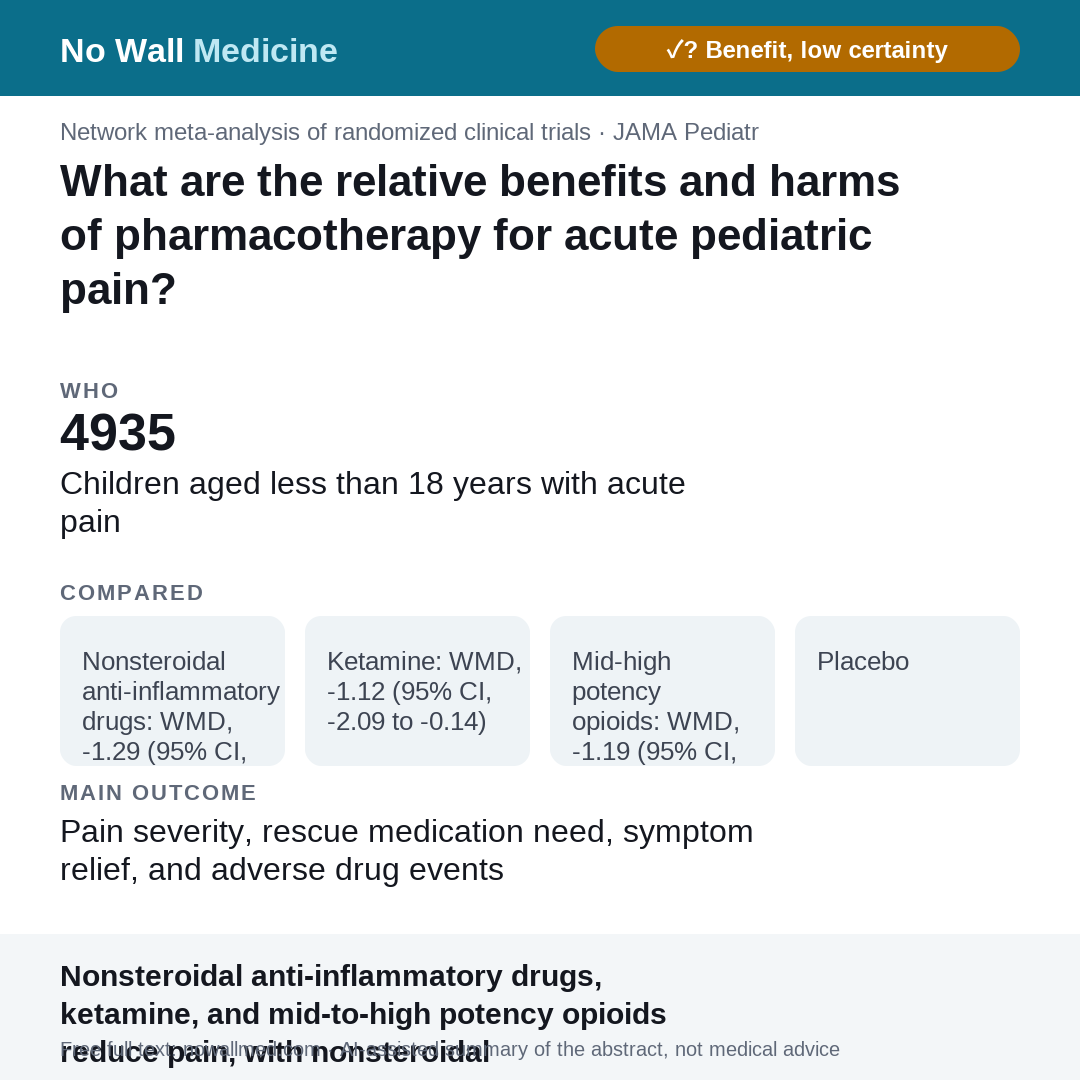
Pharmacologic Management of Acute Pain in Children: A Systematic Review and Network Meta-Analysis
Network meta-analysis of randomized clinical trialsBenefit found
What are the relative benefits and harms of pharmacotherapy for acute pediatric pain?
Who
4935
Children aged less than 18 years with acute pain
Compared
Nonsteroidal anti-inflammatory drugs: WMD, -1.29 (95% CI, -1.89 to -0.70)
Ketamine: WMD, -1.12 (95% CI, -2.09 to -0.14)
Mid-high potency opioids: WMD, -1.19 (95% CI, -1.83 to -0.55)
Placebo
Main outcome
Pain severity, rescue medication need, symptom relief, and adverse drug events
Bottom line: Nonsteroidal anti-inflammatory drugs, ketamine, and mid-to-high potency opioids reduce pain, with nonsteroidal anti-inflammatory drugs being first-line.
JAMA Pediatr · 2025-02-03Download image
Maternal and Child Health Following 2 Home Visiting Interventions vs Control: Five-Year Follow-Up of a Randomized Clinical Trial
Randomized clinical trialBenefit found
How do two home visiting staffing models affect maternal and child health outcomes?
Who
525
Low-income pregnant women with at least one psychosocial risk factor · 15 municipalities in Germany
Compared
Tandem model: fewer internalizing child behavioral problems (ATE, 2.98; 95% CI, -5.49 to -0.47)
Midwife-only model: beneficial effects on abusive parenting, parenting stress, and maternal mental health
Control groups
Main outcome
developmental disorders, child behavioral problems, parenting, maternal mental health, and life satisfaction
Bottom line: Both staffing models produced positive effects, with more effects observed in the midwife-only model.
JAMA Pediatr · 2025-02-03Download image

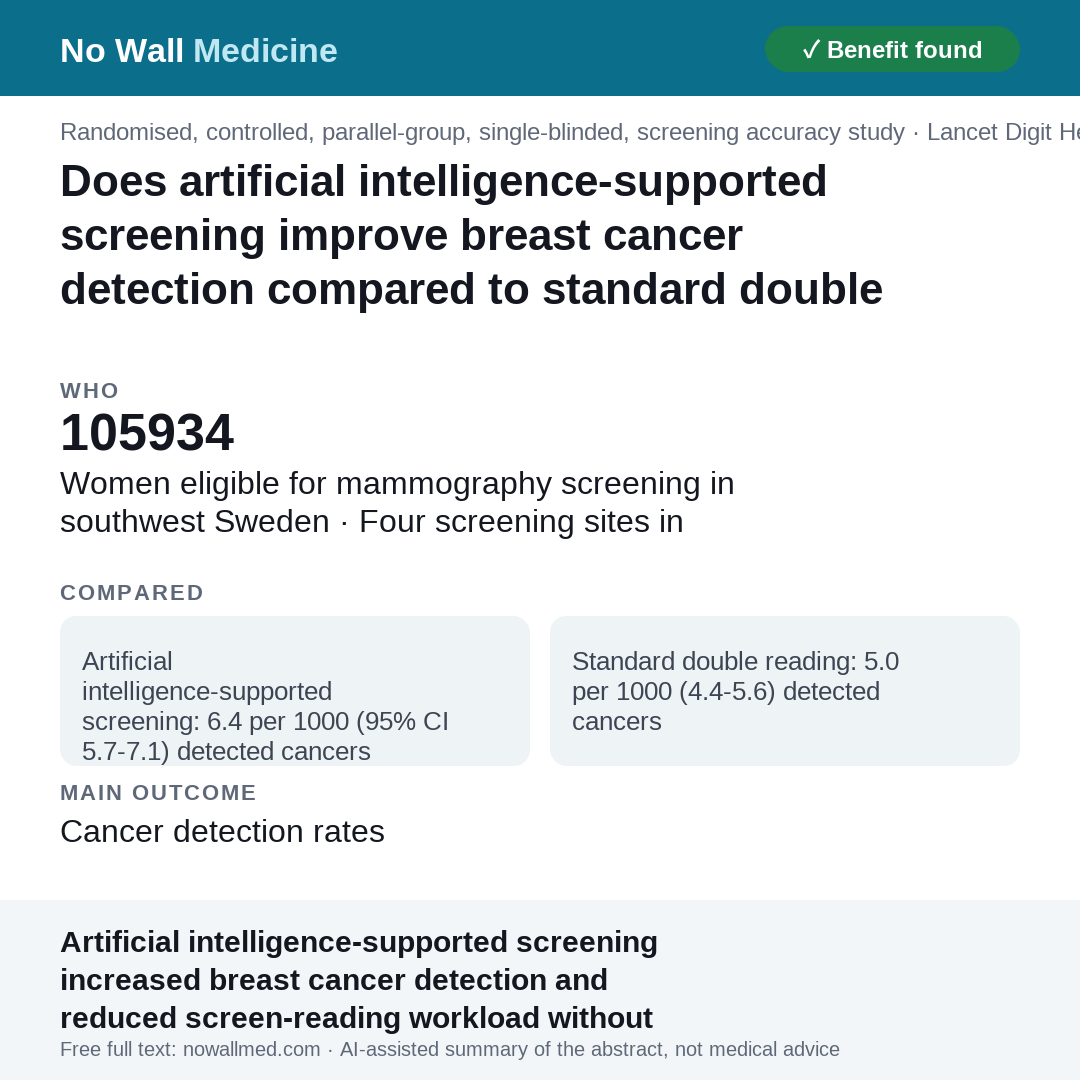
Screening performance and characteristics of breast cancer detected in the Mammography Screening with Artificial Intelligence trial (MASAI): a randomised, controlled, parallel-group, non-inferiority, single-blinded, screening accuracy study
Randomised, controlled, parallel-group, single-blinded, screening accuracy studyBenefit found
Does artificial intelligence-supported screening improve breast cancer detection compared to standard double reading?
Who
105934
Women eligible for mammography screening in southwest Sweden · Four screening sites in southwest Sweden
Compared
Artificial intelligence-supported screening: 6.4 per 1000 (95% CI 5.7-7.1) detected cancers
Standard double reading: 5.0 per 1000 (4.4-5.6) detected cancers
Main outcome
Cancer detection rates
Result: ratio of 1.29 (95% CI 1.09-1.51; p=0.0021)
Bottom line: Artificial intelligence-supported screening increased breast cancer detection and reduced screen-reading workload without increasing false positives.
Funded by: Swedish Cancer Society, Confederation of Regional Cancer Centres, and Swedish governmental funding
Lancet Digit Health · 2025-02-03Download image
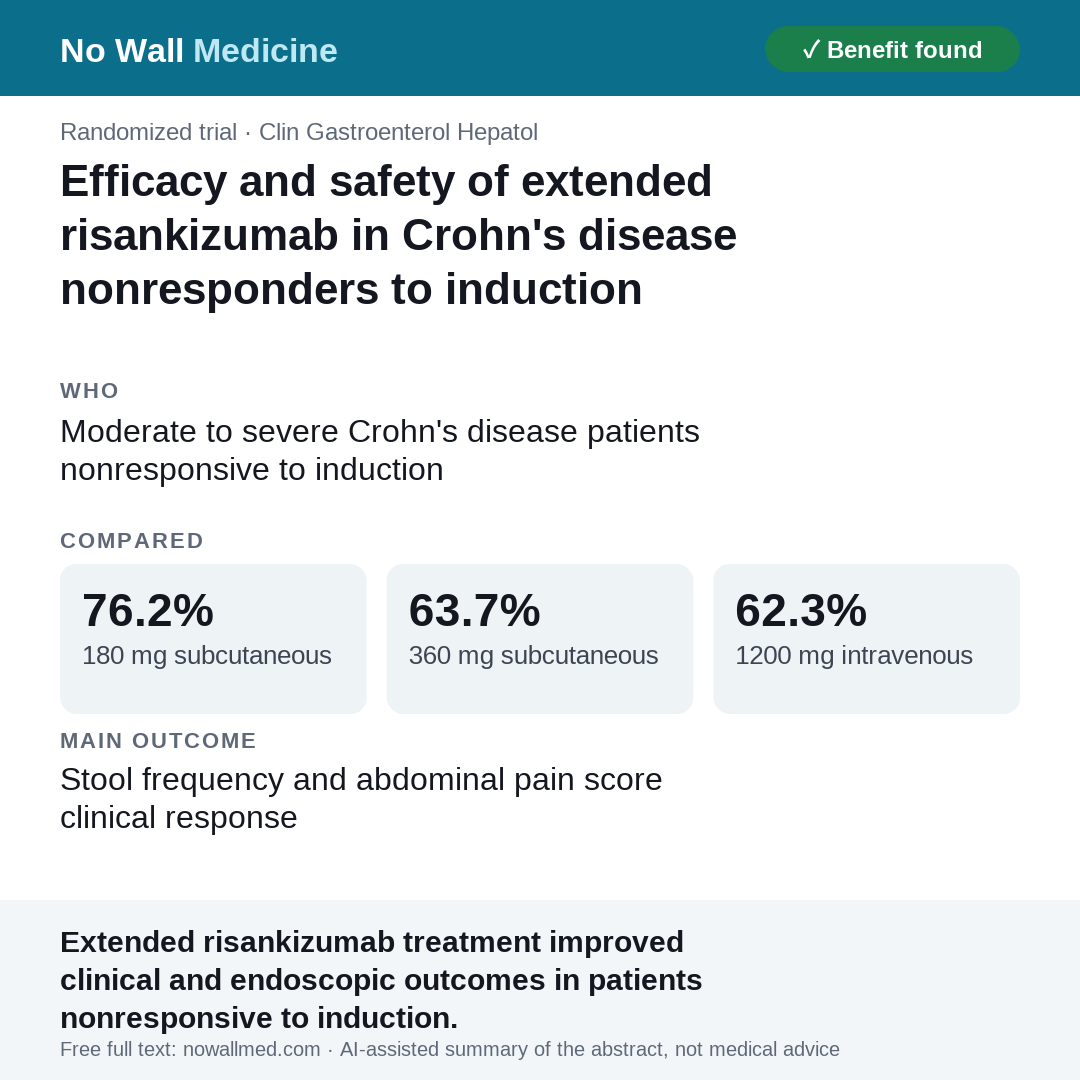
Extended Risankizumab Treatment in Patients With Crohn's Disease Who Did Not Achieve Clinical Response to Induction Treatment
Randomized trialBenefit found
Efficacy and safety of extended risankizumab in Crohn's disease nonresponders to induction
Who
Moderate to severe Crohn's disease patients nonresponsive to induction
Compared
76.2%180 mg subcutaneous
63.7%360 mg subcutaneous
62.3%1200 mg intravenous
Main outcome
Stool frequency and abdominal pain score clinical response
Bottom line: Extended risankizumab treatment improved clinical and endoscopic outcomes in patients nonresponsive to induction.
Clin Gastroenterol Hepatol · 2025-02-03Download image
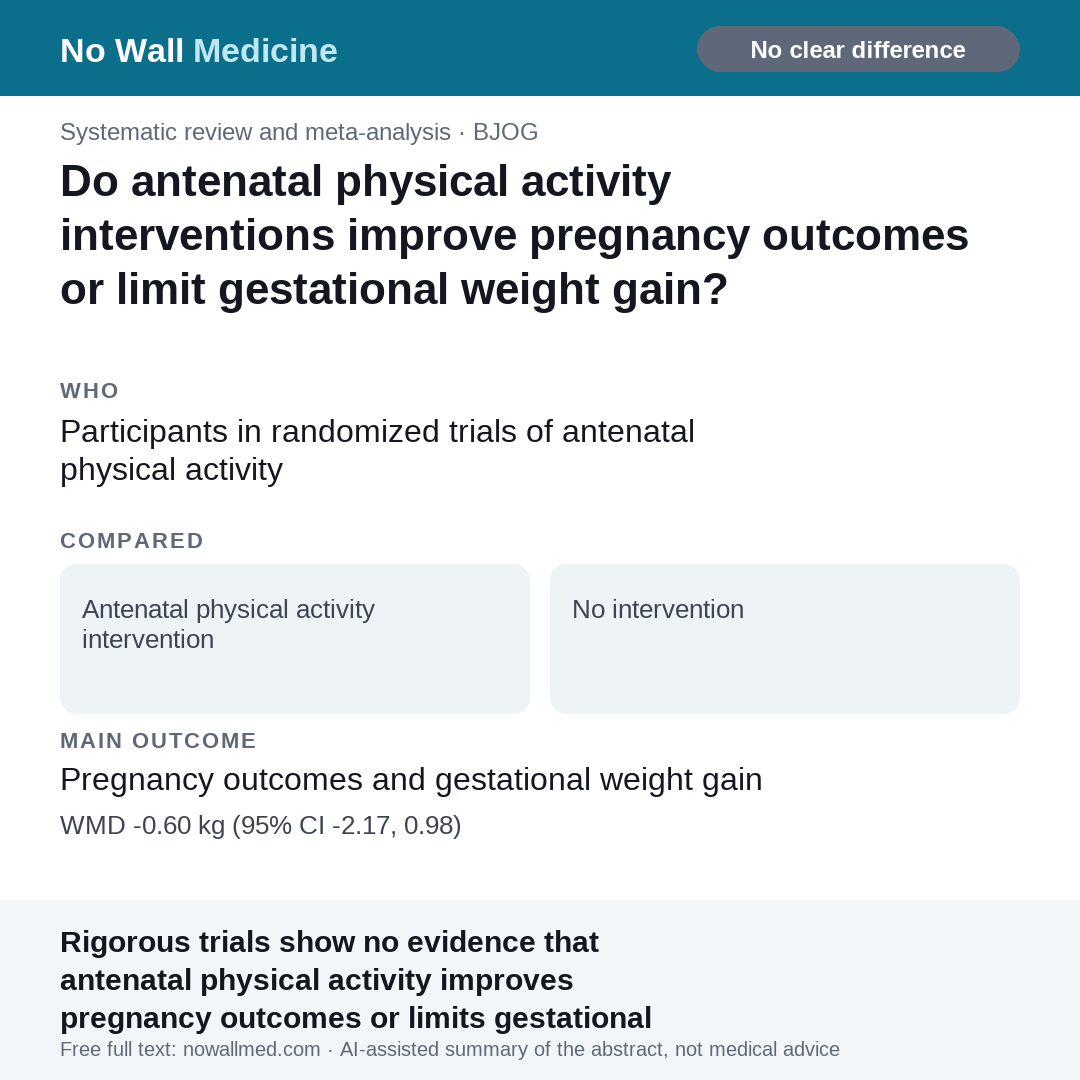
Antenatal Physical Activity Interventions and Pregnancy Outcomes: A Systematic Review and Meta-Analysis With a Focus on Trial Quality
Systematic review and meta-analysisNo clear difference
Do antenatal physical activity interventions improve pregnancy outcomes or limit gestational weight gain?
Who
Participants in randomized trials of antenatal physical activity
Compared
Antenatal physical activity intervention
No intervention
Main outcome
Pregnancy outcomes and gestational weight gain
Result: WMD -0.60 kg (95% CI -2.17, 0.98)
Bottom line: Rigorous trials show no evidence that antenatal physical activity improves pregnancy outcomes or limits gestational weight gain.
Limitation: Most included trials were not methodologically rigorous and had low reporting quality.
BJOG · 2025-02-03Download image
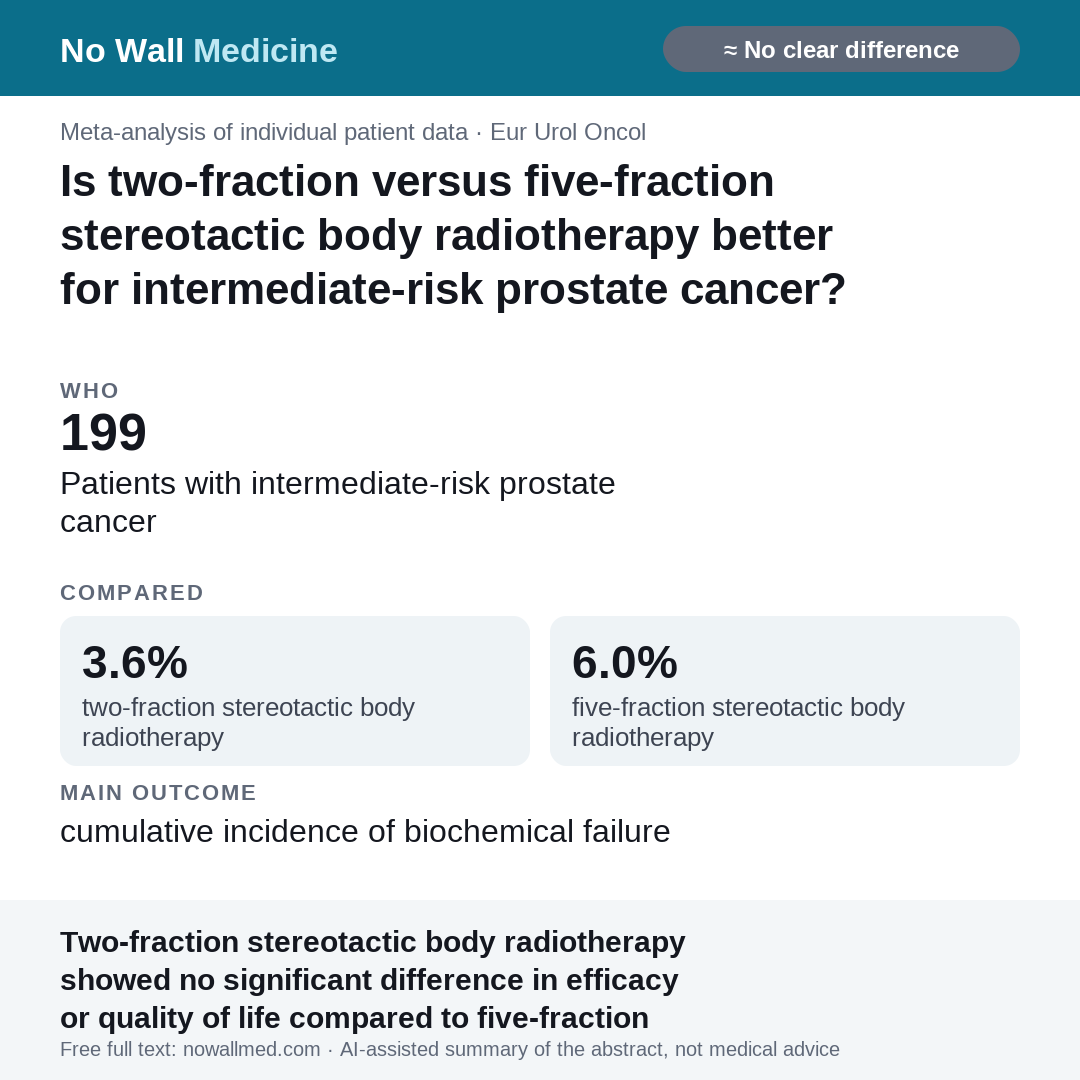
Two-fraction Versus Five-fraction Stereotactic Body Radiotherapy for Intermediate-risk Prostate Cancer: The TOFFEE Meta-analysis of Individual Patient Data from Four Prospective Trials
Meta-analysis of individual patient dataNo clear difference
Is two-fraction versus five-fraction stereotactic body radiotherapy better for intermediate-risk prostate cancer?
Who
199
Patients with intermediate-risk prostate cancer
Compared
3.6%two-fraction stereotactic body radiotherapy (95% CI 0-8.6%)
6.0%five-fraction stereotactic body radiotherapy (95% CI 1.8-10.2%)
Main outcome
cumulative incidence of biochemical failure
Bottom line: Two-fraction stereotactic body radiotherapy showed no significant difference in efficacy or quality of life compared to five-fraction radiotherapy.
Limitation: The comparison was non-randomized.
Eur Urol Oncol · 2025-02-03Download image
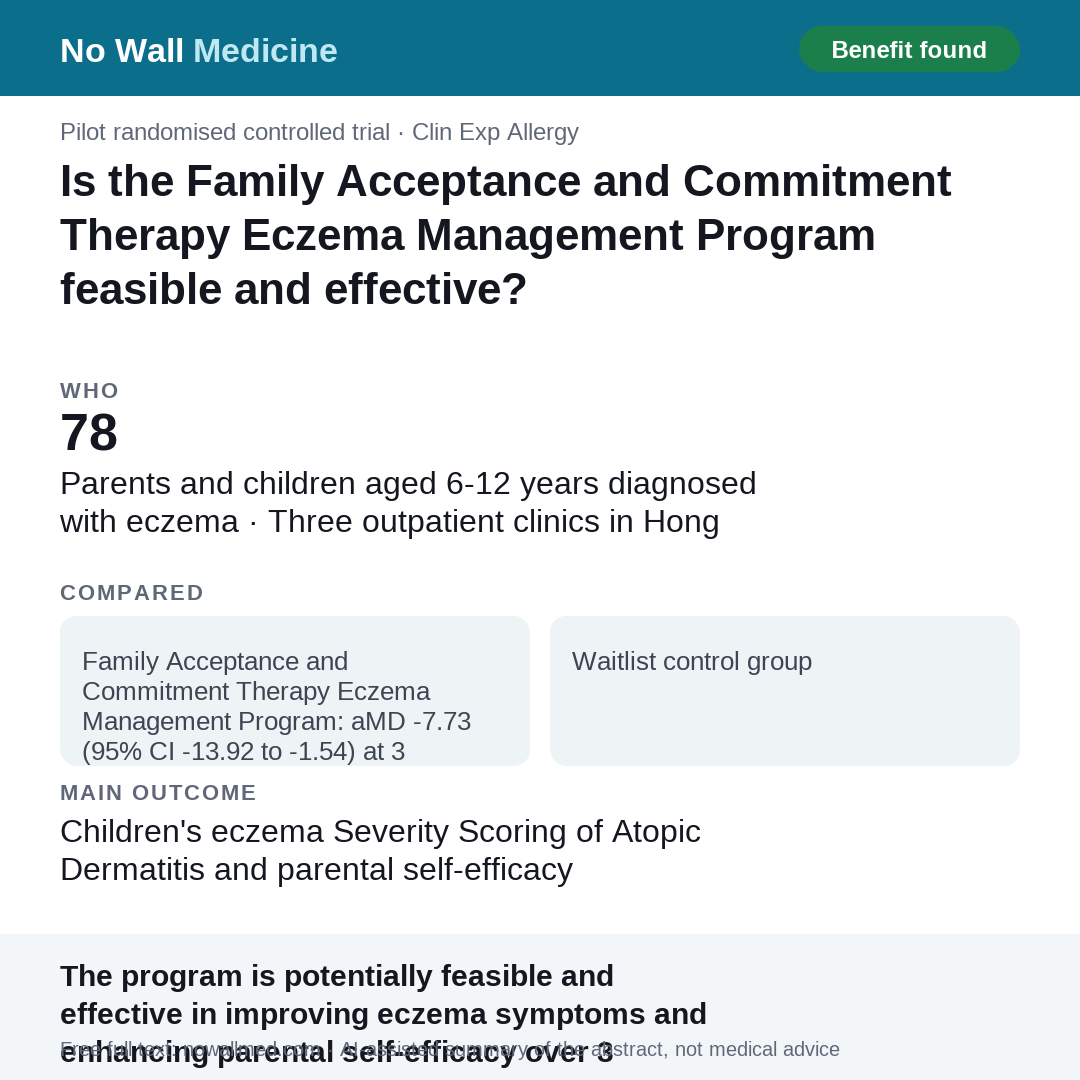
Acceptance and Commitment Therapy Eczema Management Program for Children With Eczema: A Pilot Randomised Controlled Trial
Pilot randomised controlled trialBenefit found
Is the Family Acceptance and Commitment Therapy Eczema Management Program feasible and effective?
Who
78
Parents and children aged 6-12 years diagnosed with eczema · Three outpatient clinics in Hong Kong
Compared
Family Acceptance and Commitment Therapy Eczema Management Program: aMD -7.73 (95% CI -13.92 to -1.54) at 3 months
Waitlist control group
Main outcome
Children's eczema Severity Scoring of Atopic Dermatitis and parental self-efficacy
Result: aMD -7.73 (95% CI -13.92 to -1.54)
Bottom line: The program is potentially feasible and effective in improving eczema symptoms and enhancing parental self-efficacy over 3 months.
Clin Exp Allergy · 2025-02-03Download image
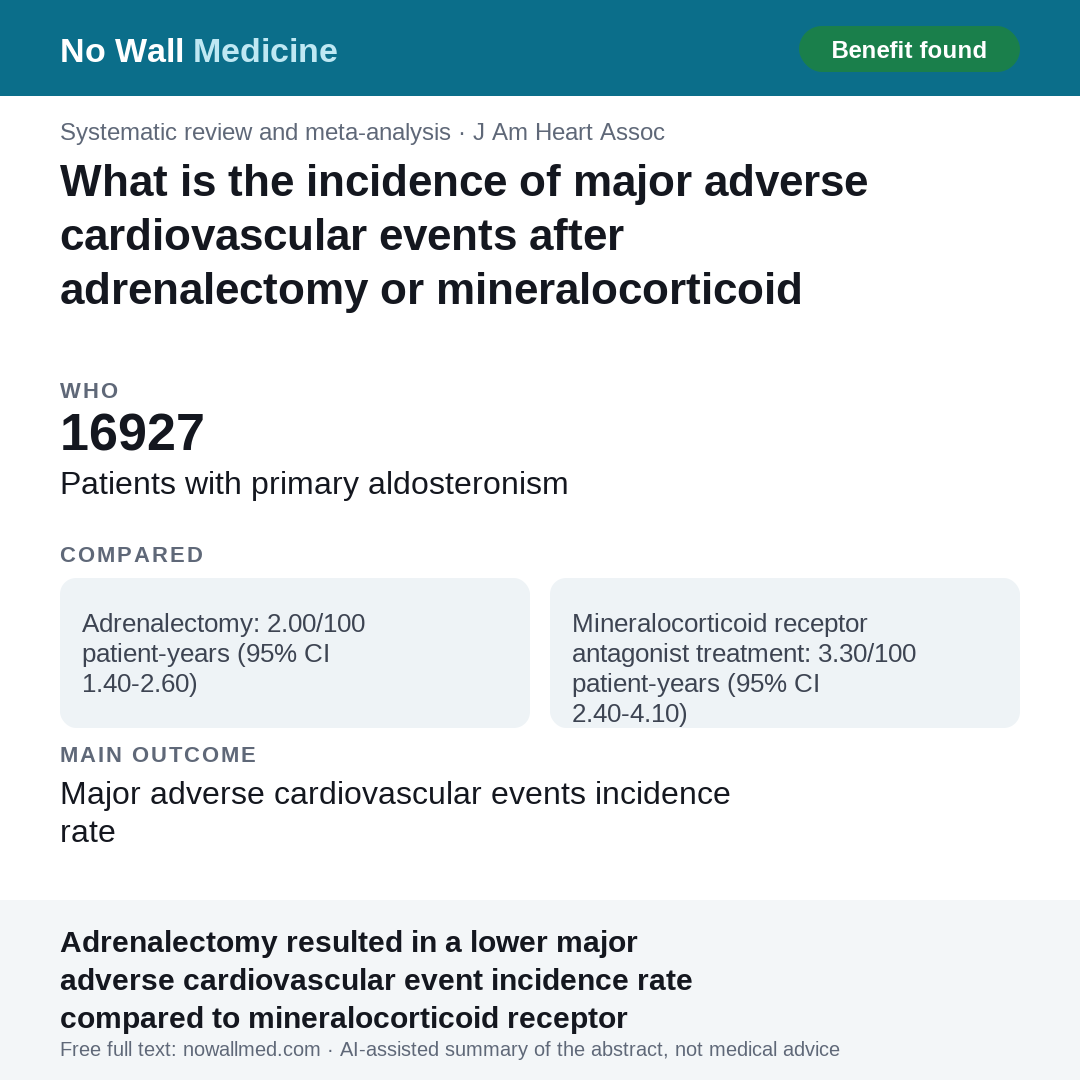
Major Adverse Cardiovascular Events in Primary Aldosteronism After Adrenalectomy or Mineralocorticoid Receptor Antagonist Treatment: A Systematic Review and Meta-Analysis
Systematic review and meta-analysisBenefit found
What is the incidence of major adverse cardiovascular events after adrenalectomy or mineralocorticoid receptor antagonist treatment?
Who
16927
Patients with primary aldosteronism
Compared
Adrenalectomy: 2.00/100 patient-years (95% CI 1.40-2.60)
Mineralocorticoid receptor antagonist treatment: 3.30/100 patient-years (95% CI 2.40-4.10)
Main outcome
Major adverse cardiovascular events incidence rate
Result: 2.20/100 patient-years (95% CI 1.70-2.80)
Bottom line: Adrenalectomy resulted in a lower major adverse cardiovascular event incidence rate compared to mineralocorticoid receptor antagonist treatment.
J Am Heart Assoc · 2025-02-03Download image
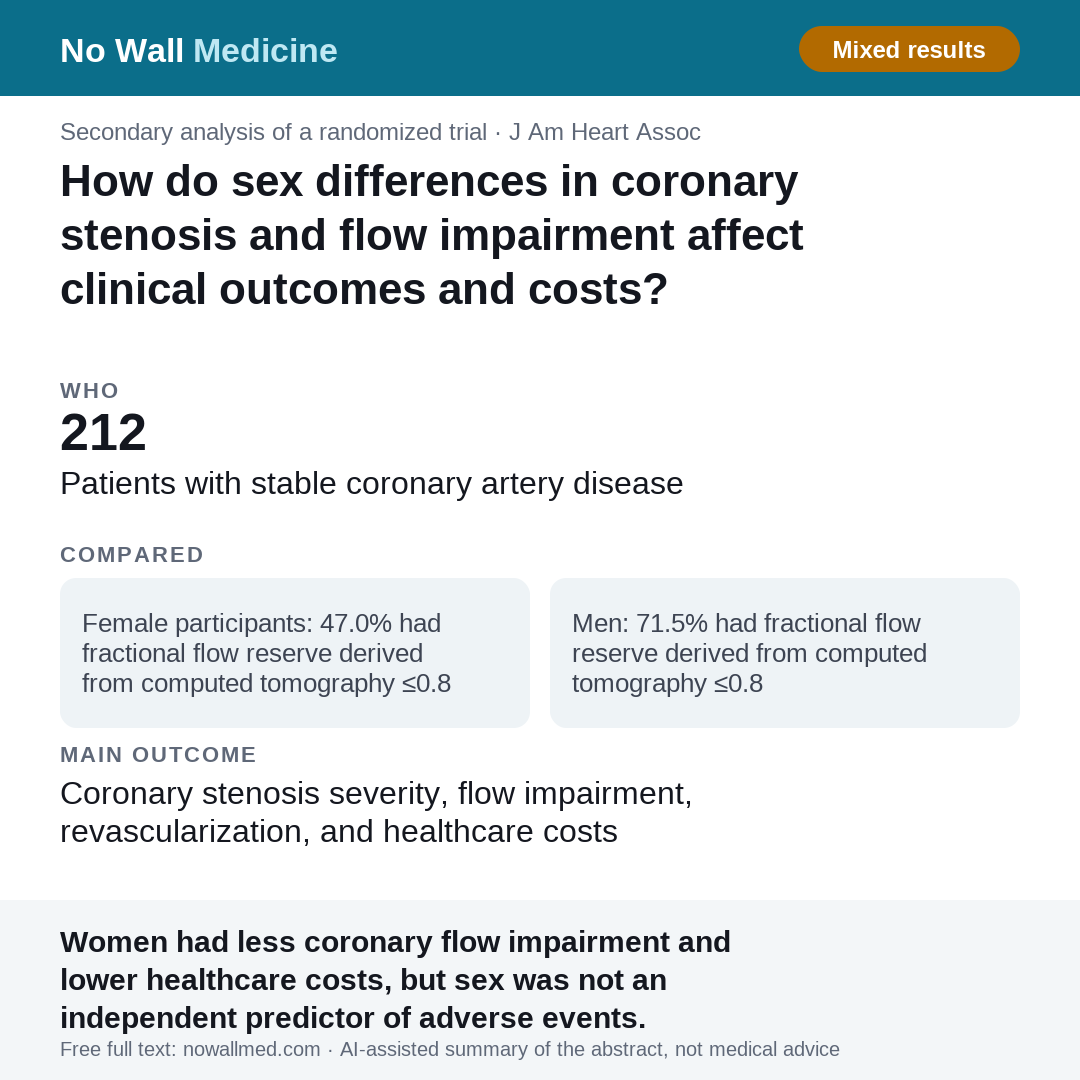
Sex Differences in Computed Tomography Coronary Stenosis Severity Versus Flow Impairment and Impact on Revascularization, Clinical Events and Health Care Costs: A FORECAST Substudy
Secondary analysis of a randomized trialMixed results
How do sex differences in coronary stenosis and flow impairment affect clinical outcomes and costs?
Who
212
Patients with stable coronary artery disease
Compared
Female participants: 47.0% had fractional flow reserve derived from computed tomography ≤0.8
Men: 71.5% had fractional flow reserve derived from computed tomography ≤0.8
Main outcome
Coronary stenosis severity, flow impairment, revascularization, and healthcare costs
Bottom line: Women had less coronary flow impairment and lower healthcare costs, but sex was not an independent predictor of adverse events.
J Am Heart Assoc · 2025-02-03Download image
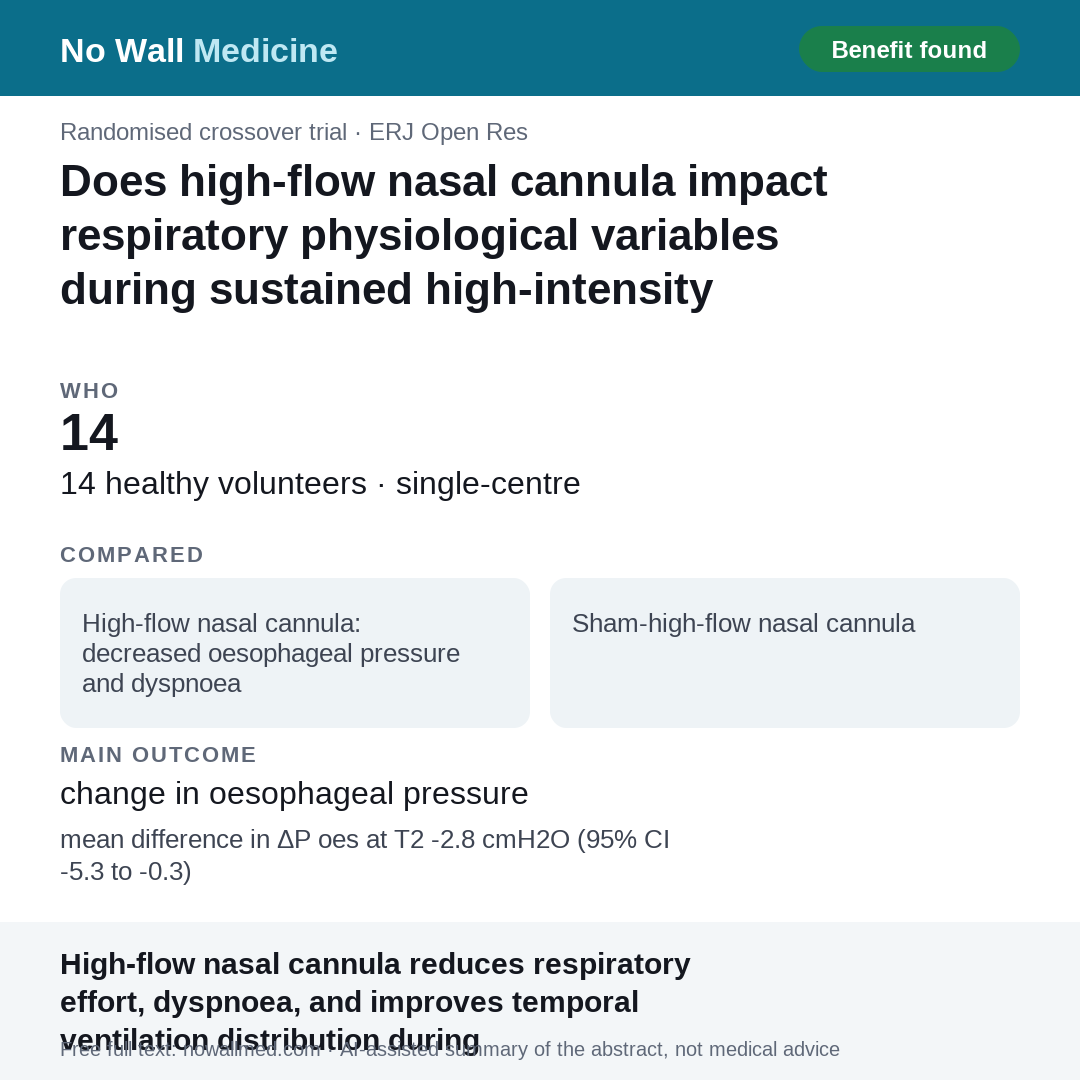
Physiological effects of high-flow nasal cannula during sustained high-intensity exercise in healthy volunteers: a randomised crossover trial
Randomised crossover trialBenefit found
Does high-flow nasal cannula impact respiratory physiological variables during sustained high-intensity exercise?
Who
14
14 healthy volunteers · single-centre
Compared
High-flow nasal cannula: decreased oesophageal pressure and dyspnoea
Sham-high-flow nasal cannula
Main outcome
change in oesophageal pressure
Result: mean difference in ΔP oes at T2 -2.8 cmH2O (95% CI -5.3 to -0.3)
Bottom line: High-flow nasal cannula reduces respiratory effort, dyspnoea, and improves temporal ventilation distribution during high-intensity exercise.
ERJ Open Res · 2025-02-03Download image
Risk factors associated with human Mpox infection: a systematic review and meta-analysis
Systematic review and meta-analysisMixed results
What are the risk factors associated with human Mpox infection?
Who
Human populations in endemic and non-endemic countries · Global
Compared
Interaction with infected animals: OR=5.61 (95% CI 2.83, 11.13)
HIV infection: OR=4.46 (95% CI 3.27, 6.08)
Smallpox vaccination: OR=0.24 (95% CI 0.11, 0.55)
Main outcome
Risk of Mpox infection
Bottom line: Mpox risk increases with animal contact, HIV, and sexual activities, but decreases with smallpox vaccination.
BMJ Glob Health · 2025-02-03Download image

Consistency between metagenomic next-generation sequencing versus traditional microbiological tests for infective disease: systemic review and meta-analysis
Systematic review and meta-analysisMixed results
What is the consistency between metagenomic next-generation sequencing and traditional microbiological tests?
Who
4112
4112 individuals
Compared
Metagenomic next-generation sequencing: 83.63% positive percent agreement
Traditional microbiological tests: 54.59% negative percent agreement
Main outcome
Kappa consistency between metagenomic next-generation sequencing and traditional tests
Result: pooled consistency of 0.319 ± 0.013 (p < 0.001)
Bottom line: Metagenomic next-generation sequencing shows a moderate relationship with traditional pathogen tests, with higher consistency in cerebrospinal fluid.
Limitation: Further research is needed on the use of metagenomic next-generation sequencing in sepsis and septic shock.
Crit Care · 2025-02-03Download image

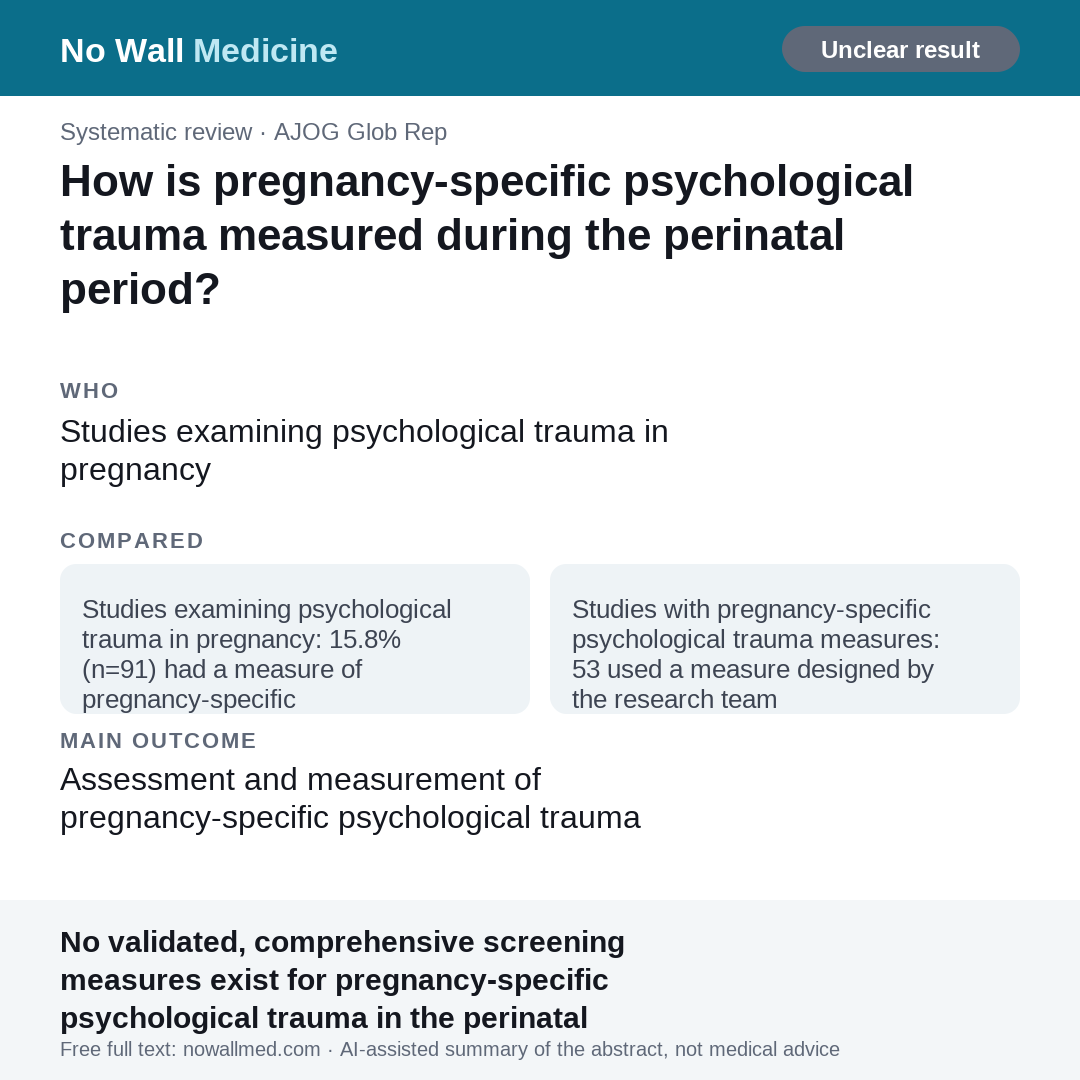
A systematic review on the assessment of pregnancy-specific psychological trauma during pregnancy: A call to action
Systematic reviewUnclear result
How is pregnancy-specific psychological trauma measured during the perinatal period?
Who
Studies examining psychological trauma in pregnancy
Compared
Studies examining psychological trauma in pregnancy: 15.8% (n=91) had a measure of pregnancy-specific psychological trauma
Studies with pregnancy-specific psychological trauma measures: 53 used a measure designed by the research team
Main outcome
Assessment and measurement of pregnancy-specific psychological trauma
Bottom line: No validated, comprehensive screening measures exist for pregnancy-specific psychological trauma in the perinatal period.
Limitation: None mentioned
AJOG Glob Rep · 2025-02-03Download image
Effects of home-based virtual reality upper extremity rehabilitation in persons with chronic stroke: a randomized controlled trial
Single-blind, randomized, controlled trialBenefit found
Does home-based virtual reality upper extremity rehabilitation improve outcomes in chronic stroke?
Who
14
Outpatients with chronic stroke more than 6 months after onset · Two centers
Compared
Virtual reality intervention group: significant improvements in FMA-UE (p = 0.027), MAL (p = 0.014), JTT (p = 0.002), and BBT (p = 0.014)
Conventional home rehabilitation control group
Main outcome
Upper extremity motor function and hand function
Bottom line: Home-based virtual reality combined with occupational therapy leads to greater improvements in upper extremity function and paretic hand use.
J Neuroeng Rehabil · 2025-02-03Download image

Annual versus less frequent mammographic surveillance in people with breast cancer aged 50 years and older in the UK (Mammo-50): a multicentre, randomised, phase 3, non-inferiority trial
Randomised, phase 3, non-inferiority trialBenefit found
Is less frequent mammography non-inferior to annual mammography for breast cancer-specific survival?
Who
5235
Women aged 50 years or older, recurrence free 3 years post surgery · 114 National Health Service hospitals in the UK
Compared
98·1%Annual mammography (95% CI 97·5-98·6)
98·3%Less frequent mammography (97·8-98·8)
Main outcome
5-year breast cancer-specific survival
Result: hazard ratio 0·92, 95% CI 0·64-1·32
Bottom line: Less frequent mammography is non-inferior to annual mammography for breast cancer-specific survival in women aged 50 years or older.
Funded by: National Institute for Health Research Health Technology Assessment programme
Lancet · 2025-02-02Download image

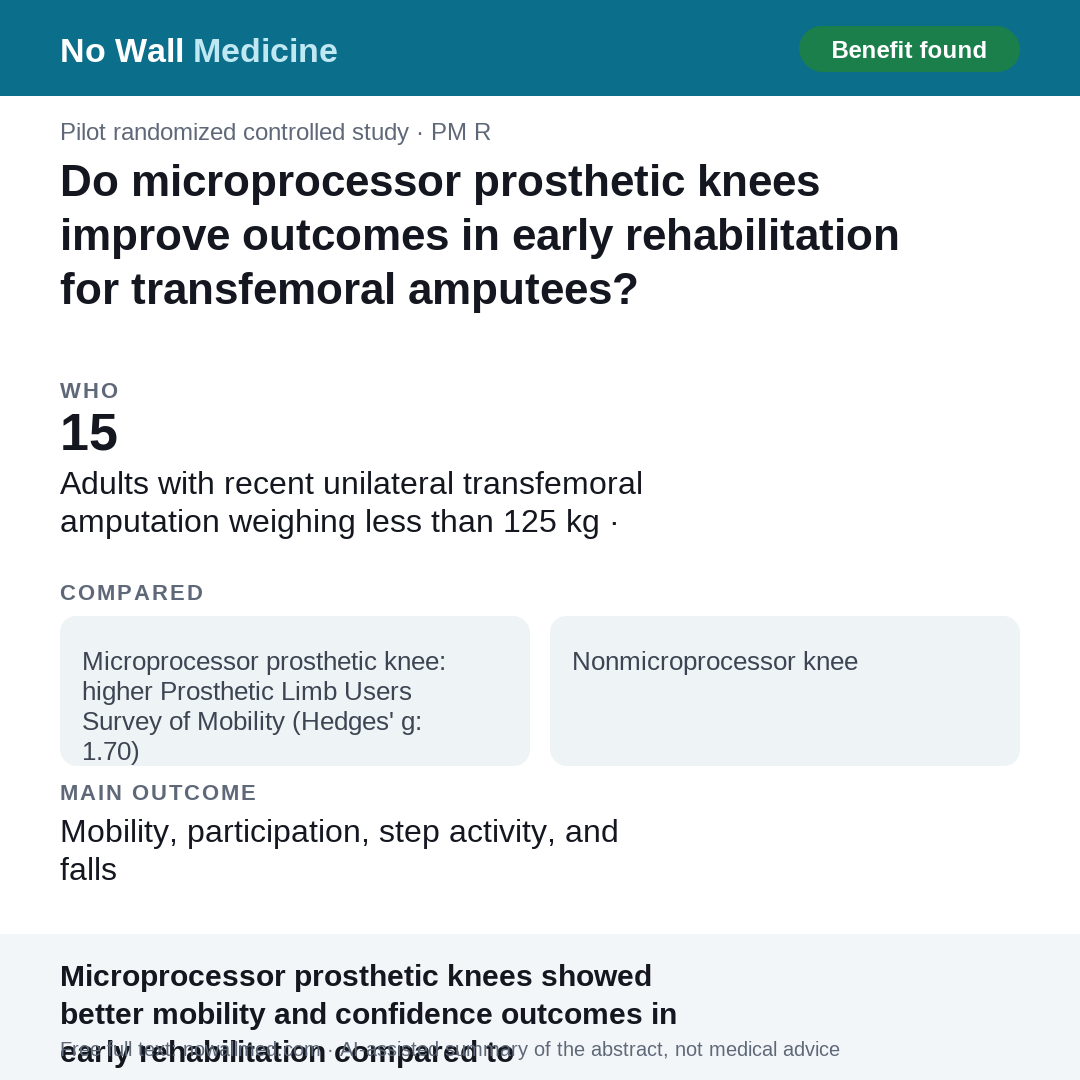
The effects of microprocessor prosthetic knee use in early rehabilitation: A pilot randomized controlled trial
Pilot randomized controlled studyBenefit found
Do microprocessor prosthetic knees improve outcomes in early rehabilitation for transfemoral amputees?
Who
15
Adults with recent unilateral transfemoral amputation weighing less than 125 kg · Institutional laboratory
Compared
Microprocessor prosthetic knee: higher Prosthetic Limb Users Survey of Mobility (Hedges' g: 1.70)
Nonmicroprocessor knee
Main outcome
Mobility, participation, step activity, and falls
Bottom line: Microprocessor prosthetic knees showed better mobility and confidence outcomes in early rehabilitation compared to nonmicroprocessor knees.
Limitation: Small sample size and heterogeneity within groups
PM R · 2025-02-02Download image
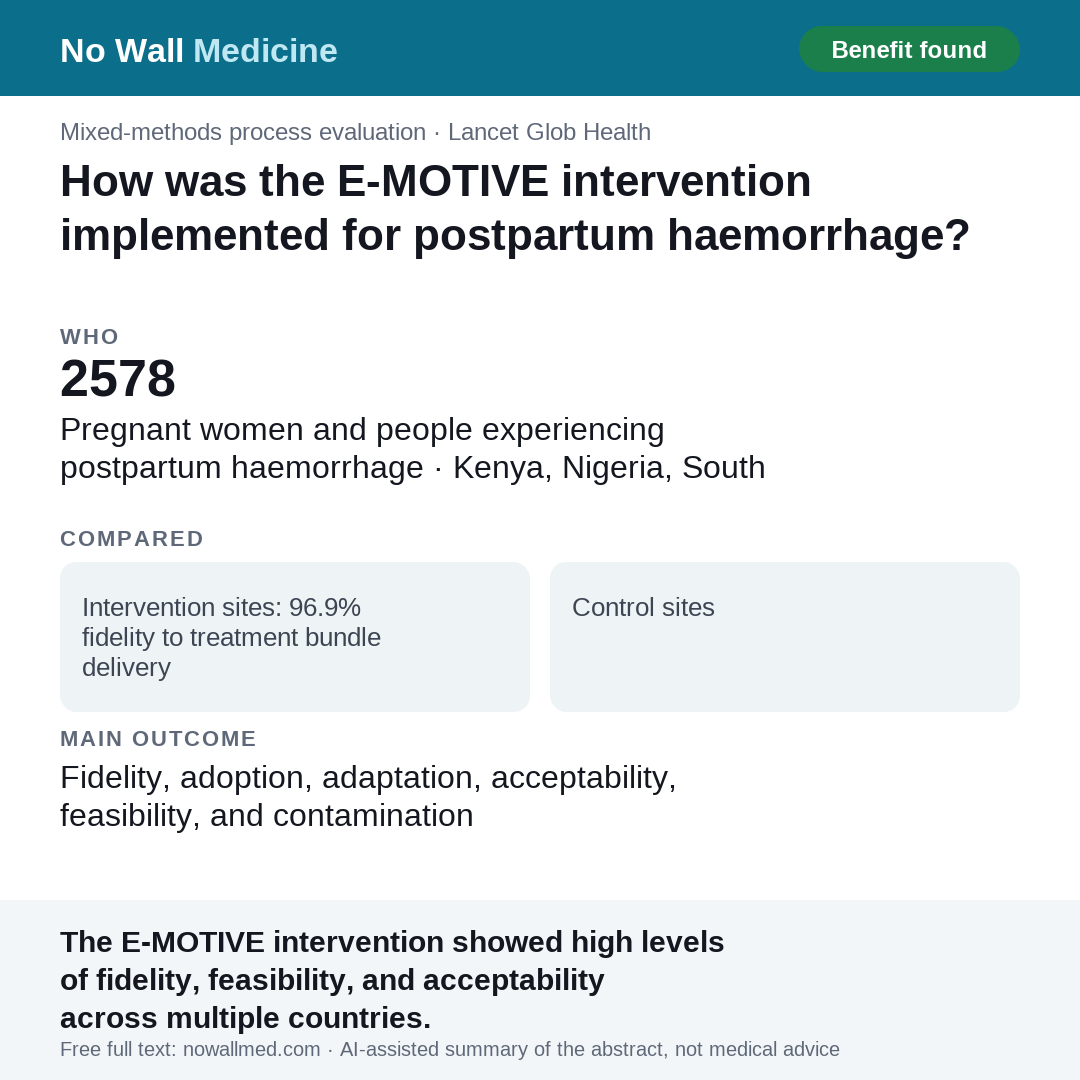
Early detection and a treatment bundle strategy for postpartum haemorrhage: a mixed-methods process evaluation
Mixed-methods process evaluationBenefit found
How was the E-MOTIVE intervention implemented for postpartum haemorrhage?
Who
2578
Pregnant women and people experiencing postpartum haemorrhage · Kenya, Nigeria, South Africa, and Tanzania
Compared
Intervention sites: 96.9% fidelity to treatment bundle delivery
Control sites
Main outcome
Fidelity, adoption, adaptation, acceptability, feasibility, and contamination
Bottom line: The E-MOTIVE intervention showed high levels of fidelity, feasibility, and acceptability across multiple countries.
Limitation: Barriers to pregnant women's and people's acceptability were reported by health workers.
Funded by: Bill and Melinda Gates Foundation and WHO co-sponsored programme
Lancet Glob Health · 2025-02-01Download image
Durability of immunogenicity at 5 years after a single dose of human papillomavirus vaccine compared with two doses in Tanzanian girls aged 9-14 years: results of the long-term extension of the DoRIS randomised trial
Open-label, randomised controlled trialMixed results
Is one dose of HPV vaccine as durable as two doses after 5 years?
Who
930
Tanzanian schoolgirls aged 9-14 years · Tanzania
Compared
one dose: more than 99% (HPV16 seropositivity)
two doses: non-inferior (HPV16 seropositivity)
Main outcome
seropositivity specific to human papillomavirus 16 or 18
Bottom line: One dose provides stable HPV16 immune responses, but non-inferiority for HPV18 seropositivity was not met.
Limitation: ongoing surveillance for potential waning immunity after a single dose is needed
Funded by: UK government, Wellcome Trust, and Bill & Melinda Gates Foundation
Lancet Glob Health · 2025-02-01Download image

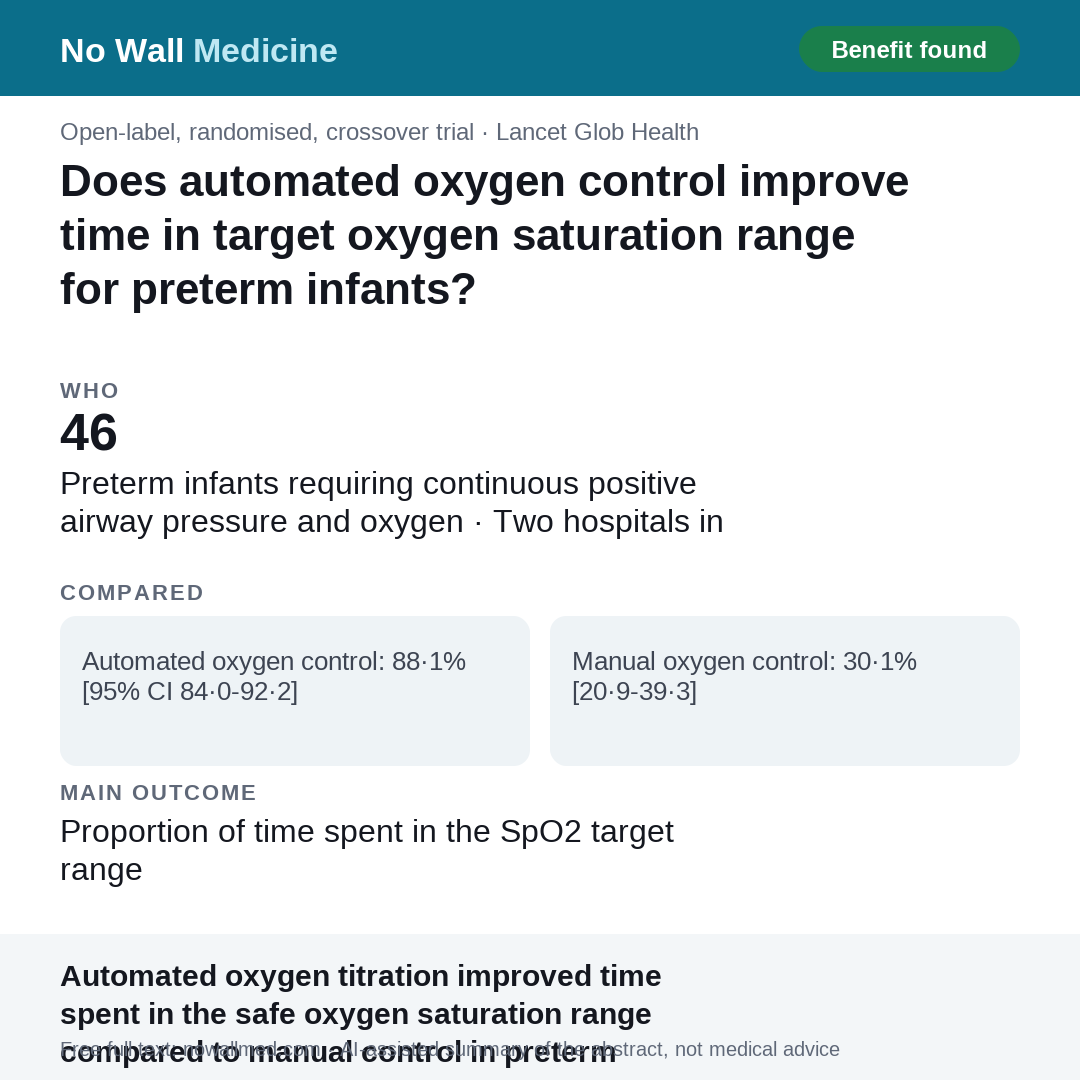
Automated oxygen control for preterm infants receiving continuous positive airway pressure in southwest Nigeria: an open-label, randomised, crossover trial
Open-label, randomised, crossover trialBenefit found
Does automated oxygen control improve time in target oxygen saturation range for preterm infants?
Who
46
Preterm infants requiring continuous positive airway pressure and oxygen · Two hospitals in southwest Nigeria
Compared
Automated oxygen control: 88·1% [95% CI 84·0-92·2]
Manual oxygen control: 30·1% [20·9-39·3]
Main outcome
Proportion of time spent in the SpO2 target range
Result: adjusted mean difference 58·0% [95% CI 48·0-67·9]
Bottom line: Automated oxygen titration improved time spent in the safe oxygen saturation range compared to manual control in preterm infants.
Funded by: National Health and Medical Research Council Australia and University of Tasmania
Lancet Glob Health · 2025-02-01Download image
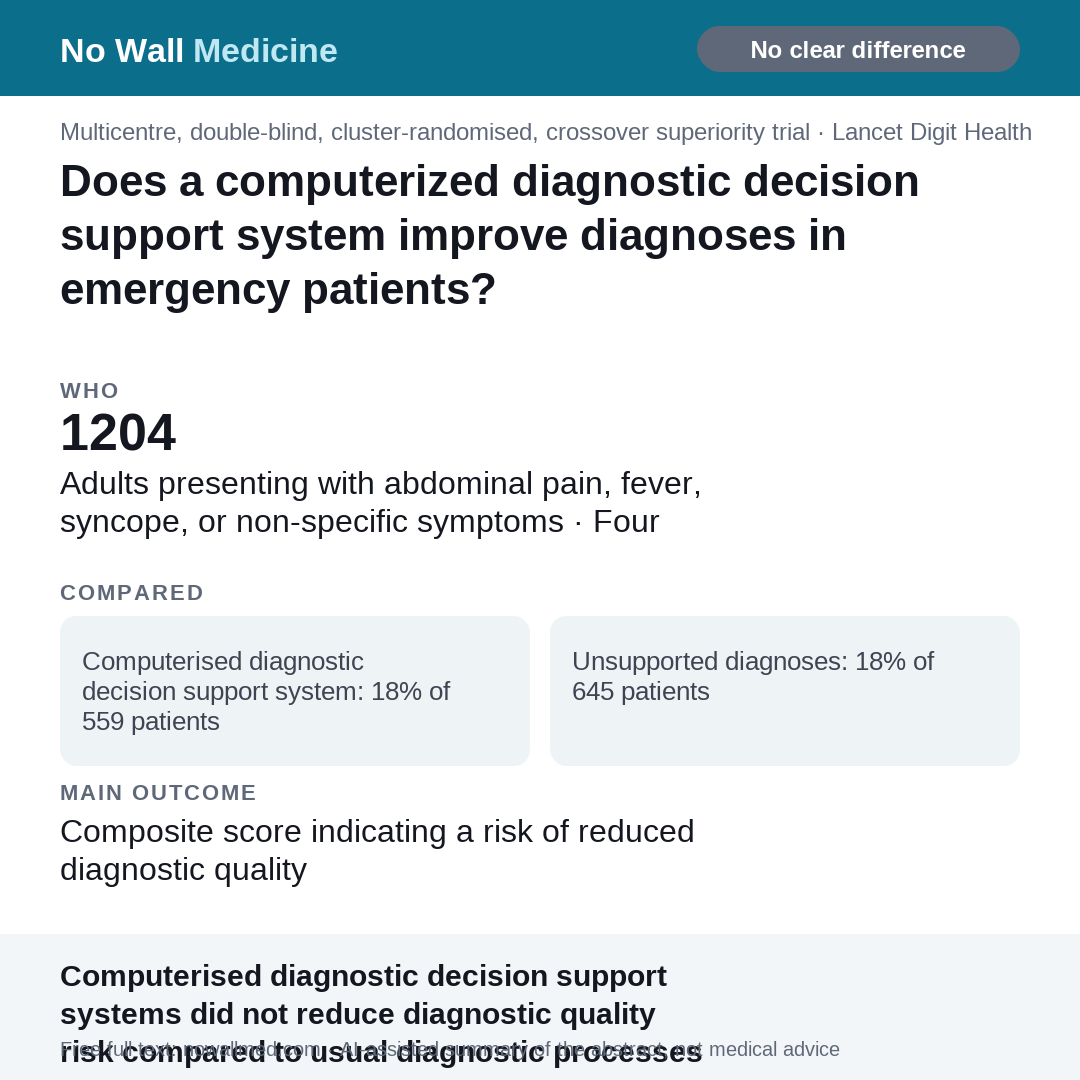
Diagnoses supported by a computerised diagnostic decision support system versus conventional diagnoses in emergency patients (DDX-BRO): a multicentre, multiple-period, double-blind, cluster-randomised, crossover superiority trial
Multicentre, double-blind, cluster-randomised, crossover superiority trialNo clear difference
Does a computerized diagnostic decision support system improve diagnoses in emergency patients?
Who
1204
Adults presenting with abdominal pain, fever, syncope, or non-specific symptoms · Four emergency departments in Switzerland
Compared
Computerised diagnostic decision support system: 18% of 559 patients
Unsupported diagnoses: 18% of 645 patients
Main outcome
Composite score indicating a risk of reduced diagnostic quality
Result: adjusted odds ratio 0·96 (95% CI 0·71-1·3)
Bottom line: Computerised diagnostic decision support systems did not reduce diagnostic quality risk compared to usual diagnostic processes in emergency departments.
Funded by: Swiss National Science Foundation and University Hospital Bern
Lancet Digit Health · 2025-02-01Download image