Visual abstracts
New randomized trials and meta-analyses from leading journals at a glance: who was studied, what was compared, and what was found. Every paper is free to read in full.
All specialtiesCardiology 1334Oncology 1182Gastroenterology & Hepatology 477Infectious Disease 868Neurology 549Psychiatry & Mental Health 661Pulmonology 569Critical Care 394Endocrinology & Diabetes 739Pediatrics 789Surgery 631Orthopedics & Sports Medicine 256Neurosurgery 179Cardiothoracic & Vascular Surgery 151Plastic & Reconstructive Surgery 208Nephrology 283Rheumatology 178Hematology 283Dermatology 142Ophthalmology 151Obstetrics & Gynecology 417Public & Global Health 261Radiology & Imaging 171Anesthesiology 253Urology 246ENT (Otolaryngology) 182Emergency Medicine 144Allergy & Immunology 90Geriatrics 277Family Medicine & Primary Care 168Medical Genetics & Genomics 142Pathology & Laboratory Medicine 41Physical Medicine & Rehabilitation 230Palliative Care 122Nutrition 347Digital Health & AI 686General Medicine 121
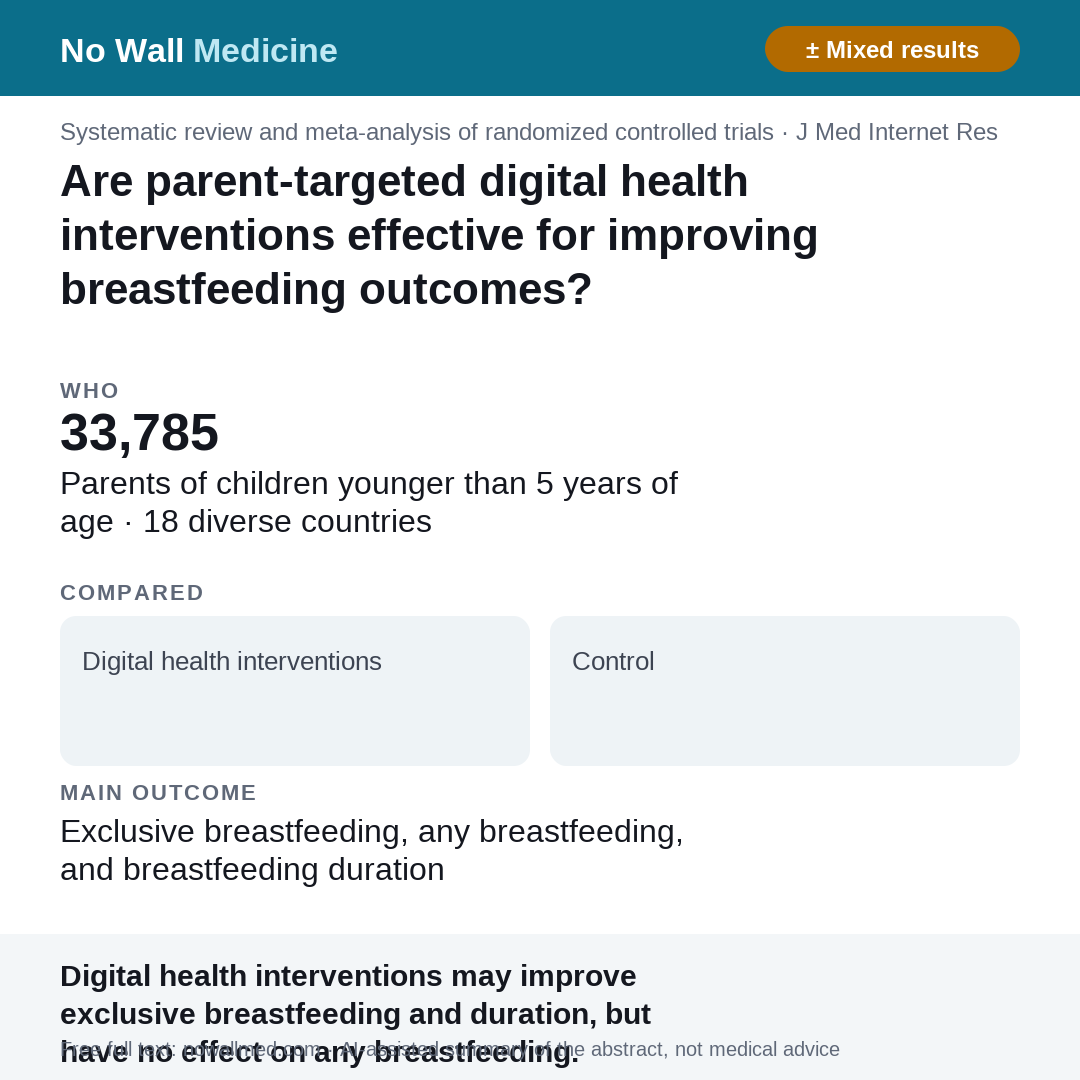
The Effectiveness of Parent-Targeted Digital Health Interventions on Breastfeeding Practices: Systematic Review and Meta-Analysis of Randomized Controlled Trials
Systematic review and meta-analysis of randomized controlled trialsMixed results
Are parent-targeted digital health interventions effective for improving breastfeeding outcomes?
Who
33,785
Parents of children younger than 5 years of age · 18 diverse countries
Compared
Digital health interventions
Control
Main outcome
Exclusive breastfeeding, any breastfeeding, and breastfeeding duration
Result: odds ratio 2.58 (95% CI 1.91-3.50) for exclusive breastfeeding
Bottom line: Digital health interventions may improve exclusive breastfeeding and duration, but have no effect on any breastfeeding.
Limitation: Variable risk of bias, potential publication bias, and substantial heterogeneity.
J Med Internet Res · 2026-07-02Download image
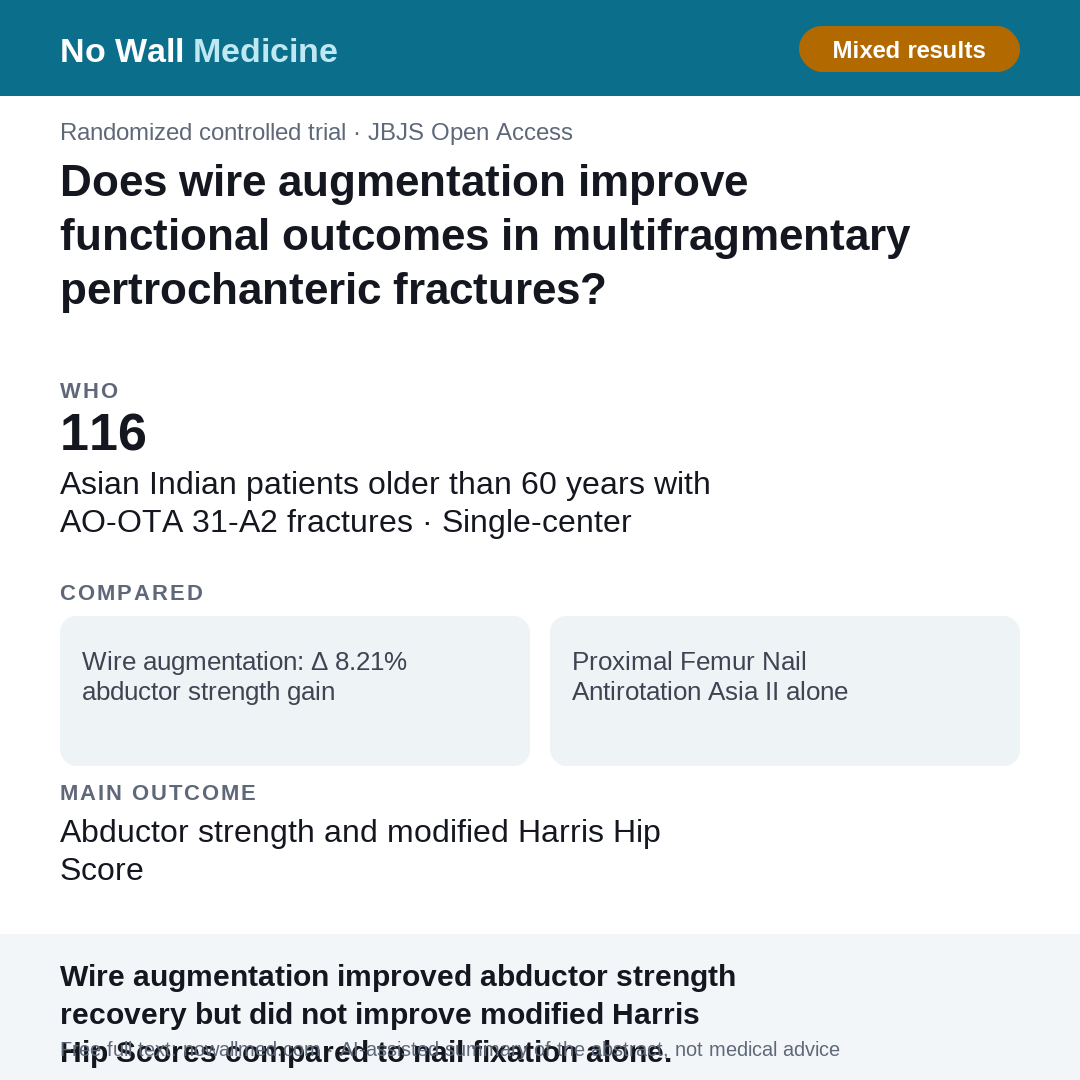
Should We Reconstruct Coronal Plane Fractures in Multifragmentary Pertrochanteric Fractures? A Randomized Controlled Trial
Randomized controlled trialMixed results
Does wire augmentation improve functional outcomes in multifragmentary pertrochanteric fractures?
Who
116
Asian Indian patients older than 60 with AO-OTA 31-A2 fractures · Single-center
Compared
Wire augmentation: Δ 8.21% abductor strength gain
Proximal Femur Nail Antirotation II alone
Main outcome
Abductor strength and modified Harris Hip Score
Result: Δ 8.21% (95% confidence interval, 4.4-12.83) for abductor strength
Bottom line: Wire augmentation improved abductor strength recovery, especially for fragments larger than 50%, but modified Harris Hip Scores were similar.
JBJS Open Access · 2026-07-02Download image
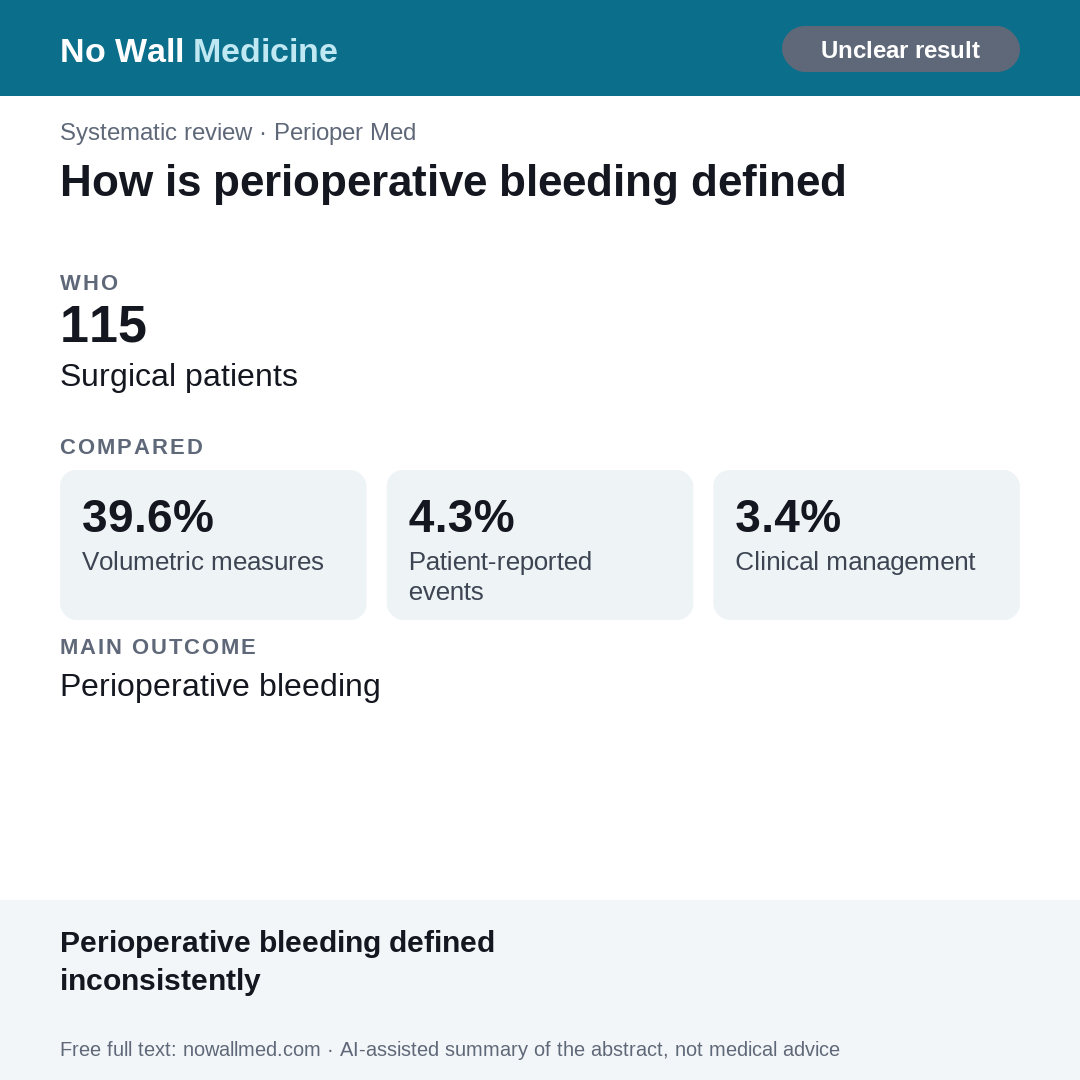
Definition, analysis, reporting, and interpretation of perioperative bleeding in randomized controlled trials: a methodological systematic review
Systematic reviewUnclear result
How is perioperative bleeding defined
Who
115
Surgical patients
Compared
39.6%Volumetric measures
4.3%Patient-reported events
3.4%Clinical management
Main outcome
Perioperative bleeding
Bottom line: Perioperative bleeding defined inconsistently
Limitation: High inconsistency in definitions
Perioper Med · 2026-07-02Download image
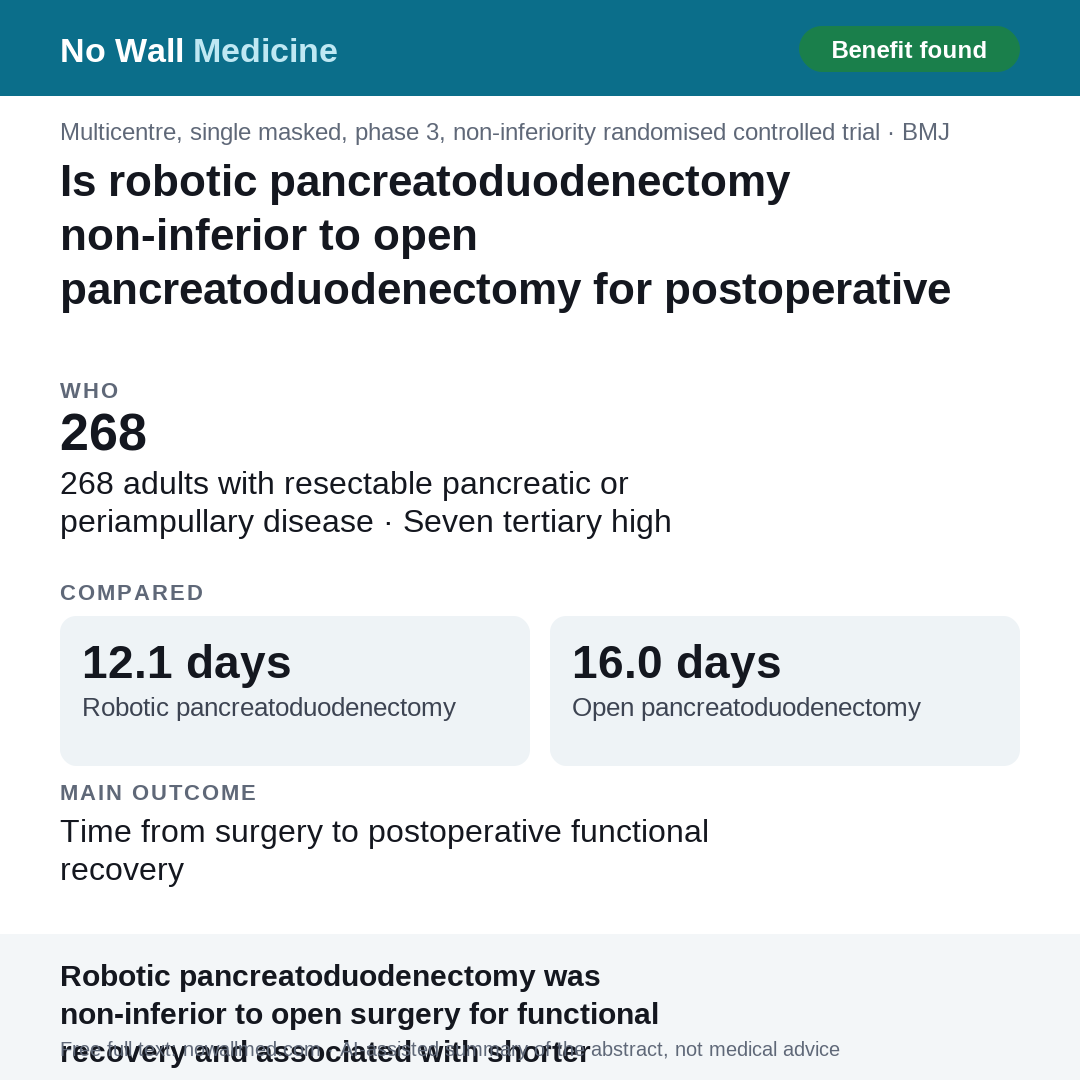
Robotic versus Open Pancreatoduodenectomy (PORTAL): multicentre, single masked, phase 3, non-inferiority randomised controlled trial
Multicentre, single masked, phase 3, non-inferiority randomised controlled trialBenefit found
Is robotic pancreatoduodenectomy non-inferior to open pancreatoduodenectomy for postoperative functional recovery?
Who
268
268 adults with resectable pancreatic or periampullary disease · Seven tertiary high volume pancreatic centres in China
Compared
12.1 daysRobotic pancreatoduodenectomy (95% CI 11.2 to 13.1)
16.0 daysOpen pancreatoduodenectomy (14.5 to 17.5)
Main outcome
Time from surgery to postoperative functional recovery
Result: difference -3.9 days, 95% CI -5.6 to -2.2
Bottom line: Robotic pancreatoduodenectomy was non-inferior to open surgery for functional recovery and associated with shorter hospital stays.
BMJ · 2026-07-01Download image
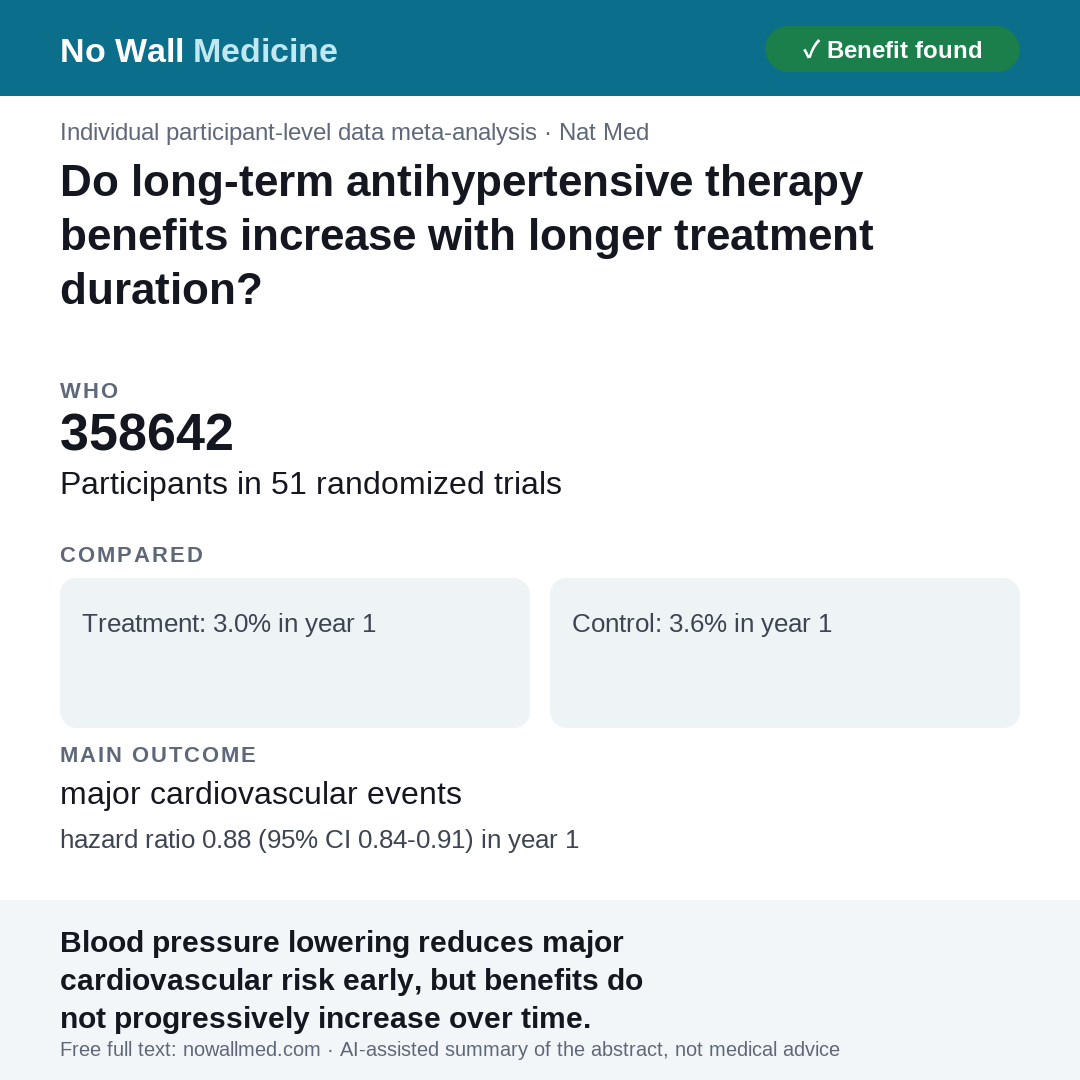
A meta-analysis of the long-term effects of antihypertensive therapy on the risk of major cardiovascular disease across 51 randomized trials
Individual participant-level data meta-analysisBenefit found
Do long-term antihypertensive therapy benefits increase with longer treatment duration?
Who
358642
Participants in 51 randomized trials
Compared
Treatment: 3.0% in year 1
Control: 3.6% in year 1
Main outcome
major cardiovascular events
Result: hazard ratio 0.88 (95% CI 0.84-0.91) in year 1
Bottom line: Blood pressure lowering reduces major cardiovascular risk early, but benefits do not progressively increase over time.
Nat Med · 2026-07-01Download image
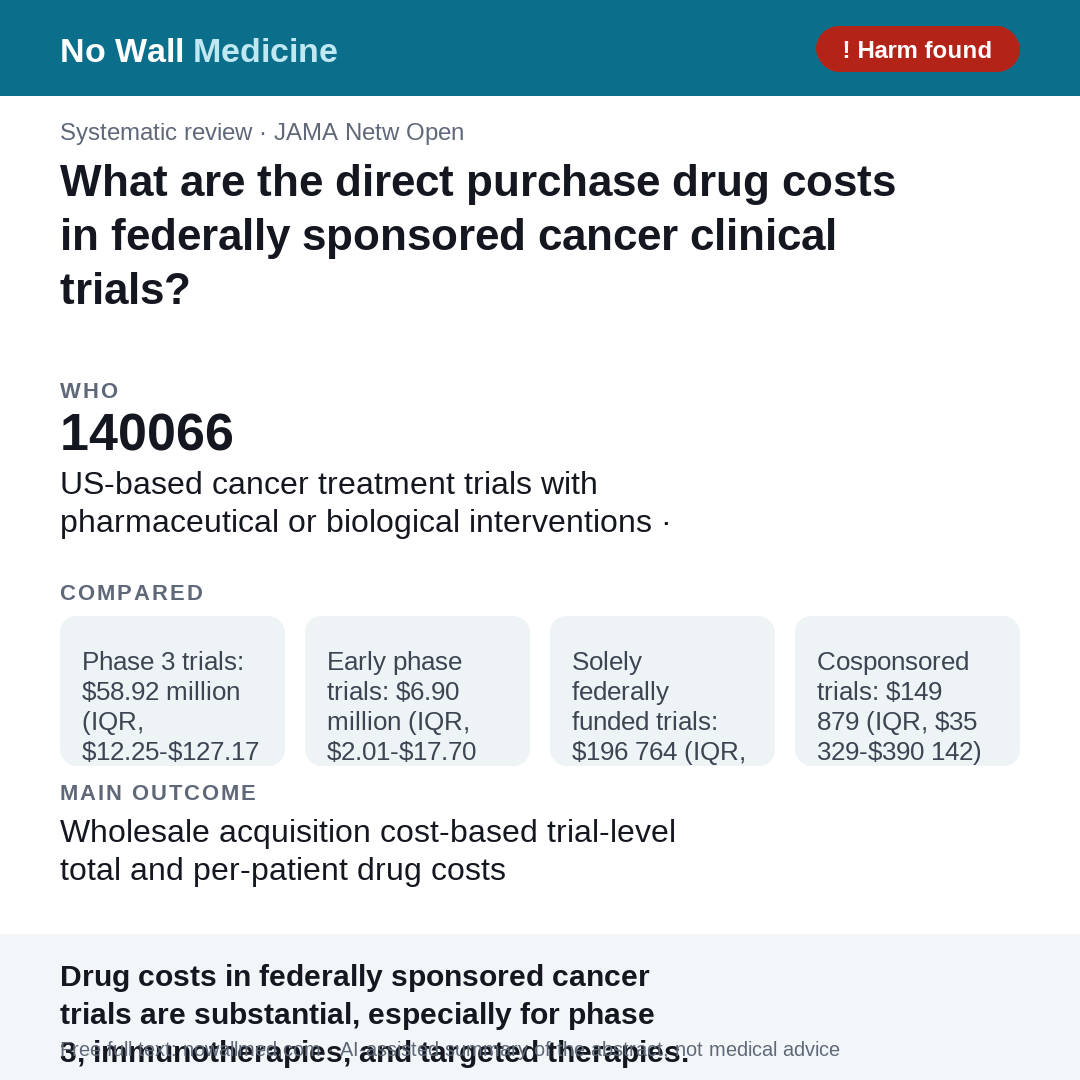
Drug Costs in Federally Sponsored Cancer Clinical Trials: A Systematic Review
Systematic reviewHarm found
What are the direct purchase drug costs in federally sponsored cancer clinical trials?
Who
140066
US-based cancer treatment trials with pharmaceutical or biological interventions · United States
Compared
Phase 3 trials: $58.92 million (IQR, $12.25-$127.17 million)
Early phase trials: $6.90 million (IQR, $2.01-$17.70 million)
Solely federally funded trials: $196 764 (IQR, $83 516-$414 514)
Cosponsored trials: $149 879 (IQR, $35 329-$390 142)
Main outcome
Wholesale acquisition cost-based trial-level total and per-patient drug costs
Bottom line: Drug costs in federally sponsored cancer trials are substantial, especially for phase 3, immunotherapies, and targeted therapies.
JAMA Netw Open · 2026-07-01Download image
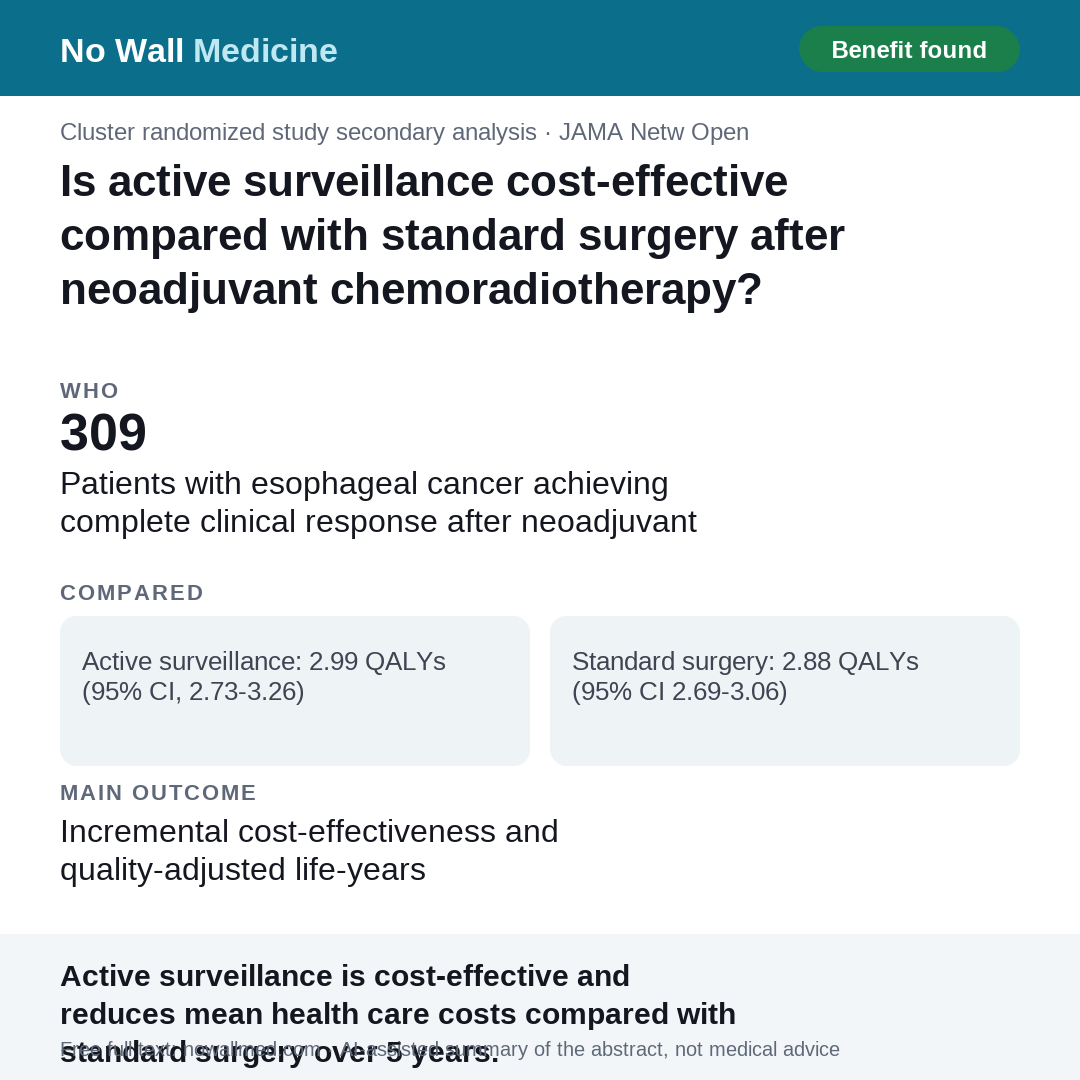
Surveillance vs Standard Surgery and Cost-Effectiveness After Neoadjuvant Chemoradiotherapy for Esophageal Cancer: Secondary Analysis of a Randomized Clinical Trial
Cluster randomized study secondary analysisBenefit found
Is active surveillance cost-effective compared with standard surgery after neoadjuvant chemoradiotherapy?
Who
309
Patients with esophageal cancer achieving complete clinical response after neoadjuvant chemoradiotherapy · 12 hospitals in the Netherlands
Compared
Active surveillance: 2.99 QALYs (95% CI, 2.73-3.26)
Standard surgery: 2.88 QALYs (95% CI 2.69-3.06)
Main outcome
Incremental cost-effectiveness and quality-adjusted life-years
Result: incremental QALY 0.11 (95% CI, -0.10 to 0.33)
Bottom line: Active surveillance is cost-effective and reduces mean health care costs compared with standard surgery over 5 years.
JAMA Netw Open · 2026-07-01Download image
Restrictive vs Liberal Transfusion Strategy After Myocardial Infarction: A Post Hoc Analysis of the MINT Randomized Clinical Trial
Post hoc analysis of a randomized clinical trialBenefit found
Is a liberal or restrictive transfusion strategy better for myocardial infarction and anemia?
Who
3504
Adults hospitalized with myocardial infarction and anemia · 144 sites in 6 countries
Compared
Liberal transfusion strategy
Restrictive transfusion strategy
Main outcome
30-day death or myocardial infarction and heart failure
Result: risk difference 1.4% (95% credible interval, -0.8% to 3.5%) to 2.4% (95% credible interval, 0.3%-4.6%) lower
Bottom line: A liberal transfusion strategy was associated with lower 30-day death or myocardial infarction risk, outweighing increased heart failure risk.
JAMA Netw Open · 2026-07-01Download image

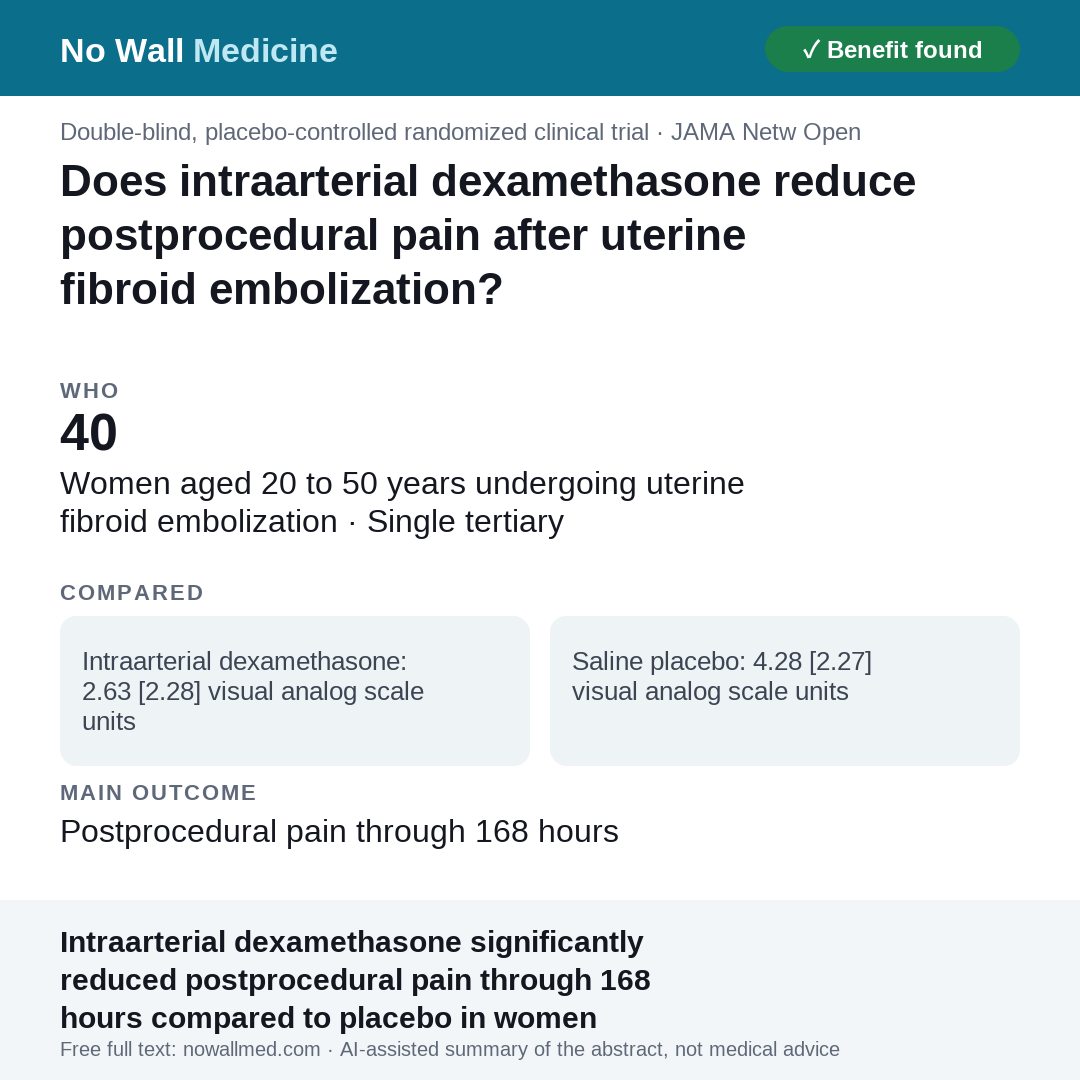
Intraarterial Dexamethasone for Pain Relief After Uterine Fibroid Embolization: A Randomized Clinical Trial
Double-blind, placebo-controlled randomized clinical trialBenefit found
Does intraarterial dexamethasone reduce postprocedural pain after uterine fibroid embolization?
Who
40
Women aged 20 to 50 years undergoing uterine fibroid embolization · Single tertiary academic medical center
Compared
Intraarterial dexamethasone: 2.63 [2.28] visual analog scale units
Saline placebo: 4.28 [2.27] visual analog scale units
Main outcome
Postprocedural pain through 168 hours
Result: mean difference, -1.64 (95% CI, -3.10 to -0.19)
Bottom line: Intraarterial dexamethasone significantly reduced postprocedural pain through 168 hours compared to placebo in women undergoing uterine fibroid embolization.
JAMA Netw Open · 2026-07-01Download image
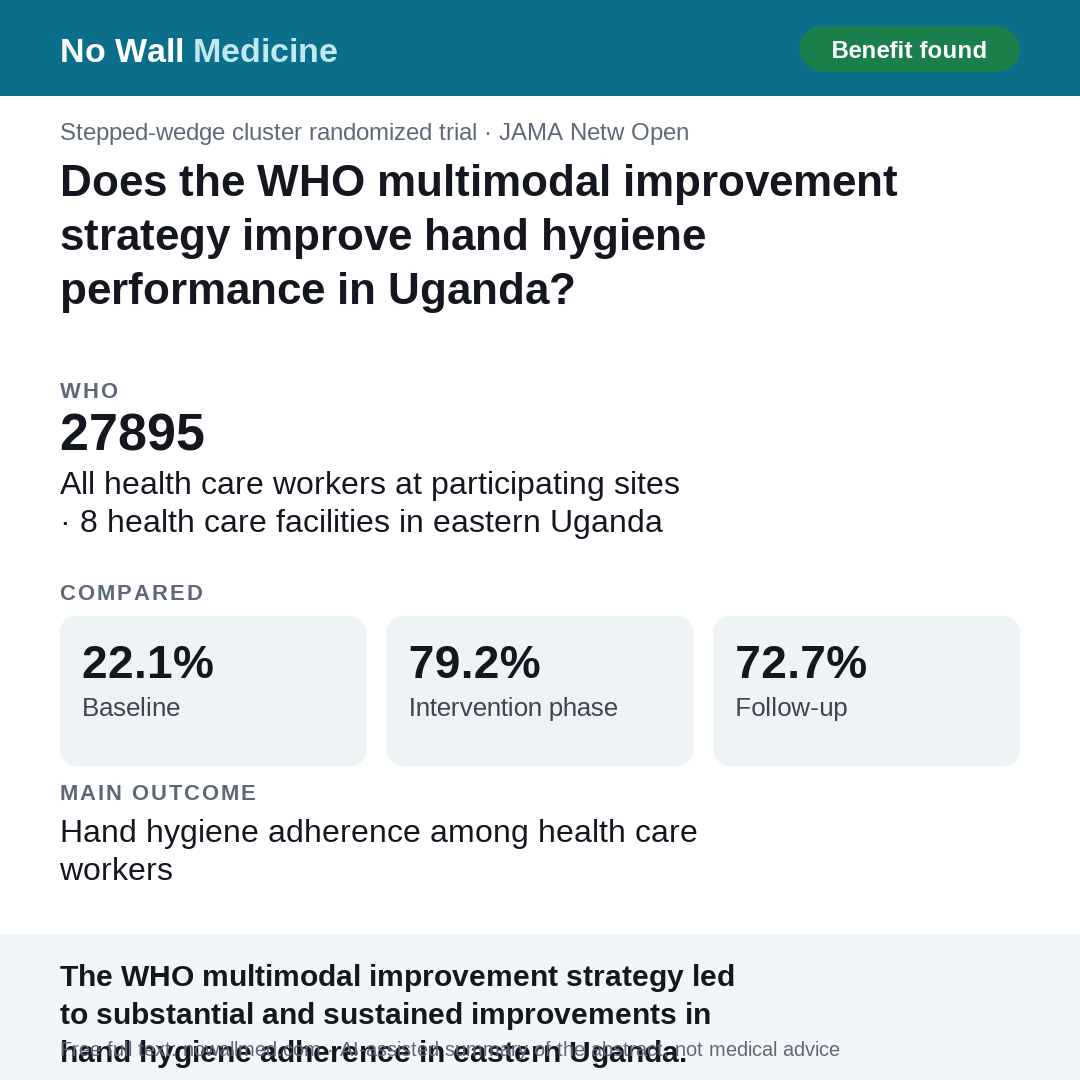
World Health Organization Multimodal Improvement Strategy for Hand Hygiene: A Stepped-Wedge Cluster Randomized Trial
Stepped-wedge cluster randomized trialBenefit found
Does the WHO multimodal improvement strategy improve hand hygiene performance in Uganda?
Who
27895
All health care workers at participating sites · 8 health care facilities in eastern Uganda
Compared
22.1%Baseline (95% CI, 11.4%-32.8%)
79.2%Intervention phase (95% CI, 67.2%-91.2%)
72.7%Follow-up (95% CI, 57.8%-87.6%)
Main outcome
Hand hygiene adherence among health care workers
Bottom line: The WHO multimodal improvement strategy led to substantial and sustained improvements in hand hygiene adherence in eastern Uganda.
JAMA Netw Open · 2026-07-01Download image
Variability in the Diagnostic Criteria for Severe Pertussis: A Systematic Review
Systematic reviewMixed results
What is the variability in terminology and criteria used to define severe pertussis?
Who
78
Studies involving infants with pertussis
Compared
Terminology used: 5 different terms identified
Clinical severity criteria: 22 different criteria used
Main outcome
Variability in terminology and criteria for severe pertussis
Bottom line: There is substantial heterogeneity in how severe pertussis is defined across published literature.
JAMA Netw Open · 2026-07-01Download image

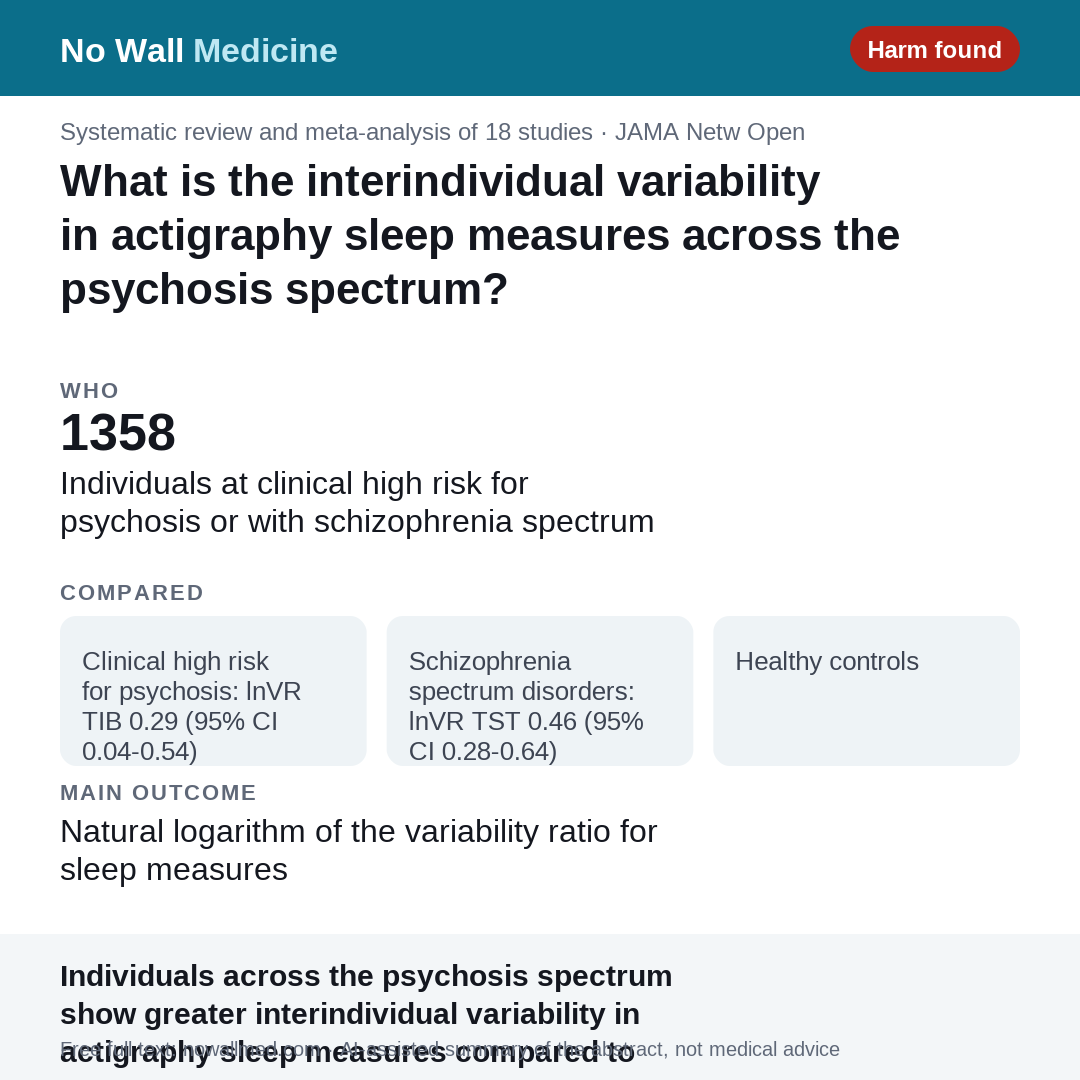
Interindividual Sleep Variability Across the Psychosis Spectrum: A Systematic Review and Meta-Analysis
Systematic review and meta-analysis of 18 studiesHarm found
What is the interindividual variability in actigraphy sleep measures across the psychosis spectrum?
Who
1358
Individuals at clinical high risk for psychosis or with schizophrenia spectrum disorders
Compared
Clinical high risk for psychosis: lnVR TIB 0.29 (95% CI 0.04-0.54)
Schizophrenia spectrum disorders: lnVR TST 0.46 (95% CI 0.28-0.64)
Healthy controls
Main outcome
Natural logarithm of the variability ratio for sleep measures
Bottom line: Individuals across the psychosis spectrum show greater interindividual variability in actigraphy sleep measures compared to healthy controls.
JAMA Netw Open · 2026-07-01Download image
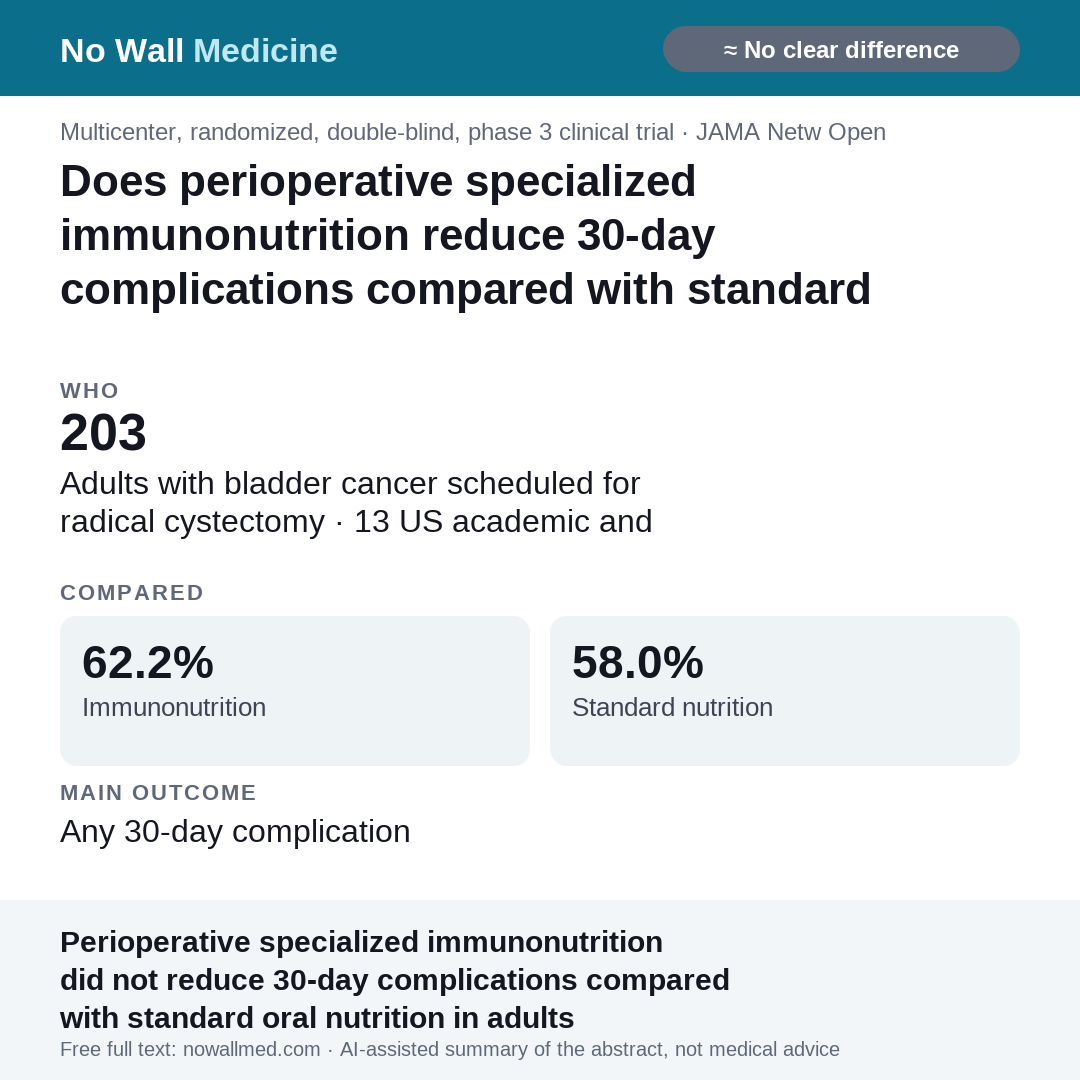
Immune-Enhancing Nutrition and Outcomes After Radical Cystectomy: A Randomized Clinical Trial
Multicenter, randomized, double-blind, phase 3 clinical trialNo clear difference
Does perioperative specialized immunonutrition reduce 30-day complications compared with standard oral nutrition support?
Who
203
Adults with bladder cancer scheduled for radical cystectomy · 13 US academic and community sites
Compared
62.2%Immunonutrition (56 of 90)
58.0%Standard nutrition (51 of 88)
Main outcome
Any 30-day complication
Result: odds ratio 1.18 (95% CI, 0.64-2.18)
Bottom line: Perioperative specialized immunonutrition did not reduce 30-day complications compared with standard oral nutrition in adults undergoing radical cystectomy.
Limitation: Further mechanistic evaluation and subgroup analyses are warranted.
JAMA Netw Open · 2026-07-01Download image
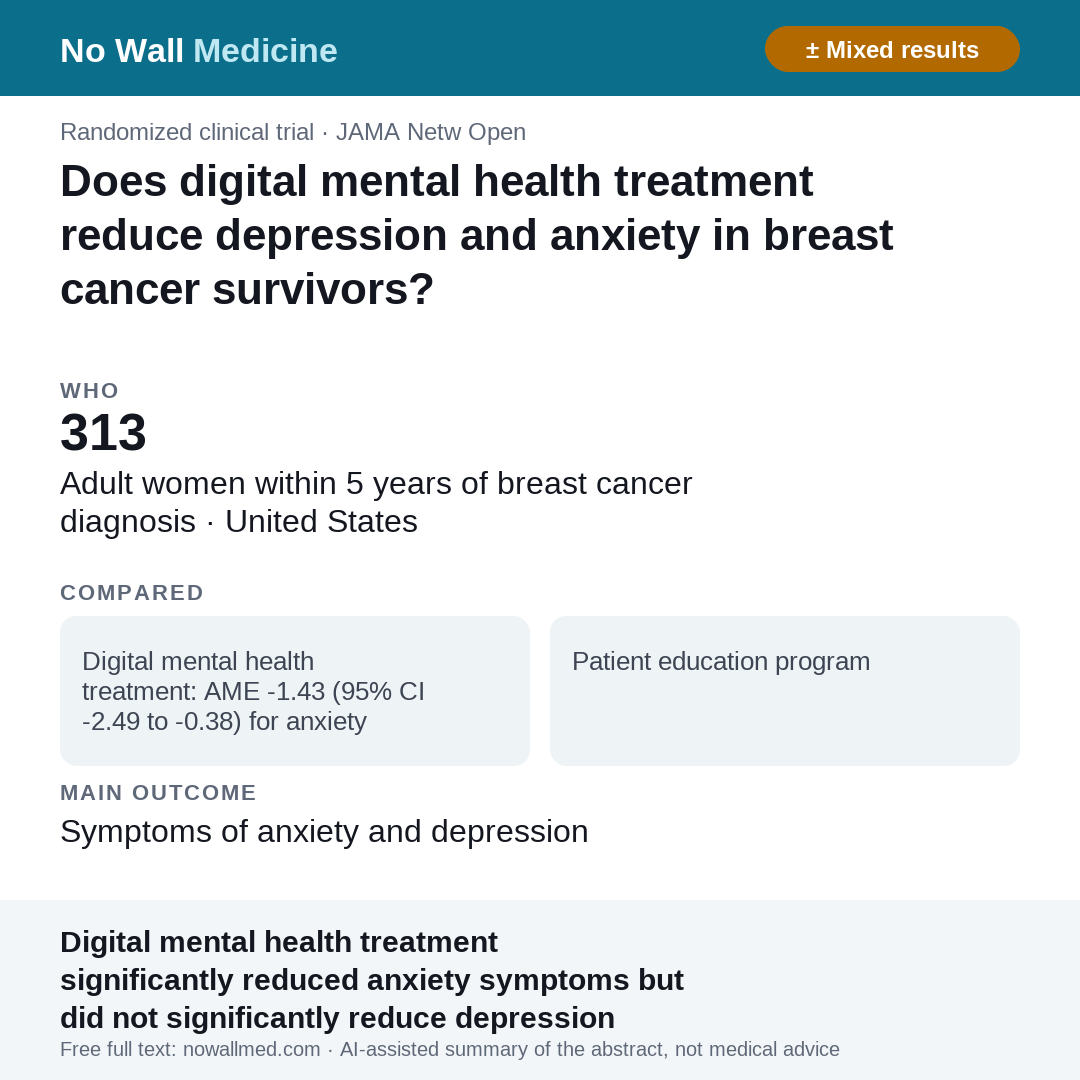
Digital Mental Health Treatment and Symptoms of Depression and Anxiety in Breast Cancer Survivors: A Randomized Clinical Trial
Randomized clinical trialMixed results
Does digital mental health treatment reduce depression and anxiety in breast cancer survivors?
Who
313
Adult women within 5 years of breast cancer diagnosis · United States
Compared
Digital mental health treatment: AME -1.43 (95% CI -2.49 to -0.38) for anxiety
Patient education program
Main outcome
Symptoms of anxiety and depression
Result: average marginal effect -1.43 (95% CI -2.49 to -0.38) for anxiety
Bottom line: Digital mental health treatment significantly reduced anxiety symptoms but did not significantly reduce depression symptoms compared to patient education.
JAMA Netw Open · 2026-07-01Download image
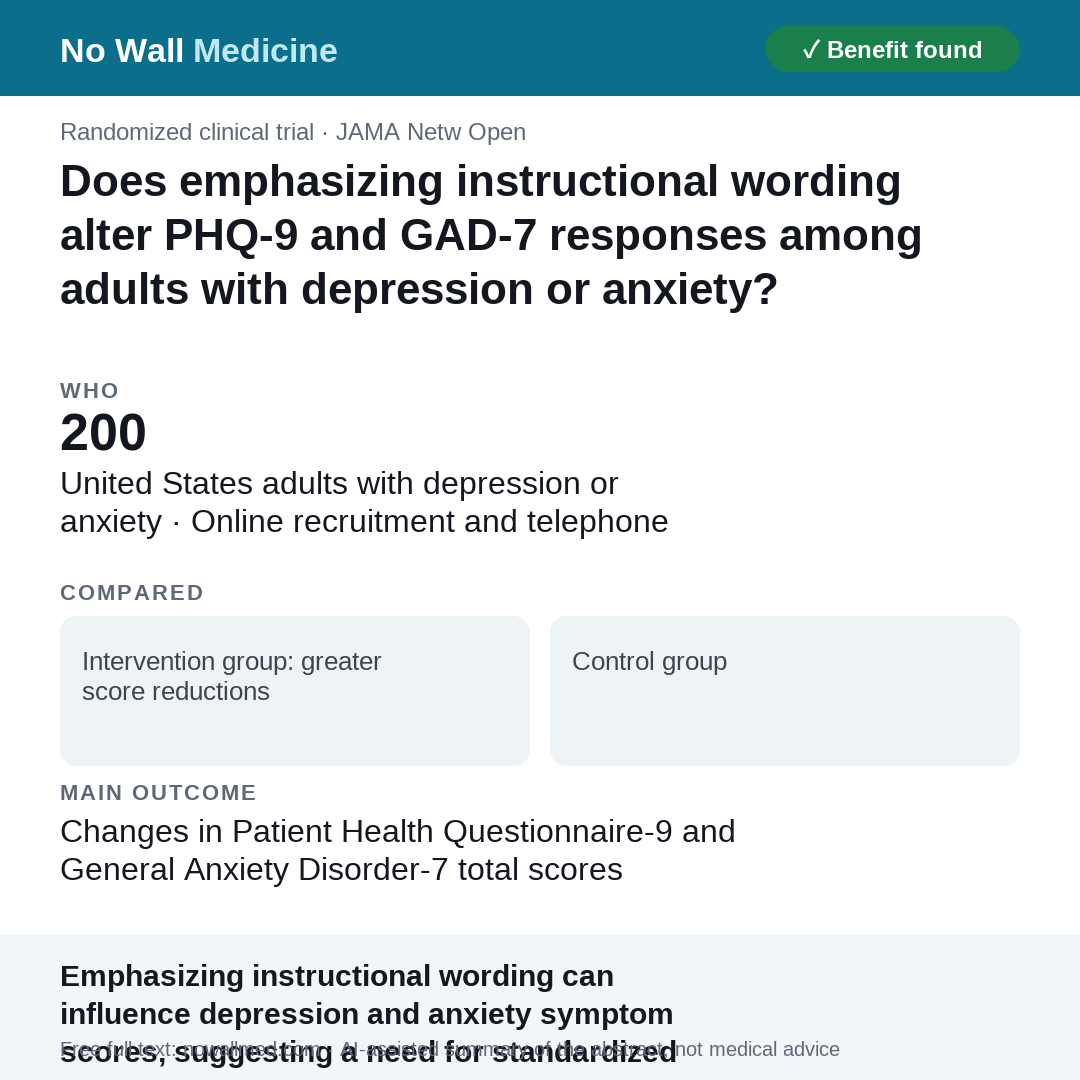
Instructional Emphasis and PHQ-9 and GAD-7 Scores Among Participants With Anxiety or Depression: A Randomized Clinical Trial
Randomized clinical trialBenefit found
Does emphasizing instructional wording alter PHQ-9 and GAD-7 responses among adults with depression or anxiety?
Who
200
United States adults with depression or anxiety · Online recruitment and telephone assessment
Compared
Intervention group: greater score reductions
Control group
Main outcome
Changes in Patient Health Questionnaire-9 and General Anxiety Disorder-7 total scores
Result: difference in changes: -2.60 (95% CI, -3.30 to -1.91) for PHQ-9
Bottom line: Emphasizing instructional wording can influence depression and anxiety symptom scores, suggesting a need for standardized administration.
JAMA Netw Open · 2026-07-01Download image
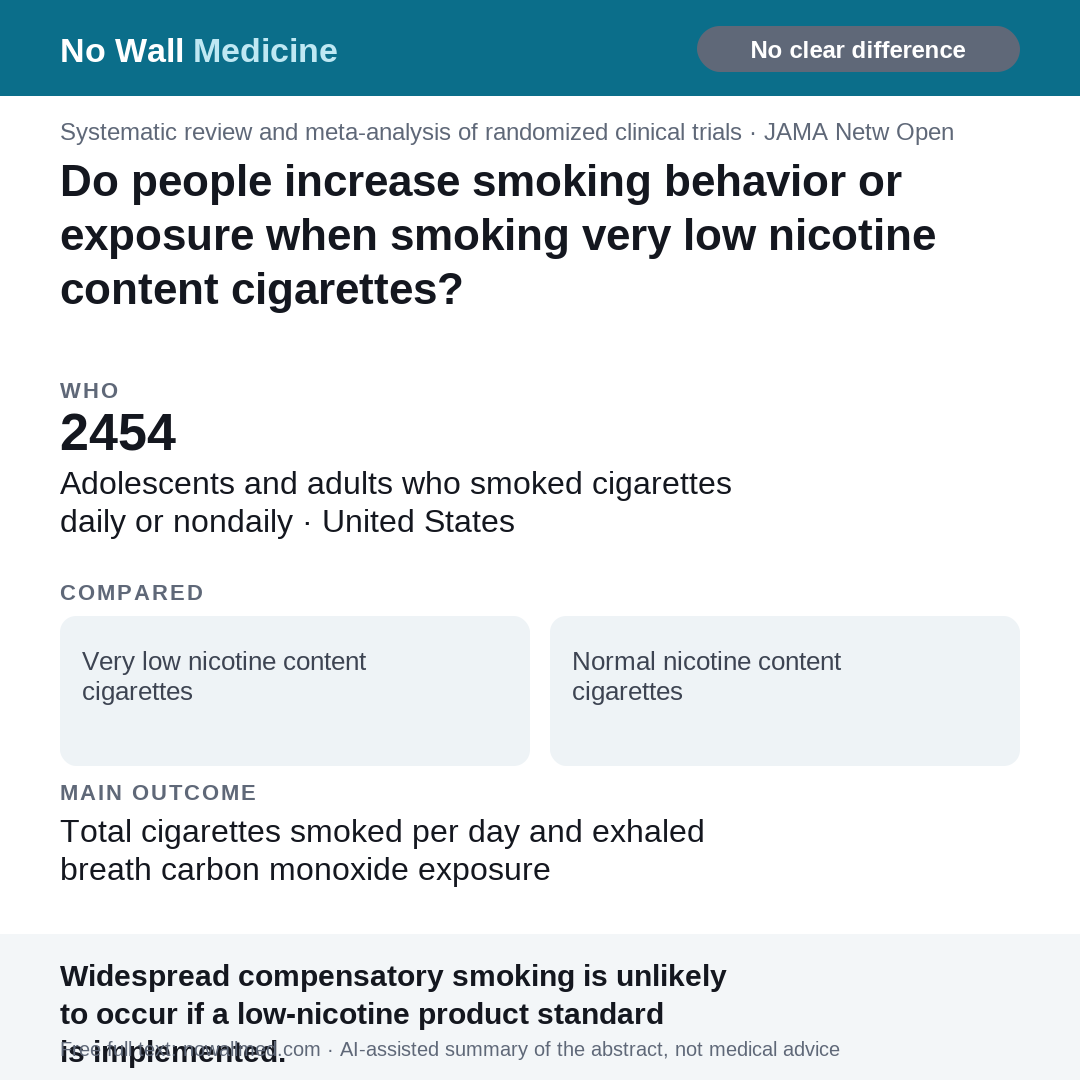
Compensatory Smoking With Very Low Nicotine Content Cigarettes: A Systematic Review and Meta-Analysis
Systematic review and meta-analysis of randomized clinical trialsNo clear difference
Do people increase smoking behavior or exposure when smoking very low nicotine content cigarettes?
Who
2454
Adolescents and adults who smoked cigarettes daily or nondaily · United States
Compared
Very low nicotine content cigarettes
Normal nicotine content cigarettes
Main outcome
Total cigarettes smoked per day and exhaled breath carbon monoxide exposure
Bottom line: Widespread compensatory smoking is unlikely to occur if a low-nicotine product standard is implemented.
JAMA Netw Open · 2026-07-01Download image
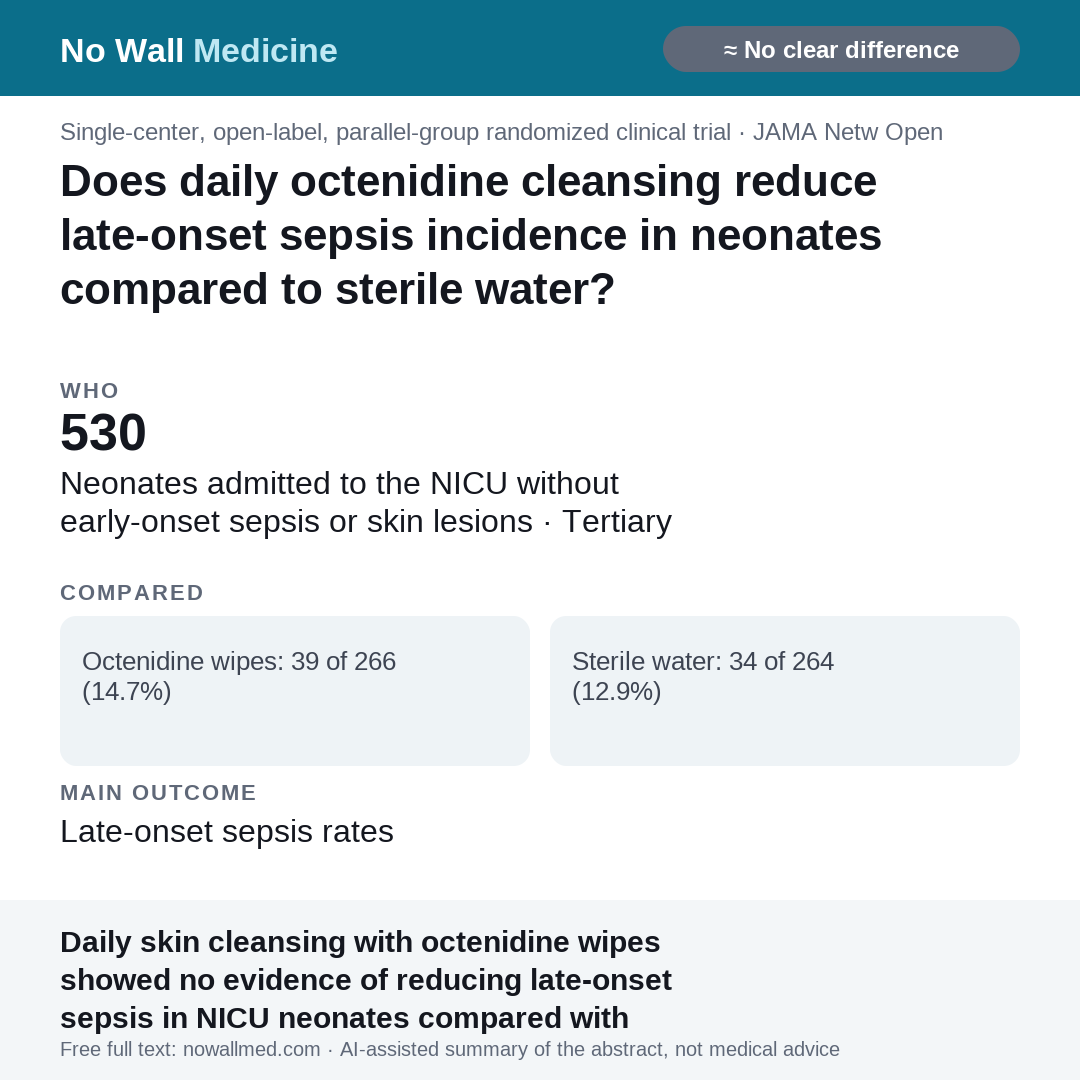
Octenidine or Sterile Water Cleansing and Late-Onset Sepsis in Neonates in the NICU: A Randomized Clinical Trial
Single-center, open-label, parallel-group randomized clinical trialNo clear difference
Does daily octenidine cleansing reduce late-onset sepsis incidence in neonates compared to sterile water?
Who
530
Neonates admitted to the NICU without early-onset sepsis or skin lesions · Tertiary care hospital in India
Compared
Octenidine wipes: 39 of 266 (14.7%)
Sterile water: 34 of 264 (12.9%)
Main outcome
Late-onset sepsis rates
Result: relative risk 1.10 (95% CI 0.75-1.70)
Bottom line: Daily skin cleansing with octenidine wipes showed no evidence of reducing late-onset sepsis in NICU neonates compared with sterile water.
JAMA Netw Open · 2026-07-01Download image
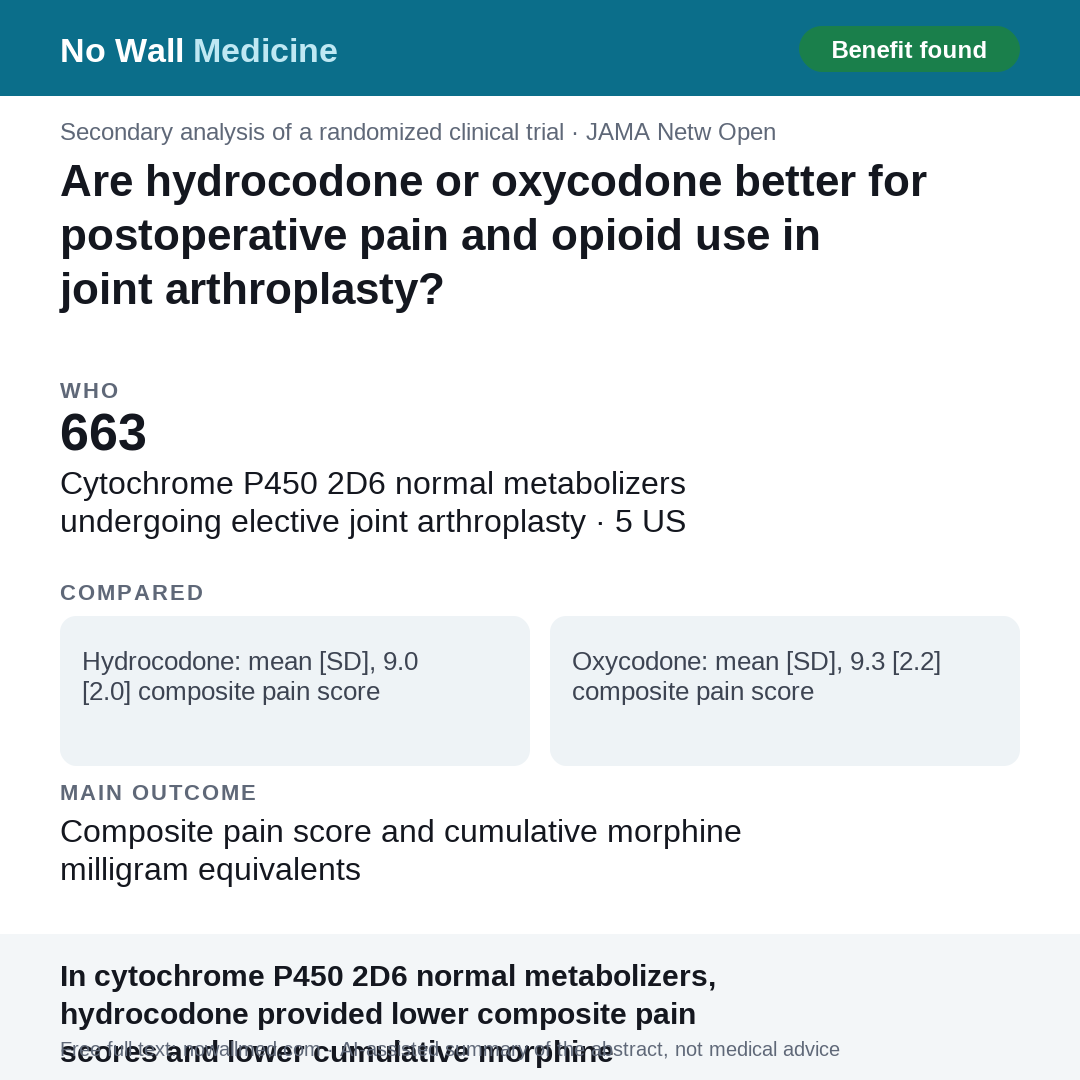
Hydrocodone vs Oxycodone and Postoperative Pain and Opioid Use in Joint Arthroplasty
Secondary analysis of a randomized clinical trialBenefit found
Are hydrocodone or oxycodone better for postoperative pain and opioid use in joint arthroplasty?
Who
663
Cytochrome P450 2D6 normal metabolizers undergoing elective joint arthroplasty · 5 US surgery clinical sites
Compared
Oxycodone: 9.3 [2.2] composite pain score
Hydrocodone: 9.0 [2.0] composite pain score
Main outcome
Composite pain score and cumulative morphine milligram equivalents
Bottom line: Hydrocodone provided comparable pain control to oxycodone with significantly lower cumulative morphine milligram equivalents in joint arthroplasty patients.
Limitation: Findings were not consistent in hip arthroplasty subgroups.
JAMA Netw Open · 2026-07-01Download image
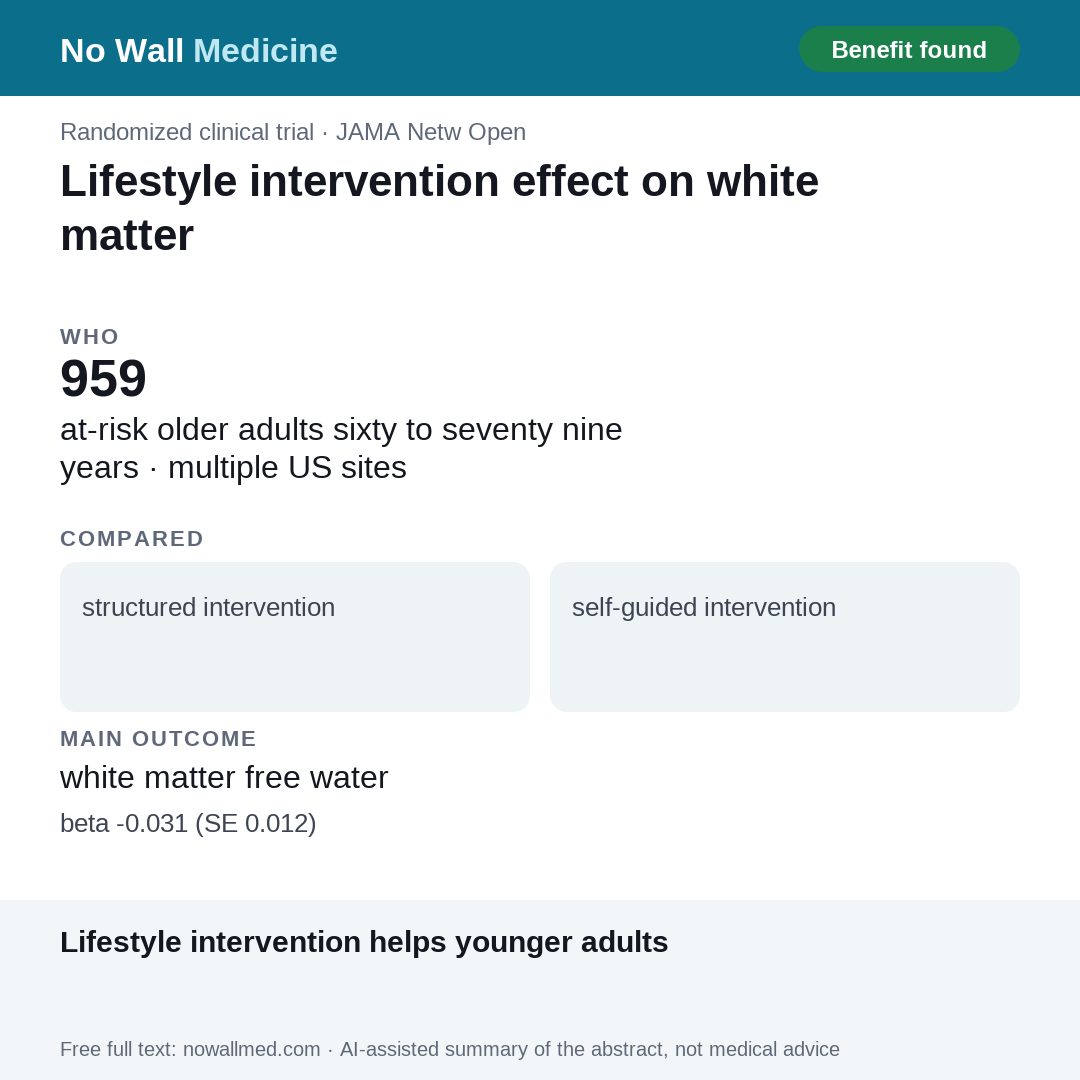
Age, Multidomain Lifestyle Intervention, and White Matter Integrity: Secondary Analysis of the POINTER Randomized Clinical Trial
Randomized clinical trialBenefit found
Does lifestyle intervention alter cerebrovascular markers?
Who
959
at-risk older adults sixty to seventy nine years old · multiple US sites
Compared
structured intervention
self-guided program
Main outcome
cerebrovascular MRI markers
Result: attenuated free water increase over time in younger participants
Bottom line: Lifestyle intervention helps younger at-risk adults
JAMA Netw Open · 2026-07-01Download image
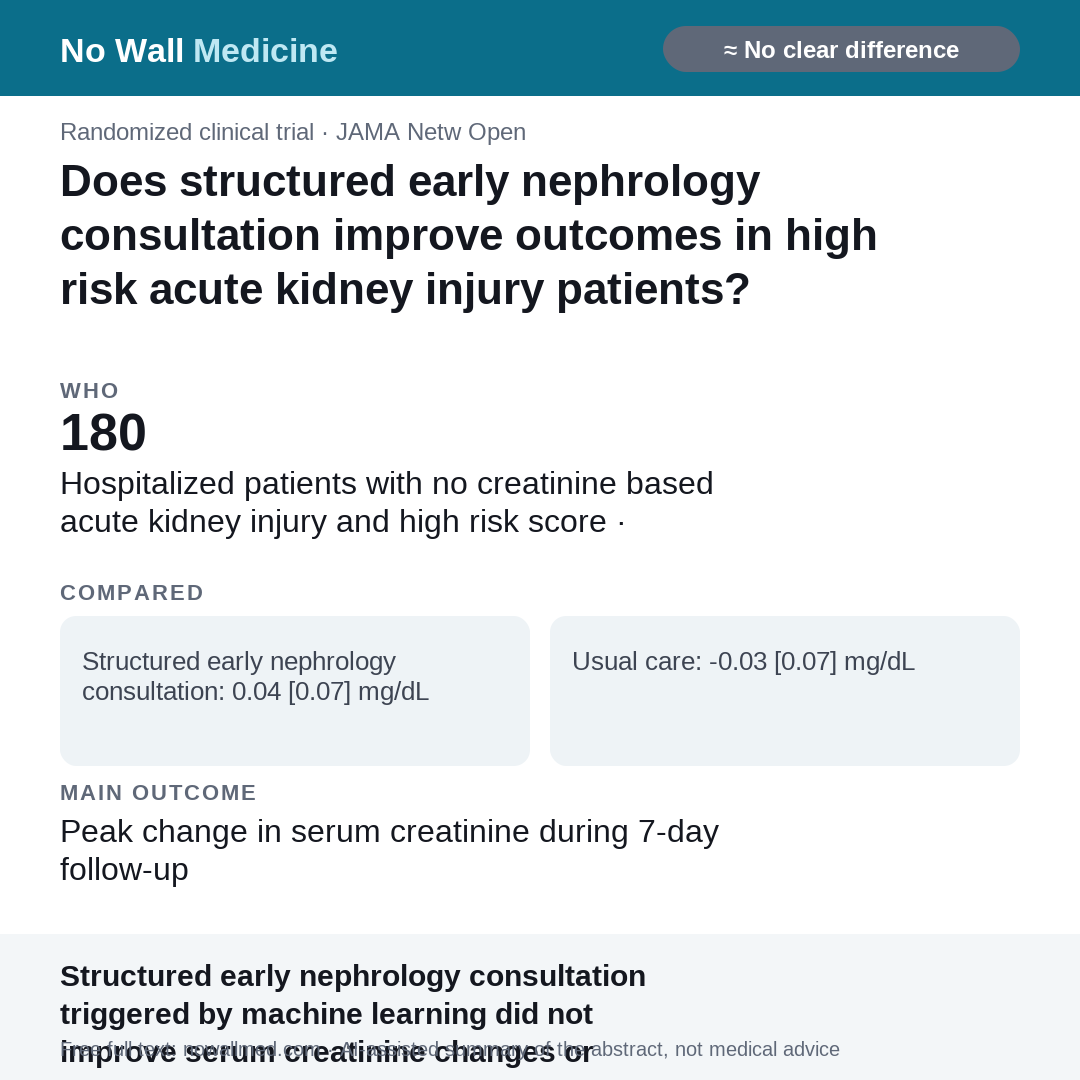
Early Nephrology Consultation and Acute Kidney Injury in Hospitalized Patients: A Randomized Clinical Trial
Randomized clinical trialNo clear difference
Does structured early nephrology consultation improve outcomes in high risk acute kidney injury patients?
Who
180
Hospitalized patients with no creatinine based acute kidney injury and high risk score · University of Chicago, Illinois
Compared
Structured early nephrology consultation: 0.04 [0.07] mg/dL
Usual care: -0.03 [0.07] mg/dL
Main outcome
Peak change in serum creatinine during 7-day follow-up
Result: 0.04 [0.07] mg/dL vs -0.03 [0.07] mg/dL; P = .30
Bottom line: Structured early nephrology consultation triggered by machine learning did not improve serum creatinine changes or mortality.
JAMA Netw Open · 2026-07-01Download image