Visual abstracts
New randomized trials and meta-analyses from leading journals at a glance: who was studied, what was compared, and what was found. Every paper is free to read in full.
All specialtiesCardiology 1953Oncology 1672Gastroenterology & Hepatology 742Infectious Disease 1240Neurology 808Psychiatry & Mental Health 955Pulmonology 840Critical Care 565Endocrinology & Diabetes 1050Pediatrics 1171Surgery 985Orthopedics & Sports Medicine 364Neurosurgery 248Cardiothoracic & Vascular Surgery 214Plastic & Reconstructive Surgery 304Nephrology 406Rheumatology 279Hematology 423Dermatology 223Ophthalmology 229Obstetrics & Gynecology 635Public & Global Health 382Radiology & Imaging 270Anesthesiology 392Urology 339ENT (Otolaryngology) 263Emergency Medicine 219Allergy & Immunology 126Geriatrics 414Family Medicine & Primary Care 230Medical Genetics & Genomics 212Pathology & Laboratory Medicine 64Physical Medicine & Rehabilitation 340Palliative Care 171Nutrition 526Digital Health & AI 1026General Medicine 152
Short- and long-term effects of semaglutide 2.4 mg on energy intake, appetite, and food reward: a 60-week, double-blind randomized controlled trial
60-week, double-blind randomized controlled trialBenefit found
What are the short- and long-term effects of semaglutide 2.4 mg on energy intake and appetite?
Who
120
120 adults with overweight or obesity
Compared
semaglutide 2.4 mg: mean ± standard error of 291.9 ± 64.4, 240.2 ± 87.8, and 269.5 ± 83.6 kcal less energy intake
placebo
Main outcome
energy intake, appetite, and food reward
Bottom line: Semaglutide 2.4 mg reduces energy intake at 20, 40, and 60 weeks, despite declining subjective appetite benefits.
Am J Clin Nutr · 2026-06-20Download image

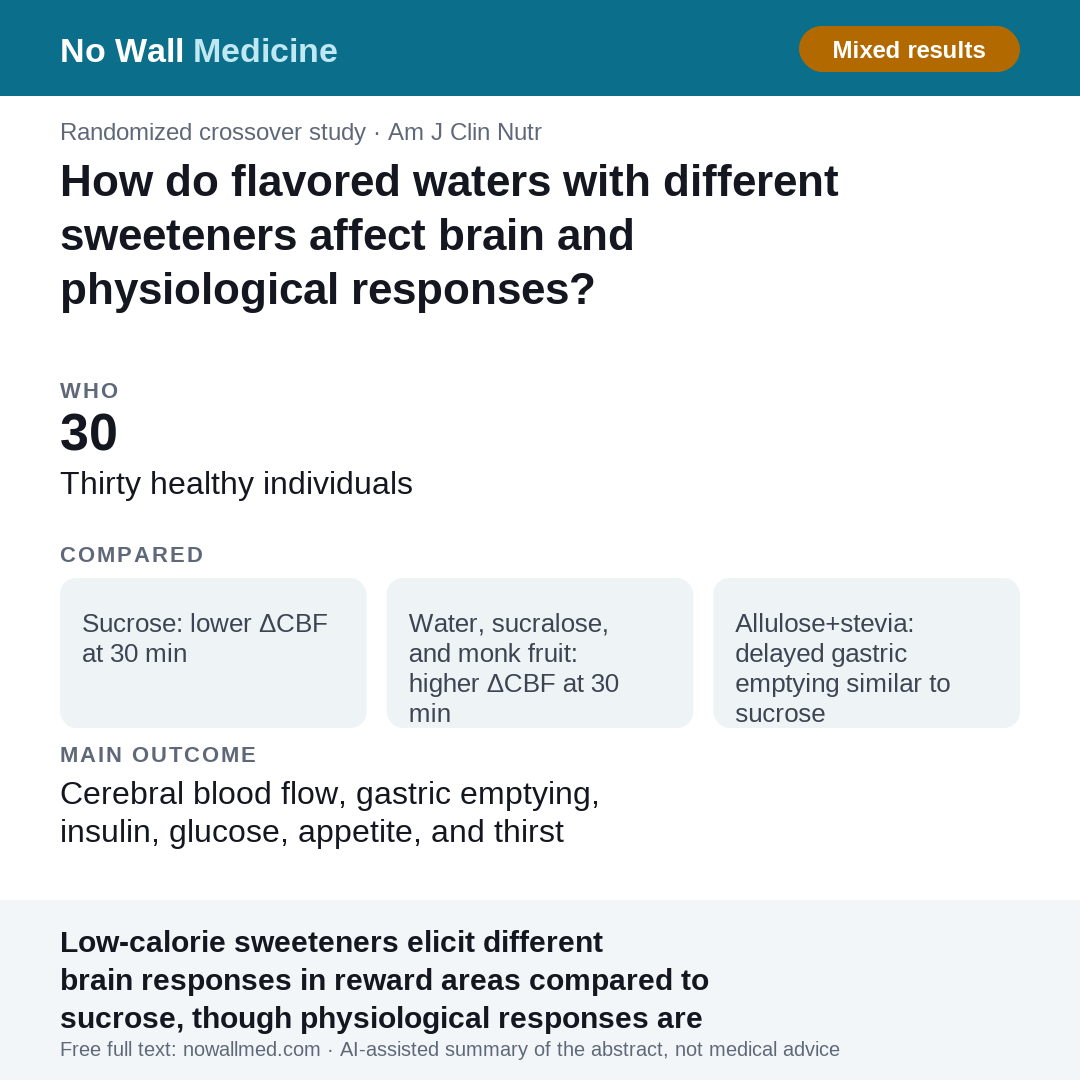
Brain and physiological responses to flavored waters with different sweeteners: a randomized crossover study in healthy young adults
Randomized crossover studyMixed results
How do flavored waters with different sweeteners affect brain and physiological responses?
Who
30
Thirty healthy individuals
Compared
Sucrose: lower ΔCBF at 30 min
Water, sucralose, and monk fruit: higher ΔCBF at 30 min
Allulose+stevia: delayed gastric emptying similar to sucrose
Main outcome
Cerebral blood flow, gastric emptying, insulin, glucose, appetite, and thirst
Result: difference: ∼8% ± 3%
Bottom line: Low-calorie sweeteners elicit different brain responses in reward areas compared to sucrose, though physiological responses are mostly similar to water.
Am J Clin Nutr · 2026-06-20Download image
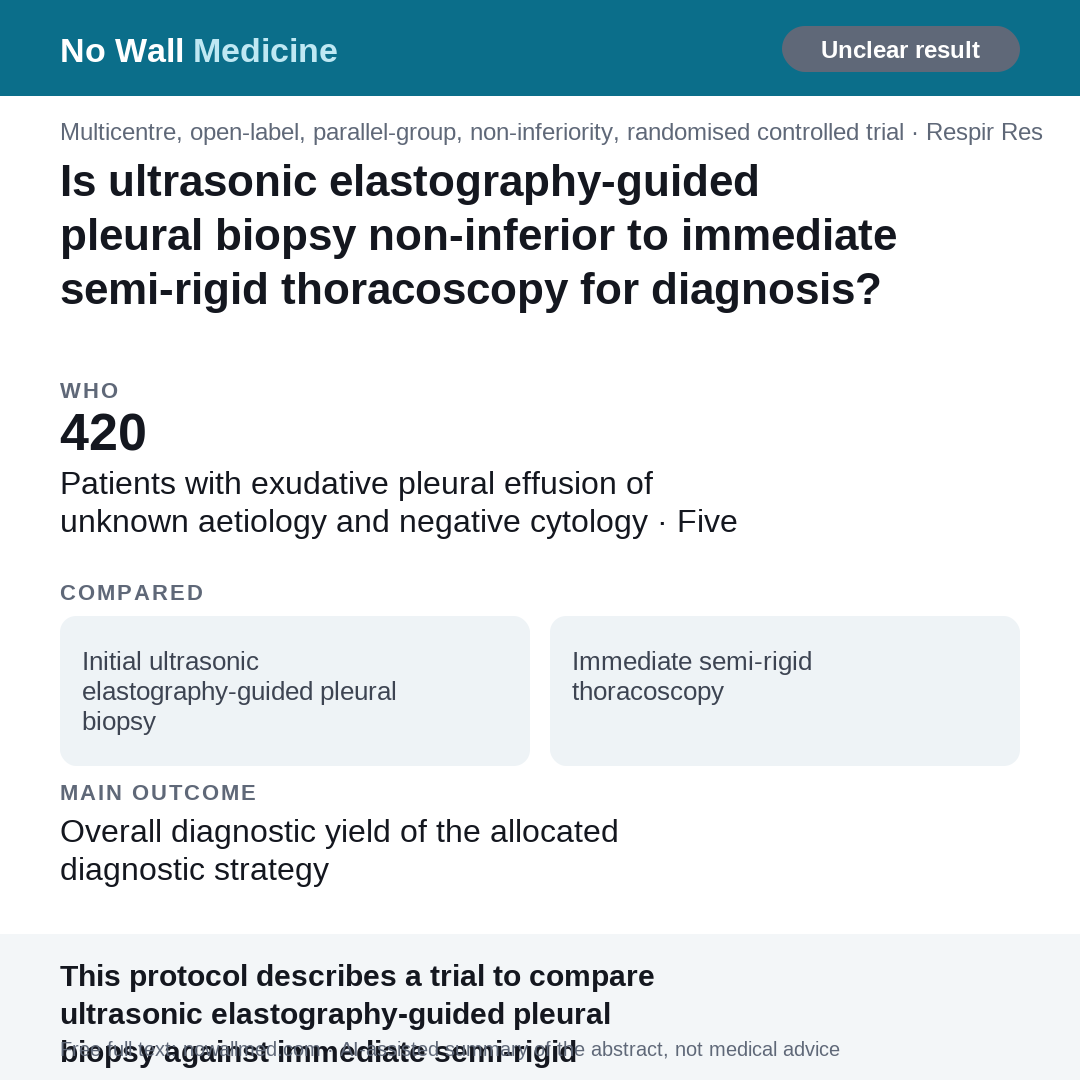
Ultrasonic elastography-guided pleural biopsy followed by as-needed semi-rigid thoracoscopic pleural biopsy versus immediate semi-rigid thoracoscopic pleural biopsy for the diagnosis of pleural effusion (UPDATE-3): a protocol of randomised controlled trial
Multicentre, open-label, parallel-group, non-inferiority, randomised controlled trialUnclear result
Is ultrasonic elastography-guided pleural biopsy non-inferior to immediate semi-rigid thoracoscopy for diagnosis?
Who
420
Patients with exudative pleural effusion of unknown aetiology and negative cytology · Five sites in China
Compared
Initial ultrasonic elastography-guided pleural biopsy
Immediate semi-rigid thoracoscopy
Main outcome
Overall diagnostic yield of the allocated diagnostic strategy
Bottom line: This protocol describes a trial to compare ultrasonic elastography-guided pleural biopsy against immediate semi-rigid thoracoscopy.
Respir Res · 2026-06-20Download image
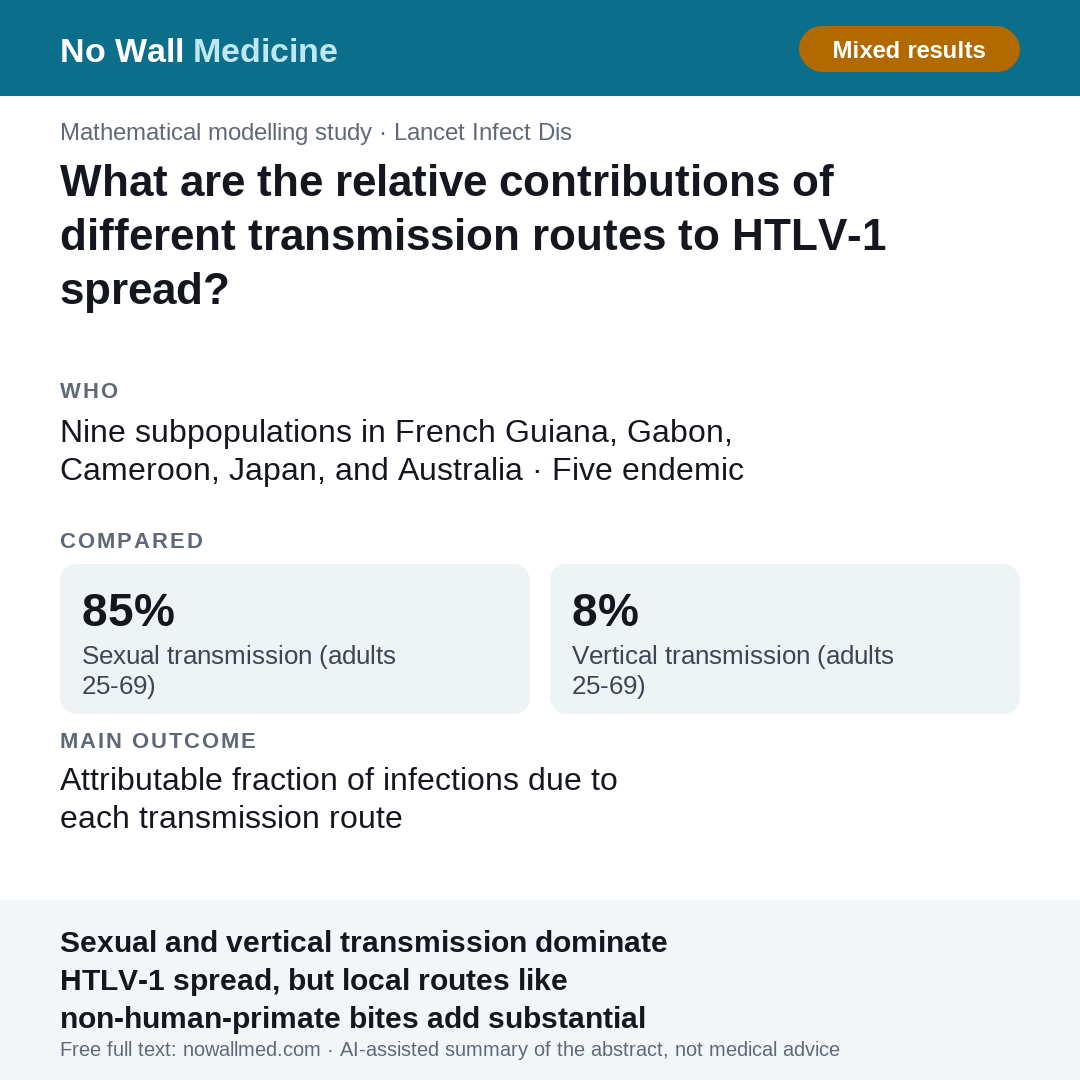
Quantifying how multiple transmission routes contribute to the spread of HTLV-1 in different endemic foci: a mathematical modelling study
Mathematical modelling studyMixed results
What are the relative contributions of different transmission routes to HTLV-1 spread?
Who
Nine subpopulations in French Guiana, Gabon, Cameroon, Japan, and Australia · Five endemic foci across multiple countries
Compared
85%Sexual transmission (adults 25-69) (79-87)
8%Vertical transmission (adults 25-69) (7-9)
Main outcome
Attributable fraction of infections due to each transmission route
Bottom line: Sexual and vertical transmission dominate HTLV-1 spread, but local routes like non-human-primate bites add substantial regional burdens.
Funded by: EU and Agence Nationale de la Recherche
Lancet Infect Dis · 2026-06-19Download image
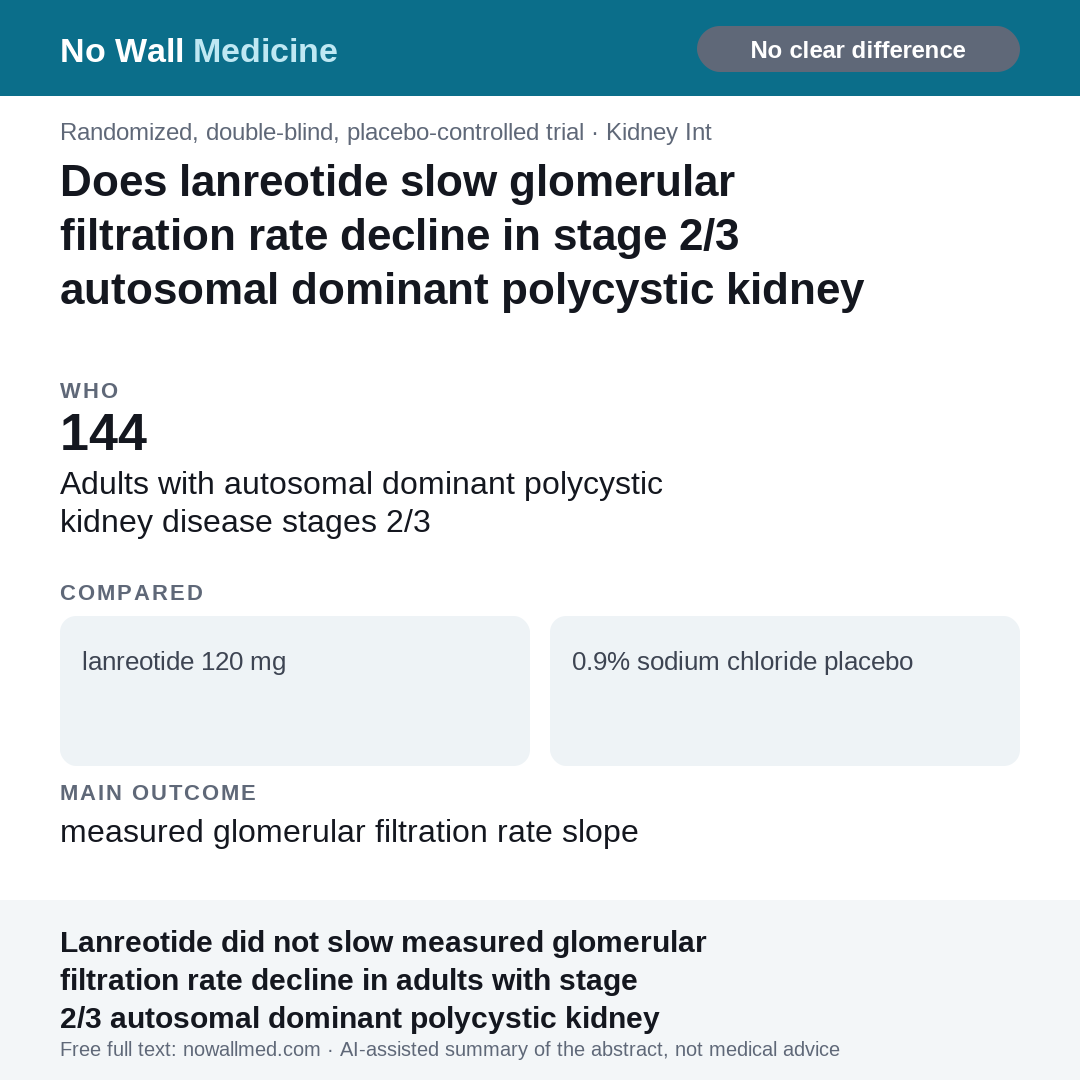
A three-year randomized, double-blind, placebo-controlled study of lanreotide in stage 2/3 autosomal dominant polycystic kidney disease
Randomized, double-blind, placebo-controlled trialNo clear difference
Does lanreotide slow glomerular filtration rate decline in stage 2/3 autosomal dominant polycystic kidney disease?
Who
144
Adults with autosomal dominant polycystic kidney disease stages 2/3
Compared
lanreotide 120 mg
0.9% sodium chloride placebo
Main outcome
measured glomerular filtration rate slope
Result: -0.3 ml/min/1.73 m2 per year (95% confidence interval -3.4 to 2.8)
Bottom line: Lanreotide did not slow measured glomerular filtration rate decline in adults with stage 2/3 autosomal dominant polycystic kidney disease.
Limitation: Recruitment stopped after 144 of 180 planned participants due to slow enrollment.
Kidney Int · 2026-06-19Download image
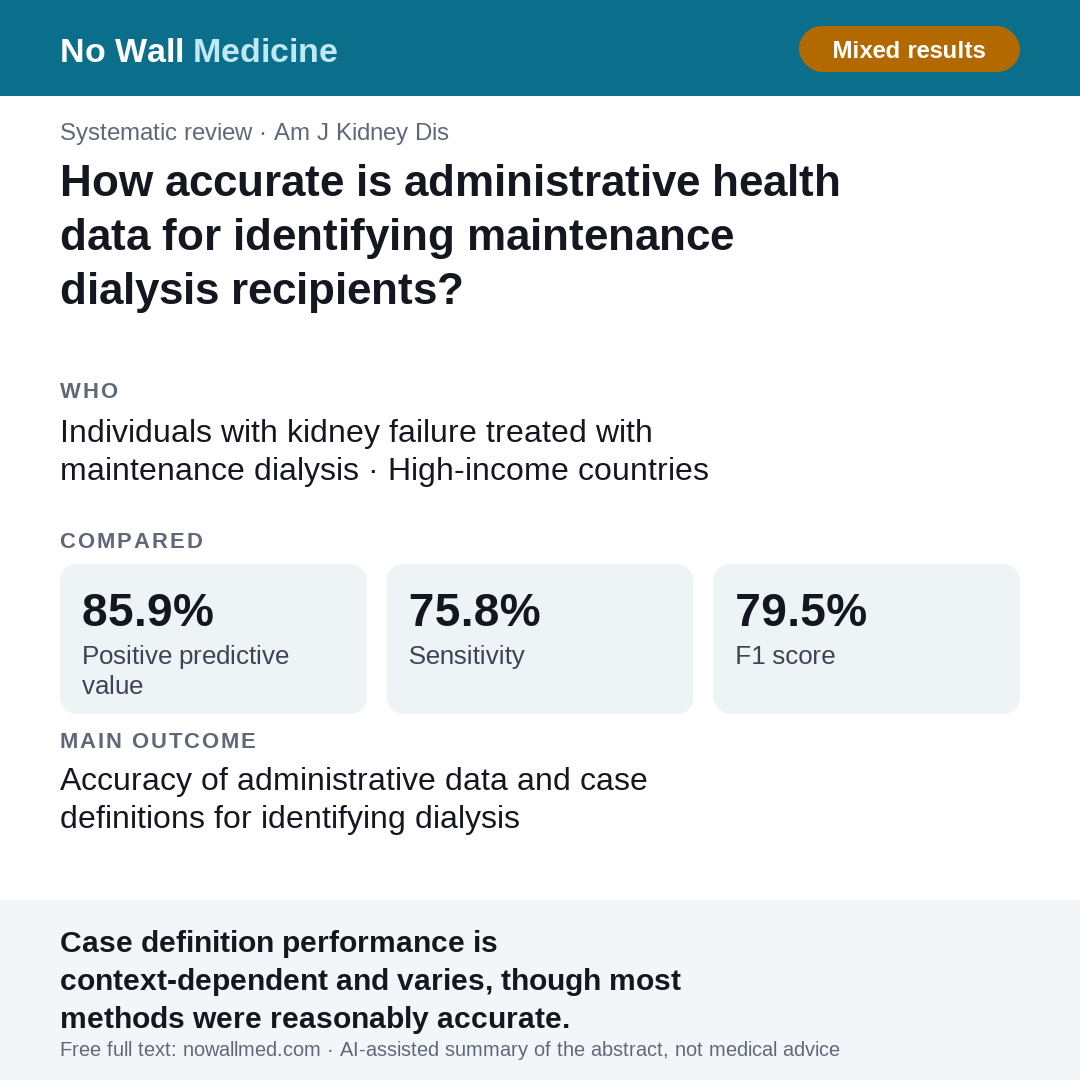
Identification of Maintenance Dialysis Recipients in Administrative Health Data: A Systematic Review
Systematic reviewMixed results
How accurate is administrative health data for identifying maintenance dialysis recipients?
Who
Individuals with kidney failure treated with maintenance dialysis · High-income countries
Compared
85.9%Positive predictive value (25th and 75th percentiles, 74.4%-92.9%)
75.8%Sensitivity (63.5%-83.8%)
79.5%F1 score (70.2%-81.9%)
Main outcome
Accuracy of administrative data and case definitions for identifying dialysis recipients
Bottom line: Case definition performance is context-dependent and varies, though most methods were reasonably accurate.
Limitation: Findings based on studies from high-income countries and a lack of contemporary data.
Am J Kidney Dis · 2026-06-19Download image
The impact of medication management interventions on healthcare utilisation in people with dementia: a systematic review with meta-analysis
Meta-analysis of seven randomized controlled trialsBenefit found
Do medication management interventions impact healthcare utilisation in people with dementia?
Who
People with dementia aged 65 years or older
Compared
Physician and patient/carer targeted education: RR 0.92 (95% CI 0.84-0.99) for all-cause hospitalisation
Multidisciplinary team-based interventions: Hazard Ratio 0.49 (95% CI 0.27-0.90) for drug-related hospital readmission
Main outcome
Healthcare utilisation including hospitalisation and emergency department visits
Result: RR 0.92 (95% CI 0.84-0.99) for all-cause hospitalisation
Bottom line: Physician and patient/carer targeted education may reduce hospitalisations and emergency department visits in people with dementia.
Age Ageing · 2026-06-19Download image

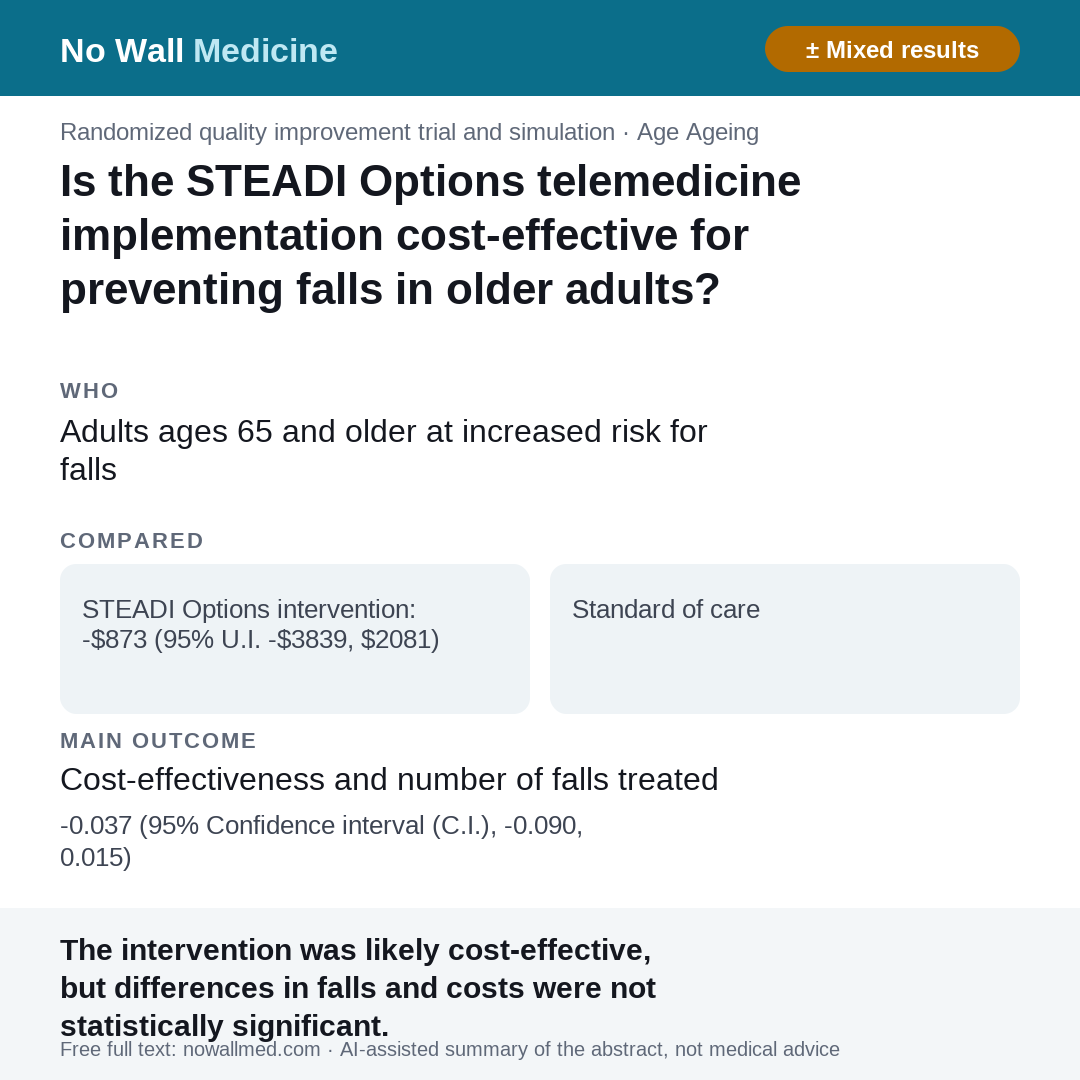
The cost-effectiveness of the stopping elderly accidents, deaths and injuries options randomised quality improvement trial to prevent falls among older adults
Randomized quality improvement trial and simulationMixed results
Is the STEADI Options telemedicine implementation cost-effective for preventing falls in older adults?
Who
Adults ages 65 and older at increased risk for falls
Compared
STEADI Options intervention: -$873 (95% U.I. -$3839, $2081)
Standard of care
Main outcome
Cost-effectiveness and number of falls treated
Result: -0.037 (95% Confidence interval (C.I.), -0.090, 0.015)
Bottom line: The intervention was likely cost-effective, but differences in falls and costs were not statistically significant.
Limitation: Differences in medically treated falls and total healthcare costs were not statistically significant.
Age Ageing · 2026-06-19Download image
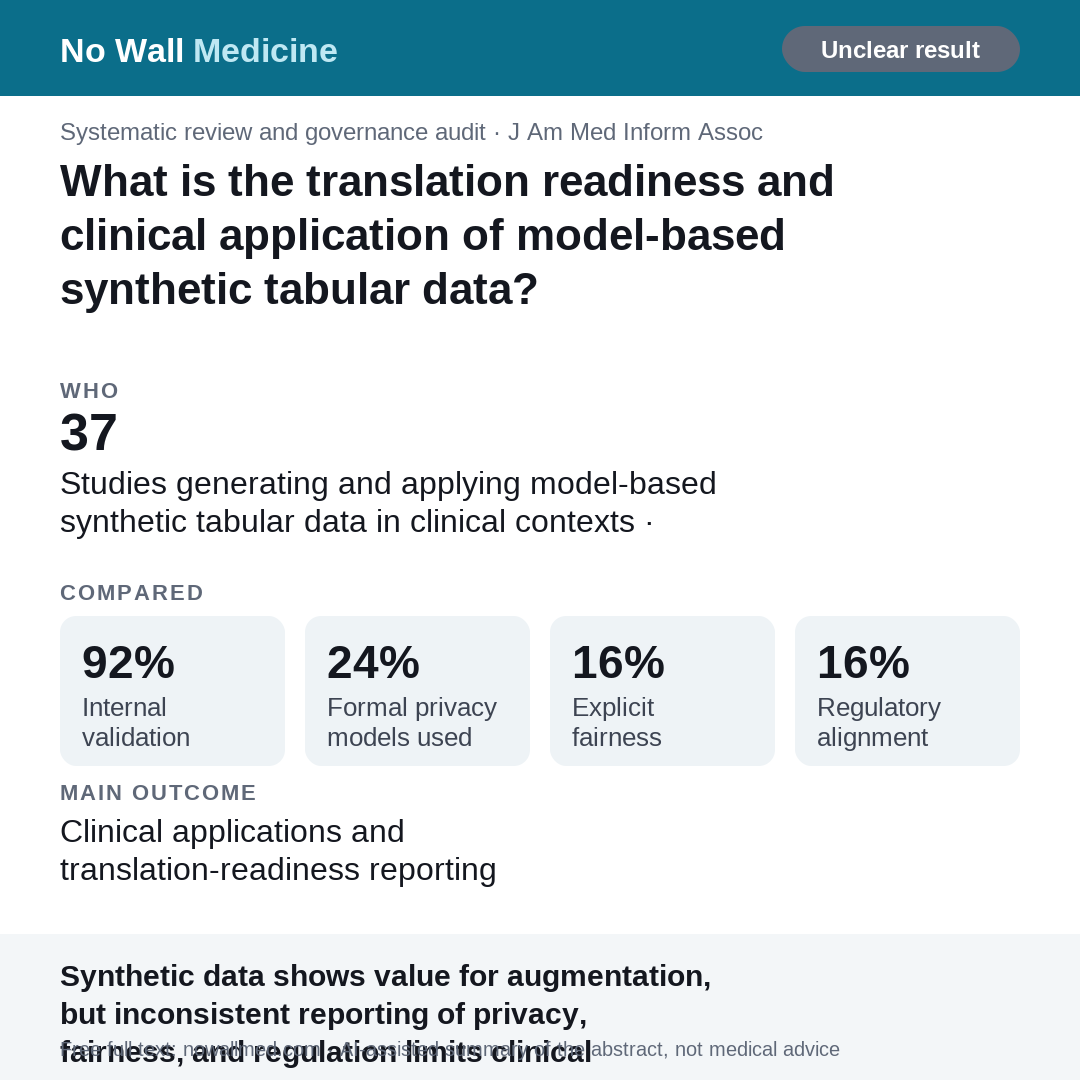
Translation readiness of model-based synthetic tabular data in healthcare: a systematic review and governance audit
Systematic review and governance auditUnclear result
What is the translation readiness and clinical application of model-based synthetic tabular data?
Who
37
Studies generating and applying model-based synthetic tabular data in clinical contexts · Ovid MEDLINE and Embase
Compared
92%Internal validation reporting
24%Formal privacy models used
16%Explicit fairness evaluations reported
16%Regulatory alignment addressed
Main outcome
Clinical applications and translation-readiness reporting
Bottom line: Synthetic data shows value for augmentation, but inconsistent reporting of privacy, fairness, and regulation limits clinical deployment confidence.
Limitation: Inconsistent reporting of validation, privacy, fairness, and regulatory considerations.
J Am Med Inform Assoc · 2026-06-19Download image
Custom Made Three Dimensional Printed Models for Pre-operative Planning and Simulation of Endovascular Treatment of Peripheral Artery Disease (3DPAD-1): A Single Blind Randomised Controlled Trial
Single blind randomised controlled trialBenefit found
Do 3D printed models improve outcomes in endovascular treatment of peripheral artery disease?
Who
99
Patients scheduled for endovascular treatment of peripheral artery disease · Single centre
Compared
3D model group: 20.8% complications
Standard group: 49.0% complications
Main outcome
Cumulative 30 day incidence of peri-operative complications and procedure duration
Result: adjusted OR 0.22 (95% CI 0.08 - 0.60)
Bottom line: Custom made 3D printed models significantly reduced peri-operative complications and procedure duration in endovascular treatment.
Eur J Vasc Endovasc Surg · 2026-06-19Download image

Real-World Effectiveness of the Peer-Led Honest, Open, Proud Programme for Self-Stigma Among Adults With Mental Illness: A Pragmatic, Multicentre, Randomised Controlled Trial
Open-label, pragmatic, multicentre, randomised controlled trialBenefit found
Does the peer-led Honest, Open, Proud programme reduce self-stigma in adults with mental illness?
Who
457
Working-age adults with mental illness · Nine sites in Germany
Compared
-1.83Honest, Open, Proud and treatment as usual (95%-CI -2.96 to -0.70)
Treatment as usual alone
Main outcome
Self-stigma at 6 weeks
Result: -1.83, 95%-CI -2.96 to -0.70
Bottom line: The Honest, Open, Proud programme effectively reduces self-stigma and improves secondary clinical and social outcomes.
Funded by: Federal Department of Health, Germany
Lancet Reg Health Eur · 2026-06-19Download image

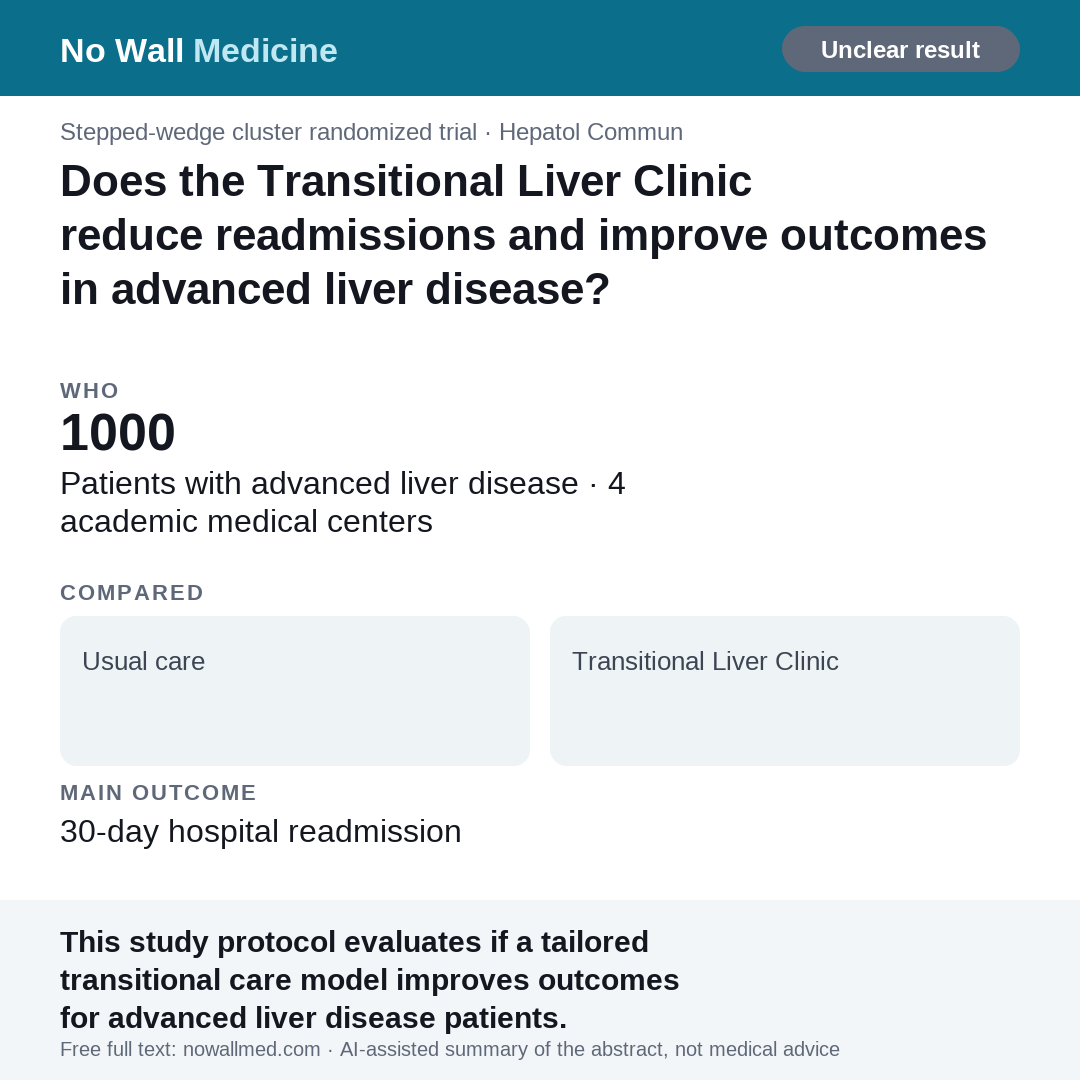
The Transitional Liver Clinic: Study protocol for a stepped-wedge cluster randomized trial
Stepped-wedge cluster randomized trialUnclear result
Does the Transitional Liver Clinic reduce readmissions and improve outcomes in advanced liver disease?
Who
1000
Patients with advanced liver disease · 4 academic medical centers
Compared
Usual care
Transitional Liver Clinic
Main outcome
30-day hospital readmission
Bottom line: This study protocol evaluates if a tailored transitional care model improves outcomes for advanced liver disease patients.
Hepatol Commun · 2026-06-19Download image
Safety of immune checkpoint modulators beyond PD-1/PD-L1 and CTLA-4 in solid tumors: a meta-analysis
Meta-analysis of 27 clinical trialsHarm found
What are the safety profiles of novel immune checkpoint modulators in solid tumors?
Who
3946
Patients with solid tumors
Compared
LAG-3 blockade addition: G3-5 trAEs (OR = 1.79, 95% CI 1.26 to 2.54)
TIGIT blockade addition: any-grade rash (OR = 2.32, 95% CI 1.01 to 5.34)
Main outcome
Incidence of treatment-related adverse events and immune-related adverse events
Result: G3-5 trAEs (OR = 1.79, 95% CI 1.26 to 2.54)
Bottom line: Adding LAG-3 or TIGIT blockade increases the risk of specific treatment-related adverse events in solid tumor patients.
JNCI Cancer Spectr · 2026-06-19Download image

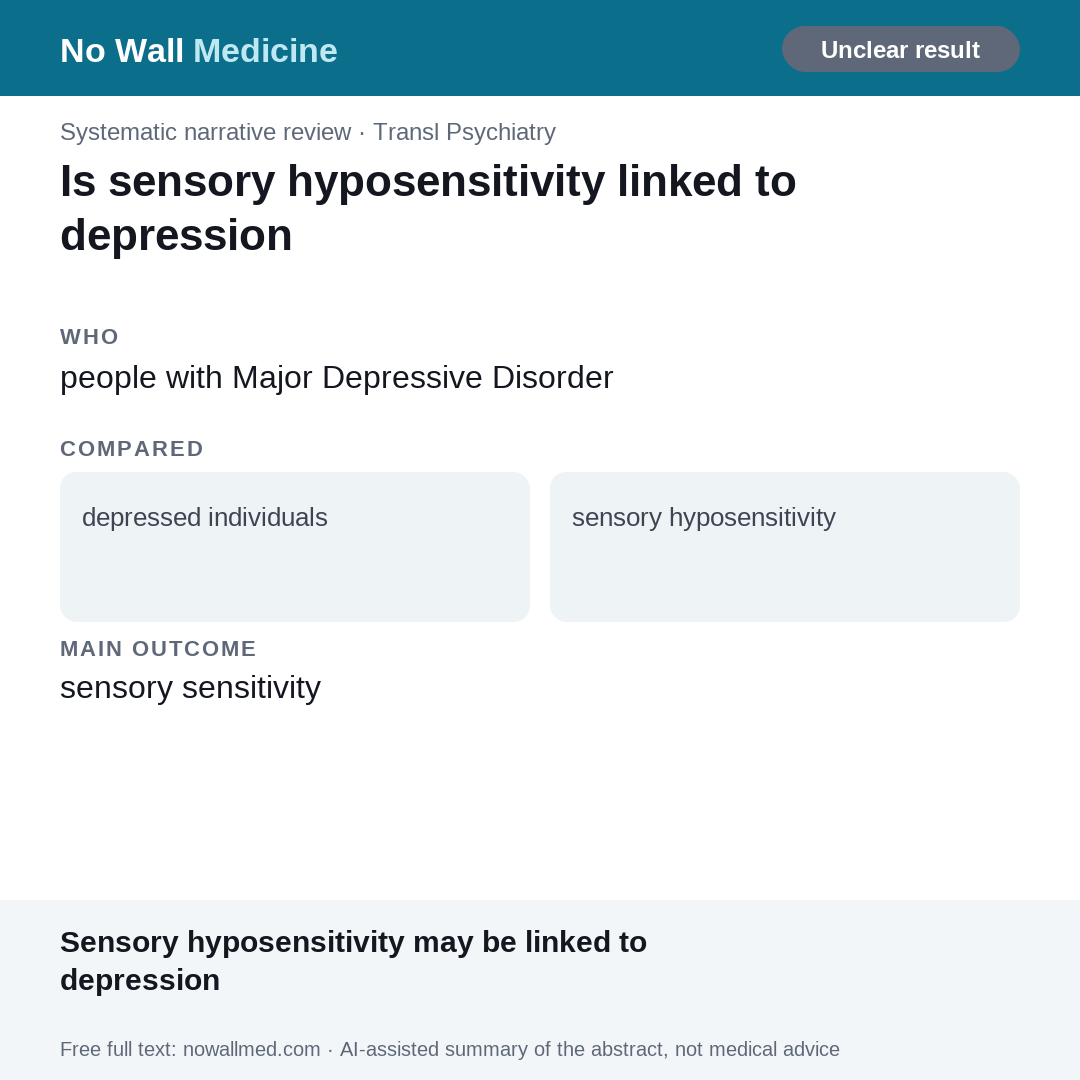
A systematic narrative review of the form, process, and function of sensory hyposensitivity in depression
Systematic narrative reviewUnclear result
Is sensory hyposensitivity linked to depression
Who
people with Major Depressive Disorder
Compared
depressed individuals
sensory hyposensitivity
Main outcome
sensory sensitivity
Bottom line: Sensory hyposensitivity may be linked to depression
Transl Psychiatry · 2026-06-19Download image
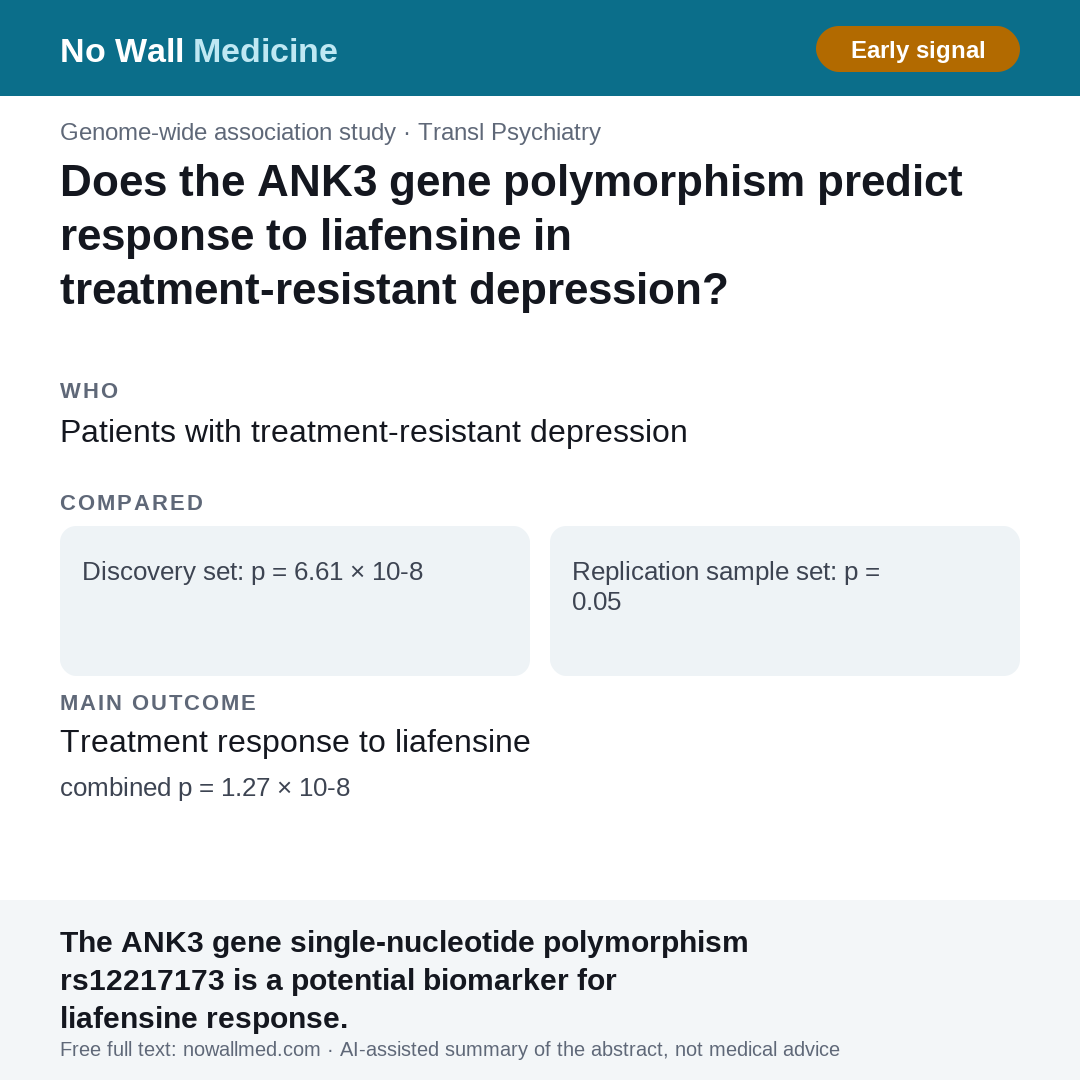
Discovery of a potential novel pharmacogenomic biomarker on ANK3 gene for liafensine, a triple reuptake inhibitor for treatment-resistant depression
Genome-wide association studyBenefit found
Does the ANK3 gene polymorphism predict response to liafensine in treatment-resistant depression?
Who
Patients with treatment-resistant depression
Compared
Discovery set: p = 6.61 × 10⁻⁸
Replication sample set: p = 0.05
Main outcome
Treatment response to liafensine
Result: combined p = 1.27 × 10⁻⁸
Bottom line: The ANK3 gene single-nucleotide polymorphism rs12217173 is a potential biomarker for liafensine response.
Transl Psychiatry · 2026-06-19Download image
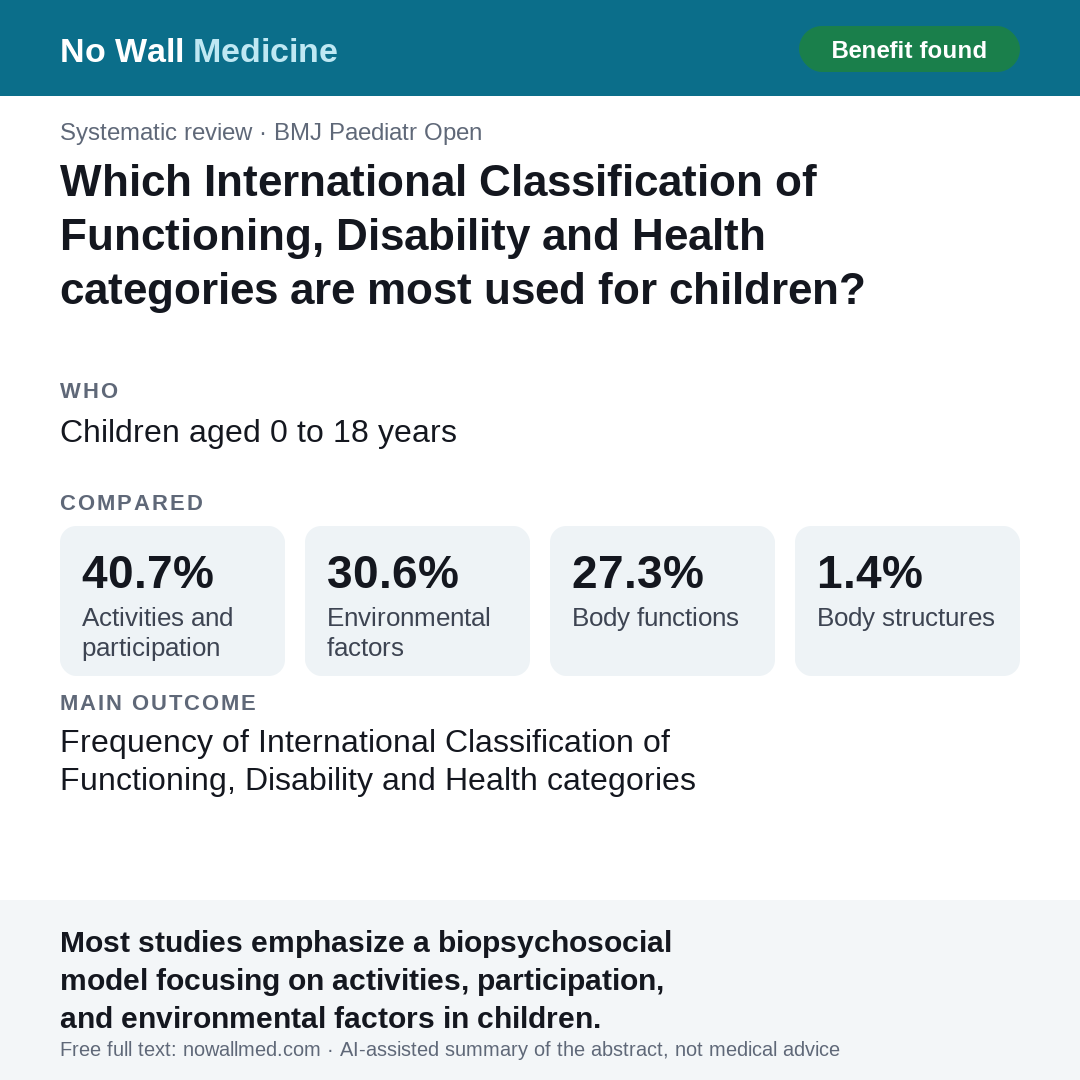
Identification of International Classification of Functioning, Disability and Health (ICF) codes most frequently used to describe functioning in children: a systematic review
Systematic reviewBenefit found
Which International Classification of Functioning, Disability and Health categories are most used for children?
Who
Children aged 0 to 18 years
Compared
40.7%Activities and participation
30.6%Environmental factors
27.3%Body functions
1.4%Body structures
Main outcome
Frequency of International Classification of Functioning, Disability and Health categories used
Bottom line: Most studies emphasize a biopsychosocial model focusing on activities, participation, and environmental factors in children.
BMJ Paediatr Open · 2026-06-19Download image
Effect of a peer support group intervention on medication adherence, self- care practices, and diabetes knowledge among patients with diabetes in Northern Ethiopia: a randomized controlled trial
Randomized controlled trialBenefit found
Does a peer support group intervention improve diabetes outcomes in Northern Ethiopia?
Who
97
Adults with diabetes attending follow-up at a tertiary hospital · Ayder Comprehensive Specialized Hospital, Ethiopia
Compared
Peer-support intervention group: Medication adherence increased by DiD = + 1.5 points
Control group
Main outcome
Medication adherence, self-care practices, and diabetes knowledge
Result: DiD = + 1.5 points (p < 0.001) for medication adherence
Bottom line: A structured peer-support program significantly improved medication adherence, self-care practices, and diabetes knowledge among patients.
Limitation: Future research should evaluate sustainability, scalability, cost-effectiveness, and long-term impact.
BMC Prim Care · 2026-06-19Download image
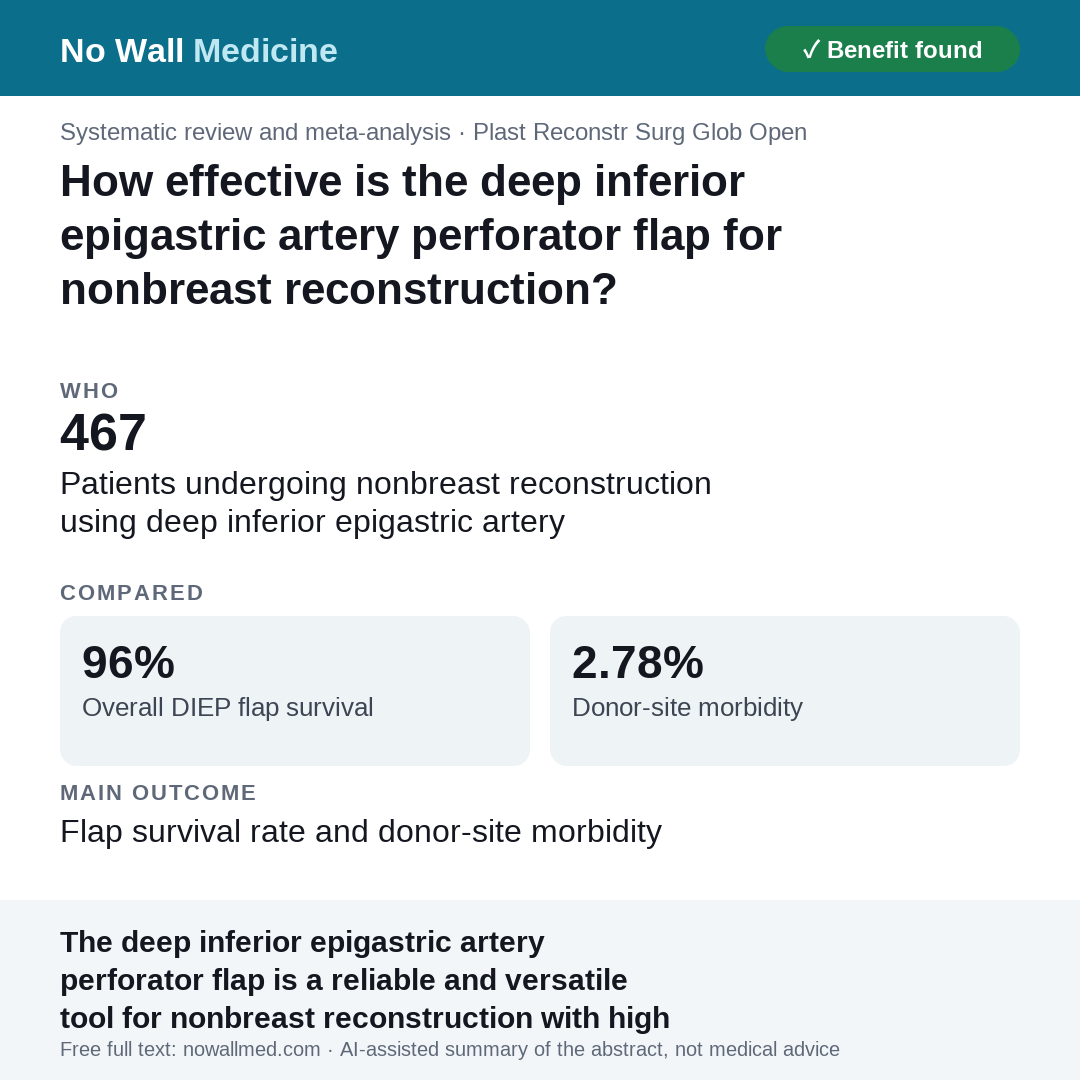
A Meta-analysis of Nontraditional Uses of Deep Inferior Epigastric Artery Perforator Flaps
Systematic review and meta-analysisBenefit found
How effective is the deep inferior epigastric artery perforator flap for nonbreast reconstruction?
Who
467
Patients undergoing nonbreast reconstruction using deep inferior epigastric artery perforator flaps
Compared
96%Overall DIEP flap survival
2.78%Donor-site morbidity
Main outcome
Flap survival rate and donor-site morbidity
Bottom line: The deep inferior epigastric artery perforator flap is a reliable and versatile tool for nonbreast reconstruction with high survival rates.
Plast Reconstr Surg Glob Open · 2026-06-19Download image
Quantitative Venous Outflow Assessment in Reconstructive Flaps Using Indocyanine Green Angiography: A Systematic Review
Systematic reviewBenefit found
Can ICGA assess venous outflow in flaps
Who
210
patients with free or pedicled flaps
Compared
ICGA
control
Main outcome
venous outflow
Bottom line: ICGA detects subclinical perfusion abnormalities
Limitation: heterogeneity precluded meta-analysis
Plast Reconstr Surg Glob Open · 2026-06-19Download image
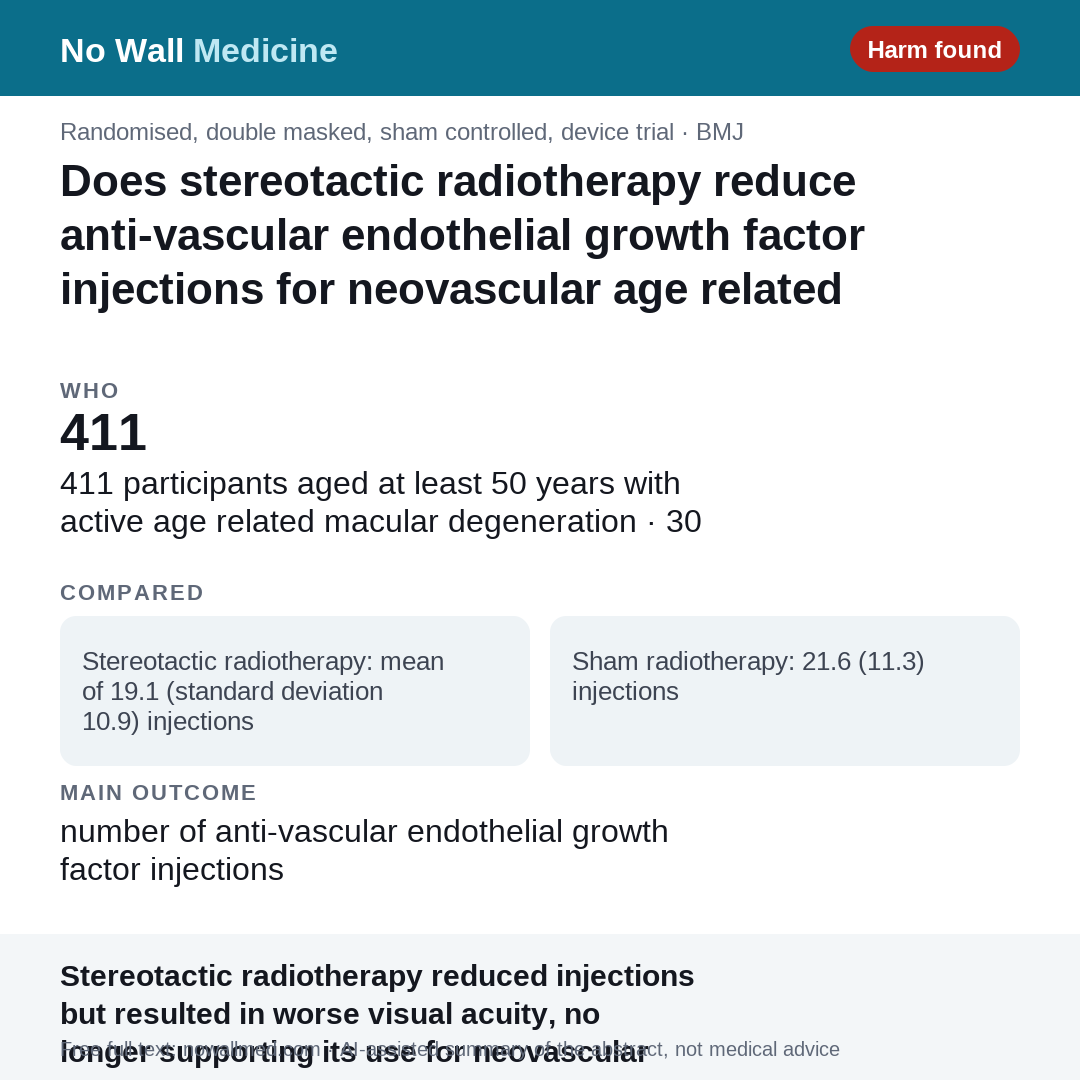
Stereotactic radiotherapy for neovascular age related macular degeneration: year 3 and 4 extended follow up results of a randomised, double masked, sham controlled, device trial (STAR)
Randomised, double masked, sham controlled, device trialHarm found
Does stereotactic radiotherapy reduce anti-vascular endothelial growth factor injections for neovascular age related macular degeneration?
Who
411
411 participants aged at least 50 years with active age related macular degeneration · 30 NHS hospitals in the UK
Compared
Stereotactic radiotherapy: mean of 19.1 (standard deviation 10.9) injections
Sham radiotherapy: 21.6 (11.3) injections
Main outcome
number of anti-vascular endothelial growth factor injections
Result: adjusted decrease of 3.2 injections (95% CI of difference -5.7 to -0.7)
Bottom line: Stereotactic radiotherapy reduced injections but resulted in worse visual acuity, no longer supporting its use for neovascular age related macular degeneration.
BMJ · 2026-06-18Download image