Visual abstracts
New randomized trials and meta-analyses from leading journals at a glance: who was studied, what was compared, and what was found. Every paper is free to read in full.
All specialtiesCardiology 2683Oncology 2265Gastroenterology & Hepatology 1029Infectious Disease 1689Neurology 1070Psychiatry & Mental Health 1240Pulmonology 1126Critical Care 741Endocrinology & Diabetes 1383Pediatrics 1569Surgery 1380Orthopedics & Sports Medicine 493Neurosurgery 330Cardiothoracic & Vascular Surgery 294Plastic & Reconstructive Surgery 400Nephrology 555Rheumatology 411Hematology 583Dermatology 317Ophthalmology 307Obstetrics & Gynecology 879Public & Global Health 489Radiology & Imaging 369Anesthesiology 533Urology 446ENT (Otolaryngology) 317Emergency Medicine 299Allergy & Immunology 174Geriatrics 574Family Medicine & Primary Care 307Medical Genetics & Genomics 302Pathology & Laboratory Medicine 85Physical Medicine & Rehabilitation 437Palliative Care 238Nutrition 716Digital Health & AI 1284General Medicine 193
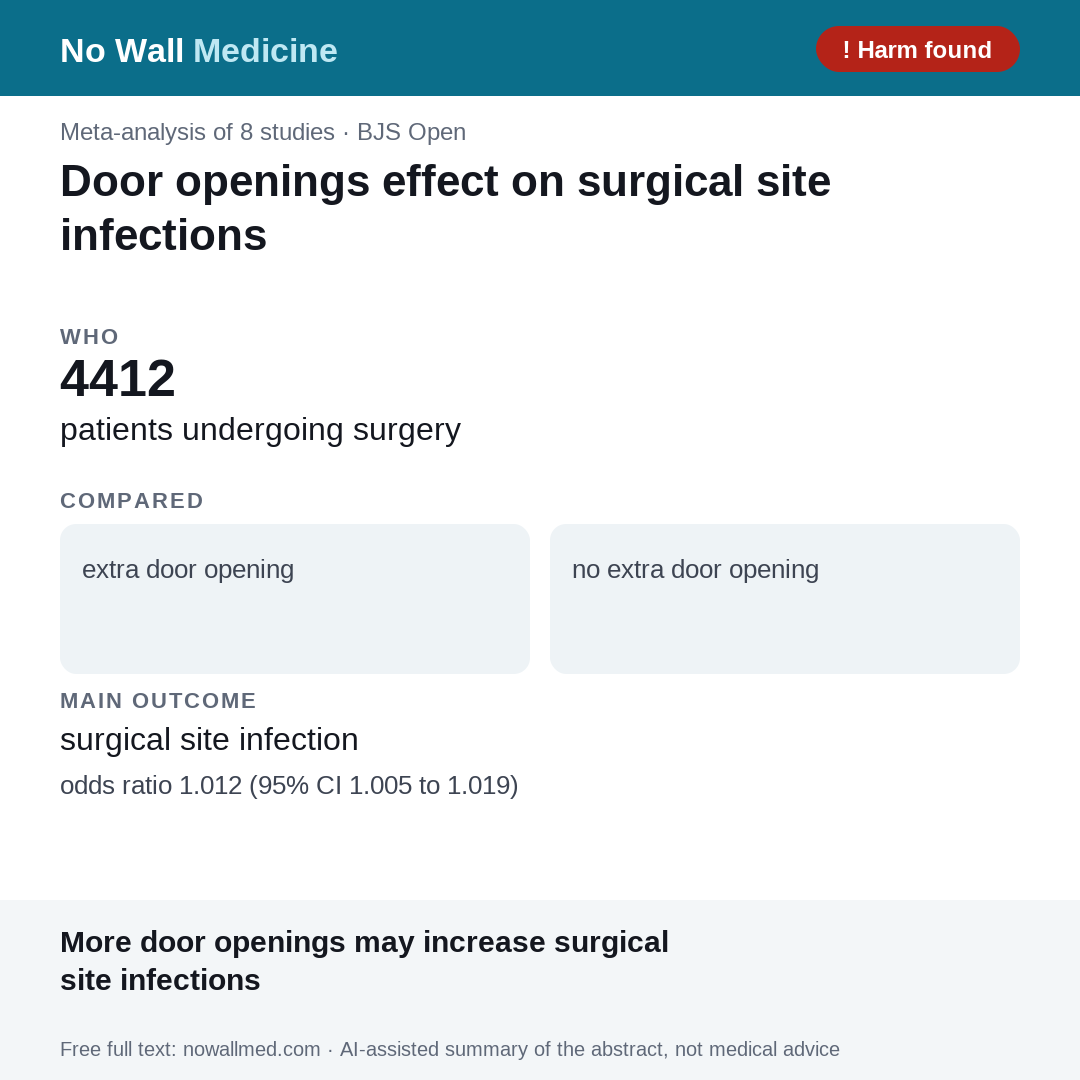
Effect of the number of door openings in the operating room on surgical site infections: individual-patient data meta-analysis
Meta-analysis of 8 studiesHarm found
Door openings effect on surgical site infections
Who
4412
patients undergoing surgery
Compared
extra door opening
no extra door opening
Main outcome
surgical site infection
Result: odds ratio 1.012 (95% CI 1.005 to 1.019)
Bottom line: More door openings may increase surgical site infections
Limitation: very low certainty of evidence
BJS Open · 2025-06-12Download image
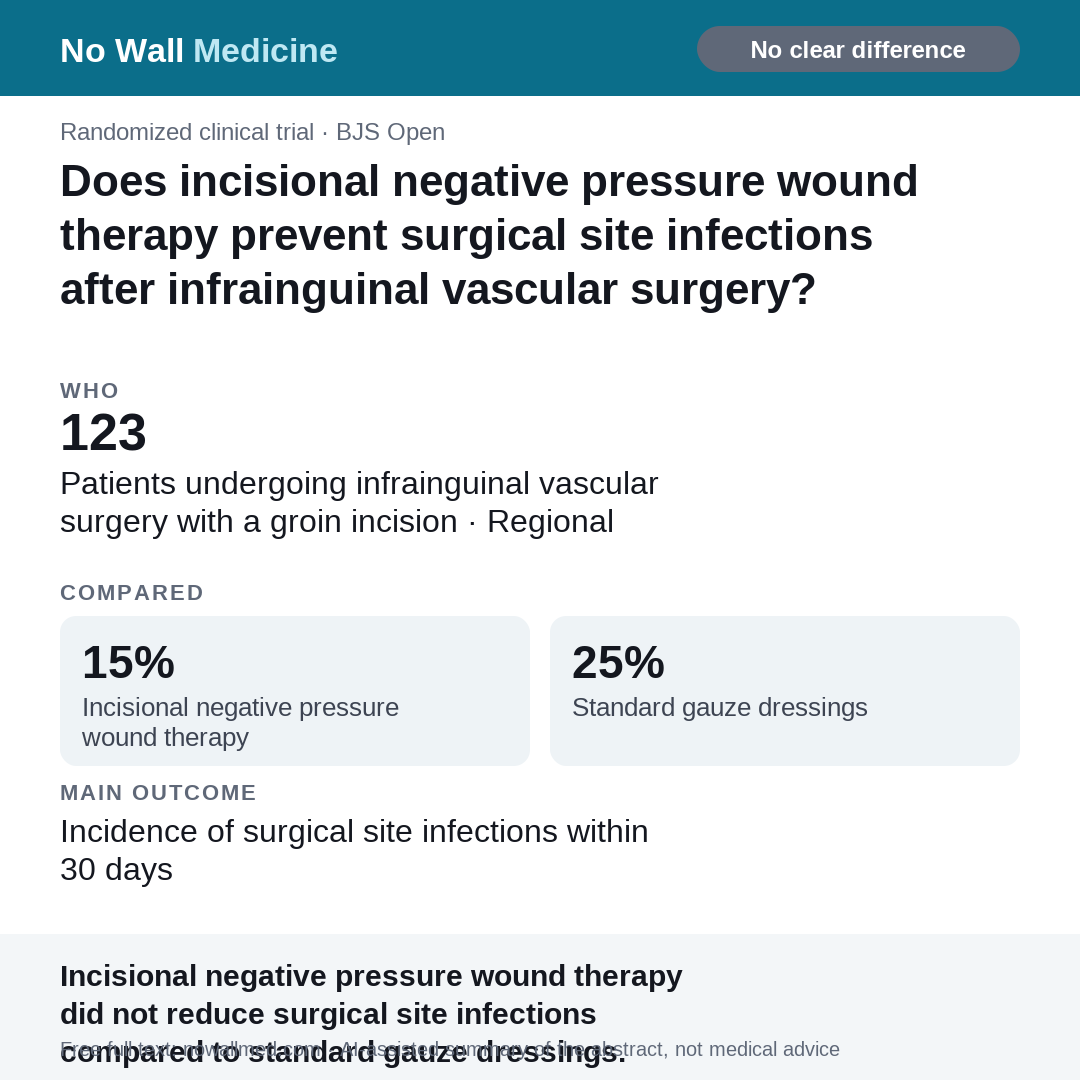
Prophylactic use of incisional negative pressure wound therapy for groin incisions in vascular surgery: randomized clinical trial
Randomized clinical trialNo clear difference
Does incisional negative pressure wound therapy prevent surgical site infections after infrainguinal vascular surgery?
Who
123
Patients undergoing infrainguinal vascular surgery with a groin incision · Regional
Compared
15%Incisional negative pressure wound therapy
25%Standard gauze dressings
Main outcome
Incidence of surgical site infections within 30 days
Bottom line: Incisional negative pressure wound therapy did not reduce surgical site infections compared to standard gauze dressings.
BJS Open · 2025-06-12Download image
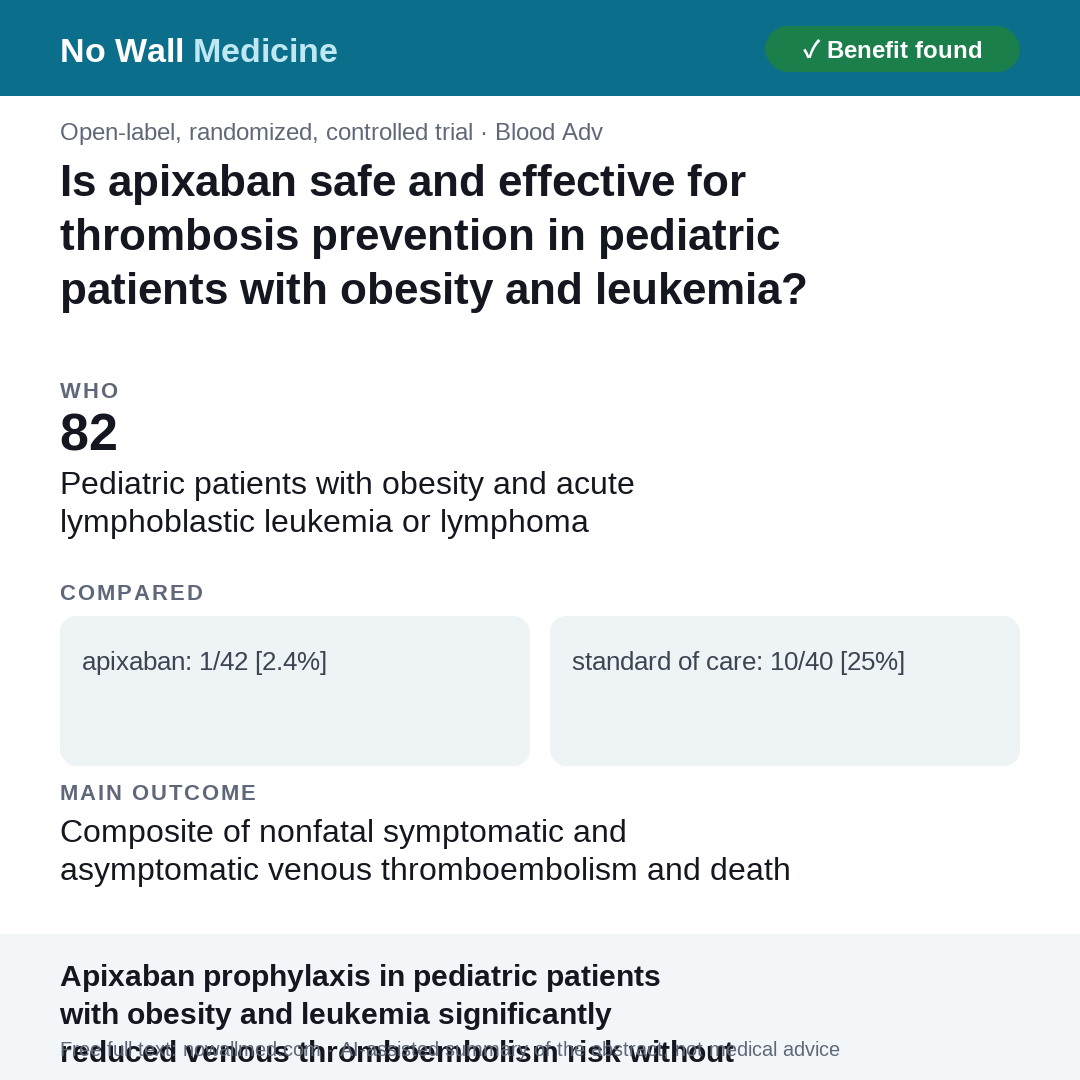
Safety and efficacy of apixaban thrombosis prevention in pediatric patients with obesity and acute lymphoblastic leukemia
Open-label, randomized, controlled trialBenefit found
Is apixaban safe and effective for thrombosis prevention in pediatric patients with obesity and leukemia?
Who
82
Pediatric patients with obesity and acute lymphoblastic leukemia or lymphoma
Compared
apixaban: 1/42 [2.4%]
standard of care: 10/40 [25%]
Main outcome
Composite of nonfatal symptomatic and asymptomatic venous thromboembolism and death
Result: relative risk 0.09 (95% CI 0.01-0.97)
Bottom line: Apixaban prophylaxis in pediatric patients with obesity and leukemia significantly reduced venous thromboembolism risk without increasing bleeding.
Blood Adv · 2025-06-12Download image
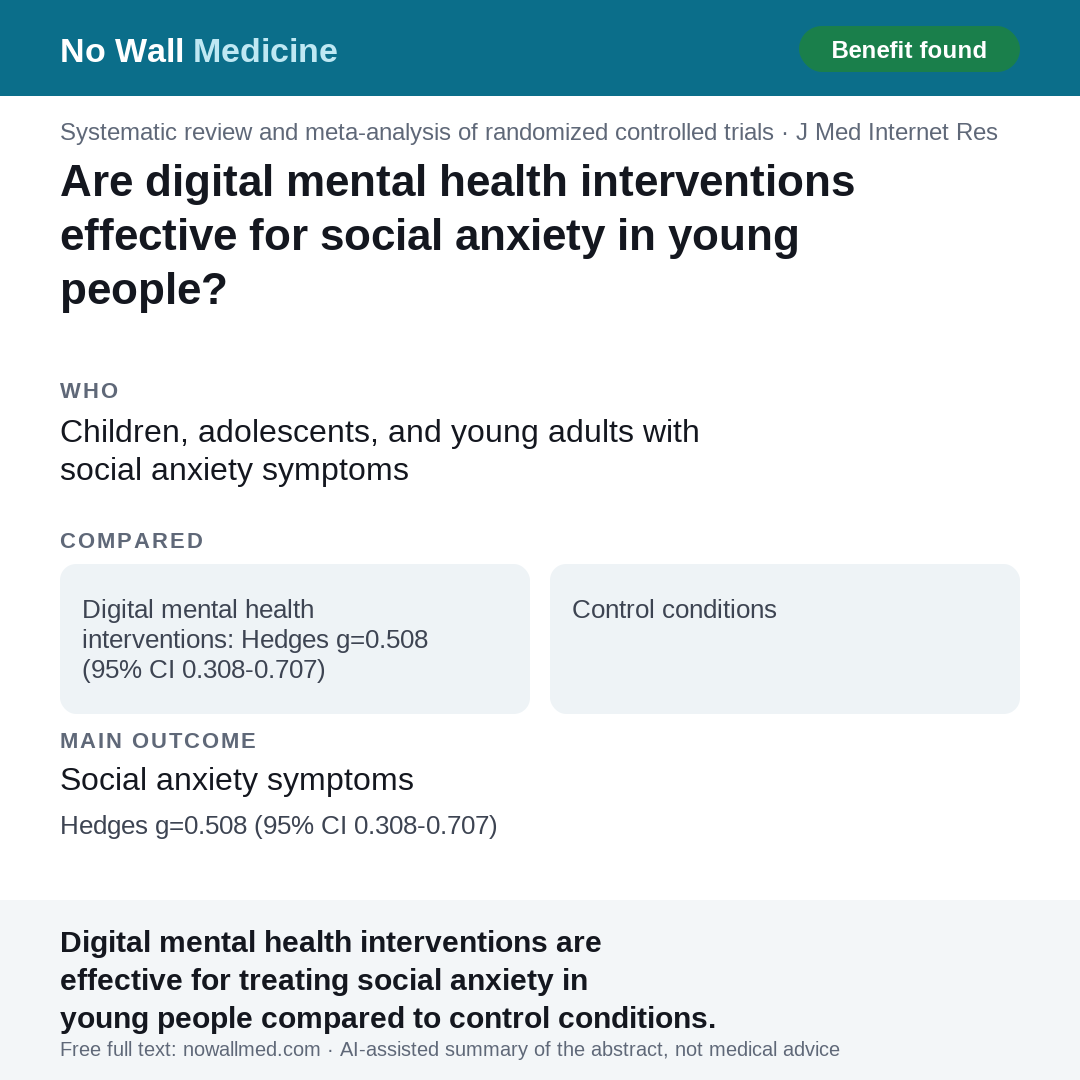
Digital Mental Health Interventions for the Prevention and Treatment of Social Anxiety Disorder in Children, Adolescents, and Young Adults: Systematic Review and Meta-Analysis of Randomized Controlled Trials
Systematic review and meta-analysis of randomized controlled trialsBenefit found
Are digital mental health interventions effective for social anxiety in young people?
Who
Children, adolescents, and young adults with social anxiety symptoms
Compared
Digital mental health interventions: Hedges g=0.508 (95% CI 0.308-0.707)
Control conditions
Main outcome
Social anxiety symptoms
Result: Hedges g=0.508 (95% CI 0.308-0.707)
Bottom line: Digital mental health interventions are effective for treating social anxiety in young people compared to control conditions.
Limitation: Most studies showed some concerns or high risk of bias and reporting of adherence varied substantially.
J Med Internet Res · 2025-06-12Download image
The Effectiveness of Computerized Cognitive Training in Patients With Poststroke Cognitive Impairment: Systematic Review and Meta-Analysis
Systematic review and meta-analysisBenefit found
Does computerized cognitive training improve cognitive function in patients with poststroke cognitive impairment?
Who
875
Patients with poststroke cognitive impairment
Compared
Computerized cognitive training
Usual care or routine rehabilitation
Main outcome
Cognitive function
Result: standardized mean difference 0.46 (95% CI 0.21 to 0.71)
Bottom line: Computerized cognitive training significantly enhances general cognitive function, attention, executive function, and quality of life in patients with poststroke cognitive impairment.
Limitation: Results vary due to differing intervention programs and computerized cognitive training systems.
J Med Internet Res · 2025-06-12Download image

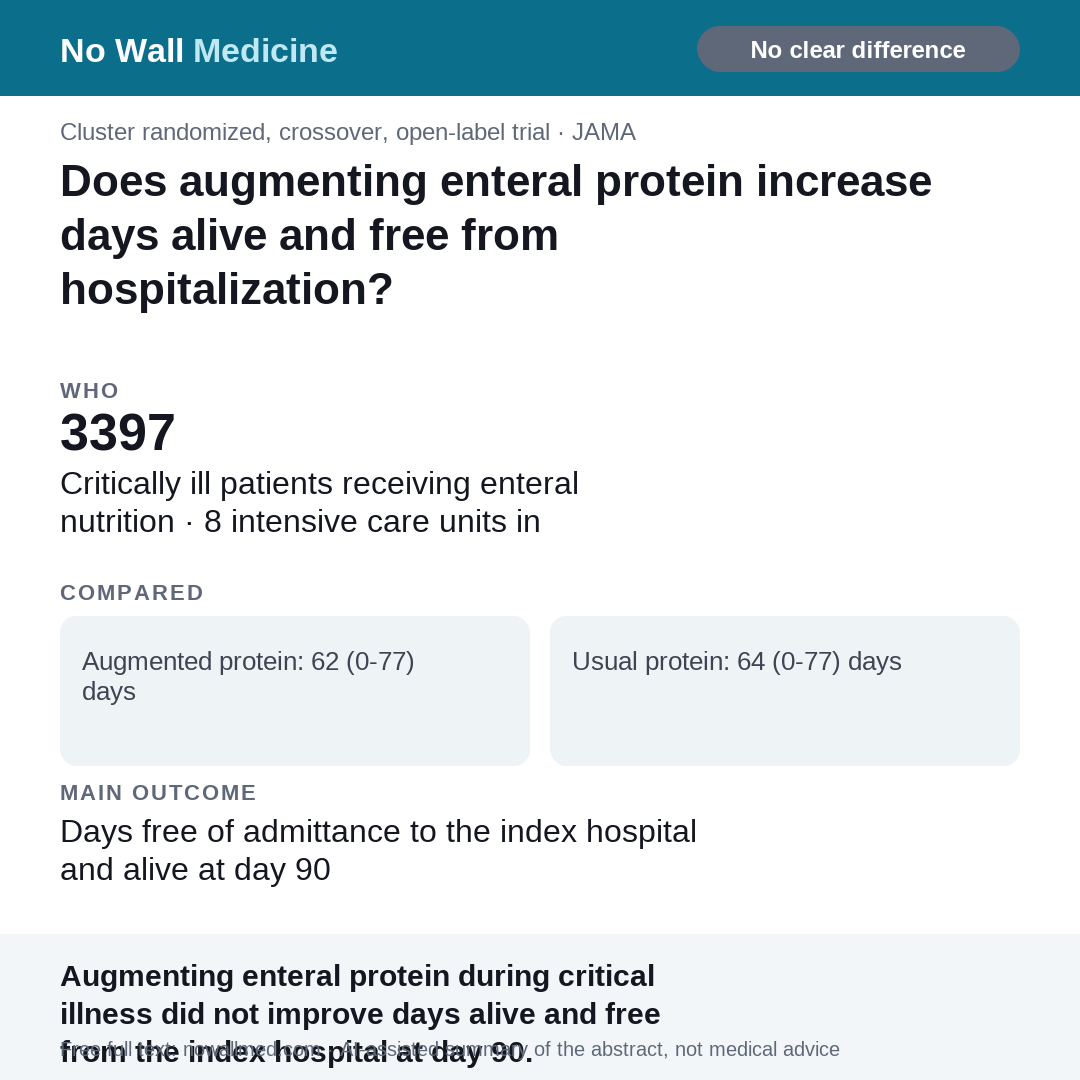
Augmented Enteral Protein During Critical Illness: The TARGET Protein Randomized Clinical Trial
Cluster randomized, crossover, open-label trialNo clear difference
Does augmenting enteral protein increase days alive and free from hospitalization?
Who
3397
Critically ill patients receiving enteral nutrition · 8 intensive care units in Australia and New Zealand
Compared
Augmented protein: 62 (0-77) days
Usual protein: 64 (0-77) days
Main outcome
Days free of admittance to the index hospital and alive at day 90
Result: -1.97 (95% CI, -7.24 to 3.30) days
Bottom line: Augmenting enteral protein during critical illness did not improve days alive and free from the index hospital at day 90.
JAMA · 2025-06-11Download image
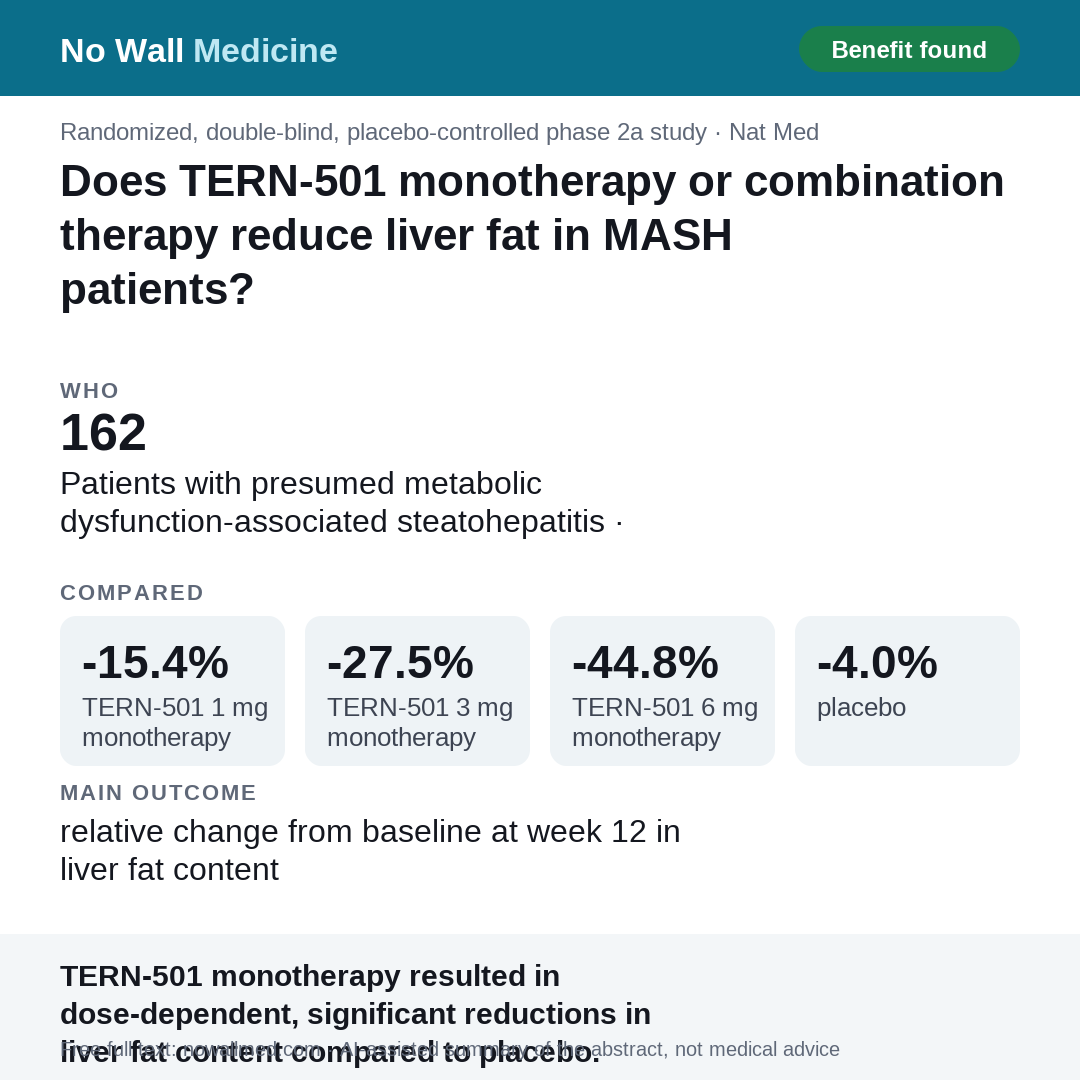
TERN-501 monotherapy and combination therapy with TERN-101 in metabolic dysfunction-associated steatohepatitis: the randomized phase 2a DUET trial
Randomized, double-blind, placebo-controlled phase 2a studyBenefit found
Does TERN-501 monotherapy or combination therapy reduce liver fat in MASH patients?
Who
162
Patients with presumed metabolic dysfunction-associated steatohepatitis · multicenter
Compared
-15.4%TERN-501 1 mg monotherapy (5.2%)
-27.5%TERN-501 3 mg monotherapy (5.7%)
-44.8%TERN-501 6 mg monotherapy (5.9%)
-4.0%placebo (5.4%)
Main outcome
relative change from baseline at week 12 in liver fat content
Bottom line: TERN-501 monotherapy resulted in dose-dependent, significant reductions in liver fat content compared to placebo.
Nat Med · 2025-06-11Download image
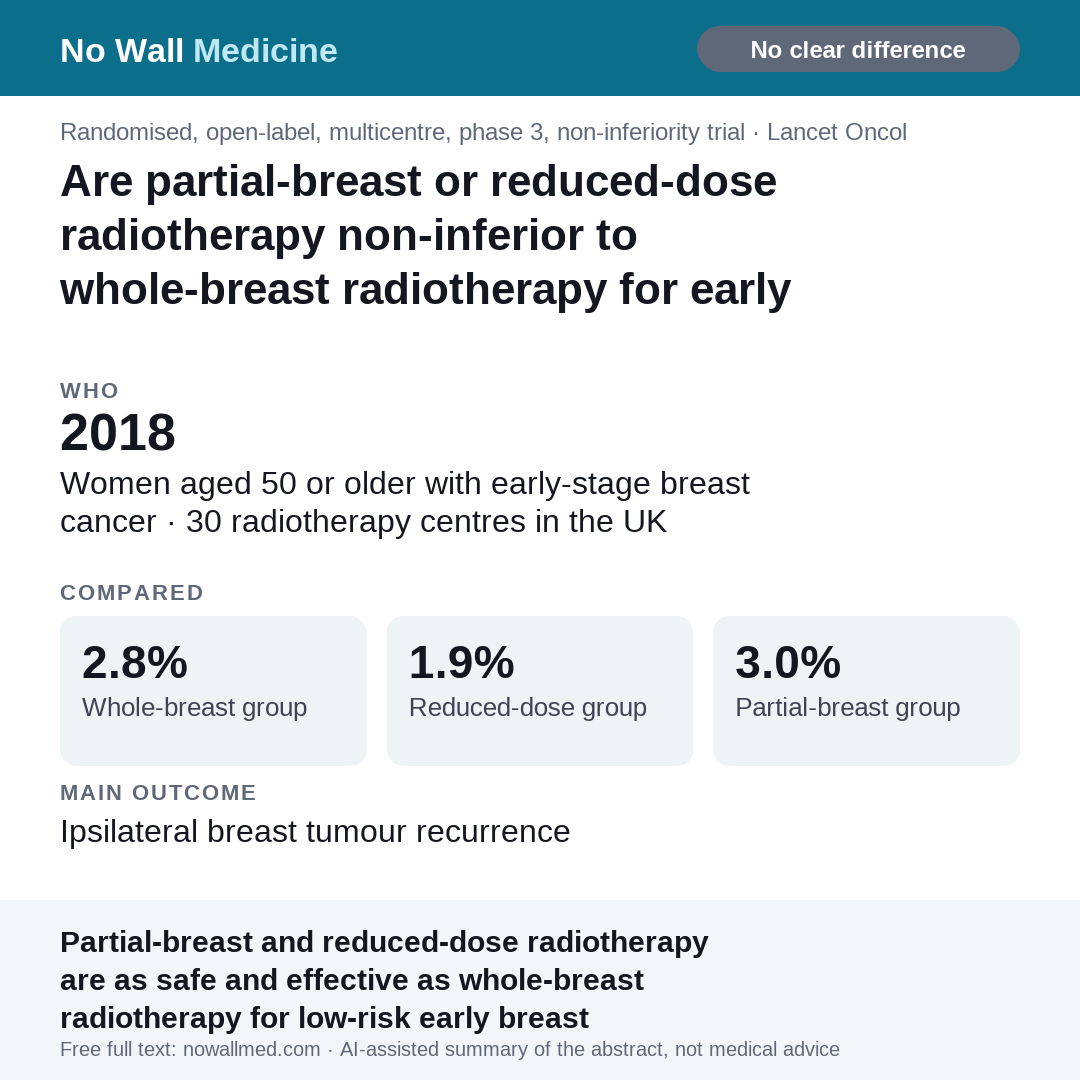
Partial-breast radiotherapy after breast conservation surgery for women with early breast cancer (UK IMPORT LOW): 10-year outcomes from a multicentre, open-label, randomised, controlled, phase 3, non-inferiority trial
Randomised, open-label, multicentre, phase 3, non-inferiority trialNo clear difference
Are partial-breast or reduced-dose radiotherapy non-inferior to whole-breast radiotherapy for early breast cancer?
Who
2018
Women aged 50 or older with early-stage breast cancer · 30 radiotherapy centres in the UK
Compared
2.8%Whole-breast group (17/674)
1.9%Reduced-dose group (11/673)
3.0%Partial-breast group (17/669)
Main outcome
Ipsilateral breast tumour recurrence
Result: absolute difference -1.02% (95% CI -1.98 to 0.99) and 0.16% (-1.28 to 2.89)
Bottom line: Partial-breast and reduced-dose radiotherapy are as safe and effective as whole-breast radiotherapy for low-risk early breast cancer.
Funded by: Cancer Research UK
Lancet Oncol · 2025-06-11Download image
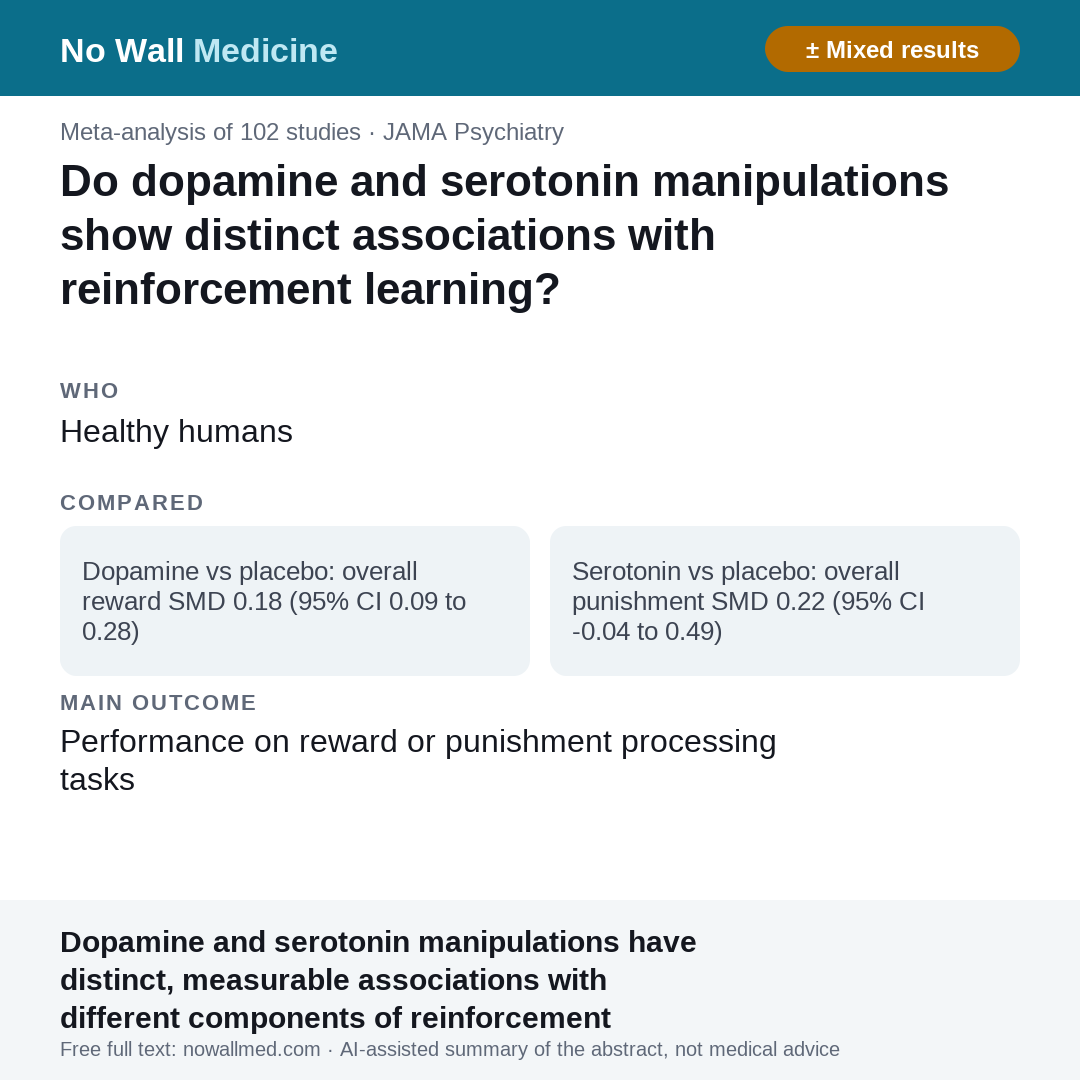
Differential Associations of Dopamine and Serotonin With Reward and Punishment Processes in Humans: A Systematic Review and Meta-Analysis
Meta-analysis of 102 studiesMixed results
Do dopamine and serotonin manipulations show distinct associations with reinforcement learning?
Who
Healthy humans
Compared
Dopamine vs placebo: overall reward SMD 0.18 (95% CI 0.09 to 0.28)
Serotonin vs placebo: overall punishment SMD 0.22 (95% CI -0.04 to 0.49)
Main outcome
Performance on reward or punishment processing tasks
Bottom line: Dopamine and serotonin manipulations have distinct, measurable associations with different components of reinforcement learning in humans.
JAMA Psychiatry · 2025-06-11Download image
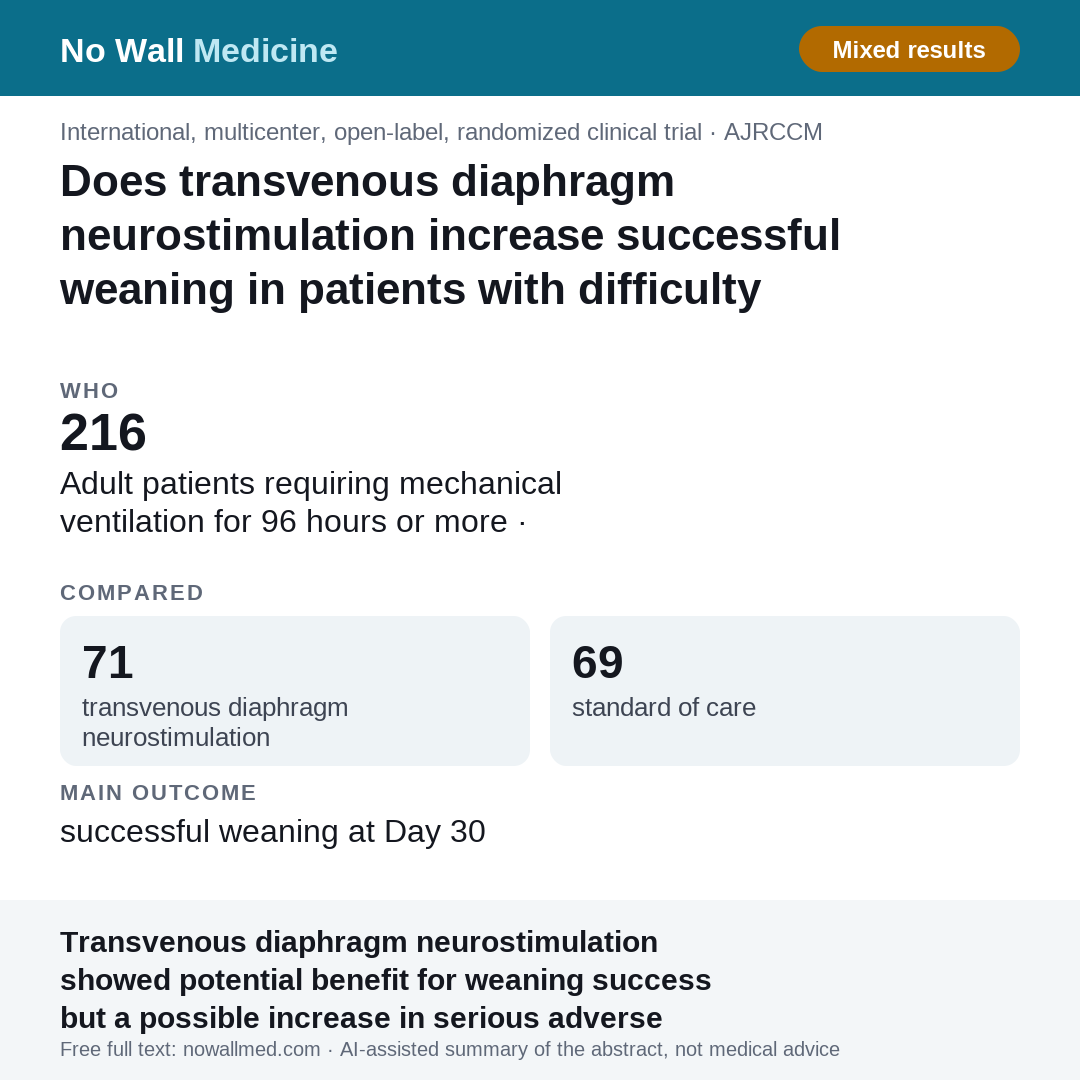
Temporary Transvenous Diaphragm Neurostimulation for Weaning from Mechanical Ventilation (RESCUE-3): A Randomized Clinical Trial
International, multicenter, open-label, randomized clinical trialMixed results
Does transvenous diaphragm neurostimulation increase successful weaning in patients with difficulty weaning?
Who
216
Adult patients requiring mechanical ventilation for 96 hours or more · International, multicenter
Compared
71transvenous diaphragm neurostimulation (70%)
69standard of care (61%)
Main outcome
successful weaning at Day 30
Result: adjusted hazard ratio 1.34 (95% credible interval 1.01-1.78)
Bottom line: Transvenous diaphragm neurostimulation showed potential benefit for weaning success but a possible increase in serious adverse events.
AJRCCM · 2025-06-11Download image
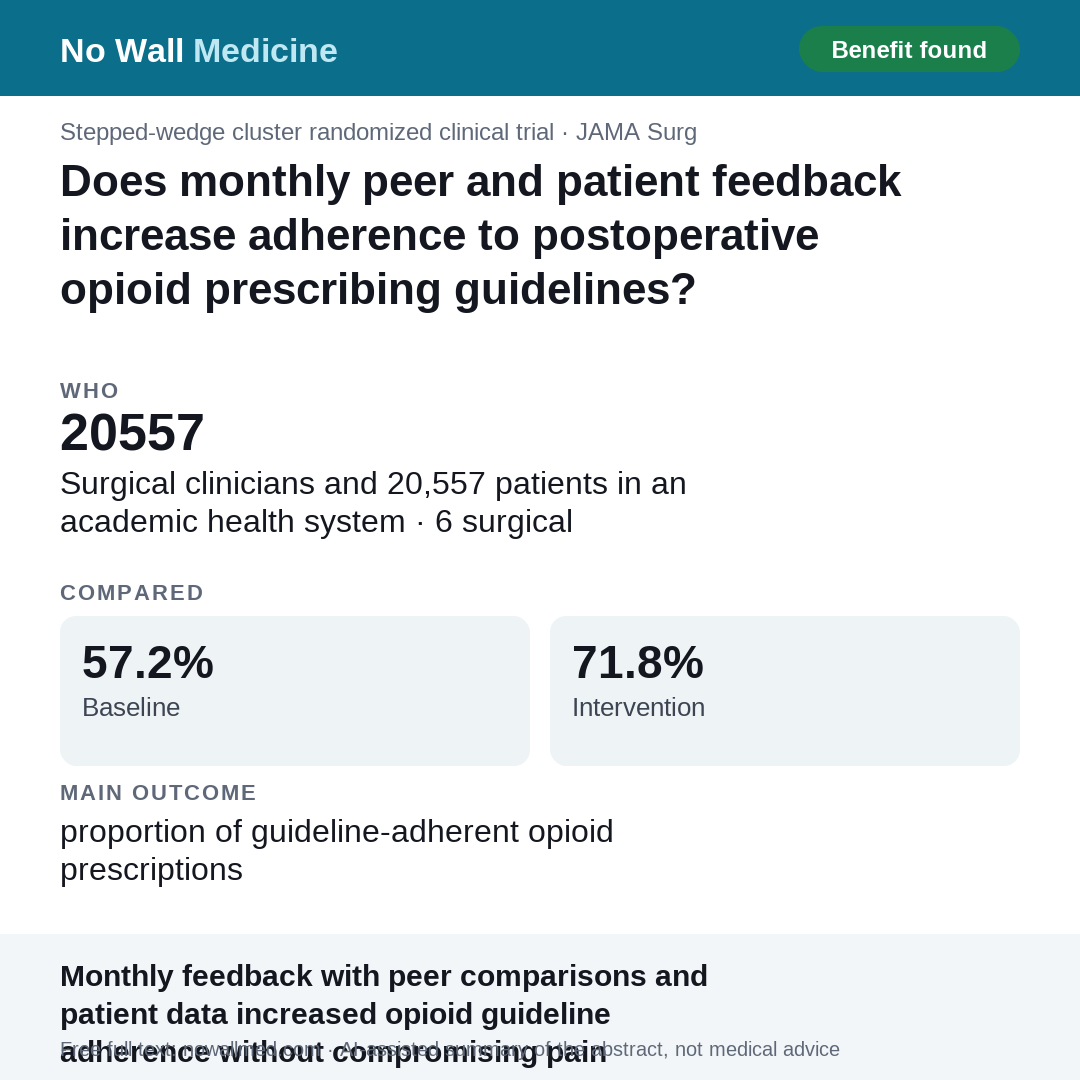
Peer and Patient Feedback to Increase Adherence to Postoperative Opioid Prescribing Guidelines: A Stepped-Wedge Cluster Randomized Clinical Trial
Stepped-wedge cluster randomized clinical trialBenefit found
Does monthly peer and patient feedback increase adherence to postoperative opioid prescribing guidelines?
Who
20557
Surgical clinicians and 20,557 patients in an academic health system · 6 surgical departments in Pennsylvania and New Jersey
Compared
57.2%Baseline
71.8%Intervention
Main outcome
proportion of guideline-adherent opioid prescriptions
Result: adjusted intervention effect of 5.3% (95% CI, 2.0%-8.7%)
Bottom line: Monthly feedback with peer comparisons and patient data increased opioid guideline adherence without compromising pain management.
JAMA Surg · 2025-06-11Download image
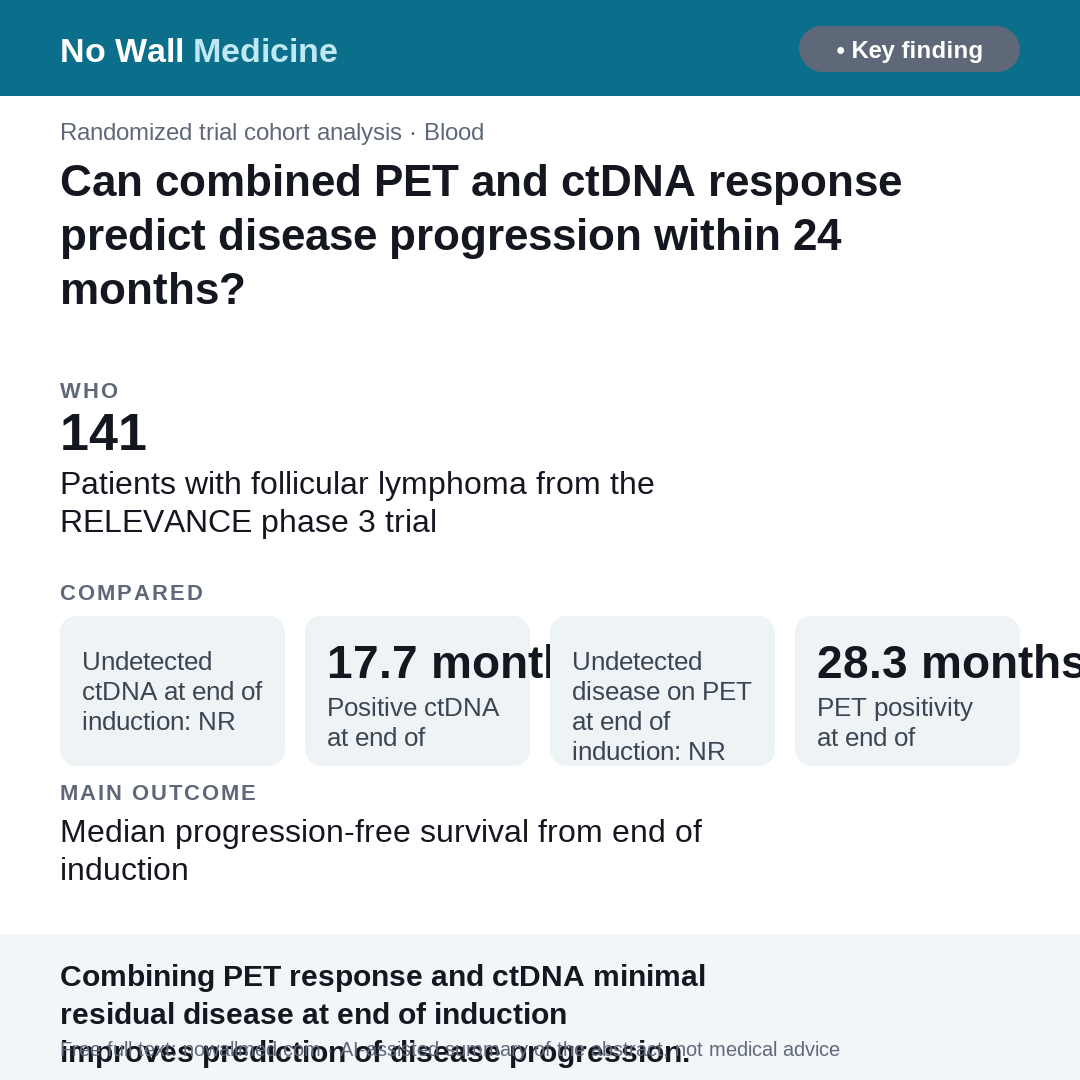
Combined PET and ctDNA response as a predictor of POD24 for follicular lymphoma after first-line induction treatment
Randomized trial cohort analysisBenefit found
Can combined PET and ctDNA response predict disease progression within 24 months?
Who
141
Patients with follicular lymphoma from the RELEVANCE phase 3 trial
Compared
Undetected ctDNA at end of induction: NR
17.7 monthsPositive ctDNA at end of induction (95% CI, 1.4 to NR)
Undetected disease on PET at end of induction: NR
28.3 monthsPET positivity at end of induction (95% CI, 2.9 to NR)
Main outcome
Median progression-free survival from end of induction
Bottom line: Combining PET response and ctDNA minimal residual disease at end of induction improves prediction of disease progression.
Blood · 2025-06-11Download image
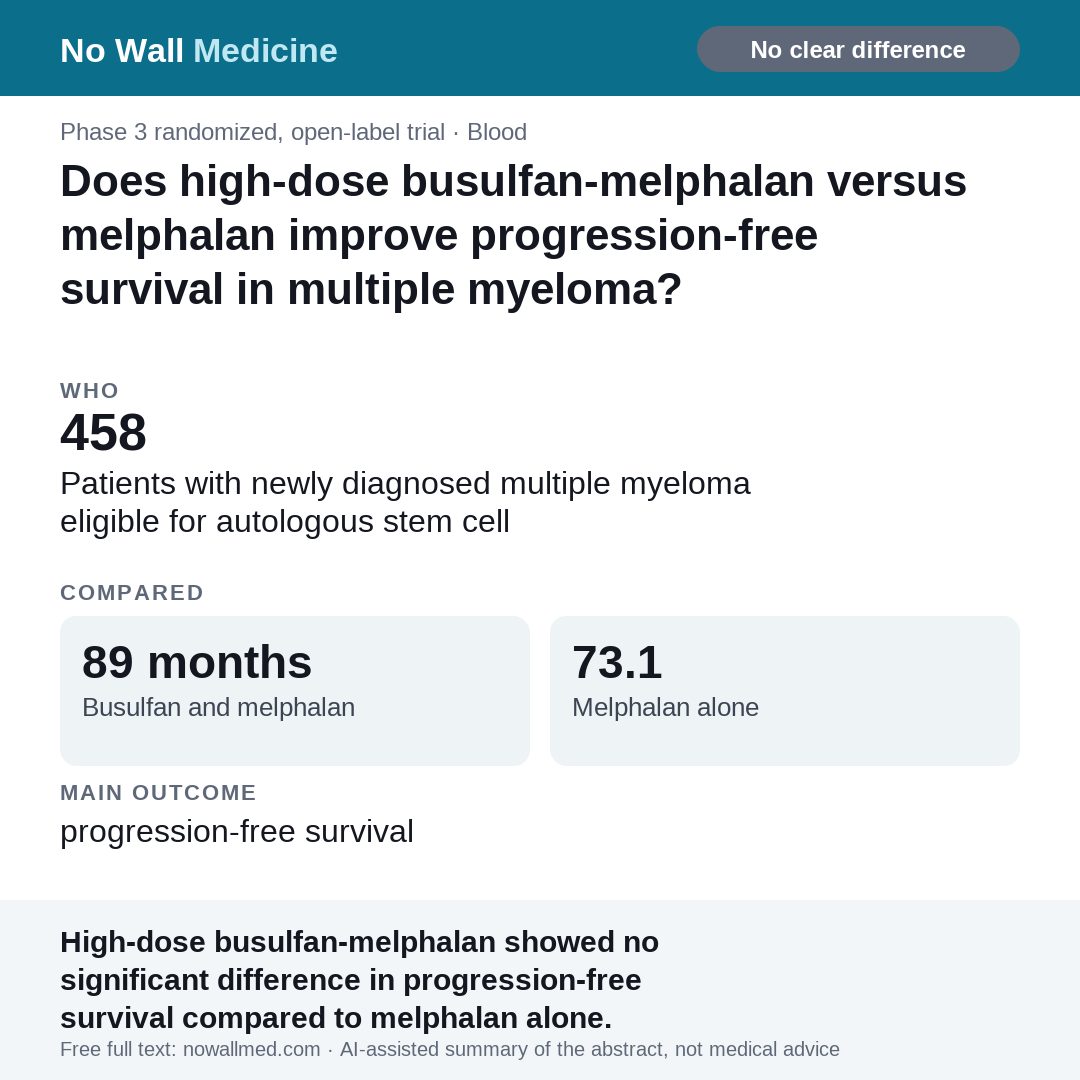
High-dose busulfan-melphalan vs melphalan and reinforced VRD for newly diagnosed multiple myeloma: a phase 3 GEM trial
Phase 3 randomized, open-label trialNo clear difference
Does high-dose busulfan-melphalan versus melphalan improve progression-free survival in multiple myeloma?
Who
458
Patients with newly diagnosed multiple myeloma eligible for autologous stem cell transplantation
Compared
89 monthsBusulfan and melphalan
73.1Melphalan alone
Main outcome
progression-free survival
Result: hazard ratio 0.89 (95% confidence interval, 0.70-1.14)
Bottom line: High-dose busulfan-melphalan showed no significant difference in progression-free survival compared to melphalan alone.
Blood · 2025-06-11Download image
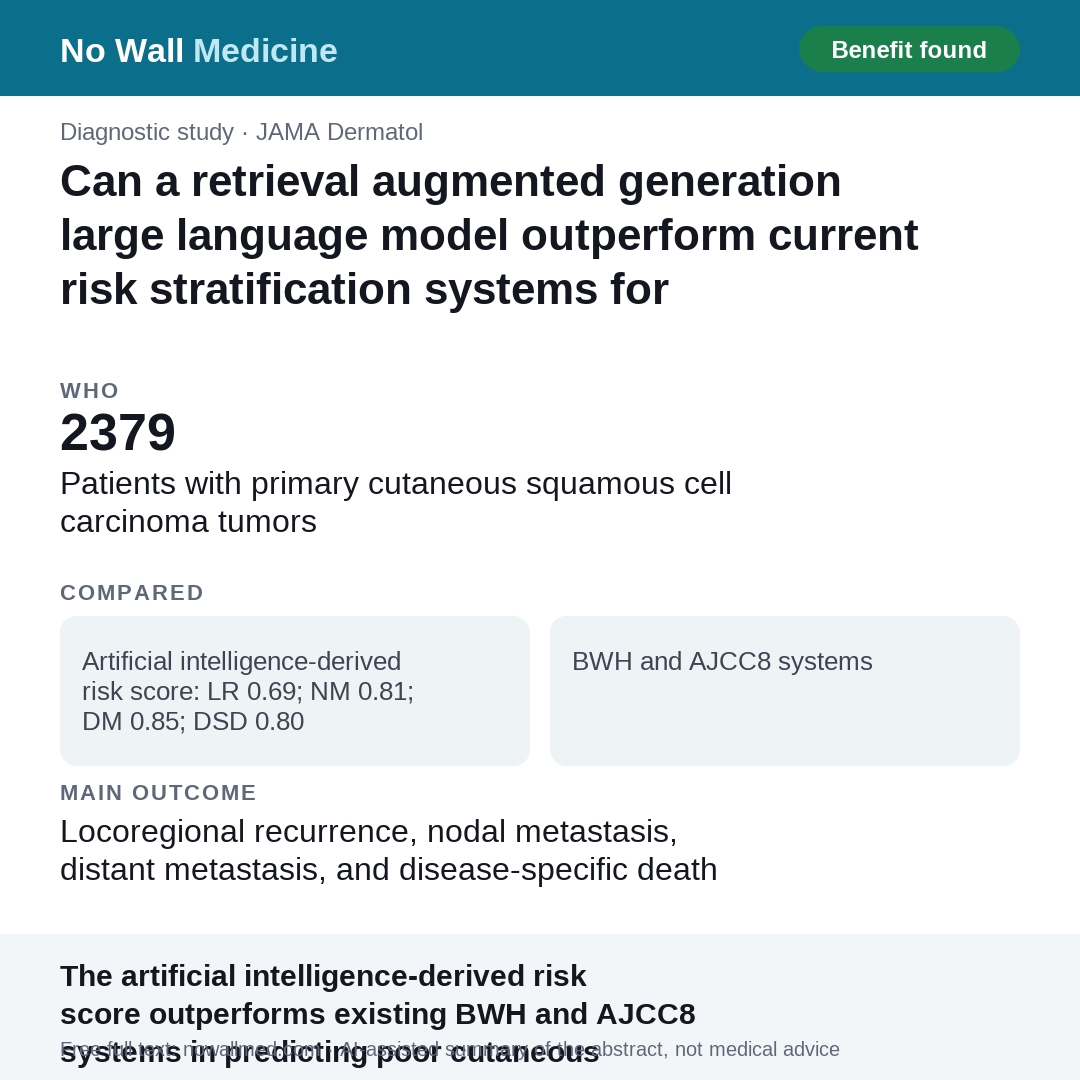
Retrieval Augmented Generation-Enabled Large Language Model for Risk Stratification of Cutaneous Squamous Cell Carcinoma
Diagnostic studyBenefit found
Can a retrieval augmented generation large language model outperform current risk stratification systems for cutaneous squamous cell carcinoma?
Who
2379
Patients with primary cutaneous squamous cell carcinoma tumors
Compared
Artificial intelligence-derived risk score: LR 0.69; NM 0.81; DM 0.85; DSD 0.80
BWH and AJCC8 systems
Main outcome
Locoregional recurrence, nodal metastasis, distant metastasis, and disease-specific death
Bottom line: The artificial intelligence-derived risk score outperforms existing BWH and AJCC8 systems in predicting poor cutaneous squamous cell carcinoma outcomes.
JAMA Dermatol · 2025-06-11Download image
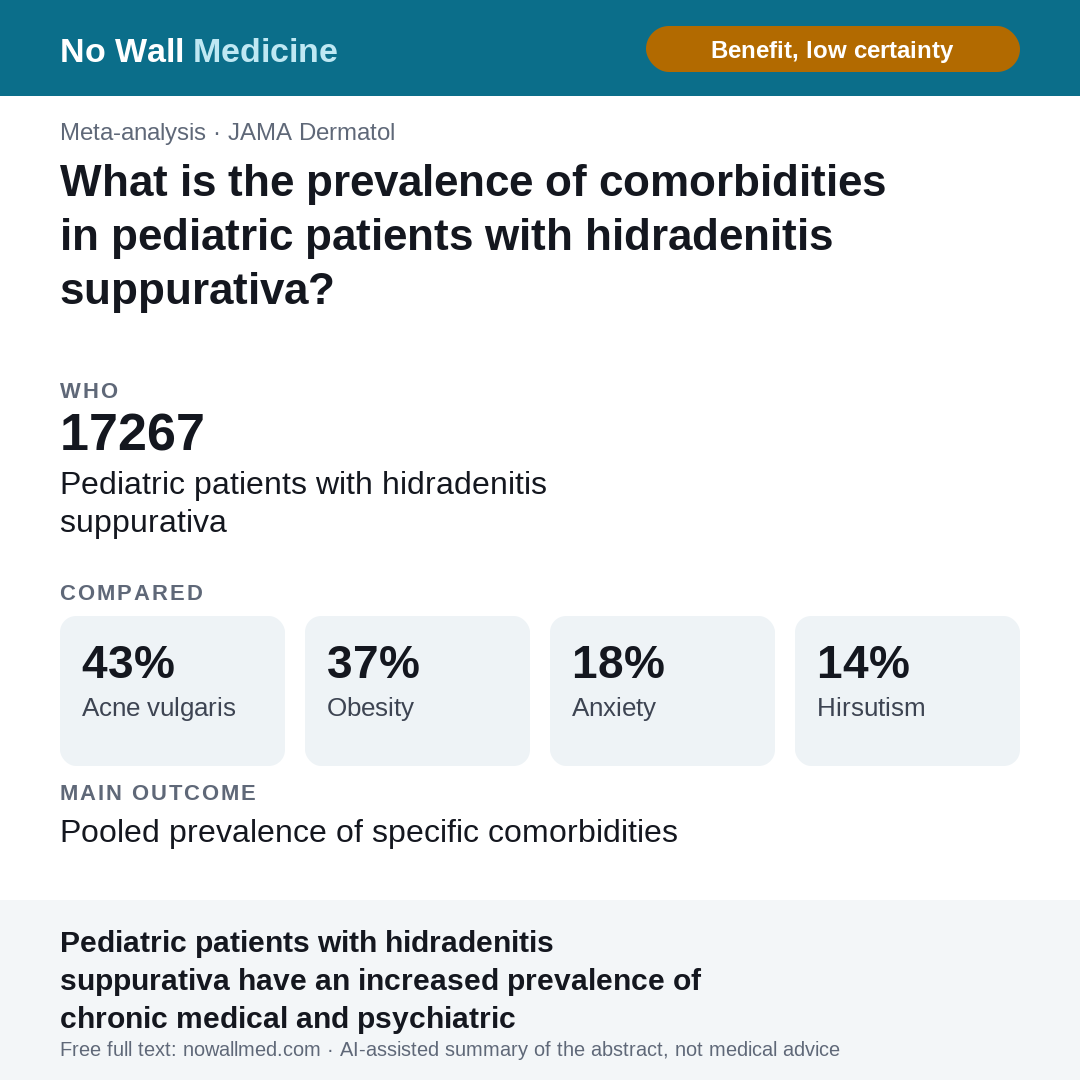
Prevalence of Comorbidities Among Pediatric Patients With Hidradenitis Suppurativa: A Meta-Analysis
Meta-analysisBenefit found
What is the prevalence of comorbidities in pediatric patients with hidradenitis suppurativa?
Who
17267
Pediatric patients with hidradenitis suppurativa
Compared
43%Acne vulgaris (95% CI, 21-65)
37%Obesity (95% CI, 27-46)
18%Anxiety (95% CI, 4-31)
14%Hirsutism (95% CI, 6-21)
Main outcome
Pooled prevalence of specific comorbidities
Bottom line: Pediatric patients with hidradenitis suppurativa have an increased prevalence of chronic medical and psychiatric comorbidities.
JAMA Dermatol · 2025-06-11Download image
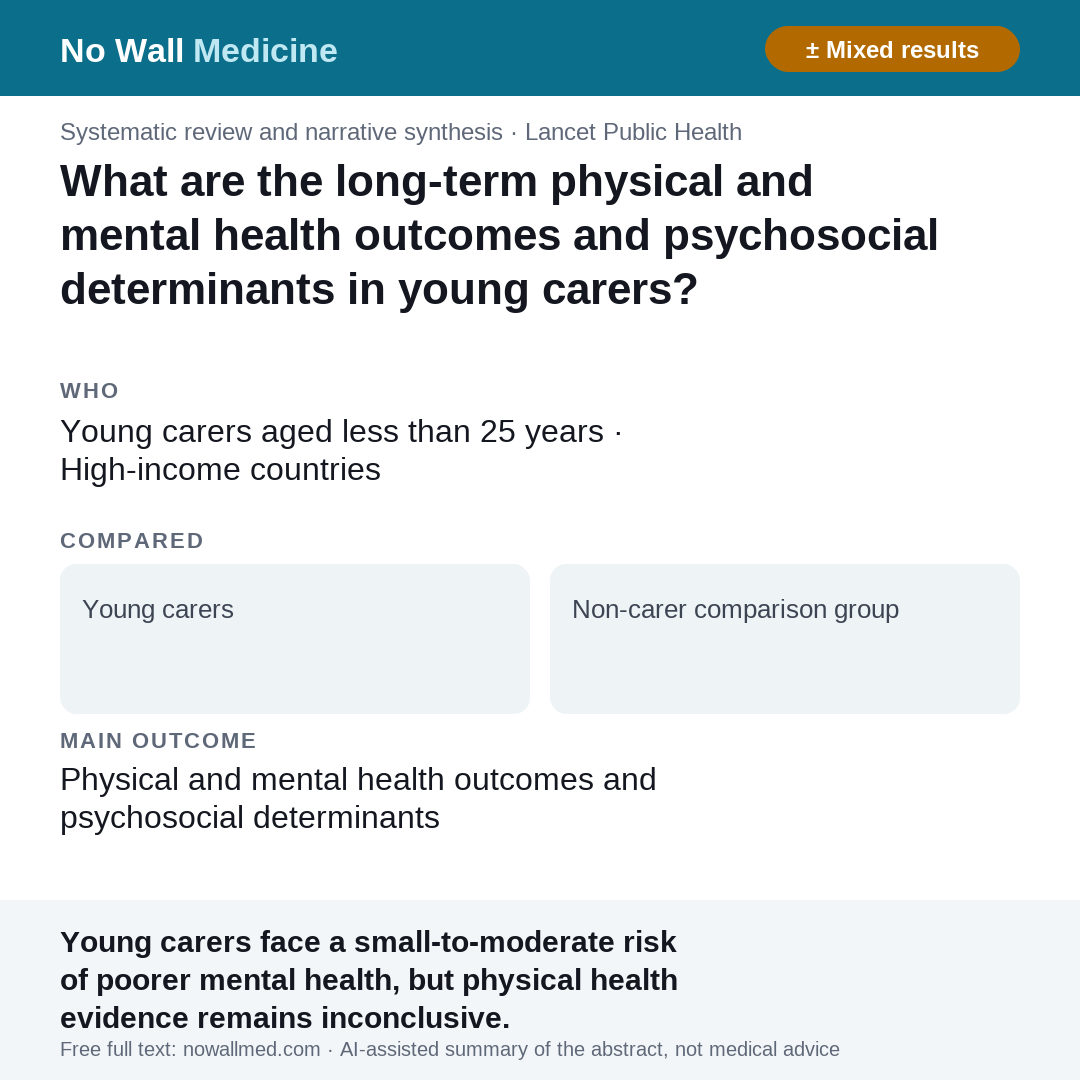
Health outcomes and psychosocial determinants in young carers: a systematic review
Systematic review and narrative synthesisMixed results
What are the long-term physical and mental health outcomes and psychosocial determinants in young carers?
Who
Young carers aged less than 25 years · High-income countries
Compared
Young carers
Non-carer comparison group
Main outcome
Physical and mental health outcomes and psychosocial determinants
Bottom line: Young carers face a small-to-moderate risk of poorer mental health, but physical health evidence remains inconclusive.
Lancet Public Health · 2025-06-11Download image
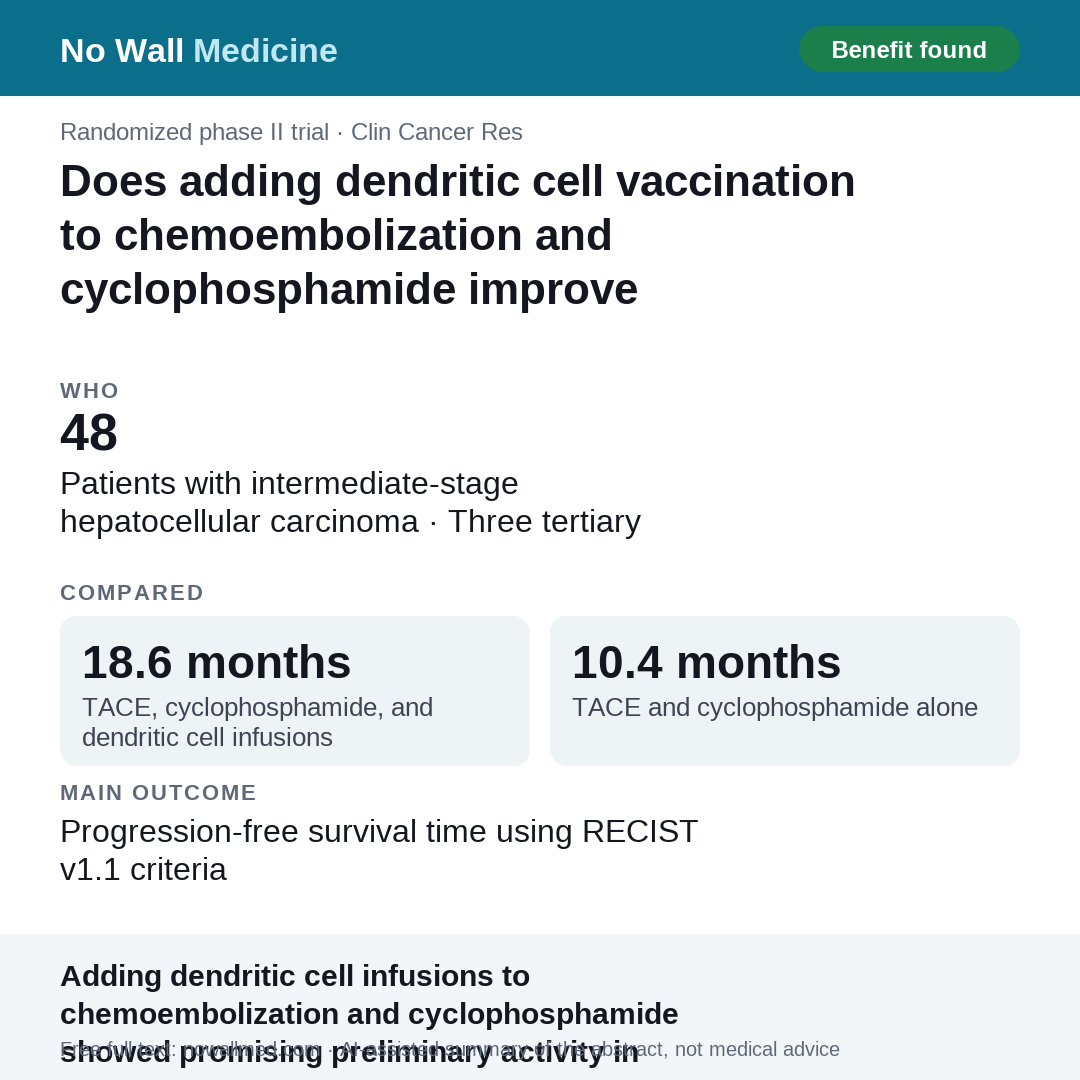
Addition of Dendritic Cell Vaccination to Conditioning Cyclophosphamide and Chemoembolization in Patients with Hepatocellular Carcinoma: The ImmunoTACE Trial
Randomized phase II trialBenefit found
Does adding dendritic cell vaccination to chemoembolization and cyclophosphamide improve progression-free survival?
Who
48
Patients with intermediate-stage hepatocellular carcinoma · Three tertiary referral centers in the United Kingdom
Compared
18.6 monthsTACE, cyclophosphamide, and dendritic cell infusions
10.4 monthsTACE and cyclophosphamide alone
Main outcome
Progression-free survival time using RECIST v1.1 criteria
Result: hazard ratio 0.43; upper value of one-sided 80% confidence interval, 0.57
Bottom line: Adding dendritic cell infusions to chemoembolization and cyclophosphamide showed promising preliminary activity in intermediate-stage hepatocellular carcinoma.
Clin Cancer Res · 2025-06-11Download image
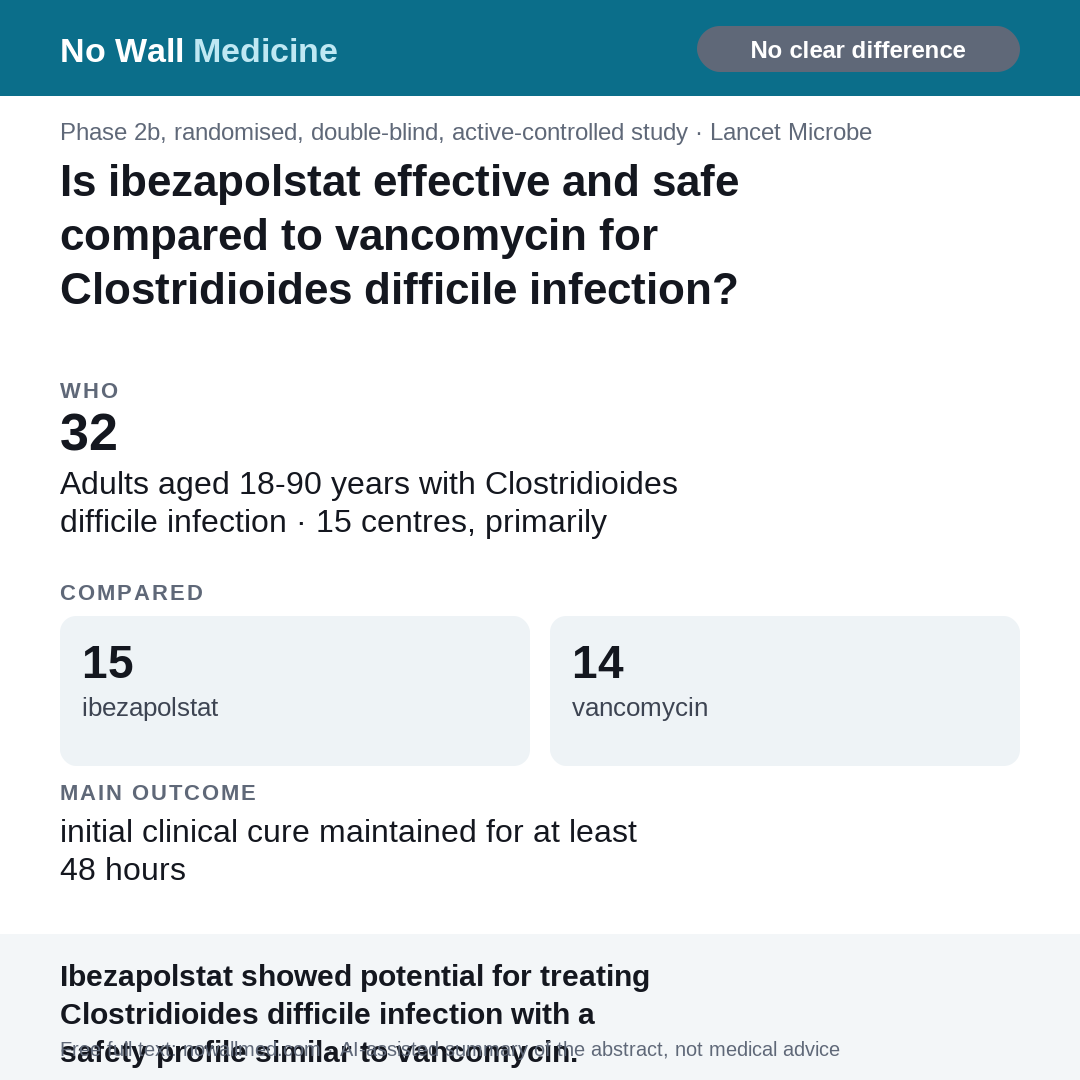
Efficacy, safety, pharmacokinetics, and associated microbiome changes of ibezapolstat compared with vancomycin in adults with Clostridioides difficile infection: a phase 2b, randomised, double-blind, active-controlled, multicentre study
Phase 2b, randomised, double-blind, active-controlled studyNo clear difference
Is ibezapolstat effective and safe compared to vancomycin for Clostridioides difficile infection?
Who
32
Adults aged 18-90 years with Clostridioides difficile infection · 15 centres, primarily outpatient clinics and hospitals, USA
Compared
15ibezapolstat (94%)
14vancomycin (100%)
Main outcome
initial clinical cure maintained for at least 48 hours
Result: treatment difference -6·3% (95% CI -30·7 to 19·4)
Bottom line: Ibezapolstat showed potential for treating Clostridioides difficile infection with a safety profile similar to vancomycin.
Funded by: Acurx Pharmaceuticals
Lancet Microbe · 2025-06-11Download image
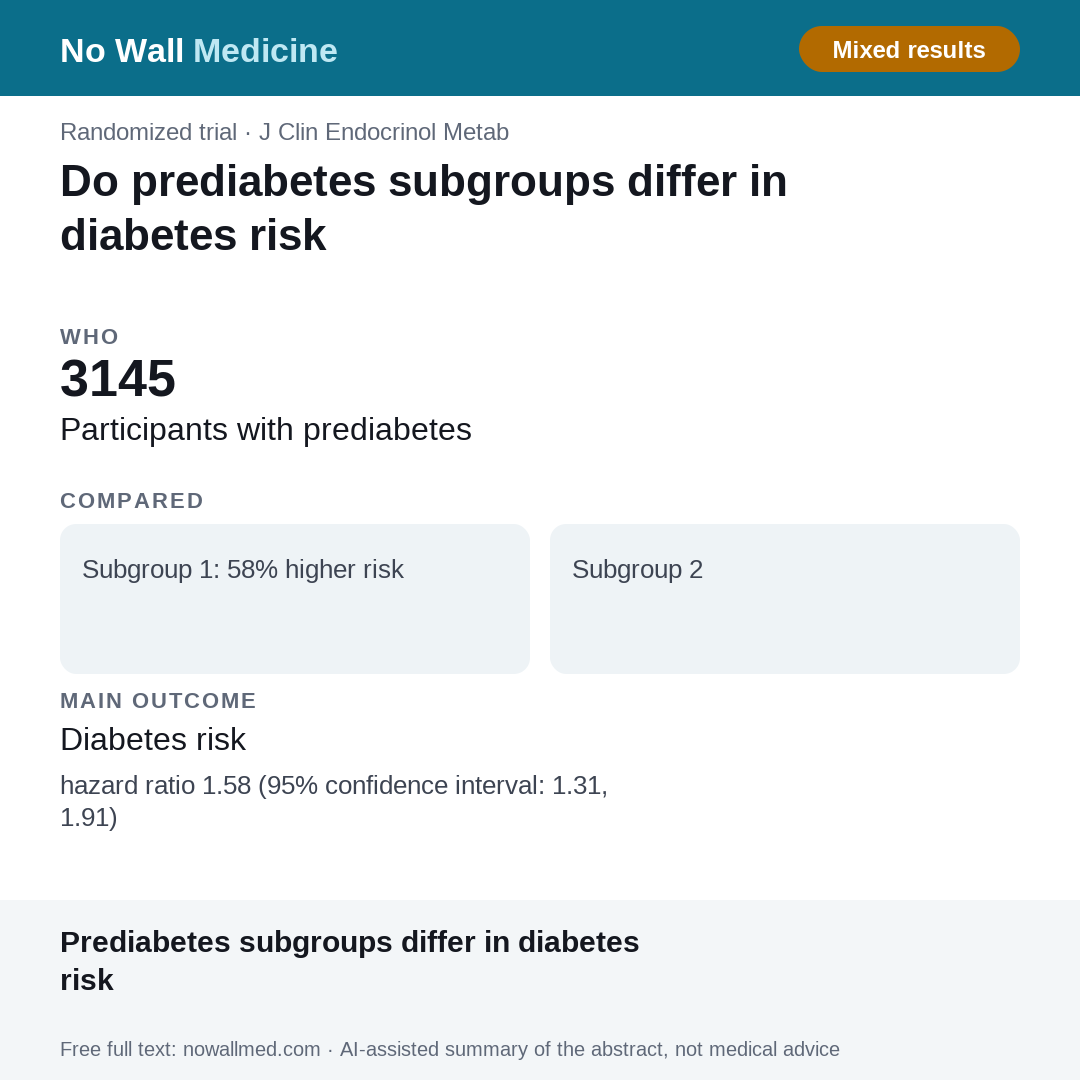
Prediabetes Subgroups, Type 2 Diabetes Risk, and Differential Effects of Preventive Interventions
Randomized trialMixed results
Do prediabetes subgroups differ in diabetes risk
Who
3145
Participants with prediabetes
Compared
Subgroup 1: 58% higher risk
Subgroup 2
Main outcome
Diabetes risk
Result: hazard ratio 1.58 (95% confidence interval: 1.31, 1.91)
Bottom line: Prediabetes subgroups differ in diabetes risk
J Clin Endocrinol Metab · 2025-06-11Download image
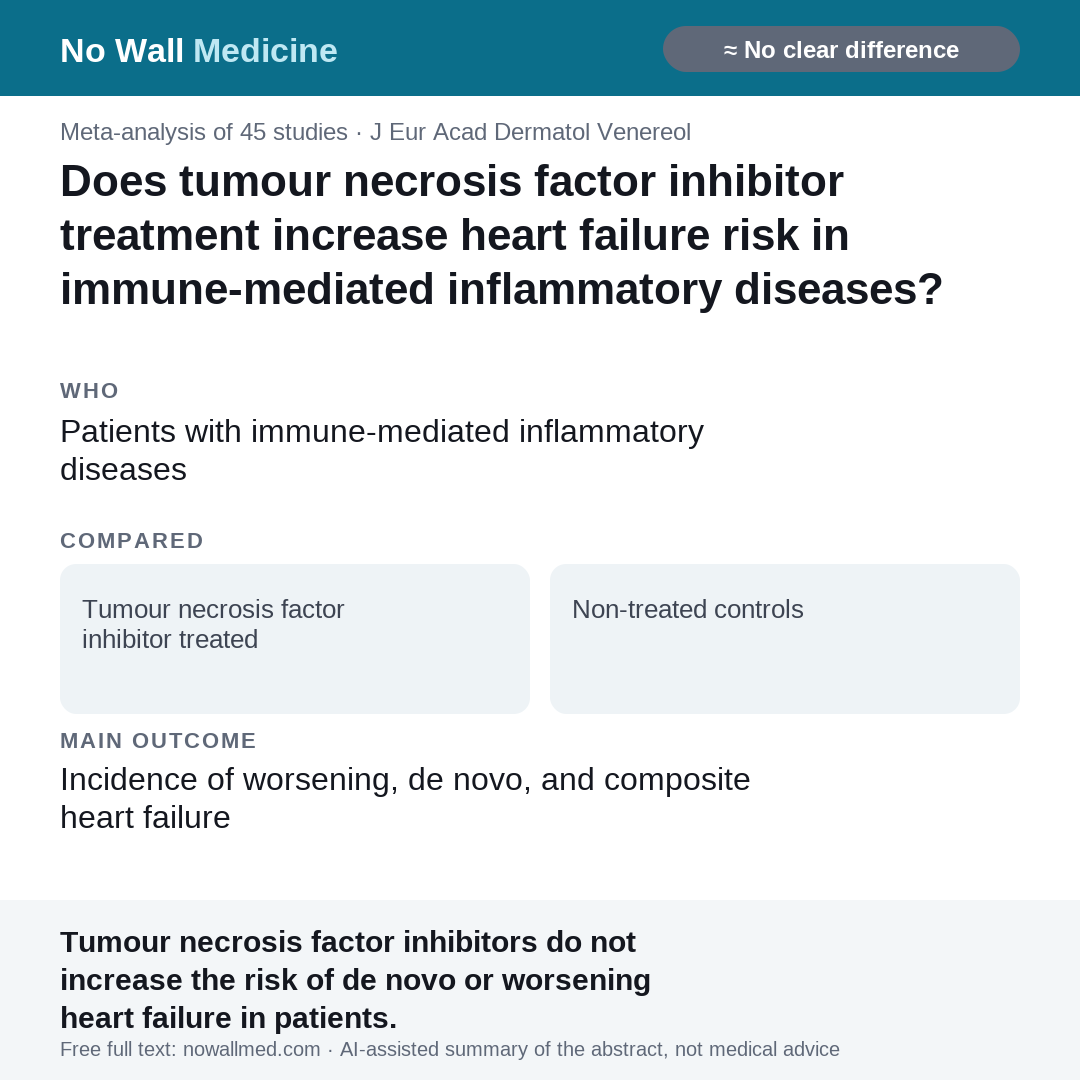
Evaluation of the risk of heart failure with tumour necrosis factor inhibitors: A large-scale meta-analysis in immune-mediated inflammatory diseases
Meta-analysis of 45 studiesNo clear difference
Does tumour necrosis factor inhibitor treatment increase heart failure risk in immune-mediated inflammatory diseases?
Who
Patients with immune-mediated inflammatory diseases
Compared
Tumour necrosis factor inhibitor treated
Non-treated controls
Main outcome
Incidence of worsening, de novo, and composite heart failure
Result: risk ratio 0.87 (95% CI 0.60 to 1.25) for de novo heart failure
Bottom line: Tumour necrosis factor inhibitors do not increase the risk of de novo or worsening heart failure in patients.
J Eur Acad Dermatol Venereol · 2025-06-11Download image