Visual abstracts
New randomized trials and meta-analyses from leading journals at a glance: who was studied, what was compared, and what was found. Every paper is free to read in full.
All specialtiesCardiology 855Oncology 770Gastroenterology & Hepatology 311Infectious Disease 626Neurology 354Psychiatry & Mental Health 430Pulmonology 370Critical Care 259Endocrinology & Diabetes 484Pediatrics 542Surgery 349Orthopedics & Sports Medicine 166Neurosurgery 115Cardiothoracic & Vascular Surgery 87Plastic & Reconstructive Surgery 144Nephrology 197Rheumatology 108Hematology 183Dermatology 81Ophthalmology 97Obstetrics & Gynecology 266Public & Global Health 168Radiology & Imaging 104Anesthesiology 128Urology 162ENT (Otolaryngology) 114Emergency Medicine 103Allergy & Immunology 58Geriatrics 160Family Medicine & Primary Care 111Medical Genetics & Genomics 91Pathology & Laboratory Medicine 27Physical Medicine & Rehabilitation 149Palliative Care 81Nutrition 223Digital Health & AI 462General Medicine 101
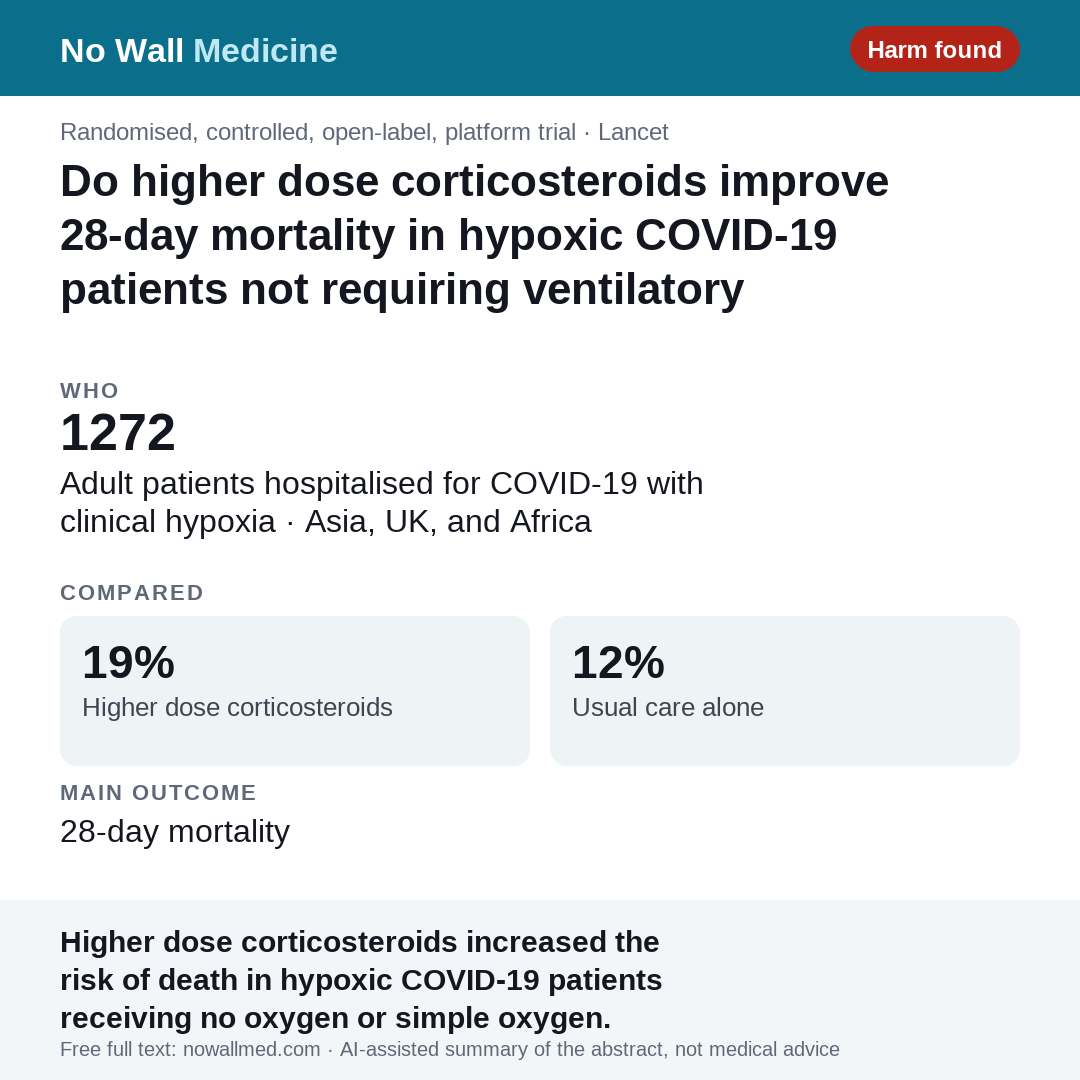
Higher dose corticosteroids in patients admitted to hospital with COVID-19 who are hypoxic but not requiring ventilatory support (RECOVERY): a randomised, controlled, open-label, platform trial
Randomised, controlled, open-label, platform trialHarm found
Do higher dose corticosteroids improve 28-day mortality in hypoxic COVID-19 patients not requiring ventilatory support?
Who
1272
Adult patients hospitalised for COVID-19 with clinical hypoxia · Asia, UK, and Africa
Compared
19%Higher dose corticosteroids
12%Usual care alone
Main outcome
28-day mortality
Result: rate ratio 1·59 (95% CI 1·20-2·10)
Bottom line: Higher dose corticosteroids increased the risk of death in hypoxic COVID-19 patients receiving no oxygen or simple oxygen.
Funded by: UK Research and Innovation, National Institute of Health and Care Research, and Wellcome Trust
Lancet · 2023-04-13Download image
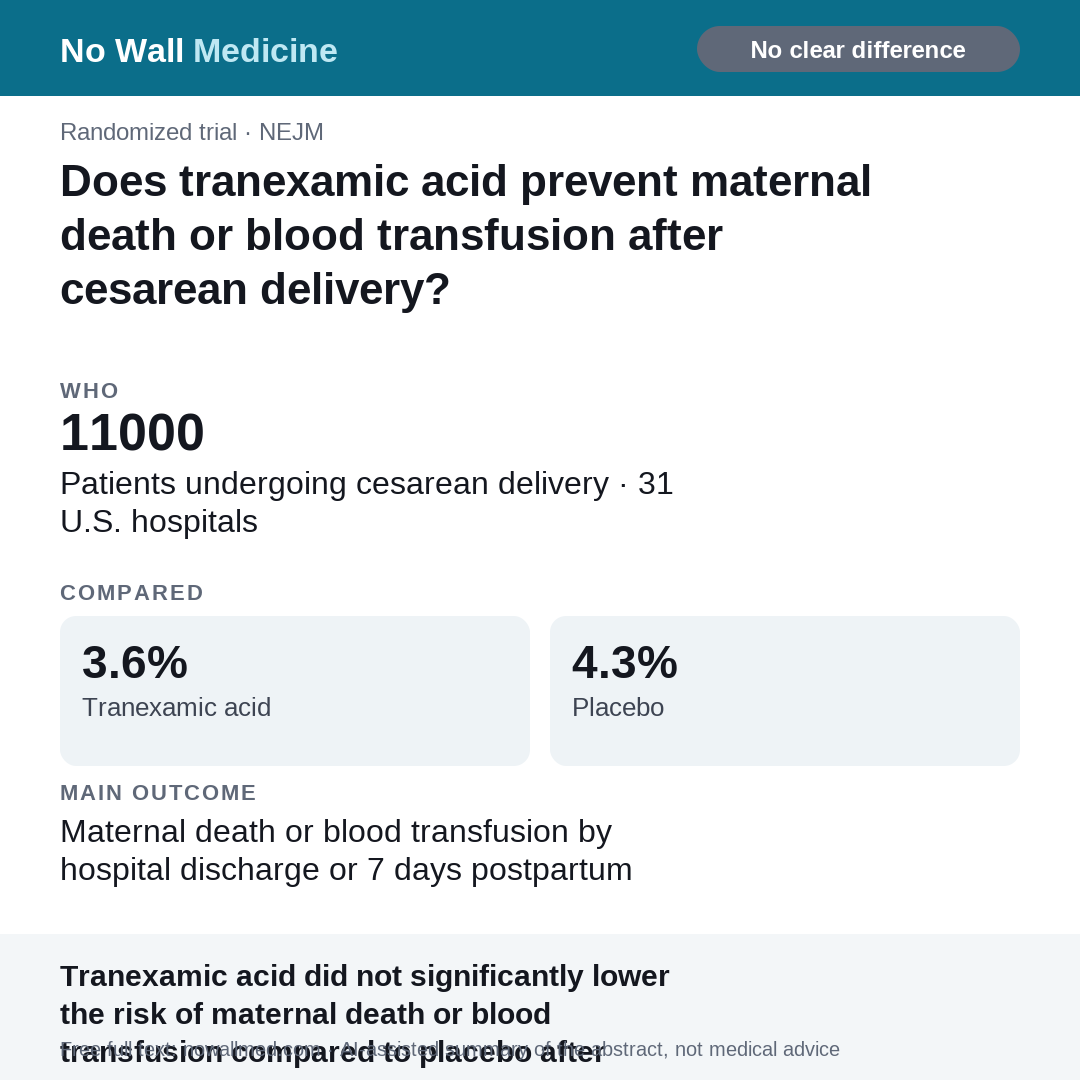
Tranexamic Acid to Prevent Obstetrical Hemorrhage after Cesarean Delivery
Randomized trialNo clear difference
Does tranexamic acid prevent maternal death or blood transfusion after cesarean delivery?
Who
11000
Patients undergoing cesarean delivery · 31 U.S. hospitals
Compared
3.6%Tranexamic acid (201/5525)
4.3%Placebo (233/5470)
Main outcome
Maternal death or blood transfusion by hospital discharge or 7 days postpartum
Result: adjusted relative risk 0.89 (95.26% CI 0.74 to 1.07)
Bottom line: Tranexamic acid did not significantly lower the risk of maternal death or blood transfusion compared to placebo after cesarean delivery.
Funded by: Eunice Kennedy Shriver National Institute of Child Health and Human Development
NEJM · 2023-04-12Download image
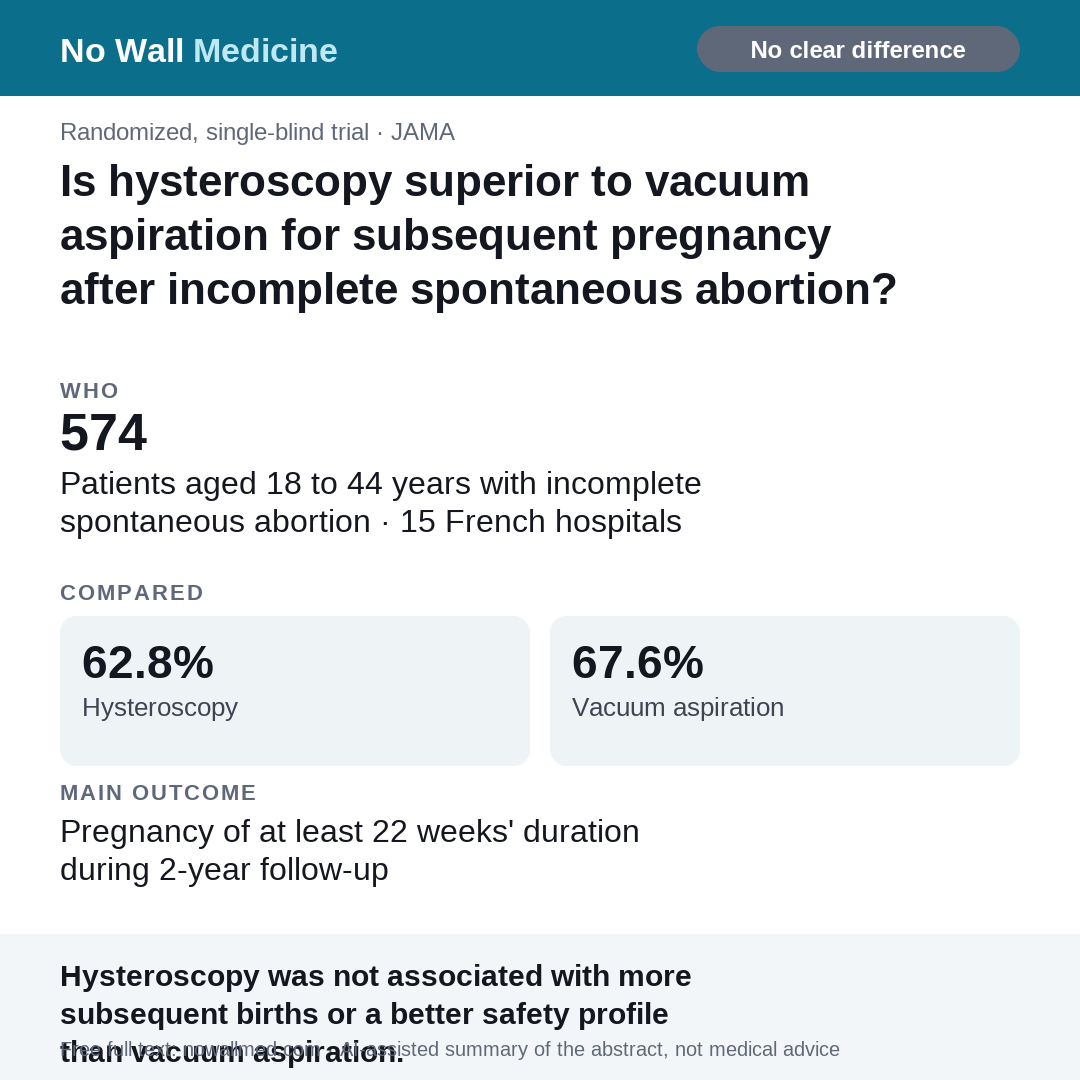
Operative Hysteroscopy vs Vacuum Aspiration for Incomplete Spontaneous Abortion: A Randomized Clinical Trial
Randomized, single-blind trialNo clear difference
Is hysteroscopy superior to vacuum aspiration for subsequent pregnancy after incomplete spontaneous abortion?
Who
574
Patients aged 18 to 44 years with incomplete spontaneous abortion · 15 French hospitals
Compared
62.8%Hysteroscopy
67.6%Vacuum aspiration
Main outcome
Pregnancy of at least 22 weeks' duration during 2-year follow-up
Result: hazard ratio 0.87 (95% CI 0.71 to 1.07)
Bottom line: Hysteroscopy was not associated with more subsequent births or a better safety profile than vacuum aspiration.
JAMA · 2023-04-11Download image
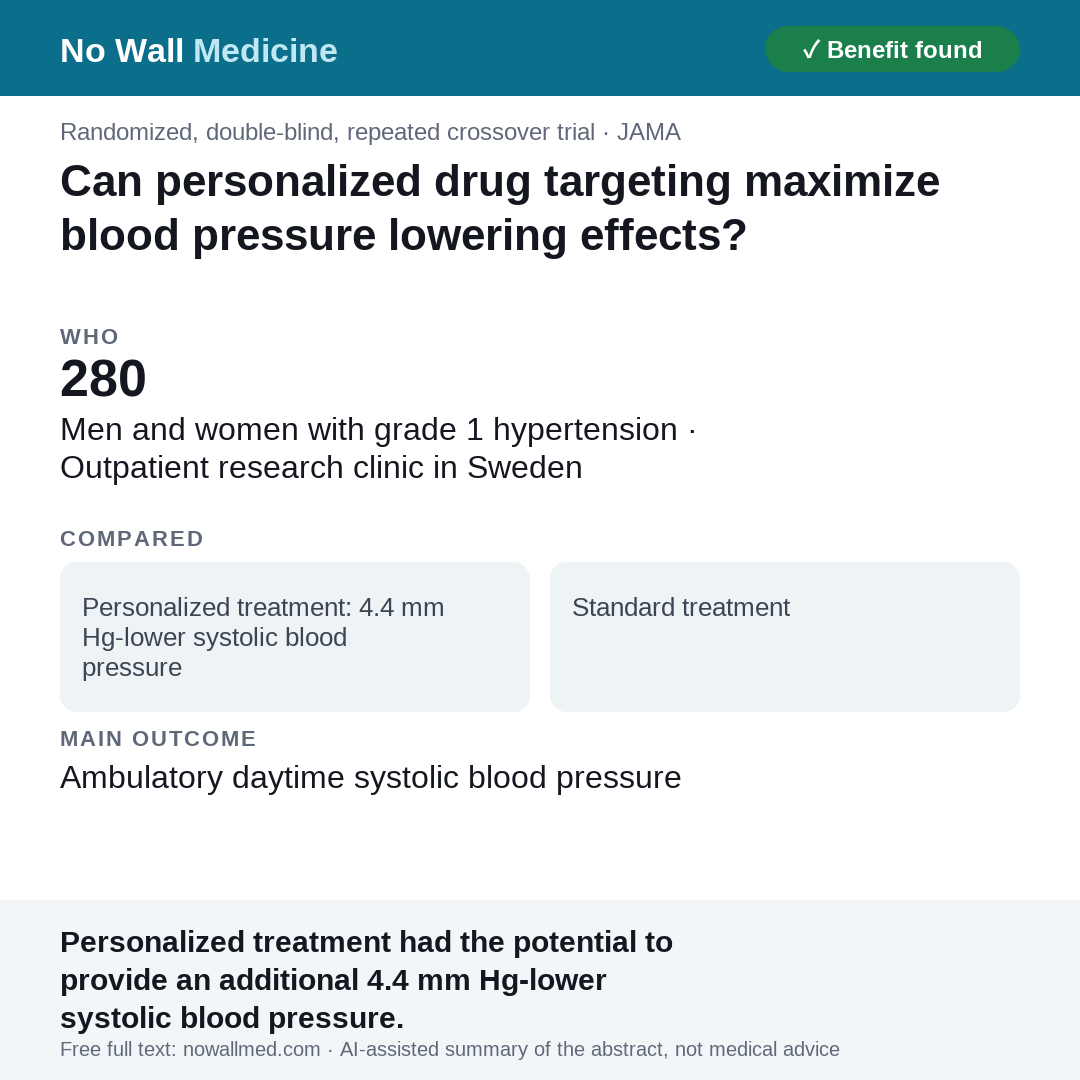
Heterogeneity in Blood Pressure Response to 4 Antihypertensive Drugs: A Randomized Clinical Trial
Randomized, double-blind, repeated crossover trialBenefit found
Can personalized drug targeting maximize blood pressure lowering effects?
Who
280
Men and women with grade 1 hypertension · Outpatient research clinic in Sweden
Compared
Personalized treatment: 4.4 mm Hg-lower systolic blood pressure
Standard treatment
Main outcome
Ambulatory daytime systolic blood pressure
Bottom line: Personalized treatment had the potential to provide an additional 4.4 mm Hg-lower systolic blood pressure.
JAMA · 2023-04-11Download image
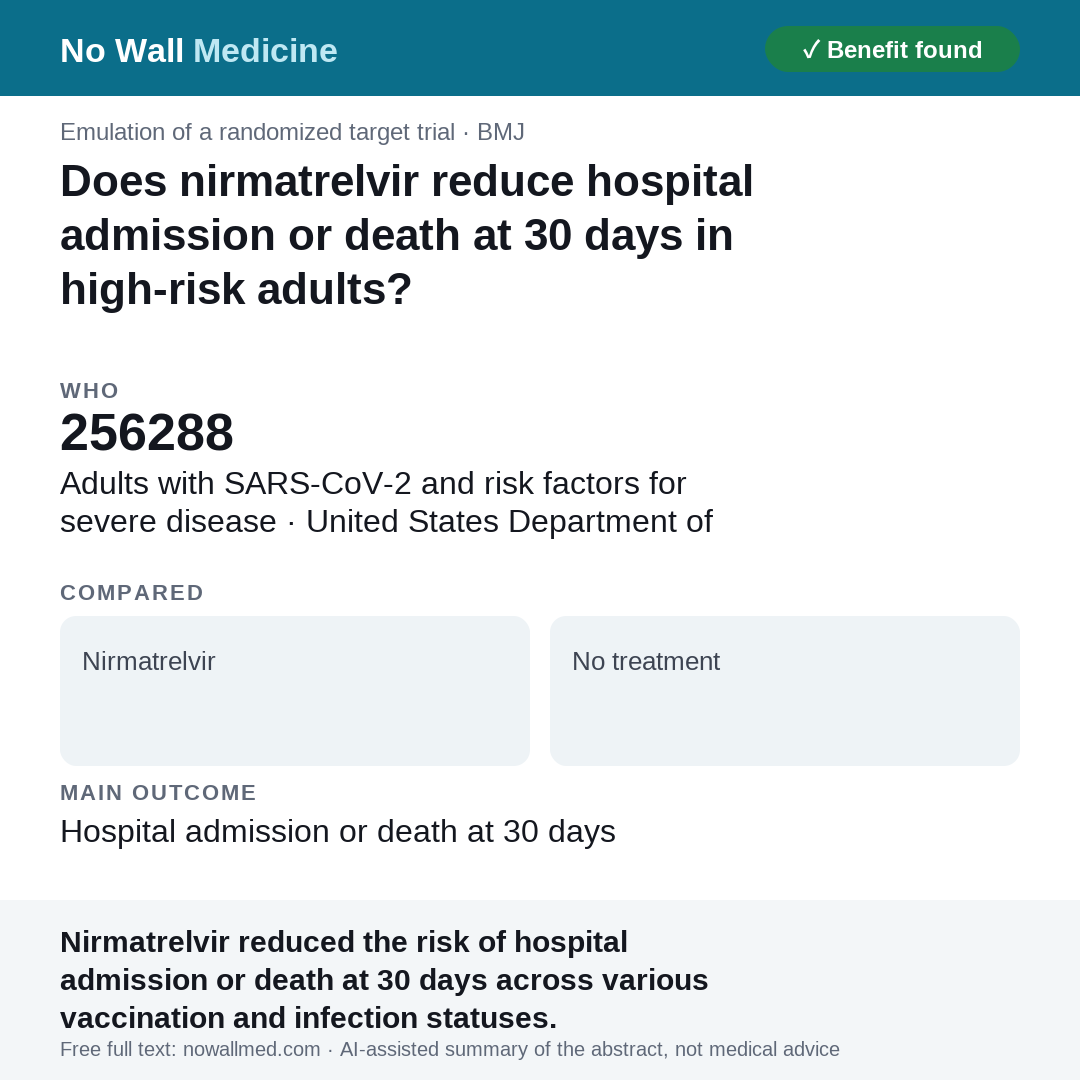
Nirmatrelvir and risk of hospital admission or death in adults with covid-19: emulation of a randomized target trial using electronic health records
Emulation of a randomized target trialBenefit found
Does nirmatrelvir reduce hospital admission or death at 30 days in high-risk adults?
Who
256288
Adults with SARS-CoV-2 and risk factors for severe disease · United States Department of Veterans Affairs healthcare databases
Compared
Nirmatrelvir
No treatment
Main outcome
Hospital admission or death at 30 days
Bottom line: Nirmatrelvir reduced the risk of hospital admission or death at 30 days across various vaccination and infection statuses.
BMJ · 2023-04-11Download image
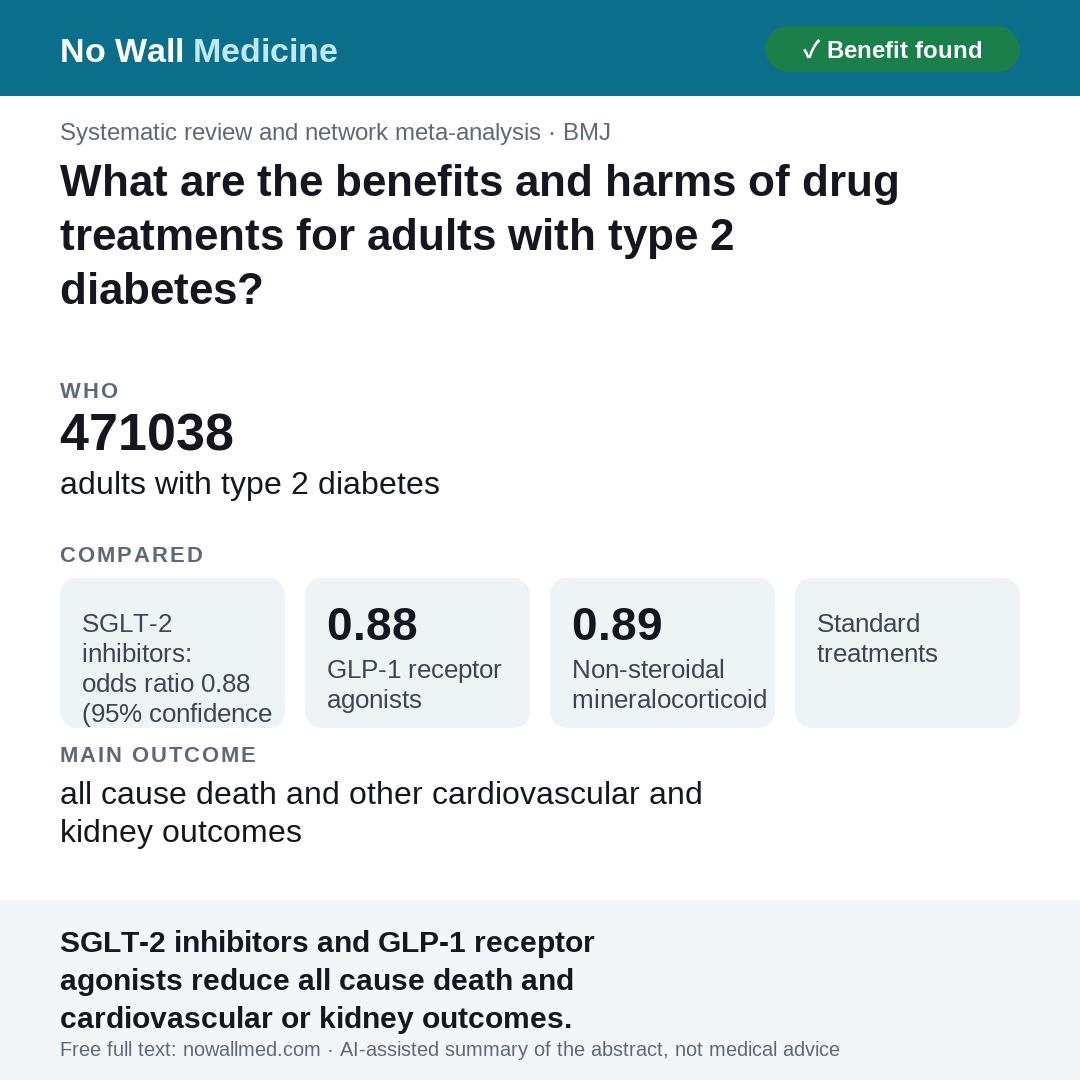
Benefits and harms of drug treatment for type 2 diabetes: systematic review and network meta-analysis of randomised controlled trials
Systematic review and network meta-analysisBenefit found
What are the benefits and harms of drug treatments for adults with type 2 diabetes?
Who
471038
adults with type 2 diabetes
Compared
SGLT-2 inhibitors: odds ratio 0.88 (95% confidence interval 0.83 to 0.94)
0.88GLP-1 receptor agonists (0.82 to 0.93)
0.89Non-steroidal mineralocorticoid receptor antagonists (0.79 to 1.00)
Standard treatments
Main outcome
all cause death and other cardiovascular and kidney outcomes
Result: odds ratio 0.88 (95% CI 0.83 to 0.94) for SGLT-2 inhibitors
Bottom line: SGLT-2 inhibitors and GLP-1 receptor agonists reduce all cause death and cardiovascular or kidney outcomes.
BMJ · 2023-04-06Download image
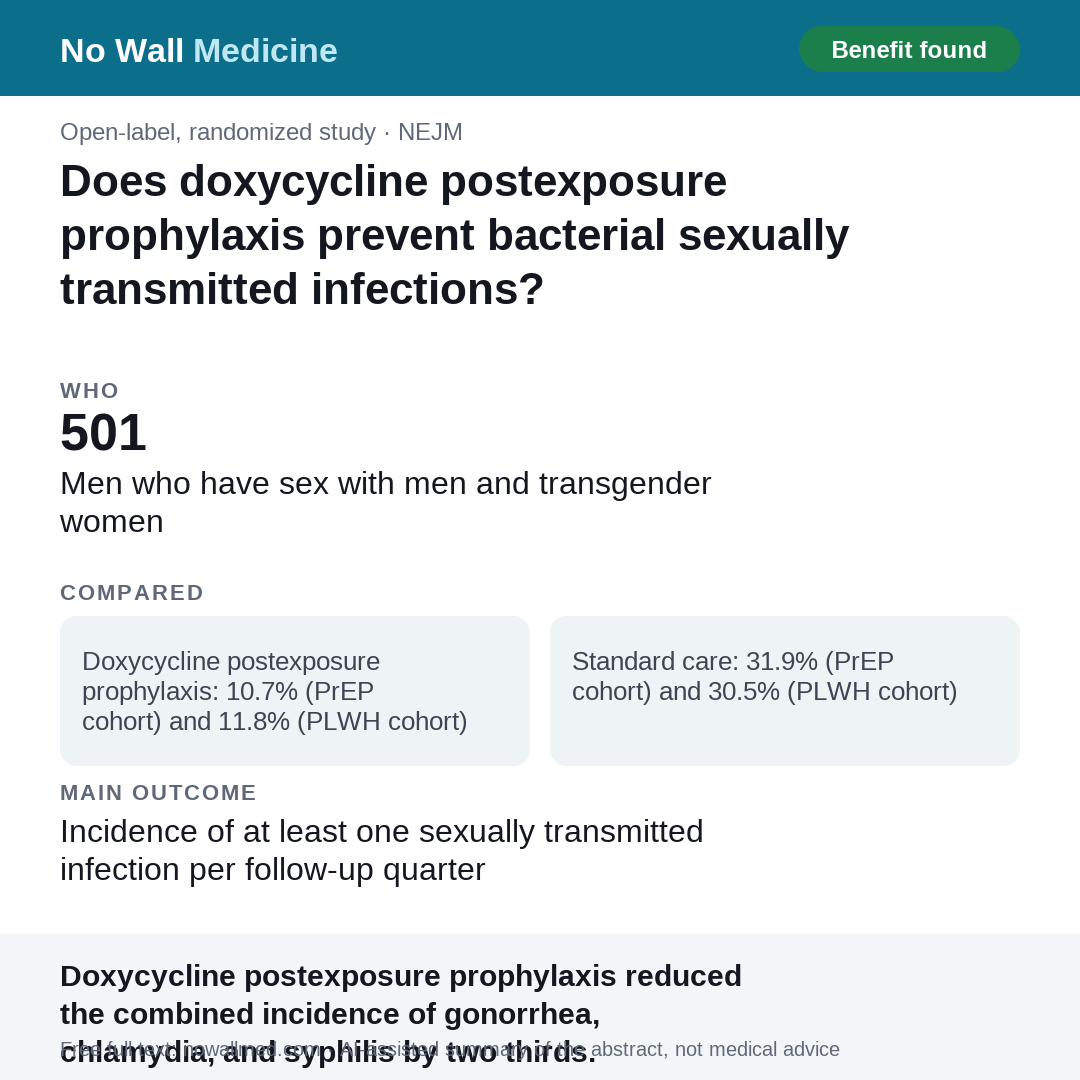
Postexposure Doxycycline to Prevent Bacterial Sexually Transmitted Infections
Open-label, randomized studyBenefit found
Does doxycycline postexposure prophylaxis prevent bacterial sexually transmitted infections?
Who
501
Men who have sex with men and transgender women
Compared
Doxycycline postexposure prophylaxis: 10.7% (PrEP cohort) and 11.8% (PLWH cohort)
Standard care: 31.9% (PrEP cohort) and 30.5% (PLWH cohort)
Main outcome
Incidence of at least one sexually transmitted infection per follow-up quarter
Result: relative risk 0.34 (95% CI, 0.24 to 0.46) in PrEP cohort
Bottom line: Doxycycline postexposure prophylaxis reduced the combined incidence of gonorrhea, chlamydia, and syphilis by two thirds.
Funded by: National Institutes of Health
NEJM · 2023-04-05Download image
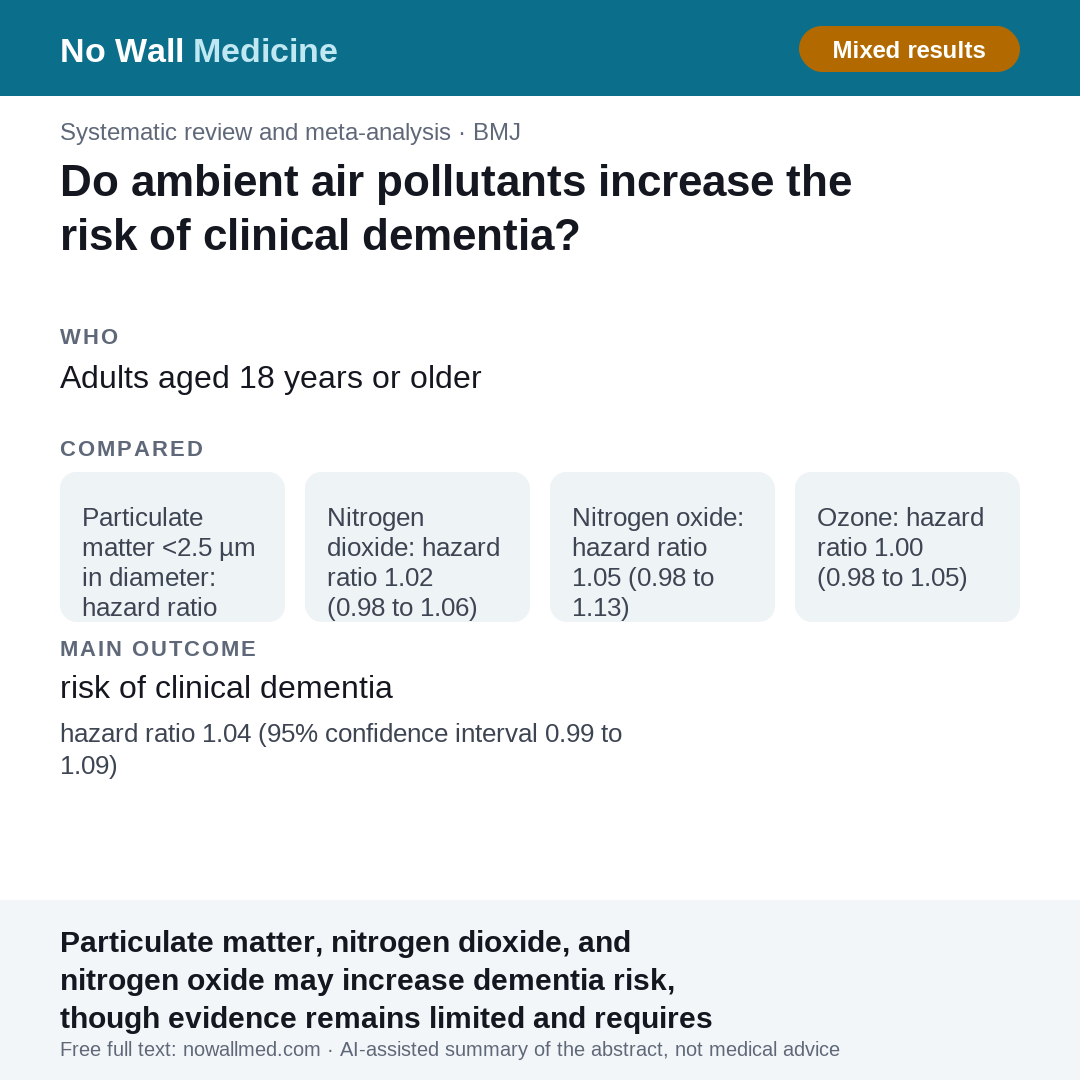
Ambient air pollution and clinical dementia: systematic review and meta-analysis
Systematic review and meta-analysisMixed results
Do ambient air pollutants increase the risk of clinical dementia?
Who
Adults aged 18 years or older
Compared
Particulate matter <2.5 µm in diameter: hazard ratio 1.04 (95% confidence interval 0.99 to 1.09)
Nitrogen dioxide: hazard ratio 1.02 (0.98 to 1.06)
Nitrogen oxide: hazard ratio 1.05 (0.98 to 1.13)
Ozone: hazard ratio 1.00 (0.98 to 1.05)
Main outcome
risk of clinical dementia
Result: hazard ratio 1.04 (95% confidence interval 0.99 to 1.09)
Bottom line: Particulate matter, nitrogen dioxide, and nitrogen oxide may increase dementia risk, though evidence remains limited and requires cautious interpretation.
Limitation: Most studies were at high risk of bias and outcome ascertainment approaches differ across studies.
BMJ · 2023-04-05Download image
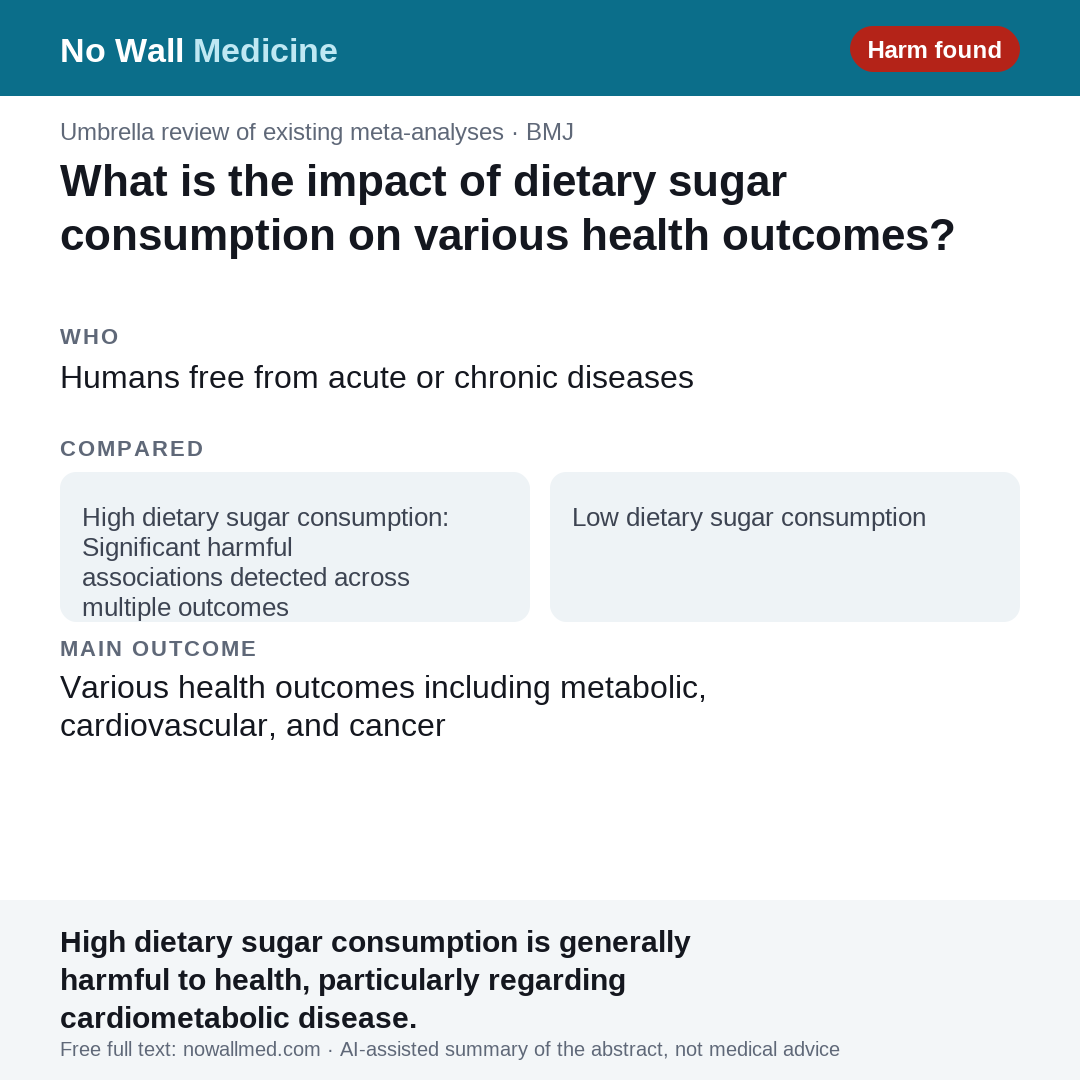
Dietary sugar consumption and health: umbrella review
Umbrella review of existing meta-analysesHarm found
What is the impact of dietary sugar consumption on various health outcomes?
Who
Humans free from acute or chronic diseases
Compared
High dietary sugar consumption: Significant harmful associations detected across multiple outcomes
Low dietary sugar consumption
Main outcome
Various health outcomes including metabolic, cardiovascular, and cancer
Bottom line: High dietary sugar consumption is generally harmful to health, particularly regarding cardiometabolic disease.
BMJ · 2023-04-05Download image
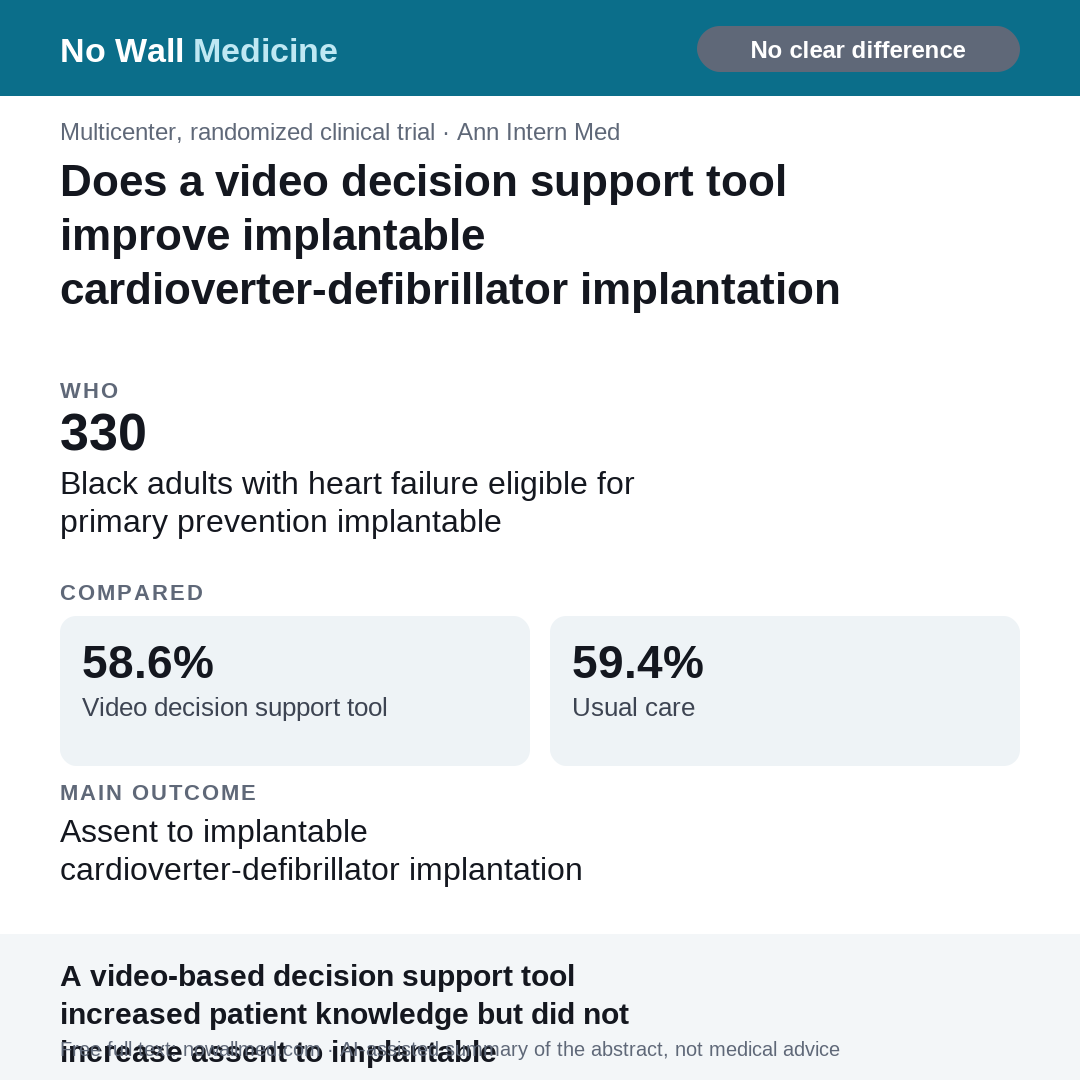
Facilitating Shared Decision Making Among Black Patients at Risk for Sudden Cardiac Arrest : A Randomized Clinical Trial
Multicenter, randomized clinical trialNo clear difference
Does a video decision support tool improve implantable cardioverter-defibrillator implantation decisions among Black patients?
Who
330
Black adults with heart failure eligible for primary prevention implantable cardioverter-defibrillator · Fourteen academic and community-based electrophysiology clinics in the United States
Compared
58.6%Video decision support tool
59.4%Usual care
Main outcome
Assent to implantable cardioverter-defibrillator implantation
Result: difference, -0.8 percentage point (95% CI, -13.2 to 11.1 percentage points)
Bottom line: A video-based decision support tool increased patient knowledge but did not increase assent to implantable cardioverter-defibrillator implantation.
Limitation: Centers for Medicare & Medicaid Services implemented a requirement for shared decision making during the study.
Funded by: Patient-Centered Outcomes Research Institute
Ann Intern Med · 2023-04-04Download image
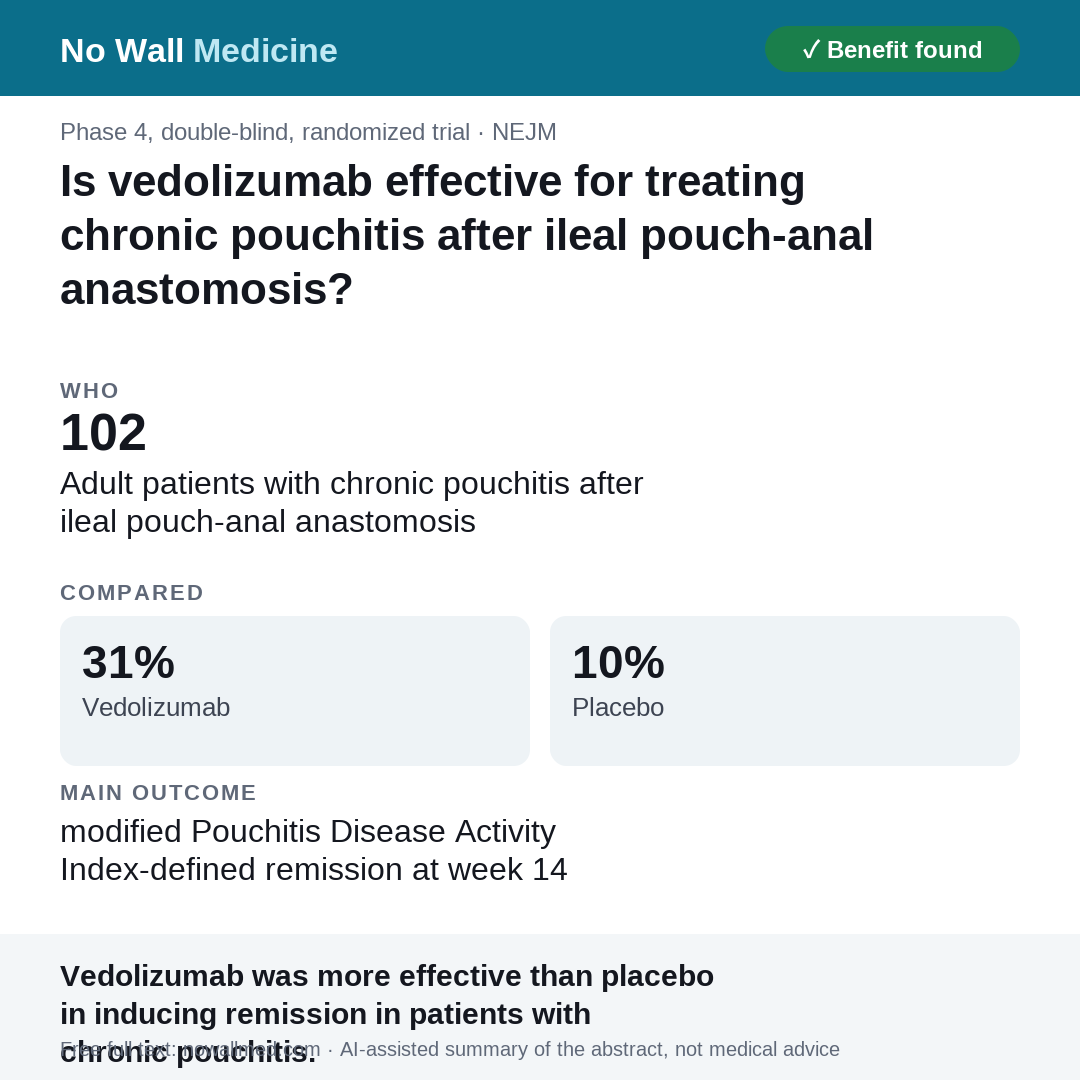
Vedolizumab for the Treatment of Chronic Pouchitis
Phase 4, double-blind, randomized trialBenefit found
Is vedolizumab effective for treating chronic pouchitis after ileal pouch-anal anastomosis?
Who
102
Adult patients with chronic pouchitis after ileal pouch-anal anastomosis
Compared
31%Vedolizumab (16 of 51 patients)
10%Placebo (5 of 51 patients)
Main outcome
modified Pouchitis Disease Activity Index-defined remission at week 14
Result: difference, 21 percentage points; 95% confidence interval, 5 to 38
Bottom line: Vedolizumab was more effective than placebo in inducing remission in patients with chronic pouchitis.
Funded by: Takeda
NEJM · 2023-03-29Download image
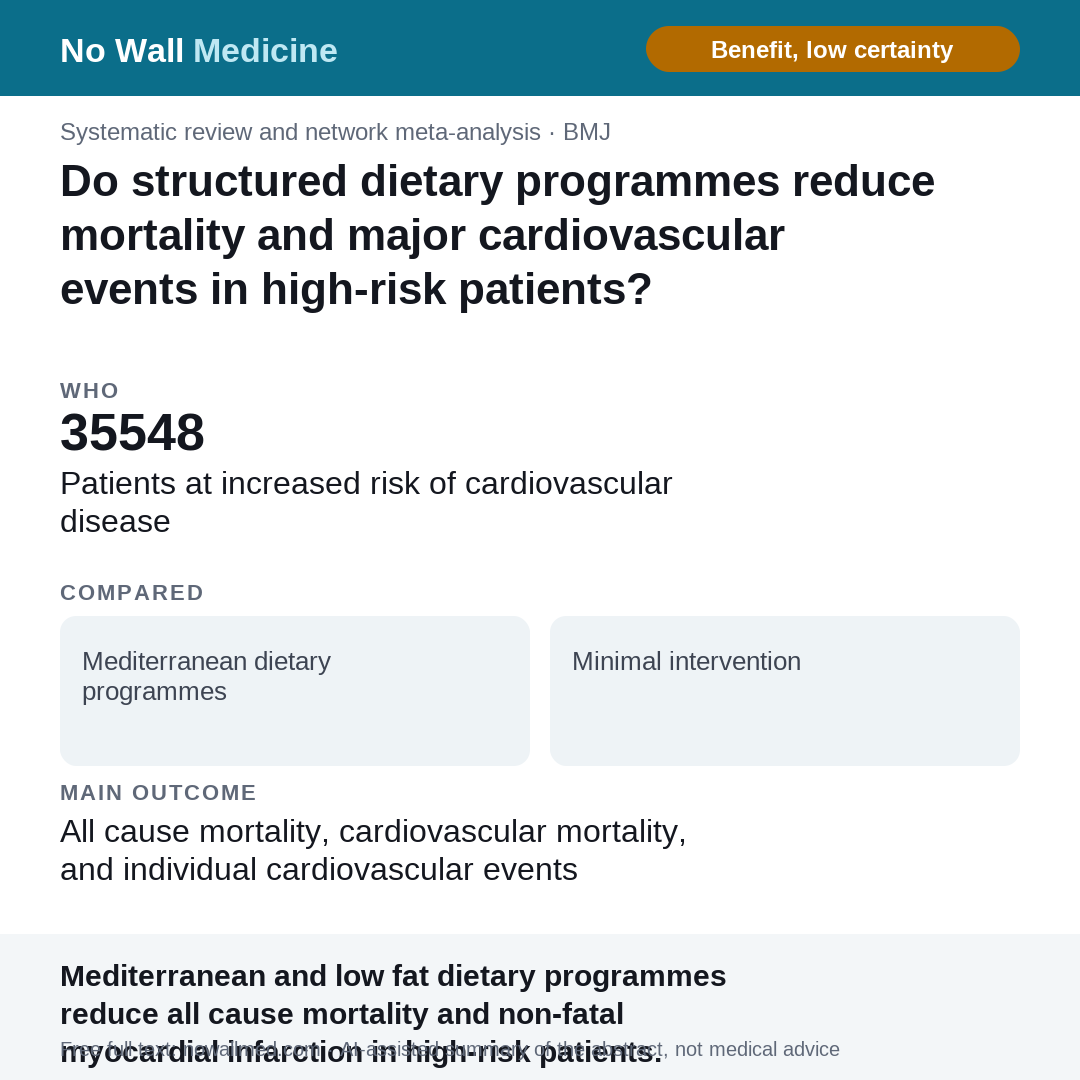
Comparison of seven popular structured dietary programmes and risk of mortality and major cardiovascular events in patients at increased cardiovascular risk: systematic review and network meta-analysis
Systematic review and network meta-analysisBenefit found
Do structured dietary programmes reduce mortality and major cardiovascular events in high-risk patients?
Who
35548
Patients at increased risk of cardiovascular disease
Compared
Mediterranean dietary programmes
Minimal intervention
Main outcome
All cause mortality, cardiovascular mortality, and individual cardiovascular events
Result: odds ratio 0.72 (95% confidence interval 0.56 to 0.92) for all cause mortality
Bottom line: Mediterranean and low fat dietary programmes reduce all cause mortality and non-fatal myocardial infarction in high-risk patients.
BMJ · 2023-03-29Download image
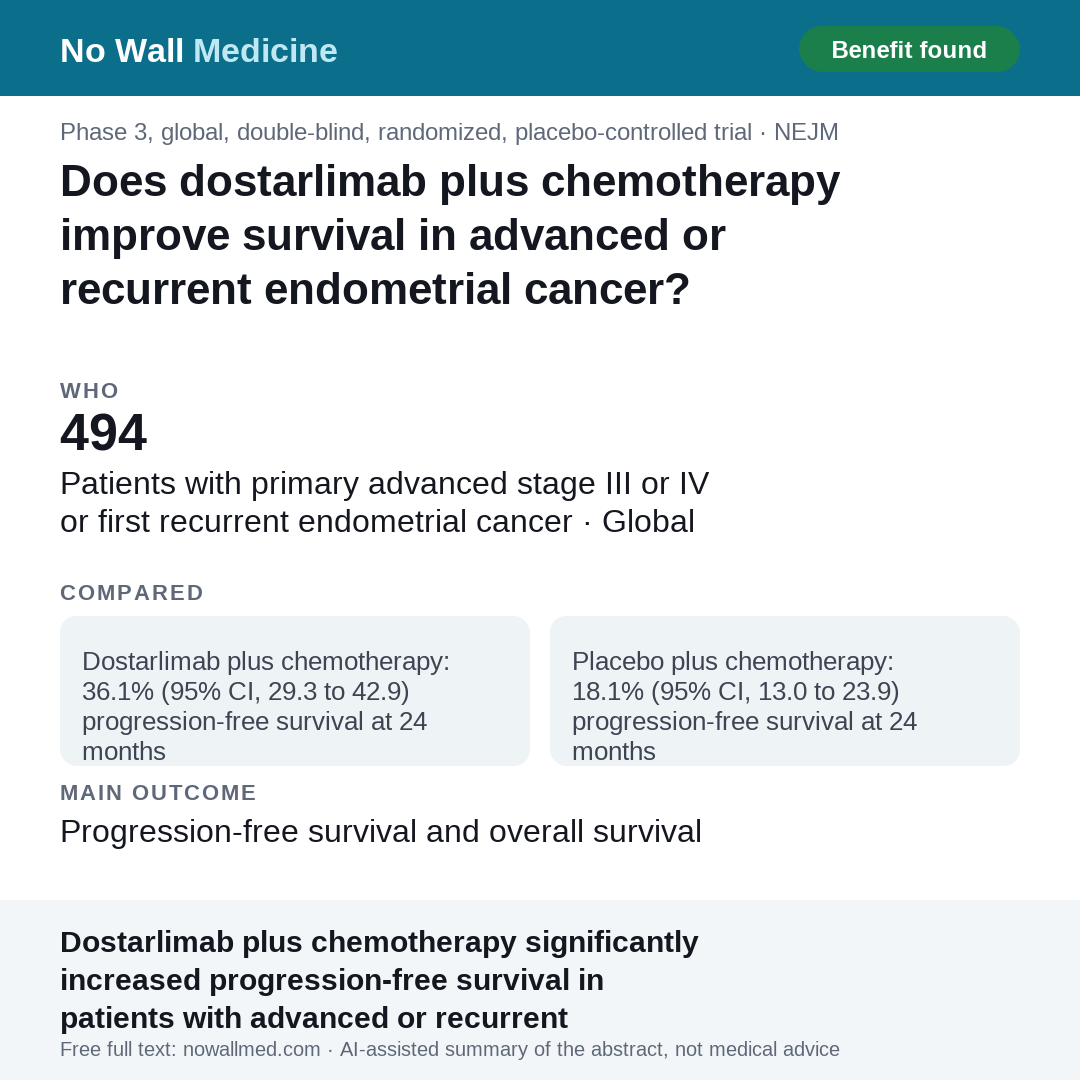
Dostarlimab for Primary Advanced or Recurrent Endometrial Cancer
Phase 3, global, double-blind, randomized, placebo-controlled trialBenefit found
Does dostarlimab plus chemotherapy improve survival in advanced or recurrent endometrial cancer?
Who
494
Patients with primary advanced stage III or IV or first recurrent endometrial cancer · Global
Compared
Dostarlimab plus chemotherapy: 36.1% (95% CI, 29.3 to 42.9) progression-free survival at 24 months
Placebo plus chemotherapy: 18.1% (95% CI, 13.0 to 23.9) progression-free survival at 24 months
Main outcome
Progression-free survival and overall survival
Result: hazard ratio 0.64 (95% CI, 0.51 to 0.80)
Bottom line: Dostarlimab plus chemotherapy significantly increased progression-free survival in patients with advanced or recurrent endometrial cancer.
Funded by: GSK
NEJM · 2023-03-27Download image
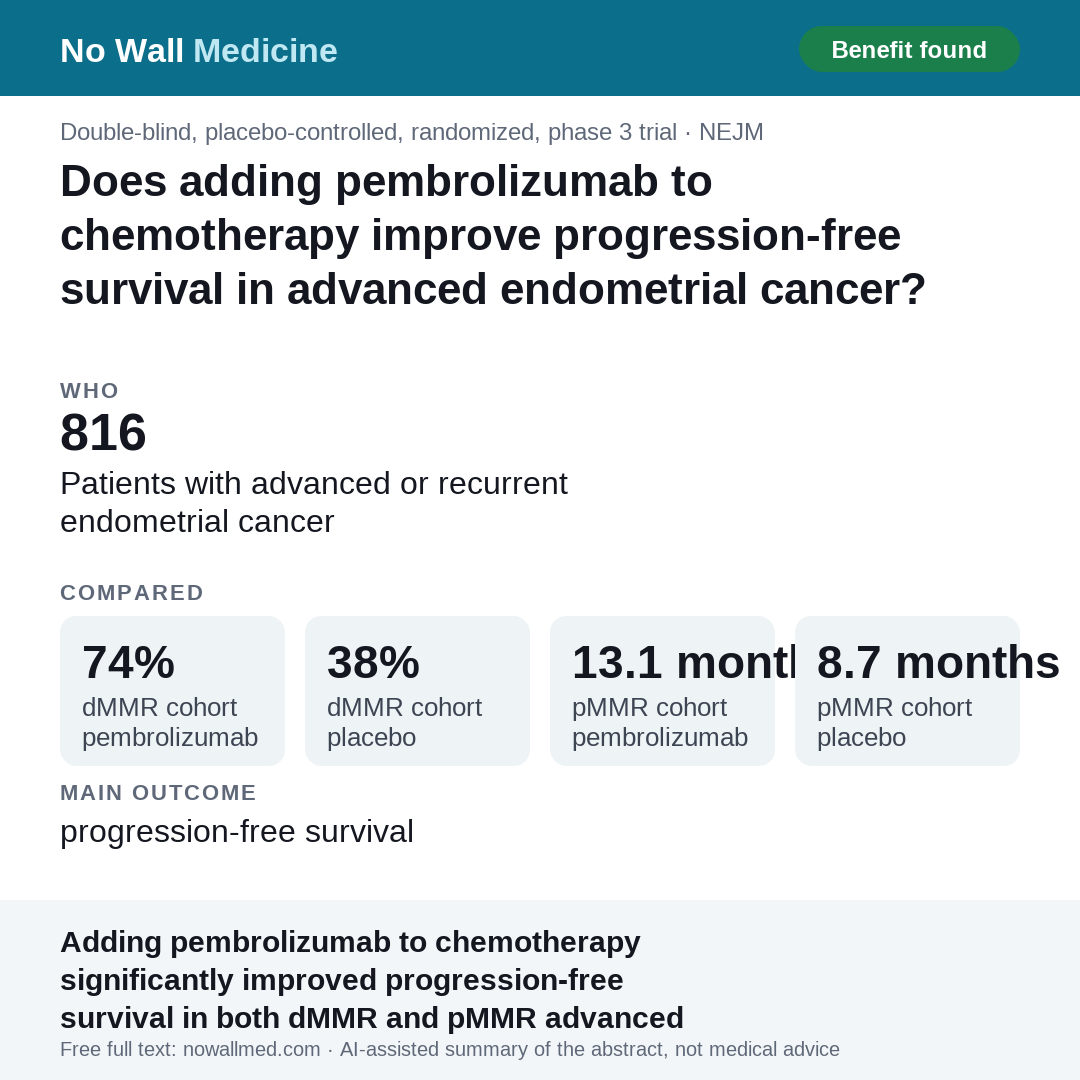
Pembrolizumab plus Chemotherapy in Advanced Endometrial Cancer
Double-blind, placebo-controlled, randomized, phase 3 trialBenefit found
Does adding pembrolizumab to chemotherapy improve progression-free survival in advanced endometrial cancer?
Who
816
Patients with advanced or recurrent endometrial cancer
Compared
74%dMMR cohort pembrolizumab
38%dMMR cohort placebo
13.1 monthspMMR cohort pembrolizumab
8.7 monthspMMR cohort placebo
Main outcome
progression-free survival
Result: hazard ratio 0.30 (95% CI 0.19 to 0.48) in dMMR; hazard ratio 0.54 (95% CI 0.41 to 0.71) in pMMR
Bottom line: Adding pembrolizumab to chemotherapy significantly improved progression-free survival in both dMMR and pMMR advanced endometrial cancer cohorts.
Funded by: National Cancer Institute and others
NEJM · 2023-03-27Download image
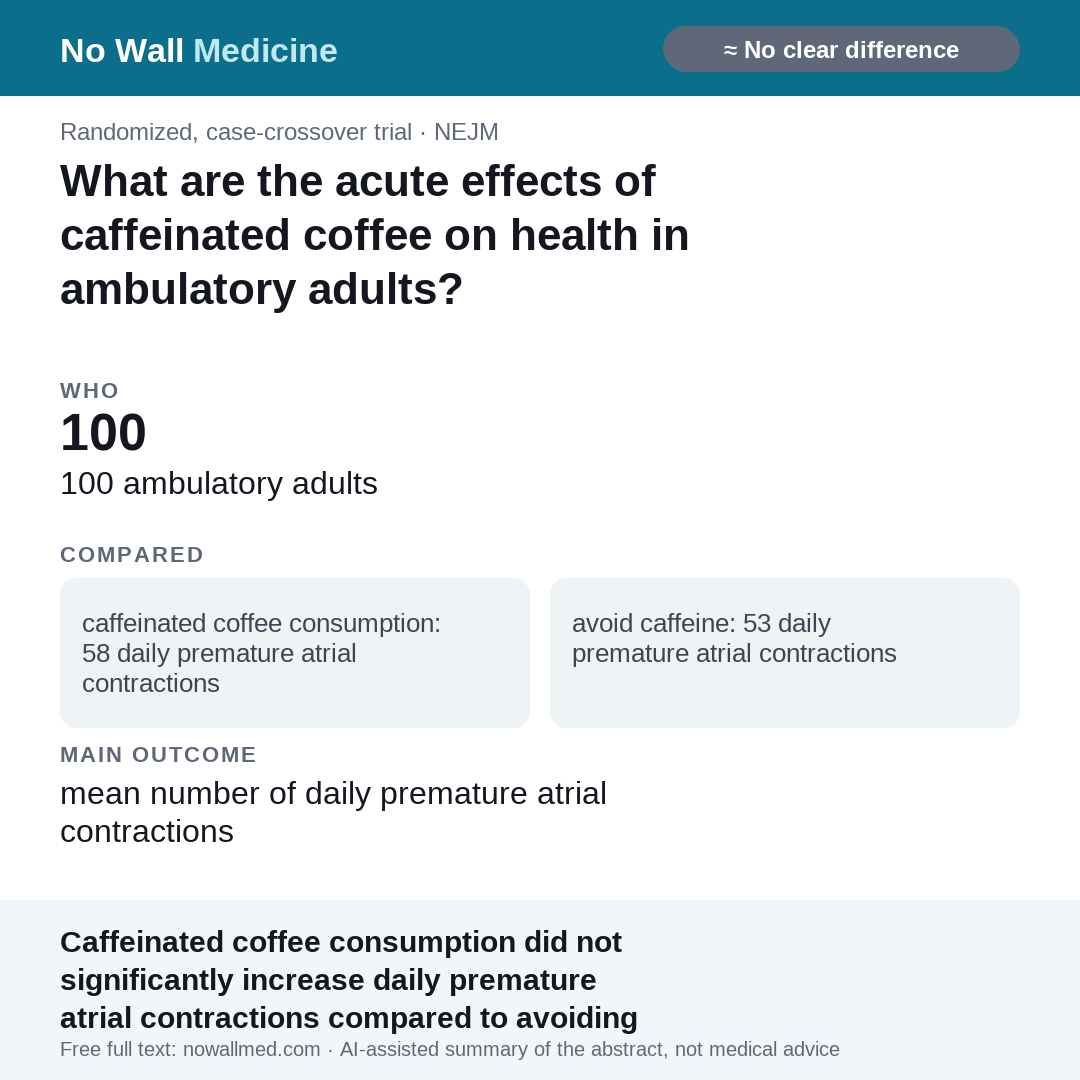
Acute Effects of Coffee Consumption on Health among Ambulatory Adults
Randomized, case-crossover trialNo clear difference
What are the acute effects of caffeinated coffee on health in ambulatory adults?
Who
100
100 ambulatory adults
Compared
caffeinated coffee consumption: 58 daily premature atrial contractions
avoid caffeine: 53 daily premature atrial contractions
Main outcome
mean number of daily premature atrial contractions
Result: rate ratio 1.09 (95% CI 0.98 to 1.20)
Bottom line: Caffeinated coffee consumption did not significantly increase daily premature atrial contractions compared to avoiding caffeine.
Funded by: University of California, San Francisco and National Institutes of Health
NEJM · 2023-03-22Download image
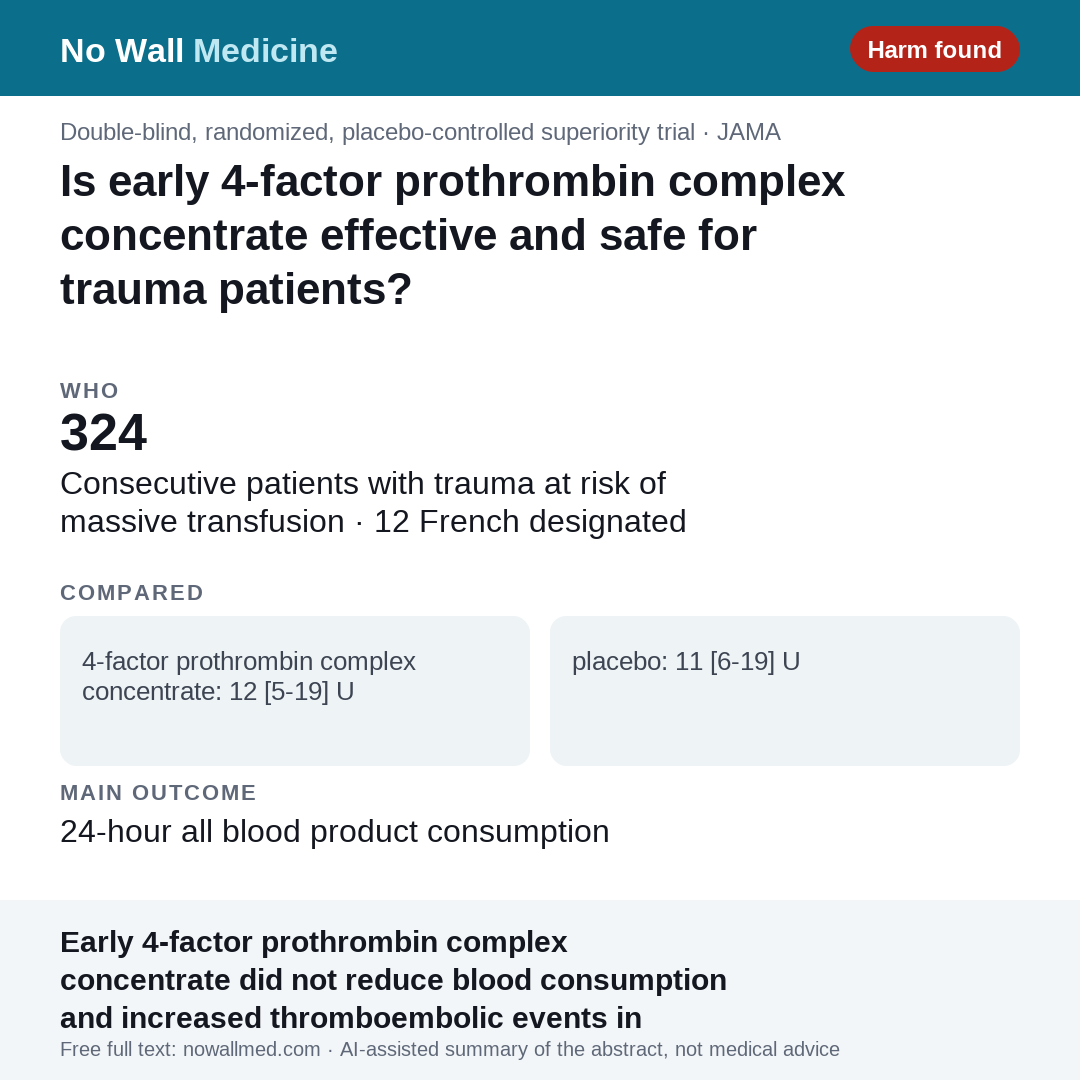
Efficacy and Safety of Early Administration of 4-Factor Prothrombin Complex Concentrate in Patients With Trauma at Risk of Massive Transfusion: The PROCOAG Randomized Clinical Trial
Double-blind, randomized, placebo-controlled superiority trialHarm found
Is early 4-factor prothrombin complex concentrate effective and safe for trauma patients?
Who
324
Consecutive patients with trauma at risk of massive transfusion · 12 French designated level I trauma centers
Compared
4-factor prothrombin complex concentrate: 12 [5-19] U
placebo: 11 [6-19] U
Main outcome
24-hour all blood product consumption
Result: absolute difference, 0.2 U [95% CI, -2.99 to 3.33]
Bottom line: Early 4-factor prothrombin complex concentrate did not reduce blood consumption and increased thromboembolic events in trauma patients.
JAMA · 2023-03-22Download image
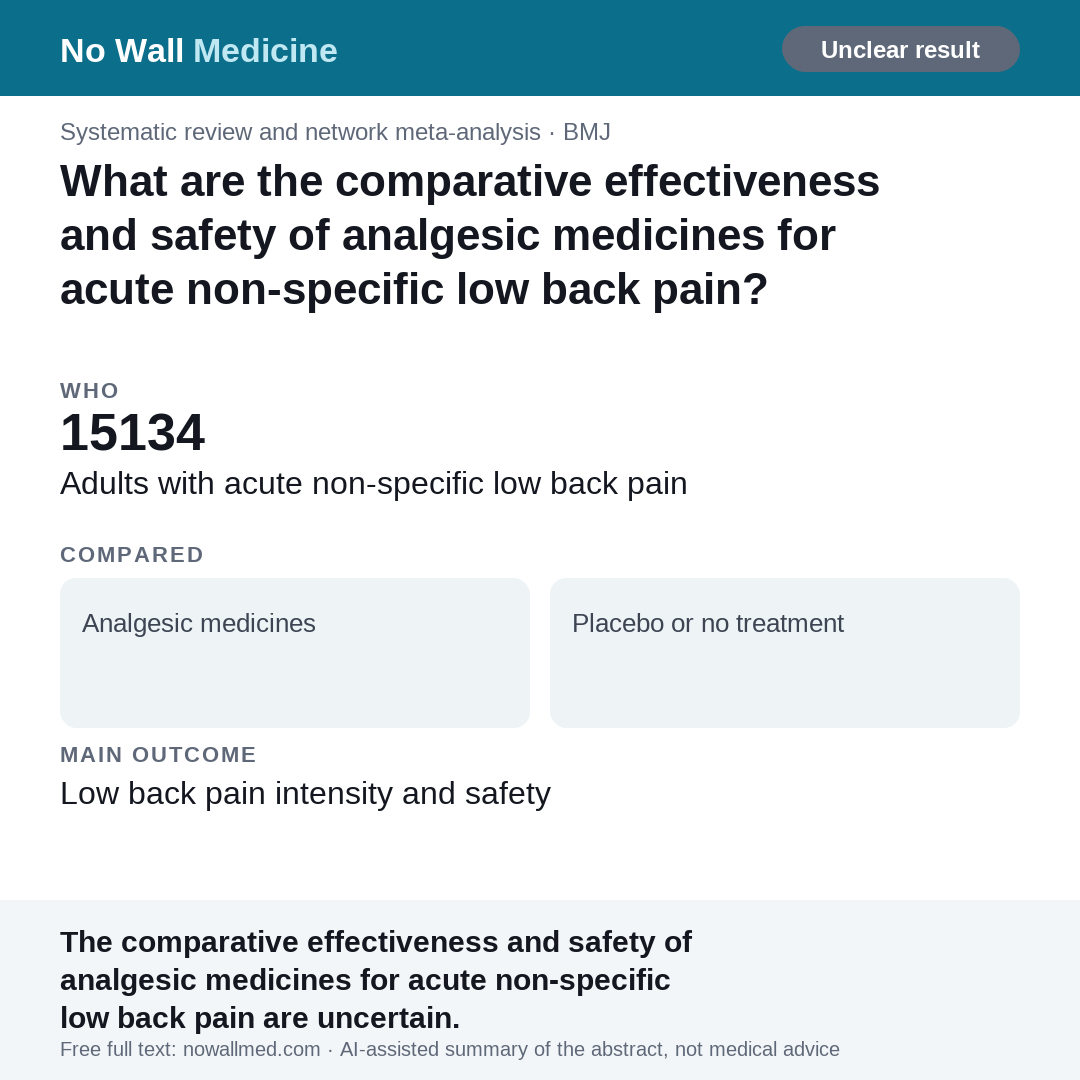
Comparative effectiveness and safety of analgesic medicines for adults with acute non-specific low back pain: systematic review and network meta-analysis
Systematic review and network meta-analysisUnclear result
What are the comparative effectiveness and safety of analgesic medicines for acute non-specific low back pain?
Who
15134
Adults with acute non-specific low back pain
Compared
Analgesic medicines
Placebo or no treatment
Main outcome
Low back pain intensity and safety
Bottom line: The comparative effectiveness and safety of analgesic medicines for acute non-specific low back pain are uncertain.
Limitation: Low or very low confidence in evidence for many medicines and secondary outcomes.
BMJ · 2023-03-22Download image
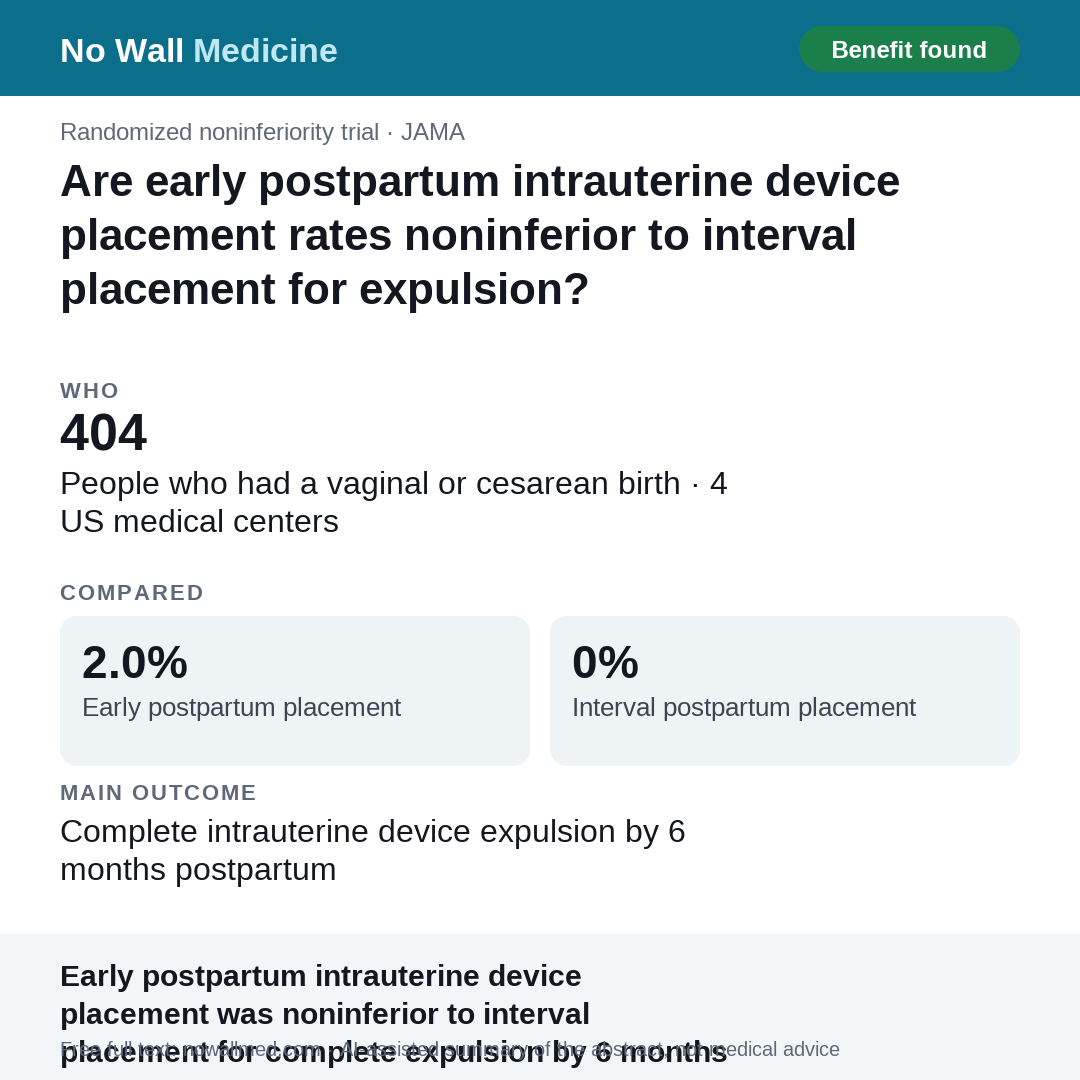
Early vs Interval Postpartum Intrauterine Device Placement: A Randomized Clinical Trial
Randomized noninferiority trialBenefit found
Are early postpartum intrauterine device placement rates noninferior to interval placement for expulsion?
Who
404
People who had a vaginal or cesarean birth · 4 US medical centers
Compared
2.0%Early postpartum placement (3/149)
0%Interval postpartum placement (0/145)
Main outcome
Complete intrauterine device expulsion by 6 months postpartum
Result: between-group difference, 2.0 (95% CI, -0.5 to 5.7) percentage points
Bottom line: Early postpartum intrauterine device placement was noninferior to interval placement for complete expulsion by 6 months postpartum.
JAMA · 2023-03-21Download image
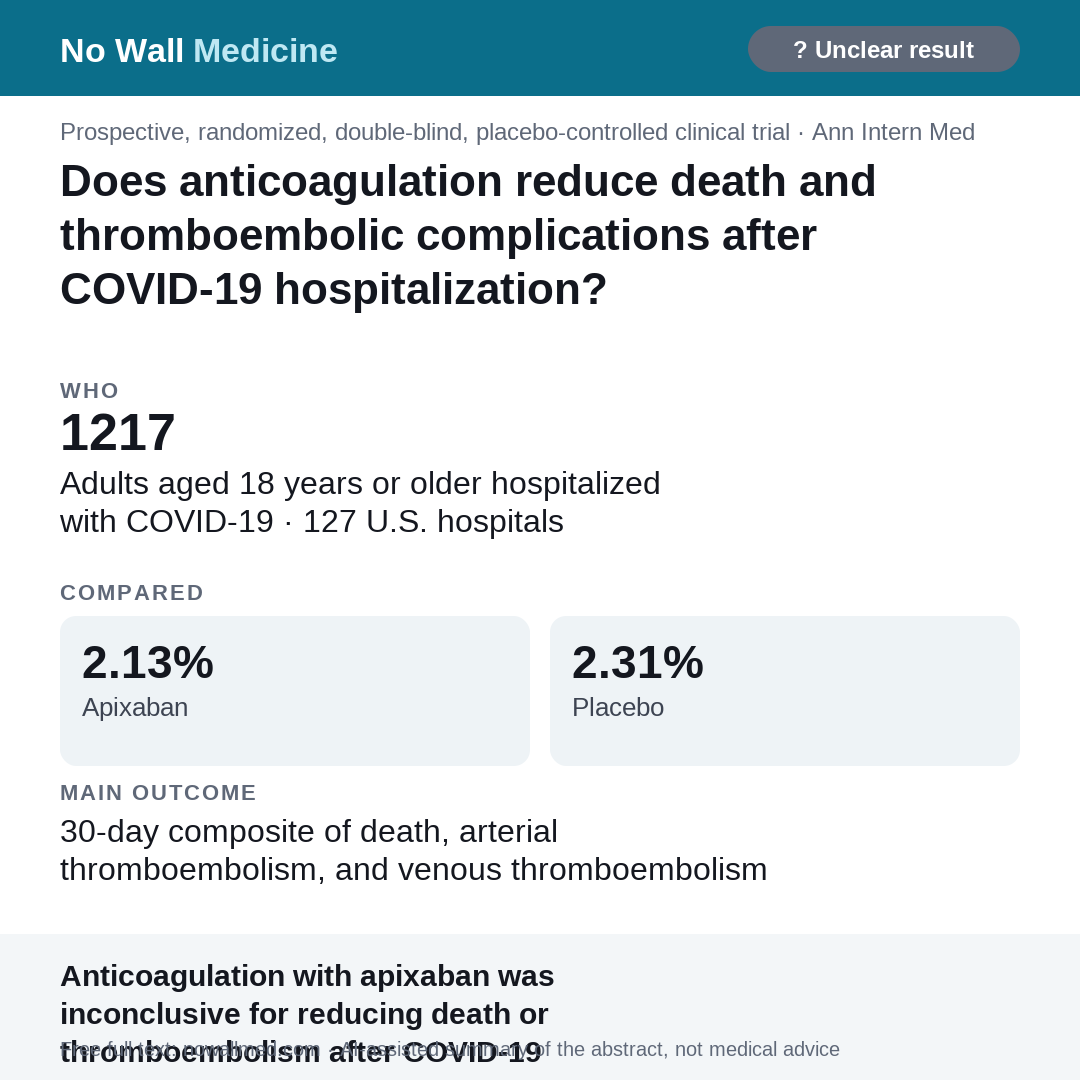
Effect of Thromboprophylaxis on Clinical Outcomes After COVID-19 Hospitalization
Prospective, randomized, double-blind, placebo-controlled clinical trialUnclear result
Does anticoagulation reduce death and thromboembolic complications after COVID-19 hospitalization?
Who
1217
Adults aged 18 years or older hospitalized with COVID-19 · 127 U.S. hospitals
Compared
2.13%Apixaban (95% CI, 1.14 to 3.62)
2.31%Placebo (CI, 1.27 to 3.84)
Main outcome
30-day composite of death, arterial thromboembolism, and venous thromboembolism
Bottom line: Anticoagulation with apixaban was inconclusive for reducing death or thromboembolism after COVID-19 hospitalization due to early termination.
Limitation: Early enrollment termination and changing SARS-CoV-2 variant peaks made results imprecise.
Funded by: National Institutes of Health
Ann Intern Med · 2023-03-21Download image
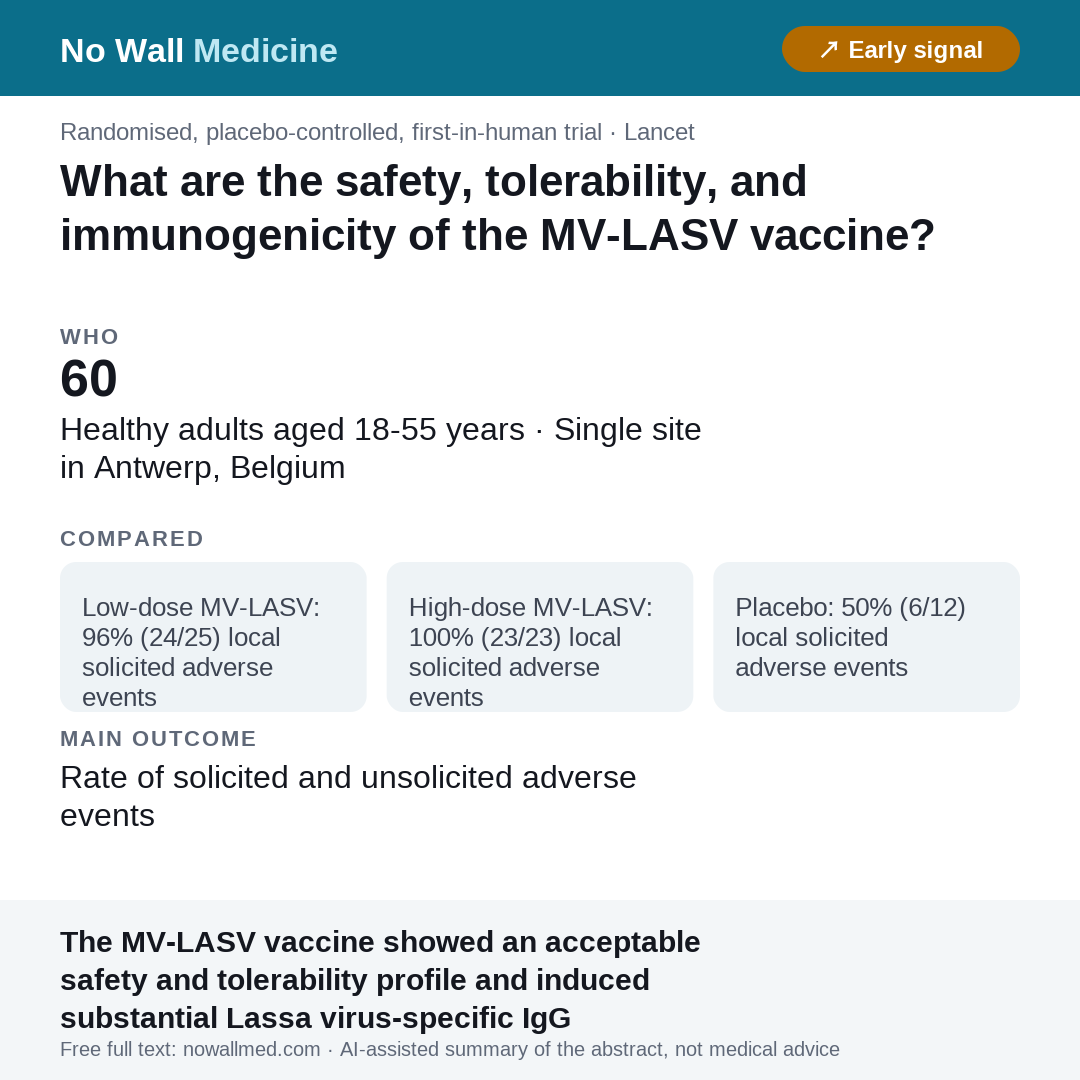
Immunogenicity, safety, and tolerability of a recombinant measles-vectored Lassa fever vaccine: a randomised, placebo-controlled, first-in-human trial
Randomised, placebo-controlled, first-in-human trialBenefit found
What are the safety, tolerability, and immunogenicity of the MV-LASV vaccine?
Who
60
Healthy adults aged 18-55 years · Single site in Antwerp, Belgium
Compared
Low-dose MV-LASV: 96% (24/25) local solicited adverse events
High-dose MV-LASV: 100% (23/23) local solicited adverse events
Placebo: 50% (6/12) local solicited adverse events
Main outcome
Rate of solicited and unsolicited adverse events
Bottom line: The MV-LASV vaccine showed an acceptable safety and tolerability profile and induced substantial Lassa virus-specific IgG concentrations.
Funded by: Coalition for Epidemic Preparedness Innovations
Lancet · 2023-03-16Download image