Visual abstracts
New randomized trials and meta-analyses from leading journals at a glance: who was studied, what was compared, and what was found. Every paper is free to read in full.
All specialtiesCardiology 4832Oncology 4114Gastroenterology & Hepatology 1934Infectious Disease 3824Neurology 1899Psychiatry & Mental Health 2256Pulmonology 2082Critical Care 1345Endocrinology & Diabetes 2572Pediatrics 2940Surgery 2525Orthopedics & Sports Medicine 926Neurosurgery 534Cardiothoracic & Vascular Surgery 671Plastic & Reconstructive Surgery 591Nephrology 1124Rheumatology 823Hematology 1104Dermatology 620Ophthalmology 543Obstetrics & Gynecology 1684Public & Global Health 1056Radiology & Imaging 641Anesthesiology 962Urology 754ENT (Otolaryngology) 503Emergency Medicine 489Allergy & Immunology 313Geriatrics 981Family Medicine & Primary Care 541Medical Genetics & Genomics 675Pathology & Laboratory Medicine 157Physical Medicine & Rehabilitation 751Palliative Care 424Nutrition 1580Digital Health & AI 2195General Medicine 321
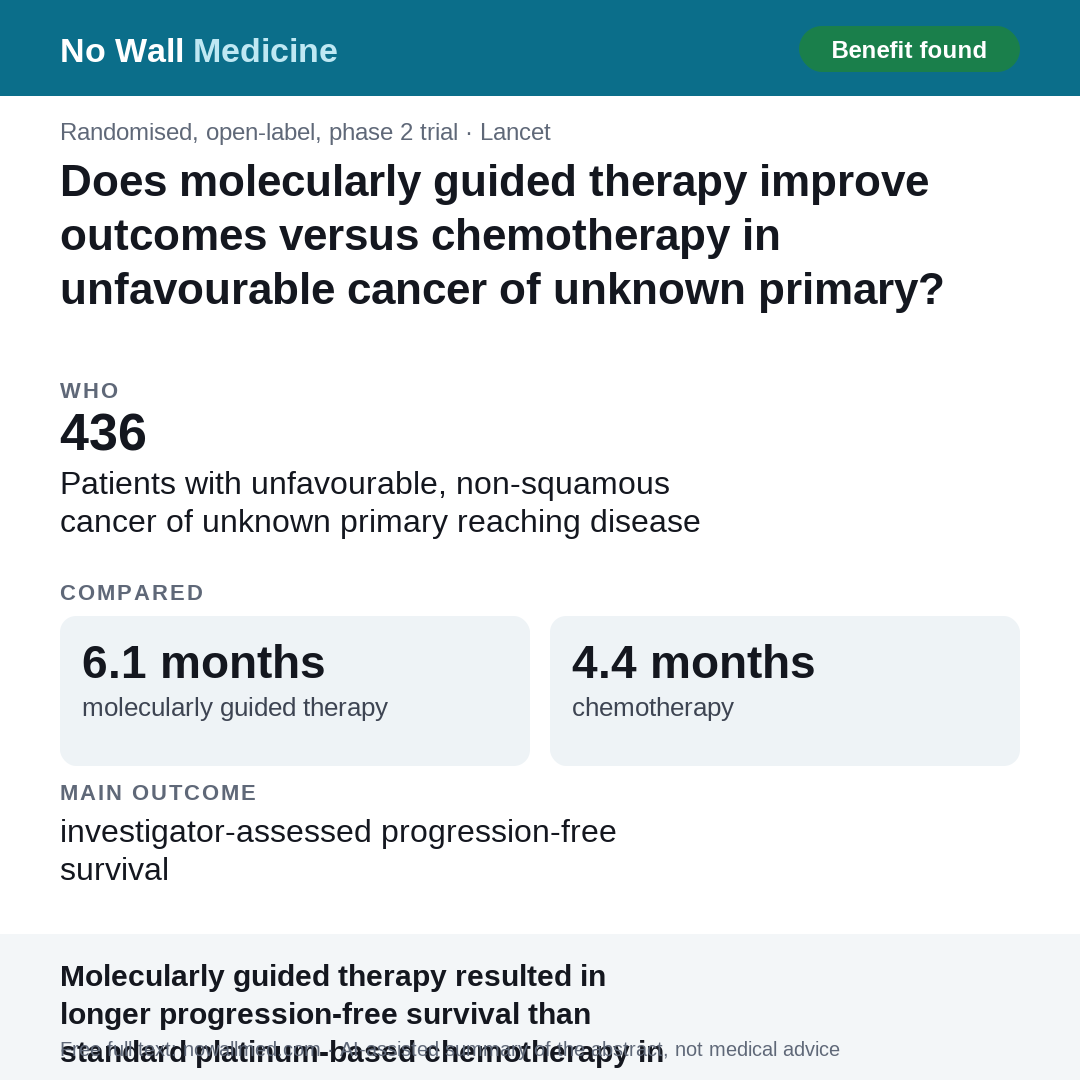
Molecularly guided therapy versus chemotherapy after disease control in unfavourable cancer of unknown primary (CUPISCO): an open-label, randomised, phase 2 study
Randomised, open-label, phase 2 trialEarly signal
Does molecularly guided therapy improve outcomes versus chemotherapy in unfavourable cancer of unknown primary?
Who
436
Patients with unfavourable, non-squamous cancer of unknown primary reaching disease control · 159 sites in 34 countries outside the USA
Compared
6.1 monthsmolecularly guided therapy (95% CI 4.7-6.5)
4.4 monthschemotherapy (4.1-5.6)
Main outcome
investigator-assessed progression-free survival
Result: hazard ratio 0.72 (95% CI 0.56-0.92)
Bottom line: Molecularly guided therapy resulted in longer progression-free survival than standard platinum-based chemotherapy in patients with unfavourable cancer of unknown primary.
Funded by: F Hoffmann-La Roche
Lancet · 2024-07-31Download image
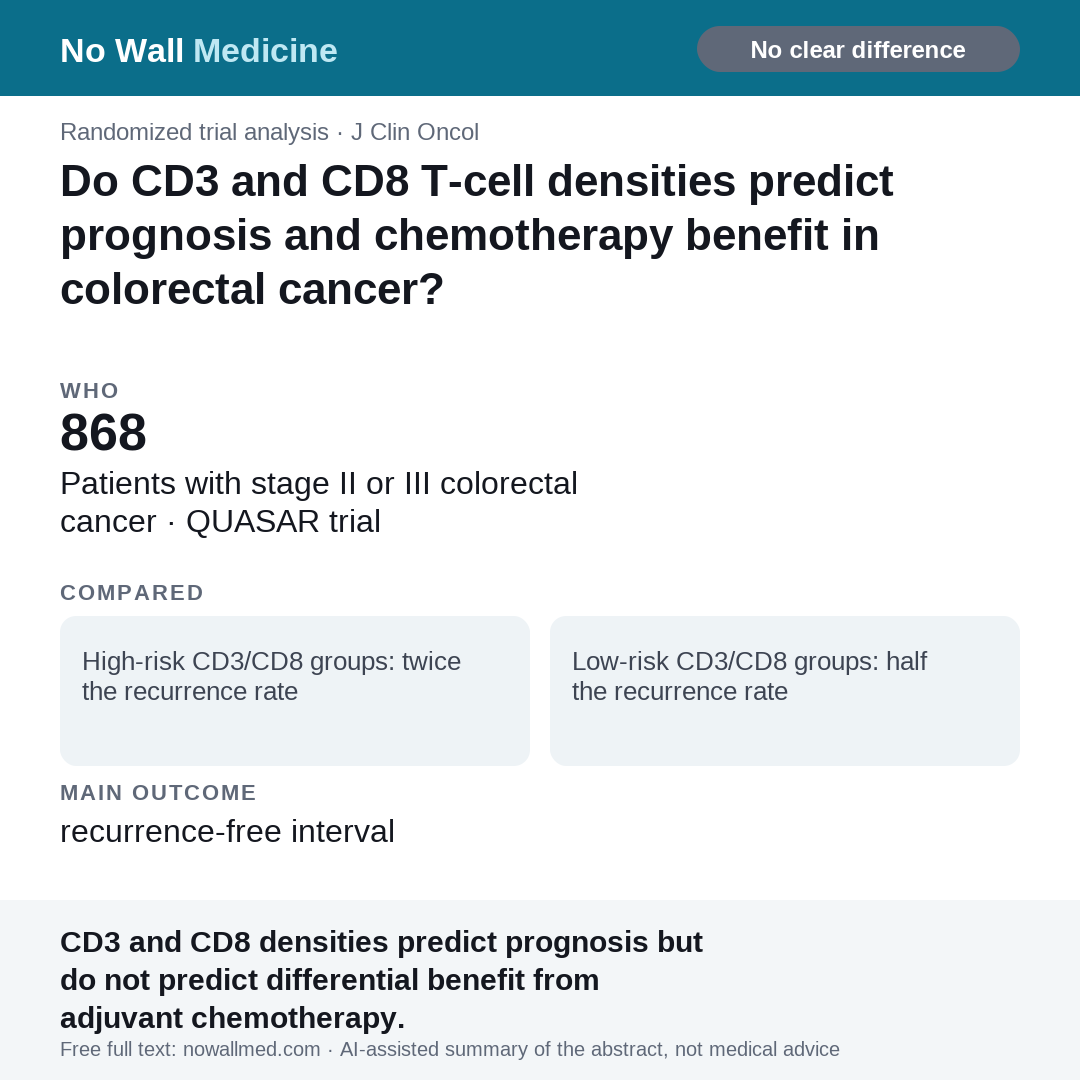
Evaluation of CD3 and CD8 T-Cell Immunohistochemistry for Prognostication and Prediction of Benefit From Adjuvant Chemotherapy in Early-Stage Colorectal Cancer Within the QUASAR Trial
Randomized trial analysisNo clear difference
Do CD3 and CD8 T-cell densities predict prognosis and chemotherapy benefit in colorectal cancer?
Who
868
Patients with stage II or III colorectal cancer · QUASAR trial
Compared
High-risk CD3/CD8 groups: twice the recurrence rate
Low-risk CD3/CD8 groups: half the recurrence rate
Main outcome
recurrence-free interval
Bottom line: CD3 and CD8 densities predict prognosis but do not predict differential benefit from adjuvant chemotherapy.
J Clin Oncol · 2024-07-31Download image
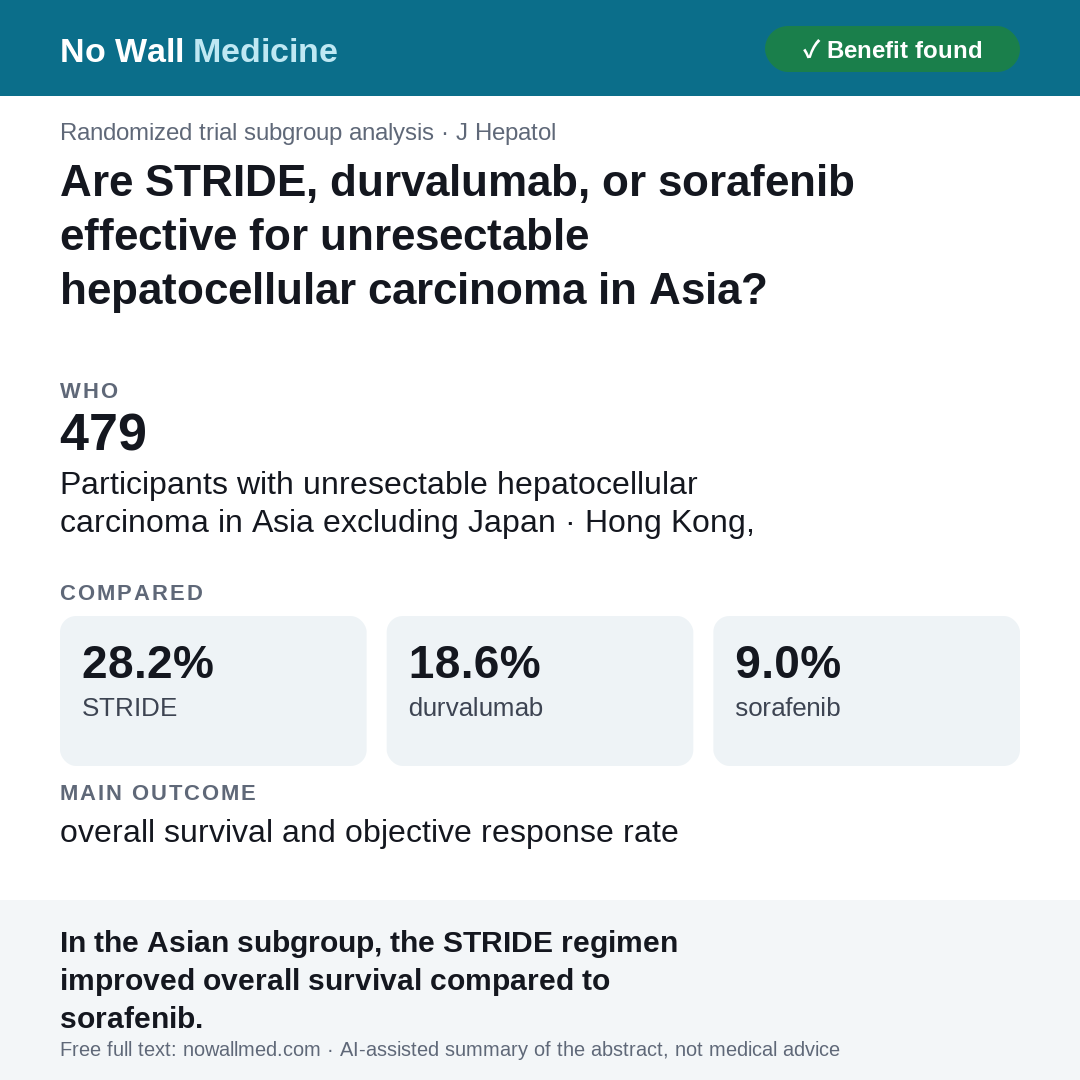
Outcomes in the Asian subgroup of the phase III randomised HIMALAYA study of tremelimumab plus durvalumab in unresectable hepatocellular carcinoma
Randomized trial subgroup analysisBenefit found
Are STRIDE, durvalumab, or sorafenib effective for unresectable hepatocellular carcinoma in Asia?
Who
479
Participants with unresectable hepatocellular carcinoma in Asia excluding Japan · Hong Kong, India, South Korea, Taiwan, Thailand, and Vietnam
Compared
28.2%STRIDE
18.6%durvalumab
9.0%sorafenib
Main outcome
overall survival and objective response rate
Result: hazard ratio 0.68 (95% CI 0.52-0.89)
Bottom line: In the Asian subgroup, the STRIDE regimen improved overall survival compared to sorafenib.
J Hepatol · 2024-07-31Download image
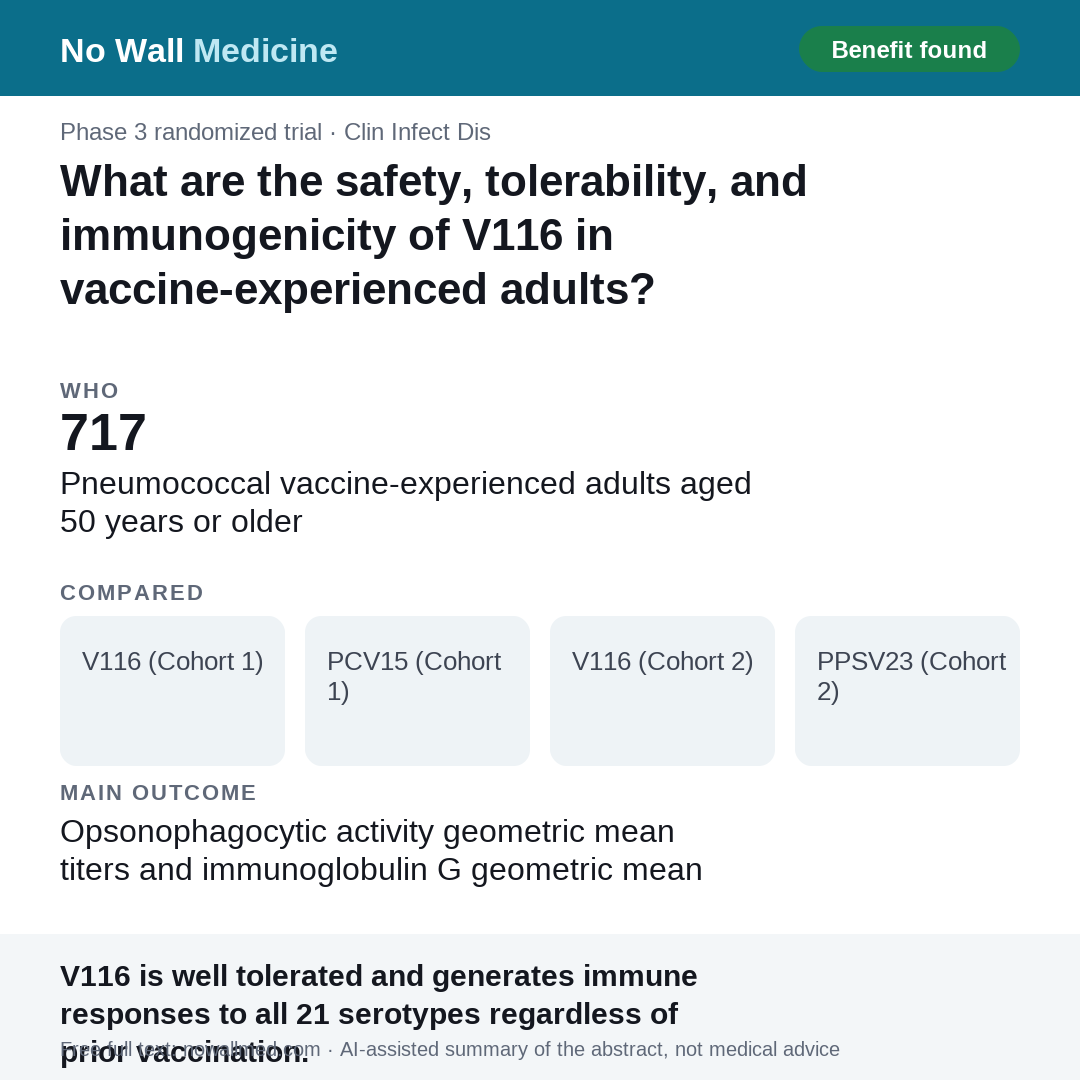
A Phase 3 Clinical Study to Evaluate the Safety, Tolerability, and Immunogenicity of V116 in Pneumococcal Vaccine-Experienced Adults 50 Years of Age or Older (STRIDE-6)
Phase 3 randomized trialBenefit found
What are the safety, tolerability, and immunogenicity of V116 in vaccine-experienced adults?
Who
717
Pneumococcal vaccine-experienced adults aged 50 years or older
Compared
V116 (Cohort 1)
PCV15 (Cohort 1)
V116 (Cohort 2)
PPSV23 (Cohort 2)
Main outcome
Opsonophagocytic activity geometric mean titers and immunoglobulin G geometric mean concentrations
Bottom line: V116 is well tolerated and generates immune responses to all 21 serotypes regardless of prior vaccination.
Clin Infect Dis · 2024-07-31Download image
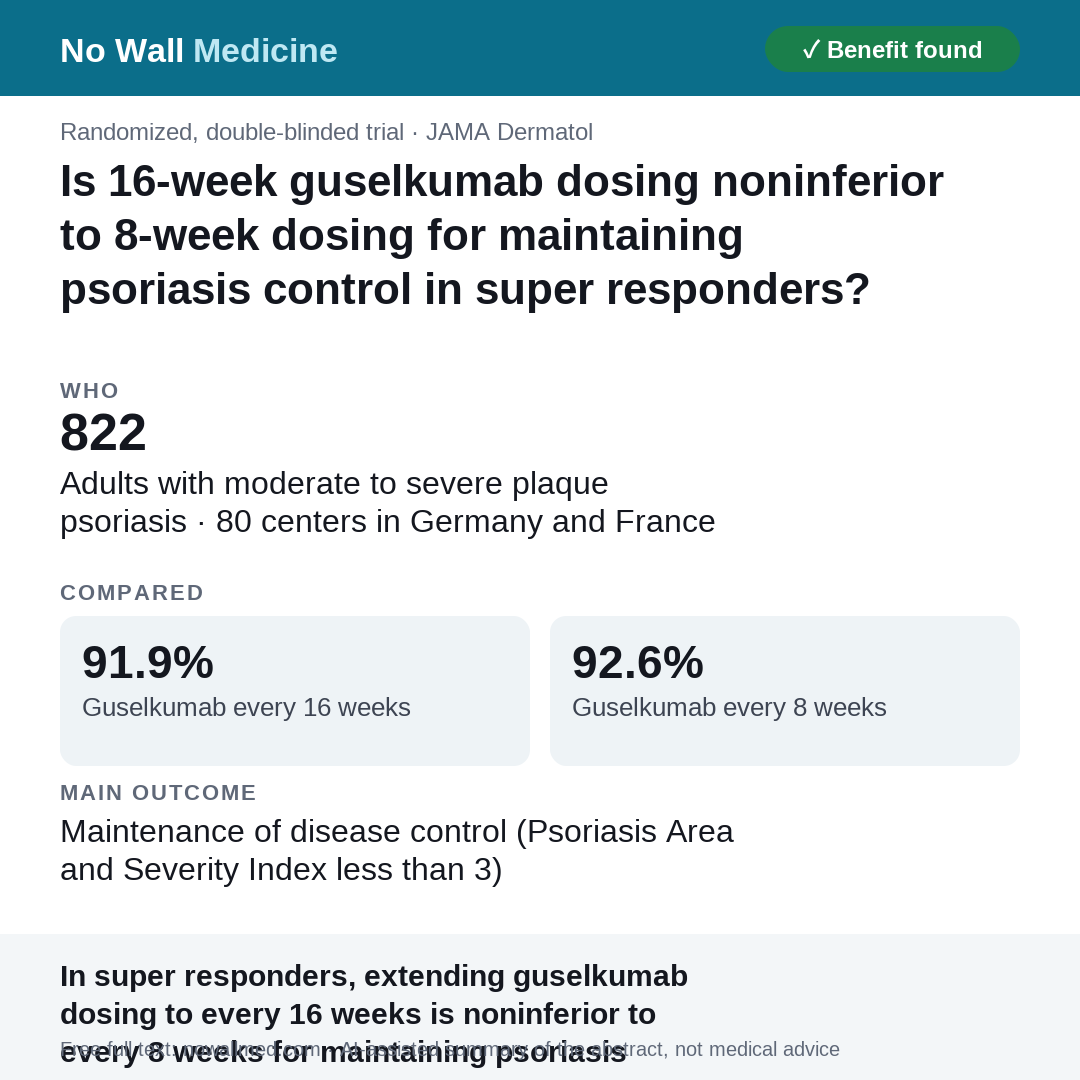
Noninferiority of 16-Week vs 8-Week Guselkumab Dosing in Super Responders for Maintaining Control of Psoriasis: The GUIDE Randomized Clinical Trial
Randomized, double-blinded trialBenefit found
Is 16-week guselkumab dosing noninferior to 8-week dosing for maintaining psoriasis control in super responders?
Who
822
Adults with moderate to severe plaque psoriasis · 80 centers in Germany and France
Compared
91.9%Guselkumab every 16 weeks (137/149)
92.6%Guselkumab every 8 weeks (137/148)
Main outcome
Maintenance of disease control (Psoriasis Area and Severity Index less than 3)
Result: 91.9% (90% CI, 87.3%-95.3%) vs 92.6% (90% CI, 88.0%-95.8%)
Bottom line: In super responders, extending guselkumab dosing to every 16 weeks is noninferior to every 8 weeks for maintaining psoriasis control.
JAMA Dermatol · 2024-07-31Download image
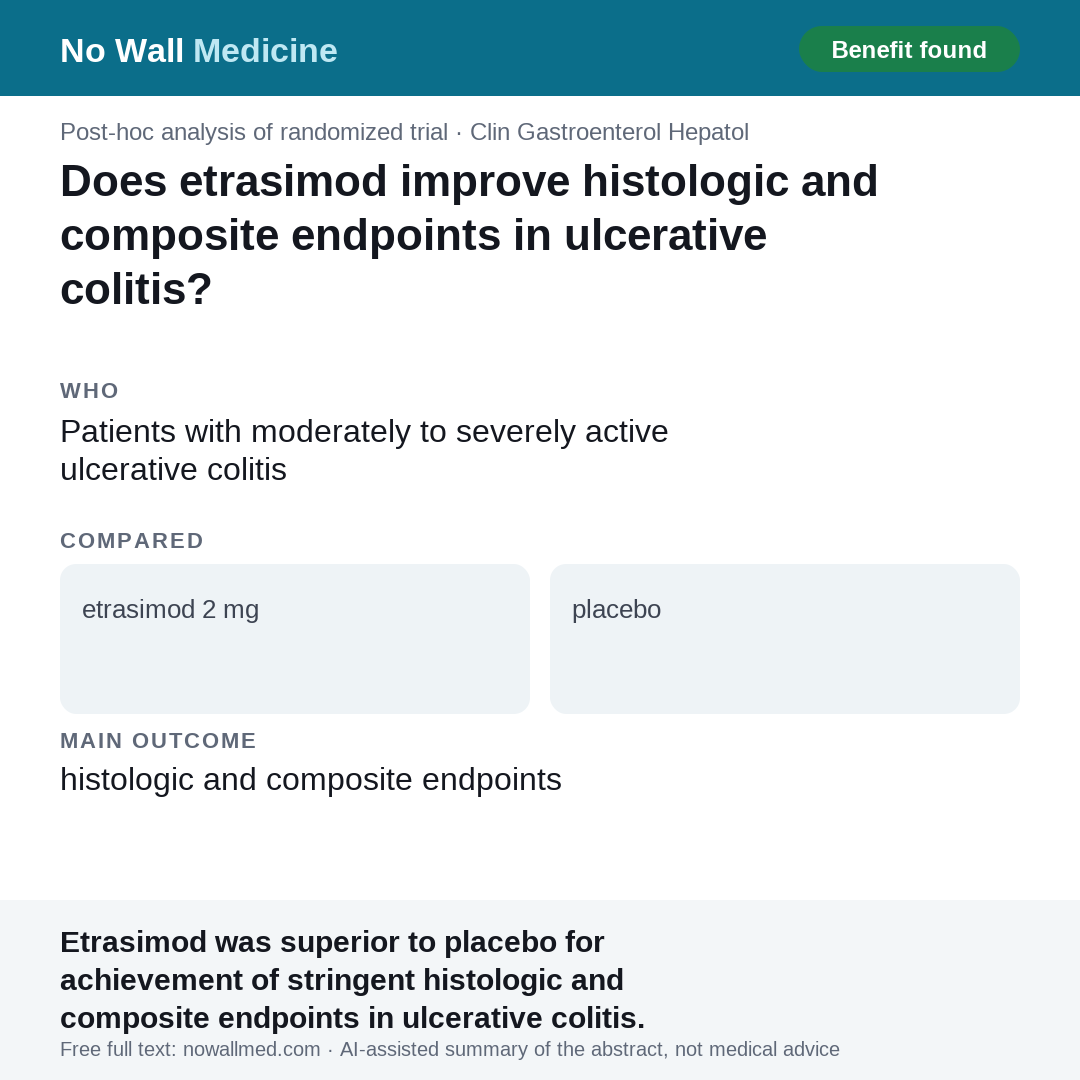
Endoscopic, Histologic, and Composite Endpoints in Patients With Ulcerative Colitis Treated With Etrasimod
Post-hoc analysis of randomized trialBenefit found
Does etrasimod improve histologic and composite endpoints in ulcerative colitis?
Who
Patients with moderately to severely active ulcerative colitis
Compared
etrasimod 2 mg
placebo
Main outcome
histologic and composite endpoints
Bottom line: Etrasimod was superior to placebo for achievement of stringent histologic and composite endpoints in ulcerative colitis.
Clin Gastroenterol Hepatol · 2024-07-31Download image
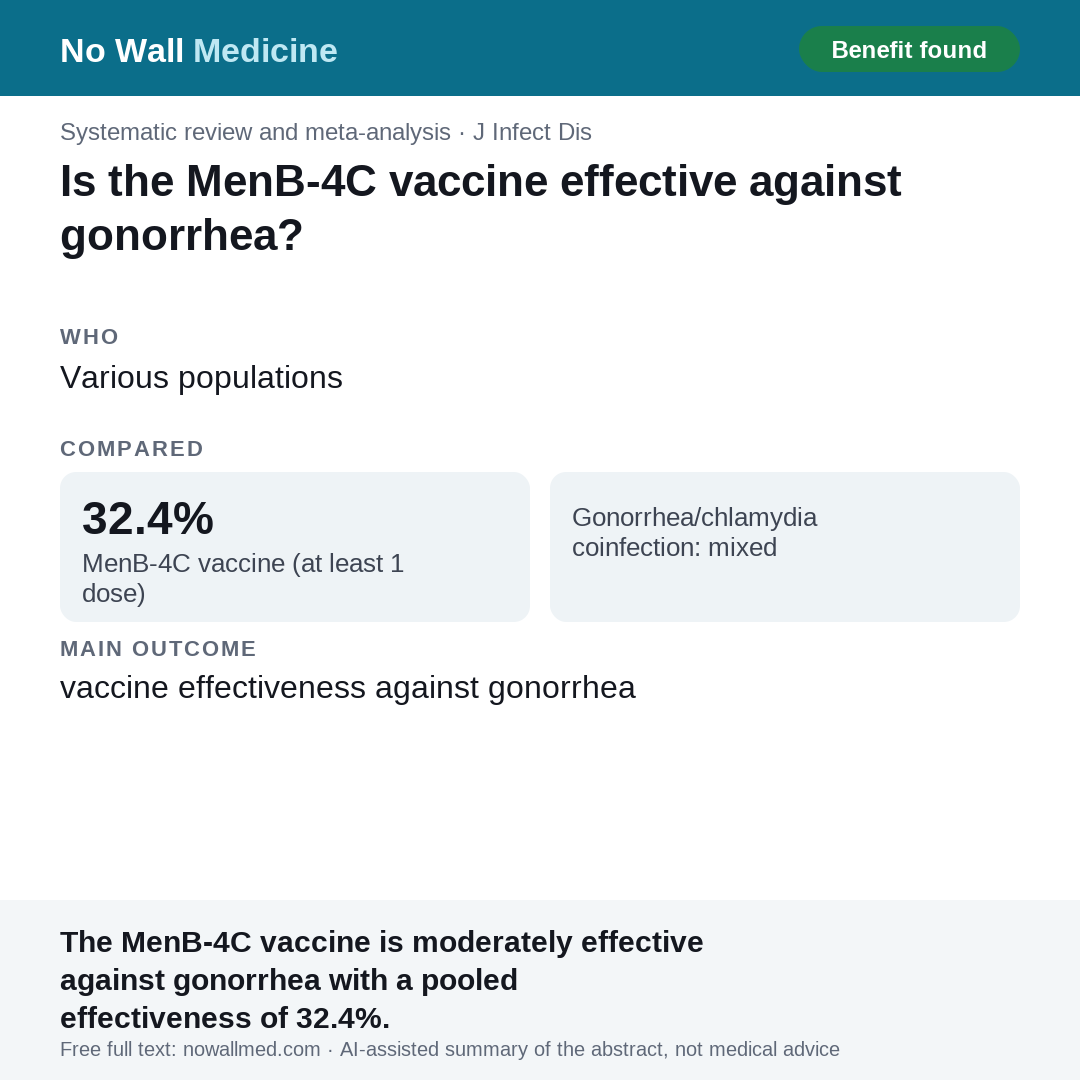
Effectiveness of MenB-4C Vaccine Against Gonorrhea: A Systematic Review and Meta-analysis
Systematic review and meta-analysisBenefit found
Is the MenB-4C vaccine effective against gonorrhea?
Who
Various populations
Compared
32.4%MenB-4C vaccine (at least 1 dose)
Gonorrhea/chlamydia coinfection: mixed
Main outcome
vaccine effectiveness against gonorrhea
Bottom line: The MenB-4C vaccine is moderately effective against gonorrhea with a pooled effectiveness of 32.4%.
J Infect Dis · 2024-07-31Download image
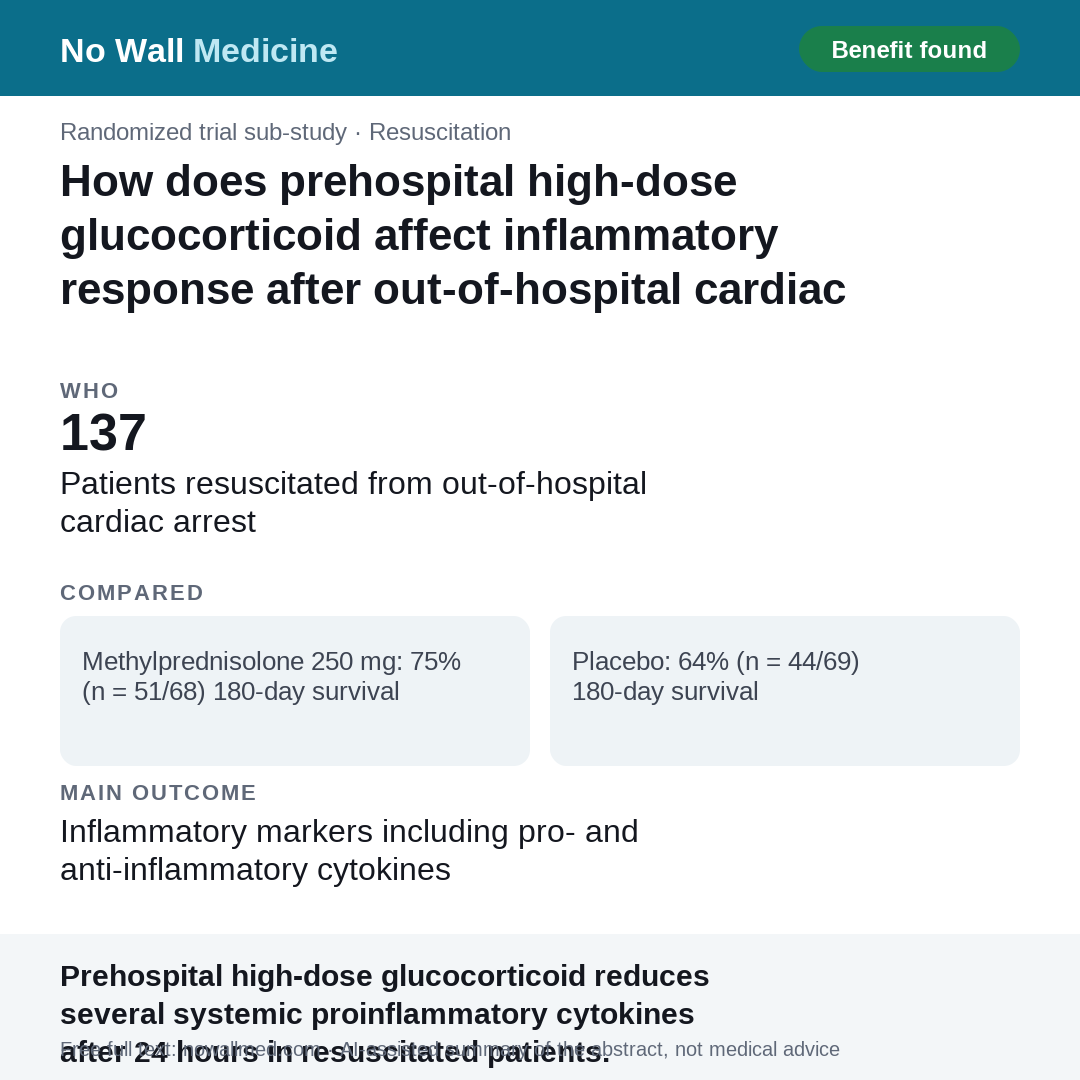
Inflammatory response after prehospital high-dose glucocorticoid to patients resuscitated from out-of-hospital cardiac arrest: A sub-study of the STEROHCA trial
Randomized trial sub-studyBenefit found
How does prehospital high-dose glucocorticoid affect inflammatory response after out-of-hospital cardiac arrest?
Who
137
Patients resuscitated from out-of-hospital cardiac arrest
Compared
Methylprednisolone 250 mg: 75% (n = 51/68) 180-day survival
Placebo: 64% (n = 44/69) 180-day survival
Main outcome
Inflammatory markers including pro- and anti-inflammatory cytokines
Bottom line: Prehospital high-dose glucocorticoid reduces several systemic proinflammatory cytokines after 24 hours in resuscitated patients.
Resuscitation · 2024-07-31Download image
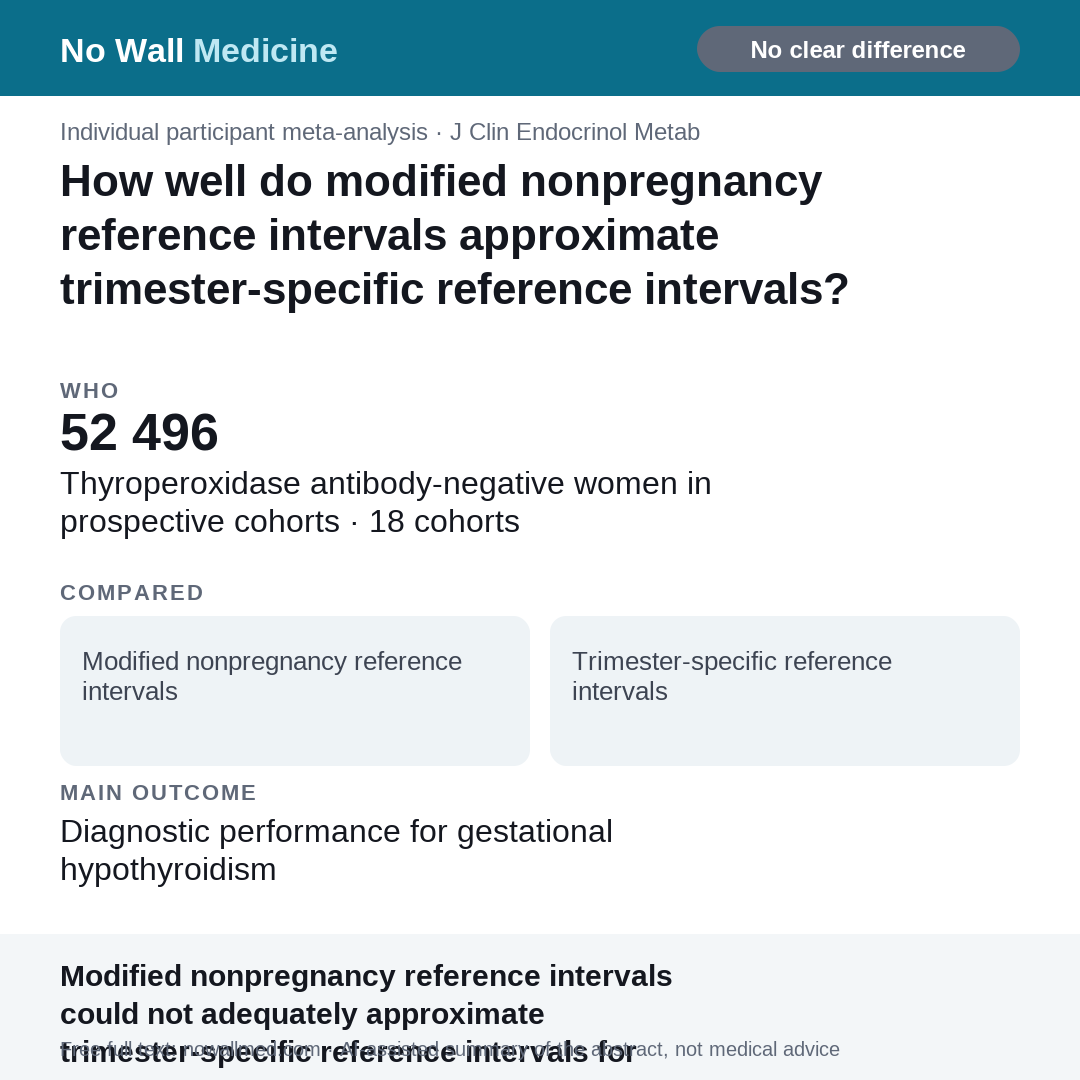
Defining Gestational Thyroid Dysfunction Through Modified Nonpregnancy Reference Intervals: An Individual Participant Meta-analysis
Individual participant meta-analysisNo clear difference
How well do modified nonpregnancy reference intervals approximate trimester-specific reference intervals?
Who
52 496
Thyroperoxidase antibody-negative women in prospective cohorts · 18 cohorts
Compared
Modified nonpregnancy reference intervals
Trimester-specific reference intervals
Main outcome
Diagnostic performance for gestational hypothyroidism
Bottom line: Modified nonpregnancy reference intervals could not adequately approximate trimester-specific reference intervals for diagnosing gestational hypothyroidism.
Limitation: Wide confidence intervals limiting generalizability.
J Clin Endocrinol Metab · 2024-07-31Download image
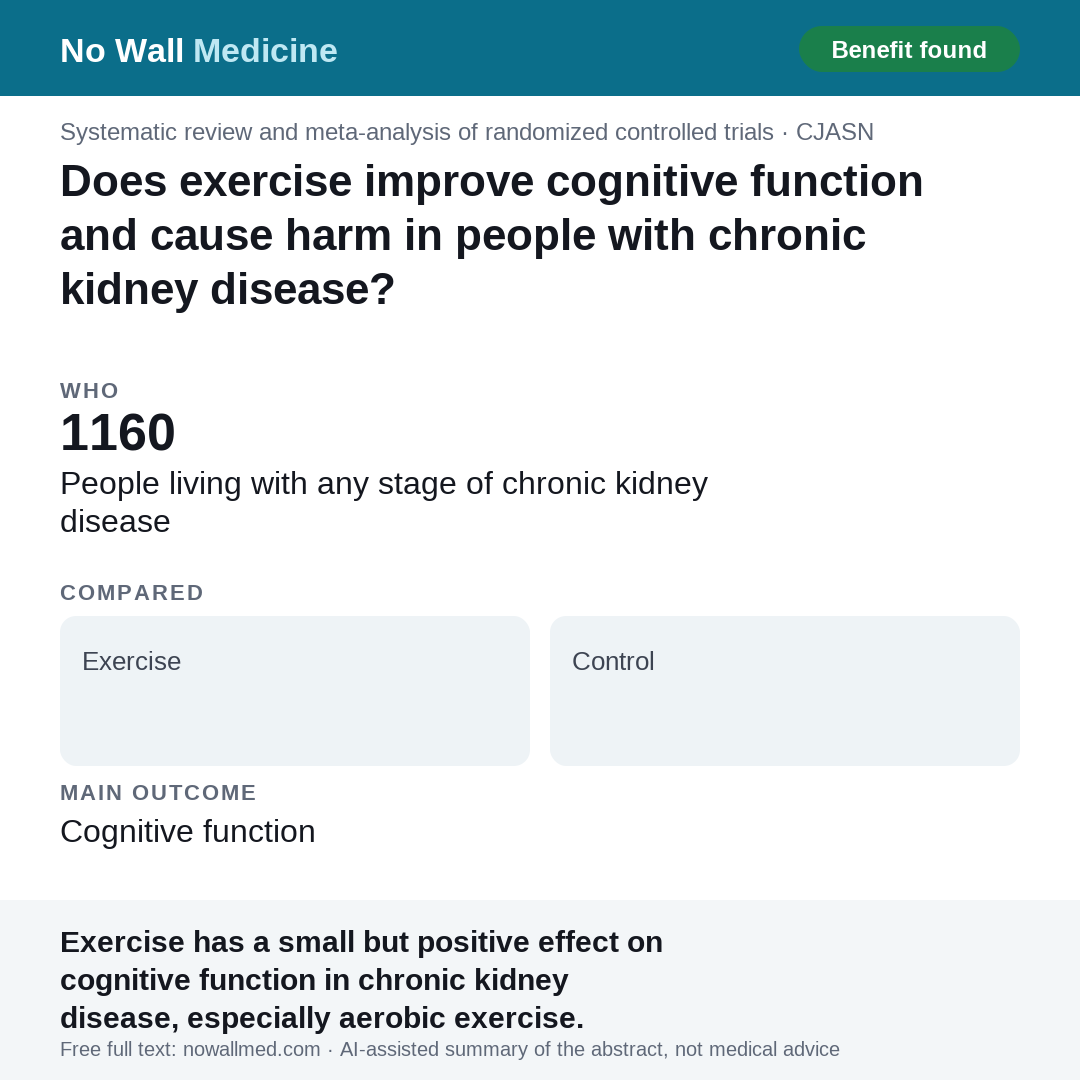
Exercise and Cognitive Function in Chronic Kidney Disease: A Systematic Review and Meta-Analysis of Efficacy and Harms
Systematic review and meta-analysis of randomized controlled trialsBenefit found
Does exercise improve cognitive function and cause harm in people with chronic kidney disease?
Who
1160
People living with any stage of chronic kidney disease
Compared
Exercise
Control
Main outcome
Cognitive function
Result: effect size 0.22 (95% confidence intervals, 0.00 to 0.44)
Bottom line: Exercise has a small but positive effect on cognitive function in chronic kidney disease, especially aerobic exercise.
Limitation: The quality of evidence was rated as low.
CJASN · 2024-07-31Download image
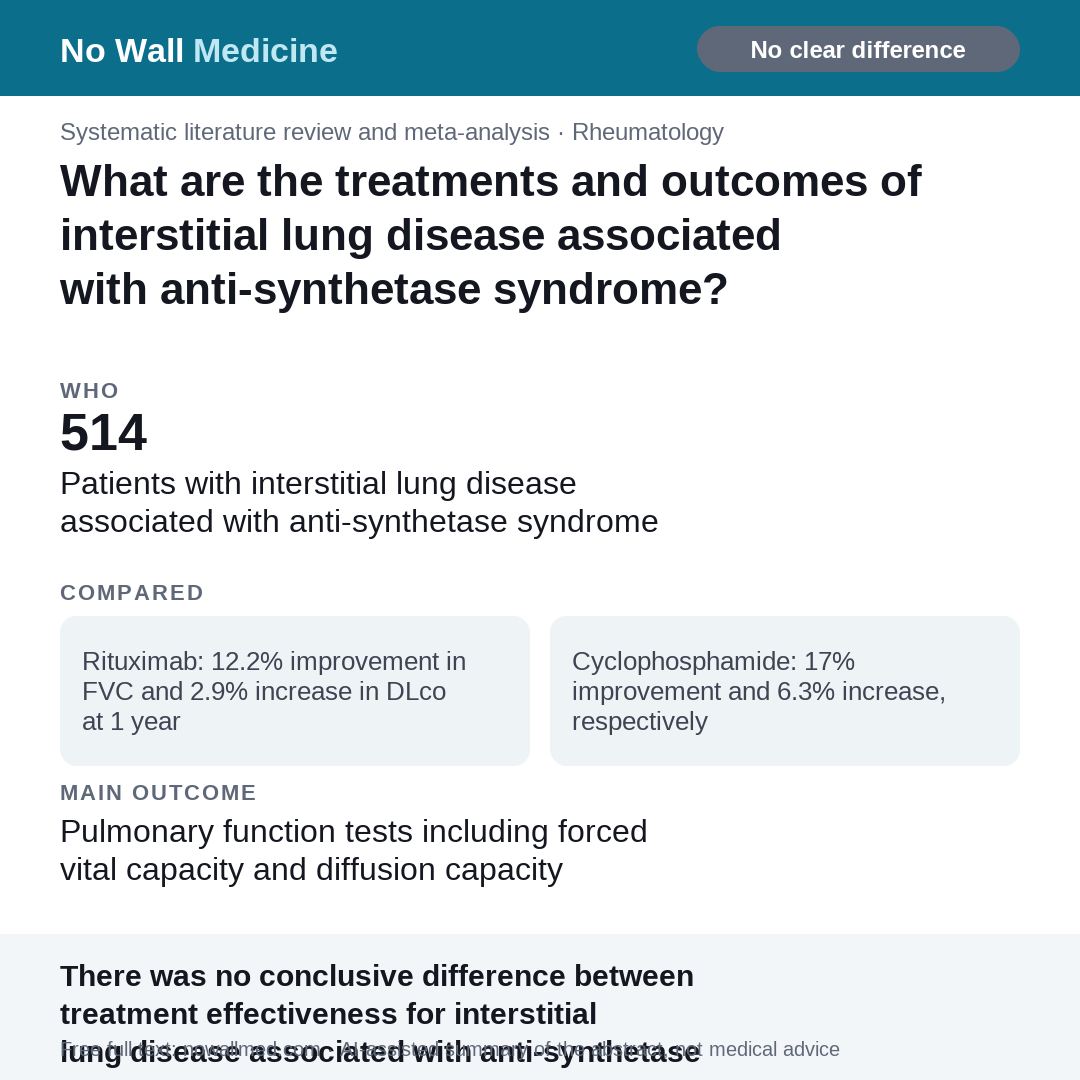
Management and outcomes of interstitial lung disease associated with anti-synthetase syndrome: a systematic literature review
Systematic literature review and meta-analysisNo clear difference
What are the treatments and outcomes of interstitial lung disease associated with anti-synthetase syndrome?
Who
514
Patients with interstitial lung disease associated with anti-synthetase syndrome
Compared
Rituximab: 12.2% improvement in FVC and 2.9% increase in DLco at 1 year
Cyclophosphamide: 17% improvement and 6.3% increase, respectively
Main outcome
Pulmonary function tests including forced vital capacity and diffusion capacity
Bottom line: There was no conclusive difference between treatment effectiveness for interstitial lung disease associated with anti-synthetase syndrome.
Rheumatology · 2024-07-31Download image
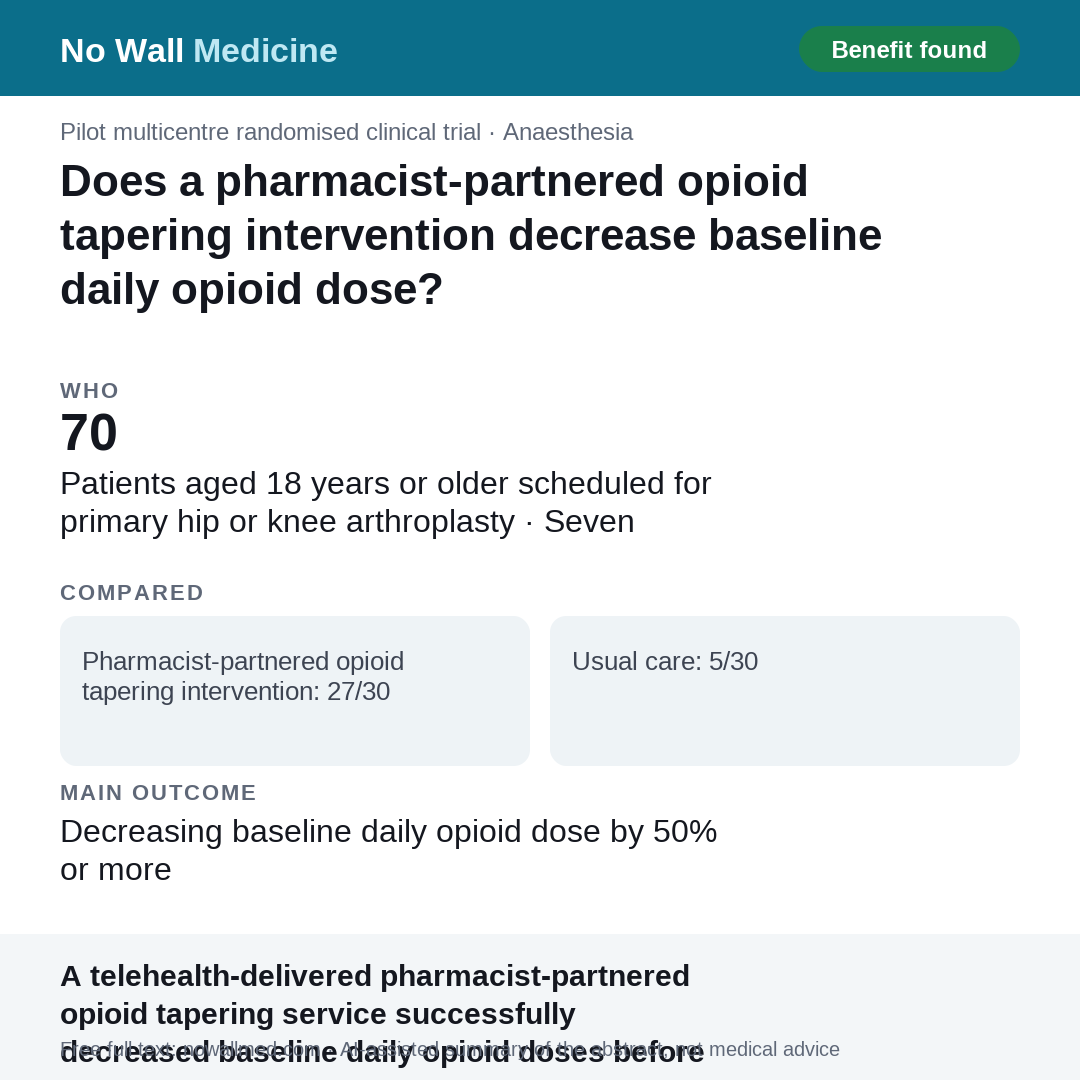
A pilot multicentre randomised clinical trial to determine the effect of a pharmacist-partnered opioid tapering intervention before total hip or knee arthroplasty
Pilot multicentre randomised clinical trialEarly signal
Does a pharmacist-partnered opioid tapering intervention decrease baseline daily opioid dose?
Who
70
Patients aged 18 years or older scheduled for primary hip or knee arthroplasty · Seven hospitals in New South Wales, Australia
Compared
Pharmacist-partnered opioid tapering intervention: 27/30
Usual care: 5/30
Main outcome
Decreasing baseline daily opioid dose by 50% or more
Bottom line: A telehealth-delivered pharmacist-partnered opioid tapering service successfully decreased baseline daily opioid doses before surgery.
Anaesthesia · 2024-07-31Download image
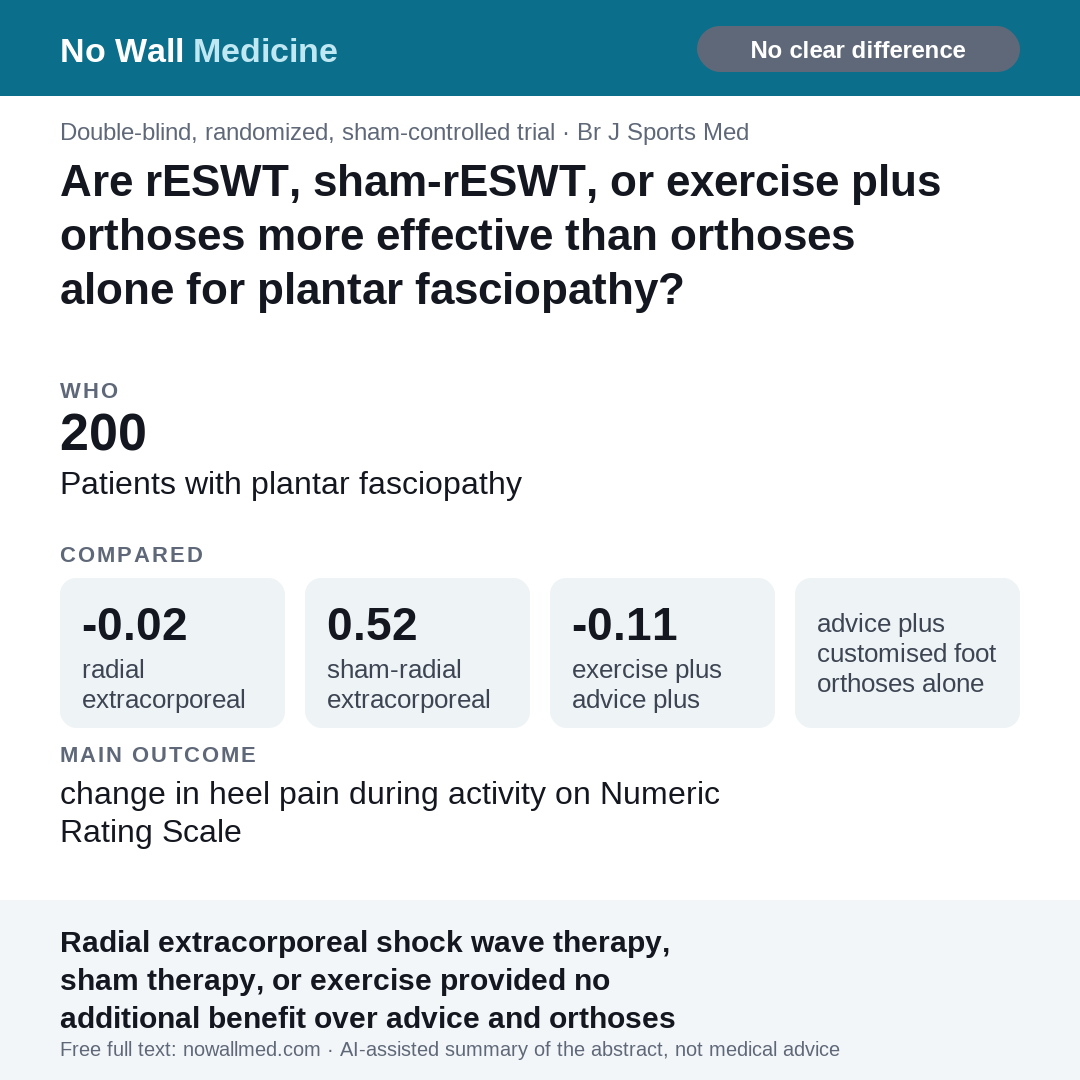
Is radial extracorporeal shock wave therapy (rESWT), sham-rESWT or a standardised exercise programme in combination with advice plus customised foot orthoses more effective than advice plus customised foot orthoses alone in the treatment of plantar fasciopathy? A double-blind, randomised, sham-controlled trial
Double-blind, randomized, sham-controlled trialNo clear difference
Are rESWT, sham-rESWT, or exercise plus orthoses more effective than orthoses alone for plantar fasciopathy?
Who
200
Patients with plantar fasciopathy
Compared
-0.02radial extracorporeal shock wave therapy (95% CI -1.01 to 0.96)
0.52sham-radial extracorporeal shock wave therapy (95% CI -0.49 to 1.53)
-0.11exercise plus advice plus customised foot orthoses (95% CI -1.11 to 0.89)
advice plus customised foot orthoses alone
Main outcome
change in heel pain during activity on Numeric Rating Scale
Bottom line: Radial extracorporeal shock wave therapy, sham therapy, or exercise provided no additional benefit over advice and orthoses alone.
Br J Sports Med · 2024-07-31Download image
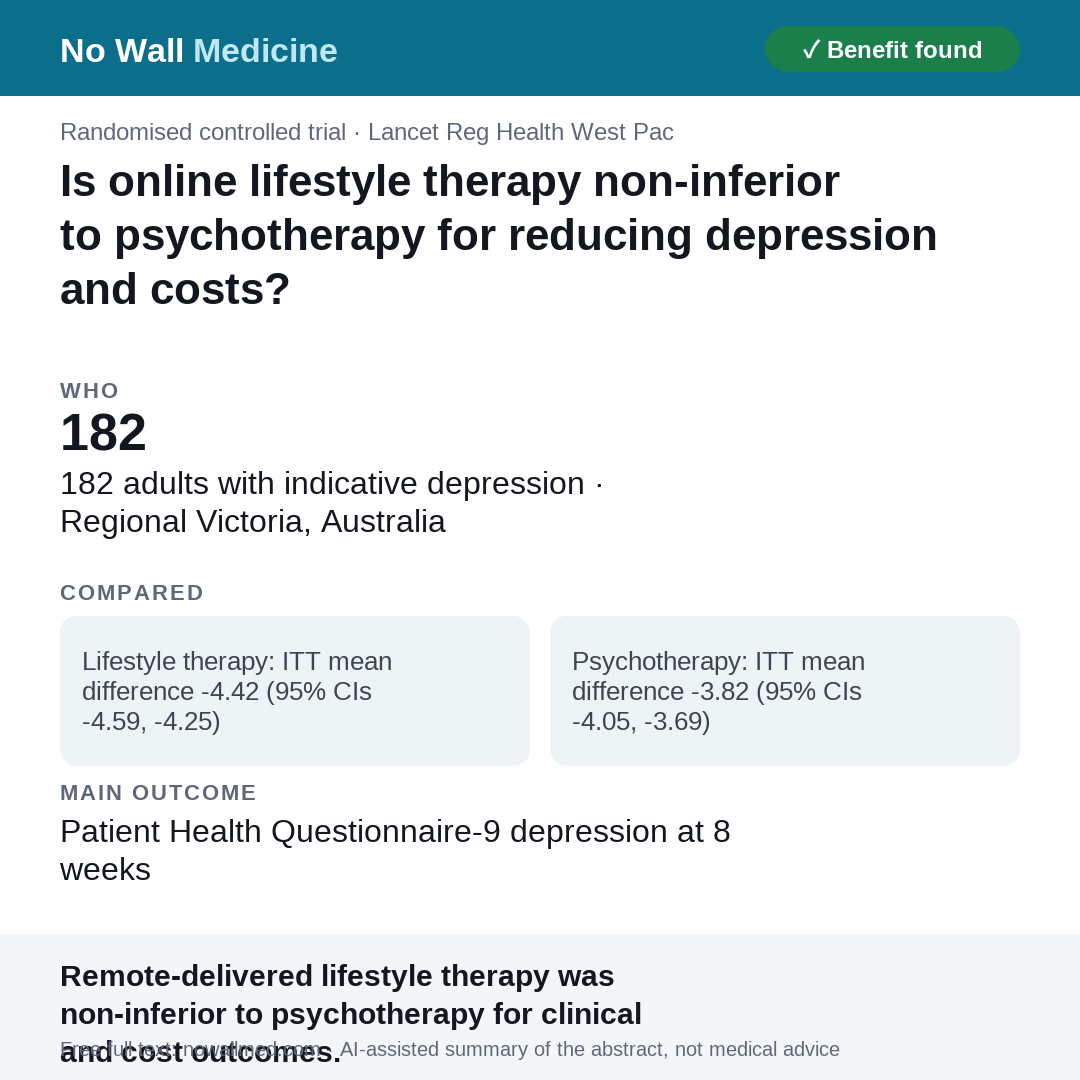
Clinical and cost-effectiveness of remote-delivered, online lifestyle therapy versus psychotherapy for reducing depression: results from the CALM non-inferiority, randomised trial
Randomised controlled trialBenefit found
Is online lifestyle therapy non-inferior to psychotherapy for reducing depression and costs?
Who
182
182 adults with indicative depression · Regional Victoria, Australia
Compared
Lifestyle therapy: ITT mean difference -4.42 (95% CIs -4.59, -4.25)
Psychotherapy: ITT mean difference -3.82 (95% CIs -4.05, -3.69)
Main outcome
Patient Health Questionnaire-9 depression at 8 weeks
Result: ITT GEE beta -0.49 (95% CIs -1.73, 0.75)
Bottom line: Remote-delivered lifestyle therapy was non-inferior to psychotherapy for clinical and cost outcomes.
Funded by: Australian Medical Research Future Fund
Lancet Reg Health West Pac · 2024-07-31Download image
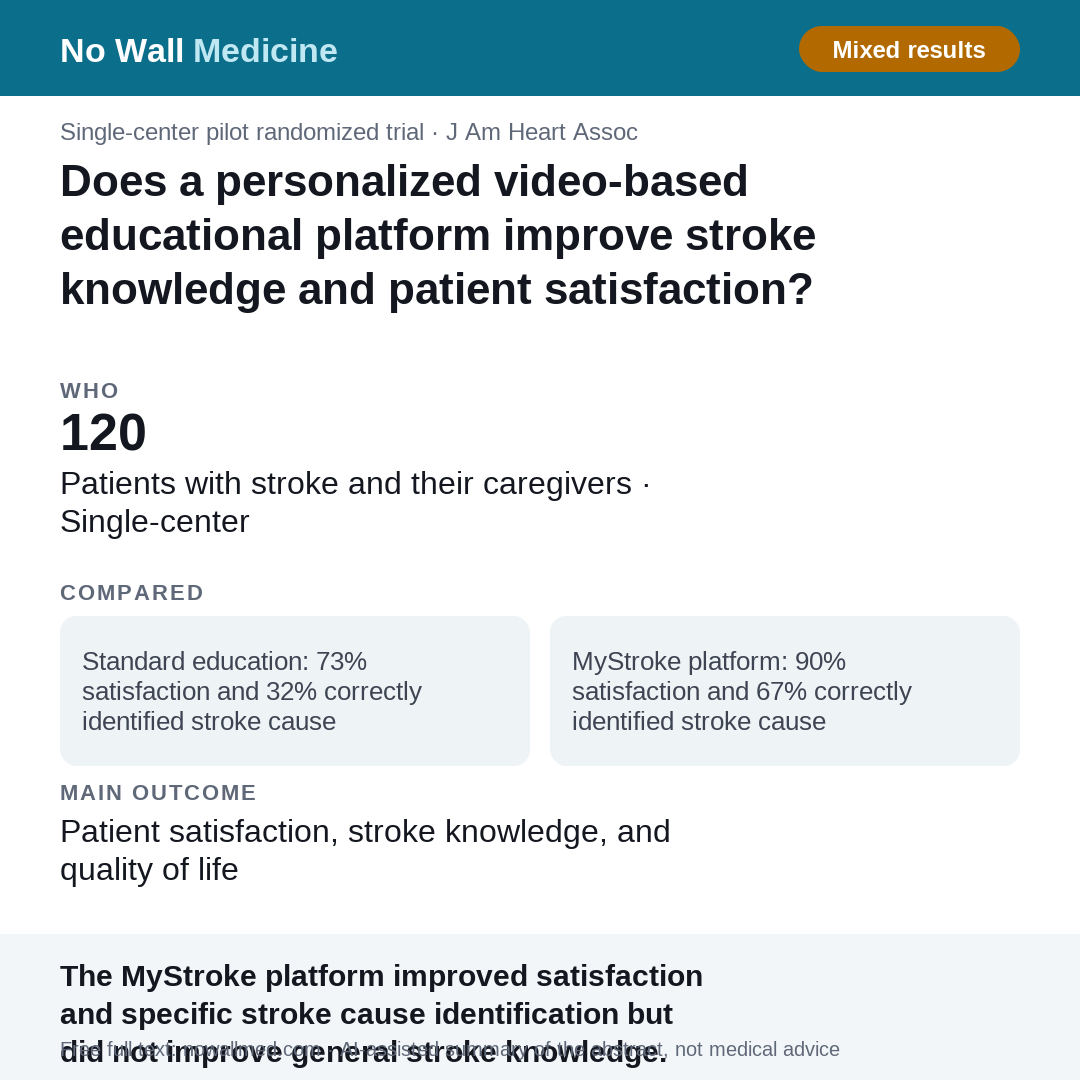
Personalized Video-Based Educational Platform to Improve Stroke Knowledge: A Randomized Clinical Trial
Single-center pilot randomized trialMixed results
Does a personalized video-based educational platform improve stroke knowledge and patient satisfaction?
Who
120
Patients with stroke and their caregivers · Single-center
Compared
Standard education: 73% satisfaction and 32% correctly identified stroke cause
MyStroke platform: 90% satisfaction and 67% correctly identified stroke cause
Main outcome
Patient satisfaction, stroke knowledge, and quality of life
Bottom line: The MyStroke platform improved satisfaction and specific stroke cause identification but did not improve general stroke knowledge.
Limitation: A multicenter trial is needed to confirm results and clarify generalizability.
J Am Heart Assoc · 2024-07-31Download image
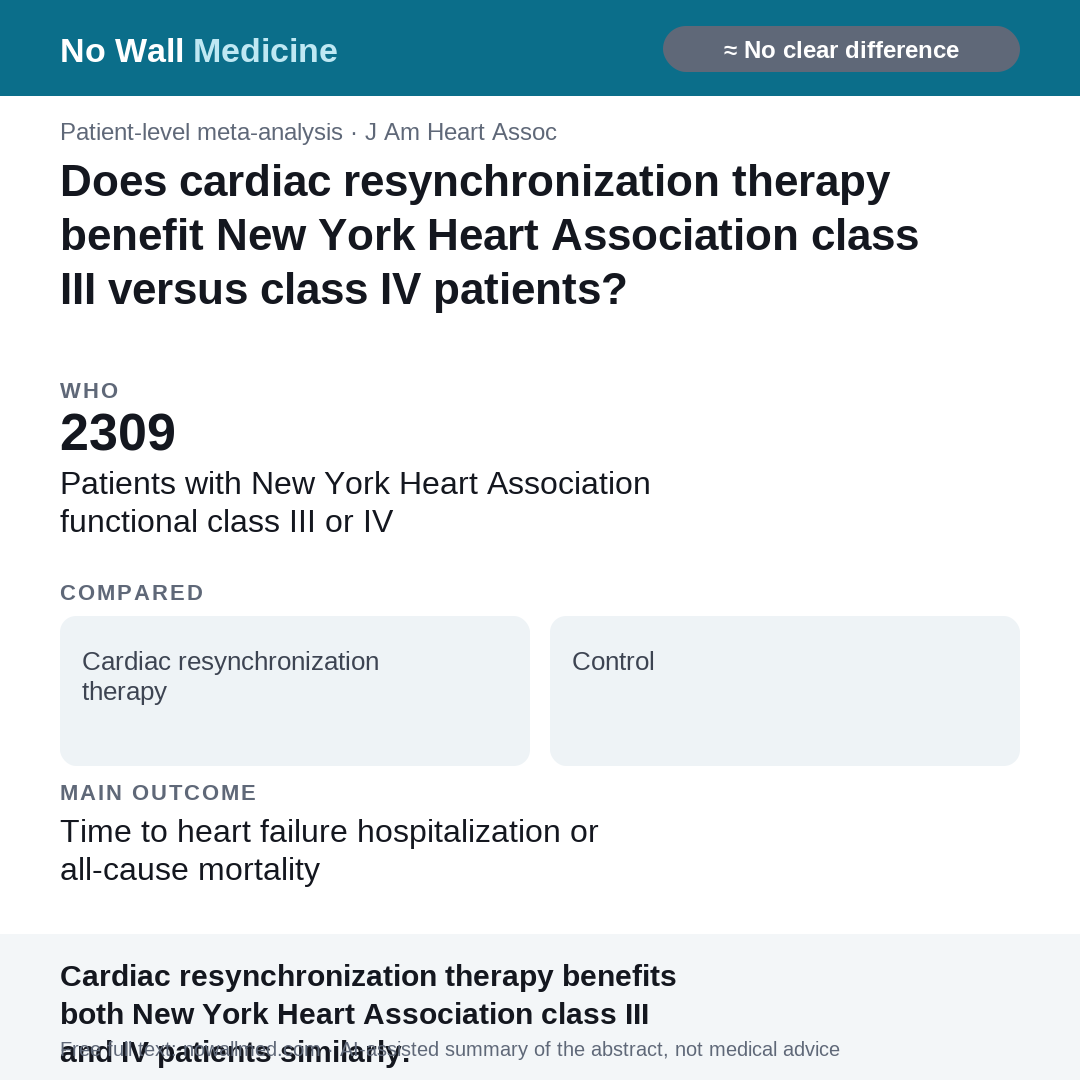
Outcomes of Cardiac Resynchronization Therapy by New York Heart Association Class: A Patient-Level Meta-Analysis
Patient-level meta-analysisNo clear difference
Does cardiac resynchronization therapy benefit New York Heart Association class III versus class IV patients?
Who
2309
Patients with New York Heart Association functional class III or IV
Compared
Cardiac resynchronization therapy
Control
Main outcome
Time to heart failure hospitalization or all-cause mortality
Result: adjusted hazard ratio 0.79 (95% credible interval 0.64-0.99)
Bottom line: Cardiac resynchronization therapy benefits both New York Heart Association class III and IV patients similarly.
J Am Heart Assoc · 2024-07-31Download image
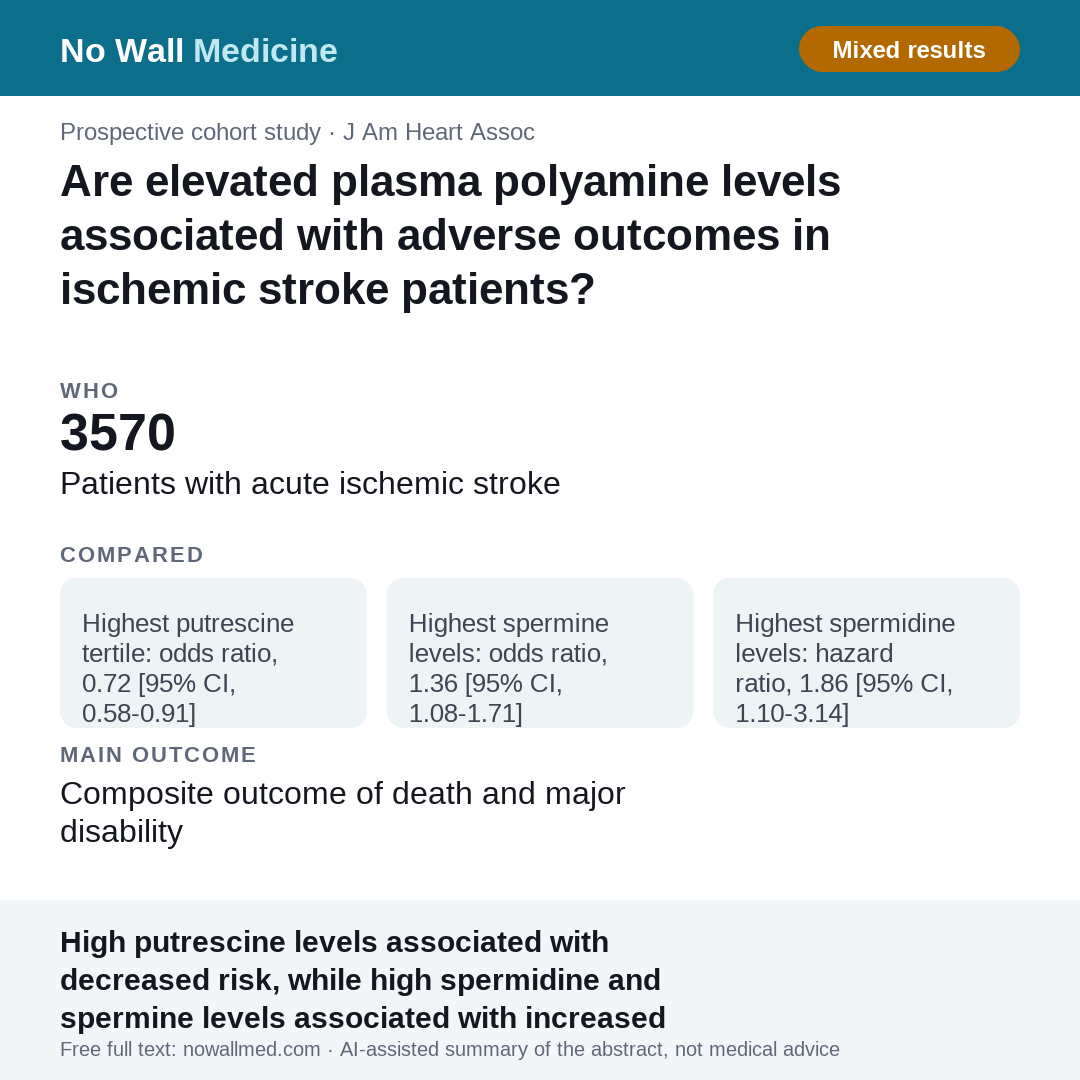
Plasma Polyamines and Short-Term Adverse Outcomes Among Patients With Ischemic Stroke: A Prospective Cohort Study
Prospective cohort studyMixed results
Are elevated plasma polyamine levels associated with adverse outcomes in ischemic stroke patients?
Who
3570
Patients with acute ischemic stroke
Compared
Highest putrescine tertile: odds ratio, 0.72 [95% CI, 0.58-0.91]
Highest spermine levels: odds ratio, 1.36 [95% CI, 1.08-1.71]
Highest spermidine levels: hazard ratio, 1.86 [95% CI, 1.10-3.14]
Main outcome
Composite outcome of death and major disability
Bottom line: High putrescine levels associated with decreased risk, while high spermidine and spermine levels associated with increased adverse outcomes.
J Am Heart Assoc · 2024-07-31Download image
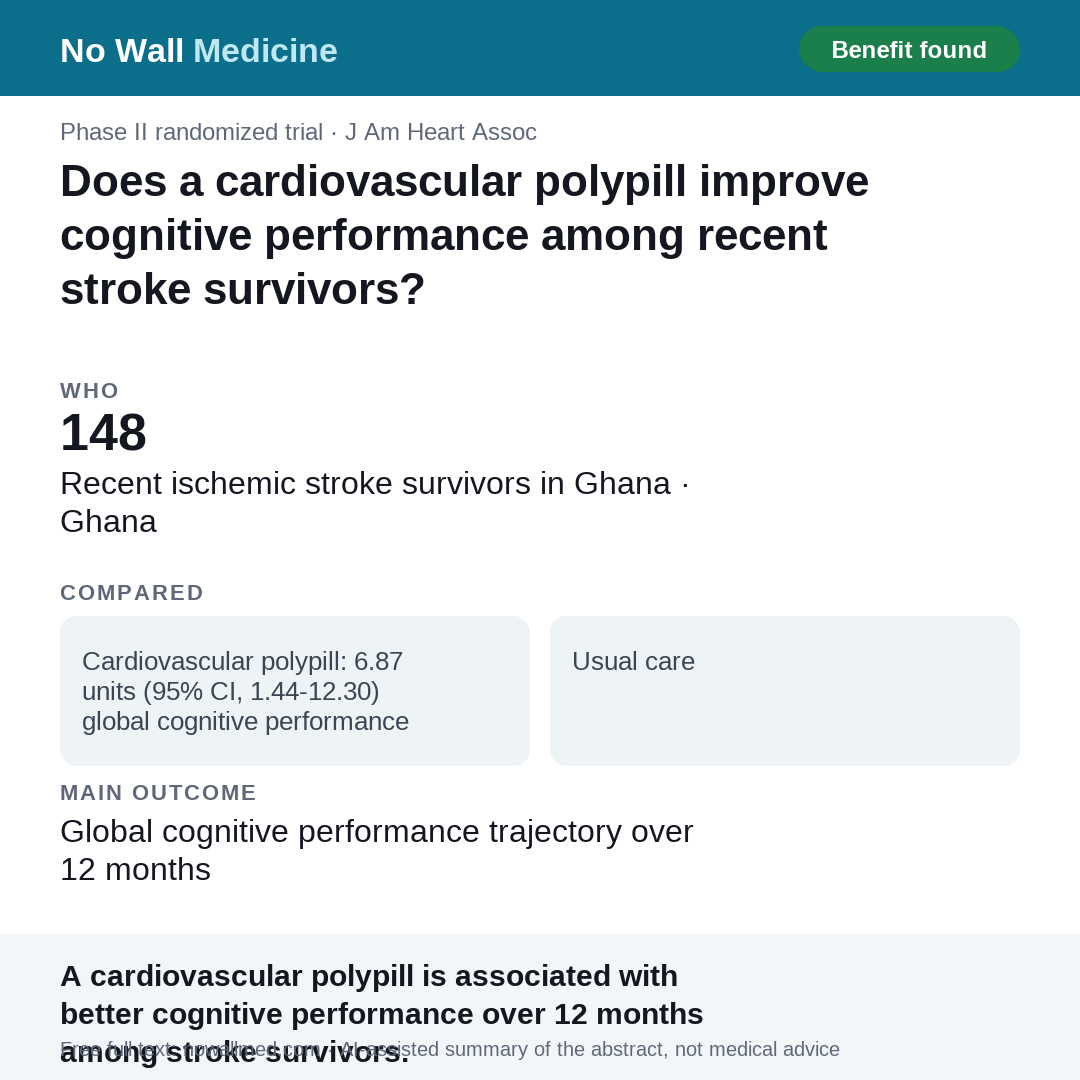
Effect of a Cardiovascular Polypill on Poststroke Cognition Among Ghanaians: Secondary Analysis of a Randomized Clinical Trial
Phase II randomized trialEarly signal
Does a cardiovascular polypill improve cognitive performance among recent stroke survivors?
Who
148
Recent ischemic stroke survivors in Ghana · Ghana
Compared
Cardiovascular polypill: 6.87 units (95% CI, 1.44-12.30) global cognitive performance
Usual care
Main outcome
Global cognitive performance trajectory over 12 months
Result: 6.87 units (95% CI, 1.44-12.30)
Bottom line: A cardiovascular polypill is associated with better cognitive performance over 12 months among stroke survivors.
J Am Heart Assoc · 2024-07-31Download image
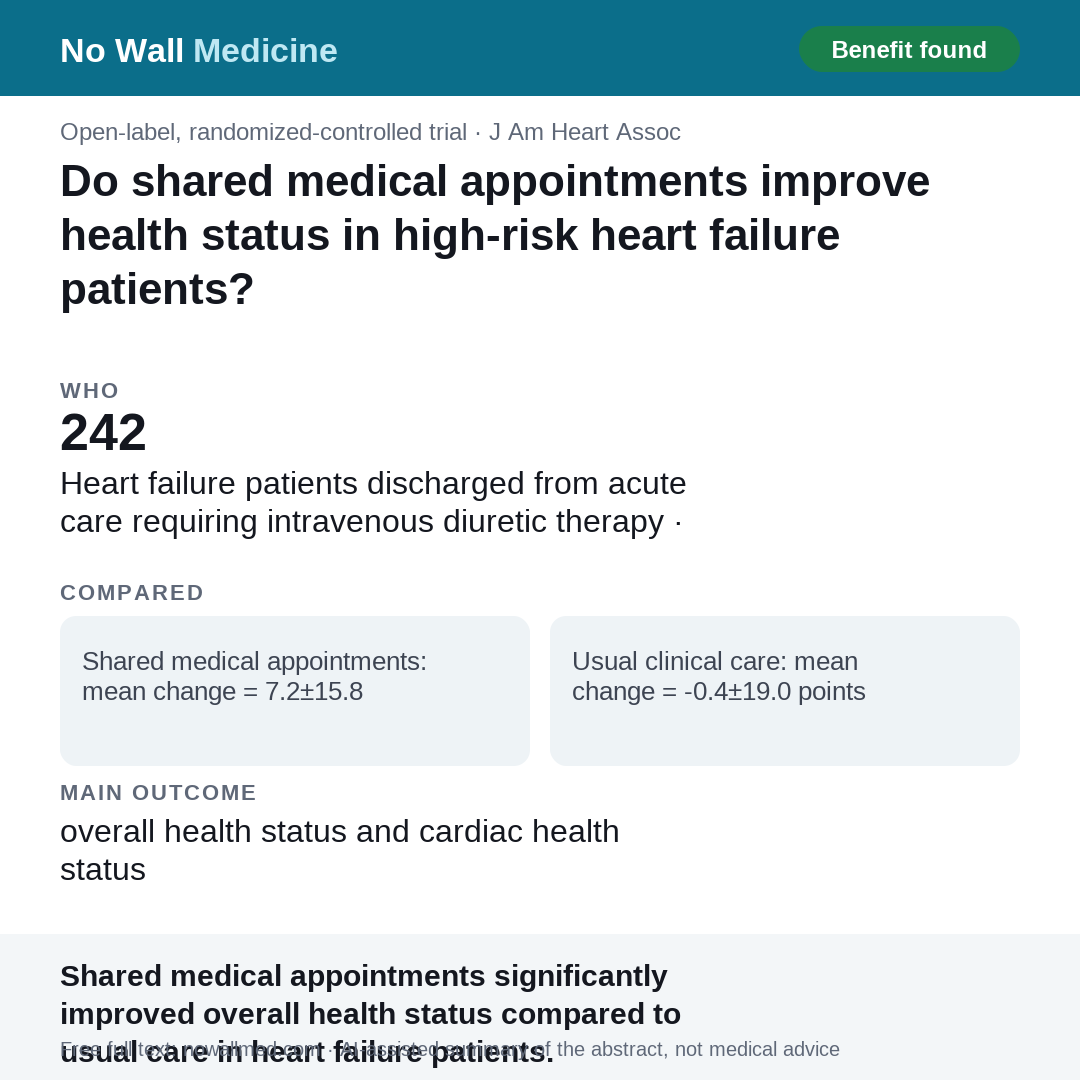
Shared Medical Appointments in Heart Failure for Post Acute Care Follow-Up: A Randomized Controlled Trial
Open-label, randomized-controlled trialBenefit found
Do shared medical appointments improve health status in high-risk heart failure patients?
Who
242
Heart failure patients discharged from acute care requiring intravenous diuretic therapy · 3-site
Compared
Shared medical appointments: mean change = 7.2±15.8
Usual clinical care: mean change = -0.4±19.0 points
Main outcome
overall health status and cardiac health status
Result: P < 0.001
Bottom line: Shared medical appointments significantly improved overall health status compared to usual care in heart failure patients.
J Am Heart Assoc · 2024-07-31Download image
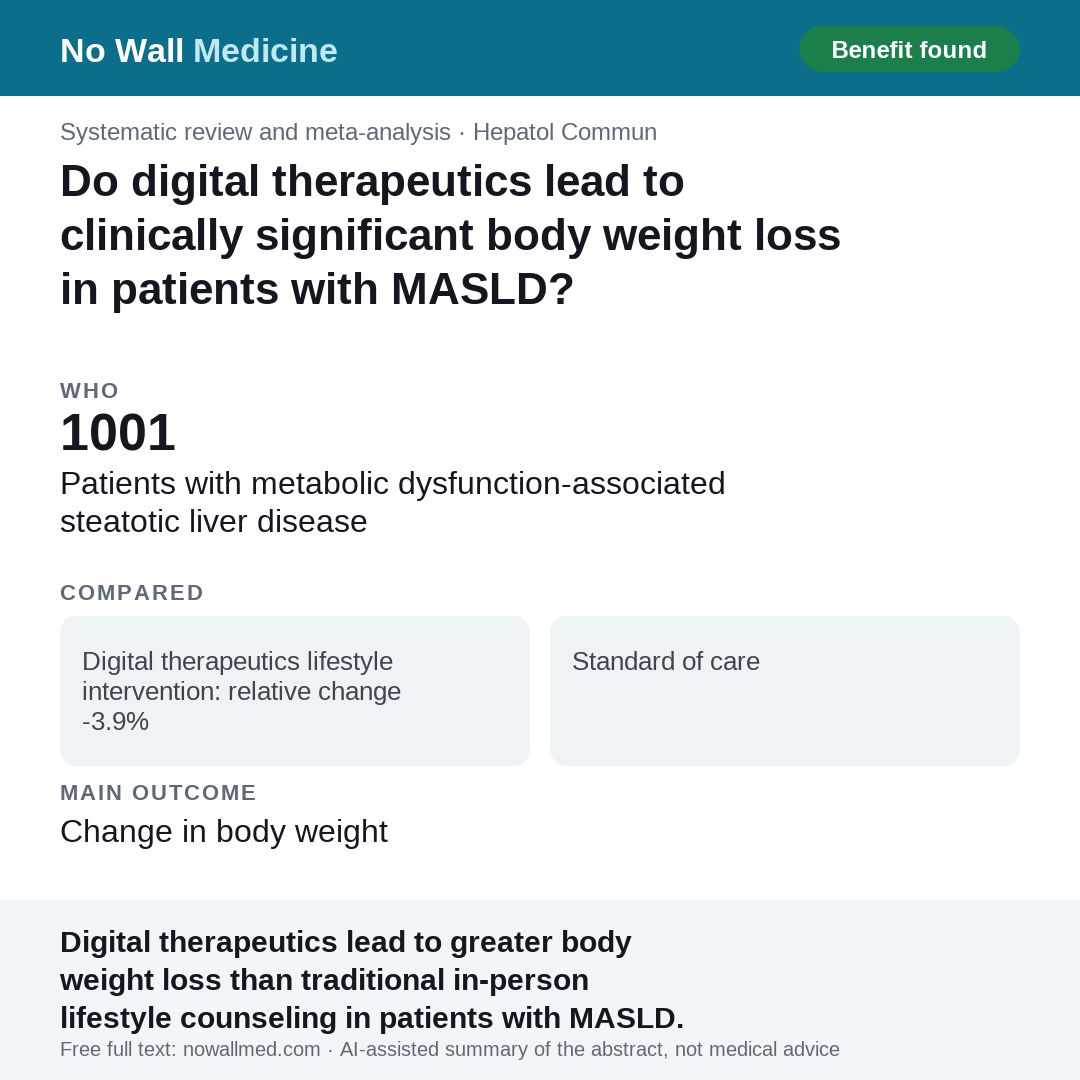
Digital therapeutics lead to clinically significant body weight loss in patients with metabolic dysfunction-associated steatotic liver disease: A systematic review and meta-analysis
Systematic review and meta-analysisBenefit found
Do digital therapeutics lead to clinically significant body weight loss in patients with MASLD?
Who
1001
Patients with metabolic dysfunction-associated steatotic liver disease
Compared
Digital therapeutics lifestyle intervention: relative change -3.9%
Standard of care
Main outcome
Change in body weight
Result: risk ratio 3.0 (95% CI 1.7-5.5)
Bottom line: Digital therapeutics lead to greater body weight loss than traditional in-person lifestyle counseling in patients with MASLD.
Hepatol Commun · 2024-07-31Download image