Visual abstracts
New randomized trials and meta-analyses from leading journals at a glance: who was studied, what was compared, and what was found. Every paper is free to read in full.
All specialtiesCardiology 4763Oncology 4042Gastroenterology & Hepatology 1902Infectious Disease 3756Neurology 1872Psychiatry & Mental Health 2214Pulmonology 2042Critical Care 1319Endocrinology & Diabetes 2544Pediatrics 2889Surgery 2479Orthopedics & Sports Medicine 917Neurosurgery 525Cardiothoracic & Vascular Surgery 656Plastic & Reconstructive Surgery 574Nephrology 1107Rheumatology 810Hematology 1090Dermatology 611Ophthalmology 532Obstetrics & Gynecology 1645Public & Global Health 1037Radiology & Imaging 617Anesthesiology 957Urology 745ENT (Otolaryngology) 494Emergency Medicine 481Allergy & Immunology 309Geriatrics 972Family Medicine & Primary Care 533Medical Genetics & Genomics 659Pathology & Laboratory Medicine 156Physical Medicine & Rehabilitation 734Palliative Care 421Nutrition 1560Digital Health & AI 2133General Medicine 318
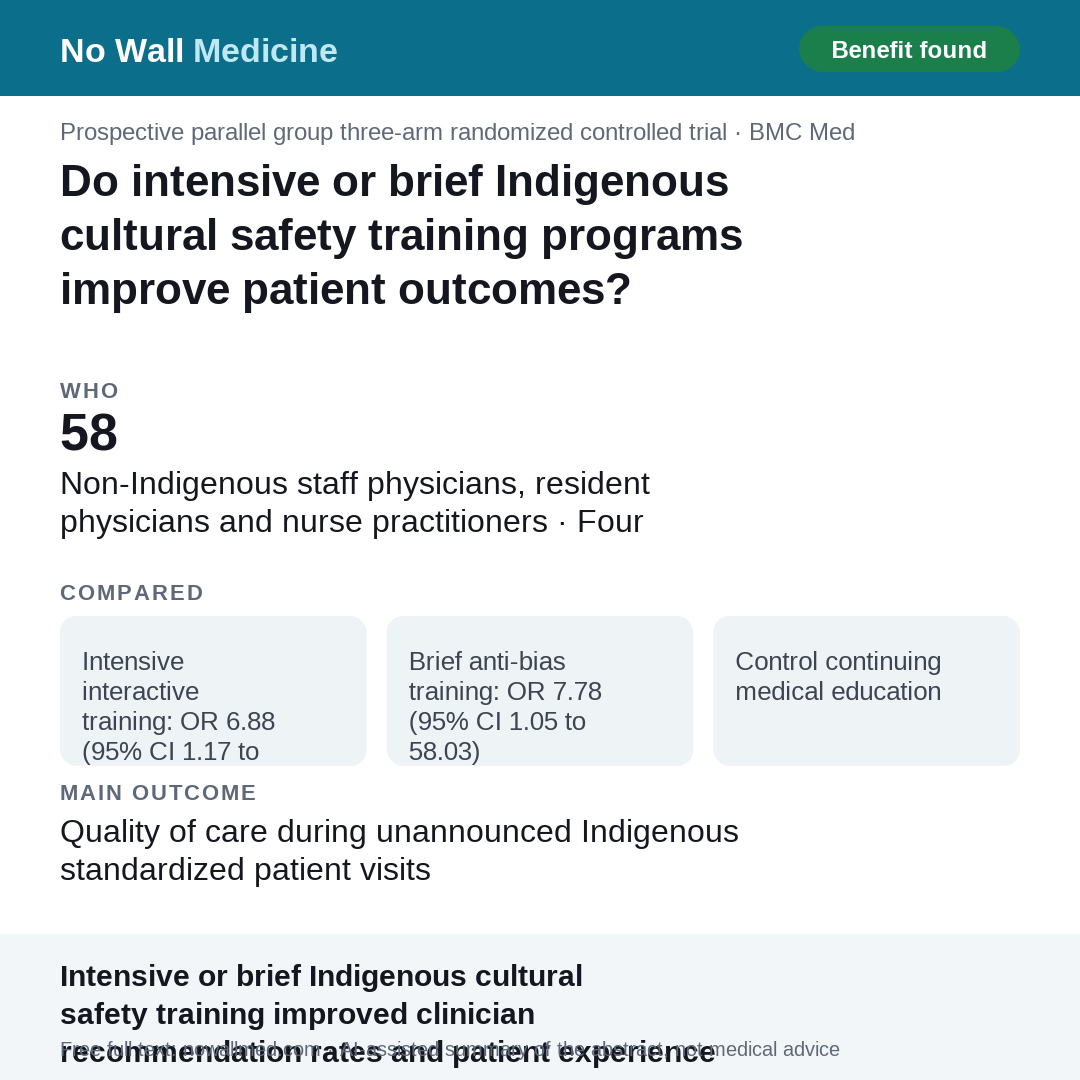
Randomized controlled trial demonstrates novel tools to assess patient outcomes of Indigenous cultural safety training
Prospective parallel group three-arm randomized controlled trialBenefit found
Do intensive or brief Indigenous cultural safety training programs improve patient outcomes?
Who
58
Non-Indigenous staff physicians, resident physicians and nurse practitioners · Four teaching hospitals in Toronto, Canada
Compared
Intensive interactive training: OR 6.88 (95% CI 1.17 to 40.45)
Brief anti-bias training: OR 7.78 (95% CI 1.05 to 58.03)
Control continuing medical education
Main outcome
Quality of care during unannounced Indigenous standardized patient visits
Result: OR 6.88 (95% CI 1.17 to 40.45) and OR 7.78 (95% CI 1.05 to 58.03)
Bottom line: Intensive or brief Indigenous cultural safety training improved clinician recommendation rates and patient experience scores.
Limitation: Small sample size precluded detection of training impacts on clinical practice guideline adherence.
BMC Med · 2024-01-09Download image
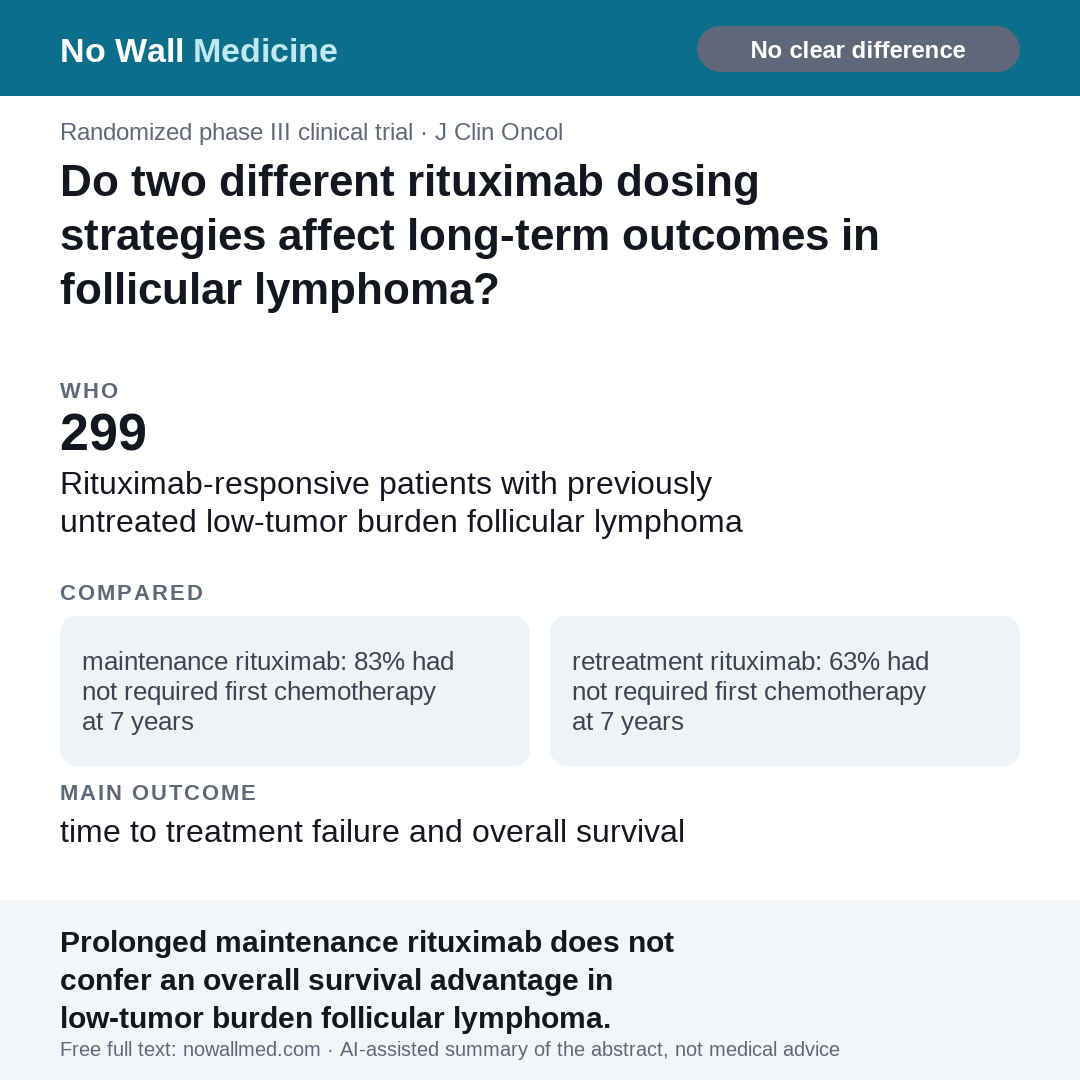
Long-Term Follow-Up of the RESORT Study (E4402): A Randomized Phase III Comparison of Two Different Rituximab Dosing Strategies for Low-Tumor Burden Follicular Lymphoma
Randomized phase III clinical trialNo clear difference
Do two different rituximab dosing strategies affect long-term outcomes in follicular lymphoma?
Who
299
Rituximab-responsive patients with previously untreated low-tumor burden follicular lymphoma
Compared
maintenance rituximab: 83% had not required first chemotherapy at 7 years
retreatment rituximab: 63% had not required first chemotherapy at 7 years
Main outcome
time to treatment failure and overall survival
Result: hazard ratio 2.37 (95% CI 1.5 to 3.76)
Bottom line: Prolonged maintenance rituximab does not confer an overall survival advantage in low-tumor burden follicular lymphoma.
J Clin Oncol · 2024-01-09Download image
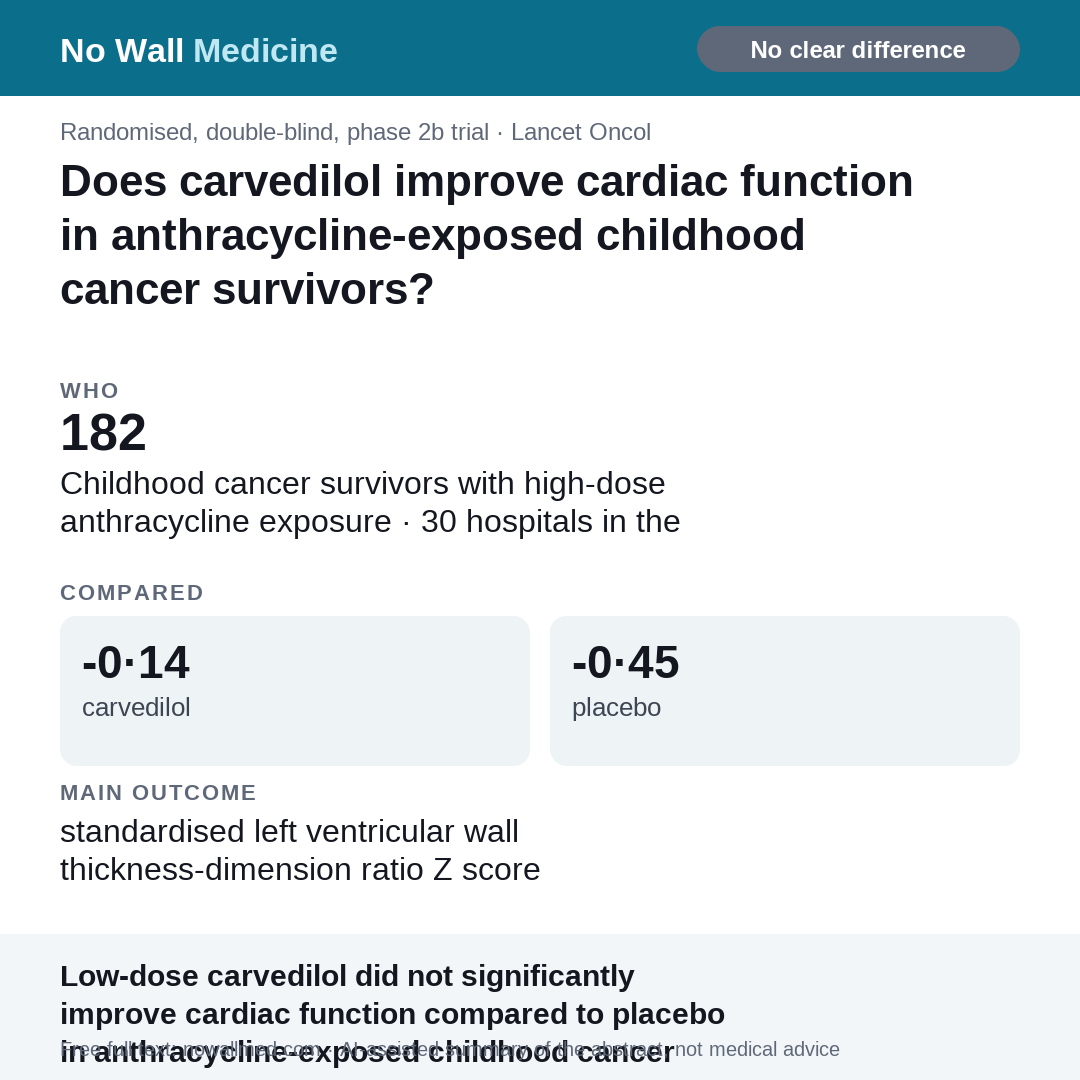
Effect of carvedilol versus placebo on cardiac function in anthracycline-exposed survivors of childhood cancer (PREVENT-HF): a randomised, controlled, phase 2b trial
Randomised, double-blind, phase 2b trialNo clear difference
Does carvedilol improve cardiac function in anthracycline-exposed childhood cancer survivors?
Who
182
Childhood cancer survivors with high-dose anthracycline exposure · 30 hospitals in the USA and Canada
Compared
-0·14carvedilol (95% CI -0·43 to 0·16)
-0·45placebo (-0·77 to -0·13)
Main outcome
standardised left ventricular wall thickness-dimension ratio Z score
Result: difference 0·31 (95% CI -0·10 to 0·73)
Bottom line: Low-dose carvedilol did not significantly improve cardiac function compared to placebo in anthracycline-exposed childhood cancer survivors.
Funded by: National Cancer Institute, Leukemia & Lymphoma Society, and others
Lancet Oncol · 2024-01-09Download image
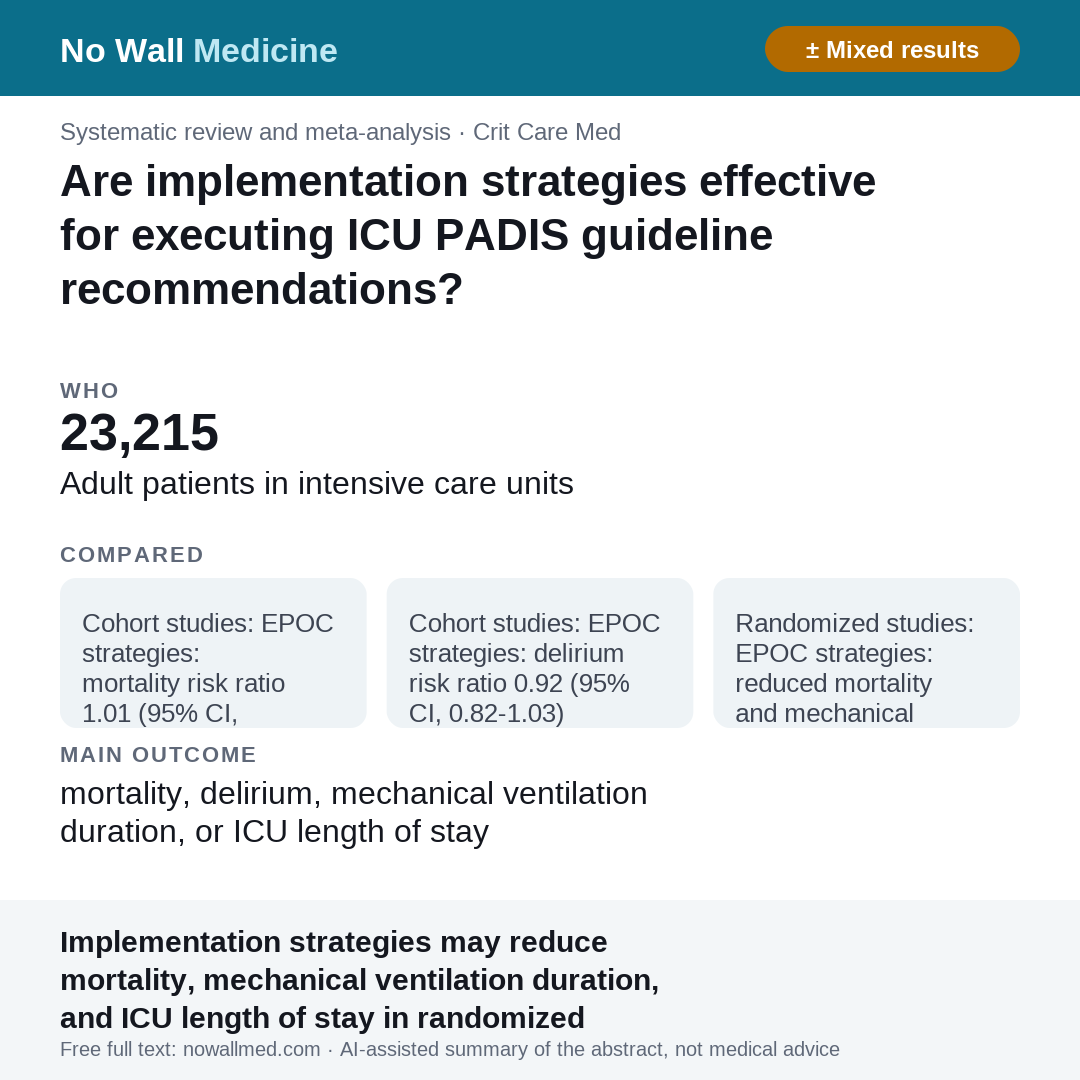
Clinical Impact of the Implementation Strategies Used to Apply the 2013 Pain, Agitation/Sedation, Delirium or 2018 Pain, Agitation/Sedation, Delirium, Immobility, Sleep Disruption Guideline Recommendations: A Systematic Review and Meta-Analysis
Systematic review and meta-analysisMixed results
Are implementation strategies effective for executing ICU PADIS guideline recommendations?
Who
23,215
Adult patients in intensive care units
Compared
Cohort studies: EPOC strategies: mortality risk ratio 1.01 (95% CI, 0.9-1.12)
Cohort studies: EPOC strategies: delirium risk ratio 0.92 (95% CI, 0.82-1.03)
Randomized studies: EPOC strategies: reduced mortality and mechanical ventilation duration
Main outcome
mortality, delirium, mechanical ventilation duration, or ICU length of stay
Bottom line: Implementation strategies may reduce mortality, mechanical ventilation duration, and ICU length of stay in randomized studies.
Limitation: Risk of bias was high in 13 (52%) included studies.
Crit Care Med · 2024-01-09Download image
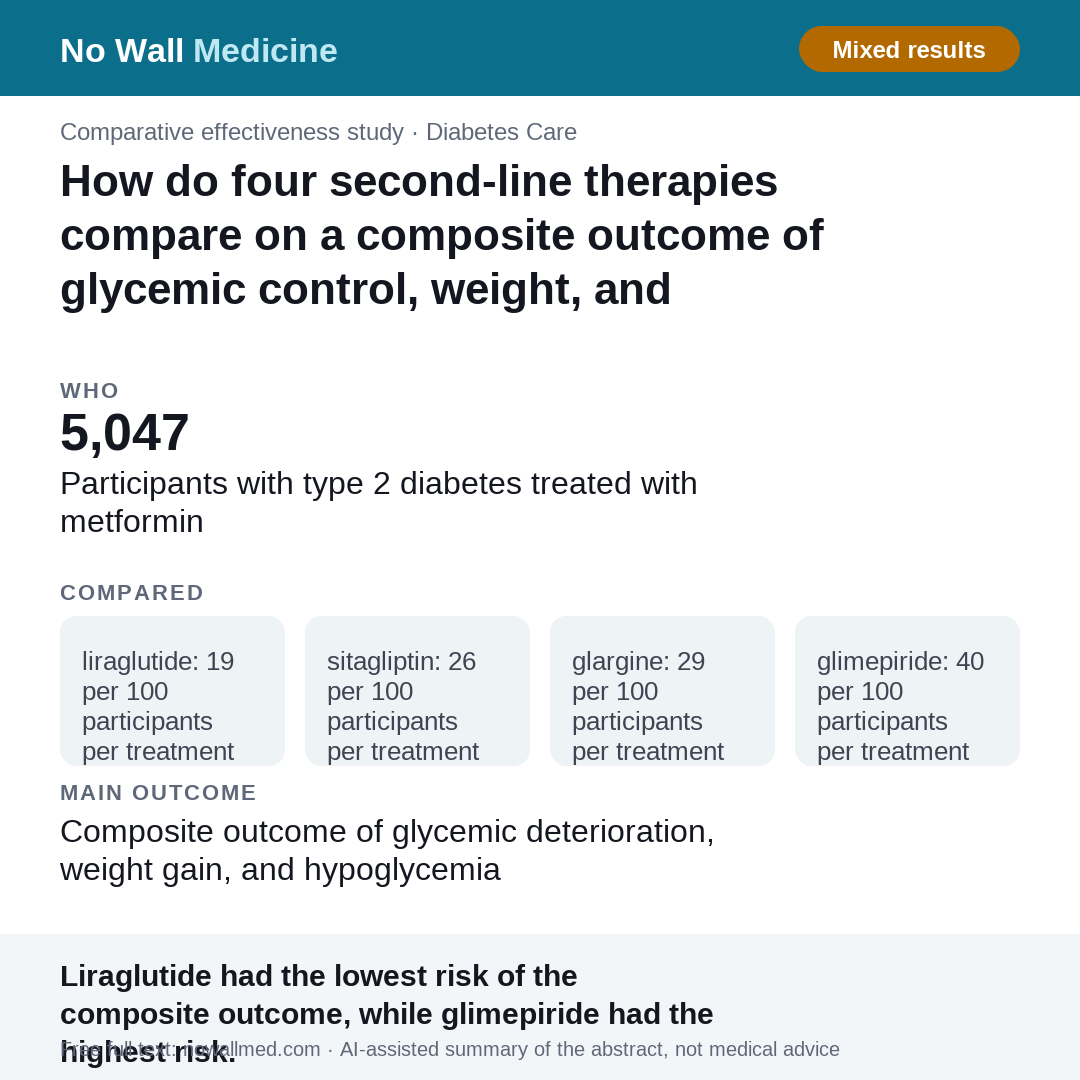
Comparative Effects of Randomized Second-line Therapy for Type 2 Diabetes on a Composite Outcome Incorporating Glycemic Control, Body Weight, and Hypoglycemia: An Analysis of the Glycemia Reduction Approaches in Diabetes: A Comparative Effectiveness Study (GRADE)
Comparative effectiveness studyMixed results
How do four second-line therapies compare on a composite outcome of glycemic control, weight, and hypoglycemia?
Who
5,047
Participants with type 2 diabetes treated with metformin
Compared
liraglutide: 19 per 100 participants per treatment year
sitagliptin: 26 per 100 participants per treatment year
glargine: 29 per 100 participants per treatment year
glimepiride: 40 per 100 participants per treatment year
Main outcome
Composite outcome of glycemic deterioration, weight gain, and hypoglycemia
Bottom line: Liraglutide had the lowest risk of the composite outcome, while glimepiride had the highest risk.
Diabetes Care · 2024-01-09Download image
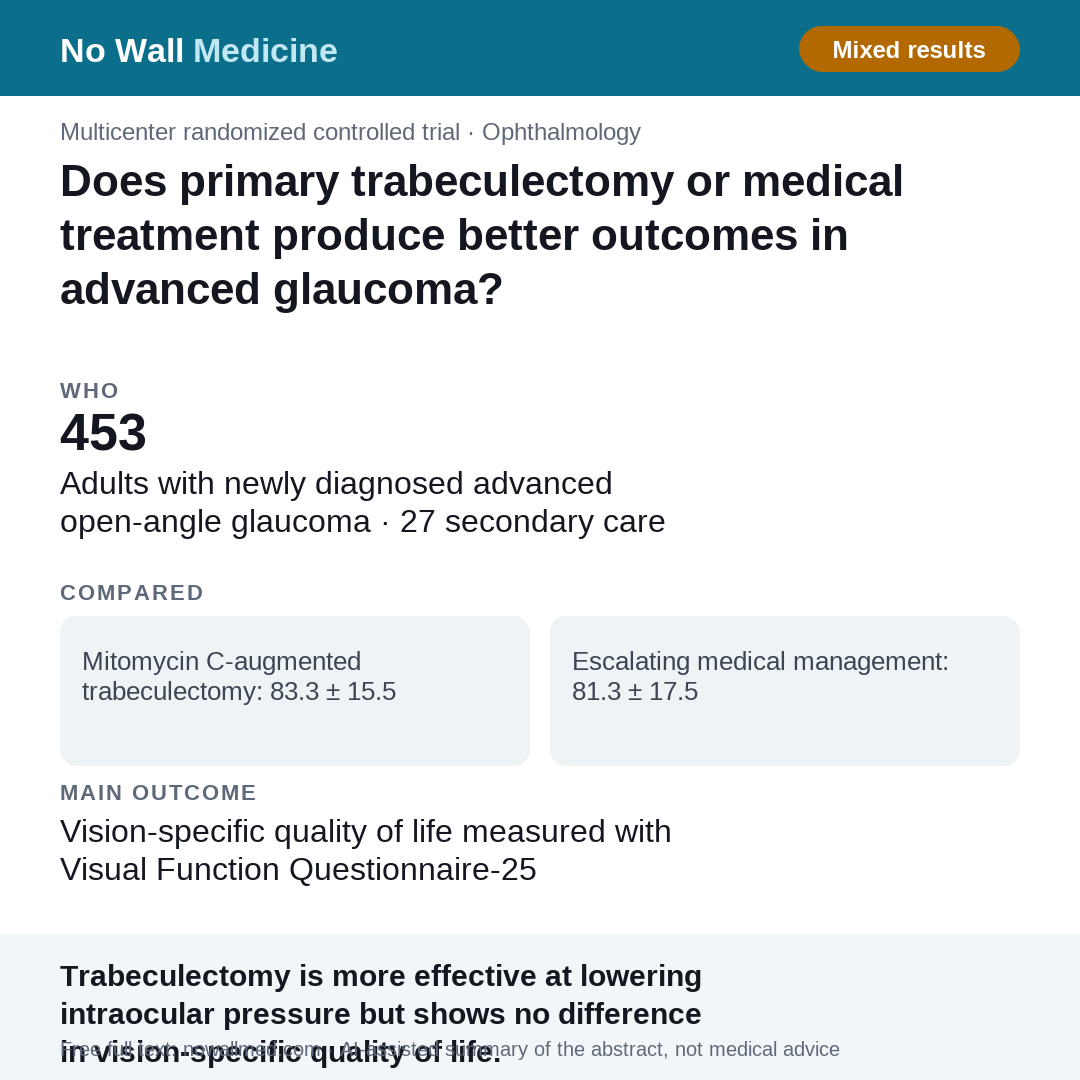
Evaluating Primary Treatment for People with Advanced Glaucoma: Five-Year Results of the Treatment of Advanced Glaucoma Study
Multicenter randomized controlled trialMixed results
Does primary trabeculectomy or medical treatment produce better outcomes in advanced glaucoma?
Who
453
Adults with newly diagnosed advanced open-angle glaucoma · 27 secondary care glaucoma departments in the United Kingdom
Compared
Mitomycin C-augmented trabeculectomy: 83.3 ± 15.5
Escalating medical management: 81.3 ± 17.5
Main outcome
Vision-specific quality of life measured with Visual Function Questionnaire-25
Result: mean difference 1.01 (95% CI -1.99 to 4.00)
Bottom line: Trabeculectomy is more effective at lowering intraocular pressure but shows no difference in vision-specific quality of life.
Ophthalmology · 2024-01-09Download image
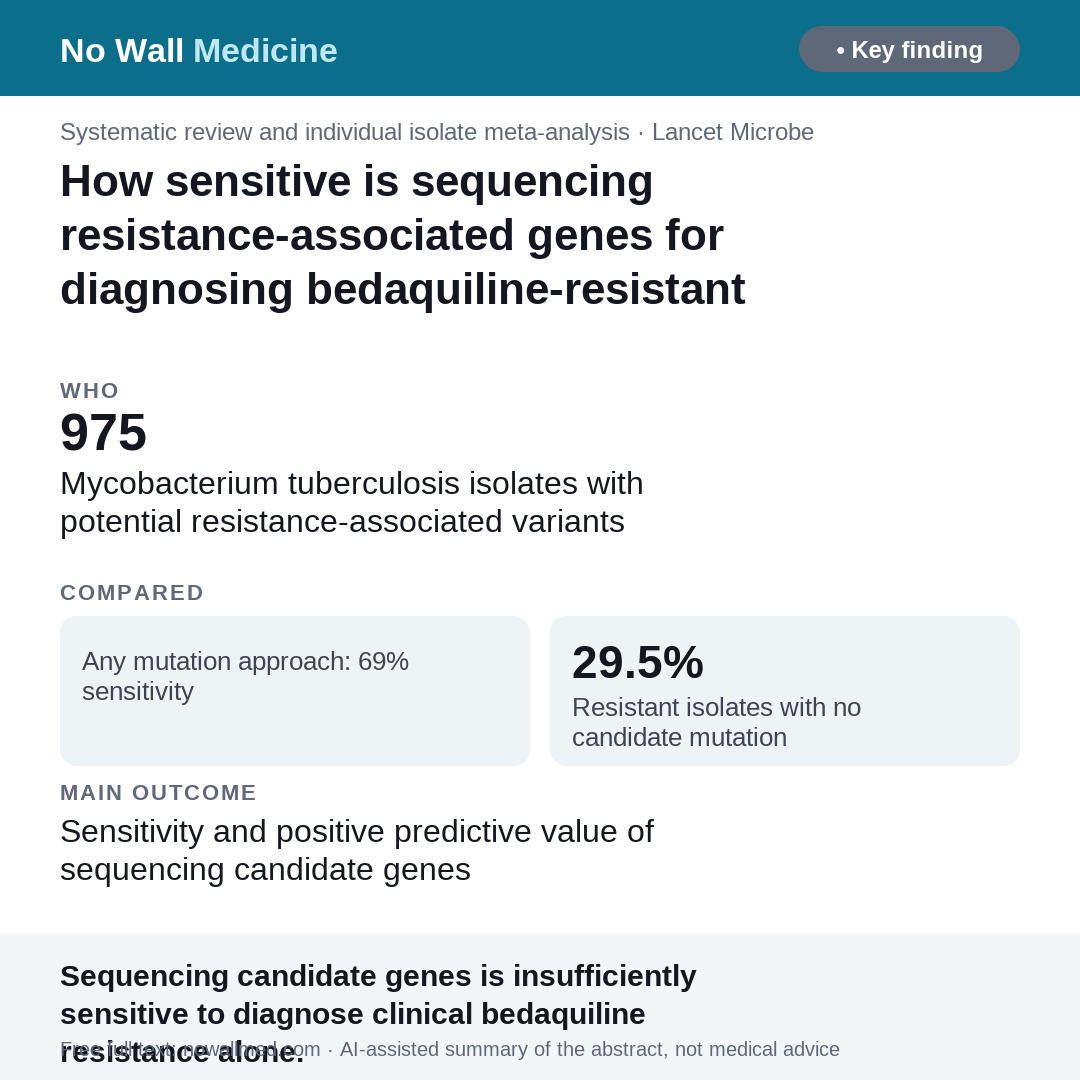
Opportunities and limitations of genomics for diagnosing bedaquiline-resistant tuberculosis: a systematic review and individual isolate meta-analysis
Systematic review and individual isolate meta-analysisKey finding
How sensitive is sequencing resistance-associated genes for diagnosing bedaquiline-resistant tuberculosis?
Who
975
Mycobacterium tuberculosis isolates with potential resistance-associated variants
Compared
Any mutation approach: 69% sensitivity
29.5%Resistant isolates with no candidate mutation
Main outcome
Sensitivity and positive predictive value of sequencing candidate genes
Result: receiver operator characteristic c statistic 0.73 (95% CI 0.70-0.76)
Bottom line: Sequencing candidate genes is insufficiently sensitive to diagnose clinical bedaquiline resistance alone.
Limitation: Selective sampling in contributing studies and only considering single genetic loci.
Funded by: Francis Crick Institute and National Institute of Allergy and Infectious Diseases
Lancet Microbe · 2024-01-09Download image
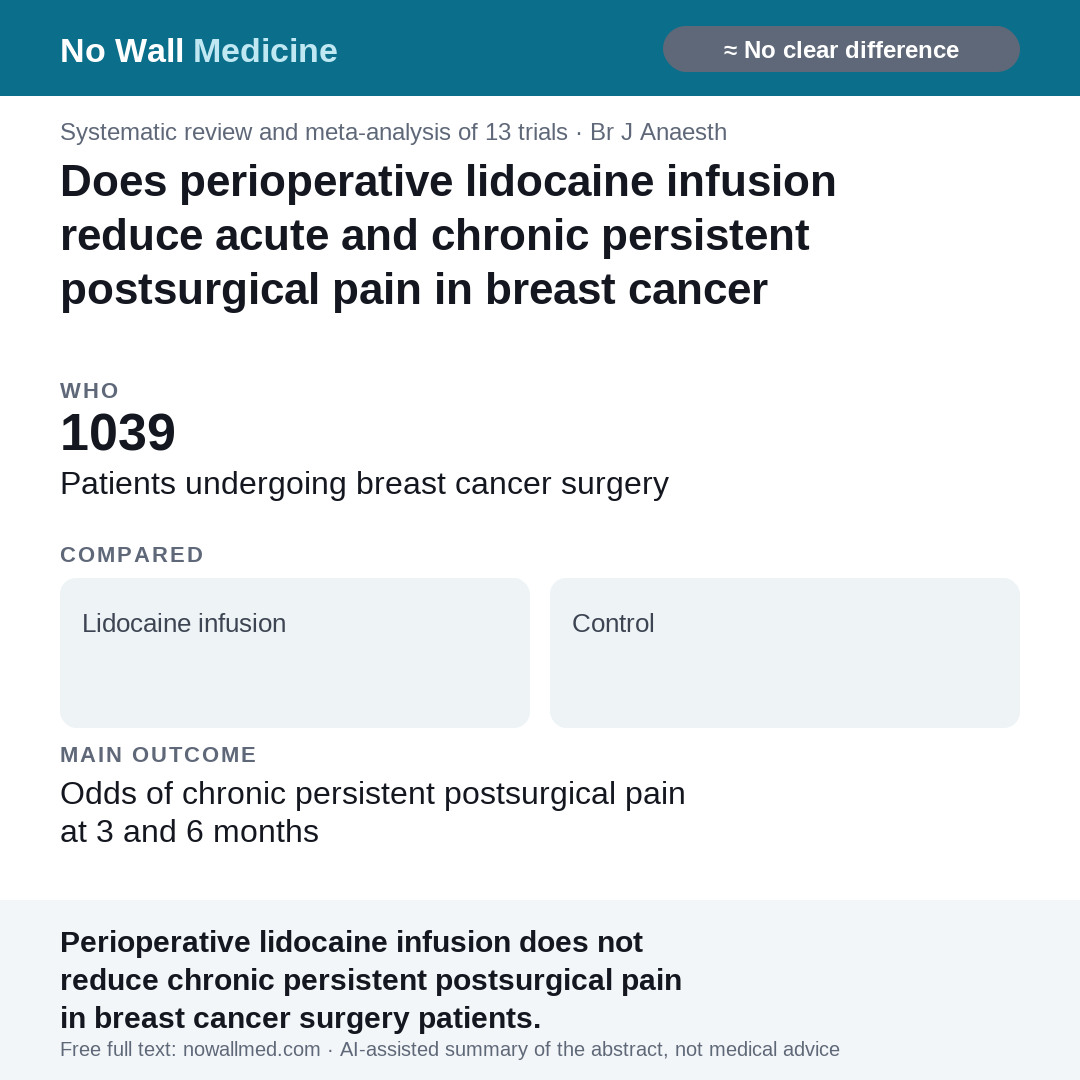
The analgesic effectiveness of perioperative lidocaine infusions for acute and chronic persistent postsurgical pain in patients undergoing breast cancer surgery: a systematic review and meta-analysis
Systematic review and meta-analysis of 13 trialsNo clear difference
Does perioperative lidocaine infusion reduce acute and chronic persistent postsurgical pain in breast cancer surgery?
Who
1039
Patients undergoing breast cancer surgery
Compared
Lidocaine infusion
Control
Main outcome
Odds of chronic persistent postsurgical pain at 3 and 6 months
Bottom line: Perioperative lidocaine infusion does not reduce chronic persistent postsurgical pain in breast cancer surgery patients.
Br J Anaesth · 2024-01-09Download image
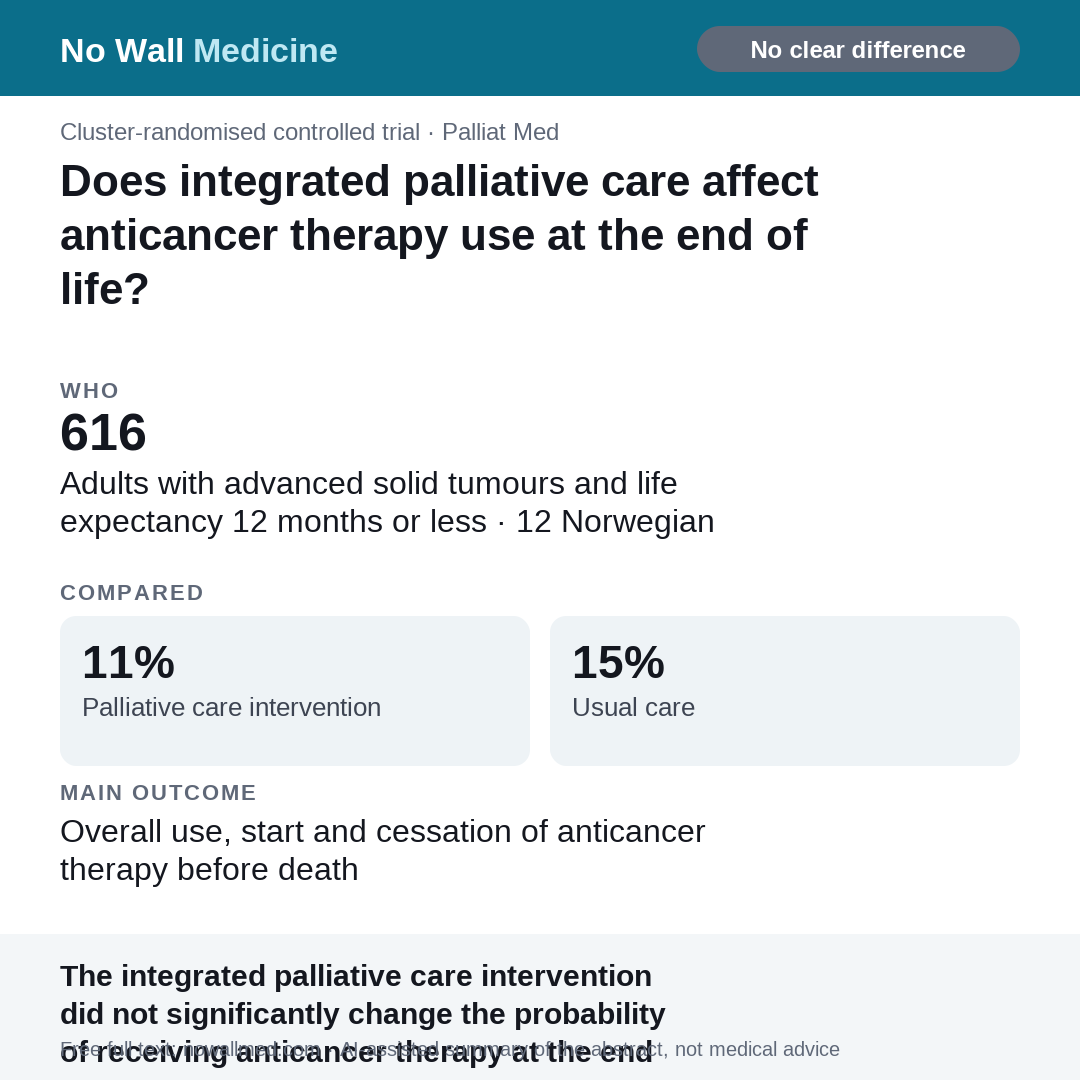
PALLiative care in ONcology (PALLiON): A cluster-randomised trial investigating the effect of palliative care on the use of anticancer treatment at the end of life
Cluster-randomised controlled trialNo clear difference
Does integrated palliative care affect anticancer therapy use at the end of life?
Who
616
Adults with advanced solid tumours and life expectancy 12 months or less · 12 Norwegian hospitals
Compared
11%Palliative care intervention (33/309)
15%Usual care (45/307)
Main outcome
Overall use, start and cessation of anticancer therapy before death
Bottom line: The integrated palliative care intervention did not significantly change the probability of receiving anticancer therapy at the end of life.
Palliat Med · 2024-01-09Download image
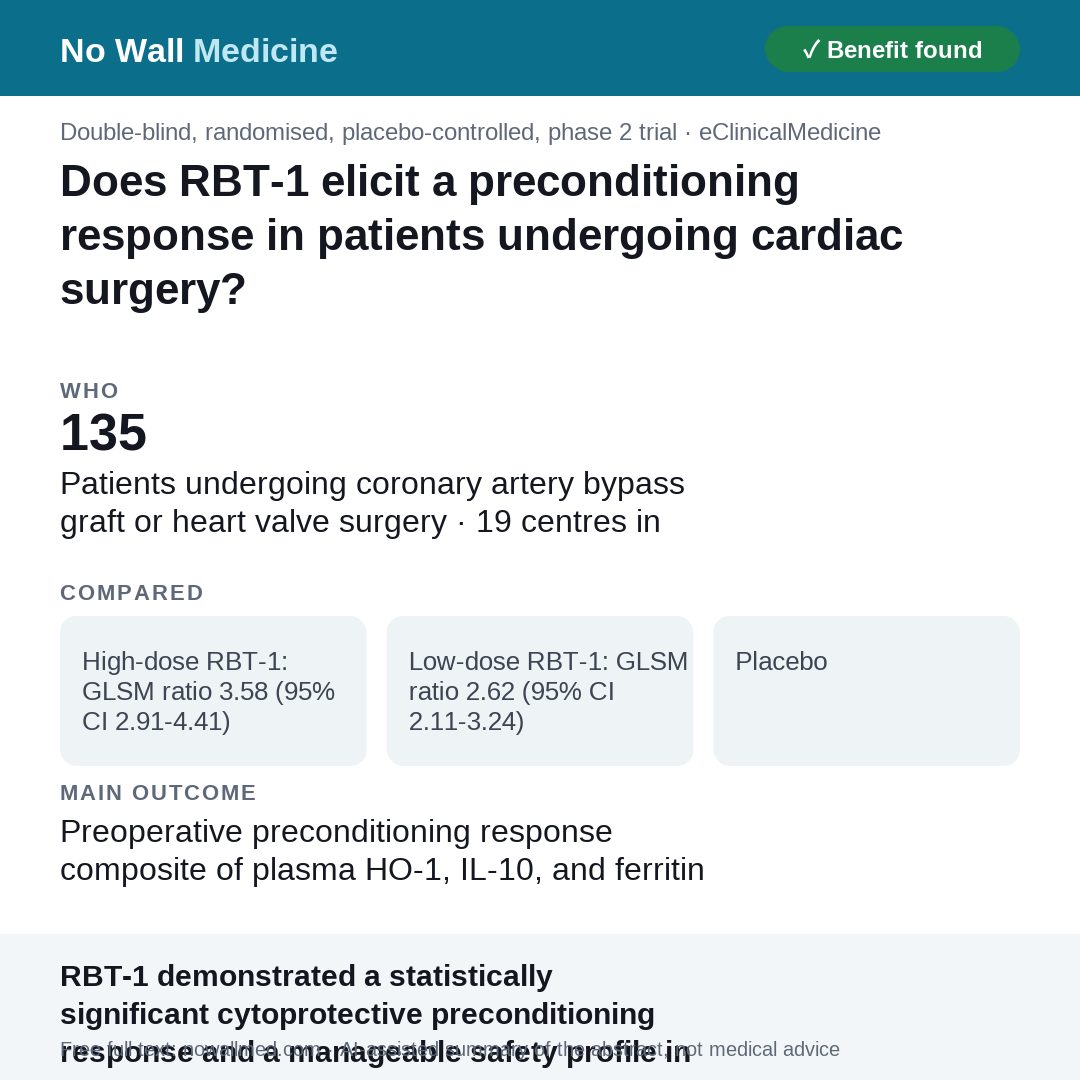
Effects of RBT-1 on preconditioning response biomarkers in patients undergoing coronary artery bypass graft or heart valve surgery: a multicentre, double-blind, randomised, placebo-controlled phase 2 trial
Double-blind, randomised, placebo-controlled, phase 2 trialBenefit found
Does RBT-1 elicit a preconditioning response in patients undergoing cardiac surgery?
Who
135
Patients undergoing coronary artery bypass graft or heart valve surgery · 19 centres in USA, Canada, and Australia
Compared
High-dose RBT-1: GLSM ratio 3.58 (95% CI 2.91-4.41)
Low-dose RBT-1: GLSM ratio 2.62 (95% CI 2.11-3.24)
Placebo
Main outcome
Preoperative preconditioning response composite of plasma HO-1, IL-10, and ferritin
Result: GLSM ratio 3.58 (95% CI 2.91-4.41) for high-dose
Bottom line: RBT-1 demonstrated a statistically significant cytoprotective preconditioning response and a manageable safety profile in cardiac surgery patients.
Funded by: Renibus Therapeutics, Inc.
eClinicalMedicine · 2024-01-08Download image
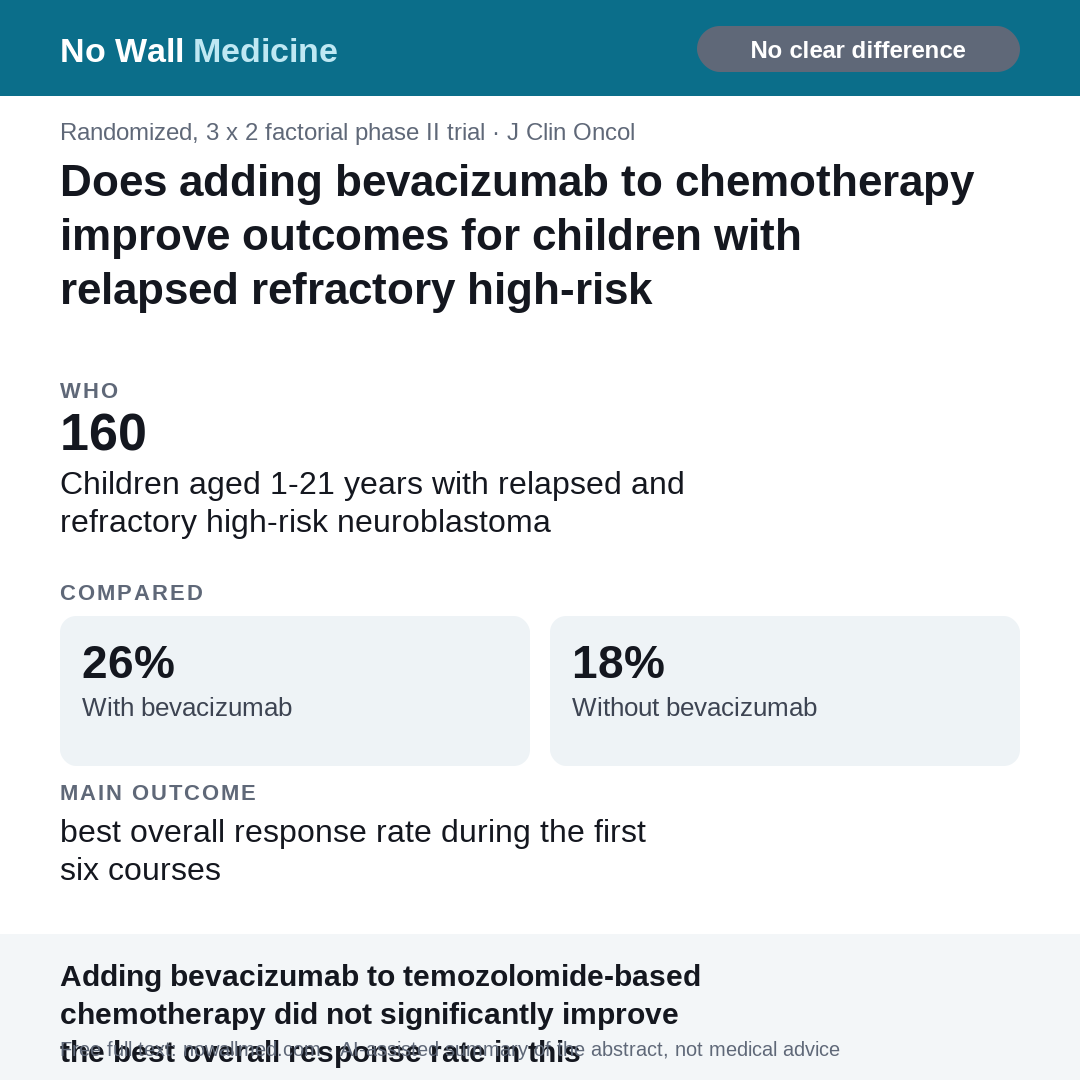
Bevacizumab, Irinotecan, or Topotecan Added to Temozolomide for Children With Relapsed and Refractory Neuroblastoma: Results of the ITCC-SIOPEN BEACON-Neuroblastoma Trial
Randomized, 3 x 2 factorial phase II trialNo clear difference
Does adding bevacizumab to chemotherapy improve outcomes for children with relapsed refractory high-risk neuroblastoma?
Who
160
Children aged 1-21 years with relapsed and refractory high-risk neuroblastoma
Compared
26%With bevacizumab (95% CI, 17 to 37)
18%Without bevacizumab (95% CI, 10 to 28)
Main outcome
best overall response rate during the first six courses
Result: risk ratio 1.52 (95% CI, 0.83 to 2.77)
Bottom line: Adding bevacizumab to temozolomide-based chemotherapy did not significantly improve the best overall response rate in this trial.
J Clin Oncol · 2024-01-08Download image
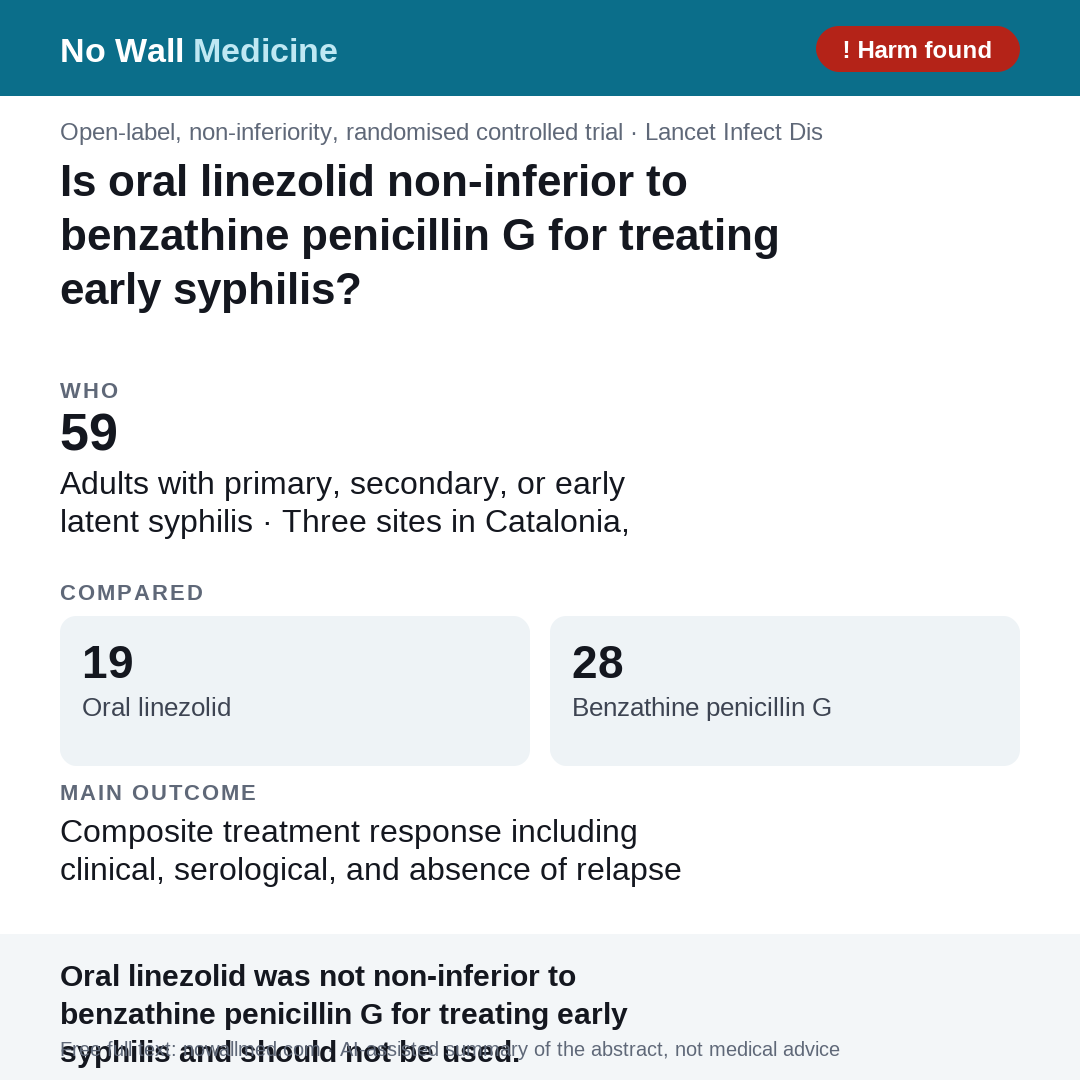
Oral linezolid compared with benzathine penicillin G for treatment of early syphilis in adults (Trep-AB Study) in Spain: a prospective, open-label, non-inferiority, randomised controlled trial
Open-label, non-inferiority, randomised controlled trialHarm found
Is oral linezolid non-inferior to benzathine penicillin G for treating early syphilis?
Who
59
Adults with primary, secondary, or early latent syphilis · Three sites in Catalonia, Spain
Compared
19Oral linezolid (70%)
28Benzathine penicillin G (100%)
Main outcome
Composite treatment response including clinical, serological, and absence of relapse
Result: treatment difference -29.6, 95% CI -50.5 to -8.8
Bottom line: Oral linezolid was not non-inferior to benzathine penicillin G for treating early syphilis and should not be used.
Funded by: European Research Council and Fondo de Investigaciones Sanitarias
Lancet Infect Dis · 2024-01-08Download image
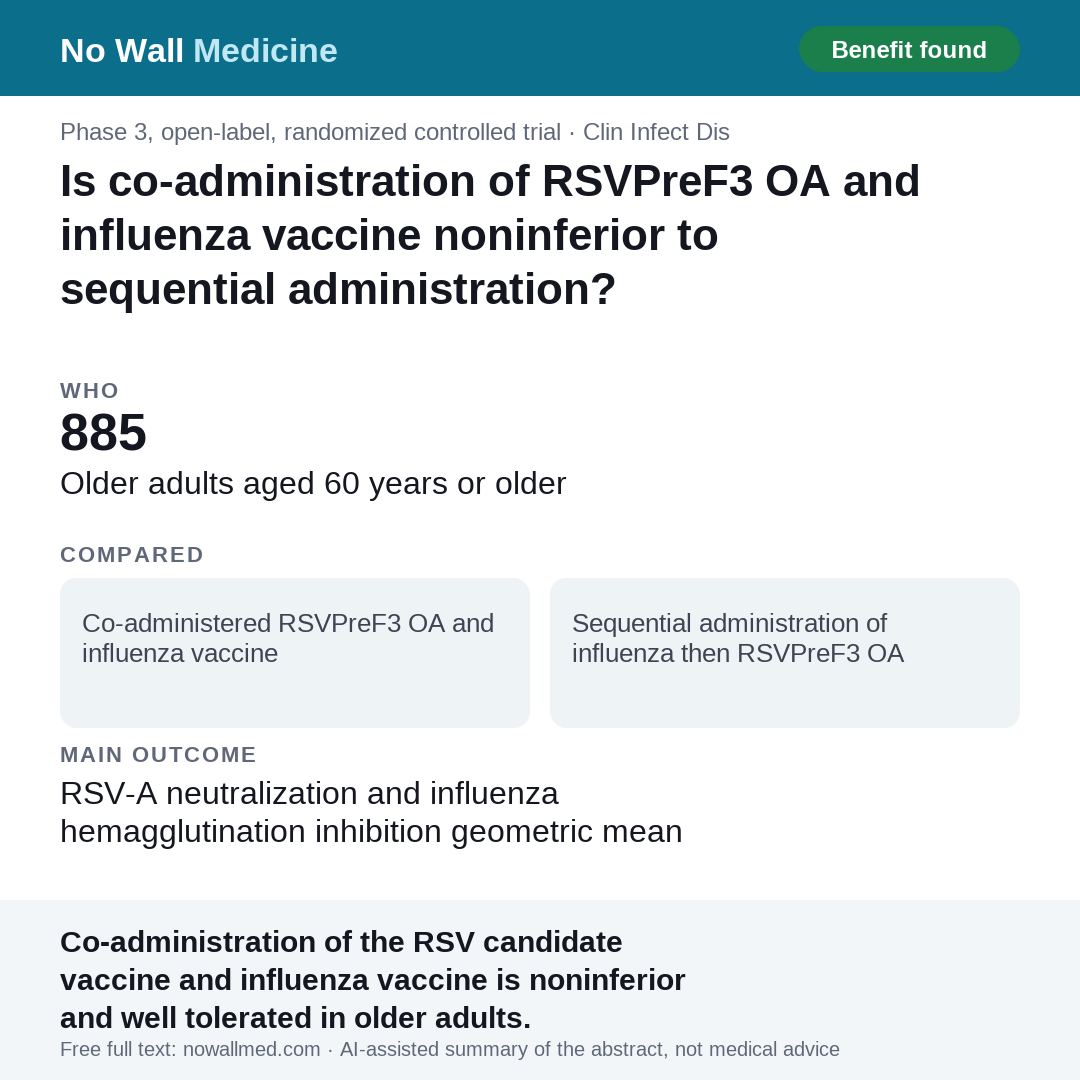
Immunogenicity, Reactogenicity, and Safety of AS01E-adjuvanted RSV Prefusion F Protein-based Candidate Vaccine (RSVPreF3 OA) When Co-administered With a Seasonal Quadrivalent Influenza Vaccine in Older Adults: Results of a Phase 3, Open-Label, Randomized Controlled Trial
Phase 3, open-label, randomized controlled trialBenefit found
Is co-administration of RSVPreF3 OA and influenza vaccine noninferior to sequential administration?
Who
885
Older adults aged 60 years or older
Compared
Co-administered RSVPreF3 OA and influenza vaccine
Sequential administration of influenza then RSVPreF3 OA
Main outcome
RSV-A neutralization and influenza hemagglutination inhibition geometric mean titer ratio
Bottom line: Co-administration of the RSV candidate vaccine and influenza vaccine is noninferior and well tolerated in older adults.
Clin Infect Dis · 2024-01-08Download image
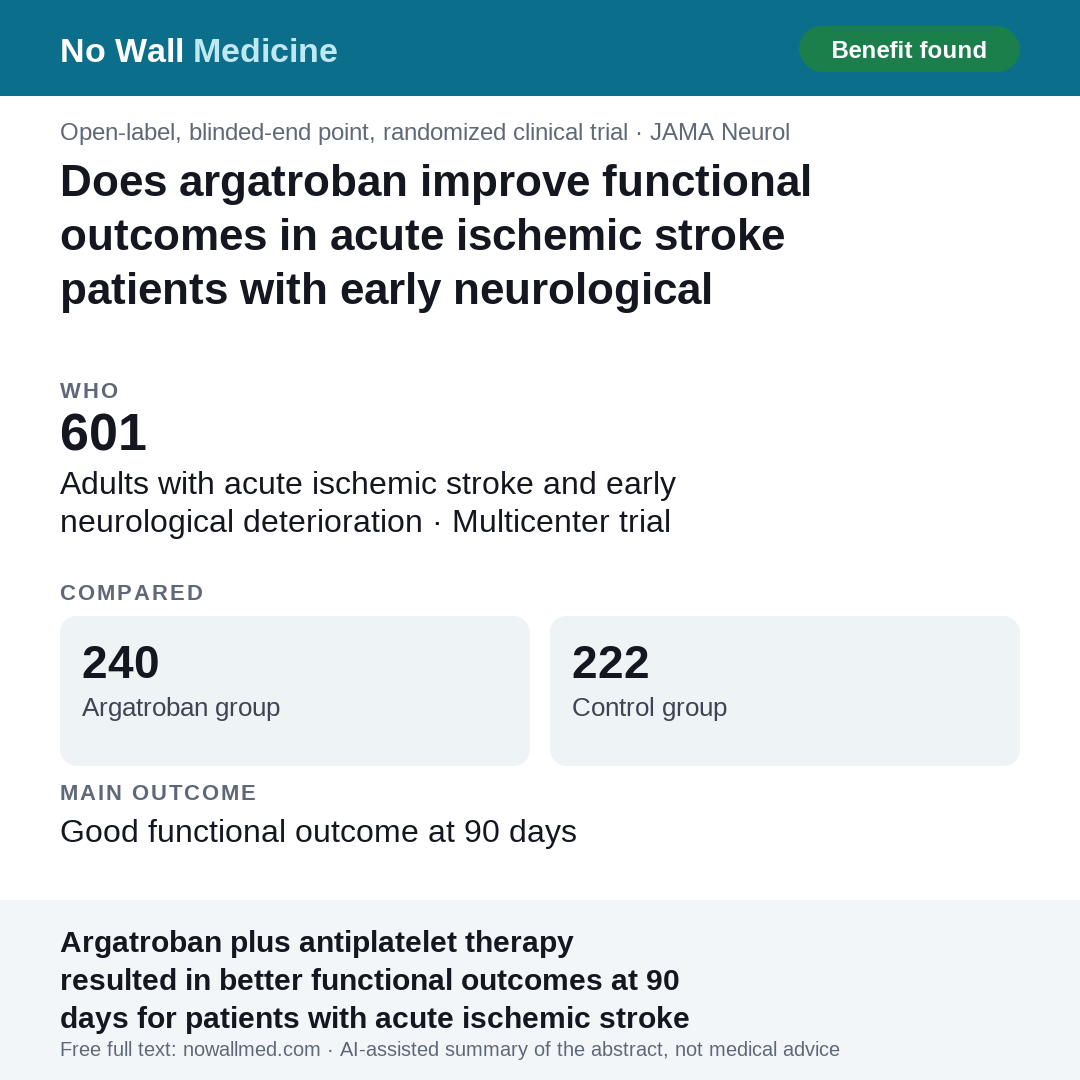
Argatroban in Patients With Acute Ischemic Stroke With Early Neurological Deterioration: A Randomized Clinical Trial
Open-label, blinded-end point, randomized clinical trialBenefit found
Does argatroban improve functional outcomes in acute ischemic stroke patients with early neurological deterioration?
Who
601
Adults with acute ischemic stroke and early neurological deterioration · Multicenter trial
Compared
240Argatroban group (80.5%)
222Control group (73.3%)
Main outcome
Good functional outcome at 90 days
Result: risk ratio, 1.10; 95% CI, 1.01-1.20
Bottom line: Argatroban plus antiplatelet therapy resulted in better functional outcomes at 90 days for patients with acute ischemic stroke and early neurological deterioration.
JAMA Neurol · 2024-01-08Download image
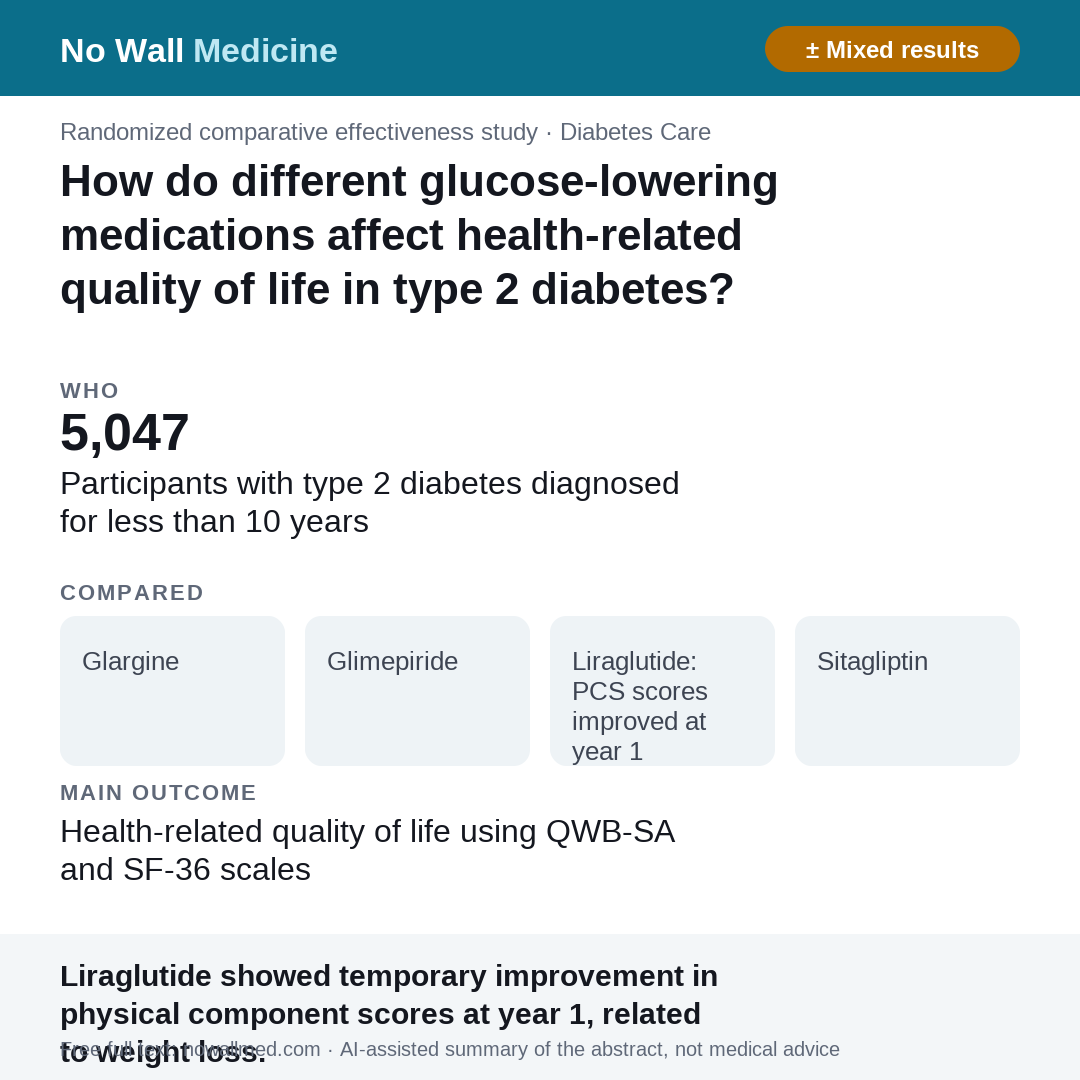
Impact of Glucose-Lowering Medications on Health-Related Quality of Life in the Glycemia Reduction Approaches in Diabetes: A Comparative Effectiveness Study (GRADE)
Randomized comparative effectiveness studyMixed results
How do different glucose-lowering medications affect health-related quality of life in type 2 diabetes?
Who
5,047
Participants with type 2 diabetes diagnosed for less than 10 years
Compared
Glargine
Glimepiride
Liraglutide: PCS scores improved at year 1
Sitagliptin
Main outcome
Health-related quality of life using QWB-SA and SF-36 scales
Bottom line: Liraglutide showed temporary improvement in physical component scores at year 1, related to weight loss.
Diabetes Care · 2024-01-08Download image
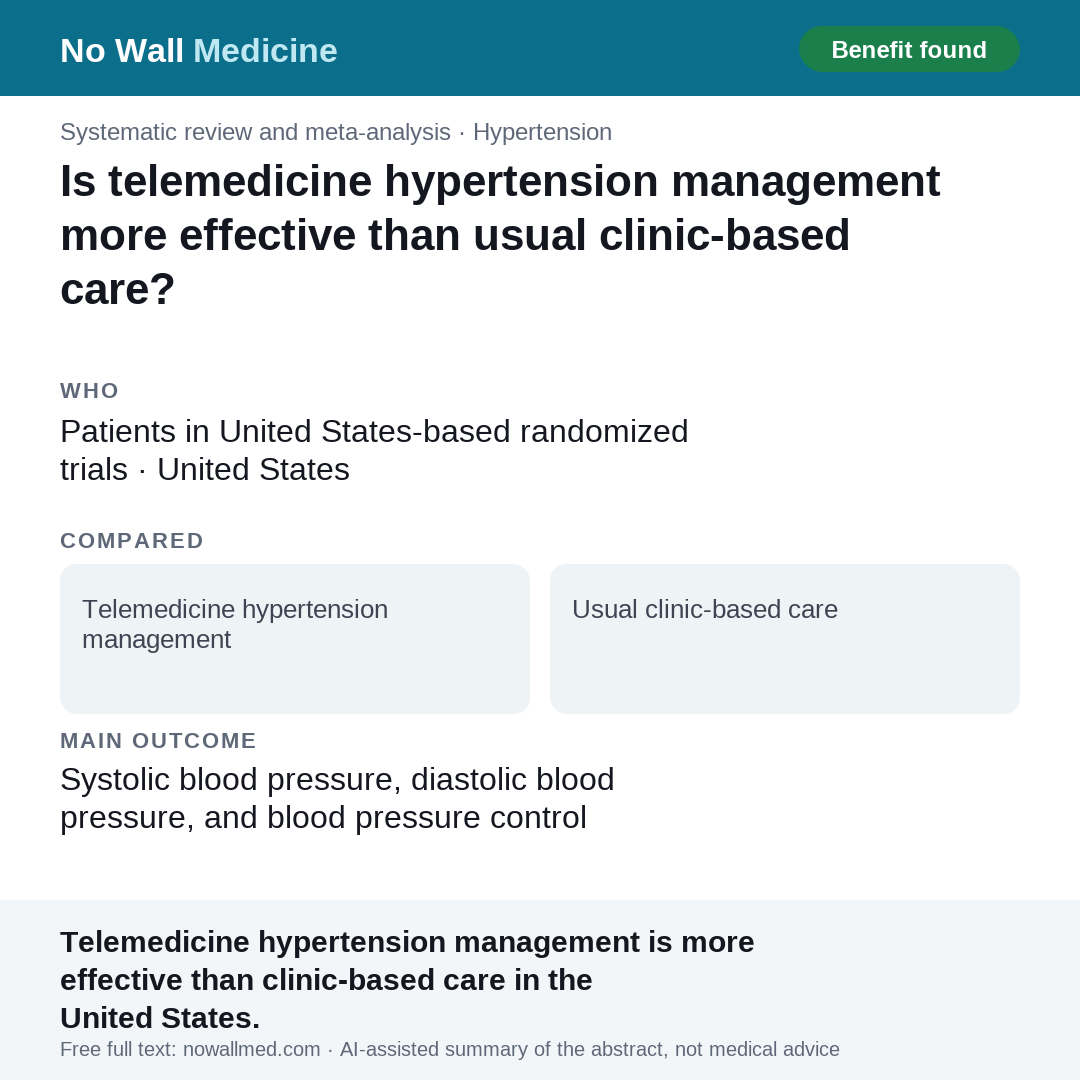
Self-Measured Blood Pressure-Guided Pharmacotherapy: A Systematic Review and Meta-Analysis of United States-Based Telemedicine Trials
Systematic review and meta-analysisBenefit found
Is telemedicine hypertension management more effective than usual clinic-based care?
Who
Patients in United States-based randomized trials · United States
Compared
Telemedicine hypertension management
Usual clinic-based care
Main outcome
Systolic blood pressure, diastolic blood pressure, and blood pressure control
Result: systolic BP difference -7.3 mm Hg (95% CI, -9.4 to -5.2), diastolic BP difference -2.7 mm Hg (-4.0 to -1.5), and BP control rate 10.1% (0.4%-19.9%)
Bottom line: Telemedicine hypertension management is more effective than clinic-based care in the United States.
Hypertension · 2024-01-08Download image
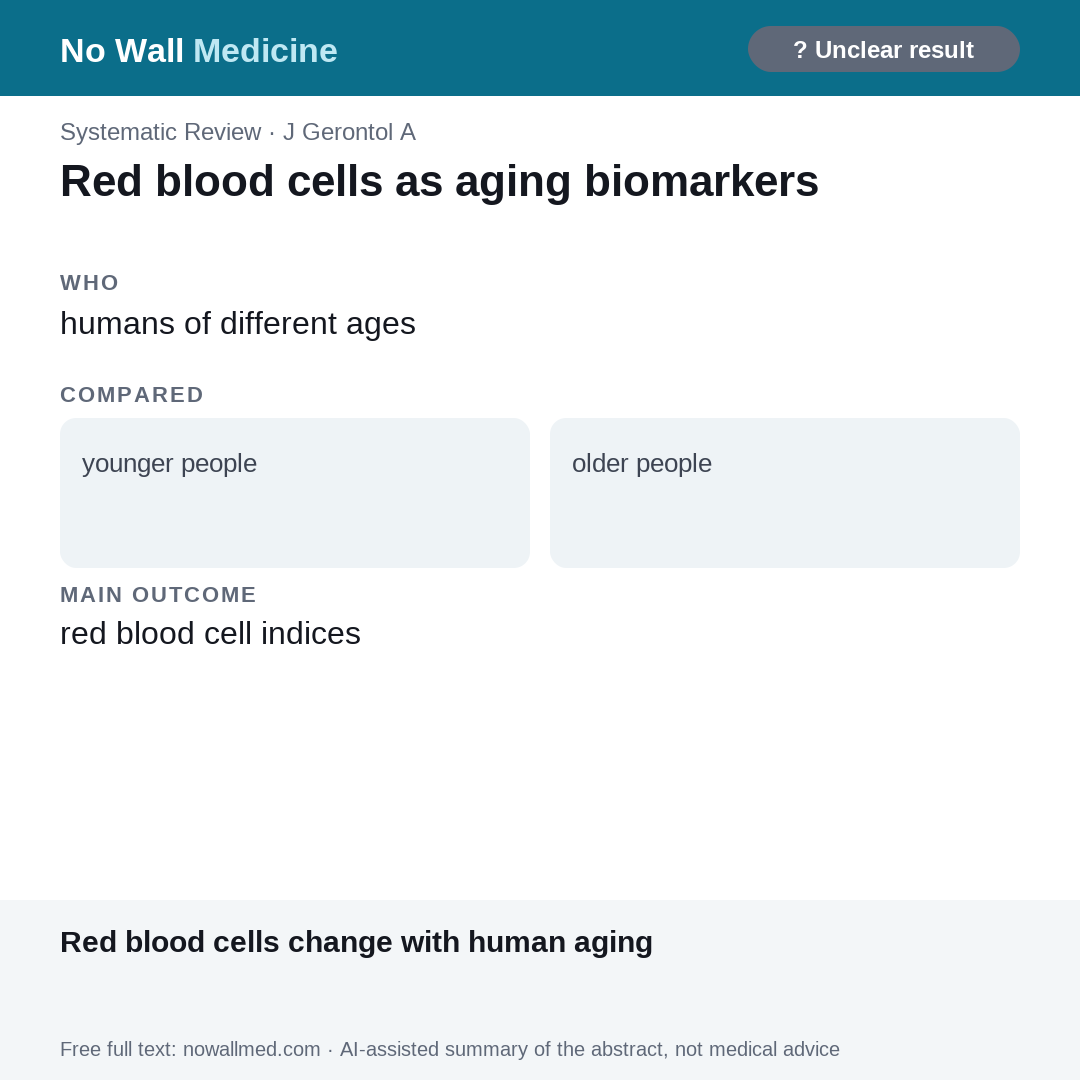
A Systematic Review of Red Blood Cells Biomarkers in Human Aging
Systematic ReviewUnclear result
Red blood cells as aging biomarkers
Who
humans of different ages
Compared
younger people
older people
Main outcome
red blood cell indices
Bottom line: Red blood cells change with human aging
J Gerontol A · 2024-01-08Download image
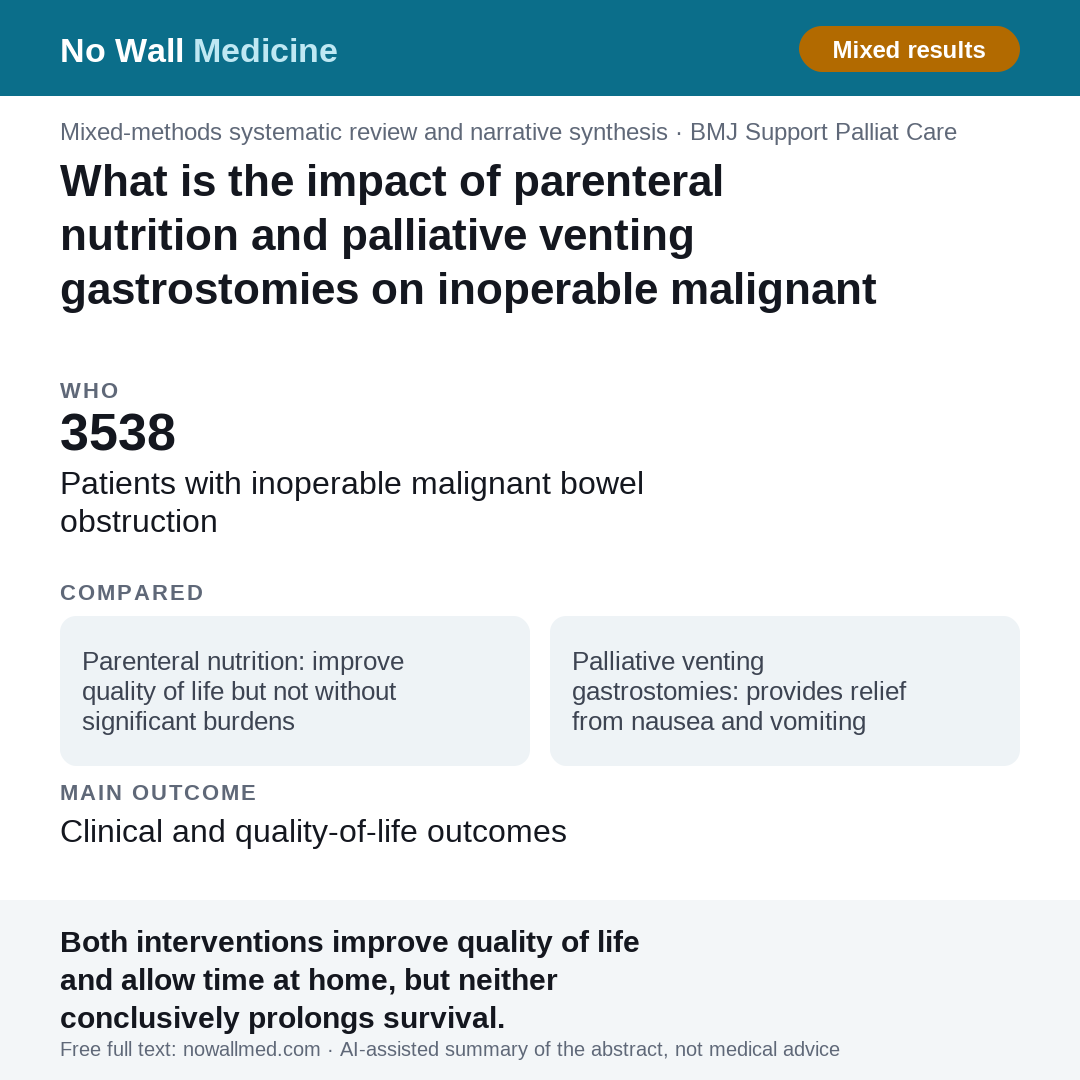
Inoperable malignant bowel obstruction: palliative interventions outcomes - mixed-methods systematic review
Mixed-methods systematic review and narrative synthesisMixed results
What is the impact of parenteral nutrition and palliative venting gastrostomies on inoperable malignant bowel obstruction?
Who
3538
Patients with inoperable malignant bowel obstruction
Compared
Parenteral nutrition: improve quality of life but not without significant burdens
Palliative venting gastrostomies: provides relief from nausea and vomiting
Main outcome
Clinical and quality-of-life outcomes
Bottom line: Both interventions improve quality of life and allow time at home, but neither conclusively prolongs survival.
Limitation: Lack of randomised controlled trials due to concerns about equipoise
BMJ Support Palliat Care · 2024-01-08Download image
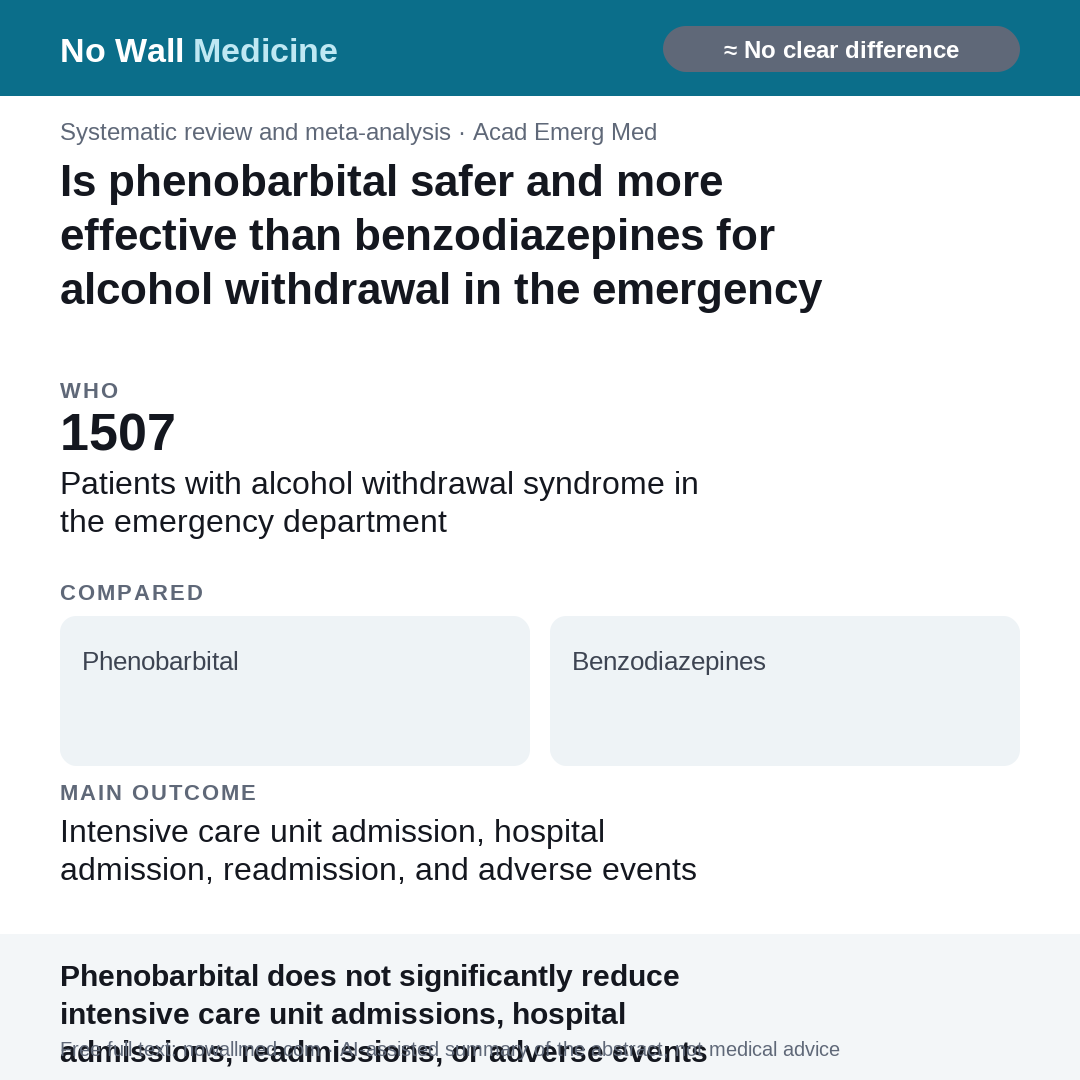
Phenobarbital treatment of alcohol withdrawal in the emergency department: A systematic review and meta-analysis
Systematic review and meta-analysisNo clear difference
Is phenobarbital safer and more effective than benzodiazepines for alcohol withdrawal in the emergency department?
Who
1507
Patients with alcohol withdrawal syndrome in the emergency department
Compared
Phenobarbital
Benzodiazepines
Main outcome
Intensive care unit admission, hospital admission, readmission, and adverse events
Result: relative risk of ICU admission 0.92 (95% CI 0.54-1.55)
Bottom line: Phenobarbital does not significantly reduce intensive care unit admissions, hospital admissions, readmissions, or adverse events compared to benzodiazepines.
Limitation: Overall methodological quality was low-moderate and risk of bias was moderate-high.
Acad Emerg Med · 2024-01-08Download image
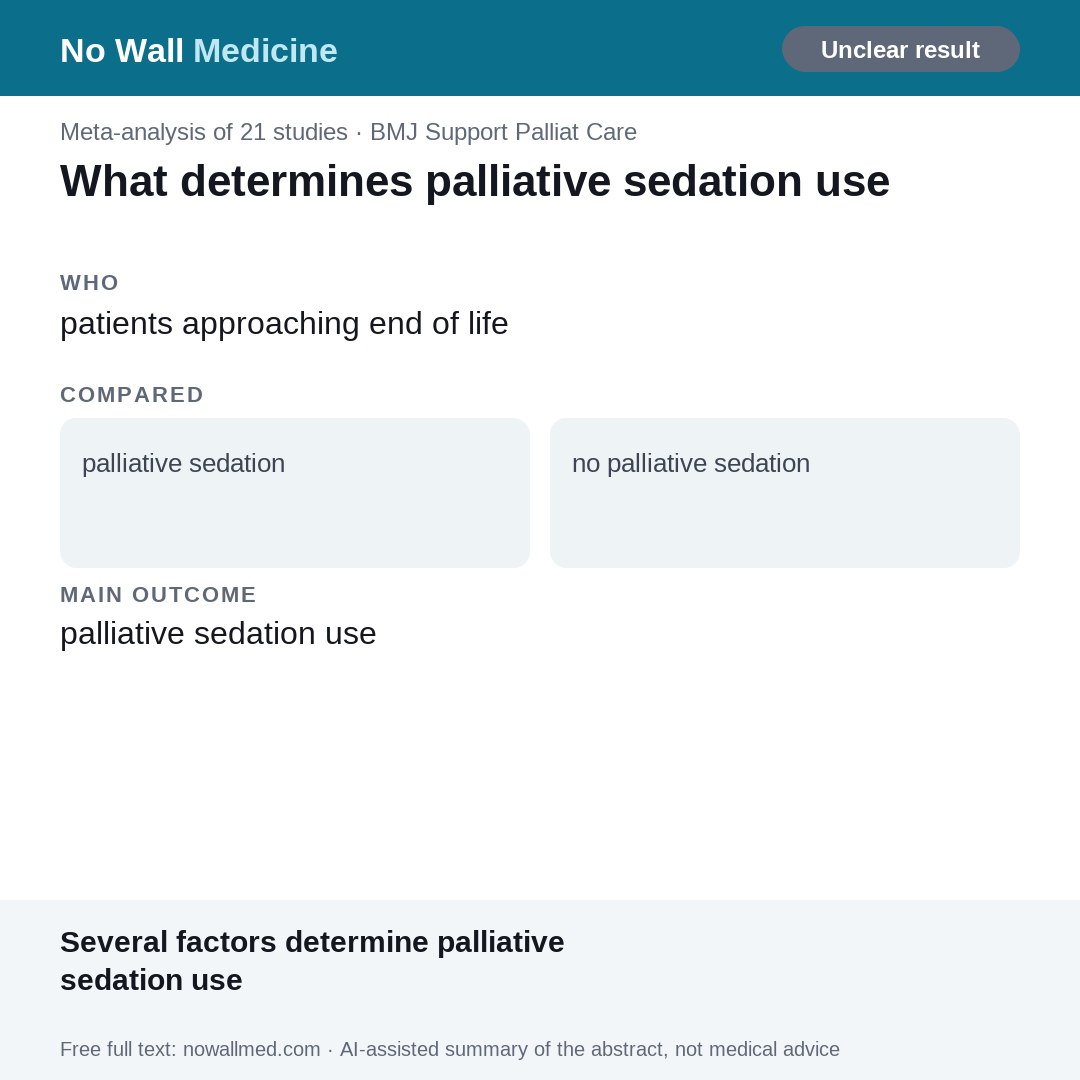
Palliative sedation determinants: systematic review and meta-analysis in palliative medicine
Meta-analysis of 21 studiesUnclear result
What determines palliative sedation use
Who
patients approaching end of life
Compared
palliative sedation
no palliative sedation
Main outcome
palliative sedation use
Bottom line: Several factors determine palliative sedation use
BMJ Support Palliat Care · 2024-01-08Download image