Visual abstracts
New randomized trials and meta-analyses from leading journals at a glance: who was studied, what was compared, and what was found. Every paper is free to read in full.
All specialtiesCardiology 1857Oncology 1600Gastroenterology & Hepatology 705Infectious Disease 1185Neurology 771Psychiatry & Mental Health 913Pulmonology 798Critical Care 540Endocrinology & Diabetes 1006Pediatrics 1107Surgery 943Orthopedics & Sports Medicine 348Neurosurgery 233Cardiothoracic & Vascular Surgery 204Plastic & Reconstructive Surgery 287Nephrology 382Rheumatology 260Hematology 404Dermatology 203Ophthalmology 222Obstetrics & Gynecology 610Public & Global Health 361Radiology & Imaging 255Anesthesiology 372Urology 319ENT (Otolaryngology) 249Emergency Medicine 209Allergy & Immunology 121Geriatrics 399Family Medicine & Primary Care 222Medical Genetics & Genomics 204Pathology & Laboratory Medicine 57Physical Medicine & Rehabilitation 327Palliative Care 168Nutrition 501Digital Health & AI 990General Medicine 144
Efficacy and effectiveness of hand hygiene-related practices used in community settings for removal of organisms from hands: a systematic review
Systematic reviewMixed results
How effective are hand hygiene materials for removing organisms from hands in community settings?
Who
177
Laboratory and field studies in community settings
Compared
Soap and water (bacteria): >2 log10 reduction (2.19 (95% CI 1.5 to 2.87))
Alcohol-based sanitisers (bacteria): >2 log10 reduction (3.13 (95% CI 2.7 to 3.56))
2.03Soap and water (viruses) (95% CI 1.45 to 2.62)
Alcohol-based sanitisers (viruses): <2 log10 reduction (1.86 (95% CI 1.37 to 2.35))
Main outcome
log10 reduction in organisms on hands
Bottom line: Alcohol-based sanitisers and soap are effective against bacteria, but efficacy against viruses varies between methods.
Limitation: Limited ability to compare efficacy due to focus on bacteria, soap, and alcohol-based sanitisers.
BMJ Glob Health · 2025-09-16Download image

Interventions to improve hand hygiene in community settings: a systematic review of theories, barriers and enablers, behaviour change techniques and hand hygiene station design features
Systematic review of 223 studiesMixed results
What improves hand hygiene in community settings
Who
247398
people in non-healthcare community settings · community settings
Compared
82%effective interventions
ineffective interventions
Main outcome
hand hygiene practice
Bottom line: Most interventions improved hand hygiene
Limitation: inconsistent intervention reporting
BMJ Glob Health · 2025-09-16Download image

Behavioural factors influencing hand hygiene practices across domestic, institutional and public community settings: a systematic review and qualitative meta-synthesis
Systematic review and qualitative meta-synthesisMixed results
What are the barriers and enablers to hand hygiene in community settings?
Who
80
People in domestic, institutional and public community settings · Africa, South-East Asia and other community settings
Compared
Barriers: Physical Opportunity, Reflective Motivation and Automatic Motivation
Enablers: Automatic Motivation and Reflective Motivation
Main outcome
Barriers and enablers to hand hygiene practices
Bottom line: Lack of resources hinders hand hygiene even when people are motivated, with habits and risk perception driving practice.
Limitation: Representativeness may be limited and evidence on alcohol-based hand rubs was limited.
BMJ Glob Health · 2025-09-16Download image

Applications of Magnetic Resonance Imaging in Upper Eyelid Anatomy and Upper Eyelid Blepharoplasty: A Systematic Review
Systematic reviewBenefit found
What are the applications of magnetic resonance imaging in upper eyelid anatomy and blepharoplasty?
Who
Clinical studies utilizing magnetic resonance imaging
Compared
Normal anatomy and functions: 7 articles
Racial anatomical disparities: 2 articles
Tumor extent: 1 article
Anatomical changes postblepharoplasty: 2 articles
Main outcome
MRI applications in upper eyelid anatomy and blepharoplasty
Bottom line: Dynamic high-resolution magnetic resonance imaging supports personalized surgical planning and objective postoperative assessments in complex upper eyelid cases.
Limitation: Protocol inconsistencies, small samples, artifacts, and cost.
Plast Reconstr Surg Glob Open · 2025-09-16Download image

Two-year outcomes after early postnatal high-dose fat-soluble enteral vitamin A supplementation in extremely low birth weight infants: follow-up of the NeoVitaA randomized controlled trial
Randomized controlled trial follow-upNo clear difference
Does early postnatal high-dose vitamin A supplementation affect respiratory and neurodevelopmental outcomes?
Who
759
Extremely low birth weight infants · Germany
Compared
High-dose vitamin A: median cognitive composite score 95
Placebo: median cognitive composite score 95
Main outcome
respiratory complications and neurodevelopmental outcome
Result: median difference 0.0 (95%-CI -5.0 to 0.0)
Bottom line: Early postnatal high-dose vitamin A supplementation did not affect pulmonary or developmental outcomes at 24 months corrected age.
Funded by: Deutsche Forschungsgemeinschaft and European Clinical Research Infrastructures Network
eClinicalMedicine · 2025-09-15Download image

Five-Year Outcomes from Deep Brain Stimulation of the Subthalamic Nucleus for Parkinson Disease
Randomized, double-blind, sham-controlled studyBenefit found
What are the long-term outcomes and safety of subthalamic nucleus deep brain stimulation for Parkinson disease?
Who
313
Patients with bilateral idiopathic Parkinson disease · 23 movement disorder centers across the US
Compared
Subthalamic nucleus deep brain stimulation: UPDRS-III improved 36% (95% CI, 33%-38%) at year 5
Sham control
Main outcome
Changes in UPDRS, dyskinesia scores, quality-of-life, and safety
Bottom line: Subthalamic nucleus deep brain stimulation provides sustained motor and daily living improvements and stable medication reduction over five years.
JAMA Neurol · 2025-09-15Download image
Home Training for Cerebellar Ataxias: A Randomized Clinical Trial
Assessor-masked randomized clinical trialBenefit found
Does home high-intensity aerobic training improve ataxia symptoms more than home balance training?
Who
62
Individuals with various cerebellar ataxia types · Single ataxia care center, large urban US city
Compared
-2.4 pointsHome high-intensity aerobic training (95% CI, -3.1 to -1.80)
-0.9 pointsHome balance training (95% CI, -1.5 to -0.2)
Main outcome
Scale for the Assessment and Rating of Ataxia score
Result: β, -1.53 (95% CI, -2.44 to -0.61)
Bottom line: Home high-intensity aerobic training improved ataxia symptoms, fatigue, and aerobic fitness more than home balance training.
JAMA Neurol · 2025-09-15Download image
Adults With Type 2 Diabetes Benefit From Automated Insulin Delivery Irrespective of C-Peptide Level
Randomized trialBenefit found
Does automated insulin delivery benefit adults with type 2 diabetes regardless of C-peptide levels?
Who
Adults with insulin-treated type 2 diabetes
Compared
Automated insulin delivery group: mean HbA1c decreased from baseline by 0.8%
Control group
Main outcome
mean HbA1c change from baseline
Bottom line: Automated insulin delivery benefits adults with type 2 diabetes regardless of high or low C-peptide levels.
Diabetes Care · 2025-09-15Download image
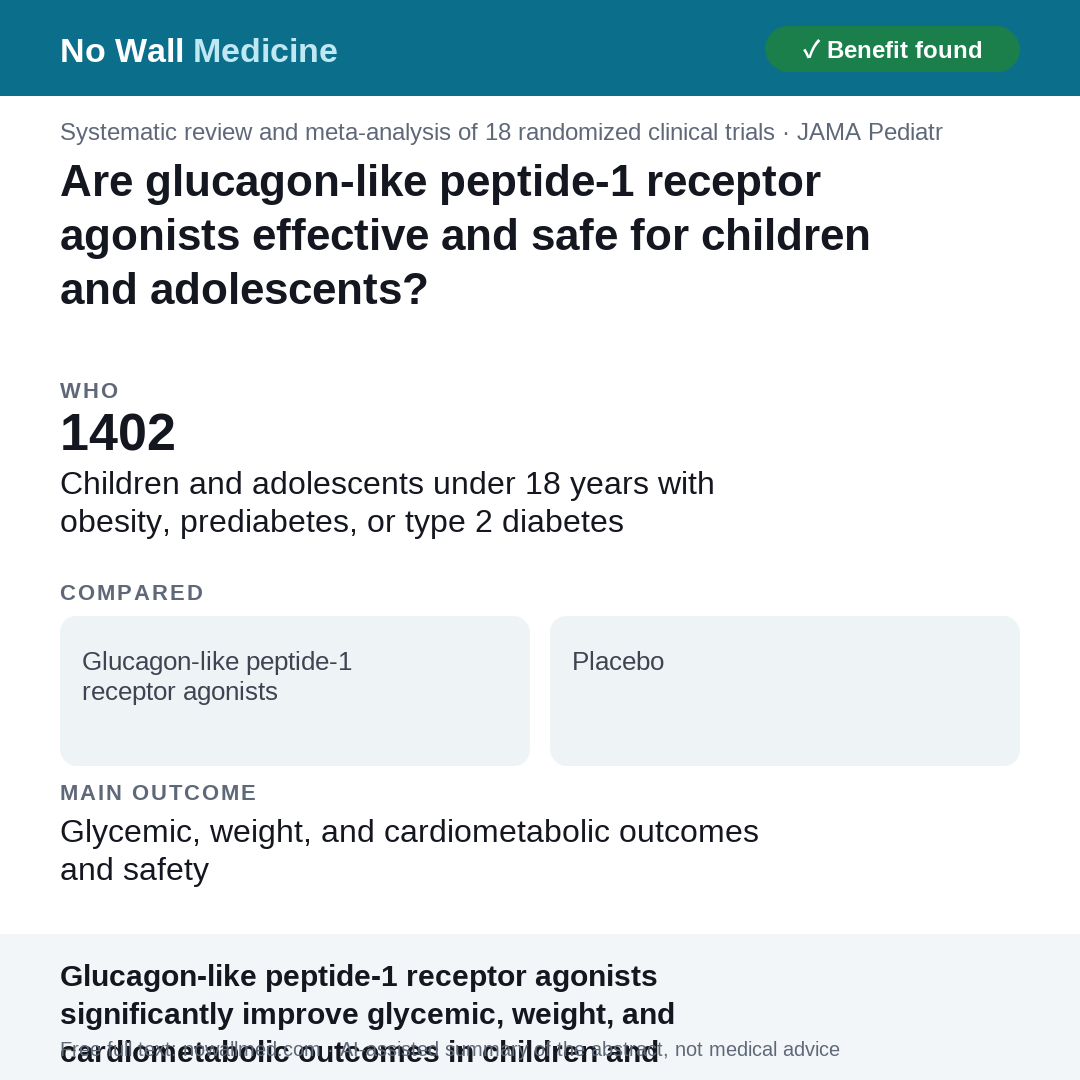
Efficacy and Safety of GLP-1 RAs in Children and Adolescents With Obesity or Type 2 Diabetes: A Systematic Review and Meta-Analysis
Systematic review and meta-analysis of 18 randomized clinical trialsBenefit found
Are glucagon-like peptide-1 receptor agonists effective and safe for children and adolescents?
Who
1402
Children and adolescents under 18 years with obesity, prediabetes, or type 2 diabetes
Compared
Glucagon-like peptide-1 receptor agonists
Placebo
Main outcome
Glycemic, weight, and cardiometabolic outcomes and safety
Result: HbA1c change -0.44% (95% CI -0.68% to -0.21%)
Bottom line: Glucagon-like peptide-1 receptor agonists significantly improve glycemic, weight, and cardiometabolic outcomes in children and adolescents.
Limitation: Available data over a relatively short follow-up
JAMA Pediatr · 2025-09-15Download image
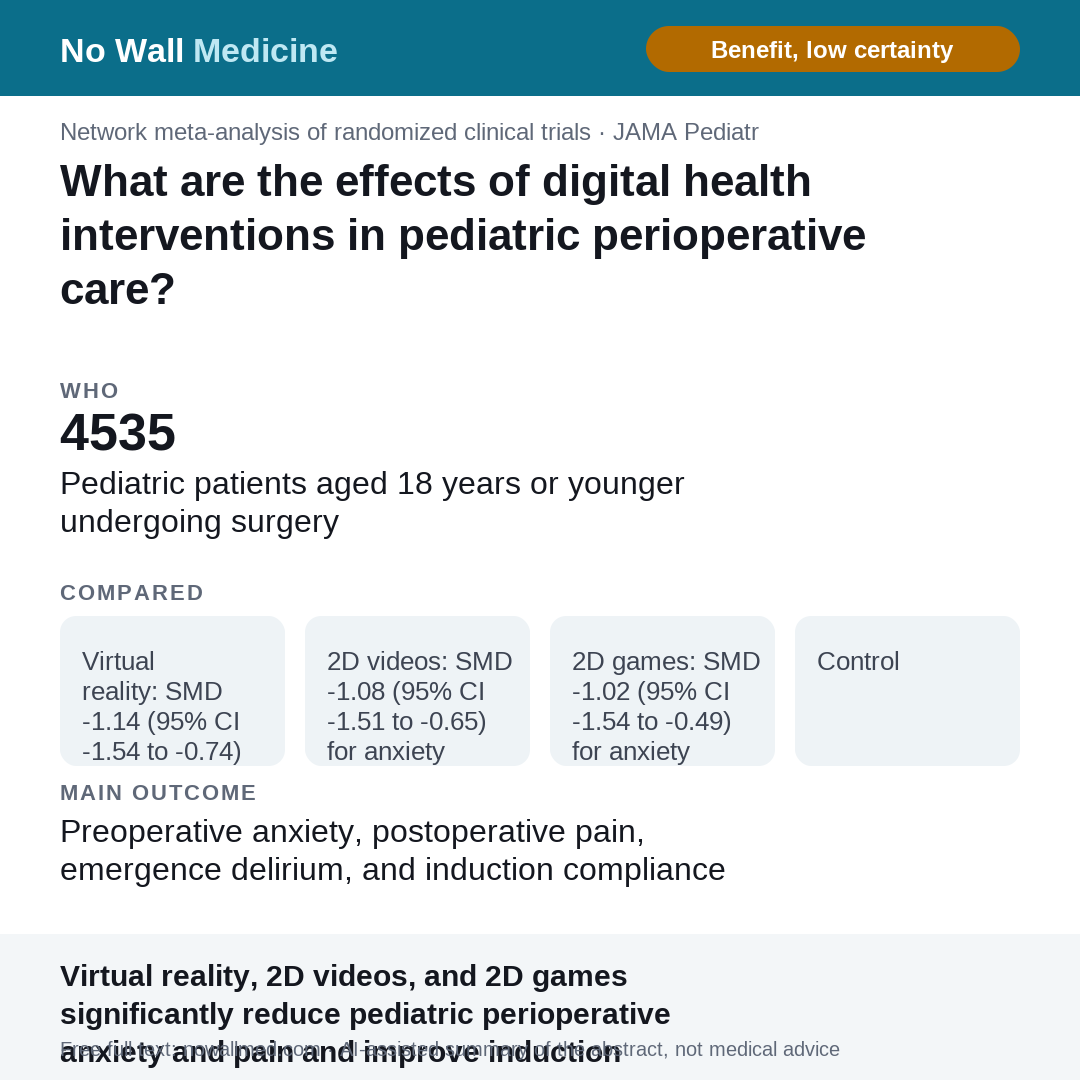
Digital Health Interventions in Pediatric Perioperative Care: A Network Meta-Analysis
Network meta-analysis of randomized clinical trialsBenefit found
What are the effects of digital health interventions in pediatric perioperative care?
Who
4535
Pediatric patients aged 18 years or younger undergoing surgery
Compared
Virtual reality: SMD -1.14 (95% CI -1.54 to -0.74) for anxiety
2D videos: SMD -1.08 (95% CI -1.51 to -0.65) for anxiety
2D games: SMD -1.02 (95% CI -1.54 to -0.49) for anxiety
Control
Main outcome
Preoperative anxiety, postoperative pain, emergence delirium, and induction compliance
Bottom line: Virtual reality, 2D videos, and 2D games significantly reduce pediatric perioperative anxiety and pain and improve induction compliance.
JAMA Pediatr · 2025-09-15Download image
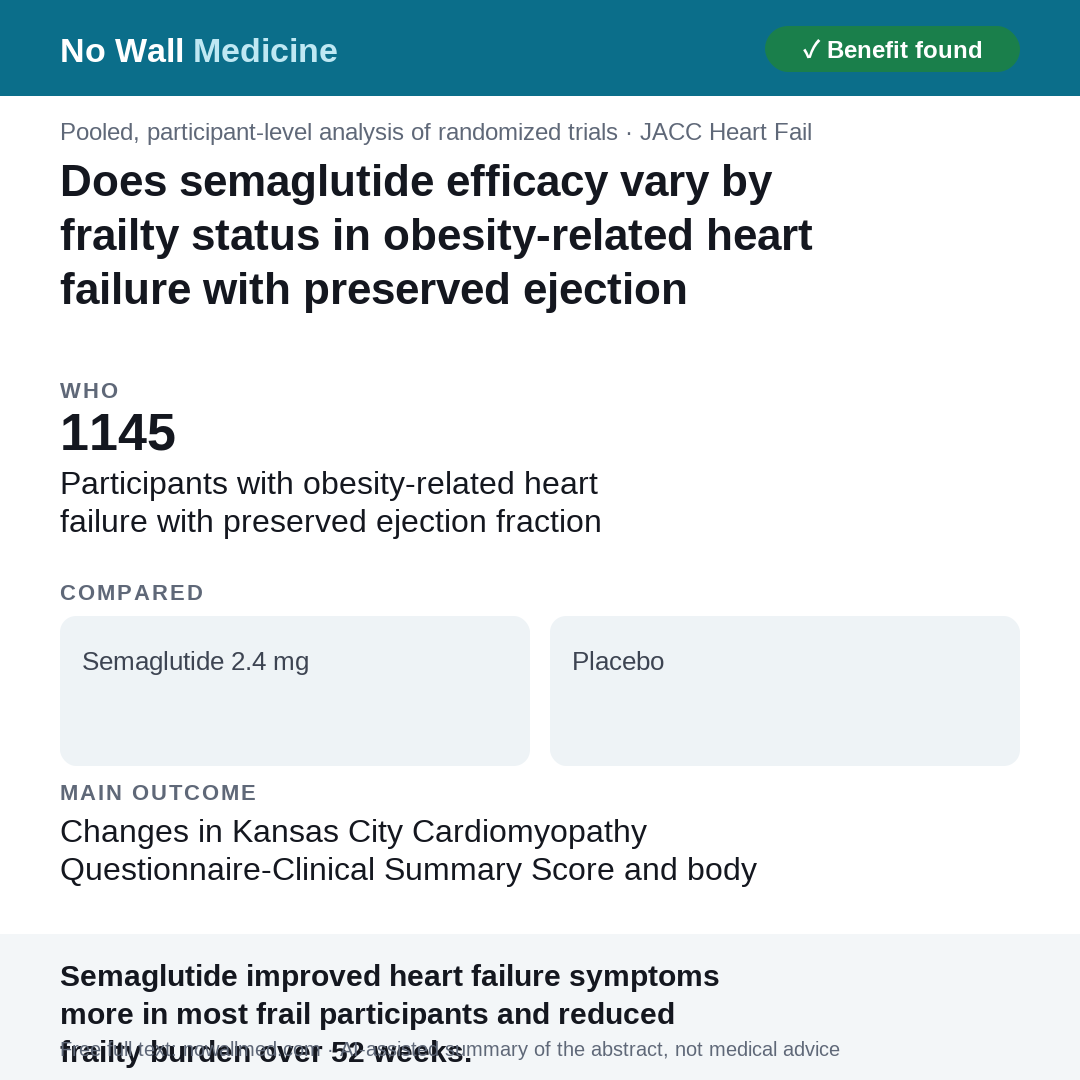
Frailty and Effects of Semaglutide in Obesity-Related HFpEF: Findings From the STEP-HFpEF Program
Pooled, participant-level analysis of randomized trialsBenefit found
Does semaglutide efficacy vary by frailty status in obesity-related heart failure with preserved ejection fraction?
Who
1145
Participants with obesity-related heart failure with preserved ejection fraction
Compared
Semaglutide 2.4 mg
Placebo
Main outcome
Changes in Kansas City Cardiomyopathy Questionnaire-Clinical Summary Score and body weight
Result: most frail mean difference: 11.0 (95% CI 8.1-13.8)
Bottom line: Semaglutide improved heart failure symptoms more in most frail participants and reduced frailty burden over 52 weeks.
JACC Heart Fail · 2025-09-15Download image
Charting the evolution of artificial intelligence mental health chatbots from rule-based systems to large language models: a systematic review
Systematic review of 160 studiesUnclear result
How have artificial intelligence mental health chatbots evolved and how are they evaluated?
Who
160
Artificial intelligence mental health chatbots
Compared
All studies: 47% focused on clinical efficacy testing
Large language model studies: 16% underwent clinical efficacy testing
Main outcome
Chatbot architecture evolution and evaluation rigor
Bottom line: Large language model chatbots are increasing but lack sufficient clinical efficacy testing and robust validation.
Limitation: Discrepancies exist between marketed claims and actual artificial intelligence architectures used.
World Psychiatry · 2025-09-15Download image

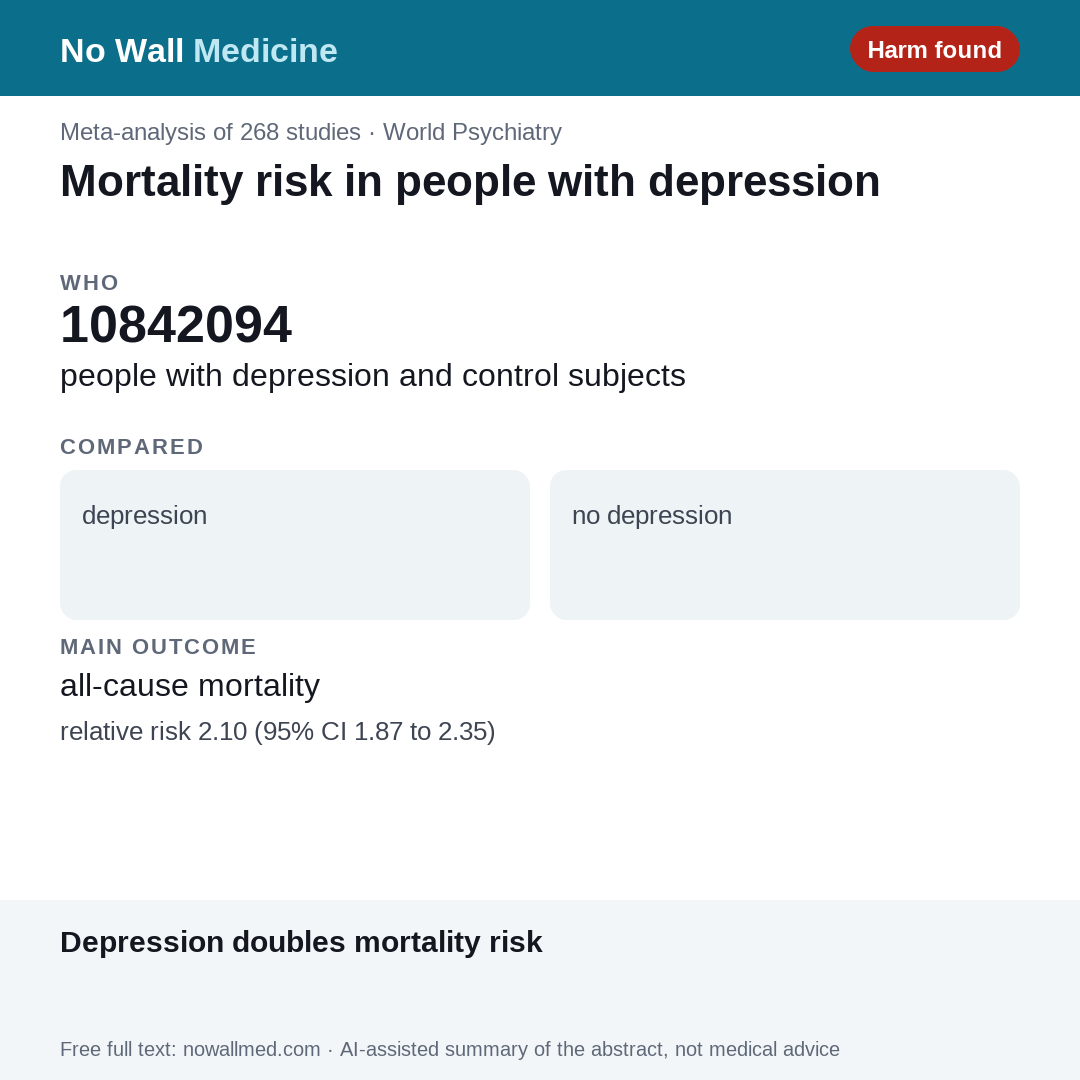
All-cause and cause-specific mortality in people with depression: a large-scale systematic review and meta-analysis of relative risk and aggravating or attenuating factors, including antidepressant treatment
Meta-analysis of 268 studiesHarm found
Mortality risk in people with depression
Who
10842094
people with depression and control subjects
Compared
depression
no depression
Main outcome
all-cause mortality
Result: relative risk 2.10 (95% CI 1.87 to 2.35)
Bottom line: Depression doubles mortality risk
World Psychiatry · 2025-09-15Download image
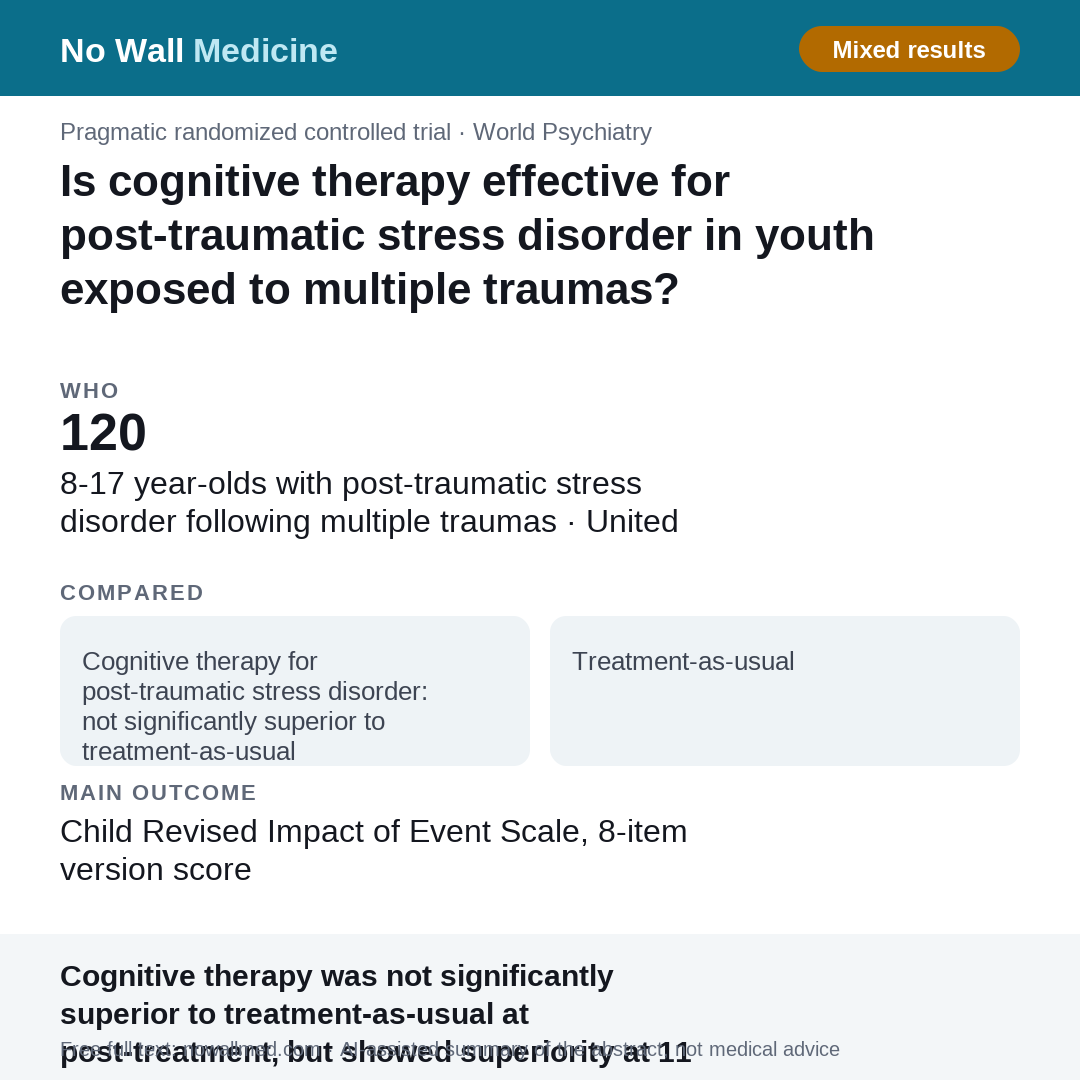
A pragmatic randomized controlled trial of cognitive therapy for post-traumatic stress disorder in children and adolescents exposed to multiple traumatic stressors: the DECRYPT trial
Pragmatic randomized controlled trialMixed results
Is cognitive therapy effective for post-traumatic stress disorder in youth exposed to multiple traumas?
Who
120
8-17 year-olds with post-traumatic stress disorder following multiple traumas · United Kingdom mental health services
Compared
Cognitive therapy for post-traumatic stress disorder: not significantly superior to treatment-as-usual
Treatment-as-usual
Main outcome
Child Revised Impact of Event Scale, 8-item version score
Result: adjusted difference: -3.80, 95% CI: -7.56 to -0.06
Bottom line: Cognitive therapy was not significantly superior to treatment-as-usual at post-treatment, but showed superiority at 11 months.
World Psychiatry · 2025-09-15Download image
Brain structure and function in adult survivors of developmental trauma with psychosis: A systematic review
Systematic reviewMixed results
Brain structure in trauma survivors with psychosis
Who
1761
adult survivors of developmental trauma with psychosis
Compared
trauma survivors
healthy controls
Main outcome
brain structure and function
Bottom line: Trauma associated with brain differences
Psychol Med · 2025-09-15Download image

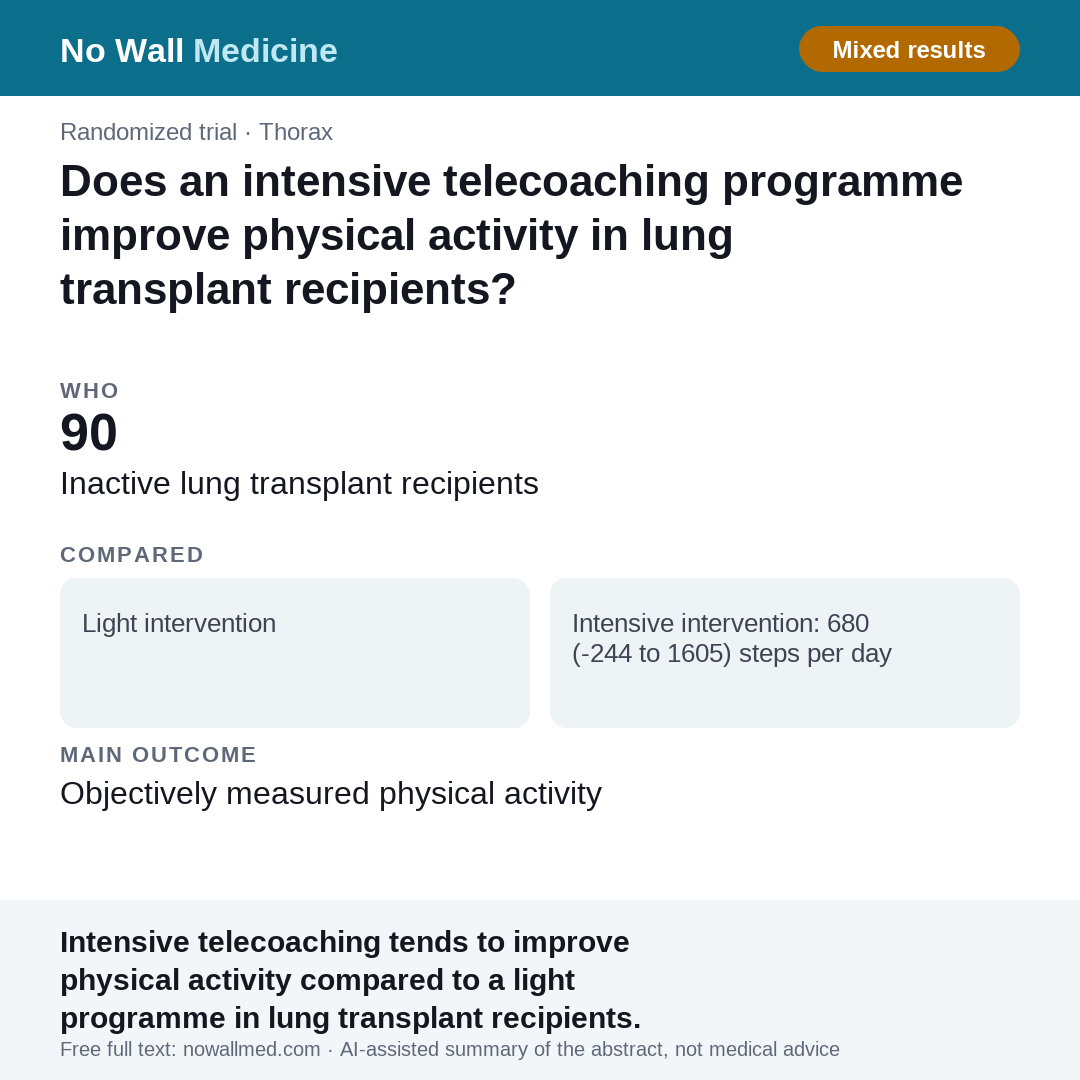
1-year physical activity coaching programme in lung transplant recipients: an RCT
Randomized trialMixed results
Does an intensive telecoaching programme improve physical activity in lung transplant recipients?
Who
90
Inactive lung transplant recipients
Compared
Light intervention
Intensive intervention: 680 (-244 to 1605) steps per day
Main outcome
Objectively measured physical activity
Bottom line: Intensive telecoaching tends to improve physical activity compared to a light programme in lung transplant recipients.
Thorax · 2025-09-15Download image
Systematic review and meta-analysis of the efficacy of biologic and targeted synthetic therapies in sarcoidosis
Systematic review and meta-analysisBenefit found
What is the efficacy of biologic and targeted synthetic therapies in sarcoidosis?
Who
Patients with multisystem sarcoidosis
Compared
Biologic and targeted synthetic therapies: mean change 4.79% (95% CI 1.22 to 8.35)
5.70%Anti-TNF trials (95% CI 1.61 to 9.78)
Main outcome
percent-predicted forced vital capacity mean change from baseline
Result: mean change 4.79% (95% CI 1.22 to 8.35)
Bottom line: Biologic and targeted synthetic therapies show modest improvement in lung function for sarcoidosis patients.
Limitation: Small sample sizes and substantial heterogeneity in study design and population.
Thorax · 2025-09-15Download image

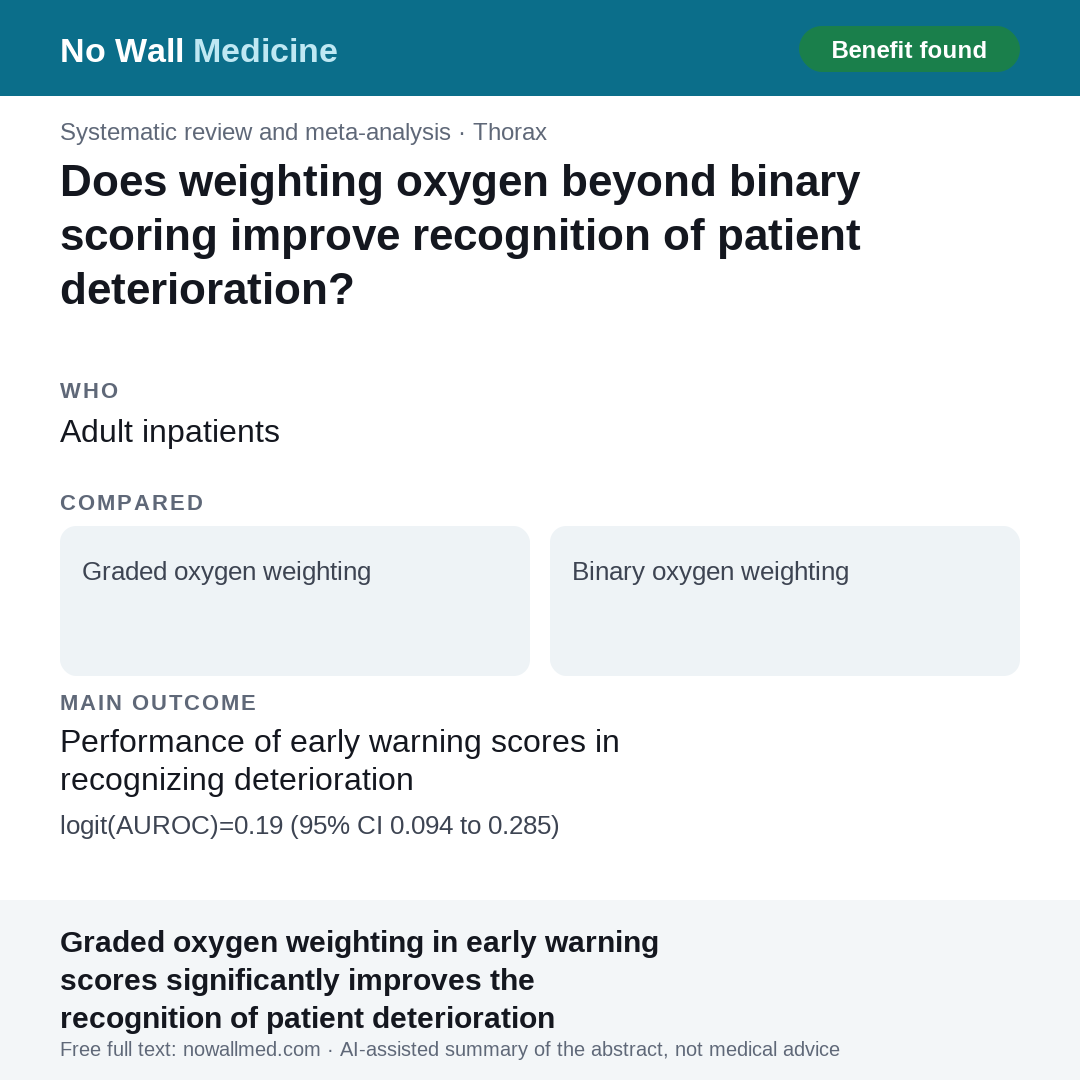
Oxygen therapy in early warning scores: a systematic review and meta-analysis
Systematic review and meta-analysisBenefit found
Does weighting oxygen beyond binary scoring improve recognition of patient deterioration?
Who
Adult inpatients
Compared
Graded oxygen weighting
Binary oxygen weighting
Main outcome
Performance of early warning scores in recognizing deterioration
Result: logit(AUROC)=0.19 (95% CI 0.094 to 0.285)
Bottom line: Graded oxygen weighting in early warning scores significantly improves the recognition of patient deterioration compared to binary scoring.
Limitation: 15 of 16 models were at high risk of bias.
Thorax · 2025-09-15Download image
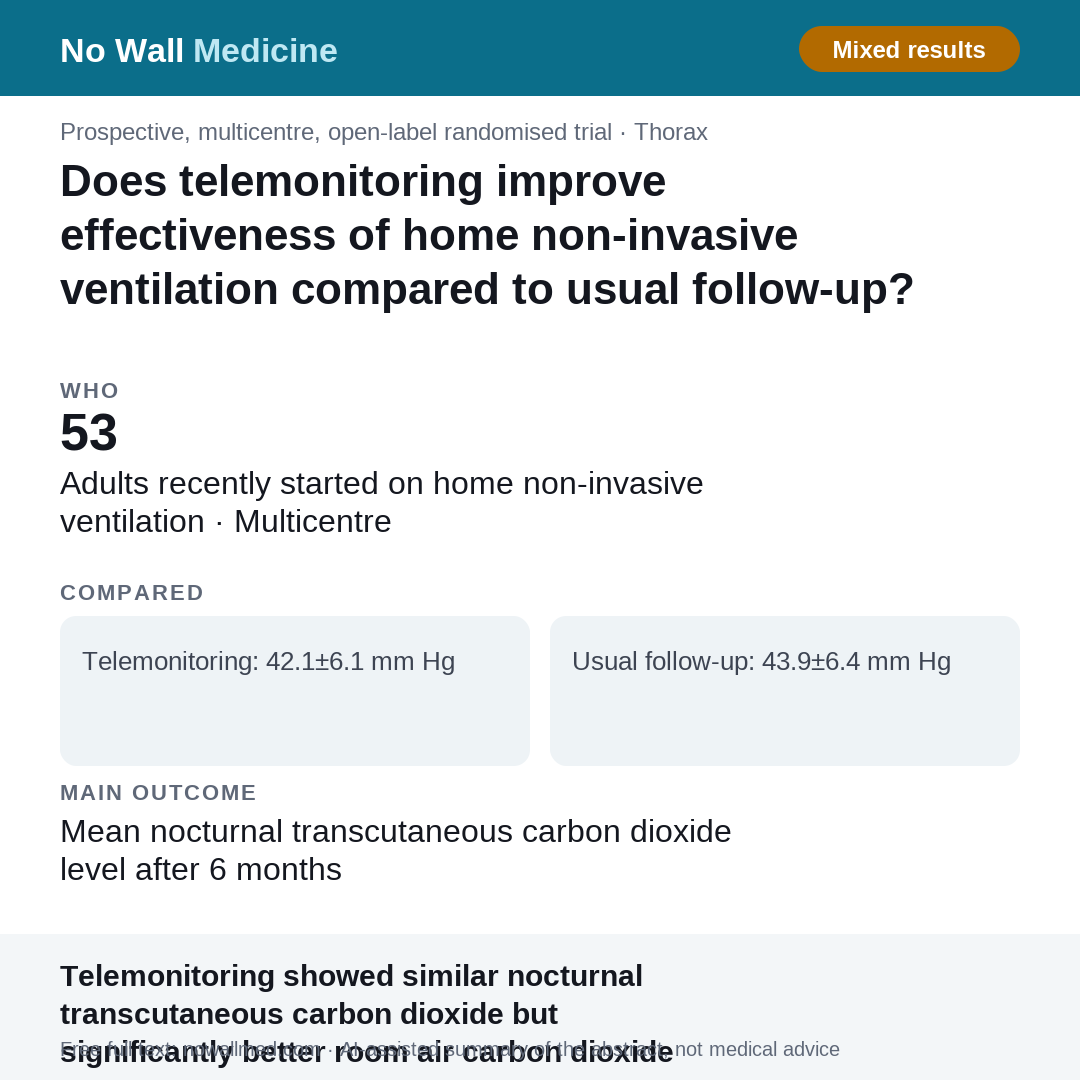
Real-world telemonitoring and remote support for home non-invasive ventilation to improve therapy effectiveness: the exploratory, multicentre randomised eVENT study
Prospective, multicentre, open-label randomised trialMixed results
Does telemonitoring improve effectiveness of home non-invasive ventilation compared to usual follow-up?
Who
53
Adults recently started on home non-invasive ventilation · Multicentre
Compared
Telemonitoring: 42.1±6.1 mm Hg
Usual follow-up: 43.9±6.4 mm Hg
Main outcome
Mean nocturnal transcutaneous carbon dioxide level after 6 months
Bottom line: Telemonitoring showed similar nocturnal transcutaneous carbon dioxide but significantly better room air carbon dioxide levels and ventilatory support quality.
Thorax · 2025-09-15Download image
A 7-year prospective analysis of sustained benefits of multicomponent risk assessment and data-driven care in patients with type 2 diabetes: The Malaysian JADE Program
Randomized trialBenefit found
Does multicomponent risk assessment and data-driven care provide sustained benefits in type 2 diabetes?
Who
1196
Patients with type 2 diabetes from Malaysia · Malaysia
Compared
Comprehensive assessment only
Comprehensive assessment plus personalized report
Comprehensive assessment, personalized report, and nurse phone calls
Main outcome
Attainment of two or more ABC targets
Result: odds ratio 1.57 (95% CI 1.02-2.41)
Bottom line: Technology-assisted multicomponent risk assessment and data-driven care improved diabetes outcomes after seven years.
Diabetes Obes Metab · 2025-09-15Download image