Visual abstracts
New randomized trials and meta-analyses from leading journals at a glance: who was studied, what was compared, and what was found. Every paper is free to read in full.
All specialtiesCardiology 4763Oncology 4042Gastroenterology & Hepatology 1902Infectious Disease 3756Neurology 1872Psychiatry & Mental Health 2214Pulmonology 2042Critical Care 1319Endocrinology & Diabetes 2544Pediatrics 2889Surgery 2479Orthopedics & Sports Medicine 917Neurosurgery 525Cardiothoracic & Vascular Surgery 656Plastic & Reconstructive Surgery 574Nephrology 1107Rheumatology 810Hematology 1090Dermatology 611Ophthalmology 532Obstetrics & Gynecology 1645Public & Global Health 1037Radiology & Imaging 617Anesthesiology 957Urology 745ENT (Otolaryngology) 494Emergency Medicine 481Allergy & Immunology 309Geriatrics 972Family Medicine & Primary Care 533Medical Genetics & Genomics 659Pathology & Laboratory Medicine 156Physical Medicine & Rehabilitation 734Palliative Care 421Nutrition 1560Digital Health & AI 2133General Medicine 318
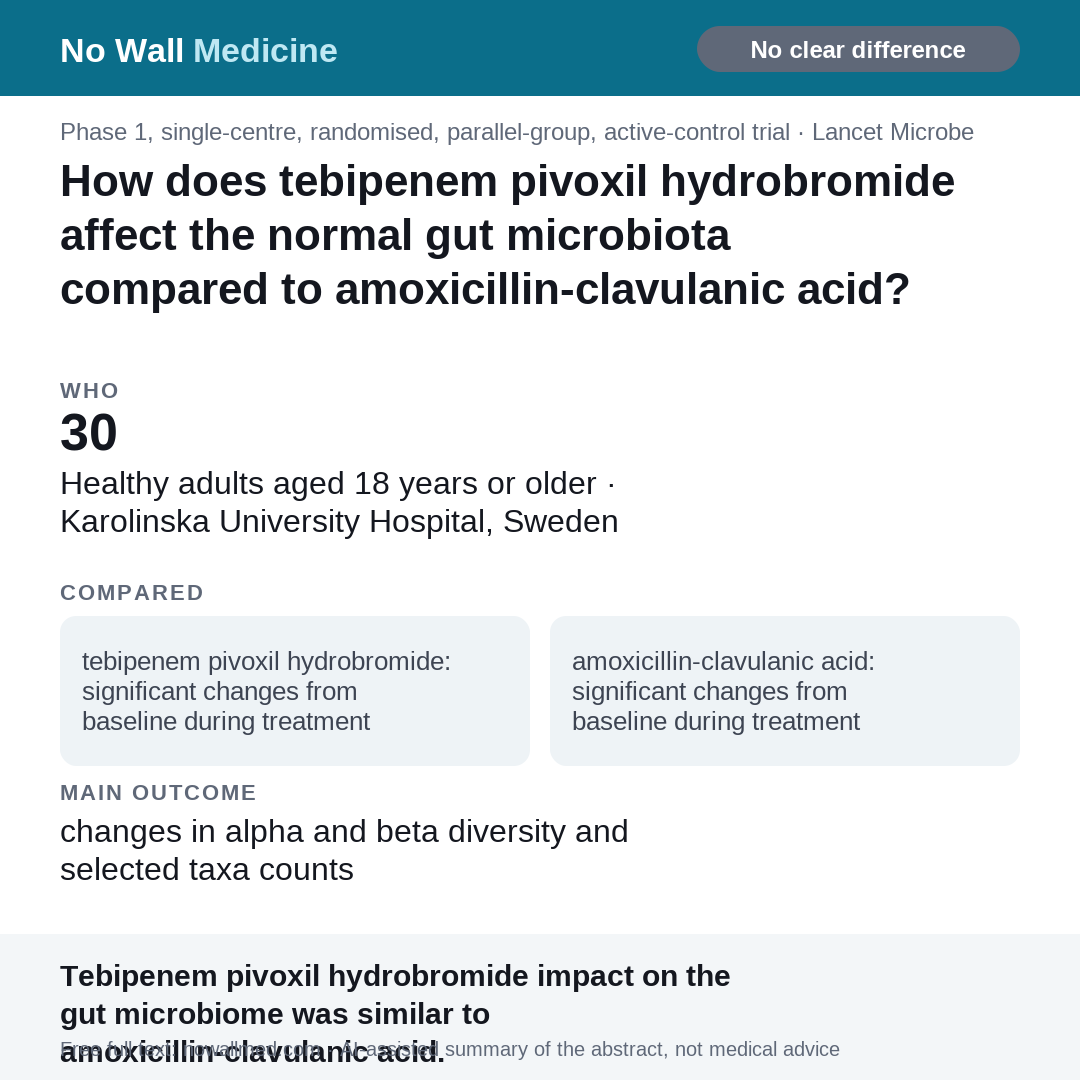
Effect of tebipenem pivoxil hydrobromide on the normal gut microbiota of a healthy adult population in Sweden: a randomised controlled trial
Phase 1, single-centre, randomised, parallel-group, active-control trialNo clear difference
How does tebipenem pivoxil hydrobromide affect the normal gut microbiota compared to amoxicillin-clavulanic acid?
Who
30
Healthy adults aged 18 years or older · Karolinska University Hospital, Sweden
Compared
tebipenem pivoxil hydrobromide: significant changes from baseline during treatment
amoxicillin-clavulanic acid: significant changes from baseline during treatment
Main outcome
changes in alpha and beta diversity and selected taxa counts
Bottom line: Tebipenem pivoxil hydrobromide impact on the gut microbiome was similar to amoxicillin-clavulanic acid.
Funded by: Spero Therapeutics
Lancet Microbe · 2024-02-29Download image
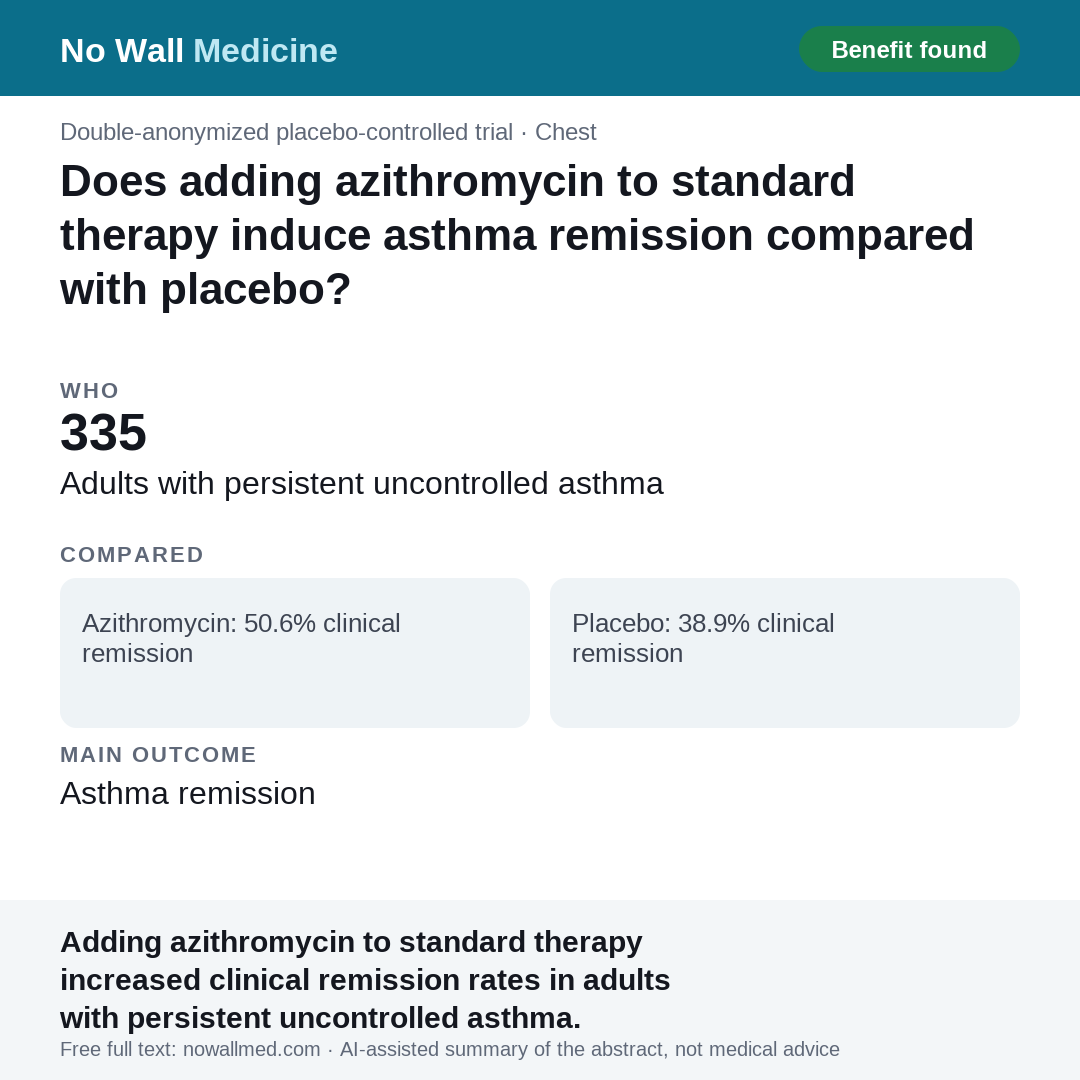
Effect of Azithromycin on Asthma Remission in Adults With Persistent Uncontrolled Asthma: A Secondary Analysis of a Randomized, Double-Anonymized, Placebo-Controlled Trial
Double-anonymized placebo-controlled trialBenefit found
Does adding azithromycin to standard therapy induce asthma remission compared with placebo?
Who
335
Adults with persistent uncontrolled asthma
Compared
Azithromycin: 50.6% clinical remission
Placebo: 38.9% clinical remission
Main outcome
Asthma remission
Bottom line: Adding azithromycin to standard therapy increased clinical remission rates in adults with persistent uncontrolled asthma.
Chest · 2024-02-29Download image
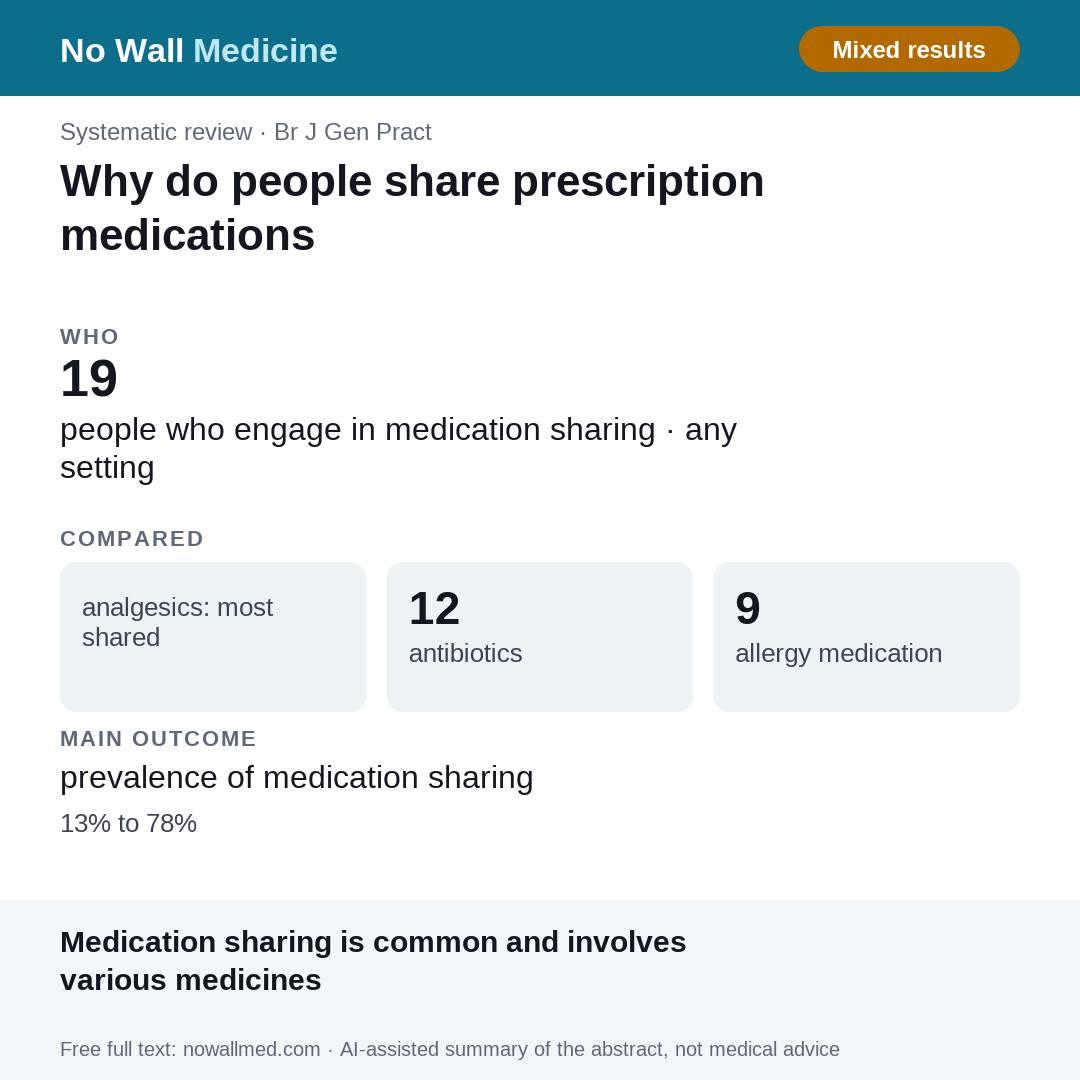
Understanding non-recreational prescription medication-sharing behaviours: a systematic review
Systematic reviewMixed results
Why do people share prescription medications
Who
people who engage in medication sharing · any setting
Compared
analgesics: most shared
12antibiotics
9allergy medication
Main outcome
prevalence of medication sharing
Result: 13% to 78%
Bottom line: Medication sharing is common and involves various medicines
Br J Gen Pract · 2024-02-29Download image
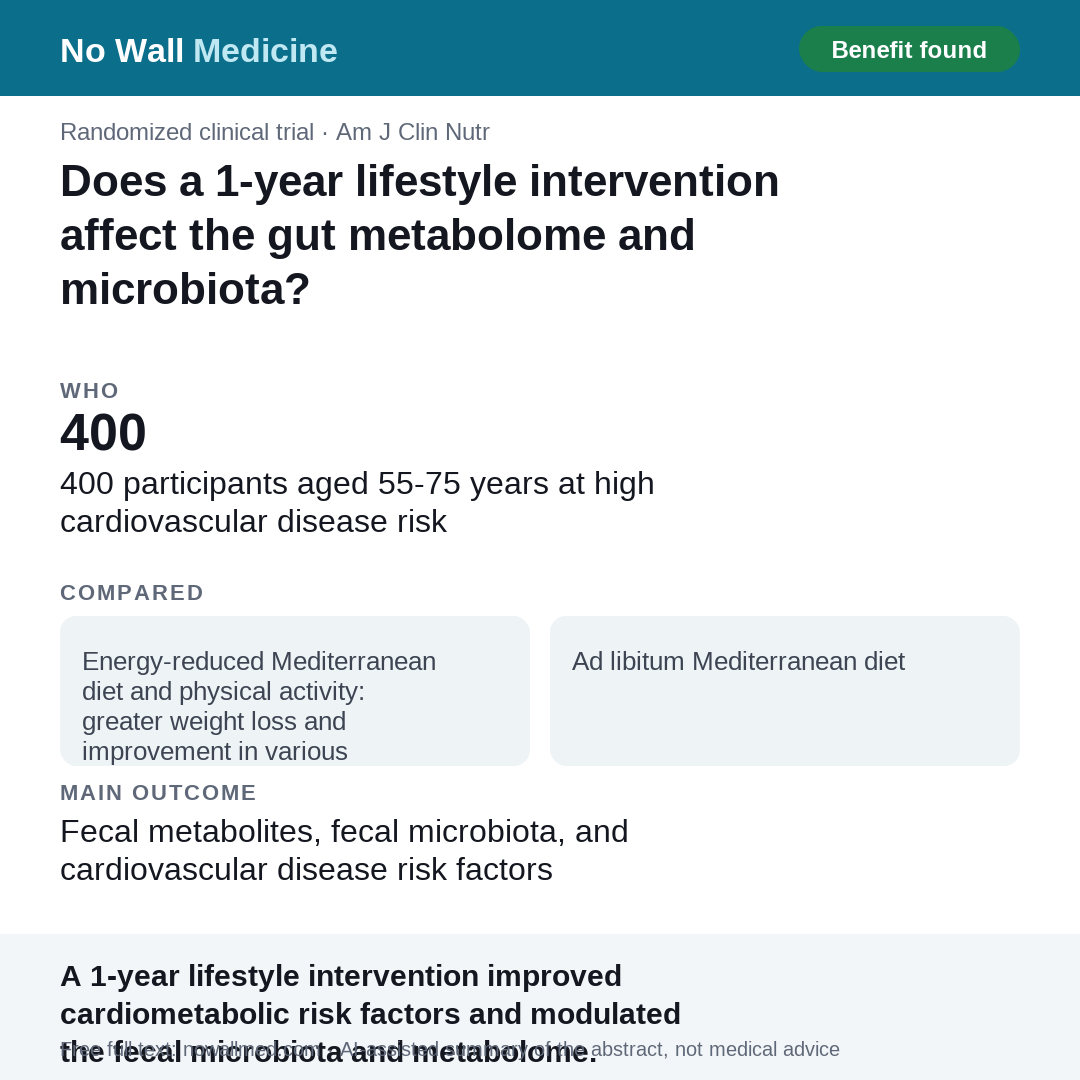
Effect of 1-year lifestyle intervention with energy-reduced Mediterranean diet and physical activity promotion on the gut metabolome and microbiota: a randomized clinical trial
Randomized clinical trialBenefit found
Does a 1-year lifestyle intervention affect the gut metabolome and microbiota?
Who
400
400 participants aged 55-75 years at high cardiovascular disease risk
Compared
Energy-reduced Mediterranean diet and physical activity: greater weight loss and improvement in various cardiovascular disease risk factors
Ad libitum Mediterranean diet
Main outcome
Fecal metabolites, fecal microbiota, and cardiovascular disease risk factors
Bottom line: A 1-year lifestyle intervention improved cardiometabolic risk factors and modulated the fecal microbiota and metabolome.
Am J Clin Nutr · 2024-02-29Download image
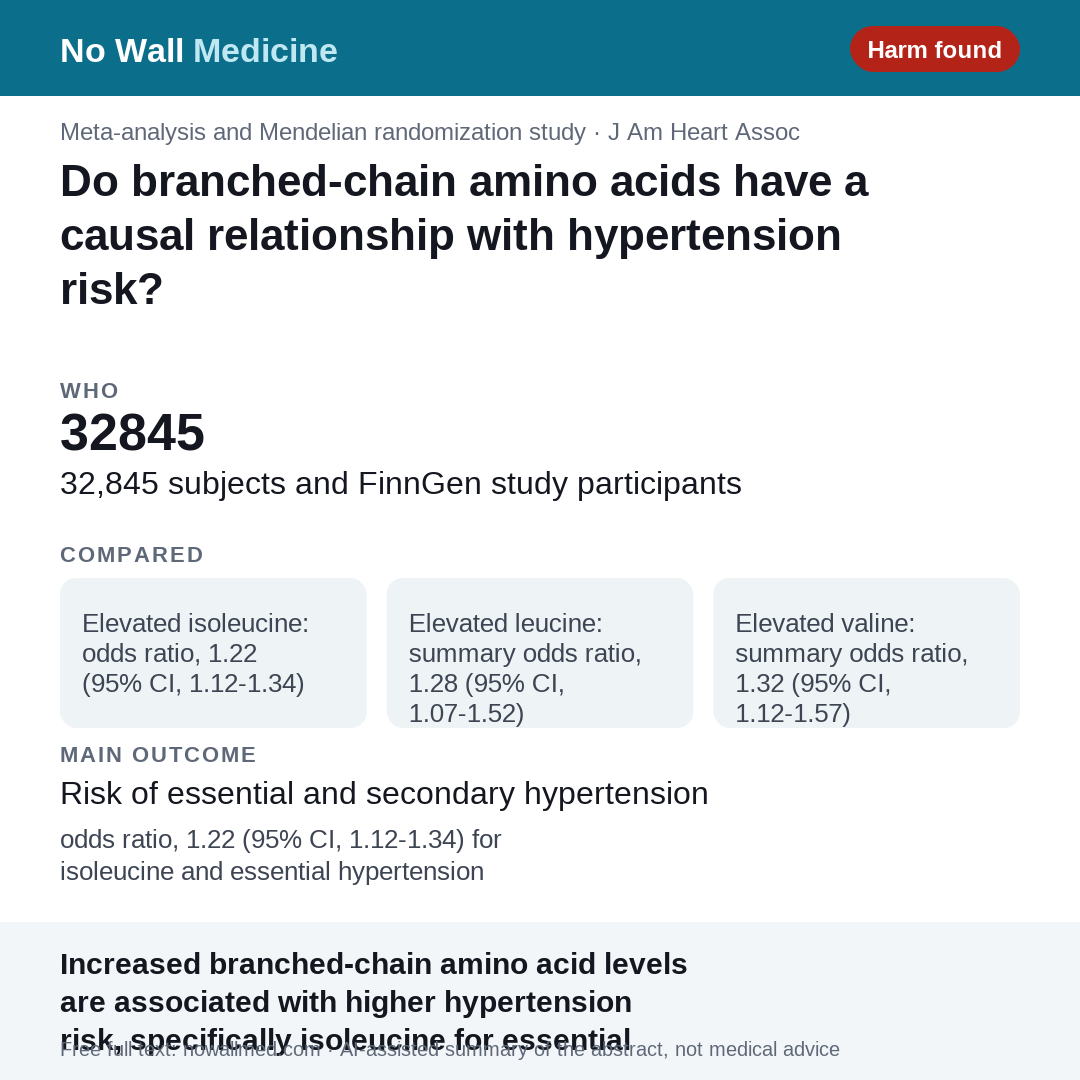
Causal Relationship Between Branched-Chain Amino Acids and Hypertension: A Mendelian Randomization Study
Meta-analysis and Mendelian randomization studyHarm found
Do branched-chain amino acids have a causal relationship with hypertension risk?
Who
32845
32,845 subjects and FinnGen study participants
Compared
Elevated isoleucine: odds ratio, 1.22 (95% CI, 1.12-1.34)
Elevated leucine: summary odds ratio, 1.28 (95% CI, 1.07-1.52)
Elevated valine: summary odds ratio, 1.32 (95% CI, 1.12-1.57)
Main outcome
Risk of essential and secondary hypertension
Result: odds ratio, 1.22 (95% CI, 1.12-1.34) for isoleucine and essential hypertension
Bottom line: Increased branched-chain amino acid levels are associated with higher hypertension risk, specifically isoleucine for essential hypertension.
J Am Heart Assoc · 2024-02-29Download image
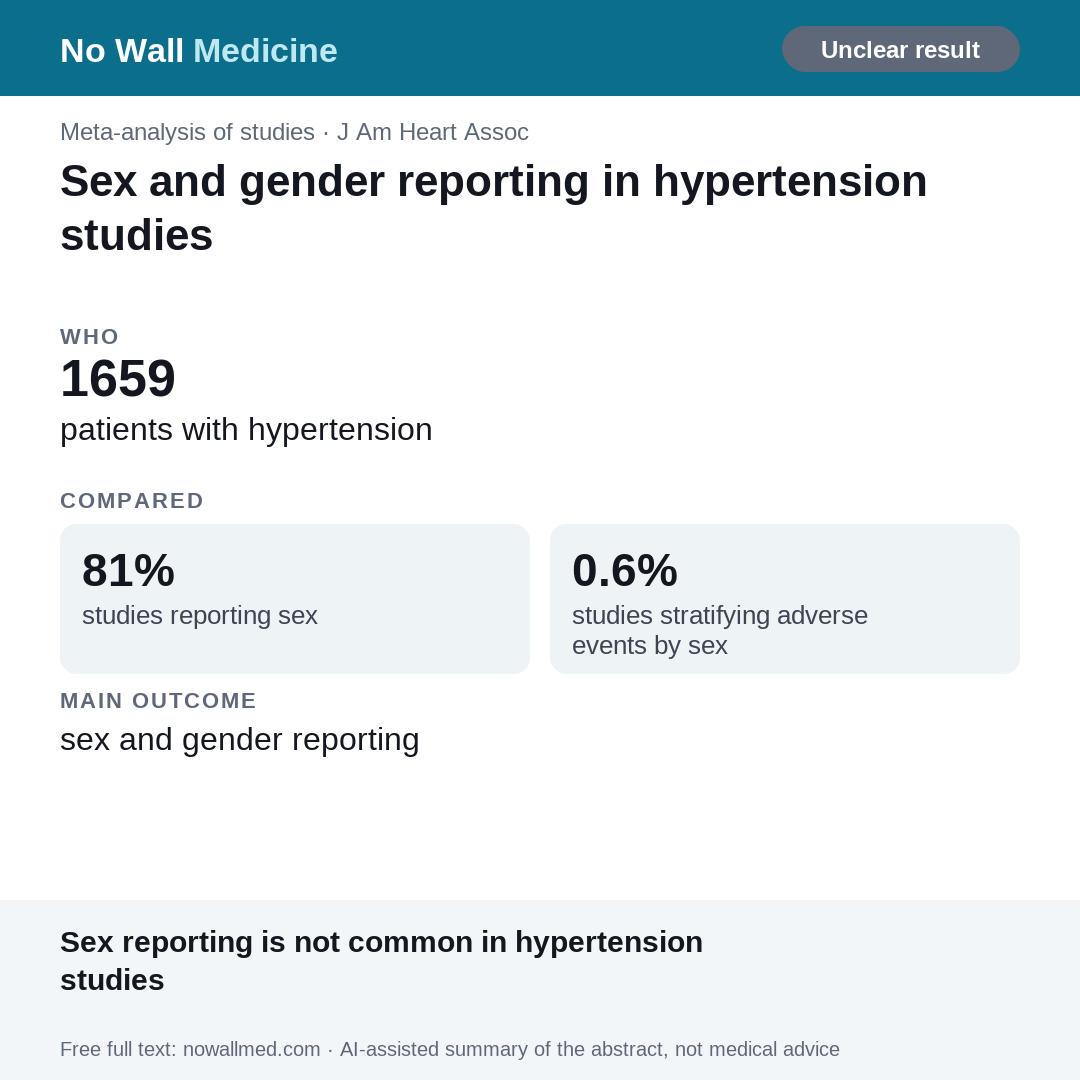
Sex- and Gender-Based Reporting in Antihypertensive Medication Literature Informing Hypertension Guidelines
Meta-analysis of studiesUnclear result
Sex and gender reporting in hypertension studies
Who
1659
patients with hypertension
Compared
81%studies reporting sex
0.6%studies stratifying adverse events by sex
Main outcome
sex and gender reporting
Bottom line: Sex reporting is not common in hypertension studies
J Am Heart Assoc · 2024-02-29Download image
Secondary Ischemia Assessment in Murine and Rat Preclinical Subarachnoid Hemorrhage Models: A Systematic Review
Systematic reviewMixed results
What are the procedural characteristics and assessment modalities of secondary vasospastic and ischemic events?
Who
Rat and murine subarachnoid hemorrhage models · Preclinical in vivo studies
Compared
Rat studies
Murine studies
Main outcome
Procedural characteristics and assessment modalities of secondary vasospastic and ischemic events
Bottom line: Substantial heterogeneity exists in procedural characteristics and outcome assessments in preclinical subarachnoid hemorrhage research.
J Am Heart Assoc · 2024-02-29Download image

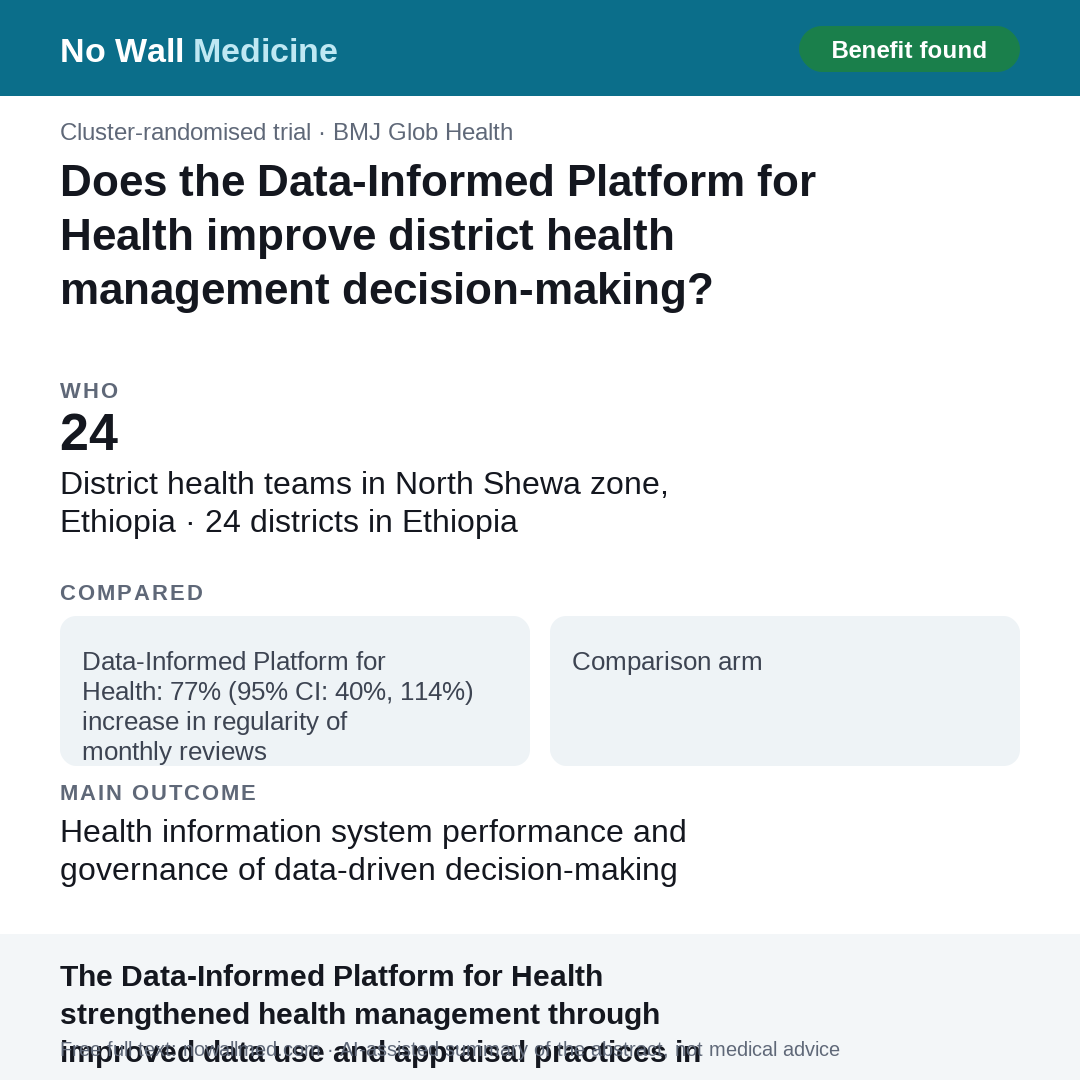
Data-driven decision-making for district health management: a cluster-randomised study in 24 districts of Ethiopia
Cluster-randomised trialBenefit found
Does the Data-Informed Platform for Health improve district health management decision-making?
Who
24
District health teams in North Shewa zone, Ethiopia · 24 districts in Ethiopia
Compared
Data-Informed Platform for Health: 77% (95% CI: 40%, 114%) increase in regularity of monthly reviews
Comparison arm
Main outcome
Health information system performance and governance of data-driven decision-making
Result: 77% (95% CI: 40%, 114%) increase in regularity of monthly reviews
Bottom line: The Data-Informed Platform for Health strengthened health management through improved data use and appraisal practices in Ethiopia.
BMJ Glob Health · 2024-02-29Download image
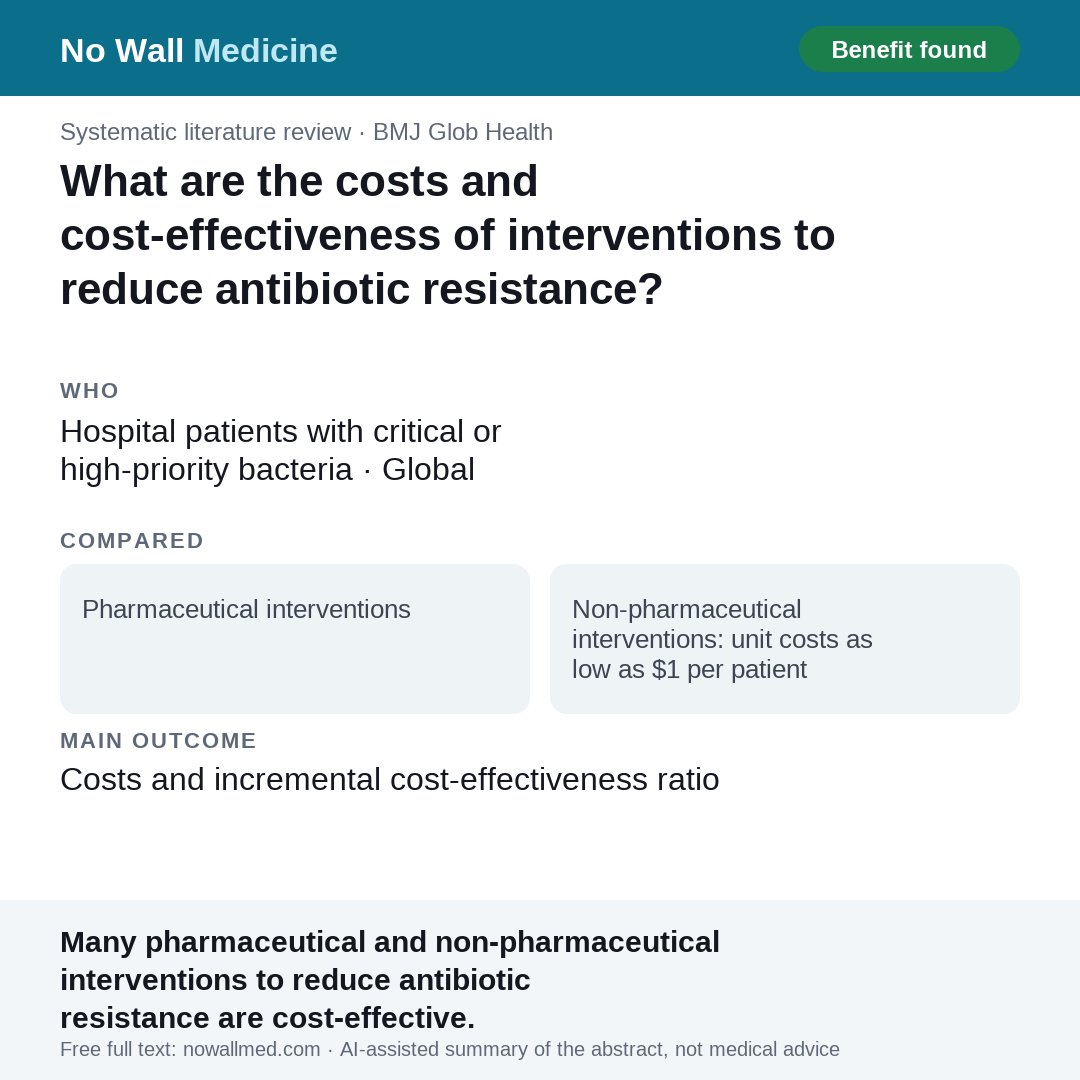
Costs-effectiveness and cost components of pharmaceutical and non-pharmaceutical interventions affecting antibiotic resistance outcomes in hospital patients: a systematic literature review
Systematic literature reviewBenefit found
What are the costs and cost-effectiveness of interventions to reduce antibiotic resistance?
Who
Hospital patients with critical or high-priority bacteria · Global
Compared
Pharmaceutical interventions
Non-pharmaceutical interventions: unit costs as low as $1 per patient
Main outcome
Costs and incremental cost-effectiveness ratio
Bottom line: Many pharmaceutical and non-pharmaceutical interventions to reduce antibiotic resistance are cost-effective.
Limitation: Comparisons were hindered by within-study differences and knowledge gaps in low-income and middle-income countries.
BMJ Glob Health · 2024-02-29Download image
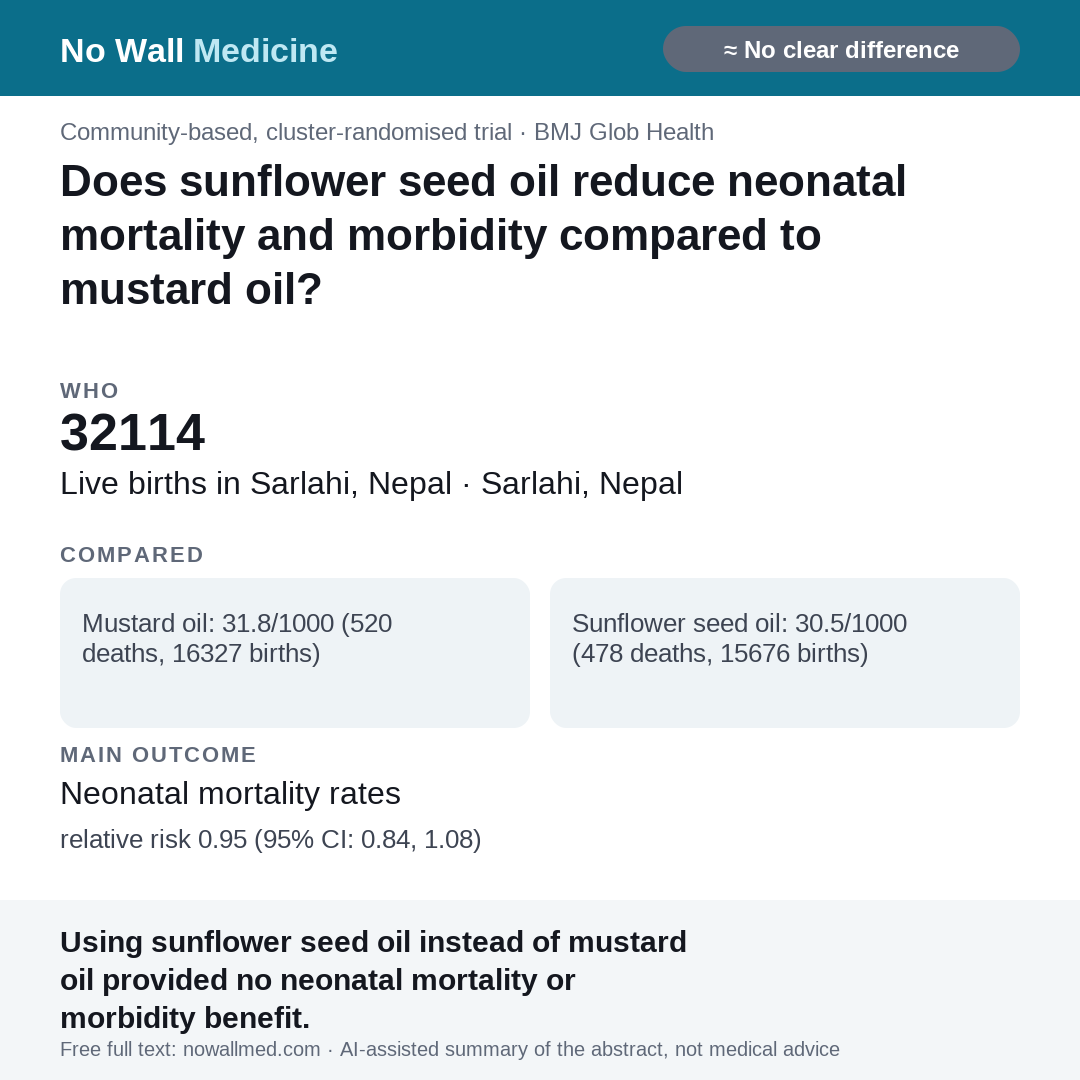
Impact of topical applications of sunflower seed oil on neonatal mortality and morbidity in southern Nepal: a community-based, cluster-randomised trial
Community-based, cluster-randomised trialNo clear difference
Does sunflower seed oil reduce neonatal mortality and morbidity compared to mustard oil?
Who
32114
Live births in Sarlahi, Nepal · Sarlahi, Nepal
Compared
Mustard oil: 31.8/1000 (520 deaths, 16327 births)
Sunflower seed oil: 30.5/1000 (478 deaths, 15676 births)
Main outcome
Neonatal mortality rates
Result: relative risk 0.95 (95% CI: 0.84, 1.08)
Bottom line: Using sunflower seed oil instead of mustard oil provided no neonatal mortality or morbidity benefit.
BMJ Glob Health · 2024-02-29Download image
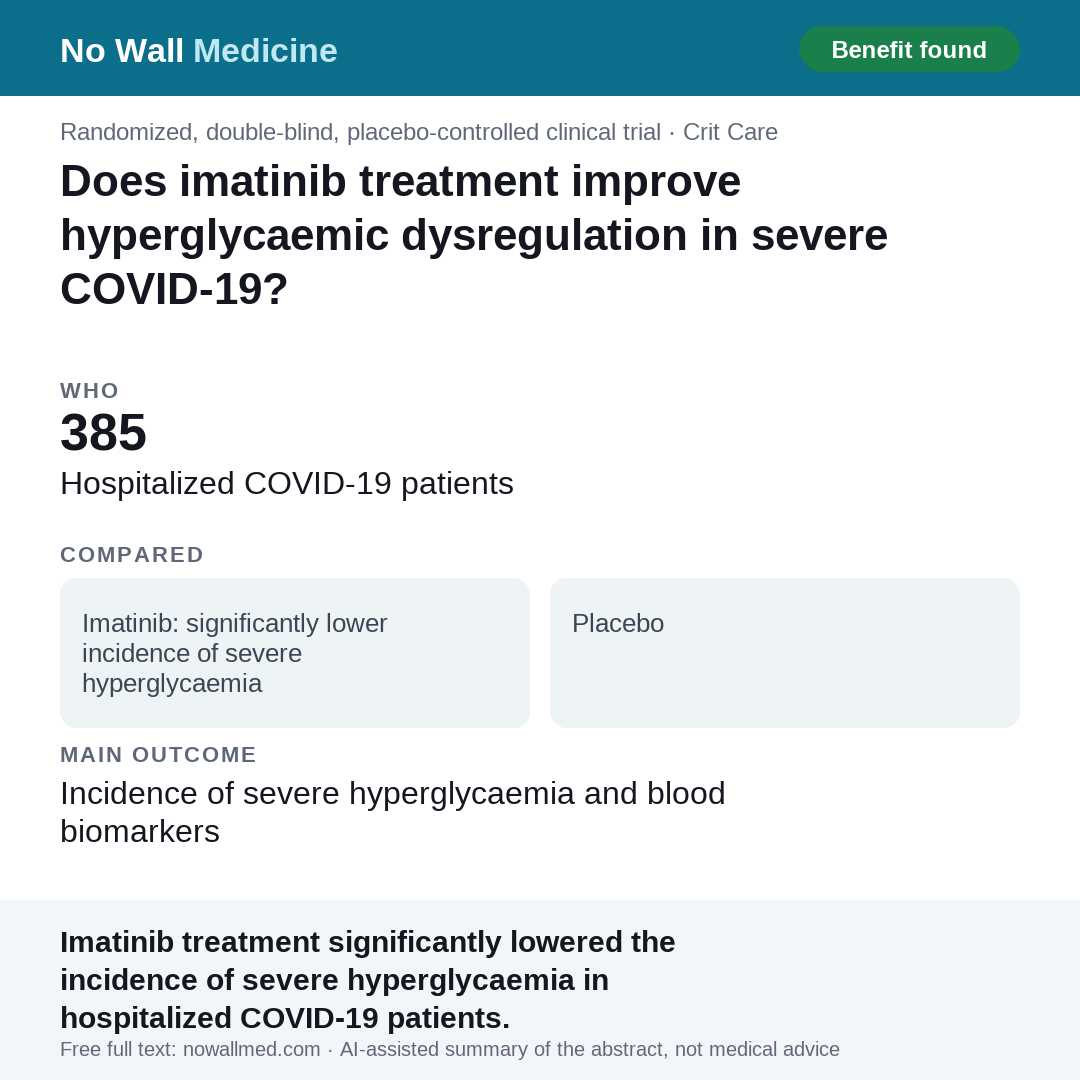
Imatinib treatment improves hyperglycaemic dysregulation in severe COVID-19: a secondary analysis of blood biomarkers in a randomised controlled trial
Randomized, double-blind, placebo-controlled clinical trialBenefit found
Does imatinib treatment improve hyperglycaemic dysregulation in severe COVID-19?
Who
385
Hospitalized COVID-19 patients
Compared
Imatinib: significantly lower incidence of severe hyperglycaemia
Placebo
Main outcome
Incidence of severe hyperglycaemia and blood biomarkers
Bottom line: Imatinib treatment significantly lowered the incidence of severe hyperglycaemia in hospitalized COVID-19 patients.
Crit Care · 2024-02-29Download image
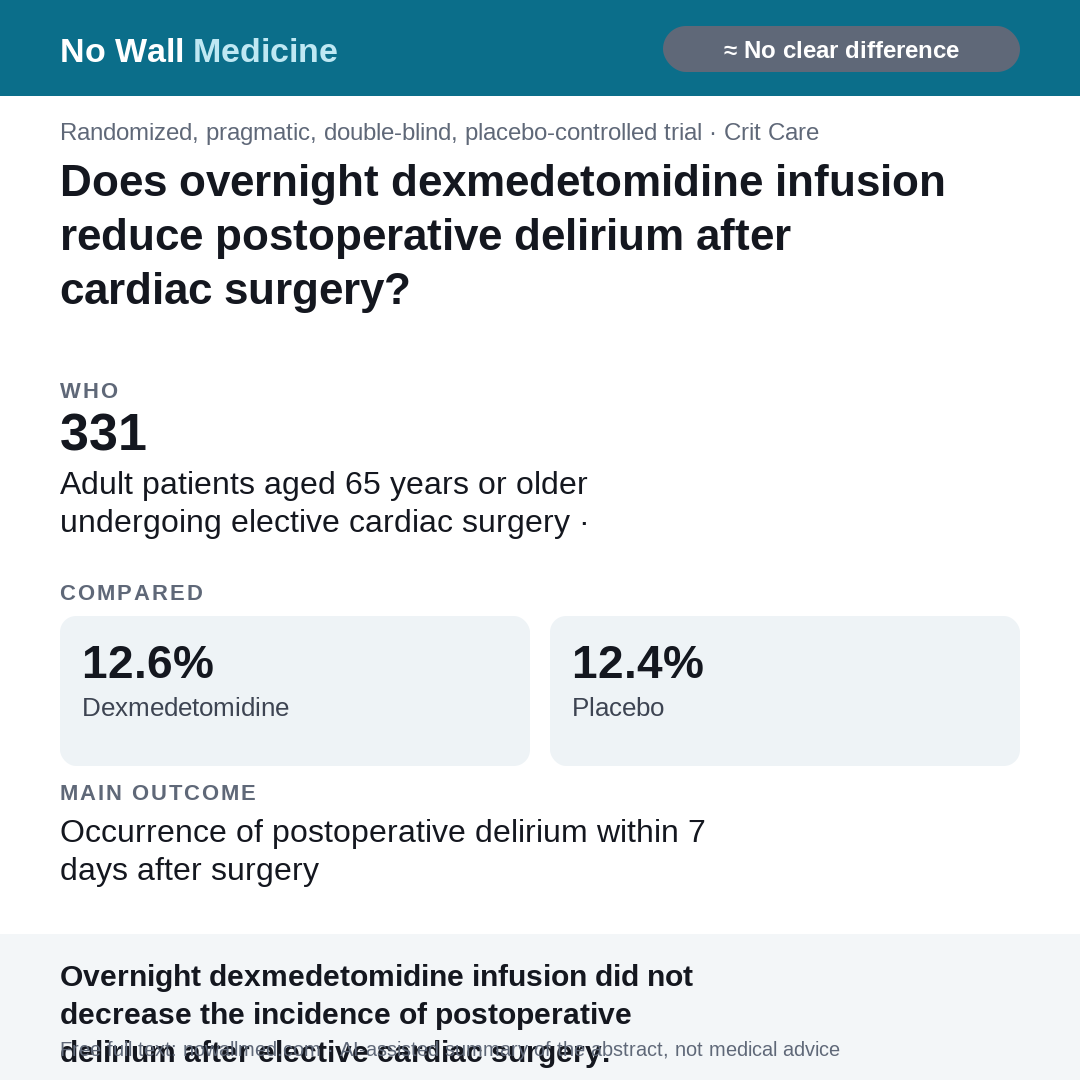
Prevention of post-operative delirium using an overnight infusion of dexmedetomidine in patients undergoing cardiac surgery: a pragmatic, randomized, double-blind, placebo-controlled trial
Randomized, pragmatic, double-blind, placebo-controlled trialNo clear difference
Does overnight dexmedetomidine infusion reduce postoperative delirium after cardiac surgery?
Who
331
Adult patients aged 65 years or older undergoing elective cardiac surgery · Multicentre
Compared
12.6%Dexmedetomidine
12.4%Placebo
Main outcome
Occurrence of postoperative delirium within 7 days after surgery
Bottom line: Overnight dexmedetomidine infusion did not decrease the incidence of postoperative delirium after elective cardiac surgery.
Crit Care · 2024-02-29Download image
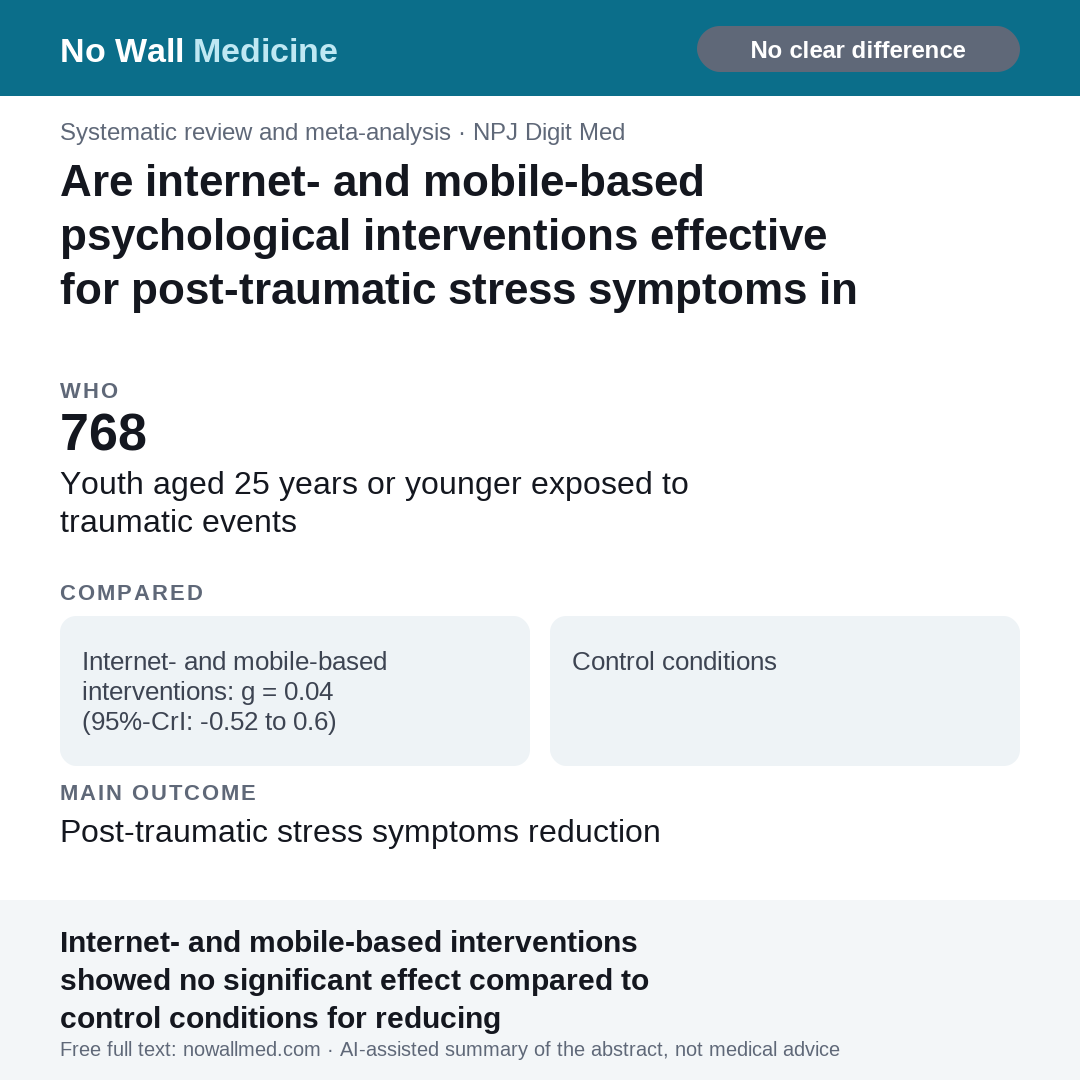
Internet- and mobile-based psychological interventions for post-traumatic stress symptoms in youth: a systematic review and meta-analysis
Systematic review and meta-analysisNo clear difference
Are internet- and mobile-based psychological interventions effective for post-traumatic stress symptoms in youth?
Who
768
Youth aged 25 years or younger exposed to traumatic events
Compared
Internet- and mobile-based interventions: g = 0.04 (95%-CrI: -0.52 to 0.6)
Control conditions
Main outcome
Post-traumatic stress symptoms reduction
Result: g = 0.04 (95%-CrI: -0.52 to 0.6)
Bottom line: Internet- and mobile-based interventions showed no significant effect compared to control conditions for reducing post-traumatic stress symptoms in youth.
Limitation: Scarcity of studies, most being feasibility studies rather than adequately powered randomized controlled trials.
NPJ Digit Med · 2024-02-29Download image
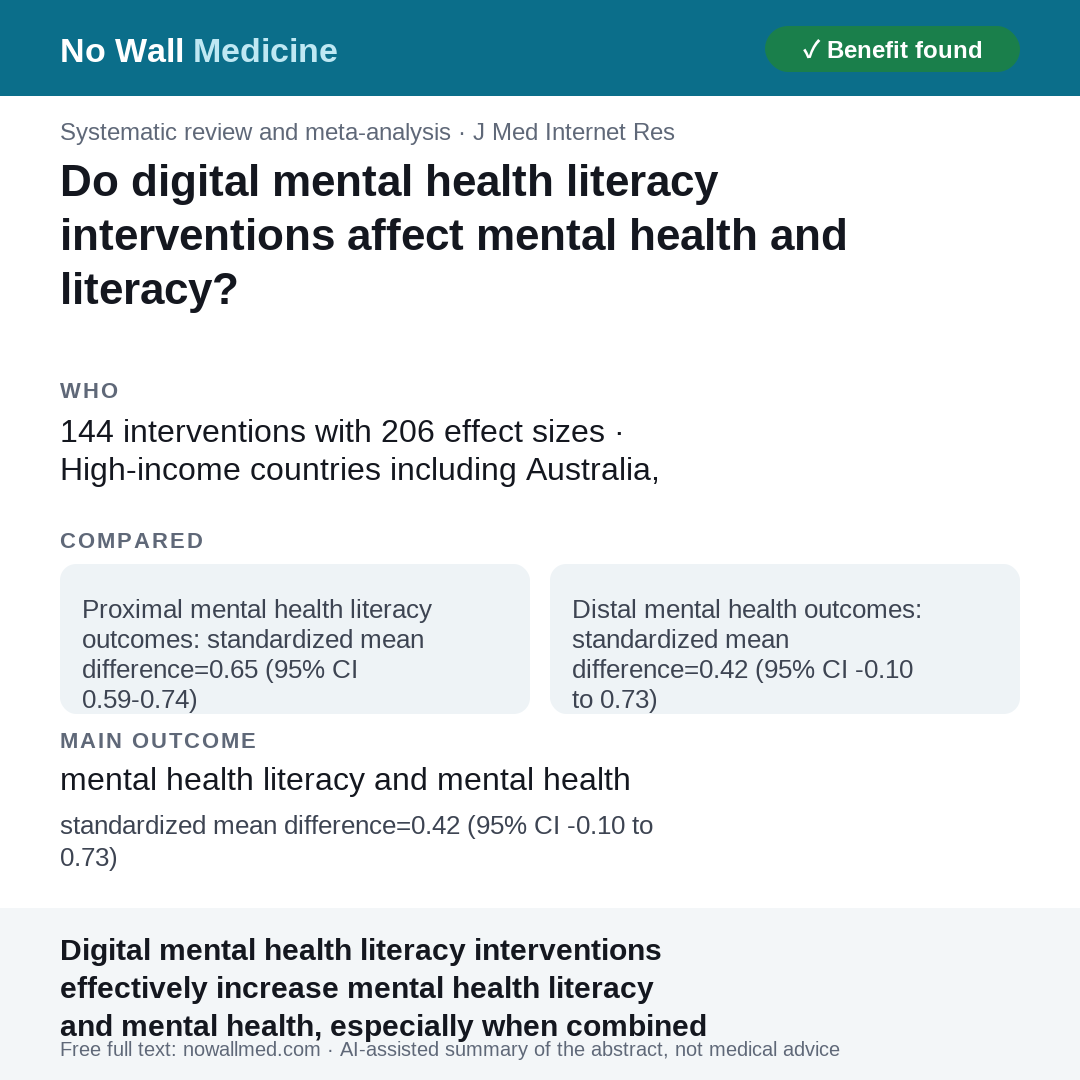
The Effect of Digital Mental Health Literacy Interventions on Mental Health: Systematic Review and Meta-Analysis
Systematic review and meta-analysisBenefit found
Do digital mental health literacy interventions affect mental health and literacy?
Who
144 interventions with 206 effect sizes · High-income countries including Australia, United States, and United Kingdom
Compared
Proximal mental health literacy outcomes: standardized mean difference=0.65 (95% CI 0.59-0.74)
Distal mental health outcomes: standardized mean difference=0.42 (95% CI -0.10 to 0.73)
Main outcome
mental health literacy and mental health
Result: standardized mean difference=0.42 (95% CI -0.10 to 0.73)
Bottom line: Digital mental health literacy interventions effectively increase mental health literacy and mental health, especially when combined with active treatment components.
Limitation: Most interventions are in Western contexts and many studies did not report racial or ethnic makeup.
J Med Internet Res · 2024-02-29Download image
The environmental impact of energy consumption and carbon emissions in radiology departments: a systematic review
Systematic reviewBenefit found
What strategies reduce energy use and carbon emissions in radiology?
Who
Radiology departments and radiological devices · North America and Europe
Compared
Nonproductive energy consumption: 40-91%
Annual energy savings: 14,180-171,000 kWh
Cost-savings per device: US $9,225 to 14,328
Main outcome
Strategies to reduce energy use and carbon emissions
Bottom line: Turning off radiological devices during idle periods can significantly reduce nonproductive energy consumption and provide cost savings.
Eur Radiol Exp · 2024-02-29Download image

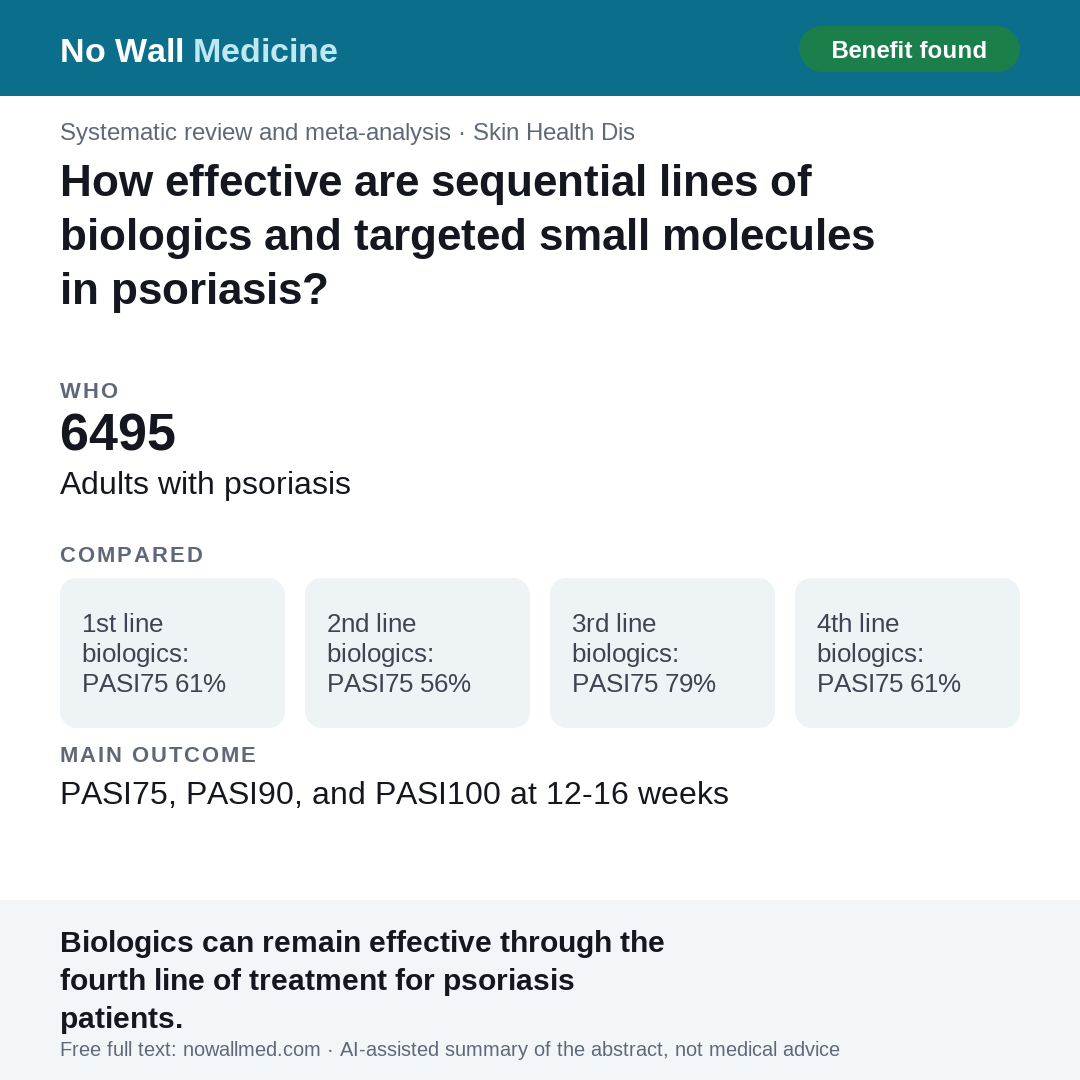
Effectiveness of sequential lines of biologic and targeted small molecule drugs in psoriasis: A systematic review and meta-analysis
Systematic review and meta-analysisBenefit found
How effective are sequential lines of biologics and targeted small molecules in psoriasis?
Who
6495
Adults with psoriasis
Compared
1st line biologics: PASI75 61%
2nd line biologics: PASI75 56%
3rd line biologics: PASI75 79%
4th line biologics: PASI75 61%
Main outcome
PASI75, PASI90, and PASI100 at 12-16 weeks
Bottom line: Biologics can remain effective through the fourth line of treatment for psoriasis patients.
Limitation: Evidence is predominantly observational, at high risk of bias and of low quality.
Skin Health Dis · 2024-02-29Download image
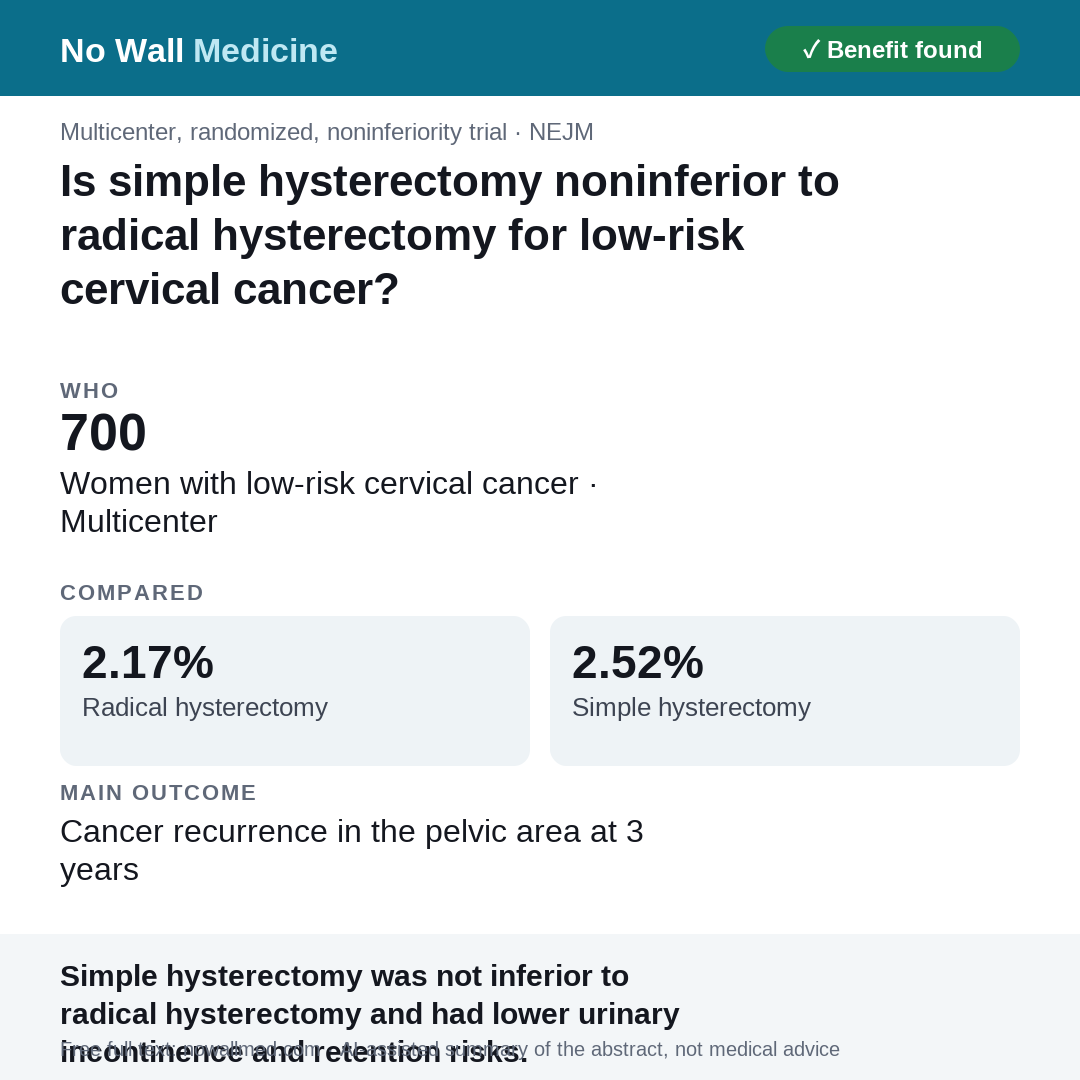
Simple versus Radical Hysterectomy in Women with Low-Risk Cervical Cancer
Multicenter, randomized, noninferiority trialBenefit found
Is simple hysterectomy noninferior to radical hysterectomy for low-risk cervical cancer?
Who
700
Women with low-risk cervical cancer · Multicenter
Compared
2.17%Radical hysterectomy
2.52%Simple hysterectomy
Main outcome
Cancer recurrence in the pelvic area at 3 years
Result: absolute difference of 0.35 percentage points (90% confidence interval, -1.62 to 2.32)
Bottom line: Simple hysterectomy was not inferior to radical hysterectomy and had lower urinary incontinence and retention risks.
Funded by: Canadian Cancer Society and others
NEJM · 2024-02-28Download image
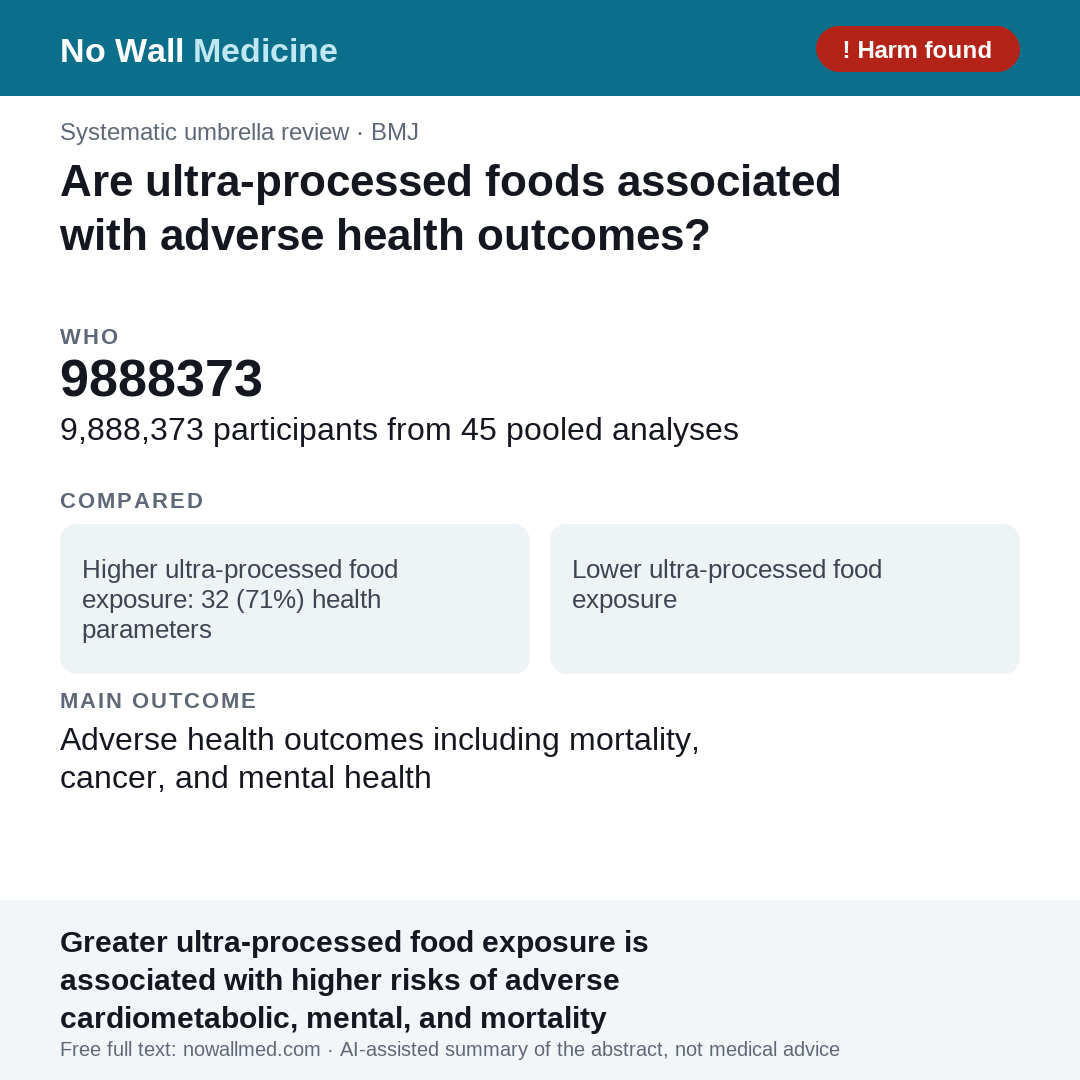
Ultra-processed food exposure and adverse health outcomes: umbrella review of epidemiological meta-analyses
Systematic umbrella reviewHarm found
Are ultra-processed foods associated with adverse health outcomes?
Who
9888373
9,888,373 participants from 45 pooled analyses
Compared
Higher ultra-processed food exposure: 32 (71%) health parameters
Lower ultra-processed food exposure
Main outcome
Adverse health outcomes including mortality, cancer, and mental health
Bottom line: Greater ultra-processed food exposure is associated with higher risks of adverse cardiometabolic, mental, and mortality outcomes.
BMJ · 2024-02-28Download image
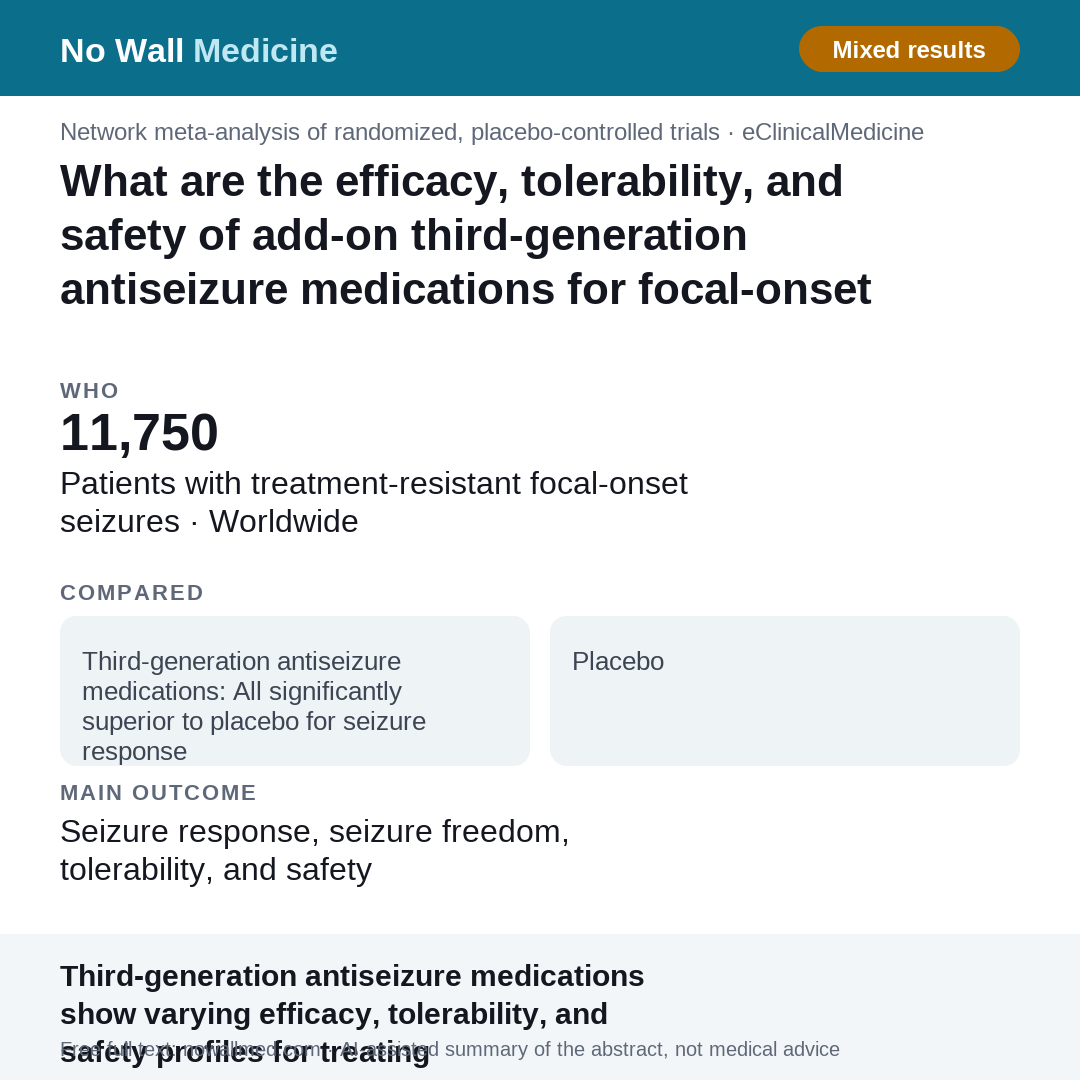
Efficacy, tolerability and safety of add-on third-generation antiseizure medications in treating focal seizures worldwide: a network meta-analysis of randomised, placebo-controlled trials
Network meta-analysis of randomized, placebo-controlled studiesMixed results
What are the efficacy, tolerability, and safety of add-on third-generation antiseizure medications for focal-onset seizures?
Who
11,750
Patients with treatment-resistant focal-onset seizures · Worldwide
Compared
Third-generation antiseizure medications: All significantly superior to placebo for seizure response
Placebo
Main outcome
Seizure response, seizure freedom, tolerability, and safety
Bottom line: Third-generation antiseizure medications show varying efficacy, tolerability, and safety profiles for treating treatment-resistant focal-onset seizures.
eClinicalMedicine · 2024-02-28Download image
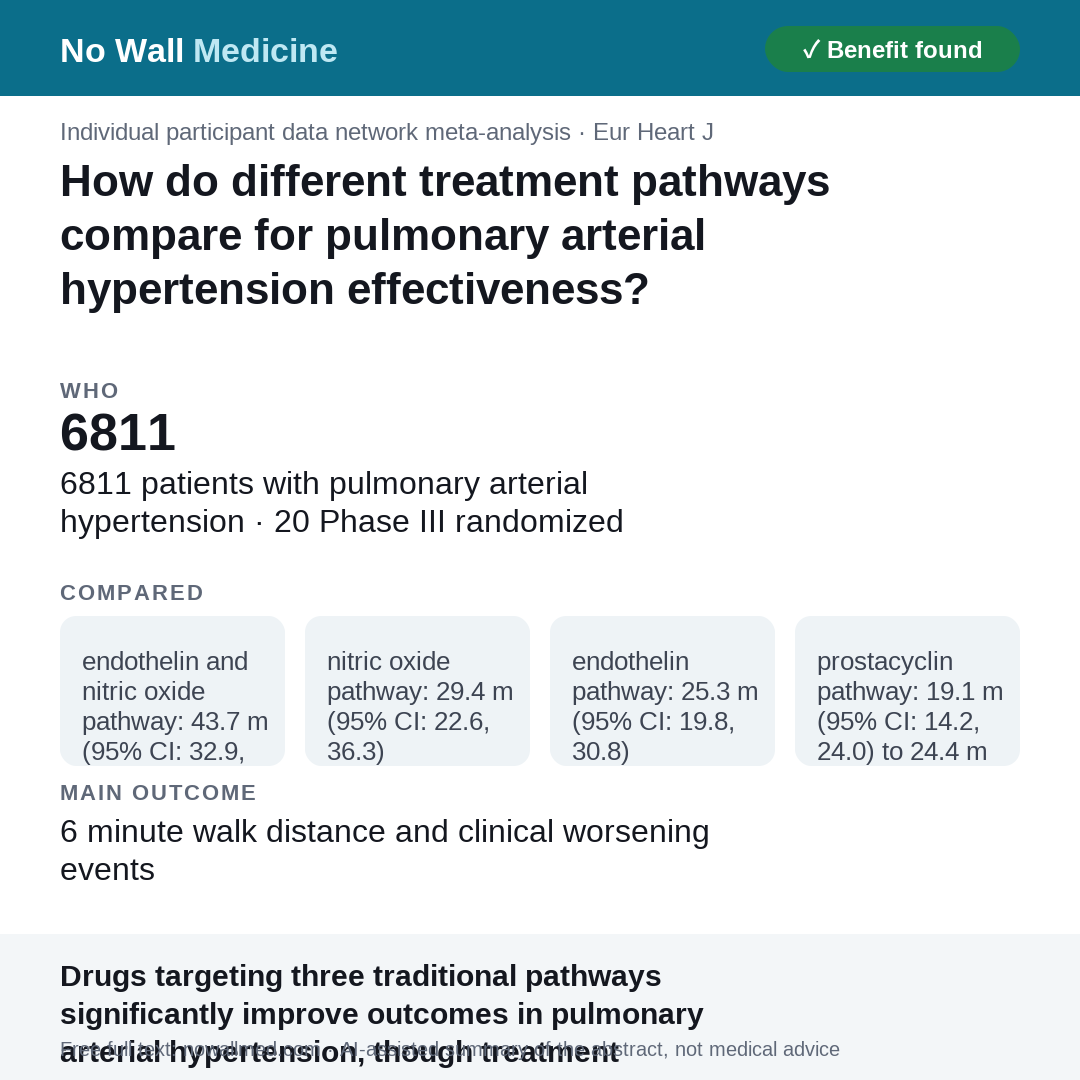
Pulmonary arterial hypertension treatment: an individual participant data network meta-analysis
Individual participant data network meta-analysisBenefit found
How do different treatment pathways compare for pulmonary arterial hypertension effectiveness?
Who
6811
6811 patients with pulmonary arterial hypertension · 20 Phase III randomized clinical trials
Compared
endothelin and nitric oxide pathway: 43.7 m (95% CI: 32.9, 54.4)
nitric oxide pathway: 29.4 m (95% CI: 22.6, 36.3)
endothelin pathway: 25.3 m (95% CI: 19.8, 30.8)
prostacyclin pathway: 19.1 m (95% CI: 14.2, 24.0) to 24.4 m (95% CI: 15.1, 33.7)
Main outcome
6 minute walk distance and clinical worsening events
Bottom line: Drugs targeting three traditional pathways significantly improve outcomes in pulmonary arterial hypertension, though treatment effects vary by patient comorbidities.
Limitation: Significant heterogeneity of treatment effects by age, body mass index, hypertension, diabetes, and coronary artery disease.
Eur Heart J · 2024-02-28Download image