Visual abstracts
New randomized trials and meta-analyses from leading journals at a glance: who was studied, what was compared, and what was found. Every paper is free to read in full.
All specialtiesCardiology 842Oncology 763Gastroenterology & Hepatology 307Infectious Disease 626Neurology 350Psychiatry & Mental Health 430Pulmonology 366Critical Care 245Endocrinology & Diabetes 480Pediatrics 536Surgery 324Orthopedics & Sports Medicine 162Neurosurgery 93Cardiothoracic & Vascular Surgery 87Plastic & Reconstructive Surgery 124Nephrology 197Rheumatology 108Hematology 182Dermatology 80Ophthalmology 97Obstetrics & Gynecology 261Public & Global Health 167Radiology & Imaging 98Anesthesiology 114Urology 162ENT (Otolaryngology) 91Emergency Medicine 73Allergy & Immunology 58Geriatrics 160Family Medicine & Primary Care 111Medical Genetics & Genomics 91Pathology & Laboratory Medicine 24Physical Medicine & Rehabilitation 148Palliative Care 81Nutrition 223Digital Health & AI 460General Medicine 101
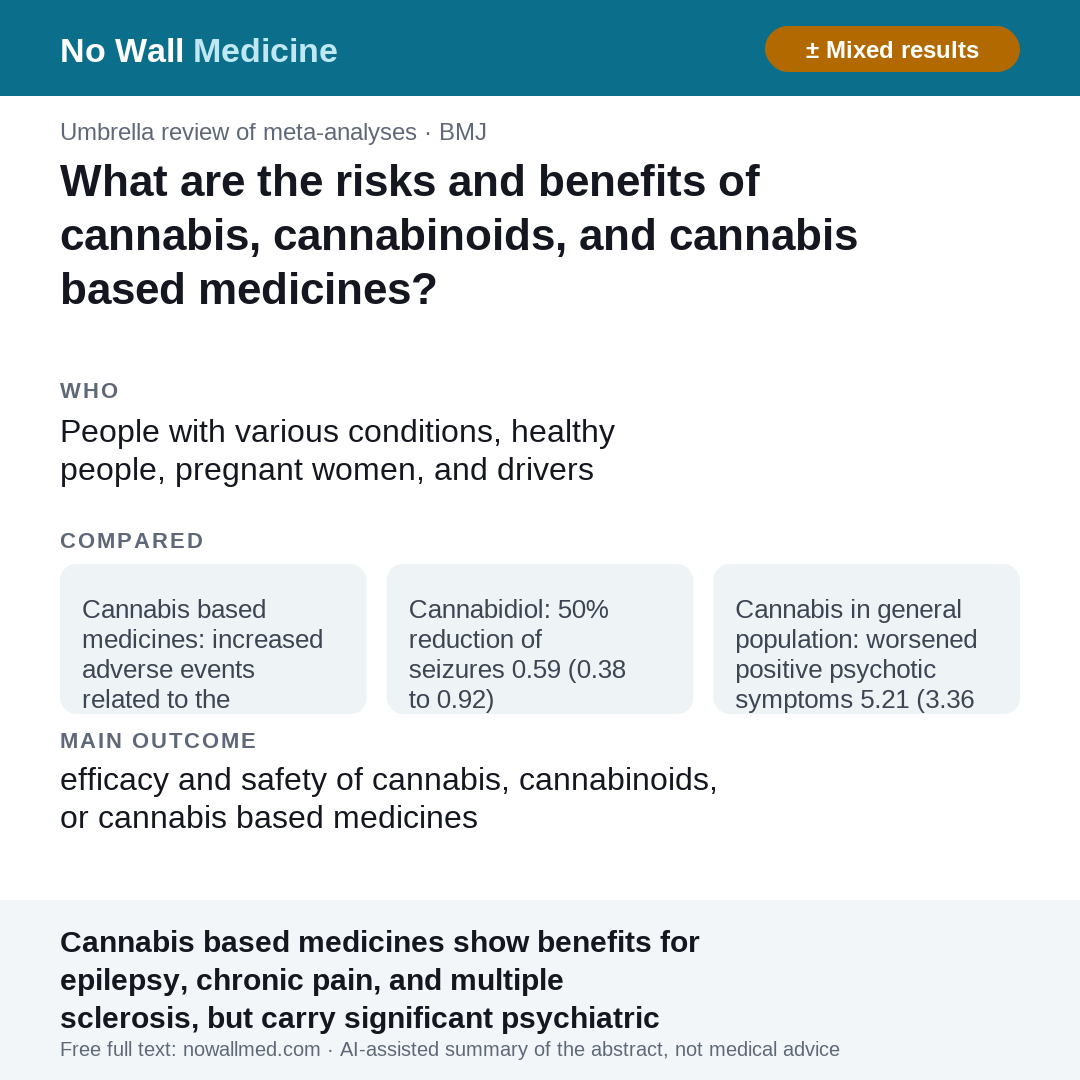
Balancing risks and benefits of cannabis use: umbrella review of meta-analyses of randomised controlled trials and observational studies
Umbrella review of meta-analysesMixed results
What are the risks and benefits of cannabis, cannabinoids, and cannabis based medicines?
Who
People with various conditions, healthy people, pregnant women, and drivers
Compared
Cannabis based medicines: increased adverse events related to the central nervous system 2.84 (95% confidence interval 2.16 to 3.73)
Cannabidiol: 50% reduction of seizures 0.59 (0.38 to 0.92)
Cannabis in general population: worsened positive psychotic symptoms 5.21 (3.36 to 8.01)
Main outcome
efficacy and safety of cannabis, cannabinoids, or cannabis based medicines
Bottom line: Cannabis based medicines show benefits for epilepsy, chronic pain, and multiple sclerosis, but carry significant psychiatric and physical risks.
BMJ · 2023-08-30Download image
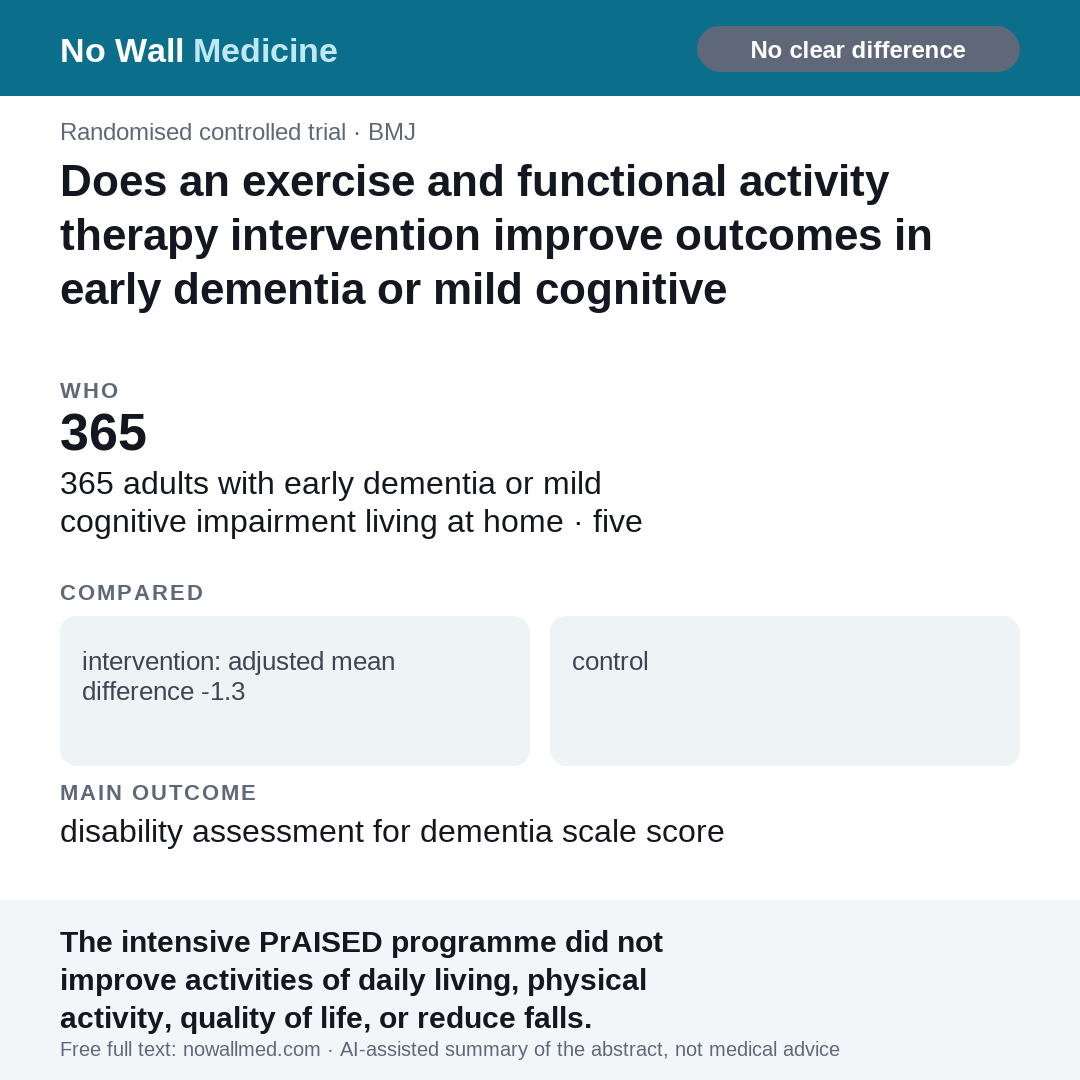
Promoting Activity, Independence, and Stability in Early Dementia and mild cognitive impairment (PrAISED): randomised controlled trial
Randomised controlled trialNo clear difference
Does an exercise and functional activity therapy intervention improve outcomes in early dementia or mild cognitive impairment?
Who
365
365 adults with early dementia or mild cognitive impairment living at home · five sites in the United Kingdom
Compared
intervention: adjusted mean difference -1.3
control
Main outcome
disability assessment for dementia scale score
Result: adjusted mean difference -1.3, 95% confidence interval -5.2 to 2.6
Bottom line: The intensive PrAISED programme did not improve activities of daily living, physical activity, quality of life, or reduce falls.
BMJ · 2023-08-29Download image
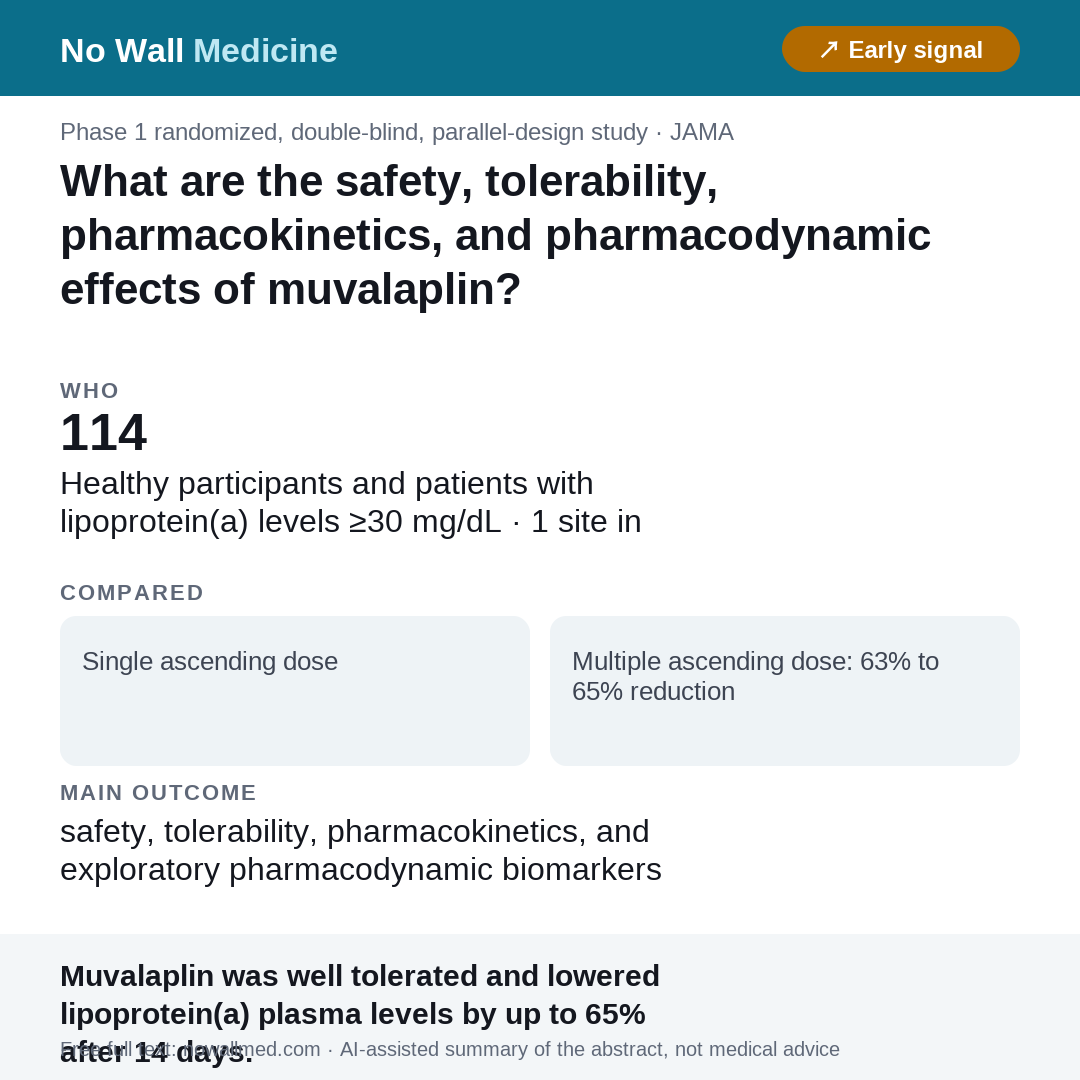
Muvalaplin, an Oral Small Molecule Inhibitor of Lipoprotein(a) Formation: A Randomized Clinical Trial
Phase 1 randomized, double-blind, parallel-design studyBenefit found
What are the safety, tolerability, pharmacokinetics, and pharmacodynamic effects of muvalaplin?
Who
114
Healthy participants and patients with lipoprotein(a) levels ≥30 mg/dL · 1 site in the Netherlands
Compared
Single ascending dose
Multiple ascending dose: 63% to 65% reduction
Main outcome
safety, tolerability, pharmacokinetics, and exploratory pharmacodynamic biomarkers
Bottom line: Muvalaplin was well tolerated and lowered lipoprotein(a) plasma levels by up to 65% after 14 days.
JAMA · 2023-08-28Download image
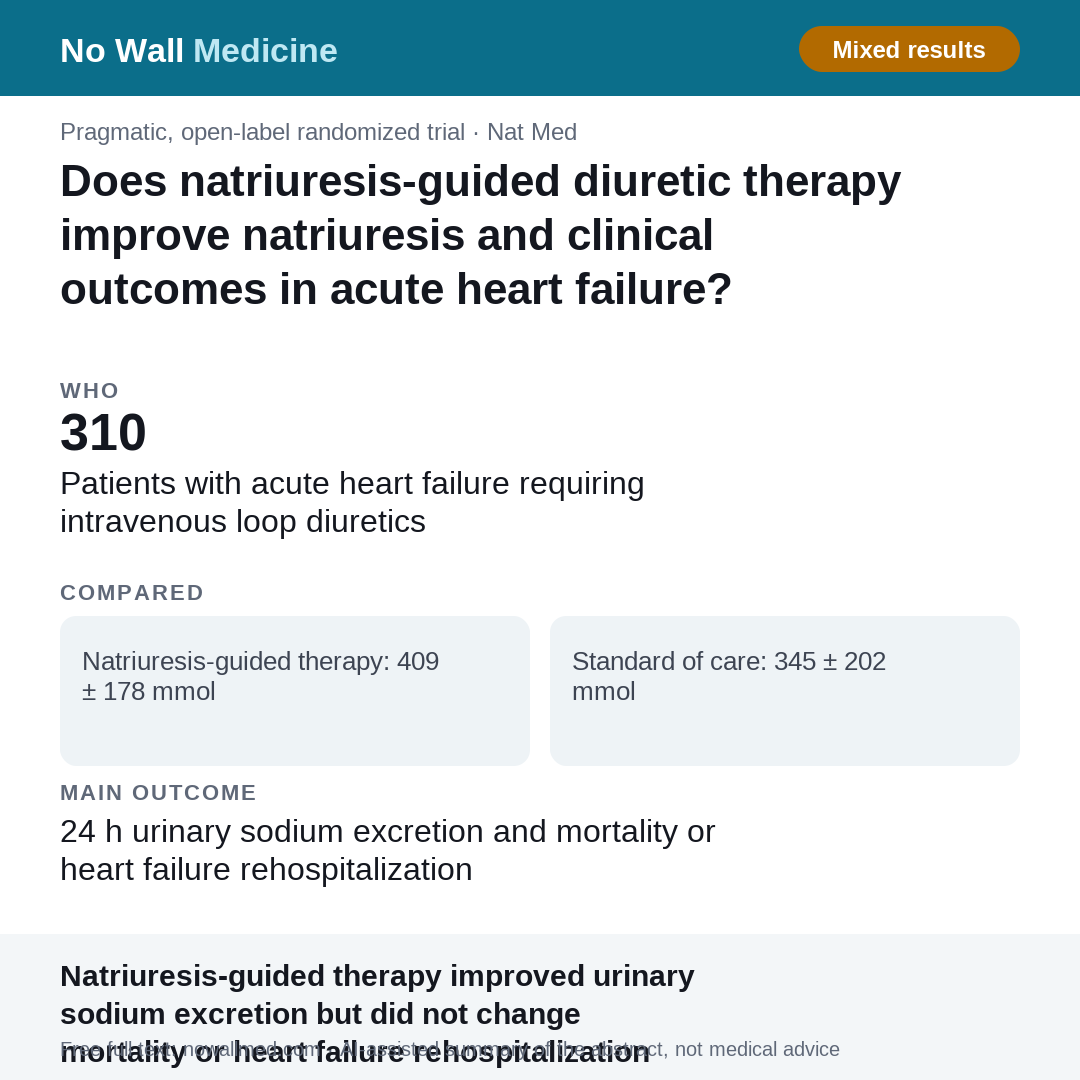
Natriuresis-guided diuretic therapy in acute heart failure: a pragmatic randomized trial
Pragmatic, open-label randomized trialMixed results
Does natriuresis-guided diuretic therapy improve natriuresis and clinical outcomes in acute heart failure?
Who
310
Patients with acute heart failure requiring intravenous loop diuretics
Compared
Natriuresis-guided therapy: 409 ± 178 mmol
Standard of care: 345 ± 202 mmol
Main outcome
24 h urinary sodium excretion and mortality or heart failure rehospitalization
Result: hazard ratio 0.92 (95% confidence interval 0.62-1.38)
Bottom line: Natriuresis-guided therapy improved urinary sodium excretion but did not change mortality or heart failure rehospitalization rates.
Nat Med · 2023-08-28Download image
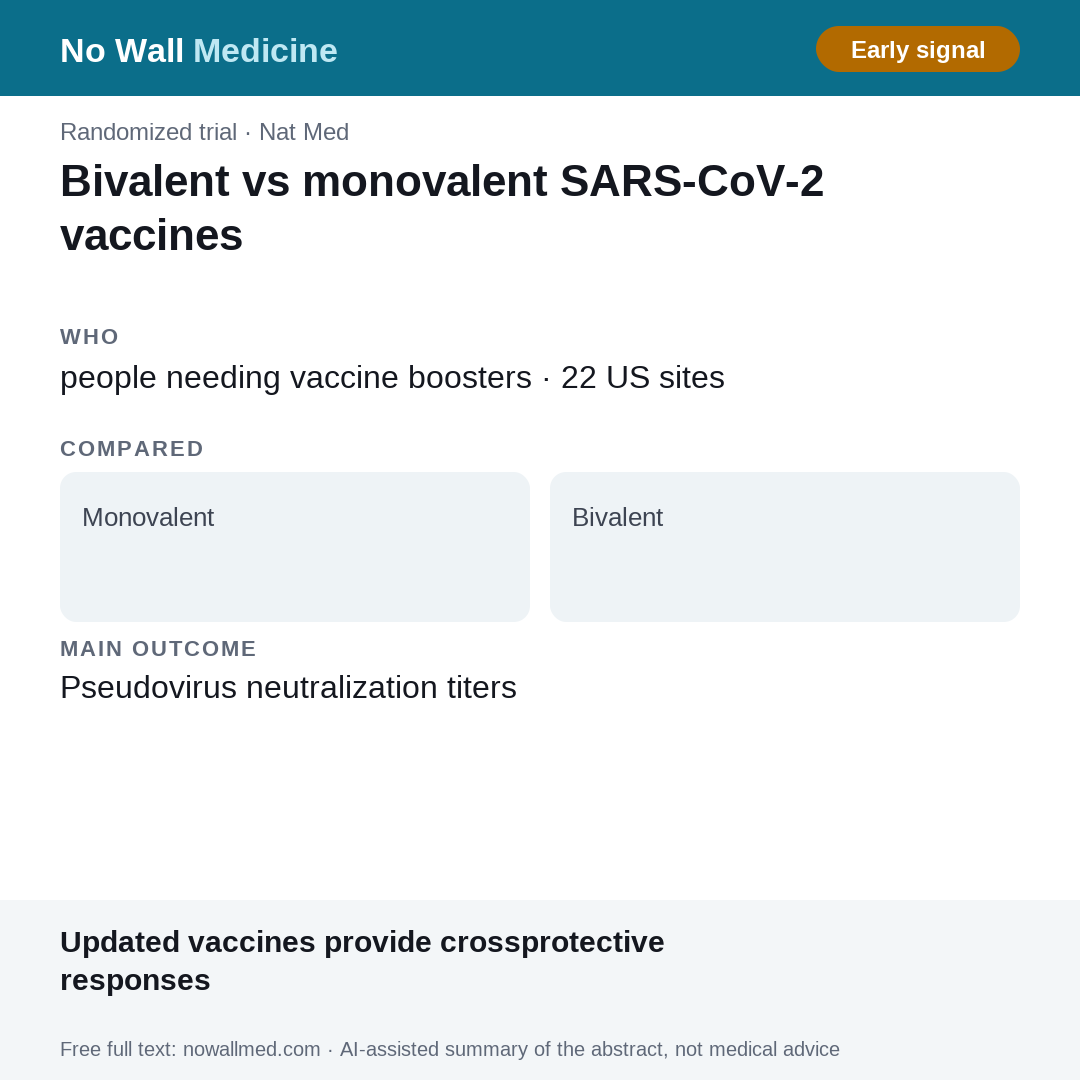
Comparison of bivalent and monovalent SARS-CoV-2 variant vaccines: the phase 2 randomized open-label COVAIL trial
Randomized trialBenefit found
Bivalent vs monovalent SARS-CoV-2 vaccines
Who
people needing vaccine boosters · 22 US sites
Compared
Monovalent
Bivalent
Main outcome
Pseudovirus neutralization titers
Bottom line: Updated vaccines provide crossprotective responses
Nat Med · 2023-08-28Download image
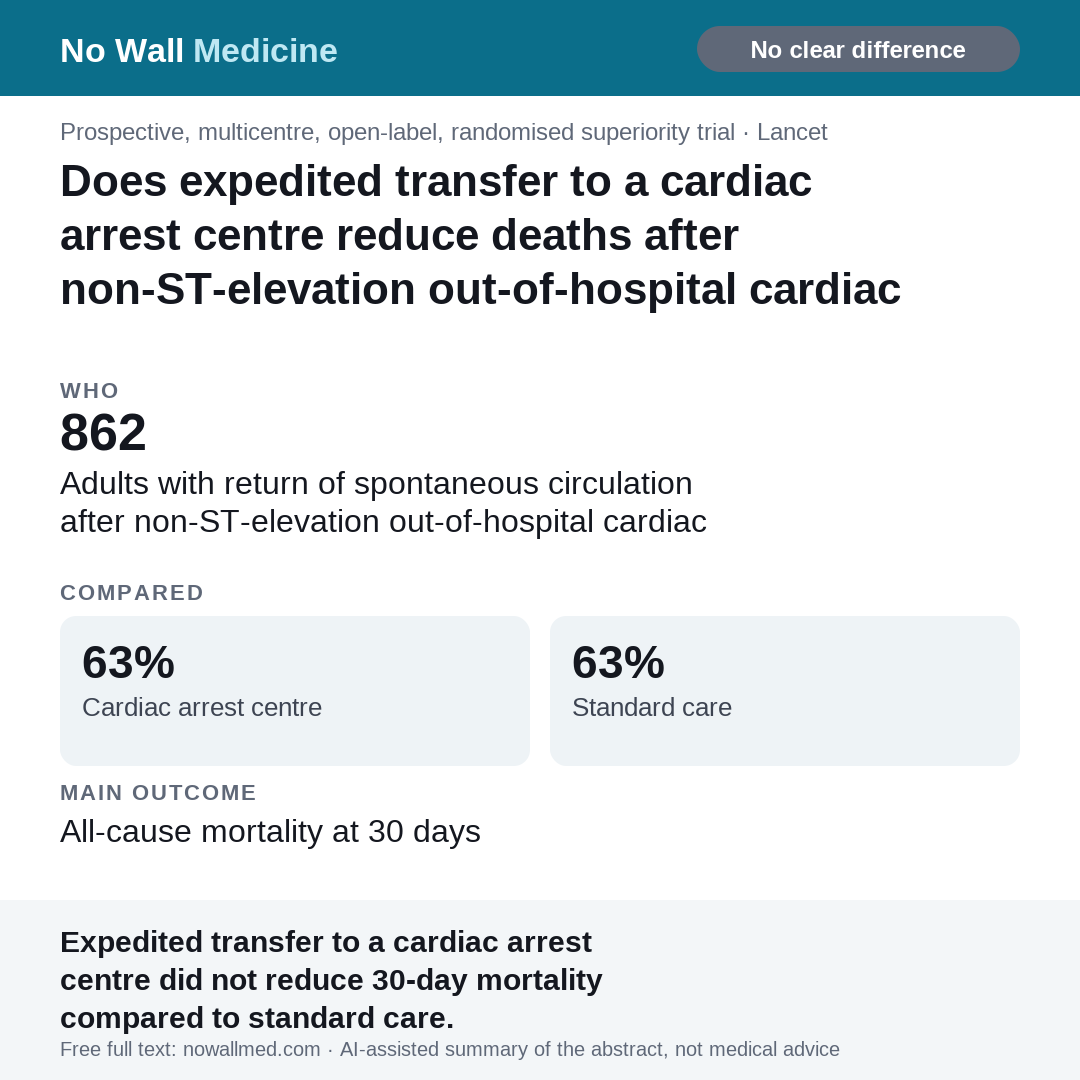
Expedited transfer to a cardiac arrest centre for non-ST-elevation out-of-hospital cardiac arrest (ARREST): a UK prospective, multicentre, parallel, randomised clinical trial
Prospective, multicentre, open-label, randomised superiority trialNo clear difference
Does expedited transfer to a cardiac arrest centre reduce deaths after non-ST-elevation out-of-hospital cardiac arrest?
Who
862
Adults with return of spontaneous circulation after non-ST-elevation out-of-hospital cardiac arrest · London, United Kingdom
Compared
63%Cardiac arrest centre (258/411)
63%Standard care (258/412)
Main outcome
All-cause mortality at 30 days
Result: unadjusted risk ratio for survival 1·00 (95% CI 0·90-1·11)
Bottom line: Expedited transfer to a cardiac arrest centre did not reduce 30-day mortality compared to standard care.
Funded by: British Heart Foundation
Lancet · 2023-08-27Download image
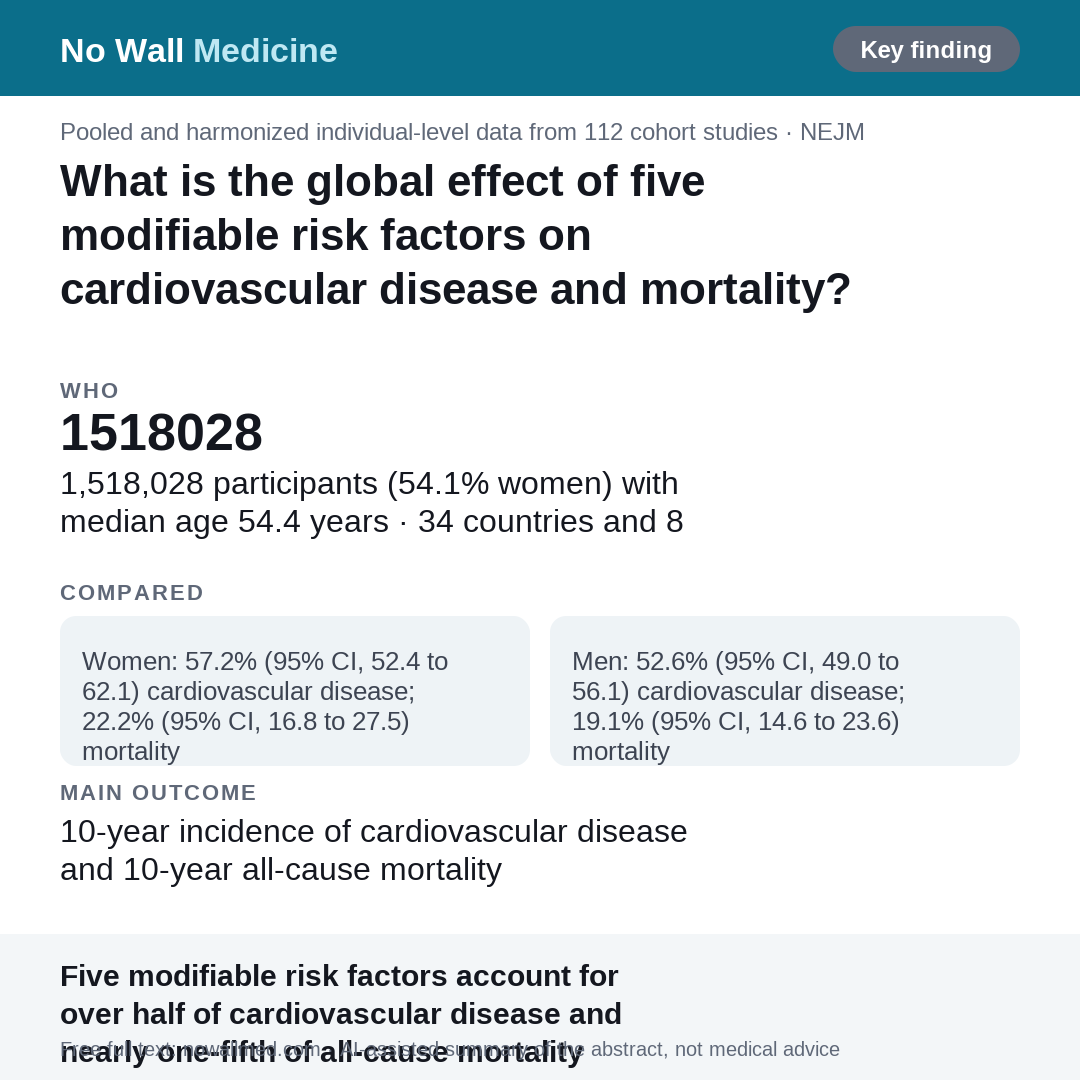
Global Effect of Modifiable Risk Factors on Cardiovascular Disease and Mortality
Pooled and harmonized individual-level data from 112 cohort studiesBenefit found
What is the global effect of five modifiable risk factors on cardiovascular disease and mortality?
Who
1518028
1,518,028 participants (54.1% women) with median age 54.4 years · 34 countries and 8 geographic regions
Compared
Women: 57.2% (95% CI, 52.4 to 62.1) cardiovascular disease; 22.2% (95% CI, 16.8 to 27.5) mortality
Men: 52.6% (95% CI, 49.0 to 56.1) cardiovascular disease; 19.1% (95% CI, 14.6 to 23.6) mortality
Main outcome
10-year incidence of cardiovascular disease and 10-year all-cause mortality
Bottom line: Five modifiable risk factors account for over half of cardiovascular disease and nearly one-fifth of all-cause mortality globally.
Funded by: German Center for Cardiovascular Research (DZHK)
NEJM · 2023-08-26Download image
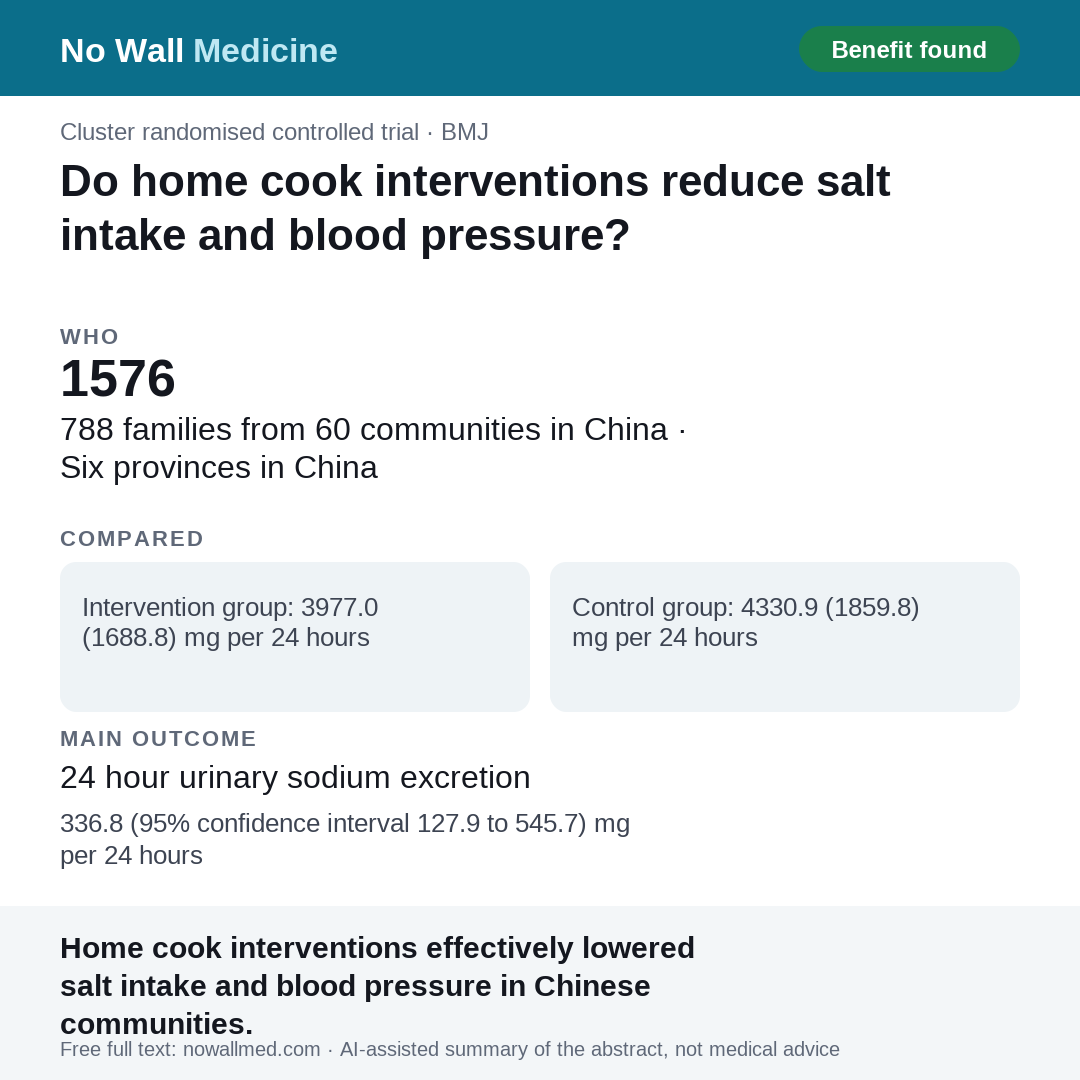
Effect of home cook interventions for salt reduction in China: cluster randomised controlled trial
Cluster randomised controlled trialBenefit found
Do home cook interventions reduce salt intake and blood pressure?
Who
1576
788 families from 60 communities in China · Six provinces in China
Compared
Intervention group: 3977.0 (1688.8) mg per 24 hours
Control group: 4330.9 (1859.8) mg per 24 hours
Main outcome
24 hour urinary sodium excretion
Result: 336.8 (95% confidence interval 127.9 to 545.7) mg per 24 hours
Bottom line: Home cook interventions effectively lowered salt intake and blood pressure in Chinese communities.
BMJ · 2023-08-24Download image
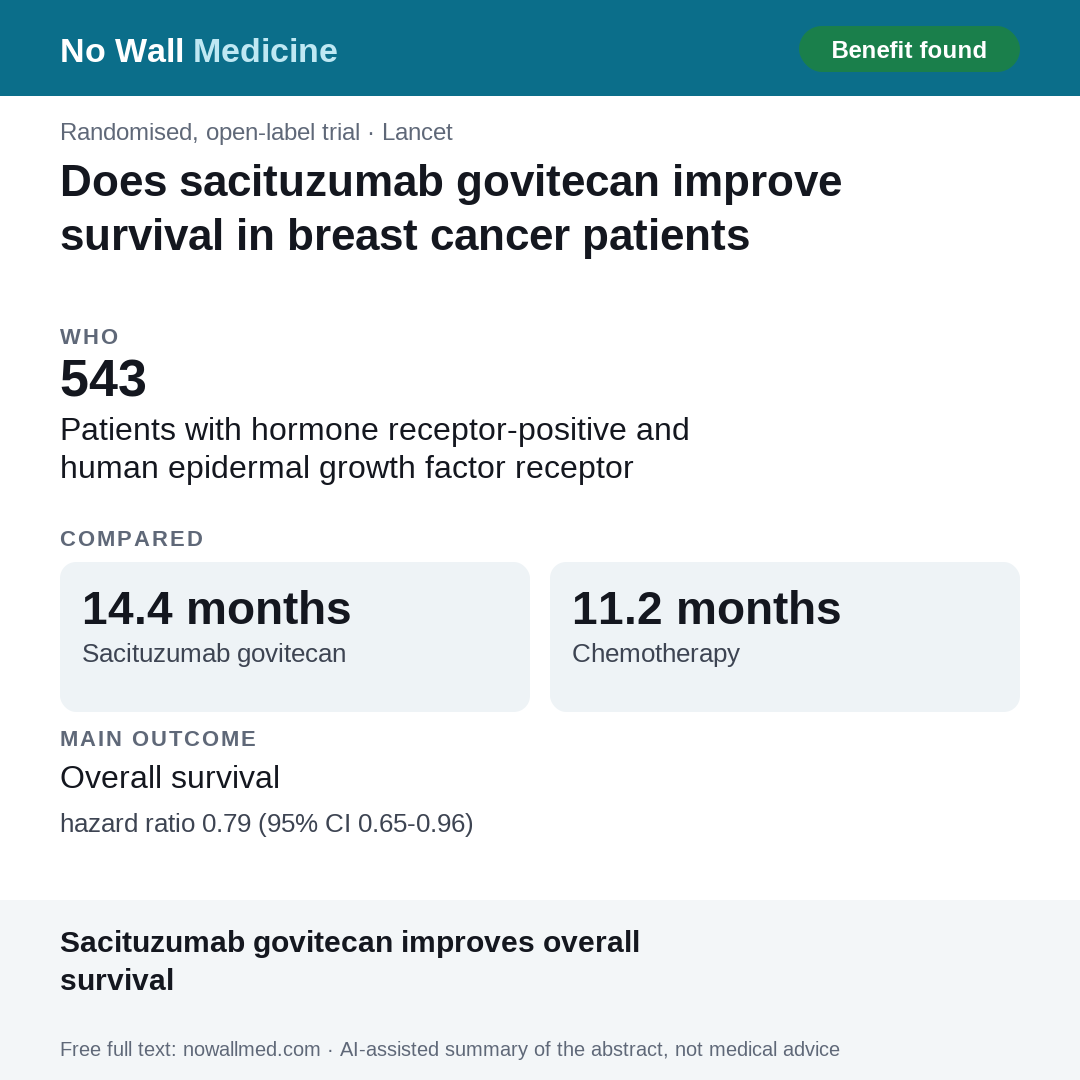
Overall survival with sacituzumab govitecan in hormone receptor-positive and human epidermal growth factor receptor 2-negative metastatic breast cancer (TROPiCS-02): a randomised, open-label, multicentre, phase 3 trial
Randomised, open-label trialBenefit found
Does sacituzumab govitecan improve survival in breast cancer patients
Who
543
Patients with hormone receptor-positive and human epidermal growth factor receptor 2-negative metastatic breast cancer · Ninety-one centres across North America and Europe
Compared
14.4 monthsSacituzumab govitecan (95% CI 13.0-15.7)
11.2 monthsChemotherapy (10.1-12.7)
Main outcome
Overall survival
Result: hazard ratio 0.79 (95% CI 0.65-0.96)
Bottom line: Sacituzumab govitecan improves overall survival
Funded by: Gilead Sciences
Lancet · 2023-08-23Download image
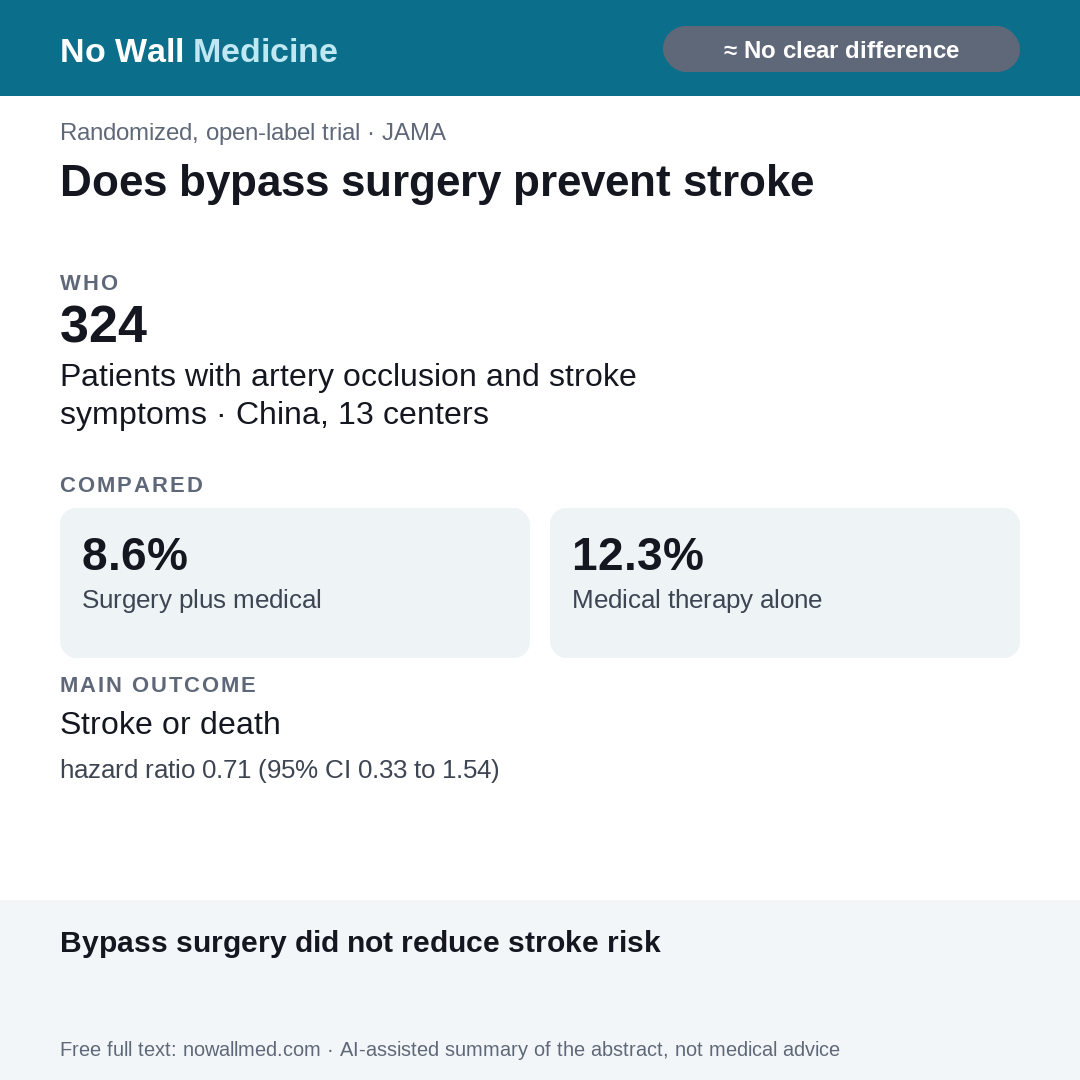
Extracranial-Intracranial Bypass and Risk of Stroke and Death in Patients With Symptomatic Artery Occlusion: The CMOSS Randomized Clinical Trial
Randomized, open-label trialNo clear difference
Does bypass surgery prevent stroke
Who
324
Patients with artery occlusion and stroke symptoms · China, 13 centers
Compared
8.6%Surgery plus medical (13/151)
12.3%Medical therapy alone (19/155)
Main outcome
Stroke or death
Result: hazard ratio 0.71 (95% CI 0.33 to 1.54)
Bottom line: Bypass surgery did not reduce stroke risk
JAMA · 2023-08-22Download image
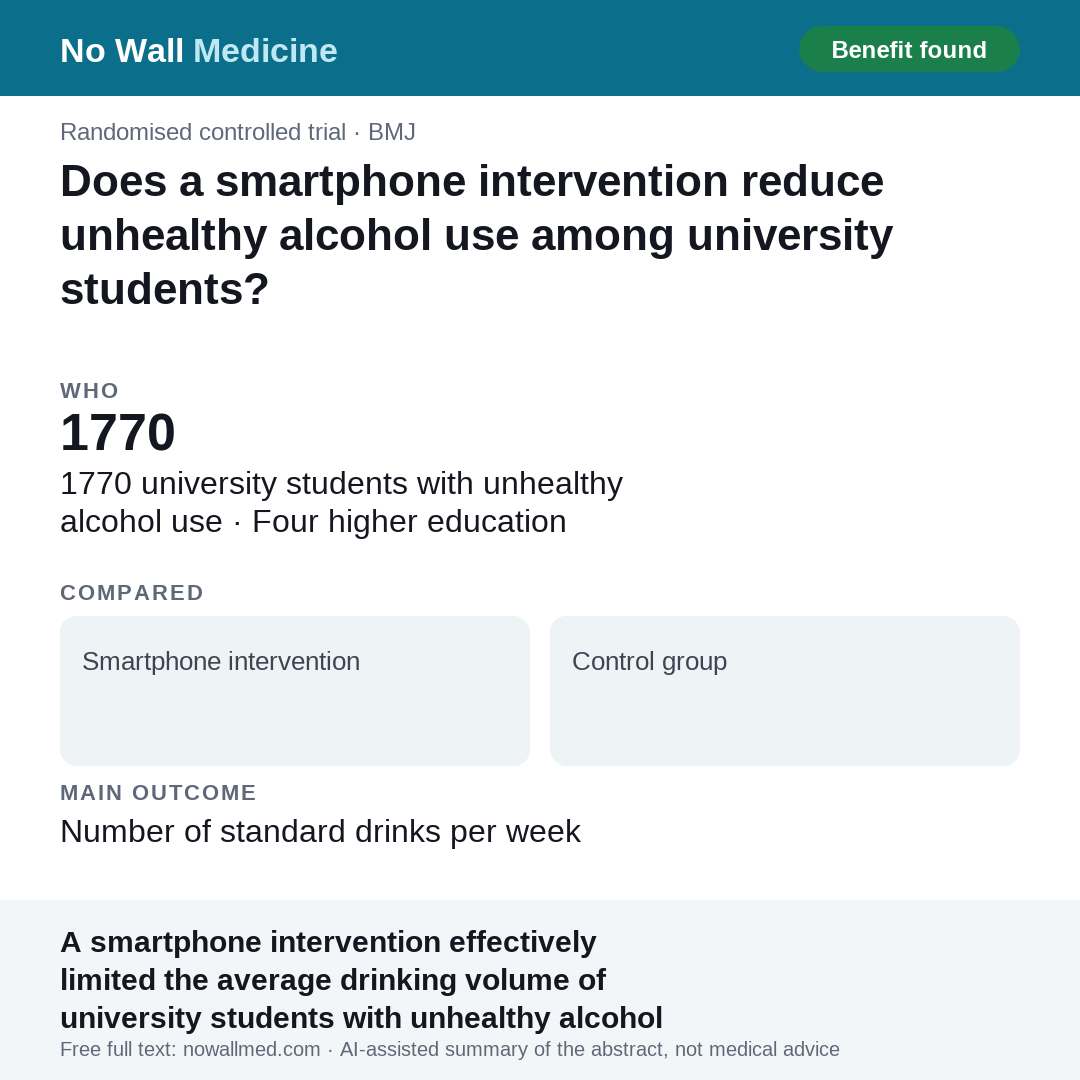
Effect of a smartphone intervention as a secondary prevention for use among university students with unhealthy alcohol use: randomised controlled trial
Randomised controlled trialBenefit found
Does a smartphone intervention reduce unhealthy alcohol use among university students?
Who
1770
1770 university students with unhealthy alcohol use · Four higher education institutions in Switzerland
Compared
Smartphone intervention
Control group
Main outcome
Number of standard drinks per week
Result: incidence rate ratio 0.90 (95% confidence interval 0.85 to 0.96)
Bottom line: A smartphone intervention effectively limited the average drinking volume of university students with unhealthy alcohol use.
BMJ · 2023-08-16Download image
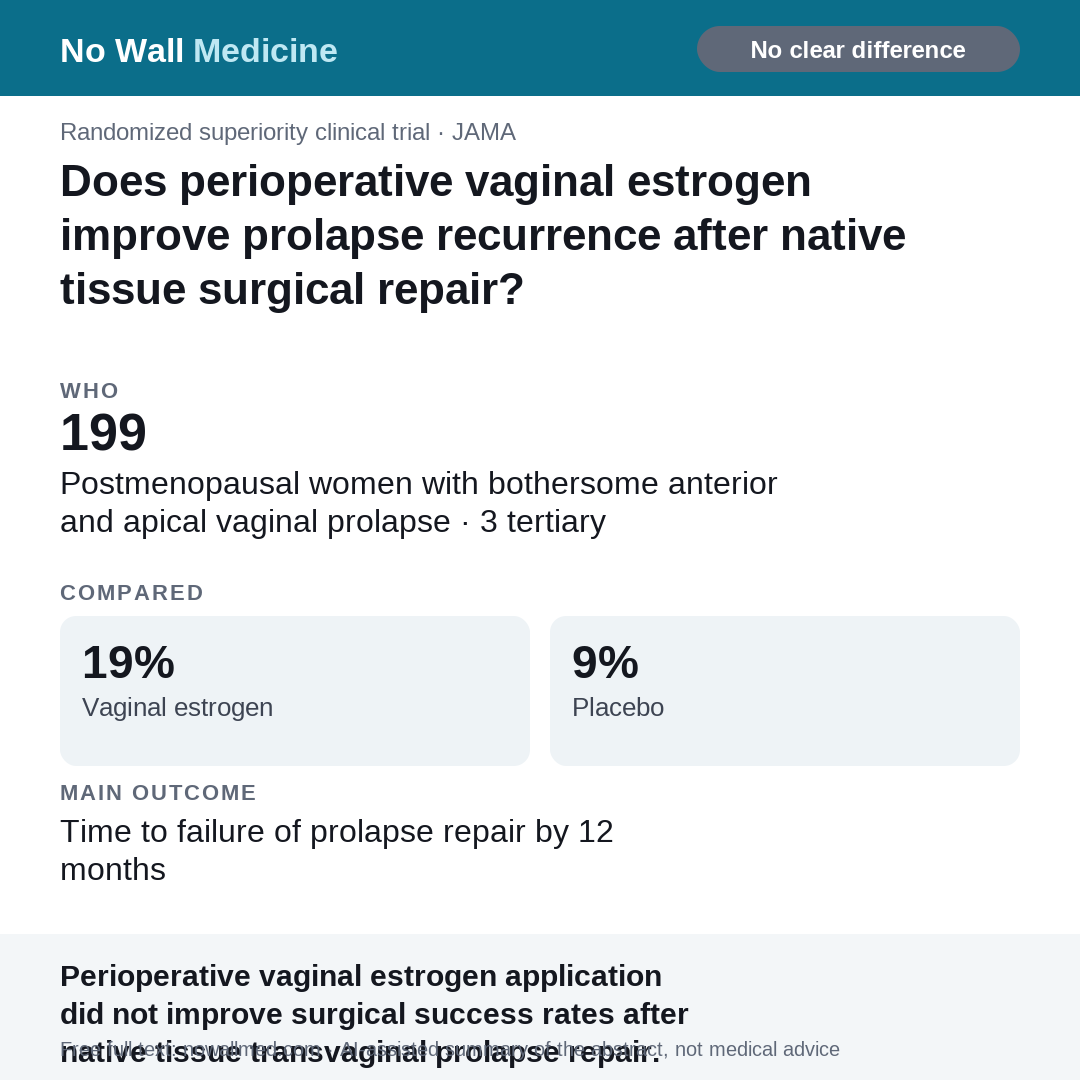
Perioperative Vaginal Estrogen as Adjunct to Native Tissue Vaginal Apical Prolapse Repair: A Randomized Clinical Trial
Randomized superiority clinical trialNo clear difference
Does perioperative vaginal estrogen improve prolapse recurrence after native tissue surgical repair?
Who
199
Postmenopausal women with bothersome anterior and apical vaginal prolapse · 3 tertiary United States clinical sites
Compared
19%Vaginal estrogen (n=20)
9%Placebo (n=10)
Main outcome
Time to failure of prolapse repair by 12 months
Result: adjusted hazard ratio 1.97 (95% CI 0.92-4.22)
Bottom line: Perioperative vaginal estrogen application did not improve surgical success rates after native tissue transvaginal prolapse repair.
JAMA · 2023-08-15Download image
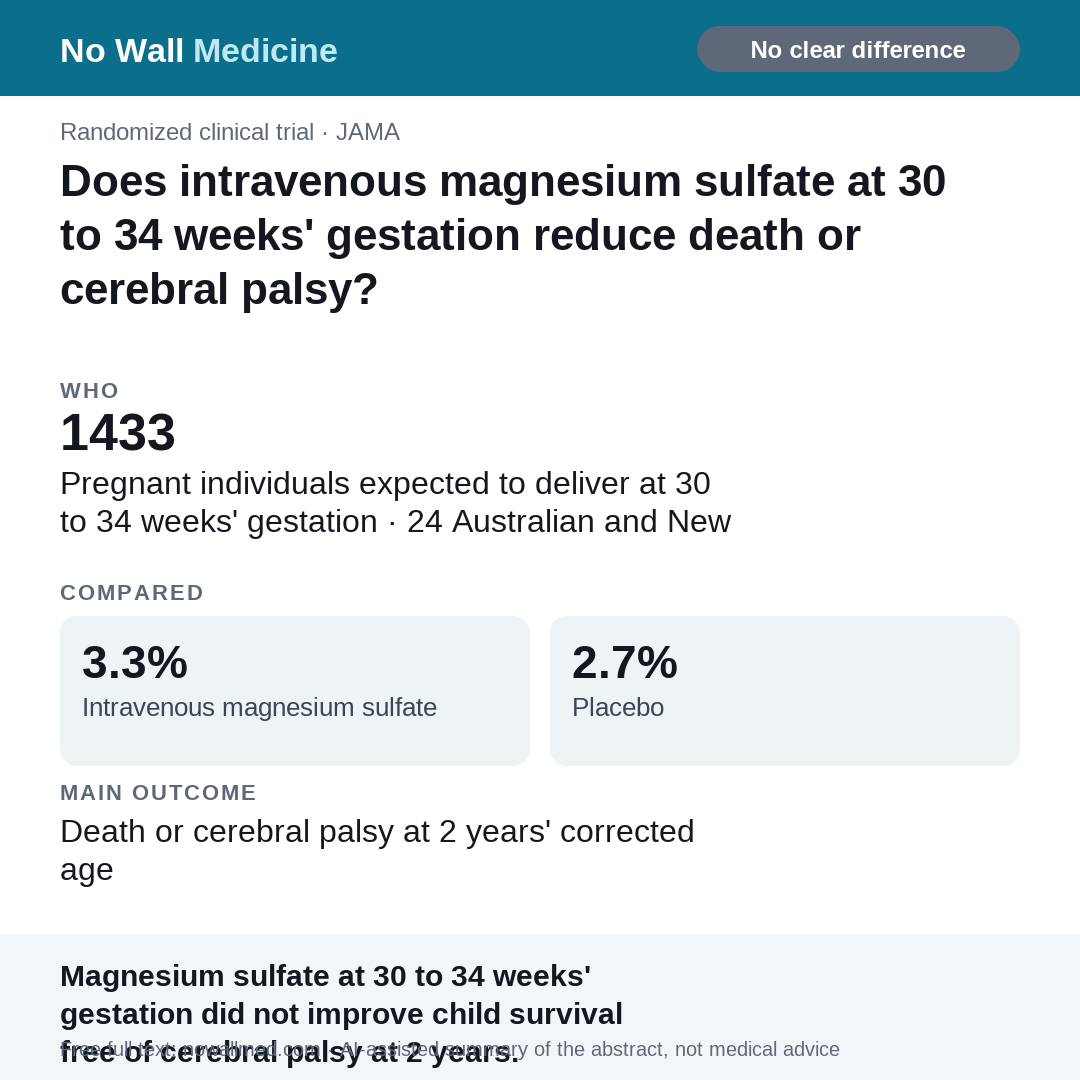
Prenatal Intravenous Magnesium at 30-34 Weeks' Gestation and Neurodevelopmental Outcomes in Offspring: The MAGENTA Randomized Clinical Trial
Randomized clinical trialNo clear difference
Does intravenous magnesium sulfate at 30 to 34 weeks' gestation reduce death or cerebral palsy?
Who
1433
Pregnant individuals expected to deliver at 30 to 34 weeks' gestation · 24 Australian and New Zealand hospitals
Compared
3.3%Intravenous magnesium sulfate (23 of 691 children)
2.7%Placebo (18 of 674 children)
Main outcome
Death or cerebral palsy at 2 years' corrected age
Result: risk difference 0.61% (95% CI -1.27% to 2.50%)
Bottom line: Magnesium sulfate at 30 to 34 weeks' gestation did not improve child survival free of cerebral palsy at 2 years.
Limitation: The study had limited power to detect small between-group differences.
JAMA · 2023-08-15Download image
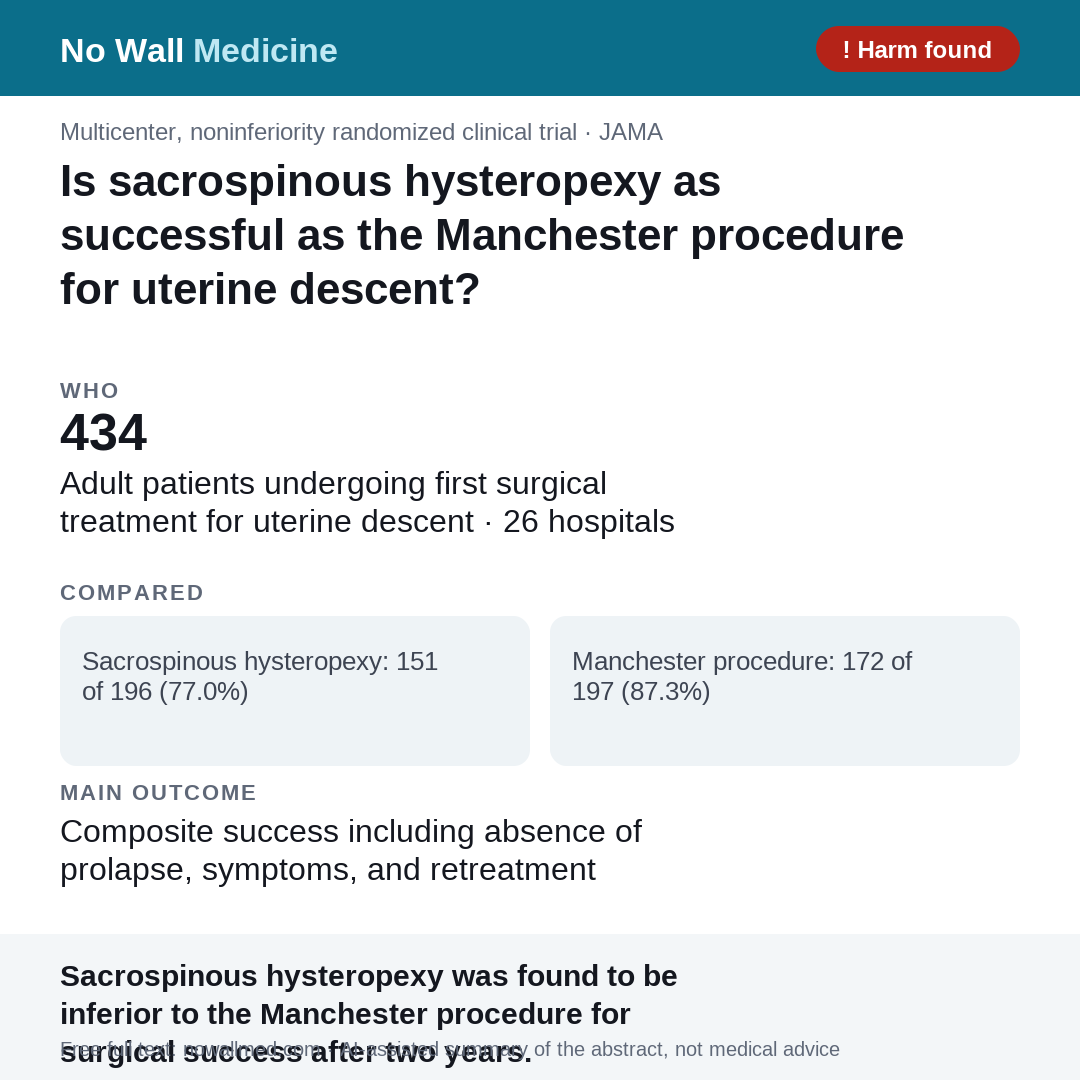
Manchester Procedure vs Sacrospinous Hysteropexy for Treatment of Uterine Descent: A Randomized Clinical Trial
Multicenter, noninferiority randomized clinical trialHarm found
Is sacrospinous hysteropexy as successful as the Manchester procedure for uterine descent?
Who
434
Adult patients undergoing first surgical treatment for uterine descent · 26 hospitals in the Netherlands
Compared
Sacrospinous hysteropexy: 151 of 196 (77.0%)
Manchester procedure: 172 of 197 (87.3%)
Main outcome
Composite success including absence of prolapse, symptoms, and retreatment
Result: risk difference, -10.3%; 95% CI, -17.8% to -2.8%
Bottom line: Sacrospinous hysteropexy was found to be inferior to the Manchester procedure for surgical success after two years.
JAMA · 2023-08-15Download image
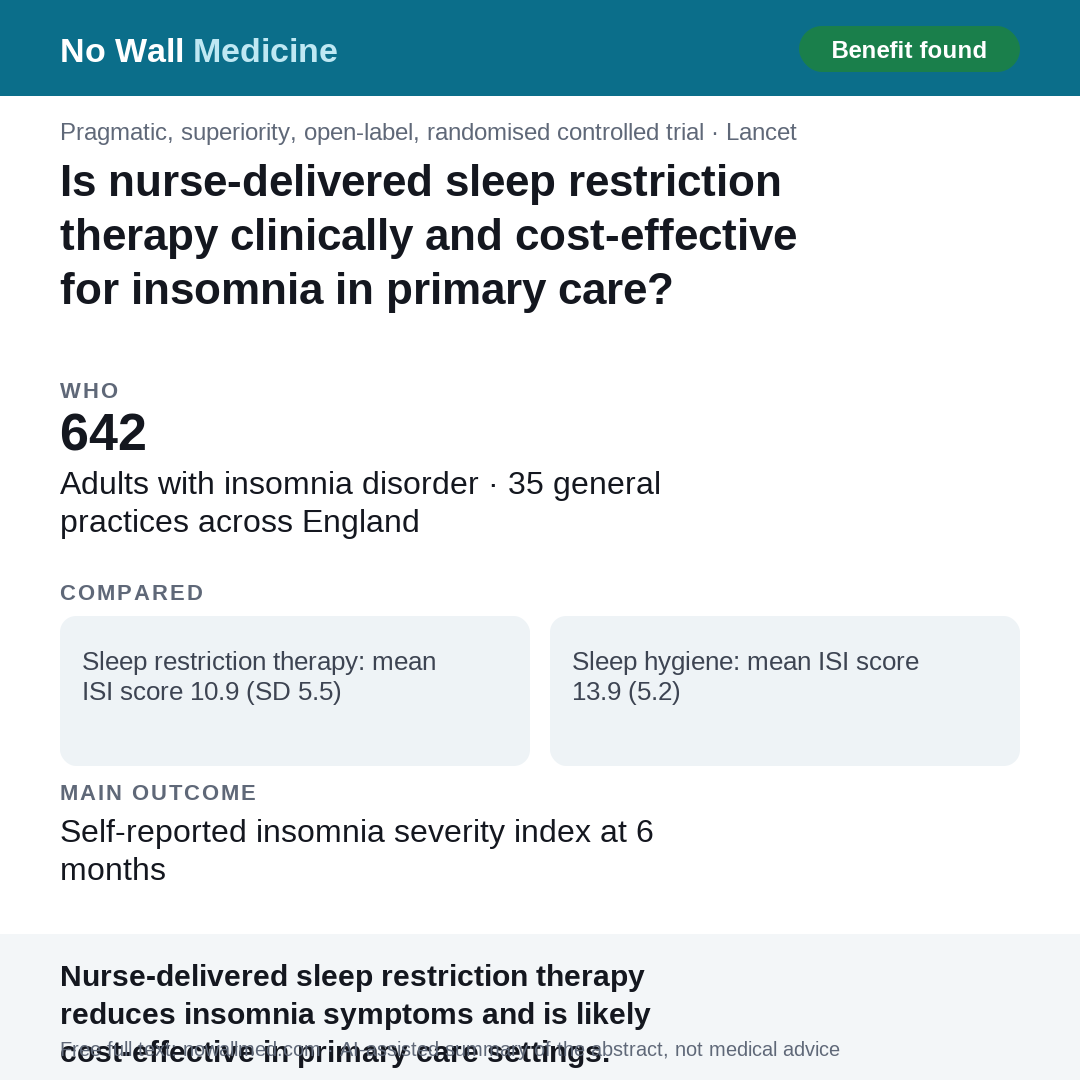
Clinical and cost-effectiveness of nurse-delivered sleep restriction therapy for insomnia in primary care (HABIT): a pragmatic, superiority, open-label, randomised controlled trial
Pragmatic, superiority, open-label, randomised controlled trialBenefit found
Is nurse-delivered sleep restriction therapy clinically and cost-effective for insomnia in primary care?
Who
642
Adults with insomnia disorder · 35 general practices across England
Compared
Sleep restriction therapy: mean ISI score 10.9 (SD 5.5)
Sleep hygiene: mean ISI score 13.9 (5.2)
Main outcome
Self-reported insomnia severity index at 6 months
Result: adjusted mean difference -3.05 (95% CI -3.83 to -2.28)
Bottom line: Nurse-delivered sleep restriction therapy reduces insomnia symptoms and is likely cost-effective in primary care settings.
Funded by: National Institute for Health and Care Research
Lancet · 2023-08-10Download image
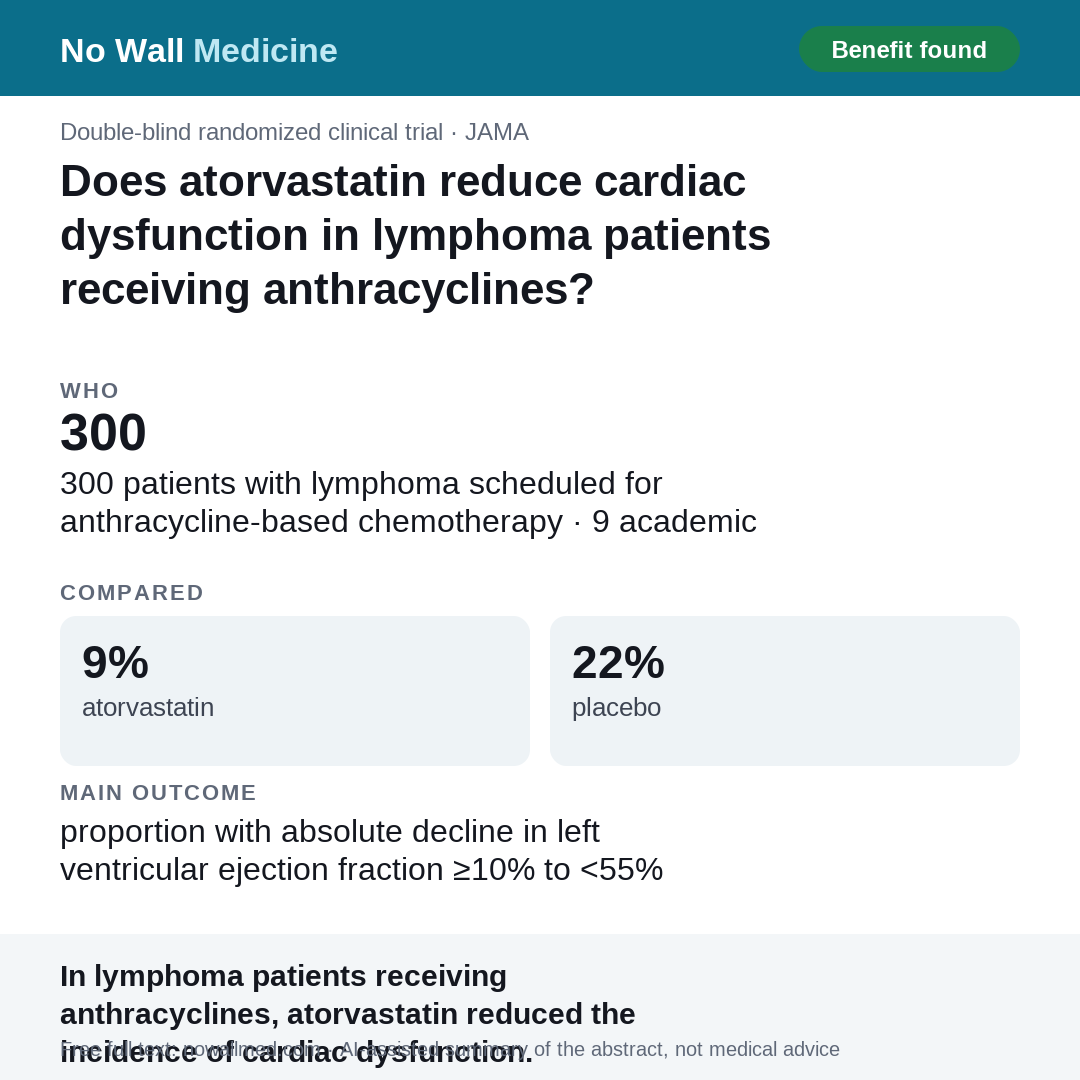
Atorvastatin for Anthracycline-Associated Cardiac Dysfunction: The STOP-CA Randomized Clinical Trial
Double-blind randomized clinical trialBenefit found
Does atorvastatin reduce cardiac dysfunction in lymphoma patients receiving anthracyclines?
Who
300
300 patients with lymphoma scheduled for anthracycline-based chemotherapy · 9 academic medical centers in the US and Canada
Compared
9%atorvastatin (13/150)
22%placebo (33/150)
Main outcome
proportion with absolute decline in left ventricular ejection fraction ≥10% to <55%
Result: odds ratio 2.9 (95% CI 1.4-6.4)
Bottom line: In lymphoma patients receiving anthracyclines, atorvastatin reduced the incidence of cardiac dysfunction.
JAMA · 2023-08-08Download image
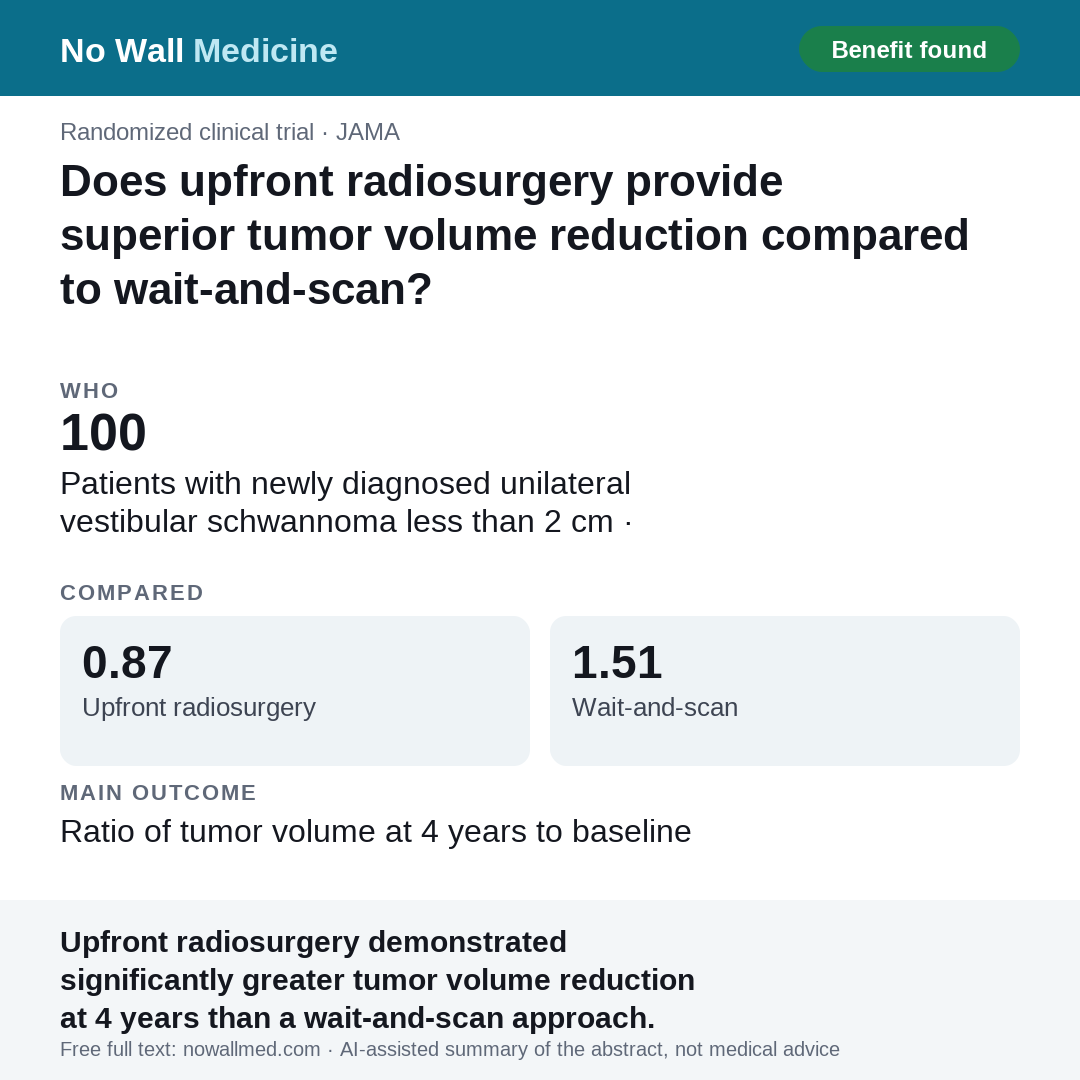
Upfront Radiosurgery vs a Wait-and-Scan Approach for Small- or Medium-Sized Vestibular Schwannoma: The V-REX Randomized Clinical Trial
Randomized clinical trialBenefit found
Does upfront radiosurgery provide superior tumor volume reduction compared to wait-and-scan?
Who
100
Patients with newly diagnosed unilateral vestibular schwannoma less than 2 cm · Norwegian National Unit for Vestibular Schwannoma
Compared
0.87Upfront radiosurgery (95% CI, 0.66-1.15)
1.51Wait-and-scan (95% CI, 1.23-1.84)
Main outcome
Ratio of tumor volume at 4 years to baseline
Result: ratio 1.73 (95% CI, 1.23-2.44)
Bottom line: Upfront radiosurgery demonstrated significantly greater tumor volume reduction at 4 years than a wait-and-scan approach.
JAMA · 2023-08-01Download image
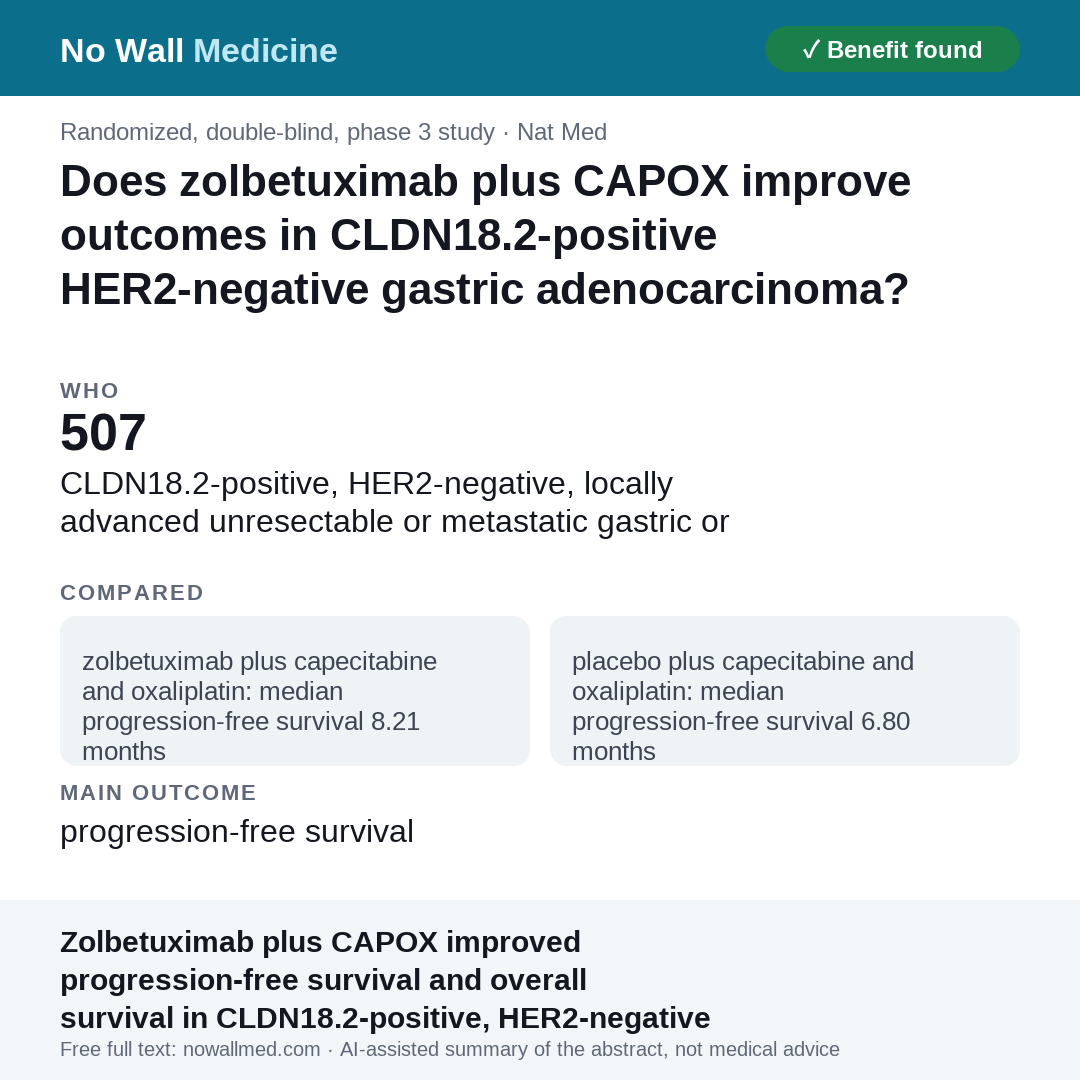
Zolbetuximab plus CAPOX in CLDN18.2-positive gastric or gastroesophageal junction adenocarcinoma: the randomized, phase 3 GLOW trial
Randomized, double-blind, phase 3 studyBenefit found
Does zolbetuximab plus CAPOX improve outcomes in CLDN18.2-positive HER2-negative gastric adenocarcinoma?
Who
507
CLDN18.2-positive, HER2-negative, locally advanced unresectable or metastatic gastric or gastroesophageal junction adenocarcinoma · global
Compared
zolbetuximab plus capecitabine and oxaliplatin: median progression-free survival 8.21 months
placebo plus capecitabine and oxaliplatin: median progression-free survival 6.80 months
Main outcome
progression-free survival
Result: hazard ratio 0.687 (95% CI 0.544-0.866)
Bottom line: Zolbetuximab plus CAPOX improved progression-free survival and overall survival in CLDN18.2-positive, HER2-negative gastric adenocarcinoma.
Nat Med · 2023-07-31Download image
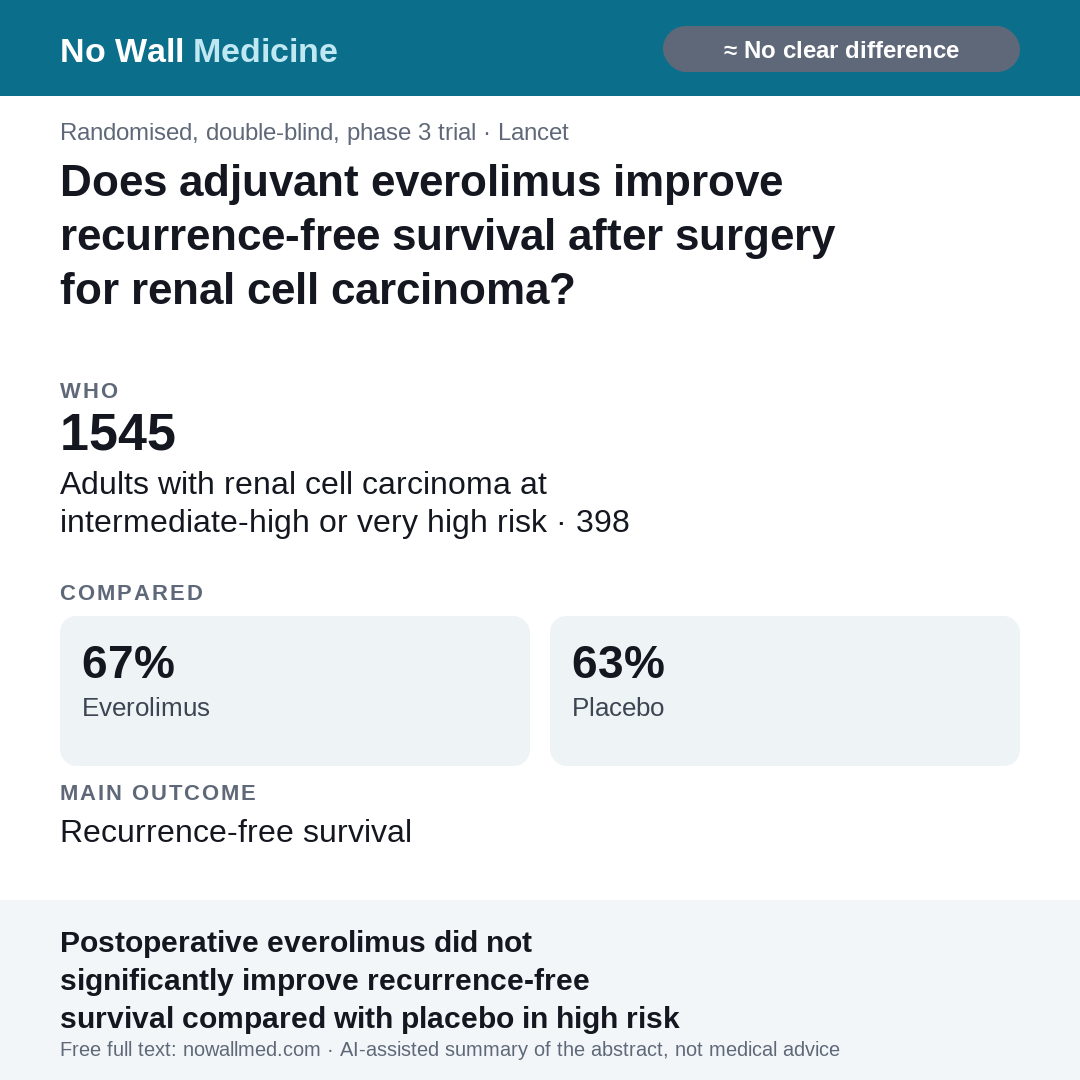
Adjuvant everolimus after surgery for renal cell carcinoma (EVEREST): a double-blind, placebo-controlled, randomised, phase 3 trial
Randomised, double-blind, phase 3 trialNo clear difference
Does adjuvant everolimus improve recurrence-free survival after surgery for renal cell carcinoma?
Who
1545
Adults with renal cell carcinoma at intermediate-high or very high risk · 398 academic and community institution centres in the USA
Compared
67%Everolimus (5-year recurrence-free survival)
63%Placebo (5-year recurrence-free survival)
Main outcome
Recurrence-free survival
Result: hazard ratio 0.85, 95% CI 0.72-1.00
Bottom line: Postoperative everolimus did not significantly improve recurrence-free survival compared with placebo in high risk renal cell carcinoma patients.
Funded by: US National Institutes of Health, National Cancer Institute, Novartis Pharmaceuticals Corporation
Lancet · 2023-07-28Download image
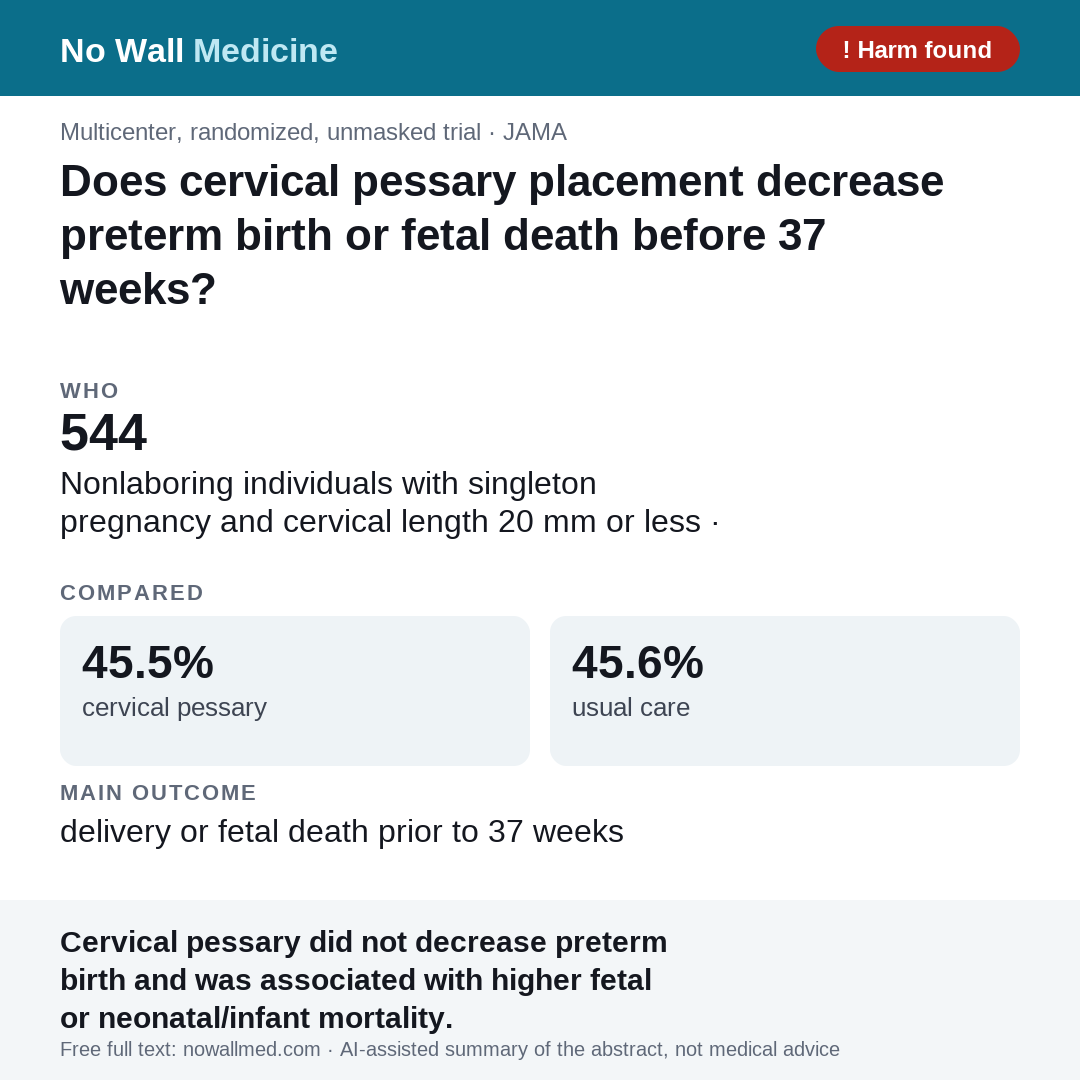
Cervical Pessary for Prevention of Preterm Birth in Individuals With a Short Cervix: The TOPS Randomized Clinical Trial
Multicenter, randomized, unmasked trialHarm found
Does cervical pessary placement decrease preterm birth or fetal death before 37 weeks?
Who
544
Nonlaboring individuals with singleton pregnancy and cervical length 20 mm or less · 12 centers in the United States
Compared
45.5%cervical pessary
45.6%usual care
Main outcome
delivery or fetal death prior to 37 weeks
Result: relative risk 1.00 (95% CI, 0.83-1.20)
Bottom line: Cervical pessary did not decrease preterm birth and was associated with higher fetal or neonatal/infant mortality.
JAMA · 2023-07-25Download image