Visual abstracts
New randomized trials and meta-analyses from leading journals at a glance: who was studied, what was compared, and what was found. Every paper is free to read in full.
All specialtiesCardiology 2338Oncology 2008Gastroenterology & Hepatology 884Infectious Disease 1452Neurology 940Psychiatry & Mental Health 1111Pulmonology 982Critical Care 651Endocrinology & Diabetes 1229Pediatrics 1368Surgery 1187Orthopedics & Sports Medicine 426Neurosurgery 292Cardiothoracic & Vascular Surgery 255Plastic & Reconstructive Surgery 356Nephrology 491Rheumatology 330Hematology 503Dermatology 272Ophthalmology 274Obstetrics & Gynecology 768Public & Global Health 431Radiology & Imaging 323Anesthesiology 472Urology 395ENT (Otolaryngology) 303Emergency Medicine 265Allergy & Immunology 145Geriatrics 498Family Medicine & Primary Care 274Medical Genetics & Genomics 253Pathology & Laboratory Medicine 75Physical Medicine & Rehabilitation 398Palliative Care 200Nutrition 617Digital Health & AI 1166General Medicine 173
Skin-Specific Outcomes of Brepocitinib in Patients With Dermatomyositis: Secondary Analysis of a Phase 3 Randomized Clinical Trial
Phase 3, double-blind, placebo-controlled, randomized trialBenefit found
What are the skin-specific effects of brepocitinib in adults with dermatomyositis?
Who
241
Adults with dermatomyositis and active skin and muscle disease · 90 sites in 20 countries
Compared
Brepocitinib 30 mg: -6.4 [5.8] mean change in CDASI-A score
Placebo: -3.5 [6.0] mean change in CDASI-A score
Main outcome
Change in Cutaneous Dermatomyositis Disease Area and Severity Index-Activity score
Result: difference, -3.0; 95% CI, -4.6 to -1.4
Bottom line: Brepocitinib 30 mg provided rapid and durable control of skin disease in patients with dermatomyositis.
JAMA Dermatol · 2026-08-26Download image

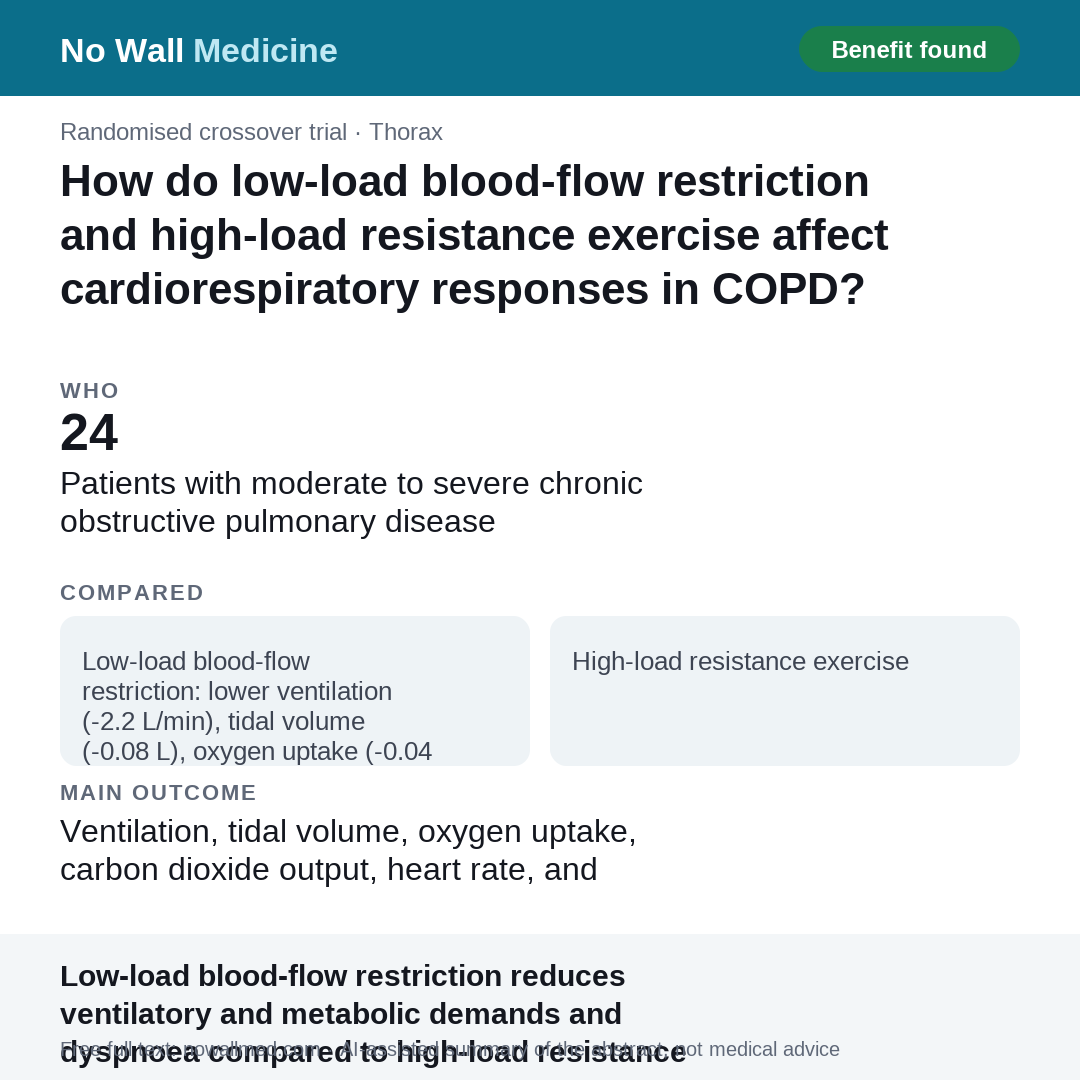
Acute cardiorespiratory responses to low-load blood-flow restriction vs high-load resistance exercise in COPD: a randomised crossover trial
Randomised crossover trialBenefit found
How do low-load blood-flow restriction and high-load resistance exercise affect cardiorespiratory responses in COPD?
Who
24
Patients with moderate to severe chronic obstructive pulmonary disease
Compared
Low-load blood-flow restriction: lower ventilation (-2.2 L/min), tidal volume (-0.08 L), oxygen uptake (-0.04 L/min), carbon dioxide output (-0.07 L/min), lower dyspnoea (RPE -0.7), higher leg effort (RPE +0.7)
High-load resistance exercise
Main outcome
Ventilation, tidal volume, oxygen uptake, carbon dioxide output, heart rate, and perceived exertion
Bottom line: Low-load blood-flow restriction reduces ventilatory and metabolic demands and dyspnoea compared to high-load resistance exercise in COPD.
Thorax · 2026-08-26Download image
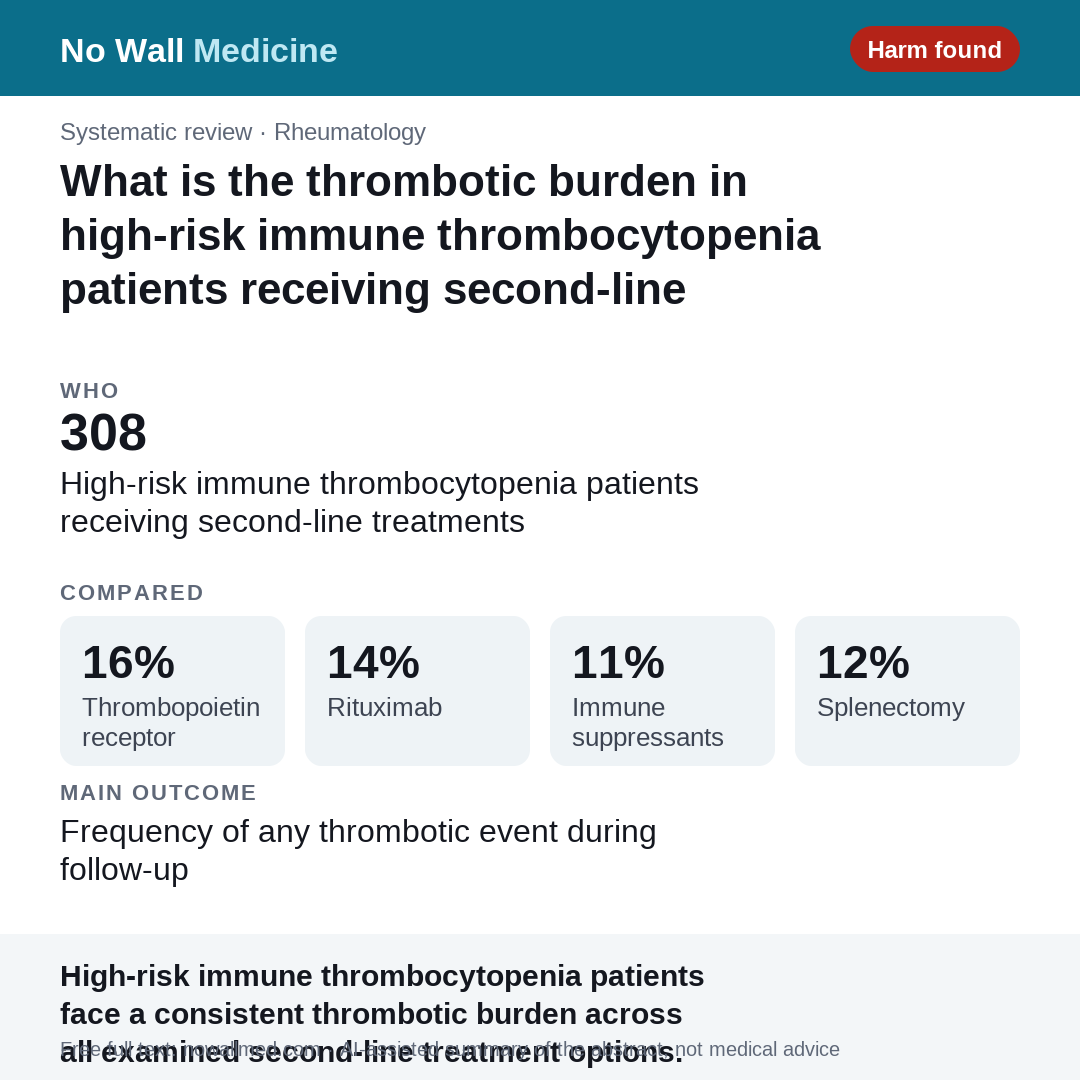
The thrombotic burden of high-risk immune thrombocytopenia patients receiving second-line treatments: a systematic review
Systematic reviewHarm found
What is the thrombotic burden in high-risk immune thrombocytopenia patients receiving second-line treatments?
Who
308
High-risk immune thrombocytopenia patients receiving second-line treatments
Compared
16%Thrombopoietin receptor agonists (95% CI 11-22)
14%Rituximab (95% CI 3-35)
11%Immune suppressants (95% CI 2-28)
12%Splenectomy (95% CI 4-24)
Main outcome
Frequency of any thrombotic event during follow-up
Result: 10% (95% CI 5-19)
Bottom line: High-risk immune thrombocytopenia patients face a consistent thrombotic burden across all examined second-line treatment options.
Rheumatology · 2026-08-26Download image
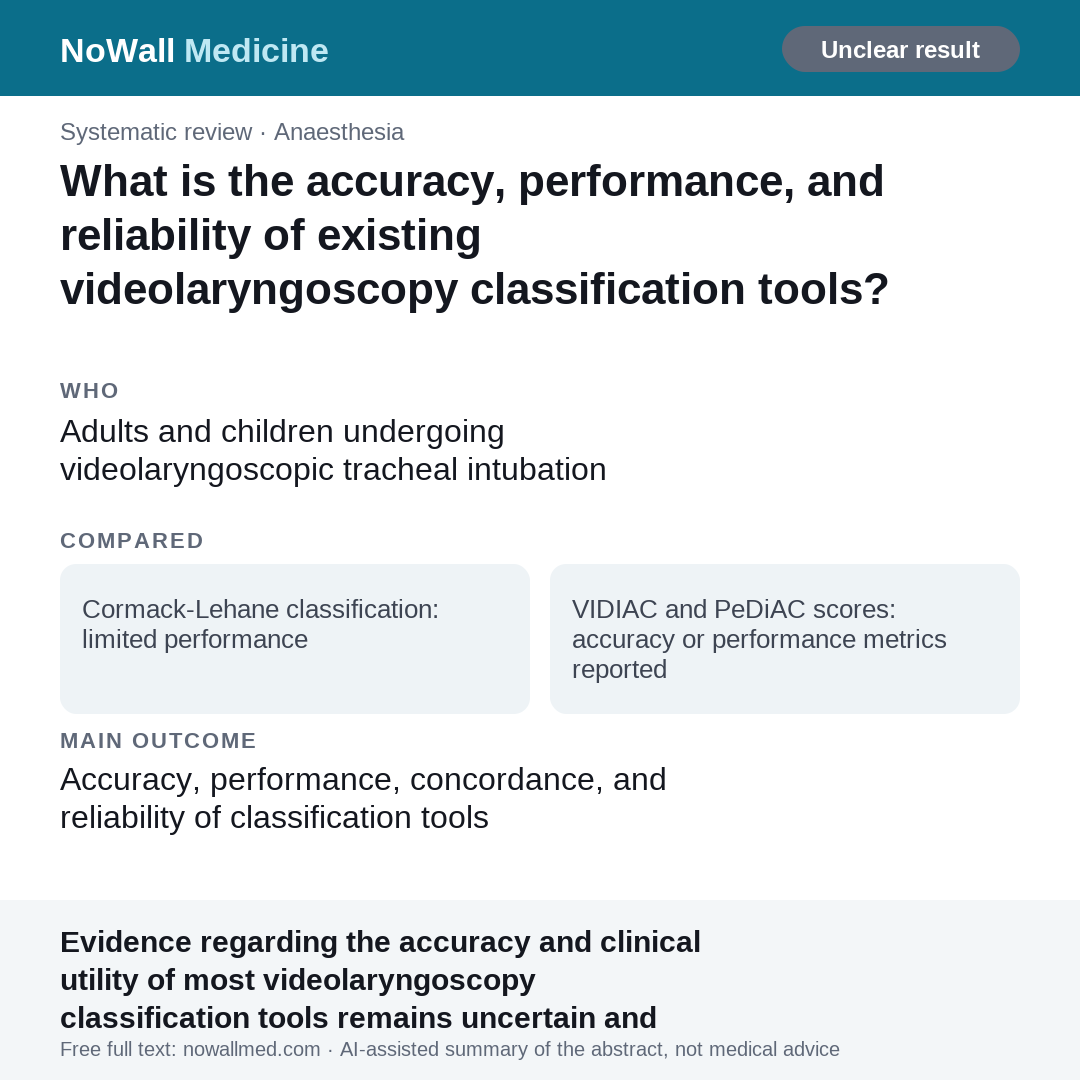
Classification of videolaryngoscopy: a systematic review
Systematic reviewUnclear result
What is the accuracy, performance, and reliability of existing videolaryngoscopy classification tools?
Who
Adults and children undergoing videolaryngoscopic tracheal intubation
Compared
Cormack-Lehane classification: limited performance
VIDIAC and PeDiAC scores: accuracy or performance metrics reported
Main outcome
Accuracy, performance, concordance, and reliability of classification tools
Bottom line: Evidence regarding the accuracy and clinical utility of most videolaryngoscopy classification tools remains uncertain and limited.
Limitation: High risk of bias regarding reference standard, flow, timing, and substantial applicability concerns.
Anaesthesia · 2026-08-26Download image
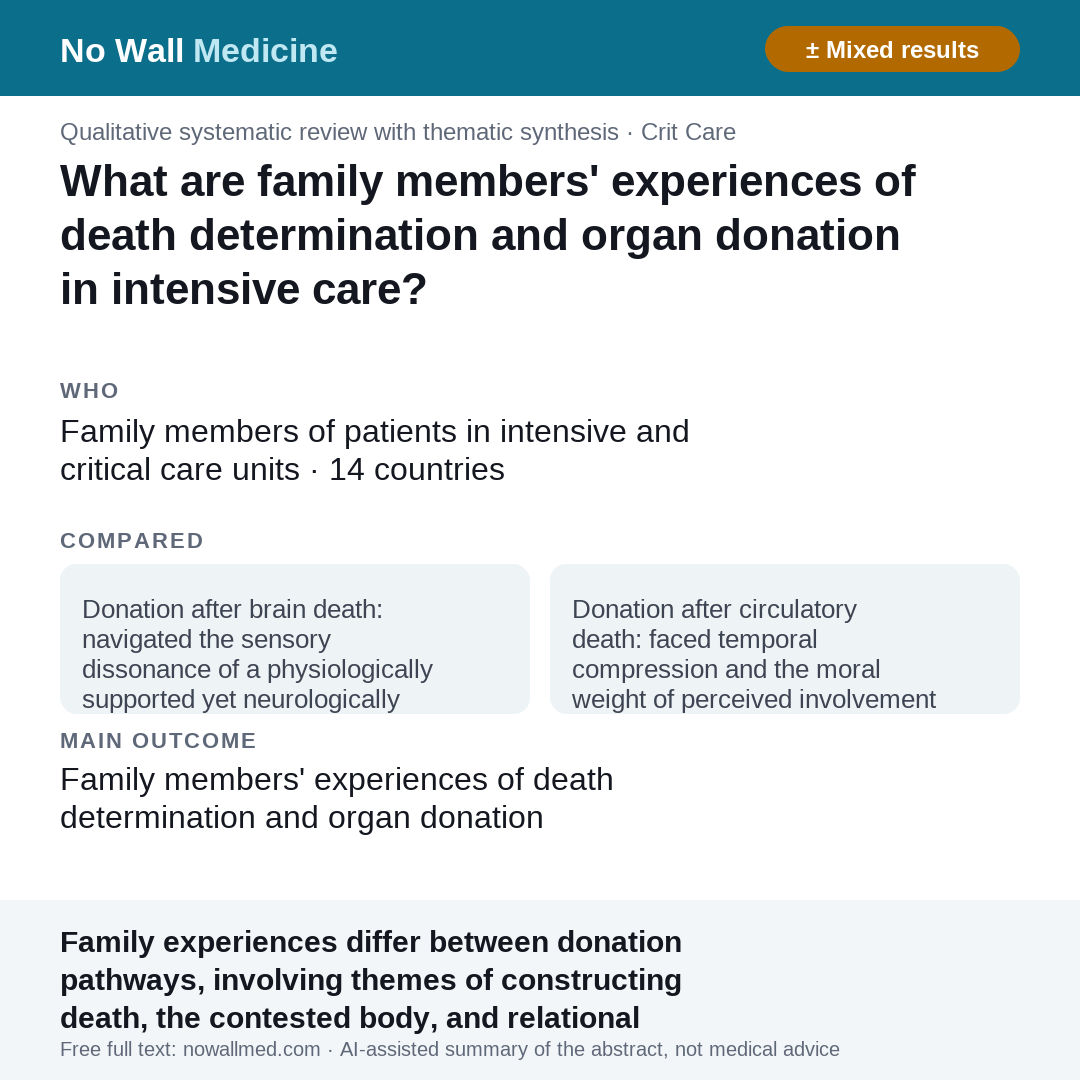
Family members' experiences of death and organ donation in intensive and critical care units: a qualitative systematic review with thematic synthesis
Qualitative systematic review with thematic synthesisMixed results
What are family members' experiences of death determination and organ donation in intensive care?
Who
Family members of patients in intensive and critical care units · 14 countries
Compared
Donation after brain death: navigated the sensory dissonance of a physiologically supported yet neurologically dead loved one
Donation after circulatory death: faced temporal compression and the moral weight of perceived involvement
Main outcome
Family members' experiences of death determination and organ donation
Bottom line: Family experiences differ between donation pathways, involving themes of constructing death, the contested body, and relational meaning-making.
Crit Care · 2026-08-26Download image
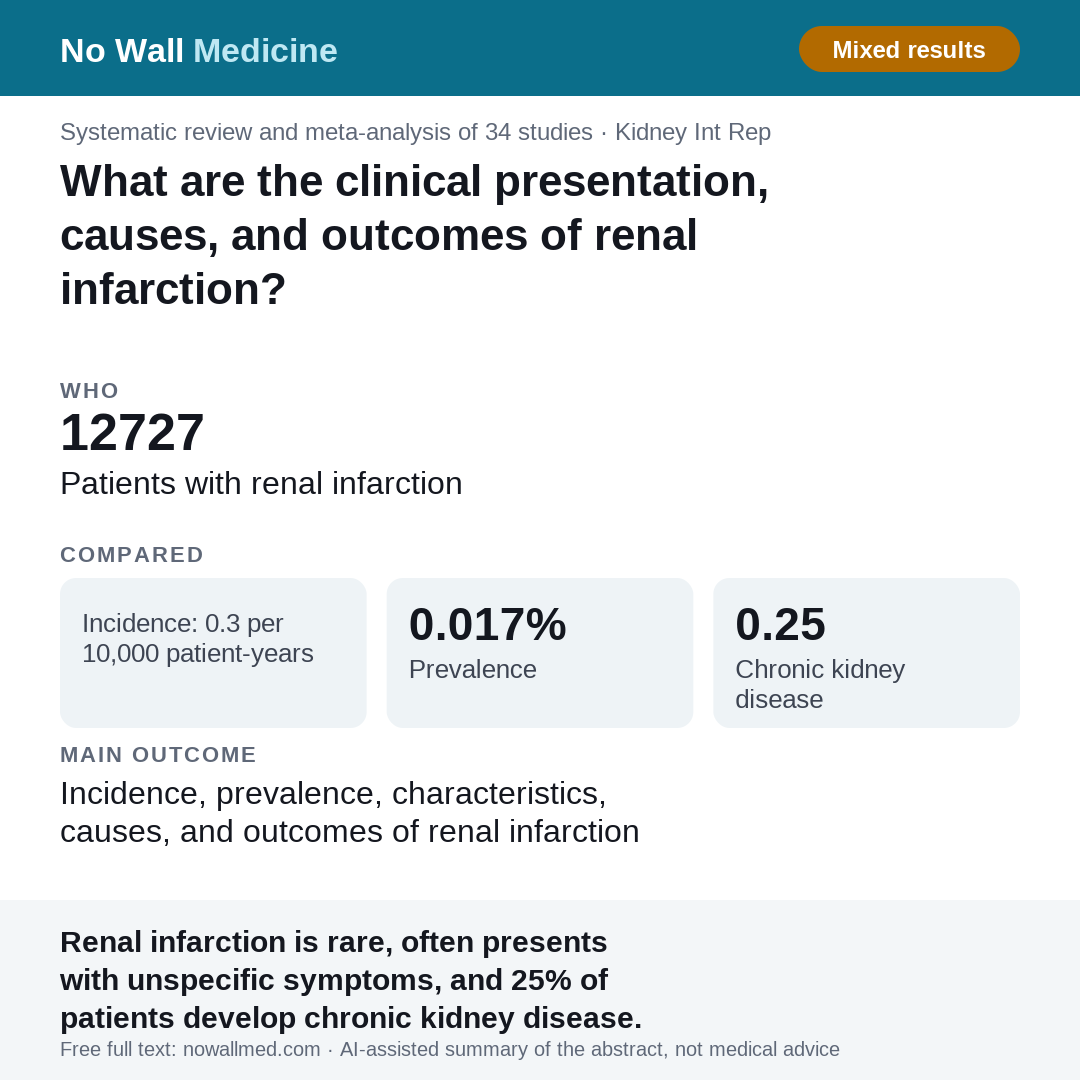
Systematic Review of Renal Infarction Clinical Presentation, Causes, and Outcomes
Systematic review and meta-analysis of 34 studiesMixed results
What are the clinical presentation, causes, and outcomes of renal infarction?
Who
12727
Patients with renal infarction
Compared
Incidence: 0.3 per 10,000 patient-years
0.017%Prevalence
0.25Chronic kidney disease
Main outcome
Incidence, prevalence, characteristics, causes, and outcomes of renal infarction
Bottom line: Renal infarction is rare, often presents with unspecific symptoms, and 25% of patients develop chronic kidney disease.
Kidney Int Rep · 2026-08-26Download image
Efficacy and Safety of Nerve Wrapping in Recurrent Upper-extremity Compressive Neuropathies: A Systematic Review
Systematic reviewBenefit found
Is nerve wrapping effective and safe for recurrent upper-extremity compressive neuropathies?
Who
302
Adults undergoing revision surgery with nerve wrapping
Compared
Patients receiving nerve wrapping: pain improved (visual analog scale, 6.2-2.0)
Patients receiving nerve wrapping: grip strength increased (from 43.3% to 77.0%)
Patients receiving nerve wrapping: Quick Disabilities of the Arm, Shoulder, and Hand scores decreased (from 59.9 to 28.0)
Main outcome
pain, sensory and motor recovery, functional scores, complications, recurrence, and satisfaction
Bottom line: Nerve wrapping is a safe and beneficial adjunct for revision surgery in recurrent upper-extremity compressive neuropathies.
Plast Reconstr Surg Glob Open · 2026-08-26Download image

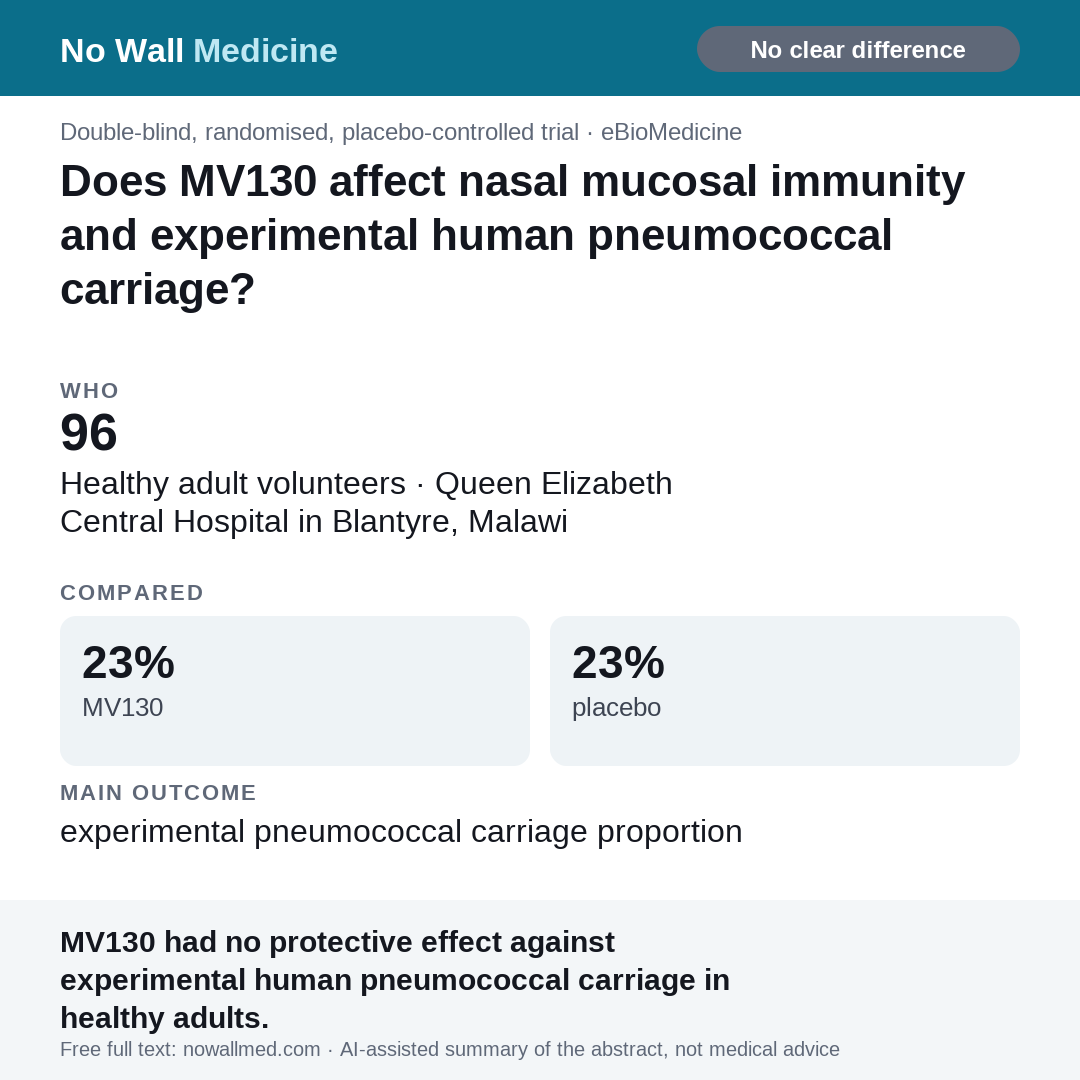
Whole cell inactivated poly-bacterial preparation MV130 effect on nasal mucosal immunity and experimental human pneumococcal carriage: double-blind randomised controlled trial with controlled human infection model
Double-blind, randomised, placebo-controlled trialNo clear difference
Does MV130 affect nasal mucosal immunity and experimental human pneumococcal carriage?
Who
96
Healthy adult volunteers · Queen Elizabeth Central Hospital in Blantyre, Malawi
Compared
23%MV130 (12/52)
23%placebo (10/44)
Main outcome
experimental pneumococcal carriage proportion
Result: unadjusted risk ratio 1.02 (CI 0.49-2.12)
Bottom line: MV130 had no protective effect against experimental human pneumococcal carriage in healthy adults.
Funded by: Wellcome Trust
eBioMedicine · 2026-08-26Download image
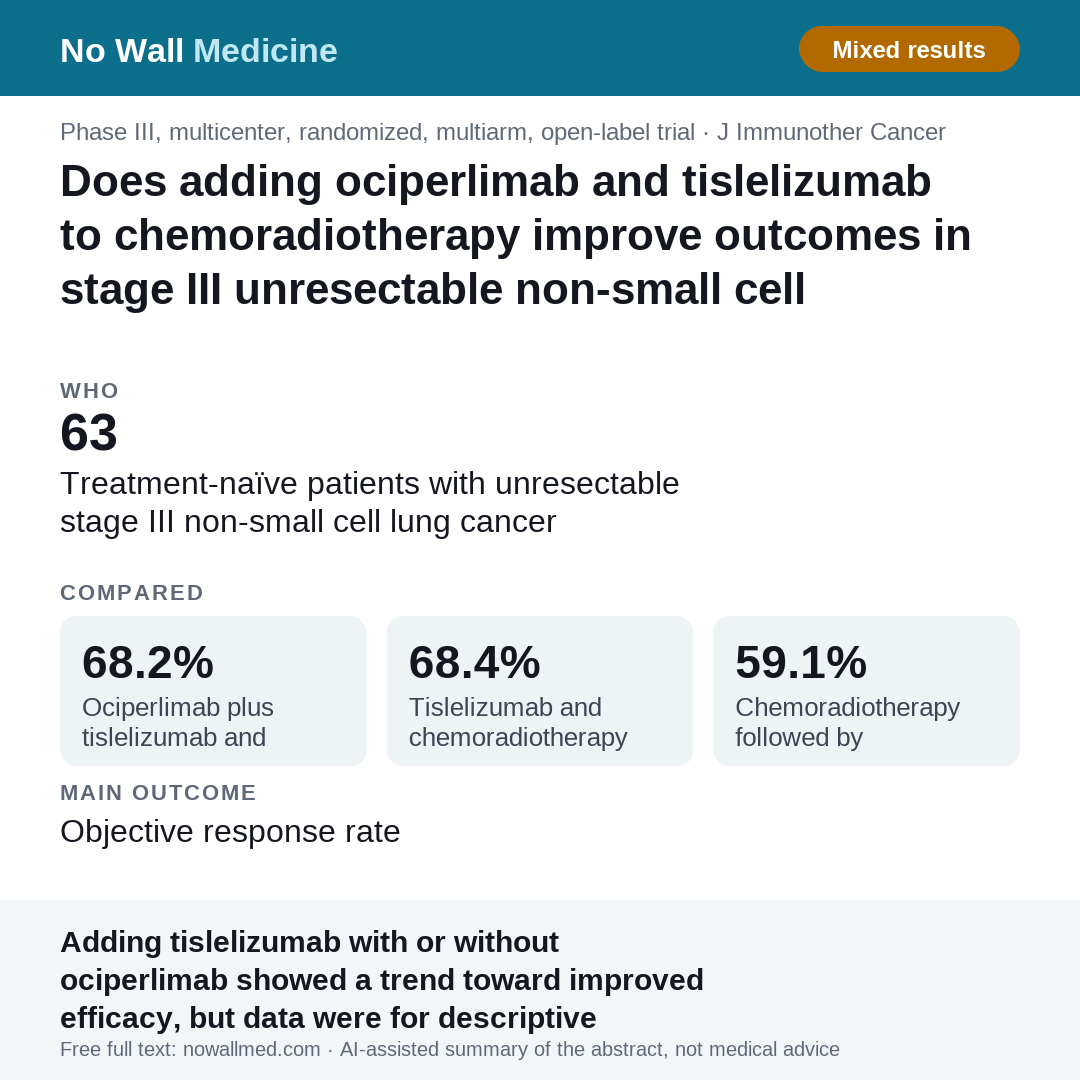
AdvanTIG-301: a phase III study of ociperlimab plus tislelizumab and concurrent chemoradiotherapy in stage III unresectable non-small cell lung cancer
Phase III, multicenter, randomized, multiarm, open-label trialMixed results
Does adding ociperlimab and tislelizumab to chemoradiotherapy improve outcomes in stage III unresectable non-small cell lung cancer?
Who
63
Treatment-naïve patients with unresectable stage III non-small cell lung cancer
Compared
68.2%Ociperlimab plus tislelizumab and chemoradiotherapy (45.1%-86.1%)
68.4%Tislelizumab and chemoradiotherapy (43.4%-87.4%)
59.1%Chemoradiotherapy followed by durvalumab (36.4%-79.3%)
Main outcome
Objective response rate
Bottom line: Adding tislelizumab with or without ociperlimab showed a trend toward improved efficacy, but data were for descriptive purposes only.
Limitation: Early trial termination
J Immunother Cancer · 2026-08-26Download image
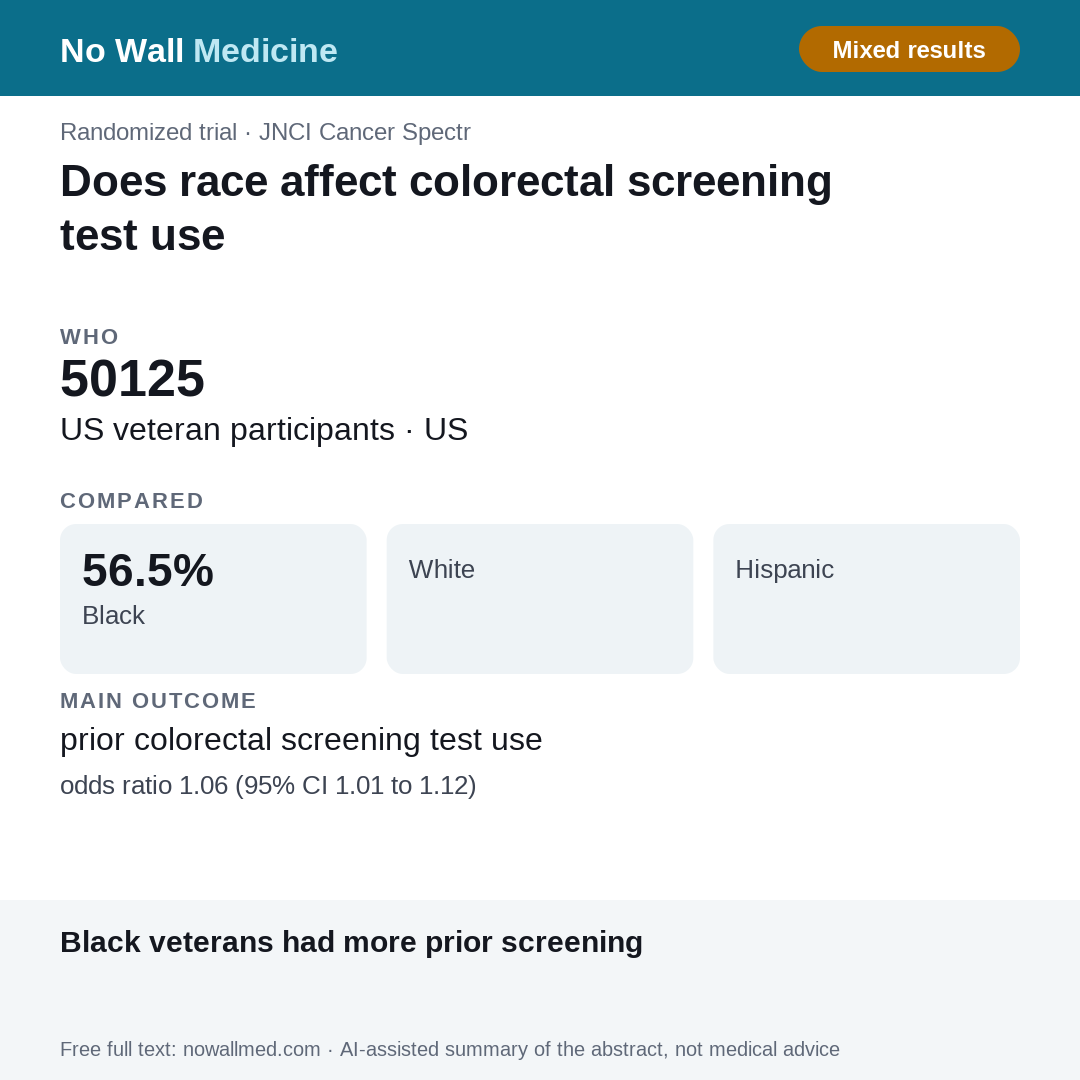
Race, ethnicity, and prior colorectal screening test use in CONFIRM colonoscopy vs fecal immunochemical testing trial participants
Randomized trialMixed results
Does race affect colorectal screening test use
Who
50125
US veteran participants · US
Compared
56.5%Black
White
Hispanic
Main outcome
prior colorectal screening test use
Result: odds ratio 1.06 (95% CI 1.01 to 1.12)
Bottom line: Black veterans had more prior screening
JNCI Cancer Spectr · 2026-08-26Download image
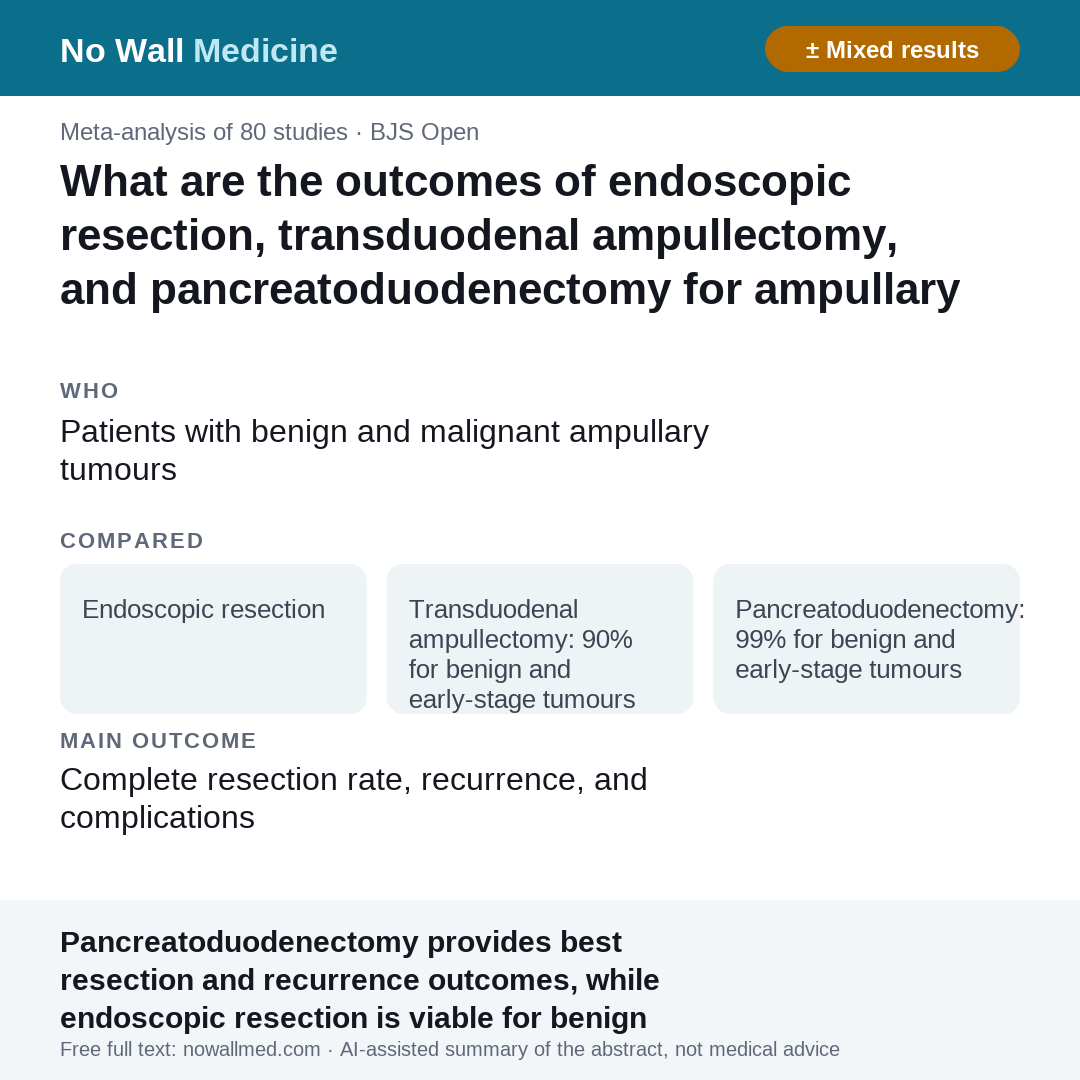
Therapeutic strategies and outcomes in the management of ampullary tumours: meta-analysis
Meta-analysis of 80 studiesMixed results
What are the outcomes of endoscopic resection, transduodenal ampullectomy, and pancreatoduodenectomy for ampullary tumours?
Who
80
Patients with benign and malignant ampullary tumours
Compared
Endoscopic resection
Transduodenal ampullectomy: 90% for benign and early-stage tumours
Pancreatoduodenectomy: 99% for benign and early-stage tumours
Main outcome
Complete resection rate, recurrence, and complications
Bottom line: Pancreatoduodenectomy provides best resection and recurrence outcomes, while endoscopic resection is viable for benign tumours.
Limitation: Further prospective research is needed to optimize preoperative diagnostics to distinguish benign from malignant tumours.
BJS Open · 2026-08-26Download image
Rethinking Pediatric Asthma Education Through Large Language Model Generation and Simplification: Randomized Double-Blind Study
Randomized, double-blind evaluation studyNo clear difference
How do AI-generated and AI-simplified asthma materials compare to expert-authored responses?
Who
Medical professionals and pediatric patient families
Compared
Published expert-authored responses: 72.97 (SD 14.88) for professionals and 64.18 (SD 15.76) for families
AI-generated responses: 76.17 (SD 12.59) for professionals and 68.77 (SD 16.47) for families
AI-simplified responses: 72.98 (SD 12.64) for professionals and 65.47 (SD 16.52) for families
Main outcome
Total scores on a 19-item Likert scale questionnaire
Bottom line: AI-generated and simplified asthma materials showed no significant difference in perceived quality compared to expert-authored responses.
J Med Internet Res · 2026-08-26Download image

AI-Based Approaches to Refugee Mental Health Care: Systematic Integrative Review
Systematic integrative reviewUnclear result
How is artificial intelligence used in refugee mental health research and care?
Who
23
Refugee and forcibly displaced populations
Compared
Detection, Prediction, and Classification: 15/23 (65.2%)
Intervention and Clinical Support: 4/23 (17.4%)
Information Synthesis: 5/23 (21.7%)
Main outcome
Functional categories of artificial intelligence applications in refugee mental health
Bottom line: Artificial intelligence in refugee mental health focuses on detection, intervention, and information synthesis, though biases and access barriers remain.
Limitation: Potential biases, lack of contextual understanding, and structural barriers in technology access.
J Med Internet Res · 2026-08-26Download image

Improvement of Clinical Practice Guideline Appraisal by Human Experts and AI Agents by Using Structured Guidance: Systematic Review, Meta-Analysis, and Validation Study
Systematic review, meta-analysis, and validation studyBenefit found
Does structured guidance improve agreement between human experts and AI agents in guideline appraisal?
Who
227
227 rehabilitation clinical practice guidelines
Compared
AI agents without structured guidance: ICC=0.608-0.629
AI agents with structured guidance: DeepSeek-R1 0.709 and o1-mini 0.687
Main outcome
Agreement between human experts and AI agents
Bottom line: Structured guidance improves agreement between human experts and AI agents for clinical practice guideline appraisal.
J Med Internet Res · 2026-08-26Download image

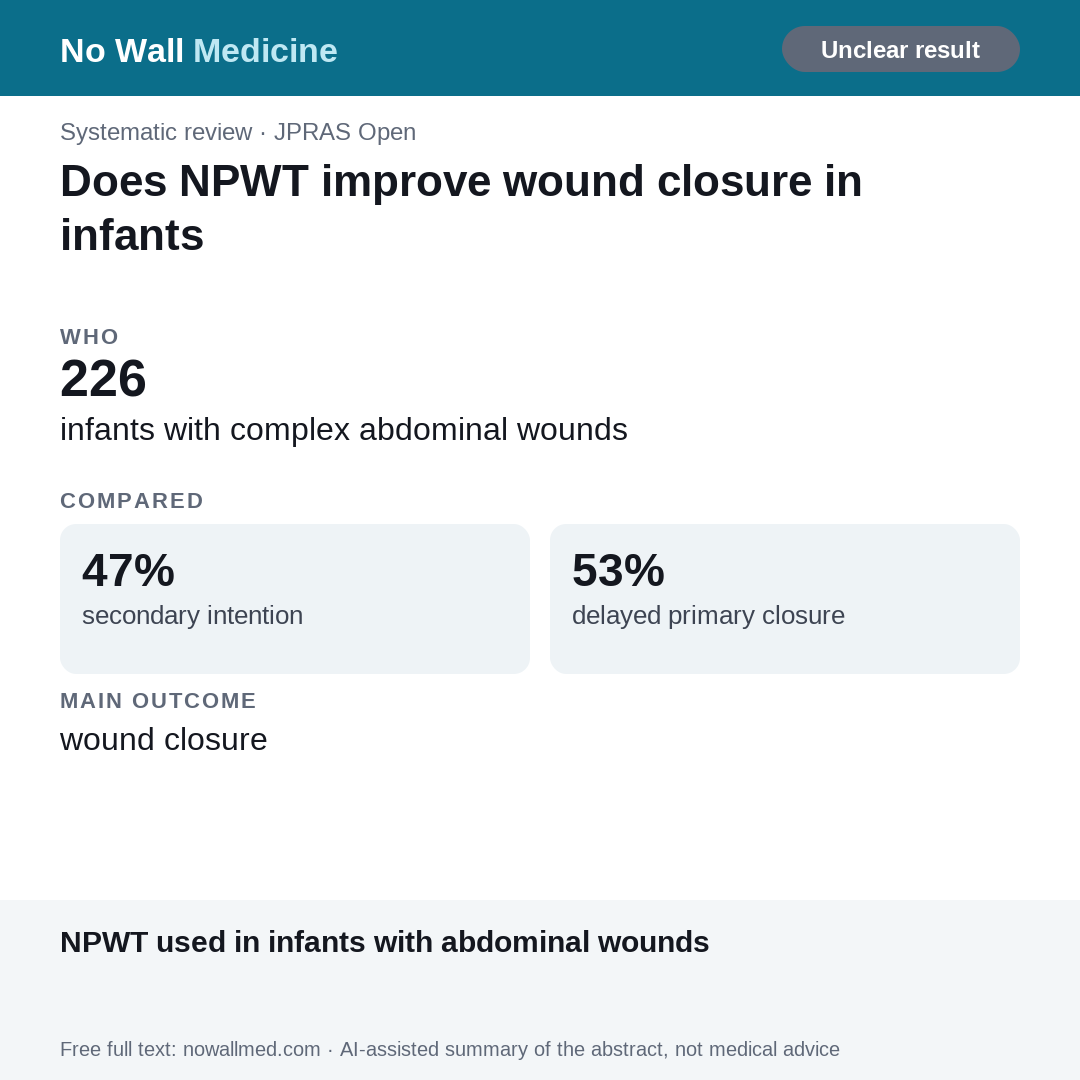
Negative pressure wound therapy in infants with complex abdominal wounds: A systematic review of clinical applications and closure strategies
Systematic reviewUnclear result
Does NPWT improve wound closure in infants
Who
226
infants with complex abdominal wounds
Compared
47%secondary intention
53%delayed primary closure
Main outcome
wound closure
Bottom line: NPWT used in infants with abdominal wounds
Limitation: heterogeneous protocols and bias risk
JPRAS Open · 2026-08-26Download image
Safety and immunogenicity of GBS6 in pregnant women living with and without HIV and their infants in Uganda (PREPARE WP4): a double-blind, randomised, placebo-controlled, phase 2 clinical trial
Double-blind, randomised, placebo-controlled, phase 2 clinical trialBenefit found
Is GBS6 vaccine safe and immunogenic in pregnant women with or without HIV?
Who
300
Pregnant women aged 18-40 years living with or without HIV · Five antenatal care facilities in Kampala, Uganda
Compared
GBS6 vaccine: 86 serious adverse events recorded
Placebo: 86 serious adverse events recorded
Main outcome
Maternal and infant safety, reactogenicity, and immunogenicity
Bottom line: GBS6 vaccine was safe and induced maternal antibodies in pregnant women living with or without HIV.
Lancet Infect Dis · 2026-08-25Download image

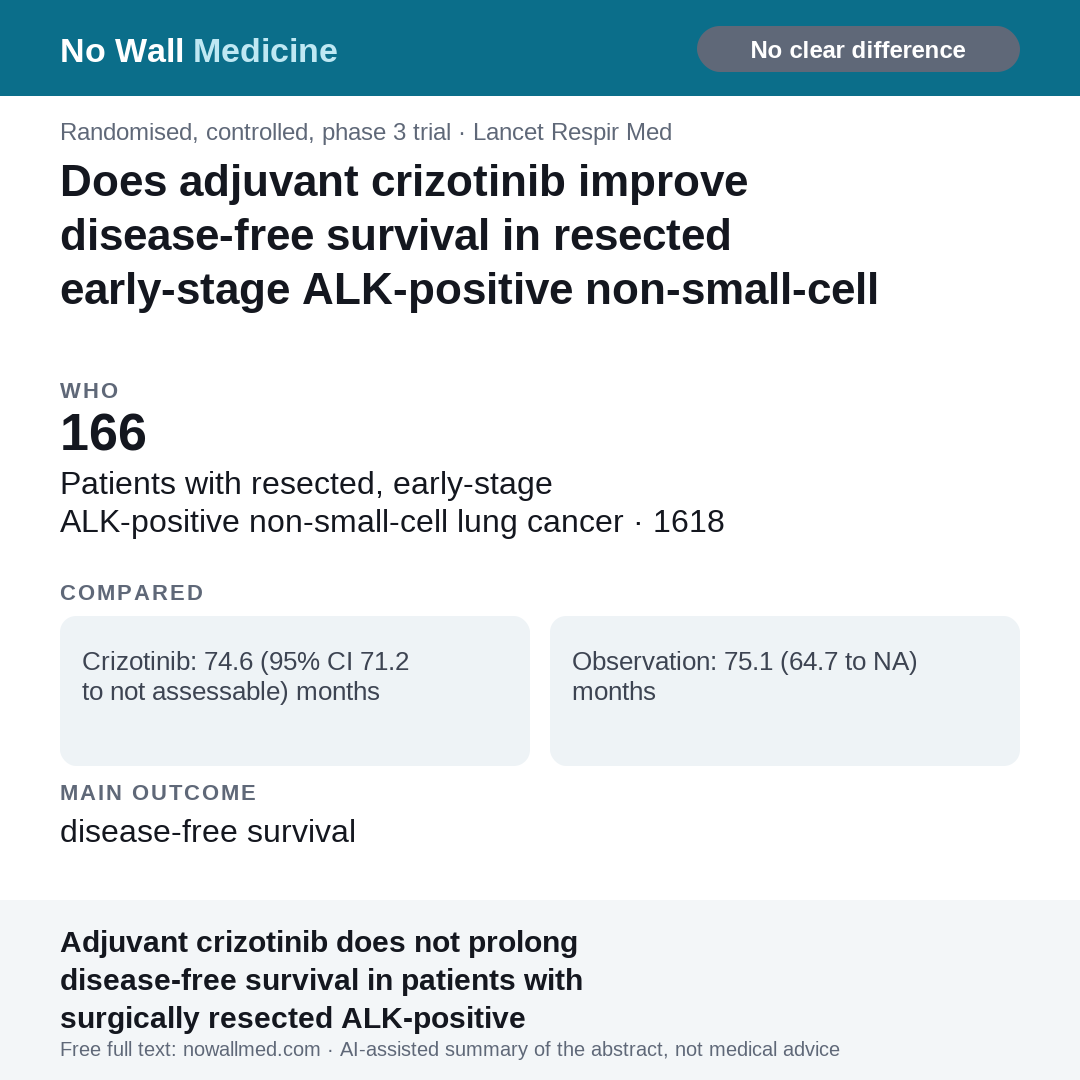
Crizotinib versus observation or placebo for surgically resected early-stage ALK-positive non-small-cell lung cancer (Eastern Cooperative Oncology Group-American College of Radiology Imaging Network E4512): a phase 3 trial
Randomised, controlled, phase 3 trialNo clear difference
Does adjuvant crizotinib improve disease-free survival in resected early-stage ALK-positive non-small-cell lung cancer?
Who
166
Patients with resected, early-stage ALK-positive non-small-cell lung cancer · 1618 sites across the USA, Guam, and Puerto Rico
Compared
Crizotinib: 74.6 (95% CI 71.2 to not assessable) months
Observation: 75.1 (64.7 to NA) months
Main outcome
disease-free survival
Result: hazard ratio 1.08 (95% CI 0.61 to 1.90)
Bottom line: Adjuvant crizotinib does not prolong disease-free survival in patients with surgically resected ALK-positive non-small-cell lung cancer.
Funded by: National Cancer Institute of the US National Institutes of Health
Lancet Respir Med · 2026-08-25Download image
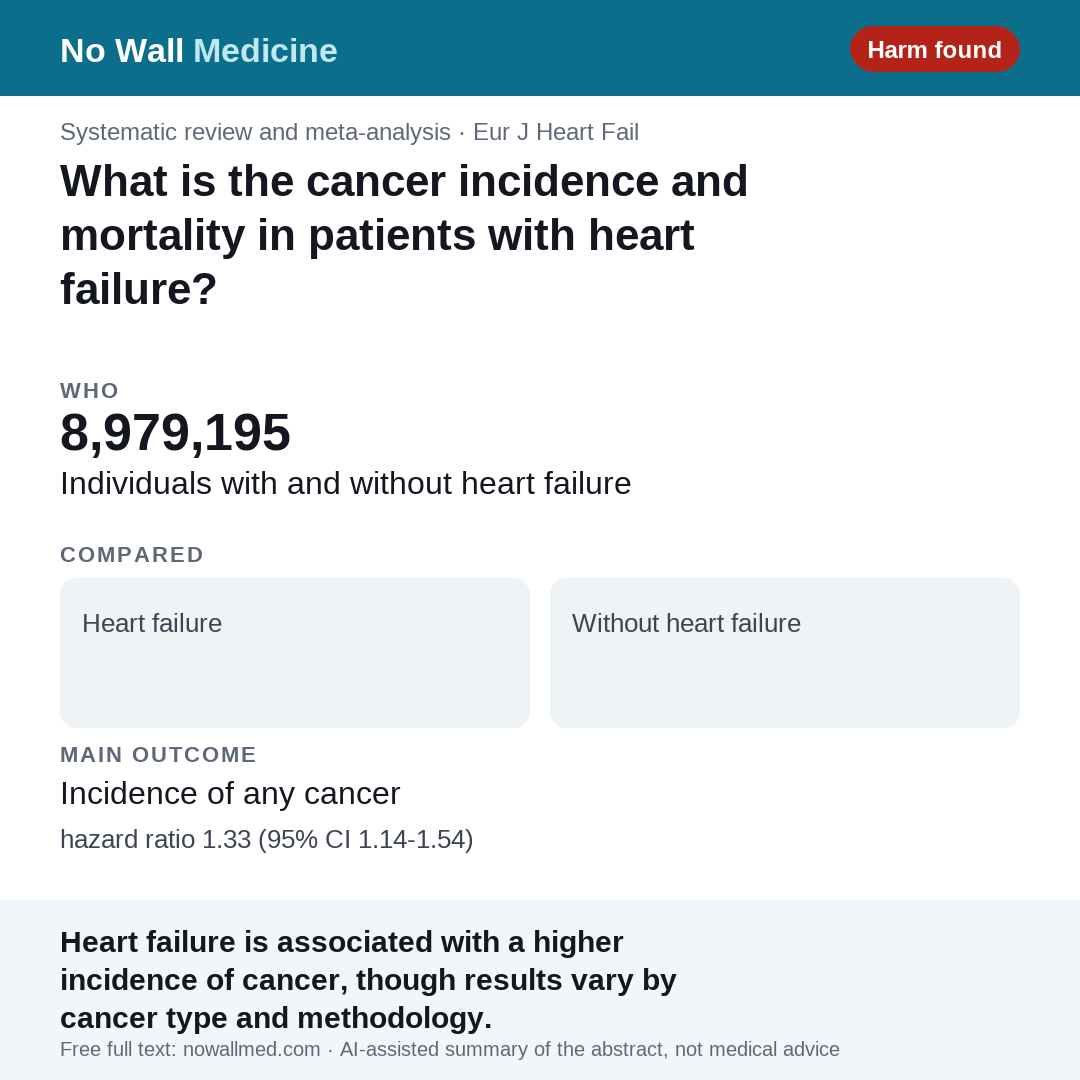
Heart Failure and Cancer: Incidence and Mortality Patterns, A Systematic Review and Meta-analysis
Systematic review and meta-analysisHarm found
What is the cancer incidence and mortality in patients with heart failure?
Who
8,979,195
Individuals with and without heart failure
Compared
Heart failure
Without heart failure
Main outcome
Incidence of any cancer
Result: hazard ratio 1.33 (95% CI 1.14-1.54)
Bottom line: Heart failure is associated with a higher incidence of cancer, though results vary by cancer type and methodology.
Limitation: Substantial heterogeneity and mortality data were sparse and heterogeneous.
Eur J Heart Fail · 2026-08-25Download image
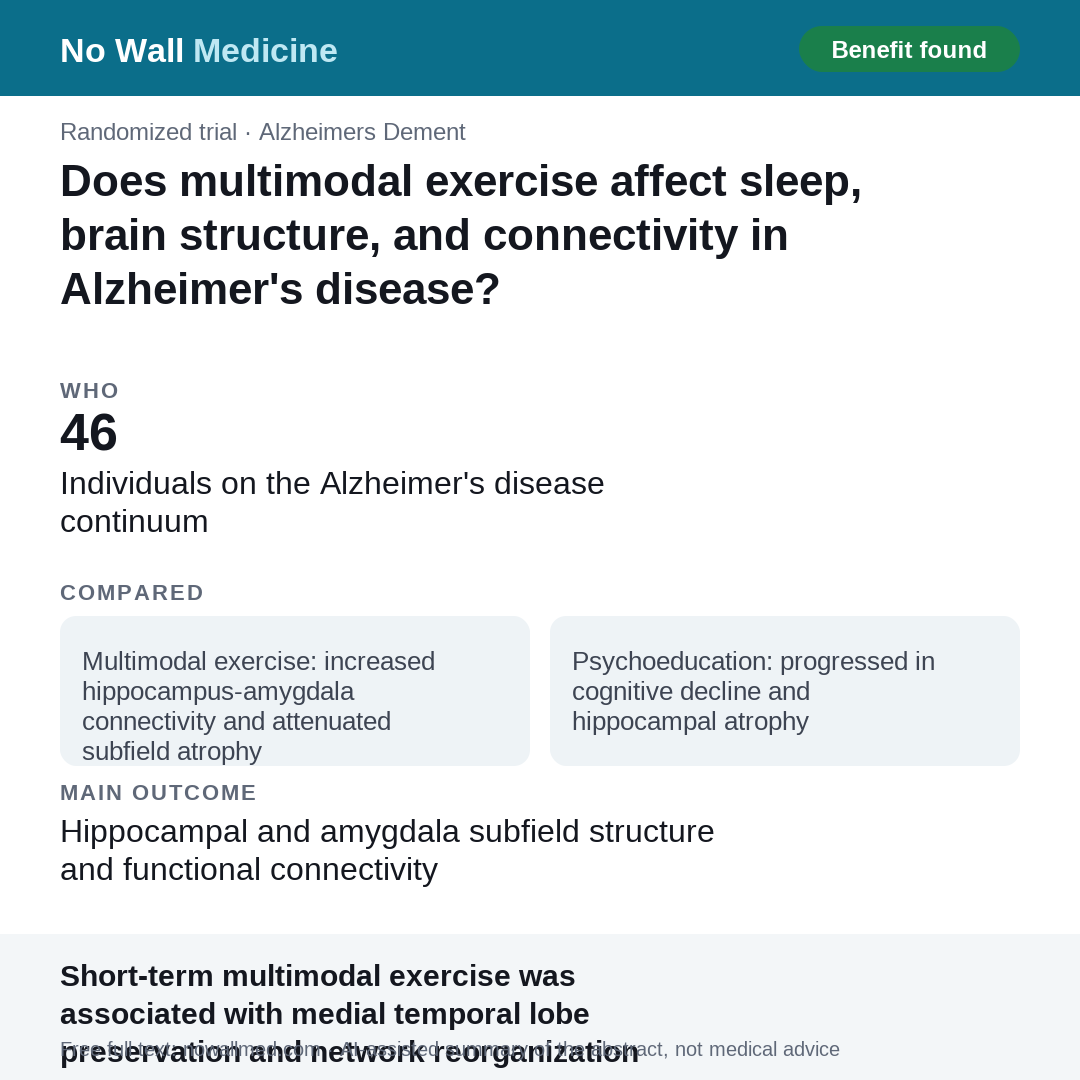
Longitudinal effects of physical activity on sleep in association with hippocampal-amygdala subfield structure and functional connectivity in Alzheimer's disease
Randomized trialBenefit found
Does multimodal exercise affect sleep, brain structure, and connectivity in Alzheimer's disease?
Who
46
Individuals on the Alzheimer's disease continuum
Compared
Multimodal exercise: increased hippocampus-amygdala connectivity and attenuated subfield atrophy
Psychoeducation: progressed in cognitive decline and hippocampal atrophy
Main outcome
Hippocampal and amygdala subfield structure and functional connectivity
Bottom line: Short-term multimodal exercise was associated with medial temporal lobe preservation and network reorganization linked to sleep.
Alzheimers Dement · 2026-08-25Download image
The role of antifactor Xa monitoring in the dosing and administration of low-molecular-weight heparins in pregnancy: a systematic review and meta-analysis
Meta-analysis of 94 studiesUnclear result
LMWH dosing in pregnancy safety
Who
5007
pregnant women with mechanical heart valves or at risk of venous thromboembolism
Compared
Fixed dose
Weight-based dose
Anti-Xa-monitored dose
Main outcome
thromboembolic complications and major bleeding
Bottom line: LMWH dosing methods have overlapping event rates
Limitation: small sample sizes and low certainty of evidence
J Thromb Haemost · 2026-08-25Download image