Visual abstracts
New randomized trials and meta-analyses from leading journals at a glance: who was studied, what was compared, and what was found. Every paper is free to read in full.
All specialtiesCardiology 857Oncology 770Gastroenterology & Hepatology 311Infectious Disease 626Neurology 354Psychiatry & Mental Health 430Pulmonology 370Critical Care 260Endocrinology & Diabetes 484Pediatrics 542Surgery 351Orthopedics & Sports Medicine 166Neurosurgery 115Cardiothoracic & Vascular Surgery 87Plastic & Reconstructive Surgery 144Nephrology 197Rheumatology 108Hematology 183Dermatology 82Ophthalmology 97Obstetrics & Gynecology 266Public & Global Health 168Radiology & Imaging 105Anesthesiology 130Urology 162ENT (Otolaryngology) 115Emergency Medicine 103Allergy & Immunology 58Geriatrics 160Family Medicine & Primary Care 111Medical Genetics & Genomics 91Pathology & Laboratory Medicine 27Physical Medicine & Rehabilitation 149Palliative Care 81Nutrition 223Digital Health & AI 462General Medicine 101
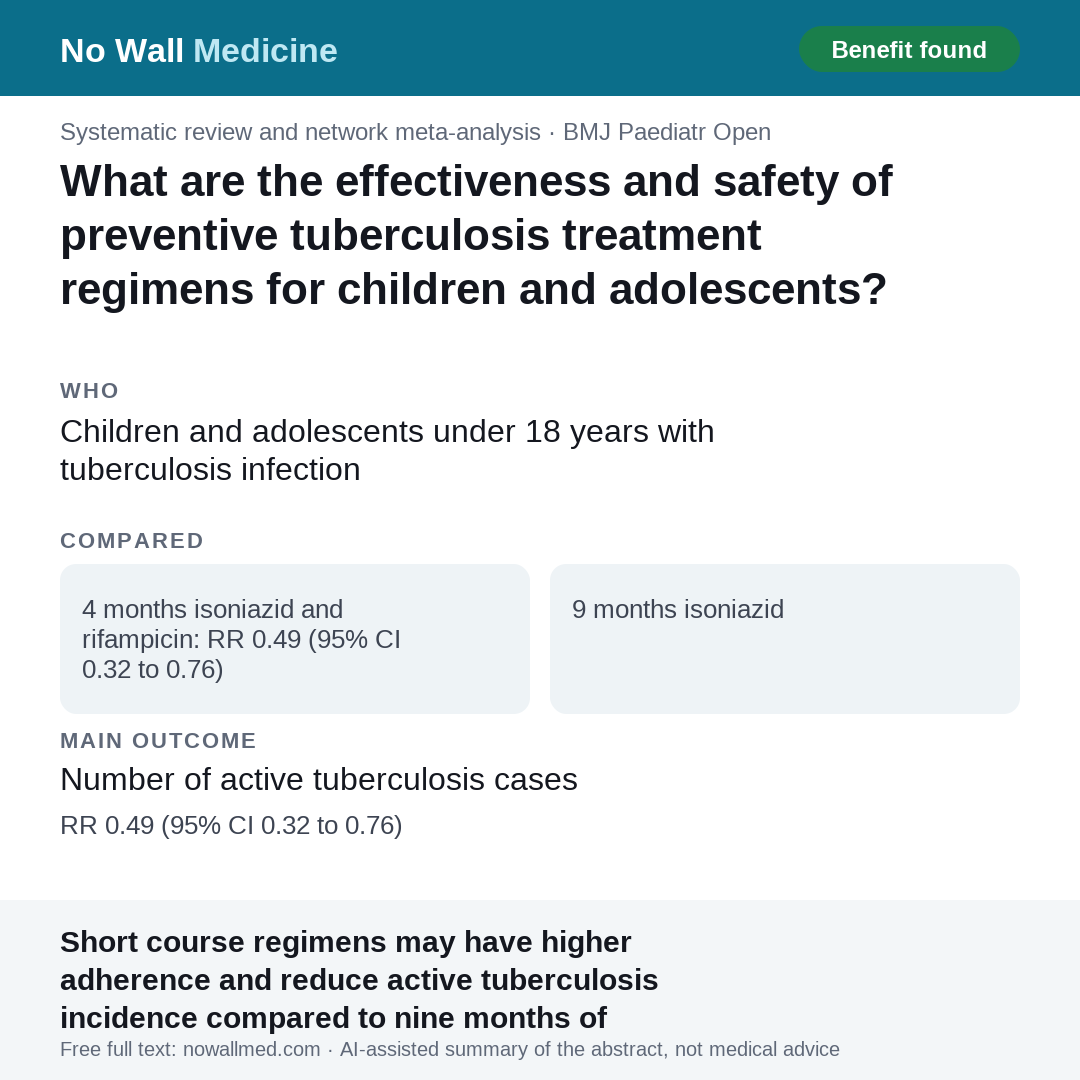
Effectiveness and safety of the available preventive tuberculosis treatment regimens for children and adolescents: systematic review and network meta-analysis
Systematic review and network meta-analysisBenefit found
What are the effectiveness and safety of preventive tuberculosis treatment regimens for children and adolescents?
Who
Children and adolescents under 18 years with tuberculosis infection
Compared
4 months isoniazid and rifampicin: RR 0.49 (95% CI 0.32 to 0.76)
9 months isoniazid
Main outcome
Number of active tuberculosis cases
Result: RR 0.49 (95% CI 0.32 to 0.76)
Bottom line: Short course regimens may have higher adherence and reduce active tuberculosis incidence compared to nine months of isoniazid.
Limitation: High variability was found in the reporting of adverse reactions.
BMJ Paediatr Open · 2026-09-30Download image
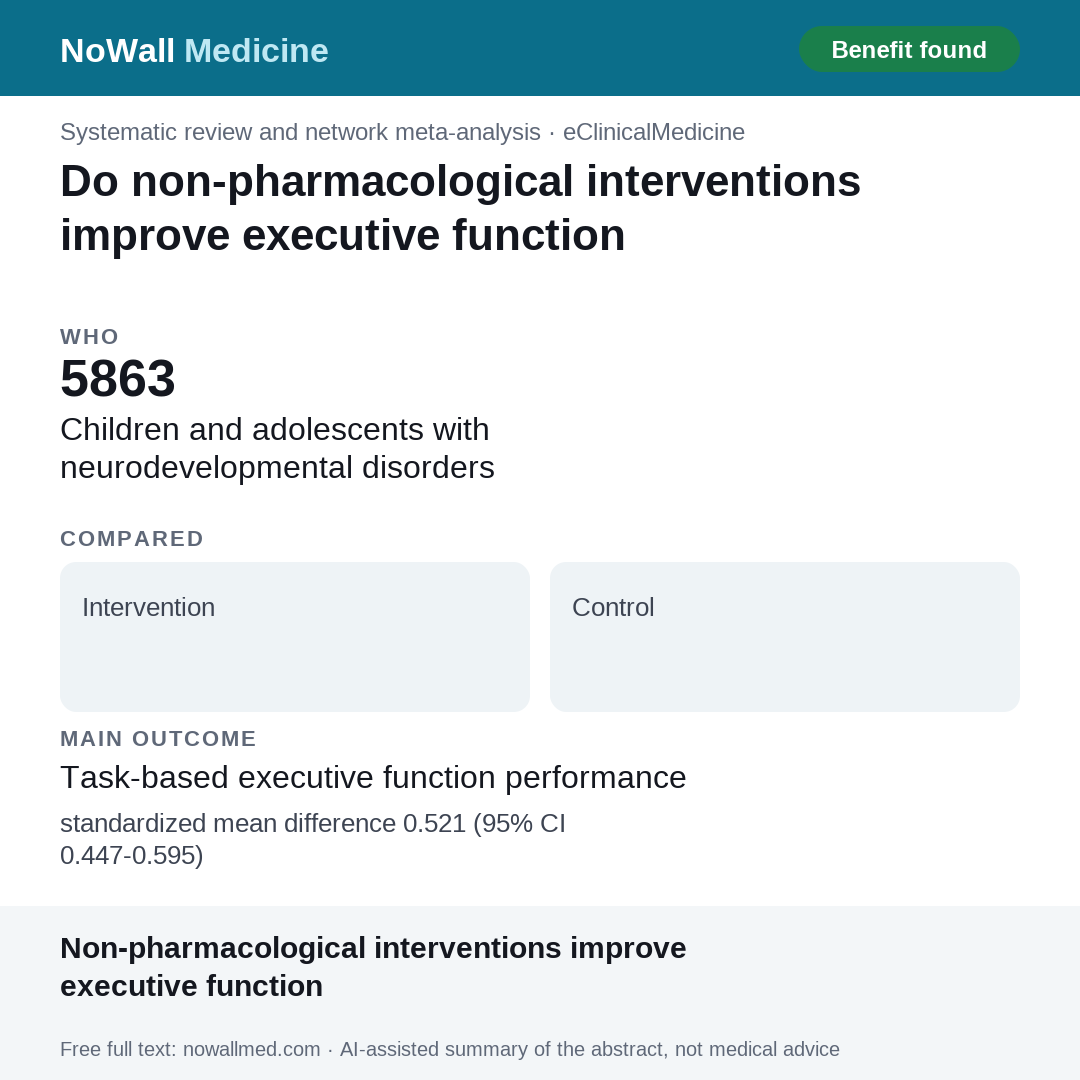
Non-pharmacological executive function interventions for children and adolescents with neurodevelopmental disorders: a systematic review and network meta-analysis
Systematic review and network meta-analysis of randomized controlled trialsBenefit found
How effective are non-pharmacological interventions for improving executive function in children and adolescents with neurodevelopmental disorders?
Who
5863
Children and adolescents aged 5-18 years with neurodevelopmental disorders
Compared
Non-pharmacological interventions: SMD = 0.521 (95% CI, 0.447-0.595)
Control
Main outcome
Overall task-based executive-function performance
Result: standardized mean difference 0.521 (95% CI, 0.447-0.595)
Bottom line: Non-pharmacological interventions are associated with moderate improvement in overall task-based executive function performance in children and adolescents.
Limitation: Risk of bias was predominantly rated as having some concerns and certainty of evidence was low overall.
eClinicalMedicine · 2026-09-28Download image
Efficacy of Technology-Augmented Behavioral Counseling for Risky Firearm Behaviors: A Randomized Clinical Trial
Randomized clinical trialBenefit found
Does technology-augmented counseling reduce risky firearm behaviors?
Who
373
US adolescents and emerging adults · 2 US trauma centers
Compared
-57.4%IntERact
-25.4%Enhanced usual care
Main outcome
Risky firearm behaviors
Result: rate ratio 0.51 (95% CI 0.33 to 0.79)
Bottom line: Counseling reduces risky firearm behaviors
JAMA Pediatr · 2026-09-28Download image

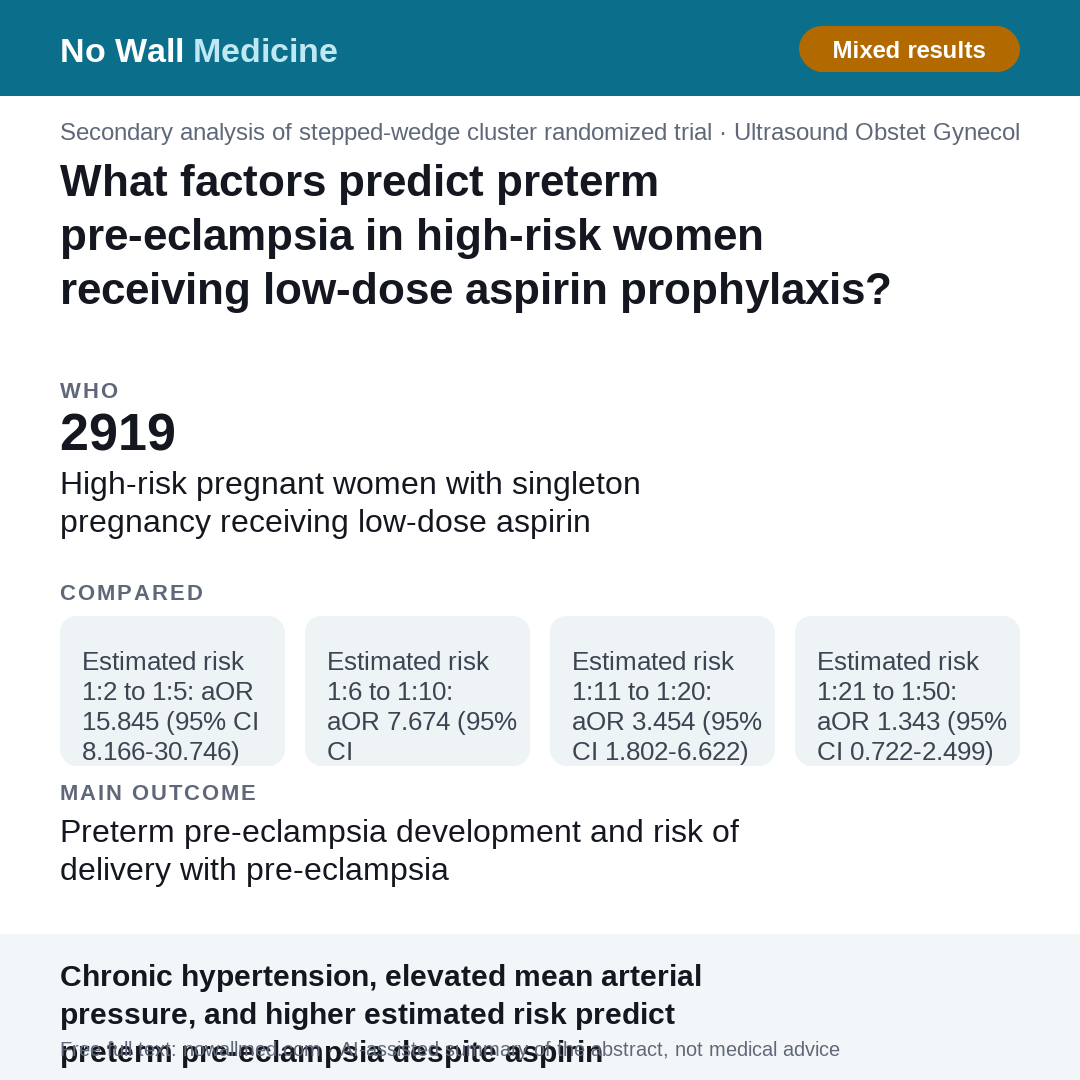
Determinants of preterm pre-eclampsia following low-dose aspirin prophylaxis: evidence from stepped-wedge cluster randomized trial in Asia
Secondary analysis of stepped-wedge cluster randomized trialMixed results
What factors predict preterm pre-eclampsia in high-risk women receiving low-dose aspirin prophylaxis?
Who
2919
High-risk pregnant women with singleton pregnancy receiving low-dose aspirin prophylaxis · 18 maternity/diagnostic units in 10 regions in Asia
Compared
Estimated risk 1:2 to 1:5: aOR 15.845 (95% CI 8.166-30.746)
Estimated risk 1:6 to 1:10: aOR 7.674 (95% CI 3.925-15.004)
Estimated risk 1:11 to 1:20: aOR 3.454 (95% CI 1.802-6.622)
Estimated risk 1:21 to 1:50: aOR 1.343 (95% CI 0.722-2.499)
Main outcome
Preterm pre-eclampsia development and risk of delivery with pre-eclampsia
Result: aOR 15.845 (95% CI 8.166-30.746) for highest risk group
Bottom line: Chronic hypertension, elevated mean arterial pressure, and higher estimated risk predict preterm pre-eclampsia despite aspirin prophylaxis.
Ultrasound Obstet Gynecol · 2026-09-27Download image
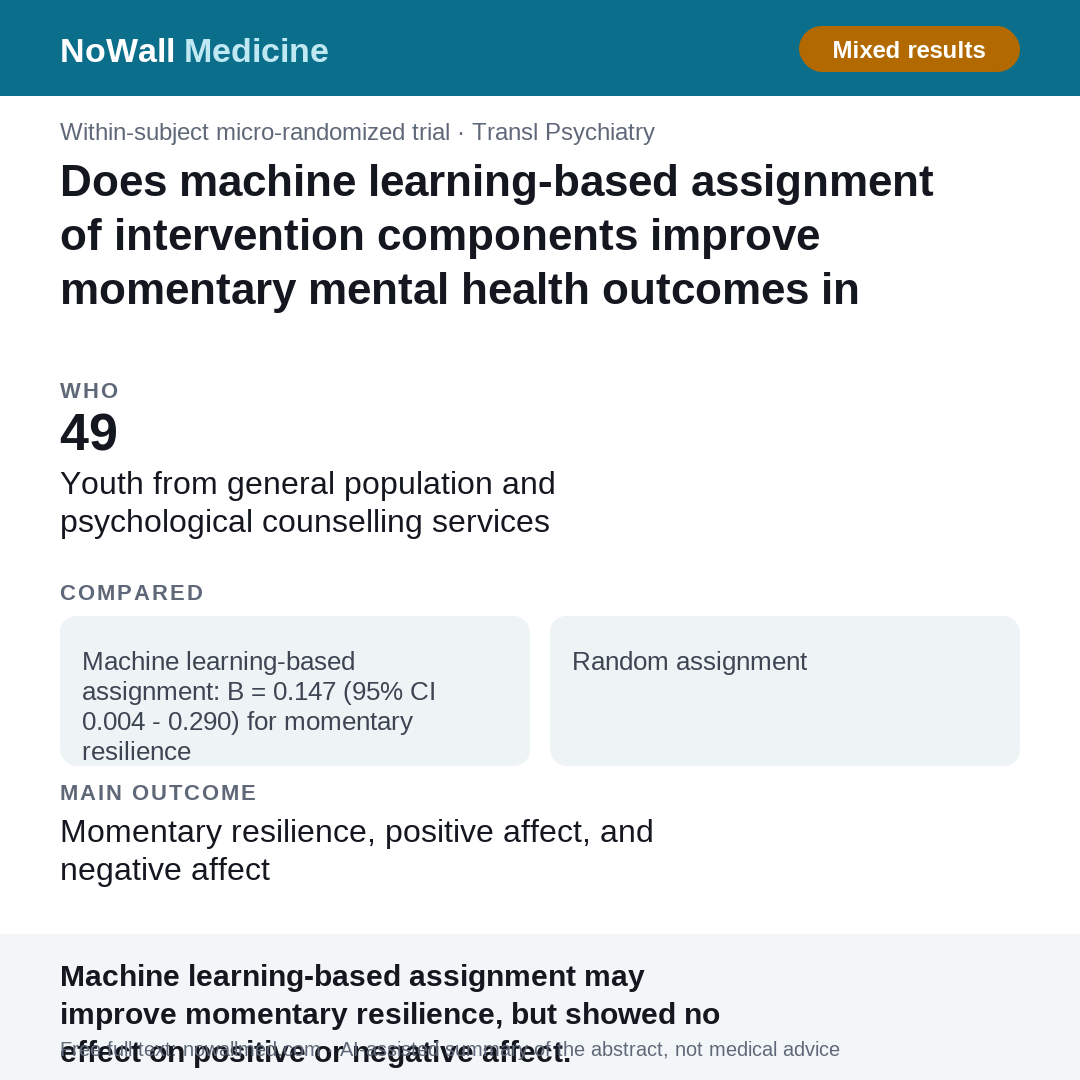
A machine learning-based ecological momentary intervention for mental health promotion in youth: a micro-randomized trial
Within-subject micro-randomized trialMixed results
Does machine learning-based assignment of intervention components improve momentary mental health outcomes in youth?
Who
49
Youth from general population and psychological counselling services
Compared
Machine learning-based assignment: B = 0.147 (95% CI 0.004 - 0.290) for momentary resilience
Random assignment
Main outcome
Momentary resilience, positive affect, and negative affect
Result: B = 0.147 (95% CI 0.004 - 0.290)
Bottom line: Machine learning-based assignment may improve momentary resilience, but showed no effect on positive or negative affect.
Transl Psychiatry · 2026-09-26Download image
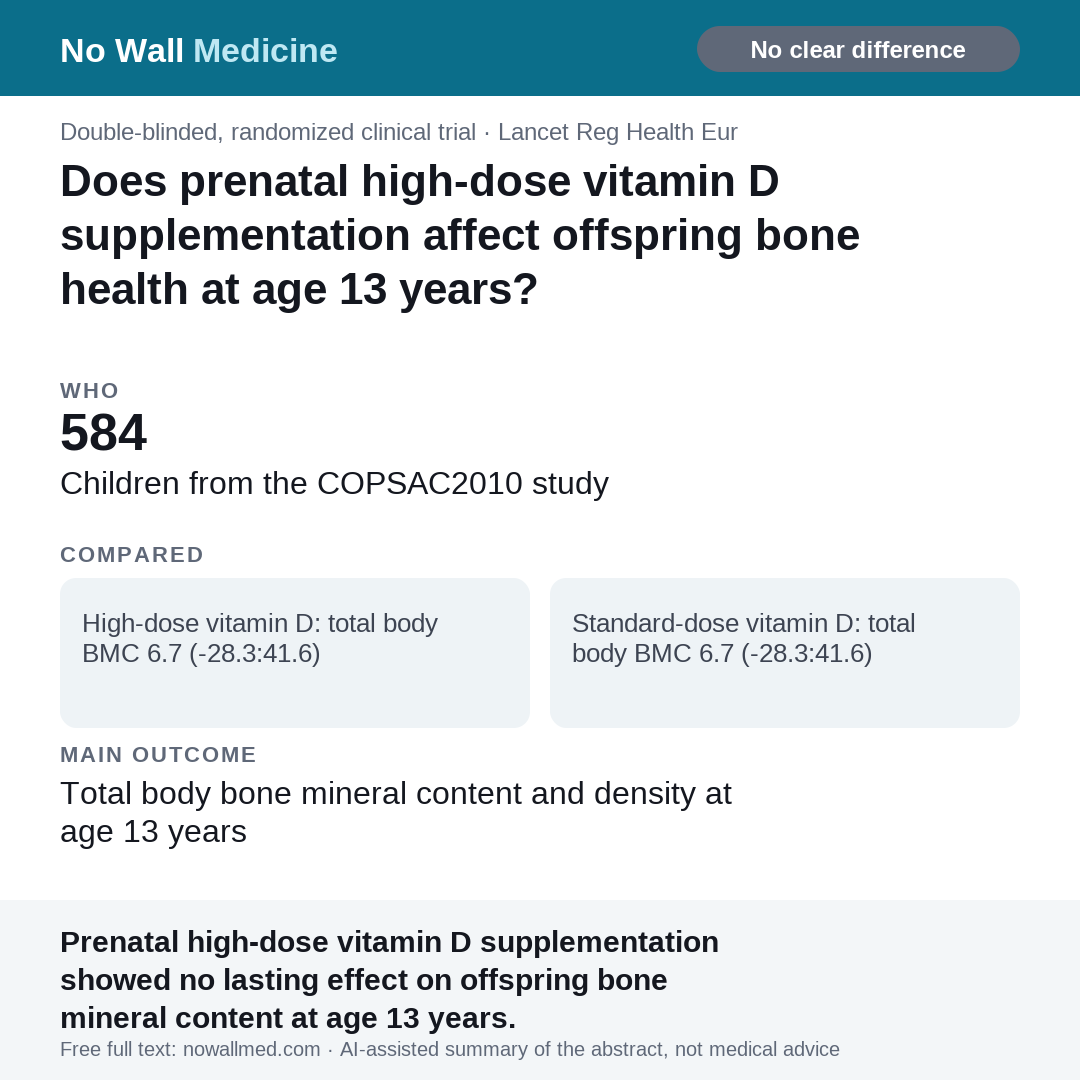
Prenatal high-dose vitamin D supplementation and offspring bone mineral content and density at age 13 years: a secondary analysis of a randomised clinical trial
Double-blinded, randomized clinical trialNo clear difference
Does prenatal high-dose vitamin D supplementation affect offspring bone health at age 13 years?
Who
584
Children from the COPSAC2010 study
Compared
High-dose vitamin D: total body BMC 6.7 (-28.3:41.6)
Standard-dose vitamin D: total body BMC 6.7 (-28.3:41.6)
Main outcome
Total body bone mineral content and density at age 13 years
Bottom line: Prenatal high-dose vitamin D supplementation showed no lasting effect on offspring bone mineral content at age 13 years.
Funded by: Thrasher Research Fund Award and Kong Christian IX and Dronning Louises Jubilæumslegat
Lancet Reg Health Eur · 2026-09-25Download image
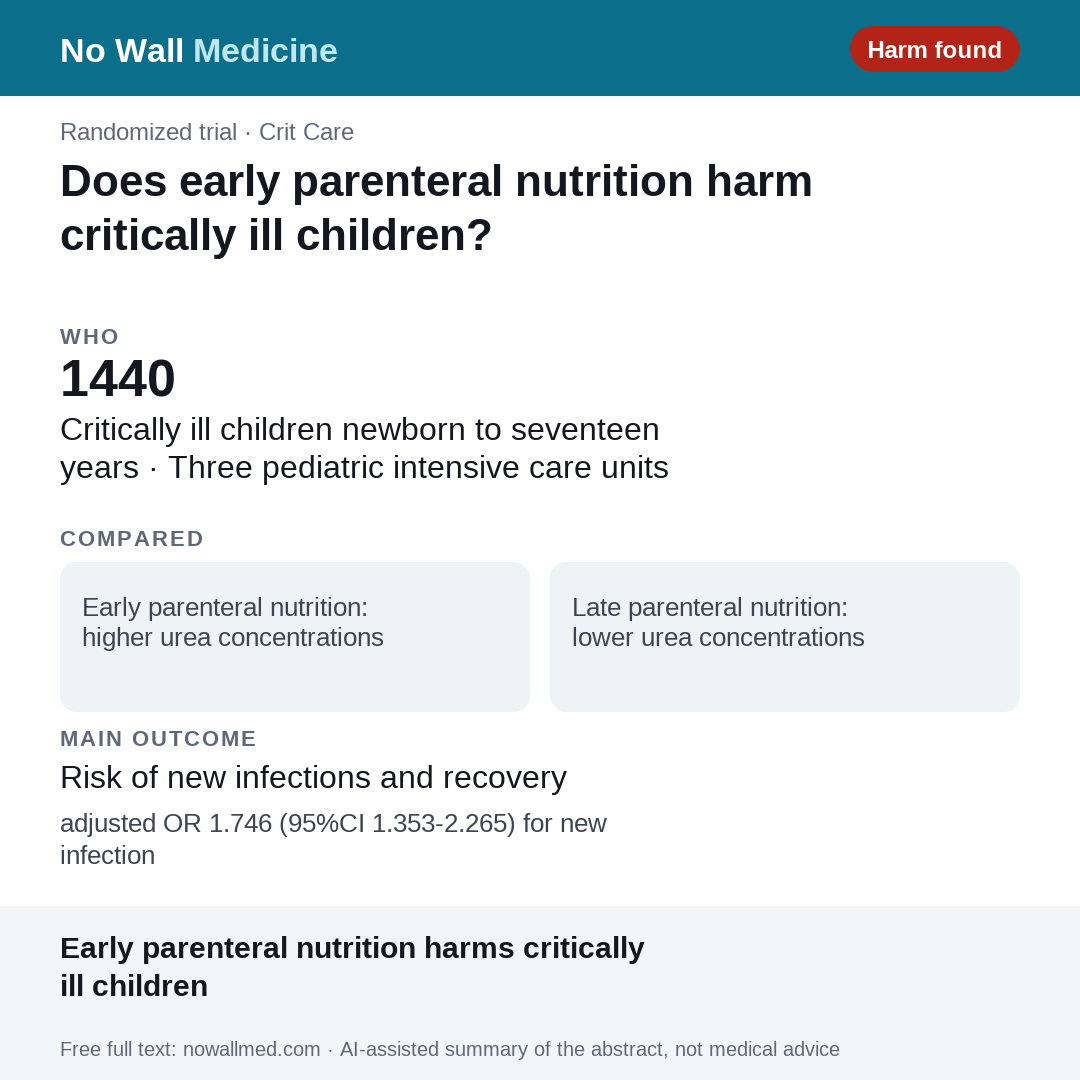
Increased ureagenesis revealing metabolic intolerance to enhanced nutrition in the PICU: a secondary analysis of the PEPaNIC RCT
Randomized trialHarm found
Does early parenteral nutrition harm critically ill children?
Who
1440
Critically ill children newborn to seventeen years · Three pediatric intensive care units
Compared
Early parenteral nutrition: higher urea concentrations
Late parenteral nutrition: lower urea concentrations
Main outcome
Risk of new infections and recovery
Result: adjusted OR 1.746 (95%CI 1.353-2.265) for new infection
Bottom line: Early parenteral nutrition harms critically ill children
Crit Care · 2026-09-25Download image
Accuracy of Artificial Intelligence in Diagnosing Obstructive Sleep Apnea Using Photoplethysmography: Systematic Review and Meta-Analysis
Systematic review and meta-analysisBenefit found
What is the diagnostic accuracy of artificial intelligence using photoplethysmography for obstructive sleep apnea?
Who
9983
Adults with obstructive sleep apnea
Compared
Artificial intelligence using photoplethysmography: sensitivity 79.6% (95% credible interval 55.5%-93.8%)
Conventional diagnosis
Main outcome
Diagnostic accuracy of photoplethysmography-based artificial intelligence models
Result: sensitivity 79.6% (95% credible interval 55.5%-93.8%) and specificity 76.5% (95% credible interval 48.2%-94.0%)
Bottom line: Artificial intelligence trained on photoplethysmography shows reasonable accuracy and may serve as a low-cost screening tool for obstructive sleep apnea.
Limitation: Small sample sizes, potential bias, underrepresentation of certain geographic regions, and influence of confounding factors.
J Med Internet Res · 2026-09-25Download image

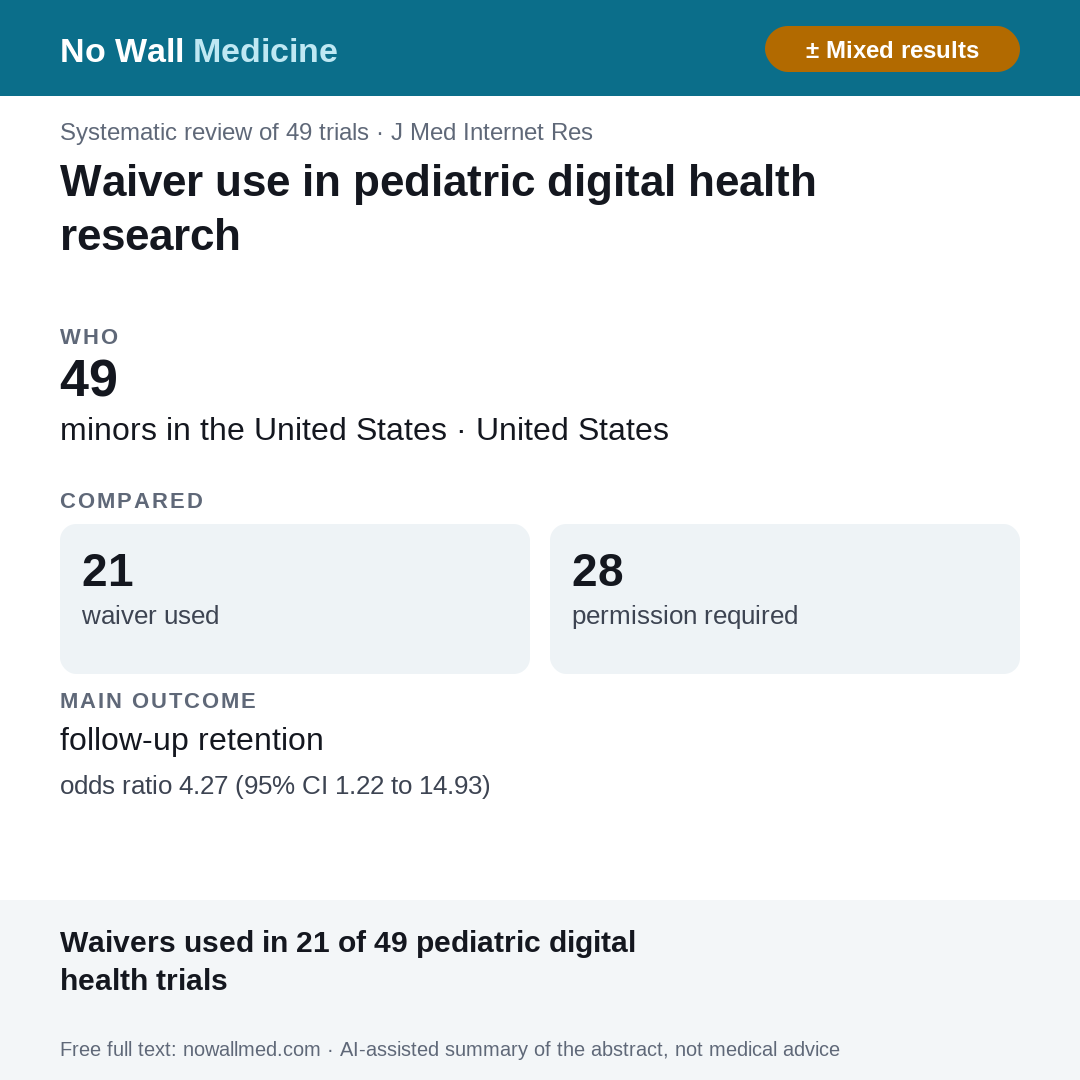
The Use of Waivers of Guardian Permission in the United States for Pediatric Digital Health Intervention Research Since 2020: Systematic Review
Systematic review of 49 trialsMixed results
Waiver use in pediatric digital health research
Who
49
minors in the United States · United States
Compared
21waiver used
28permission required
Main outcome
follow-up retention
Result: odds ratio 4.27 (95% CI 1.22 to 14.93)
Bottom line: Waivers used in 21 of 49 pediatric digital health trials
Limitation: small sample sizes and variable reporting
J Med Internet Res · 2026-09-25Download image
Evidence and Future Directions for Pediatric Health Care Chatbots: Systematic Review
Systematic reviewUnclear result
What is the evidence for pediatric health care chatbots evaluated for health-related outcomes?
Who
9
Children aged under 19 years or their caregivers
Compared
Pediatric participants only: mixed
Caregivers: mixed
Main outcome
health and psychosocial, behavioral and cognitive outcomes
Bottom line: Current evidence for pediatric health care chatbots is limited and heterogeneous, with definitive conclusions regarding health-related outcomes unable to be drawn.
Limitation: Lack of active comparator groups, reliance on short-term metrics, and significant study heterogeneity.
J Med Internet Res · 2026-09-25Download image

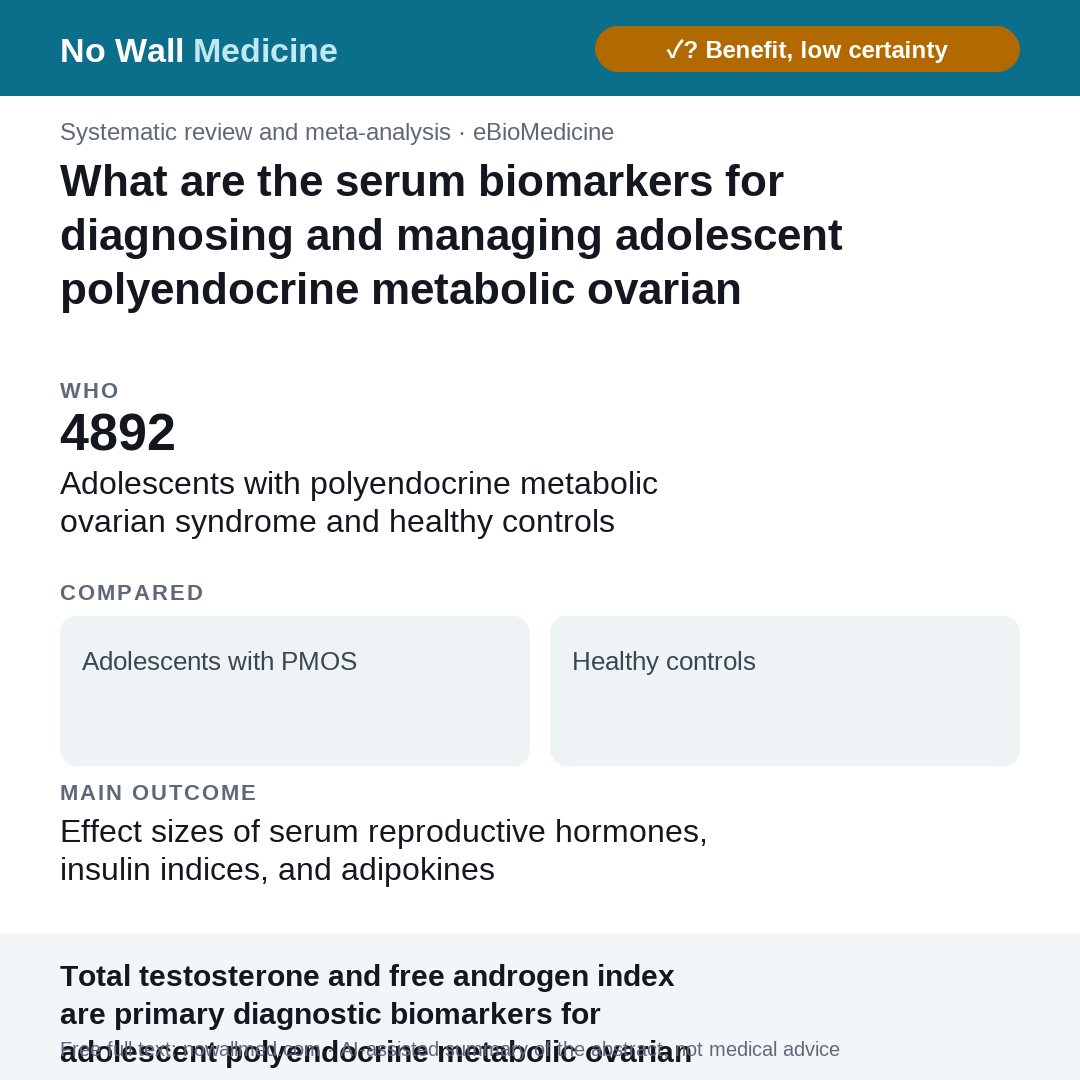
Serum biomarkers for the diagnosis and management of adolescent polyendocrine metabolic ovarian syndrome: a systematic review and meta-analysis
Systematic review and meta-analysisBenefit found
What are the serum biomarkers for diagnosing and managing adolescent polyendocrine metabolic ovarian syndrome?
Who
4892
Adolescents with polyendocrine metabolic ovarian syndrome and healthy controls
Compared
Adolescents with PMOS
Healthy controls
Main outcome
Effect sizes of serum reproductive hormones, insulin indices, and adipokines
Bottom line: Total testosterone and free androgen index are primary diagnostic biomarkers for adolescent polyendocrine metabolic ovarian syndrome.
Limitation: LH/FSH and dehydroepiandrosterone sulphate showed significant publication bias.
Funded by: HMRF, CUHK direct grant, and other collaborative funds
eBioMedicine · 2026-09-24Download image
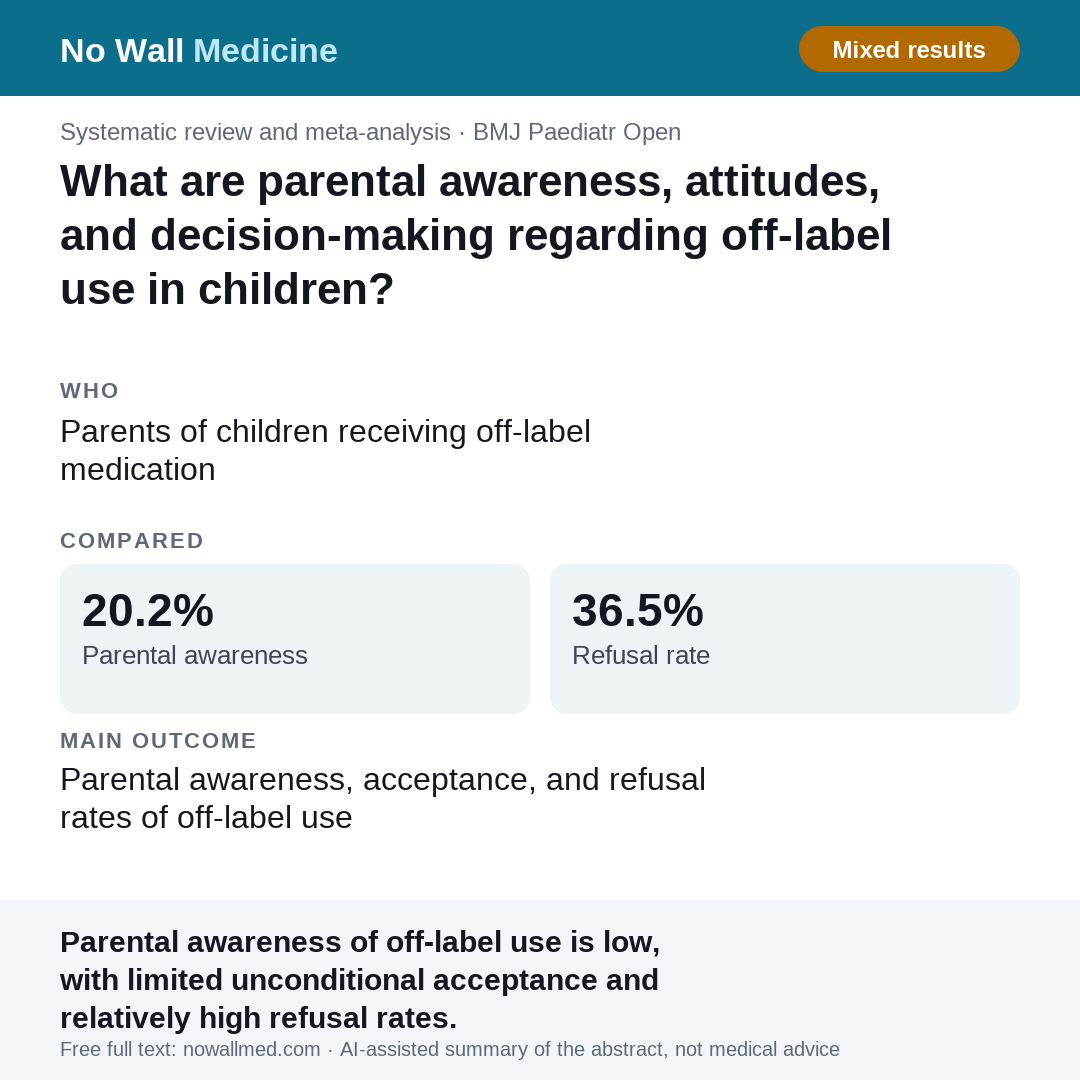
Parental awareness, attitudes and decision-making of off-label use in children: a systematic review and meta-analysis
Systematic review and meta-analysisMixed results
What are parental awareness, attitudes, and decision-making regarding off-label use in children?
Who
Parents of children receiving off-label medication
Compared
20.2%Parental awareness (95% CI: 10.6% to 31.9%)
36.5%Refusal rate (95% CI: 14.6% to 61.8%)
Main outcome
Parental awareness, acceptance, and refusal rates of off-label use
Bottom line: Parental awareness of off-label use is low, with limited unconditional acceptance and relatively high refusal rates.
Limitation: Extreme heterogeneity in operational definitions for conditional acceptance rates.
BMJ Paediatr Open · 2026-09-24Download image
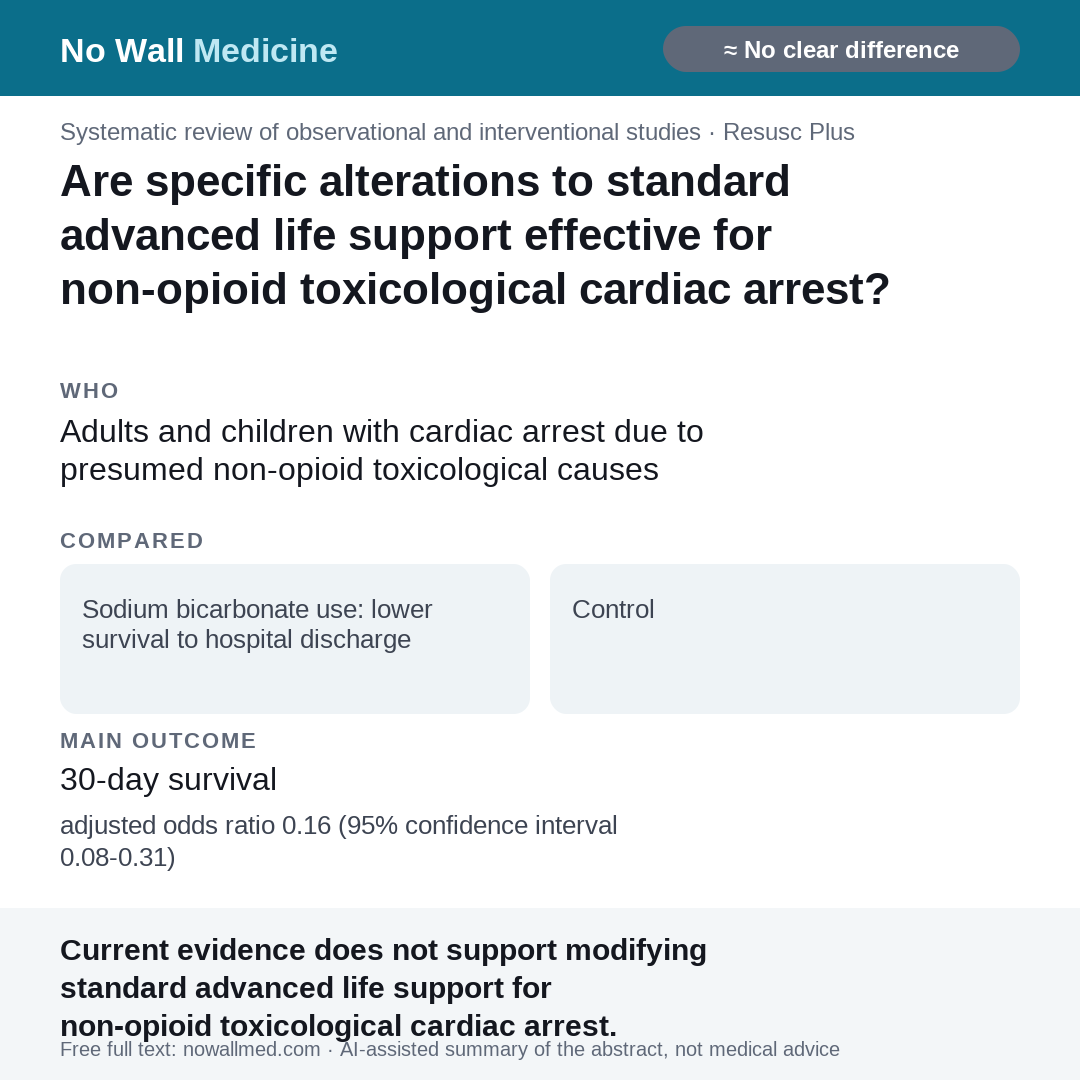
Intra-arrest strategies to treat cardiac arrest due to a non-opioid toxicological causes in adults and children: a systematic review
Systematic review of observational and interventional studiesNo clear difference
Are specific alterations to standard advanced life support effective for non-opioid toxicological cardiac arrest?
Who
Adults and children with cardiac arrest due to presumed non-opioid toxicological causes
Compared
Sodium bicarbonate use: lower survival to hospital discharge
Control
Main outcome
30-day survival
Result: adjusted odds ratio 0.16 (95% confidence interval 0.08-0.31)
Bottom line: Current evidence does not support modifying standard advanced life support for non-opioid toxicological cardiac arrest.
Limitation: All four included observational studies were at critical risk of bias.
Resusc Plus · 2026-09-24Download image
Pediatric Literacy Promotion for Latino Families by Texts and Referrals: A 3-Arm RCT
effectiveness-implementation hybrid type 1 randomized trialBenefit found
Do text messages and community referrals enhance pediatric literacy promotion for Latino families?
Who
630
630 Latino caregiver-infant dyads aged 6 to 12 months
Compared
Literacy promotion only
Literacy promotion plus text messages: ES = 0.391
Literacy promotion, texts, plus referral: ES = 0.267
Main outcome
child language, social-emotional development, and parenting behaviors
Bottom line: Text messages and community referrals can enhance child language, social-emotional development, and parenting behaviors in Latino families.
Pediatrics · 2026-09-23Download image

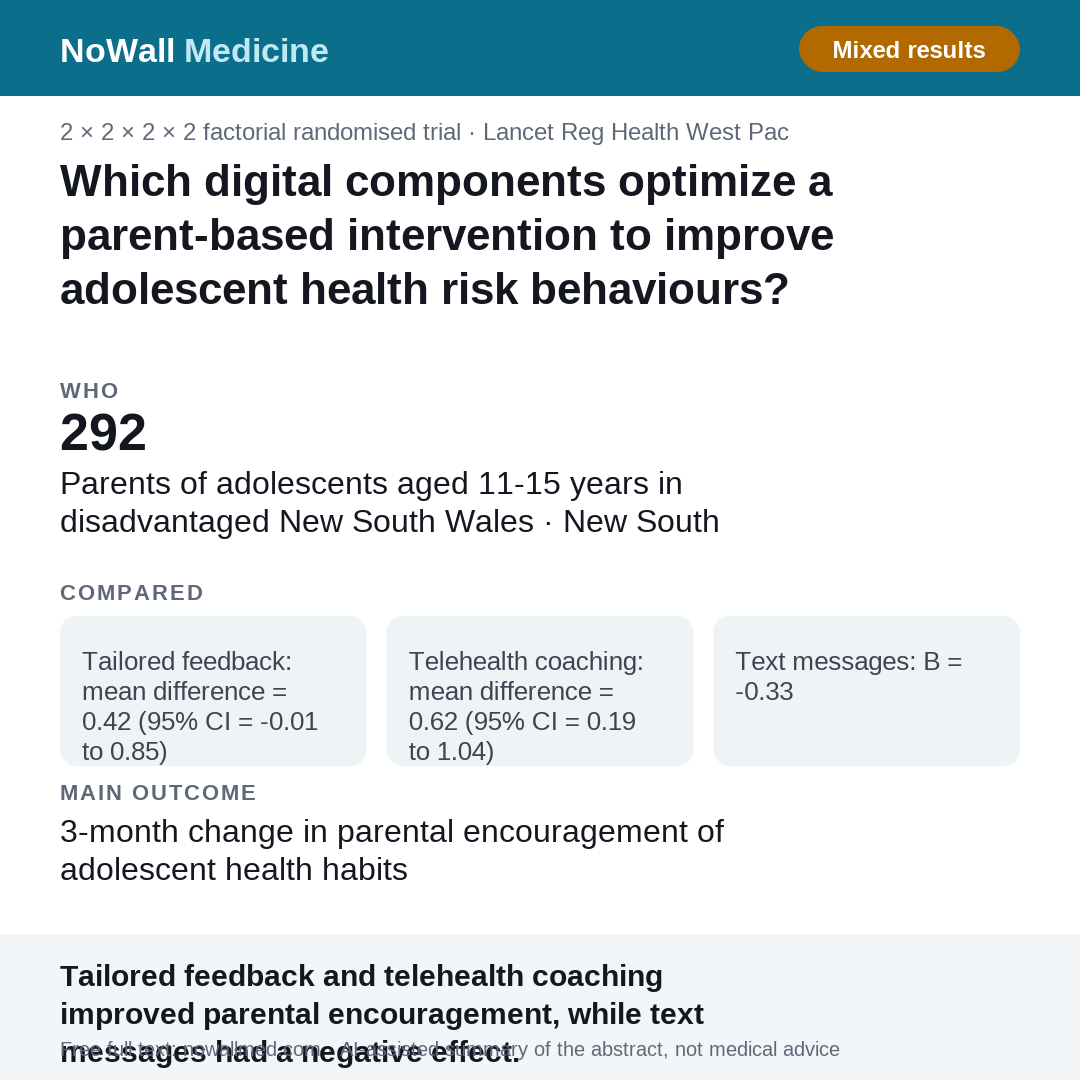
Optimising a digital parent-based intervention to improve adolescent health risk behaviours in families living in socio-economically disadvantaged communities: findings from the Health4Life Parents & Teens factorial randomised trial
2 × 2 × 2 × 2 factorial randomised trialMixed results
Which digital components optimize parental encouragement of adolescent health habits?
Who
292
Parents of adolescents aged 11-15 years in disadvantaged New South Wales · New South Wales, Australia
Compared
Tailored feedback: mean difference = 0.42
Telehealth coaching: mean difference = 0.62
Text messages: mean difference = -0.66
Main outcome
3-month change in parental encouragement of adolescent health habits
Result: mean difference 0.62 (95% CI 0.19 to 1.04) for telehealth coaching
Bottom line: Tailored feedback and telehealth coaching improved parental encouragement, but text messages had a negative effect.
Funded by: Medical Research Future Fund
Lancet Reg Health West Pac · 2026-09-23Download image
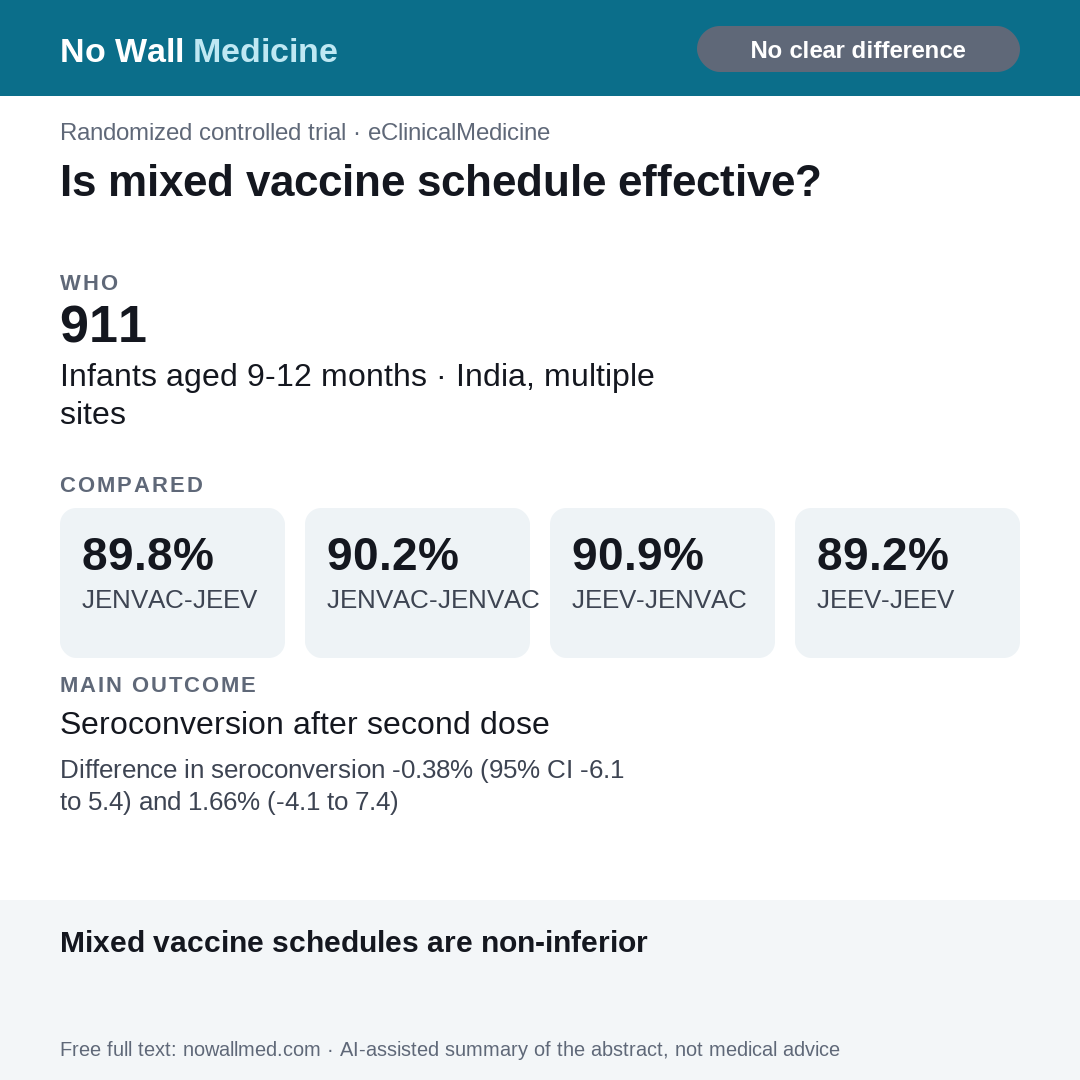
Immunogenicity and safety of an interchangeable vaccination schedule of two inactivated Japanese encephalitis vaccines: a multicentric, phase IV, open-label, randomized controlled trial
Randomized controlled trialNo clear difference
Is mixed vaccine schedule effective?
Who
911
Infants aged 9-12 months · India, multiple sites
Compared
89.8%JENVAC-JEEV (194/216)
90.2%JENVAC-JENVAC (184/204)
90.9%JEEV-JENVAC (189/208)
89.2%JEEV-JEEV (190/213)
Main outcome
Seroconversion after second dose
Result: Difference in seroconversion -0.38% (95% CI -6.1 to 5.4) and 1.66% (-4.1 to 7.4)
Bottom line: Mixed vaccine schedules are non-inferior
Funded by: Indian Council of Medical Research
eClinicalMedicine · 2026-09-22Download image
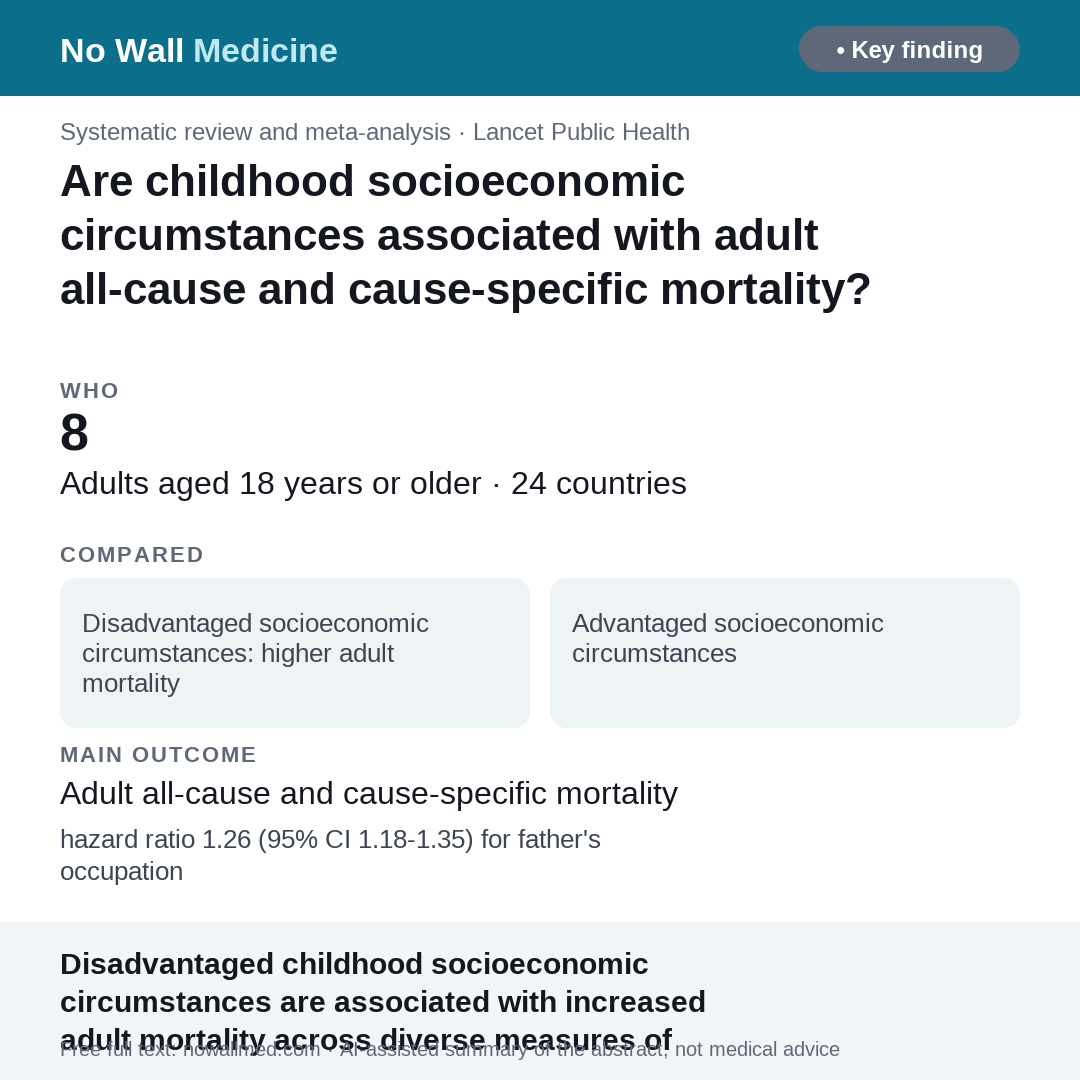
Childhood socioeconomic circumstances and adult mortality: a systematic review and meta-analysis
Systematic review and meta-analysisHarm found
Are childhood socioeconomic circumstances associated with adult all-cause and cause-specific mortality?
Who
8
Adults aged 18 years or older · 24 countries
Compared
Disadvantaged socioeconomic circumstances: higher adult mortality
Advantaged socioeconomic circumstances
Main outcome
Adult all-cause and cause-specific mortality
Result: hazard ratio 1.26 (95% CI 1.18-1.35) for father's occupation
Bottom line: Disadvantaged childhood socioeconomic circumstances are associated with increased adult mortality across diverse measures of disadvantage and causes of death.
Limitation: Half of included studies were at high or very high risk of bias due to inadequate confounding control.
Lancet Public Health · 2026-09-22Download image
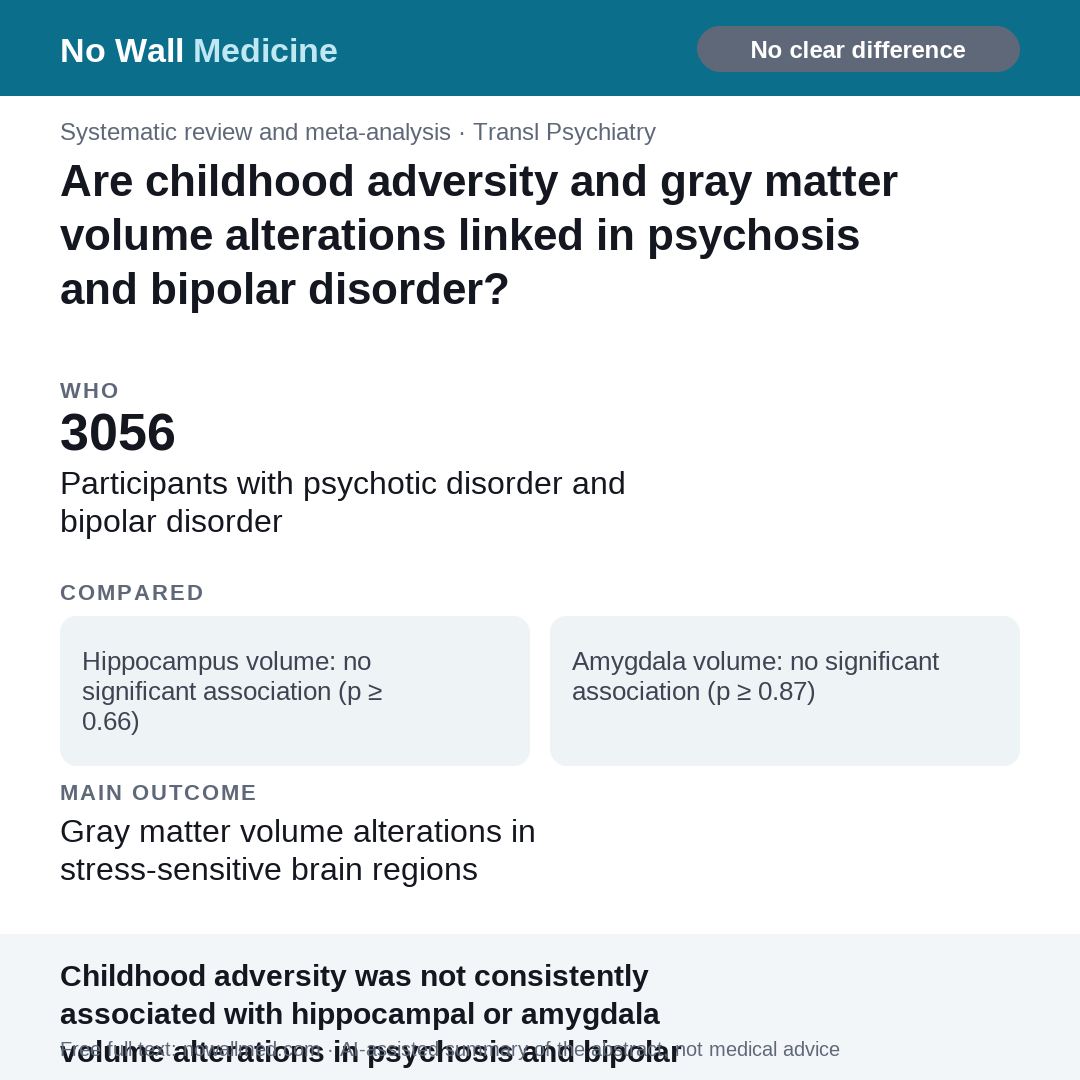
Revisiting the link between childhood adversity and stress-sensitive brain regions in psychosis and bipolar disorder: a systematic review and meta-analysis
Systematic review and meta-analysisNo clear difference
Are childhood adversity and gray matter volume alterations linked in psychosis and bipolar disorder?
Who
3056
Participants with psychotic disorder and bipolar disorder
Compared
Hippocampus volume: no significant association (p ≥ 0.66)
Amygdala volume: no significant association (p ≥ 0.87)
Main outcome
Gray matter volume alterations in stress-sensitive brain regions
Bottom line: Childhood adversity was not consistently associated with hippocampal or amygdala volume alterations in psychosis and bipolar disorder.
Transl Psychiatry · 2026-09-19Download image
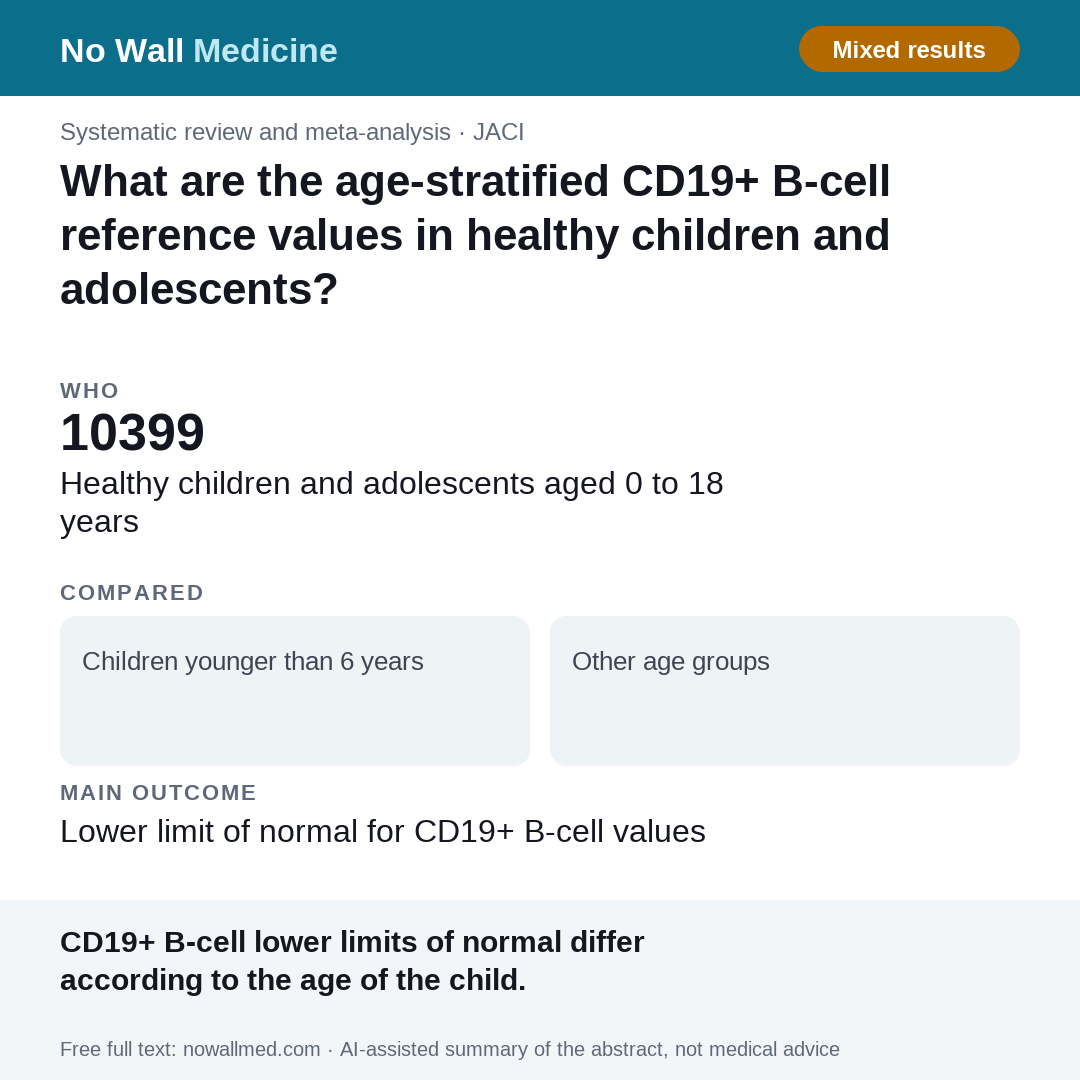
Age-stratified CD19+ B-cell reference values in children and adolescents-a systematic review and meta-analysis
Systematic review and meta-analysisMixed results
What are the age-stratified CD19+ B-cell reference values in healthy children and adolescents?
Who
10399
Healthy children and adolescents aged 0 to 18 years
Compared
Children younger than 6 years
Other age groups
Main outcome
Lower limit of normal for CD19+ B-cell values
Bottom line: CD19+ B-cell lower limits of normal differ according to the age of the child.
JACI · 2026-09-18Download image
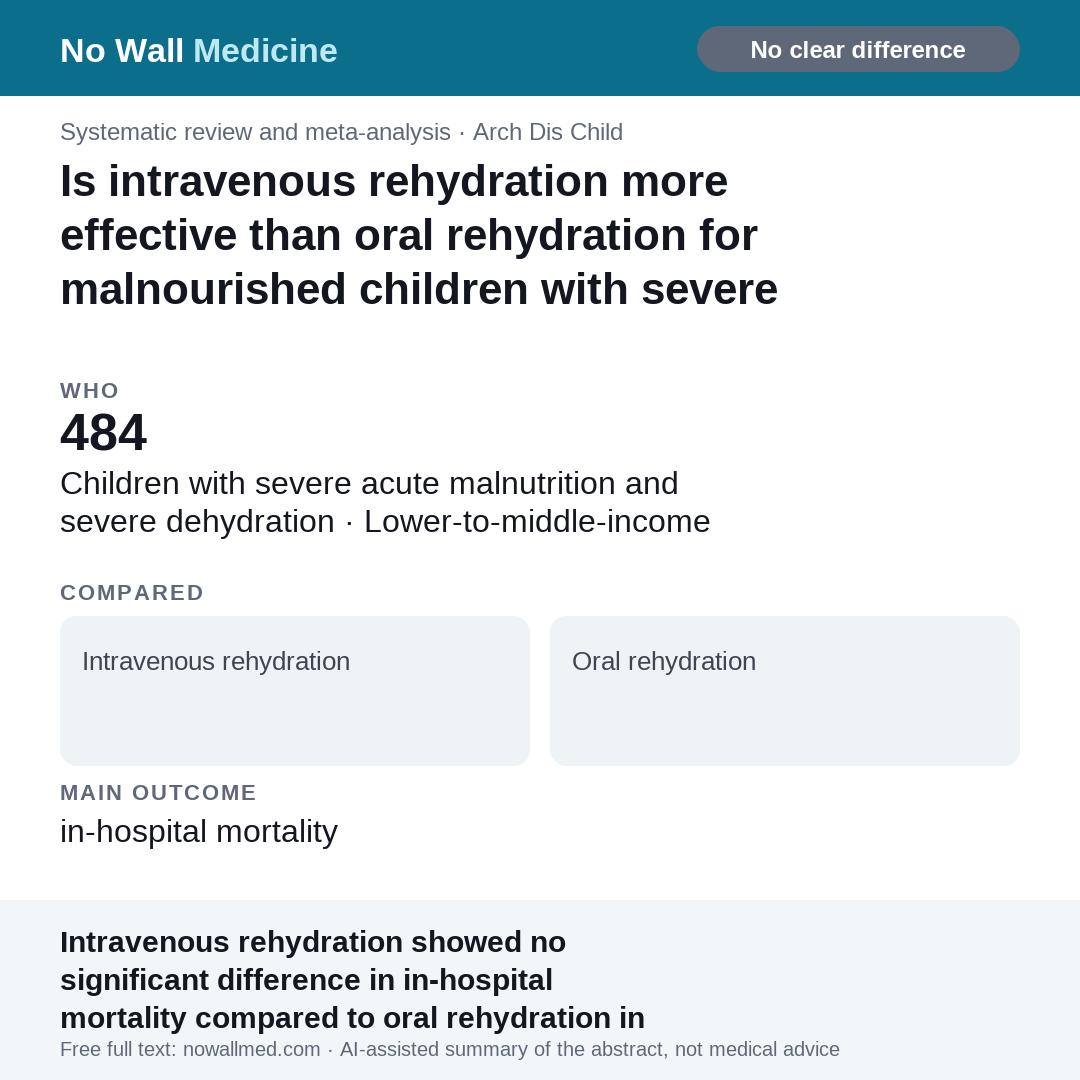
Intravenous rehydration in children with severe malnutrition and severe dehydration: a systematic review and meta-analysis
Systematic review and meta-analysisNo clear difference
Is intravenous rehydration more effective than oral rehydration for malnourished children with severe dehydration?
Who
484
Children with severe acute malnutrition and severe dehydration · Lower-to-middle-income countries
Compared
Intravenous rehydration
Oral rehydration
Main outcome
in-hospital mortality
Result: risk ratio 0.71 (95% CI 0.46 to 1.10)
Bottom line: Intravenous rehydration showed no significant difference in in-hospital mortality compared to oral rehydration in children with severe malnutrition.
Limitation: Only three randomized controlled trials were identified
Arch Dis Child · 2026-09-18Download image