Visual abstracts
New randomized trials and meta-analyses from leading journals at a glance: who was studied, what was compared, and what was found. Every paper is free to read in full.
All specialtiesCardiology 857Oncology 770Gastroenterology & Hepatology 311Infectious Disease 626Neurology 354Psychiatry & Mental Health 430Pulmonology 370Critical Care 260Endocrinology & Diabetes 484Pediatrics 542Surgery 351Orthopedics & Sports Medicine 166Neurosurgery 115Cardiothoracic & Vascular Surgery 87Plastic & Reconstructive Surgery 144Nephrology 197Rheumatology 108Hematology 183Dermatology 82Ophthalmology 97Obstetrics & Gynecology 266Public & Global Health 168Radiology & Imaging 105Anesthesiology 130Urology 162ENT (Otolaryngology) 115Emergency Medicine 103Allergy & Immunology 58Geriatrics 160Family Medicine & Primary Care 111Medical Genetics & Genomics 91Pathology & Laboratory Medicine 27Physical Medicine & Rehabilitation 149Palliative Care 81Nutrition 223Digital Health & AI 462General Medicine 101
Evaluating social cognitive remediation for labour participation in severe mental illness: insights from a small-scale randomised controlled trial
Randomised controlled trialBenefit found
Does social cognitive remediation improve labour participation?
Who
105
individuals with severe mental illness · France, three sites
Compared
Social cognitive remediation: 6.5% increase
Active control
Main outcome
hours worked versus expected
Bottom line: Social cognitive remediation improves employment maintenance
BJPsych Open · 2026-10-12Download image

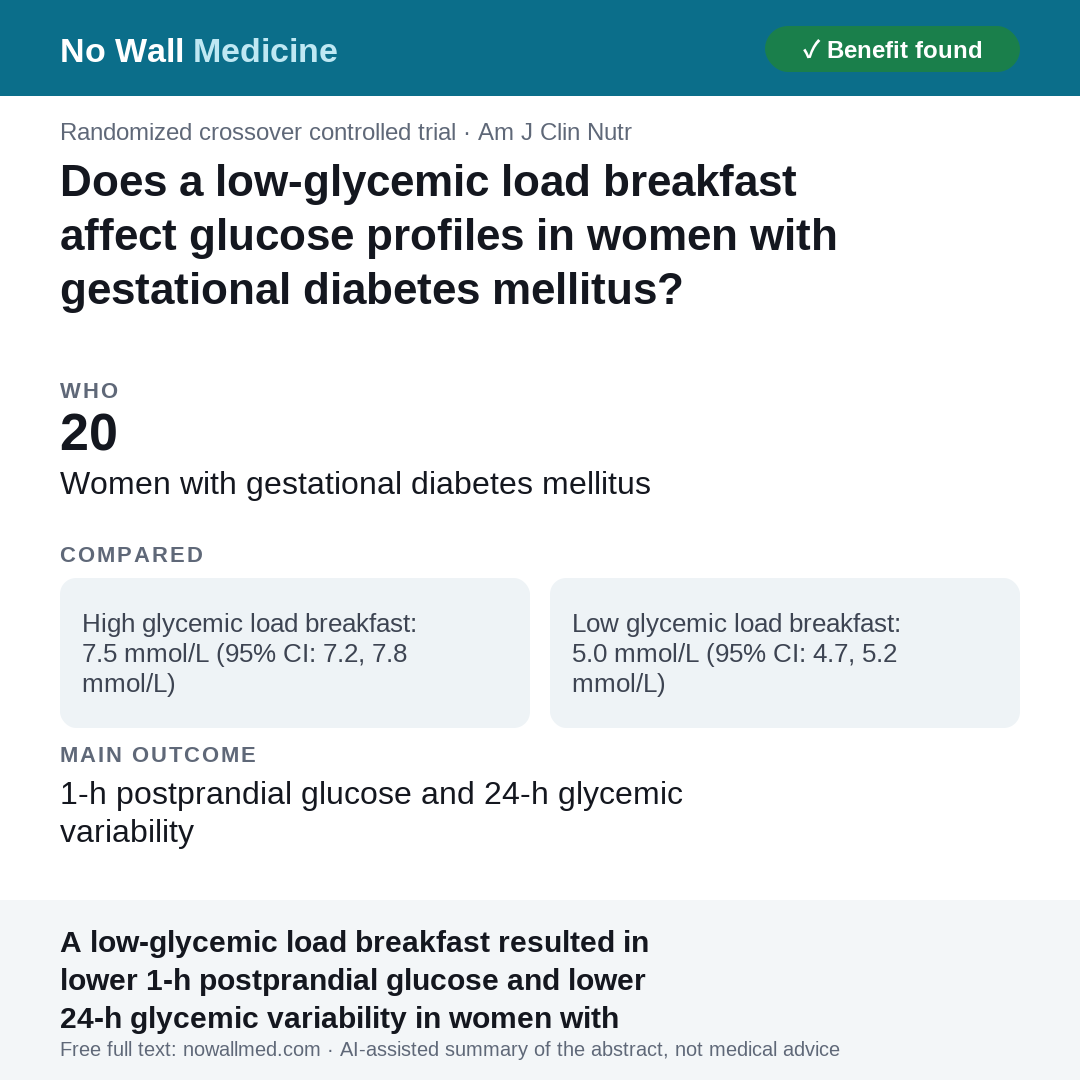
The impact of a low-glycemic load breakfast on diurnal glucose profiles in women with gestational diabetes mellitus: the Glycemic Load In Diabetes DurINg Gestation randomized crossover trial
Randomized crossover controlled trialBenefit found
Does a low-glycemic load breakfast affect glucose profiles in women with gestational diabetes mellitus?
Who
20
Women with gestational diabetes mellitus
Compared
High glycemic load breakfast: 7.5 mmol/L (95% CI: 7.2, 7.8 mmol/L)
Low glycemic load breakfast: 5.0 mmol/L (95% CI: 4.7, 5.2 mmol/L)
Main outcome
1-h postprandial glucose and 24-h glycemic variability
Bottom line: A low-glycemic load breakfast resulted in lower 1-h postprandial glucose and lower 24-h glycemic variability in women with gestational diabetes.
Am J Clin Nutr · 2026-10-10Download image
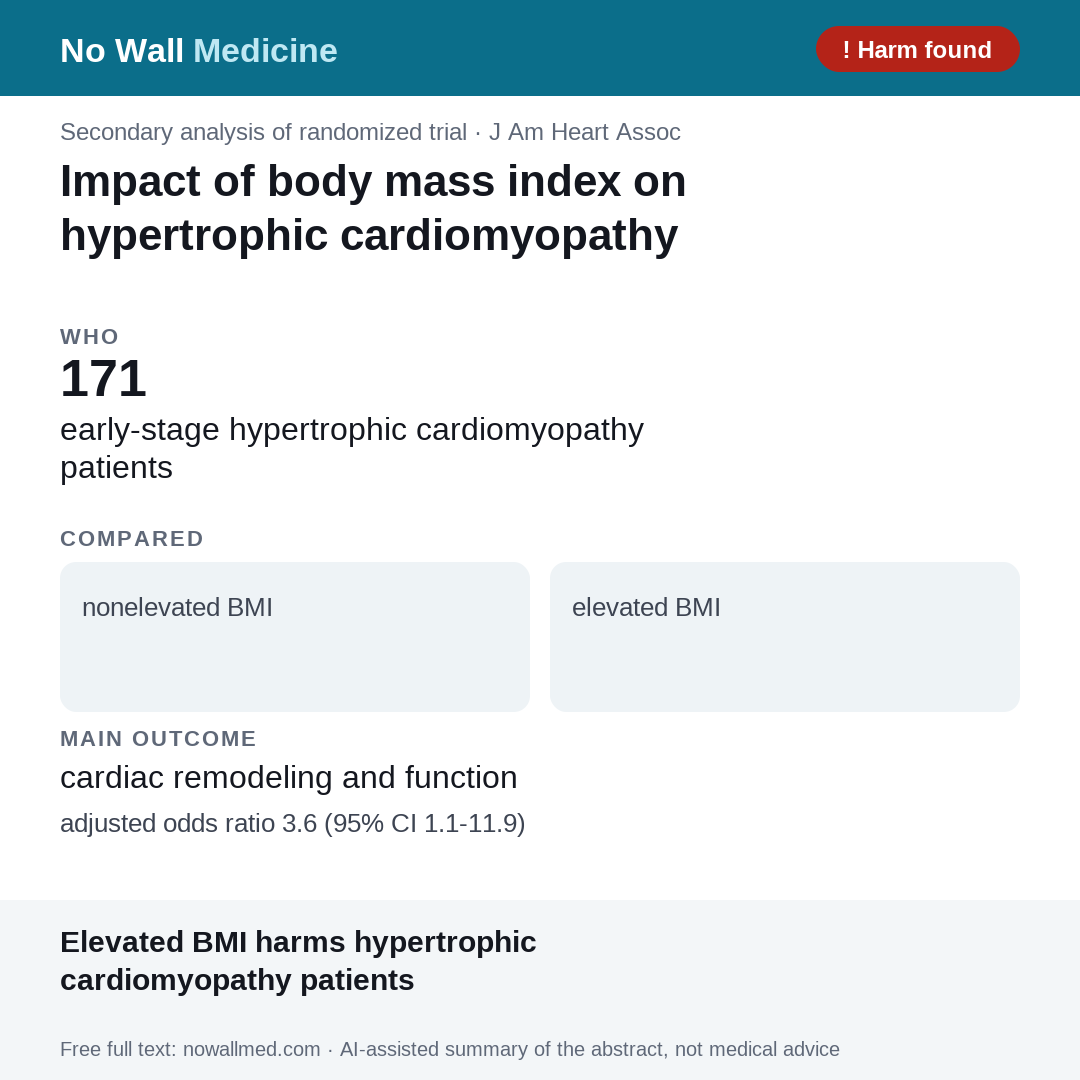
Body Mass Index, Valsartan, and Myocardial Remodeling in Early-Stage Hypertrophic Cardiomyopathy: A Secondary Analysis of the Randomized VANISH Trial
Secondary analysis of randomized trialHarm found
Impact of body mass index on hypertrophic cardiomyopathy
Who
171
early-stage hypertrophic cardiomyopathy patients
Compared
nonelevated BMI
elevated BMI
Main outcome
cardiac remodeling and function
Result: adjusted odds ratio 3.6 (95% CI 1.1-11.9)
Bottom line: Elevated BMI harms hypertrophic cardiomyopathy patients
J Am Heart Assoc · 2026-10-10Download image
Pilot Randomized Trial of 2 Food Purchasing Interventions in Individuals With Hypertension in New Orleans: An American Heart Association Food Is Medicine Initiative
Randomized pilot trialNo clear difference
Do online or in-store food vouchers better improve fruit and vegetable consumption?
Who
98
Individuals with uncontrolled hypertension · New Orleans
Compared
Online grocery platform: 20% (interquartile range, -17% to 93%) increase
In-store local grocery: 20% (interquartile range, -17% to 93%) increase
Main outcome
Change in self-reported fruit and vegetable consumption
Bottom line: Online and in-store food vouchers showed no difference in fruit and vegetable consumption among hypertensive individuals.
Limitation: Future interventions should be conducted in larger populations.
J Am Heart Assoc · 2026-10-10Download image

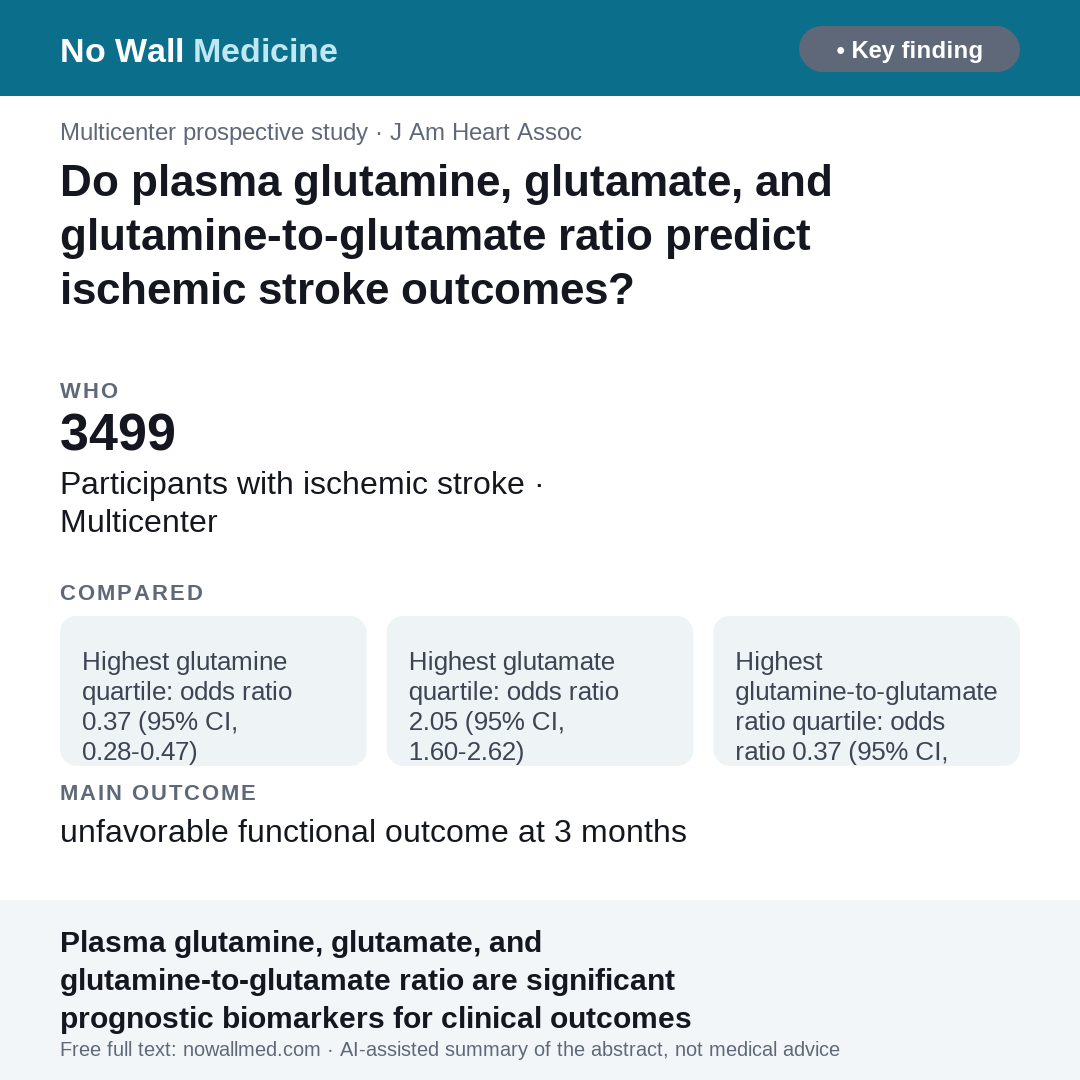
Plasma Glutamine and Glutamate in Relation to Clinical Outcomes After Ischemic Stroke: A Multicenter Prospective Study
Multicenter prospective studyBenefit found
Do plasma glutamine, glutamate, and glutamine-to-glutamate ratio predict ischemic stroke outcomes?
Who
3499
Participants with ischemic stroke · Multicenter
Compared
Highest glutamine quartile: odds ratio 0.37 (95% CI, 0.28-0.47)
Highest glutamate quartile: odds ratio 2.05 (95% CI, 1.60-2.62)
Highest glutamine-to-glutamate ratio quartile: odds ratio 0.37 (95% CI, 0.29-0.48)
Main outcome
unfavorable functional outcome at 3 months
Bottom line: Plasma glutamine, glutamate, and glutamine-to-glutamate ratio are significant prognostic biomarkers for clinical outcomes after ischemic stroke.
J Am Heart Assoc · 2026-10-10Download image
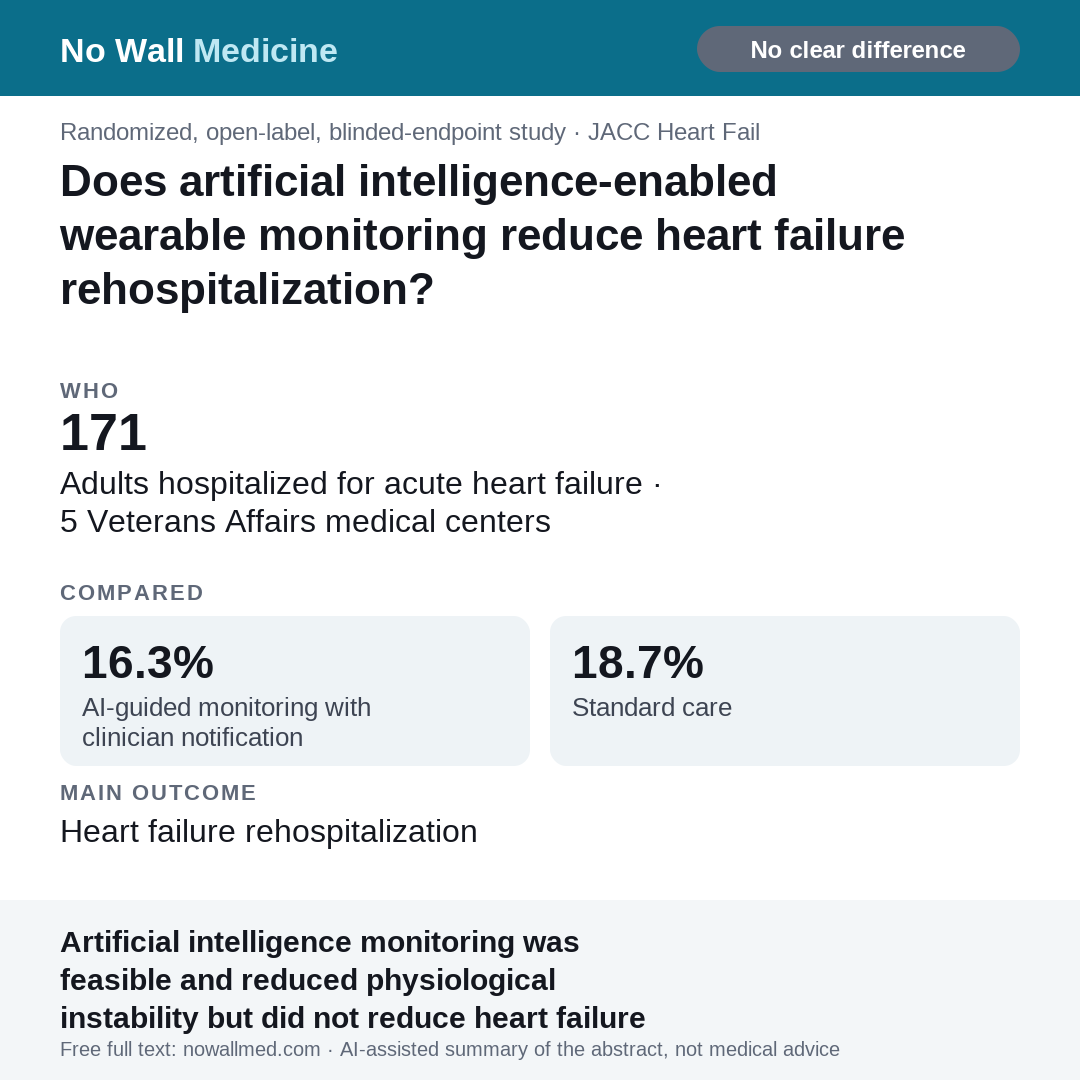
Artificial Intelligence-Enabled Detection and Management of Physiological Instability in Heart Failure: Results of the Randomized LINK-HF2 Trial
Randomized, open-label, blinded-endpoint studyNo clear difference
Does artificial intelligence-enabled wearable monitoring reduce heart failure rehospitalization?
Who
171
Adults hospitalized for acute heart failure · 5 Veterans Affairs medical centers
Compared
16.3%AI-guided monitoring with clinician notification
18.7%Standard care
Main outcome
Heart failure rehospitalization
Result: hazard ratio 0.90 (95% CI 0.43-1.84)
Bottom line: Artificial intelligence monitoring was feasible and reduced physiological instability but did not reduce heart failure rehospitalization.
JACC Heart Fail · 2026-10-09Download image
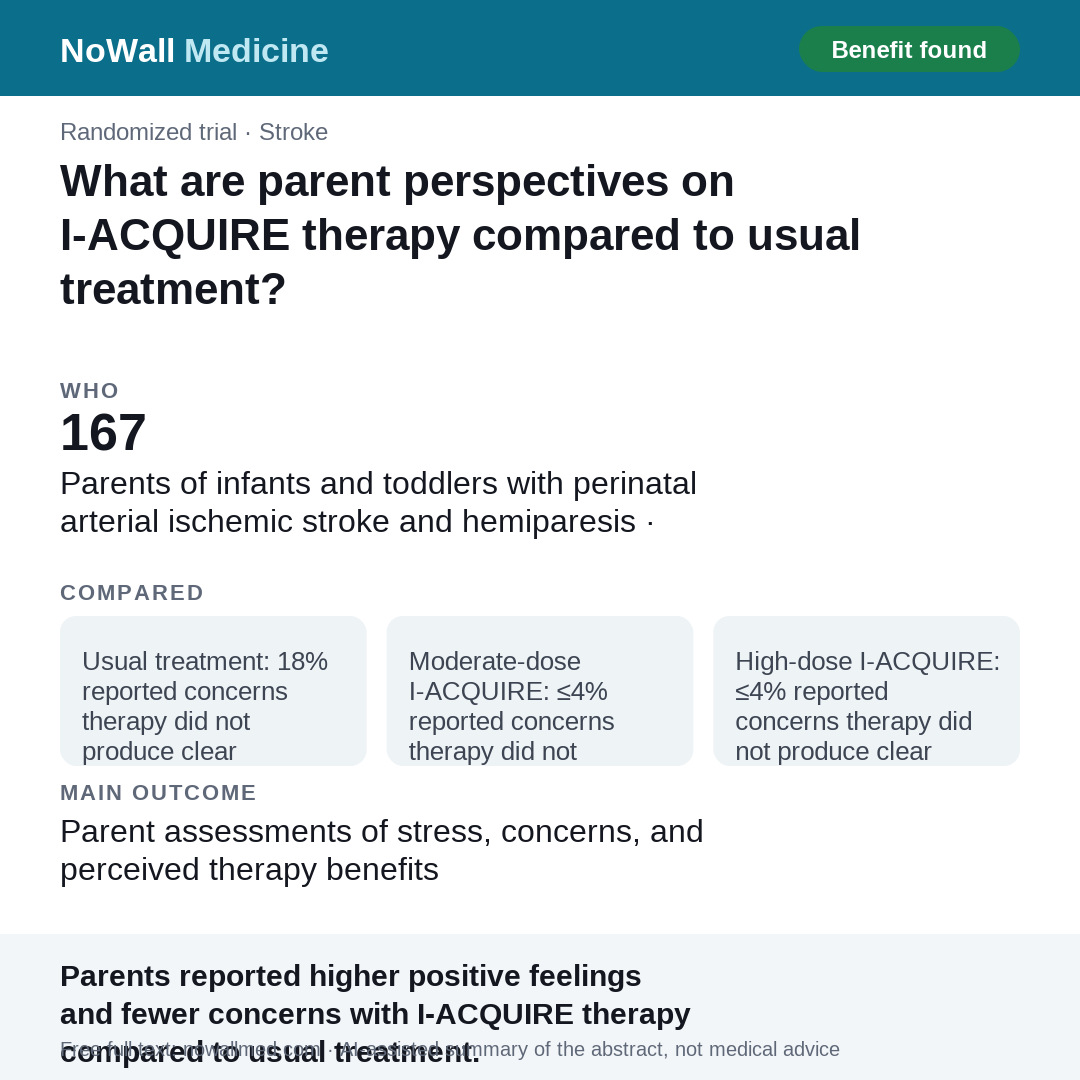
Parent Perspectives on I-ACQUIRE Therapy
Randomized trialBenefit found
What are parent perspectives on I-ACQUIRE therapy compared to usual treatment?
Who
167
Parents of infants and toddlers with perinatal arterial ischemic stroke and hemiparesis · United States 15-site
Compared
Usual treatment: 18% reported concerns therapy did not produce clear benefits
Moderate-dose I-ACQUIRE: ≤4% reported concerns therapy did not produce clear benefits
High-dose I-ACQUIRE: ≤4% reported concerns therapy did not produce clear benefits
Main outcome
Parent assessments of stress, concerns, and perceived therapy benefits
Bottom line: Parents reported higher positive feelings and fewer concerns with I-ACQUIRE compared to usual treatment.
Stroke · 2026-10-09Download image
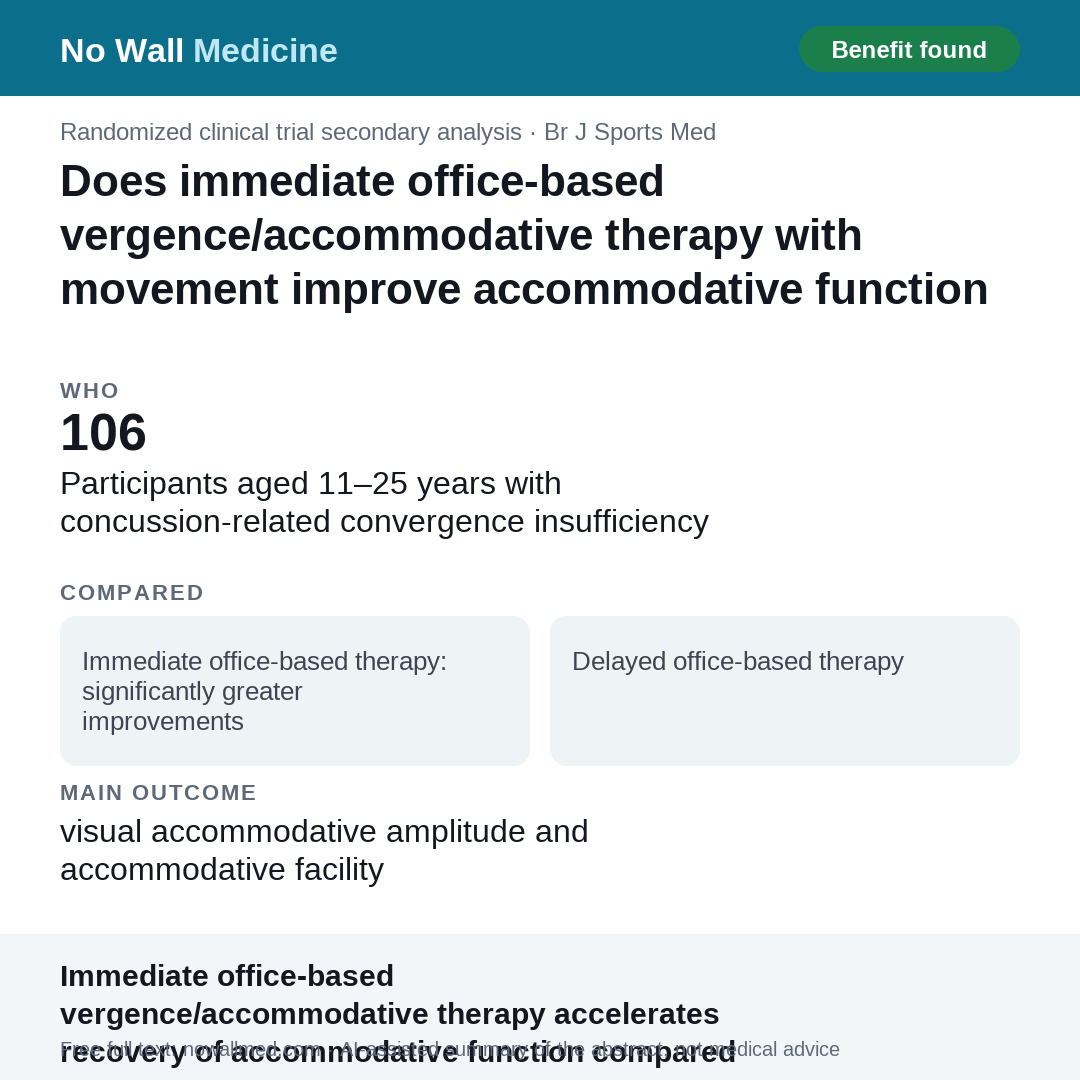
Effectiveness of office-based vergence/accommodative therapy with movement for accommodative dysfunction in concussion-related convergence insufficiency: a secondary analysis of the CONCUSS randomised clinical trial
Randomized clinical trial secondary analysisBenefit found
Does immediate office-based vergence/accommodative therapy with movement improve accommodative function in concussion-related convergence insufficiency?
Who
106
Participants aged 11–25 years with concussion-related convergence insufficiency
Compared
Immediate therapy: 86% achieved resolution
Delayed therapy: 28% achieved resolution
Main outcome
Accommodative amplitude, accommodative facility, and resolution of insufficiency
Bottom line: Immediate therapy accelerates recovery of accommodative function compared to delayed treatment after concussion.
Br J Sports Med · 2026-10-09Download image
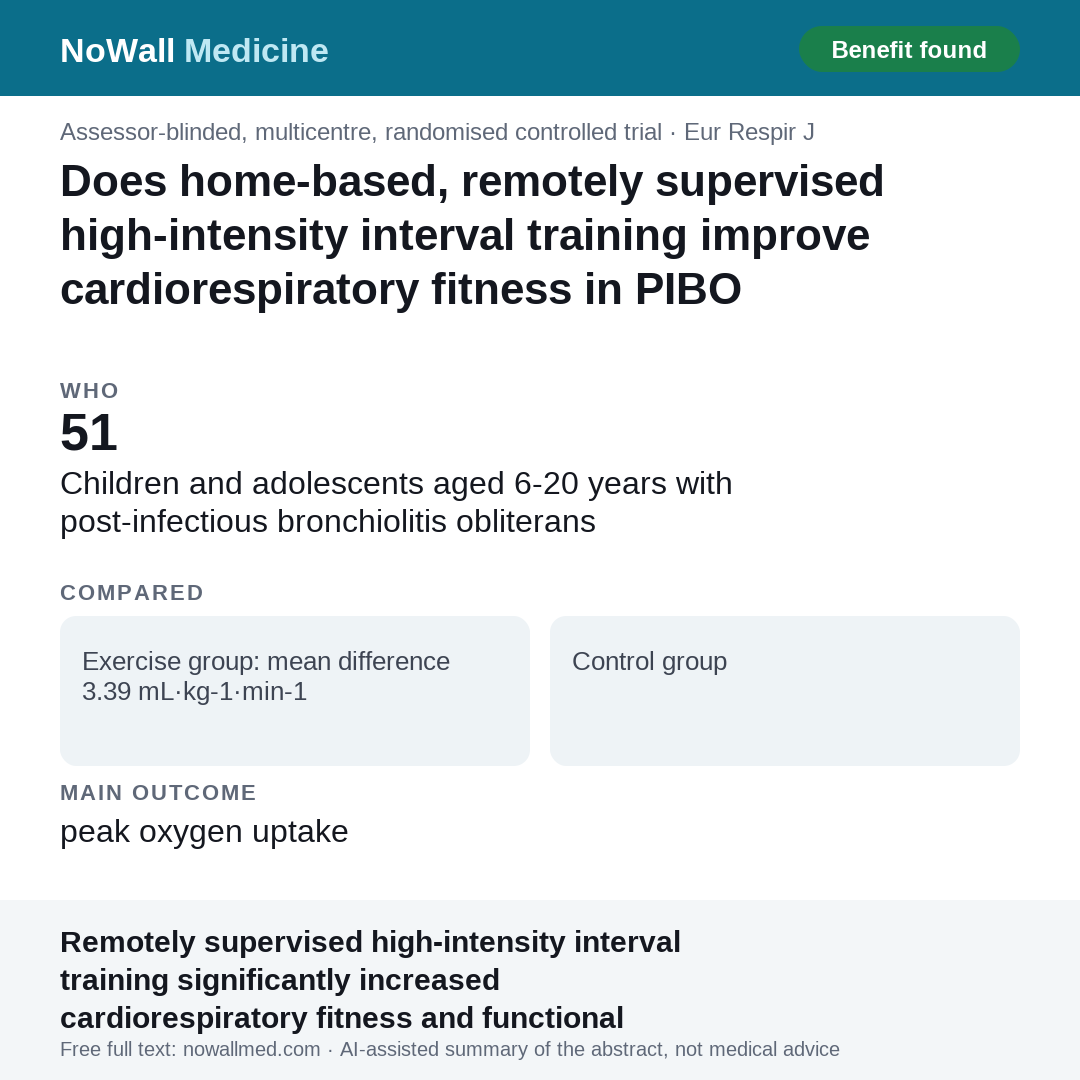
Home-based, remotely supervised, high-intensity interval training and cardiorespiratory fitness in children and adolescents with post-infectious bronchiolitis obliterans: a randomised controlled trial
Assessor-blinded, multicentre, randomised controlled trialBenefit found
Does home-based, remotely supervised high-intensity interval training improve cardiorespiratory fitness in PIBO patients?
Who
51
Children and adolescents aged 6-20 years with post-infectious bronchiolitis obliterans
Compared
Exercise group: mean difference 3.39 mL·kg-1·min-1
Control group
Main outcome
peak oxygen uptake
Result: mean difference 3.39 mL·kg-1·min-1; p=0.04
Bottom line: Remotely supervised high-intensity interval training significantly increased cardiorespiratory fitness and functional capacity in children with post-infectious bronchiolitis obliterans.
Eur Respir J · 2026-10-09Download image
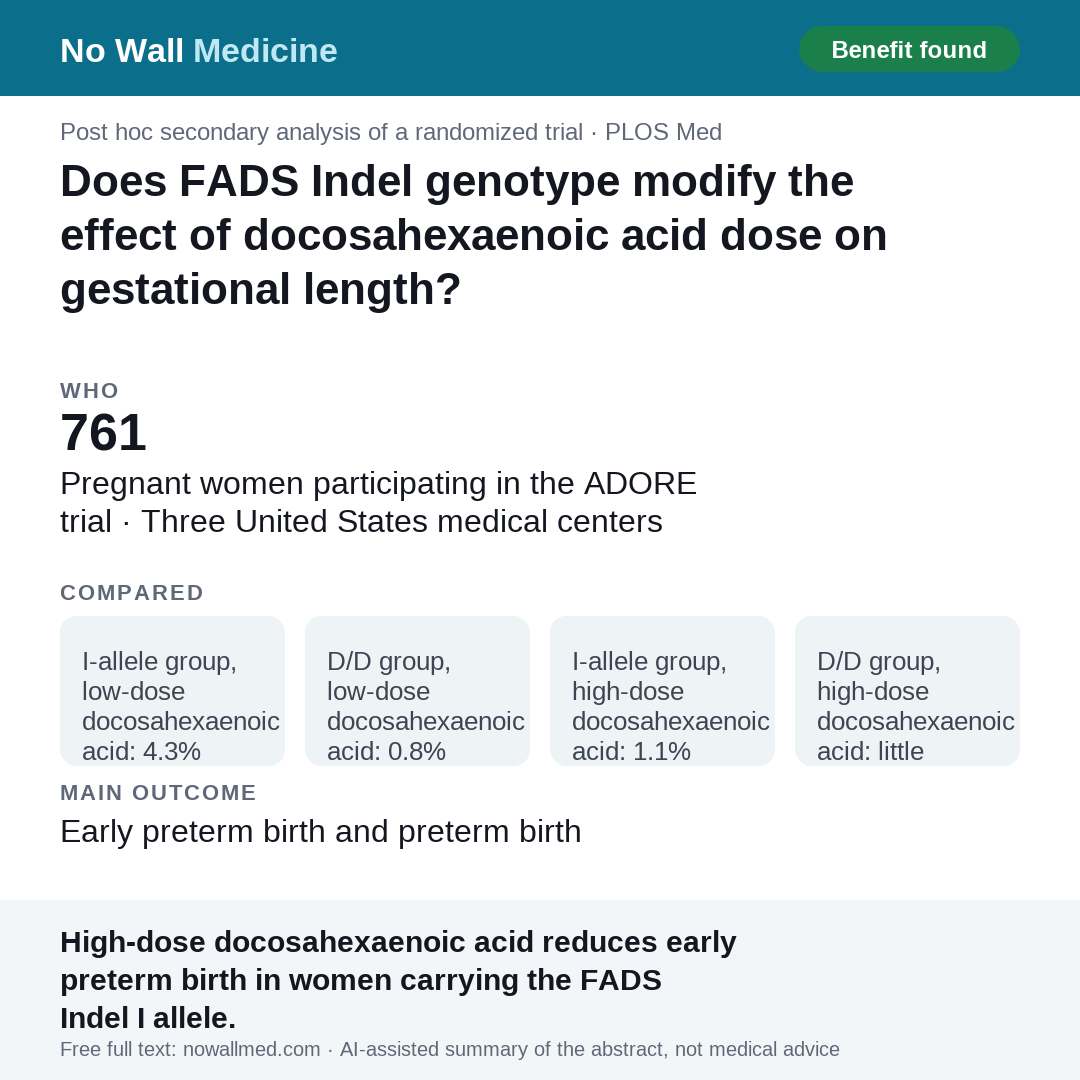
Protocol and rationale for a randomised, double-blind, placebo-controlled phase 3 trial of admilparant (BMS-986278), an oral lysophosphatidic acid receptor 1 antagonist, in patients with idiopathic pulmonary fibrosis: ALOFT-IPF
Randomised, double-blind, placebo-controlled phase 3 trialUnclear result
Does admilparant efficacy and safety improve outcomes in patients with idiopathic pulmonary fibrosis?
Who
1191
Adults aged 40 years or older with idiopathic pulmonary fibrosis · Global, multicentre
Compared
Admilparant
Placebo
Main outcome
Absolute change in forced vital capacity from baseline at week 52
Bottom line: This phase 3 trial is evaluating the efficacy and safety of admilparant in idiopathic pulmonary fibrosis patients.
BMJ Open Respir Res · 2026-10-09Download image
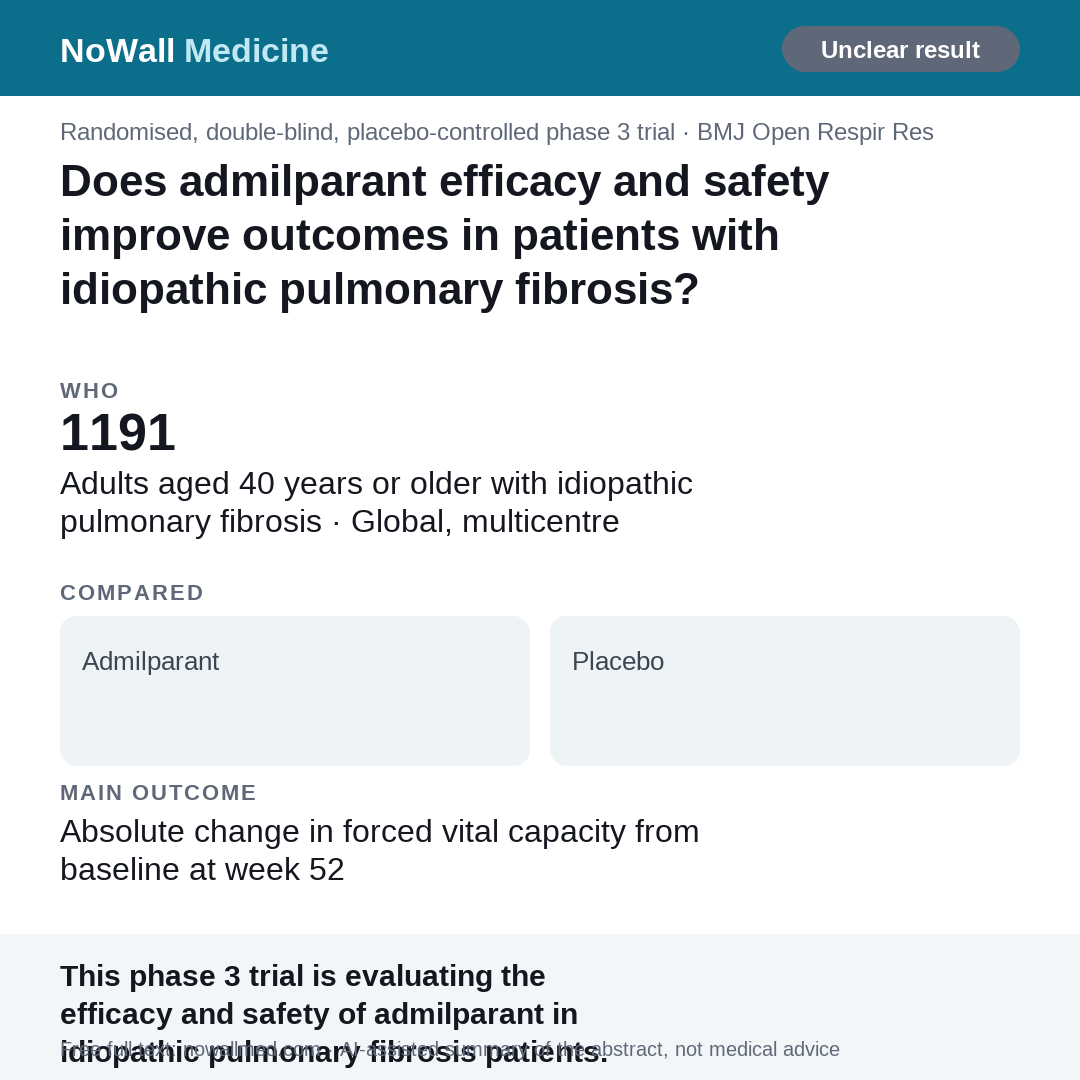
A randomised, open-label, phase II study of tobemstomig combinations in patients with previously untreated advanced clear-cell renal cell carcinoma
Randomised, open-label, phase II studyHarm found
Are tobemstomig combinations effective in untreated advanced clear-cell renal cell carcinoma?
Who
198
Untreated advanced clear-cell renal cell carcinoma patients
Compared
tobemstomig plus axitinib: 62.1% grade 3-4 adverse events
tobemstomig plus tiragolumab plus axitinib: 67.7% grade 3-4 adverse events
pembrolizumab plus axitinib: 56.7% grade 3-4 adverse events
Main outcome
Incidence and severity of adverse events
Bottom line: Tobemstomig-containing regimens were associated with increased toxicity and did not demonstrate meaningful efficacy improvement relative to control.
ESMO Open · 2026-10-09Download image
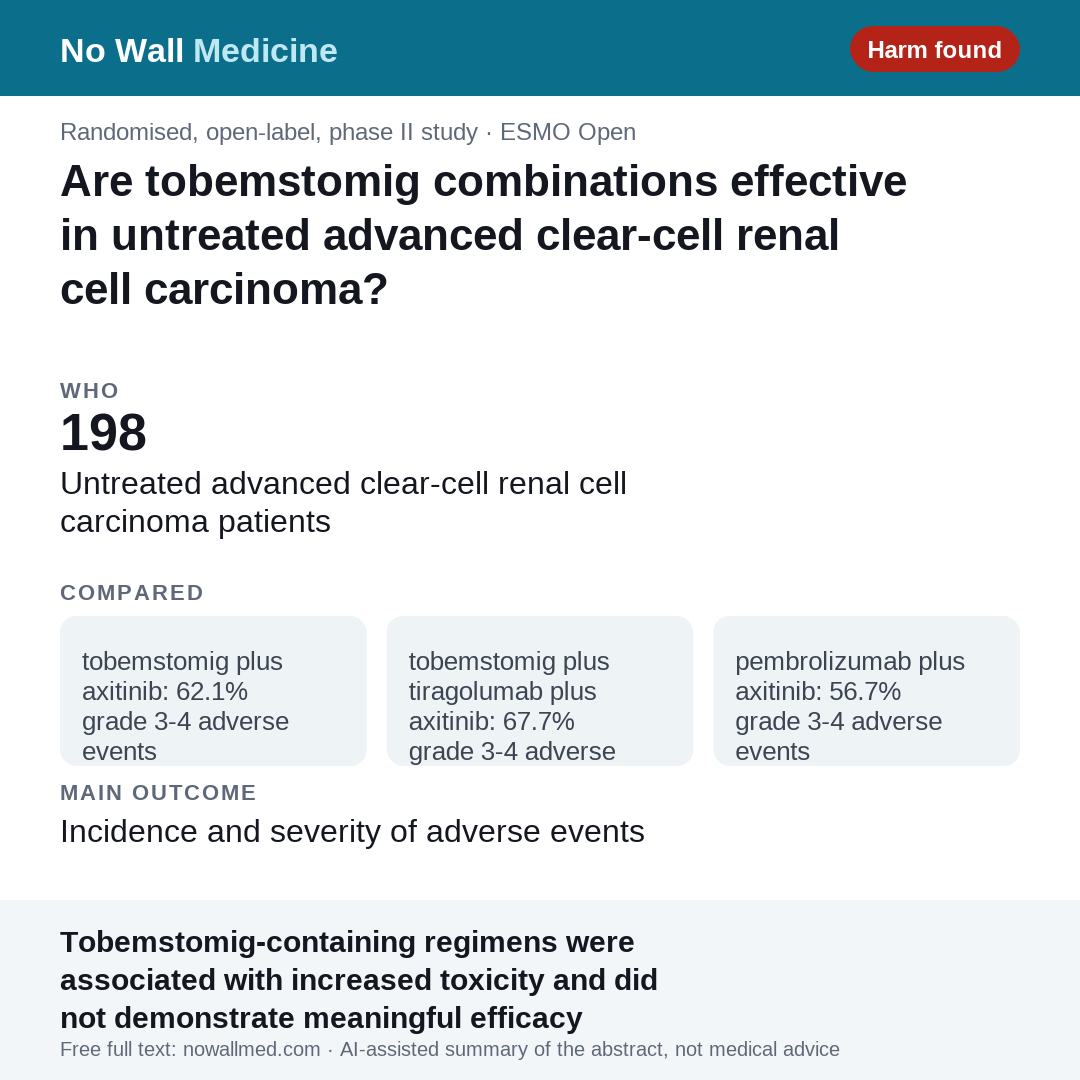
Oral deucrictibant for on-demand treatment of hereditary angioedema attacks: a phase 3, multicentre, randomised, double-blind, placebo-controlled crossover trial
Phase 3, double-blind, 2x2 crossover trialBenefit found
Is oral deucrictibant effective for on-demand treatment of hereditary angioedema attacks?
Who
134
Adolescent and adult participants with hereditary angioedema · 59 sites across 24 countries
Compared
20 mg oral deucrictibant: median 1.28 h (95% CI 1.05 to 1.52)
placebo: more than 12 h (5.82 to >12)
Main outcome
Time to onset of symptom relief
Result: p<0.0001
Bottom line: Oral deucrictibant provided significantly faster symptom relief than placebo for hereditary angioedema attacks and was well tolerated.
Funded by: Pharvaris
Lancet · 2026-10-08Download image
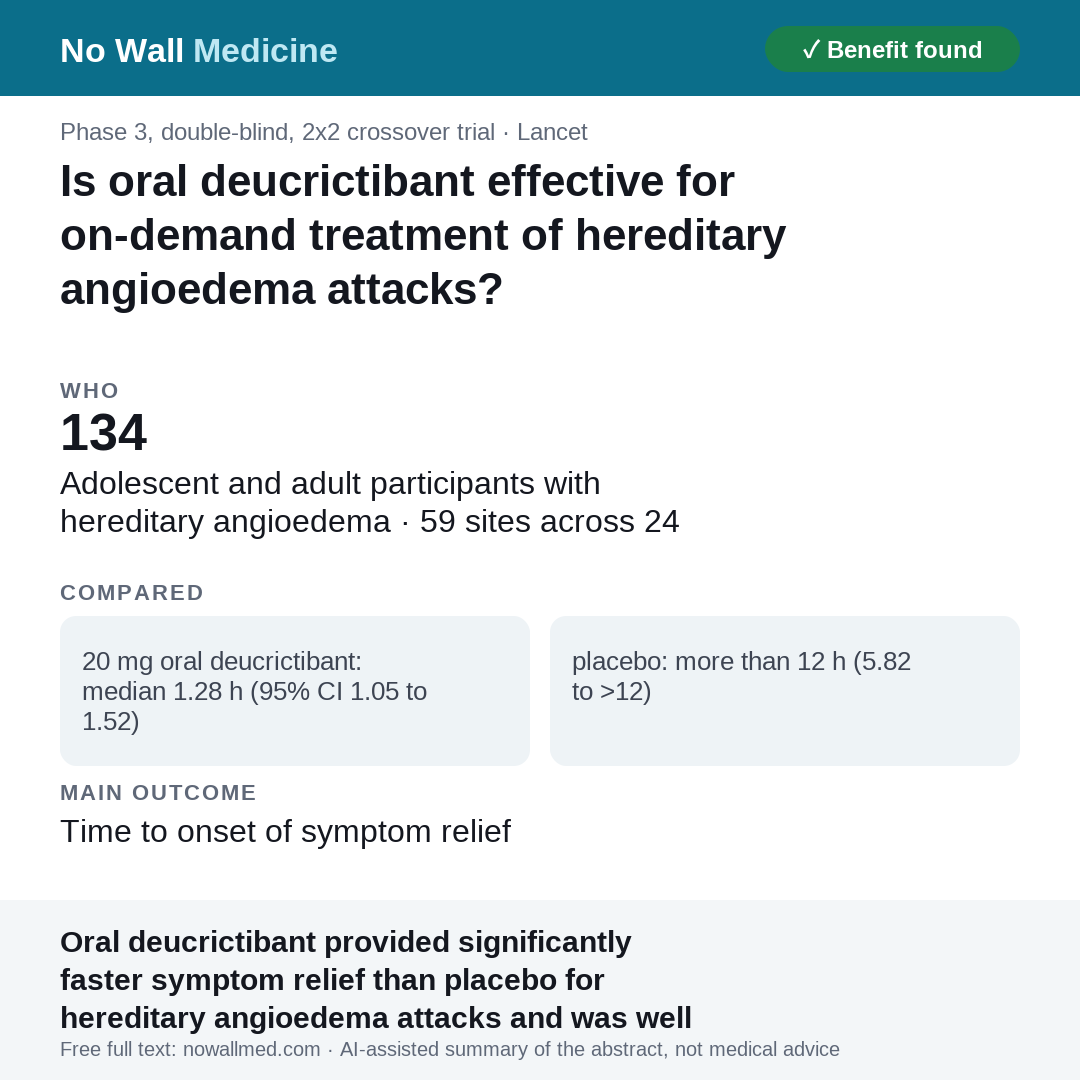
Genotype-informed docosahexaenoic acid dosing based on the FADS Indel to reduce preterm and prolonged gestation: A secondary analysis of the ADORE randomized trial
Post hoc secondary analysis of a randomized trialBenefit found
Does FADS Indel genotype modify the effect of docosahexaenoic acid dose on gestational length?
Who
761
Pregnant women participating in the ADORE trial · Three United States medical centers
Compared
I-allele group, low-dose docosahexaenoic acid: 4.3% (9/214) early preterm birth
D/D group, low-dose docosahexaenoic acid: 0.8% (1/151) early preterm birth
I-allele group, high-dose docosahexaenoic acid: 1.1% (2/205) early preterm birth
D/D group, high-dose docosahexaenoic acid: little effect
Main outcome
Early preterm birth and preterm birth
Result: genotype x dose interaction posterior probability 0.99 for early preterm birth
Bottom line: High-dose docosahexaenoic acid reduces early preterm birth in women carrying the FADS Indel I allele.
Limitation: This was a post hoc analysis and not a prespecified trial aim.
PLOS Med · 2026-10-08Download image
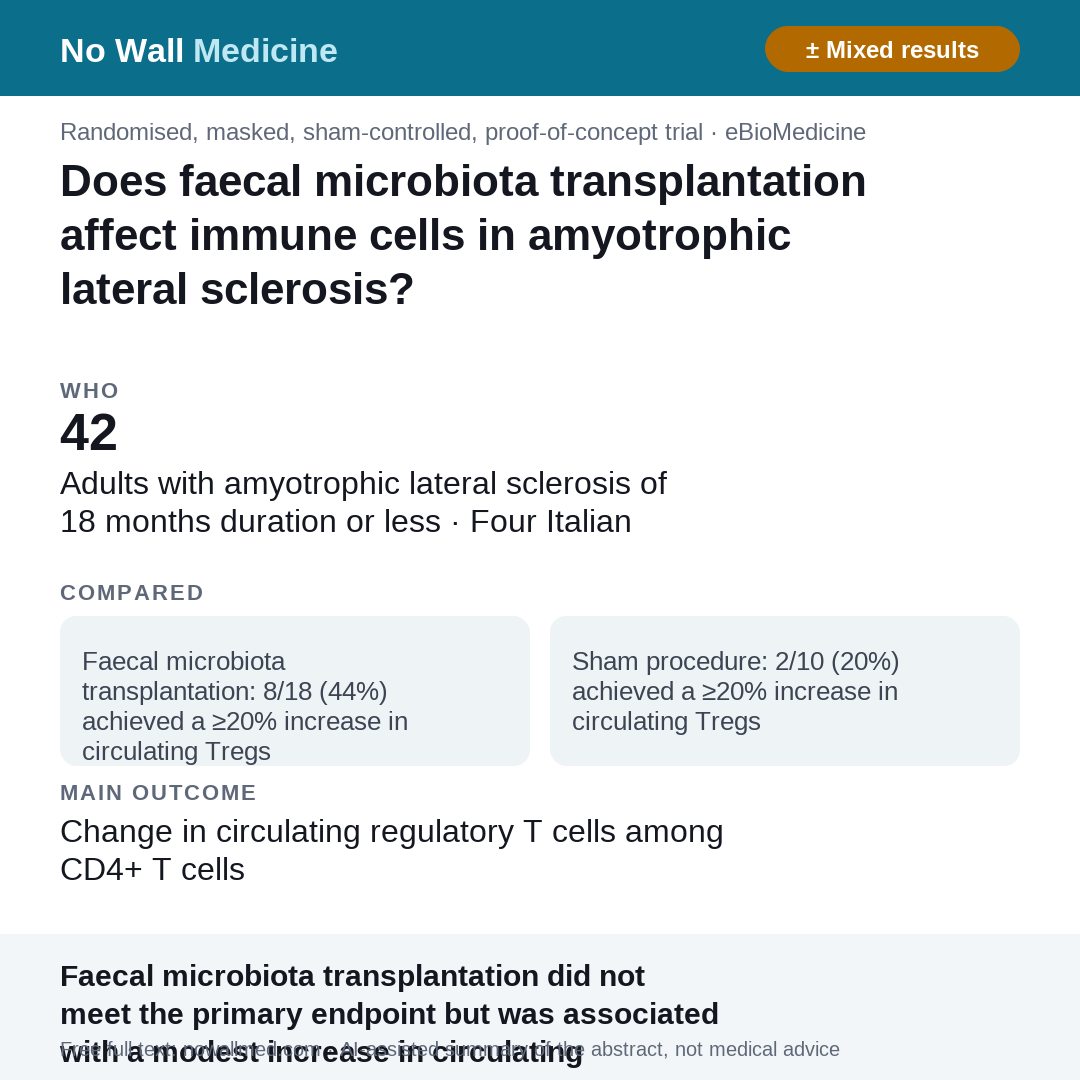
Adalimumab versus placebo as add-on to standard therapy for non-infectious uveitis in the United Kingdom: the ASTUTE randomised controlled trial with treatment run-in
Randomised controlled trialBenefit found
Adalimumab effective for non-infectious uveitis?
Who
115
Adults with non-infectious uveitis · 18 UK NHS departments
Compared
31.4%Adalimumab
59.0%Placebo
Main outcome
Time to treatment failure
Result: hazard ratio 0.42 (95% CI 0.23 to 0.75)
Bottom line: Adalimumab reduces treatment failure
Funded by: National Institute for Health and Care Research
eClinicalMedicine · 2026-10-08Download image
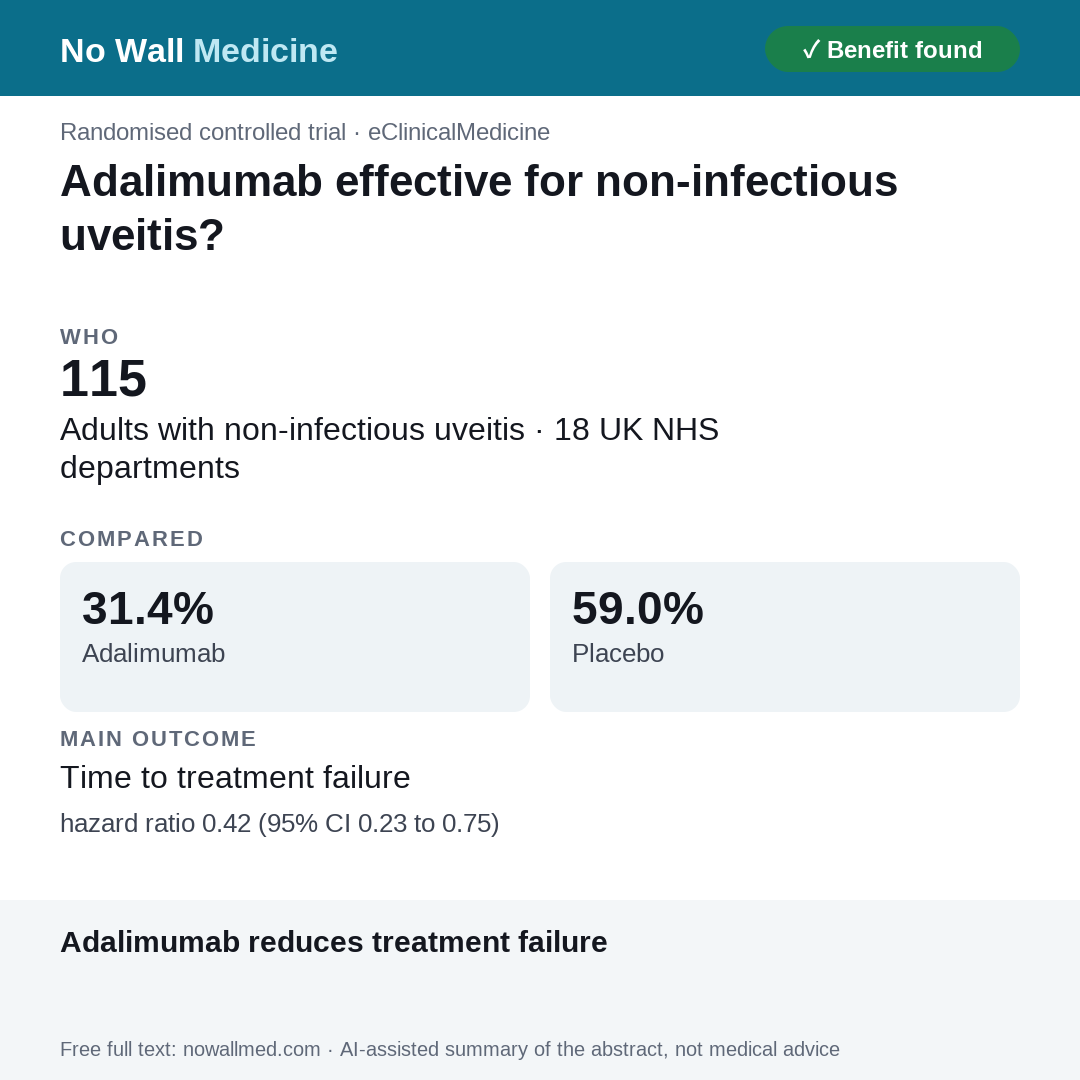
Supporting informed decisions about tubal sterilization with a patient-facing website: a randomized trial
Randomized controlled trialBenefit found
Does a patient-facing website increase perceived access and knowledge of contraceptive options?
Who
350
Individuals considering tubal sterilization · United States
Compared
Advancing Access website: 62% perceived access
Attention control: 58% perceived access
Main outcome
Multidimensional measure of access to reproductive health services
Result: adjusted mean difference 3.24 (95% confidence interval, 1.81-4.67)
Bottom line: The Advancing Access website increases perceived access to birth control and contraceptive knowledge compared to standard materials.
AJOG · 2026-10-08Download image
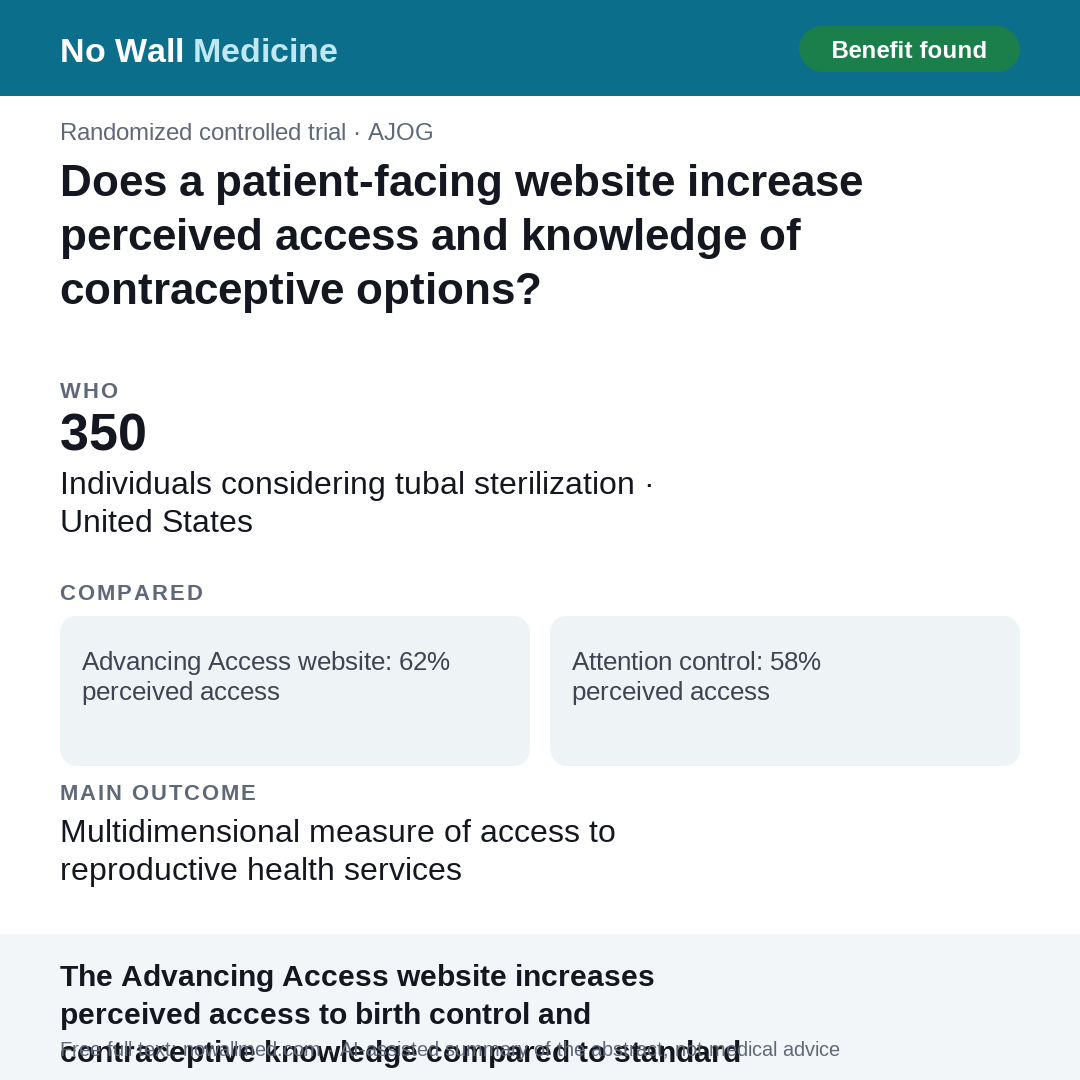
Exercise and white matter hyperintensities: a randomized clinical trial
Single-blinded, proof-of-concept randomized clinical trialMixed results
Does progressive resistance exercise training impact white matter hyperintensity volume in individuals with subcortical vascular cognitive impairment?
Who
89
Community-dwelling individuals aged 55 years or older with subcortical vascular cognitive impairment
Compared
Progressive resistance exercise training
Balance and tone control
Main outcome
Whole-brain and region-specific white matter hyperintensity volumes
Result: -0.016 (-0.052 to 0.019) log-transformed cm3
Bottom line: Progressive resistance training may reduce white matter hyperintensity progression, particularly in females, despite no significant whole-brain difference.
Brain Commun · 2026-10-08Download image
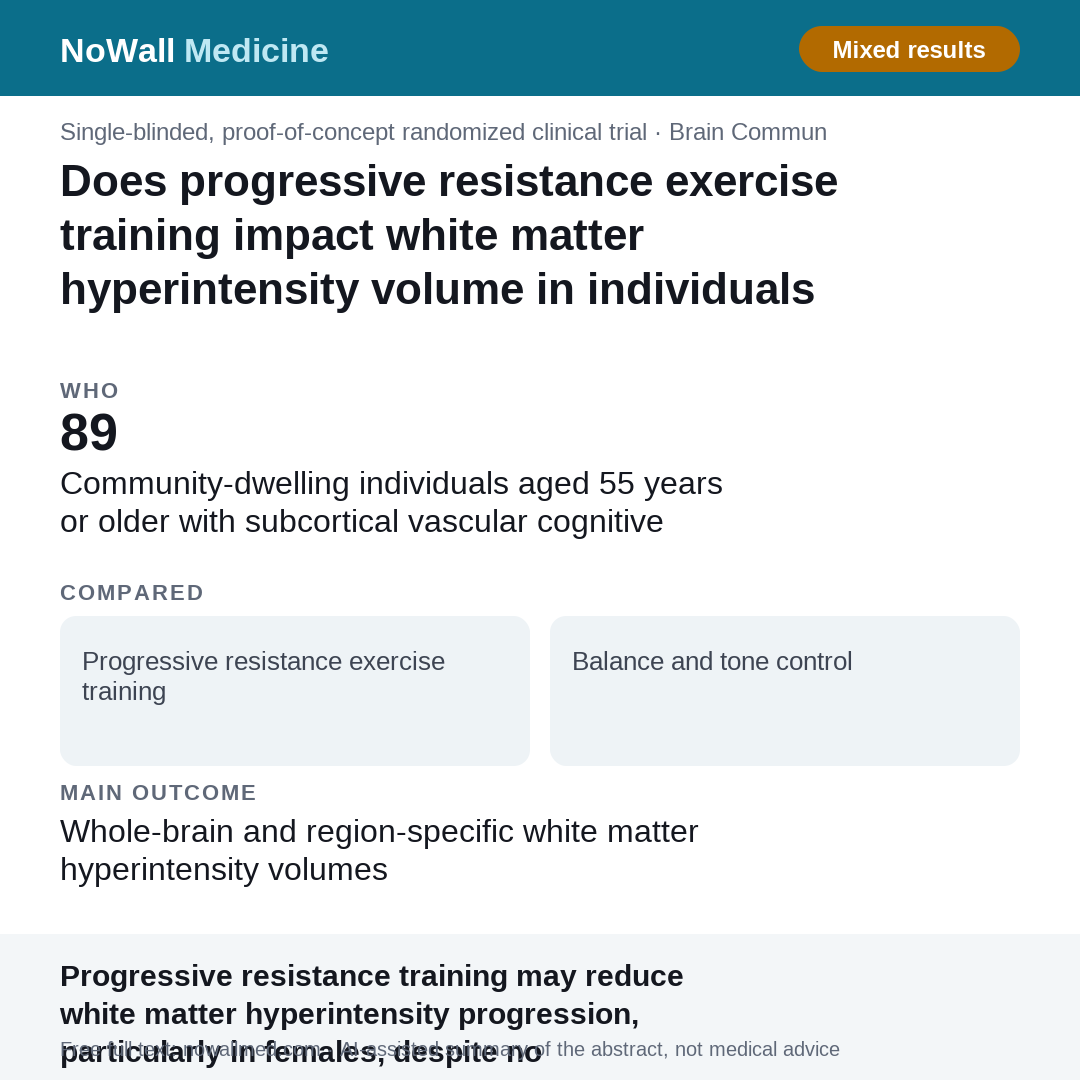
Immune effects of faecal microbiota transplantation in amyotrophic lateral sclerosis: a pilot multicentre, randomised, masked, sham-controlled, proof-of concept trial
Randomised, masked, sham-controlled, proof-of-concept trialMixed results
Does faecal microbiota transplantation affect immune cells in amyotrophic lateral sclerosis?
Who
42
Adults with amyotrophic lateral sclerosis of 18 months duration or less · Four Italian centres
Compared
Faecal microbiota transplantation: 8/18 (44%) achieved a ≥20% increase in circulating Tregs
Sham procedure: 2/10 (20%) achieved a ≥20% increase in circulating Tregs
Main outcome
Change in circulating regulatory T cells among CD4+ T cells
Result: odds ratio 3.20 (95% CI 0.59-25.36)
Bottom line: Faecal microbiota transplantation did not meet the primary endpoint but was associated with a modest increase in circulating regulatory T cells.
Funded by: Italian Ministry of Health
eBioMedicine · 2026-10-08Download image
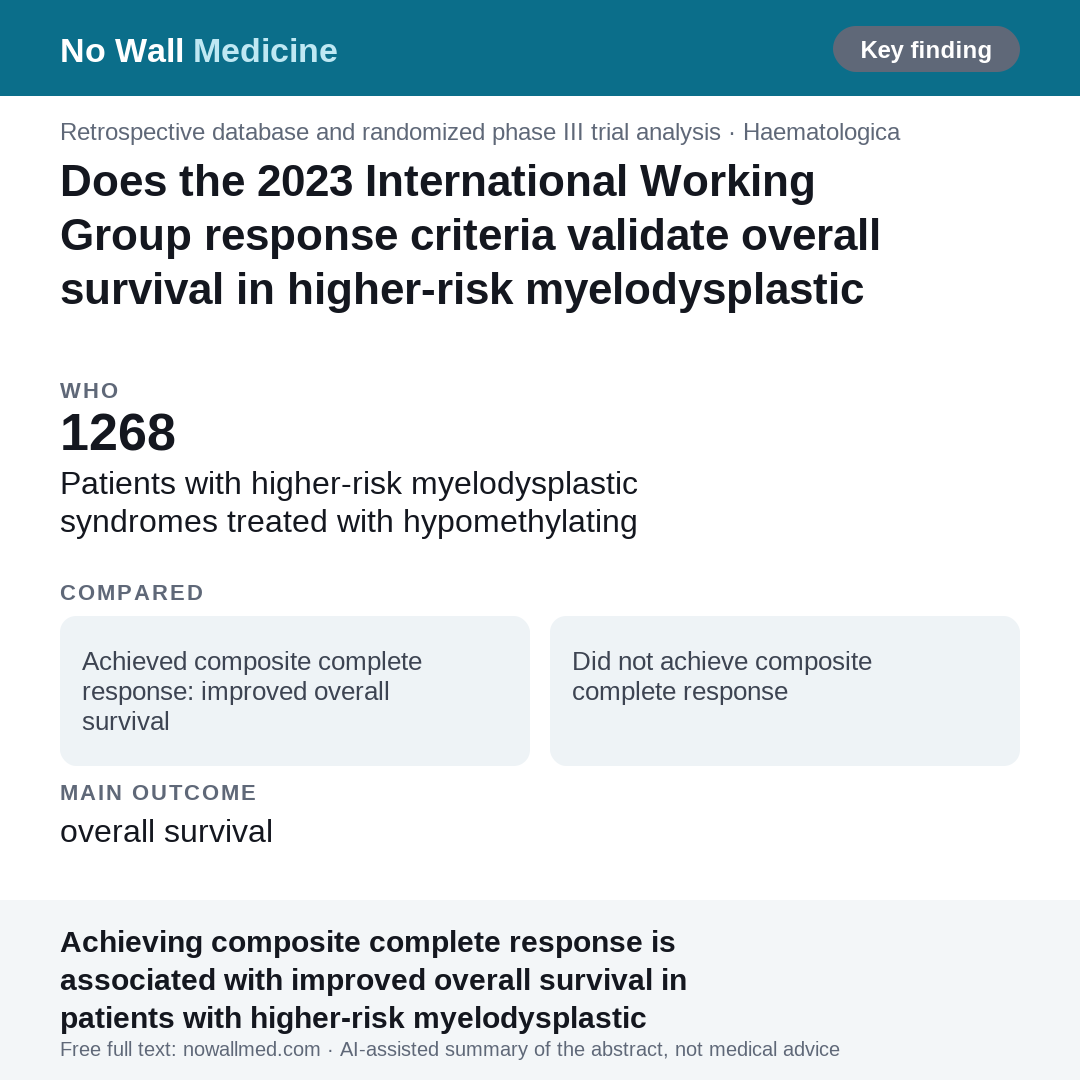
Validation of the International Working Group 2023 response criteria for higher risk myelodysplastic syndromes/neoplasms using the International Consortium for Myelodysplastic Syndromes VALIDATE database and a randomized phase III trial
Retrospective database and randomized phase III trial analysisBenefit found
Does the 2023 International Working Group response criteria validate overall survival in higher-risk myelodysplastic syndromes?
Who
1268
Patients with higher-risk myelodysplastic syndromes treated with hypomethylating agent-based therapies · International Consortium for Myelodysplastic Syndromes VALIDATE database and PANTHER trial
Compared
Achieved composite complete response: improved overall survival
Did not achieve composite complete response
Main outcome
overall survival
Result: hazard ratio 0.65 (95% CI 0.55-0.76)
Bottom line: Achieving composite complete response is associated with improved overall survival in patients with higher-risk myelodysplastic syndromes.
Haematologica · 2026-10-08Download image
Estimating the Economic Value of Supported Online Parent-Led Cognitive Behavioral Therapy to Prevent Child Anxiety Problems: Economic Evaluation of the MYCATS Cluster Randomized Controlled Trial
Cluster randomized controlled trialBenefit found
Is supported online parent-led cognitive behavioral therapy cost-effective to prevent child anxiety?
Who
865
Children aged 4-7 years at risk of anxiety disorders · 95 primary or infant schools in England
Compared
Supported online cognitive behavioral therapy: 0.021 (95% CI 0.010-0.033) or 0.043 (95% CI 0.021-0.064) QALYs
Usual school practice
Main outcome
Child quality-adjusted life years
Result: ICERs of £11,462.47 and £5,700.98
Bottom line: Supported online parent-led cognitive behavioral therapy is cost-effective compared to usual school practice for preventing child anxiety.
J Med Internet Res · 2026-10-08Download image

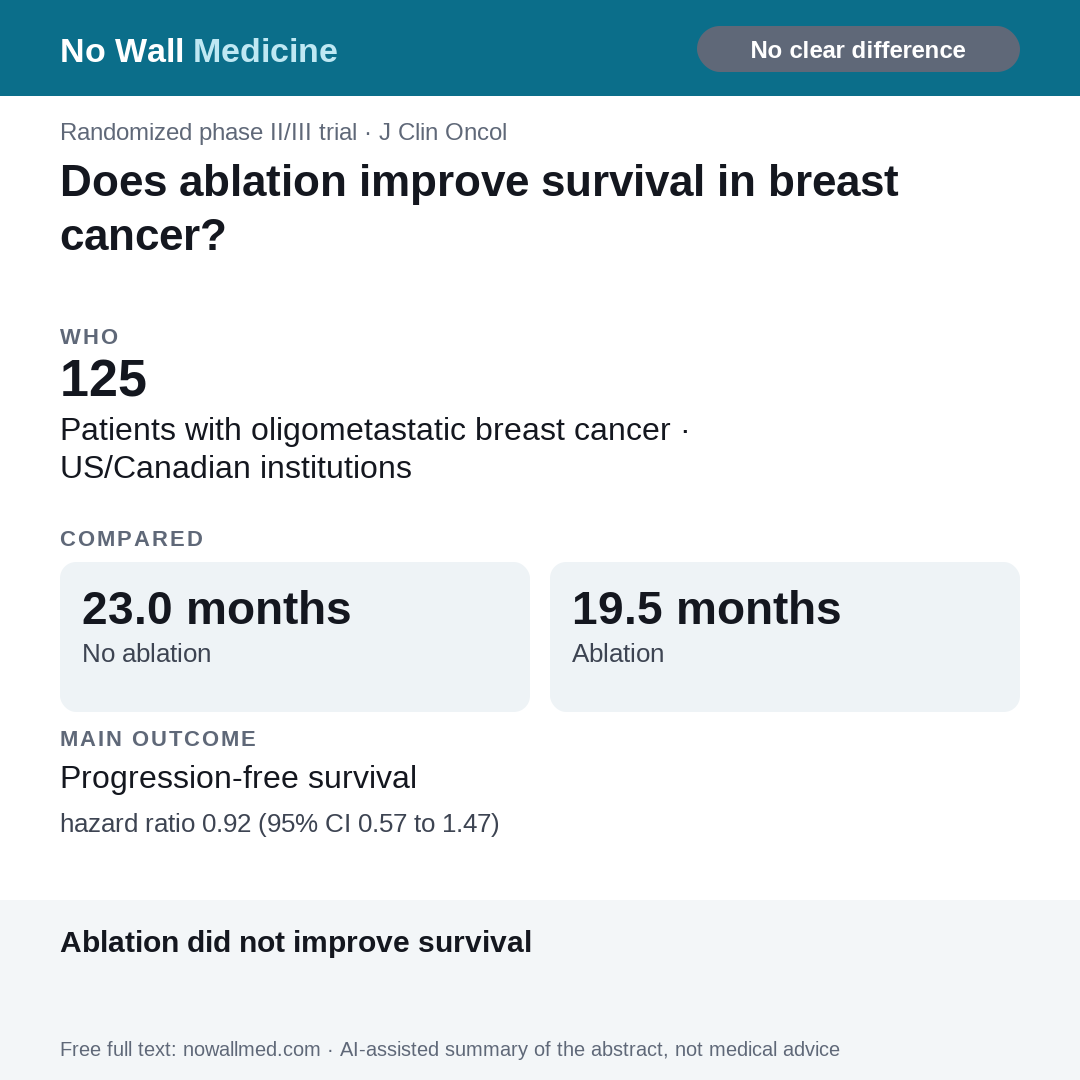
NRG-BR002: A Randomized Phase II/III Trial of Metastasis-Directed Ablation With First-Line Systemic Therapy for Oligometastatic Breast Cancer
Randomized phase II/III trialNo clear difference
Does ablation improve survival in breast cancer?
Who
125
Patients with oligometastatic breast cancer · US/Canadian institutions
Compared
23.0 monthsNo ablation
19.5 monthsAblation
Main outcome
Progression-free survival
Result: hazard ratio 0.92 (95% CI 0.57 to 1.47)
Bottom line: Ablation did not improve survival
J Clin Oncol · 2026-10-07Download image