Visual abstracts
New randomized trials and meta-analyses from leading journals at a glance: who was studied, what was compared, and what was found. Every paper is free to read in full.
All specialtiesCardiology 4800Oncology 4084Gastroenterology & Hepatology 1917Infectious Disease 3789Neurology 1886Psychiatry & Mental Health 2240Pulmonology 2061Critical Care 1335Endocrinology & Diabetes 2553Pediatrics 2914Surgery 2500Orthopedics & Sports Medicine 923Neurosurgery 532Cardiothoracic & Vascular Surgery 665Plastic & Reconstructive Surgery 585Nephrology 1115Rheumatology 815Hematology 1099Dermatology 619Ophthalmology 539Obstetrics & Gynecology 1661Public & Global Health 1044Radiology & Imaging 637Anesthesiology 959Urology 751ENT (Otolaryngology) 497Emergency Medicine 484Allergy & Immunology 310Geriatrics 974Family Medicine & Primary Care 538Medical Genetics & Genomics 662Pathology & Laboratory Medicine 156Physical Medicine & Rehabilitation 746Palliative Care 422Nutrition 1566Digital Health & AI 2191General Medicine 319
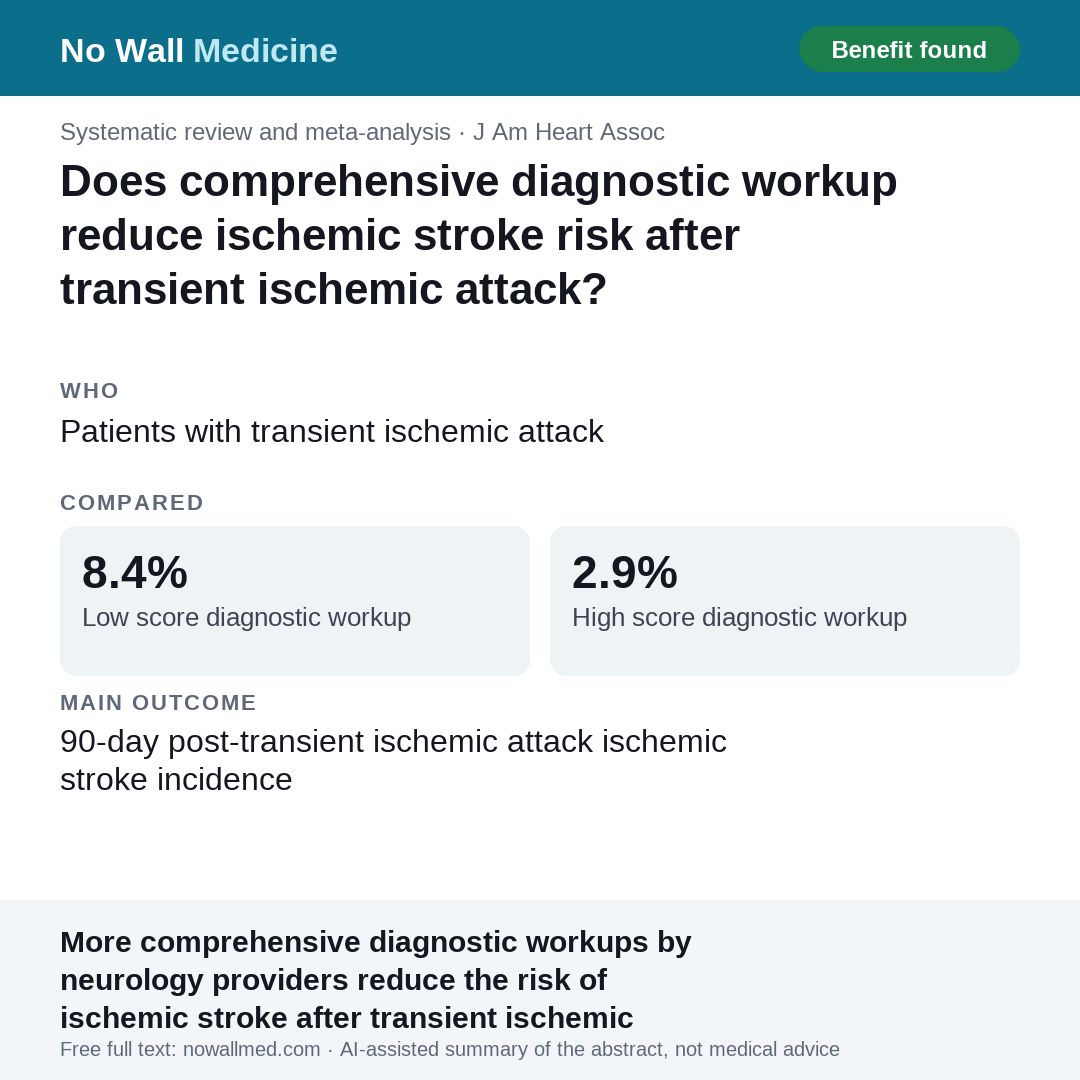
Risk of Ischemic Stroke After Transient Ischemic Attack in Patients Receiving Comprehensive Versus Noncomprehensive Diagnostic Workup: A Systematic Review and Meta-Analysis
Systematic review and meta-analysisBenefit found
Does comprehensive diagnostic workup reduce ischemic stroke risk after transient ischemic attack?
Who
Patients with transient ischemic attack
Compared
8.4%Low score diagnostic workup (95% CI, 6.4%-10.8%)
2.9%High score diagnostic workup (95% CI: 2.7%-3.2%)
Main outcome
90-day post-transient ischemic attack ischemic stroke incidence
Bottom line: More comprehensive diagnostic workups by neurology providers reduce the risk of ischemic stroke after transient ischemic attack.
J Am Heart Assoc · 2025-10-28Download image
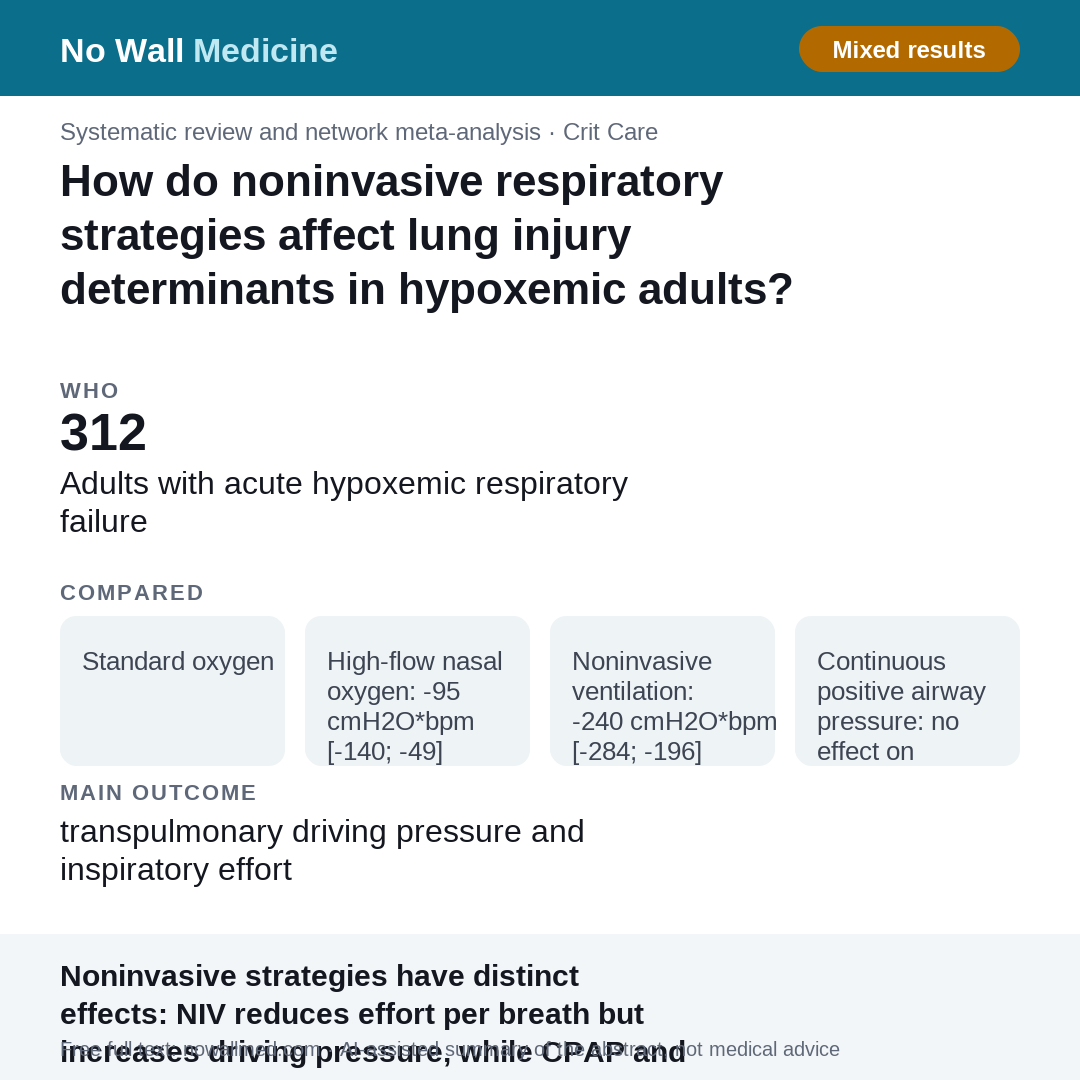
Physiological effects of noninvasive respiratory support strategies in adults with acute hypoxemic respiratory failure: a systematic review and network meta-analysis
Systematic review and network meta-analysisMixed results
How do noninvasive respiratory strategies affect lung injury determinants in hypoxemic adults?
Who
312
Adults with acute hypoxemic respiratory failure
Compared
Standard oxygen
High-flow nasal oxygen: -95 cmH2O*bpm [-140; -49] effort per minute
Noninvasive ventilation: -240 cmH2O*bpm [-284; -196] effort per minute
Continuous positive airway pressure: no effect on effort per minute
Main outcome
transpulmonary driving pressure and inspiratory effort
Bottom line: Noninvasive strategies have distinct effects: NIV reduces effort per breath but increases driving pressure, while CPAP and NIV improve oxygenation more than high-flow nasal oxygen.
Crit Care · 2025-10-28Download image
Role of Digital Health on Palliative Care: Umbrella Review
Umbrella reviewBenefit found
What is the role of digital health on palliative care?
Who
Patients receiving palliative care
Compared
Digital health interventions: significant improvements or noninferiority
Usual care
Main outcome
Symptom management, quality of life, and caregiver burden
Bottom line: Digital health interventions are beneficial or noninferior to standard care for palliative care with no reported adverse effects.
Limitation: Inconsistent conclusions in previous reviews due to methodological limitations and variable quality of primary studies.
J Med Internet Res · 2025-10-28Download image

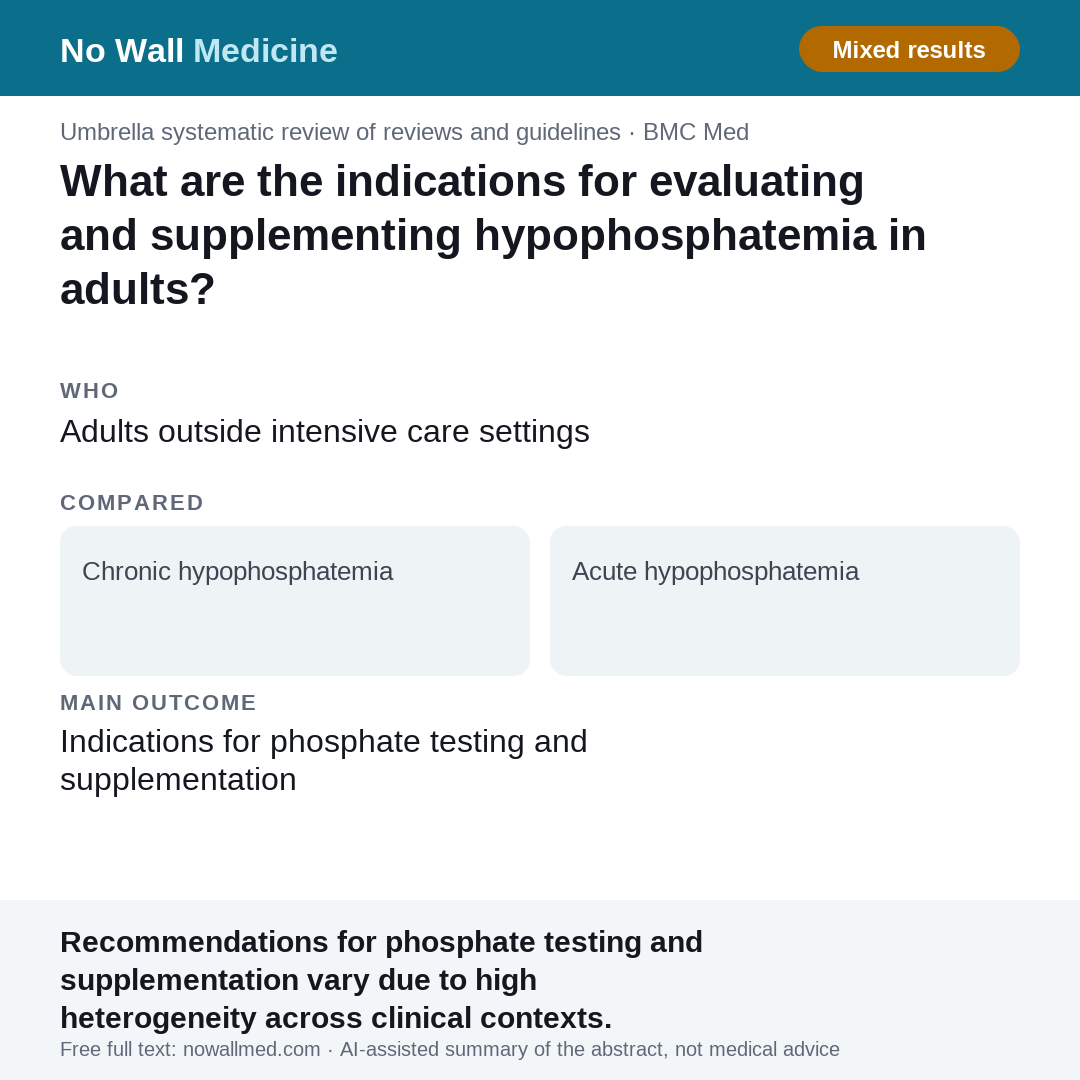
Indications for the evaluation and supplementation of hypophosphatemia: an umbrella systematic review of reviews and guidelines
Umbrella systematic review of reviews and guidelinesMixed results
What are the indications for evaluating and supplementing hypophosphatemia in adults?
Who
Adults outside intensive care settings
Compared
Chronic hypophosphatemia
Acute hypophosphatemia
Main outcome
Indications for phosphate testing and supplementation
Bottom line: Recommendations for phosphate testing and supplementation vary due to high heterogeneity across clinical contexts.
BMC Med · 2025-10-27Download image
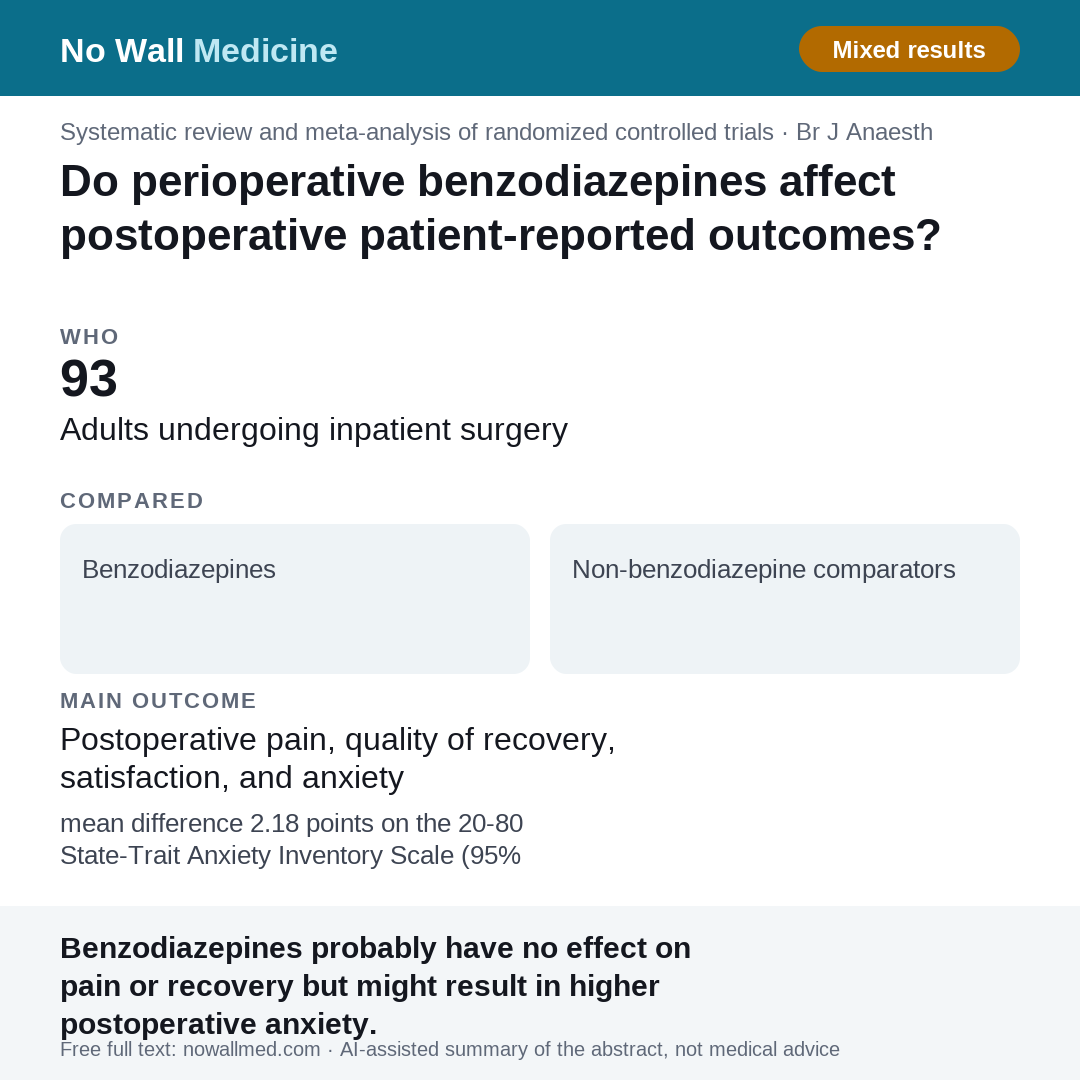
Effects of perioperative benzodiazepine administration on postoperative patient-reported outcomes: a systematic review and meta-analysis of randomised controlled trials
Systematic review and meta-analysis of randomized controlled trialsMixed results
Do perioperative benzodiazepines affect postoperative patient-reported outcomes?
Who
93
Adults undergoing inpatient surgery
Compared
Benzodiazepines
Non-benzodiazepine comparators
Main outcome
Postoperative pain, quality of recovery, satisfaction, and anxiety
Result: mean difference 2.18 points on the 20-80 State-Trait Anxiety Inventory Scale (95% confidence interval, 1.05-3.30)
Bottom line: Benzodiazepines probably have no effect on pain or recovery but might result in higher postoperative anxiety.
Limitation: Low and very low certainty evidence for some outcomes.
Br J Anaesth · 2025-10-27Download image
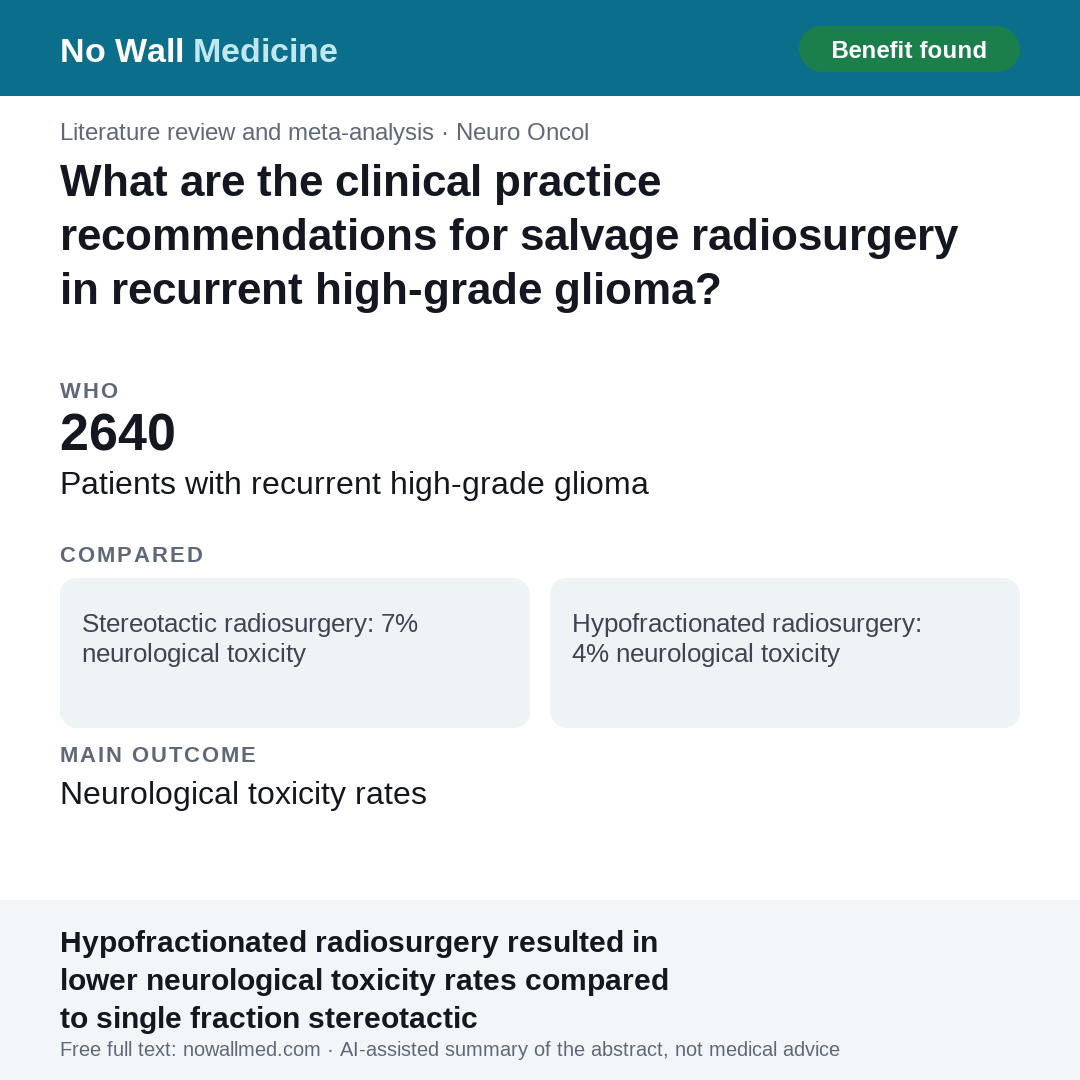
International Stereotactic Radiosurgery Society (ISRS) practice guidelines for radiosurgery in recurrent high-grade glioma
Literature review and meta-analysisBenefit found
What are the clinical practice recommendations for salvage radiosurgery in recurrent high-grade glioma?
Who
2640
Patients with recurrent high-grade glioma
Compared
Stereotactic radiosurgery: 7% neurological toxicity
Hypofractionated radiosurgery: 4% neurological toxicity
Main outcome
Neurological toxicity rates
Bottom line: Hypofractionated radiosurgery resulted in lower neurological toxicity rates compared to single fraction stereotactic radiosurgery.
Limitation: Limited prospective data
Neuro Oncol · 2025-10-27Download image
Integra® versus Novosorb® biodegradable temporizing matrix for burn wounds: a comparative systematic review and meta analysis
Systematic review and meta-analysisMixed results
How do Integra and Novosorb Biodegradable Temporizing Matrix compare for burn wounds?
Who
Patients treated with artificial dermal matrices for burn wounds
Compared
Integra: 18.4 days integration time
Novosorb Biodegradable Temporizing Matrix: 32.11 days integration time
Main outcome
Integration time, skin graft take, infection rate, and wound closure
Bottom line: Novosorb Biodegradable Temporizing Matrix had longer integration time and higher infection rates but improved skin graft take.
Limitation: Very low-quality evidence and majority of studies were non-comparative case series.
Burns · 2025-10-27Download image

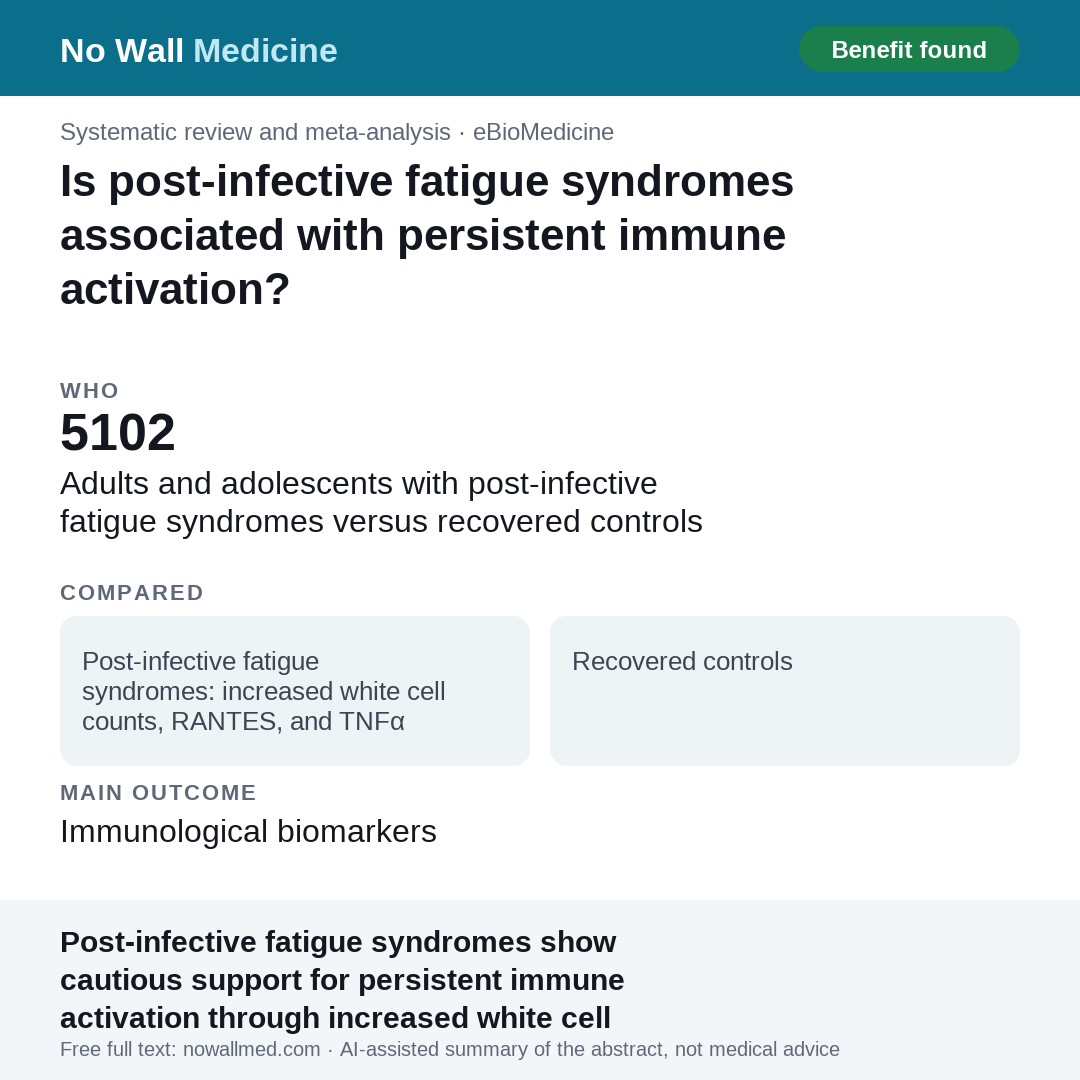
Immunological associations in post-infective fatigue syndromes including Long COVID-a systematic review and meta-analysis
Systematic review and meta-analysisBenefit found
Is post-infective fatigue syndromes associated with persistent immune activation?
Who
5102
Adults and adolescents with post-infective fatigue syndromes versus recovered controls
Compared
Post-infective fatigue syndromes: increased white cell counts, RANTES, and TNFα
Recovered controls
Main outcome
Immunological biomarkers
Result: white cell counts Cohen's d: 0.41 (95% CI 0.09-0.74); RANTES Cohen's d: 0.45 (95% CI 0.16-0.73); TNFα Cohen's d: 0.30 (95% CI 0.04-0.57)
Bottom line: Post-infective fatigue syndromes show cautious support for persistent immune activation through increased white cell counts and specific cytokines.
eBioMedicine · 2025-10-27Download image
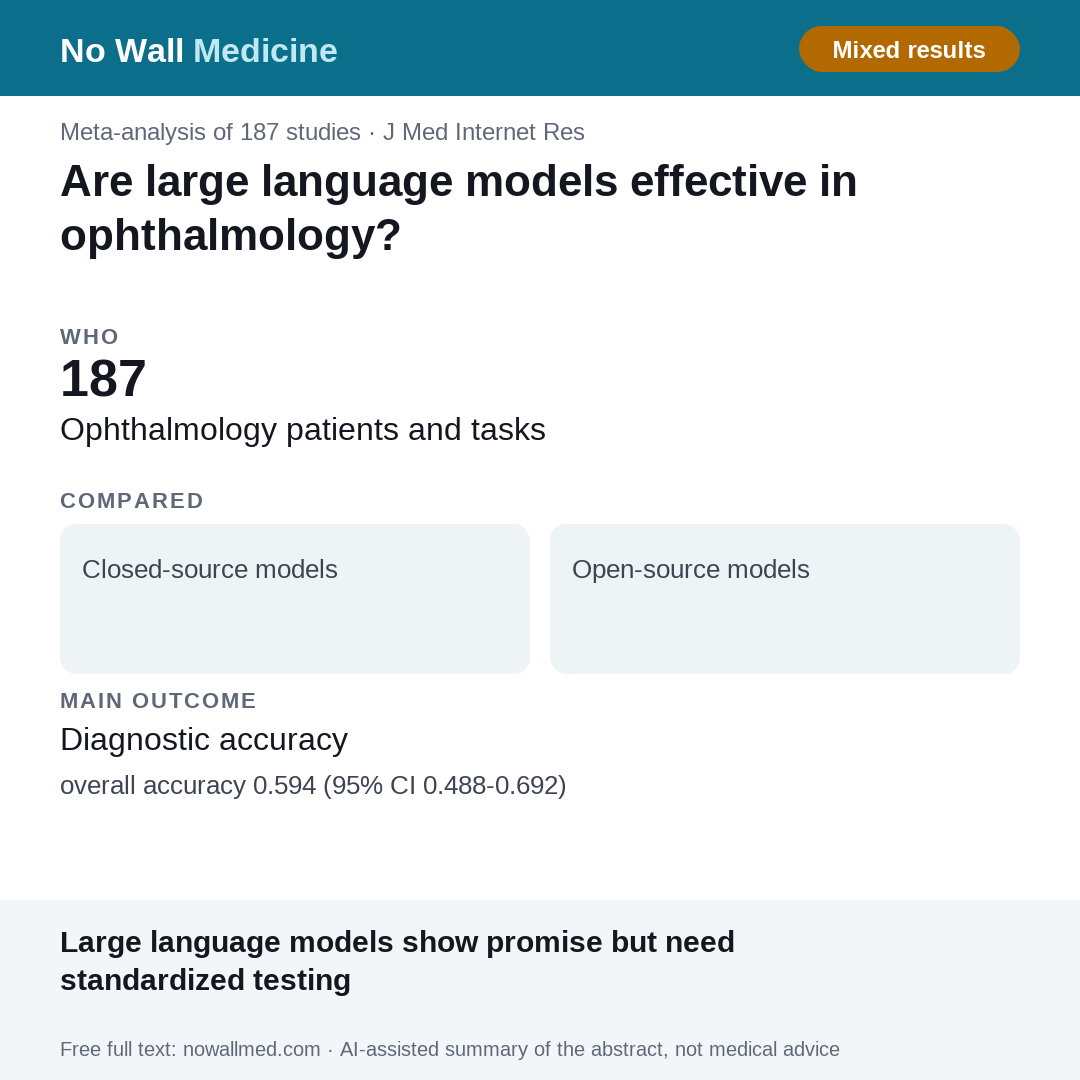
Evaluating Large Language Models in Ophthalmology: Systematic Review
Meta-analysis of 187 studiesMixed results
Are large language models effective in ophthalmology?
Who
187
Ophthalmology patients and tasks
Compared
Closed-source models
Open-source models
Main outcome
Diagnostic accuracy
Result: overall accuracy 0.594 (95% CI 0.488-0.692)
Bottom line: Large language models show promise but need standardized testing
J Med Internet Res · 2025-10-27Download image
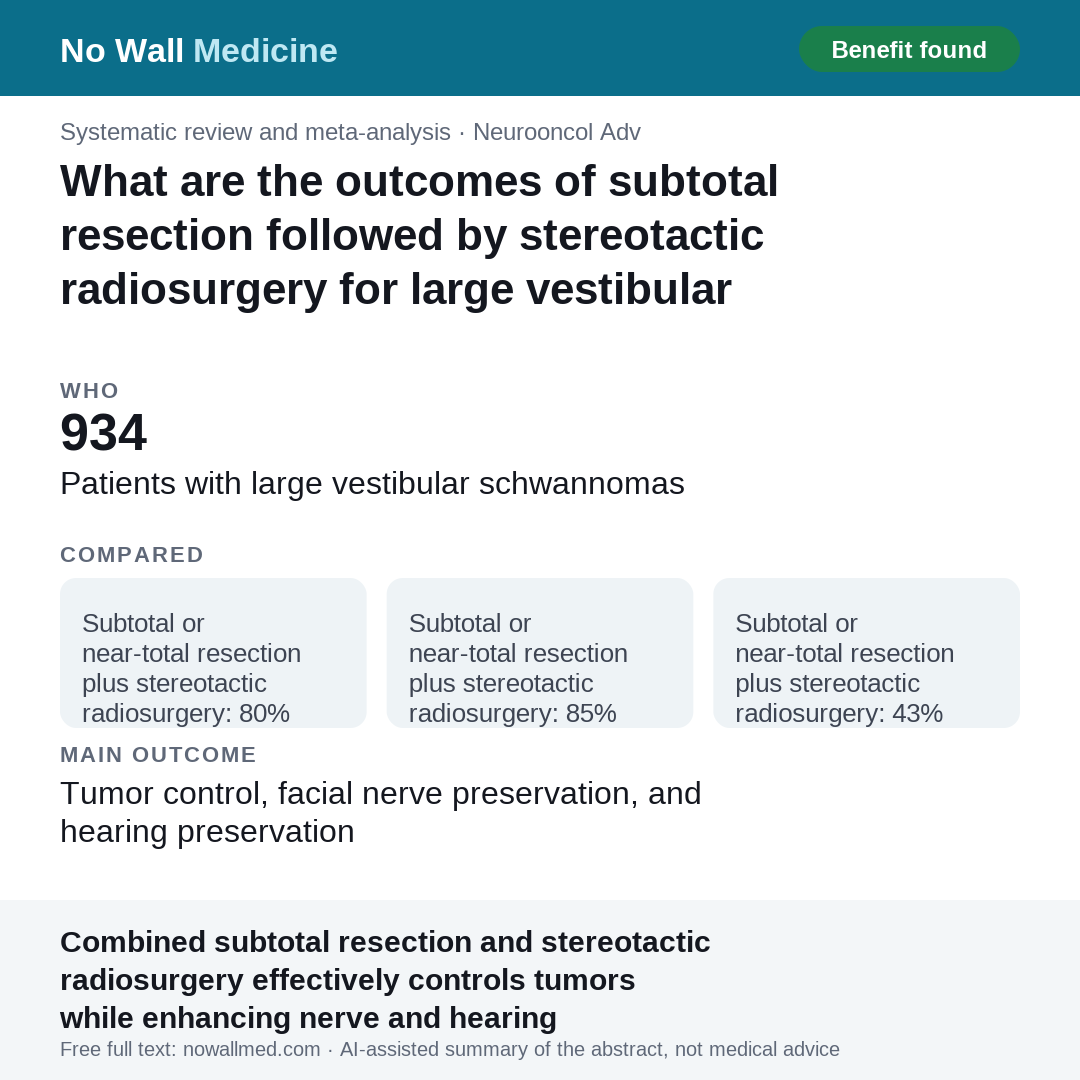
Combined subtotal resection and stereotactic radiosurgery for large vestibular schwannomas: A systematic review and meta-analysis
Systematic review and meta-analysisBenefit found
What are the outcomes of subtotal resection followed by stereotactic radiosurgery for large vestibular schwannomas?
Who
934
Patients with large vestibular schwannomas
Compared
Subtotal or near-total resection plus stereotactic radiosurgery: 80% tumor control rate
Subtotal or near-total resection plus stereotactic radiosurgery: 85% facial nerve function preserved
Subtotal or near-total resection plus stereotactic radiosurgery: 43% serviceable hearing
Main outcome
Tumor control, facial nerve preservation, and hearing preservation
Bottom line: Combined subtotal resection and stereotactic radiosurgery effectively controls tumors while enhancing nerve and hearing preservation.
Limitation: Cystic tumor morphology correlated with reduced tumor control following stereotactic radiosurgery.
Neurooncol Adv · 2025-10-25Download image
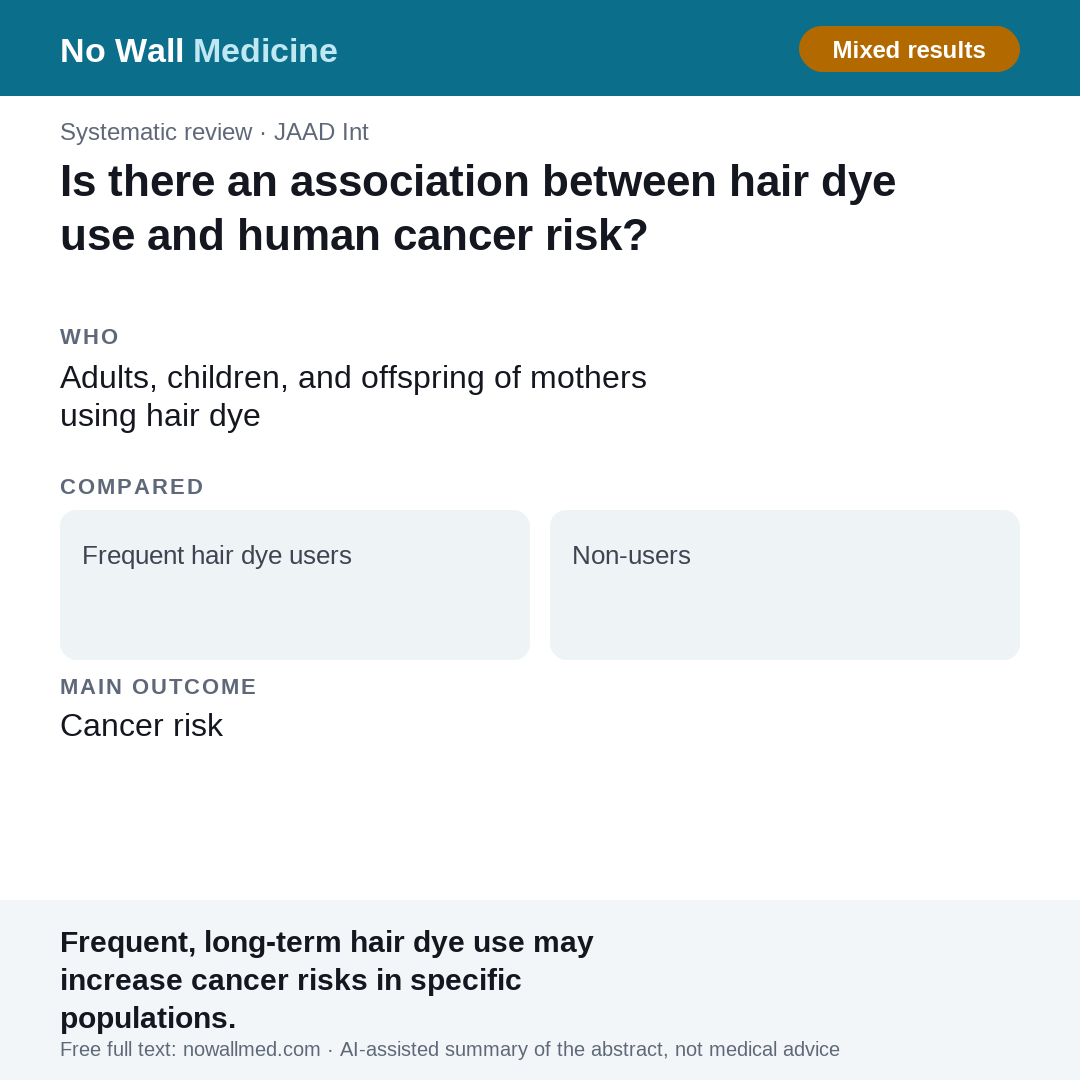
Association between hair dye use and human cancers: A systematic review
Systematic reviewMixed results
Is there an association between hair dye use and human cancer risk?
Who
Adults, children, and offspring of mothers using hair dye
Compared
Frequent hair dye users
Non-users
Main outcome
Cancer risk
Bottom line: Frequent, long-term hair dye use may increase cancer risks in specific populations.
Limitation: Elements of study design, study populations, and confounders.
JAAD Int · 2025-10-25Download image
Inhibitory control deficits in borderline personality disorder: a meta-analysis of stop-signal and Go/No-Go tasks
Meta-analysis of 35 articlesHarm found
Do adults with borderline personality disorder have motor inhibitory control deficits compared to healthy controls?
Who
Adults with borderline personality disorder and healthy controls
Compared
Borderline personality disorder
Healthy controls
Main outcome
Motor inhibitory control
Bottom line: Adults with borderline personality disorder exhibit significantly higher motor inhibitory control deficits than healthy controls.
Psychol Med · 2025-10-24Download image

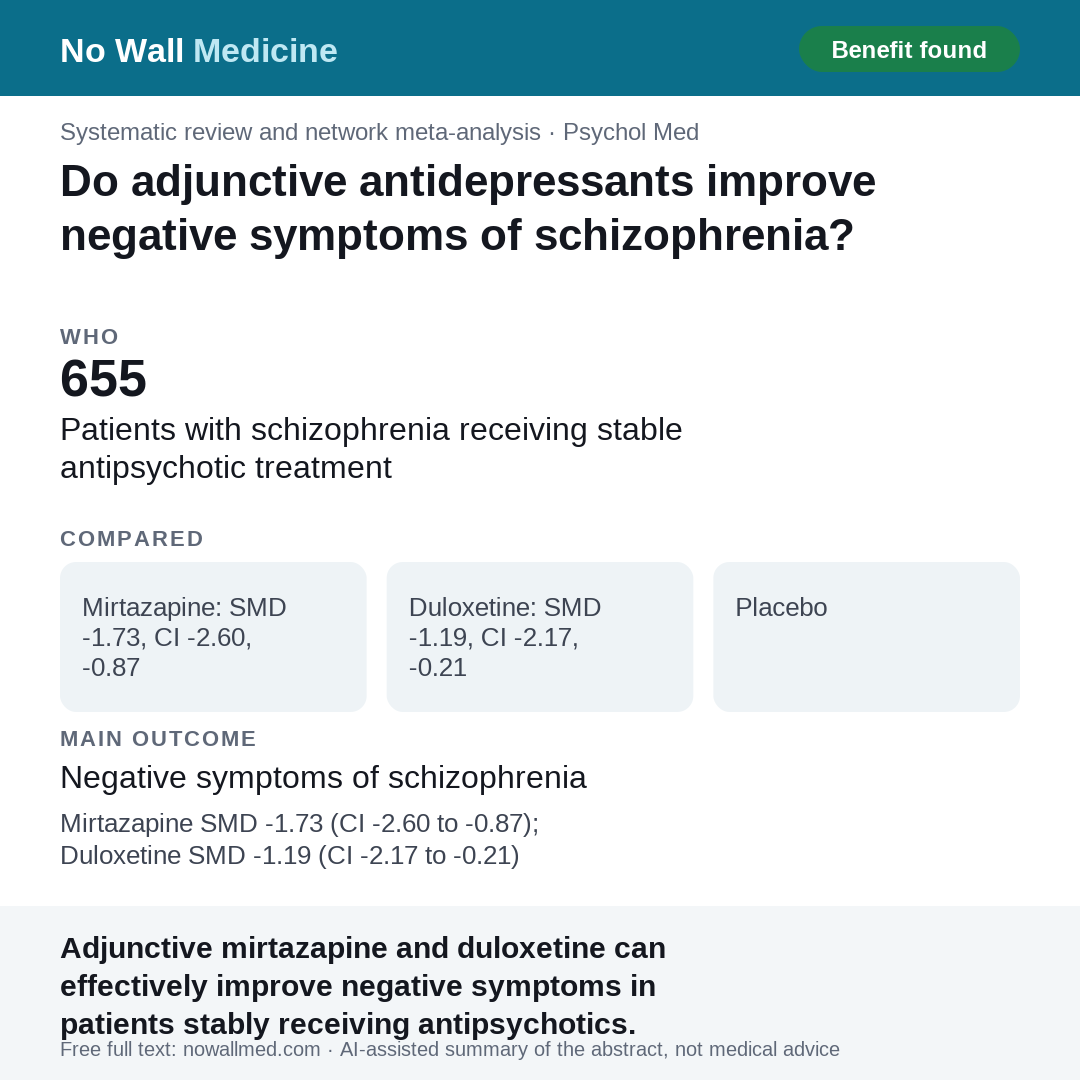
Efficacy of adjunctive antidepressants in treating negative symptoms of schizophrenia: a systematic review and network meta-analysis
Meta-analysis of 15 trialsBenefit found
Do antidepressants improve schizophrenia symptoms?
Who
655
patients with schizophrenia
Compared
mirtazapine: SMD -1.73
duloxetine: SMD -1.19
placebo
Main outcome
negative symptoms
Bottom line: Mirtazapine and duloxetine improve symptoms
Psychol Med · 2025-10-24Download image
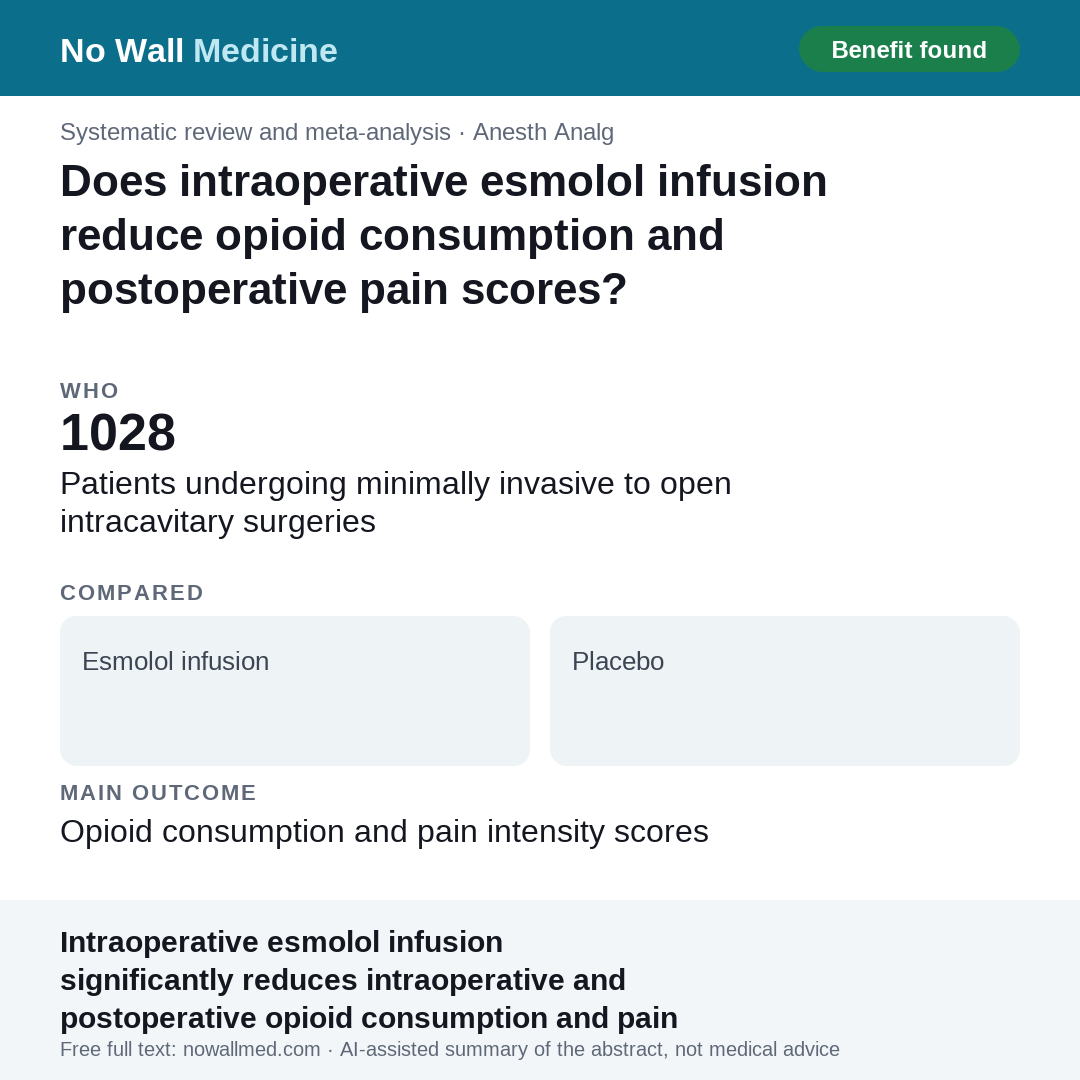
Esmolol as an Adjunct in Multimodal Anesthesia: A Systematic Review and Meta-Analysis of Its Opioid-Sparing and Analgesic Effects
Systematic review and meta-analysisBenefit found
Does intraoperative esmolol infusion reduce opioid consumption and postoperative pain scores?
Who
1028
Patients undergoing minimally invasive to open intracavitary surgeries
Compared
Esmolol infusion
Placebo
Main outcome
Opioid consumption and pain intensity scores
Result: intraoperative opioid consumption MD -12.89 IV MME (95% CI -24.74 to -1.05)
Bottom line: Intraoperative esmolol infusion significantly reduces intraoperative and postoperative opioid consumption and pain scores.
Limitation: Persistent heterogeneity and uncertainty in later pain outcomes warrant further research.
Anesth Analg · 2025-10-24Download image
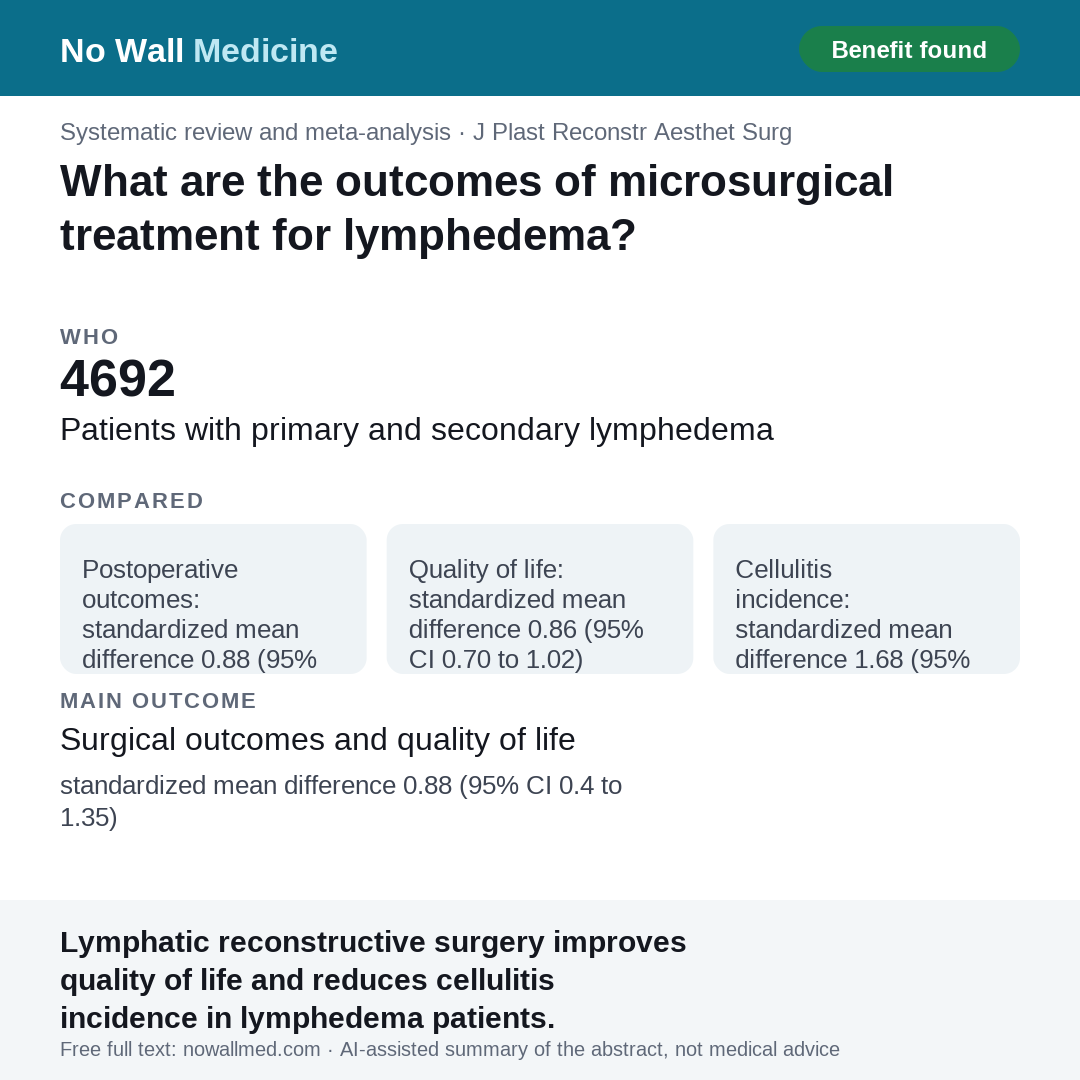
Beyond volume reduction: Systematic review and meta-analysis of microsurgical treatment of lymphedema
Systematic review and meta-analysisBenefit found
What are the outcomes of microsurgical treatment for lymphedema?
Who
4692
Patients with primary and secondary lymphedema
Compared
Postoperative outcomes: standardized mean difference 0.88 (95% CI 0.4 to 1.35)
Quality of life: standardized mean difference 0.86 (95% CI 0.70 to 1.02)
Cellulitis incidence: standardized mean difference 1.68 (95% CI 1.30 to 2.07)
Main outcome
Surgical outcomes and quality of life
Result: standardized mean difference 0.88 (95% CI 0.4 to 1.35)
Bottom line: Lymphatic reconstructive surgery improves quality of life and reduces cellulitis incidence in lymphedema patients.
J Plast Reconstr Aesthet Surg · 2025-10-24Download image
What Do We Know About Hospice Enrollment for Nursing Home Residents with Cognitive Disabilities? A Systematic Review
Systematic reviewHarm found
What is the hospice enrollment rate for nursing home residents with cognitive disabilities?
Who
United States nursing home residents with cognitive disabilities · United States
Compared
Residents with cognitive disabilities: consistently lower hospice enrollment
Residents without cognitive disabilities
Main outcome
Hospice enrollment at the time of death
Bottom line: Hospice enrollment is consistently lower for nursing home residents with cognitive disabilities compared to those without.
Limitation: Future research should include the broader cognitive disability community to assess more outcomes.
J Palliat Med · 2025-10-24Download image

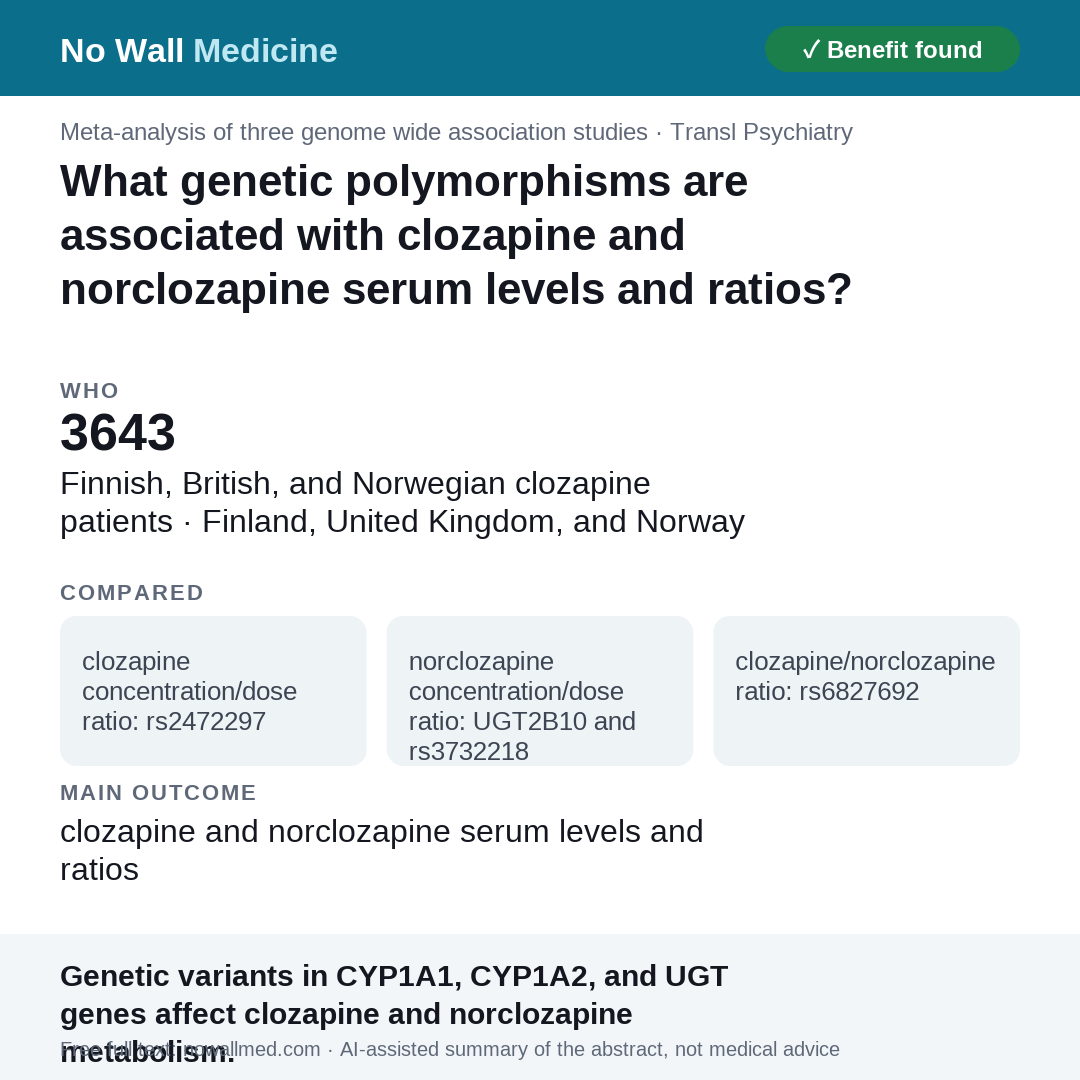
Meta-analyses of clozapine, norclozapine levels and their ratio across three genome wide association studies
Meta-analysis of three genome wide association studiesBenefit found
What genetic polymorphisms are associated with clozapine and norclozapine serum levels and ratios?
Who
3643
Finnish, British, and Norwegian clozapine patients · Finland, United Kingdom, and Norway
Compared
clozapine concentration/dose ratio: rs2472297
norclozapine concentration/dose ratio: UGT2B10 and rs3732218
clozapine/norclozapine ratio: rs6827692
Main outcome
clozapine and norclozapine serum levels and ratios
Bottom line: Genetic variants in CYP1A1, CYP1A2, and UGT genes affect clozapine and norclozapine metabolism.
Transl Psychiatry · 2025-10-24Download image
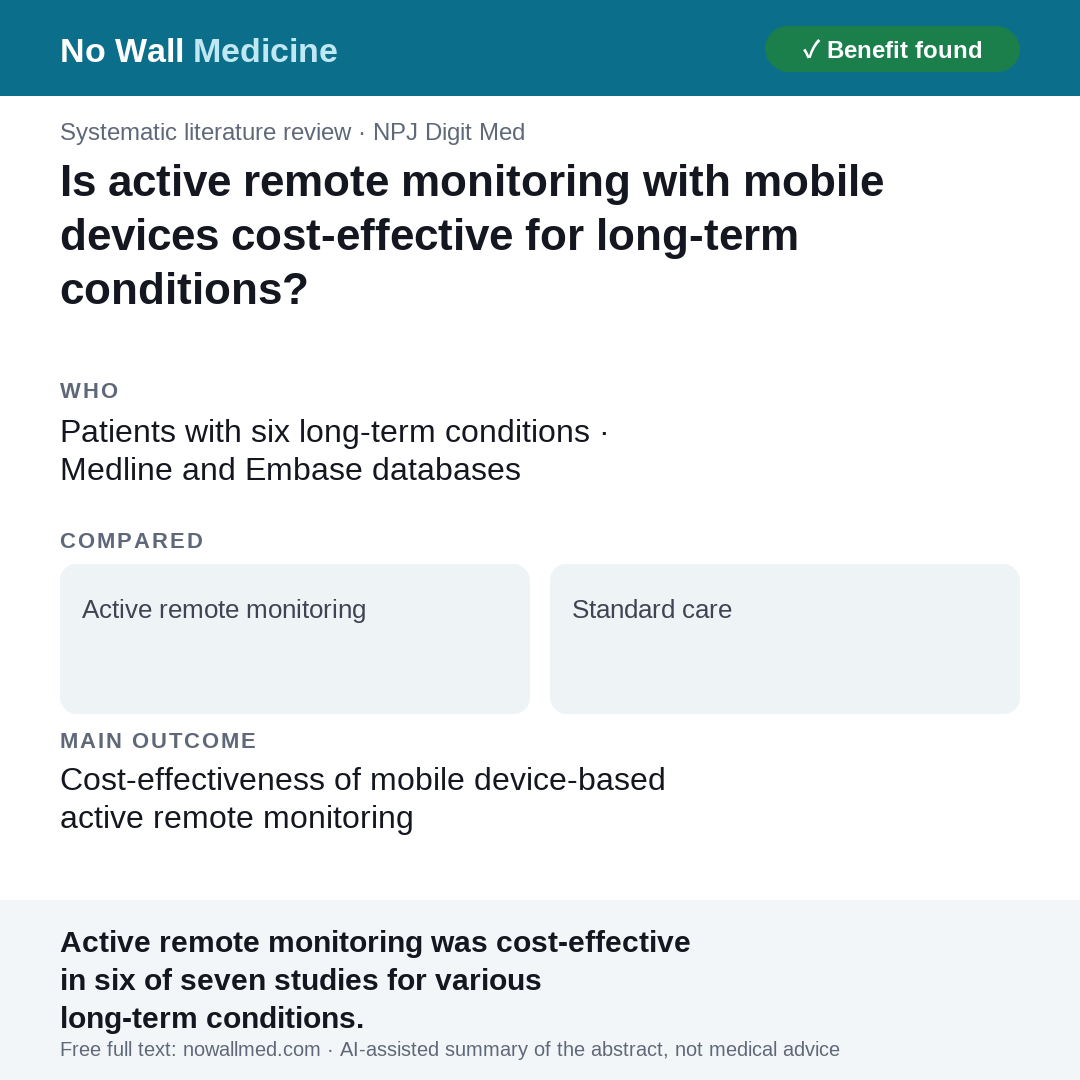
Active remote monitoring of long-term conditions with mobile devices: a systematic review of cost-effectiveness analyses
Systematic literature reviewBenefit found
Is active remote monitoring with mobile devices cost-effective for long-term conditions?
Who
Patients with six long-term conditions · Medline and Embase databases
Compared
Active remote monitoring
Standard care
Main outcome
Cost-effectiveness of mobile device-based active remote monitoring
Bottom line: Active remote monitoring was cost-effective in six of seven studies for various long-term conditions.
NPJ Digit Med · 2025-10-24Download image
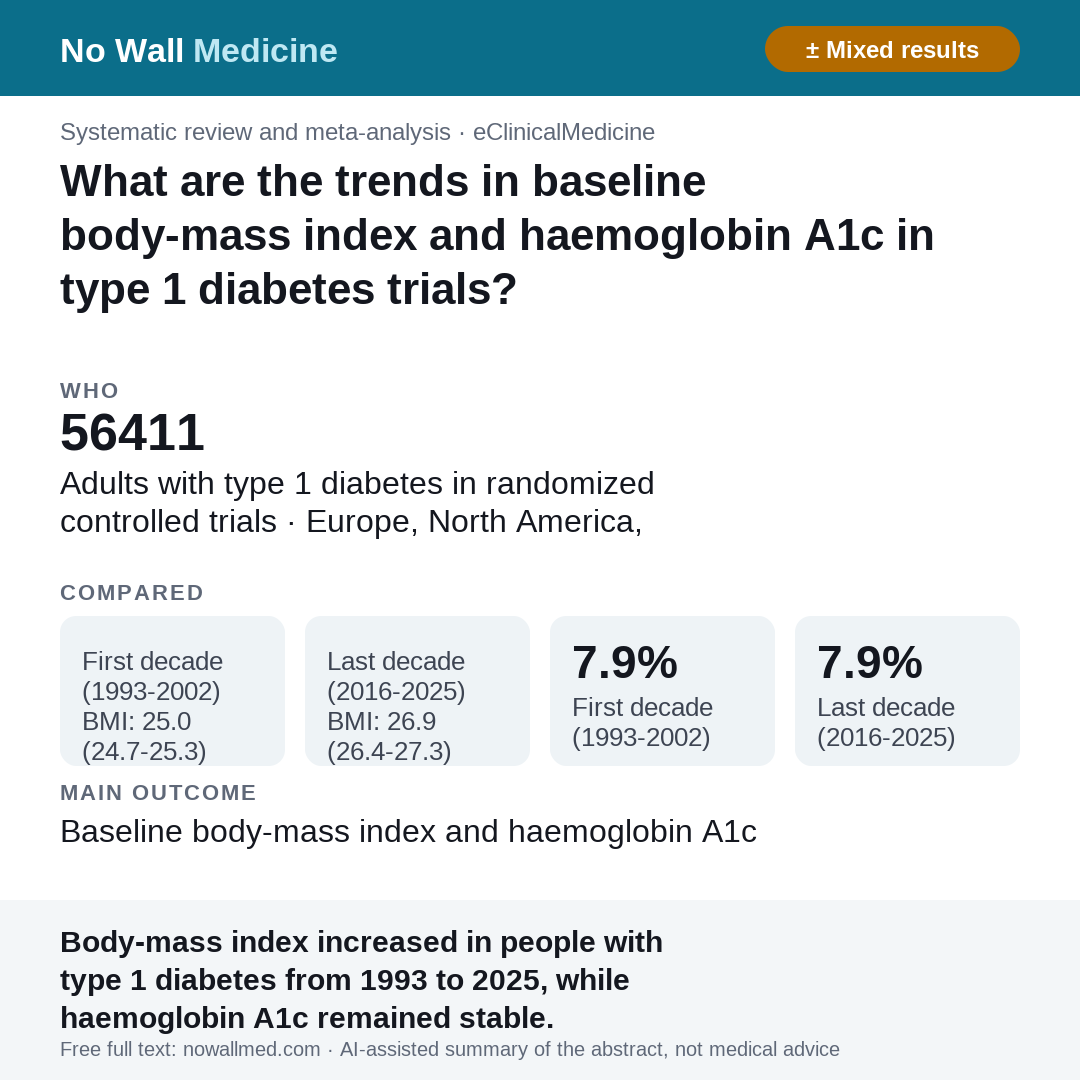
Trends in baseline HbA1c and body-mass index in randomised trials of people with type 1 diabetes from 1993 to 2025: an IMI2 SOPHIA systematic review and meta-analysis
Systematic review and meta-analysisMixed results
What are the trends in baseline body-mass index and haemoglobin A1c in type 1 diabetes trials?
Who
56411
Adults with type 1 diabetes in randomized controlled trials · Europe, North America, Asia, Oceania, and multicontinental
Compared
First decade (1993-2002) BMI: 25.0 (24.7-25.3) kg/m2
Last decade (2016-2025) BMI: 26.9 (26.4-27.3) kg/m2
7.9%First decade (1993-2002) HbA1c (7.6-8.2)
7.9%Last decade (2016-2025) HbA1c (7.8-8.0)
Main outcome
Baseline body-mass index and haemoglobin A1c
Bottom line: Body-mass index increased in people with type 1 diabetes from 1993 to 2025, while haemoglobin A1c remained stable.
Limitation: More research is needed using real-world data on the individual level.
Funded by: Innovative Medicines Initiative 2, European Union, EFPIA, T1D Exchange, Breakthrough T1D, Obesity Action Coalition
eClinicalMedicine · 2025-10-23Download image
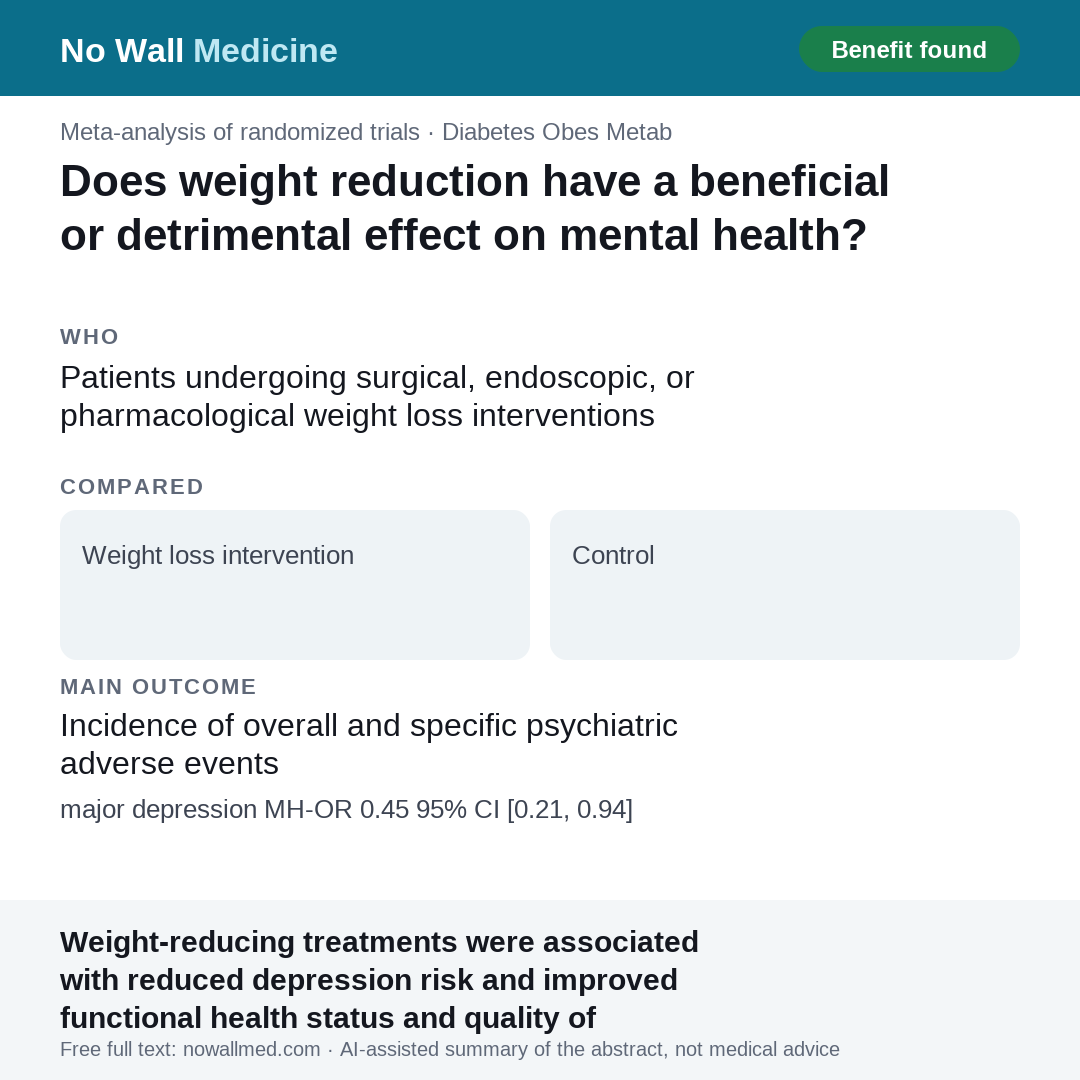
Weight-reducing treatments are associated with an improvement in depression, functional health status, and quality of life: A meta-analysis of randomized controlled trials
Meta-analysis of randomized trialsBenefit found
Does weight reduction have a beneficial or detrimental effect on mental health?
Who
Patients undergoing surgical, endoscopic, or pharmacological weight loss interventions
Compared
Weight loss intervention
Control
Main outcome
Incidence of overall and specific psychiatric adverse events
Result: major depression MH-OR 0.45 95% CI [0.21, 0.94]
Bottom line: Weight-reducing treatments were associated with reduced depression risk and improved functional health status and quality of life.
Diabetes Obes Metab · 2025-10-23Download image