Visual abstracts
New randomized trials and meta-analyses from leading journals at a glance: who was studied, what was compared, and what was found. Every paper is free to read in full.
All specialtiesCardiology 4830Oncology 4089Gastroenterology & Hepatology 1923Infectious Disease 3790Neurology 1879Psychiatry & Mental Health 2249Pulmonology 2123Critical Care 1356Endocrinology & Diabetes 2540Pediatrics 2929Surgery 2528Orthopedics & Sports Medicine 916Neurosurgery 530Cardiothoracic & Vascular Surgery 662Plastic & Reconstructive Surgery 586Nephrology 1100Rheumatology 815Hematology 1097Dermatology 618Ophthalmology 536Obstetrics & Gynecology 1671Public & Global Health 1038Radiology & Imaging 639Anesthesiology 974Urology 758ENT (Otolaryngology) 498Emergency Medicine 505Allergy & Immunology 309Geriatrics 966Family Medicine & Primary Care 560Medical Genetics & Genomics 671Pathology & Laboratory Medicine 157Physical Medicine & Rehabilitation 753Palliative Care 441Nutrition 1564Digital Health & AI 2166General Medicine 315
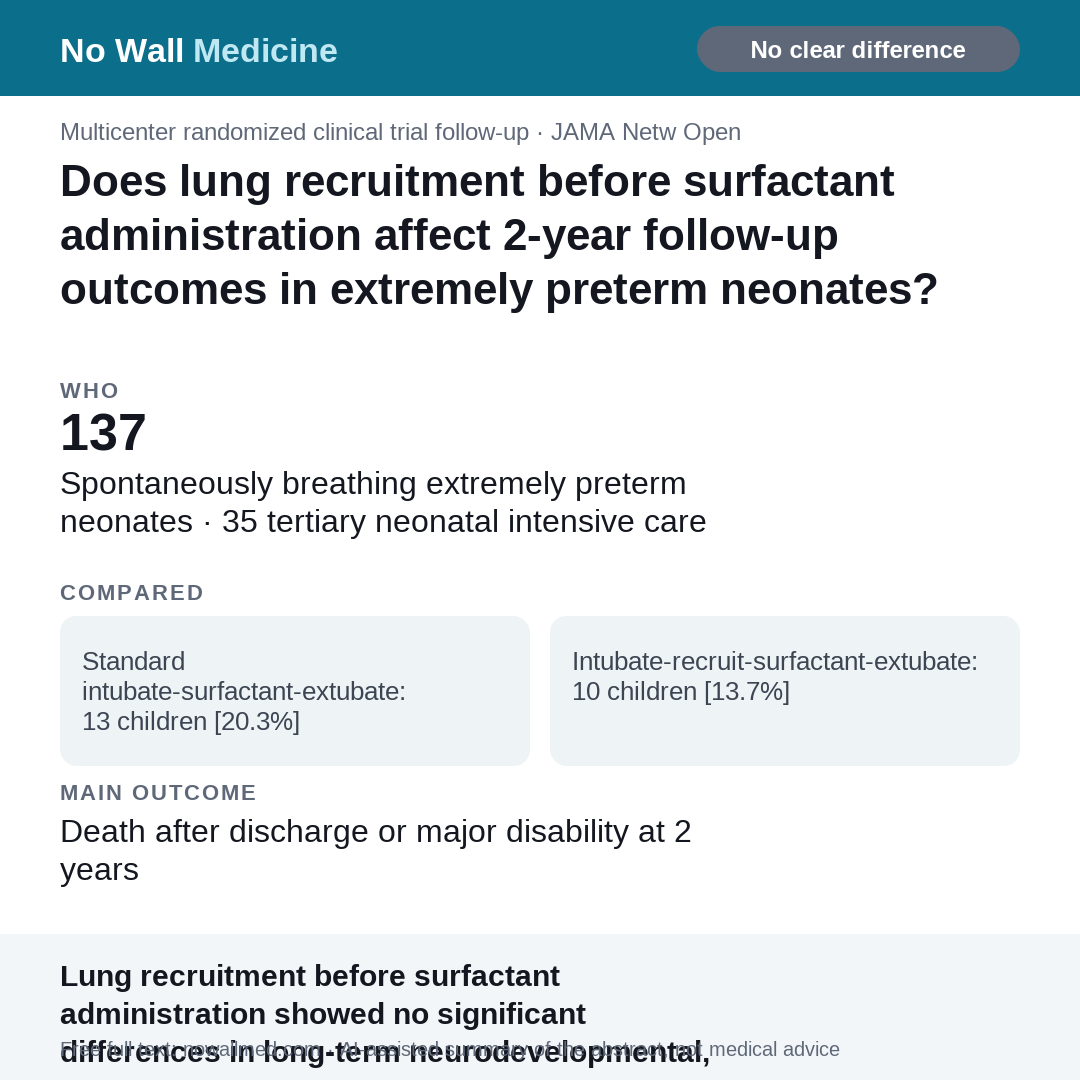
Lung Recruitment Before Surfactant Administration in Extremely Preterm Neonates: 2-Year Follow-Up of a Randomized Clinical Trial
Multicenter randomized clinical trial follow-upNo clear difference
Does lung recruitment before surfactant administration affect 2-year follow-up outcomes in extremely preterm neonates?
Who
137
Spontaneously breathing extremely preterm neonates · 35 tertiary neonatal intensive care units in Italy
Compared
Standard intubate-surfactant-extubate: 13 children [20.3%]
Intubate-recruit-surfactant-extubate: 10 children [13.7%]
Main outcome
Death after discharge or major disability at 2 years
Bottom line: Lung recruitment before surfactant administration showed no significant differences in long-term neurodevelopmental, growth, or respiratory outcomes at 2 years.
JAMA Netw Open · 2024-09-03Download image
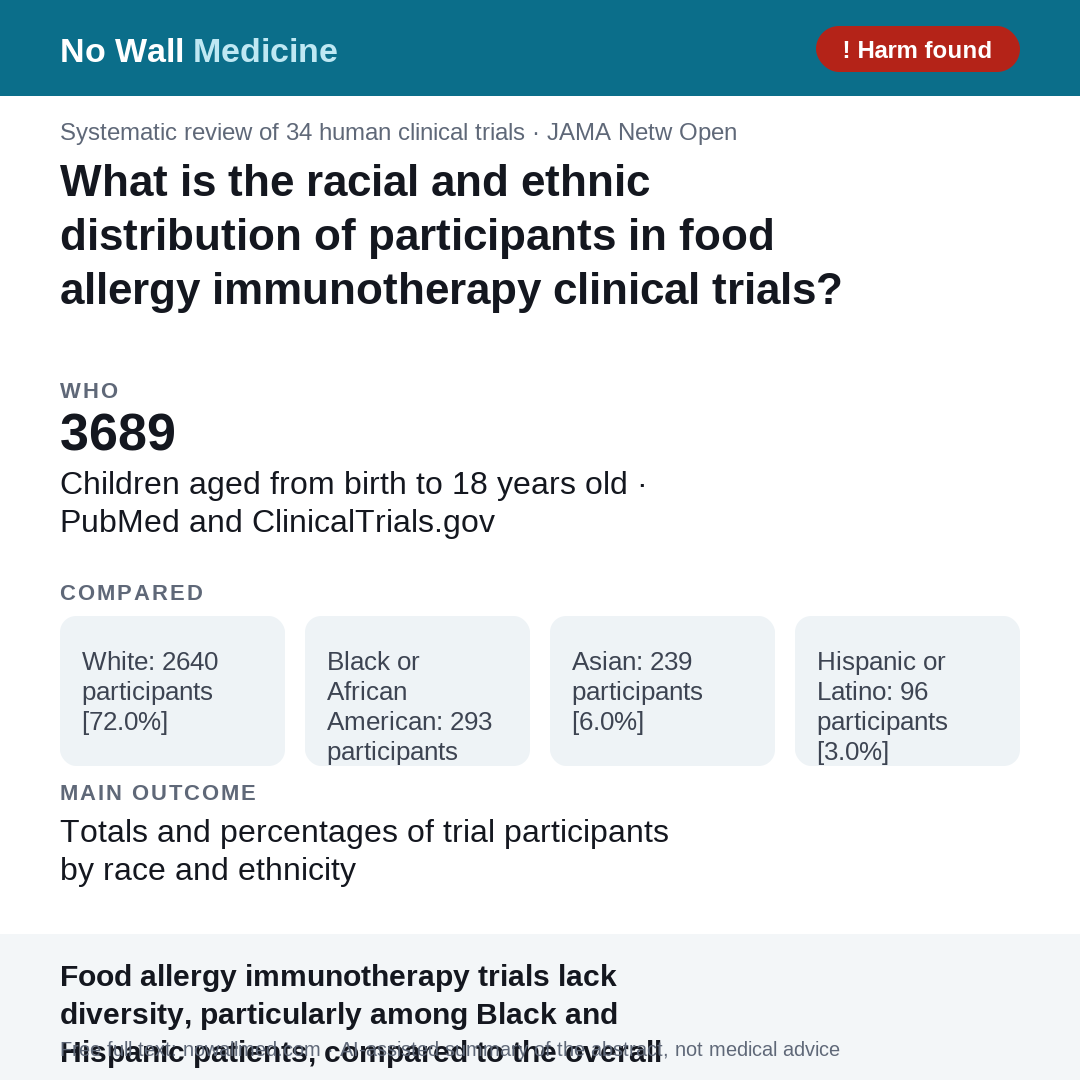
Racial and Ethnic Representation in Food Allergen Immunotherapy Trial Participants: A Systematic Review
Systematic review of 34 human clinical trialsHarm found
What is the racial and ethnic distribution of participants in food allergy immunotherapy clinical trials?
Who
3689
Children aged from birth to 18 years old · PubMed and ClinicalTrials.gov
Compared
White: 2640 participants [72.0%]
Black or African American: 293 participants [8.0%]
Asian: 239 participants [6.0%]
Hispanic or Latino: 96 participants [3.0%]
Main outcome
Totals and percentages of trial participants by race and ethnicity
Bottom line: Food allergy immunotherapy trials lack diversity, particularly among Black and Hispanic patients, compared to the overall food allergy burden.
JAMA Netw Open · 2024-09-03Download image
Implementation of a Secure Firearm Storage Program in Pediatric Primary Care: A Cluster Randomized Trial
Cluster randomized trialBenefit found
Does nudge plus facilitation increase secure firearm storage program delivery?
Who
47307
Youth ages 5 to 17 years in pediatric primary care · Thirty US clinics
Compared
22%Nudge (95% CI 13-31)
49%Nudge plus facilitation (95% CI 37-61)
Main outcome
Firearm storage program delivery
Bottom line: Nudge plus facilitation increases program delivery
JAMA Pediatr · 2024-09-03Download image

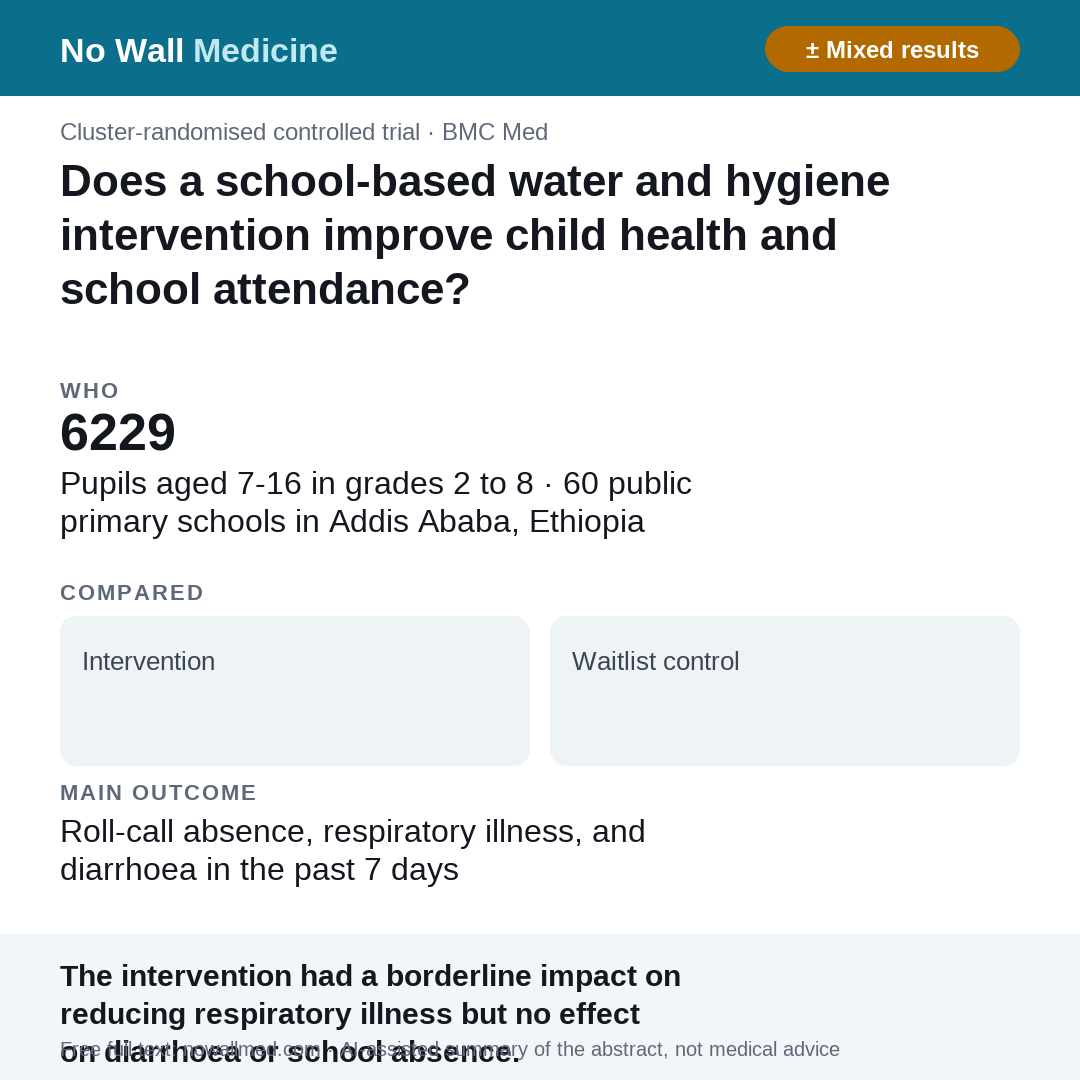
Impact of a school-based water and hygiene intervention on child health and school attendance in Addis Ababa, Ethiopia: a cluster-randomised controlled trial
Cluster-randomised controlled trialMixed results
Does a school-based water and hygiene intervention improve child health and school attendance?
Who
6229
Pupils aged 7-16 in grades 2 to 8 · 60 public primary schools in Addis Ababa, Ethiopia
Compared
Intervention
Waitlist control
Main outcome
Roll-call absence, respiratory illness, and diarrhoea in the past 7 days
Result: aOR 0.84 (95% CI 0.71-1.00) for respiratory illness
Bottom line: The intervention had a borderline impact on reducing respiratory illness but no effect on diarrhoea or school absence.
BMC Med · 2024-09-02Download image
Perioperative pain management for cleft palate surgery: a systematic review and procedure-specific postoperative pain management (PROSPECT) recommendations
Systematic review of randomized controlled trialsBenefit found
What is the optimal pain management for children undergoing cleft palate surgery?
Who
Children undergoing cleft palate repair
Compared
Recommended interventions
Standard care
Main outcome
Postoperative pain management
Bottom line: Suprazygomatic maxillary nerve block or palatal nerve block with dexmedetomidine and basic analgesics are recommended.
Limitation: Limited procedure-specific evidence for pre-incisional local anesthetic infiltration and dexamethasone.
Reg Anesth Pain Med · 2024-09-02Download image

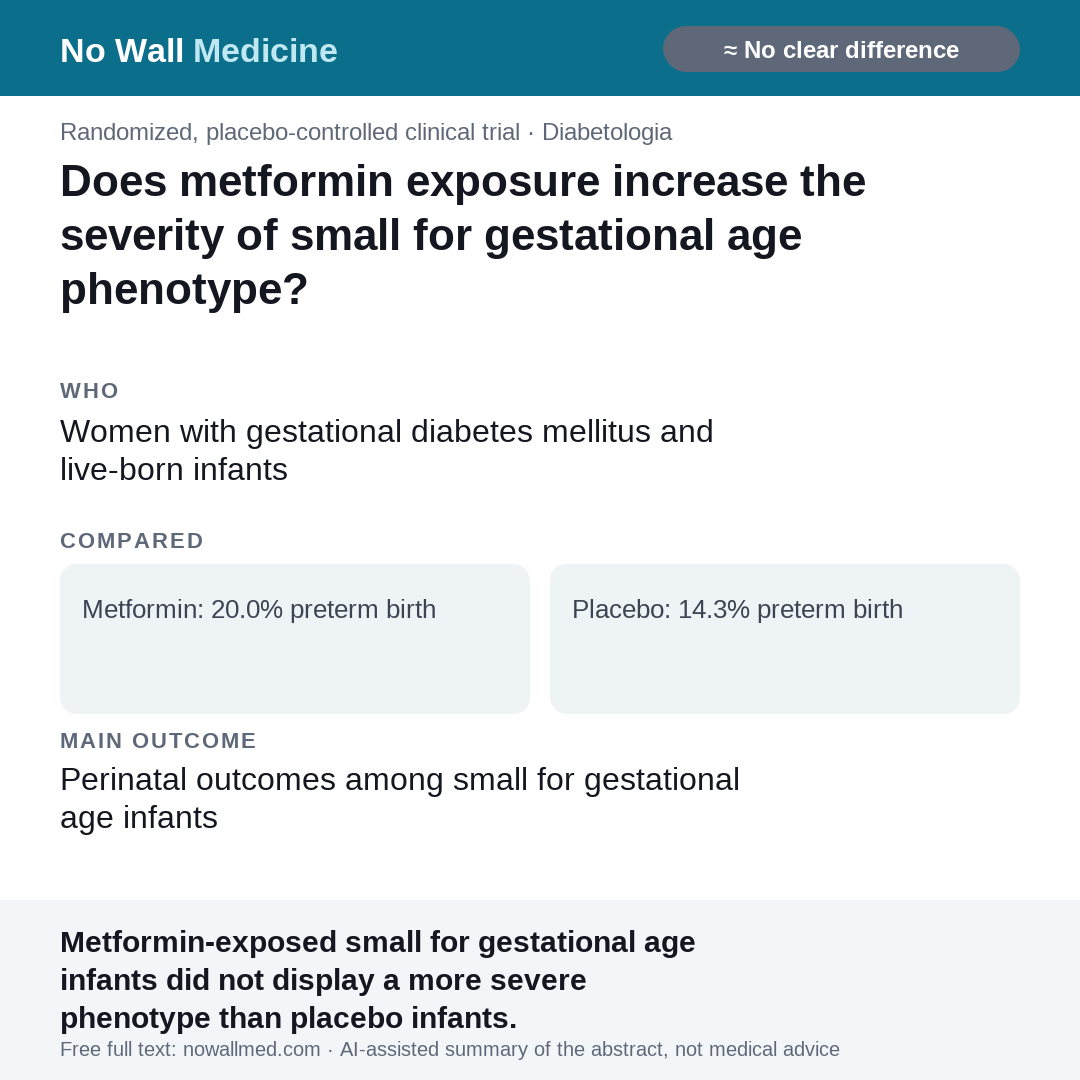
Metformin and small for gestational age babies: findings of a randomised placebo-controlled clinical trial of metformin in gestational diabetes (EMERGE)
Randomized, placebo-controlled clinical trialNo clear difference
Does metformin exposure increase the severity of small for gestational age phenotype?
Who
Women with gestational diabetes mellitus and live-born infants
Compared
Metformin: 20.0% preterm birth
Placebo: 14.3% preterm birth
Main outcome
Perinatal outcomes among small for gestational age infants
Bottom line: Metformin-exposed small for gestational age infants did not display a more severe phenotype than placebo infants.
Diabetologia · 2024-08-31Download image
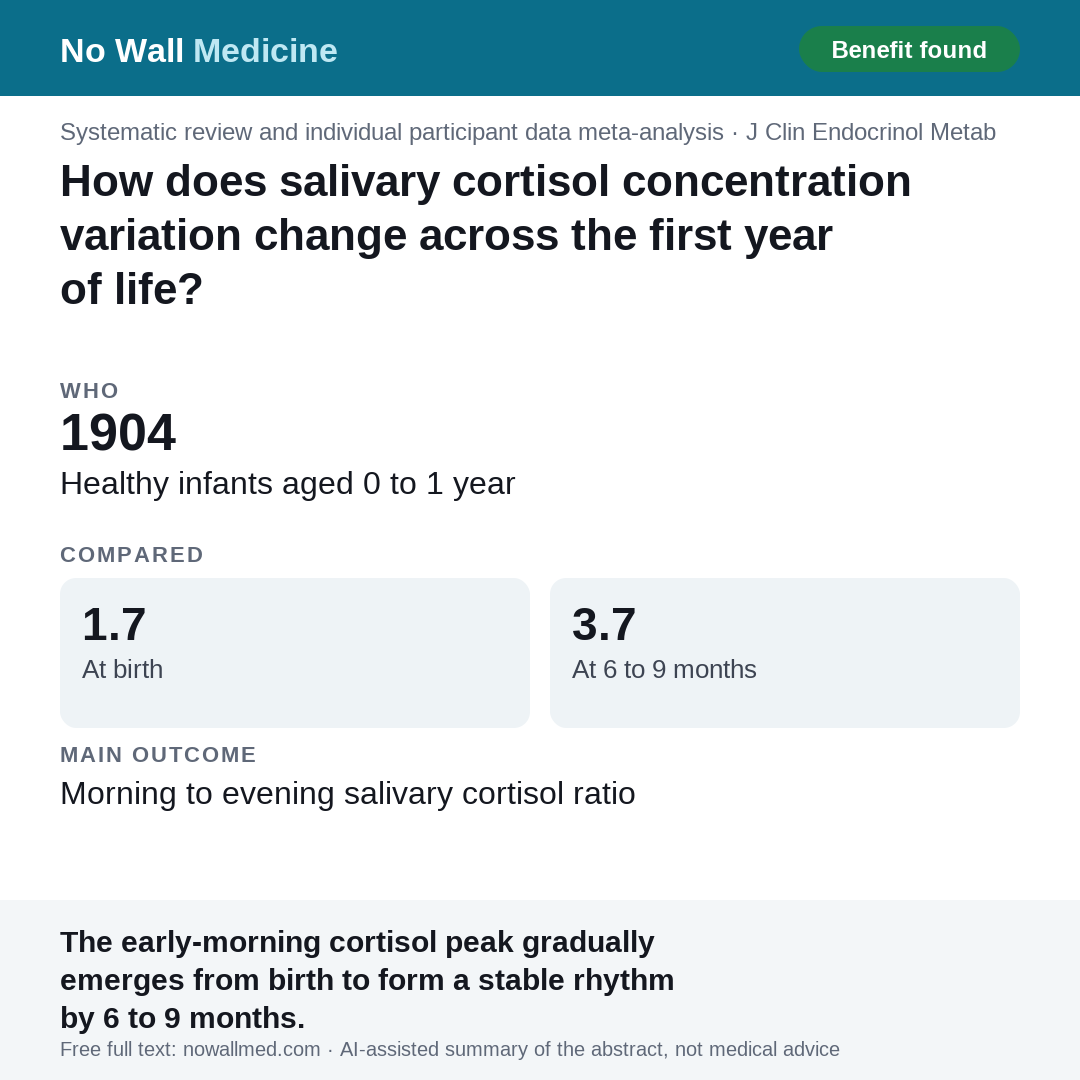
Development of 24-Hour Rhythms in Cortisol Secretion Across Infancy: A Systematic Review and Meta-Analysis of Individual Participant Data
Systematic review and individual participant data meta-analysisBenefit found
How does salivary cortisol concentration variation change across the first year of life?
Who
1904
Healthy infants aged 0 to 1 year
Compared
1.7At birth (95% CI: 1.3-2.1)
3.7At 6 to 9 months (95% CI: 3.0-4.5)
Main outcome
Morning to evening salivary cortisol ratio
Bottom line: The early-morning cortisol peak gradually emerges from birth to form a stable rhythm by 6 to 9 months.
J Clin Endocrinol Metab · 2024-08-31Download image
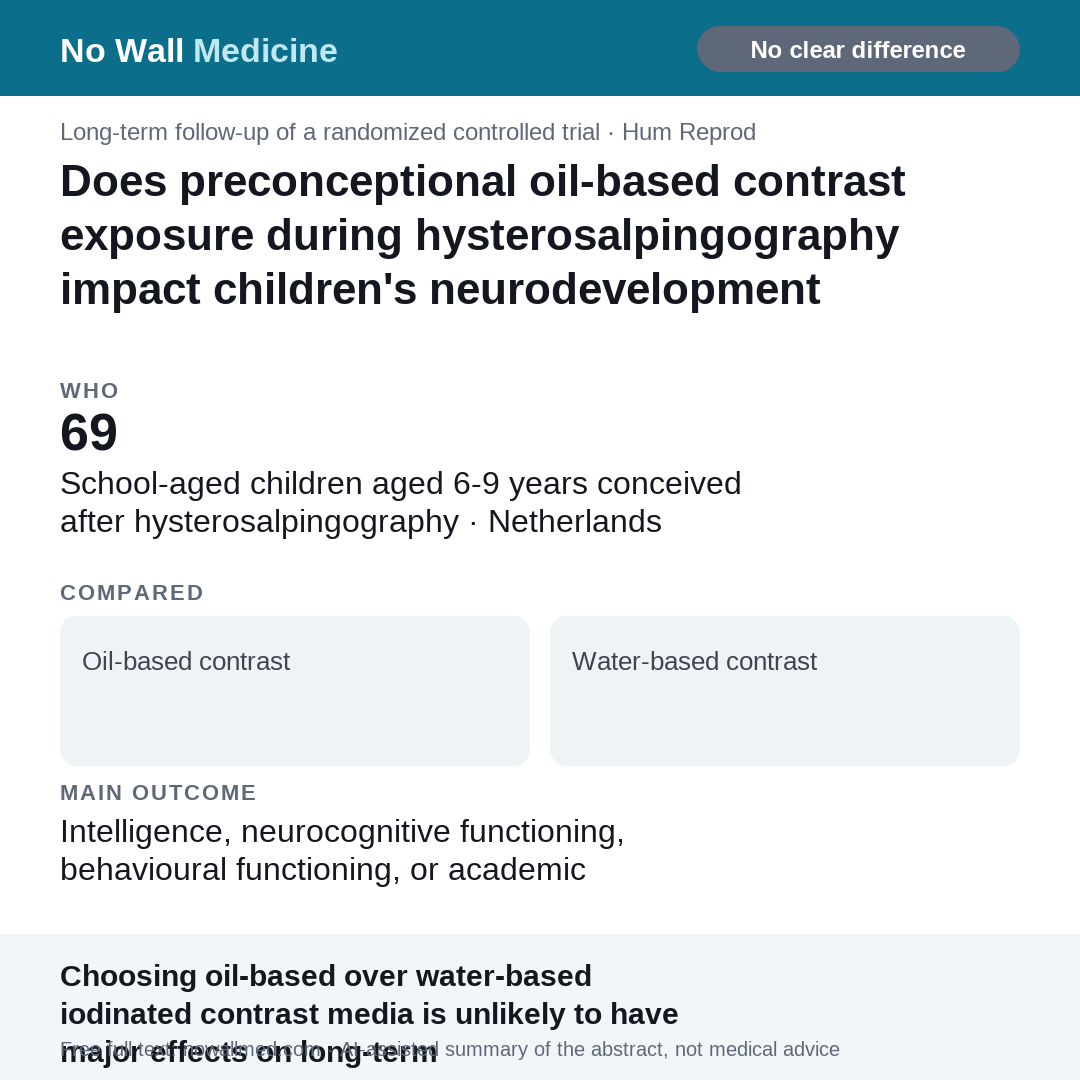
Neurodevelopmental outcomes of school-age children conceived after hysterosalpingography with oil-based or water-based iodinated contrast: long-term follow-up of a nationwide randomized controlled trial
Long-term follow-up of a randomized controlled trialNo clear difference
Does preconceptional oil-based contrast exposure during hysterosalpingography impact children's neurodevelopment compared to water-based alternatives?
Who
69
School-aged children aged 6-9 years conceived after hysterosalpingography · Netherlands
Compared
Oil-based contrast
Water-based contrast
Main outcome
Intelligence, neurocognitive functioning, behavioural functioning, or academic performance
Bottom line: Choosing oil-based over water-based iodinated contrast media is unlikely to have major effects on long-term neurodevelopmental outcomes.
Limitation: The small sample size of this follow-up study limited statistical power.
Funded by: Amsterdam University Medical Centre
Hum Reprod · 2024-08-31Download image
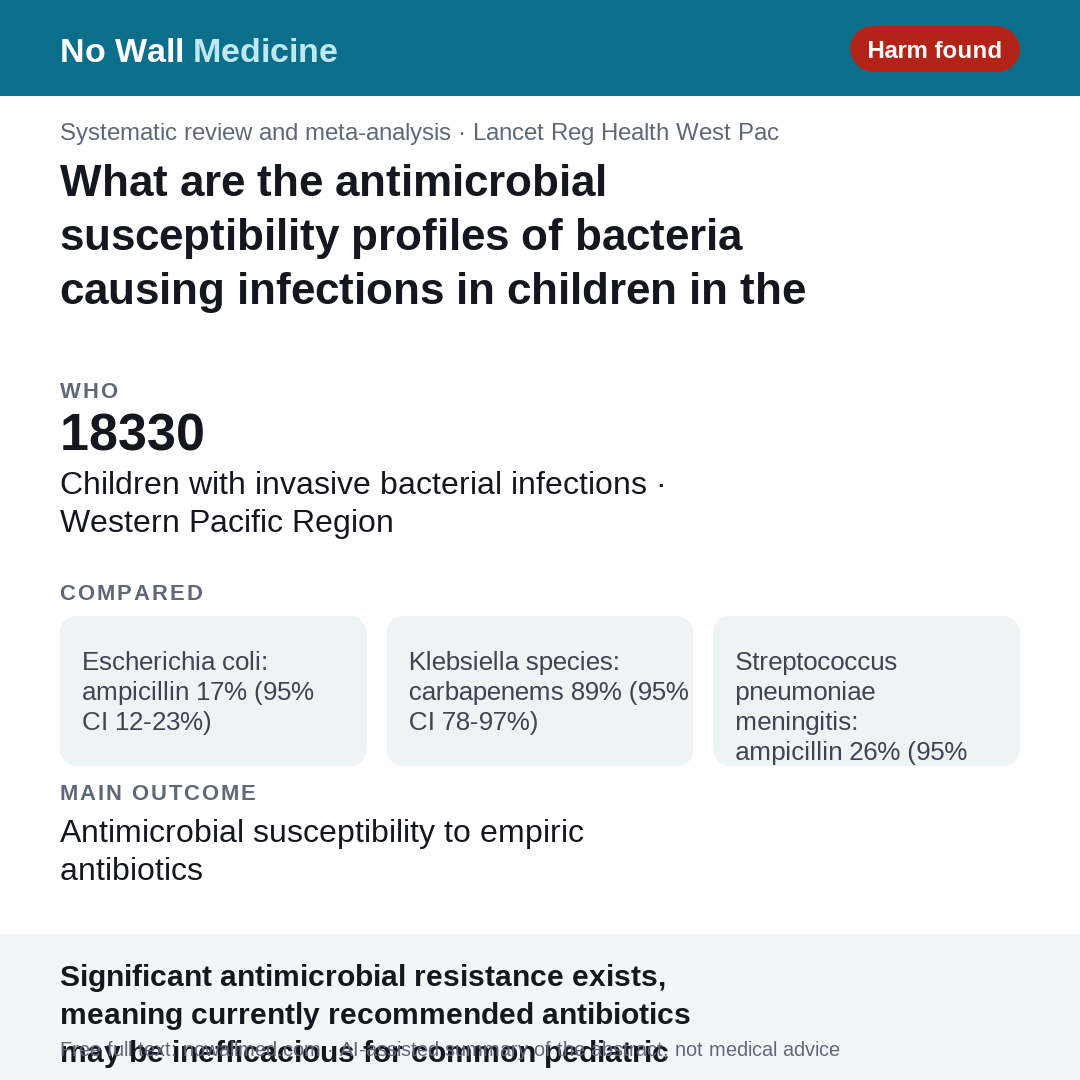
Antimicrobial susceptibility profiles of invasive bacterial infections among children from low- and middle-income countries in the Western Pacific Region (WPRO) - a systematic review and meta-analysis
Systematic review and meta-analysisHarm found
What are the antimicrobial susceptibility profiles of bacteria causing infections in children in the Western Pacific?
Who
18330
Children with invasive bacterial infections · Western Pacific Region
Compared
Escherichia coli: ampicillin 17% (95% CI 12-23%)
Klebsiella species: carbapenems 89% (95% CI 78-97%)
Streptococcus pneumoniae meningitis: ampicillin 26% (95% CI 11-44%)
Main outcome
Antimicrobial susceptibility to empiric antibiotics
Bottom line: Significant antimicrobial resistance exists, meaning currently recommended antibiotics may be inefficacious for common pediatric infections in this region.
Funded by: Australian Government and Wellcome Trust
Lancet Reg Health West Pac · 2024-08-31Download image
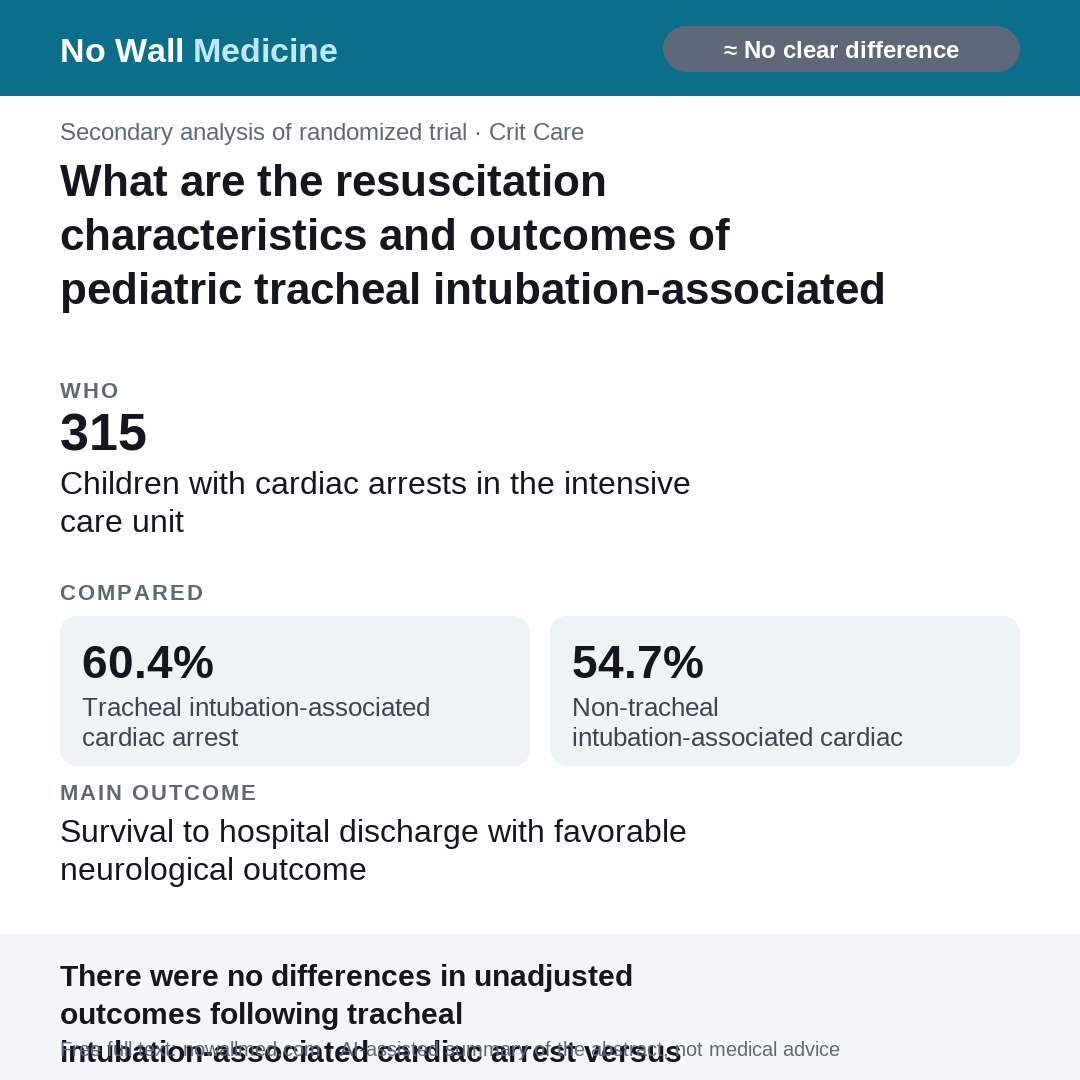
Brief report: incidence and outcomes of pediatric tracheal intubation-associated cardiac arrests in the ICU-RESUS clinical trial
Secondary analysis of randomized trialNo clear difference
What are the resuscitation characteristics and outcomes of pediatric tracheal intubation-associated cardiac arrest?
Who
315
Children with cardiac arrests in the intensive care unit
Compared
60.4%Tracheal intubation-associated cardiac arrest (29/48)
54.7%Non-tracheal intubation-associated cardiac arrest (146/267)
Main outcome
Survival to hospital discharge with favorable neurological outcome
Bottom line: There were no differences in unadjusted outcomes following tracheal intubation-associated cardiac arrest versus non-associated cardiac arrest.
Crit Care · 2024-08-30Download image
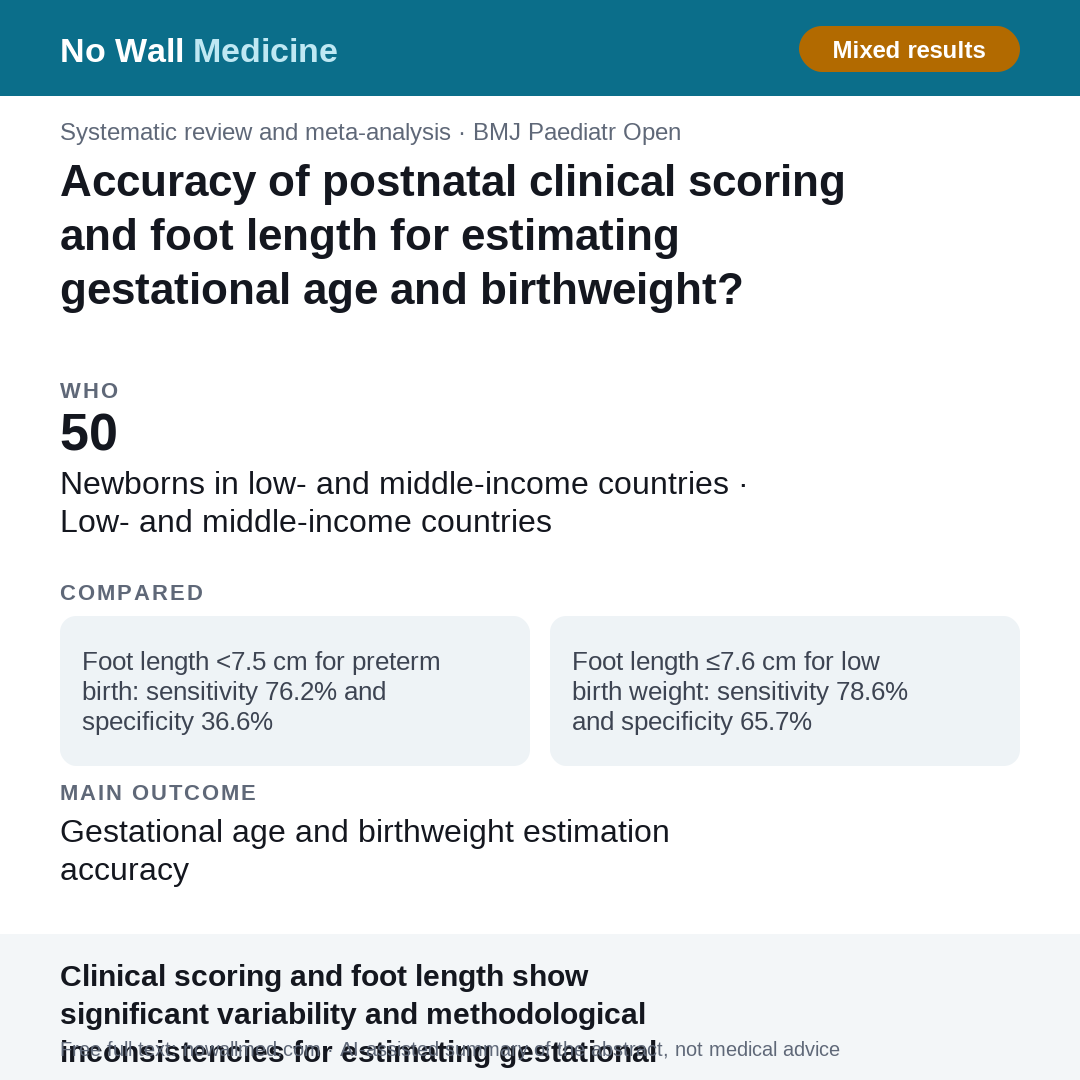
Assessing the diagnostic accuracy of postnatal clinical scoring methods and foot length measurement for estimating gestational age and birthweight of newborns in low- and middle-income countries: a systematic review and meta-analysis
Systematic review and meta-analysisMixed results
Accuracy of postnatal clinical scoring and foot length for estimating gestational age and birthweight?
Who
50
Newborns in low- and middle-income countries · Low- and middle-income countries
Compared
Foot length <7.5 cm for preterm birth: sensitivity 76.2% and specificity 36.6%
Foot length ≤7.6 cm for low birth weight: sensitivity 78.6% and specificity 65.7%
Main outcome
Gestational age and birthweight estimation accuracy
Bottom line: Clinical scoring and foot length show significant variability and methodological inconsistencies for estimating gestational age and birthweight.
Limitation: High heterogeneity across studies was observed.
BMJ Paediatr Open · 2024-08-30Download image
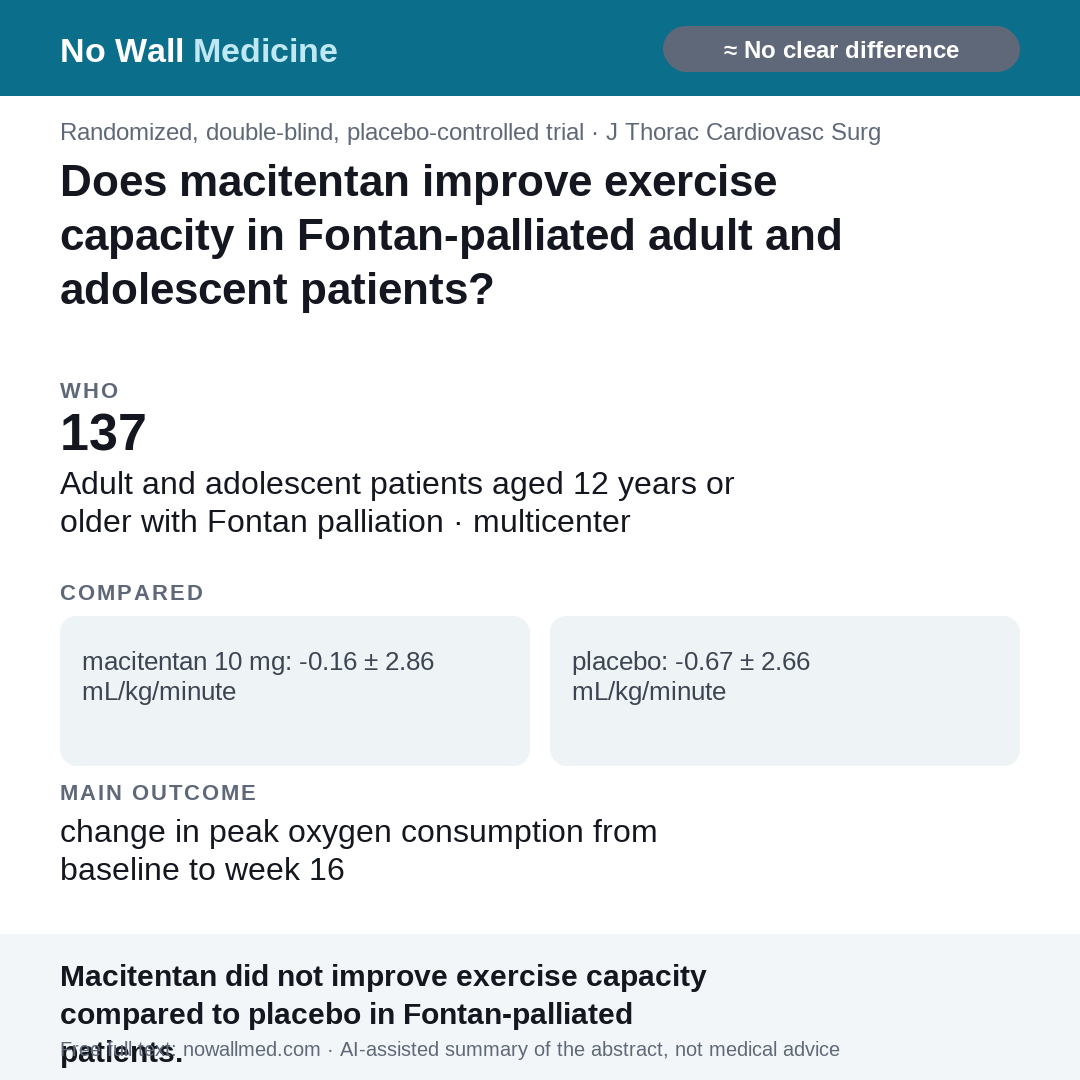
Efficacy and safety of macitentan in Fontan-palliated patients: 52-week randomized, placebo-controlled RUBATO Phase 3 trial and open-label extension
Randomized, double-blind, placebo-controlled trialNo clear difference
Does macitentan improve exercise capacity in Fontan-palliated adult and adolescent patients?
Who
137
Adult and adolescent patients aged 12 years or older with Fontan palliation · multicenter
Compared
macitentan 10 mg: -0.16 ± 2.86 mL/kg/minute
placebo: -0.67 ± 2.66 mL/kg/minute
Main outcome
change in peak oxygen consumption from baseline to week 16
Result: median unbiased treatment difference estimate, 0.62 mL/kg/minute [99% repeated CI, -0.62 to 1.85]
Bottom line: Macitentan did not improve exercise capacity compared to placebo in Fontan-palliated patients.
Limitation: The open-label extension trial was prematurely discontinued because primary and secondary end points were not met.
J Thorac Cardiovasc Surg · 2024-08-29Download image
Kids save lives: Who should train schoolchildren in resuscitation? A systematic review
Systematic review of randomized and non-randomized controlled trialsNo clear difference
Does non-healthcare professional instructor training for schoolchildren result in different learning outcomes?
Who
Schoolchildren
Compared
Non-healthcare professional instructors
Healthcare professional instructors
Main outcome
Student knowledge, skills, willingness and/or confidence to perform cardiopulmonary resuscitation
Bottom line: Non-healthcare professionals achieve similar educational outcomes compared to healthcare professionals when training schoolchildren in cardiopulmonary resuscitation.
Limitation: Certainty of evidence was low to very low.
Resusc Plus · 2024-08-29Download image

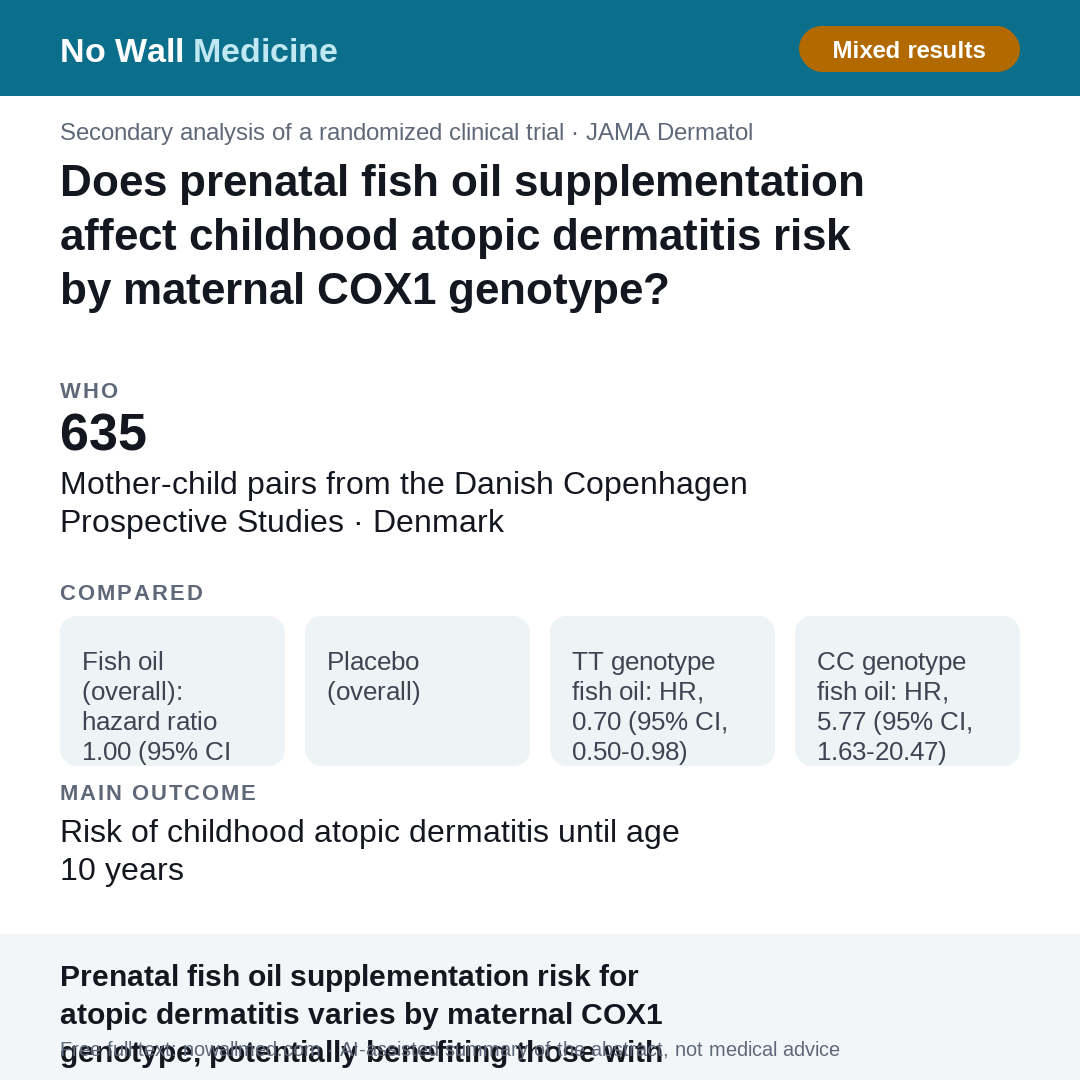
Prenatal Fish Oil Supplementation, Maternal COX1 Genotype, and Childhood Atopic Dermatitis: A Secondary Analysis of a Randomized Clinical Trial
Secondary analysis of a randomized clinical trialMixed results
Does prenatal fish oil supplementation affect childhood atopic dermatitis risk by maternal COX1 genotype?
Who
635
Mother-child pairs from the Danish Copenhagen Prospective Studies · Denmark
Compared
Fish oil (overall): hazard ratio 1.00 (95% CI 0.76-1.33)
Placebo (overall)
TT genotype fish oil: HR, 0.70 (95% CI, 0.50-0.98)
CC genotype fish oil: HR, 5.77 (95% CI, 1.63-20.47)
Main outcome
Risk of childhood atopic dermatitis until age 10 years
Result: hazard ratio 1.00 (95% CI 0.76-1.33)
Bottom line: Prenatal fish oil supplementation risk for atopic dermatitis varies by maternal COX1 genotype, potentially benefiting those with the TT genotype.
JAMA Dermatol · 2024-08-28Download image
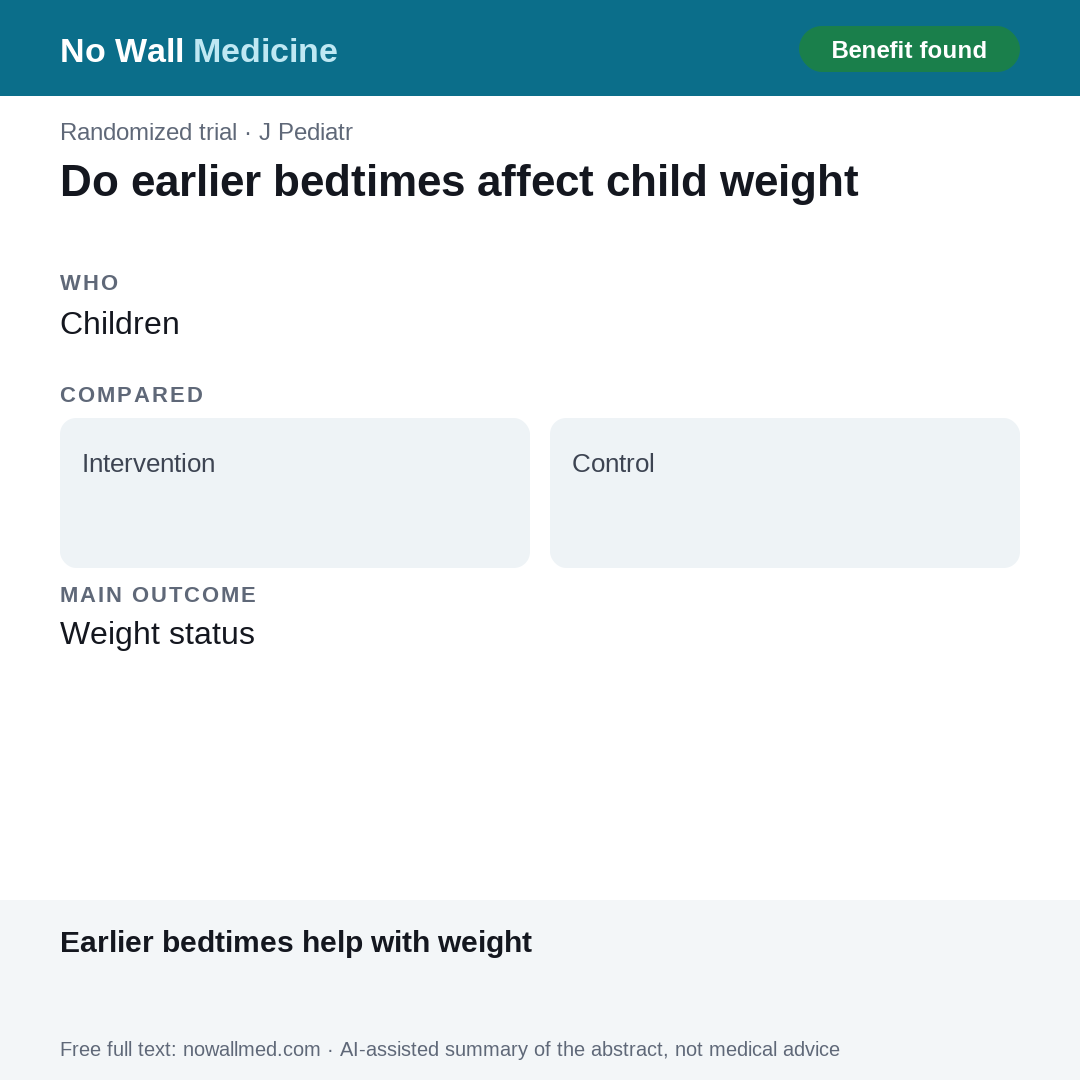
Earlier Bedtimes Mediate the Effect of a Brief Behavioral Sleep Intervention on Children's Weight Status
Randomized trialBenefit found
Do earlier bedtimes affect child weight
Who
Children
Compared
Intervention
Control
Main outcome
Weight status
Bottom line: Earlier bedtimes help with weight
J Pediatr · 2024-08-28Download image
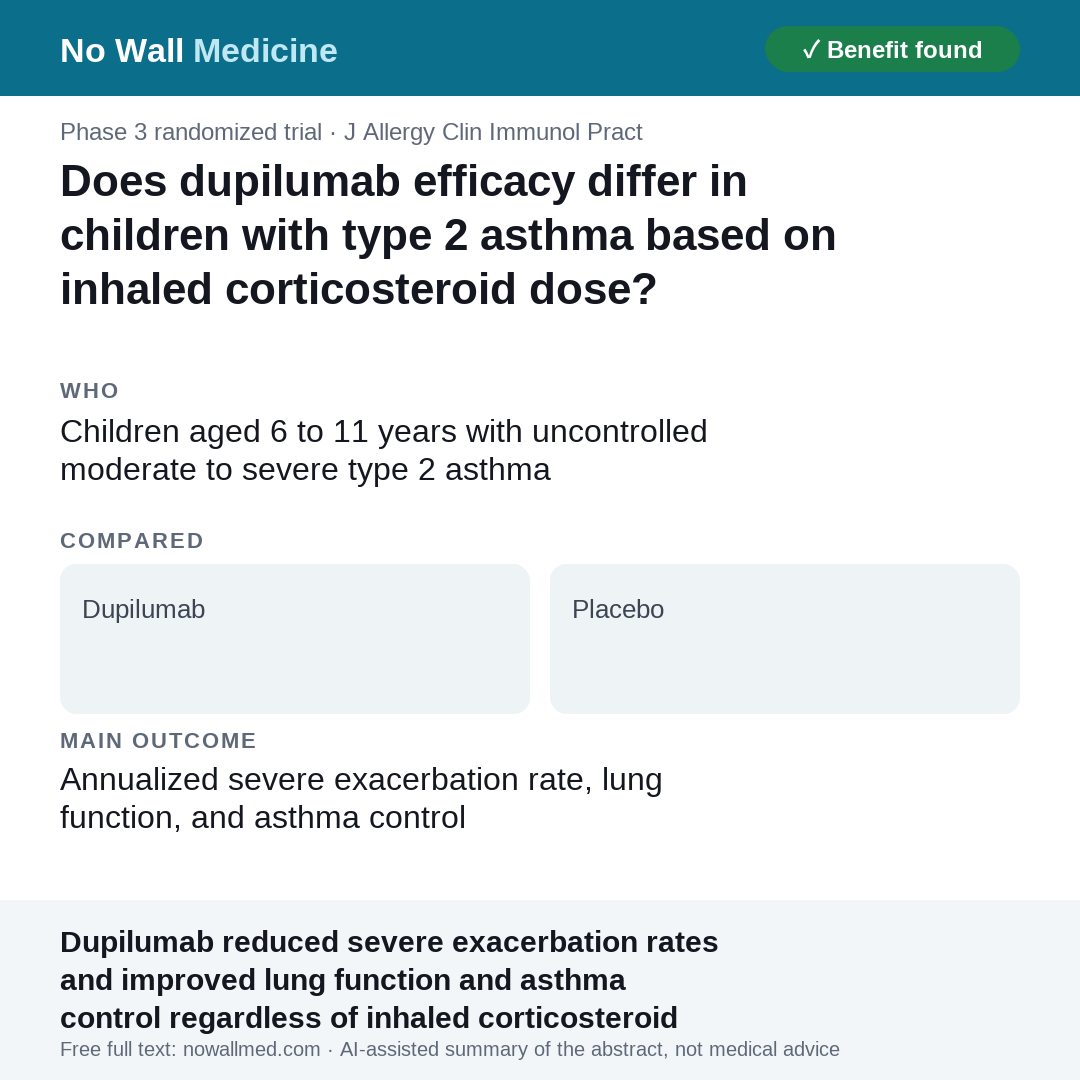
Dupilumab Efficacy in Children With Type 2 Asthma Receiving High- to Medium-Dose Inhaled Corticosteroids (VOYAGE)
Phase 3 randomized trialBenefit found
Does dupilumab efficacy differ in children with type 2 asthma based on inhaled corticosteroid dose?
Who
Children aged 6 to 11 years with uncontrolled moderate to severe type 2 asthma
Compared
Dupilumab
Placebo
Main outcome
Annualized severe exacerbation rate, lung function, and asthma control
Bottom line: Dupilumab reduced severe exacerbation rates and improved lung function and asthma control regardless of inhaled corticosteroid dose.
J Allergy Clin Immunol Pract · 2024-08-28Download image
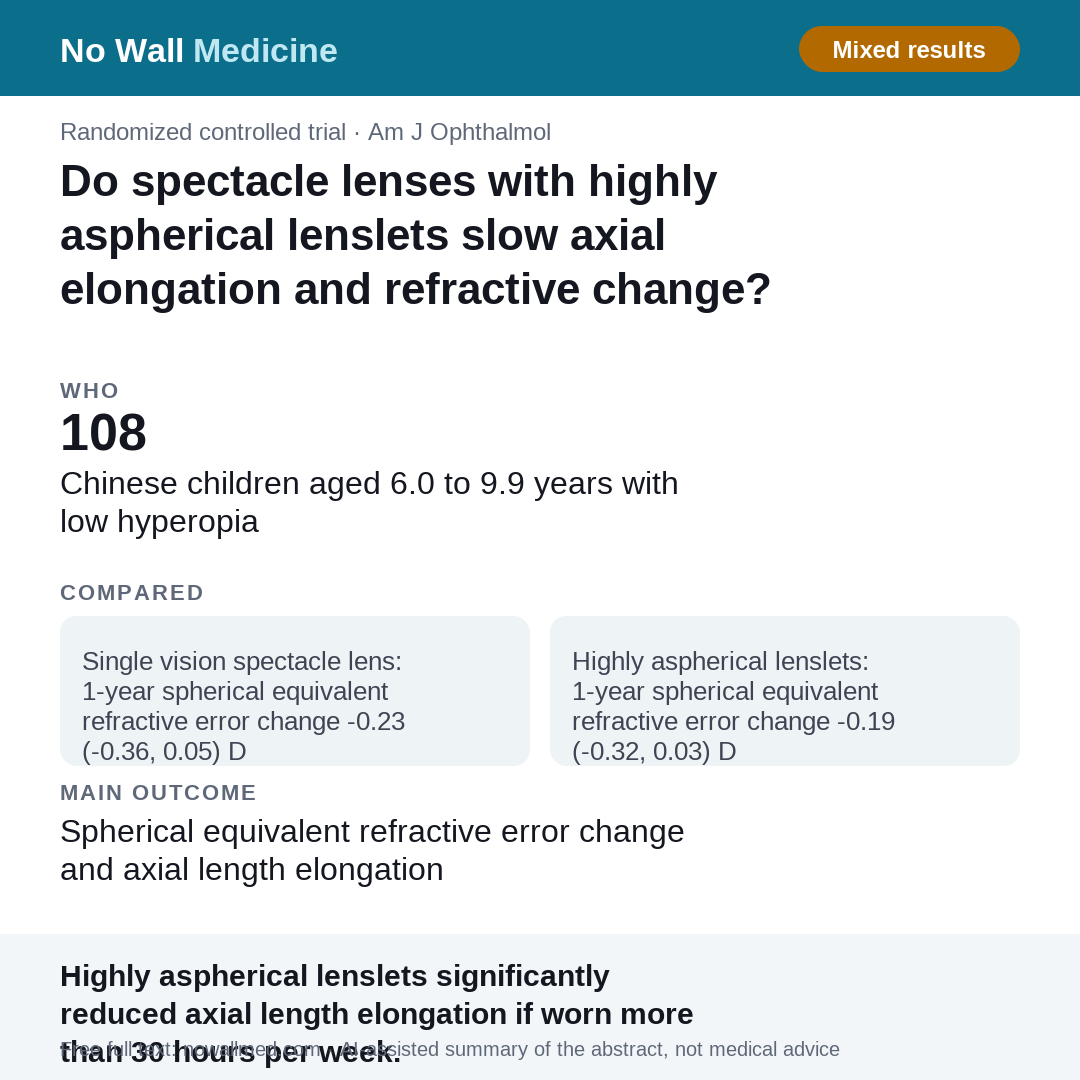
Spectacle Lenses With Highly Aspherical Lenslets for Slowing Axial Elongation and Refractive Change in Low-Hyperopic Chinese Children: A Randomized Controlled Trial
Randomized controlled trialMixed results
Do spectacle lenses with highly aspherical lenslets slow axial elongation and refractive change?
Who
108
Chinese children aged 6.0 to 9.9 years with low hyperopia
Compared
Single vision spectacle lens: 1-year spherical equivalent refractive error change -0.23 (-0.36, 0.05) D
Highly aspherical lenslets: 1-year spherical equivalent refractive error change -0.19 (-0.32, 0.03) D
Main outcome
Spherical equivalent refractive error change and axial length elongation
Bottom line: Highly aspherical lenslets significantly reduced axial length elongation if worn more than 30 hours per week.
Am J Ophthalmol · 2024-08-27Download image
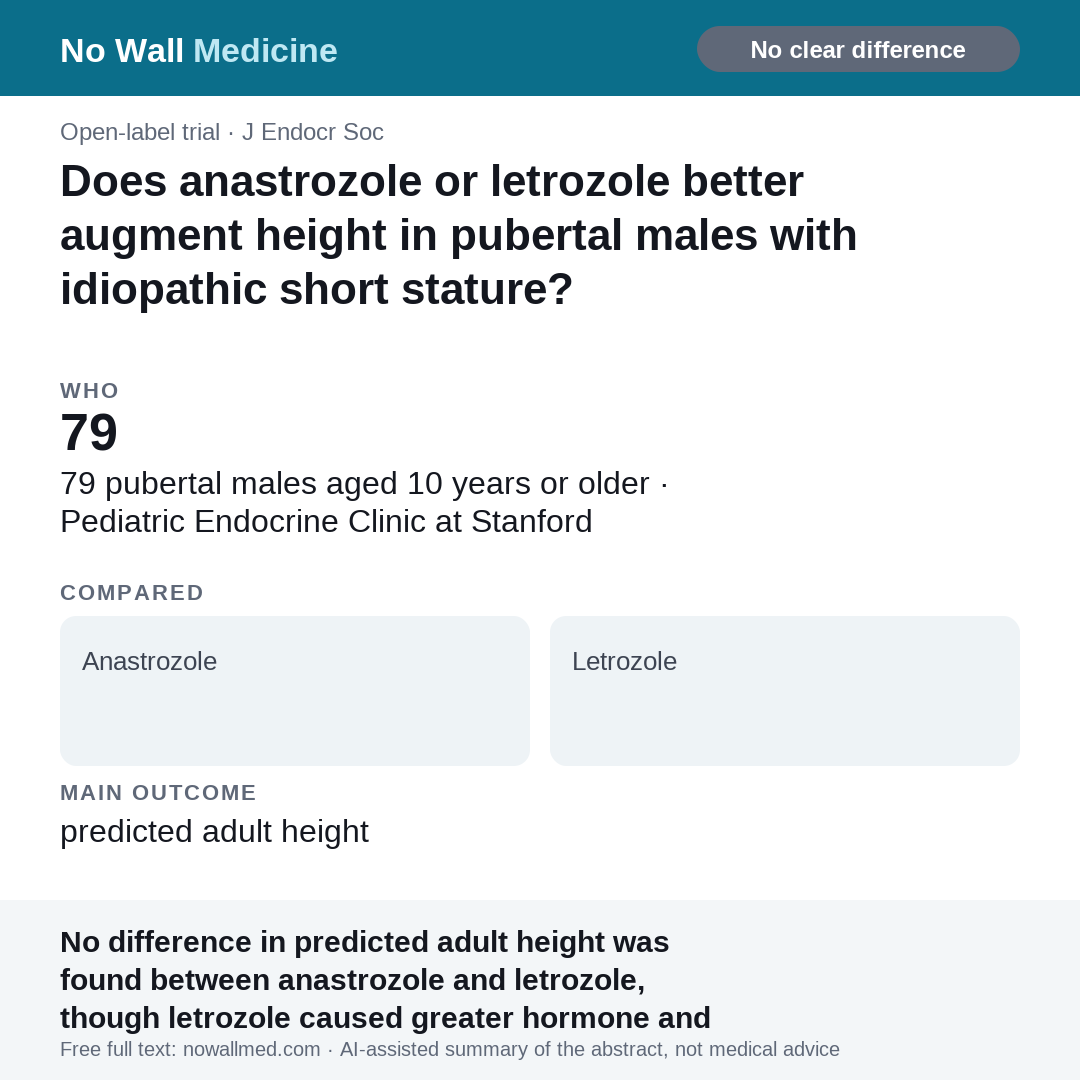
Anastrozole vs Letrozole to Augment Height in Pubertal Males With Idiopathic Short Stature: A 3-Year Randomized Trial
Open-label trialNo clear difference
Does anastrozole or letrozole better augment height in pubertal males with idiopathic short stature?
Who
79
79 pubertal males aged 10 years or older · Pediatric Endocrine Clinic at Stanford
Compared
Anastrozole
Letrozole
Main outcome
predicted adult height
Bottom line: No difference in predicted adult height was found between anastrozole and letrozole, though letrozole caused greater hormone and growth deviations.
Limitation: The efficacy of aromatase inhibitor monotherapy for height augmentation may be limited.
J Endocr Soc · 2024-08-27Download image
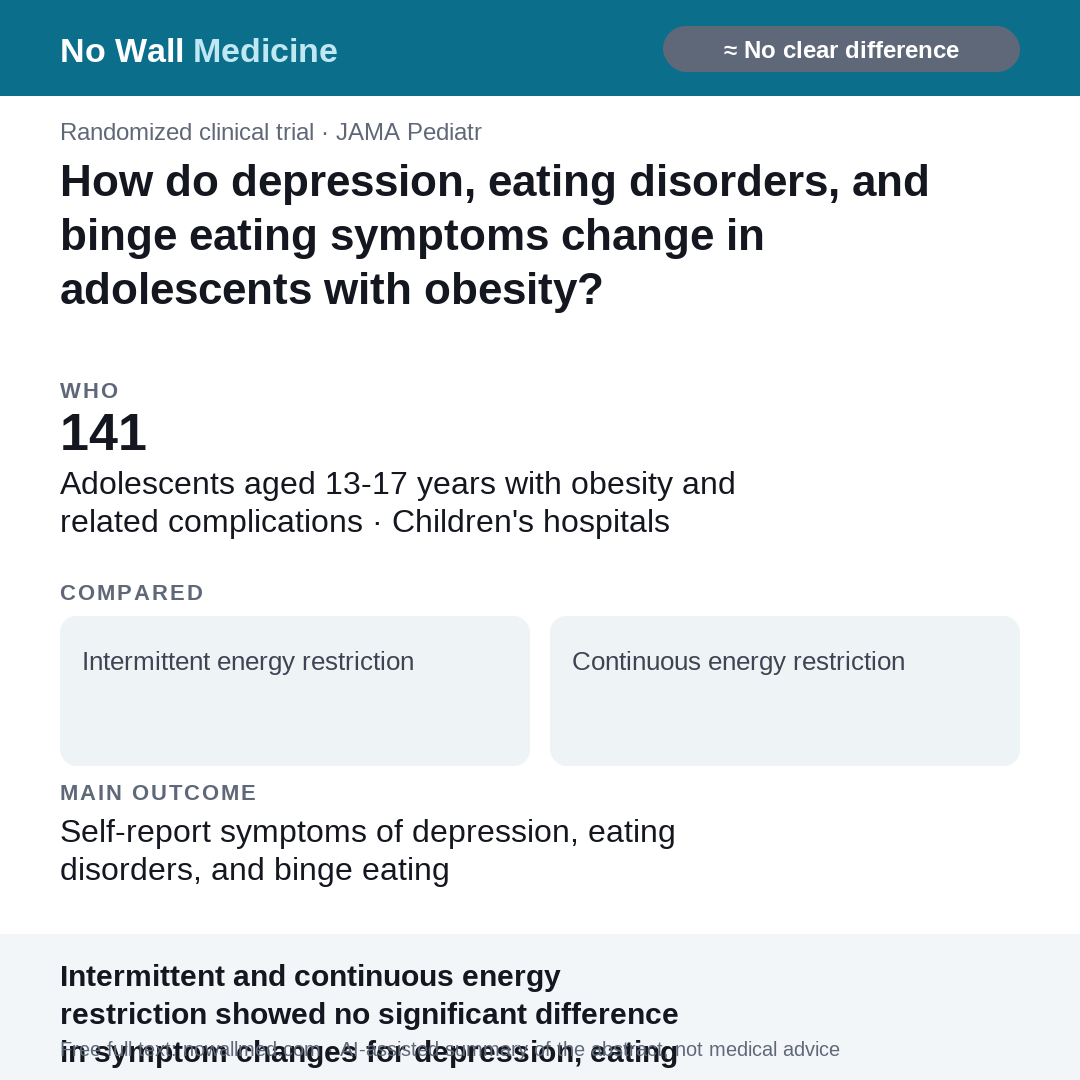
Symptoms of Depression, Eating Disorders, and Binge Eating in Adolescents With Obesity: The Fast Track to Health Randomized Clinical Trial
Randomized clinical trialNo clear difference
How do depression, eating disorders, and binge eating symptoms change in adolescents with obesity?
Who
141
Adolescents aged 13-17 years with obesity and related complications · Children's hospitals in Australia
Compared
Intermittent energy restriction
Continuous energy restriction
Main outcome
Self-report symptoms of depression, eating disorders, and binge eating
Result: mean difference at week 52, 0.75; 95% CI, -1.86 to 3.37 for CESDR-10
Bottom line: Intermittent and continuous energy restriction showed no significant difference in symptom changes for depression, eating disorders, or binge eating.
JAMA Pediatr · 2024-08-26Download image
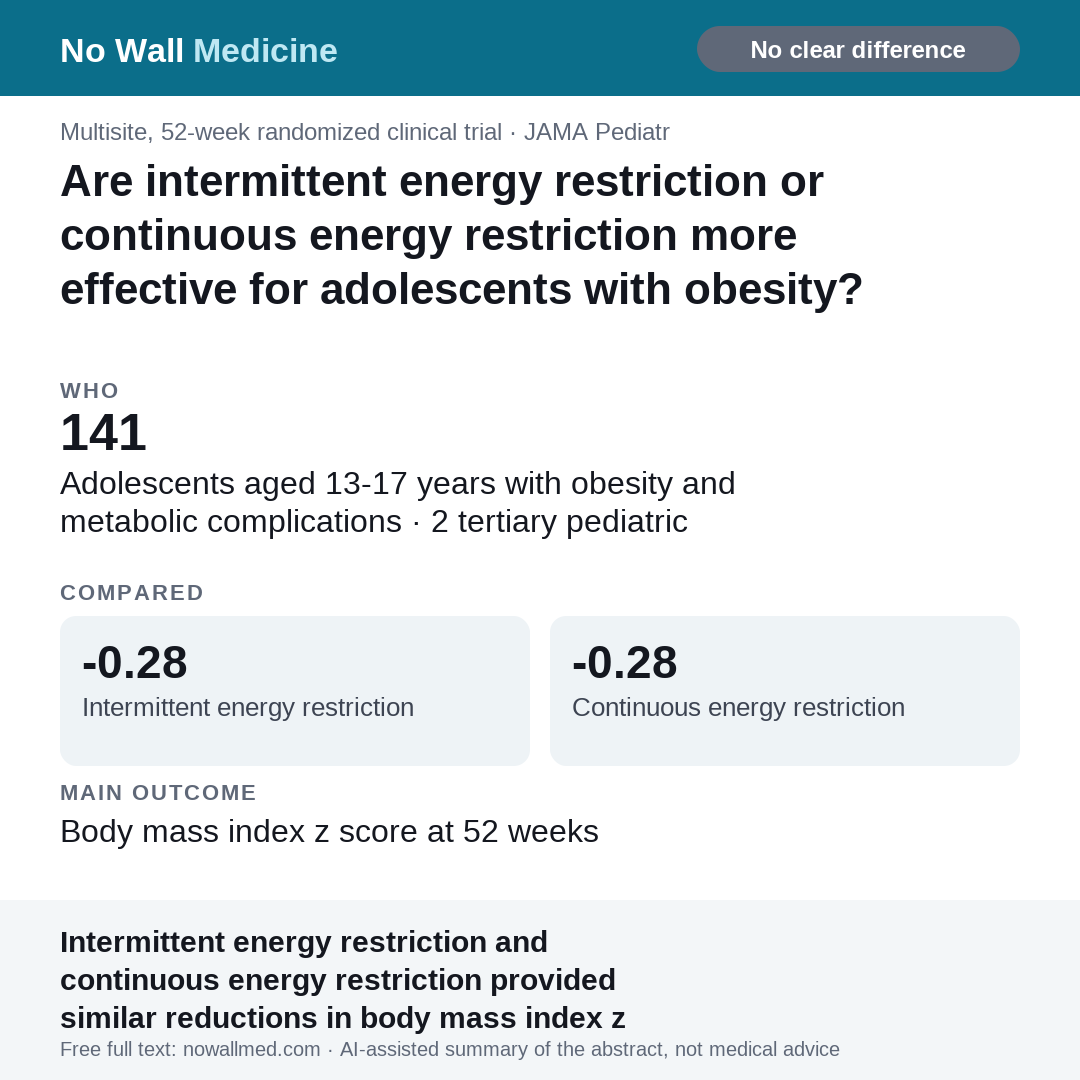
Intermittent Energy Restriction for Adolescents With Obesity: The Fast Track to Health Randomized Clinical Trial
Multisite, 52-week randomized clinical trialNo clear difference
Are intermittent energy restriction or continuous energy restriction more effective for adolescents with obesity?
Who
141
Adolescents aged 13-17 years with obesity and metabolic complications · 2 tertiary pediatric centers in Australia
Compared
-0.28Intermittent energy restriction (95% CI, -0.37 to -0.20)
-0.28Continuous energy restriction (95% CI, -0.36 to -0.20)
Main outcome
Body mass index z score at 52 weeks
Result: no difference in BMI z score change between groups
Bottom line: Intermittent energy restriction and continuous energy restriction provided similar reductions in body mass index z score in adolescents.
JAMA Pediatr · 2024-08-26Download image