Visual abstracts
New randomized trials and meta-analyses from leading journals at a glance: who was studied, what was compared, and what was found. Every paper is free to read in full.
All specialtiesCardiology 4763Oncology 4043Gastroenterology & Hepatology 1903Infectious Disease 3756Neurology 1872Psychiatry & Mental Health 2216Pulmonology 2044Critical Care 1319Endocrinology & Diabetes 2544Pediatrics 2889Surgery 2480Orthopedics & Sports Medicine 917Neurosurgery 525Cardiothoracic & Vascular Surgery 656Plastic & Reconstructive Surgery 574Nephrology 1107Rheumatology 810Hematology 1090Dermatology 611Ophthalmology 532Obstetrics & Gynecology 1645Public & Global Health 1037Radiology & Imaging 619Anesthesiology 958Urology 745ENT (Otolaryngology) 494Emergency Medicine 481Allergy & Immunology 309Geriatrics 972Family Medicine & Primary Care 534Medical Genetics & Genomics 659Pathology & Laboratory Medicine 156Physical Medicine & Rehabilitation 734Palliative Care 421Nutrition 1560Digital Health & AI 2137General Medicine 318
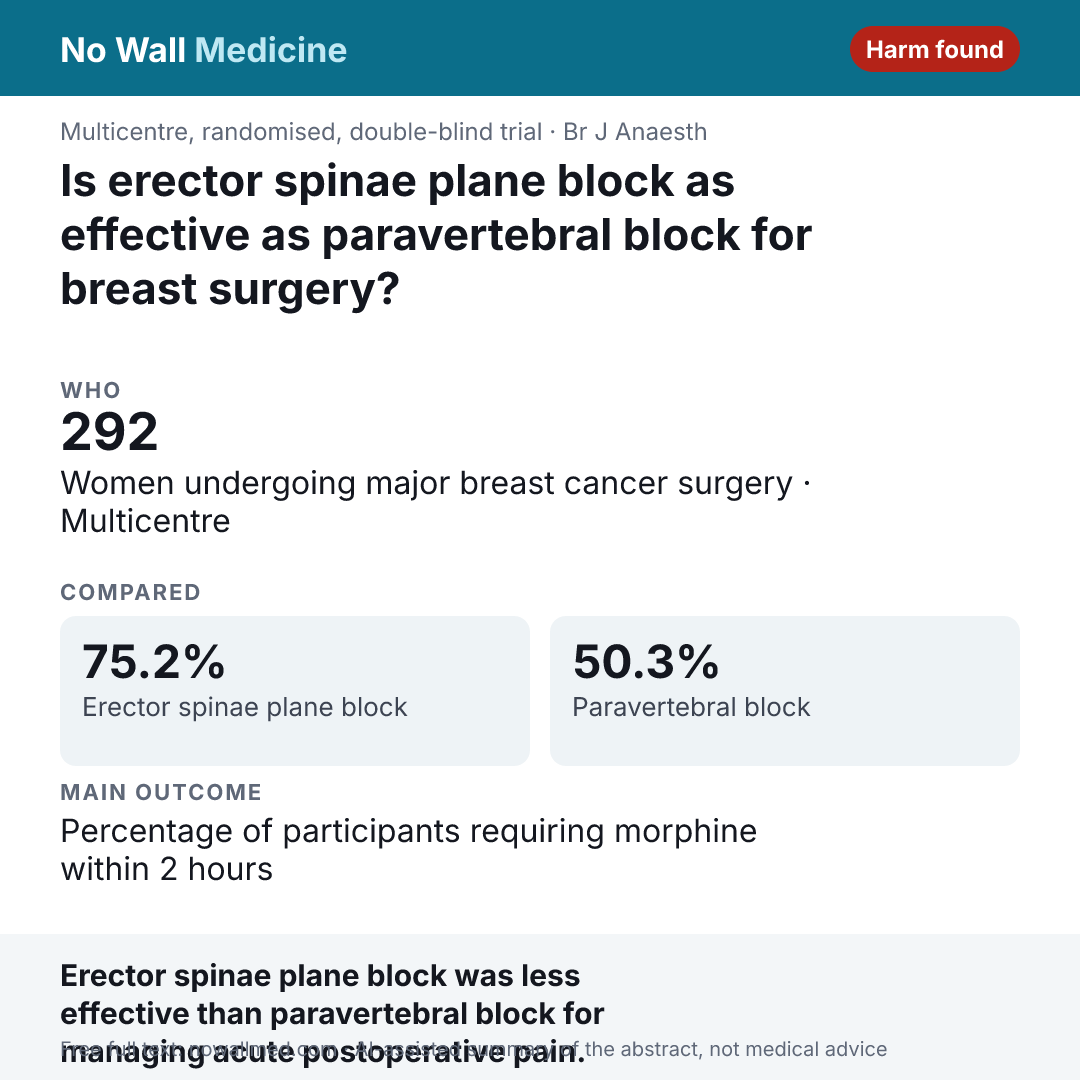
Erector spinae plane block versus paravertebral block for major oncological breast surgery: a multicentre randomised controlled trial
Multicentre, randomised, double-blind trialHarm found
Is erector spinae plane block as effective as paravertebral block for breast surgery?
Who
292
Women undergoing major breast cancer surgery · Multicentre
Compared
75.2%Erector spinae plane block
50.3%Paravertebral block
Main outcome
Percentage of participants requiring morphine within 2 hours
Bottom line: Erector spinae plane block was less effective than paravertebral block for managing acute postoperative pain.
Br J Anaesth · 2025-07-24 · Save PNG
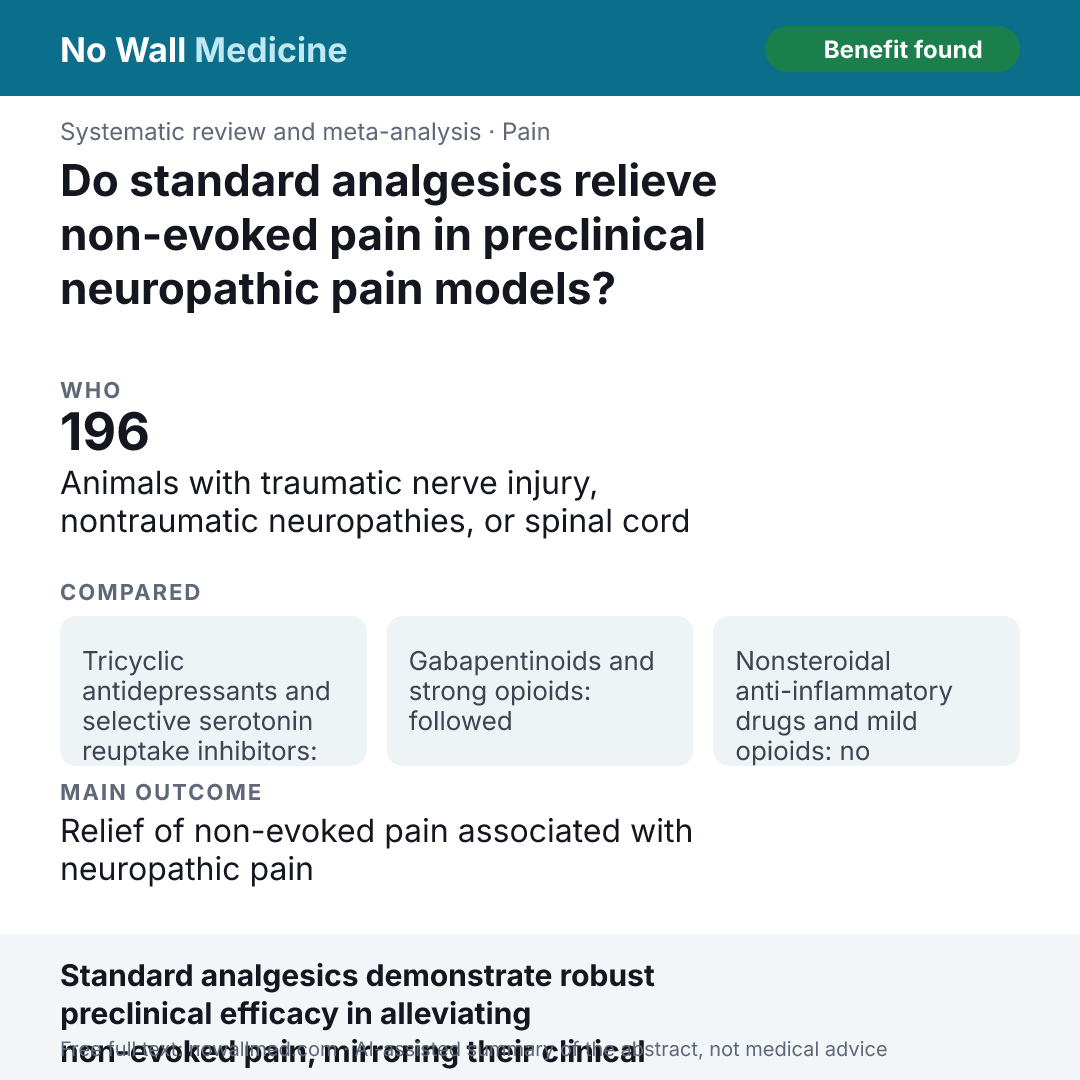
Enhancing clinical translation of analgesics for neuropathic pain: a systematic review and meta-analysis on the role of non-evoked pain assessment in preclinical trials
Systematic review and meta-analysisBenefit found
Do standard analgesics relieve non-evoked pain in preclinical neuropathic pain models?
Who
196
Animals with traumatic nerve injury, nontraumatic neuropathies, or spinal cord injuries · Preclinical studies
Compared
Tricyclic antidepressants and selective serotonin reuptake inhibitors: highest efficacy
Gabapentinoids and strong opioids: followed
Nonsteroidal anti-inflammatory drugs and mild opioids: no significant effect
Main outcome
Relief of non-evoked pain associated with neuropathic pain
Bottom line: Standard analgesics demonstrate robust preclinical efficacy in alleviating non-evoked pain, mirroring their clinical performance.
Pain · 2025-07-24 · Save PNG
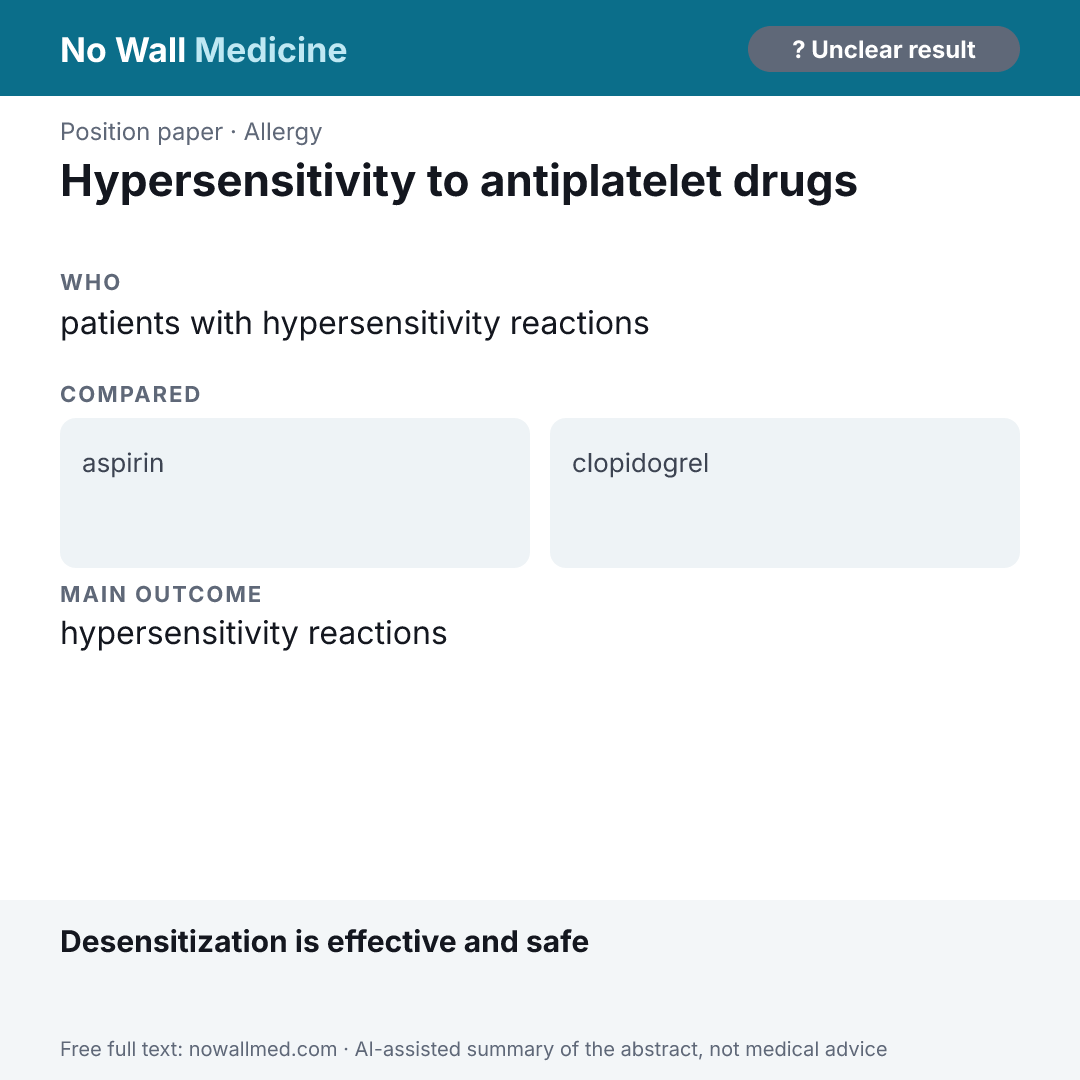
Diagnosis and Management of Hypersensitivity to Antiplatelet Drugs: EAACI Position Paper
Position paperUnclear result
Hypersensitivity to antiplatelet drugs
Who
patients with hypersensitivity reactions
Compared
aspirin
clopidogrel
Main outcome
hypersensitivity reactions
Bottom line: Desensitization is effective and safe
Allergy · 2025-07-24 · Save PNG
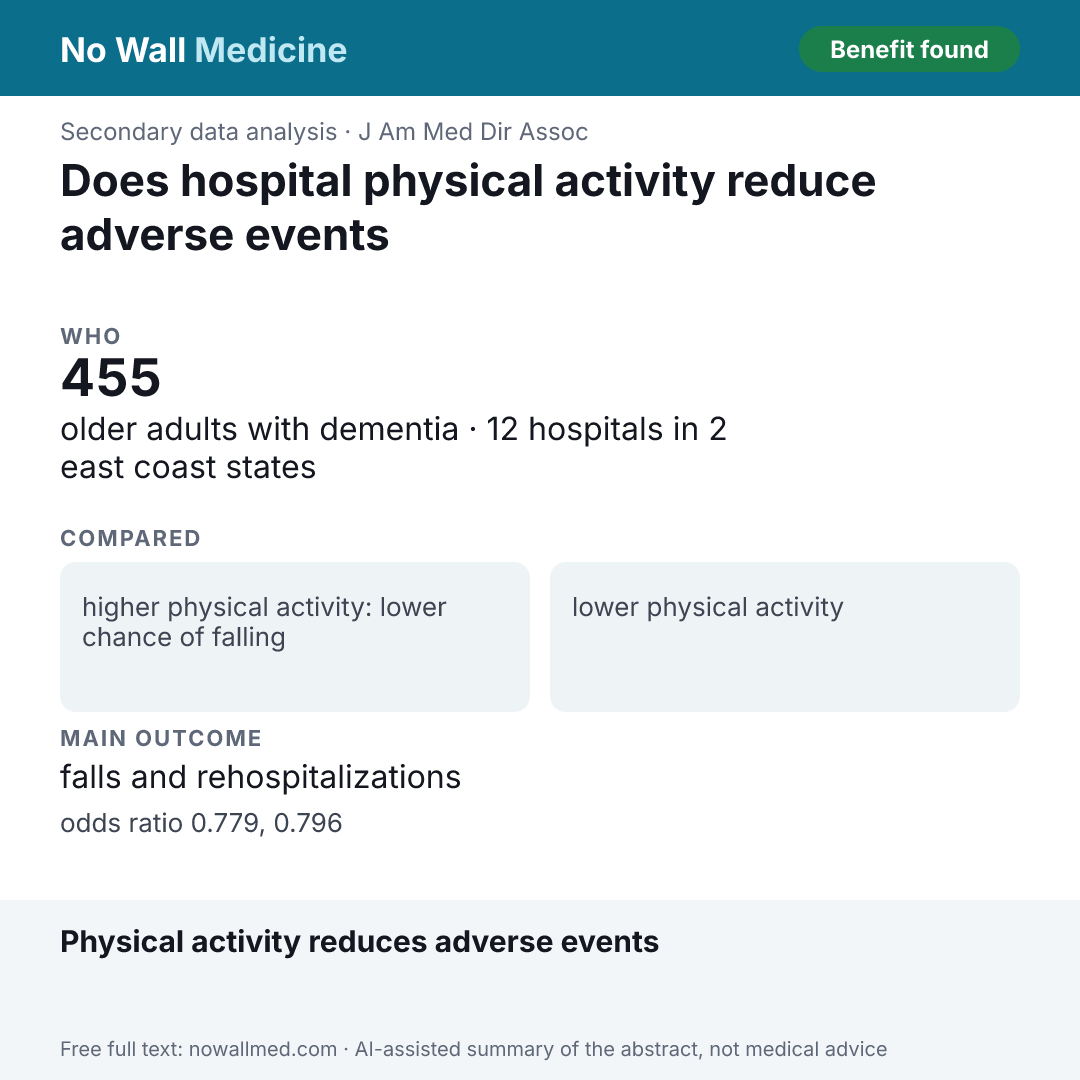
A Cross-Lagged Panel Model Testing the Impact of Physical Activity During Hospitalization on 1- and 6-Month Discharge Physical Activity and Adverse Events Among Older Adults With Dementia
Secondary data analysisBenefit found
Does hospital physical activity reduce adverse events
Who
455
older adults with dementia · 12 hospitals in 2 east coast states
Compared
higher physical activity: lower chance of falling
lower physical activity
Main outcome
falls and rehospitalizations
Result: odds ratio 0.779, 0.796
Bottom line: Physical activity reduces adverse events
J Am Med Dir Assoc · 2025-07-24 · Save PNG
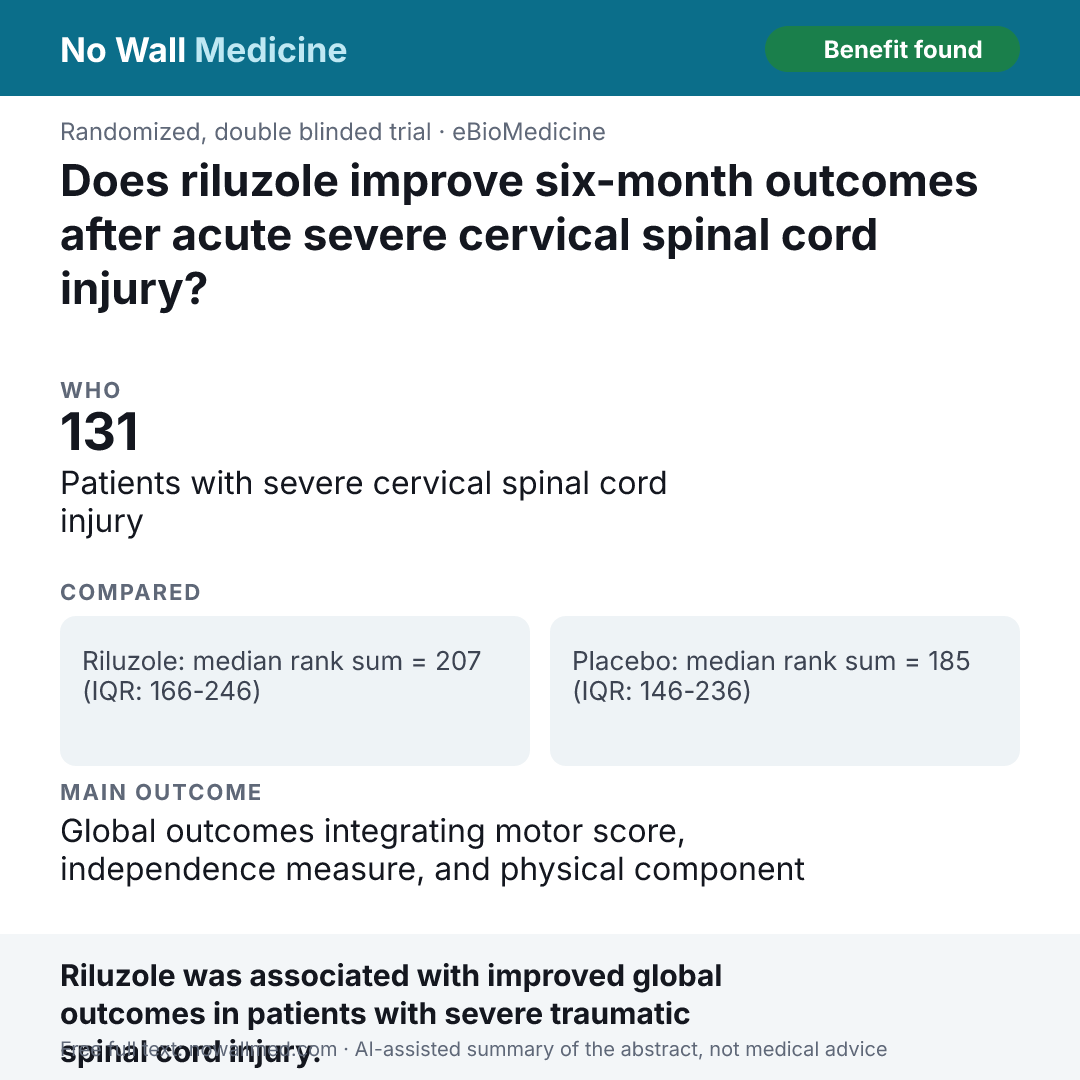
The sodium-glutamate antagonist riluzole improves outcome after acute spinal cord injury: results from the RISCIS randomised controlled trial analysed using a global statistical analytic technique
Randomized, double blinded trialBenefit found
Does riluzole improve six-month outcomes after acute severe cervical spinal cord injury?
Who
131
Patients with severe cervical spinal cord injury
Compared
Riluzole: median rank sum = 207 (IQR: 166-246)
Placebo: median rank sum = 185 (IQR: 146-236)
Main outcome
Global outcomes integrating motor score, independence measure, and physical component scale
Result: p = 0.04
Bottom line: Riluzole was associated with improved global outcomes in patients with severe traumatic spinal cord injury.
Funded by: AO Foundation, United States Department of Defense, and Praxis Spinal Cord Institute
eBioMedicine · 2025-07-24 · Save PNG
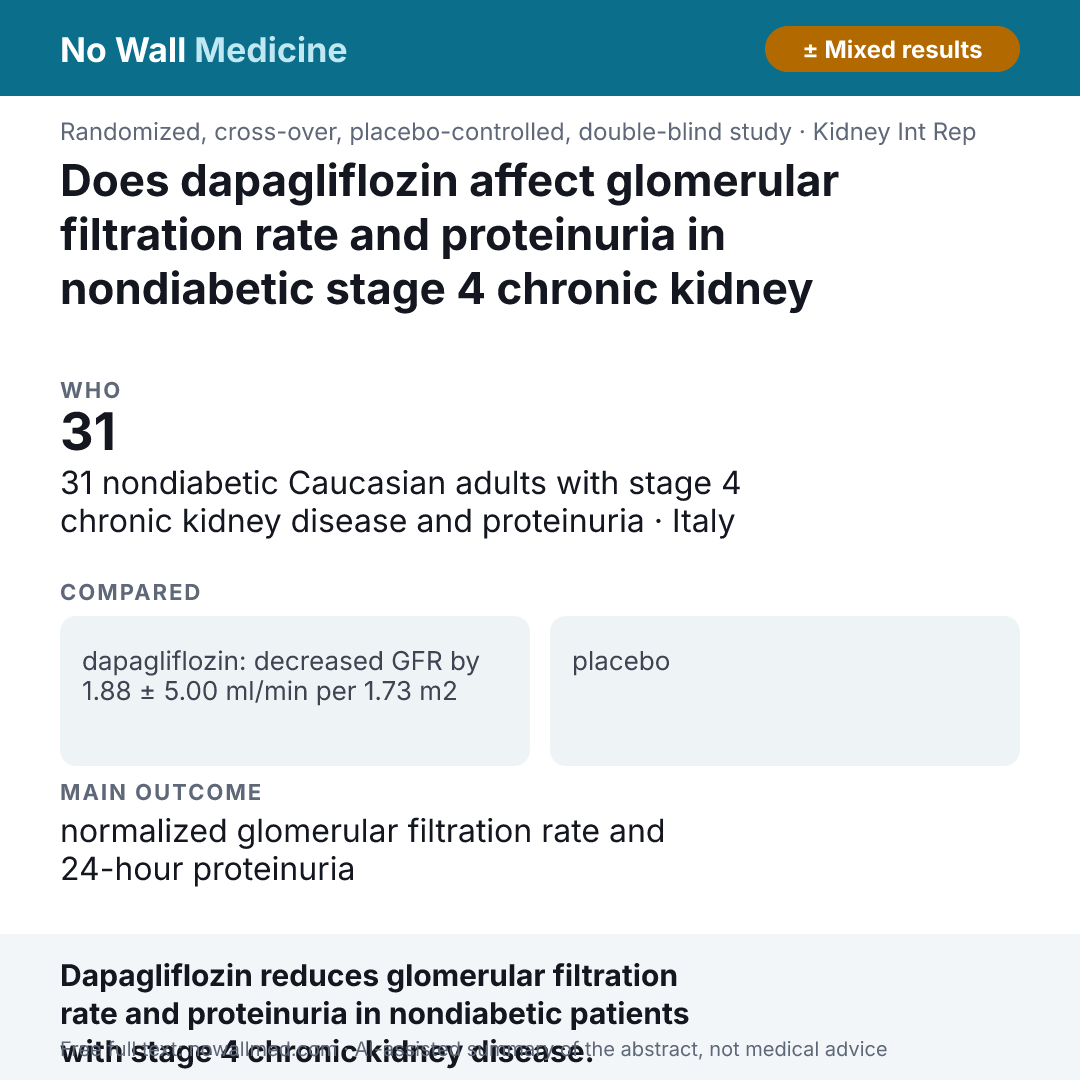
Randomized Trial of Dapagliflozin in Patients With Nondiabetic Stage 4 CKD
Randomized, cross-over, placebo-controlled, double-blind studyMixed results
Does dapagliflozin affect glomerular filtration rate and proteinuria in nondiabetic stage 4 chronic kidney disease?
Who
31
31 nondiabetic Caucasian adults with stage 4 chronic kidney disease and proteinuria · Italy
Compared
dapagliflozin: decreased GFR by 1.88 ± 5.00 ml/min per 1.73 m2
placebo
Main outcome
normalized glomerular filtration rate and 24-hour proteinuria
Bottom line: Dapagliflozin reduces glomerular filtration rate and proteinuria in nondiabetic patients with stage 4 chronic kidney disease.
Kidney Int Rep · 2025-07-24 · Save PNG
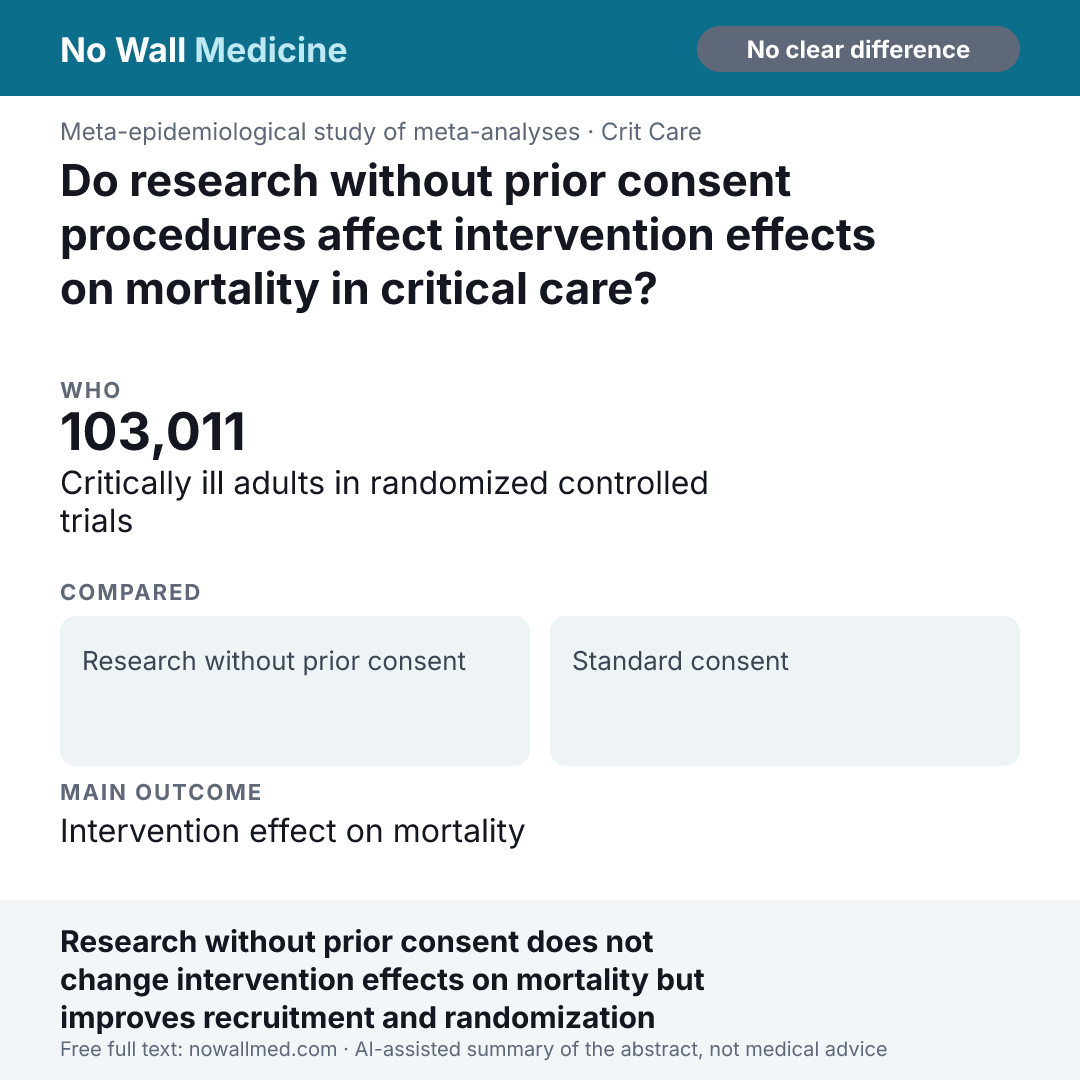
Research without prior consent procedure and intervention effect on mortality in critical care: a meta-epidemiological study of randomized controlled trials
Meta-epidemiological study of meta-analysesNo clear difference
Do research without prior consent procedures affect intervention effects on mortality in critical care?
Who
103,011
Critically ill adults in randomized controlled trials
Compared
Research without prior consent
Standard consent
Main outcome
Intervention effect on mortality
Result: ratio of odds ratios 1.05 (95% CI 0.83-1.34)
Bottom line: Research without prior consent does not change intervention effects on mortality but improves recruitment and randomization speed.
Crit Care · 2025-07-24 · Save PNG
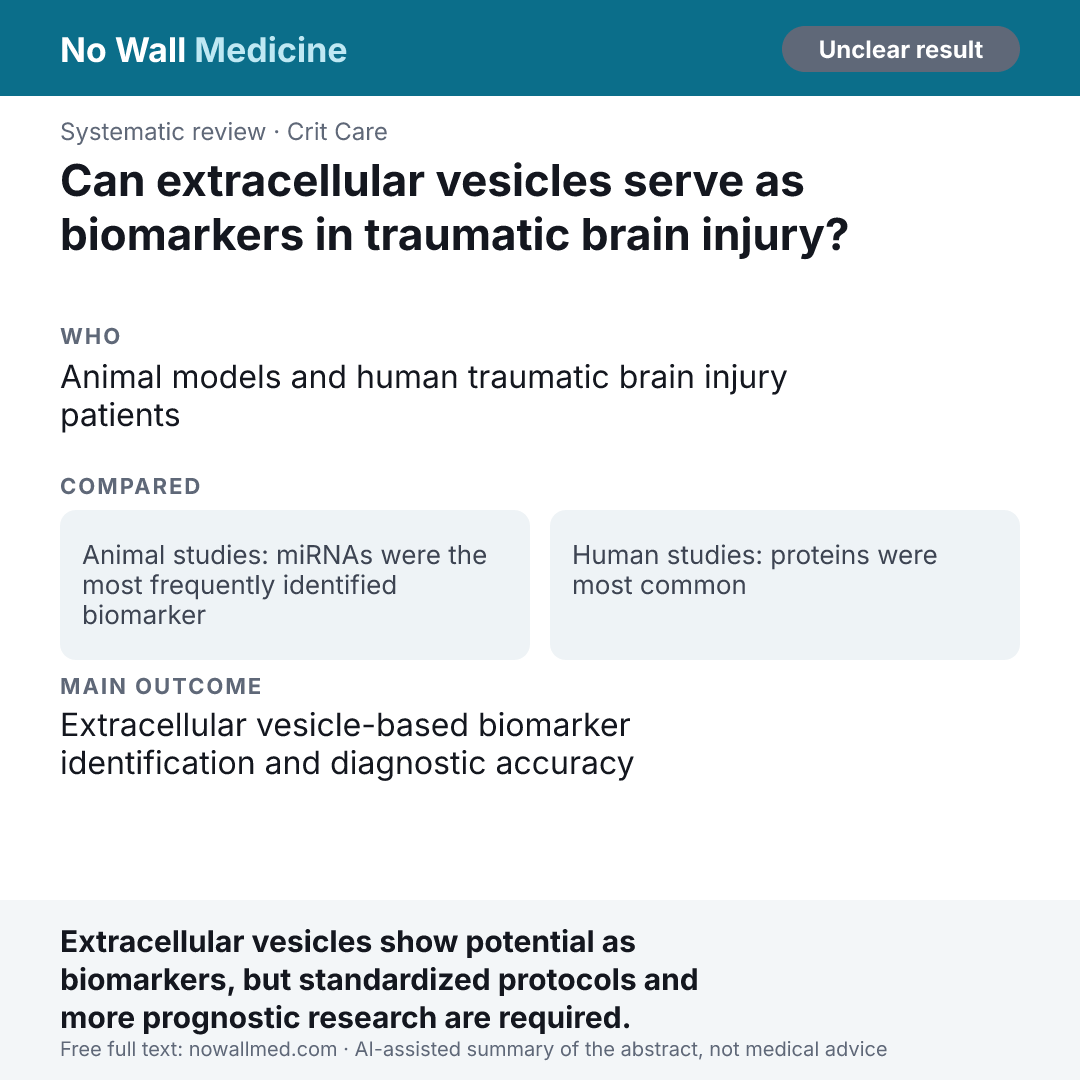
Extracellular vesicles as a biomarkers in traumatic brain injury: a systematic review of animal and clinical studies
Systematic reviewUnclear result
Can extracellular vesicles serve as biomarkers in traumatic brain injury?
Who
Animal models and human traumatic brain injury patients
Compared
Animal studies: miRNAs were the most frequently identified biomarker
Human studies: proteins were most common
Main outcome
Extracellular vesicle-based biomarker identification and diagnostic accuracy
Bottom line: Extracellular vesicles show potential as biomarkers, but standardized protocols and more prognostic research are required.
Limitation: Significant heterogeneity in experimental design, isolation methods, and study populations.
Crit Care · 2025-07-24 · Save PNG
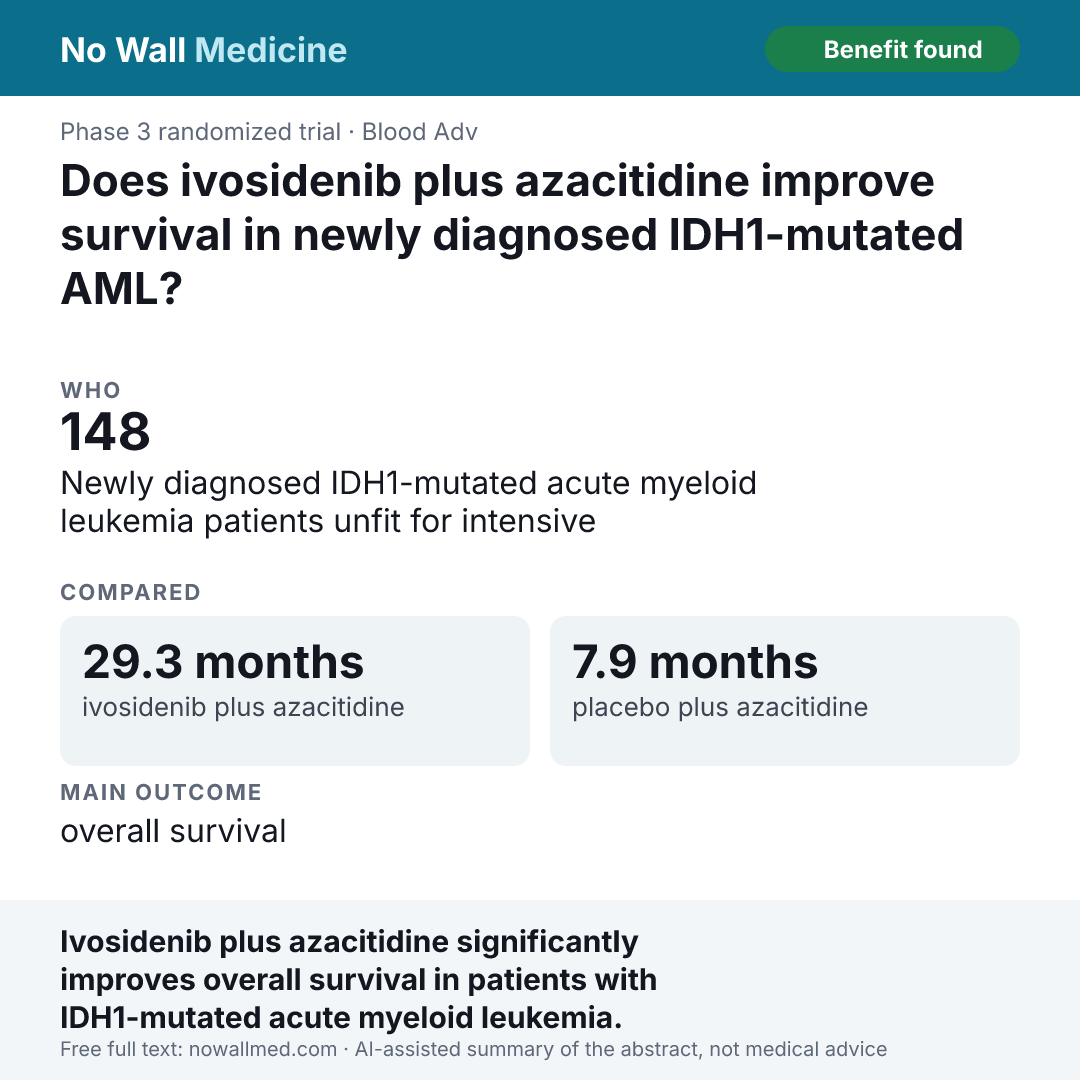
Long-term results from the AGILE study of azacitidine plus ivosidenib vs placebo in newly diagnosed IDH1-mutated AML
Phase 3 randomized trialBenefit found
Does ivosidenib plus azacitidine improve survival in newly diagnosed IDH1-mutated AML?
Who
148
Newly diagnosed IDH1-mutated acute myeloid leukemia patients unfit for intensive chemotherapy
Compared
29.3 monthsivosidenib plus azacitidine
7.9 monthsplacebo plus azacitidine
Main outcome
overall survival
Result: hazard ratio 0.42 (95% CI 0.27-0.65)
Bottom line: Ivosidenib plus azacitidine significantly improves overall survival in patients with IDH1-mutated acute myeloid leukemia.
Blood Adv · 2025-07-24 · Save PNG
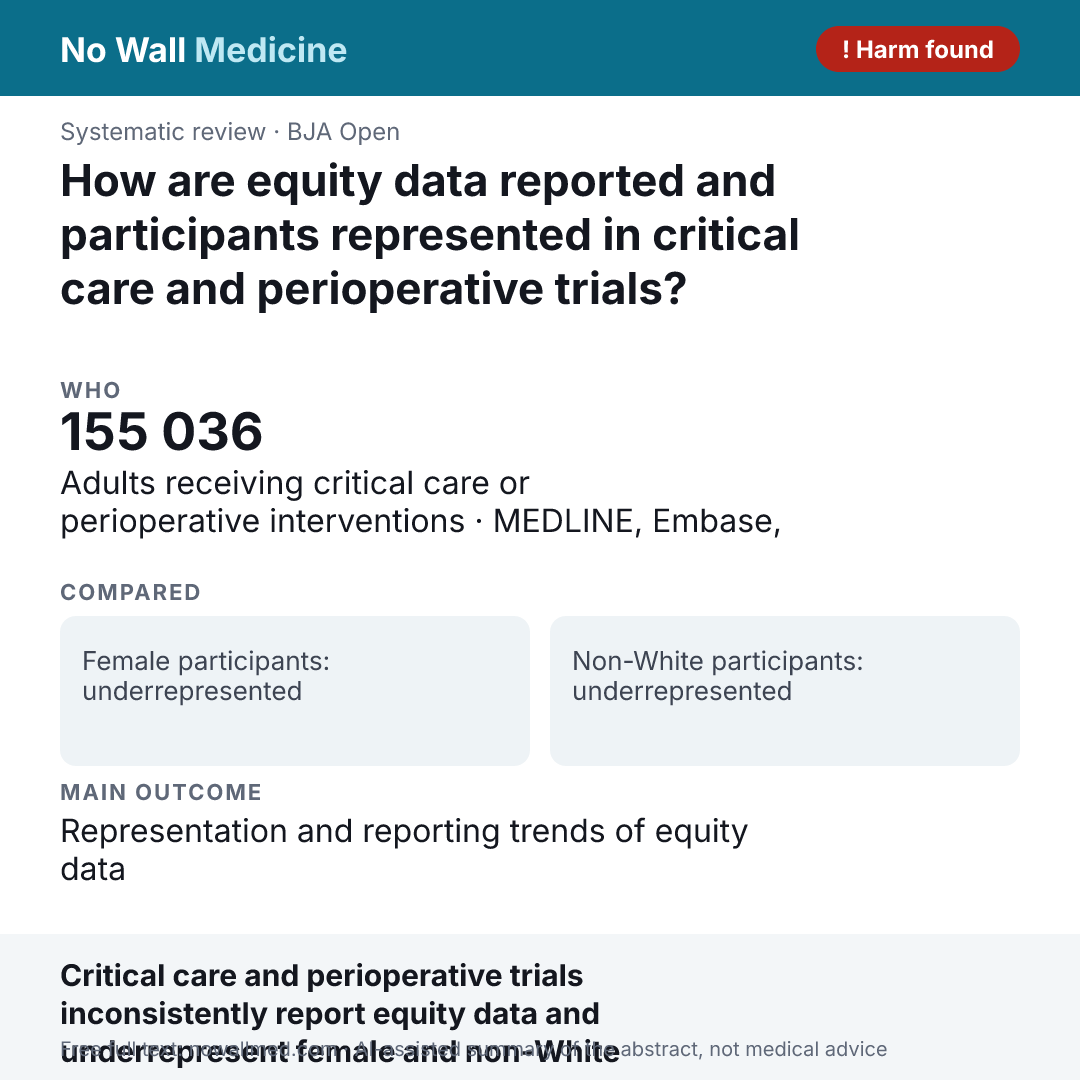
Equity of participants in clinical trials in critical care and perioperative medicine research: a systematic review
Systematic reviewHarm found
How are equity data reported and participants represented in critical care and perioperative trials?
Who
155 036
Adults receiving critical care or perioperative interventions · MEDLINE, Embase, and Clinicaltrials.gov
Compared
Female participants: underrepresented
Non-White participants: underrepresented
Main outcome
Representation and reporting trends of equity data
Bottom line: Critical care and perioperative trials inconsistently report equity data and underrepresent female and non-White participants.
BJA Open · 2025-07-24 · Save PNG
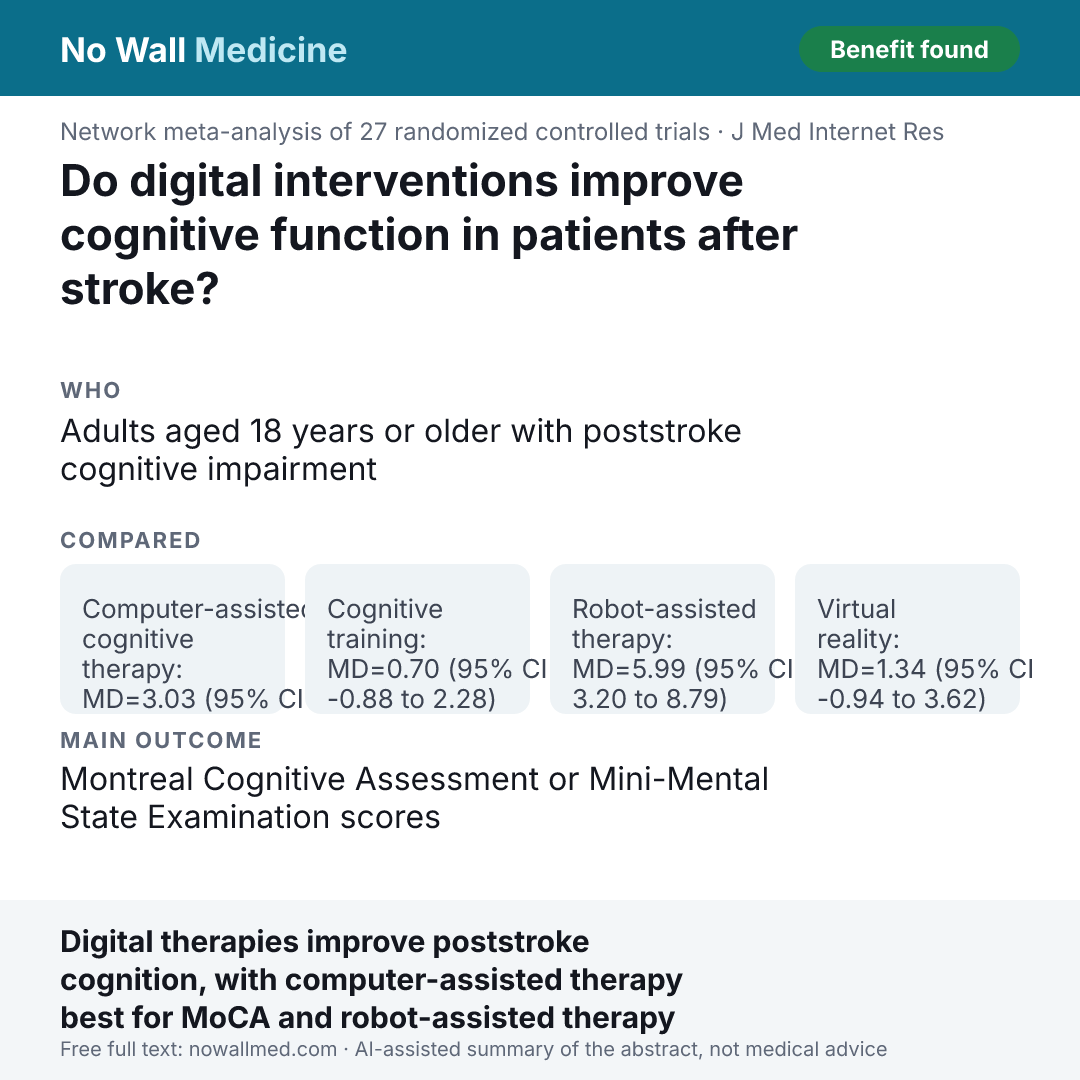
Digital Interventions for Cognitive Dysfunction in Patients With Stroke: Systematic Review and Meta-Analysis
Network meta-analysis of 27 randomized controlled trialsBenefit found
Do digital interventions improve cognitive function in patients after stroke?
Who
Adults aged 18 years or older with poststroke cognitive impairment
Compared
Computer-assisted cognitive therapy: MD=3.03 (95% CI 1.69 to 4.38) for MoCA
Cognitive training: MD=0.70 (95% CI -0.88 to 2.28) for MoCA
Robot-assisted therapy: MD=5.99 (95% CI 3.20 to 8.79) for MMSE
Virtual reality: MD=1.34 (95% CI -0.94 to 3.62) for MMSE
Main outcome
Montreal Cognitive Assessment or Mini-Mental State Examination scores
Bottom line: Digital therapies improve poststroke cognition, with computer-assisted therapy best for MoCA and robot-assisted therapy best for MMSE.
Limitation: Heterogeneity of included studies, risk of bias, and limited sample sizes in some studies.
J Med Internet Res · 2025-07-24 · Save PNG
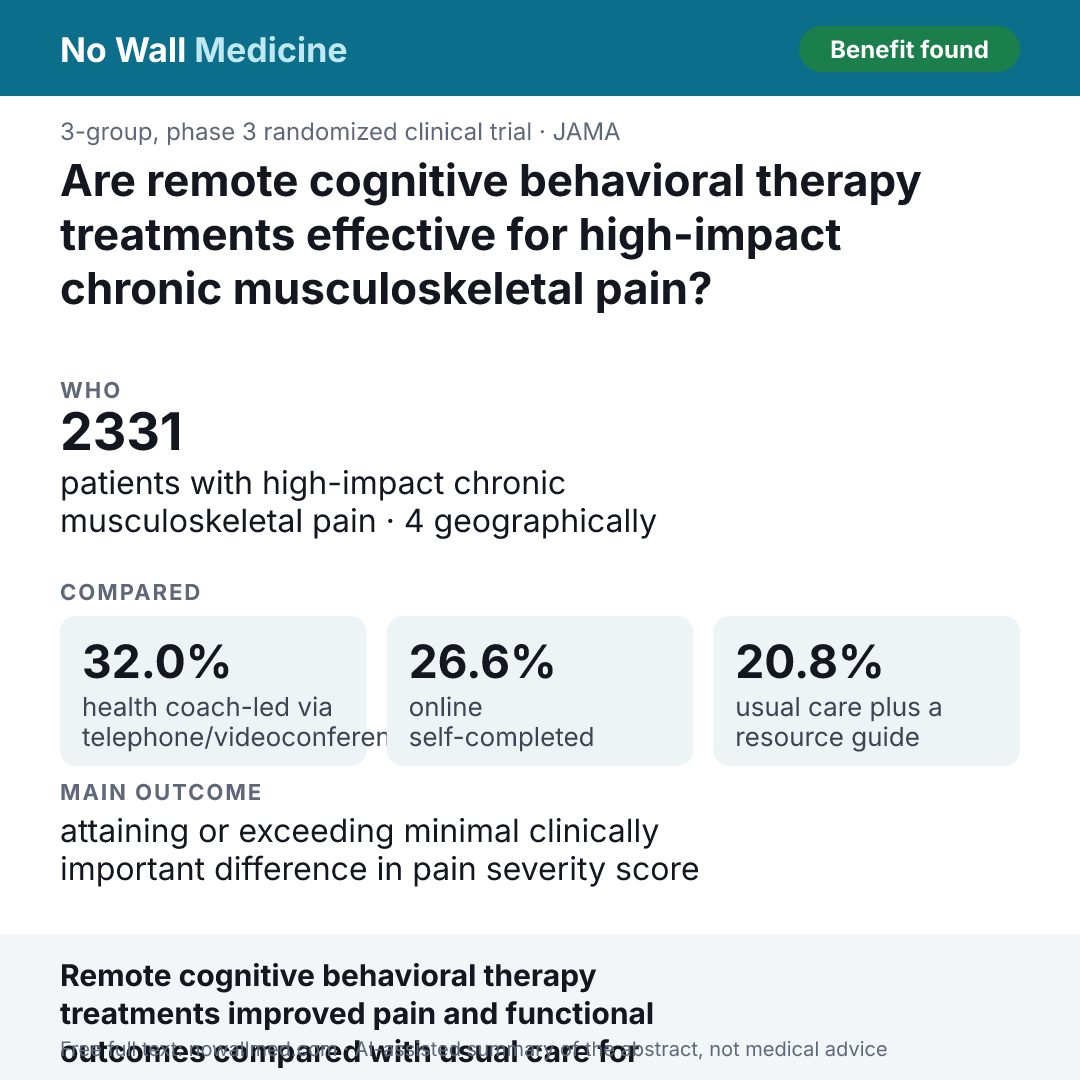
Telehealth and Online Cognitive Behavioral Therapy-Based Treatments for High-Impact Chronic Pain: A Randomized Clinical Trial
3-group, phase 3 randomized clinical trialBenefit found
Are remote cognitive behavioral therapy treatments effective for high-impact chronic musculoskeletal pain?
Who
2331
patients with high-impact chronic musculoskeletal pain · 4 geographically diverse health care systems in the US
Compared
32.0%health coach-led via telephone/videoconferencing (95% CI, 29.3-35.0)
26.6%online self-completed program (95% CI, 23.4-30.2)
20.8%usual care plus a resource guide (95% CI, 18.0-24.0)
Main outcome
attaining or exceeding minimal clinically important difference in pain severity score
Result: relative risk 1.54 (95% CI, 1.30-1.82) for health coach vs usual care
Bottom line: Remote cognitive behavioral therapy treatments improved pain and functional outcomes compared with usual care for chronic pain.
JAMA · 2025-07-23 · Save PNG
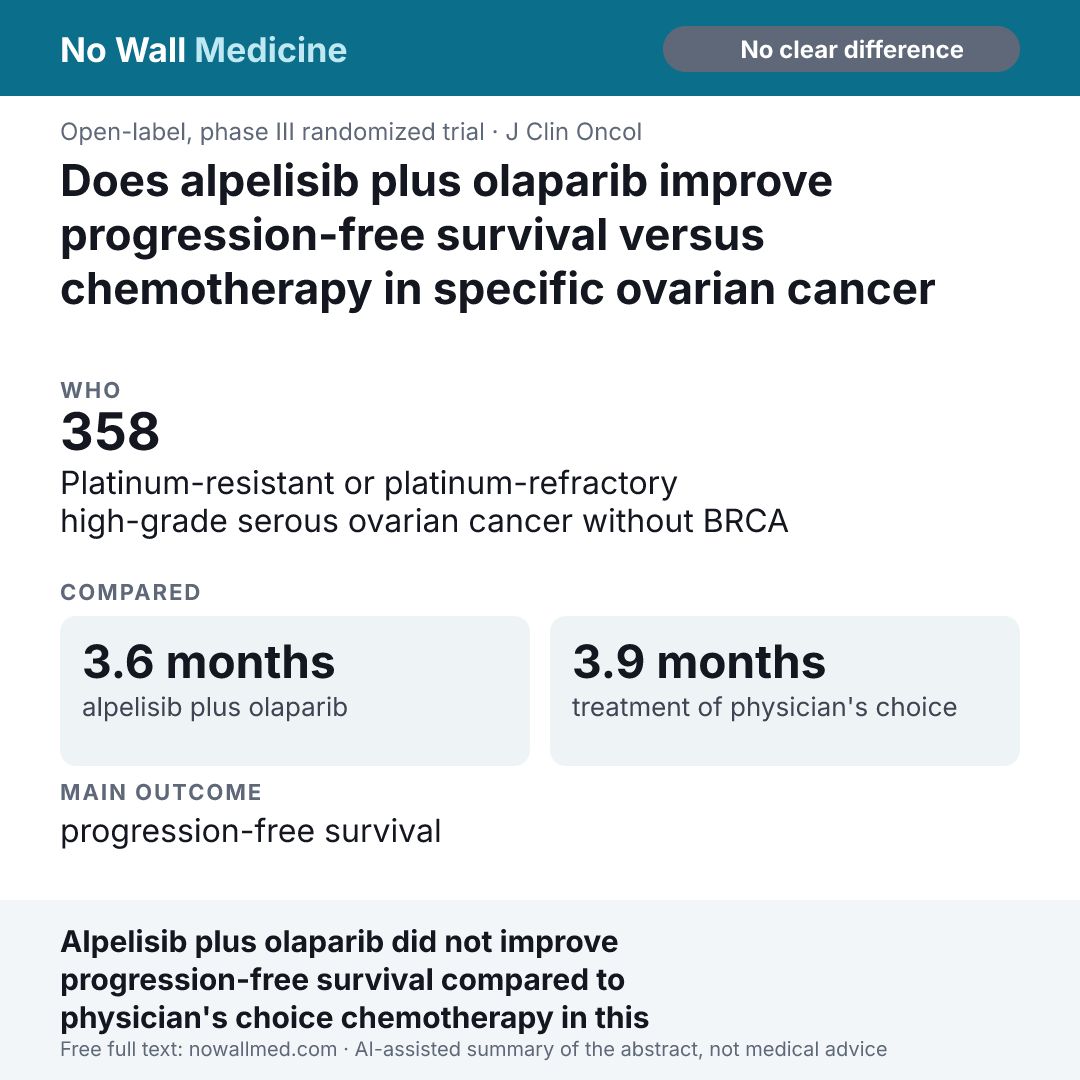
Primary Analysis of EPIK-O/ENGOT-ov61: Alpelisib Plus Olaparib Versus Chemotherapy in Platinum-Resistant or Platinum-Refractory High-Grade Serous Ovarian Cancer Without BRCA Mutation
Open-label, phase III randomized trialNo clear difference
Does alpelisib plus olaparib improve progression-free survival versus chemotherapy in specific ovarian cancer patients?
Who
358
Platinum-resistant or platinum-refractory high-grade serous ovarian cancer without BRCA mutation
Compared
3.6 monthsalpelisib plus olaparib
3.9 monthstreatment of physician's choice
Main outcome
progression-free survival
Result: hazard ratio 1.14 (95% CI 0.88 to 1.48)
Bottom line: Alpelisib plus olaparib did not improve progression-free survival compared to physician's choice chemotherapy in this patient population.
J Clin Oncol · 2025-07-23 · Save PNG
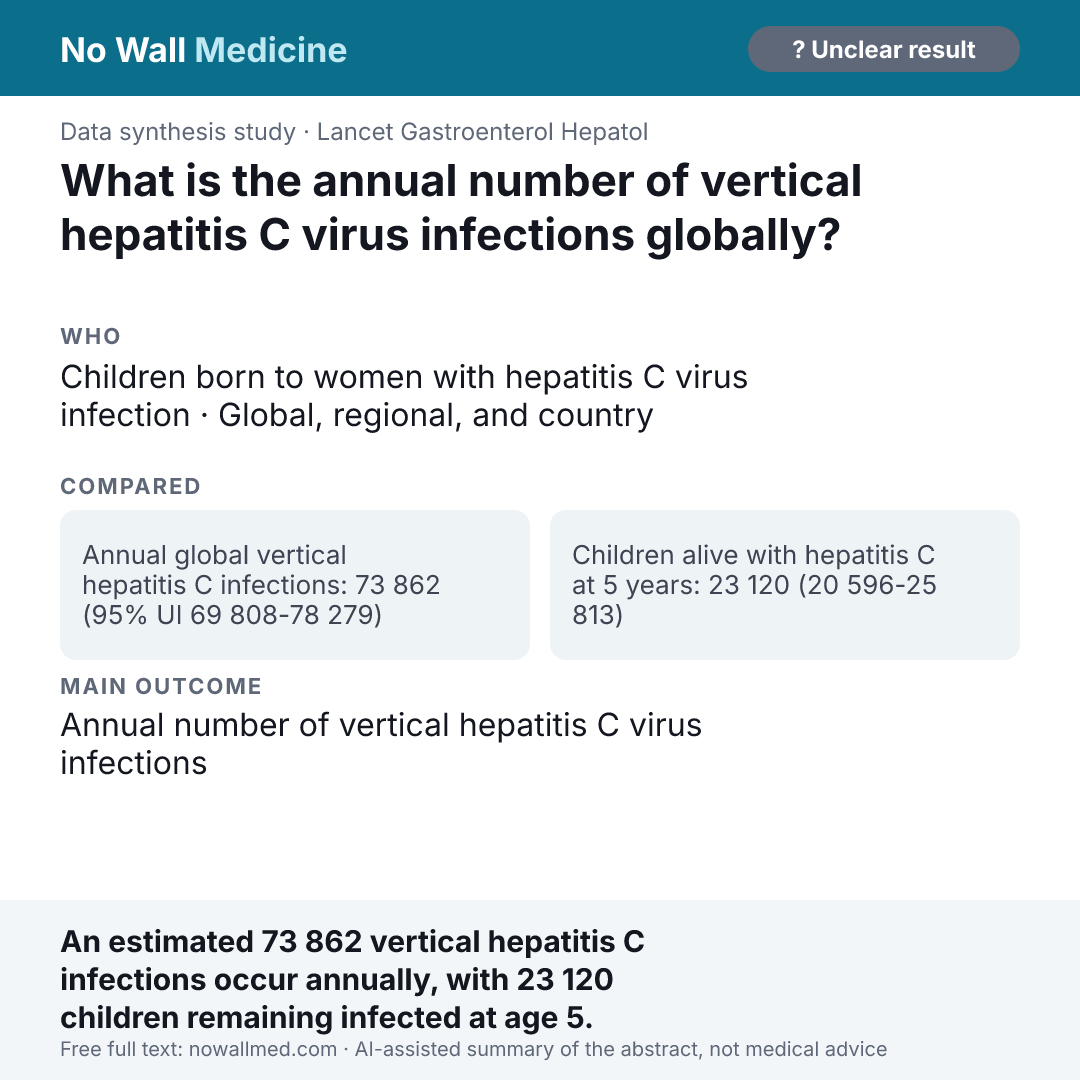
Estimating the annual number of hepatitis C virus infections through vertical transmission at country, regional, and global levels: a data synthesis study
Data synthesis studyUnclear result
What is the annual number of vertical hepatitis C virus infections globally?
Who
Children born to women with hepatitis C virus infection · Global, regional, and country levels
Compared
Annual global vertical hepatitis C infections: 73 862 (95% UI 69 808-78 279)
Children alive with hepatitis C at 5 years: 23 120 (20 596-25 813)
Main outcome
Annual number of vertical hepatitis C virus infections
Bottom line: An estimated 73 862 vertical hepatitis C infections occur annually, with 23 120 children remaining infected at age 5.
Limitation: Data on the safety of hepatitis C treatments in pregnant women are required.
Lancet Gastroenterol Hepatol · 2025-07-23 · Save PNG
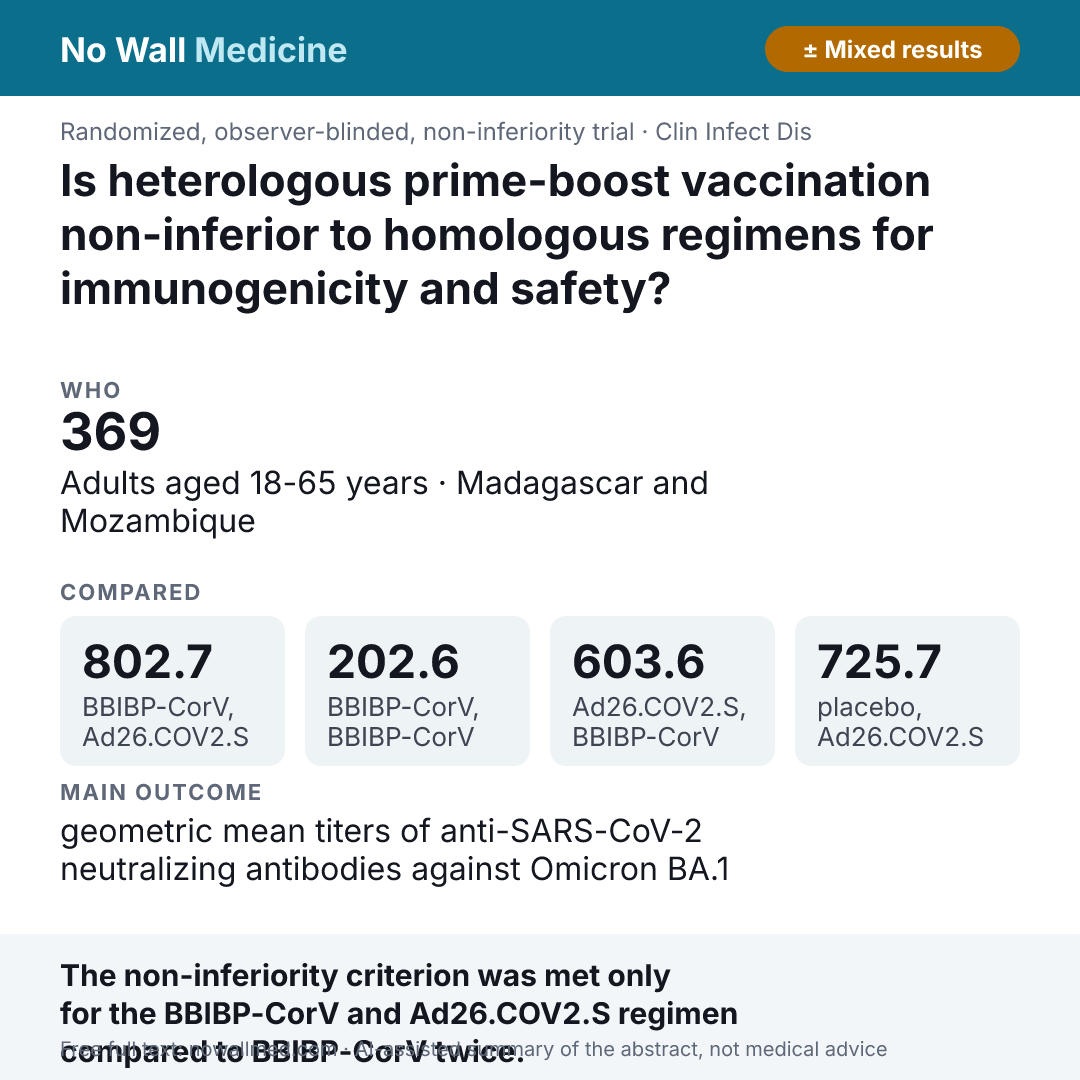
Immunogenicity and Safety of Heterologous Versus Homologous Prime-Boost Regimens With BBIBP-CorV and Ad26.COV2.S COVID-19 Vaccines: A Multicentric, Randomized, Observer-Blinded Non-inferiority Trial in Madagascar and Mozambique
Randomized, observer-blinded, non-inferiority trialMixed results
Is heterologous prime-boost vaccination non-inferior to homologous regimens for immunogenicity and safety?
Who
369
Adults aged 18-65 years · Madagascar and Mozambique
Compared
802.7BBIBP-CorV, Ad26.COV2.S (95% CI: 635.3-1014.3)
202.6BBIBP-CorV, BBIBP-CorV (95% CI: 150.8-272.1)
603.6Ad26.COV2.S, BBIBP-CorV (95% CI: 446.1-816.7)
725.7placebo, Ad26.COV2.S (95% CI: 539.5-976.1)
Main outcome
geometric mean titers of anti-SARS-CoV-2 neutralizing antibodies against Omicron BA.1
Result: adjusted GMR 4.2 (2-sided 95% CI: 2.9-5.9) for A1 versus A2
Bottom line: The non-inferiority criterion was met only for the BBIBP-CorV and Ad26.COV2.S regimen compared to BBIBP-CorV twice.
Clin Infect Dis · 2025-07-23 · Save PNG
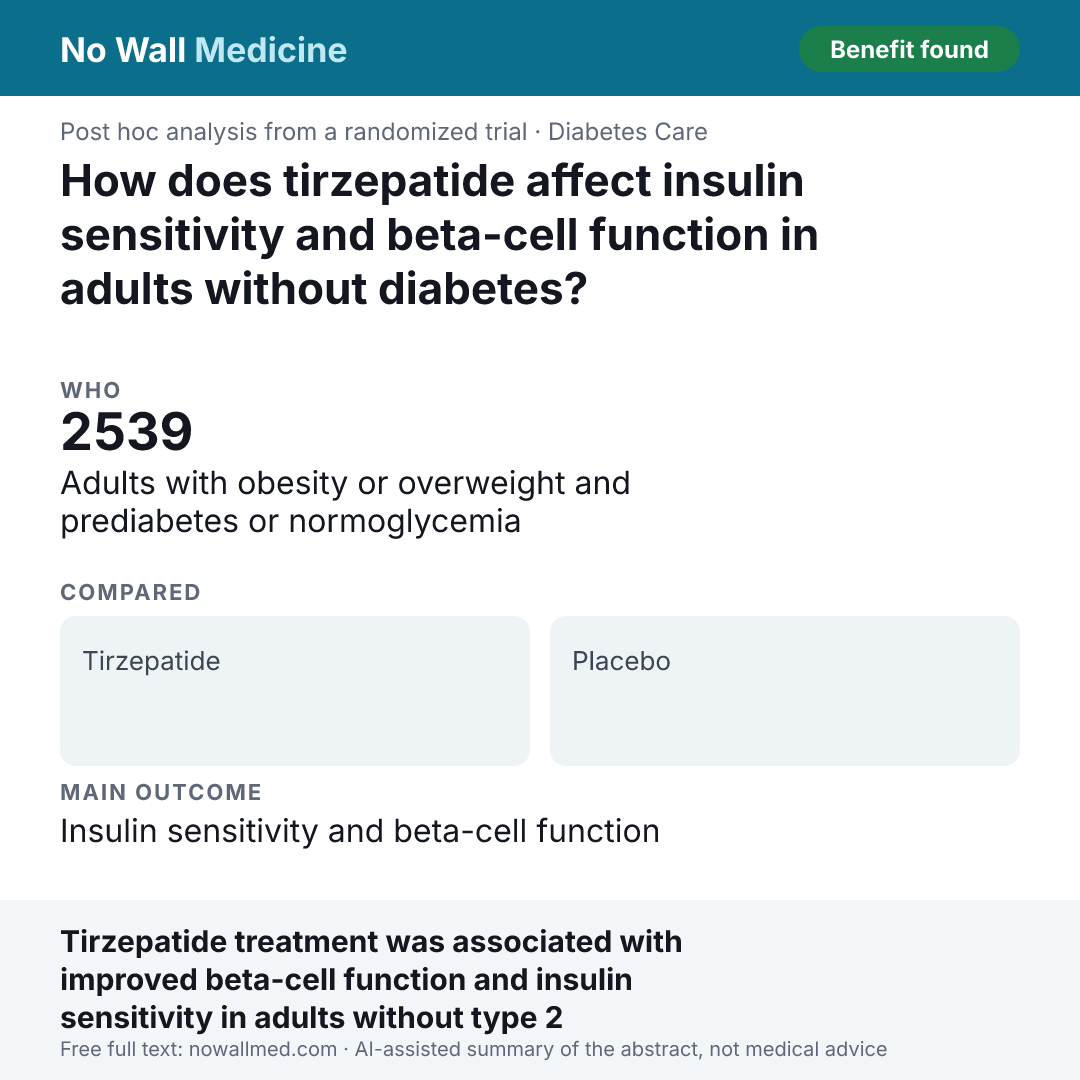
Tirzepatide Treatment and Associated Changes in β-Cell Function and Insulin Sensitivity in People With Obesity or Overweight With Prediabetes or Normoglycemia: A Post Hoc Analysis From the SURMOUNT-1 Trial
Post hoc analysis from a randomized trialBenefit found
How does tirzepatide affect insulin sensitivity and beta-cell function in adults without diabetes?
Who
2539
Adults with obesity or overweight and prediabetes or normoglycemia
Compared
Tirzepatide
Placebo
Main outcome
Insulin sensitivity and beta-cell function
Bottom line: Tirzepatide treatment was associated with improved beta-cell function and insulin sensitivity in adults without type 2 diabetes.
Diabetes Care · 2025-07-23 · Save PNG
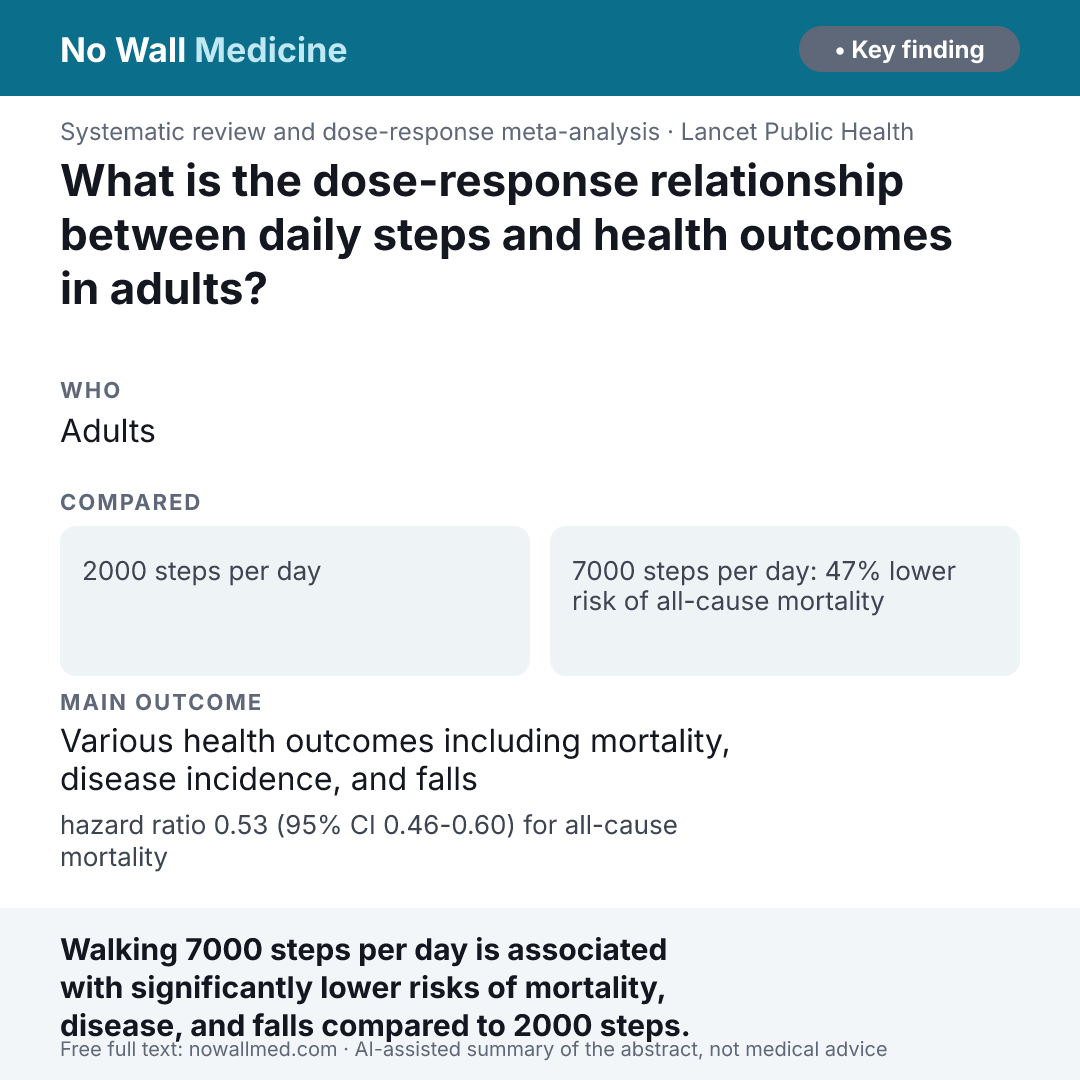
Daily steps and health outcomes in adults: a systematic review and dose-response meta-analysis
Systematic review and dose-response meta-analysisKey finding
What is the dose-response relationship between daily steps and health outcomes in adults?
Who
Adults
Compared
2000 steps per day
7000 steps per day: 47% lower risk of all-cause mortality
Main outcome
Various health outcomes including mortality, disease incidence, and falls
Result: hazard ratio 0.53 (95% CI 0.46-0.60) for all-cause mortality
Bottom line: Walking 7000 steps per day is associated with significantly lower risks of mortality, disease, and falls compared to 2000 steps.
Limitation: Small number of studies for most outcomes, lack of age-specific analysis, and potential residual confounding.
Funded by: National Health and Medical Research Council, New South Wales Health, and Ian Potter Foundation
Lancet Public Health · 2025-07-23 · Save PNG
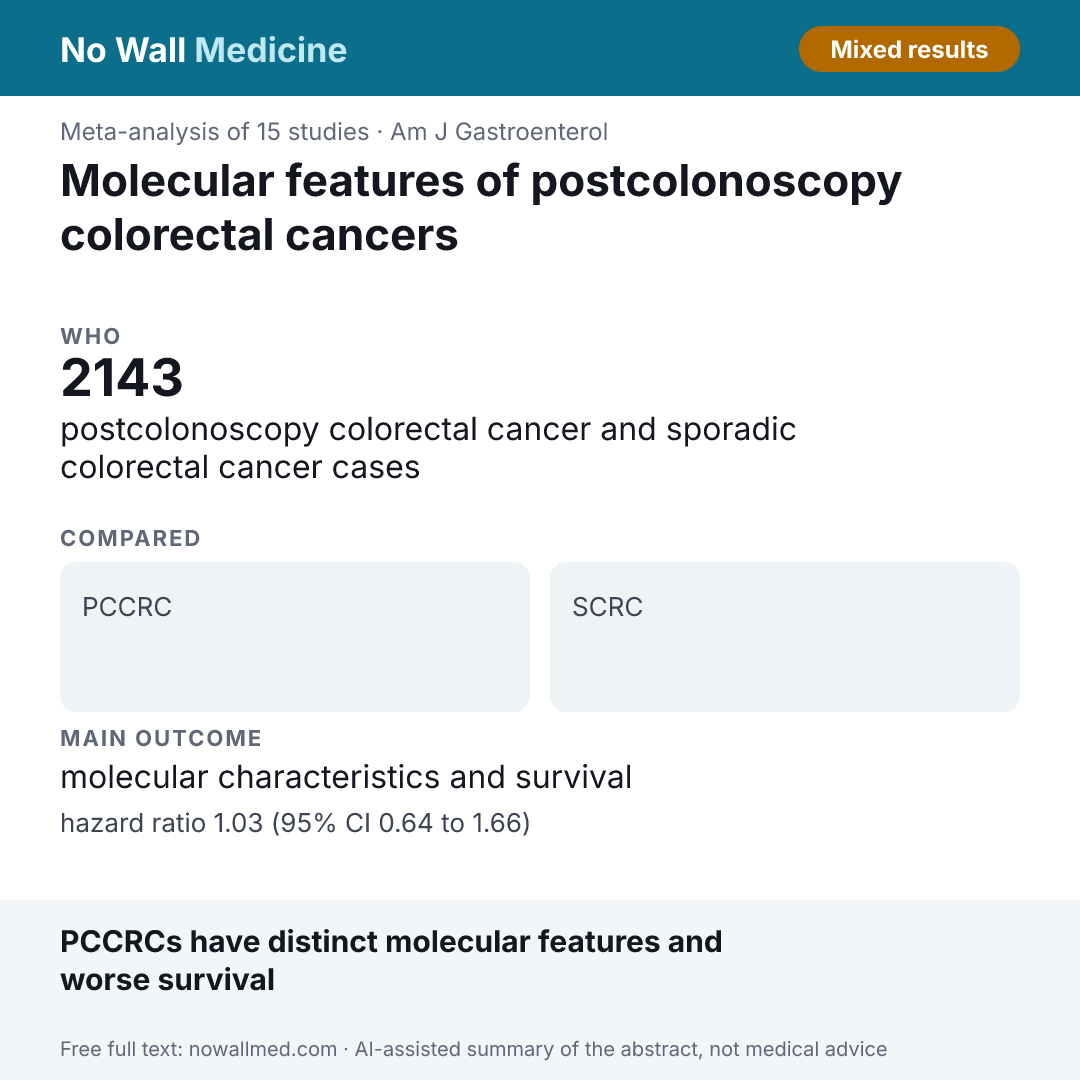
Predominant Serrated Molecular Signature in Postcolonoscopy Colorectal Cancer: A Systematic Review and Meta-Analysis
Meta-analysis of 15 studiesMixed results
Molecular features of postcolonoscopy colorectal cancers
Who
2143
postcolonoscopy colorectal cancer and sporadic colorectal cancer cases
Compared
PCCRC
SCRC
Main outcome
molecular characteristics and survival
Result: hazard ratio 1.03 (95% CI 0.64 to 1.66)
Bottom line: PCCRCs have distinct molecular features and worse survival
Am J Gastroenterol · 2025-07-23 · Save PNG
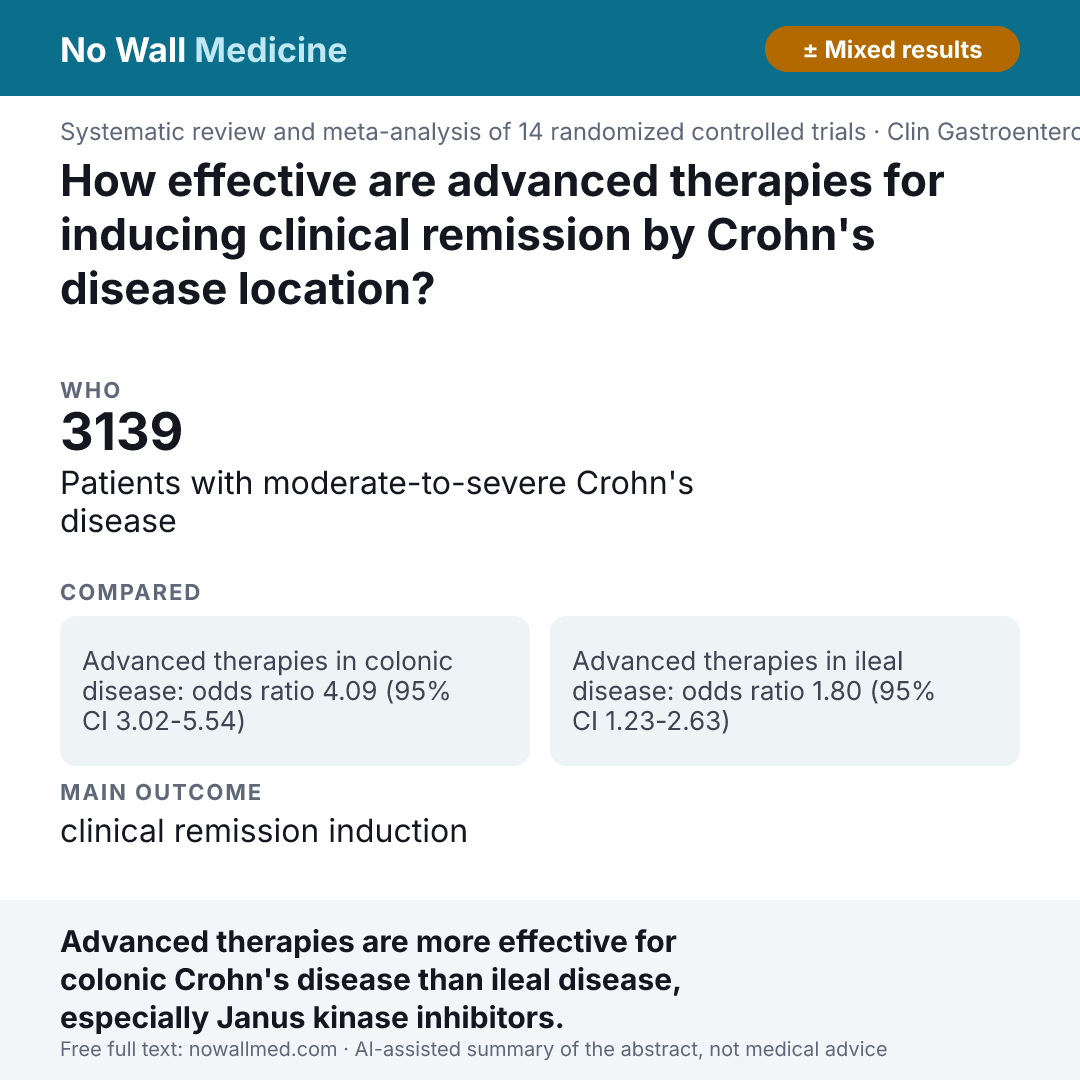
Efficacy of Advanced Therapies in Achieving Remission by Disease Location in Crohn's Disease: A Systematic Review and Meta-analysis
Systematic review and meta-analysis of 14 randomized controlled trialsMixed results
How effective are advanced therapies for inducing clinical remission by Crohn's disease location?
Who
3139
Patients with moderate-to-severe Crohn's disease
Compared
Advanced therapies in colonic disease: odds ratio 4.09 (95% CI 3.02-5.54)
Advanced therapies in ileal disease: odds ratio 1.80 (95% CI 1.23-2.63)
Main outcome
clinical remission induction
Result: odds ratio 4.09 (95% CI 3.02-5.54) vs 1.80 (95% CI 1.23-2.63)
Bottom line: Advanced therapies are more effective for colonic Crohn's disease than ileal disease, especially Janus kinase inhibitors.
Limitation: All analyses had minimal to moderate heterogeneity.
Clin Gastroenterol Hepatol · 2025-07-23 · Save PNG
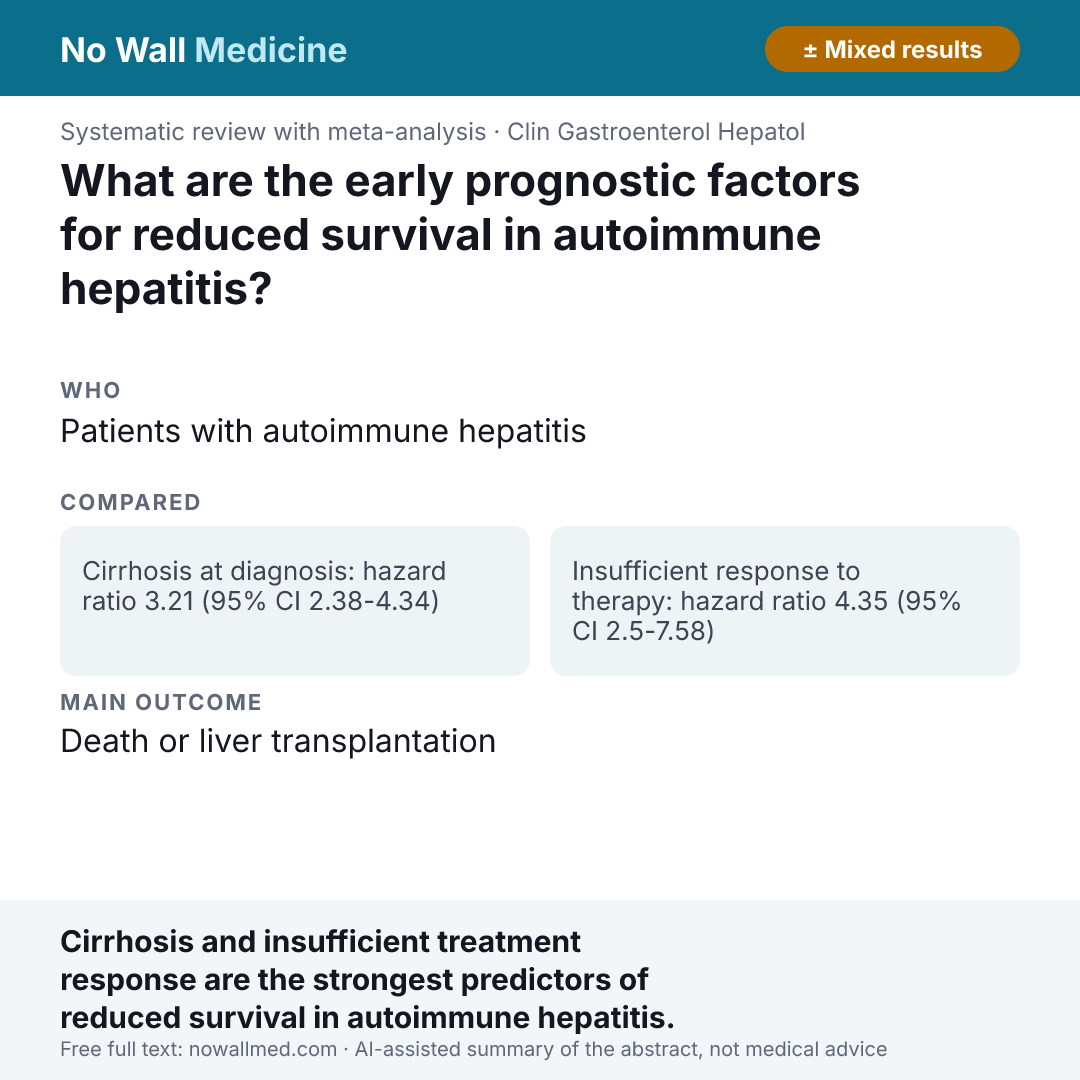
Early Prognostic Factors for Reduced Survival in Autoimmune Hepatitis: A Systematic Review With Meta-Analysis
Systematic review with meta-analysisMixed results
What are the early prognostic factors for reduced survival in autoimmune hepatitis?
Who
Patients with autoimmune hepatitis
Compared
Cirrhosis at diagnosis: hazard ratio 3.21 (95% CI 2.38-4.34)
Insufficient response to therapy: hazard ratio 4.35 (95% CI 2.5-7.58)
Main outcome
Death or liver transplantation
Bottom line: Cirrhosis and insufficient treatment response are the strongest predictors of reduced survival in autoimmune hepatitis.
Clin Gastroenterol Hepatol · 2025-07-23 · Save PNG