Visual abstracts
New randomized trials and meta-analyses from leading journals at a glance: who was studied, what was compared, and what was found. Every paper is free to read in full.
All specialtiesCardiology 4757Oncology 4058Gastroenterology & Hepatology 1904Infectious Disease 3749Neurology 1877Psychiatry & Mental Health 2226Pulmonology 2043Critical Care 1325Endocrinology & Diabetes 2532Pediatrics 2891Surgery 2486Orthopedics & Sports Medicine 915Neurosurgery 527Cardiothoracic & Vascular Surgery 658Plastic & Reconstructive Surgery 581Nephrology 1103Rheumatology 810Hematology 1089Dermatology 615Ophthalmology 534Obstetrics & Gynecology 1640Public & Global Health 1033Radiology & Imaging 634Anesthesiology 957Urology 745ENT (Otolaryngology) 491Emergency Medicine 478Allergy & Immunology 309Geriatrics 969Family Medicine & Primary Care 537Medical Genetics & Genomics 651Pathology & Laboratory Medicine 156Physical Medicine & Rehabilitation 740Palliative Care 422Nutrition 1549Digital Health & AI 2178General Medicine 317
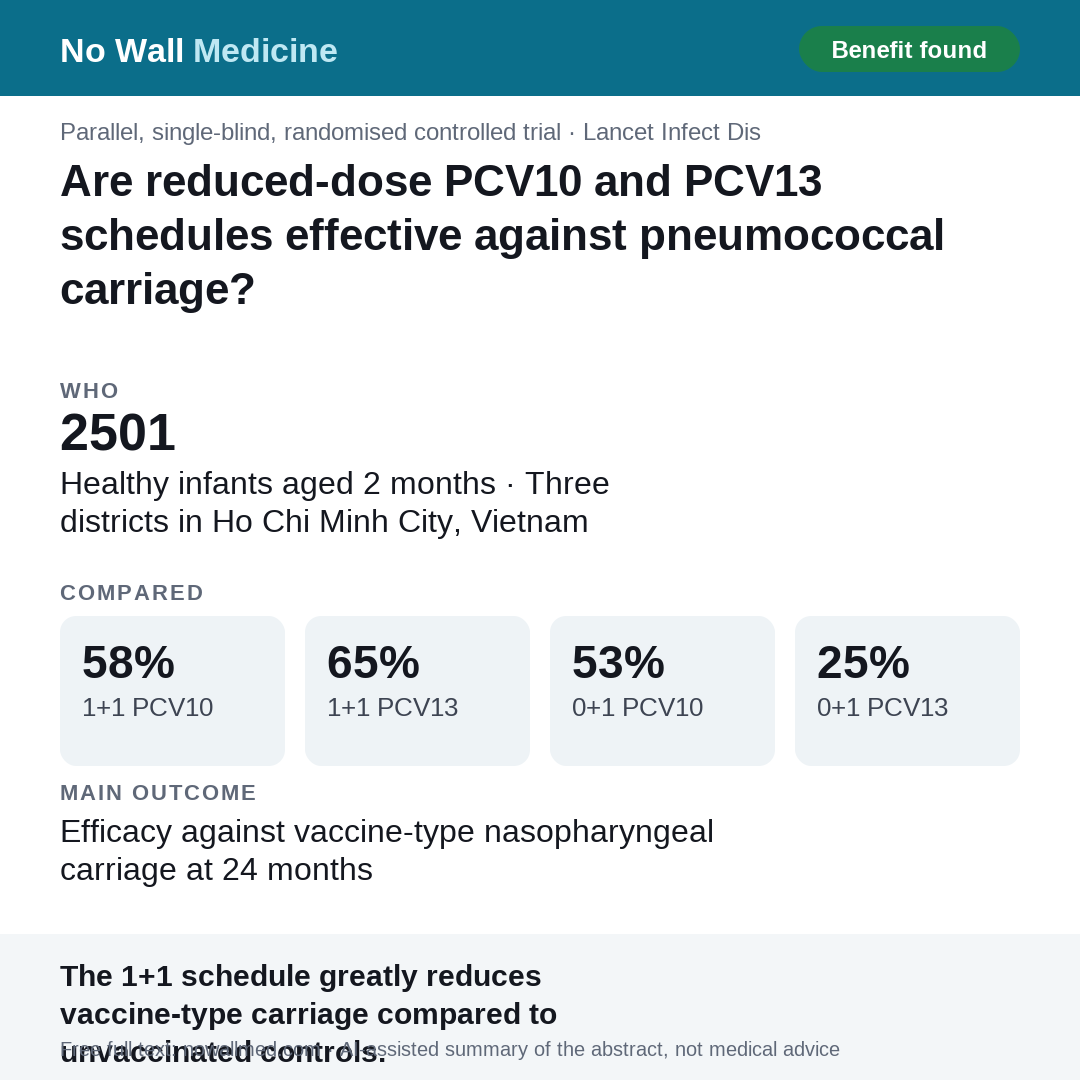
Efficacy against pneumococcal carriage and the immunogenicity of reduced-dose (0 + 1 and 1 + 1) PCV10 and PCV13 schedules in Ho Chi Minh City, Viet Nam: a parallel, single-blind, randomised controlled trial
Parallel, single-blind, randomised controlled trialBenefit found
Are reduced-dose PCV10 and PCV13 schedules effective against pneumococcal carriage?
Who
2501
Healthy infants aged 2 months · Three districts in Ho Chi Minh City, Vietnam
Compared
58%1+1 PCV10 (95% CI 25 to 77)
65%1+1 PCV13 (42 to 79)
53%0+1 PCV10 (17 to 73)
25%0+1 PCV13 (-7 to 48)
Main outcome
Efficacy against vaccine-type nasopharyngeal carriage at 24 months
Bottom line: The 1+1 schedule greatly reduces vaccine-type carriage compared to unvaccinated controls.
Funded by: Bill & Melinda Gates Foundation
Lancet Infect Dis · 2023-04-14Download image
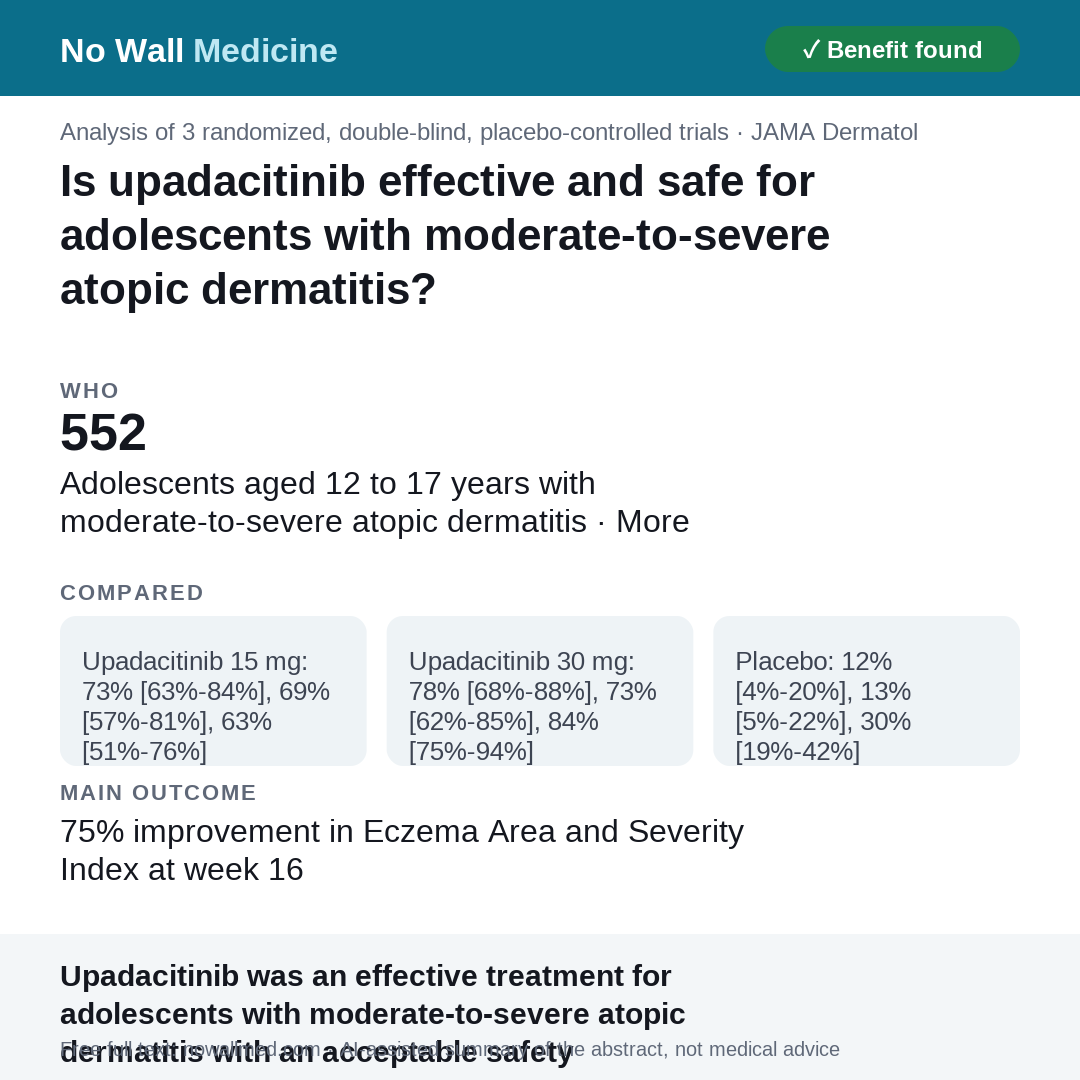
Efficacy and Safety of Upadacitinib Treatment in Adolescents With Moderate-to-Severe Atopic Dermatitis: Analysis of the Measure Up 1, Measure Up 2, and AD Up Randomized Clinical Trials
Analysis of 3 randomized, double-blind, placebo-controlled trialsBenefit found
Is upadacitinib effective and safe for adolescents with moderate-to-severe atopic dermatitis?
Who
552
Adolescents aged 12 to 17 years with moderate-to-severe atopic dermatitis · More than 20 countries across multiple continents
Compared
Upadacitinib 15 mg: 73% [63%-84%], 69% [57%-81%], 63% [51%-76%]
Upadacitinib 30 mg: 78% [68%-88%], 73% [62%-85%], 84% [75%-94%]
Placebo: 12% [4%-20%], 13% [5%-22%], 30% [19%-42%]
Main outcome
75% improvement in Eczema Area and Severity Index at week 16
Bottom line: Upadacitinib was an effective treatment for adolescents with moderate-to-severe atopic dermatitis with an acceptable safety profile.
JAMA Dermatol · 2023-04-13Download image
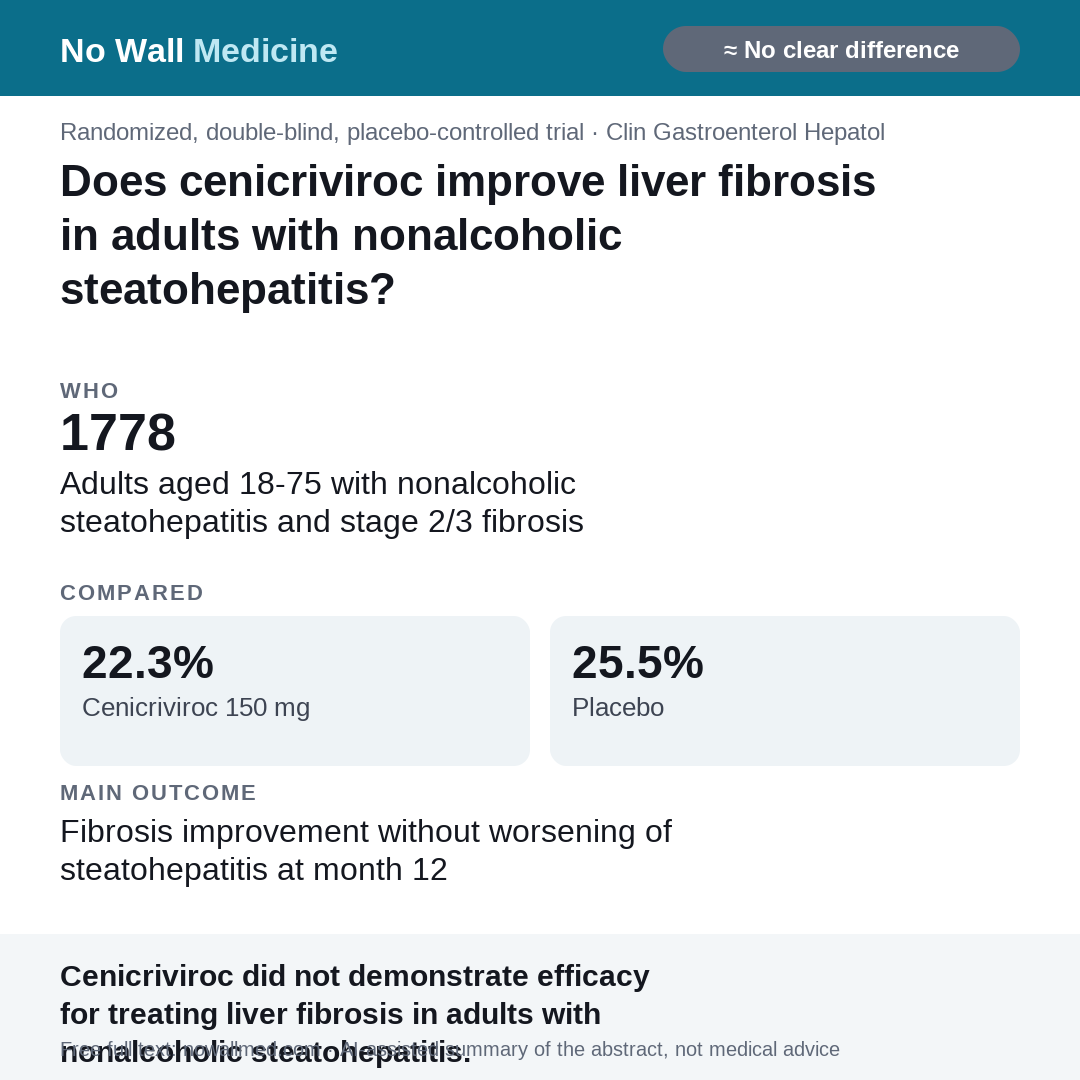
Cenicriviroc Lacked Efficacy to Treat Liver Fibrosis in Nonalcoholic Steatohepatitis: AURORA Phase III Randomized Study
Randomized, double-blind, placebo-controlled trialNo clear difference
Does cenicriviroc improve liver fibrosis in adults with nonalcoholic steatohepatitis?
Who
1778
Adults aged 18-75 with nonalcoholic steatohepatitis and stage 2/3 fibrosis
Compared
22.3%Cenicriviroc 150 mg
25.5%Placebo
Main outcome
Fibrosis improvement without worsening of steatohepatitis at month 12
Result: odds ratio 0.84 (95% confidence interval 0.63-1.10)
Bottom line: Cenicriviroc did not demonstrate efficacy for treating liver fibrosis in adults with nonalcoholic steatohepatitis.
Clin Gastroenterol Hepatol · 2023-04-13Download image
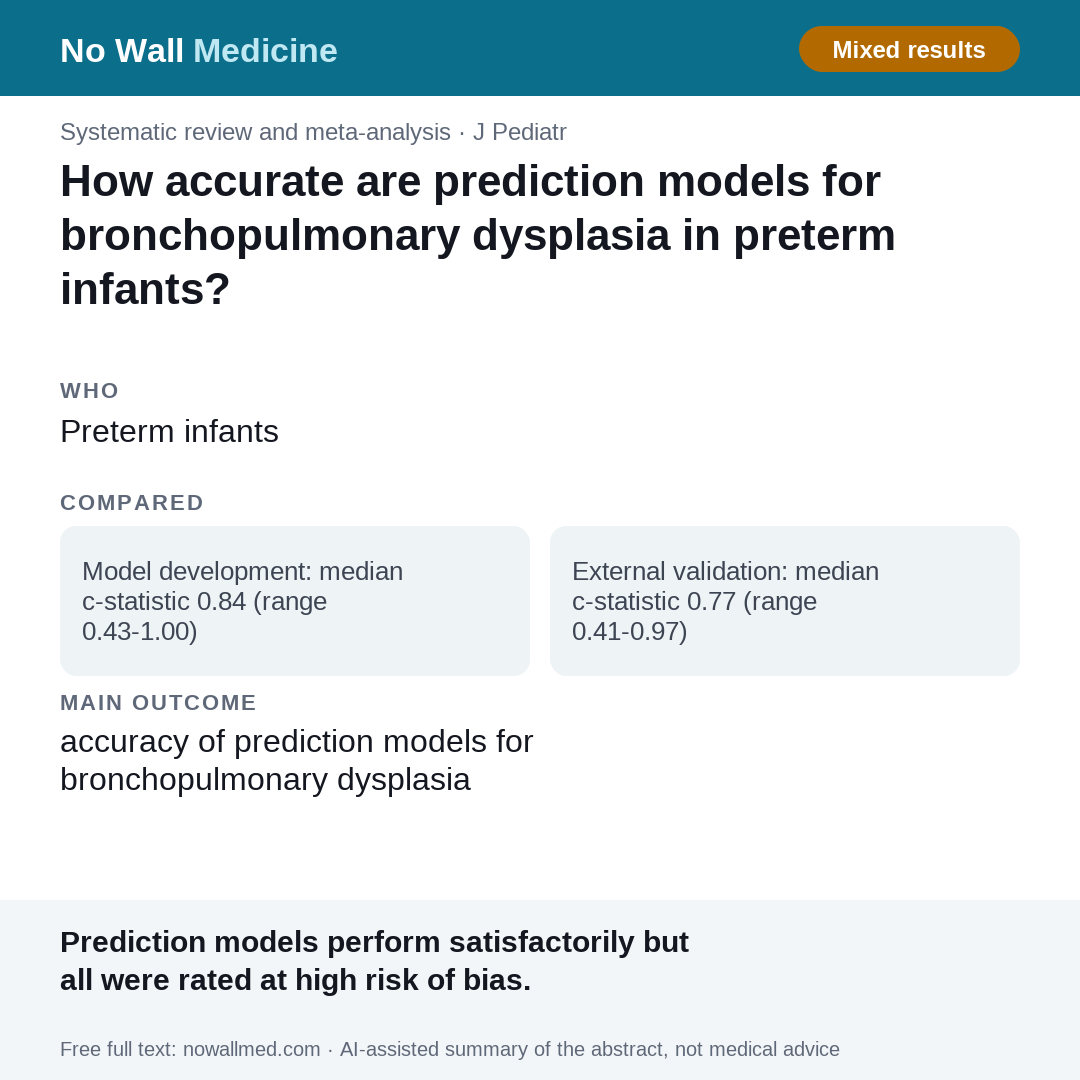
Prediction Models for Bronchopulmonary Dysplasia in Preterm Infants: A Systematic Review and Meta-Analysis
Systematic review and meta-analysisMixed results
How accurate are prediction models for bronchopulmonary dysplasia in preterm infants?
Who
Preterm infants
Compared
Model development: median c-statistic 0.84 (range 0.43-1.00)
External validation: median c-statistic 0.77 (range 0.41-0.97)
Main outcome
accuracy of prediction models for bronchopulmonary dysplasia
Bottom line: Prediction models perform satisfactorily but all were rated at high risk of bias.
Limitation: All models were rated at high risk of bias due to analysis limitations.
J Pediatr · 2023-04-13Download image
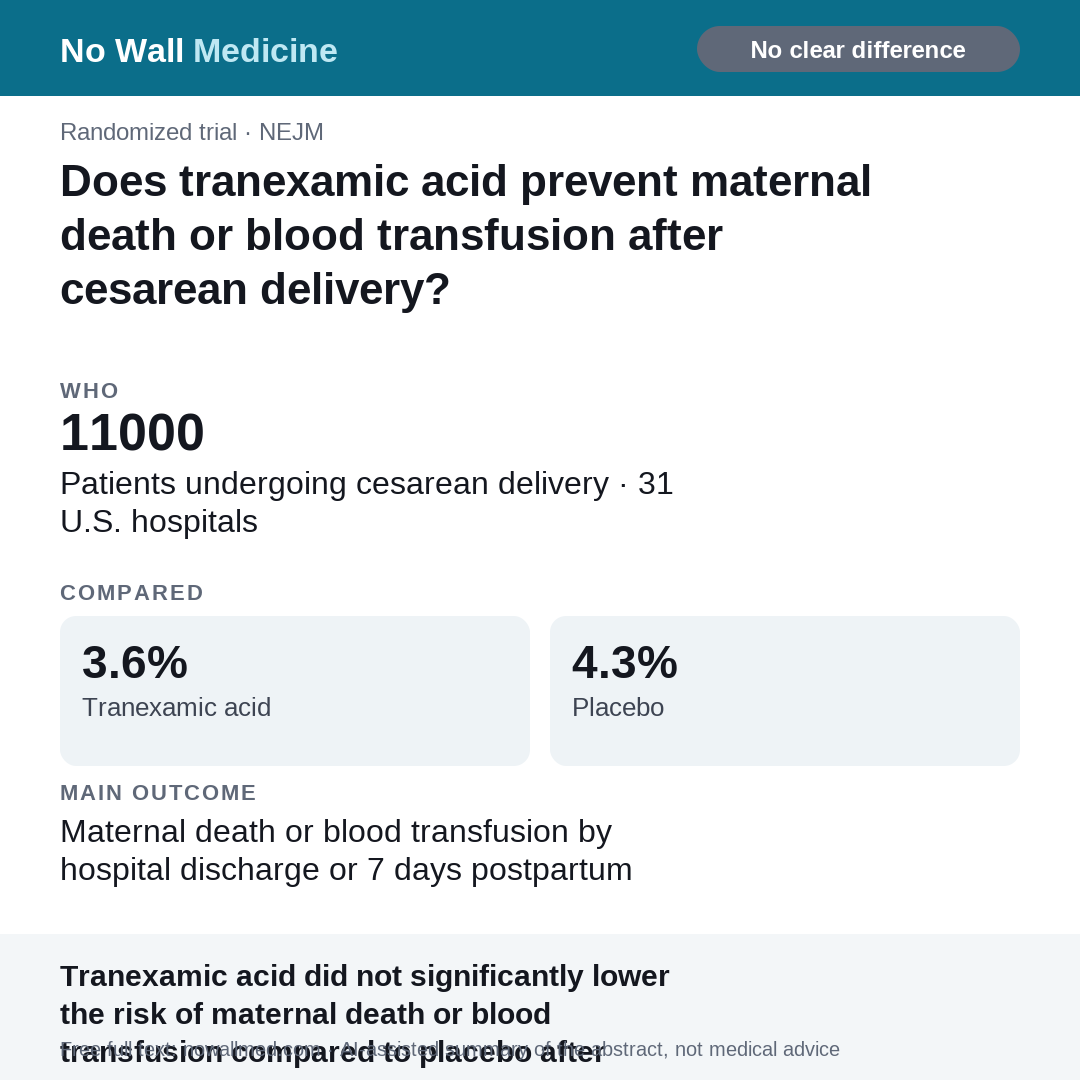
Tranexamic Acid to Prevent Obstetrical Hemorrhage after Cesarean Delivery
Randomized trialNo clear difference
Does tranexamic acid prevent maternal death or blood transfusion after cesarean delivery?
Who
11000
Patients undergoing cesarean delivery · 31 U.S. hospitals
Compared
3.6%Tranexamic acid (201/5525)
4.3%Placebo (233/5470)
Main outcome
Maternal death or blood transfusion by hospital discharge or 7 days postpartum
Result: adjusted relative risk 0.89 (95.26% CI 0.74 to 1.07)
Bottom line: Tranexamic acid did not significantly lower the risk of maternal death or blood transfusion compared to placebo after cesarean delivery.
Funded by: Eunice Kennedy Shriver National Institute of Child Health and Human Development
NEJM · 2023-04-12Download image
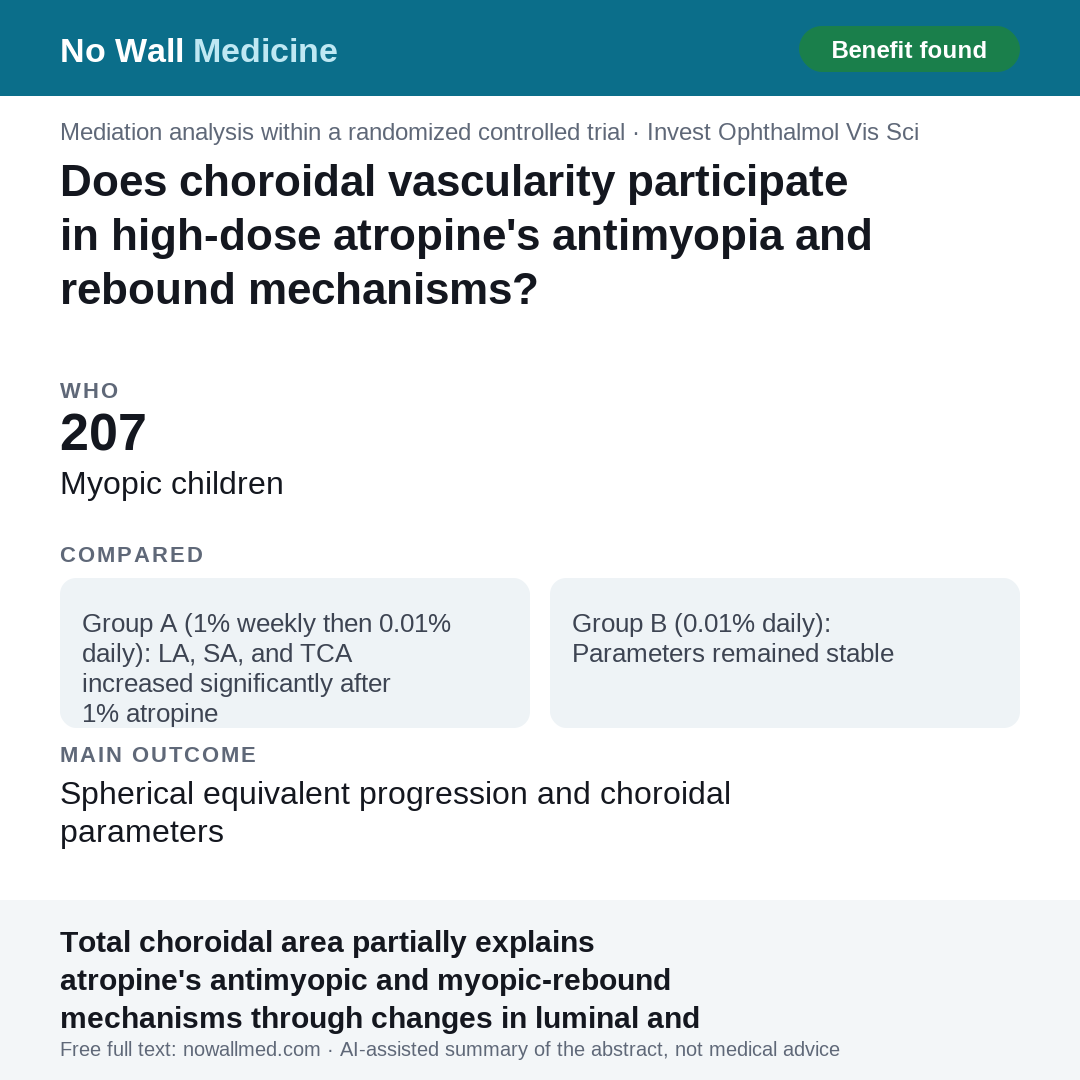
Potential Choroidal Mechanisms Underlying Atropine's Antimyopic and Rebound Effects: A Mediation Analysis in a Randomized Clinical Trial
Mediation analysis within a randomized controlled trialEarly signal
Does choroidal vascularity participate in high-dose atropine's antimyopia and rebound mechanisms?
Who
207
Myopic children
Compared
Group A (1% weekly then 0.01% daily): LA, SA, and TCA increased significantly after 1% atropine
Group B (0.01% daily): Parameters remained stable
Main outcome
Spherical equivalent progression and choroidal parameters
Bottom line: Total choroidal area partially explains atropine's antimyopic and myopic-rebound mechanisms through changes in luminal and stromal areas.
Invest Ophthalmol Vis Sci · 2023-04-12Download image
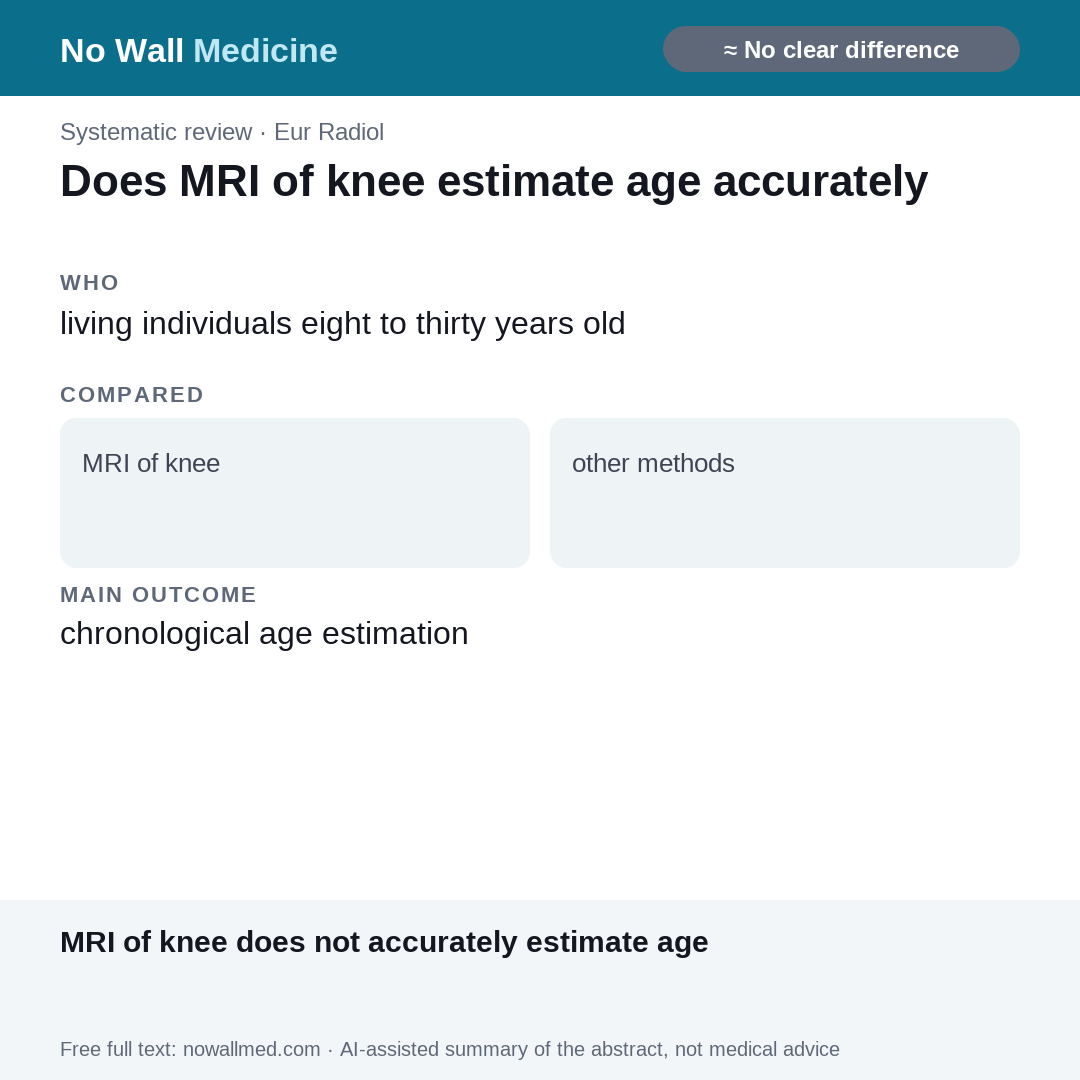
Magnetic resonance imaging of the knee for chronological age estimation-a systematic review
Systematic reviewNo clear difference
Does MRI of knee estimate age accurately
Who
living individuals eight to thirty years old
Compared
MRI of knee
other methods
Main outcome
chronological age estimation
Bottom line: MRI of knee does not accurately estimate age
Eur Radiol · 2023-04-12Download image
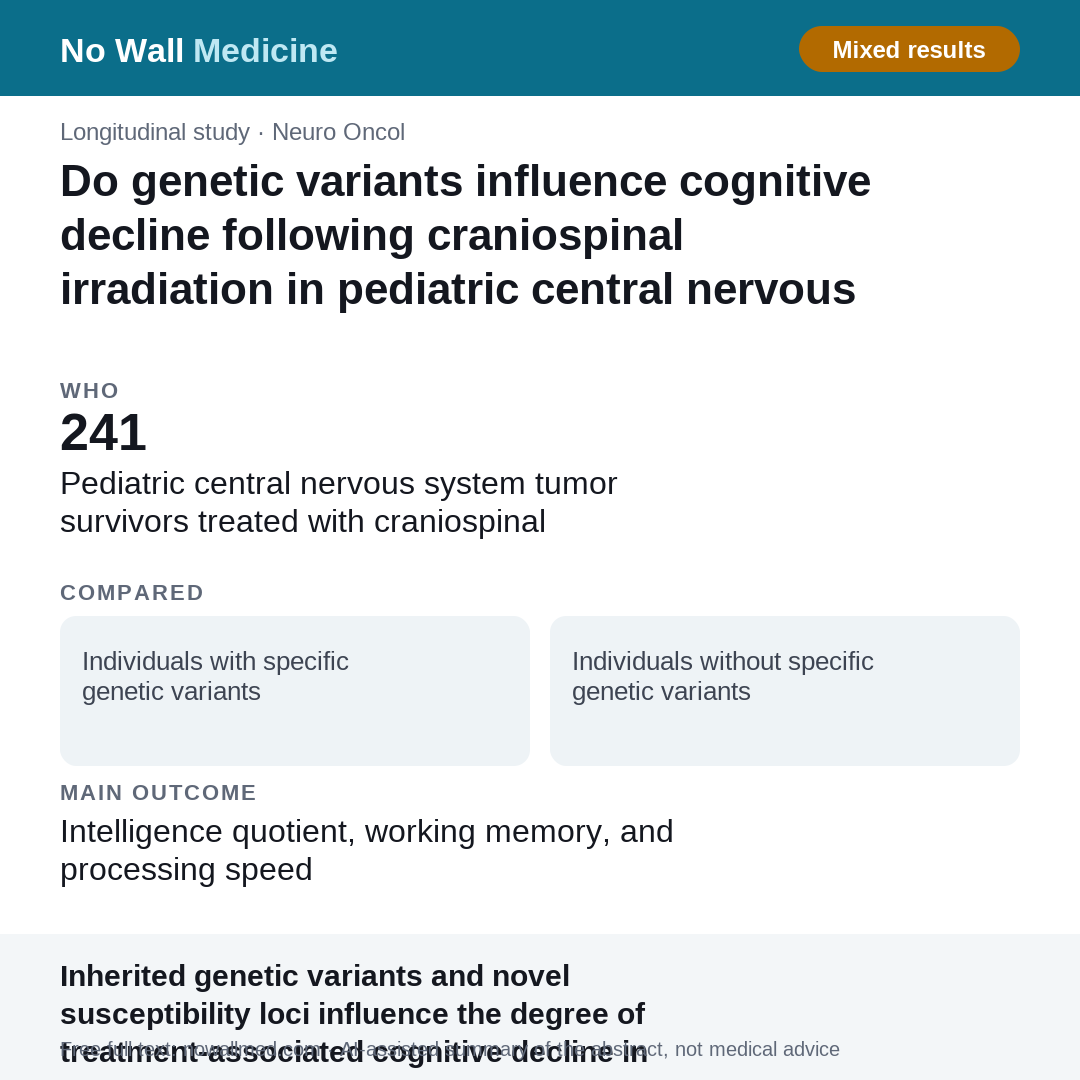
Genetic susceptibility to cognitive decline following craniospinal irradiation for pediatric central nervous system tumors
Longitudinal studyMixed results
Do genetic variants influence cognitive decline following craniospinal irradiation in pediatric central nervous system tumor survivors?
Who
241
Pediatric central nervous system tumor survivors treated with craniospinal irradiation
Compared
Individuals with specific genetic variants
Individuals without specific genetic variants
Main outcome
Intelligence quotient, working memory, and processing speed
Bottom line: Inherited genetic variants and novel susceptibility loci influence the degree of treatment-associated cognitive decline in pediatric survivors.
Neuro Oncol · 2023-04-12Download image
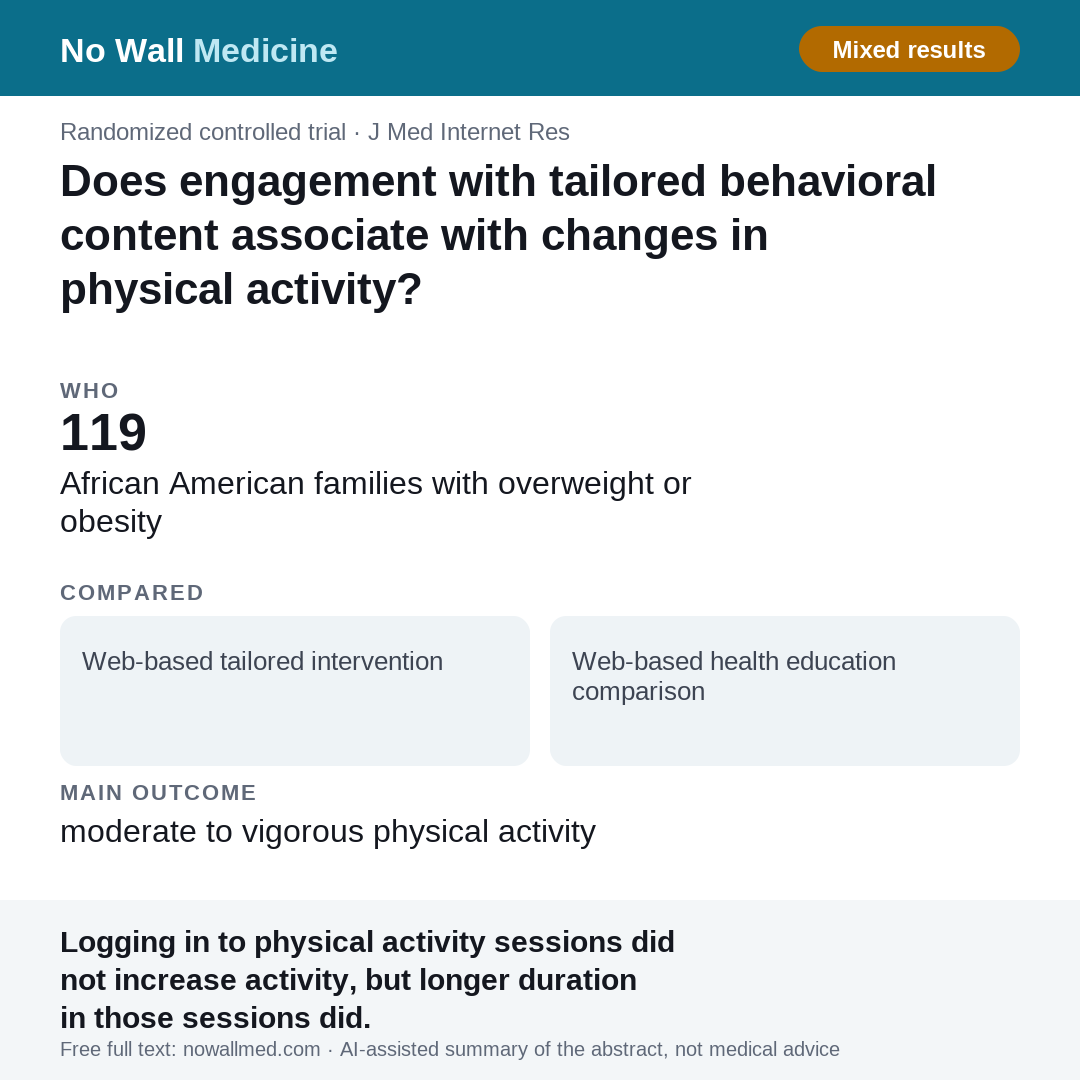
Engagement With Tailored Physical Activity Content: Secondary Findings From the Families Improving Together for Weight Loss Randomized Controlled Trial
Randomized controlled trialMixed results
Does engagement with tailored behavioral content associate with changes in physical activity?
Who
119
African American families with overweight or obesity
Compared
Web-based tailored intervention
Web-based health education comparison
Main outcome
moderate to vigorous physical activity
Result: B=-12.561, 95% CI -18.759 to -6.367
Bottom line: Logging in to physical activity sessions did not increase activity, but longer duration in those sessions did.
Limitation: engagement effects did not translate to the adolescents
J Med Internet Res · 2023-04-12Download image
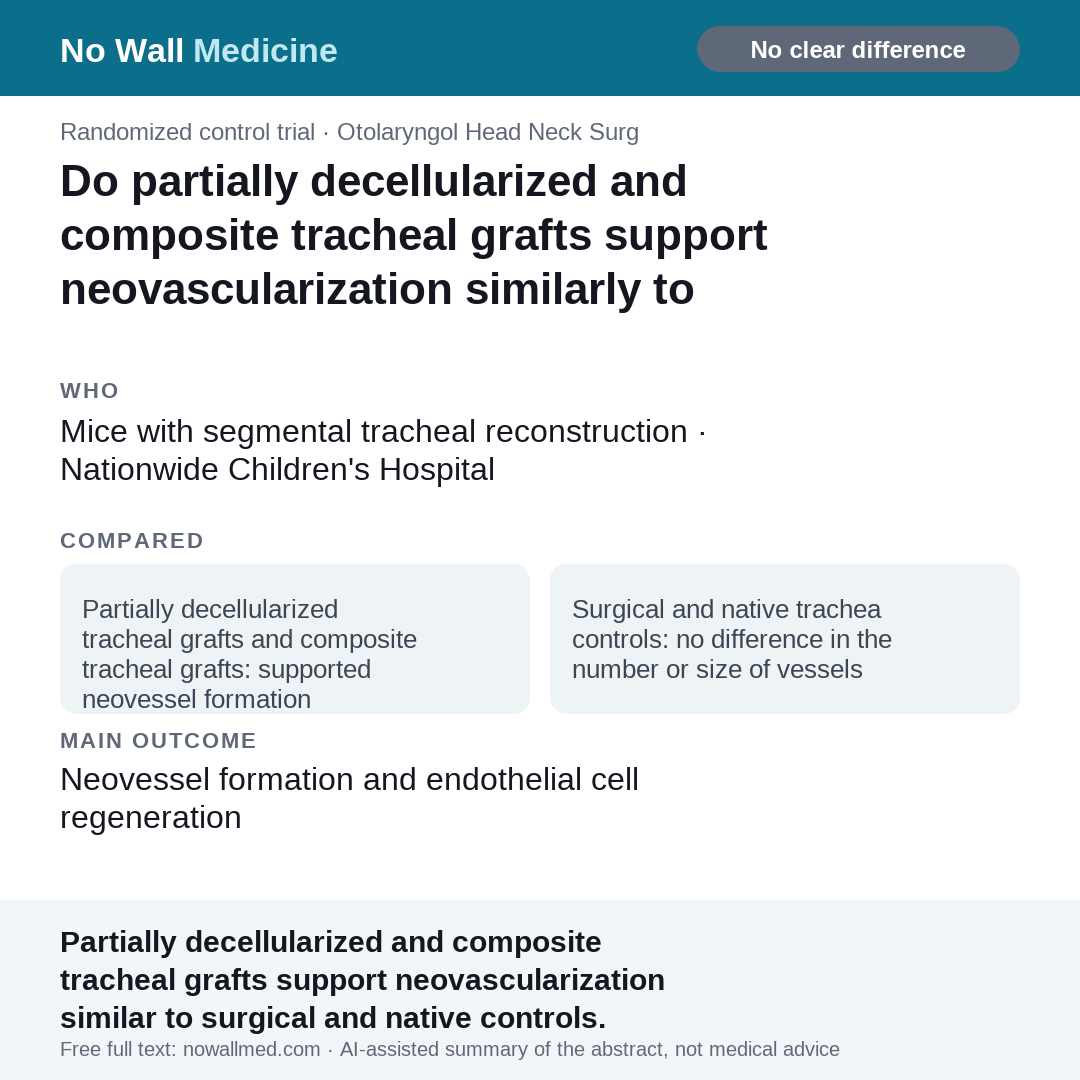
Successful Early Neovascularization in Composite Tracheal Grafts
Randomized control trialNo clear difference
Do partially decellularized and composite tracheal grafts support neovascularization similarly to controls?
Who
Mice with segmental tracheal reconstruction · Nationwide Children's Hospital
Compared
Partially decellularized tracheal grafts and composite tracheal grafts: supported neovessel formation
Surgical and native trachea controls: no difference in the number or size of vessels
Main outcome
Neovessel formation and endothelial cell regeneration
Bottom line: Partially decellularized and composite tracheal grafts support neovascularization similar to surgical and native controls.
Limitation: Future directions to assess function, kinetics, and distribution of graft neovessels are needed.
Otolaryngol Head Neck Surg · 2023-04-10Download image
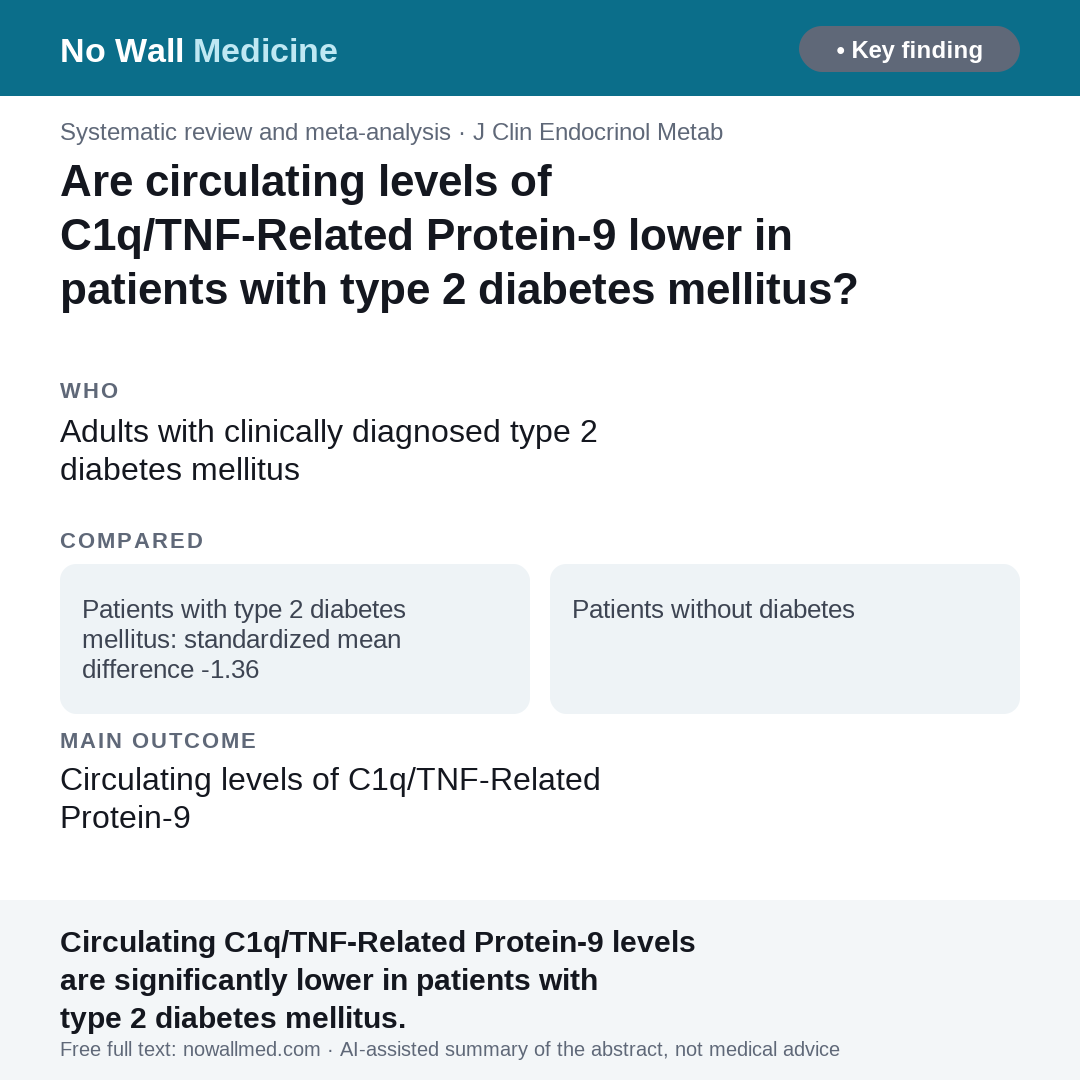
Association Between Circulating Levels of C1q/TNF-Related Protein-9 and Type 2 Diabetes Mellitus: A Systematic Review and Meta-analysis
Systematic review and meta-analysisHarm found
Are circulating levels of C1q/TNF-Related Protein-9 lower in patients with type 2 diabetes mellitus?
Who
Adults with clinically diagnosed type 2 diabetes mellitus
Compared
Patients with type 2 diabetes mellitus: standardized mean difference -1.36
Patients without diabetes
Main outcome
Circulating levels of C1q/TNF-Related Protein-9
Result: standardized mean difference -1.36 (95% CI -1.78 to -0.93)
Bottom line: Circulating C1q/TNF-Related Protein-9 levels are significantly lower in patients with type 2 diabetes mellitus.
Limitation: This was a meta-analysis of most observational studies requiring verification by further studies.
J Clin Endocrinol Metab · 2023-04-09Download image
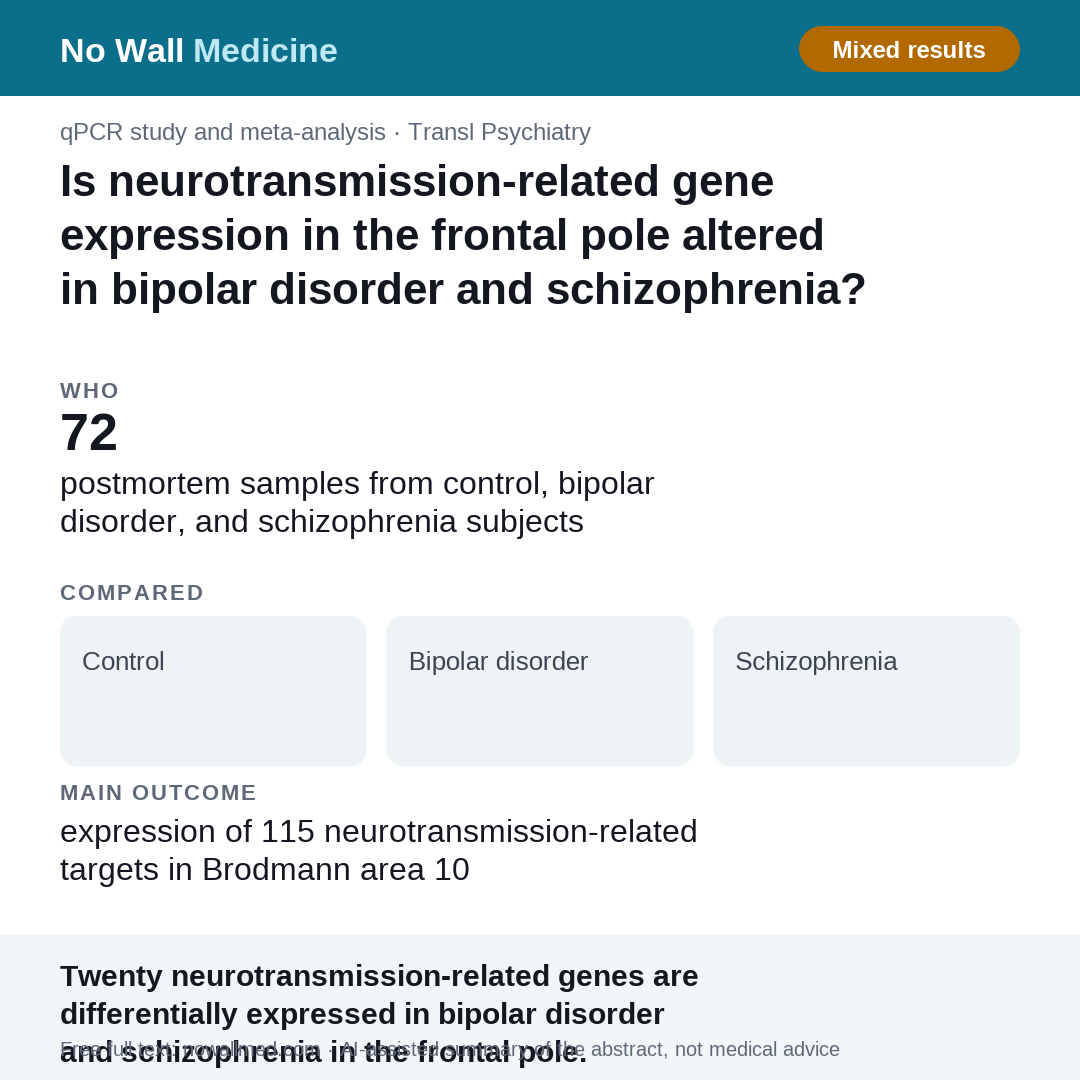
Neurotransmission-related gene expression in the frontal pole is altered in subjects with bipolar disorder and schizophrenia
qPCR study and meta-analysisMixed results
Is neurotransmission-related gene expression in the frontal pole altered in bipolar disorder and schizophrenia?
Who
72
postmortem samples from control, bipolar disorder, and schizophrenia subjects
Compared
Control
Bipolar disorder
Schizophrenia
Main outcome
expression of 115 neurotransmission-related targets in Brodmann area 10
Bottom line: Twenty neurotransmission-related genes are differentially expressed in bipolar disorder and schizophrenia in the frontal pole.
Transl Psychiatry · 2023-04-08Download image
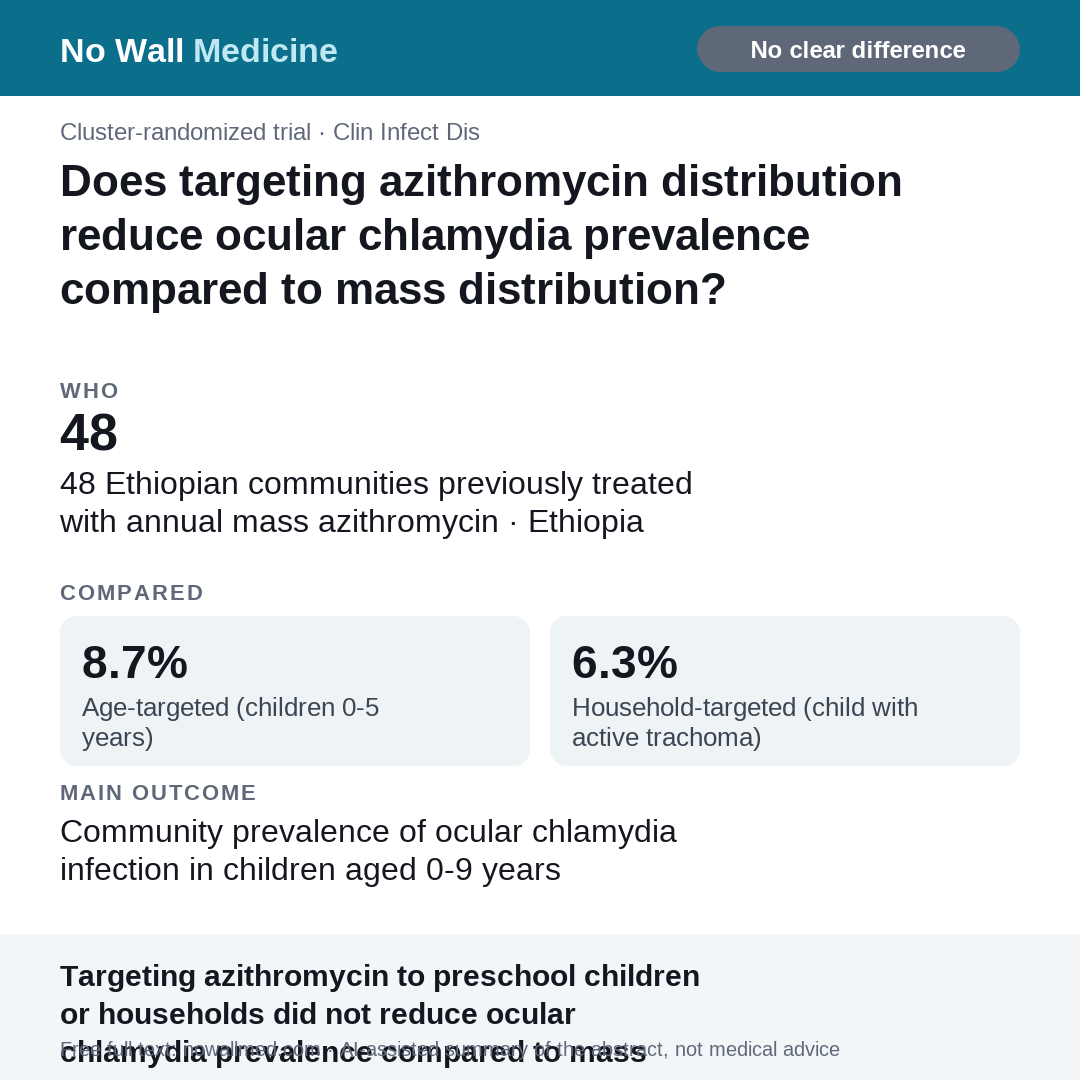
Targeted Mass Azithromycin Distribution for Trachoma: A Community-Randomized Trial (TANA II)
Cluster-randomized trialNo clear difference
Does targeting azithromycin distribution reduce ocular chlamydia prevalence compared to mass distribution?
Who
48
48 Ethiopian communities previously treated with annual mass azithromycin · Ethiopia
Compared
8.7%Age-targeted (children 0-5 years) (95% CI, 4.2%-13.9%)
6.3%Household-targeted (child with active trachoma) (95% CI, 2.9%-10.6%)
Main outcome
Community prevalence of ocular chlamydia infection in children aged 0-9 years
Result: 2.4 percentage points greater (95% CI, -4.8% to 9.6%)
Bottom line: Targeting azithromycin to preschool children or households did not reduce ocular chlamydia prevalence compared to mass distribution.
Clin Infect Dis · 2023-04-07Download image
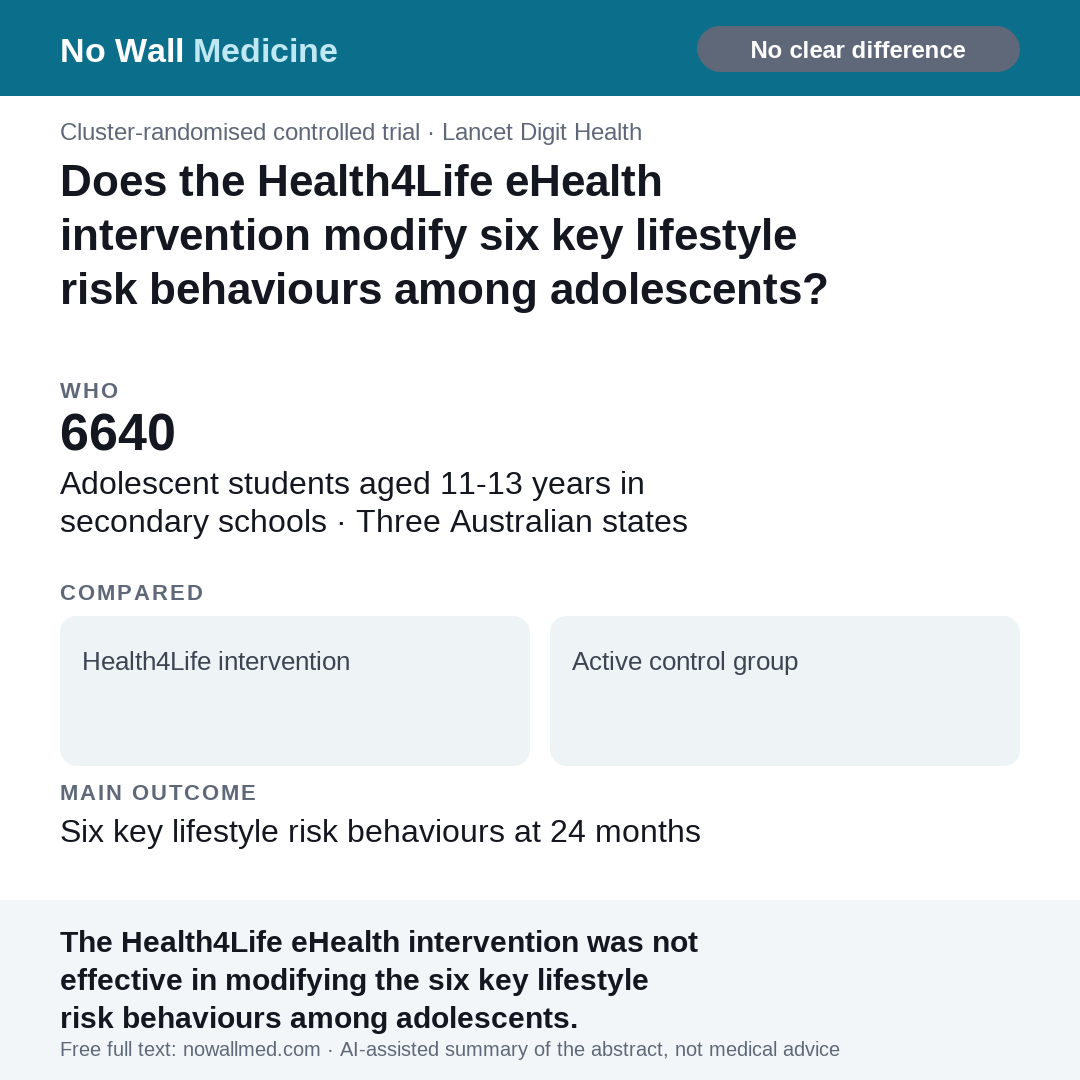
Health4Life eHealth intervention to modify multiple lifestyle risk behaviours among adolescent students in Australia: a cluster-randomised controlled trial
Cluster-randomised controlled trialNo clear difference
Does the Health4Life eHealth intervention modify six key lifestyle risk behaviours among adolescents?
Who
6640
Adolescent students aged 11-13 years in secondary schools · Three Australian states
Compared
Health4Life intervention
Active control group
Main outcome
Six key lifestyle risk behaviours at 24 months
Result: no between-group differences found for any primary outcome
Bottom line: The Health4Life eHealth intervention was not effective in modifying the six key lifestyle risk behaviours among adolescents.
Limitation: Fourteen schools were excluded or withdrew, mostly due to a lack of time.
Funded by: Paul Ramsay Foundation, NHMRC, Australian Government, and US NIH
Lancet Digit Health · 2023-04-07Download image
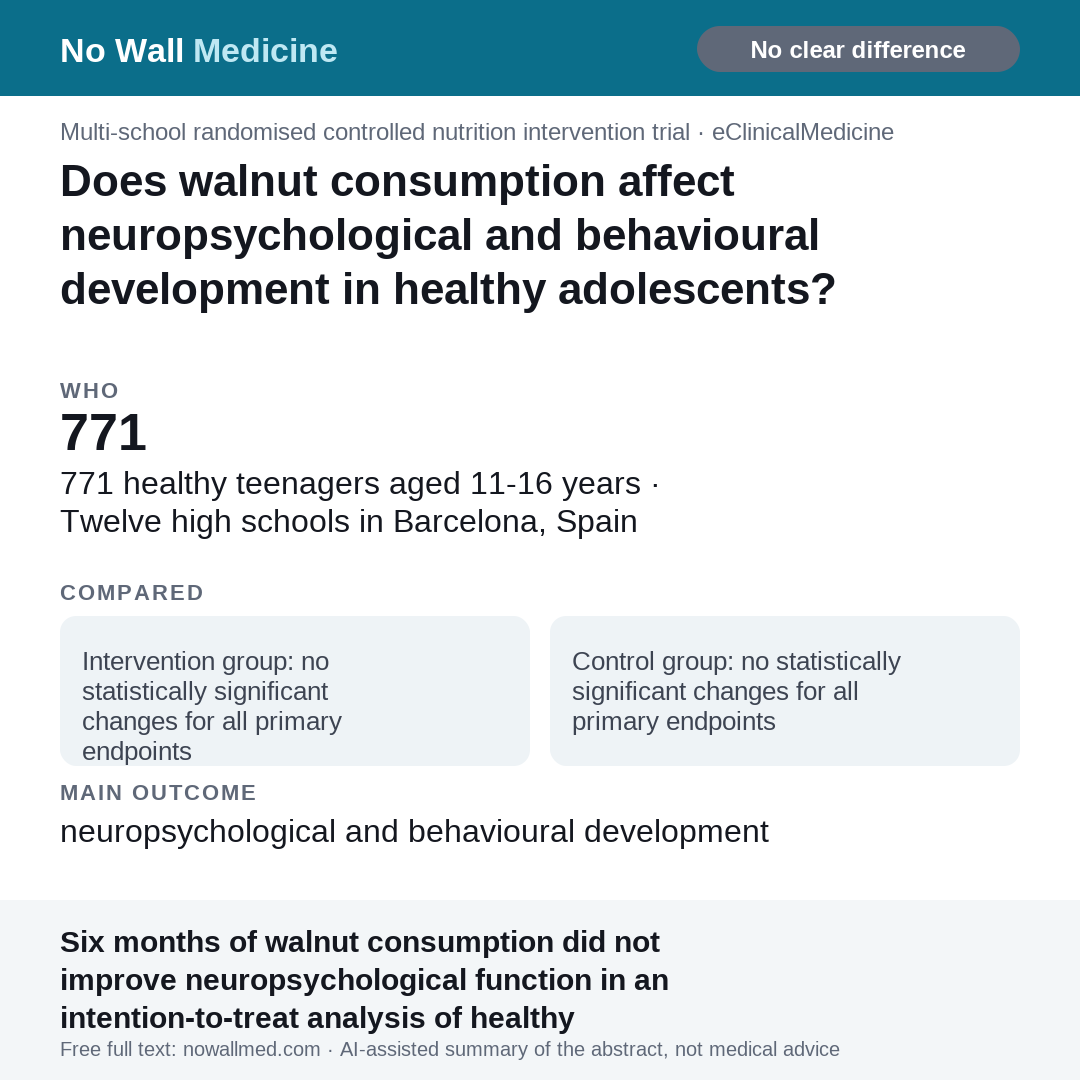
Effect of walnut consumption on neuropsychological development in healthy adolescents: a multi-school randomised controlled trial
Multi-school randomised controlled nutrition intervention trialNo clear difference
Does walnut consumption affect neuropsychological and behavioural development in healthy adolescents?
Who
771
771 healthy teenagers aged 11-16 years · Twelve high schools in Barcelona, Spain
Compared
Intervention group: no statistically significant changes for all primary endpoints
Control group: no statistically significant changes for all primary endpoints
Main outcome
neuropsychological and behavioural development
Bottom line: Six months of walnut consumption did not improve neuropsychological function in an intention-to-treat analysis of healthy adolescents.
Funded by: Instituto de Salud Carlos III and California Walnut Commission
eClinicalMedicine · 2023-04-06Download image
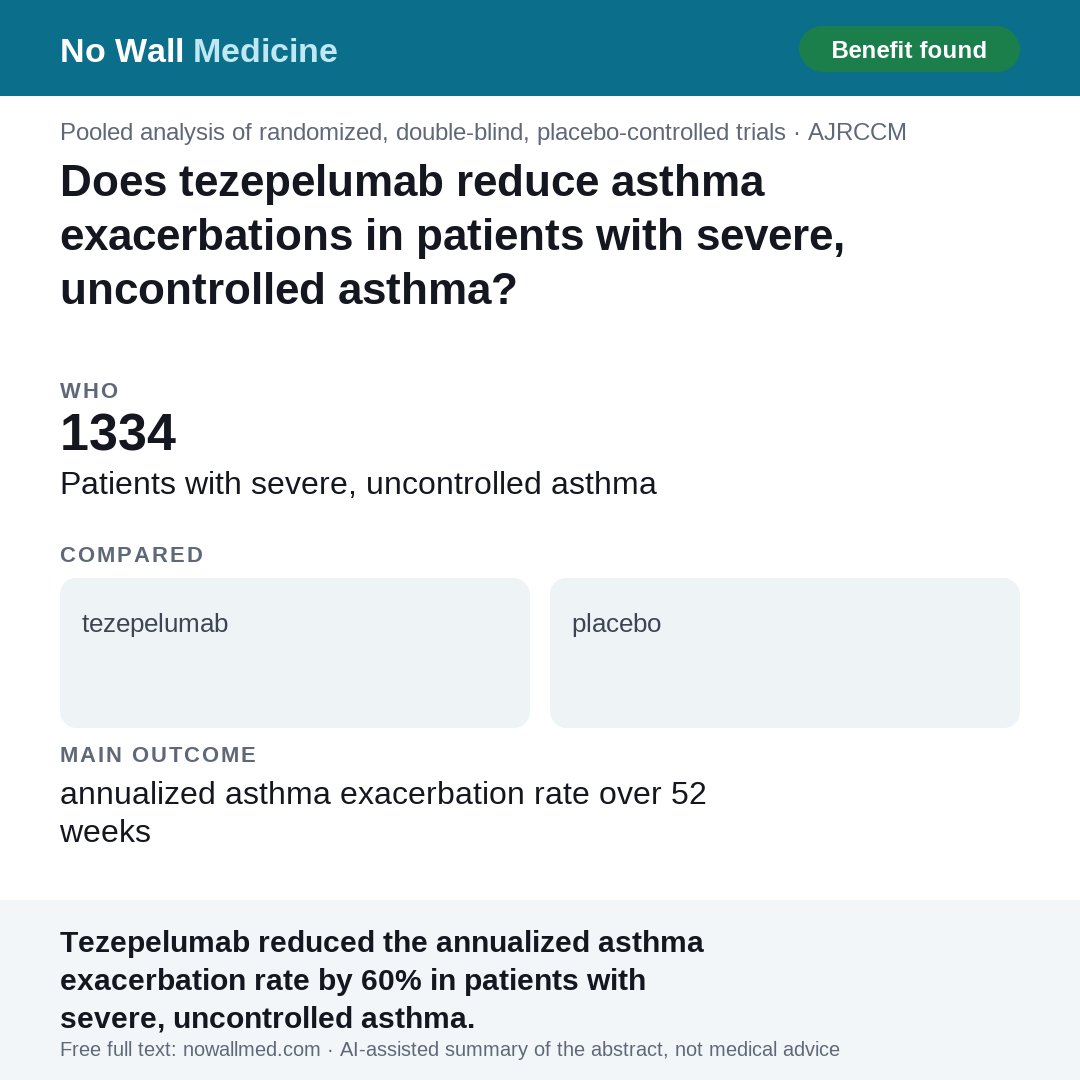
Efficacy of Tezepelumab in Severe, Uncontrolled Asthma: Pooled Analysis of the PATHWAY and NAVIGATOR Clinical Trials
Pooled analysis of randomized, double-blind, placebo-controlled trialsBenefit found
Does tezepelumab reduce asthma exacerbations in patients with severe, uncontrolled asthma?
Who
1334
Patients with severe, uncontrolled asthma
Compared
tezepelumab
placebo
Main outcome
annualized asthma exacerbation rate over 52 weeks
Result: rate ratio, 0.40 (95% confidence interval, 0.34-0.48)
Bottom line: Tezepelumab reduced the annualized asthma exacerbation rate by 60% in patients with severe, uncontrolled asthma.
AJRCCM · 2023-04-05Download image
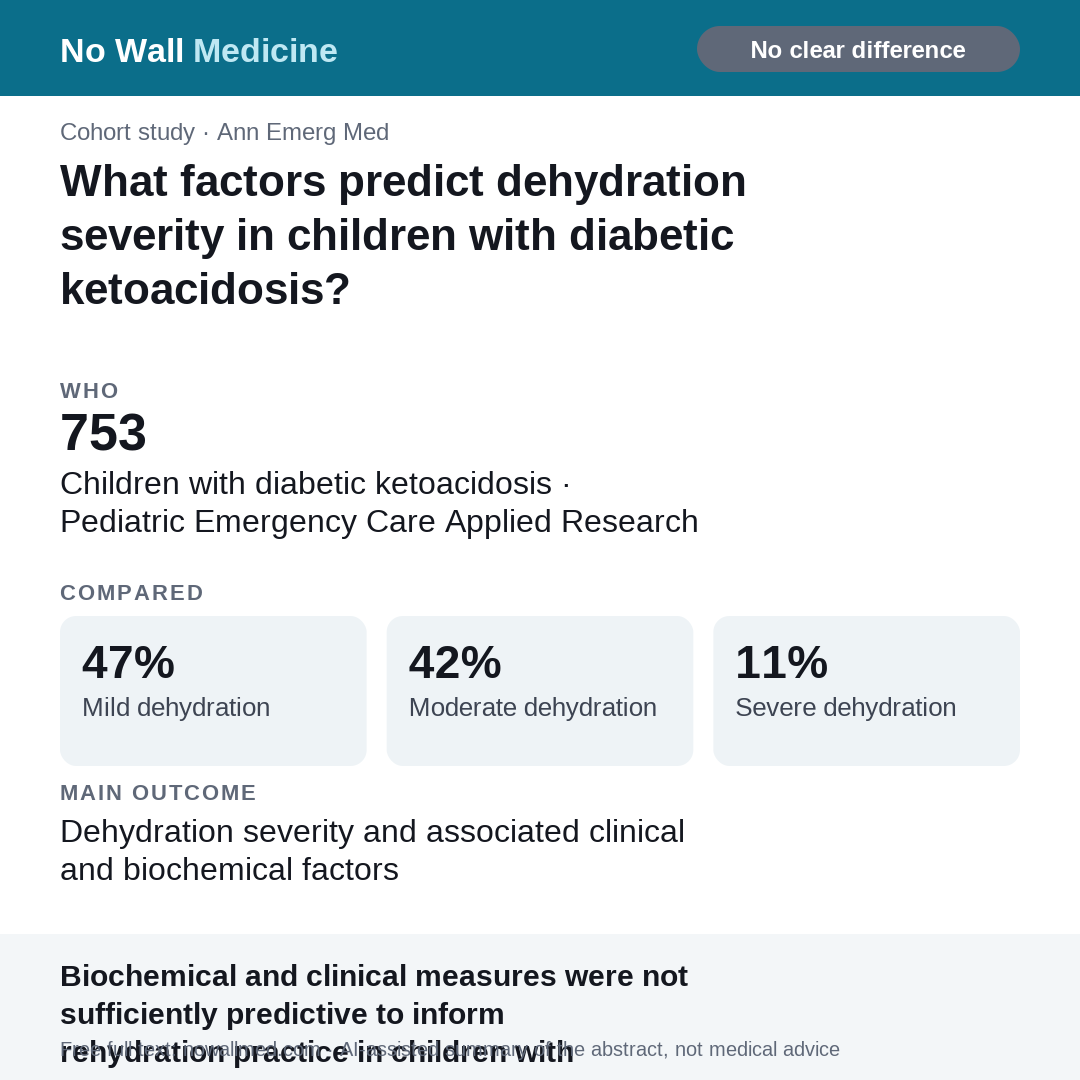
Clinical and Laboratory Predictors of Dehydration Severity in Children With Diabetic Ketoacidosis
Cohort studyNo clear difference
What factors predict dehydration severity in children with diabetic ketoacidosis?
Who
753
Children with diabetic ketoacidosis · Pediatric Emergency Care Applied Research Network
Compared
47%Mild dehydration (N=379)
42%Moderate dehydration (N=343)
11%Severe dehydration (N=89)
Main outcome
Dehydration severity and associated clinical and biochemical factors
Bottom line: Biochemical and clinical measures were not sufficiently predictive to inform rehydration practice in children with diabetic ketoacidosis.
Limitation: Substantial overlap in variables between dehydration groups.
Ann Emerg Med · 2023-04-05Download image
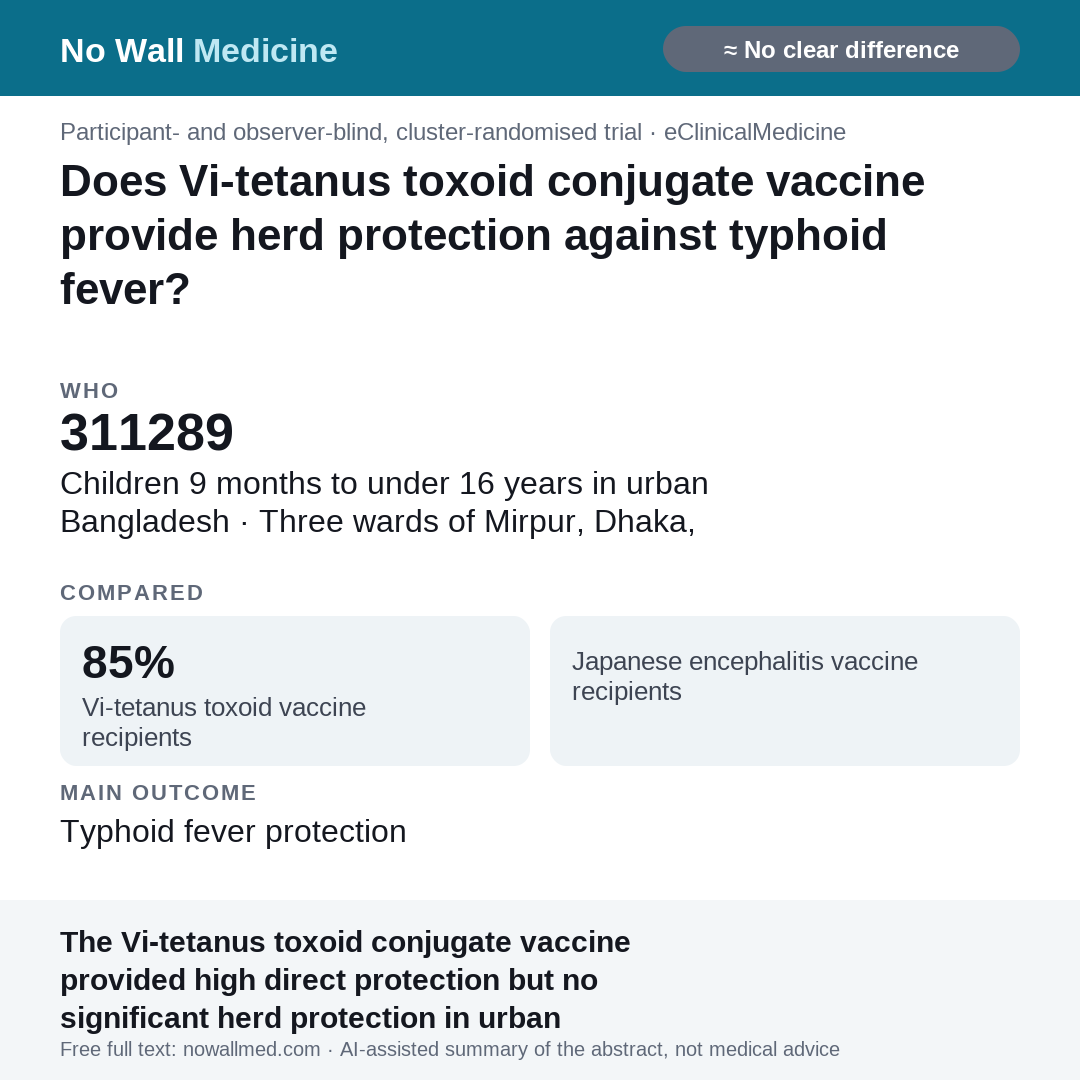
Assessment of vaccine herd protection in a cluster-randomised trial of Vi conjugate vaccine against typhoid fever: results of further analysis
Participant- and observer-blind, cluster-randomised trialNo clear difference
Does Vi-tetanus toxoid conjugate vaccine provide herd protection against typhoid fever?
Who
311289
Children 9 months to under 16 years in urban Bangladesh · Three wards of Mirpur, Dhaka, Bangladesh
Compared
85%Vi-tetanus toxoid vaccine recipients (95% CI: 76%, 90%)
Japanese encephalitis vaccine recipients
Main outcome
Typhoid fever protection
Result: indirect effectiveness 17% (95% CI -13%, 40%)
Bottom line: The Vi-tetanus toxoid conjugate vaccine provided high direct protection but no significant herd protection in urban Bangladeshi children.
Funded by: Bill & Melinda Gates Foundation
eClinicalMedicine · 2023-04-04Download image
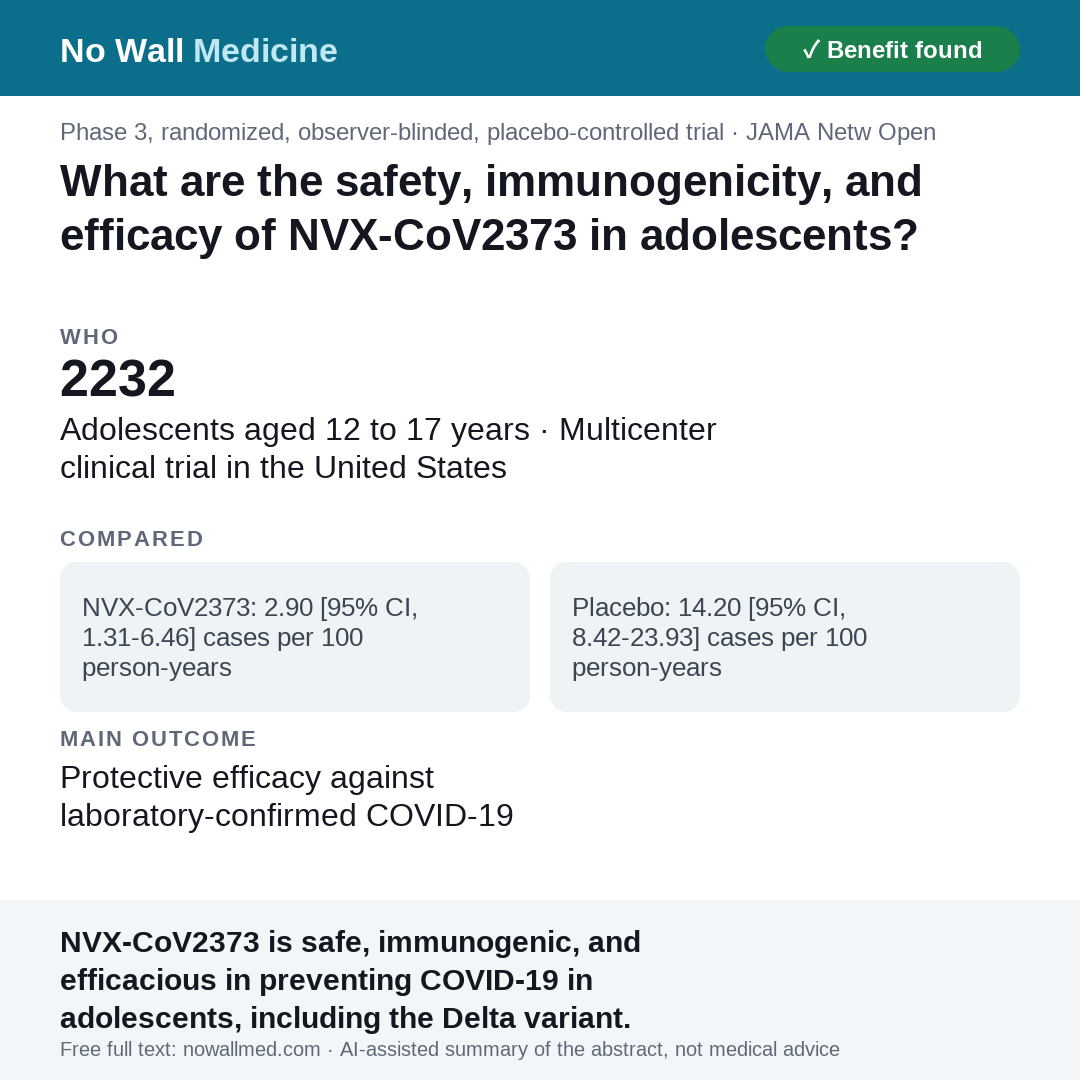
Safety, Immunogenicity, and Efficacy of the NVX-CoV2373 COVID-19 Vaccine in Adolescents: A Randomized Clinical Trial
Phase 3, randomized, observer-blinded, placebo-controlled trialBenefit found
What are the safety, immunogenicity, and efficacy of NVX-CoV2373 in adolescents?
Who
2232
Adolescents aged 12 to 17 years · Multicenter clinical trial in the United States
Compared
NVX-CoV2373: 2.90 [95% CI, 1.31-6.46] cases per 100 person-years
Placebo: 14.20 [95% CI, 8.42-23.93] cases per 100 person-years
Main outcome
Protective efficacy against laboratory-confirmed COVID-19
Result: vaccine efficacy of 79.5% (95% CI, 46.8%-92.1%)
Bottom line: NVX-CoV2373 is safe, immunogenic, and efficacious in preventing COVID-19 in adolescents, including the Delta variant.
JAMA Netw Open · 2023-04-03Download image
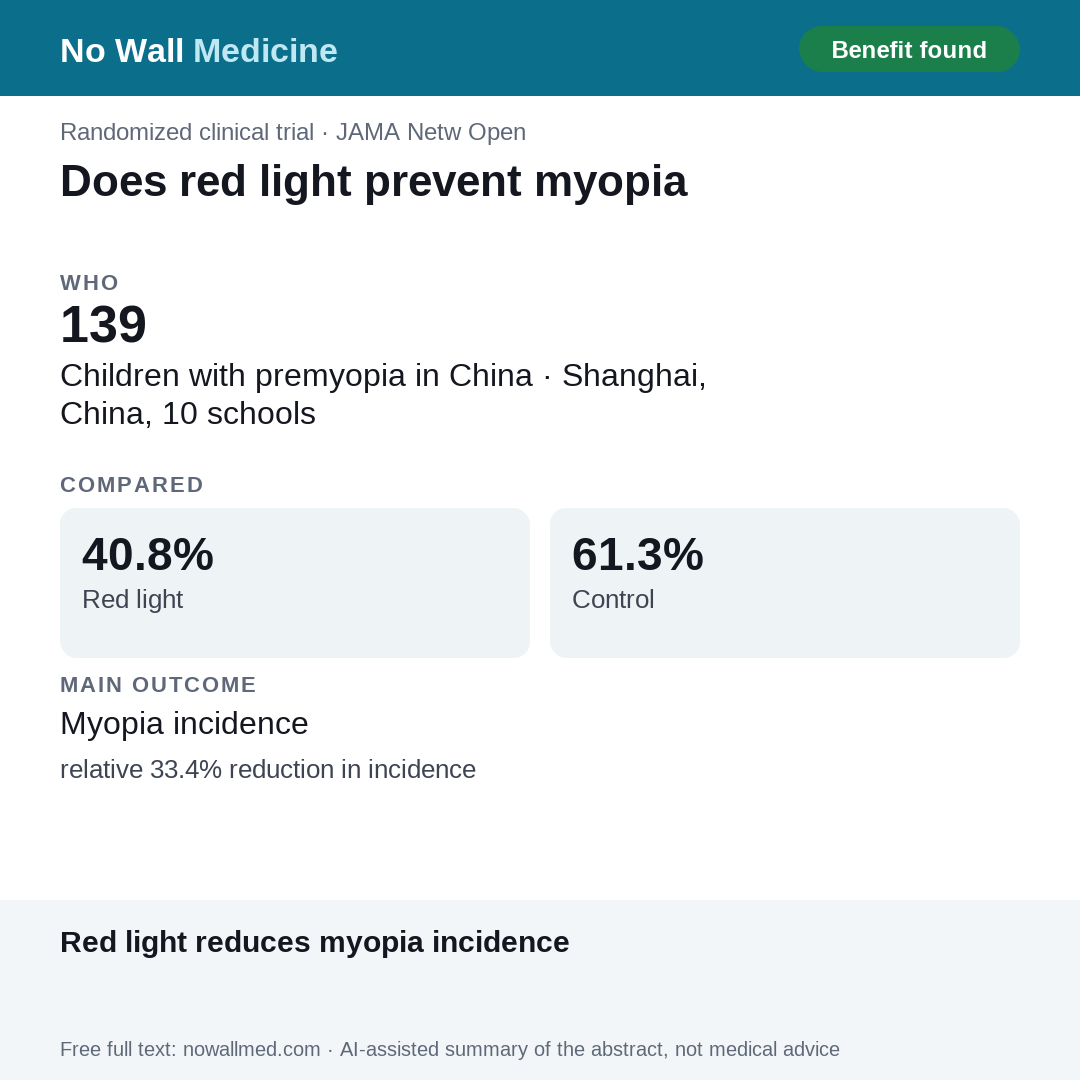
Effect of Repeated Low-level Red Light on Myopia Prevention Among Children in China With Premyopia: A Randomized Clinical Trial
Randomized clinical trialBenefit found
Does red light prevent myopia
Who
139
Children with premyopia in China · Shanghai, China, 10 schools
Compared
40.8%Red light (49/120)
61.3%Control (68/111)
Main outcome
Myopia incidence
Result: relative 33.4% reduction in incidence
Bottom line: Red light reduces myopia incidence
Limitation: COVID-19 pandemic interruption
JAMA Netw Open · 2023-04-03Download image