Visual abstracts
New randomized trials and meta-analyses from leading journals at a glance: who was studied, what was compared, and what was found. Every paper is free to read in full.
All specialtiesCardiology 4877Oncology 4138Gastroenterology & Hepatology 1942Infectious Disease 3837Neurology 1905Psychiatry & Mental Health 2273Pulmonology 2143Critical Care 1365Endocrinology & Diabetes 2580Pediatrics 2980Surgery 2559Orthopedics & Sports Medicine 931Neurosurgery 537Cardiothoracic & Vascular Surgery 674Plastic & Reconstructive Surgery 591Nephrology 1133Rheumatology 823Hematology 1109Dermatology 621Ophthalmology 543Obstetrics & Gynecology 1686Public & Global Health 1058Radiology & Imaging 648Anesthesiology 986Urology 764ENT (Otolaryngology) 503Emergency Medicine 511Allergy & Immunology 313Geriatrics 981Family Medicine & Primary Care 562Medical Genetics & Genomics 676Pathology & Laboratory Medicine 159Physical Medicine & Rehabilitation 757Palliative Care 444Nutrition 1588Digital Health & AI 2201General Medicine 321
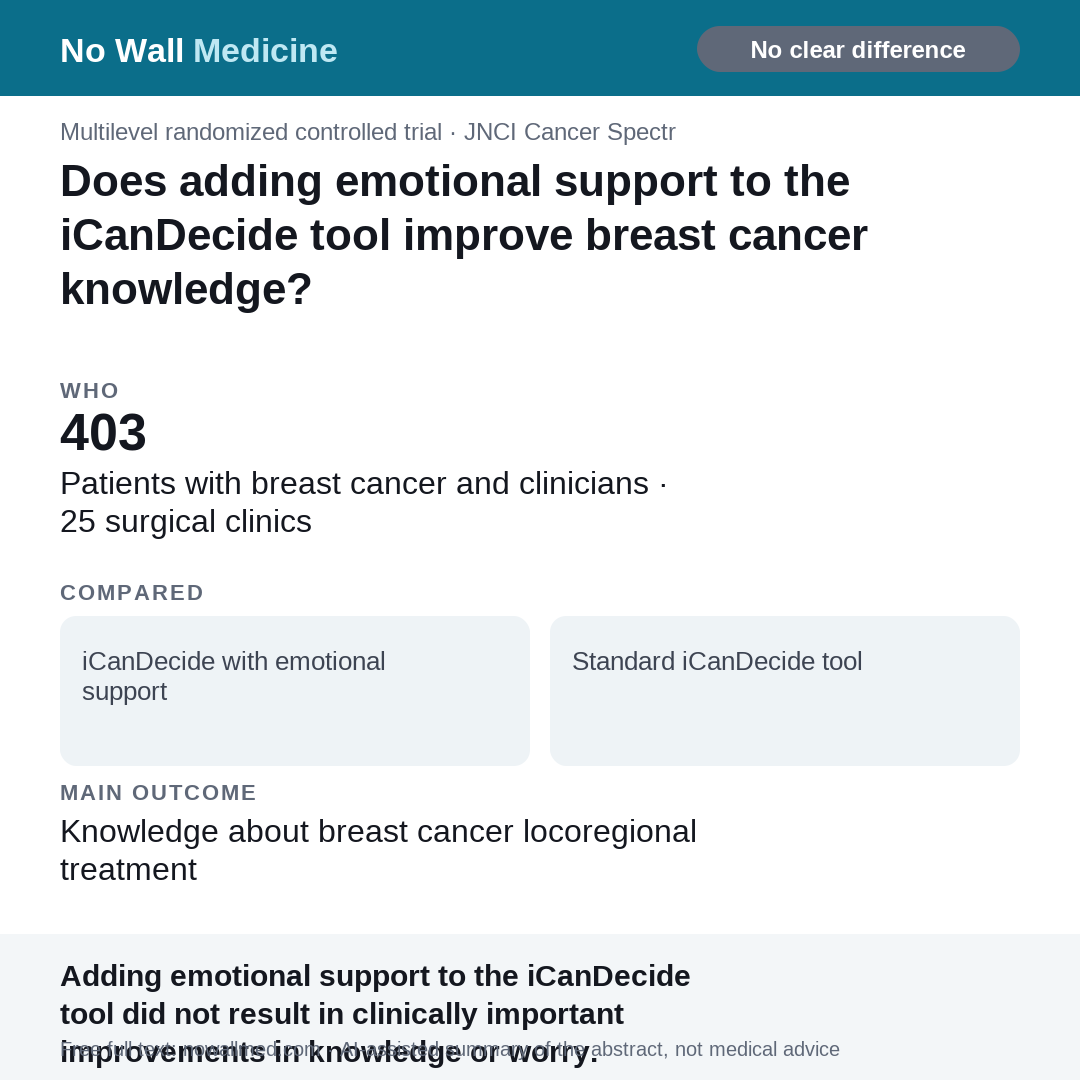
Evaluating a shared decision engagement system in the National Cancer Institute Community Oncology Research Program: a multi-level randomized controlled trial
Multilevel randomized controlled trialNo clear difference
Does adding emotional support to the iCanDecide tool improve breast cancer knowledge?
Who
403
Patients with breast cancer and clinicians · 25 surgical clinics
Compared
iCanDecide with emotional support
Standard iCanDecide tool
Main outcome
Knowledge about breast cancer locoregional treatment
Bottom line: Adding emotional support to the iCanDecide tool did not result in clinically important improvements in knowledge or worry.
JNCI Cancer Spectr · 2026-09-28Download image
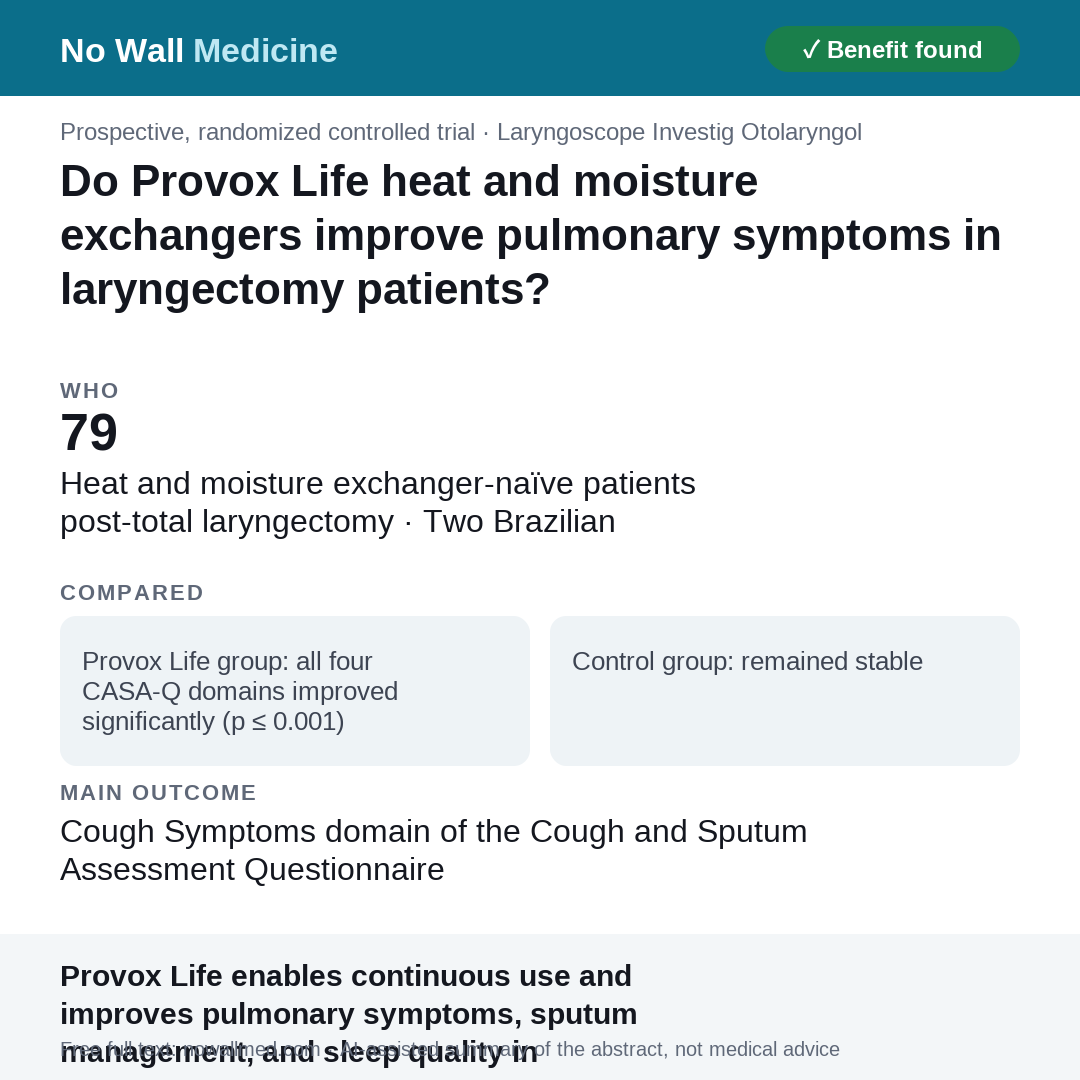
Provox Life HMEs for Pulmonary Rehabilitation in HME-Naïve Laryngectomy Patients: A Randomized Controlled Trial
Prospective, randomized controlled trialBenefit found
Do Provox Life heat and moisture exchangers improve pulmonary symptoms in laryngectomy patients?
Who
79
Heat and moisture exchanger-naïve patients post-total laryngectomy · Two Brazilian centers
Compared
Provox Life group: all four CASA-Q domains improved significantly (p ≤ 0.001)
Control group: remained stable
Main outcome
Cough Symptoms domain of the Cough and Sputum Assessment Questionnaire
Bottom line: Provox Life enables continuous use and improves pulmonary symptoms, sputum management, and sleep quality in laryngectomy patients.
Laryngoscope Investig Otolaryngol · 2026-09-27Download image
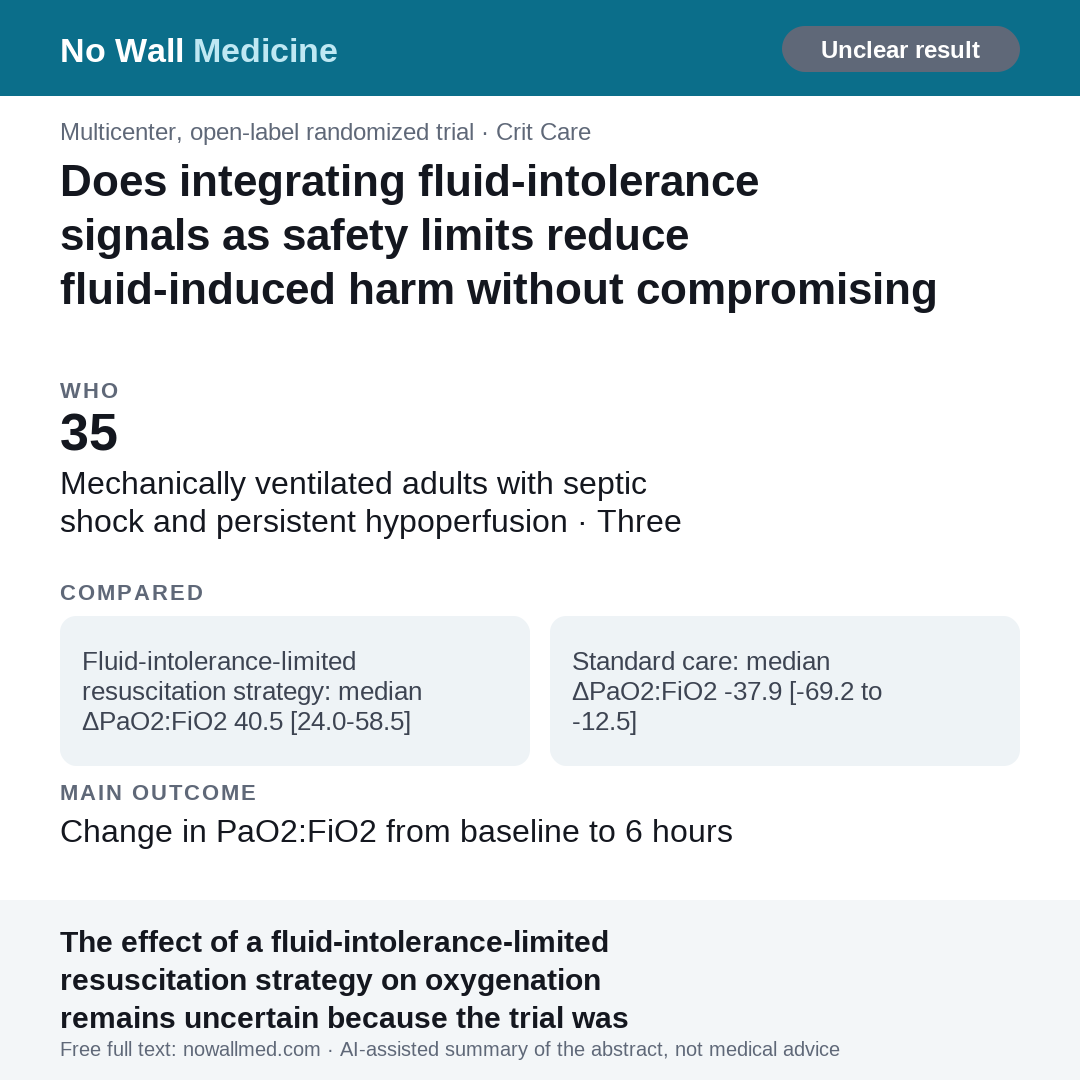
Fluid-intolerance signals as bedside safety limits during early septic shock resuscitation: a multicenter randomized trial
Multicenter, open-label randomized trialBenefit found
Does integrating fluid-intolerance signals as safety limits reduce fluid-induced harm in septic shock?
Who
35
Mechanically ventilated adults with septic shock and persistent hypoperfusion · Three Chilean intensive care units
Compared
Fluid-intolerance-limited resuscitation strategy: 40.5 [24.0-58.5]
Standard care: -37.9 [-69.2 to -12.5]
Main outcome
Change in PaO2:FiO2 from baseline to 6 hours
Result: between-group median difference +78.3 points; 95% CI 50.5 to 110.0
Bottom line: A fluid-intolerance-limited resuscitation strategy improved oxygenation compared to standard care in septic shock patients.
Limitation: Recruitment was discontinued before the planned sample size was reached.
Crit Care · 2026-09-26Download image
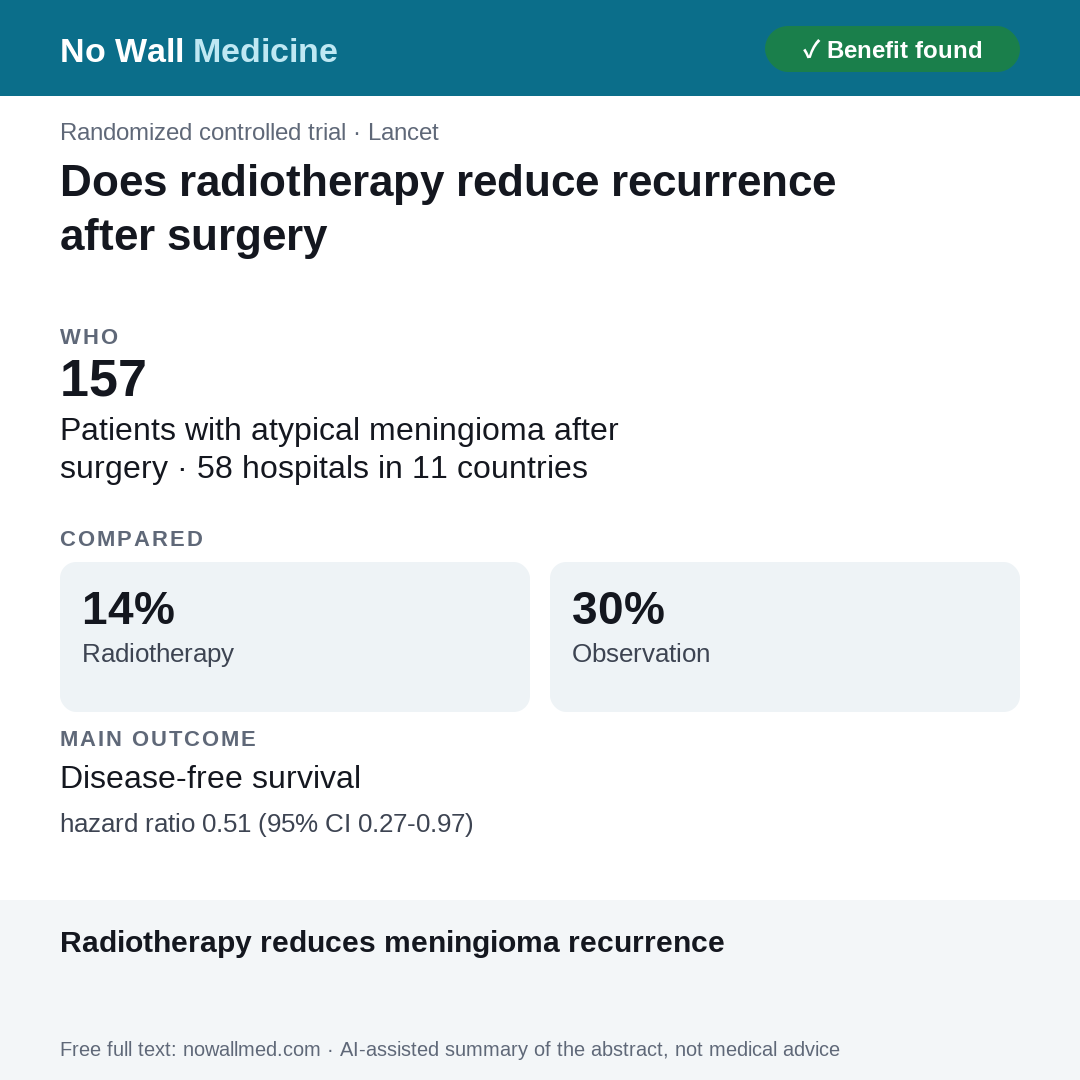
Radiotherapy versus observation following surgical resection of WHO grade 2 atypical meningioma (ROAM/EORTC-1308): an international, multicentre, open-label, phase 3, randomised controlled trial
Randomized controlled trialBenefit found
Does radiotherapy reduce recurrence after surgery
Who
157
Patients with atypical meningioma after surgery · 58 hospitals in 11 countries
Compared
14%Radiotherapy (11/78)
30%Observation (24/79)
Main outcome
Disease-free survival
Result: hazard ratio 0.51 (95% CI 0.27-0.97)
Bottom line: Radiotherapy reduces meningioma recurrence
Funded by: National Institute for Health and Care Research
Lancet · 2026-09-25Download image
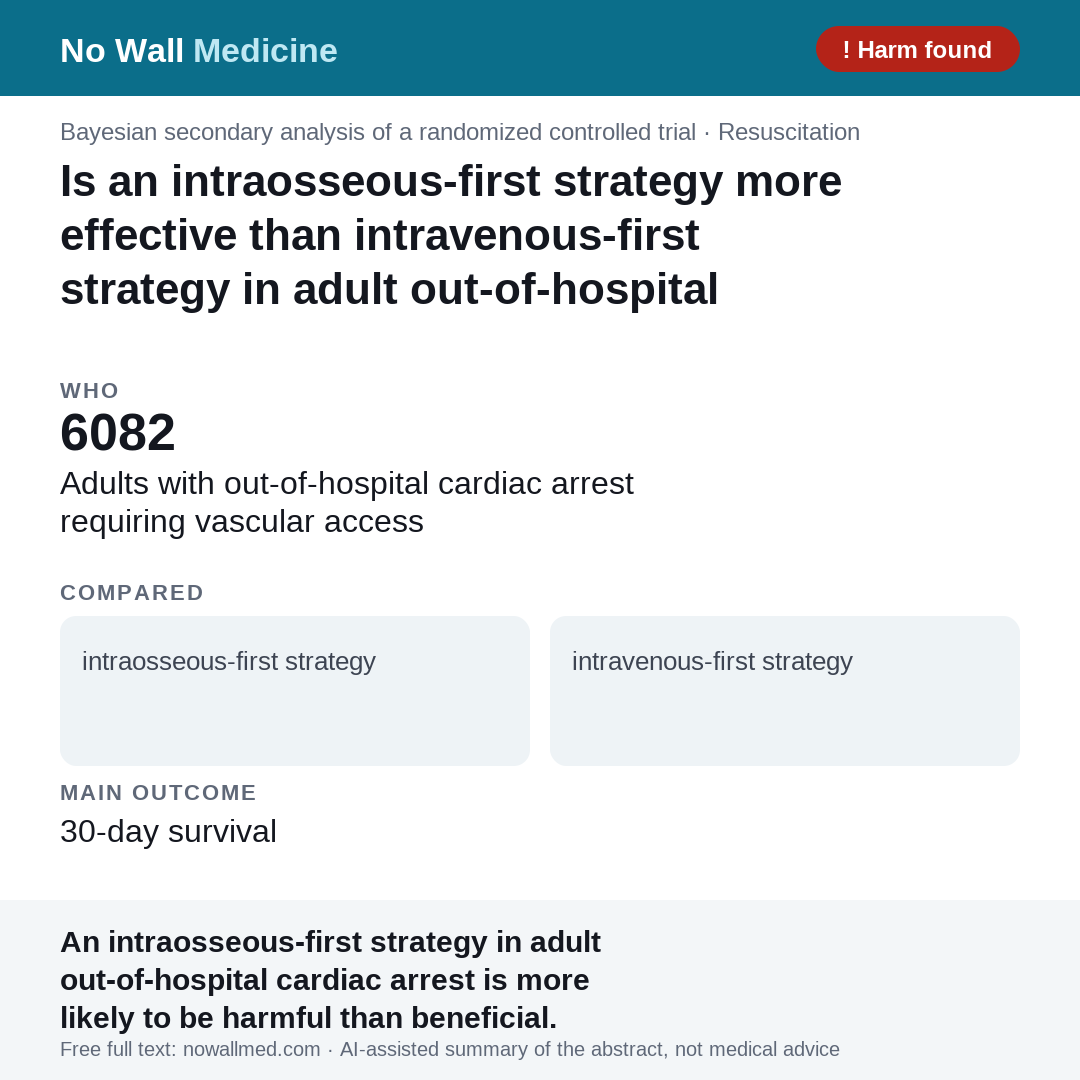
Intraosseous versus intravenous access in adult out-of-hospital cardiac arrest: a Bayesian secondary analysis of the PARAMEDIC-3 randomised controlled trial
Bayesian secondary analysis of a randomized controlled trialHarm found
Is an intraosseous-first strategy more effective than intravenous-first strategy in adult out-of-hospital cardiac arrest?
Who
6082
Adults with out-of-hospital cardiac arrest requiring vascular access
Compared
intraosseous-first strategy
intravenous-first strategy
Main outcome
30-day survival
Result: 81.6% probability that intraosseous-first was inferior (odds ratio < 1.0)
Bottom line: An intraosseous-first strategy in adult out-of-hospital cardiac arrest is more likely to be harmful than beneficial.
Limitation: The overall treatment effect is likely to be modest.
Resuscitation · 2026-09-25Download image
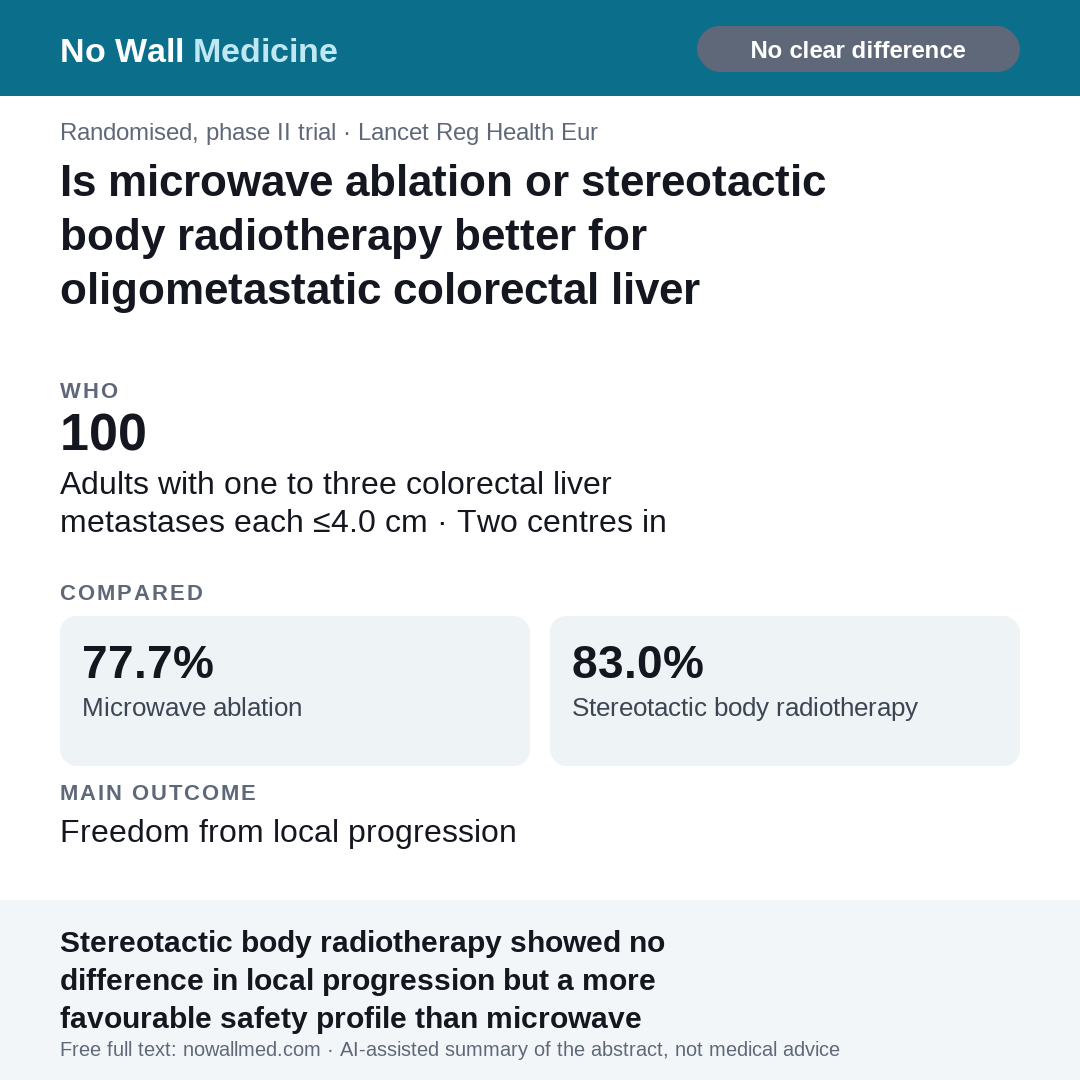
Microwave ablation versus stereotactic body radiotherapy for oligometastatic colorectal liver metastases (LAVA-CRLM): a prospective, randomised, phase II trial
Randomised, phase II trialNo clear difference
Is microwave ablation or stereotactic body radiotherapy better for oligometastatic colorectal liver metastases?
Who
100
Adults with one to three colorectal liver metastases each ≤4.0 cm · Two centres in Copenhagen, Denmark
Compared
77.7%Microwave ablation (95% CI 66.5-90.9)
83.0%Stereotactic body radiotherapy (72.3-95.4)
Main outcome
Freedom from local progression
Result: hazard ratio 0.87, 95% CI 0.43-1.74
Bottom line: Stereotactic body radiotherapy showed no difference in local progression but a more favourable safety profile than microwave ablation.
Funded by: Danish Cancer Society
Lancet Reg Health Eur · 2026-09-25Download image
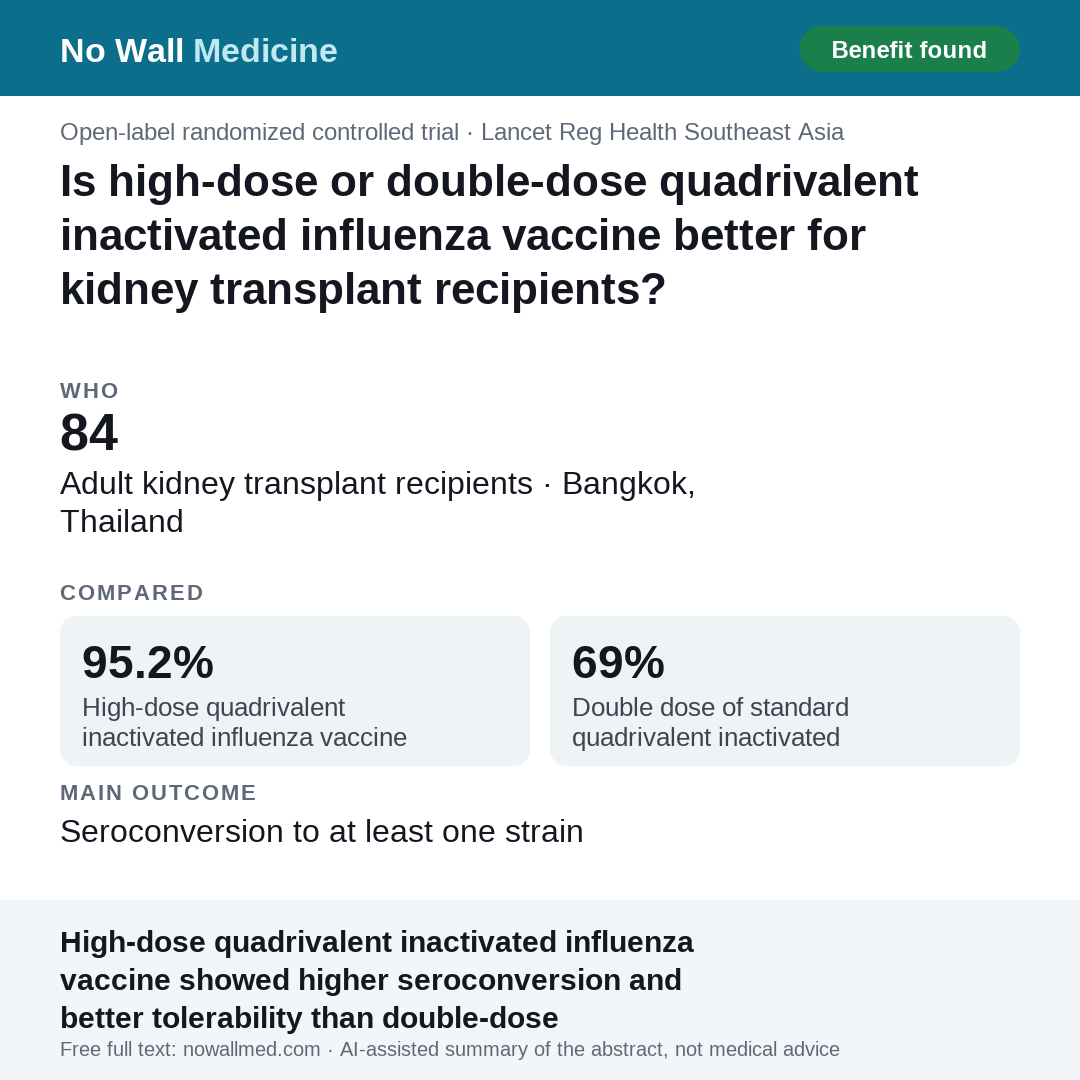
Immunogenicity and safety of high-dose versus double-dose quadrivalent inactivated influenza vaccine in adult kidney transplant recipients: a randomized controlled trial (2023)
Open-label randomized controlled trialBenefit found
Is high-dose or double-dose quadrivalent inactivated influenza vaccine better for kidney transplant recipients?
Who
84
Adult kidney transplant recipients · Bangkok, Thailand
Compared
95.2%High-dose quadrivalent inactivated influenza vaccine
69%Double dose of standard quadrivalent inactivated influenza vaccine
Main outcome
Seroconversion to at least one strain
Result: absolute difference in response rate 0.26 (95% CI, 0.12-0.40)
Bottom line: High-dose quadrivalent inactivated influenza vaccine showed higher seroconversion and better tolerability than double-dose standard vaccine.
Funded by: Faculty of Medicine Ramathibodi Hospital, Mahidol University
Lancet Reg Health Southeast Asia · 2026-09-25Download image
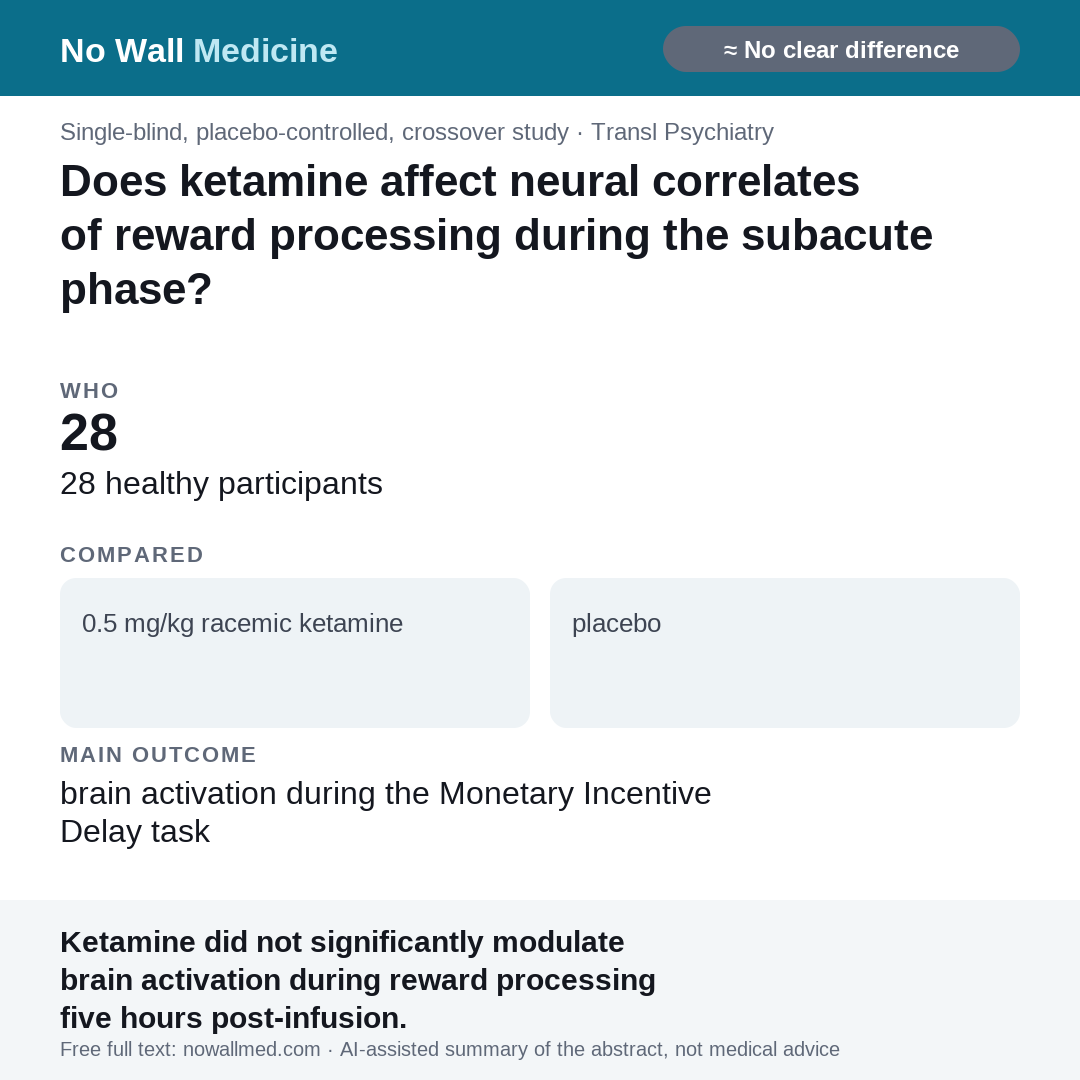
Subacute effects of ketamine on neural correlates of reward processing
Single-blind, placebo-controlled, crossover studyNo clear difference
Does ketamine affect neural correlates of reward processing during the subacute phase?
Who
28
28 healthy participants
Compared
0.5 mg/kg racemic ketamine
placebo
Main outcome
brain activation during the Monetary Incentive Delay task
Bottom line: Ketamine did not significantly modulate brain activation during reward processing five hours post-infusion.
Limitation: Absence of detectable task-evoked effects under the present methodological conditions.
Transl Psychiatry · 2026-09-25Download image
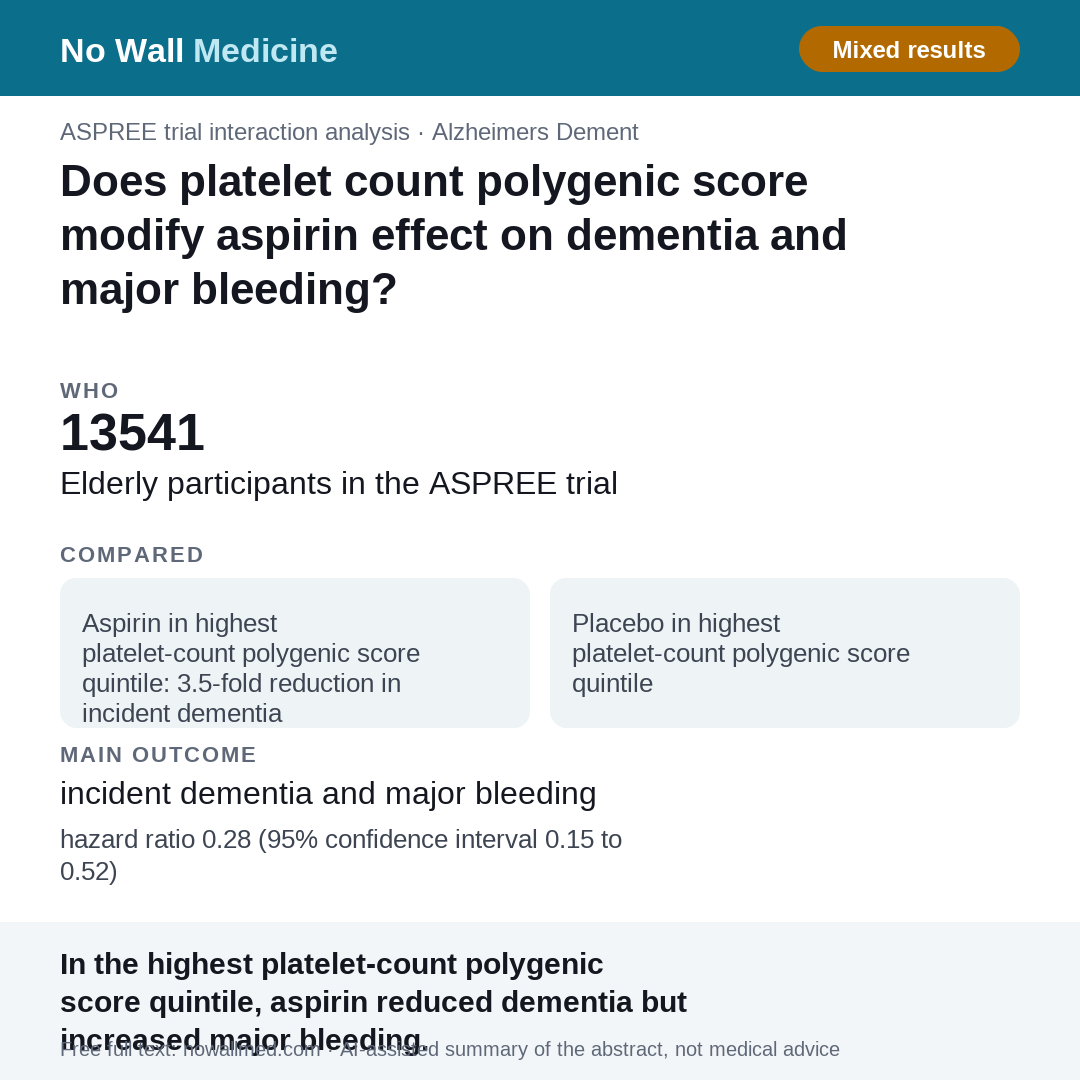
Platelet count polygenic scores may modify the effect of aspirin in primary prevention of dementia
ASPREE trial interaction analysisMixed results
Does platelet count polygenic score modify aspirin effect on dementia and major bleeding?
Who
13541
Elderly participants in the ASPREE trial
Compared
Aspirin in highest platelet-count polygenic score quintile: 3.5-fold reduction in incident dementia
Placebo in highest platelet-count polygenic score quintile
Main outcome
incident dementia and major bleeding
Result: hazard ratio 0.28 (95% confidence interval 0.15 to 0.52)
Bottom line: In the highest platelet-count polygenic score quintile, aspirin reduced dementia but increased major bleeding.
Limitation: These hypothesis-generating findings require validation.
Alzheimers Dement · 2026-09-24Download image
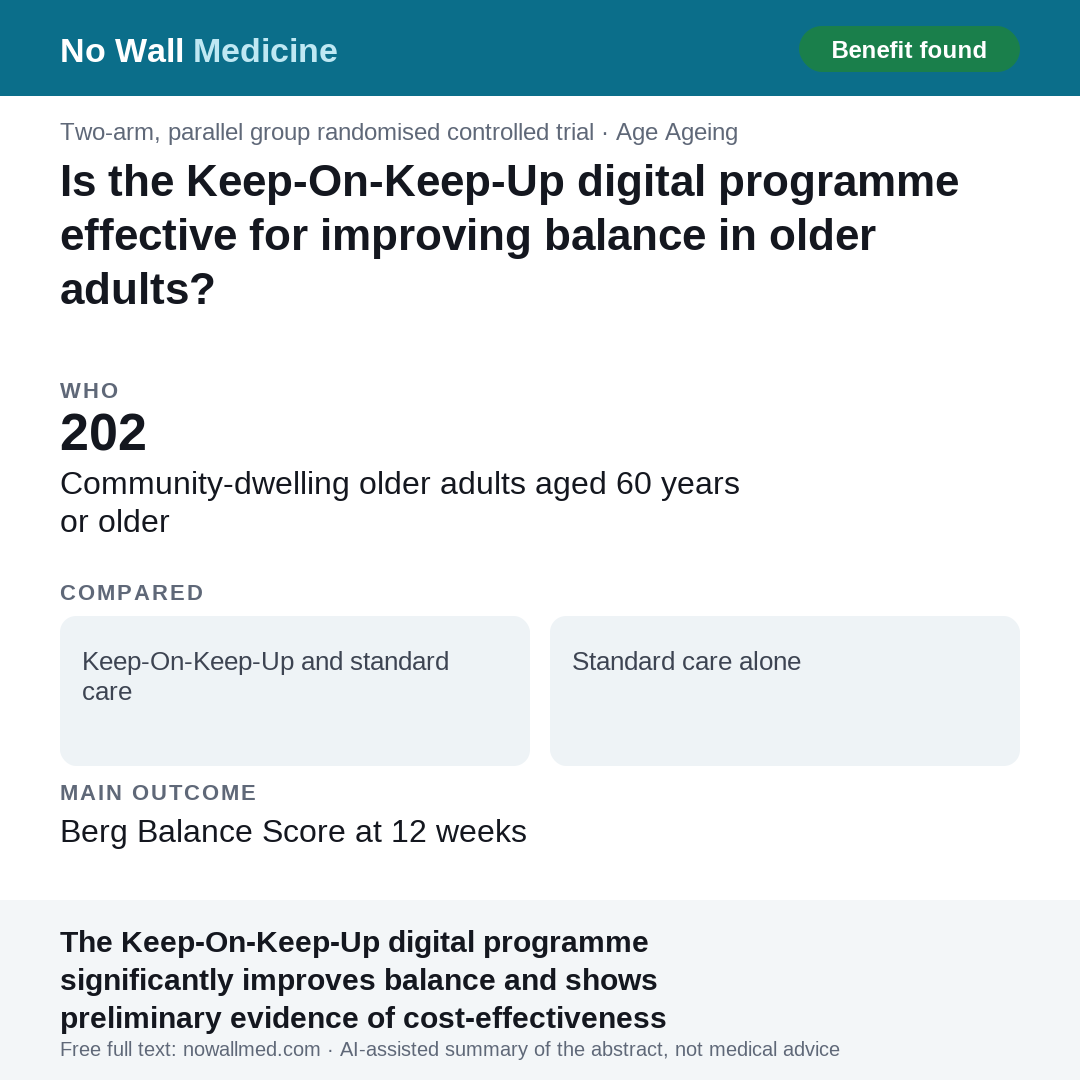
Effectiveness and cost-effectiveness of the Keep-On-Keep-Up digital falls prevention programme in community-dwelling older adults: results of a randomised controlled trial
Two-arm, parallel group randomised controlled trialBenefit found
Is the Keep-On-Keep-Up digital programme effective for improving balance in older adults?
Who
202
Community-dwelling older adults aged 60 years or older
Compared
Keep-On-Keep-Up and standard care
Standard care alone
Main outcome
Berg Balance Score at 12 weeks
Result: mean difference: 6.35 (95% CI 4.48 to 8.22)
Bottom line: The Keep-On-Keep-Up digital programme significantly improves balance and shows preliminary evidence of cost-effectiveness in older adults.
Age Ageing · 2026-09-24Download image
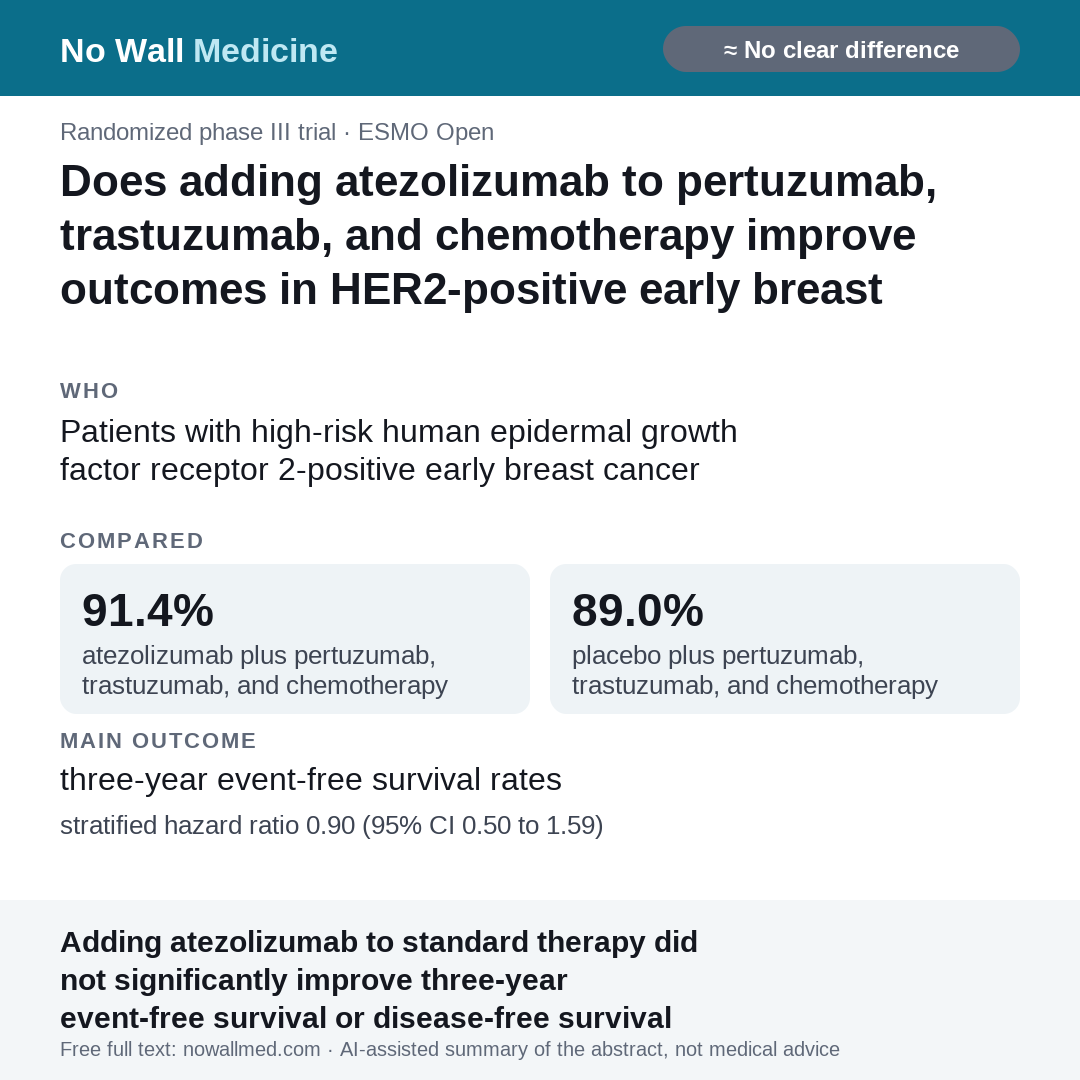
Atezolizumab plus pertuzumab, trastuzumab, and chemotherapy in HER2-positive early breast cancer: final results of the phase III IMpassion050 trial
Randomized phase III trialNo clear difference
Does adding atezolizumab to pertuzumab, trastuzumab, and chemotherapy improve outcomes in HER2-positive early breast cancer?
Who
Patients with high-risk human epidermal growth factor receptor 2-positive early breast cancer
Compared
91.4%atezolizumab plus pertuzumab, trastuzumab, and chemotherapy
89.0%placebo plus pertuzumab, trastuzumab, and chemotherapy
Main outcome
three-year event-free survival rates
Result: stratified hazard ratio 0.90 (95% CI 0.50 to 1.59)
Bottom line: Adding atezolizumab to standard therapy did not significantly improve three-year event-free survival or disease-free survival rates.
ESMO Open · 2026-09-24Download image
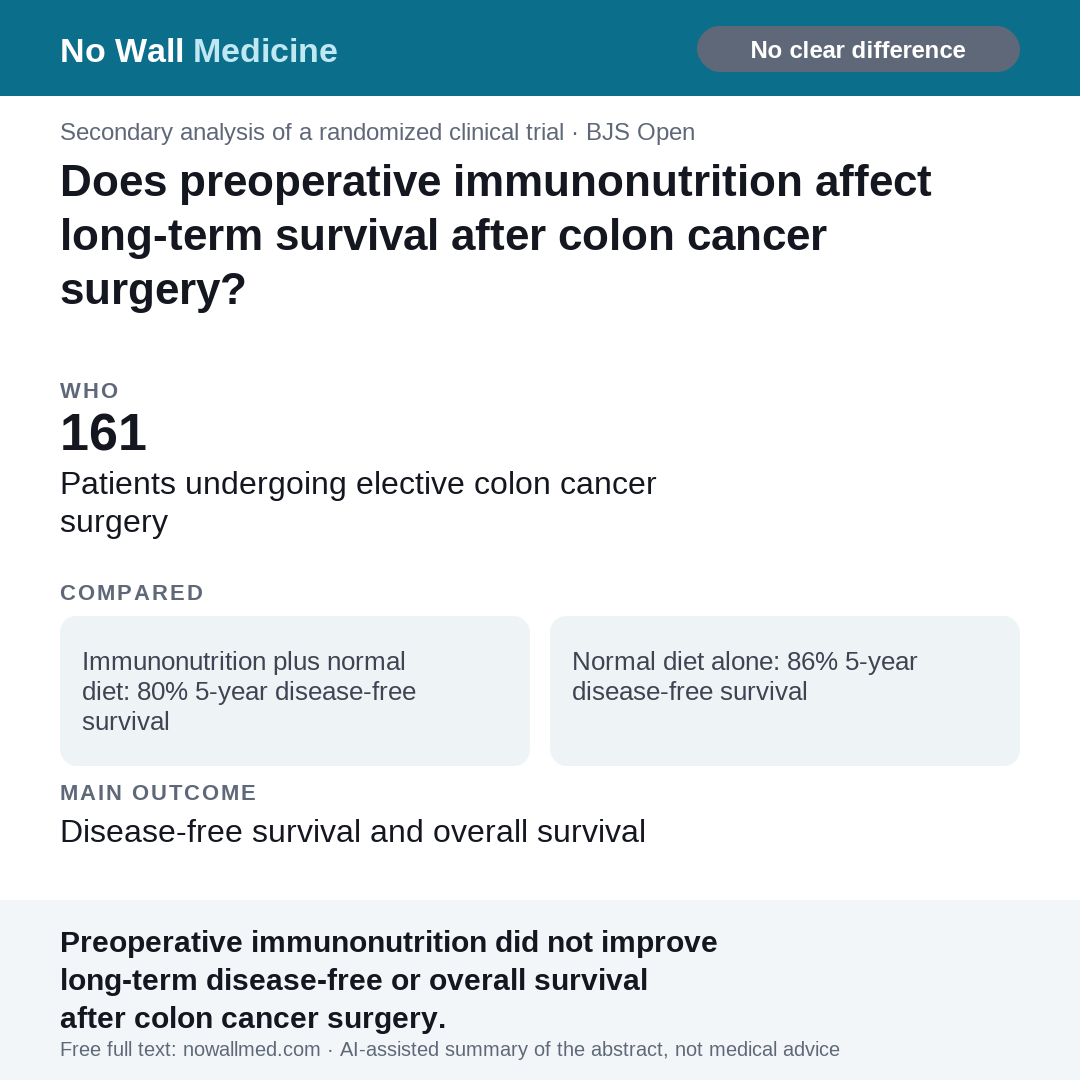
Effect of immunonutrition on postoperative infectious complications and survival after colon cancer surgery: long-term follow up of randomized clinical trial
Secondary analysis of a randomized clinical trialNo clear difference
Does preoperative immunonutrition affect long-term survival after colon cancer surgery?
Who
161
Patients undergoing elective colon cancer surgery
Compared
Immunonutrition plus normal diet: 80% 5-year disease-free survival
Normal diet alone: 86% 5-year disease-free survival
Main outcome
Disease-free survival and overall survival
Bottom line: Preoperative immunonutrition did not improve long-term disease-free or overall survival after colon cancer surgery.
BJS Open · 2026-09-24Download image
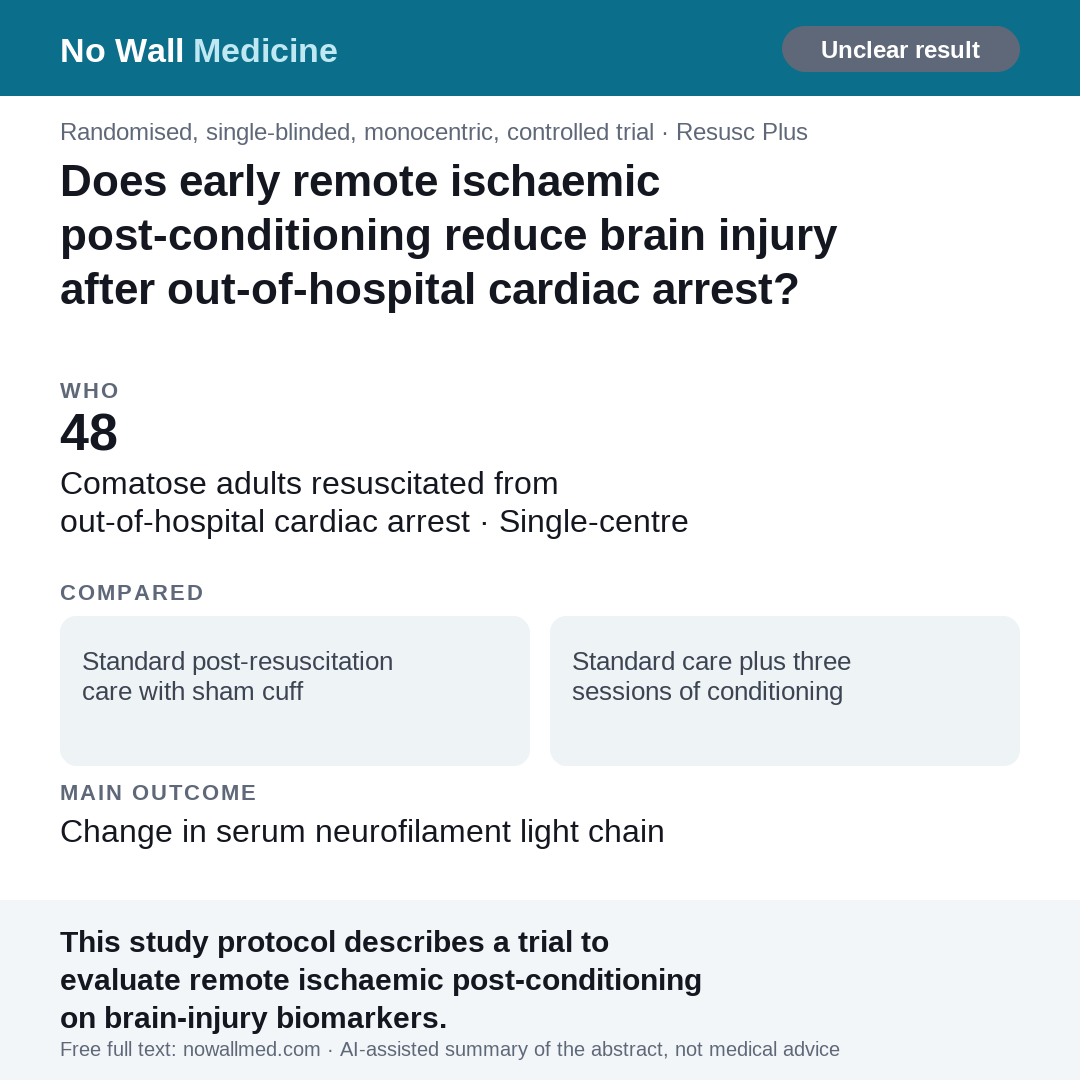
Neuroprotective effect of early remote ischaemic post-conditioning after out-of-hospital cardiac arrest (RIPOST-CA): study protocol for a randomised, single-blinded, monocentric, controlled trial
Randomised, single-blinded, monocentric, controlled trialUnclear result
Does early remote ischaemic post-conditioning reduce brain injury after out-of-hospital cardiac arrest?
Who
48
Comatose adults resuscitated from out-of-hospital cardiac arrest · Single-centre
Compared
Standard post-resuscitation care with sham cuff
Standard care plus three sessions of conditioning
Main outcome
Change in serum neurofilament light chain
Bottom line: This study protocol describes a trial to evaluate remote ischaemic post-conditioning on brain-injury biomarkers.
Resusc Plus · 2026-09-24Download image
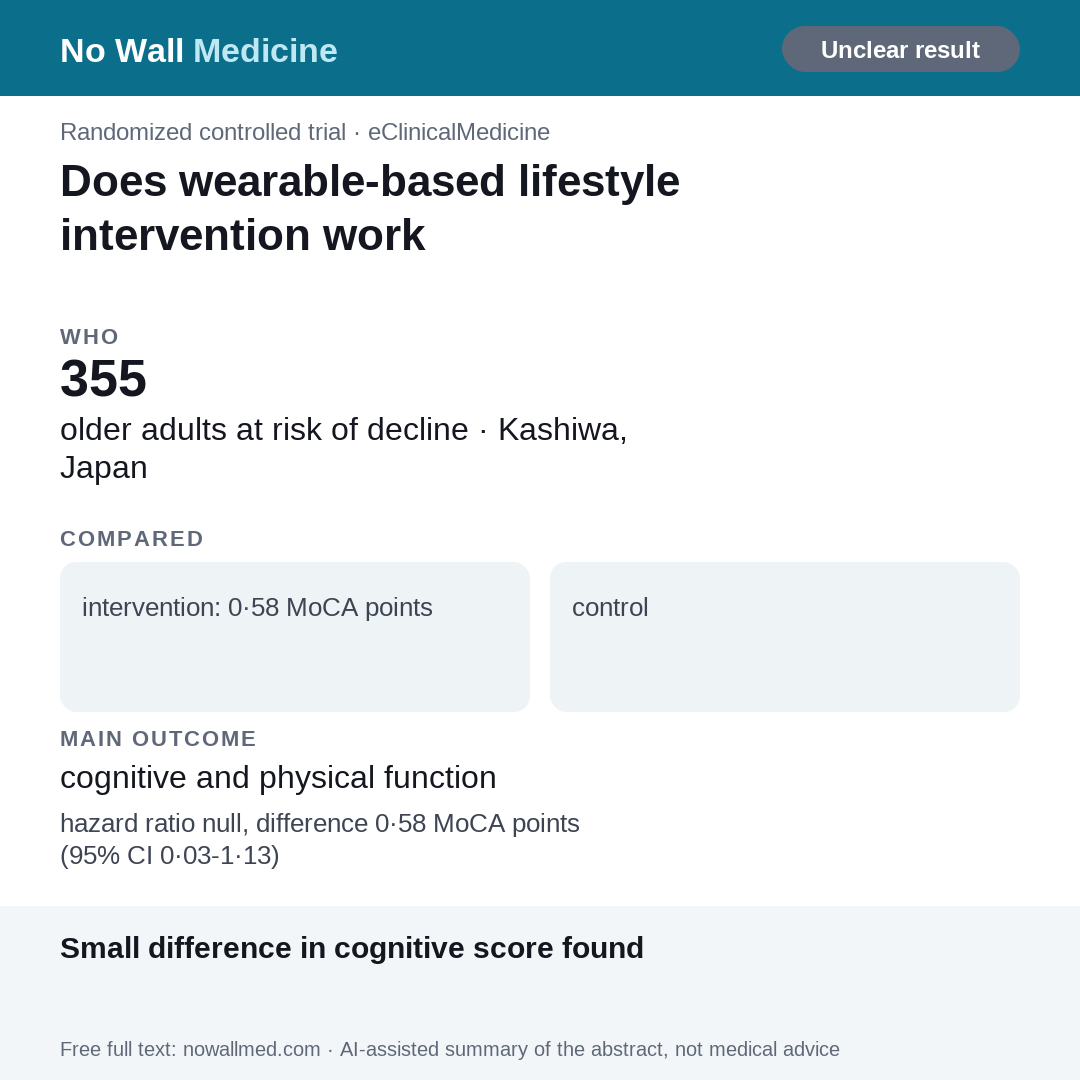
Effect of a wearable-based individualised multidomain lifestyle intervention on cognitive and physical function in older adults at risk of decline (INSPIOR): a single-centre, open-label, randomised controlled trial
Randomized controlled trialUnclear result
Does wearable-based lifestyle intervention work
Who
355
older adults at risk of decline · Kashiwa, Japan
Compared
intervention: 0·58 MoCA points
control
Main outcome
cognitive and physical function
Result: hazard ratio null, difference 0·58 MoCA points (95% CI 0·03-1·13)
Bottom line: Small difference in cognitive score found
Funded by: University of Tokyo, Google, Mitsui Fudosan
eClinicalMedicine · 2026-09-23Download image
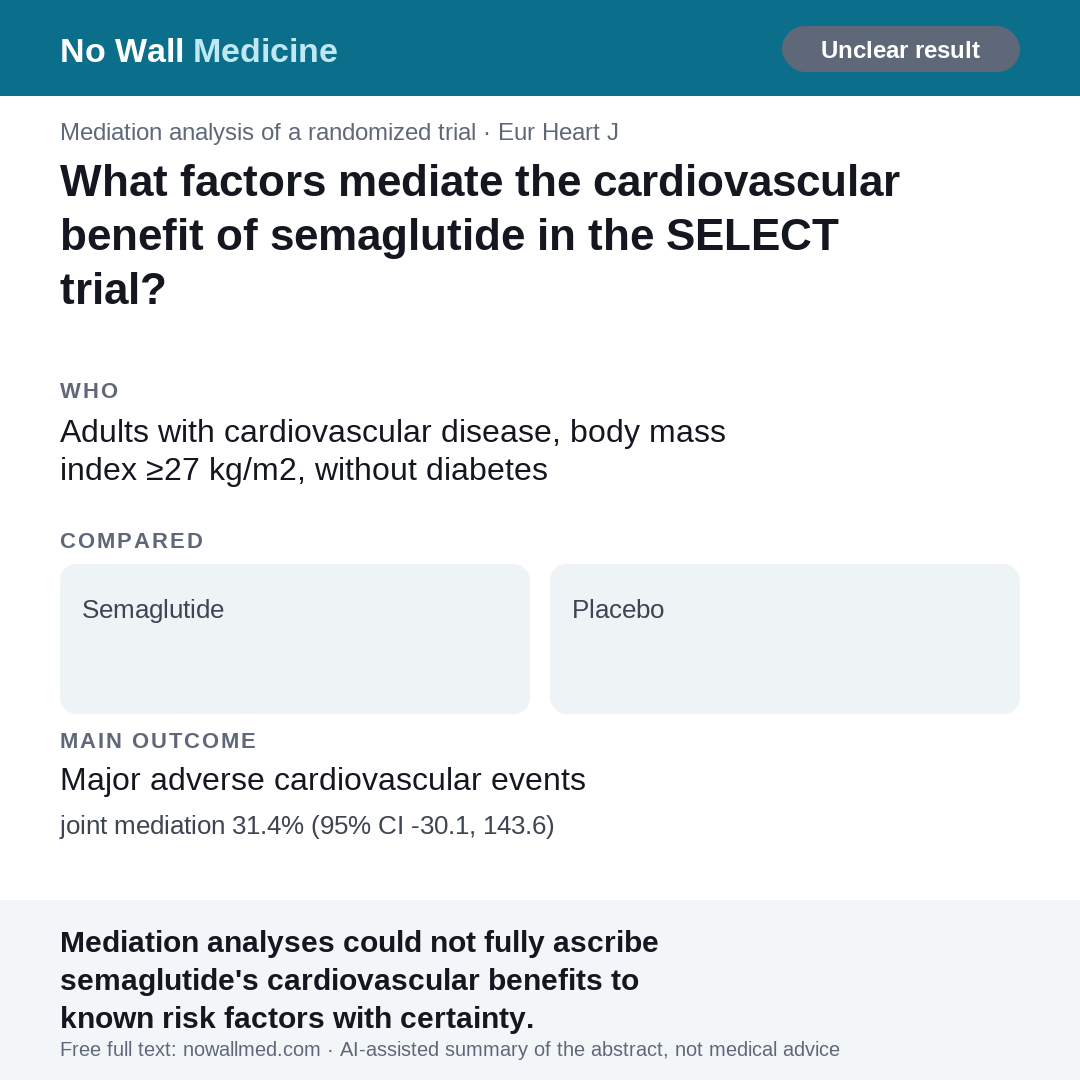
Semaglutide and cardiovascular risk reduction: a mediation analysis of the SELECT trial
Mediation analysis of a randomized trialUnclear result
What factors mediate the cardiovascular benefit of semaglutide in the SELECT trial?
Who
Adults with cardiovascular disease, body mass index ≥27 kg/m2, without diabetes
Compared
Semaglutide
Placebo
Main outcome
Major adverse cardiovascular events
Result: joint mediation 31.4% (95% CI -30.1, 143.6)
Bottom line: Mediation analyses could not fully ascribe semaglutide's cardiovascular benefits to known risk factors with certainty.
Eur Heart J · 2026-09-23Download image
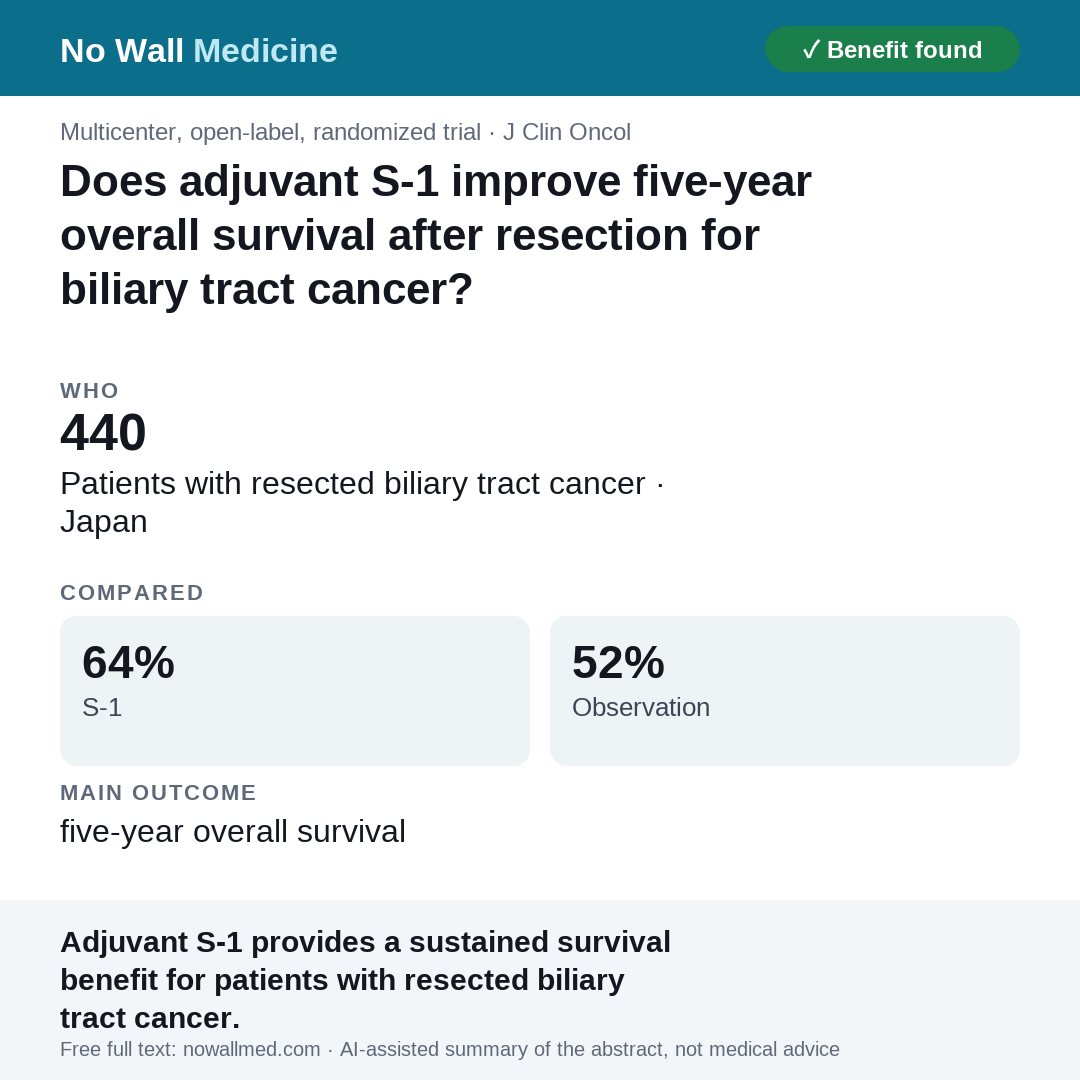
Five-Year Follow-Up of the Phase III ASCOT Trial of Adjuvant S-1 After Resection for Biliary Tract Cancer
Multicenter, open-label, randomized trialBenefit found
Does adjuvant S-1 improve five-year overall survival after resection for biliary tract cancer?
Who
440
Patients with resected biliary tract cancer · Japan
Compared
64%S-1
52%Observation
Main outcome
five-year overall survival
Result: hazard ratio 0.72 (95% CI 0.55 to 0.95)
Bottom line: Adjuvant S-1 provides a sustained survival benefit for patients with resected biliary tract cancer.
J Clin Oncol · 2026-09-23Download image
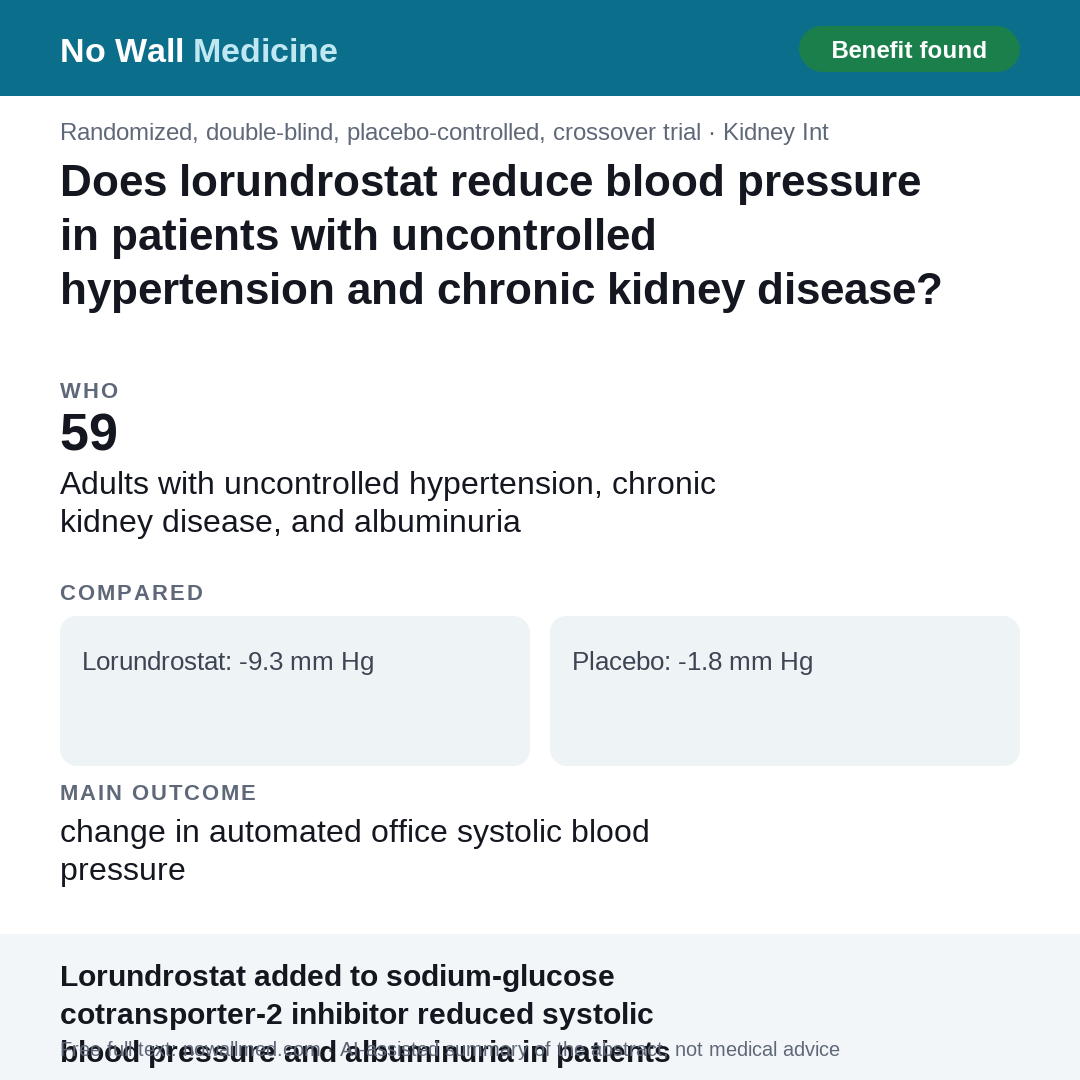
Results from the Phase 2 Explore-CKD Trial of lorundrostat, a novel aldosterone synthase inhibitor, in participants with uncontrolled hypertension, chronic kidney disease, and albuminuria
Randomized, double-blind, placebo-controlled, crossover trialBenefit found
Does lorundrostat reduce blood pressure in patients with uncontrolled hypertension and chronic kidney disease?
Who
59
Adults with uncontrolled hypertension, chronic kidney disease, and albuminuria
Compared
Lorundrostat: -9.3 mm Hg
Placebo: -1.8 mm Hg
Main outcome
change in automated office systolic blood pressure
Result: -7.5 mm Hg (-12.3, -2.7)
Bottom line: Lorundrostat added to sodium-glucose cotransporter-2 inhibitor reduced systolic blood pressure and albuminuria in patients with chronic kidney disease.
Limitation: Longer-term studies are needed to determine if findings translate into durable kidney or cardiovascular outcomes.
Kidney Int · 2026-09-23Download image
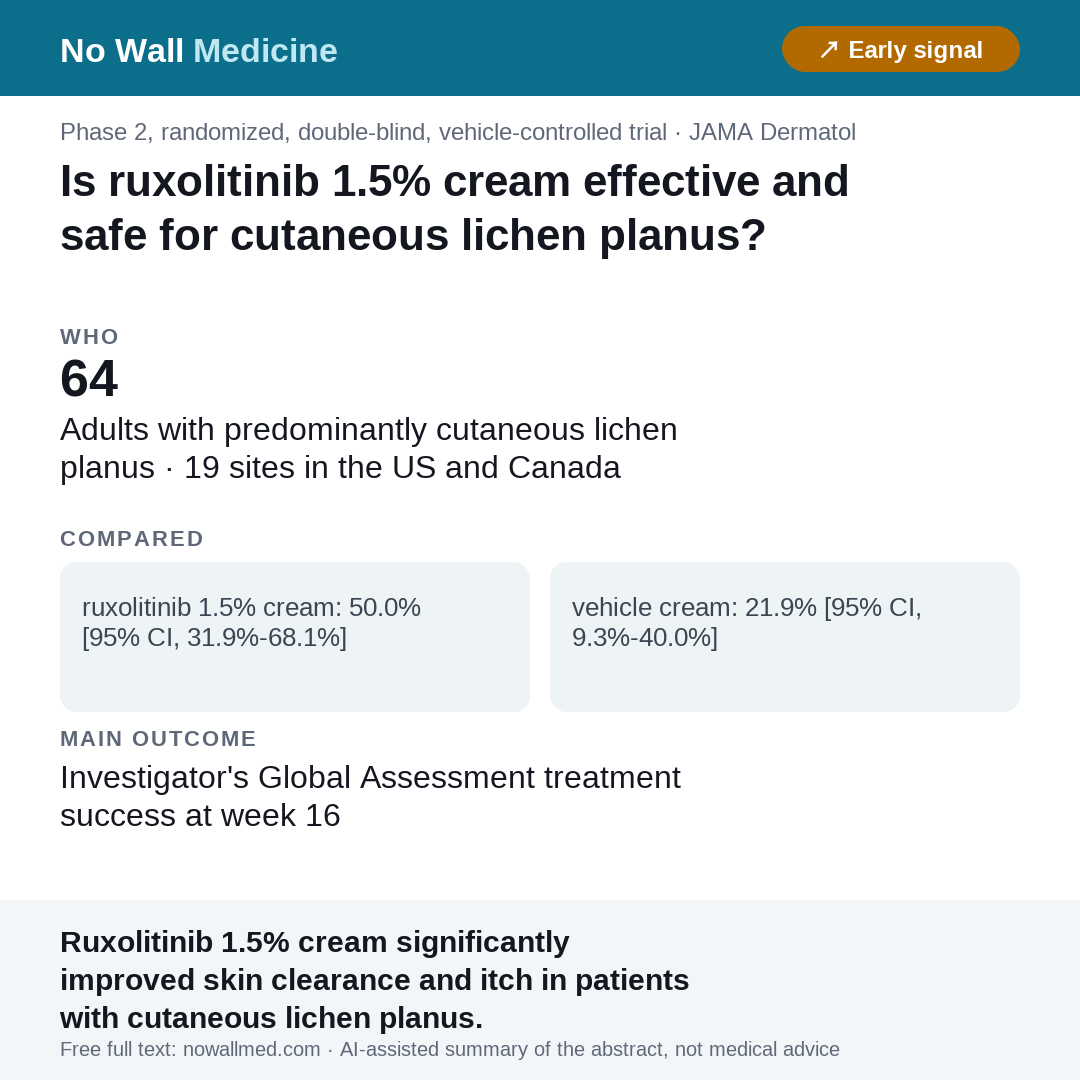
Efficacy and Safety of Ruxolitinib Cream in Patients With Cutaneous Lichen Planus: A Randomized Clinical Trial
Phase 2, randomized, double-blind, vehicle-controlled trialBenefit found
Is ruxolitinib 1.5% cream effective and safe for cutaneous lichen planus?
Who
64
Adults with predominantly cutaneous lichen planus · 19 sites in the US and Canada
Compared
ruxolitinib 1.5% cream: 50.0% [95% CI, 31.9%-68.1%]
vehicle cream: 21.9% [95% CI, 9.3%-40.0%]
Main outcome
Investigator's Global Assessment treatment success at week 16
Result: response rate difference, 29.4% [95% CI, 7.6%-51.3%]
Bottom line: Ruxolitinib 1.5% cream significantly improved skin clearance and itch in patients with cutaneous lichen planus.
JAMA Dermatol · 2026-09-23Download image
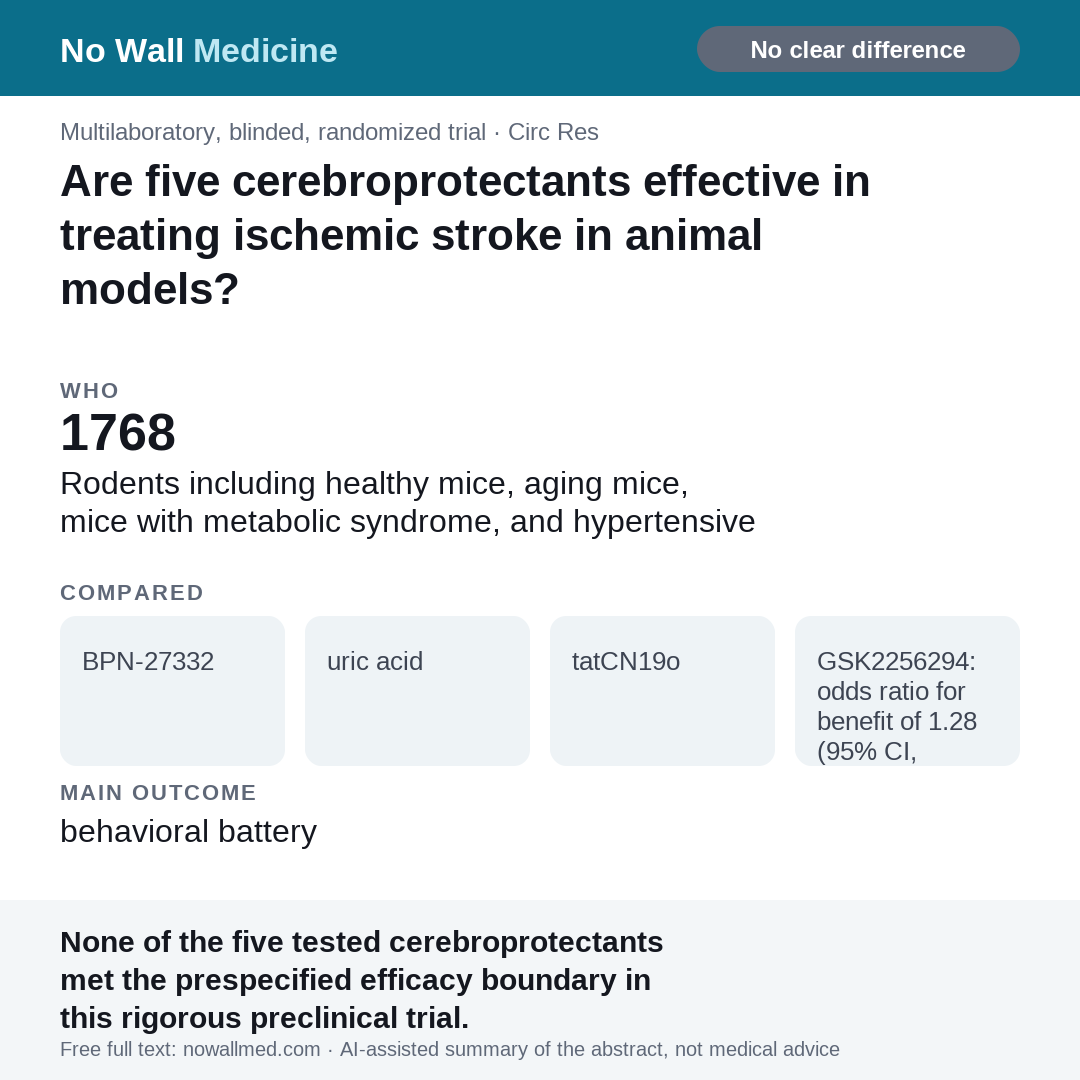
Multilaboratory, Blinded, Randomized Trial of Five Cerebroprotectants in Ischemic Stroke
Multilaboratory, blinded, randomized trialNo clear difference
Are five cerebroprotectants effective in treating ischemic stroke in animal models?
Who
1768
Rodents including healthy mice, aging mice, mice with metabolic syndrome, and hypertensive rats · 6 research laboratories and 1 coordinating center
Compared
BPN-27332
uric acid
tatCN19o
GSK2256294: odds ratio for benefit of 1.28 (95% CI, 0.99-1.65)
Main outcome
behavioral battery
Result: odds ratio 1.28 (95% CI 0.99-1.65)
Bottom line: None of the five tested cerebroprotectants met the prespecified efficacy boundary in this rigorous preclinical trial.
Circ Res · 2026-09-23Download image
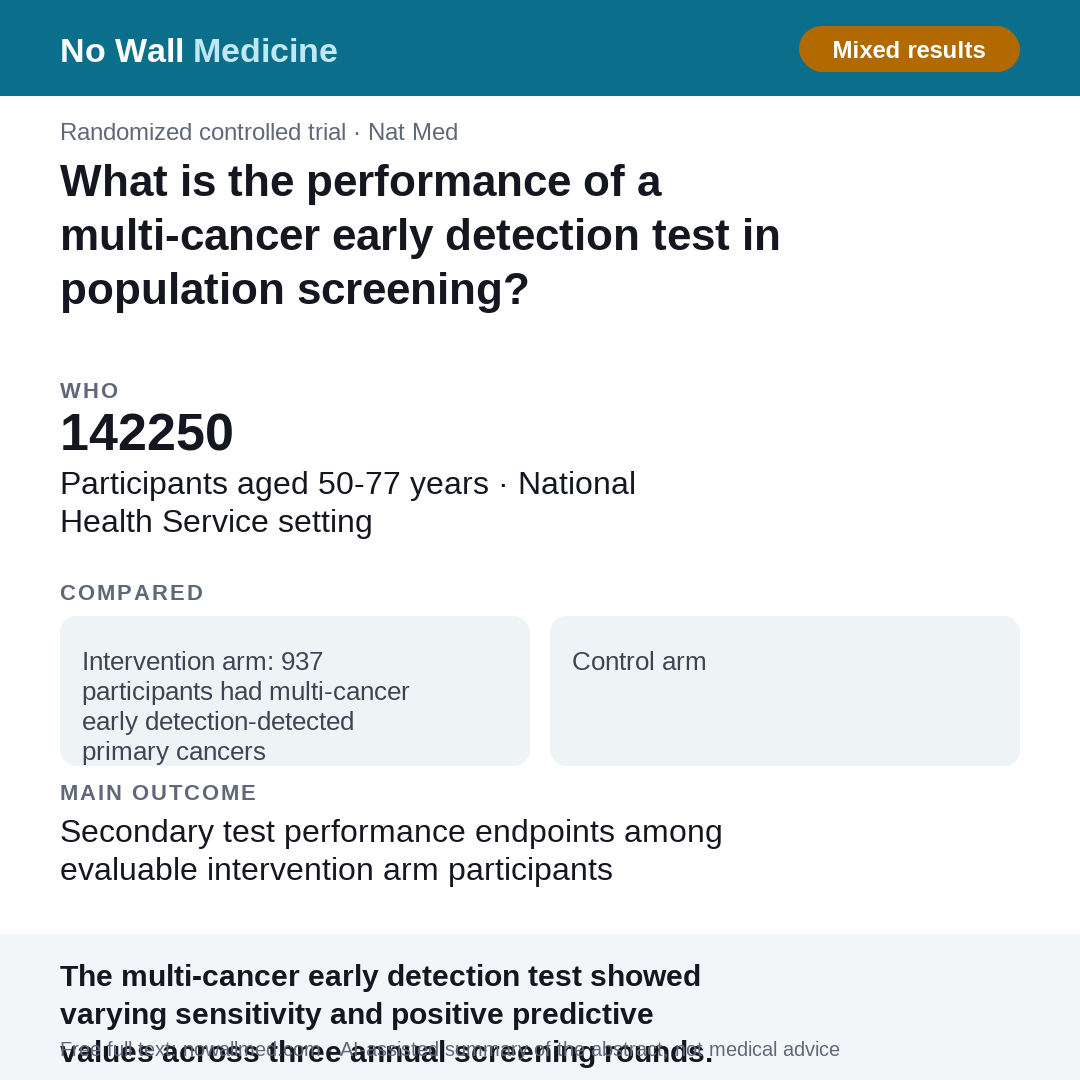
Performance of a multi-cancer early detection test in the randomized controlled NHS-Galleri trial
Randomized controlled trialMixed results
What is the performance of a multi-cancer early detection test in population screening?
Who
142250
Participants aged 50-77 years · National Health Service setting
Compared
Intervention arm: 937 participants had multi-cancer early detection-detected primary cancers
Control arm
Main outcome
Secondary test performance endpoints among evaluable intervention arm participants
Bottom line: The multi-cancer early detection test showed varying sensitivity and positive predictive values across three annual screening rounds.
Nat Med · 2026-09-22Download image