Visual abstracts
New randomized trials and meta-analyses from leading journals at a glance: who was studied, what was compared, and what was found. Every paper is free to read in full.
All specialtiesCardiology 4877Oncology 4138Gastroenterology & Hepatology 1942Infectious Disease 3837Neurology 1905Psychiatry & Mental Health 2273Pulmonology 2143Critical Care 1365Endocrinology & Diabetes 2580Pediatrics 2980Surgery 2559Orthopedics & Sports Medicine 931Neurosurgery 537Cardiothoracic & Vascular Surgery 674Plastic & Reconstructive Surgery 591Nephrology 1133Rheumatology 823Hematology 1109Dermatology 621Ophthalmology 543Obstetrics & Gynecology 1686Public & Global Health 1058Radiology & Imaging 648Anesthesiology 986Urology 764ENT (Otolaryngology) 503Emergency Medicine 511Allergy & Immunology 313Geriatrics 981Family Medicine & Primary Care 562Medical Genetics & Genomics 676Pathology & Laboratory Medicine 159Physical Medicine & Rehabilitation 757Palliative Care 444Nutrition 1588Digital Health & AI 2201General Medicine 321
Social Vulnerability and Child Food Insecurity in Developed Countries: A Systematic Review
Systematic review of observational studiesMixed results
What are the key social vulnerability contributors to child food insecurity in developed countries?
Who
49
Children residing in economically developed countries · Predominantly United States and Canada
Compared
Individual child factors
Parental factors
Household factors: income
Community and societal factors
Main outcome
Social vulnerability contributors to child food insecurity
Bottom line: Income is the most frequent contributor to child food insecurity among identified social vulnerability factors.
Limitation: Lack of consistent measures to define social vulnerability and food insecurity impeded meaningful pooling.
Adv Nutr · 2025-01-10Download image

Representation of Women in Atrial Fibrillation Ablation Randomized Controlled Trials: Systematic Review
Systematic reviewHarm found
What is the proportion of women enrolled in atrial fibrillation ablation randomized controlled trials?
Who
30,055
Participants in atrial fibrillation ablation randomized controlled trials · PubMed and Embase
Compared
Women: median 31.5%
Men: median 67.7%
Main outcome
Proportion of women enrolled in trials
Bottom line: Women are underrepresented in atrial fibrillation ablation trials and often have different clinical characteristics than men.
J Am Heart Assoc · 2025-01-10Download image

Impact of Proprotein Convertase Subtilisin/Kexin Type 9 Inhibitors on Lipoprotein(a): A Meta-Analysis and Meta-Regression of Randomized Controlled Trials
Meta-analysis of randomized controlled trialsBenefit found
Do proprotein convertase subtilisin/kexin type 9 inhibitors reduce lipoprotein(a) levels?
Who
Patients in randomized controlled trials
Compared
-27%Proprotein convertase subtilisin/kexin type 9 inhibitors
Placebo
Main outcome
percent change in lipoprotein(a) levels
Result: -27% (95% CI: -29.8% to -24.1%)
Bottom line: Proprotein convertase subtilisin/kexin type 9 inhibitors reduce lipoprotein(a) levels by an average of 27%.
JACC Adv · 2025-01-10Download image

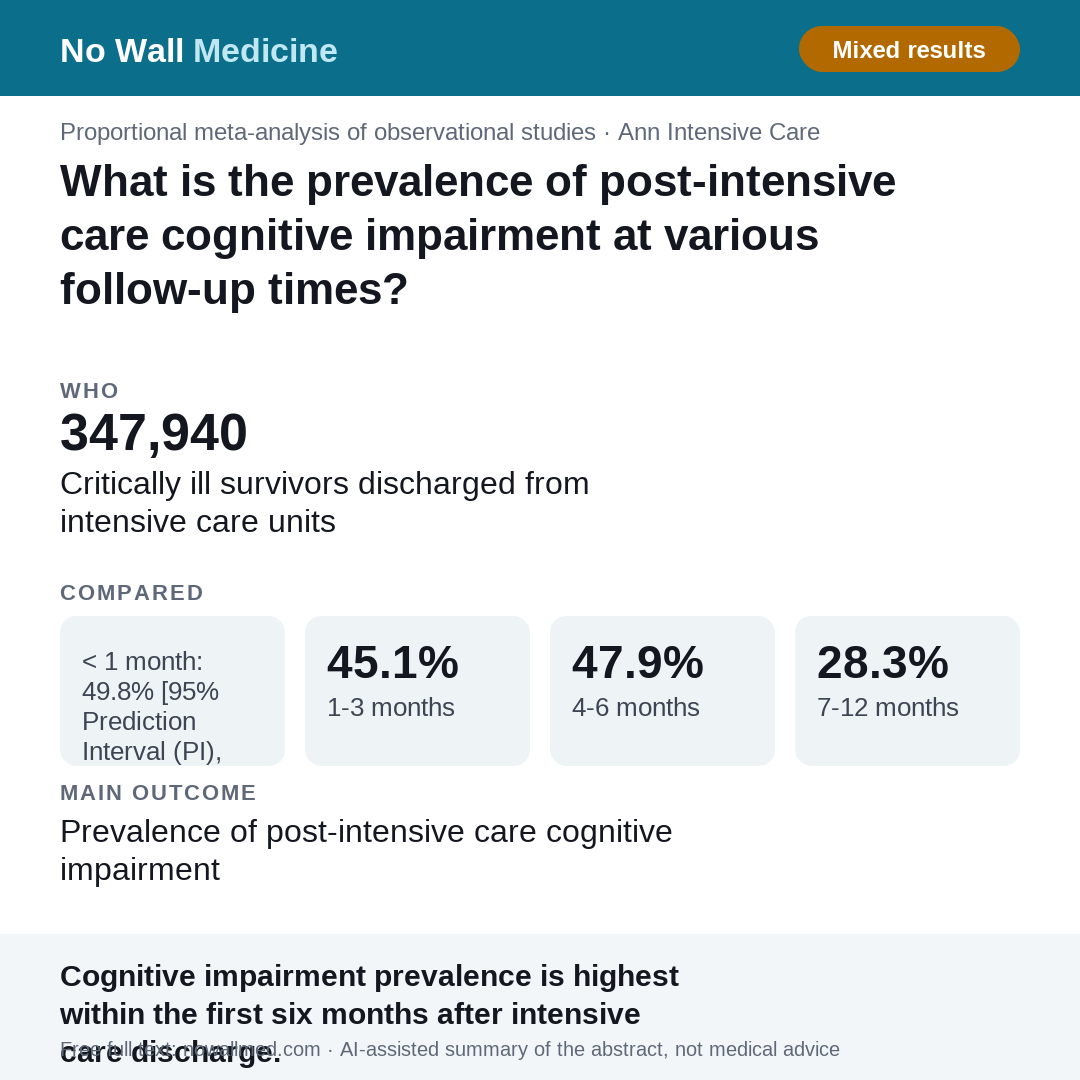
Estimated prevalence of post-intensive care cognitive impairment at short-term and long-term follow-ups: a proportional meta-analysis of observational studies
Proportional meta-analysis of observational studiesMixed results
What is the prevalence of post-intensive care cognitive impairment at various follow-up times?
Who
347,940
Critically ill survivors discharged from intensive care units
Compared
< 1 month: 49.8% [95% Prediction Interval (PI), 39.9%-59.7%, n = 19]
45.1%1-3 months (95% PI, 34.8%-55.5%, n = 23)
47.9%4-6 months (95% PI, 35.9%-60.0%, n = 16)
28.3%7-12 months (95% PI, 19.9%-37.6%, n = 19)
Main outcome
Prevalence of post-intensive care cognitive impairment
Bottom line: Cognitive impairment prevalence is highest within the first six months after intensive care discharge.
Ann Intensive Care · 2025-01-10Download image
Organ-specific malperfusion in acute type A aortic dissection: epidemiological meta-analysis of incidence rates
Meta-analysis of 40 studiesMixed results
What is the incidence and mortality of organ-specific malperfusion in acute type A aortic dissection?
Who
35 361
Patients with acute type A aortic dissection
Compared
12%Peripheral limb malperfusion (95% c.i. 10 to 14)
11%Lower limb or iliofemoral (95% c.i. 9 to 14)
1%Spinal malperfusion (95% c.i. 1 to 2)
Main outcome
In-hospital mortality rate associated with organ-specific malperfusion
Bottom line: In-hospital mortality varies by malperfusion type, with mesenteric, coronary, and cerebral malperfusion showing the highest rates.
BJS Open · 2025-01-10Download image

Incidence and Risk of Thromboembolic and Cardiovascular Adverse Events with PARP Inhibitor Treatment in Patients with Metastatic Castration-resistant Prostate Cancer: A Systematic Review and Safety Meta-analysis
Systematic review and safety meta-analysisHarm found
What are the risks of cardiovascular and thromboembolic events with PARP inhibitor treatment?
Who
Patients with metastatic castration-resistant prostate cancer
Compared
PARP inhibitor treatment
non-PARP inhibitor treatment
Main outcome
Major adverse cardiovascular events, thromboembolic events, and hypertension
Result: high-grade MACEs RR 2.03 (p = 0.03), thromboembolic events RR 2.15 (p = 0.002)
Bottom line: PARP inhibitors are associated with higher risk of high-grade cardiovascular and thromboembolic toxicity compared to other treatments.
Limitation: cardiovascular and thromboembolic adverse events are uncommon
Eur Urol Open Sci · 2025-01-10Download image

Virtual Reality Interventions for Older Adults With Mild Cognitive Impairment: Systematic Review and Meta-Analysis of Randomized Controlled Trials
Systematic review and meta-analysis of randomized controlled trialsBenefit found
Do virtual reality interventions improve outcomes in older adults with mild cognitive impairment?
Who
722
Older adults aged 55 years or older with mild cognitive impairment
Compared
Virtual reality interventions
Control
Main outcome
Cognition, mood, quality of life, and physical fitness
Result: memory SMD 0.2 (95% CI 0.02-0.38), attention and information processing speed SMD 0.25 (95% CI 0.06-0.45), executive function SMD 0.22 (95% CI 0.02-0.42)
Bottom line: Virtual reality interventions can improve memory, attention, information processing speed, and executive function in older adults with mild cognitive impairment.
Limitation: The quality of evidence is moderate to low for certain outcomes.
J Med Internet Res · 2025-01-10Download image

Preoperative smoking cessation interventions: a systematic review and meta-analysis
Systematic review and meta-analysisMixed results
Do preoperative smoking cessation interventions increase smoking cessation and reduce postoperative complications?
Who
2940
Smokers undergoing surgery
Compared
Smoking cessation intervention
Usual care
Main outcome
Smoking cessation and postoperative complications
Result: relative risk 1.64 (95% CI 1.30-2.07) for smoking cessation
Bottom line: Interventions increase odds of quitting smoking but do not reduce postoperative complications.
Limitation: High risk of bias and heterogeneity in the included studies.
Perioper Med · 2025-01-10Download image

Optimal Strategy for Complete Revascularization in ST-Segment Elevation Myocardial Infarction and Multivessel Disease: A Network Meta-Analysis
Network meta-analysis of randomized controlled trialsBenefit found
What is the optimal revascularization strategy for STEMI patients with multivessel disease?
Who
15,902
Patients with ST-segment elevation myocardial infarction and multivessel disease
Compared
Culprit vessel-only revascularization
Immediate complete revascularization: reduced MACE
Staged complete revascularization: reduced MACE
Main outcome
major adverse cardiovascular events
Result: RR: 0.48; 95% CI: 0.36-0.64 (immediate CR) and RR: 0.65; 95% CI: 0.52-0.82 (staged CR)
Bottom line: Complete revascularization, whether immediate or staged, reduces major adverse cardiovascular events compared to culprit vessel-only treatment.
Limitation: The benefit of immediate versus staged revascularization for myocardial infarction was diminished when excluding procedural myocardial infarction.
JACC · 2025-01-09Download image

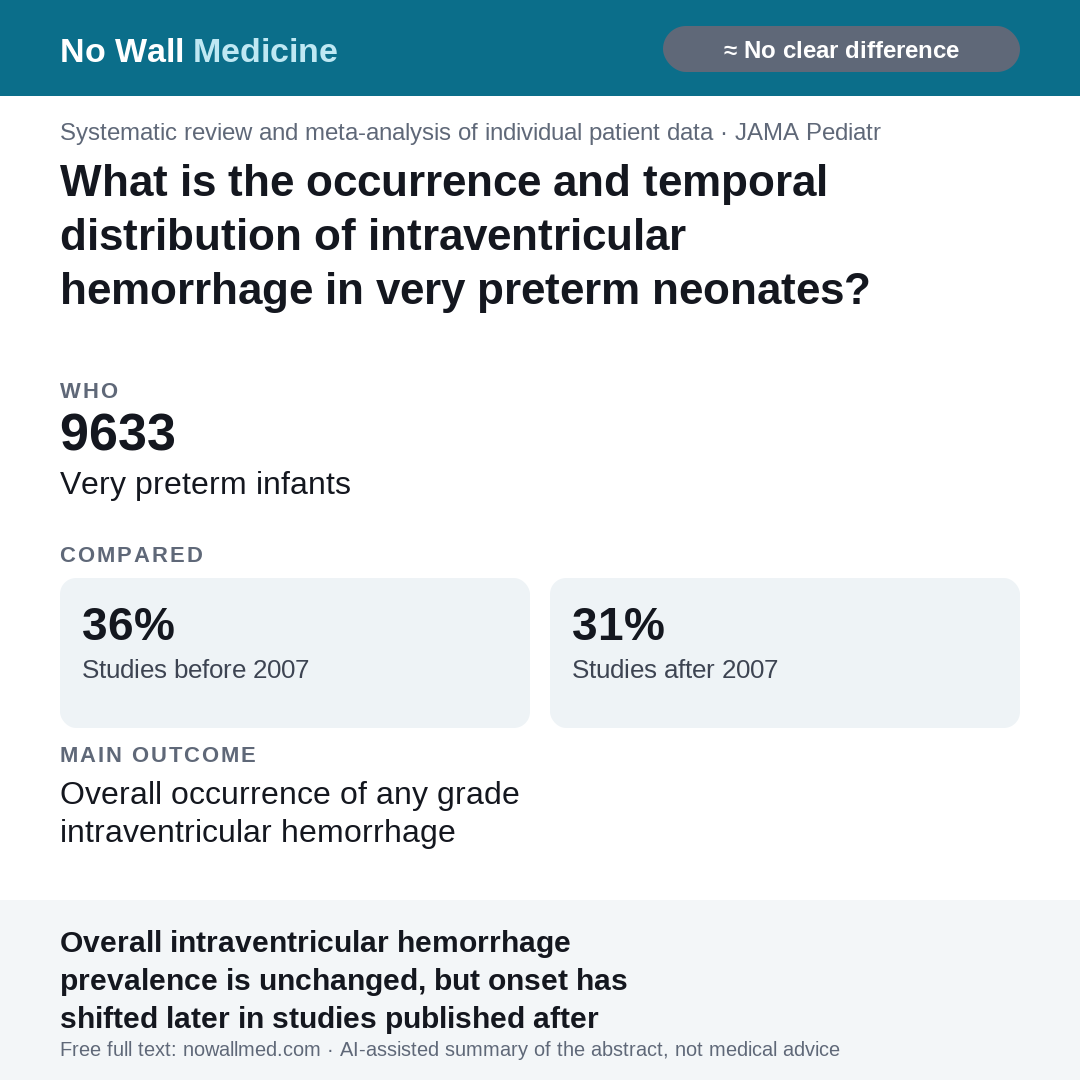
Occurrence and Time of Onset of Intraventricular Hemorrhage in Preterm Neonates: A Systematic Review and Meta-Analysis of Individual Patient Data
Systematic review and meta-analysis of individual patient dataNo clear difference
What is the occurrence and temporal distribution of intraventricular hemorrhage in very preterm neonates?
Who
9633
Very preterm infants
Compared
36%Studies before 2007 (95% CI, 30%-42%)
31%Studies after 2007 (95% CI, 25%-36%)
Main outcome
Overall occurrence of any grade intraventricular hemorrhage
Bottom line: Overall intraventricular hemorrhage prevalence is unchanged, but onset has shifted later in studies published after 2007.
JAMA Pediatr · 2025-01-09Download image
Systematic Review: Efficacy of Medical Therapy on Outcomes Important to Pediatric Patients With X-Linked Hypophosphatemia
Systematic review of randomized controlled trials and observational studiesBenefit found
Does medical therapy improve outcomes in children with X-linked hypophosphatemia?
Who
Children younger than 18 years with X-linked hypophosphatemia
Compared
Burosumab: probably prevents lower limb deformity and improves physical health quality of life
Conventional therapy or no treatment
Main outcome
Clinical outcomes important to pediatric patients with X-linked hypophosphatemia
Bottom line: Burosumab likely prevents lower limb deformity and improves physical health quality of life in children with X-linked hypophosphatemia.
Limitation: High risk of bias in included studies and low certainty of evidence.
J Clin Endocrinol Metab · 2025-01-09Download image

Evaluating Minimal Residual Disease Negativity as a Surrogate Endpoint for Treatment Efficacy in Multiple Myeloma: A Meta-Analysis of Randomized Controlled Trials
Meta-analysis of randomized controlled trialsBenefit found
Is minimal residual disease negativity a surrogate endpoint for treatment efficacy in multiple myeloma?
Who
15304
Patients with multiple myeloma
Compared
Minimal residual disease negativity
Survival outcomes
Main outcome
Progression free survival and overall survival
Result: beta progression free survival = -0.20, p < 0.001, beta overall survival = -0.12, p = 0.023
Bottom line: Minimal residual disease negativity is a surrogate for survival in multiple myeloma.
Am J Hematol · 2025-01-09Download image

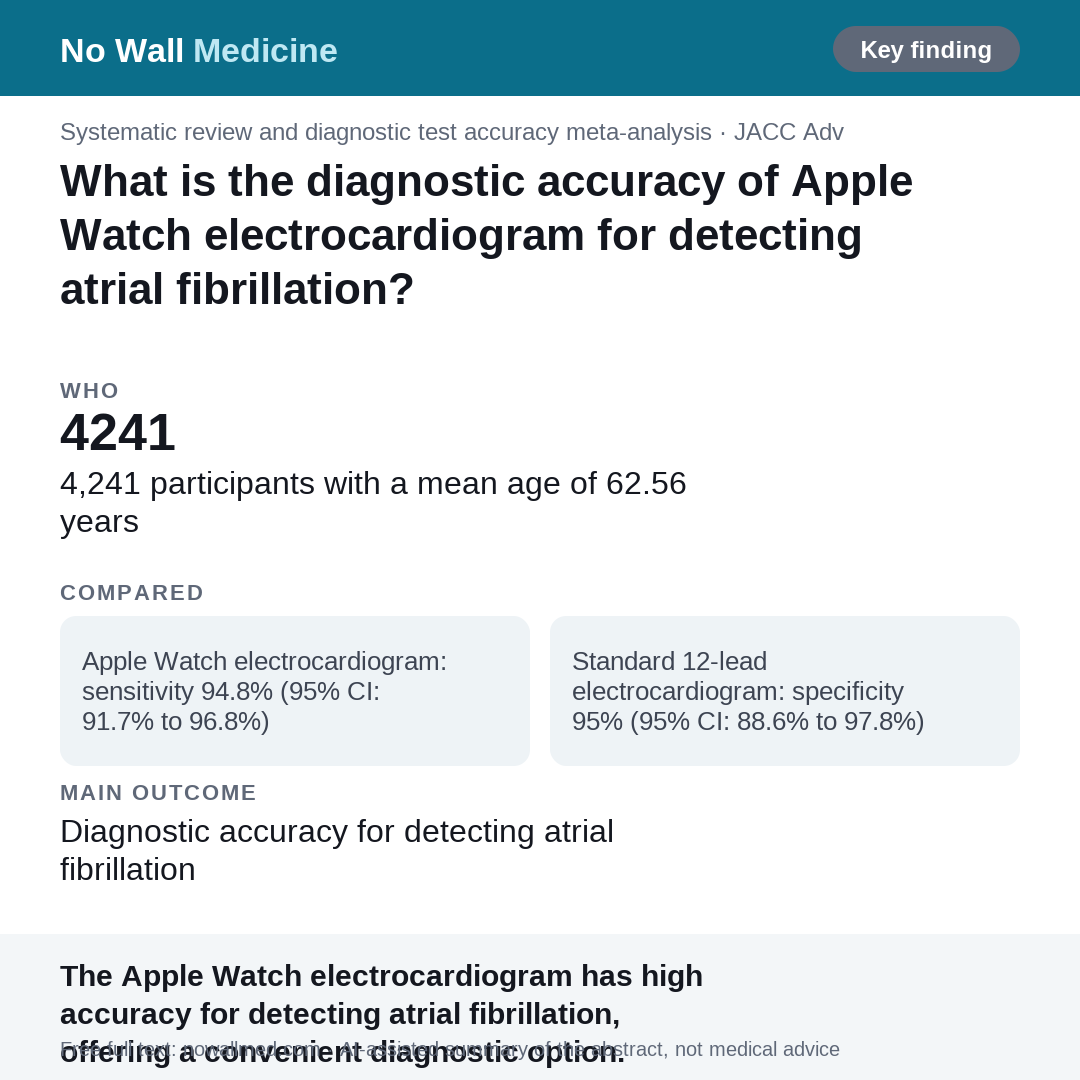
Diagnostic Accuracy of Apple Watch Electrocardiogram for Atrial Fibrillation: A Systematic Review and Meta-Analysis
Systematic review and diagnostic test accuracy meta-analysisBenefit found
What is the diagnostic accuracy of Apple Watch electrocardiogram for detecting atrial fibrillation?
Who
4241
4,241 participants with a mean age of 62.56 years
Compared
Apple Watch electrocardiogram: sensitivity 94.8% (95% CI: 91.7% to 96.8%)
Standard 12-lead electrocardiogram: specificity 95% (95% CI: 88.6% to 97.8%)
Main outcome
Diagnostic accuracy for detecting atrial fibrillation
Result: area under the receiver operating characteristic curve 0.96 (95% CI: 0.92-0.97)
Bottom line: The Apple Watch electrocardiogram has high accuracy for detecting atrial fibrillation, offering a convenient diagnostic option.
JACC Adv · 2025-01-09Download image
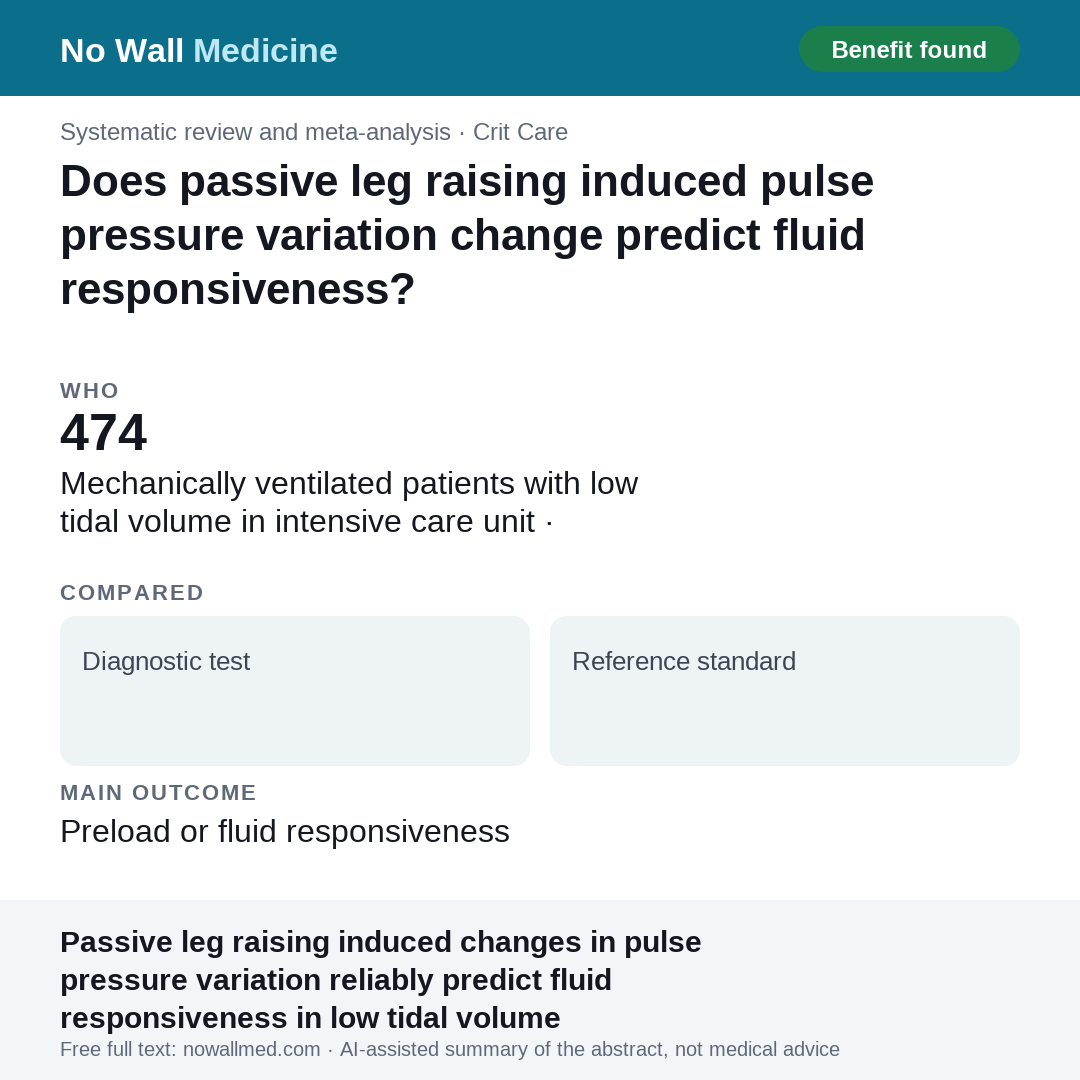
Changes in pulse pressure variation induced by passive leg raising test to predict preload responsiveness in mechanically ventilated patients with low tidal volume in ICU: a systematic review and meta-analysis
Systematic review and meta-analysisBenefit found
Does passive leg raising induced pulse pressure variation change predict fluid responsiveness?
Who
474
Mechanically ventilated patients with low tidal volume in intensive care unit · Intensive care unit
Compared
Diagnostic test
Reference standard
Main outcome
Preload or fluid responsiveness
Result: area under the curve 0.91 (95% CI 0.88-0.93)
Bottom line: Passive leg raising induced changes in pulse pressure variation reliably predict fluid responsiveness in low tidal volume ventilated patients.
Crit Care · 2025-01-09Download image
Impact of exposure to opioids in pregnancy on offspring developmental outcomes in the preschool years: an umbrella review
Umbrella reviewMixed results
Does prenatal opioid exposure affect offspring developmental outcomes in the preschool years?
Who
Children exposed to opioids in pregnancy up to age 5
Compared
Prenatal opioid exposure: associated with visual function, motor skills, externalising problems and language difficulties
No conclusive evidence: cognitive development or internalising symptoms
Main outcome
Preschool developmental outcomes
Bottom line: Prenatal opioid exposure is associated with several developmental issues, but the evidence remains weak.
Limitation: Poor quality research in original studies, small sample sizes, and lack of controlling for confounding.
BMJ Paediatr Open · 2025-01-09Download image

Efficacy and safety of non-pharmacological, pharmacological and surgical treatments for hand osteoarthritis in 2024: a systematic review
Systematic review of randomized controlled trialsMixed results
What are the efficacy and safety of treatments for hand osteoarthritis?
Who
Patients with hand osteoarthritis
Compared
Non-pharmacological interventions
Pharmacological interventions
Surgical treatments
Main outcome
Pain, function, grip strength, and OMERACT/OARSI responders
Bottom line: Current treatments show limited evidence and lack interventions that efficiently improve grip strength.
Limitation: Evidence for most current treatments is still limited.
RMD Open · 2025-01-09Download image

Effect of eHealth Interventions on Body Image of Patients With Cancer: Systematic Review
Systematic review of randomized controlled trials and quasi-experimentsMixed results
Do eHealth interventions effectively improve body image and other health outcomes in cancer patients?
Who
512
Patients with cancer · Not specified
Compared
eHealth interventions
Control
Main outcome
Body image, quality of life, physical symptoms, and emotional distress
Bottom line: eHealth interventions may enhance body image, physical symptoms, and emotional distress, but quality of life showed no notable enhancement.
Limitation: More rigorous experiments are needed to elucidate effectiveness and address challenges.
J Med Internet Res · 2025-01-09Download image

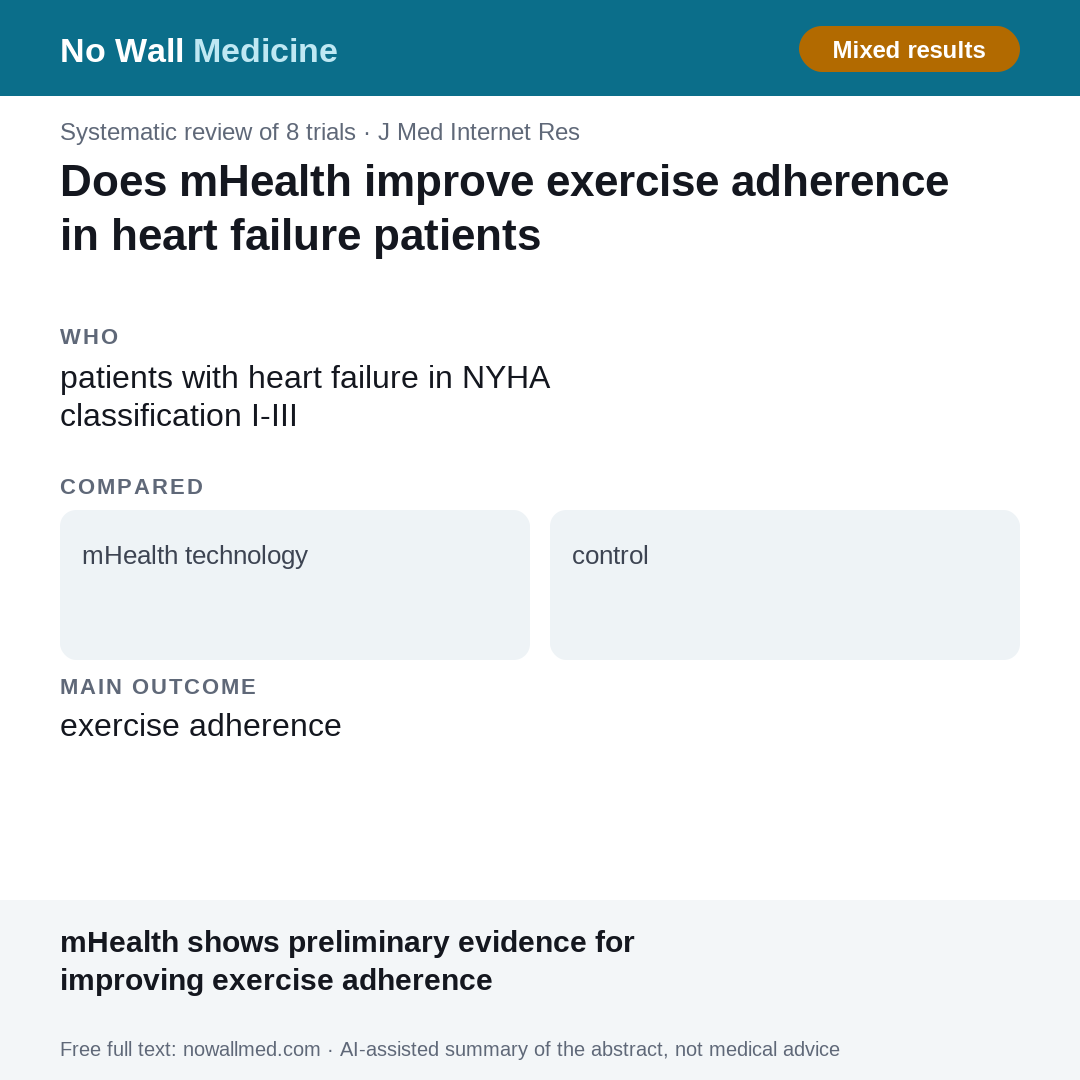
Use of mHealth Technology for Improving Exercise Adherence in Patients With Heart Failure: Systematic Review
Systematic review of 8 trialsMixed results
Does mHealth improve exercise adherence in heart failure patients
Who
patients with heart failure in NYHA classification I-III
Compared
mHealth technology
control
Main outcome
exercise adherence
Bottom line: mHealth shows preliminary evidence for improving exercise adherence
Limitation: theoretically sound and fully powered studies lacking
J Med Internet Res · 2025-01-09Download image
Effectiveness of Integrated Digital Solutions to Empower Older Adults in Aspects Related to Their Health: Systematic Review and Meta-Analysis
Systematic review and meta-analysisBenefit found
Are integrated digital solutions effective for empowering older adults in health-related aspects?
Who
Older adults
Compared
Digital intervention
Usual care
Main outcome
Empowerment domains including knowledge, capacities, social support, and behaviors
Result: knowledge ES=0.40 (95% CI 0.07-0.73); capacities d=0.29 (95% CI 0.07-0.52)
Bottom line: Digital solutions may increase knowledge and capacities in older adults, though certainty of evidence remains very low to low.
J Med Internet Res · 2025-01-09Download image

Time to nursing home admission and death in people with dementia: systematic review and meta-analysis
Systematic review and meta-analysisMixed results
What is the time to nursing home admission and death in people with dementia?
Who
5553960
People with dementia
Compared
Women: mean difference 4.1 years (95% confidence interval 2.1 to 6.1) shorter survival than men
Men
Main outcome
Survival and nursing home admission
Bottom line: Survival and nursing home admission depend on age, sex, and dementia type, with over half admitted within five years.
BMJ · 2025-01-08Download image