Visual abstracts
New randomized trials and meta-analyses from leading journals at a glance: who was studied, what was compared, and what was found. Every paper is free to read in full.
All specialtiesCardiology 4877Oncology 4138Gastroenterology & Hepatology 1942Infectious Disease 3837Neurology 1905Psychiatry & Mental Health 2273Pulmonology 2143Critical Care 1365Endocrinology & Diabetes 2580Pediatrics 2980Surgery 2559Orthopedics & Sports Medicine 931Neurosurgery 537Cardiothoracic & Vascular Surgery 674Plastic & Reconstructive Surgery 591Nephrology 1133Rheumatology 823Hematology 1109Dermatology 621Ophthalmology 543Obstetrics & Gynecology 1686Public & Global Health 1058Radiology & Imaging 648Anesthesiology 986Urology 764ENT (Otolaryngology) 503Emergency Medicine 511Allergy & Immunology 313Geriatrics 981Family Medicine & Primary Care 562Medical Genetics & Genomics 676Pathology & Laboratory Medicine 159Physical Medicine & Rehabilitation 757Palliative Care 444Nutrition 1588Digital Health & AI 2201General Medicine 321
Preoperative and intraoperative neuromonitoring and mapping techniques impact oncological and functional outcomes in supratentorial function-eloquent brain tumours: a systematic review and meta-analysis
Systematic review and meta-analysisMixed results
Do preoperative and intraoperative mapping techniques impact resection and functional outcomes?
Who
992
Patients undergoing surgery for supratentorial brain tumours
Compared
50.79%Preoperative mapping only
41.23%Intraoperative neuromonitoring and mapping
49.13%Combined techniques
Main outcome
Gross total resection rates and focal neurological deficits
Bottom line: Combined mapping techniques improve resection in language-eloquent tumours, but standalone intraoperative neuromonitoring is associated with higher permanent deficits.
eClinicalMedicine · 2025-01-08Download image

Safety and efficacy of long-acting cabotegravir/rilpivirine versus standard oral antiretroviral therapy: a systematic review and meta-analysis
Systematic review and meta-analysis of six randomized controlled trialsMixed results
Is long-acting antiretroviral therapy as safe and effective as standard oral treatment?
Who
2829
People living with HIV
Compared
Long-acting antiretrovirals: HIV RNA < 50 copies/mL non-inferior
Standard oral treatment: HIV RNA < 50 copies/mL
Main outcome
HIV RNA suppression, adverse events, and drug resistance
Result: Risk Ratio 1.22 (95% CI 1.12-1.33) for grade 1-4 adverse events
Bottom line: Long-acting antiretrovirals have non-inferior efficacy but higher risks of drug resistance and adverse events than standard oral therapy.
J Antimicrob Chemother · 2025-01-08Download image

Updated appropriate use criteria for amyloid and tau PET: A report from the Alzheimer's Association and Society for Nuclear Medicine and Molecular Imaging Workgroup
Guideline updateUnclear result
Use of amyloid and tau PET
Who
patients with cognitive decline
Compared
Amyloid PET
Tau PET
Main outcome
appropriate use
Bottom line: Updated criteria for amyloid and tau PET use
Alzheimers Dement · 2025-01-08Download image

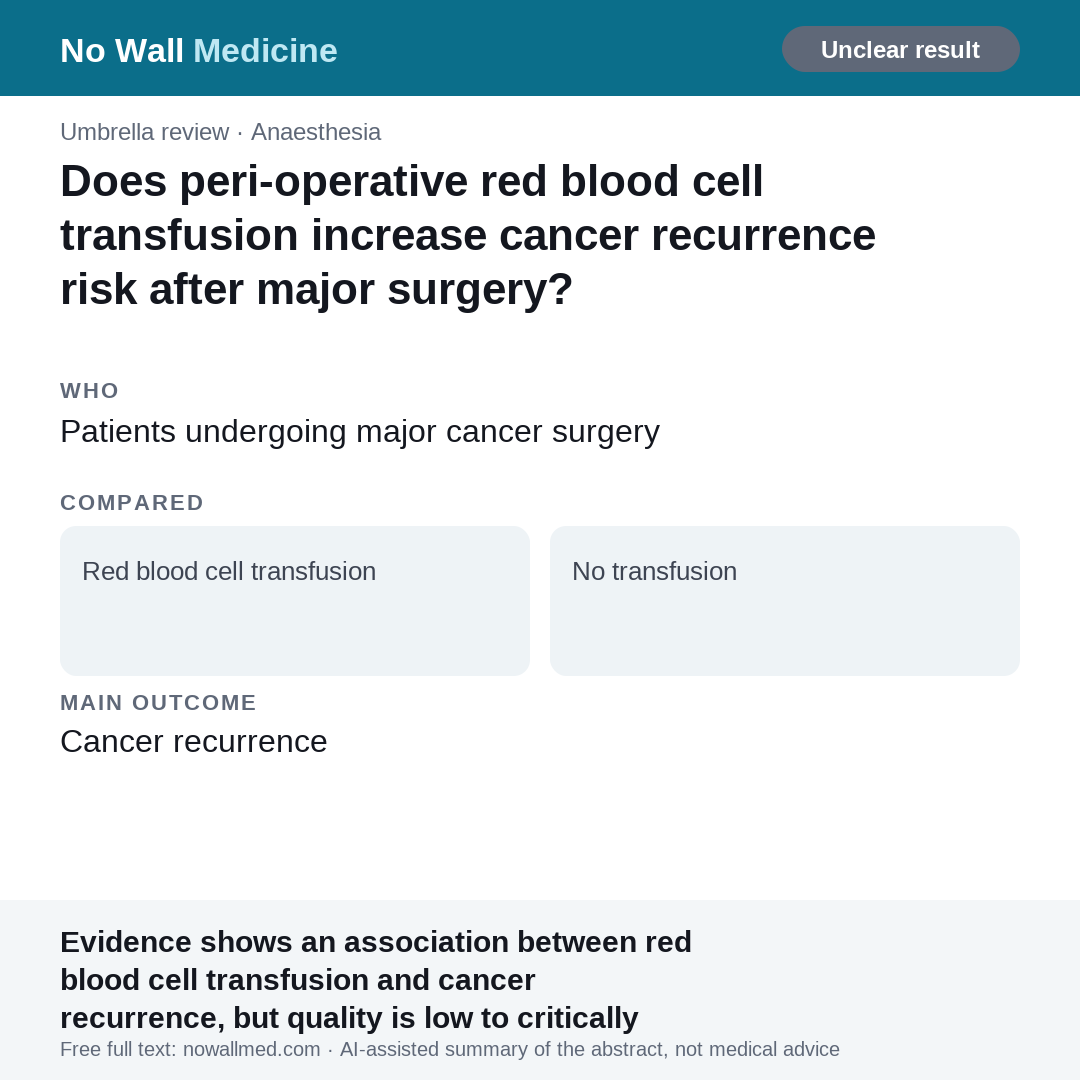
Association between peri-operative red blood cell transfusion and cancer recurrence in patients undergoing major cancer surgery: an umbrella review
Umbrella reviewUnclear result
Does peri-operative red blood cell transfusion increase cancer recurrence risk after major surgery?
Who
Patients undergoing major cancer surgery
Compared
Red blood cell transfusion
No transfusion
Main outcome
Cancer recurrence
Bottom line: Evidence shows an association between red blood cell transfusion and cancer recurrence, but quality is low to critically low.
Limitation: High likelihood of unmeasured confounding and low to critically low quality of systematic reviews.
Anaesthesia · 2025-01-08Download image
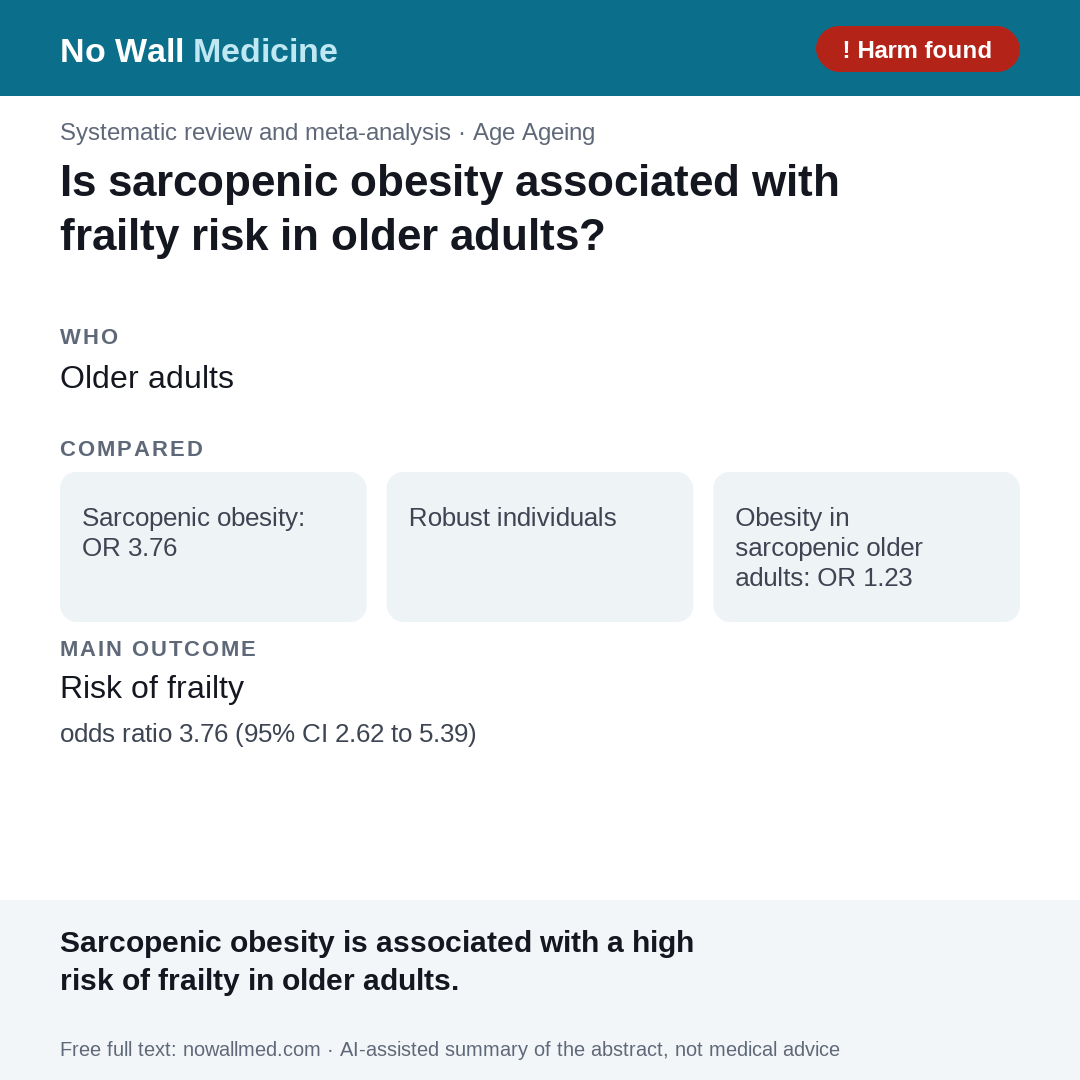
Association between sarcopenic obesity and risk of frailty in older adults: a systematic review and meta-analysis
Systematic review and meta-analysisHarm found
Is sarcopenic obesity associated with frailty risk in older adults?
Who
Older adults
Compared
Sarcopenic obesity: OR 3.76
Robust individuals
Obesity in sarcopenic older adults: OR 1.23
Main outcome
Risk of frailty
Result: odds ratio 3.76 (95% CI 2.62 to 5.39)
Bottom line: Sarcopenic obesity is associated with a high risk of frailty in older adults.
Age Ageing · 2025-01-08Download image
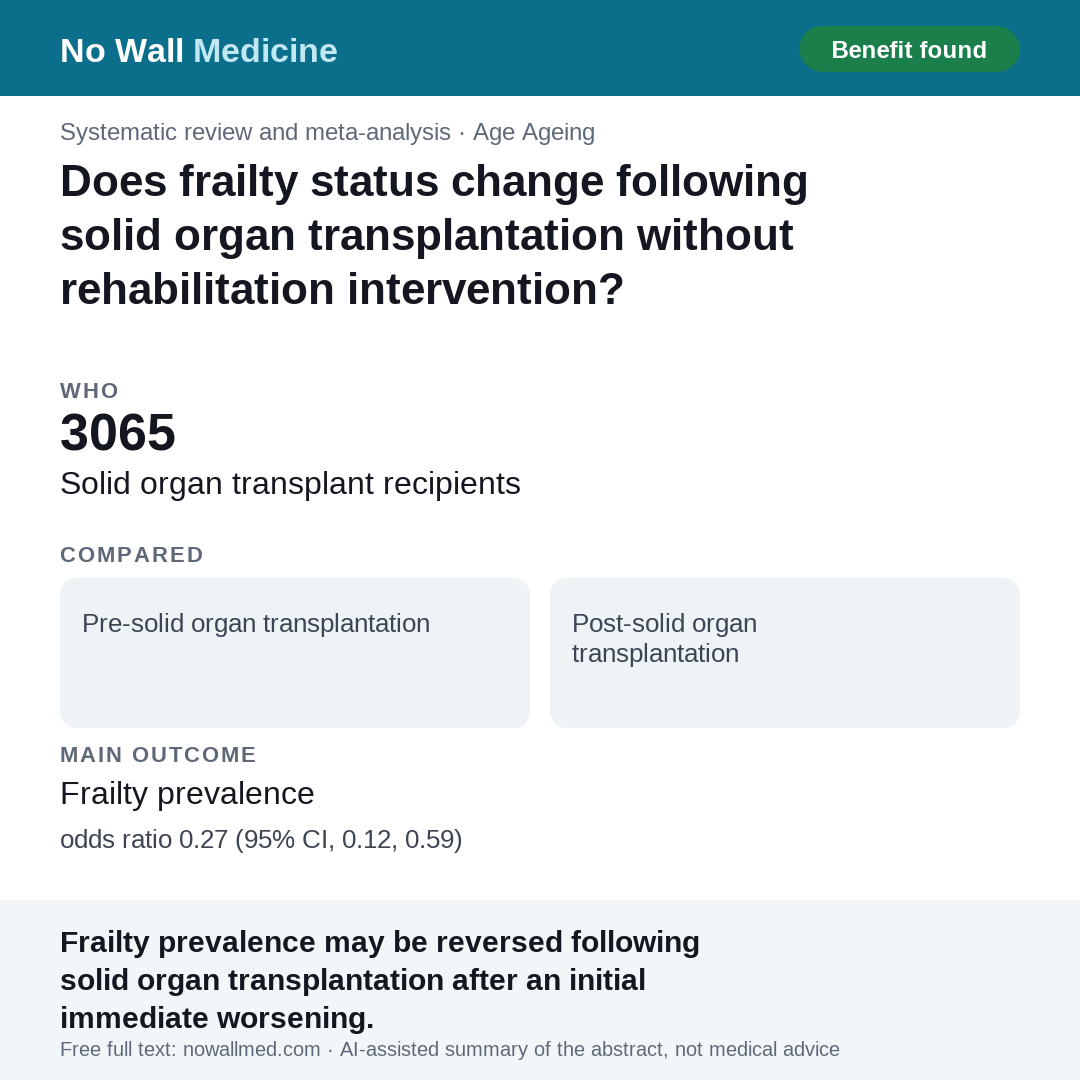
Change in frailty status in the 12 months following solid organ transplantation: a systematic review and meta-analysis
Systematic review and meta-analysisBenefit found
Does frailty status change following solid organ transplantation without rehabilitation intervention?
Who
3065
Solid organ transplant recipients
Compared
Pre-solid organ transplantation
Post-solid organ transplantation
Main outcome
Frailty prevalence
Result: odds ratio 0.27 (95% CI, 0.12, 0.59)
Bottom line: Frailty prevalence may be reversed following solid organ transplantation after an initial immediate worsening.
Age Ageing · 2025-01-08Download image
Exploring Non-invasive Brain Stimulation Effects on Physical Outcomes in People With Parkinson's Disease: An Umbrella Evidence Mapping Review With Meta-analyses
Umbrella review with meta-analysesBenefit found
Does non-invasive brain stimulation improve motor function in people with Parkinson's disease?
Who
People with idiopathic Parkinson's disease
Compared
Non-invasive brain stimulation
Sham or alternative treatments
Main outcome
Motor function, functional mobility, and freezing of gait
Result: SMD -0.80 for motor function, -0.39 for functional mobility, -0.58 for freezing of gait
Bottom line: Non-invasive brain stimulation offers small-to-moderate benefits for motor symptoms and functional movement but does not significantly impact balance.
Limitation: The included reviews were rated as moderate quality
Neurorehabil Neural Repair · 2025-01-08Download image

Time Trends in Major Adverse Cardiovascular Events After Percutaneous Coronary Intervention: Meta-Analysis on Sex Differences
Meta-analysis of 32 trialsHarm found
Are there sex-related differences in cardiovascular adverse outcomes after percutaneous coronary intervention?
Who
Patients with acute coronary syndrome
Compared
Women: higher risk of major adverse cardiovascular events
Men
Main outcome
major adverse cardiovascular events
Result: risk ratio 1.43 (95% CI 1.10-1.86) at short-term
Bottom line: Women have a higher risk of adverse cardiovascular outcomes compared with men after percutaneous coronary intervention.
JACC Adv · 2025-01-08Download image

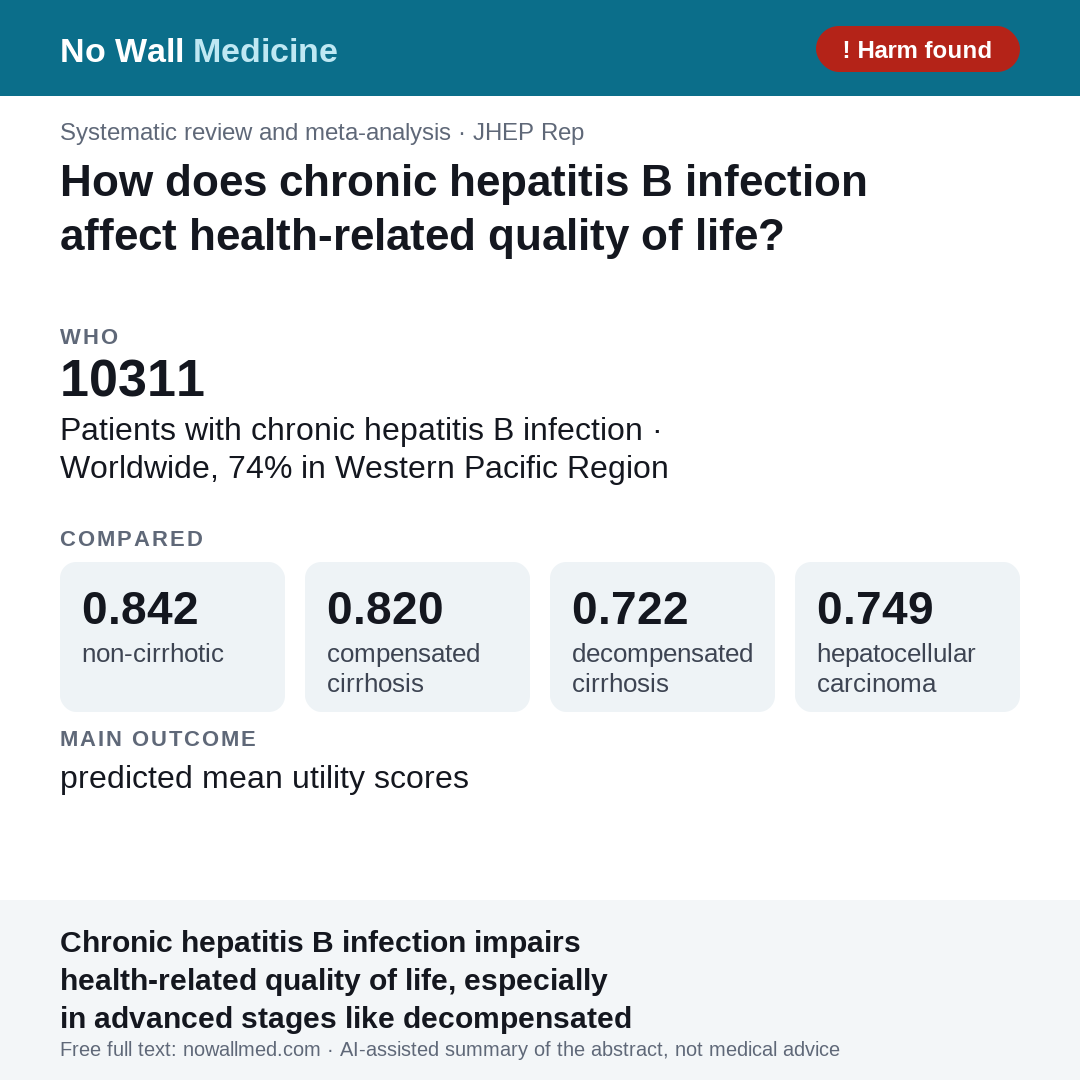
Quality of life in patients with HBV infection: A systematic review and meta-analysis
Systematic review and meta-analysisHarm found
How does chronic hepatitis B infection affect health-related quality of life?
Who
10311
Patients with chronic hepatitis B infection · Worldwide, 74% in Western Pacific Region
Compared
0.842non-cirrhotic
0.820compensated cirrhosis
0.722decompensated cirrhosis
0.749hepatocellular carcinoma
Main outcome
predicted mean utility scores
Bottom line: Chronic hepatitis B infection impairs health-related quality of life, especially in advanced stages like decompensated cirrhosis and hepatocellular carcinoma.
Limitation: Data are lacking in high-burden, low-income settings and regarding treatment effects.
JHEP Rep · 2025-01-08Download image
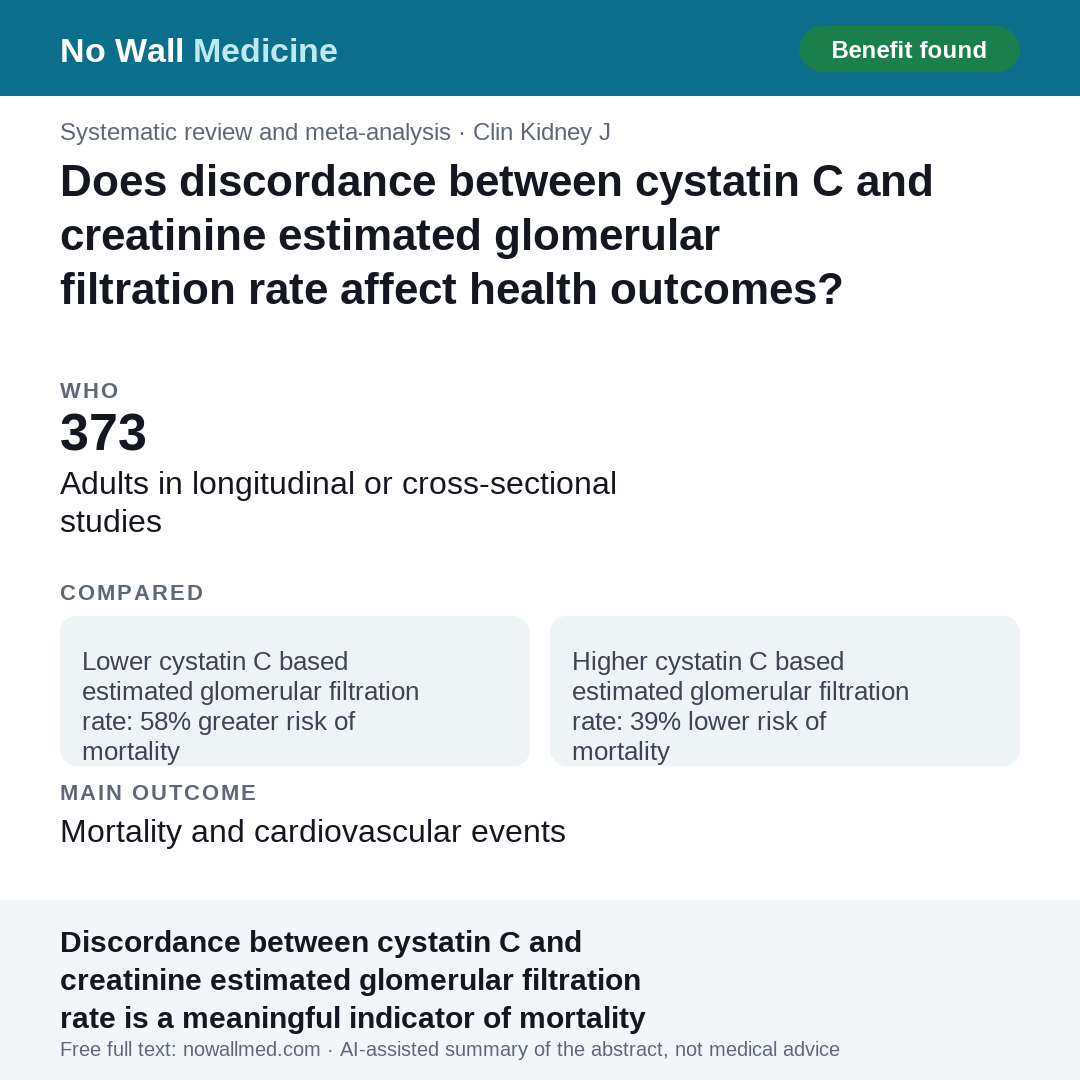
Discordance between cystatin C-based and creatinine-based estimated glomerular filtration rate and health outcomes in adults: a systematic review and meta-analysis
Systematic review and meta-analysisBenefit found
Does discordance between cystatin C and creatinine estimated glomerular filtration rate affect health outcomes?
Who
373
Adults in longitudinal or cross-sectional studies
Compared
Lower cystatin C based estimated glomerular filtration rate: 58% greater risk of mortality
Higher cystatin C based estimated glomerular filtration rate: 39% lower risk of mortality
Main outcome
Mortality and cardiovascular events
Result: hazard ratio 1.58 (95% CI 1.42, 1.76) for mortality
Bottom line: Discordance between cystatin C and creatinine estimated glomerular filtration rate is a meaningful indicator of mortality and cardiovascular risk.
Limitation: Lack of consensus on discordance cut-off values and mixture of equations used.
Clin Kidney J · 2025-01-08Download image
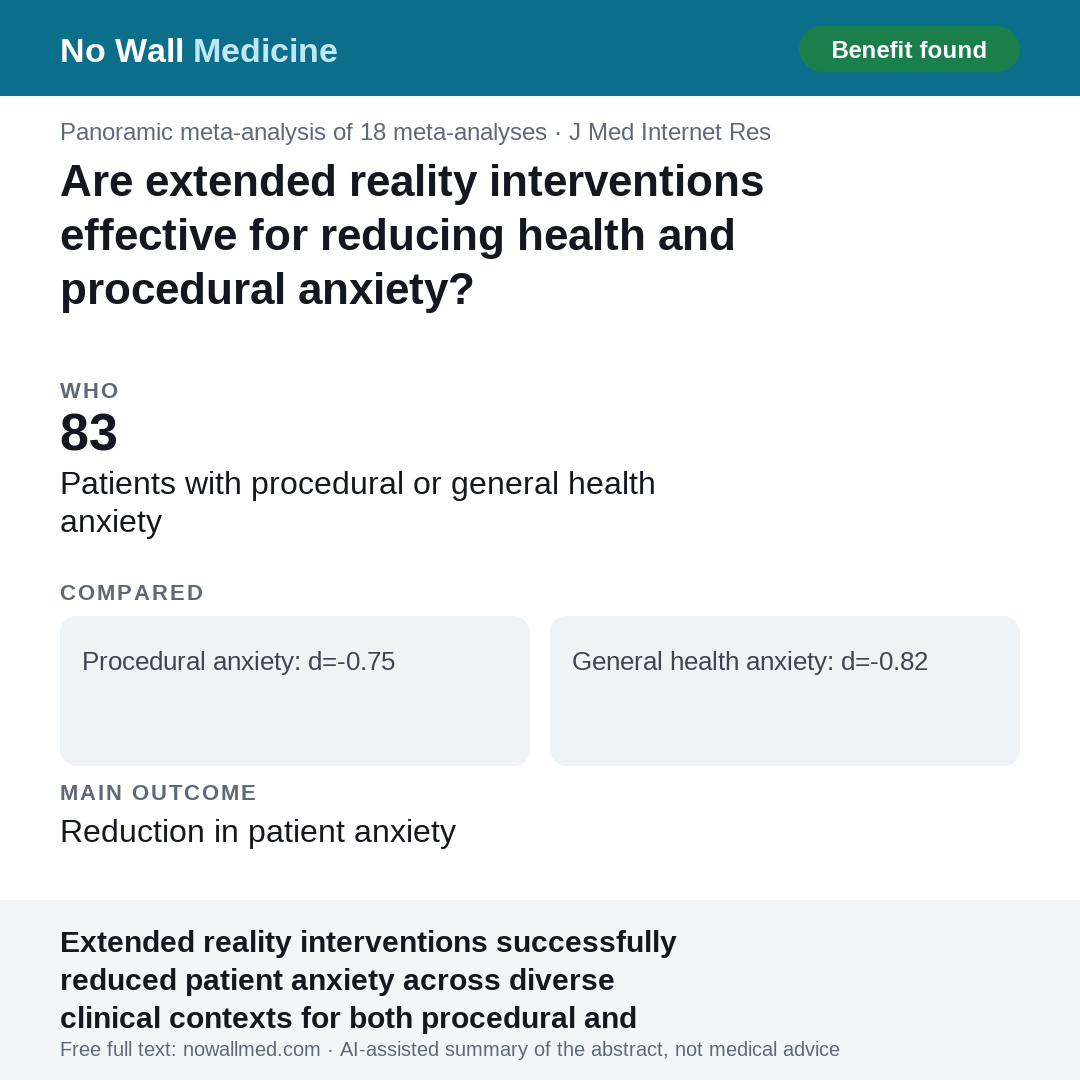
Extended Reality Interventions for Health and Procedural Anxiety: Panoramic Meta-Analysis Based on Overviews of Reviews
Panoramic meta-analysis of 18 meta-analysesBenefit found
Are extended reality interventions effective for reducing health and procedural anxiety?
Who
83
Patients with procedural or general health anxiety
Compared
Procedural anxiety: d=-0.75
General health anxiety: d=-0.82
Main outcome
Reduction in patient anxiety
Result: procedural d=-0.75 (95% CI -0.95 to -0.54), general health d=-0.82 (95% CI -1.20 to -0.45)
Bottom line: Extended reality interventions successfully reduced patient anxiety across diverse clinical contexts for both procedural and general health indications.
Limitation: Existing evidence is limited in methodological quality and generalizability remains uncertain.
J Med Internet Res · 2025-01-08Download image
Effectiveness of Virtual Reality Training in Improving Outcomes for Dialysis Patients: Systematic Review and Meta-Analysis
Systematic review and meta-analysisBenefit found
Is virtual reality training effective for dialysis patients' physical and psychological outcomes?
Who
625
dialysis patients
Compared
Virtual reality training
Control
Main outcome
motor abilities, psychological symptoms, social functioning, and self-efficacy
Bottom line: Virtual reality training improves physical capacity, depression, anxiety, social functioning, and self-efficacy in dialysis patients.
Limitation: Further studies with larger sample sizes and more refined experimental designs are recommended.
J Med Internet Res · 2025-01-08Download image

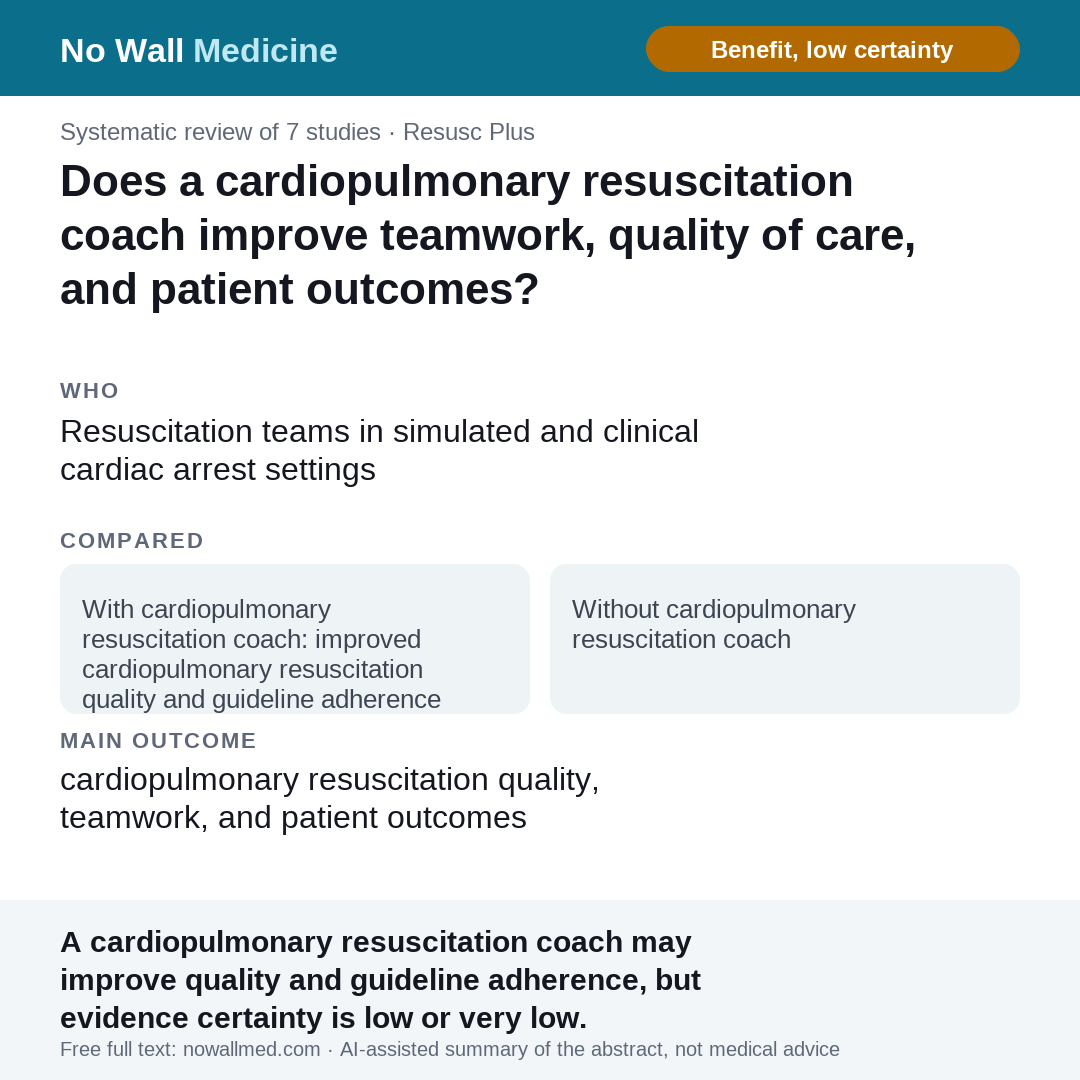
Cardiopulmonary resuscitation coaching for resuscitation teams: A systematic review
Systematic review of 7 studiesBenefit found
Does a cardiopulmonary resuscitation coach improve teamwork, quality of care, and patient outcomes?
Who
Resuscitation teams in simulated and clinical cardiac arrest settings
Compared
With cardiopulmonary resuscitation coach: improved cardiopulmonary resuscitation quality and guideline adherence
Without cardiopulmonary resuscitation coach
Main outcome
cardiopulmonary resuscitation quality, teamwork, and patient outcomes
Bottom line: A cardiopulmonary resuscitation coach may improve quality and guideline adherence, but evidence certainty is low or very low.
Limitation: The certainty of evidence across outcomes was low or very low.
Resusc Plus · 2025-01-08Download image
Efficacy of brain stimulation therapies across psychiatric, movement, and cognitive disorders: an umbrella review synthesizing meta-analyses of randomized controlled trials
Umbrella review of meta-analysesBenefit found
What is the efficacy of brain stimulation therapies across psychiatric, movement, and cognitive disorders?
Who
108377
Patients with psychiatric, movement, and cognitive disorders
Compared
0.56Brain stimulation therapies (95% CI: 0.49, 0.64)
Sham controls
Main outcome
Improvements in core symptoms
Result: standardized mean difference 0.56 (95% CI: 0.49, 0.64)
Bottom line: Brain stimulation therapies show moderate efficacy in treating core symptoms of psychiatric, movement, and cognitive disorders.
Funded by: Anhui Natural Science Foundation, Anhui Province, National Natural Science Foundation of China
eClinicalMedicine · 2025-01-07Download image

Neuropathology, pathomechanism, and transmission in zoonotic Borna disease virus 1 infection: a systematic review
Systematic reviewUnclear result
Borna disease virus transmission and pathogenesis
Who
humans and animals
Compared
reservoir hosts
dead-end hosts
Main outcome
viral transmission and pathogenesis
Bottom line: Viral transmission and pathogenesis are not entirely clear
Lancet Infect Dis · 2025-01-07Download image

Outcomes in Implant-Based Breast Reconstruction Utilizing Biosynthetic Mesh: A Meta-Analysis
Meta-analysisBenefit found
What are the complication rates of biosynthetic mesh in implant-based breast reconstruction?
Who
2167
Patients undergoing implant-based breast reconstruction with biosynthetic mesh
Compared
Biosynthetic mesh: seroma formation 5.26%
Biosynthetic mesh: hematoma formation 2.5%
Biosynthetic mesh: skin necrosis 5.5%
Biosynthetic mesh: infection rate 4.8%
Main outcome
Overall complication rates
Bottom line: Biosynthetic mesh shows low complication rates and potential cost advantages for implant-based breast reconstruction.
Aesthet Surg J · 2025-01-07Download image

Anterior Knee Pain and Knee Functional Scores Following Common Approaches to Tibial Shaft Fractures: A Systematic Review
Systematic reviewBenefit found
How do different surgical approaches affect anterior knee pain and knee function?
Who
Patients with tibial shaft fractures
Compared
Suprapatellar approach: better patient-reported outcomes
Infrapatellar approach
Main outcome
Anterior knee pain and knee functional scores
Bottom line: Suprapatellar approach shows better patient-reported outcomes and lower anterior knee pain than the infrapatellar approach.
Limitation: Comparative data for medial parapatellar and lateral parapatellar approaches remain limited.
JBJS Open Access · 2025-01-07Download image

Fluoride Exposure and Children's IQ Scores: A Systematic Review and Meta-Analysis
Systematic review and meta-analysisHarm found
Is fluoride exposure associated with children's intelligence quotient scores?
Who
20932
Children in various epidemiological studies · Multicountry including China, Canada, Denmark, India, Iran, Mexico, New Zealand, Pakistan, Spain, and Taiwan
Compared
Fluoride exposure
Reference groups
Main outcome
Children's intelligence quotient scores
Result: pooled standardized mean difference -0.45 (95% CI -0.57 to -0.33)
Bottom line: Fluoride exposure from drinking water and urine is inversely associated with children's intelligence quotient scores.
Limitation: Limited data and uncertainty in dose-response association when drinking water fluoride is less than 1.5 mg/L.
JAMA Pediatr · 2025-01-06Download image

The Influence of Study Quality, Age, and Geographic Factors on PCOS Prevalence-A Systematic Review and Meta-analysis
Systematic review and meta-analysisMixed results
What is the global prevalence of polycystic ovary syndrome?
Who
561287
Women in unselected populations · Global
Compared
10.89%High-quality Rotterdam criteria
10.61%High-quality Androgen Excess and PCOS Society criteria
6.63%High-quality National Institutes of Health criteria
Main outcome
Polycystic ovary syndrome prevalence
Bottom line: Global polycystic ovary syndrome prevalence varies depending on the diagnostic criteria and study quality used.
Limitation: No studies were available in the African Region.
J Clin Endocrinol Metab · 2025-01-06Download image

Instructional design features in ultrasound-guided regional anaesthesia simulation-based training: a systematic review
Systematic reviewBenefit found
Instructional design in ultrasound training
Who
medical trainees
Compared
Simulation training
Traditional training
Main outcome
learning outcomes
Bottom line: Simulation training enhances educational outcome
Limitation: outcome measurements not standardised
Anaesthesia · 2025-01-06Download image