Visual abstracts
New randomized trials and meta-analyses from leading journals at a glance: who was studied, what was compared, and what was found. Every paper is free to read in full.
All specialtiesCardiology 4785Oncology 4077Gastroenterology & Hepatology 1912Infectious Disease 3775Neurology 1882Psychiatry & Mental Health 2238Pulmonology 2058Critical Care 1331Endocrinology & Diabetes 2547Pediatrics 2908Surgery 2498Orthopedics & Sports Medicine 921Neurosurgery 531Cardiothoracic & Vascular Surgery 661Plastic & Reconstructive Surgery 584Nephrology 1109Rheumatology 812Hematology 1095Dermatology 617Ophthalmology 536Obstetrics & Gynecology 1658Public & Global Health 1039Radiology & Imaging 636Anesthesiology 958Urology 750ENT (Otolaryngology) 495Emergency Medicine 482Allergy & Immunology 310Geriatrics 973Family Medicine & Primary Care 538Medical Genetics & Genomics 659Pathology & Laboratory Medicine 156Physical Medicine & Rehabilitation 744Palliative Care 422Nutrition 1556Digital Health & AI 2186General Medicine 319
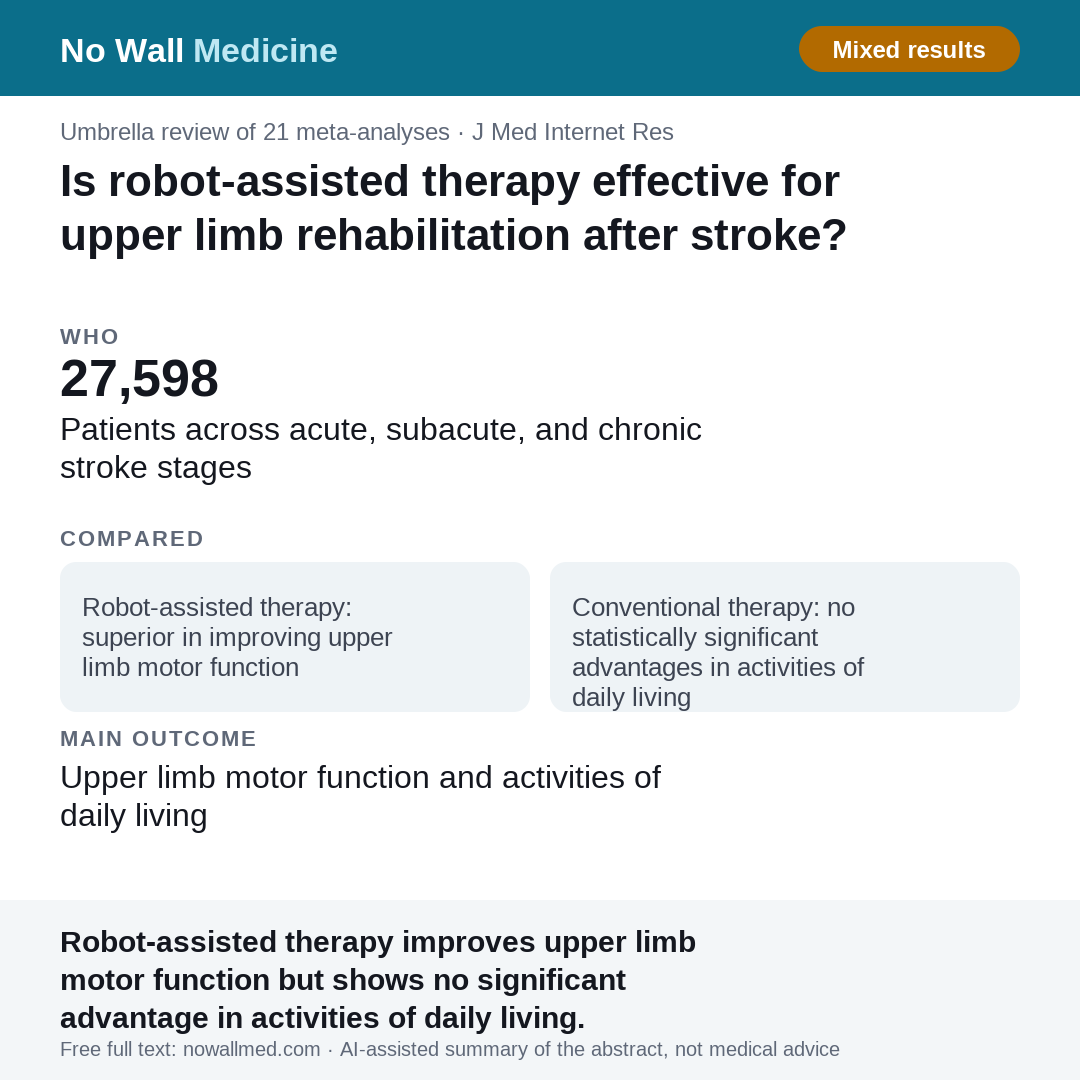
Robot-Assisted Therapy for Upper Limb Rehabilitation After Stroke: Umbrella Review
Umbrella review of 21 meta-analysesMixed results
Is robot-assisted therapy effective for upper limb rehabilitation after stroke?
Who
27,598
Patients across acute, subacute, and chronic stroke stages
Compared
Robot-assisted therapy: superior in improving upper limb motor function
Conventional therapy: no statistically significant advantages in activities of daily living
Main outcome
Upper limb motor function and activities of daily living
Bottom line: Robot-assisted therapy improves upper limb motor function but shows no significant advantage in activities of daily living.
Limitation: Significant outcome heterogeneity and methodological limitations inherent to umbrella reviews.
J Med Internet Res · 2026-03-25Download image
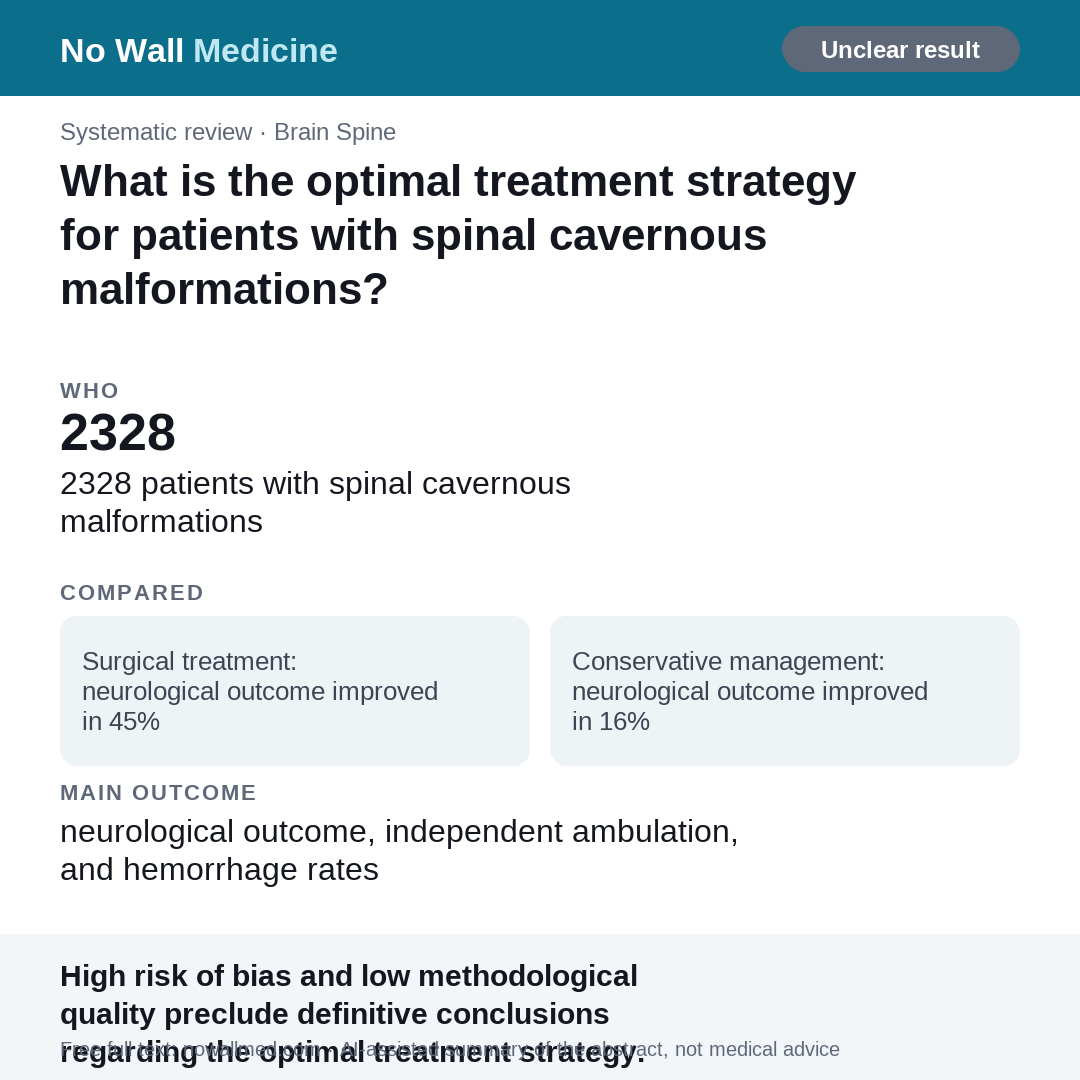
Treatment of patients with spinal cavernous malformations: a systematic review
Systematic reviewUnclear result
What is the optimal treatment strategy for patients with spinal cavernous malformations?
Who
2328
2328 patients with spinal cavernous malformations
Compared
Surgical treatment: neurological outcome improved in 45%
Conservative management: neurological outcome improved in 16%
Main outcome
neurological outcome, independent ambulation, and hemorrhage rates
Bottom line: High risk of bias and low methodological quality preclude definitive conclusions regarding the optimal treatment strategy.
Limitation: Low methodological quality and high risk of bias complicated direct comparisons.
Brain Spine · 2026-03-25Download image
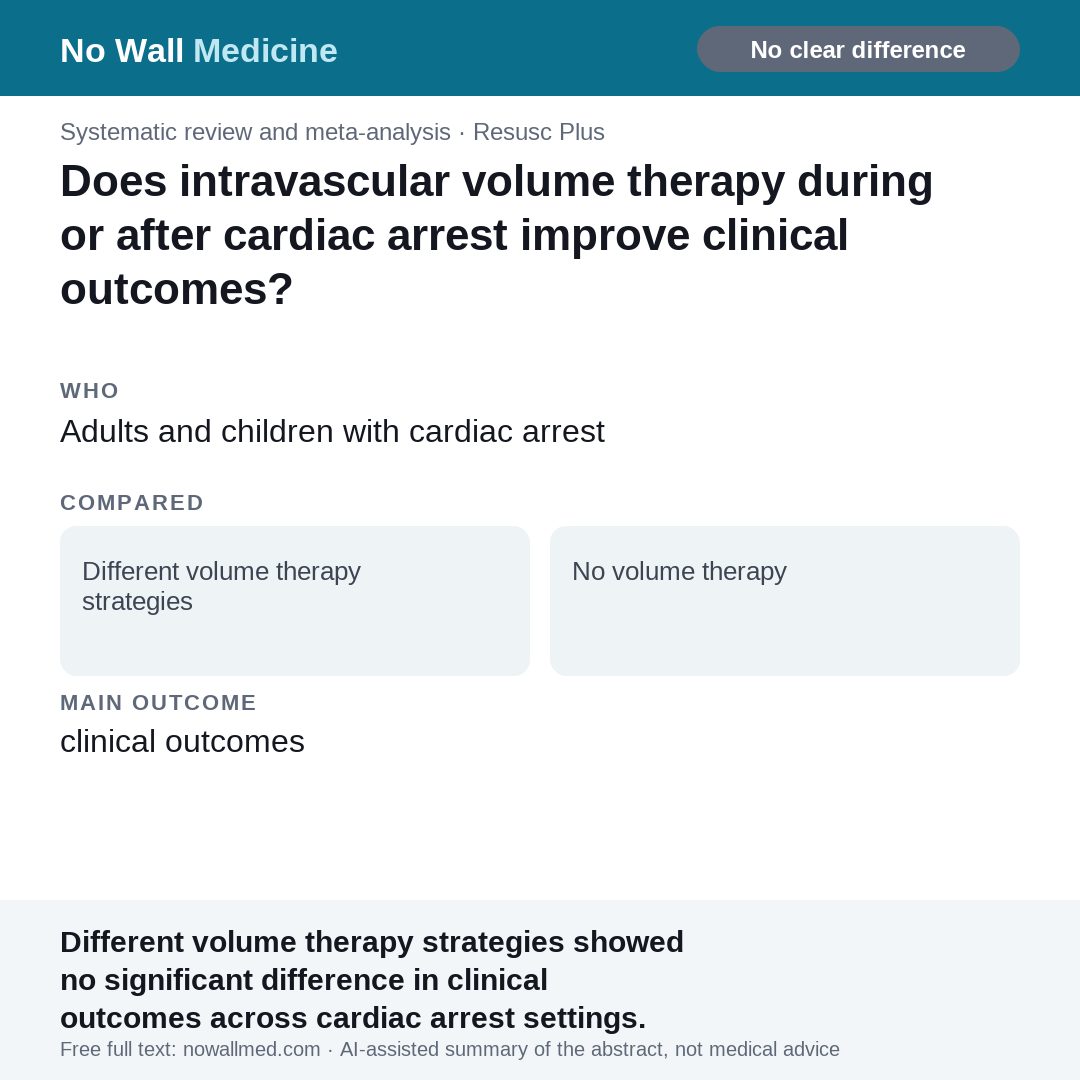
Volume therapy for cardiac arrest: a systematic review and meta-analysis
Systematic review and meta-analysisNo clear difference
Does intravascular volume therapy during or after cardiac arrest improve clinical outcomes?
Who
Adults and children with cardiac arrest
Compared
Different volume therapy strategies
No volume therapy
Main outcome
clinical outcomes
Bottom line: Different volume therapy strategies showed no significant difference in clinical outcomes across cardiac arrest settings.
Limitation: Randomized trials had some concern to high risk of bias and certainty of evidence was low.
Resusc Plus · 2026-03-25Download image
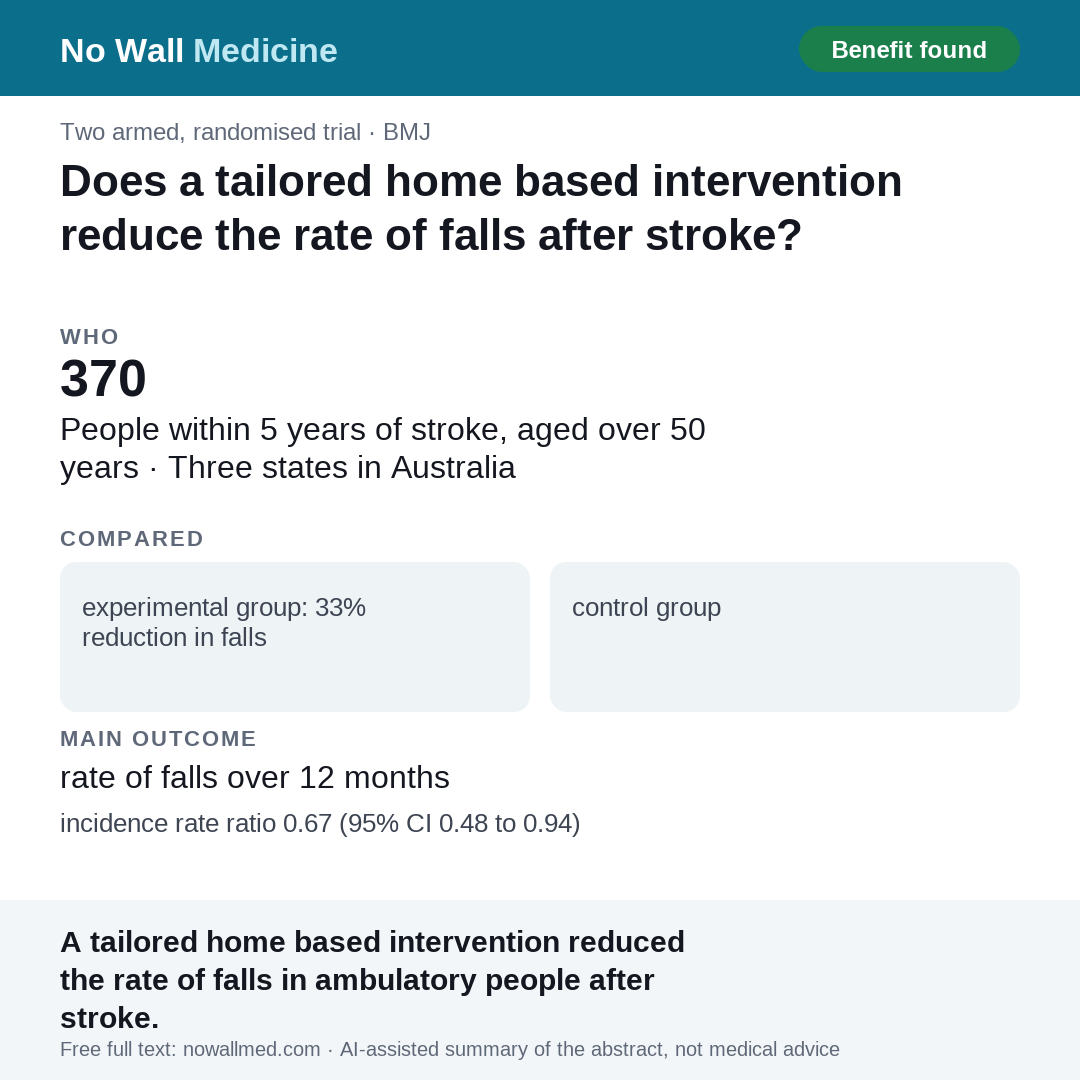
Home based, tailored intervention to reduce rate of falls after stroke (FAST): randomised trial
Two armed, randomised trialBenefit found
Does a tailored home based intervention reduce the rate of falls after stroke?
Who
370
People within 5 years of stroke, aged over 50 years · Three states in Australia
Compared
experimental group: 33% reduction in falls
control group
Main outcome
rate of falls over 12 months
Result: incidence rate ratio 0.67 (95% CI 0.48 to 0.94)
Bottom line: A tailored home based intervention reduced the rate of falls in ambulatory people after stroke.
BMJ · 2026-03-24Download image
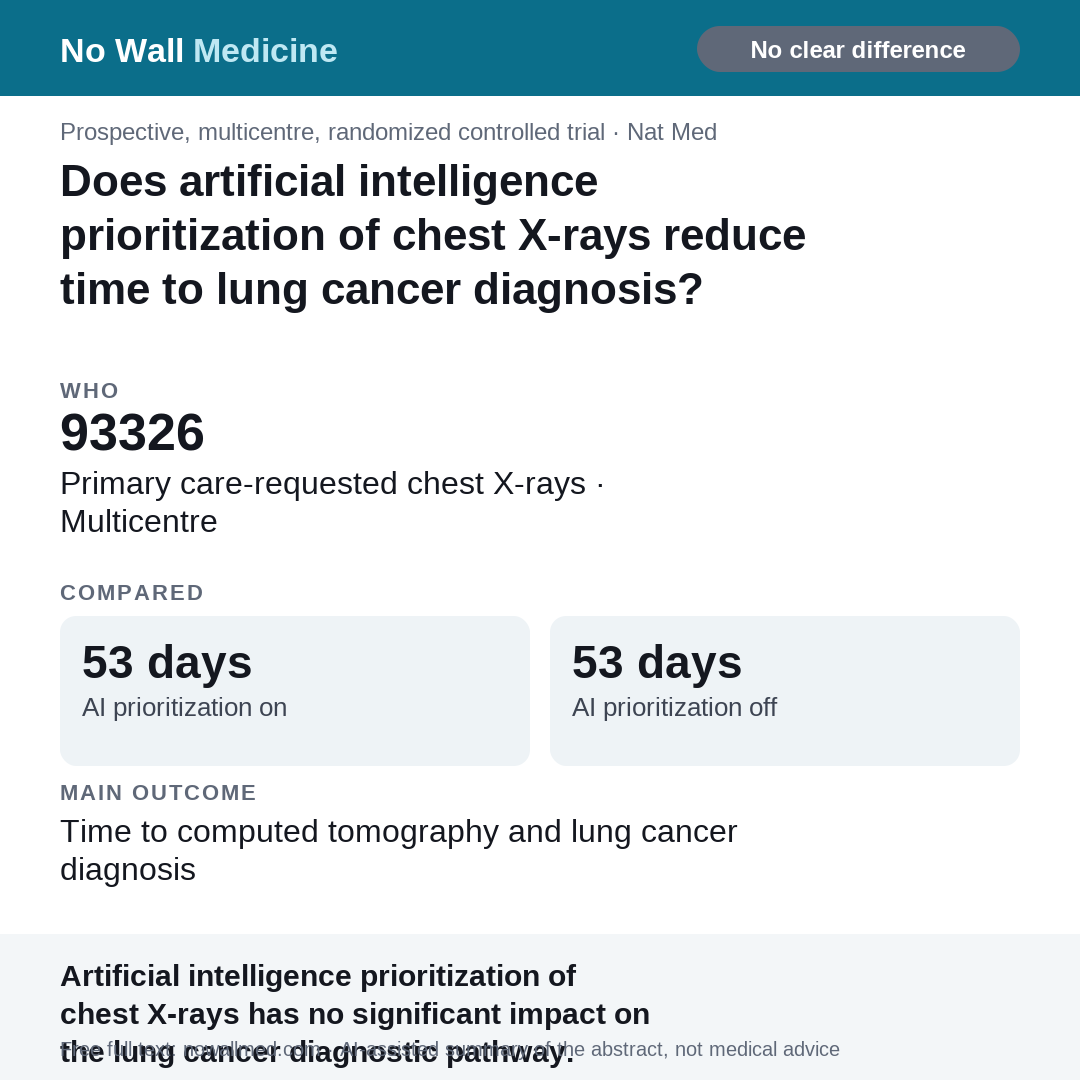
AI-based chest X-ray prioritization in the lung cancer diagnostic pathway: the LungIMPACT randomized controlled trial
Prospective, multicentre, randomized controlled trialNo clear difference
Does artificial intelligence prioritization of chest X-rays reduce time to lung cancer diagnosis?
Who
93326
Primary care-requested chest X-rays · Multicentre
Compared
53 daysAI prioritization on (17-145)
53 daysAI prioritization off (19-141)
Main outcome
Time to computed tomography and lung cancer diagnosis
Result: ratio of geometric means 0.97 (95% CI 0.93-1.02)
Bottom line: Artificial intelligence prioritization of chest X-rays has no significant impact on the lung cancer diagnostic pathway.
Nat Med · 2026-03-24Download image
Prevention of Recurrent Nephrolithiasis in Adults and Children : A Systematic Review
Systematic review of 31 studiesMixed results
Can diet, pharmacologic therapy, or imaging prevent recurrent kidney stones?
Who
Nonpregnant adults or children
Compared
Increased water intake
Dietary interventions
Pharmacologic therapy
Main outcome
Recurrent nephrolithiasis prevention
Bottom line: Increased water, specific diets, thiazides, alkali, and allopurinol may reduce stone recurrence in adults.
Limitation: Studies not published in English or with fewer than 30 participants per group were excluded.
Funded by: Patient-Centered Outcomes Research Institute and Agency for Healthcare Research and Quality
Ann Intern Med · 2026-03-24Download image

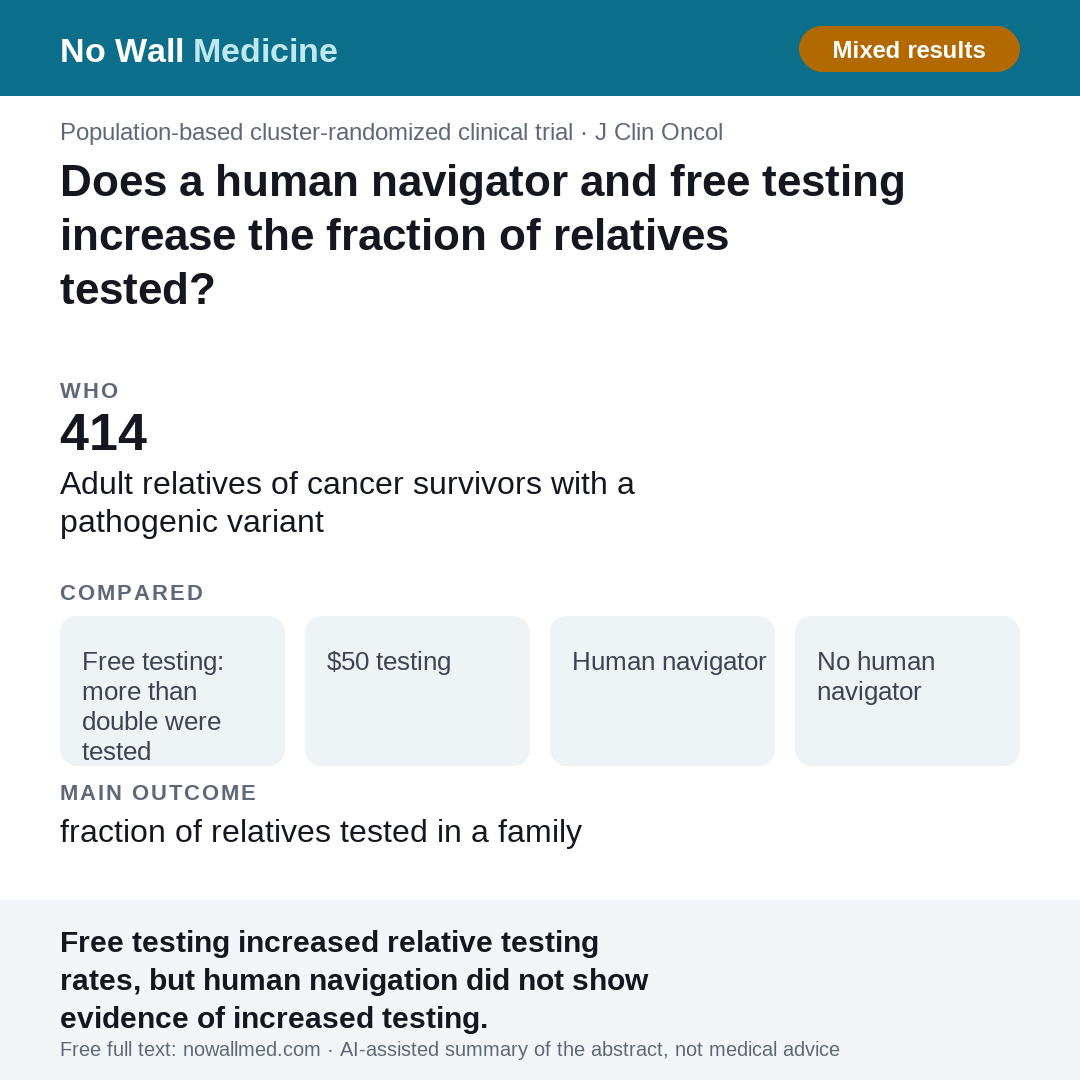
Results From the Genetic Information and Family Testing Study: A Cluster-Randomized Trial
Population-based cluster-randomized clinical trialMixed results
Does a human navigator and free testing increase the fraction of relatives tested?
Who
414
Adult relatives of cancer survivors with a pathogenic variant
Compared
Free testing: more than double were tested
$50 testing
Human navigator
No human navigator
Main outcome
fraction of relatives tested in a family
Result: odds ratio 2.5 (95% CI 1.6 to 3.9) for free versus $50 testing; odds ratio 1.3 (95% CI 0.8 to 2.1) for navigation
Bottom line: Free testing increased relative testing rates, but human navigation did not show evidence of increased testing.
J Clin Oncol · 2026-03-24Download image
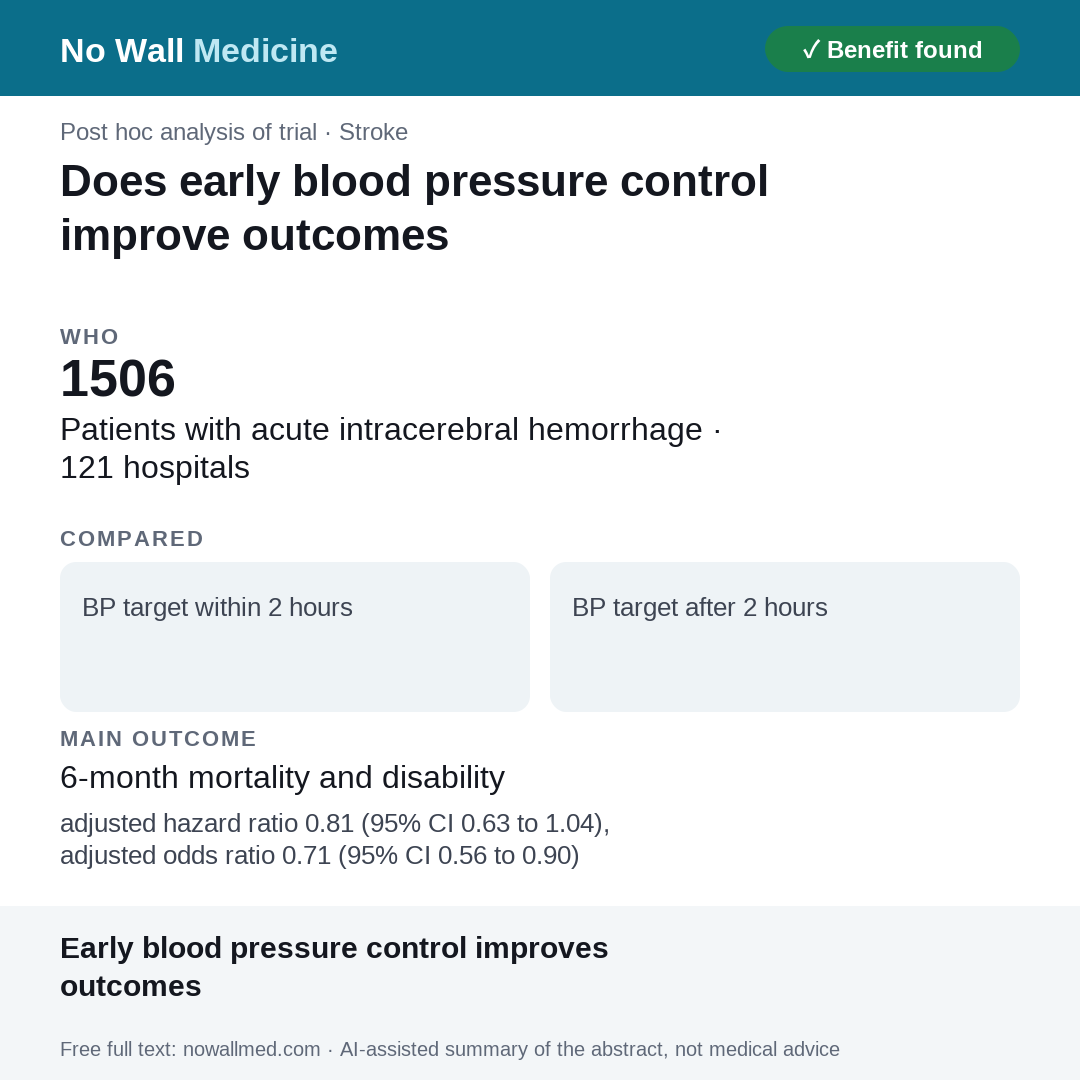
Impact of Ultra-Early Perioperative Antihypertensive Therapy in Acute Intracerebral Hemorrhage
Post hoc analysis of trialBenefit found
Does early blood pressure control improve outcomes
Who
1506
Patients with acute intracerebral hemorrhage · 121 hospitals
Compared
BP target within 2 hours
BP target after 2 hours
Main outcome
6-month mortality and disability
Result: adjusted hazard ratio 0.81 (95% CI 0.63 to 1.04), adjusted odds ratio 0.71 (95% CI 0.56 to 0.90)
Bottom line: Early blood pressure control improves outcomes
Stroke · 2026-03-24Download image
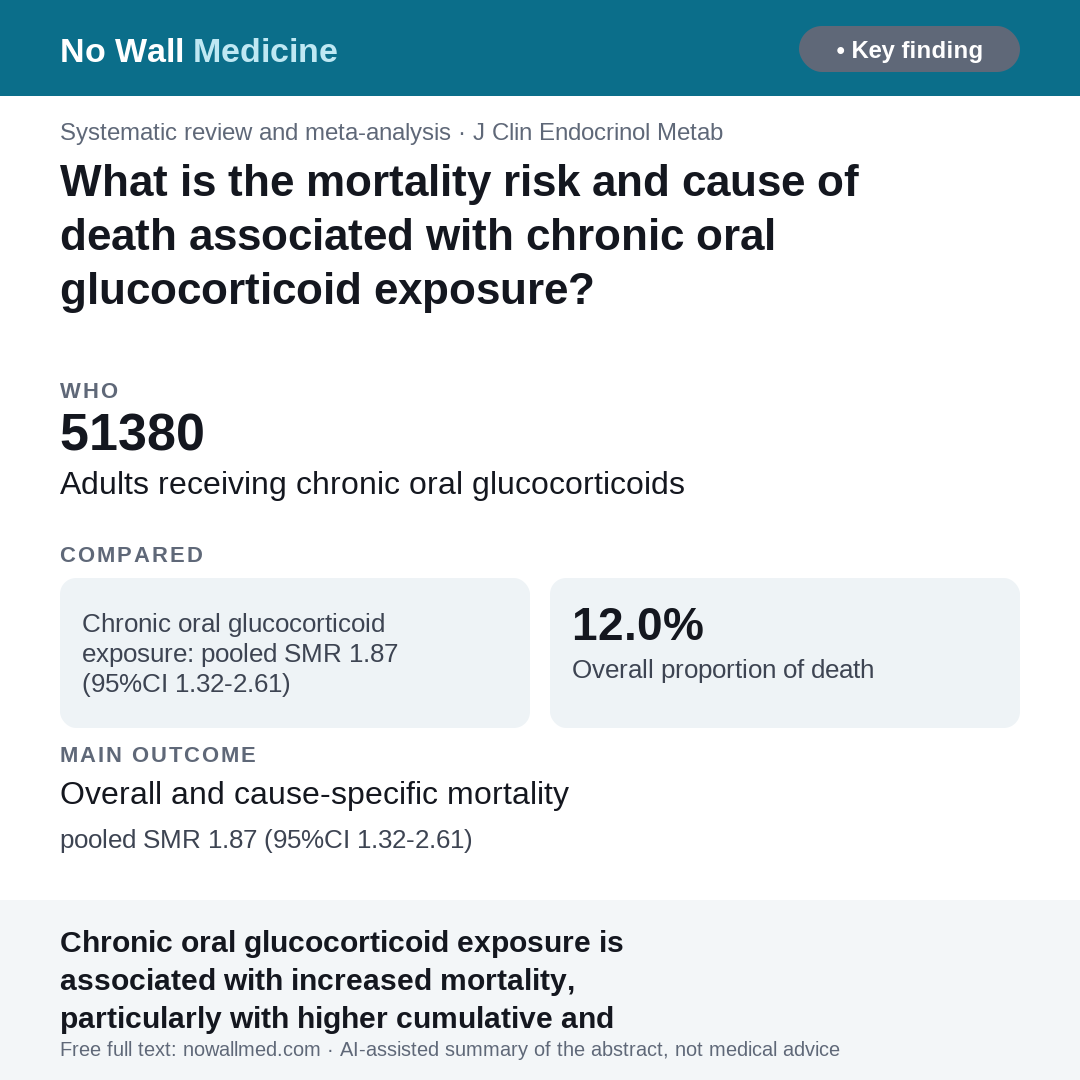
Mortality risk and causes of death in exogenous Cushing's syndrome: a systematic review and meta-analysis
Systematic review and meta-analysisHarm found
What is the mortality risk and cause of death associated with chronic oral glucocorticoid exposure?
Who
51380
Adults receiving chronic oral glucocorticoids
Compared
Chronic oral glucocorticoid exposure: pooled SMR 1.87 (95%CI 1.32-2.61)
12.0%Overall proportion of death (95%CI 10-14%)
Main outcome
Overall and cause-specific mortality
Result: pooled SMR 1.87 (95%CI 1.32-2.61)
Bottom line: Chronic oral glucocorticoid exposure is associated with increased mortality, particularly with higher cumulative and early-treatment doses.
Limitation: Causal attribution remains uncertain due to confounding by indication, limited disease-severity data, and exposure misclassification.
J Clin Endocrinol Metab · 2026-03-24Download image
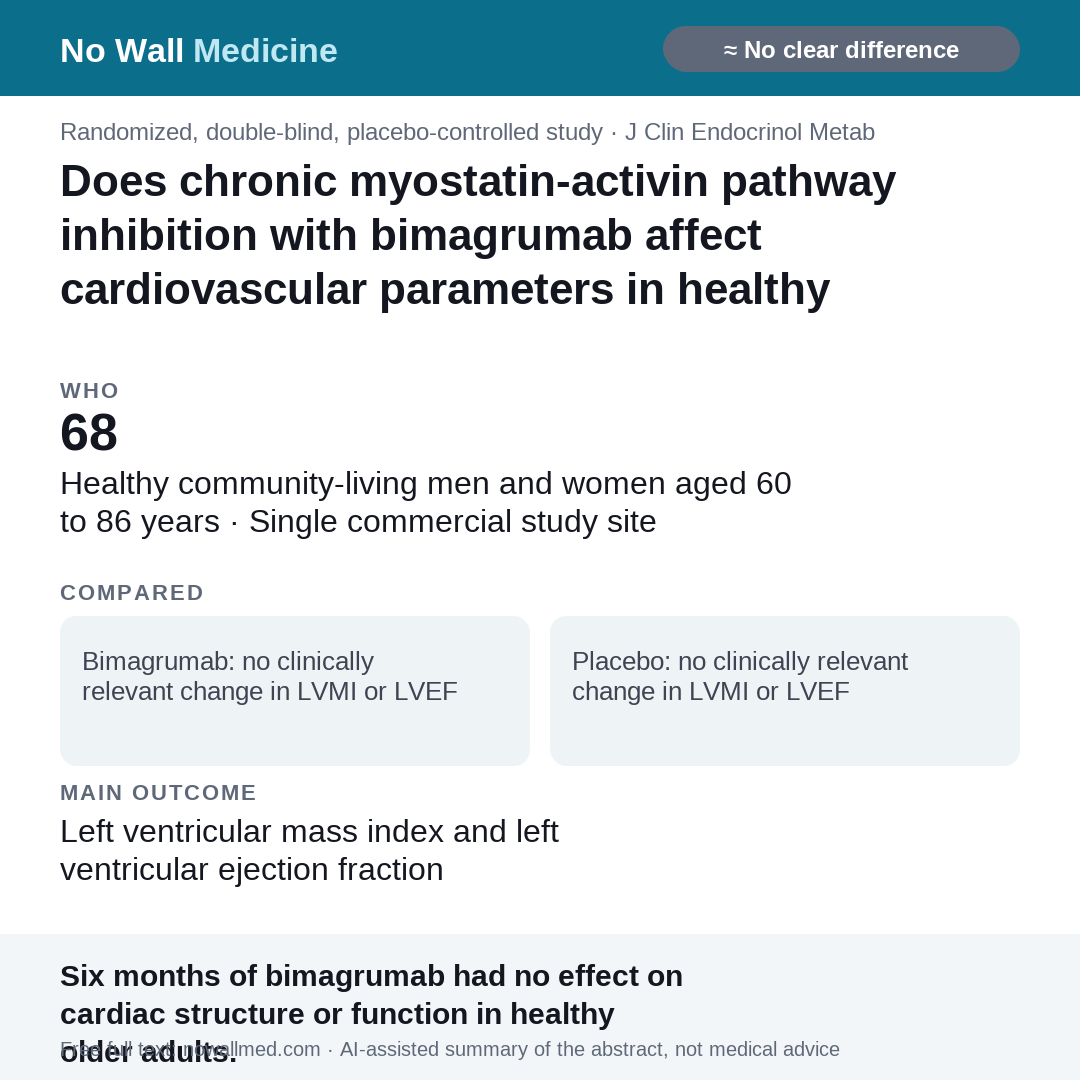
Cardiac safety of chronic inhibition of the myostatin-activin pathway with bimagrumab in healthy older adults
Randomized, double-blind, placebo-controlled studyNo clear difference
Does chronic myostatin-activin pathway inhibition with bimagrumab affect cardiovascular parameters in healthy older adults?
Who
68
Healthy community-living men and women aged 60 to 86 years · Single commercial study site
Compared
Bimagrumab: no clinically relevant change in LVMI or LVEF
Placebo: no clinically relevant change in LVMI or LVEF
Main outcome
Left ventricular mass index and left ventricular ejection fraction
Bottom line: Six months of bimagrumab had no effect on cardiac structure or function in healthy older adults.
J Clin Endocrinol Metab · 2026-03-24Download image
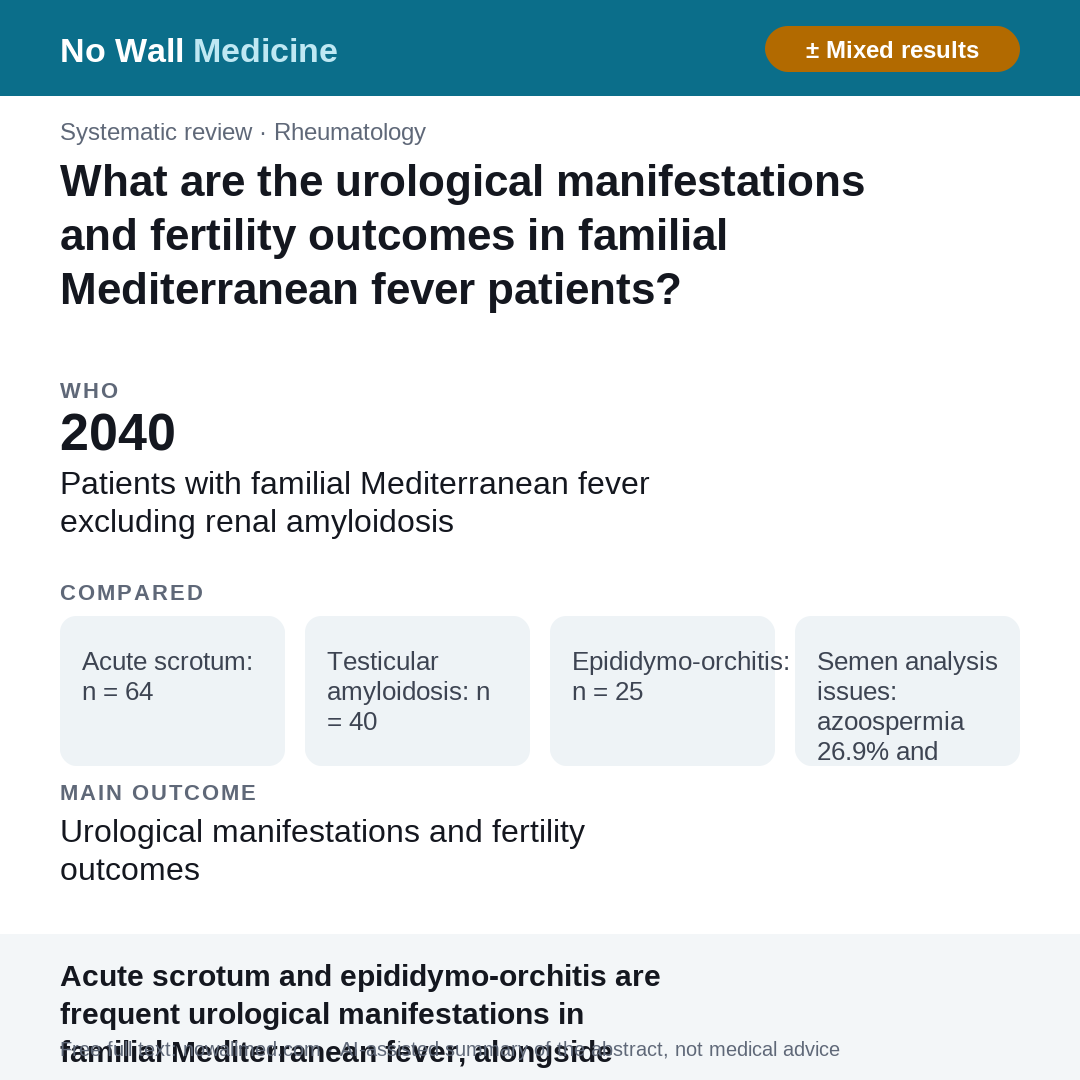
Urological manifestations in familial Mediterranean fever excluding renal amyloidosis: a systematic review
Systematic reviewMixed results
What are the urological manifestations and fertility outcomes in familial Mediterranean fever patients?
Who
2040
Patients with familial Mediterranean fever excluding renal amyloidosis
Compared
Acute scrotum: n = 64
Testicular amyloidosis: n = 40
Epididymo-orchitis: n = 25
Semen analysis issues: azoospermia 26.9% and oligospermia 14.8%
Main outcome
Urological manifestations and fertility outcomes
Bottom line: Acute scrotum and epididymo-orchitis are frequent urological manifestations in familial Mediterranean fever, alongside testicular amyloidosis and fertility impairment.
Rheumatology · 2026-03-24Download image
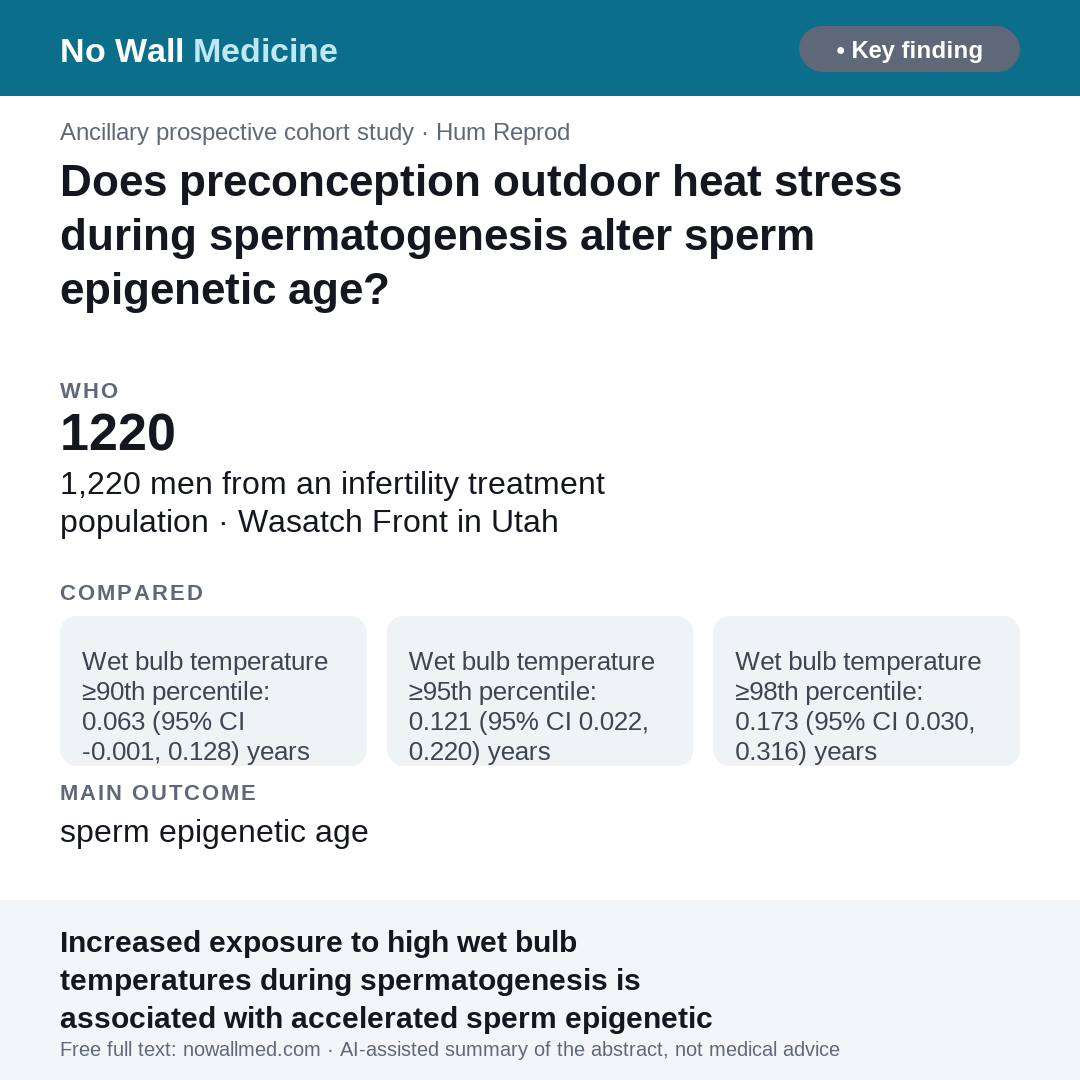
Heat exposure during susceptible windows of spermatogenesis and sperm epigenetic age
Ancillary prospective cohort studyHarm found
Does preconception outdoor heat stress during spermatogenesis alter sperm epigenetic age?
Who
1220
1,220 men from an infertility treatment population · Wasatch Front in Utah
Compared
Wet bulb temperature ≥90th percentile: 0.063 (95% CI -0.001, 0.128) years accelerated age
Wet bulb temperature ≥95th percentile: 0.121 (95% CI 0.022, 0.220) years accelerated age
Wet bulb temperature ≥98th percentile: 0.173 (95% CI 0.030, 0.316) years accelerated age
Main outcome
sperm epigenetic age
Result: 0.173 (95% CI 0.030, 0.316) years accelerated age
Bottom line: Increased exposure to high wet bulb temperatures during spermatogenesis is associated with accelerated sperm epigenetic age.
Limitation: Reliance on outdoor temperatures rather than personal exposure may cause misclassification of exposure.
Funded by: National Institute of Environmental Health Sciences
Hum Reprod · 2026-03-24Download image
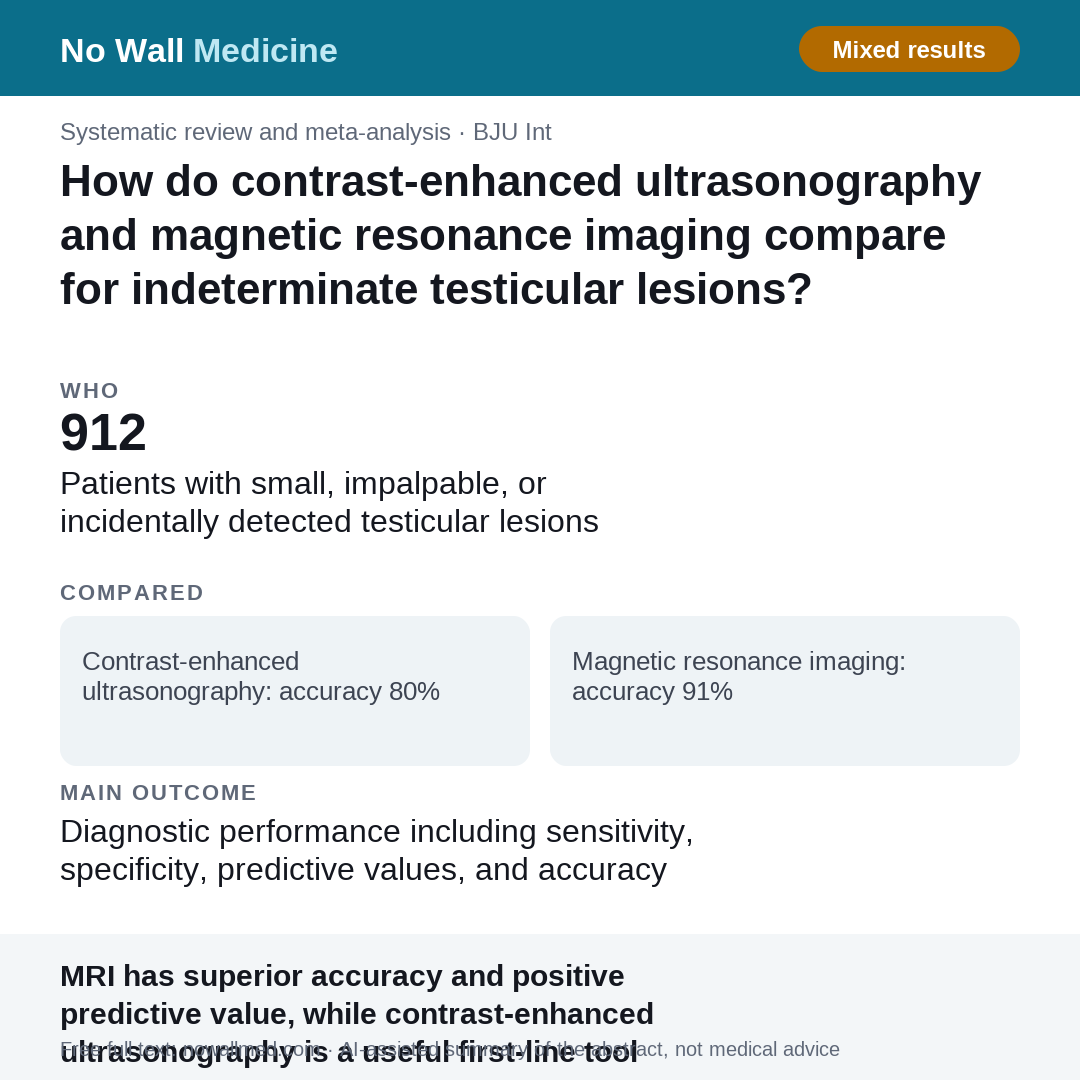
Contrast-enhanced ultrasonography vs MRI for indeterminate testicular lesions: a systematic review and meta-analysis
Systematic review and meta-analysisMixed results
How do contrast-enhanced ultrasonography and magnetic resonance imaging compare for indeterminate testicular lesions?
Who
912
Patients with small, impalpable, or incidentally detected testicular lesions
Compared
Contrast-enhanced ultrasonography: accuracy 80%
Magnetic resonance imaging: accuracy 91%
Main outcome
Diagnostic performance including sensitivity, specificity, predictive values, and accuracy
Result: Differences in positive predictive value and accuracy significantly favoured MRI (P = 0.025 and P = 0.031)
Bottom line: MRI has superior accuracy and positive predictive value, while contrast-enhanced ultrasonography is a useful first-line tool due to high negative predictive value.
Limitation: Protocol heterogeneity, operator dependence, and small sample sizes.
BJU Int · 2026-03-24Download image
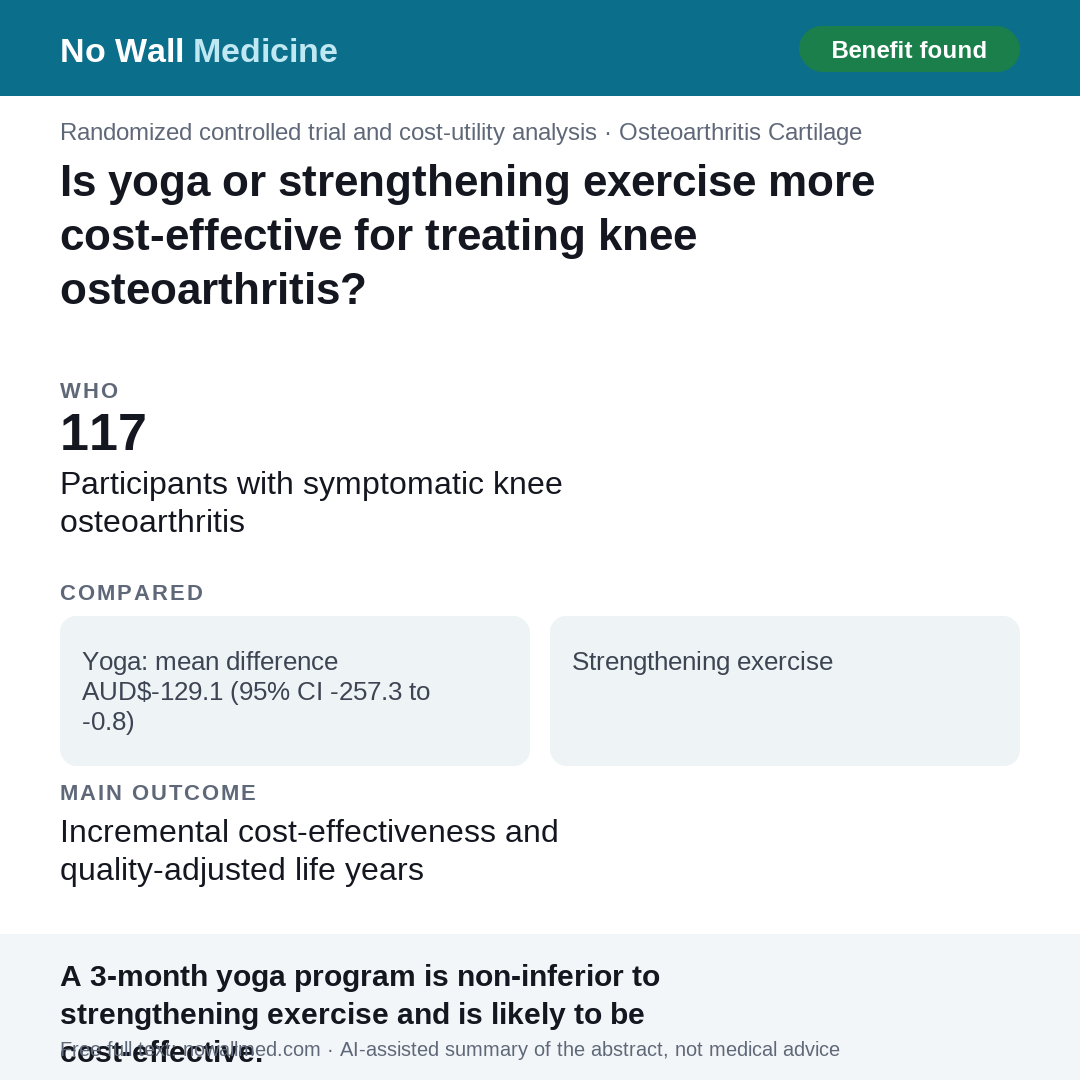
Cost-effectiveness of yoga vs. strengthening exercise for treating knee OA: Evidence from a randomized controlled trial
Randomized controlled trial and cost-utility analysisBenefit found
Is yoga or strengthening exercise more cost-effective for treating knee osteoarthritis?
Who
117
Participants with symptomatic knee osteoarthritis
Compared
Yoga: mean difference AUD$-129.1 (95% CI -257.3 to -0.8)
Strengthening exercise
Main outcome
Incremental cost-effectiveness and quality-adjusted life years
Result: mean difference AUD$-129.1 (95% CI -257.3 to -0.8)
Bottom line: A 3-month yoga program is non-inferior to strengthening exercise and is likely to be cost-effective.
Osteoarthritis Cartilage · 2026-03-24Download image
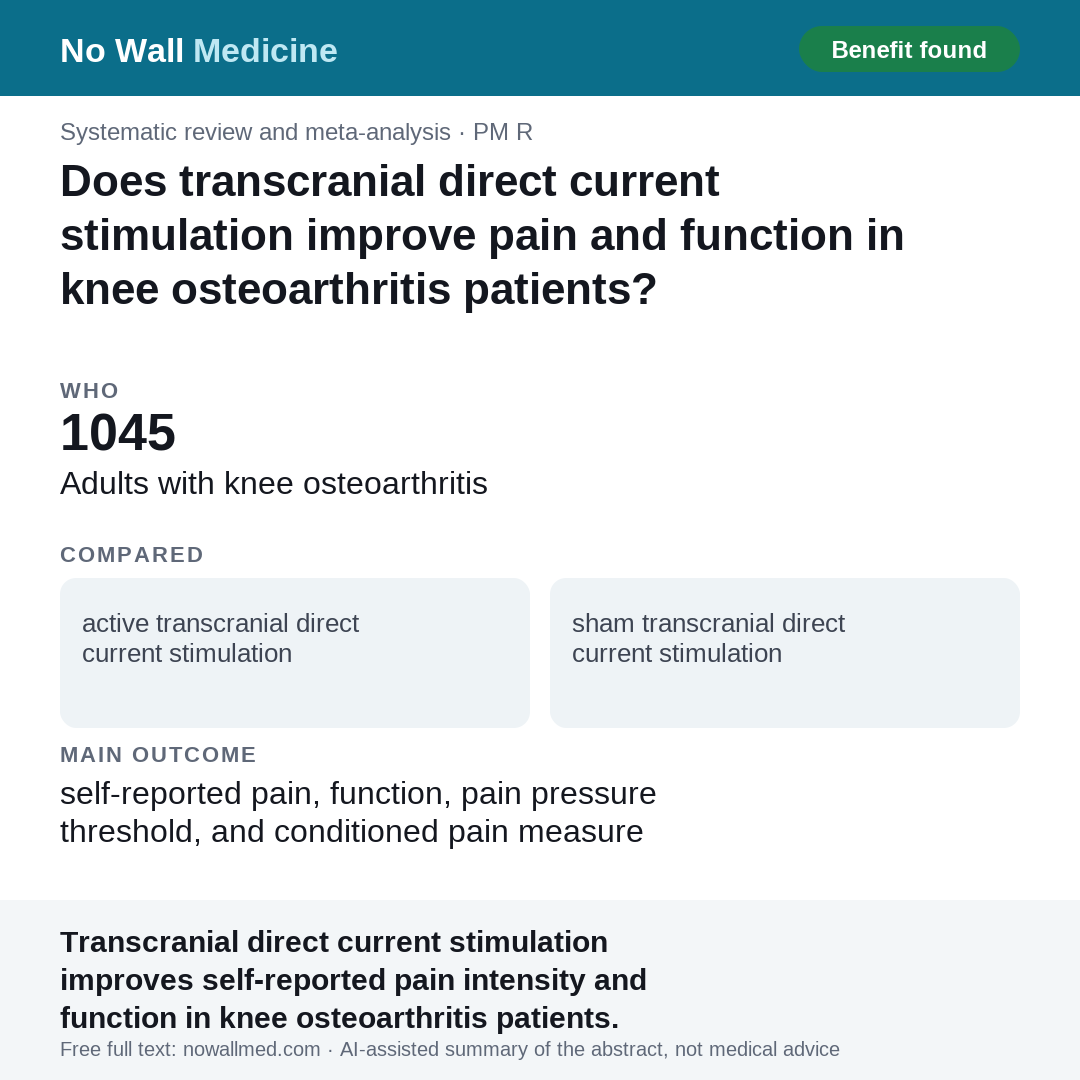
Effects of transcranial direct current stimulation on pain and function in patients with knee osteoarthritis: A systematic review and meta-analysis
Systematic review and meta-analysisBenefit found
Does transcranial direct current stimulation improve pain and function in knee osteoarthritis patients?
Who
1045
Adults with knee osteoarthritis
Compared
active transcranial direct current stimulation
sham transcranial direct current stimulation
Main outcome
self-reported pain, function, pain pressure threshold, and conditioned pain measure
Result: Cohen's d -1.05 (95% CI -1.40 to -0.70) for pain intensity
Bottom line: Transcranial direct current stimulation improves self-reported pain intensity and function in knee osteoarthritis patients.
PM R · 2026-03-24Download image
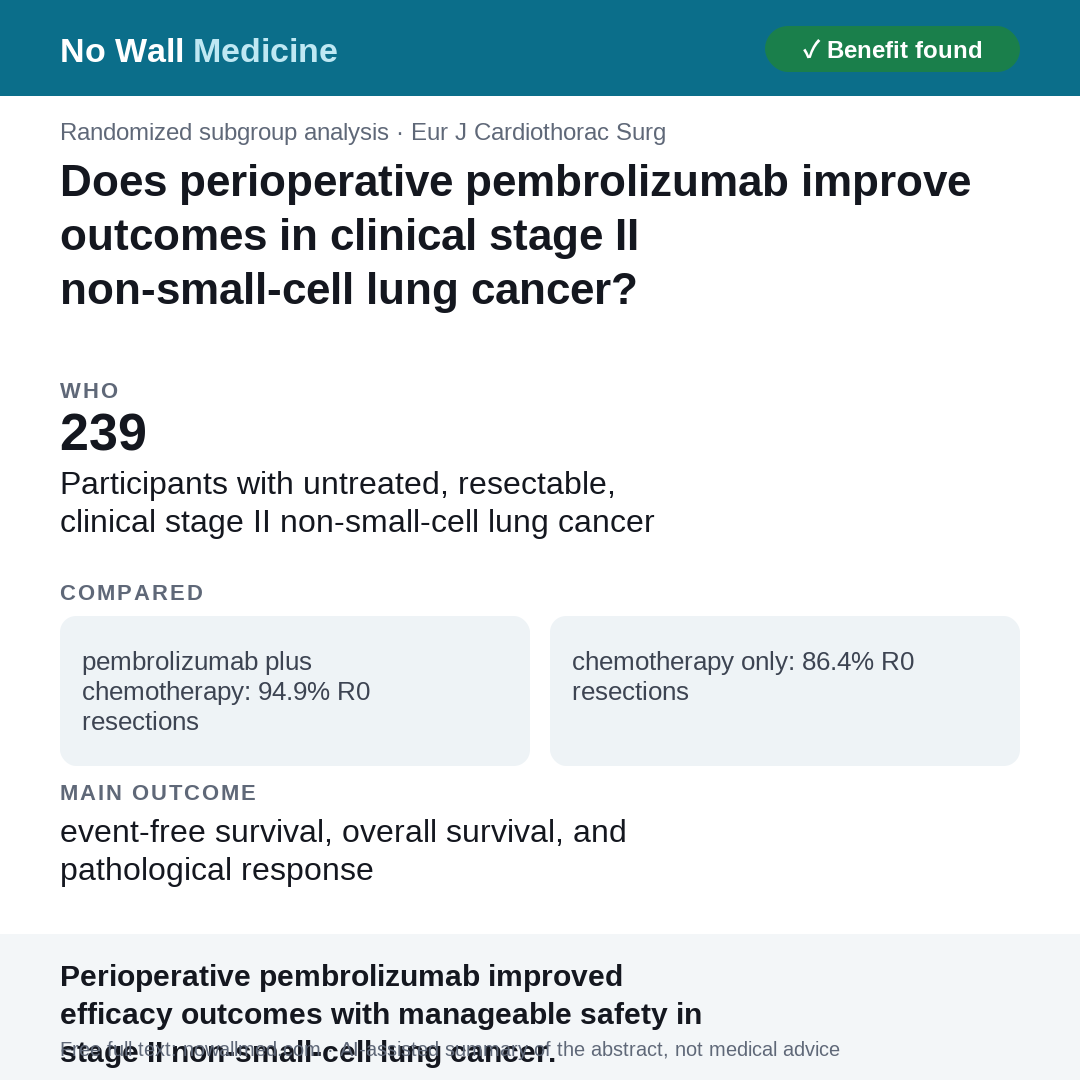
A Subgroup Analysis of Perioperative Pembrolizumab in Clinical Stage II Non-Small-Cell Lung Cancer from the Randomized KEYNOTE-671 Study
Randomized subgroup analysisBenefit found
Does perioperative pembrolizumab improve outcomes in clinical stage II non-small-cell lung cancer?
Who
239
Participants with untreated, resectable, clinical stage II non-small-cell lung cancer
Compared
pembrolizumab plus chemotherapy: 94.9% R0 resections
chemotherapy only: 86.4% R0 resections
Main outcome
event-free survival, overall survival, and pathological response
Result: hazard ratio 0.50 (95% CI 0.34-0.74) for event-free survival
Bottom line: Perioperative pembrolizumab improved efficacy outcomes with manageable safety in stage II non-small-cell lung cancer.
Eur J Cardiothorac Surg · 2026-03-24Download image
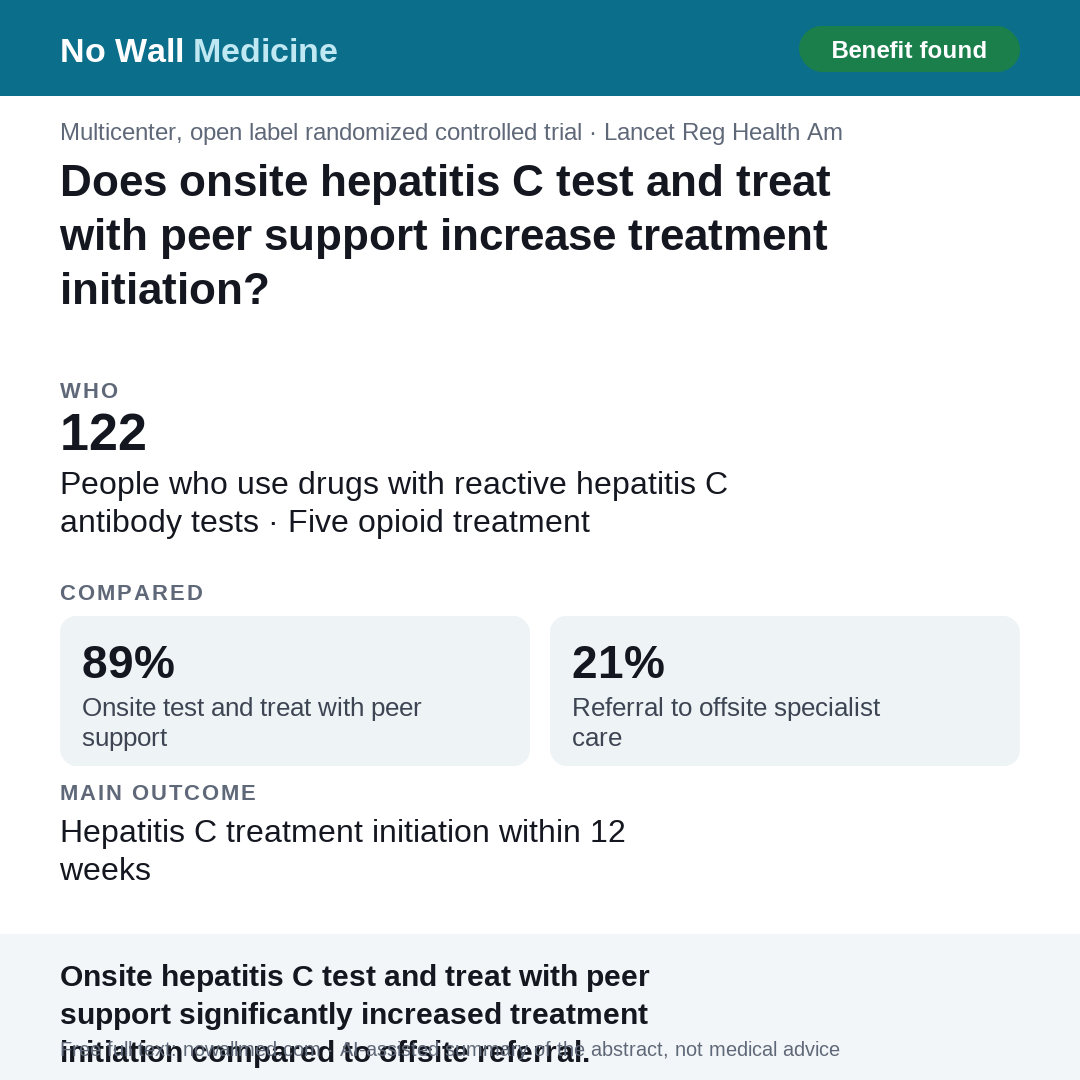
Rapid hepatitis C test and treat with peer support at opioid treatment programs (RAPID HCV): a hybrid effectiveness-implementation type 1 randomized control trial
Multicenter, open label randomized controlled trialBenefit found
Does onsite hepatitis C test and treat with peer support increase treatment initiation?
Who
182
People who use drugs with a reactive hepatitis C antibody test · Five opioid treatment programs in the United States and Canada
Compared
89%Onsite test and treat with peer support (59/66)
21%Referral to offsite specialist care (12/56)
Main outcome
Hepatitis C treatment initiation within 12 weeks
Result: p < 0.001
Bottom line: Onsite hepatitis C test and treat with peer support significantly increased treatment initiation compared to offsite referral.
Funded by: AbbVie
Lancet Reg Health Am · 2026-03-24Download image
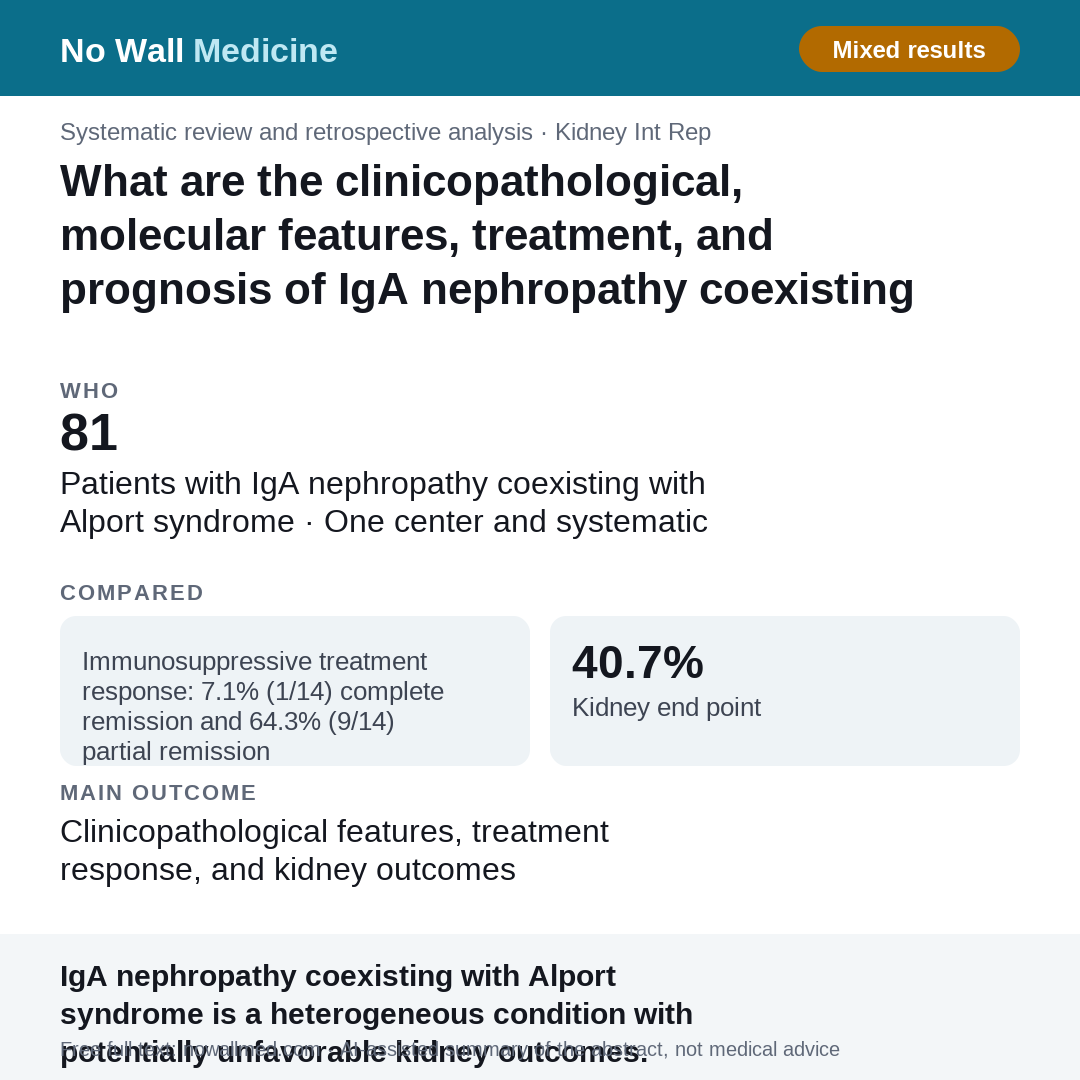
Systematic Review of IgA Nephropathy Coexisting With Alport Syndrome
Systematic review and retrospective analysisMixed results
What are the clinicopathological, molecular features, treatment, and prognosis of IgA nephropathy coexisting with Alport syndrome?
Who
81
Patients with IgA nephropathy coexisting with Alport syndrome · One center and systematic database search
Compared
Immunosuppressive treatment response: 7.1% (1/14) complete remission and 64.3% (9/14) partial remission
40.7%Kidney end point (11/27)
Main outcome
Clinicopathological features, treatment response, and kidney outcomes
Bottom line: IgA nephropathy coexisting with Alport syndrome is a heterogeneous condition with potentially unfavorable kidney outcomes.
Kidney Int Rep · 2026-03-24Download image
Social network distribution of HIV self-tests among MSM in Australia: a prospective, non-randomised trial
Prospective, non-randomised trialBenefit found
What is the uptake of HIV self-testing distributed via social networks among men who have sex with men?
Who
351
HIV-undiagnosed men who have sex with men aged 18 years or older · Australia
Compared
100%Test promoters
Recipients: 80% used the HIV self-test within 7 days
Main outcome
HIV self-test use within 7 days of receipt
Bottom line: Social network-based distribution of HIV self-testing is feasible, acceptable, and shows high uptake among men who have sex with men.
Funded by: Australian National Health and Medical Research Council
Lancet Reg Health West Pac · 2026-03-24Download image

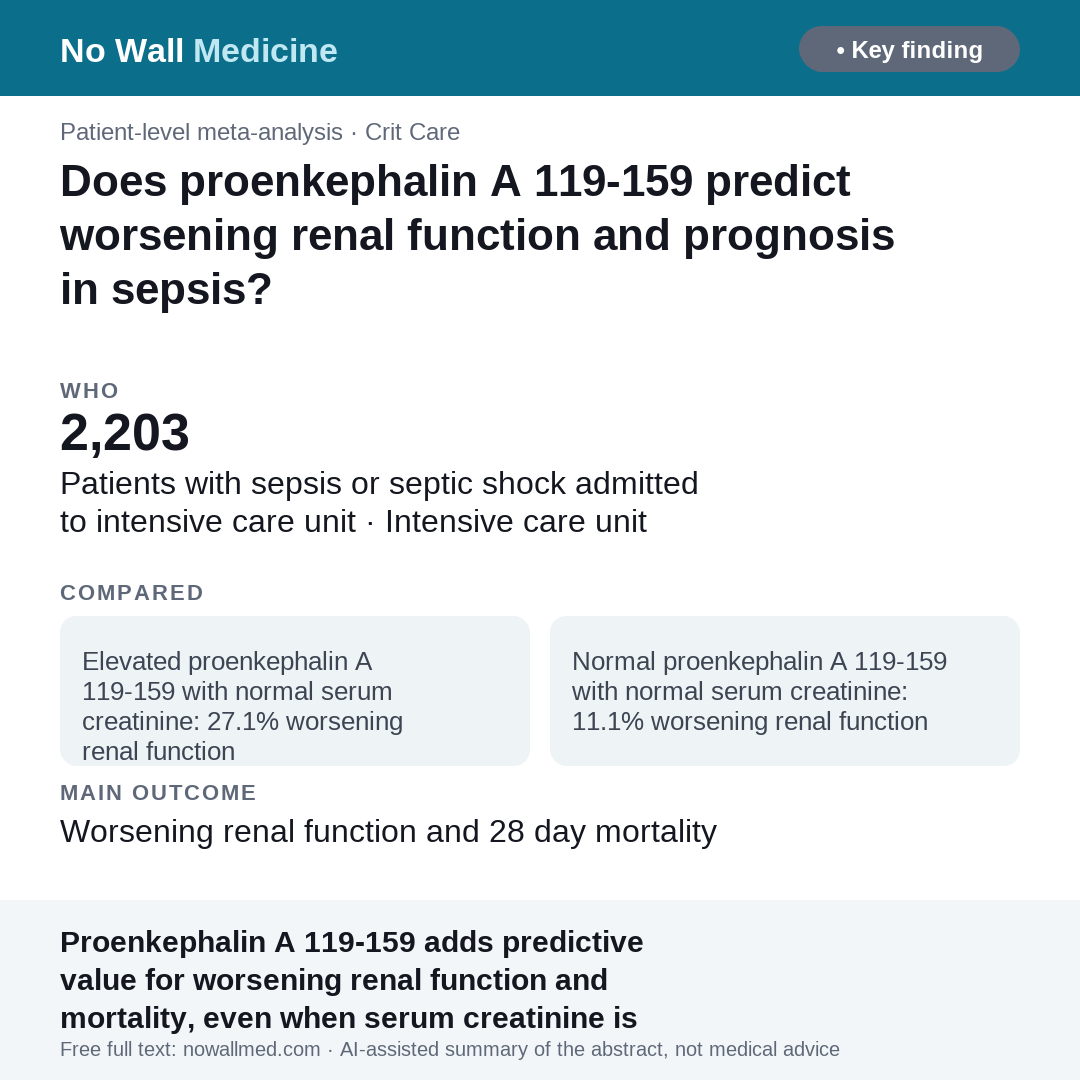
Clinical utility of proenkephalin A 119-159 for prediction of worsening renal function and prognosis in patients with sepsis -results of a patient-level meta-analysis
Patient-level meta-analysisBenefit found
Does proenkephalin A 119-159 predict worsening renal function and prognosis in sepsis?
Who
2,203
Patients with sepsis or septic shock admitted to intensive care unit · Intensive care unit
Compared
Elevated proenkephalin A 119-159 with normal serum creatinine: 27.1% worsening renal function
Normal proenkephalin A 119-159 with normal serum creatinine: 11.1% worsening renal function
Main outcome
Worsening renal function and 28 day mortality
Result: OR 3.4 (95% CI 2.7-4.3) for worsening renal function
Bottom line: Proenkephalin A 119-159 adds predictive value for worsening renal function and mortality, even when serum creatinine is normal.
Crit Care · 2026-03-24Download image