Visual abstracts
New randomized trials and meta-analyses from leading journals at a glance: who was studied, what was compared, and what was found. Every paper is free to read in full.
All specialtiesCardiology 4877Oncology 4138Gastroenterology & Hepatology 1942Infectious Disease 3837Neurology 1905Psychiatry & Mental Health 2273Pulmonology 2143Critical Care 1365Endocrinology & Diabetes 2580Pediatrics 2980Surgery 2559Orthopedics & Sports Medicine 931Neurosurgery 537Cardiothoracic & Vascular Surgery 674Plastic & Reconstructive Surgery 591Nephrology 1133Rheumatology 823Hematology 1109Dermatology 621Ophthalmology 543Obstetrics & Gynecology 1686Public & Global Health 1058Radiology & Imaging 648Anesthesiology 986Urology 764ENT (Otolaryngology) 503Emergency Medicine 511Allergy & Immunology 313Geriatrics 981Family Medicine & Primary Care 562Medical Genetics & Genomics 676Pathology & Laboratory Medicine 159Physical Medicine & Rehabilitation 757Palliative Care 444Nutrition 1588Digital Health & AI 2201General Medicine 321
Cost-benefit of IAPT Norway and effects on work-related outcomes and health care utilization: results from a randomized controlled trial using registry-based data
Randomized controlled trialBenefit found
Does Prompt Mental Health Care affect work outcomes, health care use, and cost-benefit?
Who
738
Participants with anxiety and/or depression · Two Prompt Mental Health Care sites in Norway
Compared
Prompt Mental Health Care: more likely to be in regular work without welfare benefits
Treatment-as-usual
Main outcome
Work-related outcomes, health care use, and cost-benefit
Result: benefit-cost ratio 5.26 (90%CI -1.28, 11.8)
Bottom line: Prompt Mental Health Care provides societal economic benefits and improves work participation for people with anxiety or depression.
Psychol Med · 2025-03-13Download image

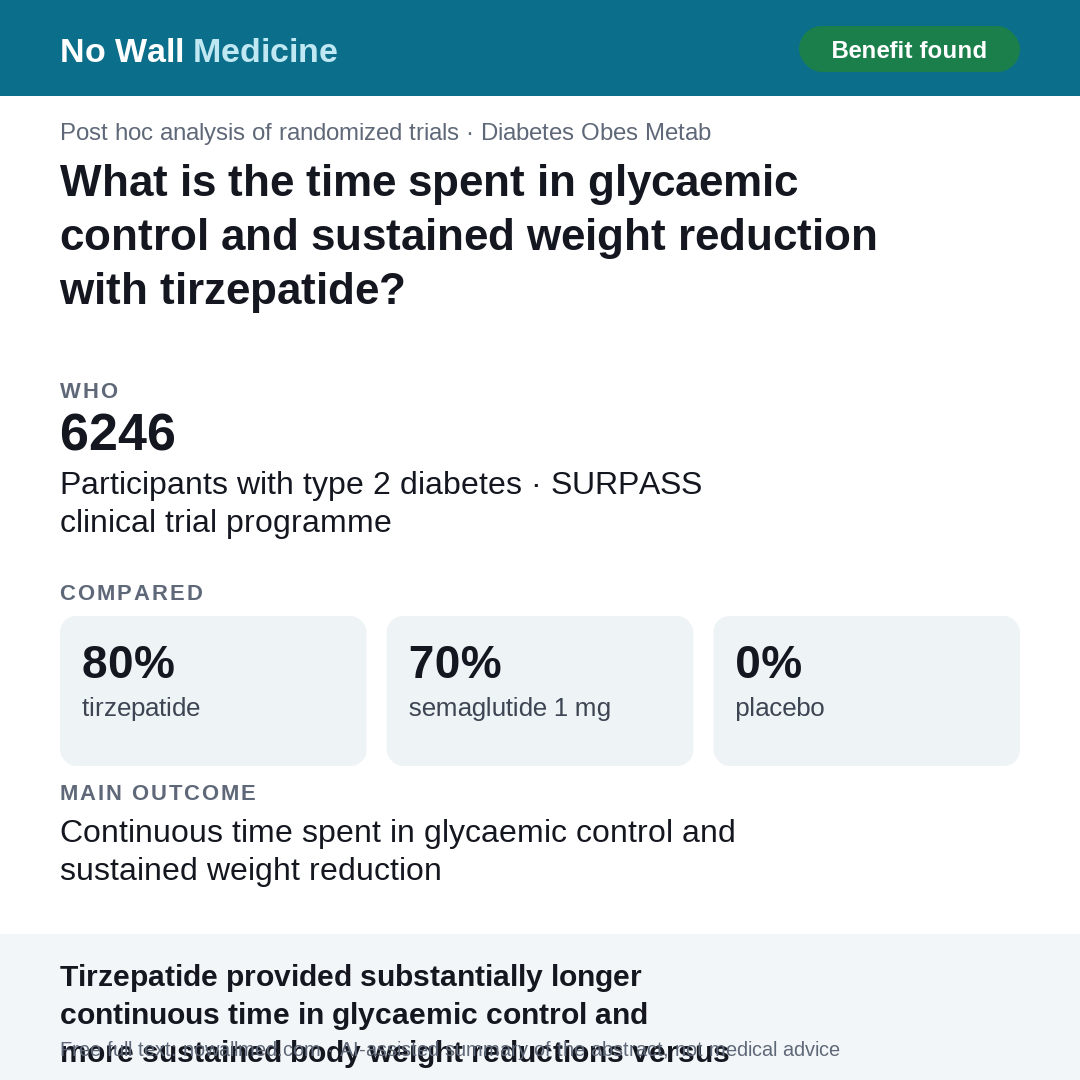
Time spent in glycaemic control with sustained body weight reduction with tirzepatide: A post hoc analysis of the SURPASS clinical trial programme
Post hoc analysis of randomized trialsBenefit found
What is the time spent in glycaemic control and sustained weight reduction with tirzepatide?
Who
6246
Participants with type 2 diabetes · SURPASS clinical trial programme
Compared
80%tirzepatide (40-week studies)
70%semaglutide 1 mg (40-week studies)
0%placebo (40-week studies)
Main outcome
Continuous time spent in glycaemic control and sustained weight reduction
Bottom line: Tirzepatide provided substantially longer continuous time in glycaemic control and more sustained body weight reductions versus comparators.
Diabetes Obes Metab · 2025-03-13Download image
Phase 2 Study of the Anti-High Temperature Requirement A1 (HtrA1) Fab Galegenimab (FHTR2163) in Geographic Atrophy Secondary to Age-Related Macular Degeneration
Phase 2, single-masked, randomized clinical trialNo clear difference
Is galegenimab effective for geographic atrophy secondary to age-related macular degeneration?
Who
337
Patients with geographic atrophy secondary to age-related macular degeneration
Compared
galegenimab every 4 weeks: 2.67 mm2
galegenimab every 8 weeks: 2.50 mm2
pooled sham arms: 2.38 mm2
Main outcome
mean change in geographic atrophy area from baseline to Week 72
Bottom line: Galegenimab did not show a difference in geographic atrophy area progression compared with sham.
Limitation: High rate of intraocular inflammation among treated patients.
Am J Ophthalmol · 2025-03-13Download image

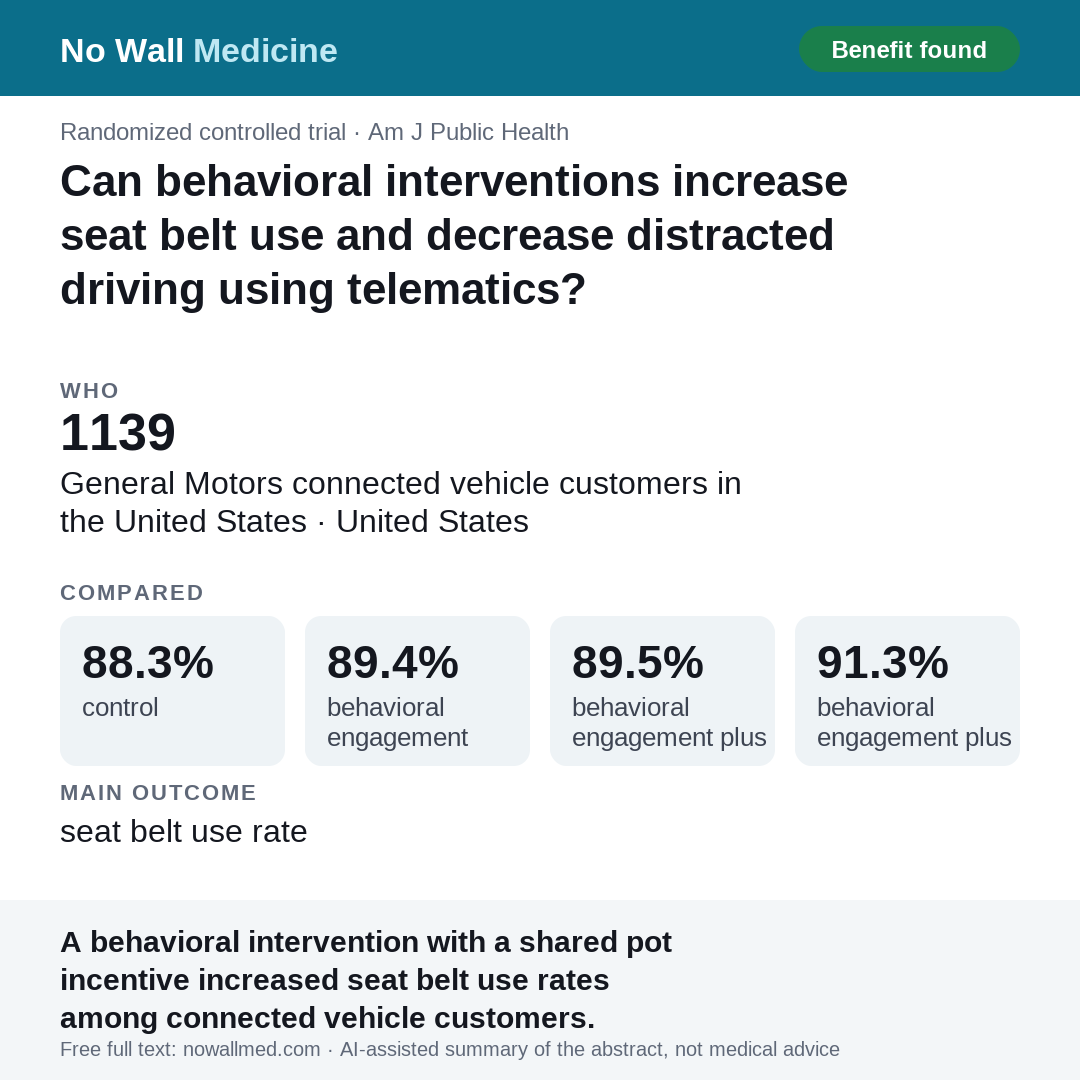
Behavioral Interventions for Increasing Seat Belt Use and Decreasing Distracted Driving Using Telematics: A National Randomized Trial
Randomized controlled trialBenefit found
Can behavioral interventions increase seat belt use and decrease distracted driving using telematics?
Who
1139
General Motors connected vehicle customers in the United States · United States
Compared
88.3%control
89.4%behavioral engagement
89.5%behavioral engagement plus raffle
91.3%behavioral engagement plus shared pot
Main outcome
seat belt use rate
Bottom line: A behavioral intervention with a shared pot incentive increased seat belt use rates among connected vehicle customers.
Am J Public Health · 2025-03-13Download image
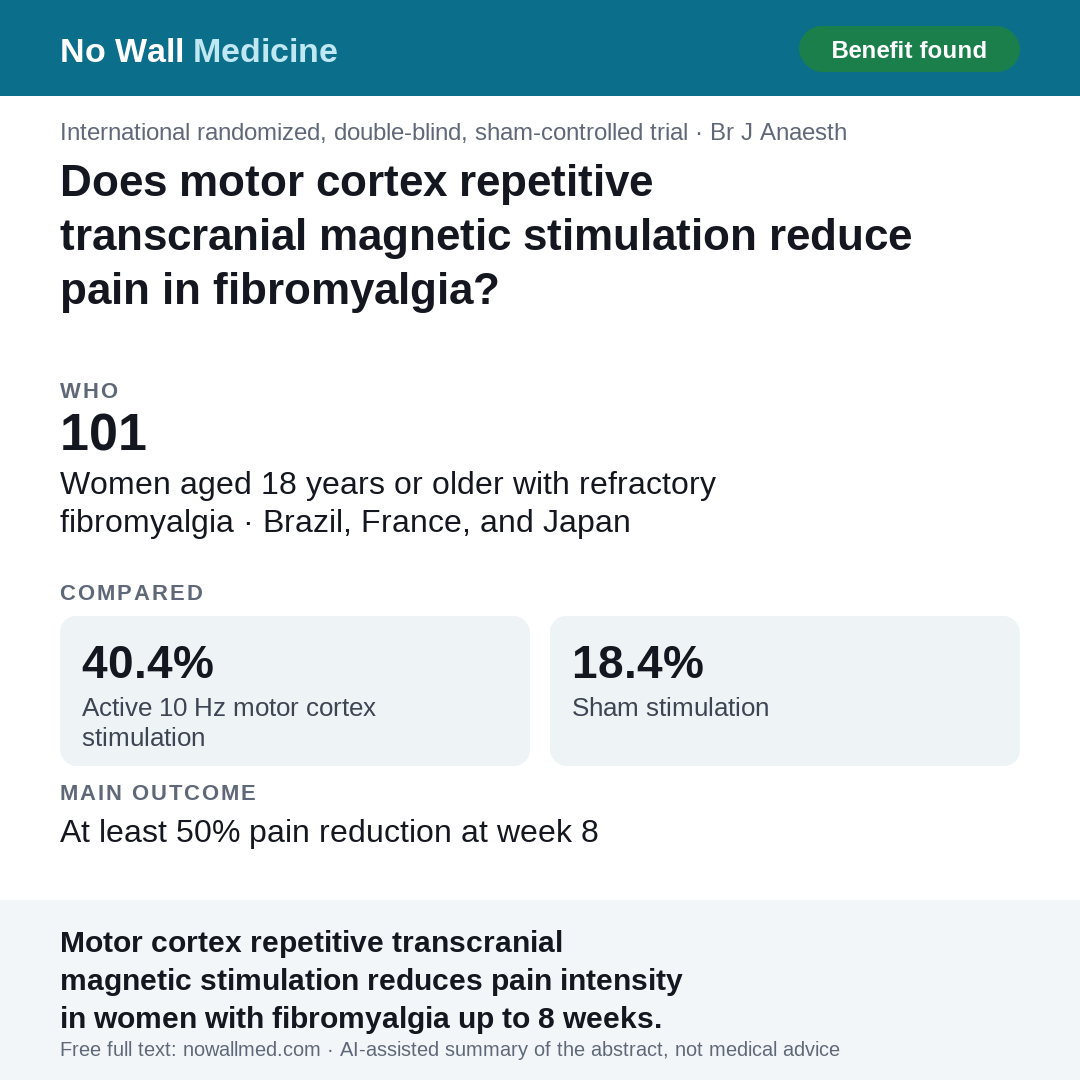
Motor cortex repetitive transcranial magnetic stimulation in fibromyalgia: a multicentre randomised controlled trial
International randomized, double-blind, sham-controlled trialBenefit found
Does motor cortex repetitive transcranial magnetic stimulation reduce pain in fibromyalgia?
Who
101
Women aged 18 years or older with refractory fibromyalgia · Brazil, France, and Japan
Compared
40.4%Active 10 Hz motor cortex stimulation
18.4%Sham stimulation
Main outcome
At least 50% pain reduction at week 8
Result: odds ratio 3.04 (95% credible interval 1.26-8.06)
Bottom line: Motor cortex repetitive transcranial magnetic stimulation reduces pain intensity in women with fibromyalgia up to 8 weeks.
Br J Anaesth · 2025-03-13Download image
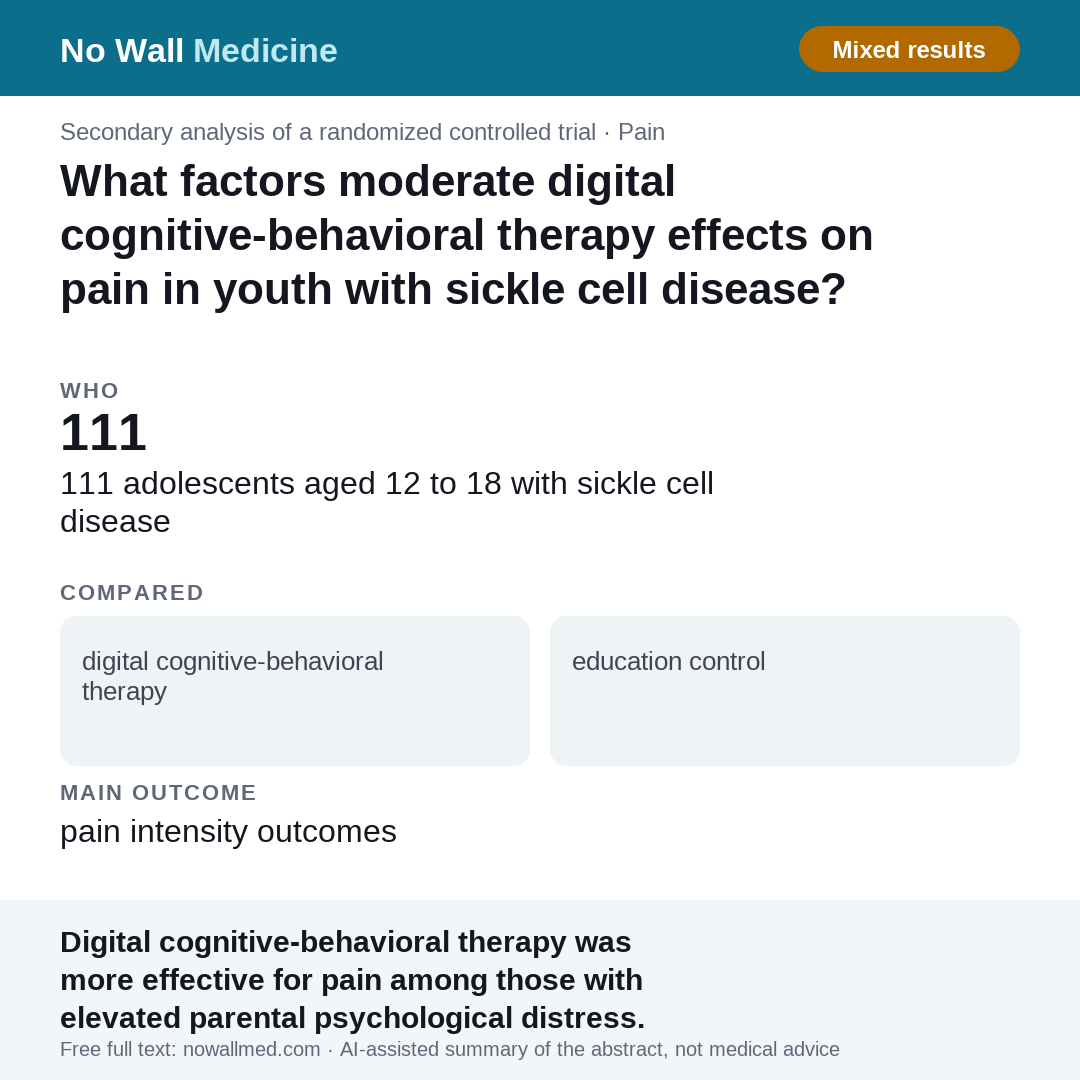
Moderators of digital cognitive-behavioral therapy for youth with sickle cell disease pain: secondary analysis of a randomized controlled trial
Secondary analysis of a randomized controlled trialMixed results
What factors moderate digital cognitive-behavioral therapy effects on pain in youth with sickle cell disease?
Who
111
111 adolescents aged 12 to 18 with sickle cell disease
Compared
digital cognitive-behavioral therapy
education control
Main outcome
pain intensity outcomes
Result: P = 0.012 for pretreatment parent psychological distress
Bottom line: Digital cognitive-behavioral therapy was more effective for pain among those with elevated parental psychological distress.
Pain · 2025-03-13Download image
Effectiveness of My Tools for Care-in Care: A Pragmatic Randomized Controlled Trial
Mixed methods pragmatic randomized controlled trialNo clear difference
Is the My Tools for Care-In Care web-based intervention effective for care partners?
Who
234
Adult care partners of older persons living with dementia in care homes · Canada
Compared
Intervention group
Active control group
Main outcome
Mental health
Bottom line: The web-based psychoeducational intervention showed no effect on the primary outcome of mental health.
Limitation: Use of the intervention within the intervention group was low.
J Am Med Dir Assoc · 2025-03-13Download image

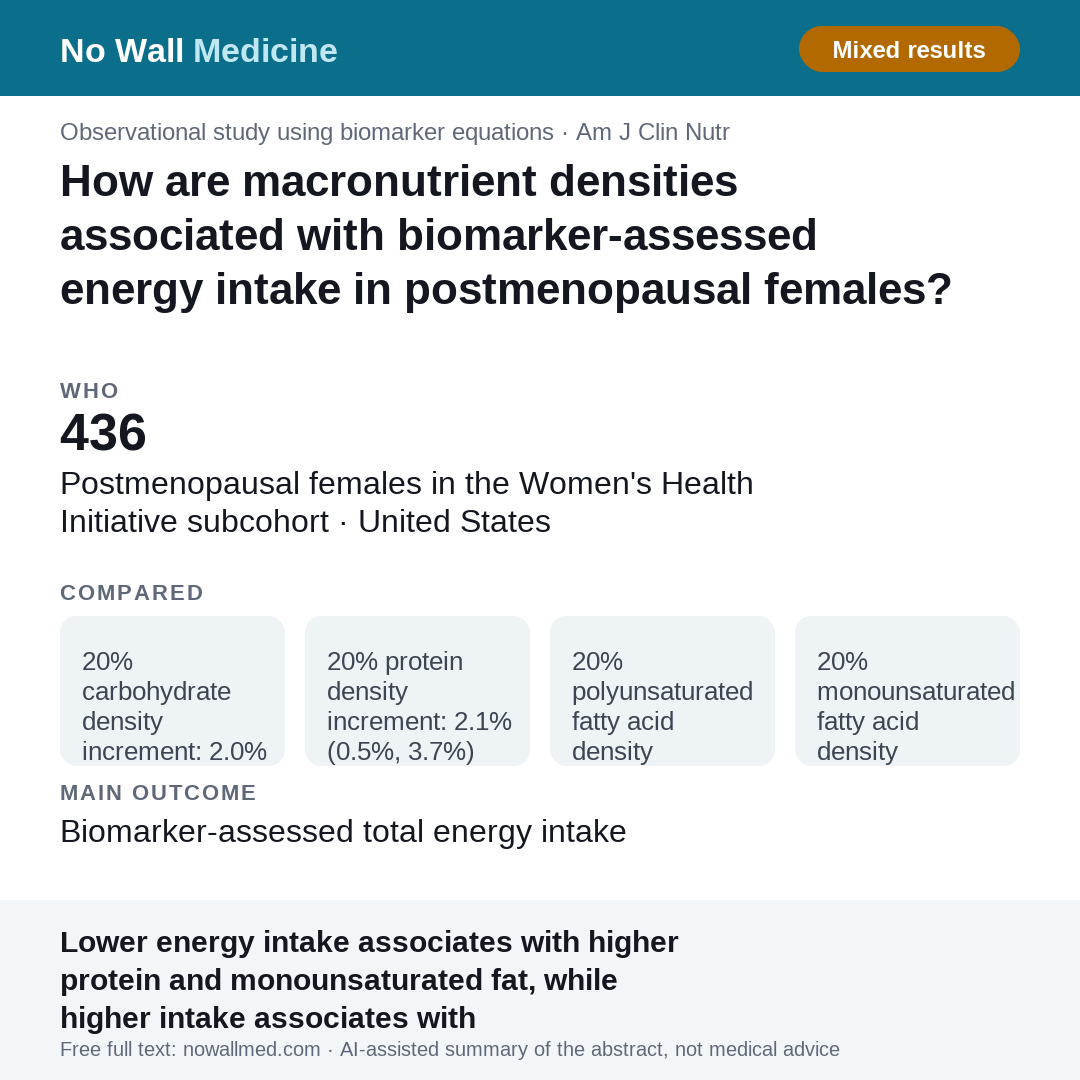
Energy intake is associated with dietary macronutrient densities: inversely with protein and monounsaturated fat and positively with polyunsaturated fat and carbohydrate among postmenopausal females
Observational study using biomarker equationsMixed results
How are macronutrient densities associated with biomarker-assessed energy intake in postmenopausal females?
Who
436
Postmenopausal females in the Women's Health Initiative subcohort · United States
Compared
20% carbohydrate density increment: 2.0% (0.1%, 3.9%) higher
20% protein density increment: 2.1% (0.5%, 3.7%) lower
20% polyunsaturated fatty acid density increment: 1.4% (0.3%, 2.6%) higher
20% monounsaturated fatty acid density increment: 1.5% (0.1%, 2.9%) lower
Main outcome
Biomarker-assessed total energy intake
Bottom line: Lower energy intake associates with higher protein and monounsaturated fat, while higher intake associates with polyunsaturated fat and added sugars.
Am J Clin Nutr · 2025-03-13Download image
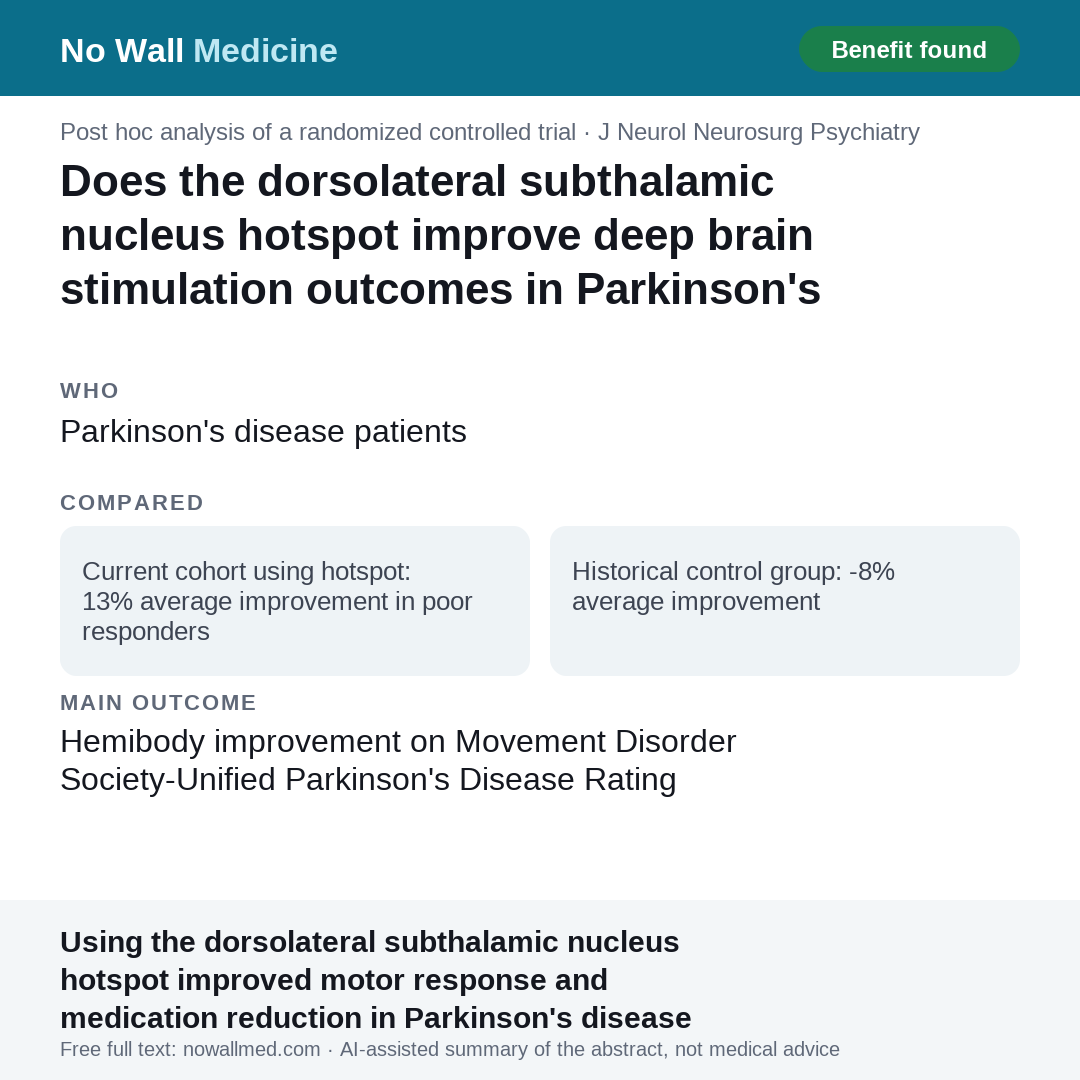
Validation of the hotspot for dorsolateral subthalamic nucleus targeting in deep brain stimulation surgery for Parkinson's disease: a post hoc analysis of a randomised controlled trial
Post hoc analysis of a randomized controlled trialBenefit found
Does the dorsolateral subthalamic nucleus hotspot improve deep brain stimulation outcomes in Parkinson's disease?
Who
Parkinson's disease patients
Compared
Current cohort using hotspot: 13% average improvement in poor responders
Historical control group: -8% average improvement
Main outcome
Hemibody improvement on Movement Disorder Society-Unified Parkinson's Disease Rating Scale
Bottom line: Using the dorsolateral subthalamic nucleus hotspot improved motor response and medication reduction in Parkinson's disease patients.
J Neurol Neurosurg Psychiatry · 2025-03-13Download image
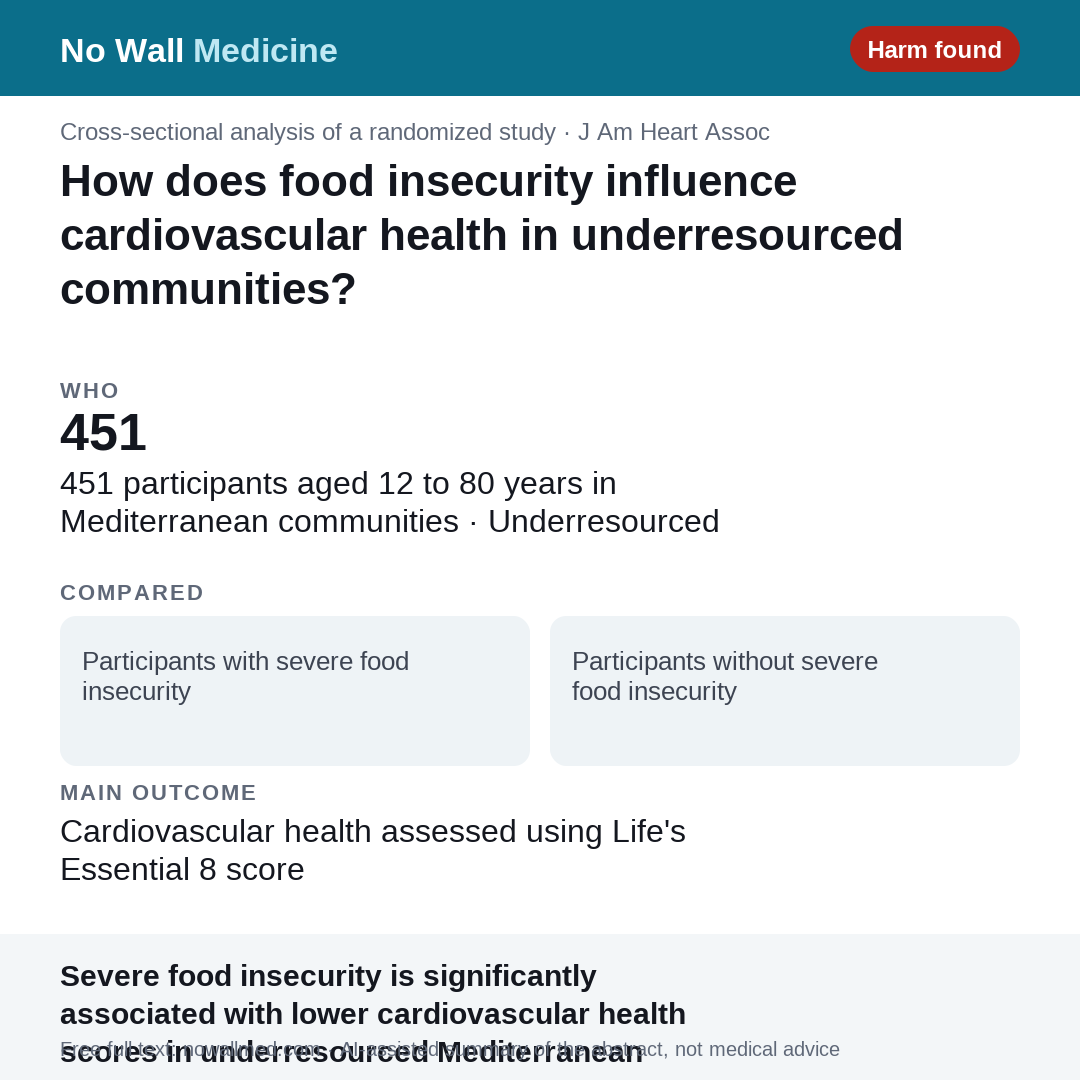
Food Insecurity and Its Cardiovascular Implications in Underresourced Communities
Cross-sectional analysis of a randomized studyHarm found
How does food insecurity influence cardiovascular health in underresourced communities?
Who
451
451 participants aged 12 to 80 years in Mediterranean communities · Underresourced Mediterranean communities
Compared
Participants with severe food insecurity
Participants without severe food insecurity
Main outcome
Cardiovascular health assessed using Life's Essential 8 score
Result: effect size, -2.83 (95% CI, -5.10 to -0.56)
Bottom line: Severe food insecurity is significantly associated with lower cardiovascular health scores in underresourced Mediterranean communities.
J Am Heart Assoc · 2025-03-13Download image
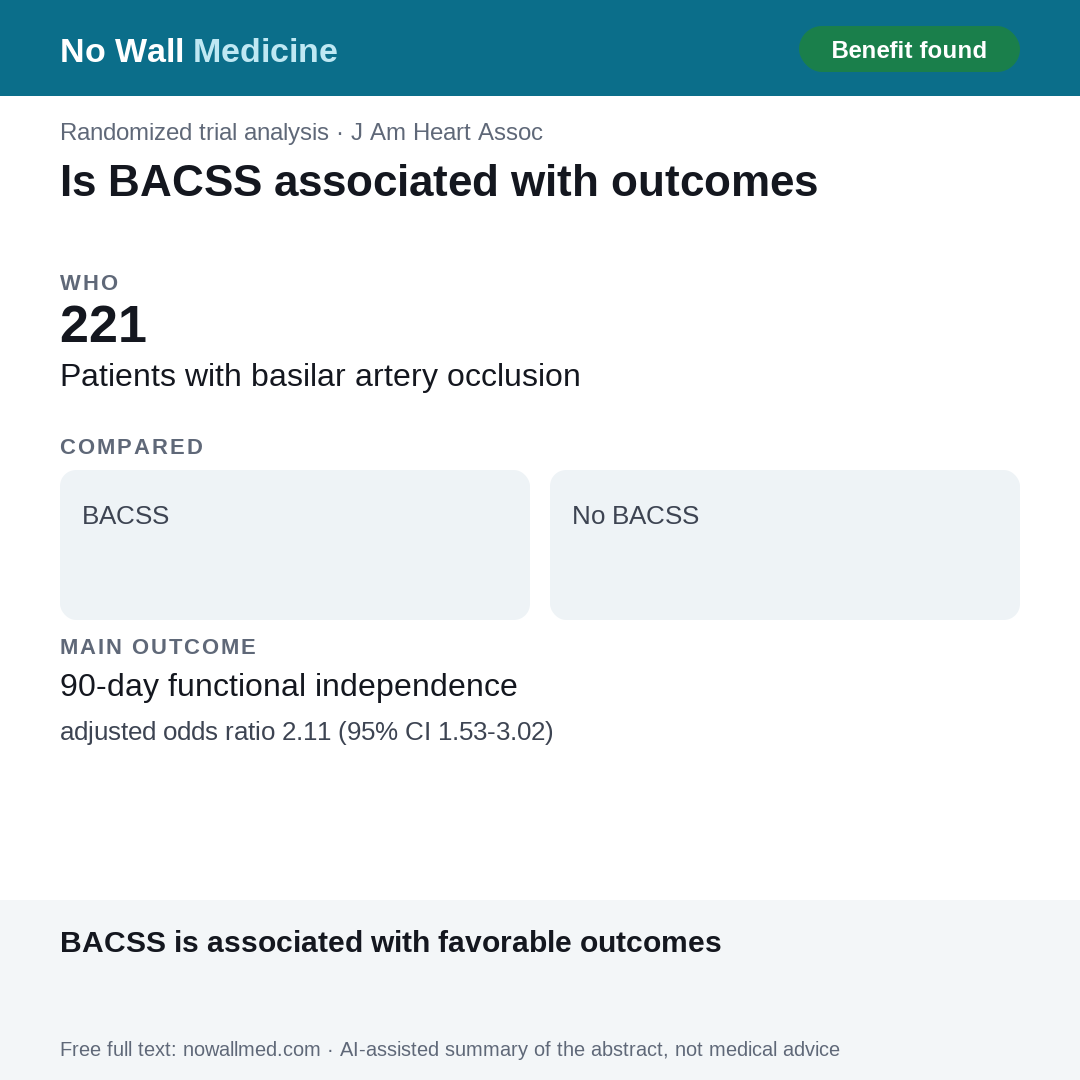
The Basilar Artery Collateral Simplified Score: a Novel Collateral Circulation Score Associated With Outcomes in Patients With Basilar Artery Occlusion: Results From the ATTENTION Study
Randomized trial analysisBenefit found
Is BACSS associated with outcomes
Who
221
Patients with basilar artery occlusion
Compared
BACSS
No BACSS
Main outcome
90-day functional independence
Result: adjusted odds ratio 2.11 (95% CI 1.53-3.02)
Bottom line: BACSS is associated with favorable outcomes
J Am Heart Assoc · 2025-03-13Download image
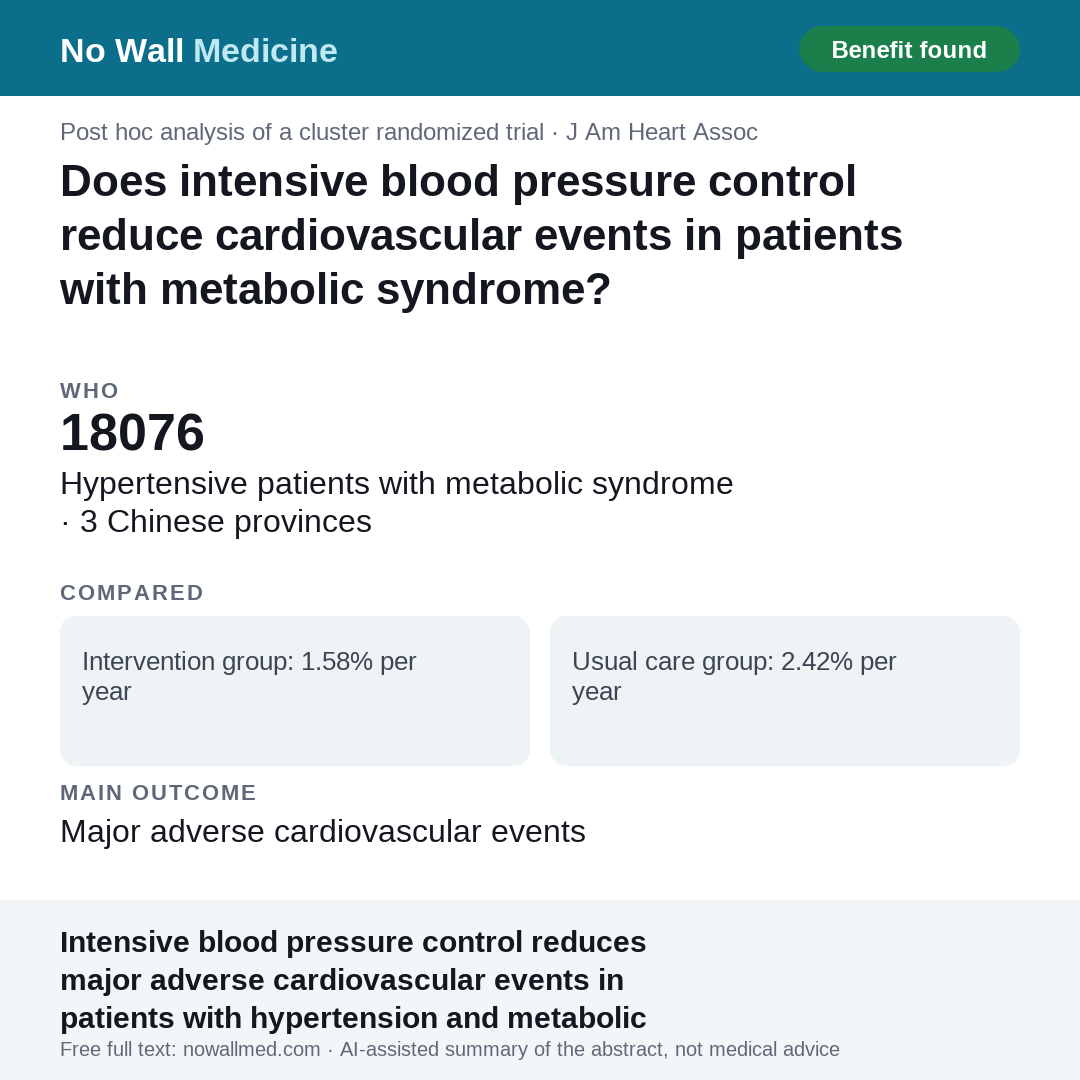
Intensive Blood Pressure Strategy on Cardiovascular Diseases in Patients With Metabolic Syndrome: Post Hoc Analysis of a Clinical Trial
Post hoc analysis of a cluster randomized trialBenefit found
Does intensive blood pressure control reduce cardiovascular events in patients with metabolic syndrome?
Who
18076
Hypertensive patients with metabolic syndrome · 3 Chinese provinces
Compared
Intervention group: 1.58% per year
Usual care group: 2.42% per year
Main outcome
Major adverse cardiovascular events
Result: hazard ratio 0.65 (95% CI, 0.57-0.74)
Bottom line: Intensive blood pressure control reduces major adverse cardiovascular events in patients with hypertension and metabolic syndrome.
J Am Heart Assoc · 2025-03-13Download image
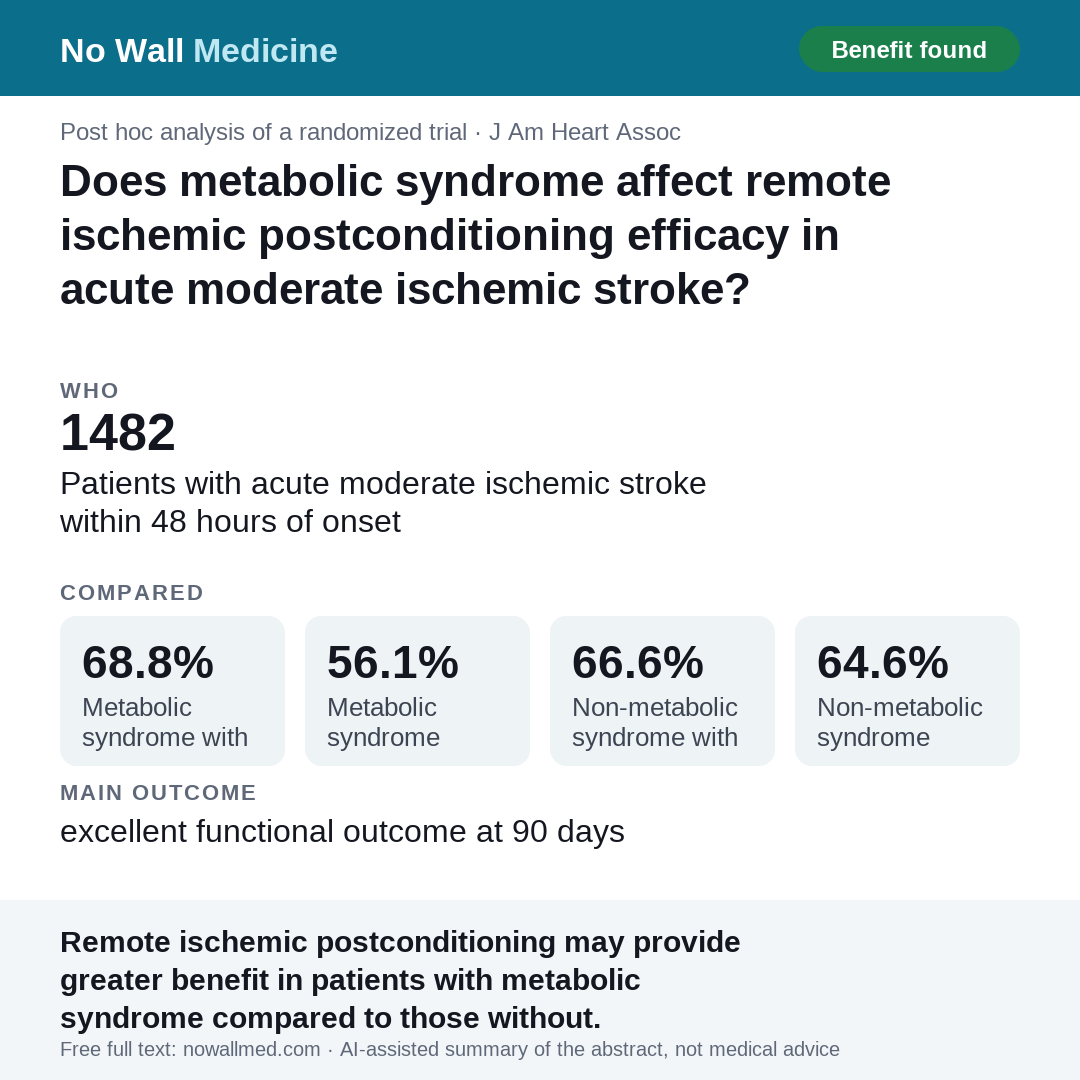
Metabolic Syndrome and Efficacy of Remote Ischemic Postconditioning in Acute Moderate Ischemic Stroke: A Post Hoc Analysis of the RICAMIS Trial
Post hoc analysis of a randomized trialBenefit found
Does metabolic syndrome affect remote ischemic postconditioning efficacy in acute moderate ischemic stroke?
Who
1482
Patients with acute moderate ischemic stroke within 48 hours of onset
Compared
68.8%Metabolic syndrome with remote ischemic postconditioning
56.1%Metabolic syndrome control
66.6%Non-metabolic syndrome with remote ischemic postconditioning
64.6%Non-metabolic syndrome control
Main outcome
excellent functional outcome at 90 days
Result: odds ratio 1.751 (95% CI 1.248-2.456) for metabolic syndrome patients
Bottom line: Remote ischemic postconditioning may provide greater benefit in patients with metabolic syndrome compared to those without.
J Am Heart Assoc · 2025-03-13Download image
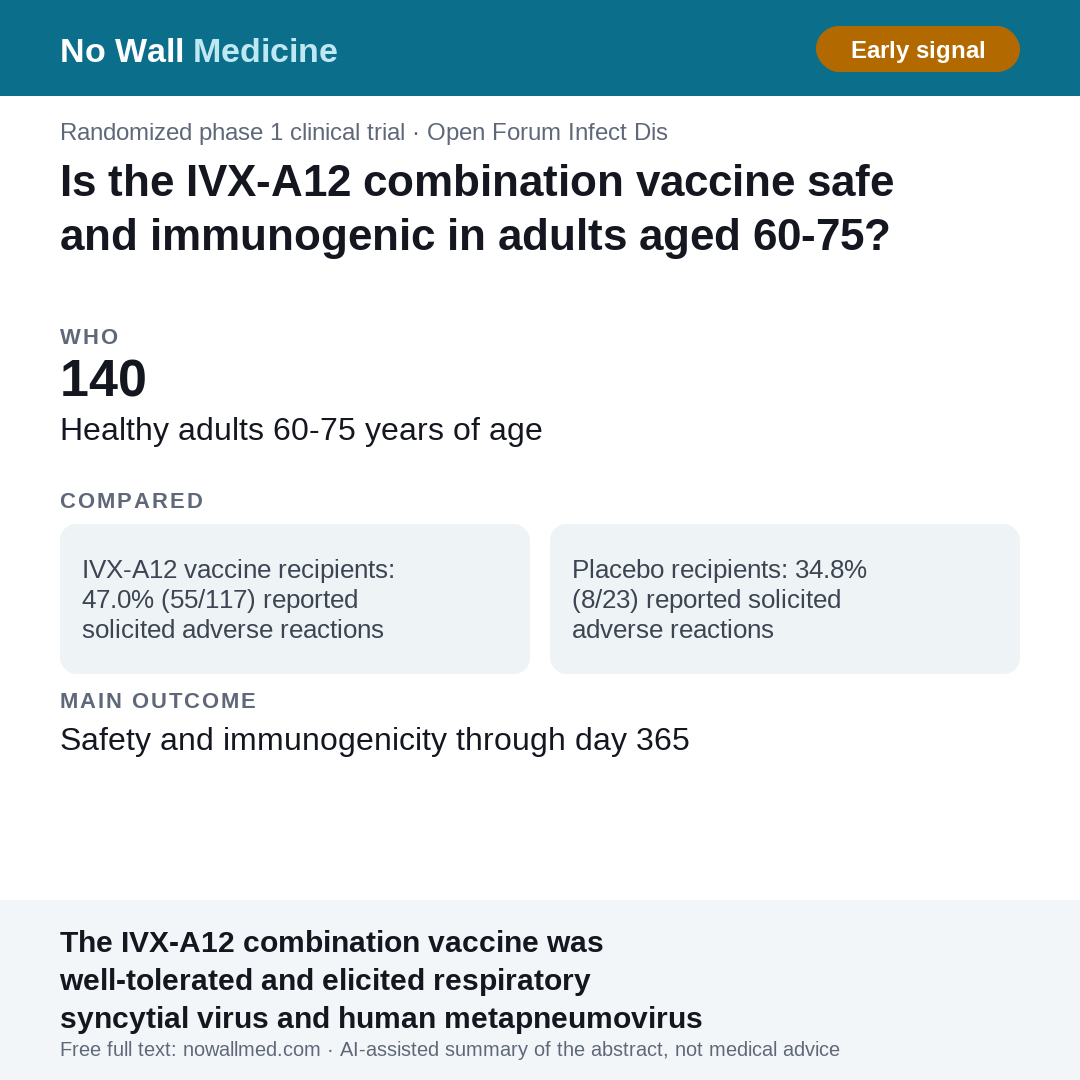
A Randomized Phase 1 Clinical Trial of a Respiratory Syncytial Virus and Human Metapneumovirus Combination Protein-Based Virus-like Particle Vaccine in Adults 60-75 Years of Age
Randomized phase 1 clinical trialBenefit found
Is the IVX-A12 combination vaccine safe and immunogenic in adults aged 60-75?
Who
140
Healthy adults 60-75 years of age
Compared
IVX-A12 vaccine recipients: 47.0% (55/117) reported solicited adverse reactions
Placebo recipients: 34.8% (8/23) reported solicited adverse reactions
Main outcome
Safety and immunogenicity through day 365
Bottom line: The IVX-A12 combination vaccine was well-tolerated and elicited respiratory syncytial virus and human metapneumovirus specific antibody responses.
Open Forum Infect Dis · 2025-03-13Download image
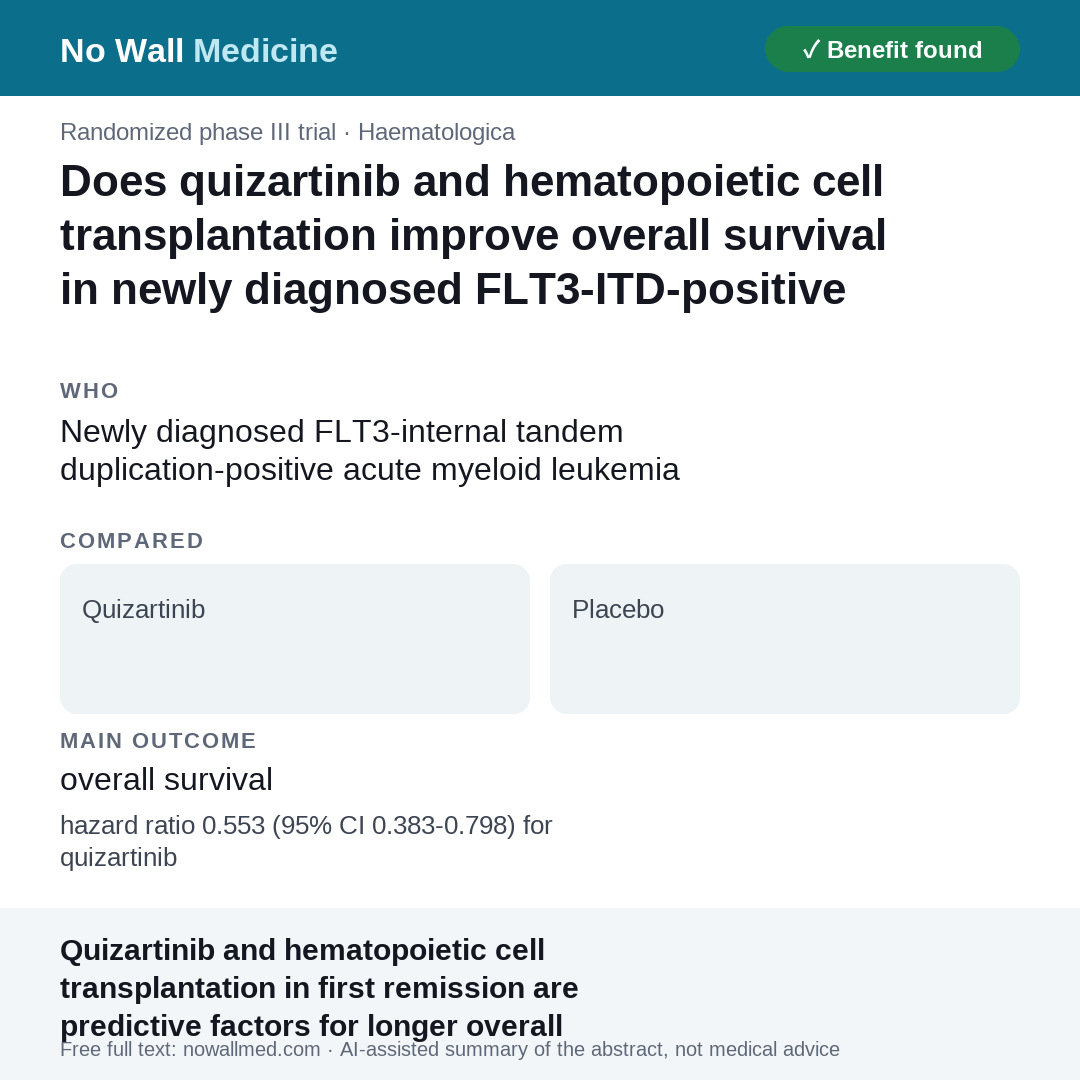
Impact of hematopoietic cell transplantation and quizartinib in newly diagnosed patients with acute myeloid leukemia and FMS-like tyrosine kinase 3-internal tandem duplications in the QuANTUM-First trial
Randomized phase III trialBenefit found
Does quizartinib and hematopoietic cell transplantation improve overall survival in newly diagnosed FLT3-ITD-positive AML?
Who
Newly diagnosed FLT3-internal tandem duplication-positive acute myeloid leukemia patients
Compared
Quizartinib
Placebo
Main outcome
overall survival
Result: hazard ratio 0.553 (95% CI 0.383-0.798) for quizartinib
Bottom line: Quizartinib and hematopoietic cell transplantation in first remission are predictive factors for longer overall survival.
Haematologica · 2025-03-13Download image
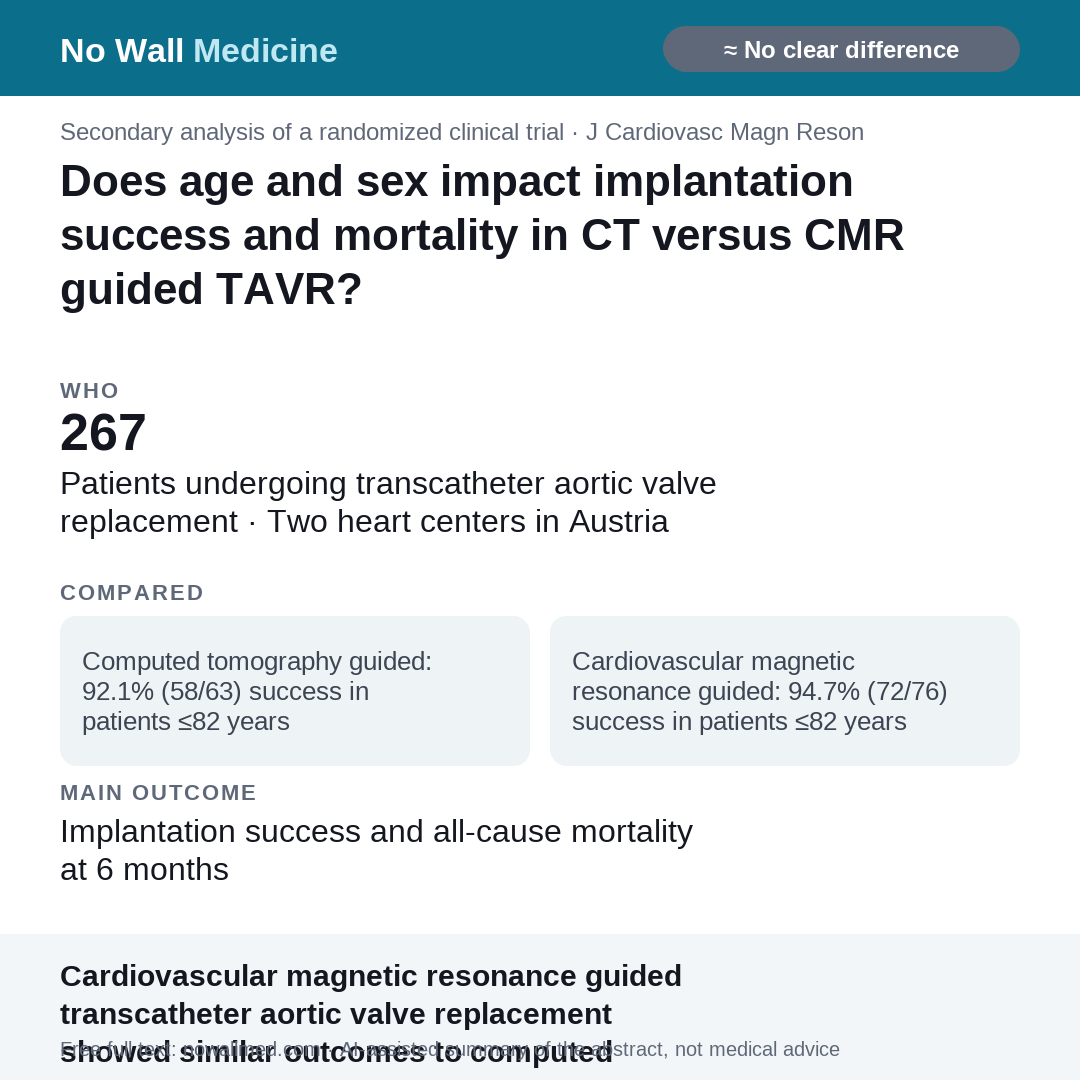
Age and sex-related outcomes in cardiovascular magnetic resonance versus computed tomography-guided transcatheter aortic valve replacement: a secondary analysis of a randomized clinical trial
Secondary analysis of a randomized clinical trialNo clear difference
Does age and sex impact implantation success and mortality in CT versus CMR guided TAVR?
Who
267
Patients undergoing transcatheter aortic valve replacement · Two heart centers in Austria
Compared
Computed tomography guided: 92.1% (58/63) success in patients ≤82 years
Cardiovascular magnetic resonance guided: 94.7% (72/76) success in patients ≤82 years
Main outcome
Implantation success and all-cause mortality at 6 months
Bottom line: Cardiovascular magnetic resonance guided transcatheter aortic valve replacement showed similar outcomes to computed tomography regardless of age and sex.
J Cardiovasc Magn Reson · 2025-03-13Download image
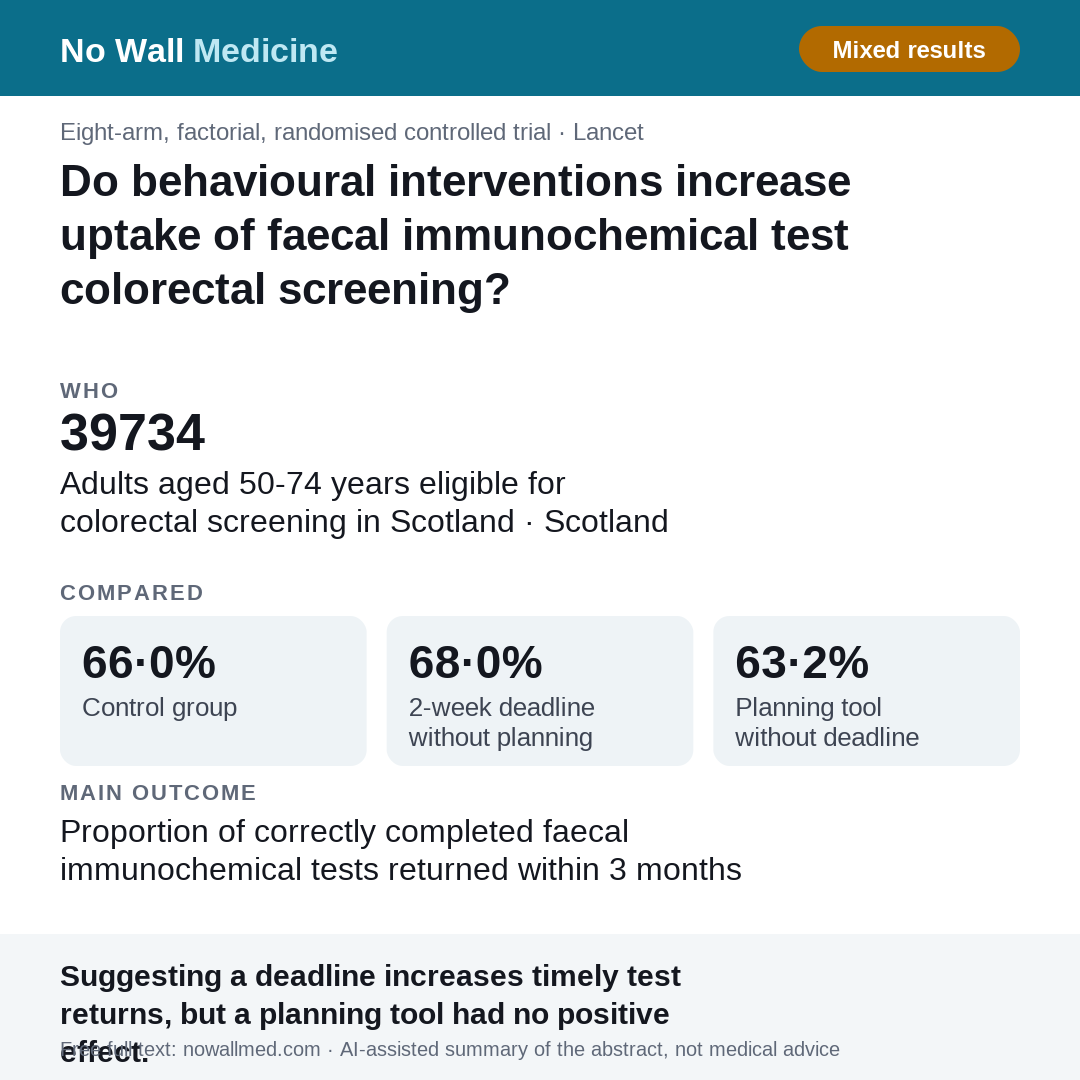
Behavioural interventions to increase uptake of FIT colorectal screening in Scotland (TEMPO): a nationwide, eight-arm, factorial, randomised controlled trial
Eight-arm, factorial, randomised controlled trialMixed results
Do behavioural interventions increase uptake of faecal immunochemical test colorectal screening?
Who
39734
Adults aged 50-74 years eligible for colorectal screening in Scotland · Scotland
Compared
66·0%Control group (3275 of 4965)
68·0%2-week deadline without planning tool (3376 of 4964)
63·2%Planning tool without deadline (3134 of 4958)
Main outcome
Proportion of correctly completed faecal immunochemical tests returned within 3 months
Result: adjusted odds ratio 1·13 (95% CI 1·08 to 1·19) for deadline
Bottom line: Suggesting a deadline increases timely test returns, but a planning tool had no positive effect.
Limitation: The analysis was complicated by an interaction between the two interventions
Funded by: Scottish Government and Cancer Research UK
Lancet · 2025-03-12Download image
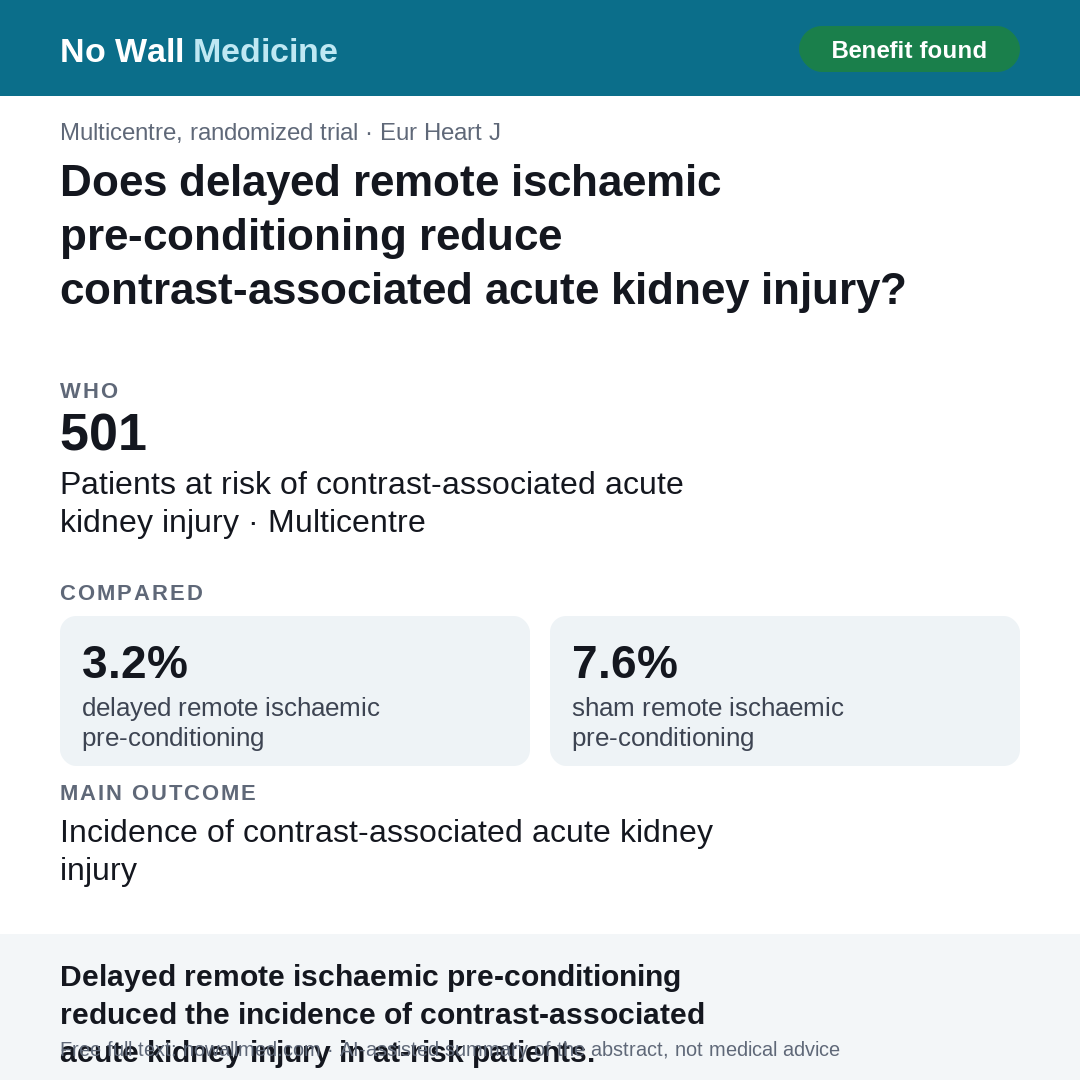
Remote ischaemic pre-conditioning, kidney injury, and outcomes after coronary angiography and intervention: a randomized trial
Multicentre, randomized trialBenefit found
Does delayed remote ischaemic pre-conditioning reduce contrast-associated acute kidney injury?
Who
501
Patients at risk of contrast-associated acute kidney injury · Multicentre
Compared
3.2%delayed remote ischaemic pre-conditioning
7.6%sham remote ischaemic pre-conditioning
Main outcome
Incidence of contrast-associated acute kidney injury
Result: odds ratio 0.4 (95% confidence interval 0.17-0.94)
Bottom line: Delayed remote ischaemic pre-conditioning reduced the incidence of contrast-associated acute kidney injury in at-risk patients.
Eur Heart J · 2025-03-12Download image
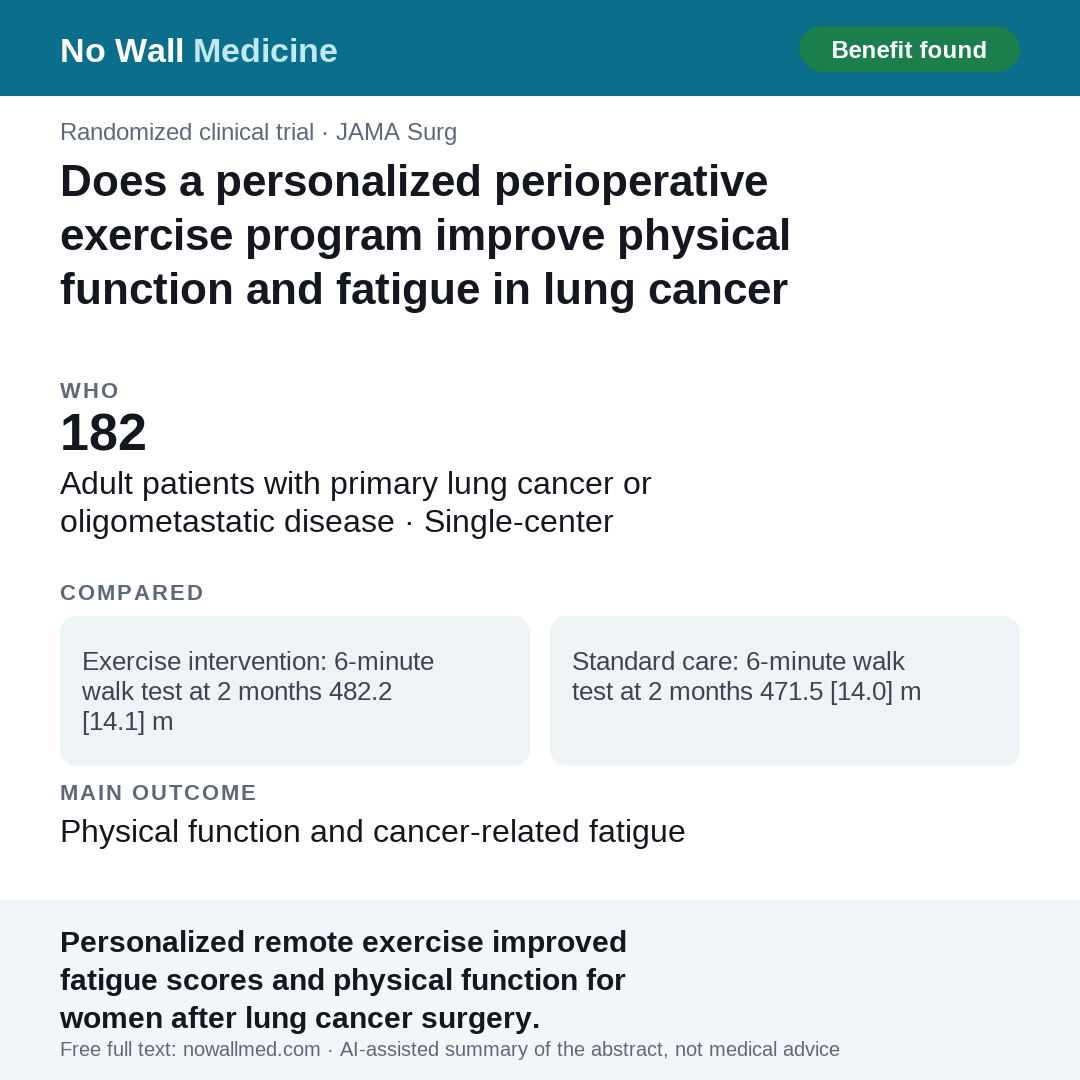
Precision Exercise Effect on Fatigue and Function in Lung Cancer Surgery: A Randomized Clinical Trial
Randomized clinical trialBenefit found
Does a personalized perioperative exercise program improve physical function and fatigue in lung cancer surgery patients?
Who
182
Adult patients with primary lung cancer or oligometastatic disease · Single-center
Compared
Exercise intervention: 6-minute walk test at 2 months 482.2 [14.1] m
Standard care: 6-minute walk test at 2 months 471.5 [14.0] m
Main outcome
Physical function and cancer-related fatigue
Bottom line: Personalized remote exercise improved fatigue scores and physical function for women after lung cancer surgery.
JAMA Surg · 2025-03-12Download image
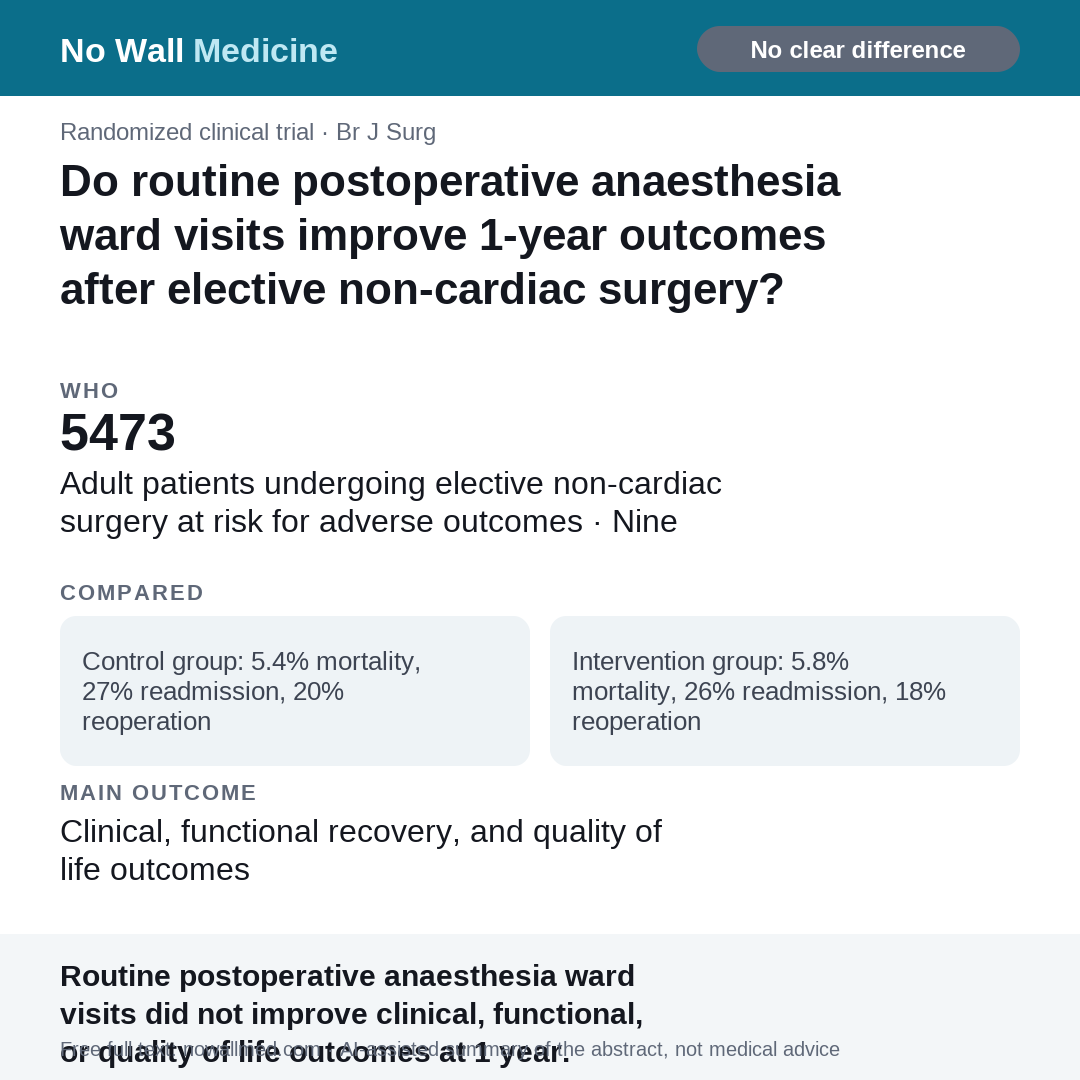
Routine anaesthesia ward-based patient visits in surgery: 1-year outcomes of the TRACE randomized clinical trial
Randomized clinical trialNo clear difference
Do routine postoperative anaesthesia ward visits improve 1-year outcomes after elective non-cardiac surgery?
Who
5473
Adult patients undergoing elective non-cardiac surgery at risk for adverse outcomes · Nine hospitals in the Netherlands
Compared
Control group: 5.4% mortality, 27% readmission, 20% reoperation
Intervention group: 5.8% mortality, 26% readmission, 18% reoperation
Main outcome
Clinical, functional recovery, and quality of life outcomes
Bottom line: Routine postoperative anaesthesia ward visits did not improve clinical, functional, or quality of life outcomes at 1 year.
Br J Surg · 2025-03-12Download image