Visual abstracts
New randomized trials and meta-analyses from leading journals at a glance: who was studied, what was compared, and what was found. Every paper is free to read in full.
All specialtiesCardiology 4763Oncology 4042Gastroenterology & Hepatology 1902Infectious Disease 3756Neurology 1872Psychiatry & Mental Health 2214Pulmonology 2042Critical Care 1319Endocrinology & Diabetes 2544Pediatrics 2889Surgery 2479Orthopedics & Sports Medicine 917Neurosurgery 525Cardiothoracic & Vascular Surgery 656Plastic & Reconstructive Surgery 574Nephrology 1107Rheumatology 810Hematology 1090Dermatology 611Ophthalmology 532Obstetrics & Gynecology 1645Public & Global Health 1037Radiology & Imaging 617Anesthesiology 957Urology 745ENT (Otolaryngology) 494Emergency Medicine 481Allergy & Immunology 309Geriatrics 972Family Medicine & Primary Care 533Medical Genetics & Genomics 659Pathology & Laboratory Medicine 156Physical Medicine & Rehabilitation 734Palliative Care 421Nutrition 1560Digital Health & AI 2133General Medicine 318
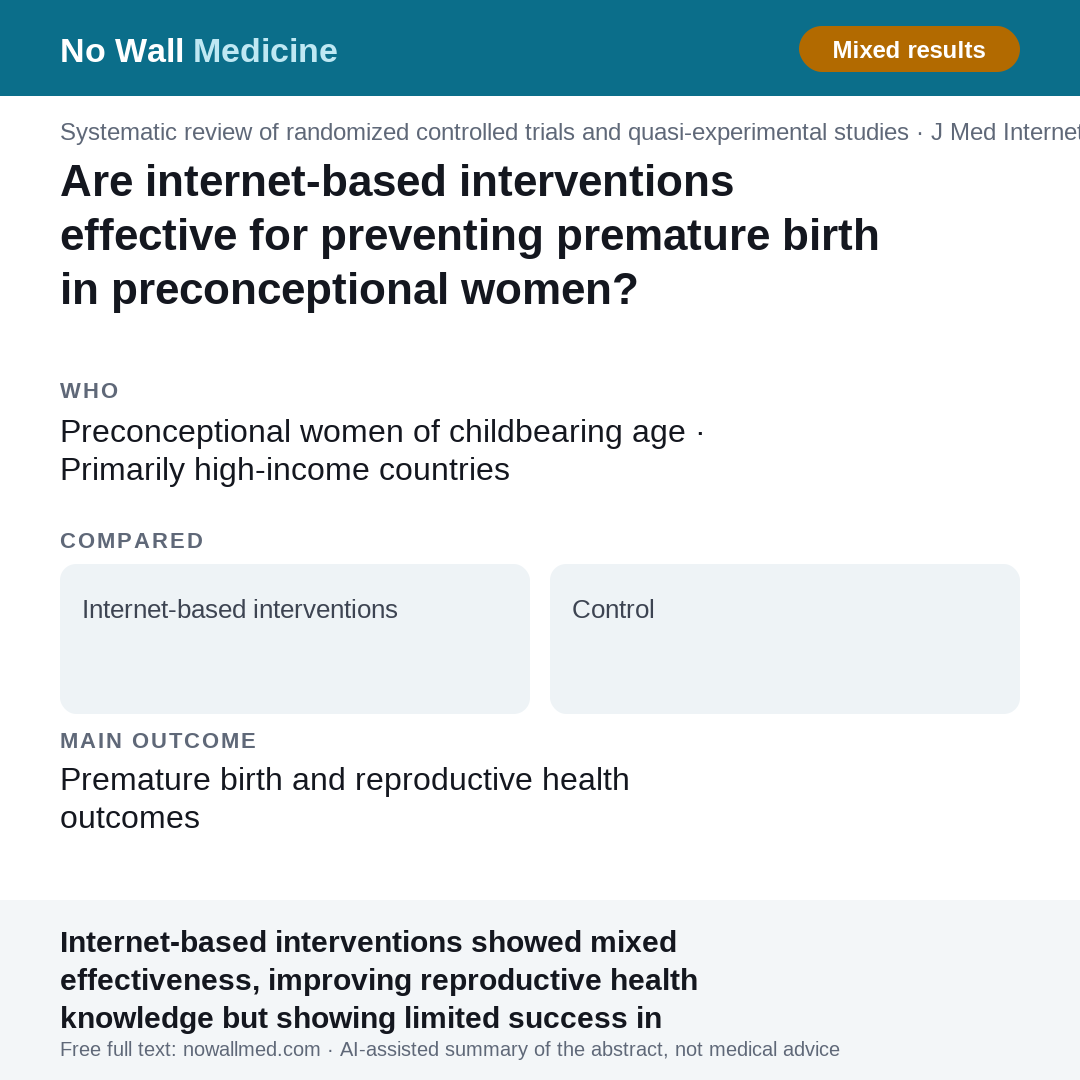
Internet-Based Interventions for Preventing Premature Birth in Preconceptional Women of Childbearing Age: Systematic Review
Systematic review of randomized controlled trials and quasi-experimental studiesMixed results
Are internet-based interventions effective for preventing premature birth in preconceptional women?
Who
Preconceptional women of childbearing age · Primarily high-income countries
Compared
Internet-based interventions
Control
Main outcome
Premature birth and reproductive health outcomes
Bottom line: Internet-based interventions showed mixed effectiveness, improving reproductive health knowledge but showing limited success in altering behaviors.
Limitation: Small number of studies and prevalent high risk of bias.
J Med Internet Res · 2025-06-03Download image
Effectiveness of Telemedicine Interventions on Motor and Nonmotor Outcomes in Parkinson Disease: Systematic Review and Network Meta-Analysis
Systematic review and network meta-analysisBenefit found
How effective are telemedicine interventions on motor and nonmotor outcomes in Parkinson disease?
Who
1330
Participants with Parkinson disease
Compared
e-Exercise: SMD=-1.01 (95% CrI -1.96 to -0.05) for motor symptoms
e-Cognitive: SMD=1.02 (95% CrI 0.38-1.66) for cognitive function
e-Visits: limited impact across outcomes
Usual care
Main outcome
motor and nonmotor outcomes
Bottom line: Telemedicine improves motor and nonmotor outcomes, with e-Exercise best for motor function and e-Cognitive best for psychological challenges.
Limitation: Evidence quality was low or very low for several outcomes.
J Med Internet Res · 2025-06-03Download image

Sociodemographic and Socioeconomic Determinants for the Usage of Digital Patient Portals in Hospitals: Systematic Review and Meta-Analysis on the Digital Divide
Systematic review and meta-analysisMixed results
What sociodemographic and socioeconomic factors influence digital patient portal usage?
Who
Patients using digital patient portals · Hospitals
Compared
Women: 16% higher likelihood
Higher education: 37% greater likelihood
Employed: 23% more likely
Married: 13% higher likelihood
Main outcome
Likelihood of digital patient portal usage
Bottom line: Sociodemographic and socioeconomic factors like gender, education, employment, and marital status significantly influence digital patient portal usage.
Limitation: The relationship between income and usage was inconsistent due to different scaling in studies.
J Med Internet Res · 2025-06-03Download image

Remapping Body Representation Using Virtual Reality in Chronic Neuropathic Pain: Systematic Review
Systematic review with qualitative synthesisBenefit found
Can virtual reality interventions manage chronic neuropathic pain through body remapping?
Who
Patients with chronic neuropathic pain from neurological conditions
Compared
Virtual reality interventions: 70% reported substantial reductions in pain intensity
Control
Main outcome
Pain intensity, body representation, and functional recovery
Bottom line: Virtual reality shows strong potential as a noninvasive tool to reduce pain and enhance functional outcomes in chronic neuropathic pain.
Limitation: Small sample sizes, protocol heterogeneity, risk of bias, and limited evidence on adherence.
J Med Internet Res · 2025-06-03Download image

Chimeric antigen receptor (CAR)-T-cell therapy for glioblastoma: what can we learn from the early clinical trials? A systematic review
Systematic review of 13 Phase I trialsUnclear result
Safety and feasibility of CAR-T therapy for glioblastoma in Phase I trials
Who
128
Patients with glioblastoma receiving CAR-T cell therapy
Compared
CAR-T therapy: 56 of 128 patients demonstrated at least some measure of response
Control
Main outcome
Response to CAR-T therapy
Bottom line: Central delivery appears safe, and a signal of efficacy exists, but efficacy comparison is difficult due to heterogeneous reporting.
Limitation: Efficacy across trials was difficult to compare, given heterogeneous reporting of outcomes
Neurooncol Adv · 2025-06-03Download image

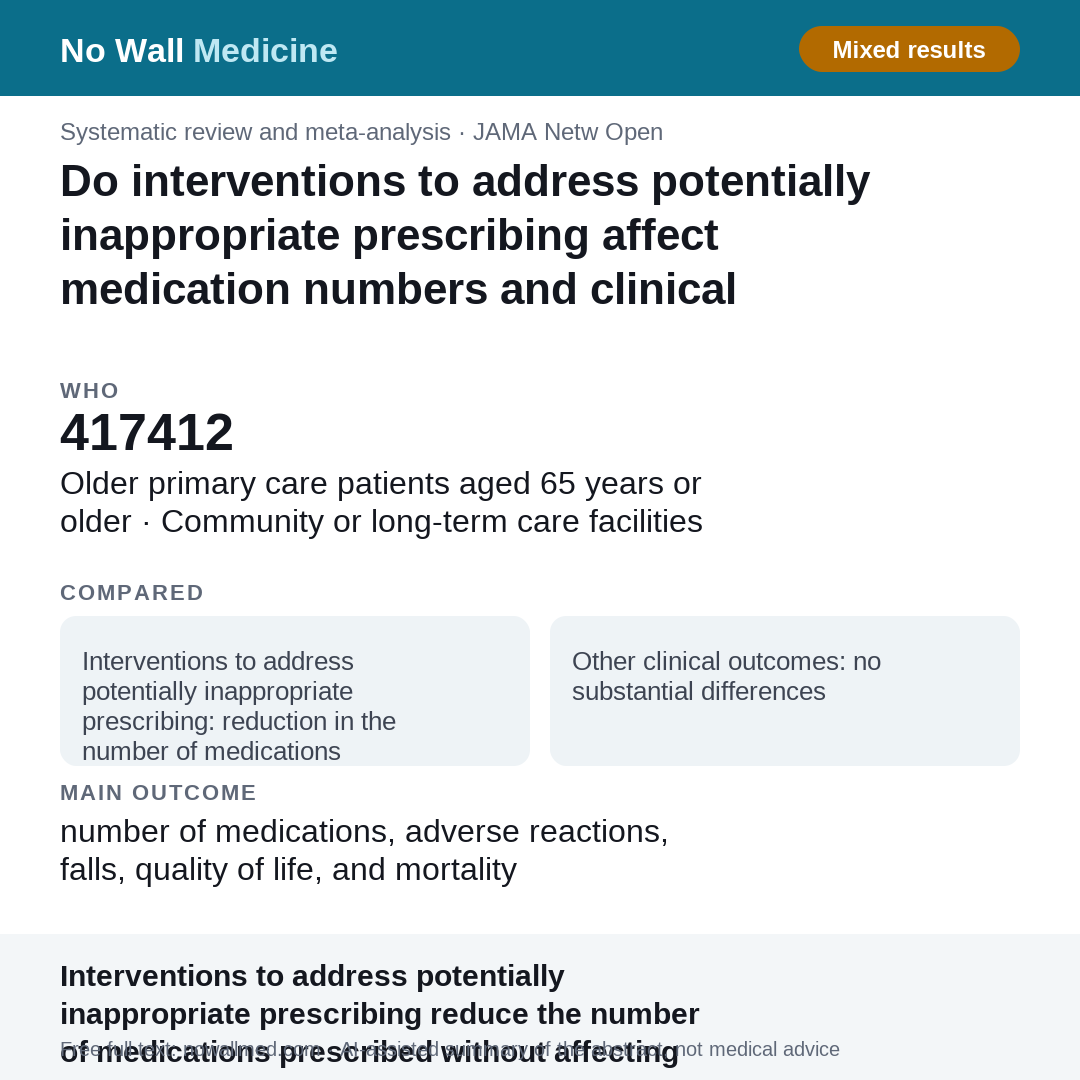
Interventions to Address Potentially Inappropriate Prescribing for Older Primary Care Patients: A Systematic Review and Meta-Analysis
Systematic review and meta-analysisMixed results
Do interventions to address potentially inappropriate prescribing affect medication numbers and clinical outcomes?
Who
417412
Older primary care patients aged 65 years or older · Community or long-term care facilities
Compared
Interventions to address potentially inappropriate prescribing: reduction in the number of medications prescribed (SMD, -0.25 [95% CI, -0.38 to -0.13])
Other clinical outcomes: no substantial differences
Main outcome
number of medications, adverse reactions, falls, quality of life, and mortality
Result: SMD, -0.25 (95% CI, -0.38 to -0.13) for number of medications
Bottom line: Interventions to address potentially inappropriate prescribing reduce the number of medications prescribed without affecting other clinical outcomes.
Limitation: Future studies should use standardized criteria and consistently report potential harms and key outcomes.
JAMA Netw Open · 2025-06-02Download image
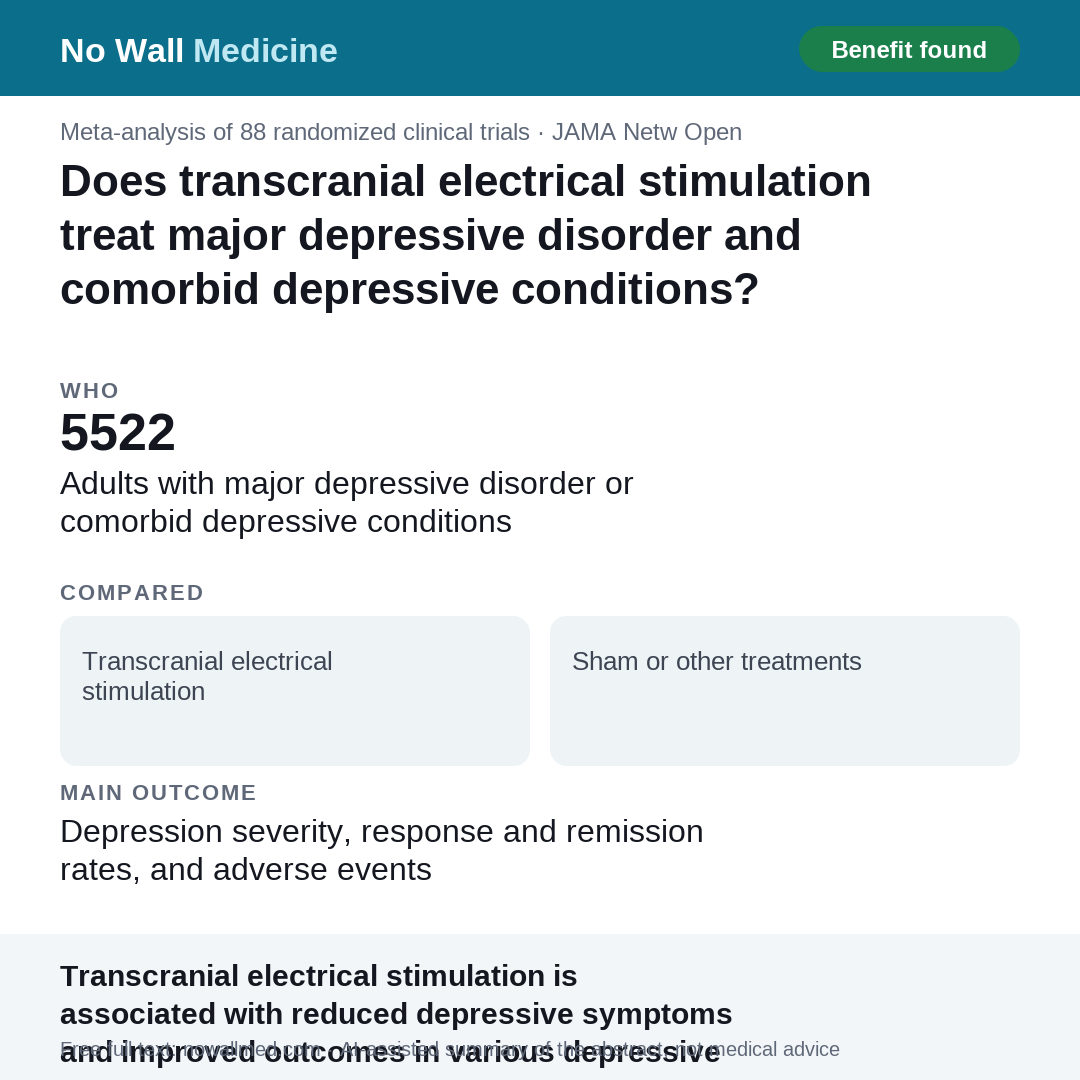
Transcranial Electrical Stimulation in Treatment of Depression: A Systematic Review and Meta-Analysis
Meta-analysis of 88 randomized clinical trialsBenefit found
Does transcranial electrical stimulation treat major depressive disorder and comorbid depressive conditions?
Who
5522
Adults with major depressive disorder or comorbid depressive conditions
Compared
Transcranial electrical stimulation
Sham or other treatments
Main outcome
Depression severity, response and remission rates, and adverse events
Result: SMD -0.59 (95% CI -0.83 to -0.35)
Bottom line: Transcranial electrical stimulation is associated with reduced depressive symptoms and improved outcomes in various depressive conditions.
JAMA Netw Open · 2025-06-02Download image
Factors Associated With Persisting Symptoms After Concussion in Adults With Mild TBI: A Systematic Review and Meta-Analysis
Systematic review and meta-analysisBenefit found
What acute factors are associated with persisting symptoms after concussion in adults?
Who
592406
Adults with mild traumatic brain injury
Compared
Acute concentration difficulty: AOR 3.43 (95% CI 1.85-6.36)
Anxiety, depression, or sleep disorders: AOR 2.47 (95% CI 1.62-3.78)
Loss of consciousness and amnesia: AOR 1.90 (95% CI 1.28-2.84)
Main outcome
Persisting symptoms after concussion
Bottom line: Acute cognitive symptoms, certain medical histories, and clinical signs are associated with increased odds of persisting symptoms.
JAMA Netw Open · 2025-06-02Download image

Virtual Care Among Adults Facing Language Barriers: A Systematic Review and Meta-Analysis
Meta-analysis of 41 studiesNo clear difference
Virtual care use among adults with language barriers
Who
4543906
Adult patients and caregivers of pediatric patients · High-income countries, mostly US
Compared
With language barriers
Without language barriers
Main outcome
Use of virtual care
Result: adjusted odds ratio 0.91 (95% CI 0.61 to 1.35)
Bottom line: No difference in virtual care use overall
Limitation: High heterogeneity and limited studies
JAMA Netw Open · 2025-06-02Download image

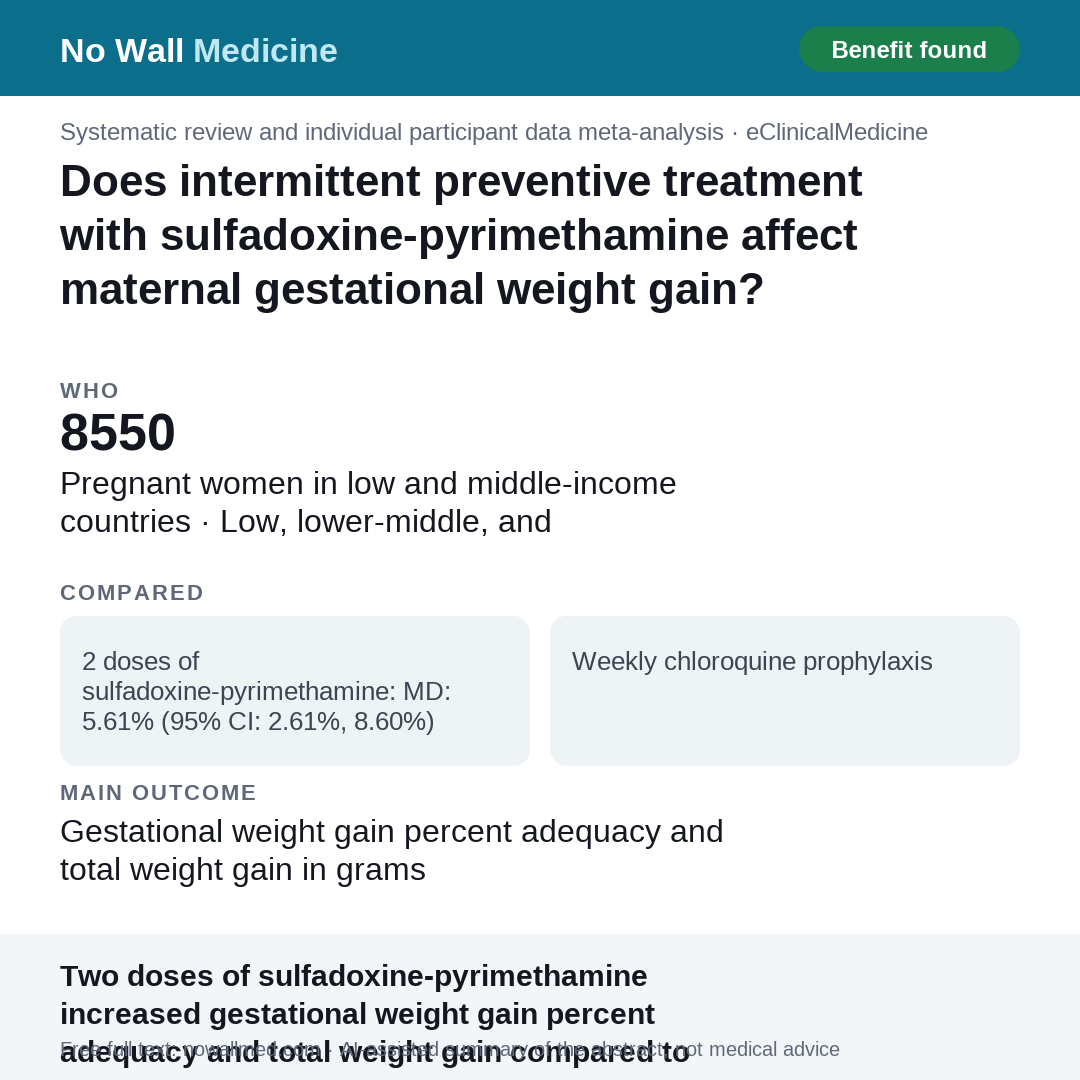
Effect of intermittent preventive treatment during pregnancy with sulfadoxine-pyrimethamine on maternal gestational weight gain in low-income and middle-income countries: a systematic review and individual participant data meta-analysis of randomised clinical trials
Systematic review and individual participant data meta-analysisBenefit found
Does intermittent preventive treatment with sulfadoxine-pyrimethamine affect maternal gestational weight gain?
Who
8550
Pregnant women in low and middle-income countries · Low, lower-middle, and upper-middle-income countries
Compared
2 doses of sulfadoxine-pyrimethamine: MD: 5.61% (95% CI: 2.61%, 8.60%)
Weekly chloroquine prophylaxis
Main outcome
Gestational weight gain percent adequacy and total weight gain in grams
Result: MD: 5.61% (95% CI: 2.61%, 8.60%) for percent adequacy
Bottom line: Two doses of sulfadoxine-pyrimethamine increased gestational weight gain percent adequacy and total weight gain compared to weekly chloroquine.
eClinicalMedicine · 2025-06-02Download image
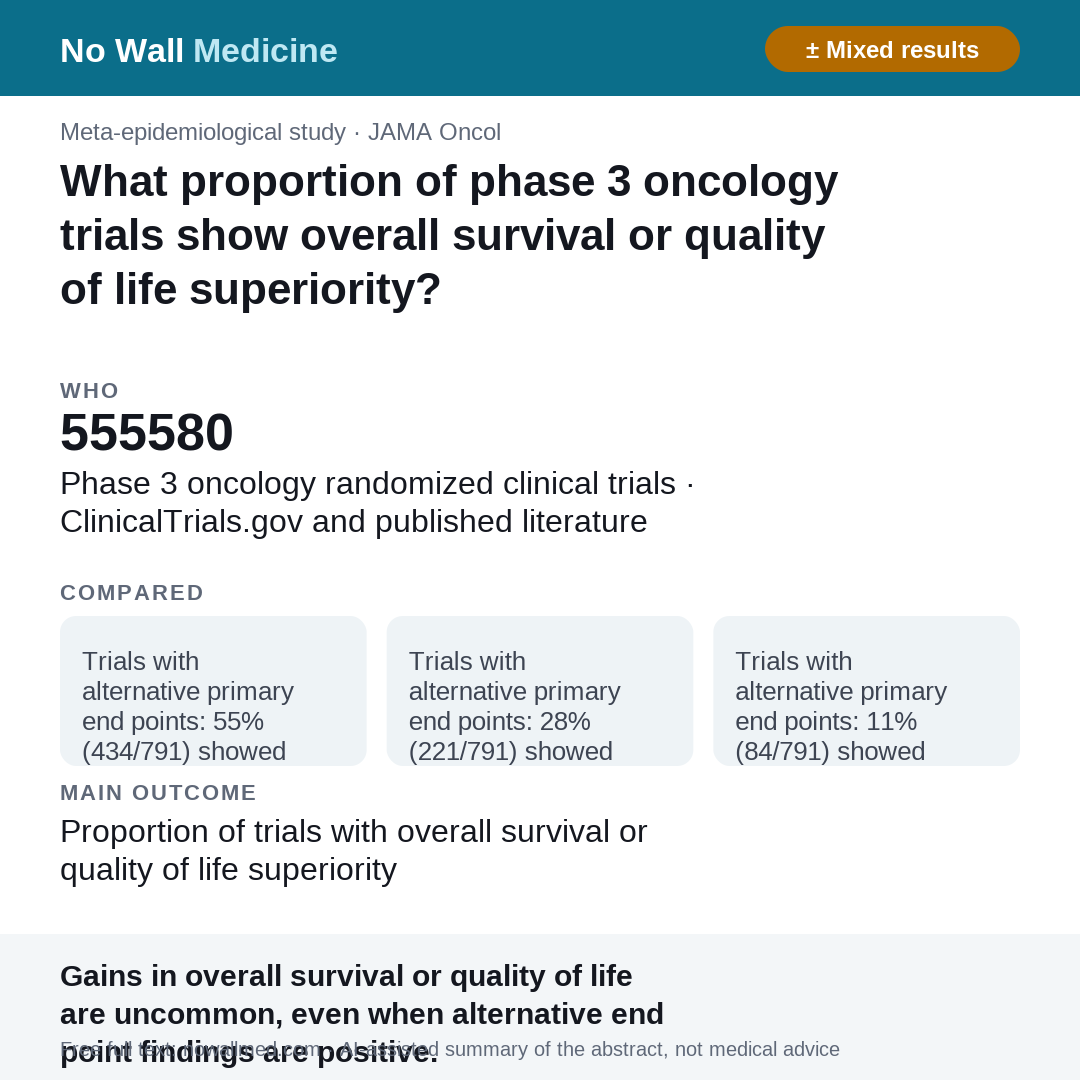
Overall Survival and Quality-of-Life Superiority in Modern Phase 3 Oncology Trials: A Meta-Epidemiological Analysis
Meta-epidemiological studyMixed results
What proportion of phase 3 oncology trials show overall survival or quality of life superiority?
Who
555580
Phase 3 oncology randomized clinical trials · ClinicalTrials.gov and published literature
Compared
Trials with alternative primary end points: 55% (434/791) showed alternative-end-point superiority
Trials with alternative primary end points: 28% (221/791) showed overall survival superiority
Trials with alternative primary end points: 11% (84/791) showed global quality of life superiority
Main outcome
Proportion of trials with overall survival or quality of life superiority
Bottom line: Gains in overall survival or quality of life are uncommon, even when alternative end point findings are positive.
Limitation: Most between-group global quality of life analyses did not adjust for baseline scores.
JAMA Oncol · 2025-06-02Download image
Several Common Genetic Variations Associate With Functional or Anatomic Effects of Anti-VEGF Treatment in Conditions With Macular Edema
Genome-wide association studyMixed results
Genetic factors influencing anti-VEGF treatment
Who
606
patients with macular edema · three randomized clinical trials
Compared
bevacizumab
ranibizumab
Main outcome
changes in visual acuity and thickness
Result: 12 SNPs associated with treatment response
Bottom line: Genetic variants linked to anti-VEGF response
Invest Ophthalmol Vis Sci · 2025-06-02Download image

Breast Reconstruction in De Novo Metastatic Breast Cancer: A Systematic Review
Systematic reviewBenefit found
What are the clinical outcomes of breast reconstruction in de novo metastatic breast cancer?
Who
2635
Patients with de novo metastatic breast cancer
Compared
Reconstructed patients: prolonged overall survival and breast cancer-specific survival
Non-reconstructed patients
Main outcome
Overall survival and breast cancer-specific survival
Bottom line: Breast reconstruction is an appropriate option with prolonged survival and no increased complications or treatment delays.
Limitation: Survival benefits may be limited to low disease burden and hormone receptor-positive subtypes.
Plast Reconstr Surg Glob Open · 2025-06-02Download image

Inadvertent intrathecal application of vindesine and its neurological outcome: case report and systematic review of the literature
Case report and systematic reviewMixed results
What are the outcomes of inadvertent intrathecal vinca alkaloid application and cerebrospinal fluid irrigation?
Who
31
Patients with inadvertent intrathecal vinca alkaloid injection
Compared
Patients receiving cerebrospinal fluid irrigation: 6/15 (40.0%) survived
Patients without irrigation therapy: 0/12 survived
Main outcome
Survival of the acute phase of intoxication
Bottom line: Cerebrospinal fluid irrigation may allow survival, but survivors are left with very significant neurological deficits.
Limitation: The study is based on a small number of identified cases.
Brain Spine · 2025-06-02Download image

Performance of Artificial Intelligence-Based Models for Epiretinal Membrane Diagnosis: A Systematic Review and Meta-Analysis
Systematic review and meta-analysisKey finding
What is the diagnostic performance of artificial intelligence models for epiretinal membrane?
Who
19
Patients with epiretinal membrane · Predominantly hospital-based settings
Compared
Artificial intelligence models: 90.1% (95% CI: 85.8-93.2) sensitivity
Artificial intelligence models: 95.7% (95% CI: 88.8-95.2) specificity
Main outcome
Diagnostic accuracy for detecting epiretinal membrane
Result: sensitivity 90.1% (95% CI: 85.8-93.2), specificity 95.7% (95% CI: 88.8-95.2)
Bottom line: Artificial intelligence models demonstrate high diagnostic performance for detecting epiretinal membrane.
Limitation: Limited external validation and variability in development methodologies limits real-world applicability.
Am J Ophthalmol · 2025-05-31Download image

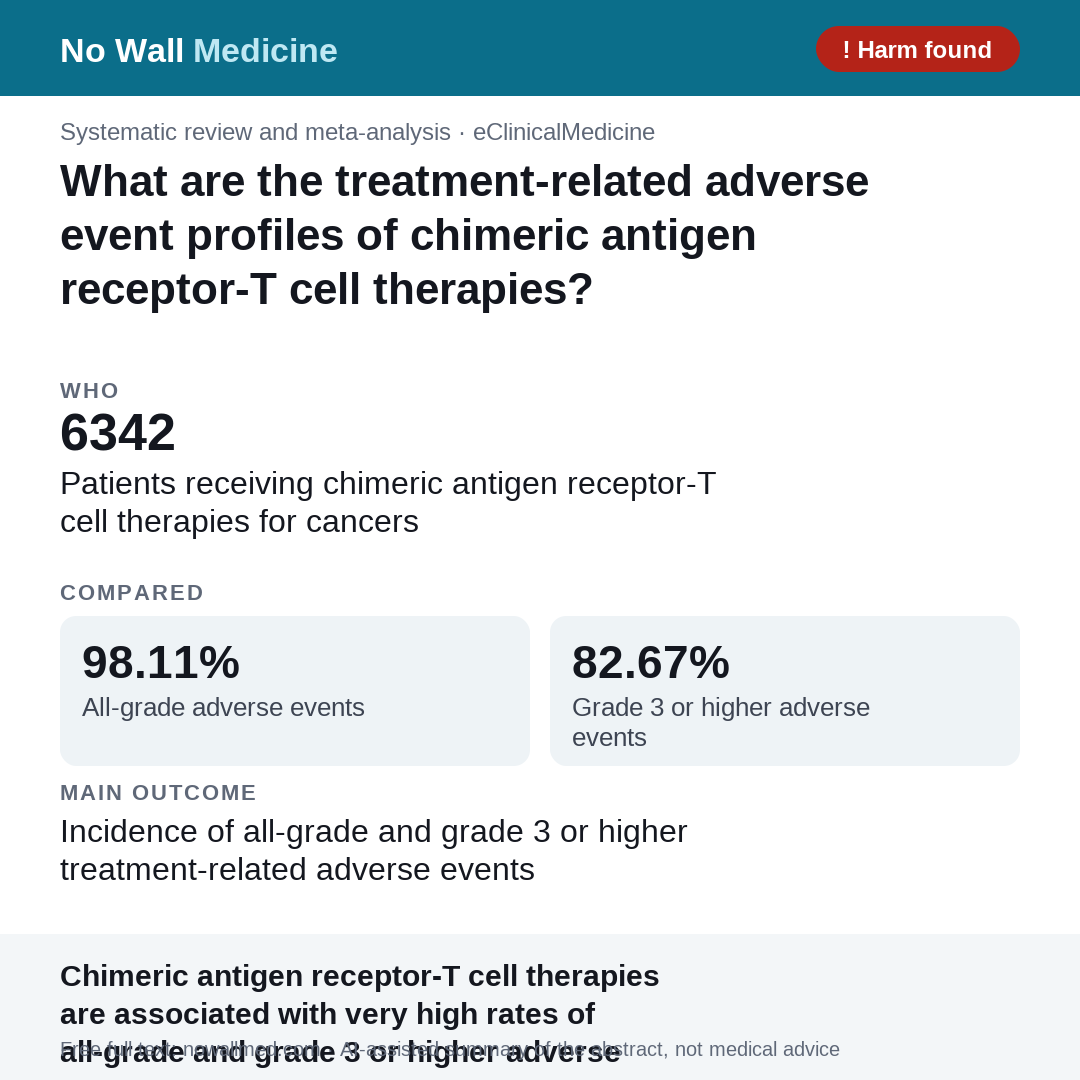
Treatment-related adverse events of chimeric antigen receptor-T therapies for cancers in clinical trials: a systematic review and meta-analysis
Systematic review and meta-analysisHarm found
What are the treatment-related adverse event profiles of chimeric antigen receptor-T cell therapies?
Who
6342
Patients receiving chimeric antigen receptor-T cell therapies for cancers
Compared
98.11%All-grade adverse events (4312/4395)
82.67%Grade 3 or higher adverse events (3512/4248)
Main outcome
Incidence of all-grade and grade 3 or higher treatment-related adverse events
Bottom line: Chimeric antigen receptor-T cell therapies are associated with very high rates of all-grade and grade 3 or higher adverse events.
Funded by: Changsha Natural Science Foundation of Hunan Provincial of China
eClinicalMedicine · 2025-05-30Download image
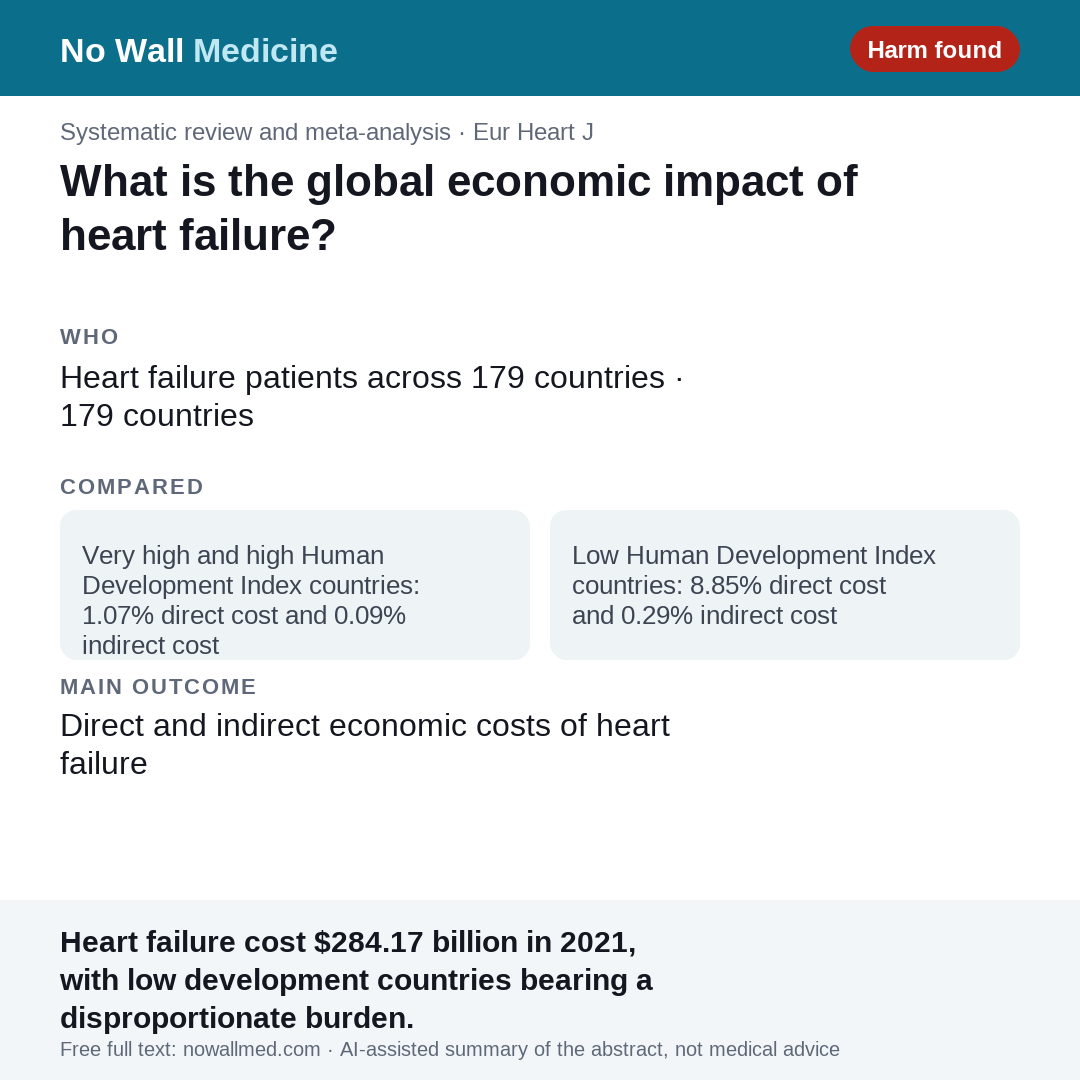
Heart failure: assessment of the global economic burden
Systematic review and meta-analysisHarm found
What is the global economic impact of heart failure?
Who
Heart failure patients across 179 countries · 179 countries
Compared
Very high and high Human Development Index countries: 1.07% direct cost and 0.09% indirect cost
Low Human Development Index countries: 8.85% direct cost and 0.29% indirect cost
Main outcome
Direct and indirect economic costs of heart failure
Bottom line: Heart failure cost $284.17 billion in 2021, with low development countries bearing a disproportionate burden.
Eur Heart J · 2025-05-30Download image
Variants in the DDX6-CXCR5 autoimmune disease risk locus influence the regulatory network in immune cells and salivary gland
Meta-analysisUnclear result
Do variants influence autoimmunity
Who
patients with SjD and SLE
Compared
SjD
SLE
Main outcome
autoimmune disease risk
Bottom line: Variants alter autoimmunity mechanisms
Ann Rheum Dis · 2025-05-30Download image

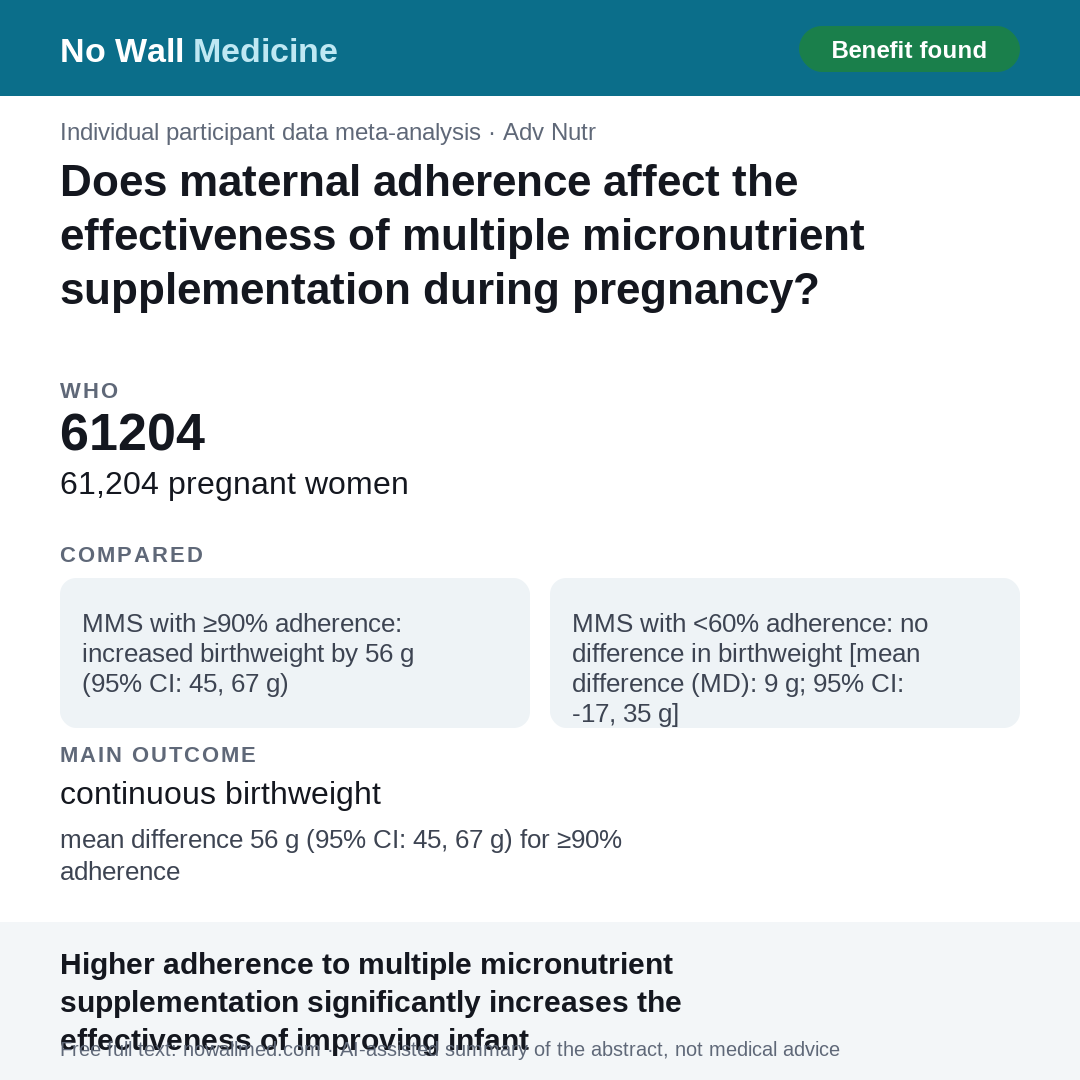
Contribution of Maternal Adherence to the Effect of Multiple Micronutrient Supplementation During Pregnancy: A Systematic Review and Individual Participant Data Meta-analysis
Individual participant data meta-analysisBenefit found
Does maternal adherence affect the effectiveness of multiple micronutrient supplementation during pregnancy?
Who
61204
61,204 pregnant women
Compared
MMS with ≥90% adherence: increased birthweight by 56 g (95% CI: 45, 67 g)
MMS with <60% adherence: no difference in birthweight [mean difference (MD): 9 g; 95% CI: -17, 35 g]
Main outcome
continuous birthweight
Result: mean difference 56 g (95% CI: 45, 67 g) for ≥90% adherence
Bottom line: Higher adherence to multiple micronutrient supplementation significantly increases the effectiveness of improving infant birthweight.
Adv Nutr · 2025-05-30Download image
The intersection of the social determinants of health and antimicrobial resistance in human populations: a systematic review
Systematic reviewMixed results
How do social determinants of health intersect with antimicrobial resistance?
Who
153
Human populations across various income levels · High, lower-middle, low, and upper-middle income countries
Compared
Socioeconomic status
Housing and overcrowding
Education and knowledge
Main outcome
Intersection of social determinants, drug-resistant infections, and antibiotic use
Bottom line: Social determinants like socioeconomic status, housing, and education impact antimicrobial resistance, but evidence for specific groups is limited.
Limitation: Limited evidence associated with the complete range of social determinants and specific population groups.
BMJ Glob Health · 2025-05-30Download image