Visual abstracts
New randomized trials and meta-analyses from leading journals at a glance: who was studied, what was compared, and what was found. Every paper is free to read in full.
All specialtiesCardiology 1648Oncology 1436Gastroenterology & Hepatology 614Infectious Disease 1047Neurology 677Psychiatry & Mental Health 824Pulmonology 710Critical Care 483Endocrinology & Diabetes 899Pediatrics 972Surgery 822Orthopedics & Sports Medicine 310Neurosurgery 208Cardiothoracic & Vascular Surgery 189Plastic & Reconstructive Surgery 258Nephrology 341Rheumatology 224Hematology 357Dermatology 180Ophthalmology 193Obstetrics & Gynecology 534Public & Global Health 316Radiology & Imaging 223Anesthesiology 330Urology 297ENT (Otolaryngology) 224Emergency Medicine 187Allergy & Immunology 107Geriatrics 359Family Medicine & Primary Care 202Medical Genetics & Genomics 178Pathology & Laboratory Medicine 53Physical Medicine & Rehabilitation 287Palliative Care 147Nutrition 443Digital Health & AI 870General Medicine 133
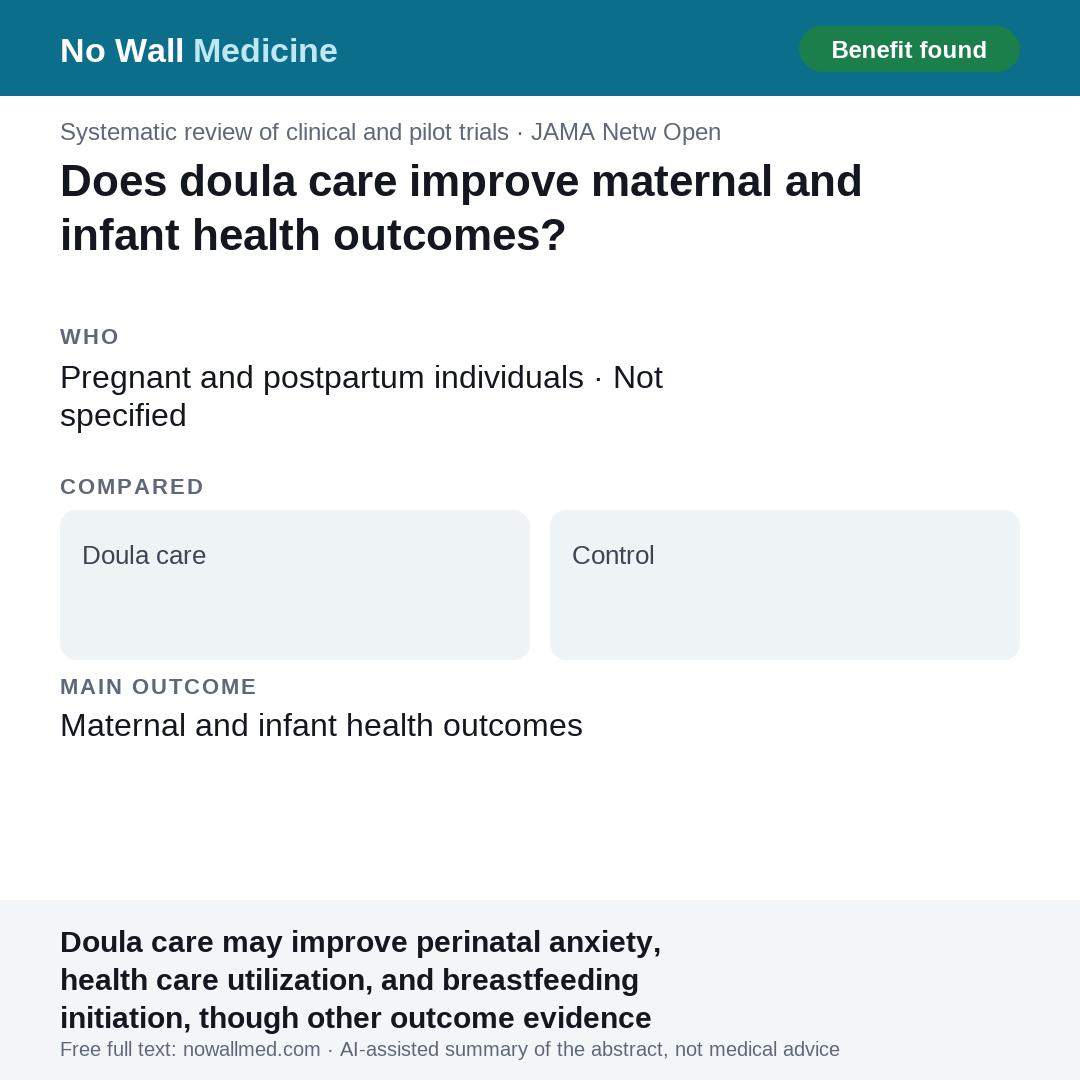
Doula Care and Health Outcomes: A Systematic Review
Systematic review of clinical and pilot trialsBenefit found
Does doula care improve maternal and infant health outcomes?
Who
Pregnant and postpartum individuals · Not specified
Compared
Doula care
Control
Main outcome
Maternal and infant health outcomes
Bottom line: Doula care may improve perinatal anxiety, health care utilization, and breastfeeding initiation, though other outcome evidence was inconsistent.
Limitation: Underrepresentation of marginalized populations and limited reporting of fidelity and implementation.
JAMA Netw Open · 2026-04-01Download image
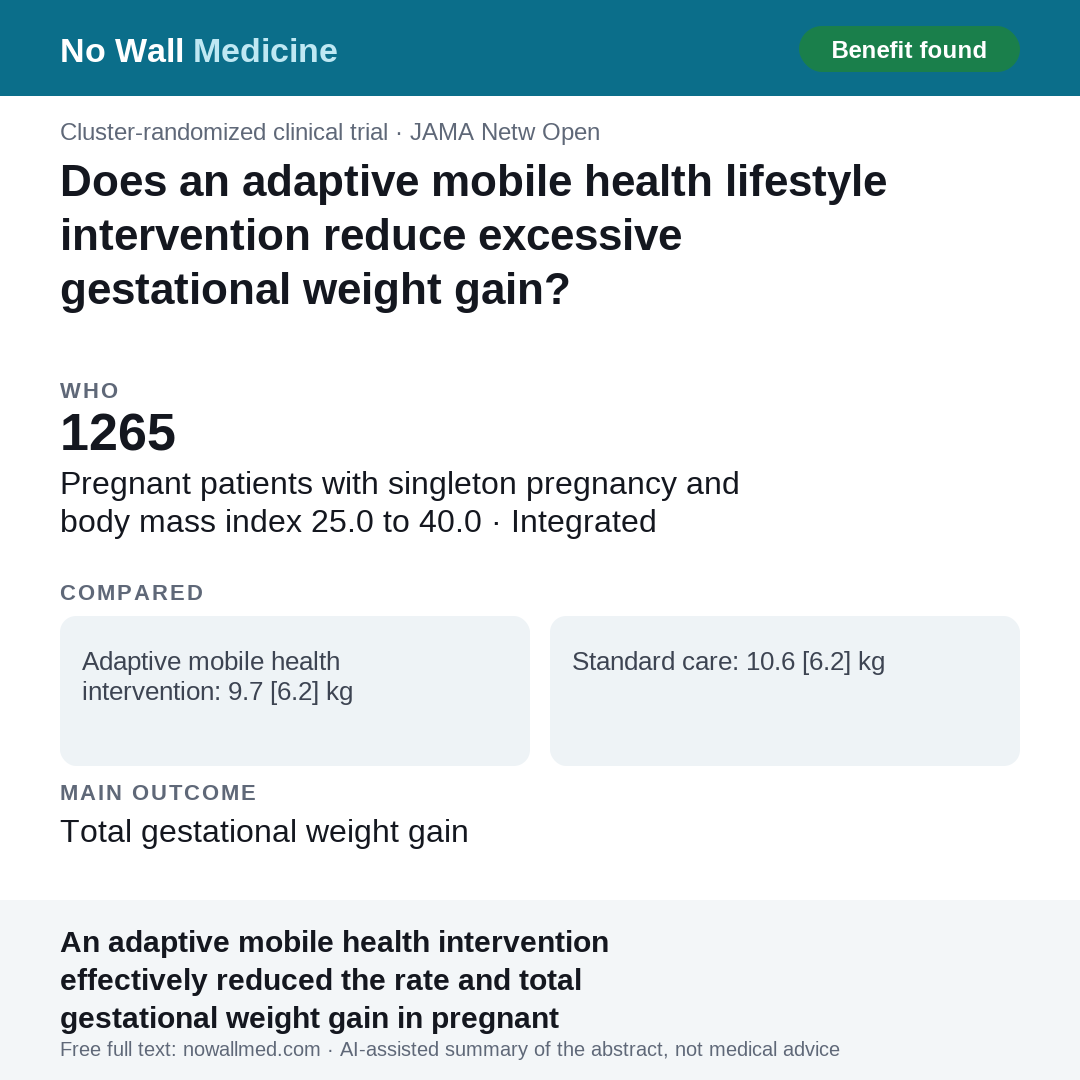
Adaptive Mobile Health Intervention to Reduce Excess Gestational Weight Gain: A Cluster-Randomized Clinical Trial
Cluster-randomized clinical trialBenefit found
Does an adaptive mobile health lifestyle intervention reduce excessive gestational weight gain?
Who
1265
Pregnant patients with singleton pregnancy and body mass index 25.0 to 40.0 · Integrated health system
Compared
Adaptive mobile health intervention: 9.7 [6.2] kg
Standard care: 10.6 [6.2] kg
Main outcome
Total gestational weight gain
Result: mean between-group difference, -0.87 [95% CI, -1.40 to -0.34] kg
Bottom line: An adaptive mobile health intervention effectively reduced the rate and total gestational weight gain in pregnant patients.
JAMA Netw Open · 2026-04-01Download image
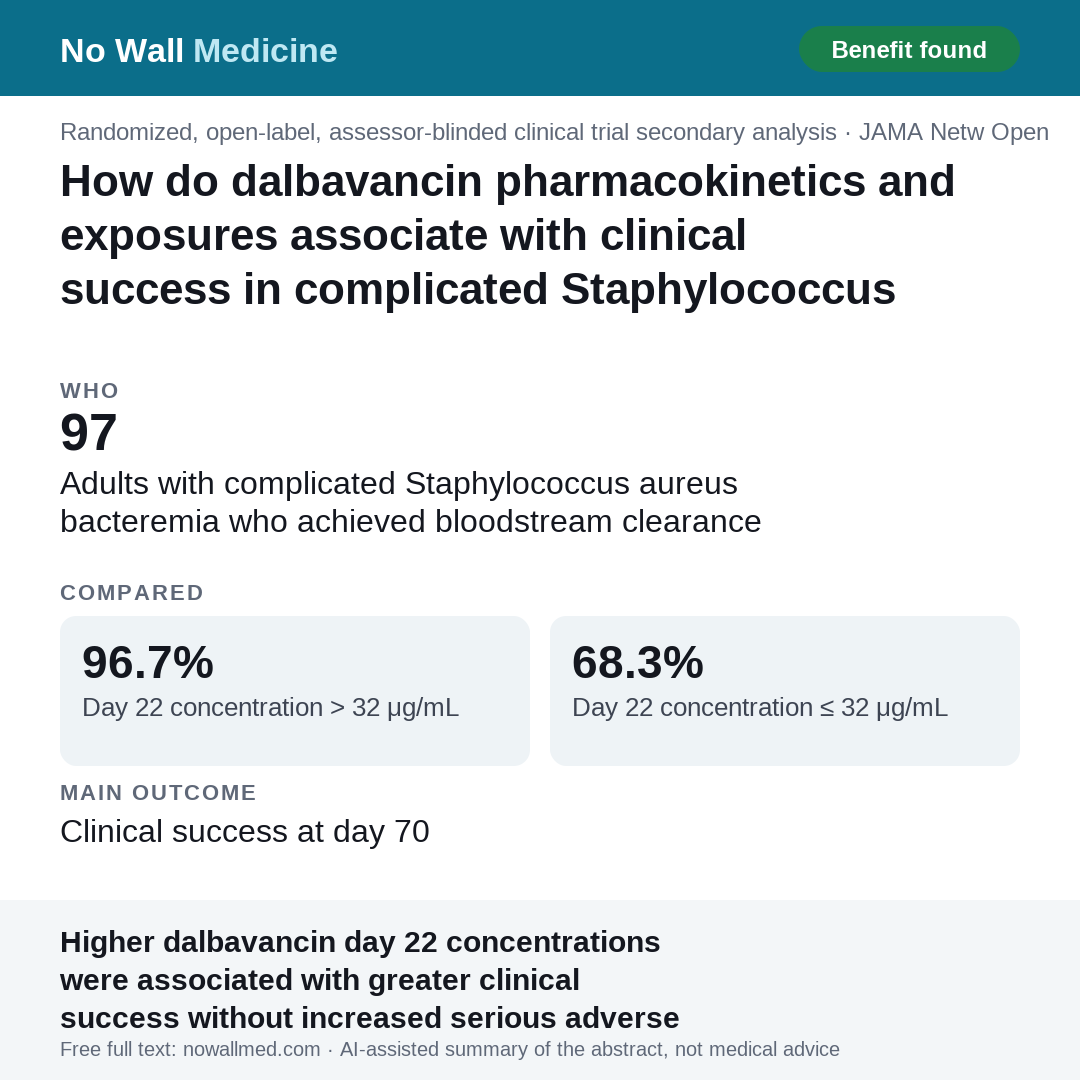
Pharmacokinetics of Dalbavancin in Complicated Staphylococcus aureus Bacteremia: A Secondary Analysis of the DOTS Randomized Clinical Trial
Randomized, open-label, assessor-blinded clinical trial secondary analysisBenefit found
How do dalbavancin pharmacokinetics and exposures associate with clinical success in complicated Staphylococcus aureus bacteremia?
Who
97
Adults with complicated Staphylococcus aureus bacteremia who achieved bloodstream clearance · Multicenter
Compared
96.7%Day 22 concentration > 32 μg/mL
68.3%Day 22 concentration ≤ 32 μg/mL
Main outcome
Clinical success at day 70
Result: adjusted difference, 25.3 percentage points; 95% CI, 3.5-47.0 percentage points
Bottom line: Higher dalbavancin day 22 concentrations were associated with greater clinical success without increased serious adverse events.
JAMA Netw Open · 2026-04-01Download image
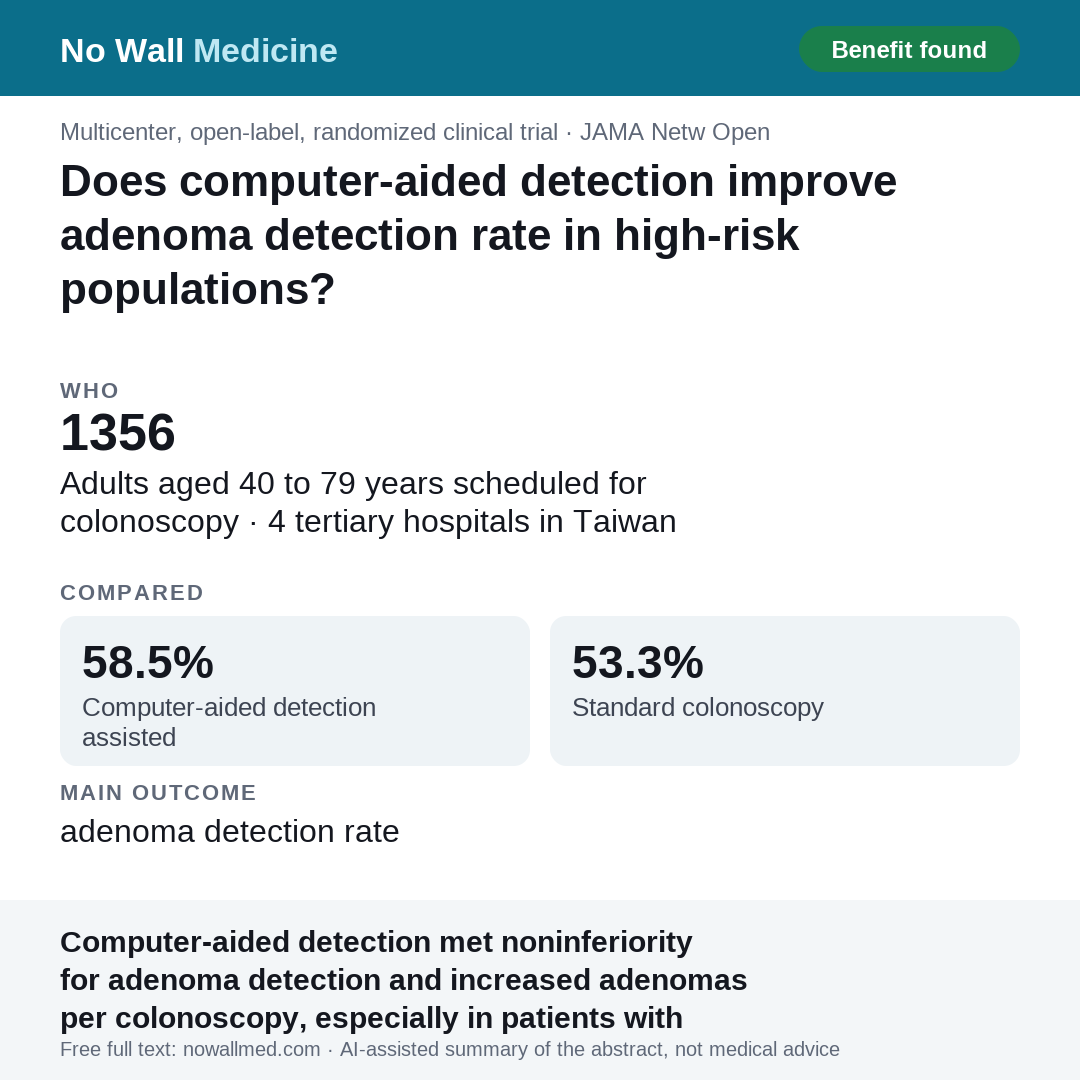
Computer-Assisted Colonoscopy in High-Adenoma Detection Rate Settings in a High-Risk Population: A Randomized Clinical Trial
Multicenter, open-label, randomized clinical trialBenefit found
Does computer-aided detection improve adenoma detection rate in high-risk populations?
Who
1356
Adults aged 40 to 79 years scheduled for colonoscopy · 4 tertiary hospitals in Taiwan
Compared
58.5%Computer-aided detection assisted
53.3%Standard colonoscopy
Main outcome
adenoma detection rate
Result: absolute difference, 5.2 percentage points [95% CI, -0.1 to 10.5 percentage points]
Bottom line: Computer-aided detection met noninferiority for adenoma detection and increased adenomas per colonoscopy, especially in patients with positive fecal immunochemical test.
Limitation: The incremental benefit of computer-aided detection in reducing interval cancer risk requires further investigation.
JAMA Netw Open · 2026-04-01Download image
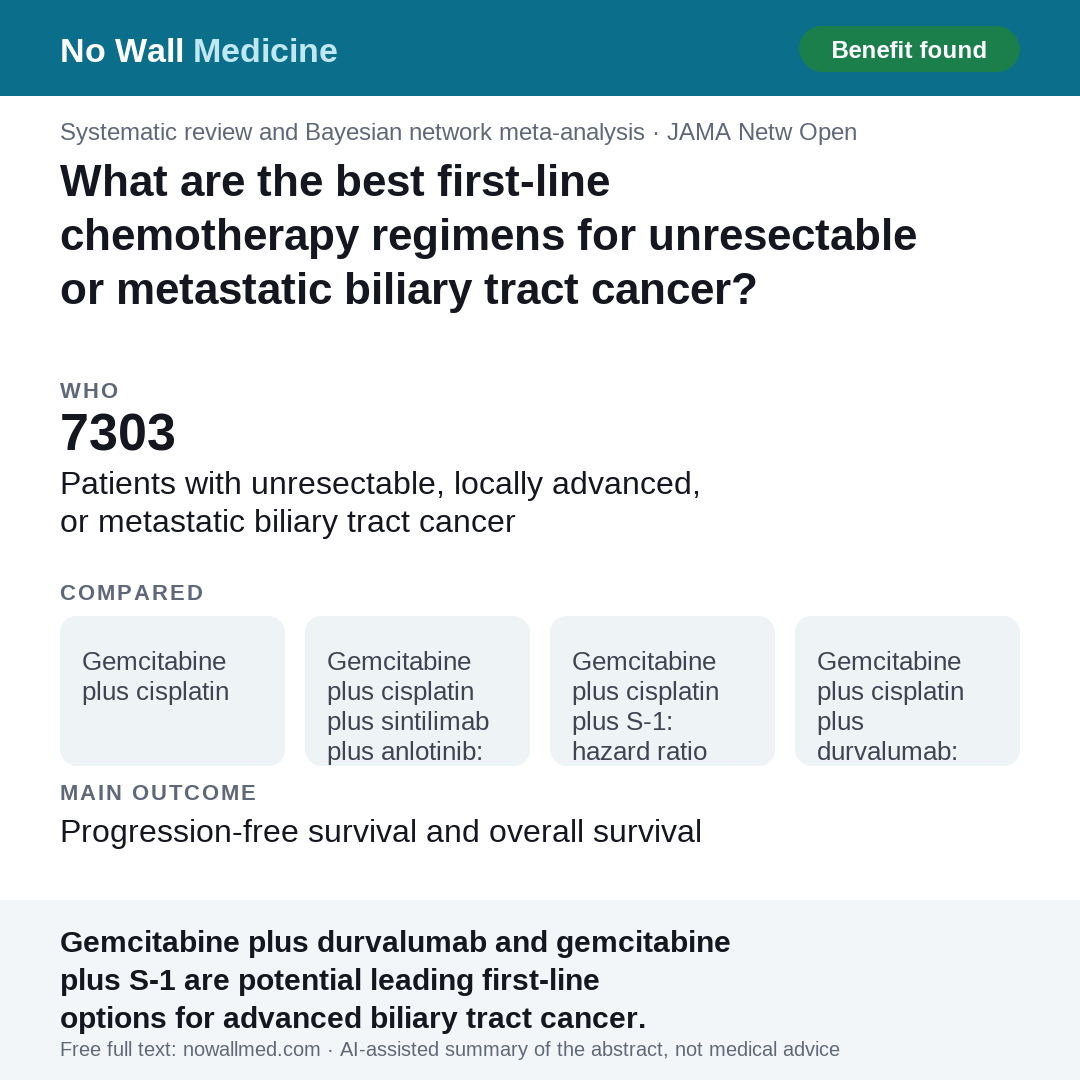
First-Line Chemotherapy Regimens for Unresectable Locally Advanced or Metastatic Biliary Tract Cancer: A Systematic Review and Bayesian Network Meta-Analysis
Systematic review and Bayesian network meta-analysisBenefit found
What are the best first-line chemotherapy regimens for unresectable or metastatic biliary tract cancer?
Who
7303
Patients with unresectable, locally advanced, or metastatic biliary tract cancer
Compared
Gemcitabine plus cisplatin
Gemcitabine plus cisplatin plus sintilimab plus anlotinib: hazard ratio 0.47 (95% CI 0.28-0.80)
Gemcitabine plus cisplatin plus S-1: hazard ratio 0.75 (95% CI 0.59-0.97)
Gemcitabine plus cisplatin plus durvalumab: hazard ratio 0.80 (95% CI 0.66-0.97)
Main outcome
Progression-free survival and overall survival
Result: hazard ratio 0.47 (95% CI 0.28-0.80)
Bottom line: Gemcitabine plus durvalumab and gemcitabine plus S-1 are potential leading first-line options for advanced biliary tract cancer.
JAMA Netw Open · 2026-04-01Download image
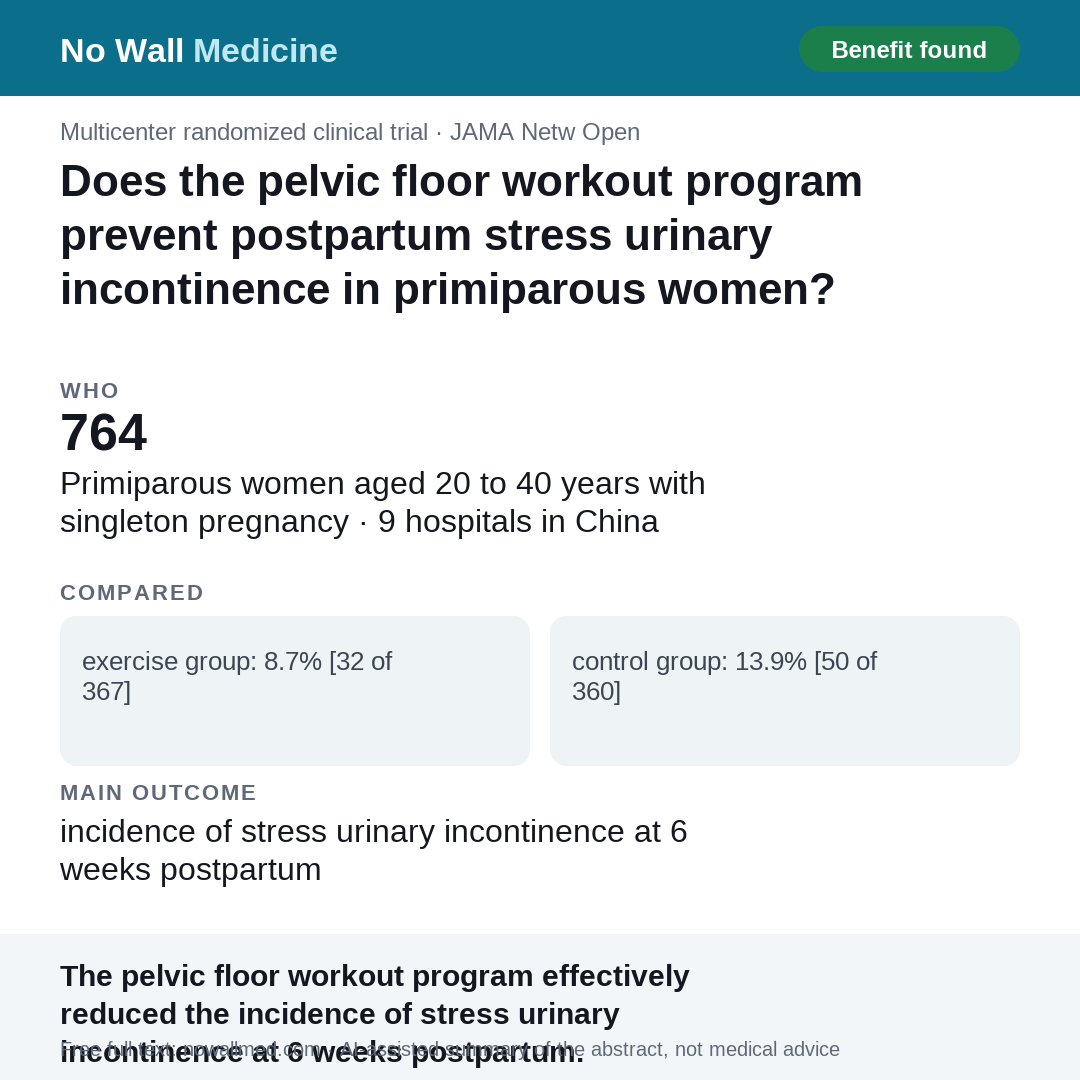
Pelvic Floor Workout for Preventing Stress Urinary Incontinence in Primiparous Women: A Randomized Clinical Trial
Multicenter randomized clinical trialBenefit found
Does the pelvic floor workout program prevent postpartum stress urinary incontinence in primiparous women?
Who
764
Primiparous women aged 20 to 40 years with singleton pregnancy · 9 hospitals in China
Compared
exercise group: 8.7% [32 of 367]
control group: 13.9% [50 of 360]
Main outcome
incidence of stress urinary incontinence at 6 weeks postpartum
Result: risk difference 5.17 (95% CI, 0.36-10.03) percentage points
Bottom line: The pelvic floor workout program effectively reduced the incidence of stress urinary incontinence at 6 weeks postpartum.
JAMA Netw Open · 2026-04-01Download image
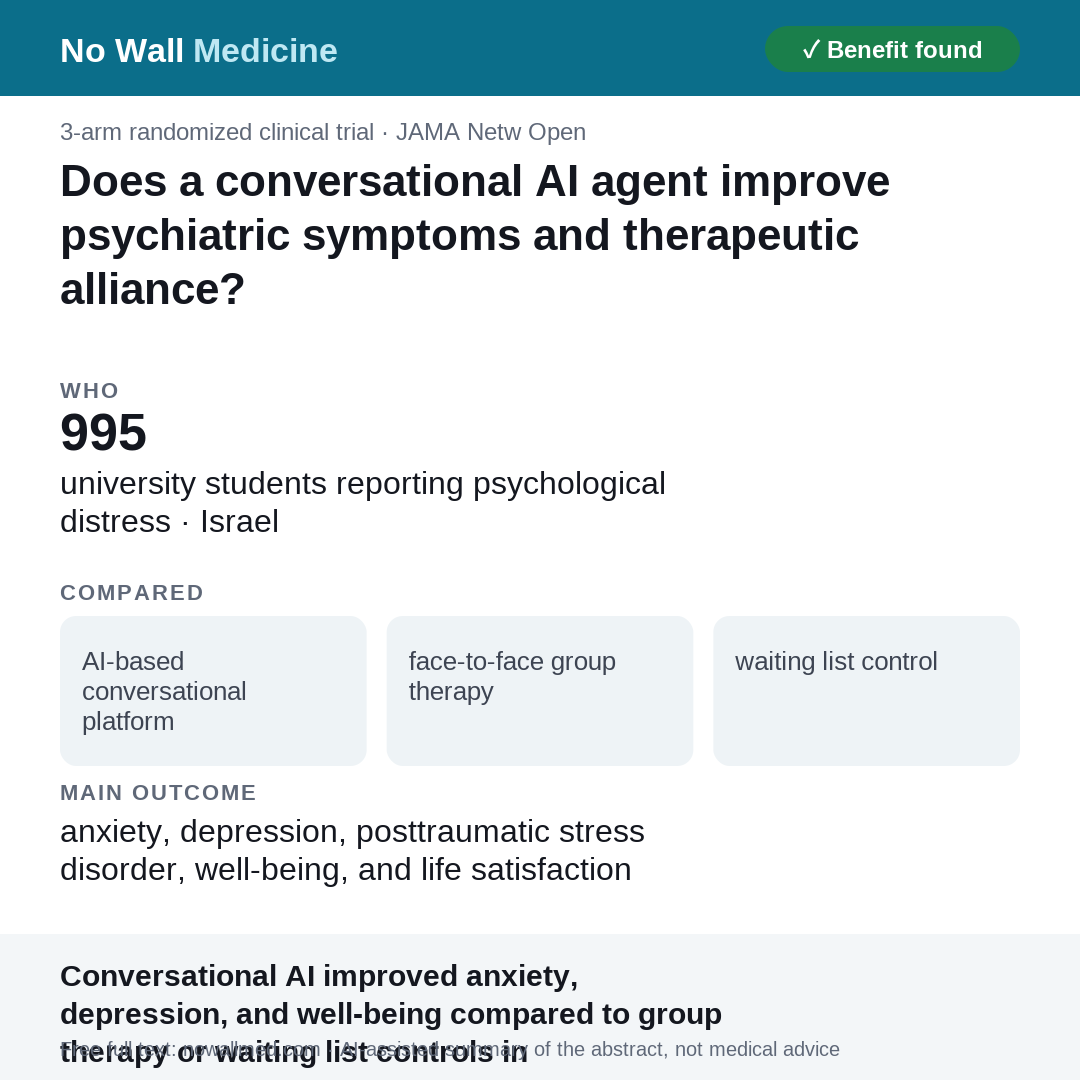
Efficacy of a Conversational AI Agent for Psychiatric Symptoms and Digital Therapeutic Alliance: A Randomized Clinical Trial
3-arm randomized clinical trialBenefit found
Does a conversational AI agent improve psychiatric symptoms and therapeutic alliance?
Who
995
university students reporting psychological distress · Israel
Compared
AI-based conversational platform
face-to-face group therapy
waiting list control
Main outcome
anxiety, depression, posttraumatic stress disorder, well-being, and life satisfaction
Result: anxiety reduction MD -2.17 (95% CI -2.67 to -1.67) vs group therapy
Bottom line: Conversational AI improved anxiety, depression, and well-being compared to group therapy or waiting list controls in university students.
JAMA Netw Open · 2026-04-01Download image
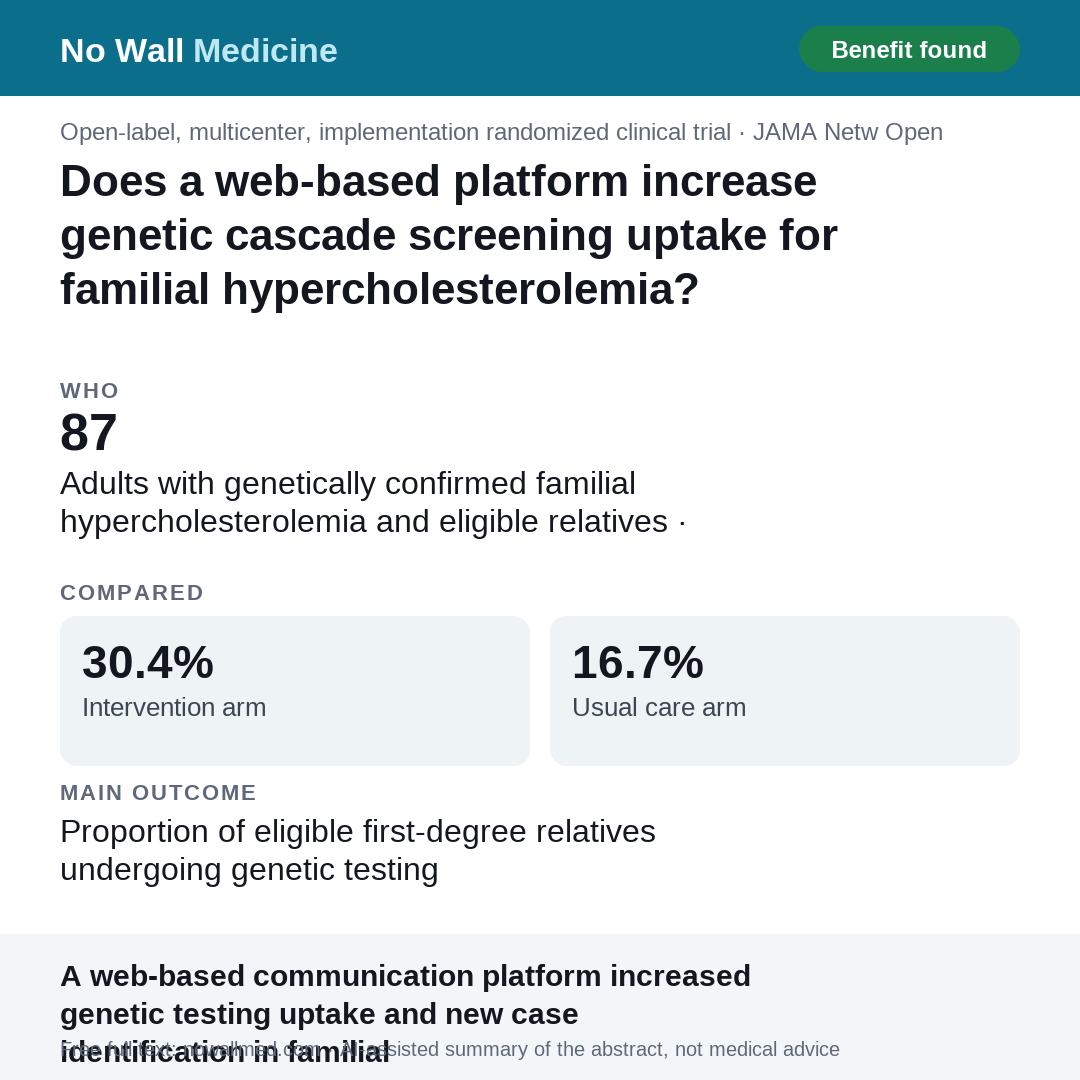
Genetic Cascade Screening for Familial Hypercholesterolemia: A Randomized Clinical Trial
Open-label, multicenter, implementation randomized clinical trialBenefit found
Does a web-based platform increase genetic cascade screening uptake for familial hypercholesterolemia?
Who
87
Adults with genetically confirmed familial hypercholesterolemia and eligible relatives · 7 cardiovascular prevention or lipid clinics across Switzerland
Compared
30.4%Intervention arm
16.7%Usual care arm
Main outcome
Proportion of eligible first-degree relatives undergoing genetic testing
Result: odds ratio 2.18 (95% CI, 1.06-4.51)
Bottom line: A web-based communication platform increased genetic testing uptake and new case identification in familial hypercholesterolemia screening.
JAMA Netw Open · 2026-04-01Download image
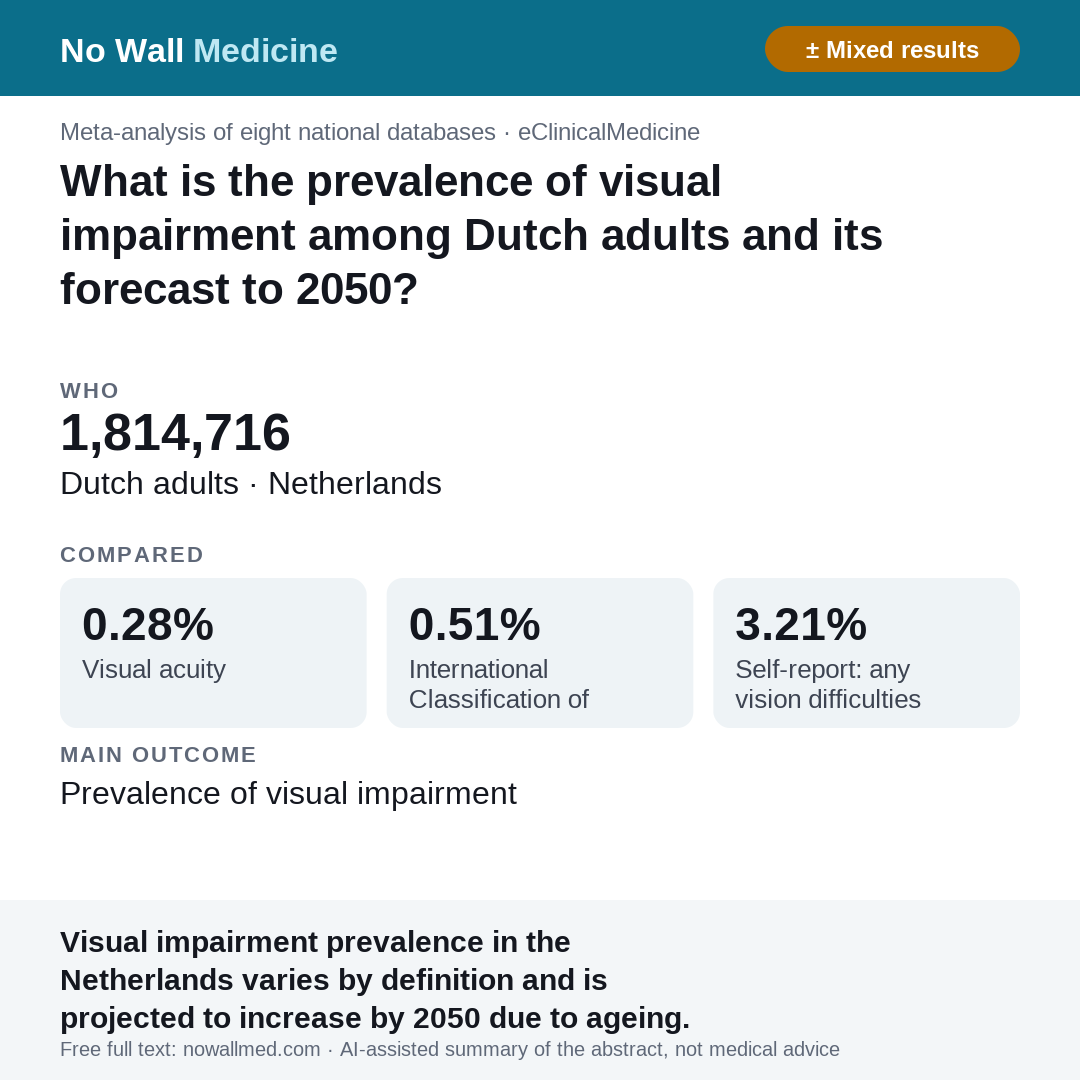
Estimating the prevalence of visual impairment in the Netherlands, with forecasts up to 2050: a meta-analysis of national databases
Meta-analysis of eight national databasesMixed results
What is the prevalence of visual impairment among Dutch adults and its forecast to 2050?
Who
1,814,716
Dutch adults · Netherlands
Compared
0.28%Visual acuity (95% CI: 0.11-0.73)
0.51%International Classification of Primary Care codes (95% CI: 0.50-0.52)
3.21%Self-report: any vision difficulties (95% CI: 2.15-4.77)
Main outcome
Prevalence of visual impairment
Bottom line: Visual impairment prevalence in the Netherlands varies by definition and is projected to increase by 2050 due to ageing.
Limitation: Substantial heterogeneity and databases mostly containing self-reported data on visual functioning.
Funded by: Dutch Eye Foundation (Oogfonds)
eClinicalMedicine · 2026-04-01Download image
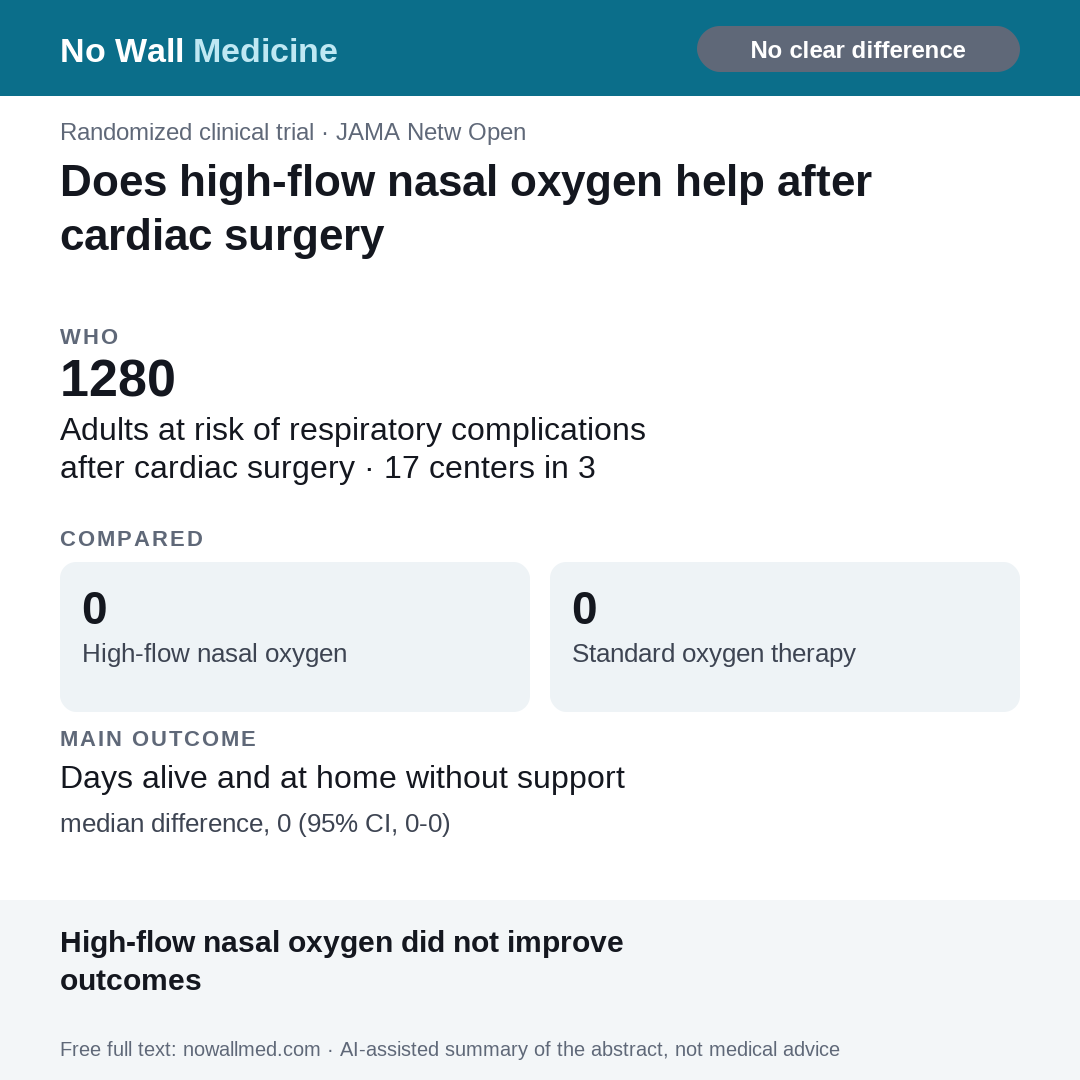
High-Flow Nasal Oxygen Therapy After Cardiac Surgery: A Randomized Clinical Trial
Randomized clinical trialNo clear difference
Does high-flow nasal oxygen help after cardiac surgery
Who
1280
Adults at risk of respiratory complications after cardiac surgery · 17 centers in 3 countries
Compared
0High-flow nasal oxygen (IQR, 0-79)
0Standard oxygen therapy (IQR, 0-87)
Main outcome
Days alive and at home without support
Result: median difference, 0 (95% CI, 0-0)
Bottom line: High-flow nasal oxygen did not improve outcomes
JAMA Netw Open · 2026-04-01Download image
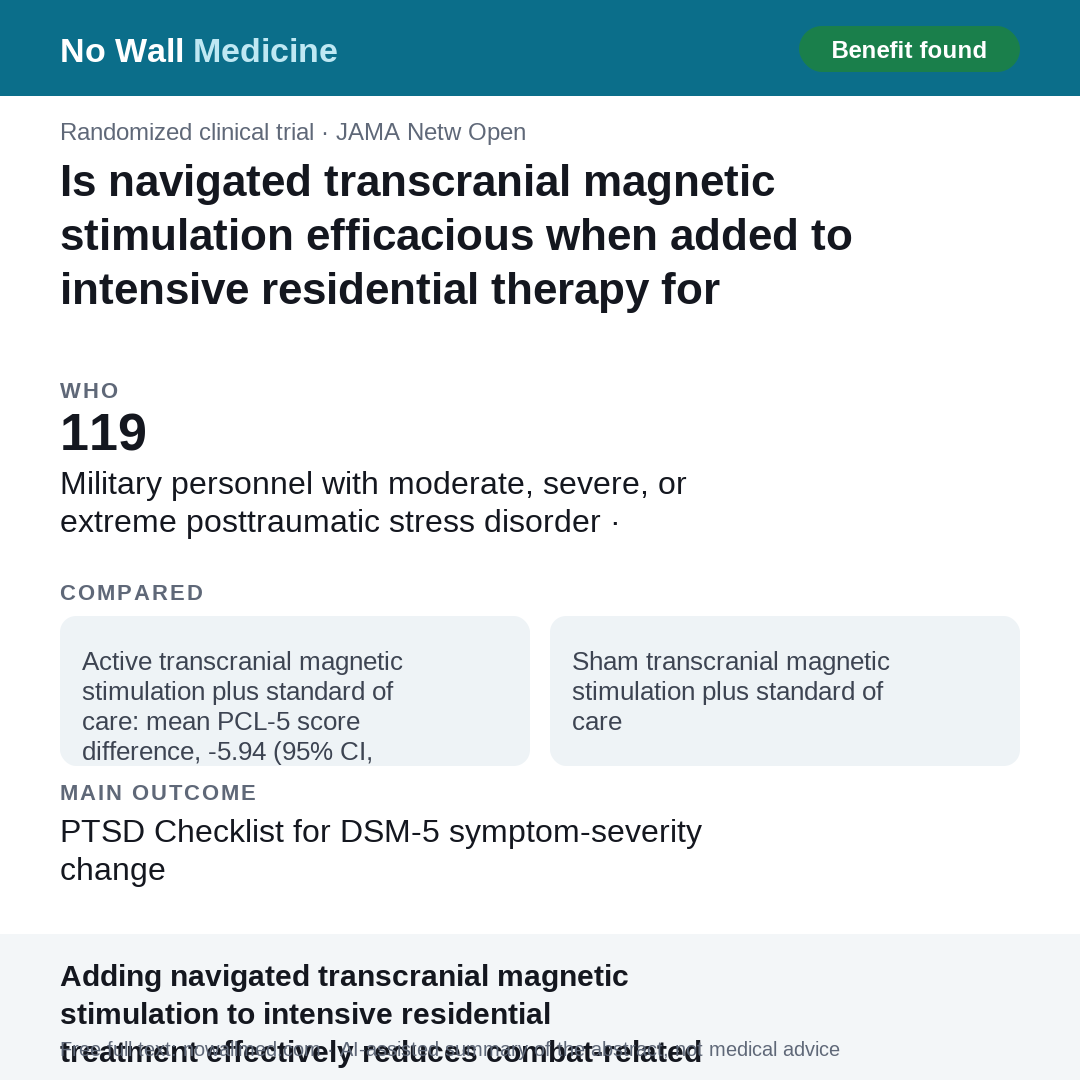
Residential Therapy With Navigated Transcranial Magnetic Stimulation for Combat-Related PTSD: A Randomized Clinical Trial
Randomized clinical trialBenefit found
Is navigated transcranial magnetic stimulation efficacious when added to intensive residential therapy for combat-related PTSD?
Who
119
Military personnel with moderate, severe, or extreme posttraumatic stress disorder · Residential facility specializing in military mental health
Compared
Active transcranial magnetic stimulation plus standard of care: mean PCL-5 score difference, -5.94 (95% CI, -11.77 to -0.10)
Sham transcranial magnetic stimulation plus standard of care
Main outcome
PTSD Checklist for DSM-5 symptom-severity change
Result: mean PCL-5 score difference, -5.94 (95% CI, -11.77 to -0.10)
Bottom line: Adding navigated transcranial magnetic stimulation to intensive residential treatment effectively reduces combat-related posttraumatic stress disorder symptoms.
JAMA Netw Open · 2026-04-01Download image
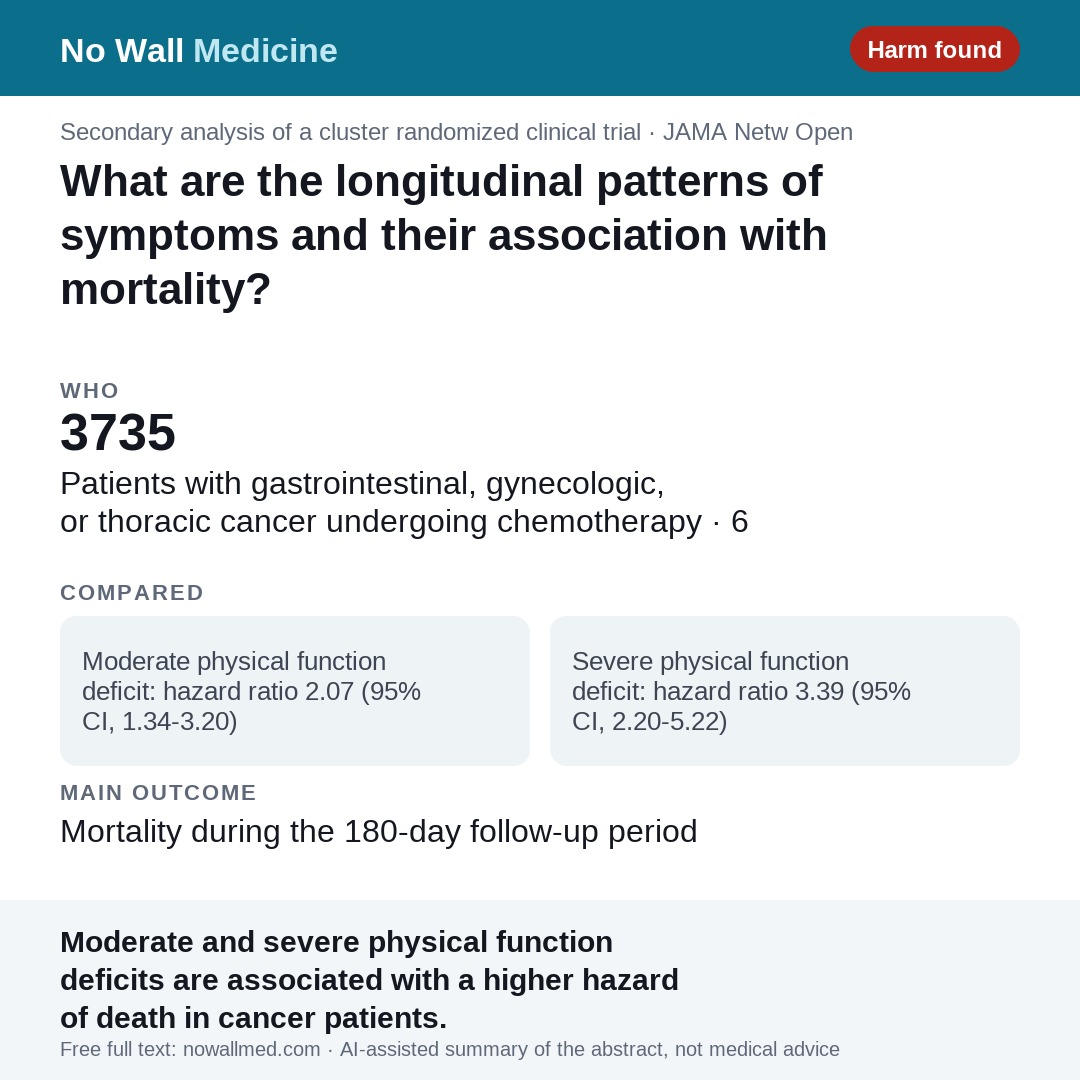
Longitudinal Patterns of Symptoms in Patients Undergoing Chemotherapy: A Secondary Analysis of a Cluster Randomized Clinical Trial
Secondary analysis of a cluster randomized clinical trialHarm found
What are the longitudinal patterns of symptoms and their association with mortality?
Who
3735
Patients with gastrointestinal, gynecologic, or thoracic cancer undergoing chemotherapy · 6 hospitals in Northeast and Southern United States
Compared
Moderate physical function deficit: hazard ratio 2.07 (95% CI, 1.34-3.20)
Severe physical function deficit: hazard ratio 3.39 (95% CI, 2.20-5.22)
Main outcome
Mortality during the 180-day follow-up period
Result: hazard ratio 2.07 (95% CI, 1.34-3.20)
Bottom line: Moderate and severe physical function deficits are associated with a higher hazard of death in cancer patients.
JAMA Netw Open · 2026-04-01Download image
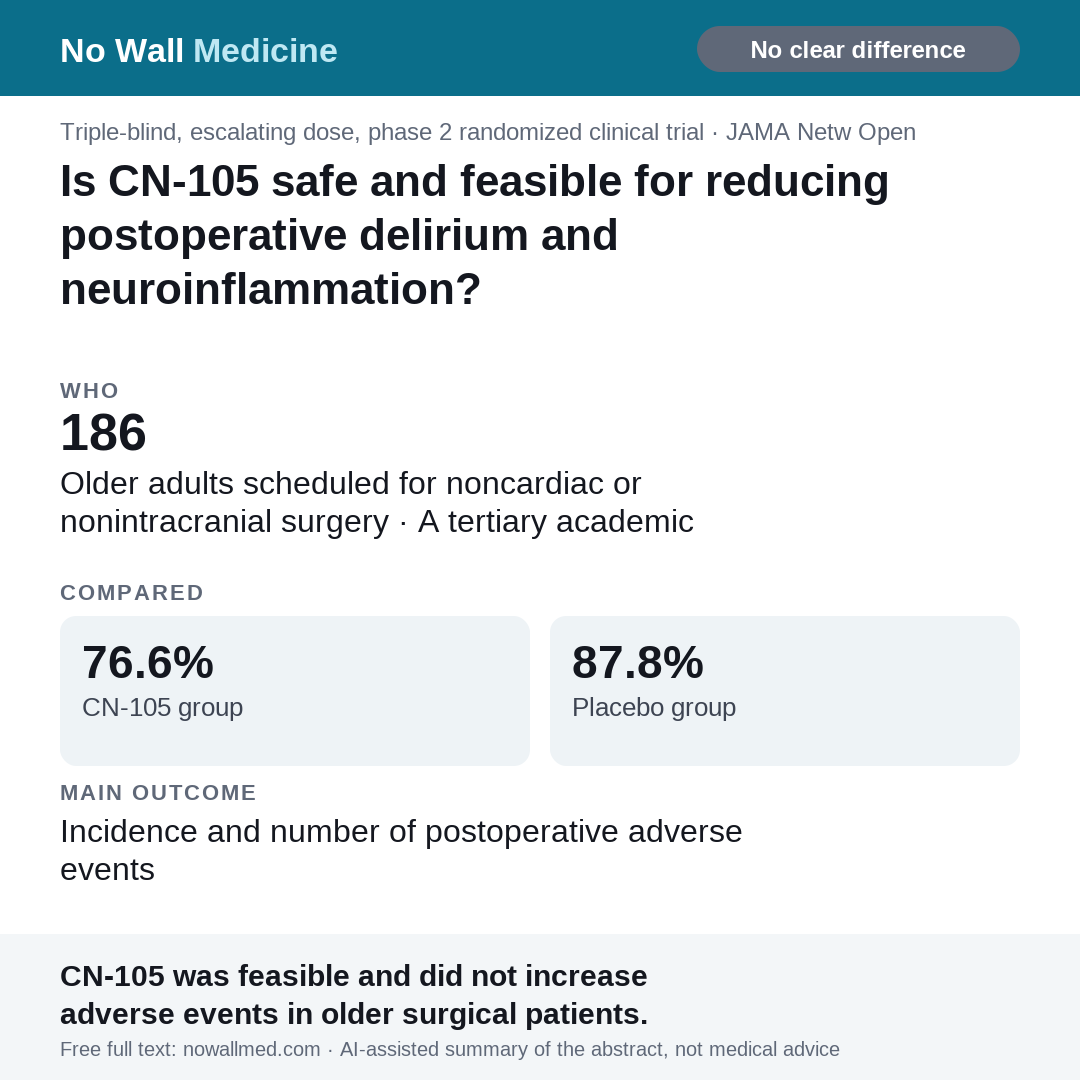
Apolipoprotein E Mimetic Peptide CN-105 and Postoperative Delirium in Older Patients: The Phase 2 MARBLE Randomized Clinical Trial
Triple-blind, escalating dose, phase 2 randomized clinical trialNo clear difference
Is CN-105 safe and feasible for reducing postoperative delirium and neuroinflammation?
Who
186
Older adults scheduled for noncardiac or nonintracranial surgery · A tertiary academic medical center
Compared
76.6%CN-105 group
87.8%Placebo group
Main outcome
Incidence and number of postoperative adverse events
Result: relative risk 0.87 (95% CI, 0.76-1.00)
Bottom line: CN-105 was feasible and did not increase adverse events in older surgical patients.
Limitation: A phase 3 trial is warranted to further evaluate efficacy for reducing postoperative delirium.
JAMA Netw Open · 2026-04-01Download image
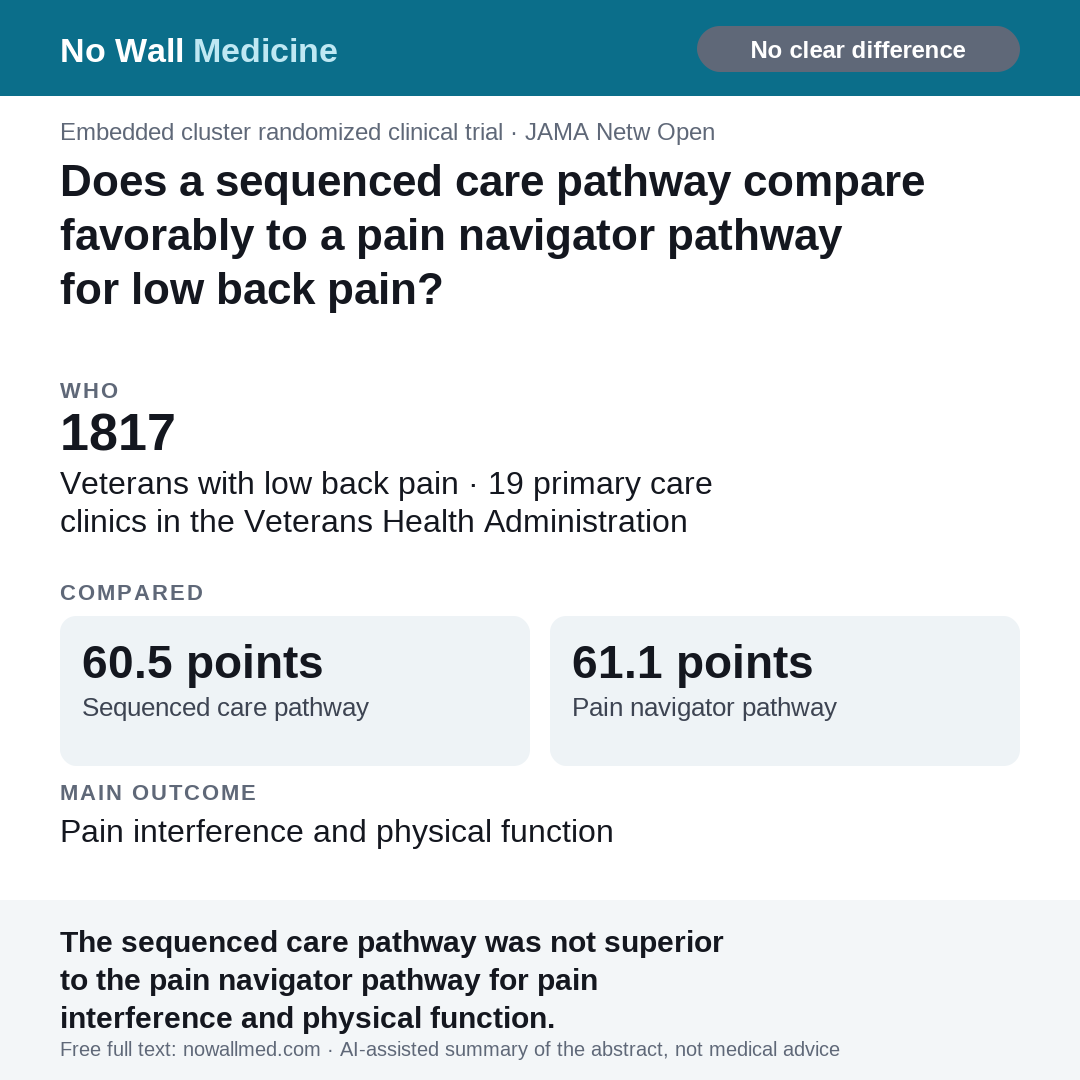
Sequenced Care Pathway vs Pain Navigator Pathway for Veterans With Low Back Pain: The AIM-Back Cluster Randomized Clinical Trial
Embedded cluster randomized clinical trialNo clear difference
Does a sequenced care pathway compare favorably to a pain navigator pathway for low back pain?
Who
1817
Veterans with low back pain · 19 primary care clinics in the Veterans Health Administration
Compared
60.5 pointsSequenced care pathway (97.5% CI, 59.7-61.3 points)
61.1 pointsPain navigator pathway (97.5% CI, 60.4-61.8 points)
Main outcome
Pain interference and physical function
Result: -0.6 points (97.5% CI, -1.6 to 0.4 points) for pain interference
Bottom line: The sequenced care pathway was not superior to the pain navigator pathway for pain interference and physical function.
Limitation: Future research should consider designs that optimize pathway adherence and assess effectiveness in other settings.
JAMA Netw Open · 2026-04-01Download image
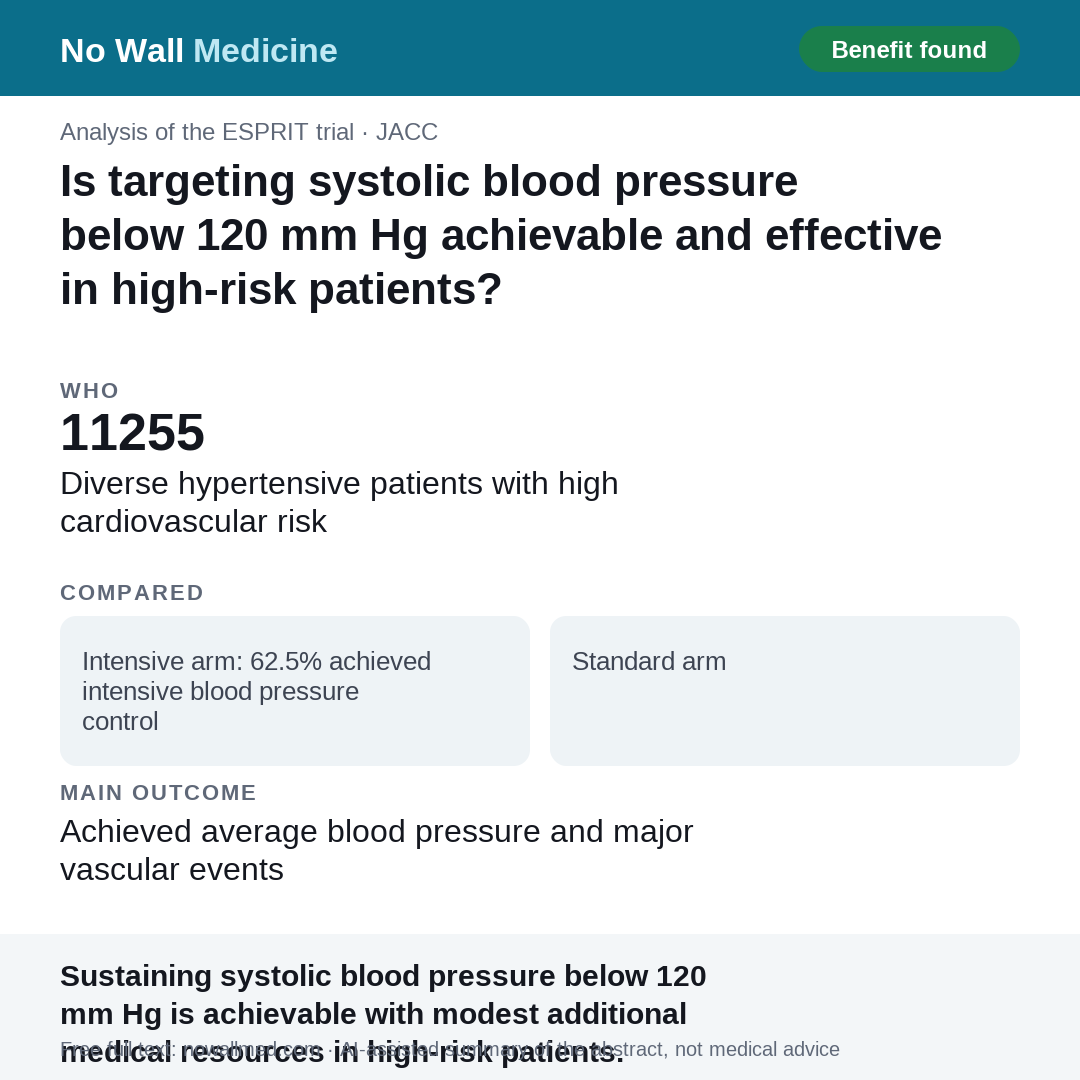
Achieving Intensive Blood Pressure Control in High-Risk Patients: Implementation Insights From the ESPRIT Trial
Analysis of the ESPRIT trialBenefit found
Is targeting systolic blood pressure below 120 mm Hg achievable and effective in high-risk patients?
Who
11255
Diverse hypertensive patients with high cardiovascular risk
Compared
Intensive arm: 62.5% achieved intensive blood pressure control
Standard arm
Main outcome
Achieved average blood pressure and major vascular events
Bottom line: Sustaining systolic blood pressure below 120 mm Hg is achievable with modest additional medical resources in high-risk patients.
JACC · 2026-04-01Download image
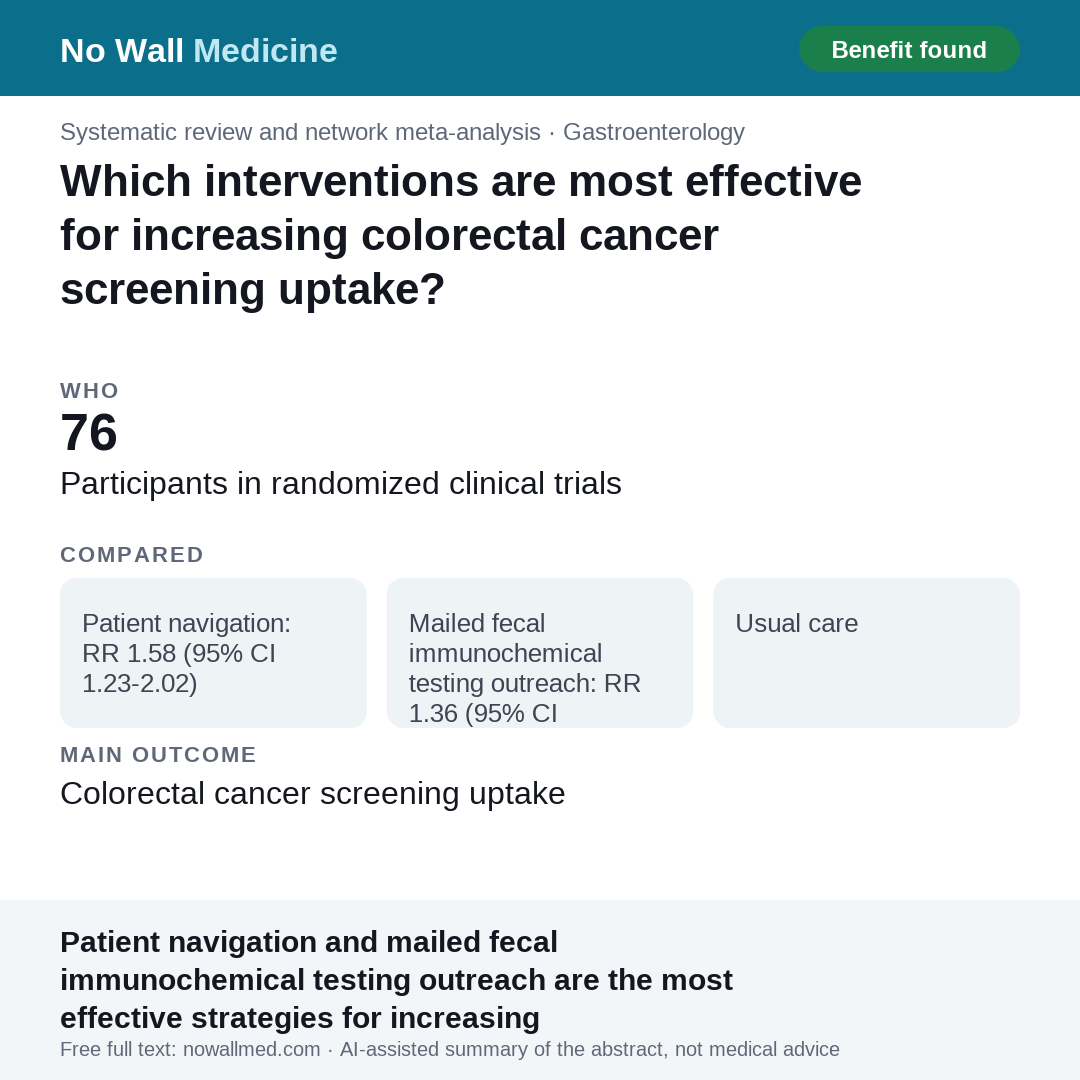
Interventions for Increasing Colorectal Cancer Screening Uptake: A Systematic Review and Network Meta-Analysis
Systematic review and network meta-analysisBenefit found
Which interventions are most effective for increasing colorectal cancer screening uptake?
Who
76
Participants in randomized clinical trials
Compared
Patient navigation: RR 1.58 (95% CI 1.23-2.02)
Mailed fecal immunochemical testing outreach: RR 1.36 (95% CI 1.07-1.74)
Usual care
Main outcome
Colorectal cancer screening uptake
Bottom line: Patient navigation and mailed fecal immunochemical testing outreach are the most effective strategies for increasing colorectal cancer screening uptake.
Limitation: The certainty of evidence mostly ranged from moderate to low.
Gastroenterology · 2026-04-01Download image
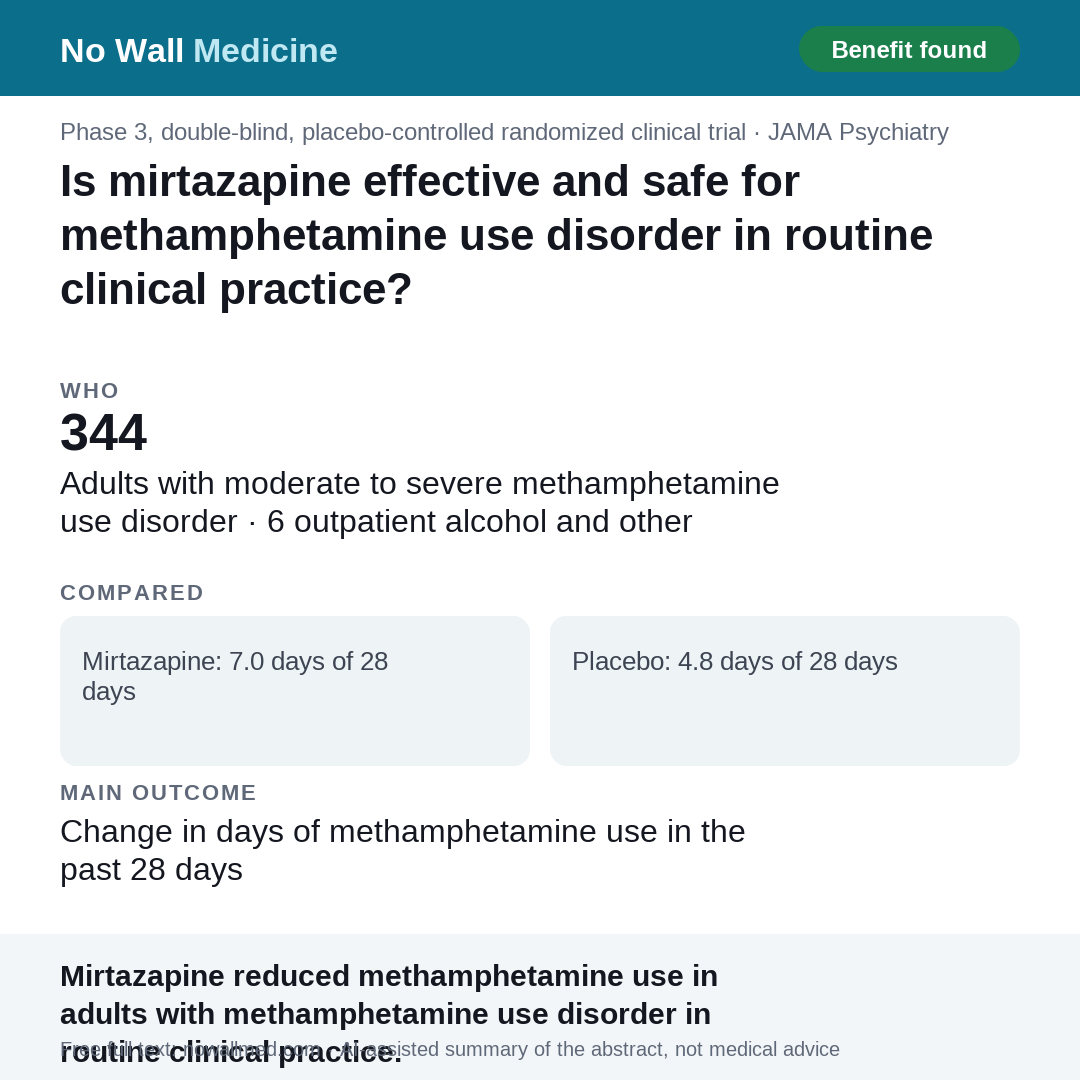
Mirtazapine for Methamphetamine Use Disorder: A Randomized Clinical Trial
Phase 3, double-blind, placebo-controlled randomized clinical trialBenefit found
Is mirtazapine effective and safe for methamphetamine use disorder in routine clinical practice?
Who
344
Adults with moderate to severe methamphetamine use disorder · 6 outpatient alcohol and other drug clinics in Australia
Compared
Mirtazapine: 7.0 days of 28 days
Placebo: 4.8 days of 28 days
Main outcome
Change in days of methamphetamine use in the past 28 days
Result: mean difference, 2.2 days; 95% CI, -4.2 to -0.2 days
Bottom line: Mirtazapine reduced methamphetamine use in adults with methamphetamine use disorder in routine clinical practice.
JAMA Psychiatry · 2026-04-01Download image
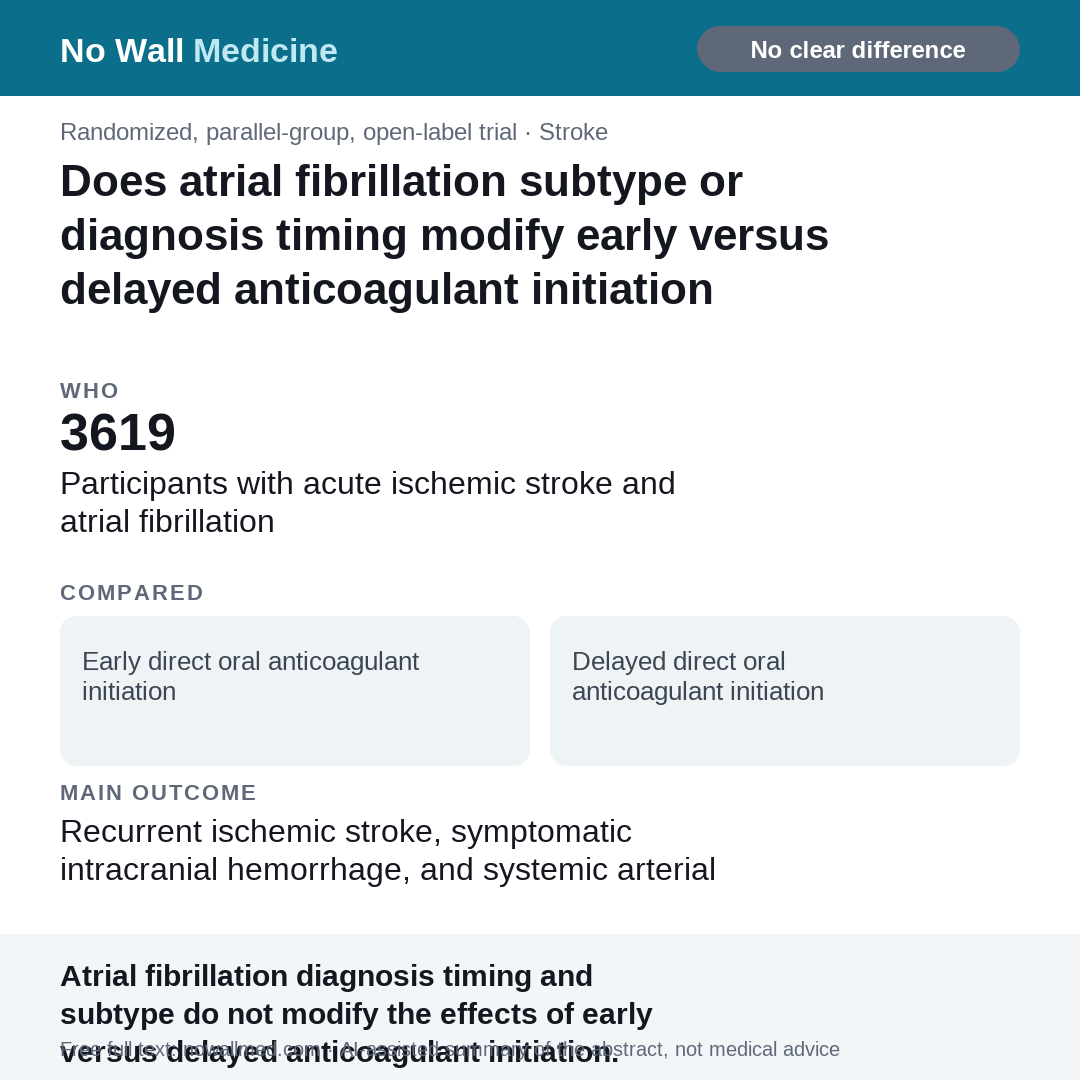
Early Versus Delayed Anticoagulation in Acute Ischemic Stroke According to Atrial Fibrillation Subtype and Time of Diagnosis: Subgroup Analysis of the OPTIMAS Randomized Controlled Trial
Randomized, parallel-group, open-label trialNo clear difference
Does atrial fibrillation subtype or diagnosis timing modify early versus delayed anticoagulant initiation effects?
Who
3619
Participants with acute ischemic stroke and atrial fibrillation
Compared
Early direct oral anticoagulant initiation
Delayed direct oral anticoagulant initiation
Main outcome
Recurrent ischemic stroke, symptomatic intracranial hemorrhage, and systemic arterial embolism
Bottom line: Atrial fibrillation diagnosis timing and subtype do not modify the effects of early versus delayed anticoagulant initiation.
Stroke · 2026-04-01Download image
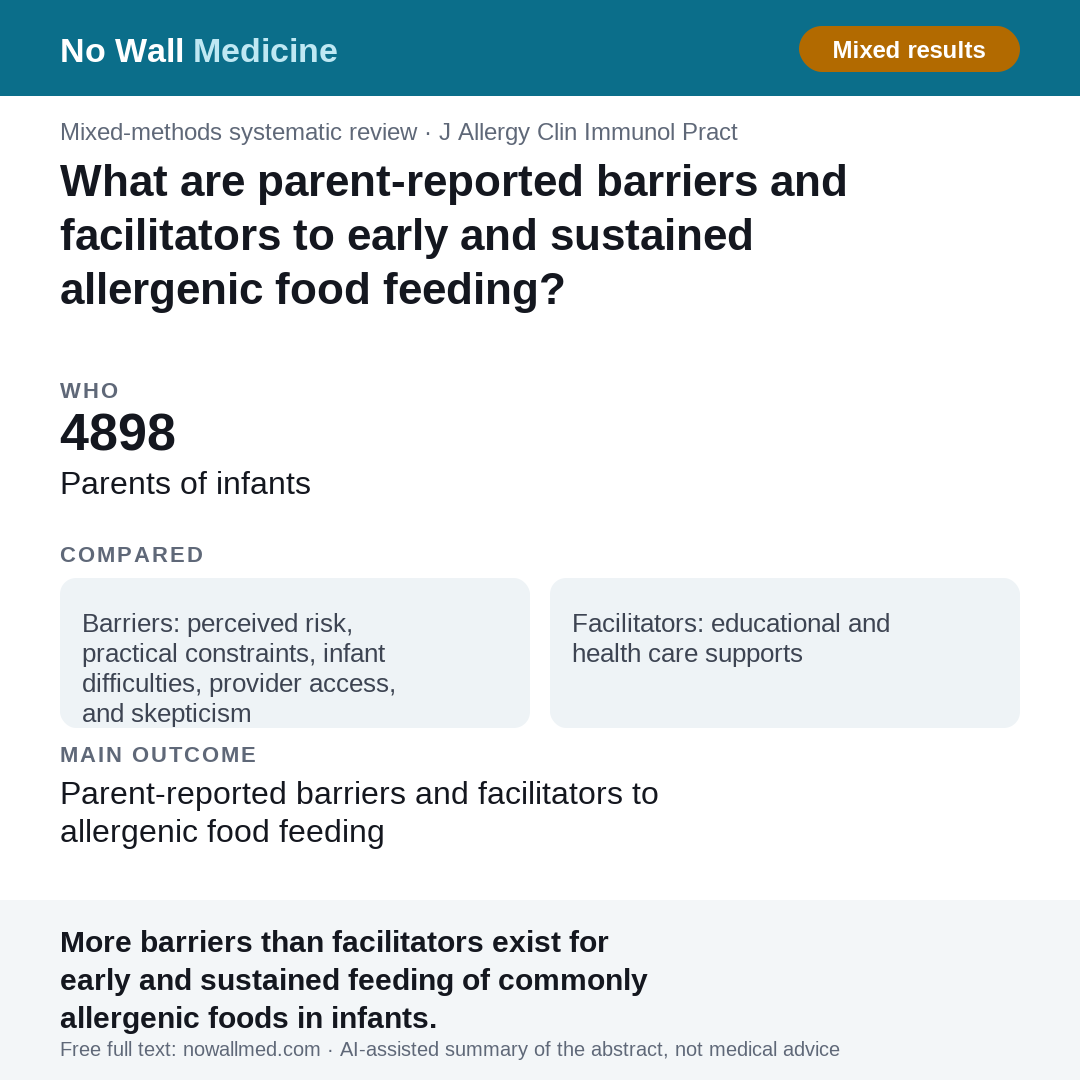
Parent-Reported Barriers and Facilitators to Early and Sustained Feeding of Allergenic Foods: A Mixed-Methods Systematic Review
Mixed-methods systematic reviewMixed results
What are parent-reported barriers and facilitators to early and sustained allergenic food feeding?
Who
4898
Parents of infants
Compared
Barriers: perceived risk, practical constraints, infant difficulties, provider access, and skepticism
Facilitators: educational and health care supports
Main outcome
Parent-reported barriers and facilitators to allergenic food feeding
Bottom line: More barriers than facilitators exist for early and sustained feeding of commonly allergenic foods in infants.
Limitation: Future research is warranted to understand facilitators across sociocultural contexts.
J Allergy Clin Immunol Pract · 2026-04-01Download image
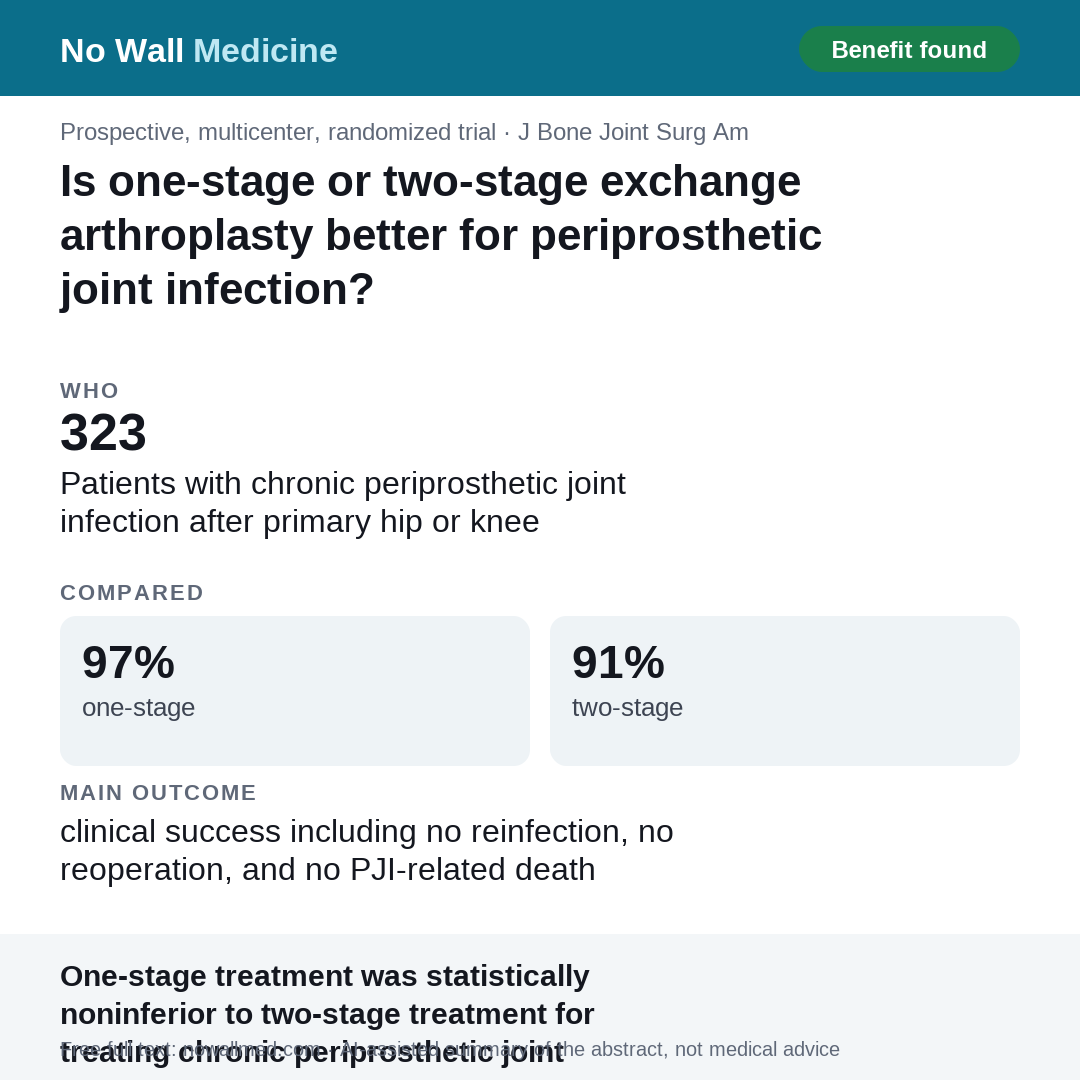
One-Stage Versus Two-Stage Exchange Arthroplasty for Periprosthetic Joint Infection: A Prospective Randomized Trial
Prospective, multicenter, randomized trialBenefit found
Is one-stage or two-stage exchange arthroplasty better for periprosthetic joint infection?
Who
323
Patients with chronic periprosthetic joint infection after primary hip or knee arthroplasty · multicenter
Compared
97%one-stage (131 of 135)
91%two-stage (112 of 123)
Main outcome
clinical success including no reinfection, no reoperation, and no PJI-related death
Result: unadjusted odds ratio = 3.22 (95% confidence interval = 1.0 to 10.38)
Bottom line: One-stage treatment was statistically noninferior to two-stage treatment for treating chronic periprosthetic joint infection at 2-year follow-up.
J Bone Joint Surg Am · 2026-04-01Download image