Visual abstracts
New randomized trials and meta-analyses from leading journals at a glance: who was studied, what was compared, and what was found. Every paper is free to read in full.
All specialtiesCardiology 4876Oncology 4136Gastroenterology & Hepatology 1942Infectious Disease 3834Neurology 1902Psychiatry & Mental Health 2273Pulmonology 2143Critical Care 1364Endocrinology & Diabetes 2580Pediatrics 2980Surgery 2556Orthopedics & Sports Medicine 931Neurosurgery 537Cardiothoracic & Vascular Surgery 674Plastic & Reconstructive Surgery 590Nephrology 1133Rheumatology 823Hematology 1109Dermatology 621Ophthalmology 543Obstetrics & Gynecology 1686Public & Global Health 1058Radiology & Imaging 648Anesthesiology 986Urology 764ENT (Otolaryngology) 503Emergency Medicine 511Allergy & Immunology 313Geriatrics 978Family Medicine & Primary Care 562Medical Genetics & Genomics 676Pathology & Laboratory Medicine 159Physical Medicine & Rehabilitation 757Palliative Care 444Nutrition 1588Digital Health & AI 2197General Medicine 319
Vamorolone for Duchenne Muscular Dystrophy: A Cross-Trial Efficacy Comparison With Classic Corticosteroids From the FOR-DMD Trial
Cross-trial efficacy comparison of two randomized trialsNo clear difference
Is vamorolone efficacy and anthropometric effect similar to prednisone and deflazacort in Duchenne muscular dystrophy?
Who
Steroid-naïve ambulatory boys aged 4 to <7 years
Compared
Vamorolone 6 mg/kg/d: similar changes in TTSTAND velocity
Daily prednisone 0.75 mg/kg/d: similar changes in TTSTAND velocity
Daily deflazacort 0.9 mg/kg/d: similar changes in TTSTAND velocity
Main outcome
Time-to-stand velocity and anthropometric outcomes
Result: LSM difference vs prednisone 0.004 rises per second (95% CI -0.025 to 0.032)
Bottom line: Vamorolone showed similar motor efficacy to prednisone and deflazacort while providing a growth-protective alternative.
Limitation: Interpretations are limited by 95% confidence intervals crossing minimally important difference thresholds.
Neurology · 2026-05-27Download image

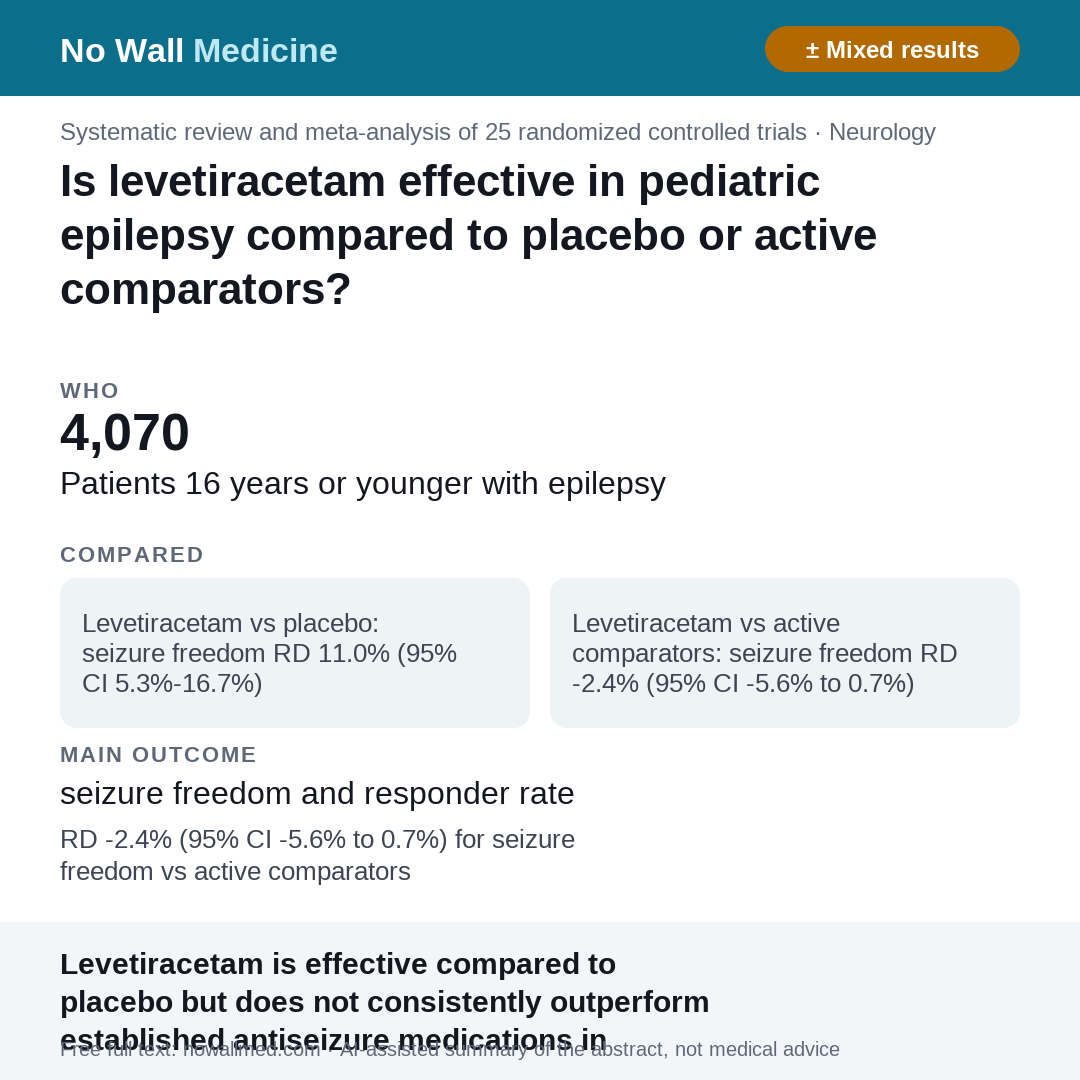
Efficacy of Levetiracetam in Patients With Pediatric Epilepsy: A Systematic Review and Meta-Analysis
Systematic review and meta-analysis of 25 randomized controlled trialsMixed results
Is levetiracetam effective in pediatric epilepsy compared to placebo or active comparators?
Who
4,070
Patients 16 years or younger with epilepsy
Compared
Levetiracetam vs placebo: seizure freedom RD 11.0% (95% CI 5.3%-16.7%)
Levetiracetam vs active comparators: seizure freedom RD -2.4% (95% CI -5.6% to 0.7%)
Main outcome
seizure freedom and responder rate
Result: RD -2.4% (95% CI -5.6% to 0.7%) for seizure freedom vs active comparators
Bottom line: Levetiracetam is effective compared to placebo but does not consistently outperform established antiseizure medications in pediatric epilepsy.
Limitation: Substantial heterogeneity, frequent high risk of bias, variable follow-up, and publication bias.
Neurology · 2026-05-27Download image
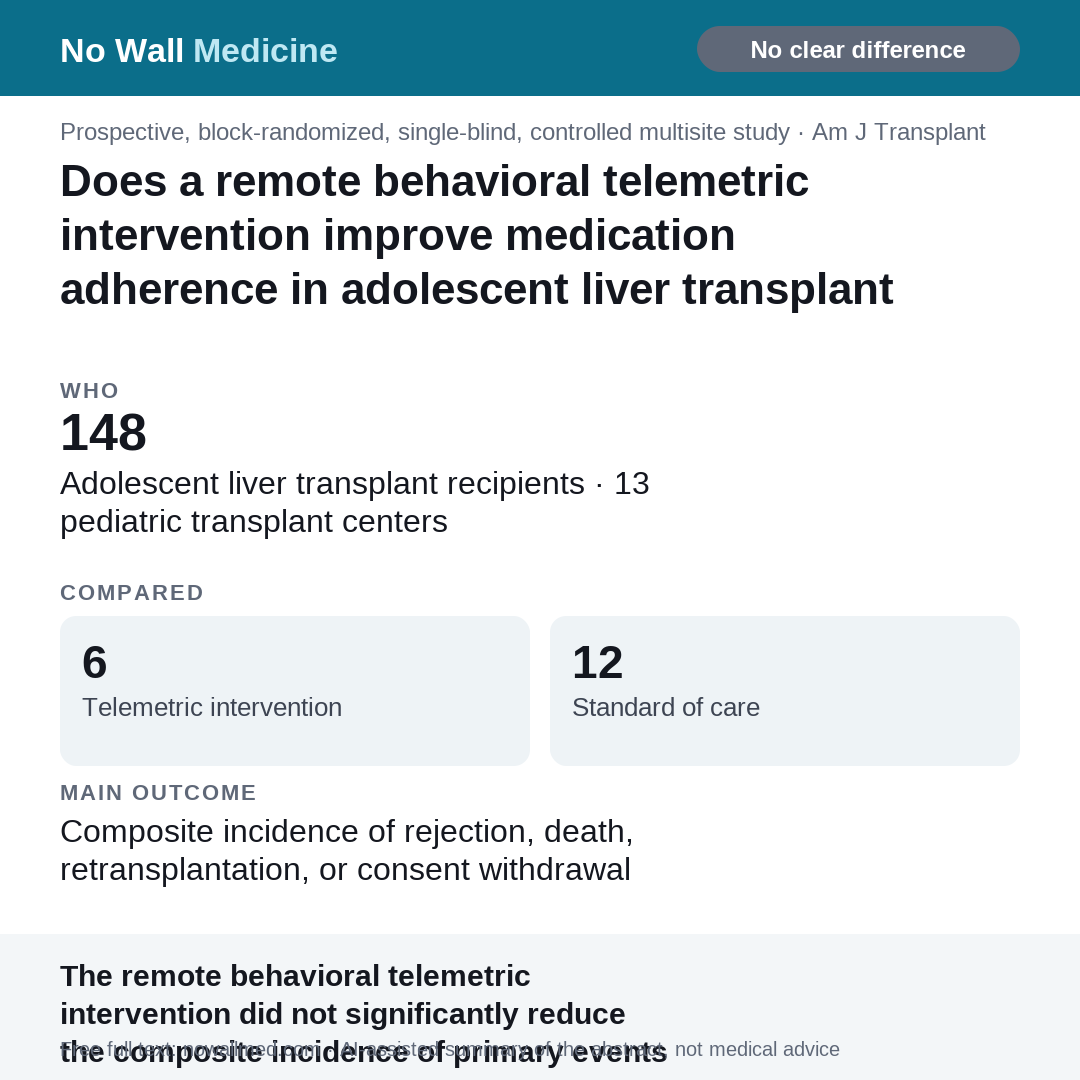
A remote intervention to improve medication nonadherence guided by a marker of risk derived from the electronic health records of adolescent transplant recipients
Prospective, block-randomized, single-blind, controlled multisite studyNo clear difference
Does a remote behavioral telemetric intervention improve medication adherence in adolescent liver transplant recipients?
Who
148
Adolescent liver transplant recipients · 13 pediatric transplant centers
Compared
6Telemetric intervention (8.3%)
12Standard of care (15.8%)
Main outcome
Composite incidence of rejection, death, retransplantation, or consent withdrawal
Result: relative risk 0.57 (95% confidence interval 0.24-1.35)
Bottom line: The remote behavioral telemetric intervention did not significantly reduce the composite incidence of primary events compared to standard care.
Am J Transplant · 2026-05-27Download image
Multicenter randomized trial of a digital therapeutic game for executive function in children with ADHD
Multicenter, randomized, single-blind, sham-controlled trialBenefit found
Does the STAR RUCKUS digital therapeutic improve executive function in children with ADHD?
Who
122
Children aged 6-12 years with attention-deficit/hyperactivity disorder · Multicenter
Compared
-7.50STAR RUCKUS
-4.00Sham intervention
Main outcome
Change in clinician-rated Korean ADHD rating scale scores
Bottom line: STAR RUCKUS produced greater symptom reduction than sham in children with attention-deficit/hyperactivity disorder.
NPJ Digit Med · 2026-05-27Download image

Total Fat and Fatty Acid Composition of Preterm Human Milk: A Systematic Review and Meta-analysis
Systematic review and meta-analysisNo clear difference
What is the total fat and fatty acid composition of preterm human milk?
Who
1871
Preterm infants born before 37 weeks
Compared
Colostrum: 3.04 (2.51, 3.57) g/100 mL
Transition milk: 3.74 (3.47, 4.00) g/100 mL
Mature milk: 3.85 (3.61, 4.08) g/100 mL
Main outcome
Total fat and fatty acid concentrations in preterm human milk
Bottom line: Preterm human milk fat content increases from colostrum to mature milk, with oleic and palmitic acids being most abundant.
Limitation: High variability among study design, quality, analytical methodologies, and data reporting.
Adv Nutr · 2026-05-26Download image

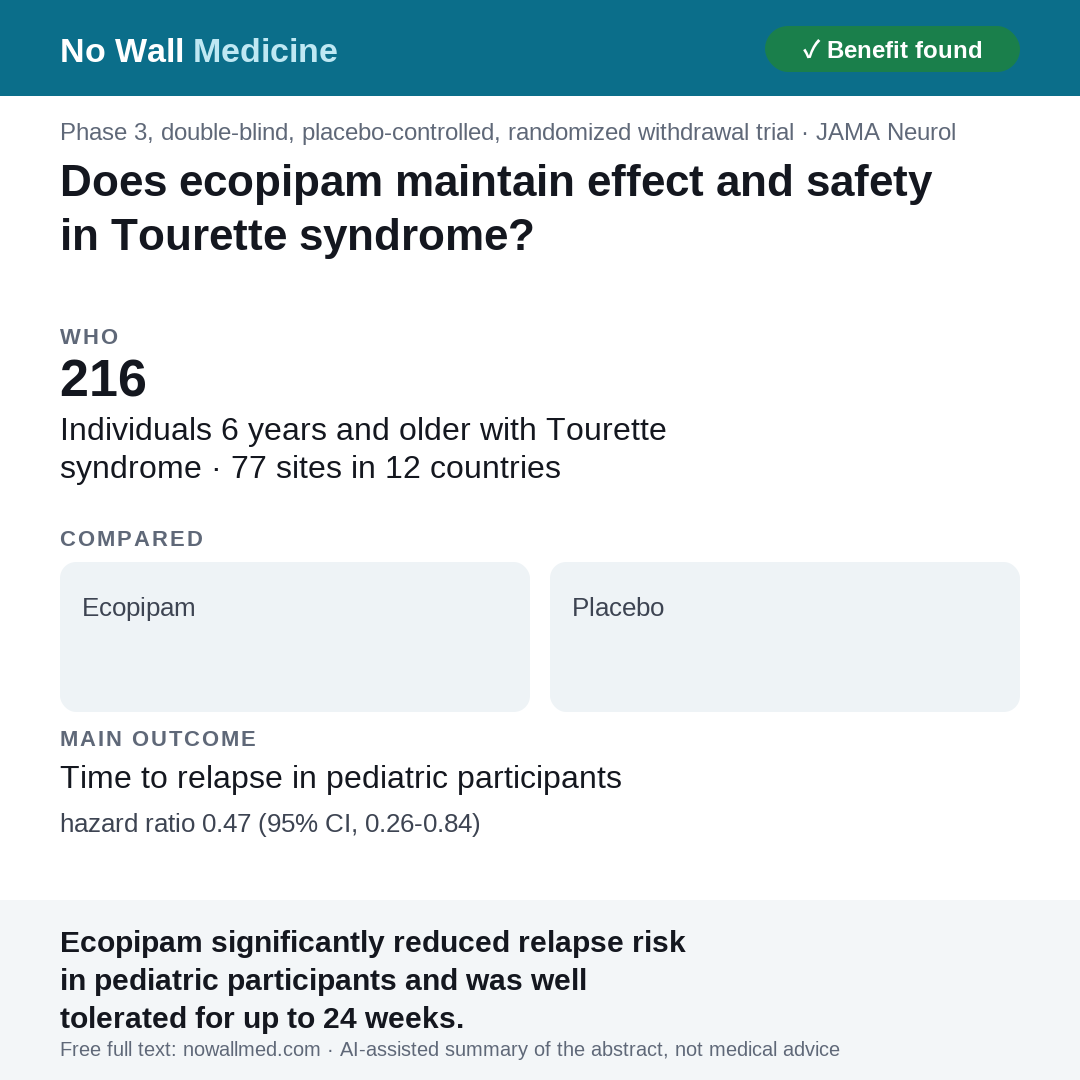
Efficacy and Safety of Ecopipam for Tourette Syndrome: A Phase 3 Randomized Clinical Trial
Phase 3, double-blind, placebo-controlled, randomized withdrawal trialBenefit found
Does ecopipam maintain effect and safety in Tourette syndrome?
Who
216
Individuals 6 years and older with Tourette syndrome · 77 sites in 12 countries
Compared
Ecopipam
Placebo
Main outcome
Time to relapse in pediatric participants
Result: hazard ratio 0.47 (95% CI, 0.26-0.84)
Bottom line: Ecopipam significantly reduced relapse risk in pediatric participants and was well tolerated for up to 24 weeks.
JAMA Neurol · 2026-05-26Download image
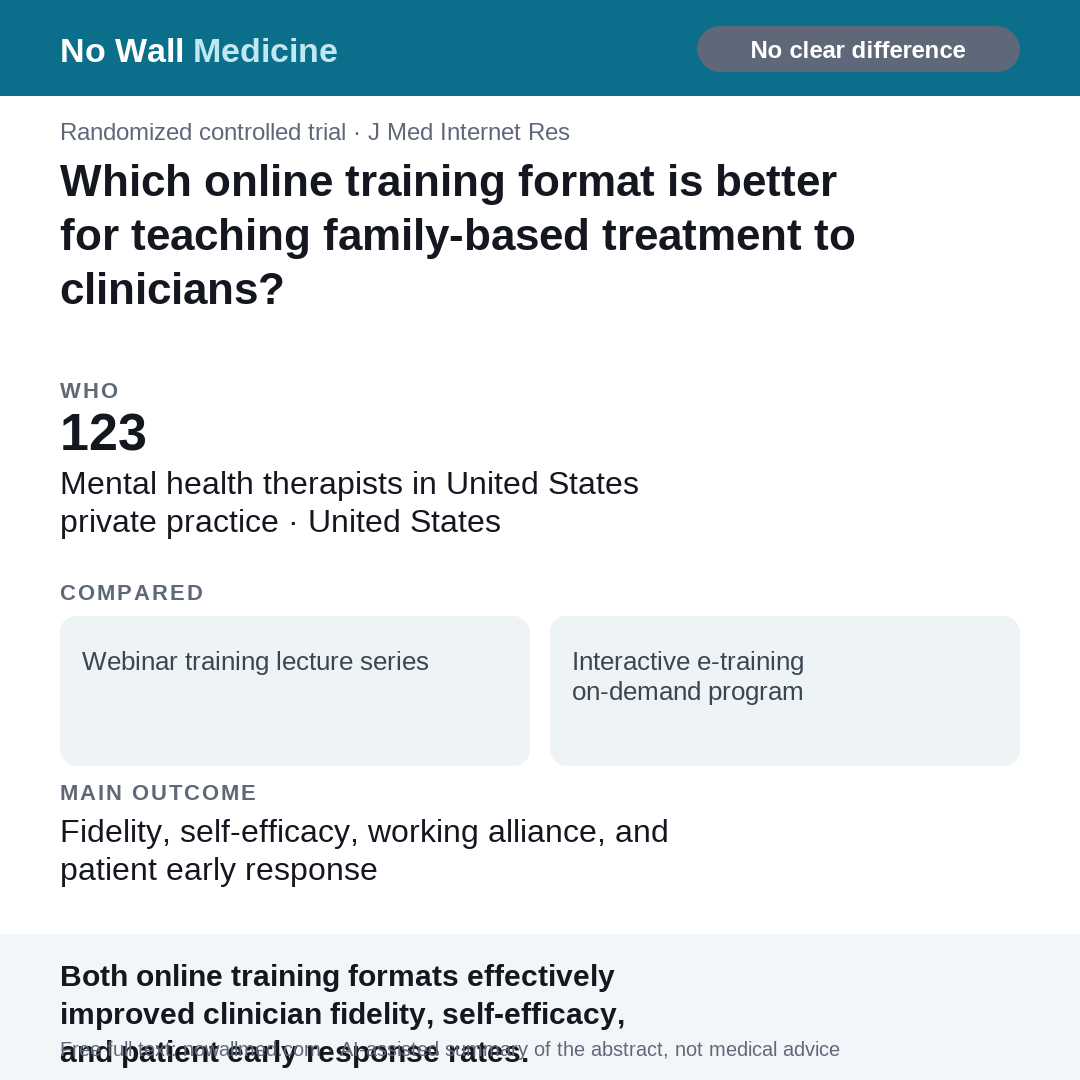
Training Clinicians in Private Practice in Family-Based Treatment for Anorexia Nervosa: Randomized Controlled Trial Comparing Two Online Approaches
Randomized controlled trialNo clear difference
Which online training format is better for teaching family-based treatment to clinicians?
Who
123
Mental health therapists in United States private practice · United States
Compared
Webinar training lecture series
Interactive e-training on-demand program
Main outcome
Fidelity, self-efficacy, working alliance, and patient early response
Bottom line: Both online training formats effectively improved clinician fidelity, self-efficacy, and patient early response rates.
Limitation: Challenges in patient recruitment for posttraining clinical case consultation.
J Med Internet Res · 2026-05-25Download image
The Natural History of Residual and Recurrent Disease in Advanced Juvenile Nasopharyngeal Angiofibroma: A Systematic Review
Systematic reviewBenefit found
What is the natural history of residual and recurrent advanced juvenile nasopharyngeal angiofibroma?
Who
131
Male patients with advanced juvenile nasopharyngeal angiofibroma
Compared
41%Complete involution
29%Stable disease
25%Reduction in size
2%Progressive disease
Main outcome
Natural history of residual or recurrent disease
Bottom line: Residual or recurrent juvenile nasopharyngeal angiofibromas often remain stable or regress without further intervention.
Laryngoscope · 2026-05-24Download image

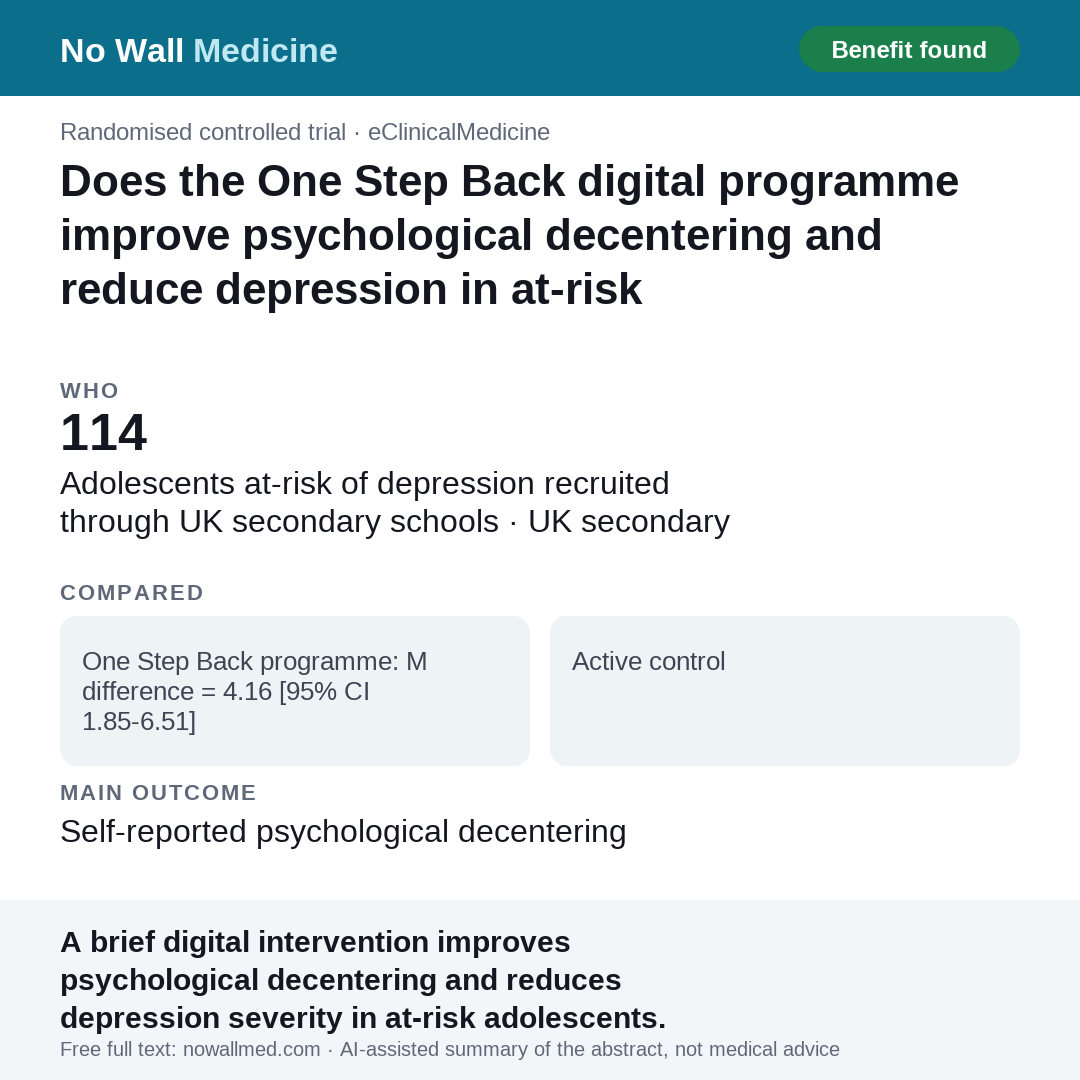
A digitally embedded intervention to enhance psychological decentering and reduce depression severity in at-risk adolescents: a randomised controlled trial of the 'One Step Back' programme
Randomised controlled trialBenefit found
Does the One Step Back digital programme enhance psychological decentering and reduce depression in at-risk adolescents?
Who
114
Adolescents at-risk of depression · United Kingdom secondary schools
Compared
One Step Back programme: M difference = 4.16 [95% CI 1.85-6.51]
Active control
Main outcome
Self-reported decentering post-intervention
Result: M difference = 4.16 (95% CI 1.85-6.51)
Bottom line: A brief digital programme improved psychological decentering and reduced depression severity in at-risk adolescents.
Funded by: Wellcome, UK Medical Council, Economic and Social Research Council
eClinicalMedicine · 2026-05-22Download image
Quantitative assessment of efficacy and evaluation of feasibility of exercise training protocols in adult and pediatric primary mitochondrial disease
Systematic literature review and feasibility evaluationBenefit found
What exercise training protocols are effective and feasible for primary mitochondrial disease?
Who
Adults and children with primary or secondary mitochondrial disease
Compared
Aerobic exercise training: significant effect on relative peak oxygen consumption, peak work, and SF-36 physical summary score
Combination exercise training: significant effect on relative peak VO2 and SF-36
Main outcome
Efficacy of exercise types and feasibility of training protocols
Bottom line: Aerobic and combination exercise training show potential efficacy for patients with mitochondrial disease.
Limitation: Limited number of primary mitochondrial disease exercise studies available.
BMC Med · 2026-05-22Download image

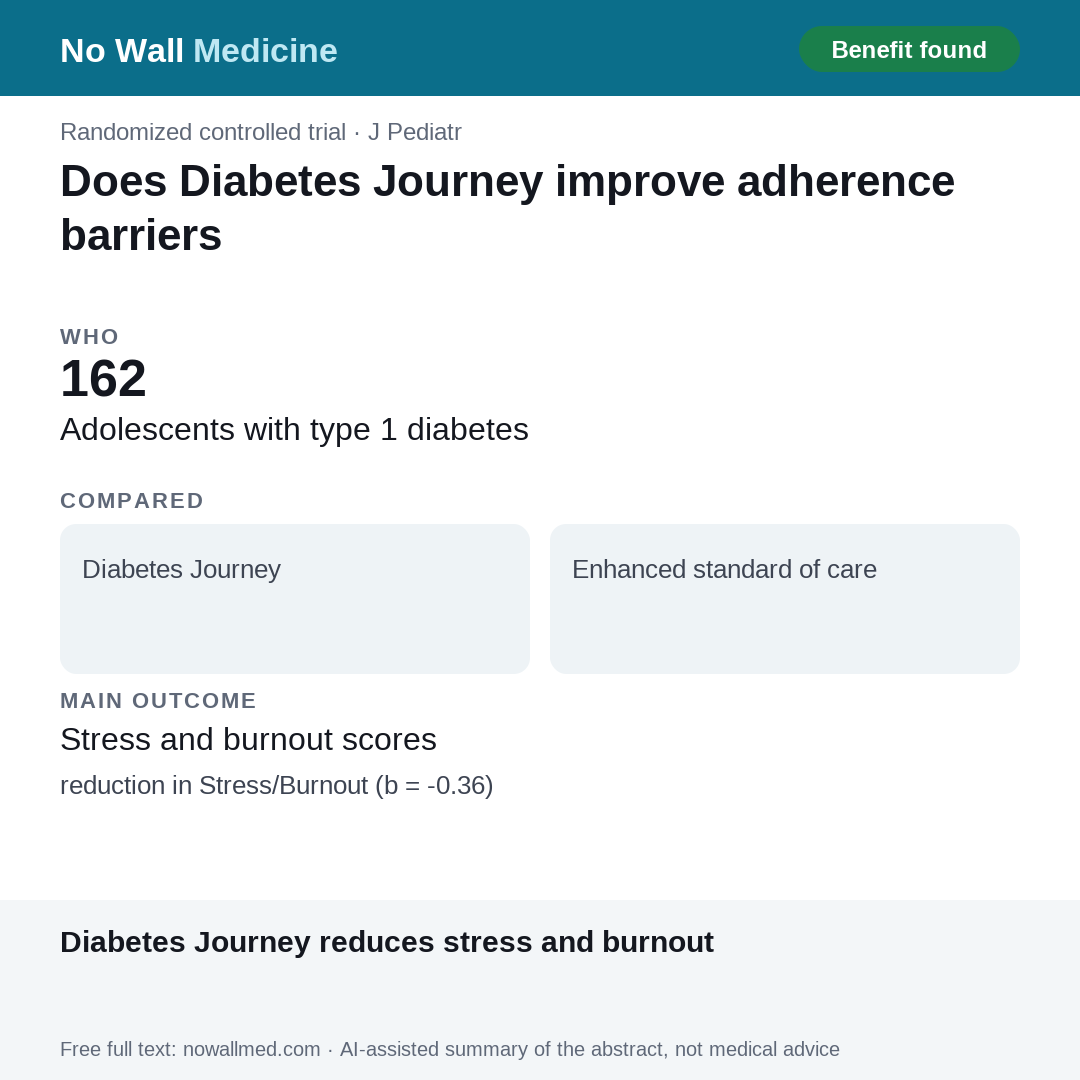
A Pilot Randomized Controlled Clinical Trial to Improve Adherence Barriers for Adolescents with Type 1 Diabetes
Randomized controlled trialBenefit found
Does Diabetes Journey improve adherence barriers
Who
162
Adolescents with type 1 diabetes
Compared
Diabetes Journey
Enhanced standard of care
Main outcome
Stress and burnout scores
Result: reduction in Stress/Burnout (b = -0.36, 95% CI -0.72 to -0.01)
Bottom line: Diabetes Journey reduces stress and burnout
J Pediatr · 2026-05-22Download image
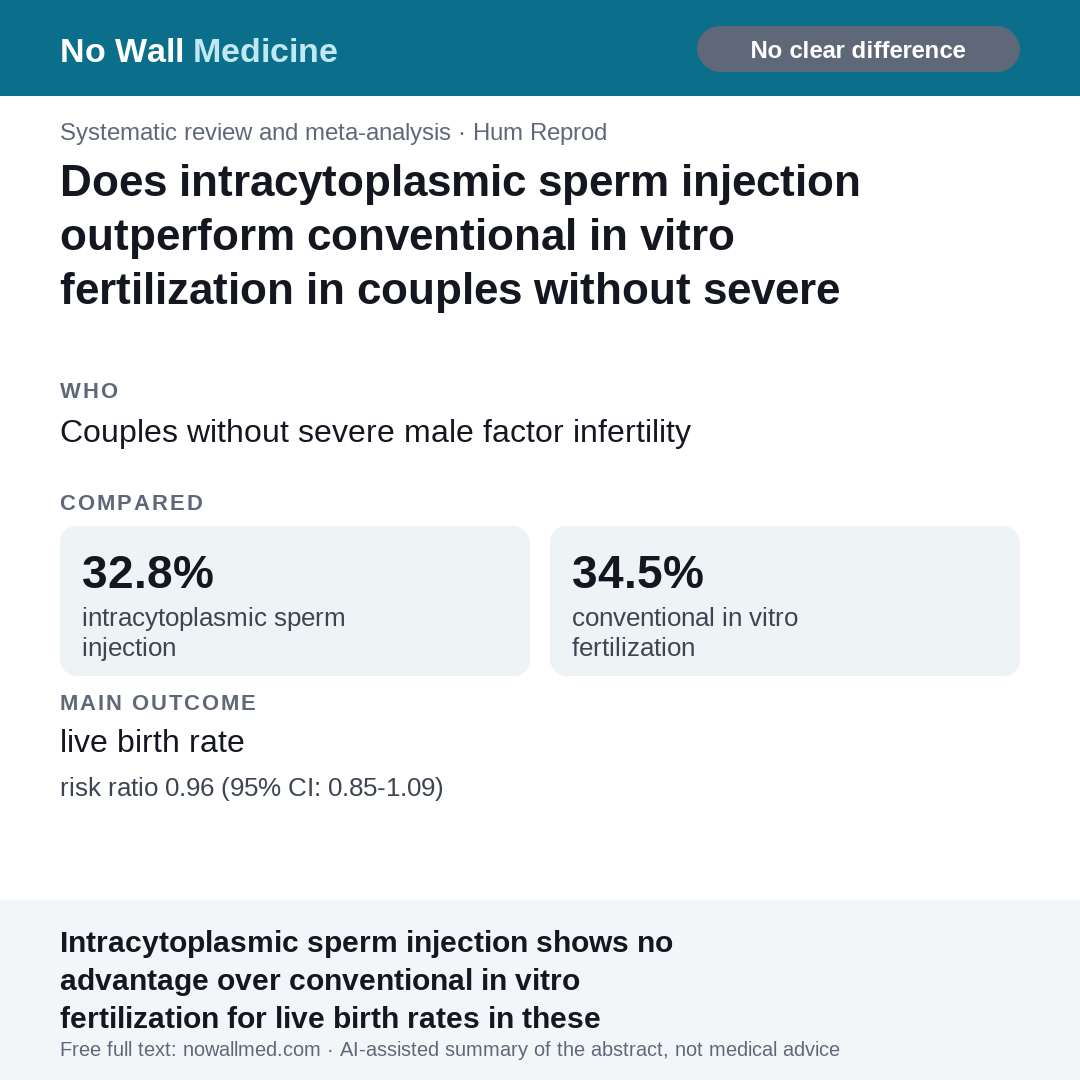
Does intracytoplasmic sperm injection outperform conventional in vitro fertilization in couples without severe male factor infertility? A systematic review and meta-analysis of randomized controlled trials
Systematic review and meta-analysisNo clear difference
Does intracytoplasmic sperm injection outperform conventional in vitro fertilization in couples without severe male factor infertility?
Who
Couples without severe male factor infertility
Compared
32.8%intracytoplasmic sperm injection
34.5%conventional in vitro fertilization
Main outcome
live birth rate
Result: risk ratio 0.96 (95% CI: 0.85-1.09)
Bottom line: Intracytoplasmic sperm injection shows no advantage over conventional in vitro fertilization for live birth rates in these couples.
Limitation: Limited number of high-quality studies, limited subgroup-specific evidence, and some heterogeneity in outcome measures.
Funded by: National Natural Science Foundation of China and Peking University Third Hospital
Hum Reprod · 2026-05-22Download image
A Systematic Review to Reassess the Formula for Early Life Growth
Systematic reviewHarm found
Does high bovine whey-to-casein ratio intake affect early life growth outcomes?
Who
Infants, piglets, and rodent pups
Compared
High bovine whey-to-casein ratio: discordance between energy intake and weight gain
Control
Main outcome
Milk intake, body weight, gut morphology, and cellular activity
Bottom line: High bovine whey-to-casein ratios are associated with nutrient loss and reduced nutrient absorption in early life.
Adv Nutr · 2026-05-22Download image

Enhancing parental health knowledge through digital knowledge mobilisation tools: a randomised controlled trial and qualitative study
Randomised controlled trial and qualitative studyBenefit found
Do blogshots increase parental knowledge regarding common childhood conditions?
Who
167
Parents or legal guardians of children under 5 years · Online questionnaires across Canada
Compared
Group A: significantly higher (p<0.001, d=0.30) at follow-up 1
Group B
Main outcome
change in knowledge
Result: d=0.30
Bottom line: Blogshots can be an effective tool to increase parental knowledge about common childhood conditions.
BMJ Paediatr Open · 2026-05-22Download image

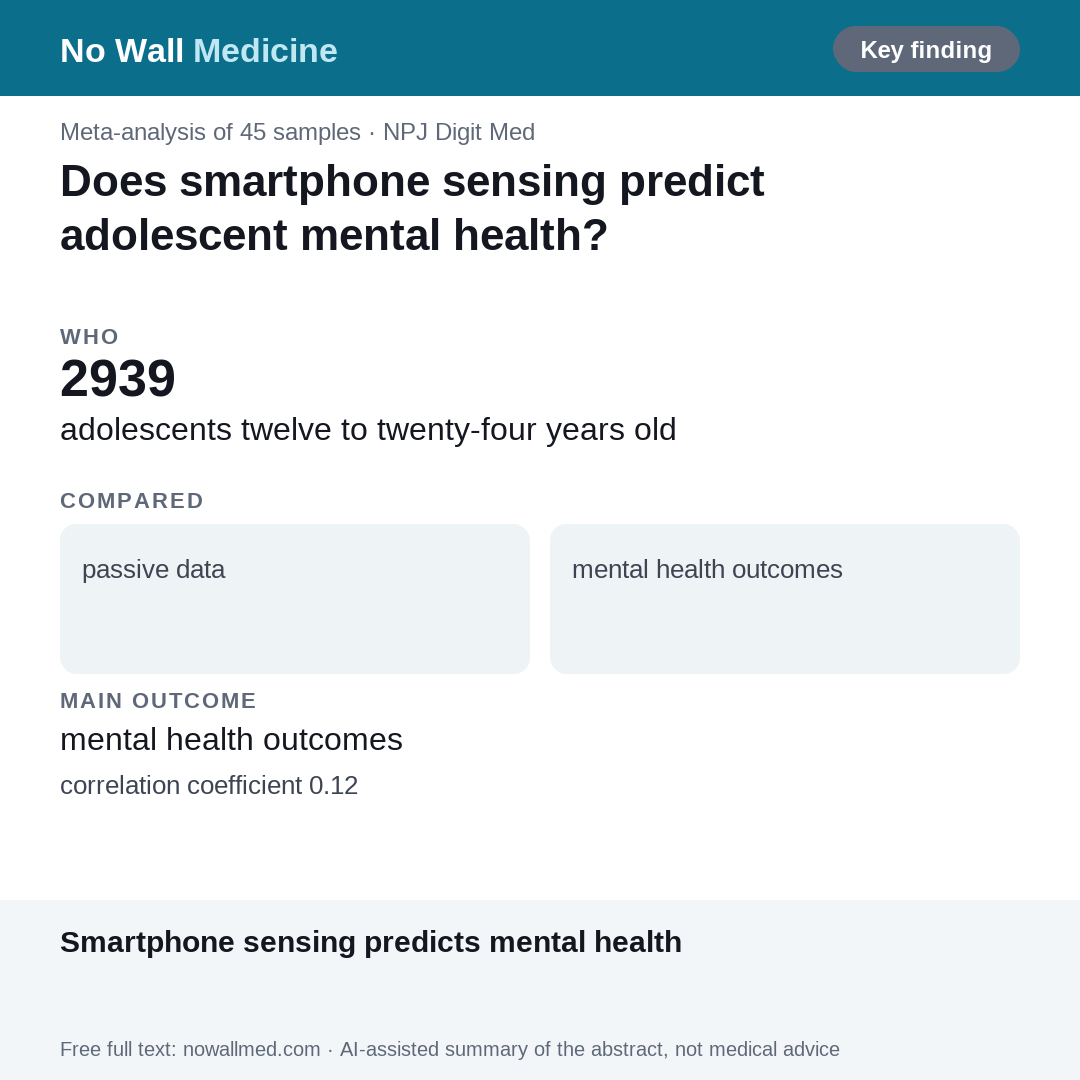
A multilevel meta-analysis of passive smartphone sensing of adolescent mental health
Meta-analysis of 45 samplesBenefit found
Does smartphone sensing predict adolescent mental health?
Who
2939
adolescents twelve to twenty-four years old
Compared
passive data
mental health outcomes
Main outcome
mental health outcomes
Result: correlation coefficient 0.12
Bottom line: Smartphone sensing predicts mental health
NPJ Digit Med · 2026-05-22Download image
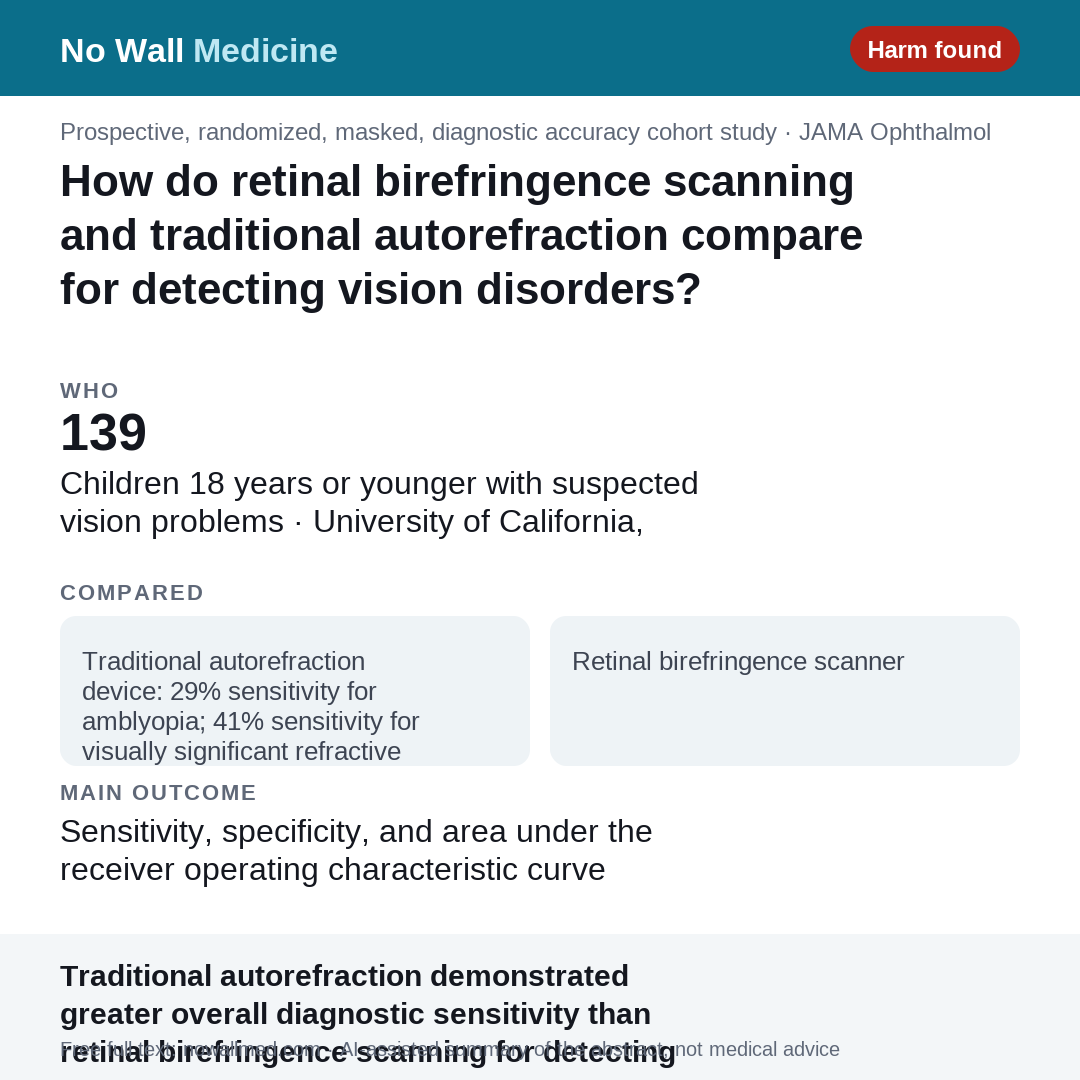
Diagnostic Accuracy of a Retinal Birefringence Scanning Device Compared With a Traditional Autorefraction Device
Prospective, randomized, masked, diagnostic accuracy cohort studyHarm found
How do retinal birefringence scanning and traditional autorefraction compare for detecting vision disorders?
Who
139
Children 18 years or younger with suspected vision problems · University of California, San Francisco, pediatric ophthalmology clinic
Compared
Traditional autorefraction device: 29% sensitivity for amblyopia; 41% sensitivity for visually significant refractive error
Retinal birefringence scanner
Main outcome
Sensitivity, specificity, and area under the receiver operating characteristic curve
Result: AUROC for retinal birefringence scanner was lower, particularly for amblyopia (-0.13; 95% CI, -0.23 to -0.03)
Bottom line: Traditional autorefraction demonstrated greater overall diagnostic sensitivity than retinal birefringence scanning for detecting amblyopia and refractive errors.
JAMA Ophthalmol · 2026-05-21Download image
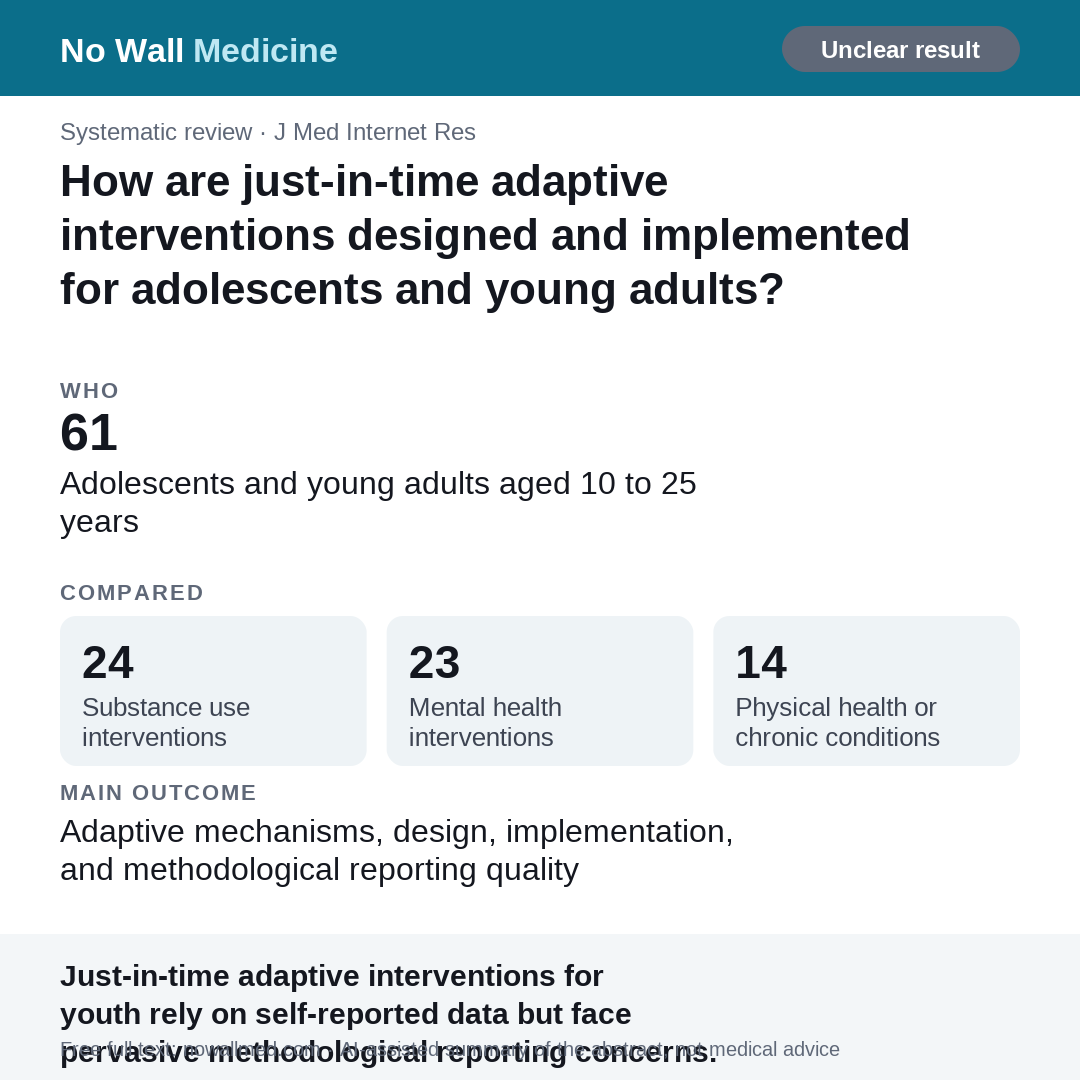
Toward Participatory Precision Health With Co-Designed Recommendations: Systematic Review of Just-in-Time Adaptive Interventions in Adolescents and Young Adults
Systematic reviewUnclear result
How are just-in-time adaptive interventions designed and implemented for adolescents and young adults?
Who
61
Adolescents and young adults aged 10 to 25 years
Compared
24Substance use interventions (39.3%)
23Mental health interventions (37.7%)
14Physical health or chronic conditions (23%)
Main outcome
Adaptive mechanisms, design, implementation, and methodological reporting quality
Bottom line: Just-in-time adaptive interventions for youth rely on self-reported data but face pervasive methodological reporting concerns.
Limitation: Substantial heterogeneity in populations, interventions, mechanisms, comparators, and outcomes prevented meta-analysis.
J Med Internet Res · 2026-05-21Download image
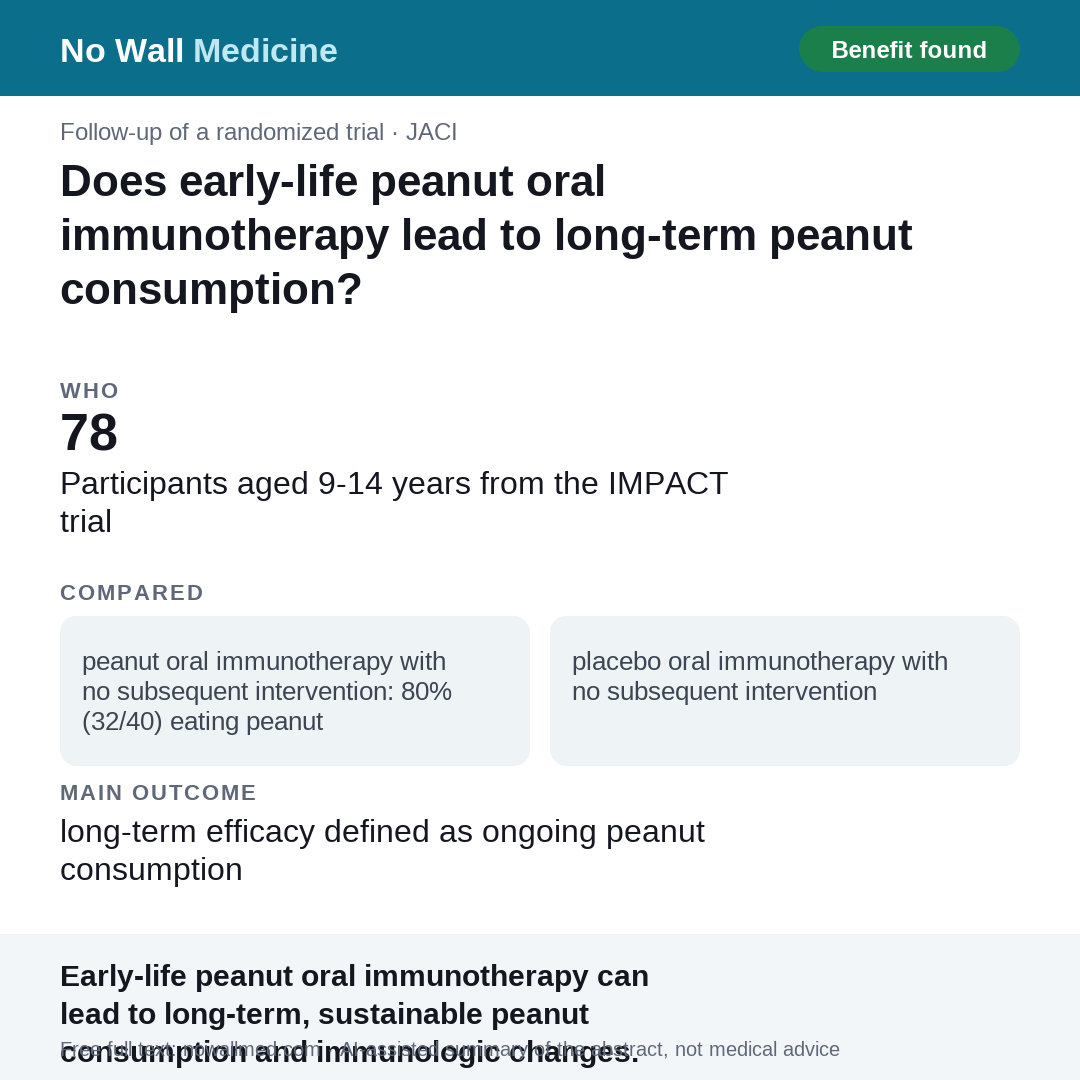
Early-life peanut oral immunotherapy associated with long-term ingestion and immunologic changes
Follow-up of a randomized trialBenefit found
Does early-life peanut oral immunotherapy lead to long-term peanut consumption?
Who
78
Participants aged 9-14 years from the IMPACT trial
Compared
peanut oral immunotherapy with no subsequent intervention: 80% (32/40) eating peanut
placebo oral immunotherapy with no subsequent intervention
Main outcome
long-term efficacy defined as ongoing peanut consumption
Bottom line: Early-life peanut oral immunotherapy can lead to long-term, sustainable peanut consumption and immunologic changes.
Limitation: Follow-up data were available for only 78 of the 146 participants.
JACI · 2026-05-20Download image
Thrombolysis in neonates: navigating the balance between efficacy and risk-a systematic review
Systematic reviewMixed results
What are the efficacy and safety of thrombolysis in preterm and term neonates?
Who
265
Preterm and term neonates with thrombosis
Compared
Full-term neonates: restoration of flow 87.2%
Preterm neonates: restoration of flow 85.2%
Main outcome
Thrombus resolution, bleeding events, and mortality
Bottom line: Thrombolysis appears effective for flow restoration but carries substantial bleeding risks, especially in preterm neonates.
Limitation: Evidence is limited and heterogeneous.
J Thromb Haemost · 2026-05-20Download image

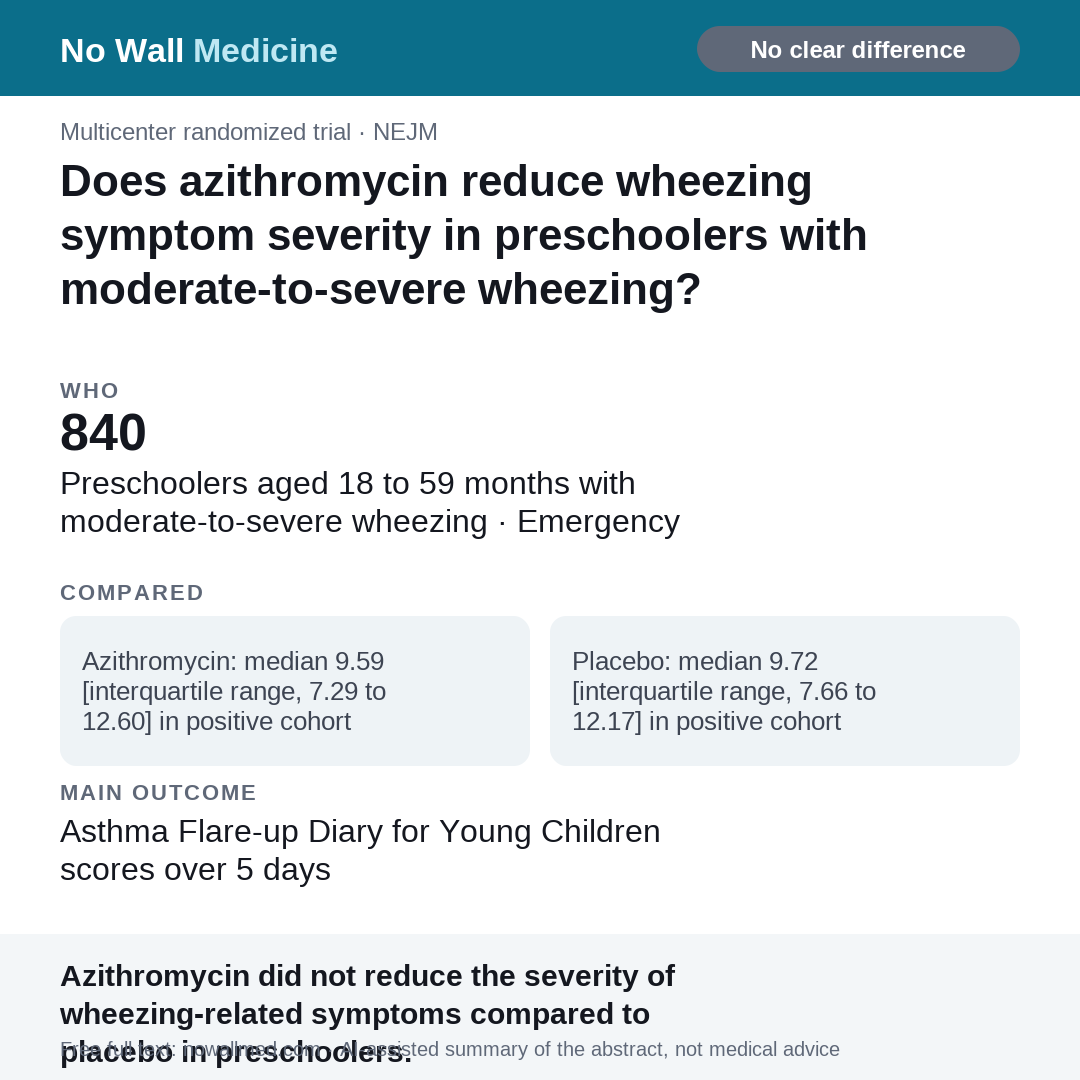
Azithromycin for Preschoolers with Wheezing in the Emergency Department
Multicenter randomized trialNo clear difference
Does azithromycin reduce wheezing symptom severity in preschoolers with moderate-to-severe wheezing?
Who
840
Preschoolers aged 18 to 59 months with moderate-to-severe wheezing · Emergency department
Compared
Azithromycin: median 9.59 [interquartile range, 7.29 to 12.60] in positive cohort
Placebo: median 9.72 [interquartile range, 7.66 to 12.17] in positive cohort
Main outcome
Asthma Flare-up Diary for Young Children scores over 5 days
Bottom line: Azithromycin did not reduce the severity of wheezing-related symptoms compared to placebo in preschoolers.
Funded by: National Heart, Lung, and Blood Institute and others
NEJM · 2026-05-18Download image