Visual abstracts
New randomized trials and meta-analyses from leading journals at a glance: who was studied, what was compared, and what was found. Every paper is free to read in full.
All specialtiesCardiology 4877Oncology 4136Gastroenterology & Hepatology 1942Infectious Disease 3836Neurology 1904Psychiatry & Mental Health 2273Pulmonology 2143Critical Care 1364Endocrinology & Diabetes 2580Pediatrics 2980Surgery 2556Orthopedics & Sports Medicine 931Neurosurgery 537Cardiothoracic & Vascular Surgery 674Plastic & Reconstructive Surgery 591Nephrology 1133Rheumatology 823Hematology 1109Dermatology 621Ophthalmology 543Obstetrics & Gynecology 1686Public & Global Health 1058Radiology & Imaging 648Anesthesiology 986Urology 764ENT (Otolaryngology) 503Emergency Medicine 511Allergy & Immunology 313Geriatrics 979Family Medicine & Primary Care 562Medical Genetics & Genomics 676Pathology & Laboratory Medicine 159Physical Medicine & Rehabilitation 757Palliative Care 444Nutrition 1588Digital Health & AI 2197General Medicine 320
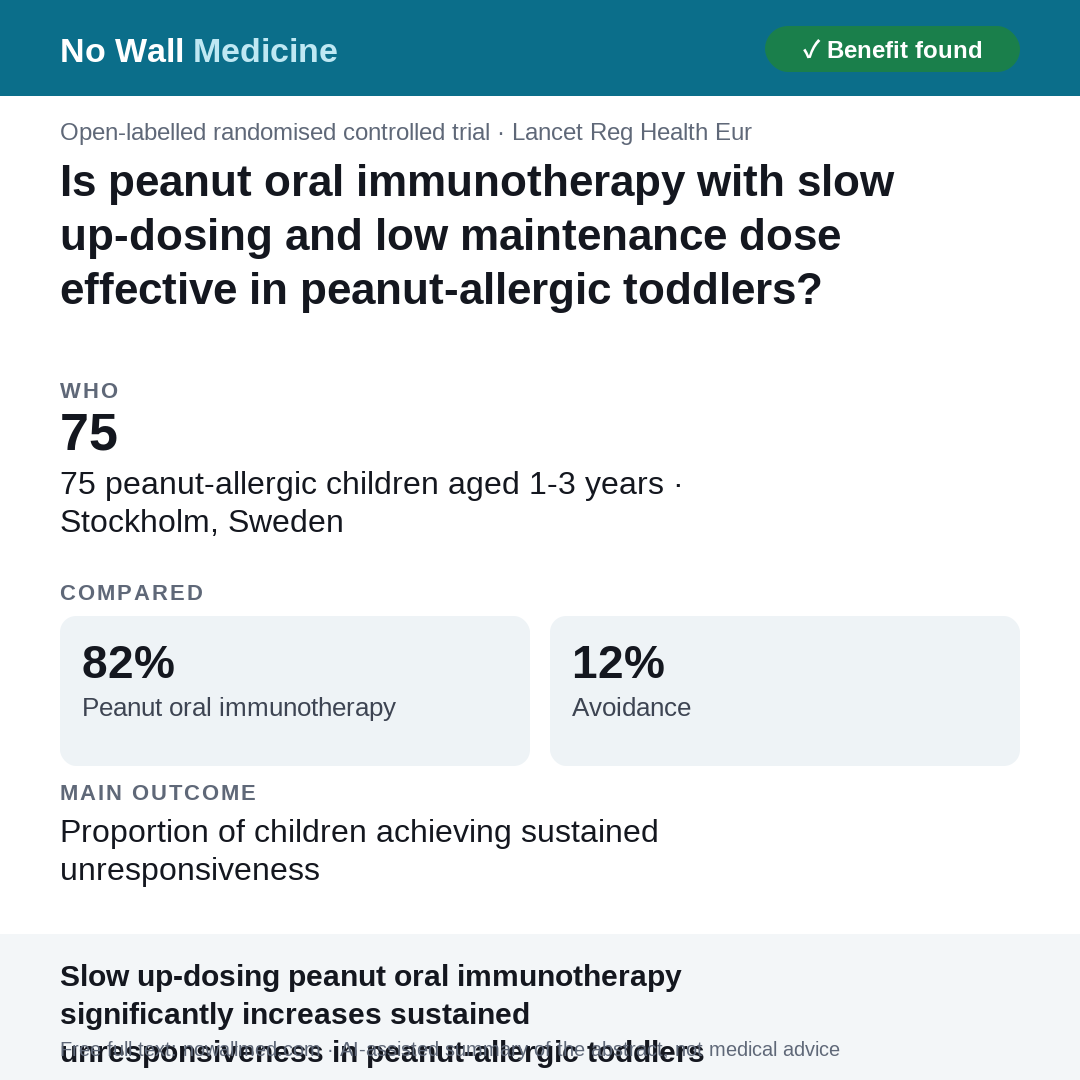
Safety and efficiency of peanut oral immunotherapy in preschool children with slow up-dosing and low maintenance dosing: a randomised controlled trial
Open-labelled randomised controlled trialBenefit found
Is peanut oral immunotherapy with slow up-dosing and low maintenance dose effective in peanut-allergic toddlers?
Who
75
75 peanut-allergic children aged 1-3 years · Stockholm, Sweden
Compared
82%Peanut oral immunotherapy (41 of 50)
12%Avoidance (3 of 25)
Main outcome
Proportion of children achieving sustained unresponsiveness
Result: difference 72% (95% CI 56-88)
Bottom line: Slow up-dosing peanut oral immunotherapy significantly increases sustained unresponsiveness in peanut-allergic toddlers compared to avoidance.
Funded by: Karolinska Institutet and various Swedish foundations and research councils
Lancet Reg Health Eur · 2026-05-06Download image
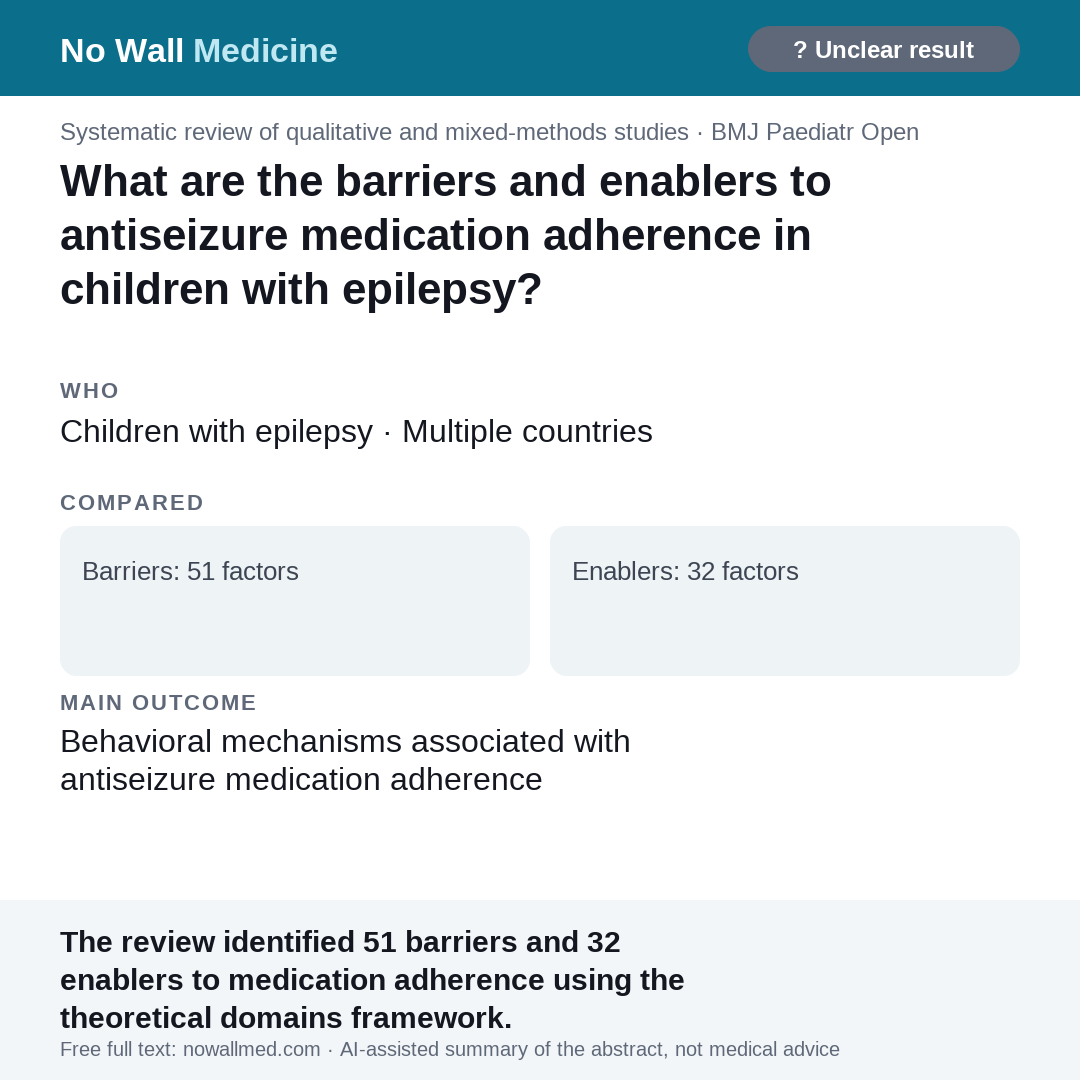
Barriers and enablers to antiseizure medication adherence in children with epilepsy: a systematic review using the theoretical domains framework (TDF)
Systematic review of qualitative and mixed-methods studiesUnclear result
What are the barriers and enablers to antiseizure medication adherence in children with epilepsy?
Who
Children with epilepsy · Multiple countries
Compared
Barriers: 51 factors
Enablers: 32 factors
Main outcome
Behavioral mechanisms associated with antiseizure medication adherence
Bottom line: The review identified 51 barriers and 32 enablers to medication adherence using the theoretical domains framework.
BMJ Paediatr Open · 2026-05-06Download image
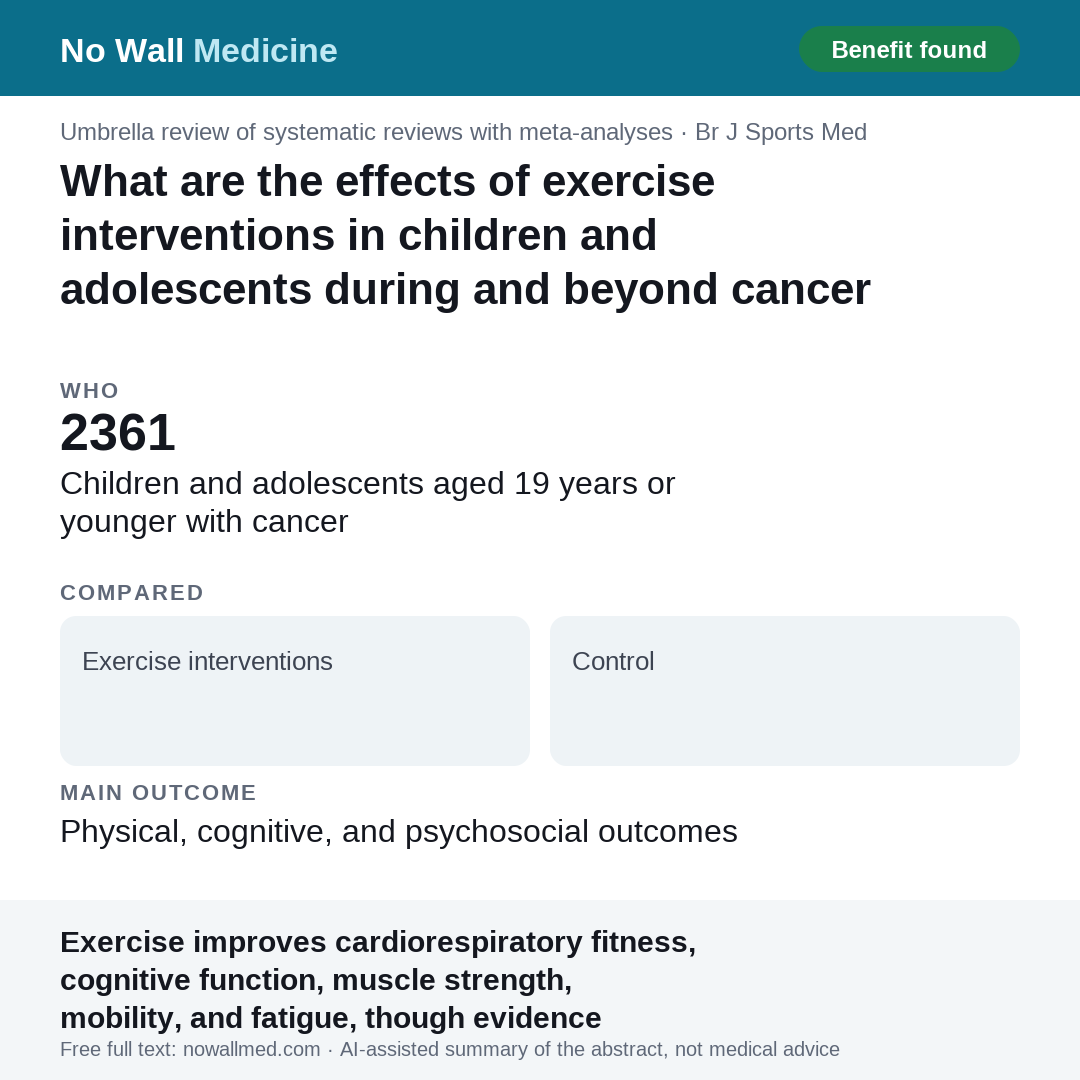
Grading the evidence on the effects of exercise interventions in children and adolescents during and beyond cancer treatment: an umbrella review of systematic reviews with meta-analyses
Umbrella review of systematic reviews with meta-analysesBenefit found
What are the effects of exercise interventions in children and adolescents during and beyond cancer treatment?
Who
2361
Children and adolescents aged 19 years or younger with cancer
Compared
Exercise interventions
Control
Main outcome
Physical, cognitive, and psychosocial outcomes
Bottom line: Exercise improves cardiorespiratory fitness, cognitive function, muscle strength, mobility, and fatigue, though evidence certainty is low or very low.
Limitation: The certainty of evidence remains variable and overall low across outcomes.
Br J Sports Med · 2026-05-05Download image
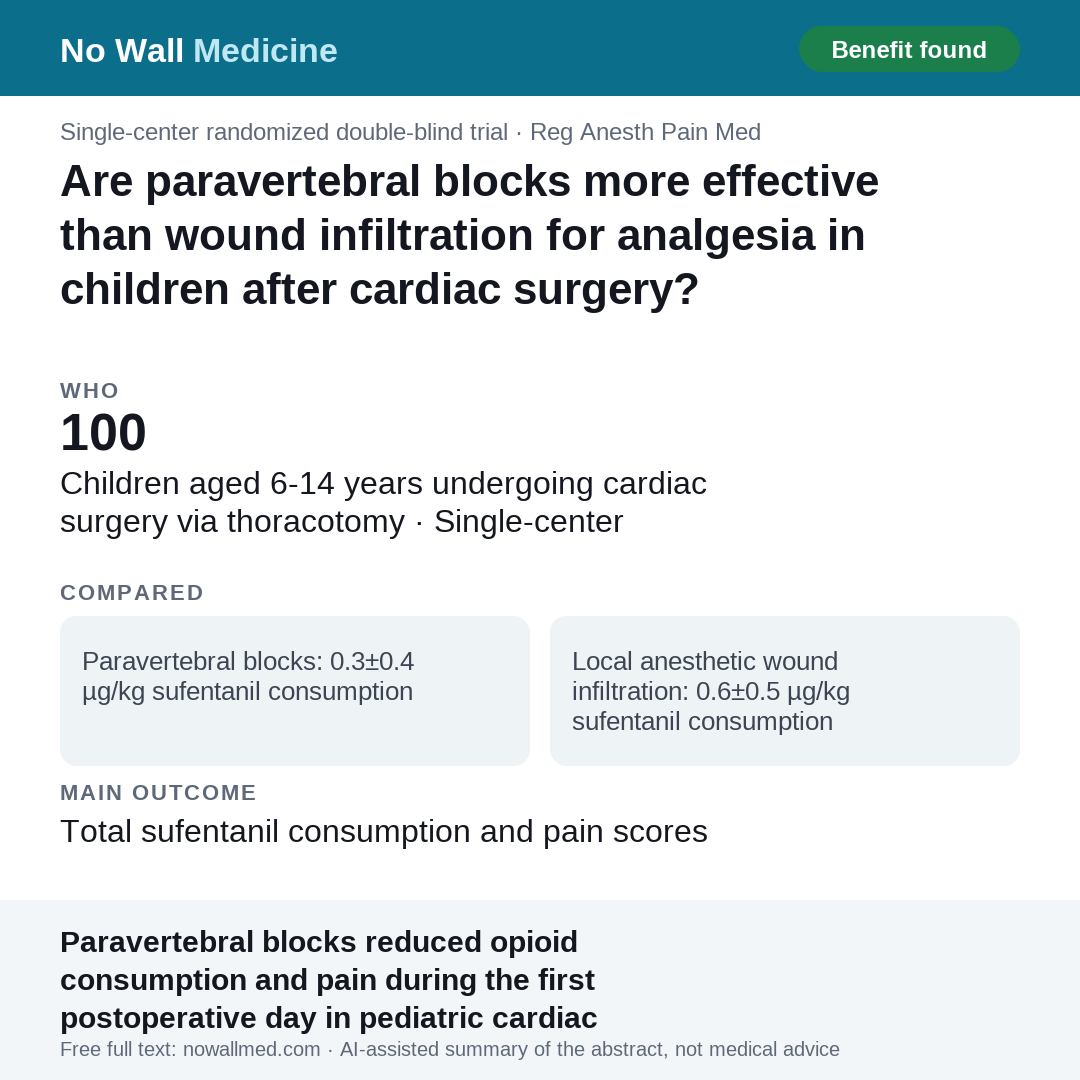
Paravertebral analgesia versus wound infiltration in children recovering from cardiac surgery: a randomized controlled trial
Single-center randomized double-blind trialBenefit found
Are paravertebral blocks more effective than wound infiltration for analgesia in children after cardiac surgery?
Who
100
Children aged 6-14 years undergoing cardiac surgery via thoracotomy · Single-center
Compared
Paravertebral blocks: 0.3±0.4 µg/kg sufentanil consumption
Local anesthetic wound infiltration: 0.6±0.5 µg/kg sufentanil consumption
Main outcome
Total sufentanil consumption and pain scores
Bottom line: Paravertebral blocks reduced opioid consumption and pain during the first postoperative day in pediatric cardiac thoracotomies.
Reg Anesth Pain Med · 2026-05-05Download image
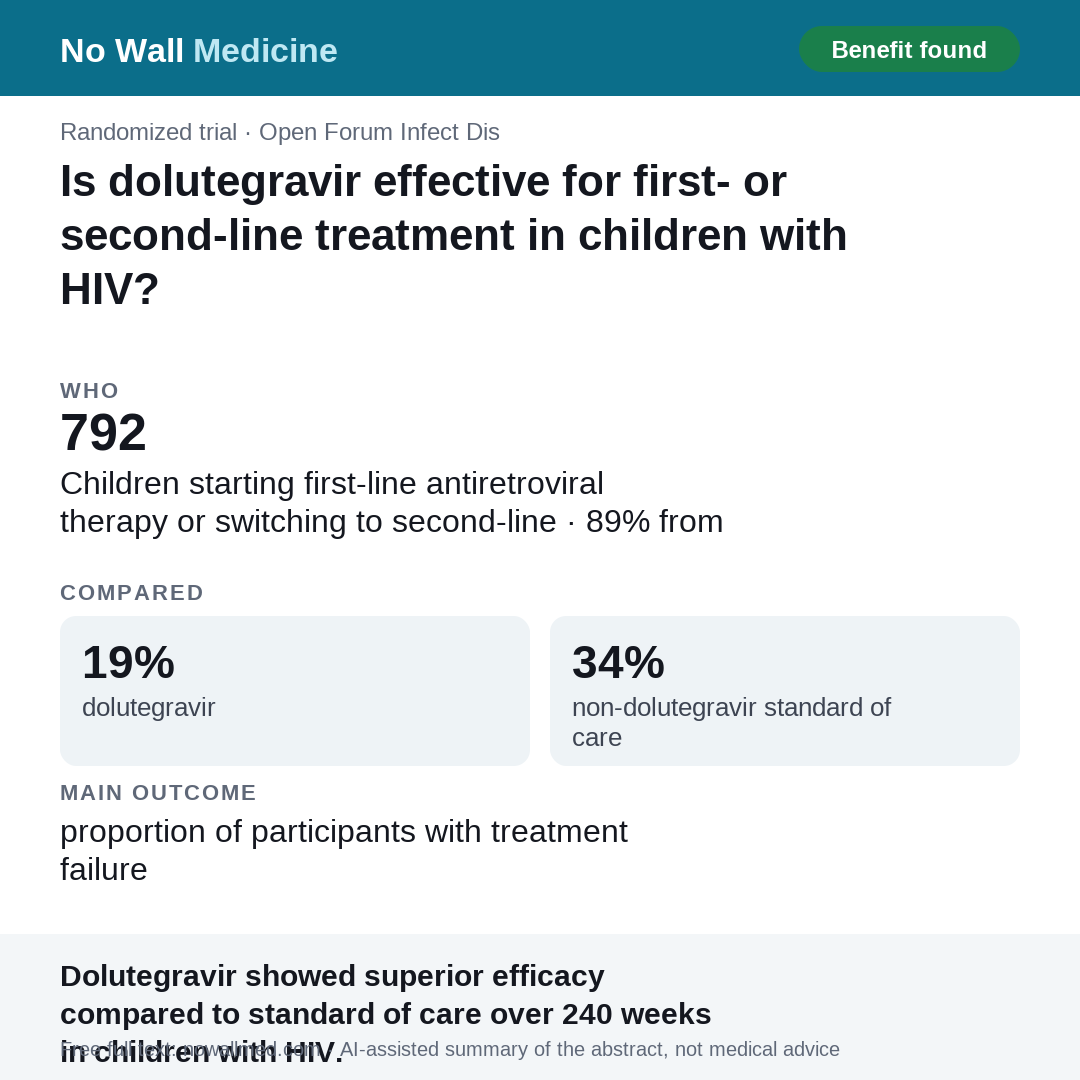
Dolutegravir as First- or Second-line Treatment for Children With HIV: 240-Week Follow-up of the ODYSSEY Randomized Trial
Randomized trialBenefit found
Is dolutegravir effective for first- or second-line treatment in children with HIV?
Who
792
Children starting first-line antiretroviral therapy or switching to second-line · 89% from Africa
Compared
19%dolutegravir
34%non-dolutegravir standard of care
Main outcome
proportion of participants with treatment failure
Result: difference -15% (95% CI, -21% to -9%)
Bottom line: Dolutegravir showed superior efficacy compared to standard of care over 240 weeks in children with HIV.
Open Forum Infect Dis · 2026-05-05Download image
Are parenting programmes effective at scale? Associations with violence against adolescent girls, parenting and mental health in real-world delivery across eight African countries: a meta-analysis of pre-post surveys
Meta-analysis of pre-post surveysBenefit found
Are parenting programmes effective at scale for violence, parenting, and mental health?
Who
123050
Caregivers and adolescents in eight African countries · Eight African countries
Compared
Post-intervention
Pre-intervention
Main outcome
Violence, parenting, and mental health outcomes
Result: physical abuse -65% (95% CI 51% to 74%)
Bottom line: Parenting programmes delivered at scale are associated with reduced violence and improved mental health and parenting.
BMJ Glob Health · 2026-05-05Download image

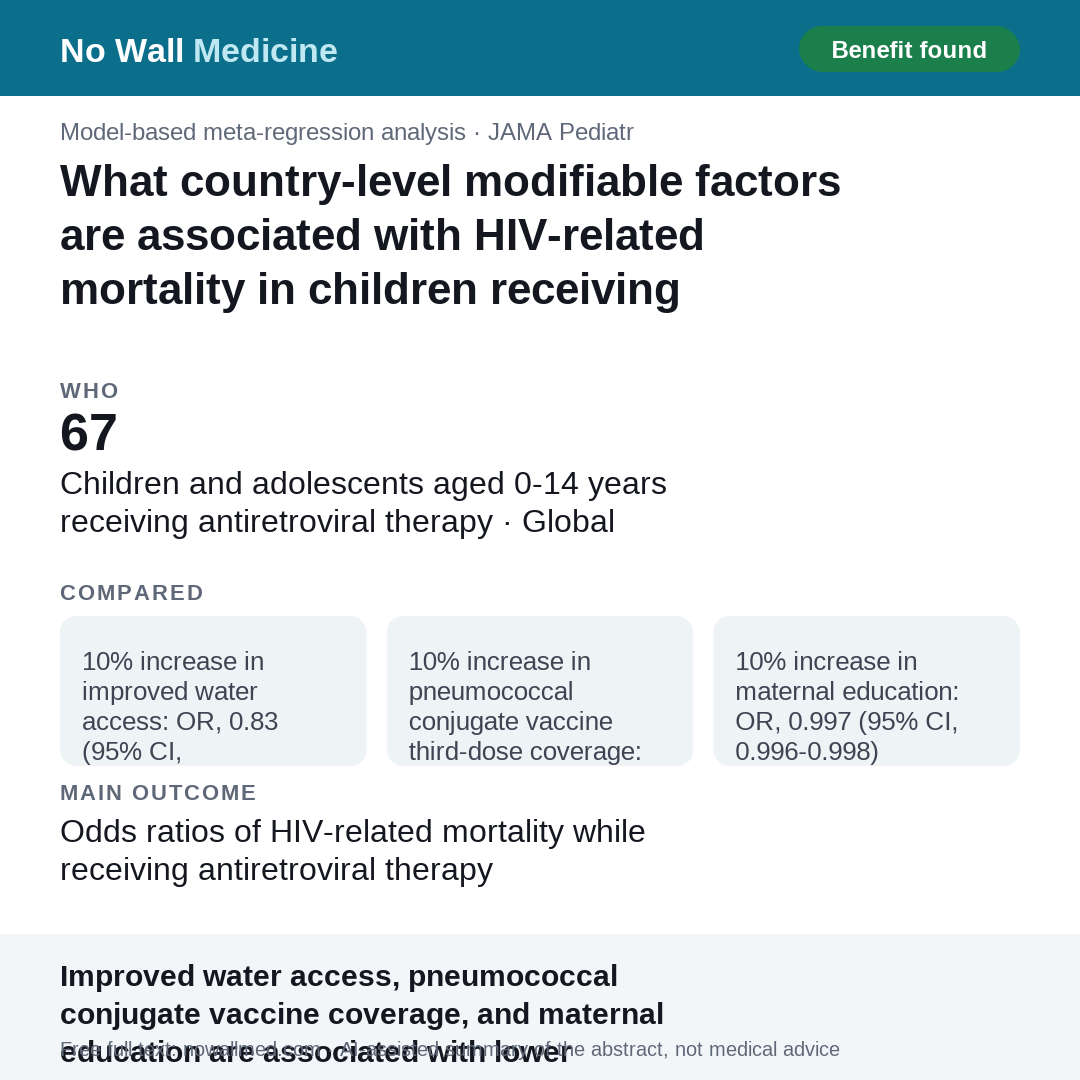
Risk and Protective Factors Associated With HIV-Related Mortality in Children Receiving Antiretroviral Therapy: A Model-Based Meta-Regression
Model-based meta-regression analysisBenefit found
What country-level modifiable factors are associated with HIV-related mortality in children receiving antiretroviral therapy?
Who
67
Children and adolescents aged 0-14 years receiving antiretroviral therapy · Global
Compared
10% increase in improved water access: OR, 0.83 (95% CI, 0.826-0.843)
10% increase in pneumococcal conjugate vaccine third-dose coverage: OR, 0.980 (95% CI, 0.972-0.987)
10% increase in maternal education: OR, 0.997 (95% CI, 0.996-0.998)
Main outcome
Odds ratios of HIV-related mortality while receiving antiretroviral therapy
Bottom line: Improved water access, pneumococcal conjugate vaccine coverage, and maternal education are associated with lower HIV-related mortality in children.
JAMA Pediatr · 2026-05-04Download image
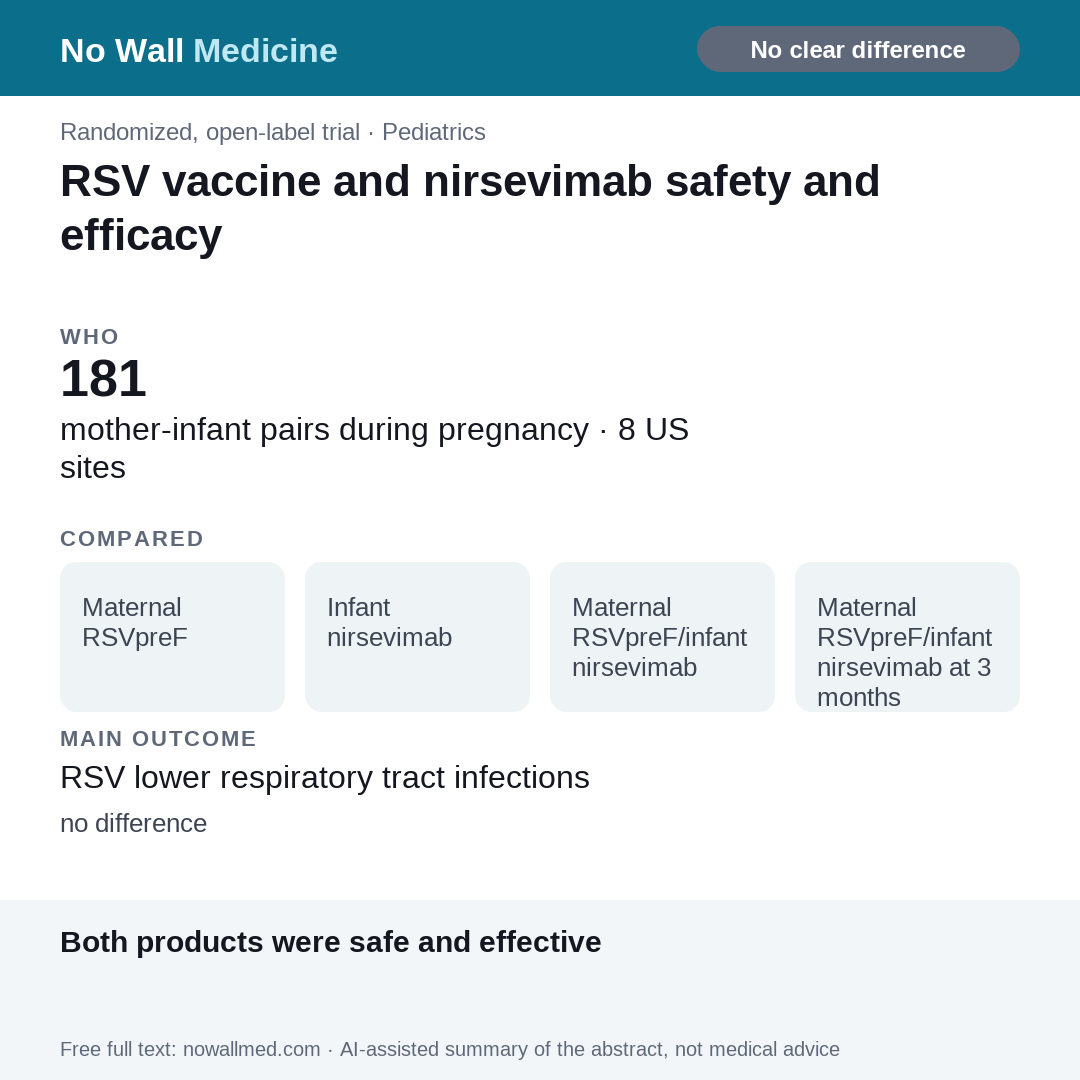
Maternal RSV Vaccination, Infant Nirsevimab, or Both: Interim Analysis of a Randomized Trial
Randomized, open-label trialNo clear difference
RSV vaccine and nirsevimab safety and efficacy
Who
181
mother-infant pairs during pregnancy · 8 US sites
Compared
Maternal RSVpreF
Infant nirsevimab
Maternal RSVpreF/infant nirsevimab
Maternal RSVpreF/infant nirsevimab at 3 months
Main outcome
RSV lower respiratory tract infections
Result: no difference
Bottom line: Both products were safe and effective
Pediatrics · 2026-05-04Download image
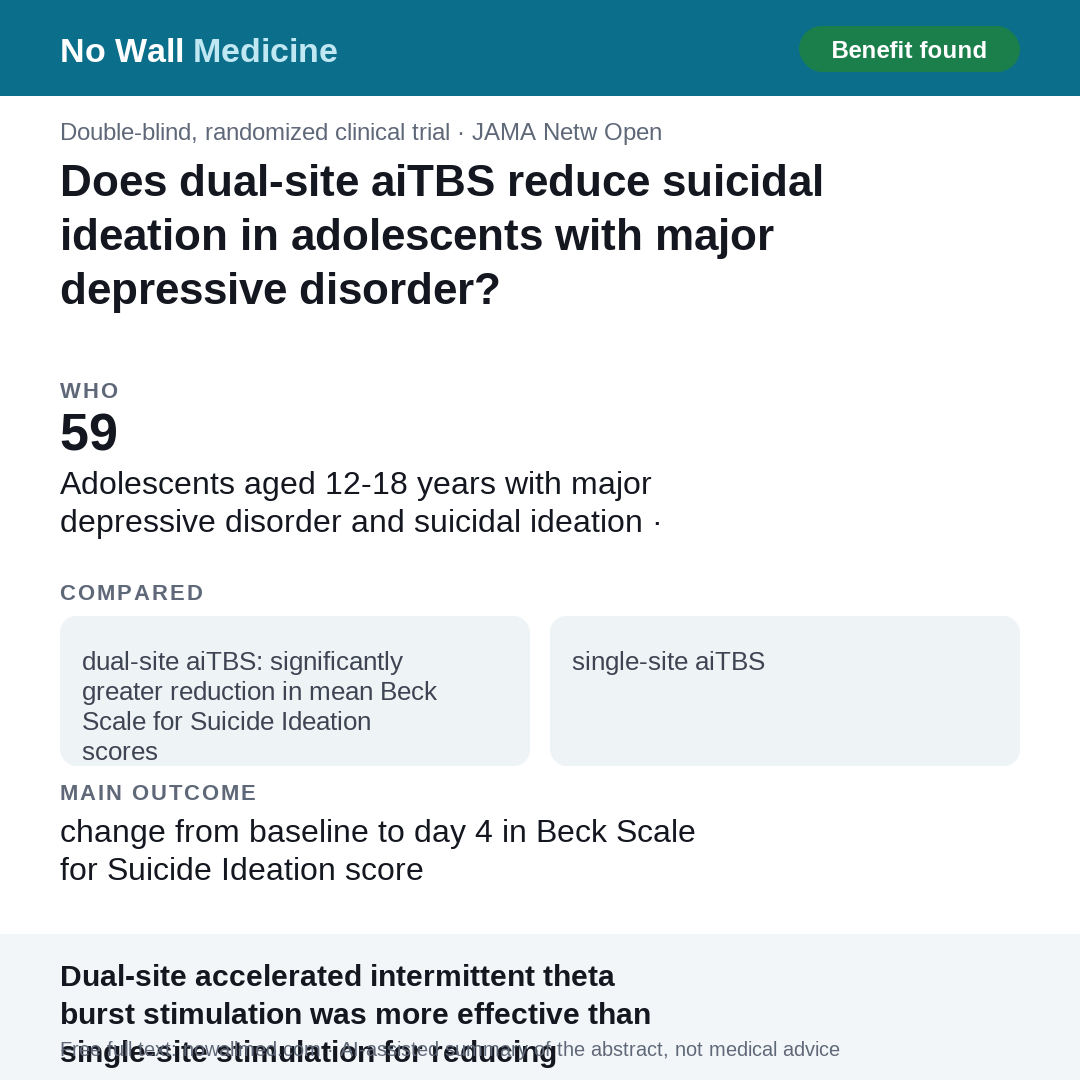
The Effectiveness of Tranexamic Acid in Pediatric Posttonsillectomy Hemorrhage (A Systematic Review and Meta-Analysis)
Systematic review and meta-analysisBenefit found
Is tranexamic acid effective in managing pediatric post-tonsillectomy hemorrhage?
Who
801
Children aged 2 to 18 years with post-tonsillectomy hemorrhage
Compared
Tranexamic acid
Control
Main outcome
Rate of reoperation for hemostasis
Result: relative risk 0.62 (95% CI 0.49-0.78)
Bottom line: Tranexamic acid significantly reduces reoperation rates for hemostasis in pediatric post-tonsillectomy hemorrhage.
Limitation: Retrospective study designs, small sample sizes, and risk of bias.
Otolaryngol Head Neck Surg · 2026-05-04Download image
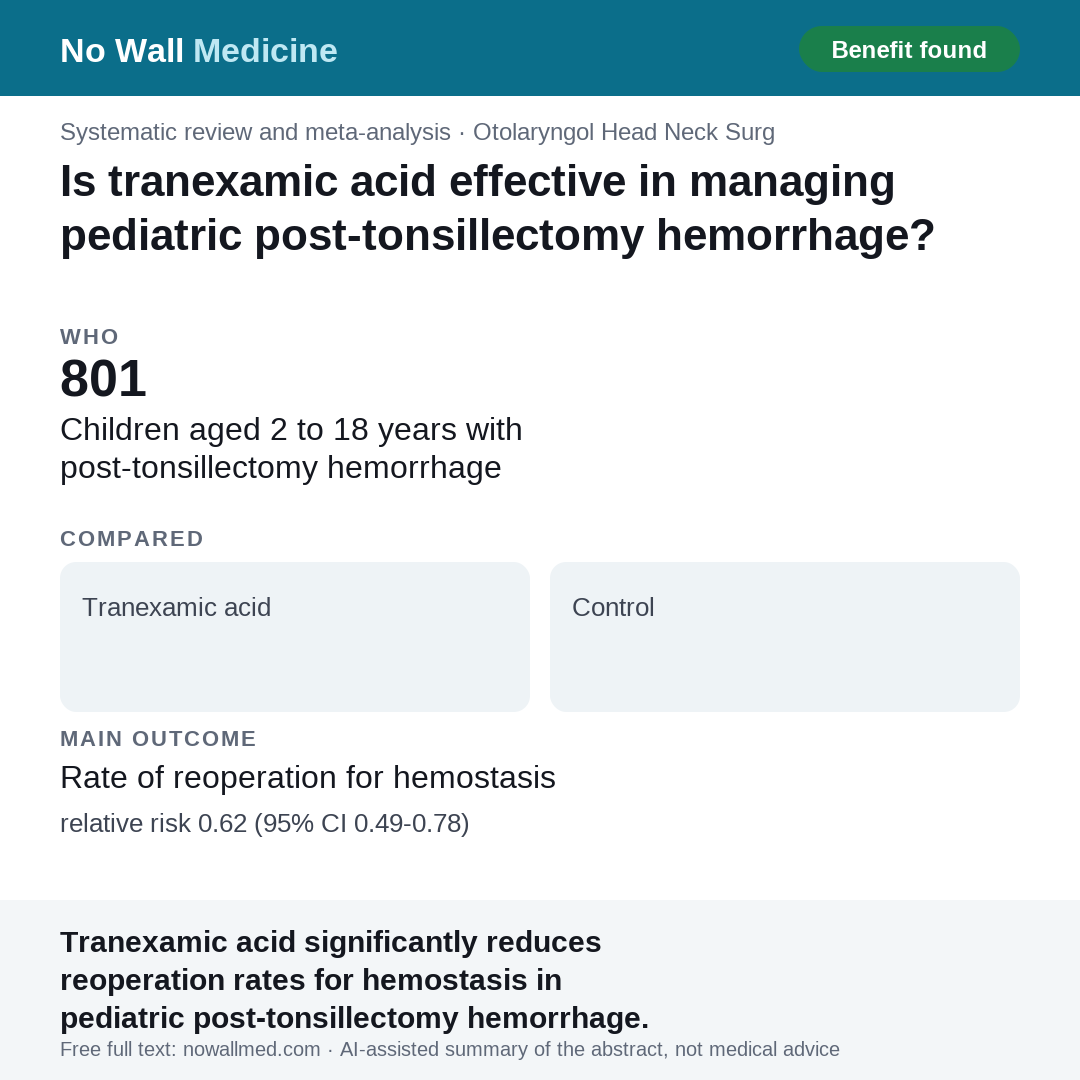
Video-Based Peer Support and Exclusive Breastfeeding and Maternal Self-Efficacy: A Randomized Clinical Trial
Multicenter, randomized clinical trialMixed results
Does video-based peer support improve exclusive breastfeeding and maternal self-efficacy?
Who
442
First-time mothers with low breastfeeding confidence · 4 public postnatal wards in Hong Kong
Compared
20.1%Intervention group
15.6%Control group
Main outcome
Proportion of infants exclusively breastfed at 6 months post partum
Result: adjusted odds ratio 1.57 (95% CI 0.85-2.89)
Bottom line: Video-based peer support improved breastfeeding at 2 months and self-efficacy, but not exclusive breastfeeding at 6 months.
JAMA Netw Open · 2026-05-01Download image
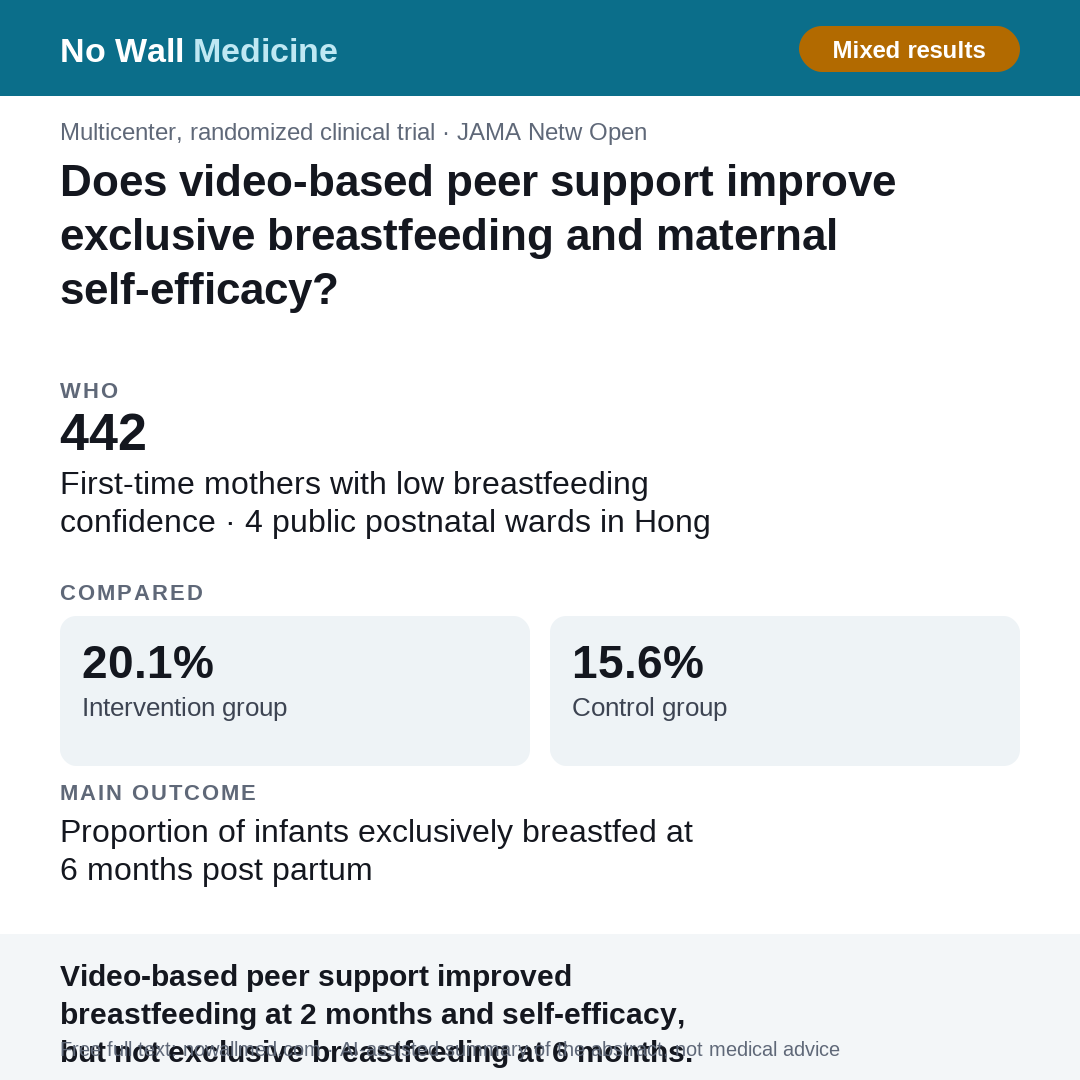
Augmented Reality-Guided Decision Support in Simulated Pediatric Cardiac Arrest: A Randomized Clinical Trial
Randomized clinical trialNo clear difference
Does AR support improve resuscitation performance
Who
54
Pediatric nurses and physicians teams · Two pediatric emergency centers
Compared
AR support: 97.2 (38.5) seconds
Control: 113.8 (44.5) seconds
Main outcome
Time to first epinephrine
Result: mean difference, -16.6 seconds; 95% CI, -51.3 to 17.0 seconds
Bottom line: AR support did not improve time to first epinephrine
JAMA Netw Open · 2026-05-01Download image
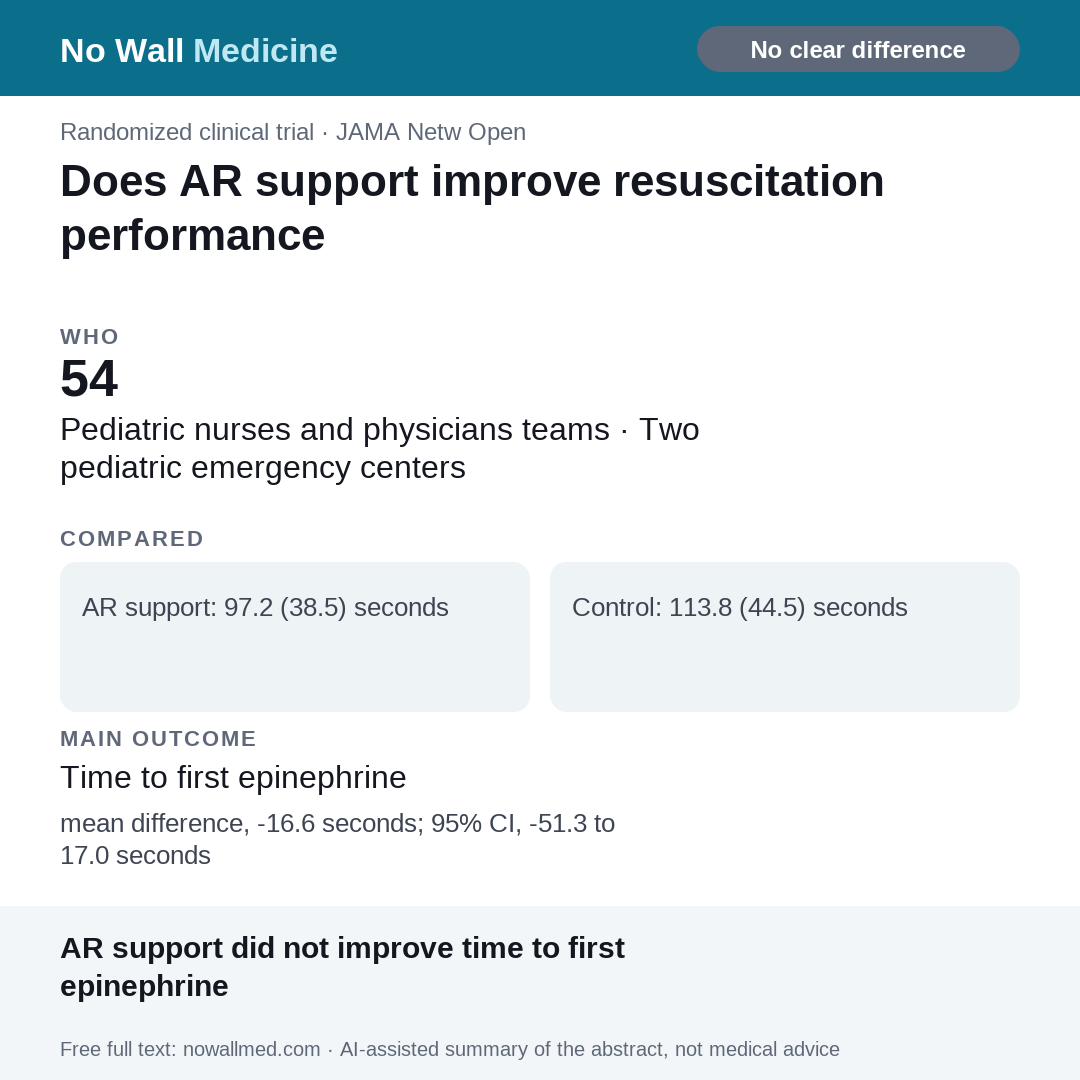
Dual-Site aiTBS for Suicidal Ideation in Adolescents With Major Depressive Disorder: A Randomized Clinical Trial
Double-blind, randomized clinical trialBenefit found
Does dual-site aiTBS reduce suicidal ideation in adolescents with major depressive disorder?
Who
59
Adolescents aged 12-18 years with major depressive disorder and suicidal ideation · Guangzhou, China
Compared
dual-site aiTBS: significantly greater reduction in mean Beck Scale for Suicide Ideation scores
single-site aiTBS
Main outcome
change from baseline to day 4 in Beck Scale for Suicide Ideation score
Result: difference, 4.94 points (95% CI, 0.73-9.14 points)
Bottom line: Dual-site accelerated intermittent theta burst stimulation was more effective than single-site stimulation for reducing suicidal ideation in adolescents.
JAMA Netw Open · 2026-05-01Download image
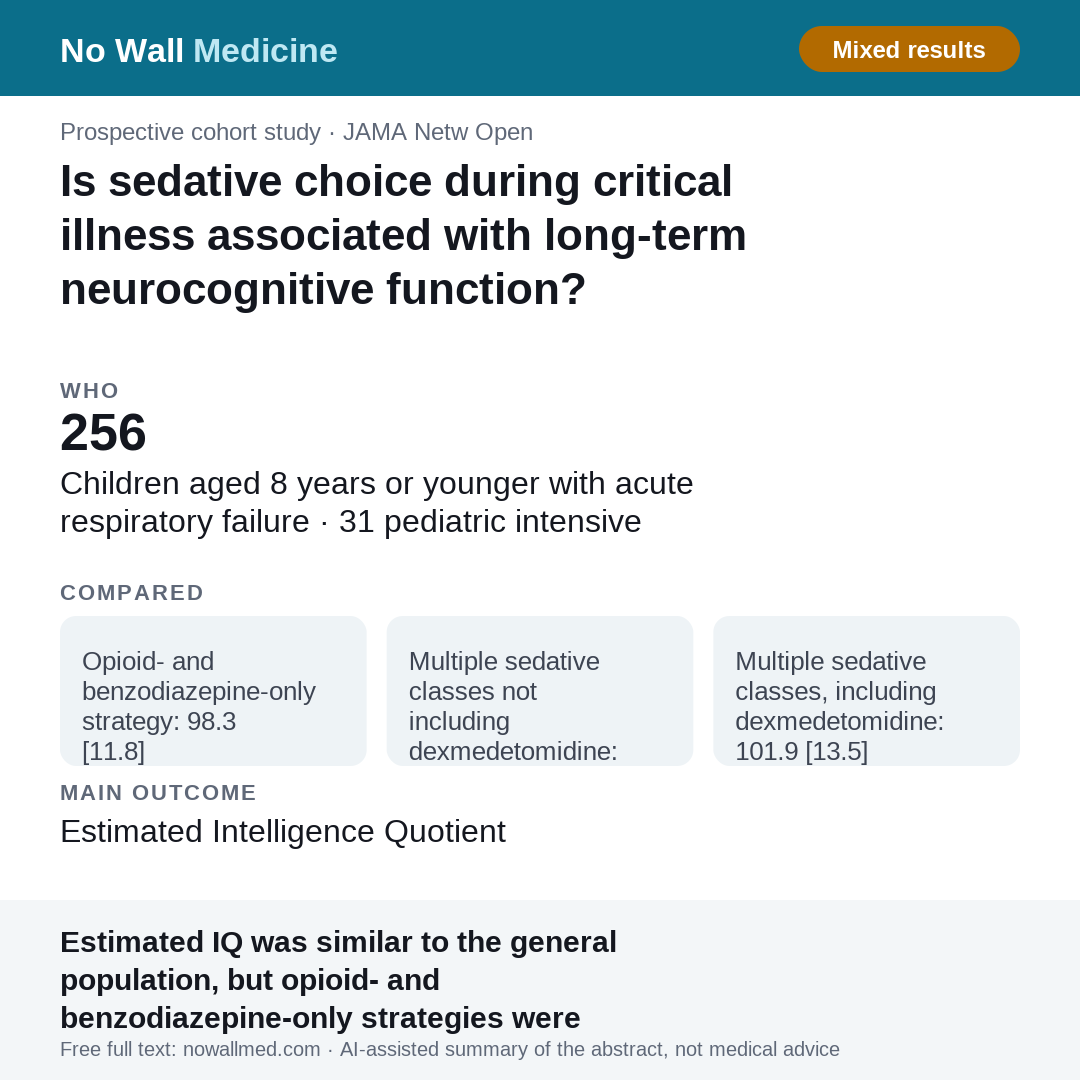
Sedative Choice and Neurocognitive Outcomes After Critical Illness in Early Childhood
Prospective cohort studyMixed results
Is sedative choice during critical illness associated with long-term neurocognitive function?
Who
256
Children aged 8 years or younger with acute respiratory failure · 31 pediatric intensive care units
Compared
Opioid- and benzodiazepine-only strategy: 98.3 [11.8]
Multiple sedative classes not including dexmedetomidine: 100.6 [14.5]
Multiple sedative classes, including dexmedetomidine: 101.9 [13.5]
Main outcome
Estimated Intelligence Quotient
Result: -4.1 (95% CI, -7.3 to -0.9)
Bottom line: Estimated IQ was similar to the general population, but opioid- and benzodiazepine-only strategies were associated with lower IQ scores.
JAMA Netw Open · 2026-05-01Download image
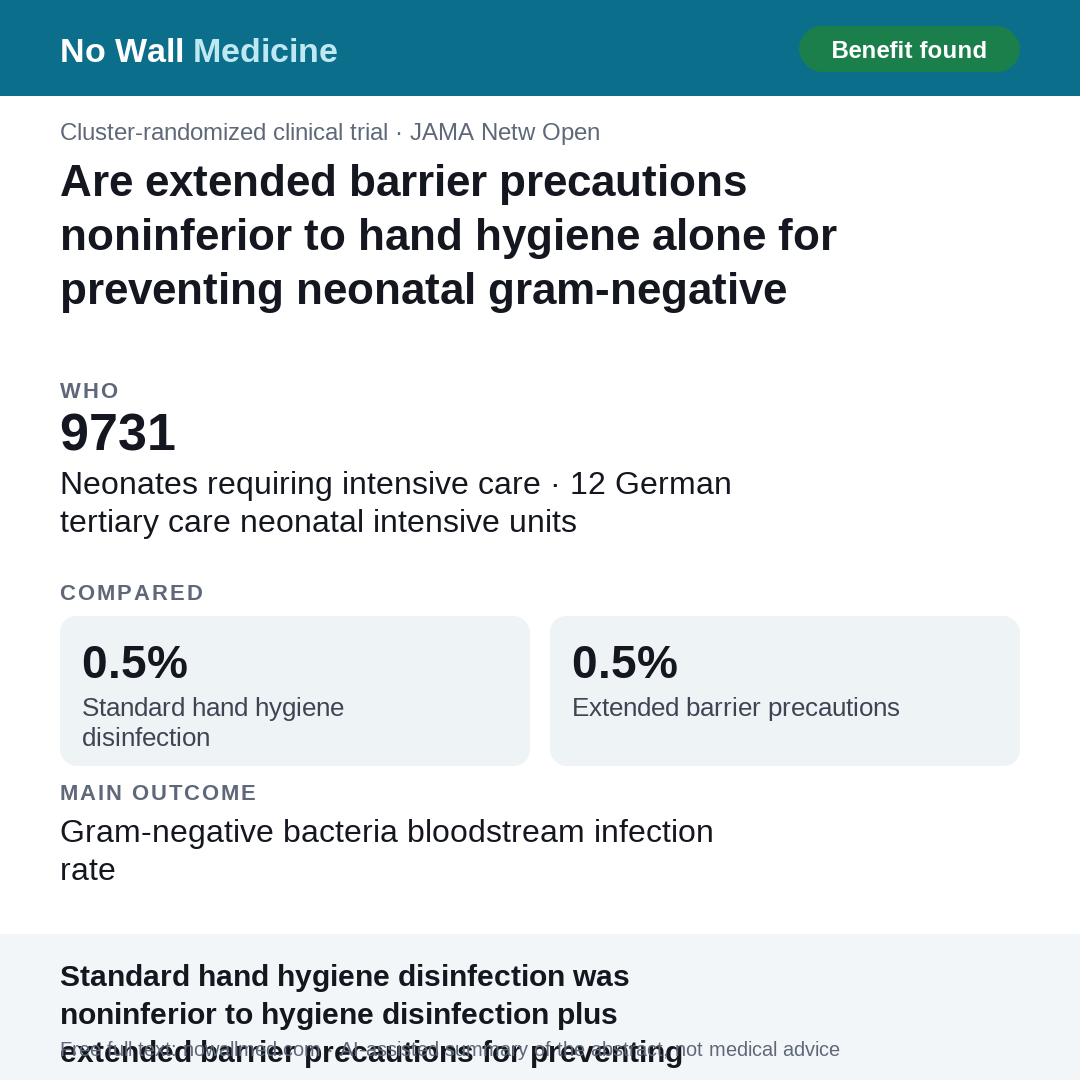
Extended Barrier Precautions vs Hand Hygiene Alone and Neonatal Sepsis in Intensive Care Patients: The BALTIC Cluster-Randomized Clinical Trial
Cluster-randomized clinical trialBenefit found
Are extended barrier precautions noninferior to hand hygiene alone for preventing neonatal gram-negative bacteria bloodstream infections?
Who
9731
Neonates requiring intensive care · 12 German tertiary care neonatal intensive units
Compared
0.5%Standard hand hygiene disinfection (22/4699)
0.5%Extended barrier precautions (25/5032)
Main outcome
Gram-negative bacteria bloodstream infection rate
Result: risk difference -0.03% (95% CI, -0.43% to 0.38%)
Bottom line: Standard hand hygiene disinfection was noninferior to hygiene disinfection plus extended barrier precautions for preventing gram-negative bacteria bloodstream infections.
JAMA Netw Open · 2026-05-01Download image
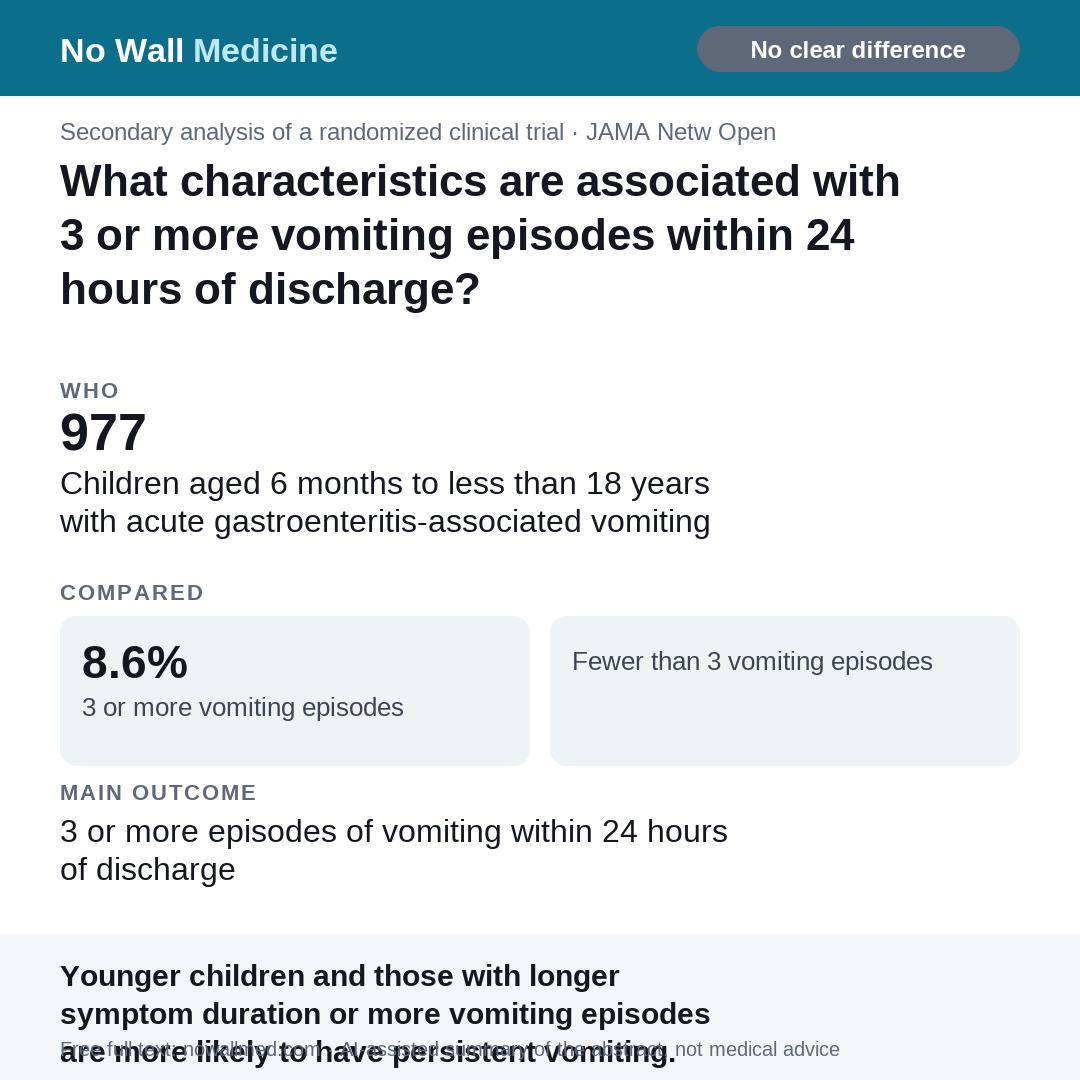
Persistent Vomiting Among Children With Acute Gastroenteritis: A Secondary Analysis of a Randomized Clinical Trial
Secondary analysis of a randomized clinical trialNo clear difference
What characteristics are associated with 3 or more vomiting episodes within 24 hours of discharge?
Who
977
Children aged 6 months to less than 18 years with acute gastroenteritis-associated vomiting · Emergency departments
Compared
8.6%3 or more vomiting episodes (80 of 927)
Fewer than 3 vomiting episodes
Main outcome
3 or more episodes of vomiting within 24 hours of discharge
Result: odds ratio 2.17 (95% CI, 1.37-3.43) for age 6 months to <2 years
Bottom line: Younger children and those with longer symptom duration or more vomiting episodes are more likely to have persistent vomiting.
JAMA Netw Open · 2026-05-01Download image
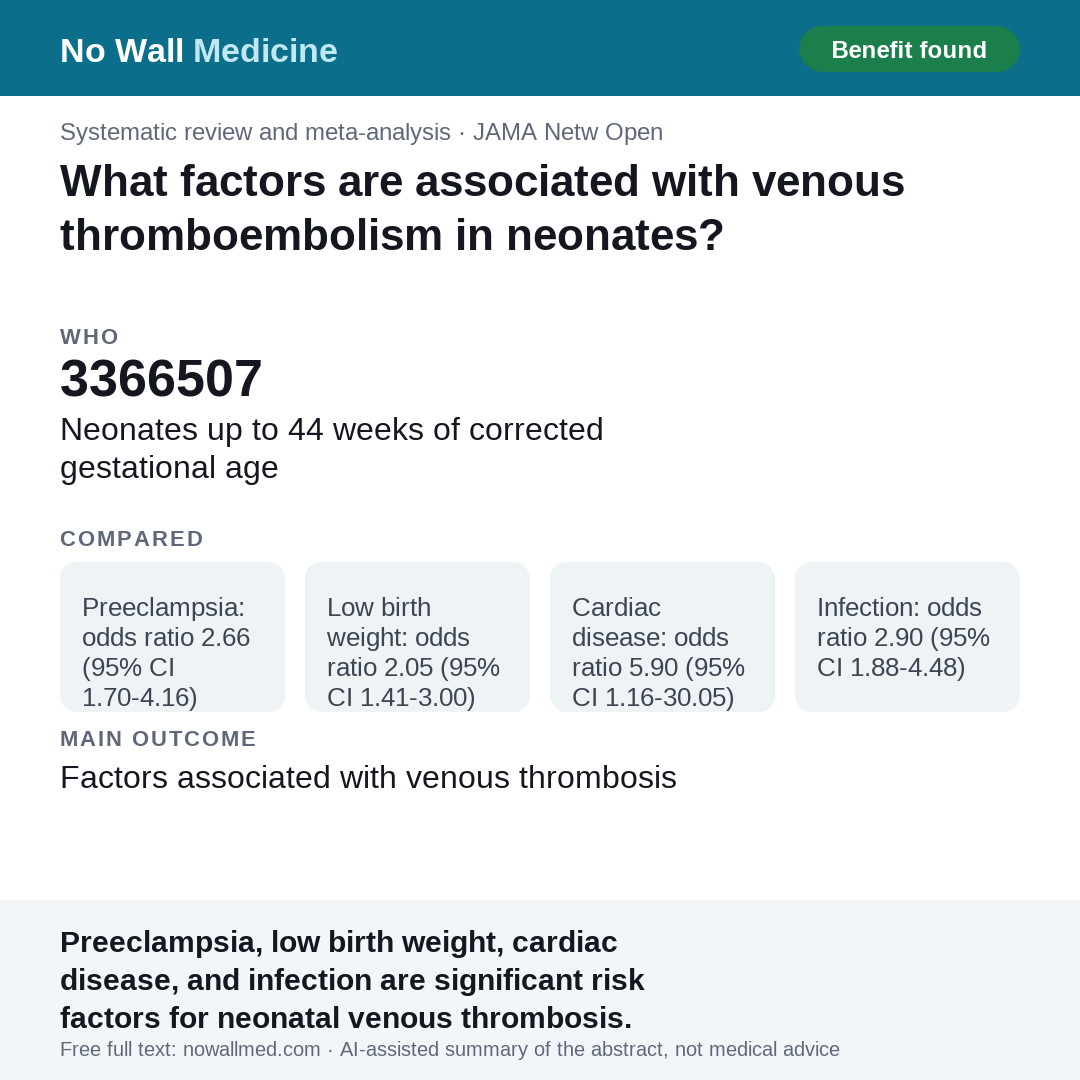
Factors Associated With Thromboembolism in Neonates: A Systematic Review and Meta-Analysis
Systematic review and meta-analysisBenefit found
What factors are associated with venous thromboembolism in neonates?
Who
3366507
Neonates up to 44 weeks of corrected gestational age
Compared
Preeclampsia: odds ratio 2.66 (95% CI 1.70-4.16)
Low birth weight: odds ratio 2.05 (95% CI 1.41-3.00)
Cardiac disease: odds ratio 5.90 (95% CI 1.16-30.05)
Infection: odds ratio 2.90 (95% CI 1.88-4.48)
Main outcome
Factors associated with venous thrombosis
Bottom line: Preeclampsia, low birth weight, cardiac disease, and infection are significant risk factors for neonatal venous thrombosis.
Limitation: Heterogeneity between studies, lack of thrombosis outcome definition, and limited studies addressing common conditions.
JAMA Netw Open · 2026-05-01Download image
Aspirin and Preterm Birth Among Pregnant People With Increased Heat Exposure: Secondary Analysis of a Randomized Clinical Trial
Randomized, double-blinded, placebo-controlled clinical trialBenefit found
Does low-dose aspirin modify the association between heat exposure and preterm birth?
Who
11558
Nulliparous individuals between 6 and 13 weeks' gestation · Six countries including Congo, Zambia, Kenya, Guatemala, Pakistan, India
Compared
11.6%Aspirin
13.1%Placebo
Main outcome
Preterm birth
Result: adjusted odds ratio 1.05 (95% CI, 1.01-1.10)
Bottom line: Low-dose aspirin may mitigate the increased risk of preterm birth associated with heat exposure in nulliparous individuals.
JAMA Netw Open · 2026-05-01Download image

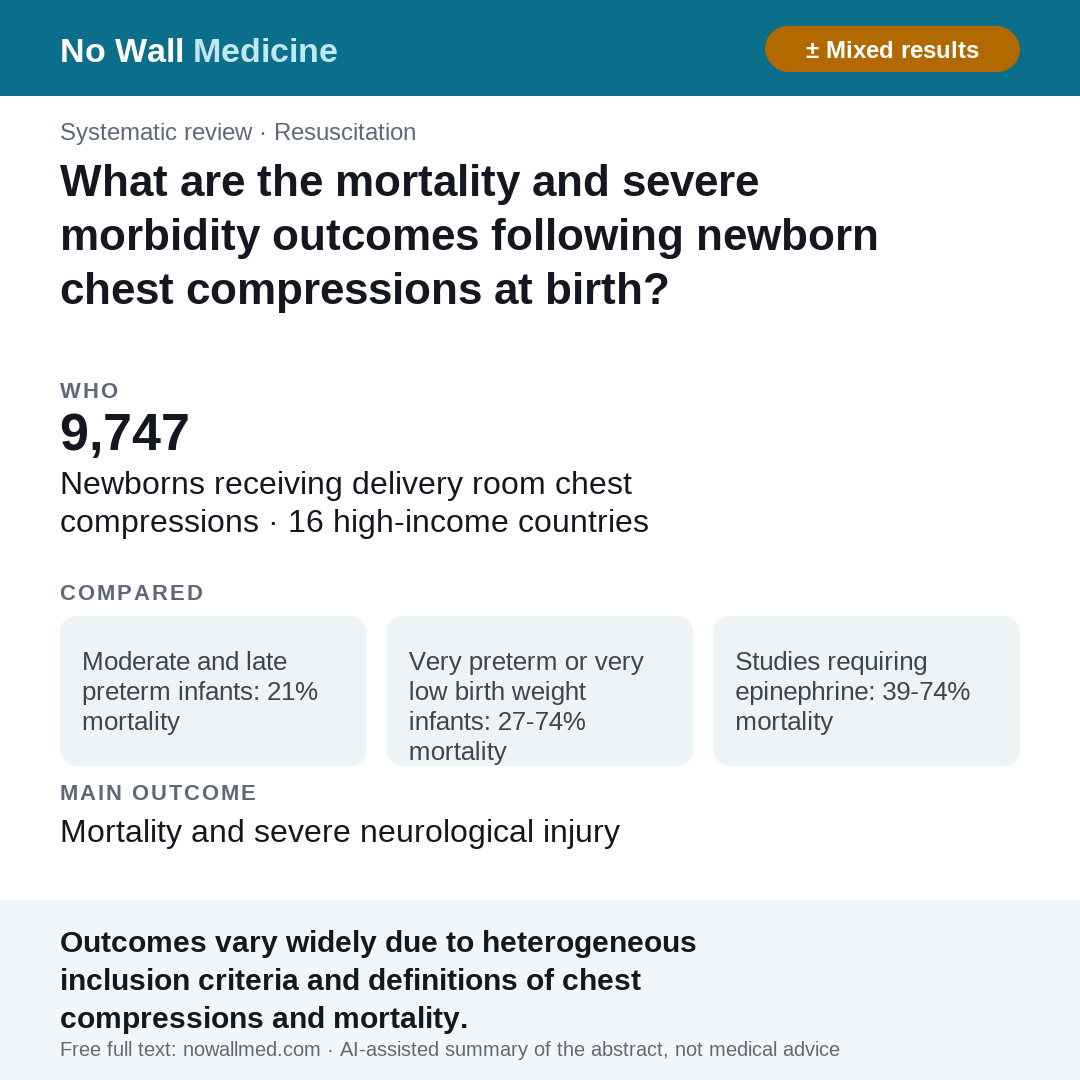
A systematic review of mortality and severe morbidities following newborn chest compressions at birth
Systematic reviewMixed results
What are the mortality and severe morbidity outcomes following newborn chest compressions at birth?
Who
9,747
Newborns receiving delivery room chest compressions · 16 high-income countries
Compared
Moderate and late preterm infants: 21% mortality
Very preterm or very low birth weight infants: 27-74% mortality
Studies requiring epinephrine: 39-74% mortality
Main outcome
Mortality and severe neurological injury
Bottom line: Outcomes vary widely due to heterogeneous inclusion criteria and definitions of chest compressions and mortality.
Limitation: Heterogeneity in inclusion criteria and sparse evidence for low- and middle-income countries.
Resuscitation · 2026-04-30Download image
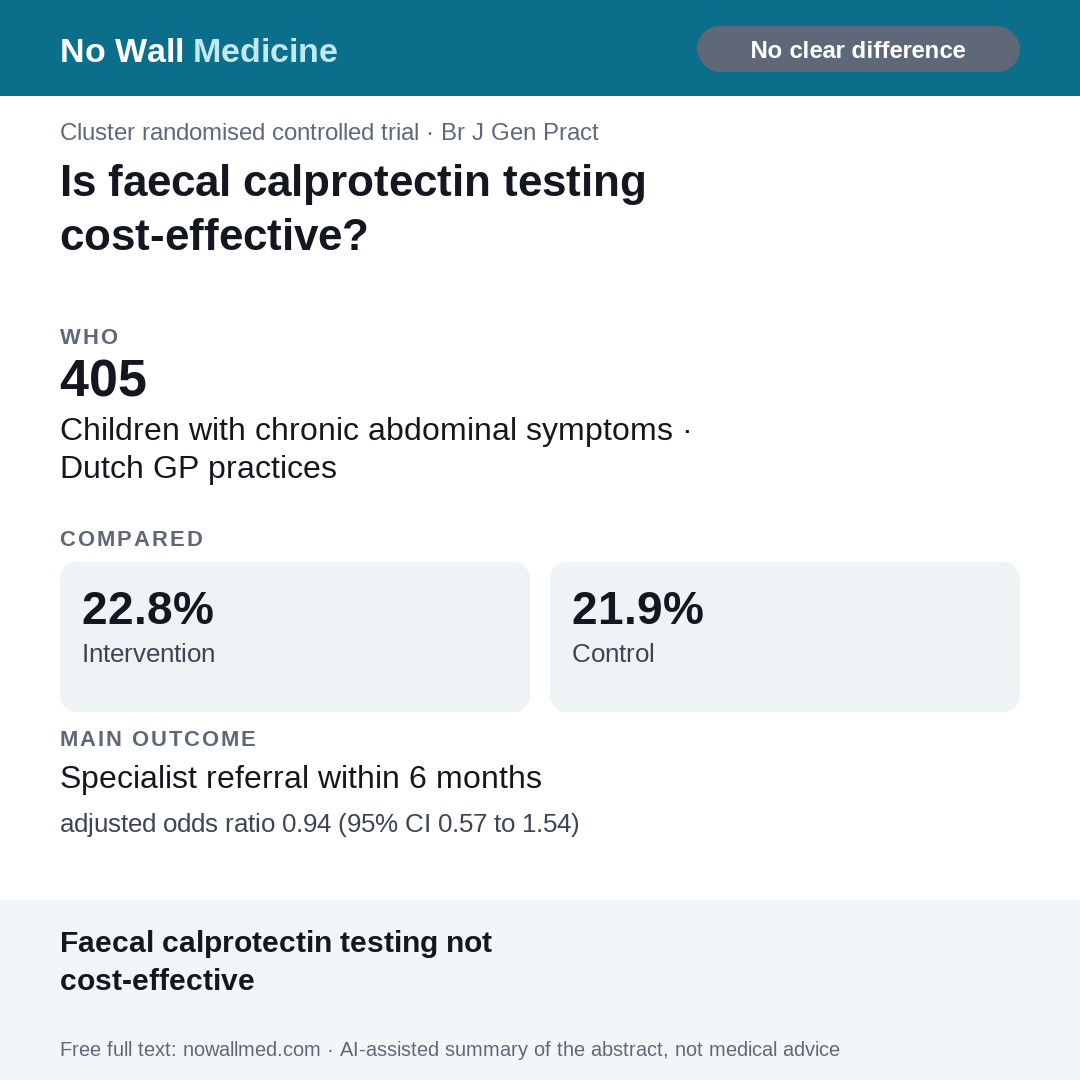
Cost-effectiveness of a faecal calprotectin-guided referral strategy for children with chronic abdominal symptoms: a cluster randomised controlled trial
Cluster randomised controlled trialNo clear difference
Is faecal calprotectin testing cost-effective?
Who
405
Children with chronic abdominal symptoms · Dutch GP practices
Compared
22.8%Intervention
21.9%Control
Main outcome
Specialist referral within 6 months
Result: adjusted odds ratio 0.94 (95% CI 0.57 to 1.54)
Bottom line: Faecal calprotectin testing not cost-effective
Br J Gen Pract · 2026-04-30Download image
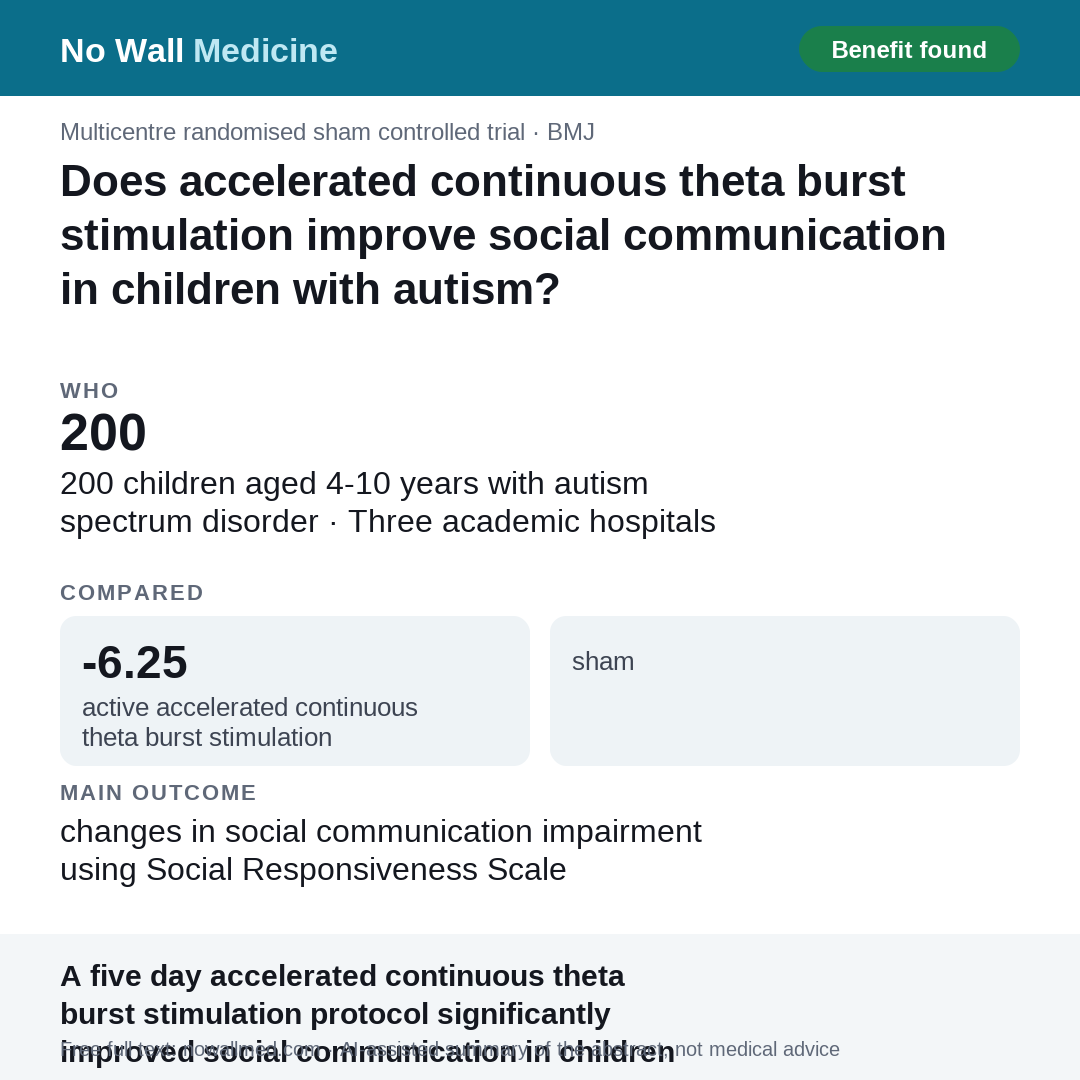
Accelerated continuous theta burst stimulation targeting left primary motor cortex for children with autism spectrum disorder: multicentre randomised sham controlled trial
Multicentre randomised sham controlled trialBenefit found
Does accelerated continuous theta burst stimulation improve social communication in children with autism?
Who
200
200 children aged 4-10 years with autism spectrum disorder · Three academic hospitals in China
Compared
-6.25active accelerated continuous theta burst stimulation (95% confidence interval -8.69 to -3.81)
sham
Main outcome
changes in social communication impairment using Social Responsiveness Scale
Result: -6.25 (95% confidence interval -8.69 to -3.81)
Bottom line: A five day accelerated continuous theta burst stimulation protocol significantly improved social communication in children with autism spectrum disorder.
BMJ · 2026-04-29Download image