Visual abstracts
New randomized trials and meta-analyses from leading journals at a glance: who was studied, what was compared, and what was found. Every paper is free to read in full.
All specialtiesCardiology 426Oncology 345Gastroenterology & Hepatology 174Infectious Disease 342Neurology 195Psychiatry & Mental Health 291Pulmonology 195Critical Care 136Endocrinology & Diabetes 268Pediatrics 207Surgery 148Orthopedics & Sports Medicine 91Neurosurgery 27Cardiothoracic & Vascular Surgery 52Plastic & Reconstructive Surgery 84Nephrology 84Rheumatology 85Hematology 106Dermatology 45Ophthalmology 77Obstetrics & Gynecology 135Public & Global Health 134Radiology & Imaging 41Anesthesiology 79Urology 101ENT (Otolaryngology) 55Emergency Medicine 44Allergy & Immunology 52Geriatrics 125Family Medicine & Primary Care 75Medical Genetics & Genomics 41Pathology & Laboratory Medicine 6Physical Medicine & Rehabilitation 112Palliative Care 64Nutrition 152Digital Health & AI 380General Medicine 51
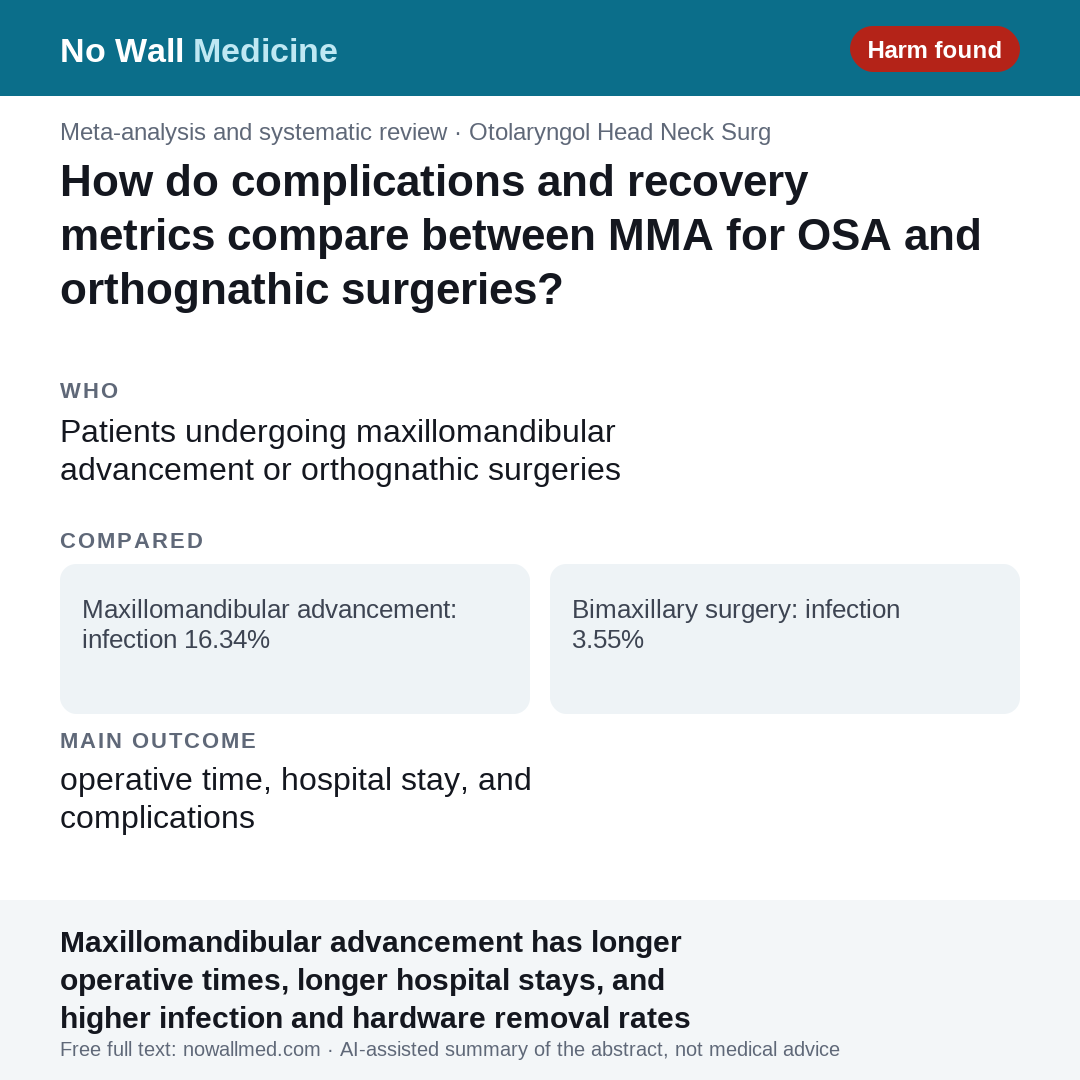
Comparative Meta-Analysis of Complications of Maxillomandibular Advancement for OSA versus Orthognathic Surgeries for Dentofacial Deformities
Meta-analysis and systematic reviewHarm found
How do complications and recovery metrics compare between MMA for OSA and orthognathic surgeries?
Who
Patients undergoing maxillomandibular advancement or orthognathic surgeries
Compared
Maxillomandibular advancement: infection 16.34%
Bimaxillary surgery: infection 3.55%
Main outcome
operative time, hospital stay, and complications
Bottom line: Maxillomandibular advancement has longer operative times, longer hospital stays, and higher infection and hardware removal rates than bimaxillary surgery.
Otolaryngol Head Neck Surg · 2026-07-30Download image
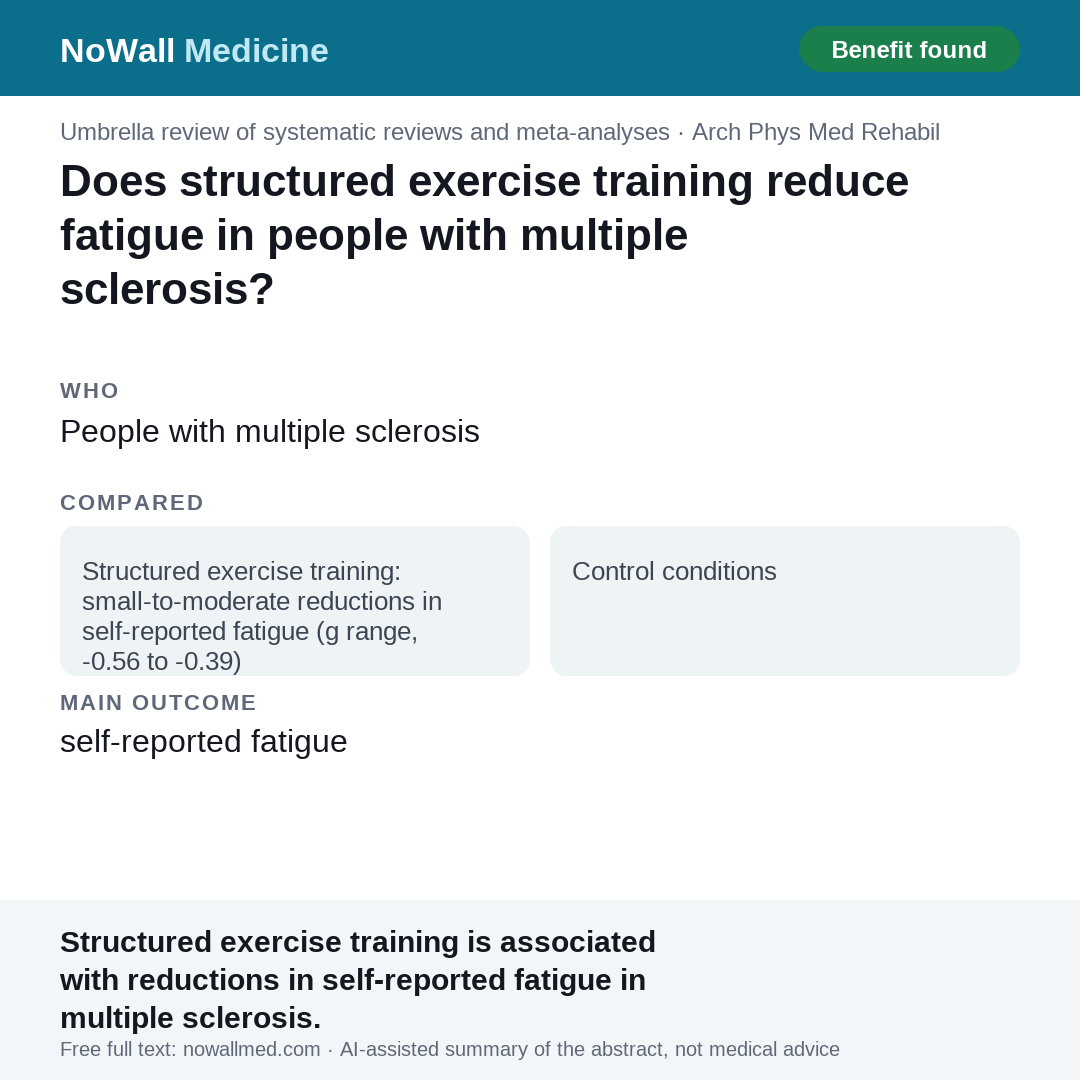
Structured exercise training for fatigue management in multiple sclerosis: an umbrella review of systematic reviews and meta-analyses
Umbrella review of systematic reviews and meta-analysesBenefit found
Does structured exercise training reduce fatigue in people with multiple sclerosis?
Who
People with multiple sclerosis
Compared
Structured exercise training: small-to-moderate reductions in self-reported fatigue (g range, -0.56 to -0.39)
Control conditions
Main outcome
self-reported fatigue
Bottom line: Structured exercise training is associated with reductions in self-reported fatigue in multiple sclerosis.
Limitation: Substantial heterogeneity, incomplete exercise-dose reporting, and high overlap across reviews.
Arch Phys Med Rehabil · 2026-07-30Download image
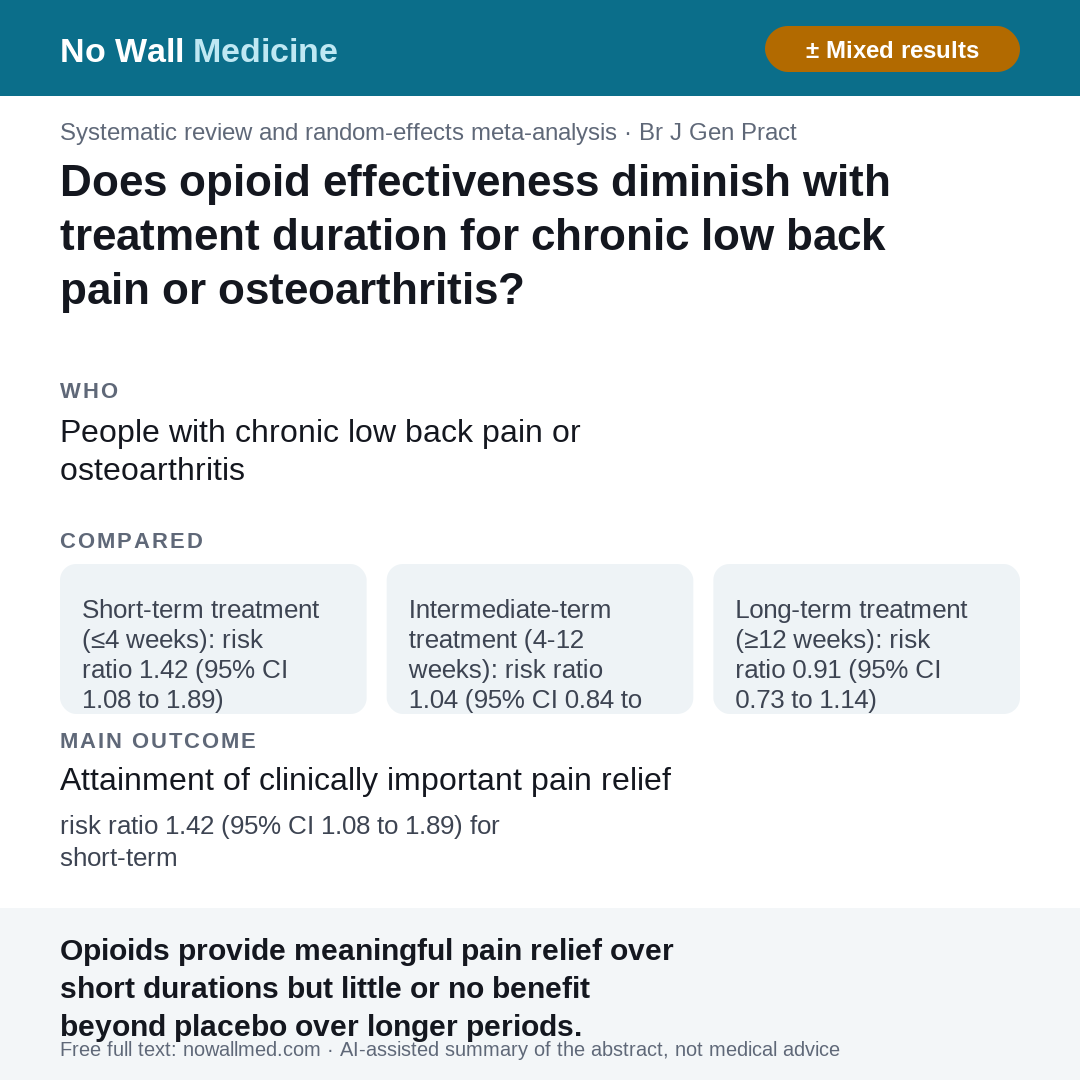
Impact of treatment duration on the effectiveness of opioid analgesia: a systematic review and meta-analysis
Systematic review and random-effects meta-analysisMixed results
Does opioid effectiveness diminish with treatment duration for chronic low back pain or osteoarthritis?
Who
27
People with chronic low back pain or osteoarthritis
Compared
Short-term treatment (≤4 weeks): risk ratio 1.42 (95% CI 1.08 to 1.89)
Intermediate-term treatment (4-12 weeks): risk ratio 1.04 (95% CI 0.84 to 1.30)
Long-term treatment (≥12 weeks): risk ratio 0.91 (95% CI 0.73 to 1.14)
Main outcome
Attainment of clinically important pain relief
Result: risk ratio 1.42 (95% CI 1.08 to 1.89) for short-term
Bottom line: Opioids provide meaningful pain relief over short durations but little or no benefit beyond placebo over longer periods.
Br J Gen Pract · 2026-07-30Download image
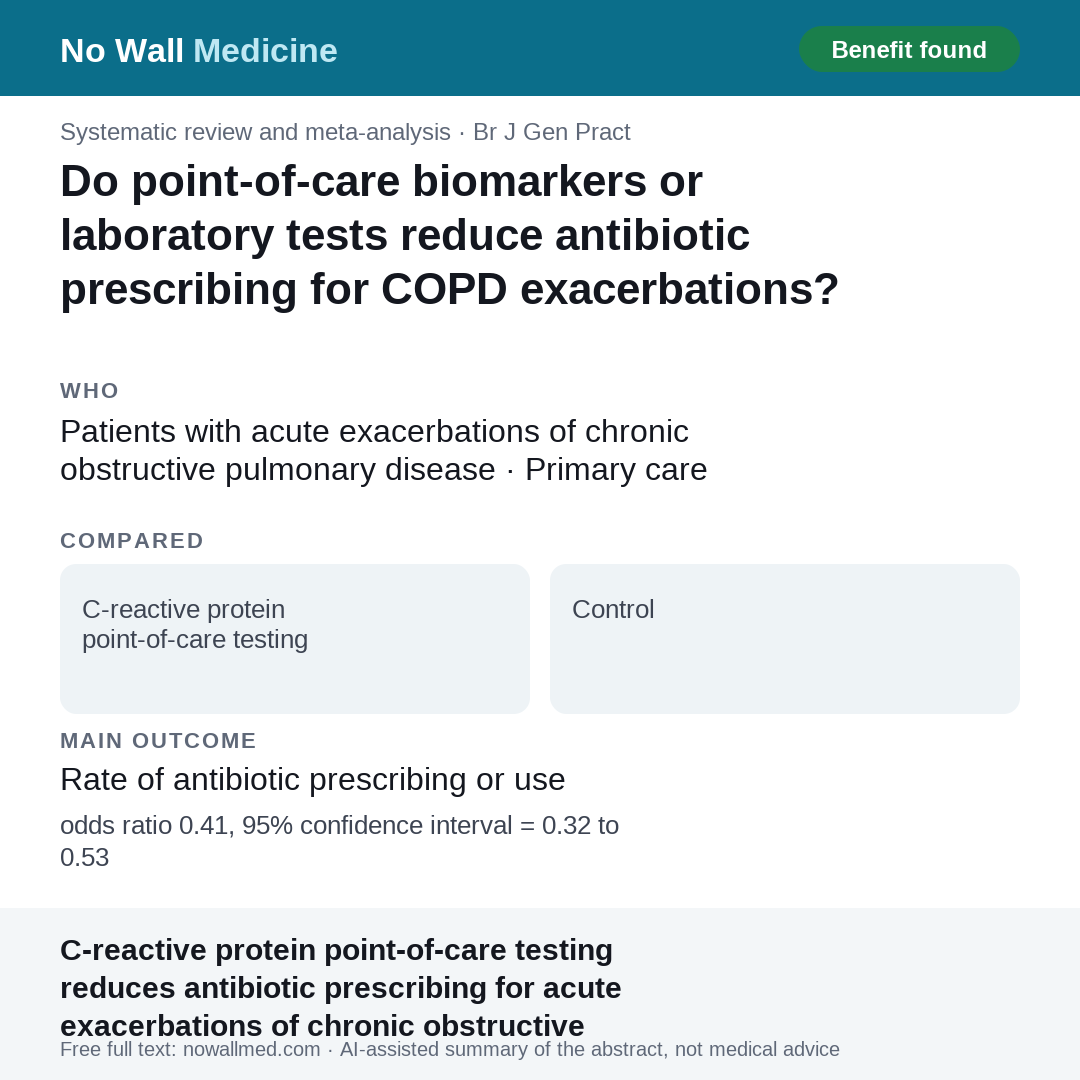
Point-of-care biomarkers or laboratory-based tests to reduce antibiotic prescribing for COPD exacerbations: a literature review and meta-analysis in primary care
Systematic review and meta-analysisBenefit found
Do point-of-care biomarkers or laboratory tests reduce antibiotic prescribing for COPD exacerbations?
Who
Patients with acute exacerbations of chronic obstructive pulmonary disease · Primary care
Compared
C-reactive protein point-of-care testing
Control
Main outcome
Rate of antibiotic prescribing or use
Result: odds ratio 0.41, 95% confidence interval = 0.32 to 0.53
Bottom line: C-reactive protein point-of-care testing reduces antibiotic prescribing for acute exacerbations of chronic obstructive pulmonary disease.
Limitation: Insufficient data to draw conclusions about procalcitonin biomarkers.
Br J Gen Pract · 2026-07-30Download image
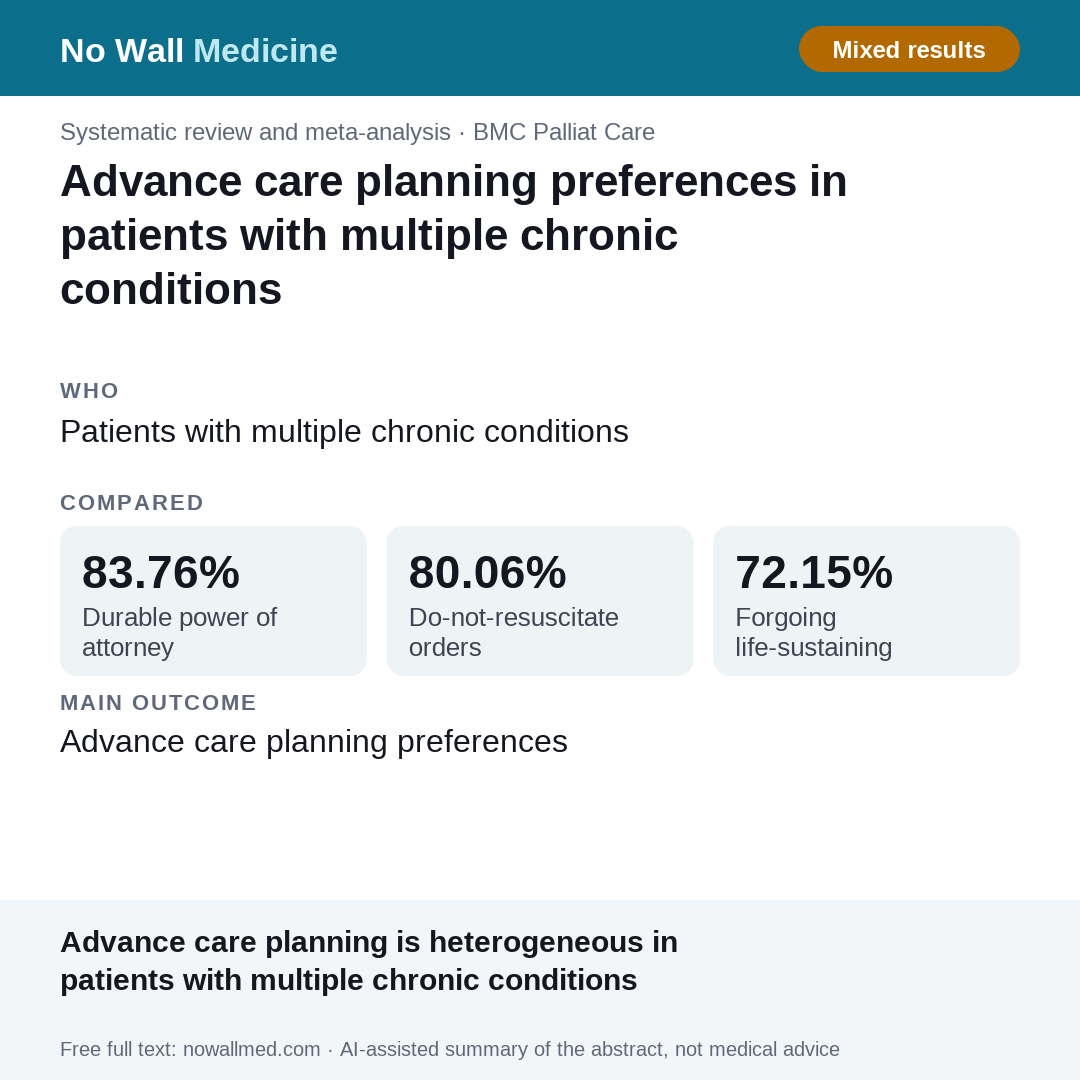
Advance care planning preferences and associated factors in patients with multiple chronic conditions: a systematic review and exploratory network meta-analysis
Systematic review and meta-analysisMixed results
Advance care planning preferences in patients with multiple chronic conditions
Who
Patients with multiple chronic conditions
Compared
83.76%Durable power of attorney
80.06%Do-not-resuscitate orders
72.15%Forgoing life-sustaining treatment
Main outcome
Advance care planning preferences
Bottom line: Advance care planning is heterogeneous in patients with multiple chronic conditions
BMC Palliat Care · 2026-07-30Download image
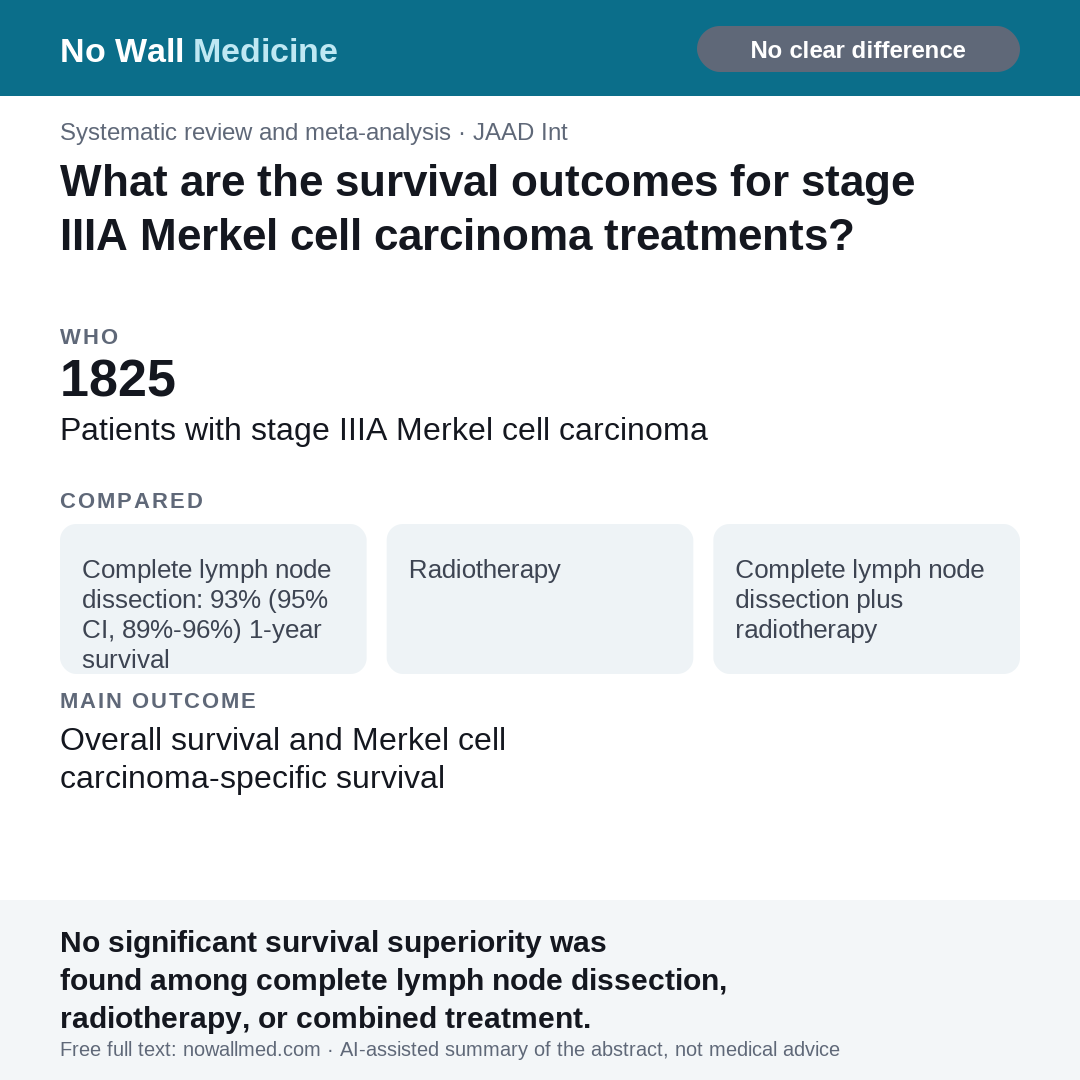
Survival after lymph node dissection, radiotherapy, and combined treatment in sentinel node-positive stage IIIA Merkel cell carcinoma: A systematic review and meta-analysis
Systematic review and meta-analysisNo clear difference
What are the survival outcomes for stage IIIA Merkel cell carcinoma treatments?
Who
1825
Patients with stage IIIA Merkel cell carcinoma
Compared
Complete lymph node dissection: 93% (95% CI, 89%-96%) 1-year survival
Radiotherapy
Complete lymph node dissection plus radiotherapy
Main outcome
Overall survival and Merkel cell carcinoma-specific survival
Bottom line: No significant survival superiority was found among complete lymph node dissection, radiotherapy, or combined treatment.
Limitation: Limited observational studies, data heterogeneity, missing immunotherapy data, and low evidence levels.
JAAD Int · 2026-07-30Download image
A systematic review of MHPSS interventions targeting non-clinical Arabic-speaking refugees and/or displaced populations in the MENA region
Systematic reviewBenefit found
What are the effects of non-clinical mental health and psychosocial support interventions for Arabic-speaking refugees?
Who
Non-clinical Arabic-speaking adult refugees and displaced persons in MENA · Middle East and North Africa countries
Compared
Culturally adapted interventions: more favourable outcomes
Other interventions
Main outcome
Mental health and psychosocial support outcomes
Bottom line: Culturally sensitive, non-clinical interventions enhance mental health outcomes for Arabic-speaking refugee populations in the Middle East and North Africa.
BMJ Glob Health · 2026-07-30Download image

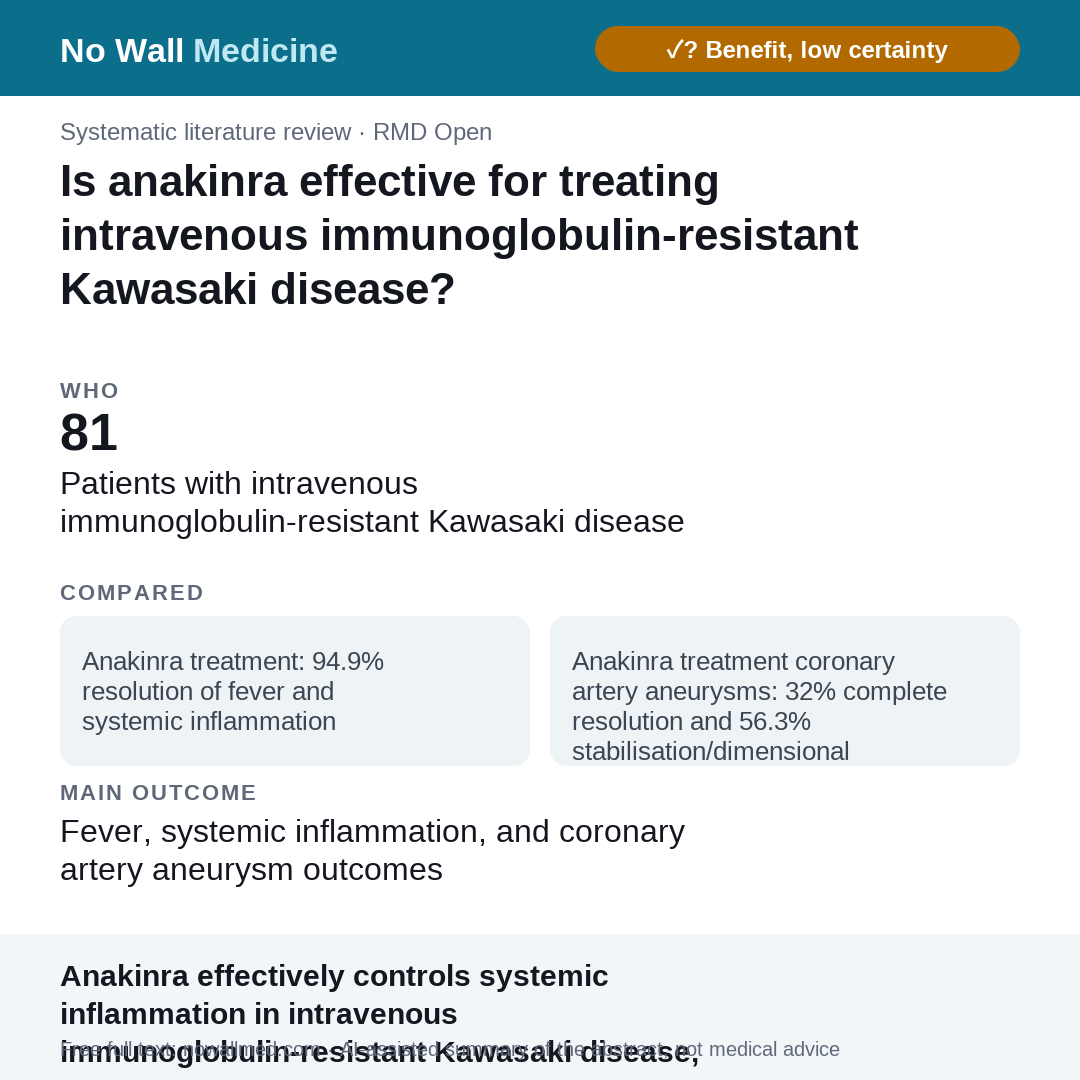
Anakinra for intravenous immunoglobulin-resistant Kawasaki disease: a systematic literature review
Systematic literature reviewBenefit found
Is anakinra effective for treating intravenous immunoglobulin-resistant Kawasaki disease?
Who
81
Patients with intravenous immunoglobulin-resistant Kawasaki disease
Compared
Anakinra treatment: 94.9% resolution of fever and systemic inflammation
Anakinra treatment coronary artery aneurysms: 32% complete resolution and 56.3% stabilisation/dimensional reduction
Main outcome
Fever, systemic inflammation, and coronary artery aneurysm outcomes
Bottom line: Anakinra effectively controls systemic inflammation in intravenous immunoglobulin-resistant Kawasaki disease, though more data on coronary outcomes are needed.
Limitation: Findings derive from heterogeneous and low-quality evidence, mostly single cases or small series.
RMD Open · 2026-07-30Download image
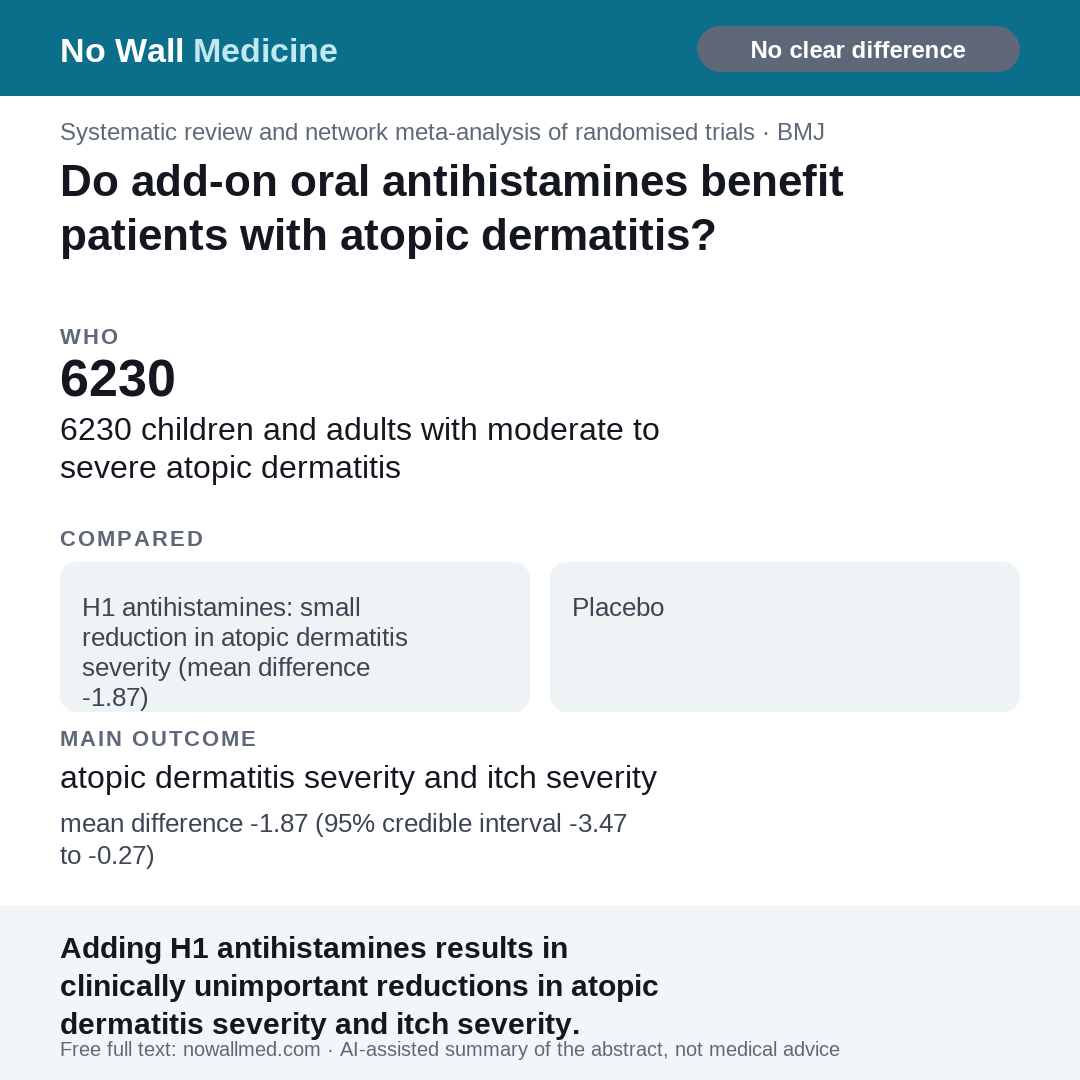
Antihistamines for atopic dermatitis (eczema): systematic review and network meta-analysis of randomised trials
Systematic review and network meta-analysis of randomised trialsNo clear difference
Do add-on oral antihistamines benefit patients with atopic dermatitis?
Who
6230
6230 children and adults with moderate to severe atopic dermatitis
Compared
H1 antihistamines: small reduction in atopic dermatitis severity (mean difference -1.87)
Placebo
Main outcome
atopic dermatitis severity and itch severity
Result: mean difference -1.87 (95% credible interval -3.47 to -0.27)
Bottom line: Adding H1 antihistamines results in clinically unimportant reductions in atopic dermatitis severity and itch severity.
Limitation: Effects are well below established minimal important differences.
BMJ · 2026-07-29Download image
Mechanisms underpinning flourishing at the interface of humans and other natural entities: an umbrella review
Umbrella review of systematic reviewsMixed results
What are the mechanisms driving ecological-collective-flourishing at the human and natural interface?
Who
Human and non-human natural entities
Compared
Psychological mechanisms: most consistent support
Other mechanism domains: mixed
Main outcome
Mechanisms driving change across human and ecological systems
Bottom line: Psychological mechanisms show consistent support, but evidence for other domains is mixed and causality remains weak.
Lancet Planet Health · 2026-07-29Download image

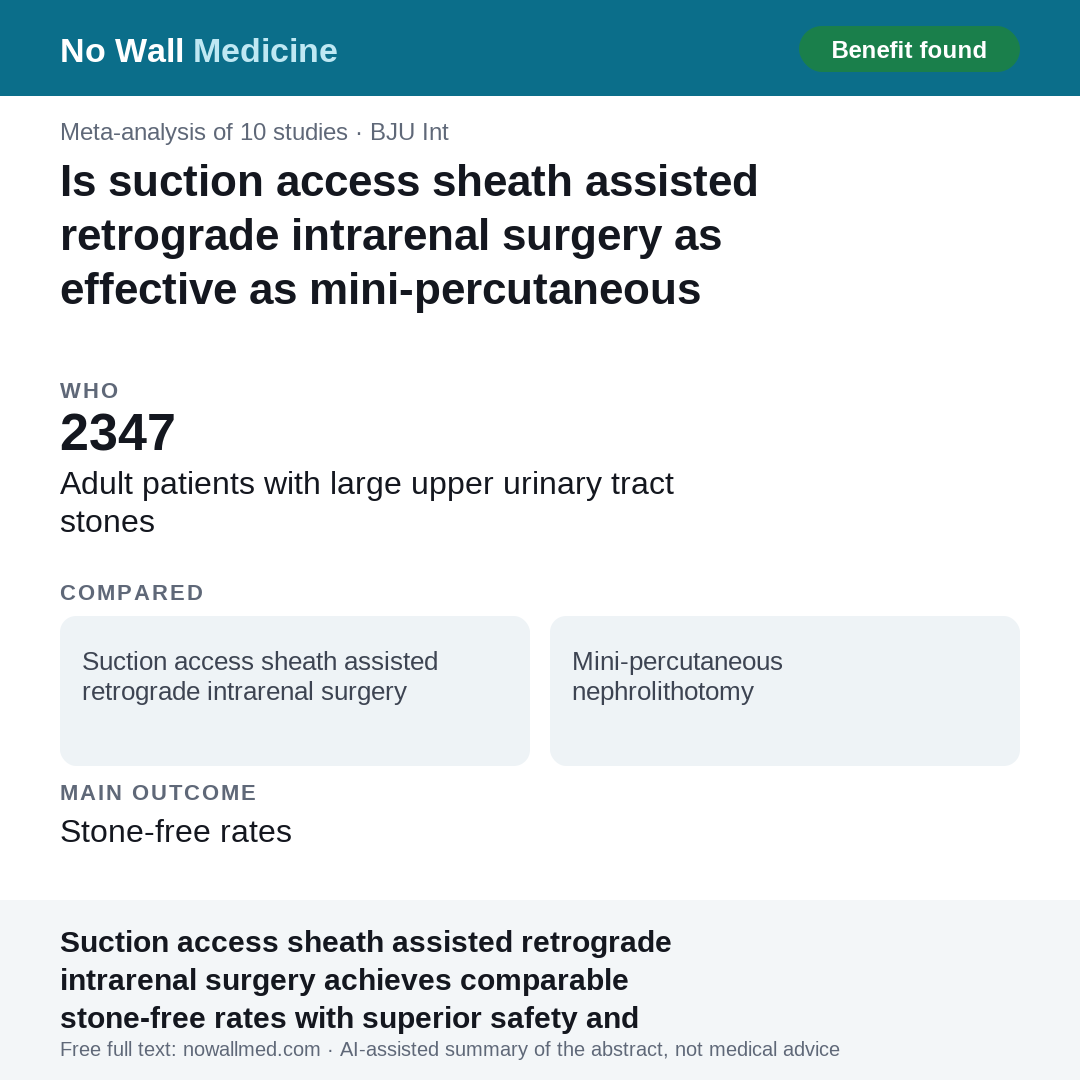
Retrograde intrarenal surgery with flexible and navigable suction access sheaths vs mini-percutaneous nephrolithotomy for large upper urinary tract stones: a systematic review and meta-analysis
Meta-analysis of 10 studiesBenefit found
Is suction access sheath assisted retrograde intrarenal surgery as effective as mini-percutaneous nephrolithotomy?
Who
2347
Adult patients with large upper urinary tract stones
Compared
Suction access sheath assisted retrograde intrarenal surgery
Mini-percutaneous nephrolithotomy
Main outcome
Stone-free rates
Result: odds ratio 0.90 (95% CI 0.70-1.17)
Bottom line: Suction access sheath assisted retrograde intrarenal surgery achieves comparable stone-free rates with superior safety and shorter hospital stays.
Limitation: Predominance of Asian studies, variability of practice, and inclusion of non-randomised studies.
BJU Int · 2026-07-29Download image
Instrumented assessment of joint neuromechanics in upper motor neuron syndrome: a systematic review of methods, reliability, validity, and clinical relevance
Systematic review of 74 studiesMixed results
What are the methods, reliability, validity, and clinical relevance of instrumented neuromechanical assessment in upper motor neuron syndrome?
Who
74
Patients with upper motor neuron syndrome
Compared
Single-joint assessments: 64 studies
Passive conditions: 63 studies
Main outcome
Reliability, validity, and experimental protocols of neuromechanical assessment
Bottom line: Instrumented assessment shows promise but requires improved reliability, better separation of neural and mechanical constructs, and increased clinical relevance.
Limitation: Most studies used single-joint, passive assessments, overlooking multi-joint interactions and active control.
J Neuroeng Rehabil · 2026-07-29Download image

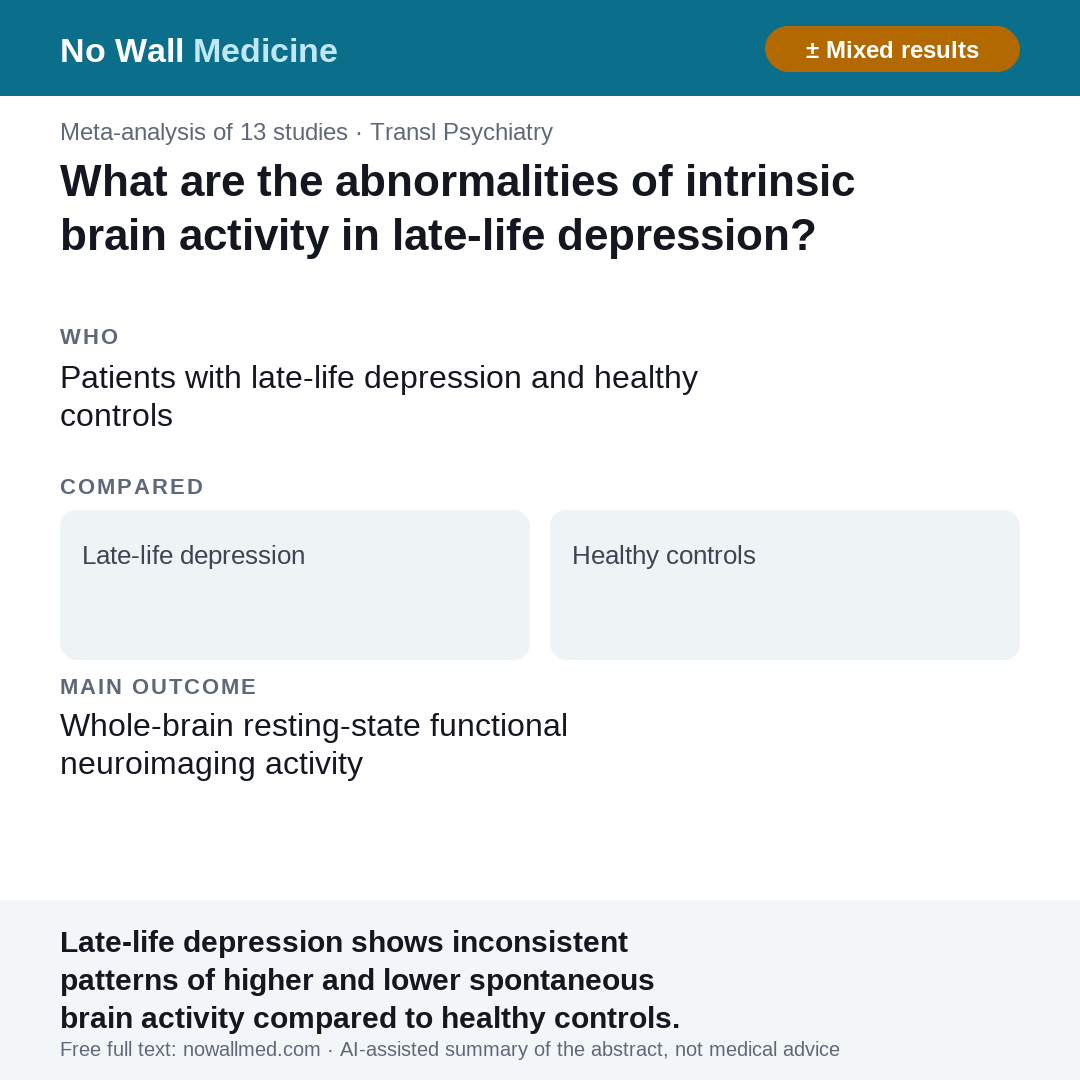
Abnormalities of intrinsic brain activity in late-life depression: a meta-analysis of resting-state functional imaging studies
Meta-analysis of 13 studiesMixed results
What are the abnormalities of intrinsic brain activity in late-life depression?
Who
Patients with late-life depression and healthy controls
Compared
Late-life depression
Healthy controls
Main outcome
Whole-brain resting-state functional neuroimaging activity
Bottom line: Late-life depression shows inconsistent patterns of higher and lower spontaneous brain activity compared to healthy controls.
Limitation: Findings are variable and often inconsistent across studies.
Transl Psychiatry · 2026-07-29Download image
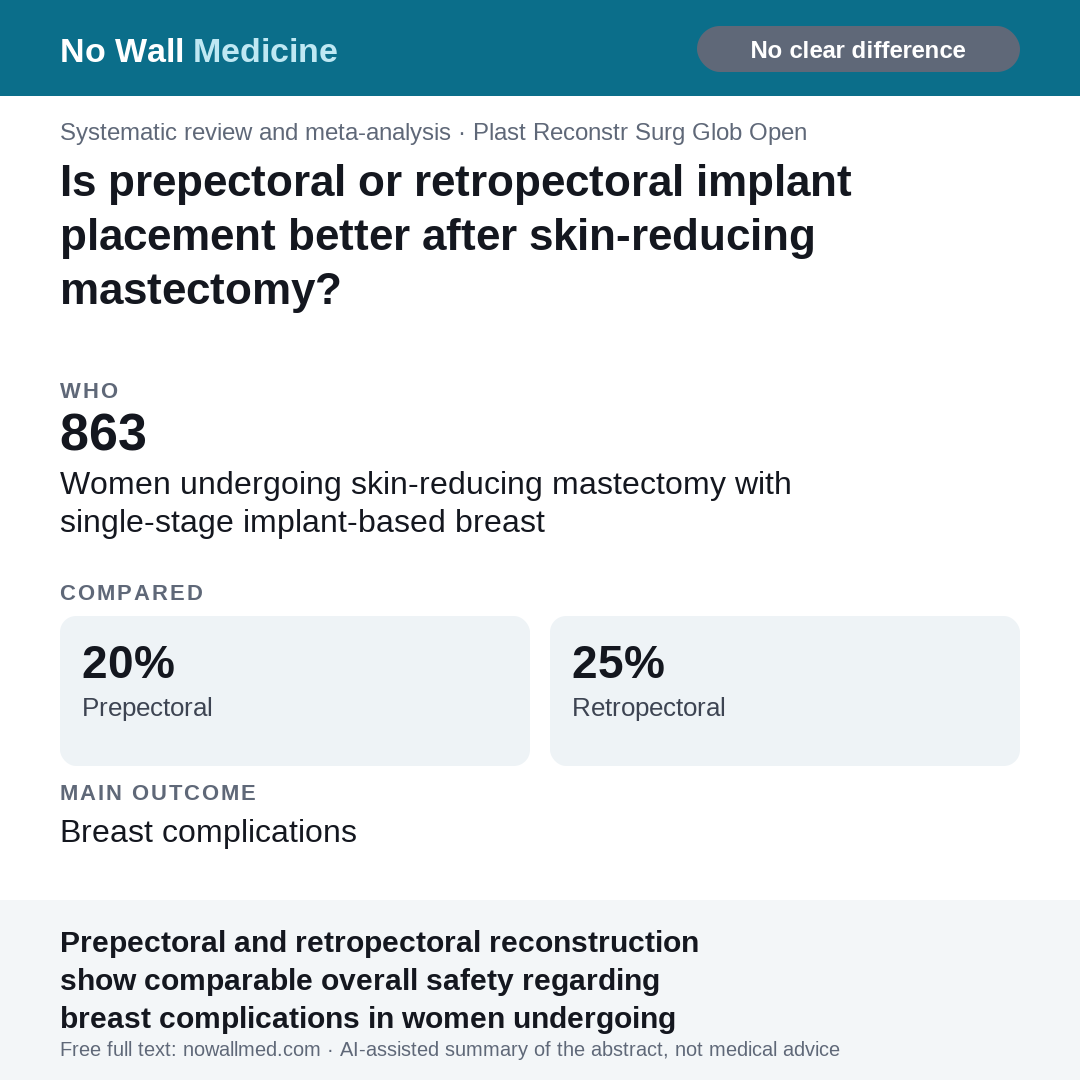
Prepectoral versus Retropectoral Direct to Implant Breast Reconstruction after Skin-reducing Mastectomy: A Systematic Review and Meta-analysis
Systematic review and meta-analysisNo clear difference
Is prepectoral or retropectoral implant placement better after skin-reducing mastectomy?
Who
863
Women undergoing skin-reducing mastectomy with single-stage implant-based breast reconstruction
Compared
20%Prepectoral
25%Retropectoral
Main outcome
Breast complications
Bottom line: Prepectoral and retropectoral reconstruction show comparable overall safety regarding breast complications in women undergoing skin-reducing mastectomy.
Plast Reconstr Surg Glob Open · 2026-07-29Download image
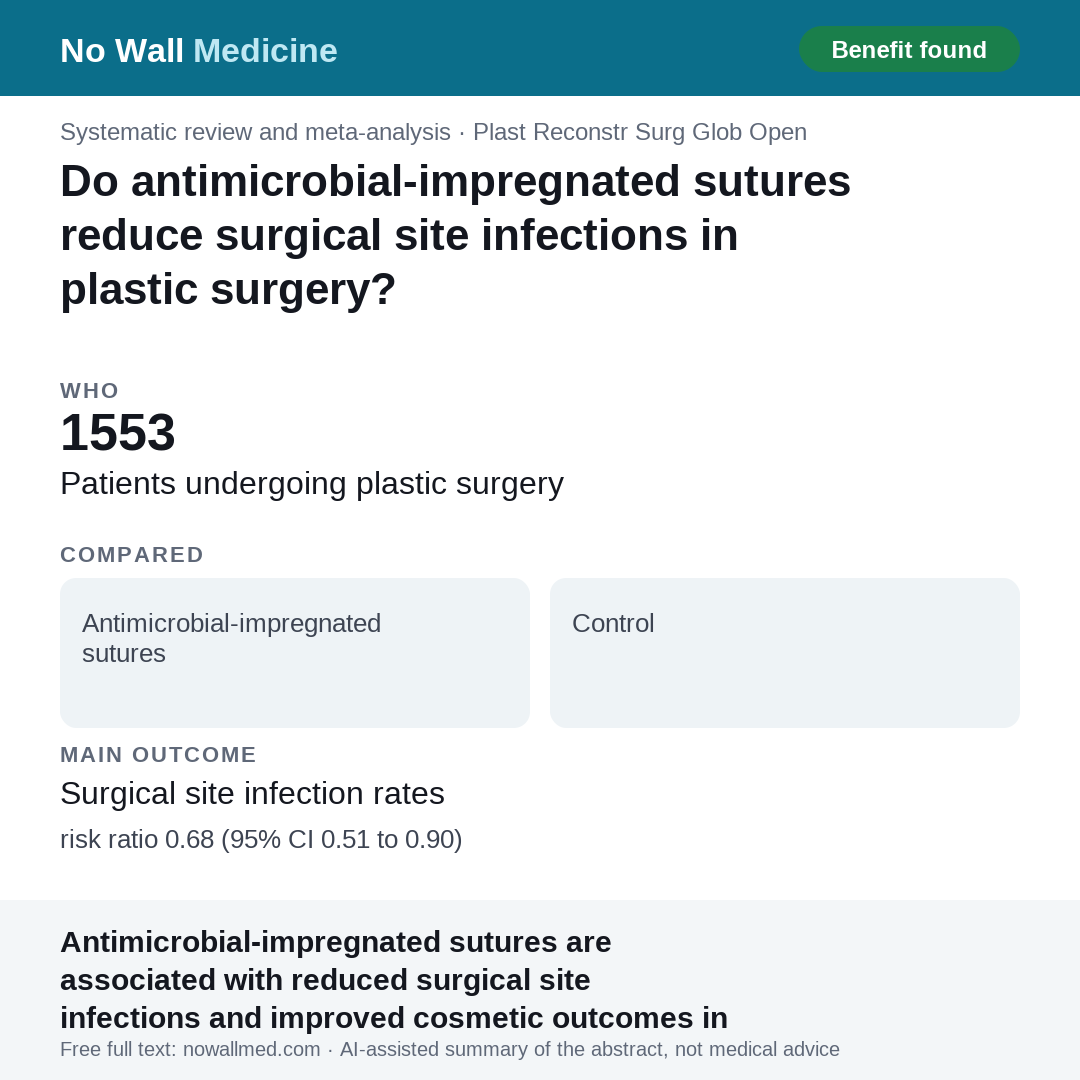
Antimicrobial-impregnated Sutures Reduce Surgical Site Infections in Plastic Surgery: A Systematic Review and Meta-analysis
Systematic review and meta-analysisBenefit found
Do antimicrobial-impregnated sutures reduce surgical site infections in plastic surgery?
Who
1553
Patients undergoing plastic surgery
Compared
Antimicrobial-impregnated sutures
Control
Main outcome
Surgical site infection rates
Result: risk ratio 0.68 (95% CI 0.51 to 0.90)
Bottom line: Antimicrobial-impregnated sutures are associated with reduced surgical site infections and improved cosmetic outcomes in plastic surgery.
Limitation: Randomized controlled trials in different anatomical areas are warranted to establish definitive clinical guidelines.
Plast Reconstr Surg Glob Open · 2026-07-29Download image
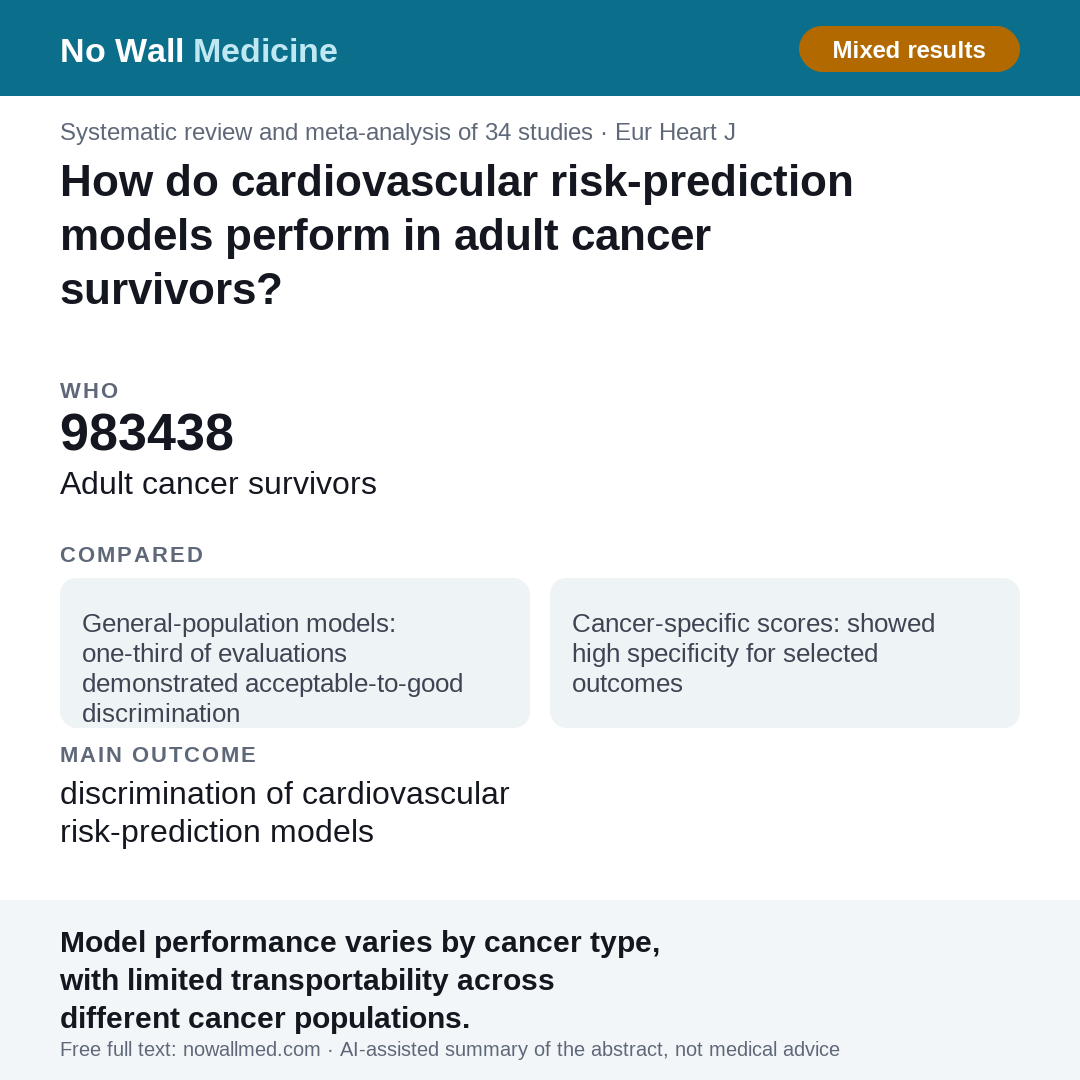
Cardiovascular risk-prediction models in cancer survivors: a meta-analysis
Systematic review and meta-analysis of 34 studiesMixed results
How do cardiovascular risk-prediction models perform in adult cancer survivors?
Who
983438
Adult cancer survivors
Compared
General-population models: one-third of evaluations demonstrated acceptable-to-good discrimination
Cancer-specific scores: showed high specificity for selected outcomes
Main outcome
discrimination of cardiovascular risk-prediction models
Bottom line: Model performance varies by cancer type, with limited transportability across different cancer populations.
Limitation: Performance was substantially poorer in survivors of haematologic malignancies.
Eur Heart J · 2026-07-28Download image
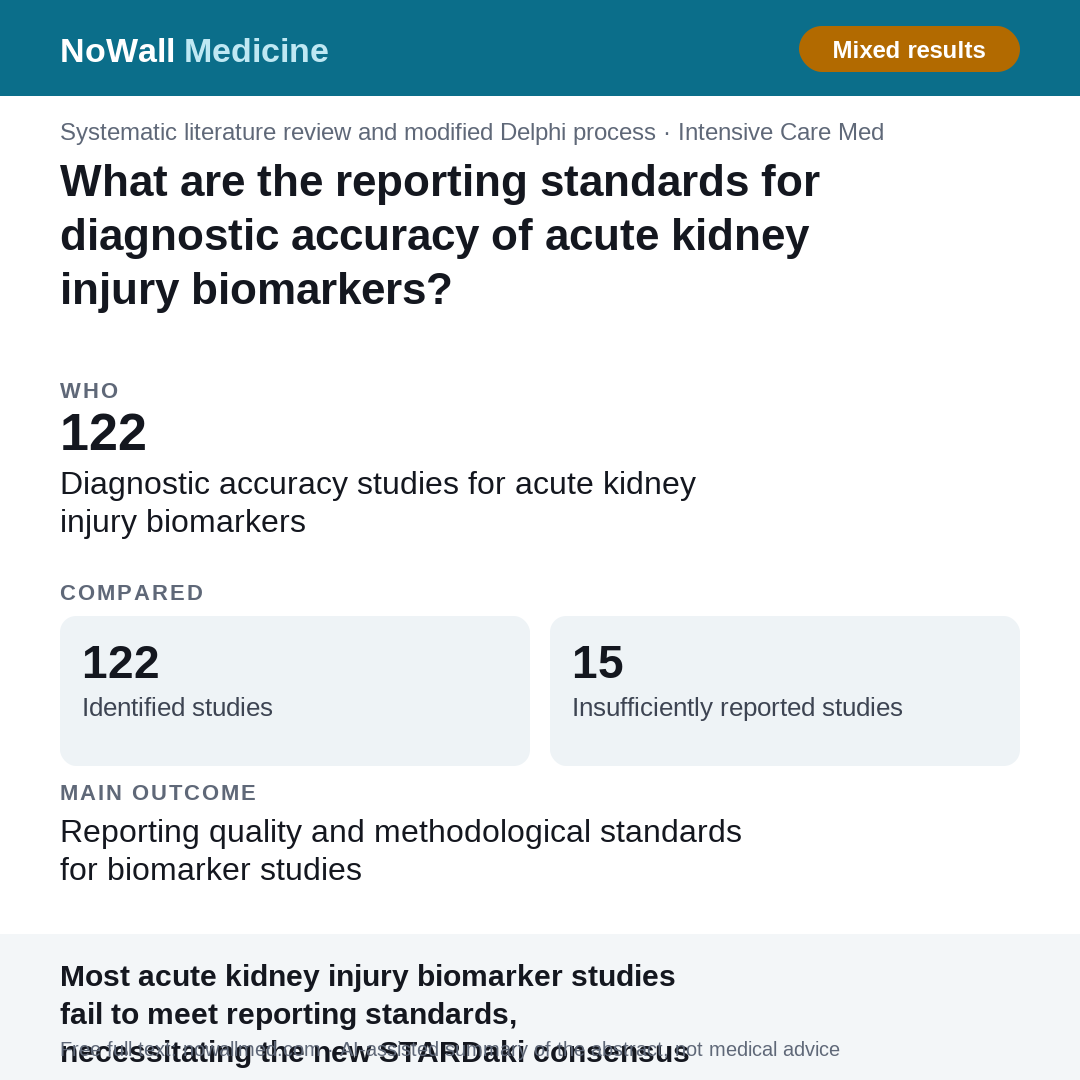
STARDaki: a consensus-based STARD extension for standardized reporting of diagnostic accuracy in acute kidney injury
Systematic literature review and modified Delphi processMixed results
What are the reporting standards for diagnostic accuracy of acute kidney injury biomarkers?
Who
122
Diagnostic accuracy studies for acute kidney injury biomarkers
Compared
122Identified studies
15Insufficiently reported studies
Main outcome
Reporting quality and methodological standards for biomarker studies
Bottom line: Most acute kidney injury biomarker studies fail to meet reporting standards, necessitating the new STARDaki consensus criteria.
Limitation: Low compliance with the STARD checklist prevented meta-analysis.
Intensive Care Med · 2026-07-28Download image
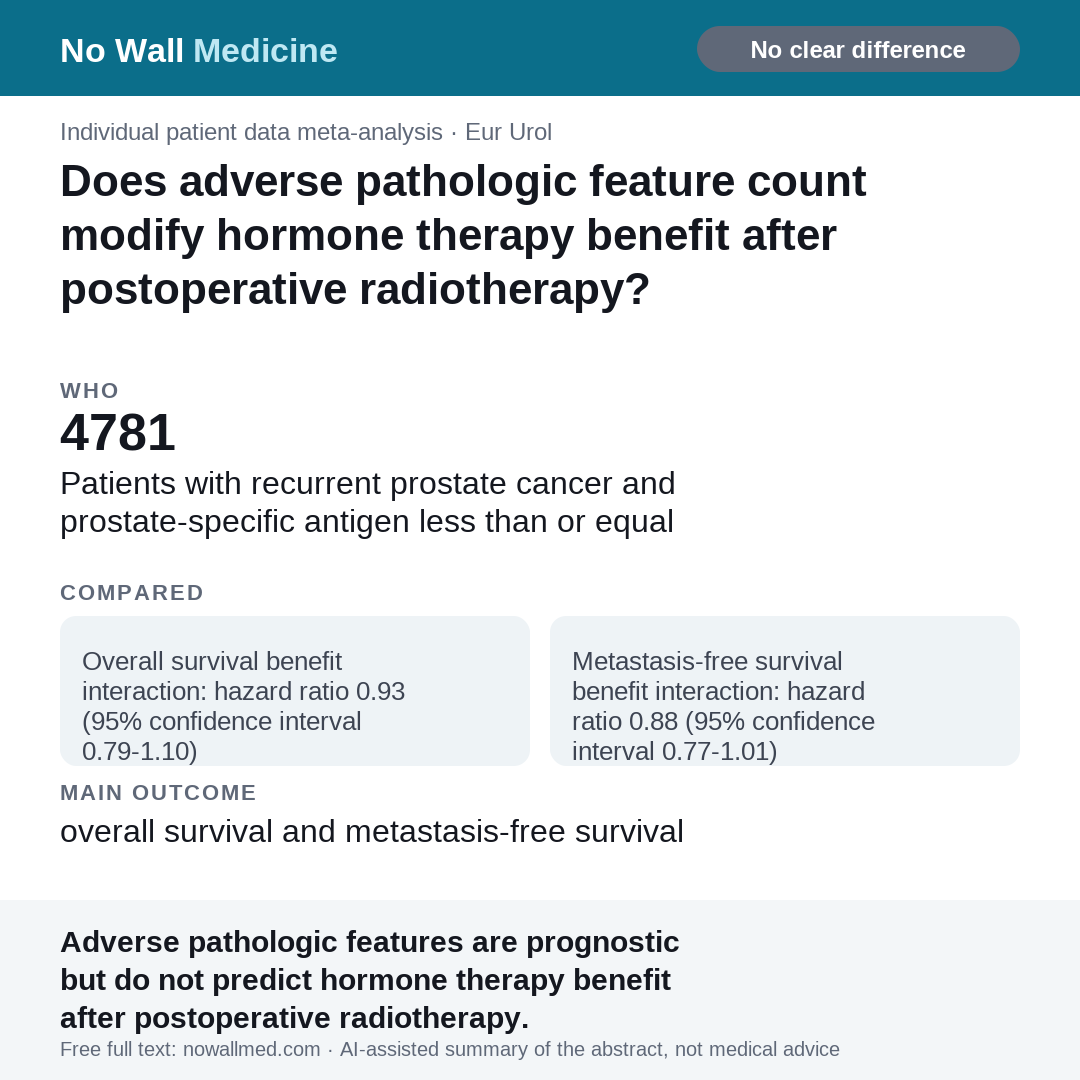
Influence of Adverse Pathologic Features on Potential Benefit of Hormone Therapy Use with Postoperative Radiotherapy in Recurrent Prostate Cancer: An Individual Patient Data Meta-analysis
Individual patient data meta-analysisNo clear difference
Does adverse pathologic feature count modify hormone therapy benefit after postoperative radiotherapy?
Who
4781
Patients with recurrent prostate cancer and prostate-specific antigen less than or equal to 0.5 ng/ml
Compared
Overall survival benefit interaction: hazard ratio 0.93 (95% confidence interval 0.79-1.10)
Metastasis-free survival benefit interaction: hazard ratio 0.88 (95% confidence interval 0.77-1.01)
Main outcome
overall survival and metastasis-free survival
Result: interaction hazard ratio 0.93 (95% CI 0.79-1.10) for overall survival
Bottom line: Adverse pathologic features are prognostic but do not predict hormone therapy benefit after postoperative radiotherapy.
Eur Urol · 2026-07-28Download image
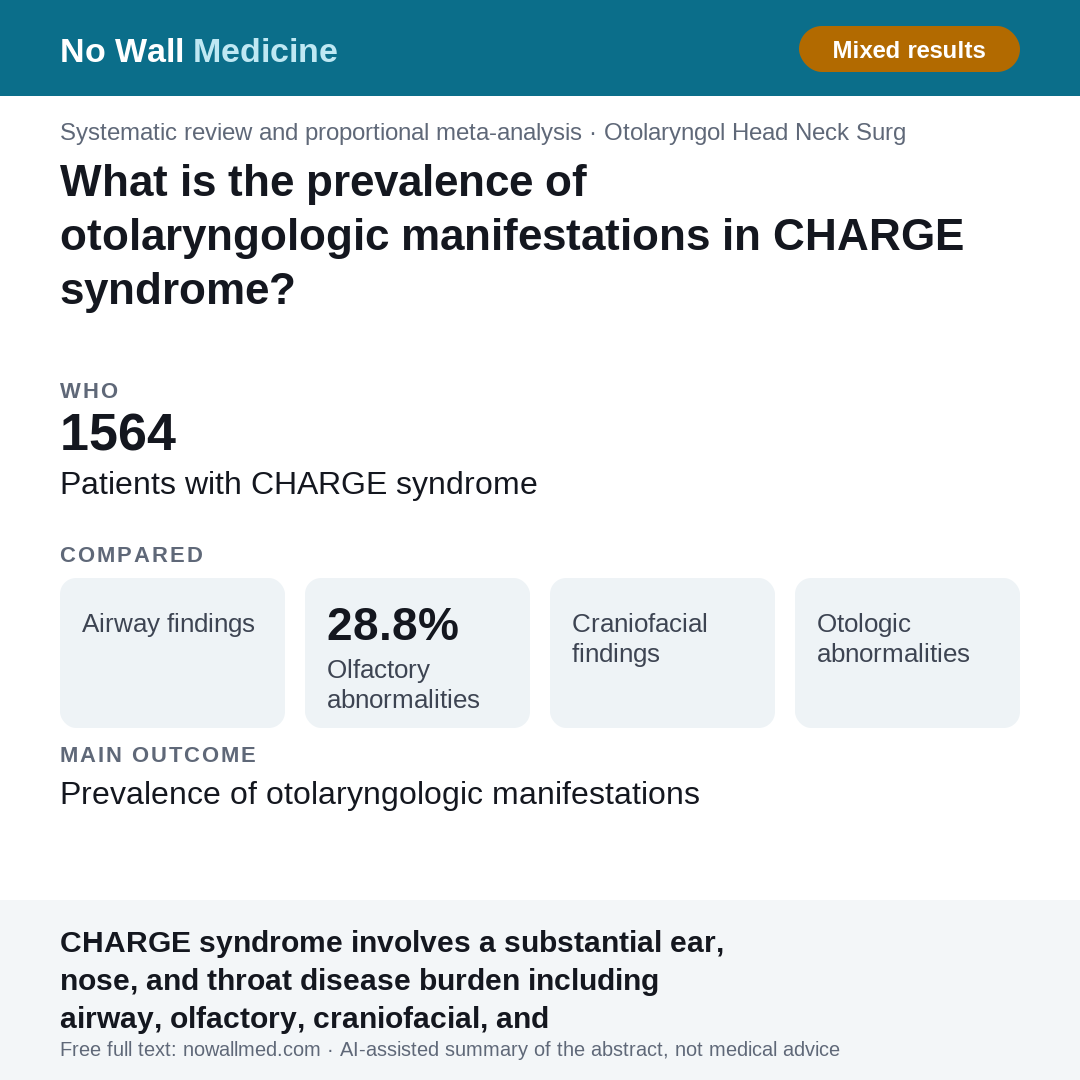
CHARGE Syndrome: What an Otolaryngologist Should Know-A Systematic Review and Meta-Analysis
Systematic review and proportional meta-analysisMixed results
What is the prevalence of otolaryngologic manifestations in CHARGE syndrome?
Who
1564
Patients with CHARGE syndrome
Compared
Airway findings
28.8%Olfactory abnormalities (95% CI 14.7-42.9)
Craniofacial findings
Otologic abnormalities
Main outcome
Prevalence of otolaryngologic manifestations
Bottom line: CHARGE syndrome involves a substantial ear, nose, and throat disease burden including airway, olfactory, craniofacial, and vestibulocochlear malformations.
Otolaryngol Head Neck Surg · 2026-07-28Download image
Shared Decision making aids in palliative care: A systematic review & meta-analysis of randomized controlled trials
Systematic review and meta-analysis of randomized controlled trialsMixed results
Do decision aids impact decision making, clinical outcomes, and quality of life in palliative care?
Who
Adult patients with palliative care needs or their caregivers
Compared
Decision aids
Control
Main outcome
Decision-related, clinical, and quality of life measures
Result: SMD 0.40 (95% CI 0.14-0.67) for decision-related knowledge
Bottom line: Decision aids improved decision-related knowledge and lowered preference for cardiopulmonary resuscitation, but had no significant impact on satisfaction or regret.
Limitation: Evidence is limited and of low overall quality.
Palliat Med · 2026-07-28Download image