Visual abstracts
New randomized trials and meta-analyses from leading journals at a glance: who was studied, what was compared, and what was found. Every paper is free to read in full.
All specialtiesCardiology 4763Oncology 4043Gastroenterology & Hepatology 1903Infectious Disease 3756Neurology 1872Psychiatry & Mental Health 2216Pulmonology 2044Critical Care 1319Endocrinology & Diabetes 2544Pediatrics 2889Surgery 2480Orthopedics & Sports Medicine 917Neurosurgery 525Cardiothoracic & Vascular Surgery 656Plastic & Reconstructive Surgery 574Nephrology 1107Rheumatology 810Hematology 1090Dermatology 611Ophthalmology 532Obstetrics & Gynecology 1645Public & Global Health 1037Radiology & Imaging 619Anesthesiology 958Urology 745ENT (Otolaryngology) 494Emergency Medicine 481Allergy & Immunology 309Geriatrics 972Family Medicine & Primary Care 534Medical Genetics & Genomics 659Pathology & Laboratory Medicine 156Physical Medicine & Rehabilitation 734Palliative Care 421Nutrition 1560Digital Health & AI 2137General Medicine 318
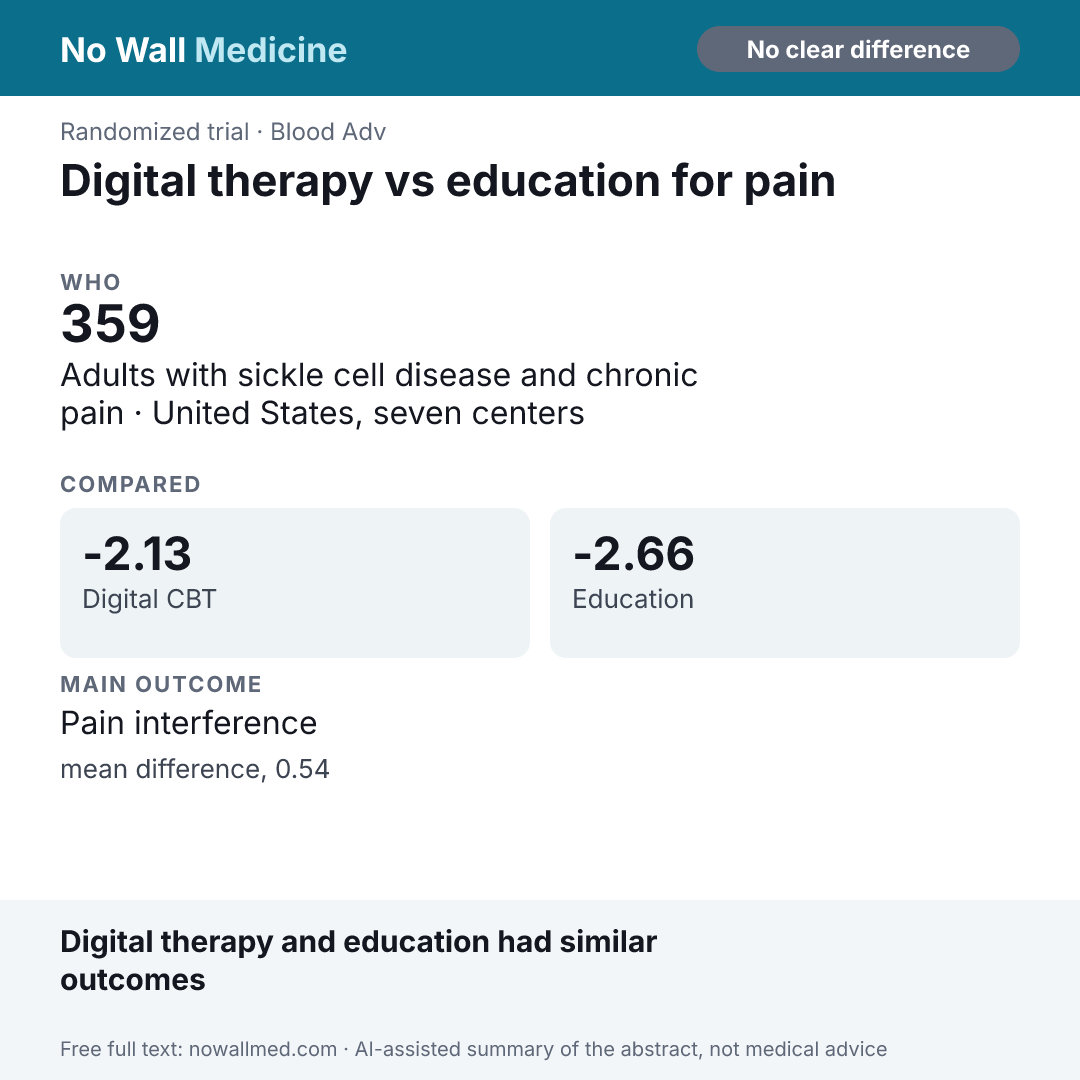
Digital cognitive behavioral therapy vs education for pain in adults with sickle cell disease
Randomized trialNo clear difference
Digital therapy vs education for pain
Who
359
Adults with sickle cell disease and chronic pain · United States, seven centers
Compared
-2.13Digital CBT
-2.66Education
Main outcome
Pain interference
Result: mean difference, 0.54
Bottom line: Digital therapy and education had similar outcomes
Limitation: variable engagement with digital components
Blood Adv · 2024-10-08 · Save PNG
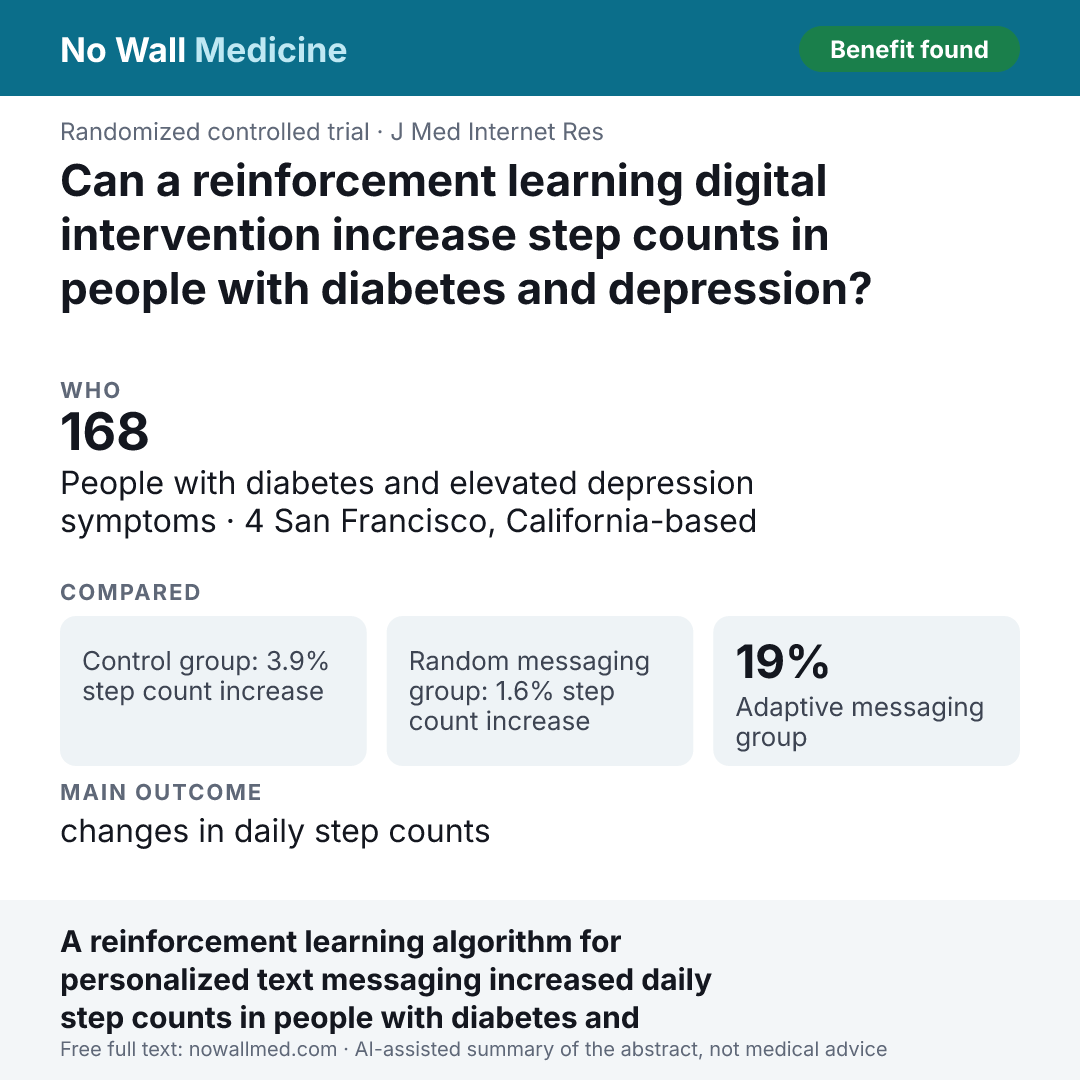
Effectiveness of a Digital Health Intervention Leveraging Reinforcement Learning: Results From the Diabetes and Mental Health Adaptive Notification Tracking and Evaluation (DIAMANTE) Randomized Clinical Trial
Randomized controlled trialBenefit found
Can a reinforcement learning digital intervention increase step counts in people with diabetes and depression?
Who
168
People with diabetes and elevated depression symptoms · 4 San Francisco, California-based public primary care clinics and web-based platforms
Compared
Control group: 3.9% step count increase
Random messaging group: 1.6% step count increase
19%Adaptive messaging group (606/3197)
Main outcome
changes in daily step counts
Result: average of 3.6 steps each day (95% CI 2.45-4.78)
Bottom line: A reinforcement learning algorithm for personalized text messaging increased daily step counts in people with diabetes and depression.
J Med Internet Res · 2024-10-08 · Save PNG
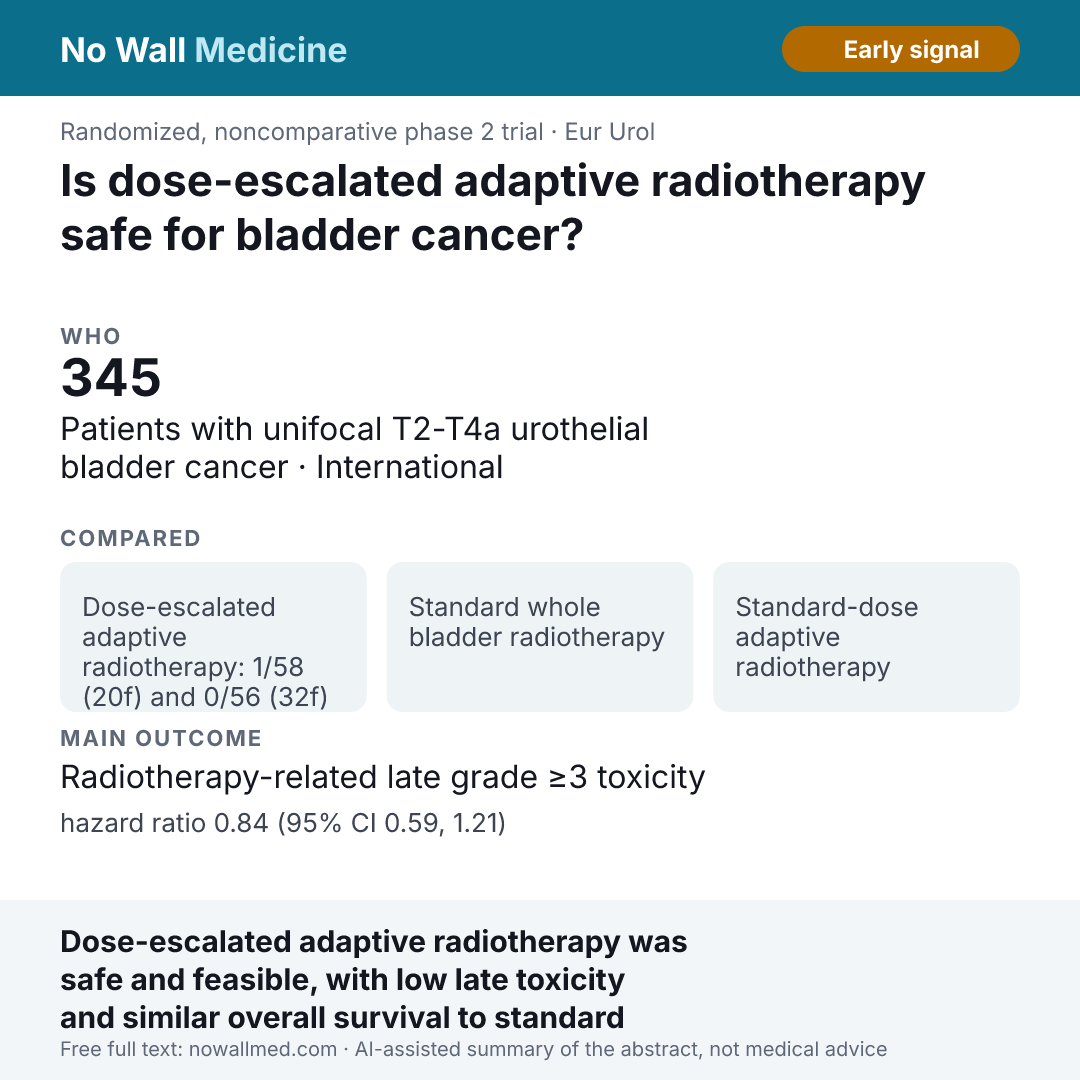
Dose-escalated Adaptive Radiotherapy for Bladder Cancer: Results of the Phase 2 RAIDER Randomised Controlled Trial
Randomized, noncomparative phase 2 trialEarly signal
Is dose-escalated adaptive radiotherapy safe for bladder cancer?
Who
345
Patients with unifocal T2-T4a urothelial bladder cancer · International
Compared
Dose-escalated adaptive radiotherapy: 1/58 (20f) and 0/56 (32f)
Standard whole bladder radiotherapy
Standard-dose adaptive radiotherapy
Main outcome
Radiotherapy-related late grade ≥3 toxicity
Result: hazard ratio 0.84 (95% CI 0.59, 1.21)
Bottom line: Dose-escalated adaptive radiotherapy was safe and feasible, with low late toxicity and similar overall survival to standard care.
Eur Urol · 2024-10-07 · Save PNG
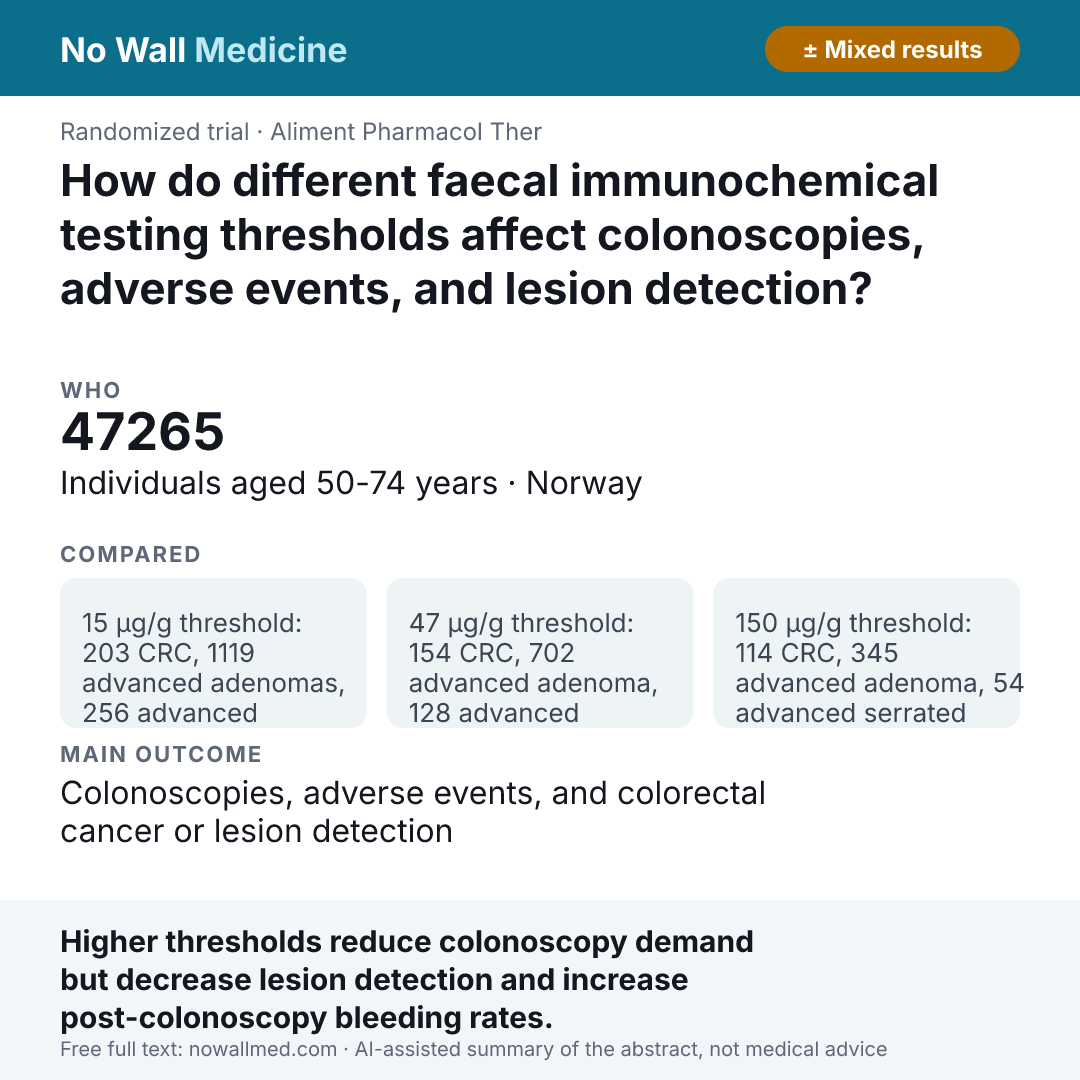
Performance of Faecal Immunochemical Testing for Colorectal Cancer Screening at Varying Positivity Thresholds
Randomized trialMixed results
How do different faecal immunochemical testing thresholds affect colonoscopies, adverse events, and lesion detection?
Who
47265
Individuals aged 50-74 years · Norway
Compared
15 μg/g threshold: 203 CRC, 1119 advanced adenomas, 256 advanced serrated lesions
47 μg/g threshold: 154 CRC, 702 advanced adenoma, 128 advanced serrated lesion
150 μg/g threshold: 114 CRC, 345 advanced adenoma, 54 advanced serrated lesion
Main outcome
Colonoscopies, adverse events, and colorectal cancer or lesion detection
Bottom line: Higher thresholds reduce colonoscopy demand but decrease lesion detection and increase post-colonoscopy bleeding rates.
Aliment Pharmacol Ther · 2024-10-07 · Save PNG
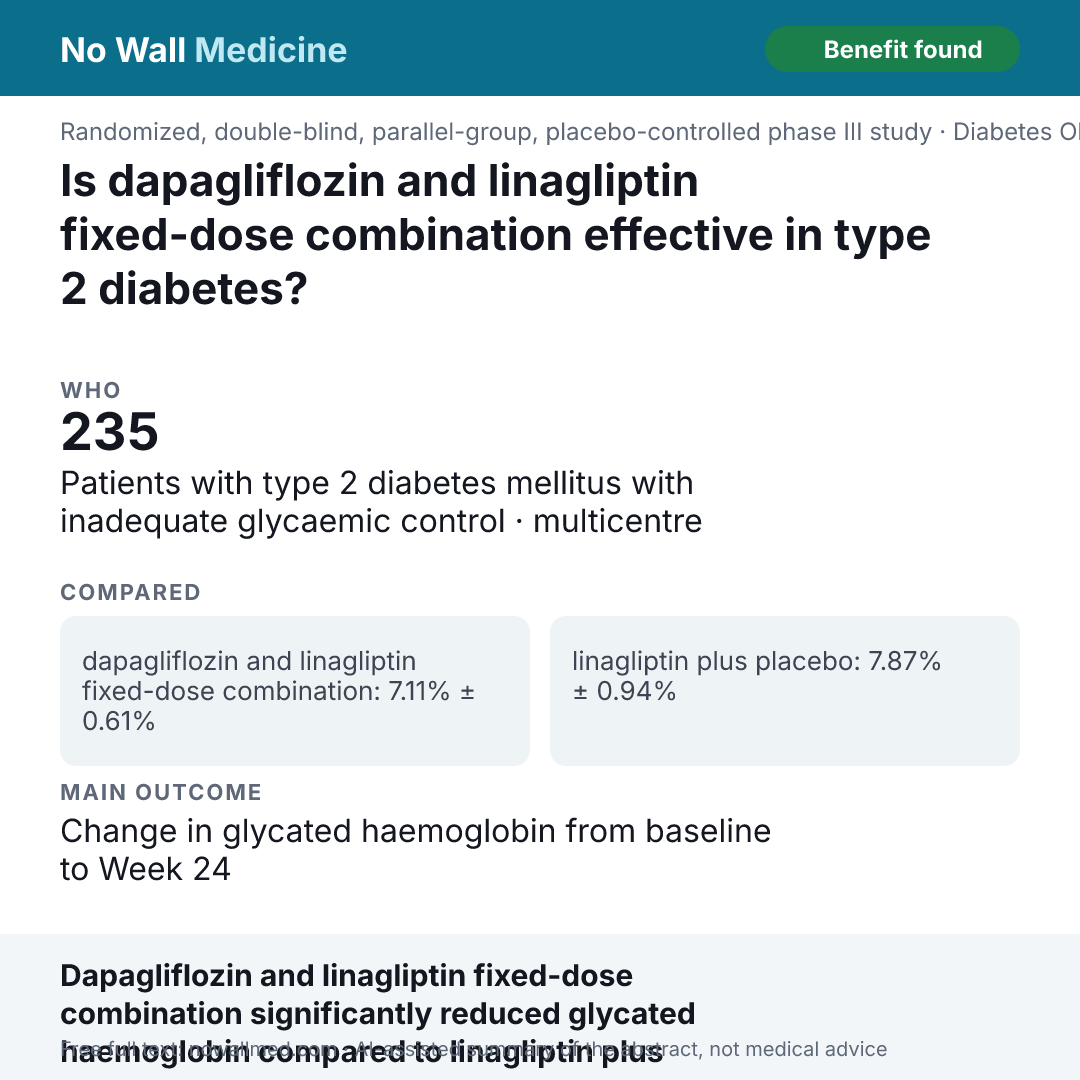
Efficacy and safety of a fixed-dose combination of dapagliflozin and linagliptin (AJU-A51) in patients with type 2 diabetes mellitus: A multicentre, randomized, double-blind, parallel-group, placebo-controlled phase III study
Randomized, double-blind, parallel-group, placebo-controlled phase III studyBenefit found
Is dapagliflozin and linagliptin fixed-dose combination effective in type 2 diabetes?
Who
235
Patients with type 2 diabetes mellitus with inadequate glycaemic control · multicentre
Compared
dapagliflozin and linagliptin fixed-dose combination: 7.11% ± 0.61%
linagliptin plus placebo: 7.87% ± 0.94%
Main outcome
Change in glycated haemoglobin from baseline to Week 24
Result: -0.88% (95% confidence interval -1.07 to -0.68)
Bottom line: Dapagliflozin and linagliptin fixed-dose combination significantly reduced glycated haemoglobin compared to linagliptin plus placebo.
Diabetes Obes Metab · 2024-10-07 · Save PNG
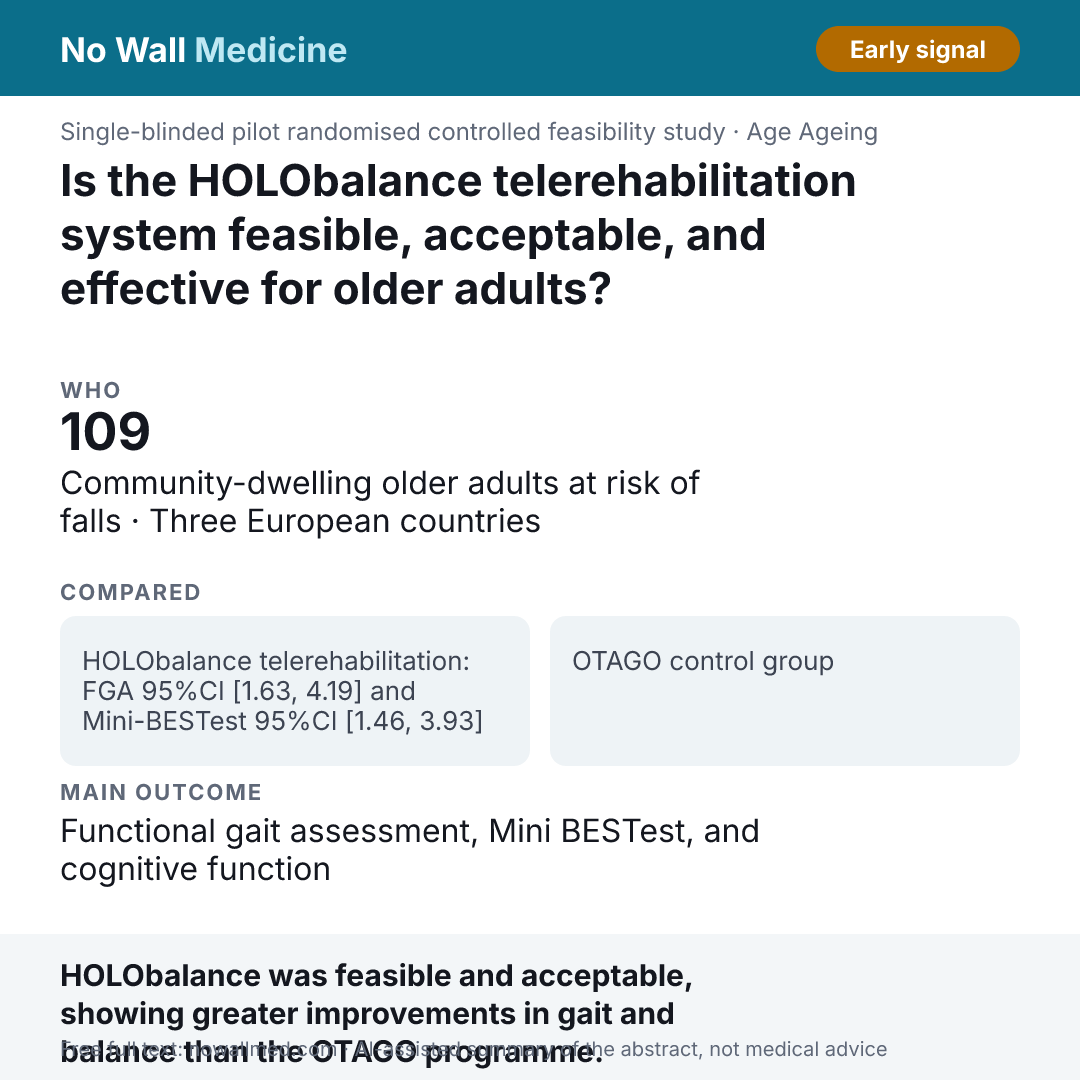
Feasibility and acceptability of the HOLObalance telerehabilitation system compared with standard care for older adults at risk of falls: the HOLOBalance assessor blinded pilot randomised controlled study
Single-blinded pilot randomised controlled feasibility studyEarly signal
Is the HOLObalance telerehabilitation system feasible, acceptable, and effective for older adults?
Who
109
Community-dwelling older adults at risk of falls · Three European countries
Compared
HOLObalance telerehabilitation: FGA 95%CI [1.63, 4.19] and Mini-BESTest 95%CI [1.46, 3.93]
OTAGO control group
Main outcome
Functional gait assessment, Mini BESTest, and cognitive function
Bottom line: HOLObalance was feasible and acceptable, showing greater improvements in gait and balance than the OTAGO programme.
Age Ageing · 2024-10-07 · Save PNG
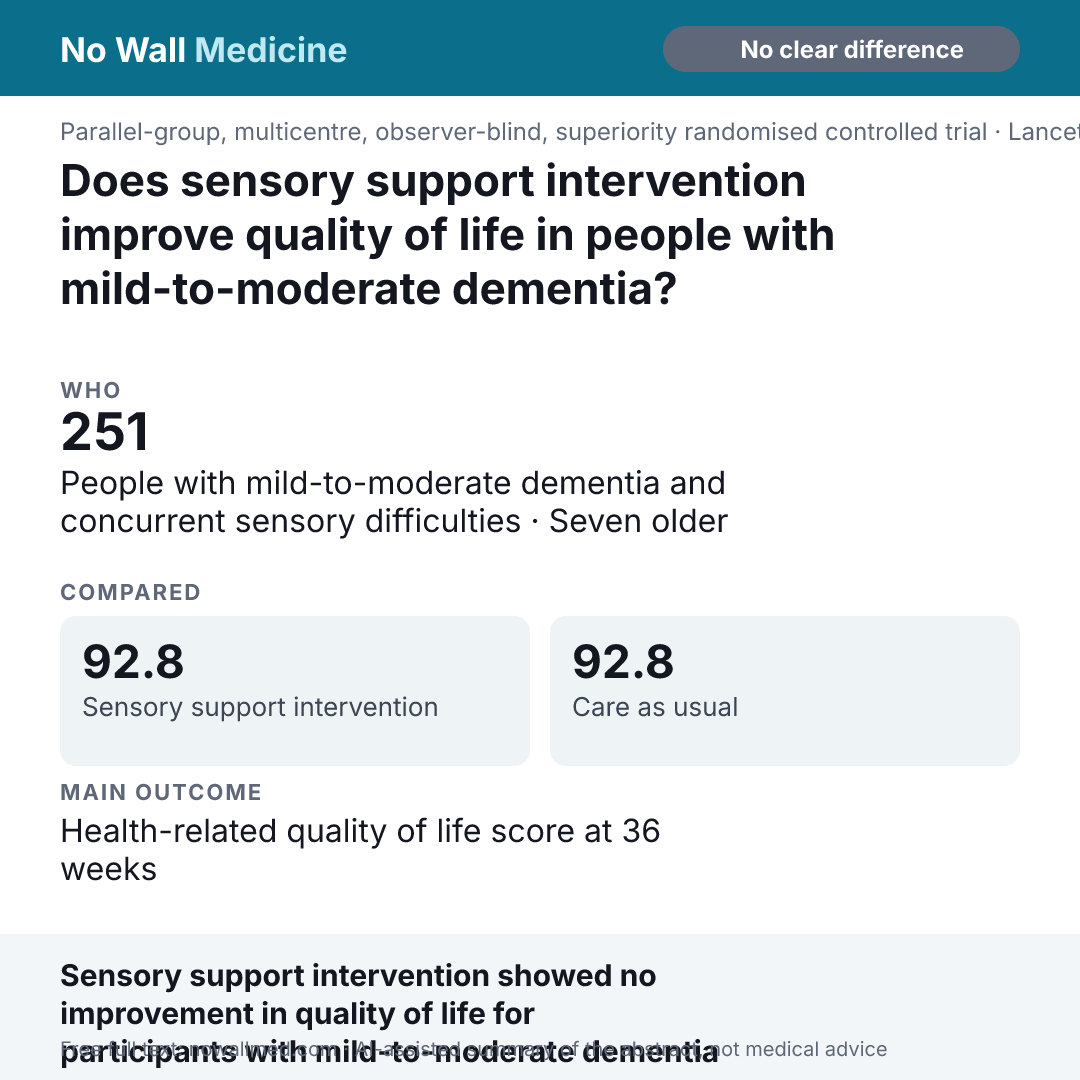
Hearing and vision rehabilitation for people with dementia in five European countries (SENSE-Cog): a randomised controlled trial
Parallel-group, multicentre, observer-blind, superiority randomised controlled trialNo clear difference
Does sensory support intervention improve quality of life in people with mild-to-moderate dementia?
Who
251
People with mild-to-moderate dementia and concurrent sensory difficulties · Seven older adult clinics in five European countries
Compared
92.8Sensory support intervention (SD 15.2)
92.8Care as usual (14.0)
Main outcome
Health-related quality of life score at 36 weeks
Result: adjusted difference 0.18, 95% CI -2.13 to 2.30
Bottom line: Sensory support intervention showed no improvement in quality of life for participants with mild-to-moderate dementia over the longer term.
Funded by: EU Horizon 2020
Lancet Healthy Longev · 2024-10-07 · Save PNG
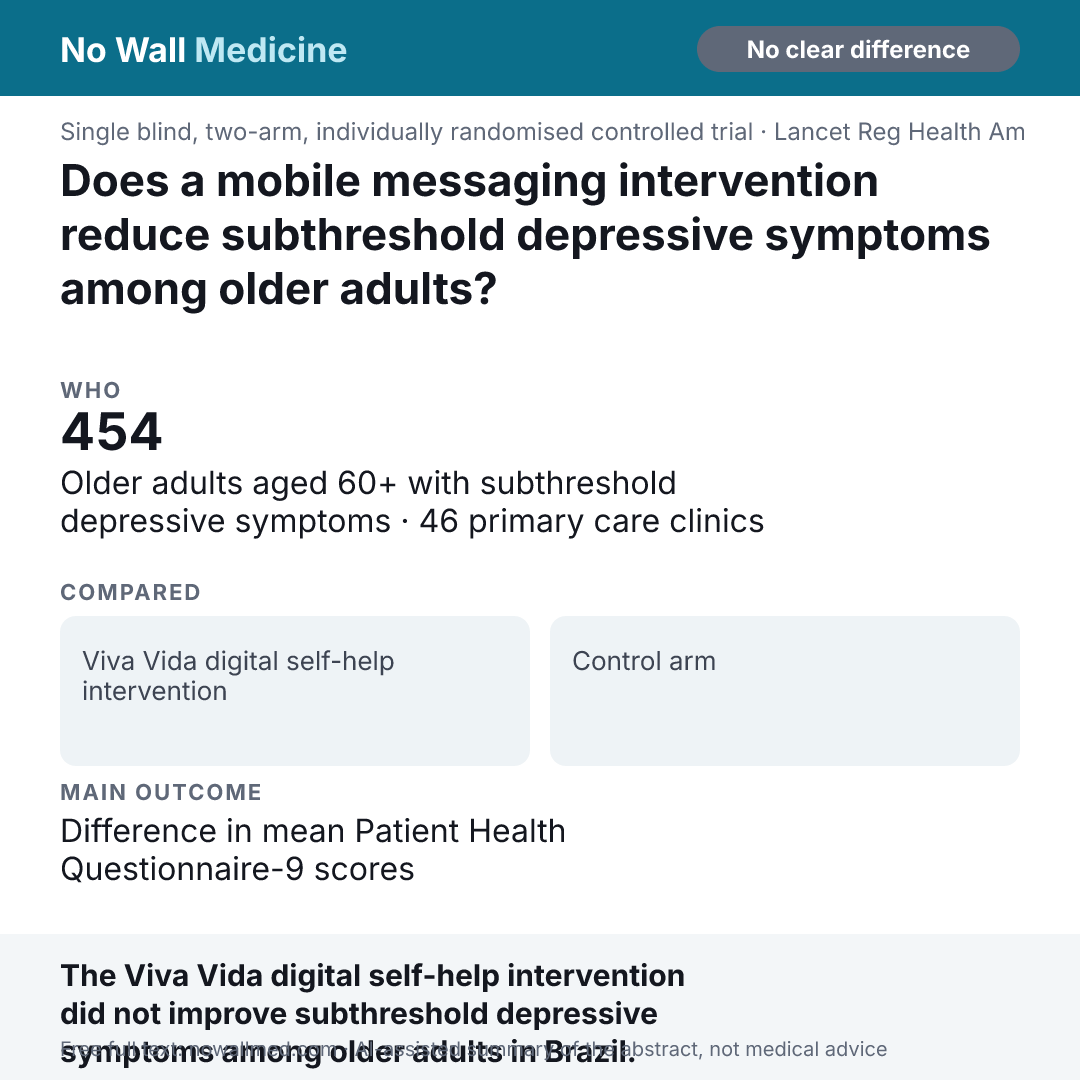
A self-help mobile messaging intervention to improve subthreshold depressive symptoms among older adults in a socioeconomically deprived region of Brazil (PRODIGITAL): a pragmatic, two-arm randomised controlled trial
Single blind, two-arm, individually randomised controlled trialNo clear difference
Does a mobile messaging intervention reduce subthreshold depressive symptoms among older adults?
Who
454
Older adults aged 60+ with subthreshold depressive symptoms · 46 primary care clinics in Guarulhos, Brazil
Compared
Viva Vida digital self-help intervention
Control arm
Main outcome
Difference in mean Patient Health Questionnaire-9 scores
Result: adjusted difference: -0.61 (95% CI: -1.75, 0.53)
Bottom line: The Viva Vida digital self-help intervention did not improve subthreshold depressive symptoms among older adults in Brazil.
Funded by: São Paulo Research Foundation and UK Joint Global Health Trials
Lancet Reg Health Am · 2024-10-07 · Save PNG
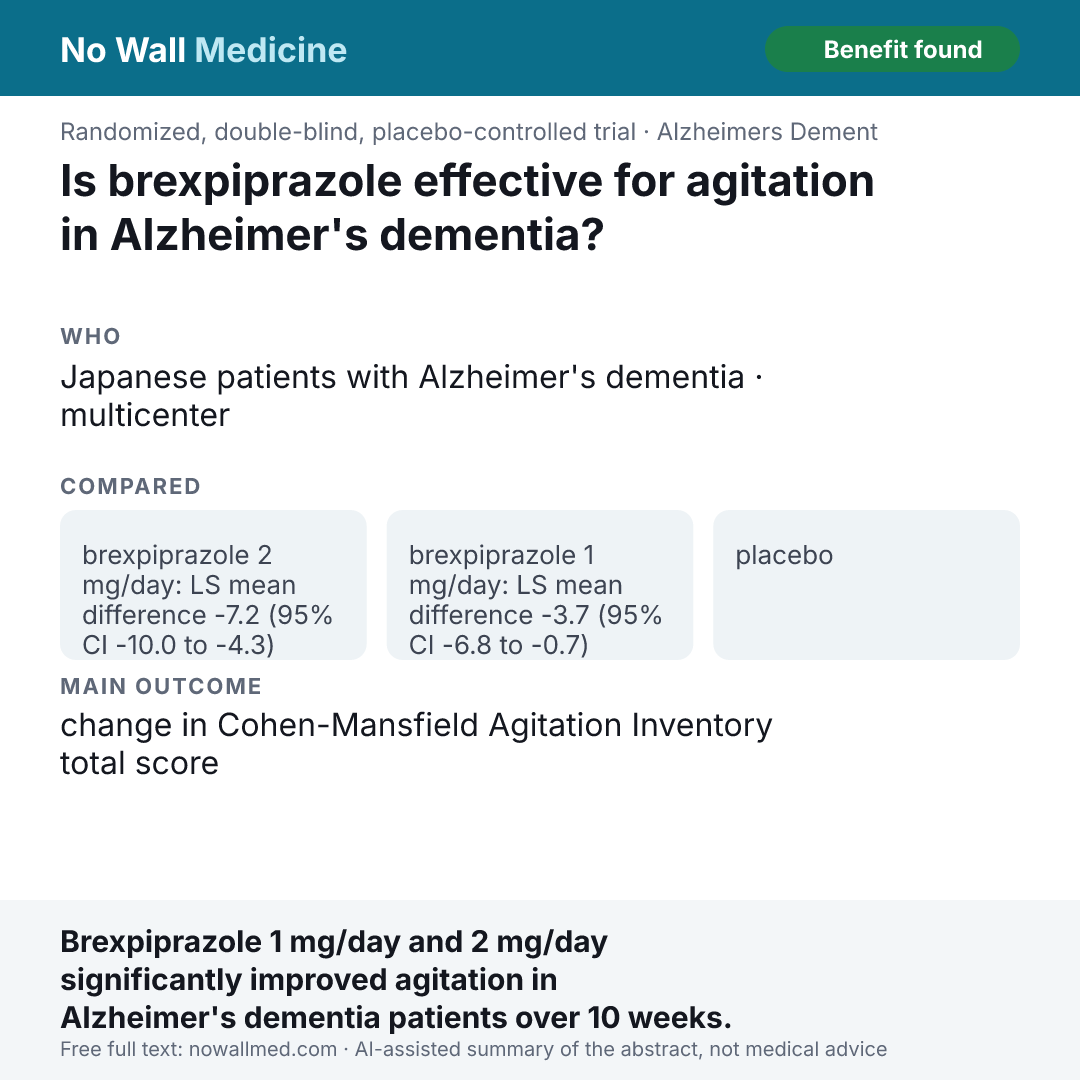
Brexpiprazole treatment for agitation in Alzheimer's dementia: A randomized study
Randomized, double-blind, placebo-controlled trialBenefit found
Is brexpiprazole effective for agitation in Alzheimer's dementia?
Who
Japanese patients with Alzheimer's dementia · multicenter
Compared
brexpiprazole 2 mg/day: LS mean difference -7.2 (95% CI -10.0 to -4.3)
brexpiprazole 1 mg/day: LS mean difference -3.7 (95% CI -6.8 to -0.7)
placebo
Main outcome
change in Cohen-Mansfield Agitation Inventory total score
Bottom line: Brexpiprazole 1 mg/day and 2 mg/day significantly improved agitation in Alzheimer's dementia patients over 10 weeks.
Alzheimers Dement · 2024-10-06 · Save PNG
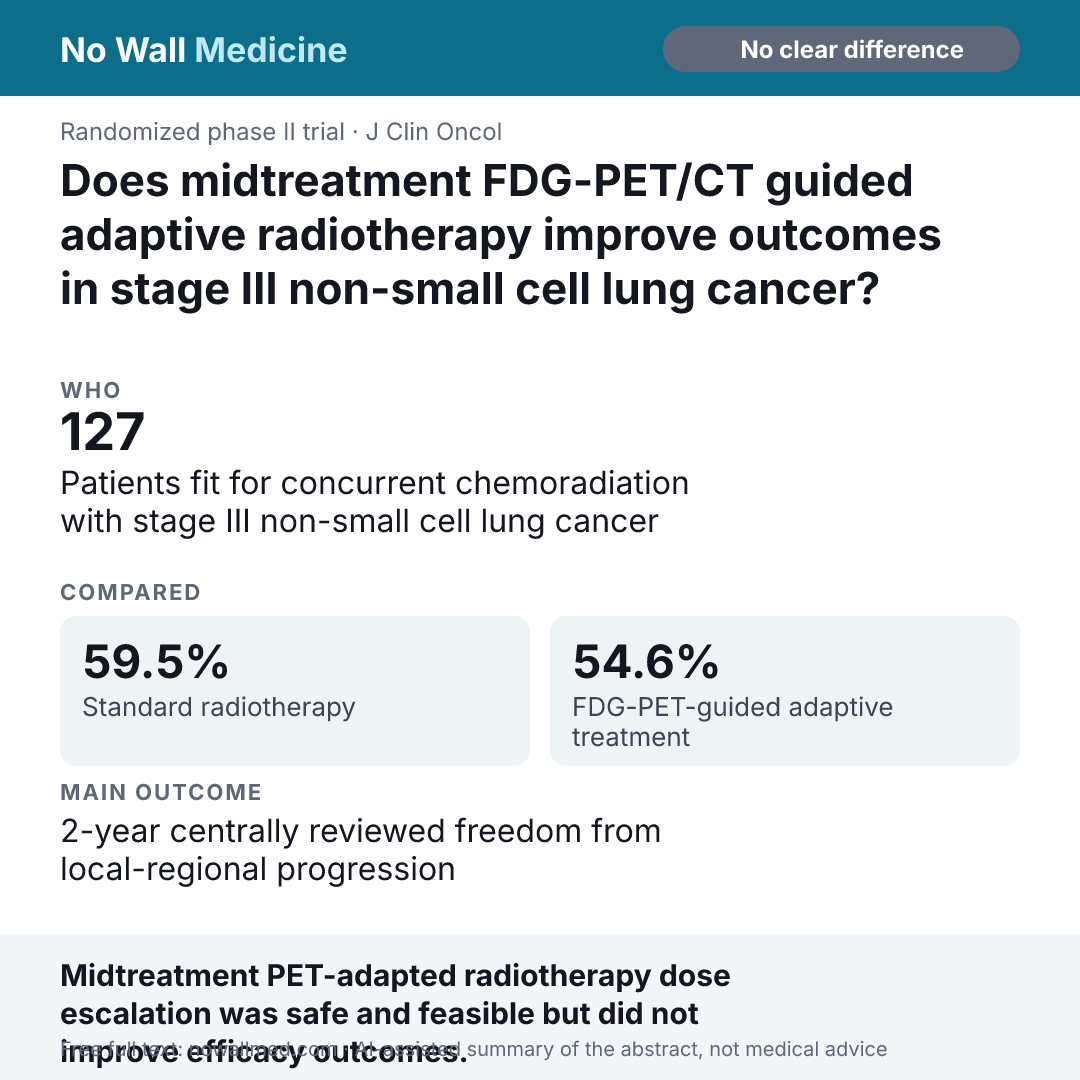
Primary Results of NRG-RTOG1106/ECOG-ACRIN 6697: A Randomized Phase II Trial of Individualized Adaptive (chemo)Radiotherapy Using Midtreatment 18F-Fluorodeoxyglucose Positron Emission Tomography/Computed Tomography in Stage III Non-Small Cell Lung Cancer
Randomized phase II trialNo clear difference
Does midtreatment FDG-PET/CT guided adaptive radiotherapy improve outcomes in stage III non-small cell lung cancer?
Who
127
Patients fit for concurrent chemoradiation with stage III non-small cell lung cancer
Compared
59.5%Standard radiotherapy
54.6%FDG-PET-guided adaptive treatment
Main outcome
2-year centrally reviewed freedom from local-regional progression
Bottom line: Midtreatment PET-adapted radiotherapy dose escalation was safe and feasible but did not improve efficacy outcomes.
J Clin Oncol · 2024-10-04 · Save PNG
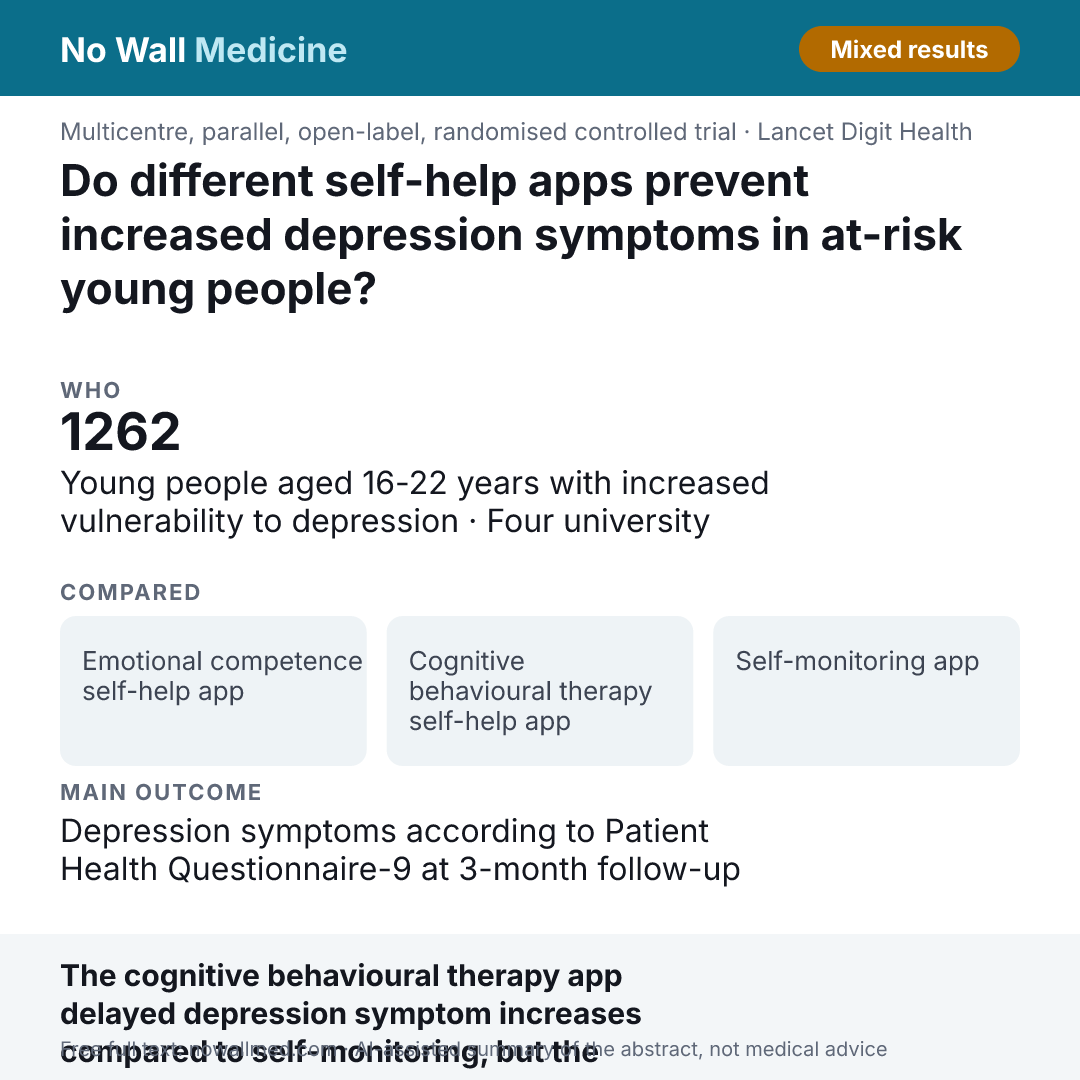
Emotional competence self-help app versus cognitive behavioural self-help app versus self-monitoring app to prevent depression in young adults with elevated risk (ECoWeB PREVENT): an international, multicentre, parallel, open-label, randomised controlled trial
Multicentre, parallel, open-label, randomised controlled trialMixed results
Do different self-help apps prevent increased depression symptoms in at-risk young people?
Who
1262
Young people aged 16-22 years with increased vulnerability to depression · Four university trial sites in UK, Germany, Spain, and Belgium
Compared
Emotional competence self-help app
Cognitive behavioural therapy self-help app
Self-monitoring app
Main outcome
Depression symptoms according to Patient Health Questionnaire-9 at 3-month follow-up
Result: mean difference in PHQ-9 -1·18 (95% CI -2·01 to -0·34) for CBT vs self-monitoring
Bottom line: The cognitive behavioural therapy app delayed depression symptom increases compared to self-monitoring, but the emotional competence app was not superior.
Funded by: European Commission
Lancet Digit Health · 2024-10-04 · Save PNG
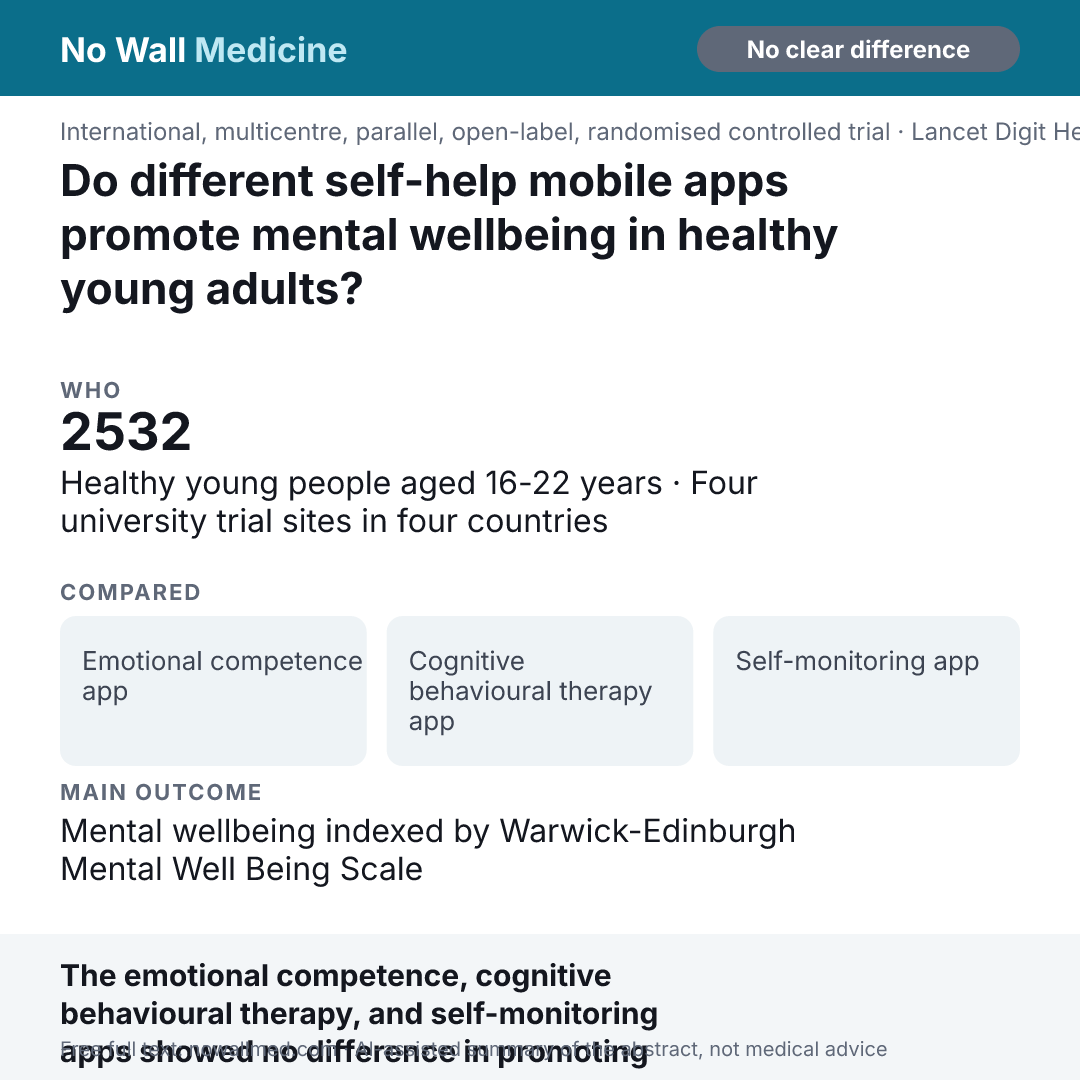
Emotional competence self-help mobile phone app versus cognitive behavioural self-help app versus self-monitoring app to promote mental wellbeing in healthy young adults (ECoWeB PROMOTE): an international, multicentre, parallel, open-label, randomised controlled trial
International, multicentre, parallel, open-label, randomised controlled trialNo clear difference
Do different self-help mobile apps promote mental wellbeing in healthy young adults?
Who
2532
Healthy young people aged 16-22 years · Four university trial sites in four countries
Compared
Emotional competence app
Cognitive behavioural therapy app
Self-monitoring app
Main outcome
Mental wellbeing indexed by Warwick-Edinburgh Mental Well Being Scale
Result: no difference (global p=0·47)
Bottom line: The emotional competence, cognitive behavioural therapy, and self-monitoring apps showed no difference in promoting mental wellbeing.
Limitation: Low intensity of interventions and difficulty improving wellbeing in low-risk populations.
Funded by: European Commission
Lancet Digit Health · 2024-10-04 · Save PNG
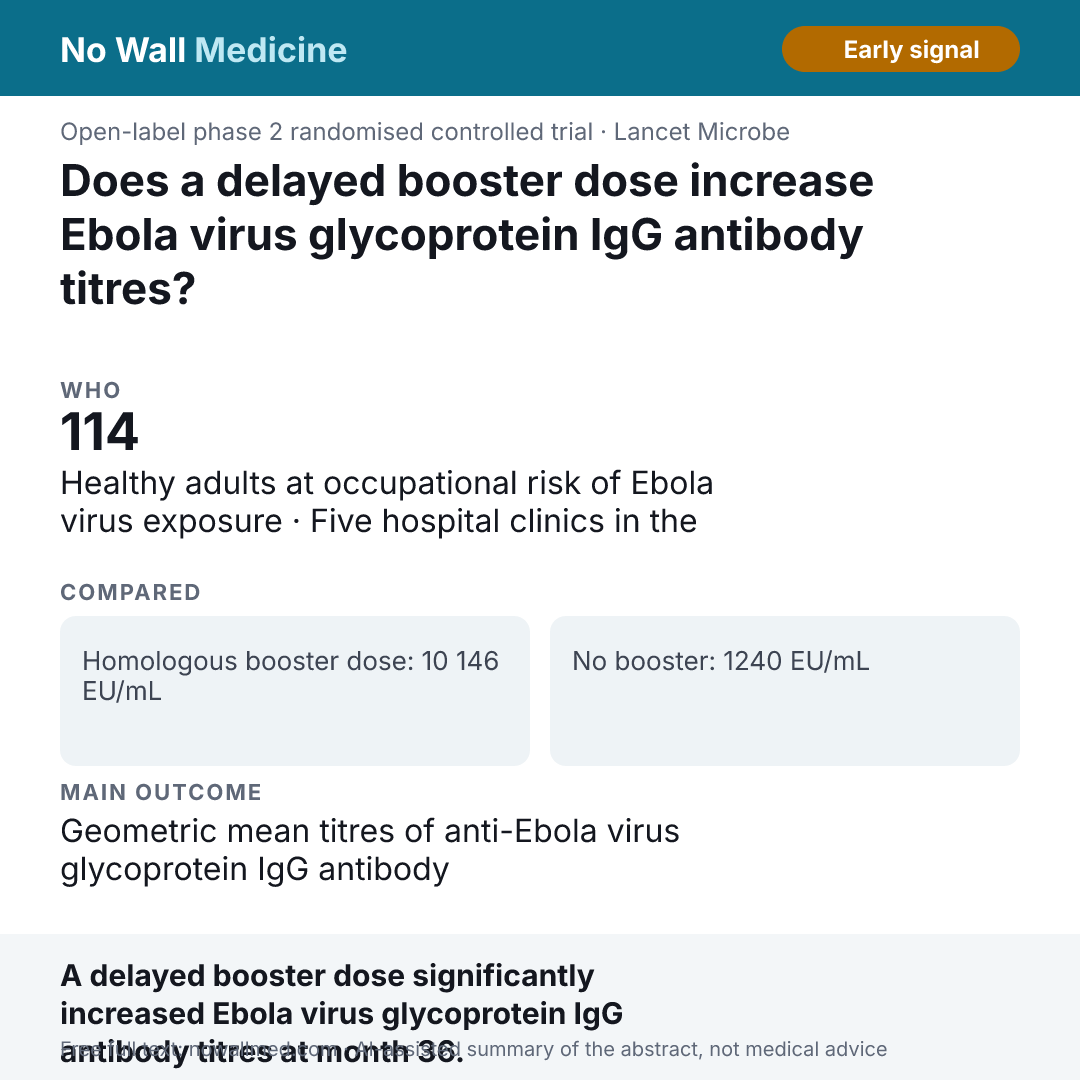
Safety and immunogenicity of a delayed booster dose of the rVSVΔG-ZEBOV-GP vaccine for prevention of Ebola virus disease: a multicentre, open-label, phase 2 randomised controlled trial
Open-label phase 2 randomised controlled trialEarly signal
Does a delayed booster dose increase Ebola virus glycoprotein IgG antibody titres?
Who
114
Healthy adults at occupational risk of Ebola virus exposure · Five hospital clinics in the USA and Canada
Compared
Homologous booster dose: 10 146 EU/mL
No booster: 1240 EU/mL
Main outcome
Geometric mean titres of anti-Ebola virus glycoprotein IgG antibody
Result: GMR 7.8 (95% CI 5.5 to 10.2)
Bottom line: A delayed booster dose significantly increased Ebola virus glycoprotein IgG antibody titres at month 36.
Lancet Microbe · 2024-10-04 · Save PNG
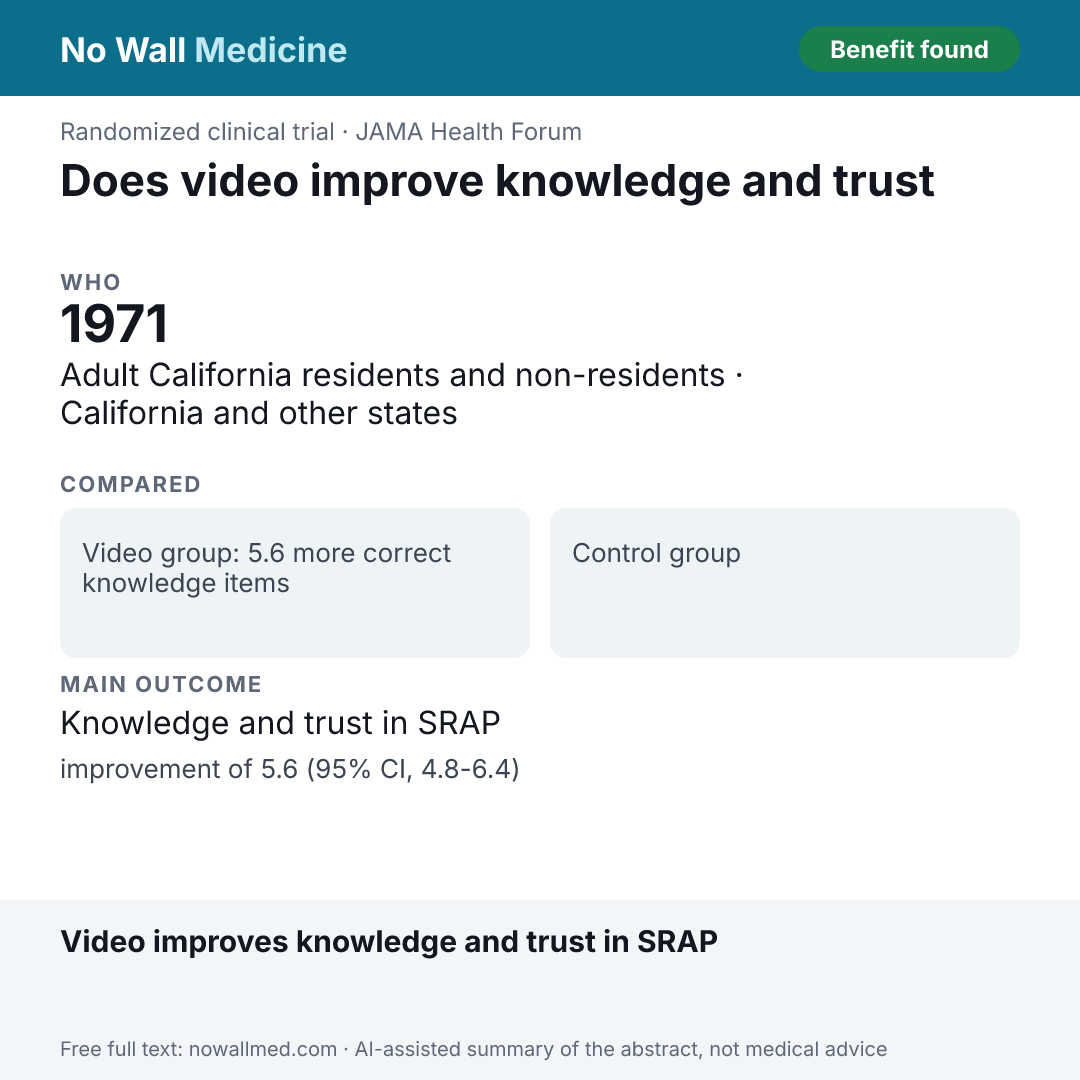
Promotion of Knowledge and Trust Surrounding Scarce Resource Allocation Policies: A Randomized Clinical Trial
Randomized clinical trialBenefit found
Does video improve knowledge and trust
Who
1971
Adult California residents and non-residents · California and other states
Compared
Video group: 5.6 more correct knowledge items
Control group
Main outcome
Knowledge and trust in SRAP
Result: improvement of 5.6 (95% CI, 4.8-6.4)
Bottom line: Video improves knowledge and trust in SRAP
JAMA Health Forum · 2024-10-04 · Save PNG
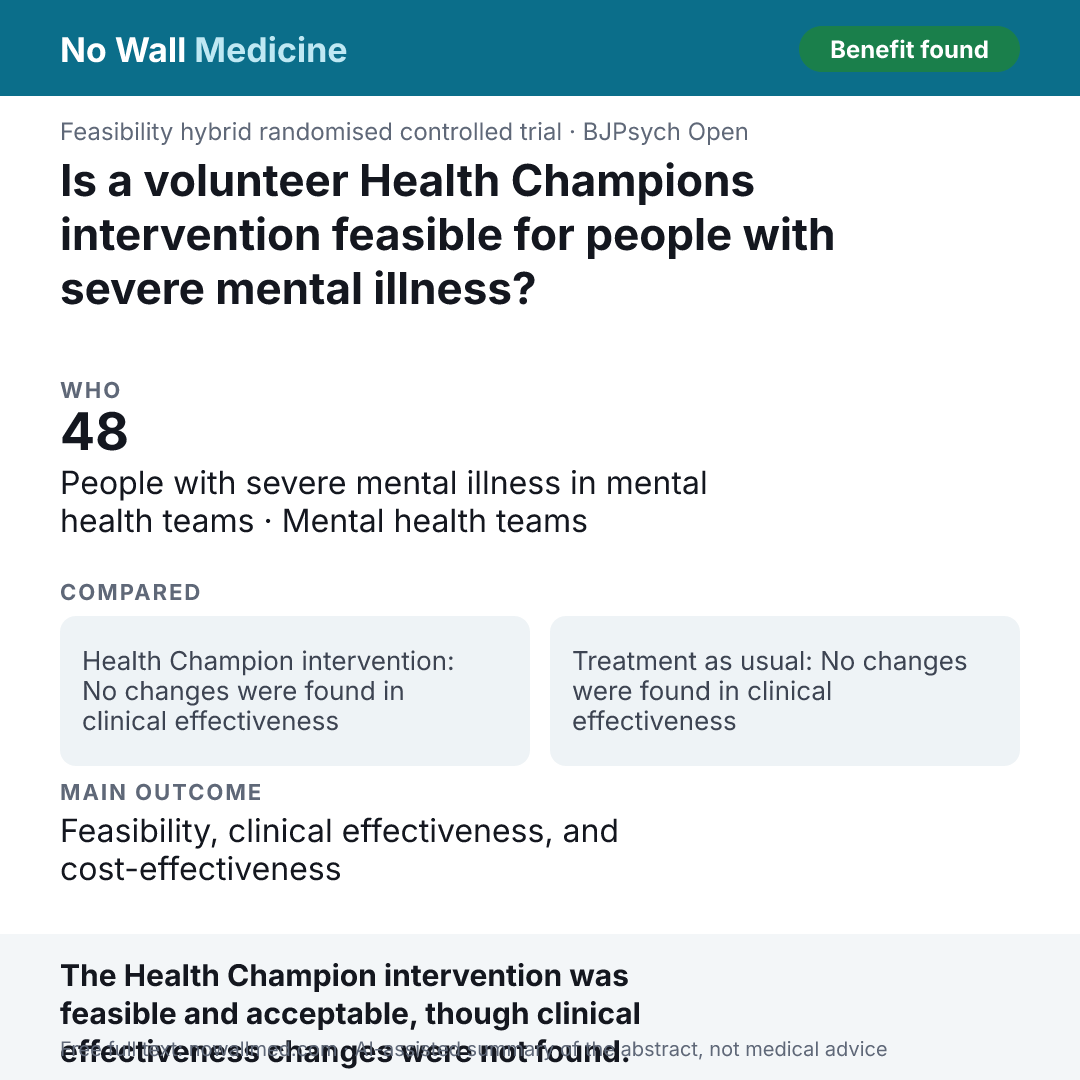
Evaluating a volunteer 'Health Champions' intervention supporting people with severe mental illness to manage their physical health: feasibility hybrid randomised controlled trial
Feasibility hybrid randomised controlled trialBenefit found
Is a volunteer Health Champions intervention feasible for people with severe mental illness?
Who
48
People with severe mental illness in mental health teams · Mental health teams
Compared
Health Champion intervention: No changes were found in clinical effectiveness
Treatment as usual: No changes were found in clinical effectiveness
Main outcome
Feasibility, clinical effectiveness, and cost-effectiveness
Bottom line: The Health Champion intervention was feasible and acceptable, though clinical effectiveness changes were not found.
BJPsych Open · 2024-10-04 · Save PNG
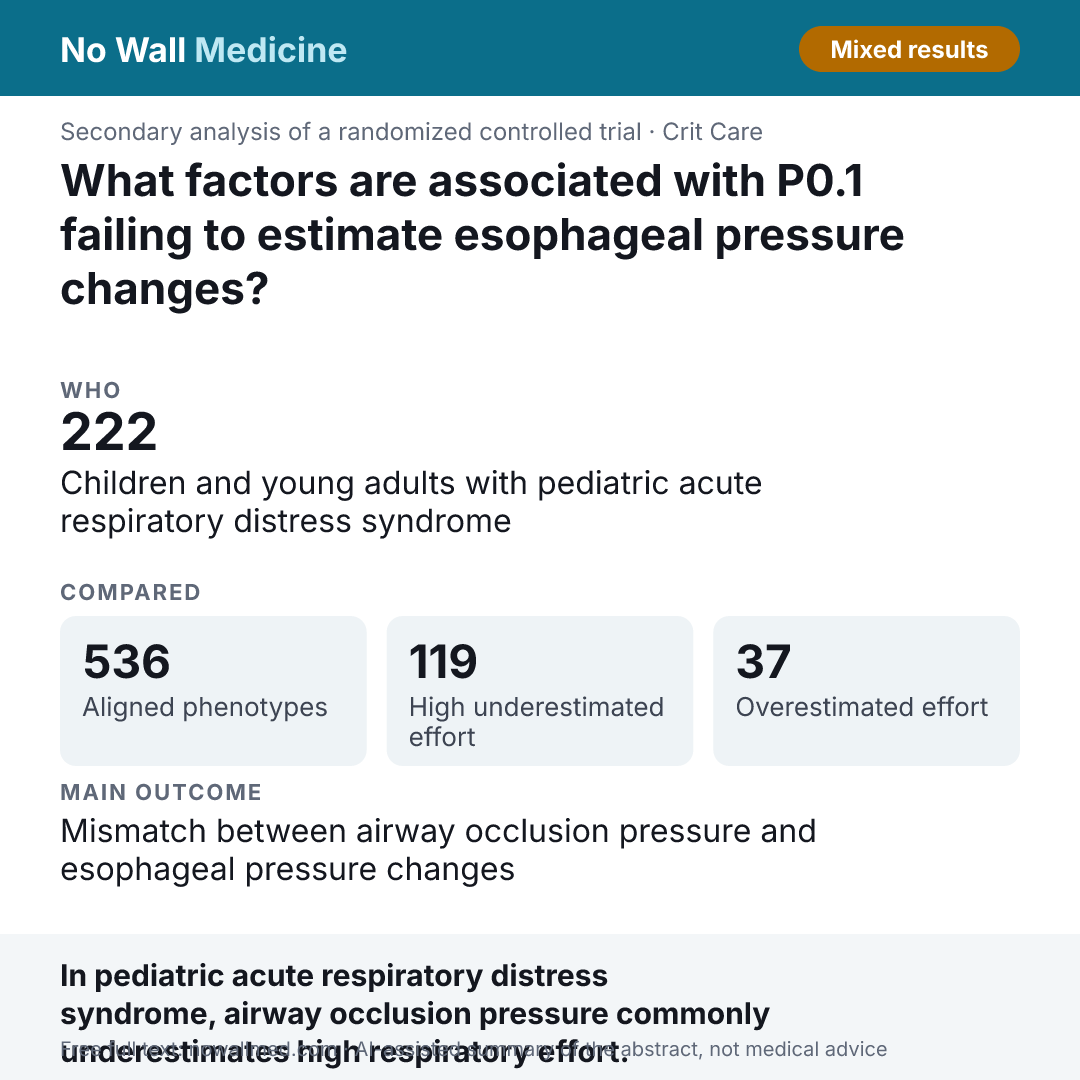
Phenotypes based on respiratory drive and effort to identify the risk factors when P0.1 fails to estimate ∆PES in ventilated children
Secondary analysis of a randomized controlled trialMixed results
What factors are associated with P0.1 failing to estimate esophageal pressure changes?
Who
222
Children and young adults with pediatric acute respiratory distress syndrome
Compared
536Aligned phenotypes (77%)
119High underestimated effort (12%)
37Overestimated effort (4%)
Main outcome
Mismatch between airway occlusion pressure and esophageal pressure changes
Bottom line: In pediatric acute respiratory distress syndrome, airway occlusion pressure commonly underestimates high respiratory effort.
Crit Care · 2024-10-04 · Save PNG
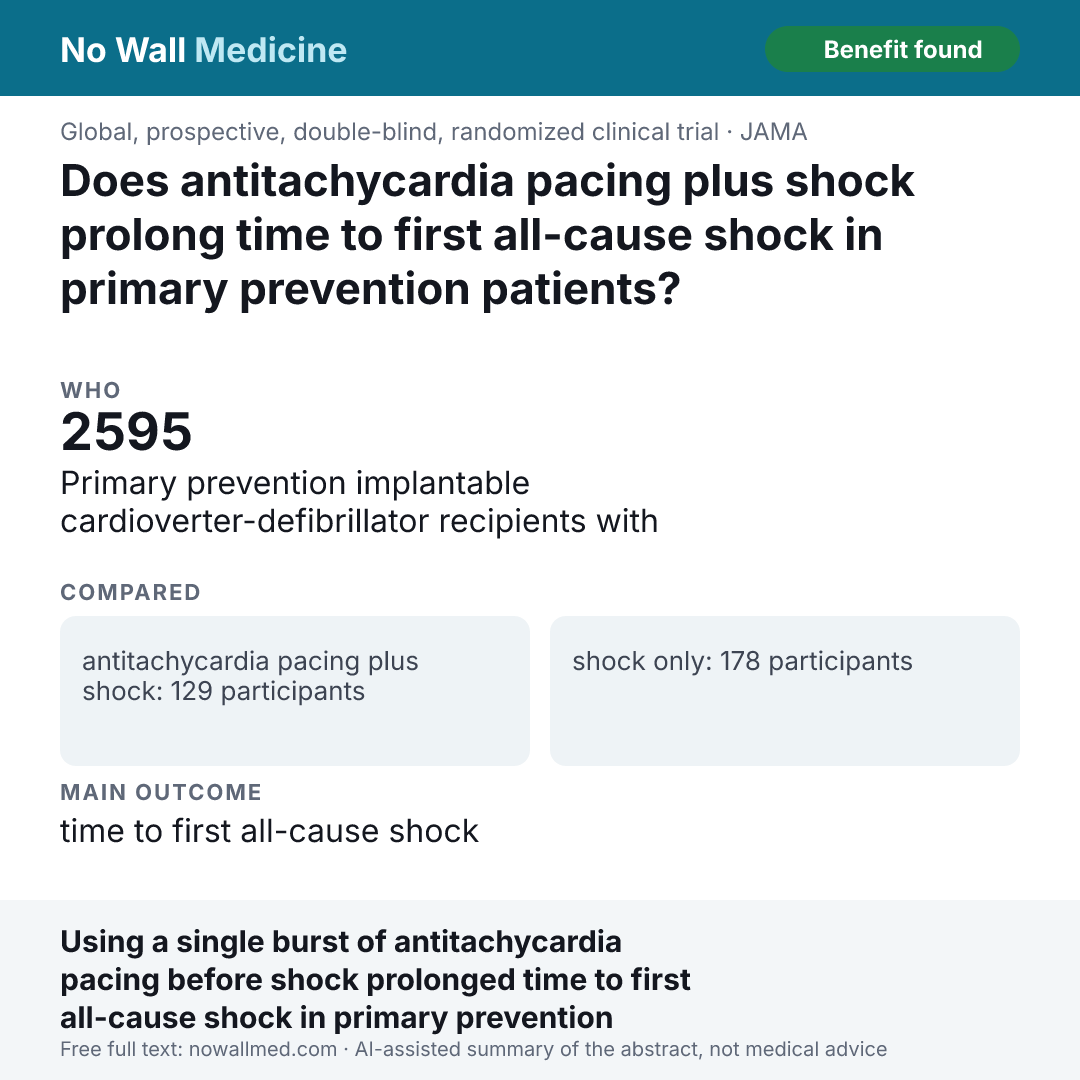
Assessment of Antitachycardia Pacing in Primary Prevention Patients: The APPRAISE ATP Randomized Clinical Trial
Global, prospective, double-blind, randomized clinical trialBenefit found
Does antitachycardia pacing plus shock prolong time to first all-cause shock in primary prevention patients?
Who
2595
Primary prevention implantable cardioverter-defibrillator recipients with left ventricular ejection fraction ≤35% · 134 sites in 8 countries
Compared
antitachycardia pacing plus shock: 129 participants
shock only: 178 participants
Main outcome
time to first all-cause shock
Result: hazard ratio 0.72 (95.9% CI, 0.57-0.92)
Bottom line: Using a single burst of antitachycardia pacing before shock prolonged time to first all-cause shock in primary prevention patients.
JAMA · 2024-10-03 · Save PNG
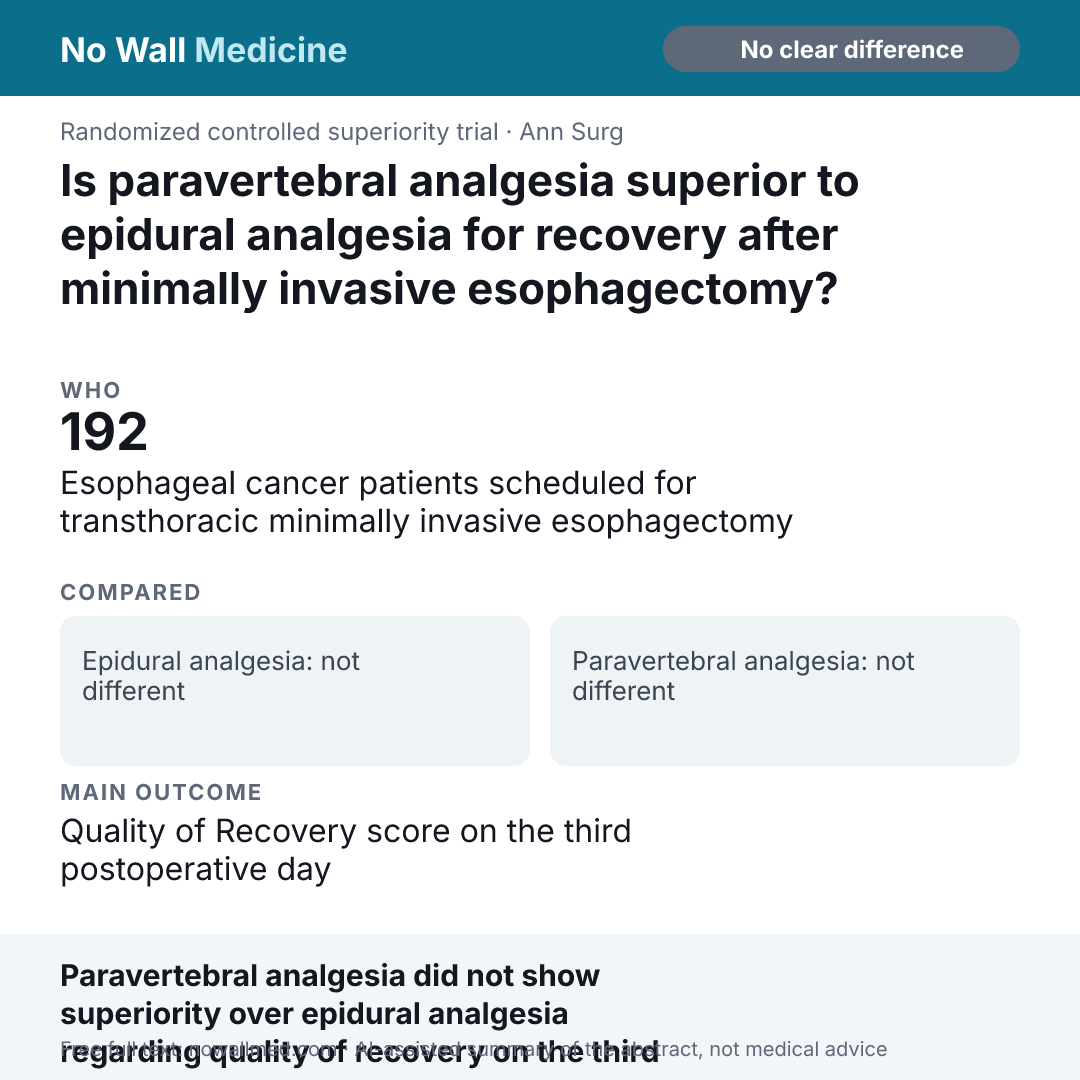
Paravertebral Versus EPidural Analgesia in Minimally Invasive Esophageal ResectioN (PEPMEN): A Randomized Controlled Multicenter Trial
Randomized controlled superiority trialNo clear difference
Is paravertebral analgesia superior to epidural analgesia for recovery after minimally invasive esophagectomy?
Who
192
Esophageal cancer patients scheduled for transthoracic minimally invasive esophagectomy · 4 Dutch centers
Compared
Epidural analgesia: not different
Paravertebral analgesia: not different
Main outcome
Quality of Recovery score on the third postoperative day
Result: mean difference: 3.7, 95% CI: -2.3 to 9.7
Bottom line: Paravertebral analgesia did not show superiority over epidural analgesia regarding quality of recovery on the third postoperative day.
Ann Surg · 2024-10-03 · Save PNG
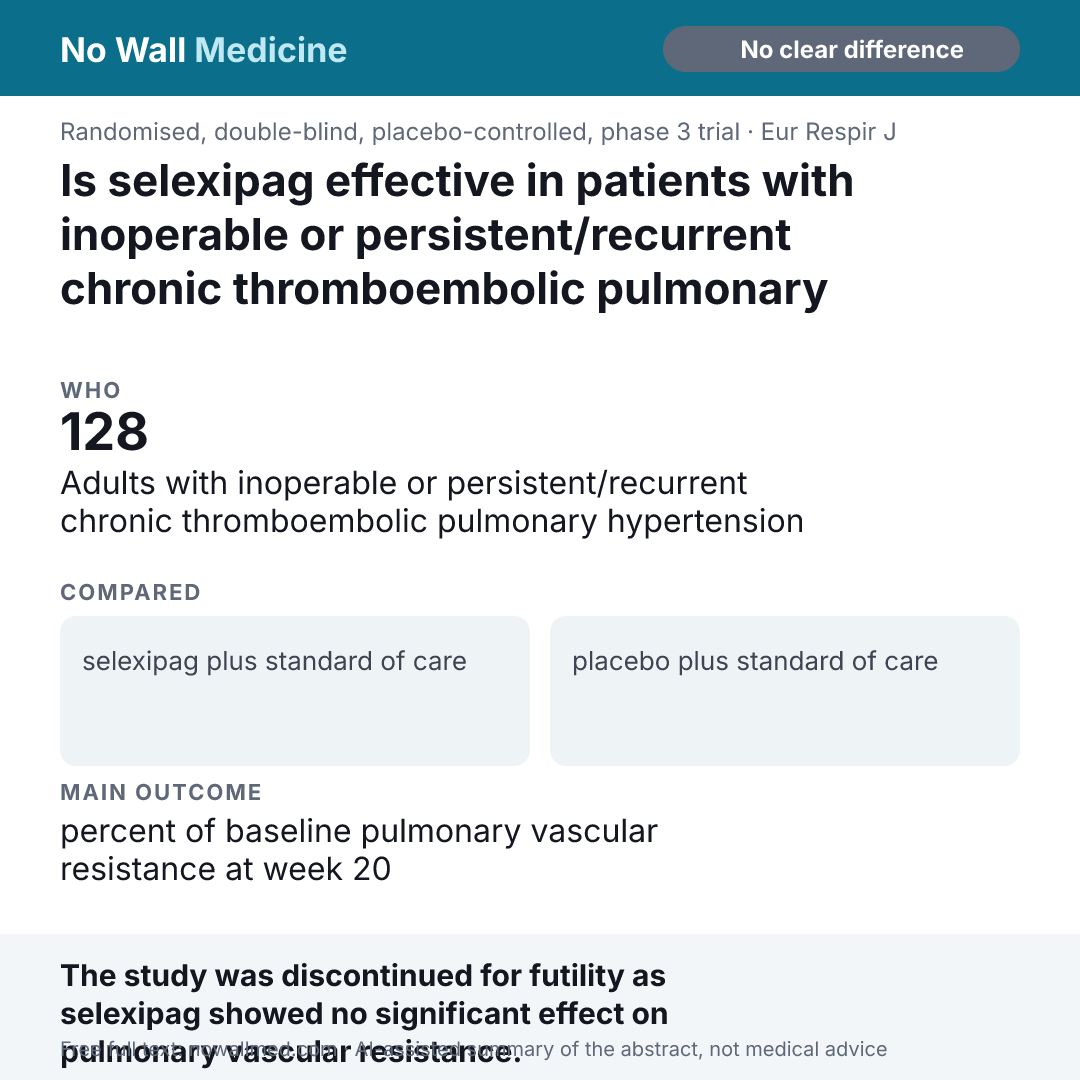
Efficacy and safety of selexipag in patients with inoperable or persistent/recurrent CTEPH (SELECT randomised trial)
Randomised, double-blind, placebo-controlled, phase 3 trialNo clear difference
Is selexipag effective in patients with inoperable or persistent/recurrent chronic thromboembolic pulmonary hypertension?
Who
128
Adults with inoperable or persistent/recurrent chronic thromboembolic pulmonary hypertension · Multicentre
Compared
selexipag plus standard of care
placebo plus standard of care
Main outcome
percent of baseline pulmonary vascular resistance at week 20
Result: between-treatment geometric least squares mean ratio of PVR: 0.95 (95% CI 0.84-1.07)
Bottom line: The study was discontinued for futility as selexipag showed no significant effect on pulmonary vascular resistance.
Eur Respir J · 2024-10-03 · Save PNG
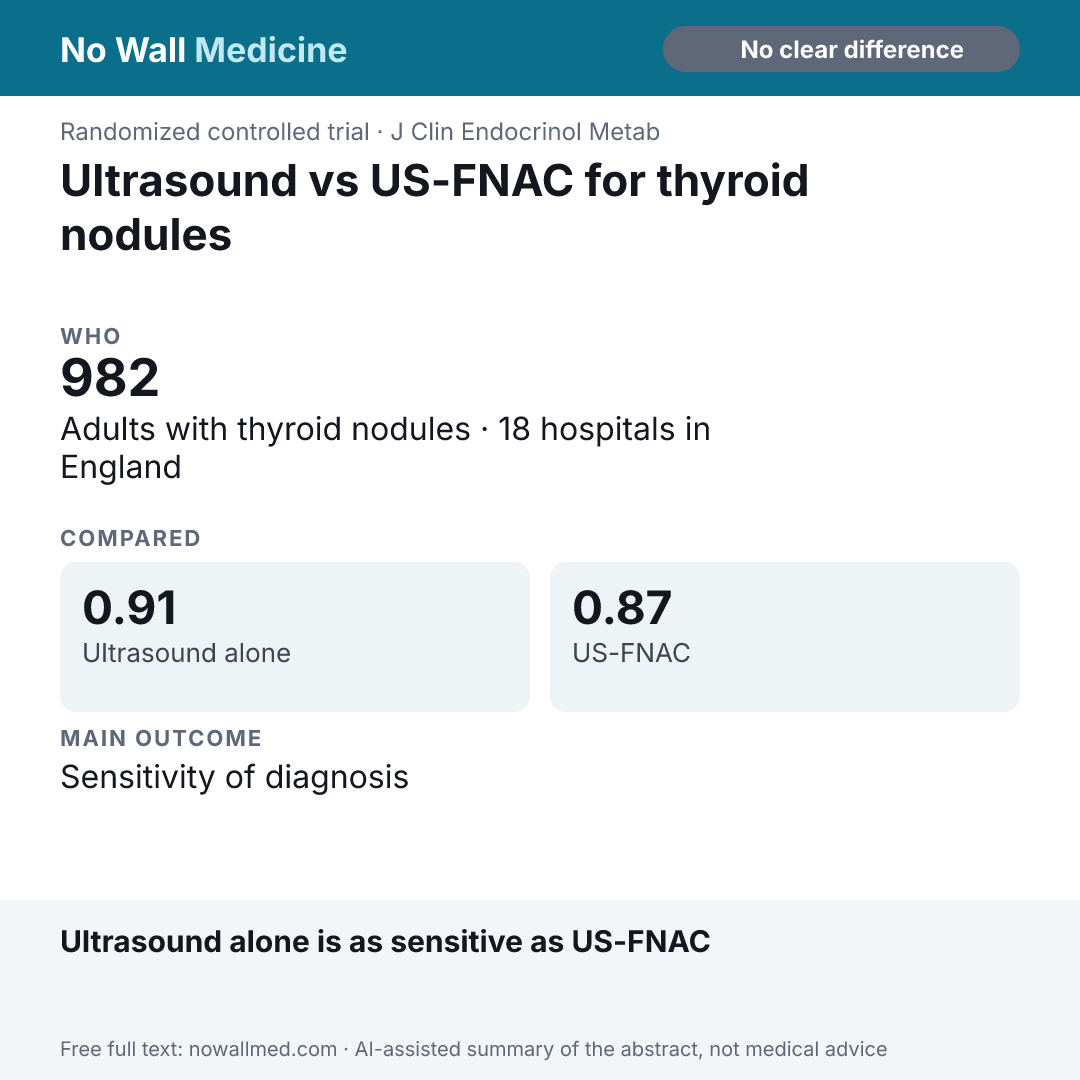
Diagnostic Performance of Ultrasound vs Ultrasound-Guided FNAC in Thyroid Nodules: Data From the ElaTION Trial
Randomized controlled trialNo clear difference
Ultrasound vs US-FNAC for thyroid nodules
Who
982
Adults with thyroid nodules · 18 hospitals in England
Compared
0.91Ultrasound alone (95% CI 0.85-0.97)
0.87US-FNAC (95% CI 0.80-0.95)
Main outcome
Sensitivity of diagnosis
Bottom line: Ultrasound alone is as sensitive as US-FNAC
J Clin Endocrinol Metab · 2024-10-03 · Save PNG