Visual abstracts
New randomized trials and meta-analyses from leading journals at a glance: who was studied, what was compared, and what was found. Every paper is free to read in full.
All specialtiesCardiology 231Oncology 185Gastroenterology & Hepatology 105Infectious Disease 178Neurology 105Psychiatry & Mental Health 153Pulmonology 105Critical Care 67Endocrinology & Diabetes 151Pediatrics 92Surgery 73Orthopedics & Sports Medicine 43Neurosurgery 10Cardiothoracic & Vascular Surgery 25Plastic & Reconstructive Surgery 52Nephrology 46Rheumatology 43Hematology 52Dermatology 25Ophthalmology 44Obstetrics & Gynecology 60Public & Global Health 68Radiology & Imaging 19Anesthesiology 36Urology 53ENT (Otolaryngology) 30Emergency Medicine 25Allergy & Immunology 17Geriatrics 70Family Medicine & Primary Care 30Medical Genetics & Genomics 25Pathology & Laboratory Medicine 5Physical Medicine & Rehabilitation 58Palliative Care 30Nutrition 79Digital Health & AI 207General Medicine 32
Minimal detectable change of the Patient Health Questionnaire-9, Patient Health Questionnaire-8, and Patient Health Questionnaire-2: individual patient data meta-analysis
Individual participant data meta-analysisUnclear result
What is the minimal detectable change for PHQ-9, PHQ-8, and PHQ-2?
Who
44085
Adults with major depressive disorder or episode in non-psychiatric settings · Non-psychiatric settings
Compared
5.72 pointsPatient Health Questionnaire-9 (95% CI 5.54 to 5.90)
5.51 pointsPatient Health Questionnaire-8 (95% CI 5.33 to 5.68)
2.26 pointsPatient Health Questionnaire-2 (95% CI 2.15 to 2.37)
Main outcome
Minimal detectable change for PHQ versions
Bottom line: A six point difference on the PHQ-9 may be an appropriate minimal detectable change threshold in general practice.
BMJ · 2026-07-23Download image

Hepatitis B virus outcomes in people with HIV after cessation of tenofovir-containing antiretroviral therapy: a systematic review and meta-analysis
Systematic review and meta-analysisHarm found
What are the hepatitis B virus risks after stopping tenofovir-containing antiretroviral therapy?
Who
22
People with HIV who discontinue tenofovir
Compared
Resolved HBV with active surveillance: 3.79/100 person-years
Resolved HBV without active monitoring: 0.35/100 person-years
Main outcome
Incidence of hepatitis B virus reactivation and new infection
Result: 3.79/100 person-years (95% CI 1.98-7.23)
Bottom line: Tenofovir-sparing antiretroviral therapy is associated with risks of hepatitis B virus reactivation and infection in people with HIV.
Limitation: Higher quality prospective studies are needed in people with HIV who stop tenofovir.
Funded by: National Institutes of Health and Harvard University
eClinicalMedicine · 2026-07-23Download image

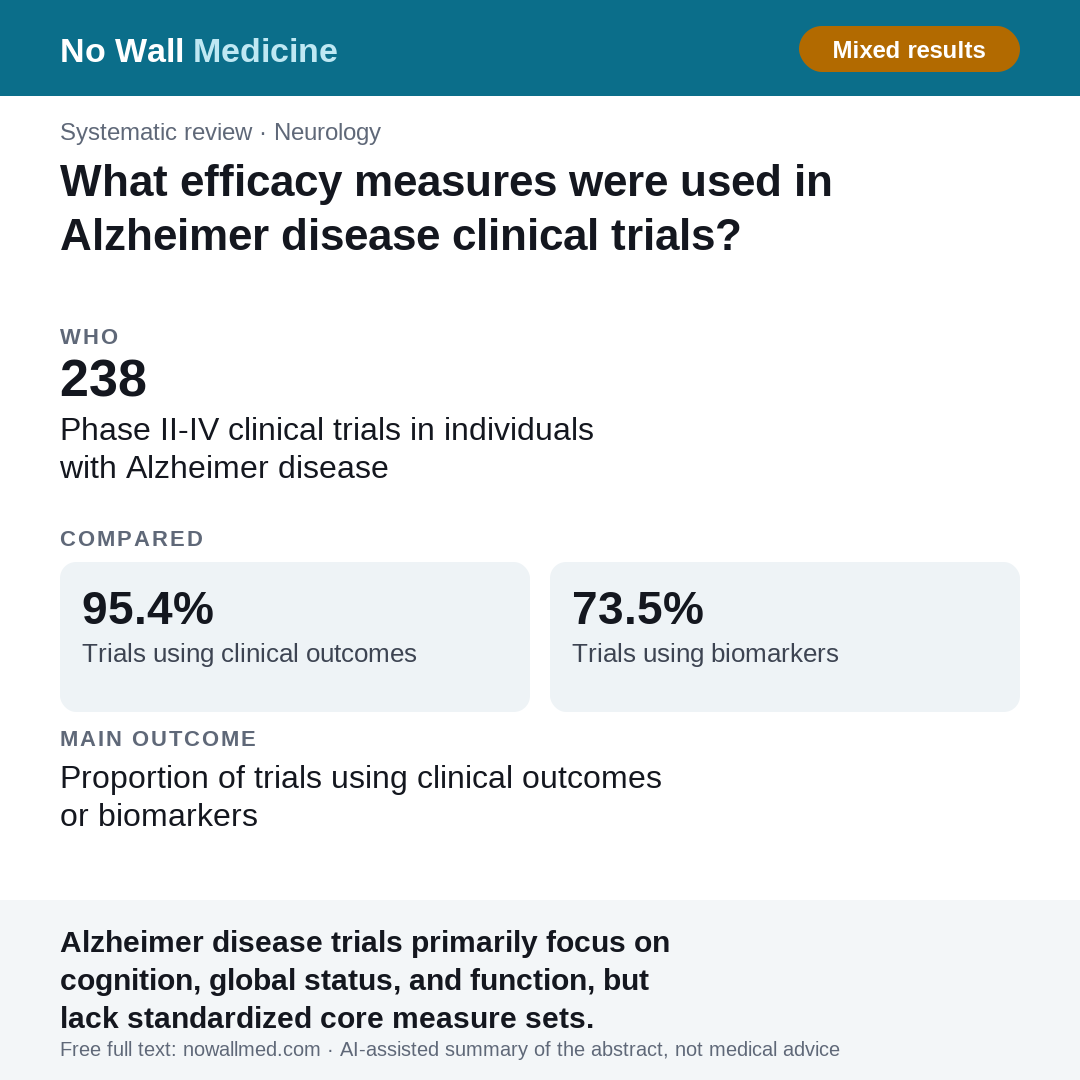
Efficacy Measures Used in Alzheimer Disease Clinical Trials Between 2015 and 2025: A Systematic Review
Systematic reviewMixed results
What efficacy measures were used in Alzheimer disease clinical trials?
Who
238
Phase II-IV clinical trials in individuals with Alzheimer disease
Compared
95.4%Trials using clinical outcomes (227/238)
73.5%Trials using biomarkers (175/238)
Main outcome
Proportion of trials using clinical outcomes or biomarkers
Bottom line: Alzheimer disease trials primarily focus on cognition, global status, and function, but lack standardized core measure sets.
Limitation: Substantial heterogeneity in efficacy measure use limits comparability across trials.
Neurology · 2026-07-23Download image
Clinical characteristics and prognosis of SDHD pathogenic variant carriers: a systematic review and meta-analysis
Systematic review and meta-analysisBenefit found
What are the penetrance, multifocality, metastatic risk, and mortality in SDHD pathogenic variant carriers?
Who
Carriers of succinate dehydrogenase subunit D pathogenic variants
Compared
20%Age-specific penetrance at 20 years (95% CI 16% to 25%)
58%Age-specific penetrance at 40 years (95% CI 48% to 67%)
82%Age-specific penetrance at 60 years (95% CI 75% to 90%)
Affected carriers: 75% (95% CI 72% to 79%) multifocal tumours
Main outcome
Penetrance, multifocality, metastatic disease, and mortality
Bottom line: SDHD carriers show increasing age-specific penetrance and high multifocality, but low metastatic disease and mortality rates.
Limitation: Evidence linking specific variants to these phenotypes is limited.
J Med Genet · 2026-07-23Download image

Small Interfering RNA for LDL-Cholesterol Reduction: A Systematic Review and Meta-Analysis of Randomized Controlled Trials
Meta-analysis of 9 randomized controlled trialsBenefit found
Does inclisiran reduce low-density lipoprotein cholesterol compared with placebo?
Who
6355
Diverse patient populations
Compared
Inclisiran
Placebo
Main outcome
mean percent change in low-density lipoprotein cholesterol from baseline
Result: -48.77% (95% CI: -54.26 to -43.27)
Bottom line: Inclisiran achieves substantial reductions in low-density lipoprotein cholesterol across diverse patient populations.
JACC Adv · 2026-07-23Download image

Effects of Virtual Reality-Based Physical Exercise Interventions on Behavioral, Executive Function, and Motor Outcomes in Children and Adolescents With Autism Spectrum Disorder: Systematic Review and Meta-Analysis
Systematic review and meta-analysisMixed results
Do virtual reality-based physical exercise interventions improve outcomes in children and adolescents with autism spectrum disorder?
Who
439
Children and adolescents aged 6-18 years with autism spectrum disorder
Compared
Virtual reality-based physical exercise
Control
Main outcome
Behavioral, executive function, and motor performance outcomes
Result: executive function SMD 0.75 (95% CI 0.32-1.18); motor performance SMD 1.08 (95% CI 0.08-2.08)
Bottom line: Virtual reality-based physical exercise may improve executive function and motor performance, but effects on behavioral outcomes remain inconsistent.
Limitation: Substantial heterogeneity in study designs, assessment instruments, and wide prediction intervals suggest uncertainty.
J Med Internet Res · 2026-07-23Download image

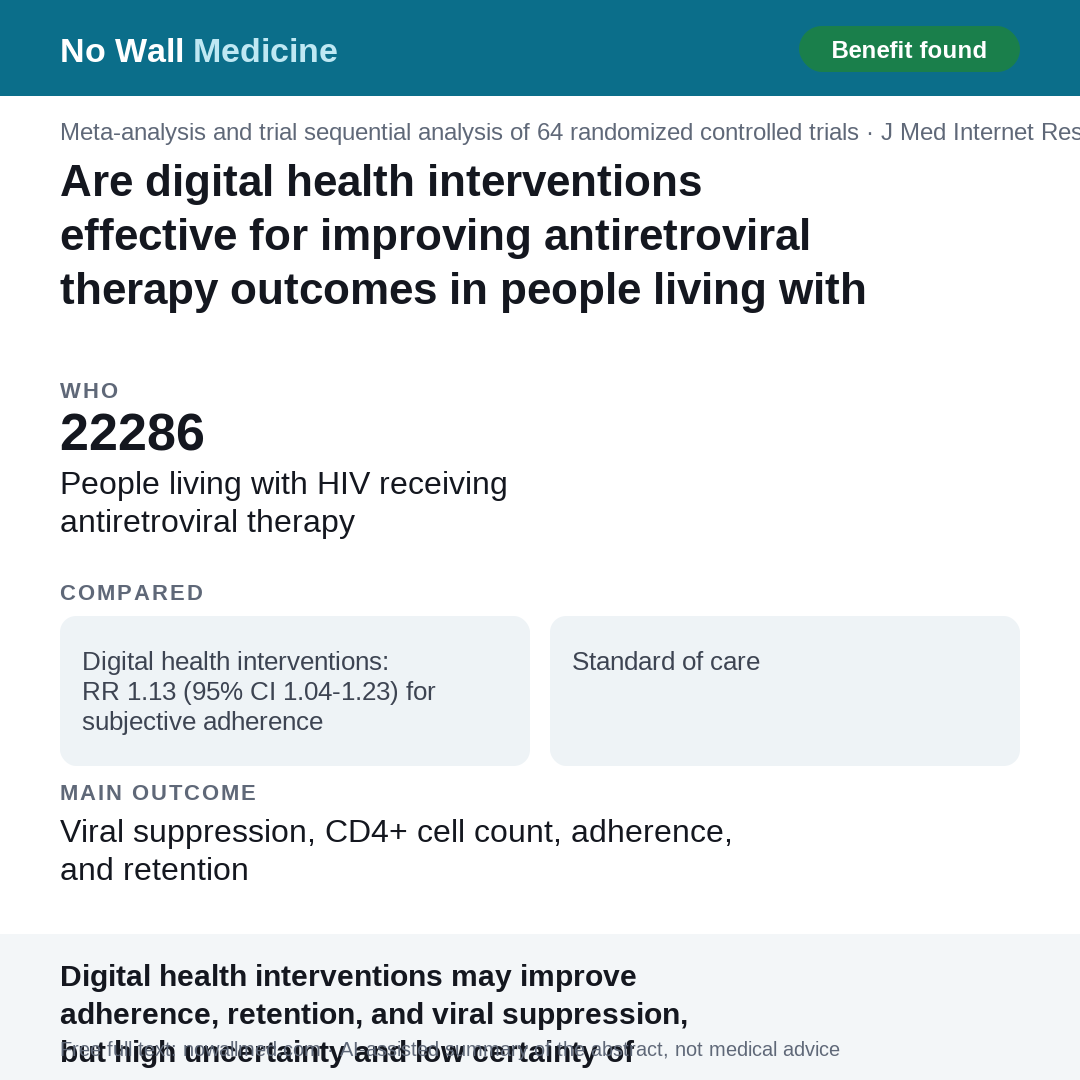
Effectiveness of Digital Health Interventions for Improving Antiretroviral Therapy Outcomes in People With HIV: Meta-Analysis and Trial Sequential Analysis of Randomized Controlled Trials
Meta-analysis and trial sequential analysis of 64 randomized controlled trialsBenefit found
Are digital health interventions effective for improving antiretroviral therapy outcomes in people living with HIV?
Who
22286
People living with HIV receiving antiretroviral therapy
Compared
Digital health interventions: RR 1.13 (95% CI 1.04-1.23) for subjective adherence
Standard of care
Main outcome
Viral suppression, CD4+ cell count, adherence, and retention
Result: RR 1.04 (95% CI 1.01-1.07) for viral suppression
Bottom line: Digital health interventions may improve adherence, retention, and viral suppression, but high uncertainty and low certainty of evidence remain.
Limitation: Wide prediction intervals, high risk of bias, small-study effects, and low to very low certainty of evidence.
J Med Internet Res · 2026-07-23Download image
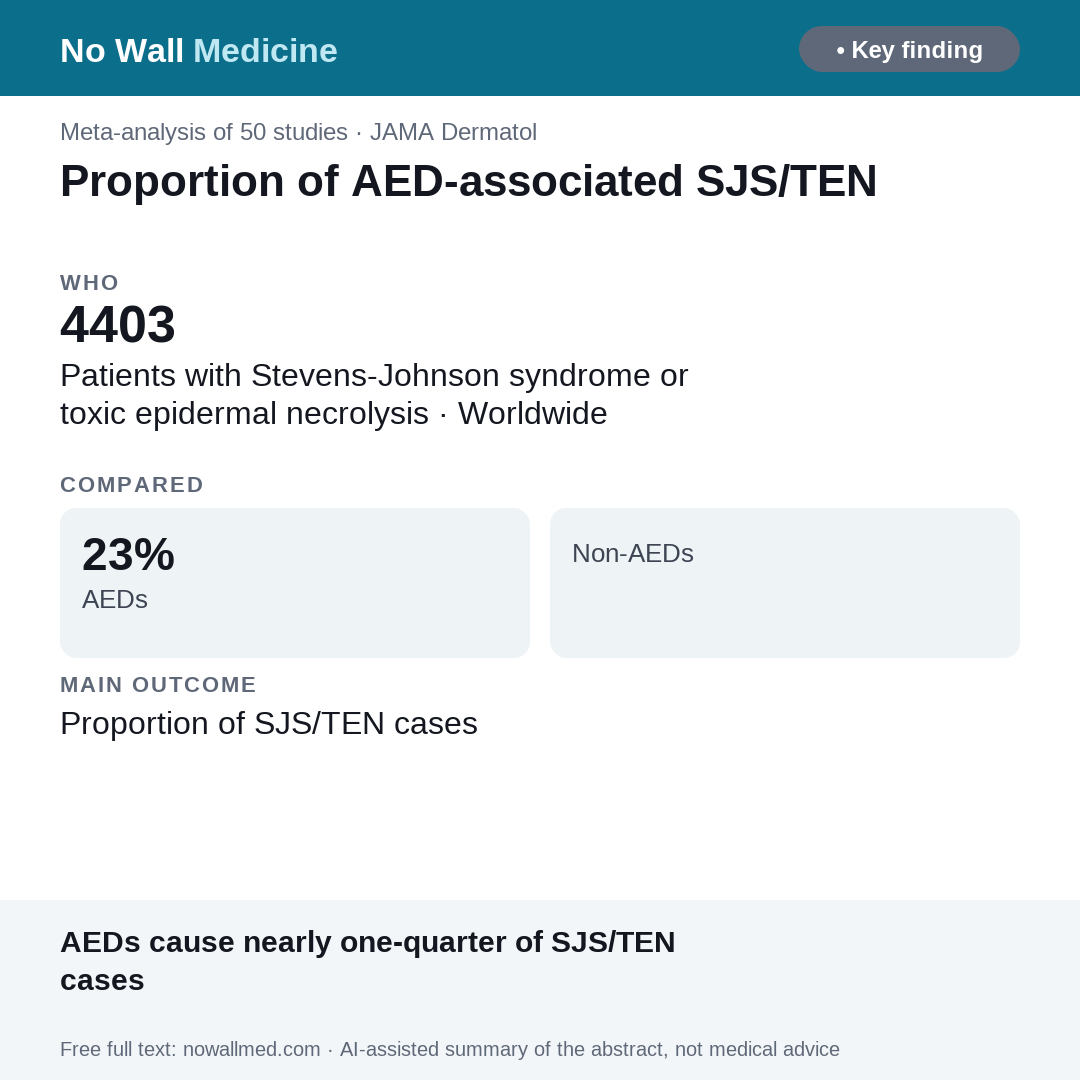
Proportion of Antiepileptic Drug-Associated Stevens-Johnson Syndrome and Toxic Epidermal Necrolysis: A Meta-Analysis
Meta-analysis of 50 studiesHarm found
Proportion of AED-associated SJS/TEN
Who
4403
patients with SJS/TEN · worldwide
Compared
23%AEDs (95% CI, 19-26)
non-AEDs
Main outcome
proportion of SJS/TEN cases
Result: pooled proportion 23% (95% CI, 19-26)
Bottom line: AEDs cause nearly one-quarter of SJS/TEN cases
JAMA Dermatol · 2026-07-22Download image
Extreme temperatures and out-of-hospital cardiac arrest: a systematic review and narrative synthesis
Systematic review and narrative synthesisHarm found
How do extreme ambient temperatures associate with out-of-hospital cardiac arrest incidence and outcomes?
Who
People experiencing out-of-hospital cardiac arrest · Asia, Europe, North America, Middle East, and Oceania
Compared
Cold temperature extremes: elevated incidence and poorer clinical outcomes
Hot temperature extremes: elevated incidence and poorer clinical outcomes
Main outcome
Out-of-hospital cardiac arrest incidence and clinical outcomes
Bottom line: Extreme temperatures, especially cold, increase out-of-hospital cardiac arrest incidence and worsen clinical outcomes.
Resuscitation · 2026-07-22Download image

Nutritional interventions and dietary supplements in muscle diseases: a systematic review
Systematic reviewMixed results
What are the safety and efficacy of dietary interventions and supplements in muscle diseases?
Who
Patients with various muscle diseases
Compared
Creatine with exercise in inflammatory myopathies: improved high-intensity functional performance
Creatine in Duchenne muscular dystrophy: improved maximal voluntary contraction and fatigue resistance
Carbohydrate-rich diets in McArdle disease: reduced exercise-related symptoms
Aceneuramic acid in GNE myopathy: dose-dependent strength improvements
Main outcome
Safety and efficacy of dietary interventions and supplements
Bottom line: Mechanistically targeted nutritional approaches show promise, but evidence remains limited, especially for inflammatory myopathies.
Limitation: Evidence remains limited and requires adequately powered multicentre trials with standardized outcomes.
Rheumatology · 2026-07-22Download image

Brain functional changes of suicidal ideation and behaviours: a meta-analysis of task-based fMRI studies
Meta-analysis of 22 task-based functional magnetic resonance imaging studiesMixed results
What are the brain functional changes associated with suicidal ideation and behaviours?
Who
Suicidal individuals and non-suicidal psychiatric controls
Compared
Suicidal individuals
Non-suicidal psychiatric controls
Main outcome
Brain functional changes in emotion and non-emotion tasks
Bottom line: Suicidality is associated with blunted perceptual emotion processing and heightened motor system reactivity.
Limitation: Methodological heterogeneities including patient diagnosis, suicidal characteristics and task type.
Transl Psychiatry · 2026-07-22Download image

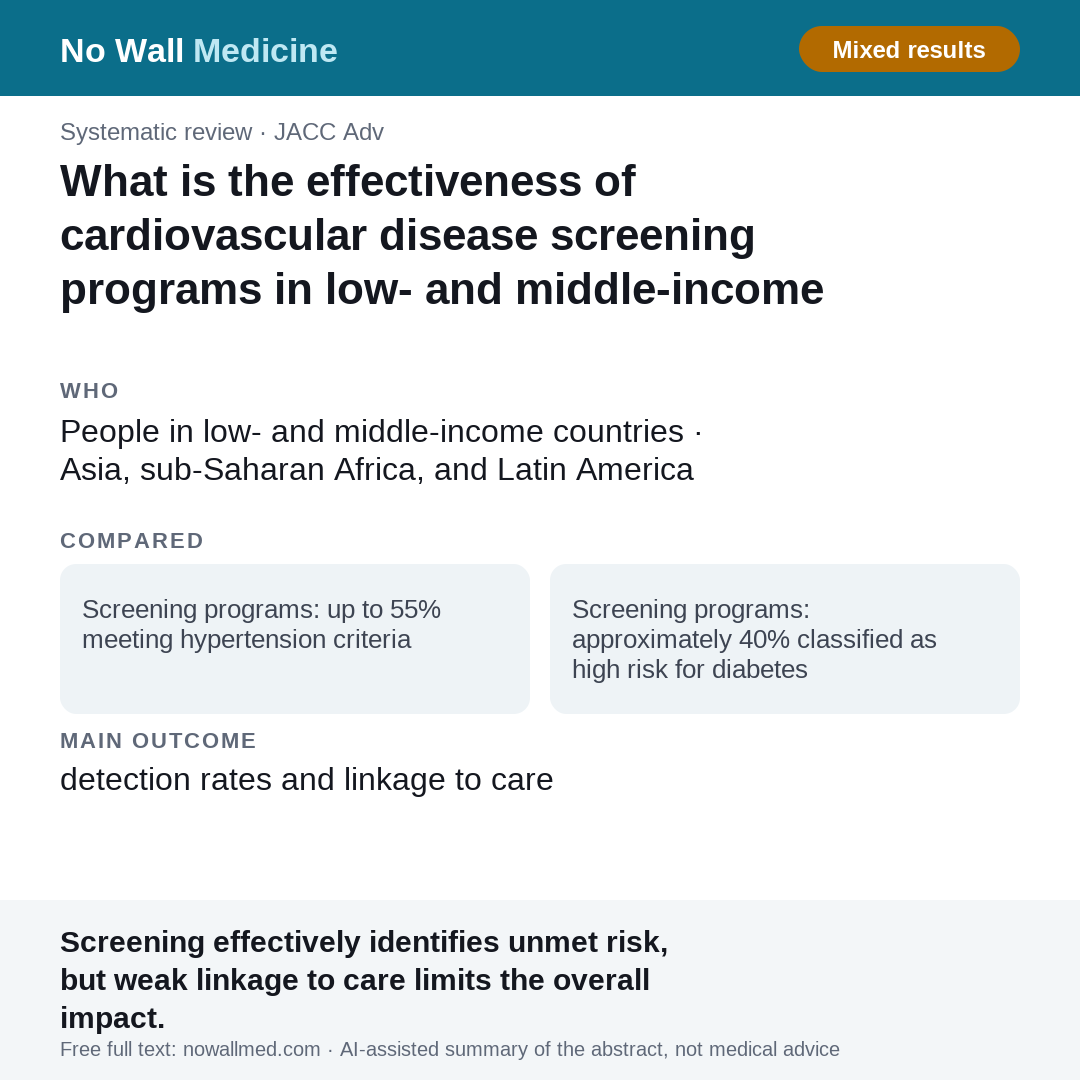
Cardiovascular Disease Screening Programs in Low- and Middle-Income Countries: A Systematic Review
Systematic reviewMixed results
What is the effectiveness of cardiovascular disease screening programs in low- and middle-income countries?
Who
People in low- and middle-income countries · Asia, sub-Saharan Africa, and Latin America
Compared
Screening programs: up to 55% meeting hypertension criteria
Screening programs: approximately 40% classified as high risk for diabetes
Main outcome
detection rates and linkage to care
Bottom line: Screening effectively identifies unmet risk, but weak linkage to care limits the overall impact.
Limitation: Owing to heterogeneity, results were synthesized narratively.
JACC Adv · 2026-07-22Download image
Comparative efficacy of perioperative systemic therapies for muscle-invasive bladder cancer: a network meta-analysis of randomized trials
Network meta-analysis of randomized controlled trialsBenefit found
What is the efficacy of perioperative systemic therapies for muscle-invasive bladder cancer?
Who
2293
Patients with muscle-invasive bladder cancer
Compared
gemcitabine-cisplatin
enfortumab vedotin-pembrolizumab: hazard ratio 0.65
gemcitabine-cisplatin plus durvalumab: hazard ratio 0.75
Main outcome
overall survival
Result: hazard ratio 0.65 (enfortumab vedotin-pembrolizumab vs gemcitabine-cisplatin)
Bottom line: Perioperative regimens incorporating immune checkpoint inhibitors and antibody-drug conjugates improved survival and pathologic response compared to gemcitabine-cisplatin.
Limitation: Findings are indirect comparative estimates due to a sparse star-shaped network and absence of closed loops.
ESMO Open · 2026-07-22Download image

Efficacy of Various Virtual Reality Exposure Therapies for Chronic Low Back Pain: Systematic Review and Network Meta-Analysis
Network meta-analysis of 25 randomized controlled trialsMixed results
How do different virtual reality training modalities compare for chronic low back pain?
Who
2610
patients with chronic low back pain
Compared
shooting games: pain intensity SMD -4.40 (95% CrI -6.80 to -2.20)
VR-based equestrian training: pain intensity SMD -2.00 (95% CrI -3.70 to -0.57)
controls
Main outcome
pain intensity, disability, and kinesiophobia
Result: shooting games pain intensity SMD -4.40 (95% CrI -6.80 to -2.20)
Bottom line: Shooting games may be most effective for pain and kinesiophobia, but evidence for disability remains limited.
Limitation: heterogeneity and low-quality evidence
J Med Internet Res · 2026-07-22Download image

Predictors of Recurrence in Hand Giant Cell Tumor of Tendon Sheath: A Systematic Review
Systematic review of 12 studiesHarm found
What predicts recurrence in hand tumor
Who
876
patients with hand giant cell tumor
Compared
tumor in little finger
other fingers
Main outcome
postoperative recurrence rate
Result: odds ratio 18.3 (95% CI 1.0 to 178.2)
Bottom line: Little finger tumors recur more often
Limitation: moderate study quality
Plast Reconstr Surg Glob Open · 2026-07-22Download image

Identification of acute kidney injury in African children hospitalized with malaria: a multinational individual participant data meta-analysis
Individual participant data meta-analysisHarm found
Does acute kidney injury impact in-hospital mortality in African children hospitalized with malaria?
Who
13528
African children aged 3 months to 16 years hospitalized with Plasmodium falciparum malaria · 8 countries
Compared
Children with acute kidney injury
Children without acute kidney injury
Main outcome
all-cause in-hospital mortality
Result: odds ratio 2.87 (95% CI 2.28 to 3.61)
Bottom line: Acute kidney injury is strongly associated with increased mortality in African children hospitalized with malaria.
Funded by: National Institutes of Health
BMC Med · 2026-07-21Download image

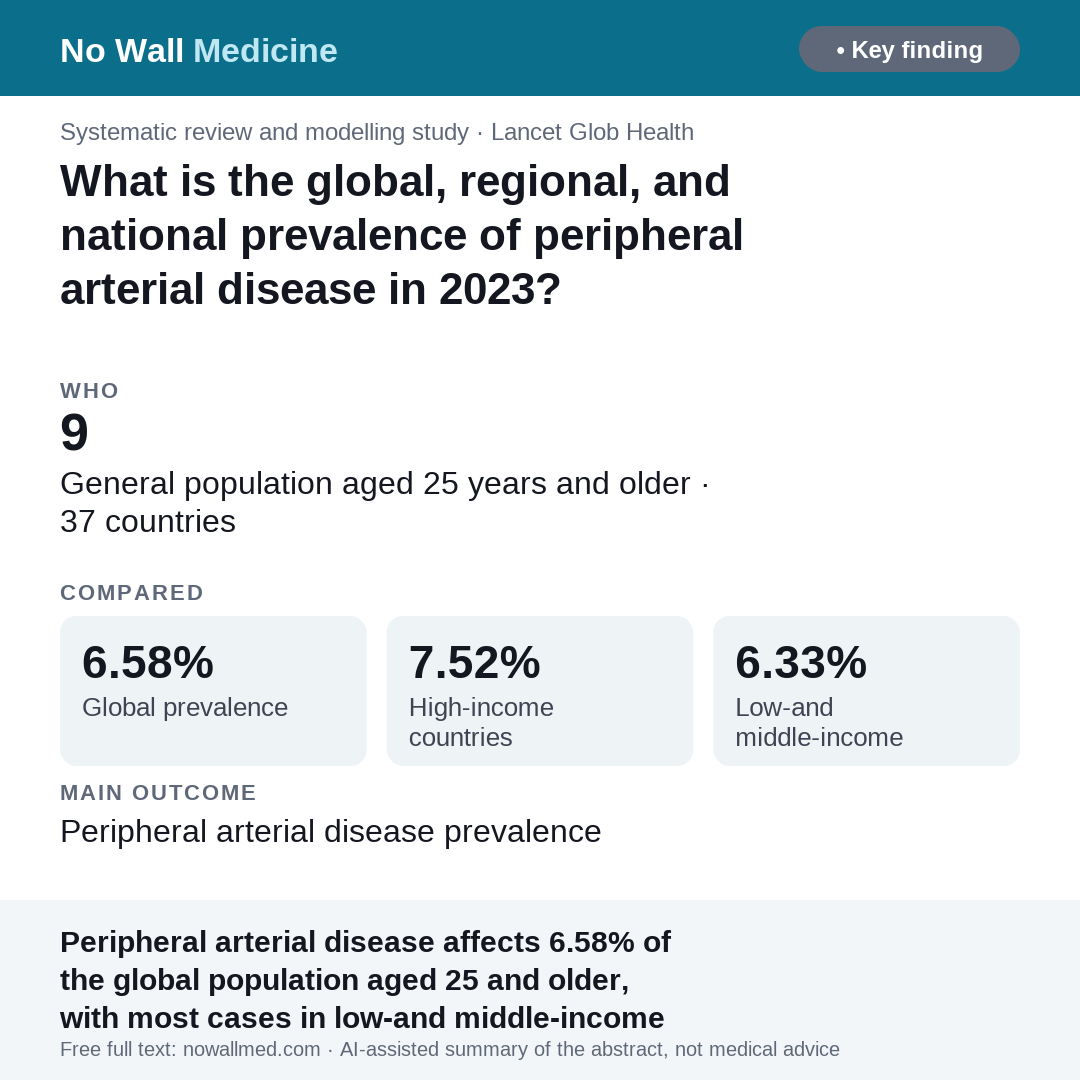
Global, regional, and national prevalence of peripheral arterial disease in 2023: an updated systematic review and modelling study
Systematic review and modelling studyHarm found
What is the global, regional, and national prevalence of peripheral arterial disease in 2023?
Who
9
General population aged 25 years and older · 37 countries
Compared
6.58%Global prevalence (95% CI 4.83-9.02)
7.52%High-income countries (5.57-10.45)
6.33%Low-and middle-income countries (4.63-8.63)
Main outcome
Peripheral arterial disease prevalence
Bottom line: Peripheral arterial disease affects 6.58% of the global population aged 25 and older, with most cases in low-and middle-income countries.
Lancet Glob Health · 2026-07-21Download image
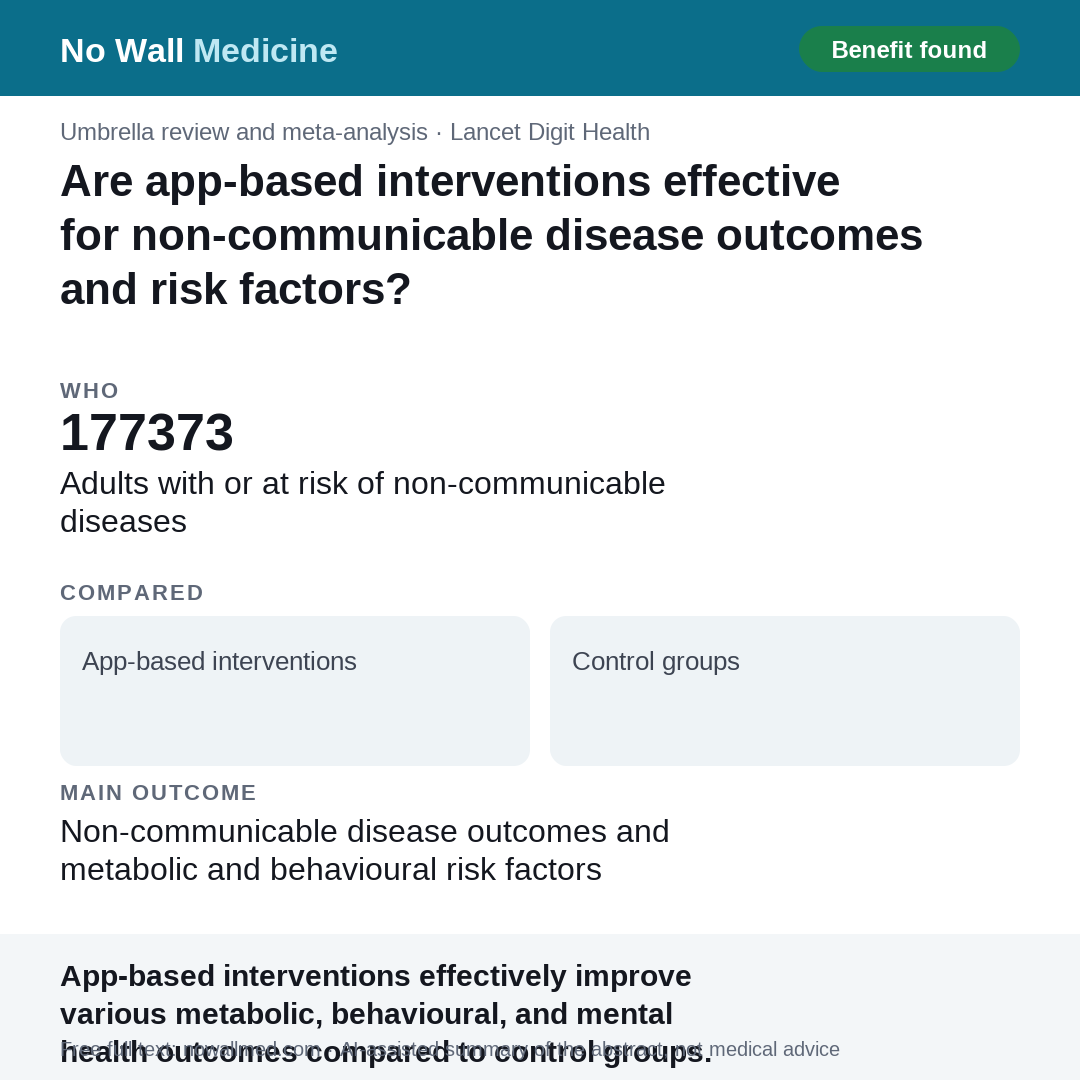
Effectiveness of app-based interventions for glucose management, cardiometabolic and mental health, and related risk factors: an umbrella review with meta-analysis
Umbrella review and meta-analysisBenefit found
Are app-based interventions effective for non-communicable disease outcomes and risk factors?
Who
177373
Adults with or at risk of non-communicable diseases
Compared
App-based interventions
Control groups
Main outcome
Non-communicable disease outcomes and metabolic and behavioural risk factors
Bottom line: App-based interventions effectively improve various metabolic, behavioural, and mental health outcomes compared to control groups.
Limitation: No significant effect was found on cardiovascular mortality, cholesterol, or body fat.
Lancet Digit Health · 2026-07-21Download image
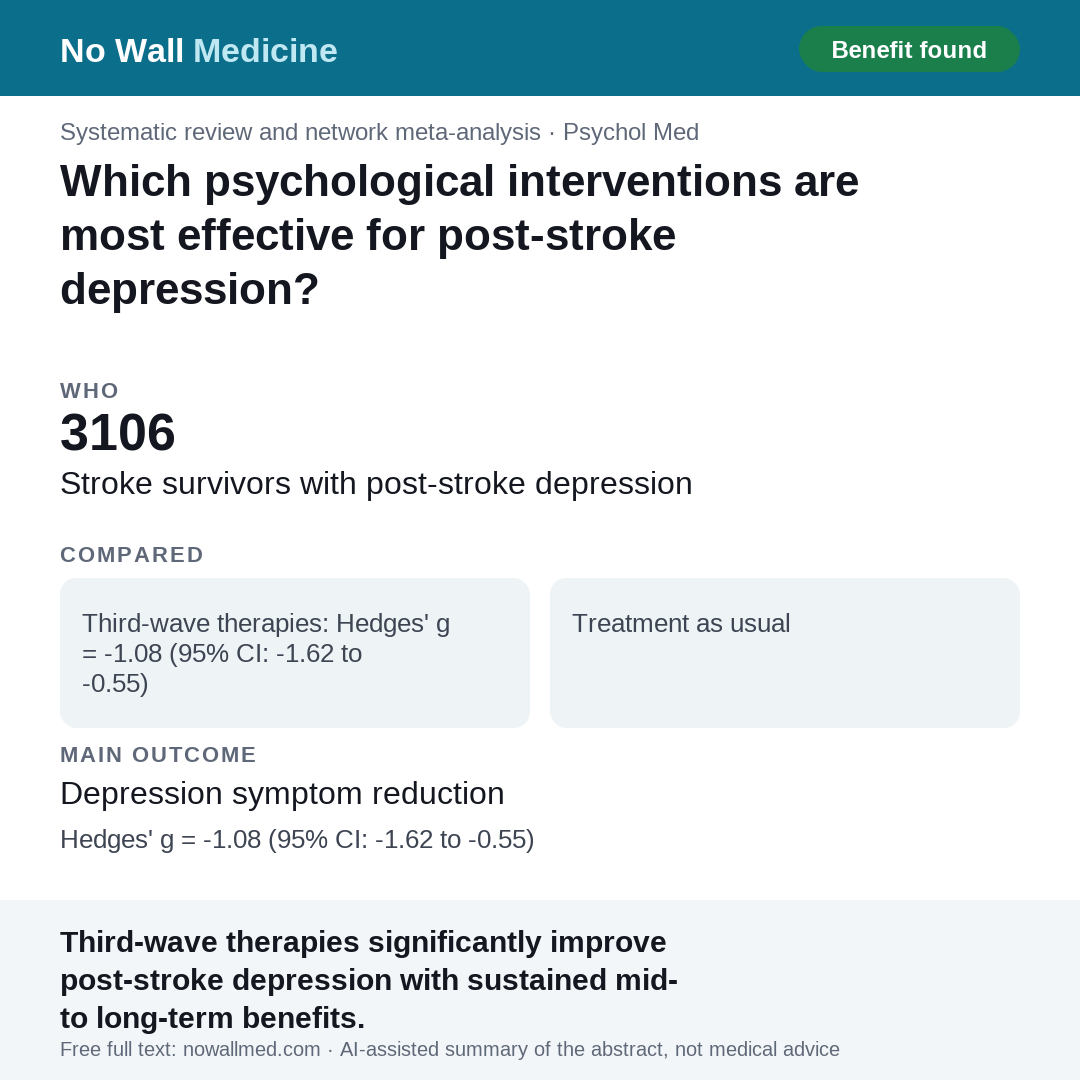
Ranking psychological interventions for post-stroke depression: A systematic review and network meta-analysis
Systematic review and network meta-analysisBenefit found
Which psychological interventions are most effective for post-stroke depression?
Who
3106
Stroke survivors with post-stroke depression
Compared
Third-wave therapies: Hedges' g = -1.08 (95% CI: -1.62 to -0.55)
Treatment as usual
Main outcome
Depression symptom reduction
Result: Hedges' g = -1.08 (95% CI: -1.62 to -0.55)
Bottom line: Third-wave therapies significantly improve post-stroke depression with sustained mid- to long-term benefits.
Limitation: High heterogeneity and generally low to very low evidence certainty for most comparisons.
Psychol Med · 2026-07-21Download image
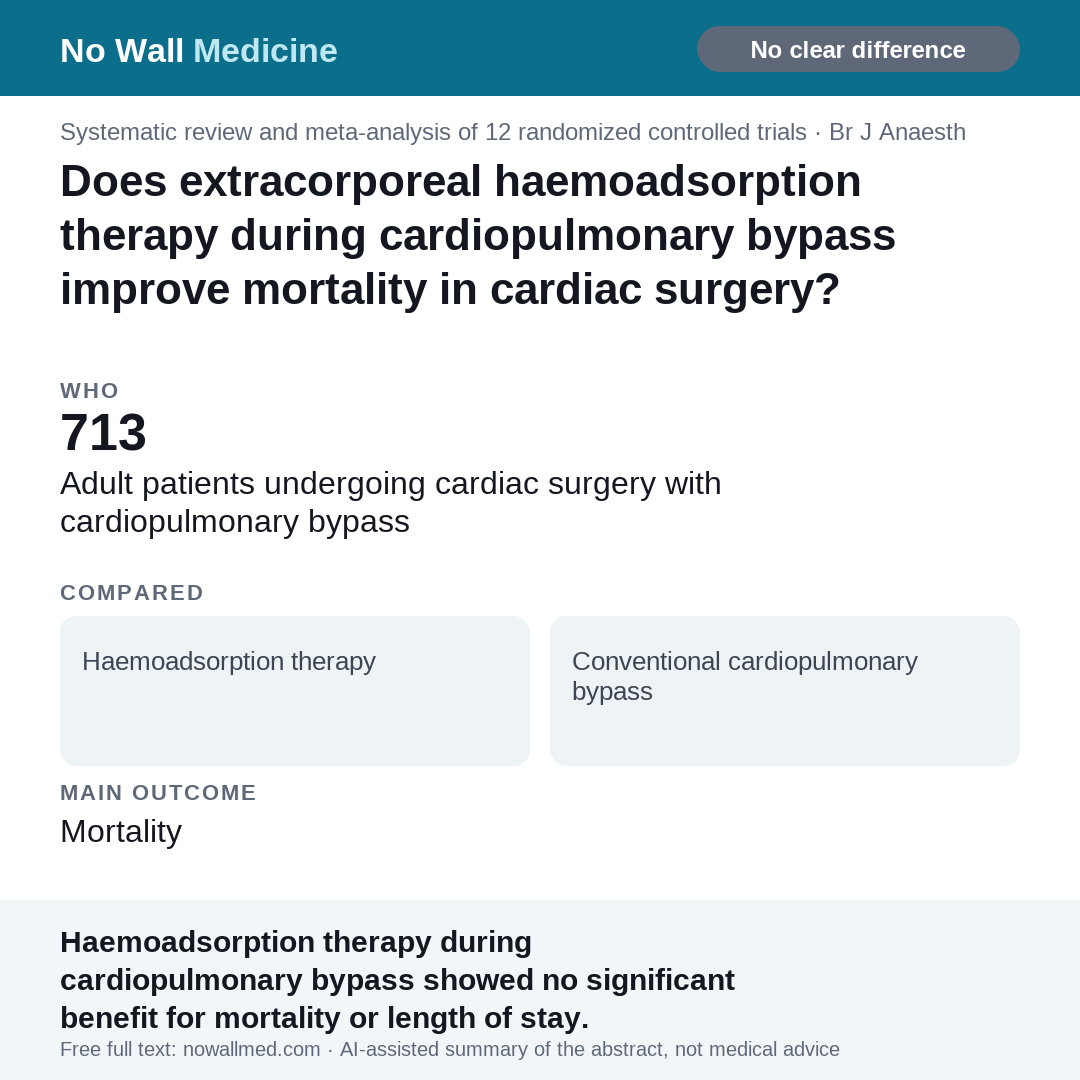
Mortality and adverse events of extracorporeal haemoadsorption therapy in cardiac surgery: a systematic review and meta-analysis of randomised controlled trials
Systematic review and meta-analysis of 12 randomized controlled trialsNo clear difference
Does extracorporeal haemoadsorption therapy during cardiopulmonary bypass improve mortality in cardiac surgery?
Who
713
Adult patients undergoing cardiac surgery with cardiopulmonary bypass
Compared
Haemoadsorption therapy
Conventional cardiopulmonary bypass
Main outcome
Mortality
Result: odds ratio 1.08 (95% CI 0.59 to 2.01)
Bottom line: Haemoadsorption therapy during cardiopulmonary bypass showed no significant benefit for mortality or length of stay.
Limitation: Only one study had low risk of bias, limiting the strength of findings.
Br J Anaesth · 2026-07-21Download image