Visual abstracts
New randomized trials and meta-analyses from leading journals at a glance: who was studied, what was compared, and what was found. Every paper is free to read in full.
All specialtiesCardiology 4765Oncology 4048Gastroenterology & Hepatology 1906Infectious Disease 3759Neurology 1874Psychiatry & Mental Health 2217Pulmonology 2046Critical Care 1323Endocrinology & Diabetes 2545Pediatrics 2891Surgery 2482Orthopedics & Sports Medicine 917Neurosurgery 526Cardiothoracic & Vascular Surgery 657Plastic & Reconstructive Surgery 574Nephrology 1108Rheumatology 810Hematology 1090Dermatology 611Ophthalmology 532Obstetrics & Gynecology 1646Public & Global Health 1037Radiology & Imaging 620Anesthesiology 958Urology 745ENT (Otolaryngology) 494Emergency Medicine 481Allergy & Immunology 309Geriatrics 973Family Medicine & Primary Care 534Medical Genetics & Genomics 659Pathology & Laboratory Medicine 156Physical Medicine & Rehabilitation 736Palliative Care 421Nutrition 1561Digital Health & AI 2136General Medicine 316
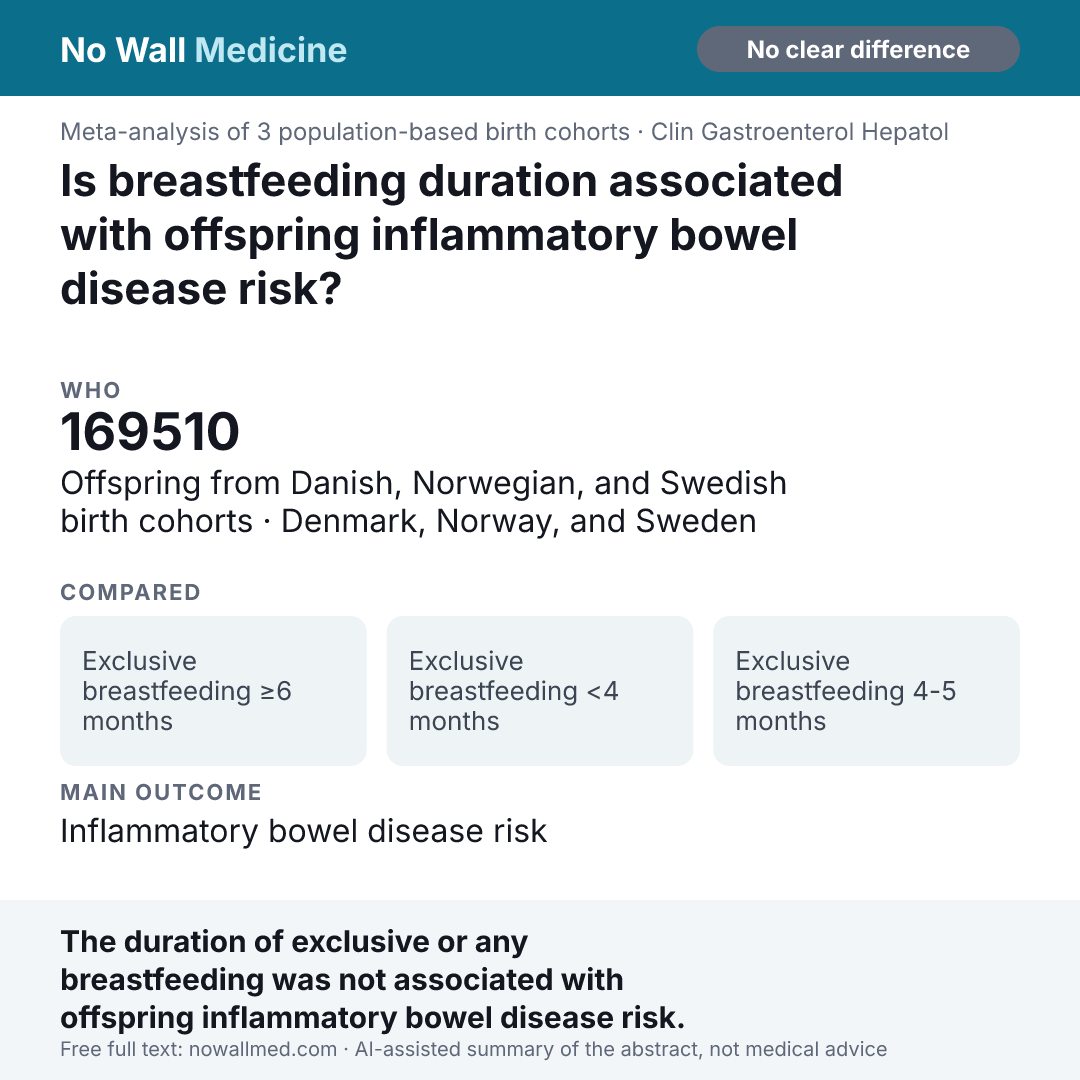
Breastfeeding Duration Is Not Associated With Offspring Inflammatory Bowel Disease Risk in Three Population-Based Birth Cohorts
Meta-analysis of 3 population-based birth cohortsNo clear difference
Is breastfeeding duration associated with offspring inflammatory bowel disease risk?
Who
169510
Offspring from Danish, Norwegian, and Swedish birth cohorts · Denmark, Norway, and Sweden
Compared
Exclusive breastfeeding ≥6 months
Exclusive breastfeeding <4 months
Exclusive breastfeeding 4-5 months
Main outcome
Inflammatory bowel disease risk
Result: hazard ratio 1.24 (95% confidence interval, 0.94-1.62)
Bottom line: The duration of exclusive or any breastfeeding was not associated with offspring inflammatory bowel disease risk.
Clin Gastroenterol Hepatol · 2024-05-09 · Save PNG
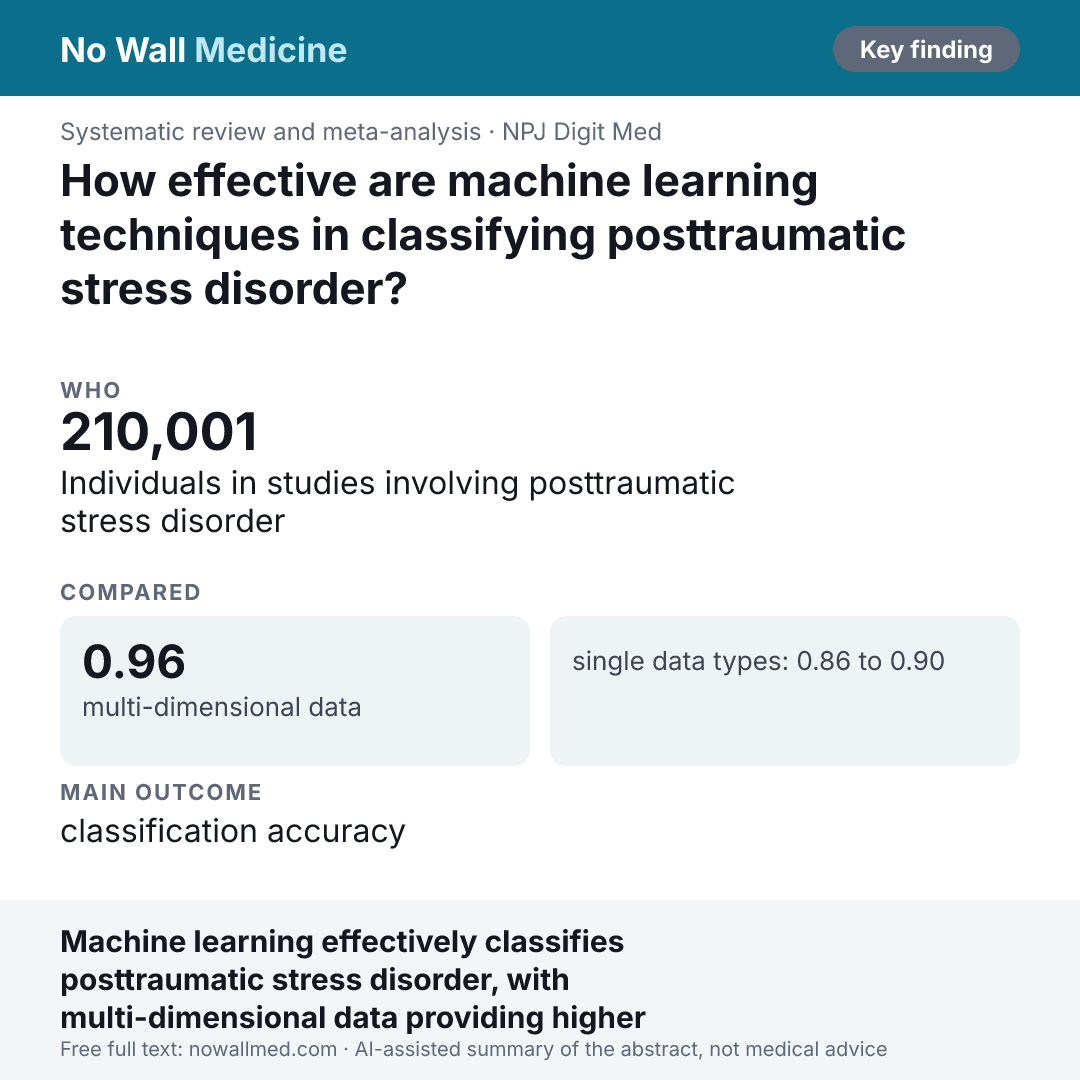
The application of machine learning techniques in posttraumatic stress disorder: a systematic review and meta-analysis
Systematic review and meta-analysisKey finding
How effective are machine learning techniques in classifying posttraumatic stress disorder?
Who
210,001
Individuals in studies involving posttraumatic stress disorder
Compared
0.96multi-dimensional data
single data types: 0.86 to 0.90
Main outcome
classification accuracy
Result: overall accuracy of 0.89
Bottom line: Machine learning effectively classifies posttraumatic stress disorder, with multi-dimensional data providing higher accuracy than single data types.
Limitation: Selecting optimal combinations of data types and algorithms for clinical application remains a challenge.
NPJ Digit Med · 2024-05-09 · Save PNG
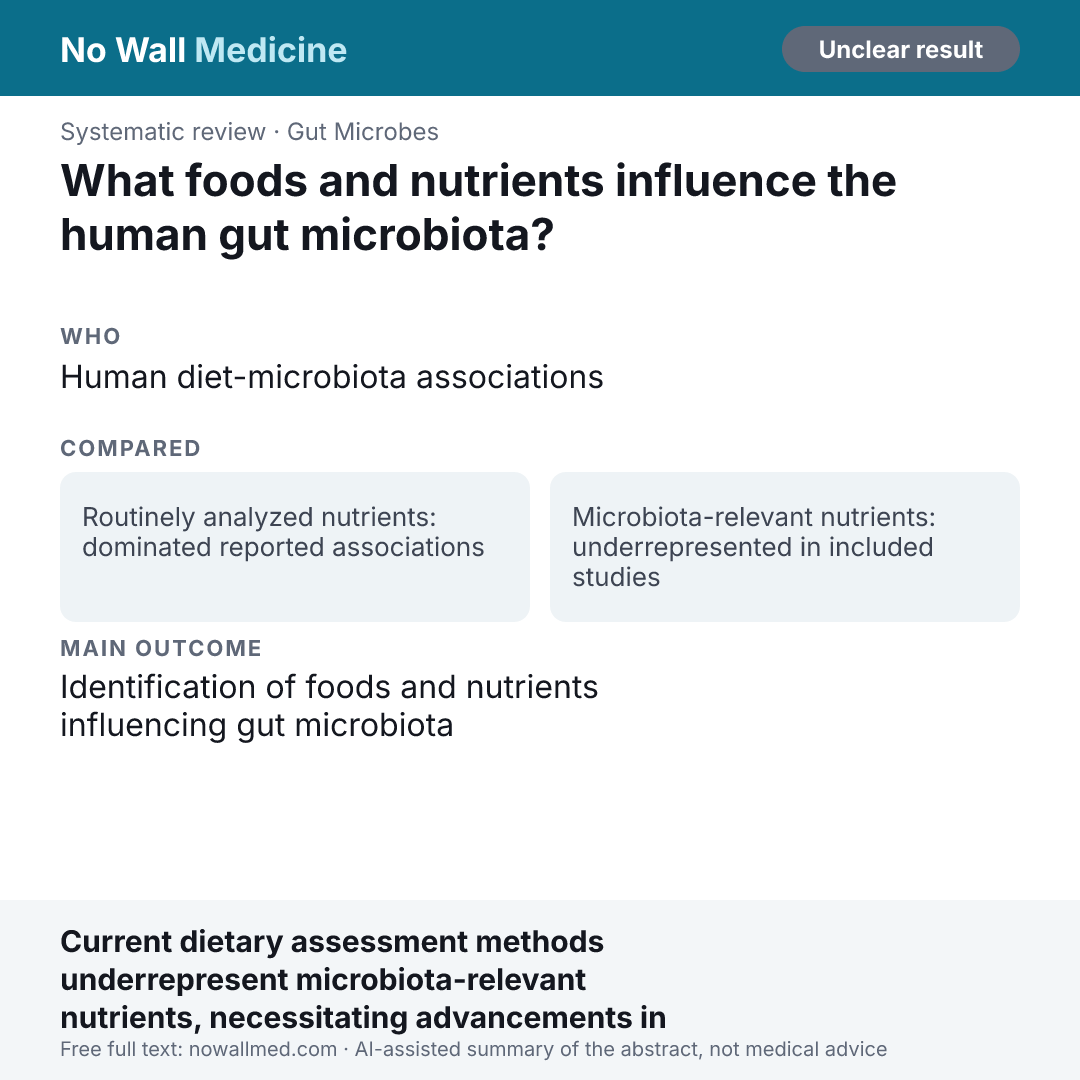
Diet-microbiota associations in gastrointestinal research: a systematic review
Systematic reviewUnclear result
What foods and nutrients influence the human gut microbiota?
Who
Human diet-microbiota associations
Compared
Routinely analyzed nutrients: dominated reported associations
Microbiota-relevant nutrients: underrepresented in included studies
Main outcome
Identification of foods and nutrients influencing gut microbiota
Bottom line: Current dietary assessment methods underrepresent microbiota-relevant nutrients, necessitating advancements in food composition databases.
Limitation: Current dietary assessment methods focus on components relevant to human digestion only.
Gut Microbes · 2024-05-09 · Save PNG
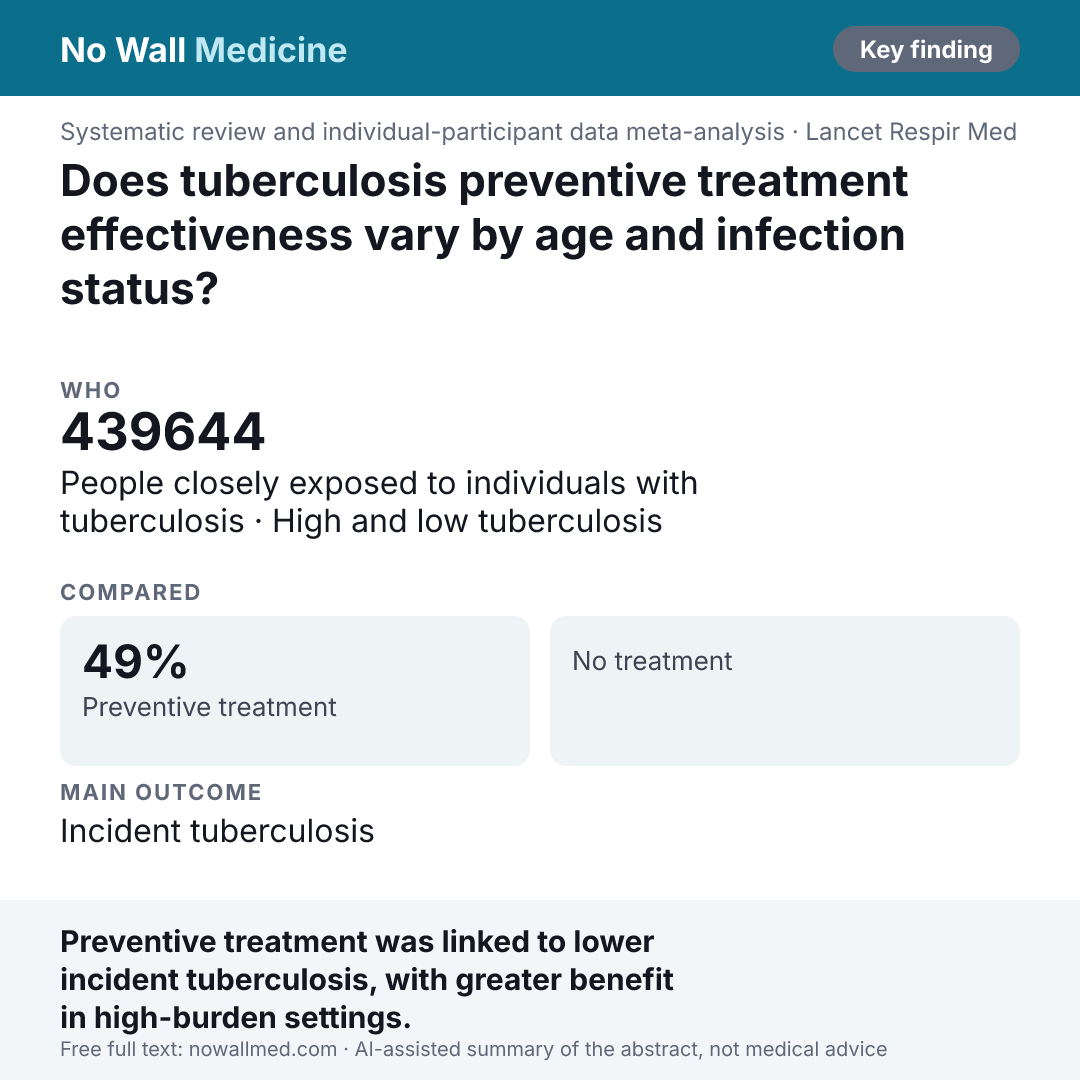
Effectiveness of preventive treatment among different age groups and Mycobacterium tuberculosis infection status: a systematic review and individual-participant data meta-analysis of contact tracing studies
Systematic review and individual-participant data meta-analysisKey finding
Does tuberculosis preventive treatment effectiveness vary by age and infection status?
Who
439644
People closely exposed to individuals with tuberculosis · High and low tuberculosis burden settings
Compared
49%Preventive treatment (aHR 0.51)
No treatment
Main outcome
Incident tuberculosis
Result: aHR 0.51 (95% CI 0.44-0.60)
Bottom line: Preventive treatment was linked to lower incident tuberculosis, with greater benefit in high-burden settings.
Lancet Respir Med · 2024-05-08 · Save PNG
Risk loci involved in giant cell arteritis susceptibility: a genome-wide association study
Genome-wide association studyUnclear result
Genetic basis of giant cell arteritis
Who
3498
Patients with giant cell arteritis and healthy controls · Europe and North America
Compared
Patients
Controls
Main outcome
Risk of giant cell arteritis
Result: OR 1·19 (95% CI 1·12-1·26) and OR 0·84 (0·79-0·89)
Bottom line: Identified genetic loci associated with giant cell arteritis
Funded by: Institute of Health Carlos III
Lancet Rheumatol · 2024-05-08 · Save PNG

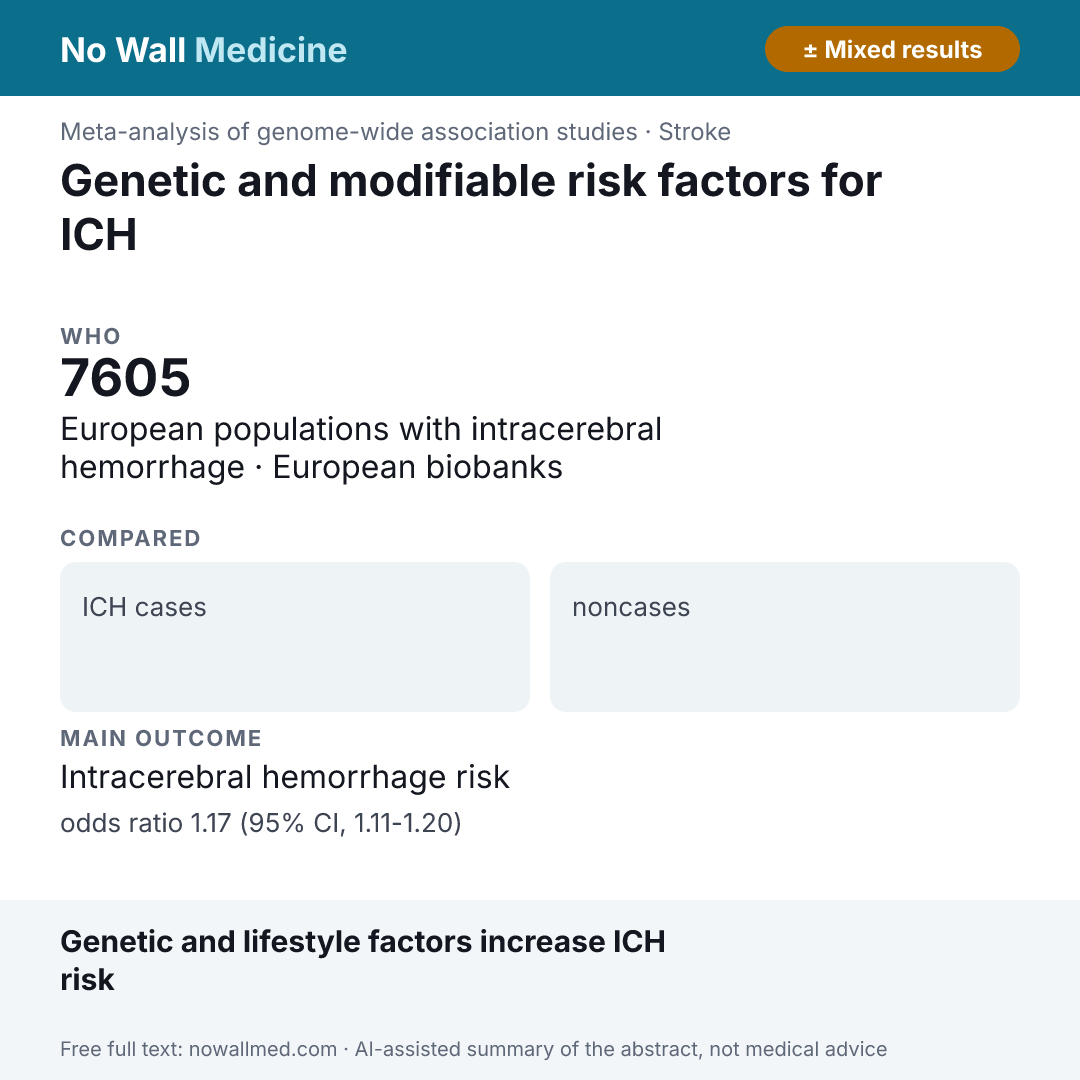
Risk Factors for Intracerebral Hemorrhage: Genome-Wide Association Study and Mendelian Randomization Analyses
Meta-analysis of genome-wide association studiesMixed results
Genetic and modifiable risk factors for ICH
Who
7605
European populations with intracerebral hemorrhage · European biobanks
Compared
ICH cases
noncases
Main outcome
Intracerebral hemorrhage risk
Result: odds ratio 1.17 (95% CI, 1.11-1.20)
Bottom line: Genetic and lifestyle factors increase ICH risk
Stroke · 2024-05-08 · Save PNG
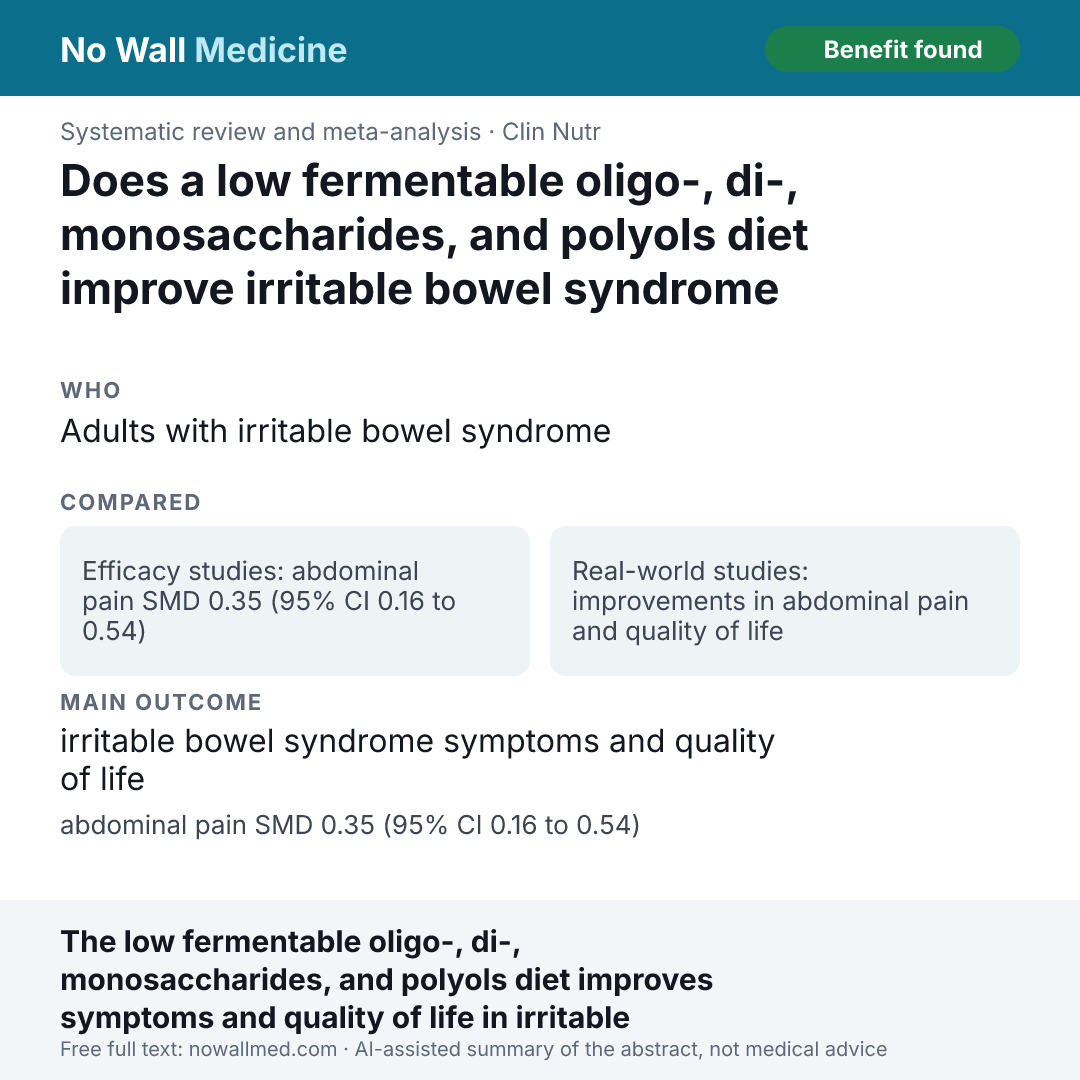
The efficacy and real-world effectiveness of a diet low in fermentable oligo-, di-, monosaccharides and polyols in irritable bowel syndrome: A systematic review and meta-analysis
Systematic review and meta-analysisBenefit found
Does a low fermentable oligo-, di-, monosaccharides, and polyols diet improve irritable bowel syndrome symptoms?
Who
Adults with irritable bowel syndrome
Compared
Efficacy studies: abdominal pain SMD 0.35 (95% CI 0.16 to 0.54)
Real-world studies: improvements in abdominal pain and quality of life
Main outcome
irritable bowel syndrome symptoms and quality of life
Result: abdominal pain SMD 0.35 (95% CI 0.16 to 0.54)
Bottom line: The low fermentable oligo-, di-, monosaccharides, and polyols diet improves symptoms and quality of life in irritable bowel syndrome.
Clin Nutr · 2024-05-08 · Save PNG
Probable extinction of influenza B/Yamagata and its public health implications: a systematic literature review and assessment of global surveillance databases
Systematic literature review and assessmentBenefit found
Is influenza B/Yamagata virus approaching extinction following the COVID-19 pandemic?
Who
Global influenza B/Yamagata virus circulation data · Global surveillance databases
Compared
Pre-pandemic circulation
2020-23 circulation: progressive decline
Main outcome
Influenza B/Yamagata virus circulation and detection
Bottom line: Influenza B/Yamagata detections declined globally since March 2020, suggesting possible extinction and requiring vaccine reassessment.
Lancet Microbe · 2024-05-07 · Save PNG

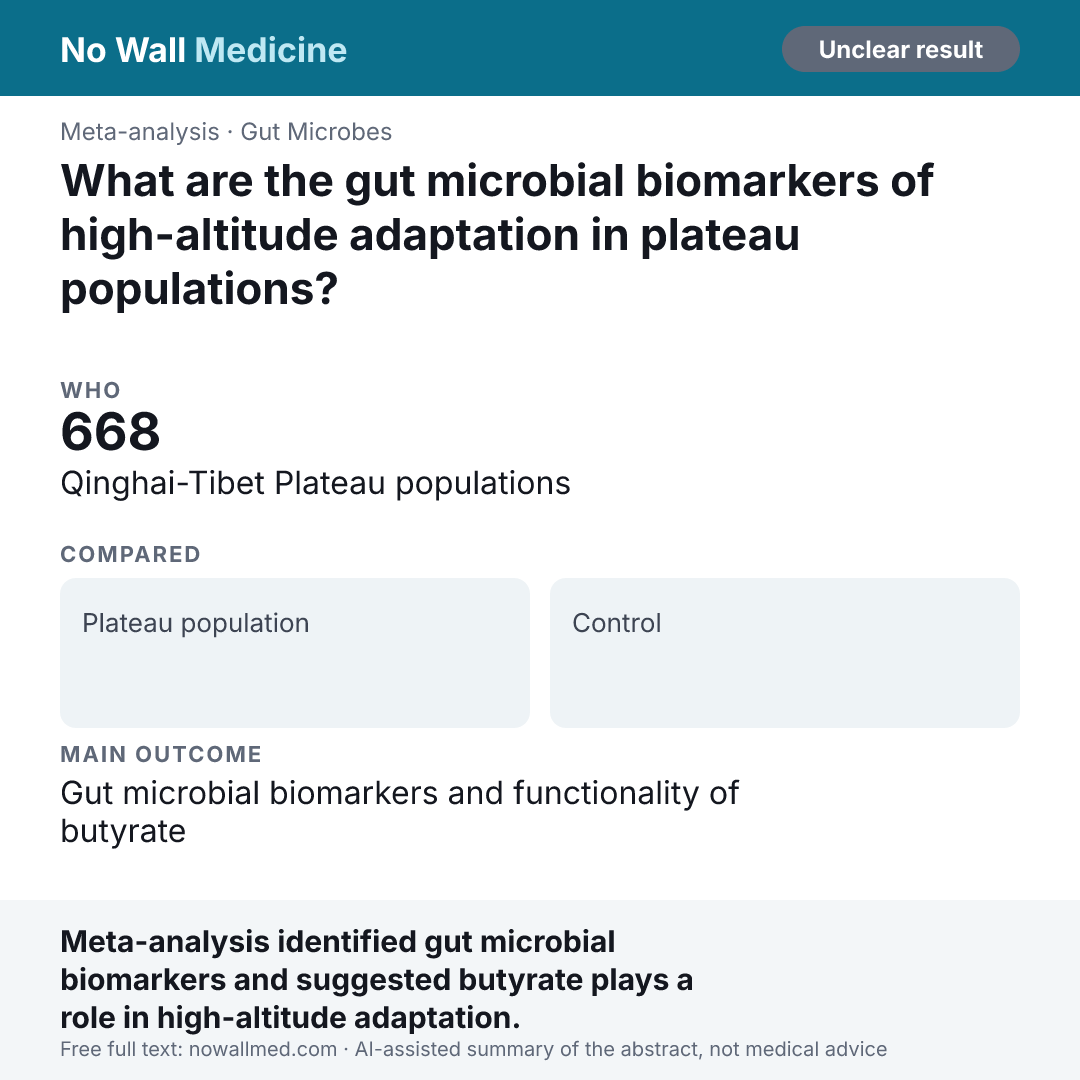
Meta-analysis identifying gut microbial biomarkers of Qinghai-Tibet Plateau populations and the functionality of microbiota-derived butyrate in high-altitude adaptation
Meta-analysisUnclear result
What are the gut microbial biomarkers of high-altitude adaptation in plateau populations?
Who
668
Qinghai-Tibet Plateau populations
Compared
Plateau population
Control
Main outcome
Gut microbial biomarkers and functionality of butyrate
Bottom line: Meta-analysis identified gut microbial biomarkers and suggested butyrate plays a role in high-altitude adaptation.
Gut Microbes · 2024-05-07 · Save PNG
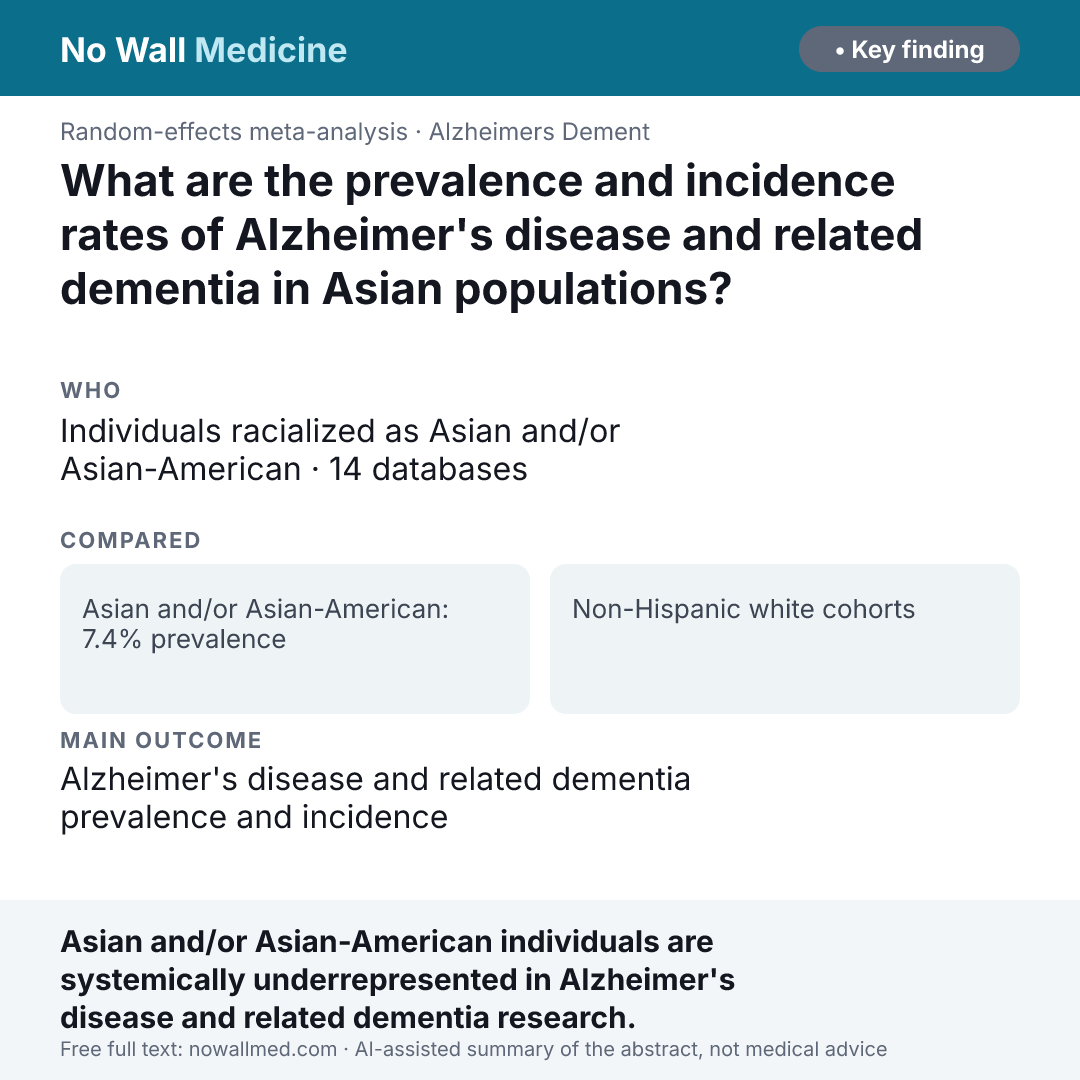
A systematic review/meta-analysis of prevalence and incidence rates illustrates systemic underrepresentation of individuals racialized as Asian and/or Asian-American in ADRD research
Random-effects meta-analysisKey finding
What are the prevalence and incidence rates of Alzheimer's disease and related dementia in Asian populations?
Who
Individuals racialized as Asian and/or Asian-American · 14 databases
Compared
Asian and/or Asian-American: 7.4% prevalence
Non-Hispanic white cohorts
Main outcome
Alzheimer's disease and related dementia prevalence and incidence
Bottom line: Asian and/or Asian-American individuals are systemically underrepresented in Alzheimer's disease and related dementia research.
Limitation: There is limited data on group-specific risk factors for Alzheimer's disease and related dementia among Asian-Americans.
Alzheimers Dement · 2024-05-06 · Save PNG
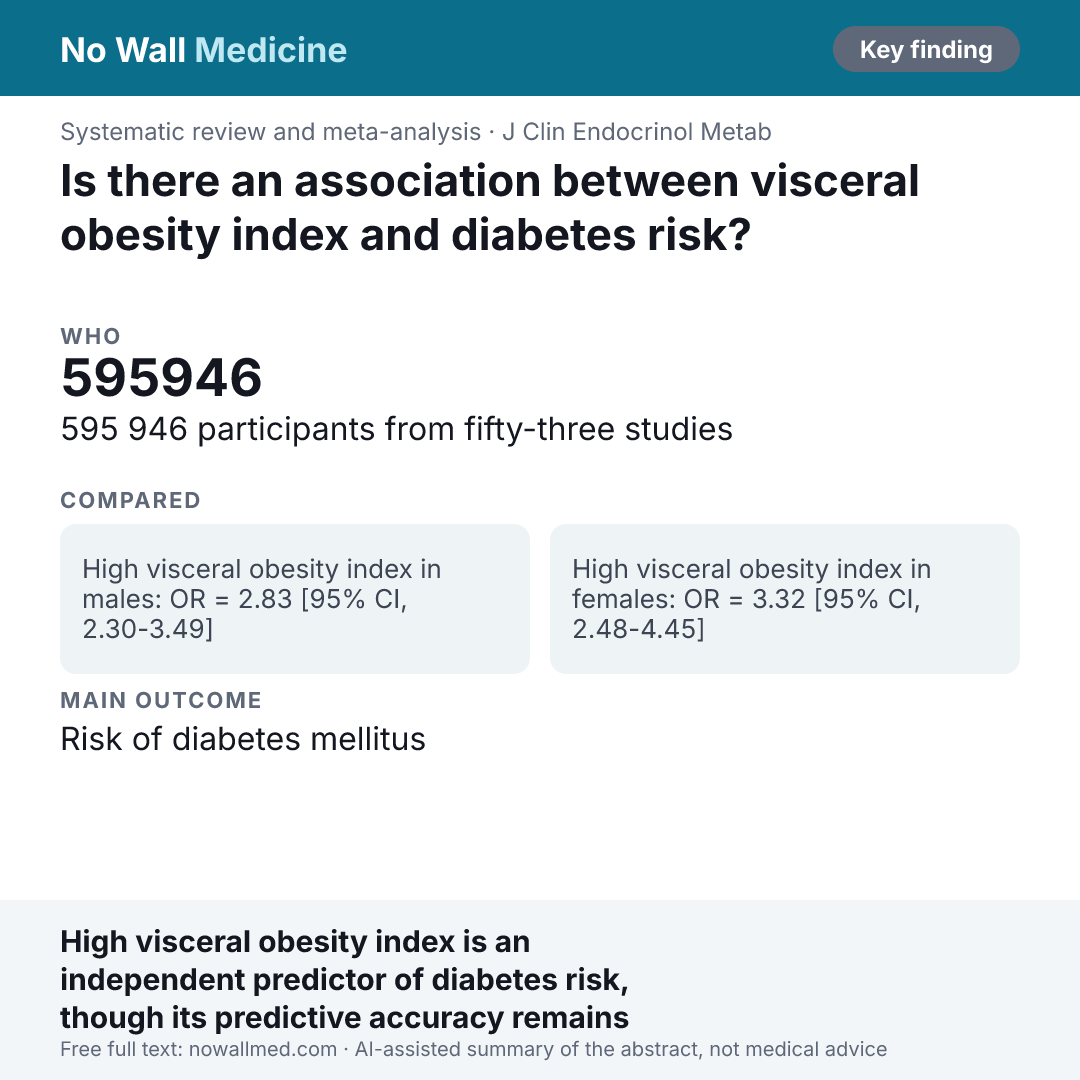
Association Between Visceral Obesity Index and Diabetes: A Systematic Review and Meta-analysis
Systematic review and meta-analysisKey finding
Is there an association between visceral obesity index and diabetes risk?
Who
595946
595 946 participants from fifty-three studies
Compared
High visceral obesity index in males: OR = 2.83 [95% CI, 2.30-3.49]
High visceral obesity index in females: OR = 3.32 [95% CI, 2.48-4.45]
Main outcome
Risk of diabetes mellitus
Bottom line: High visceral obesity index is an independent predictor of diabetes risk, though its predictive accuracy remains limited.
Limitation: Predictive accuracy of the visceral obesity index remains limited.
J Clin Endocrinol Metab · 2024-05-06 · Save PNG
The effectiveness of out-of-hours palliative care telephone advice lines: A rapid systematic review
Rapid systematic reviewUnclear result
What is the clinical and cost effectiveness of out-of-hours palliative care telephone advice lines?
Who
People with palliative care needs and their carers
Compared
Telephone advice lines
Control
Main outcome
Clinical and cost effectiveness
Bottom line: Evidence for the effectiveness of palliative care telephone advice lines remains limited due to poor study quality.
Limitation: Variability in reporting and poor methodological quality across studies limit understanding of outcomes.
Palliat Med · 2024-05-06 · Save PNG

Sarcopenia evaluated by EASL/AASLD computed tomography-based criteria predicts mortality in patients with cirrhosis: A systematic review and meta-analysis
Systematic review and meta-analysisKey finding
Does sarcopenia evaluated by computed tomography predict mortality in patients with cirrhosis?
Who
12827
Patients with cirrhosis
Compared
Sarcopenia present
Sarcopenia absent
Main outcome
Mortality
Result: adjusted hazard ratio 2.07 (95% CI 1.81-2.36)
Bottom line: Sarcopenia on computed tomography is associated with a 2-fold higher risk of mortality in patients with cirrhosis.
Limitation: Psoas muscle assessment data are too heterogeneous to recommend routine use at present.
JHEP Rep · 2024-05-06 · Save PNG

Prevalence and correlates of manic/hypomanic and depressive predominant polarity in bipolar disorder: systematic review and meta-analysis
Systematic review and meta-analysisMixed results
What are the prevalence and correlates of manic/hypomanic and depressive predominant polarity in bipolar disorder?
Who
People with bipolar disorder
Compared
30.0%manic/hypomanic predominant polarity (95% CI: 23.1 to 37.4%)
28.5%depressive predominant polarity (95% CI: 23.7 to 33.7%)
Main outcome
Prevalence and correlates of predominant polarity
Bottom line: Manic and depressive predominant polarities have similar prevalence rates and are associated with different clinical characteristics.
Limitation: Evidence quality was mixed regarding effect magnitude, consistency, precision and publication bias.
BJPsych Open · 2024-05-06 · Save PNG

Rapid cycle deliberate practice approach on resuscitation training: A systematic review
Systematic review and meta-analysisBenefit, low certainty
Is rapid cycle deliberate practice effective compared to traditional instruction for resuscitation training?
Who
Participants in simulated resuscitation training studies
Compared
Rapid cycle deliberate practice
Traditional instruction or other learning
Main outcome
Time to chest compressions, defibrillation, and epinephrine administration
Bottom line: Rapid cycle deliberate practice may improve time to defibrillation and epinephrine administration in resuscitation training.
Limitation: Very low certainty of evidence due to risk of bias, inconsistency, indirectness, and imprecision.
Resusc Plus · 2024-05-06 · Save PNG

Local anaesthetics and chemotherapeutic agents: a systematic review of preclinical evidence of interactions and cancer biology
Systematic review of preclinical evidenceMixed results
Do local anaesthetics interact with chemotherapeutic agents in cancer biology?
Who
In vitro, in vivo, and clinical studies
Compared
In vitro studies: altered cytotoxicity profiles
Animal models: beneficial effects on tumour growth, metastasis, and overall survival
Main outcome
interactions between local anaesthetics and chemotherapeutic agents
Bottom line: Preclinical evidence suggests local anaesthetics may enhance chemotherapy effects, but clinical implications remain unclear due to lack of trials.
BJA Open · 2024-05-05 · Save PNG

Exoskeleton-based exercises for overground gait and balance rehabilitation in spinal cord injury: a systematic review of dose and dosage parameters
Systematic reviewMixed results
What are the optimal dose and dosage parameters for exoskeleton-based overground gait rehabilitation?
Who
Adults with subacute and/or chronic spinal cord injury/disease
Compared
Functional restoration: 60-min, 3 times a week, for 8 weeks/24 sessions
Cardiorespiratory rehabilitation: 60-min, 3 times a week, for 12 weeks/36 sessions
Main outcome
Dose and dosage parameters for gait and balance outcomes
Bottom line: Recommended protocols vary by goal: 24 sessions for functional restoration or 36 sessions for cardiorespiratory rehabilitation.
J Neuroeng Rehabil · 2024-05-05 · Save PNG

Psychological outcomes in patients with rare cancers: a systematic review and meta-analysis
Systematic review and meta-analysisHarm found
What are the psychological outcomes in patients with rare cancers?
Who
57470
Patients with rare cancers
Compared
Rare cancers: depression risk ratio 2.61 (95% CI: 1.43-4.77)
Healthy controls
Main outcome
Prevalence and risk of depression, anxiety, suicide, and post-traumatic stress disorder
Result: risk ratio 2.61 (95% CI: 1.43-4.77) for depression; risk ratio 2.66 (95% CI: 1.27-5.55) for anxiety
Bottom line: Patients with rare cancers face significantly increased risks of depression and anxiety compared to healthy controls.
Funded by: National Medical Research Council and others
eClinicalMedicine · 2024-05-04 · Save PNG

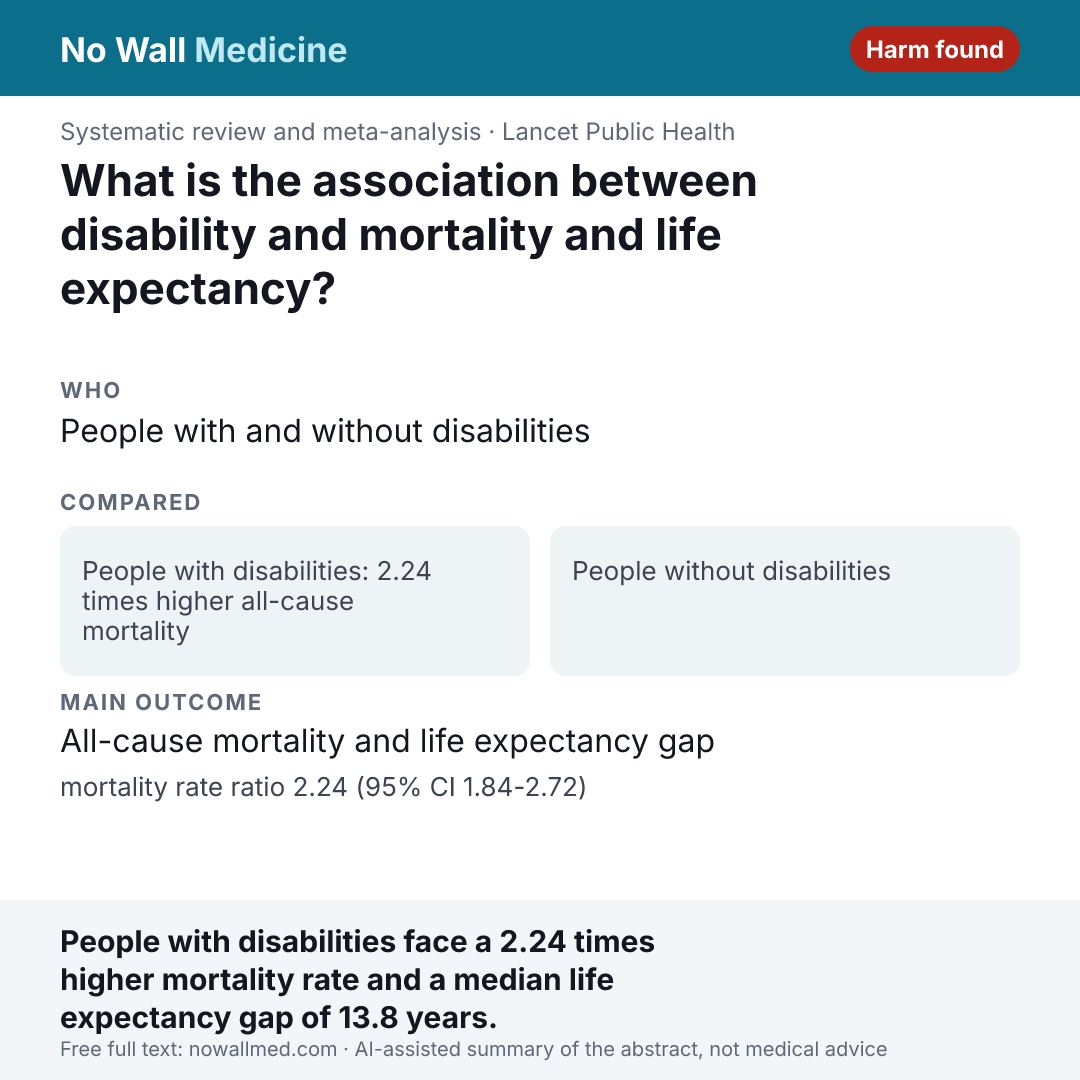
The association between disability and mortality: a mixed-methods study
Systematic review and meta-analysisHarm found
What is the association between disability and mortality and life expectancy?
Who
People with and without disabilities
Compared
People with disabilities: 2.24 times higher all-cause mortality
People without disabilities
Main outcome
All-cause mortality and life expectancy gap
Result: mortality rate ratio 2.24 (95% CI 1.84-2.72)
Bottom line: People with disabilities face a 2.24 times higher mortality rate and a median life expectancy gap of 13.8 years.
Limitation: Heterogeneity between the studies was high (I2=100%).
Funded by: National Institute for Health and Care Research and others
Lancet Public Health · 2024-05-04 · Save PNG
Artificial intelligence in digital pathology: a systematic review and meta-analysis of diagnostic test accuracy
Systematic review and meta-analysisKey finding
What is the diagnostic accuracy of artificial intelligence in digital pathology images?
Who
Whole slide images for any disease · Multiple countries
Compared
Artificial intelligence: mean sensitivity of 96.3% (CI 94.1-97.7)
Artificial intelligence: mean specificity of 93.3% (CI 90.5-95.4)
Main outcome
Diagnostic accuracy
Bottom line: Artificial intelligence shows high diagnostic accuracy in digital pathology but requires more rigorous performance evaluation.
Limitation: 99% of studies had high or unclear risk of bias or applicability concerns.
NPJ Digit Med · 2024-05-04 · Save PNG