Visual abstracts
New randomized trials and meta-analyses from leading journals at a glance: who was studied, what was compared, and what was found. Every paper is free to read in full.
All specialtiesCardiology 4763Oncology 4043Gastroenterology & Hepatology 1903Infectious Disease 3756Neurology 1872Psychiatry & Mental Health 2216Pulmonology 2044Critical Care 1319Endocrinology & Diabetes 2544Pediatrics 2889Surgery 2480Orthopedics & Sports Medicine 917Neurosurgery 525Cardiothoracic & Vascular Surgery 656Plastic & Reconstructive Surgery 574Nephrology 1107Rheumatology 810Hematology 1090Dermatology 611Ophthalmology 532Obstetrics & Gynecology 1645Public & Global Health 1037Radiology & Imaging 619Anesthesiology 958Urology 745ENT (Otolaryngology) 494Emergency Medicine 481Allergy & Immunology 309Geriatrics 972Family Medicine & Primary Care 534Medical Genetics & Genomics 659Pathology & Laboratory Medicine 156Physical Medicine & Rehabilitation 734Palliative Care 421Nutrition 1560Digital Health & AI 2137General Medicine 318
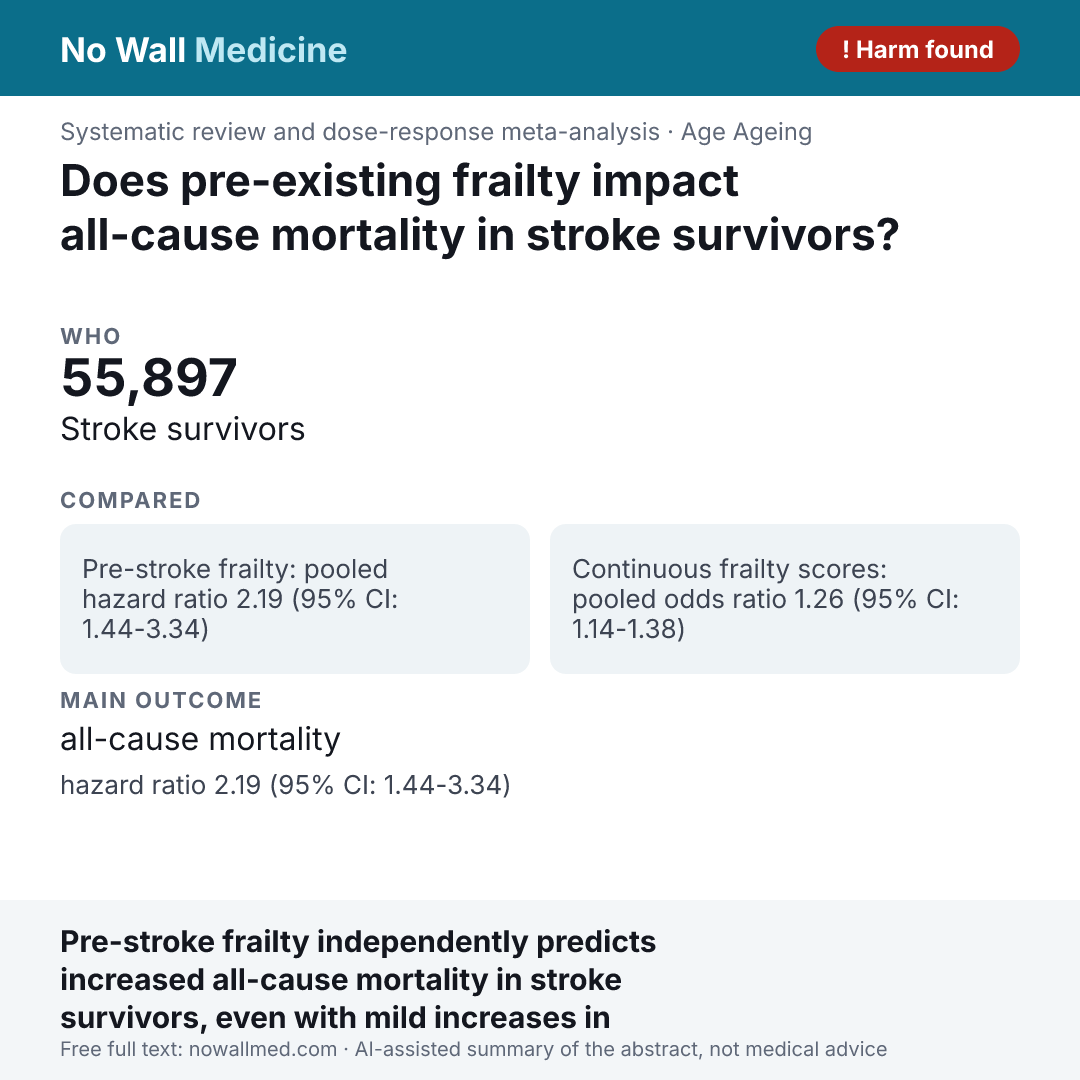
Impact of pre-existing frailty on all-cause mortality in stroke survivors: a systematic review and dose-response meta-analysis
Systematic review and dose-response meta-analysisHarm found
Does pre-existing frailty impact all-cause mortality in stroke survivors?
Who
55,897
Stroke survivors
Compared
Pre-stroke frailty: pooled hazard ratio 2.19 (95% CI: 1.44-3.34)
Continuous frailty scores: pooled odds ratio 1.26 (95% CI: 1.14-1.38)
Main outcome
all-cause mortality
Result: hazard ratio 2.19 (95% CI: 1.44-3.34)
Bottom line: Pre-stroke frailty independently predicts increased all-cause mortality in stroke survivors, even with mild increases in frailty burden.
Age Ageing · 2025-09-27 · Save PNG
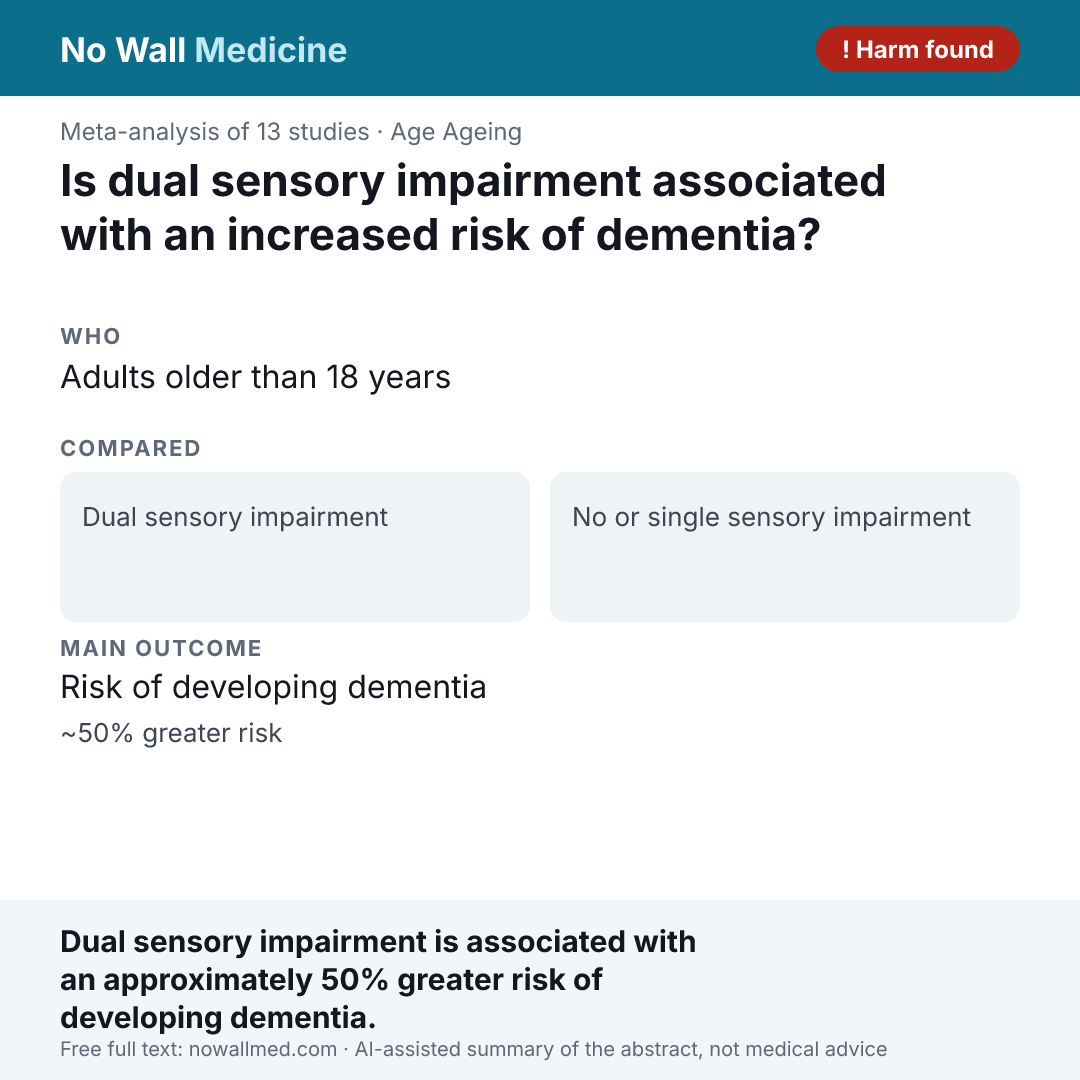
The association between dual sensory impairment and dementia: a meta-analysis and systematic review of the literature
Meta-analysis of 13 studiesHarm found
Is dual sensory impairment associated with an increased risk of dementia?
Who
Adults older than 18 years
Compared
Dual sensory impairment
No or single sensory impairment
Main outcome
Risk of developing dementia
Result: ~50% greater risk
Bottom line: Dual sensory impairment is associated with an approximately 50% greater risk of developing dementia.
Age Ageing · 2025-09-27 · Save PNG
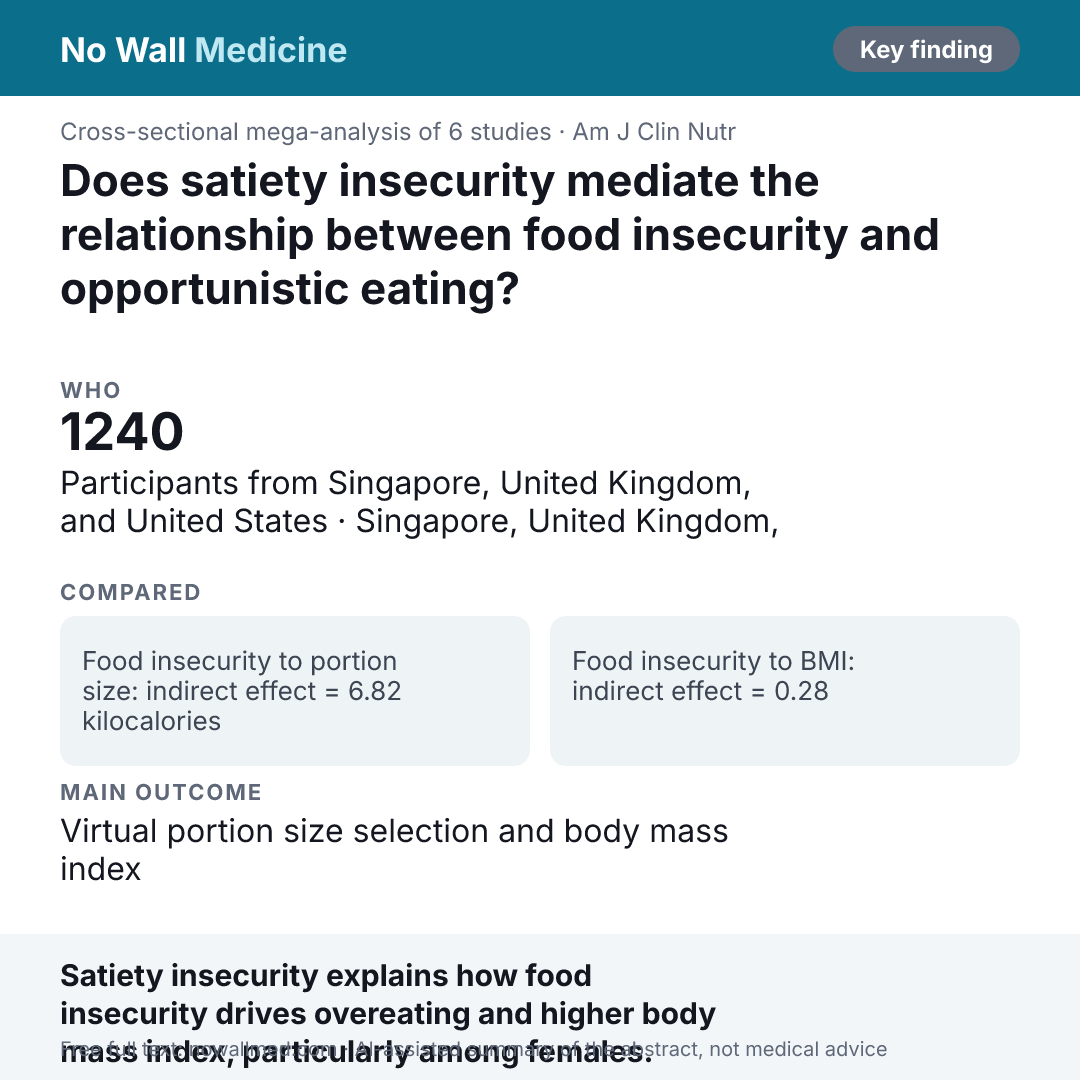
Food insecurity may promote opportunistic eating through heightened satiety insecurity: A cross-sectional mega-analysis study
Cross-sectional mega-analysis of 6 studiesKey finding
Does satiety insecurity mediate the relationship between food insecurity and opportunistic eating?
Who
1240
Participants from Singapore, United Kingdom, and United States · Singapore, United Kingdom, and United States
Compared
Food insecurity to portion size: indirect effect = 6.82 kilocalories
Food insecurity to BMI: indirect effect = 0.28
Main outcome
Virtual portion size selection and body mass index
Result: indirect effect 6.82 kilocalories (95% CI 4.15, 9.50); indirect effect 0.28 (95% CI 0.14, 0.42)
Bottom line: Satiety insecurity explains how food insecurity drives overeating and higher body mass index, particularly among females.
Am J Clin Nutr · 2025-09-27 · Save PNG
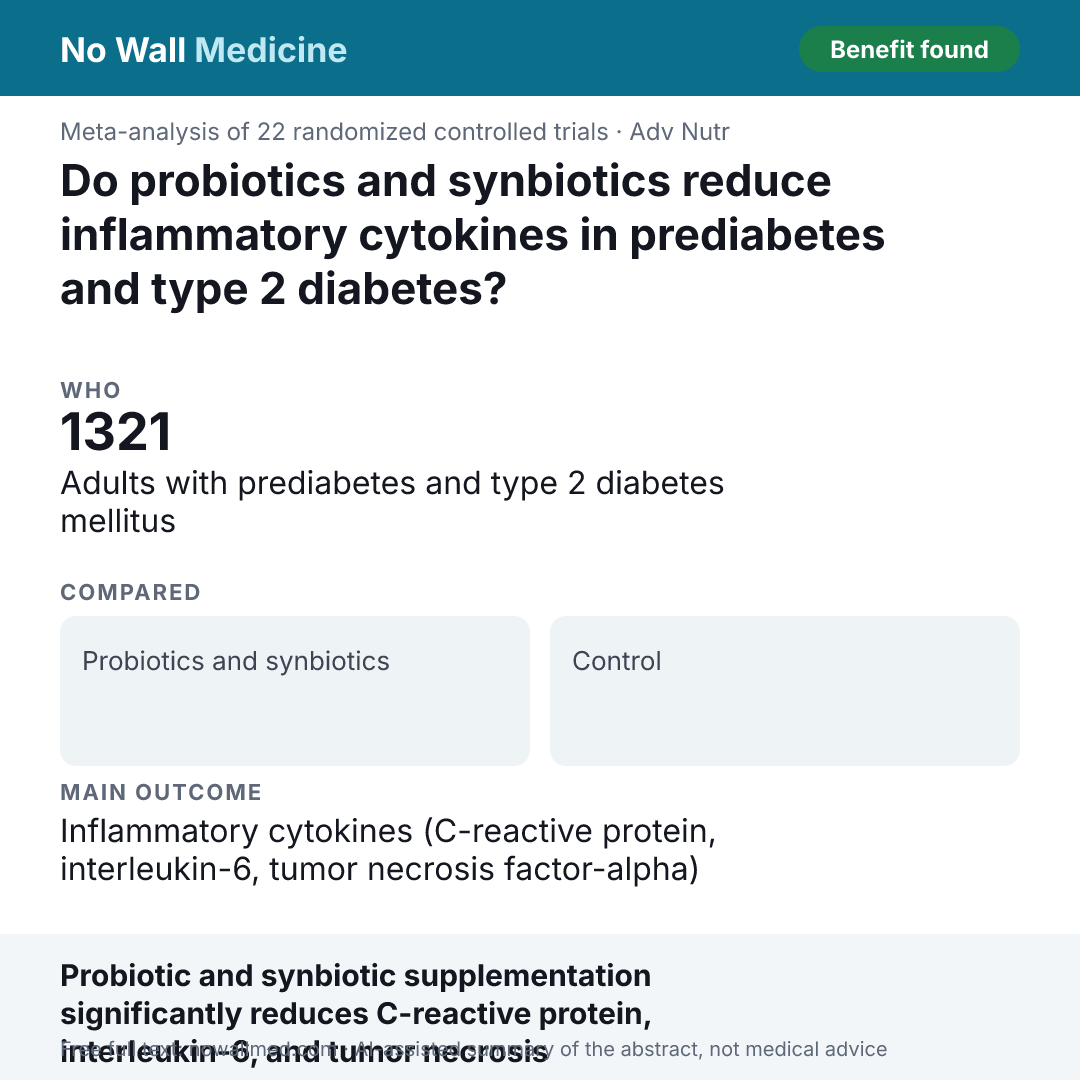
Probiotics and Synbiotics Supplementation Reduce Inflammatory Cytokines in Individuals with Prediabetes and Type 2 Diabetes Mellitus: Findings from a Systematic Review Meta-analysis
Meta-analysis of 22 randomized controlled trialsBenefit found
Do probiotics and synbiotics reduce inflammatory cytokines in prediabetes and type 2 diabetes?
Who
1321
Adults with prediabetes and type 2 diabetes mellitus
Compared
Probiotics and synbiotics
Control
Main outcome
Inflammatory cytokines (C-reactive protein, interleukin-6, tumor necrosis factor-alpha)
Result: WMD: -0.46 mg/L (95% CI: [-0.77, -0.15]) for CRP; -0.43 pg/ml (95% CI: [-0.76, -0.09]) for IL-6; -1.42 pg/ml (95% CI: [-2.15, -0.69]) for TNF-alpha
Bottom line: Probiotic and synbiotic supplementation significantly reduces C-reactive protein, interleukin-6, and tumor necrosis factor-alpha in prediabetes and type 2 diabetes.
Adv Nutr · 2025-09-27 · Save PNG
Insights and contrasts between Western and Eastern practices of surgical management of lower limb lymphedema: A systematic review and narrative synthesis
Systematic review and narrative synthesisMixed results
What are the differences between Western and Eastern surgical management of lower limb lymphedema?
Who
Patients with lower limb lymphedema
Compared
Western practices
Eastern practices
Main outcome
Epidemiology, diagnosis, treatment, and postoperative management strategies
Bottom line: Western and Eastern practices differ in etiology and technique but are increasingly converging toward hybrid models.
JPRAS Open · 2025-09-27 · Save PNG

The effect of disease-modifying therapies on brain volume loss and disability accumulation in multiple sclerosis: a systematic review and network meta-analysis
Systematic review and network meta-analysisBenefit found
How do disease-modifying therapies compare in reducing brain volume loss and disability in multiple sclerosis?
Who
26,247
Adults with multiple sclerosis
Compared
Disease-modifying therapies
Placebo
Main outcome
Brain volume loss
Bottom line: Several disease-modifying therapies significantly reduce brain volume loss, which correlates with reduced disability accumulation in multiple sclerosis.
Lancet Reg Health Eur · 2025-09-27 · Save PNG

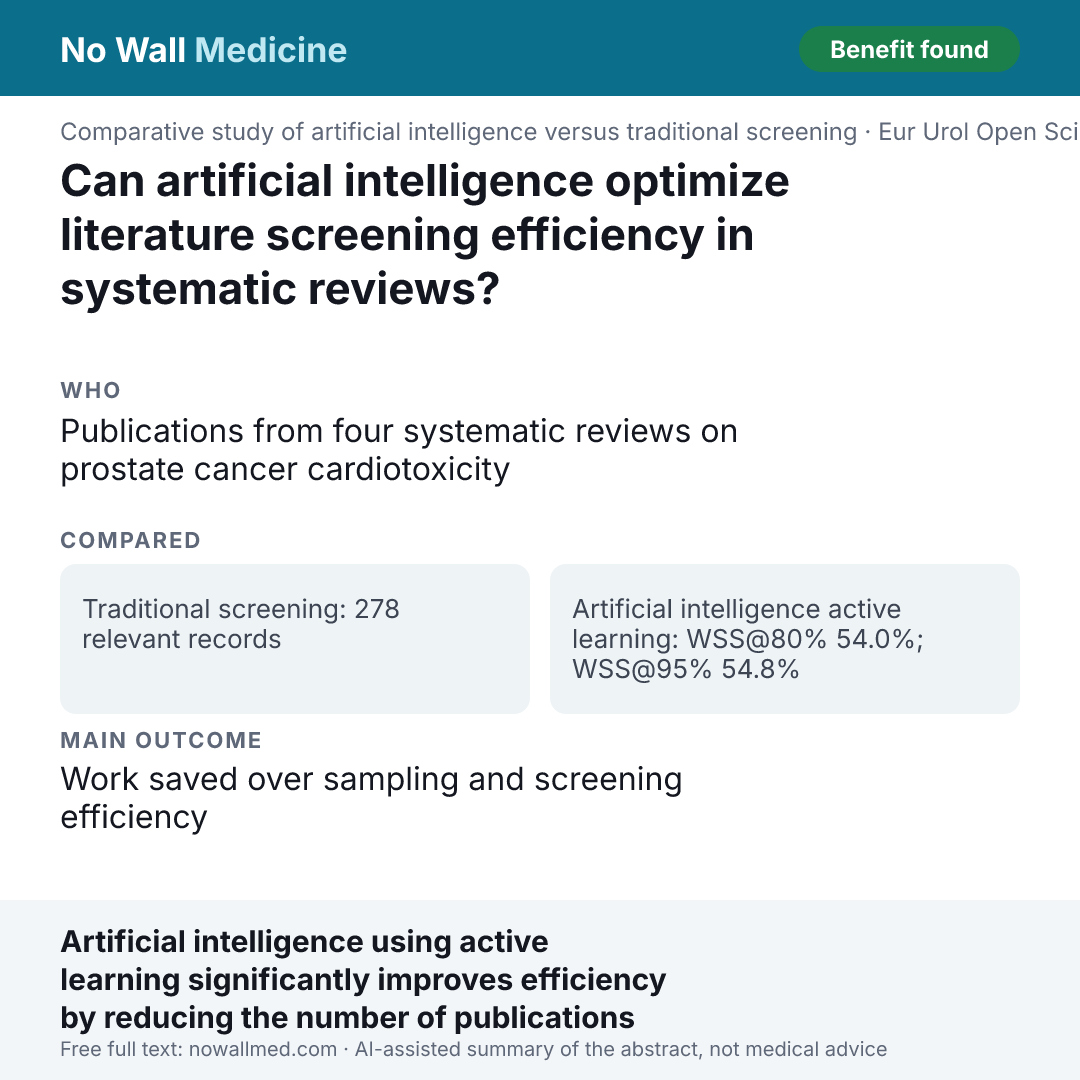
Using Artificial Intelligence for Text Screening in a Systematic Review of Cardiotoxicity
Comparative study of artificial intelligence versus traditional screeningBenefit found
Can artificial intelligence optimize literature screening efficiency in systematic reviews?
Who
Publications from four systematic reviews on prostate cancer cardiotoxicity
Compared
Traditional screening: 278 relevant records
Artificial intelligence active learning: WSS@80% 54.0%; WSS@95% 54.8%
Main outcome
Work saved over sampling and screening efficiency
Bottom line: Artificial intelligence using active learning significantly improves efficiency by reducing the number of publications required for screening.
Eur Urol Open Sci · 2025-09-27 · Save PNG
Indications for surgery versus conservative treatment in the management of lumbar disc herniations: A systematic review
Systematic reviewUnclear result
What are the surgical indications and transition criteria for lumbar disc herniations?
Who
Patients with lumbar disc herniations
Compared
Early surgery: >90 % recovery rates
Delayed surgery: prolonged symptoms and poorer outcomes
Main outcome
Recovery rates and clinical outcomes
Bottom line: Surgical indications and transition criteria lack standardization despite early surgery showing superior recovery for certain motor deficits.
Limitation: Significant heterogeneity in surgical indications, timing, and decision-making criteria.
Brain Spine · 2025-09-27 · Save PNG

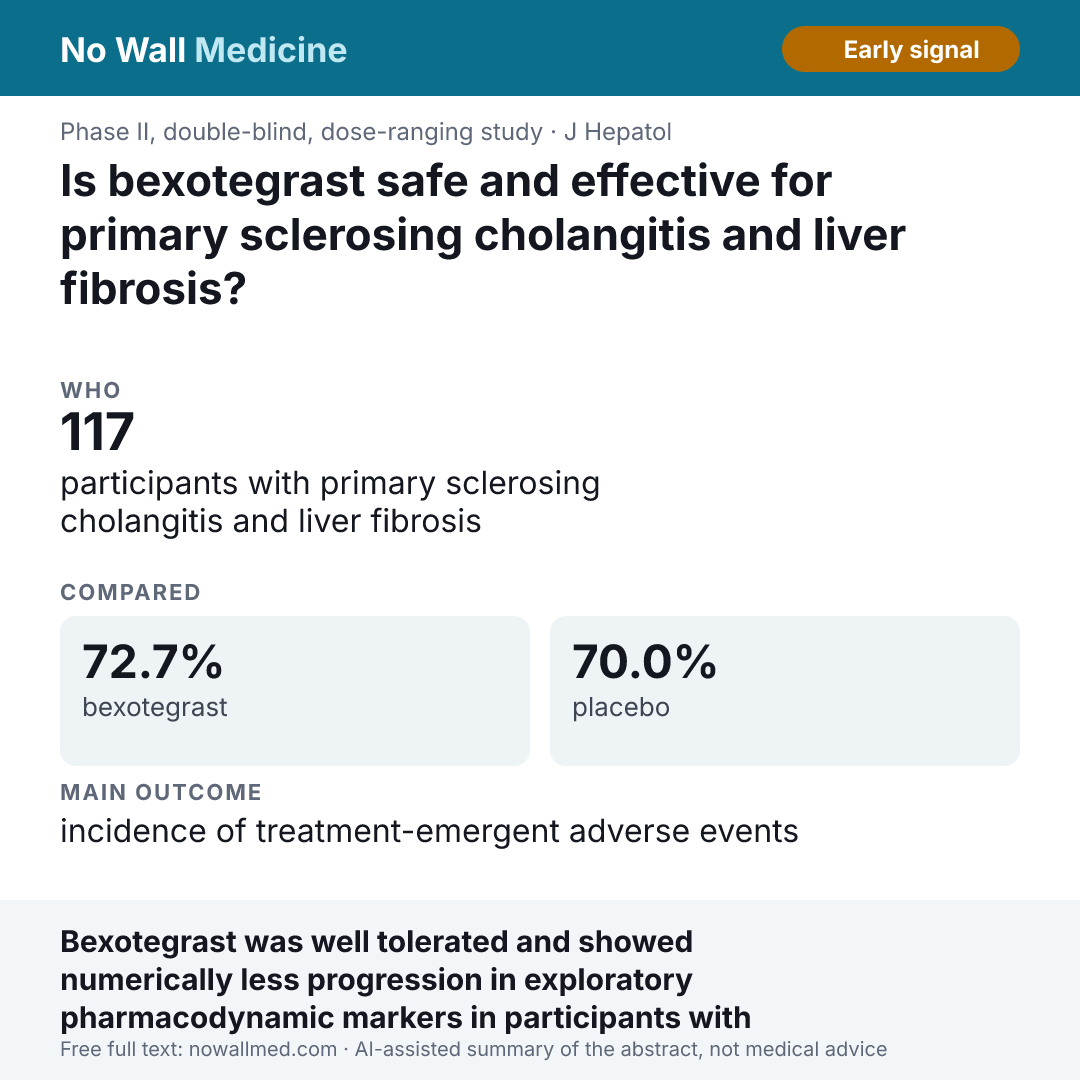
Phase II INTEGRIS-PSC trial of bexotegrast, an αvβ6/αvβ1 integrin inhibitor, in primary sclerosing cholangitis
Phase II, double-blind, dose-ranging studyEarly signal
Is bexotegrast safe and effective for primary sclerosing cholangitis and liver fibrosis?
Who
117
participants with primary sclerosing cholangitis and liver fibrosis
Compared
72.7%bexotegrast
70.0%placebo
Main outcome
incidence of treatment-emergent adverse events
Bottom line: Bexotegrast was well tolerated and showed numerically less progression in exploratory pharmacodynamic markers in participants with primary sclerosing cholangitis.
J Hepatol · 2025-09-26 · Save PNG
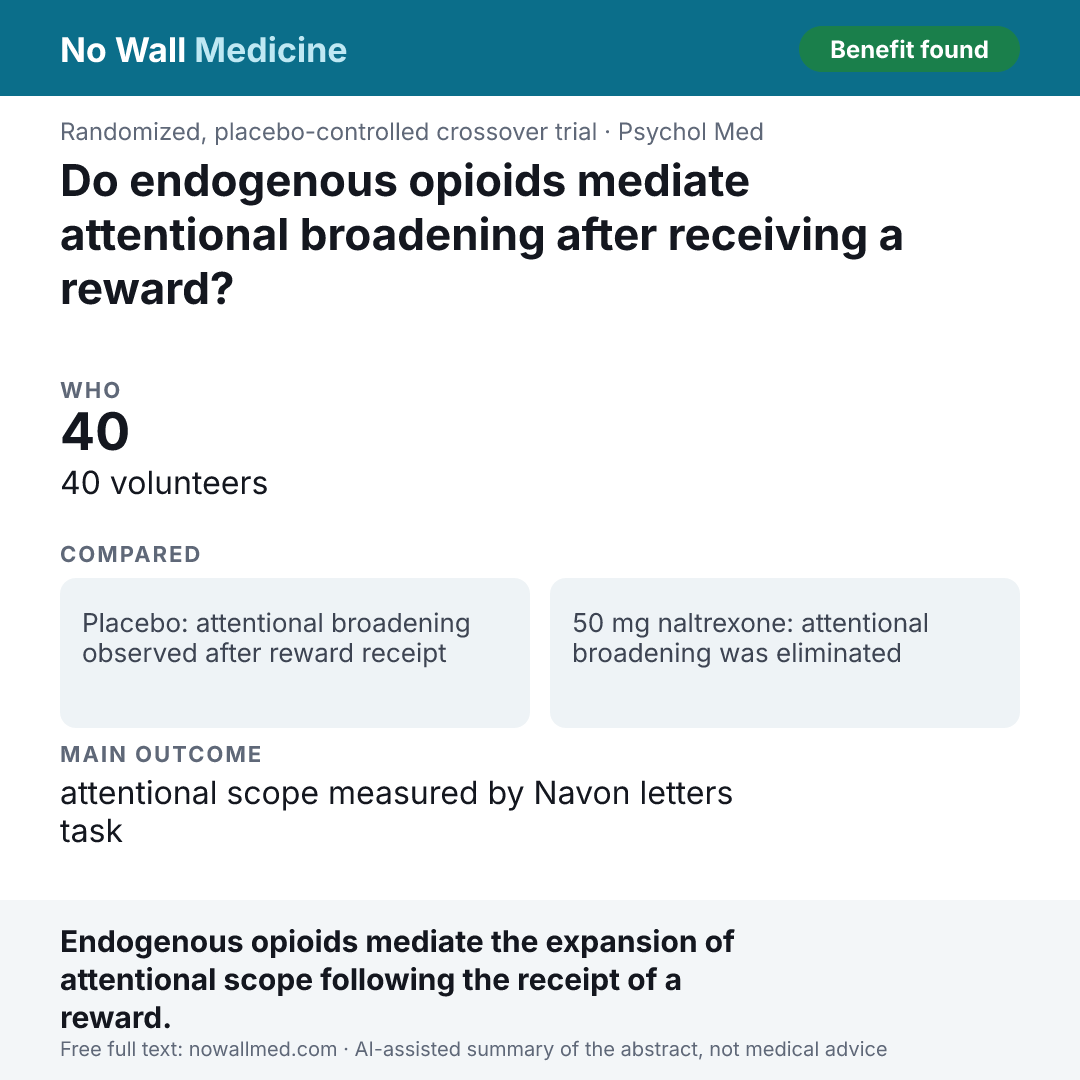
Seeing the bigger picture: endogenous opioids mediate attentional broadening after reward receipt
Randomized, placebo-controlled crossover trialBenefit found
Do endogenous opioids mediate attentional broadening after receiving a reward?
Who
40
40 volunteers
Compared
Placebo: attentional broadening observed after reward receipt
50 mg naltrexone: attentional broadening was eliminated
Main outcome
attentional scope measured by Navon letters task
Bottom line: Endogenous opioids mediate the expansion of attentional scope following the receipt of a reward.
Psychol Med · 2025-09-26 · Save PNG
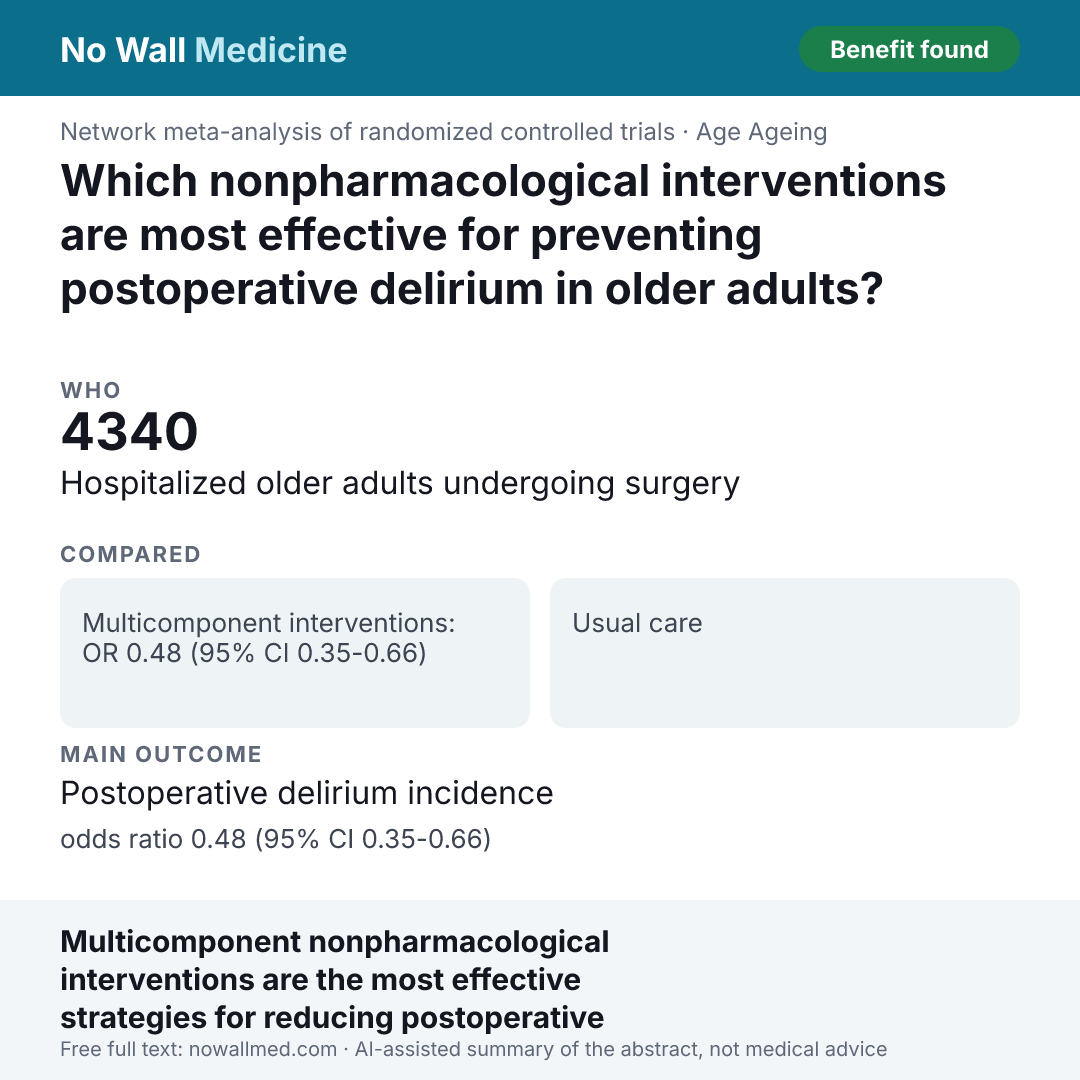
Comparative efficacy of nonpharmacological interventions for preventing postoperative delirium in hospitalized older adults: a systematic review and network meta-analysis
Network meta-analysis of randomized controlled trialsBenefit found
Which nonpharmacological interventions are most effective for preventing postoperative delirium in older adults?
Who
4340
Hospitalized older adults undergoing surgery
Compared
Multicomponent interventions: OR 0.48 (95% CI 0.35-0.66)
Usual care
Main outcome
Postoperative delirium incidence
Result: odds ratio 0.48 (95% CI 0.35-0.66)
Bottom line: Multicomponent nonpharmacological interventions are the most effective strategies for reducing postoperative delirium incidence in hospitalized older adults.
Age Ageing · 2025-09-26 · Save PNG
The Effect of Community-based Group Activities on Psychological Well-Being in People Living With Dementia: A Systematic Review
Systematic reviewBenefit found
Do community-based group activities improve psychological well-being in people living with dementia?
Who
People living with dementia in community settings · Community settings
Compared
Community-based group activities
Control
Main outcome
Psychological well-being
Bottom line: Community-based group activities show a positive trend in improving psychological well-being for people living with dementia.
Limitation: Limited research and need for more high-quality research to understand effectiveness.
J Am Med Dir Assoc · 2025-09-26 · Save PNG

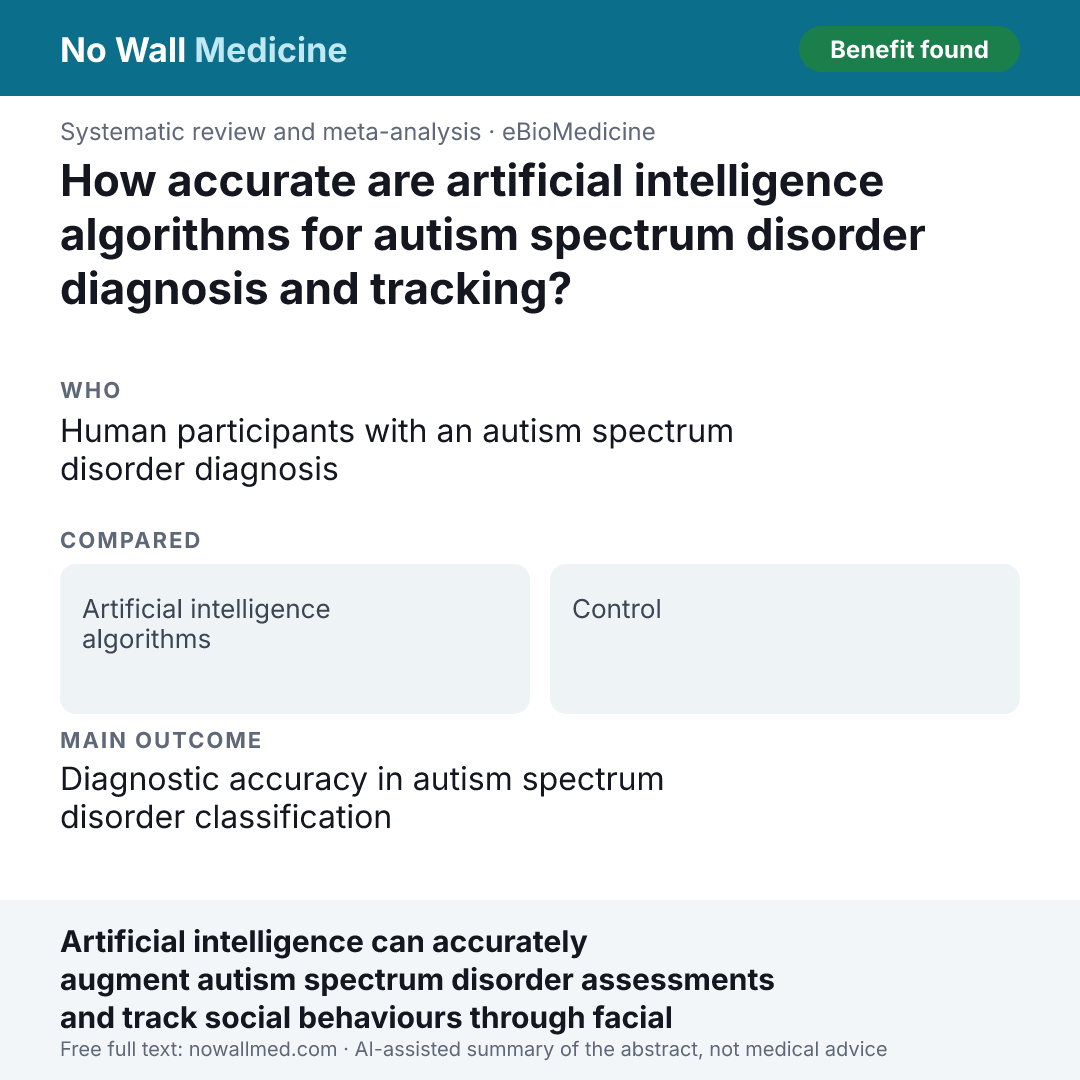
Artificial intelligence for tracking social behaviours and supporting an autism spectrum disorder diagnosis: systematic review and meta-analysis
Systematic review and meta-analysisBenefit found
How accurate are artificial intelligence algorithms for autism spectrum disorder diagnosis and tracking?
Who
Human participants with an autism spectrum disorder diagnosis
Compared
Artificial intelligence algorithms
Control
Main outcome
Diagnostic accuracy in autism spectrum disorder classification
Result: diagnostic odds ratio 15.917 (95% CI 4.775 to 53.059)
Bottom line: Artificial intelligence can accurately augment autism spectrum disorder assessments and track social behaviours through facial information.
Limitation: Further validation in diverse populations is needed to ensure clinical applicability and ethical use.
eBioMedicine · 2025-09-26 · Save PNG
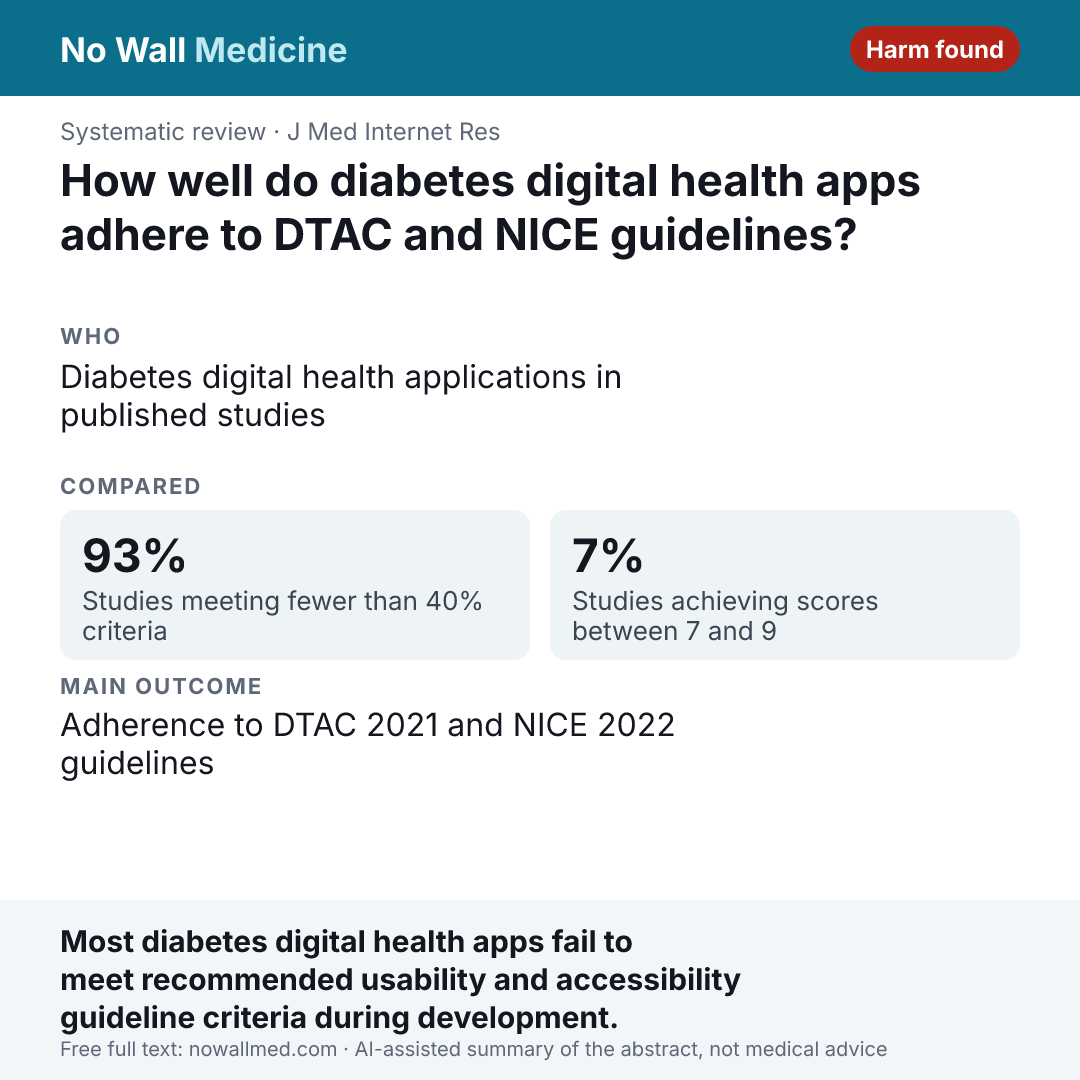
Adherence to Usability and Accessibility Principles in Digital Health Applications for Patients With Diabetes: Systematic Review
Systematic reviewHarm found
How well do diabetes digital health apps adhere to DTAC and NICE guidelines?
Who
Diabetes digital health applications in published studies
Compared
93%Studies meeting fewer than 40% criteria (n=40)
7%Studies achieving scores between 7 and 9 (3)
Main outcome
Adherence to DTAC 2021 and NICE 2022 guidelines
Bottom line: Most diabetes digital health apps fail to meet recommended usability and accessibility guideline criteria during development.
J Med Internet Res · 2025-09-26 · Save PNG
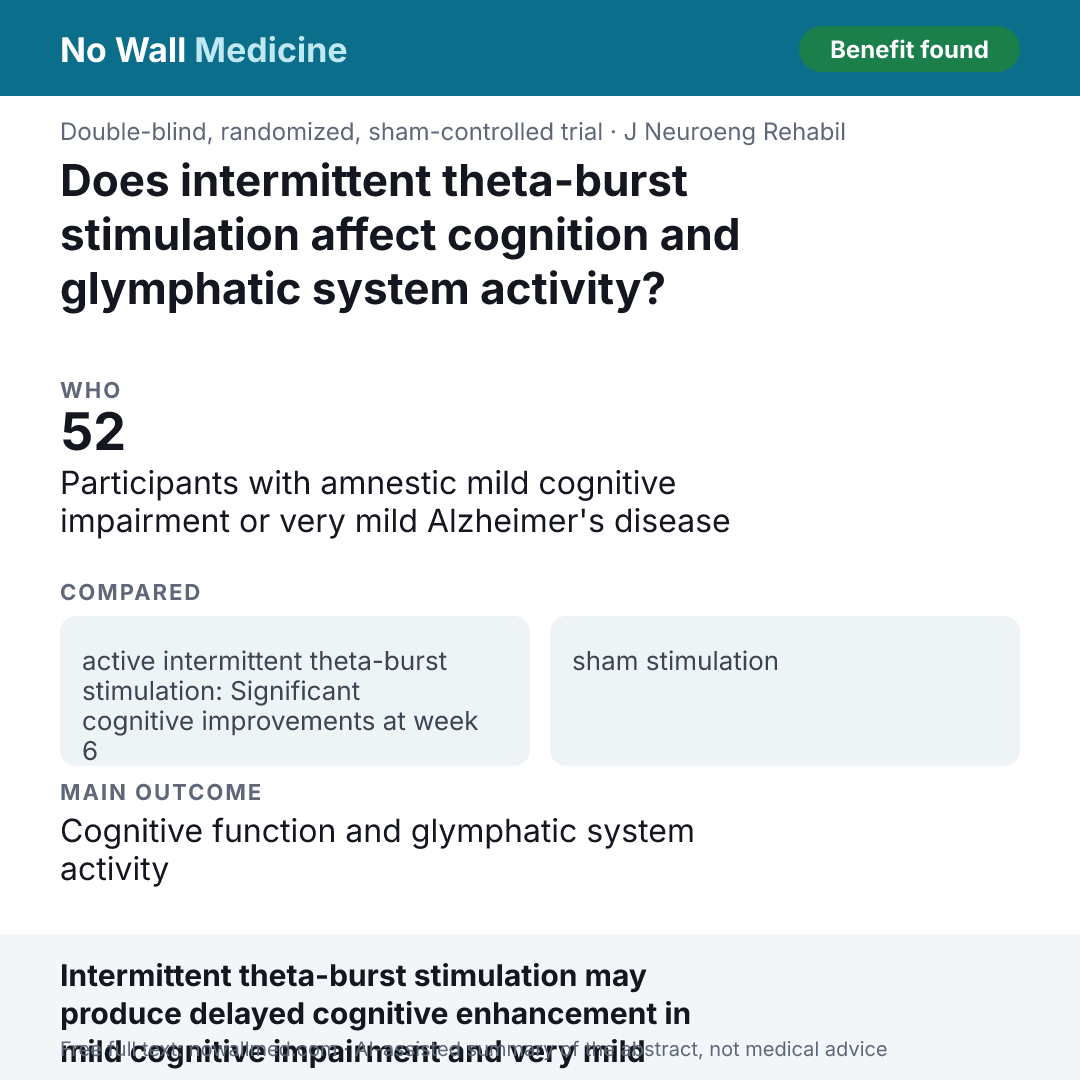
Effects of intermittent theta-burst stimulation on cognition and glymphatic system activity in mild cognitive impairment and very mild Alzheimer's disease: a randomized controlled trial
Double-blind, randomized, sham-controlled trialBenefit found
Does intermittent theta-burst stimulation affect cognition and glymphatic system activity?
Who
52
Participants with amnestic mild cognitive impairment or very mild Alzheimer's disease
Compared
active intermittent theta-burst stimulation: Significant cognitive improvements at week 6
sham stimulation
Main outcome
Cognitive function and glymphatic system activity
Bottom line: Intermittent theta-burst stimulation may produce delayed cognitive enhancement in mild cognitive impairment and very mild Alzheimer's disease.
J Neuroeng Rehabil · 2025-09-26 · Save PNG
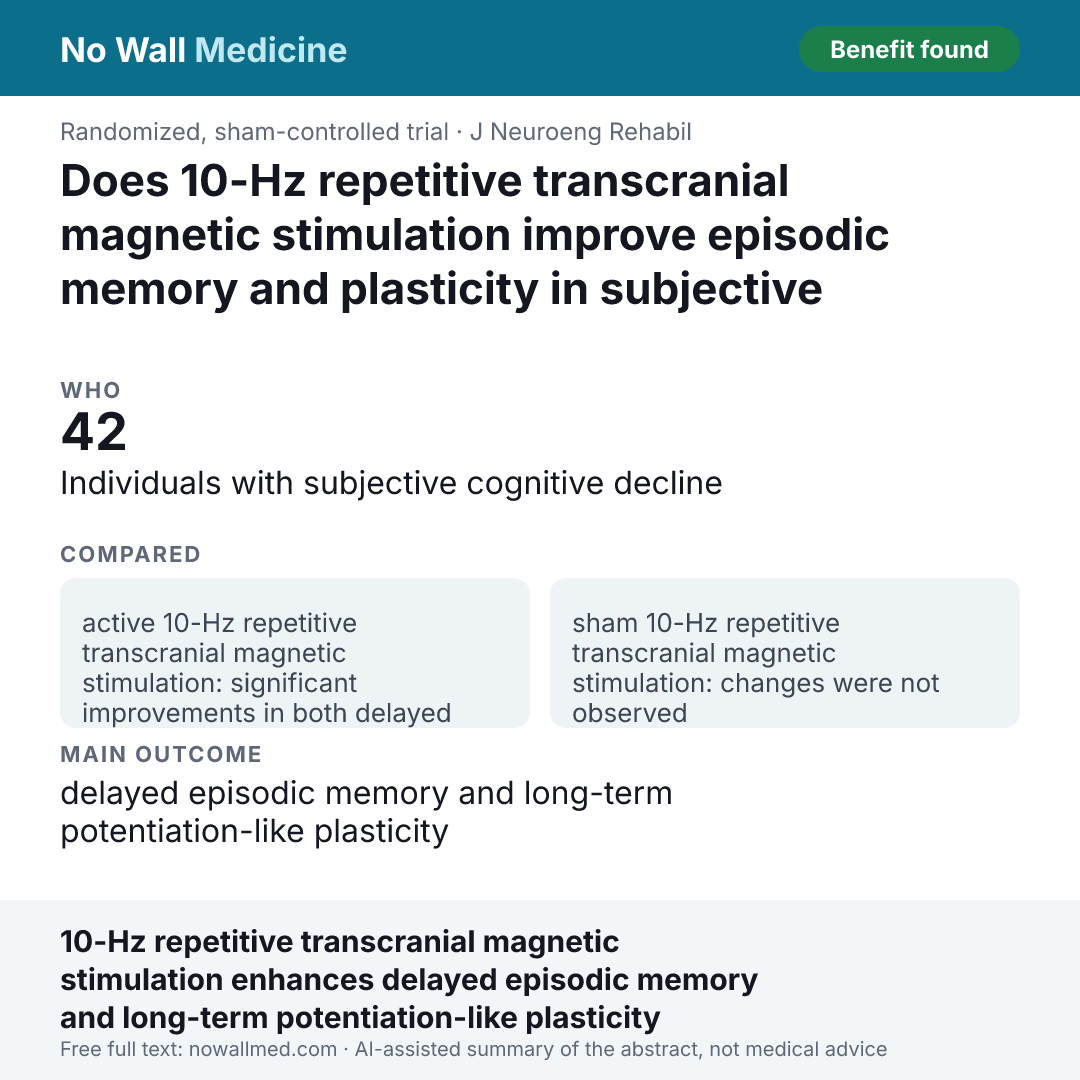
Enhanced episodic memory and LTP-like plasticity in subjective cognitive decline following 10-Hz repetitive transcranial magnetic stimulation
Randomized, sham-controlled trialBenefit found
Does 10-Hz repetitive transcranial magnetic stimulation improve episodic memory and plasticity in subjective cognitive decline?
Who
42
Individuals with subjective cognitive decline
Compared
active 10-Hz repetitive transcranial magnetic stimulation: significant improvements in both delayed episodic memory (AVLT-N5) and MEP amplitudes
sham 10-Hz repetitive transcranial magnetic stimulation: changes were not observed
Main outcome
delayed episodic memory and long-term potentiation-like plasticity
Bottom line: 10-Hz repetitive transcranial magnetic stimulation enhances delayed episodic memory and long-term potentiation-like plasticity in individuals with subjective cognitive decline.
J Neuroeng Rehabil · 2025-09-26 · Save PNG
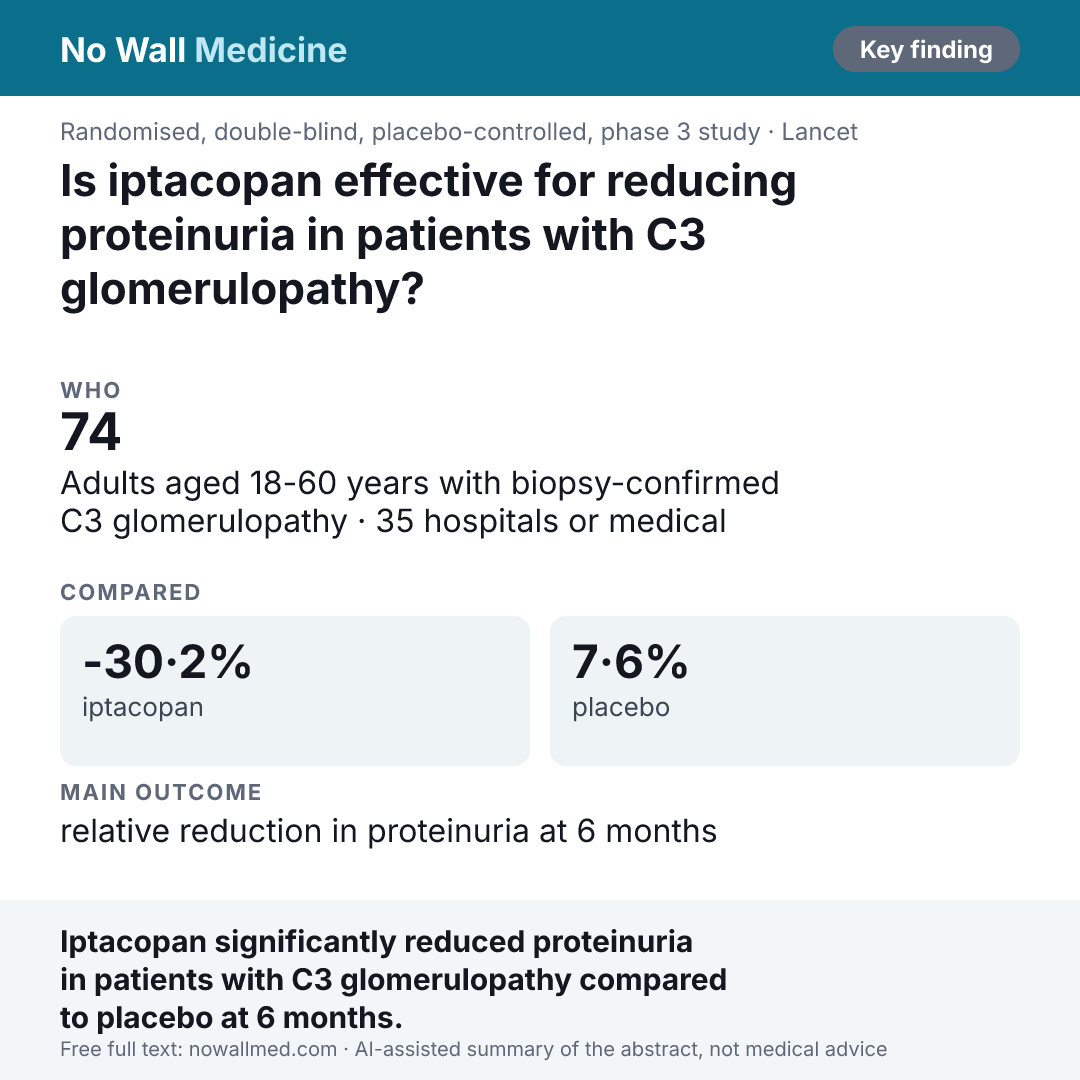
Oral iptacopan therapy in patients with C3 glomerulopathy: a randomised, double-blind, parallel group, multicentre, placebo-controlled, phase 3 study
Randomised, double-blind, placebo-controlled, phase 3 studyKey finding
Is iptacopan effective for reducing proteinuria in patients with C3 glomerulopathy?
Who
74
Adults aged 18-60 years with biopsy-confirmed C3 glomerulopathy · 35 hospitals or medical centres in 18 countries
Compared
-30·2%iptacopan (95% CI -42·8 to -14·8)
7·6%placebo (-11·9 to 31·3)
Main outcome
relative reduction in proteinuria at 6 months
Result: 35·1% (13·8 to 51·1; p=0·0014)
Bottom line: Iptacopan significantly reduced proteinuria in patients with C3 glomerulopathy compared to placebo at 6 months.
Funded by: Novartis Pharma
Lancet · 2025-09-25 · Save PNG
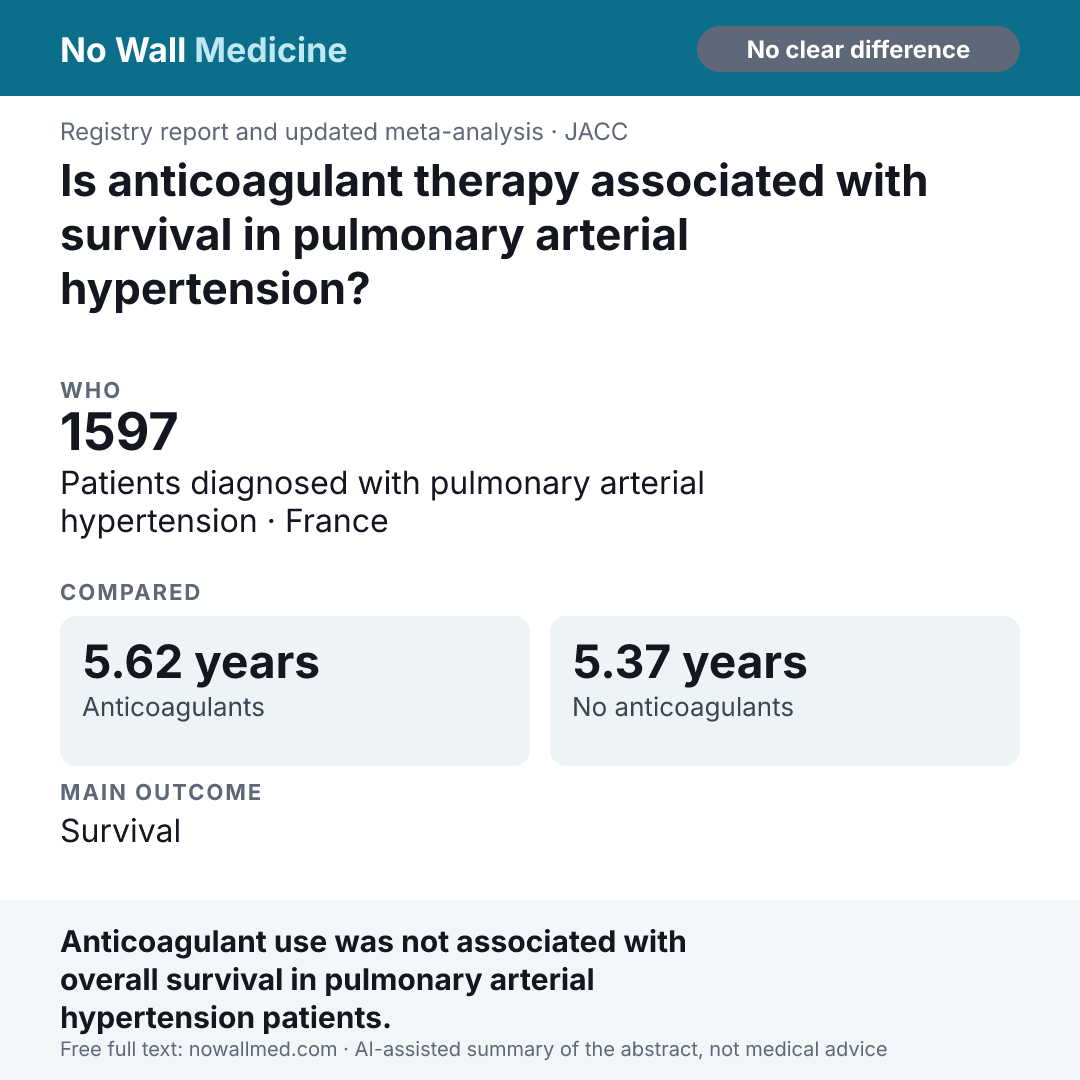
Association Between Anticoagulant Therapy and Survival in Pulmonary Arterial Hypertension: A Registry Report and Updated Meta-Analysis
Registry report and updated meta-analysisNo clear difference
Is anticoagulant therapy associated with survival in pulmonary arterial hypertension?
Who
1597
Patients diagnosed with pulmonary arterial hypertension · France
Compared
5.62 yearsAnticoagulants (95% CI: 4.76-6.58)
5.37 yearsNo anticoagulants (95% CI: 4.96-5.82)
Main outcome
Survival
Result: hazard ratio 0.98 (95% CI 0.78-1.23)
Bottom line: Anticoagulant use was not associated with overall survival in pulmonary arterial hypertension patients.
JACC · 2025-09-25 · Save PNG
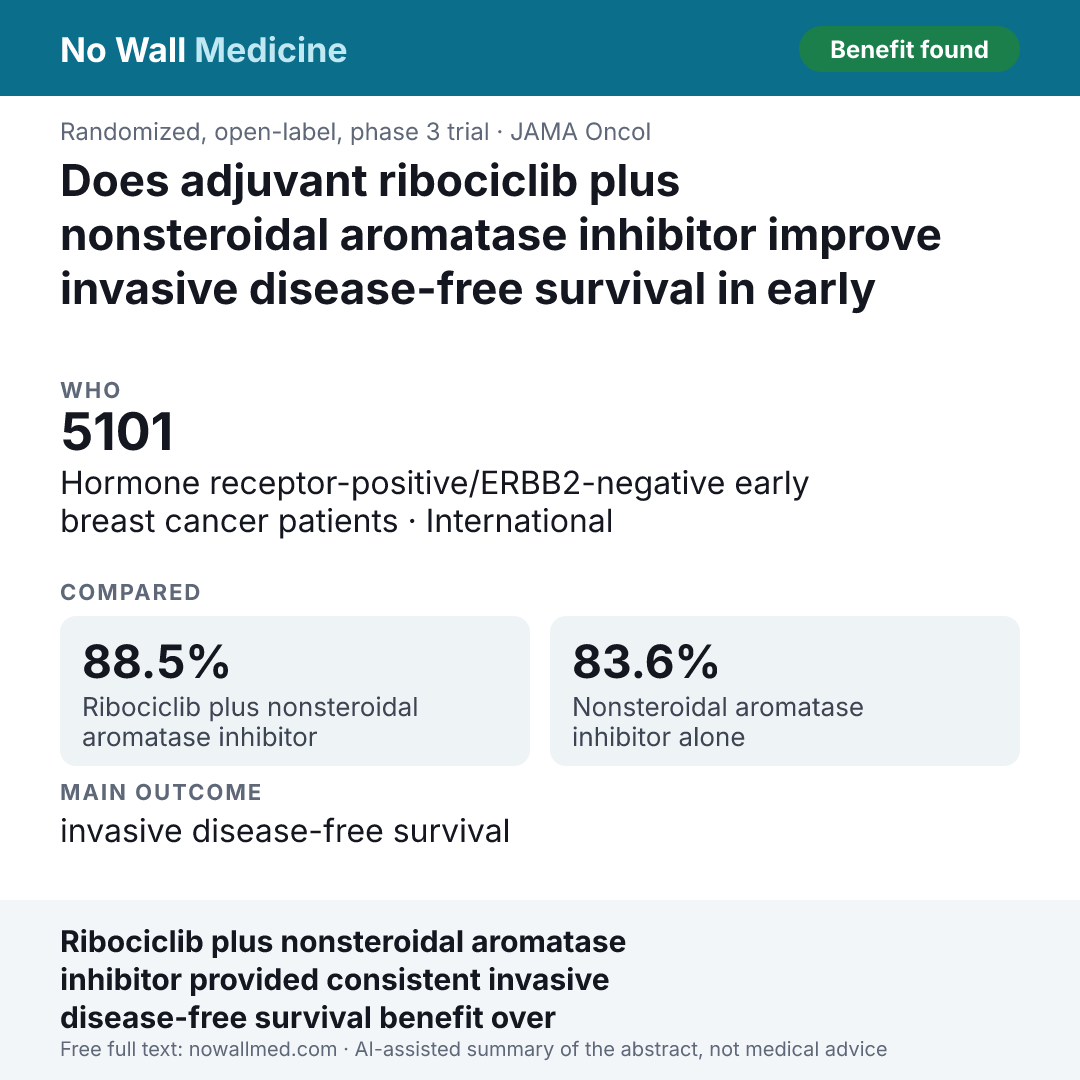
Ribociclib Plus Endocrine Therapy in Hormone Receptor-Positive/ERBB2-Negative Early Breast Cancer: 4-Year Outcomes From the NATALEE Randomized Clinical Trial
Randomized, open-label, phase 3 trialBenefit found
Does adjuvant ribociclib plus nonsteroidal aromatase inhibitor improve invasive disease-free survival in early breast cancer?
Who
5101
Hormone receptor-positive/ERBB2-negative early breast cancer patients · International
Compared
88.5%Ribociclib plus nonsteroidal aromatase inhibitor
83.6%Nonsteroidal aromatase inhibitor alone
Main outcome
invasive disease-free survival
Result: hazard ratio 0.72 (95% CI 0.61-0.84)
Bottom line: Ribociclib plus nonsteroidal aromatase inhibitor provided consistent invasive disease-free survival benefit over nonsteroidal aromatase inhibitor alone at 4 years.
JAMA Oncol · 2025-09-25 · Save PNG
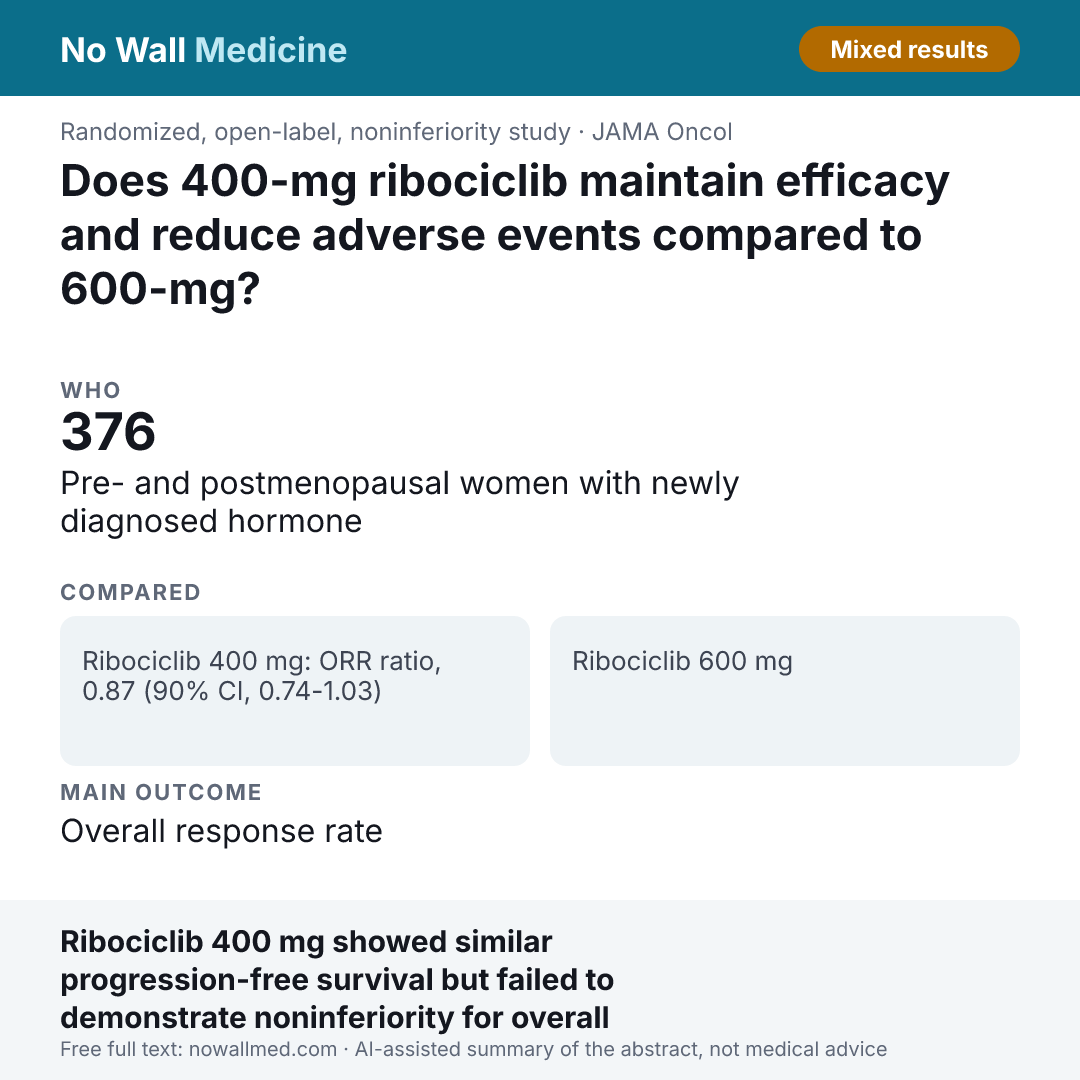
600- vs 400-mg First-Line Ribociclib in Hormone Receptor-Positive/ERBB2-Negative Advanced Breast Cancer: The AMALEE Randomized Clinical Trial
Randomized, open-label, noninferiority studyMixed results
Does 400-mg ribociclib maintain efficacy and reduce adverse events compared to 600-mg?
Who
376
Pre- and postmenopausal women with newly diagnosed hormone receptor-positive/ERRB2-negative advanced breast cancer · 107 sites in 23 countries
Compared
Ribociclib 400 mg: ORR ratio, 0.87 (90% CI, 0.74-1.03)
Ribociclib 600 mg
Main outcome
Overall response rate
Result: ORR ratio, 0.87 (90% CI, 0.74-1.03)
Bottom line: Ribociclib 400 mg showed similar progression-free survival but failed to demonstrate noninferiority for overall response rate.
JAMA Oncol · 2025-09-25 · Save PNG