Visual abstracts
New randomized trials and meta-analyses from leading journals at a glance: who was studied, what was compared, and what was found. Every paper is free to read in full.
All specialtiesCardiology 289Oncology 226Gastroenterology & Hepatology 126Infectious Disease 234Neurology 135Psychiatry & Mental Health 200Pulmonology 133Critical Care 87Endocrinology & Diabetes 179Pediatrics 136Surgery 87Orthopedics & Sports Medicine 57Neurosurgery 17Cardiothoracic & Vascular Surgery 32Plastic & Reconstructive Surgery 61Nephrology 60Rheumatology 58Hematology 72Dermatology 29Ophthalmology 51Obstetrics & Gynecology 87Public & Global Health 91Radiology & Imaging 24Anesthesiology 49Urology 65ENT (Otolaryngology) 39Emergency Medicine 29Allergy & Immunology 30Geriatrics 88Family Medicine & Primary Care 46Medical Genetics & Genomics 28Pathology & Laboratory Medicine 5Physical Medicine & Rehabilitation 74Palliative Care 43Nutrition 105Digital Health & AI 254General Medicine 40
Study Protocol for a Randomized Controlled Trial Investigating Acute Cardiometabolic Responses to Heat-Ozone Coexposure and the Interventional Role of Omega-3 Eicosapentaenoic Acid: The HOEPA Study
Randomized, double-blind, placebo-controlled trialUnclear result
Does eicosapentaenoic acid supplementation mitigate acute cardiometabolic impairments from heat and ozone coexposure?
Who
48
Healthy adult participants
Compared
eicosapentaenoic acid (3 g/d)
corn oil placebo
Main outcome
activated partial thromboplastin time
Bottom line: This study protocol investigates if eicosapentaenoic acid mitigates cardiometabolic impacts from heat and ozone exposure.
J Am Heart Assoc · 2026-09-09Download image

Fractional Flow Reserve in Acute Coronary Syndrome: An Updated Systematic Review and Bayesian Meta-Analysis
Systematic review and Bayesian meta-analysisMixed results
Does fractional flow reserve guided revascularization performance differ in acute coronary syndrome?
Who
13029
Patients with acute coronary syndrome and chronic coronary syndrome
Compared
FFR-guided in acute coronary syndrome: increased risk of MACE at 1 year
FFR-guided in chronic coronary syndrome
Angiography-guided in acute coronary syndrome
FFR-guided in acute coronary syndrome
Main outcome
major adverse cardiac events at 1 year
Result: risk difference 1.9% (95% credible interval 0.2% to 3.6%)
Bottom line: Fractional flow reserve guided strategy in acute coronary syndrome had worse outcomes than chronic coronary syndrome, but no difference versus angiography-guided.
J Am Heart Assoc · 2026-09-09Download image

Artificial Intelligence-Enabled Electrocardiograms and Pregnancy-Related Cardiomyopathy: A Systematic Review and Diagnostic Meta-Analysis
Systematic review and diagnostic meta-analysisBenefit found
What is the diagnostic performance of artificial intelligence-enabled electrocardiograms for pregnancy-related cardiomyopathy detection?
Who
2,928
Patients with pregnancy-related cardiomyopathy
Compared
Artificial intelligence-enabled electrocardiogram models: sensitivity 0.775 (0.623-0.878)
Artificial intelligence-enabled electrocardiogram models: specificity 0.936 (0.871-0.969)
Main outcome
Diagnostic performance for pregnancy-related cardiomyopathy detection
Result: area under the curve 0.932 (0.813-0.953)
Bottom line: Artificial intelligence-enabled electrocardiogram models show good performance for detecting pregnancy-related cardiomyopathy.
JACC Adv · 2026-09-09Download image

Effectiveness, Safety, and Workflow Burden of Large Language Model-Based Medical Report Generation: Systematic Review
Systematic reviewMixed results
What are the effectiveness, safety, and workflow burden of large language model-based medical report generation?
Who
Studies evaluating large language models for medical report generation · Multiple databases including PubMed, Embase, and Web of Science
Compared
AI reports (chest x-ray): 70.5% (6047/8580) acceptance
Radiologist reports (chest x-ray): 73.3% (6288/8580) acceptance
Main outcome
Effectiveness, safety, and workflow burden of medical report generation
Bottom line: Large language models show assistive value in expert acceptance, but safety and workflow effects remain heterogeneous and inconsistent.
Limitation: Evidence is too heterogeneous, biased, and sparse on case-level end points to support pooled meta-analysis.
J Med Internet Res · 2026-09-09Download image

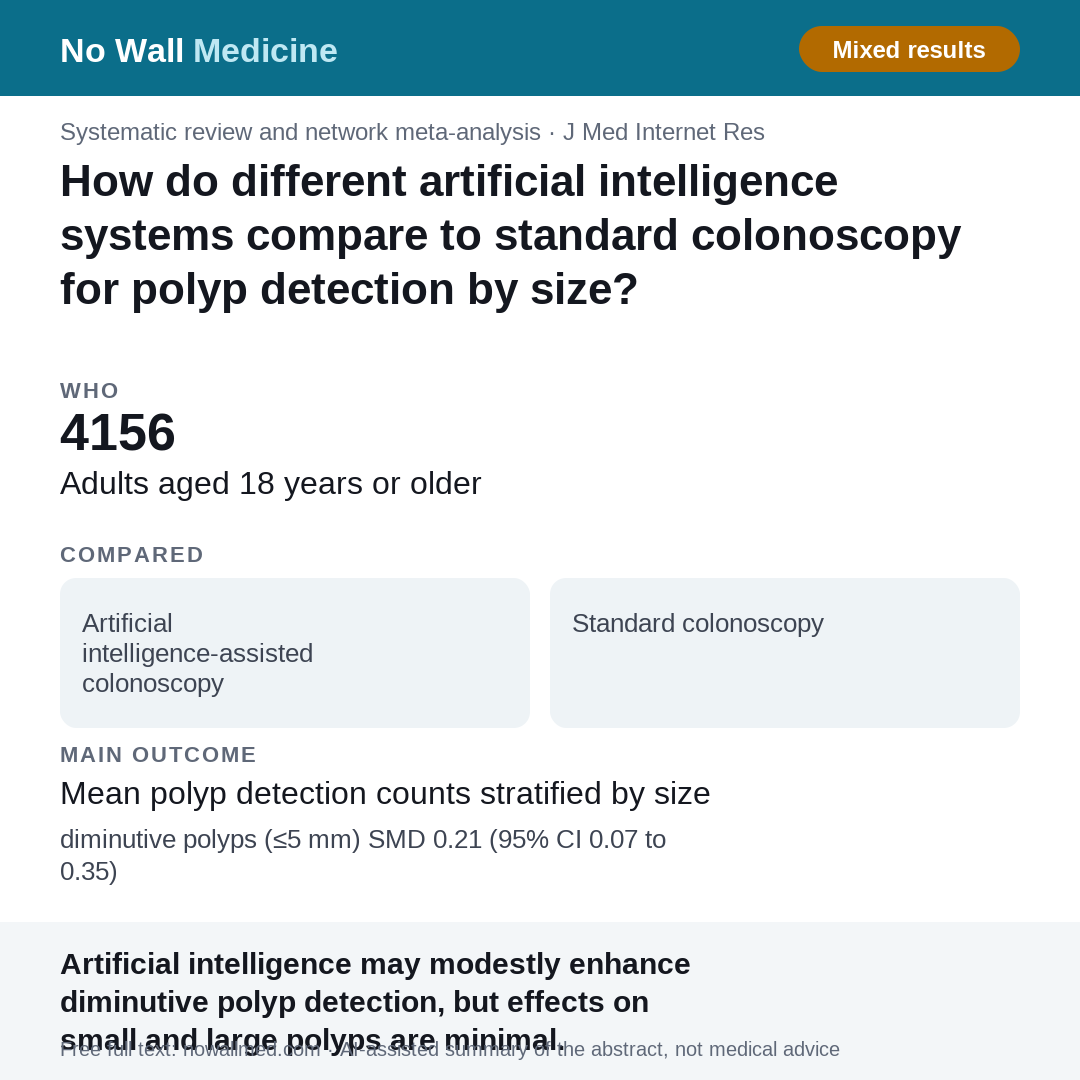
Comparative Efficacy of Different AI Systems for Polyp Detection by Size During Colonoscopy: Systematic Review and Network Meta-Analysis
Systematic review and network meta-analysisMixed results
How do different artificial intelligence systems compare to standard colonoscopy for polyp detection by size?
Who
4156
Adults aged 18 years or older
Compared
Artificial intelligence-assisted colonoscopy
Standard colonoscopy
Main outcome
Mean polyp detection counts stratified by size
Result: diminutive polyps (≤5 mm) SMD 0.21 (95% CI 0.07 to 0.35)
Bottom line: Artificial intelligence may modestly enhance diminutive polyp detection, but effects on small and large polyps are minimal.
Limitation: All cross-platform comparisons are indirect and certainty of evidence is very low to low.
J Med Internet Res · 2026-09-09Download image
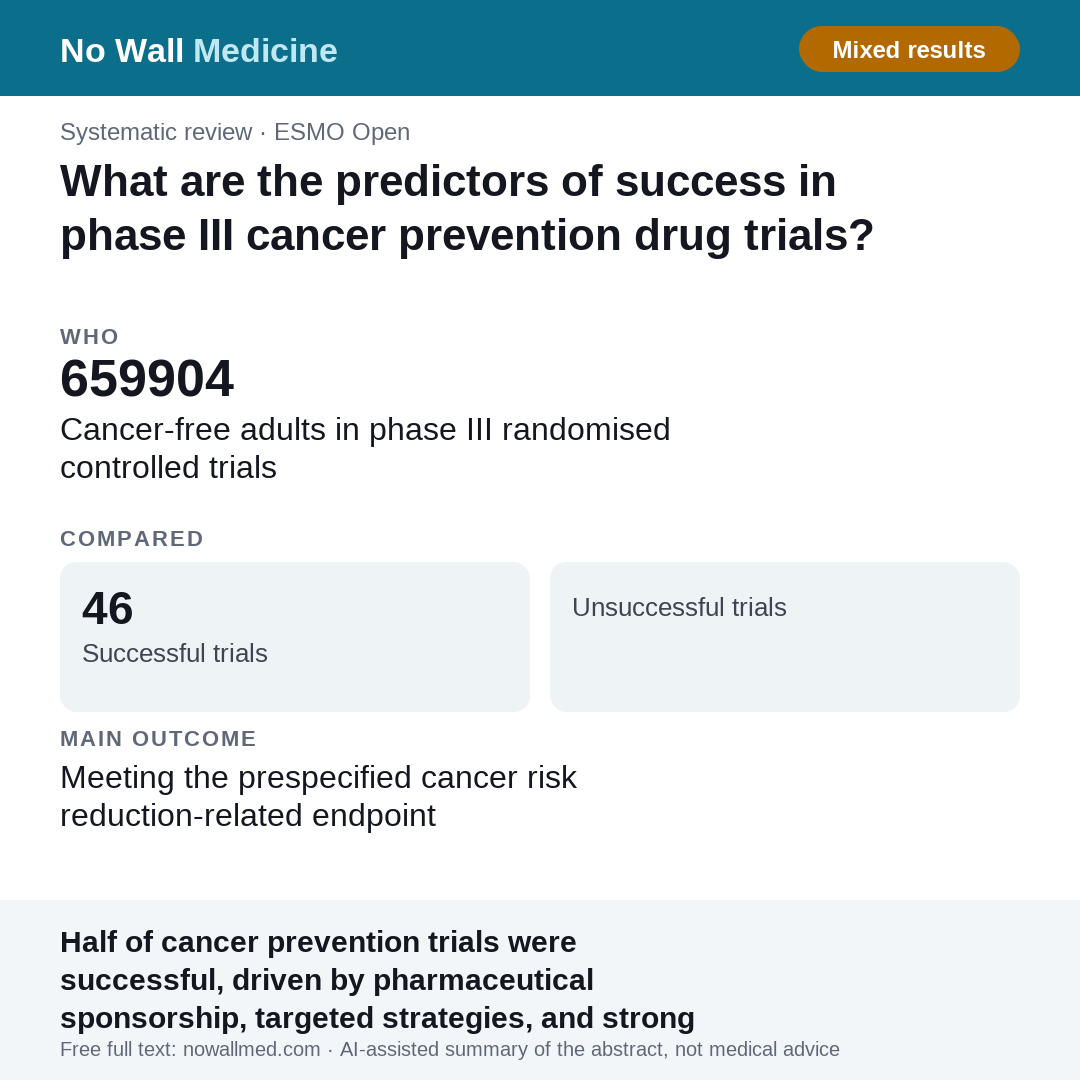
Randomised phase III trials of cancer prevention drugs: a systematic review and prediction of trial success
Systematic reviewMixed results
What are the predictors of success in phase III cancer prevention drug trials?
Who
659904
Cancer-free adults in phase III randomised controlled trials
Compared
46Successful trials (50.0%)
Unsuccessful trials
Main outcome
Meeting the prespecified cancer risk reduction-related endpoint
Bottom line: Half of cancer prevention trials were successful, driven by pharmaceutical sponsorship, targeted strategies, and strong preliminary evidence.
ESMO Open · 2026-09-09Download image
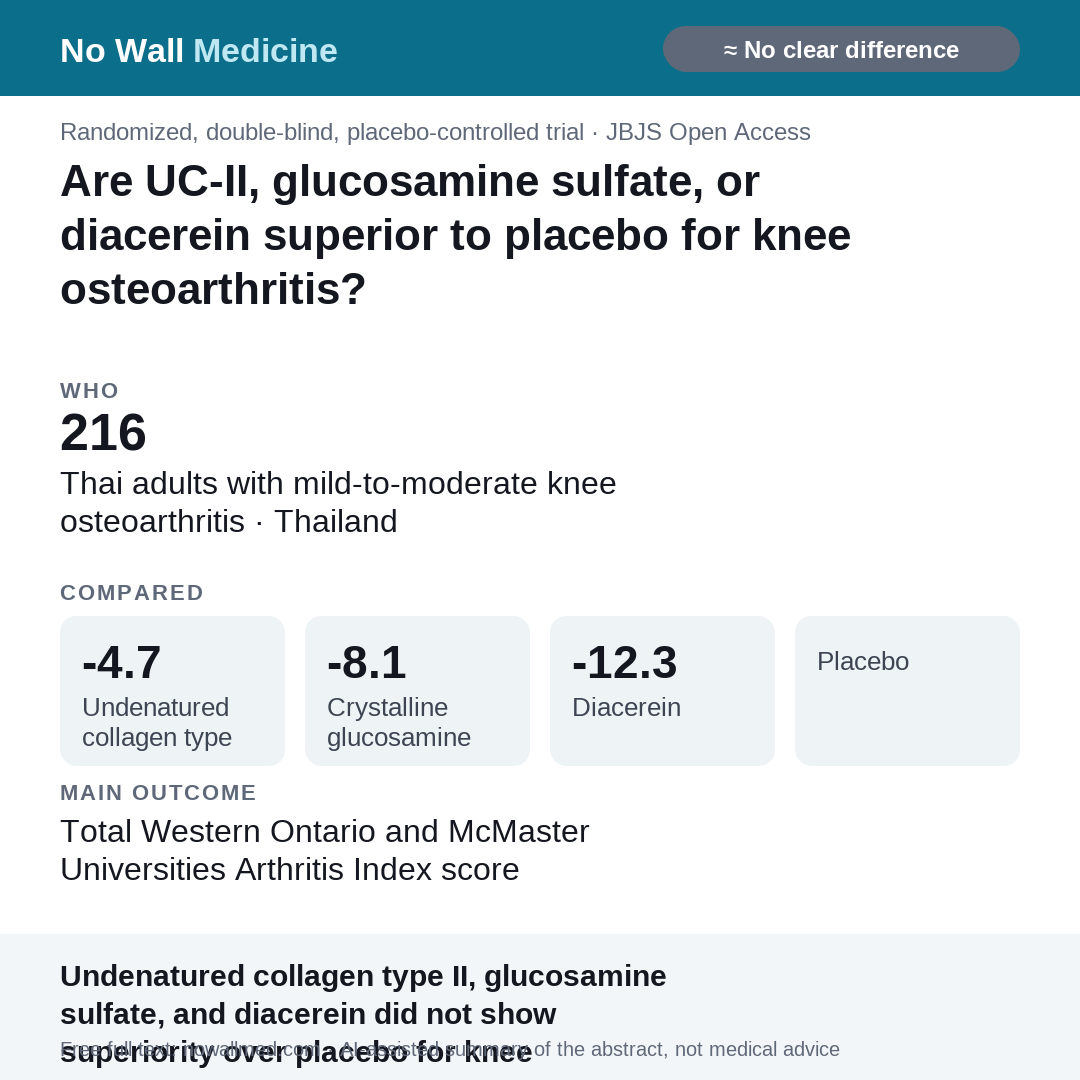
A Comparison of Clinical Outcomes Among Undenatured Collagen Type II, Glucosamine Sulfate, and Diacerein on Osteoarthritic Knee Treatment: A Randomized Clinical Trial
Randomized, double-blind, placebo-controlled trialNo clear difference
Are UC-II, glucosamine sulfate, or diacerein superior to placebo for knee osteoarthritis?
Who
216
Thai adults with mild-to-moderate knee osteoarthritis · Thailand
Compared
-4.7Undenatured collagen type II (95% CI -18.6 to 9.1)
-8.1Crystalline glucosamine sulfate (95% CI -21.8 to 5.7)
-12.3Diacerein (95% CI -25.9 to 1.3)
Placebo
Main outcome
Total Western Ontario and McMaster Universities Arthritis Index score
Bottom line: Undenatured collagen type II, glucosamine sulfate, and diacerein did not show superiority over placebo for knee osteoarthritis.
JBJS Open Access · 2026-09-09Download image
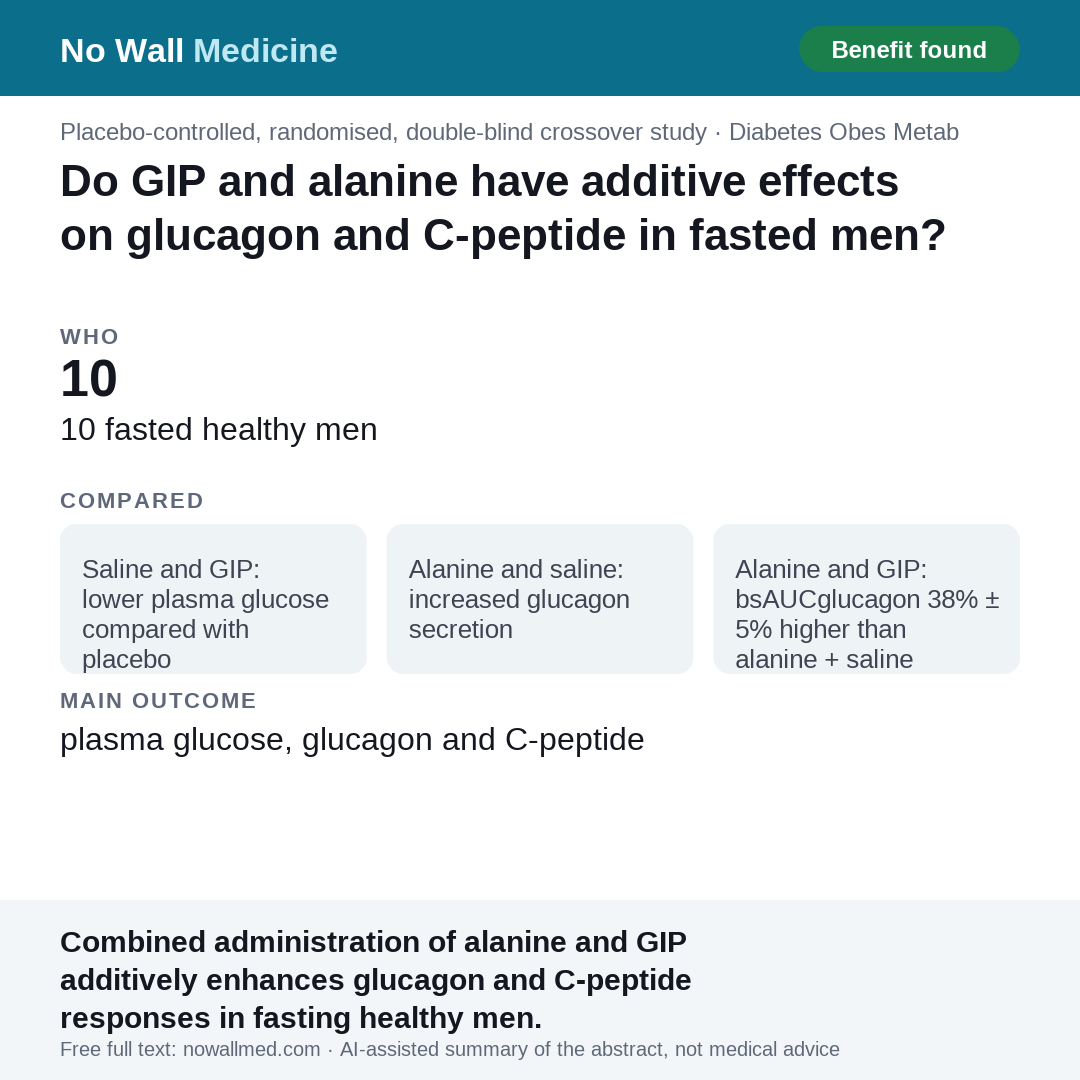
Additive Glucagonotropic and Insulinotropic Effects of Glucose-Dependent Insulinotropic Polypeptide and Alanine in Fasted Healthy Men
Placebo-controlled, randomised, double-blind crossover studyBenefit found
Do GIP and alanine have additive effects on glucagon and C-peptide in fasted men?
Who
10
10 fasted healthy men
Compared
Saline and GIP: lower plasma glucose compared with placebo
Alanine and saline: increased glucagon secretion
Alanine and GIP: bsAUCglucagon 38% ± 5% higher than alanine + saline
Main outcome
plasma glucose, glucagon and C-peptide
Bottom line: Combined administration of alanine and GIP additively enhances glucagon and C-peptide responses in fasting healthy men.
Diabetes Obes Metab · 2026-09-08Download image
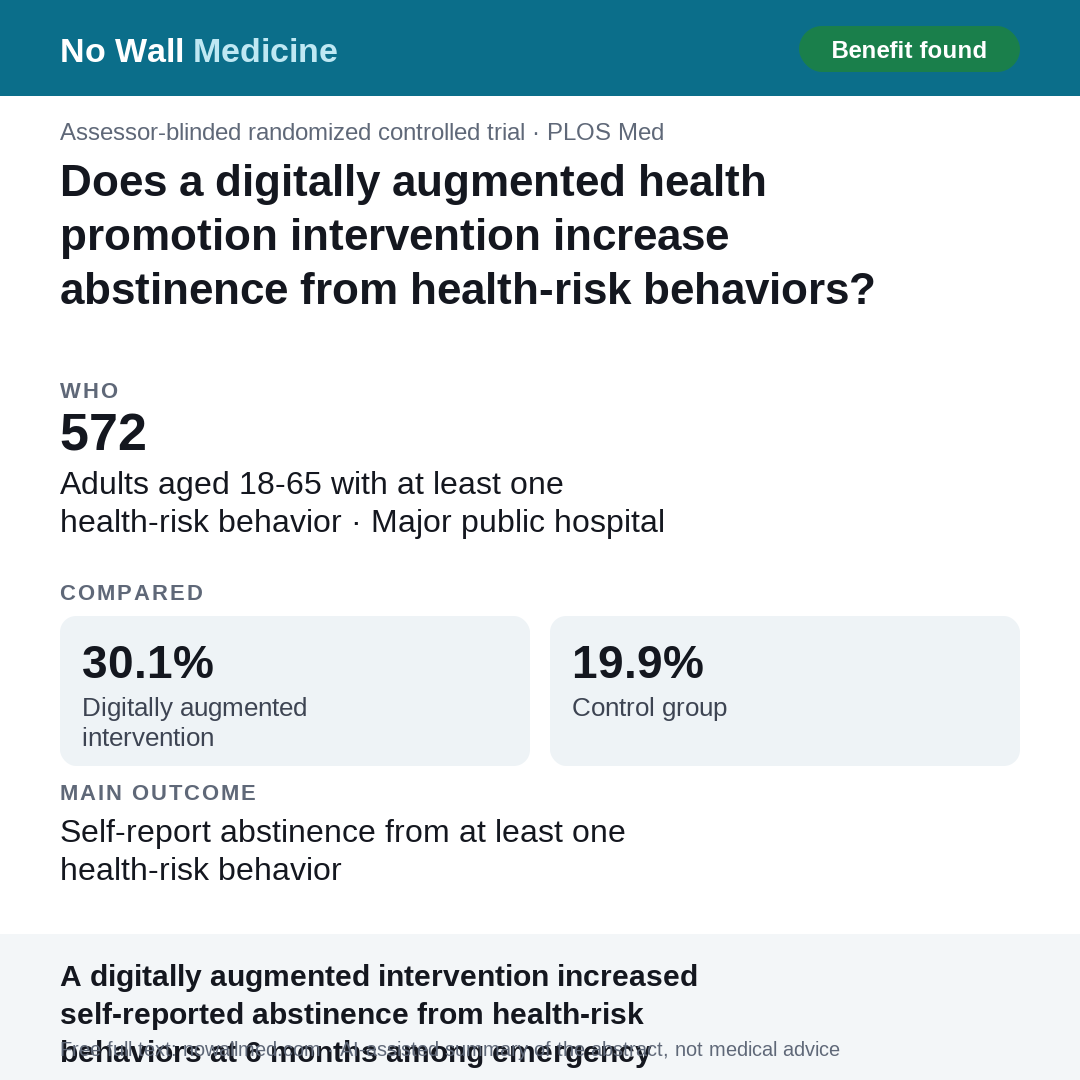
Effect of a digitally augmented general health promotion intervention on abstinence from health-risk behaviors among emergency department discharge patients: A randomized controlled trial
Assessor-blinded randomized controlled trialBenefit found
Does a digitally augmented health promotion intervention increase abstinence from health-risk behaviors?
Who
572
Adults aged 18-65 with at least one health-risk behavior · Major public hospital emergency department in Hong Kong
Compared
30.1%Digitally augmented intervention
19.9%Control group
Main outcome
Self-report abstinence from at least one health-risk behavior
Result: relative risk 1.51 (95% CI 1.13-2.02)
Bottom line: A digitally augmented intervention increased self-reported abstinence from health-risk behaviors at 6 months among emergency department discharge patients.
Limitation: Reliance on self-reported outcomes, single-center design, and loss to follow-up.
PLOS Med · 2026-09-08Download image
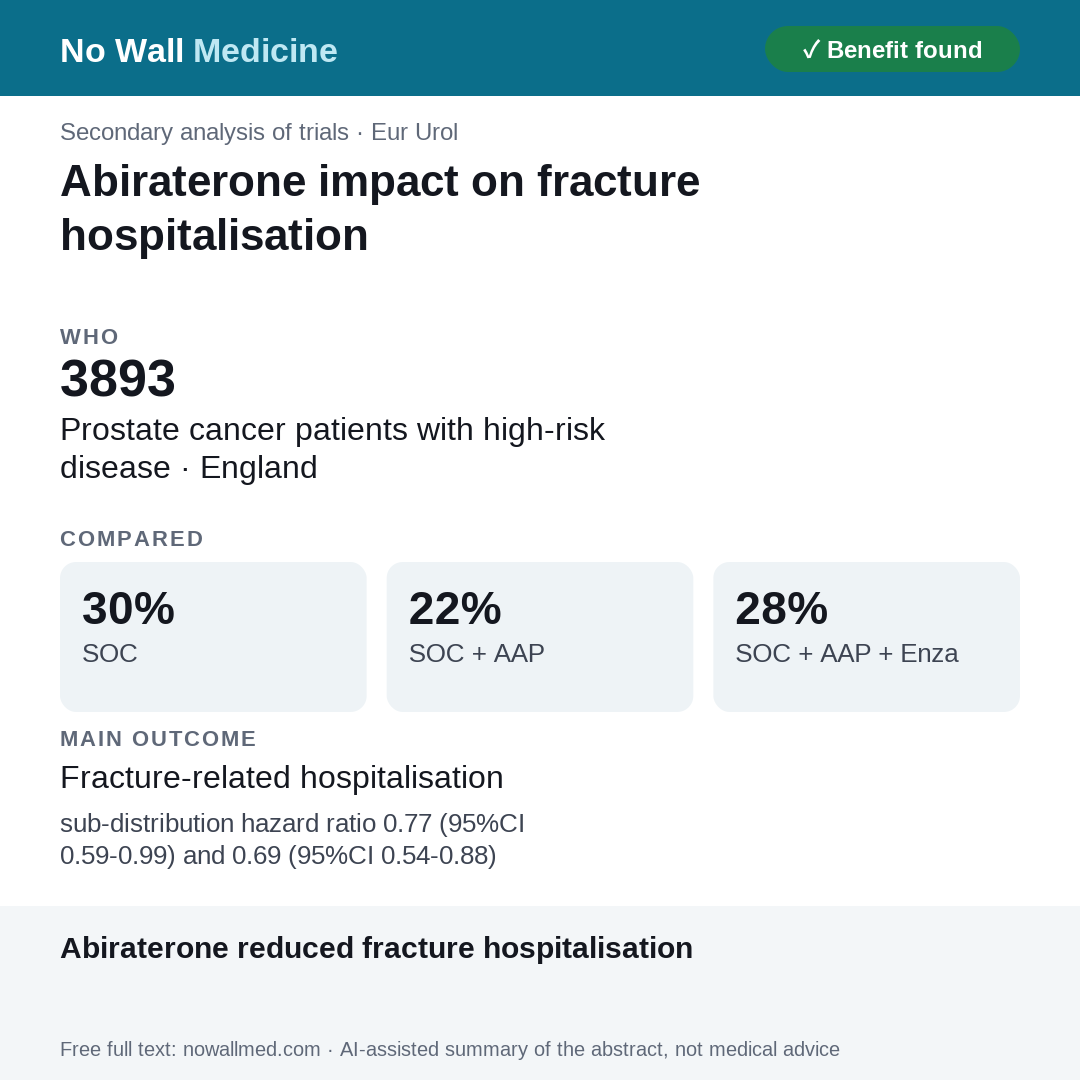
Impact of Treatment Intensification with Abiraterone on Fracture-related Hospitalisation in Newly Diagnosed Prostate Cancer: A Secondary Analysis of Two Randomised Phase 3 Trials Within the STAMPEDE Trial Platform
Secondary analysis of trialsBenefit found
Abiraterone impact on fracture hospitalisation
Who
3893
Prostate cancer patients with high-risk disease · England
Compared
30%SOC
22%SOC + AAP
28%SOC + AAP + Enza
Main outcome
Fracture-related hospitalisation
Result: sub-distribution hazard ratio 0.77 (95%CI 0.59-0.99) and 0.69 (95%CI 0.54-0.88)
Bottom line: Abiraterone reduced fracture hospitalisation
Limitation: under-estimation of total fracture burden
Eur Urol · 2026-09-08Download image
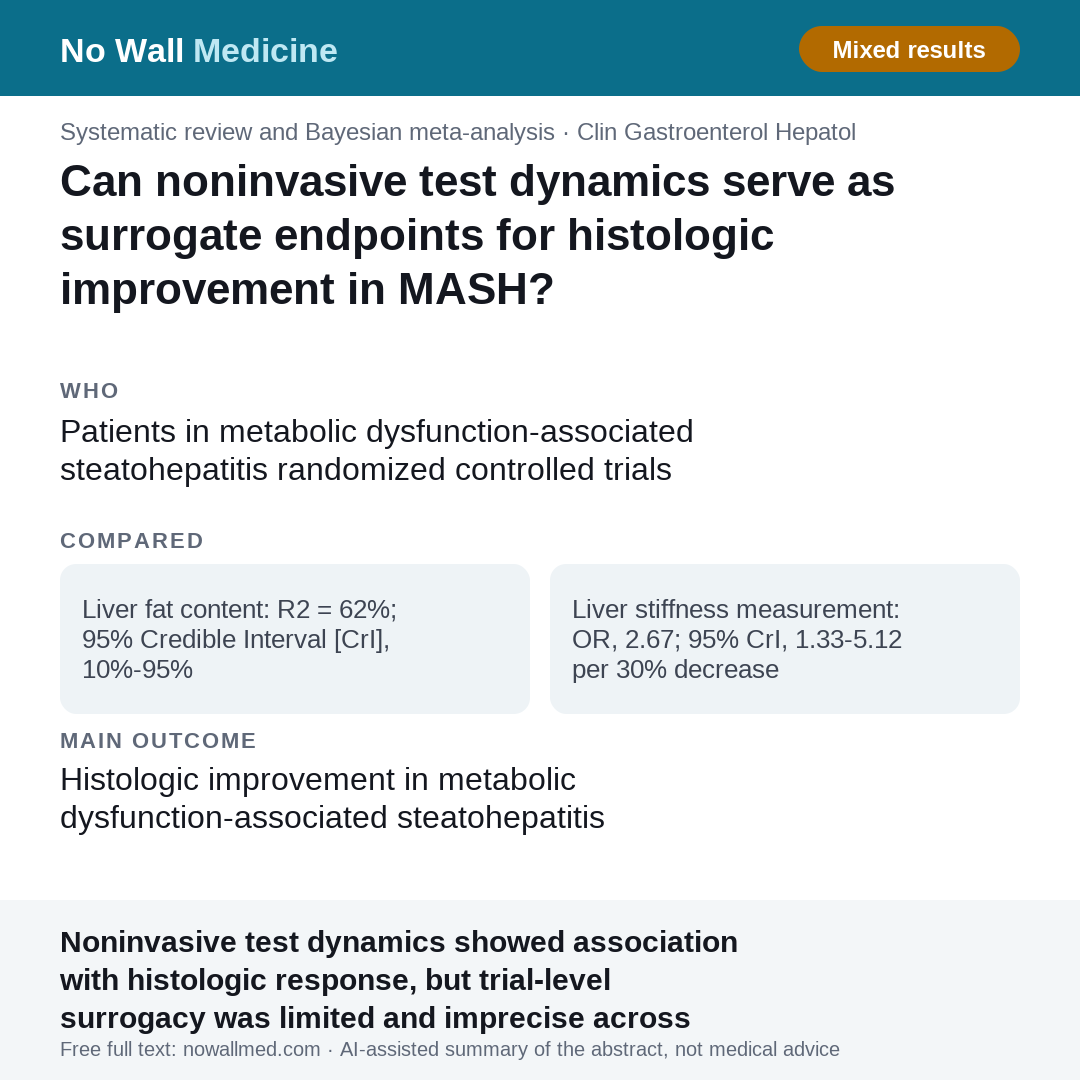
Can Noninvasive Test Dynamics Serve as Surrogate End Points for Histologic Improvement in Metabolic Dysfunction-Associated Steatohepatitis? A Systematic Review and Bayesian Meta-Analysis
Systematic review and Bayesian meta-analysisMixed results
Can noninvasive test dynamics serve as surrogate endpoints for histologic improvement in MASH?
Who
Patients in metabolic dysfunction-associated steatohepatitis randomized controlled trials
Compared
Liver fat content: R2 = 62%; 95% Credible Interval [CrI], 10%-95%
Liver stiffness measurement: OR, 2.67; 95% CrI, 1.33-5.12 per 30% decrease
Main outcome
Histologic improvement in metabolic dysfunction-associated steatohepatitis
Result: surrogacy was limited and imprecise across biomarkers
Bottom line: Noninvasive test dynamics showed association with histologic response, but trial-level surrogacy was limited and imprecise across biomarkers.
Clin Gastroenterol Hepatol · 2026-09-08Download image
Non-contrast CT Markers of Hematoma Expansion and Andexanet Response in Factor Xa Inhibitor-Associated Intracerebral Hemorrhage: An Analysis from ANNEXa-I Trial
Post hoc analysis of a randomized trialBenefit found
Can non-contrast computed tomography markers identify hematoma expansion in factor Xa inhibitor associated hemorrhage?
Who
434
Patients with factor Xa inhibitor associated intracerebral hemorrhage
Compared
Patients with at least one marker
31.8%Hematoma expansion
Main outcome
Hematoma expansion defined as 12.5 mL or 35% volume increase
Bottom line: Non-contrast computed tomography markers help identify patients at high risk of hematoma expansion.
Ann Neurol · 2026-09-08Download image

Potential Harms of Ocular and Periorbital Topical Vitamin A Application: A Systematic Review and Meta-Analysis
Systematic review and meta-analysisHarm found
Do topical vitamin A products cause ophthalmic and periorbital harms?
Who
10,794
People using topical vitamin A on the ocular surface or periorbital region
Compared
Topical vitamin A derivatives: any harm (OR = 1.71)
Controls
Main outcome
Ophthalmic and periorbital harms
Result: odds ratio 1.71 (95% CI not reported)
Bottom line: Topical vitamin A products increase odds of pain, dryness, burning, and any harm.
Limitation: Evidence certainty ranged from very low to low.
Invest Ophthalmol Vis Sci · 2026-09-08Download image

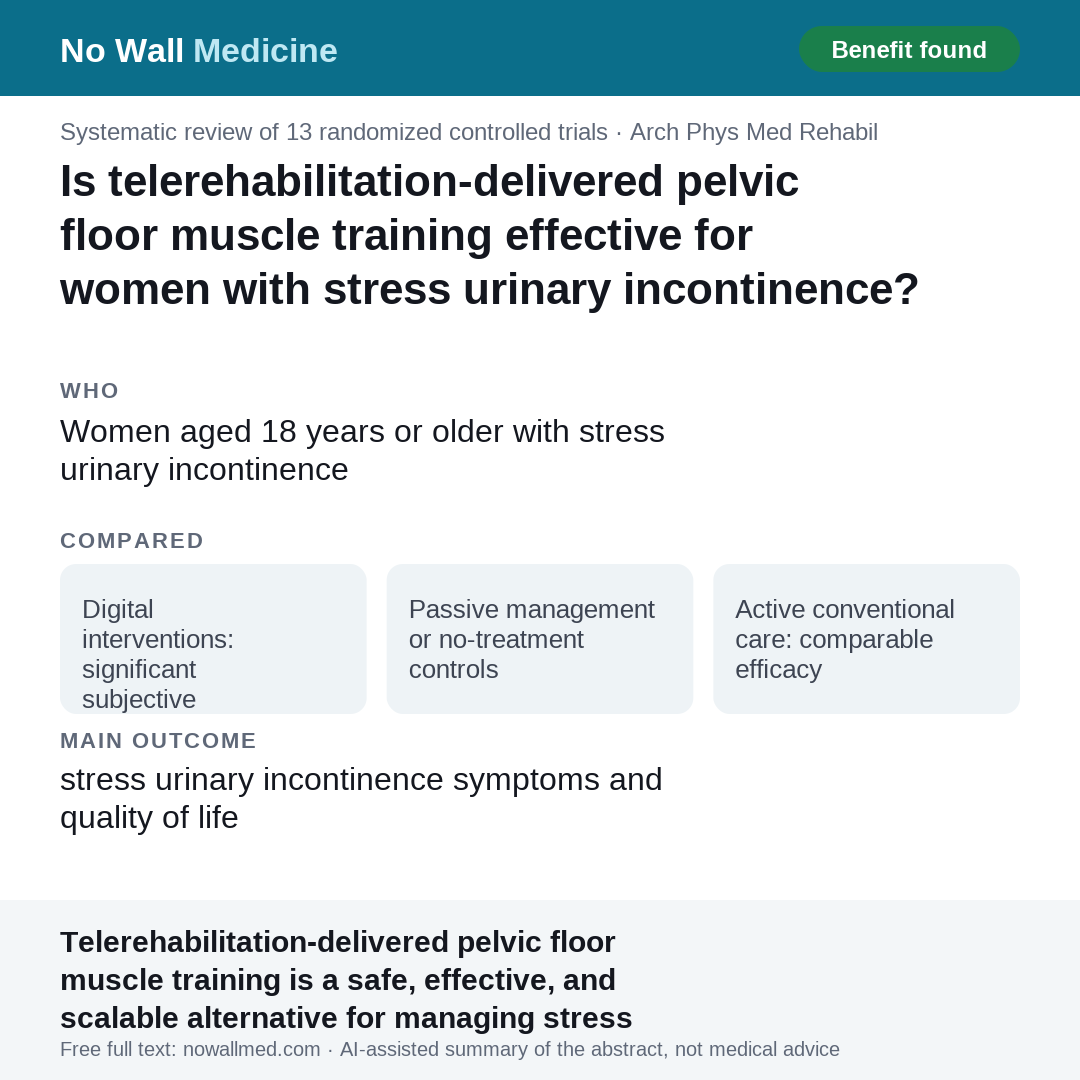
Novel Telerehabilitation Interventions for Stress Urinary Incontinence: A Systematic Review of Randomized Controlled Trials
Systematic review of 13 randomized controlled trialsBenefit found
Is telerehabilitation-delivered pelvic floor muscle training effective for women with stress urinary incontinence?
Who
Women aged 18 years or older with stress urinary incontinence
Compared
Digital interventions: significant subjective reductions in symptoms and improved quality of life
Passive management or no-treatment controls
Active conventional care: comparable efficacy
Main outcome
stress urinary incontinence symptoms and quality of life
Bottom line: Telerehabilitation-delivered pelvic floor muscle training is a safe, effective, and scalable alternative for managing stress urinary incontinence.
Limitation: Substantial methodological and clinical heterogeneity
Arch Phys Med Rehabil · 2026-09-08Download image
European Association of Palliative Care White Paper on research priorities for family caregiving in palliative care: A systematic review of reviews
Systematic review of reviewsUnclear result
Research priorities for family caregiving in palliative care
Who
Family carers in palliative care
Compared
Improving methods
Carer centred research
Health systems research
Carer roles research
Main outcome
Research priorities for family caregiving
Bottom line: Gaps remain in supporting family carers
Palliat Med · 2026-09-08Download image

An augmented rehabilitation package incorporating immersive virtual reality during early recovery after ARDS: A randomized controlled trial
Single-center, parallel-group randomized controlled trialBenefit found
Does augmented rehabilitation with immersive virtual reality improve recovery after acute respiratory distress syndrome?
Who
87
Patients in the rehabilitation phase after acute respiratory distress syndrome · Single-center
Compared
Augmented rehabilitation with immersive virtual reality: greater improvement in Montreal Cognitive Assessment score
Usual care alone
Main outcome
Change in Montreal Cognitive Assessment score from baseline to 4 weeks
Result: adjusted between-group effect: 1.42, 95% CI 0.86-1.98
Bottom line: Immersive virtual reality added to rehabilitation improved cognition, quality of life, and anxiety in early acute respiratory distress syndrome recovery.
Limitation: Control condition was not time- or attention-matched to the augmented rehabilitation package.
Ann Intensive Care · 2026-09-08Download image

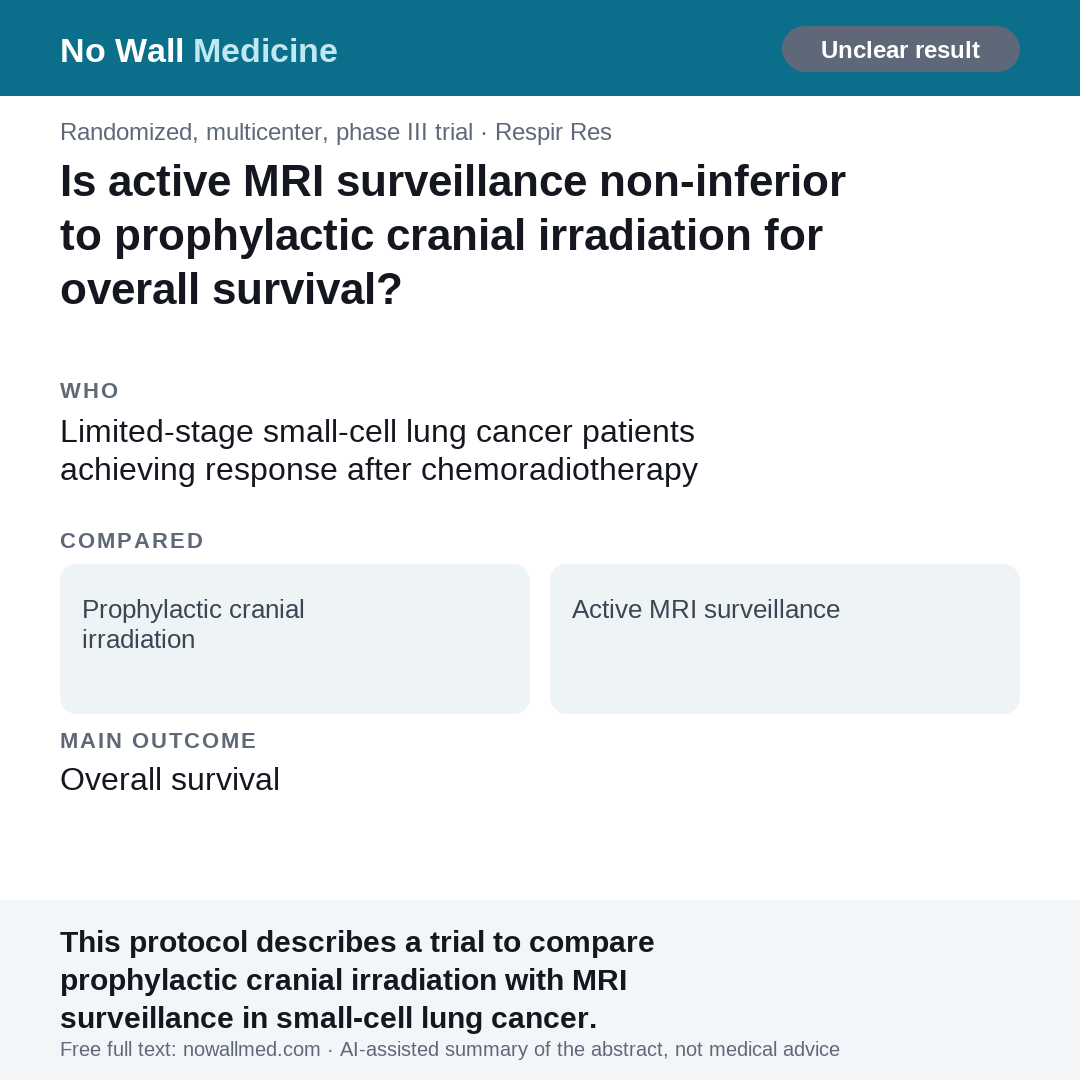
Prophylactic cranial irradiation versus active MRI surveillance for limited-stage small-cell lung cancer achieving response after chemoradiotherapy: a protocol for a randomized, controlled, multicenter, phase III trial
Randomized, multicenter, phase III trialUnclear result
Is active MRI surveillance non-inferior to prophylactic cranial irradiation for overall survival?
Who
Limited-stage small-cell lung cancer patients achieving response after chemoradiotherapy
Compared
Prophylactic cranial irradiation
Active MRI surveillance
Main outcome
Overall survival
Bottom line: This protocol describes a trial to compare prophylactic cranial irradiation with MRI surveillance in small-cell lung cancer.
Respir Res · 2026-09-08Download image
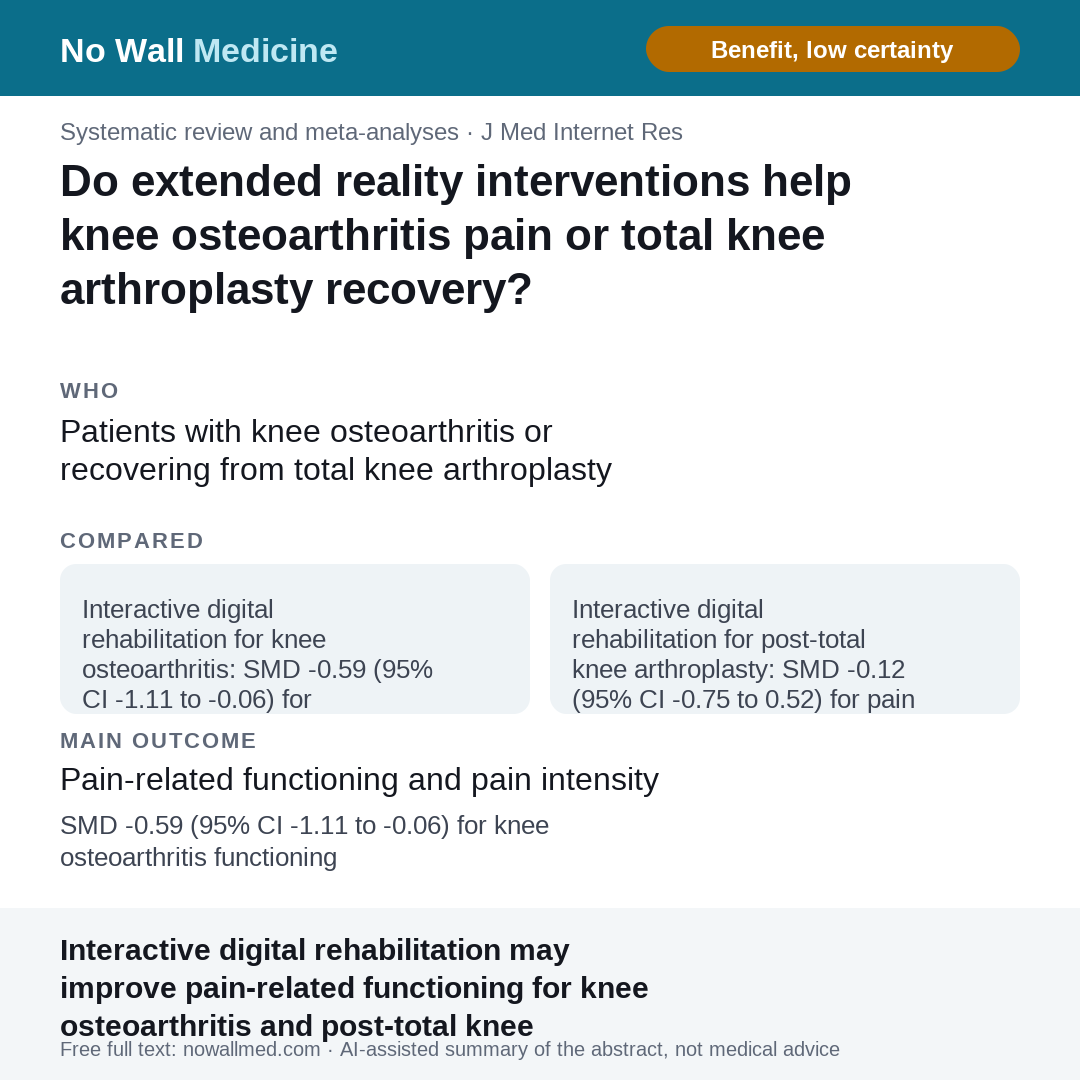
Extended Reality Interventions for Osteoarthritis of the Knee and Recovery After Total Knee Arthroplasty: Systematic Review and Meta-Analyses
Systematic review and meta-analysesBenefit found
Do extended reality interventions help knee osteoarthritis pain or total knee arthroplasty recovery?
Who
Patients with knee osteoarthritis or recovering from total knee arthroplasty
Compared
Interactive digital rehabilitation for knee osteoarthritis: SMD -0.59 (95% CI -1.11 to -0.06) for pain-related functioning
Interactive digital rehabilitation for post-total knee arthroplasty: SMD -0.12 (95% CI -0.75 to 0.52) for pain intensity
Main outcome
Pain-related functioning and pain intensity
Result: SMD -0.59 (95% CI -1.11 to -0.06) for knee osteoarthritis functioning
Bottom line: Interactive digital rehabilitation may improve pain-related functioning for knee osteoarthritis and post-total knee arthroplasty recovery.
J Med Internet Res · 2026-09-08Download image
Multidisciplinary mHealth Rehabilitation for Patients With Abdominal Cancer Who Are Receiving Chemoradiotherapy: Randomized Phase II Trial
Randomized, open-label phase II trialBenefit found
Does multidisciplinary mHealth rehabilitation preserve handgrip strength and muscle mass in abdominal cancer patients?
Who
111
Patients with abdominal malignancies scheduled for chemoradiotherapy · multicenter
Compared
multidisciplinary mHealth rehabilitation care
standard care
Main outcome
handgrip strength at the end of chemoradiotherapy
Result: adjusted mean difference 4.87 kg, 95% CI 3.36-6.38
Bottom line: Multidisciplinary mHealth rehabilitation improved handgrip strength, muscle mass, and nutritional status in patients receiving chemoradiotherapy.
Limitation: Open-label design, population heterogeneity, and exploratory secondary analyses.
J Med Internet Res · 2026-09-08Download image

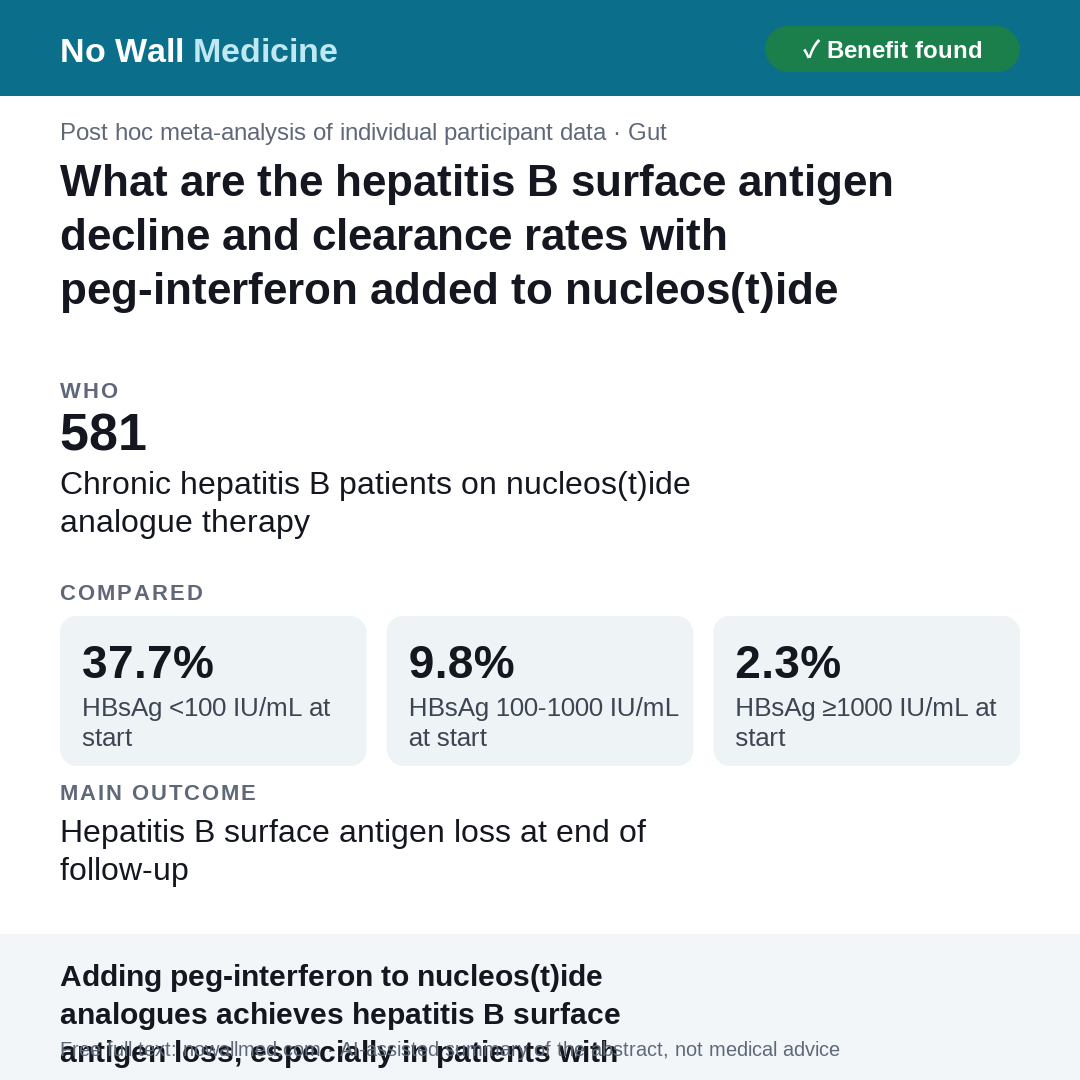
HBsAg decline and clearance with peg-IFN therapy added to nucleos(t)ide analogues: an individual participant data meta-analysis of prospective trials (PROSPER)
Post hoc meta-analysis of individual participant dataBenefit found
What are the hepatitis B surface antigen decline and clearance rates with peg-interferon added to nucleos(t)ide analogue therapy?
Who
581
Chronic hepatitis B patients on nucleos(t)ide analogue therapy
Compared
37.7%HBsAg <100 IU/mL at start
9.8%HBsAg 100-1000 IU/mL at start
2.3%HBsAg ≥1000 IU/mL at start
Main outcome
Hepatitis B surface antigen loss at end of follow-up
Bottom line: Adding peg-interferon to nucleos(t)ide analogues achieves hepatitis B surface antigen loss, especially in patients with lower initial antigen levels.
Gut · 2026-09-07Download image