Visual abstracts
New randomized trials and meta-analyses from leading journals at a glance: who was studied, what was compared, and what was found. Every paper is free to read in full.
All specialtiesCardiology 449Oncology 376Gastroenterology & Hepatology 180Infectious Disease 365Neurology 208Psychiatry & Mental Health 312Pulmonology 209Critical Care 146Endocrinology & Diabetes 286Pediatrics 221Surgery 159Orthopedics & Sports Medicine 93Neurosurgery 28Cardiothoracic & Vascular Surgery 54Plastic & Reconstructive Surgery 93Nephrology 88Rheumatology 93Hematology 111Dermatology 50Ophthalmology 83Obstetrics & Gynecology 140Public & Global Health 141Radiology & Imaging 42Anesthesiology 91Urology 105ENT (Otolaryngology) 60Emergency Medicine 45Allergy & Immunology 53Geriatrics 129Family Medicine & Primary Care 81Medical Genetics & Genomics 45Pathology & Laboratory Medicine 8Physical Medicine & Rehabilitation 122Palliative Care 71Nutrition 160Digital Health & AI 407General Medicine 56
Regional anaesthesia and chronic postsurgical pain: a systematic review and network meta-analysis
Systematic review and network meta-analysisBenefit found
Does regional anaesthesia reduce chronic postsurgical pain and long-term opioid use?
Who
18794
18,794 subjects in randomised controlled trials
Compared
Regional anaesthesia: risk ratio 0.73
No block
Main outcome
Incidence of chronic postsurgical pain
Result: risk ratio 0.73 (95% CI 0.67-0.80)
Bottom line: Regional anaesthesia reduces the incidence of chronic postsurgical pain for up to 12 months after surgery.
Br J Anaesth · 2026-07-09Download image

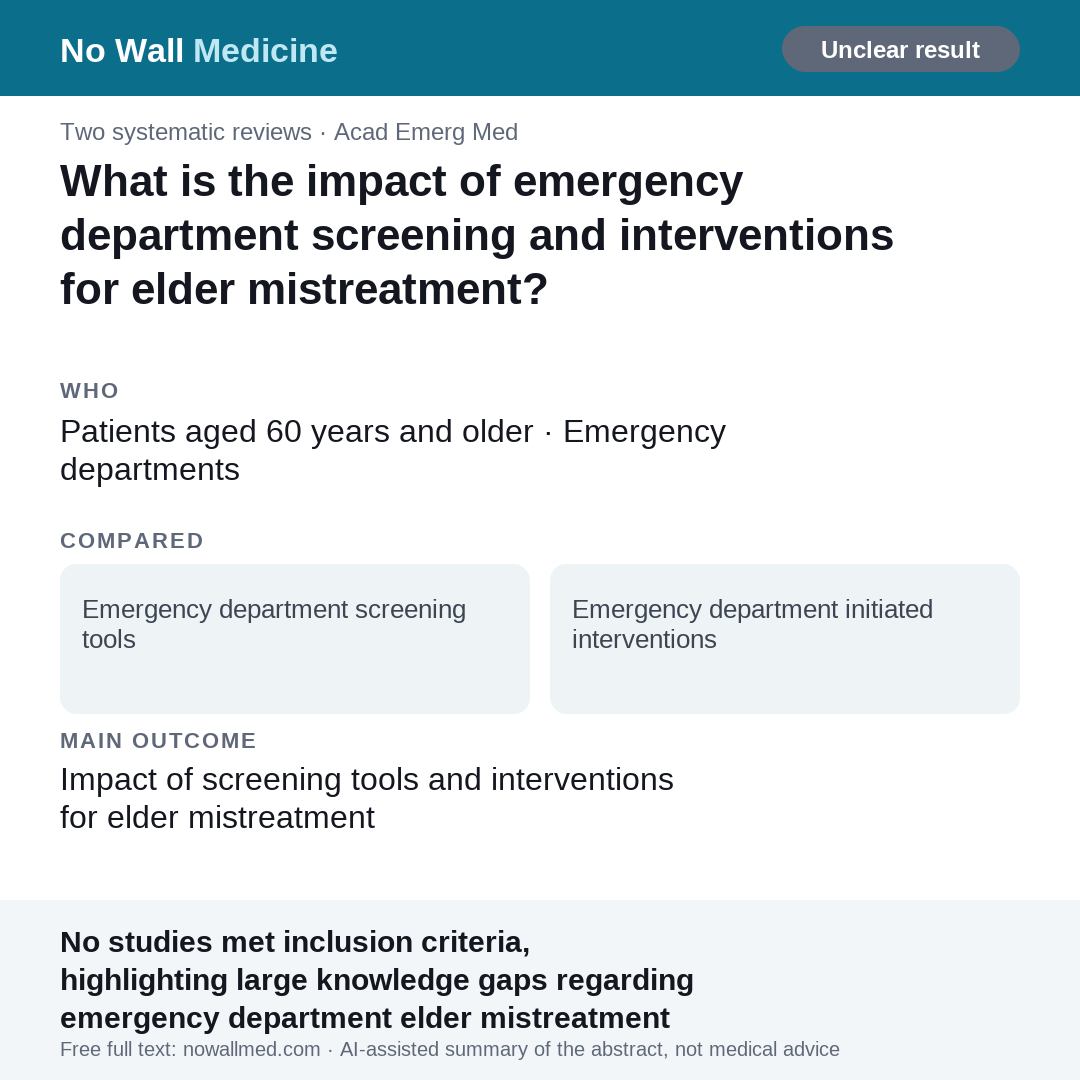
Screening and Interventions for Elder Mistreatment: Geriatric Emergency Department Guidelines 2.0 Systematic Review
Two systematic reviewsUnclear result
What is the impact of emergency department screening and interventions for elder mistreatment?
Who
Patients aged 60 years and older · Emergency departments
Compared
Emergency department screening tools
Emergency department initiated interventions
Main outcome
Impact of screening tools and interventions for elder mistreatment
Bottom line: No studies met inclusion criteria, highlighting large knowledge gaps regarding emergency department elder mistreatment screening and interventions.
Acad Emerg Med · 2026-07-09Download image
Use of Operative Video Technology in Surgical Education: A Systematic Review
Systematic reviewBenefit found
How do real-life operative videos compare to alternative teaching methods in surgical education?
Who
35
Surgical trainees
Compared
Operative videos
Alternative teaching methods
Main outcome
Educational impact including knowledge, skills, and clinical behaviors
Bottom line: Operative videos provide significant benefits for surgical training across knowledge, skills, and clinical behaviors.
Ann Surg Open · 2026-07-09Download image

Efficacy, safety and policy implications of anti-amyloid monoclonal antibodies for Alzheimer's disease: protocol for a living systematic review and meta-analysis
Living systematic review and meta-analysis protocolUnclear result
What are the efficacy and safety of anti-amyloid monoclonal antibodies for Alzheimer's disease?
Who
Adults with Alzheimer's disease
Compared
anti-amyloid monoclonal antibodies
placebo, standard care or active comparators
Main outcome
efficacy, safety, cognitive abilities, functional ability and neuropsychiatric symptoms
Bottom line: This protocol describes a living systematic review to evaluate anti-amyloid monoclonal antibodies for Alzheimer's disease.
Limitation: no review findings are available at this stage
BJPsych Open · 2026-07-09Download image

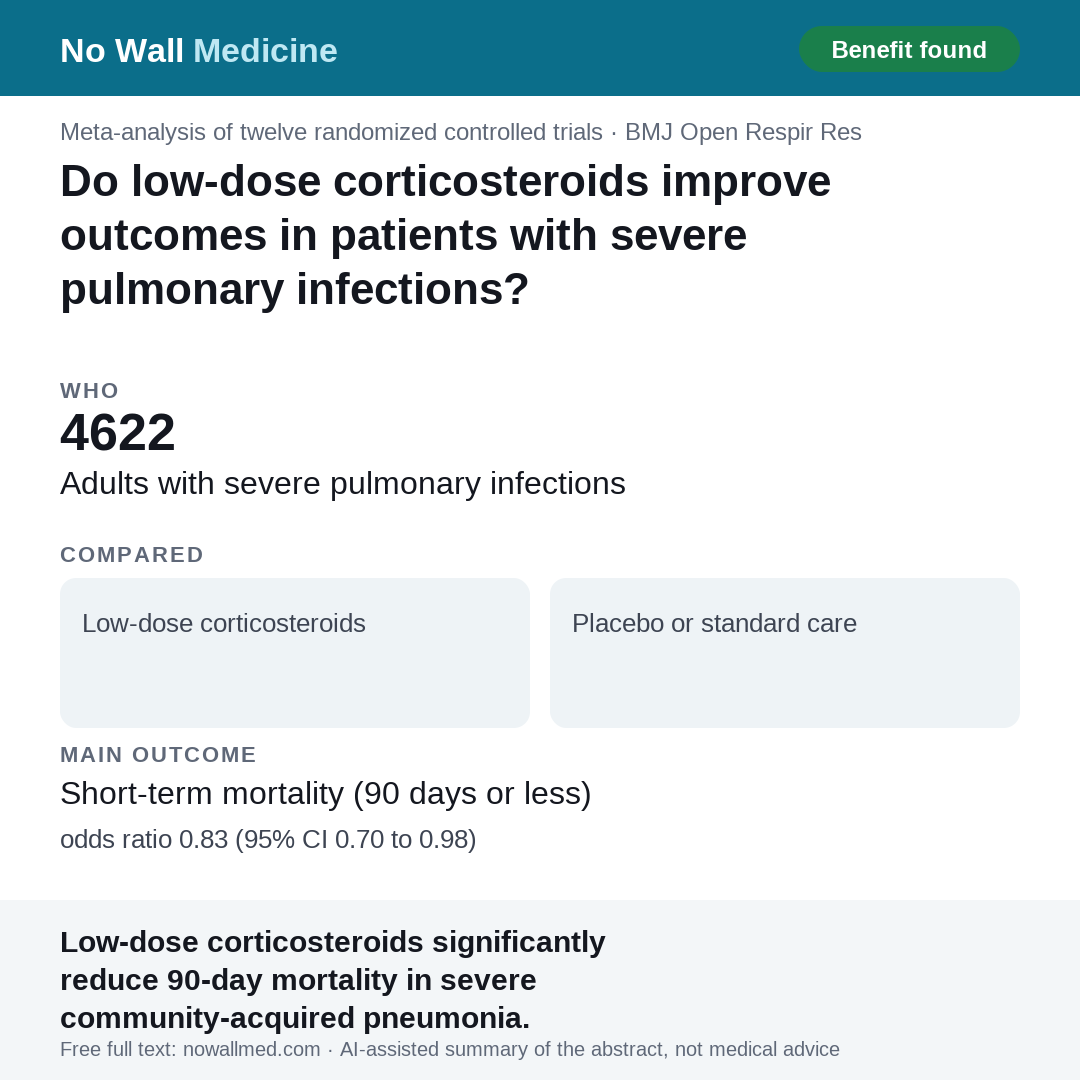
Low-dose corticosteroids in severe pulmonary infection: a meta-analysis of randomised controlled trials
Meta-analysis of twelve randomized controlled trialsBenefit found
Do low-dose corticosteroids improve outcomes in patients with severe pulmonary infections?
Who
4622
Adults with severe pulmonary infections
Compared
Low-dose corticosteroids
Placebo or standard care
Main outcome
Short-term mortality (90 days or less)
Result: odds ratio 0.83 (95% CI 0.70 to 0.98)
Bottom line: Low-dose corticosteroids significantly reduce 90-day mortality in severe community-acquired pneumonia.
BMJ Open Respir Res · 2026-07-09Download image
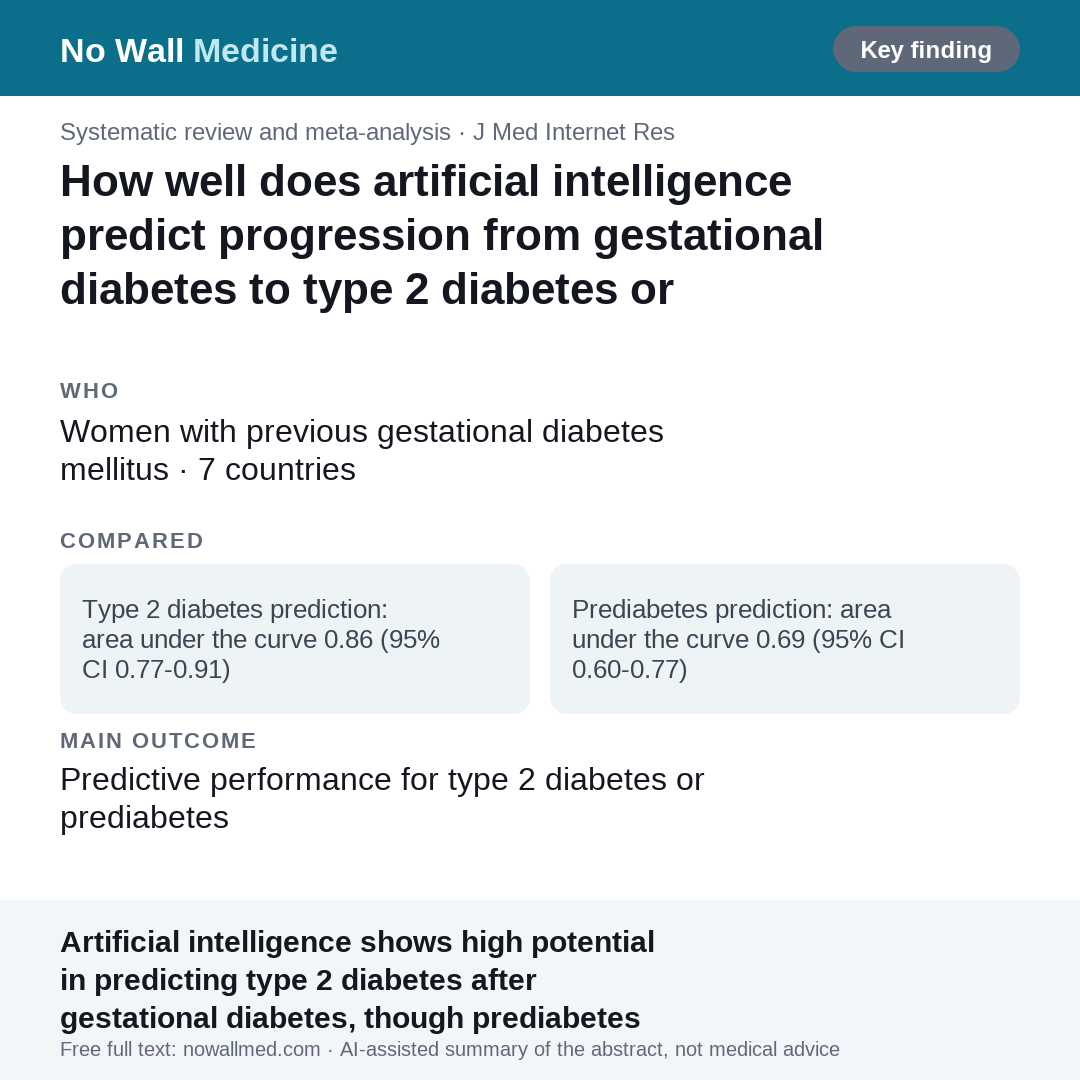
Performance of AI in Predicting the Progression of Gestational Diabetes to Type 2 Diabetes: Systematic Review and Meta-Analysis
Systematic review and meta-analysisBenefit found
How well does artificial intelligence predict progression from gestational diabetes to type 2 diabetes or prediabetes?
Who
Women with previous gestational diabetes mellitus · 7 countries
Compared
Type 2 diabetes prediction: area under the curve 0.86 (95% CI 0.77-0.91)
Prediabetes prediction: area under the curve 0.69 (95% CI 0.60-0.77)
Main outcome
Predictive performance for type 2 diabetes or prediabetes
Result: area under the curve 0.86 (95% CI 0.77-0.91)
Bottom line: Artificial intelligence shows high potential in predicting type 2 diabetes after gestational diabetes, though prediabetes prediction performance is modest.
Limitation: Small sample sizes, high heterogeneity, lack of external validation, and high risk of bias.
J Med Internet Res · 2026-07-09Download image
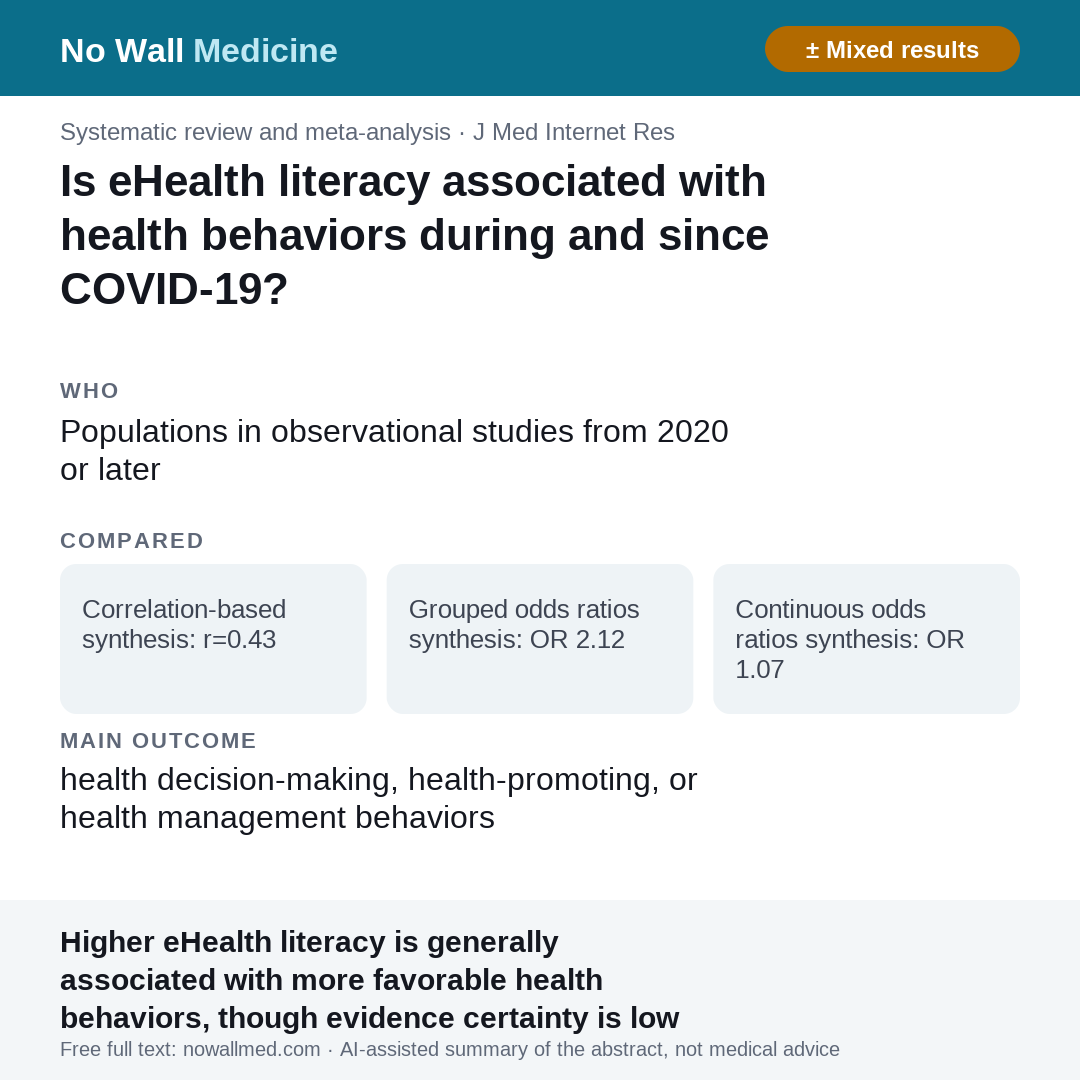
The Association Between eHealth Literacy and Health Behaviors During and Since the COVID-19 Pandemic: Systematic Review and Meta-Analysis
Systematic review and meta-analysisMixed results
Is eHealth literacy associated with health behaviors during and since COVID-19?
Who
19
Populations in observational studies from 2020 or later
Compared
Correlation-based synthesis: r=0.43
Grouped odds ratios synthesis: OR 2.12
Continuous odds ratios synthesis: OR 1.07
Main outcome
health decision-making, health-promoting, or health management behaviors
Result: pooled r=0.43 (95% CI 0.36-0.51); pooled OR 2.12 (95% CI 1.47-3.05); pooled OR 1.07 (95% CI 0.89-1.30)
Bottom line: Higher eHealth literacy is generally associated with more favorable health behaviors, though evidence certainty is low to very low.
Limitation: Predominantly cross-sectional evidence base, heterogeneity, risk-of-bias concerns, and low to very low certainty.
J Med Internet Res · 2026-07-09Download image
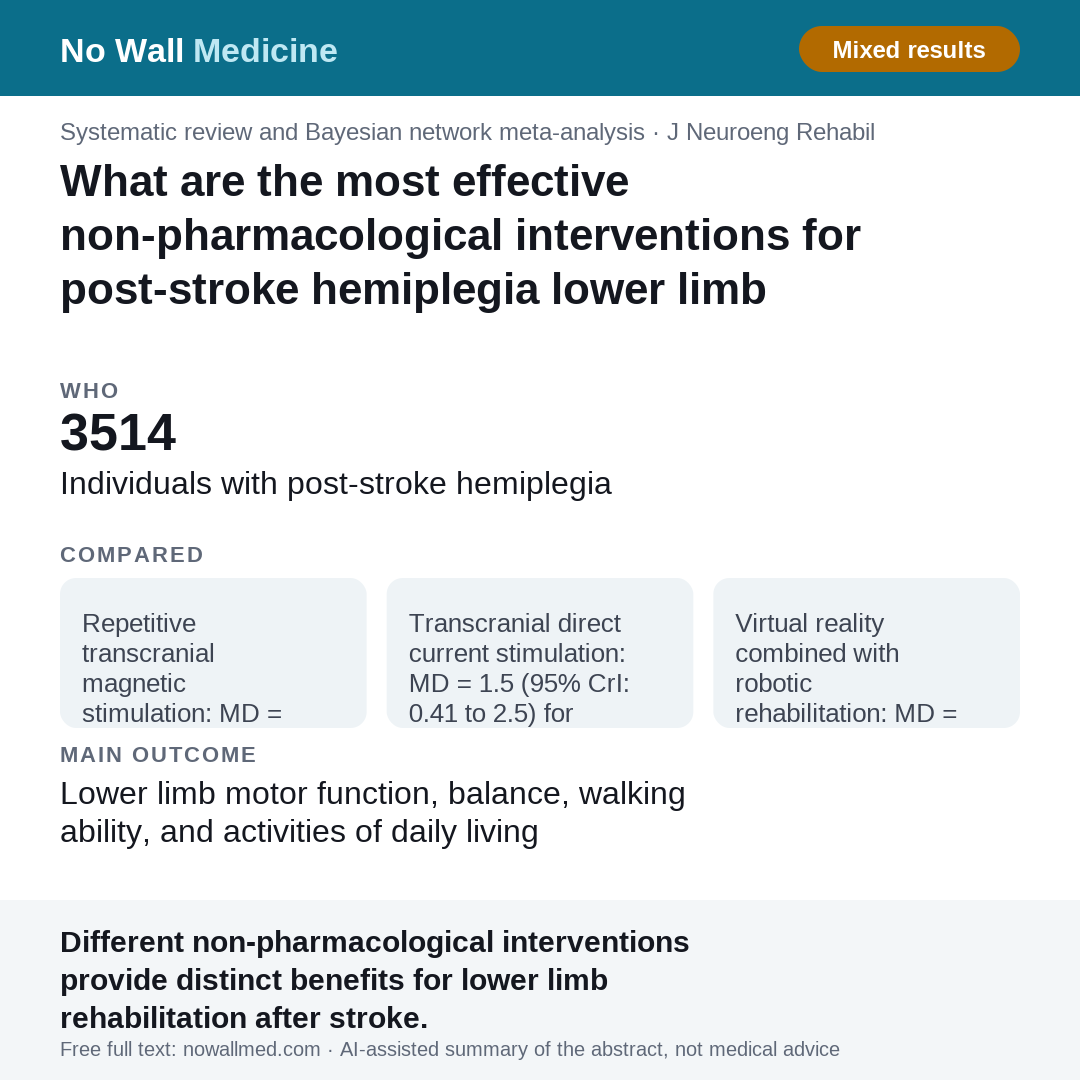
Effectiveness of non-pharmacological interventions for lower limb motor impairment in post-stroke hemiplegia: a systematic review and Bayesian network meta-analysis
Systematic review and Bayesian network meta-analysisMixed results
What are the most effective non-pharmacological interventions for post-stroke hemiplegia lower limb impairment?
Who
3514
Individuals with post-stroke hemiplegia
Compared
Repetitive transcranial magnetic stimulation: MD = 3.7 (95% CI 2.5 to 4.9) for motor function
Transcranial direct current stimulation: MD = 1.5 (95% CrI: 0.41 to 2.5) for walking independence
Virtual reality combined with robotic rehabilitation: MD = -6.6 (95% CrI: -8.9 to -4.3) for TUG time
Main outcome
Lower limb motor function, balance, walking ability, and activities of daily living
Bottom line: Different non-pharmacological interventions provide distinct benefits for lower limb rehabilitation after stroke.
Limitation: Further large-scale, multicenter, standardized randomized controlled trials with longer follow-up are needed.
J Neuroeng Rehabil · 2026-07-09Download image
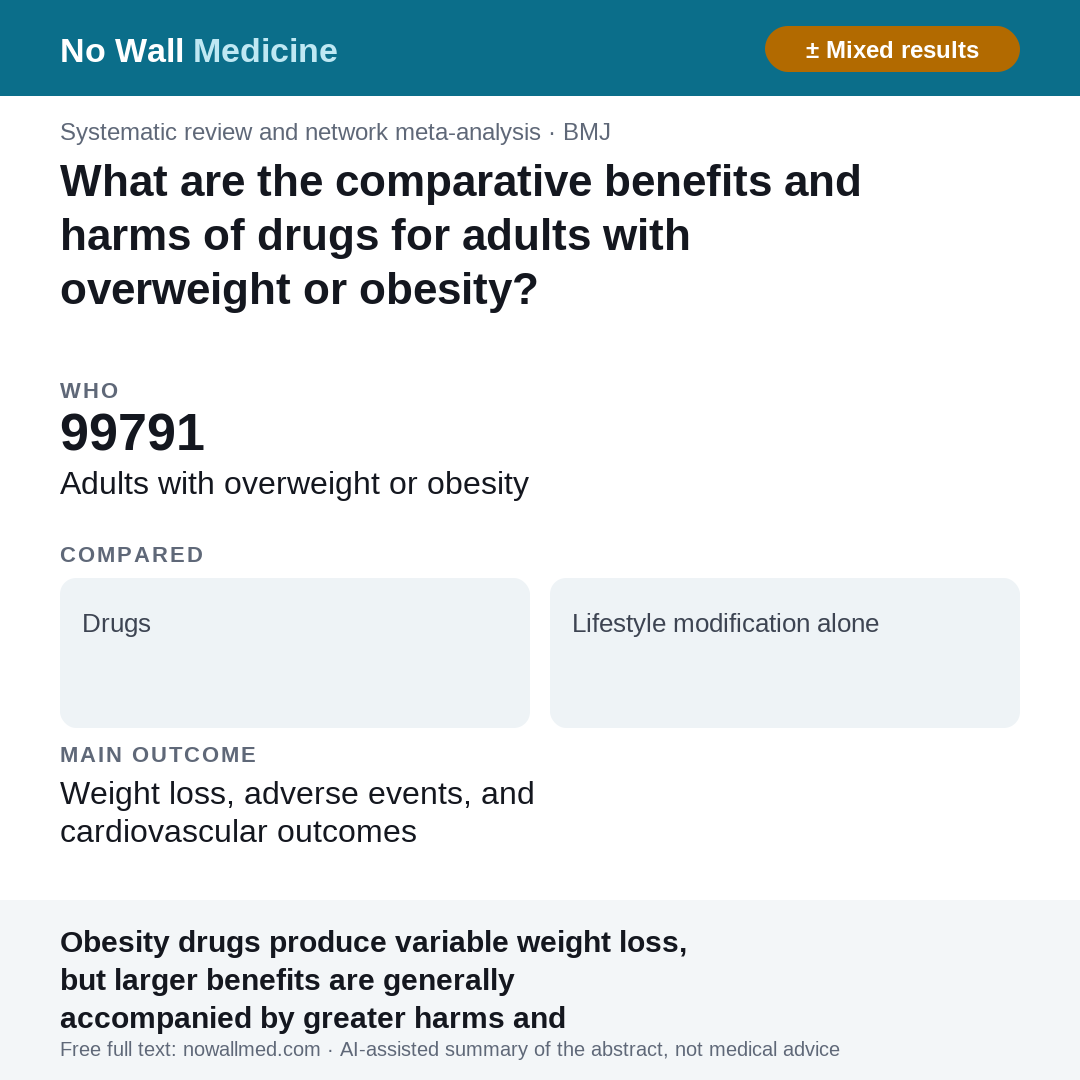
Comparative effects of drugs for adults with overweight or obesity: systematic review and network meta-analysis
Systematic review and network meta-analysisMixed results
What are the comparative benefits and harms of drugs for adults with overweight or obesity?
Who
99791
Adults with overweight or obesity
Compared
Drugs
Lifestyle modification alone
Main outcome
Weight loss, adverse events, and cardiovascular outcomes
Bottom line: Obesity drugs produce variable weight loss, but larger benefits are generally accompanied by greater harms and discontinuation.
Limitation: Subcutaneous semaglutide estimates were largely informed by cardiovascular outcome trials in high risk populations.
BMJ · 2026-07-08Download image
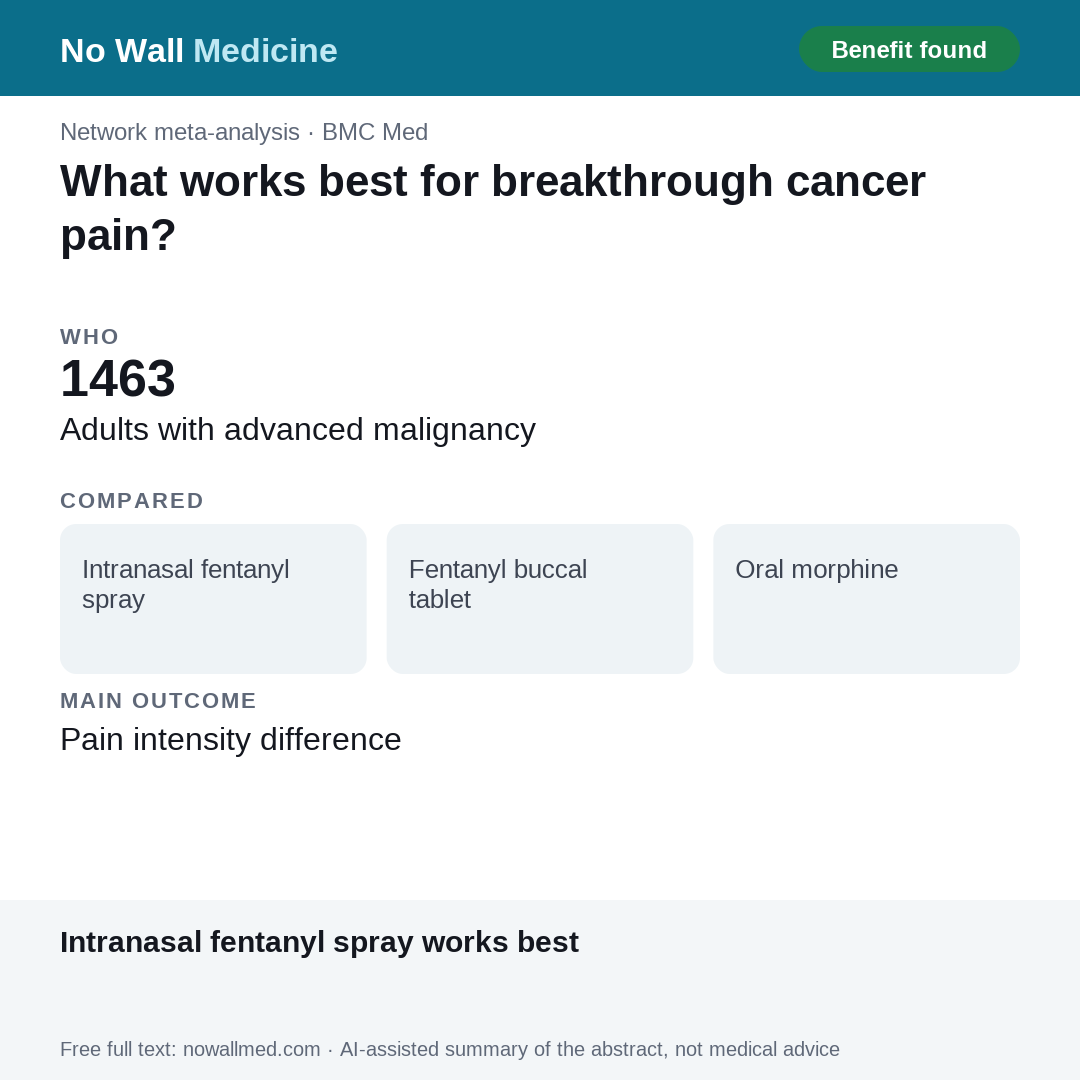
Establishing an efficacy hierarchy for breakthrough cancer pain management: a network meta-analysis of rapid-onset fentanyl formulations and morphine
Network meta-analysisBenefit found
What works best for breakthrough cancer pain?
Who
1463
Adults with advanced malignancy
Compared
Intranasal fentanyl spray
Fentanyl buccal tablet
Oral morphine
Main outcome
Pain intensity difference
Bottom line: Intranasal fentanyl spray works best
BMC Med · 2026-07-08Download image
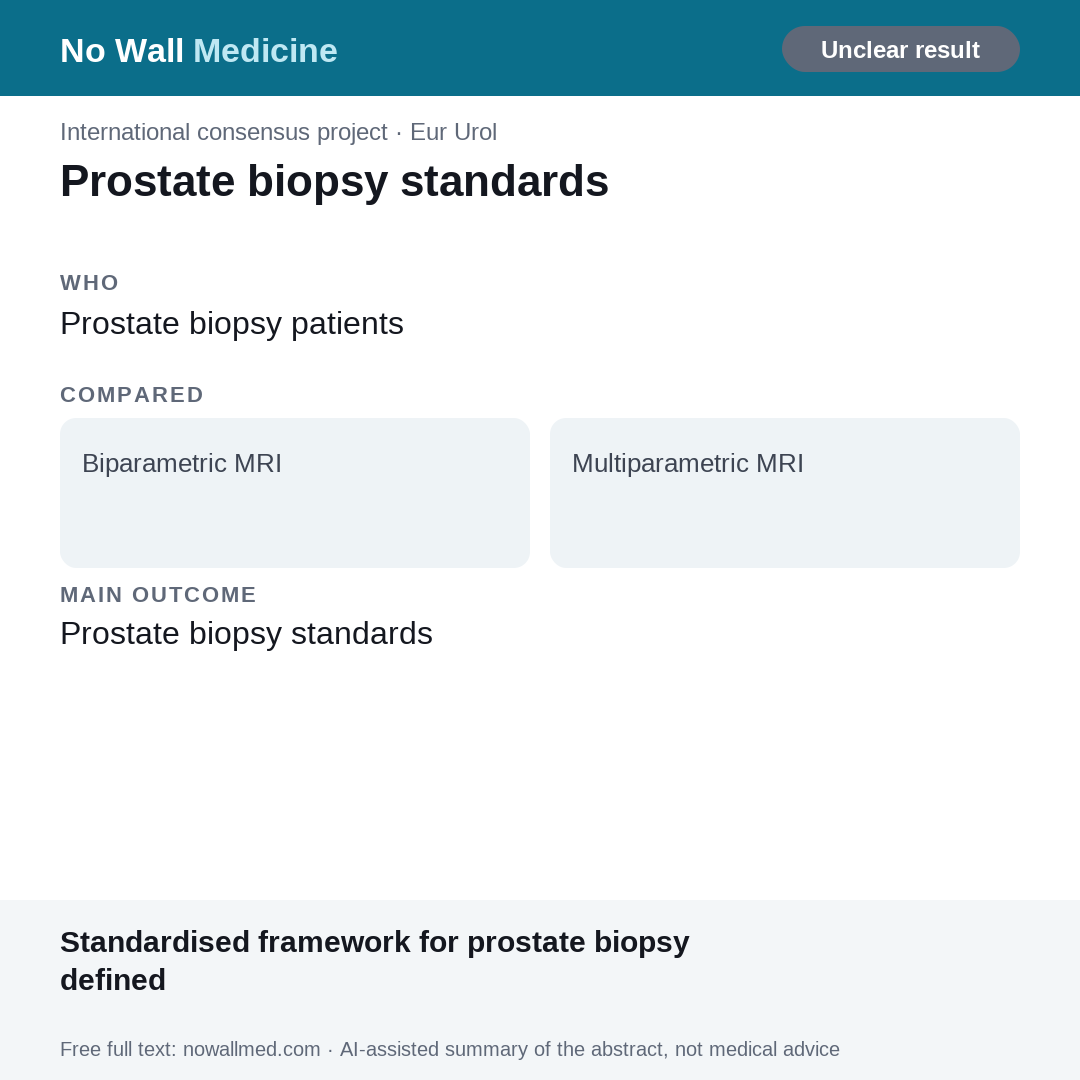
ProBIOPSY: A Multidisciplinary International Consensus on Standards for Prostate Biopsy
International consensus projectUnclear result
Prostate biopsy standards
Who
Prostate biopsy patients
Compared
Biparametric MRI
Multiparametric MRI
Main outcome
Prostate biopsy standards
Bottom line: Standardised framework for prostate biopsy defined
Limitation: Imbalances in specialty representation
Eur Urol · 2026-07-08Download image
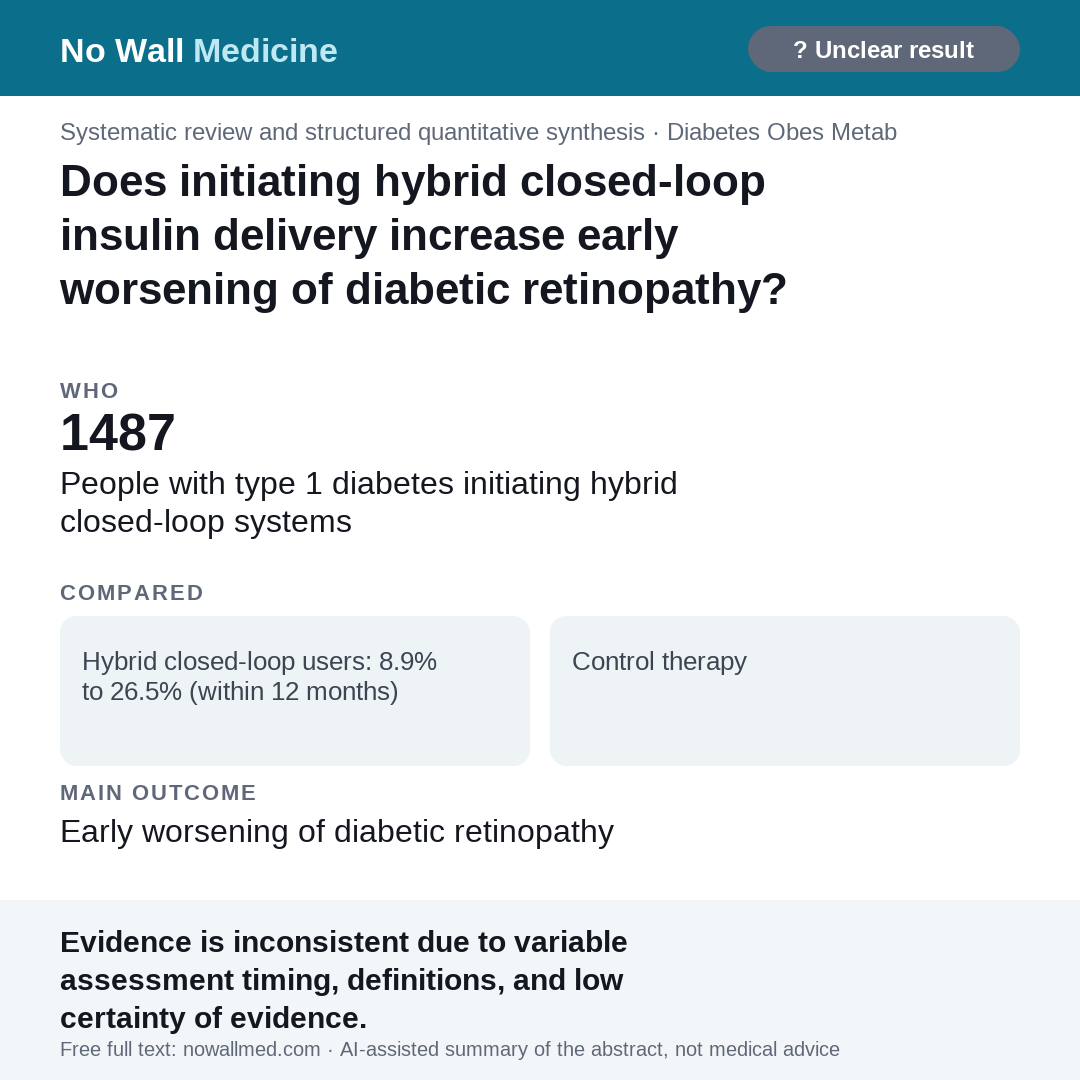
Early Worsening of Diabetic Retinopathy Following Initiation of Hybrid Closed-Loop/Automated Insulin Delivery Systems in Type 1 Diabetes: A Systematic Review and Structured Study-Level Synthesis
Systematic review and structured quantitative synthesisUnclear result
Does initiating hybrid closed-loop insulin delivery increase early worsening of diabetic retinopathy?
Who
1487
People with type 1 diabetes initiating hybrid closed-loop systems
Compared
Hybrid closed-loop users: 8.9% to 26.5% (within 12 months)
Control therapy
Main outcome
Early worsening of diabetic retinopathy
Bottom line: Evidence is inconsistent due to variable assessment timing, definitions, and low certainty of evidence.
Limitation: Substantial heterogeneity in definitions, assessment timing, follow-up duration, and comparator groups.
Diabetes Obes Metab · 2026-07-08Download image
Efficacy and Safety of Ion Channel Modulators in Painful Diabetic Neuropathy
Meta-analysis of 36 randomized controlled trialsBenefit found
Are ion channel modulators effective and safe for painful diabetic neuropathy?
Who
6611
Patients with painful diabetic neuropathy
Compared
Ion channel modulators
Placebo
Main outcome
Pain score
Bottom line: Ion channel modulators, especially calcium and sodium channel blockers, significantly reduce pain and improve quality of life.
Diabetes Obes Metab · 2026-07-08Download image

Autograft Versus Allograft in Indirect Corneal Neurotization: A Systematic Review
Systematic review and narrative synthesisNo clear difference
Are autologous nerve grafts or processed nerve allografts better for indirect corneal neurotization?
Who
150
Patients with neurotrophic keratopathy or corneal anesthesia
Compared
Autograft: mean Cochet-Bonnet esthesiometry increasing from 2.7 to 31.1 mm
Allograft: mean Cochet-Bonnet esthesiometry increasing from 5.23 to 41.7 mm
Main outcome
Corneal sensation, epithelial healing, and visual outcomes
Bottom line: Both autografts and allografts improve corneal sensation and healing, but no clear superiority was identified.
Limitation: All included studies were at serious risk of bias and certainty of evidence was very low.
Am J Ophthalmol · 2026-07-08Download image

Prostate morcellation devices: a systematic review and meta-analysis of clinical outcomes and efficiency
Systematic review and meta-analysisMixed results
What are the efficiency and safety of different prostate morcellators during enucleation?
Who
5980
5980 patients undergoing prostate enucleation
Compared
Piranha: 7.80 g/min (95% CI 6.26-9.34 g/min)
VersaCut: 4.70 g/min (95% CI 3.61-5.79 g/min)
DrillCut: 5.90 g/min (95% CI 3.16-8.64 g/min)
MultiCut: 9.59 g/min (95% CI 4.78-14.39 g/min)
Main outcome
morcellation efficiency in grams per minute
Result: risk ratio 3.22, 95% CI 1.81-5.71
Bottom line: Oscillating blade systems like Piranha showed higher efficiency and better safety than reciprocating blade devices like VersaCut.
BJU Int · 2026-07-08Download image

Bridging the functional gap by synergy of exome/genome and RNA sequencing: A systematic semi-quantitative review demonstrating enhanced diagnostic yield in genetic diagnostics
Systematic semi-quantitative reviewBenefit found
Does adding RNA sequencing to exome or genome sequencing improve diagnostic yield?
Who
200
Studies reporting exome/genome sequencing or followed by RNA sequencing
Compared
0.37Exome/genome sequencing alone (95% CI: 0.35-0.39)
0.44Exome/genome sequencing followed by RNA sequencing (ranging from 0.34 to 0.53)
Main outcome
Diagnostic rate
Result: odds ratio 1.31 (95% CI 1.08-1.58)
Bottom line: Integrating RNA sequencing into exome or genome sequencing workflows improves the molecular diagnosis of genetic diseases.
Genet Med · 2026-07-08Download image

Genetic dissection of stool frequency implicates vitamin B1 metabolism and other actionable pathways in the modulation of gut motility
Multiancestry genome-wide association study meta-analysisBenefit found
What genes and mechanisms are involved in gut motility and stool frequency?
Who
268606
European and East Asian individuals
Compared
European: 7.0% heritability
East Asian: 5.6% heritability
Main outcome
Stool frequency heritability and genetic correlations
Bottom line: Genetic analysis identifies vitamin B1 metabolism and bile acid synthesis as key pathways modulating gut motility.
Gut · 2026-07-08Download image

Epidemiology of Treponema pallidum, Chlamydia trachomatis, Neisseria gonorrhoeae and Trichomonas vaginalis among forcibly displaced populations: a global systematic review and meta-analysis
Systematic review and meta-analysisMixed results
What is the prevalence of four sexually transmitted infections among forcibly displaced populations?
Who
1
Refugees, asylum seekers and internally displaced populations · Global
Compared
0.94%Syphilis (95% CI 0.53% to 1.45%)
0.87%Chlamydia trachomatis (95% CI 0.33% to 1.61%)
0.14%Neisseria gonorrhoeae (95% CI 0.06% to 0.32%)
17.07%Trichomonas vaginalis (95% CI 0.07% to 51.37%)
Main outcome
Pooled mean prevalence of current infection
Bottom line: Syphilis shows a substantial burden among displaced populations, while evidence for other sexually transmitted infections remains more limited.
Limitation: Evidence for the other curable sexually transmitted infections is more limited.
BMJ Glob Health · 2026-07-08Download image

Reintegration programmes for people with severe mental illnesses released from correctional institutions: systematic review
Systematic reviewMixed results
Are reintegration programmes effective for people with severe mental illness leaving correctional facilities?
Who
Adults with severe mental illness transitioning from correctional facilities to community settings
Compared
Reintegration programmes
Control
Main outcome
Recidivism, homelessness, and mental health deterioration
Bottom line: Reintegration programmes show promise but demonstrate variable efficacy, requiring comprehensive and sustained support for success.
Limitation: Heterogeneity of methodologies and outcomes
BJPsych Open · 2026-07-08Download image

Glucagon-like peptide-1 receptor agonists for weight management in mental illness: a network meta-analysis
Network meta-analysisBenefit found
Glucagon-like peptide-1 for weight management
Who
595
obese individuals with mental illness
Compared
subcutaneous exenatide
-0.945subcutaneous liraglutide (standardized mean difference)
-2.101subcutaneous semaglutide (standardized mean difference)
Main outcome
body weight
Result: standardized mean differences of -0.945 (95% CI -1.784 to -0.106) and -2.101 (95% CI -2.978 to -1.224)
Bottom line: Glucagon-like peptide-1 receptor agonists aid weight loss
Limitation: sparse networks and substantial heterogeneity
Transl Psychiatry · 2026-07-08Download image