Visual abstracts
New randomized trials and meta-analyses from leading journals at a glance: who was studied, what was compared, and what was found. Every paper is free to read in full.
All specialtiesCardiology 4877Oncology 4138Gastroenterology & Hepatology 1942Infectious Disease 3837Neurology 1905Psychiatry & Mental Health 2273Pulmonology 2143Critical Care 1365Endocrinology & Diabetes 2580Pediatrics 2980Surgery 2559Orthopedics & Sports Medicine 931Neurosurgery 537Cardiothoracic & Vascular Surgery 674Plastic & Reconstructive Surgery 591Nephrology 1133Rheumatology 823Hematology 1109Dermatology 621Ophthalmology 543Obstetrics & Gynecology 1686Public & Global Health 1058Radiology & Imaging 648Anesthesiology 986Urology 764ENT (Otolaryngology) 503Emergency Medicine 511Allergy & Immunology 313Geriatrics 981Family Medicine & Primary Care 562Medical Genetics & Genomics 676Pathology & Laboratory Medicine 159Physical Medicine & Rehabilitation 757Palliative Care 444Nutrition 1588Digital Health & AI 2201General Medicine 321
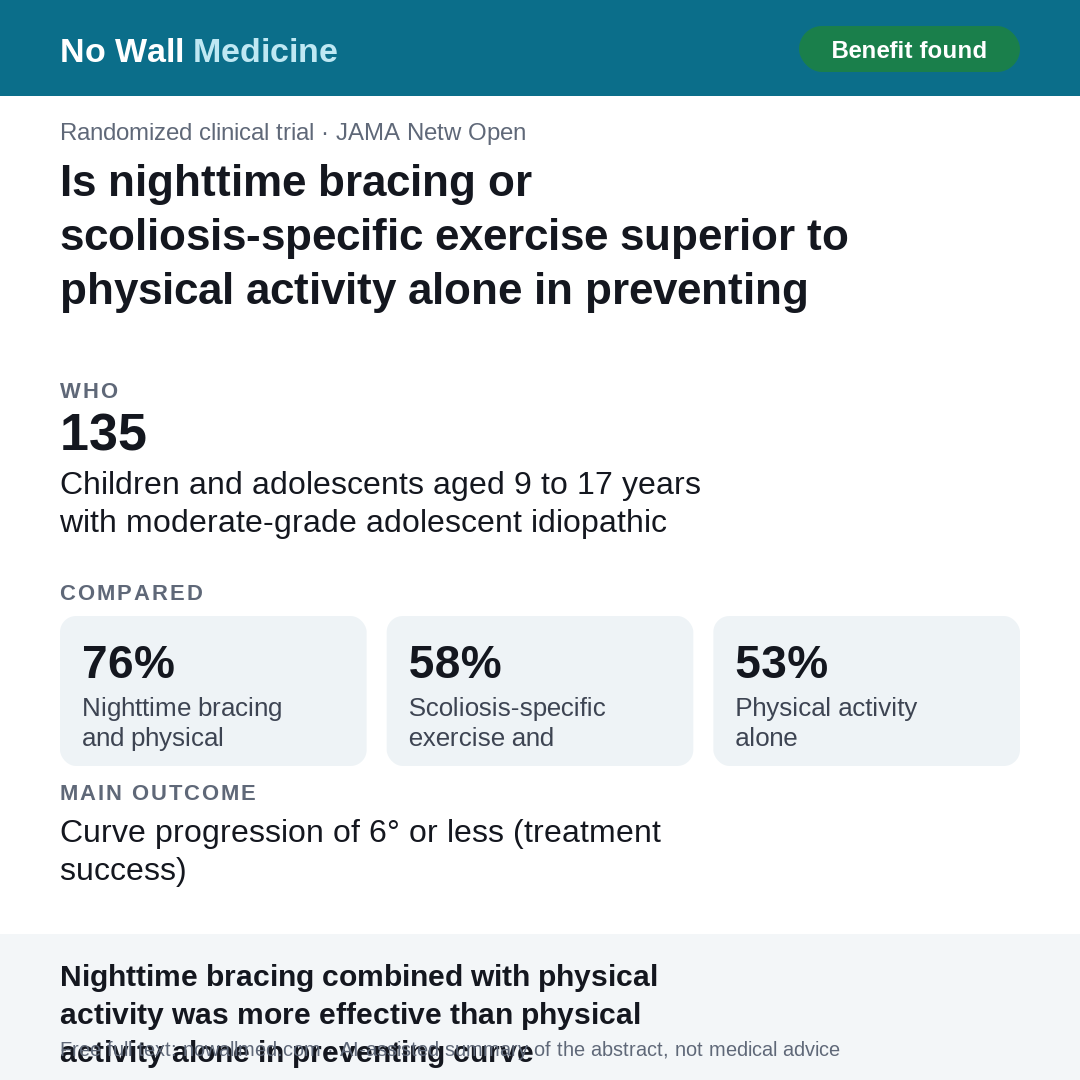
Nighttime Bracing or Exercise in Moderate-Grade Adolescent Idiopathic Scoliosis: A Randomized Clinical Trial
Randomized clinical trialBenefit found
Is nighttime bracing or scoliosis-specific exercise superior to physical activity alone in preventing Cobb angle progression?
Who
135
Children and adolescents aged 9 to 17 years with moderate-grade adolescent idiopathic scoliosis · 6 public hospitals in Sweden
Compared
76%Nighttime bracing and physical activity
58%Scoliosis-specific exercise and physical activity
53%Physical activity alone
Main outcome
Curve progression of 6° or less (treatment success)
Result: odds ratio 2.7 (95% CI, 1.1-6.6)
Bottom line: Nighttime bracing combined with physical activity was more effective than physical activity alone in preventing curve progression.
JAMA Netw Open · 2024-01-02Download image
Health Literacy-Informed Communication to Reduce Discharge Medication Errors in Hospitalized Children: A Randomized Clinical Trial
Parallel, randomized clinical trialBenefit found
Does health literacy-informed communication reduce liquid medication dosing errors in hospitalized children?
Who
198
English- and Spanish-speaking caregivers of hospitalized children 6 years or younger · A tertiary care, US children's hospital
Compared
1.0%Health literacy-informed communication bundle (2.2 percentage points)
3.3%Standard counseling (5.1 percentage points)
Main outcome
Observed mean percentage dosing error
Result: absolute difference, 2.3 (95% CI, 1.0-3.6) percentage points
Bottom line: A health literacy-informed communication bundle reduced liquid medication dosing errors and enhanced caregiver medication knowledge compared to standard counseling.
JAMA Netw Open · 2024-01-02Download image

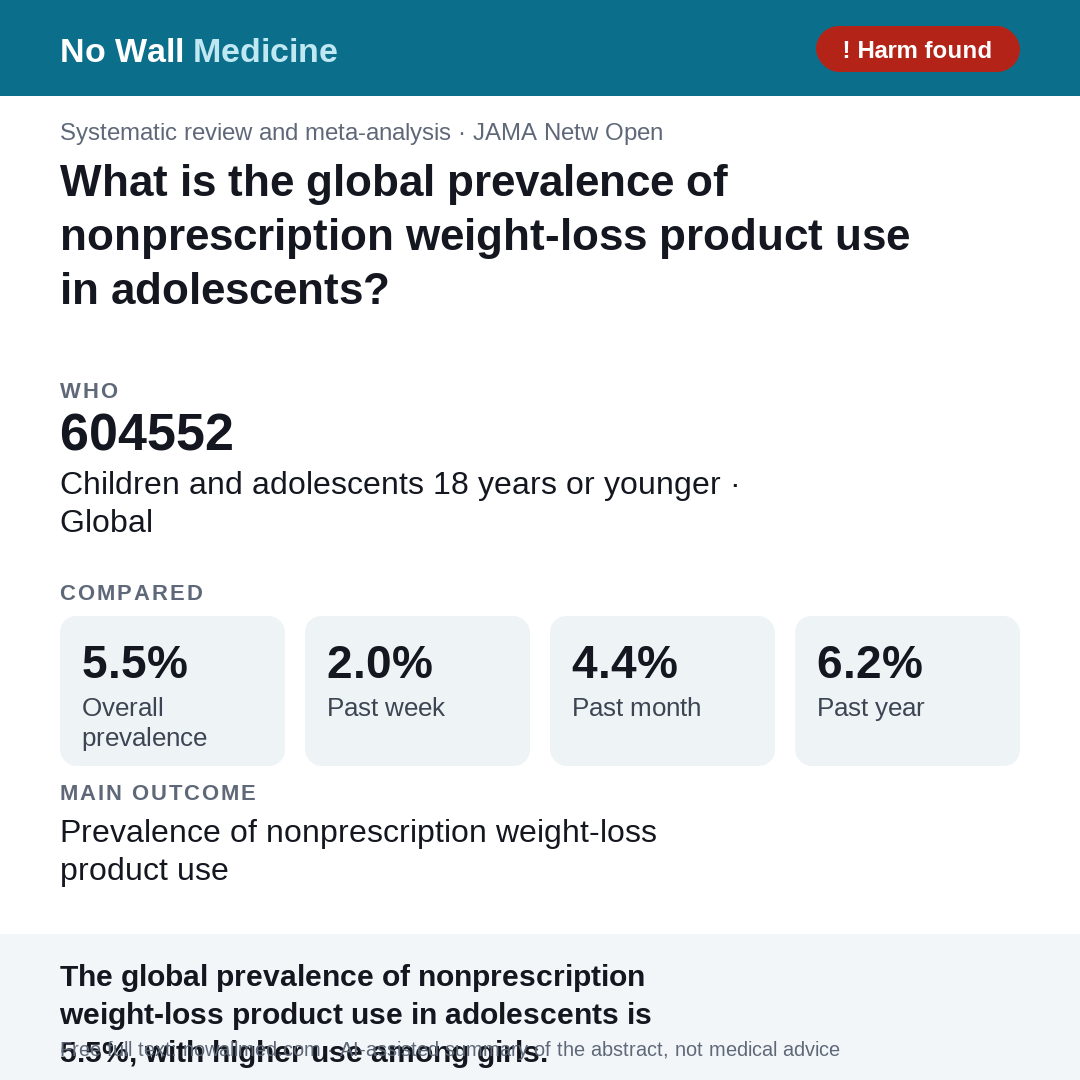
Global Prevalence of Adolescent Use of Nonprescription Weight-Loss Products: A Systematic Review and Meta-Analysis
Systematic review and meta-analysisHarm found
What is the global prevalence of nonprescription weight-loss product use in adolescents?
Who
604552
Children and adolescents 18 years or younger · Global
Compared
5.5%Overall prevalence (96% CI, 5.5%-5.6%)
2.0%Past week (95% CI, 1.9%-2.1%)
4.4%Past month (95% CI, 4.3%-4.5%)
6.2%Past year (95% CI, 6.1%-6.3%)
Main outcome
Prevalence of nonprescription weight-loss product use
Bottom line: The global prevalence of nonprescription weight-loss product use in adolescents is 5.5%, with higher use among girls.
JAMA Netw Open · 2024-01-02Download image
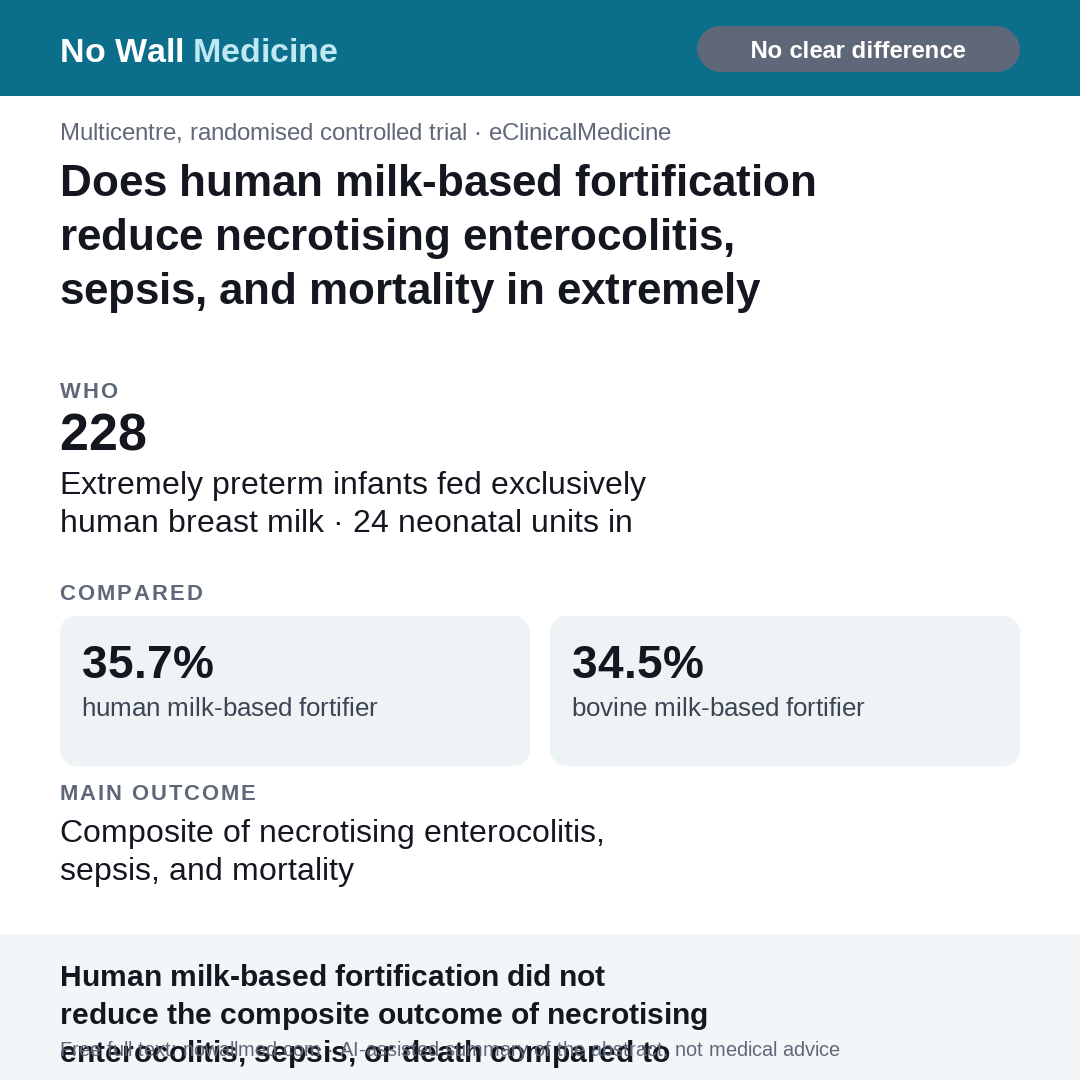
Effect of human milk-based fortification in extremely preterm infants fed exclusively with breast milk: a randomised controlled trial
Multicentre, randomised controlled trialNo clear difference
Does human milk-based fortification reduce necrotising enterocolitis, sepsis, and mortality in extremely preterm infants?
Who
228
Extremely preterm infants fed exclusively human breast milk · 24 neonatal units in Sweden
Compared
35.7%human milk-based fortifier
34.5%bovine milk-based fortifier
Main outcome
Composite of necrotising enterocolitis, sepsis, and mortality
Result: OR 1.05, 95% CI 0.61-1.81
Bottom line: Human milk-based fortification did not reduce the composite outcome of necrotising enterocolitis, sepsis, or death compared to bovine milk-based fortification.
Funded by: ALF grant, Prolacta Bioscience, Swedish Research Council, and Research Council for Southeast Sweden
eClinicalMedicine · 2024-01-02Download image
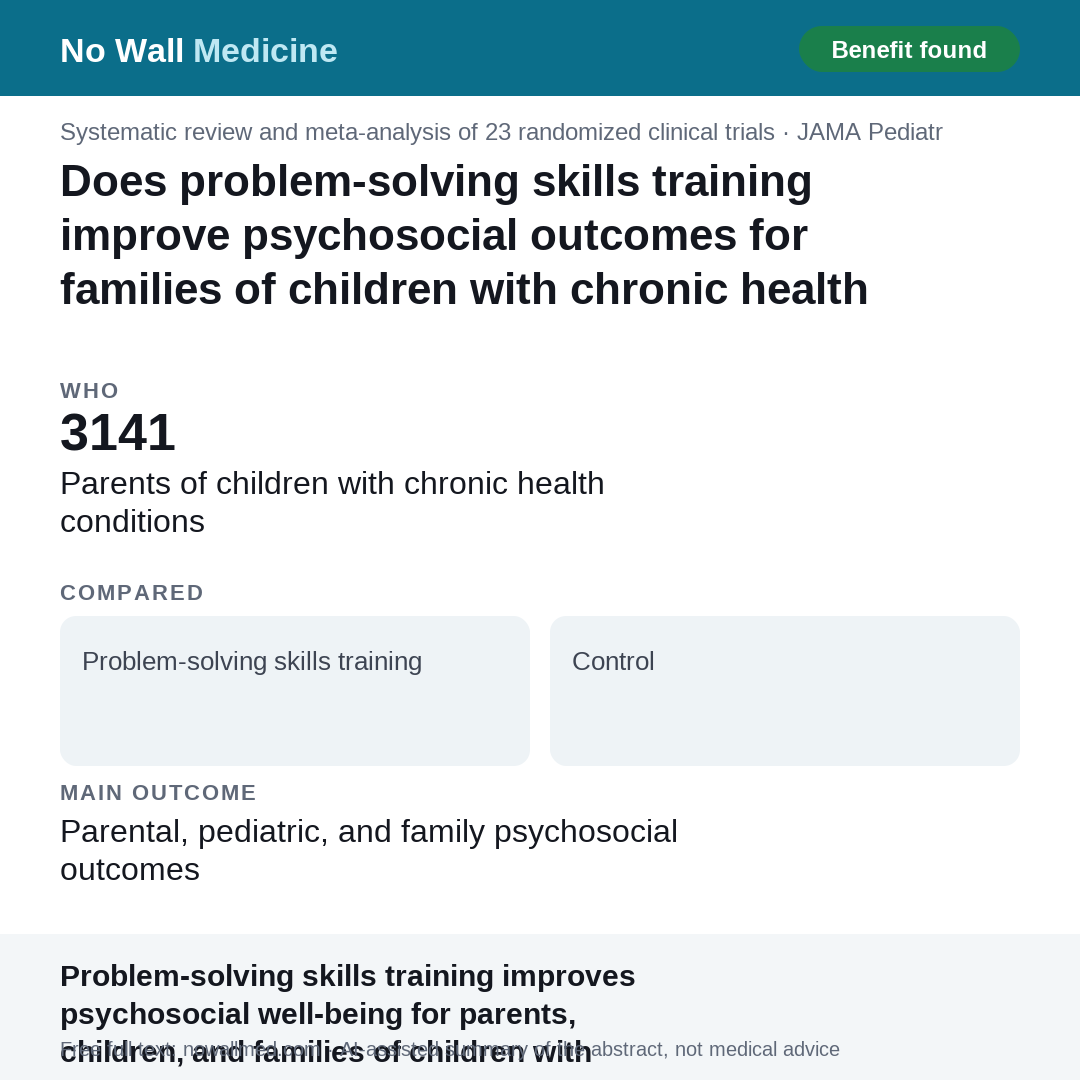
Problem-Solving Skills Training for Parents of Children With Chronic Health Conditions: A Systematic Review and Meta-Analysis
Systematic review and meta-analysis of 23 randomized clinical trialsBenefit found
Does problem-solving skills training improve psychosocial outcomes for families of children with chronic health conditions?
Who
3141
Parents of children with chronic health conditions
Compared
Problem-solving skills training
Control
Main outcome
Parental, pediatric, and family psychosocial outcomes
Result: not explicitly provided as a single pooled effect for all outcomes
Bottom line: Problem-solving skills training improves psychosocial well-being for parents, children, and families of children with chronic health conditions.
JAMA Pediatr · 2024-01-02Download image
Sustained effects of small-quantity lipid-based nutrient supplements provided during the first 1000 days on child growth at 9-11 y in a randomized controlled trial in Ghana
Randomized controlled trialMixed results
Does small-quantity lipid-based nutrient supplements during the first 1000 days affect child growth at 9-11 years?
Who
966
Children aged 9-11 years in Ghana · Ghana
Compared
Small-quantity lipid-based nutrient supplements: -0.04 (0.96) HAZ
Control: -0.16 (0.99) HAZ
Main outcome
Height-for-age z-score
Bottom line: Small-quantity lipid-based nutrient supplements had a sustained impact on linear growth among female children and children of non-overweight mothers.
Am J Clin Nutr · 2023-12-29Download image

Partial Egg Consumption Modifies the Diagnostic Performance of Allergy Tests to Predict Outcome of Double-Blind Placebo-Controlled Food Challenges to Egg
Randomized trialMixed results
Does egg consumption affect allergy test results?
Who
Children with egg allergy
Compared
Egg consumers
Egg avoiders
Main outcome
Diagnostic performance of allergy tests
Bottom line: Egg consumption modifies allergy test results
J Allergy Clin Immunol Pract · 2023-12-27Download image

Home-Based Double-Blind, Placebo-Controlled Challenges for Diagnosis of Delayed Gluten/Milk Hypersensitivity in Children
Randomized, double-blind, placebo-controlled crossover trialBenefit found
Can home-based double-blind placebo-controlled food challenges identify delayed gluten or milk hypersensitivity?
Who
73
Children aged 1 to 17 years with self-reported delayed symptoms · Tertiary allergy clinic
Compared
Active gluten or milk protein challenge: 25% positive challenge
Placebo challenge
Main outcome
Proportion of children with a positive challenge
Bottom line: Home-based food challenges can identify hypersensitivity and help avoid unnecessary elimination diets in children.
J Allergy Clin Immunol Pract · 2023-12-27Download image

Short Oral Antibiotic Therapy for Pediatric Febrile Urinary Tract Infections: A Randomized Trial
Multicenter, parallel-group, randomized, controlled trialBenefit found
Is a 5-day amoxicillin-clavulanate course noninferior to a 10-day regimen for febrile urinary tract infections?
Who
142
Children aged 3 months to 5 years with noncomplicated febrile urinary tract infection · Multicenter
Compared
2.8%5-day amoxicillin-clavulanate (2/72)
14.3%10-day amoxicillin-clavulanate (10/70)
Main outcome
Recurrence of urinary tract infection within 30 days after therapy
Result: -11.51% (95% confidence interval, -20.54 to -2.47)
Bottom line: A 5-day course of amoxicillin-clavulanate is noninferior to a 10-day course for treating febrile urinary tract infections in children.
Pediatrics · 2023-12-26Download image

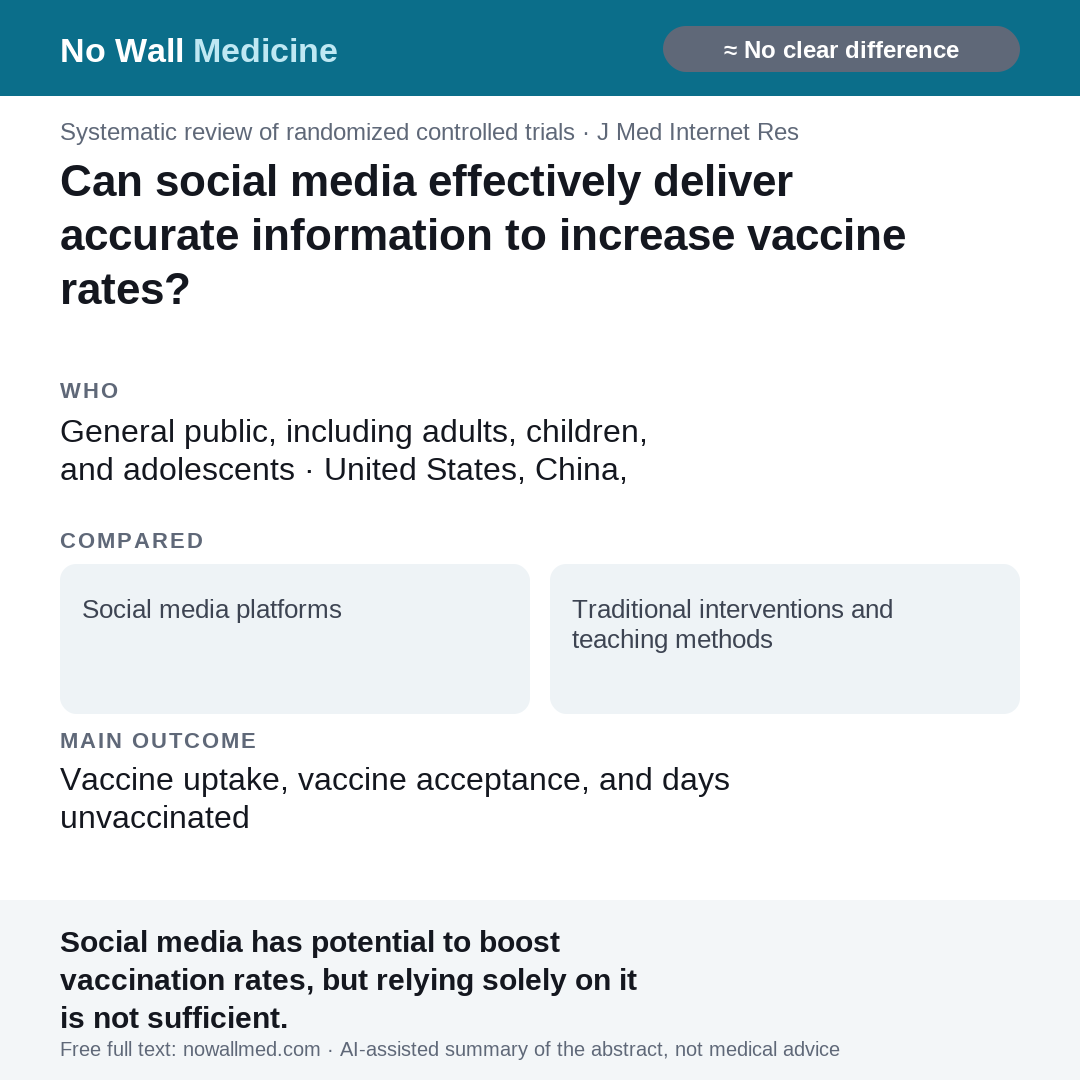
Social Media as an Effective Provider of Quality-Assured and Accurate Information to Increase Vaccine Rates: Systematic Review
Systematic review of randomized controlled trialsNo clear difference
Can social media effectively deliver accurate information to increase vaccine rates?
Who
26286
General public, including adults, children, and adolescents · United States, China, Jordan, Australia, and Israel
Compared
Social media platforms
Traditional interventions and teaching methods
Main outcome
Vaccine uptake, vaccine acceptance, and days unvaccinated
Result: P=.12
Bottom line: Social media has potential to boost vaccination rates, but relying solely on it is not sufficient.
Limitation: An equal number of positive and negative results may be expected due to complex structures.
J Med Internet Res · 2023-12-26Download image
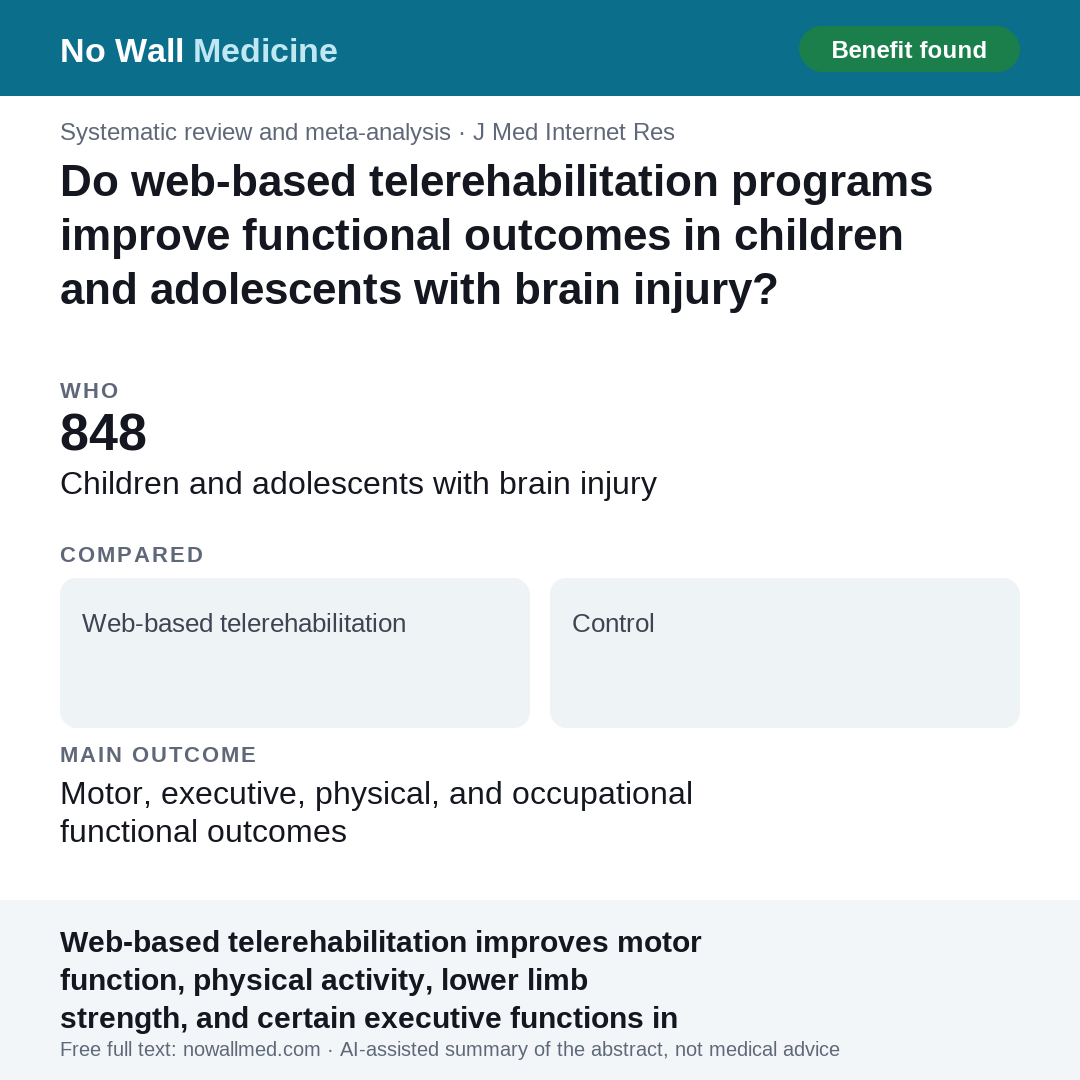
The Effect of Web-Based Telerehabilitation Programs on Children and Adolescents With Brain Injury: Systematic Review and Meta-Analysis
Systematic review and meta-analysisBenefit found
Do web-based telerehabilitation programs improve functional outcomes in children and adolescents with brain injury?
Who
848
Children and adolescents with brain injury
Compared
Web-based telerehabilitation
Control
Main outcome
Motor, executive, physical, and occupational functional outcomes
Result: standardized mean difference 0.29 (95% CI 0.01-0.57) for motor function
Bottom line: Web-based telerehabilitation improves motor function, physical activity, lower limb strength, and certain executive functions in children with brain injury.
Limitation: Heterogeneity in results due to different disease types and intervention programs.
J Med Internet Res · 2023-12-25Download image
Are Major a Posteriori Dietary Patterns Reproducible in the Italian Population? A Systematic Review and Quantitative Assessment
Systematic review and quantitative assessmentBenefit found
Are major a posteriori dietary patterns reproducible in the Italian population?
Who
Italian populations including children, adolescents, pregnant women, and elderly · Italy
Compared
Identified dietary patterns: 186 identified dietary patterns
Collapsed dietary patterns: 113 apparently different dietary patterns
Genuinely different dietary patterns: 6 genuinely different dietary patterns
Main outcome
Reproducibility of dietary patterns using congruence coefficients and text descriptions
Bottom line: Dietary patterns in Italy show high reproducibility, reducing 186 identified patterns to 6 genuinely different ones.
Adv Nutr · 2023-12-23Download image

Feasibility and Safety of Sildenafil to Repair Brain Injury Secondary to Birth Asphyxia (SANE-01): A Randomized, Double-blind, Placebo-controlled Phase Ib Clinical Trial
Randomized, double-blind, placebo-controlled phase Ib clinical trialMixed results
Is sildenafil feasible and safe for neonates with encephalopathy and brain injury?
Who
24
Neonates with moderate or severe neonatal encephalopathy and brain injury
Compared
Sildenafil: 12% (1/8) died
Placebo: 0% (0/3) died
Main outcome
Feasibility and safety
Bottom line: Sildenafil was safe and well-absorbed, but efficacy requires larger phase II and III trials.
J Pediatr · 2023-12-22Download image

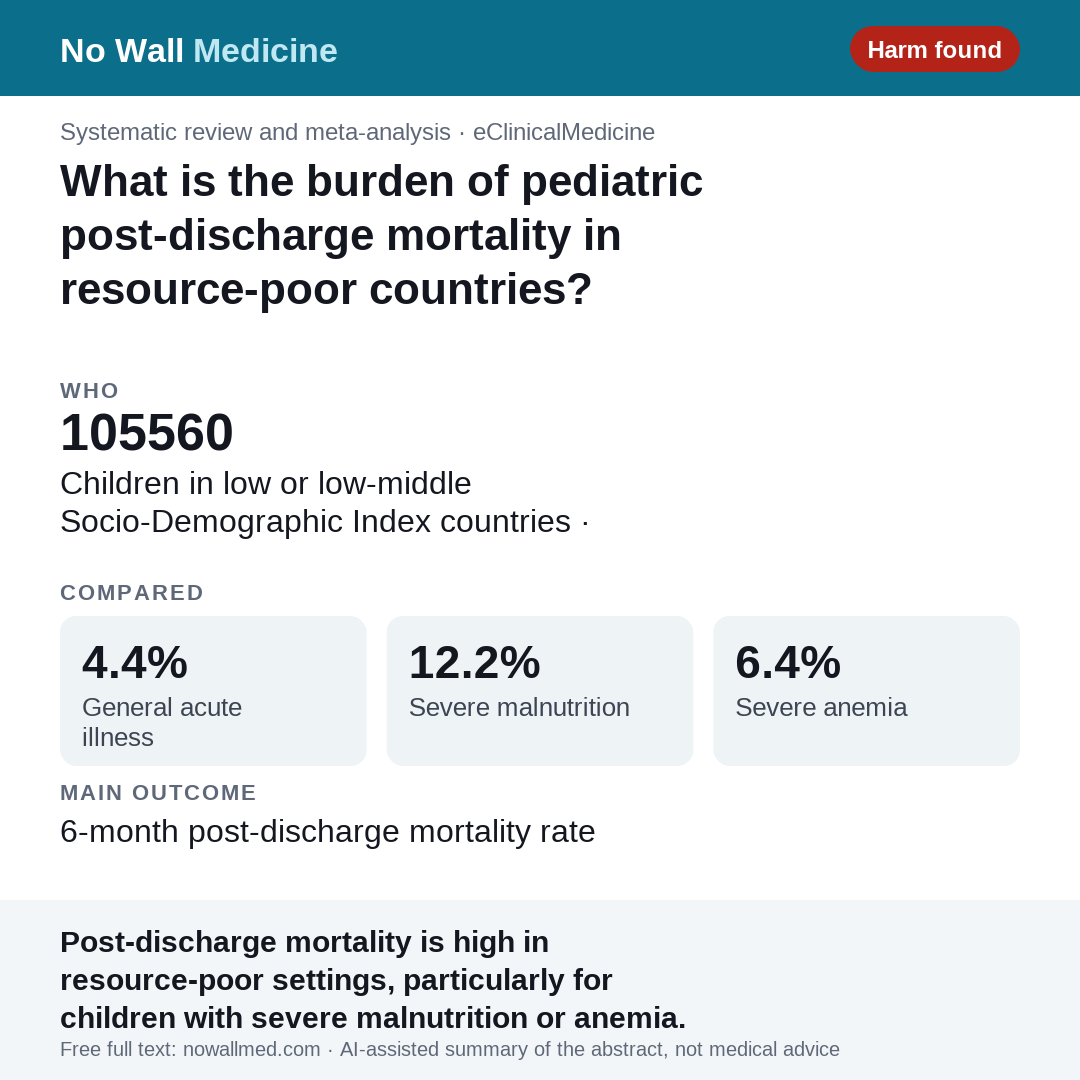
Pediatric post-discharge mortality in resource-poor countries: a systematic review and meta-analysis
Systematic review and meta-analysisHarm found
What is the burden of pediatric post-discharge mortality in resource-poor countries?
Who
105560
Children in low or low-middle Socio-Demographic Index countries · Resource-poor countries
Compared
4.4%General acute illness (95% CI: 3.5%-5.4%)
12.2%Severe malnutrition (95% CI: 6.2%-19.7%)
6.4%Severe anemia (95% CI: 4.2%-9.1%)
Main outcome
6-month post-discharge mortality rate
Bottom line: Post-discharge mortality is high in resource-poor settings, particularly for children with severe malnutrition or anemia.
eClinicalMedicine · 2023-12-21Download image
Best step-up treatments for children with uncontrolled asthma: a systematic review and network meta-analysis of individual participant data
Systematic review and network meta-analysisBenefit found
What are the best step-up treatments for children with uncontrolled asthma on inhaled corticosteroids?
Who
Children and adolescents under 18 years with uncontrolled asthma
Compared
Inhaled corticosteroid medium dose plus long-acting beta2-agonist: lowest odds of exacerbation
Inhaled corticosteroid low dose
Main outcome
Asthma exacerbation and asthma control
Result: odds ratio 0.44 (95% credibility interval 0.19-0.90)
Bottom line: Medium-dose inhaled corticosteroids plus long-acting beta2-agonists reduce exacerbation risk in uncontrolled children.
Eur Respir J · 2023-12-21Download image

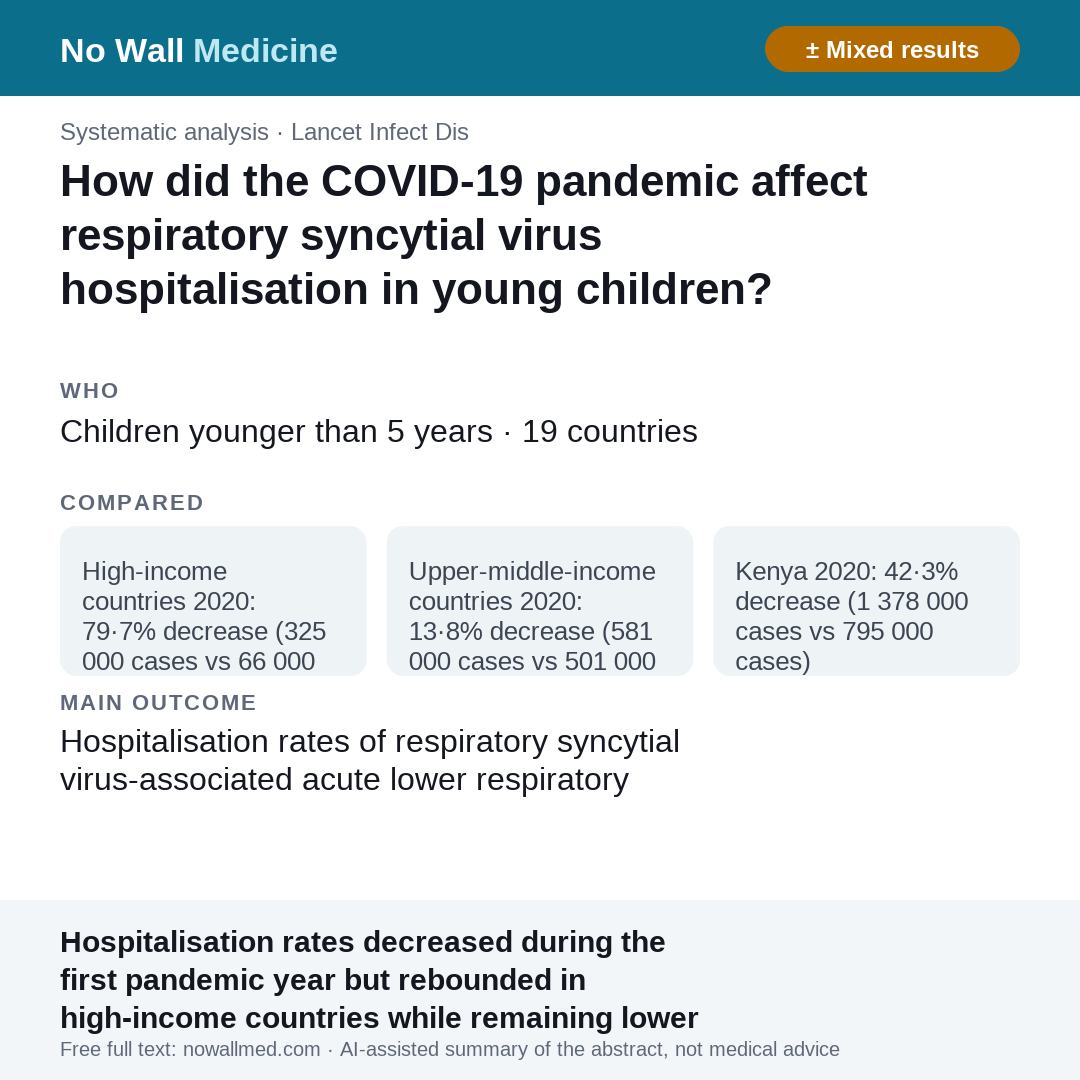
Changes in the global hospitalisation burden of respiratory syncytial virus in young children during the COVID-19 pandemic: a systematic analysis
Systematic analysisMixed results
How did the COVID-19 pandemic affect respiratory syncytial virus hospitalisation in young children?
Who
Children younger than 5 years · 19 countries
Compared
High-income countries 2020: 79·7% decrease (325 000 cases vs 66 000 cases)
Upper-middle-income countries 2020: 13·8% decrease (581 000 cases vs 501 000 cases)
Kenya 2020: 42·3% decrease (1 378 000 cases vs 795 000 cases)
Main outcome
Hospitalisation rates of respiratory syncytial virus-associated acute lower respiratory infection
Bottom line: Hospitalisation rates decreased during the first pandemic year but rebounded in high-income countries while remaining lower in middle-income regions.
Funded by: EU Innovative Medicines Initiative and Bill & Melinda Gates
Lancet Infect Dis · 2023-12-20Download image
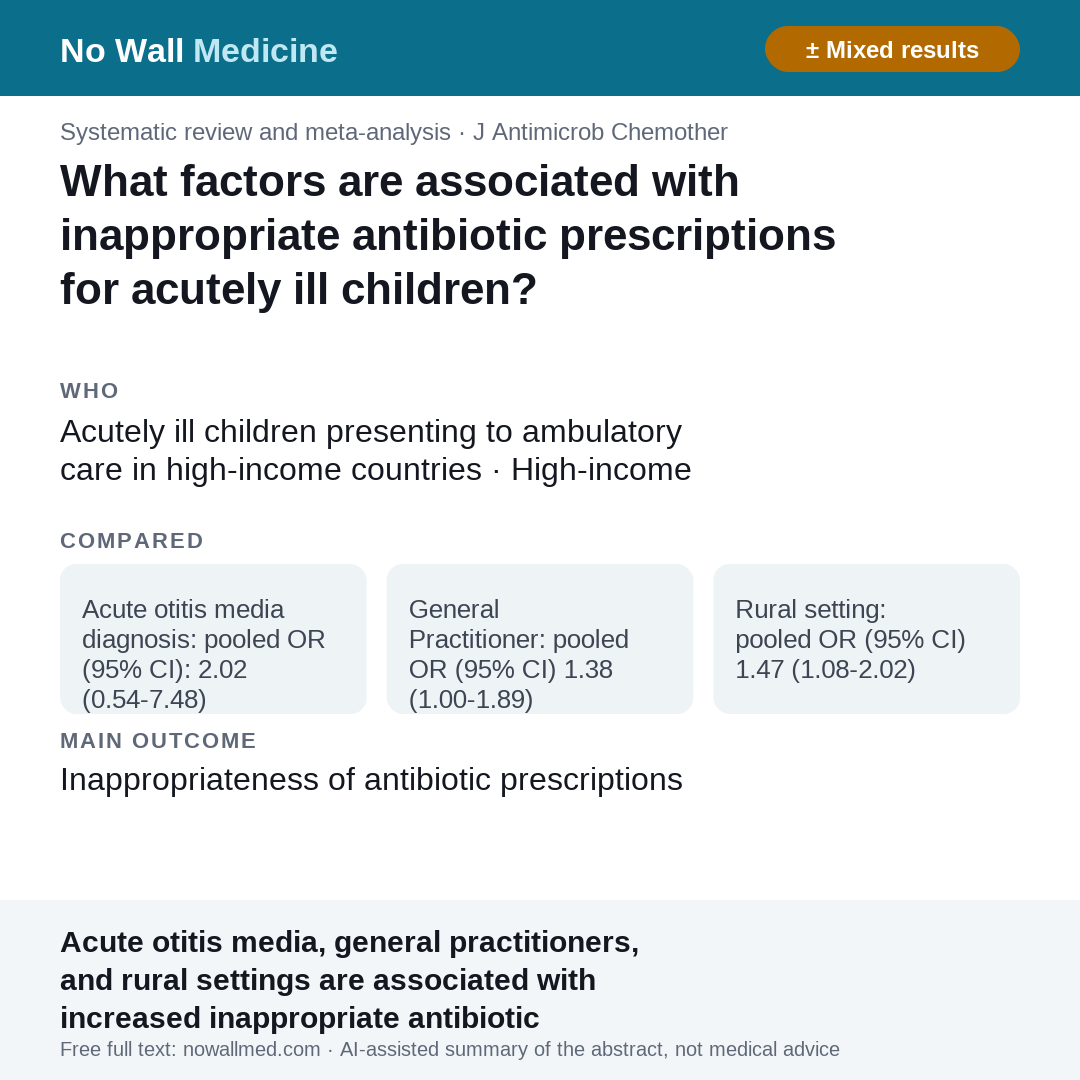
Factors associated with inappropriateness of antibiotic prescriptions for acutely ill children presenting to ambulatory care in high-income countries: a systematic review and meta-analysis
Systematic review and meta-analysisMixed results
What factors are associated with inappropriate antibiotic prescriptions for acutely ill children?
Who
Acutely ill children presenting to ambulatory care in high-income countries · High-income countries
Compared
Acute otitis media diagnosis: pooled OR (95% CI): 2.02 (0.54-7.48)
General Practitioner: pooled OR (95% CI) 1.38 (1.00-1.89)
Rural setting: pooled OR (95% CI) 1.47 (1.08-2.02)
Main outcome
Inappropriateness of antibiotic prescriptions
Bottom line: Acute otitis media, general practitioners, and rural settings are associated with increased inappropriate antibiotic prescribing in children.
J Antimicrob Chemother · 2023-12-19Download image
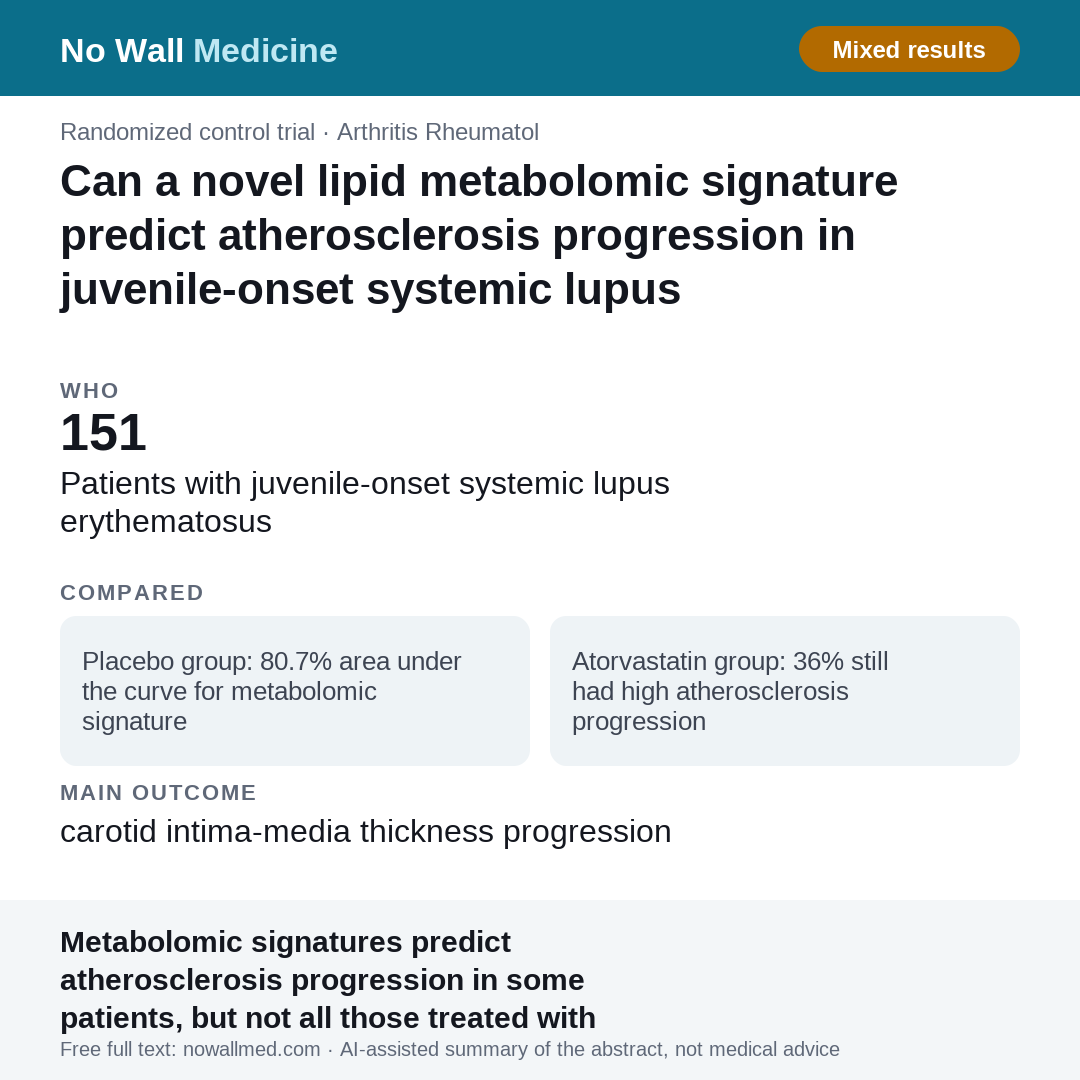
Atherosclerosis Progression in the APPLE Trial Can Be Predicted in Young People With Juvenile-Onset Systemic Lupus Erythematosus Using a Novel Lipid Metabolomic Signature
Randomized control trialMixed results
Can a novel lipid metabolomic signature predict atherosclerosis progression in juvenile-onset systemic lupus erythematosus?
Who
151
Patients with juvenile-onset systemic lupus erythematosus
Compared
Placebo group: 80.7% area under the curve for metabolomic signature
Atorvastatin group: 36% still had high atherosclerosis progression
Main outcome
carotid intima-media thickness progression
Bottom line: Metabolomic signatures predict atherosclerosis progression in some patients, but not all those treated with atorvastatin.
Arthritis Rheumatol · 2023-12-19Download image
Early-onset juvenile nasopharyngeal angiofibroma (JNA): a systematic review
Systematic reviewMixed results
What are the characteristics and treatments of early-onset juvenile nasopharyngeal angiofibroma?
Who
34
Patients with early-onset juvenile nasopharyngeal angiofibroma aged under 10 years
Compared
Early-onset patients: 30% recurrence
All age JNA
Main outcome
Disease characteristics, treatment modalities, and recurrence rates
Bottom line: Early-onset juvenile nasopharyngeal angiofibroma may have more advanced disease and higher recurrence rates than typical cases.
Limitation: A more powered statistical analysis is needed as more cases are reported.
J Otolaryngol Head Neck Surg · 2023-12-19Download image

Bisphosphonates in Glucocorticoid-Treated Patients With Duchenne Muscular Dystrophy: A Systematic Review and Grading of the Evidence
Systematic review and grading of evidenceBenefit found
Do bisphosphonates benefit glucocorticoid-treated patients with Duchenne muscular dystrophy?
Who
1,010
Glucocorticoid-treated patients with Duchenne muscular dystrophy · 12 countries across all inhabited continents except South America
Compared
Bisphosphonates
Control
Main outcome
areal lumbar spine bone mineral density Z score
Bottom line: High-quality evidence supports bisphosphonates to increase lumbar spine bone mineral density in these patients.
Limitation: Evidence for fracture risks was inconclusive or low quality due to lack of controlled data.
Neurology · 2023-12-18Download image