Visual abstracts
New randomized trials and meta-analyses from leading journals at a glance: who was studied, what was compared, and what was found. Every paper is free to read in full.
All specialtiesCardiology 255Oncology 204Gastroenterology & Hepatology 115Infectious Disease 204Neurology 118Psychiatry & Mental Health 170Pulmonology 119Critical Care 78Endocrinology & Diabetes 170Pediatrics 114Surgery 78Orthopedics & Sports Medicine 46Neurosurgery 15Cardiothoracic & Vascular Surgery 27Plastic & Reconstructive Surgery 59Nephrology 54Rheumatology 46Hematology 59Dermatology 25Ophthalmology 48Obstetrics & Gynecology 71Public & Global Health 79Radiology & Imaging 21Anesthesiology 38Urology 57ENT (Otolaryngology) 35Emergency Medicine 28Allergy & Immunology 25Geriatrics 78Family Medicine & Primary Care 38Medical Genetics & Genomics 27Pathology & Laboratory Medicine 5Physical Medicine & Rehabilitation 66Palliative Care 39Nutrition 93Digital Health & AI 228General Medicine 38
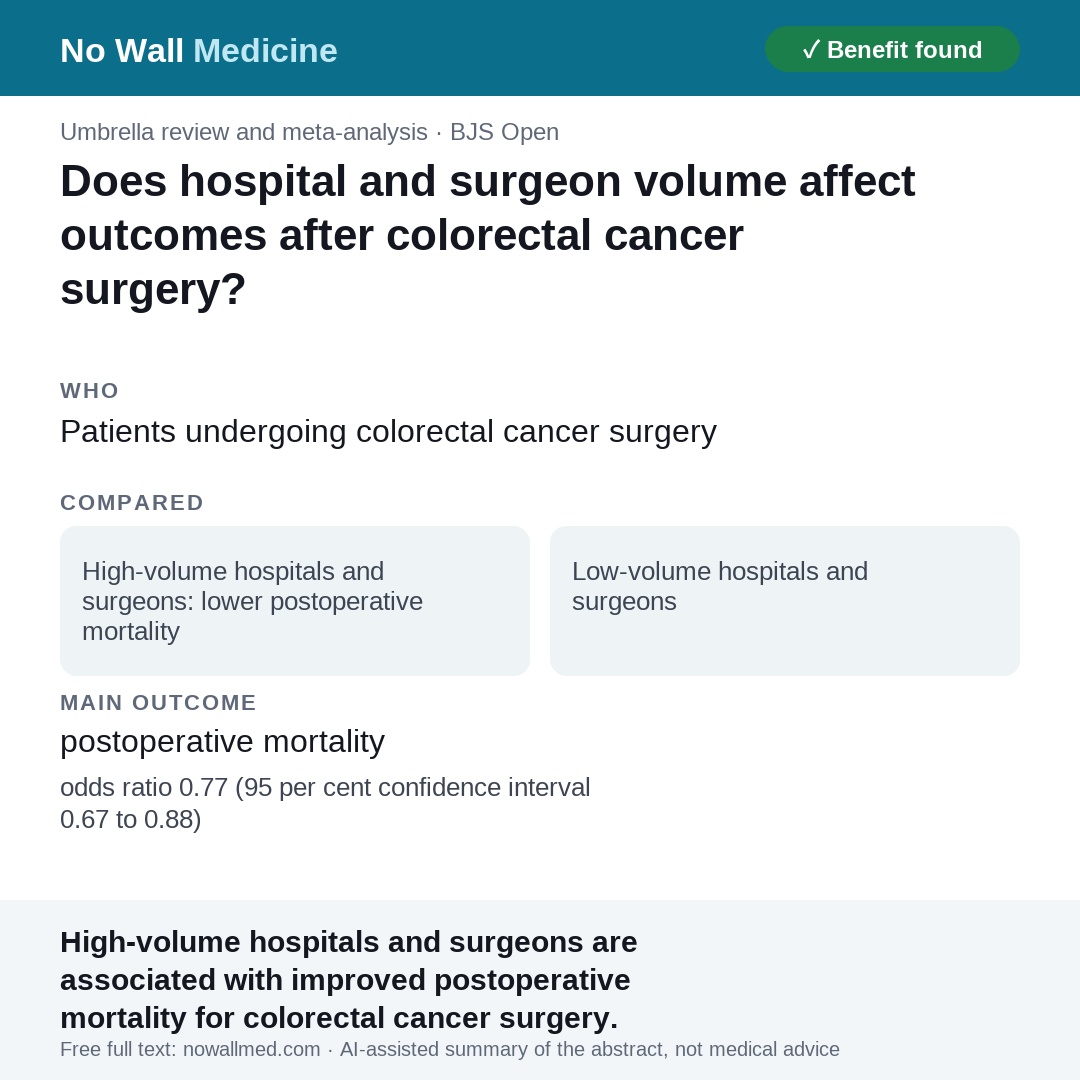
Hospital and surgeon volume versus outcomes after colorectal cancer surgery: umbrella review and meta-analysis
Umbrella review and meta-analysisBenefit found
Does hospital and surgeon volume affect outcomes after colorectal cancer surgery?
Who
Patients undergoing colorectal cancer surgery
Compared
High-volume hospitals and surgeons: lower postoperative mortality
Low-volume hospitals and surgeons
Main outcome
postoperative mortality
Result: odds ratio 0.77 (95 per cent confidence interval 0.67 to 0.88)
Bottom line: High-volume hospitals and surgeons are associated with improved postoperative mortality for colorectal cancer surgery.
Limitation: Heterogeneity of existing volume definitions makes a specific cut-off definition unclear.
BJS Open · 2026-06-24Download image
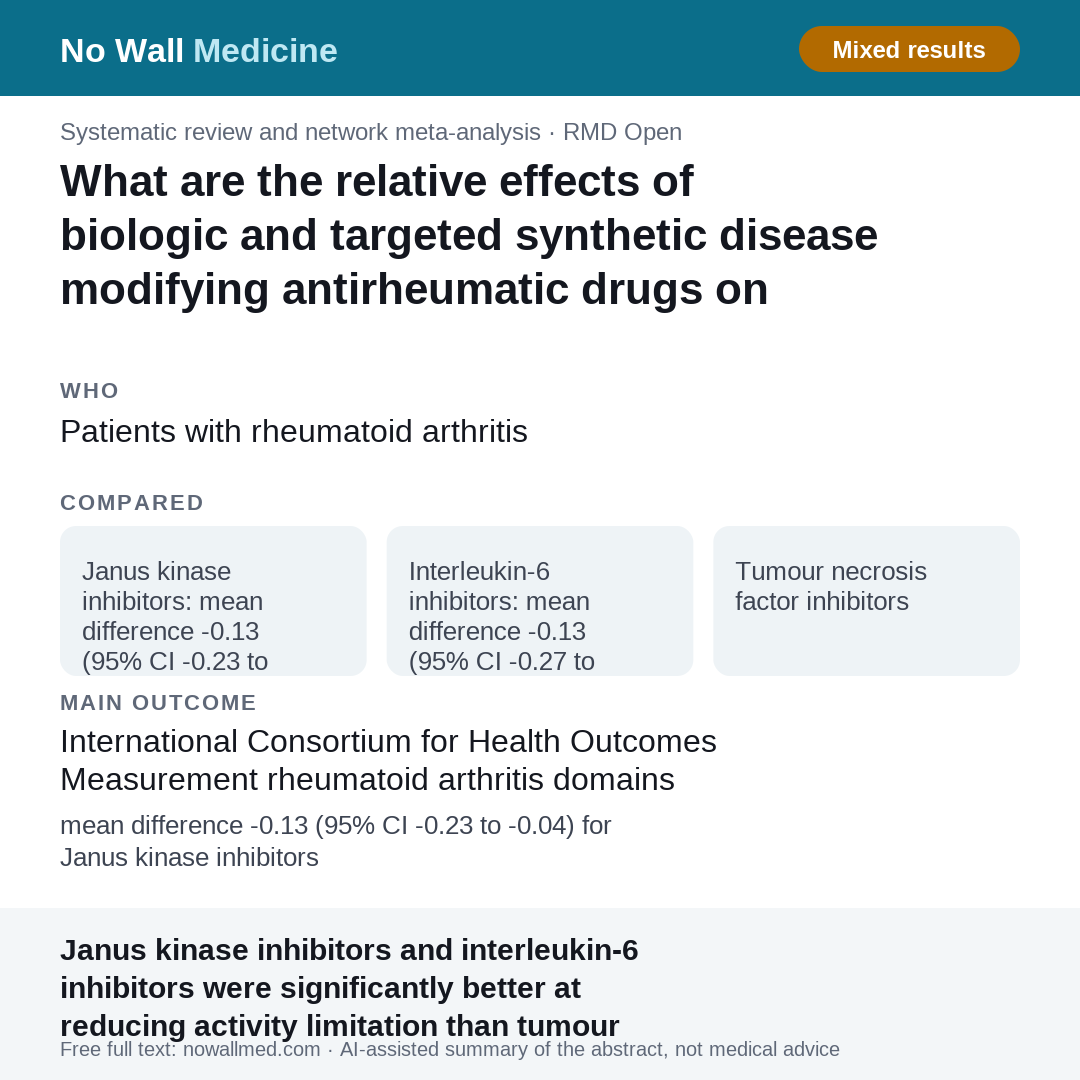
Effects of biologic and targeted synthetic disease modifying antirheumatic drugs (b/tsDMARDs) on patient-reported outcome domains in rheumatoid arthritis: a systematic review and network meta-analyses
Systematic review and network meta-analysisMixed results
What are the relative effects of biologic and targeted synthetic disease modifying antirheumatic drugs on patient-reported outcomes?
Who
99
Patients with rheumatoid arthritis
Compared
Janus kinase inhibitors: mean difference Health Assessment Questionnaire: -0.13
Interleukin-6 inhibitors: mean difference: -0.13
Tumour necrosis factor inhibitors
Main outcome
International Consortium for Health Outcomes Measurement rheumatoid arthritis-relevant domains
Result: mean difference -0.13 (95% CI -0.23 to -0.04) for Janus kinase inhibitors
Bottom line: Janus kinase inhibitors and interleukin-6 inhibitors were significantly better at reducing activity limitation than tumour necrosis factor inhibitors.
Limitation: Heterogeneity within comparisons ranged from low to very high.
RMD Open · 2026-06-24Download image
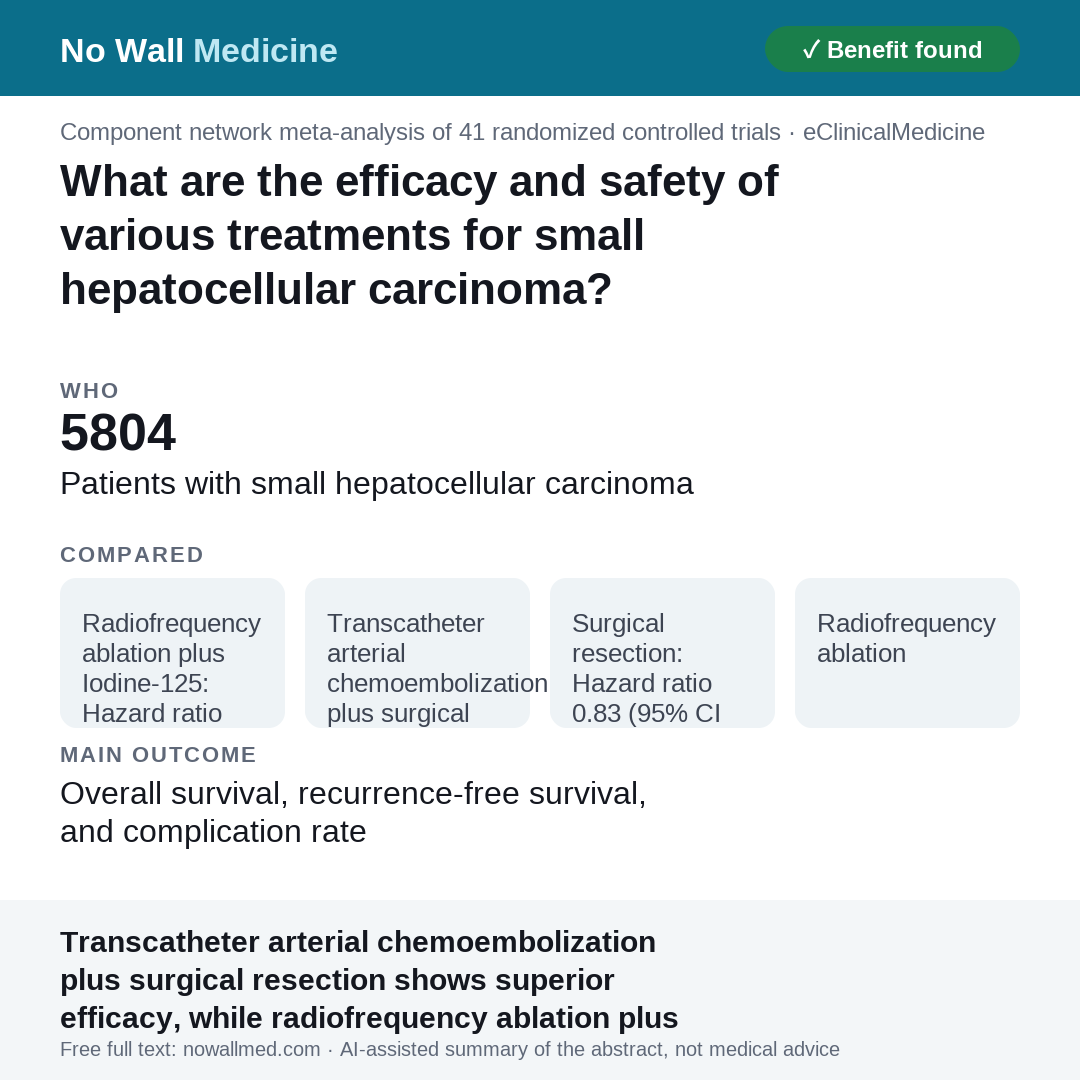
Efficacy and safety of multiple treatments for small hepatocellular carcinoma: an updated systematic review and component network meta analysis
Component network meta-analysis of 41 randomized controlled trialsBenefit found
What are the efficacy and safety of various treatments for small hepatocellular carcinoma?
Who
5804
Patients with small hepatocellular carcinoma
Compared
Radiofrequency ablation plus Iodine-125: Hazard ratio 0.50 (95% CI 0.31-0.81)
Transcatheter arterial chemoembolization plus surgical resection: Hazard ratio 0.30 (95% CI 0.16-0.58)
Surgical resection: Hazard ratio 0.83 (95% CI 0.71-0.98)
Radiofrequency ablation
Main outcome
Overall survival, recurrence-free survival, and complication rate
Bottom line: Transcatheter arterial chemoembolization plus surgical resection shows superior efficacy, while radiofrequency ablation plus Iodine-125 is a potential alternative.
eClinicalMedicine · 2026-06-23Download image
Prevalence and epidemiological patterns of Neisseria gonorrhoeae infection in sub-Saharan Africa, 1964-2025: Systematic review, meta-analyses, and meta-regressions
Systematic review and meta-analysesMixed results
What is the prevalence and epidemiological pattern of Neisseria gonorrhoeae in sub-Saharan Africa?
Who
People in sub-Saharan Africa · sub-Saharan Africa
Compared
3.2%General population urogenital prevalence (95% CI: 2.9-3.5)
11.5%Female sex workers urogenital prevalence (95% CI: 9.9-13.2)
2.8%Men who have sex with men urogenital prevalence (95% CI: 2.4-3.3)
Main outcome
Neisseria gonorrhoeae prevalence
Bottom line: Neisseria gonorrhoeae prevalence is high in sub-Saharan Africa, particularly in key populations, though it has declined over time.
PLOS Med · 2026-06-23Download image

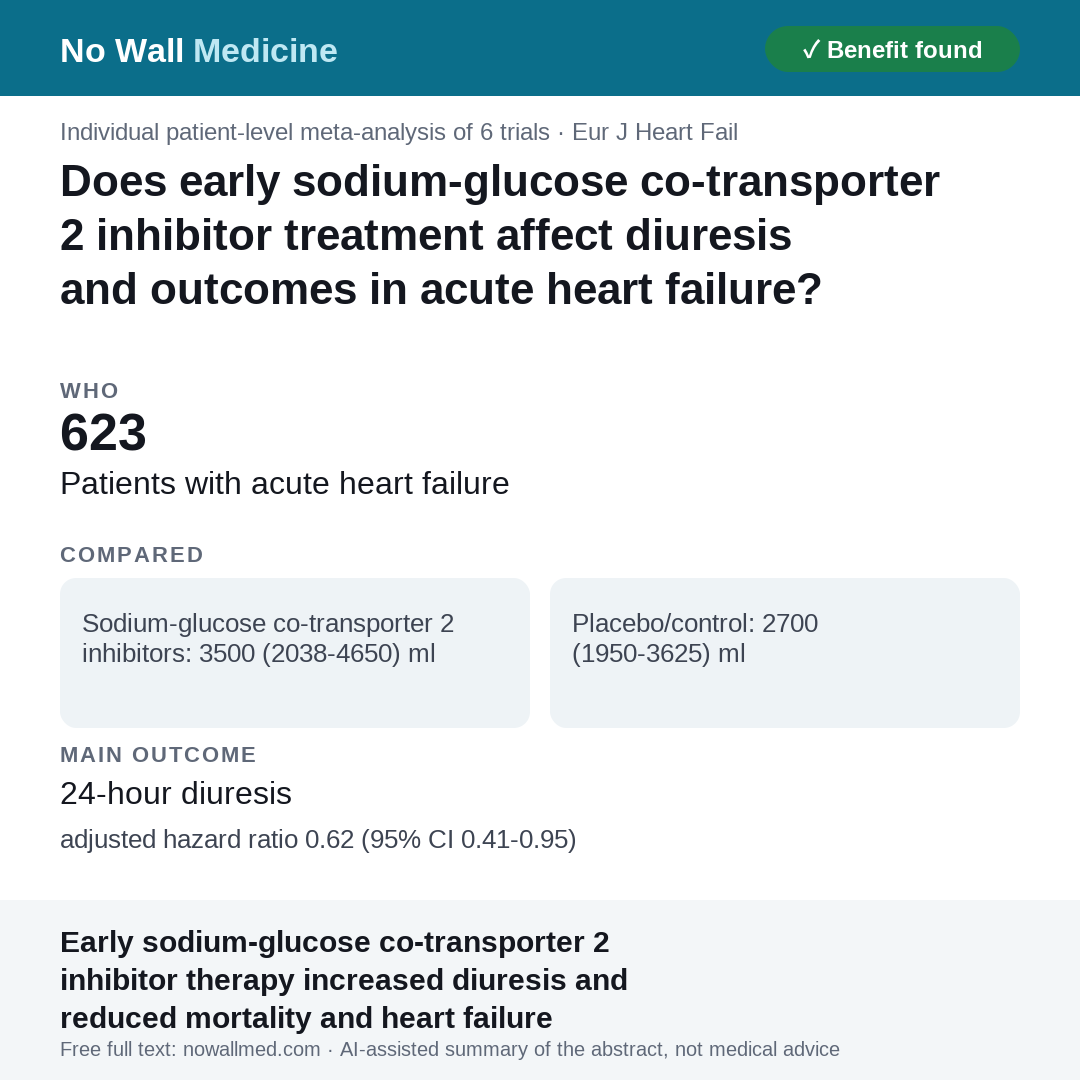
Early effects of SGLT2 inhibitors in acute heart failure: an individual patient-level meta-analysis
Individual patient-level meta-analysisBenefit found
Does early SGLT2 inhibitor treatment affect diuresis and outcomes in acute heart failure?
Who
623
Patients with acute heart failure · 6 trials
Compared
SGLT2 inhibitors: 3500 (2038-4650) ml
Placebo/control: 2700 (1950-3625) ml
Main outcome
24-hour diuresis
Bottom line: Early SGLT2 inhibitor therapy in acute heart failure increased diuresis and reduced post-discharge mortality and heart failure readmission.
Eur J Heart Fail · 2026-06-23Download image
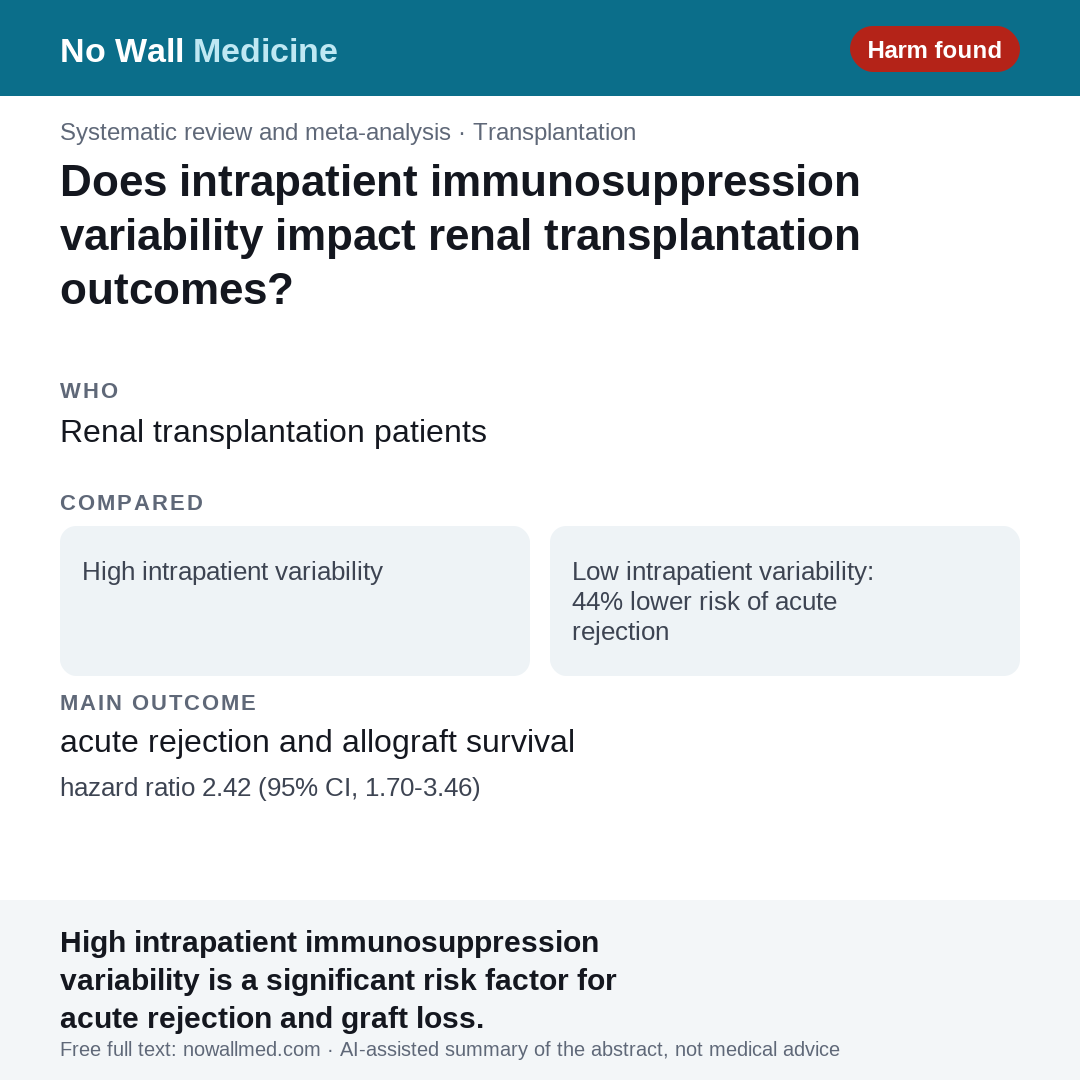
Impact of Intrapatient Immunosuppression Variability in Renal Transplantation Outcomes: A Systematic Review and Meta-analysis
Systematic review and meta-analysisHarm found
Does intrapatient immunosuppression variability impact renal transplantation outcomes?
Who
Renal transplantation patients
Compared
High intrapatient variability
Low intrapatient variability: 44% lower risk of acute rejection
Main outcome
acute rejection and allograft survival
Result: hazard ratio 2.42 (95% CI, 1.70-3.46)
Bottom line: High intrapatient immunosuppression variability is a significant risk factor for acute rejection and graft loss.
Transplantation · 2026-06-23Download image
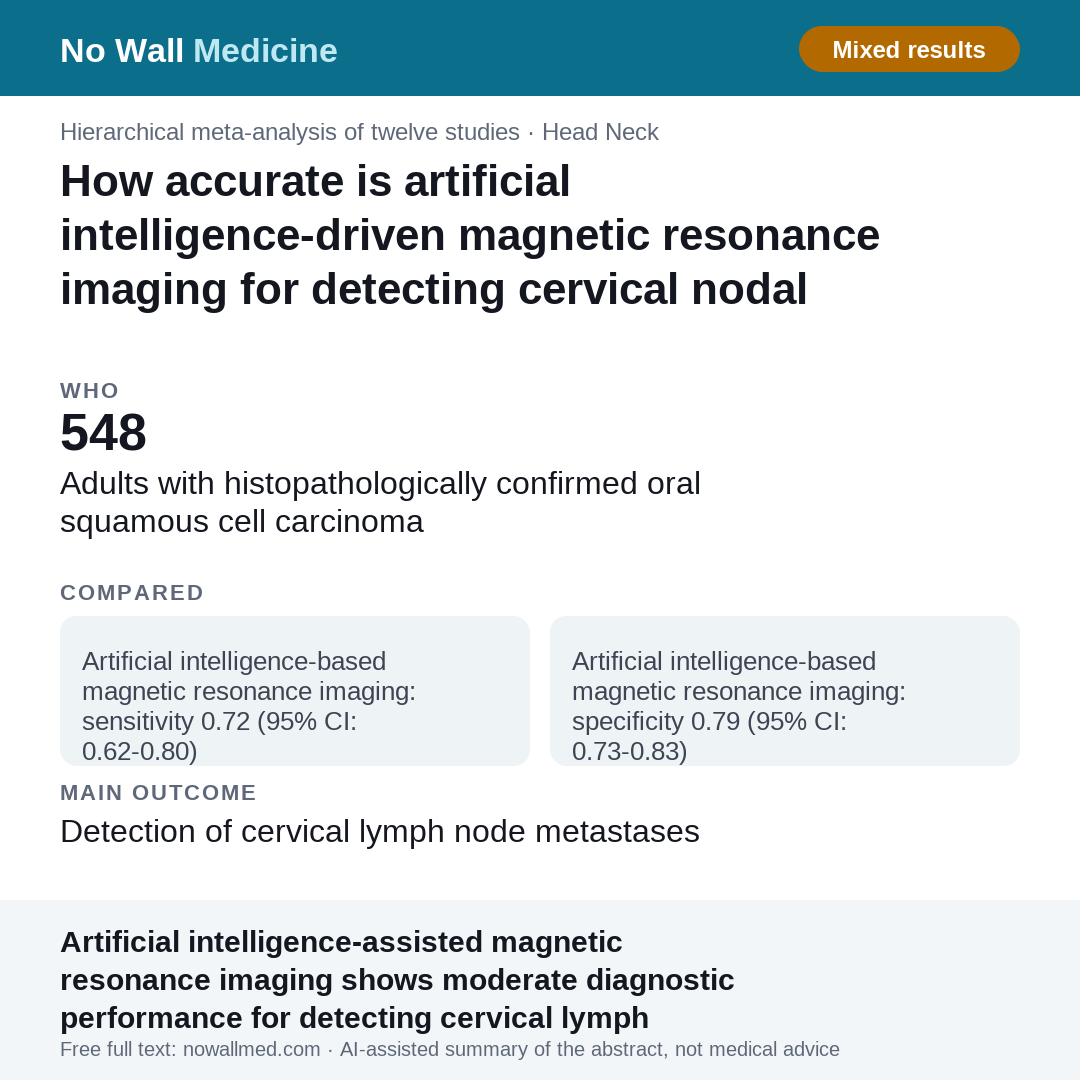
Artificial Intelligence-Driven MRI for Cervical Nodal Metastasis Detection in Oral Squamous Cell Carcinoma: A Hierarchical Meta-Analysis of Diagnostic Accuracy
Hierarchical meta-analysis of twelve studiesMixed results
How accurate is artificial intelligence-driven magnetic resonance imaging for detecting cervical nodal metastasis?
Who
548
Adults with histopathologically confirmed oral squamous cell carcinoma
Compared
Artificial intelligence-based magnetic resonance imaging: sensitivity 0.72 (95% CI: 0.62-0.80)
Artificial intelligence-based magnetic resonance imaging: specificity 0.79 (95% CI: 0.73-0.83)
Main outcome
Detection of cervical lymph node metastases
Result: area under the curve 0.82
Bottom line: Artificial intelligence-assisted magnetic resonance imaging shows moderate diagnostic performance for detecting cervical lymph node metastasis.
Limitation: Evidence certainty was low and multicenter validation is required.
Head Neck · 2026-06-23Download image
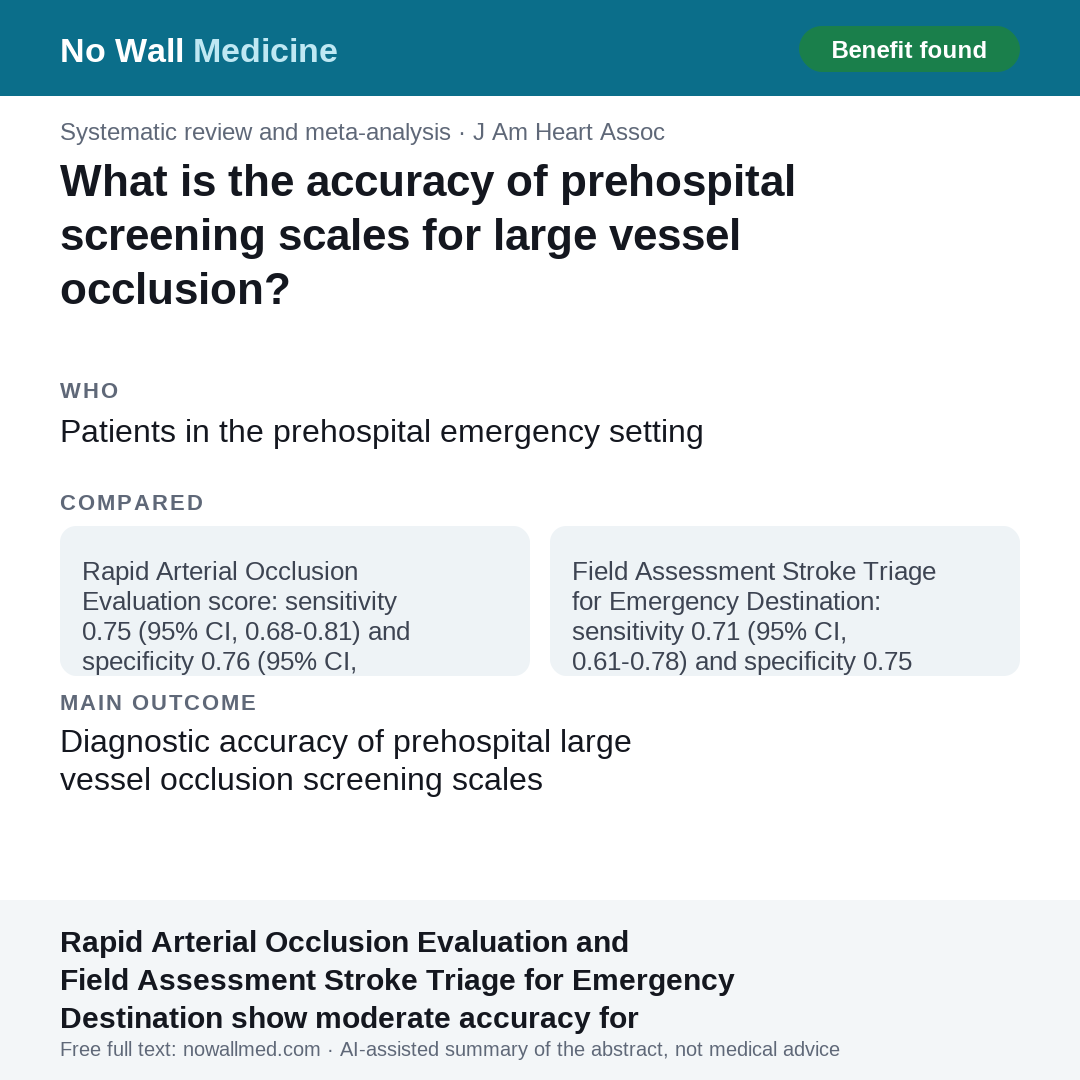
Stroke Scales for Large Vessel Occlusion in the Prehospital Emergency Setting: A Systematic Review and Meta-Analysis
Systematic review and meta-analysisBenefit found
What is the accuracy of prehospital screening scales for large vessel occlusion?
Who
Patients in the prehospital emergency setting
Compared
Rapid Arterial Occlusion Evaluation score: sensitivity 0.75 (95% CI, 0.68-0.81) and specificity 0.76 (95% CI, 0.68-0.84)
Field Assessment Stroke Triage for Emergency Destination: sensitivity 0.71 (95% CI, 0.61-0.78) and specificity 0.75 (95% CI, 0.64-0.83)
Main outcome
Diagnostic accuracy of prehospital large vessel occlusion screening scales
Bottom line: Rapid Arterial Occlusion Evaluation and Field Assessment Stroke Triage for Emergency Destination show moderate accuracy for prehospital large vessel occlusion triage.
Limitation: Need for further validation
J Am Heart Assoc · 2026-06-23Download image
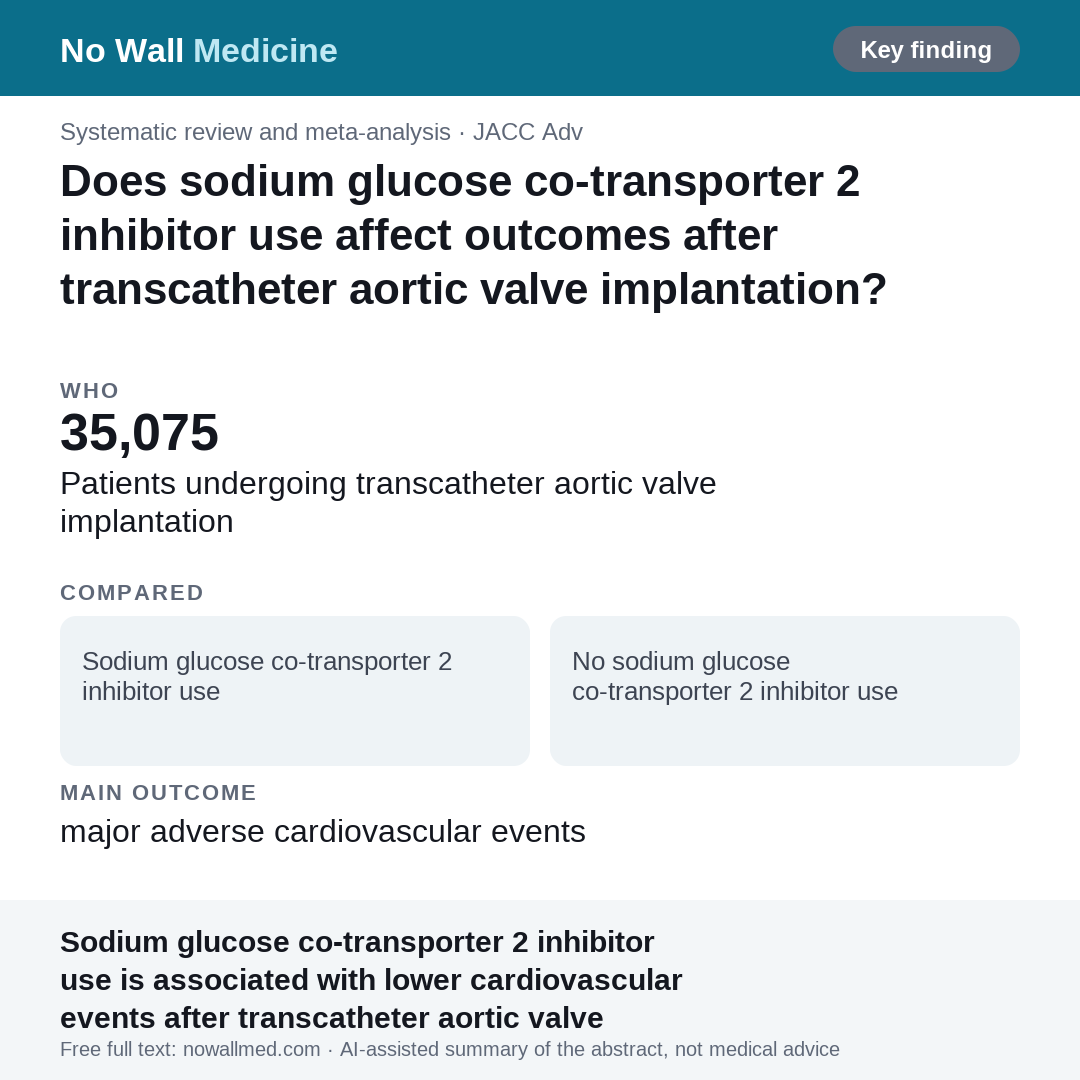
SGLT-2 Inhibitors and Outcomes After Transcatheter Aortic Valve Implantation: A Systematic Review and Meta-Analysis
Systematic review and meta-analysisBenefit found
Does sodium glucose co-transporter 2 inhibitor use affect outcomes after transcatheter aortic valve implantation?
Who
35,075
Patients undergoing transcatheter aortic valve implantation
Compared
Sodium glucose co-transporter 2 inhibitor use
No sodium glucose co-transporter 2 inhibitor use
Main outcome
major adverse cardiovascular events
Result: hazard ratio 0.65 (95% CI 0.44-0.95)
Bottom line: Sodium glucose co-transporter 2 inhibitor use is associated with lower cardiovascular events after transcatheter aortic valve implantation.
Limitation: Low certainty due to predominance of observational studies and potential bias.
JACC Adv · 2026-06-23Download image
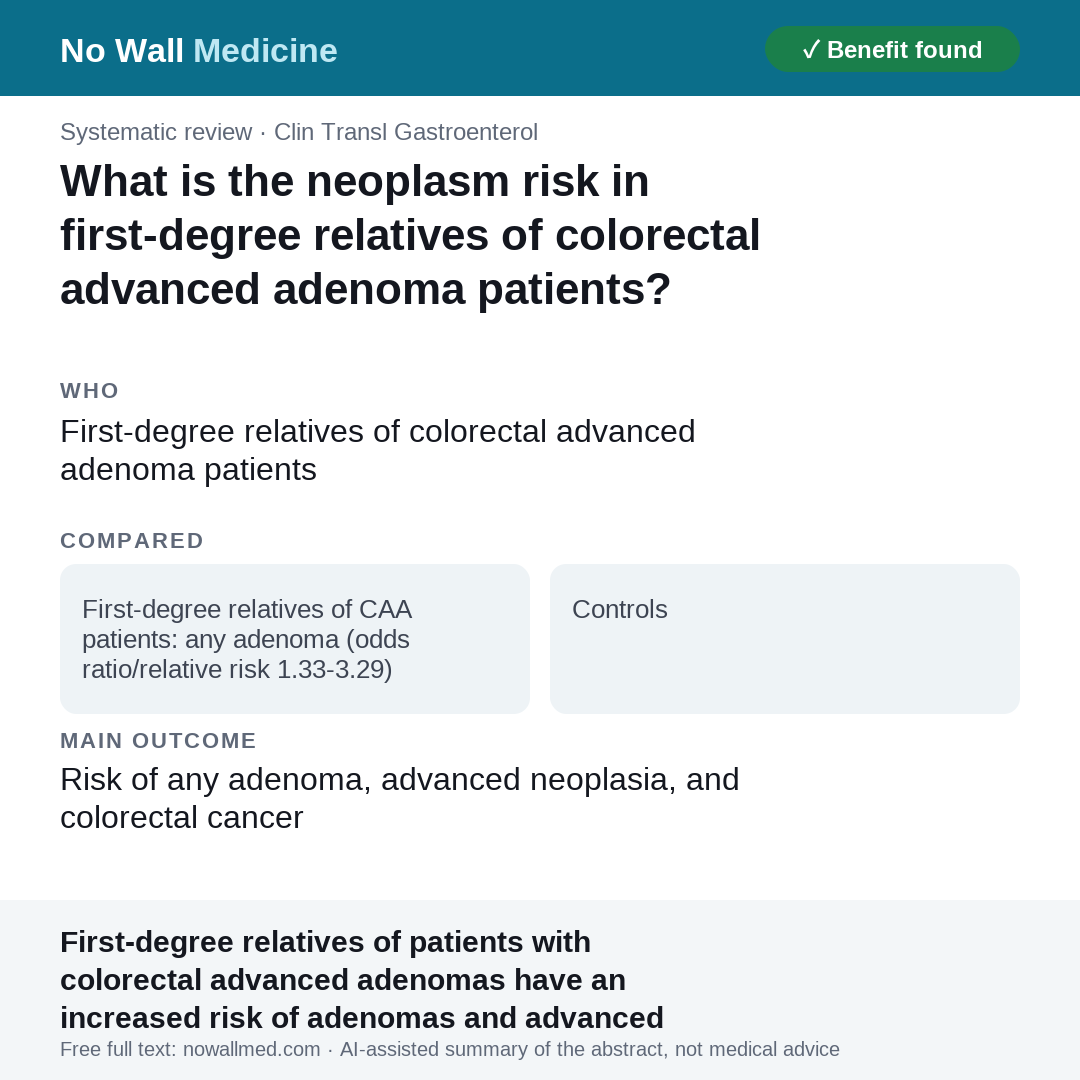
Risk of Colorectal Neoplasia in First-Degree Relatives of Colorectal Advanced Adenoma Patients: A Systematic Review
Systematic reviewBenefit found
What is the neoplasm risk in first-degree relatives of colorectal advanced adenoma patients?
Who
First-degree relatives of colorectal advanced adenoma patients
Compared
First-degree relatives of CAA patients: any adenoma (odds ratio/relative risk 1.33-3.29)
Controls
Main outcome
Risk of any adenoma, advanced neoplasia, and colorectal cancer
Result: advanced neoplasia (odds ratio/relative risk 1.65-6.33, 95% confidence intervals 1.01-43.8)
Bottom line: First-degree relatives of patients with colorectal advanced adenomas have an increased risk of adenomas and advanced neoplasia.
Limitation: Evidence certainty is limited and colorectal cancer risk findings were inconsistent.
Clin Transl Gastroenterol · 2026-06-23Download image
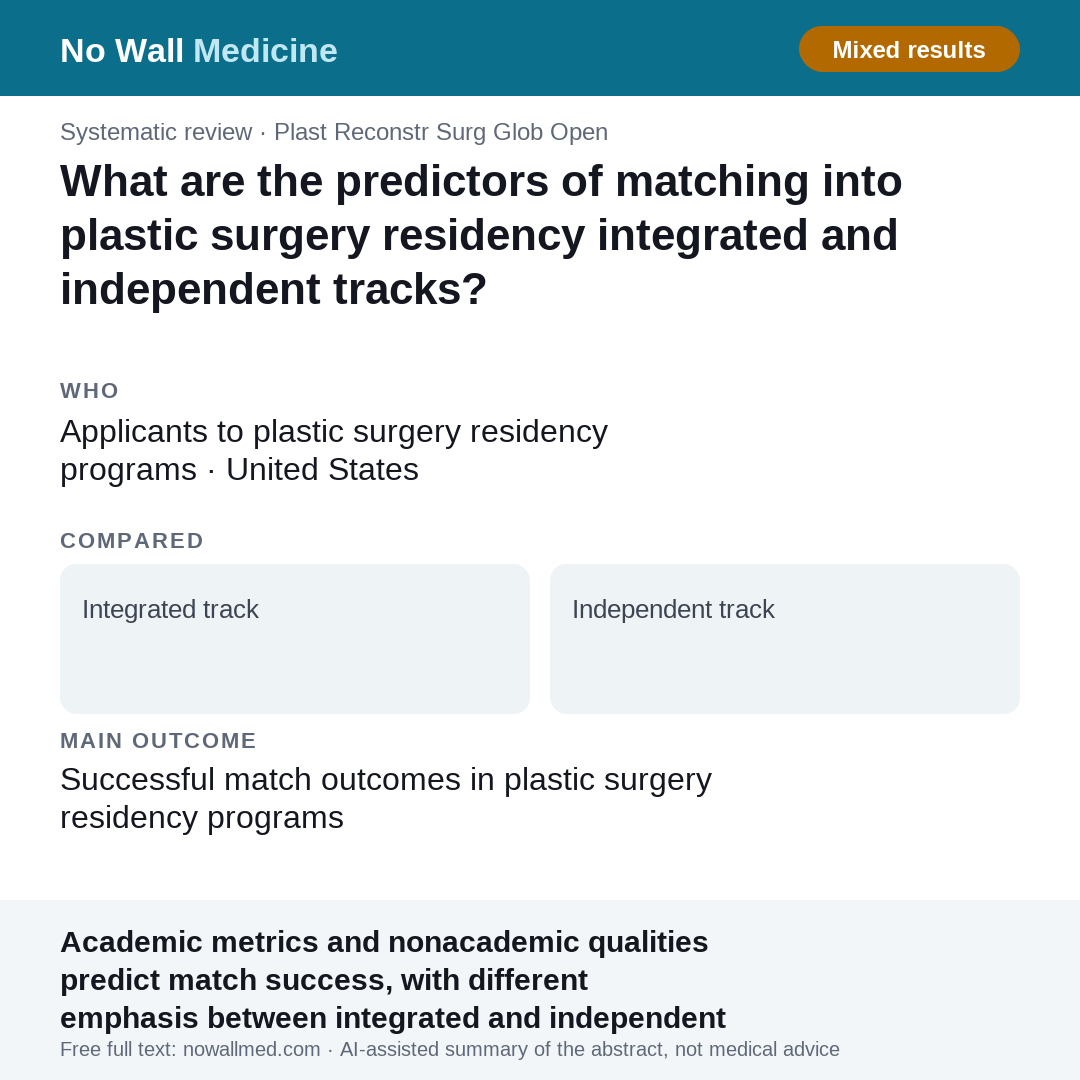
Predictors of Matching into Plastic Surgery Residency Integrated and Independent Tracks: A Systematic Review
Systematic reviewMixed results
What are the predictors of successful matching into plastic surgery residency tracks?
Who
Applicants to integrated and independent plastic surgery residency programs · United States
Compared
Integrated track
Independent track
Main outcome
Successful match outcomes in plastic surgery residency programs
Bottom line: Academic metrics and nonacademic qualities predict match success, with different emphasis between integrated and independent tracks.
Plast Reconstr Surg Glob Open · 2026-06-23Download image
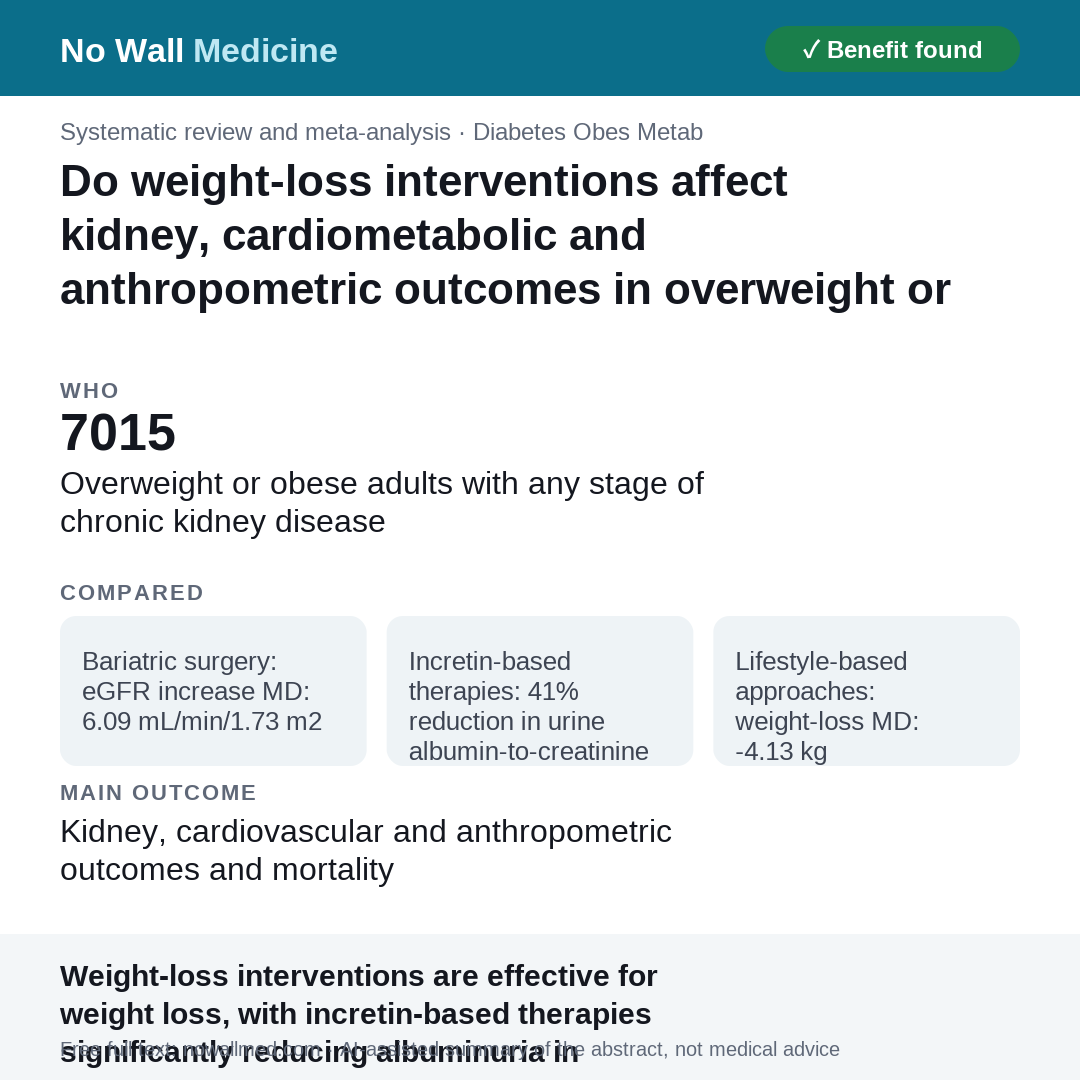
Effects of Weight-Loss Interventions on Kidney, Cardiometabolic and Anthropometric Outcomes in Adults With CKD and Overweight or Obesity: A Systematic Review and Meta-Analysis
Systematic review and meta-analysisBenefit found
Do weight-loss interventions affect kidney, cardiometabolic and anthropometric outcomes in overweight or obese adults with chronic kidney disease?
Who
7015
Overweight or obese adults with any stage of chronic kidney disease
Compared
Bariatric surgery: eGFR increase MD: 6.09 mL/min/1.73 m2
Incretin-based therapies: 41% reduction in urine albumin-to-creatinine ratio
Lifestyle-based approaches: weight-loss MD: -4.13 kg
Main outcome
Kidney, cardiovascular and anthropometric outcomes and mortality
Bottom line: Weight-loss interventions are effective for weight loss, with incretin-based therapies significantly reducing albuminuria in patients with chronic kidney disease.
Limitation: Cardiovascular outcomes and mortality data were lacking.
Diabetes Obes Metab · 2026-06-22Download image
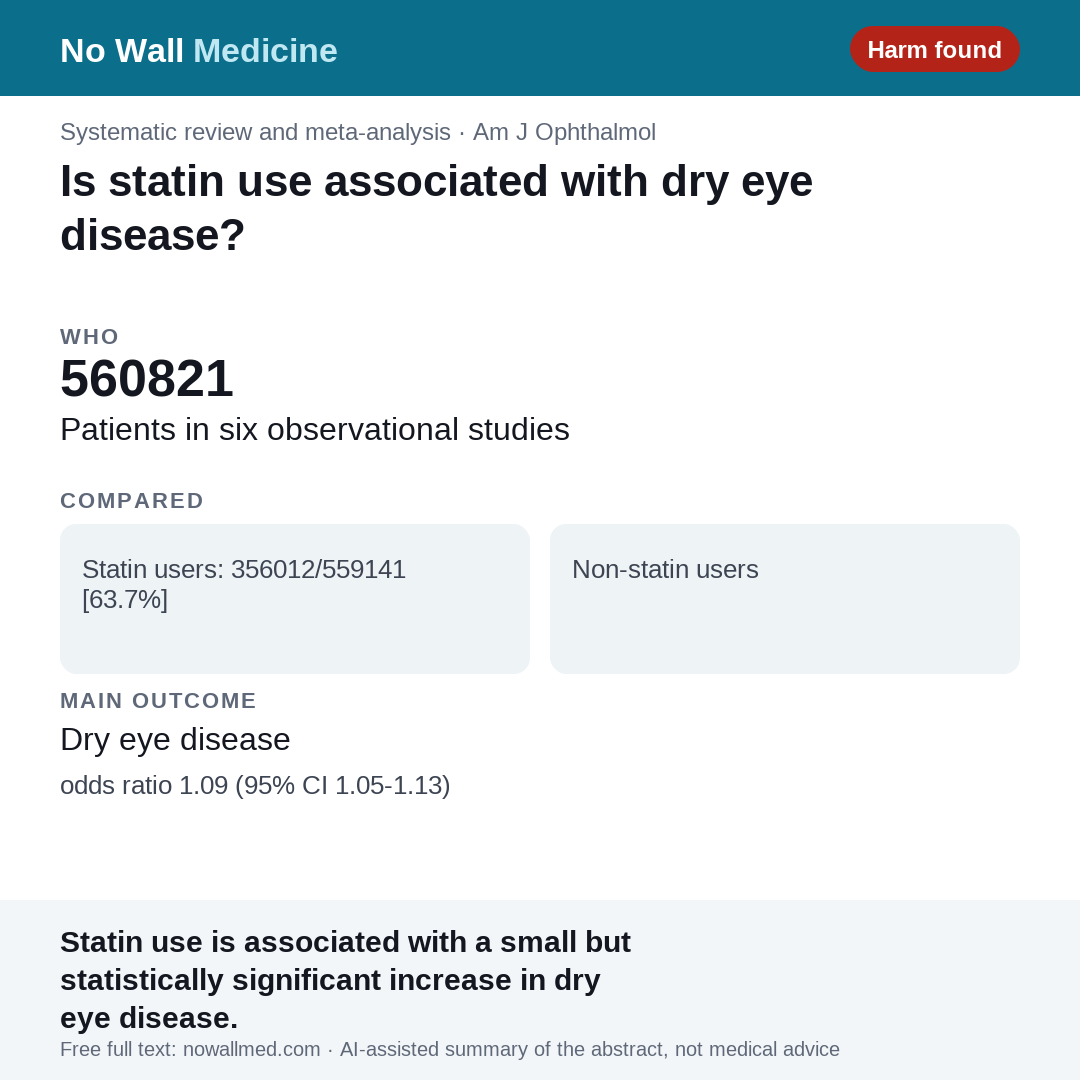
Association Between Statin Use and Dry Eye Disease: A Systematic Review and Meta-Analysis
Systematic review and meta-analysisHarm found
Is statin use associated with dry eye disease?
Who
560821
Patients in six observational studies
Compared
Statin users: 356012/559141 [63.7%]
Non-statin users
Main outcome
Dry eye disease
Result: odds ratio 1.09 (95% CI 1.05-1.13)
Bottom line: Statin use is associated with a small but statistically significant increase in dry eye disease.
Limitation: The findings are limited by very low-certainty evidence.
Am J Ophthalmol · 2026-06-22Download image
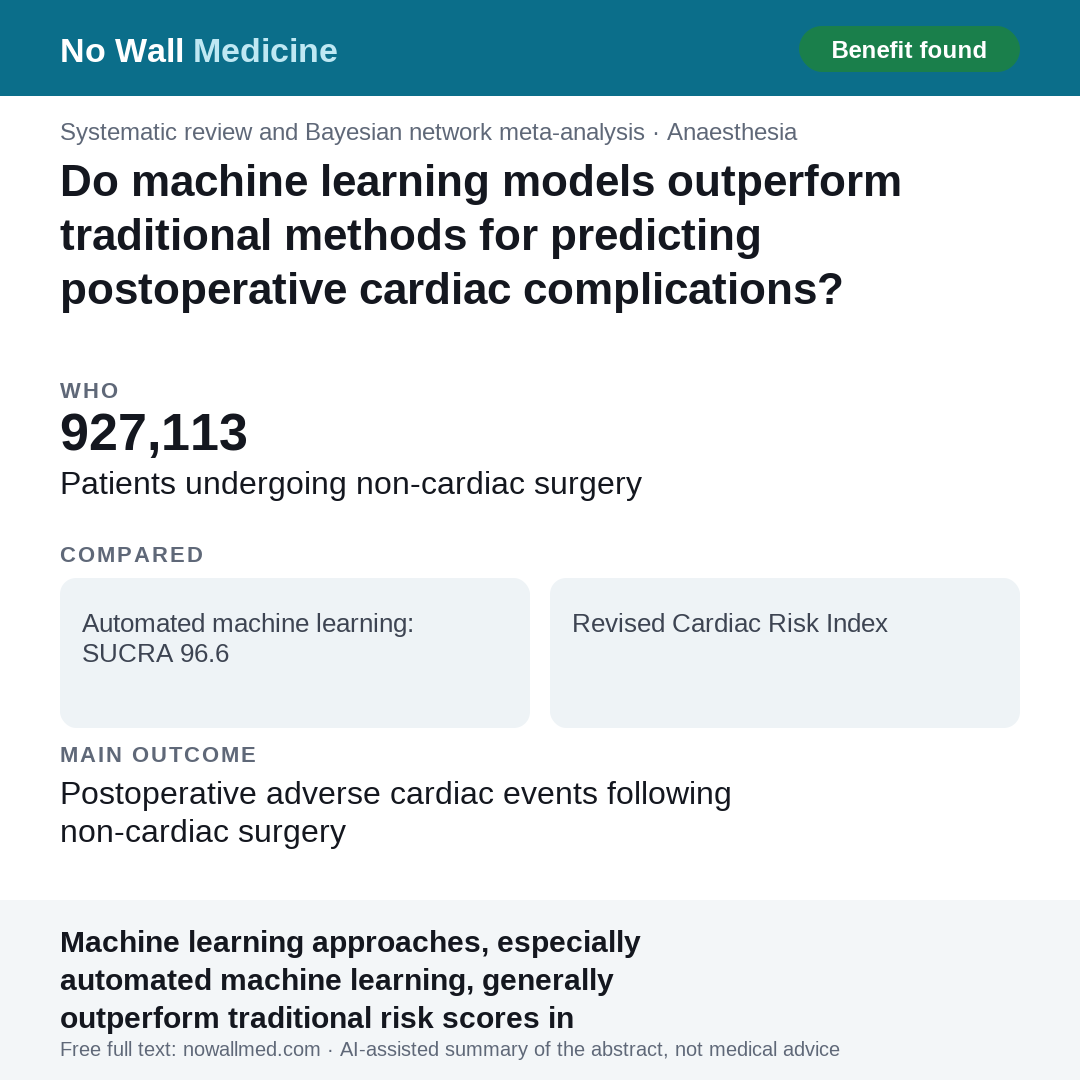
Machine learning vs. traditional methods for predicting postoperative cardiac complications after non-cardiac surgery: a systematic review and Bayesian network meta-analysis
Systematic review and Bayesian network meta-analysisBenefit found
Do machine learning models outperform traditional methods for predicting postoperative cardiac complications?
Who
927,113
Patients undergoing non-cardiac surgery
Compared
Automated machine learning: SUCRA 96.6
Revised Cardiac Risk Index
Main outcome
Postoperative adverse cardiac events following non-cardiac surgery
Result: mean difference 0.28 (95%CrI 0.16-0.40)
Bottom line: Machine learning approaches, especially automated machine learning, generally outperform traditional risk scores in predicting postoperative cardiac complications.
Limitation: Lack of external validation and low number of low risk of bias studies.
Anaesthesia · 2026-06-22Download image
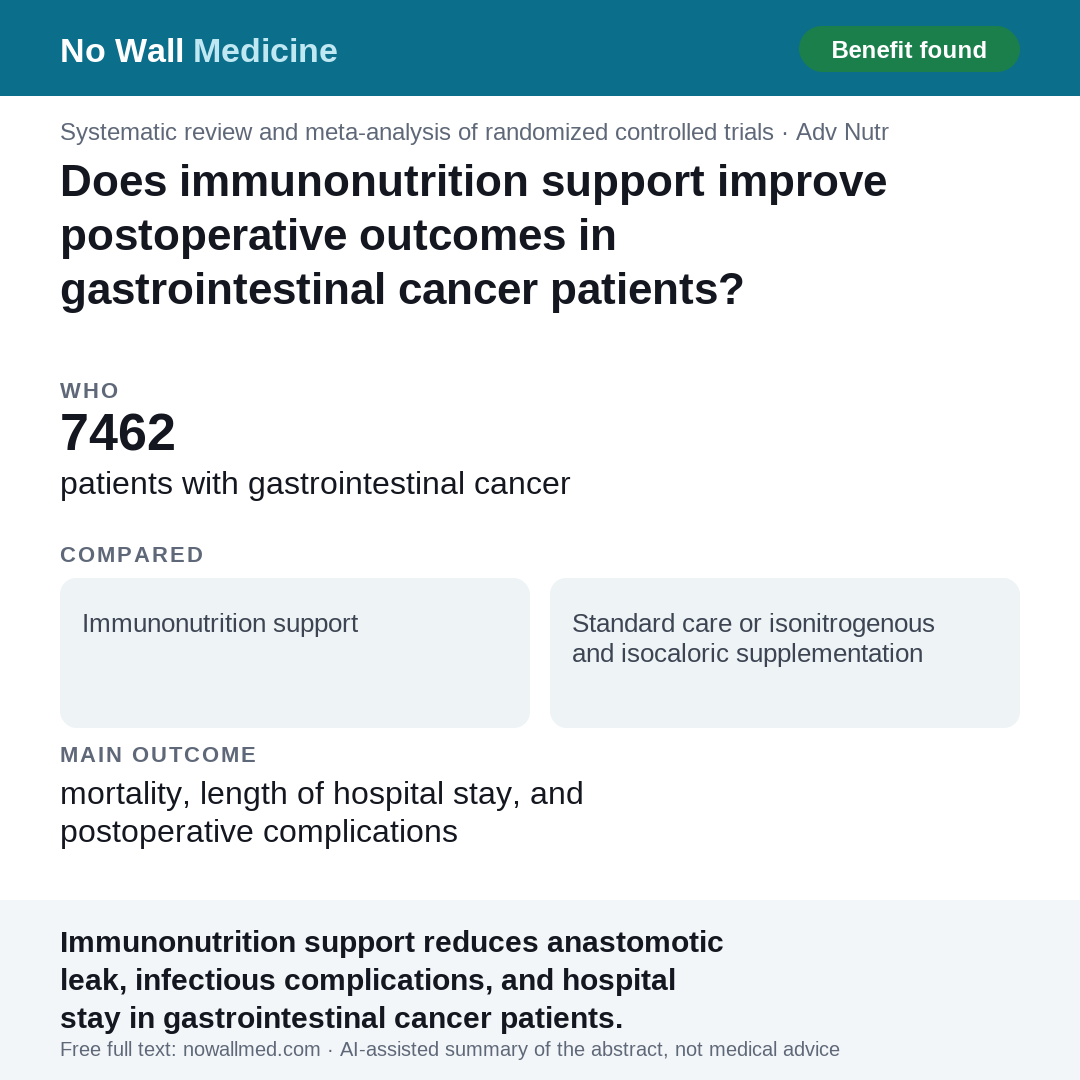
Immunonutrition Decreases Postoperative Complications in Gastrointestinal Cancer-A Systematic Review and Meta-analysis of Randomized Controlled Trials
Systematic review and meta-analysis of randomized controlled trialsBenefit found
Does immunonutrition support improve postoperative outcomes in gastrointestinal cancer patients?
Who
7462
patients with gastrointestinal cancer
Compared
Immunonutrition support
Standard care or isonitrogenous and isocaloric supplementation
Main outcome
mortality, length of hospital stay, and postoperative complications
Result: anastomotic leak OR 0.62 (95% CI: 0.50, 0.76)
Bottom line: Immunonutrition support reduces anastomotic leak, infectious complications, and hospital stay in gastrointestinal cancer patients.
Adv Nutr · 2026-06-22Download image
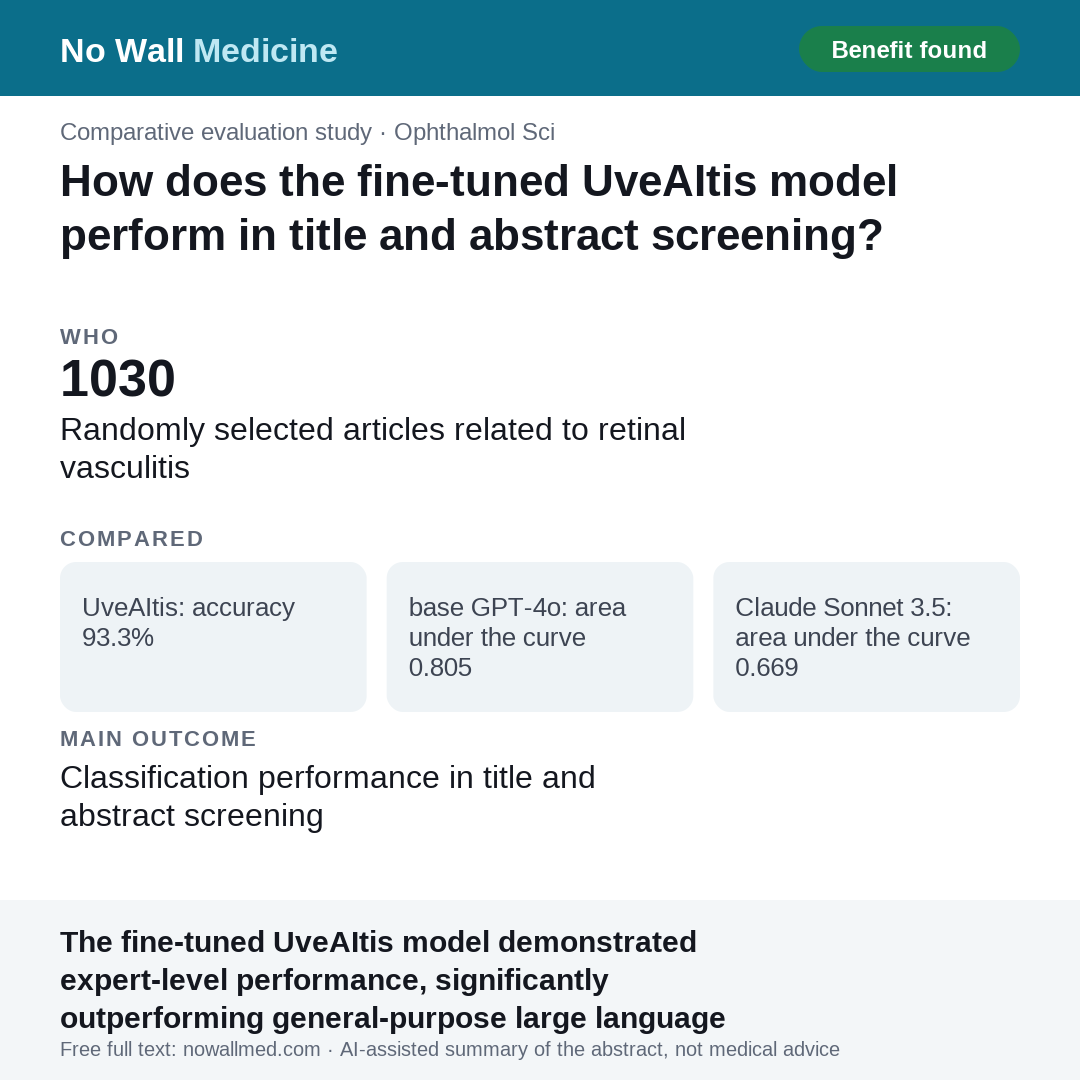
Transforming Systematic Reviews: Evaluating a Fine-Tuned Large Language Model for Abstract Screening in Uveitis and Retinal Vasculitis: Fine-Tuned LLM for Review Screening
Comparative evaluation studyBenefit found
How does the fine-tuned UveAItis model perform in title and abstract screening?
Who
1030
Randomly selected articles related to retinal vasculitis
Compared
UveAItis: accuracy 93.3%
base GPT-4o: area under the curve 0.805
Claude Sonnet 3.5: area under the curve 0.669
Main outcome
Classification performance in title and abstract screening
Result: area under the curve 0.887
Bottom line: The fine-tuned UveAItis model demonstrated expert-level performance, significantly outperforming general-purpose large language models in screening.
Ophthalmol Sci · 2026-06-22Download image
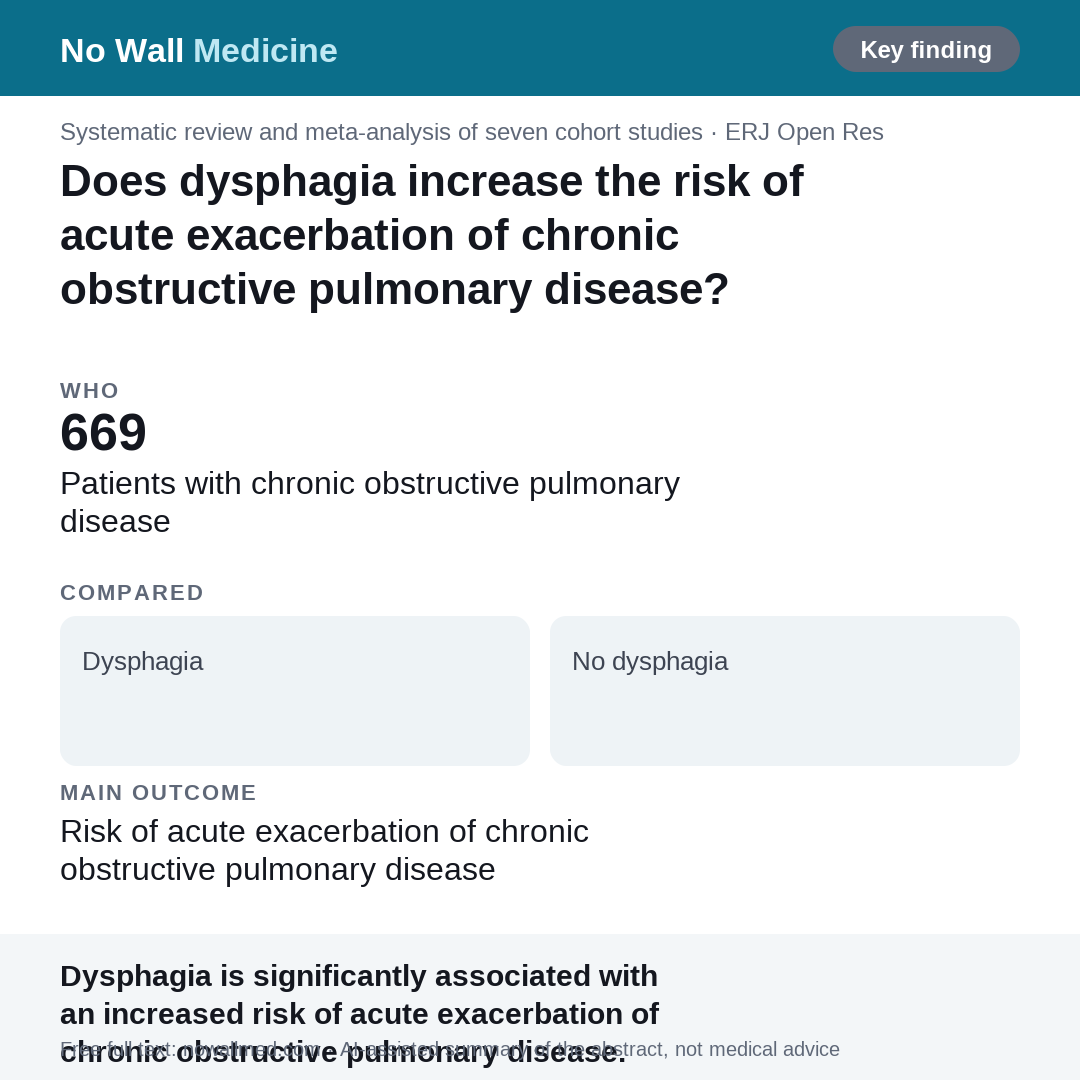
The association between dysphagia and the risk of acute exacerbation of COPD: a systematic review and meta-analysis
Systematic review and meta-analysisHarm found
Does dysphagia increase the risk of acute exacerbation of chronic obstructive pulmonary disease?
Who
669
Patients with chronic obstructive pulmonary disease
Compared
Dysphagia
No dysphagia
Main outcome
Risk of acute exacerbation of chronic obstructive pulmonary disease
Result: rate ratio 2.37 (95% CI 1.75-3.20)
Bottom line: Dysphagia is significantly associated with an increased risk of acute exacerbation of chronic obstructive pulmonary disease.
Limitation: Future research should explore underlying mechanisms and potential confounders further.
ERJ Open Res · 2026-06-22Download image
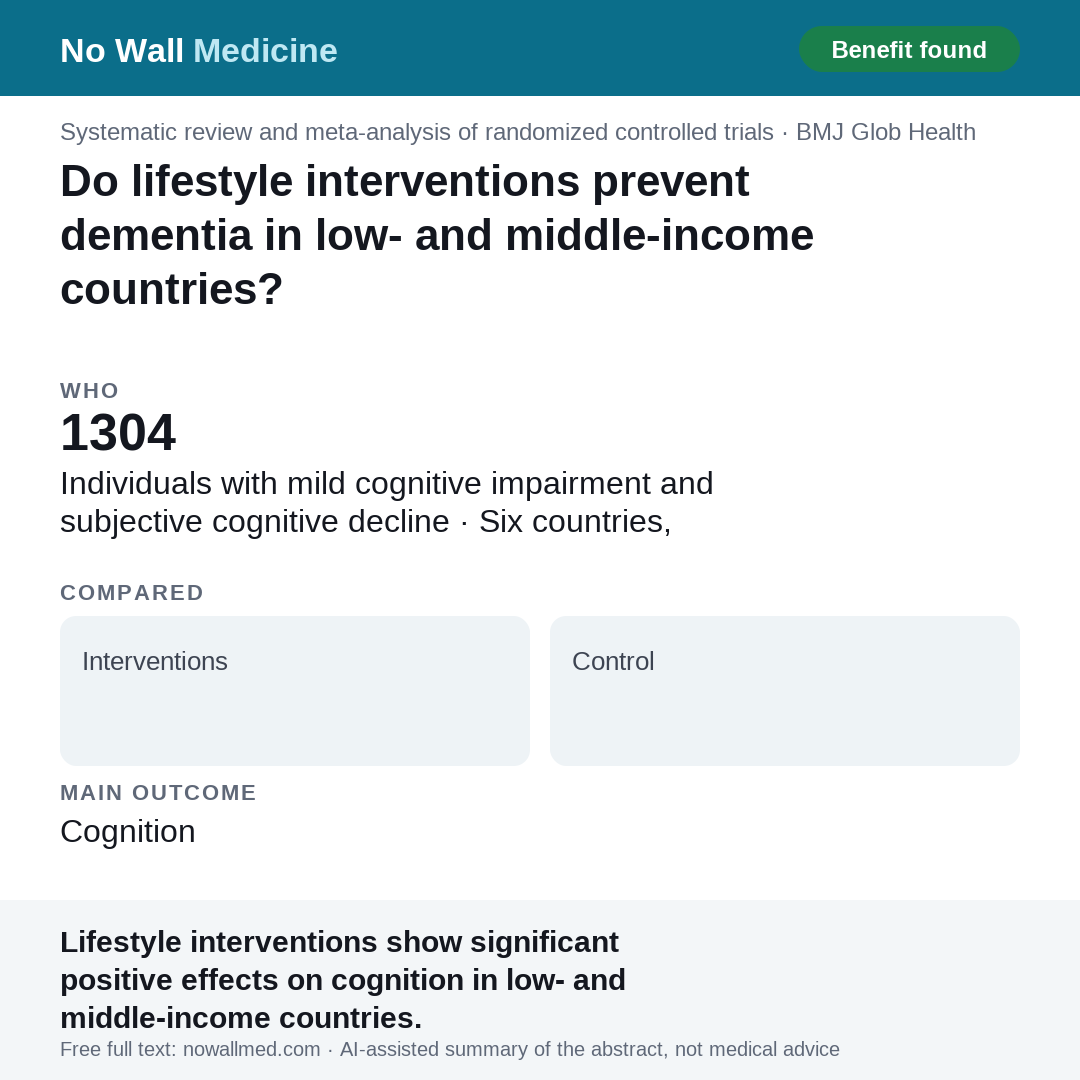
Lifestyle interventions for dementia prevention in low- and middle-income countries: a systematic review
Systematic review and meta-analysis of randomized controlled trialsBenefit found
Do lifestyle interventions prevent dementia in low- and middle-income countries?
Who
1304
Individuals with mild cognitive impairment and subjective cognitive decline · Six countries, mostly in China
Compared
Interventions
Control
Main outcome
Cognition
Result: standardised mean difference 1.49 (95% CI 1.06 to 1.93)
Bottom line: Lifestyle interventions show significant positive effects on cognition in low- and middle-income countries.
Limitation: There was significant publication bias.
BMJ Glob Health · 2026-06-22Download image
Decision-analytic models in the economic evaluation of community health worker programmes globally: a systematic review
Systematic reviewMixed results
How rigorously are decision-analytic models applied in community health worker economic evaluations?
Who
37
Community health worker-led or integrated interventions · Global, mostly low- and middle-income countries
Compared
84%Studies concluding cost-effectiveness
67%Mean quality score
Main outcome
Methodological quality and cost-effectiveness of community health worker programmes
Bottom line: Community health worker interventions are generally cost-effective, but existing economic models have methodological limitations and validation gaps.
Limitation: Substantial gaps in model validation and limited exploration of structural uncertainty.
BMJ Glob Health · 2026-06-22Download image

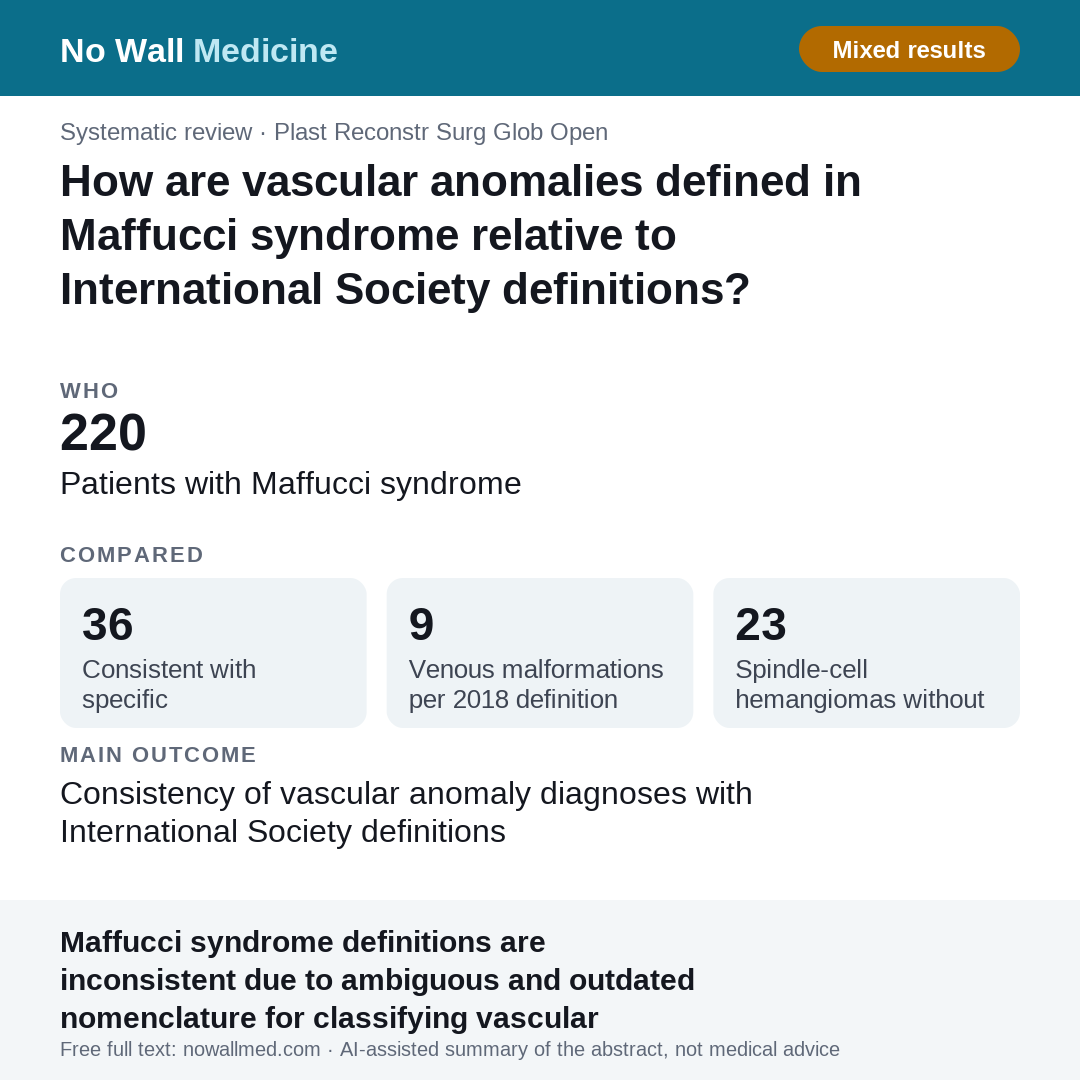
Defining the Vascular Anomalies in Maffucci Syndrome: A Systematic Review
Systematic reviewUnclear result
How are vascular anomalies defined in Maffucci syndrome compared to International Society standards?
Who
220
Patients with Maffucci syndrome in 265 articles
Compared
36Consistent with specific International Society label (16%)
9Venous malformations per 2018 definition (4%)
23Spindle-cell hemangiomas without venous malformations (11%)
Main outcome
Consistency of vascular anomaly diagnoses with International Society definitions
Bottom line: Maffucci syndrome definitions are inconsistent due to ambiguous and outdated nomenclature for classifying vascular anomalies.
Limitation: The review notes that variable nomenclature makes identifying the true constellation of anomalies difficult.
Plast Reconstr Surg Glob Open · 2026-06-22Download image