Visual abstracts
New randomized trials and meta-analyses from leading journals at a glance: who was studied, what was compared, and what was found. Every paper is free to read in full.
All specialtiesCardiology 2853Oncology 2427Gastroenterology & Hepatology 1098Infectious Disease 1841Neurology 1150Psychiatry & Mental Health 1322Pulmonology 1195Critical Care 790Endocrinology & Diabetes 1462Pediatrics 1690Surgery 1492Orthopedics & Sports Medicine 518Neurosurgery 346Cardiothoracic & Vascular Surgery 320Plastic & Reconstructive Surgery 415Nephrology 597Rheumatology 434Hematology 629Dermatology 339Ophthalmology 321Obstetrics & Gynecology 941Public & Global Health 530Radiology & Imaging 404Anesthesiology 584Urology 479ENT (Otolaryngology) 327Emergency Medicine 317Allergy & Immunology 180Geriatrics 609Family Medicine & Primary Care 326Medical Genetics & Genomics 333Pathology & Laboratory Medicine 98Physical Medicine & Rehabilitation 454Palliative Care 250Nutrition 788Digital Health & AI 1353General Medicine 204
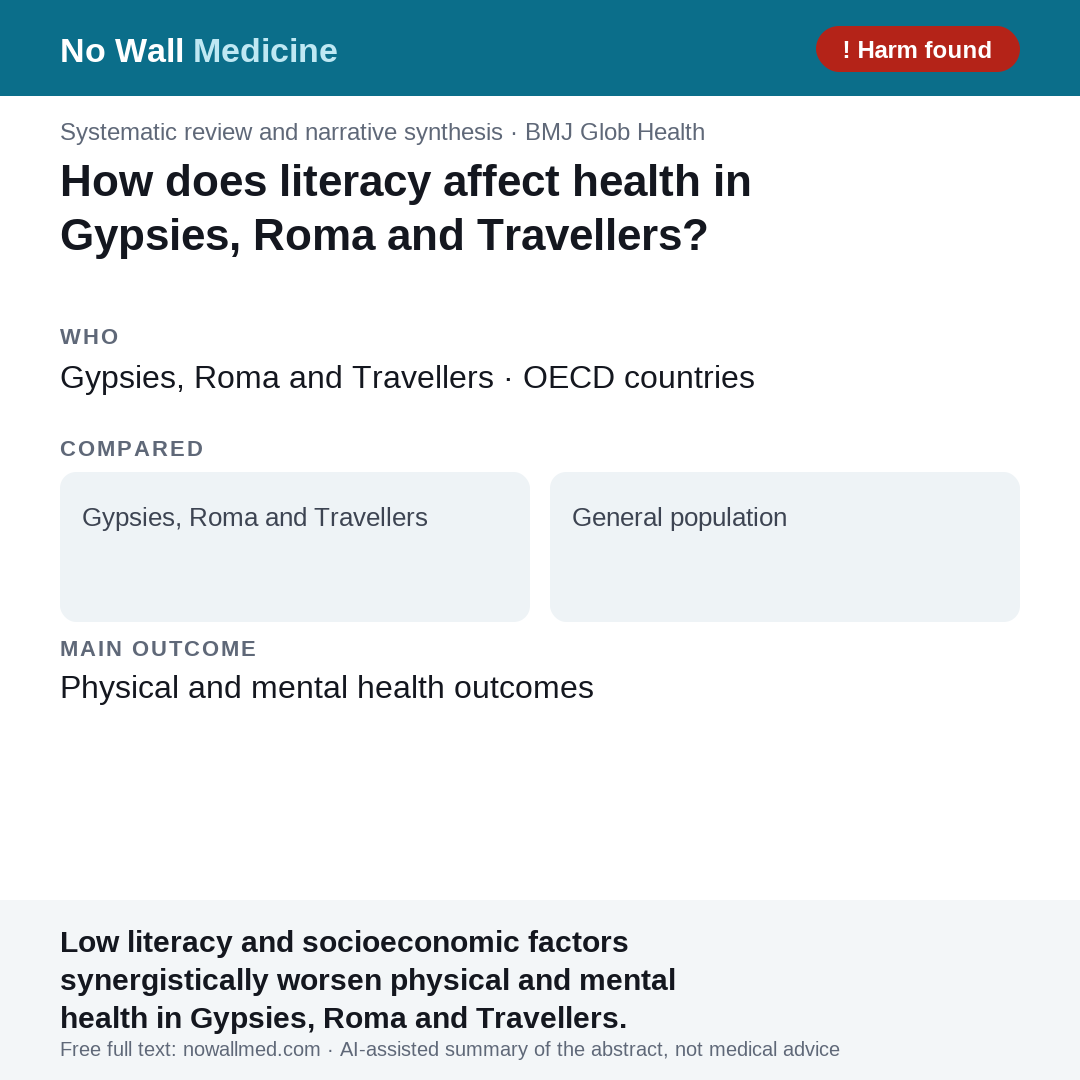
The effects of literacy on health in Gypsies, Roma and Travellers (GRT): a systematic review and narrative synthesis
Systematic review and narrative synthesisHarm found
How does literacy affect health in Gypsies, Roma and Travellers?
Who
Gypsies, Roma and Travellers · OECD countries
Compared
Gypsies, Roma and Travellers
General population
Main outcome
Physical and mental health outcomes
Bottom line: Low literacy and socioeconomic factors synergistically worsen physical and mental health in Gypsies, Roma and Travellers.
BMJ Glob Health · 2024-11-28Download image
Internet-Delivered Psychoeducation (SCOPE) for Transition-Aged Autistic Youth: Pragmatic Randomized Controlled Trial
Randomized controlled trialBenefit found
Is internet-delivered psychoeducation effective
Who
141
transition-aged autistic youth
Compared
SCOPE
active control
treatment as usual
Main outcome
autism knowledge and quality of life
Bottom line: Internet-delivered psychoeducation is effective
J Med Internet Res · 2024-11-28Download image

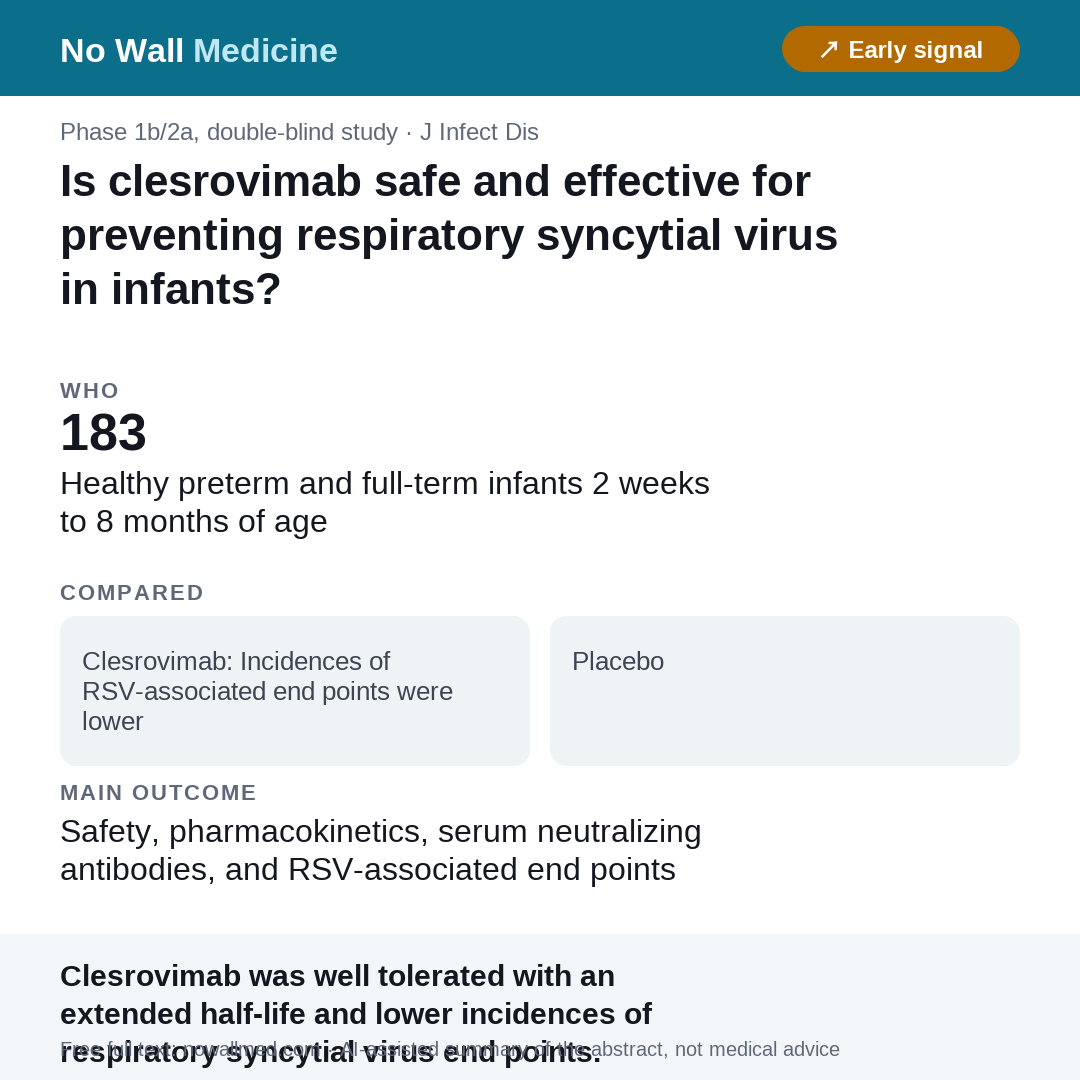
A Phase 1b/2a Trial of a Half-life Extended Respiratory Syncytial Virus Neutralizing Antibody, Clesrovimab, in Healthy Preterm and Full-term Infants
Phase 1b/2a, double-blind studyBenefit found
Is clesrovimab safe and effective for preventing respiratory syncytial virus in infants?
Who
183
Healthy preterm and full-term infants 2 weeks to 8 months of age
Compared
Clesrovimab: Incidences of RSV-associated end points were lower
Placebo
Main outcome
Safety, pharmacokinetics, serum neutralizing antibodies, and RSV-associated end points
Bottom line: Clesrovimab was well tolerated with an extended half-life and lower incidences of respiratory syncytial virus end points.
J Infect Dis · 2024-11-27Download image
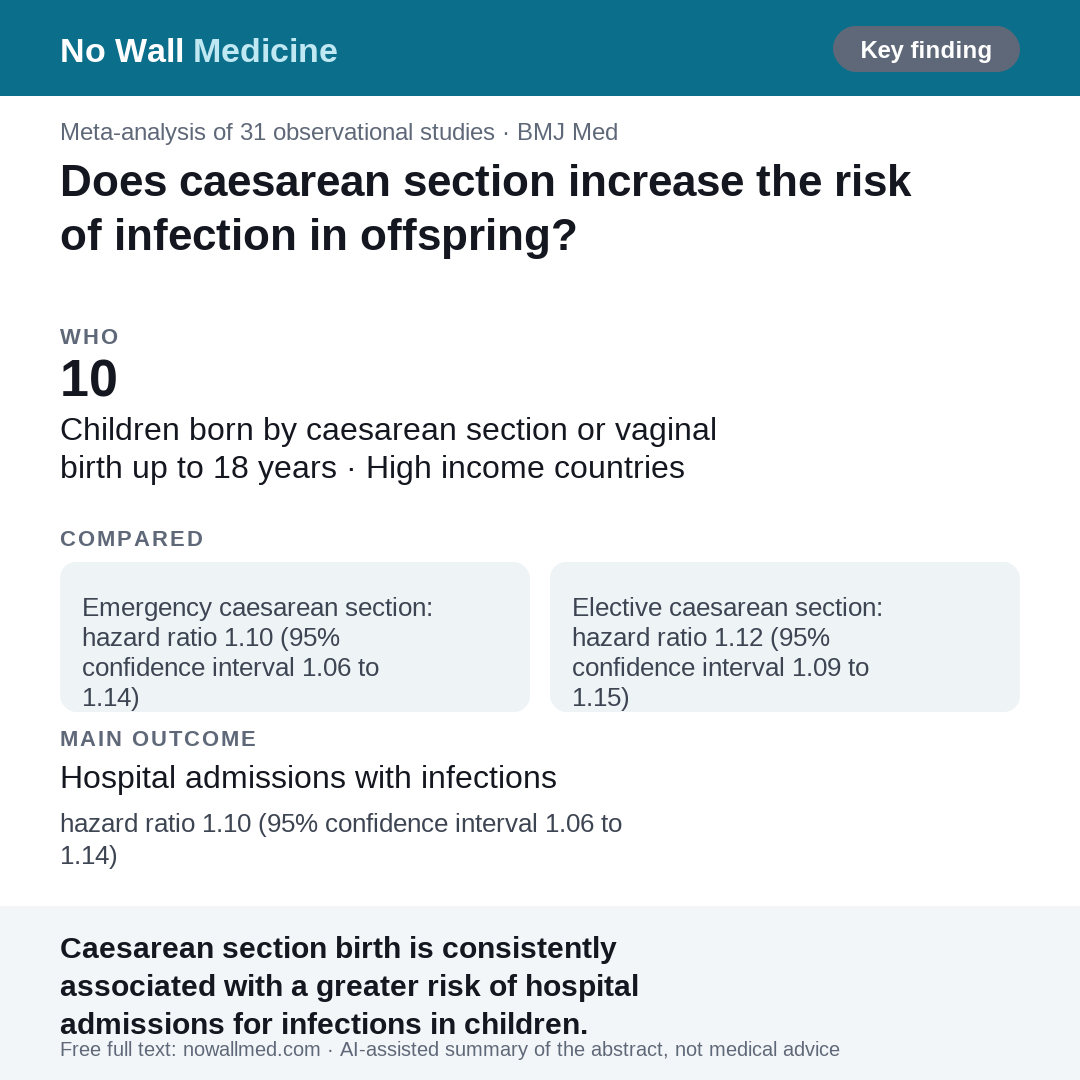
Caesarean section and risk of infection in offspring: systematic review and meta-analysis of observational studies
Meta-analysis of 31 observational studiesHarm found
Does caesarean section increase the risk of infection in offspring?
Who
10
Children born by caesarean section or vaginal birth up to 18 years · High income countries
Compared
Emergency caesarean section: hazard ratio 1.10 (95% confidence interval 1.06 to 1.14)
Elective caesarean section: hazard ratio 1.12 (95% confidence interval 1.09 to 1.15)
Main outcome
Hospital admissions with infections
Result: hazard ratio 1.10 (95% confidence interval 1.06 to 1.14)
Bottom line: Caesarean section birth is consistently associated with a greater risk of hospital admissions for infections in children.
Limitation: Potential for unmeasured confounding and scarcity of studies from low and middle income countries.
BMJ Med · 2024-11-27Download image
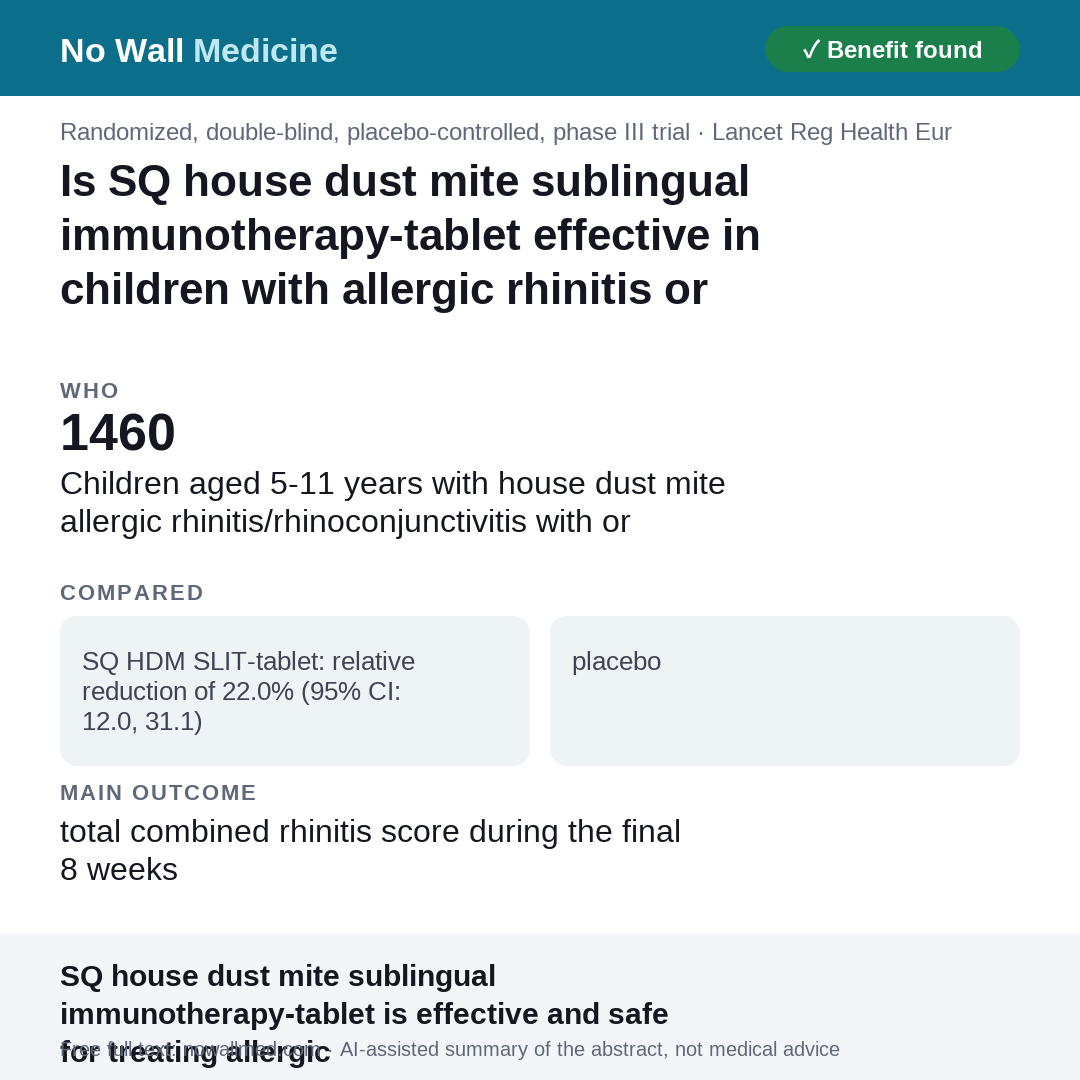
Efficacy and safety of SQ house dust mite sublingual immunotherapy-tablet (12 SQ-HDM) in children with allergic rhinitis/rhinoconjunctivitis with or without asthma (MT-12): a randomised, double-blind, placebo-controlled, phase III trial
Randomized, double-blind, placebo-controlled, phase III trialBenefit found
Is SQ house dust mite sublingual immunotherapy-tablet effective in children with allergic rhinitis or rhinoconjunctivitis?
Who
1460
Children aged 5-11 years with house dust mite allergic rhinitis/rhinoconjunctivitis with or without asthma
Compared
SQ HDM SLIT-tablet: relative reduction of 22.0% (95% CI: 12.0, 31.1)
placebo
Main outcome
total combined rhinitis score during the final 8 weeks
Result: absolute difference of 1.0 (95% CI: 0.5, 1.4; p < 0.0001)
Bottom line: SQ house dust mite sublingual immunotherapy-tablet is effective and safe for treating allergic rhinitis/rhinoconjunctivitis in children aged 5-11 years.
Funded by: ALK-Abellό, Hørsholm, Denmark
Lancet Reg Health Eur · 2024-11-26Download image
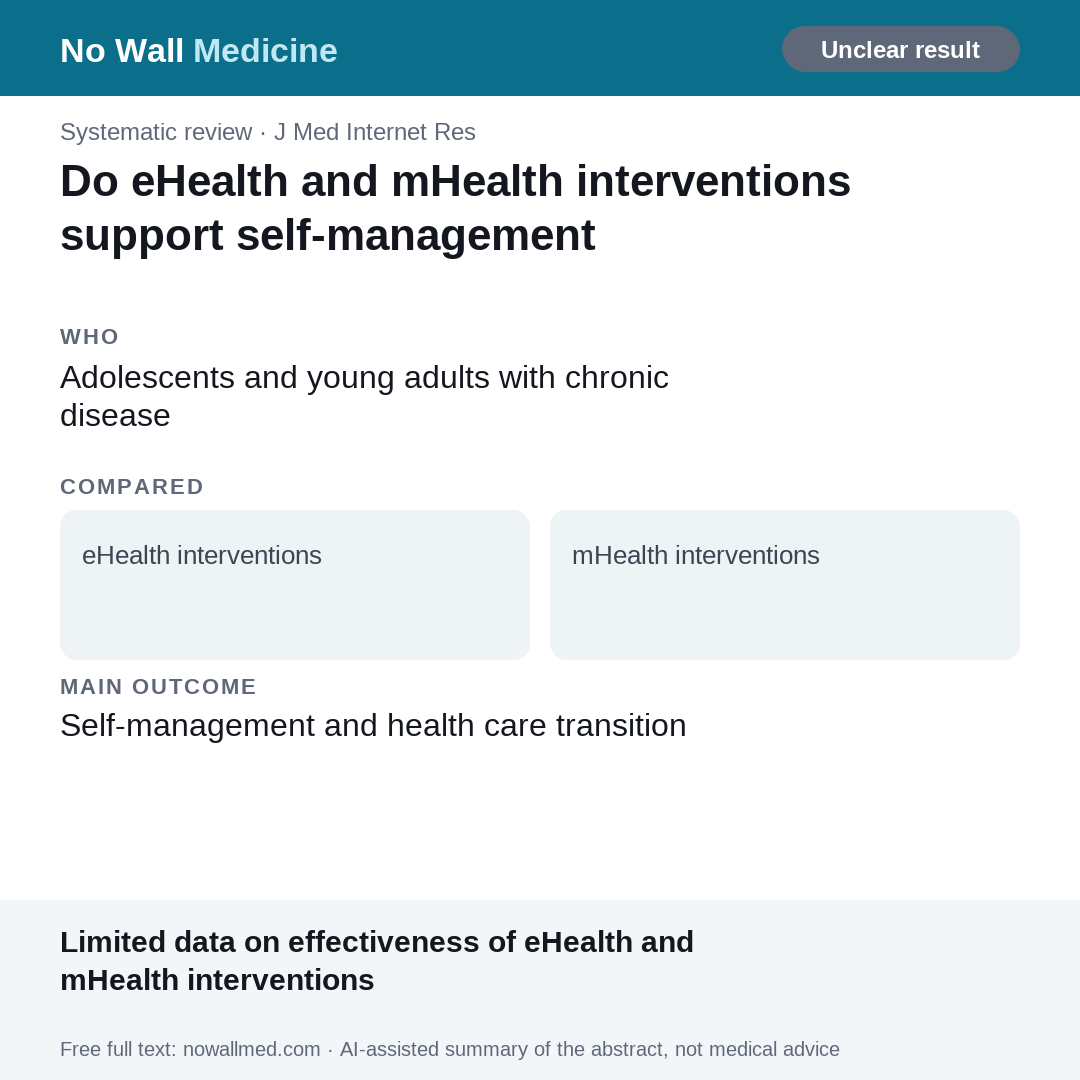
Usability and Effectiveness of eHealth and mHealth Interventions That Support Self-Management and Health Care Transition in Adolescents and Young Adults With Chronic Disease: Systematic Review
Systematic reviewUnclear result
Do eHealth and mHealth interventions support self-management
Who
22
Adolescents and young adults with chronic disease
Compared
eHealth interventions
mHealth interventions
Main outcome
Self-management and health care transition
Bottom line: Limited data on effectiveness of eHealth and mHealth interventions
Limitation: Limited data available
J Med Internet Res · 2024-11-26Download image
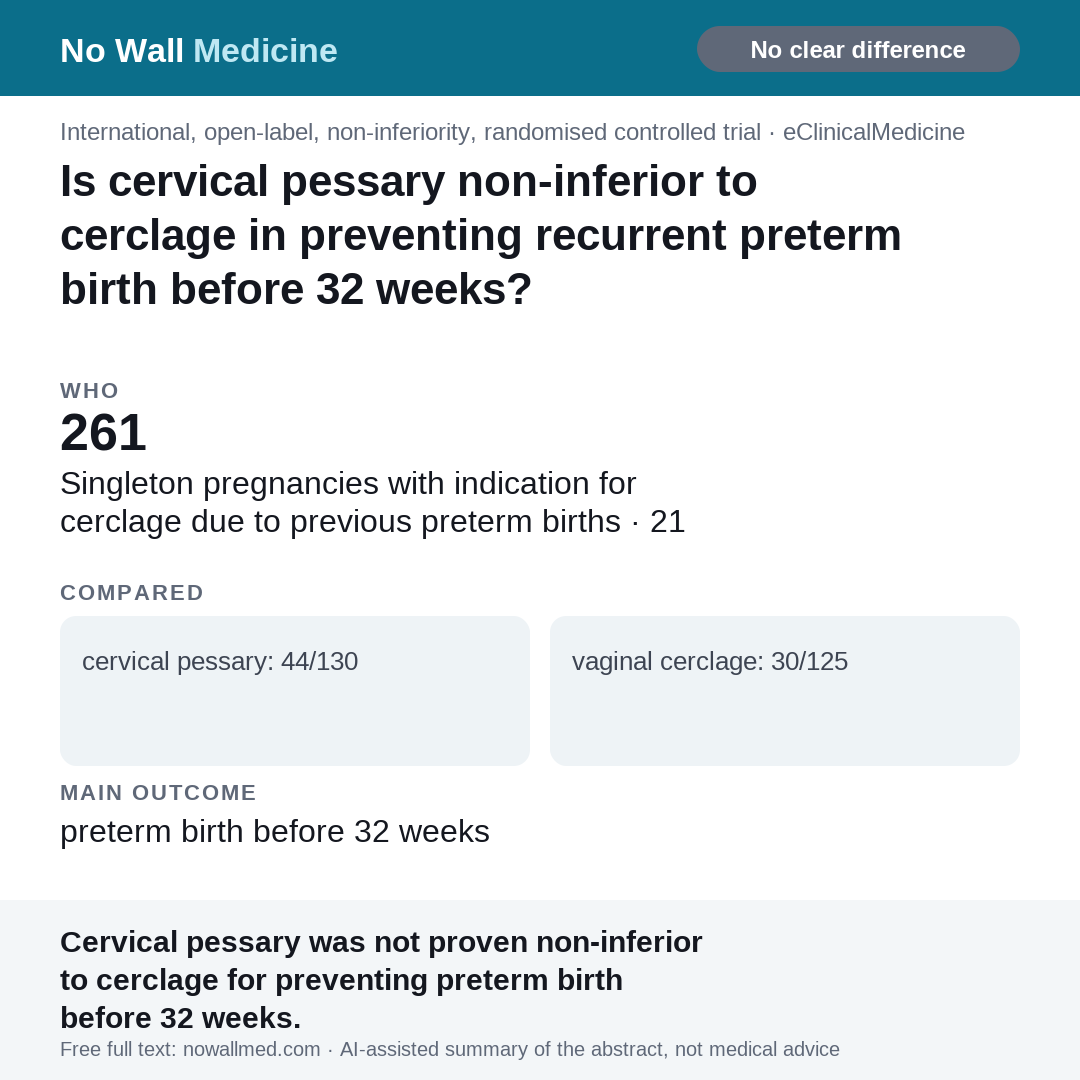
Pessary or cerclage (PC study) to prevent recurrent preterm birth: a non-inferiority, randomised controlled trial
International, open-label, non-inferiority, randomised controlled trialNo clear difference
Is cervical pessary non-inferior to cerclage in preventing recurrent preterm birth before 32 weeks?
Who
261
Singleton pregnancies with indication for cerclage due to previous preterm births · 21 hospitals
Compared
cervical pessary: 44/130
vaginal cerclage: 30/125
Main outcome
preterm birth before 32 weeks
Result: absolute risk difference 9.8% (95% CI -1.2 to 20.9)
Bottom line: Cervical pessary was not proven non-inferior to cerclage for preventing preterm birth before 32 weeks.
Funded by: ZonMw, a Dutch Organisation for Health Research and Development
eClinicalMedicine · 2024-11-25Download image
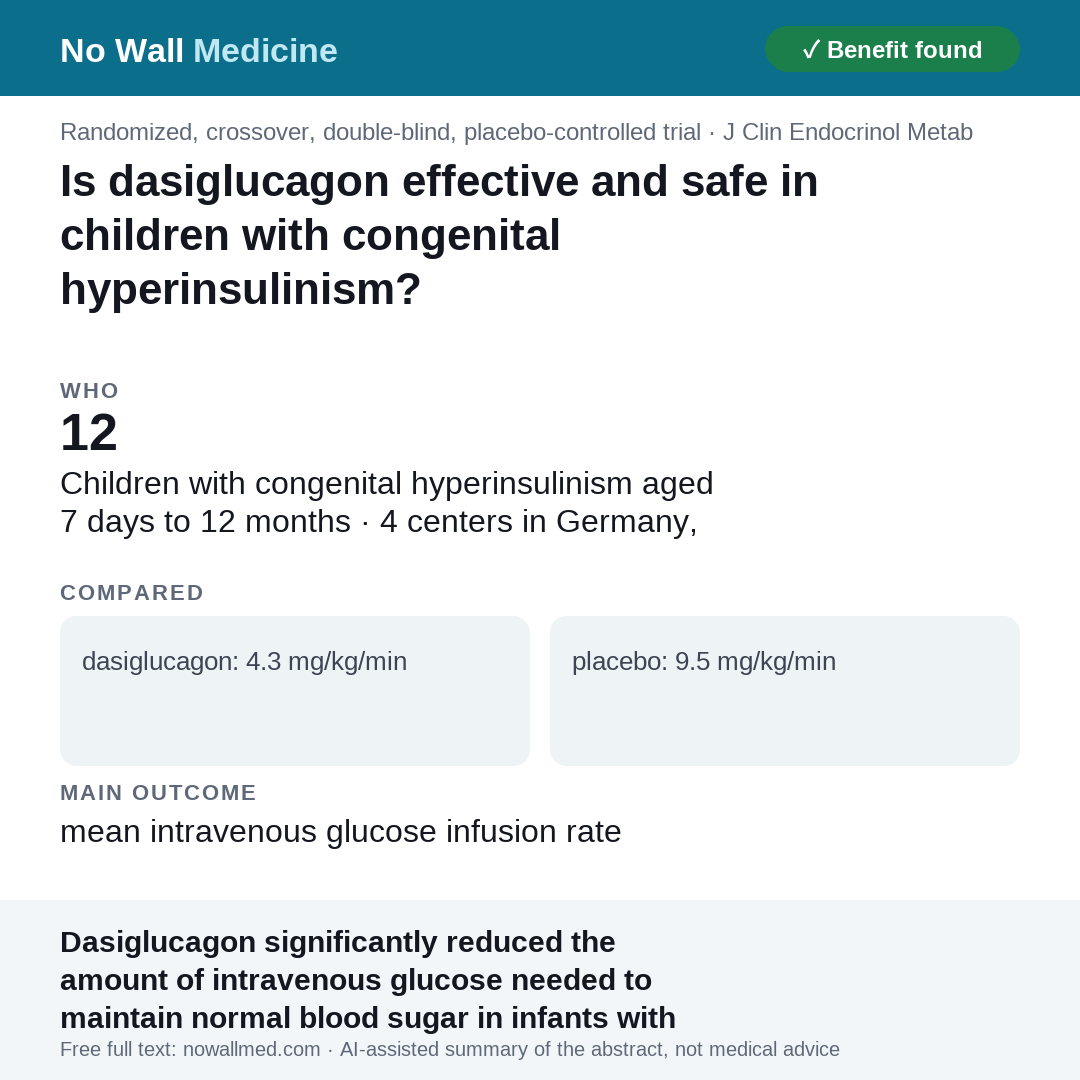
Dasiglucagon in Children With Congenital Hyperinsulinism Up to 1 Year of Age: Results From a Randomized Clinical Trial
Randomized, crossover, double-blind, placebo-controlled trialBenefit found
Is dasiglucagon effective and safe in children with congenital hyperinsulinism?
Who
12
Children with congenital hyperinsulinism aged 7 days to 12 months · 4 centers in Germany, United Kingdom, and United States
Compared
dasiglucagon: 4.3 mg/kg/min
placebo: 9.5 mg/kg/min
Main outcome
mean intravenous glucose infusion rate
Result: least-squares mean 4.3 mg/kg/min [95% CI, 1.04 to 7.60 mg/kg/min] vs 9.5 mg/kg/min [95% CI, 6.24 to 12.81 mg/kg/min]
Bottom line: Dasiglucagon significantly reduced the amount of intravenous glucose needed to maintain normal blood sugar in infants with congenital hyperinsulinism.
J Clin Endocrinol Metab · 2024-11-25Download image
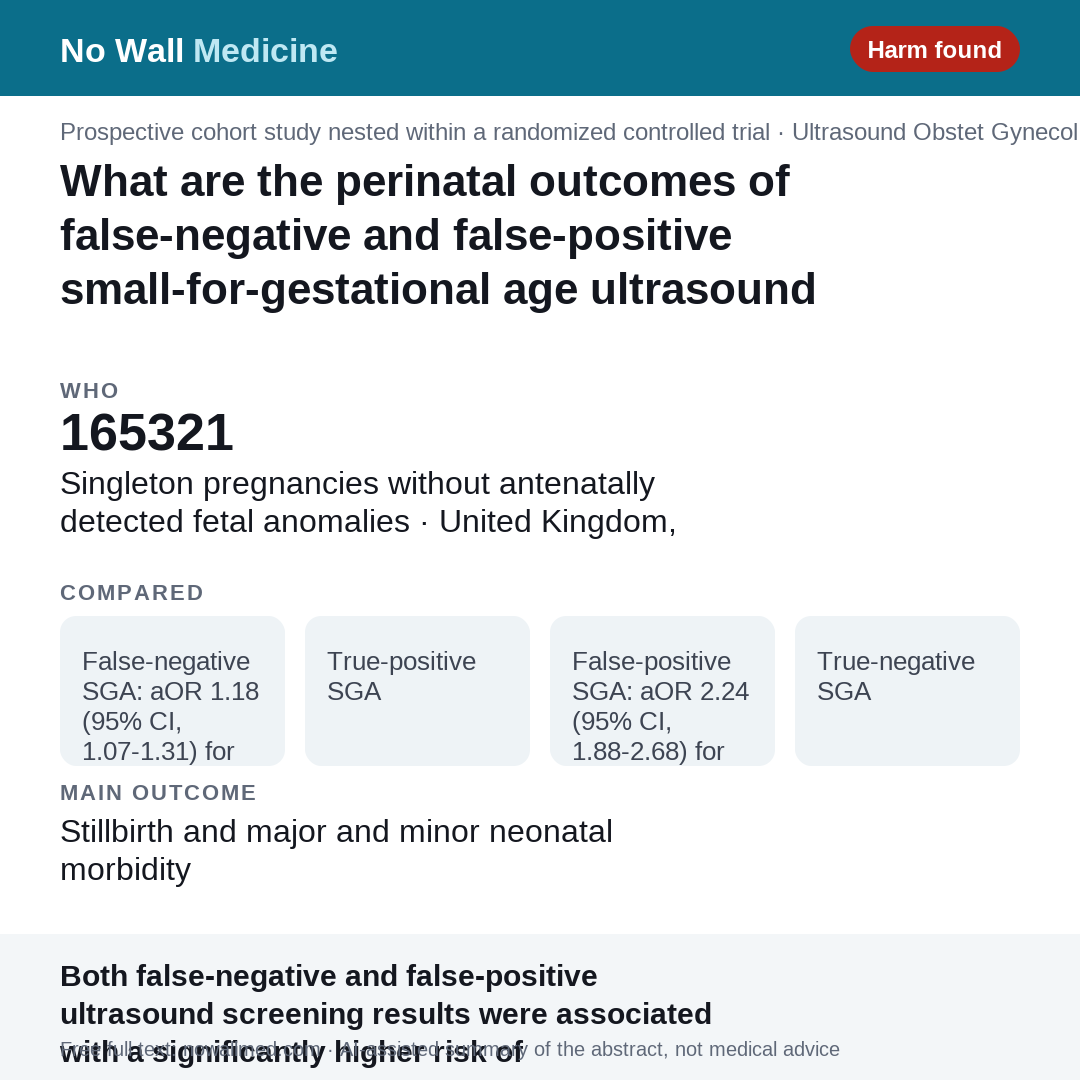
Perinatal outcomes after selective third-trimester ultrasound screening for small-for-gestational age: prospective cohort study nested within DESiGN randomized controlled trial
Prospective cohort study nested within a randomized controlled trialHarm found
What are the perinatal outcomes of false-negative and false-positive small-for-gestational age ultrasound screening?
Who
165321
Singleton pregnancies without antenatally detected fetal anomalies · United Kingdom, multicenter
Compared
False-negative SGA: aOR 1.18 (95% CI, 1.07-1.31) for stillbirth
True-positive SGA
False-positive SGA: aOR 2.24 (95% CI, 1.88-2.68) for stillbirth
True-negative SGA
Main outcome
Stillbirth and major and minor neonatal morbidity
Result: aOR 1.18 (95% CI, 1.07-1.31) for false-negative stillbirth; aOR 2.24 (95% CI, 1.88-2.68) for false-positive stillbirth
Bottom line: Both false-negative and false-positive ultrasound screening results were associated with a significantly higher risk of stillbirth.
Ultrasound Obstet Gynecol · 2024-11-25Download image
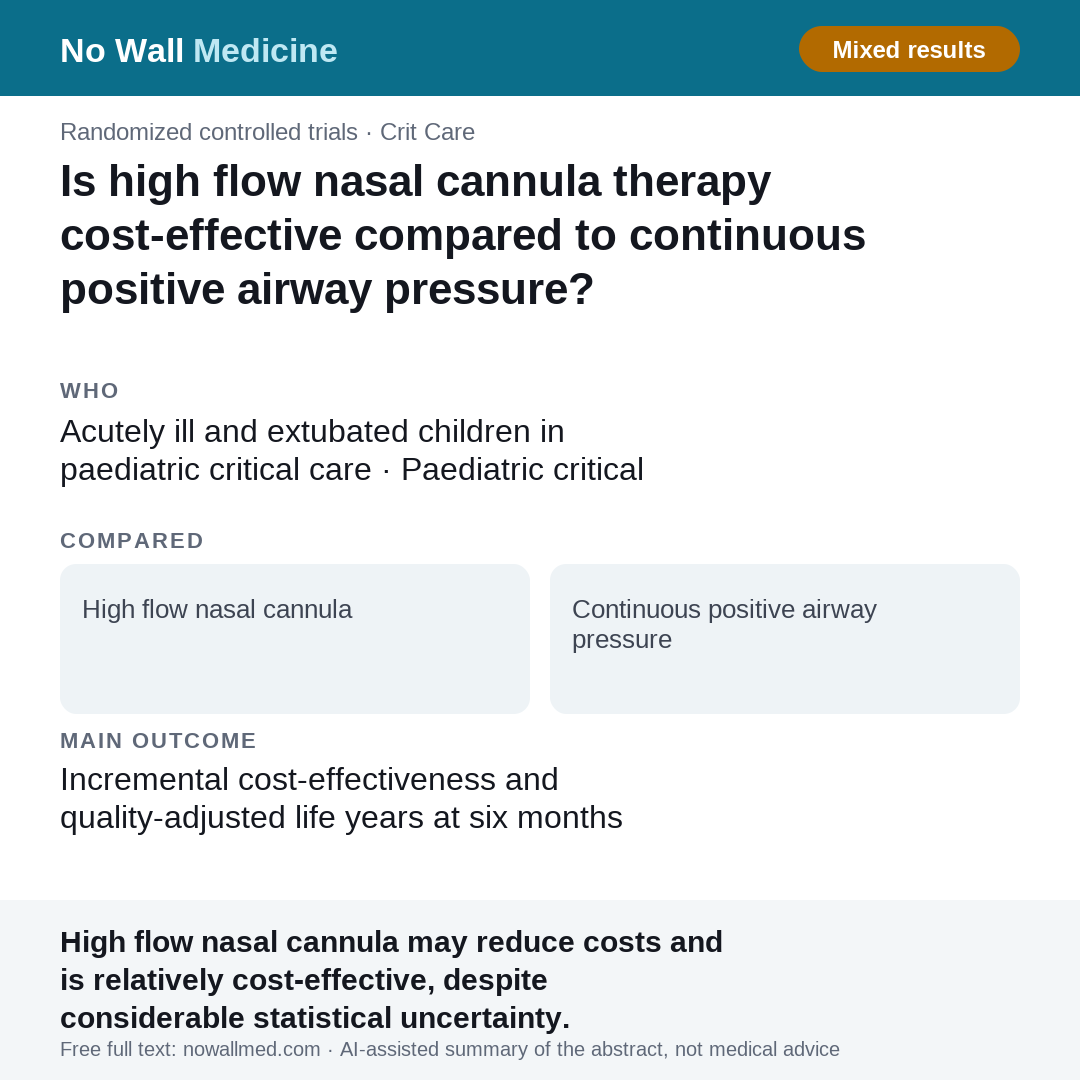
Cost-effectiveness of high flow nasal cannula therapy versus continuous positive airway pressure for non-invasive respiratory support in paediatric critical care
Randomized controlled trialsMixed results
Is high flow nasal cannula therapy cost-effective compared to continuous positive airway pressure?
Who
Acutely ill and extubated children in paediatric critical care · Paediatric critical care units
Compared
High flow nasal cannula
Continuous positive airway pressure
Main outcome
Incremental cost-effectiveness and quality-adjusted life years at six months
Result: incremental cost -£4565 (95% CI -£11,499 to £2368) and -£5702 (95% CI -£11,328 to -£75)
Bottom line: High flow nasal cannula may reduce costs and is relatively cost-effective, despite considerable statistical uncertainty.
Crit Care · 2024-11-25Download image
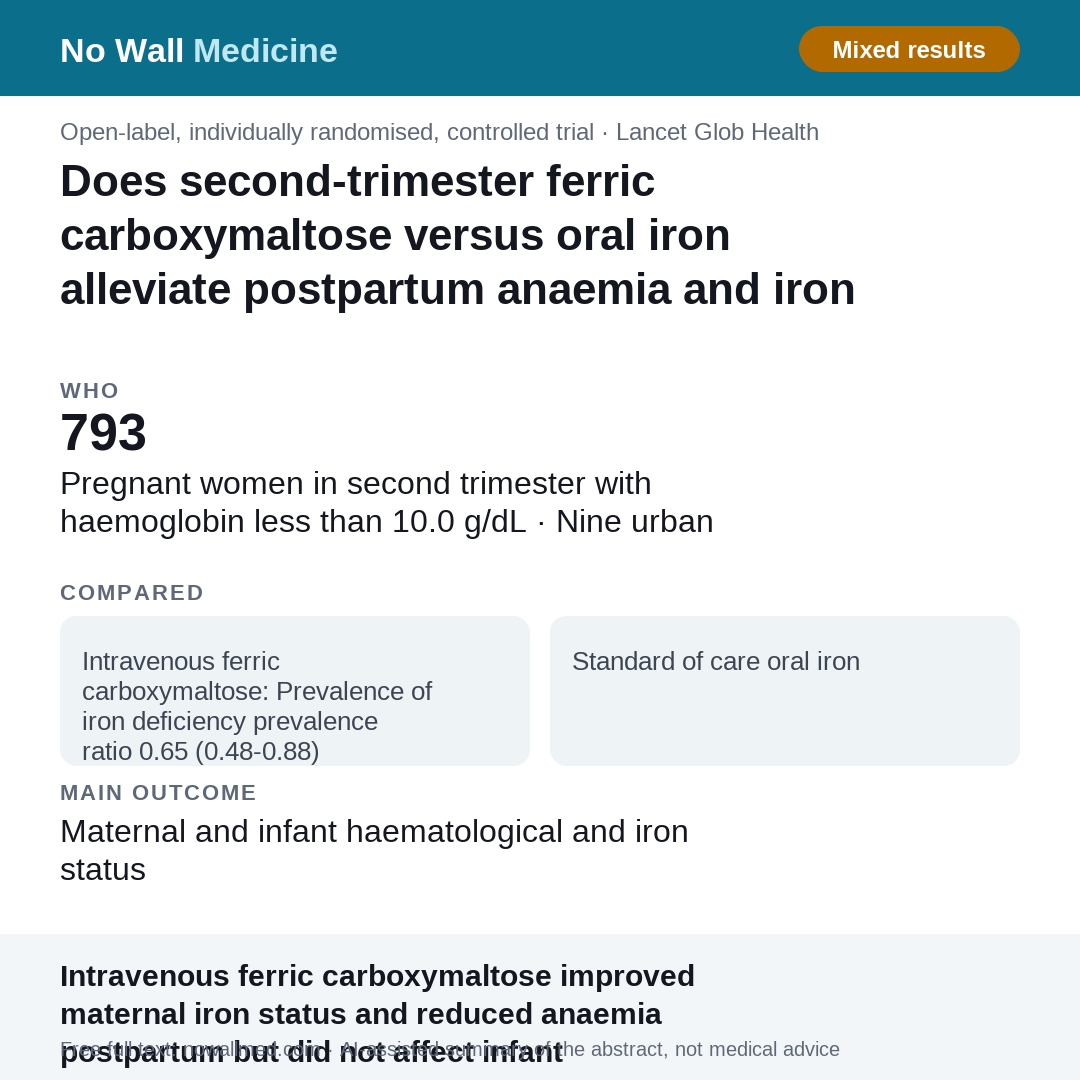
Postpartum maternal and infant haematological effects of second-trimester ferric carboxymaltose versus standard-of-care oral iron in Malawi: longitudinal follow-up of a randomised controlled trial
Open-label, individually randomised, controlled trialMixed results
Does second-trimester ferric carboxymaltose versus oral iron alleviate postpartum anaemia and iron deficiency in mothers and infants?
Who
793
Pregnant women in second trimester with haemoglobin less than 10.0 g/dL · Nine urban and five rural health centres in Malawi
Compared
Intravenous ferric carboxymaltose: Prevalence of iron deficiency prevalence ratio 0.65 (0.48-0.88)
Standard of care oral iron
Main outcome
Maternal and infant haematological and iron status
Result: prevalence ratio 0.65 (95% CI 0.48 to 0.88)
Bottom line: Intravenous ferric carboxymaltose improved maternal iron status and reduced anaemia postpartum but did not affect infant haematological outcomes.
Funded by: Bill & Melinda Gates Foundation
Lancet Glob Health · 2024-11-23Download image
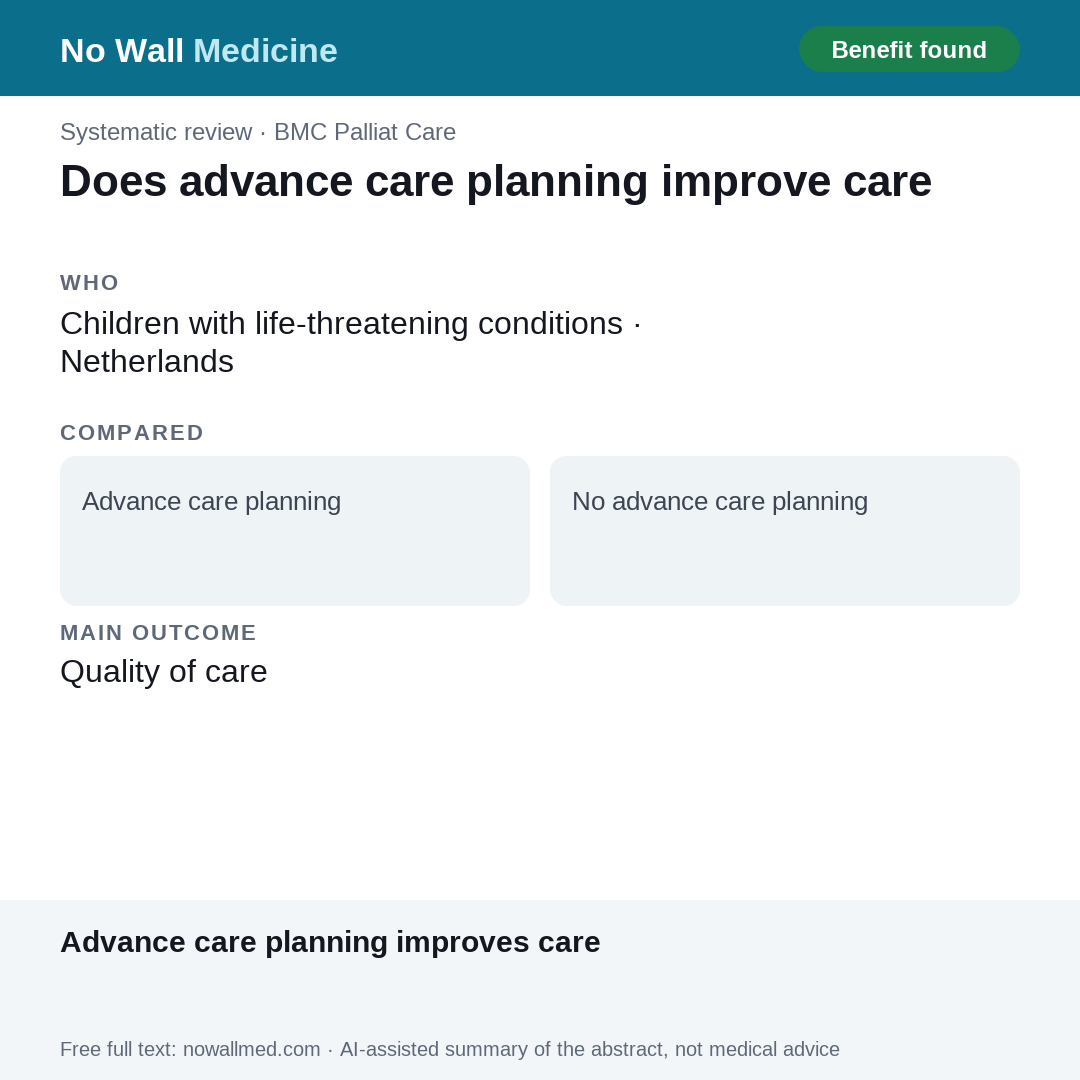
A Dutch paediatric palliative care guideline: a systematic review and recommendations on advance care planning and shared decision-making
Systematic reviewBenefit found
Does advance care planning improve care
Who
Children with life-threatening conditions · Netherlands
Compared
Advance care planning
No advance care planning
Main outcome
Quality of care
Bottom line: Advance care planning improves care
Limitation: Knowledge gaps
BMC Palliat Care · 2024-11-23Download image
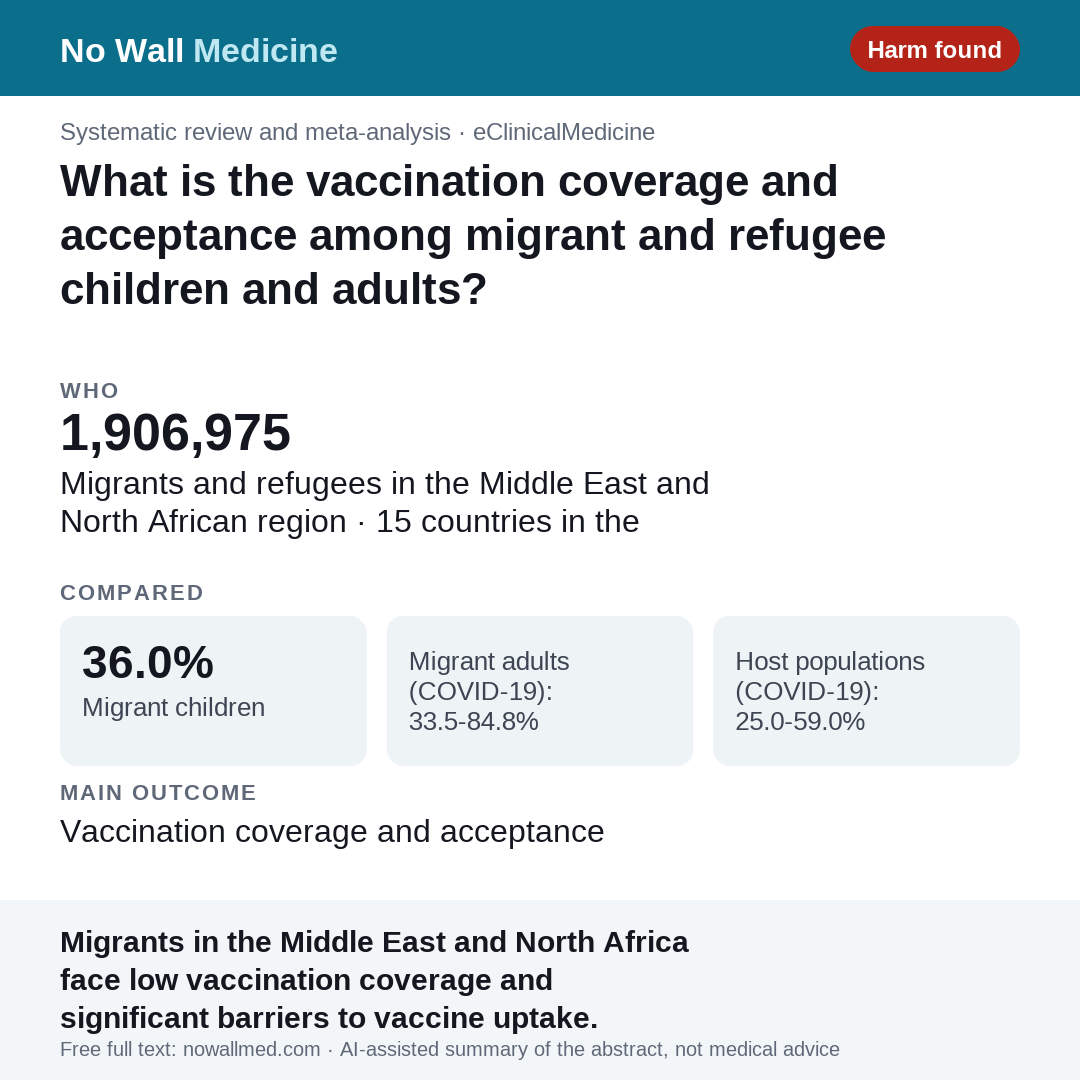
Vaccination coverage and access among children and adult migrants and refugees in the Middle East and North African region: a systematic review and meta-analysis
Systematic review and meta-analysisHarm found
What is the vaccination coverage and acceptance among migrant and refugee children and adults?
Who
1,906,975
Migrants and refugees in the Middle East and North African region · 15 countries in the Middle East and North African region
Compared
36.0%Migrant children
Migrant adults (COVID-19): 33.5-84.8%
Host populations (COVID-19): 25.0-59.0%
Main outcome
Vaccination coverage and acceptance
Bottom line: Migrants in the Middle East and North Africa face low vaccination coverage and significant barriers to vaccine uptake.
Limitation: Data is limited to small-scale studies among accessible groups.
eClinicalMedicine · 2024-11-22Download image
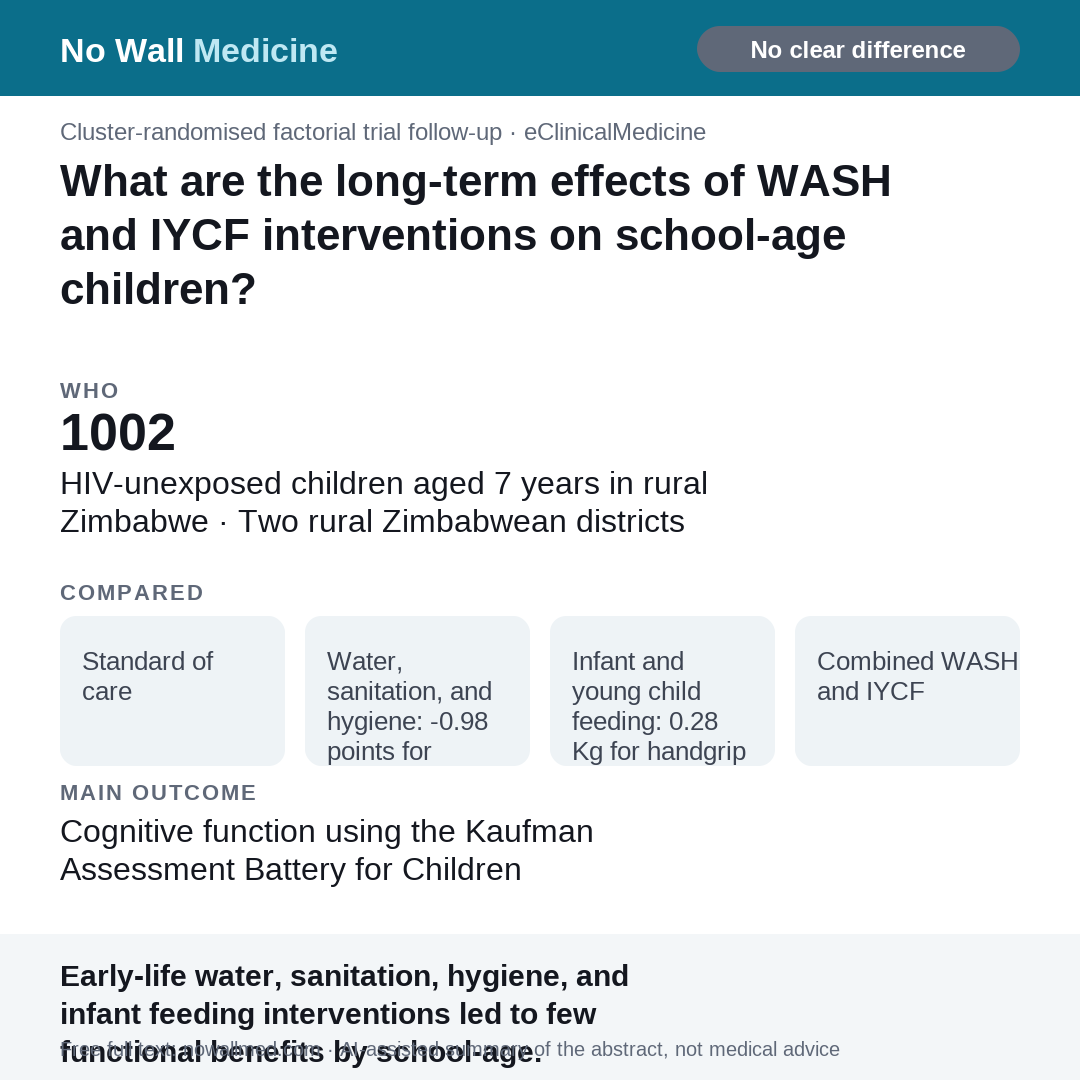
School-age growth and development following infant feeding and/or water, sanitation, and hygiene interventions in rural Zimbabwe: long-term follow-up of a cluster-randomised trial
Cluster-randomised factorial trial follow-upNo clear difference
What are the long-term effects of WASH and IYCF interventions on school-age children?
Who
1002
HIV-unexposed children aged 7 years in rural Zimbabwe · Two rural Zimbabwean districts
Compared
Standard of care
Water, sanitation, and hygiene: -0.98 points for socioemotional function (95% CI -1.73, -0.22)
Infant and young child feeding: 0.28 Kg for handgrip strength (95% CI 0.02, 0.53)
Combined WASH and IYCF
Main outcome
Cognitive function using the Kaufman Assessment Battery for Children
Result: no effect of IYCF or WASH on the KABC-II score
Bottom line: Early-life water, sanitation, hygiene, and infant feeding interventions led to few functional benefits by school-age.
Funded by: Wellcome, NIH, Thrasher, and IMMANA
eClinicalMedicine · 2024-11-22Download image
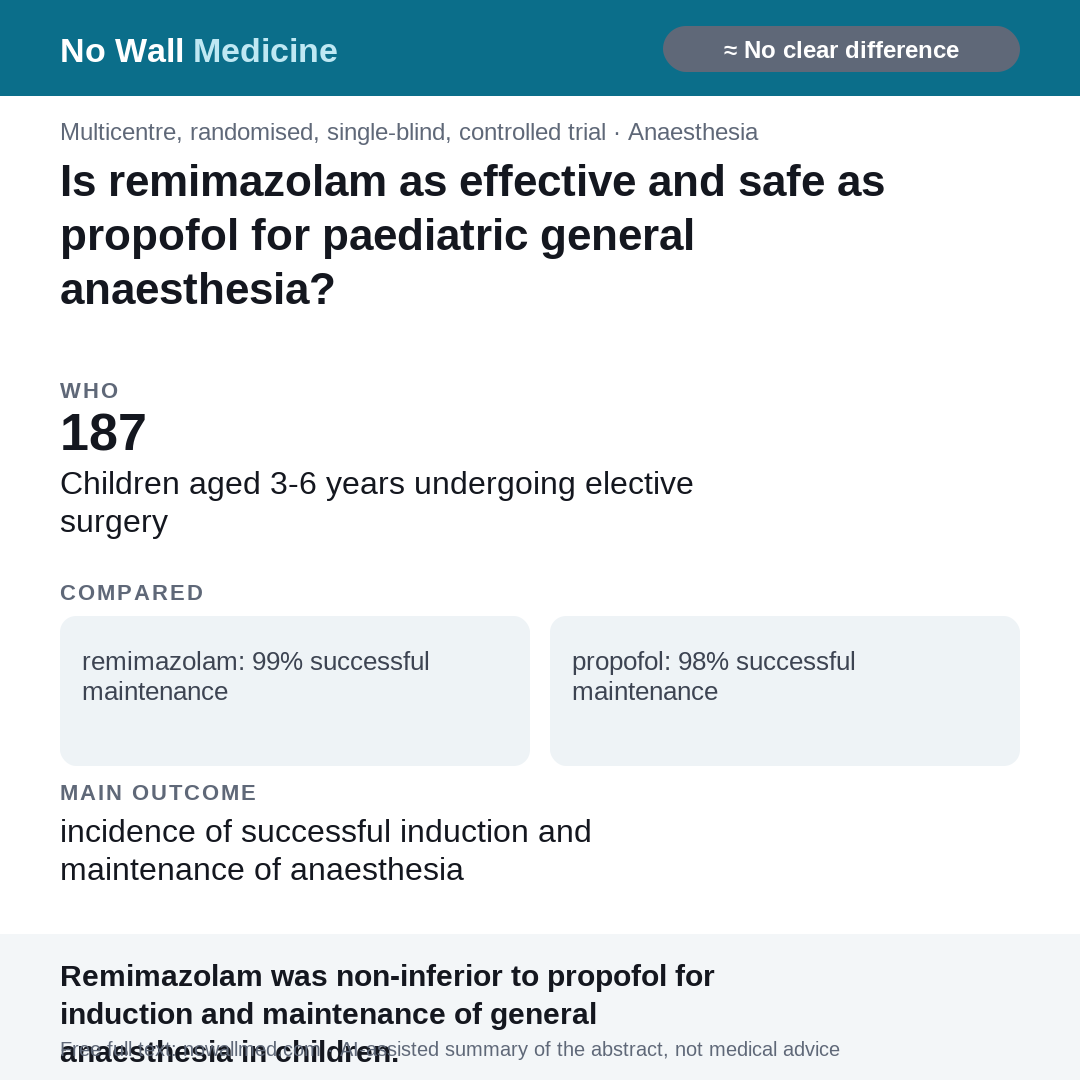
Safety and efficacy of remimazolam tosilate for general anaesthesia in paediatric patients undergoing elective surgery: a multicentre, randomised, single-blind, controlled trial
Multicentre, randomised, single-blind, controlled trialNo clear difference
Is remimazolam as effective and safe as propofol for paediatric general anaesthesia?
Who
187
Children aged 3-6 years undergoing elective surgery
Compared
remimazolam: 99% successful maintenance
propofol: 98% successful maintenance
Main outcome
incidence of successful induction and maintenance of anaesthesia
Result: rate difference 1.4%, 95%CI -2.9-5.8%
Bottom line: Remimazolam was non-inferior to propofol for induction and maintenance of general anaesthesia in children.
Anaesthesia · 2024-11-22Download image
From simple factors to artificial intelligence: evolution of prognosis prediction in childhood cancer: a systematic review and meta-analysis
Systematic review and meta-analysisBenefit found
How accurate are traditional versus advanced prognostic models in childhood cancer?
Who
Children with haematological malignancies, central nervous system, or non-central nervous system solid tumours
Compared
0.75Clinical parameters (95% CI: 0.72-0.79)
0.85Genomic-transcriptomic data (95% CI: 0.82-0.88)
0.82Artificial intelligence (95% CI: 0.77-0.88)
Main outcome
Area under the receiver operating characteristic curve
Bottom line: Genomic-transcriptomic and artificial intelligence models show improved accuracy over clinical parameters for non-central nervous system solid tumours.
Limitation: Internal validation studies showed significantly better performance than external validation, highlighting high risk of bias.
eClinicalMedicine · 2024-11-21Download image

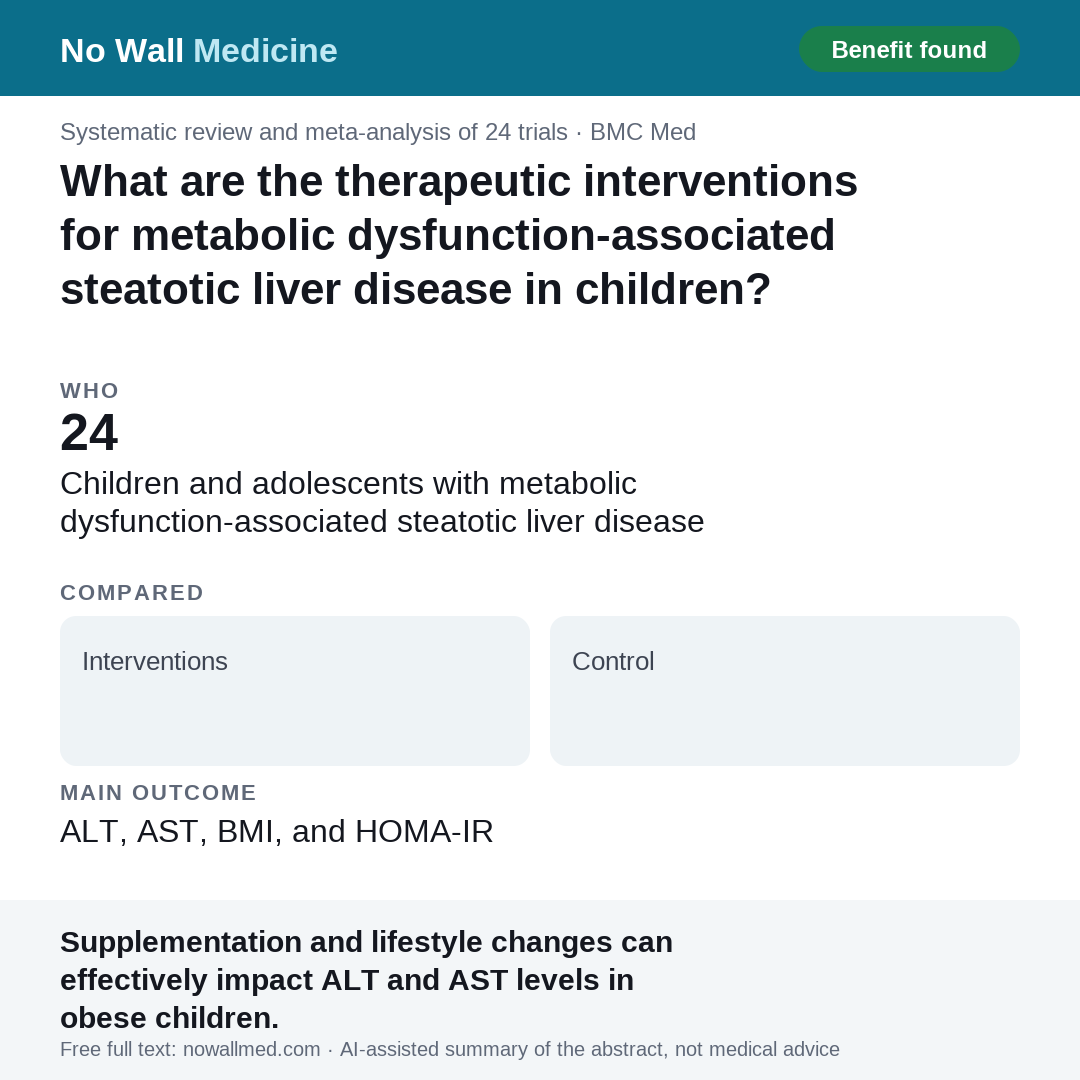
Strategic interventions in clinical randomized trials for metabolic dysfunction-associated steatotic liver disease (MASLD) and obesity in the pediatric population: a systematic review with meta-analysis and bibliometric analysis
Systematic review and meta-analysis of 24 trialsBenefit found
What are the therapeutic interventions for metabolic dysfunction-associated steatotic liver disease in children?
Who
24
Children and adolescents with metabolic dysfunction-associated steatotic liver disease · Global, 13 countries
Compared
Interventions
Control
Main outcome
ALT, AST, BMI, and HOMA-IR
Bottom line: Supplementation and lifestyle changes can effectively impact ALT and AST levels in obese children.
Limitation: Risk bias evaluation, high heterogeneity, and need for more high-quality studies.
BMC Med · 2024-11-21Download image
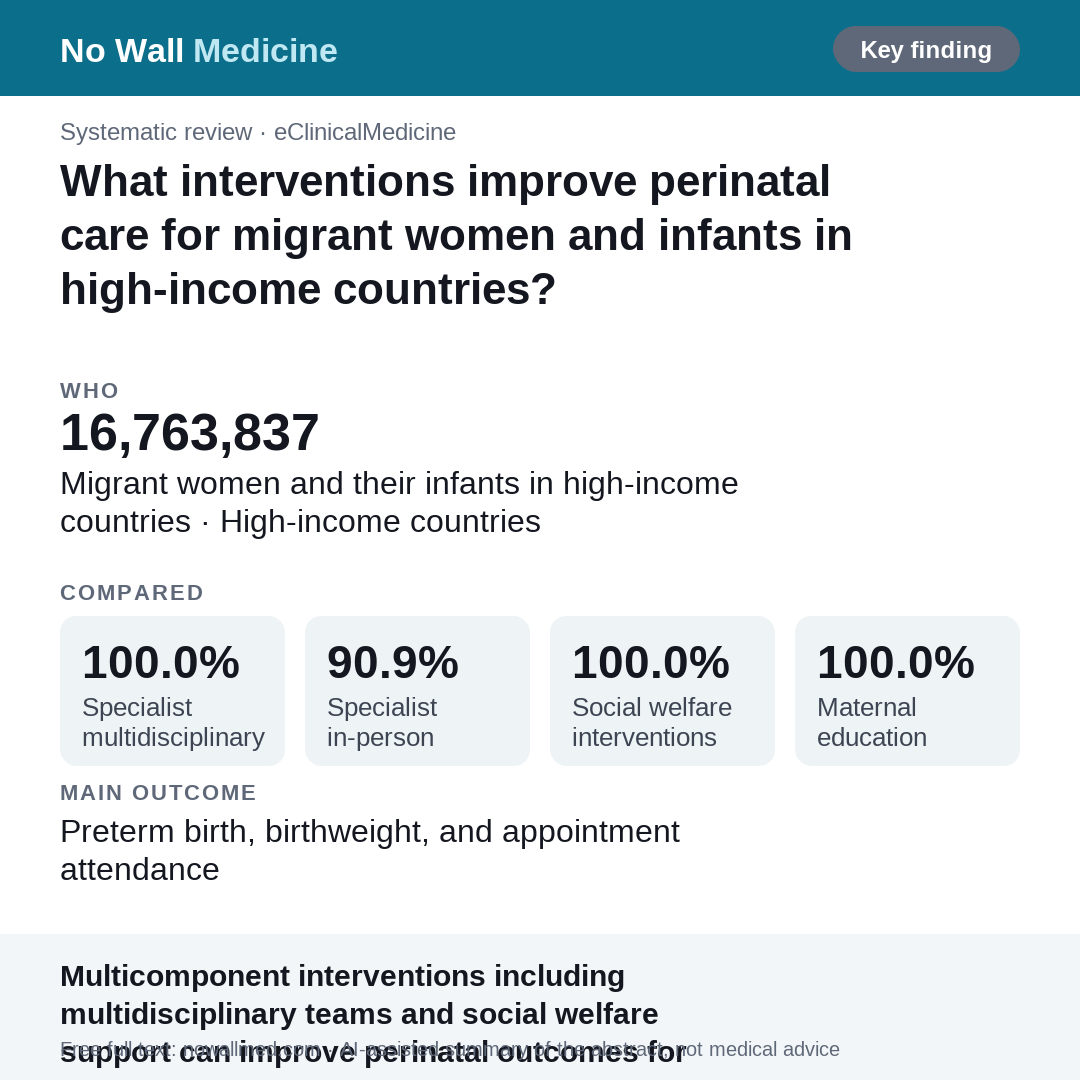
Public health, policy, and clinical interventions to improve perinatal care for migrant women and infants in high-income countries: a systematic review
Systematic reviewBenefit found
What interventions improve perinatal care for migrant women and infants in high-income countries?
Who
16,763,837
Migrant women and their infants in high-income countries · High-income countries
Compared
100.0%Specialist multidisciplinary teams
90.9%Specialist in-person interpreting
100.0%Social welfare interventions
100.0%Maternal education interventions
Main outcome
Preterm birth, birthweight, and appointment attendance
Bottom line: Multicomponent interventions including multidisciplinary teams and social welfare support can improve perinatal outcomes for migrant women and infants.
Limitation: Most included studies were of poor quality and interventional studies alone did not demonstrate effect.
Funded by: National Institute for Health Research and Medical Research Council
eClinicalMedicine · 2024-11-19Download image
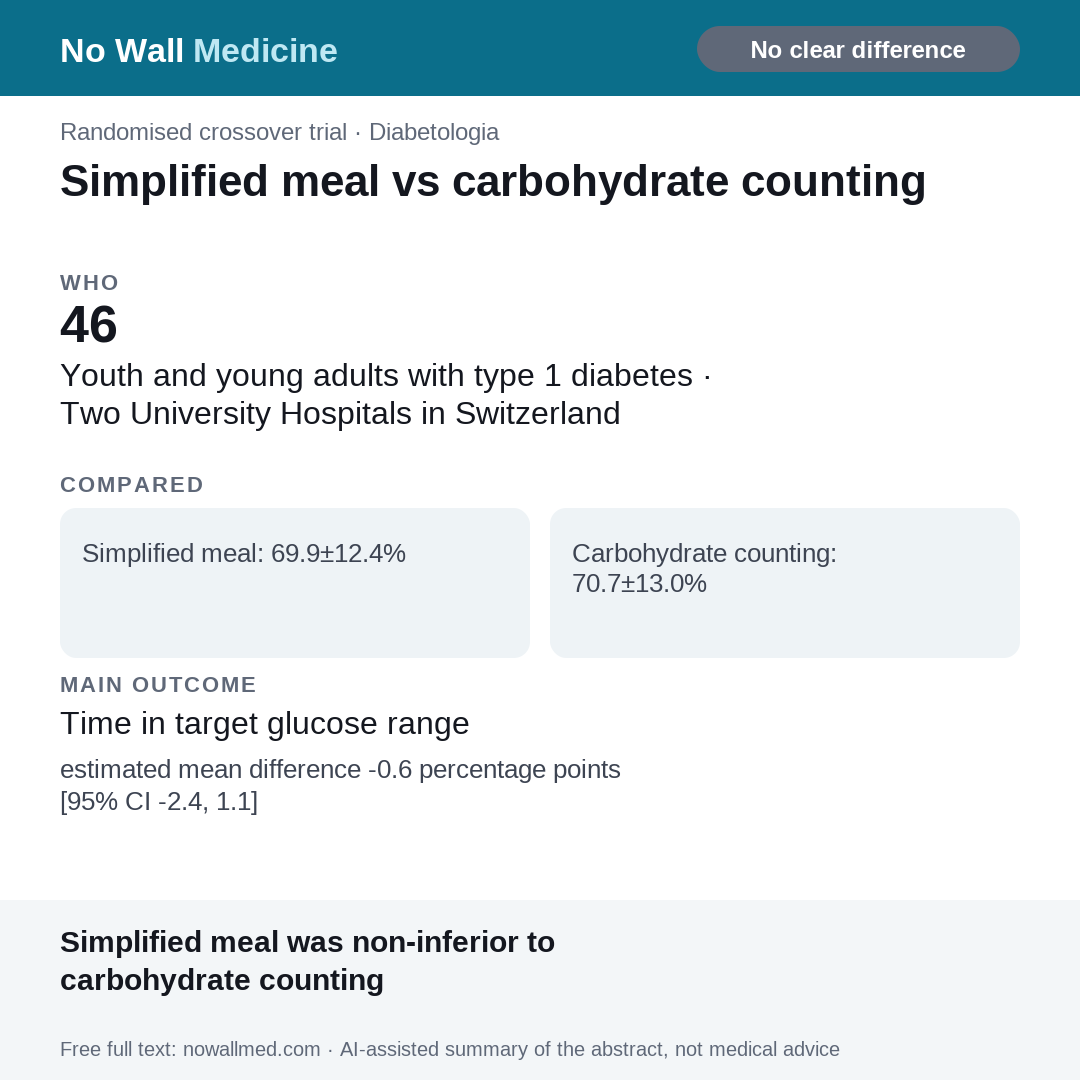
Simplified meal announcement study (SMASH) using hybrid closed-loop insulin delivery in youth and young adults with type 1 diabetes: a randomised controlled two-centre crossover trial
Randomised crossover trialNo clear difference
Simplified meal vs carbohydrate counting
Who
46
Youth and young adults with type 1 diabetes · Two University Hospitals in Switzerland
Compared
Simplified meal: 69.9±12.4%
Carbohydrate counting: 70.7±13.0%
Main outcome
Time in target glucose range
Result: estimated mean difference -0.6 percentage points [95% CI -2.4, 1.1]
Bottom line: Simplified meal was non-inferior to carbohydrate counting
Funded by: Swiss Diabetes Foundation and others
Diabetologia · 2024-11-19Download image
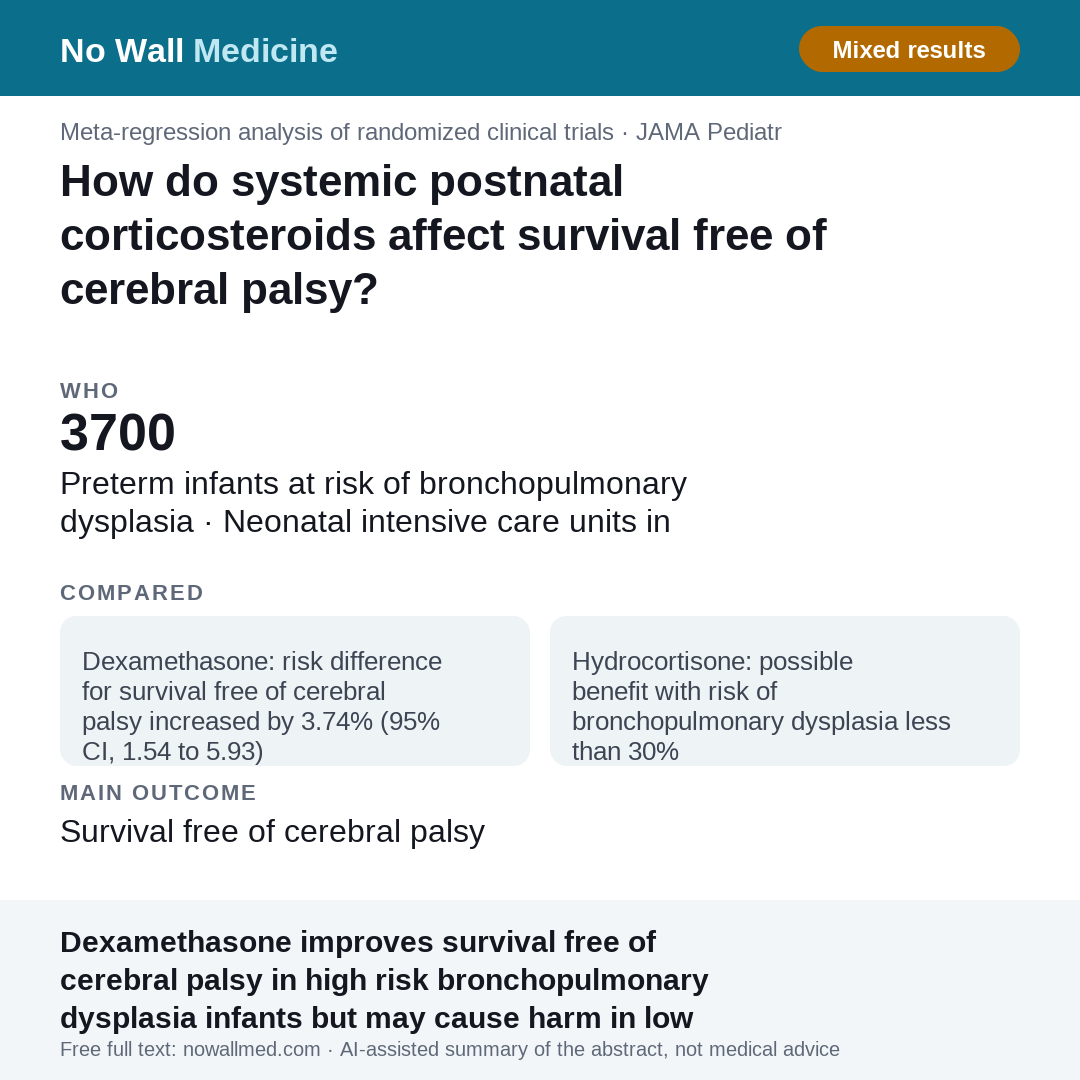
Systemic Postnatal Corticosteroids, Bronchopulmonary Dysplasia, and Survival Free of Cerebral Palsy
Meta-regression analysis of randomized clinical trialsMixed results
How do systemic postnatal corticosteroids affect survival free of cerebral palsy?
Who
3700
Preterm infants at risk of bronchopulmonary dysplasia · Neonatal intensive care units in 10 countries
Compared
Dexamethasone: risk difference for survival free of cerebral palsy increased by 3.74% (95% CI, 1.54 to 5.93)
Hydrocortisone: possible benefit with risk of bronchopulmonary dysplasia less than 30%
Main outcome
Survival free of cerebral palsy
Result: interaction coefficient 0.54 (95% CI 0.25 to 0.82)
Bottom line: Dexamethasone improves survival free of cerebral palsy in high risk bronchopulmonary dysplasia infants but may cause harm in low risk infants.
JAMA Pediatr · 2024-11-18Download image