Visual abstracts
New randomized trials and meta-analyses from leading journals at a glance: who was studied, what was compared, and what was found. Every paper is free to read in full.
All specialtiesCardiology 4877Oncology 4138Gastroenterology & Hepatology 1942Infectious Disease 3837Neurology 1905Psychiatry & Mental Health 2273Pulmonology 2143Critical Care 1365Endocrinology & Diabetes 2580Pediatrics 2980Surgery 2559Orthopedics & Sports Medicine 931Neurosurgery 537Cardiothoracic & Vascular Surgery 674Plastic & Reconstructive Surgery 591Nephrology 1133Rheumatology 823Hematology 1109Dermatology 621Ophthalmology 543Obstetrics & Gynecology 1686Public & Global Health 1058Radiology & Imaging 648Anesthesiology 986Urology 764ENT (Otolaryngology) 503Emergency Medicine 511Allergy & Immunology 313Geriatrics 981Family Medicine & Primary Care 562Medical Genetics & Genomics 676Pathology & Laboratory Medicine 159Physical Medicine & Rehabilitation 757Palliative Care 444Nutrition 1588Digital Health & AI 2201General Medicine 321
The transmission blocking activity of artemisinin-combination, non-artemisinin, and 8-aminoquinoline antimalarial therapies: A pooled analysis of individual participant data
Network meta-analysis of six clinical trialsMixed results
How do different antimalarial therapies compare in transmission blocking activity?
Who
422
Males and non-pregnant females aged 5 to 50 with P. falciparum · Clinical Research Centre in Mali
Compared
Artemether-lumefantrine: significantly more potent at reducing mosquito infection rates within 48 h
Dihydroartemisinin-piperaquine
Sulfadoxine-pyrimethamine plus amodiaquine
ACT plus single low-dose primaquine: accelerated gametocyte clearance and greater reduction in mosquito infection rate
Main outcome
mosquito infection rates and gametocyte densities
Bottom line: Antimalarials show marked differences in their ability and speed to block malaria transmission.
Limitation: Inclusion of highly infectious individuals and small sample sizes in some treatment groups.
PLOS Med · 2025-08-14Download image

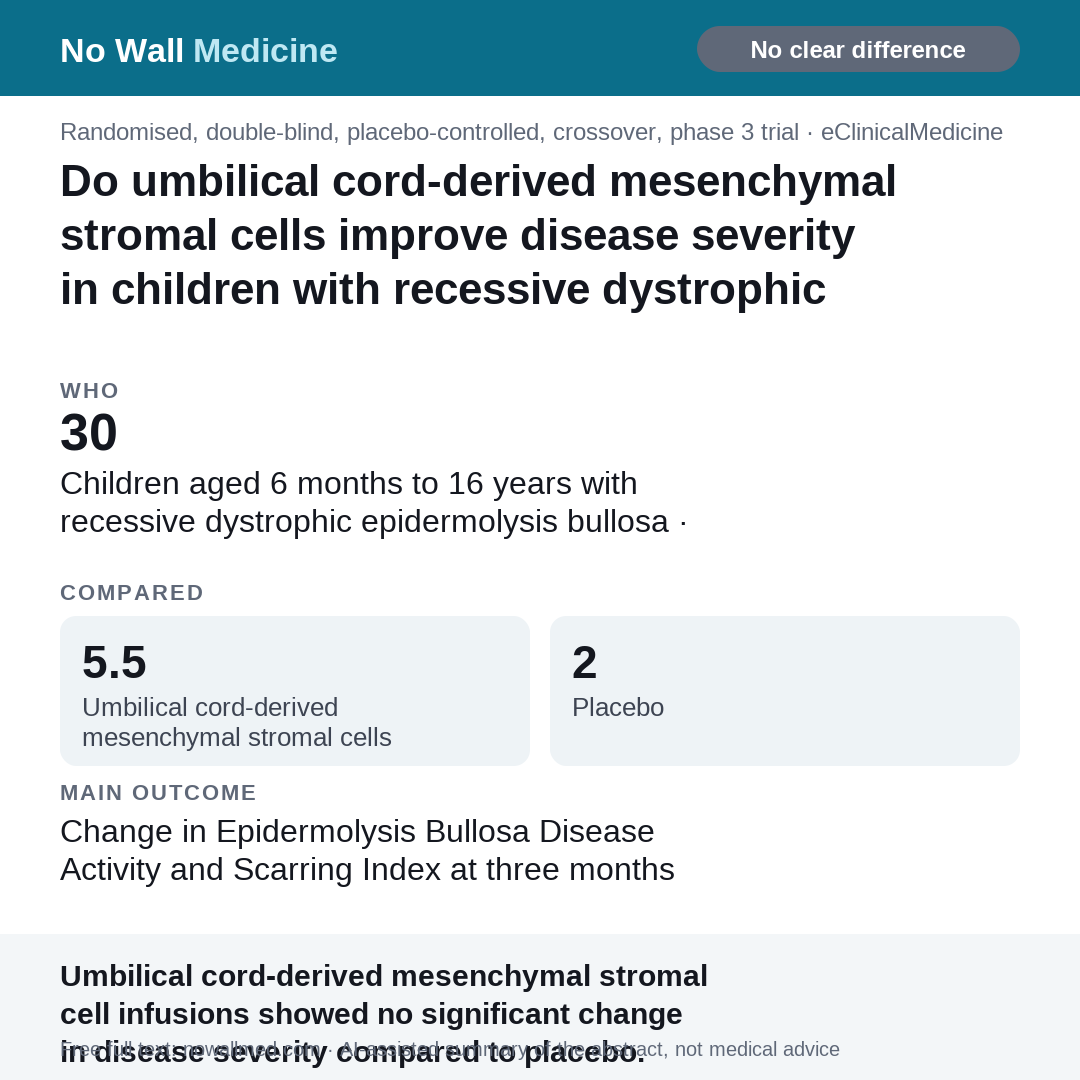
Mesenchymal stromal cell infusions of umbilical cord-derived mesenchymal stromal cells in children with recessive dystrophic epidermolysis bullosa (MissionEB): a randomised, double-blind, placebo controlled, crossover, phase 3 trial with an internal phase 1 dose de-escalation phase
Randomised, double-blind, placebo-controlled, crossover, phase 3 trialNo clear difference
Do umbilical cord-derived mesenchymal stromal cells improve disease severity in children with recessive dystrophic epidermolysis bullosa?
Who
30
Children aged 6 months to 16 years with recessive dystrophic epidermolysis bullosa · Two United Kingdom specialist centres
Compared
5.5Umbilical cord-derived mesenchymal stromal cells (95% CI -2.53 to 13.53)
2Placebo (95% CI -5.33 to 9.33)
Main outcome
Change in Epidermolysis Bullosa Disease Activity and Scarring Index at three months
Result: 3.75 point difference (95% CI -1.46 to 8.96) in favour of placebo
Bottom line: Umbilical cord-derived mesenchymal stromal cell infusions showed no significant change in disease severity compared to placebo.
eClinicalMedicine · 2025-08-14Download image
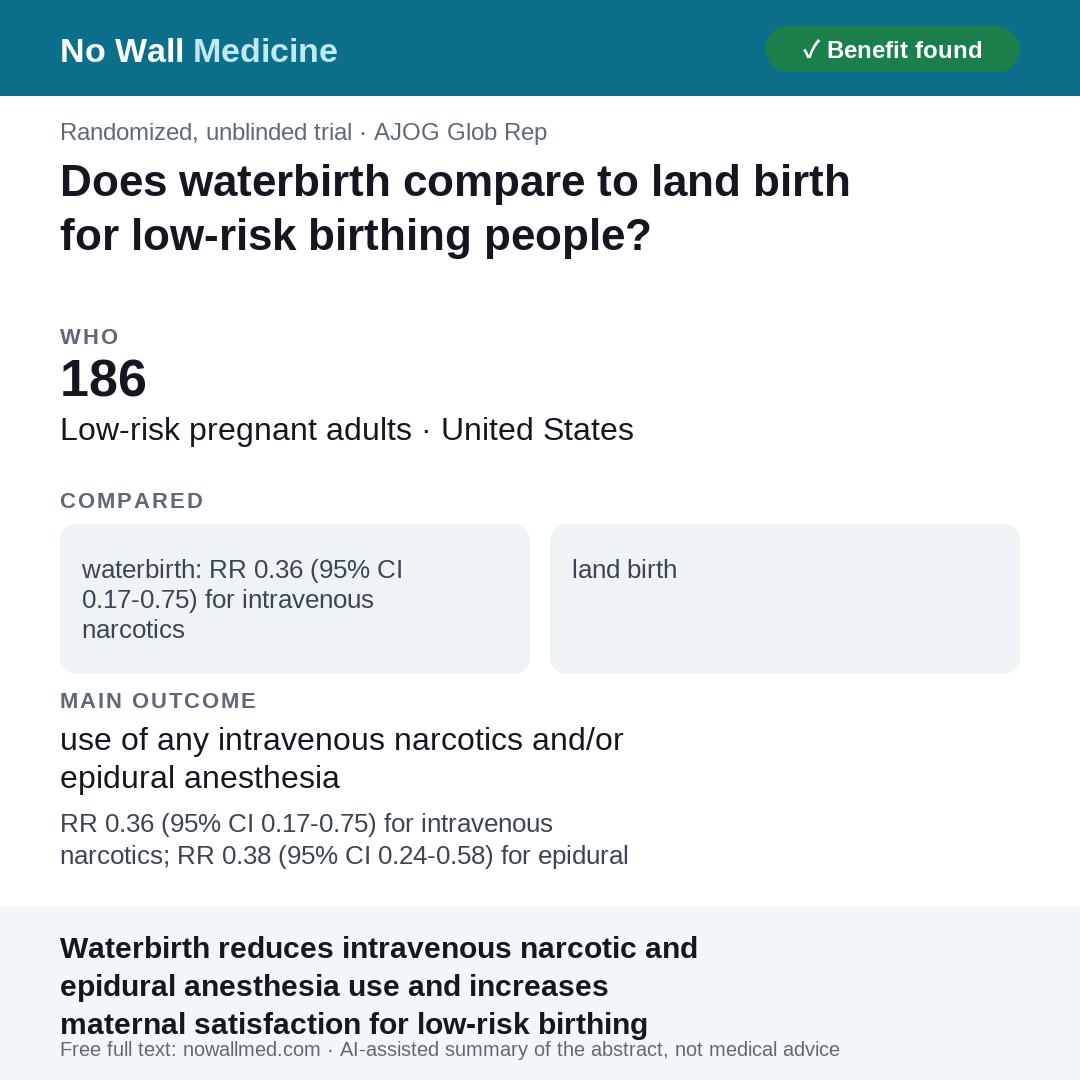
Hospital waterbirth for low-risk birthing people: findings of a randomized controlled trial
Randomized, unblinded trialBenefit found
Does waterbirth compare to land birth for low-risk birthing people?
Who
186
Low-risk pregnant adults · United States
Compared
waterbirth: RR 0.36 (95% CI 0.17-0.75) for intravenous narcotics
land birth
Main outcome
use of any intravenous narcotics and/or epidural anesthesia
Result: RR 0.36 (95% CI 0.17-0.75) for intravenous narcotics; RR 0.38 (95% CI 0.24-0.58) for epidural analgesia
Bottom line: Waterbirth reduces intravenous narcotic and epidural anesthesia use and increases maternal satisfaction for low-risk birthing people.
Limitation: Attrition was 39%.
AJOG Glob Rep · 2025-08-14Download image
Single low-dose primaquine for malaria control in Africa: a systematic review of safety, efficacy and implementation barriers
Systematic review and meta-analysisBenefit found
Is single low-dose primaquine safe and effective
Who
people with uncomplicated malaria in Africa · Africa
Compared
Single low-dose primaquine
Control
Main outcome
malaria transmission reduction
Bottom line: Single low-dose primaquine is safe and effective
Limitation: evidence on community-level impact limited
BMJ Glob Health · 2025-08-14Download image

Efficacy of zinc supplementation for young infants with clinical severe infection in Tanzania: study protocol for a randomised controlled trial
Individually randomised, quadruple-blind trialUnclear result
Does zinc supplementation improve survival and treatment outcomes for young infants with severe infection?
Who
3250
Infants 0-59 days old with clinical severe infection · Dar es Salaam, Tanzania
Compared
zinc citrate supplementation
matching placebo supplementation
Main outcome
infant death and treatment failure
Bottom line: This study protocol describes a trial to evaluate zinc supplementation for infants with severe infection.
BMJ Paediatr Open · 2025-08-14Download image

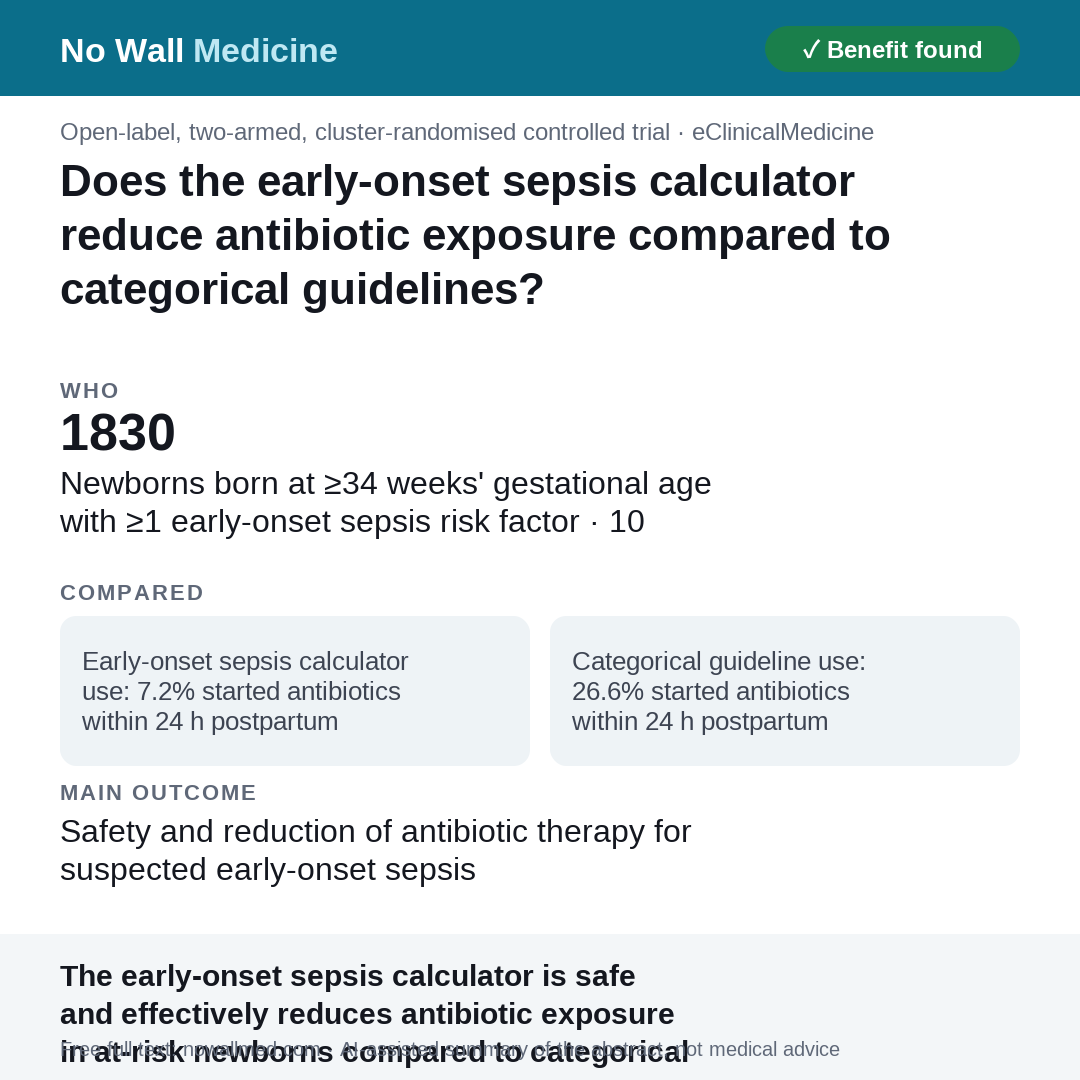
Safety and effectiveness of the early-onset sepsis calculator to reduce antibiotic exposure in at-risk newborns: a cluster-randomised controlled trial
Open-label, two-armed, cluster-randomised controlled trialBenefit found
Does the early-onset sepsis calculator reduce antibiotic exposure compared to categorical guidelines?
Who
1830
Newborns born at ≥34 weeks' gestational age with ≥1 early-onset sepsis risk factor · 10 hospitals
Compared
Early-onset sepsis calculator use: 7.2% started antibiotics within 24 h postpartum
Categorical guideline use: 26.6% started antibiotics within 24 h postpartum
Main outcome
Safety and reduction of antibiotic therapy for suspected early-onset sepsis
Result: relative risk 0.48 (95% CI 0.36-0.63)
Bottom line: The early-onset sepsis calculator is safe and effectively reduces antibiotic exposure in at-risk newborns compared to categorical guidelines.
Funded by: SPIN, General Paediatrics Research Network of the Dutch Association for Paediatrics
eClinicalMedicine · 2025-08-12Download image
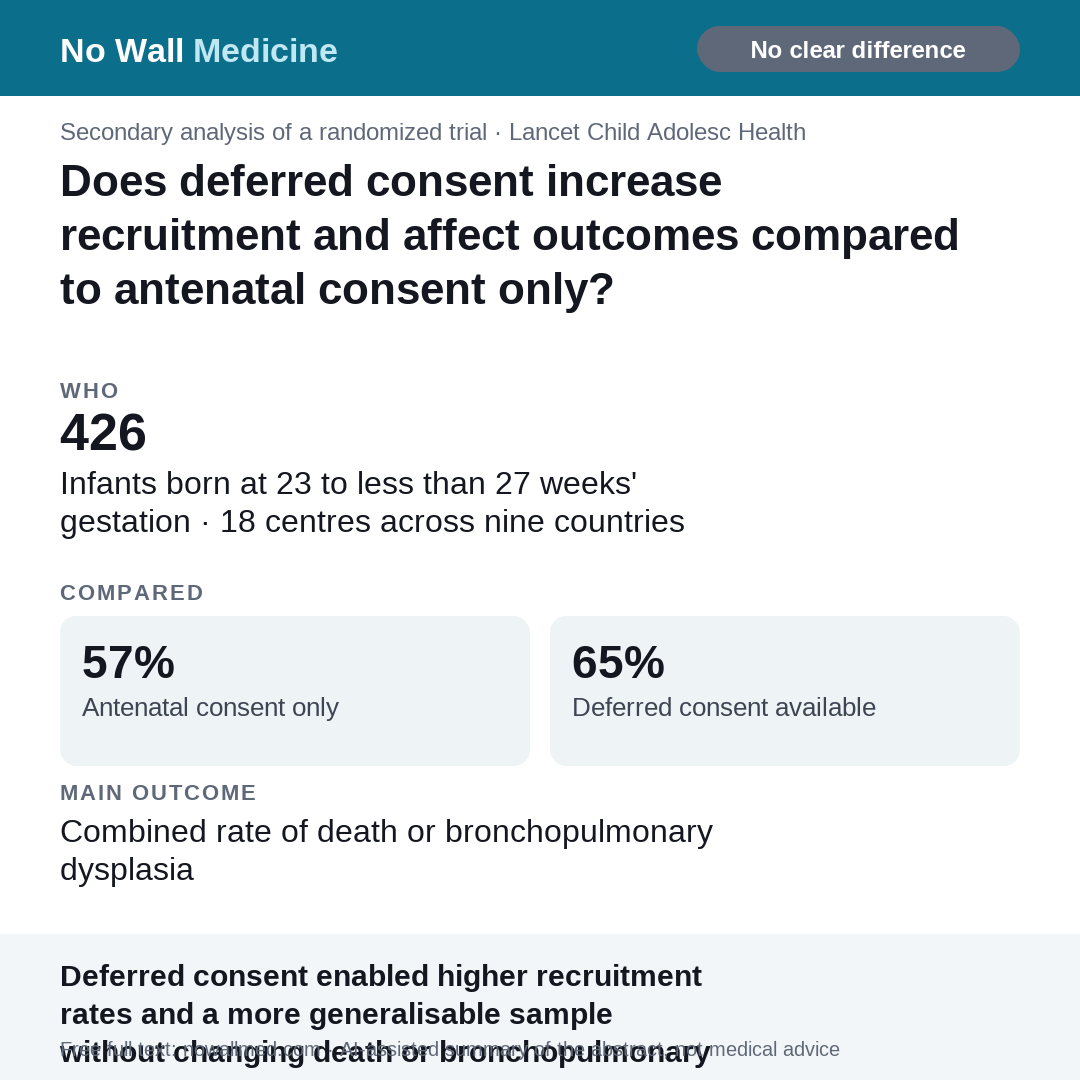
Alternative consent processes in a neonatal resuscitation trial (SAIL): secondary analysis of an open-label, international, multicentre, randomised trial
Secondary analysis of a randomized trialNo clear difference
Does deferred consent increase recruitment and affect outcomes compared to antenatal consent only?
Who
426
Infants born at 23 to less than 27 weeks' gestation · 18 centres across nine countries
Compared
57%Antenatal consent only (113/197)
65%Deferred consent available (149/229)
Main outcome
Combined rate of death or bronchopulmonary dysplasia
Result: adjusted relative risk 1.18 (95% CI 0.98 to 1.42)
Bottom line: Deferred consent enabled higher recruitment rates and a more generalisable sample without changing death or bronchopulmonary dysplasia rates.
Funded by: Eunice Kennedy Shriver National Institute of Child Health and Human Development
Lancet Child Adolesc Health · 2025-08-12Download image
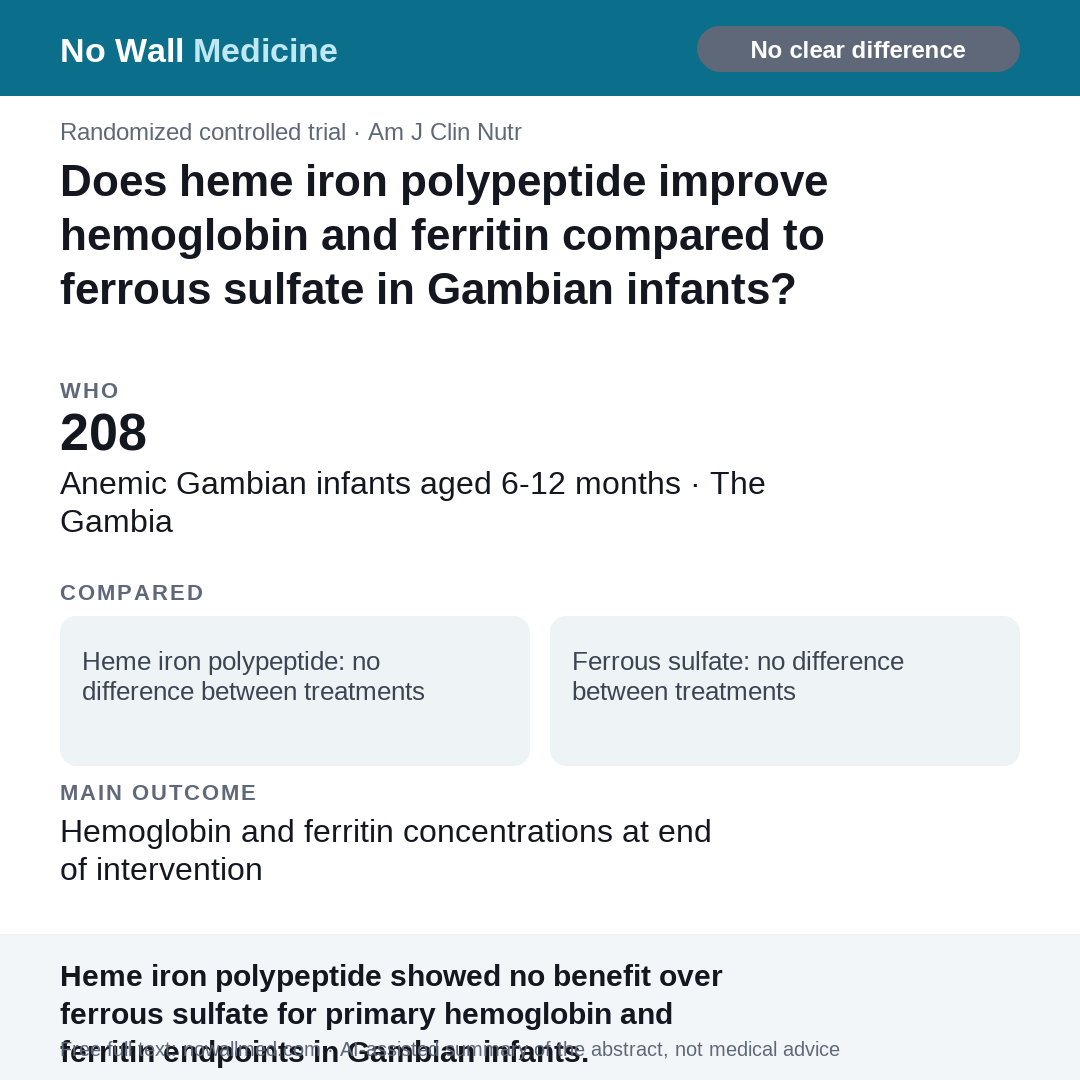
Heme iron compared with ferrous iron salts to treat iron deficiency anemia in Gambian children: a randomized controlled trial
Randomized controlled trialNo clear difference
Does heme iron polypeptide improve hemoglobin and ferritin compared to ferrous sulfate in Gambian infants?
Who
208
Anemic Gambian infants aged 6-12 months · The Gambia
Compared
Heme iron polypeptide: no difference between treatments
Ferrous sulfate: no difference between treatments
Main outcome
Hemoglobin and ferritin concentrations at end of intervention
Bottom line: Heme iron polypeptide showed no benefit over ferrous sulfate for primary hemoglobin and ferritin endpoints in Gambian infants.
Am J Clin Nutr · 2025-08-12Download image
Revisiting the Effect of Udenafil on Exercise Performance in Patients With Fontan Circulation: Results of a Post Hoc Analysis of the FUEL Trial
Post hoc subgroup analysis of a randomized trialBenefit found
Does udenafil improve exercise performance in patients with Fontan circulation and low baseline peak Vo2?
Who
302
Patients with Fontan circulation and baseline peak Vo2 <80% predicted
Compared
udenafil: 0.23±4.17 mL/kg per min
placebo: -0.90±3.74 mL/kg per min
Main outcome
peak oxygen consumption at peak exercise
Bottom line: In patients with low baseline peak oxygen consumption, udenafil significantly improved peak oxygen consumption after 6 months.
J Am Heart Assoc · 2025-08-12Download image

Using game performance measure to assess upper limb motor function in children with neuromotor disorders: a systematic review
Systematic reviewUnclear result
Can game metrics assess upper limb function
Who
443
Children with neuromotor disorders
Compared
Children with cerebral palsy
Control participants
Main outcome
Upper limb function
Bottom line: Game metrics lack validation for assessing upper limb function
J Neuroeng Rehabil · 2025-08-12Download image

Effectiveness of family-based behavioral intervention for smoking cessation in low-income households: a systematic review and meta-analysis
Systematic review and meta-analysisBenefit found
Are family-based behavioral interventions effective for smoking cessation in low-income households?
Who
5292
Smoking parents from low-income households with co-living children
Compared
Family-based behavioral interventions: RR:1.70
Usual care
Main outcome
Self-reported 7-day point prevalence abstinence or biochemically validated abstinence
Result: relative risk 1.70 (95% CI 1.16 to 2.48)
Bottom line: Family-based behavioral interventions significantly increase smoking abstinence in low-income households, especially when combined with nicotine replacement therapy.
eClinicalMedicine · 2025-08-11Download image

Prognostic Significance of Neutrophil-Lymphocyte Ratio in Salivary Gland Neoplasms: A Systematic Review
Systematic reviewBenefit found
Does neutrophil-to-lymphocyte ratio predict prognosis in salivary gland neoplasms?
Who
Adult and pediatric patients with histologically-confirmed salivary gland tumors · Global tertiary care centers and academic hospitals
Compared
NLR below 2.51: significantly associated with improved overall survival
NLR above 3.95: correlated with the presence of grade 3 or higher adverse events
Main outcome
overall survival, tumor stage, and adverse treatment outcomes
Bottom line: Neutrophil-to-lymphocyte ratio is a promising biomarker for stratifying malignancy risk and predicting prognosis in salivary gland tumors.
J Otolaryngol Head Neck Surg · 2025-08-09Download image

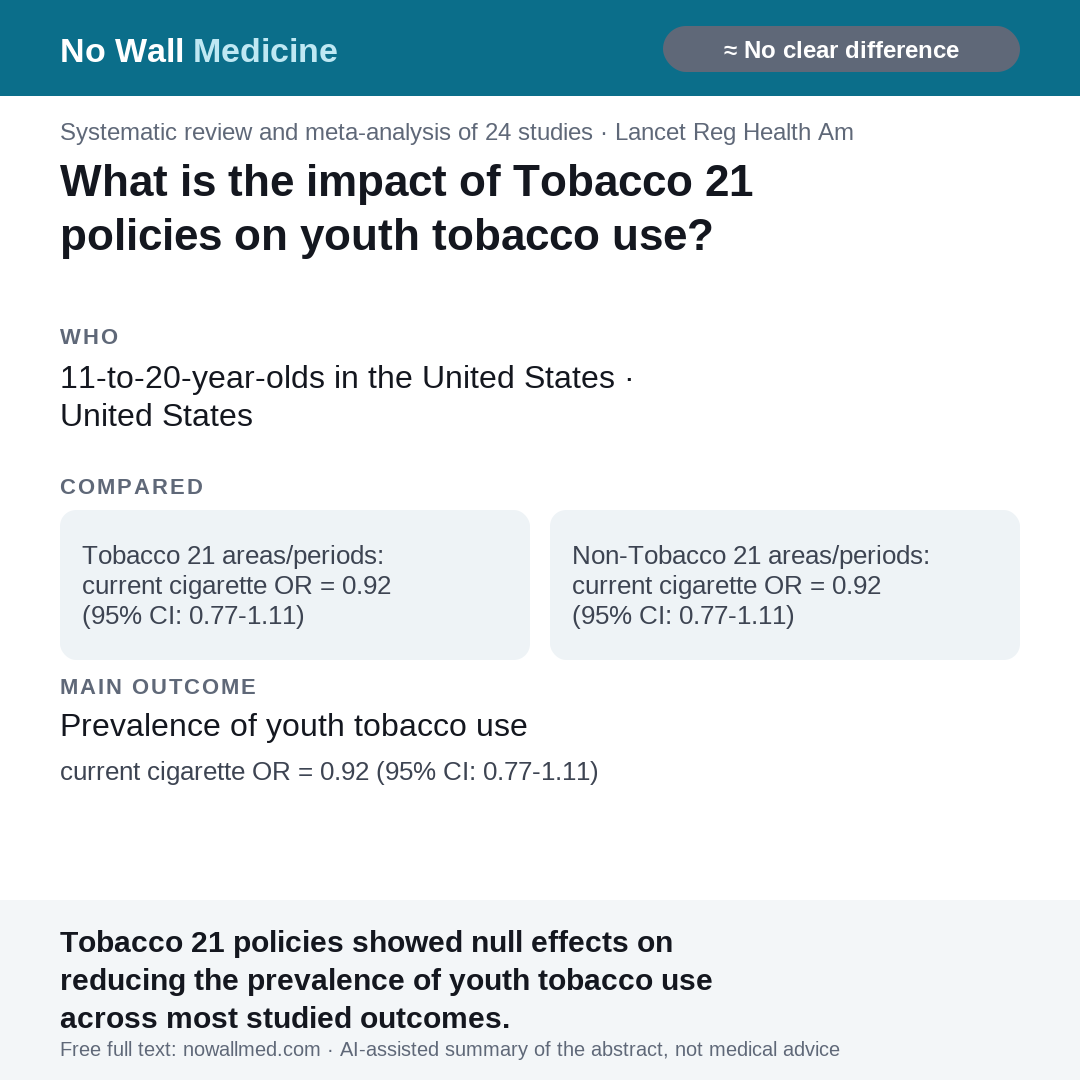
A systematic review and meta-analysis of Tobacco 21 policies and youth tobacco use: implications for future policy research
Systematic review and meta-analysis of 24 studiesNo clear difference
What is the impact of Tobacco 21 policies on youth tobacco use?
Who
24
11-to-20-year-olds in the United States · United States
Compared
Tobacco 21 areas/periods: current cigarette OR = 0.92 (95% CI: 0.77-1.11)
Non-Tobacco 21 areas/periods: current cigarette OR = 0.92 (95% CI: 0.77-1.11)
Main outcome
Prevalence of youth tobacco use
Result: current cigarette OR = 0.92 (95% CI: 0.77-1.11)
Bottom line: Tobacco 21 policies showed null effects on reducing the prevalence of youth tobacco use across most studied outcomes.
Lancet Reg Health Am · 2025-08-08Download image
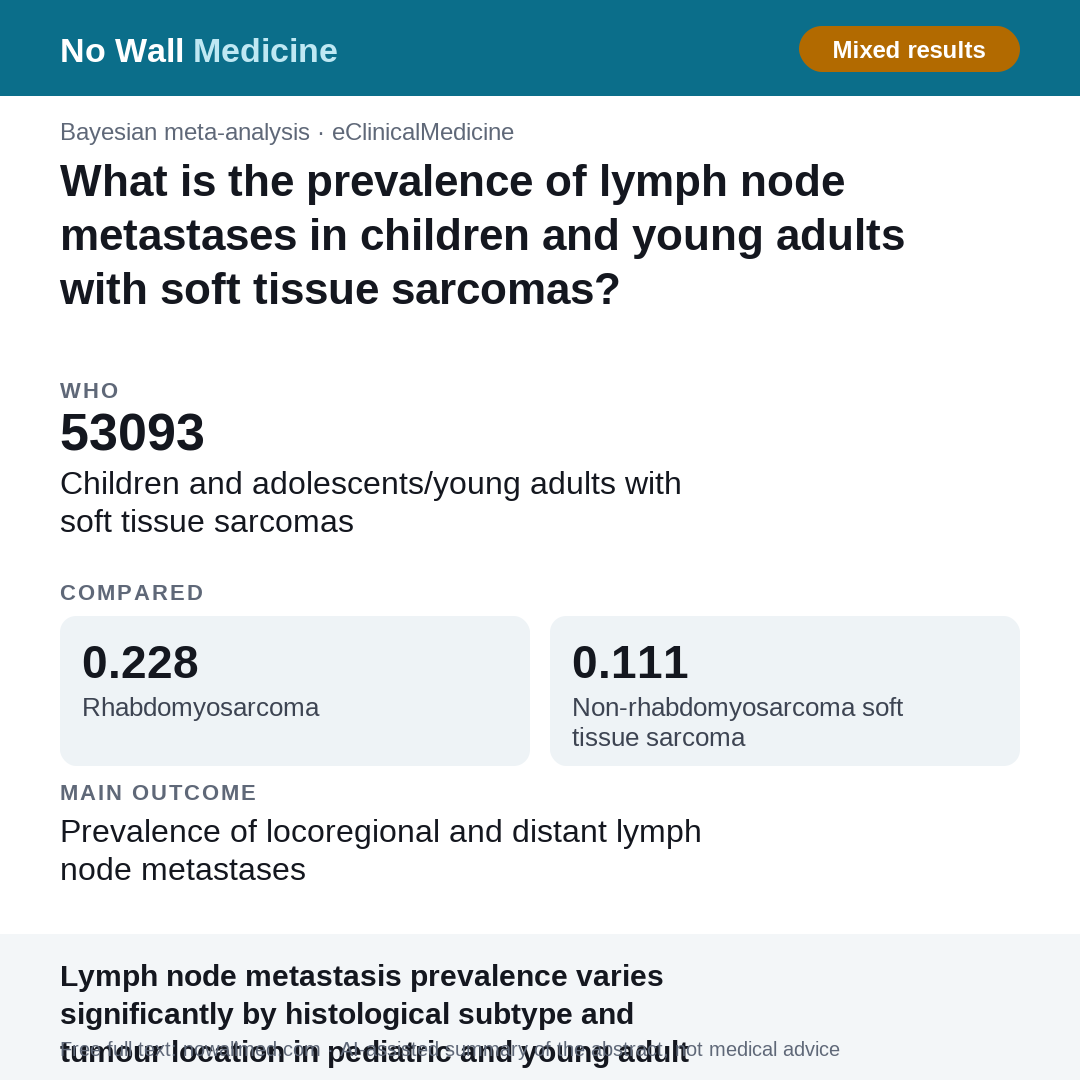
Prevalence of locoregional and distant lymph node metastases in children and adolescents/young adults with soft tissue sarcomas: a Bayesian meta-analysis of proportions
Bayesian meta-analysisMixed results
What is the prevalence of lymph node metastases in children and young adults with soft tissue sarcomas?
Who
53093
Children and adolescents/young adults with soft tissue sarcomas
Compared
0.228Rhabdomyosarcoma (95% CrI: 0.202-0.255)
0.111Non-rhabdomyosarcoma soft tissue sarcoma (95% CrI: 0.092-0.133)
Main outcome
Prevalence of locoregional and distant lymph node metastases
Bottom line: Lymph node metastasis prevalence varies significantly by histological subtype and tumour location in pediatric and young adult patients.
Limitation: Most analyses had moderate-to-high heterogeneity.
eClinicalMedicine · 2025-08-07Download image
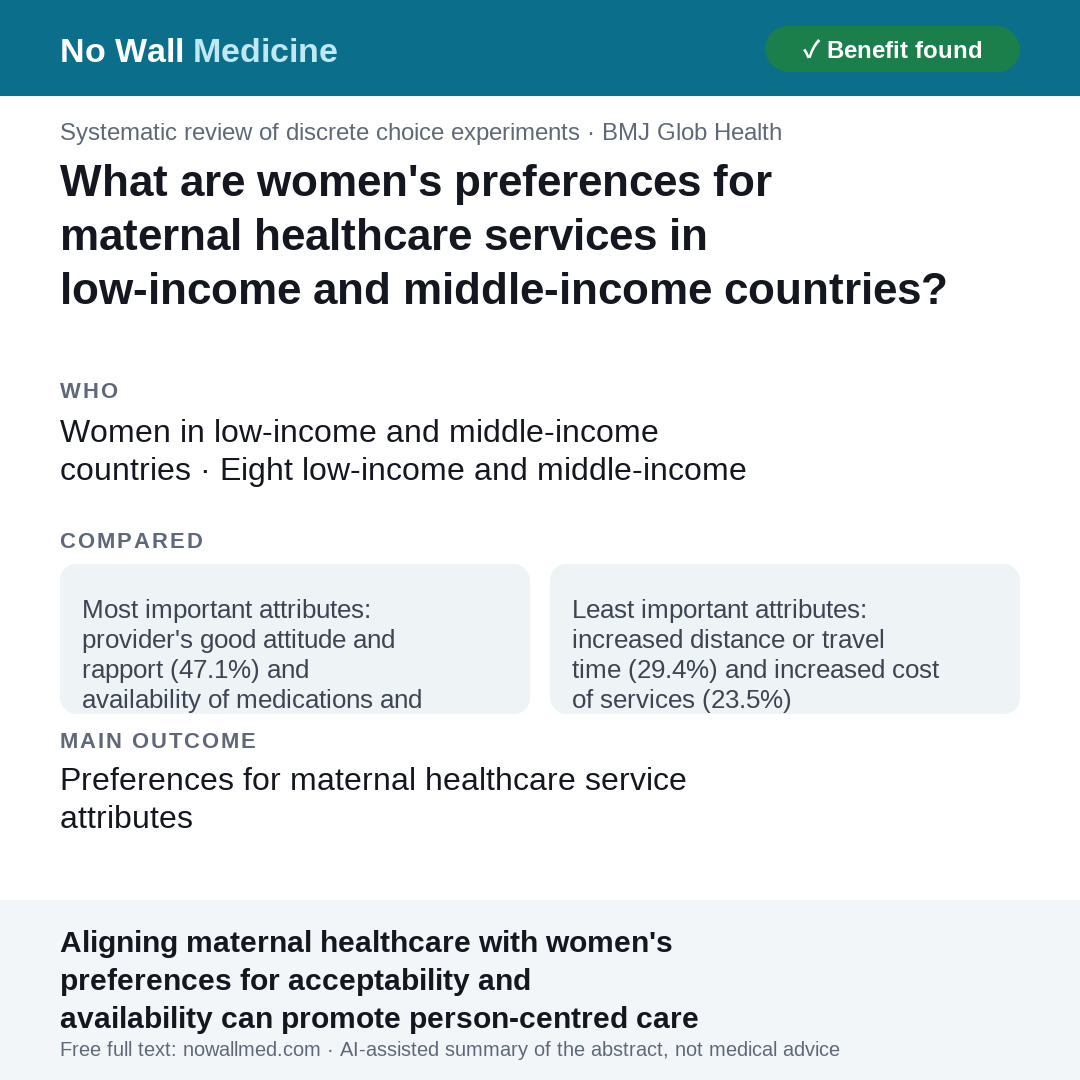
Preferences of women for maternal healthcare services in low-income and middle-income countries: a systematic review of discrete choice experiments
Systematic review of discrete choice experimentsBenefit found
What are women's preferences for maternal healthcare services in low-income and middle-income countries?
Who
Women in low-income and middle-income countries · Eight low-income and middle-income countries
Compared
Most important attributes: provider's good attitude and rapport (47.1%) and availability of medications and supplies (41.2%)
Least important attributes: increased distance or travel time (29.4%) and increased cost of services (23.5%)
Main outcome
Preferences for maternal healthcare service attributes
Bottom line: Aligning maternal healthcare with women's preferences for acceptability and availability can promote person-centred care and service uptake.
BMJ Glob Health · 2025-08-07Download image
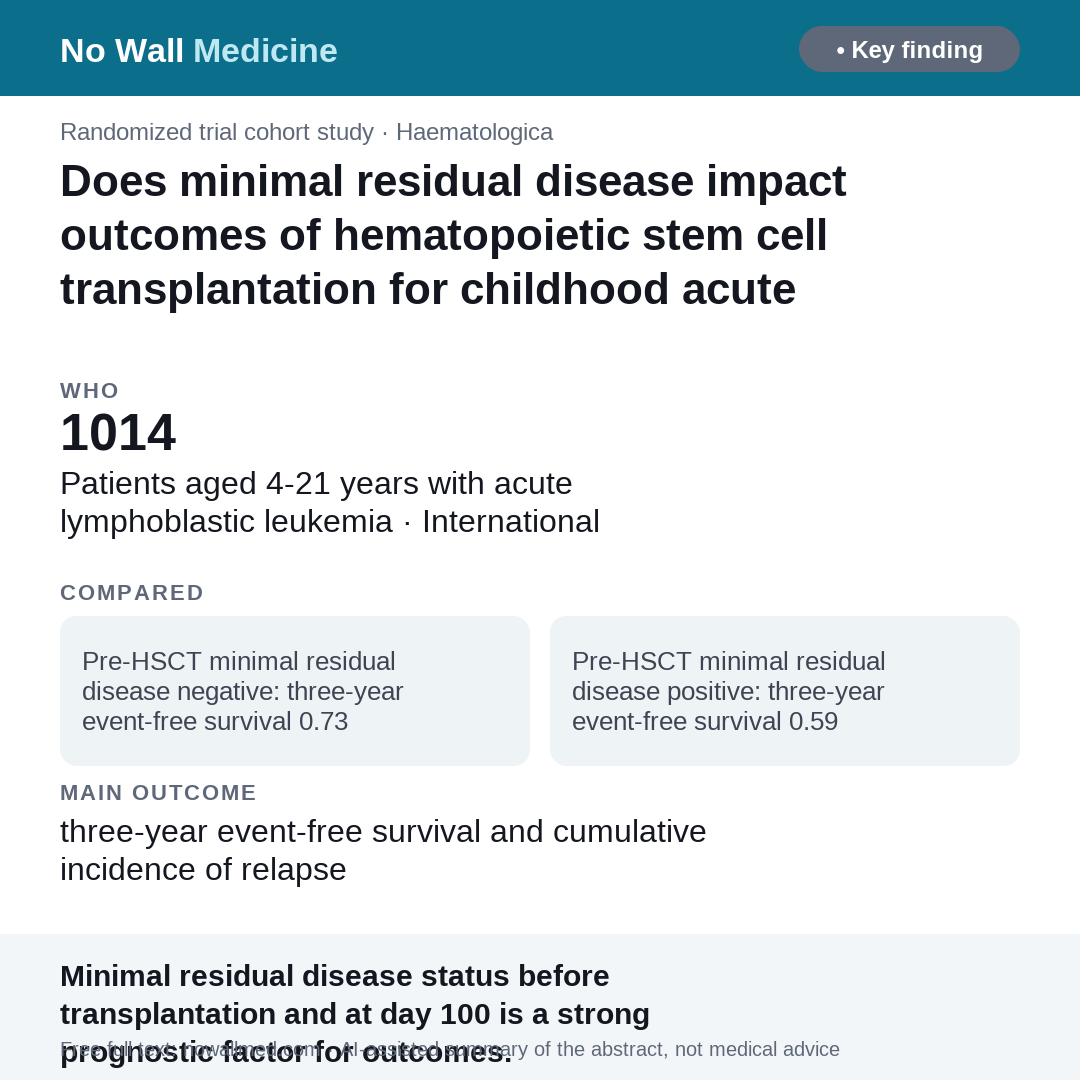
Impact of minimal residual disease on the outcome of hematopoietic stem cell transplantation for childhood acute lymphoblastic leukemia within the FORUM trial
Randomized trial cohort studyBenefit found
Does minimal residual disease impact outcomes of hematopoietic stem cell transplantation for childhood acute lymphoblastic leukemia?
Who
1014
Patients aged 4-21 years with acute lymphoblastic leukemia · International
Compared
Pre-HSCT minimal residual disease negative: three-year event-free survival 0.73
Pre-HSCT minimal residual disease positive: three-year event-free survival 0.59
Main outcome
three-year event-free survival and cumulative incidence of relapse
Bottom line: Minimal residual disease status before transplantation and at day 100 is a strong prognostic factor for outcomes.
Haematologica · 2025-08-07Download image
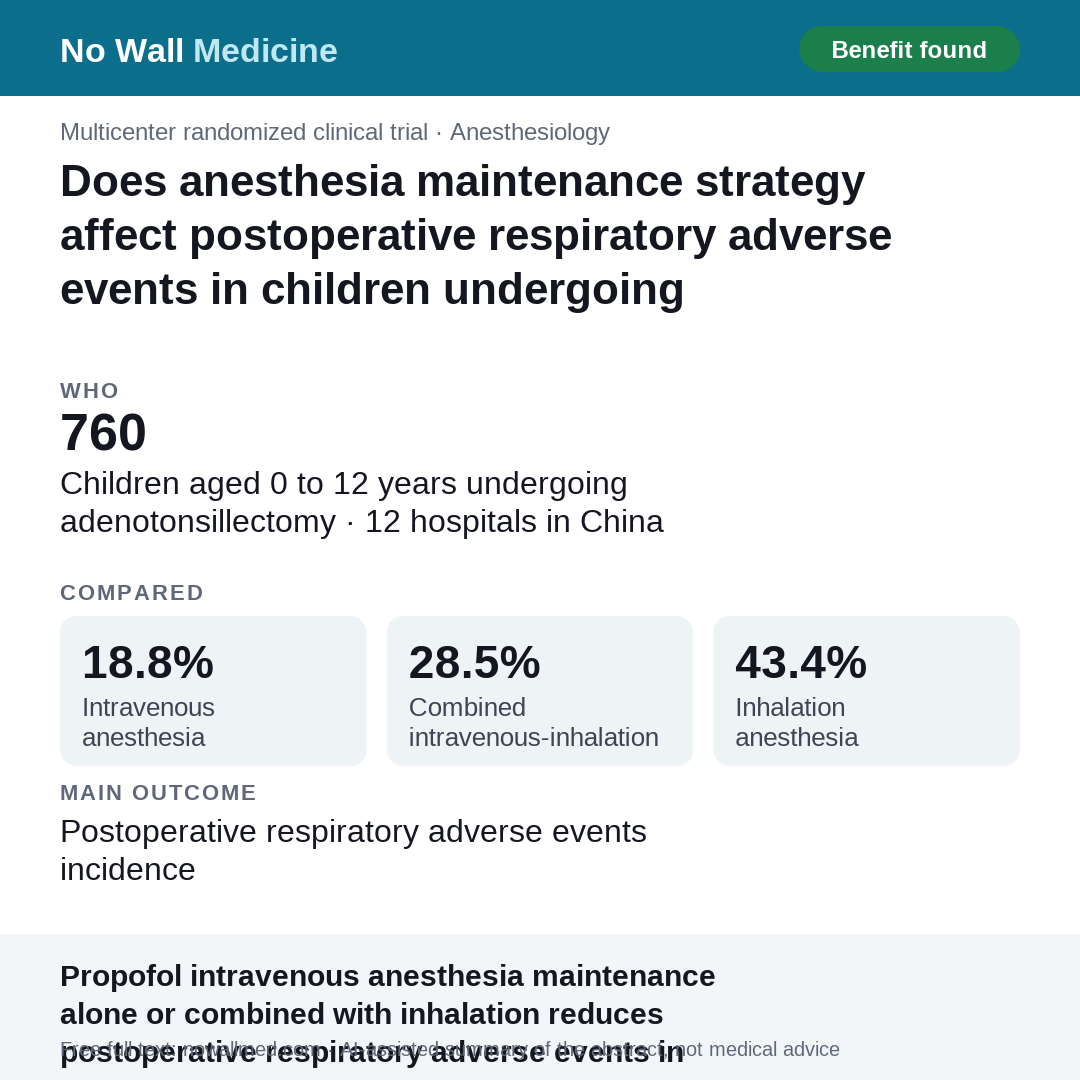
Effect of Intravenous, Inhalational, or Combined Anesthesia Maintenance on Postoperative Respiratory Adverse Events in Children Undergoing Adenotonsillectomy (AmPRAEC): A Multicenter Randomized Clinical Trial
Multicenter randomized clinical trialBenefit found
Does anesthesia maintenance strategy affect postoperative respiratory adverse events in children undergoing adenotonsillectomy?
Who
760
Children aged 0 to 12 years undergoing adenotonsillectomy · 12 hospitals in China
Compared
18.8%Intravenous anesthesia maintenance
28.5%Combined intravenous-inhalation anesthesia maintenance
43.4%Inhalation anesthesia maintenance
Main outcome
Postoperative respiratory adverse events incidence
Result: adjusted odds ratio 0.25 (95% CI 0.16 to 0.39)
Bottom line: Propofol intravenous anesthesia maintenance alone or combined with inhalation reduces postoperative respiratory adverse events in children.
Anesthesiology · 2025-08-06Download image
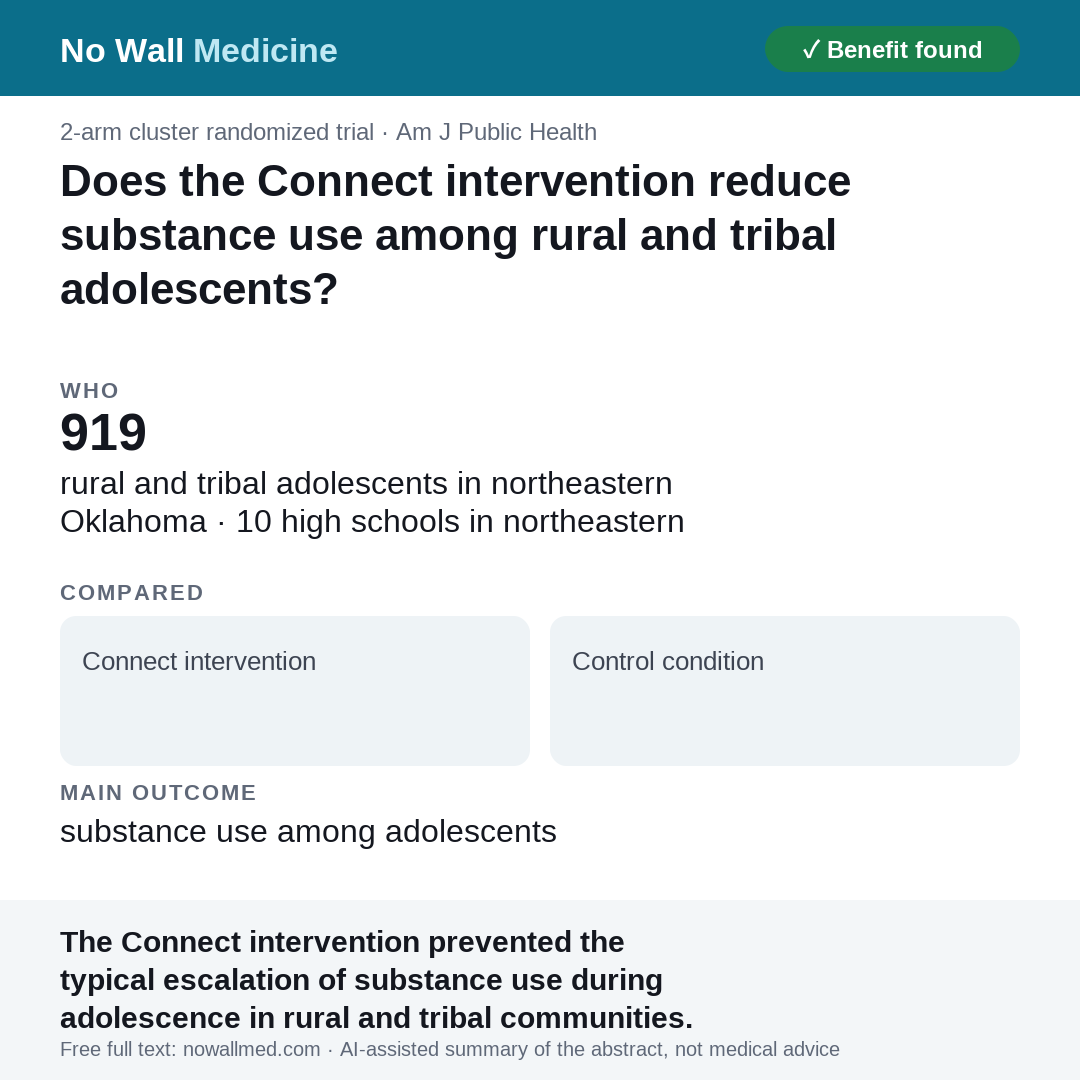
Primary Prevention of Drug Overdoses in Rural Low-Resource and Tribal Communities: A Cluster Randomized Trial
2-arm cluster randomized trialBenefit found
Does the Connect intervention reduce substance use among rural and tribal adolescents?
Who
919
rural and tribal adolescents in northeastern Oklahoma · 10 high schools in northeastern Oklahoma
Compared
Connect intervention
Control condition
Main outcome
substance use among adolescents
Result: rate ratio 0.82 (95% confidence interval 0.72 to 0.93)
Bottom line: The Connect intervention prevented the typical escalation of substance use during adolescence in rural and tribal communities.
Am J Public Health · 2025-08-06Download image
Genetic characterization of preschool wheeze phenotypes
Meta-analysis of genome-wide association studiesMixed results
Genetic basis of preschool wheeze
Who
13000
children with early-onset wheeze · 15 cohorts
Compared
early-onset wheeze
persistent wheeze
early transient wheeze
Main outcome
genetic association with wheeze
Result: odds ratio 1.26 (95% confidence interval 1.17-1.33)
Bottom line: Distinct genetic patterns for wheeze phenotypes found
JACI · 2025-08-05Download image

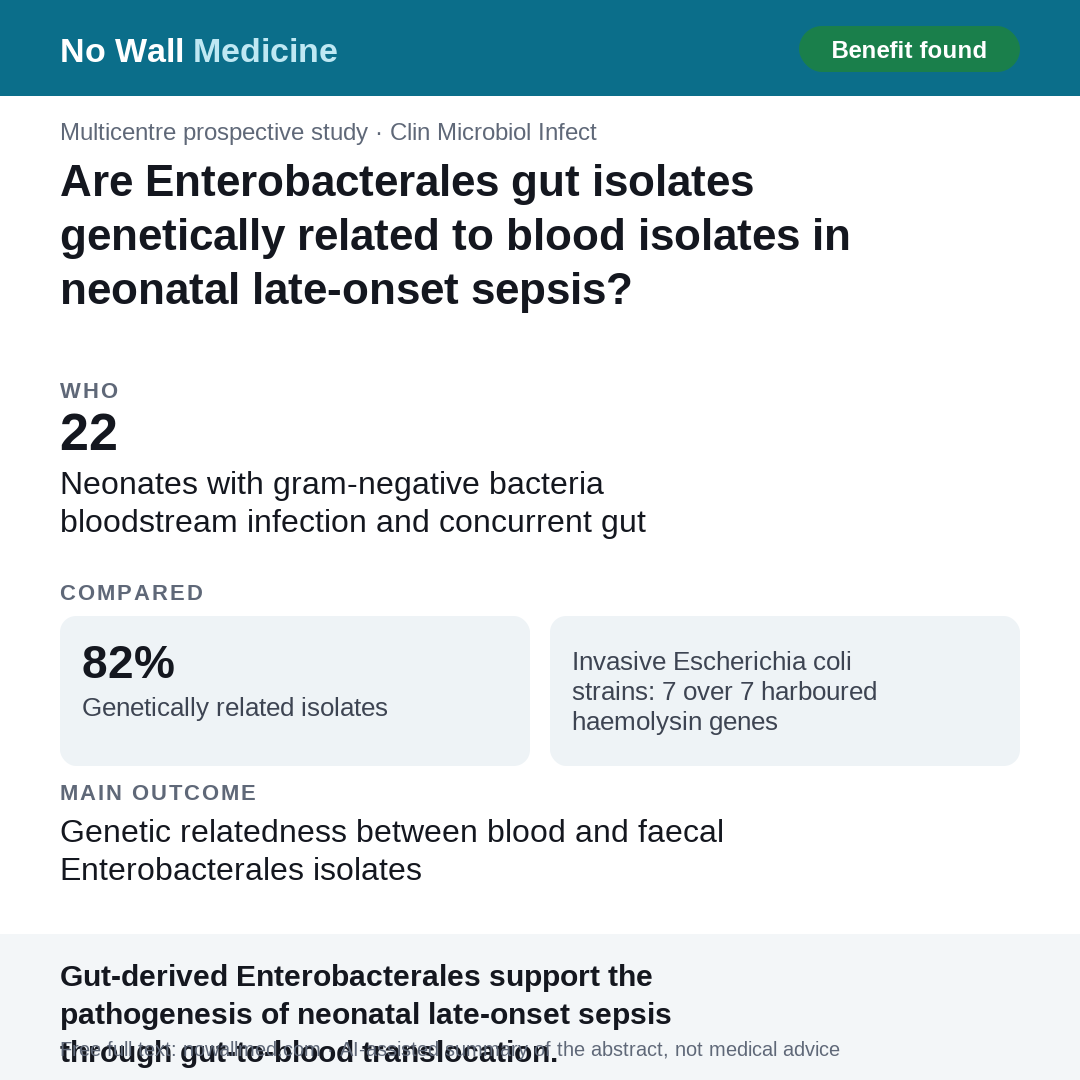
Enterobacterales gut colonization and late-onset sepsis in neonates: a multicentre prospective study across 18 neonatal intensive care units in six countries
Multicentre prospective studyBenefit found
Are Enterobacterales gut isolates genetically related to blood isolates in neonatal late-onset sepsis?
Who
22
Neonates with gram-negative bacteria bloodstream infection and concurrent gut samples · 18 neonatal intensive care units in six countries
Compared
82%Genetically related isolates (18 of 22 cases)
Invasive Escherichia coli strains: 7 over 7 harboured haemolysin genes
Main outcome
Genetic relatedness between blood and faecal Enterobacterales isolates
Bottom line: Gut-derived Enterobacterales support the pathogenesis of neonatal late-onset sepsis through gut-to-blood translocation.
Limitation: Further prospective studies are needed to validate these findings.
Clin Microbiol Infect · 2025-08-05Download image