Visual abstracts
New randomized trials and meta-analyses from leading journals at a glance: who was studied, what was compared, and what was found. Every paper is free to read in full.
All specialtiesCardiology 2217Oncology 1893Gastroenterology & Hepatology 836Infectious Disease 1394Neurology 896Psychiatry & Mental Health 1061Pulmonology 935Critical Care 617Endocrinology & Diabetes 1170Pediatrics 1290Surgery 1114Orthopedics & Sports Medicine 409Neurosurgery 272Cardiothoracic & Vascular Surgery 241Plastic & Reconstructive Surgery 341Nephrology 469Rheumatology 308Hematology 482Dermatology 260Ophthalmology 263Obstetrics & Gynecology 725Public & Global Health 416Radiology & Imaging 306Anesthesiology 441Urology 383ENT (Otolaryngology) 286Emergency Medicine 243Allergy & Immunology 136Geriatrics 470Family Medicine & Primary Care 254Medical Genetics & Genomics 239Pathology & Laboratory Medicine 74Physical Medicine & Rehabilitation 381Palliative Care 191Nutrition 589Digital Health & AI 1126General Medicine 167
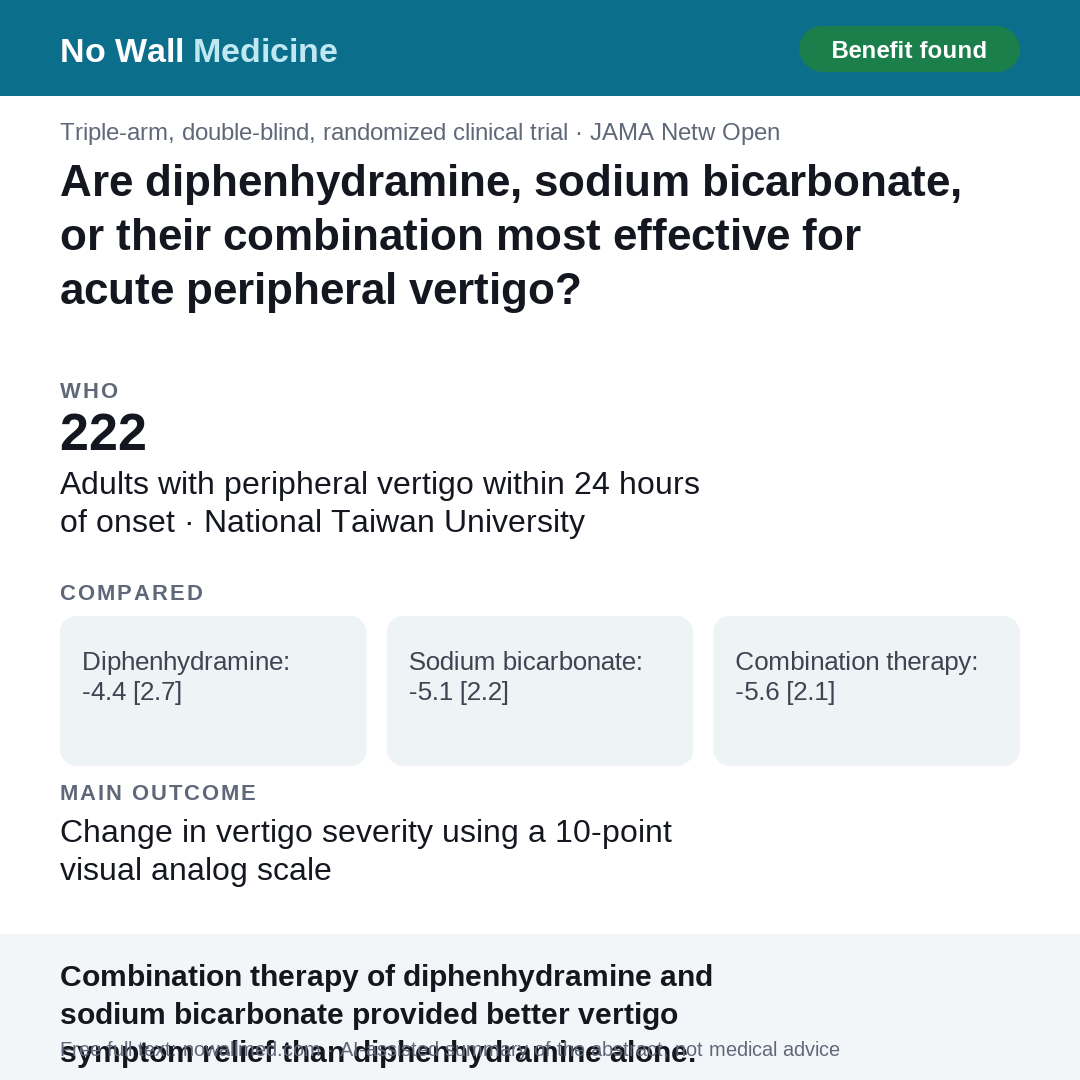
Diphenhydramine, Sodium Bicarbonate, or Combination for Acute Peripheral Vertigo: A Randomized Clinical Trial
Triple-arm, double-blind, randomized clinical trialBenefit found
Are diphenhydramine, sodium bicarbonate, or their combination most effective for acute peripheral vertigo?
Who
222
Adults with peripheral vertigo within 24 hours of onset · National Taiwan University Hospital, Yunlin Branch emergency department
Compared
Diphenhydramine: -4.4 [2.7]
Sodium bicarbonate: -5.1 [2.2]
Combination therapy: -5.6 [2.1]
Main outcome
Change in vertigo severity using a 10-point visual analog scale
Bottom line: Combination therapy of diphenhydramine and sodium bicarbonate provided better vertigo symptom relief than diphenhydramine alone.
Limitation: Further studies should focus on determining vertigo types that benefit from sodium bicarbonate and underlying mechanisms.
JAMA Netw Open · 2025-11-03Download image
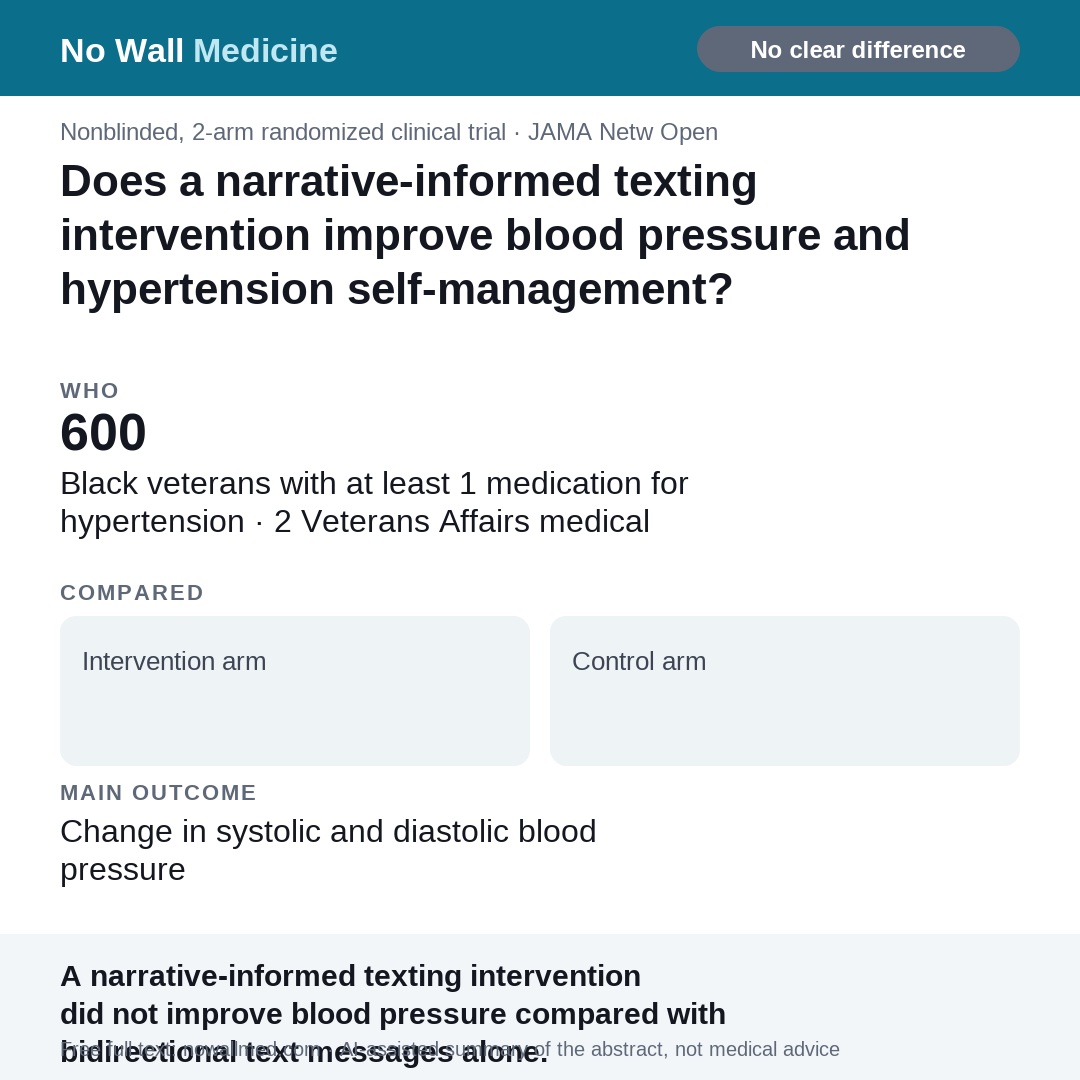
Text Messaging and Video Stories to Support Hypertension Self-Management in Black Veterans: A Randomized Clinical Trial
Nonblinded, 2-arm randomized clinical trialNo clear difference
Does a narrative-informed texting intervention improve blood pressure and hypertension self-management?
Who
600
Black veterans with at least 1 medication for hypertension · 2 Veterans Affairs medical centers
Compared
Intervention arm
Control arm
Main outcome
Change in systolic and diastolic blood pressure
Result: difference-in-differences systolic -0.8 mm Hg (95% CI, -3.9 to 2.3 mm Hg)
Bottom line: A narrative-informed texting intervention did not improve blood pressure compared with bidirectional text messages alone.
JAMA Netw Open · 2025-11-03Download image
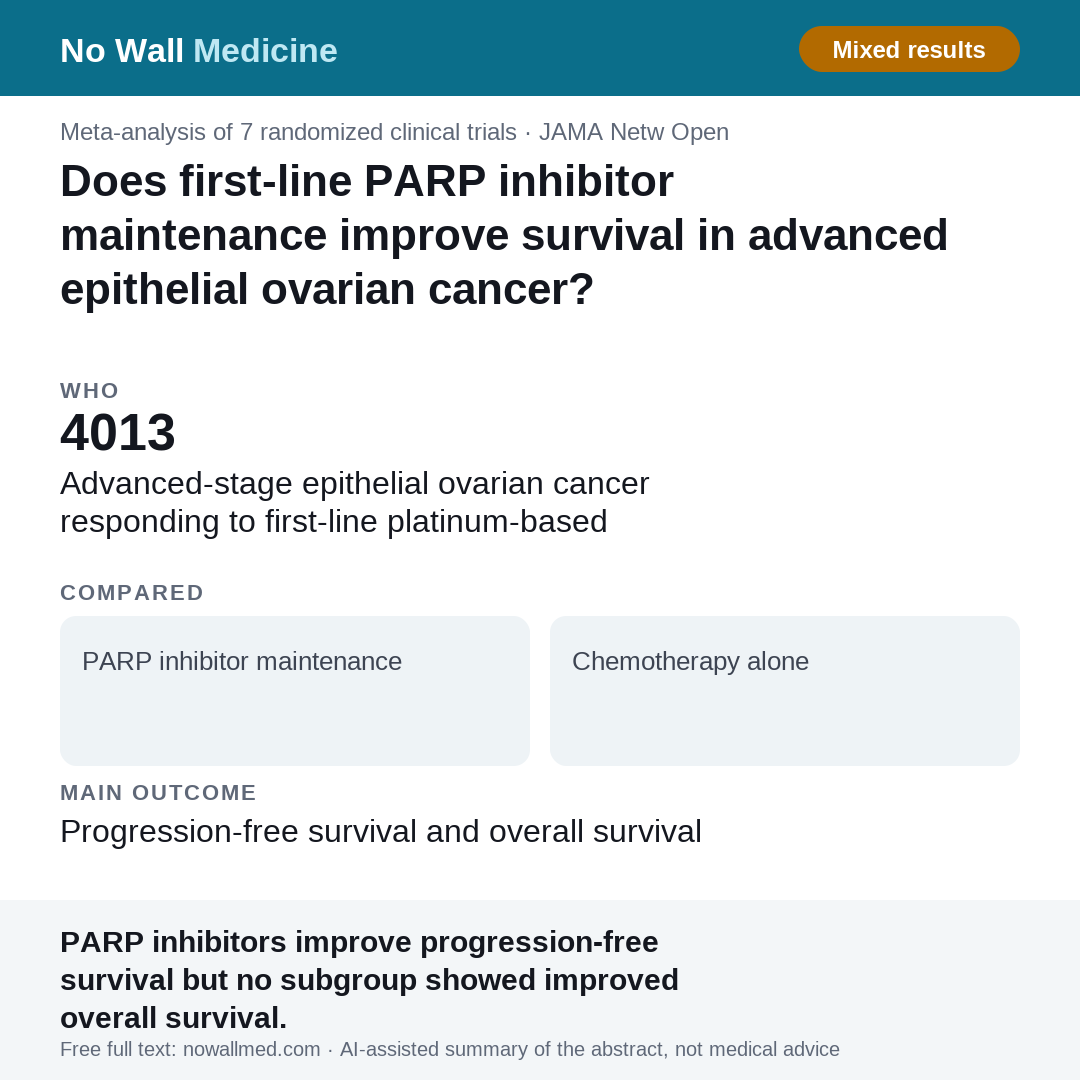
PARP Inhibitor Maintenance After First-Line Chemotherapy in Advanced-Stage Epithelial Ovarian Cancer: A Systematic Review and Meta-Analysis
Meta-analysis of 7 randomized clinical trialsMixed results
Does first-line PARP inhibitor maintenance improve survival in advanced epithelial ovarian cancer?
Who
4013
Advanced-stage epithelial ovarian cancer responding to first-line platinum-based chemotherapy
Compared
PARP inhibitor maintenance
Chemotherapy alone
Main outcome
Progression-free survival and overall survival
Result: hazard ratio 0.57 (95% CI, 0.46-0.70)
Bottom line: PARP inhibitors improve progression-free survival but no subgroup showed improved overall survival.
JAMA Netw Open · 2025-11-03Download image
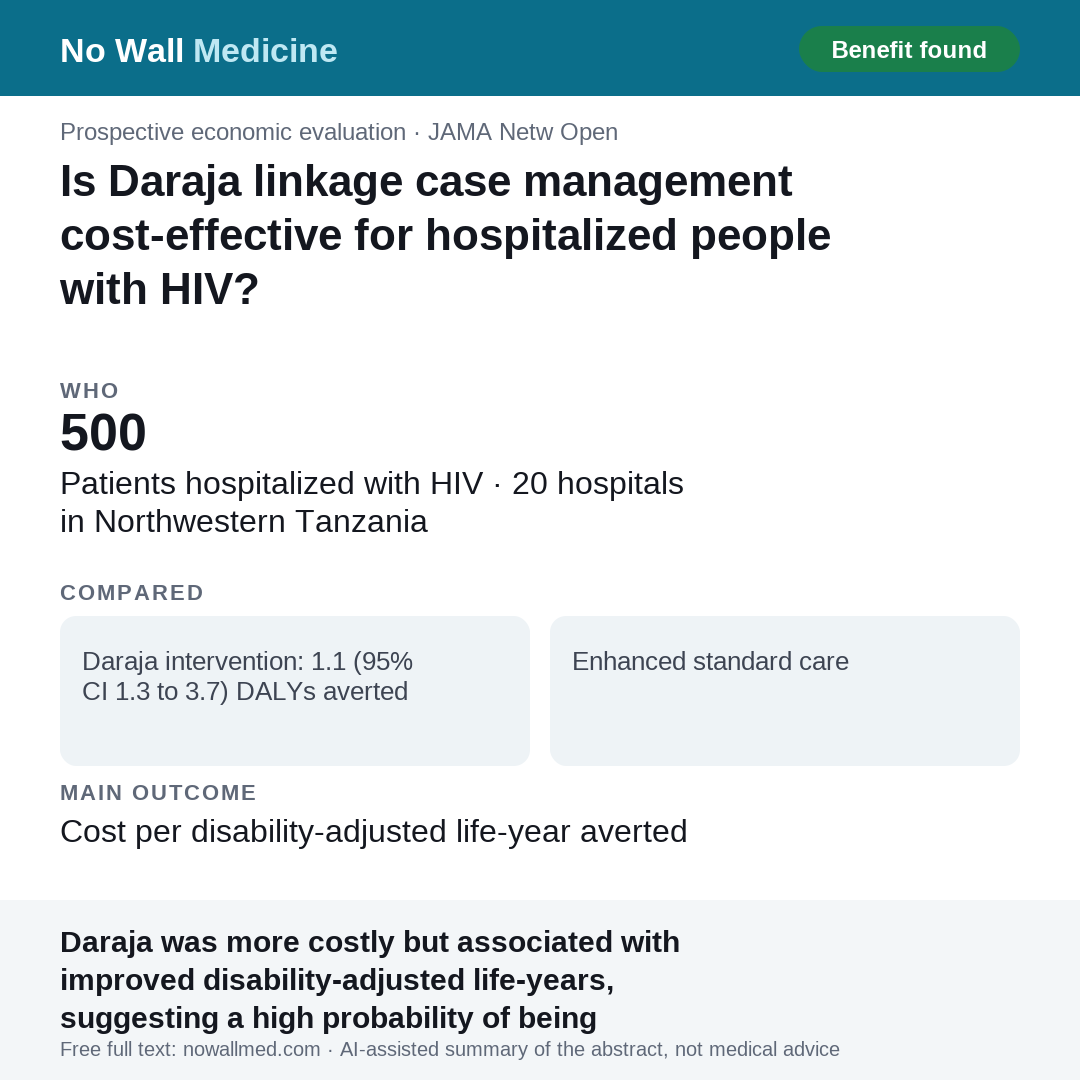
Cost-Effectiveness of Linkage Case Management for Hospitalized People With HIV
Prospective economic evaluationBenefit found
Is Daraja linkage case management cost-effective for hospitalized people with HIV?
Who
500
Patients hospitalized with HIV · 20 hospitals in Northwestern Tanzania
Compared
Daraja intervention: 1.1 (95% CI 1.3 to 3.7) DALYs averted
Enhanced standard care
Main outcome
Cost per disability-adjusted life-year averted
Bottom line: Daraja was more costly but associated with improved disability-adjusted life-years, suggesting a high probability of being cost-effective.
JAMA Netw Open · 2025-11-03Download image
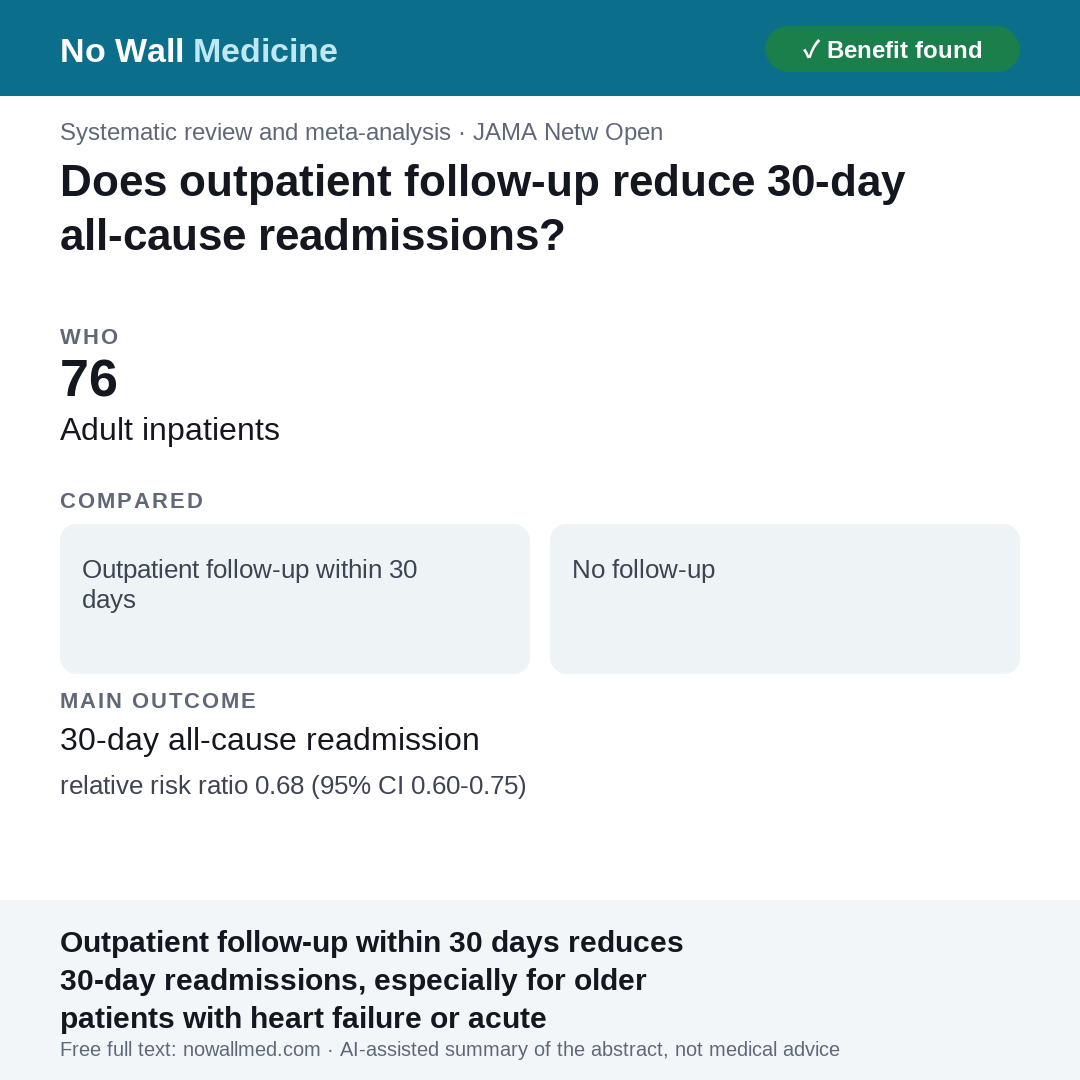
Outpatient Follow-Up and 30-Day Readmissions: A Systematic Review and Meta-Analysis
Systematic review and meta-analysisBenefit found
Does outpatient follow-up reduce 30-day all-cause readmissions?
Who
76
Adult inpatients
Compared
Outpatient follow-up within 30 days
No follow-up
Main outcome
30-day all-cause readmission
Result: relative risk ratio 0.68 (95% CI 0.60-0.75)
Bottom line: Outpatient follow-up within 30 days reduces 30-day readmissions, especially for older patients with heart failure or acute myocardial infarction.
JAMA Netw Open · 2025-11-03Download image
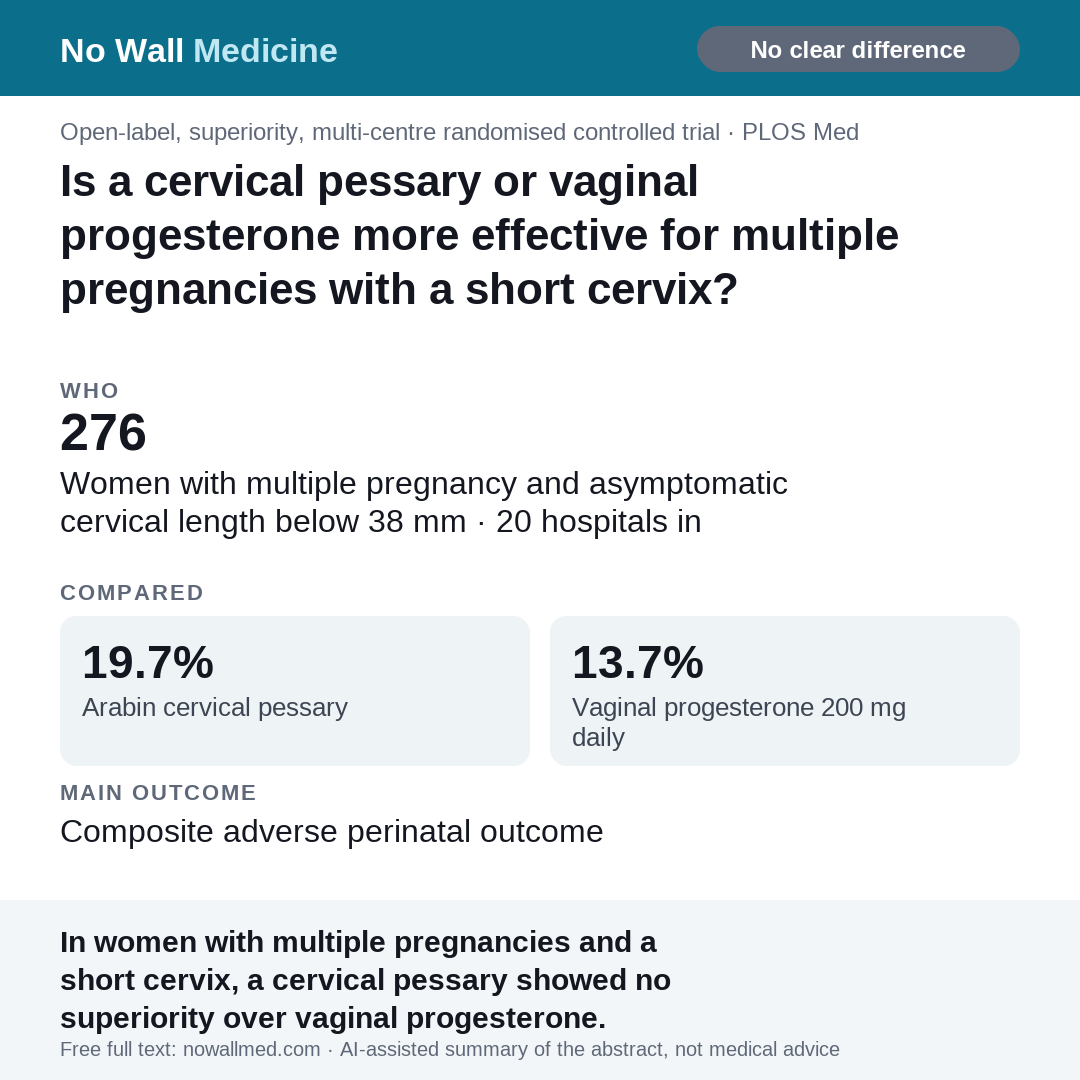
Cervical pessary versus vaginal progesterone in women with a multiple pregnancy and a short cervix: A randomised controlled trial
Open-label, superiority, multi-centre randomised controlled trialNo clear difference
Is a cervical pessary or vaginal progesterone more effective for multiple pregnancies with a short cervix?
Who
276
Women with multiple pregnancy and asymptomatic cervical length below 38 mm · 20 hospitals in the Netherlands
Compared
19.7%Arabin cervical pessary
13.7%Vaginal progesterone 200 mg daily
Main outcome
Composite adverse perinatal outcome
Result: crude RR 1.43 (95% CI 0.85 to 2.4)
Bottom line: In women with multiple pregnancies and a short cervix, a cervical pessary showed no superiority over vaginal progesterone.
Limitation: Inability to blind interventions and low self-reported medication compliance in the progesterone group.
PLOS Med · 2025-11-03Download image
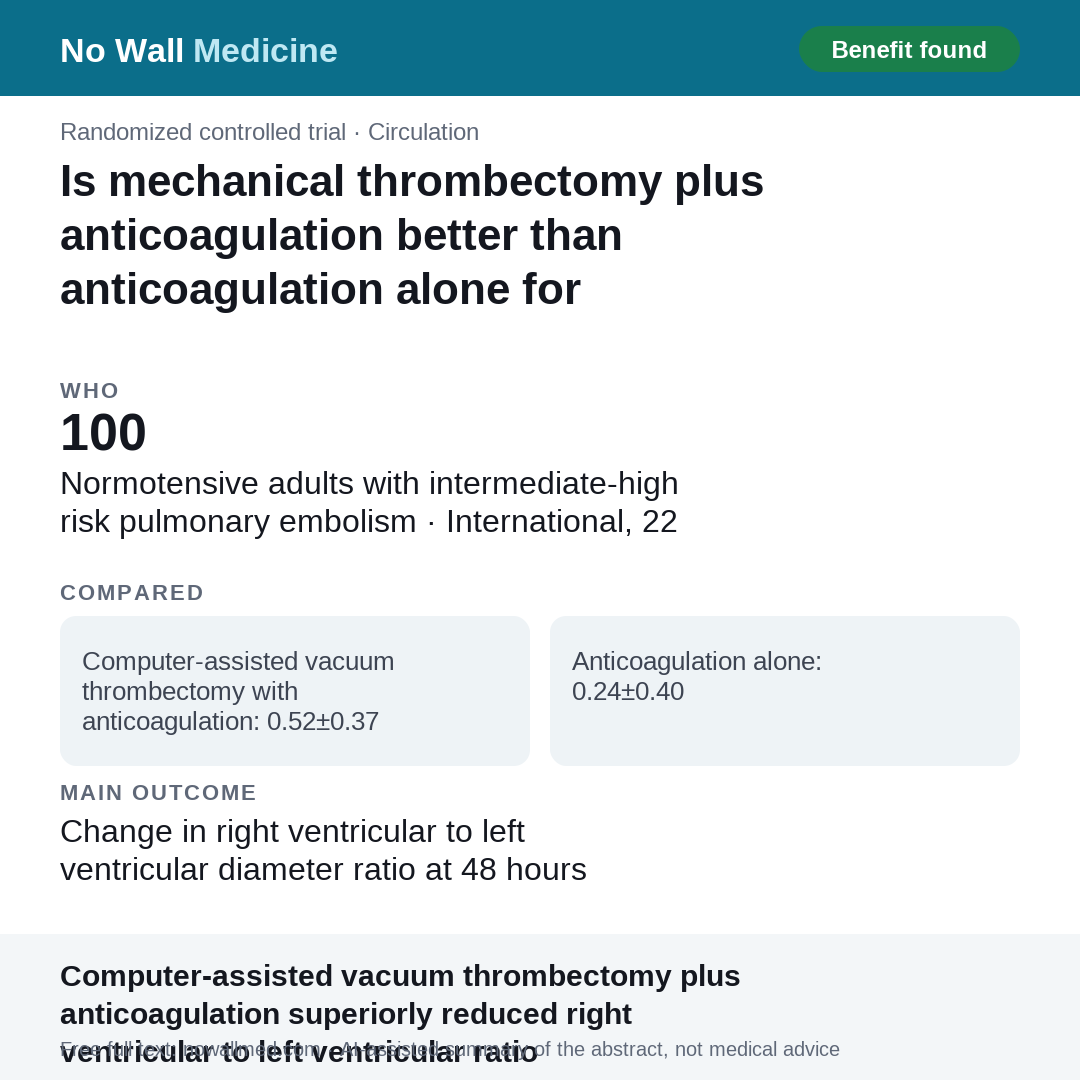
Randomized Controlled Trial of Mechanical Thrombectomy With Anticoagulation Versus Anticoagulation Alone for Acute Intermediate-High Risk Pulmonary Embolism: Primary Outcomes From the STORM-PE Trial
Randomized controlled trialBenefit found
Is mechanical thrombectomy plus anticoagulation better than anticoagulation alone for intermediate-high risk pulmonary embolism?
Who
100
Normotensive adults with intermediate-high risk pulmonary embolism · International, 22 sites
Compared
Computer-assisted vacuum thrombectomy with anticoagulation: 0.52±0.37
Anticoagulation alone: 0.24±0.40
Main outcome
Change in right ventricular to left ventricular diameter ratio at 48 hours
Result: difference of 0.27 (95% CI, 0.12-0.43)
Bottom line: Computer-assisted vacuum thrombectomy plus anticoagulation superiorly reduced right ventricular to left ventricular ratio compared to anticoagulation alone.
Circulation · 2025-11-03Download image
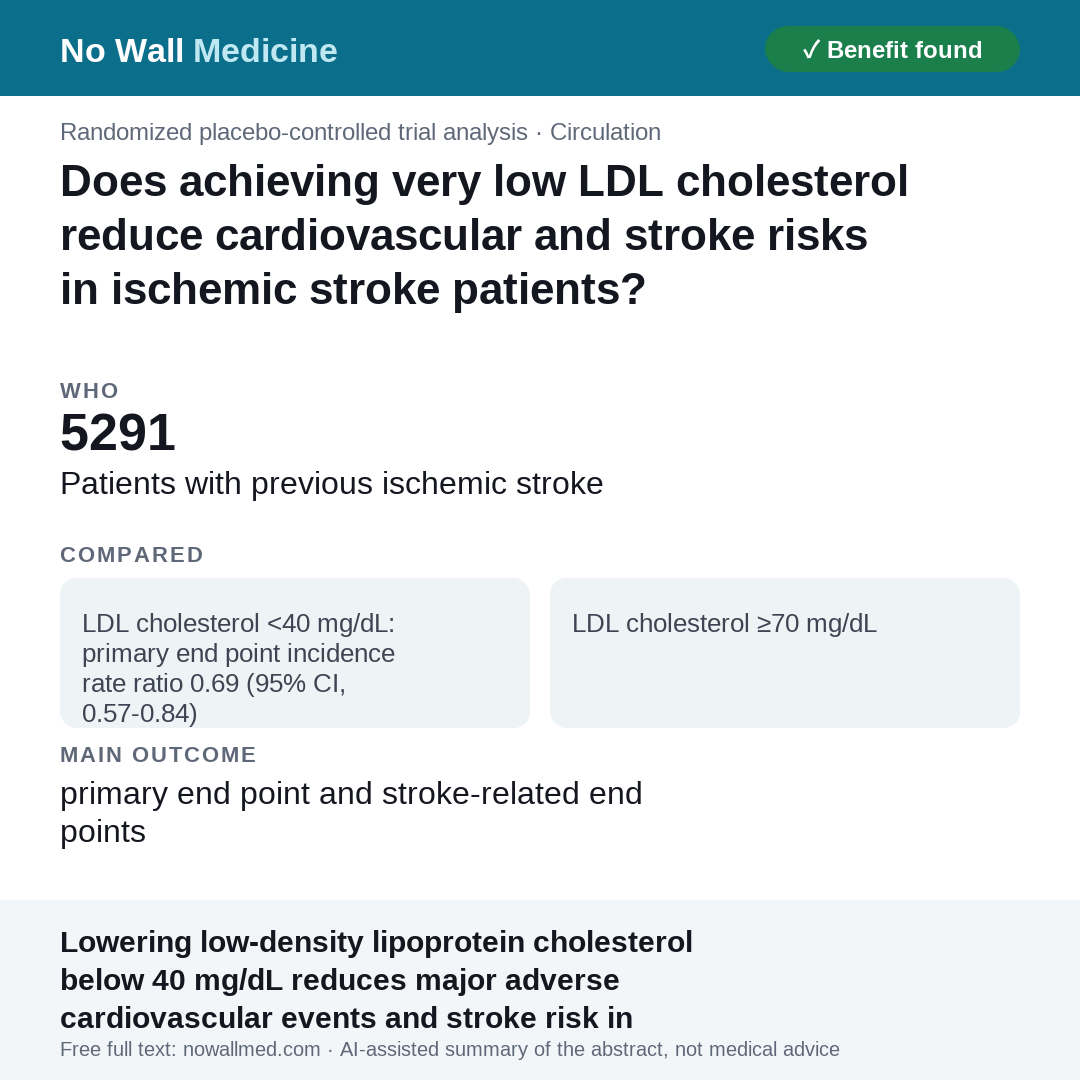
Efficacy and Safety of Very Low Achieved LDL Cholesterol in Patients With Previous Ischemic Stroke
Randomized placebo-controlled trial analysisBenefit found
Does achieving very low LDL cholesterol reduce cardiovascular and stroke risks in ischemic stroke patients?
Who
5291
Patients with previous ischemic stroke
Compared
LDL cholesterol <40 mg/dL: primary end point incidence rate ratio 0.69 (95% CI, 0.57-0.84)
LDL cholesterol ≥70 mg/dL
Main outcome
primary end point and stroke-related end points
Result: incidence rate ratio 0.69 (95% CI, 0.57-0.84)
Bottom line: Lowering low-density lipoprotein cholesterol below 40 mg/dL reduces major adverse cardiovascular events and stroke risk in ischemic stroke patients.
Circulation · 2025-11-03Download image
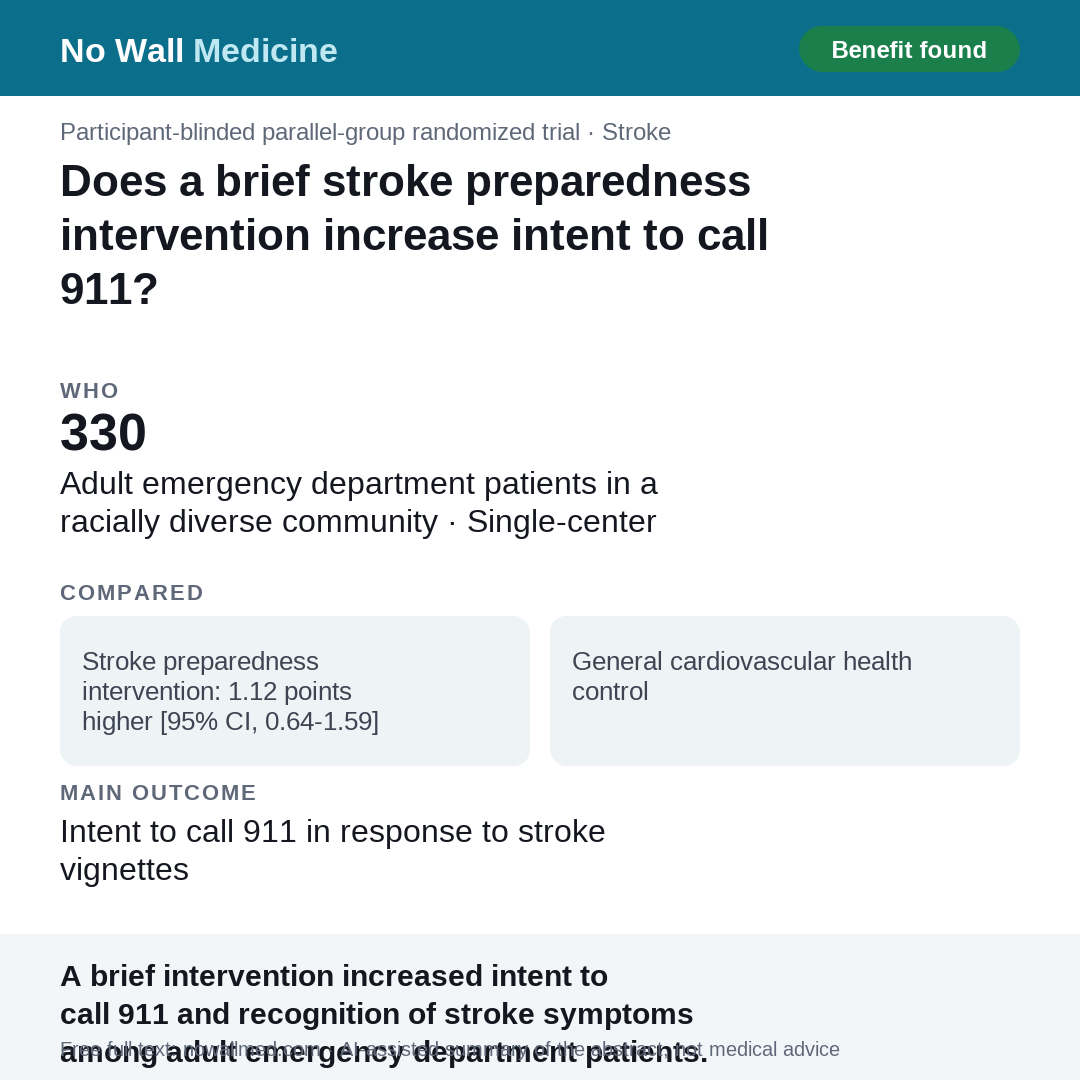
Partnering With an Urban Hospital for Stroke Preparedness in the Emergency Department: SPEDI Randomized Controlled Trial
Participant-blinded parallel-group randomized trialBenefit found
Does a brief stroke preparedness intervention increase intent to call 911?
Who
330
Adult emergency department patients in a racially diverse community · Single-center urban hospital
Compared
Stroke preparedness intervention: 1.12 points higher [95% CI, 0.64-1.59]
General cardiovascular health control
Main outcome
Intent to call 911 in response to stroke vignettes
Result: adjusted mean stroke action score difference, 1.12 points higher [95% CI, 0.64-1.59]
Bottom line: A brief intervention increased intent to call 911 and recognition of stroke symptoms among adult emergency department patients.
Funded by: National Institutes of Health
Stroke · 2025-11-03Download image
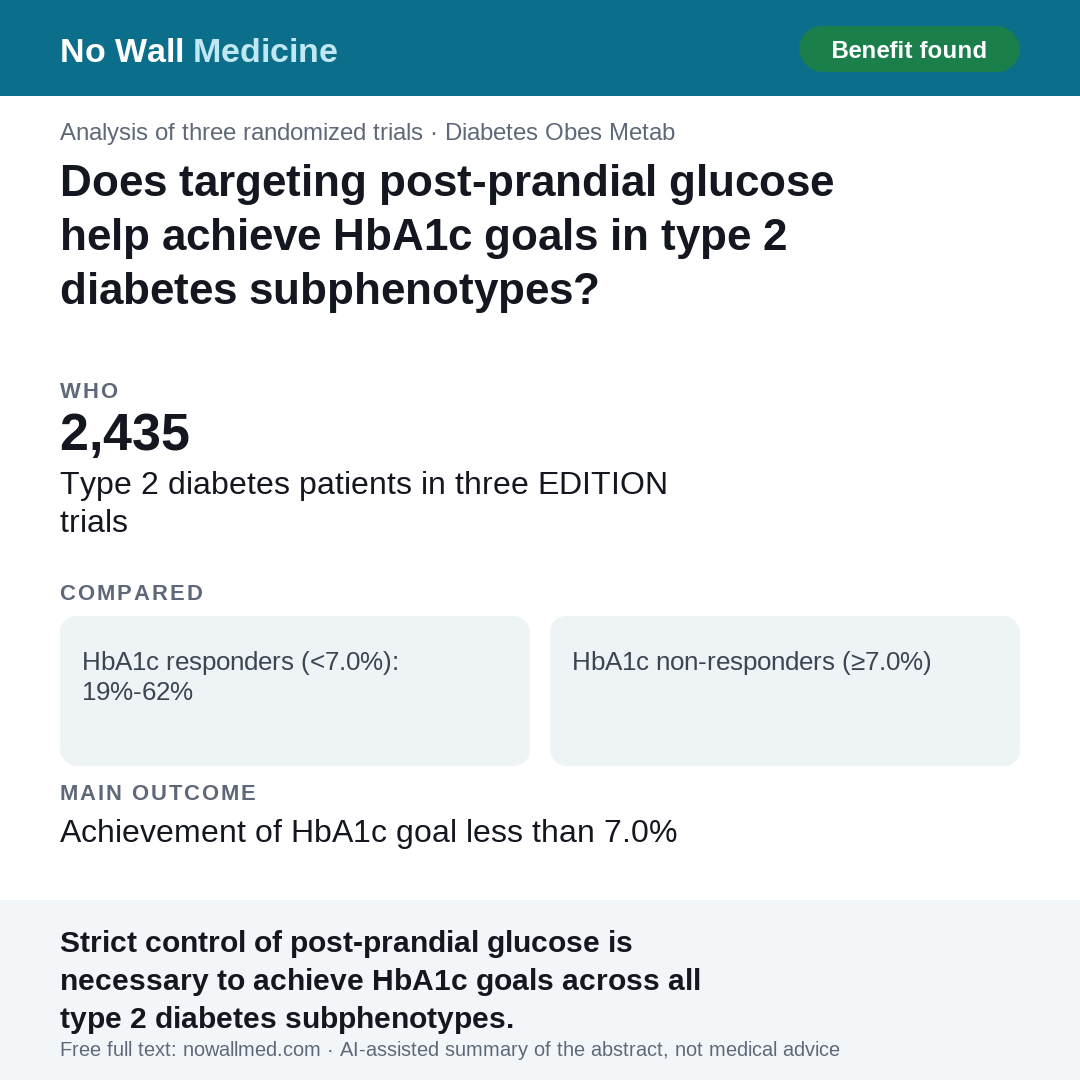
Importance of targeting post-prandial hyperglycaemia to achieve HbA1c goals in insulin glargine-treated subphenotypes of type 2 diabetes
Analysis of three randomized trialsBenefit found
Does targeting post-prandial glucose help achieve HbA1c goals in type 2 diabetes subphenotypes?
Who
2,435
Type 2 diabetes patients in three EDITION trials
Compared
HbA1c responders (<7.0%): 19%-62%
HbA1c non-responders (≥7.0%)
Main outcome
Achievement of HbA1c goal less than 7.0%
Bottom line: Strict control of post-prandial glucose is necessary to achieve HbA1c goals across all type 2 diabetes subphenotypes.
Diabetes Obes Metab · 2025-11-03Download image
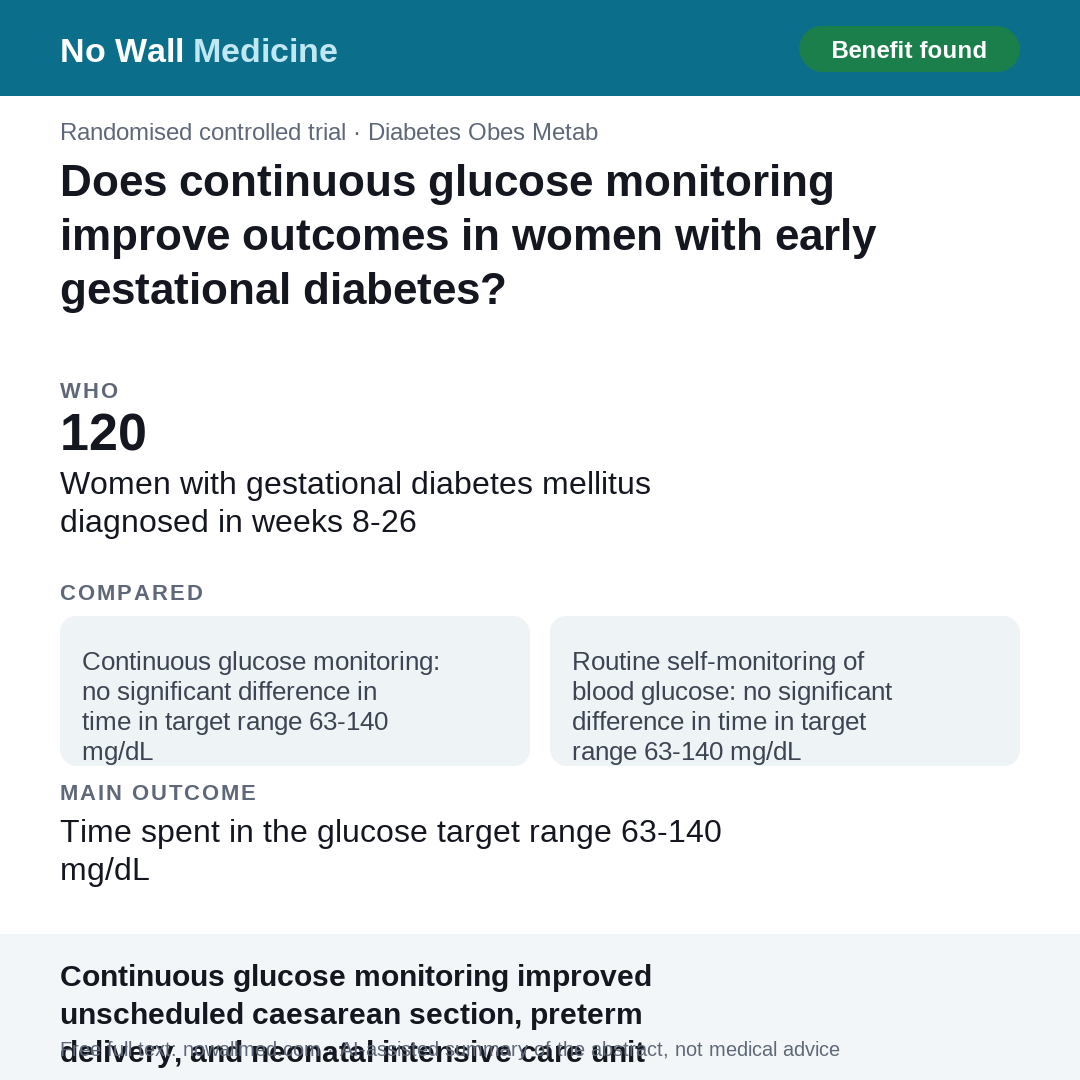
Continuous glucose monitoring in early gestational diabetes improves maternal and neonatal outcomes-The Steady Sugar trial
Randomised controlled trialBenefit found
Does continuous glucose monitoring improve outcomes in women with early gestational diabetes?
Who
120
Women with gestational diabetes mellitus diagnosed in weeks 8-26
Compared
Continuous glucose monitoring: no significant difference in time in target range 63-140 mg/dL
Routine self-monitoring of blood glucose: no significant difference in time in target range 63-140 mg/dL
Main outcome
Time spent in the glucose target range 63-140 mg/dL
Bottom line: Continuous glucose monitoring improved unscheduled caesarean section, preterm delivery, and neonatal intensive care unit admission rates.
Diabetes Obes Metab · 2025-11-03Download image
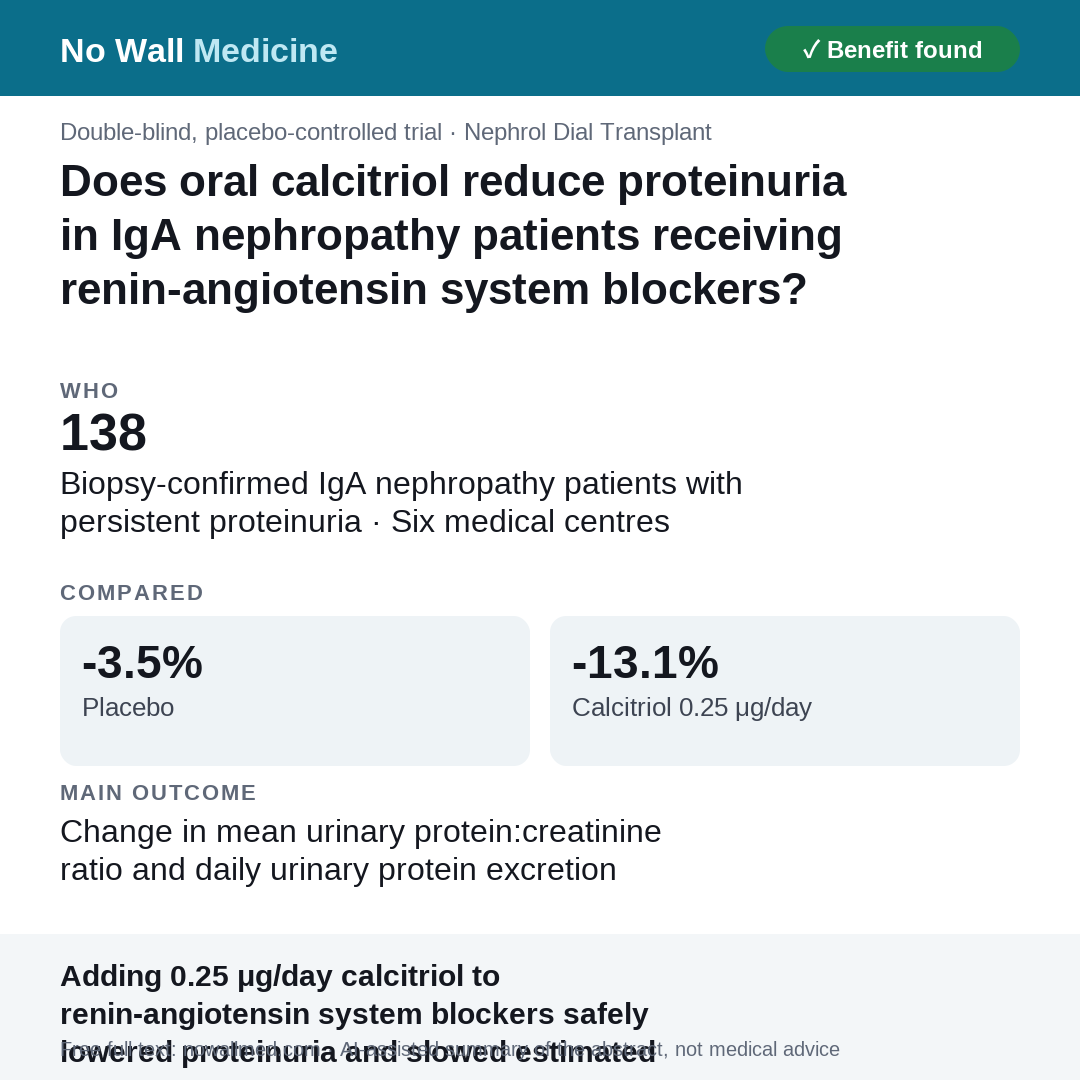
Additive renoprotective effects of oral calcitriol on patients with IgA nephropathy receiving RAS blockers
Double-blind, placebo-controlled trialBenefit found
Does oral calcitriol reduce proteinuria in IgA nephropathy patients receiving renin-angiotensin system blockers?
Who
138
Biopsy-confirmed IgA nephropathy patients with persistent proteinuria · Six medical centres
Compared
-3.5%Placebo (from 1.32 to 1.02 g/day)
-13.1%Calcitriol 0.25 μg/day (from 1.29 to 0.97 g/day)
Main outcome
Change in mean urinary protein:creatinine ratio and daily urinary protein excretion
Result: mean difference -187 mg/g [95% confidence interval -370.6 to -4.0]
Bottom line: Adding 0.25 μg/day calcitriol to renin-angiotensin system blockers safely lowered proteinuria and slowed estimated glomerular filtration rate decline.
Nephrol Dial Transplant · 2025-11-03Download image
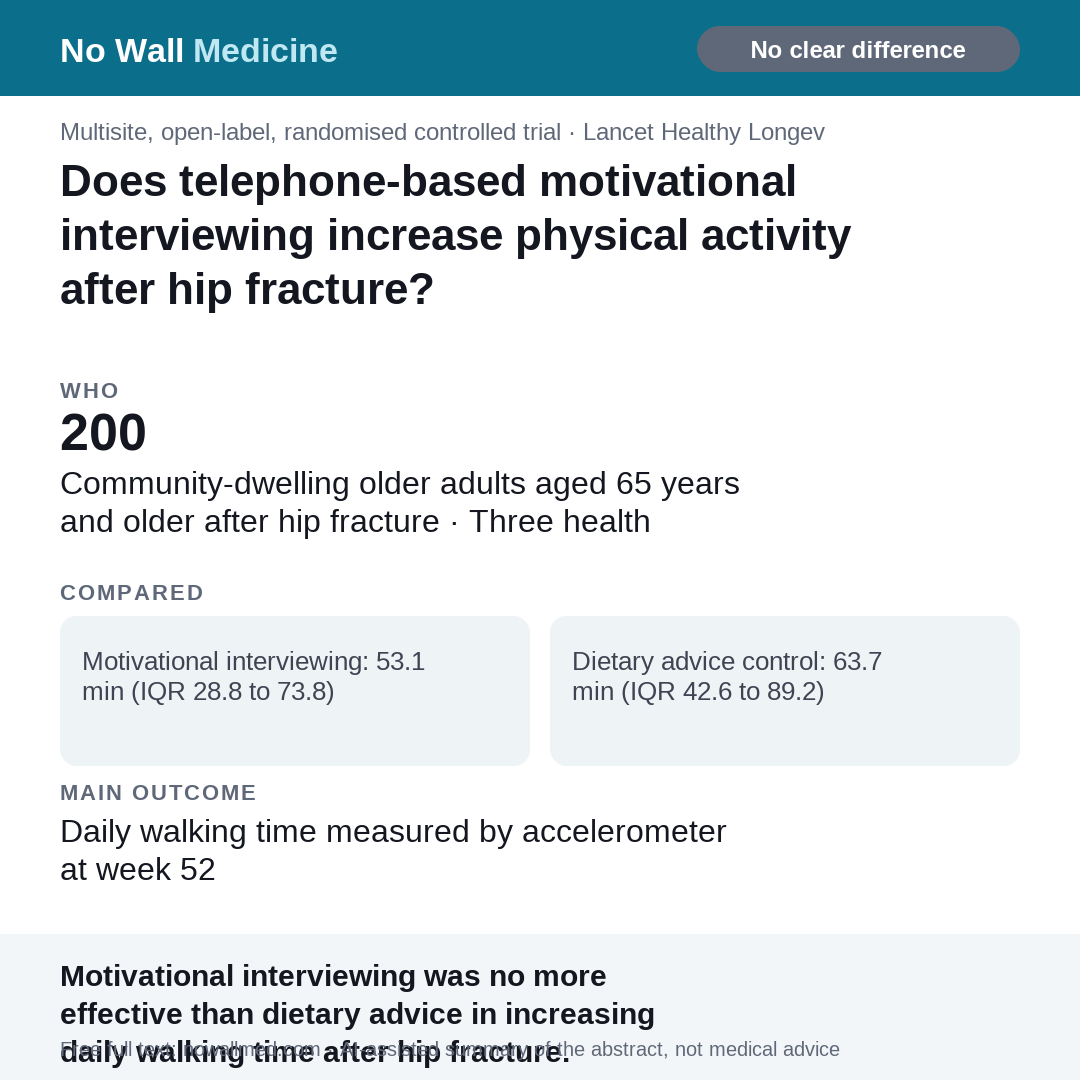
The effect of motivational interviewing on physical activity after hip fracture: a multisite, open-label, randomised controlled trial in Australia
Multisite, open-label, randomised controlled trialNo clear difference
Does telephone-based motivational interviewing increase physical activity after hip fracture?
Who
200
Community-dwelling older adults aged 65 years and older after hip fracture · Three health networks in Melbourne, Australia
Compared
Motivational interviewing: 53.1 min (IQR 28.8 to 73.8)
Dietary advice control: 63.7 min (IQR 42.6 to 89.2)
Main outcome
Daily walking time measured by accelerometer at week 52
Result: mean difference 4.1% (95% CI -16.6 to 21.1)
Bottom line: Motivational interviewing was no more effective than dietary advice in increasing daily walking time after hip fracture.
Funded by: National Health and Medical Research Council, Australia
Lancet Healthy Longev · 2025-11-03Download image
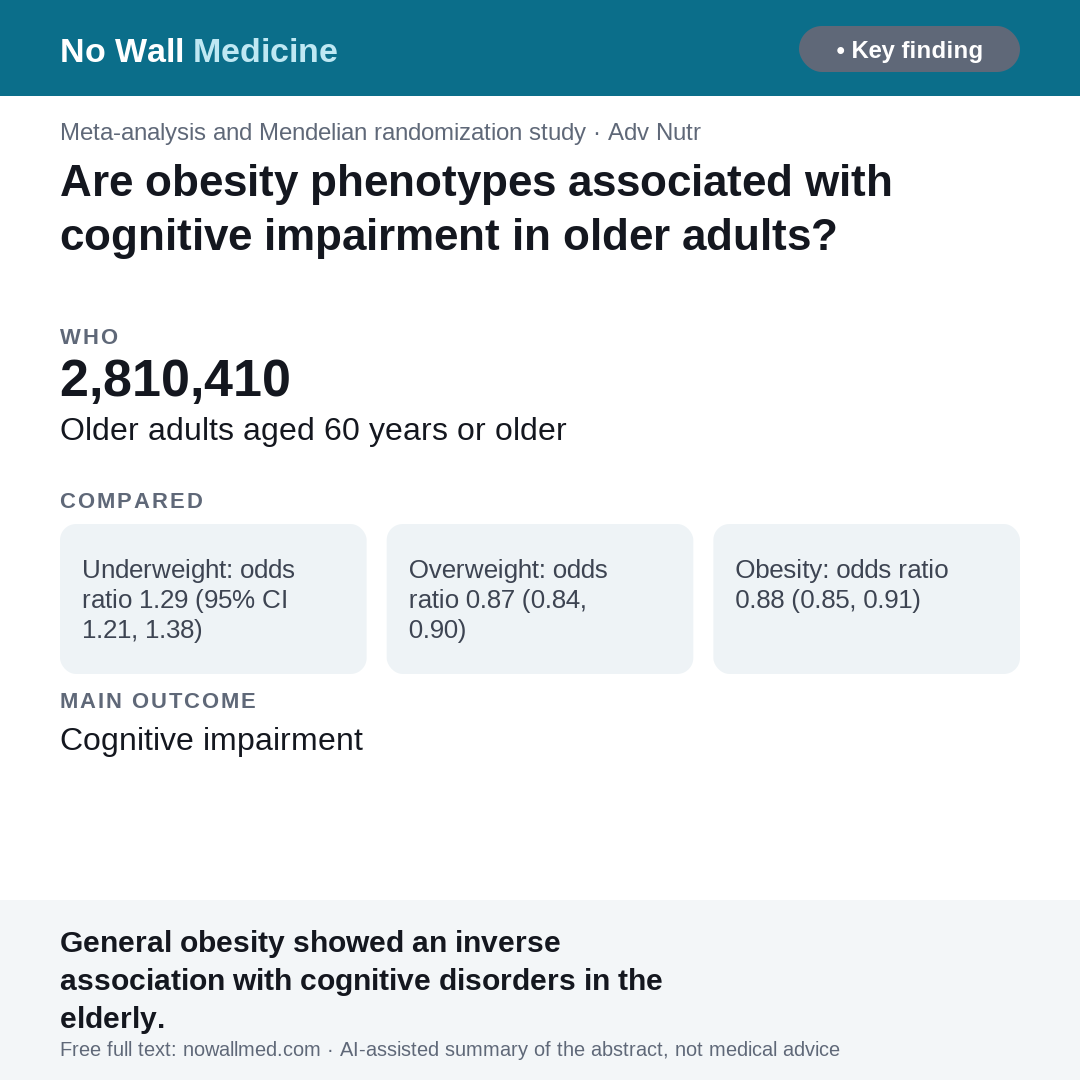
The Associations of General, Central, Visceral Obesity, and Body Fat Percentage with Cognitive Impairment in the Elderly: Meta-analysis and Mendelian Randomization Study
Meta-analysis and Mendelian randomization studyBenefit found
Are obesity phenotypes associated with cognitive impairment in older adults?
Who
2,810,410
Older adults aged 60 years or older
Compared
Underweight: odds ratio 1.29 (95% CI 1.21, 1.38)
Overweight: odds ratio 0.87 (0.84, 0.90)
Obesity: odds ratio 0.88 (0.85, 0.91)
Main outcome
Cognitive impairment
Bottom line: General obesity showed an inverse association with cognitive disorders in the elderly.
Adv Nutr · 2025-11-03Download image
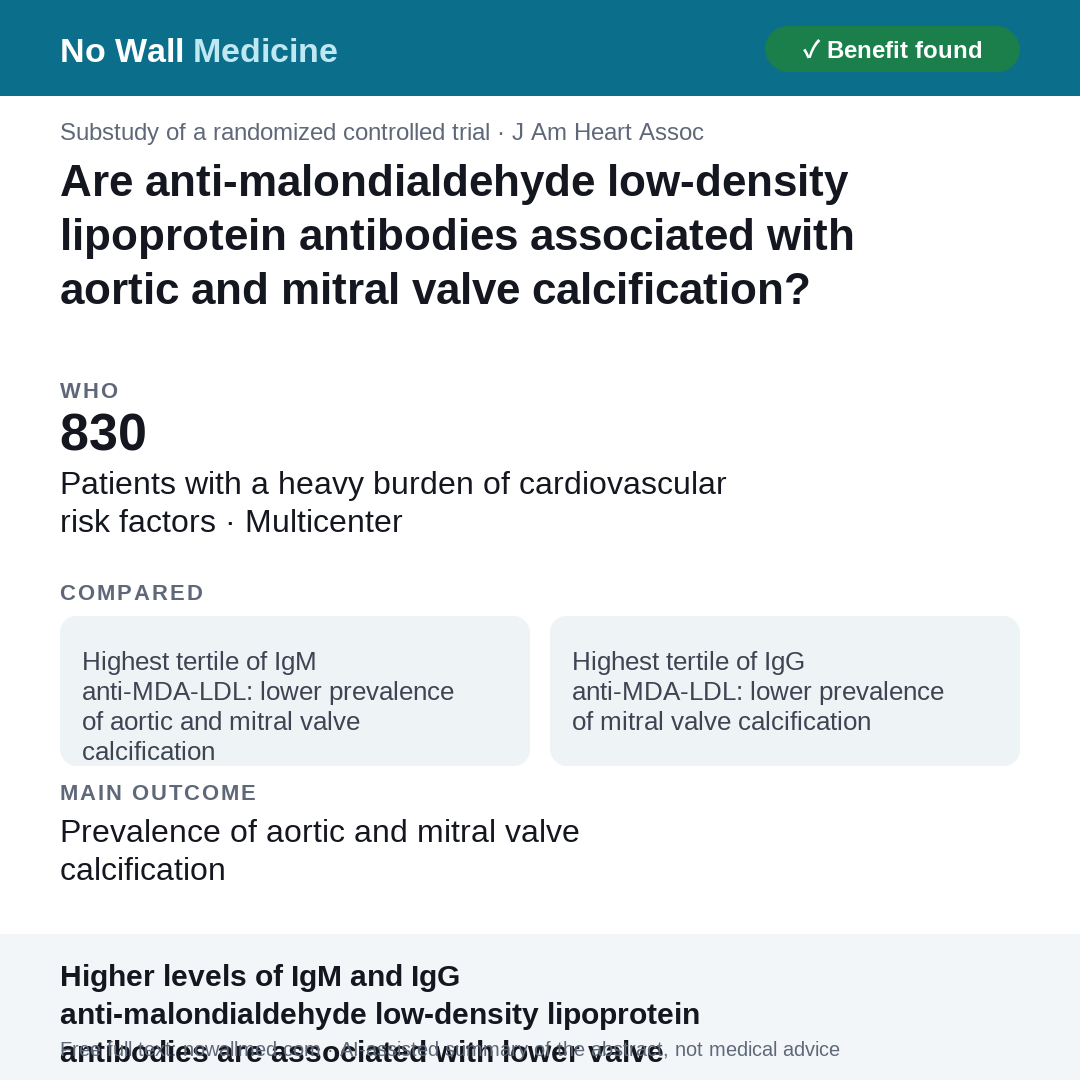
Anti-Malondialdehyde Low-Density Lipoprotein Antibodies and Valvular Calcification: A Substudy of the SCOT-HEART Trial
Substudy of a randomized controlled trialBenefit found
Are anti-malondialdehyde low-density lipoprotein antibodies associated with aortic and mitral valve calcification?
Who
830
Patients with a heavy burden of cardiovascular risk factors · Multicenter
Compared
Highest tertile of IgM anti-MDA-LDL: lower prevalence of aortic and mitral valve calcification
Highest tertile of IgG anti-MDA-LDL: lower prevalence of mitral valve calcification
Main outcome
Prevalence of aortic and mitral valve calcification
Result: odds ratio 0.59 (95% CI 0.36-0.96) for aortic; odds ratio 0.26 (95% CI 0.07-0.72) for mitral
Bottom line: Higher levels of IgM and IgG anti-malondialdehyde low-density lipoprotein antibodies are associated with lower valve calcification prevalence.
J Am Heart Assoc · 2025-11-03Download image
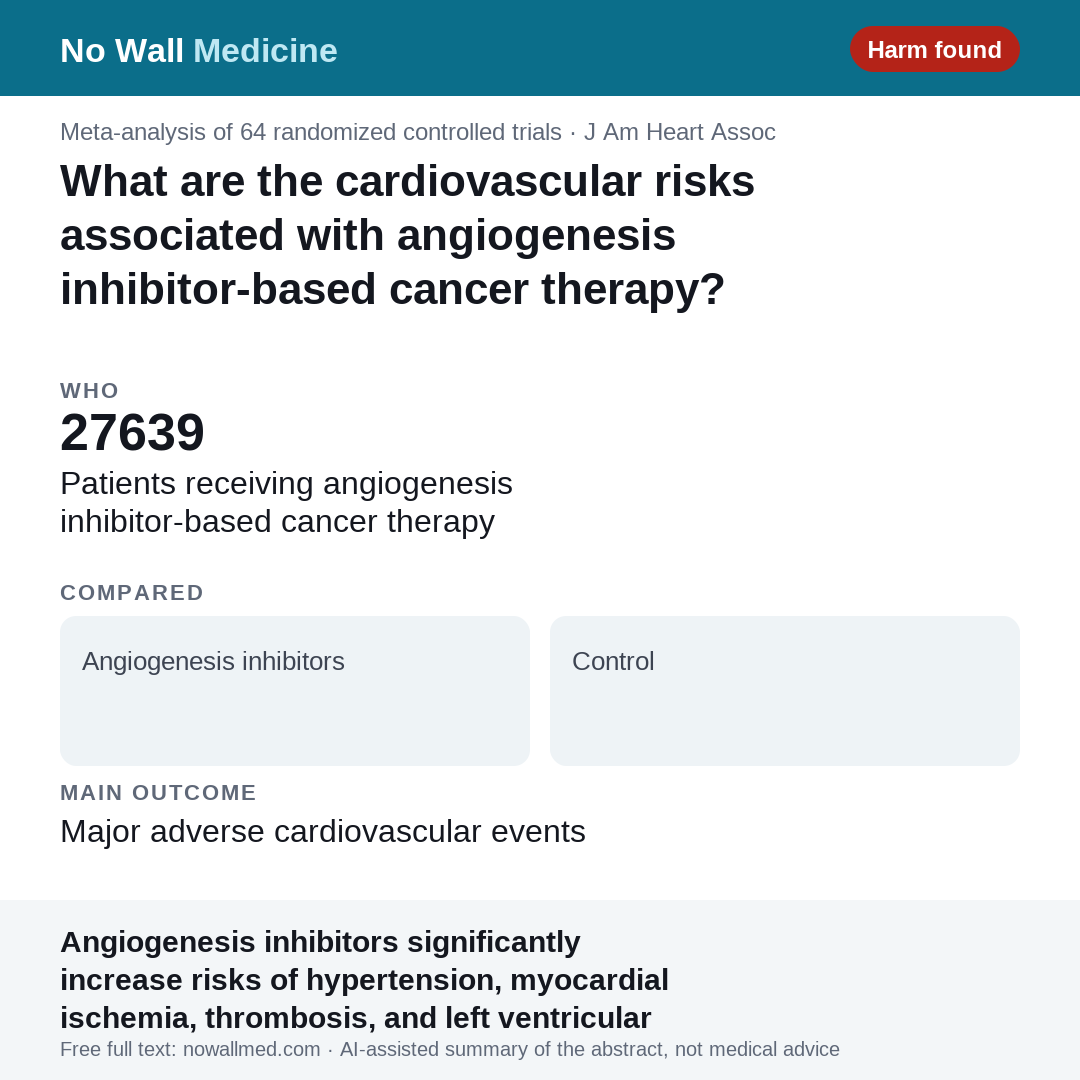
Major Adverse Cardiovascular Events in Angiogenesis Inhibitor-Based Cancer Therapy: A Systematic Review and Meta-Analysis
Meta-analysis of 64 randomized controlled trialsHarm found
What are the cardiovascular risks associated with angiogenesis inhibitor-based cancer therapy?
Who
27639
Patients receiving angiogenesis inhibitor-based cancer therapy
Compared
Angiogenesis inhibitors
Control
Main outcome
Major adverse cardiovascular events
Result: hypertension relative risk 3.28 (95% CI 2.82-4.30)
Bottom line: Angiogenesis inhibitors significantly increase risks of hypertension, myocardial ischemia, thrombosis, and left ventricular dysfunction in cancer patients.
J Am Heart Assoc · 2025-11-03Download image
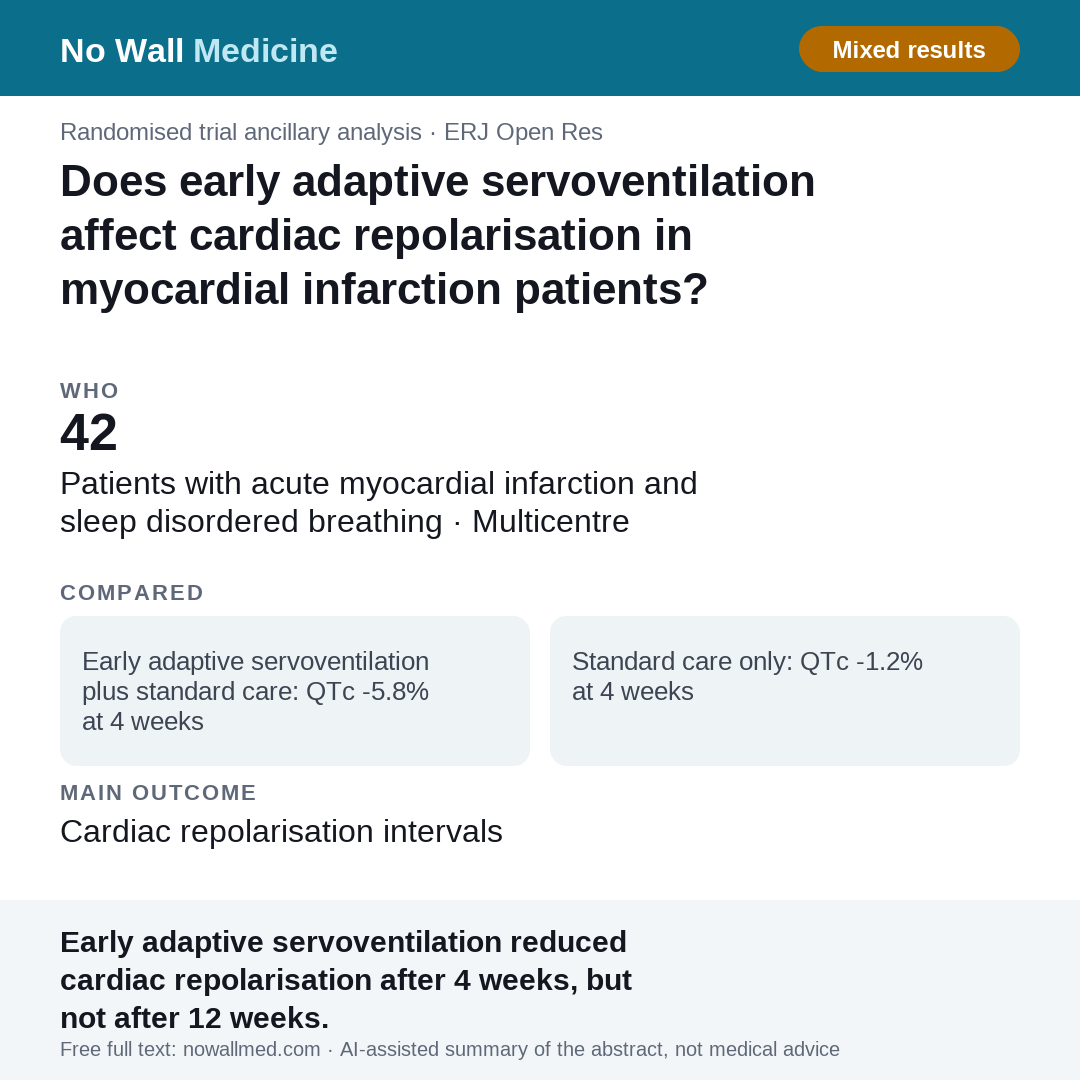
Effect of early adaptive servoventilation on cardiac repolarisation in patients with myocardial infarction and sleep disordered breathing: an ancillary analysis of the randomised controlled trial TEAM-ASV I
Randomised trial ancillary analysisMixed results
Does early adaptive servoventilation affect cardiac repolarisation in myocardial infarction patients?
Who
42
Patients with acute myocardial infarction and sleep disordered breathing · Multicentre
Compared
Early adaptive servoventilation plus standard care: QTc -5.8% at 4 weeks
Standard care only: QTc -1.2% at 4 weeks
Main outcome
Cardiac repolarisation intervals
Bottom line: Early adaptive servoventilation reduced cardiac repolarisation after 4 weeks, but not after 12 weeks.
ERJ Open Res · 2025-11-03Download image
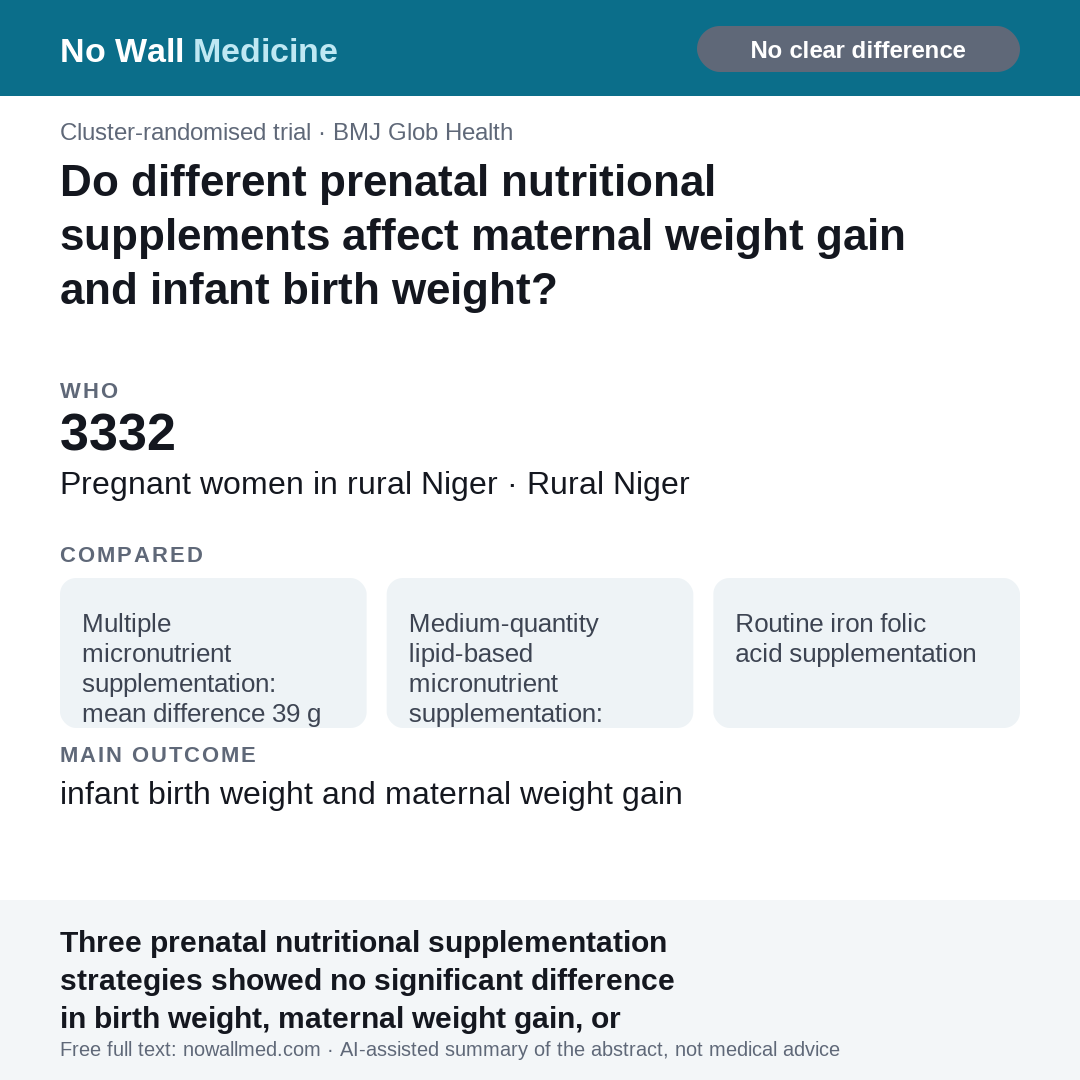
Effect of prenatal multiple micronutrient supplements and medium-quantity lipid-based nutritional supplements on maternal weight gain and infant birth weight in rural Niger: a cluster-randomised trial
Cluster-randomised trialNo clear difference
Do different prenatal nutritional supplements affect maternal weight gain and infant birth weight?
Who
3332
Pregnant women in rural Niger · Rural Niger
Compared
Multiple micronutrient supplementation: mean difference 39 g (95% CI -55, 134)
Medium-quantity lipid-based micronutrient supplementation: mean difference 50 g (95% CI -55, 156)
Routine iron folic acid supplementation
Main outcome
infant birth weight and maternal weight gain
Bottom line: Three prenatal nutritional supplementation strategies showed no significant difference in birth weight, maternal weight gain, or anaemia.
Limitation: statistical power in the trial was limited
BMJ Glob Health · 2025-11-03Download image
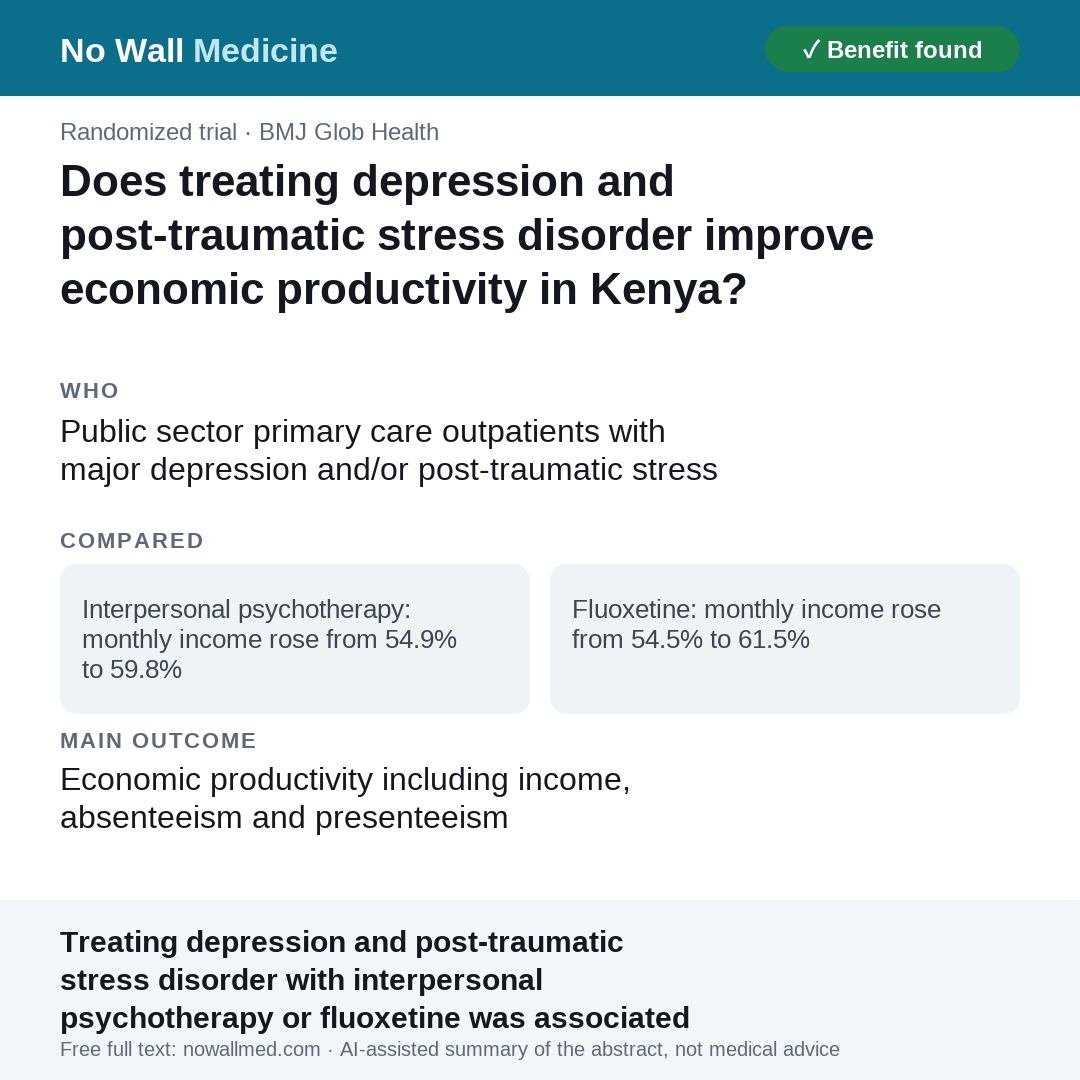
Productivity benefits of treatment of depression and post-traumatic stress disorder in Kenya
Randomized trialBenefit found
Does treating depression and post-traumatic stress disorder improve economic productivity in Kenya?
Who
Public sector primary care outpatients with major depression and/or post-traumatic stress disorder · Kiumu County Hospital, western Kenya
Compared
Interpersonal psychotherapy: monthly income rose from 54.9% to 59.8%
Fluoxetine: monthly income rose from 54.5% to 61.5%
Main outcome
Economic productivity including income, absenteeism and presenteeism
Bottom line: Treating depression and post-traumatic stress disorder with interpersonal psychotherapy or fluoxetine was associated with increased economic productivity.
Funded by: National Institute of Mental Health
BMJ Glob Health · 2025-11-03Download image
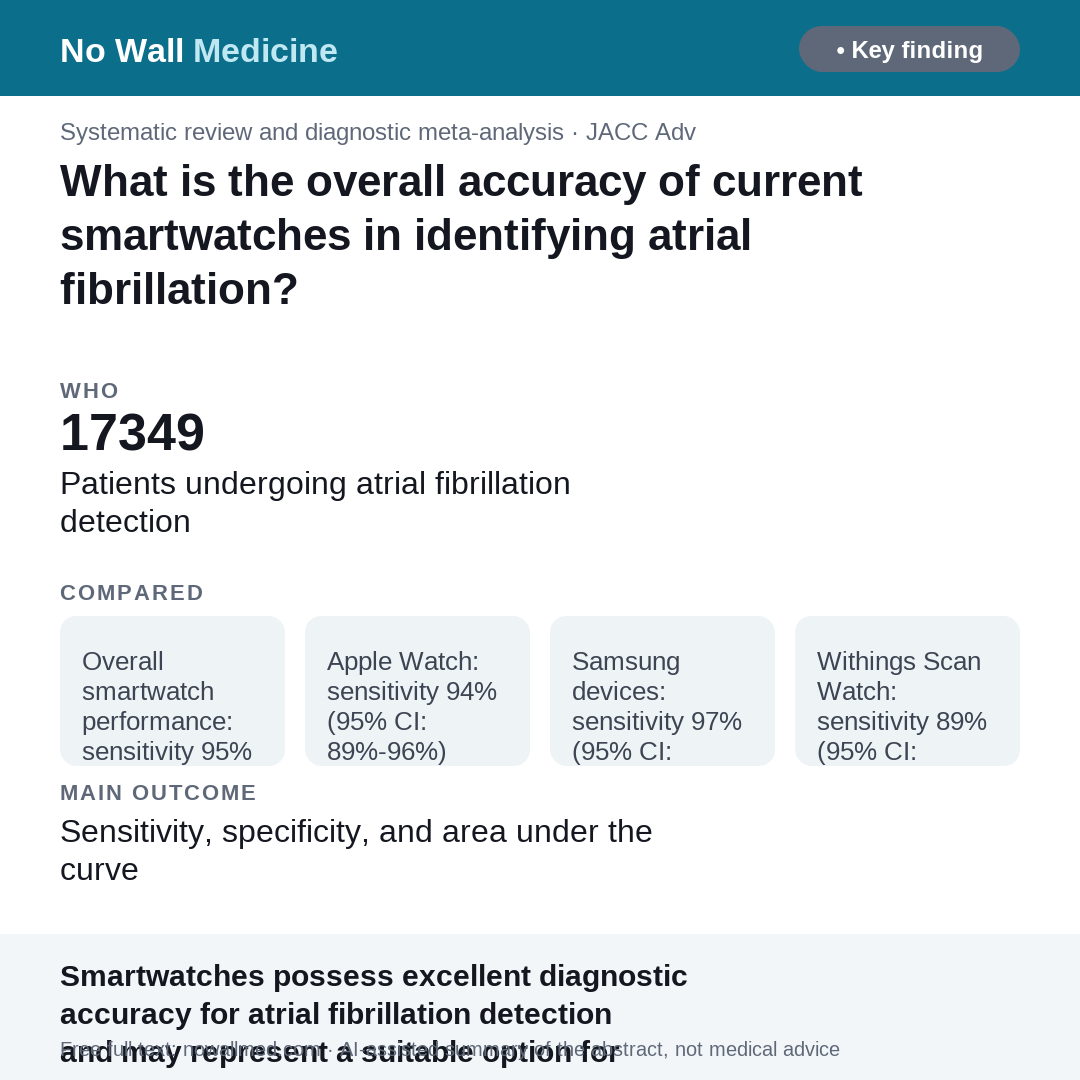
Accuracy of Smartwatches in the Detection of Atrial Fibrillation: A Systematic Review and Diagnostic Meta-Analysis
Systematic review and diagnostic meta-analysisBenefit found
What is the overall accuracy of current smartwatches in identifying atrial fibrillation?
Who
17349
Patients undergoing atrial fibrillation detection
Compared
Overall smartwatch performance: sensitivity 95% (95% CI: 92%-97%)
Apple Watch: sensitivity 94% (95% CI: 89%-96%)
Samsung devices: sensitivity 97% (95% CI: 92%-99%)
Withings Scan Watch: sensitivity 89% (95% CI: 75%-96%)
Main outcome
Sensitivity, specificity, and area under the curve
Result: pooled AUC 0.97 (95% CI 0.96%-0.99%)
Bottom line: Smartwatches possess excellent diagnostic accuracy for atrial fibrillation detection and may represent a suitable option for patients.
JACC Adv · 2025-11-03Download image