Visual abstracts
New randomized trials and meta-analyses from leading journals at a glance: who was studied, what was compared, and what was found. Every paper is free to read in full.
All specialtiesCardiology 4754Oncology 4054Gastroenterology & Hepatology 1904Infectious Disease 3748Neurology 1877Psychiatry & Mental Health 2226Pulmonology 2042Critical Care 1325Endocrinology & Diabetes 2529Pediatrics 2890Surgery 2483Orthopedics & Sports Medicine 914Neurosurgery 526Cardiothoracic & Vascular Surgery 658Plastic & Reconstructive Surgery 580Nephrology 1103Rheumatology 810Hematology 1088Dermatology 615Ophthalmology 534Obstetrics & Gynecology 1638Public & Global Health 1032Radiology & Imaging 634Anesthesiology 956Urology 744ENT (Otolaryngology) 491Emergency Medicine 477Allergy & Immunology 309Geriatrics 969Family Medicine & Primary Care 536Medical Genetics & Genomics 651Pathology & Laboratory Medicine 156Physical Medicine & Rehabilitation 740Palliative Care 422Nutrition 1546Digital Health & AI 2178General Medicine 316
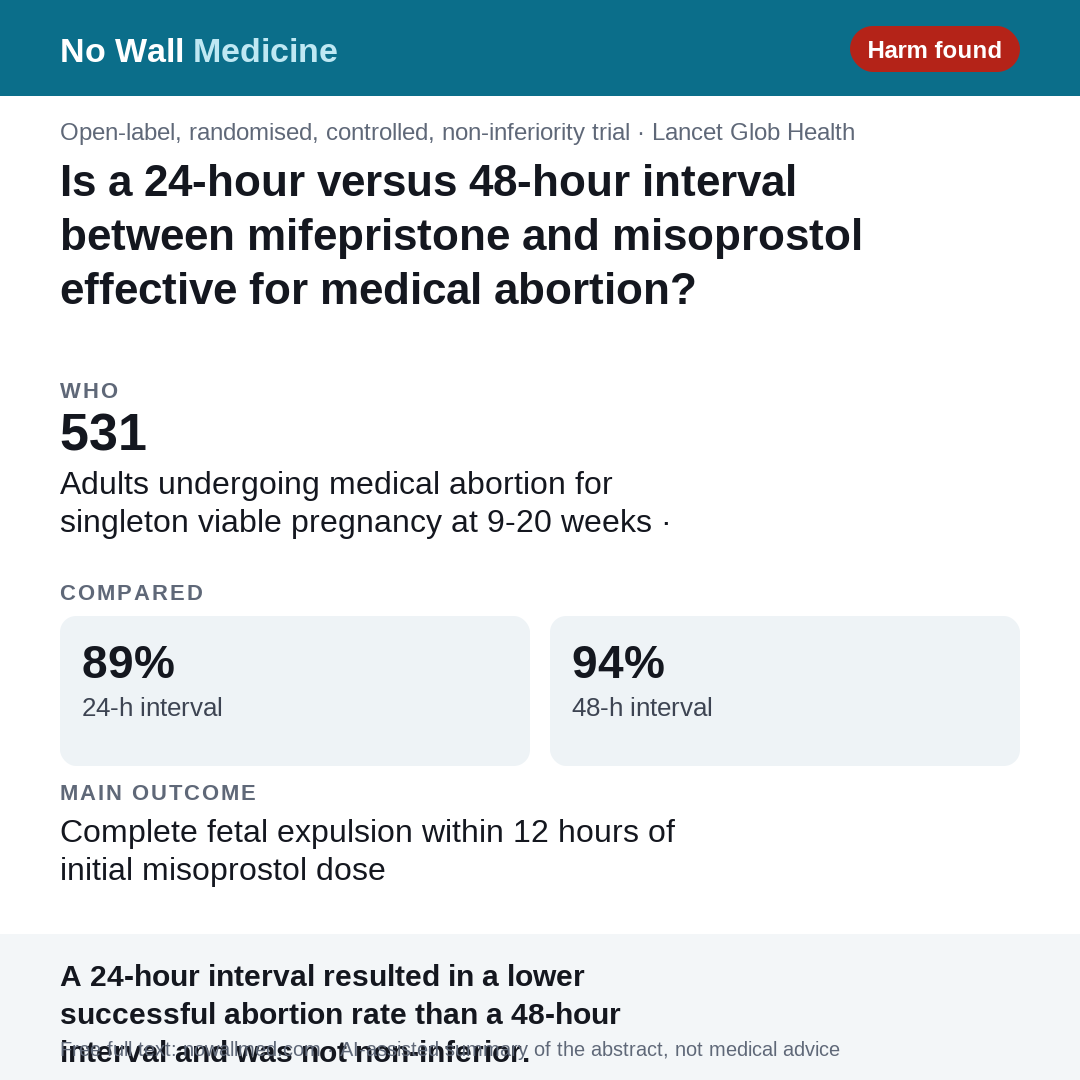
Effectiveness and acceptability of a 24-h interval versus a 48-h interval between mifepristone intake and misoprostol administration for in-hospital abortion at 9-20 gestational weeks: an international, open-label, randomised, controlled, non-inferiority trial
Open-label, randomised, controlled, non-inferiority trialHarm found
Is a 24-hour versus 48-hour interval between mifepristone and misoprostol effective for medical abortion?
Who
531
Adults undergoing medical abortion for singleton viable pregnancy at 9-20 weeks · Nine hospitals in India, Sweden, Thailand, and Viet Nam
Compared
89%24-h interval (236 of 266 participants)
94%48-h interval (248 of 265 participants)
Main outcome
Complete fetal expulsion within 12 hours of initial misoprostol dose
Result: odds ratio 0·54, 95% CI 0·29-1·00
Bottom line: A 24-hour interval resulted in a lower successful abortion rate than a 48-hour interval and was not non-inferior.
Funded by: Ministry of Foreign Affairs of the Netherlands
Lancet Glob Health · 2024-12-21Download image
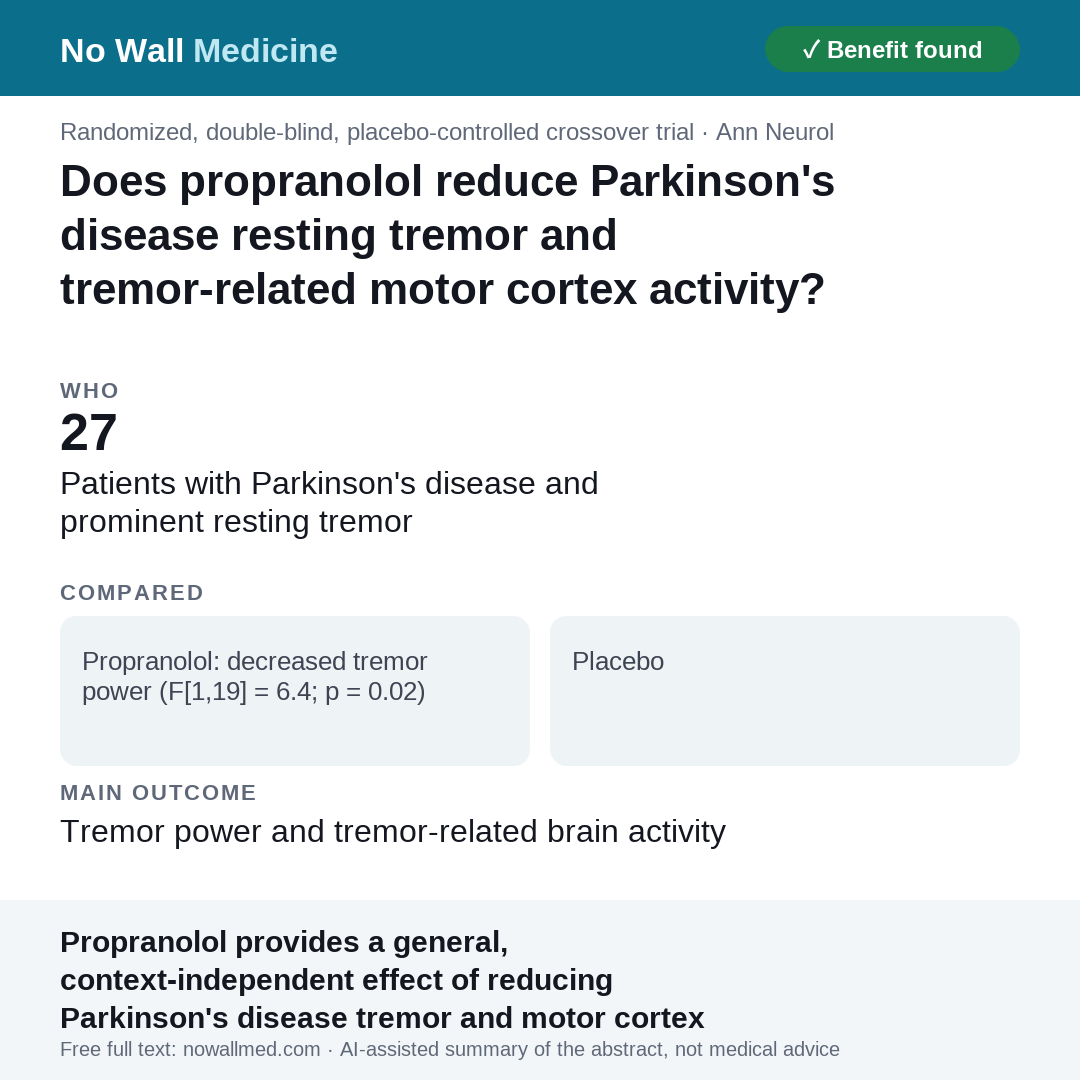
Propranolol Reduces Parkinson's Tremor and Inhibits Tremor-Related Activity in the Motor Cortex: A Placebo-Controlled Crossover Trial
Randomized, double-blind, placebo-controlled crossover trialBenefit found
Does propranolol reduce Parkinson's disease resting tremor and tremor-related motor cortex activity?
Who
27
Patients with Parkinson's disease and prominent resting tremor
Compared
Propranolol: decreased tremor power (F[1,19] = 6.4; p = 0.02)
Placebo
Main outcome
Tremor power and tremor-related brain activity
Result: Propranolol significantly reduced tremor-related activity in the motor cortex (F[1,21] = 5.3; p = 0.03)
Bottom line: Propranolol provides a general, context-independent effect of reducing Parkinson's disease tremor and motor cortex activity.
Ann Neurol · 2024-12-21Download image
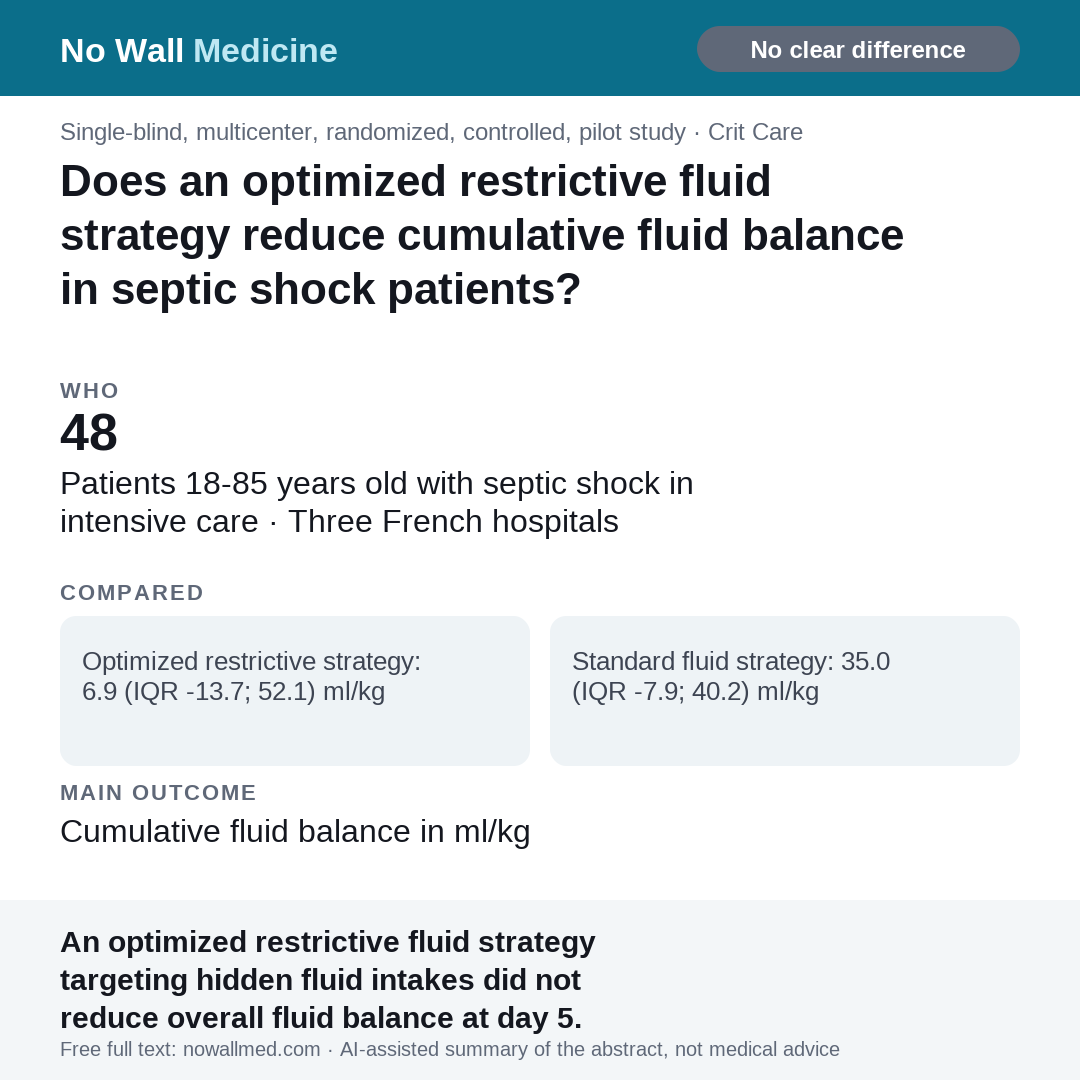
Impact on fluid balance of an optimized restrictive strategy targeting non-resuscitative fluids in intensive care patients with septic shock: a single-blind, multicenter, randomized, controlled, pilot study
Single-blind, multicenter, randomized, controlled, pilot studyNo clear difference
Does an optimized restrictive fluid strategy reduce cumulative fluid balance in septic shock patients?
Who
48
Patients 18-85 years old with septic shock in intensive care · Three French hospitals
Compared
Optimized restrictive strategy: 6.9 (IQR -13.7; 52.1) ml/kg
Standard fluid strategy: 35.0 (IQR -7.9; 40.2) ml/kg
Main outcome
Cumulative fluid balance in ml/kg
Result: absolute difference 13.2 [95%CI -15.2; 41.6]
Bottom line: An optimized restrictive fluid strategy targeting hidden fluid intakes did not reduce overall fluid balance at day 5.
Crit Care · 2024-12-21Download image
Assessing the comparative effects of interventions in COPD: a tutorial on network meta-analysis for clinicians
Tutorial on network meta-analysisUnclear result
comparative effects of COPD interventions
Who
COPD patients
Compared
interventions
comparators
Main outcome
relative efficacy of treatments
Bottom line: Network meta-analysis informs clinical decisions
Limitation: incorrect method choice
Respir Res · 2024-12-21Download image
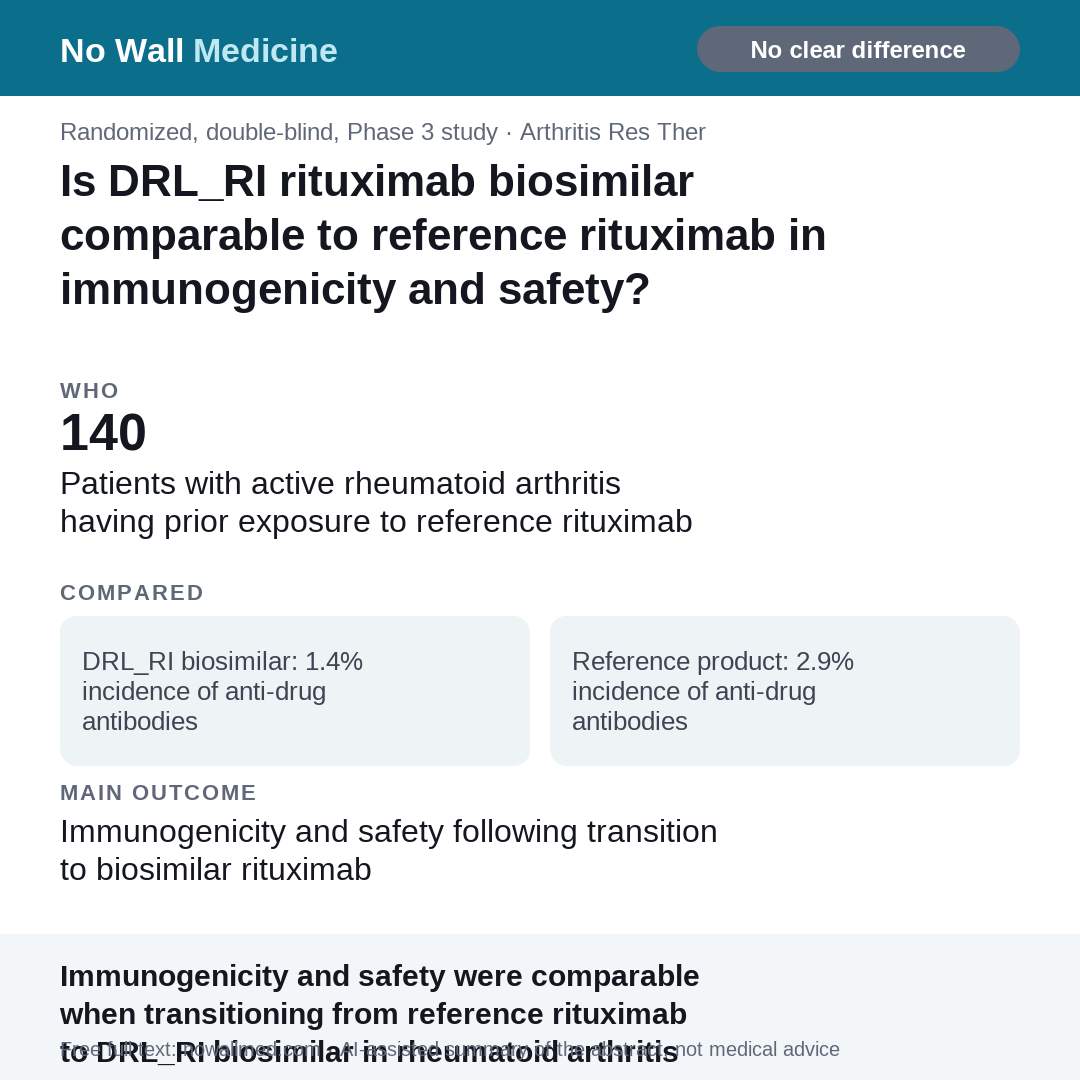
Comparing immunogenicity and safety following transition from reference rituximab to biosimilar rituximab (DRL_RI) in patients with rheumatoid arthritis: a randomized, double-blind, phase 3 study
Randomized, double-blind, Phase 3 studyNo clear difference
Is DRL_RI rituximab biosimilar comparable to reference rituximab in immunogenicity and safety?
Who
140
Patients with active rheumatoid arthritis having prior exposure to reference rituximab
Compared
DRL_RI biosimilar: 1.4% incidence of anti-drug antibodies
Reference product: 2.9% incidence of anti-drug antibodies
Main outcome
Immunogenicity and safety following transition to biosimilar rituximab
Bottom line: Immunogenicity and safety were comparable when transitioning from reference rituximab to DRL_RI biosimilar in rheumatoid arthritis patients.
Arthritis Res Ther · 2024-12-21Download image
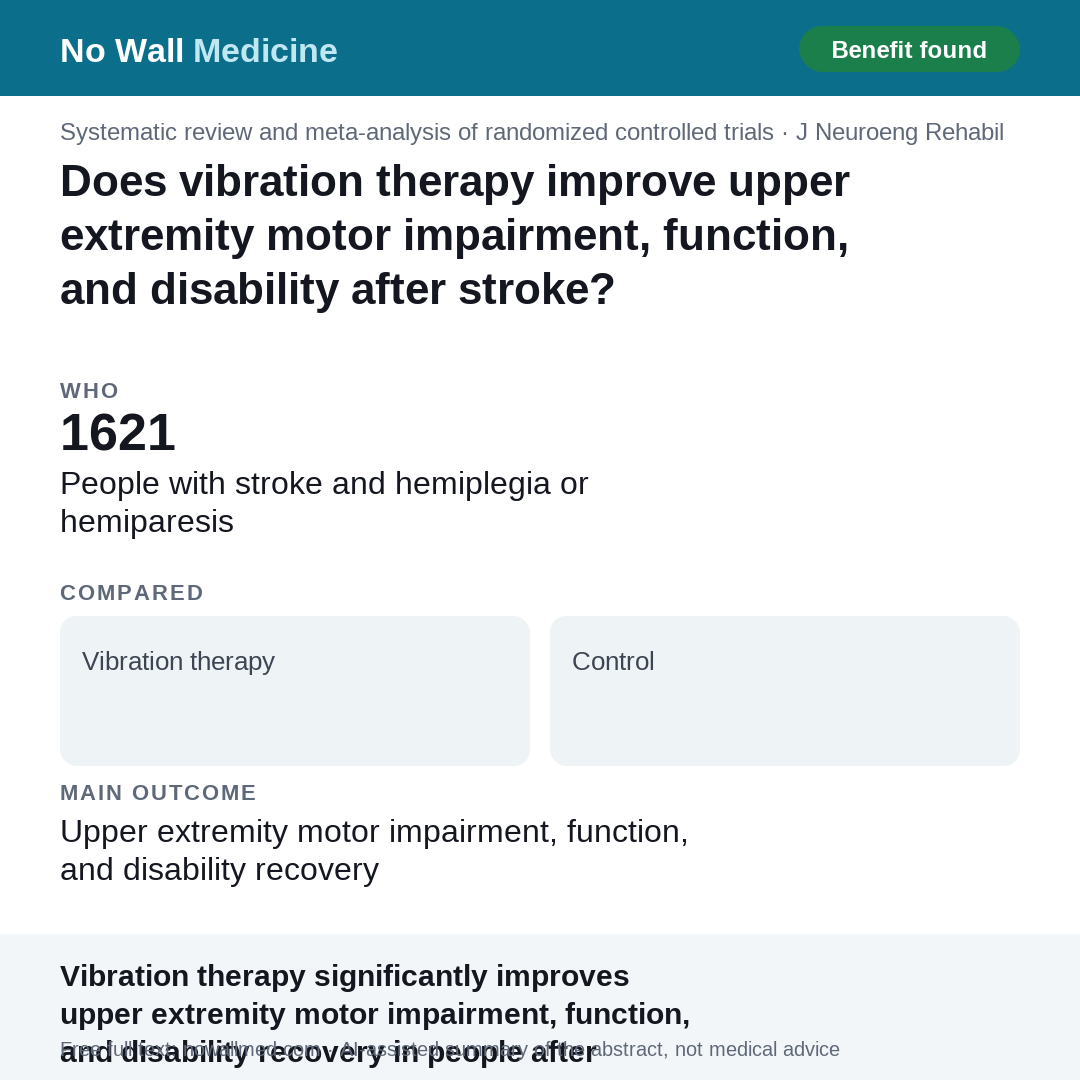
Upper extremity function and disability recovery with vibration therapy after stroke: a systematic review and meta-analysis of RCTs
Systematic review and meta-analysis of randomized controlled trialsBenefit found
Does vibration therapy improve upper extremity motor impairment, function, and disability after stroke?
Who
1621
People with stroke and hemiplegia or hemiparesis
Compared
Vibration therapy
Control
Main outcome
Upper extremity motor impairment, function, and disability recovery
Result: SMD 1.19 for impairment, 0.62 for function, 1.01 for disability
Bottom line: Vibration therapy significantly improves upper extremity motor impairment, function, and disability recovery in people after stroke.
J Neuroeng Rehabil · 2024-12-21Download image
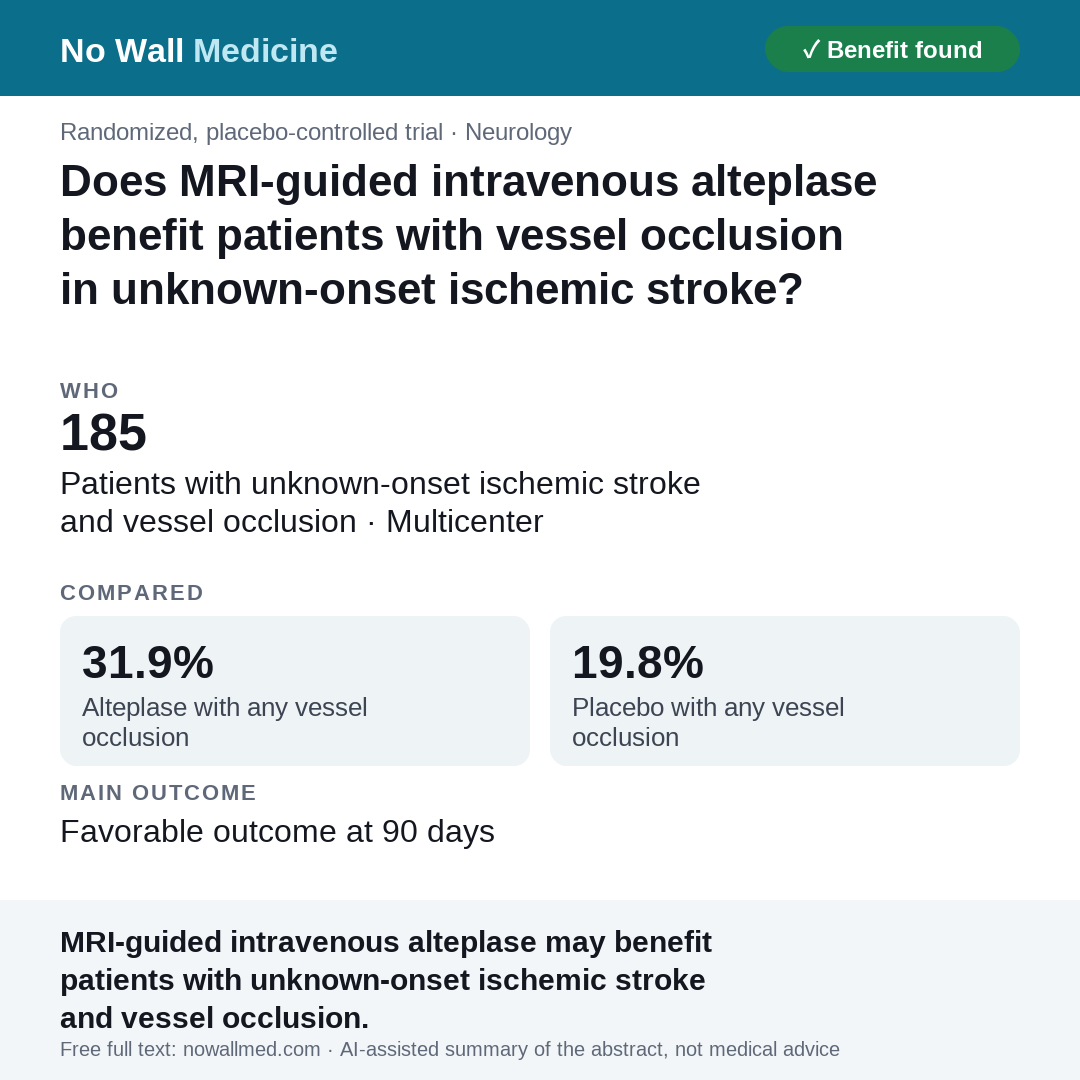
Effect of IV Thrombolysis With Alteplase in Patients With Vessel Occlusion in the WAKE-UP Trial
Randomized, placebo-controlled trialBenefit found
Does MRI-guided intravenous alteplase benefit patients with vessel occlusion in unknown-onset ischemic stroke?
Who
185
Patients with unknown-onset ischemic stroke and vessel occlusion · Multicenter
Compared
31.9%Alteplase with any vessel occlusion
19.8%Placebo with any vessel occlusion
Main outcome
Favorable outcome at 90 days
Result: adjusted odds ratio 2.04 (95% CI 1.00-4.18)
Bottom line: MRI-guided intravenous alteplase may benefit patients with unknown-onset ischemic stroke and vessel occlusion.
Neurology · 2024-12-20Download image
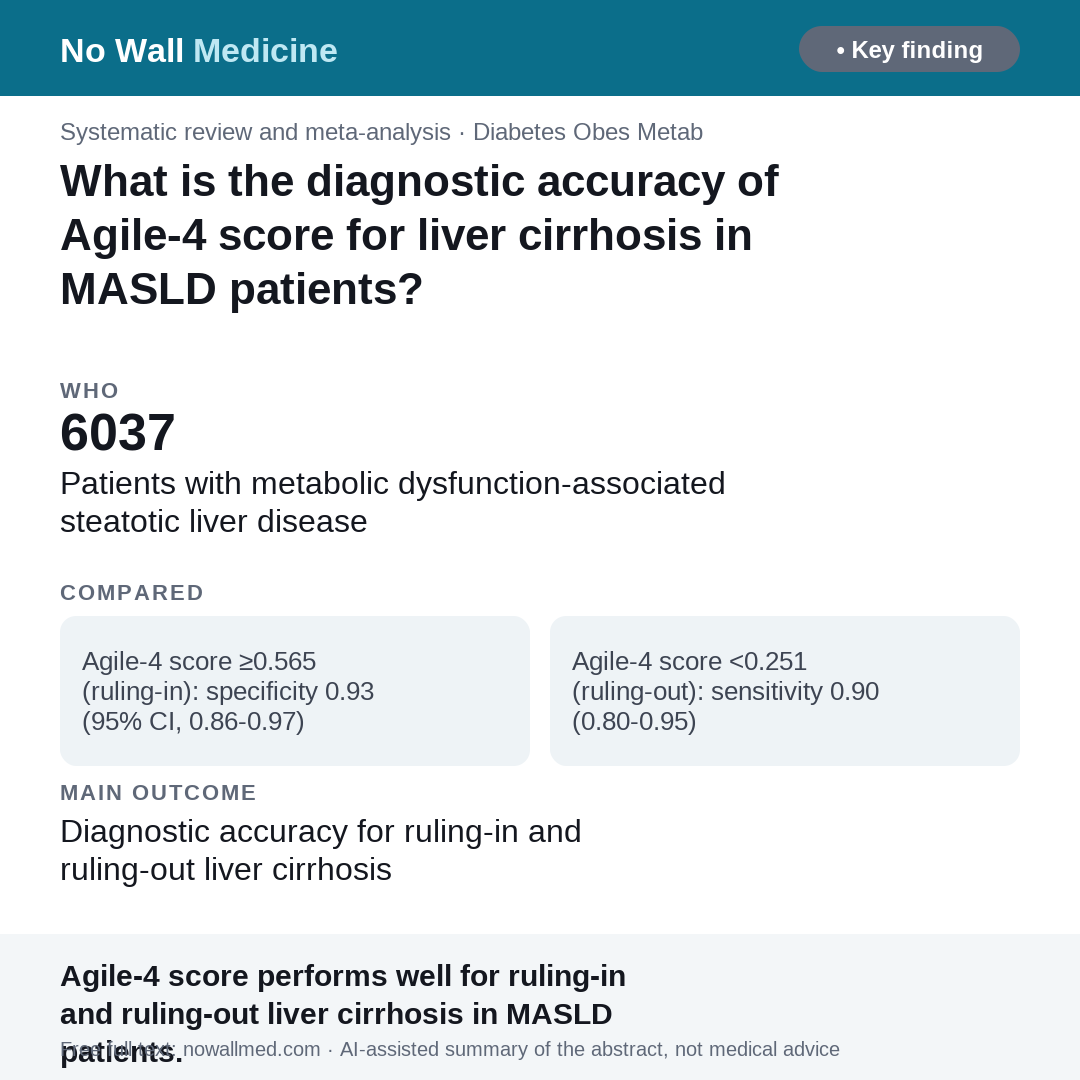
Diagnostic accuracy of Agile-4 score for liver cirrhosis in patients with metabolic dysfunction-associated steatotic liver disease. A systematic review and meta-analysis of diagnostic test accuracy studies
Systematic review and meta-analysisBenefit found
What is the diagnostic accuracy of Agile-4 score for liver cirrhosis in MASLD patients?
Who
6037
Patients with metabolic dysfunction-associated steatotic liver disease
Compared
Agile-4 score ≥0.565 (ruling-in): specificity 0.93 (95% CI, 0.86-0.97)
Agile-4 score <0.251 (ruling-out): sensitivity 0.90 (0.80-0.95)
Main outcome
Diagnostic accuracy for ruling-in and ruling-out liver cirrhosis
Bottom line: Agile-4 score performs well for ruling-in and ruling-out liver cirrhosis in MASLD patients.
Limitation: High or unclear risk for bias due to patient selection and blinding concerns.
Diabetes Obes Metab · 2024-12-20Download image
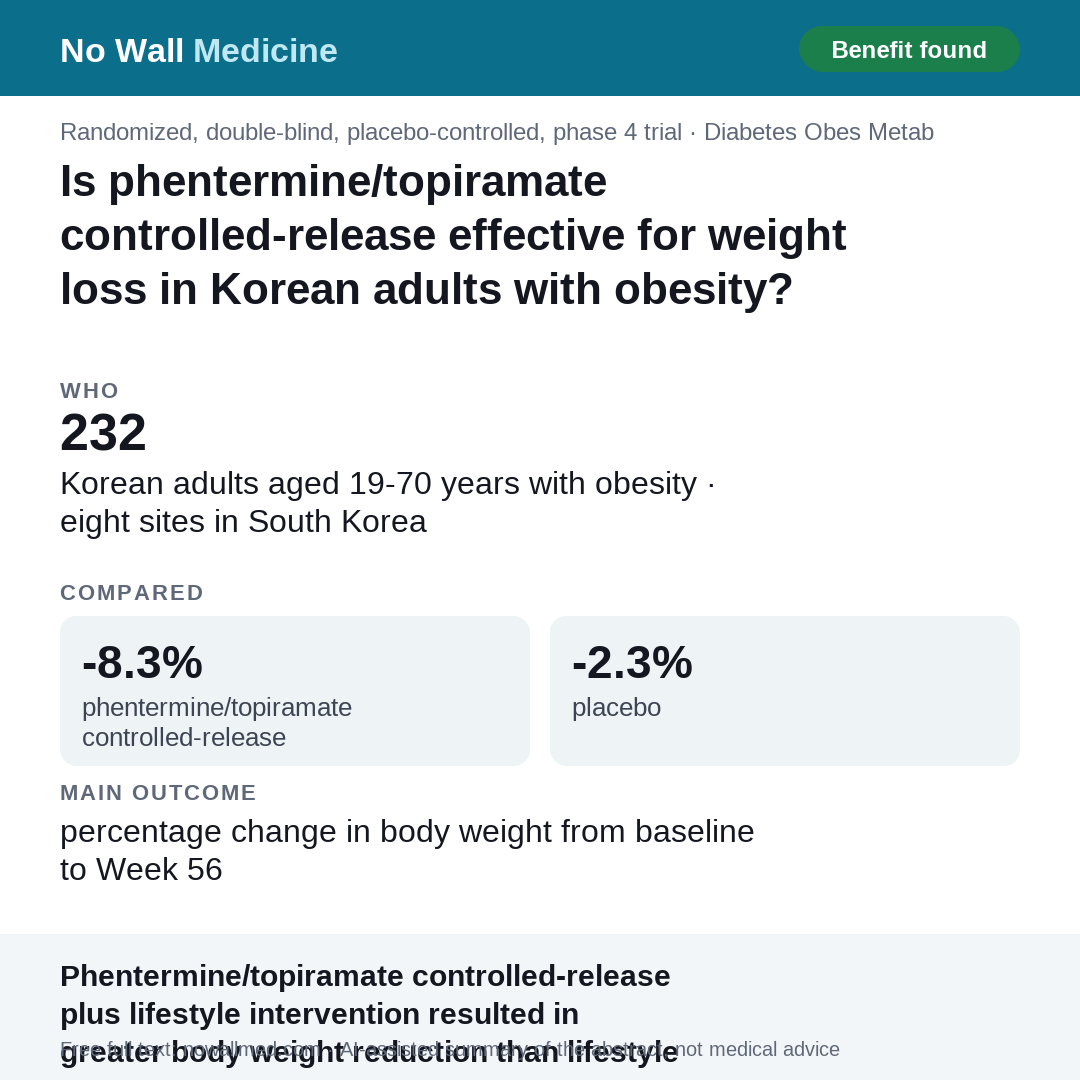
Evaluation of the efficacy and safety of controlled-release phentermine/topiramate in adults with obesity in Korea: A randomized, double-blind, placebo-controlled, phase 4 trial (QUEEN's study)
Randomized, double-blind, placebo-controlled, phase 4 trialBenefit found
Is phentermine/topiramate controlled-release effective for weight loss in Korean adults with obesity?
Who
232
Korean adults aged 19-70 years with obesity · eight sites in South Korea
Compared
-8.3%phentermine/topiramate controlled-release
-2.3%placebo
Main outcome
percentage change in body weight from baseline to Week 56
Result: treatment difference -6.1% (95% CI -7.7 to -4.5)
Bottom line: Phentermine/topiramate controlled-release plus lifestyle intervention resulted in greater body weight reduction than lifestyle intervention alone.
Diabetes Obes Metab · 2024-12-20Download image
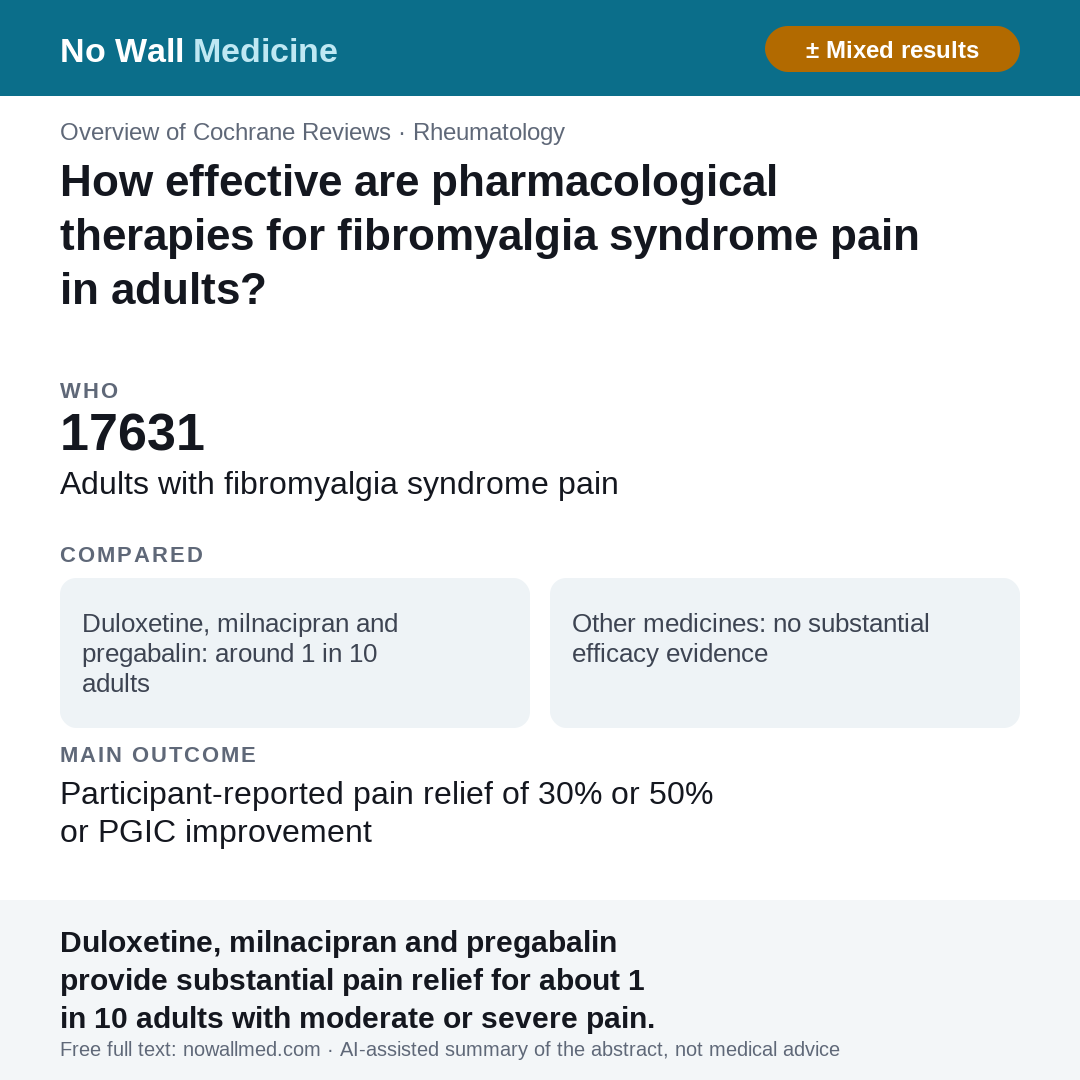
Effectiveness of pharmacological therapies for fibromyalgia syndrome in adults: an overview of Cochrane Reviews
Overview of Cochrane ReviewsMixed results
How effective are pharmacological therapies for fibromyalgia syndrome pain in adults?
Who
17631
Adults with fibromyalgia syndrome pain
Compared
Duloxetine, milnacipran and pregabalin: around 1 in 10 adults
Other medicines: no substantial efficacy evidence
Main outcome
Participant-reported pain relief of 30% or 50% or PGIC improvement
Bottom line: Duloxetine, milnacipran and pregabalin provide substantial pain relief for about 1 in 10 adults with moderate or severe pain.
Limitation: No evidence about who might benefit or experience adverse events.
Rheumatology · 2024-12-20Download image
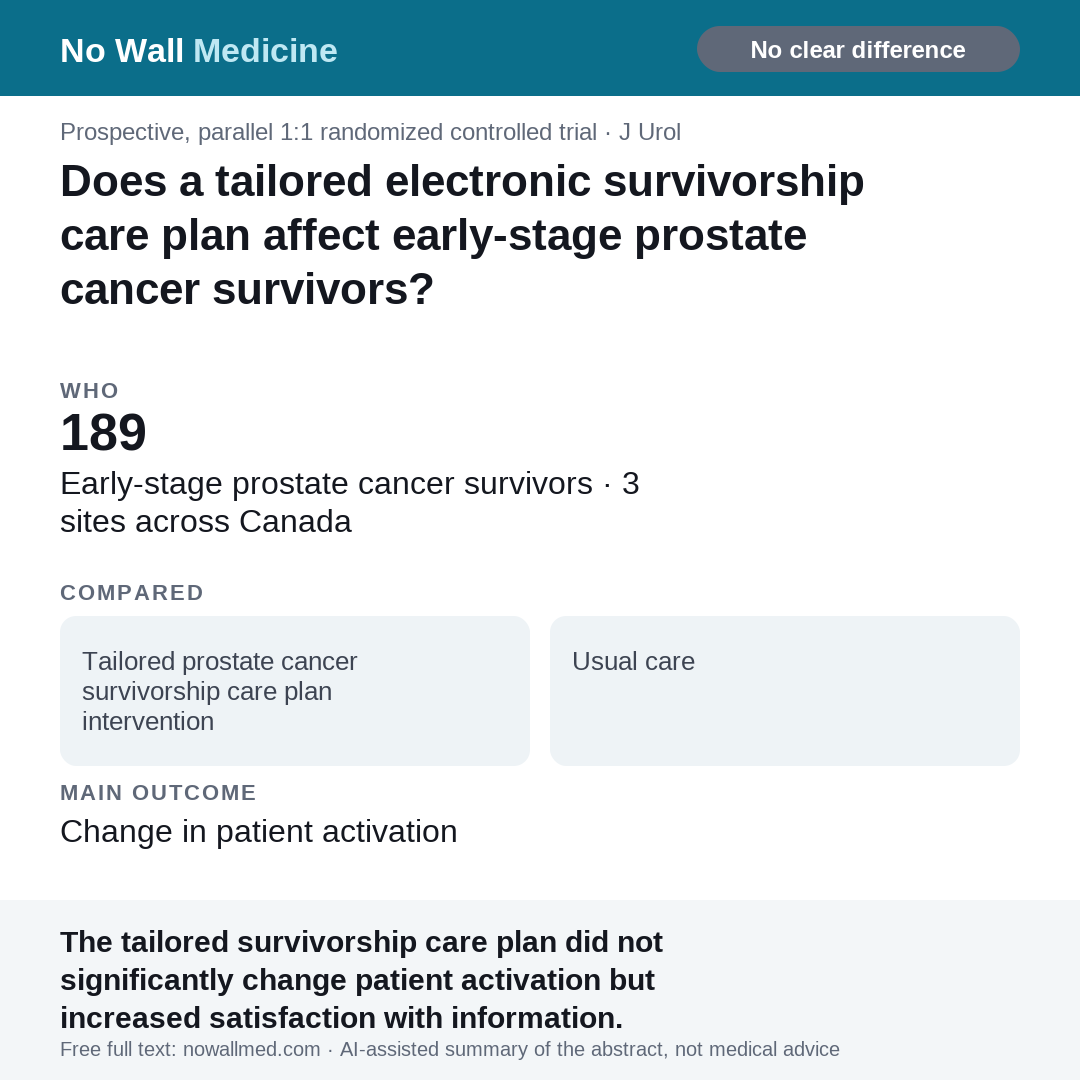
A Tailored Electronic Survivorship Care Plan for Prostate Cancer Survivors: A Multicenter Randomized Controlled Trial
Prospective, parallel 1:1 randomized controlled trialNo clear difference
Does a tailored electronic survivorship care plan affect early-stage prostate cancer survivors?
Who
189
Early-stage prostate cancer survivors · 3 sites across Canada
Compared
Tailored prostate cancer survivorship care plan intervention
Usual care
Main outcome
Change in patient activation
Bottom line: The tailored survivorship care plan did not significantly change patient activation but increased satisfaction with information.
J Urol · 2024-12-20Download image
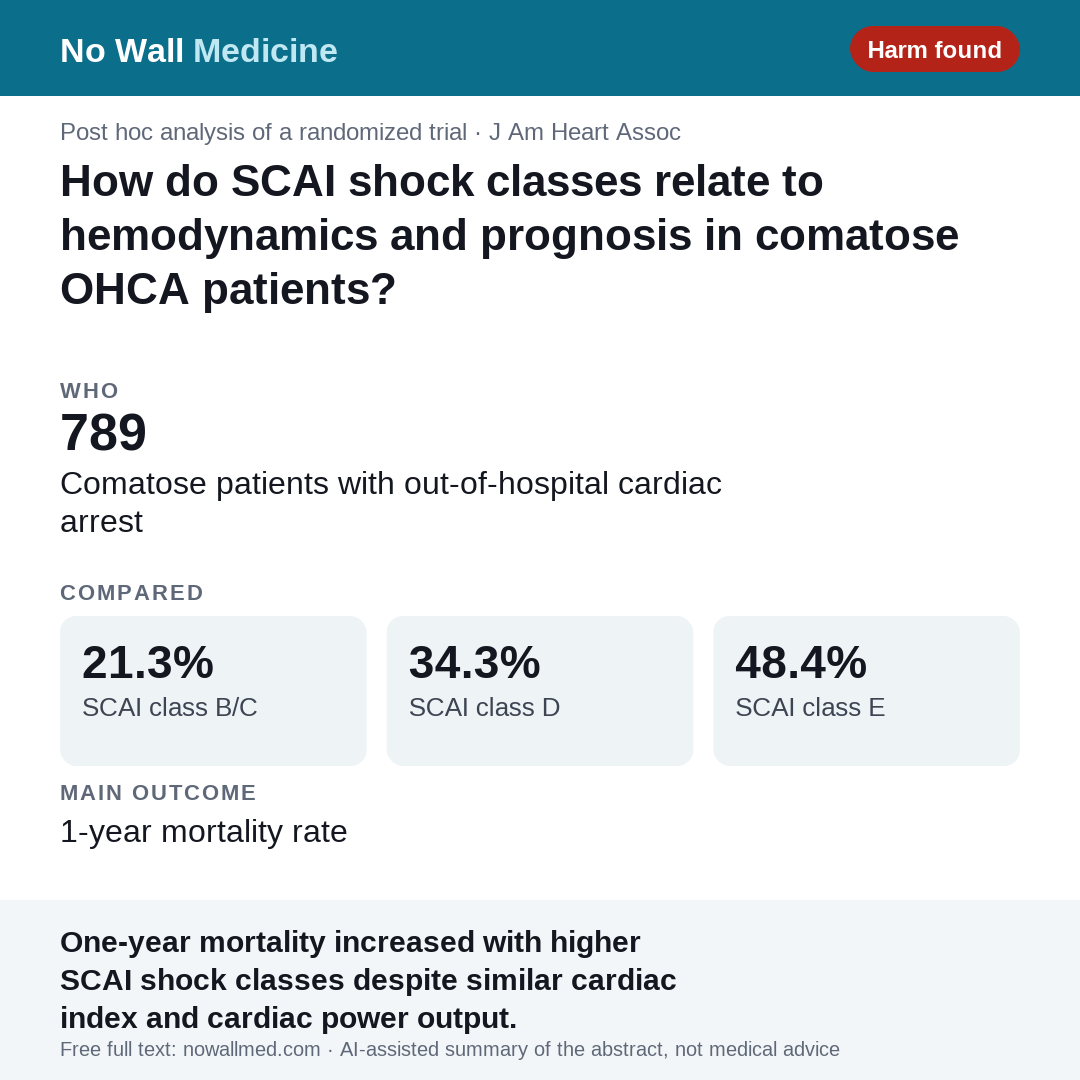
Hemodynamic Characteristics and Prognostic Implication of Modified Society for Cardiovascular Angiography and Interventions Shock Classification in Comatose Patients With Out-of-Hospital Cardiac Arrest
Post hoc analysis of a randomized trialHarm found
How do SCAI shock classes relate to hemodynamics and prognosis in comatose OHCA patients?
Who
789
Comatose patients with out-of-hospital cardiac arrest
Compared
21.3%SCAI class B/C
34.3%SCAI class D
48.4%SCAI class E
Main outcome
1-year mortality rate
Bottom line: One-year mortality increased with higher SCAI shock classes despite similar cardiac index and cardiac power output.
J Am Heart Assoc · 2024-12-20Download image
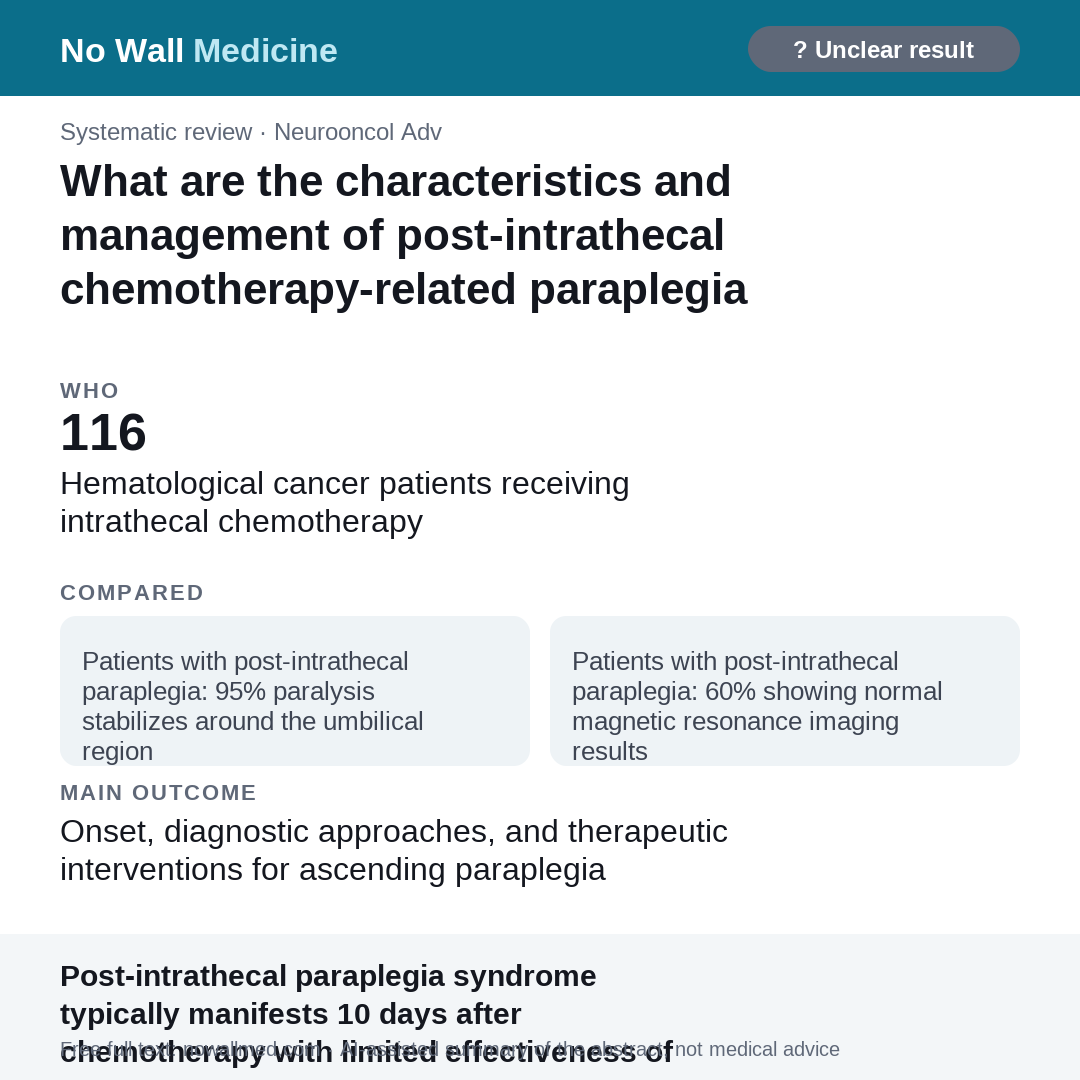
Post-intrathecal chemotherapy-related paraplegia syndrome in hematological cancer patients: A systematic review
Systematic reviewUnclear result
What are the characteristics and management of post-intrathecal chemotherapy-related paraplegia syndrome?
Who
116
Hematological cancer patients receiving intrathecal chemotherapy
Compared
Patients with post-intrathecal paraplegia: 95% paralysis stabilizes around the umbilical region
Patients with post-intrathecal paraplegia: 60% showing normal magnetic resonance imaging results
Main outcome
Onset, diagnostic approaches, and therapeutic interventions for ascending paraplegia
Bottom line: Post-intrathecal paraplegia syndrome typically manifests 10 days after chemotherapy with limited effectiveness of common treatments.
Neurooncol Adv · 2024-12-20Download image
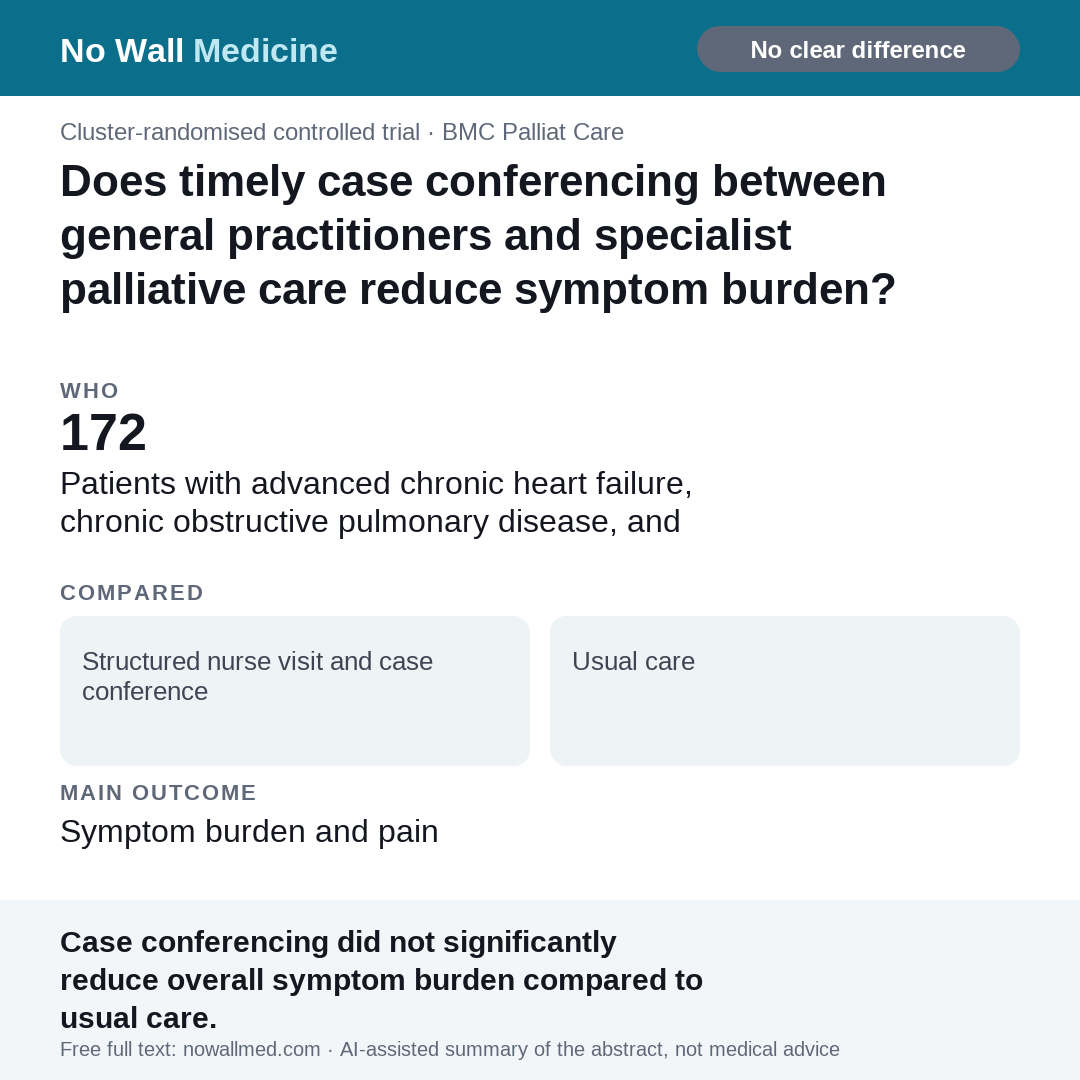
Effects of timely case conferencing between general practitioners and specialist palliative care services on symptom burden in patients with advanced chronic disease: results of the cluster-randomised controlled KOPAL trial
Cluster-randomised controlled trialNo clear difference
Does timely case conferencing between general practitioners and specialist palliative care reduce symptom burden?
Who
172
Patients with advanced chronic heart failure, chronic obstructive pulmonary disease, and dementia · 49 German general practitioner practices
Compared
Structured nurse visit and case conference
Usual care
Main outcome
Symptom burden and pain
Result: -0.561 (95% CI -3.201 to 2.079)
Bottom line: Case conferencing did not significantly reduce overall symptom burden compared to usual care.
Limitation: Further studies are needed to address symptom burden and pain in other patient groups.
BMC Palliat Care · 2024-12-20Download image
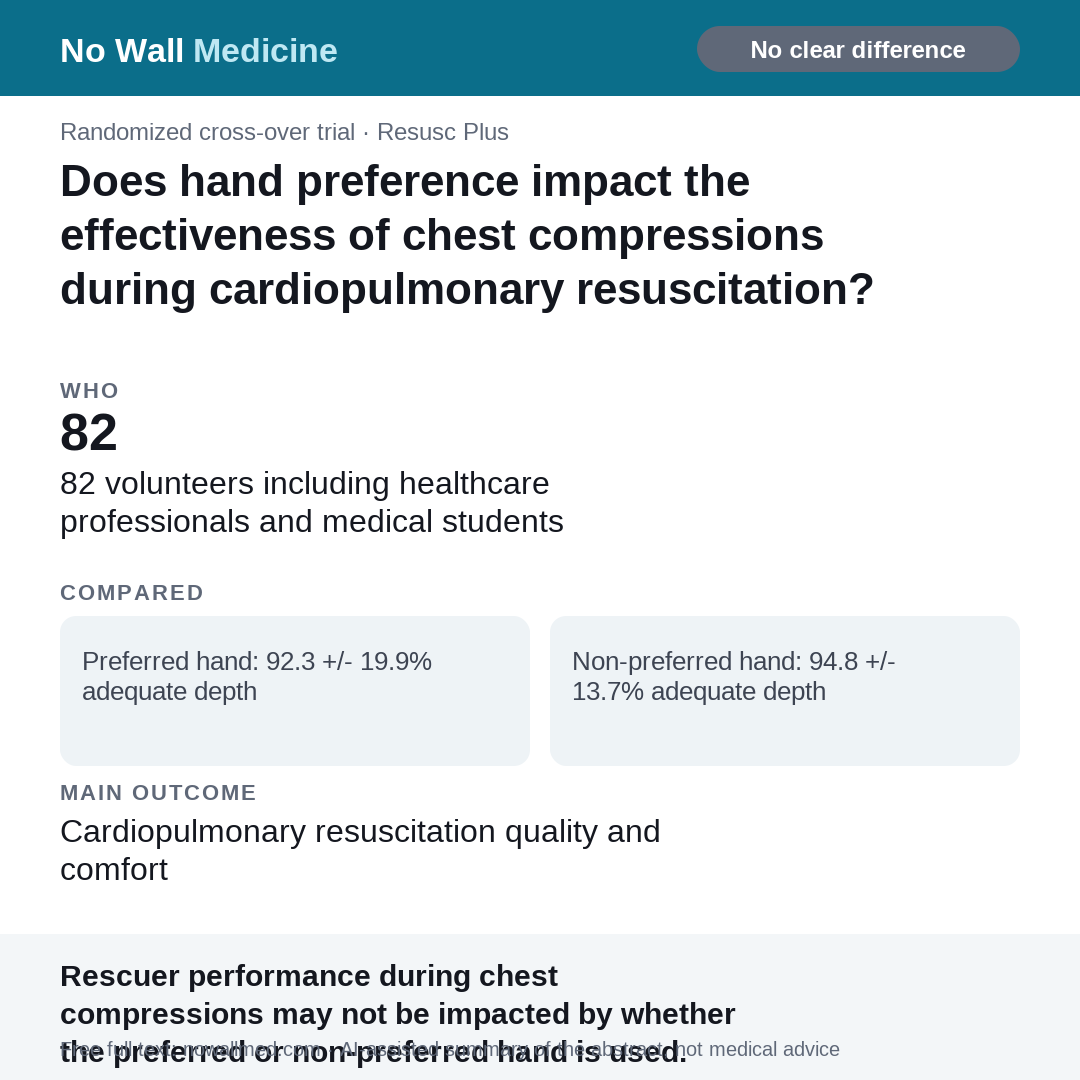
Hands at work: A randomised cross-over mannequin-based trial exploring the impact of hand preference of health care professionals on effectiveness of chest compressions
Randomized cross-over trialNo clear difference
Does hand preference impact the effectiveness of chest compressions during cardiopulmonary resuscitation?
Who
82
82 volunteers including healthcare professionals and medical students
Compared
Preferred hand: 92.3 +/- 19.9% adequate depth
Non-preferred hand: 94.8 +/- 13.7% adequate depth
Main outcome
Cardiopulmonary resuscitation quality and comfort
Bottom line: Rescuer performance during chest compressions may not be impacted by whether the preferred or non-preferred hand is used.
Resusc Plus · 2024-12-20Download image
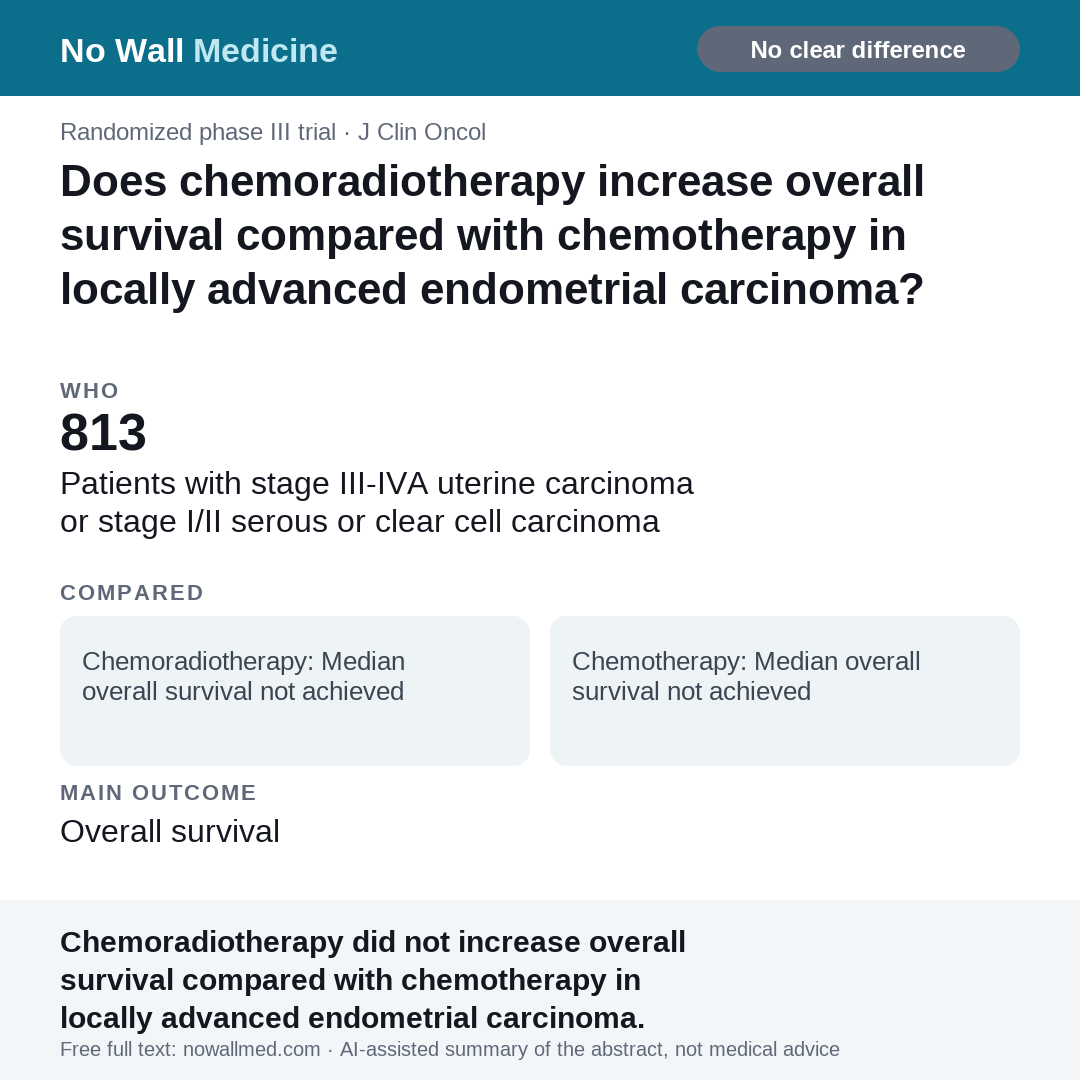
Long-Term Follow-Up and Overall Survival in NRG258, a Randomized Phase III Trial of Chemoradiation Versus Chemotherapy for Locally Advanced Endometrial Carcinoma
Randomized phase III trialNo clear difference
Does chemoradiotherapy increase overall survival compared with chemotherapy in locally advanced endometrial carcinoma?
Who
813
Patients with stage III-IVA uterine carcinoma or stage I/II serous or clear cell carcinoma
Compared
Chemoradiotherapy: Median overall survival not achieved
Chemotherapy: Median overall survival not achieved
Main outcome
Overall survival
Result: hazard ratio 1.05 (95% CI 0.82 to 1.34)
Bottom line: Chemoradiotherapy did not increase overall survival compared with chemotherapy in locally advanced endometrial carcinoma.
J Clin Oncol · 2024-12-19Download image
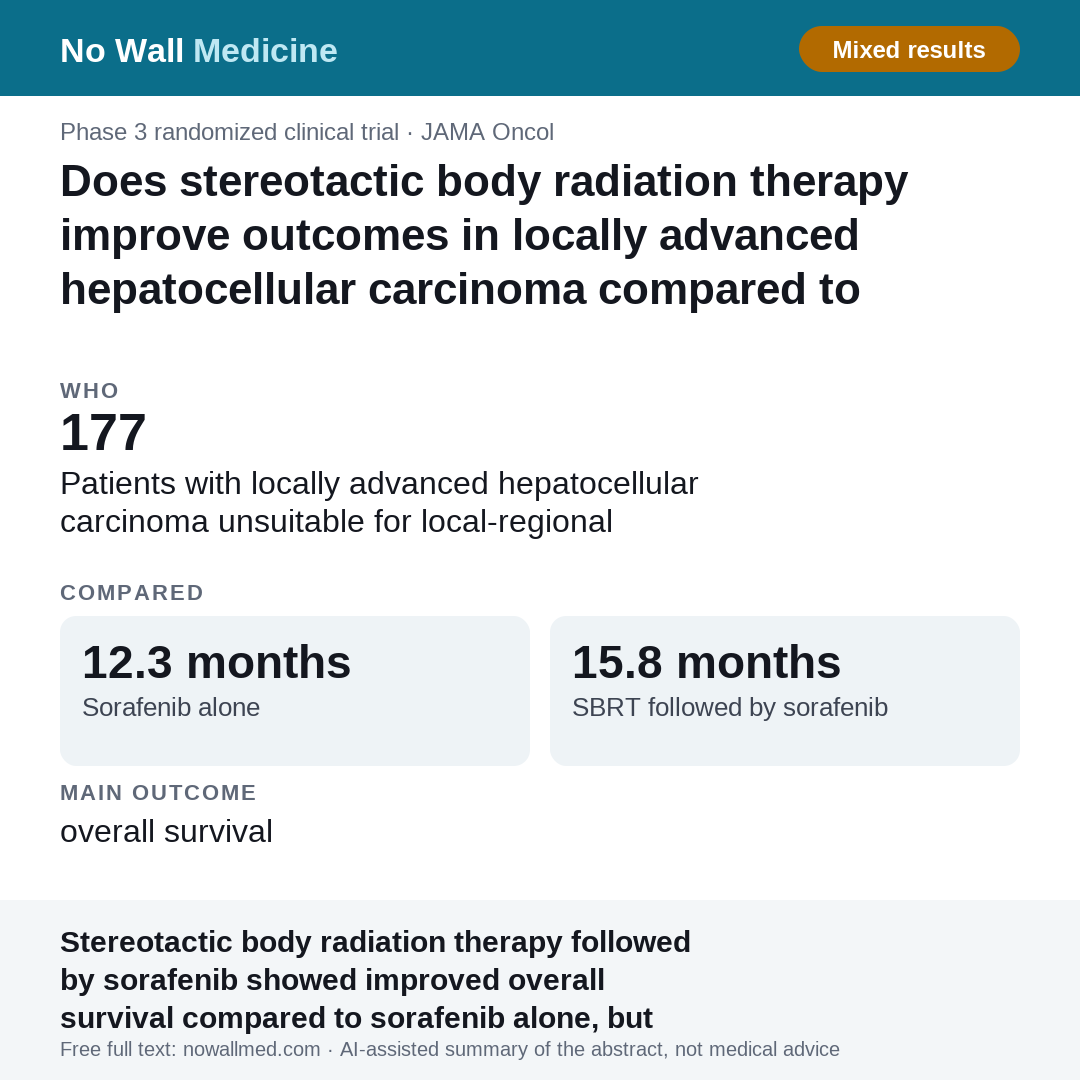
Stereotactic Body Radiotherapy vs Sorafenib Alone in Hepatocellular Carcinoma: The NRG Oncology/RTOG 1112 Phase 3 Randomized Clinical Trial
Phase 3 randomized clinical trialMixed results
Does stereotactic body radiation therapy improve outcomes in locally advanced hepatocellular carcinoma compared to sorafenib alone?
Who
177
Patients with locally advanced hepatocellular carcinoma unsuitable for local-regional therapies · Multicenter
Compared
12.3 monthsSorafenib alone
15.8 monthsSBRT followed by sorafenib
Main outcome
overall survival
Result: hazard ratio 0.77 (90% CI, 0.59-1.01)
Bottom line: Stereotactic body radiation therapy followed by sorafenib showed improved overall survival compared to sorafenib alone, but not statistically significantly.
JAMA Oncol · 2024-12-19Download image
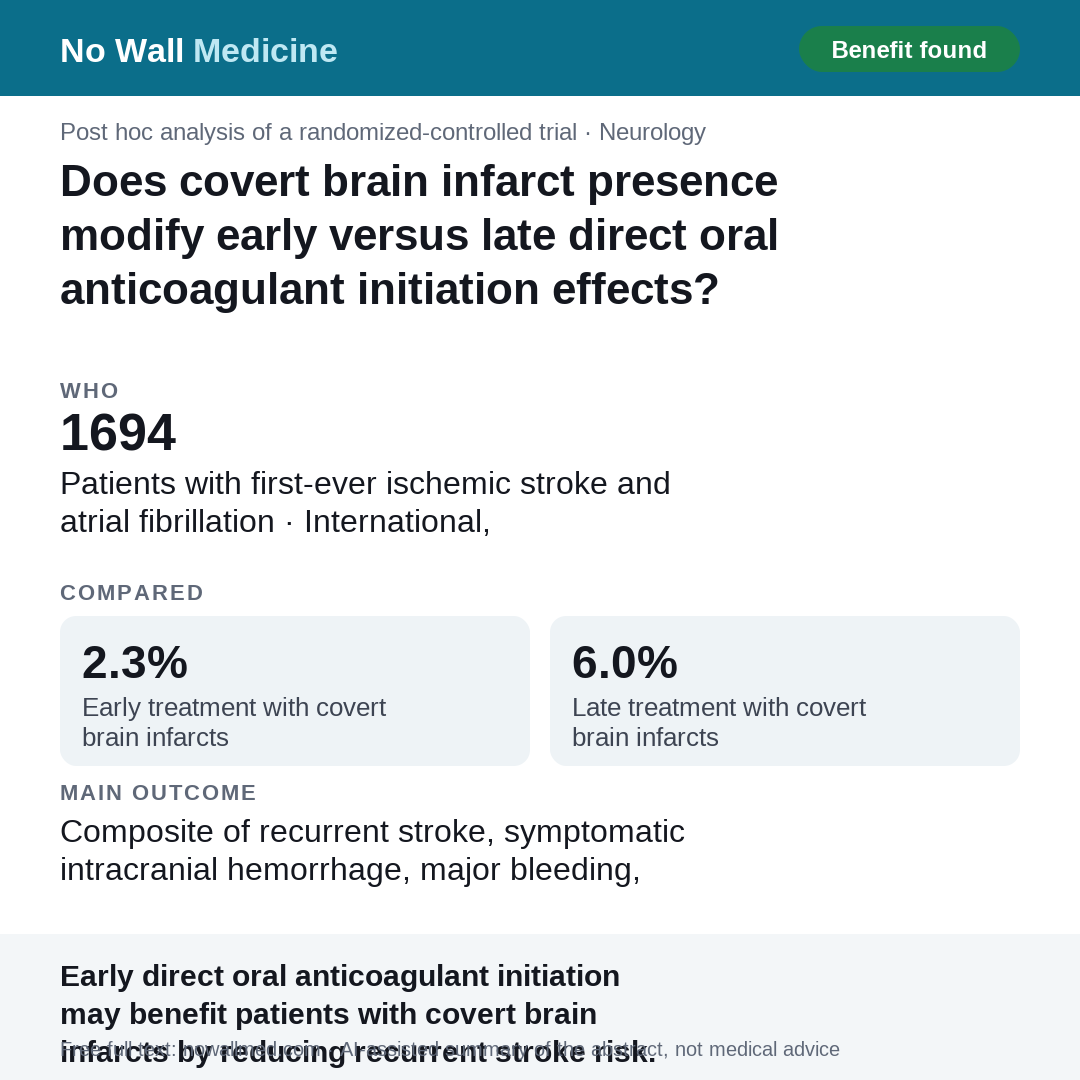
Early vs Late Anticoagulation After Ischemic Stroke in Patients With Atrial Fibrillation and Covert Brain Infarcts
Post hoc analysis of a randomized-controlled trialBenefit found
Does covert brain infarct presence modify early versus late direct oral anticoagulant initiation effects?
Who
1694
Patients with first-ever ischemic stroke and atrial fibrillation · International, multicenter
Compared
2.3%Early treatment with covert brain infarcts
6.0%Late treatment with covert brain infarcts
Main outcome
Composite of recurrent stroke, symptomatic intracranial hemorrhage, major bleeding, embolism, or vascular death
Result: adjusted risk difference -3.6%, 95% CI -6.6 to -0.6
Bottom line: Early direct oral anticoagulant initiation may benefit patients with covert brain infarcts by reducing recurrent stroke risk.
Neurology · 2024-12-19Download image
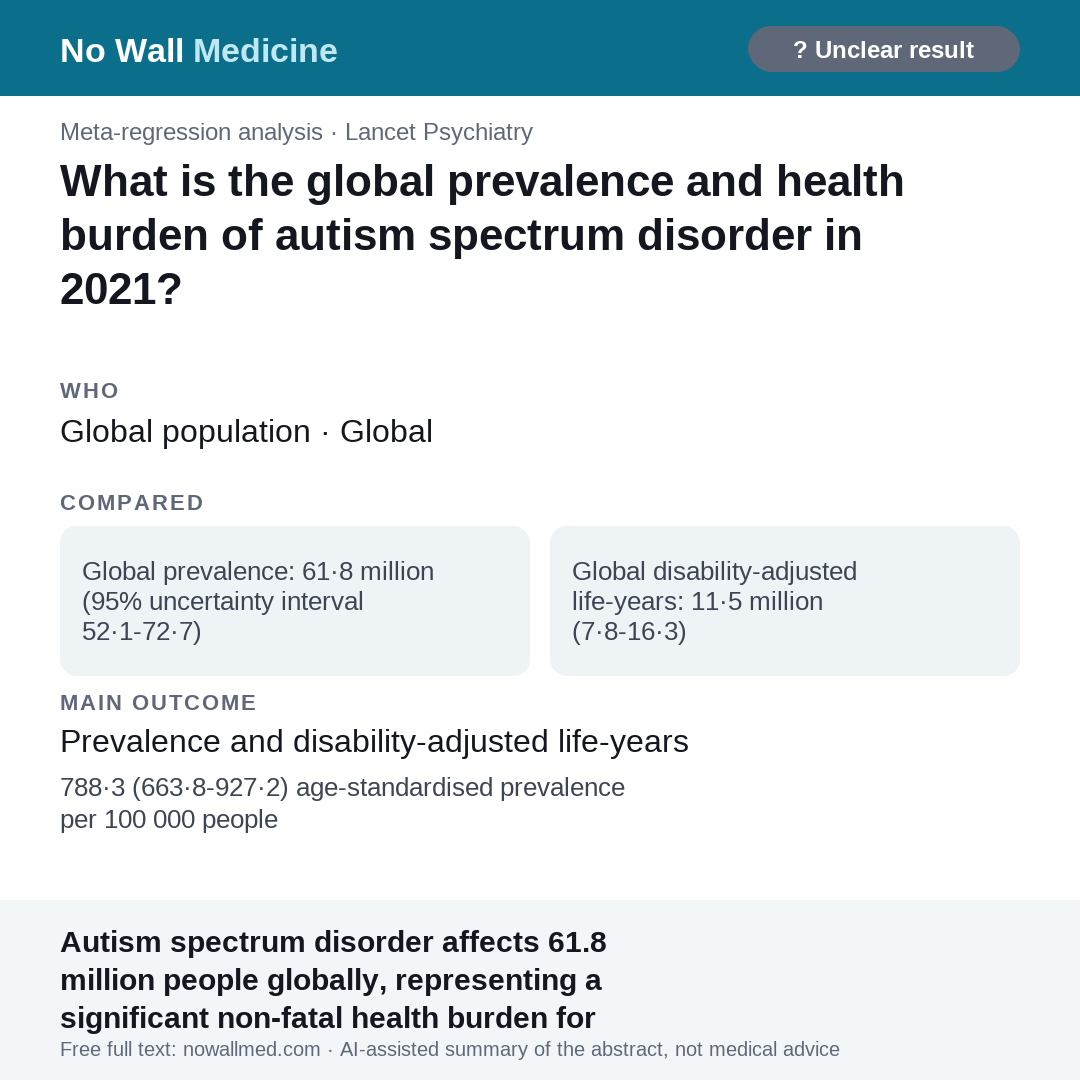
The global epidemiology and health burden of the autism spectrum: findings from the Global Burden of Disease Study 2021
Meta-regression analysisUnclear result
What is the global prevalence and health burden of autism spectrum disorder in 2021?
Who
Global population · Global
Compared
Global prevalence: 61·8 million (95% uncertainty interval 52·1-72·7)
Global disability-adjusted life-years: 11·5 million (7·8-16·3)
Main outcome
Prevalence and disability-adjusted life-years
Result: 788·3 (663·8-927·2) age-standardised prevalence per 100 000 people
Bottom line: Autism spectrum disorder affects 61.8 million people globally, representing a significant non-fatal health burden for those under 20.
Funded by: Queensland Health and the Bill & Melinda Gates Foundation
Lancet Psychiatry · 2024-12-19Download image
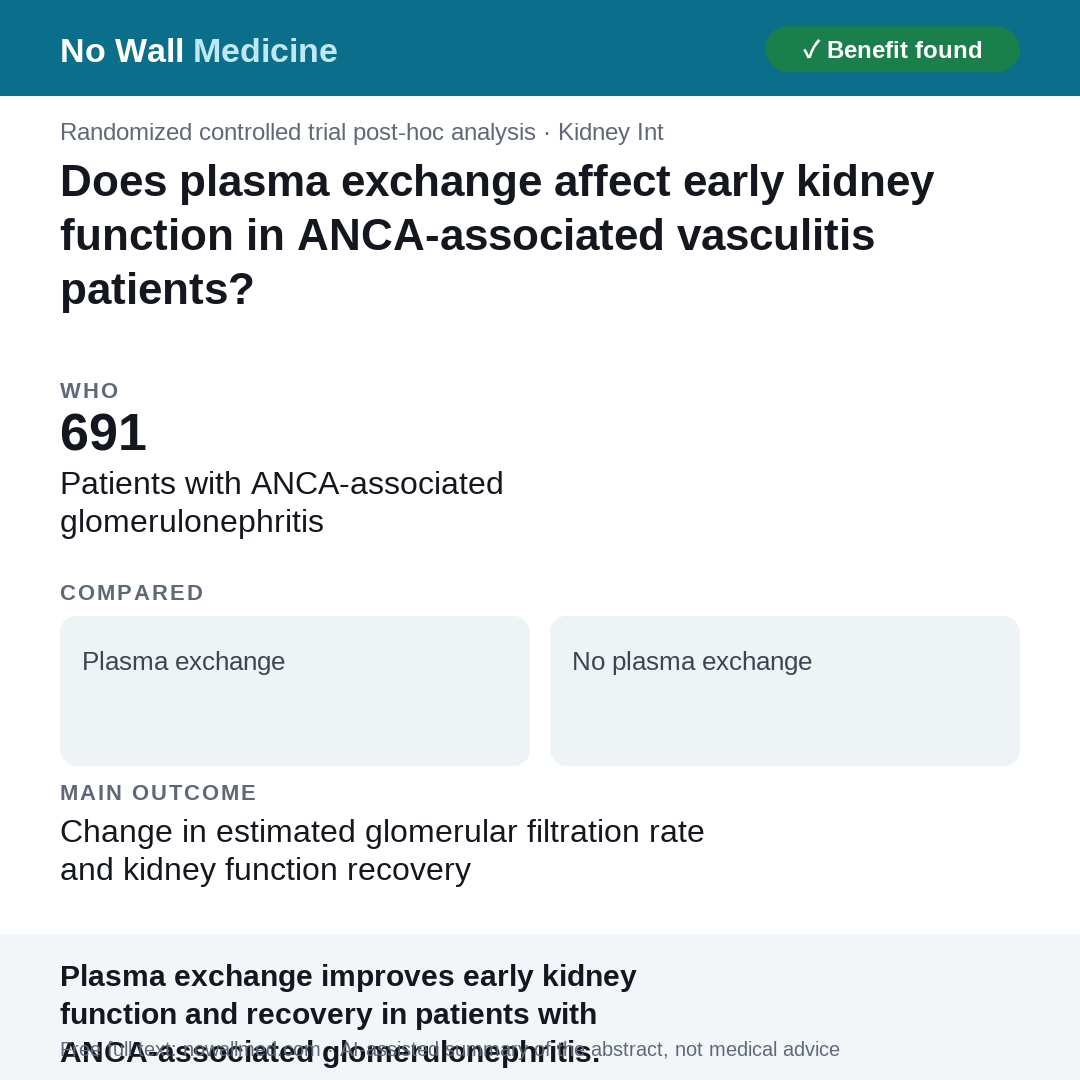
The effects of plasma exchange and glucocorticoids on early kidney function among patients with ANCA-associated vasculitis in the PEXIVAS trial
Randomized controlled trial post-hoc analysisBenefit found
Does plasma exchange affect early kidney function in ANCA-associated vasculitis patients?
Who
691
Patients with ANCA-associated glomerulonephritis
Compared
Plasma exchange
No plasma exchange
Main outcome
Change in estimated glomerular filtration rate and kidney function recovery
Result: relative risk 1.41 (95% confidence interval 1.09-1.82)
Bottom line: Plasma exchange improves early kidney function and recovery in patients with ANCA-associated glomerulonephritis.
Kidney Int · 2024-12-19Download image