Visual abstracts
New randomized trials and meta-analyses from leading journals at a glance: who was studied, what was compared, and what was found. Every paper is free to read in full.
All specialtiesCardiology 289Oncology 226Gastroenterology & Hepatology 126Infectious Disease 234Neurology 135Psychiatry & Mental Health 200Pulmonology 133Critical Care 87Endocrinology & Diabetes 179Pediatrics 136Surgery 87Orthopedics & Sports Medicine 57Neurosurgery 17Cardiothoracic & Vascular Surgery 32Plastic & Reconstructive Surgery 61Nephrology 60Rheumatology 58Hematology 72Dermatology 29Ophthalmology 51Obstetrics & Gynecology 87Public & Global Health 91Radiology & Imaging 24Anesthesiology 49Urology 65ENT (Otolaryngology) 39Emergency Medicine 29Allergy & Immunology 30Geriatrics 88Family Medicine & Primary Care 46Medical Genetics & Genomics 28Pathology & Laboratory Medicine 5Physical Medicine & Rehabilitation 74Palliative Care 43Nutrition 105Digital Health & AI 254General Medicine 40
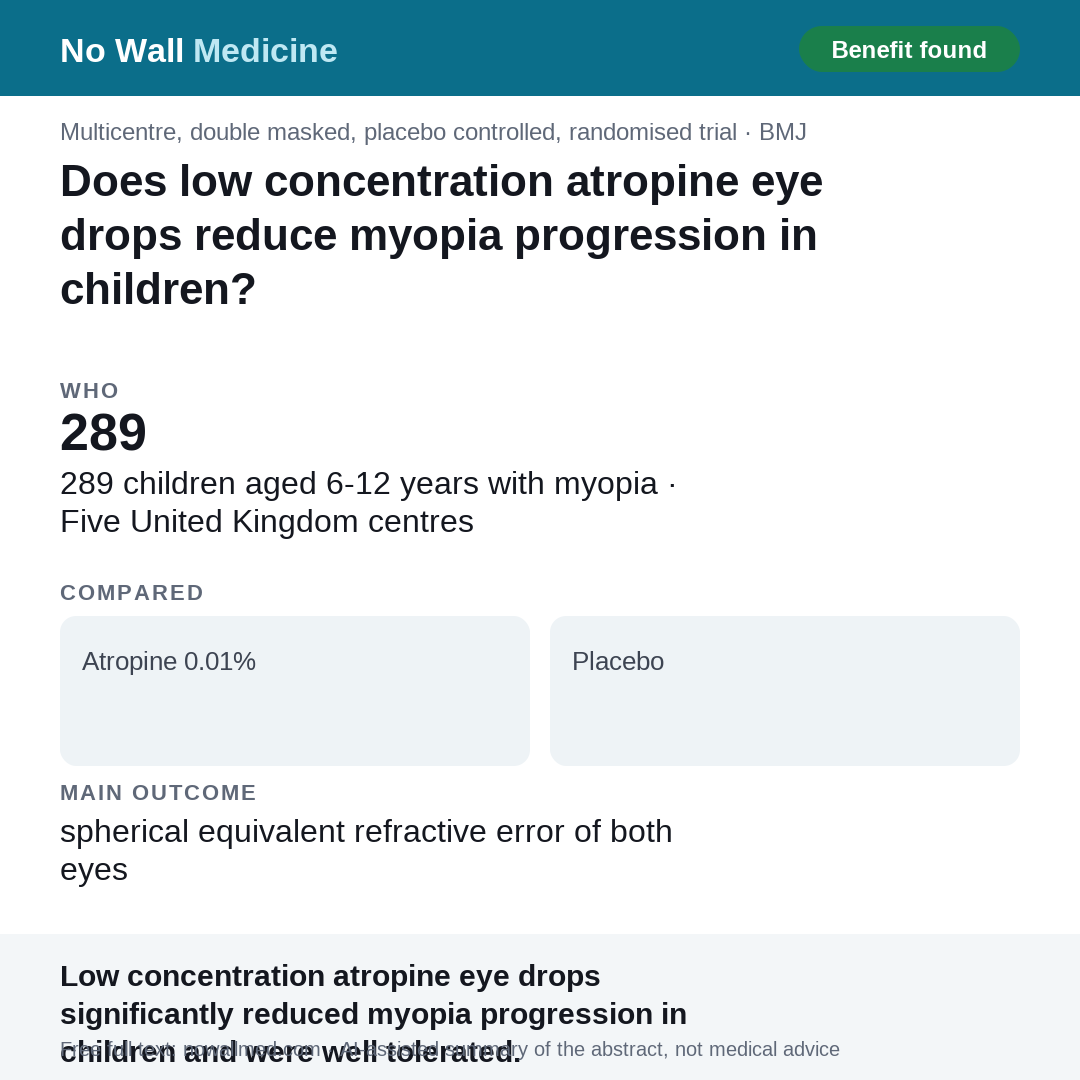
Low concentration atropine eye drops and progression of myopia in children: multicentre placebo controlled, double masked, randomised trial in the UK (CHAMP-UK)
Multicentre, double masked, placebo controlled, randomised trialBenefit found
Does low concentration atropine eye drops reduce myopia progression in children?
Who
289
289 children aged 6-12 years with myopia · Five United Kingdom centres
Compared
Atropine 0.01%
Placebo
Main outcome
spherical equivalent refractive error of both eyes
Result: mean difference 0.33 D, 95% confidence interval 0.17 to 0.49 D
Bottom line: Low concentration atropine eye drops significantly reduced myopia progression in children and were well tolerated.
BMJ · 2026-06-11Download image
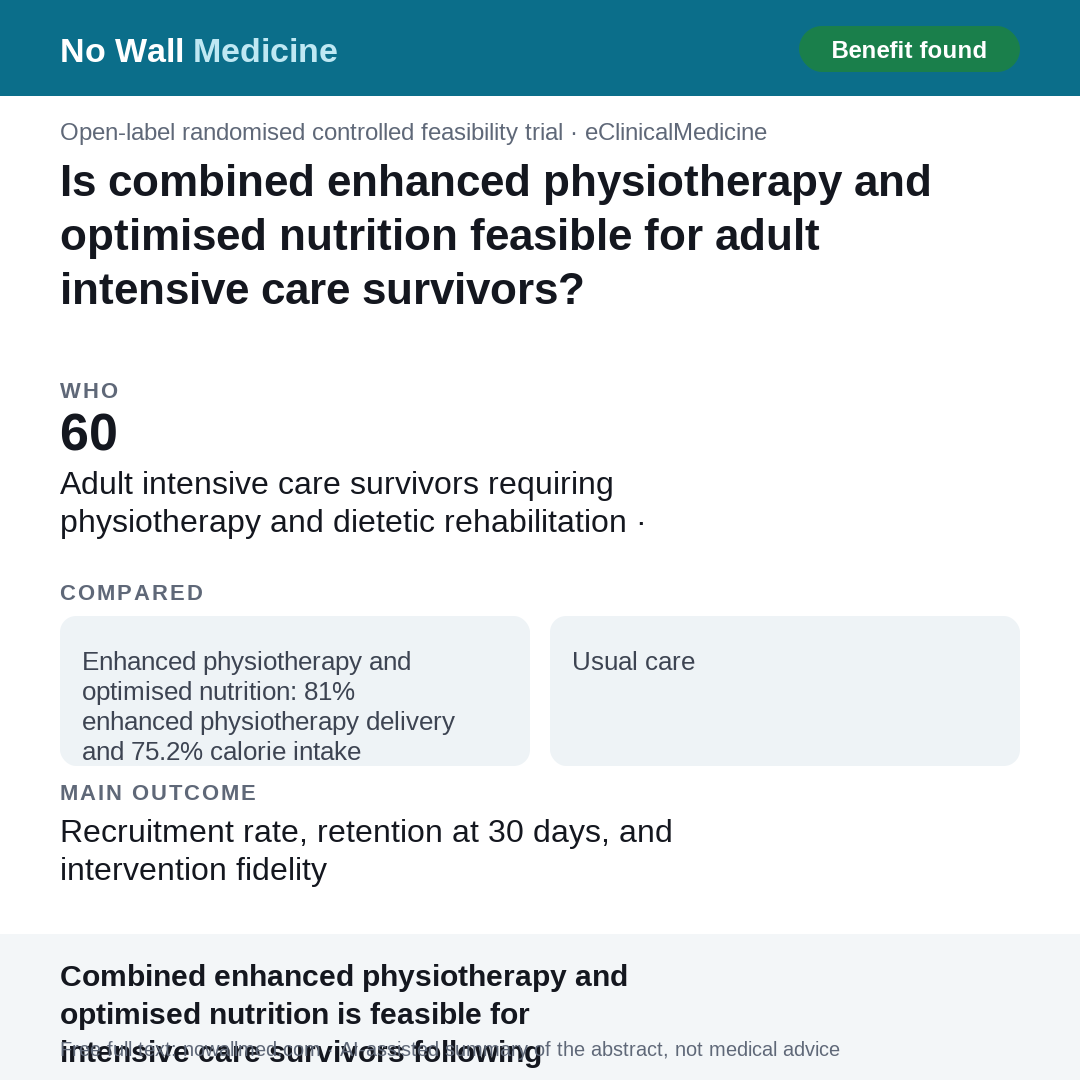
Physiotherapy and optimised enteral nutrition in the post-acute phase of critical illness (PHOENIX): a randomised controlled feasibility trial
Open-label randomised controlled feasibility trialBenefit found
Is combined enhanced physiotherapy and optimised nutrition feasible for adult intensive care survivors?
Who
60
Adult intensive care survivors requiring physiotherapy and dietetic rehabilitation · Two United Kingdom university hospitals
Compared
Enhanced physiotherapy and optimised nutrition: 81% enhanced physiotherapy delivery and 75.2% calorie intake fidelity
Usual care
Main outcome
Recruitment rate, retention at 30 days, and intervention fidelity
Bottom line: Combined enhanced physiotherapy and optimised nutrition is feasible for intensive care survivors following discharge.
Funded by: National Institute for Health and Care Research
eClinicalMedicine · 2026-06-11Download image
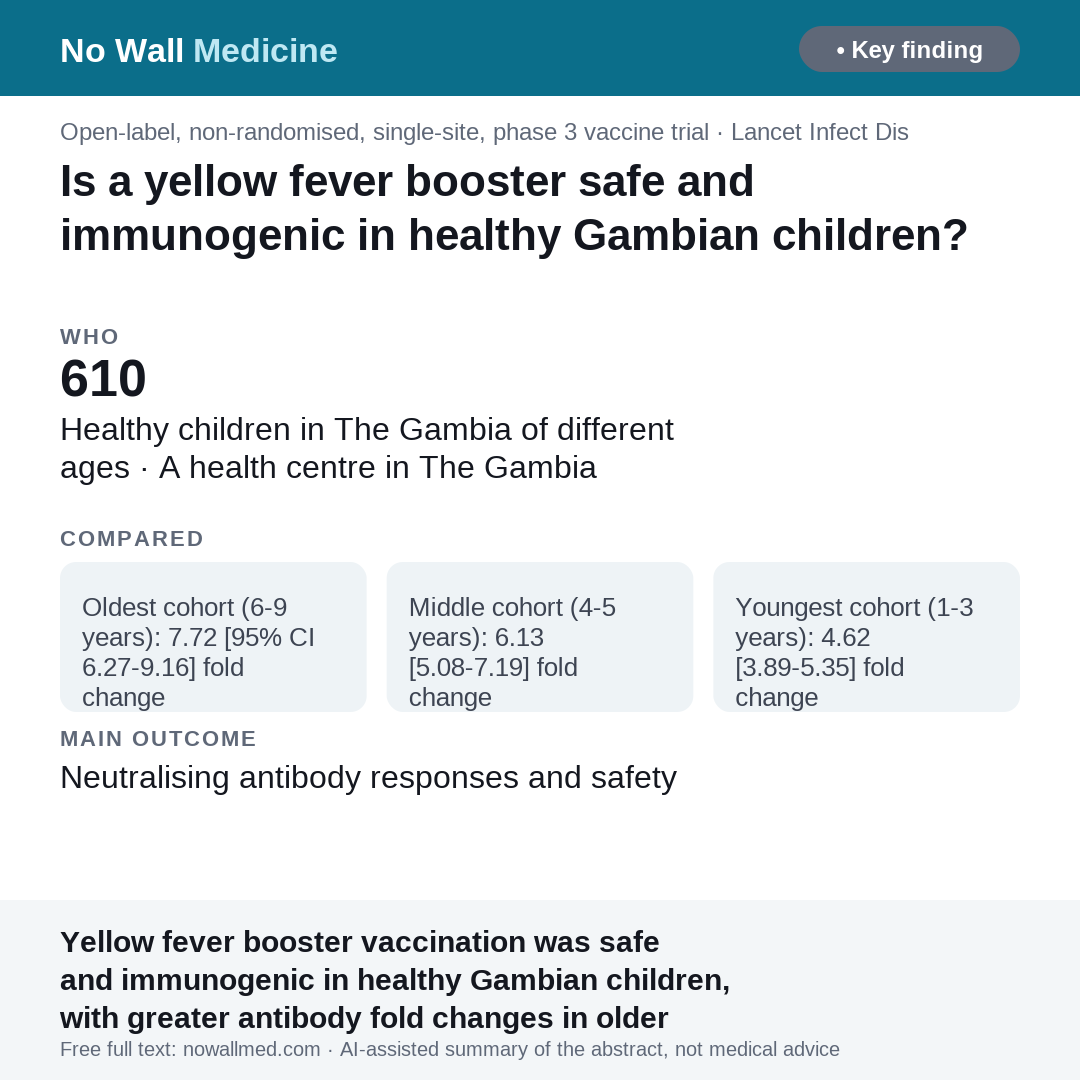
Yellow fever vaccination in healthy Gambian children of different ages to establish safety and immunogenicity of a booster dose: a open-label, non-randomised, single-site, phase 3 vaccine trial
Open-label, non-randomised, single-site, phase 3 vaccine trialBenefit found
Is a yellow fever booster safe and immunogenic in healthy Gambian children?
Who
610
Healthy children in The Gambia of different ages · A health centre in The Gambia
Compared
Oldest cohort (6-9 years): 7.72 [95% CI 6.27-9.16] fold change
Middle cohort (4-5 years): 6.13 [5.08-7.19] fold change
Youngest cohort (1-3 years): 4.62 [3.89-5.35] fold change
Main outcome
Neutralising antibody responses and safety
Bottom line: Yellow fever booster vaccination was safe and immunogenic in healthy Gambian children, with greater antibody fold changes in older cohorts.
Funded by: Wellcome Trust
Lancet Infect Dis · 2026-06-11Download image
Anticoagulation with the mechanistically distinct FXI/FXIa antibodies amrecibart (REGN9933A2) and cenvacibart (REGN7508Cat)
In vitro, in vivo, and first-in-human studiesBenefit found
How do amrecibart and cenvacibart affect coagulation and bleeding risk?
Who
Human and nonhuman primate plasma and healthy volunteers · Not specified
Compared
Cenvacibart: greater increase in activated partial thromboplastin time
Amrecibart: dose-dependently inhibited intrinsic pathway-triggered coagulation
Main outcome
intrinsic pathway-triggered coagulation and extrinsic pathway coagulation
Bottom line: Both antibodies inhibit intrinsic pathway coagulation without affecting the extrinsic pathway or increasing bleeding risk.
Blood · 2026-06-11Download image

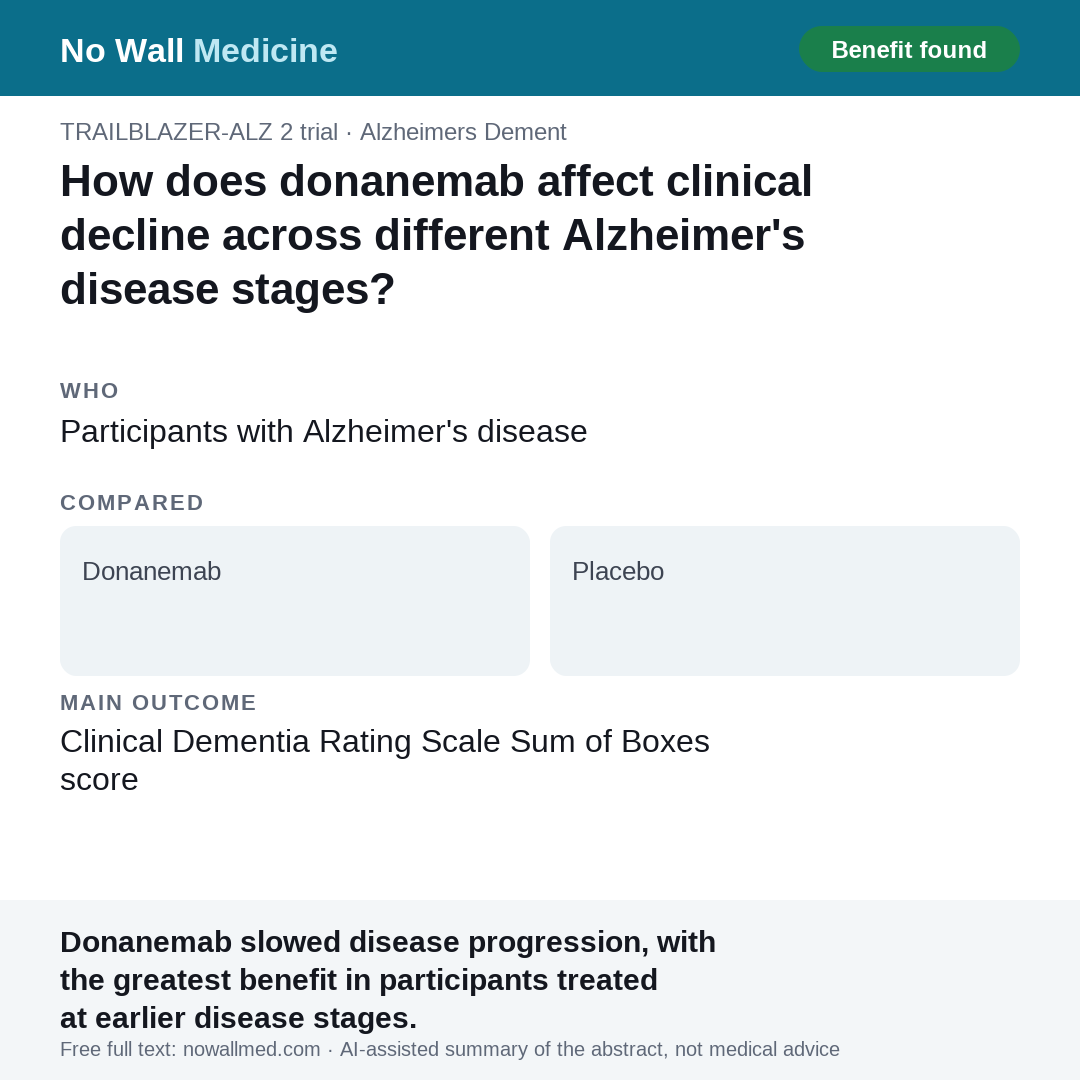
Donanemab treatment effect by baseline tau burden and disease severity: Observations from the TRAILBLAZER-ALZ 2 trial
TRAILBLAZER-ALZ 2 trialBenefit found
How does donanemab affect clinical decline across different Alzheimer's disease stages?
Who
Participants with Alzheimer's disease
Compared
Donanemab
Placebo
Main outcome
Clinical Dementia Rating Scale Sum of Boxes score
Bottom line: Donanemab slowed disease progression, with the greatest benefit in participants treated at earlier disease stages.
Alzheimers Dement · 2026-06-11Download image
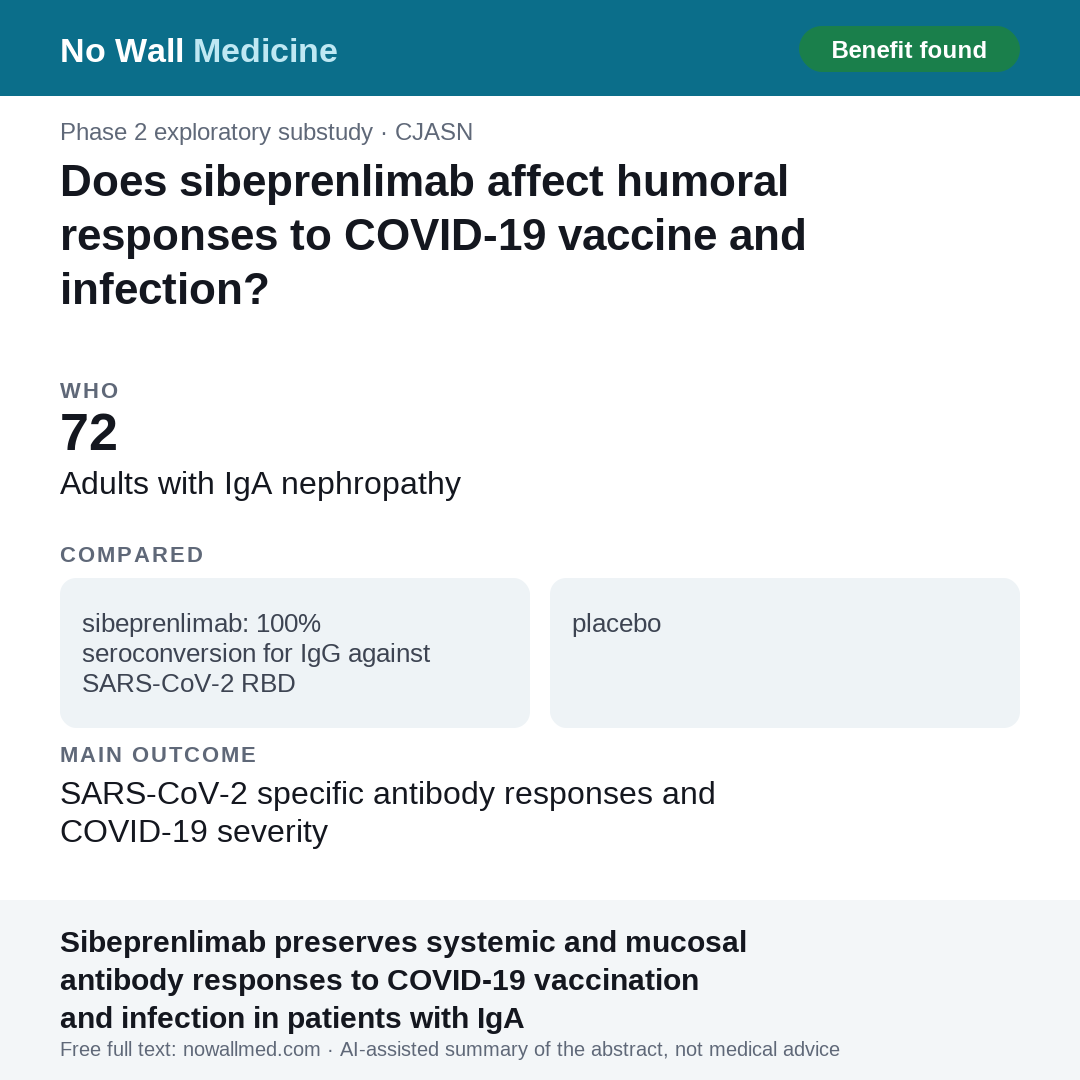
Humoral Response to COVID-19 Vaccines and Infection during Sibeprenlimab Treatment of IgA Nephropathy: Data from the ENVISION Trial
Phase 2 exploratory substudyBenefit found
Does sibeprenlimab affect humoral responses to COVID-19 vaccine and infection?
Who
72
Adults with IgA nephropathy
Compared
sibeprenlimab: 100% seroconversion for IgG against SARS-CoV-2 RBD
placebo
Main outcome
SARS-CoV-2 specific antibody responses and COVID-19 severity
Bottom line: Sibeprenlimab preserves systemic and mucosal antibody responses to COVID-19 vaccination and infection in patients with IgA nephropathy.
CJASN · 2026-06-11Download image
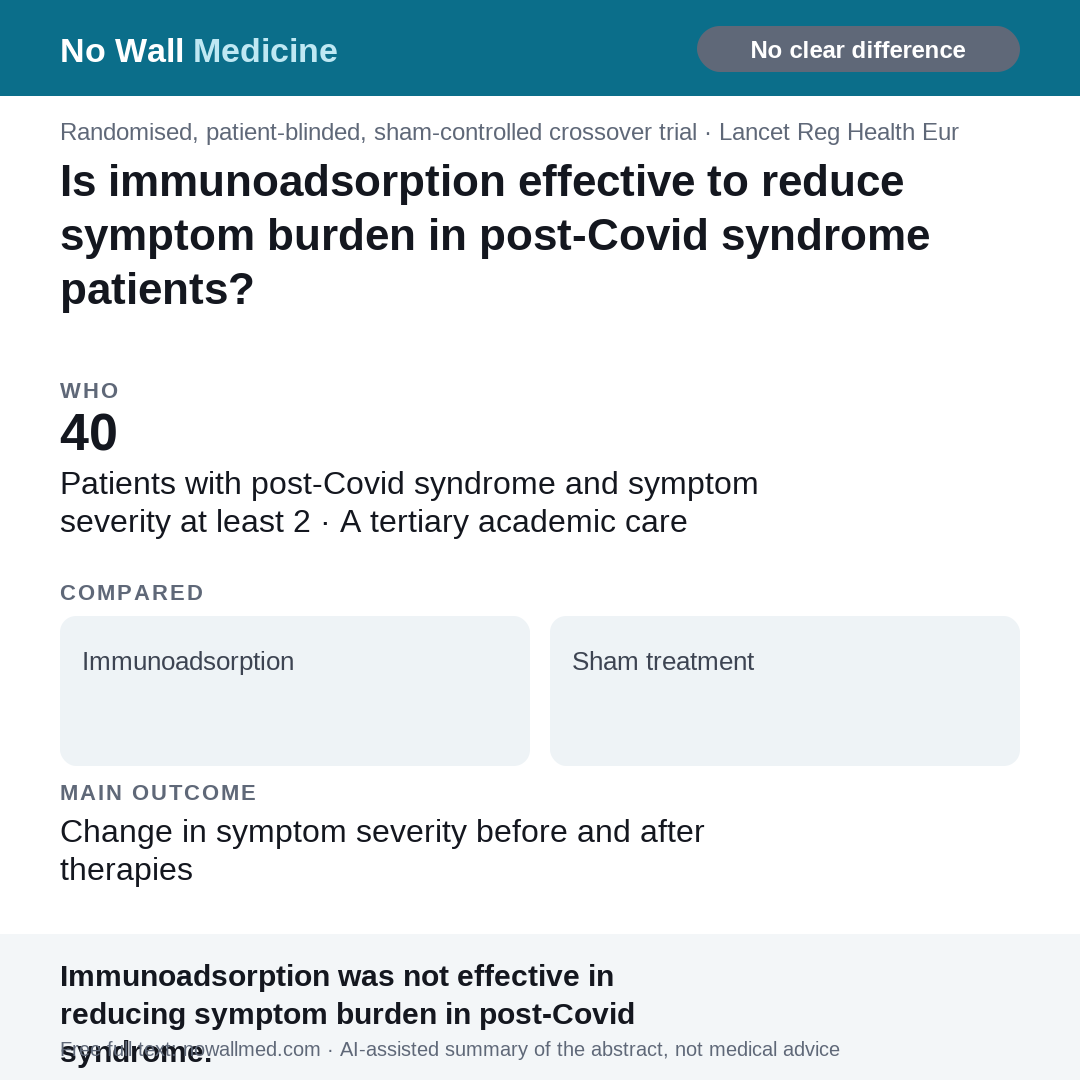
Immunoadsorption Versus Sham Treatment for Post-COVID Syndrome: A Randomised Sham-Controlled Crossover Trial
Randomised, patient-blinded, sham-controlled crossover trialNo clear difference
Is immunoadsorption effective to reduce symptom burden in post-Covid syndrome patients?
Who
40
Patients with post-Covid syndrome and symptom severity at least 2 · A tertiary academic care centre
Compared
Immunoadsorption
Sham treatment
Main outcome
Change in symptom severity before and after therapies
Result: odds ratio 1.17 (95% CI, 0.41-3.36)
Bottom line: Immunoadsorption was not effective in reducing symptom burden in post-Covid syndrome.
Funded by: Ministry of Health, Rhineland-Palatinate; Mainz University Medical Centre; DIAMED Medical Technology
Lancet Reg Health Eur · 2026-06-11Download image
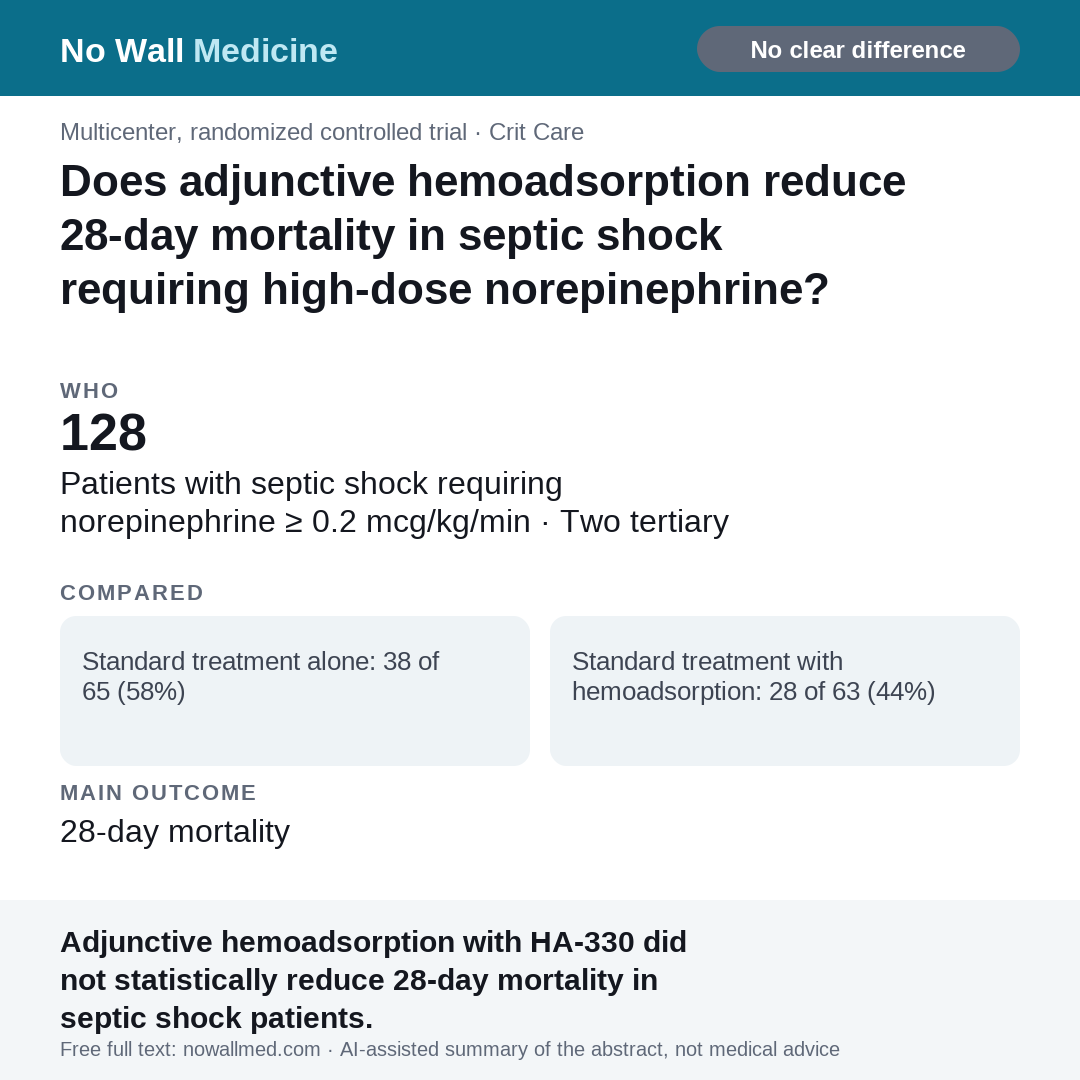
HA-330 hemoadsorption in septic shock requiring high-dose norepinephrine: a multicenter randomized controlled trial (CLEANSE)
Multicenter, randomized controlled trialNo clear difference
Does adjunctive hemoadsorption reduce 28-day mortality in septic shock requiring high-dose norepinephrine?
Who
128
Patients with septic shock requiring norepinephrine ≥ 0.2 mcg/kg/min · Two tertiary care centers in Thailand
Compared
Standard treatment alone: 38 of 65 (58%)
Standard treatment with hemoadsorption: 28 of 63 (44%)
Main outcome
28-day mortality
Result: relative risk 0.76 (95% CI 0.54-1.07)
Bottom line: Adjunctive hemoadsorption with HA-330 did not statistically reduce 28-day mortality in septic shock patients.
Crit Care · 2026-06-11Download image
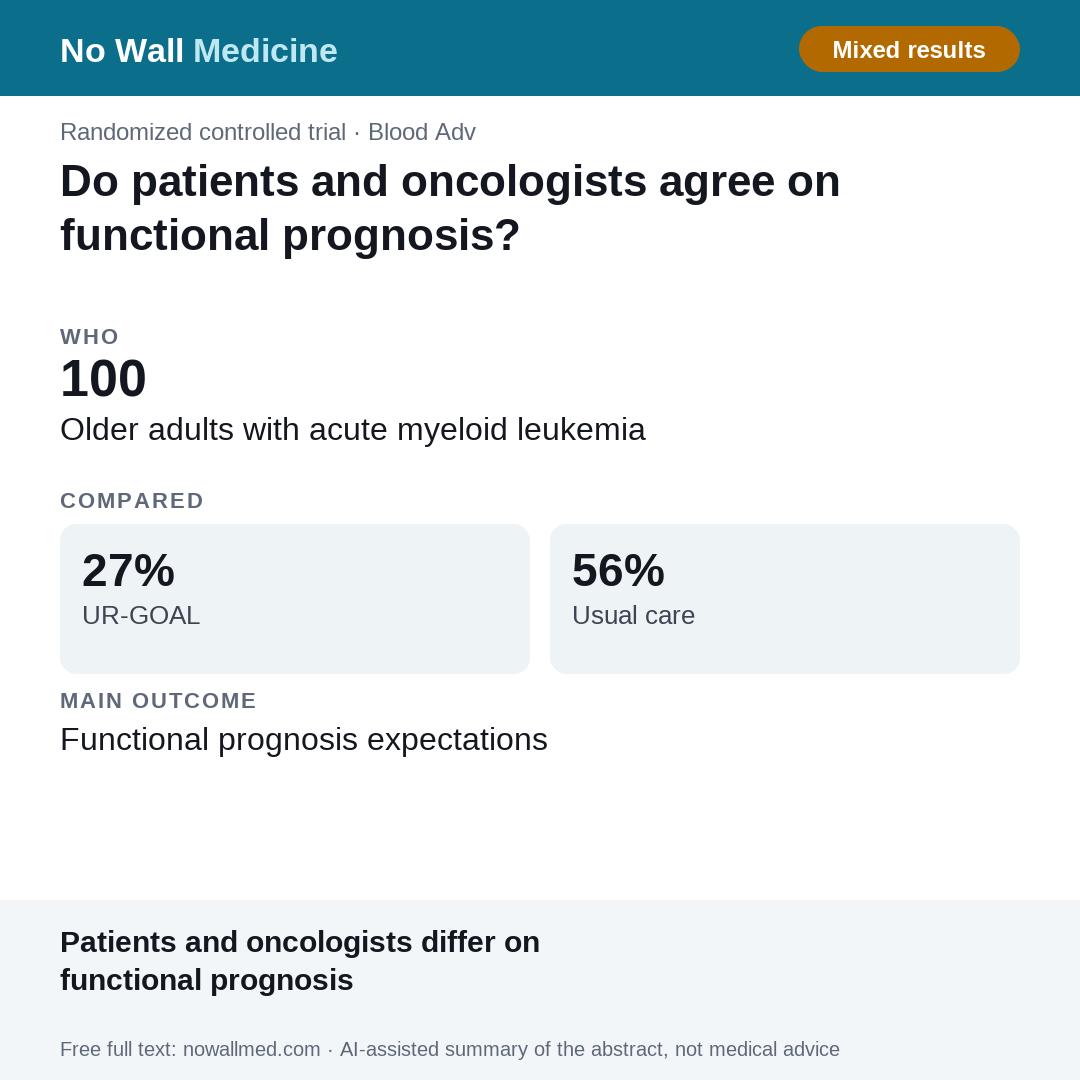
Patient and oncologist expectations of functional prognosis among older adults with acute myeloid leukemia
Randomized controlled trialMixed results
Do patients and oncologists agree on functional prognosis?
Who
100
Older adults with acute myeloid leukemia
Compared
27%UR-GOAL
56%Usual care
Main outcome
Functional prognosis expectations
Bottom line: Patients and oncologists differ on functional prognosis
Blood Adv · 2026-06-11Download image
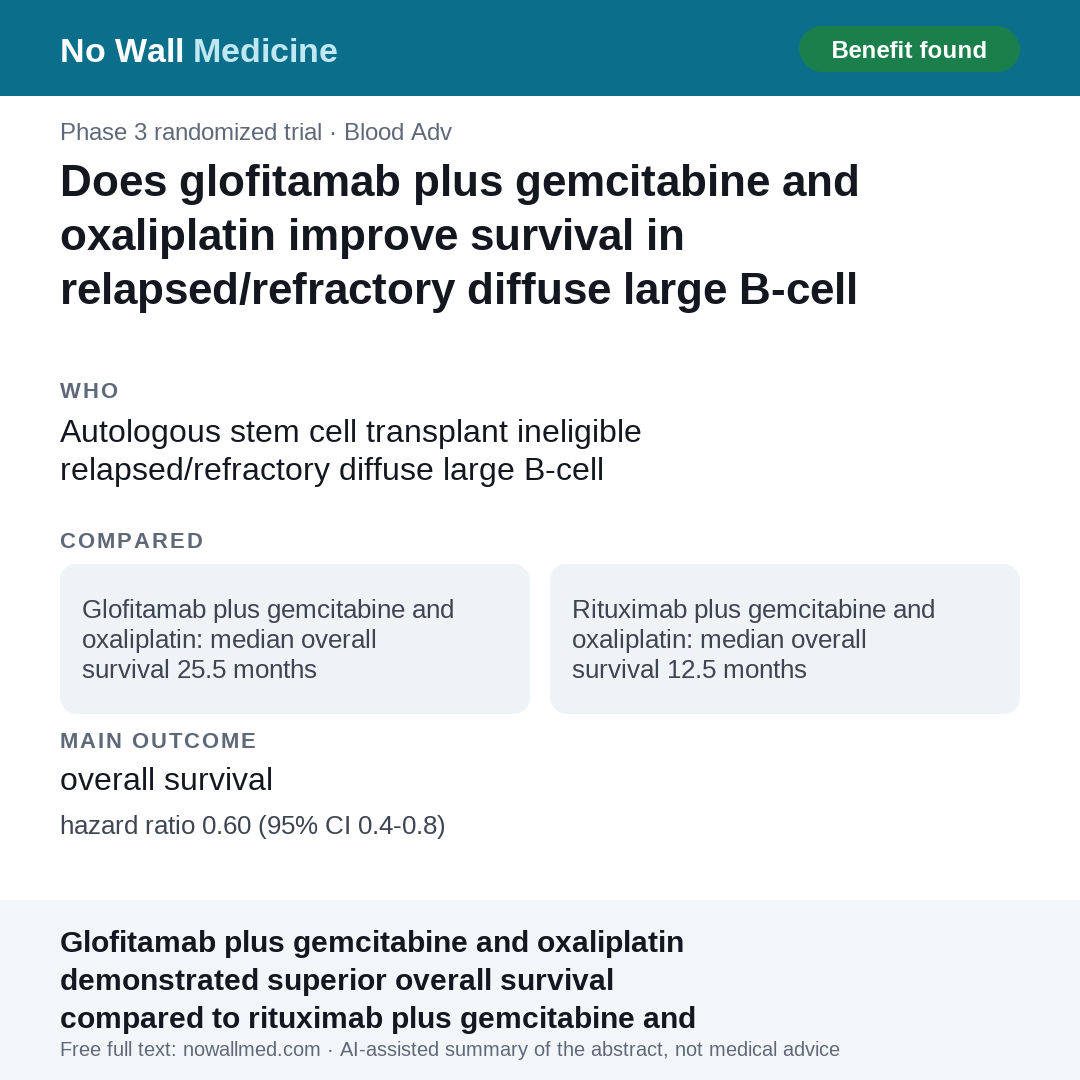
Glofitamab plus gemcitabine and oxaliplatin for relapsed/refractory DLBCL: 3-year follow-up of STARGLO
Phase 3 randomized trialBenefit found
Does glofitamab plus gemcitabine and oxaliplatin improve survival in relapsed/refractory diffuse large B-cell lymphoma?
Who
Autologous stem cell transplant ineligible relapsed/refractory diffuse large B-cell lymphoma patients
Compared
Glofitamab plus gemcitabine and oxaliplatin: median overall survival 25.5 months
Rituximab plus gemcitabine and oxaliplatin: median overall survival 12.5 months
Main outcome
overall survival
Result: hazard ratio 0.60 (95% CI 0.4-0.8)
Bottom line: Glofitamab plus gemcitabine and oxaliplatin demonstrated superior overall survival compared to rituximab plus gemcitabine and oxaliplatin.
Blood Adv · 2026-06-11Download image
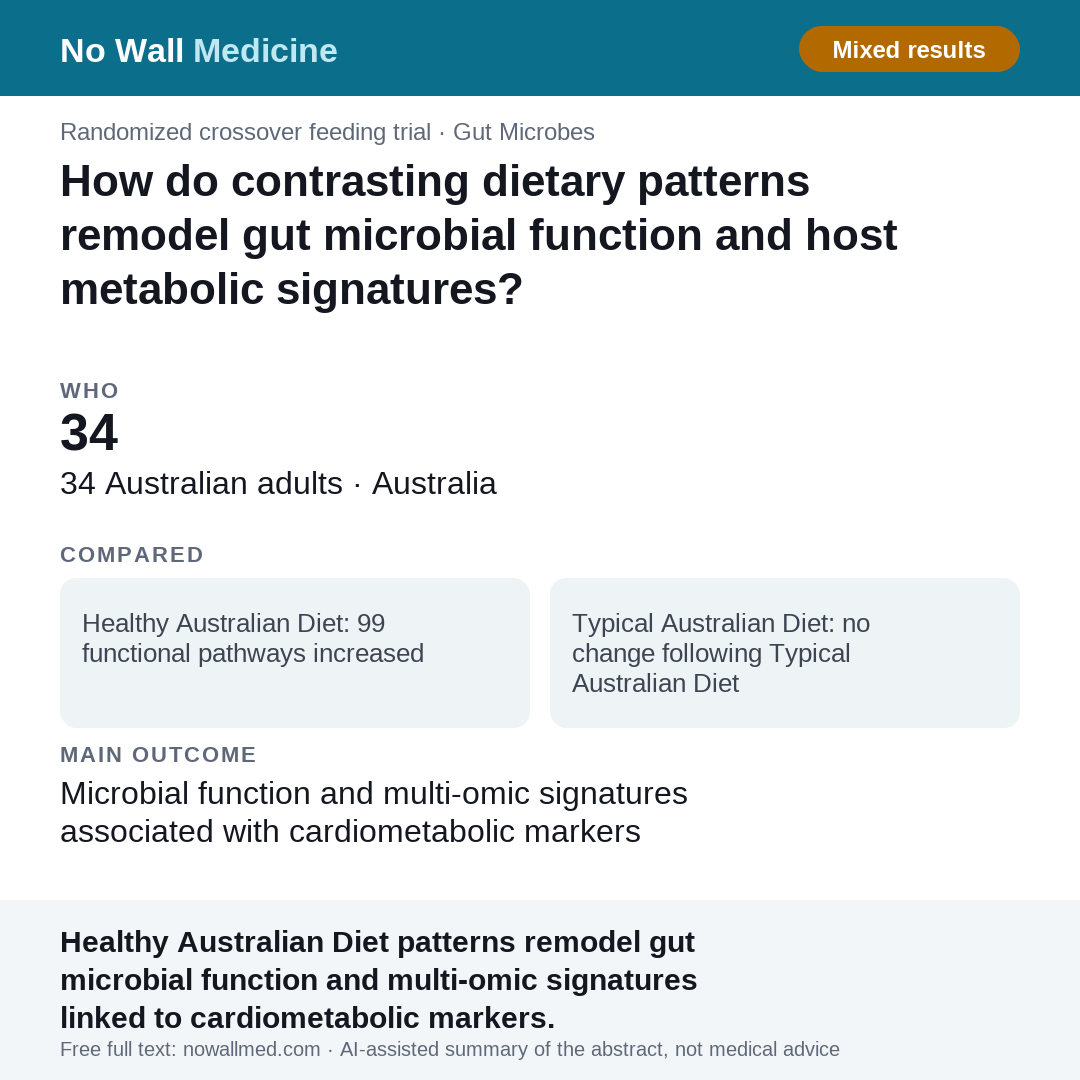
Contrasting dietary patterns remodel gut microbial function and generate multi-omic signatures associated with cardiometabolic markers
Randomized crossover feeding trialMixed results
How do contrasting dietary patterns remodel gut microbial function and host metabolic signatures?
Who
34
34 Australian adults · Australia
Compared
Healthy Australian Diet: 99 functional pathways increased
Typical Australian Diet: no change following Typical Australian Diet
Main outcome
Microbial function and multi-omic signatures associated with cardiometabolic markers
Bottom line: Healthy Australian Diet patterns remodel gut microbial function and multi-omic signatures linked to cardiometabolic markers.
Gut Microbes · 2026-06-11Download image
Sociodemographic Paradoxes and Enrollment Differences in In-Person Versus Online Recruitment to a Mobile Health Smoking Cessation Intervention for Food-Insecure Adults: Secondary Analysis of a Randomized Controlled Trial
Secondary analysis of a randomized controlled trialMixed results
How do sociodemographic, smoking-related, and psychosocial characteristics differ between in-person and online recruitment methods?
Who
Food-insecure adults
Compared
In-person recruitment: 49% enrollment rate
Online recruitment: 71% enrollment rate
Main outcome
Baseline characteristics and enrollment rates
Bottom line: Online recruitment was faster and yielded different sociodemographic and psychosocial profiles compared to in-person recruitment.
J Med Internet Res · 2026-06-11Download image

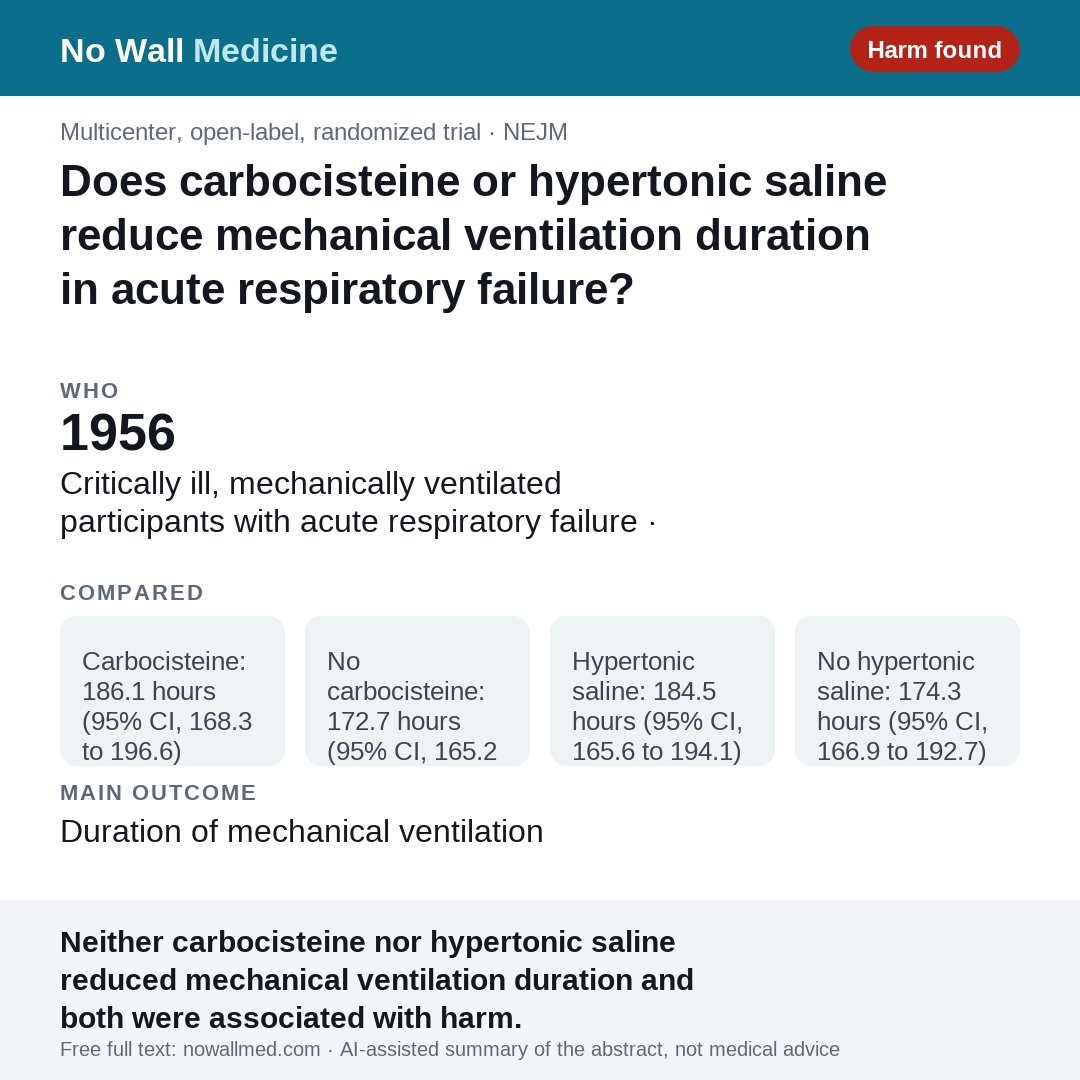
Carbocisteine or Hypertonic Saline for Acute Respiratory Failure
Multicenter, open-label, randomized trialHarm found
Does carbocisteine or hypertonic saline reduce mechanical ventilation duration in acute respiratory failure?
Who
1956
Critically ill, mechanically ventilated participants with acute respiratory failure · Multicenter
Compared
Carbocisteine: 186.1 hours (95% CI, 168.3 to 196.6)
No carbocisteine: 172.7 hours (95% CI, 165.2 to 190.4)
Hypertonic saline: 184.5 hours (95% CI, 165.6 to 194.1)
No hypertonic saline: 174.3 hours (95% CI, 166.9 to 192.7)
Main outcome
Duration of mechanical ventilation
Result: adjusted hazard ratio 0.96 (95% CI 0.87 to 1.05) for carbocisteine
Bottom line: Neither carbocisteine nor hypertonic saline reduced mechanical ventilation duration and both were associated with harm.
Funded by: NIHR Health Technology Assessment Programme and Belfast Health and Social Care Trust
NEJM · 2026-06-10Download image
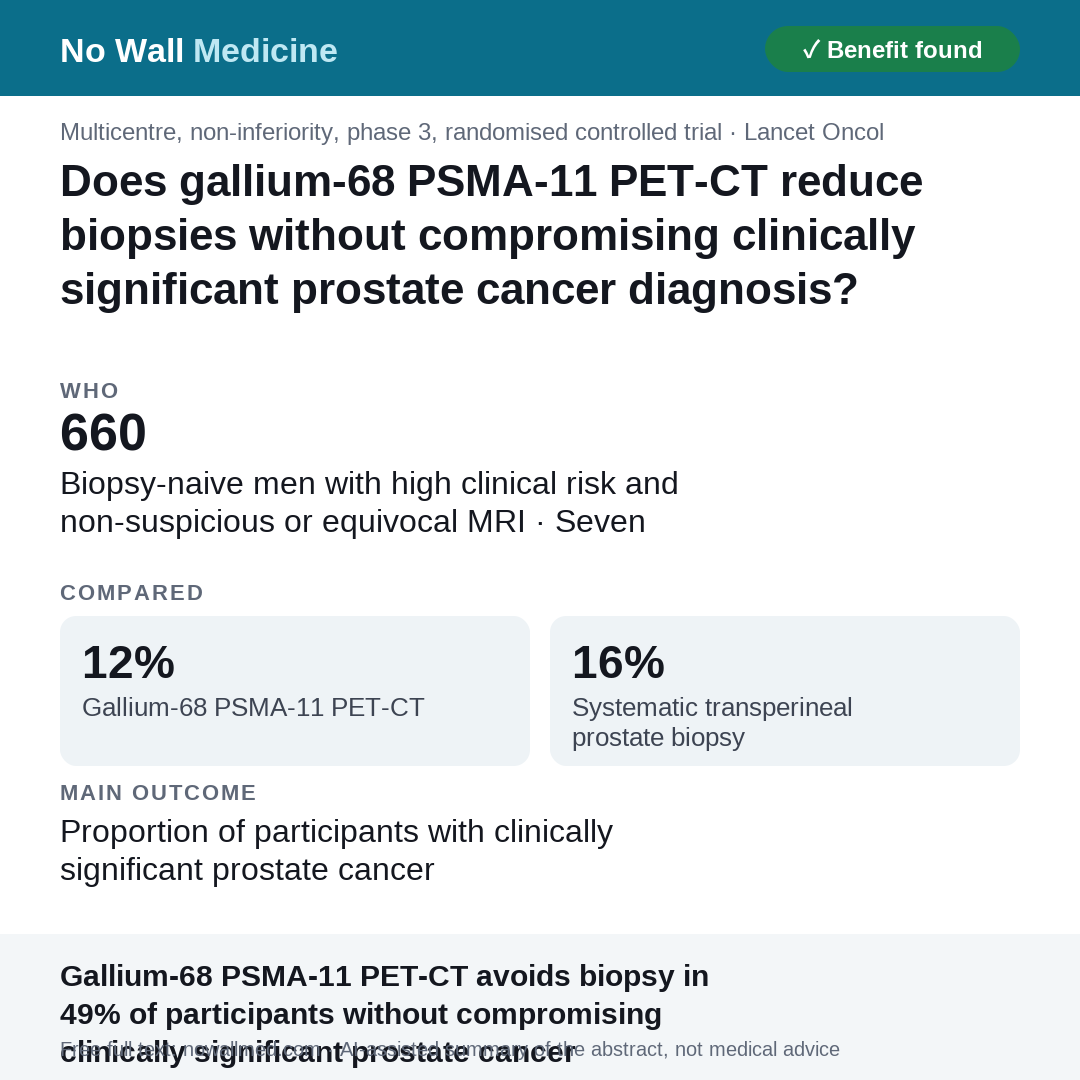
Effect of [68Ga]Ga-PSMA-11 PET-CT in the diagnosis of prostate cancer in men with equivocal or clinically high-risk non-suspicious findings on multiparametric MRI (PRIMARY2): a multicentre, non-inferiority, phase 3, randomised controlled trial
Multicentre, non-inferiority, phase 3, randomised controlled trialBenefit found
Does gallium-68 PSMA-11 PET-CT reduce biopsies without compromising clinically significant prostate cancer diagnosis?
Who
660
Biopsy-naive men with high clinical risk and non-suspicious or equivocal MRI · Seven Australian hospitals
Compared
12%Gallium-68 PSMA-11 PET-CT
16%Systematic transperineal prostate biopsy
Main outcome
Proportion of participants with clinically significant prostate cancer
Result: difference -3·7% (95% CI -8·9 to 1·5%)
Bottom line: Gallium-68 PSMA-11 PET-CT avoids biopsy in 49% of participants without compromising clinically significant prostate cancer diagnosis.
Lancet Oncol · 2026-06-10Download image
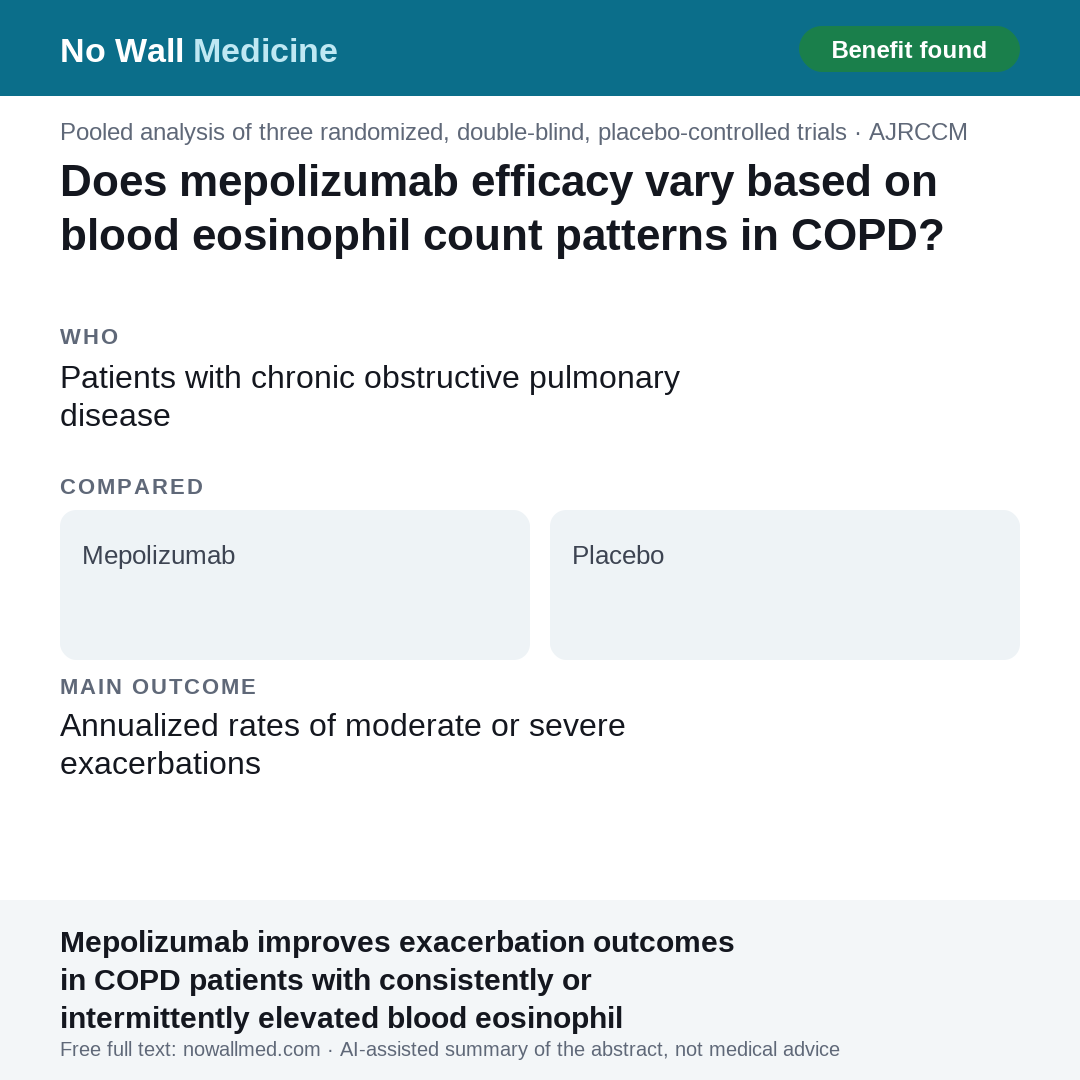
Mepolizumab efficacy in chronic obstructive pulmonary disease: insights from longitudinal patterns of blood eosinophil counts and their variability across 3 clinical trials
Pooled analysis of three randomized, double-blind, placebo-controlled trialsBenefit found
Does mepolizumab efficacy vary based on blood eosinophil count patterns in COPD?
Who
Patients with chronic obstructive pulmonary disease
Compared
Mepolizumab
Placebo
Main outcome
Annualized rates of moderate or severe exacerbations
Bottom line: Mepolizumab improves exacerbation outcomes in COPD patients with consistently or intermittently elevated blood eosinophil counts.
AJRCCM · 2026-06-10Download image
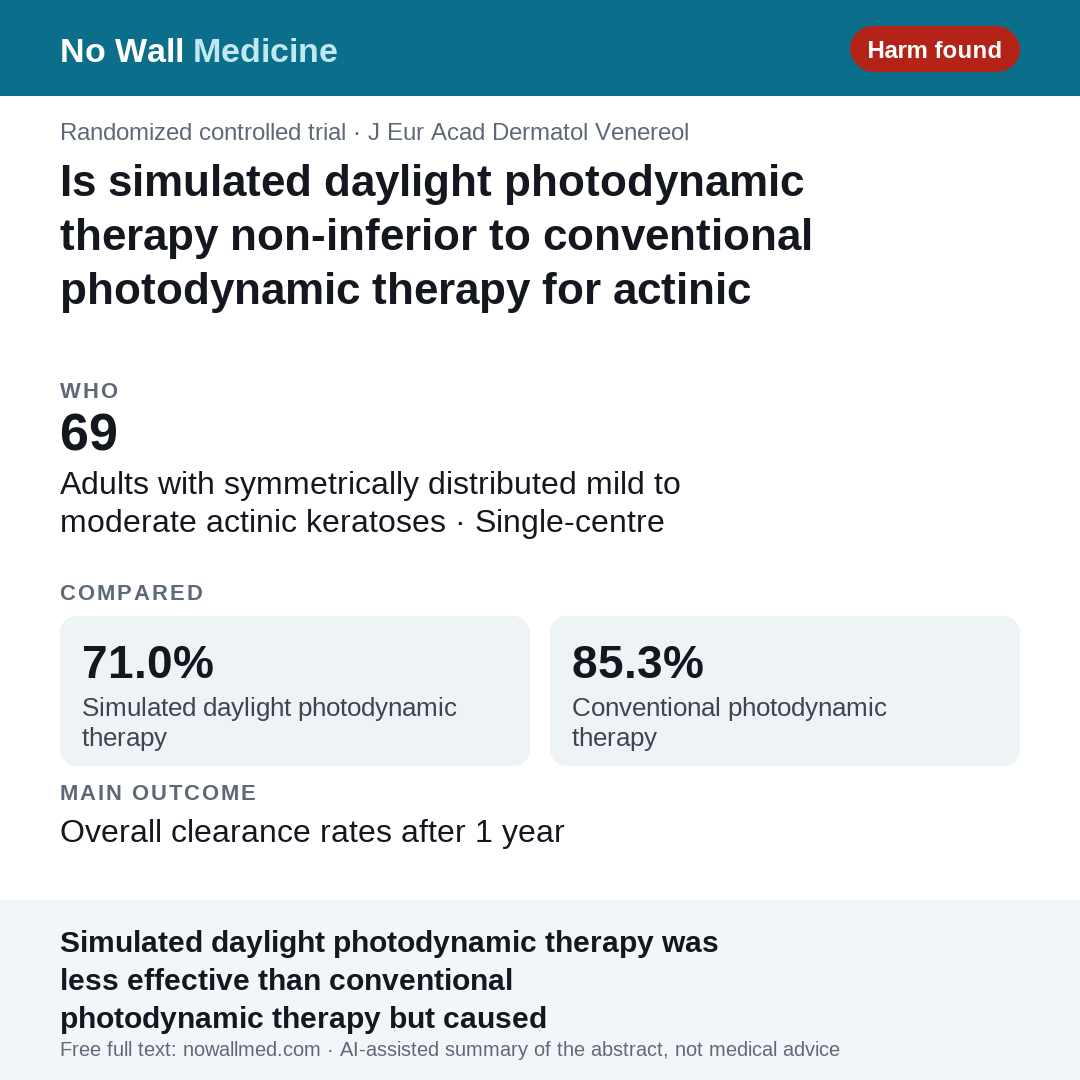
Simulated daylight versus conventional PDT for mild to moderate actinic keratoses: A randomized controlled trial
Randomized controlled trialHarm found
Is simulated daylight photodynamic therapy non-inferior to conventional photodynamic therapy for actinic keratoses?
Who
69
Adults with symmetrically distributed mild to moderate actinic keratoses · Single-centre
Compared
71.0%Simulated daylight photodynamic therapy
85.3%Conventional photodynamic therapy
Main outcome
Overall clearance rates after 1 year
Bottom line: Simulated daylight photodynamic therapy was less effective than conventional photodynamic therapy but caused significantly less pain.
J Eur Acad Dermatol Venereol · 2026-06-10Download image
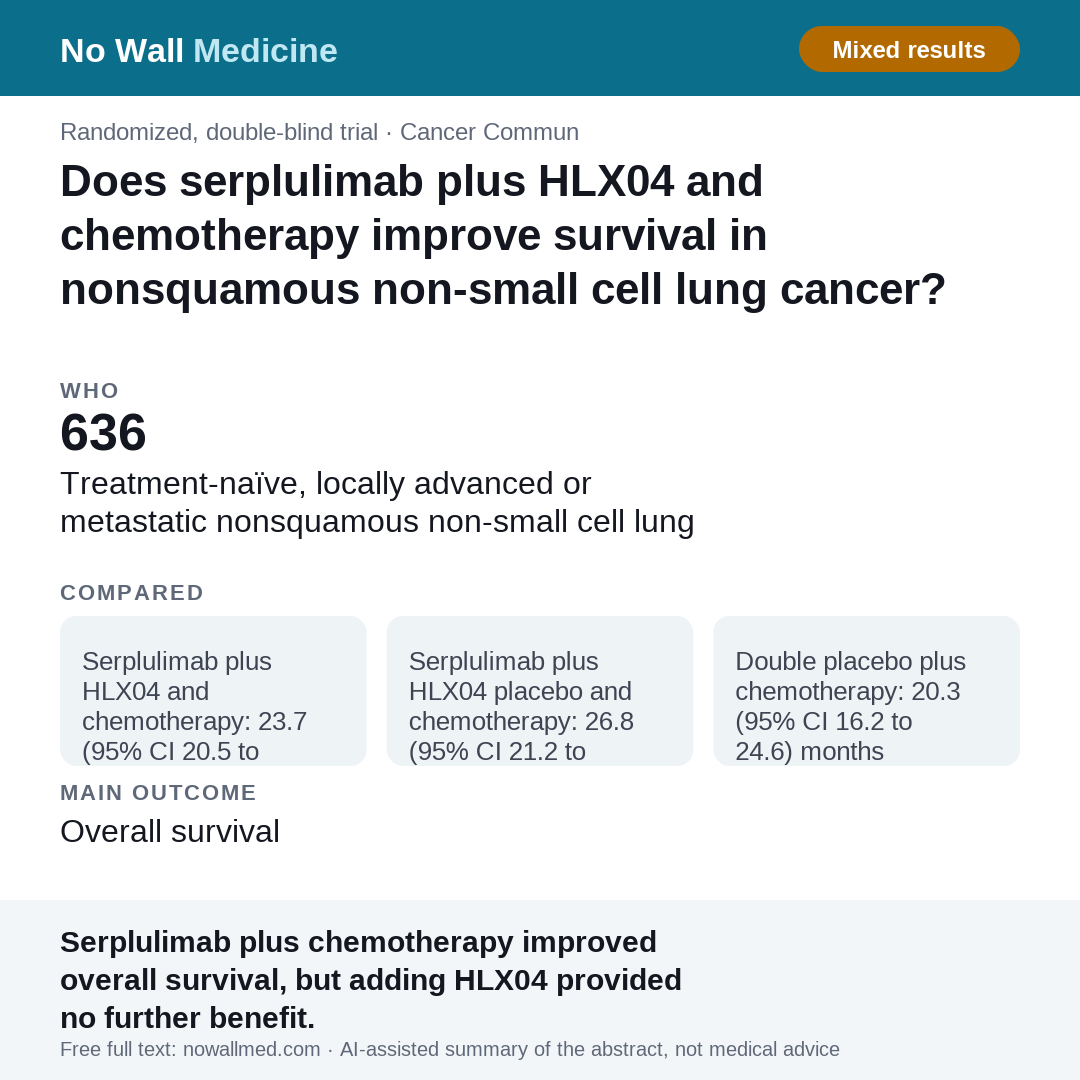
Serplulimab Plus Chemotherapy, with or without HLX04, versus Chemotherapy as First-Line Treatment for Nonsquamous NSCLC: Final Survival Analysis of the Phase III ASTRUM-002 Study
Randomized, double-blind trialMixed results
Does serplulimab plus HLX04 and chemotherapy improve survival in nonsquamous non-small cell lung cancer?
Who
636
Treatment-naïve, locally advanced or metastatic nonsquamous non-small cell lung cancer without EGFR or ALK/ROS1 alterations
Compared
Serplulimab plus HLX04 and chemotherapy: 23.7 (95% CI 20.5 to 27.5) months
Serplulimab plus HLX04 placebo and chemotherapy: 26.8 (95% CI 21.2 to 30.9) months
Double placebo plus chemotherapy: 20.3 (95% CI 16.2 to 24.6) months
Main outcome
Overall survival
Result: hazard ratio 0.66 (95% CI 0.52 to 0.83)
Bottom line: Serplulimab plus chemotherapy improved overall survival, but adding HLX04 provided no further benefit.
Cancer Commun · 2026-06-10Download image
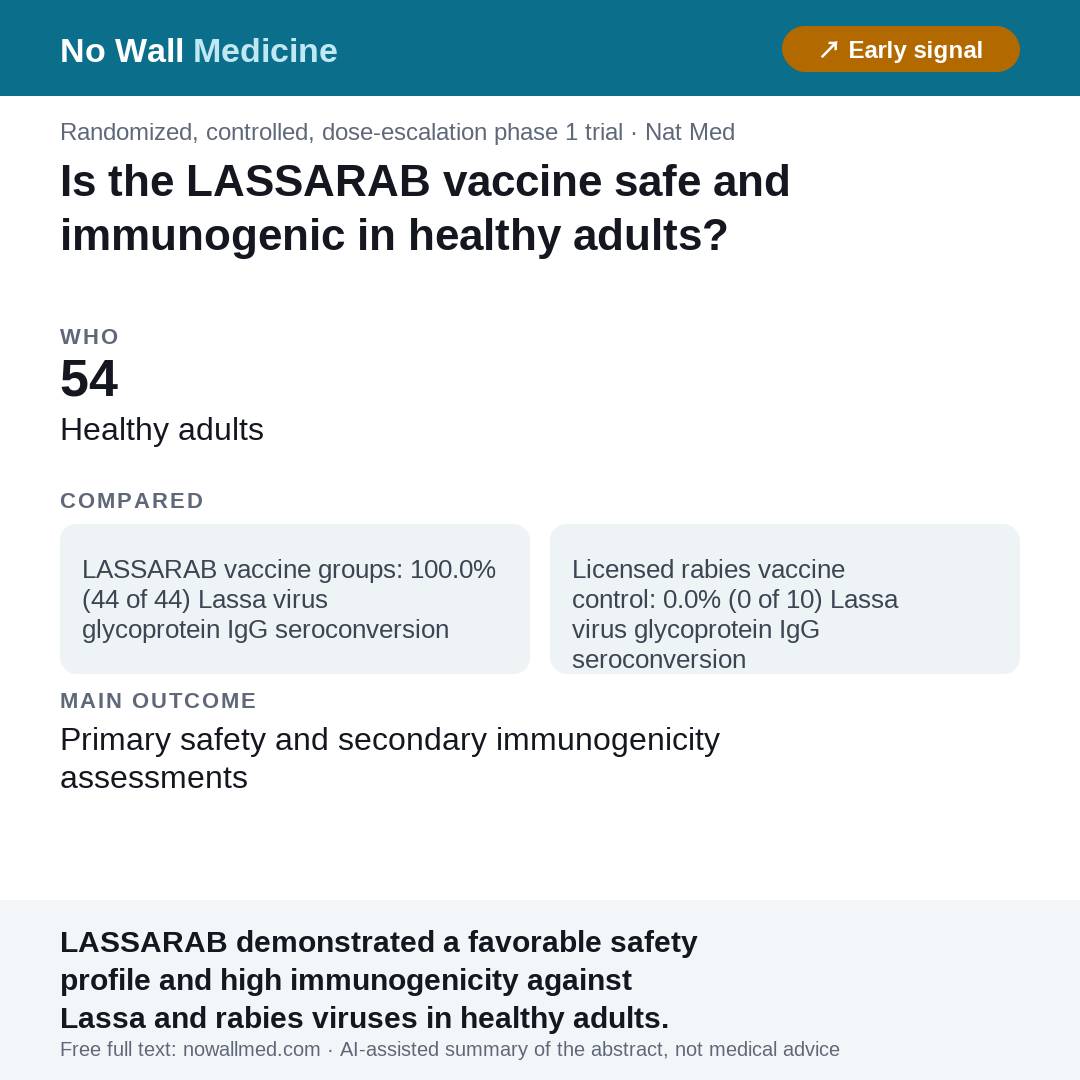
Adjuvanted inactivated rabies virus-vectored Lassa virus vaccine in healthy adults: a phase 1 trial
Randomized, controlled, dose-escalation phase 1 trialBenefit found
Is the LASSARAB vaccine safe and immunogenic in healthy adults?
Who
54
Healthy adults
Compared
LASSARAB vaccine groups: 100.0% (44 of 44) Lassa virus glycoprotein IgG seroconversion
Licensed rabies vaccine control: 0.0% (0 of 10) Lassa virus glycoprotein IgG seroconversion
Main outcome
Primary safety and secondary immunogenicity assessments
Bottom line: LASSARAB demonstrated a favorable safety profile and high immunogenicity against Lassa and rabies viruses in healthy adults.
Limitation: There were no prespecified hypotheses or formal power calculations.
Nat Med · 2026-06-09Download image
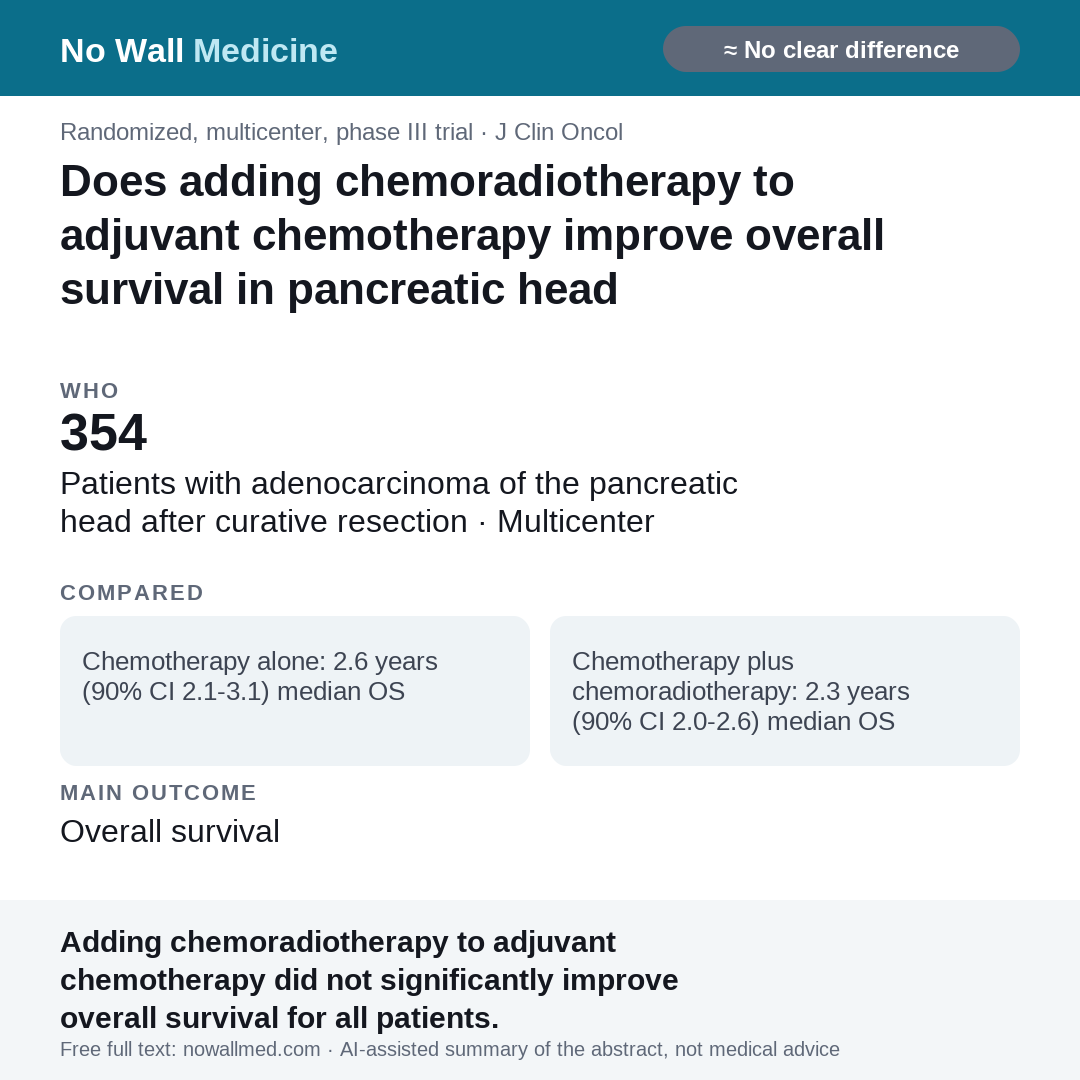
Adjuvant Chemotherapy ± Chemoradiotherapy for Adenocarcinoma of the Pancreatic Head: Results of the Radiotherapy Random Assignment of NRG Oncology/RTOG 0848
Randomized, multicenter, phase III trialNo clear difference
Does adding chemoradiotherapy to adjuvant chemotherapy improve overall survival in pancreatic head adenocarcinoma?
Who
354
Patients with adenocarcinoma of the pancreatic head after curative resection · Multicenter
Compared
Chemotherapy alone: 2.6 years (90% CI 2.1-3.1) median OS
Chemotherapy plus chemoradiotherapy: 2.3 years (90% CI 2.0-2.6) median OS
Main outcome
Overall survival
Result: hazard ratio 0.96 (90% CI 0.79 to 1.18)
Bottom line: Adding chemoradiotherapy to adjuvant chemotherapy did not significantly improve overall survival for all patients.
Limitation: The benefit of chemoradiotherapy was only observed in node-negative patients.
J Clin Oncol · 2026-06-09Download image
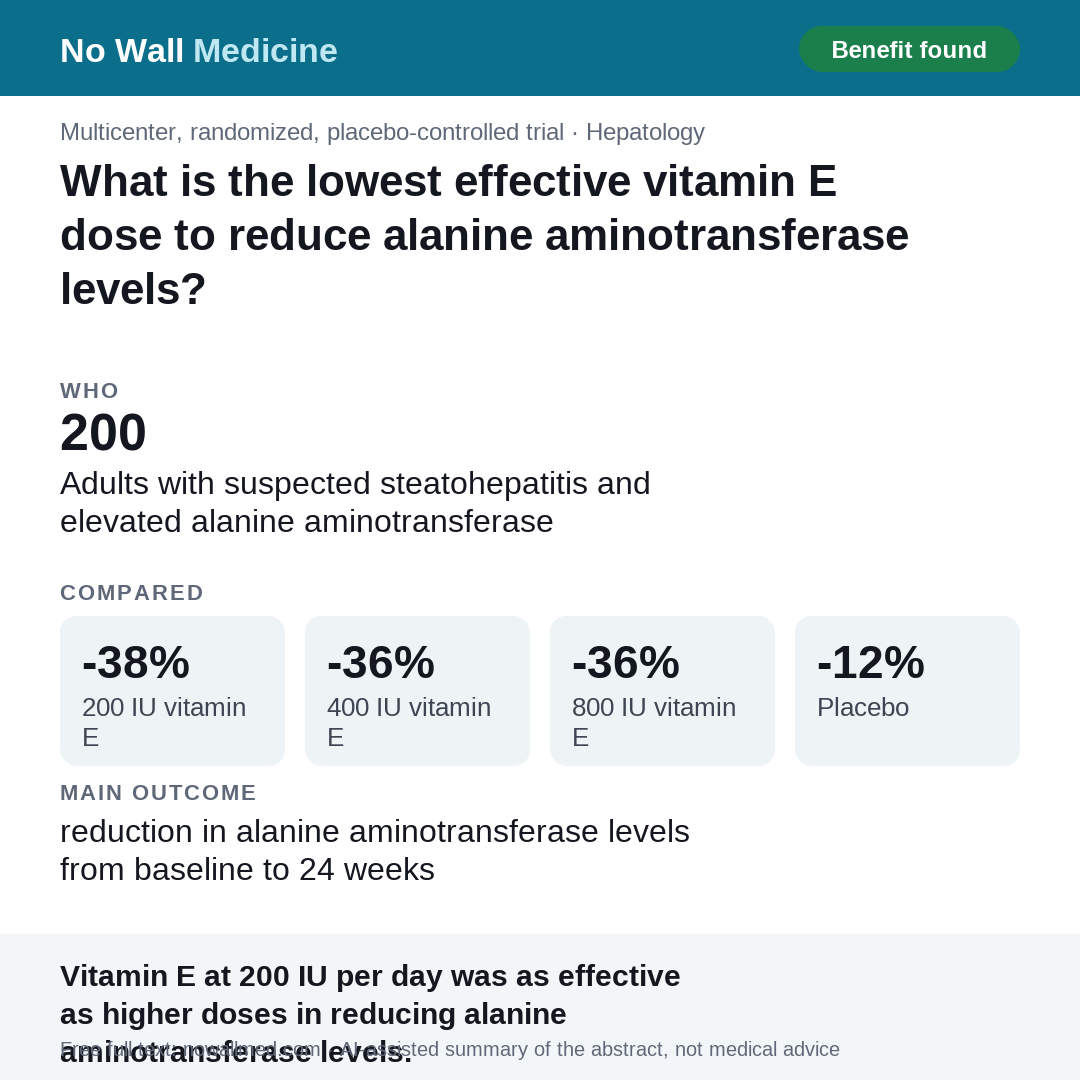
Vitamin E dosing study (VEDS) in patients with metabolic dysfunction-associated steatotic liver disease with elevated aminotransferases: A multicenter, randomized, placebo-controlled trial
Multicenter, randomized, placebo-controlled trialBenefit found
What is the lowest effective vitamin E dose to reduce alanine aminotransferase levels?
Who
200
Adults with suspected steatohepatitis and elevated alanine aminotransferase
Compared
-38%200 IU vitamin E
-36%400 IU vitamin E
-36%800 IU vitamin E
-12%Placebo
Main outcome
reduction in alanine aminotransferase levels from baseline to 24 weeks
Bottom line: Vitamin E at 200 IU per day was as effective as higher doses in reducing alanine aminotransferase levels.
Hepatology · 2026-06-09Download image