Visual abstracts
New randomized trials and meta-analyses from leading journals at a glance: who was studied, what was compared, and what was found. Every paper is free to read in full.
All specialtiesCardiology 4763Oncology 4042Gastroenterology & Hepatology 1902Infectious Disease 3756Neurology 1872Psychiatry & Mental Health 2214Pulmonology 2042Critical Care 1319Endocrinology & Diabetes 2544Pediatrics 2889Surgery 2479Orthopedics & Sports Medicine 917Neurosurgery 525Cardiothoracic & Vascular Surgery 656Plastic & Reconstructive Surgery 574Nephrology 1107Rheumatology 810Hematology 1090Dermatology 611Ophthalmology 532Obstetrics & Gynecology 1645Public & Global Health 1037Radiology & Imaging 617Anesthesiology 957Urology 745ENT (Otolaryngology) 494Emergency Medicine 481Allergy & Immunology 309Geriatrics 972Family Medicine & Primary Care 533Medical Genetics & Genomics 659Pathology & Laboratory Medicine 156Physical Medicine & Rehabilitation 734Palliative Care 421Nutrition 1560Digital Health & AI 2133General Medicine 318
Pathologic Response of Phase III Study: Perioperative Camrelizumab Plus Rivoceranib and Chemotherapy Versus Chemotherapy for Locally Advanced Gastric Cancer (DRAGON IV/CAP 05)
Randomized phase III trialBenefit found
Does perioperative camrelizumab plus rivoceranib and chemotherapy improve pathologic complete response?
Who
360
Patients with T3-4aN + M0 gastroesophageal junction adenocarcinoma · Multicenter
Compared
18.3%SOXRC (95% CI, 13.0 to 24.8)
5.0%SOX (95% CI, 2.3 to 9.3)
Main outcome
pathologic complete response
Result: odds ratio of 4.5 (95% CI, 2.1 to 9.9)
Bottom line: Perioperative camrelizumab plus rivoceranib and chemotherapy significantly improved pathologic complete response compared to chemotherapy alone.
J Clin Oncol · 2024-10-09Download image

Short-Term Dual Antiplatelet Therapy After Drug-Eluting Stenting in Patients With Acute Coronary Syndromes: A Systematic Review and Network Meta-Analysis
Systematic review and network meta-analysisBenefit found
What is the optimal dual antiplatelet therapy duration for acute coronary syndromes?
Who
35326
Patients with acute coronary syndromes undergoing percutaneous coronary intervention
Compared
1 month DAPT followed by P2Y12 inhibitors: major bleeding RR, 0.47 (95% CrI, 0.26-0.74)
12 months of DAPT
Main outcome
major adverse cardiac and cerebrovascular events and major bleeding
Result: major bleeding RR, 0.47 (95% CrI, 0.26-0.74)
Bottom line: One month of dual antiplatelet therapy followed by P2Y12 inhibitor monotherapy reduces major bleeding without increasing major adverse cardiac and cerebrovascular events.
Limitation: The safety of stopping aspirin in those taking clopidogrel remains unclear.
JAMA Cardiol · 2024-10-09Download image

Transcatheter Aortic Valve Implantation by Valve Type in Women With Small Annuli: Results From the SMART Randomized Clinical Trial
Randomized clinical trialMixed results
Do self-expanding or balloon-expandable valves yield better outcomes in women with small aortic annuli?
Who
621
Women with small aortic annuli undergoing transcatheter aortic valve replacement · 83 centers in Canada, Europe, Israel, and the US
Compared
Self-expanding valve: 9.4% (clinical end point); 8.4% (valve dysfunction)
Balloon-expandable valve: 11.8% (clinical end point); 41.8% (valve dysfunction)
Main outcome
Composite clinical end point and bioprosthetic valve dysfunction
Result: absolute risk difference -33.4% (95% CI -40.4 to -26.4) for valve dysfunction
Bottom line: Self-expanding valves resulted in similar clinical outcomes but significantly lower bioprosthetic valve dysfunction than balloon-expandable valves in women.
JAMA Cardiol · 2024-10-09Download image

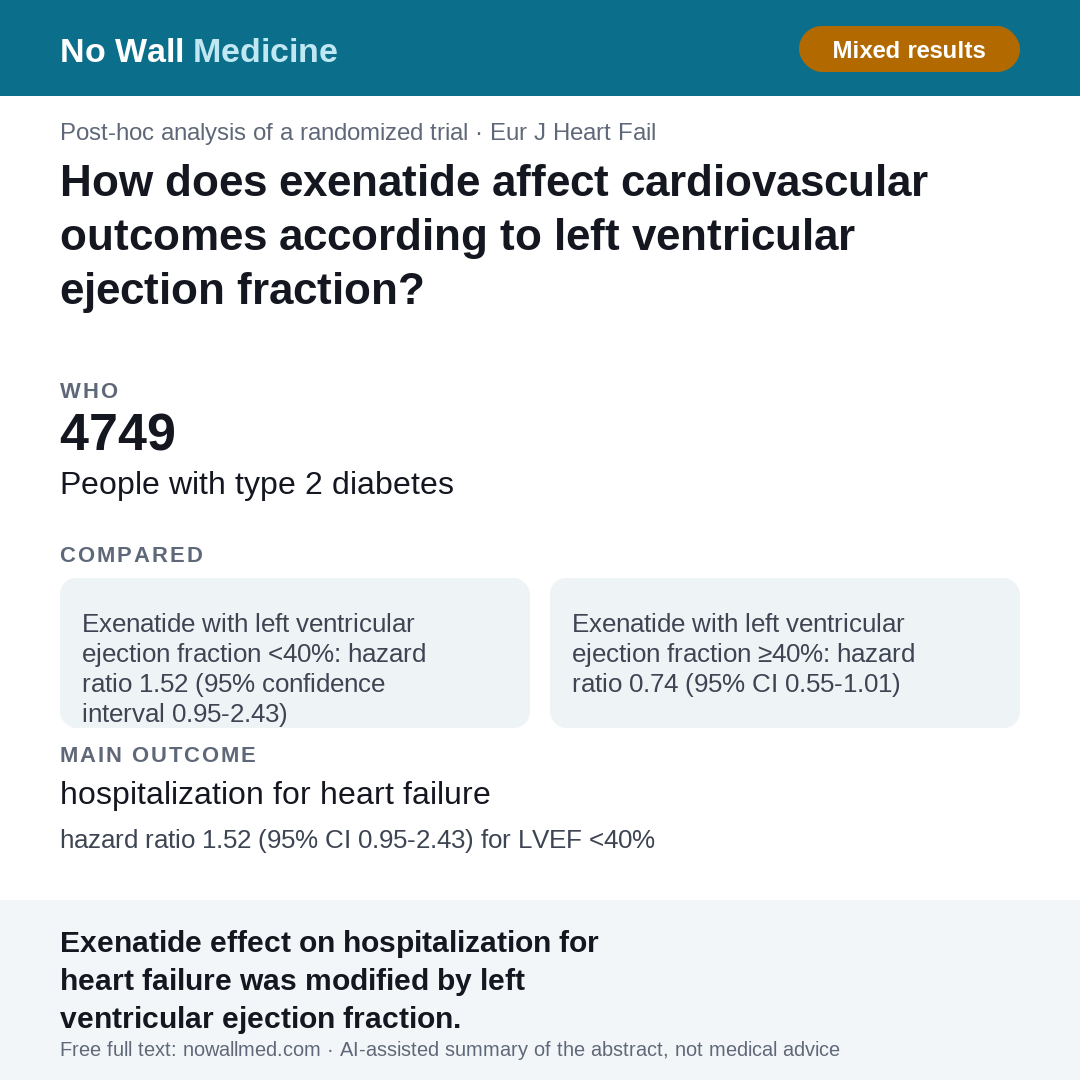
Cardiovascular outcomes with exenatide in type 2 diabetes according to ejection fraction: The EXSCEL trial
Post-hoc analysis of a randomized trialMixed results
How does exenatide affect cardiovascular outcomes according to left ventricular ejection fraction?
Who
4749
People with type 2 diabetes
Compared
Exenatide with left ventricular ejection fraction <40%: hazard ratio 1.52 (95% confidence interval 0.95-2.43)
Exenatide with left ventricular ejection fraction ≥40%: hazard ratio 0.74 (95% CI 0.55-1.01)
Main outcome
hospitalization for heart failure
Result: hazard ratio 1.52 (95% CI 0.95-2.43) for LVEF <40%
Bottom line: Exenatide effect on hospitalization for heart failure was modified by left ventricular ejection fraction.
Limitation: This was a post-hoc analysis of the EXSCEL trial.
Eur J Heart Fail · 2024-10-09Download image
Cardiac Resynchronization Therapy in Ischemic Versus Nonischemic Cardiomyopathy: Patient-Level Meta-Analysis of 7 Randomized Clinical Trials
Patient-level meta-analysis of 7 randomized clinical trialsBenefit found
Does cardiomyopathy etiology affect clinical and echocardiographic outcomes of cardiac resynchronization therapy?
Who
6252
Patients with ischemic or nonischemic cardiomyopathy
Compared
Ischemic cardiomyopathy
Nonischemic cardiomyopathy
Main outcome
Time to all-cause death or heart failure hospitalization
Result: hazard ratio 0.67 (95% credible interval 0.56-0.82)
Bottom line: Cardiac resynchronization therapy increases time to heart failure hospitalization or death regardless of cardiomyopathy etiology.
JACC Heart Fail · 2024-10-09Download image

Dynamic choice HIV prevention with cabotegravir long-acting injectable in rural Uganda and Kenya: a randomised trial extension
Randomised, open-label extension trialBenefit found
Does offering choice of oral or injectable cabotegravir increase biomedical prevention coverage and reduce HIV infections?
Who
984
Adults aged 15 years or older at risk for HIV · Rural Uganda and Kenya
Compared
69·7%Intervention group (95% CI 64·9-74·5)
13·3%Standard-of-care group (10·2-16·3)
Main outcome
Proportion of follow-up covered by biomedical HIV prevention
Result: absolute difference of 56·4 percentage points (95% CI 50·8-62·1)
Bottom line: Offering choice between oral and injectable HIV prevention increases coverage and reduces incident HIV infections.
Funded by: National Institutes of Health
Lancet HIV · 2024-10-09Download image

Systematic review on oral antibacterial relay therapy for acute staphylococcal prosthetic joint infections treated with debridement, antibiotics and implant retention (DAIR)
Systematic review and network meta-analysisUnclear result
Oral antibacterial relay therapy for acute staphylococcal prosthetic joint infections
Who
Patients with acute staphylococcal prosthetic joint infections
Compared
Rifampicin with fluoroquinolone
Rifampicin with clindamycin
Rifampicin with cycline
Rifampicin with linezolid
Main outcome
Remission rate
Bottom line: Insufficient evidence to compare treatments
Limitation: High risk of bias and inconsistencies
J Antimicrob Chemother · 2024-10-09Download image

Genome-Wide Association Study Meta-Analysis of 9619 Cases With Tic Disorders
Genome-wide association study meta-analysisMixed results
What are the genetic risk factors associated with tic disorders?
Who
9619
People of European ancestry with tic disorders
Compared
Tic disorder cases: one genome-wide significant hit (rs79244681, p = 2.27 × 10⁻⁸)
Controls
Main outcome
Genome-wide association of genetic variants
Bottom line: The study identified one significant genetic hit and enriched risk in neurodevelopmental genes, but results were not fully replicated.
Limitation: The study was still underpowered to identify high-confidence, replicable loci.
Biol Psychiatry · 2024-10-09Download image

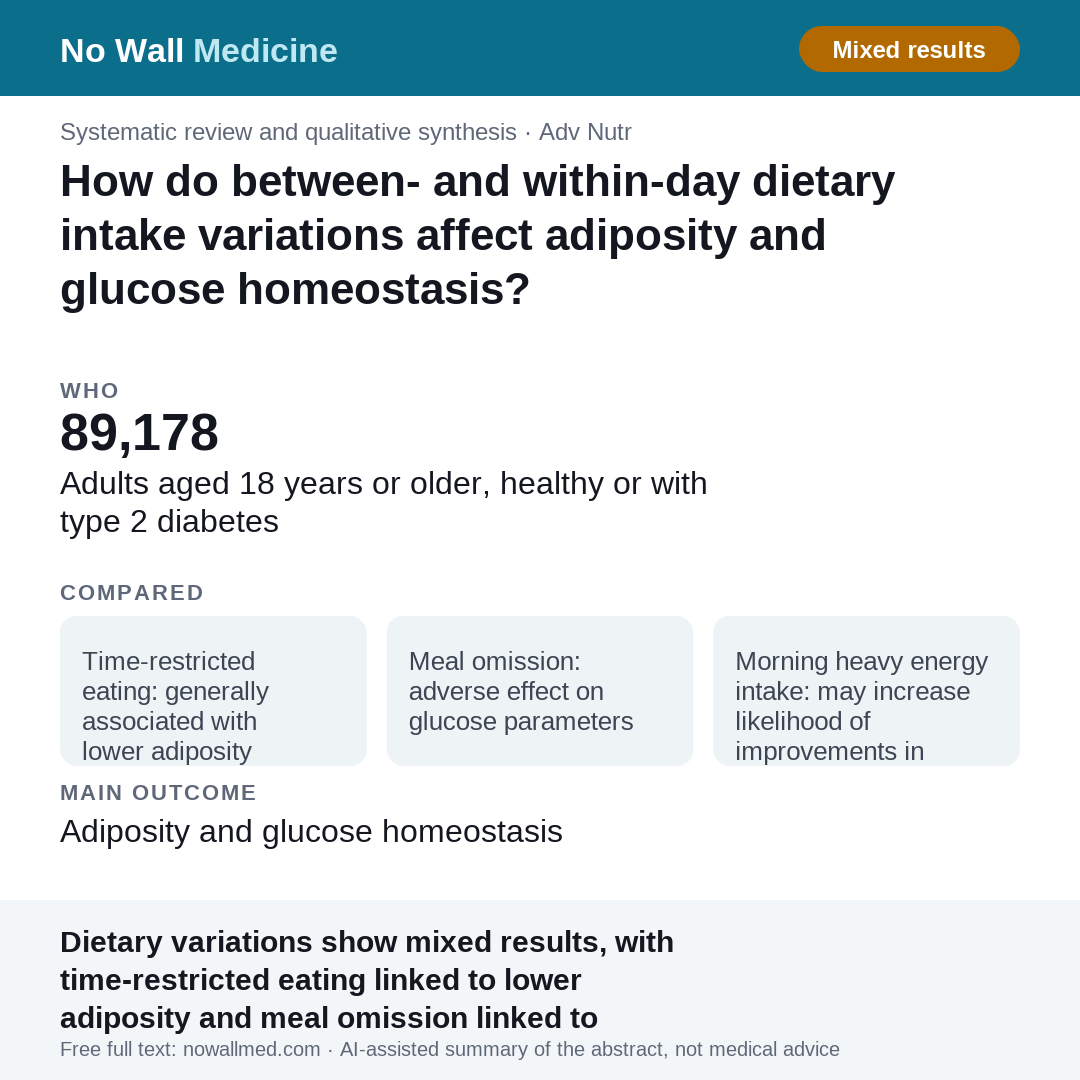
Associations between Variability in Between- and Within-Day Dietary Intake with Adiposity and Glucose Homeostasis in Adults: A Systematic Review
Systematic review and qualitative synthesisMixed results
How do between- and within-day dietary intake variations affect adiposity and glucose homeostasis?
Who
89,178
Adults aged 18 years or older, healthy or with type 2 diabetes
Compared
Time-restricted eating: generally associated with lower adiposity
Meal omission: adverse effect on glucose parameters
Morning heavy energy intake: may increase likelihood of improvements in adiposity
Main outcome
Adiposity and glucose homeostasis
Bottom line: Dietary variations show mixed results, with time-restricted eating linked to lower adiposity and meal omission linked to adverse glucose effects.
Limitation: Limited control for total daily energy intake suggests lower energy intake cannot be conclusively excluded.
Adv Nutr · 2024-10-09Download image
ReCLAIM-2: A Randomized Phase II Clinical Trial Evaluating Elamipretide in Age-related Macular Degeneration, Geographic Atrophy Growth, Visual Function, and Ellipsoid Zone Preservation
Randomized, placebo-controlled, double-masked, phase II trialMixed results
Does elamipretide improve visual function and slow geographic atrophy in dry age-related macular degeneration?
Who
176
Patients aged 55 years or older with dry age-related macular degeneration and geographic atrophy · multicenter
Compared
elamipretide: 14.6% experienced a 10 letter gain in low-luminance best-corrected visual acuity
placebo: 2.1% experienced a 10 letter gain in low-luminance best-corrected visual acuity
Main outcome
low-luminance best-corrected visual acuity and square root converted geographic atrophy area
Bottom line: Elamipretide did not meet primary efficacy endpoints but slowed ellipsoid zone degradation and increased letter gains.
Ophthalmol Sci · 2024-10-09Download image

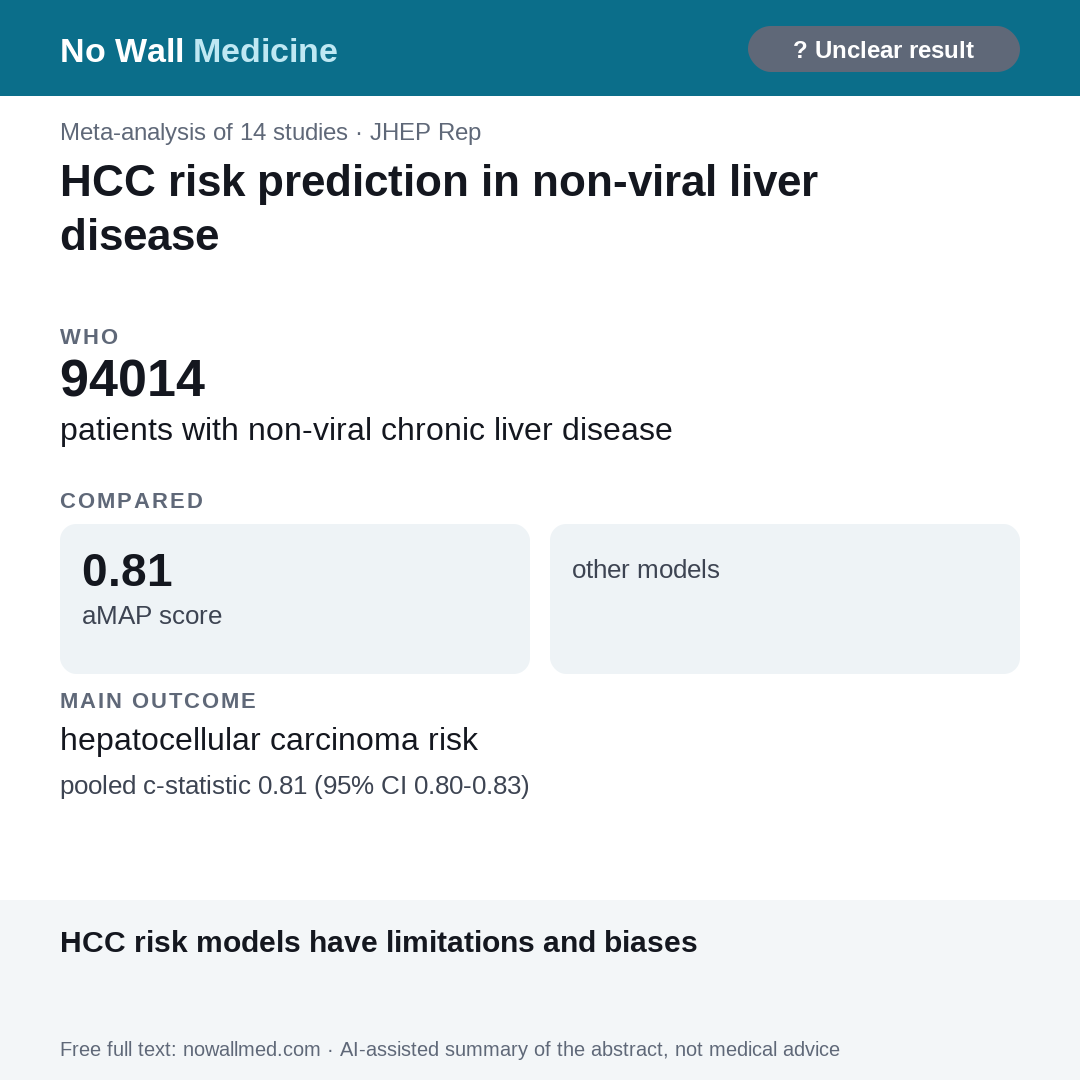
Hepatocellular carcinoma risk scores for non-viral liver disease: A systematic review and meta-analysis
Meta-analysis of 14 studiesUnclear result
HCC risk prediction in non-viral liver disease
Who
94014
patients with non-viral chronic liver disease
Compared
0.81aMAP score (95% CI 0.80-0.83)
other models
Main outcome
hepatocellular carcinoma risk
Result: pooled c-statistic 0.81 (95% CI 0.80-0.83)
Bottom line: HCC risk models have limitations and biases
Limitation: high risk of bias and poor reporting
JHEP Rep · 2024-10-09Download image
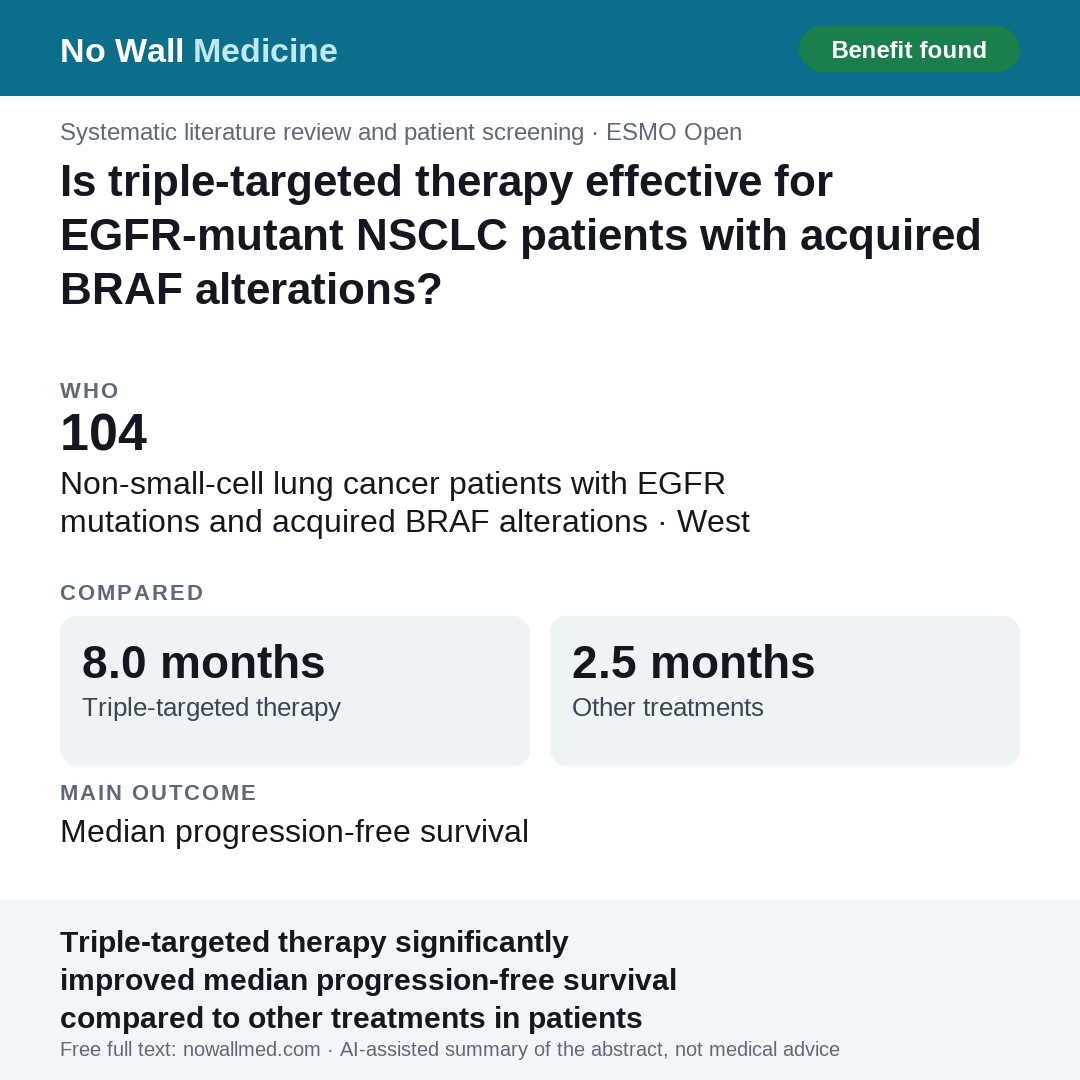
Features and efficacy of triple-targeted therapy for patients with EGFR-mutant non-small-cell lung cancer with acquired BRAF alterations who are resistant to epidermal growth factor receptor tyrosine kinase inhibitors
Systematic literature review and patient screeningBenefit found
Is triple-targeted therapy effective for EGFR-mutant NSCLC patients with acquired BRAF alterations?
Who
104
Non-small-cell lung cancer patients with EGFR mutations and acquired BRAF alterations · West China Hospital of Sichuan University and literature
Compared
8.0 monthsTriple-targeted therapy
2.5 monthsOther treatments
Main outcome
Median progression-free survival
Bottom line: Triple-targeted therapy significantly improved median progression-free survival compared to other treatments in patients with acquired BRAF alterations.
ESMO Open · 2024-10-09Download image
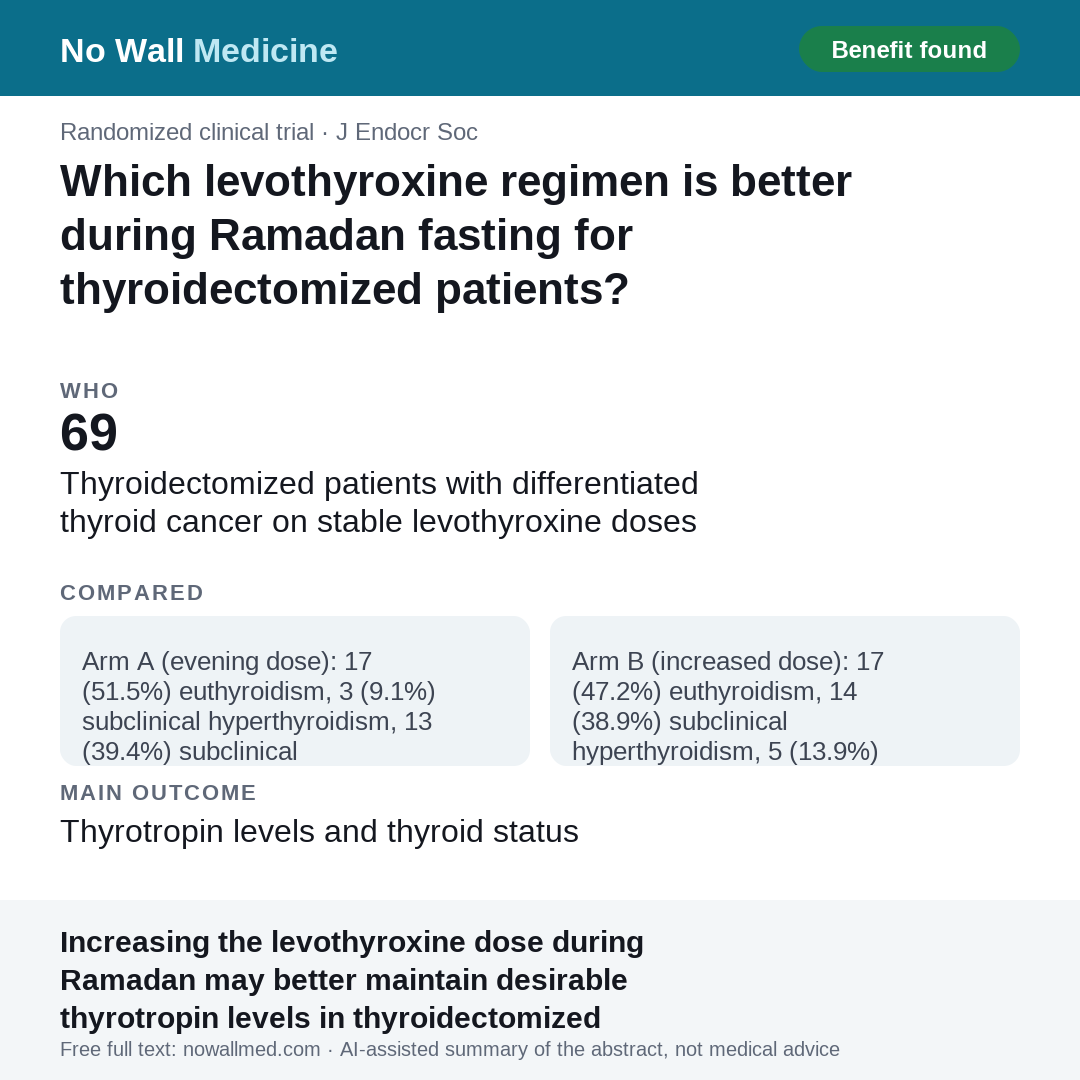
A Randomized Clinical Trial Comparing 2 Levothyroxine Regimens During Ramadan Fasting in Thyroidectomized Patients
Randomized clinical trialBenefit found
Which levothyroxine regimen is better during Ramadan fasting for thyroidectomized patients?
Who
69
Thyroidectomized patients with differentiated thyroid cancer on stable levothyroxine doses
Compared
Arm A (evening dose): 17 (51.5%) euthyroidism, 3 (9.1%) subclinical hyperthyroidism, 13 (39.4%) subclinical hypothyroidism
Arm B (increased dose): 17 (47.2%) euthyroidism, 14 (38.9%) subclinical hyperthyroidism, 5 (13.9%) subclinical hypothyroidism
Main outcome
Thyrotropin levels and thyroid status
Result: mean ± SD TSH levels 5.6 ± 6.0 mU/L vs 1.67 ± 2.6 mU/L
Bottom line: Increasing the levothyroxine dose during Ramadan may better maintain desirable thyrotropin levels in thyroidectomized patients.
J Endocr Soc · 2024-10-09Download image
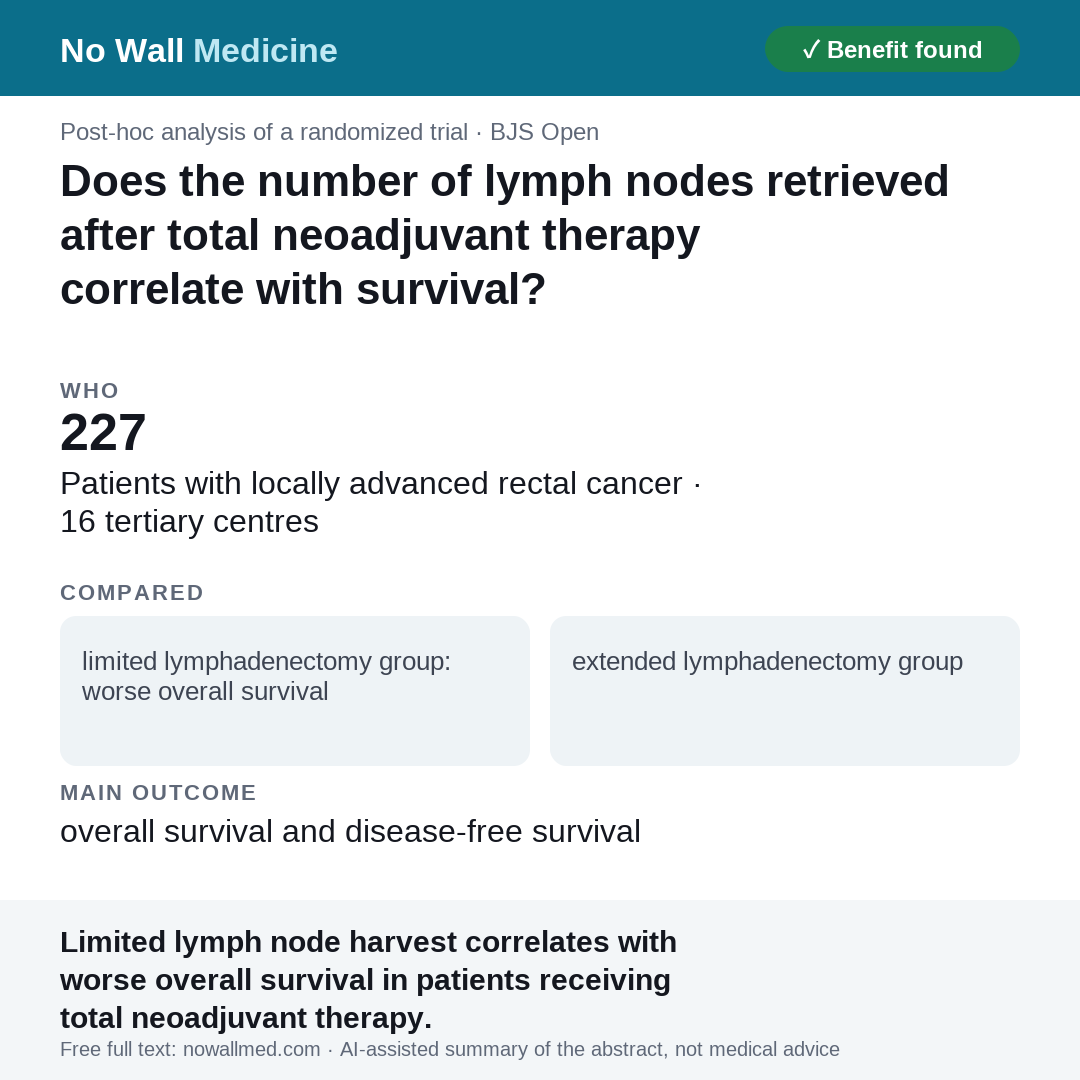
Number of lymph nodes retrieved in patients with locally advanced rectal cancer after total neoadjuvant therapy: post-hoc analysis from the STELLAR trial
Post-hoc analysis of a randomized trialBenefit found
Does the number of lymph nodes retrieved after total neoadjuvant therapy correlate with survival?
Who
227
Patients with locally advanced rectal cancer · 16 tertiary centres
Compared
limited lymphadenectomy group: worse overall survival
extended lymphadenectomy group
Main outcome
overall survival and disease-free survival
Result: hazard ratio 2.95 (95% c.i. 1.47 to 5.92)
Bottom line: Limited lymph node harvest correlates with worse overall survival in patients receiving total neoadjuvant therapy.
Limitation: This is a post-hoc analysis based on the STELLAR trial.
BJS Open · 2024-10-09Download image
Digital Interventions for Managing Medication and Health Care Service Delivery in West Africa: Systematic Review
Systematic reviewMixed results
What are the current digital interventions for medication and health care delivery in West Africa?
Who
Digital health interventions in West Africa · West Africa
Compared
Phone-based interventions: 16 (55%) studies
Tele- and e-based interventions: 9 (31%) studies
Digital interventions: 4 (14%) studies
Main outcome
Impact of digital interventions on medication and health care delivery
Bottom line: Digital interventions have a considerable impact on health care delivery in West Africa, but overall impact remains limited.
J Med Internet Res · 2024-10-09Download image

The Influence of Physical Activity and Diet Mobile Apps on Cardiovascular Disease Risk Factors: Meta-Review
Meta-review of 17 reviews and meta-analysesBenefit found
Do physical activity and diet mobile apps improve cardiovascular disease risk factors?
Who
Healthy participants aged 18 years or older
Compared
Physical activity apps: body weight decreased -0.73 kg (95% CI -1.45 to -0.01)
Physical activity and diet apps: body weight decreased from -1.79 kg to -2.80 kg
Main outcome
Cardiovascular disease risk factors
Bottom line: Mobile apps for physical activity and diet improve physical activity and anthropometric measures, with favorable effects on other risk factors.
J Med Internet Res · 2024-10-09Download image

A Meta-analysis Comparing Deep Inferior Epigastric Perforator Flaps and Latissimus Dorsi Flaps in Breast Reconstruction
Meta-analysis of 13 studiesMixed results
How do deep inferior epigastric perforator flaps compare to latissimus dorsi flaps in breast reconstruction?
Who
2128
Patients undergoing breast reconstruction
Compared
Deep inferior epigastric perforator flaps: higher rates of skin flap necrosis, wound dehiscence, and reoperation
Latissimus dorsi flaps: lower seroma rates
Main outcome
Patient satisfaction and incidence of complications
Result: breast satisfaction mean difference 9.48 (95% CI 6.90-12.05)
Bottom line: Deep inferior epigastric perforator flaps offer superior patient satisfaction but carry higher risks of skin flap necrosis and wound dehiscence.
Plast Reconstr Surg Glob Open · 2024-10-09Download image

Racial Disparities in Plastic Surgery Outcomes: A Systematic Literature Review and Meta-Analysis
Systematic review and meta-analysisBenefit found
Do racial disparities exist in plastic and reconstructive surgery outcomes?
Who
Patients undergoing plastic and reconstructive surgery
Compared
Non-White race: odds ratio 1.21 (95% CI: 1.00-1.46)
African American patients: odds ratio 1.36 (95% CI: 1.06-1.74)
Main outcome
Prevalence of postoperative complications
Result: odds ratio 1.21 (95% CI: 1.00-1.46)
Bottom line: African American patients have a statistically significant risk for postoperative complications in plastic and reconstructive surgery.
Limitation: substantial heterogeneity (73% and 79%) suggested varied study factors influencing outcomes
Plast Reconstr Surg Glob Open · 2024-10-09Download image

Strategies and tactics to reduce the impact of healthcare on climate change: systematic review
Systematic reviewMixed results
How can healthcare systems mitigate their greenhouse gas emissions?
Who
Healthcare services and institutions
Compared
51.5%Macro level
Micro and meso levels
Main outcome
Strategies and tactics to reduce greenhouse gas emissions
Bottom line: Healthcare systems can reduce emissions through clinical changes, policy, waste management, and decarbonising supply chains.
BMJ · 2024-10-08Download image

Sustained effect of prasinezumab on Parkinson's disease motor progression in the open-label extension of the PASADENA trial
Open-label extension randomized trialEarly signal
Is the effect of prasinezumab on motor progression sustained for 4 years?
Who
Early-stage Parkinson's disease patients
Compared
Prasinezumab delayed-start: OFF state MDS-UPDRS Part III -51%
Prasinezumab early-start: OFF state MDS-UPDRS Part III -65%
External comparator
Main outcome
Motor progression assessed by MDS-UPDRS Part II and Part III scores
Bottom line: Prasinezumab may sustain the slowing of motor progression in Parkinson's disease over four years.
Nat Med · 2024-10-08Download image