Visual abstracts
New randomized trials and meta-analyses from leading journals at a glance: who was studied, what was compared, and what was found. Every paper is free to read in full.
All specialtiesCardiology 4877Oncology 4138Gastroenterology & Hepatology 1942Infectious Disease 3837Neurology 1905Psychiatry & Mental Health 2273Pulmonology 2143Critical Care 1365Endocrinology & Diabetes 2580Pediatrics 2980Surgery 2559Orthopedics & Sports Medicine 931Neurosurgery 537Cardiothoracic & Vascular Surgery 674Plastic & Reconstructive Surgery 591Nephrology 1133Rheumatology 823Hematology 1109Dermatology 621Ophthalmology 543Obstetrics & Gynecology 1686Public & Global Health 1058Radiology & Imaging 648Anesthesiology 986Urology 764ENT (Otolaryngology) 503Emergency Medicine 511Allergy & Immunology 313Geriatrics 981Family Medicine & Primary Care 562Medical Genetics & Genomics 676Pathology & Laboratory Medicine 159Physical Medicine & Rehabilitation 757Palliative Care 444Nutrition 1588Digital Health & AI 2201General Medicine 321
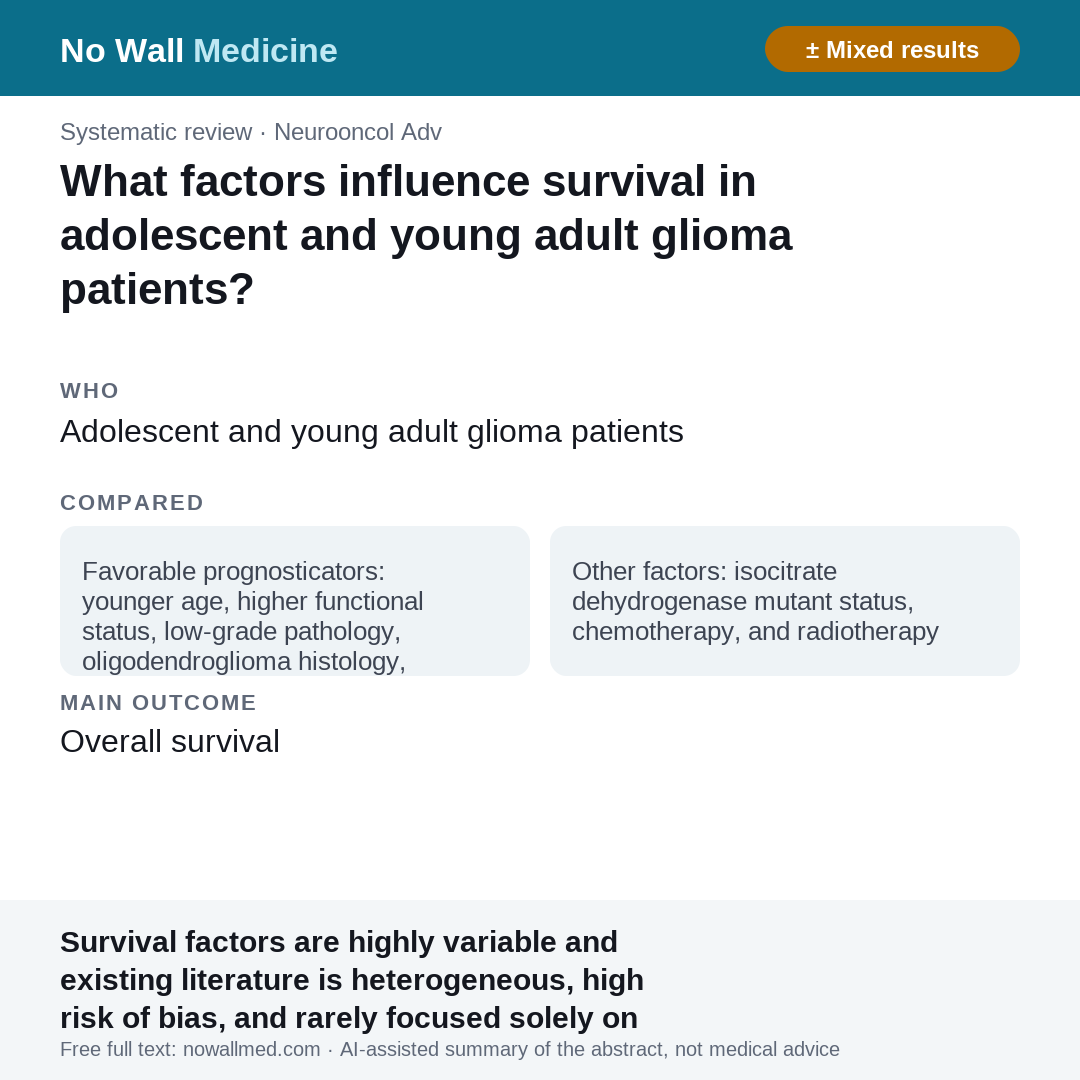
Adolescent and young adult glioma: systematic review of demographic, disease, and treatment influences on survival
Systematic reviewMixed results
What factors influence survival in adolescent and young adult glioma patients?
Who
40
Adolescent and young adult glioma patients
Compared
Favorable prognosticators: younger age, higher functional status, low-grade pathology, oligodendroglioma histology, increased surgical resection
Other factors: isocitrate dehydrogenase mutant status, chemotherapy, and radiotherapy
Main outcome
Overall survival
Bottom line: Survival factors are highly variable and existing literature is heterogeneous, high risk of bias, and rarely focused solely on AYA.
Limitation: High risk of bias in thirty-five studies and many included older adults.
Neurooncol Adv · 2022-10-22Download image
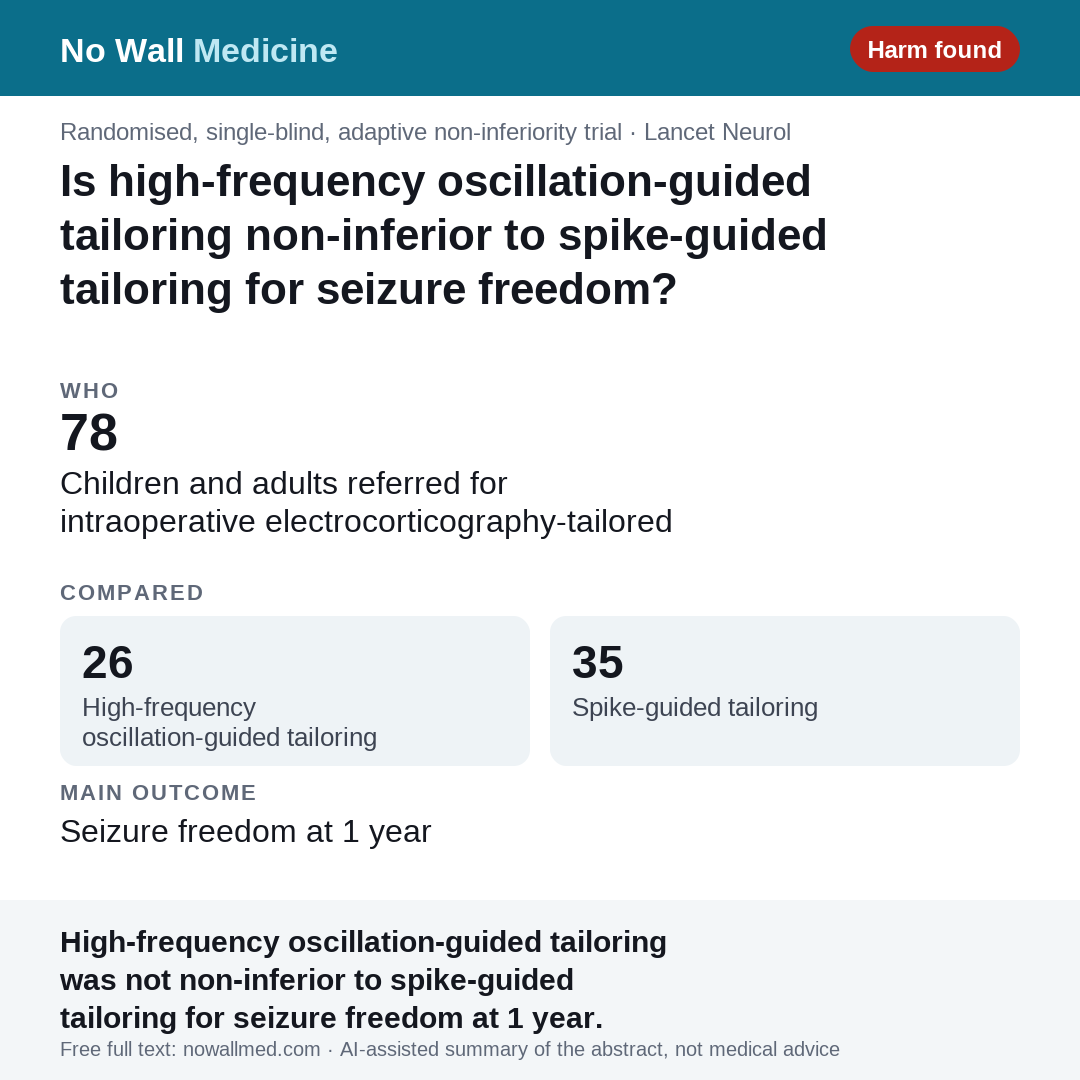
Intraoperative electrocorticography using high-frequency oscillations or spikes to tailor epilepsy surgery in the Netherlands (the HFO trial): a randomised, single-blind, adaptive non-inferiority trial
Randomised, single-blind, adaptive non-inferiority trialHarm found
Is high-frequency oscillation-guided tailoring non-inferior to spike-guided tailoring for seizure freedom?
Who
78
Children and adults referred for intraoperative electrocorticography-tailored epilepsy surgery · Netherlands, one epilepsy surgery centre
Compared
26High-frequency oscillation-guided tailoring (67%)
35Spike-guided tailoring (90%)
Main outcome
Seizure freedom at 1 year
Result: risk difference -23·5%, 90% CI -39·1 to -7·9
Bottom line: High-frequency oscillation-guided tailoring was not non-inferior to spike-guided tailoring for seizure freedom at 1 year.
Funded by: UMCU Alexandre Suerman, EpilepsieNL, RMI Talent Fellowship, European Research Council, and MING Fund
Lancet Neurol · 2022-10-21Download image
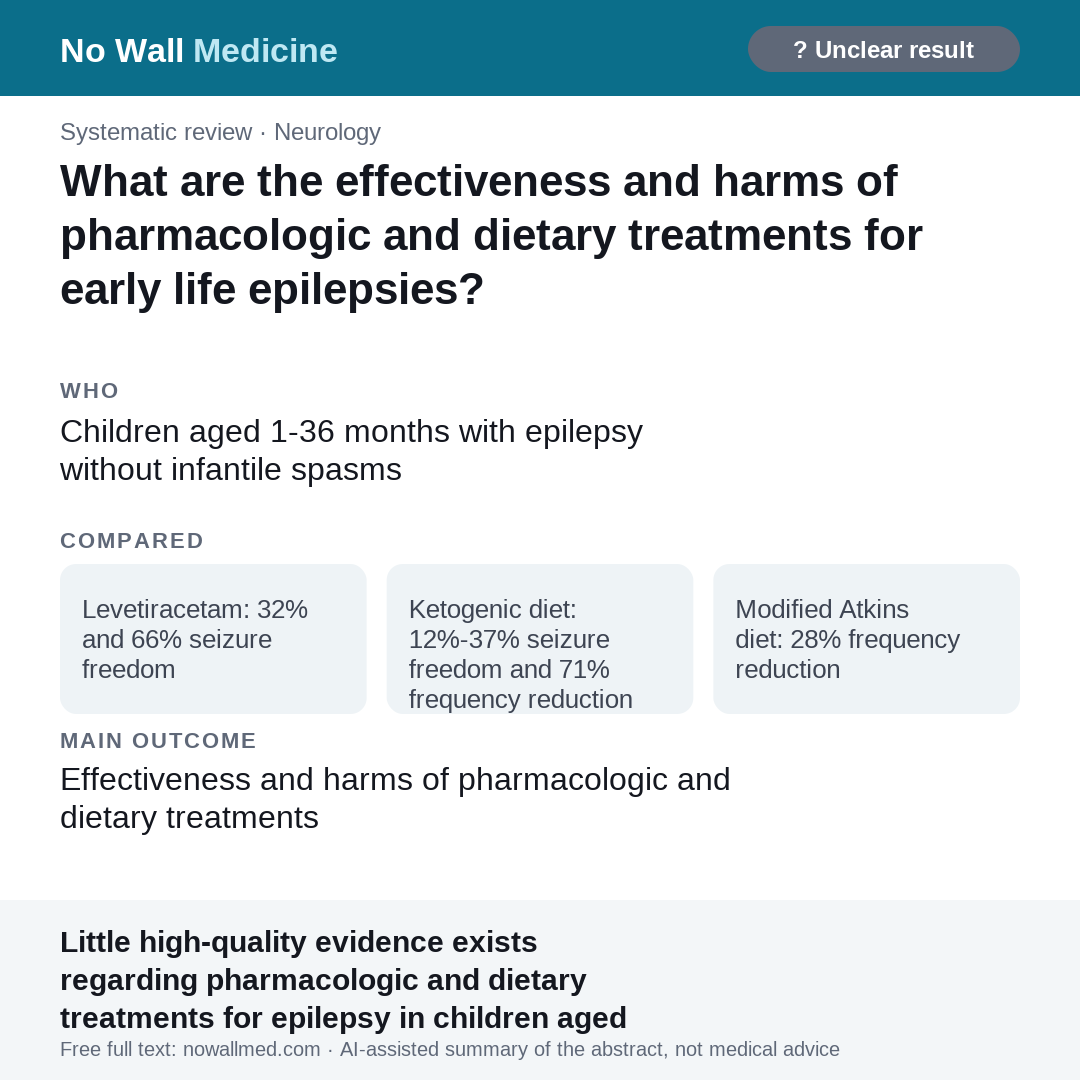
Pharmacologic and Dietary Treatments for Epilepsies in Children Aged 1-36 Months: A Systematic Review
Systematic reviewUnclear result
What are the effectiveness and harms of pharmacologic and dietary treatments for early life epilepsies?
Who
Children aged 1-36 months with epilepsy without infantile spasms
Compared
Levetiracetam: 32% and 66% seizure freedom
Ketogenic diet: 12%-37% seizure freedom and 71% frequency reduction
Modified Atkins diet: 28% frequency reduction
Main outcome
Effectiveness and harms of pharmacologic and dietary treatments
Bottom line: Little high-quality evidence exists regarding pharmacologic and dietary treatments for epilepsy in children aged 1-36 months.
Neurology · 2022-10-21Download image
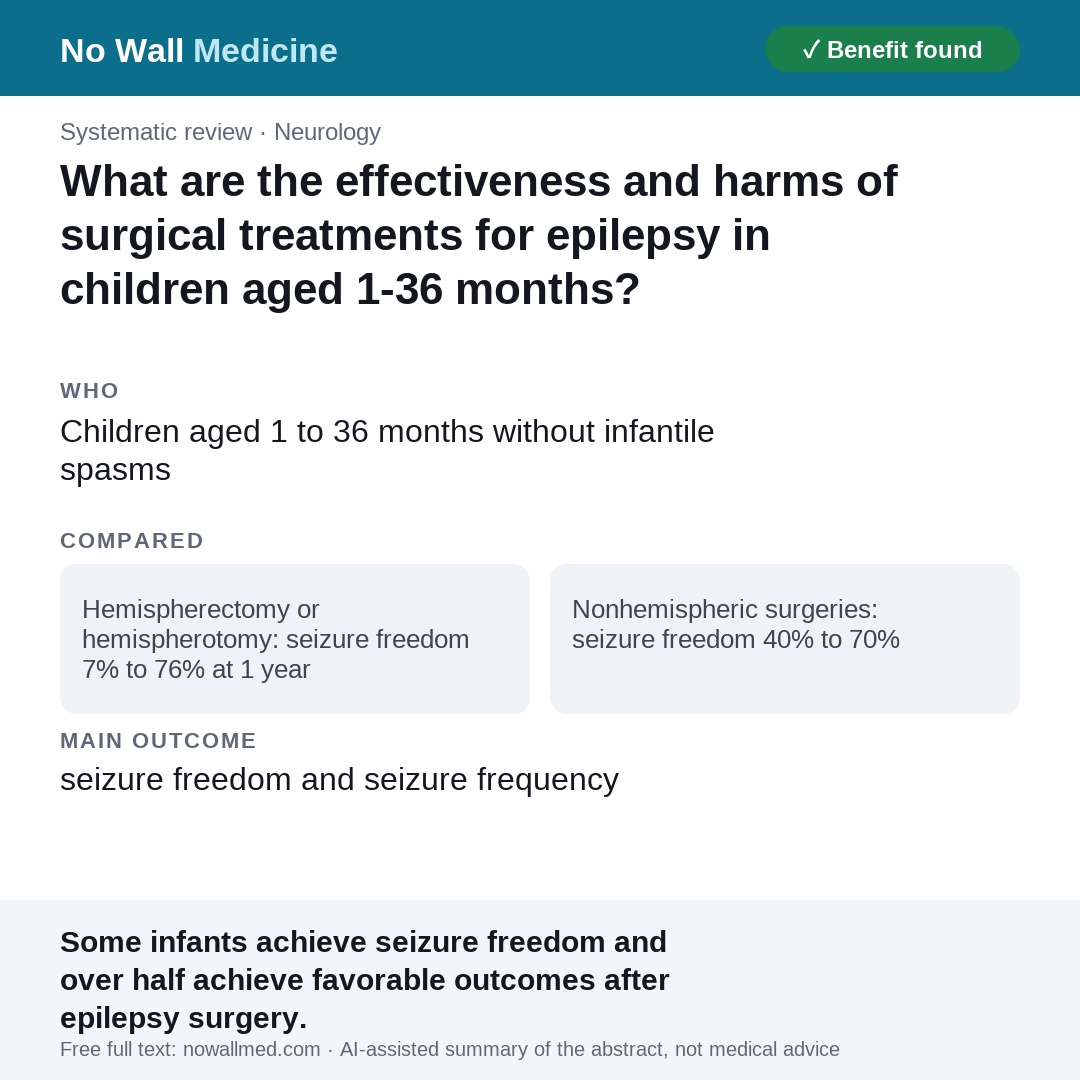
Surgical Treatments for Epilepsies in Children Aged 1-36 Months: A Systematic Review
Systematic reviewBenefit found
What are the effectiveness and harms of surgical treatments for epilepsy in children aged 1-36 months?
Who
Children aged 1 to 36 months without infantile spasms
Compared
Hemispherectomy or hemispherotomy: seizure freedom 7% to 76% at 1 year
Nonhemispheric surgeries: seizure freedom 40% to 70%
Main outcome
seizure freedom and seizure frequency
Bottom line: Some infants achieve seizure freedom and over half achieve favorable outcomes after epilepsy surgery.
Limitation: Existing evidence remains sparse and low quality.
Neurology · 2022-10-21Download image
A systematic review of in-patient psychiatric care for people with intellectual disabilities and/or autism: effectiveness, patient safety and experience
Systematic reviewBenefit found
What is the effectiveness, safety, and experience of in-patient psychiatric care for this population?
Who
106
People with intellectual disabilities and/or autism
Compared
Specialist intellectual disability in-patient services: fewer out-of-area discharges and lower seclusion rates
General mental health in-patient services
Main outcome
treatment effect, patient safety, and patient experience
Bottom line: In-patient admission is associated with improvements in mental health, social functioning, behaviour, and forensic risk.
BJPsych Open · 2022-10-21Download image

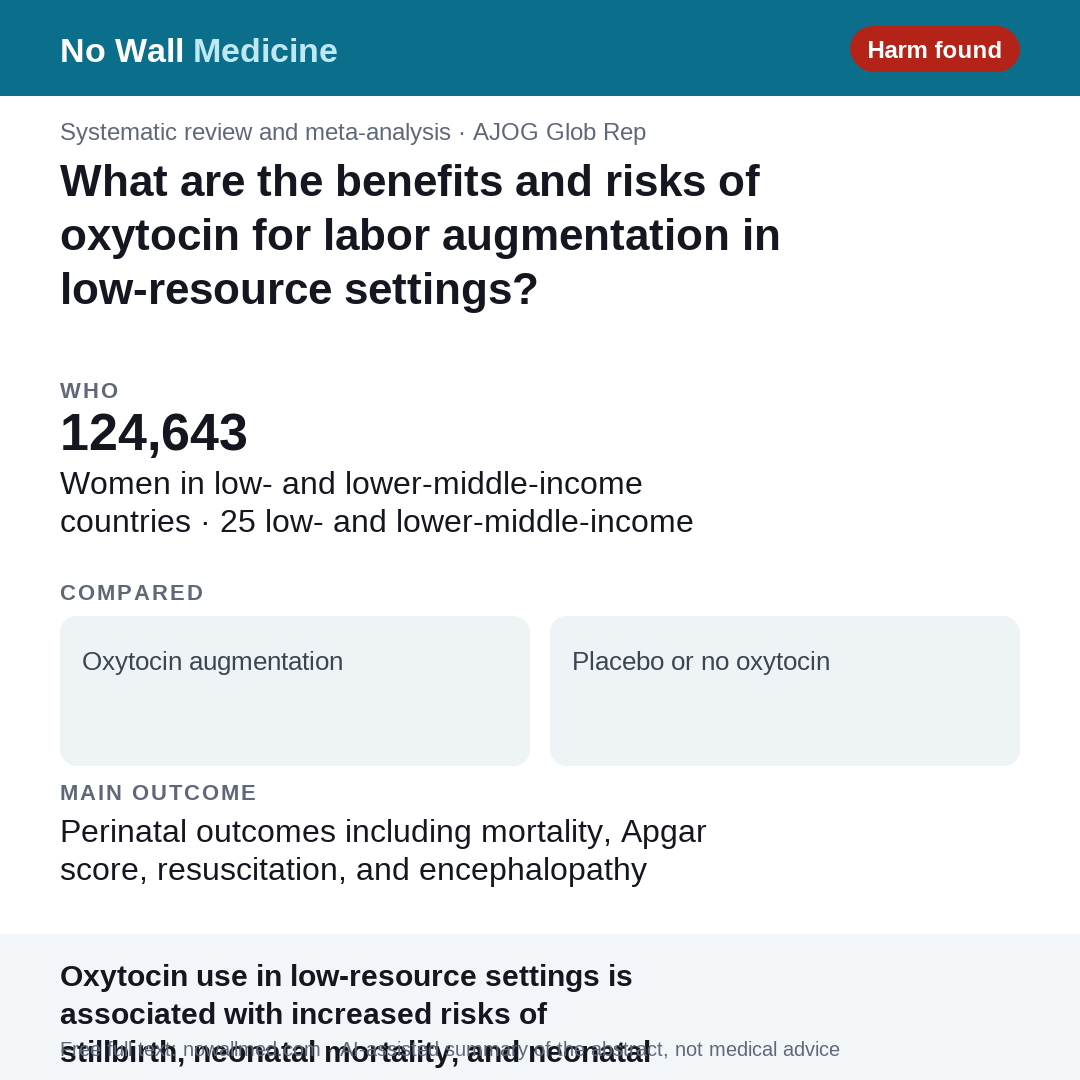
Labor augmentation with oxytocin in low- and lower-middle-income countries: a systematic review and meta-analysis
Systematic review and meta-analysisHarm found
What are the benefits and risks of oxytocin for labor augmentation in low-resource settings?
Who
124,643
Women in low- and lower-middle-income countries · 25 low- and lower-middle-income countries
Compared
Oxytocin augmentation
Placebo or no oxytocin
Main outcome
Perinatal outcomes including mortality, Apgar score, resuscitation, and encephalopathy
Result: relative risk 1.45 (95% confidence interval, 1.02-2.06) for stillbirth and day-1 neonatal mortality
Bottom line: Oxytocin use in low-resource settings is associated with increased risks of stillbirth, neonatal mortality, and neonatal encephalopathy.
Limitation: The finding is limited by confounding by indication.
AJOG Glob Rep · 2022-10-21Download image
Safety and immunogenicity of an Ad26.ZEBOV booster dose in children previously vaccinated with the two-dose heterologous Ad26.ZEBOV and MVA-BN-Filo Ebola vaccine regimen: an open-label, non-randomised, phase 2 trial
Open-label, non-randomised, phase 2 trialBenefit found
Is an Ad26.ZEBOV booster safe and immunogenic in children previously vaccinated with Ad26.ZEBOV and MVA-BN-Filo?
Who
50
Healthy children aged 1-11 years previously vaccinated with Ad26.ZEBOV and MVA-BN-Filo · One clinic in Kambia Town, Sierra Leone
Compared
Ad26.ZEBOV booster: 28 561 ELISA units per mL at 7 days
Ad26.ZEBOV booster: 64 690 ELISA units per mL at 21 days
Main outcome
Safety and Ebola virus glycoprotein-specific IgG binding antibody geometric mean concentration
Bottom line: An Ad26.ZEBOV booster was well tolerated and induced a rapid, robust increase in Ebola virus binding antibodies in children.
Funded by: Innovative Medicines Initiative 2 Joint Undertaking
Lancet Infect Dis · 2022-10-20Download image

Evaluation of mRNA-1273 Vaccine in Children 6 Months to 5 Years of Age
Randomized trialBenefit found
Is mRNA-1273 vaccine safe in young children?
Who
3040, 1762, 1008, 593
Children 6 months to 5 years of age
Compared
mRNA-1273
Placebo
Main outcome
Covid-19
Bottom line: mRNA-1273 vaccine is safe in young children
Funded by: Biomedical Advanced Research
NEJM · 2022-10-19Download image

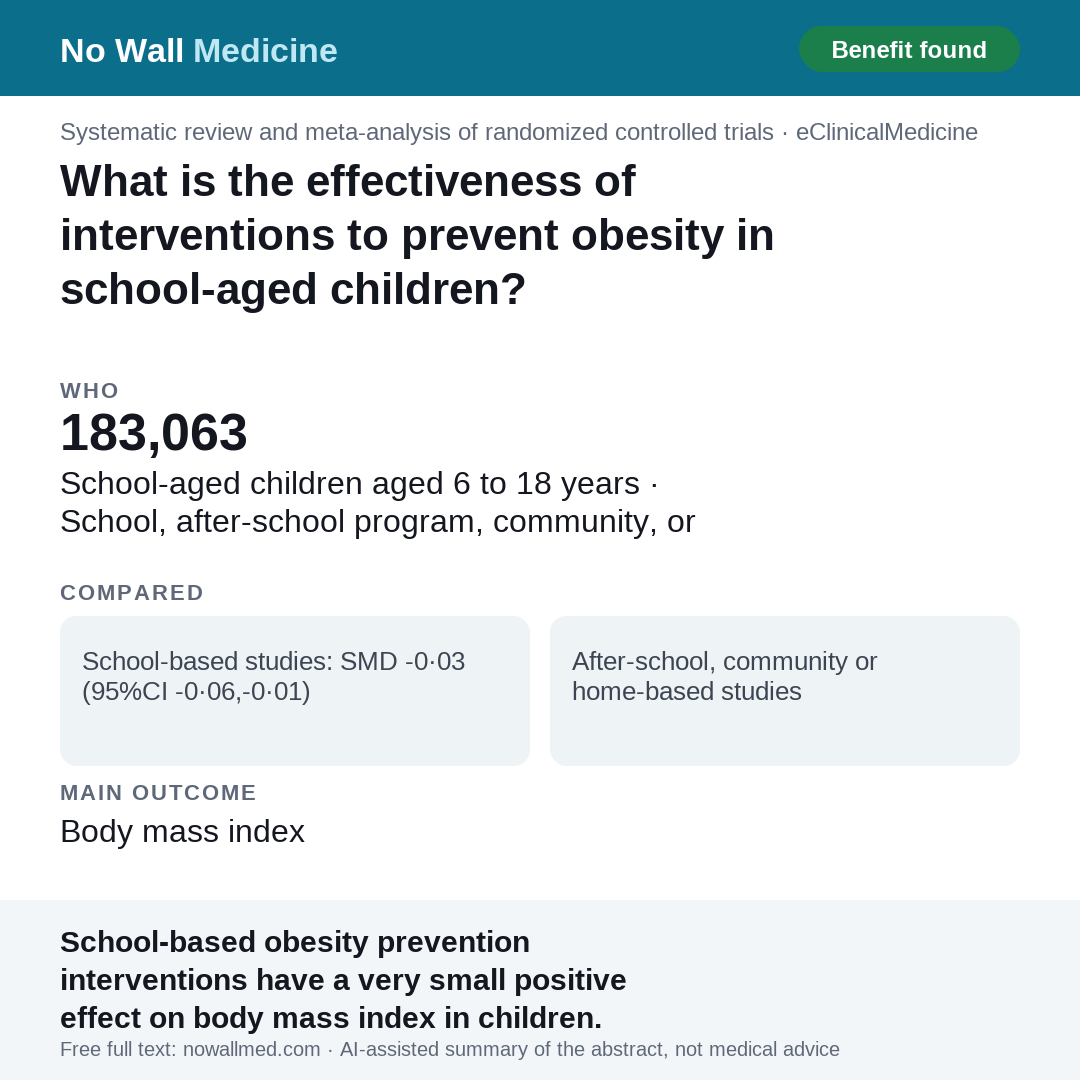
Interventions to prevent obesity in school-aged children 6-18 years: An update of a Cochrane systematic review and meta-analysis including studies from 2015-2021
Systematic review and meta-analysis of randomized controlled trialsBenefit found
What is the effectiveness of interventions to prevent obesity in school-aged children?
Who
183,063
School-aged children aged 6 to 18 years · School, after-school program, community, or home settings
Compared
School-based studies: SMD -0·03 (95%CI -0·06,-0·01)
After-school, community or home-based studies
Main outcome
Body mass index
Result: SMD -0·03 (95%CI -0·06,-0·01)
Bottom line: School-based obesity prevention interventions have a very small positive effect on body mass index in children.
Funded by: National Health and Medical Research Council, Australia
eClinicalMedicine · 2022-10-19Download image
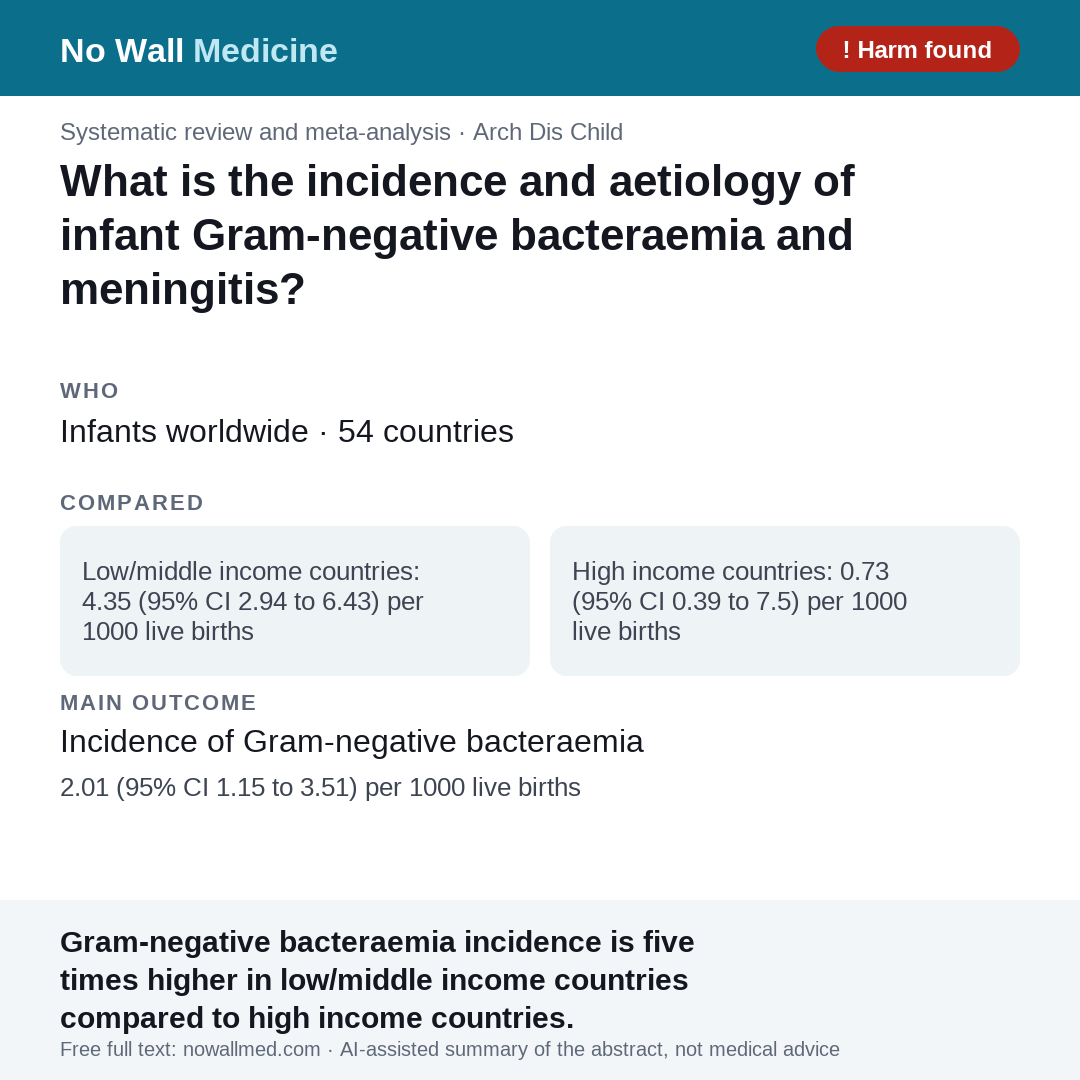
Incidence and aetiology of infant Gram-negative bacteraemia and meningitis: systematic review and meta-analysis
Systematic review and meta-analysisHarm found
What is the incidence and aetiology of infant Gram-negative bacteraemia and meningitis?
Who
152
Infants worldwide · 54 countries
Compared
Low/middle income countries: 4.35 (95% CI 2.94 to 6.43) per 1000 live births
High income countries: 0.73 (95% CI 0.39 to 7.5) per 1000 live births
Main outcome
Incidence of Gram-negative bacteraemia
Result: 2.01 (95% CI 1.15 to 3.51) per 1000 live births
Bottom line: Gram-negative bacteraemia incidence is five times higher in low/middle income countries compared to high income countries.
Arch Dis Child · 2022-10-19Download image
Systematic Review of Hospital Treatment Outcomes for Naturally Acquired and Bioterrorism-Related Anthrax, 1880-2018
Systematic reviewMixed results
What are the hospital treatment outcomes for naturally acquired and bioterrorism-related anthrax?
Who
605
Hospitalized patients with anthrax
Compared
Inhalation anthrax without meningitis: better with at least 2 antimicrobials
Systemic anthrax with bactericidal antimicrobials: effective
Addition of protein synthesis inhibitor to bactericidal antimicrobials: did not improve survival
Addition of antitoxin/antiserum to antimicrobials: did not improve survival
Main outcome
survival and hospital length of stay
Bottom line: Combination therapy may benefit inhalation anthrax without meningitis, but antitoxins and protein synthesis inhibitors did not improve survival.
Limitation: numbers were small for anthrax meningitis
Clin Infect Dis · 2022-10-17Download image

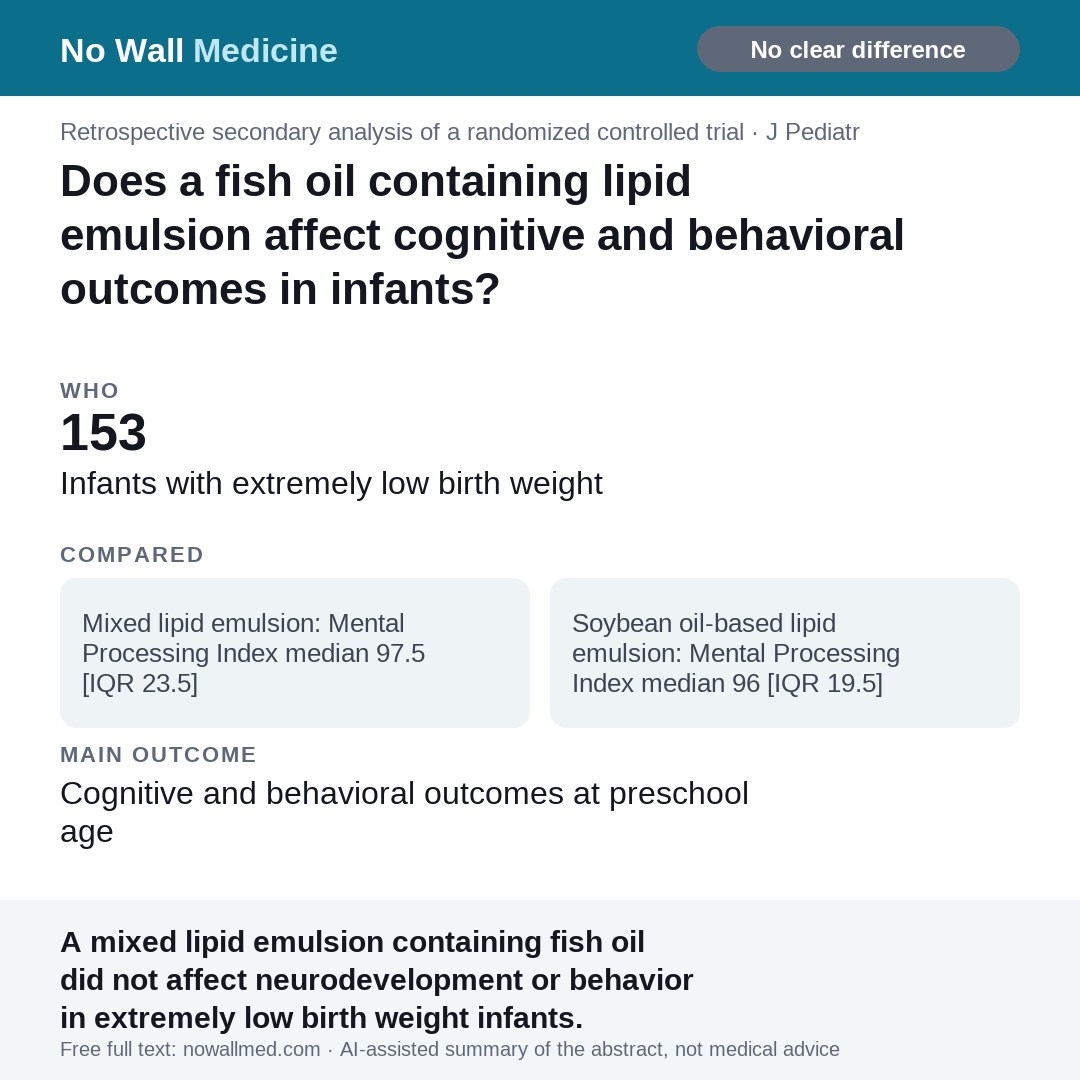
A secondary Outcome Analysis of a Randomized Trial Using a Mixed Lipid Emulsion Containing Fish Oil in Infants with Extremely Low Birth Weight: Cognitive and Behavioral Outcome at Preschool Age
Retrospective secondary analysis of a randomized controlled trialNo clear difference
Does a fish oil containing lipid emulsion affect cognitive and behavioral outcomes in infants?
Who
153
Infants with extremely low birth weight
Compared
Mixed lipid emulsion: Mental Processing Index median 97.5 [IQR 23.5]
Soybean oil-based lipid emulsion: Mental Processing Index median 96 [IQR 19.5]
Main outcome
Cognitive and behavioral outcomes at preschool age
Bottom line: A mixed lipid emulsion containing fish oil did not affect neurodevelopment or behavior in extremely low birth weight infants.
J Pediatr · 2022-10-17Download image
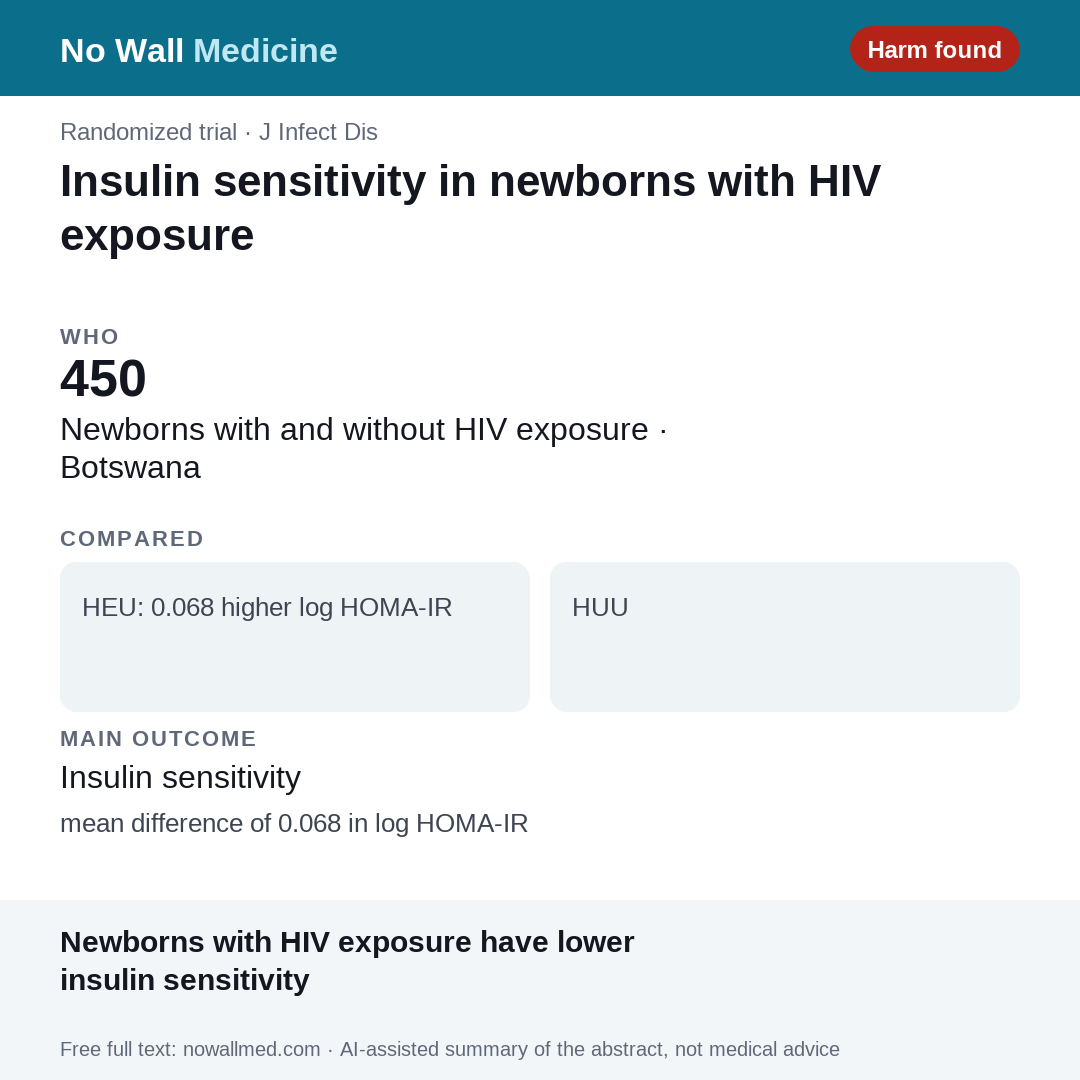
Lower Insulin Sensitivity in Newborns With In Utero HIV and Antiretroviral Exposure Who Are Uninfected in Botswana
Randomized trialHarm found
Insulin sensitivity in newborns with HIV exposure
Who
450
Newborns with and without HIV exposure · Botswana
Compared
HEU: 0.068 higher log HOMA-IR
HUU
Main outcome
Insulin sensitivity
Result: mean difference of 0.068 in log HOMA-IR
Bottom line: Newborns with HIV exposure have lower insulin sensitivity
J Infect Dis · 2022-10-15Download image
Network Meta-Analysis of Non-Conventional Therapies for Improving Upper Limb Motor Impairment Poststroke
Network meta-analysis of randomized controlled trialsBenefit found
Which non-conventional therapies improve upper extremity motor impairment after stroke?
Who
6781
Poststroke patients aged 18 years or older
Compared
Non-conventional interventions
Conventional care
Main outcome
Fugl-Meyer upper extremity scale
Bottom line: Eight non-conventional interventions were significantly better than conventional care for improving upper extremity motor impairment.
Stroke · 2022-10-14Download image

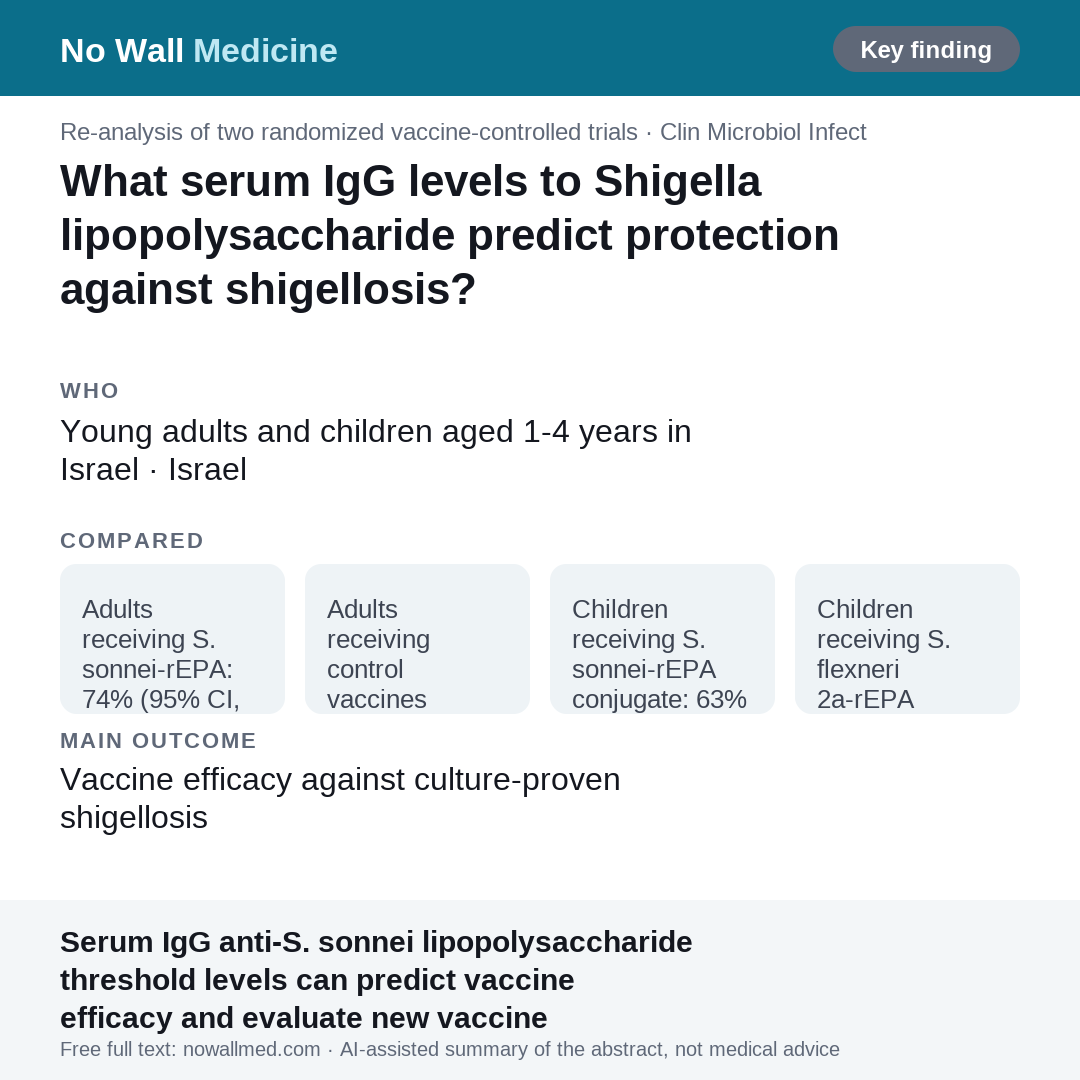
Threshold protective levels of serum IgG to Shigella lipopolysaccharide: re-analysis of Shigella vaccine trials data
Re-analysis of two randomized vaccine-controlled trialsBenefit found
What serum IgG levels to Shigella lipopolysaccharide predict protection against shigellosis?
Who
Young adults and children aged 1-4 years in Israel · Israel
Compared
Adults receiving S. sonnei-rEPA: 74% (95% CI, 28-100%) vaccine efficacy
Adults receiving control vaccines
Children receiving S. sonnei-rEPA conjugate: 63% predicted vaccine efficacy
Children receiving S. flexneri 2a-rEPA conjugate
Main outcome
Vaccine efficacy against culture-proven shigellosis
Bottom line: Serum IgG anti-S. sonnei lipopolysaccharide threshold levels can predict vaccine efficacy and evaluate new vaccine candidates.
Clin Microbiol Infect · 2022-10-13Download image
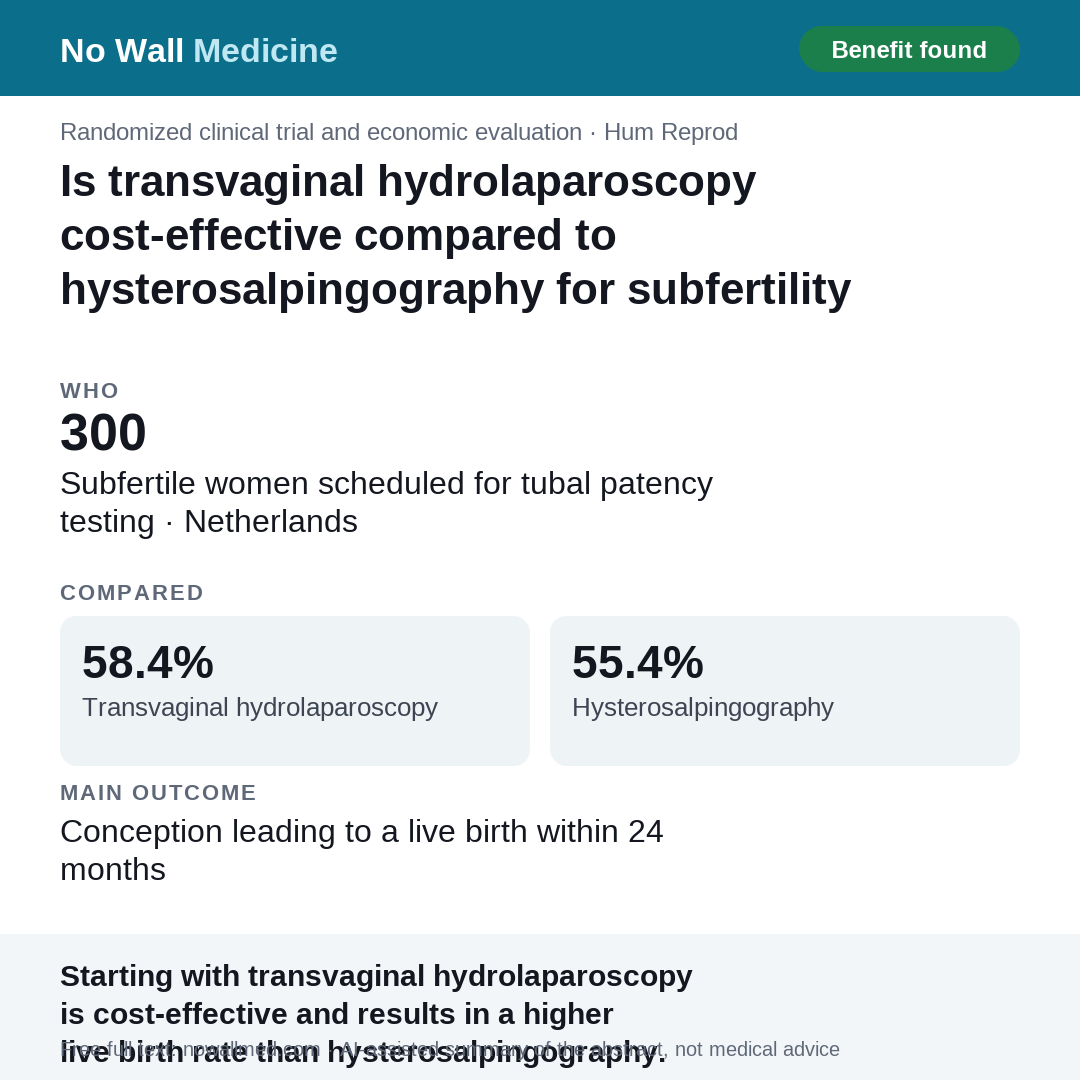
The cost-effectiveness of transvaginal hydrolaparoscopy versus hysterosalpingography in the work-up for subfertility
Randomized clinical trial and economic evaluationBenefit found
Is transvaginal hydrolaparoscopy cost-effective compared to hysterosalpingography for subfertility work-up?
Who
300
Subfertile women scheduled for tubal patency testing · Netherlands
Compared
58.4%Transvaginal hydrolaparoscopy
55.4%Hysterosalpingography
Main outcome
Conception leading to a live birth within 24 months
Result: mean cost difference = -€271 (95% CI -€273 to -€269)
Bottom line: Starting with transvaginal hydrolaparoscopy is cost-effective and results in a higher live birth rate than hysterosalpingography.
Limitation: Results may not generalize to women with high risk of tubal pathology or different healthcare systems.
Hum Reprod · 2022-10-13Download image
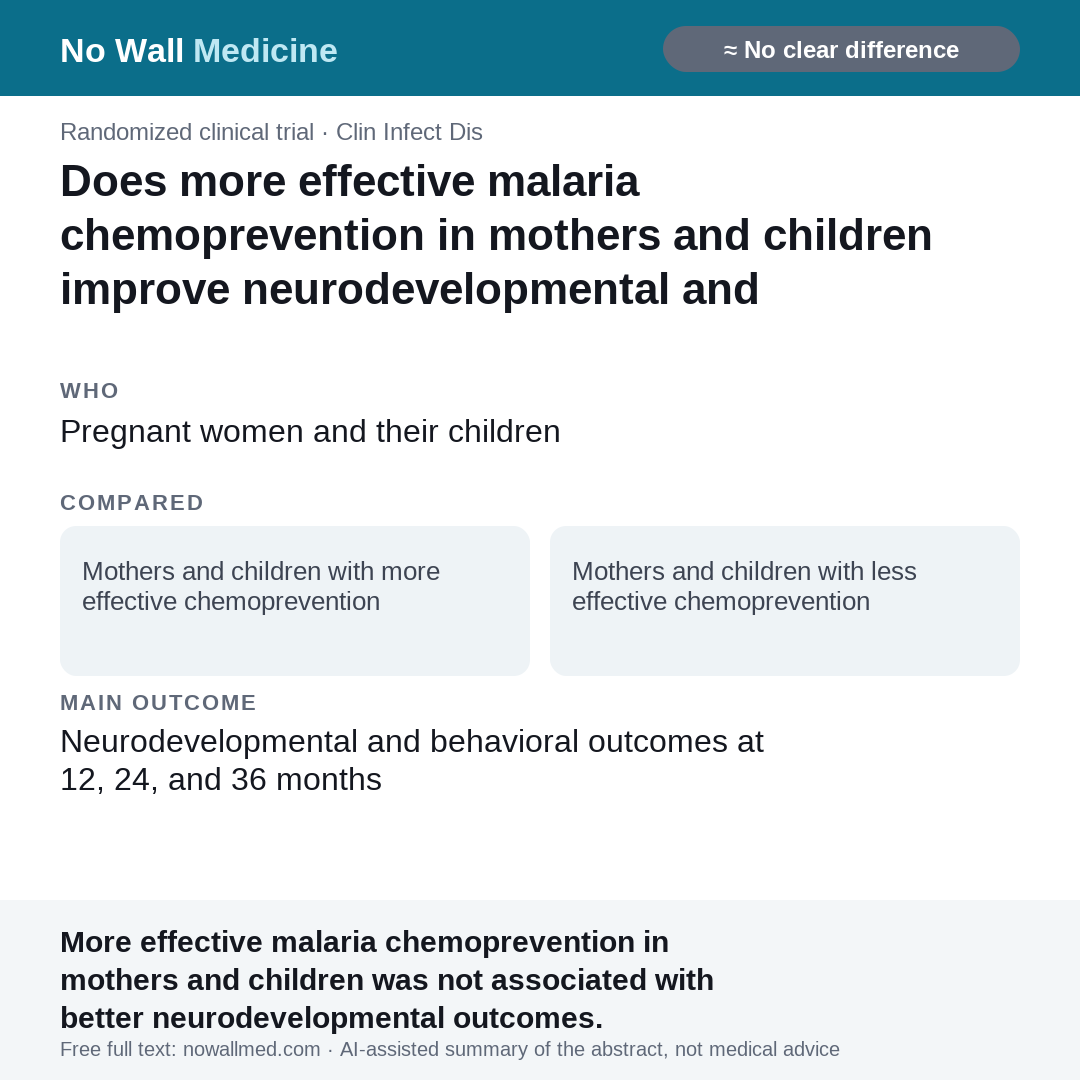
Effect of Malaria and Malaria Chemoprevention Regimens in Pregnancy and Childhood on Neurodevelopmental and Behavioral Outcomes in Children at 12, 24, and 36 Months: A Randomized Clinical Trial
Randomized clinical trialNo clear difference
Does more effective malaria chemoprevention in mothers and children improve neurodevelopmental and behavioral outcomes?
Who
Pregnant women and their children
Compared
Mothers and children with more effective chemoprevention
Mothers and children with less effective chemoprevention
Main outcome
Neurodevelopmental and behavioral outcomes at 12, 24, and 36 months
Bottom line: More effective malaria chemoprevention in mothers and children was not associated with better neurodevelopmental outcomes.
Clin Infect Dis · 2022-10-12Download image
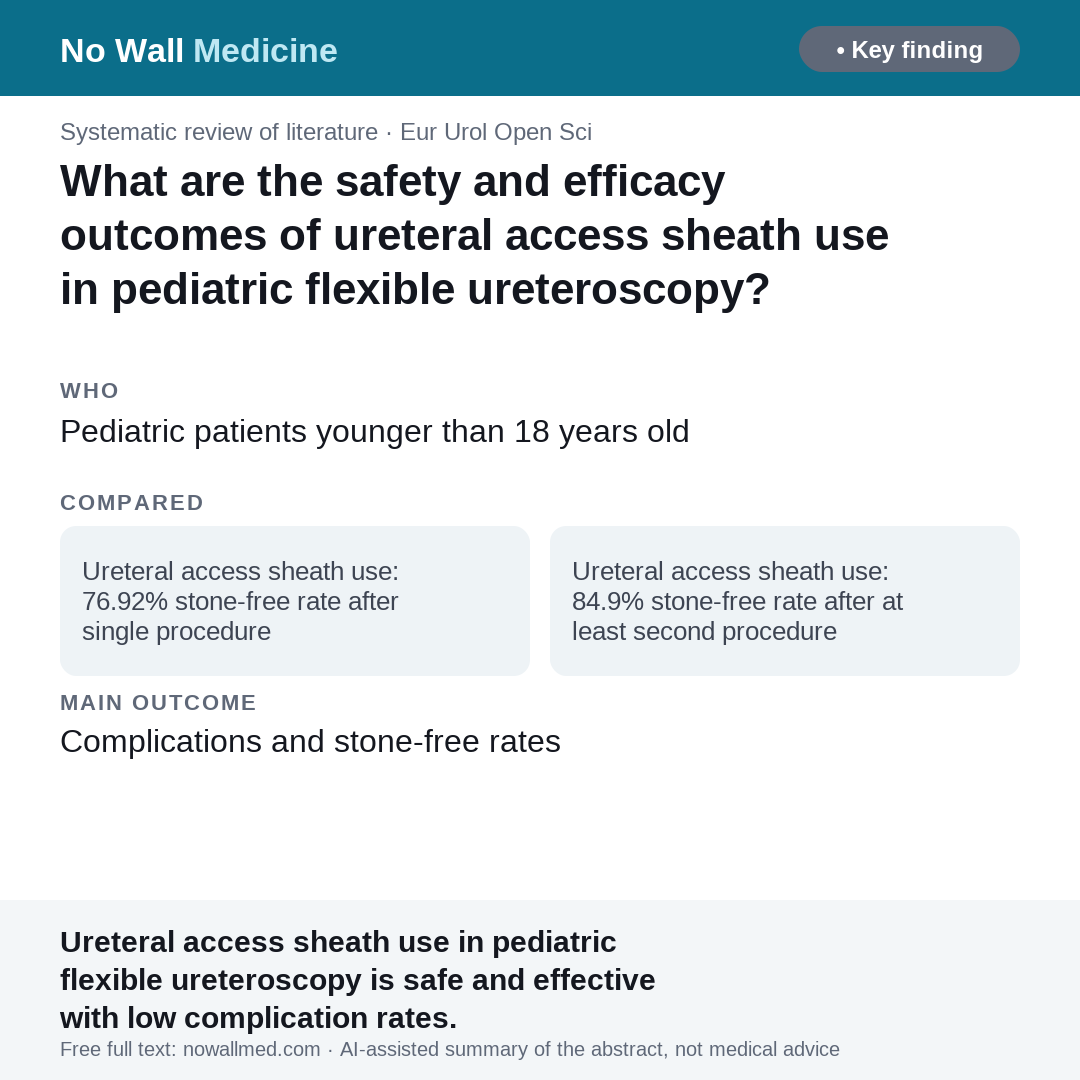
Role of Pediatric Ureteral Access Sheath and Outcomes Related to Flexible Ureteroscopy and Laser Stone Fragmentation: A Systematic Review of Literature
Systematic review of literatureBenefit found
What are the safety and efficacy outcomes of ureteral access sheath use in pediatric flexible ureteroscopy?
Who
Pediatric patients younger than 18 years old
Compared
Ureteral access sheath use: 76.92% stone-free rate after single procedure
Ureteral access sheath use: 84.9% stone-free rate after at least second procedure
Main outcome
Complications and stone-free rates
Bottom line: Ureteral access sheath use in pediatric flexible ureteroscopy is safe and effective with low complication rates.
Eur Urol Open Sci · 2022-10-12Download image
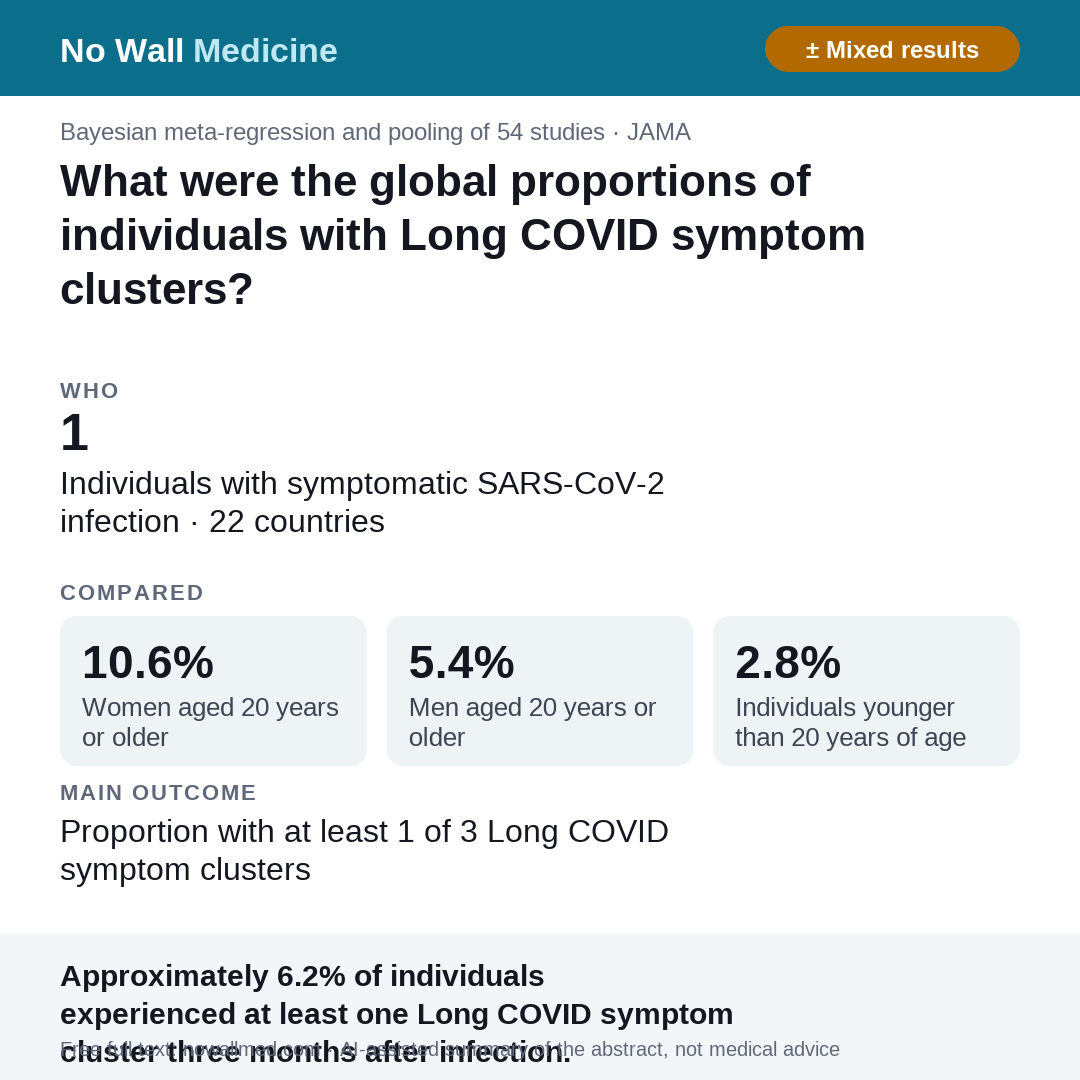
Estimated Global Proportions of Individuals With Persistent Fatigue, Cognitive, and Respiratory Symptom Clusters Following Symptomatic COVID-19 in 2020 and 2021
Bayesian meta-regression and pooling of 54 studiesMixed results
What were the global proportions of individuals with Long COVID symptom clusters?
Who
1
Individuals with symptomatic SARS-CoV-2 infection · 22 countries
Compared
10.6%Women aged 20 years or older (95% UI, 4.3%-22.2%)
5.4%Men aged 20 years or older (95% UI, 2.2%-11.7%)
2.8%Individuals younger than 20 years of age (95% UI, 0.9%-7.0%)
Main outcome
Proportion with at least 1 of 3 Long COVID symptom clusters
Result: 6.2% (95% uncertainty interval, 2.4%-13.3%)
Bottom line: Approximately 6.2% of individuals experienced at least one Long COVID symptom cluster three months after infection.
JAMA · 2022-10-11Download image
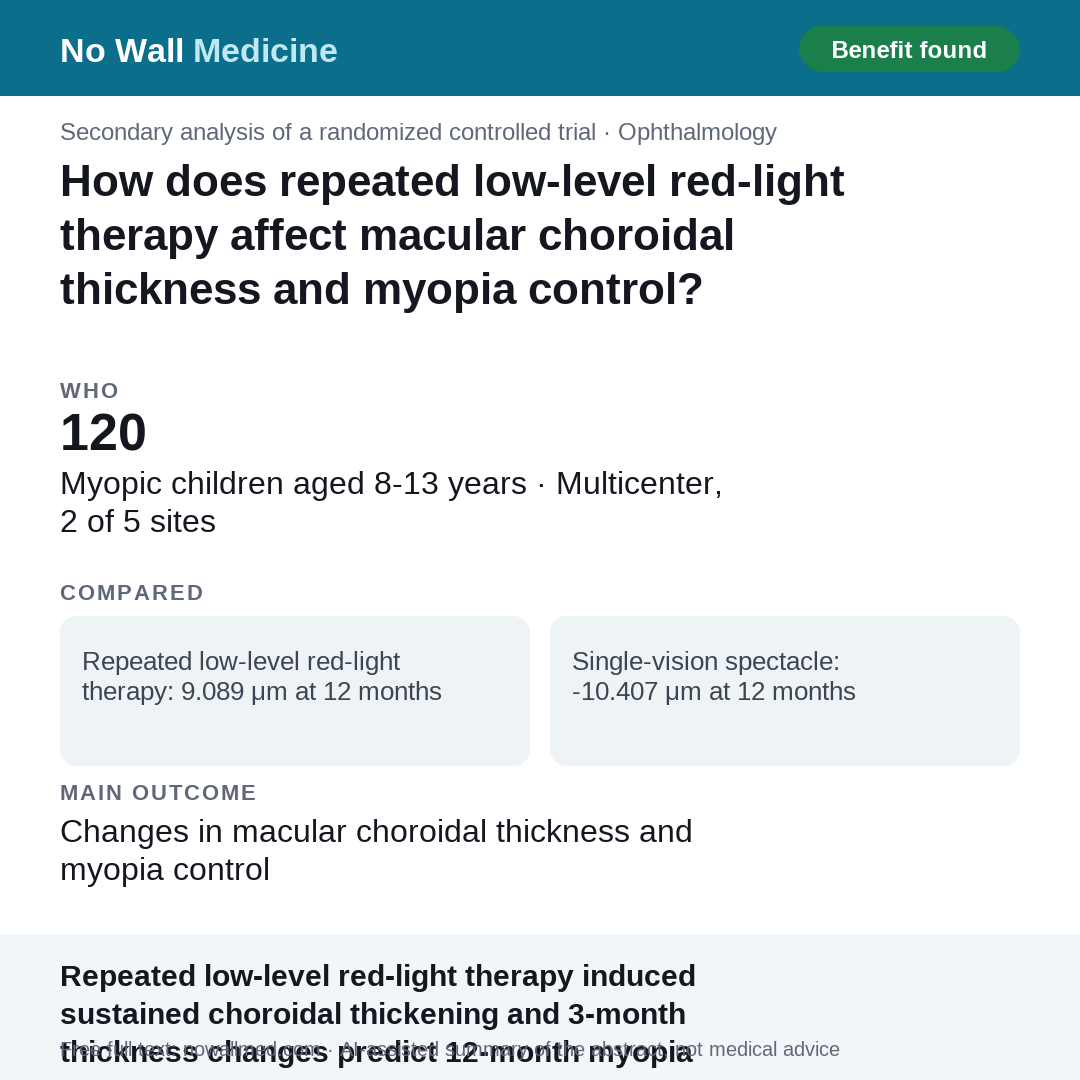
Longitudinal Changes and Predictive Value of Choroidal Thickness for Myopia Control after Repeated Low-Level Red-Light Therapy
Secondary analysis of a randomized controlled trialBenefit found
How does repeated low-level red-light therapy affect macular choroidal thickness and myopia control?
Who
120
Myopic children aged 8-13 years · Multicenter, 2 of 5 sites
Compared
Repeated low-level red-light therapy: 9.089 μm at 12 months
Single-vision spectacle: -10.407 μm at 12 months
Main outcome
Changes in macular choroidal thickness and myopia control
Bottom line: Repeated low-level red-light therapy induced sustained choroidal thickening and 3-month thickness changes predict 12-month myopia control.
Ophthalmology · 2022-10-11Download image