Visual abstracts
New randomized trials and meta-analyses from leading journals at a glance: who was studied, what was compared, and what was found. Every paper is free to read in full.
All specialtiesCardiology 394Oncology 314Gastroenterology & Hepatology 158Infectious Disease 313Neurology 179Psychiatry & Mental Health 258Pulmonology 180Critical Care 125Endocrinology & Diabetes 236Pediatrics 188Surgery 128Orthopedics & Sports Medicine 75Neurosurgery 24Cardiothoracic & Vascular Surgery 47Plastic & Reconstructive Surgery 79Nephrology 77Rheumatology 81Hematology 92Dermatology 42Ophthalmology 64Obstetrics & Gynecology 120Public & Global Health 119Radiology & Imaging 36Anesthesiology 68Urology 91ENT (Otolaryngology) 48Emergency Medicine 41Allergy & Immunology 49Geriatrics 113Family Medicine & Primary Care 67Medical Genetics & Genomics 36Pathology & Laboratory Medicine 6Physical Medicine & Rehabilitation 96Palliative Care 60Nutrition 135Digital Health & AI 337General Medicine 46
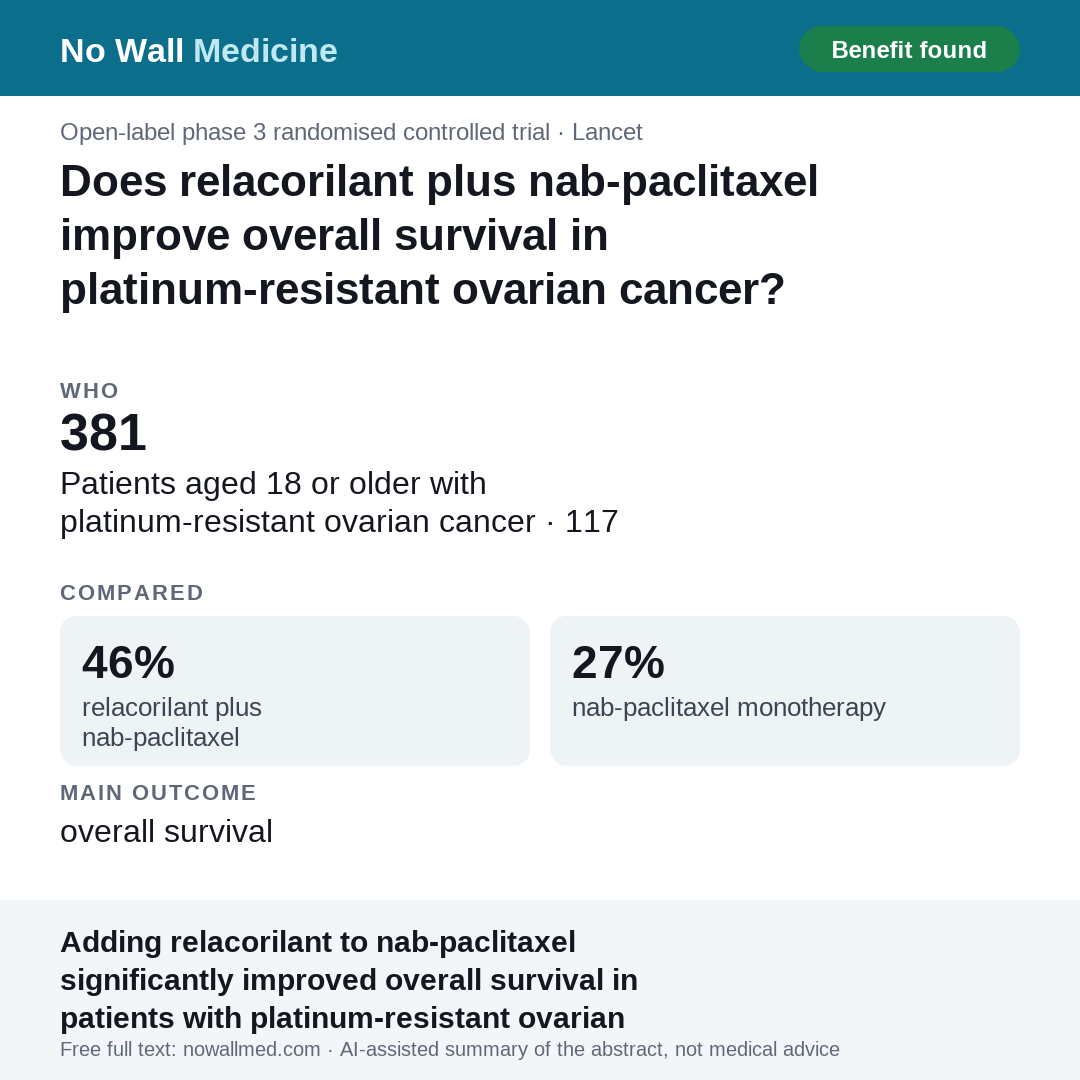
Overall survival with relacorilant and nab-paclitaxel in patients with platinum-resistant ovarian cancer (ROSELLA): a phase 3 randomised controlled trial
Open-label phase 3 randomised controlled trialBenefit found
Does relacorilant plus nab-paclitaxel improve overall survival in platinum-resistant ovarian cancer?
Who
381
Patients aged 18 or older with platinum-resistant ovarian cancer · 117 hospitals and community oncology centres in 14 countries
Compared
46%relacorilant plus nab-paclitaxel (18-month overall survival)
27%nab-paclitaxel monotherapy (18-month overall survival)
Main outcome
overall survival
Result: hazard ratio 0·65 (95% CI 0·51-0·83)
Bottom line: Adding relacorilant to nab-paclitaxel significantly improved overall survival in patients with platinum-resistant ovarian cancer.
Funded by: Corcept Therapeutics
Lancet · 2026-04-10Download image
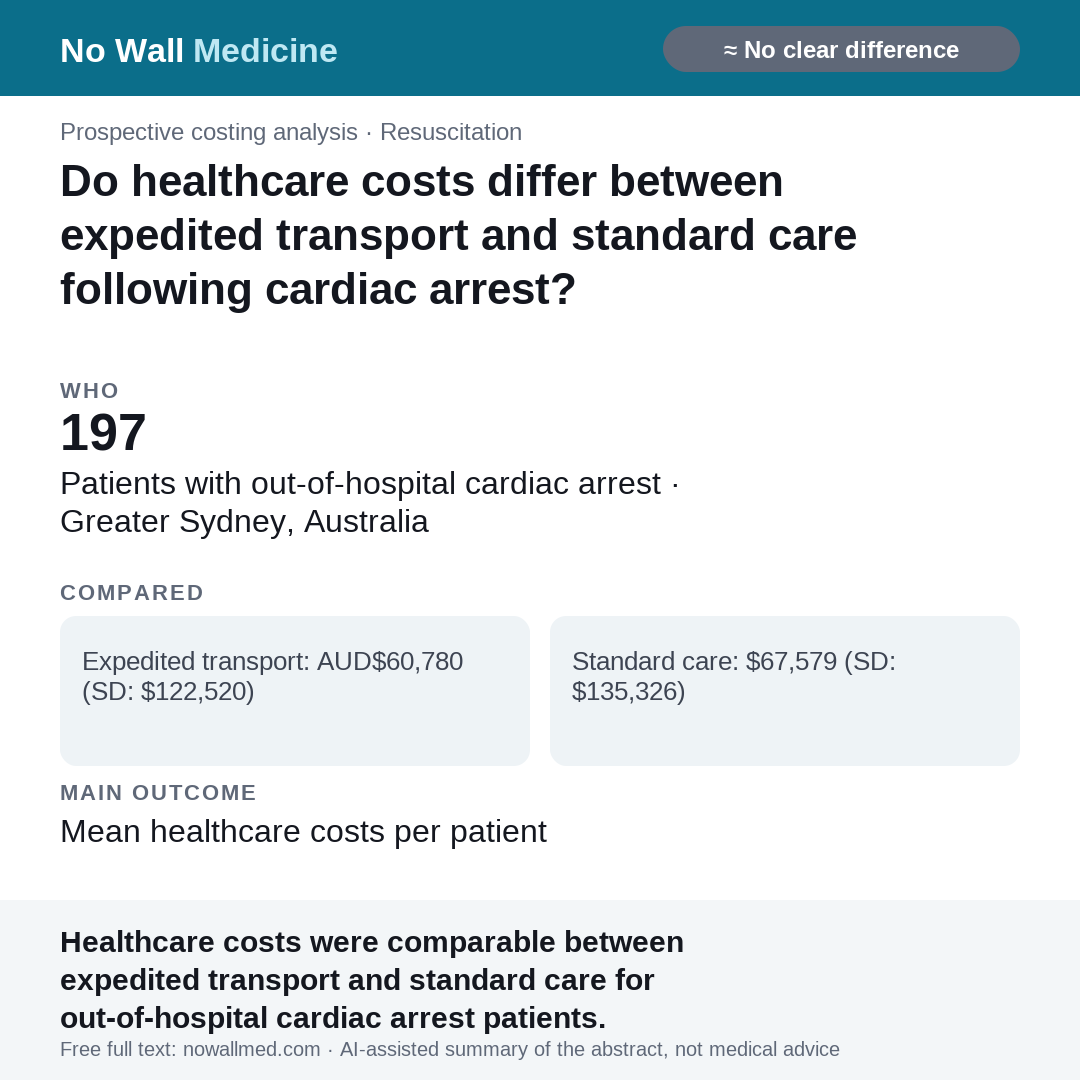
Healthcare costs of expedited transport compared with standard care following out-of-hospital cardiac arrest: results from the EVIDENCE randomised controlled trial
Prospective costing analysisNo clear difference
Do healthcare costs differ between expedited transport and standard care following cardiac arrest?
Who
197
Patients with out-of-hospital cardiac arrest · Greater Sydney, Australia
Compared
Expedited transport: AUD$60,780 (SD: $122,520)
Standard care: $67,579 (SD: $135,326)
Main outcome
Mean healthcare costs per patient
Result: -$6799 (95% CI: -$44,014 to $30,416)
Bottom line: Healthcare costs were comparable between expedited transport and standard care for out-of-hospital cardiac arrest patients.
Resuscitation · 2026-04-10Download image
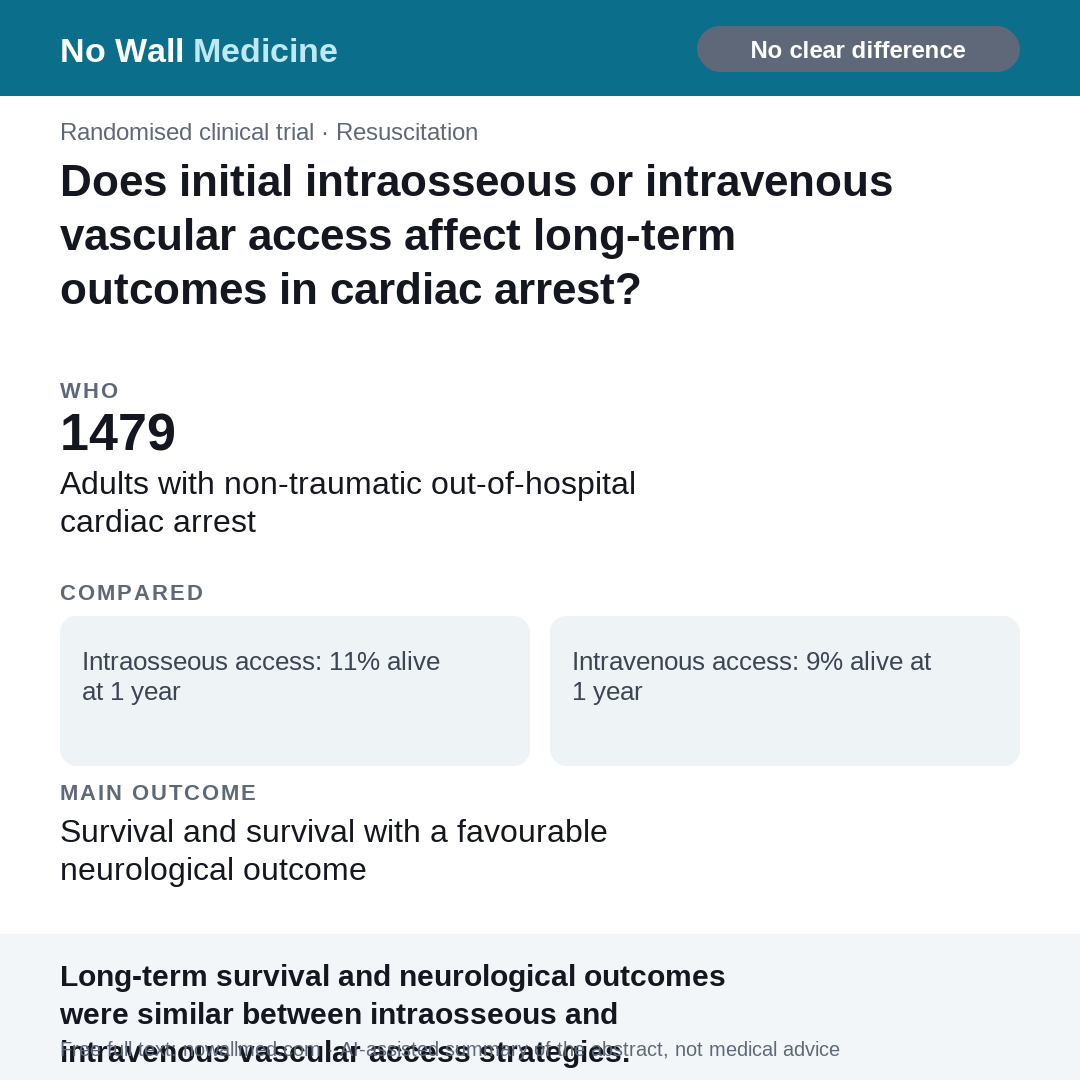
Effect of vascular access strategy on long-term outcomes in patients with out-of-hospital cardiac arrest: a randomised clinical trial
Randomised clinical trialNo clear difference
Does initial intraosseous or intravenous vascular access affect long-term outcomes in cardiac arrest?
Who
1479
Adults with non-traumatic out-of-hospital cardiac arrest
Compared
Intraosseous access: 11% alive at 1 year
Intravenous access: 9% alive at 1 year
Main outcome
Survival and survival with a favourable neurological outcome
Result: risk ratio 1.24 (95% confidence interval 0.91-1.67)
Bottom line: Long-term survival and neurological outcomes were similar between intraosseous and intravenous vascular access strategies.
Resuscitation · 2026-04-10Download image
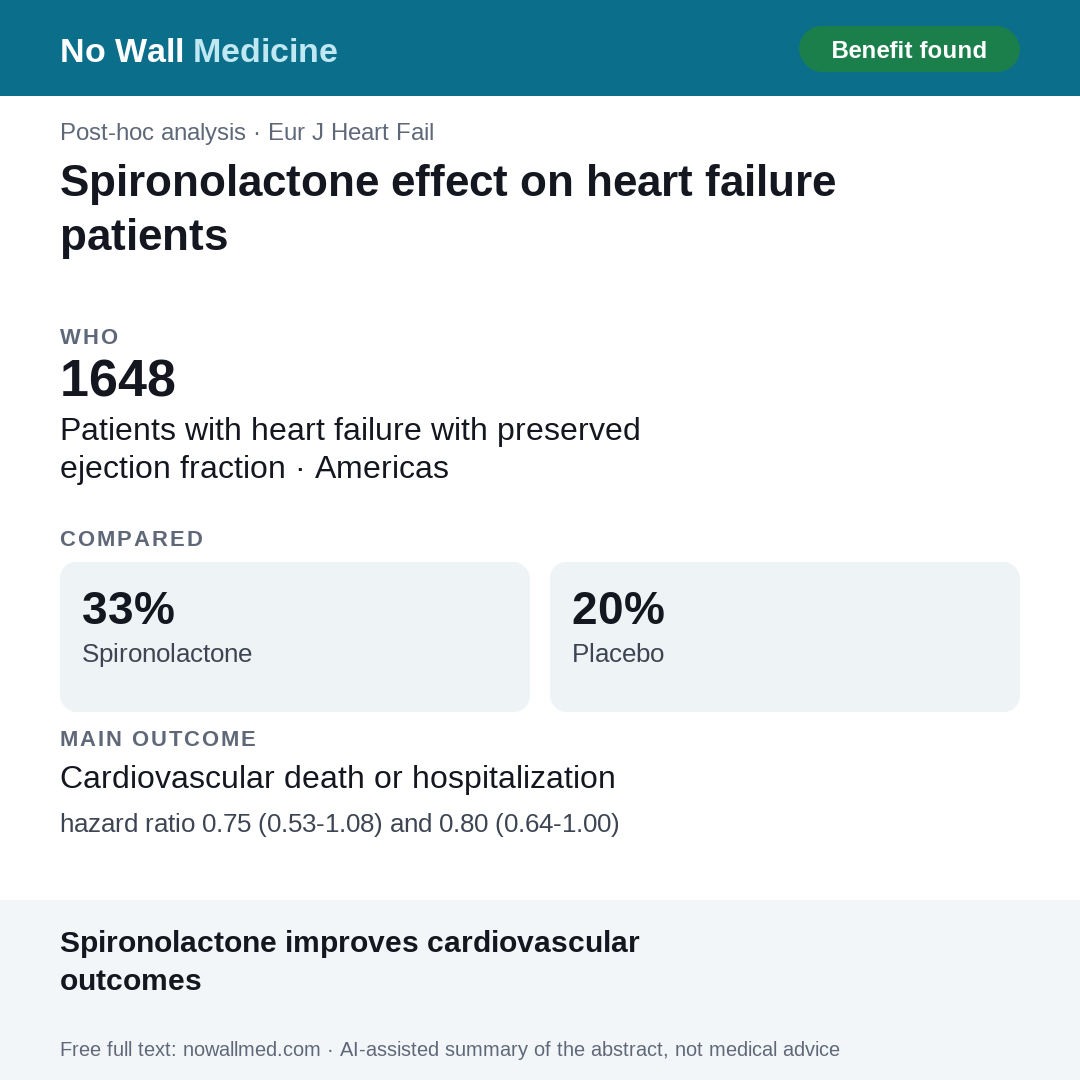
Spironolactone, early acute eGFR changes, and clinical outcomes in patients with heart failure with preserved ejection fraction: insights from TOPCAT Americas
Post-hoc analysisBenefit found
Spironolactone effect on heart failure patients
Who
1648
Patients with heart failure with preserved ejection fraction · Americas
Compared
33%Spironolactone
20%Placebo
Main outcome
Cardiovascular death or hospitalization
Result: hazard ratio 0.75 (0.53-1.08) and 0.80 (0.64-1.00)
Bottom line: Spironolactone improves cardiovascular outcomes
Eur J Heart Fail · 2026-04-10Download image
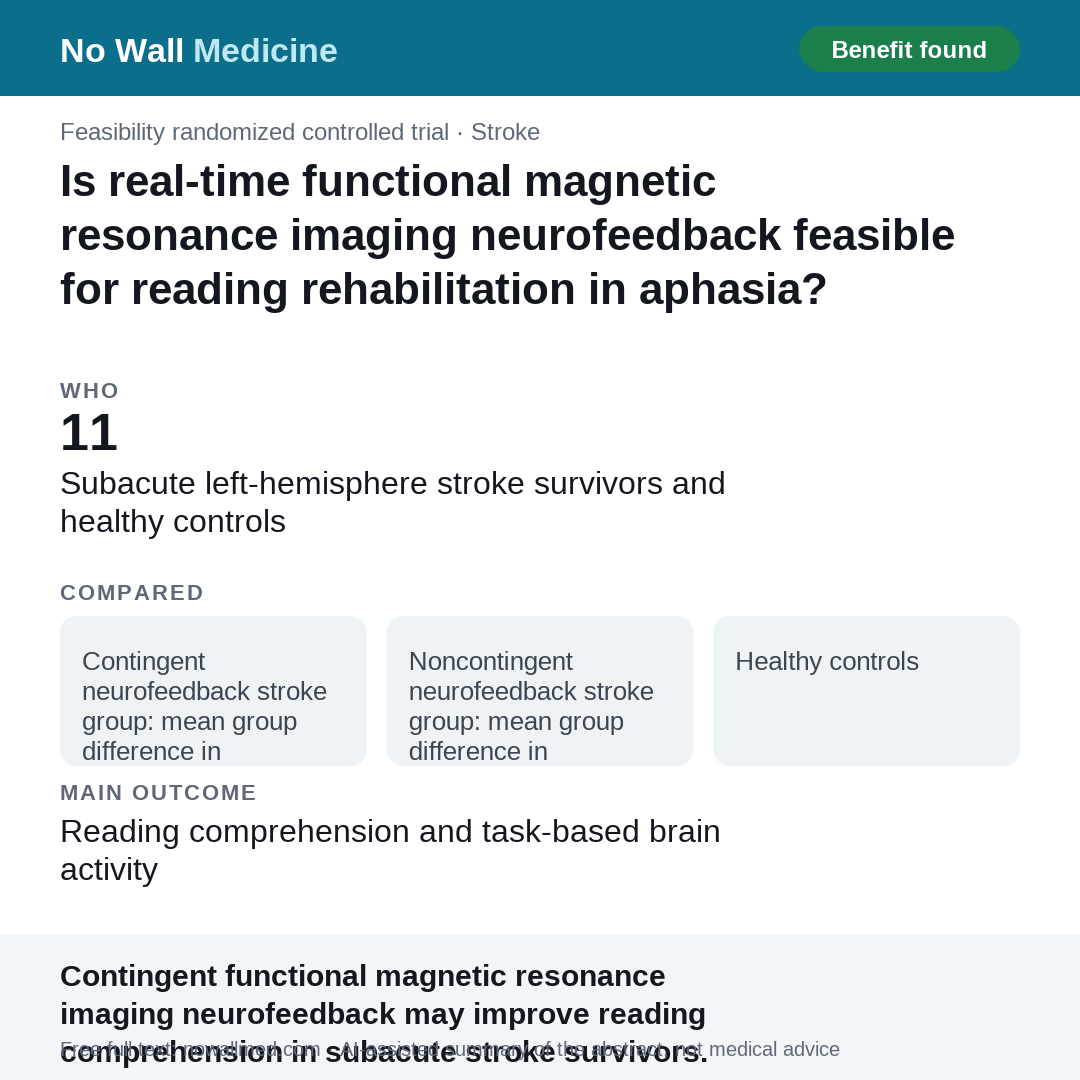
Feasibility Randomized Controlled Trial of Real-Time fMRI Neurofeedback for Reading Rehabilitation in Aphasia
Feasibility randomized controlled trialBenefit found
Is real-time functional magnetic resonance imaging neurofeedback feasible for reading rehabilitation in aphasia?
Who
11
Subacute left-hemisphere stroke survivors and healthy controls
Compared
Contingent neurofeedback stroke group: mean group difference in Reading Comprehension Battery for Aphasia, second edition, change score=9.75 [95% CI, 1.99-17.51]
Noncontingent neurofeedback stroke group: mean group difference in Reading Comprehension Battery for Aphasia, second edition, change score=11.42 [95% CI, 1.12-21.71]
Healthy controls
Main outcome
Reading comprehension and task-based brain activity
Result: mean group difference in Reading Comprehension Battery for Aphasia, second edition, change score=9.75 [95% CI, 1.99-17.51]
Bottom line: Contingent functional magnetic resonance imaging neurofeedback may improve reading comprehension in subacute stroke survivors.
Limitation: Confirmation of these preliminary effects awaits completion of the ongoing randomized controlled trial.
Stroke · 2026-04-10Download image
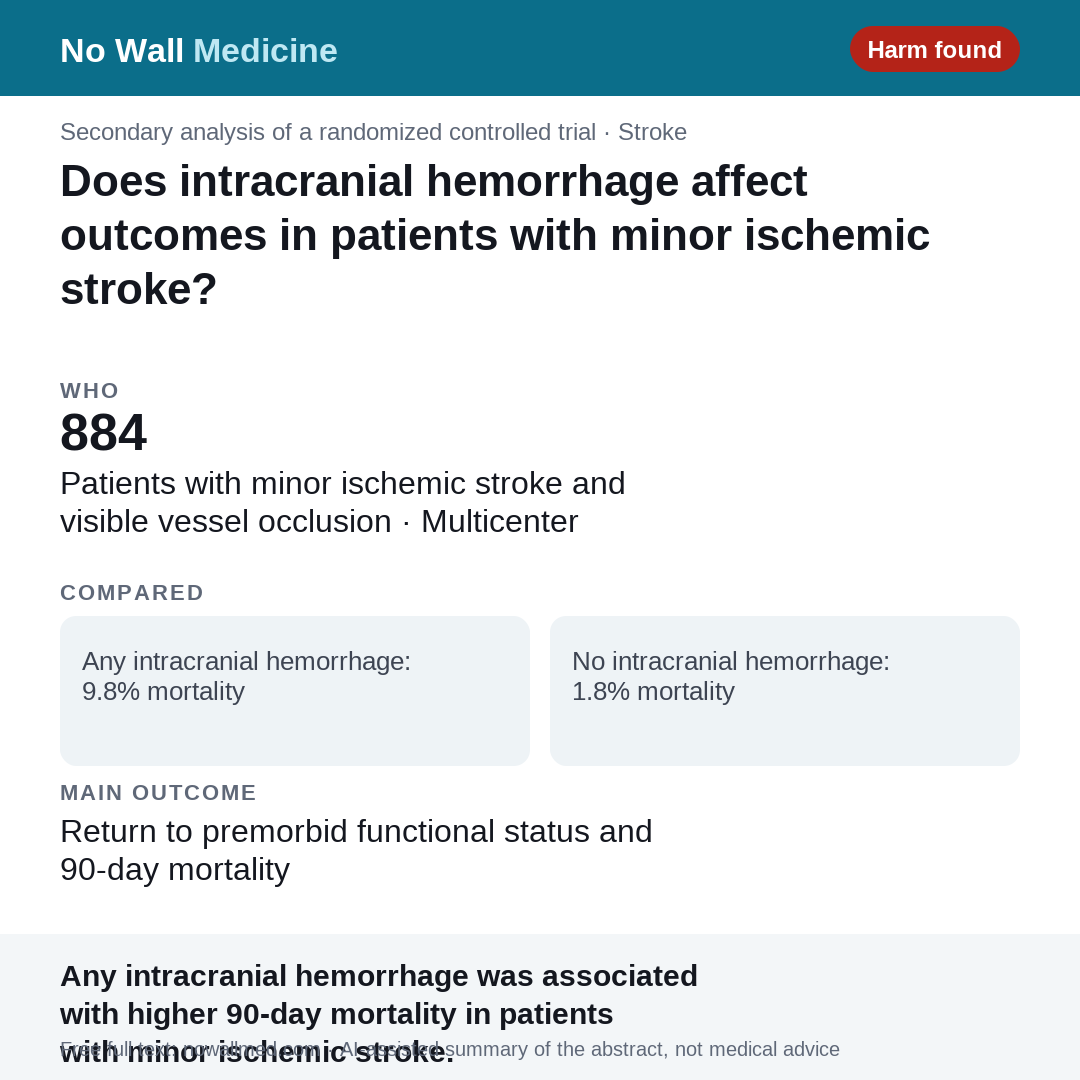
Intracranial Hemorrhage Patterns and Outcomes in Minor Stroke: Analysis of the TEMPO-2 Trial
Secondary analysis of a randomized controlled trialHarm found
Does intracranial hemorrhage affect outcomes in patients with minor ischemic stroke?
Who
884
Patients with minor ischemic stroke and visible vessel occlusion · Multicenter
Compared
Any intracranial hemorrhage: 9.8% mortality
No intracranial hemorrhage: 1.8% mortality
Main outcome
Return to premorbid functional status and 90-day mortality
Result: adjusted hazard ratio 3.71 (95% CI 1.54-8.95)
Bottom line: Any intracranial hemorrhage was associated with higher 90-day mortality in patients with minor ischemic stroke.
Stroke · 2026-04-10Download image
Predicting bilingual aphasia treatment outcomes using digital twins: a double-blind randomized controlled trial
Double-blind randomized controlled trialMixed results
Can the BiLex computational model predict the optimal language for bilingual aphasia therapy?
Who
48
Spanish-English bilinguals with chronic aphasia
Compared
BiLex-recommended language
Opposite language
Main outcome
Proportion of maximal improvement and cross-language generalization
Result: Difference (SE) -0.16 (0.07) for cross-language generalization
Bottom line: The model-opposite group showed greater cross-language generalization, but the model-assigned group had advantages in most subgroups.
Limitation: The model-opposite group showed higher response variability.
NPJ Digit Med · 2026-04-10Download image

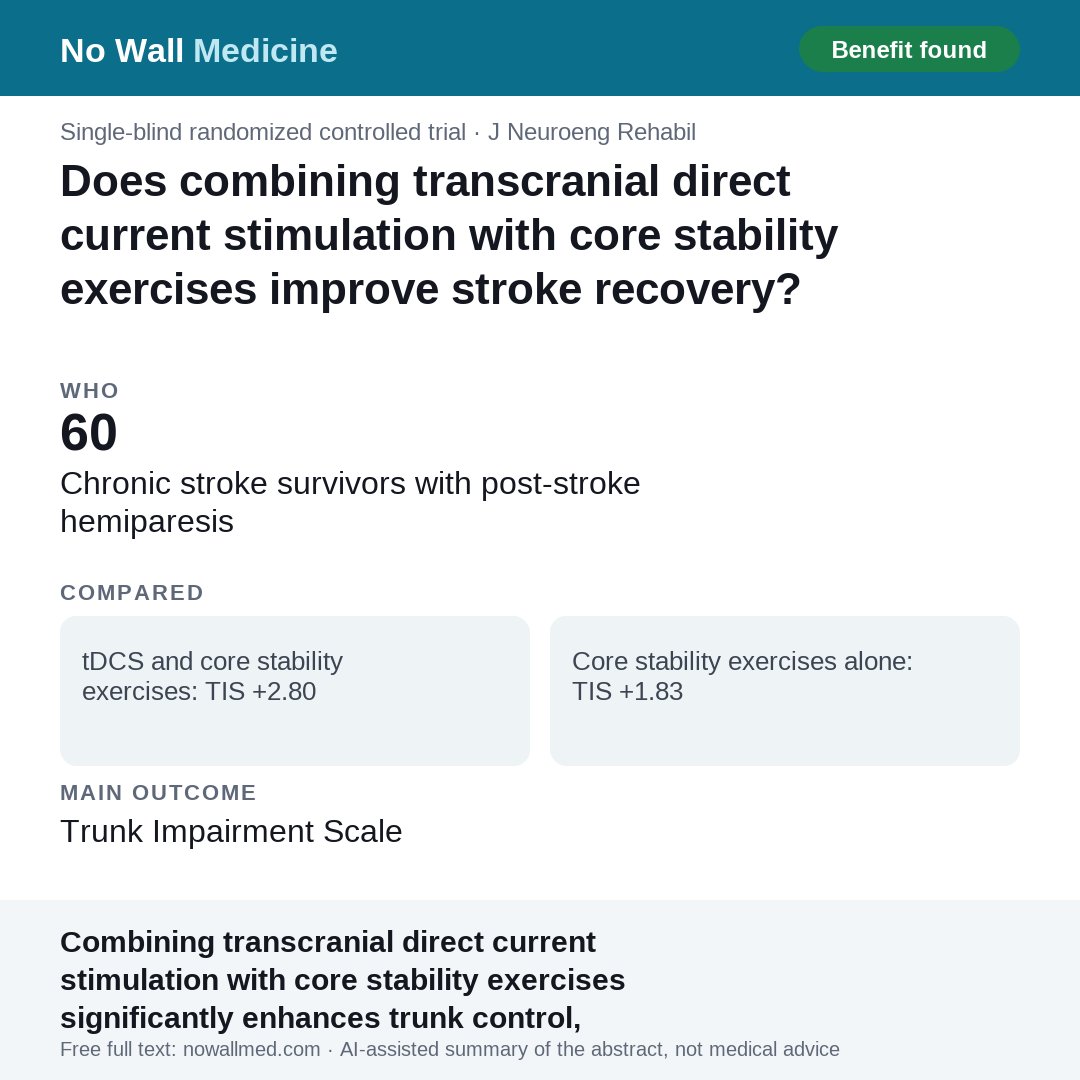
Unlocking trunk potential after stroke: a novel approach combining transcranial direct current stimulation and core stability exercise: a randomized controlled trial
Single-blind randomized controlled trialBenefit found
Does combining transcranial direct current stimulation with core stability exercises improve stroke recovery?
Who
60
Chronic stroke survivors with post-stroke hemiparesis
Compared
tDCS and core stability exercises: TIS +2.80
Core stability exercises alone: TIS +1.83
Main outcome
Trunk Impairment Scale
Bottom line: Combining transcranial direct current stimulation with core stability exercises significantly enhances trunk control, balance, and functional independence in chronic stroke survivors.
Limitation: This study was retrospectively registered.
J Neuroeng Rehabil · 2026-04-10Download image
Efficacy and safety of VPM1002 and Immuvac in preventing tuberculosis: phase 3 randomised clinical trial (PreVenTB trial)
Phase 3 randomised clinical trialMixed results
Is VPM1002 or Immuvac effective in preventing microbiologically confirmed tuberculosis?
Who
12717
12,717 healthy household contacts of patients with smear positive tuberculosis · 18 sites across six states of India
Compared
1.68%VPM1002
2.09%Immuvac
2.13%Placebo
Main outcome
incidence of microbiologically confirmed tuberculosis
Result: vaccine efficacy 21.4% (95% CI -8.9% to 43.2%)
Bottom line: VPM1002 and Immuvac were safe but lacked efficacy against all tuberculosis or pulmonary tuberculosis, though VPM1002 showed efficacy against extrapulmonary tuberculosis.
BMJ · 2026-04-09Download image

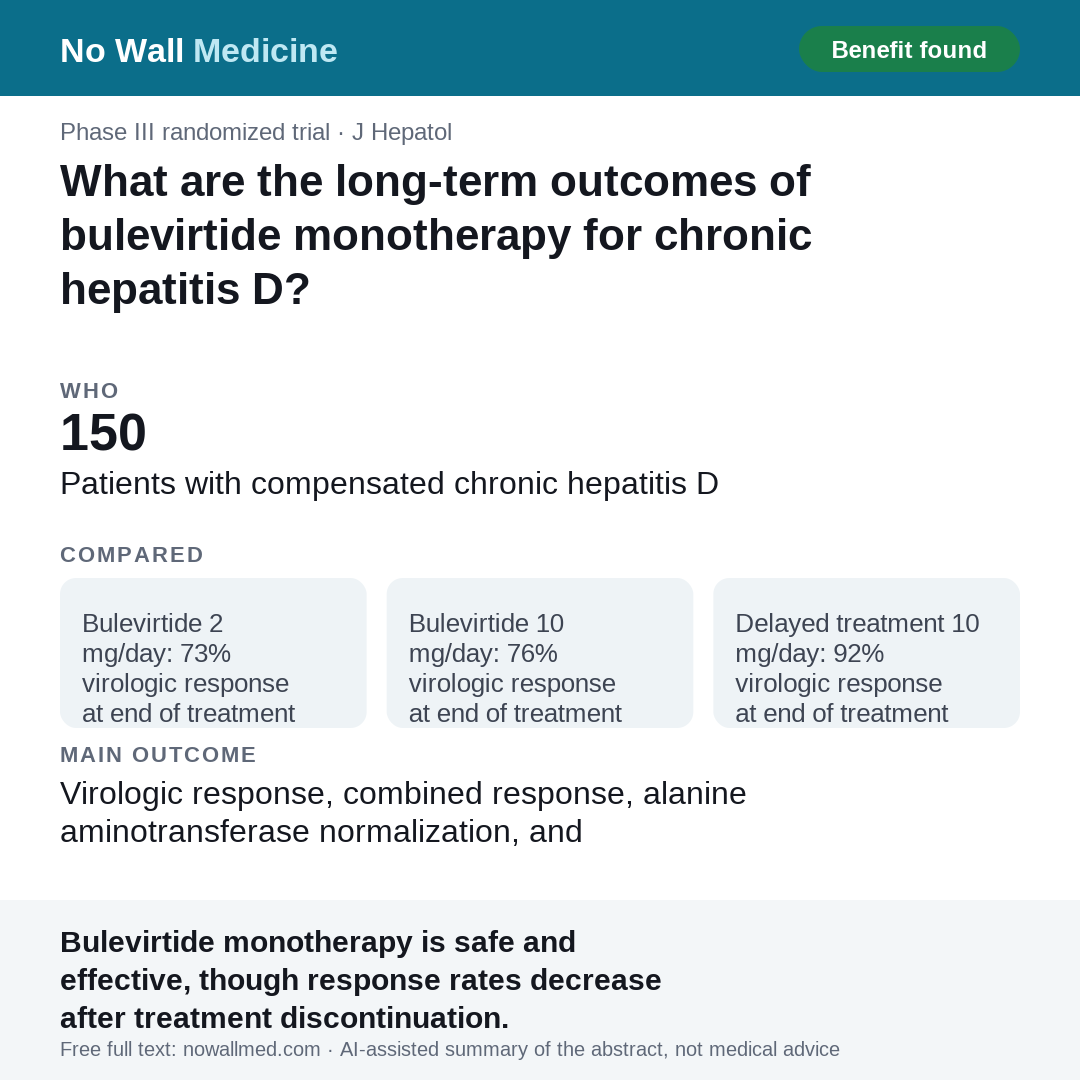
144 Weeks of bulevirtide monotherapy for chronic hepatitis D: Final and post-treatment results from a phase III randomized trial
Phase III randomized trialBenefit found
What are the long-term outcomes of bulevirtide monotherapy for chronic hepatitis D?
Who
150
Patients with compensated chronic hepatitis D
Compared
Bulevirtide 2 mg/day: 73% virologic response at end of treatment
Bulevirtide 10 mg/day: 76% virologic response at end of treatment
Delayed treatment 10 mg/day: 92% virologic response at end of treatment
Main outcome
Virologic response, combined response, alanine aminotransferase normalization, and undetectable hepatitis D virus RNA
Bottom line: Bulevirtide monotherapy is safe and effective, though response rates decrease after treatment discontinuation.
Limitation: Treatment outcomes beyond 2 years and after bulevirtide discontinuation remain unknown.
J Hepatol · 2026-04-09Download image
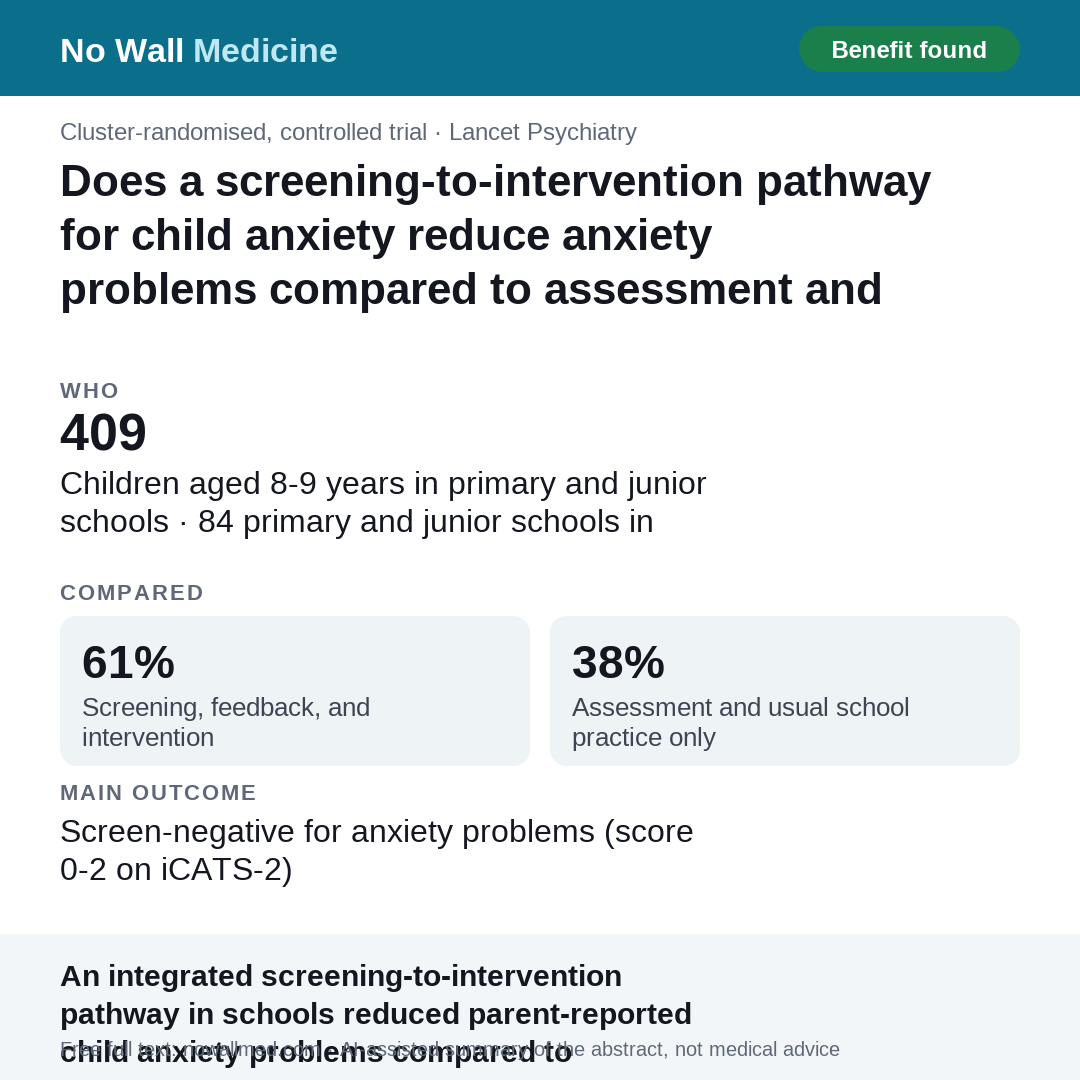
Screening-to-intervention pathway for child anxiety problems alongside usual school practice versus usual school practice only (iCATSi2i): a cluster-randomised, controlled trial in primary schools in England
Cluster-randomised, controlled trialBenefit found
Does a screening-to-intervention pathway for child anxiety reduce anxiety problems compared to assessment and usual school practice?
Who
409
Children aged 8-9 years in primary and junior schools · 84 primary and junior schools in England
Compared
61%Screening, feedback, and intervention (89/145)
38%Assessment and usual school practice only (62/163)
Main outcome
Screen-negative for anxiety problems (score 0-2 on iCATS-2)
Result: adjusted odds ratio 2.32 (95% CI 1.41-3.81)
Bottom line: An integrated screening-to-intervention pathway in schools reduced parent-reported child anxiety problems compared to assessment and usual provision.
Lancet Psychiatry · 2026-04-09Download image
Associations between psychological and trauma-related factors and urinary incontinence severity and treatment response among women veterans
Secondary analysis of a randomized controlled trialMixed results
How do psychological and trauma-related factors associate with urinary incontinence severity and treatment response?
Who
200
Women veterans · 3 southeastern Veterans Healthcare Administration systems
Compared
55%Treatment responders (109/200)
Non-responders
Main outcome
Urinary incontinence severity and response to behavioral treatment
Result: adjusted odds ratio 0.98 (95% CI 0.97 to 0.99)
Bottom line: Higher stress, anxiety, post-traumatic stress disorder, and military sexual trauma associate with greater urinary incontinence severity.
AJOG · 2026-04-09Download image

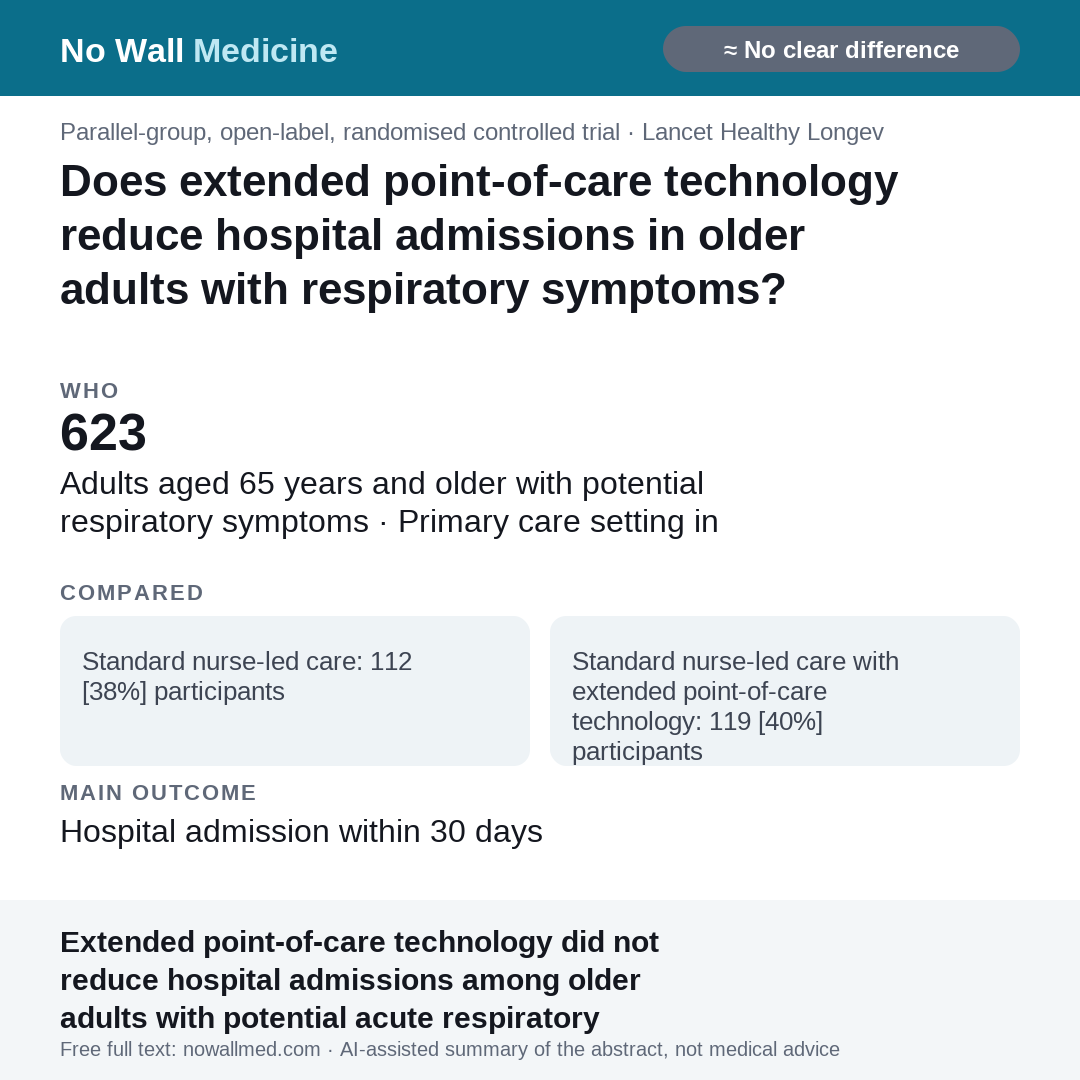
Extended use of point-of-care technology by acute community nurses during in-home assessment of older adults with potential acute respiratory conditions: a parallel-group, open-label, randomised controlled trial
Parallel-group, open-label, randomised controlled trialNo clear difference
Does extended point-of-care technology reduce hospital admissions in older adults with respiratory symptoms?
Who
623
Adults aged 65 years and older with potential respiratory symptoms · Primary care setting in Denmark
Compared
Standard nurse-led care: 112 [38%] participants
Standard nurse-led care with extended point-of-care technology: 119 [40%] participants
Main outcome
Hospital admission within 30 days
Result: risk ratio 1·06, 95% CI 0·86-1·30
Bottom line: Extended point-of-care technology did not reduce hospital admissions among older adults with potential acute respiratory conditions.
Funded by: Region of Southern Denmark and several foundations
Lancet Healthy Longev · 2026-04-09Download image
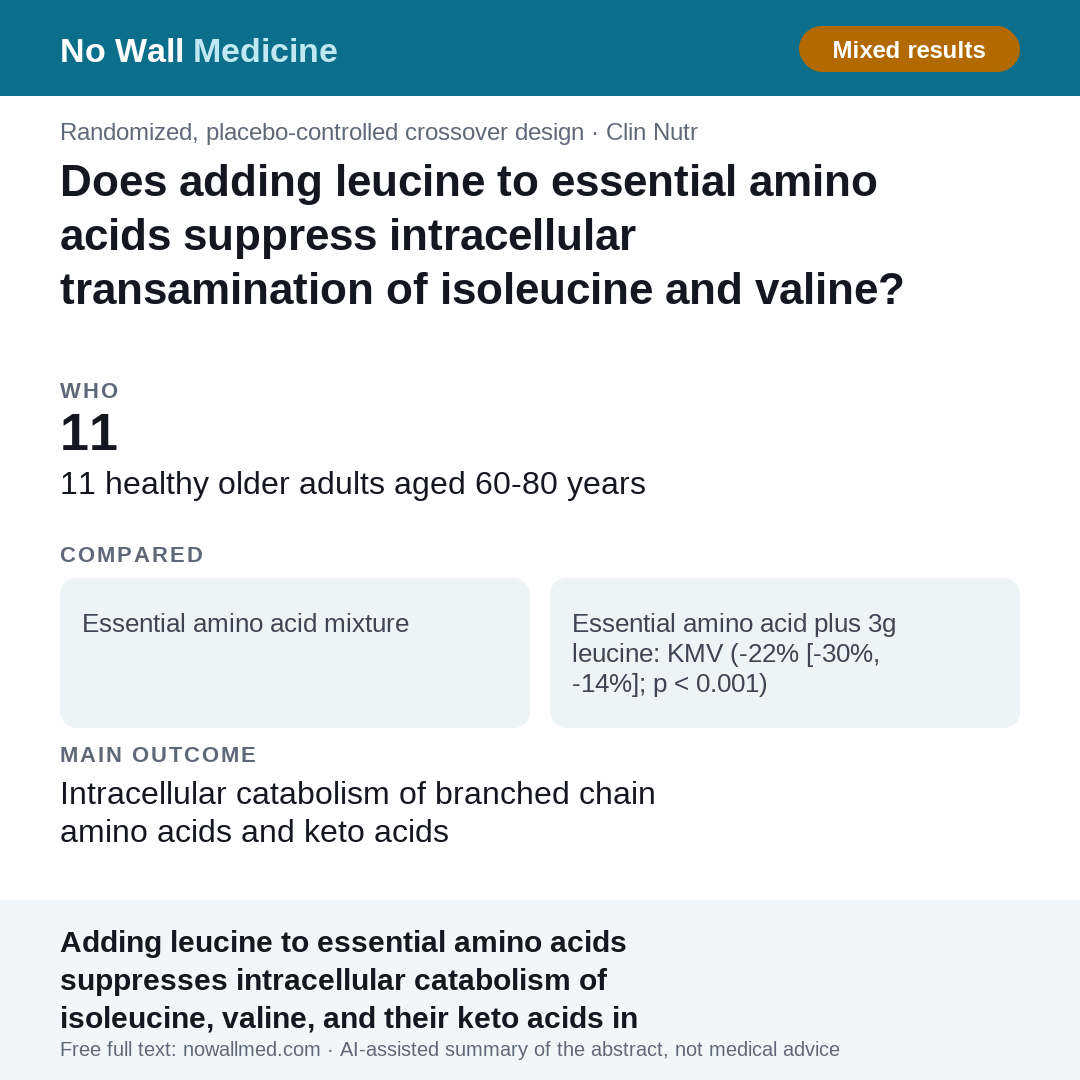
Adding free leucine to a balanced essential amino acid mixture suppresses intracellular transamination of isoleucine and valine in healthy older adults
Randomized, placebo-controlled crossover designMixed results
Does adding leucine to essential amino acids suppress intracellular transamination of isoleucine and valine?
Who
11
11 healthy older adults aged 60-80 years
Compared
Essential amino acid mixture
Essential amino acid plus 3g leucine: KMV (-22% [-30%, -14%]; p < 0.001)
Main outcome
Intracellular catabolism of branched chain amino acids and keto acids
Result: KMV (-22% [-30%, -14%]; p < 0.001)
Bottom line: Adding leucine to essential amino acids suppresses intracellular catabolism of isoleucine, valine, and their keto acids in older adults.
Clin Nutr · 2026-04-09Download image
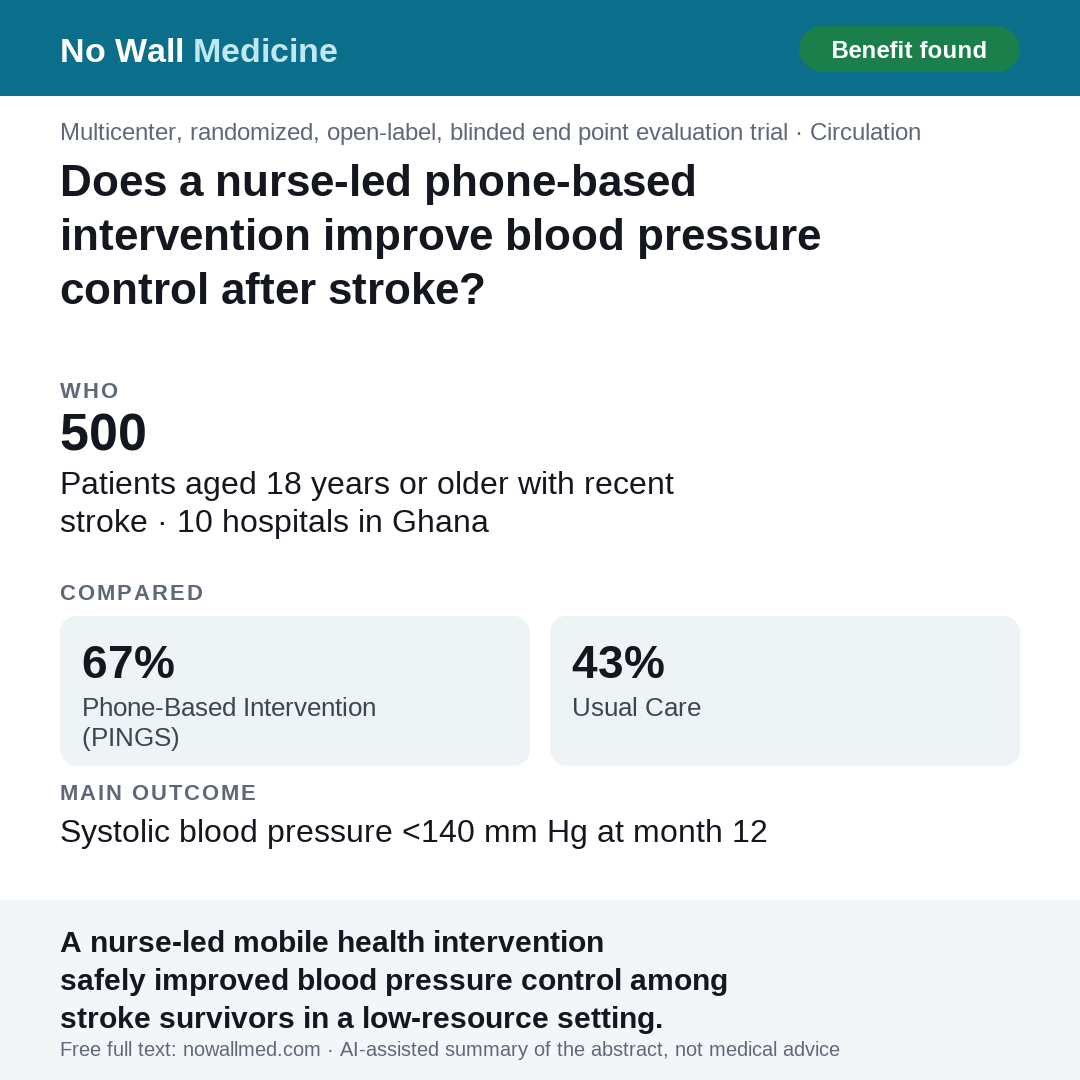
Phone-Based Intervention Under Nurse Guidance for Control of Hypertension After Stroke: A Randomized Multicenter Phase 3 Trial in Ghana
Multicenter, randomized, open-label, blinded end point evaluation trialBenefit found
Does a nurse-led phone-based intervention improve blood pressure control after stroke?
Who
500
Patients aged 18 years or older with recent stroke · 10 hospitals in Ghana
Compared
67%Phone-Based Intervention (PINGS) (163/244)
43%Usual Care (109/256)
Main outcome
Systolic blood pressure <140 mm Hg at month 12
Result: between-group difference of 24% (95% CI, 15%-33%; P<0.001)
Bottom line: A nurse-led mobile health intervention safely improved blood pressure control among stroke survivors in a low-resource setting.
Limitation: Further study is warranted to confirm these findings and understand outcome drivers.
Circulation · 2026-04-09Download image
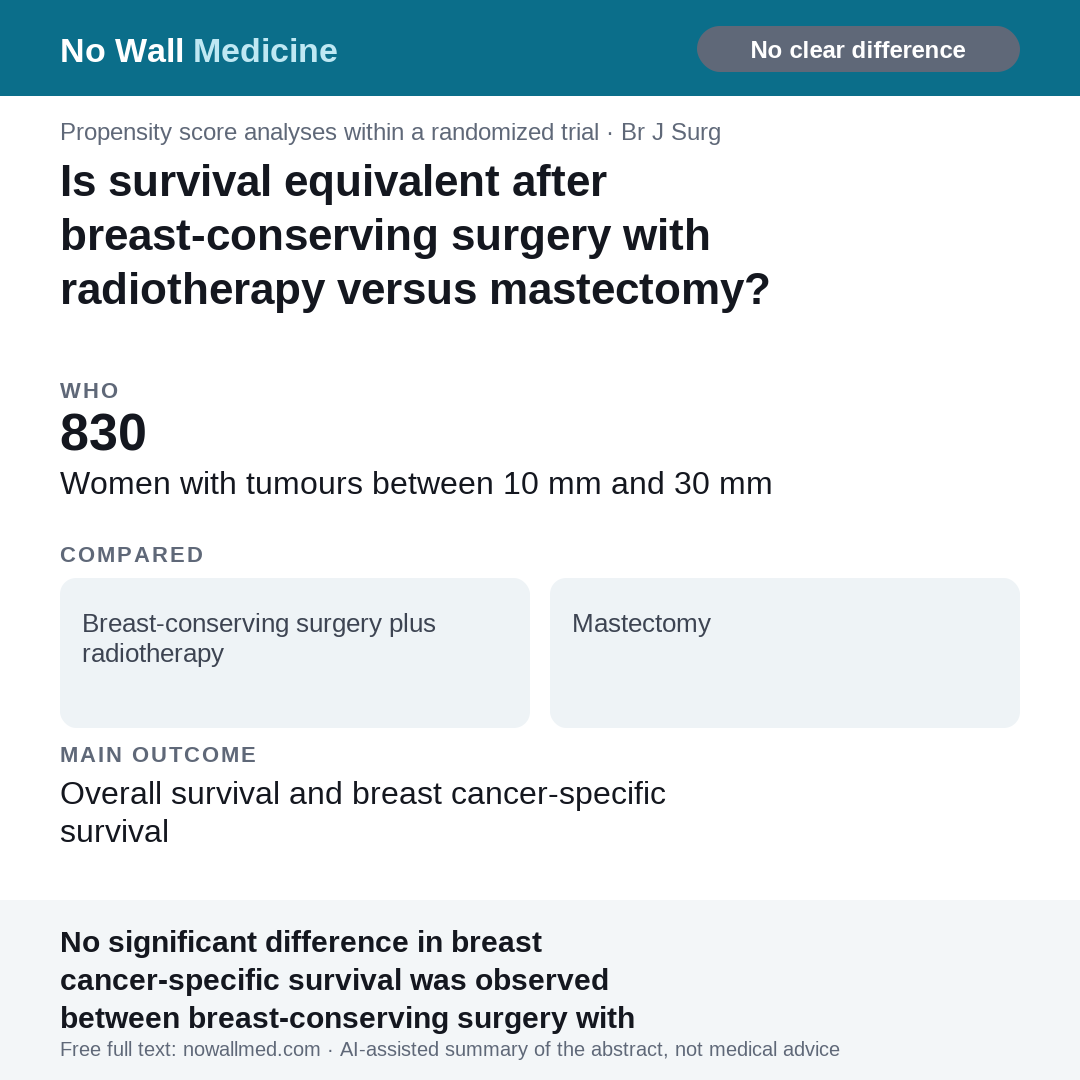
Survival after breast-conserving surgery and radiotherapy versus mastectomy: propensity score analyses within a randomized anaesthesiology trial
Propensity score analyses within a randomized trialNo clear difference
Is survival equivalent after breast-conserving surgery with radiotherapy versus mastectomy?
Who
830
Women with tumours between 10 mm and 30 mm
Compared
Breast-conserving surgery plus radiotherapy
Mastectomy
Main outcome
Overall survival and breast cancer-specific survival
Result: adjusted hazard ratio 1.02 (95% c.i. 0.43 to 2.42)
Bottom line: No significant difference in breast cancer-specific survival was observed between breast-conserving surgery with radiotherapy and mastectomy.
Limitation: Differences in overall survival likely reflect selection bias of patients with higher co-morbidity burden.
Br J Surg · 2026-04-09Download image
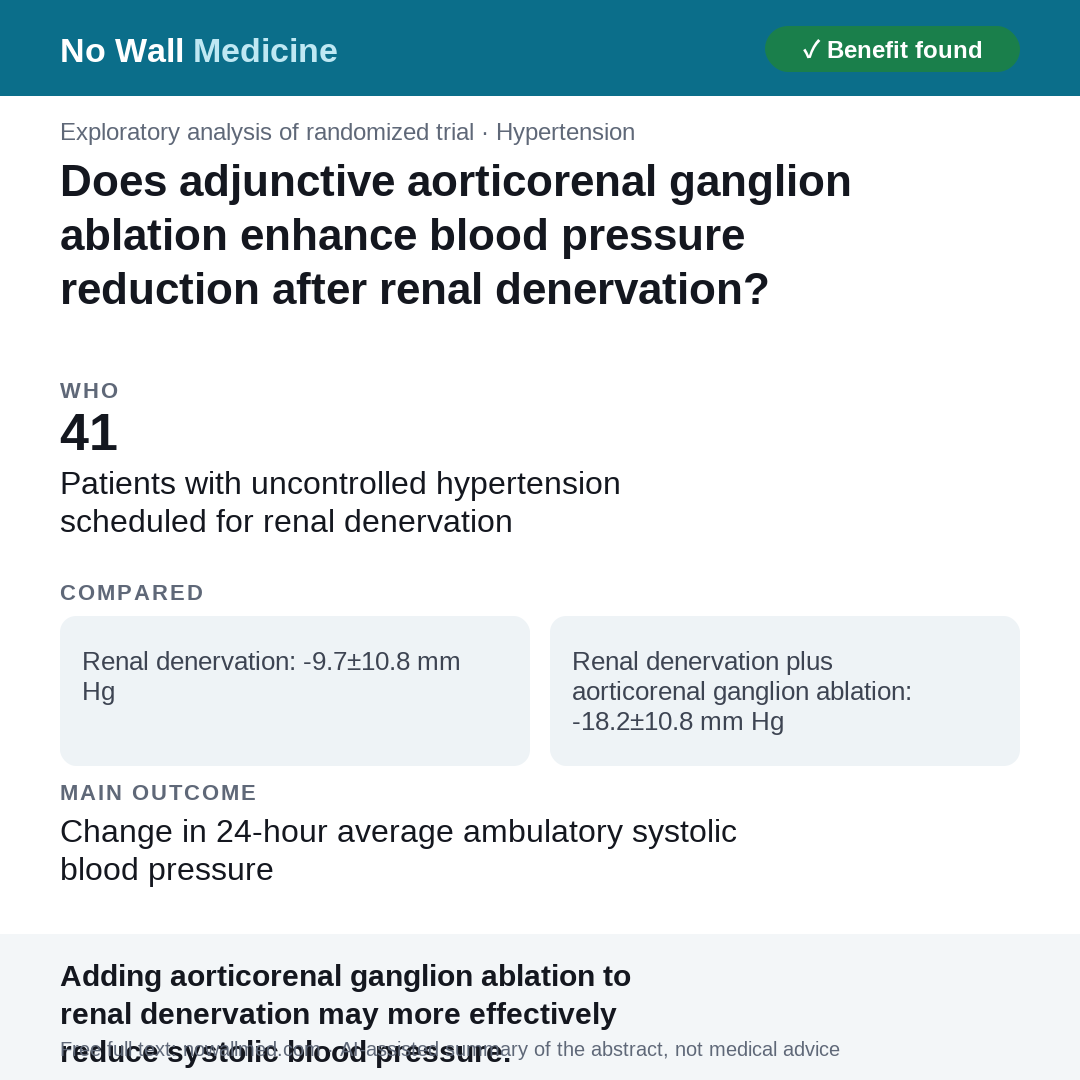
Aorticorenal Ganglion Ablation Enhances Blood Pressure Reduction After Renal Denervation
Exploratory analysis of randomized trialBenefit found
Does adjunctive aorticorenal ganglion ablation enhance blood pressure reduction after renal denervation?
Who
41
Patients with uncontrolled hypertension scheduled for renal denervation
Compared
Renal denervation: -9.7±10.8 mm Hg
Renal denervation plus aorticorenal ganglion ablation: -18.2±10.8 mm Hg
Main outcome
Change in 24-hour average ambulatory systolic blood pressure
Result: -7.5 mm Hg (95% CI, -13.9 to -1.2 mm Hg)
Bottom line: Adding aorticorenal ganglion ablation to renal denervation may more effectively reduce systolic blood pressure.
Hypertension · 2026-04-09Download image
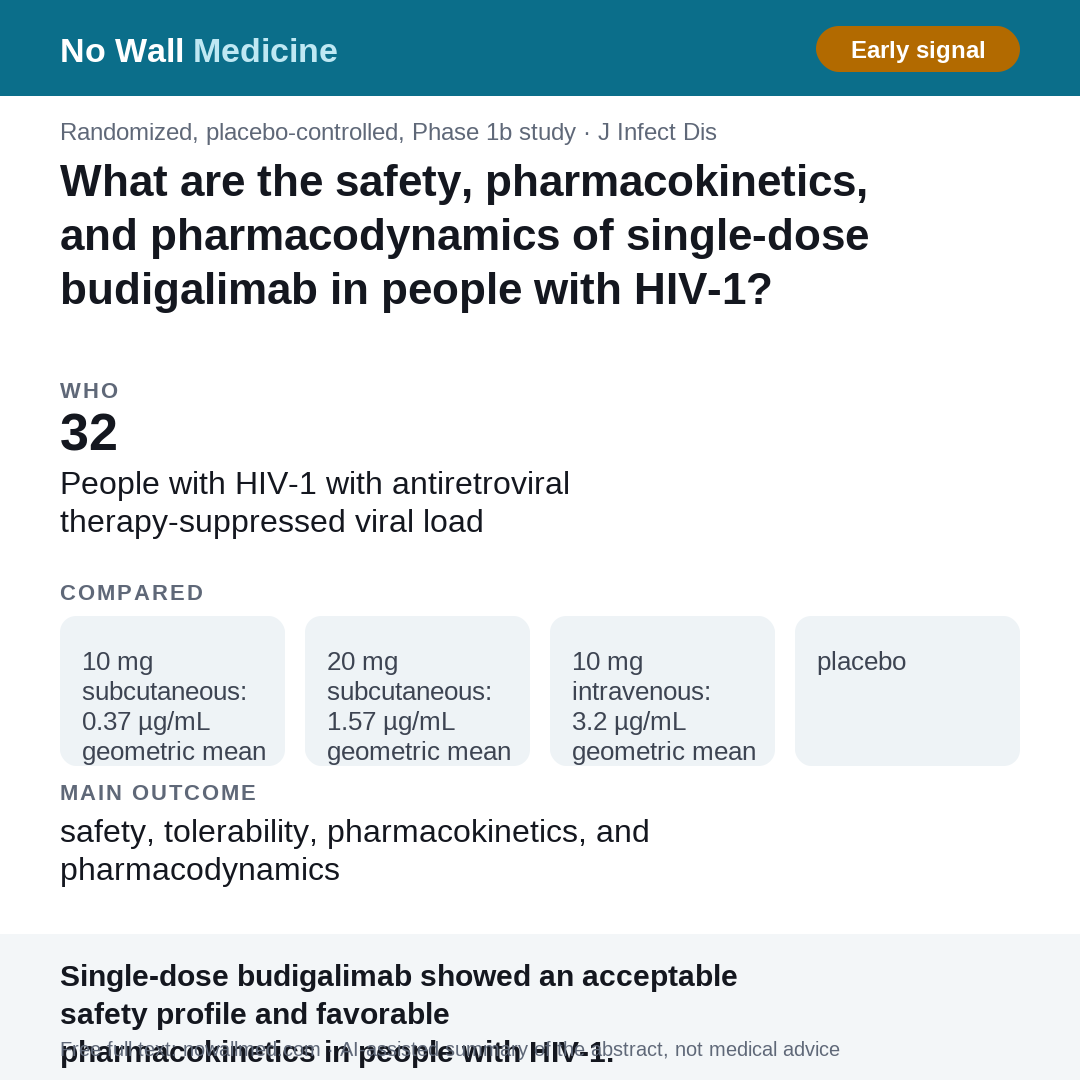
Safety, Pharmacokinetics, and Pharmacodynamics of Single-Dose Programmed Cell Death Protein 1 Inhibitor, Budigalimab, in People With HIV-1 With Antiretroviral Therapy-Suppressed Viral Load
Randomized, placebo-controlled, Phase 1b studyBenefit found
What are the safety, pharmacokinetics, and pharmacodynamics of single-dose budigalimab in people with HIV-1?
Who
32
People with HIV-1 with antiretroviral therapy-suppressed viral load
Compared
10 mg subcutaneous: 0.37 µg/mL geometric mean maximum serum concentration
20 mg subcutaneous: 1.57 µg/mL geometric mean maximum serum concentration
10 mg intravenous: 3.2 µg/mL geometric mean maximum serum concentration
placebo
Main outcome
safety, tolerability, pharmacokinetics, and pharmacodynamics
Bottom line: Single-dose budigalimab showed an acceptable safety profile and favorable pharmacokinetics in people with HIV-1.
J Infect Dis · 2026-04-09Download image
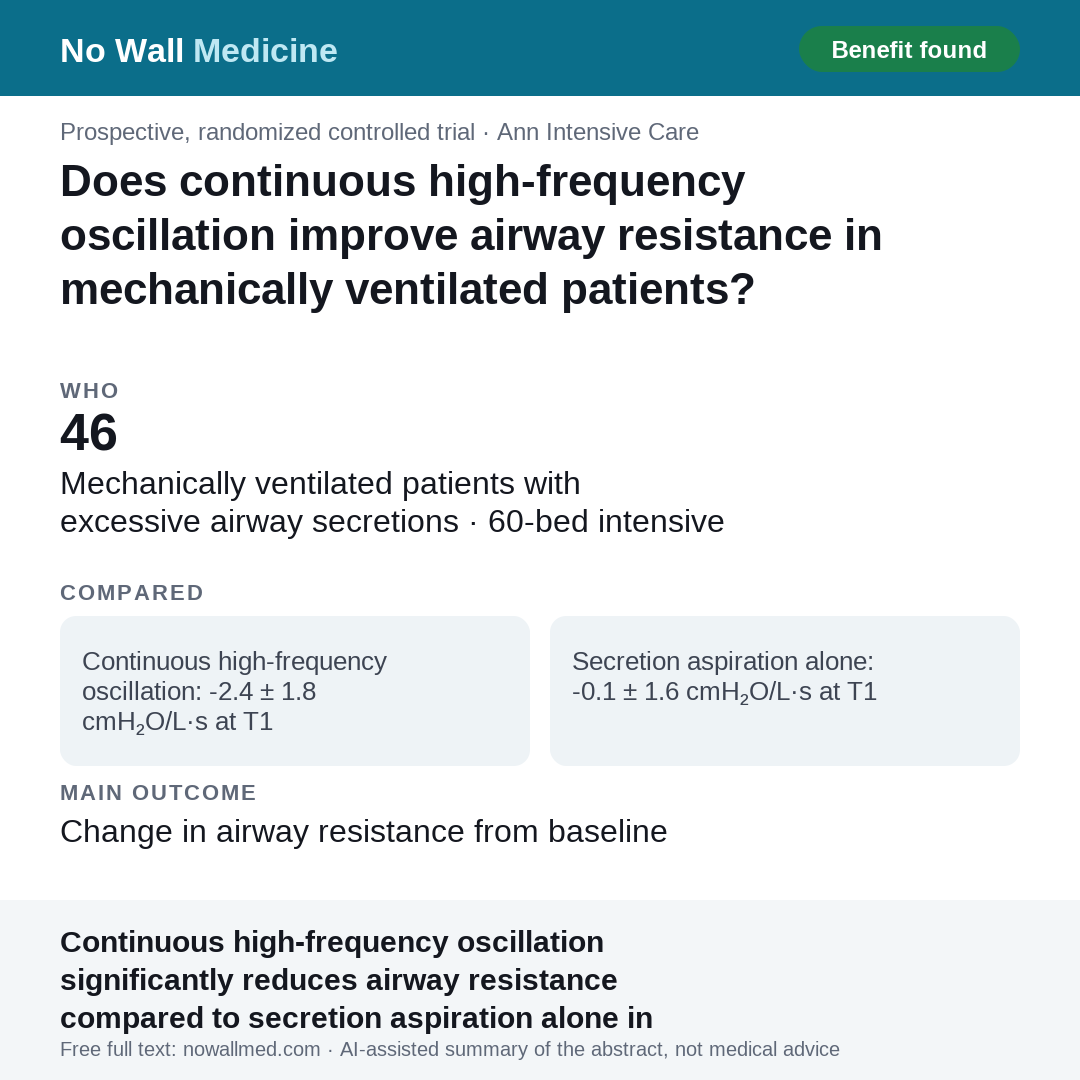
High-frequency oscillation improves mucus clearance and airway resistance in mechanically ventilated patients: a randomized clinical trial
Prospective, randomized controlled trialBenefit found
Does continuous high-frequency oscillation improve airway resistance in mechanically ventilated patients?
Who
46
Mechanically ventilated patients with excessive airway secretions · 60-bed intensive care unit
Compared
Continuous high-frequency oscillation: -2.4 ± 1.8 cmH₂O/L·s at T1
Secretion aspiration alone: -0.1 ± 1.6 cmH₂O/L·s at T1
Main outcome
Change in airway resistance from baseline
Bottom line: Continuous high-frequency oscillation significantly reduces airway resistance compared to secretion aspiration alone in mechanically ventilated patients.
Ann Intensive Care · 2026-04-09Download image
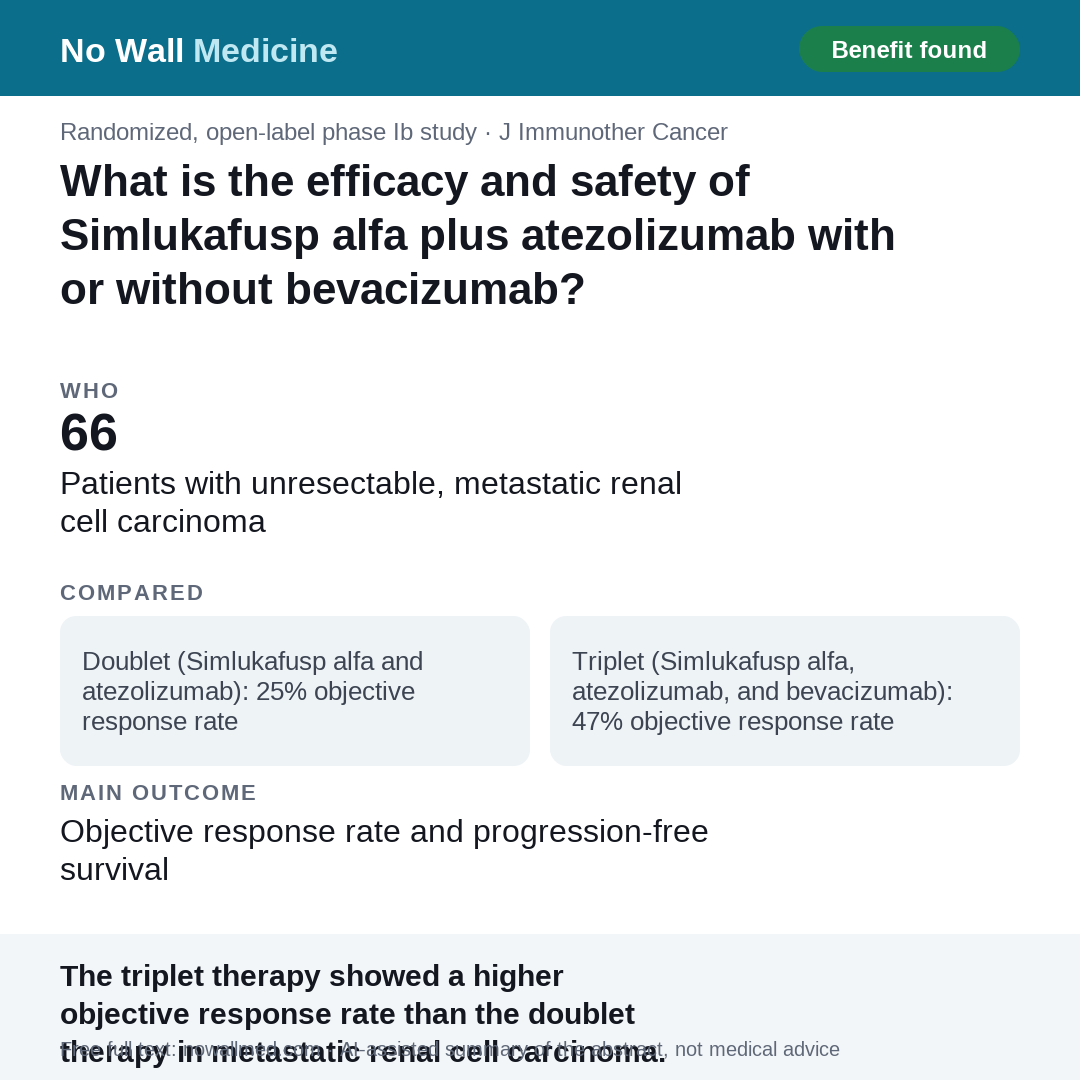
Simlukafusp alfa (FAP-IL2v) plus atezolizumab with or without bevacizumab in unresectable, metastatic renal cell carcinoma: a randomized, open-label phase Ib study
Randomized, open-label phase Ib studyBenefit found
What is the efficacy and safety of Simlukafusp alfa plus atezolizumab with or without bevacizumab?
Who
66
Patients with unresectable, metastatic renal cell carcinoma
Compared
Doublet (Simlukafusp alfa and atezolizumab): 25% objective response rate
Triplet (Simlukafusp alfa, atezolizumab, and bevacizumab): 47% objective response rate
Main outcome
Objective response rate and progression-free survival
Bottom line: The triplet therapy showed a higher objective response rate than the doublet therapy in metastatic renal cell carcinoma.
J Immunother Cancer · 2026-04-09Download image