Visual abstracts
New randomized trials and meta-analyses from leading journals at a glance: who was studied, what was compared, and what was found. Every paper is free to read in full.
All specialtiesCardiology 403Oncology 326Gastroenterology & Hepatology 163Infectious Disease 322Neurology 183Psychiatry & Mental Health 271Pulmonology 183Critical Care 125Endocrinology & Diabetes 246Pediatrics 193Surgery 135Orthopedics & Sports Medicine 81Neurosurgery 25Cardiothoracic & Vascular Surgery 48Plastic & Reconstructive Surgery 81Nephrology 78Rheumatology 83Hematology 96Dermatology 42Ophthalmology 71Obstetrics & Gynecology 125Public & Global Health 126Radiology & Imaging 37Anesthesiology 73Urology 91ENT (Otolaryngology) 49Emergency Medicine 41Allergy & Immunology 49Geriatrics 118Family Medicine & Primary Care 69Medical Genetics & Genomics 38Pathology & Laboratory Medicine 6Physical Medicine & Rehabilitation 100Palliative Care 61Nutrition 137Digital Health & AI 350General Medicine 49
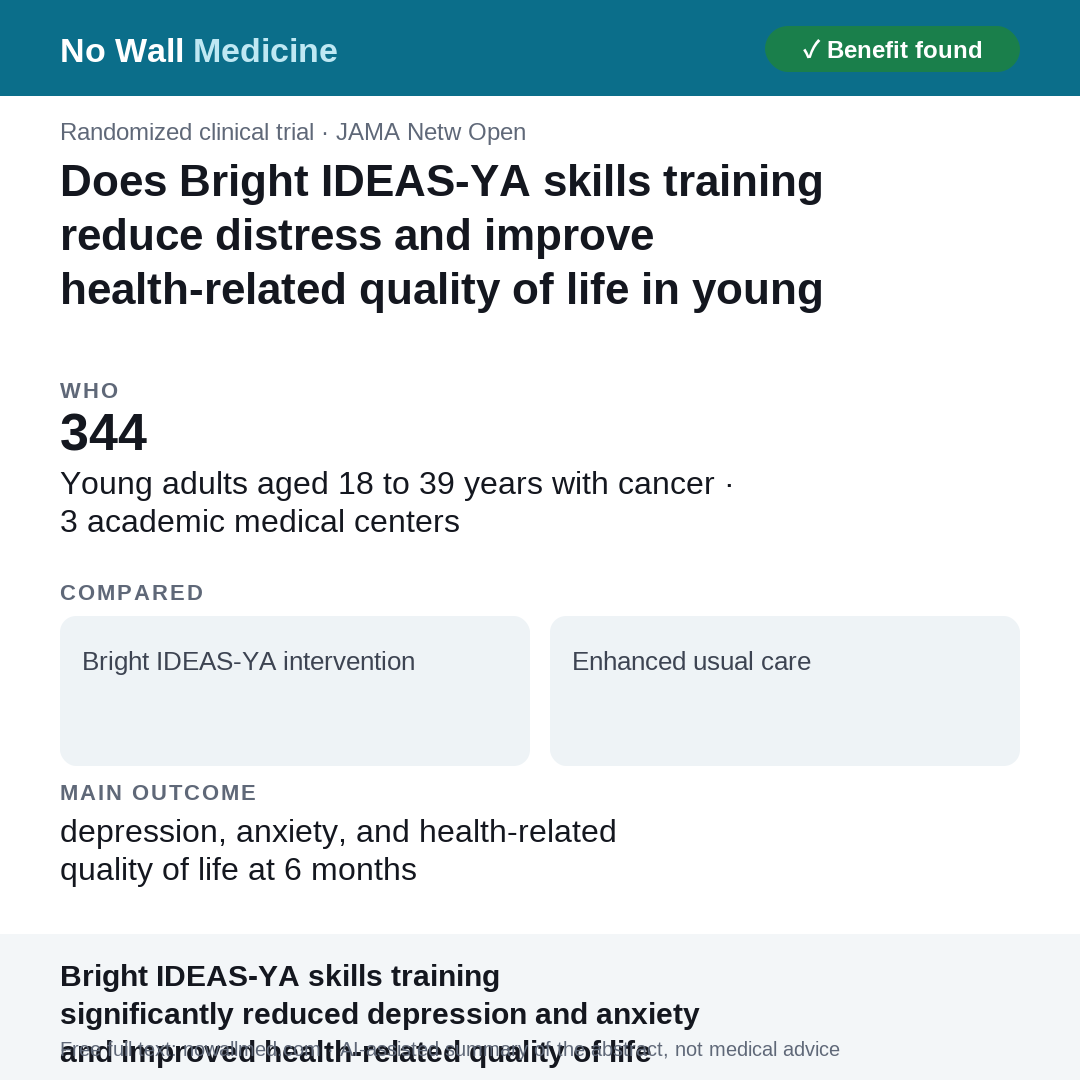
Bright IDEAS-YA Skills Training and Psychosocial Outcomes of Young Adults With Cancer: A Randomized Clinical Trial
Randomized clinical trialBenefit found
Does Bright IDEAS-YA skills training reduce distress and improve health-related quality of life in young adults with cancer?
Who
344
Young adults aged 18 to 39 years with cancer · 3 academic medical centers
Compared
Bright IDEAS-YA intervention
Enhanced usual care
Main outcome
depression, anxiety, and health-related quality of life at 6 months
Result: depression effect size -3.23 (95% CI -4.93 to -1.53); anxiety effect size -2.43 (95% CI -4.05 to -0.81); HRQOL effect size 3.40 (95% CI 0.34 to 6.45)
Bottom line: Bright IDEAS-YA skills training significantly reduced depression and anxiety and improved health-related quality of life in young adults with cancer.
JAMA Netw Open · 2026-04-01Download image
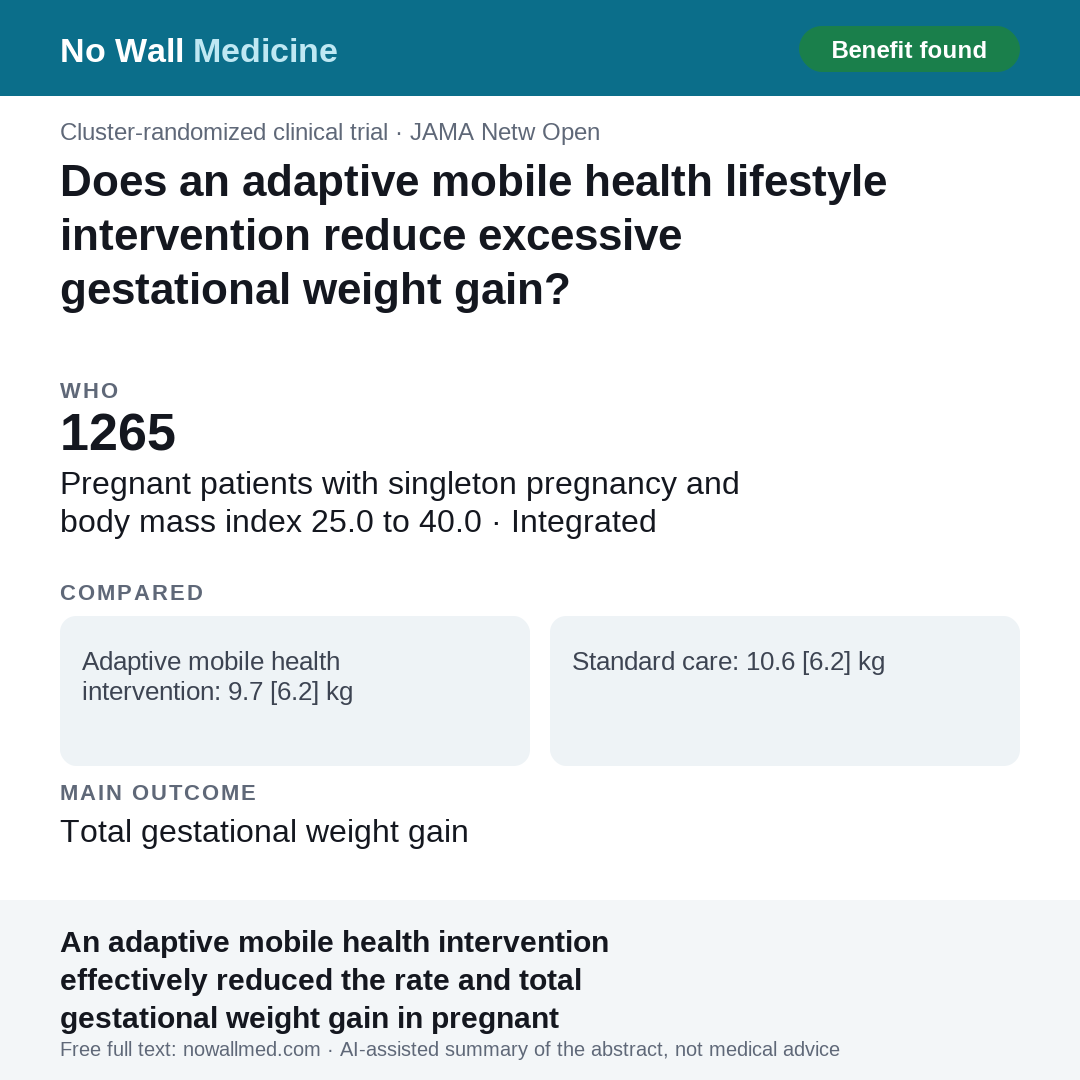
Adaptive Mobile Health Intervention to Reduce Excess Gestational Weight Gain: A Cluster-Randomized Clinical Trial
Cluster-randomized clinical trialBenefit found
Does an adaptive mobile health lifestyle intervention reduce excessive gestational weight gain?
Who
1265
Pregnant patients with singleton pregnancy and body mass index 25.0 to 40.0 · Integrated health system
Compared
Adaptive mobile health intervention: 9.7 [6.2] kg
Standard care: 10.6 [6.2] kg
Main outcome
Total gestational weight gain
Result: mean between-group difference, -0.87 [95% CI, -1.40 to -0.34] kg
Bottom line: An adaptive mobile health intervention effectively reduced the rate and total gestational weight gain in pregnant patients.
JAMA Netw Open · 2026-04-01Download image
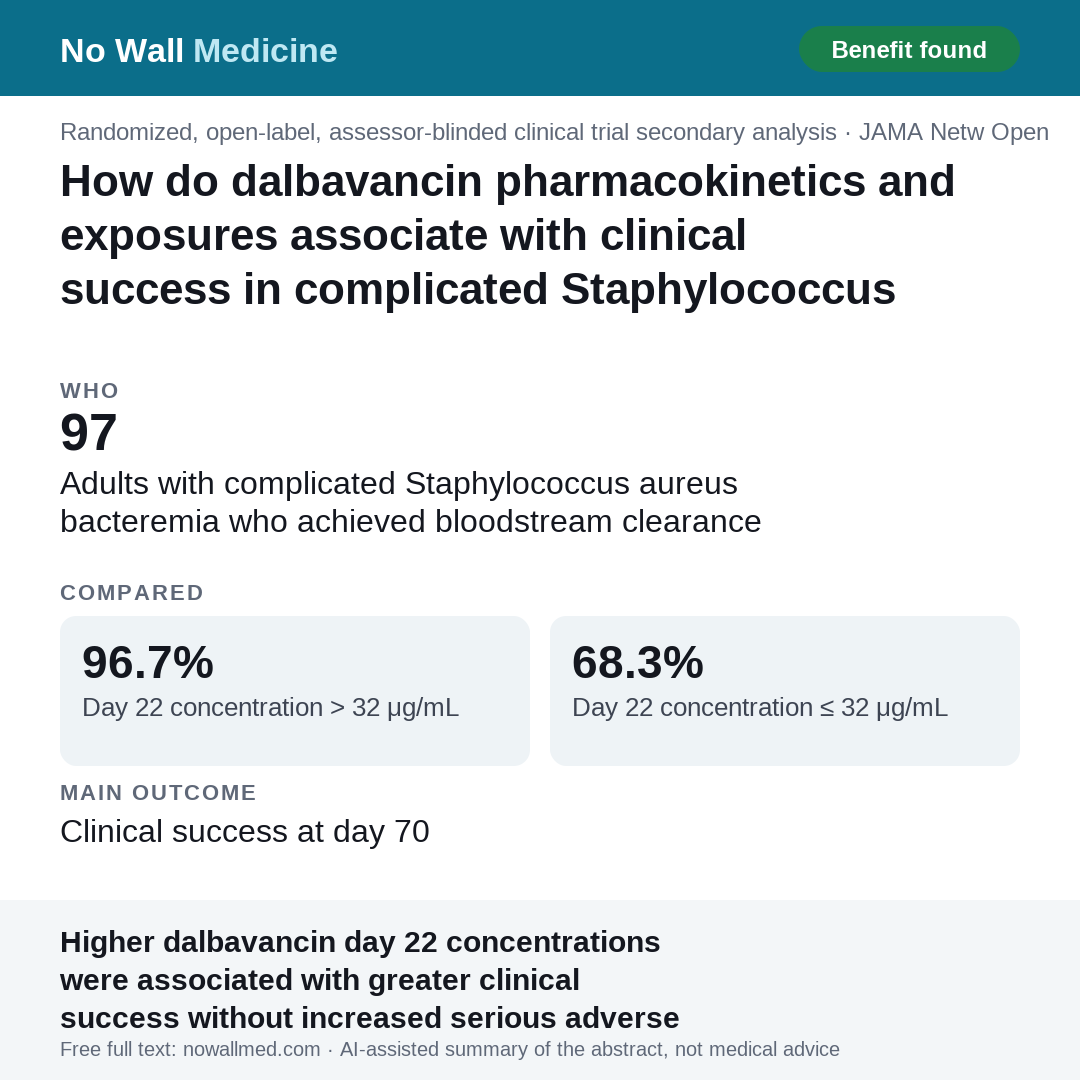
Pharmacokinetics of Dalbavancin in Complicated Staphylococcus aureus Bacteremia: A Secondary Analysis of the DOTS Randomized Clinical Trial
Randomized, open-label, assessor-blinded clinical trial secondary analysisBenefit found
How do dalbavancin pharmacokinetics and exposures associate with clinical success in complicated Staphylococcus aureus bacteremia?
Who
97
Adults with complicated Staphylococcus aureus bacteremia who achieved bloodstream clearance · Multicenter
Compared
96.7%Day 22 concentration > 32 μg/mL
68.3%Day 22 concentration ≤ 32 μg/mL
Main outcome
Clinical success at day 70
Result: adjusted difference, 25.3 percentage points; 95% CI, 3.5-47.0 percentage points
Bottom line: Higher dalbavancin day 22 concentrations were associated with greater clinical success without increased serious adverse events.
JAMA Netw Open · 2026-04-01Download image
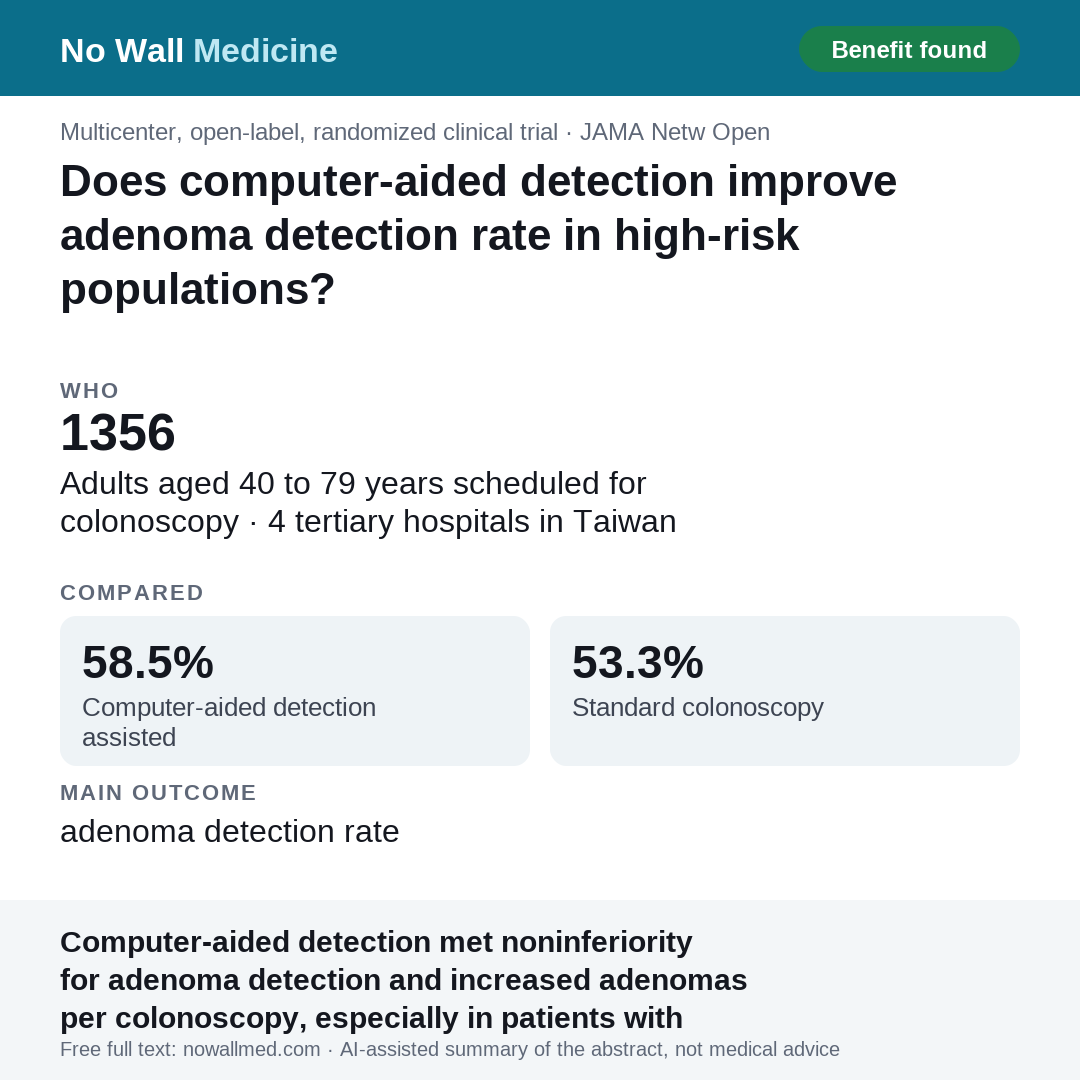
Computer-Assisted Colonoscopy in High-Adenoma Detection Rate Settings in a High-Risk Population: A Randomized Clinical Trial
Multicenter, open-label, randomized clinical trialBenefit found
Does computer-aided detection improve adenoma detection rate in high-risk populations?
Who
1356
Adults aged 40 to 79 years scheduled for colonoscopy · 4 tertiary hospitals in Taiwan
Compared
58.5%Computer-aided detection assisted
53.3%Standard colonoscopy
Main outcome
adenoma detection rate
Result: absolute difference, 5.2 percentage points [95% CI, -0.1 to 10.5 percentage points]
Bottom line: Computer-aided detection met noninferiority for adenoma detection and increased adenomas per colonoscopy, especially in patients with positive fecal immunochemical test.
Limitation: The incremental benefit of computer-aided detection in reducing interval cancer risk requires further investigation.
JAMA Netw Open · 2026-04-01Download image
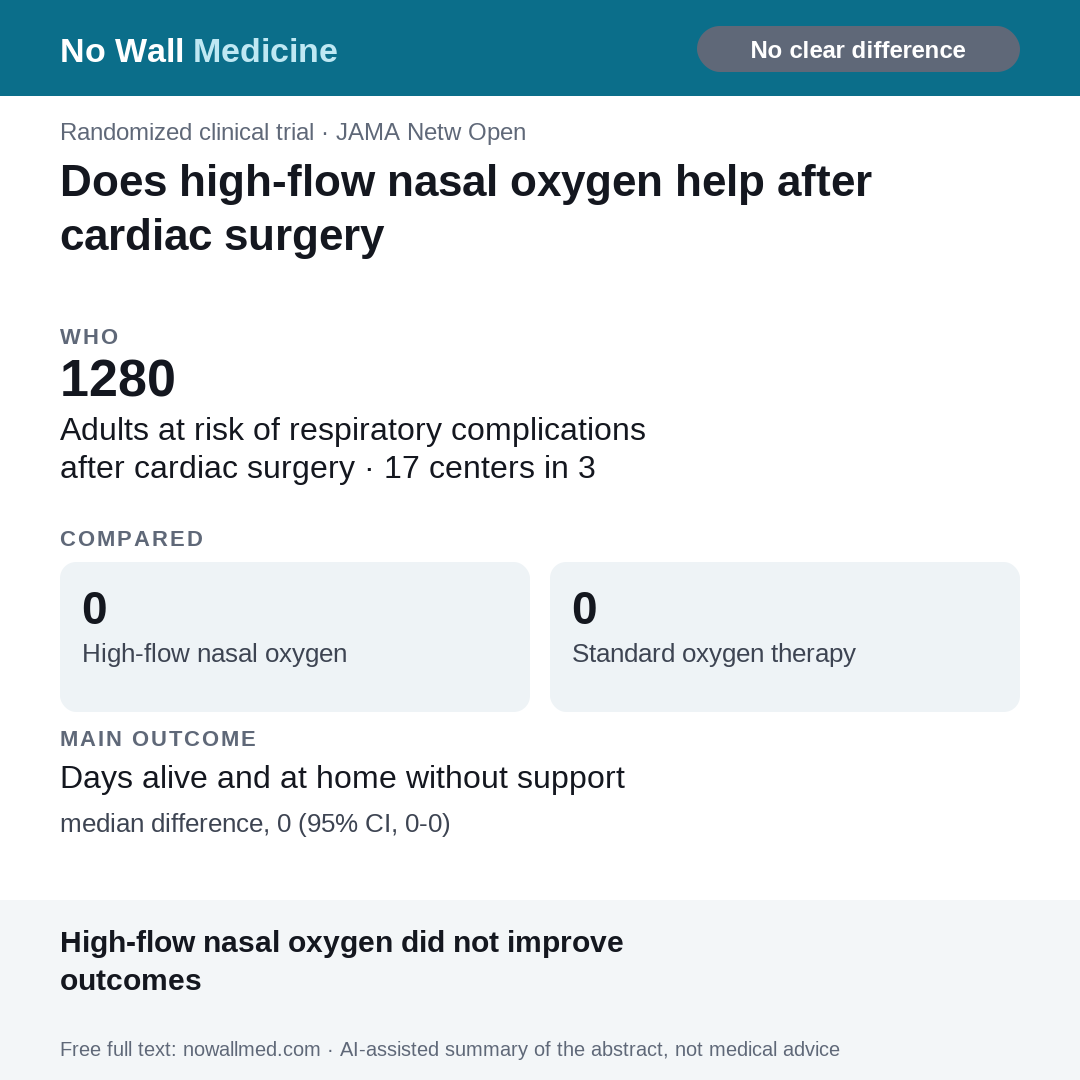
Pelvic Floor Workout for Preventing Stress Urinary Incontinence in Primiparous Women: A Randomized Clinical Trial
Multicenter randomized clinical trialBenefit found
Does the pelvic floor workout program prevent postpartum stress urinary incontinence in primiparous women?
Who
764
Primiparous women aged 20 to 40 years with singleton pregnancy · 9 hospitals in China
Compared
exercise group: 8.7% [32 of 367]
control group: 13.9% [50 of 360]
Main outcome
incidence of stress urinary incontinence at 6 weeks postpartum
Result: risk difference 5.17 (95% CI, 0.36-10.03) percentage points
Bottom line: The pelvic floor workout program effectively reduced the incidence of stress urinary incontinence at 6 weeks postpartum.
JAMA Netw Open · 2026-04-01Download image
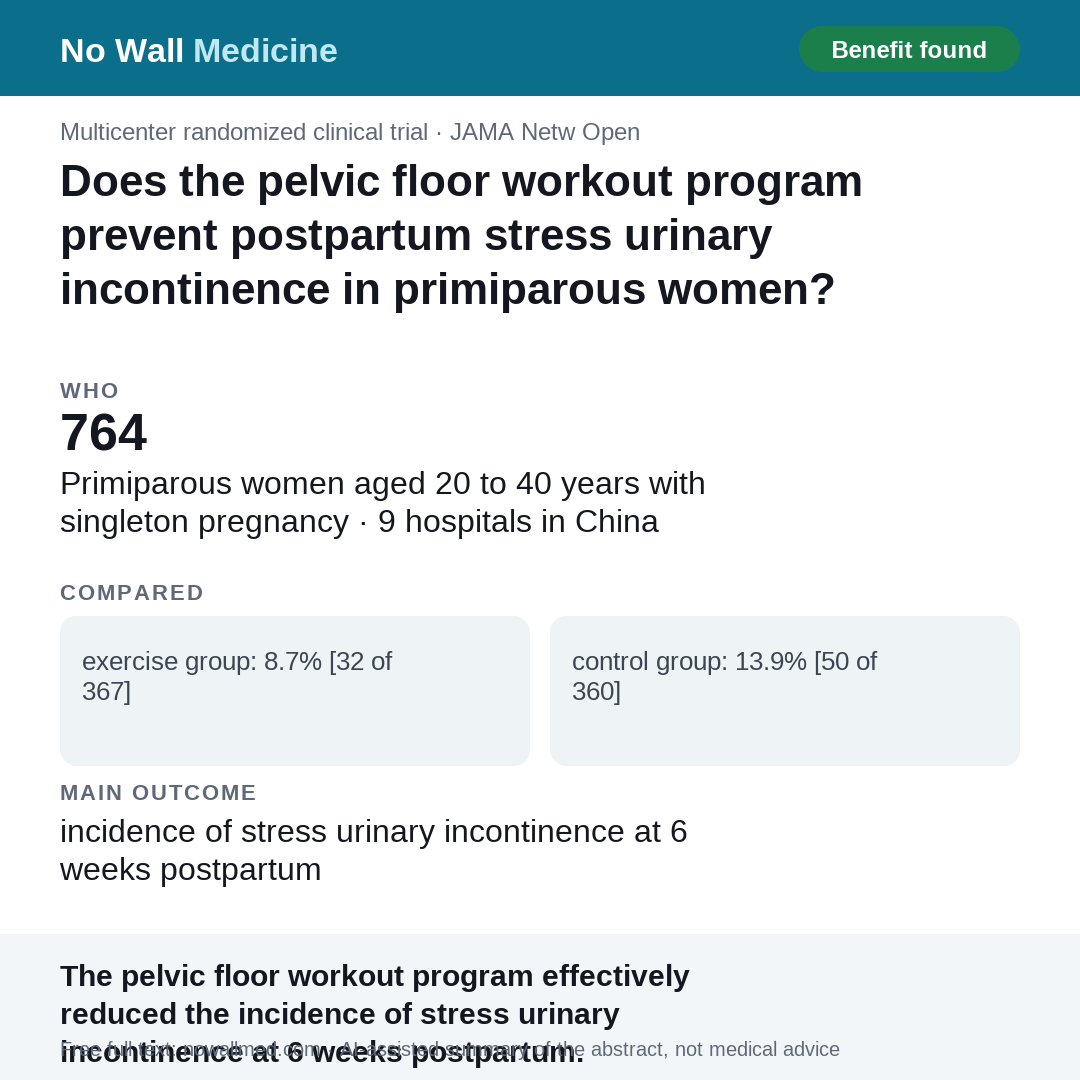
Efficacy of a Conversational AI Agent for Psychiatric Symptoms and Digital Therapeutic Alliance: A Randomized Clinical Trial
3-arm randomized clinical trialBenefit found
Does a conversational AI agent improve psychiatric symptoms and therapeutic alliance?
Who
995
university students reporting psychological distress · Israel
Compared
AI-based conversational platform
face-to-face group therapy
waiting list control
Main outcome
anxiety, depression, posttraumatic stress disorder, well-being, and life satisfaction
Result: anxiety reduction MD -2.17 (95% CI -2.67 to -1.67) vs group therapy
Bottom line: Conversational AI improved anxiety, depression, and well-being compared to group therapy or waiting list controls in university students.
JAMA Netw Open · 2026-04-01Download image
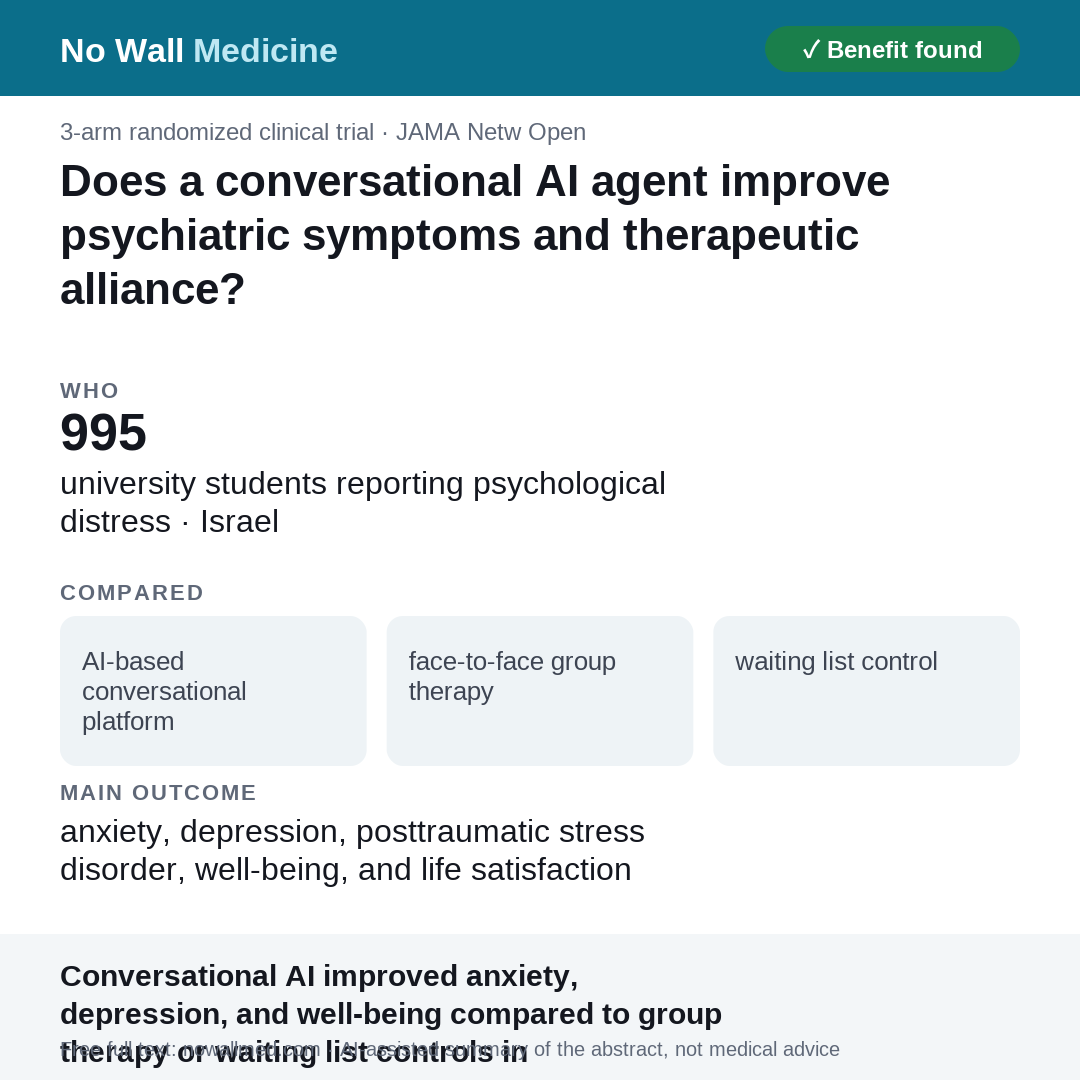
Genetic Cascade Screening for Familial Hypercholesterolemia: A Randomized Clinical Trial
Open-label, multicenter, implementation randomized clinical trialBenefit found
Does a web-based platform increase genetic cascade screening uptake for familial hypercholesterolemia?
Who
87
Adults with genetically confirmed familial hypercholesterolemia and eligible relatives · 7 cardiovascular prevention or lipid clinics across Switzerland
Compared
30.4%Intervention arm
16.7%Usual care arm
Main outcome
Proportion of eligible first-degree relatives undergoing genetic testing
Result: odds ratio 2.18 (95% CI, 1.06-4.51)
Bottom line: A web-based communication platform increased genetic testing uptake and new case identification in familial hypercholesterolemia screening.
JAMA Netw Open · 2026-04-01Download image
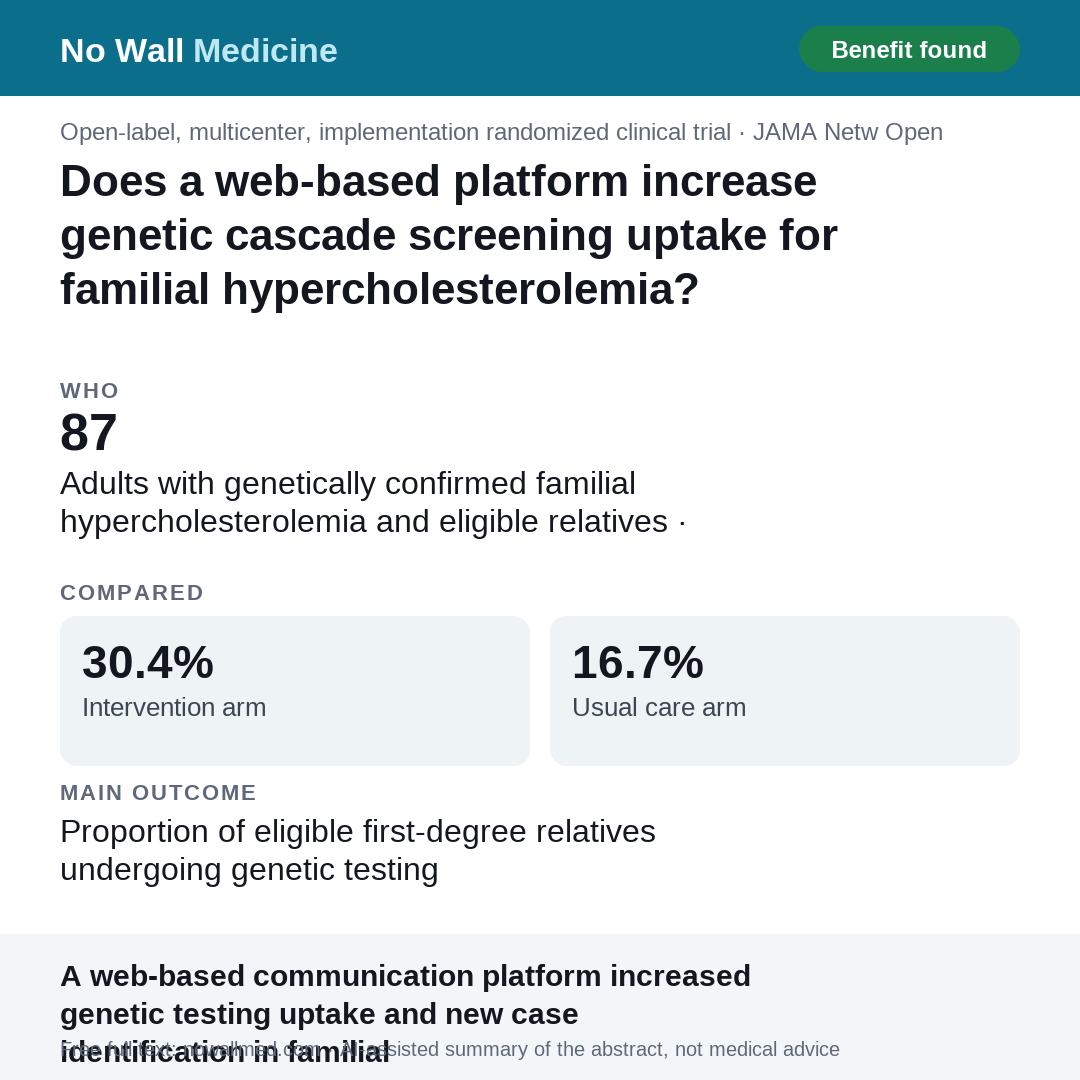
High-Flow Nasal Oxygen Therapy After Cardiac Surgery: A Randomized Clinical Trial
Randomized clinical trialNo clear difference
Does high-flow nasal oxygen help after cardiac surgery
Who
1280
Adults at risk of respiratory complications after cardiac surgery · 17 centers in 3 countries
Compared
0High-flow nasal oxygen (IQR, 0-79)
0Standard oxygen therapy (IQR, 0-87)
Main outcome
Days alive and at home without support
Result: median difference, 0 (95% CI, 0-0)
Bottom line: High-flow nasal oxygen did not improve outcomes
JAMA Netw Open · 2026-04-01Download image
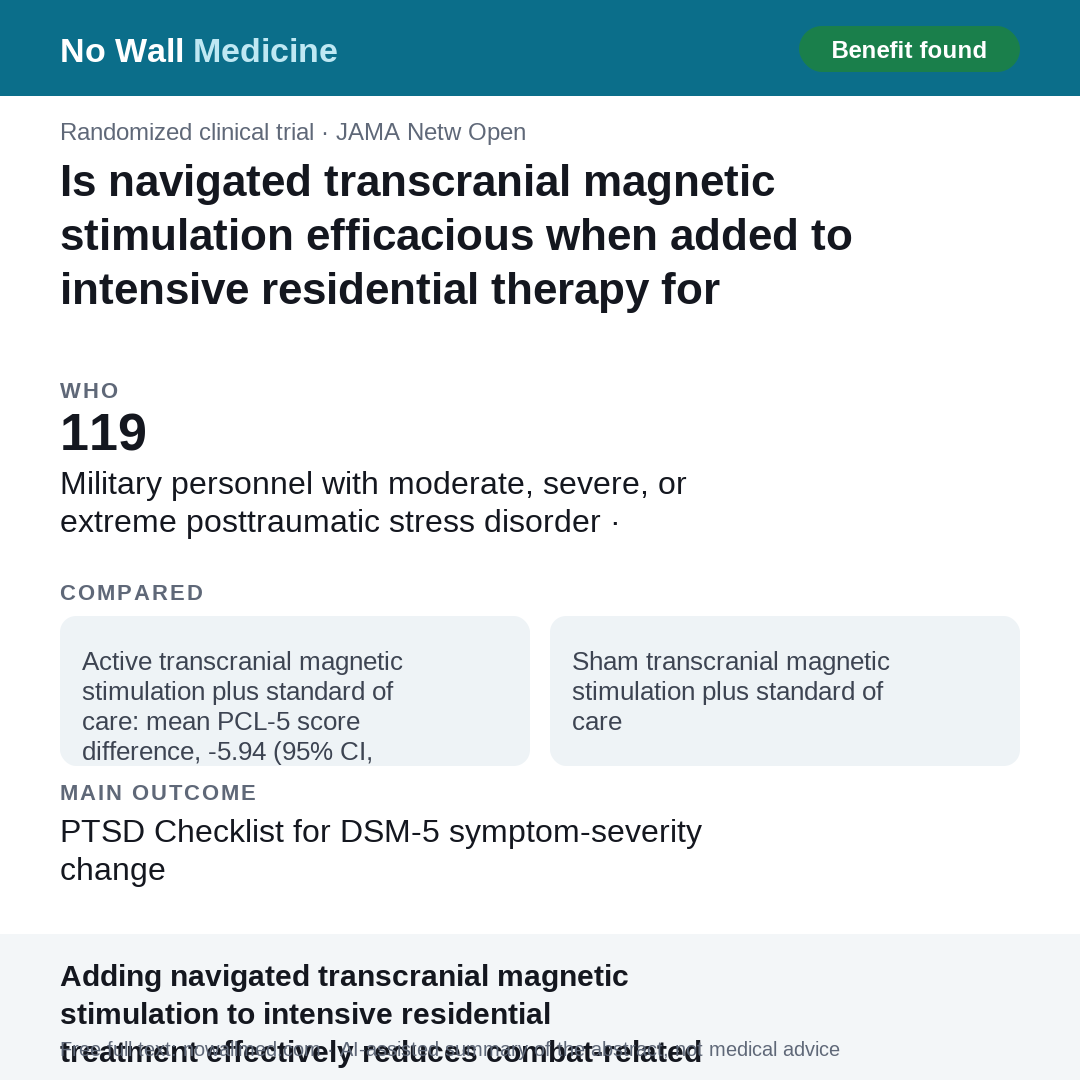
Residential Therapy With Navigated Transcranial Magnetic Stimulation for Combat-Related PTSD: A Randomized Clinical Trial
Randomized clinical trialBenefit found
Is navigated transcranial magnetic stimulation efficacious when added to intensive residential therapy for combat-related PTSD?
Who
119
Military personnel with moderate, severe, or extreme posttraumatic stress disorder · Residential facility specializing in military mental health
Compared
Active transcranial magnetic stimulation plus standard of care: mean PCL-5 score difference, -5.94 (95% CI, -11.77 to -0.10)
Sham transcranial magnetic stimulation plus standard of care
Main outcome
PTSD Checklist for DSM-5 symptom-severity change
Result: mean PCL-5 score difference, -5.94 (95% CI, -11.77 to -0.10)
Bottom line: Adding navigated transcranial magnetic stimulation to intensive residential treatment effectively reduces combat-related posttraumatic stress disorder symptoms.
JAMA Netw Open · 2026-04-01Download image
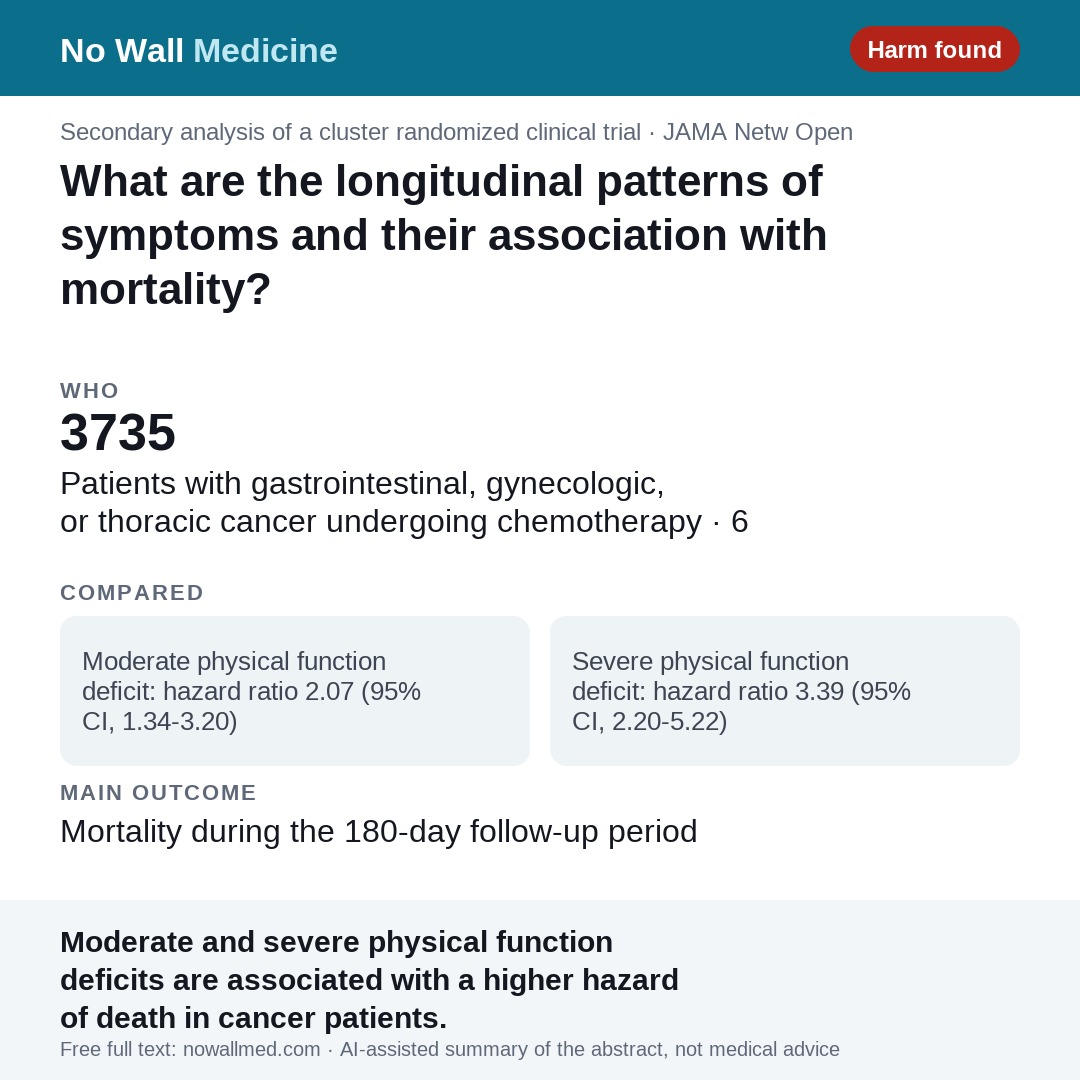
Longitudinal Patterns of Symptoms in Patients Undergoing Chemotherapy: A Secondary Analysis of a Cluster Randomized Clinical Trial
Secondary analysis of a cluster randomized clinical trialHarm found
What are the longitudinal patterns of symptoms and their association with mortality?
Who
3735
Patients with gastrointestinal, gynecologic, or thoracic cancer undergoing chemotherapy · 6 hospitals in Northeast and Southern United States
Compared
Moderate physical function deficit: hazard ratio 2.07 (95% CI, 1.34-3.20)
Severe physical function deficit: hazard ratio 3.39 (95% CI, 2.20-5.22)
Main outcome
Mortality during the 180-day follow-up period
Result: hazard ratio 2.07 (95% CI, 1.34-3.20)
Bottom line: Moderate and severe physical function deficits are associated with a higher hazard of death in cancer patients.
JAMA Netw Open · 2026-04-01Download image
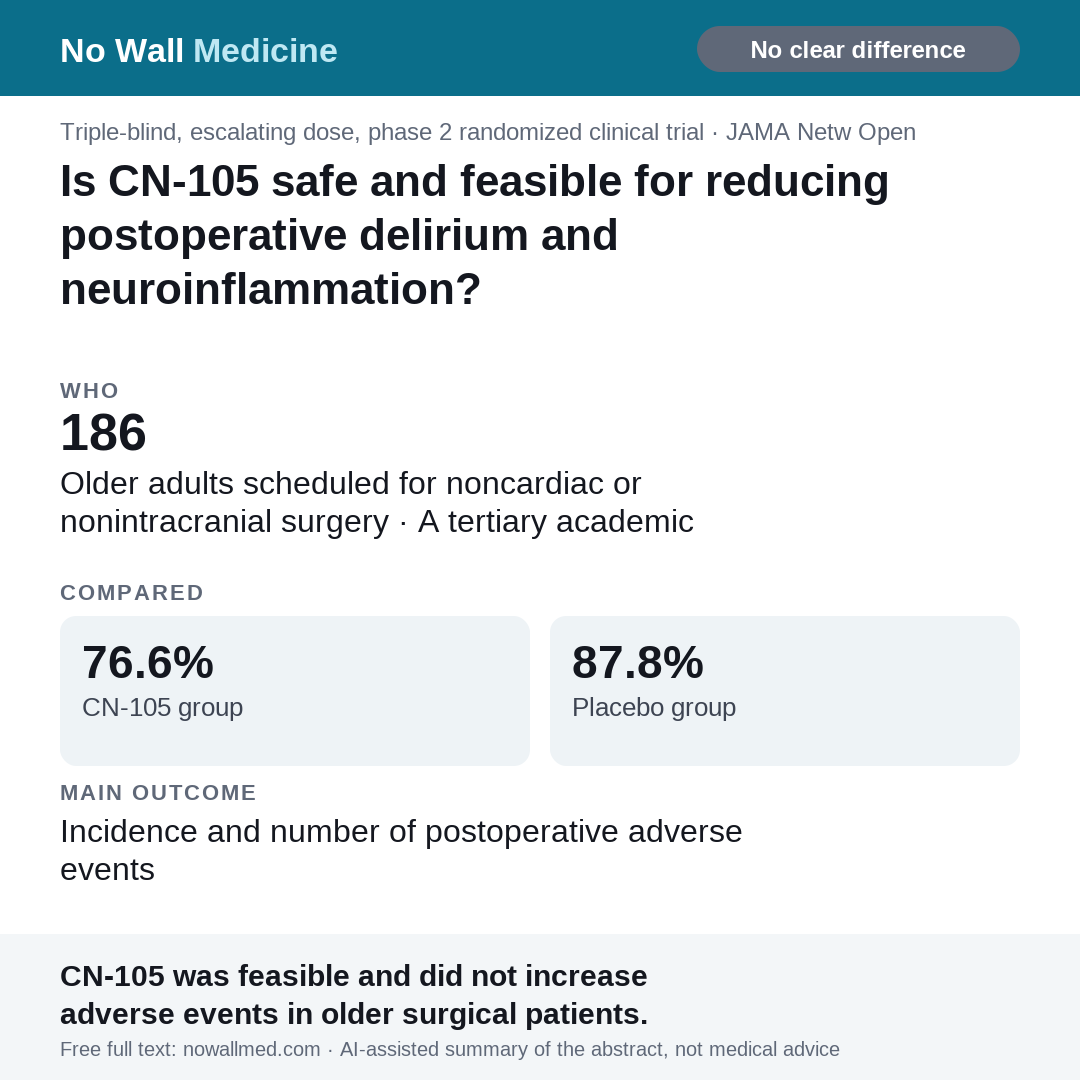
Apolipoprotein E Mimetic Peptide CN-105 and Postoperative Delirium in Older Patients: The Phase 2 MARBLE Randomized Clinical Trial
Triple-blind, escalating dose, phase 2 randomized clinical trialNo clear difference
Is CN-105 safe and feasible for reducing postoperative delirium and neuroinflammation?
Who
186
Older adults scheduled for noncardiac or nonintracranial surgery · A tertiary academic medical center
Compared
76.6%CN-105 group
87.8%Placebo group
Main outcome
Incidence and number of postoperative adverse events
Result: relative risk 0.87 (95% CI, 0.76-1.00)
Bottom line: CN-105 was feasible and did not increase adverse events in older surgical patients.
Limitation: A phase 3 trial is warranted to further evaluate efficacy for reducing postoperative delirium.
JAMA Netw Open · 2026-04-01Download image
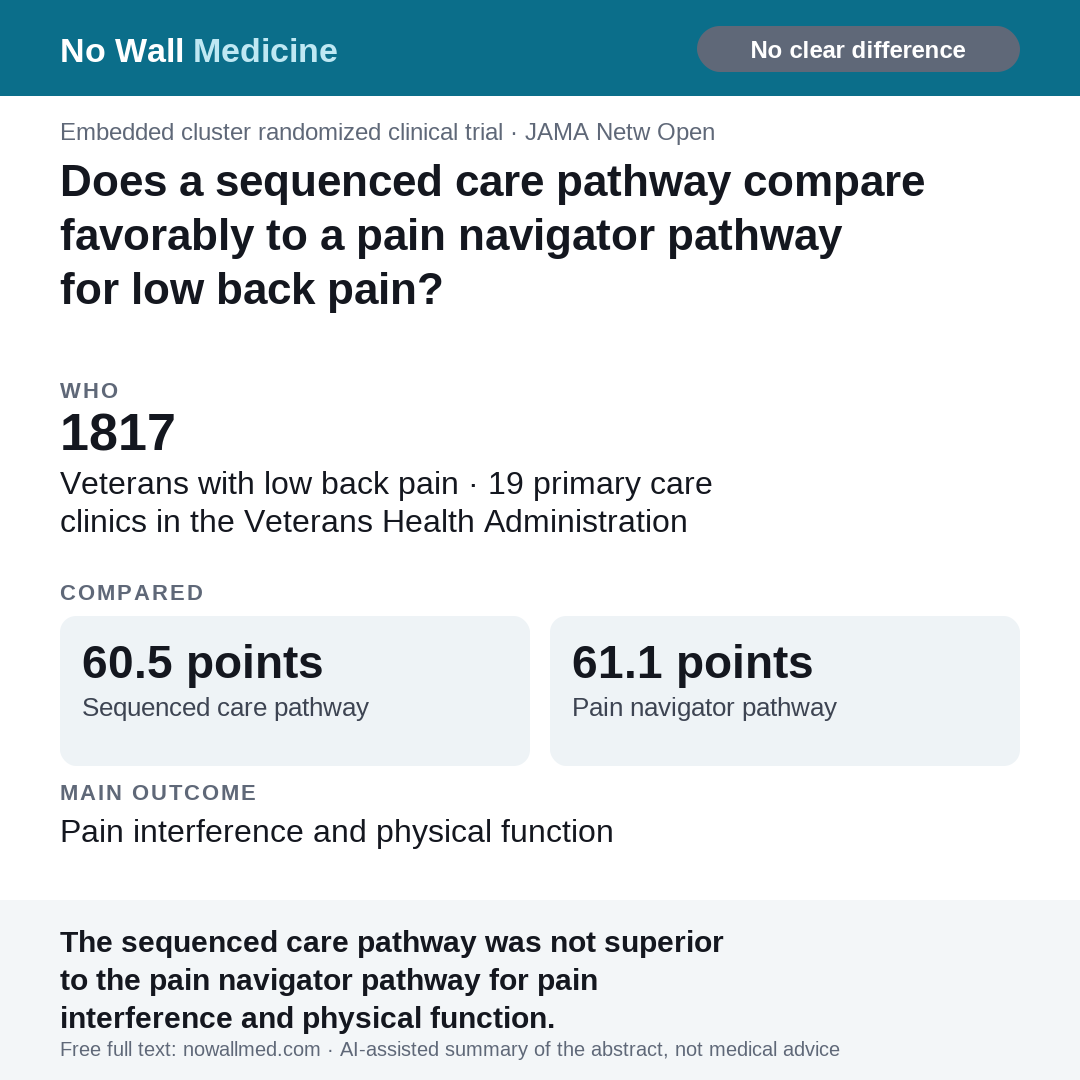
Sequenced Care Pathway vs Pain Navigator Pathway for Veterans With Low Back Pain: The AIM-Back Cluster Randomized Clinical Trial
Embedded cluster randomized clinical trialNo clear difference
Does a sequenced care pathway compare favorably to a pain navigator pathway for low back pain?
Who
1817
Veterans with low back pain · 19 primary care clinics in the Veterans Health Administration
Compared
60.5 pointsSequenced care pathway (97.5% CI, 59.7-61.3 points)
61.1 pointsPain navigator pathway (97.5% CI, 60.4-61.8 points)
Main outcome
Pain interference and physical function
Result: -0.6 points (97.5% CI, -1.6 to 0.4 points) for pain interference
Bottom line: The sequenced care pathway was not superior to the pain navigator pathway for pain interference and physical function.
Limitation: Future research should consider designs that optimize pathway adherence and assess effectiveness in other settings.
JAMA Netw Open · 2026-04-01Download image
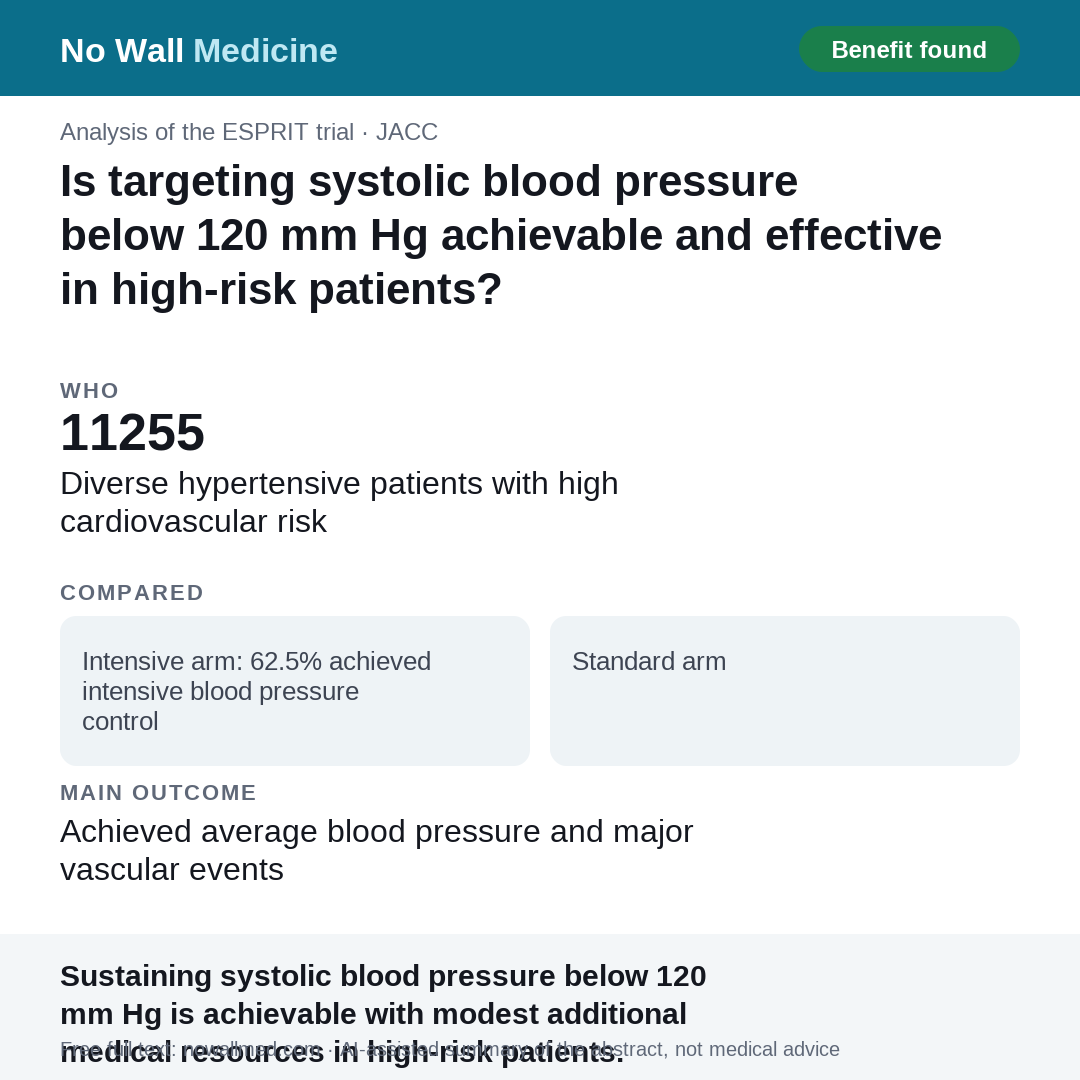
Achieving Intensive Blood Pressure Control in High-Risk Patients: Implementation Insights From the ESPRIT Trial
Analysis of the ESPRIT trialBenefit found
Is targeting systolic blood pressure below 120 mm Hg achievable and effective in high-risk patients?
Who
11255
Diverse hypertensive patients with high cardiovascular risk
Compared
Intensive arm: 62.5% achieved intensive blood pressure control
Standard arm
Main outcome
Achieved average blood pressure and major vascular events
Bottom line: Sustaining systolic blood pressure below 120 mm Hg is achievable with modest additional medical resources in high-risk patients.
JACC · 2026-04-01Download image
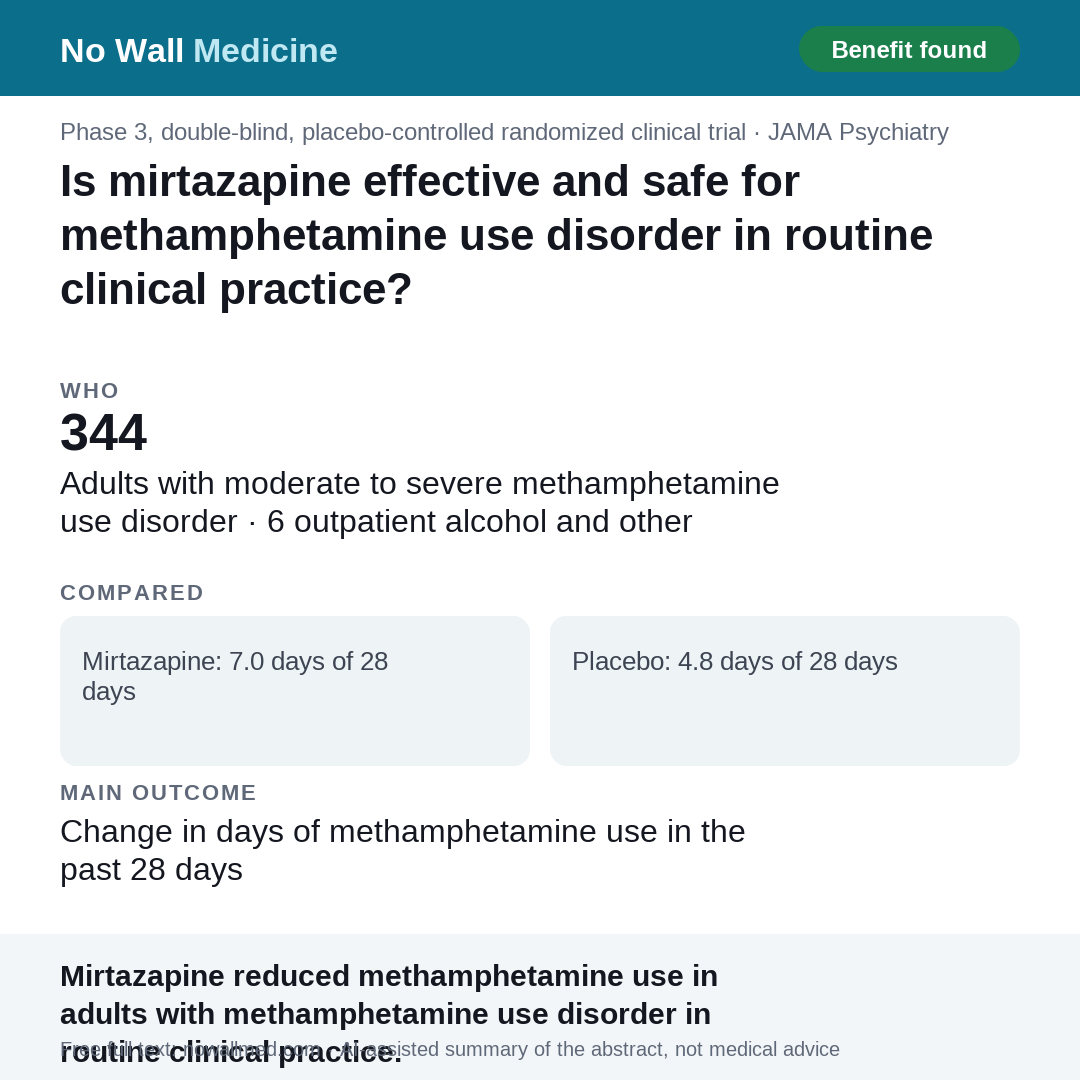
Mirtazapine for Methamphetamine Use Disorder: A Randomized Clinical Trial
Phase 3, double-blind, placebo-controlled randomized clinical trialBenefit found
Is mirtazapine effective and safe for methamphetamine use disorder in routine clinical practice?
Who
344
Adults with moderate to severe methamphetamine use disorder · 6 outpatient alcohol and other drug clinics in Australia
Compared
Mirtazapine: 7.0 days of 28 days
Placebo: 4.8 days of 28 days
Main outcome
Change in days of methamphetamine use in the past 28 days
Result: mean difference, 2.2 days; 95% CI, -4.2 to -0.2 days
Bottom line: Mirtazapine reduced methamphetamine use in adults with methamphetamine use disorder in routine clinical practice.
JAMA Psychiatry · 2026-04-01Download image
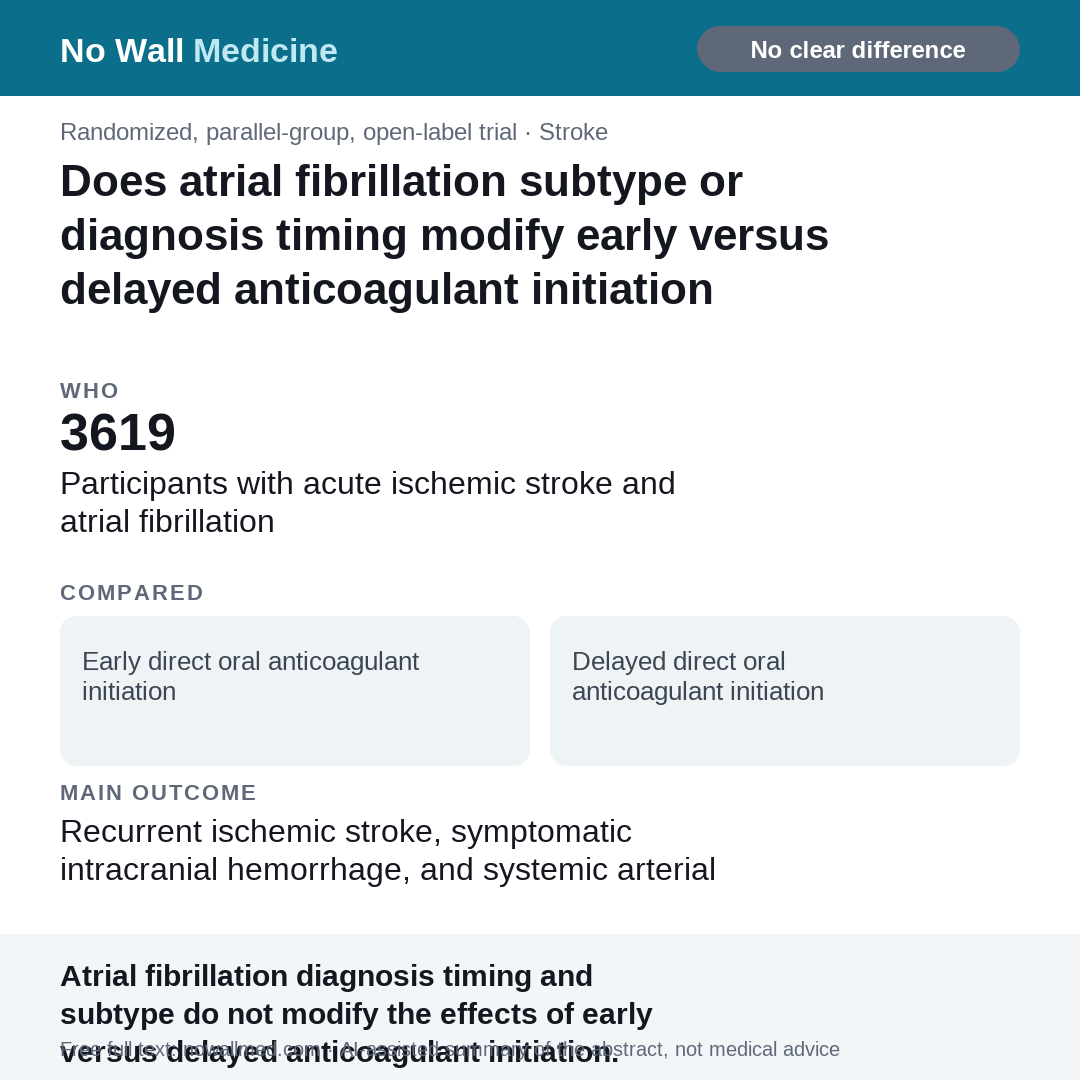
Early Versus Delayed Anticoagulation in Acute Ischemic Stroke According to Atrial Fibrillation Subtype and Time of Diagnosis: Subgroup Analysis of the OPTIMAS Randomized Controlled Trial
Randomized, parallel-group, open-label trialNo clear difference
Does atrial fibrillation subtype or diagnosis timing modify early versus delayed anticoagulant initiation effects?
Who
3619
Participants with acute ischemic stroke and atrial fibrillation
Compared
Early direct oral anticoagulant initiation
Delayed direct oral anticoagulant initiation
Main outcome
Recurrent ischemic stroke, symptomatic intracranial hemorrhage, and systemic arterial embolism
Bottom line: Atrial fibrillation diagnosis timing and subtype do not modify the effects of early versus delayed anticoagulant initiation.
Stroke · 2026-04-01Download image
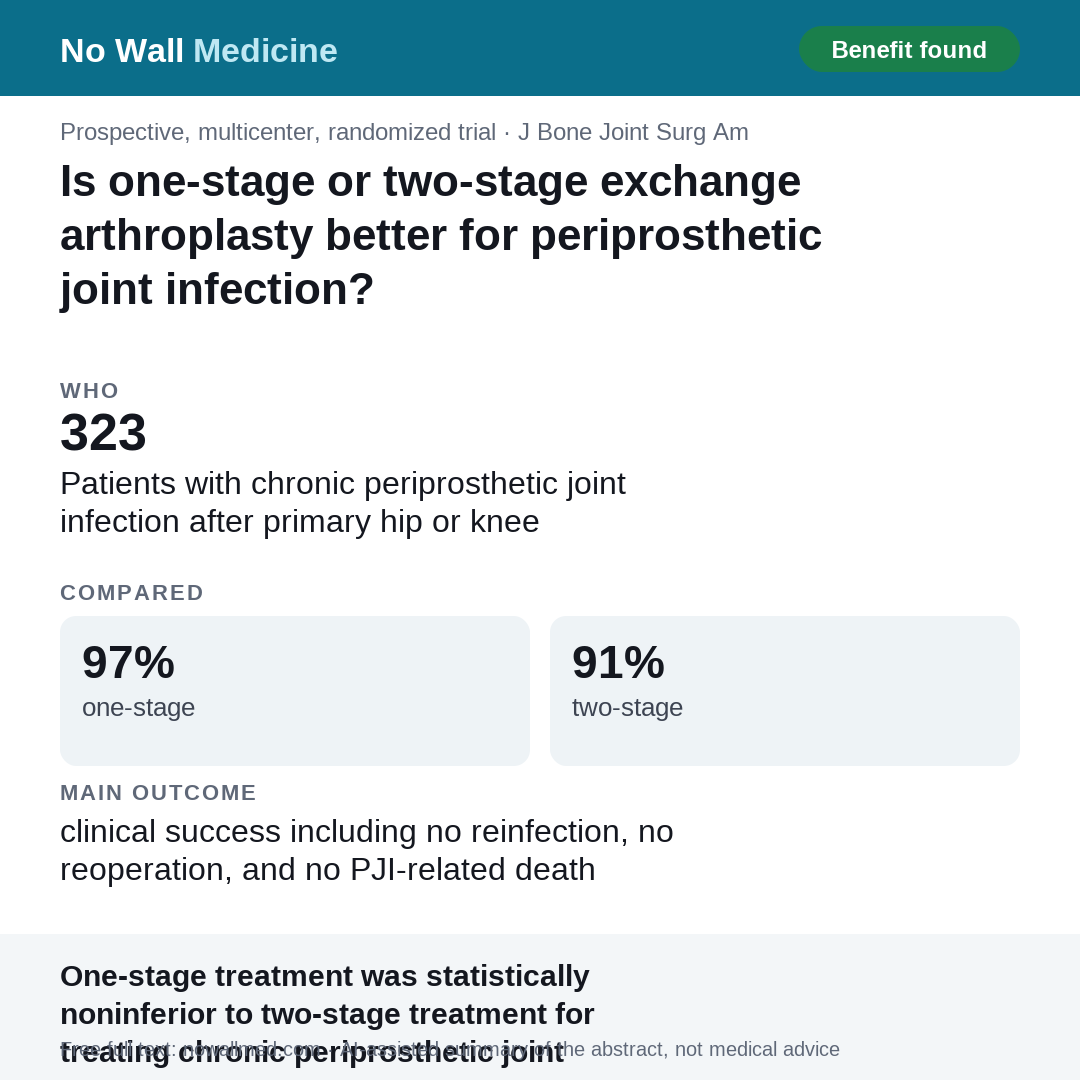
One-Stage Versus Two-Stage Exchange Arthroplasty for Periprosthetic Joint Infection: A Prospective Randomized Trial
Prospective, multicenter, randomized trialBenefit found
Is one-stage or two-stage exchange arthroplasty better for periprosthetic joint infection?
Who
323
Patients with chronic periprosthetic joint infection after primary hip or knee arthroplasty · multicenter
Compared
97%one-stage (131 of 135)
91%two-stage (112 of 123)
Main outcome
clinical success including no reinfection, no reoperation, and no PJI-related death
Result: unadjusted odds ratio = 3.22 (95% confidence interval = 1.0 to 10.38)
Bottom line: One-stage treatment was statistically noninferior to two-stage treatment for treating chronic periprosthetic joint infection at 2-year follow-up.
J Bone Joint Surg Am · 2026-04-01Download image
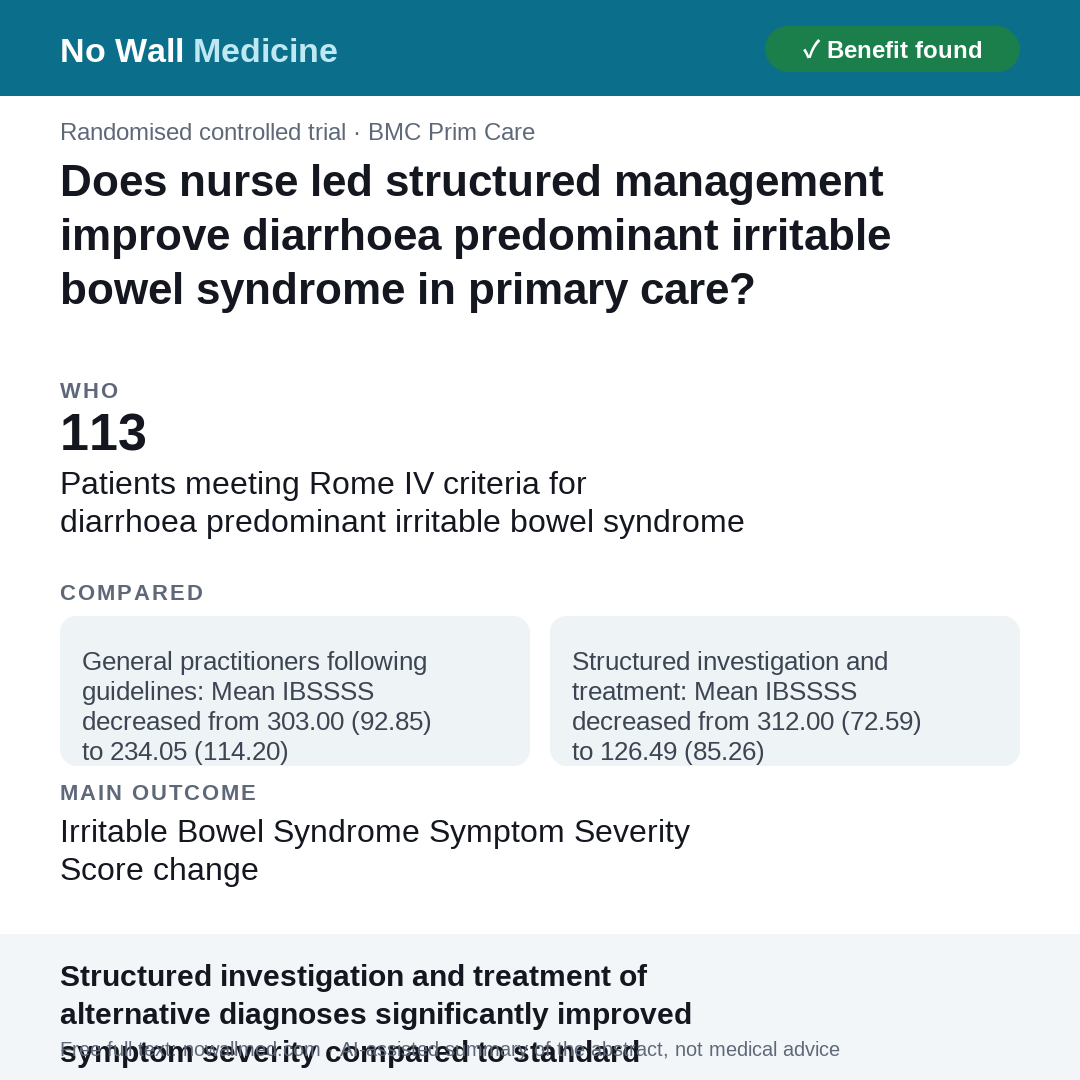
Clinical and cost effectiveness of nurse led-structured management of diarrhoea predominant irritable bowel syndrome in primary care (Lincolnshire POACHER study); a randomised control trial
Randomised controlled trialBenefit found
Does nurse led structured management improve diarrhoea predominant irritable bowel syndrome in primary care?
Who
113
Patients meeting Rome IV criteria for diarrhoea predominant irritable bowel syndrome · 44 Lincolnshire primary care practices
Compared
General practitioners following guidelines: Mean IBSSSS decreased from 303.00 (92.85) to 234.05 (114.20)
Structured investigation and treatment: Mean IBSSSS decreased from 312.00 (72.59) to 126.49 (85.26)
Main outcome
Irritable Bowel Syndrome Symptom Severity Score change
Result: -112.29 points (95% CI -151.68 to -72.91)
Bottom line: Structured investigation and treatment of alternative diagnoses significantly improved symptom severity compared to standard general practitioner management.
BMC Prim Care · 2026-04-01Download image
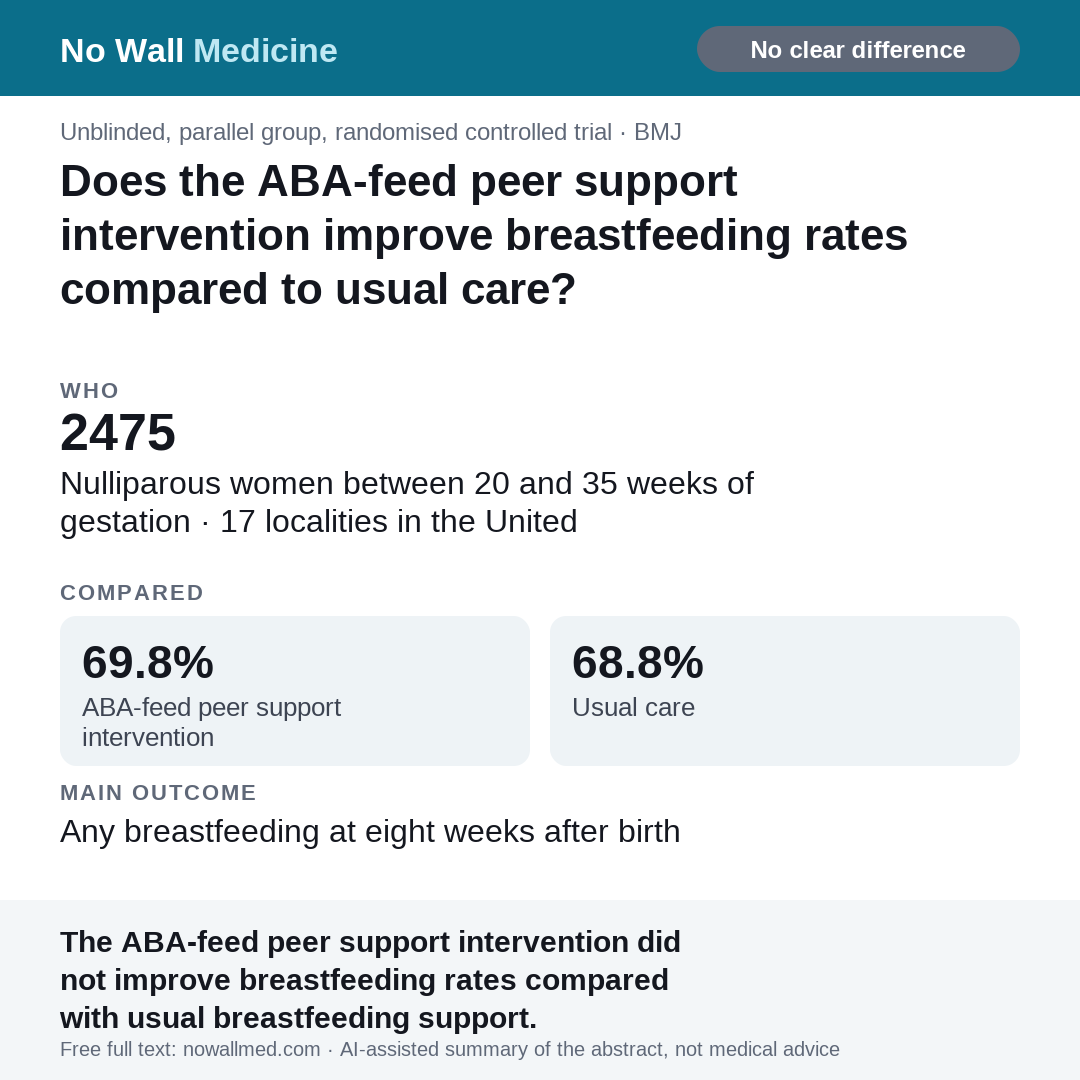
Peer support intervention (ABA-feed) to improve breastfeeding: UK based, multicentre, parallel group, randomised controlled trial
Unblinded, parallel group, randomised controlled trialNo clear difference
Does the ABA-feed peer support intervention improve breastfeeding rates compared to usual care?
Who
2475
Nulliparous women between 20 and 35 weeks of gestation · 17 localities in the United Kingdom
Compared
69.8%ABA-feed peer support intervention (1013/1452)
68.8%Usual care (698/1015)
Main outcome
Any breastfeeding at eight weeks after birth
Result: adjusted risk difference 0.01, 95% confidence interval -0.03 to 0.04
Bottom line: The ABA-feed peer support intervention did not improve breastfeeding rates compared with usual breastfeeding support.
BMJ · 2026-03-31Download image
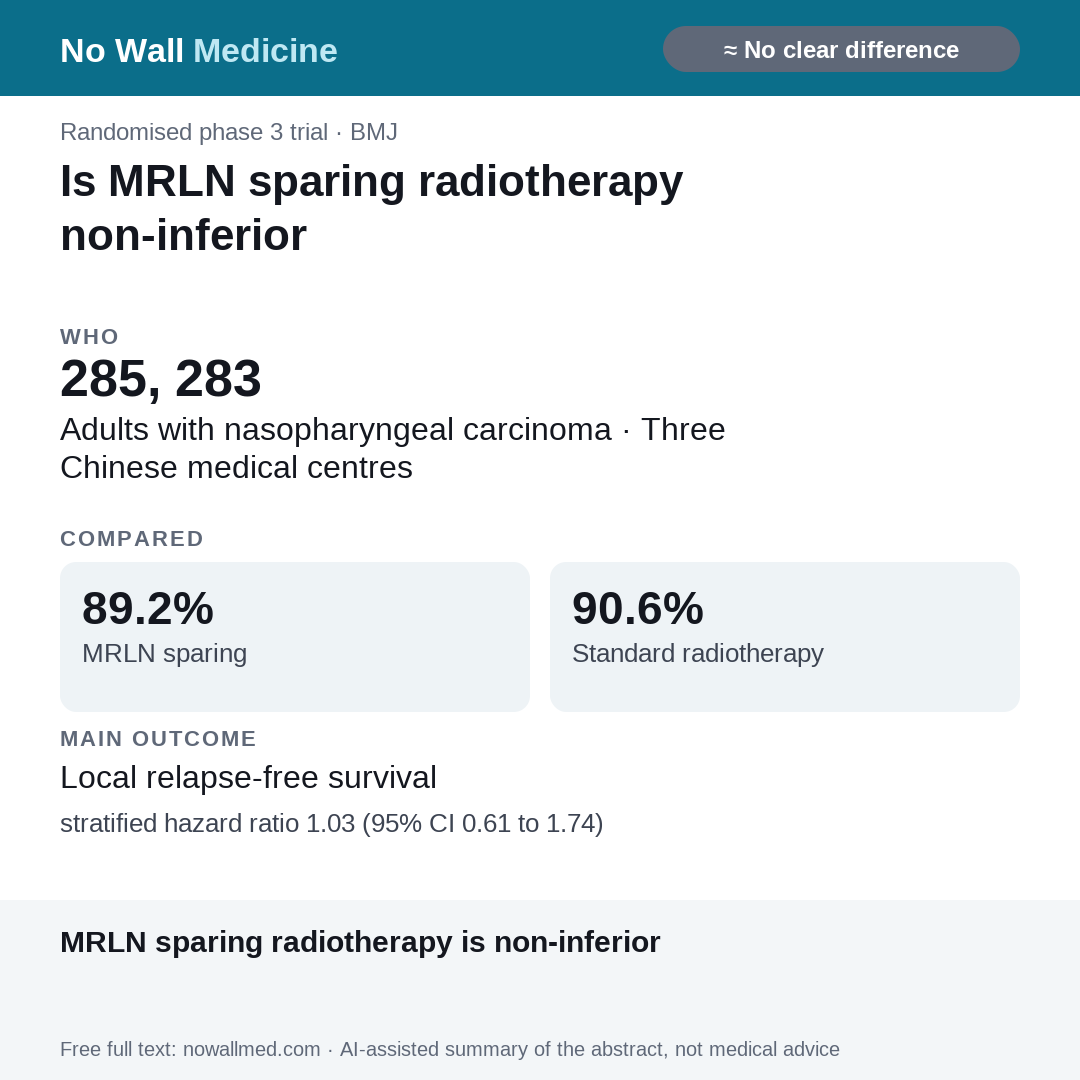
Medial retropharyngeal nodal region sparing radiotherapy in nasopharyngeal carcinoma: five year analysis of open label, non-inferiority, multicentre, randomised phase 3 trial
Randomised phase 3 trialNo clear difference
Is MRLN sparing radiotherapy non-inferior
Who
285, 283
Adults with nasopharyngeal carcinoma · Three Chinese medical centres
Compared
89.2%MRLN sparing (95% CI 85% to 92%)
90.6%Standard radiotherapy (87% to 94%)
Main outcome
Local relapse-free survival
Result: stratified hazard ratio 1.03 (95% CI 0.61 to 1.74)
Bottom line: MRLN sparing radiotherapy is non-inferior
BMJ · 2026-03-31Download image
Benralizumab versus placebo for hypereosinophilic syndrome: a randomized, placebo-controlled phase 3 trial
Randomized, double-blind placebo-controlled phase 3 trialBenefit found
Is benralizumab effective for FIP1L1::PDGFRA-negative hypereosinophilic syndrome?
Who
133
Patients with FIP1L1::PDGFRA-negative hypereosinophilic syndrome
Compared
Benralizumab 30 mg every 4 weeks
Placebo
Main outcome
Time to first hypereosinophilic syndrome flare
Result: hazard ratio 0.35 (95% CI 0.18 to 0.69)
Bottom line: Benralizumab significantly reduced the risk of the first hypereosinophilic syndrome flare compared to placebo.
Nat Med · 2026-03-31Download image