Visual abstracts
New randomized trials and meta-analyses from leading journals at a glance: who was studied, what was compared, and what was found. Every paper is free to read in full.
All specialtiesCardiology 4877Oncology 4138Gastroenterology & Hepatology 1942Infectious Disease 3837Neurology 1905Psychiatry & Mental Health 2273Pulmonology 2143Critical Care 1365Endocrinology & Diabetes 2580Pediatrics 2980Surgery 2559Orthopedics & Sports Medicine 931Neurosurgery 537Cardiothoracic & Vascular Surgery 674Plastic & Reconstructive Surgery 591Nephrology 1133Rheumatology 823Hematology 1109Dermatology 621Ophthalmology 543Obstetrics & Gynecology 1686Public & Global Health 1058Radiology & Imaging 648Anesthesiology 986Urology 764ENT (Otolaryngology) 503Emergency Medicine 511Allergy & Immunology 313Geriatrics 981Family Medicine & Primary Care 562Medical Genetics & Genomics 676Pathology & Laboratory Medicine 159Physical Medicine & Rehabilitation 757Palliative Care 444Nutrition 1588Digital Health & AI 2201General Medicine 321
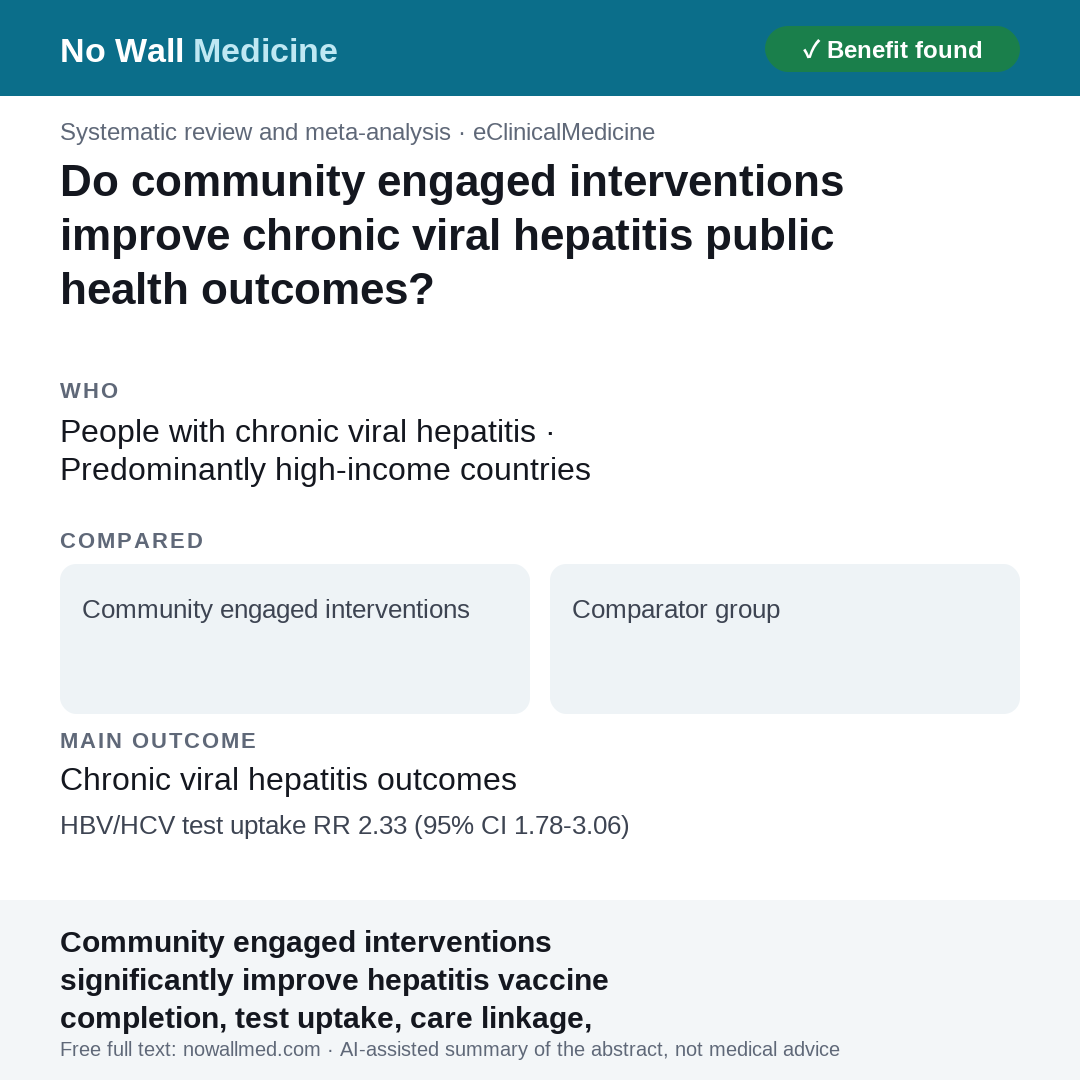
Community engagement and chronic viral hepatitis public health interventions: a systematic review, meta-analysis, and complementary crowdsourcing open call
Systematic review and meta-analysisBenefit found
Do community engaged interventions improve chronic viral hepatitis public health outcomes?
Who
35
People with chronic viral hepatitis · Predominantly high-income countries
Compared
Community engaged interventions
Comparator group
Main outcome
Chronic viral hepatitis outcomes
Result: HBV/HCV test uptake RR 2.33 (95% CI 1.78-3.06)
Bottom line: Community engaged interventions significantly improve hepatitis vaccine completion, test uptake, care linkage, treatment adherence, and sustained virologic response.
Limitation: Meta-analysis was predominantly of studies from high-income countries.
Funded by: National Natural Science Foundation of China
eClinicalMedicine · 2025-05-02Download image
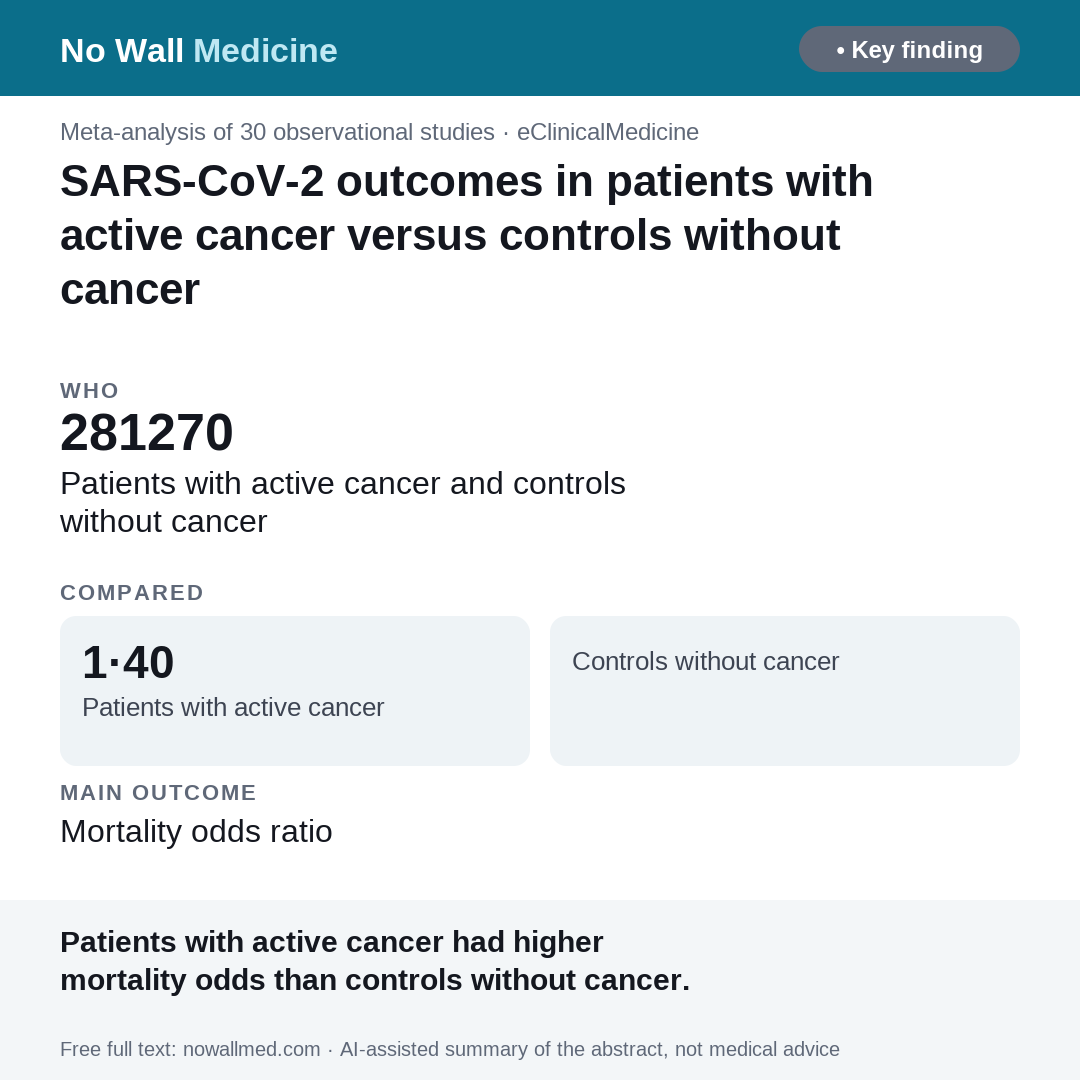
Determinants of SARS-CoV-2 outcomes in patients with cancer vs controls without cancer: a multivariable meta-analysis with genomic imputation
Meta-analysis of 30 trialsHarm found
SARS-CoV-2 outcomes in cancer patients vs controls
Who
281270
patients with cancer and controls without cancer
Compared
cancer patients
controls without cancer
Main outcome
SARS-CoV-2 mortality
Result: odds ratio 1.40 (95% CI 1.12 to 1.73) for solid tumours
Bottom line: Cancer patients have higher mortality risk
Limitation: strict three-year cutoff for active cancer
Funded by: Cancer
eClinicalMedicine · 2025-05-02Download image
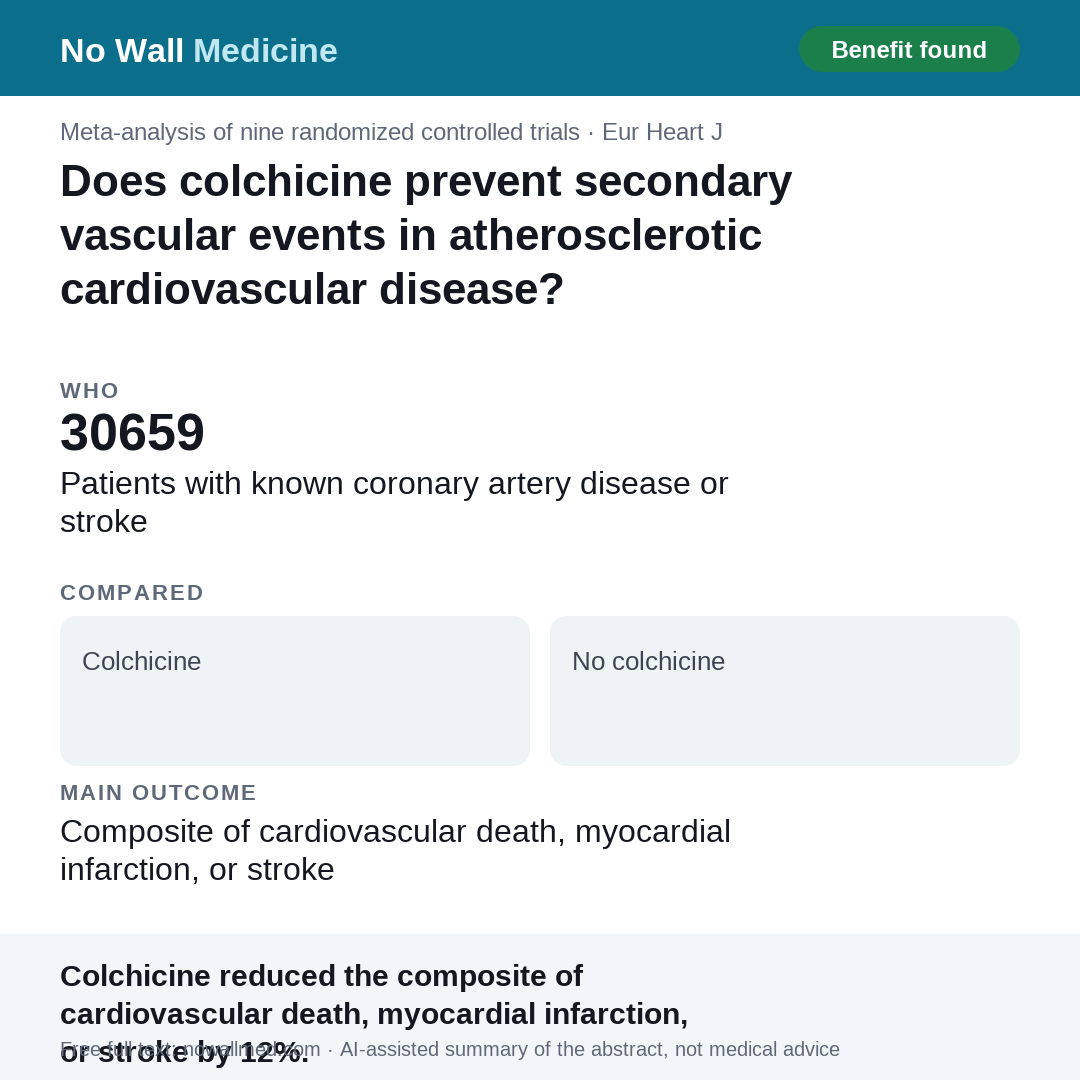
Colchicine for secondary prevention of vascular events: a meta-analysis of trials
Meta-analysis of nine randomized controlled trialsBenefit found
Does colchicine prevent secondary vascular events in atherosclerotic cardiovascular disease?
Who
30659
Patients with known coronary artery disease or stroke
Compared
Colchicine
No colchicine
Main outcome
Composite of cardiovascular death, myocardial infarction, or stroke
Result: relative risk 0.88 (95% CI 0.81-0.95)
Bottom line: Colchicine reduced the composite of cardiovascular death, myocardial infarction, or stroke by 12%.
Eur Heart J · 2025-05-02Download image
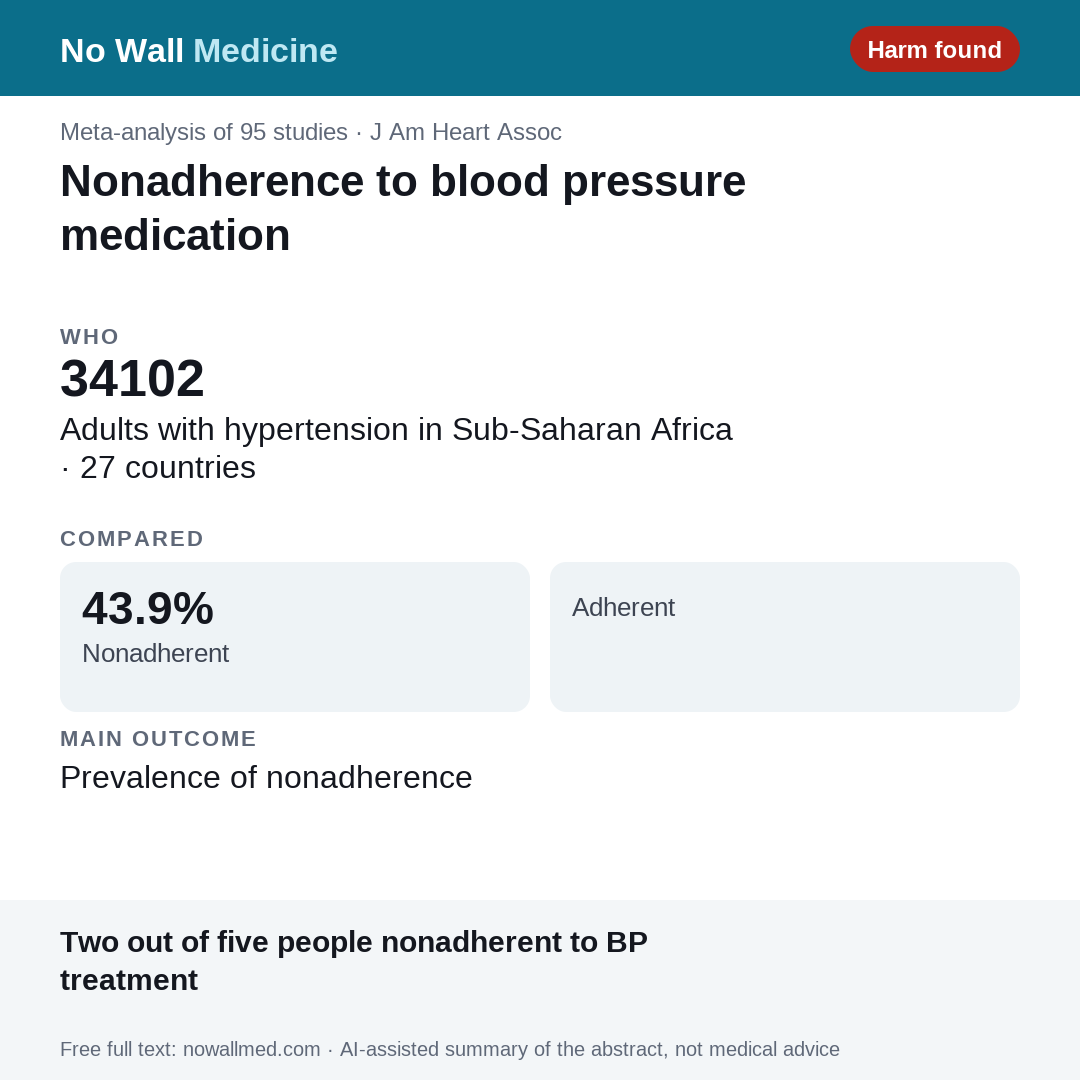
Detection and treatment of early gestational diabetes mellitus: a systematic review and meta-analysis of randomized controlled trials
Systematic review and meta-analysis of randomized controlled trialsUnclear result
Does detection and treatment of early gestational diabetes mellitus impact maternal and neonatal outcomes?
Who
30,791
Women with early gestational diabetes diagnosed before 20 completed weeks
Compared
Treatment vs usual care
Population-based strategies
Main outcome
maternal, fetal, and neonatal outcomes
Bottom line: Detection and treatment of early gestational diabetes mellitus do not offer indisputable benefits at maternal or population levels.
Limitation: The quality of evidence for most outcomes was low/very low.
AJOG · 2025-05-02Download image
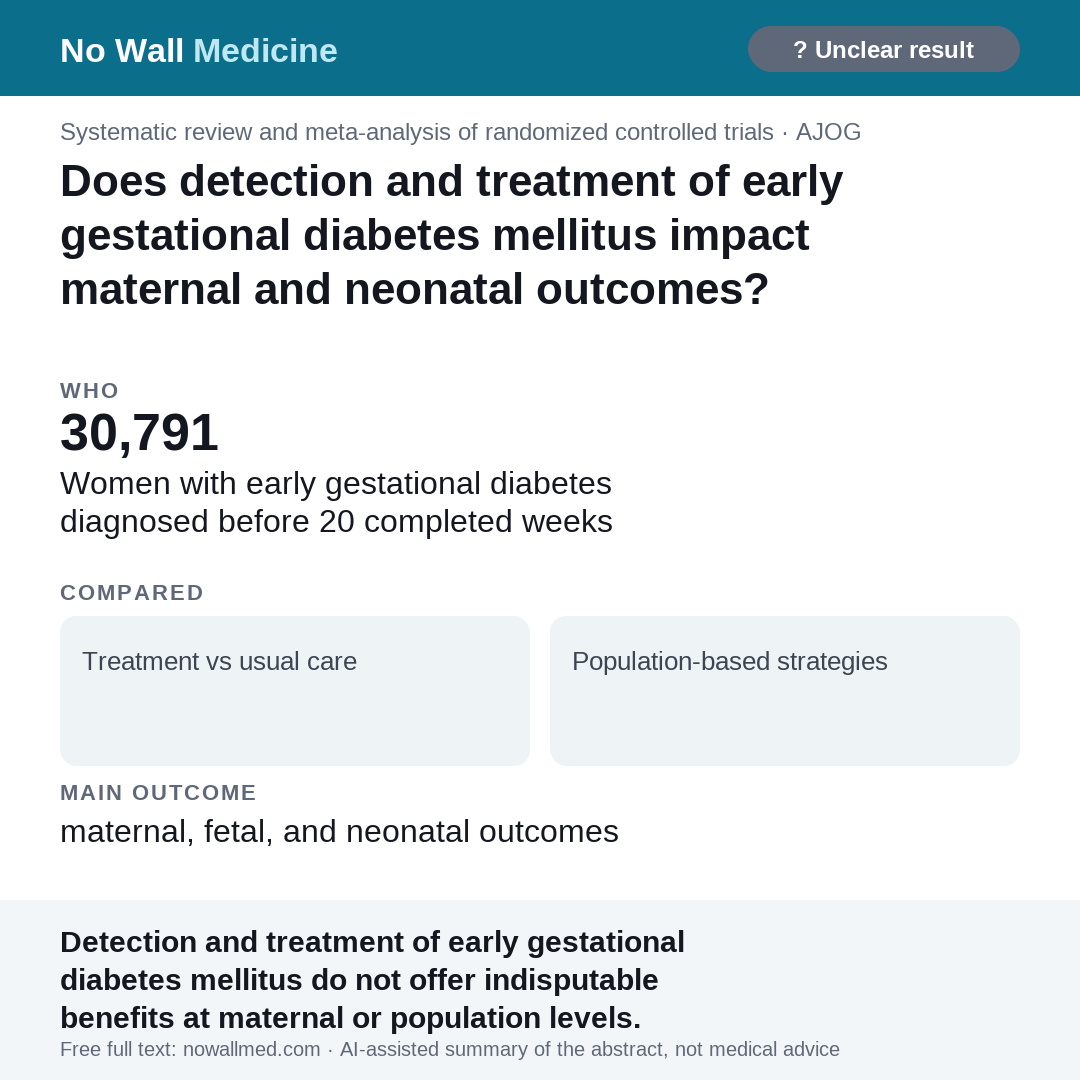
Comparative efficacy and tolerability of nutraceuticals for depressive disorder: A systematic review and network meta-analysis
Systematic review and network meta-analysisBenefit found
What is the comparative efficacy and tolerability of nutraceuticals for depressive disorder?
Who
17437
Adults with depressive disorder
Compared
Adjunctive nutraceuticals: better efficacy than antidepressants alone
Antidepressants alone
Main outcome
change in depressive symptoms
Bottom line: Several nutraceuticals offer benefits as either adjuncts or monotherapies for treating depressive disorders.
Psychol Med · 2025-05-02Download image
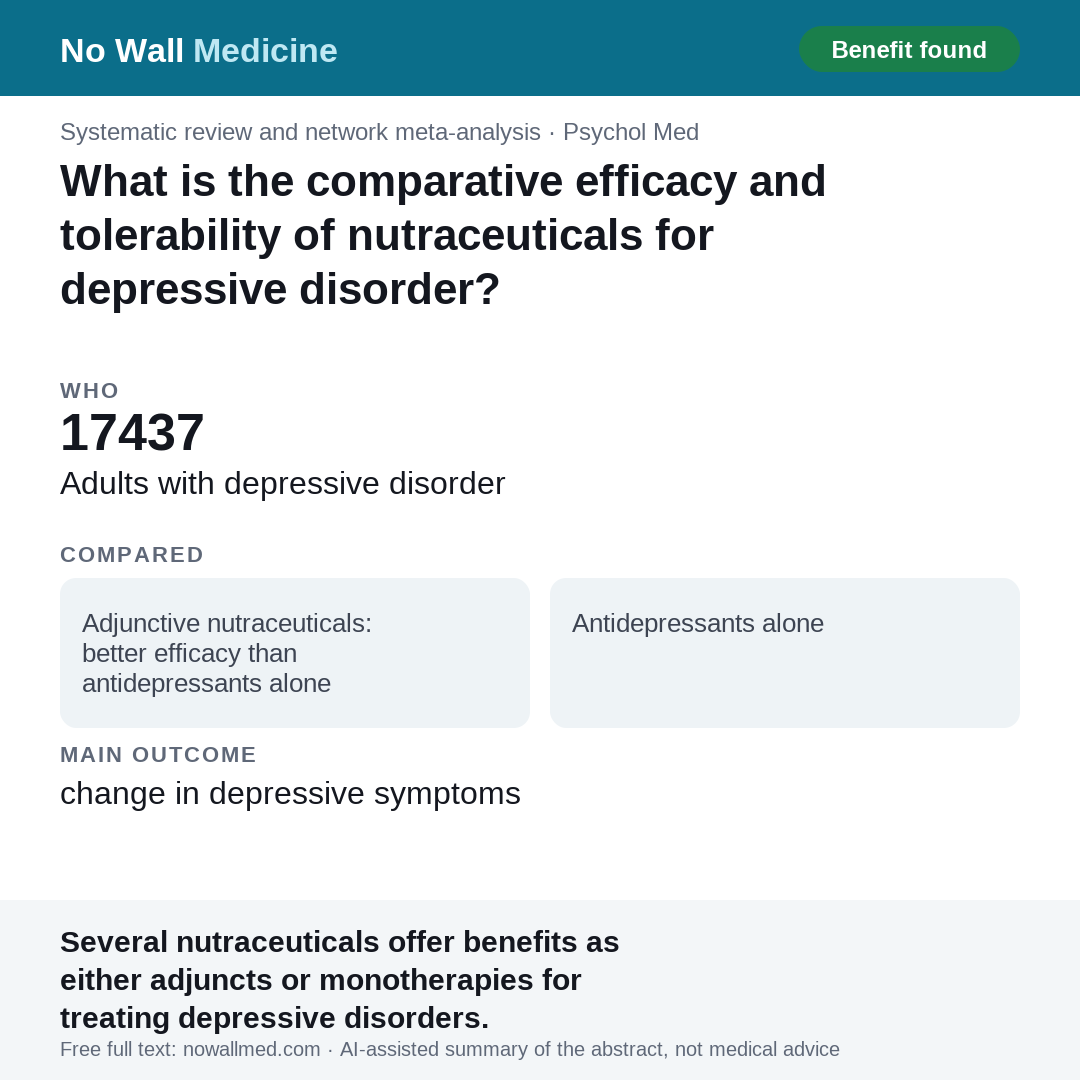
Comparison of Luteal Support Protocols in Frozen IVF/ICSI Cycles: A Network Meta-Analysis
Bayesian network meta-analysisBenefit found
Which luteal support strategy is most effective for frozen embryo transfers?
Who
4688
women undergoing frozen embryo transfers
Compared
Vaginal progesterone with subcutaneous GnRH agonist: significantly improving clinical pregnancy, RR 1.86 [95% CrI 1.18, 2.93]
Vaginal progesterone alone
Main outcome
clinical pregnancy, live birth, and miscarriage
Result: risk ratio 1.86 [95% credibility interval 1.18, 2.93]
Bottom line: Adding subcutaneous GnRH agonist to vaginal progesterone improves clinical pregnancy in frozen embryo transfer cycles.
Limitation: Overall CiNeMa risk of bias was moderate
BJOG · 2025-05-02Download image
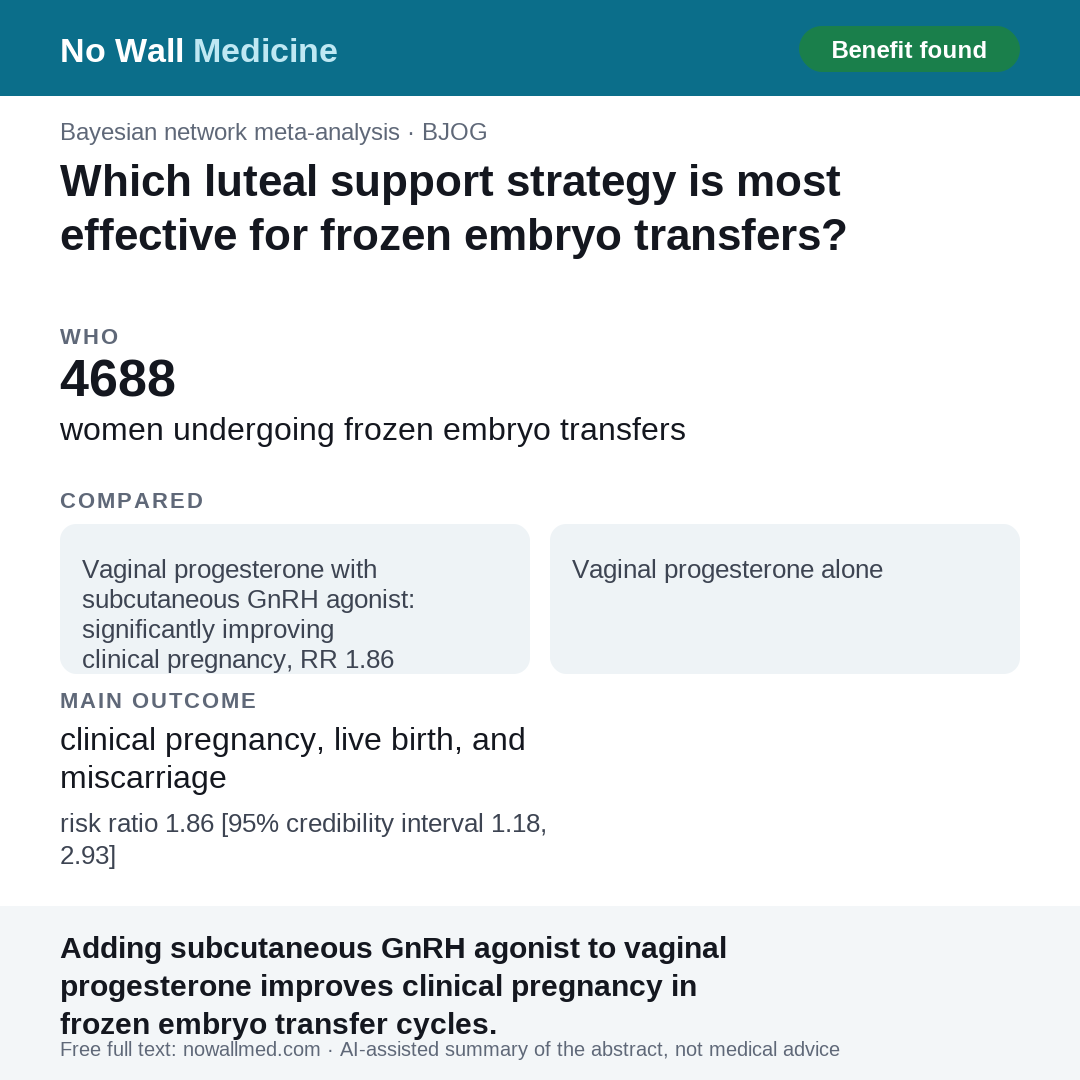
High Burden and Trend in Nonadherence to Blood Pressure-Lowering Medications: Meta-Analysis of Data From Over 34 000 Adults With Hypertension in Sub-Saharan Africa
Meta-analysis of 95 studiesHarm found
Nonadherence to blood pressure medication
Who
34102
Adults with hypertension in Sub-Saharan Africa · 27 countries
Compared
43.9%Nonadherent (95% CI, 39.2-48.6)
Adherent
Main outcome
Prevalence of nonadherence
Bottom line: Two out of five people nonadherent to BP treatment
J Am Heart Assoc · 2025-05-02Download image
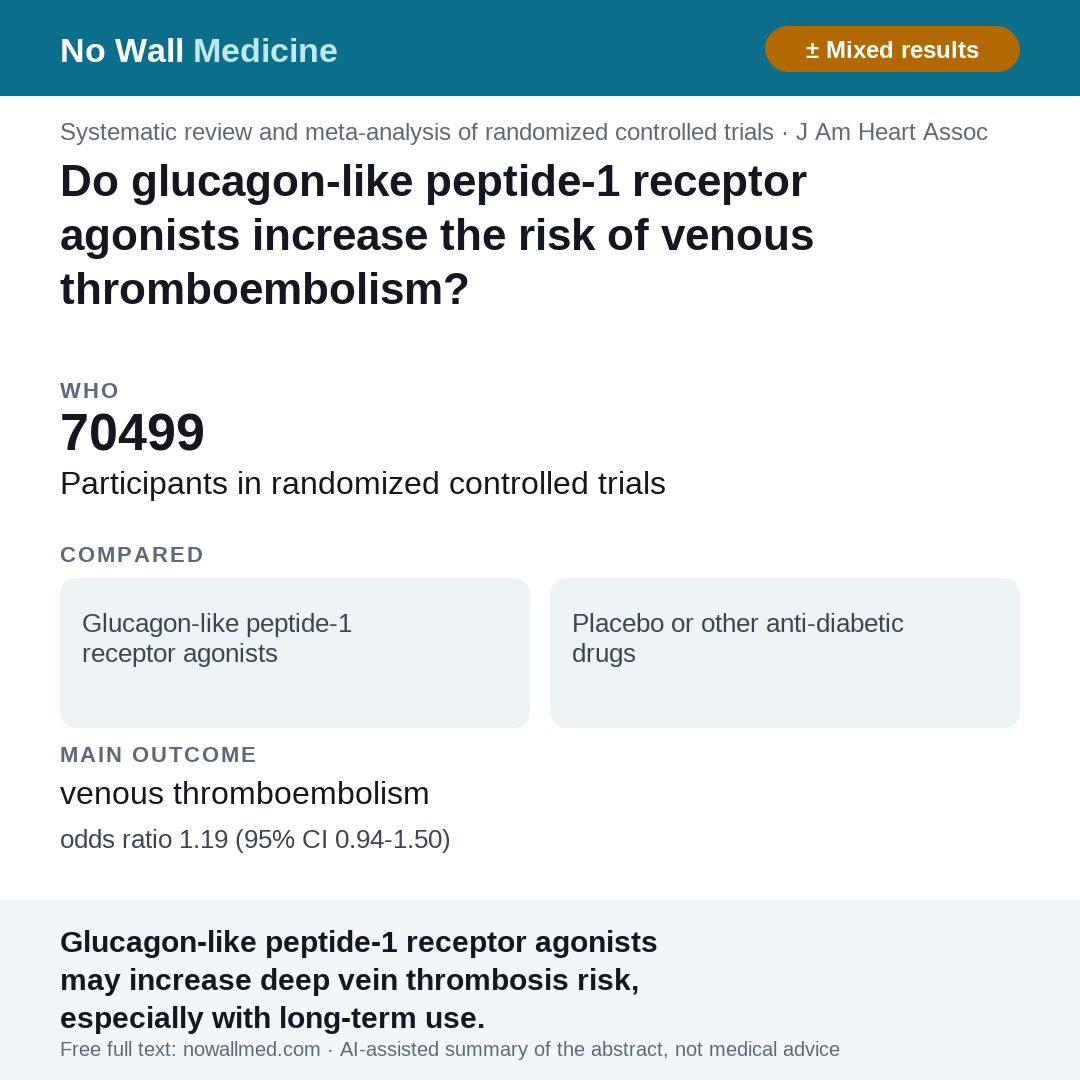
Glucagon-Like Peptide-1 Receptor Agonists and Risk of Venous Thromboembolism: A Systematic Review and Meta-Analysis of Randomized Controlled Trials
Systematic review and meta-analysis of randomized controlled trialsMixed results
Do glucagon-like peptide-1 receptor agonists increase the risk of venous thromboembolism?
Who
70499
Participants in randomized controlled trials
Compared
Glucagon-like peptide-1 receptor agonists
Placebo or other anti-diabetic drugs
Main outcome
venous thromboembolism
Result: odds ratio 1.19 (95% CI 0.94-1.50)
Bottom line: Glucagon-like peptide-1 receptor agonists may increase deep vein thrombosis risk, especially with long-term use.
J Am Heart Assoc · 2025-05-02Download image
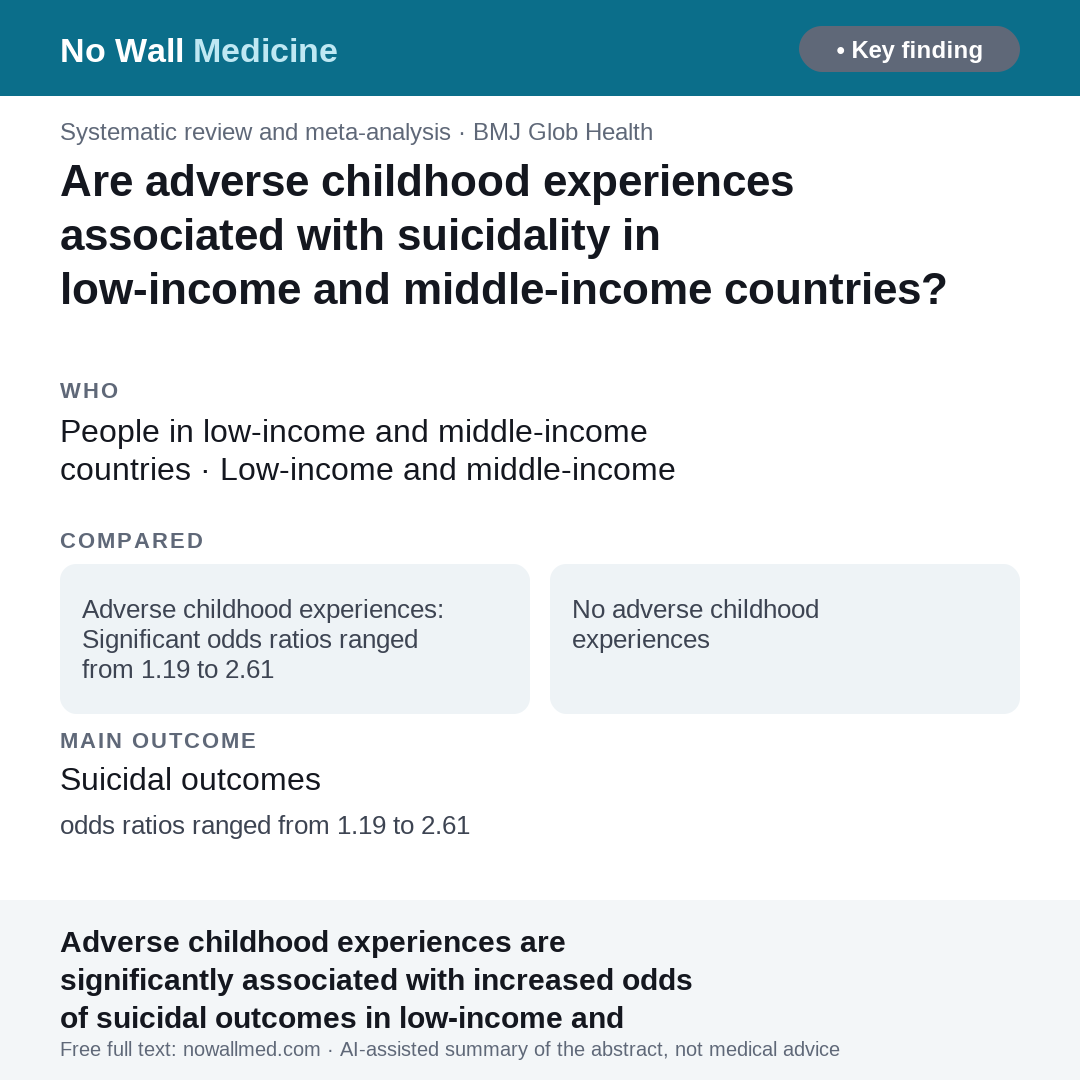
Adverse childhood experiences and suicidality in low-income and middle-income countries: a systematic review and meta-analysis
Systematic review and meta-analysisBenefit found
Are adverse childhood experiences associated with suicidality in low-income and middle-income countries?
Who
People in low-income and middle-income countries · Low-income and middle-income countries
Compared
Adverse childhood experiences: Significant odds ratios ranged from 1.19 to 2.61
No adverse childhood experiences
Main outcome
Suicidal outcomes
Result: odds ratios ranged from 1.19 to 2.61
Bottom line: Adverse childhood experiences are significantly associated with increased odds of suicidal outcomes in low-income and middle-income countries.
Limitation: None of the included articles reported on suicide mortality.
BMJ Glob Health · 2025-05-02Download image
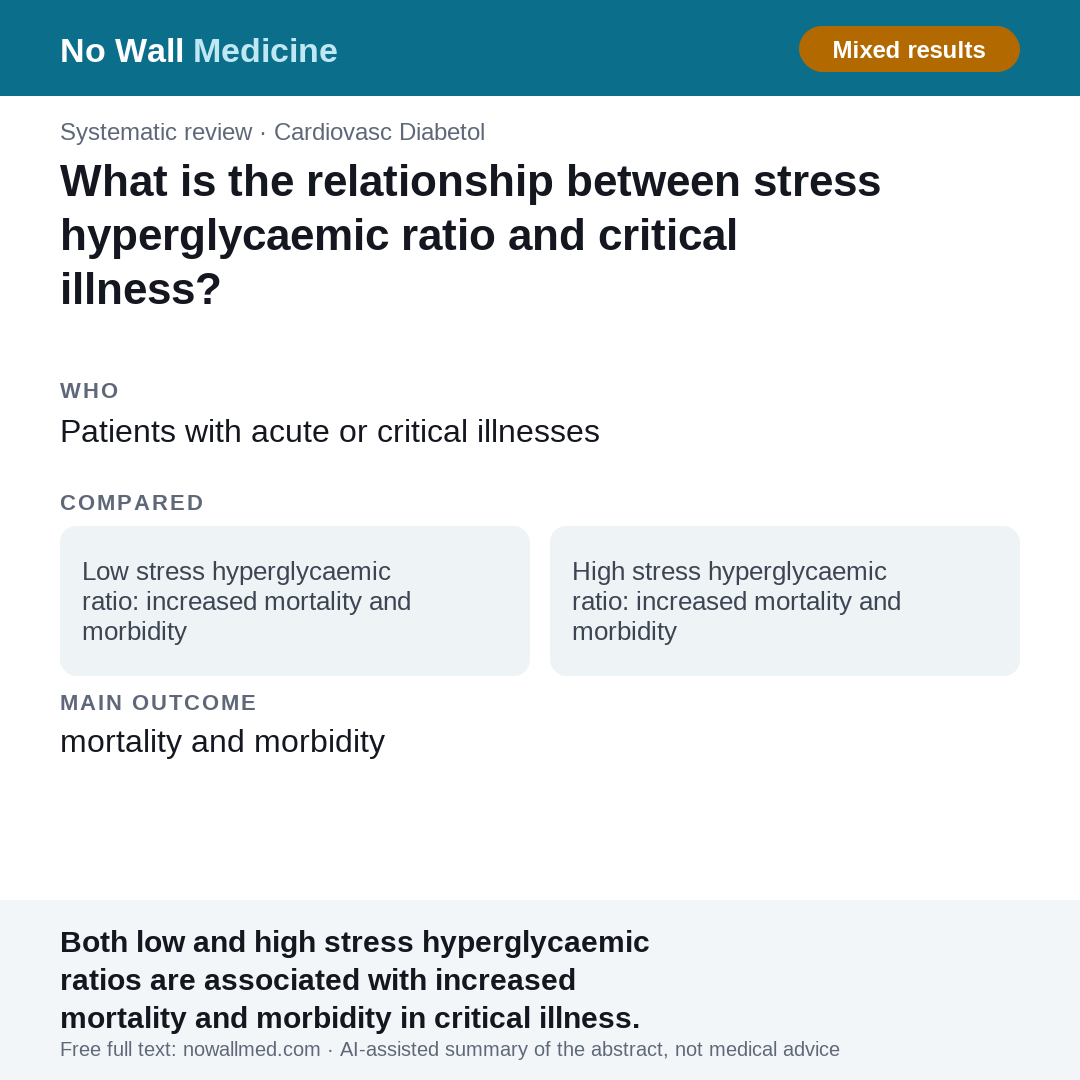
Relationship between stress hyperglycaemic ratio (SHR) and critical illness: a systematic review
Systematic reviewMixed results
What is the relationship between stress hyperglycaemic ratio and critical illness?
Who
Patients with acute or critical illnesses
Compared
Low stress hyperglycaemic ratio: increased mortality and morbidity
High stress hyperglycaemic ratio: increased mortality and morbidity
Main outcome
mortality and morbidity
Bottom line: Both low and high stress hyperglycaemic ratios are associated with increased mortality and morbidity in critical illness.
Cardiovasc Diabetol · 2025-05-02Download image
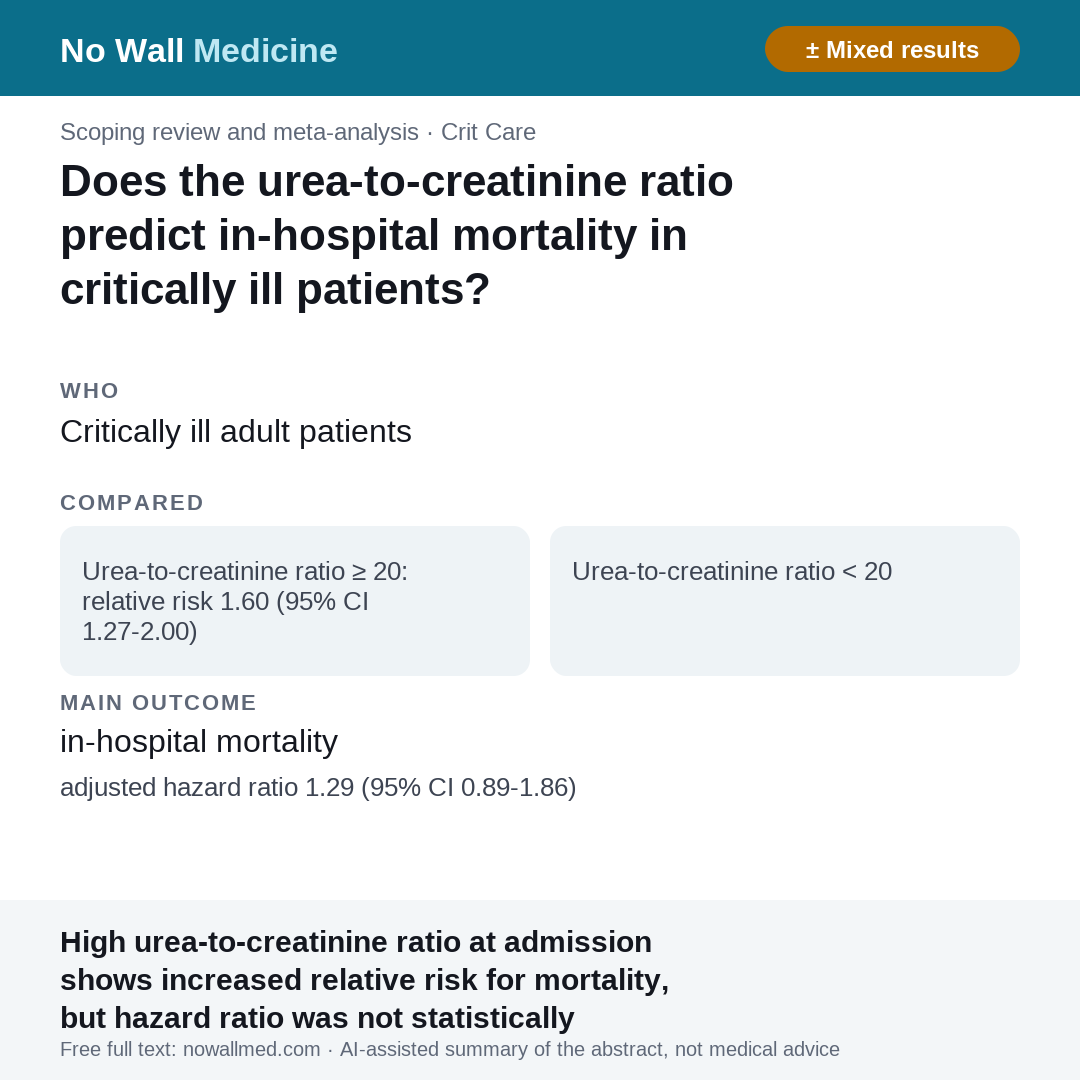
The urea-to-creatinine ratio as an emerging biomarker in critical care: a scoping review and meta-analysis
Scoping review and meta-analysisMixed results
Does the urea-to-creatinine ratio predict in-hospital mortality in critically ill patients?
Who
Critically ill adult patients
Compared
Urea-to-creatinine ratio ≥ 20: relative risk 1.60 (95% CI 1.27-2.00)
Urea-to-creatinine ratio < 20
Main outcome
in-hospital mortality
Result: adjusted hazard ratio 1.29 (95% CI 0.89-1.86)
Bottom line: High urea-to-creatinine ratio at admission shows increased relative risk for mortality, but hazard ratio was not statistically significant.
Crit Care · 2025-05-02Download image
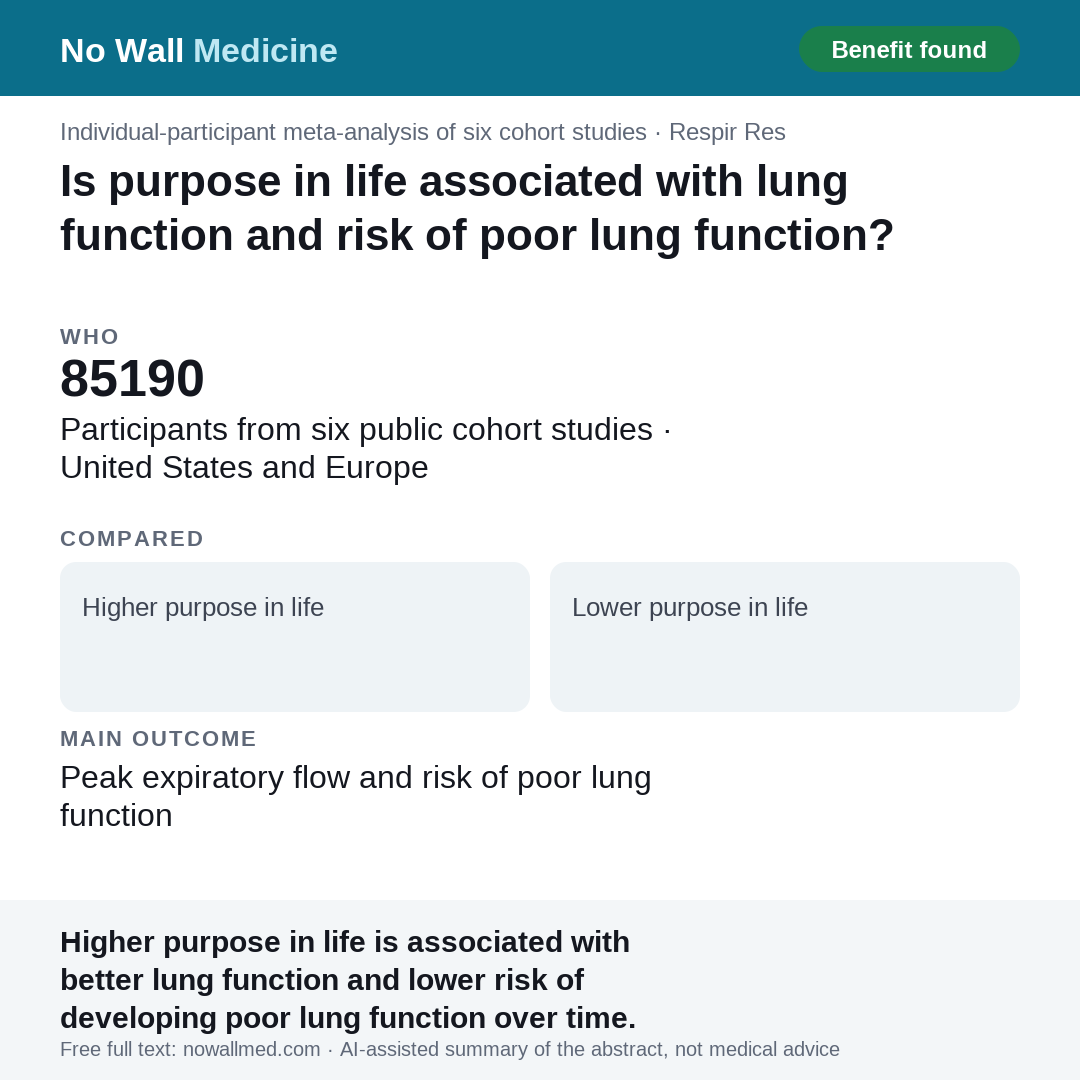
Purpose in life and lung function: an individual-participant meta-analysis of six cohort studies
Individual-participant meta-analysis of six cohort studiesBenefit found
Is purpose in life associated with lung function and risk of poor lung function?
Who
85190
Participants from six public cohort studies · United States and Europe
Compared
Higher purpose in life
Lower purpose in life
Main outcome
Peak expiratory flow and risk of poor lung function
Result: hazard ratio 0.91 (95% confidence interval 0.88, 0.94)
Bottom line: Higher purpose in life is associated with better lung function and lower risk of developing poor lung function over time.
Respir Res · 2025-05-02Download image
A systematic review of quantum machine learning for digital health
Systematic reviewNo clear difference
Do quantum machine learning algorithms outperform classical methods for digital health?
Who
16
Studies using electronic health records or proxy data · PubMed, Embase, IEEE, Scopus, and arXiv
Compared
Quantum machine learning
Classical methods
Main outcome
Performance differentials for clinical decisioning or health service delivery
Bottom line: Quantum machine learning shows no consistent trend to support empirical utility in digital health compared to classical algorithms.
NPJ Digit Med · 2025-05-02Download image

Organ Donation for Research Biobanking Among Historically Marginalized Racial and Ethnic Groups: A Systematic Review
Systematic review and thematic analysisMixed results
What are the barriers and facilitators to postmortem brain donation for research among marginalized groups?
Who
12124
Adults from historically marginalized races and ethnicities
Compared
Barriers: Mistrust and religious and cultural beliefs
Facilitators: Altruism and family involvement
Main outcome
Barriers and facilitators to postmortem brain donation for research
Bottom line: Mistrust and religious beliefs are barriers, while altruism and family involvement can facilitate postmortem organ donation for research.
JAMA Netw Open · 2025-05-01Download image

Safety of Stimulants Across Patient Populations: A Meta-Analysis
Meta-analysis of 93 randomized clinical trialsHarm found
What is the safety of stimulant medications compared to placebo?
Who
93
Patients with ADHD, depression, binge eating disorder, schizophrenia, Alzheimer disease, or stimulant use disorders
Compared
Stimulants
Placebo
Main outcome
Risk ratio of developing any adverse event
Result: risk ratio 1.34 (90% CI 1.27-1.41)
Bottom line: Stimulant medications are associated with an increased risk of overall adverse events compared with placebo.
Limitation: High heterogeneity (I2 = 67%) and need for more standardized assessments.
JAMA Netw Open · 2025-05-01Download image

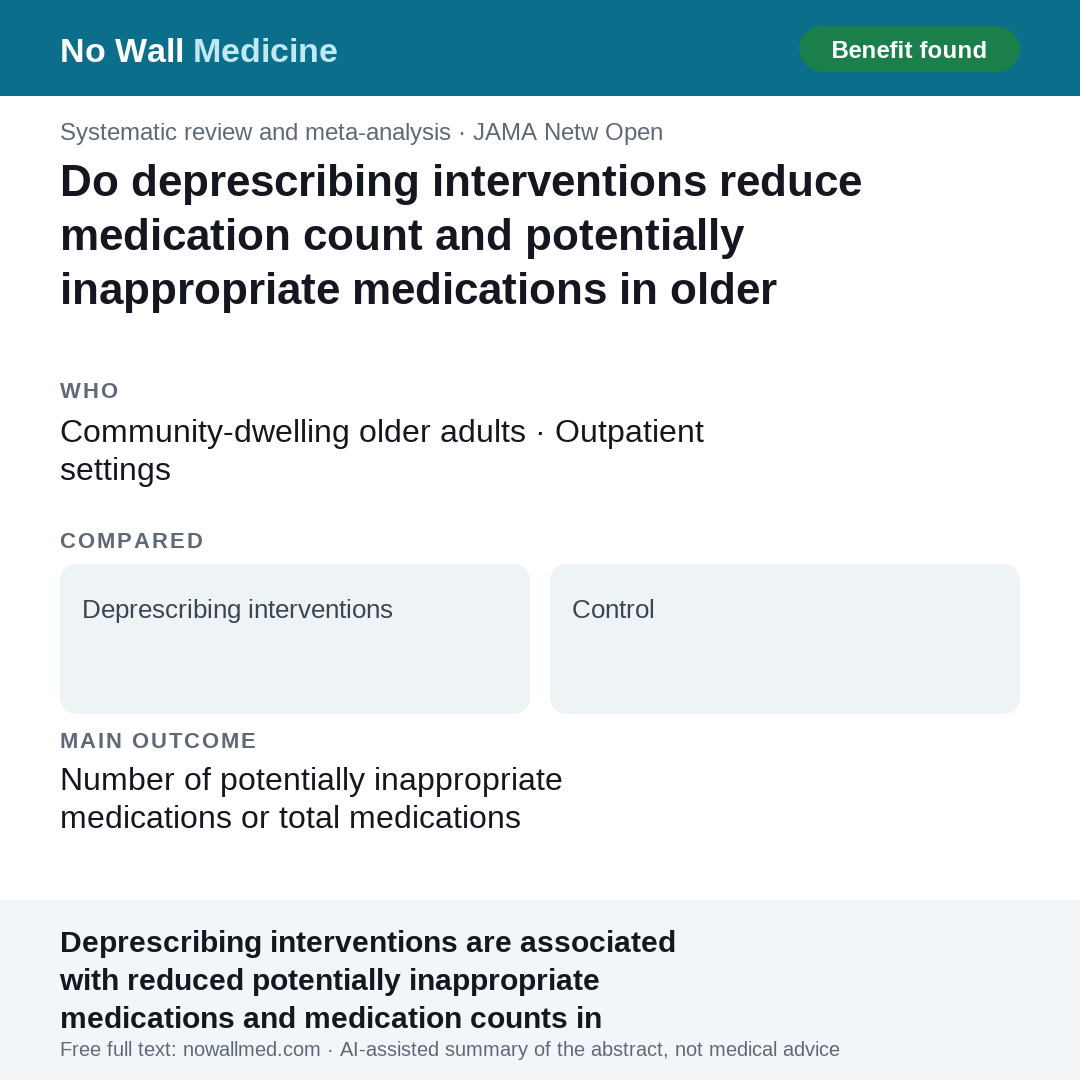
Deprescribing in Community-Dwelling Older Adults: A Systematic Review and Meta-Analysis
Systematic review and meta-analysisBenefit found
Do deprescribing interventions reduce medication count and potentially inappropriate medications in older adults?
Who
Community-dwelling older adults · Outpatient settings
Compared
Deprescribing interventions
Control
Main outcome
Number of potentially inappropriate medications or total medications
Result: mean difference -0.14 (95% CI, -0.27 to -0.01) medications prescribed
Bottom line: Deprescribing interventions are associated with reduced potentially inappropriate medications and medication counts in community-dwelling older adults.
JAMA Netw Open · 2025-05-01Download image
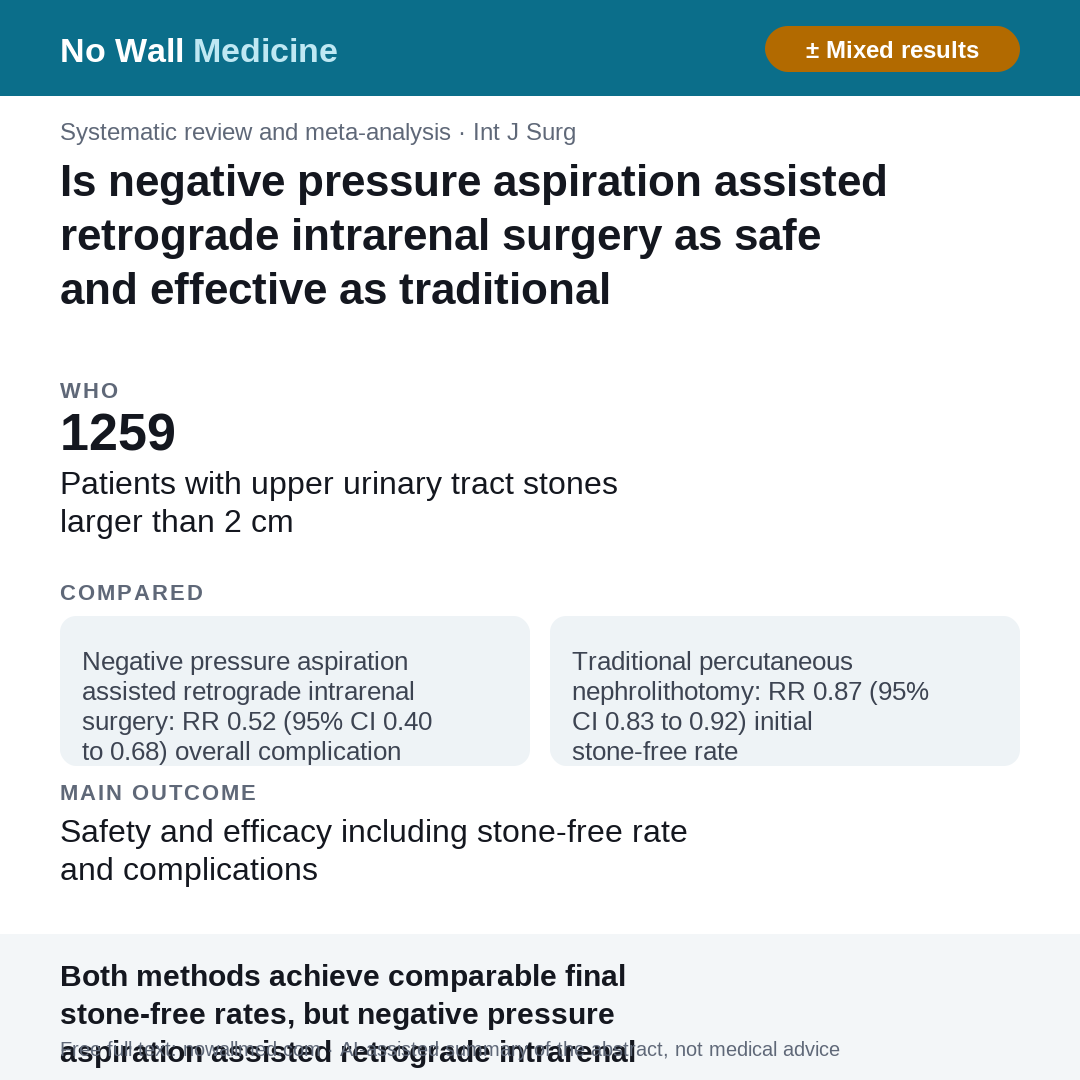
Comparison of safety and efficacy of negative pressure aspiration assisted retrograde intrarenal surgery and traditional percutaneous nephrolithotomy in the treatment of upper urinary tract stones larger than 2 cm: a systematic review and meta-analysis
Systematic review and meta-analysisMixed results
Is negative pressure aspiration assisted retrograde intrarenal surgery as safe and effective as traditional percutaneous nephrolithotomy?
Who
1259
Patients with upper urinary tract stones larger than 2 cm
Compared
Negative pressure aspiration assisted retrograde intrarenal surgery: RR 0.52 (95% CI 0.40 to 0.68) overall complication rate
Traditional percutaneous nephrolithotomy: RR 0.87 (95% CI 0.83 to 0.92) initial stone-free rate
Main outcome
Safety and efficacy including stone-free rate and complications
Result: final stone-free rate RR 0.98 (95% CI 0.94 to 1.01)
Bottom line: Both methods achieve comparable final stone-free rates, but negative pressure aspiration assisted retrograde intrarenal surgery reduces complications and blood transfusion.
Int J Surg · 2025-05-01Download image
Comparison of analgesic modalities after cesarean section: a network meta-analysis and systematic review
Network meta-analysis of randomized controlled trialsMixed results
What is the optimal analgesic method after cesarean section?
Who
8871
Pregnant women
Compared
Control group
All modalities except wound infiltration: prolonged the time to the first request for analgesia
Main outcome
Analgesic efficacy, medication needs, complications, and patient satisfaction
Bottom line: Regional nerve block is safe, with lumbar quadratus block type being the safest and most effective.
Int J Surg · 2025-05-01Download image

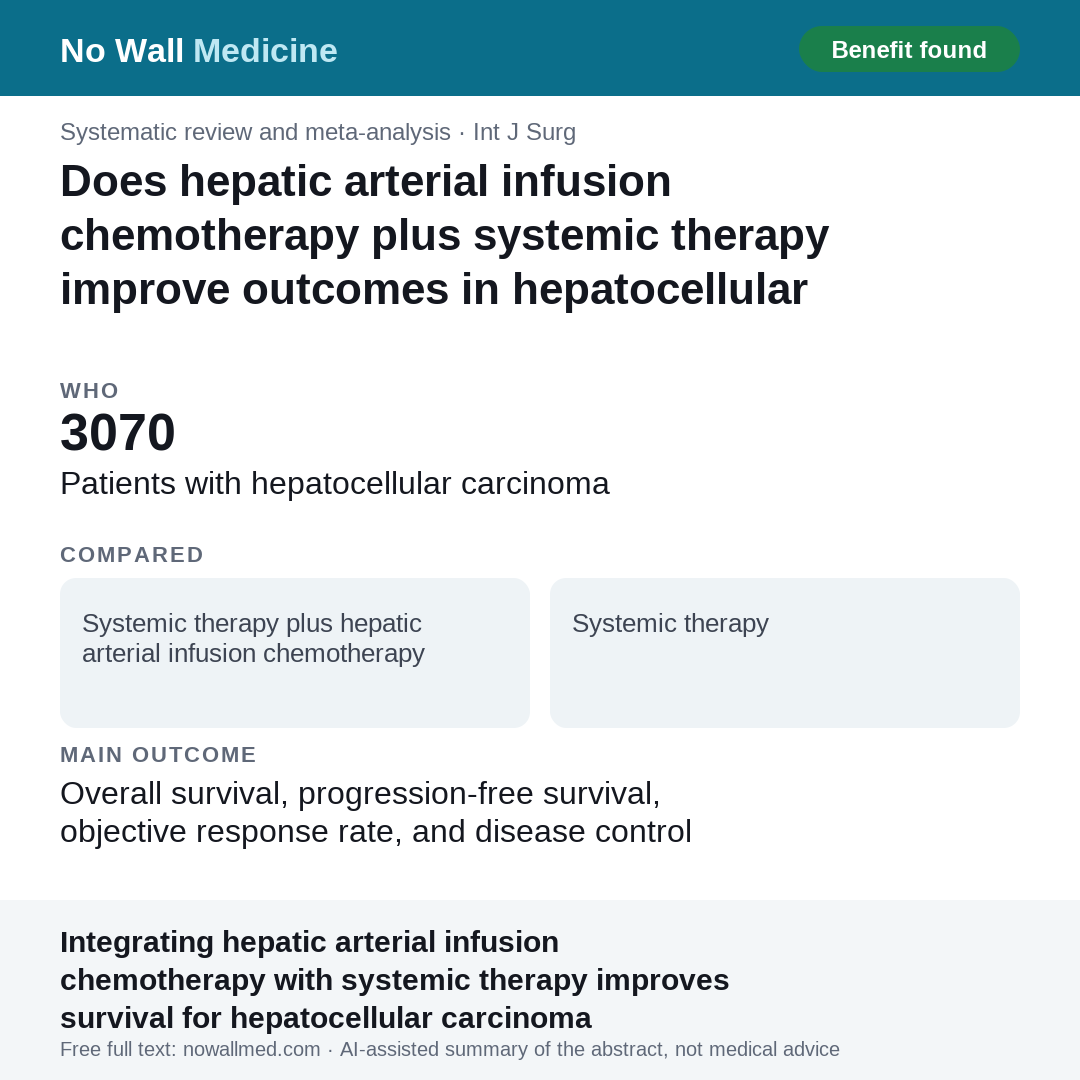
Systemic therapy plus HAIC versus systemic therapy for hepatocellular carcinoma: a systematic review and meta-analysis
Systematic review and meta-analysisBenefit found
Does hepatic arterial infusion chemotherapy plus systemic therapy improve outcomes in hepatocellular carcinoma?
Who
3070
Patients with hepatocellular carcinoma
Compared
Systemic therapy plus hepatic arterial infusion chemotherapy
Systemic therapy
Main outcome
Overall survival, progression-free survival, objective response rate, and disease control rate
Result: hazard ratio 0.52 (95% CI 0.48-0.58)
Bottom line: Integrating hepatic arterial infusion chemotherapy with systemic therapy improves survival for hepatocellular carcinoma patients with manageable toxicity.
Limitation: Further evidence is necessary to standardize integration with first-line systemic therapy.
Int J Surg · 2025-05-01Download image
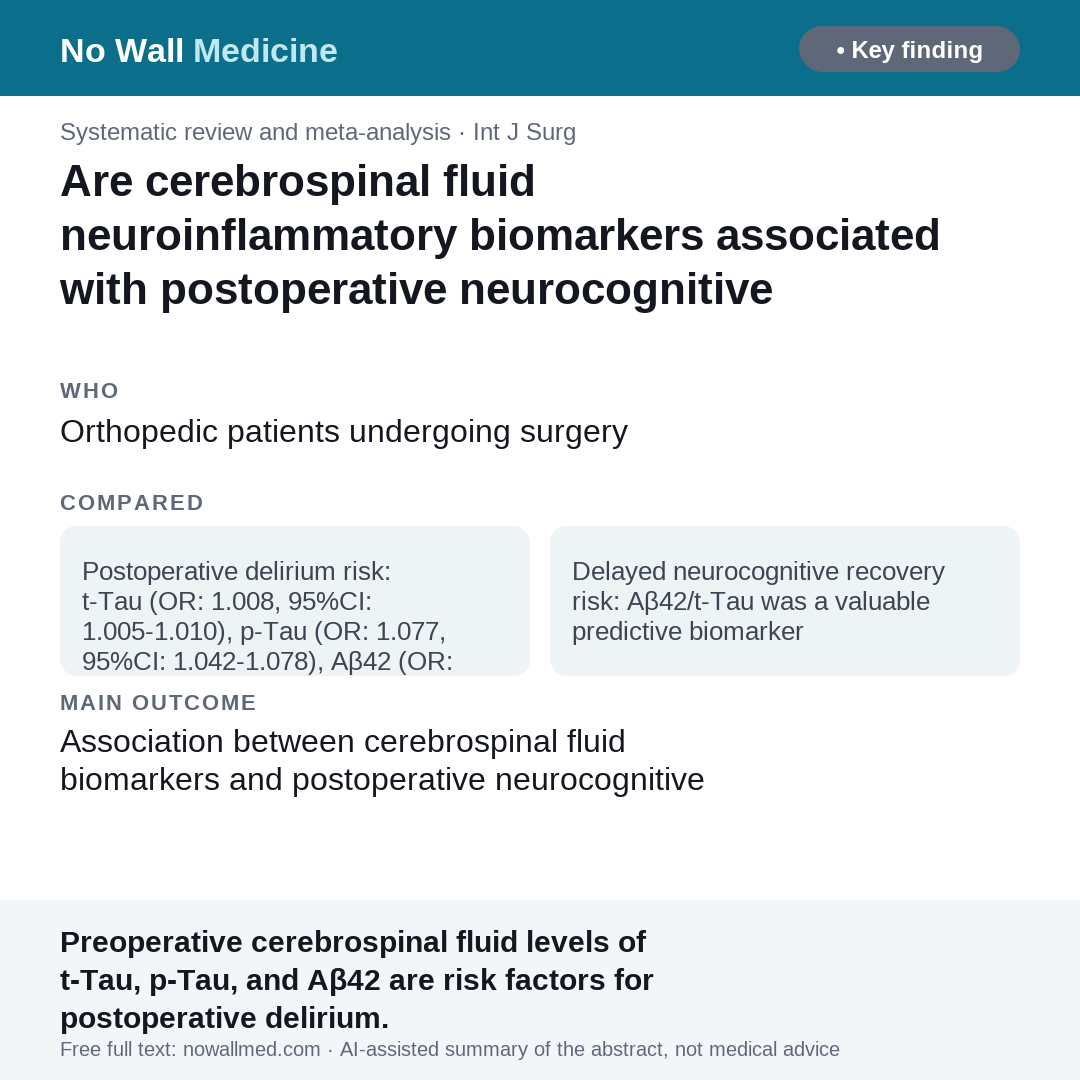
Cerebrospinal fluid biomarkers of neuroinflammation and postoperative neurocognitive disorders in patients undergoing orthopedic surgery: a systematic review and meta-analysis
Systematic review and meta-analysisBenefit found
Are cerebrospinal fluid neuroinflammatory biomarkers associated with postoperative neurocognitive disorders in orthopedic patients?
Who
27
Orthopedic patients undergoing surgery
Compared
Postoperative delirium risk: t-Tau (OR: 1.008, 95%CI: 1.005-1.010), p-Tau (OR: 1.077, 95%CI: 1.042-1.078), Aβ42 (OR: 0.998, 95% CI: 0.997-0.999)
Delayed neurocognitive recovery risk: Aβ42/t-Tau was a valuable predictive biomarker
Main outcome
Association between cerebrospinal fluid biomarkers and postoperative neurocognitive disorders
Bottom line: Preoperative cerebrospinal fluid levels of t-Tau, p-Tau, and Aβ42 are risk factors for postoperative delirium.
Limitation: Studies concerning delayed neurocognitive recovery and postoperative cognitive dysfunction are needed.
Int J Surg · 2025-05-01Download image