Visual abstracts
New randomized trials and meta-analyses from leading journals at a glance: who was studied, what was compared, and what was found. Every paper is free to read in full.
All specialtiesCardiology 4877Oncology 4138Gastroenterology & Hepatology 1942Infectious Disease 3837Neurology 1905Psychiatry & Mental Health 2273Pulmonology 2143Critical Care 1365Endocrinology & Diabetes 2580Pediatrics 2980Surgery 2559Orthopedics & Sports Medicine 931Neurosurgery 537Cardiothoracic & Vascular Surgery 674Plastic & Reconstructive Surgery 591Nephrology 1133Rheumatology 823Hematology 1109Dermatology 621Ophthalmology 543Obstetrics & Gynecology 1686Public & Global Health 1058Radiology & Imaging 648Anesthesiology 986Urology 764ENT (Otolaryngology) 503Emergency Medicine 511Allergy & Immunology 313Geriatrics 981Family Medicine & Primary Care 562Medical Genetics & Genomics 676Pathology & Laboratory Medicine 159Physical Medicine & Rehabilitation 757Palliative Care 444Nutrition 1588Digital Health & AI 2201General Medicine 321
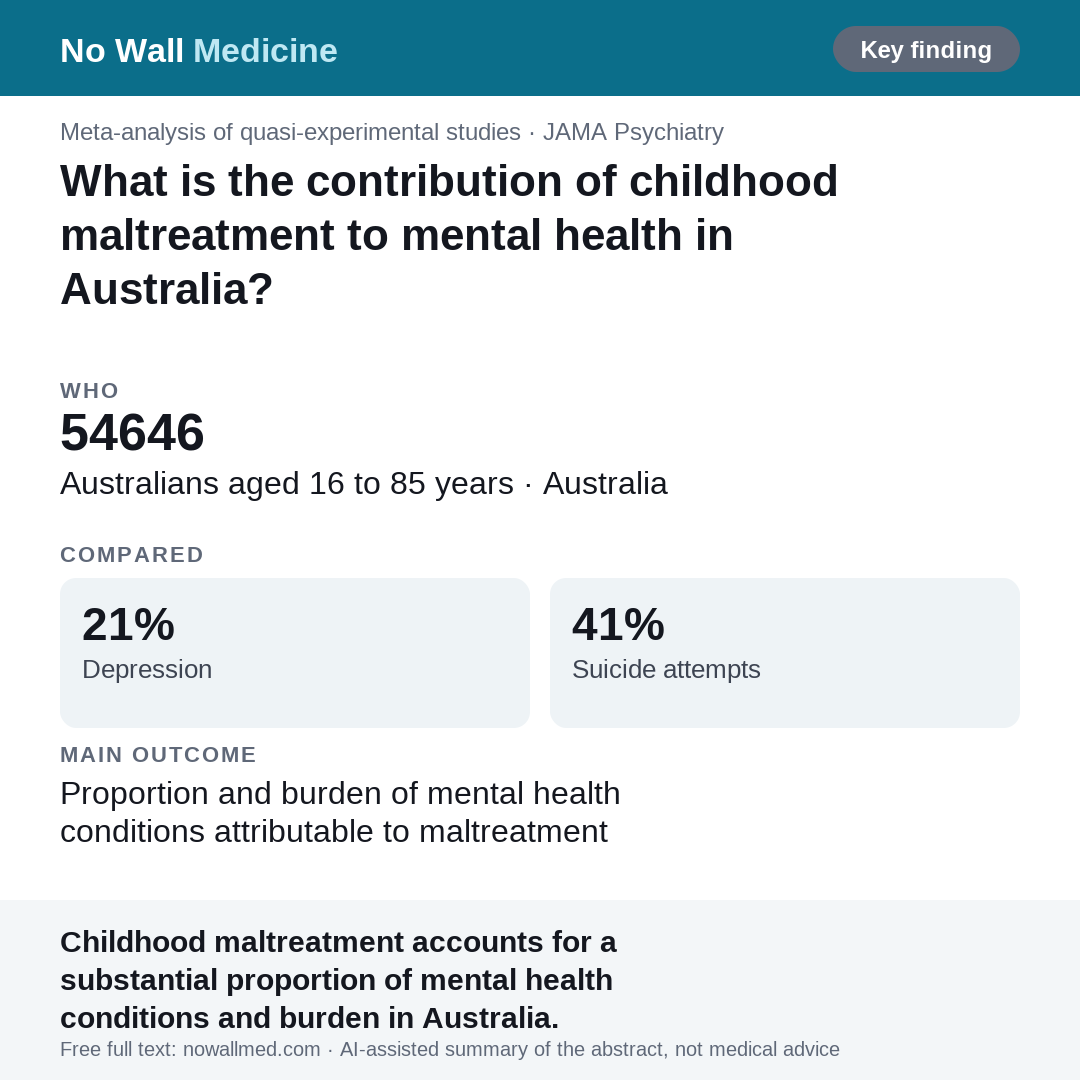
Burden of Mental Disorders and Suicide Attributable to Childhood Maltreatment
Meta-analysis of quasi-experimental studiesBenefit found
What is the contribution of childhood maltreatment to mental health in Australia?
Who
54646
Australians aged 16 to 85 years · Australia
Compared
21%Depression (95% CI, 13%-28%)
41%Suicide attempts (95% CI, 27%-54%)
Main outcome
Proportion and burden of mental health conditions attributable to maltreatment
Bottom line: Childhood maltreatment accounts for a substantial proportion of mental health conditions and burden in Australia.
JAMA Psychiatry · 2024-05-08Download image
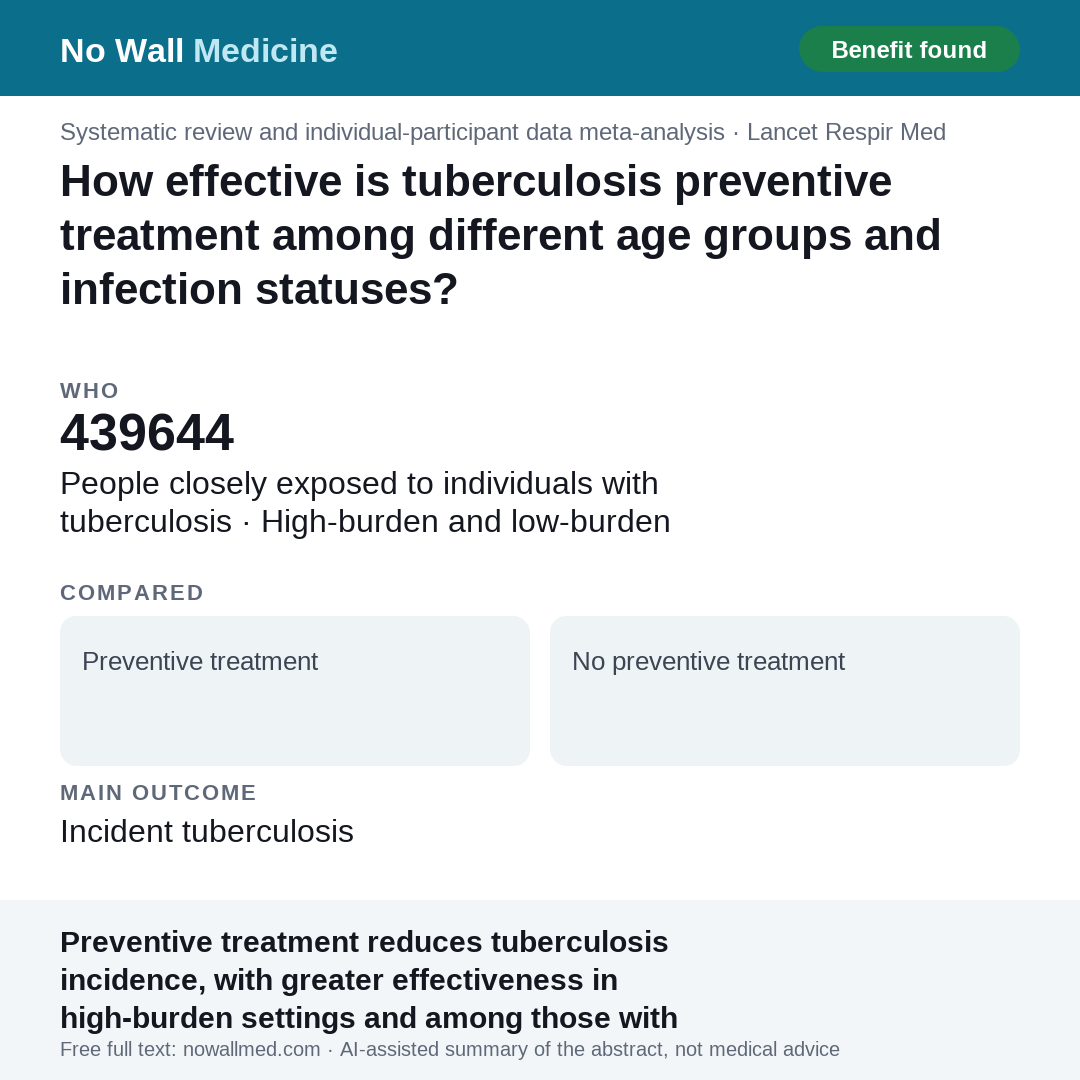
Effectiveness of preventive treatment among different age groups and Mycobacterium tuberculosis infection status: a systematic review and individual-participant data meta-analysis of contact tracing studies
Systematic review and individual-participant data meta-analysisBenefit found
How effective is tuberculosis preventive treatment among different age groups and infection statuses?
Who
439644
People closely exposed to individuals with tuberculosis · High-burden and low-burden tuberculosis settings
Compared
Preventive treatment
No preventive treatment
Main outcome
Incident tuberculosis
Result: adjusted hazard ratio 0.51 (95% CI 0.44 to 0.60)
Bottom line: Preventive treatment reduces tuberculosis incidence, with greater effectiveness in high-burden settings and among those with positive infection tests.
Limitation: Contacts exposed to a drug-resistant tuberculosis index patient were excluded
Lancet Respir Med · 2024-05-08Download image
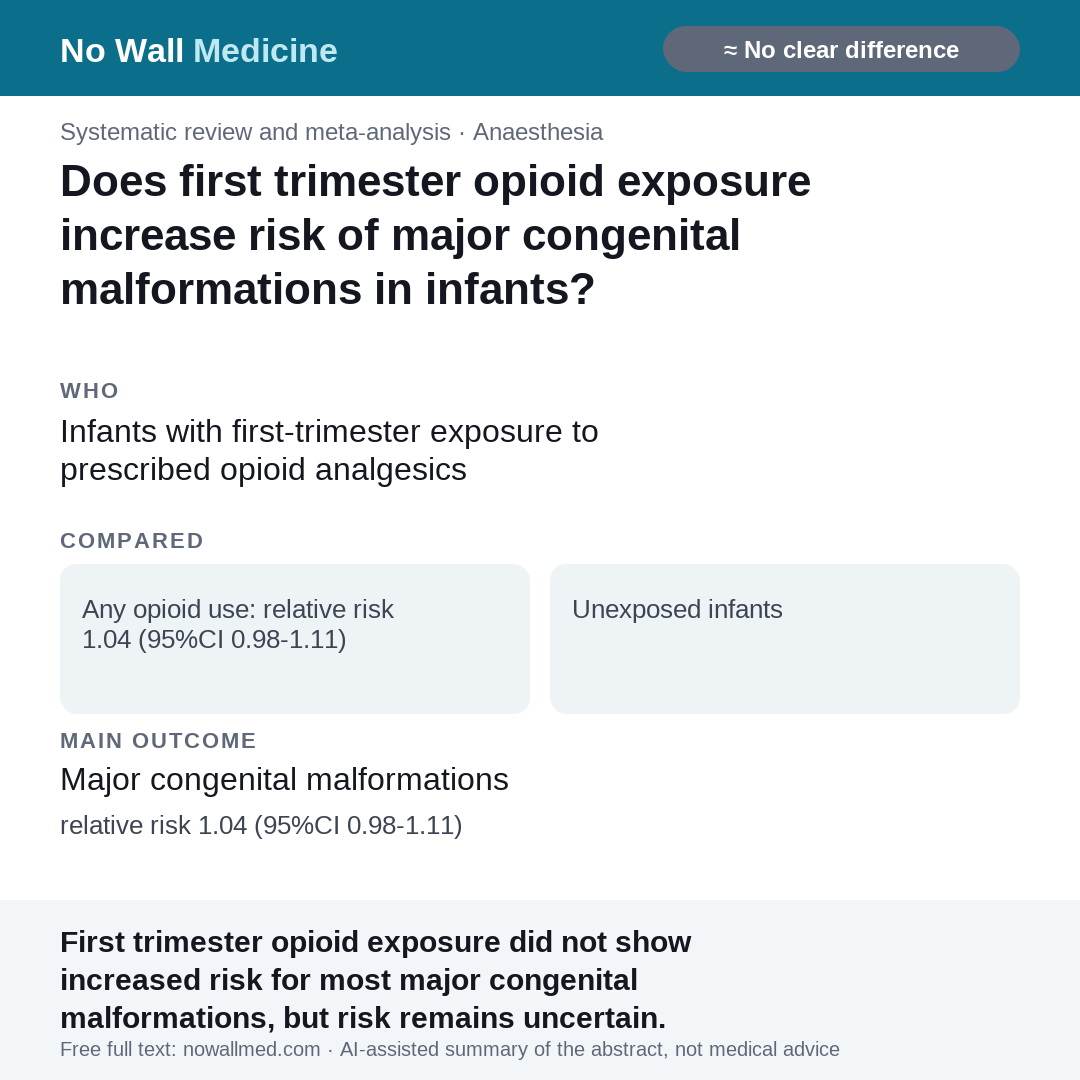
Opioid analgesic exposure during the first trimester of pregnancy and the risk of major congenital malformations in infants: a systematic review and meta-analysis†
Systematic review and meta-analysisNo clear difference
Does first trimester opioid exposure increase risk of major congenital malformations in infants?
Who
Infants with first-trimester exposure to prescribed opioid analgesics
Compared
Any opioid use: relative risk 1.04 (95%CI 0.98-1.11)
Unexposed infants
Main outcome
Major congenital malformations
Result: relative risk 1.04 (95%CI 0.98-1.11)
Bottom line: First trimester opioid exposure did not show increased risk for most major congenital malformations, but risk remains uncertain.
Limitation: Most included studies were at high risk of bias.
Anaesthesia · 2024-05-07Download image
Circulating VEGF-A Levels in Relation to Retinopathy of Prematurity and Treatment Effects: A Systematic Review and Meta-Analysis
Systematic review and meta-analysisMixed results
Do circulating VEGF-A levels relate to retinopathy of prematurity and treatment effects?
Who
Preterm infants with retinopathy of prematurity
Compared
Anti-VEGF therapy: 0.31 [0.25-0.38]
Laser treatment: 0.77 [0.61-0.97]
Main outcome
Circulating vascular endothelial growth factor A levels
Result: ratio of means 0.34 [95% confidence interval 0.25-0.45]
Bottom line: Anti-VEGF therapy significantly reduces VEGF-A levels, but blood VEGF-A does not consistently predict retinopathy of prematurity development.
Limitation: Unclear patient selection and lack of sample timing or analytical method details.
Ophthalmol Sci · 2024-05-07Download image
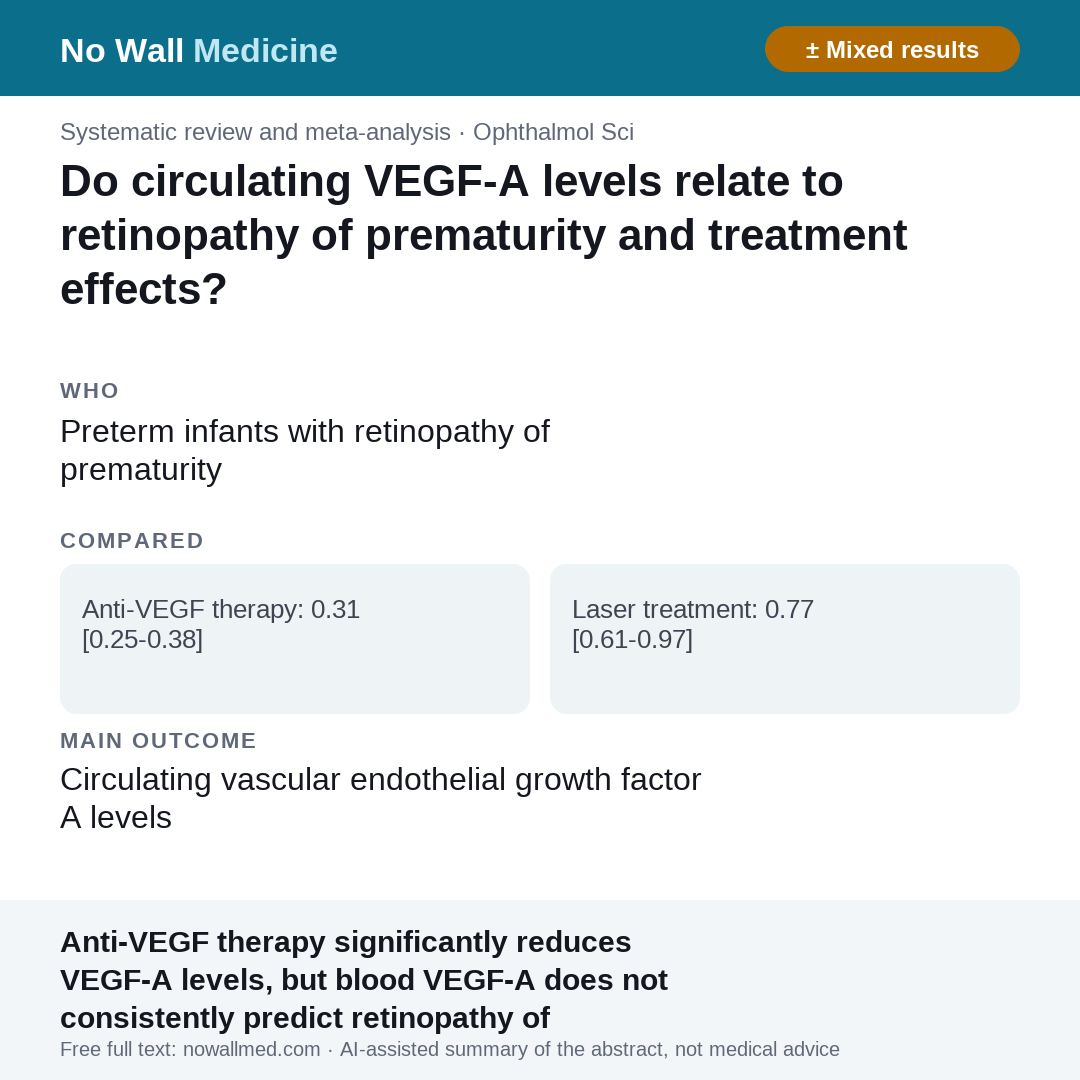
Erdosteine in children and adults with bronchiectasis (BETTER trial): study protocol for a multicentre, double-blind, randomised controlled trial
Multicentre, double-blind, randomised controlled trialUnclear result
Does erdosteine reduce acute respiratory exacerbations in children and adults with bronchiectasis?
Who
194
Children and adults aged 2-49 years with bronchiectasis · Eight sites across Australia, Malaysia and Philippines
Compared
erdosteine
placebo
Main outcome
rate of exacerbations over 12 months
Bottom line: This study protocol outlines a trial to evaluate erdosteine for reducing exacerbations in bronchiectasis patients.
BMJ Open Respir Res · 2024-05-07Download image
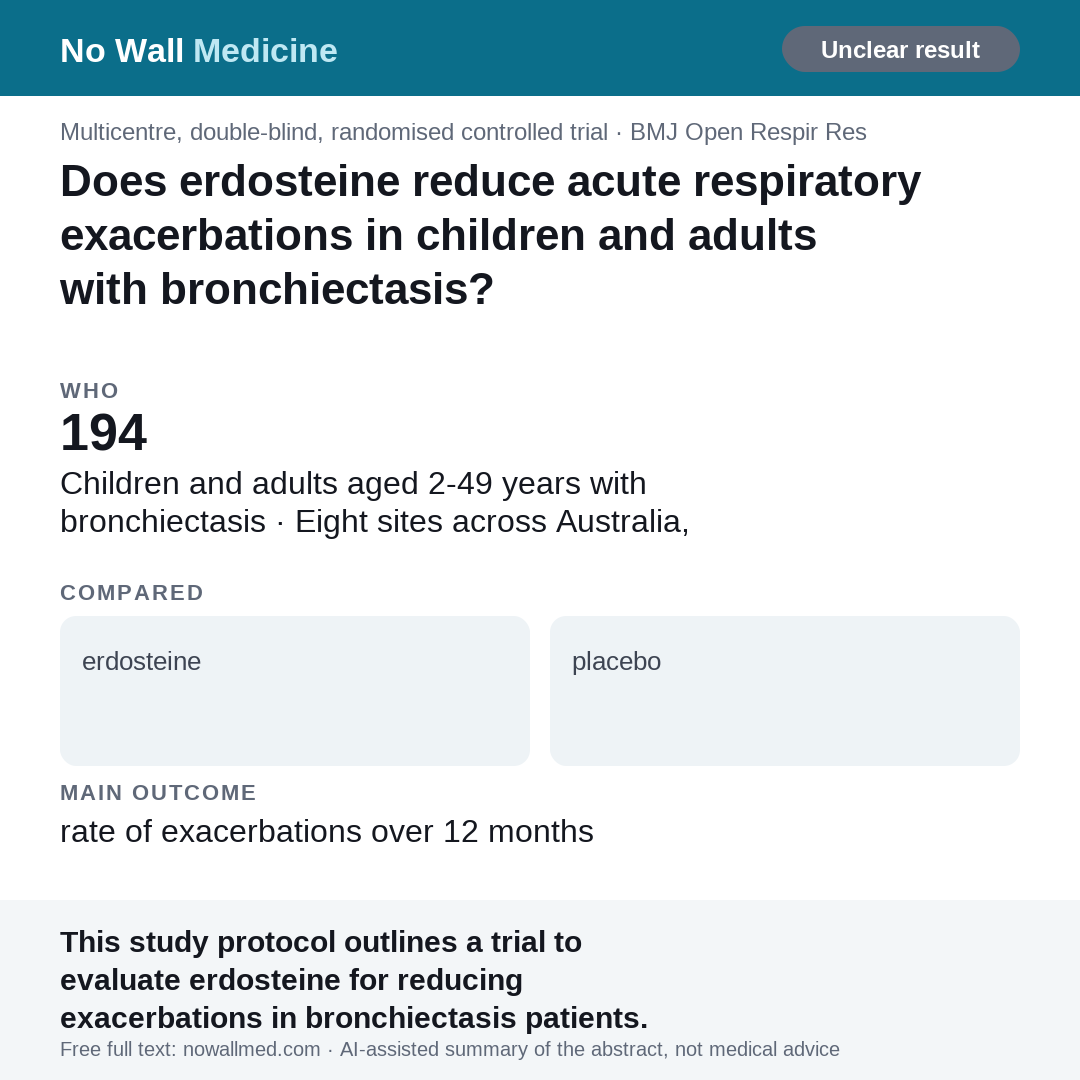
Prolonged mass azithromycin distributions and macrolide resistance determinants among preschool children in Niger: A sub-study of a cluster-randomized trial (MORDOR)
Cluster-randomized trial sub-studyMixed results
Does prolonged mass azithromycin distribution increase macrolide resistance determinants in the gut?
Who
5,340
Children 1 to 59 months in Niger · Niger
Compared
Recently randomized to azithromycin
Recently randomized to placebo
Main outcome
macrolide resistance determinants in the gut
Result: fold change 2.18 (95% CI 1.5 to 3.51)
Bottom line: Mass azithromycin distribution increased gut macrolide resistance determinants, but resistance may plateau after 2 to 3 years of treatment.
Limitation: absence of phenotypic characterization, no complete placebo arm, and no monitoring outside of Niger
PLOS Med · 2024-05-06Download image
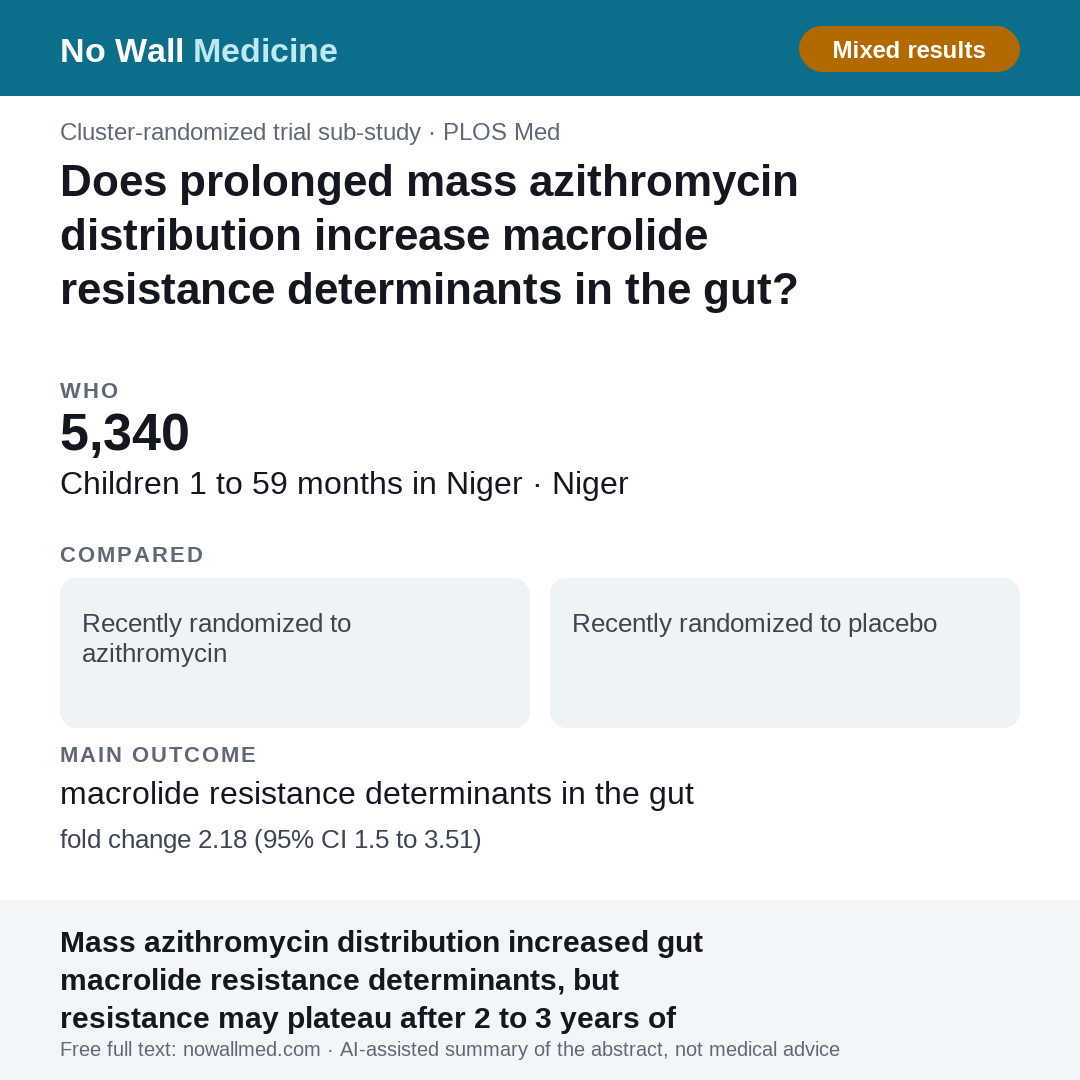
Maralixibat in progressive familial intrahepatic cholestasis (MARCH-PFIC): a multicentre, randomised, double-blind, placebo-controlled, phase 3 trial
Randomised, double-blind, placebo-controlled, phase 3 trialBenefit found
Does maralixibat improve pruritus and serum bile acids in progressive familial intrahepatic cholestasis?
Who
93
Participants aged 1-17 years with progressive familial intrahepatic cholestasis · 29 centres across 16 countries
Compared
-1·7Maralixibat (95% CI -2·3 to -1·2)
-0·6Placebo (-1·1 to -0·1)
Main outcome
Mean change in average morning Itch-Reported Outcome Observer severity score
Result: -1·1 (95% CI -1·8 to -0·3; p=0·0063)
Bottom line: Maralixibat significantly improved pruritus and reduced total serum bile acids in patients with progressive familial intrahepatic cholestasis.
Funded by: Mirum Pharmaceuticals
Lancet Gastroenterol Hepatol · 2024-05-06Download image
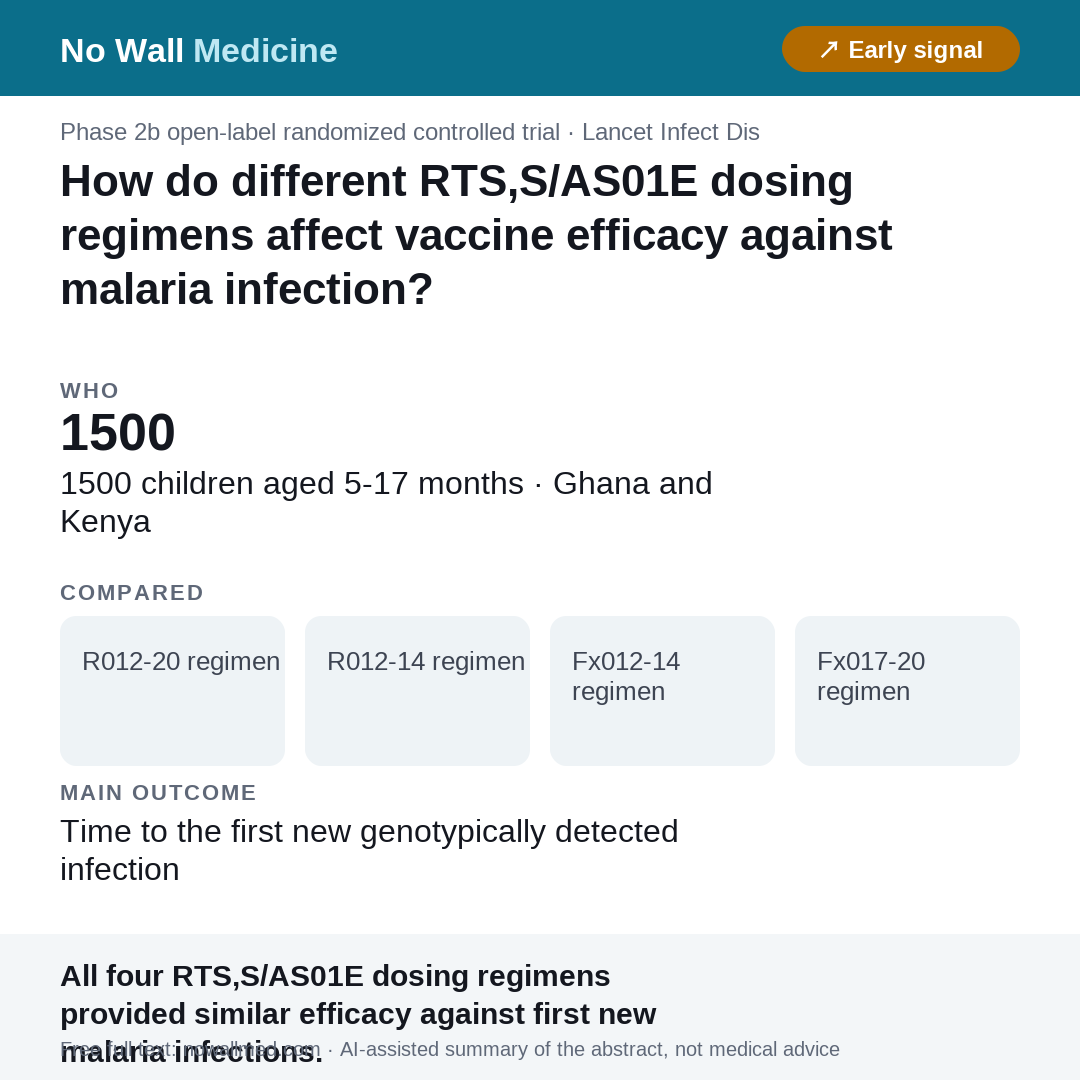
Genotypic analysis of RTS,S/AS01E malaria vaccine efficacy against parasite infection as a function of dosage regimen and baseline malaria infection status in children aged 5-17 months in Ghana and Kenya: a longitudinal phase 2b randomised controlled trial
Phase 2b open-label randomized controlled trialBenefit found
How do different RTS,S/AS01E dosing regimens affect vaccine efficacy against malaria infection?
Who
1500
1500 children aged 5-17 months · Ghana and Kenya
Compared
R012-20 regimen
R012-14 regimen
Fx012-14 regimen
Fx017-20 regimen
Main outcome
Time to the first new genotypically detected infection
Result: vaccine efficacy 25-43% (95% CI union 9-53)
Bottom line: All four RTS,S/AS01E dosing regimens provided similar efficacy against first new malaria infections.
Funded by: GlaxoSmithKline Biologicals SA, PATH, Bill & Melinda Gates Foundation, and German Federal Ministry
Lancet Infect Dis · 2024-05-06Download image
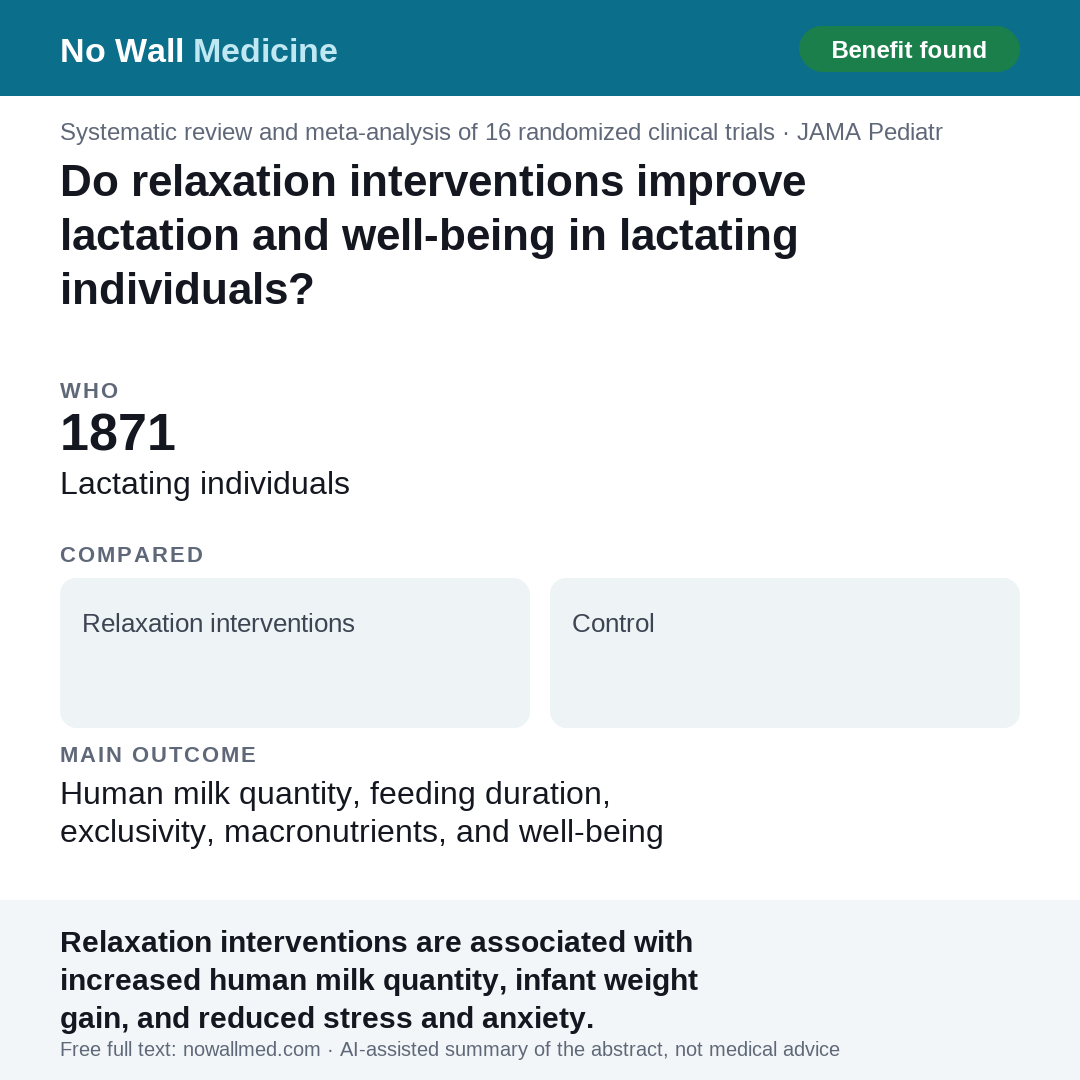
Relaxation Therapy and Human Milk Feeding Outcomes: A Systematic Review and Meta-Analysis
Systematic review and meta-analysis of 16 randomized clinical trialsBenefit found
Do relaxation interventions improve lactation and well-being in lactating individuals?
Who
1871
Lactating individuals
Compared
Relaxation interventions
Control
Main outcome
Human milk quantity, feeding duration, exclusivity, macronutrients, and well-being
Result: standardized mean difference 0.73 (95% CI, 0.57-0.89) for milk quantity
Bottom line: Relaxation interventions are associated with increased human milk quantity, infant weight gain, and reduced stress and anxiety.
JAMA Pediatr · 2024-05-06Download image
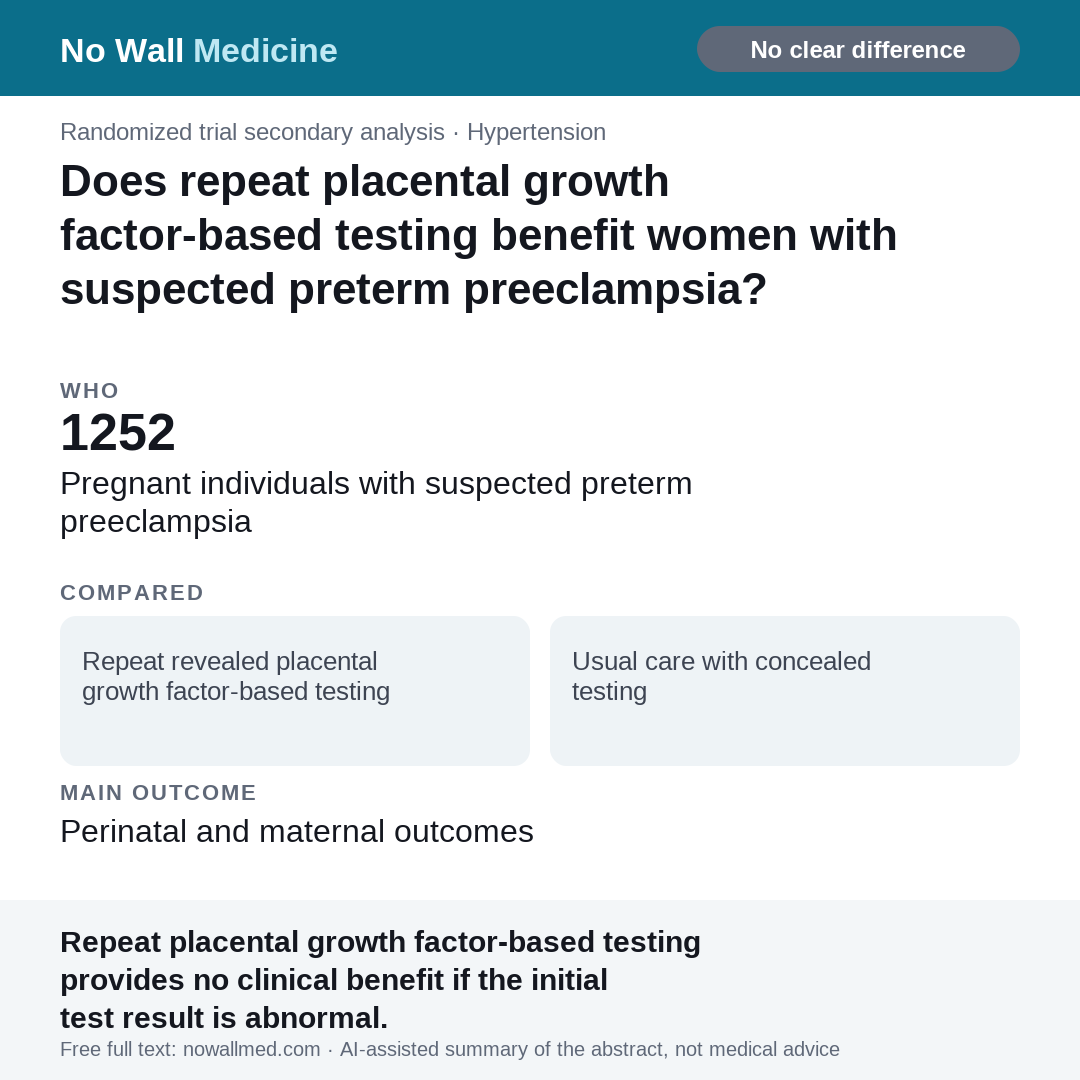
Repeat Placental Growth Factor-Based Testing in Women With Suspected Preterm Preeclampsia: A Stratified Analysis of the PARROT-2 Trial
Randomized trial secondary analysisNo clear difference
Does repeat placental growth factor-based testing benefit women with suspected preterm preeclampsia?
Who
1252
Pregnant individuals with suspected preterm preeclampsia
Compared
Repeat revealed placental growth factor-based testing
Usual care with concealed testing
Main outcome
Perinatal and maternal outcomes
Bottom line: Repeat placental growth factor-based testing provides no clinical benefit if the initial test result is abnormal.
Hypertension · 2024-05-06Download image
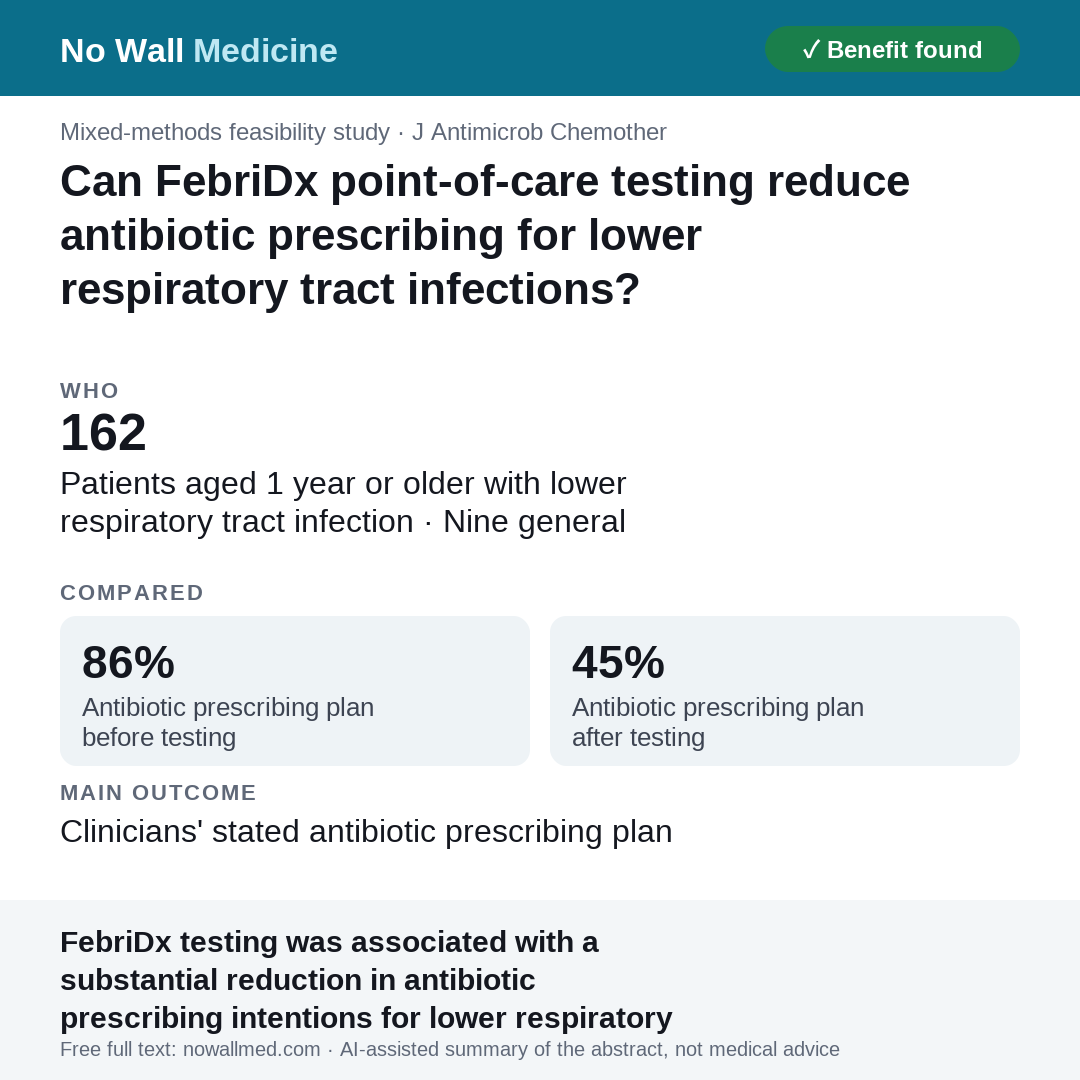
Use of the FebriDx® host-response point-of-care test may reduce antibiotic use for respiratory tract infections in primary care: a mixed-methods feasibility study
Mixed-methods feasibility studyBenefit found
Can FebriDx point-of-care testing reduce antibiotic prescribing for lower respiratory tract infections?
Who
162
Patients aged 1 year or older with lower respiratory tract infection · Nine general practices
Compared
86%Antibiotic prescribing plan before testing (134/155)
45%Antibiotic prescribing plan after testing (69/155)
Main outcome
Clinicians' stated antibiotic prescribing plan
Result: 41% (95% CI: 31%, 51%) difference after testing
Bottom line: FebriDx testing was associated with a substantial reduction in antibiotic prescribing intentions for lower respiratory tract infections.
J Antimicrob Chemother · 2024-05-06Download image
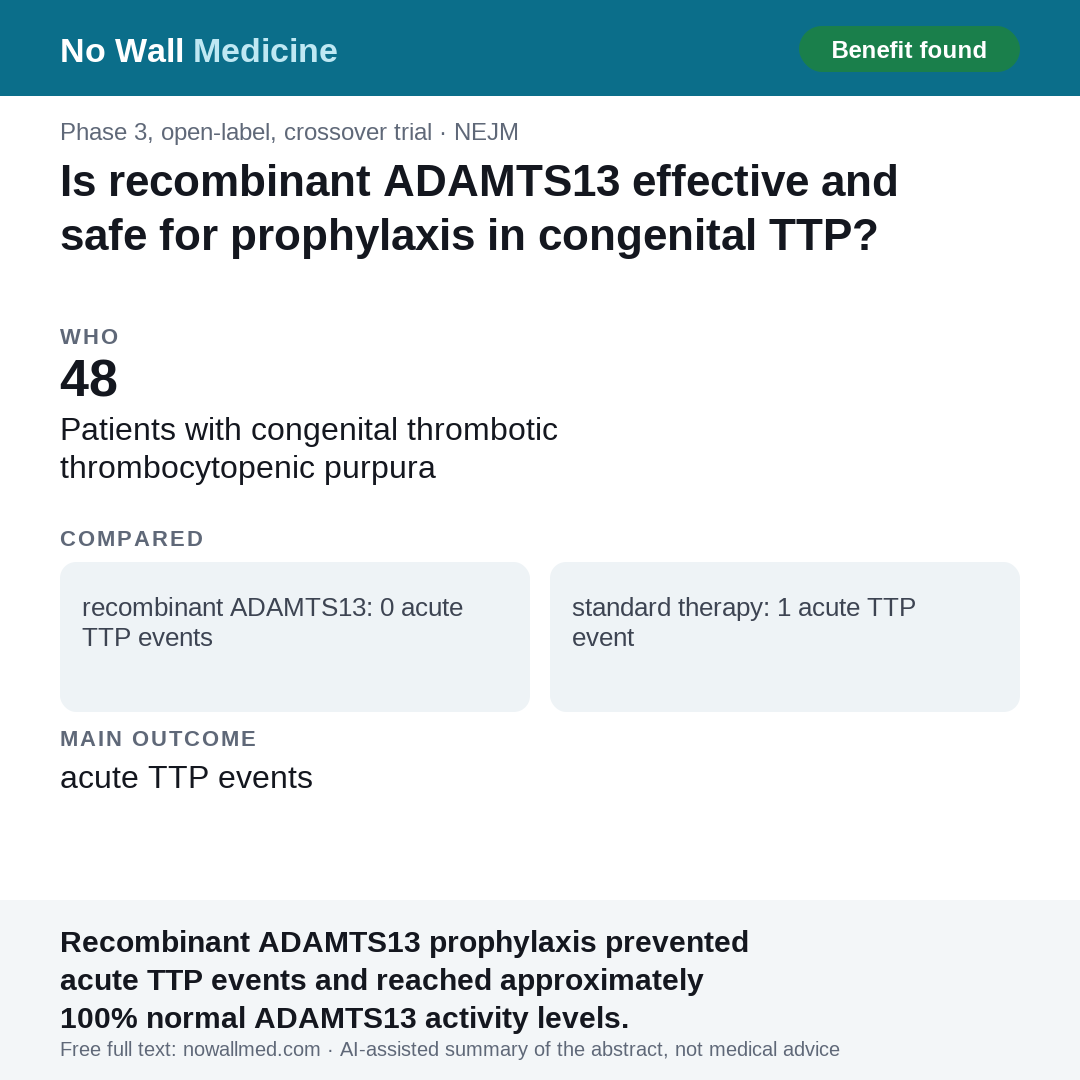
Extended optical treatment versus early patching with an intensive patching regimen in children with amblyopia in Europe (EuPatch): a multicentre, randomised controlled trial
Multicentre, randomised controlled trialBenefit found
Is early patching more effective than extended optical treatment before patching for children with amblyopia?
Who
334
Children aged 3-8 years with newly detected, untreated amblyopia · 30 hospitals in UK, Greece, Austria, Germany, and Switzerland
Compared
Extended optical treatment group: 86 [54%] of 158
Early patching group: 107 [67%] of 159
Main outcome
Successful treatment after 12 weeks of patching
Result: 13% difference; p=0·019
Bottom line: Early patching is more effective than extended optical treatment before patching for treating most children with amblyopia.
Funded by: Action Medical Research, NIHR Clinical Research Network, and Ulverscroft Foundation
Lancet · 2024-05-05Download image
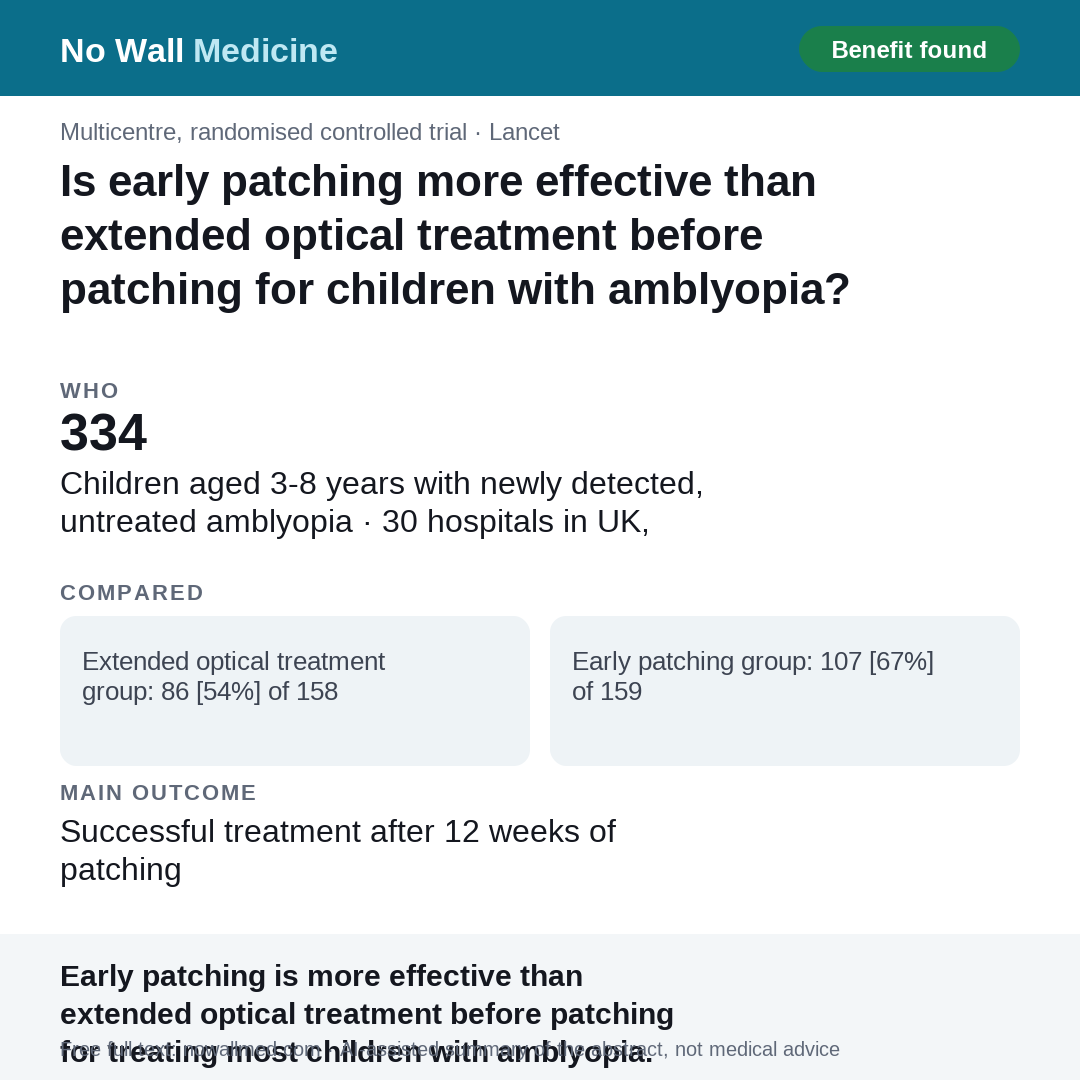
Interventions that prevent or respond to intimate partner violence against women and violence against children: a systematic review
Systematic reviewBenefit found
What interventions prevent or respond to intimate partner violence and violence against children?
Who
Parents, caregivers, women, and children · 16 countries
Compared
Primary prevention interventions
Therapeutic programmes
Main outcome
Reduction in intimate partner violence and violence against children
Bottom line: Coordinated prevention and response programmes can effectively address intimate partner violence and violence against children.
Limitation: Response interventions for both are rare and feasibility in low-income countries is uncertain.
Lancet Public Health · 2024-05-04Download image
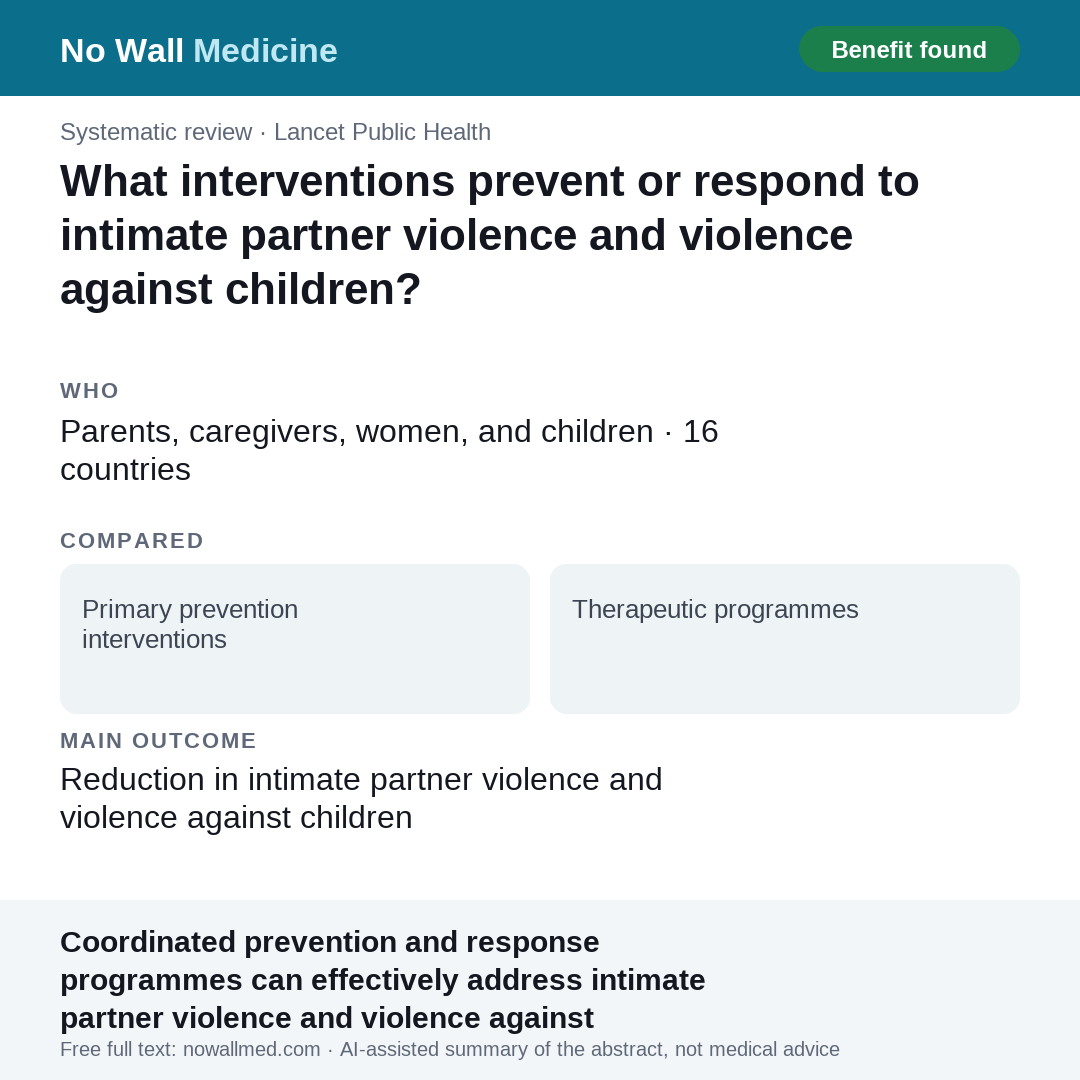
Advance Care Planning for Children With Rare Diseases: A Pilot RCT
Randomized controlled trialBenefit found
Does FACE-Rare improve quality of life
Who
21
Families of children with rare diseases · 1 pediatric hospital
Compared
FACE-Rare: higher meaning and peace
Treatment as usual: lower meaning and peace
Main outcome
Caregivers' quality of life
Result: FACE-Rare caregivers reported 0.9 times lower meaning and peace than TAU (CI: 0.75-0.99)
Bottom line: FACE-Rare improved caregivers' feelings of meaning and peace
Limitation: small sample size
Pediatrics · 2024-05-03Download image
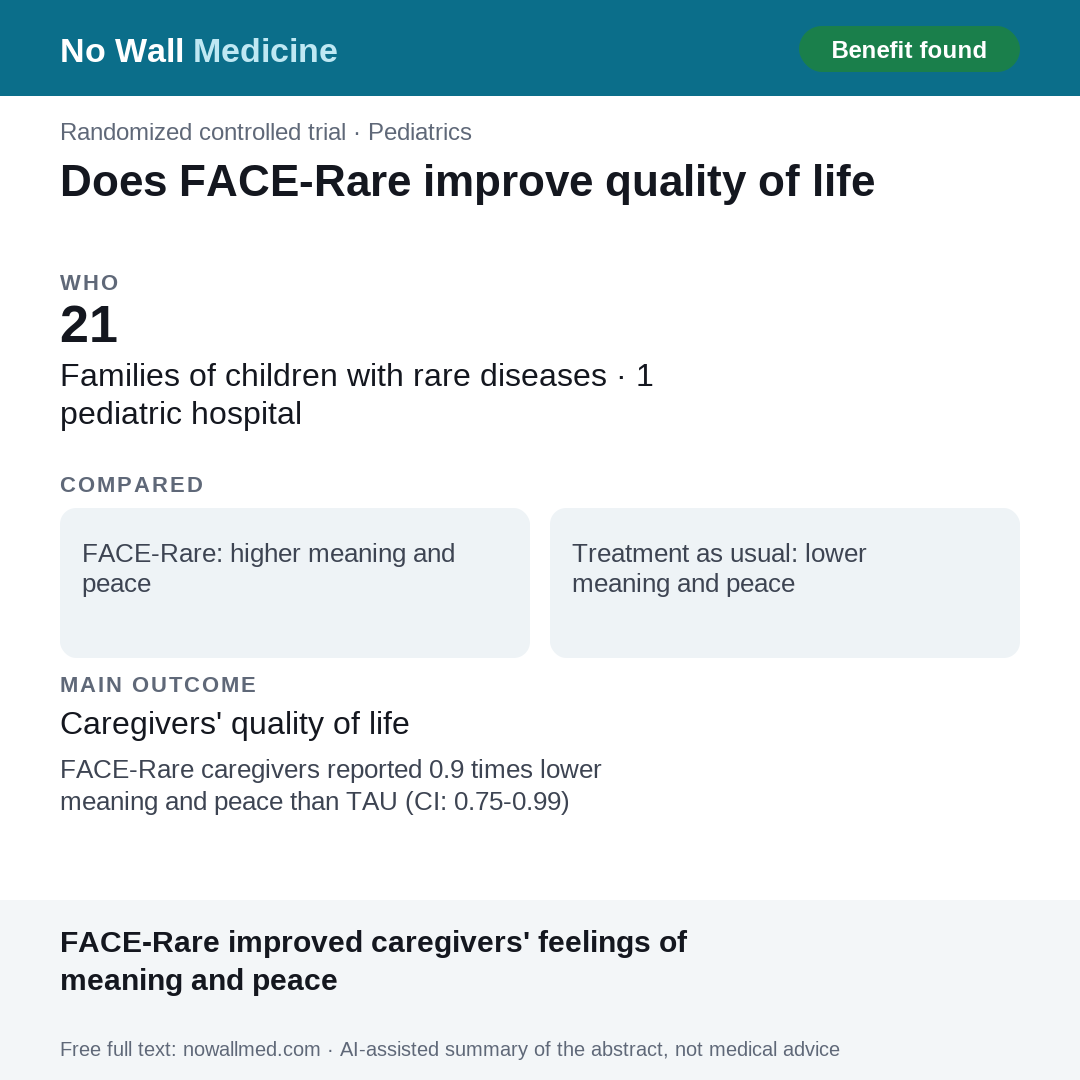
Recombinant ADAMTS13 in Congenital Thrombotic Thrombocytopenic Purpura
Phase 3, open-label, crossover trialBenefit found
Is recombinant ADAMTS13 effective and safe for prophylaxis in congenital TTP?
Who
48
Patients with congenital thrombotic thrombocytopenic purpura
Compared
recombinant ADAMTS13: 0 acute TTP events
standard therapy: 1 acute TTP event
Main outcome
acute TTP events
Bottom line: Recombinant ADAMTS13 prophylaxis prevented acute TTP events and reached approximately 100% normal ADAMTS13 activity levels.
Funded by: Takeda Development Center Americas and Baxalta Innovations
NEJM · 2024-05-02Download image
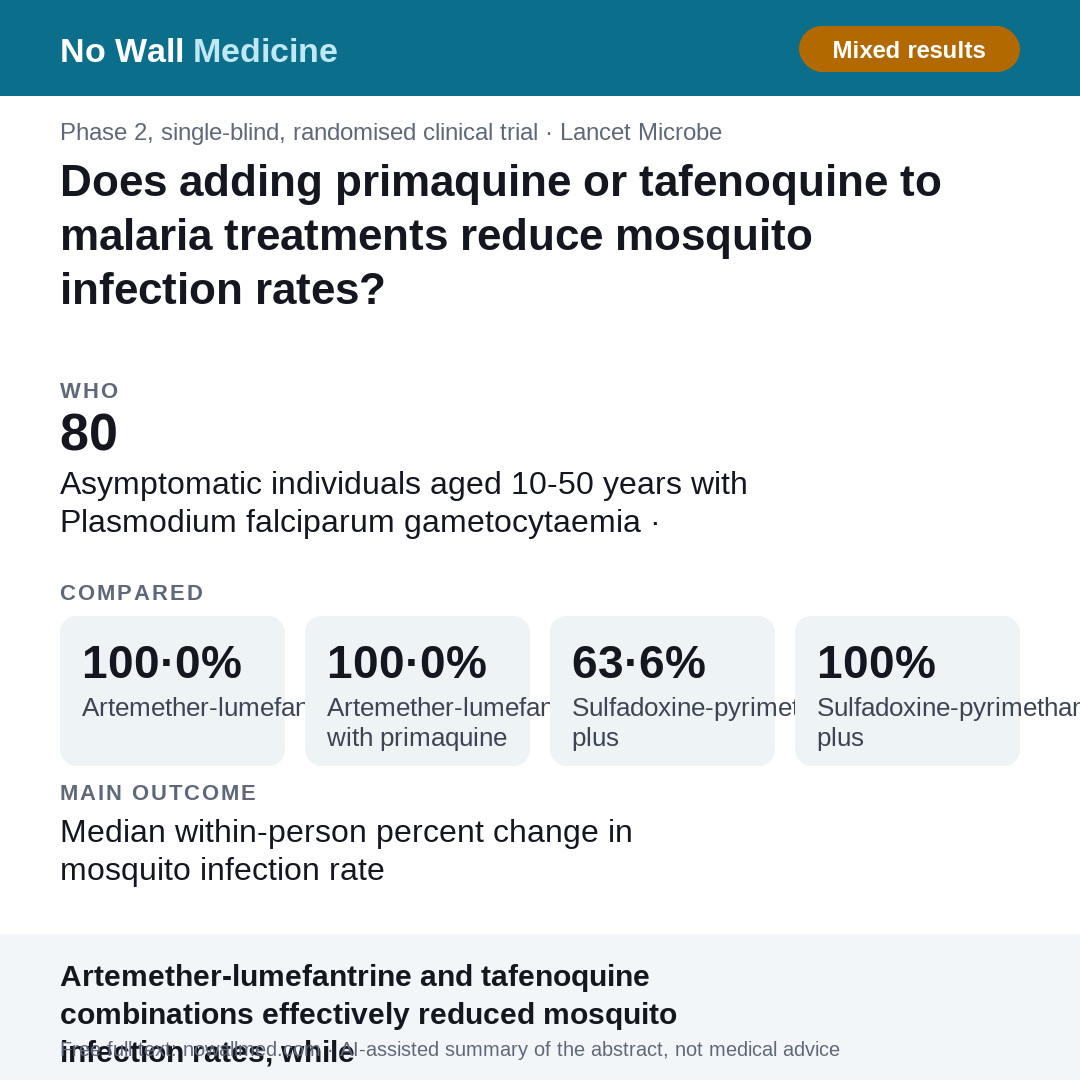
Artemether-lumefantrine with or without single-dose primaquine and sulfadoxine-pyrimethamine plus amodiaquine with or without single-dose tafenoquine to reduce Plasmodium falciparum transmission: a phase 2, single-blind, randomised clinical trial in Ouelessebougou, Mali
Phase 2, single-blind, randomised clinical trialMixed results
Does adding primaquine or tafenoquine to malaria treatments reduce mosquito infection rates?
Who
80
Asymptomatic individuals aged 10-50 years with Plasmodium falciparum gametocytaemia · Ouelessebougou, Mali
Compared
100·0%Artemether-lumefantrine
100·0%Artemether-lumefantrine with primaquine
63·6%Sulfadoxine-pyrimethamine plus amodiaquine
100%Sulfadoxine-pyrimethamine plus amodiaquine with tafenoquine
Main outcome
Median within-person percent change in mosquito infection rate
Bottom line: Artemether-lumefantrine and tafenoquine combinations effectively reduced mosquito infection rates, while sulfadoxine-pyrimethamine plus amodiaquine alone showed considerable post-treatment transmission.
Funded by: Bill & Melinda Gates Foundation
Lancet Microbe · 2024-05-02Download image
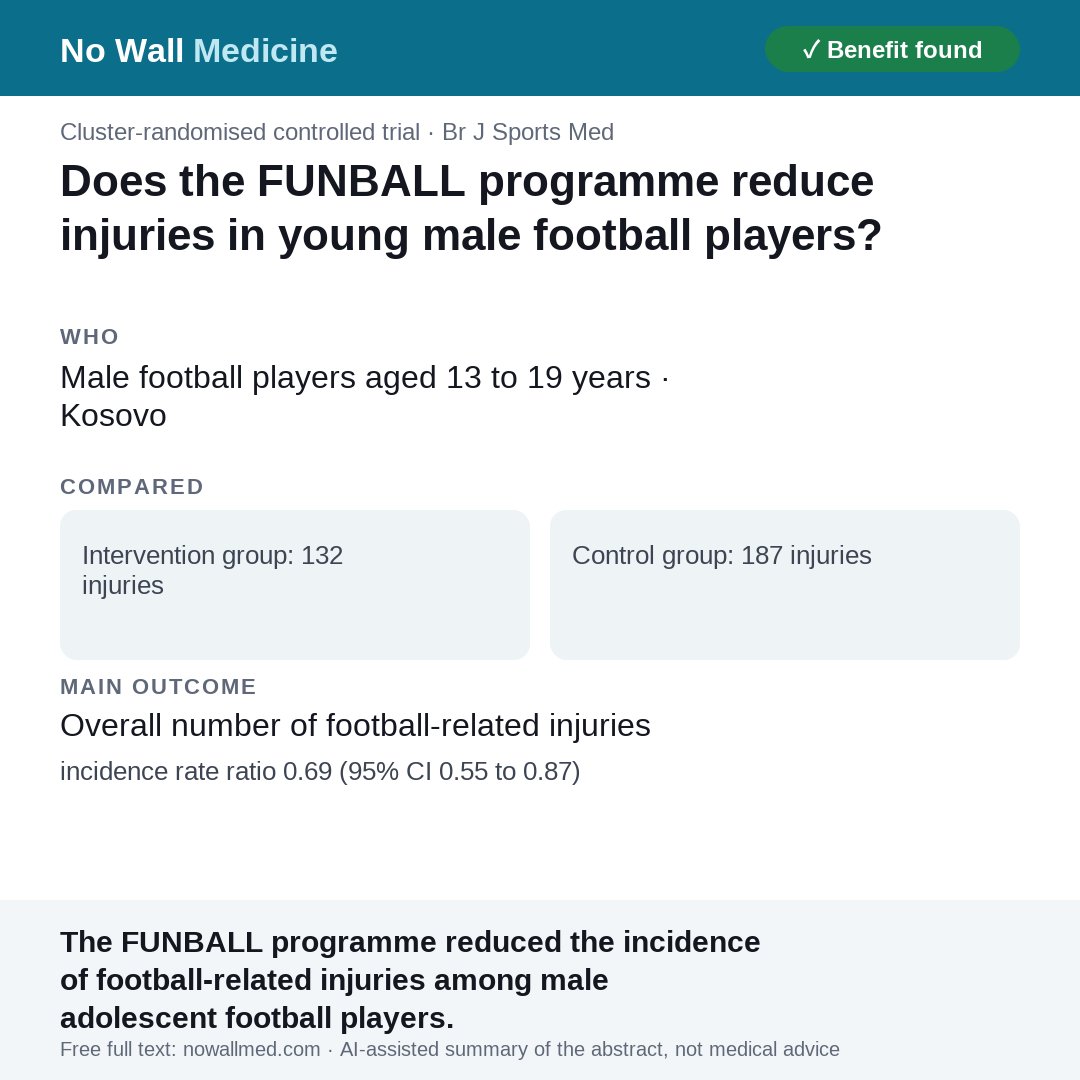
Efficacy of a new injury prevention programme (FUNBALL) in young male football (soccer) players: a cluster-randomised controlled trial
Cluster-randomised controlled trialBenefit found
Does the FUNBALL programme reduce injuries in young male football players?
Who
Male football players aged 13 to 19 years · Kosovo
Compared
Intervention group: 132 injuries
Control group: 187 injuries
Main outcome
Overall number of football-related injuries
Result: incidence rate ratio 0.69 (95% CI 0.55 to 0.87)
Bottom line: The FUNBALL programme reduced the incidence of football-related injuries among male adolescent football players.
Br J Sports Med · 2024-05-02Download image
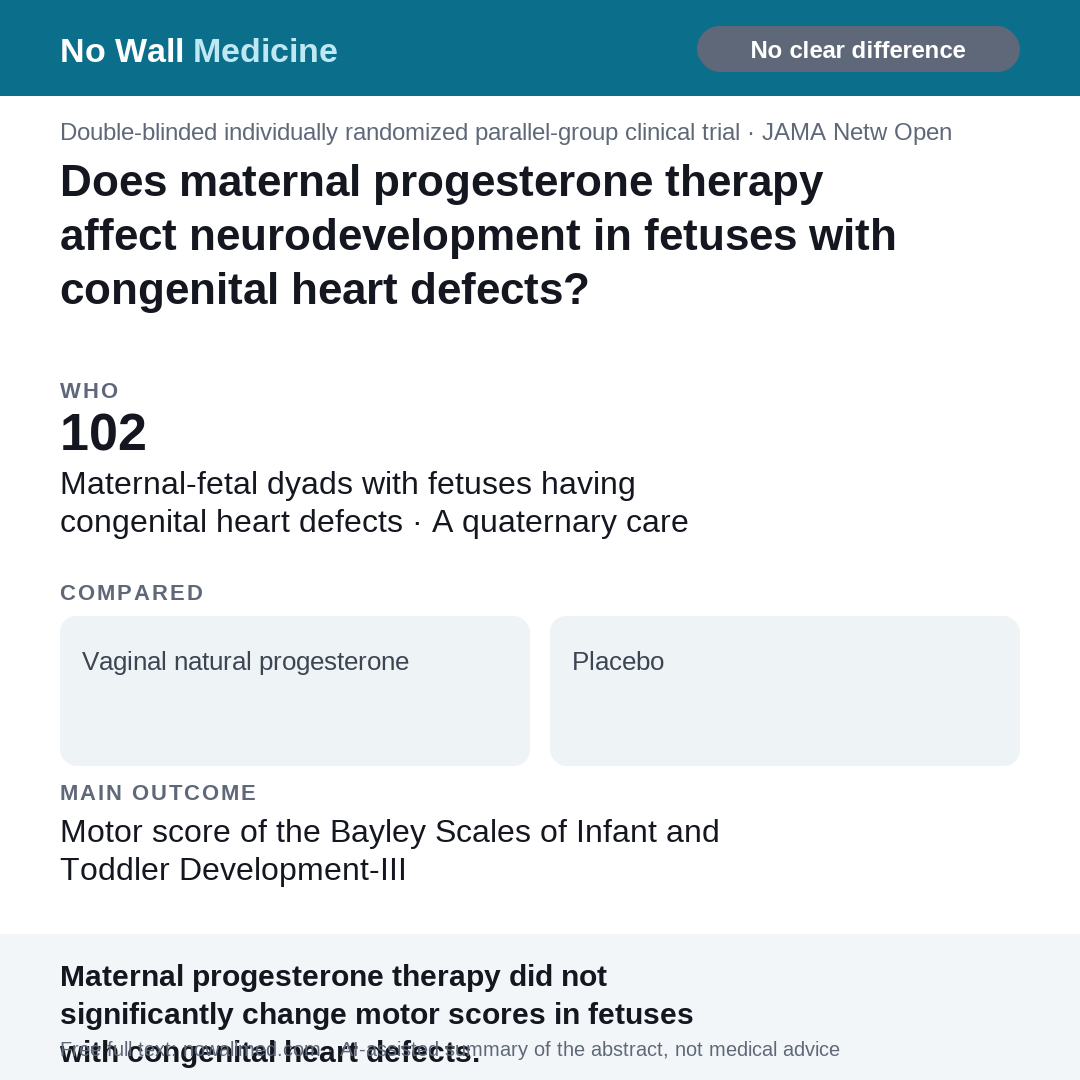
Progesterone for Neurodevelopment in Fetuses With Congenital Heart Defects: A Randomized Clinical Trial
Double-blinded individually randomized parallel-group clinical trialNo clear difference
Does maternal progesterone therapy affect neurodevelopment in fetuses with congenital heart defects?
Who
102
Maternal-fetal dyads with fetuses having congenital heart defects · A quaternary care children's hospital
Compared
Vaginal natural progesterone
Placebo
Main outcome
Motor score of the Bayley Scales of Infant and Toddler Development-III
Result: mean motor score difference 2.5 units (90% CI, -1.9 to 6.9 units)
Bottom line: Maternal progesterone therapy did not significantly change motor scores in fetuses with congenital heart defects.
JAMA Netw Open · 2024-05-01Download image
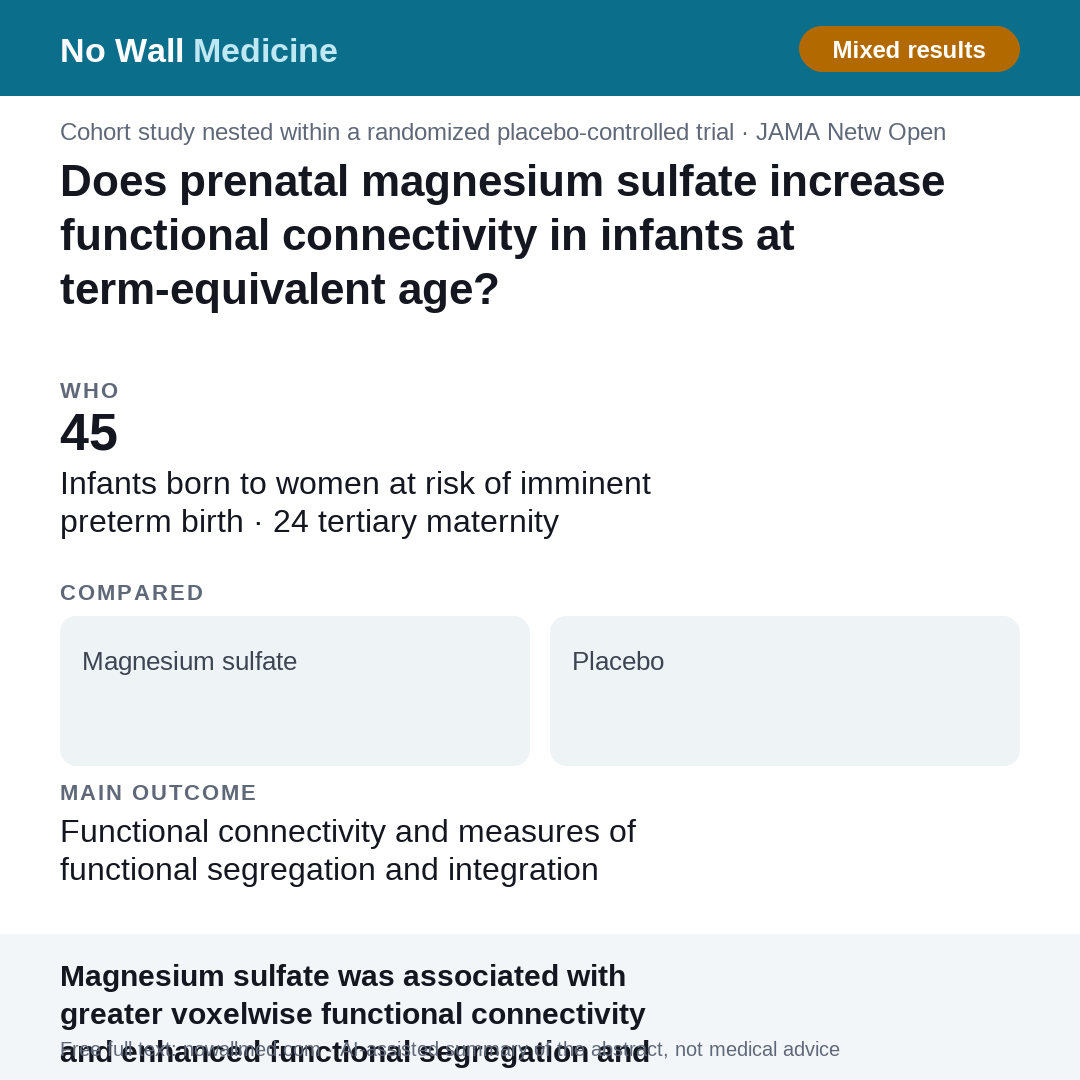
Prenatal Magnesium Sulfate and Functional Connectivity in Offspring at Term-Equivalent Age
Cohort study nested within a randomized placebo-controlled trialMixed results
Does prenatal magnesium sulfate increase functional connectivity in infants at term-equivalent age?
Who
45
Infants born to women at risk of imminent preterm birth · 24 tertiary maternity hospitals
Compared
Magnesium sulfate
Placebo
Main outcome
Functional connectivity and measures of functional segregation and integration
Result: Hedge g, 0.47 (95% CI, -0.13 to 1.07) for clustering coefficients
Bottom line: Magnesium sulfate was associated with greater voxelwise functional connectivity and enhanced functional segregation and integration in infants.
JAMA Netw Open · 2024-05-01Download image
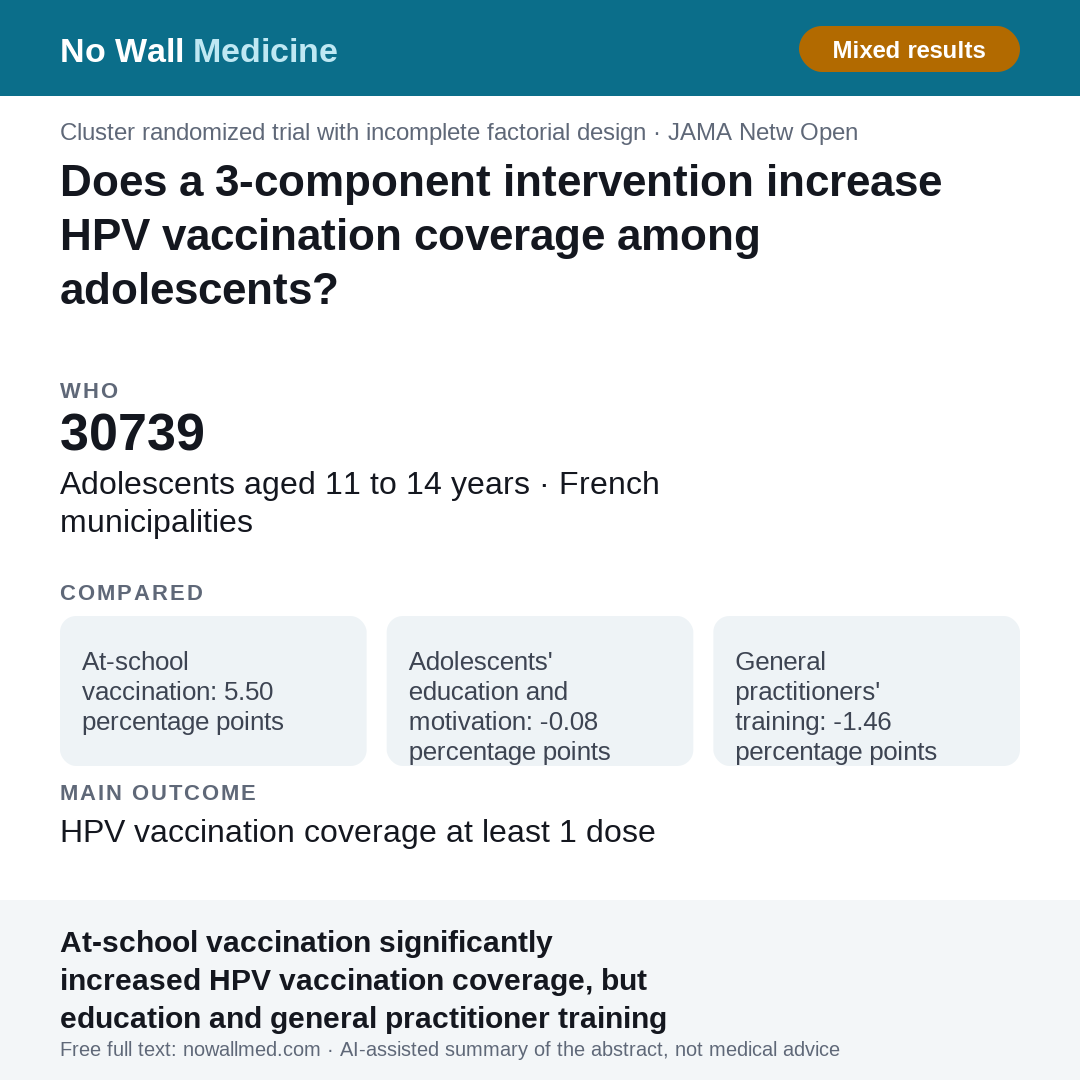
Effectiveness of a School- and Primary Care-Based HPV Vaccination Intervention: The PrevHPV Cluster Randomized Trial
Cluster randomized trial with incomplete factorial designMixed results
Does a 3-component intervention increase HPV vaccination coverage among adolescents?
Who
30739
Adolescents aged 11 to 14 years · French municipalities
Compared
At-school vaccination: 5.50 percentage points
Adolescents' education and motivation: -0.08 percentage points
General practitioners' training: -1.46 percentage points
Main outcome
HPV vaccination coverage at least 1 dose
Result: 5.50 percentage points [95% CI, 3.13-7.88 percentage points]
Bottom line: At-school vaccination significantly increased HPV vaccination coverage, but education and general practitioner training showed no significant effect.
Limitation: The trial occurred during the late COVID-19 pandemic with limited school and general practitioner participation.
JAMA Netw Open · 2024-05-01Download image