Visual abstracts
New randomized trials and meta-analyses from leading journals at a glance: who was studied, what was compared, and what was found. Every paper is free to read in full.
All specialtiesCardiology 415Oncology 333Gastroenterology & Hepatology 168Infectious Disease 332Neurology 189Psychiatry & Mental Health 284Pulmonology 190Critical Care 131Endocrinology & Diabetes 252Pediatrics 200Surgery 140Orthopedics & Sports Medicine 89Neurosurgery 26Cardiothoracic & Vascular Surgery 49Plastic & Reconstructive Surgery 82Nephrology 79Rheumatology 83Hematology 101Dermatology 43Ophthalmology 72Obstetrics & Gynecology 129Public & Global Health 132Radiology & Imaging 39Anesthesiology 76Urology 98ENT (Otolaryngology) 53Emergency Medicine 43Allergy & Immunology 49Geriatrics 123Family Medicine & Primary Care 74Medical Genetics & Genomics 40Pathology & Laboratory Medicine 6Physical Medicine & Rehabilitation 109Palliative Care 63Nutrition 146Digital Health & AI 364General Medicine 51
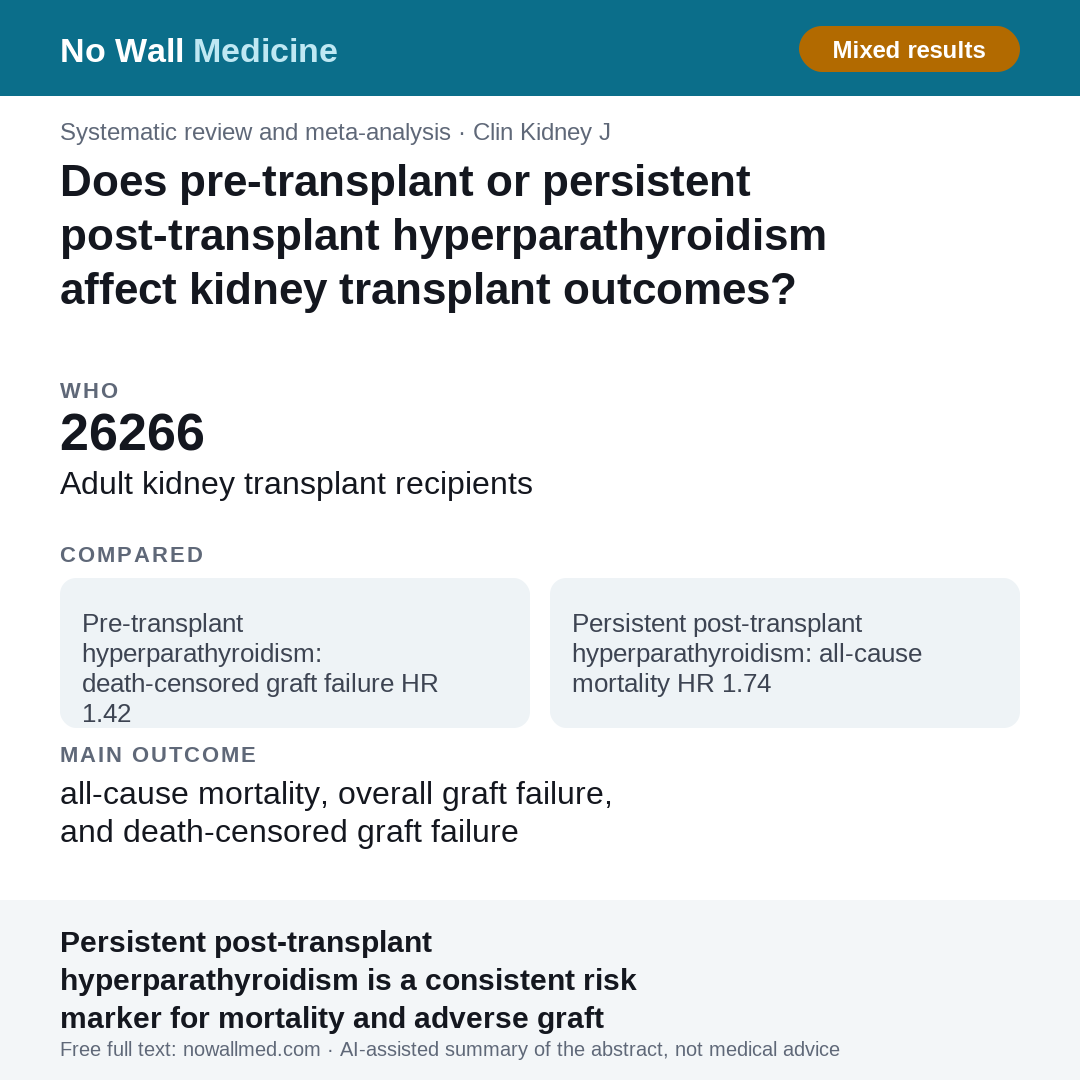
Pre-transplant and persistent post-transplant hyperparathyroidism and kidney transplant outcomes: a systematic review and meta-analysis
Systematic review and meta-analysisMixed results
Does pre-transplant or persistent post-transplant hyperparathyroidism affect kidney transplant outcomes?
Who
26266
Adult kidney transplant recipients
Compared
Pre-transplant hyperparathyroidism: death-censored graft failure HR 1.42
Persistent post-transplant hyperparathyroidism: all-cause mortality HR 1.74
Main outcome
all-cause mortality, overall graft failure, and death-censored graft failure
Result: persistent hyperparathyroidism: all-cause mortality HR 1.74, overall graft failure HR 2.16, death-censored graft failure HR 1.92
Bottom line: Persistent post-transplant hyperparathyroidism is a consistent risk marker for mortality and adverse graft outcomes.
Limitation: Heterogeneous definitions and variable timing of assessment; need for standardized definitions and prospective studies.
Clin Kidney J · 2026-06-15Download image
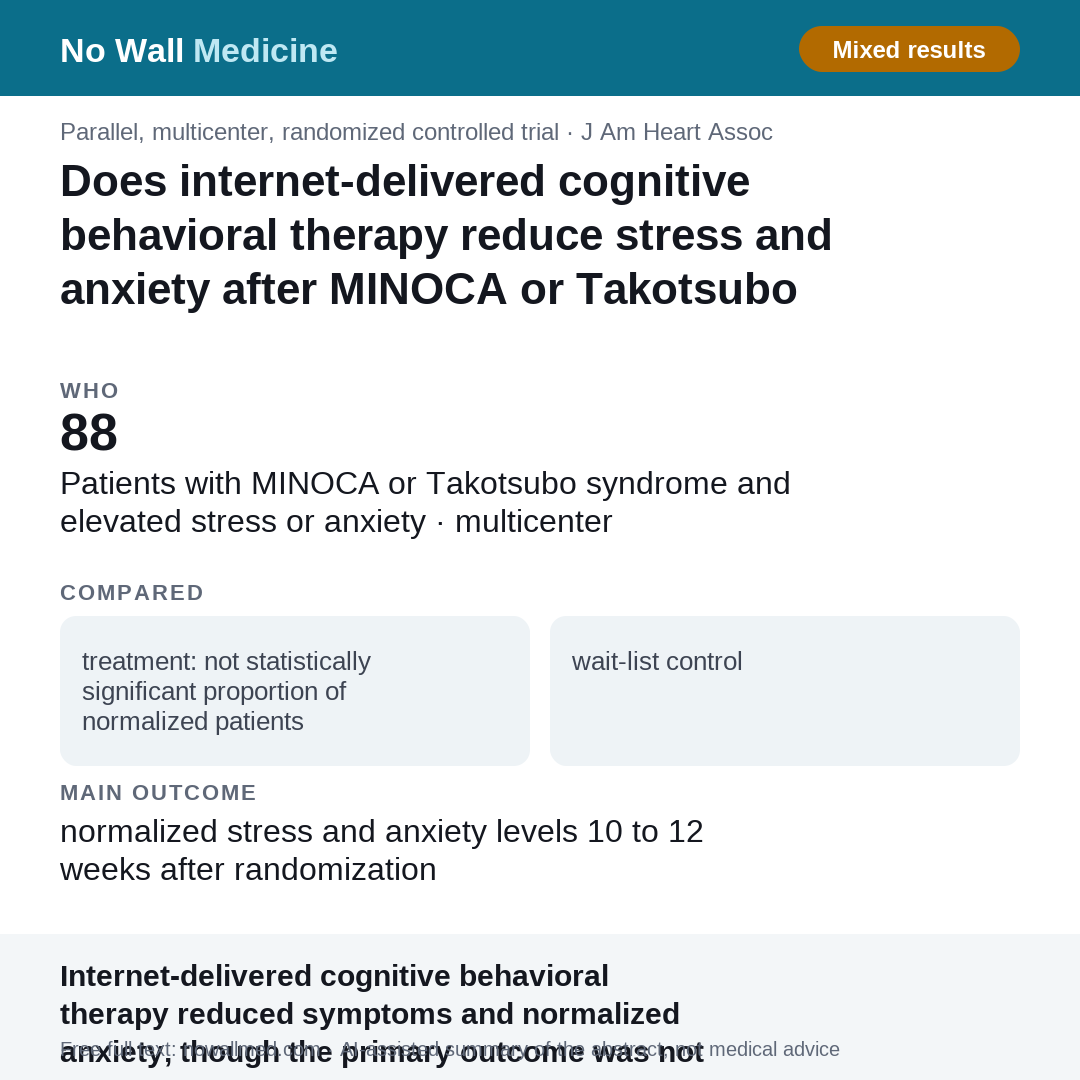
Randomized Controlled Trial of Internet-Delivered Cognitive Behavioral Therapy After Myocardial Infarction With Nonobstructive Coronary Arteries or Takotsubo Syndrome
Parallel, multicenter, randomized controlled trialMixed results
Does internet-delivered cognitive behavioral therapy reduce stress and anxiety after MINOCA or Takotsubo syndrome?
Who
88
Patients with MINOCA or Takotsubo syndrome and elevated stress or anxiety · multicenter
Compared
treatment: not statistically significant proportion of normalized patients
wait-list control
Main outcome
normalized stress and anxiety levels 10 to 12 weeks after randomization
Result: odds ratio 2.37 (95% CI 0.88-6.38)
Bottom line: Internet-delivered cognitive behavioral therapy reduced symptoms and normalized anxiety, though the primary outcome was not statistically significant.
J Am Heart Assoc · 2026-06-15Download image
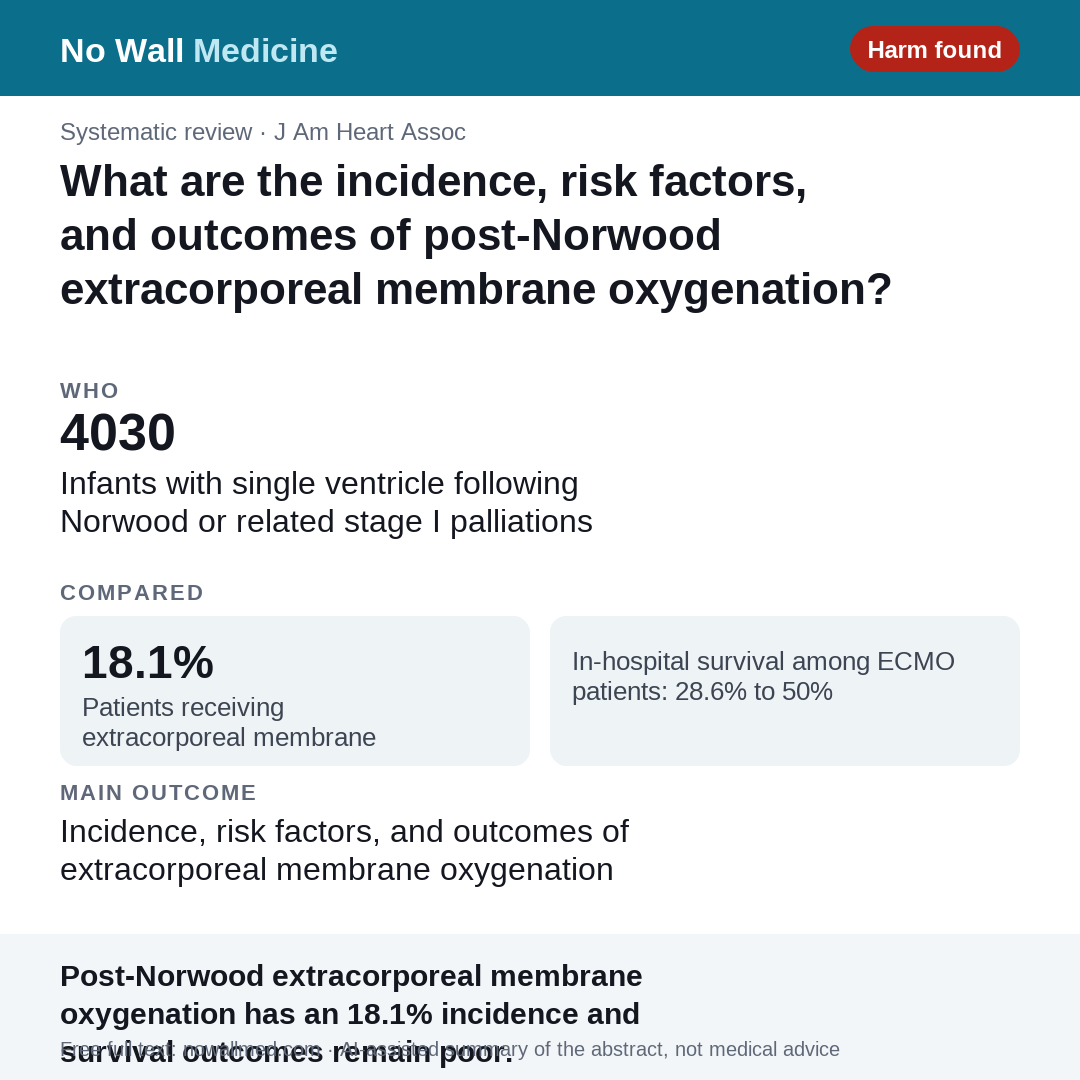
Extracorporeal Membrane Oxygenation in the Interstage Period After Norwood and Related Stage I Palliations in Infants With Single Ventricle: A Systematic Review of Incidence, Risk Factors, and Outcomes
Systematic reviewHarm found
What are the incidence, risk factors, and outcomes of post-Norwood extracorporeal membrane oxygenation?
Who
4030
Infants with single ventricle following Norwood or related stage I palliations
Compared
18.1%Patients receiving extracorporeal membrane oxygenation (685/3775 patients)
In-hospital survival among ECMO patients: 28.6% to 50%
Main outcome
Incidence, risk factors, and outcomes of extracorporeal membrane oxygenation
Bottom line: Post-Norwood extracorporeal membrane oxygenation has an 18.1% incidence and survival outcomes remain poor.
J Am Heart Assoc · 2026-06-15Download image
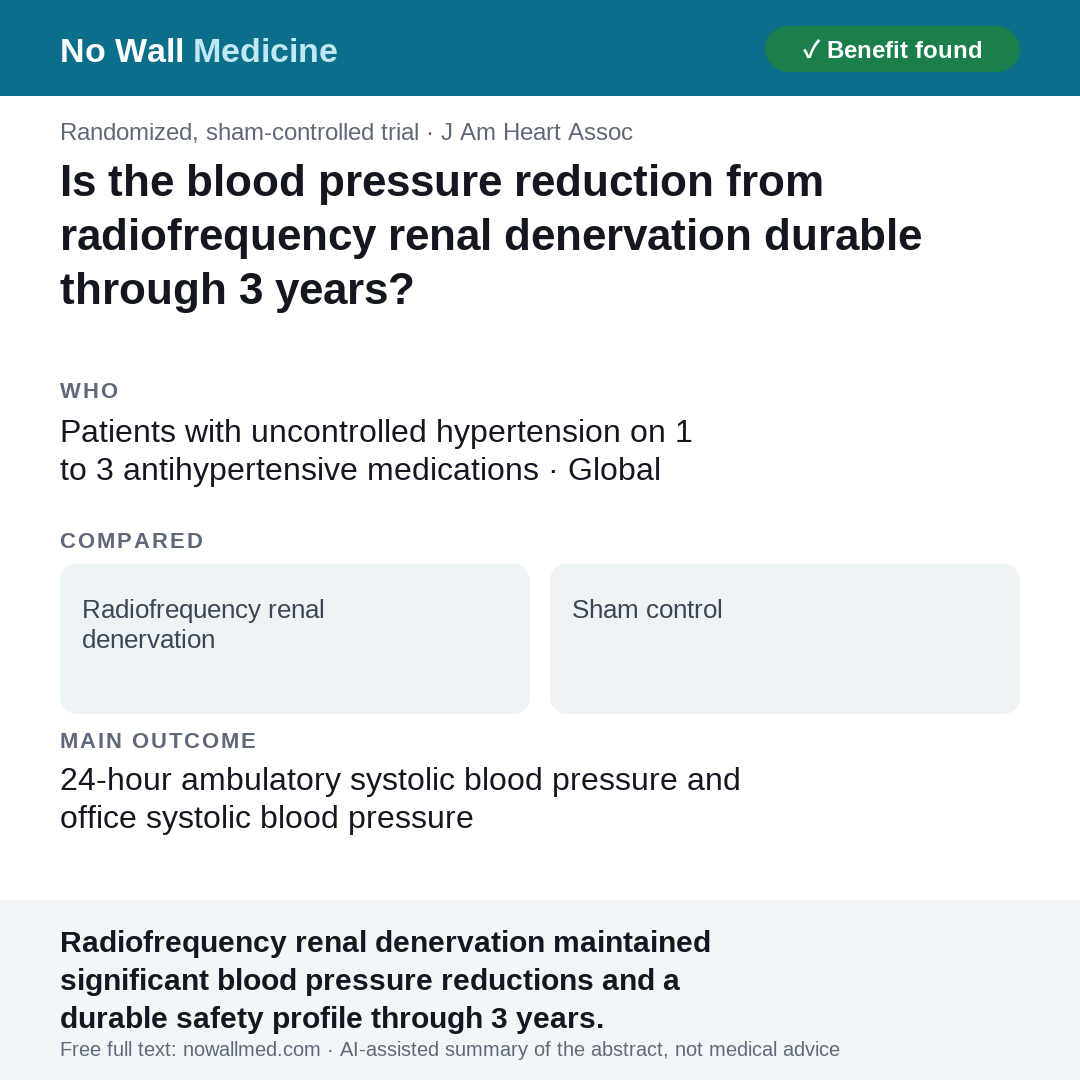
Three-Year Durability of Radiofrequency Renal Denervation: SPYRAL HTN-ON MED
Randomized, sham-controlled trialBenefit found
Is the blood pressure reduction from radiofrequency renal denervation durable through 3 years?
Who
Patients with uncontrolled hypertension on 1 to 3 antihypertensive medications · Global
Compared
Radiofrequency renal denervation
Sham control
Main outcome
24-hour ambulatory systolic blood pressure and office systolic blood pressure
Result: treatment difference, -4.7 mm Hg (P=0.0028) for 24-hour ambulatory systolic blood pressure
Bottom line: Radiofrequency renal denervation maintained significant blood pressure reductions and a durable safety profile through 3 years.
J Am Heart Assoc · 2026-06-15Download image
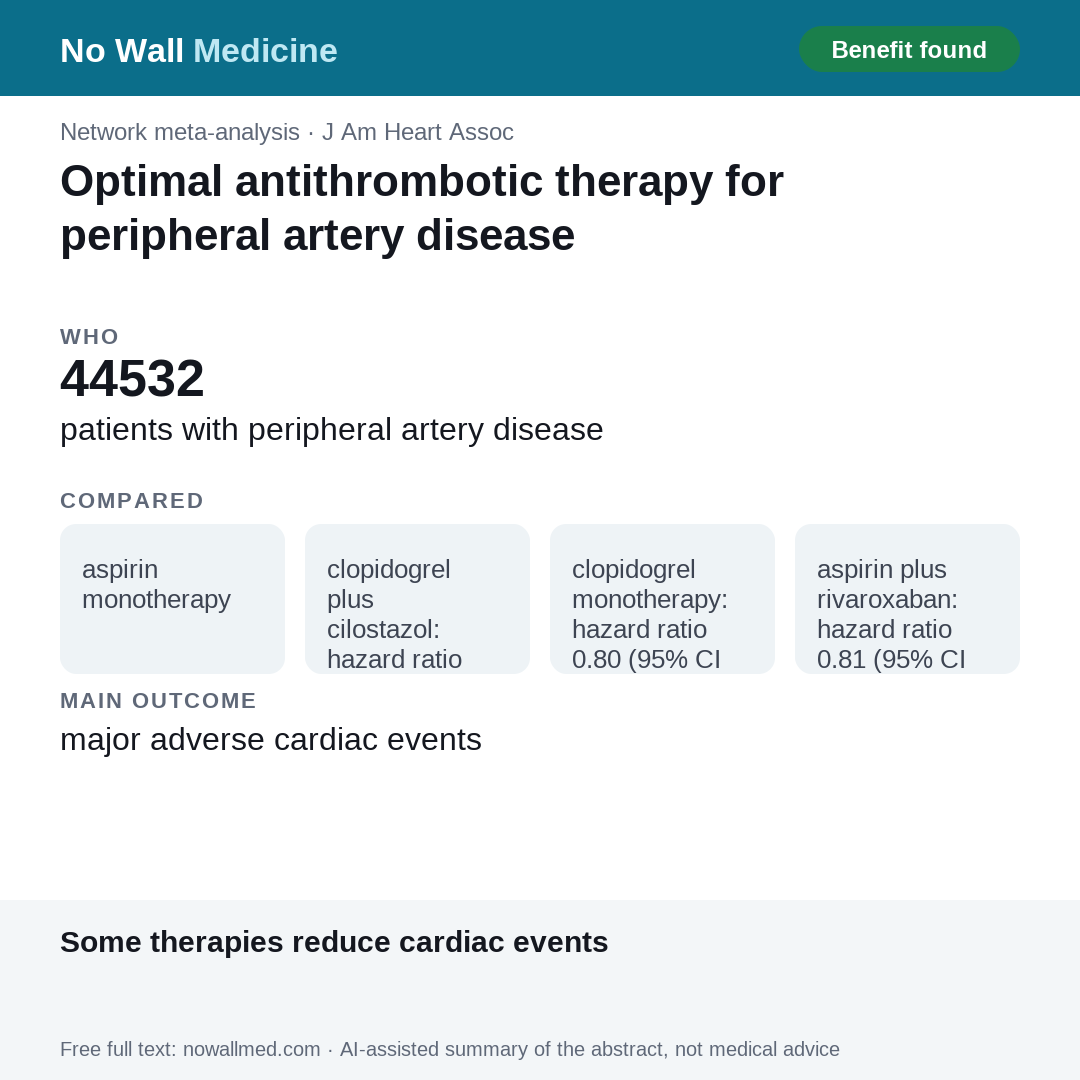
Optimal Antithrombotic Therapy for Peripheral Artery Disease: A Systematic Review and Network Meta-Analysis
Network meta-analysisBenefit found
Optimal antithrombotic therapy for peripheral artery disease
Who
44532
patients with peripheral artery disease
Compared
aspirin monotherapy
clopidogrel plus cilostazol: hazard ratio 0.37 (95% CI 0.20-0.72)
clopidogrel monotherapy: hazard ratio 0.80 (95% CI 0.67-0.96)
aspirin plus rivaroxaban: hazard ratio 0.81 (95% CI 0.72-0.92)
Main outcome
major adverse cardiac events
Bottom line: Some therapies reduce cardiac events
J Am Heart Assoc · 2026-06-15Download image
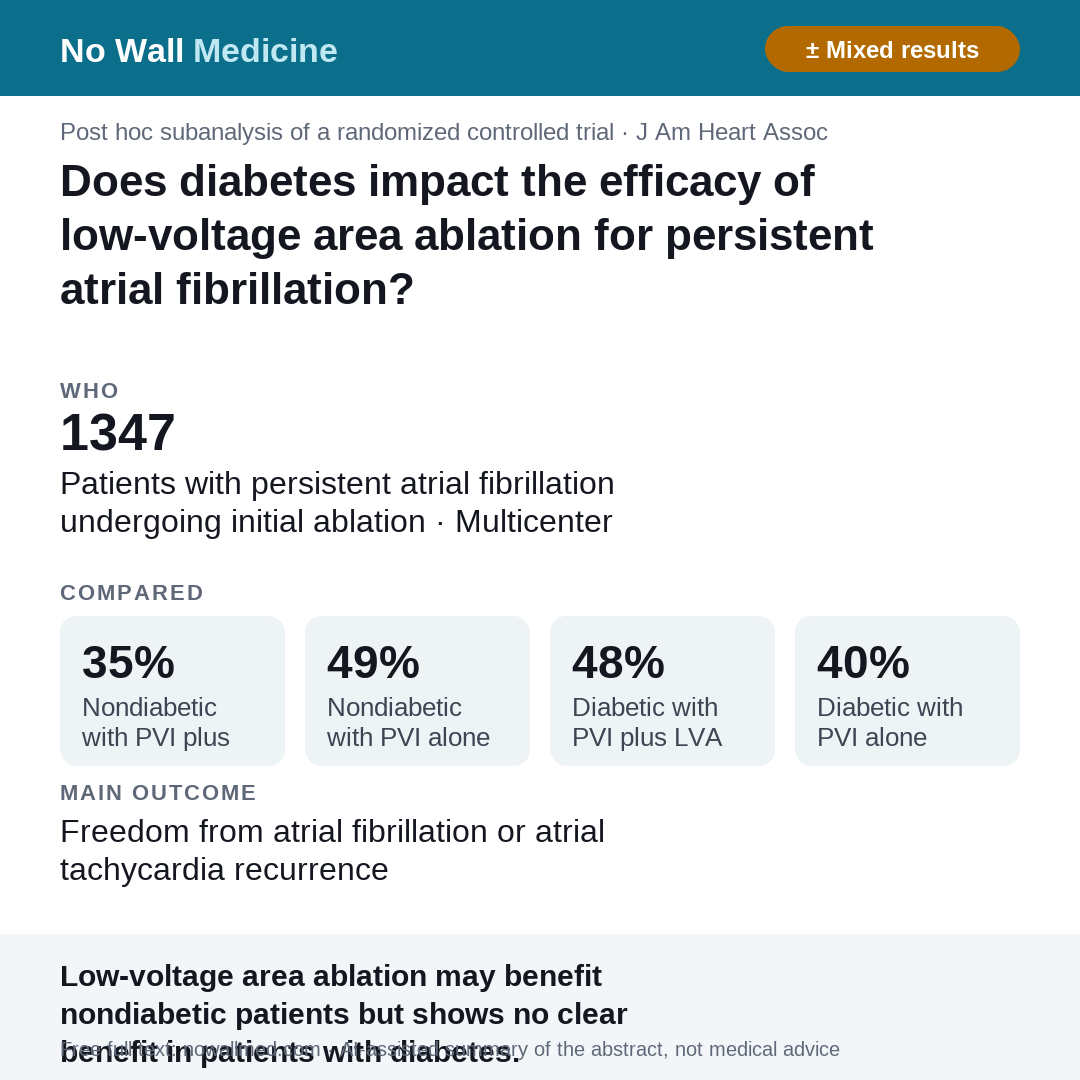
Impact of Diabetes on the Efficacy of Low-Voltage Area Ablation for Persistent Atrial Fibrillation: A Subanalysis of the SUPPRESS-AF Trial
Post hoc subanalysis of a randomized controlled trialMixed results
Does diabetes impact the efficacy of low-voltage area ablation for persistent atrial fibrillation?
Who
1347
Patients with persistent atrial fibrillation undergoing initial ablation · Multicenter
Compared
35%Nondiabetic with PVI plus LVA ablation
49%Nondiabetic with PVI alone
48%Diabetic with PVI plus LVA ablation
40%Diabetic with PVI alone
Main outcome
Freedom from atrial fibrillation or atrial tachycardia recurrence
Result: P for interaction=0.041
Bottom line: Low-voltage area ablation may benefit nondiabetic patients but shows no clear benefit in patients with diabetes.
Limitation: This was an exploratory post hoc subanalysis
J Am Heart Assoc · 2026-06-15Download image
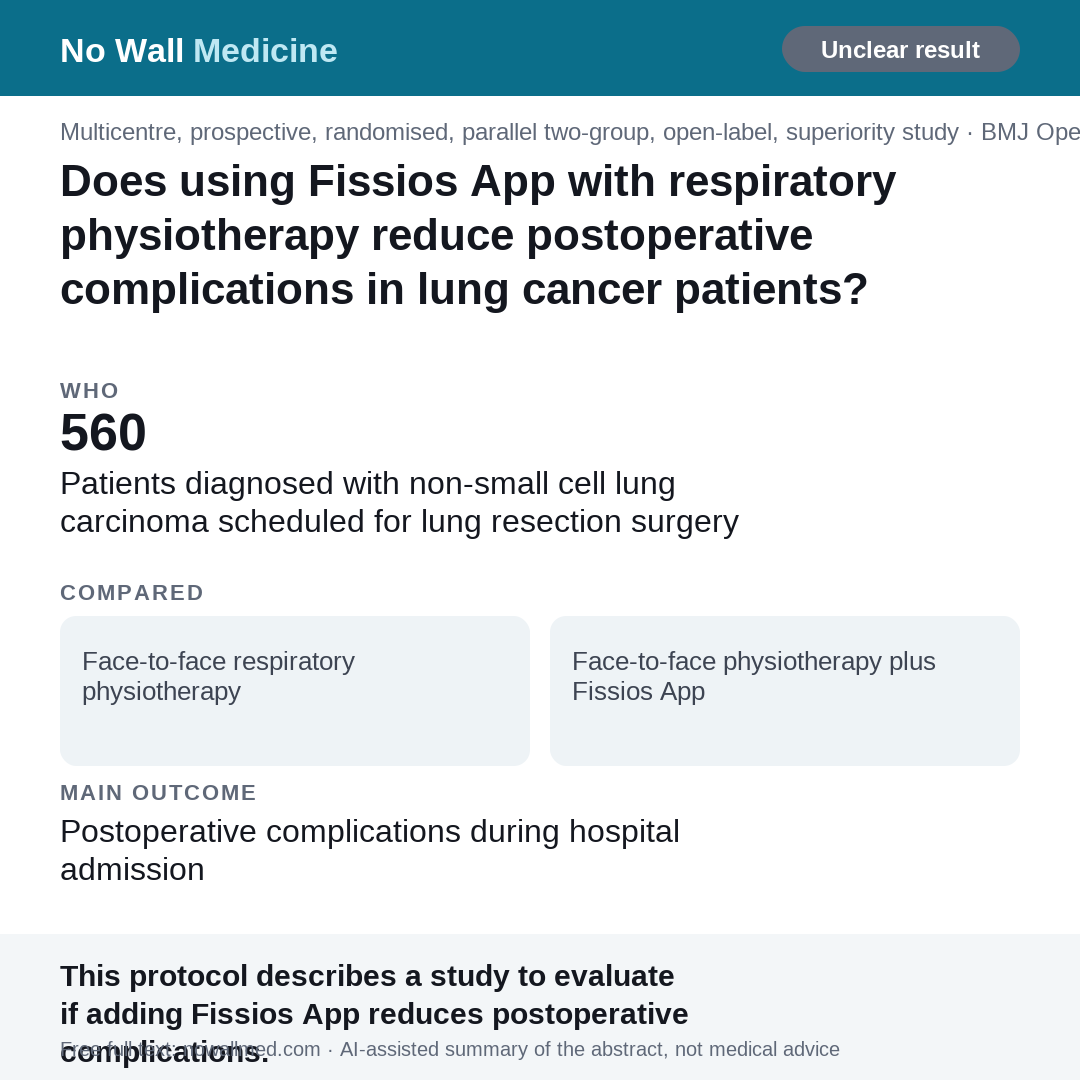
Fissios and postoperative complications (FPoC trial): a multicentre, randomised, controlled clinical trial
Multicentre, prospective, randomised, parallel two-group, open-label, superiority studyUnclear result
Does using Fissios App with respiratory physiotherapy reduce postoperative complications in lung cancer patients?
Who
560
Patients diagnosed with non-small cell lung carcinoma scheduled for lung resection surgery · Multicentre
Compared
Face-to-face respiratory physiotherapy
Face-to-face physiotherapy plus Fissios App
Main outcome
Postoperative complications during hospital admission
Bottom line: This protocol describes a study to evaluate if adding Fissios App reduces postoperative complications.
BMJ Open Respir Res · 2026-06-15Download image
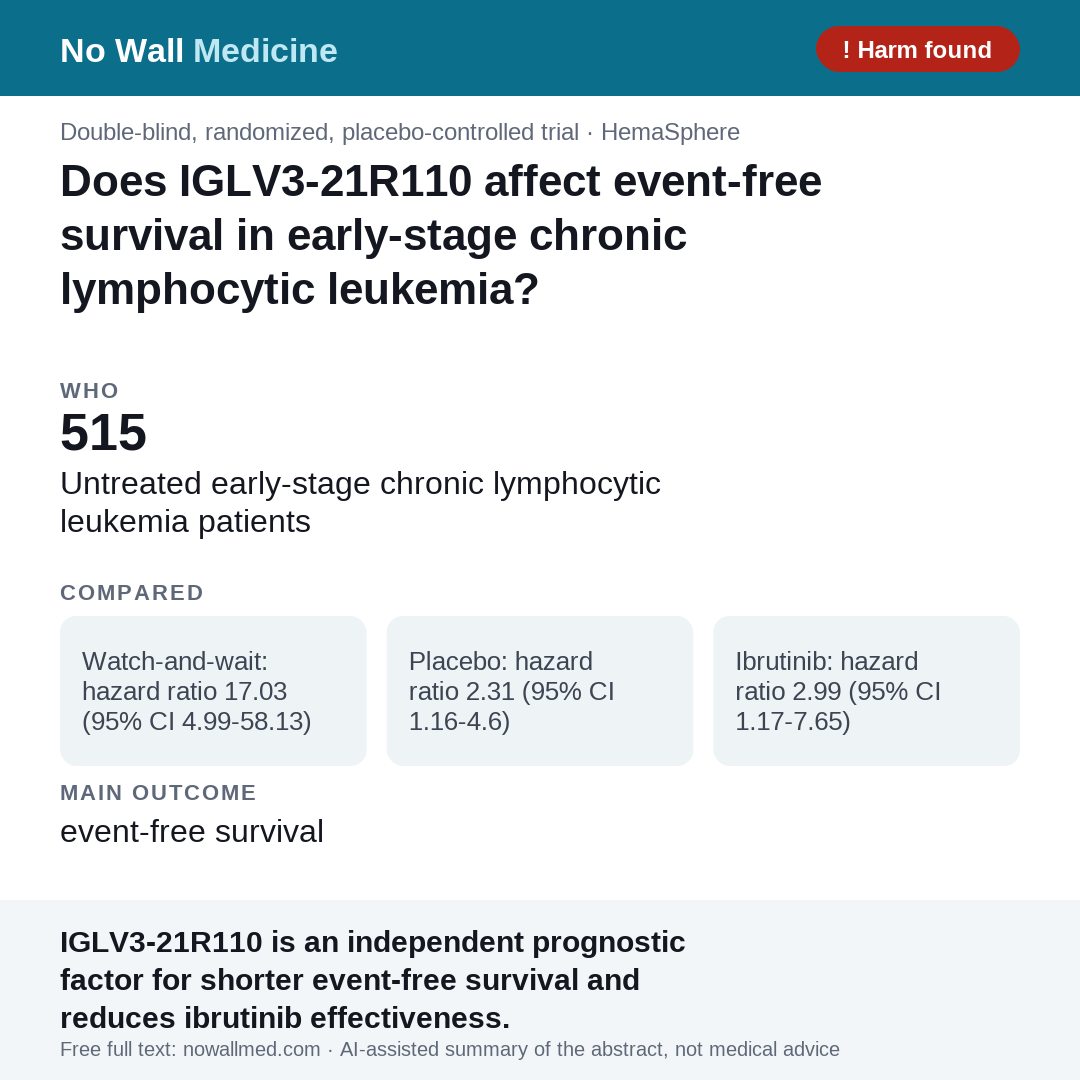
IGLV3-21R110 and ibrutinib treatment: Results from the double-blind, randomized, placebo-controlled GCLLSG CLL12 trial in early-stage CLL
Double-blind, randomized, placebo-controlled trialHarm found
Does IGLV3-21R110 affect event-free survival in early-stage chronic lymphocytic leukemia?
Who
515
Untreated early-stage chronic lymphocytic leukemia patients
Compared
Watch-and-wait: hazard ratio 17.03 (95% CI 4.99-58.13)
Placebo: hazard ratio 2.31 (95% CI 1.16-4.6)
Ibrutinib: hazard ratio 2.99 (95% CI 1.17-7.65)
Main outcome
event-free survival
Result: hazard ratio 3.18 (95% CI 1.73-5.83)
Bottom line: IGLV3-21R110 is an independent prognostic factor for shorter event-free survival and reduces ibrutinib effectiveness.
HemaSphere · 2026-06-15Download image
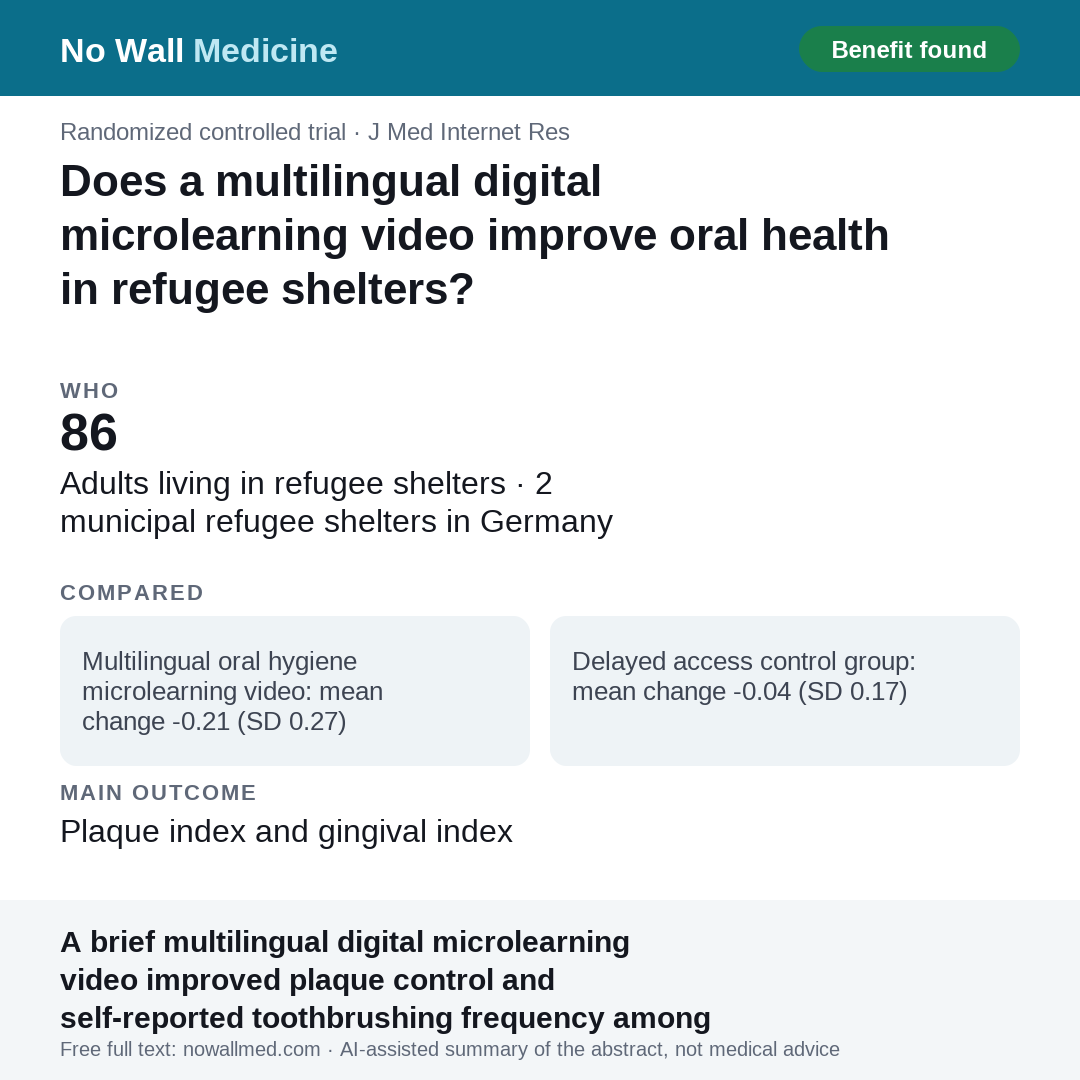
A Multilingual Digital Microlearning Intervention for Oral Health in Refugee Shelters: Randomized Controlled Trial
Randomized controlled trialBenefit found
Does a multilingual digital microlearning video improve oral health in refugee shelters?
Who
86
Adults living in refugee shelters · 2 municipal refugee shelters in Germany
Compared
Multilingual oral hygiene microlearning video: mean change -0.21 (SD 0.27)
Delayed access control group: mean change -0.04 (SD 0.17)
Main outcome
Plaque index and gingival index
Bottom line: A brief multilingual digital microlearning video improved plaque control and self-reported toothbrushing frequency among refugees.
Limitation: Need for larger, prospectively powered trials with longer follow-up and blinded assessment.
J Med Internet Res · 2026-06-15Download image
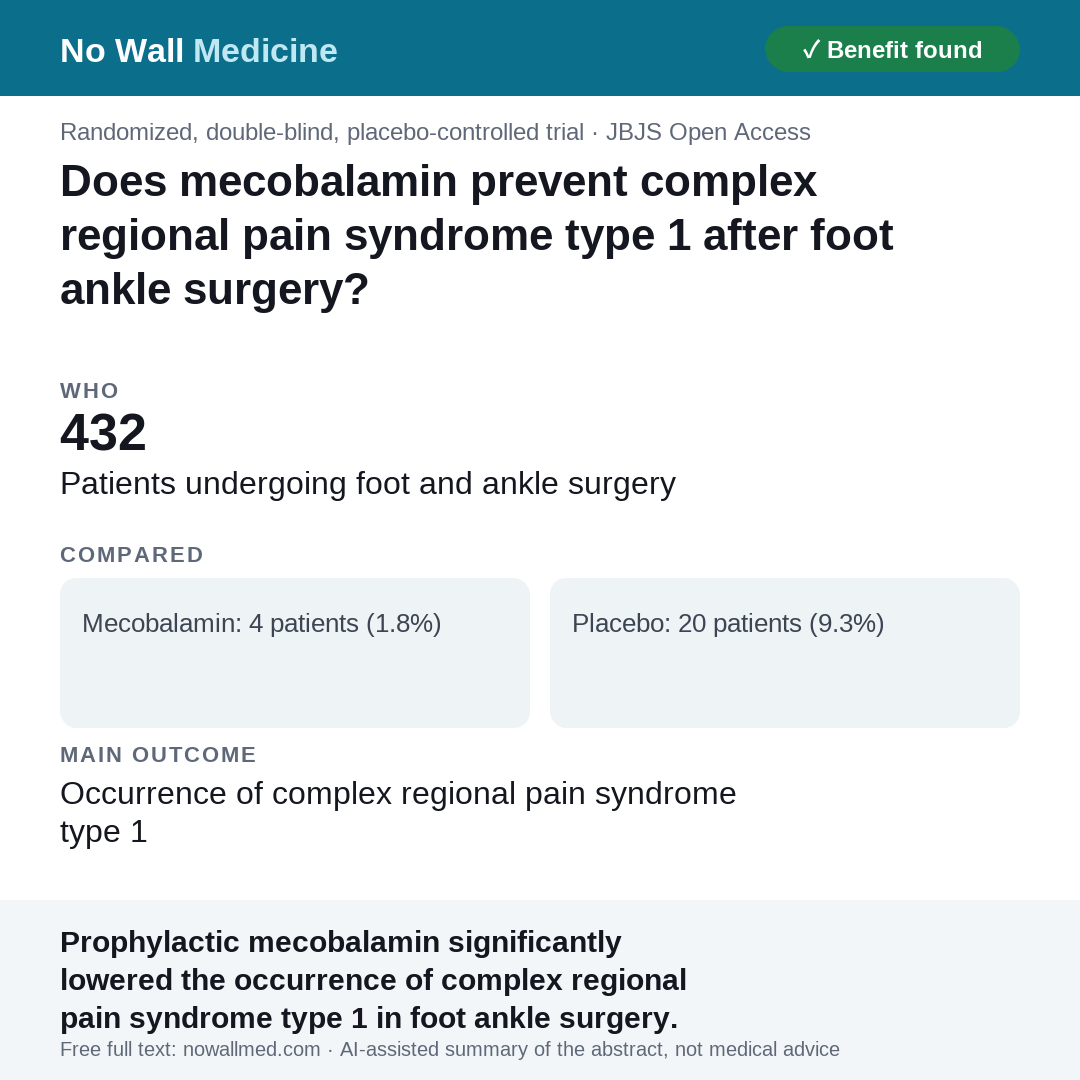
Effects of Mecobalamin on the Prevention of Complex Regional Pain Syndrome Type 1 Following Foot Ankle Surgery: A Randomized, Double-Blinded, Placebo-Controlled Trial
Randomized, double-blind, placebo-controlled trialBenefit found
Does mecobalamin prevent complex regional pain syndrome type 1 after foot ankle surgery?
Who
432
Patients undergoing foot and ankle surgery
Compared
Mecobalamin: 4 patients (1.8%)
Placebo: 20 patients (9.3%)
Main outcome
Occurrence of complex regional pain syndrome type 1
Result: risk difference -8.1% (95% confidence interval: -12.4 to -3.8)
Bottom line: Prophylactic mecobalamin significantly lowered the occurrence of complex regional pain syndrome type 1 in foot ankle surgery.
JBJS Open Access · 2026-06-15Download image
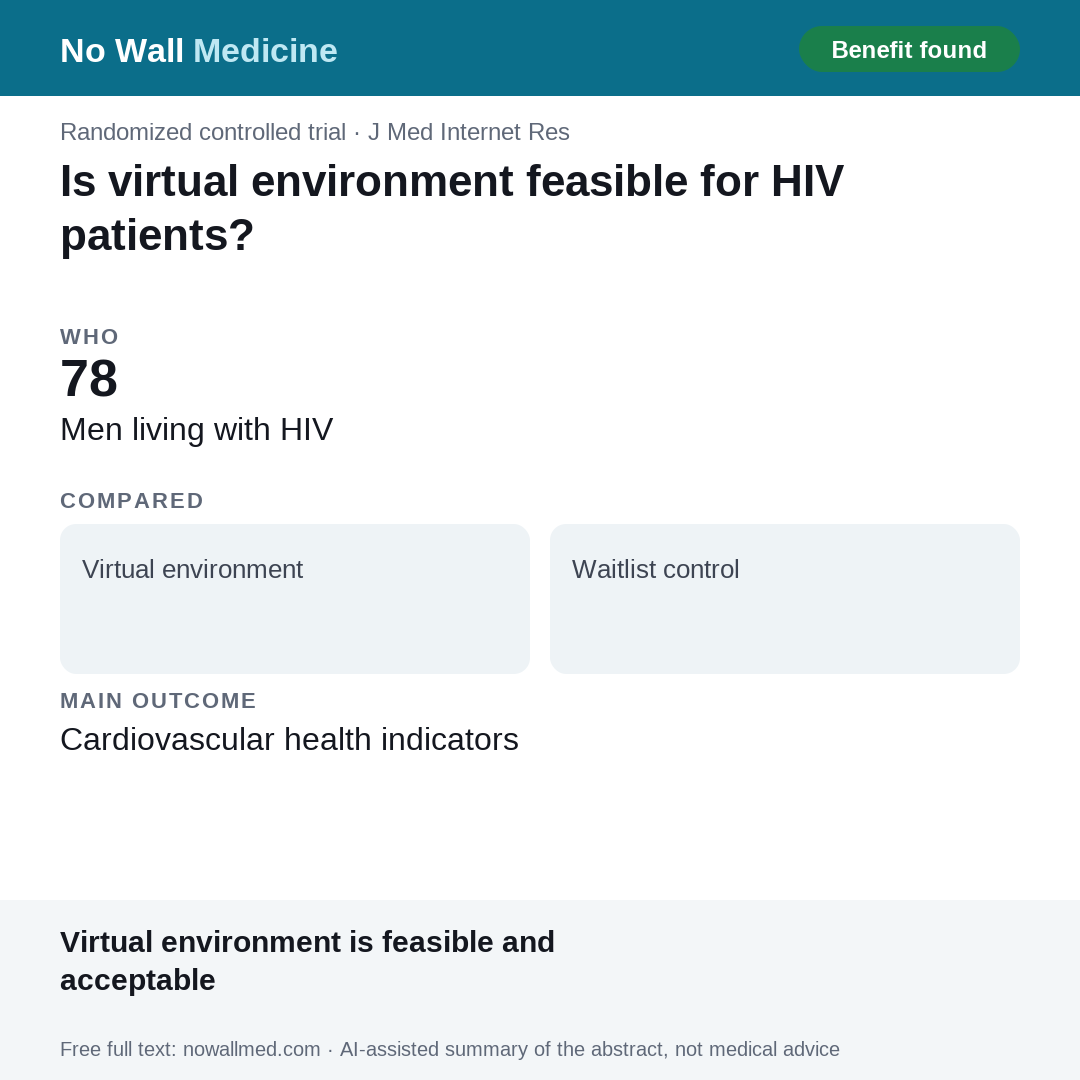
A Web-Based Virtual Environment Behavioral Intervention as Cardiovascular Disease and Metabolic Disease Prevention Education in Persons With HIV: Evaluation of the LEARN Randomized Controlled Trial
Randomized controlled trialBenefit found
Is virtual environment feasible for HIV patients?
Who
78
Men living with HIV
Compared
Virtual environment
Waitlist control
Main outcome
Cardiovascular health indicators
Bottom line: Virtual environment is feasible and acceptable
J Med Internet Res · 2026-06-15Download image
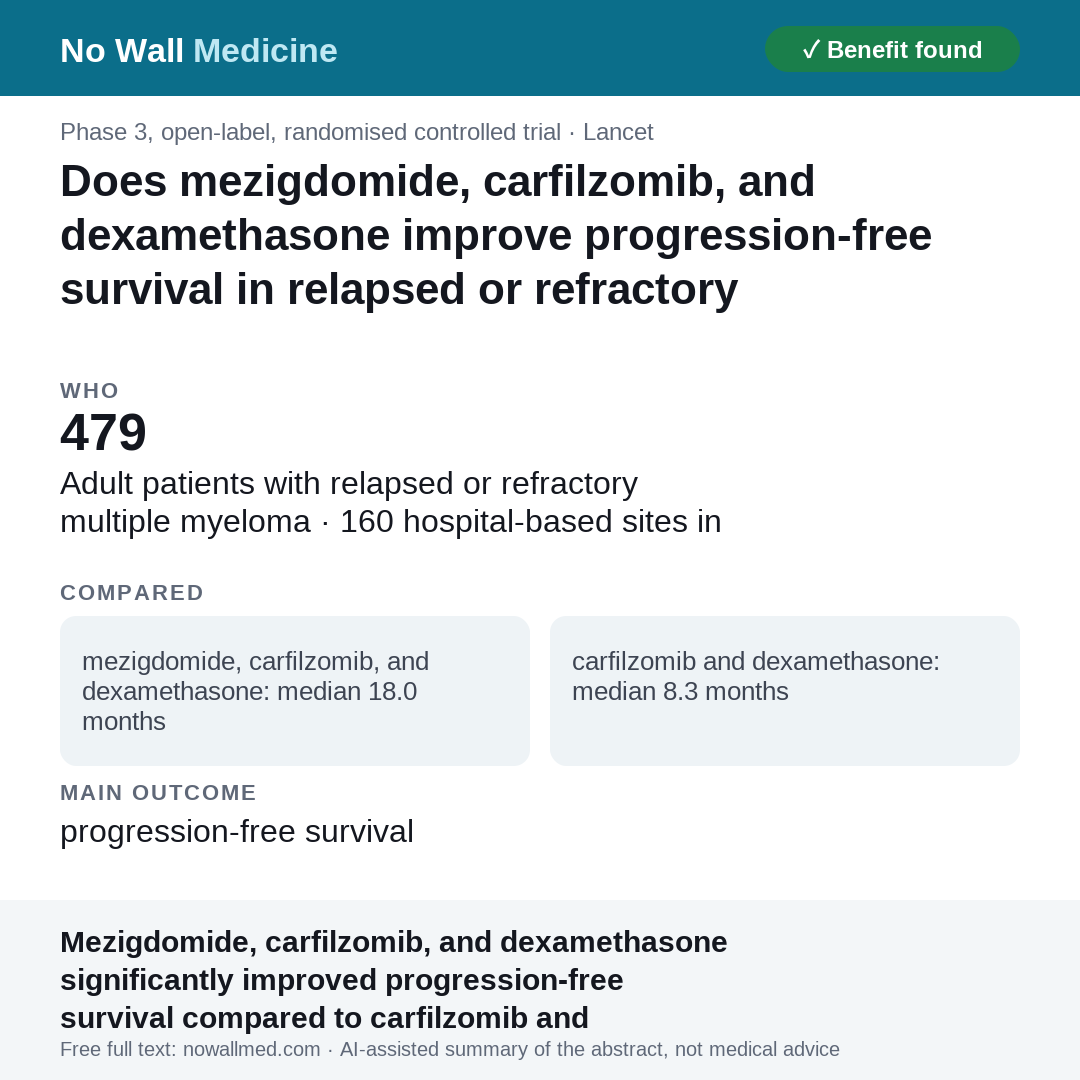
Mezigdomide, carfilzomib, and dexamethasone versus carfilzomib and dexamethasone in patients with relapsed or refractory multiple myeloma (SUCCESSOR-2): a phase 3, open-label, randomised controlled trial
Phase 3, open-label, randomised controlled trialBenefit found
Does mezigdomide, carfilzomib, and dexamethasone improve progression-free survival in relapsed or refractory multiple myeloma?
Who
479
Adult patients with relapsed or refractory multiple myeloma · 160 hospital-based sites in 26 countries
Compared
mezigdomide, carfilzomib, and dexamethasone: median 18.0 months
carfilzomib and dexamethasone: median 8.3 months
Main outcome
progression-free survival
Result: hazard ratio 0.48 (95% CI 0.36-0.63)
Bottom line: Mezigdomide, carfilzomib, and dexamethasone significantly improved progression-free survival compared to carfilzomib and dexamethasone alone.
Lancet · 2026-06-14Download image
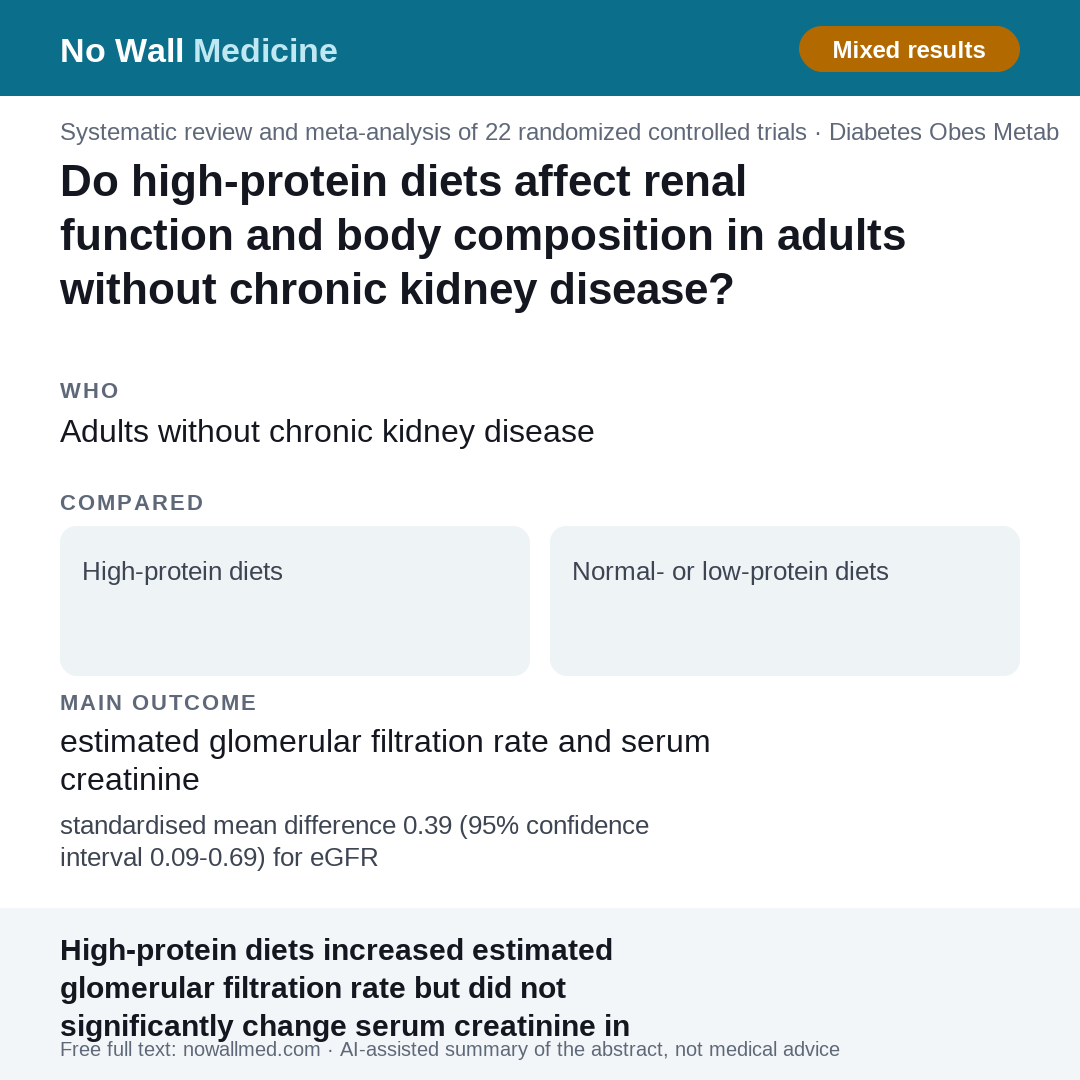
Effects of High-Protein Diets on Renal Function and Body Composition in Adults Without Chronic Kidney Disease: A Systematic Review and Meta-Analysis of Randomised Trials
Systematic review and meta-analysis of 22 randomized controlled trialsMixed results
Do high-protein diets affect renal function and body composition in adults without chronic kidney disease?
Who
Adults without chronic kidney disease
Compared
High-protein diets
Normal- or low-protein diets
Main outcome
estimated glomerular filtration rate and serum creatinine
Result: standardised mean difference 0.39 (95% confidence interval 0.09-0.69) for eGFR
Bottom line: High-protein diets increased estimated glomerular filtration rate but did not significantly change serum creatinine in adults without chronic kidney disease.
Limitation: Most studies were relatively short duration and relied on creatinine-based estimates of renal function.
Diabetes Obes Metab · 2026-06-14Download image
Paediatric penile length: a systematic review and meta-analysis
Systematic review and meta-analysisHarm found
What are the geographical variations and temporal trends in prepubertal boys' stretched penile length?
Who
31915
Prepubertal boys
Compared
2000s cohort: 3.46 to 6.46 cm
2020s cohort: 2.90 to 4.77 cm
Main outcome
Stretched penile length
Bottom line: Stretched penile length in prepubertal boys showed significant geographical variation and a possible decline over the past two decades.
BJU Int · 2026-06-14Download image

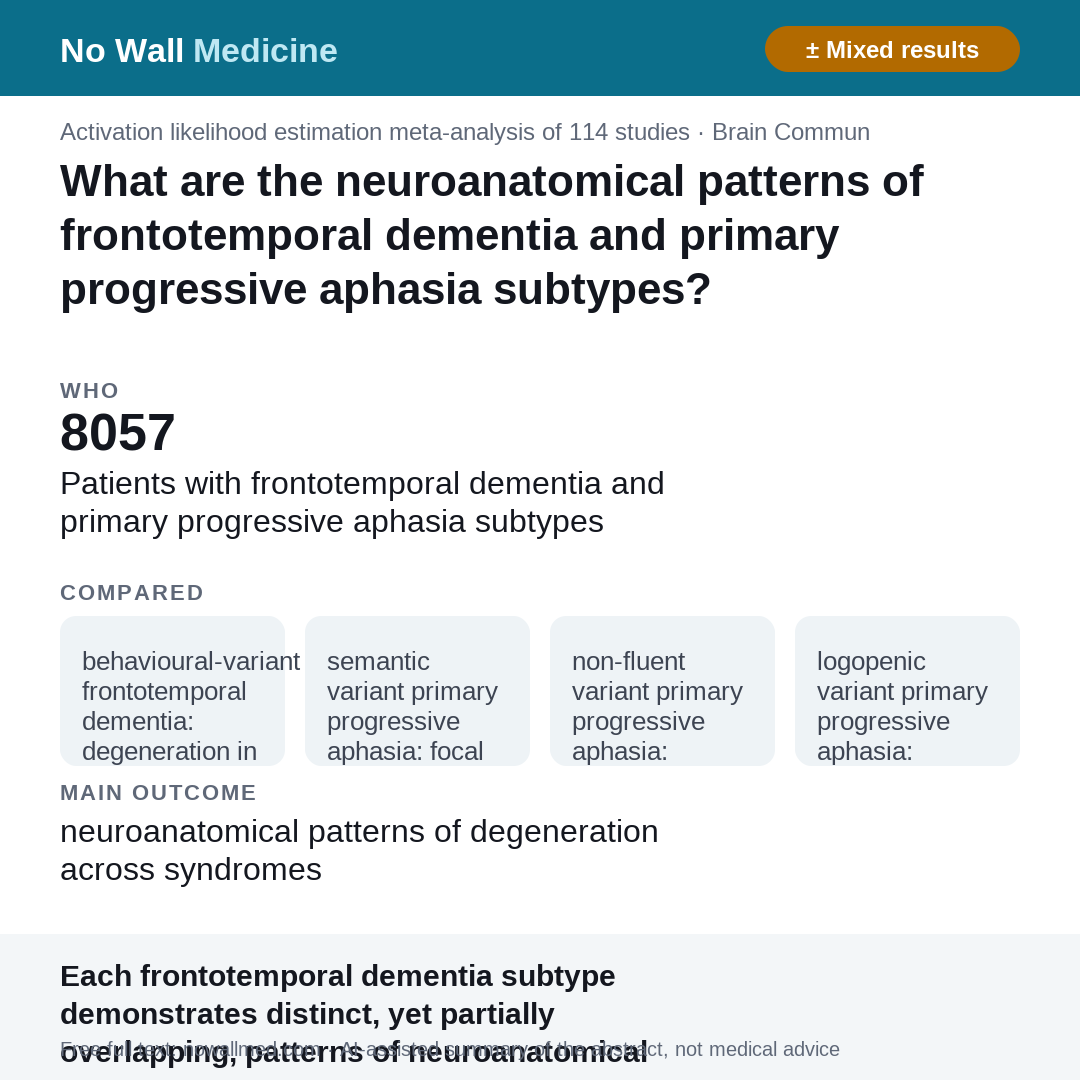
The neural bases of frontotemporal dementia and primary progressive aphasia subtypes: insights from activation likelihood estimation meta-analyses of 8057 patients
Activation likelihood estimation meta-analysis of 114 studiesMixed results
What are the neuroanatomical patterns of frontotemporal dementia and primary progressive aphasia subtypes?
Who
8057
Patients with frontotemporal dementia and primary progressive aphasia subtypes
Compared
behavioural-variant frontotemporal dementia: degeneration in the frontal and medial temporal lobes, insula, cingulate cortex and limbic system
semantic variant primary progressive aphasia: focal atrophy in the anterior temporal lobes
non-fluent variant primary progressive aphasia: degeneration in the speech production network, particularly the insula and inferior frontal gyrus
logopenic variant primary progressive aphasia: left-lateralized abnormalities in the posterior temporal and inferior parietal lobes
Main outcome
neuroanatomical patterns of degeneration across syndromes
Bottom line: Each frontotemporal dementia subtype demonstrates distinct, yet partially overlapping, patterns of neuroanatomical degeneration.
Brain Commun · 2026-06-13Download image
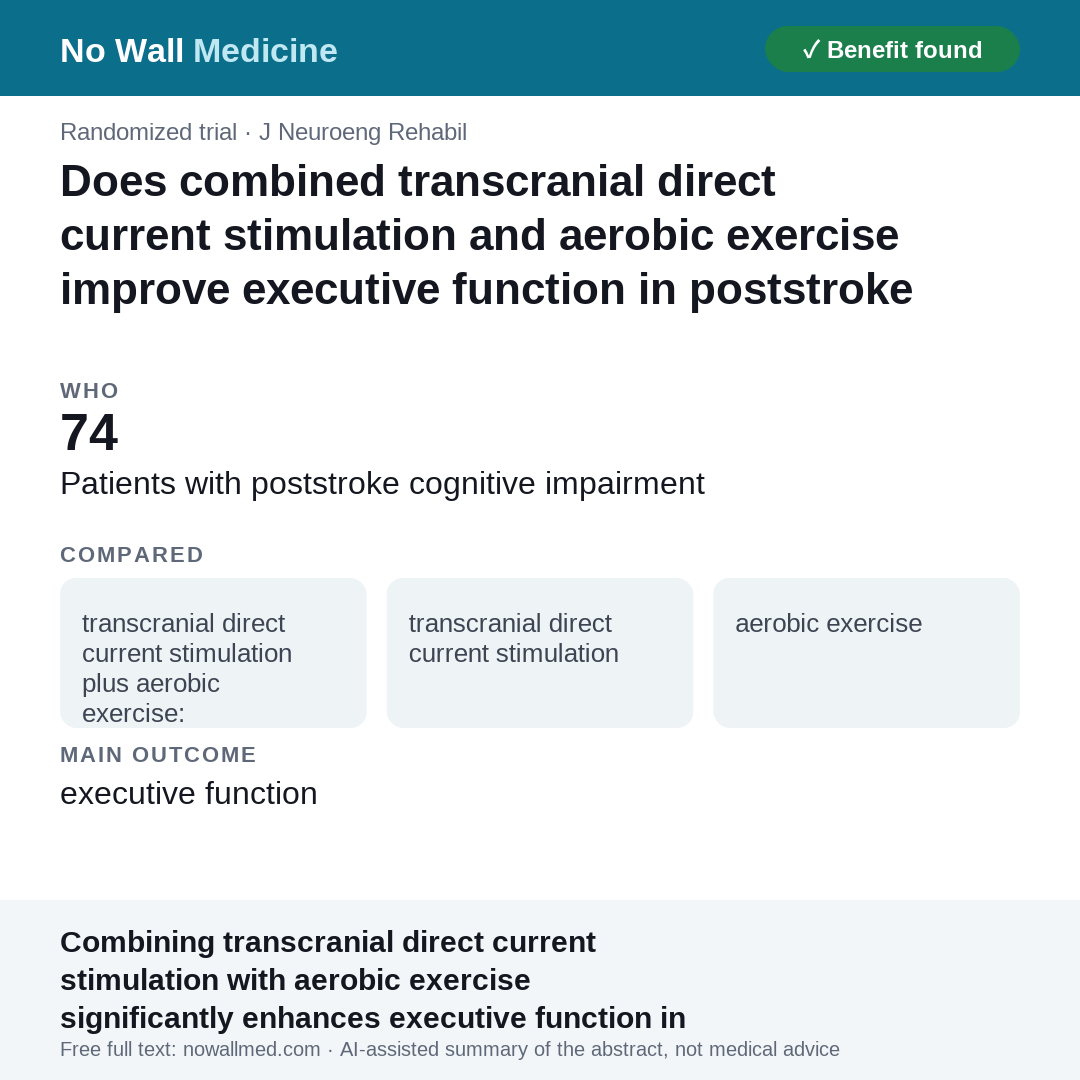
Efficacy and hematological markers of tDCS combined with aerobic exercise in improving executive function in patients with PSCI
Randomized trialBenefit found
Does combined transcranial direct current stimulation and aerobic exercise improve executive function in poststroke cognitive impairment?
Who
74
Patients with poststroke cognitive impairment
Compared
transcranial direct current stimulation plus aerobic exercise: significantly improved
transcranial direct current stimulation
aerobic exercise
Main outcome
executive function
Bottom line: Combining transcranial direct current stimulation with aerobic exercise significantly enhances executive function in poststroke cognitive impairment patients.
J Neuroeng Rehabil · 2026-06-13Download image
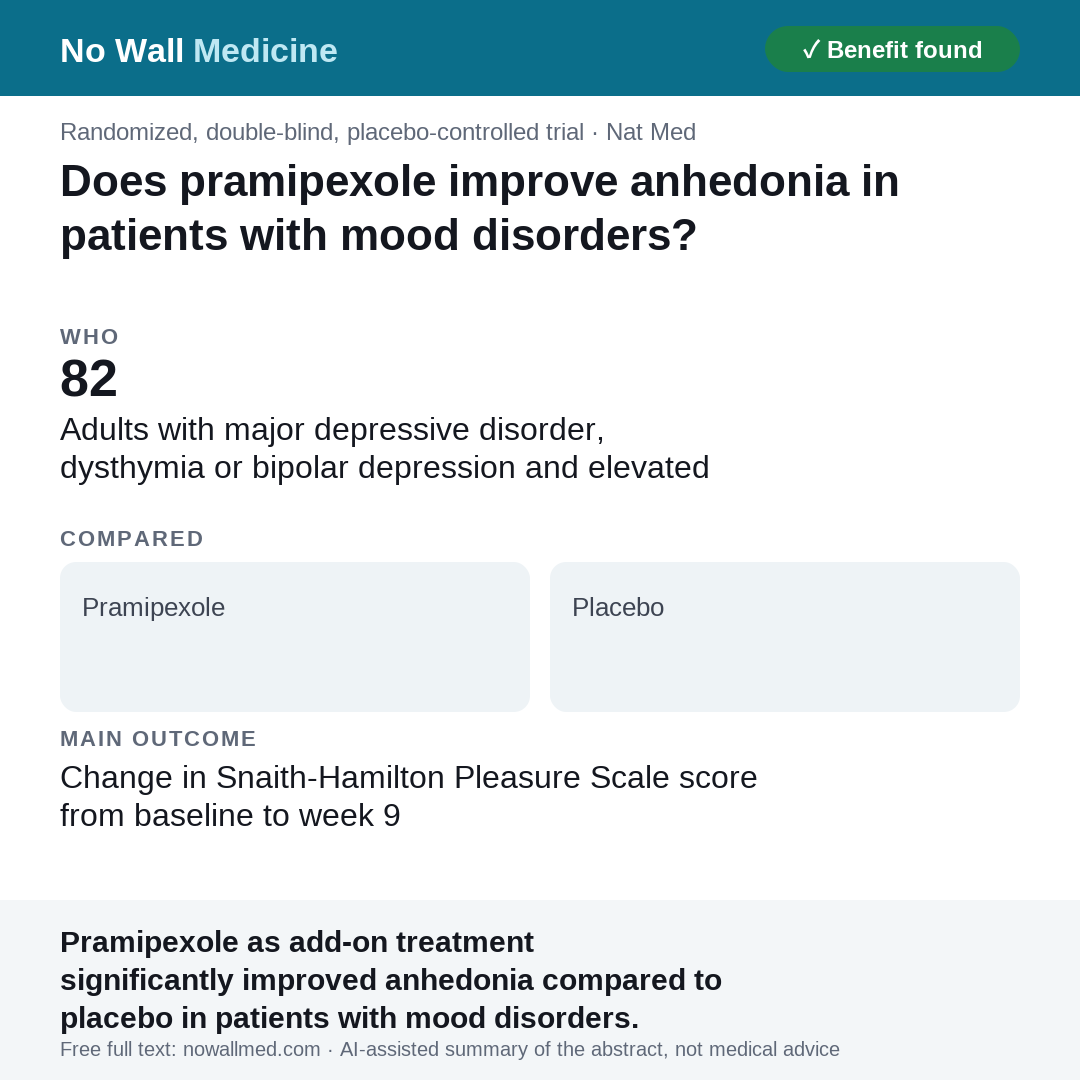
Efficacy and target engagement of dopamine agonist pramipexole for anhedonic depression: a randomized placebo-controlled trial
Randomized, double-blind, placebo-controlled trialBenefit found
Does pramipexole improve anhedonia in patients with mood disorders?
Who
82
Adults with major depressive disorder, dysthymia or bipolar depression and elevated Snaith-Hamilton Pleasure Scale scores · Single-center
Compared
Pramipexole
Placebo
Main outcome
Change in Snaith-Hamilton Pleasure Scale score from baseline to week 9
Result: mean difference: -4.04, 95% confidence interval: -6.89 to -1.18
Bottom line: Pramipexole as add-on treatment significantly improved anhedonia compared to placebo in patients with mood disorders.
Nat Med · 2026-06-12Download image
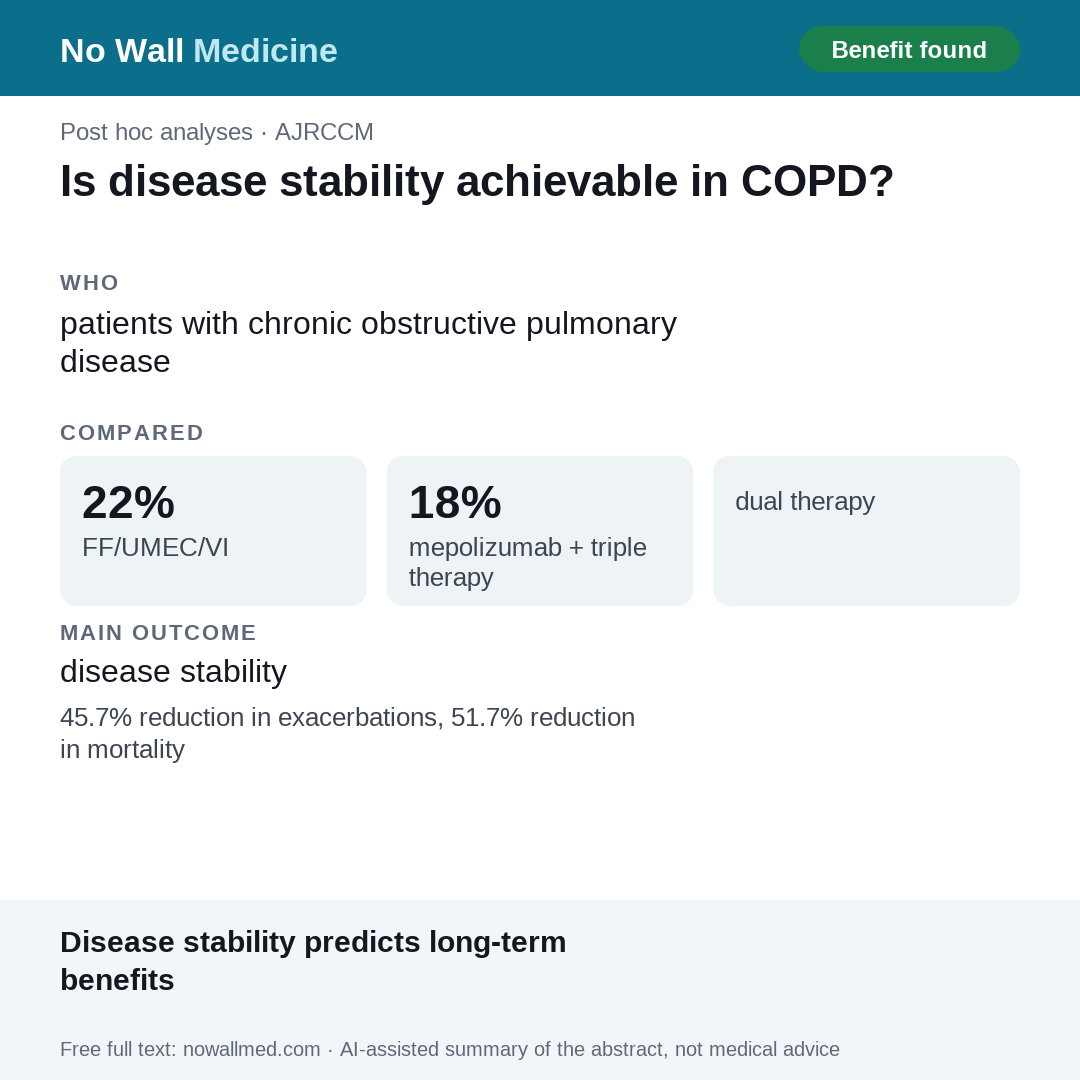
Defining disease stability in chronic obstructive pulmonary disease: evidence from phase 3 clinical trials
Post hoc analysesBenefit found
Is disease stability achievable in COPD?
Who
patients with chronic obstructive pulmonary disease
Compared
22%FF/UMEC/VI
18%mepolizumab + triple therapy
dual therapy
Main outcome
disease stability
Result: 45.7% reduction in exacerbations, 51.7% reduction in mortality
Bottom line: Disease stability predicts long-term benefits
AJRCCM · 2026-06-12Download image
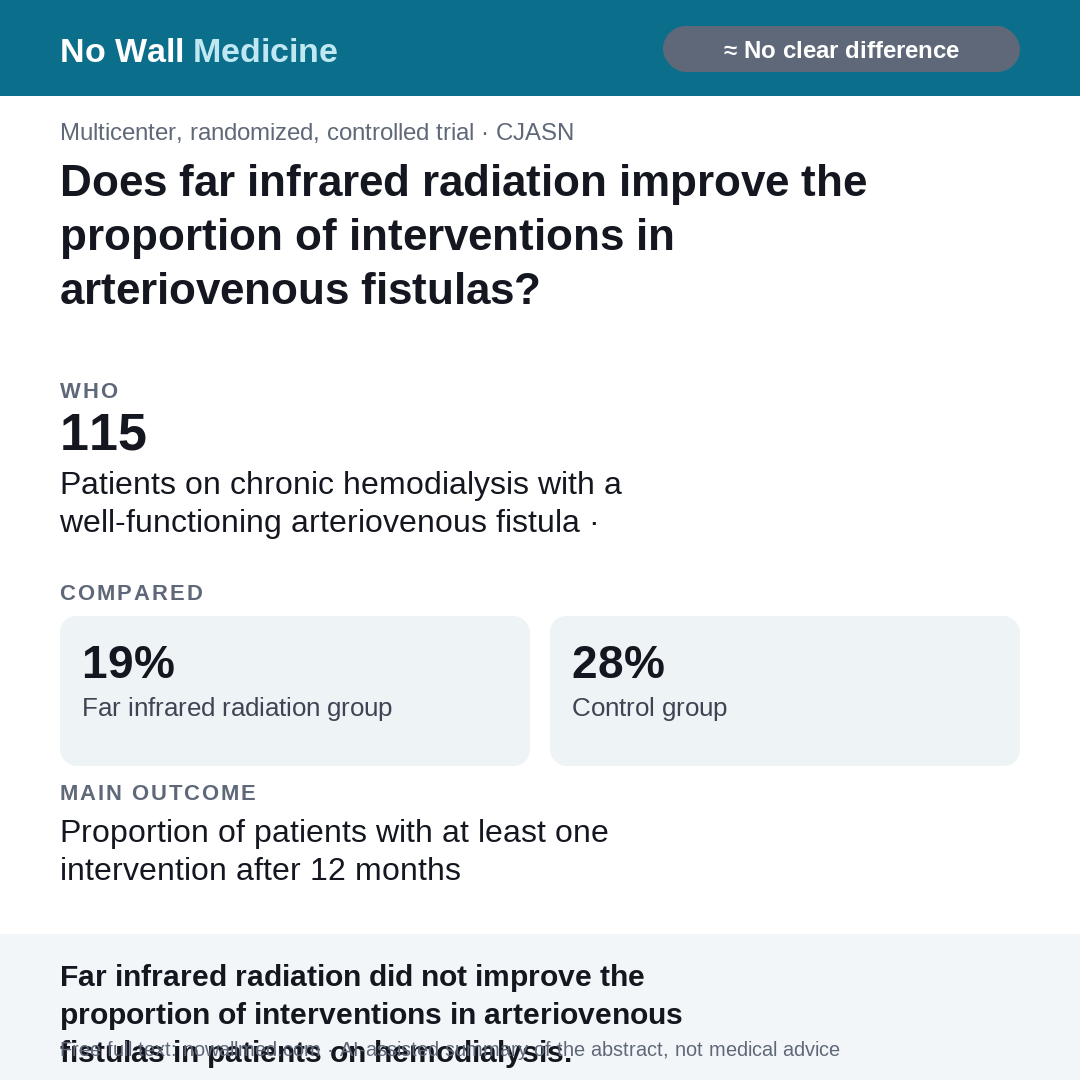
Effect of Far Infrared Radiation on the Proportion of Interventions in Arteriovenous Fistulas in Patients on Hemodialysis: A Randomized Trial
Multicenter, randomized, controlled trialNo clear difference
Does far infrared radiation improve the proportion of interventions in arteriovenous fistulas?
Who
115
Patients on chronic hemodialysis with a well-functioning arteriovenous fistula · Multicenter
Compared
19%Far infrared radiation group
28%Control group
Main outcome
Proportion of patients with at least one intervention after 12 months
Bottom line: Far infrared radiation did not improve the proportion of interventions in arteriovenous fistulas in patients on hemodialysis.
CJASN · 2026-06-12Download image
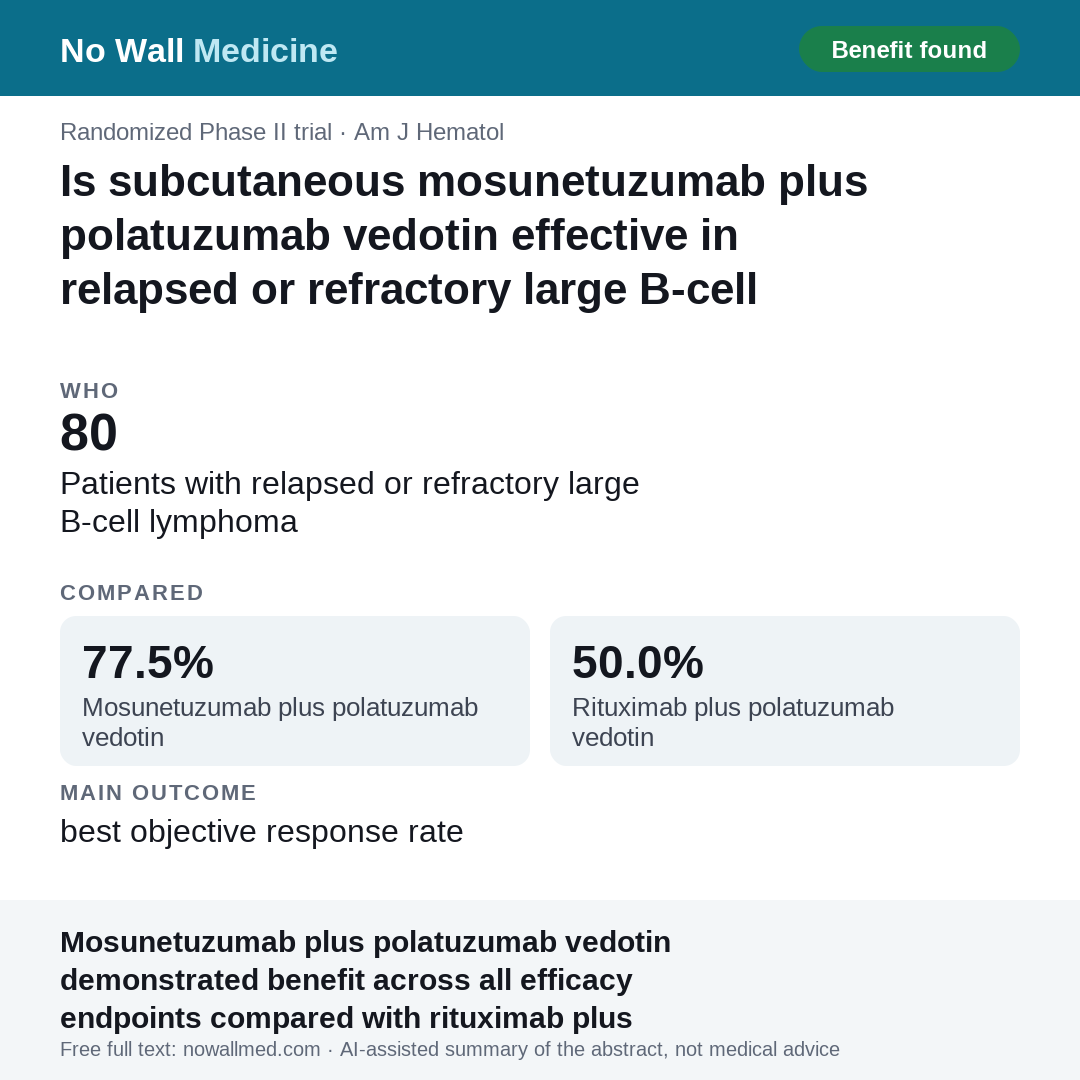
A Randomized Phase II Study of Subcutaneous Mosunetuzumab in Combination With Polatuzumab Vedotin Compared With Rituximab Plus Polatuzumab Vedotin in Patients With Relapsed or Refractory Large B-Cell Lymphoma
Randomized Phase II trialBenefit found
Is subcutaneous mosunetuzumab plus polatuzumab vedotin effective in relapsed or refractory large B-cell lymphoma?
Who
80
Patients with relapsed or refractory large B-cell lymphoma
Compared
77.5%Mosunetuzumab plus polatuzumab vedotin (95% CI 61.6-89.2)
50.0%Rituximab plus polatuzumab vedotin (95% CI: 33.8-66.2)
Main outcome
best objective response rate
Result: hazard ratio 0.47
Bottom line: Mosunetuzumab plus polatuzumab vedotin demonstrated benefit across all efficacy endpoints compared with rituximab plus polatuzumab vedotin.
Am J Hematol · 2026-06-12Download image