Visual abstracts
New randomized trials and meta-analyses from leading journals at a glance: who was studied, what was compared, and what was found. Every paper is free to read in full.
All specialtiesCardiology 416Oncology 337Gastroenterology & Hepatology 171Infectious Disease 335Neurology 190Psychiatry & Mental Health 288Pulmonology 191Critical Care 134Endocrinology & Diabetes 257Pediatrics 200Surgery 143Orthopedics & Sports Medicine 89Neurosurgery 27Cardiothoracic & Vascular Surgery 50Plastic & Reconstructive Surgery 82Nephrology 82Rheumatology 84Hematology 101Dermatology 43Ophthalmology 72Obstetrics & Gynecology 131Public & Global Health 133Radiology & Imaging 41Anesthesiology 77Urology 99ENT (Otolaryngology) 53Emergency Medicine 43Allergy & Immunology 50Geriatrics 124Family Medicine & Primary Care 74Medical Genetics & Genomics 41Pathology & Laboratory Medicine 6Physical Medicine & Rehabilitation 110Palliative Care 63Nutrition 146Digital Health & AI 367General Medicine 51
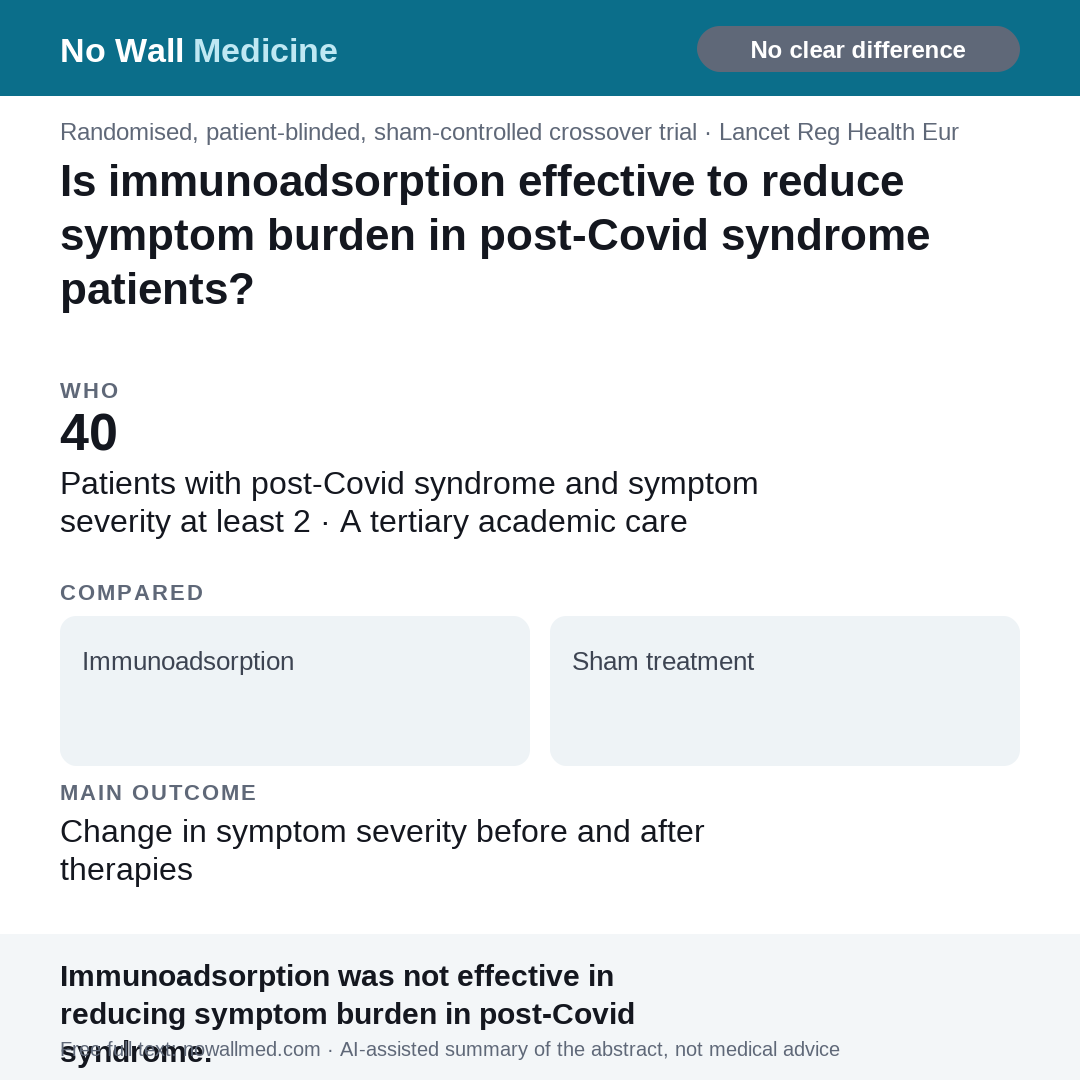
Immunoadsorption Versus Sham Treatment for Post-COVID Syndrome: A Randomised Sham-Controlled Crossover Trial
Randomised, patient-blinded, sham-controlled crossover trialNo clear difference
Is immunoadsorption effective to reduce symptom burden in post-Covid syndrome patients?
Who
40
Patients with post-Covid syndrome and symptom severity at least 2 · A tertiary academic care centre
Compared
Immunoadsorption
Sham treatment
Main outcome
Change in symptom severity before and after therapies
Result: odds ratio 1.17 (95% CI, 0.41-3.36)
Bottom line: Immunoadsorption was not effective in reducing symptom burden in post-Covid syndrome.
Funded by: Ministry of Health, Rhineland-Palatinate; Mainz University Medical Centre; DIAMED Medical Technology
Lancet Reg Health Eur · 2026-06-11Download image
Clinical Spectrum of Anti-SEZ6L2 Syndrome: A Case Report With Brain Volumetry and Systematic Literature Review
Case report and systematic reviewMixed results
What are the clinical features and outcomes of anti-SEZ6L2 syndrome?
Who
22
Patients with anti-seizure-related 6 homolog like 2 antibodies
Compared
Anti-SEZ6L2 syndrome patients: 86% cerebellar atrophy
Healthy controls
Main outcome
Clinical features, diagnostics, treatment, and outcomes
Bottom line: Anti-SEZ6L2 syndrome causes severe cerebellar dysfunction and progressive cerebellar atrophy, with substantial long-term disability often persisting.
Limitation: Evidence is limited to case reports and case series due to disease rarity.
Neurol Neuroimmunol Neuroinflamm · 2026-06-11Download image

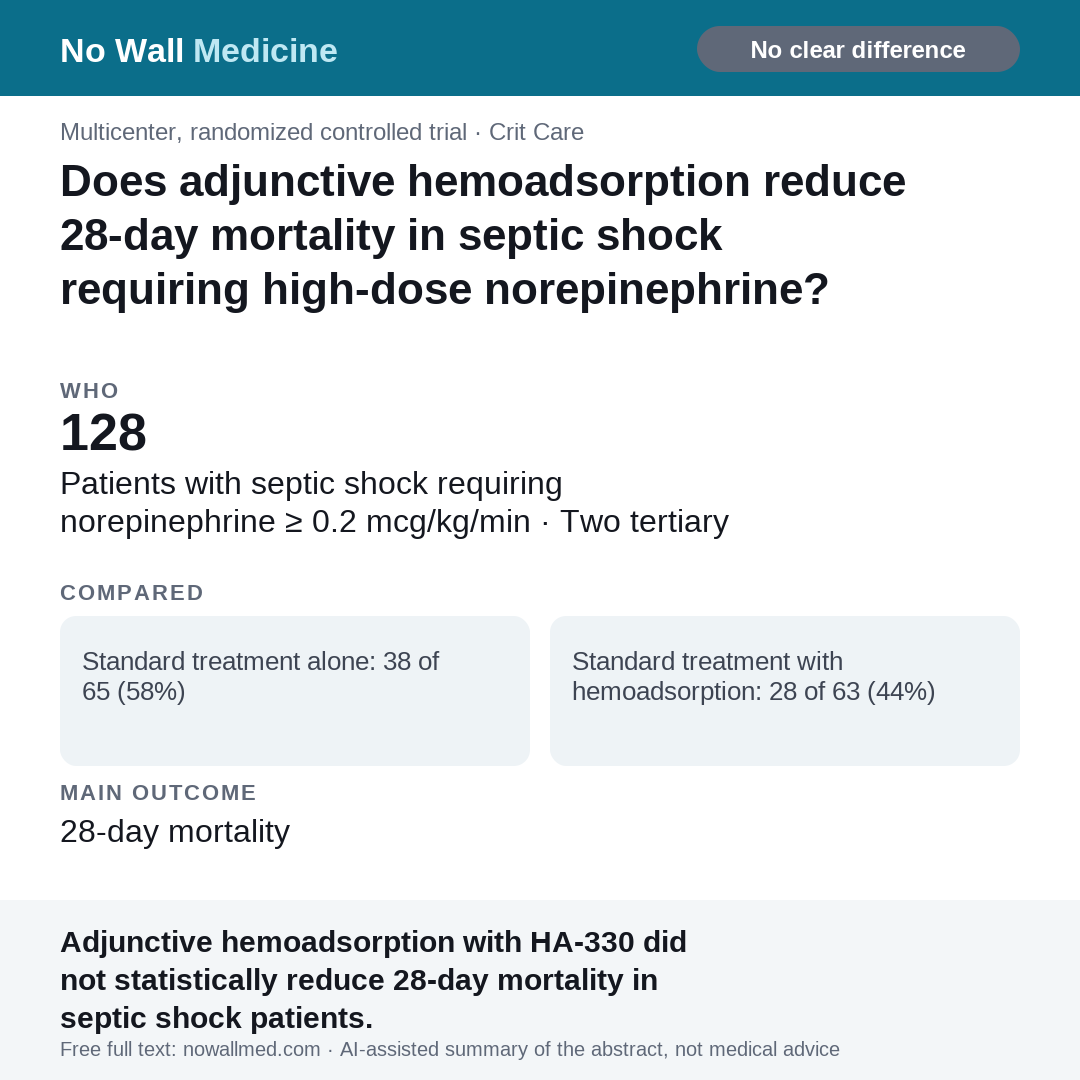
HA-330 hemoadsorption in septic shock requiring high-dose norepinephrine: a multicenter randomized controlled trial (CLEANSE)
Multicenter, randomized controlled trialNo clear difference
Does adjunctive hemoadsorption reduce 28-day mortality in septic shock requiring high-dose norepinephrine?
Who
128
Patients with septic shock requiring norepinephrine ≥ 0.2 mcg/kg/min · Two tertiary care centers in Thailand
Compared
Standard treatment alone: 38 of 65 (58%)
Standard treatment with hemoadsorption: 28 of 63 (44%)
Main outcome
28-day mortality
Result: relative risk 0.76 (95% CI 0.54-1.07)
Bottom line: Adjunctive hemoadsorption with HA-330 did not statistically reduce 28-day mortality in septic shock patients.
Crit Care · 2026-06-11Download image
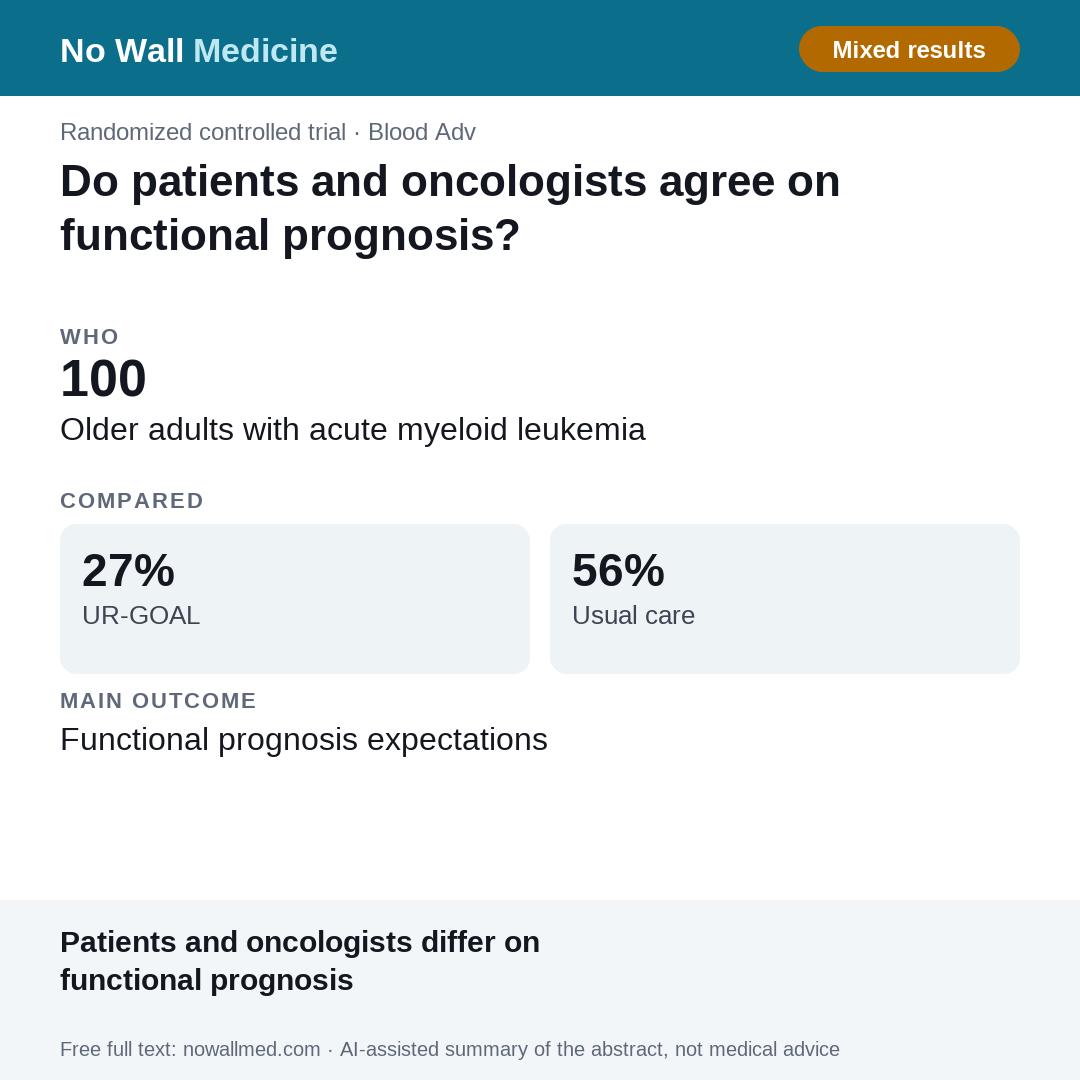
Patient and oncologist expectations of functional prognosis among older adults with acute myeloid leukemia
Randomized controlled trialMixed results
Do patients and oncologists agree on functional prognosis?
Who
100
Older adults with acute myeloid leukemia
Compared
27%UR-GOAL
56%Usual care
Main outcome
Functional prognosis expectations
Bottom line: Patients and oncologists differ on functional prognosis
Blood Adv · 2026-06-11Download image
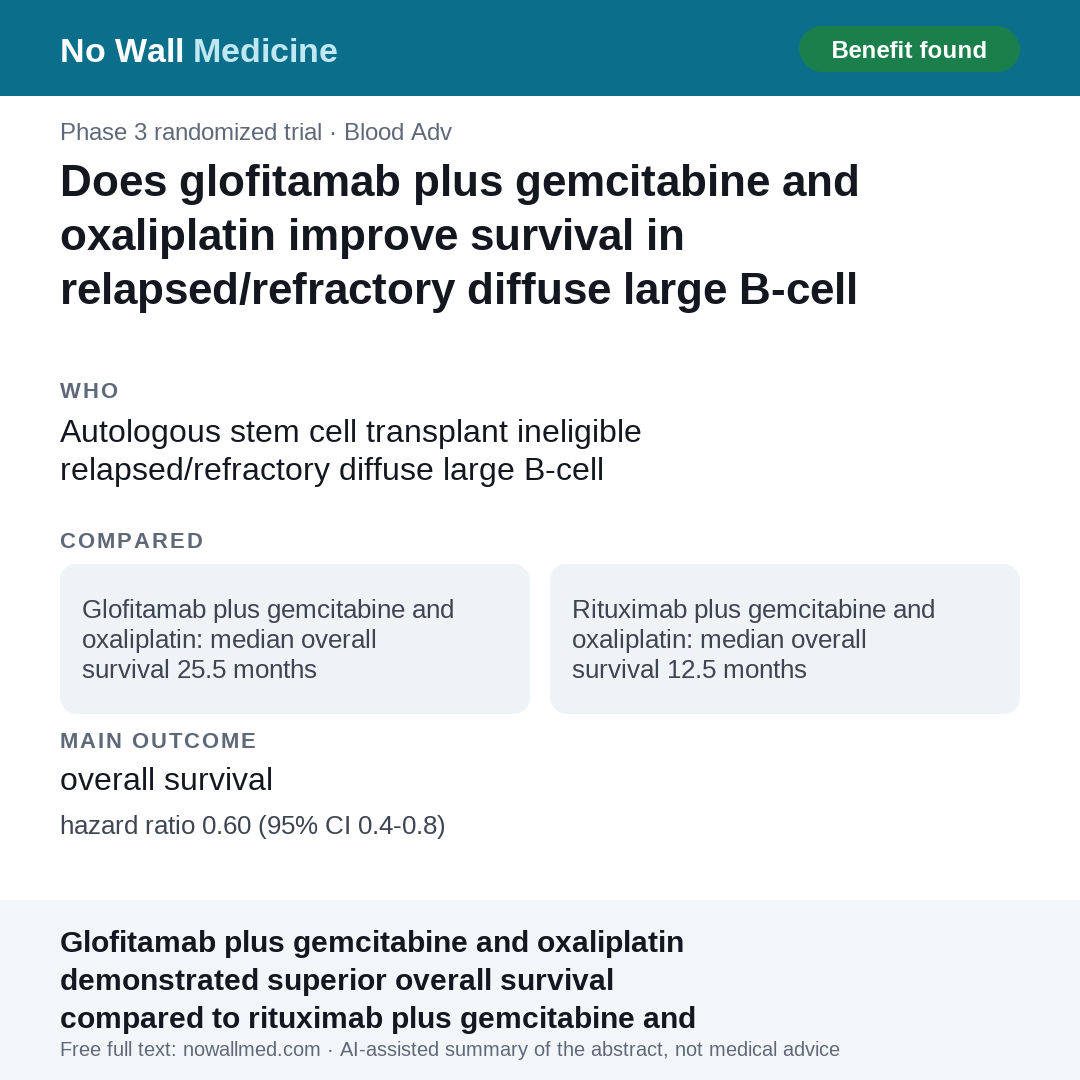
Glofitamab plus gemcitabine and oxaliplatin for relapsed/refractory DLBCL: 3-year follow-up of STARGLO
Phase 3 randomized trialBenefit found
Does glofitamab plus gemcitabine and oxaliplatin improve survival in relapsed/refractory diffuse large B-cell lymphoma?
Who
Autologous stem cell transplant ineligible relapsed/refractory diffuse large B-cell lymphoma patients
Compared
Glofitamab plus gemcitabine and oxaliplatin: median overall survival 25.5 months
Rituximab plus gemcitabine and oxaliplatin: median overall survival 12.5 months
Main outcome
overall survival
Result: hazard ratio 0.60 (95% CI 0.4-0.8)
Bottom line: Glofitamab plus gemcitabine and oxaliplatin demonstrated superior overall survival compared to rituximab plus gemcitabine and oxaliplatin.
Blood Adv · 2026-06-11Download image
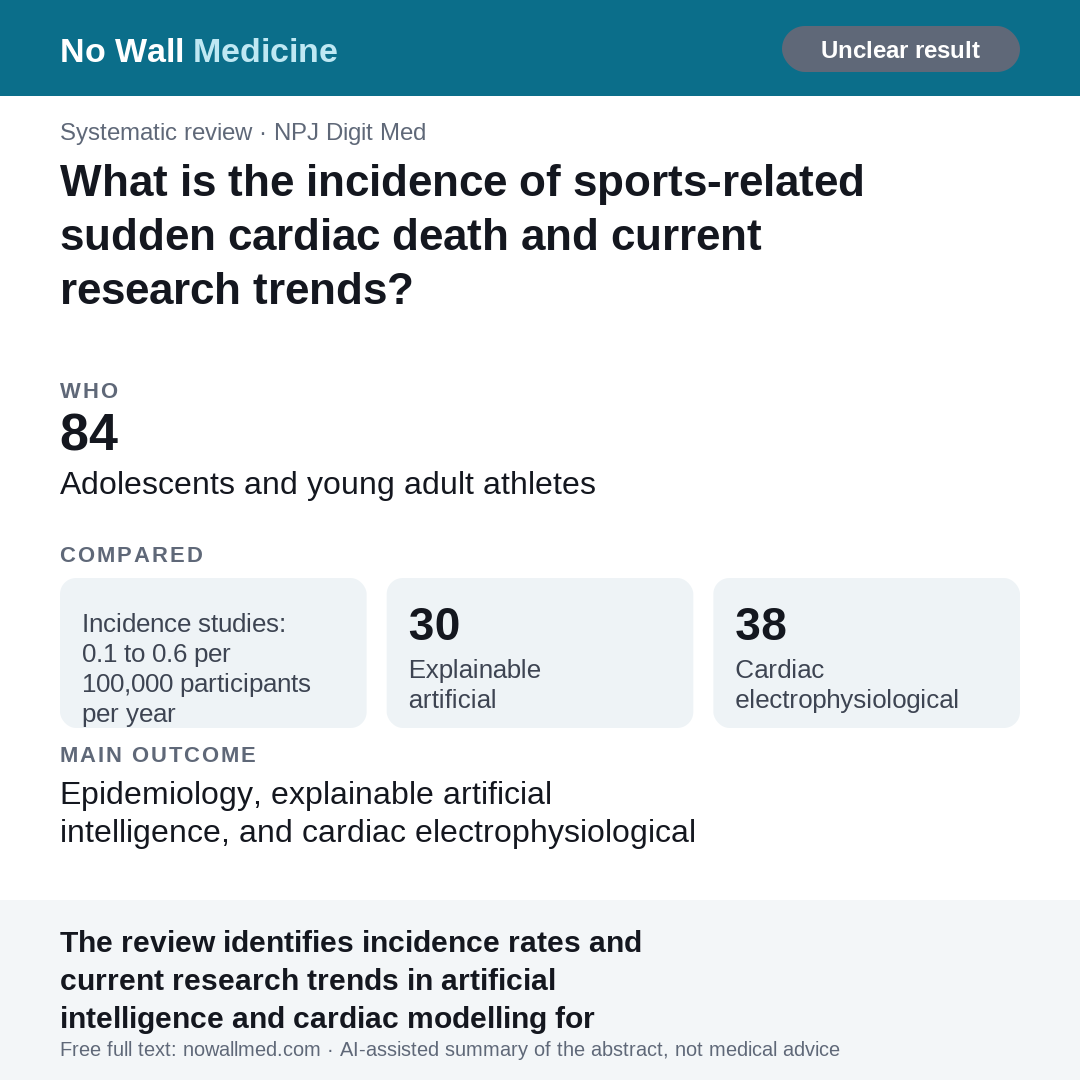
A systematic review of explainable artificial intelligence and cardiac electrophysiological models addressing sports-related sudden cardiac death and arrest in adolescents and young adults
Systematic reviewUnclear result
What is the incidence of sports-related sudden cardiac death and current research trends?
Who
84
Adolescents and young adult athletes
Compared
Incidence studies: 0.1 to 0.6 per 100,000 participants per year
30Explainable artificial intelligence studies
38Cardiac electrophysiological modelling studies
Main outcome
Epidemiology, explainable artificial intelligence, and cardiac electrophysiological models
Bottom line: The review identifies incidence rates and current research trends in artificial intelligence and cardiac modelling for athlete risk.
NPJ Digit Med · 2026-06-11Download image
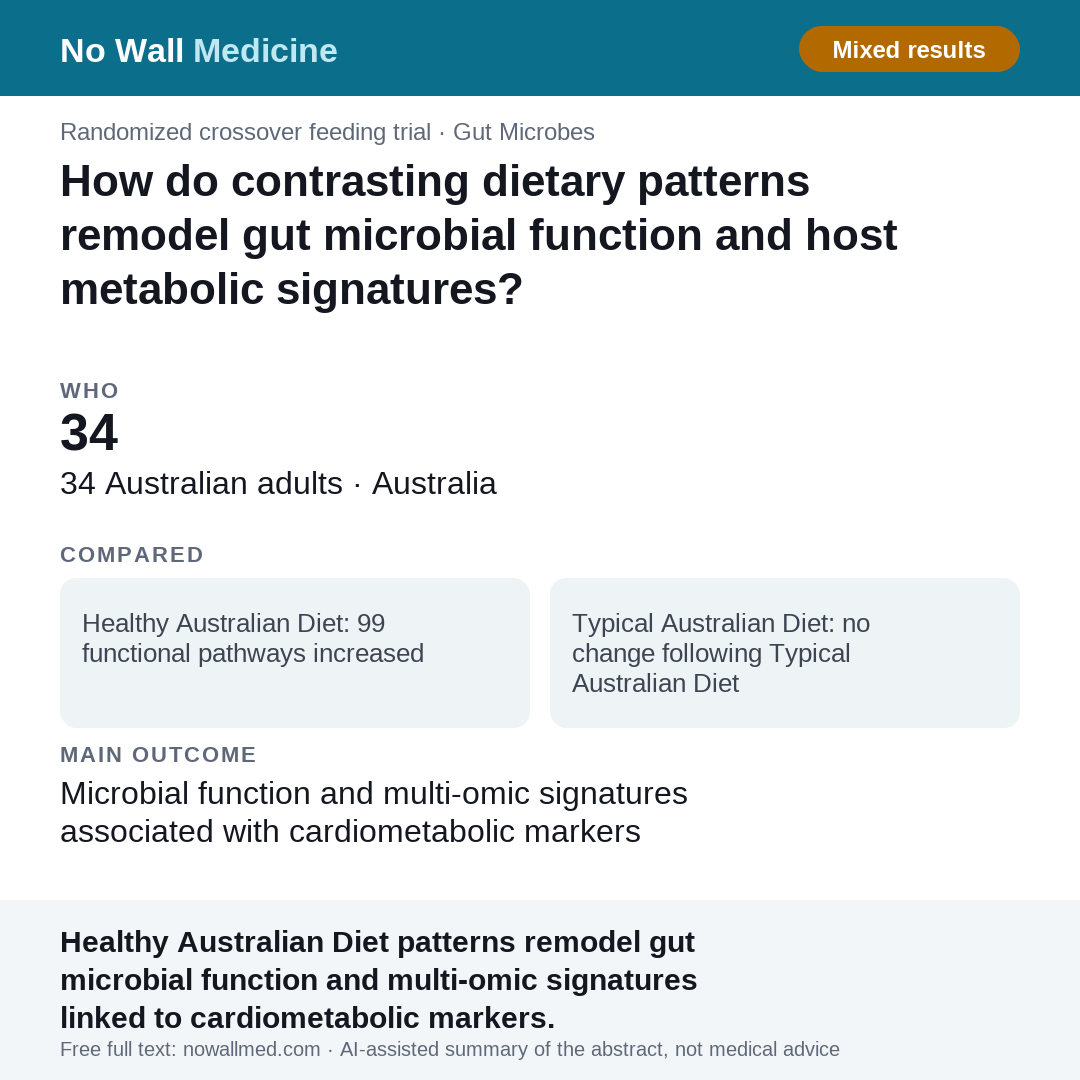
Contrasting dietary patterns remodel gut microbial function and generate multi-omic signatures associated with cardiometabolic markers
Randomized crossover feeding trialMixed results
How do contrasting dietary patterns remodel gut microbial function and host metabolic signatures?
Who
34
34 Australian adults · Australia
Compared
Healthy Australian Diet: 99 functional pathways increased
Typical Australian Diet: no change following Typical Australian Diet
Main outcome
Microbial function and multi-omic signatures associated with cardiometabolic markers
Bottom line: Healthy Australian Diet patterns remodel gut microbial function and multi-omic signatures linked to cardiometabolic markers.
Gut Microbes · 2026-06-11Download image
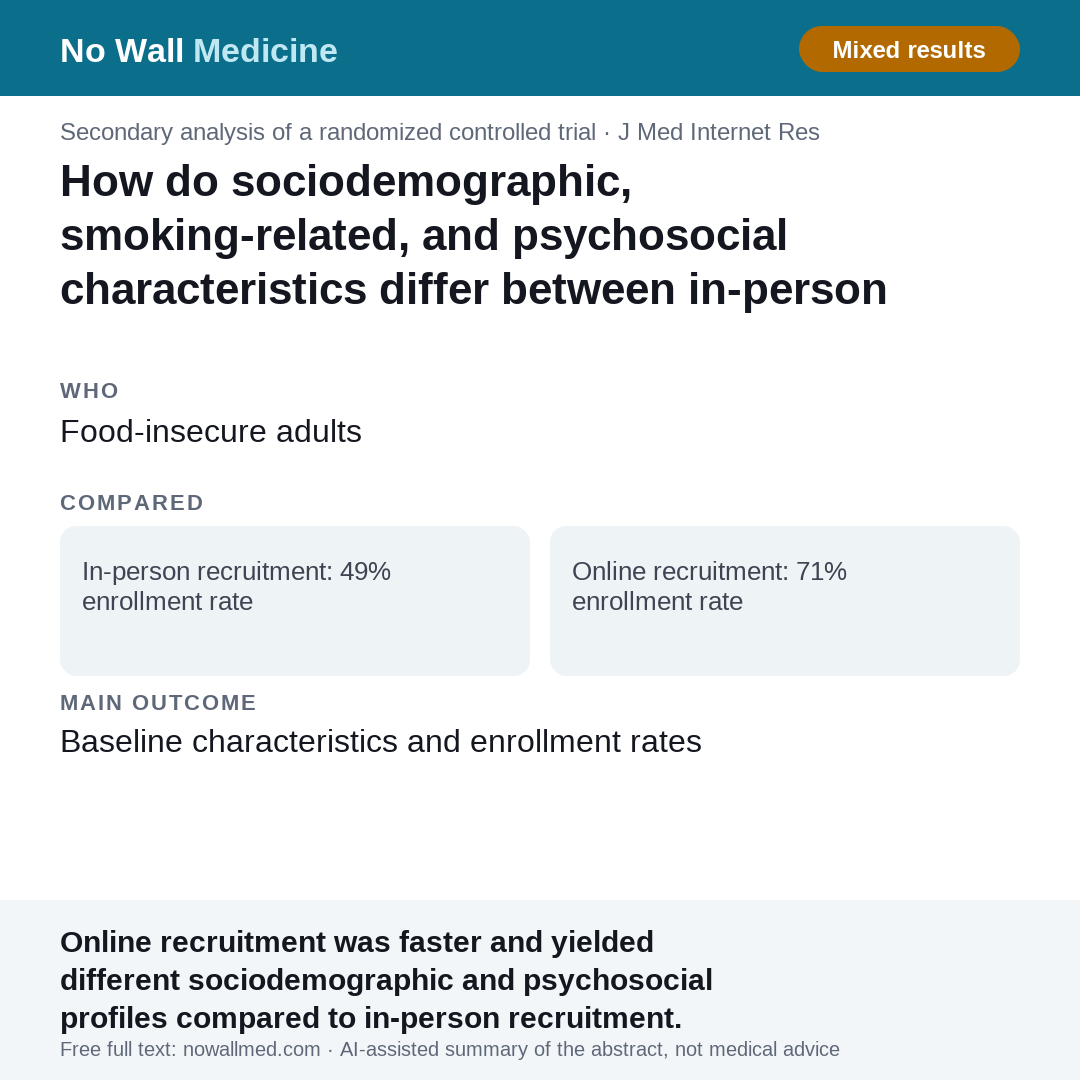
Sociodemographic Paradoxes and Enrollment Differences in In-Person Versus Online Recruitment to a Mobile Health Smoking Cessation Intervention for Food-Insecure Adults: Secondary Analysis of a Randomized Controlled Trial
Secondary analysis of a randomized controlled trialMixed results
How do sociodemographic, smoking-related, and psychosocial characteristics differ between in-person and online recruitment methods?
Who
Food-insecure adults
Compared
In-person recruitment: 49% enrollment rate
Online recruitment: 71% enrollment rate
Main outcome
Baseline characteristics and enrollment rates
Bottom line: Online recruitment was faster and yielded different sociodemographic and psychosocial profiles compared to in-person recruitment.
J Med Internet Res · 2026-06-11Download image
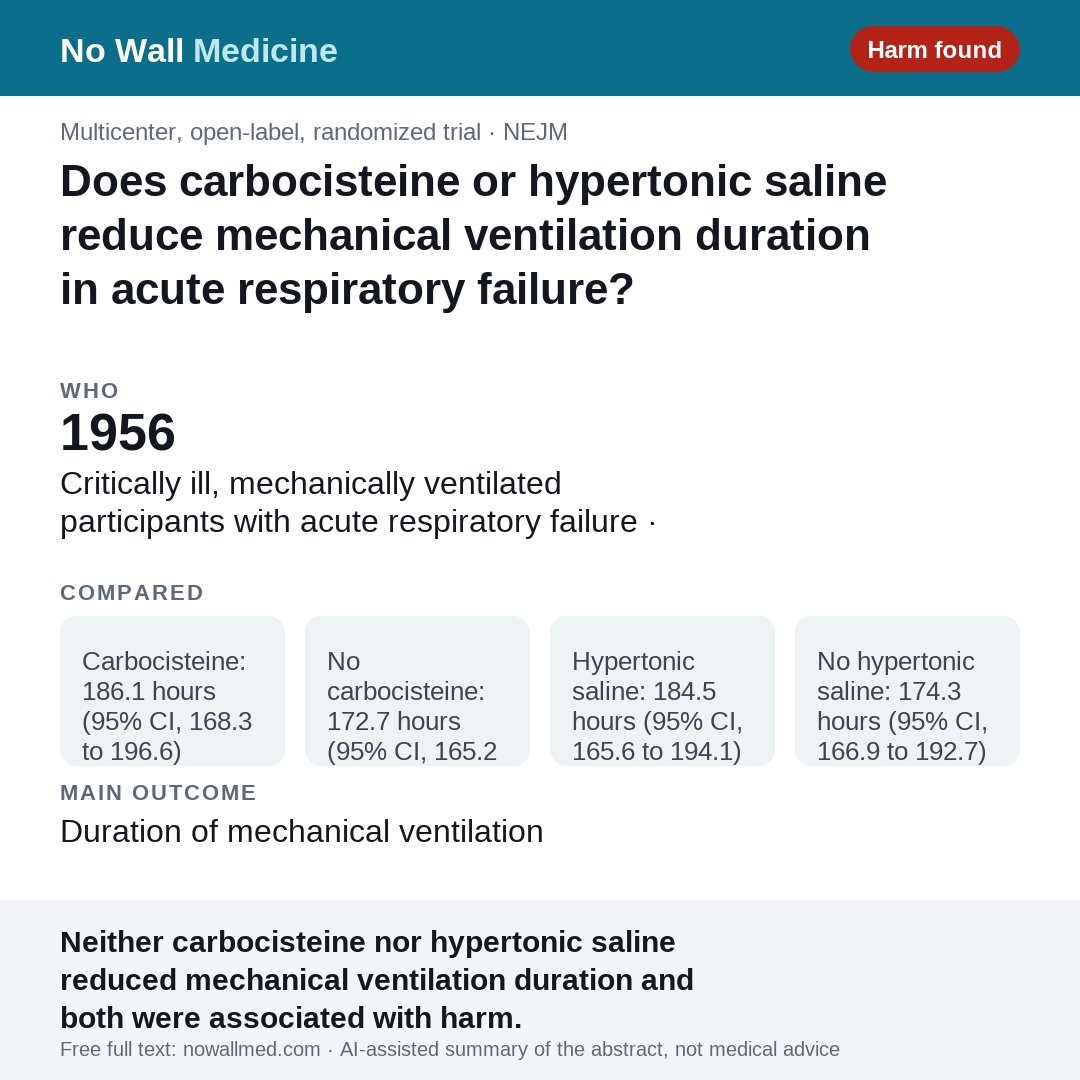
Carbocisteine or Hypertonic Saline for Acute Respiratory Failure
Multicenter, open-label, randomized trialHarm found
Does carbocisteine or hypertonic saline reduce mechanical ventilation duration in acute respiratory failure?
Who
1956
Critically ill, mechanically ventilated participants with acute respiratory failure · Multicenter
Compared
Carbocisteine: 186.1 hours (95% CI, 168.3 to 196.6)
No carbocisteine: 172.7 hours (95% CI, 165.2 to 190.4)
Hypertonic saline: 184.5 hours (95% CI, 165.6 to 194.1)
No hypertonic saline: 174.3 hours (95% CI, 166.9 to 192.7)
Main outcome
Duration of mechanical ventilation
Result: adjusted hazard ratio 0.96 (95% CI 0.87 to 1.05) for carbocisteine
Bottom line: Neither carbocisteine nor hypertonic saline reduced mechanical ventilation duration and both were associated with harm.
Funded by: NIHR Health Technology Assessment Programme and Belfast Health and Social Care Trust
NEJM · 2026-06-10Download image
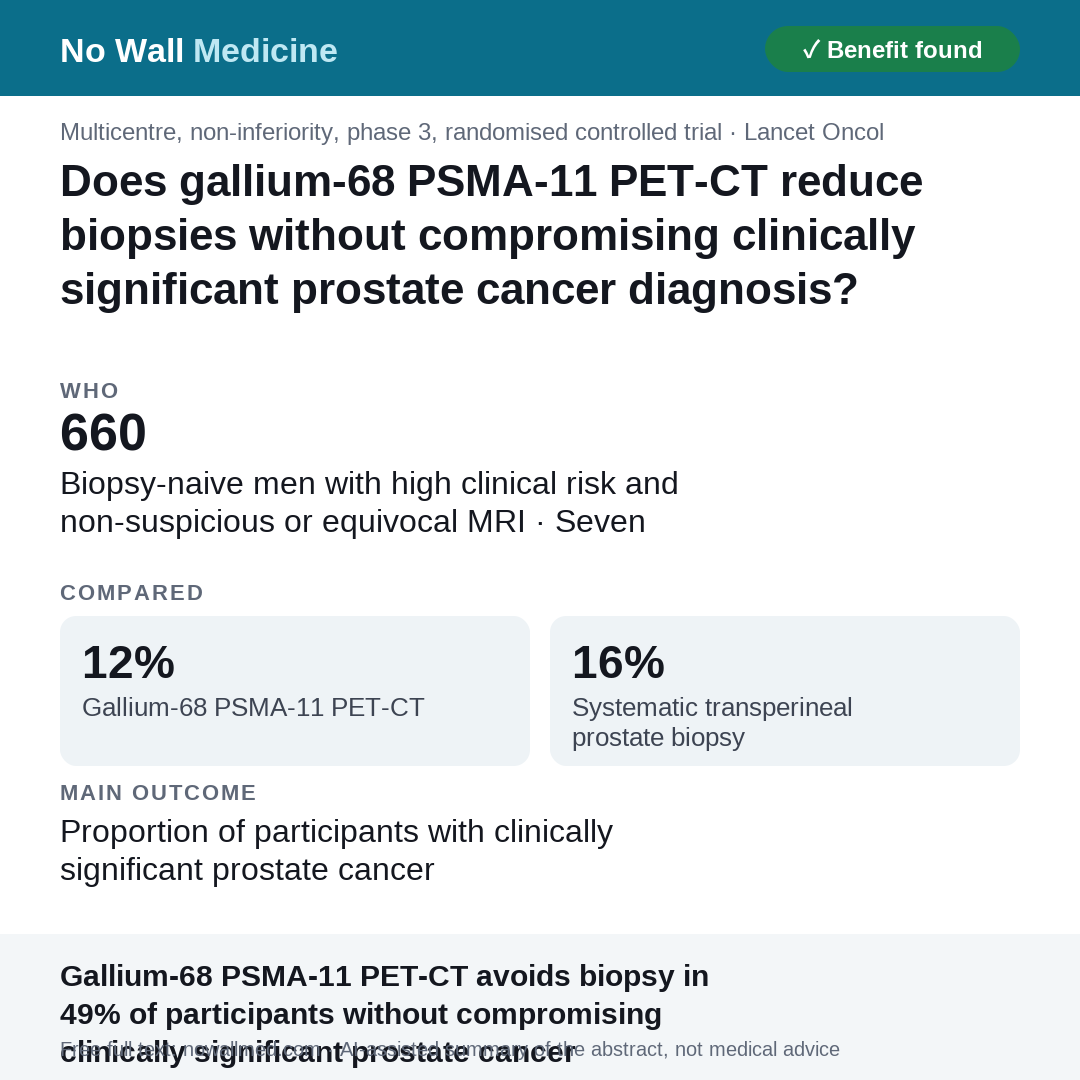
Effect of [68Ga]Ga-PSMA-11 PET-CT in the diagnosis of prostate cancer in men with equivocal or clinically high-risk non-suspicious findings on multiparametric MRI (PRIMARY2): a multicentre, non-inferiority, phase 3, randomised controlled trial
Multicentre, non-inferiority, phase 3, randomised controlled trialBenefit found
Does gallium-68 PSMA-11 PET-CT reduce biopsies without compromising clinically significant prostate cancer diagnosis?
Who
660
Biopsy-naive men with high clinical risk and non-suspicious or equivocal MRI · Seven Australian hospitals
Compared
12%Gallium-68 PSMA-11 PET-CT
16%Systematic transperineal prostate biopsy
Main outcome
Proportion of participants with clinically significant prostate cancer
Result: difference -3·7% (95% CI -8·9 to 1·5%)
Bottom line: Gallium-68 PSMA-11 PET-CT avoids biopsy in 49% of participants without compromising clinically significant prostate cancer diagnosis.
Lancet Oncol · 2026-06-10Download image
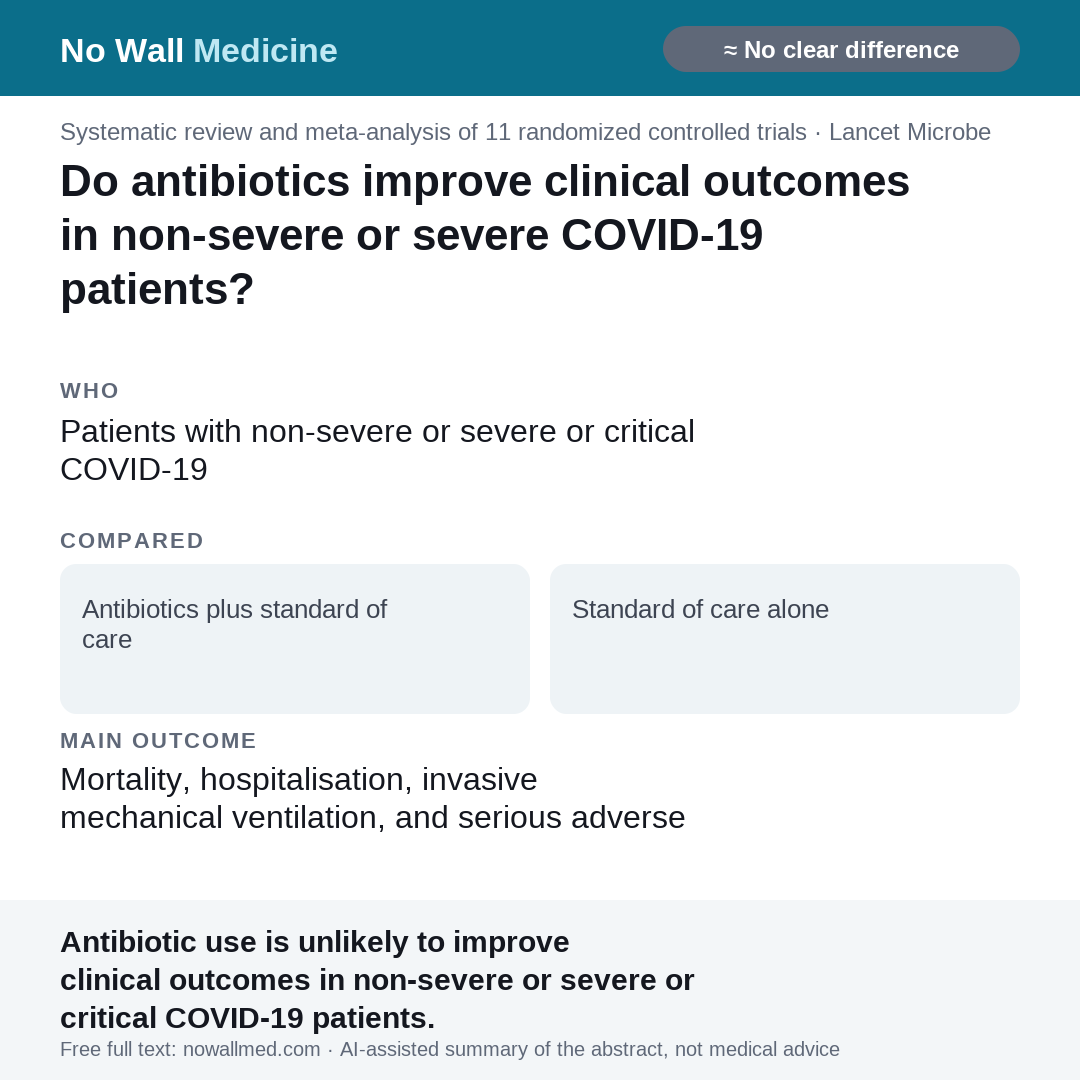
Effects of antibiotic treatment on clinical outcomes in patients with COVID-19: a systematic review and meta-analysis
Systematic review and meta-analysis of 11 randomized controlled trialsNo clear difference
Do antibiotics improve clinical outcomes in non-severe or severe COVID-19 patients?
Who
Patients with non-severe or severe or critical COVID-19
Compared
Antibiotics plus standard of care
Standard of care alone
Main outcome
Mortality, hospitalisation, invasive mechanical ventilation, and serious adverse events
Bottom line: Antibiotic use is unlikely to improve clinical outcomes in non-severe or severe or critical COVID-19 patients.
Limitation: Certainty of evidence was low for several key outcomes.
Lancet Microbe · 2026-06-10Download image
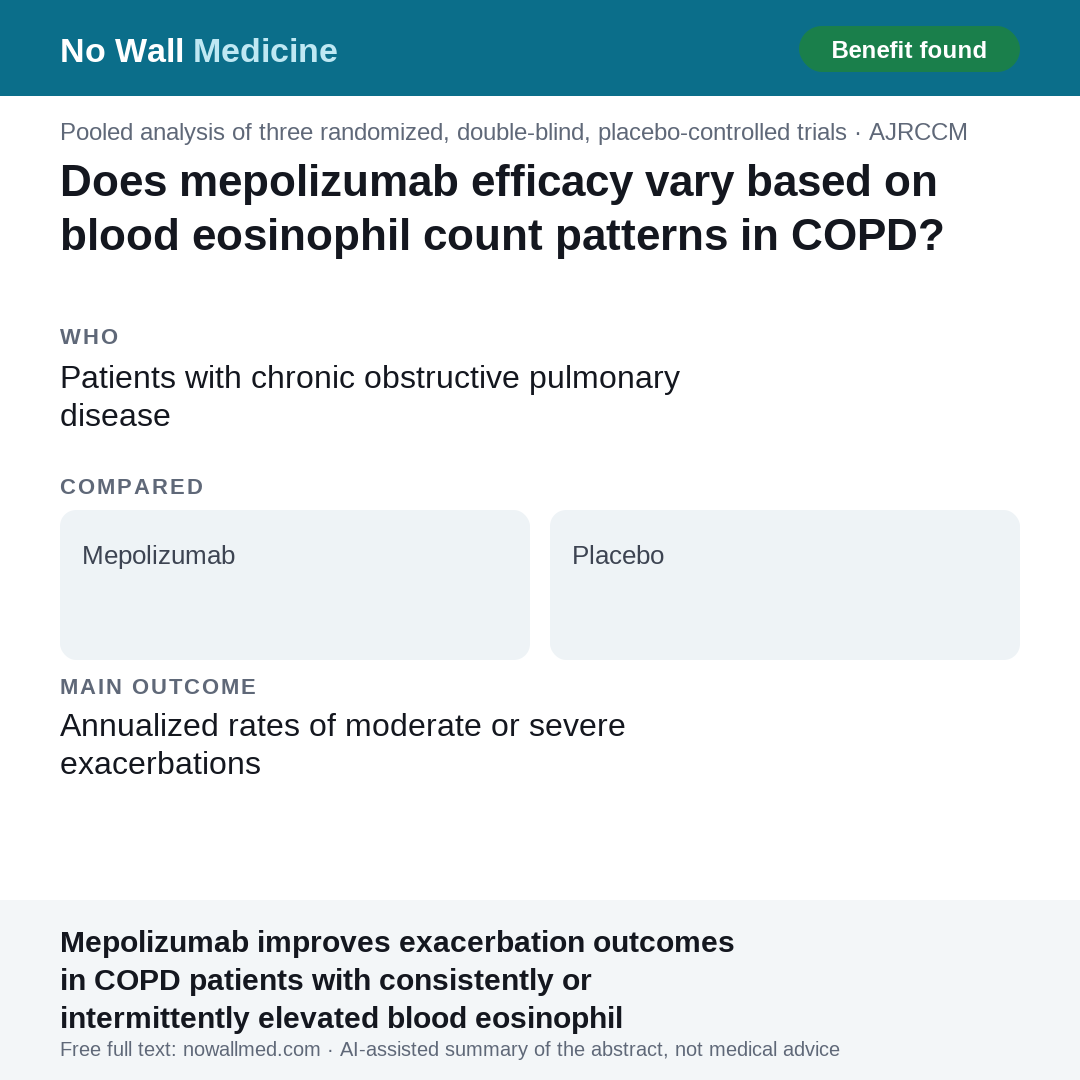
Mepolizumab efficacy in chronic obstructive pulmonary disease: insights from longitudinal patterns of blood eosinophil counts and their variability across 3 clinical trials
Pooled analysis of three randomized, double-blind, placebo-controlled trialsBenefit found
Does mepolizumab efficacy vary based on blood eosinophil count patterns in COPD?
Who
Patients with chronic obstructive pulmonary disease
Compared
Mepolizumab
Placebo
Main outcome
Annualized rates of moderate or severe exacerbations
Bottom line: Mepolizumab improves exacerbation outcomes in COPD patients with consistently or intermittently elevated blood eosinophil counts.
AJRCCM · 2026-06-10Download image
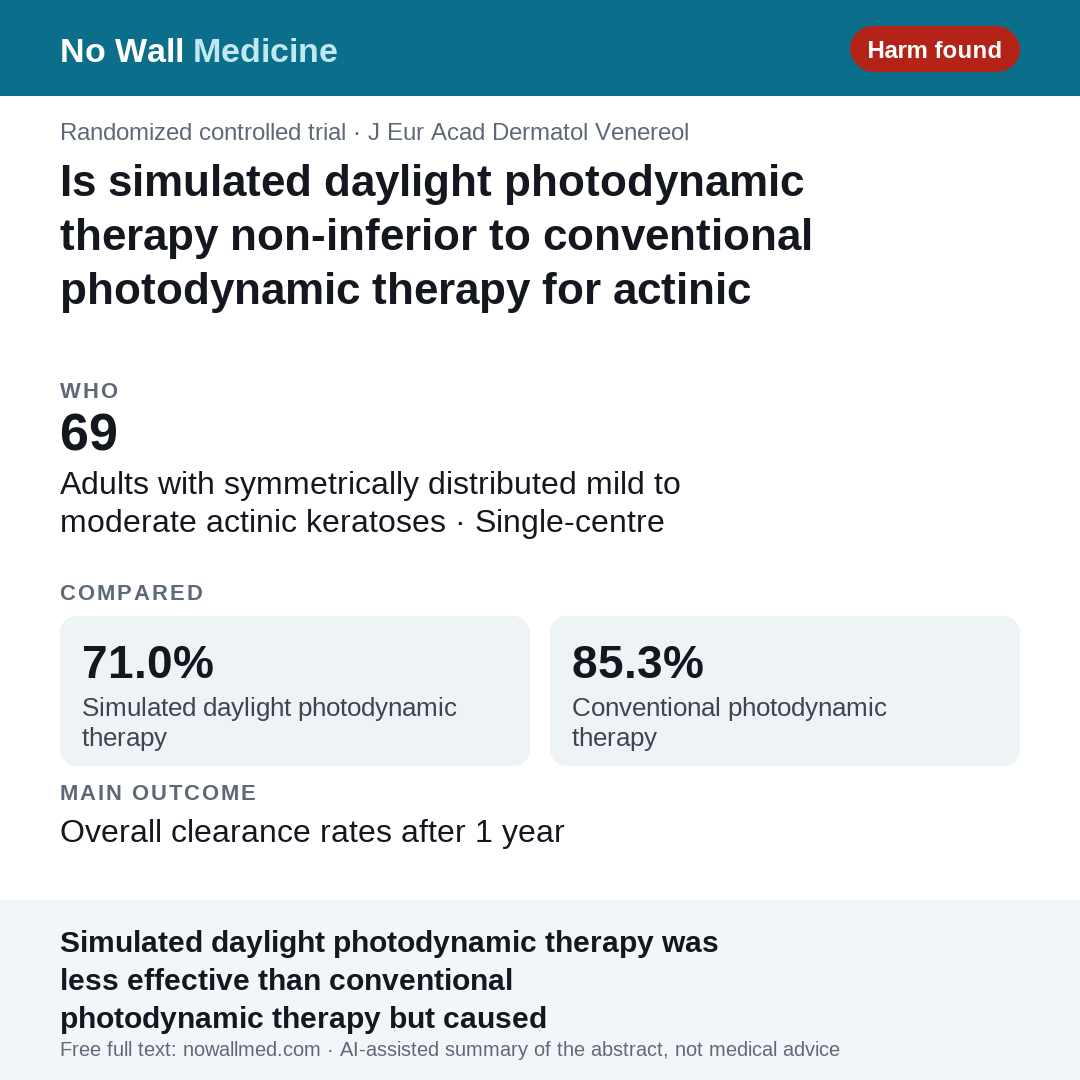
Simulated daylight versus conventional PDT for mild to moderate actinic keratoses: A randomized controlled trial
Randomized controlled trialHarm found
Is simulated daylight photodynamic therapy non-inferior to conventional photodynamic therapy for actinic keratoses?
Who
69
Adults with symmetrically distributed mild to moderate actinic keratoses · Single-centre
Compared
71.0%Simulated daylight photodynamic therapy
85.3%Conventional photodynamic therapy
Main outcome
Overall clearance rates after 1 year
Bottom line: Simulated daylight photodynamic therapy was less effective than conventional photodynamic therapy but caused significantly less pain.
J Eur Acad Dermatol Venereol · 2026-06-10Download image
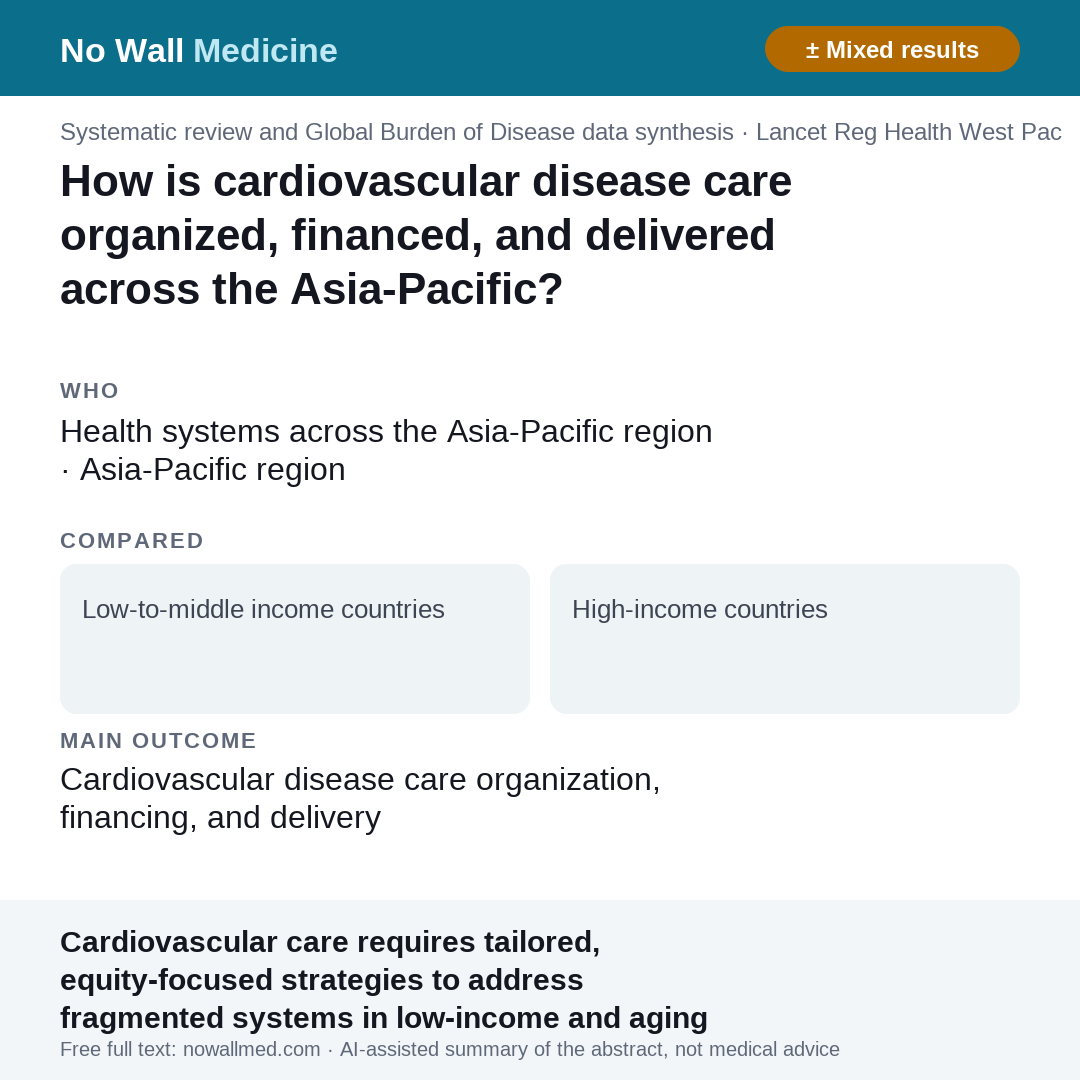
Systematic review of cardiovascular care delivery across health systems in the Asia-Pacific: a regional roadmap for strengthening cardiovascular care
Systematic review and Global Burden of Disease data synthesisMixed results
How is cardiovascular disease care organized, financed, and delivered across the Asia-Pacific?
Who
Health systems across the Asia-Pacific region · Asia-Pacific region
Compared
Low-to-middle income countries
High-income countries
Main outcome
Cardiovascular disease care organization, financing, and delivery
Bottom line: Cardiovascular care requires tailored, equity-focused strategies to address fragmented systems in low-income and aging populations in high-income countries.
Funded by: SingHealth Duke-NUS, National Medical Research Council, Stafford Fox Foundation
Lancet Reg Health West Pac · 2026-06-10Download image
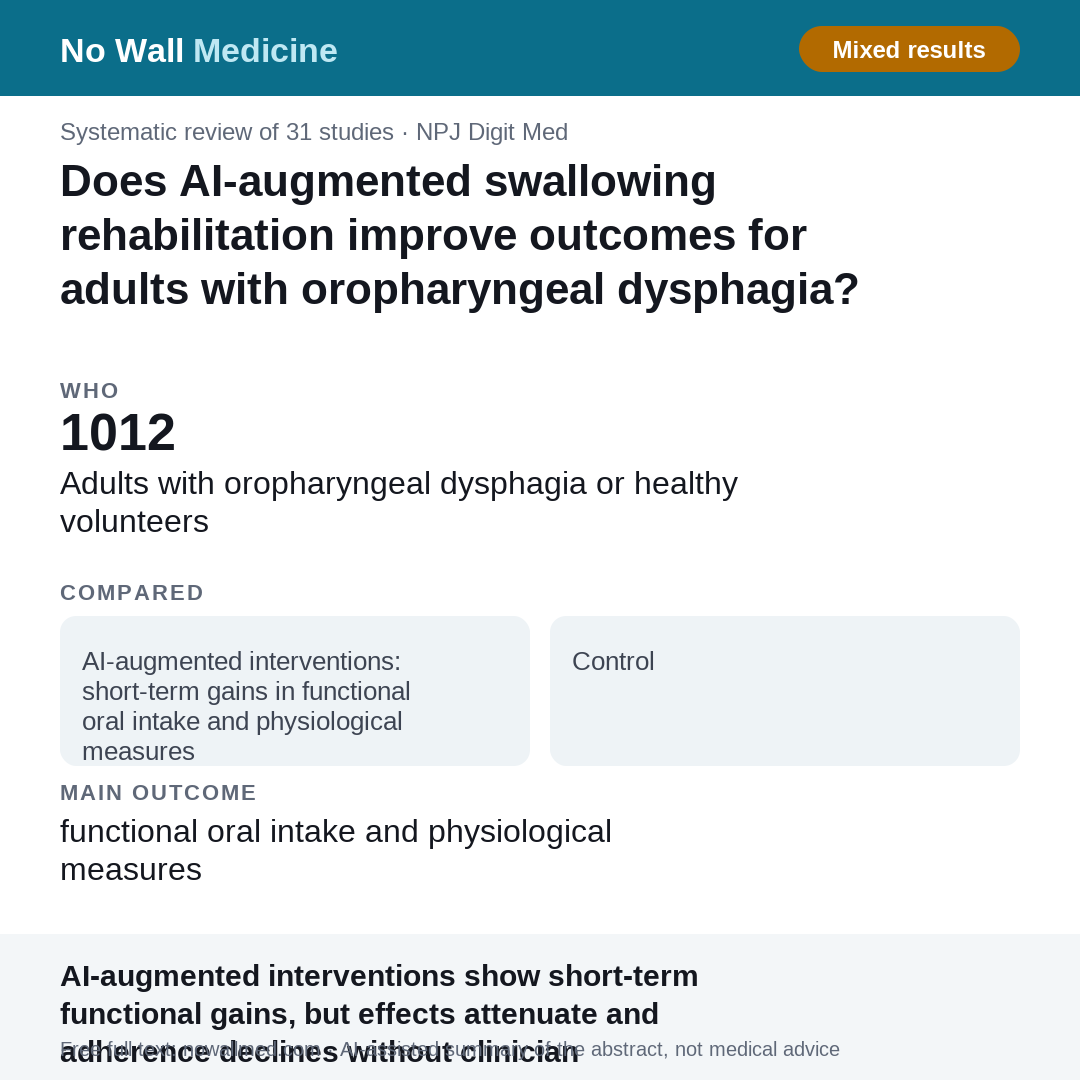
Human-AI collaboration for dysphagia rehabilitation from effectiveness to implementation complexity: a systematic review
Systematic review of 31 studiesMixed results
Does AI-augmented swallowing rehabilitation improve outcomes for adults with oropharyngeal dysphagia?
Who
1012
Adults with oropharyngeal dysphagia or healthy volunteers
Compared
AI-augmented interventions: short-term gains in functional oral intake and physiological measures
Control
Main outcome
functional oral intake and physiological measures
Bottom line: AI-augmented interventions show short-term functional gains, but effects attenuate and adherence declines without clinician supervision.
Limitation: AI algorithm performance is rated at very low certainty and validation is largely confined to healthy volunteers.
NPJ Digit Med · 2026-06-10Download image
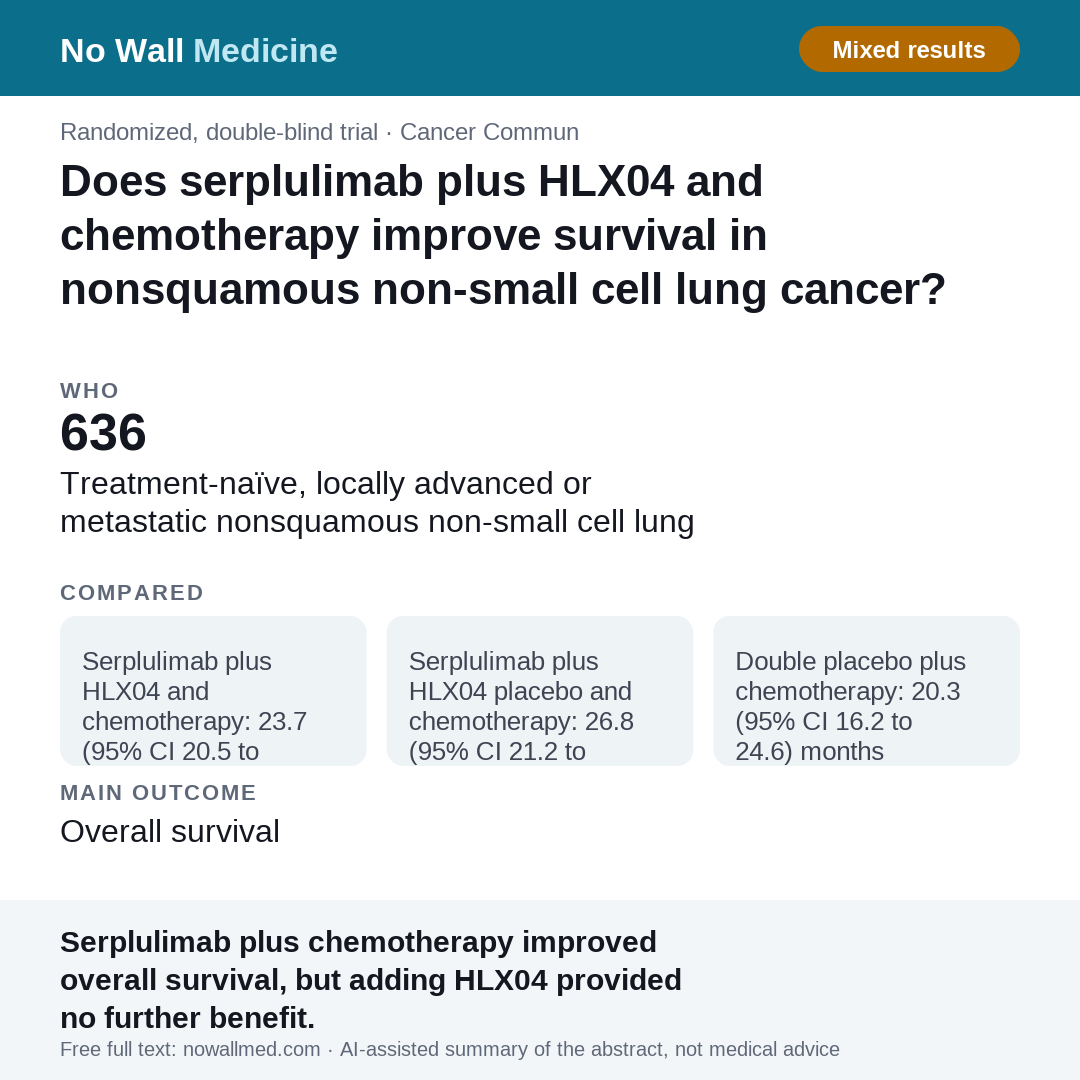
Serplulimab Plus Chemotherapy, with or without HLX04, versus Chemotherapy as First-Line Treatment for Nonsquamous NSCLC: Final Survival Analysis of the Phase III ASTRUM-002 Study
Randomized, double-blind trialMixed results
Does serplulimab plus HLX04 and chemotherapy improve survival in nonsquamous non-small cell lung cancer?
Who
636
Treatment-naïve, locally advanced or metastatic nonsquamous non-small cell lung cancer without EGFR or ALK/ROS1 alterations
Compared
Serplulimab plus HLX04 and chemotherapy: 23.7 (95% CI 20.5 to 27.5) months
Serplulimab plus HLX04 placebo and chemotherapy: 26.8 (95% CI 21.2 to 30.9) months
Double placebo plus chemotherapy: 20.3 (95% CI 16.2 to 24.6) months
Main outcome
Overall survival
Result: hazard ratio 0.66 (95% CI 0.52 to 0.83)
Bottom line: Serplulimab plus chemotherapy improved overall survival, but adding HLX04 provided no further benefit.
Cancer Commun · 2026-06-10Download image
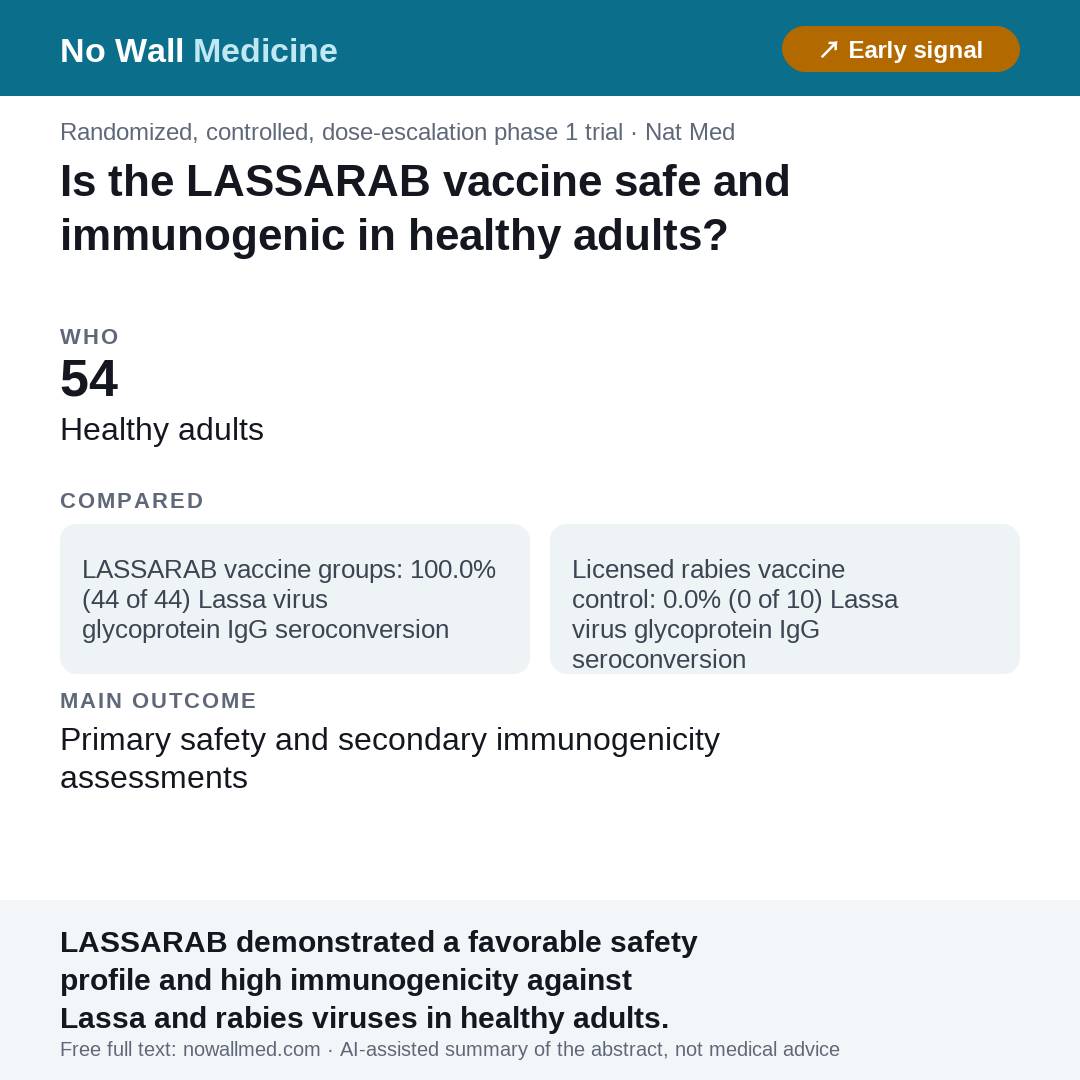
Adjuvanted inactivated rabies virus-vectored Lassa virus vaccine in healthy adults: a phase 1 trial
Randomized, controlled, dose-escalation phase 1 trialBenefit found
Is the LASSARAB vaccine safe and immunogenic in healthy adults?
Who
54
Healthy adults
Compared
LASSARAB vaccine groups: 100.0% (44 of 44) Lassa virus glycoprotein IgG seroconversion
Licensed rabies vaccine control: 0.0% (0 of 10) Lassa virus glycoprotein IgG seroconversion
Main outcome
Primary safety and secondary immunogenicity assessments
Bottom line: LASSARAB demonstrated a favorable safety profile and high immunogenicity against Lassa and rabies viruses in healthy adults.
Limitation: There were no prespecified hypotheses or formal power calculations.
Nat Med · 2026-06-09Download image
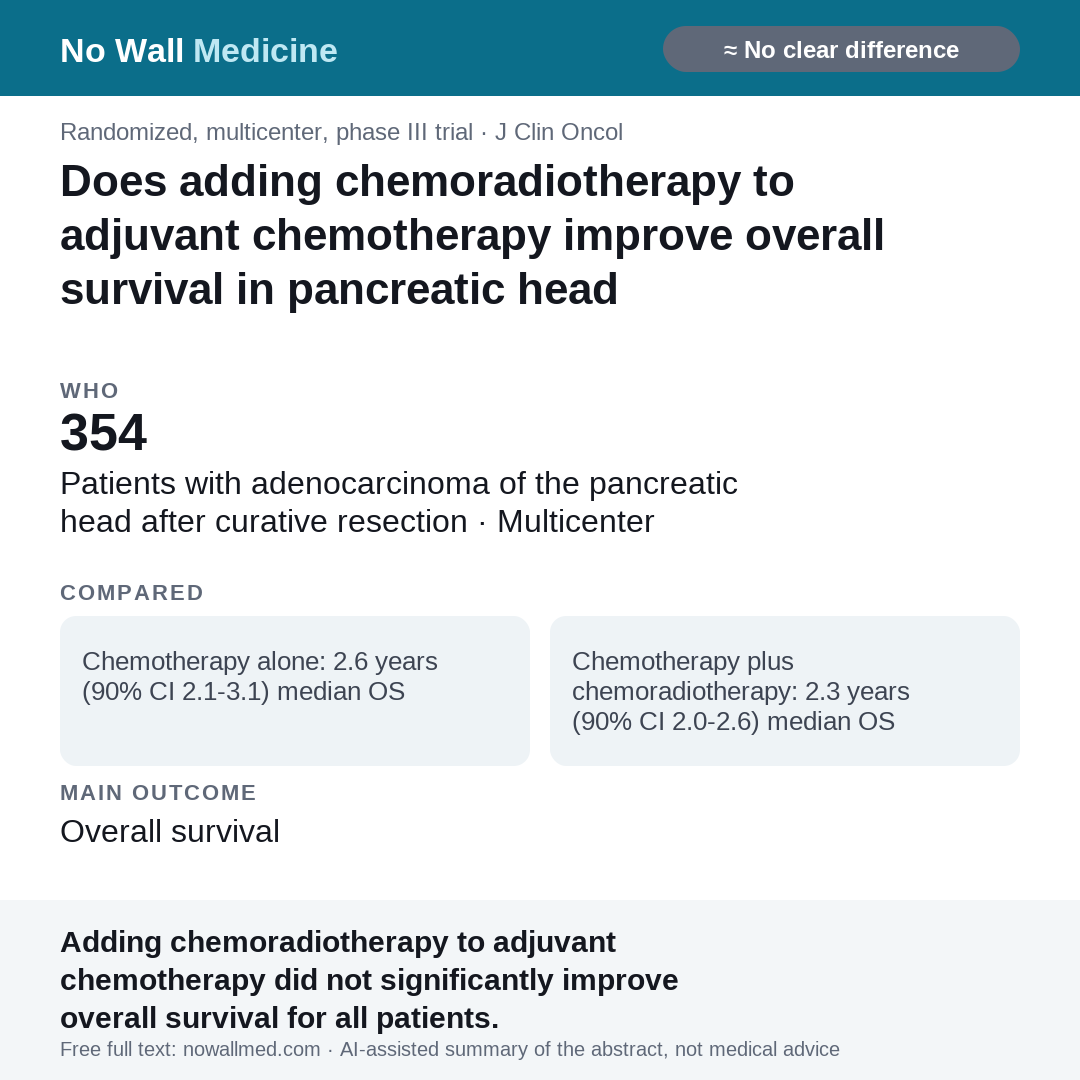
Adjuvant Chemotherapy ± Chemoradiotherapy for Adenocarcinoma of the Pancreatic Head: Results of the Radiotherapy Random Assignment of NRG Oncology/RTOG 0848
Randomized, multicenter, phase III trialNo clear difference
Does adding chemoradiotherapy to adjuvant chemotherapy improve overall survival in pancreatic head adenocarcinoma?
Who
354
Patients with adenocarcinoma of the pancreatic head after curative resection · Multicenter
Compared
Chemotherapy alone: 2.6 years (90% CI 2.1-3.1) median OS
Chemotherapy plus chemoradiotherapy: 2.3 years (90% CI 2.0-2.6) median OS
Main outcome
Overall survival
Result: hazard ratio 0.96 (90% CI 0.79 to 1.18)
Bottom line: Adding chemoradiotherapy to adjuvant chemotherapy did not significantly improve overall survival for all patients.
Limitation: The benefit of chemoradiotherapy was only observed in node-negative patients.
J Clin Oncol · 2026-06-09Download image
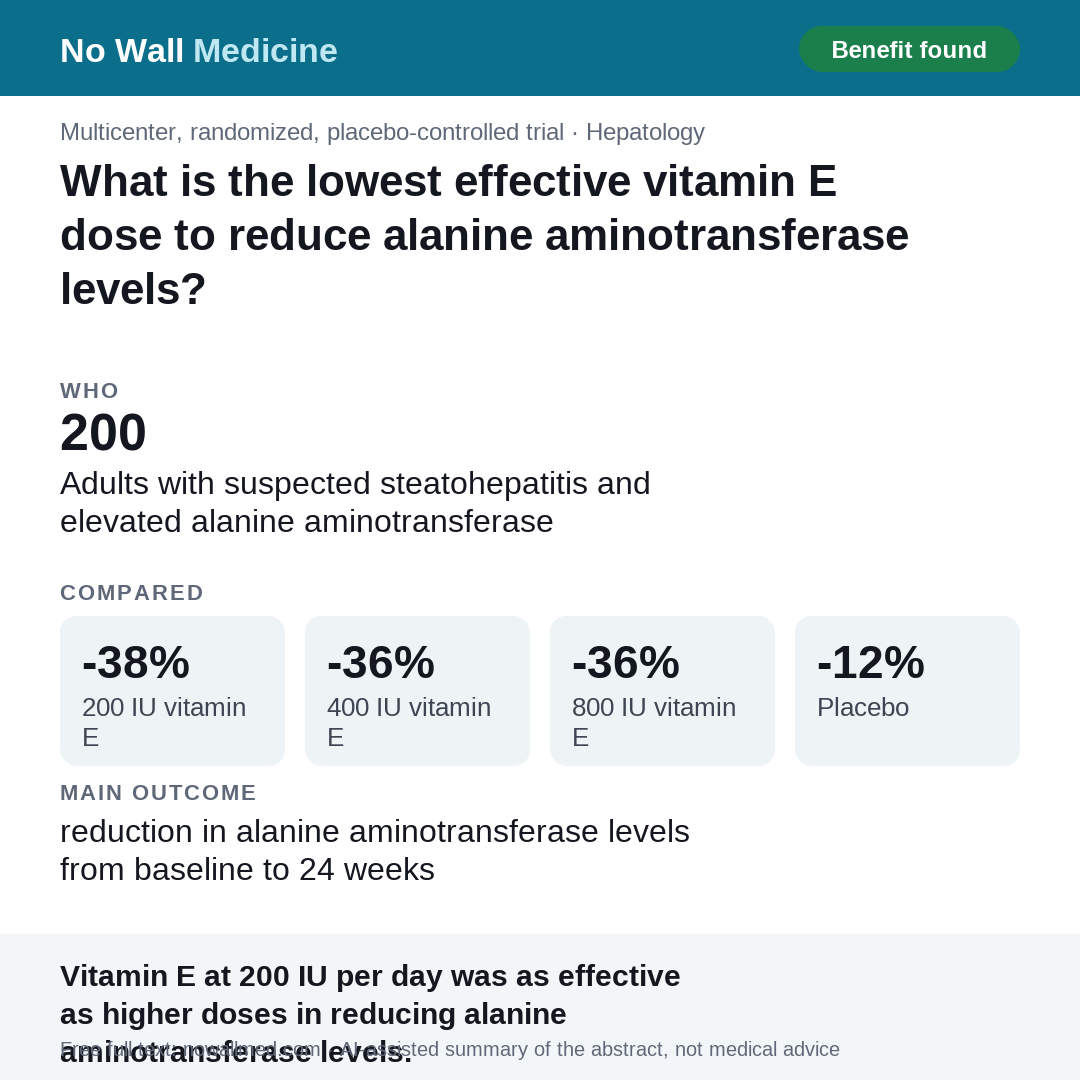
Vitamin E dosing study (VEDS) in patients with metabolic dysfunction-associated steatotic liver disease with elevated aminotransferases: A multicenter, randomized, placebo-controlled trial
Multicenter, randomized, placebo-controlled trialBenefit found
What is the lowest effective vitamin E dose to reduce alanine aminotransferase levels?
Who
200
Adults with suspected steatohepatitis and elevated alanine aminotransferase
Compared
-38%200 IU vitamin E
-36%400 IU vitamin E
-36%800 IU vitamin E
-12%Placebo
Main outcome
reduction in alanine aminotransferase levels from baseline to 24 weeks
Bottom line: Vitamin E at 200 IU per day was as effective as higher doses in reducing alanine aminotransferase levels.
Hepatology · 2026-06-09Download image
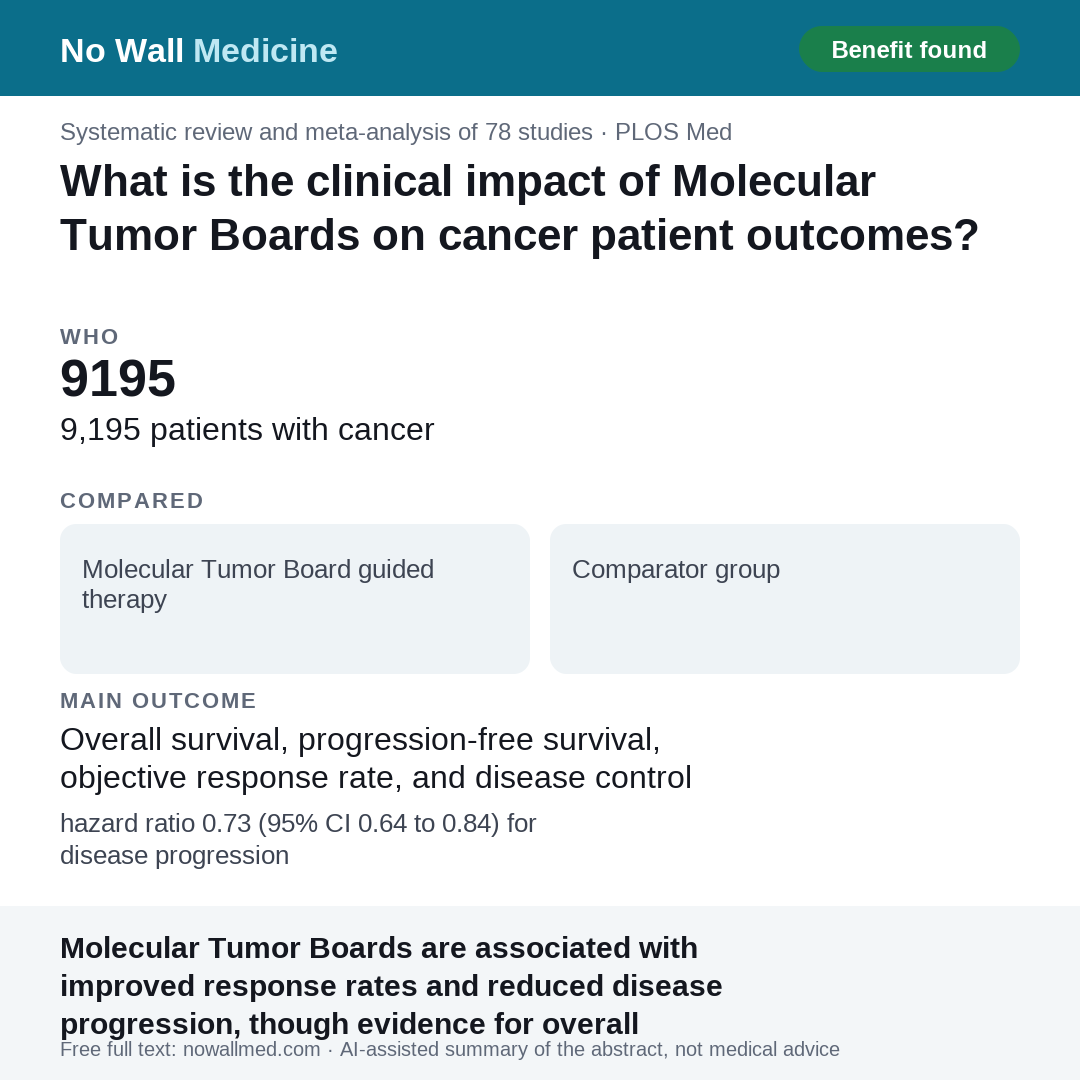
Molecular Tumor Boards clinical impact on patient care and structural features: A systematic review and meta-analysis
Systematic review and meta-analysis of 78 studiesBenefit found
What is the clinical impact of Molecular Tumor Boards on cancer patient outcomes?
Who
9195
9,195 patients with cancer
Compared
Molecular Tumor Board guided therapy
Comparator group
Main outcome
Overall survival, progression-free survival, objective response rate, and disease control rate
Result: hazard ratio 0.73 (95% CI 0.64 to 0.84) for disease progression
Bottom line: Molecular Tumor Boards are associated with improved response rates and reduced disease progression, though evidence for overall survival is limited.
Limitation: Substantial heterogeneity, predominance of non-randomized studies with serious risk of bias, and data reporting limitations.
PLOS Med · 2026-06-09Download image