Visual abstracts
New randomized trials and meta-analyses from leading journals at a glance: who was studied, what was compared, and what was found. Every paper is free to read in full.
All specialtiesCardiology 4877Oncology 4138Gastroenterology & Hepatology 1942Infectious Disease 3837Neurology 1905Psychiatry & Mental Health 2273Pulmonology 2143Critical Care 1365Endocrinology & Diabetes 2580Pediatrics 2980Surgery 2559Orthopedics & Sports Medicine 931Neurosurgery 537Cardiothoracic & Vascular Surgery 674Plastic & Reconstructive Surgery 591Nephrology 1133Rheumatology 823Hematology 1109Dermatology 621Ophthalmology 543Obstetrics & Gynecology 1686Public & Global Health 1058Radiology & Imaging 648Anesthesiology 986Urology 764ENT (Otolaryngology) 503Emergency Medicine 511Allergy & Immunology 313Geriatrics 981Family Medicine & Primary Care 562Medical Genetics & Genomics 676Pathology & Laboratory Medicine 159Physical Medicine & Rehabilitation 757Palliative Care 444Nutrition 1588Digital Health & AI 2201General Medicine 321
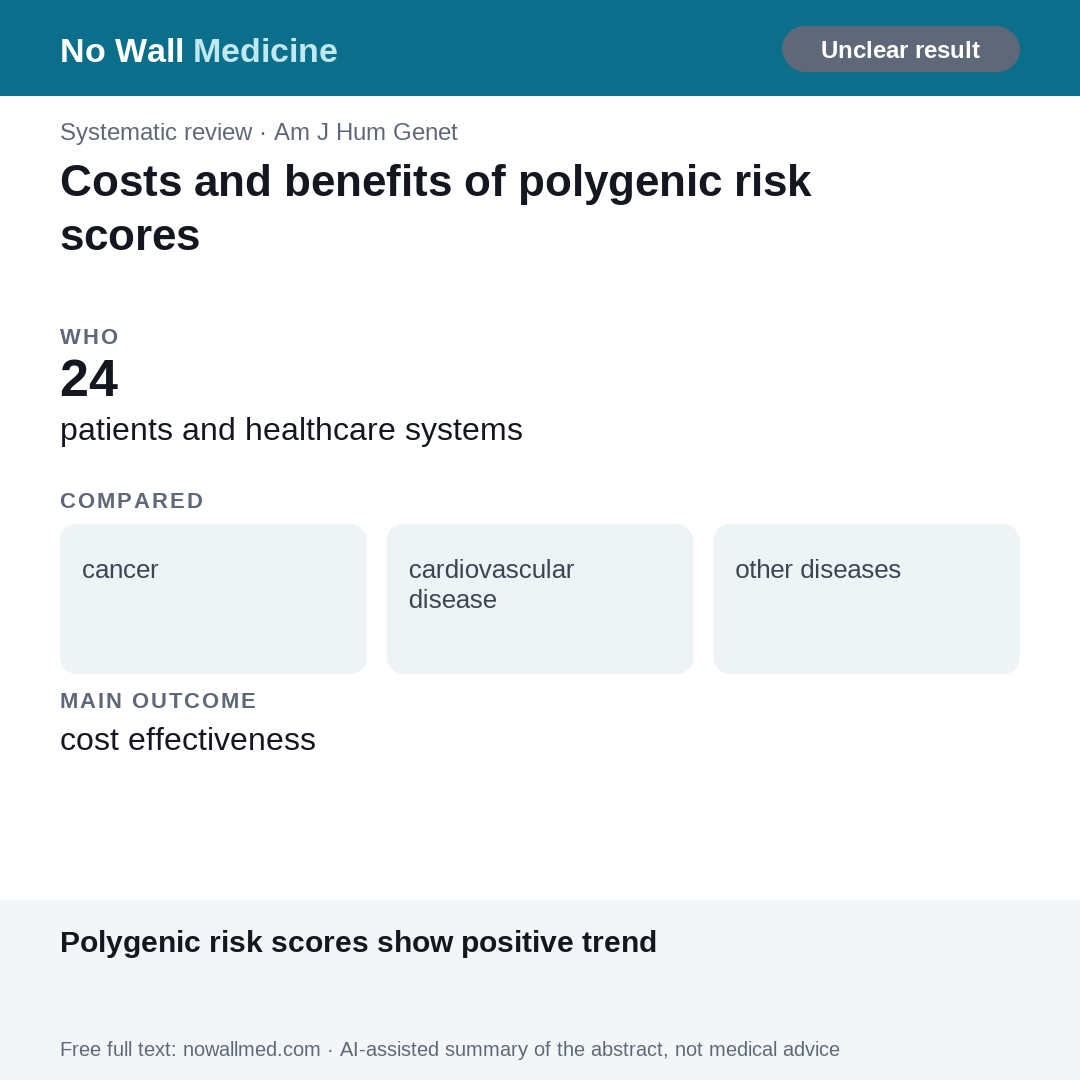
Weighing the evidence on costs and benefits of polygenic risk-based approaches in clinical practice: A systematic review of economic evaluations
Systematic reviewUnclear result
Costs and benefits of polygenic risk scores
Who
24
patients and healthcare systems
Compared
cancer
cardiovascular disease
other diseases
Main outcome
cost effectiveness
Bottom line: Polygenic risk scores show positive trend
Limitation: limited generalizability and real-world data
Am J Hum Genet · 2025-06-12Download image
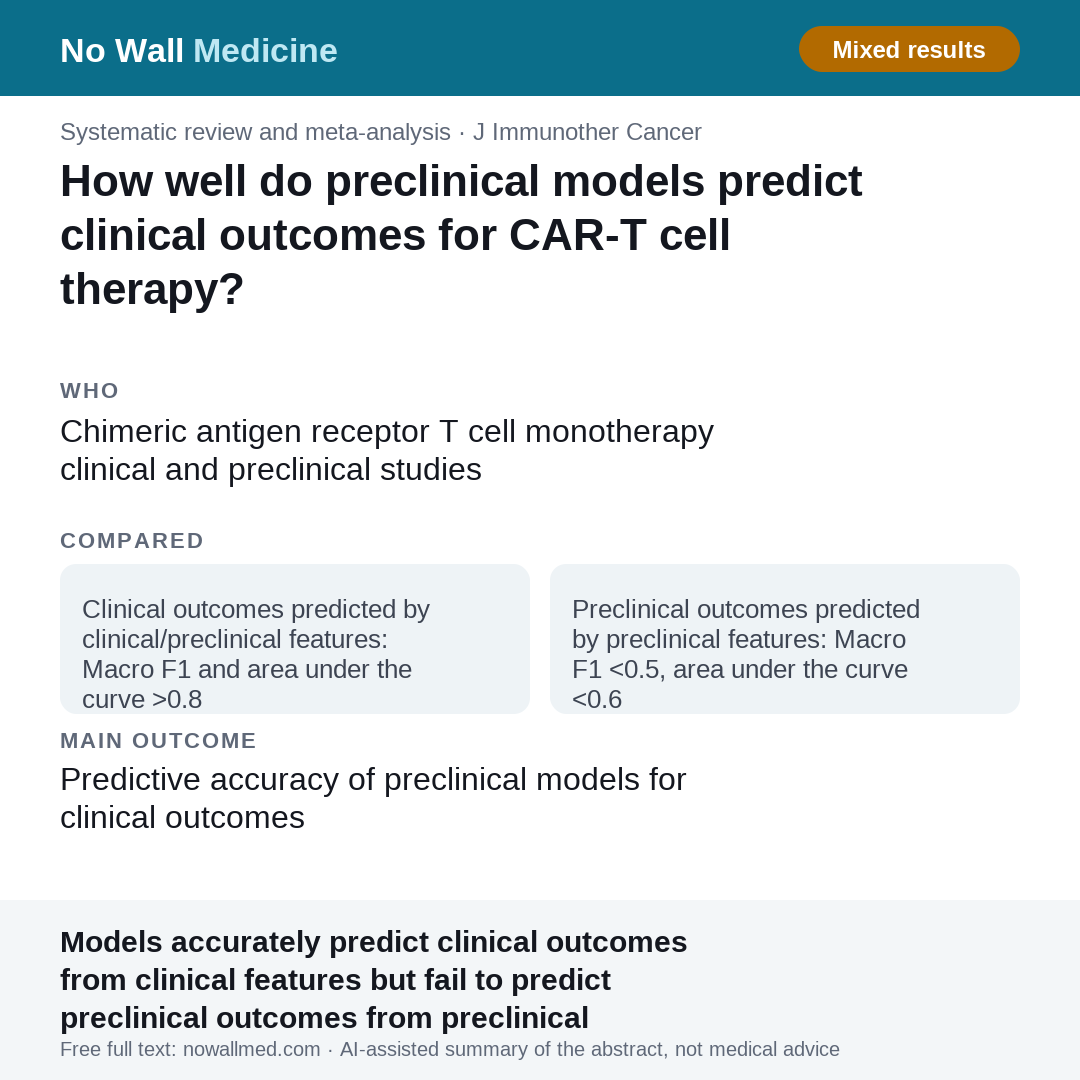
Predictive value of preclinical models for CAR-T cell therapy clinical trials: a systematic review and meta-analysis
Systematic review and meta-analysisMixed results
How well do preclinical models predict clinical outcomes for CAR-T cell therapy?
Who
Chimeric antigen receptor T cell monotherapy clinical and preclinical studies
Compared
Clinical outcomes predicted by clinical/preclinical features: Macro F1 and area under the curve >0.8
Preclinical outcomes predicted by preclinical features: Macro F1 <0.5, area under the curve <0.6
Main outcome
Predictive accuracy of preclinical models for clinical outcomes
Bottom line: Models accurately predict clinical outcomes from clinical features but fail to predict preclinical outcomes from preclinical features.
J Immunother Cancer · 2025-06-12Download image
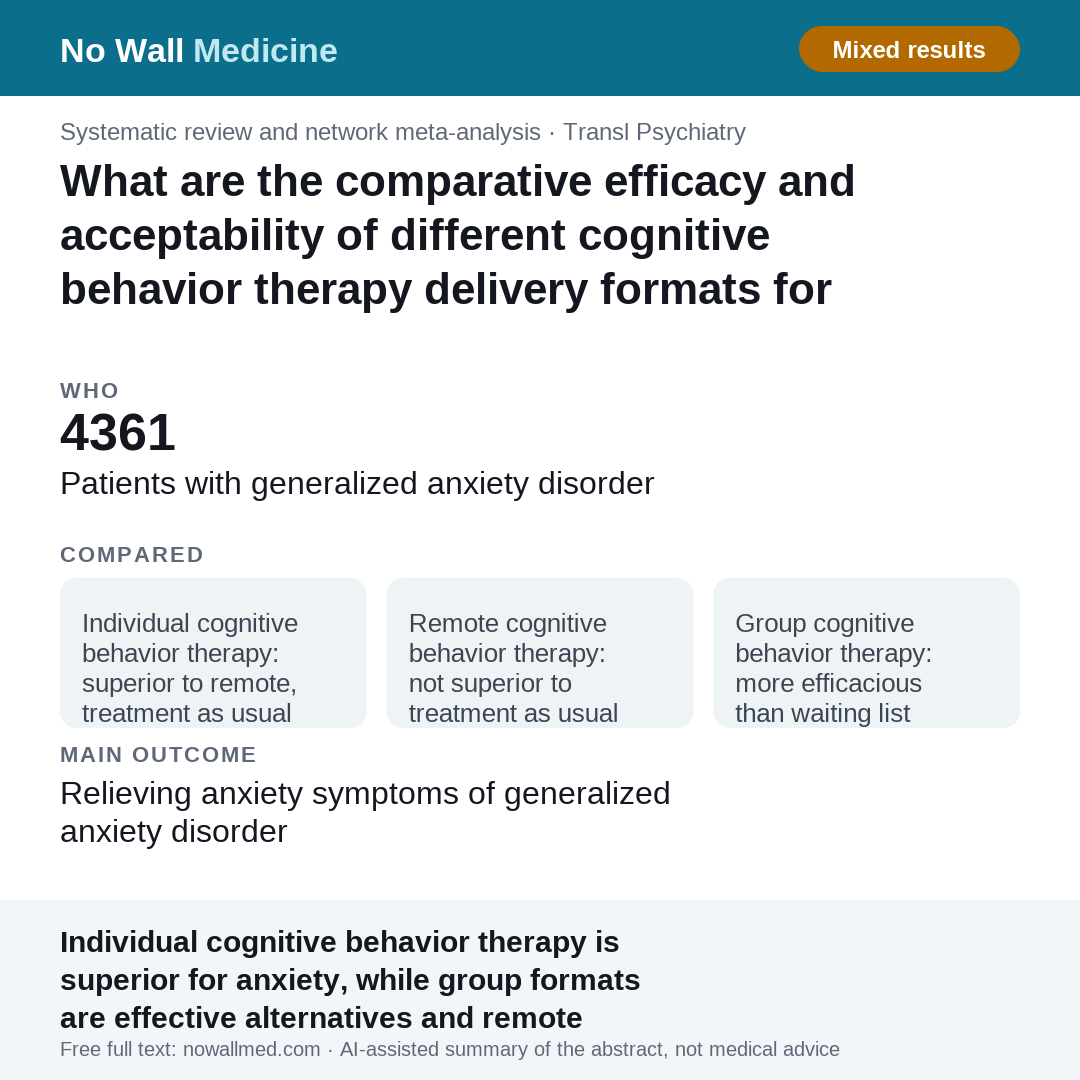
CBT treatment delivery formats for generalized anxiety disorder: a systematic review and network meta-analysis of randomized controlled trials
Systematic review and network meta-analysisMixed results
What are the comparative efficacy and acceptability of different cognitive behavior therapy delivery formats for generalized anxiety disorder?
Who
4361
Patients with generalized anxiety disorder
Compared
Individual cognitive behavior therapy: superior to remote, treatment as usual and waiting list
Remote cognitive behavior therapy: not superior to treatment as usual or waiting list
Group cognitive behavior therapy: more efficacious than waiting list
Main outcome
Relieving anxiety symptoms of generalized anxiety disorder
Result: individual CBT vs remote CBT SMD 0.96 (95% CI 0.13-1.79)
Bottom line: Individual cognitive behavior therapy is superior for anxiety, while group formats are effective alternatives and remote formats may be less effective.
Limitation: The quality of the evidence was typically of low or unclear risk of bias
Transl Psychiatry · 2025-06-12Download image
Environmental factors and clinical markers of stress during neonatal transport: a systematic literature review
Systematic literature reviewUnclear result
How do environmental factors during neonatal transport impact clinical markers of stress?
Who
Neonates undergoing ground, rotor or fixed-wing air ambulance transport · Global
Compared
Environmental exposures
Clinical parameters
Main outcome
Impact of vibration, sound and temperature on clinical parameters
Bottom line: Environmental factors like noise and vibration are present during transport, but definitive conclusions on physiological impact remain limited.
Limitation: Small sample sizes and variability in measurement methods across studies.
BMJ Paediatr Open · 2025-06-12Download image

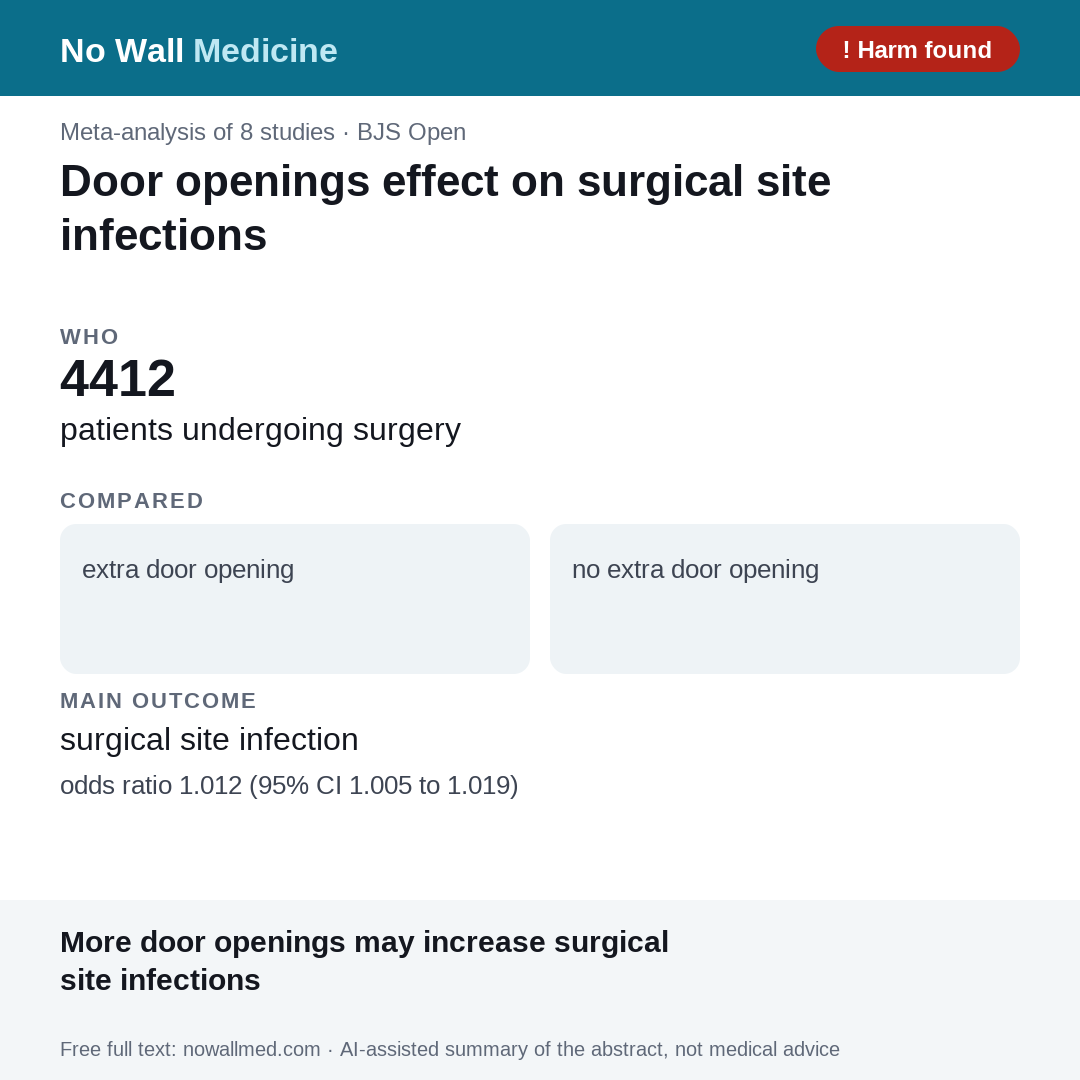
Effect of the number of door openings in the operating room on surgical site infections: individual-patient data meta-analysis
Meta-analysis of 8 studiesHarm found
Door openings effect on surgical site infections
Who
4412
patients undergoing surgery
Compared
extra door opening
no extra door opening
Main outcome
surgical site infection
Result: odds ratio 1.012 (95% CI 1.005 to 1.019)
Bottom line: More door openings may increase surgical site infections
Limitation: very low certainty of evidence
BJS Open · 2025-06-12Download image
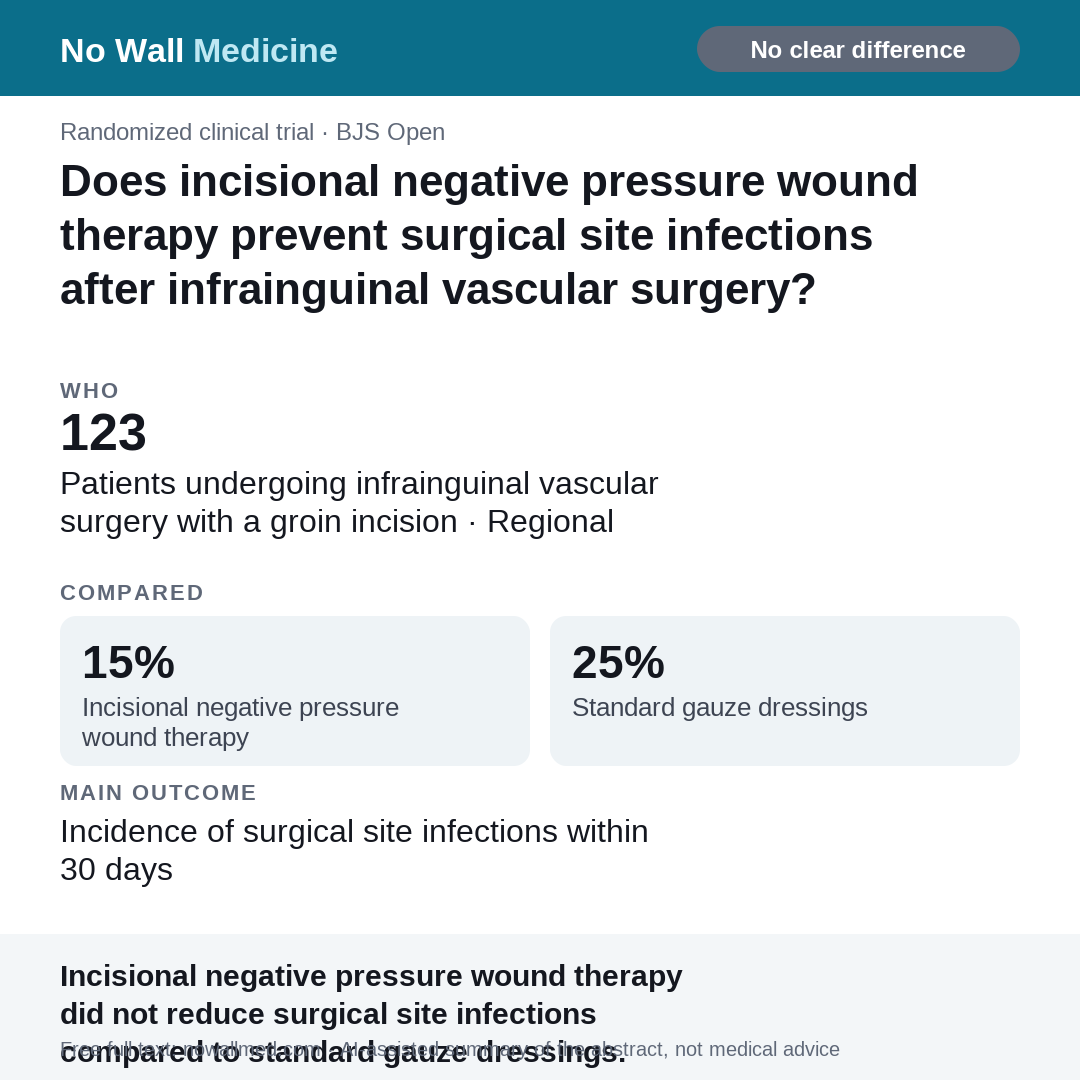
Prophylactic use of incisional negative pressure wound therapy for groin incisions in vascular surgery: randomized clinical trial
Randomized clinical trialNo clear difference
Does incisional negative pressure wound therapy prevent surgical site infections after infrainguinal vascular surgery?
Who
123
Patients undergoing infrainguinal vascular surgery with a groin incision · Regional
Compared
15%Incisional negative pressure wound therapy
25%Standard gauze dressings
Main outcome
Incidence of surgical site infections within 30 days
Bottom line: Incisional negative pressure wound therapy did not reduce surgical site infections compared to standard gauze dressings.
BJS Open · 2025-06-12Download image
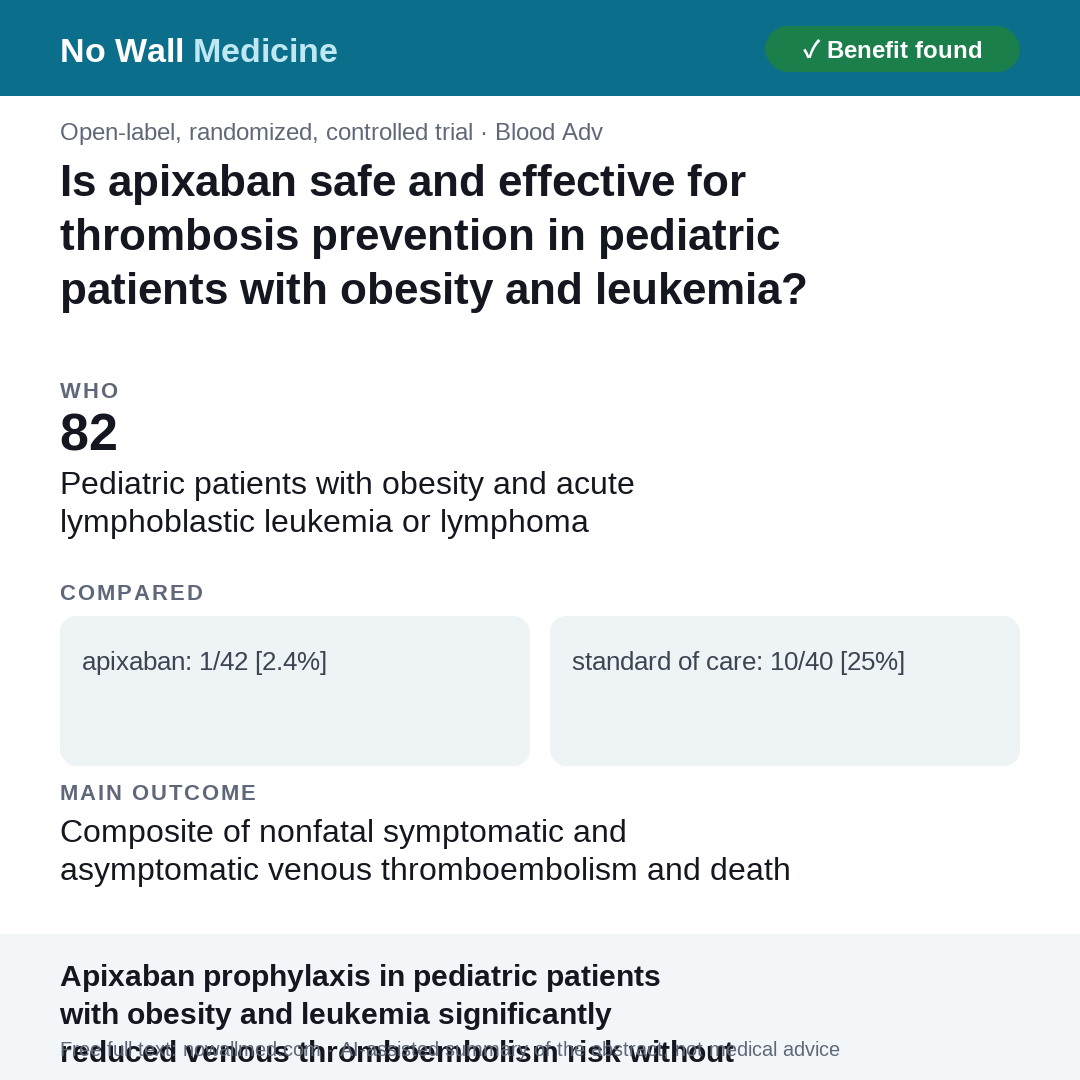
Safety and efficacy of apixaban thrombosis prevention in pediatric patients with obesity and acute lymphoblastic leukemia
Open-label, randomized, controlled trialBenefit found
Is apixaban safe and effective for thrombosis prevention in pediatric patients with obesity and leukemia?
Who
82
Pediatric patients with obesity and acute lymphoblastic leukemia or lymphoma
Compared
apixaban: 1/42 [2.4%]
standard of care: 10/40 [25%]
Main outcome
Composite of nonfatal symptomatic and asymptomatic venous thromboembolism and death
Result: relative risk 0.09 (95% CI 0.01-0.97)
Bottom line: Apixaban prophylaxis in pediatric patients with obesity and leukemia significantly reduced venous thromboembolism risk without increasing bleeding.
Blood Adv · 2025-06-12Download image
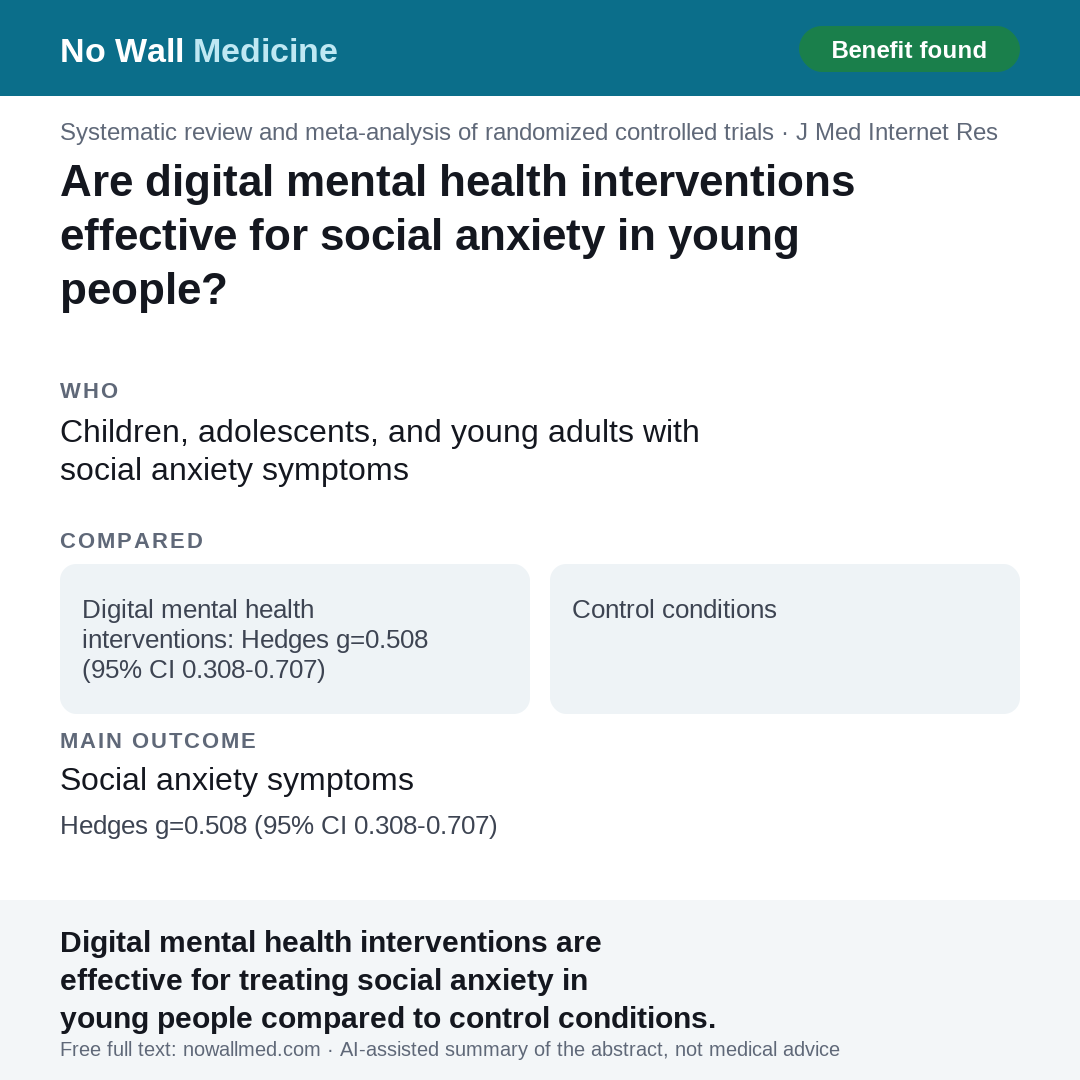
Digital Mental Health Interventions for the Prevention and Treatment of Social Anxiety Disorder in Children, Adolescents, and Young Adults: Systematic Review and Meta-Analysis of Randomized Controlled Trials
Systematic review and meta-analysis of randomized controlled trialsBenefit found
Are digital mental health interventions effective for social anxiety in young people?
Who
Children, adolescents, and young adults with social anxiety symptoms
Compared
Digital mental health interventions: Hedges g=0.508 (95% CI 0.308-0.707)
Control conditions
Main outcome
Social anxiety symptoms
Result: Hedges g=0.508 (95% CI 0.308-0.707)
Bottom line: Digital mental health interventions are effective for treating social anxiety in young people compared to control conditions.
Limitation: Most studies showed some concerns or high risk of bias and reporting of adherence varied substantially.
J Med Internet Res · 2025-06-12Download image
The Effectiveness of Computerized Cognitive Training in Patients With Poststroke Cognitive Impairment: Systematic Review and Meta-Analysis
Systematic review and meta-analysisBenefit found
Does computerized cognitive training improve cognitive function in patients with poststroke cognitive impairment?
Who
875
Patients with poststroke cognitive impairment
Compared
Computerized cognitive training
Usual care or routine rehabilitation
Main outcome
Cognitive function
Result: standardized mean difference 0.46 (95% CI 0.21 to 0.71)
Bottom line: Computerized cognitive training significantly enhances general cognitive function, attention, executive function, and quality of life in patients with poststroke cognitive impairment.
Limitation: Results vary due to differing intervention programs and computerized cognitive training systems.
J Med Internet Res · 2025-06-12Download image

Augmented Enteral Protein During Critical Illness: The TARGET Protein Randomized Clinical Trial
Cluster randomized, crossover, open-label trialNo clear difference
Does augmenting enteral protein increase days alive and free from hospitalization?
Who
3397
Critically ill patients receiving enteral nutrition · 8 intensive care units in Australia and New Zealand
Compared
Augmented protein: 62 (0-77) days
Usual protein: 64 (0-77) days
Main outcome
Days free of admittance to the index hospital and alive at day 90
Result: -1.97 (95% CI, -7.24 to 3.30) days
Bottom line: Augmenting enteral protein during critical illness did not improve days alive and free from the index hospital at day 90.
JAMA · 2025-06-11Download image

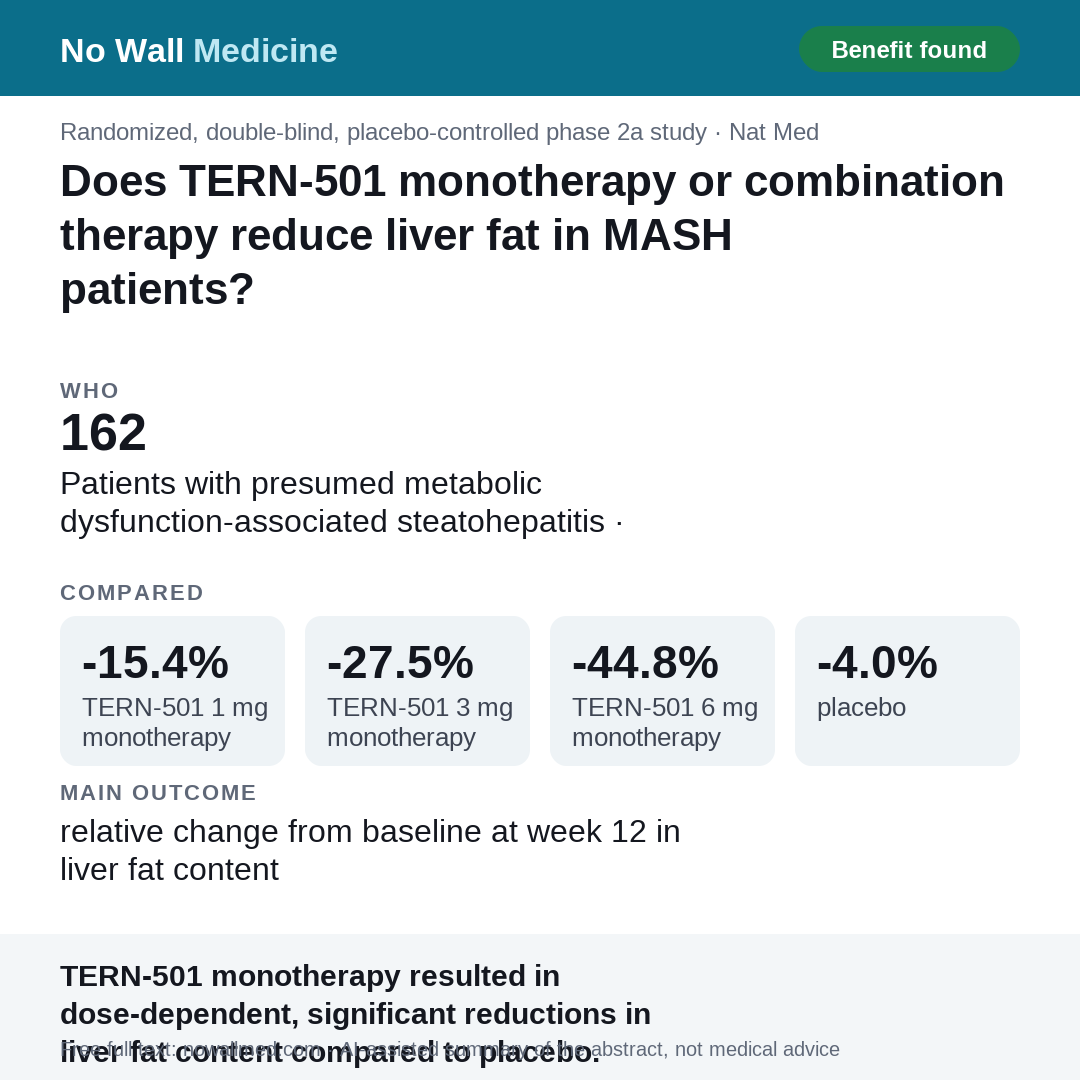
TERN-501 monotherapy and combination therapy with TERN-101 in metabolic dysfunction-associated steatohepatitis: the randomized phase 2a DUET trial
Randomized, double-blind, placebo-controlled phase 2a studyBenefit found
Does TERN-501 monotherapy or combination therapy reduce liver fat in MASH patients?
Who
162
Patients with presumed metabolic dysfunction-associated steatohepatitis · multicenter
Compared
-15.4%TERN-501 1 mg monotherapy (5.2%)
-27.5%TERN-501 3 mg monotherapy (5.7%)
-44.8%TERN-501 6 mg monotherapy (5.9%)
-4.0%placebo (5.4%)
Main outcome
relative change from baseline at week 12 in liver fat content
Bottom line: TERN-501 monotherapy resulted in dose-dependent, significant reductions in liver fat content compared to placebo.
Nat Med · 2025-06-11Download image
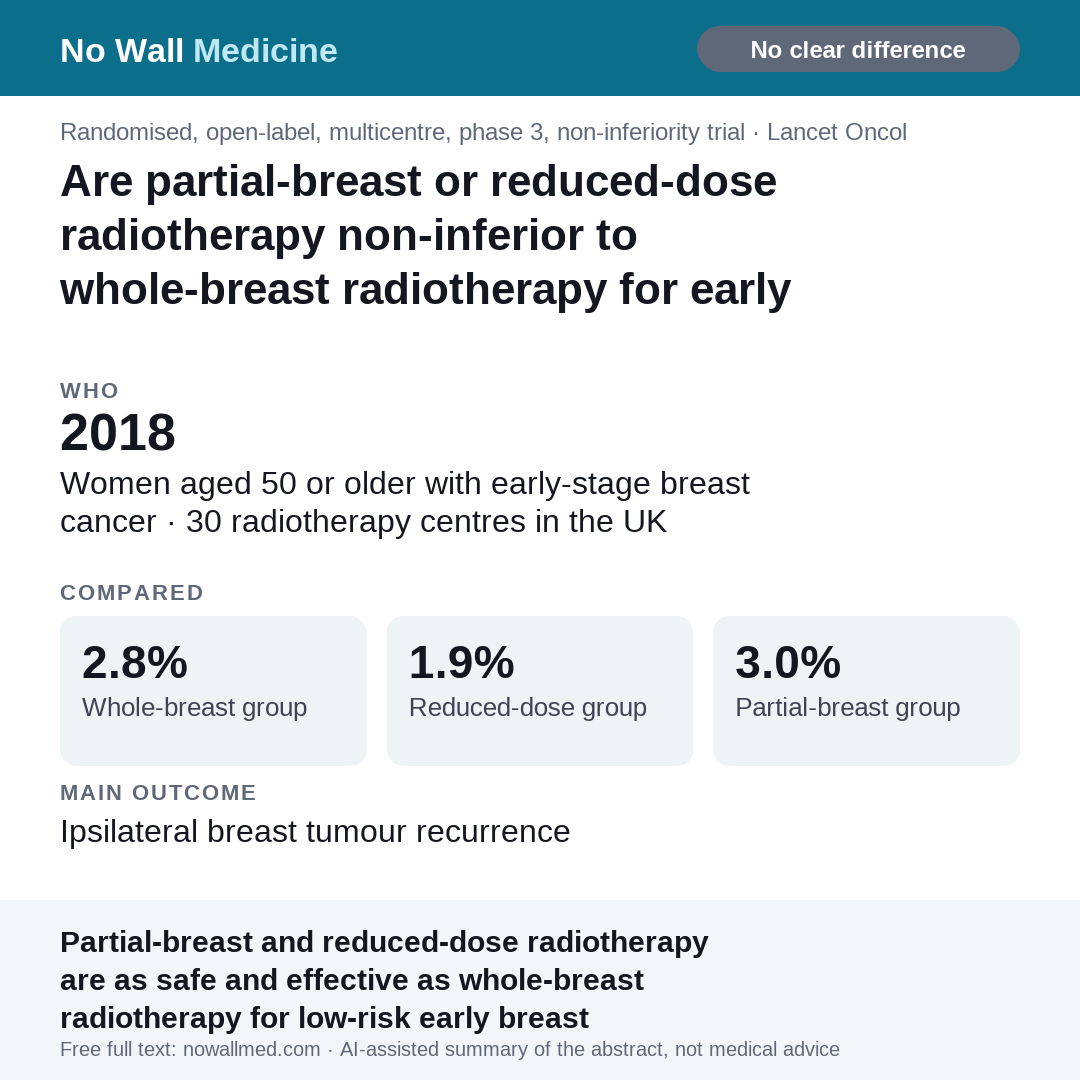
Partial-breast radiotherapy after breast conservation surgery for women with early breast cancer (UK IMPORT LOW): 10-year outcomes from a multicentre, open-label, randomised, controlled, phase 3, non-inferiority trial
Randomised, open-label, multicentre, phase 3, non-inferiority trialNo clear difference
Are partial-breast or reduced-dose radiotherapy non-inferior to whole-breast radiotherapy for early breast cancer?
Who
2018
Women aged 50 or older with early-stage breast cancer · 30 radiotherapy centres in the UK
Compared
2.8%Whole-breast group (17/674)
1.9%Reduced-dose group (11/673)
3.0%Partial-breast group (17/669)
Main outcome
Ipsilateral breast tumour recurrence
Result: absolute difference -1.02% (95% CI -1.98 to 0.99) and 0.16% (-1.28 to 2.89)
Bottom line: Partial-breast and reduced-dose radiotherapy are as safe and effective as whole-breast radiotherapy for low-risk early breast cancer.
Funded by: Cancer Research UK
Lancet Oncol · 2025-06-11Download image
Differential Associations of Dopamine and Serotonin With Reward and Punishment Processes in Humans: A Systematic Review and Meta-Analysis
Meta-analysis of 102 studiesMixed results
Do dopamine and serotonin manipulations show distinct associations with reinforcement learning?
Who
Healthy humans
Compared
Dopamine vs placebo: overall reward SMD 0.18 (95% CI 0.09 to 0.28)
Serotonin vs placebo: overall punishment SMD 0.22 (95% CI -0.04 to 0.49)
Main outcome
Performance on reward or punishment processing tasks
Bottom line: Dopamine and serotonin manipulations have distinct, measurable associations with different components of reinforcement learning in humans.
JAMA Psychiatry · 2025-06-11Download image

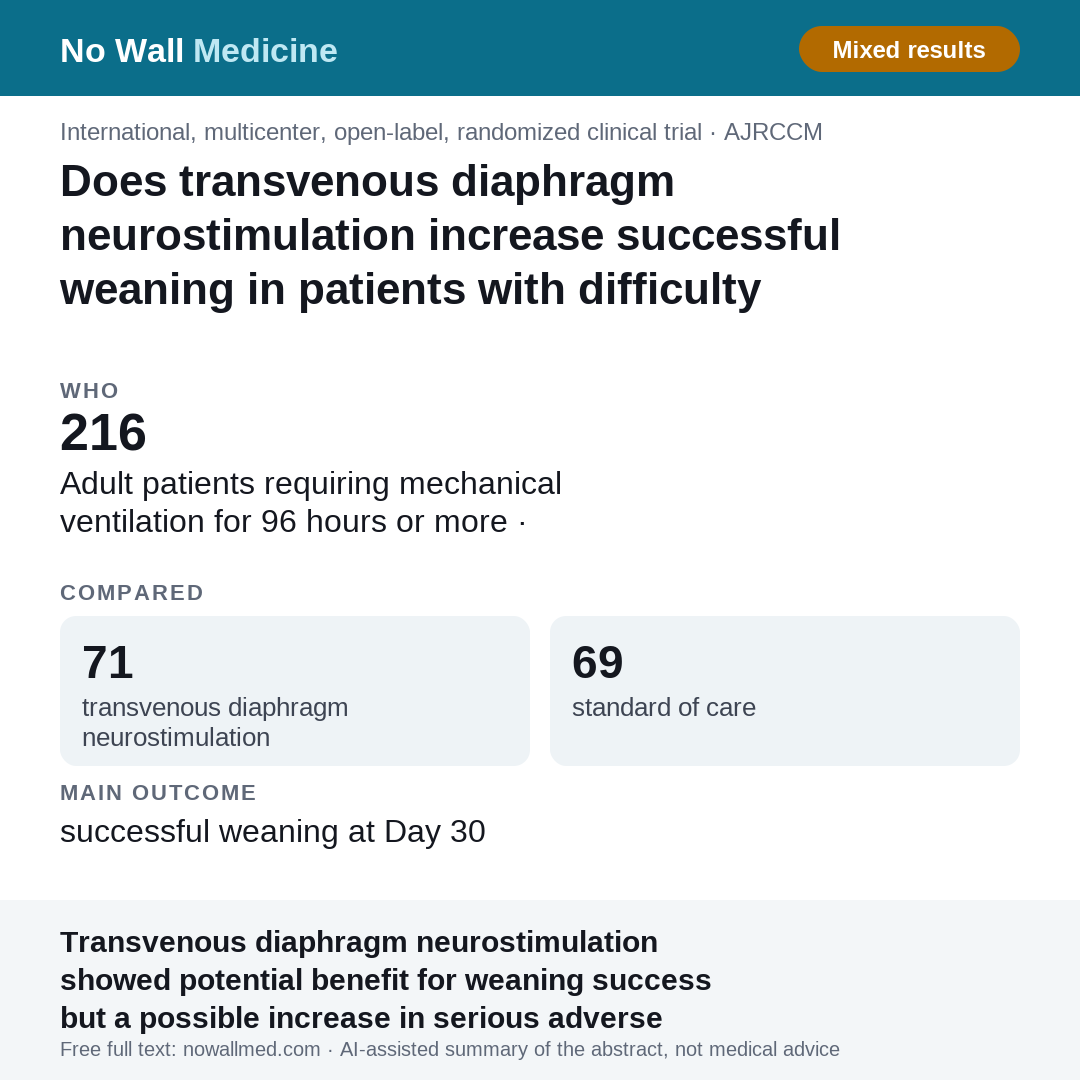
Temporary Transvenous Diaphragm Neurostimulation for Weaning from Mechanical Ventilation (RESCUE-3): A Randomized Clinical Trial
International, multicenter, open-label, randomized clinical trialMixed results
Does transvenous diaphragm neurostimulation increase successful weaning in patients with difficulty weaning?
Who
216
Adult patients requiring mechanical ventilation for 96 hours or more · International, multicenter
Compared
71transvenous diaphragm neurostimulation (70%)
69standard of care (61%)
Main outcome
successful weaning at Day 30
Result: adjusted hazard ratio 1.34 (95% credible interval 1.01-1.78)
Bottom line: Transvenous diaphragm neurostimulation showed potential benefit for weaning success but a possible increase in serious adverse events.
AJRCCM · 2025-06-11Download image
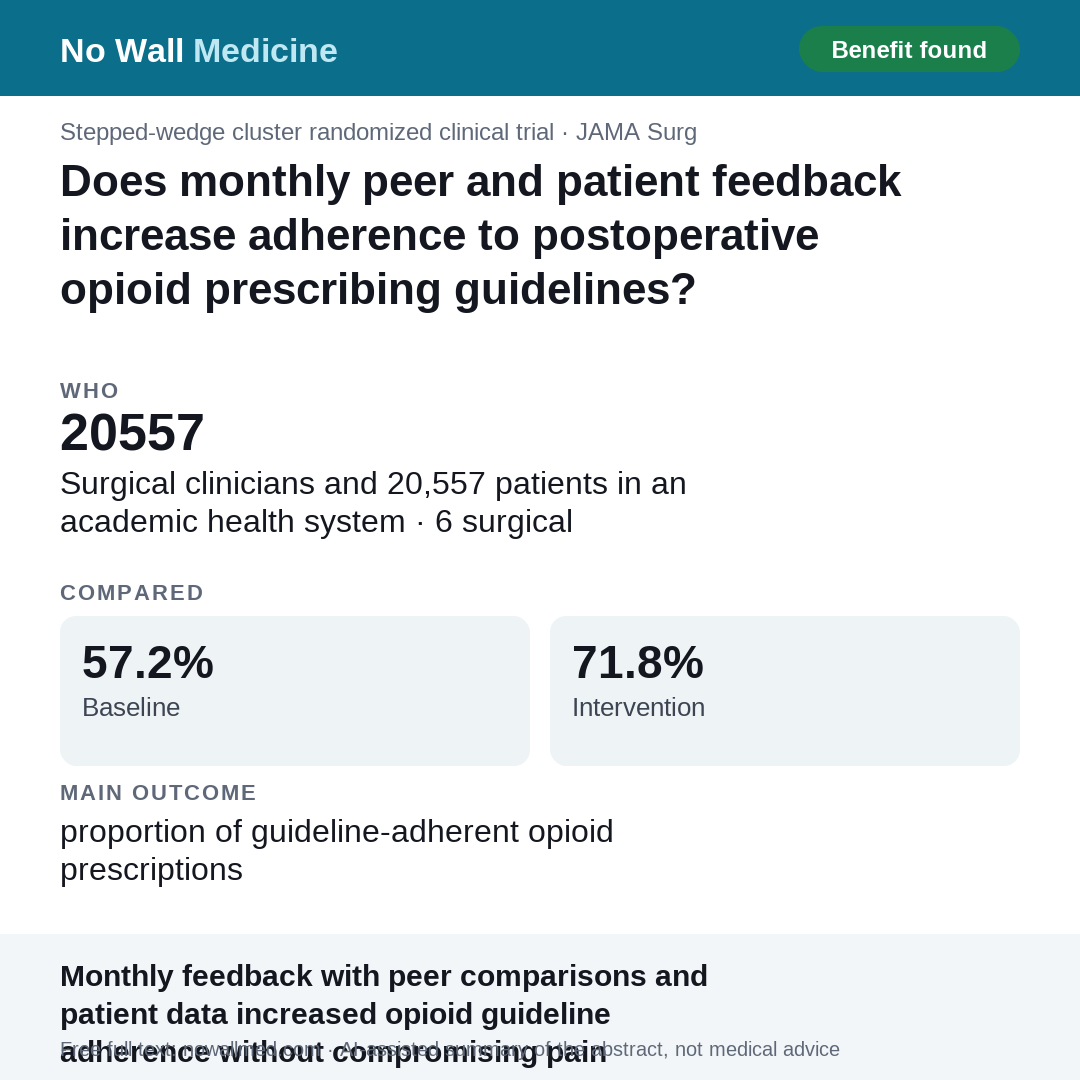
Peer and Patient Feedback to Increase Adherence to Postoperative Opioid Prescribing Guidelines: A Stepped-Wedge Cluster Randomized Clinical Trial
Stepped-wedge cluster randomized clinical trialBenefit found
Does monthly peer and patient feedback increase adherence to postoperative opioid prescribing guidelines?
Who
20557
Surgical clinicians and 20,557 patients in an academic health system · 6 surgical departments in Pennsylvania and New Jersey
Compared
57.2%Baseline
71.8%Intervention
Main outcome
proportion of guideline-adherent opioid prescriptions
Result: adjusted intervention effect of 5.3% (95% CI, 2.0%-8.7%)
Bottom line: Monthly feedback with peer comparisons and patient data increased opioid guideline adherence without compromising pain management.
JAMA Surg · 2025-06-11Download image
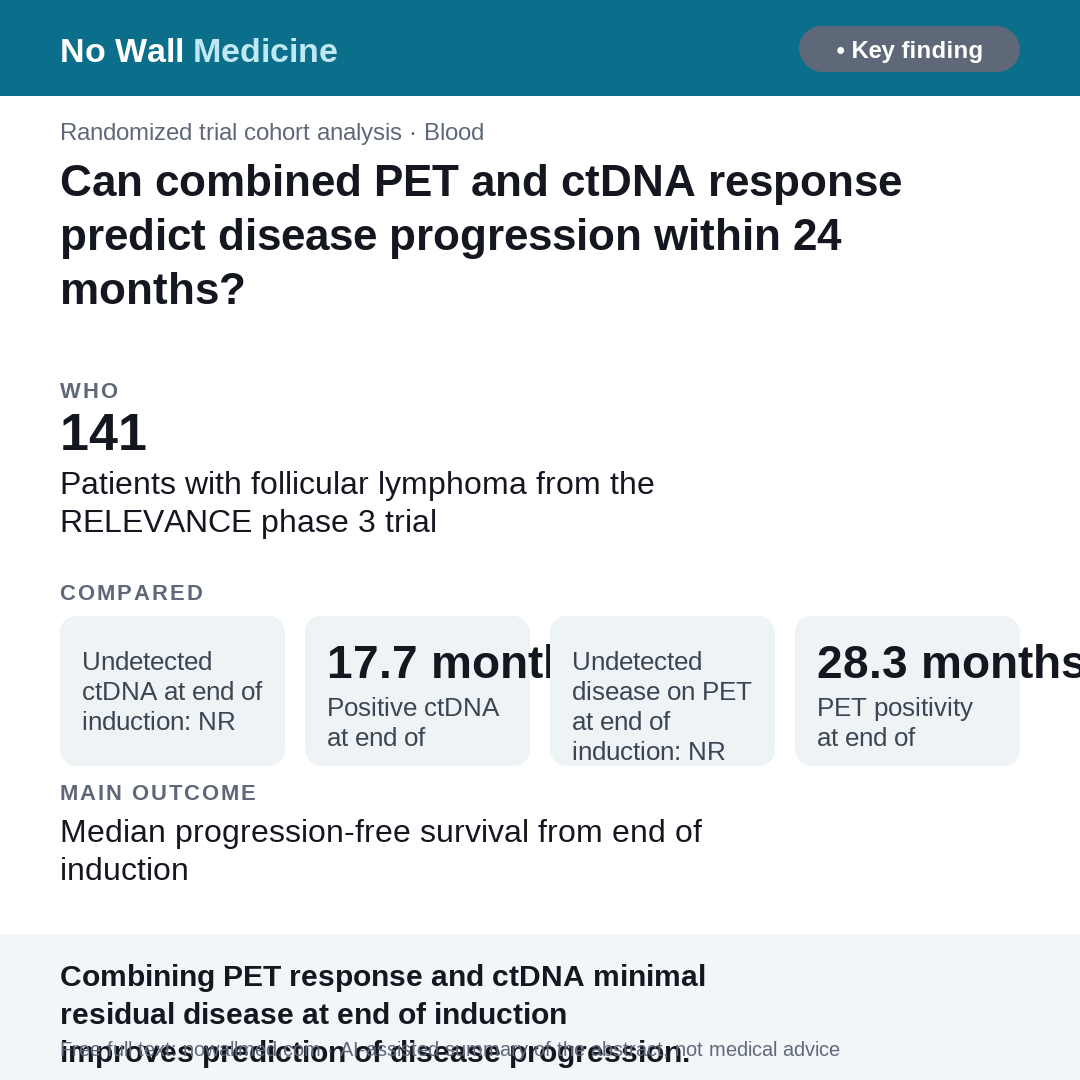
Combined PET and ctDNA response as a predictor of POD24 for follicular lymphoma after first-line induction treatment
Randomized trial cohort analysisBenefit found
Can combined PET and ctDNA response predict disease progression within 24 months?
Who
141
Patients with follicular lymphoma from the RELEVANCE phase 3 trial
Compared
Undetected ctDNA at end of induction: NR
17.7 monthsPositive ctDNA at end of induction (95% CI, 1.4 to NR)
Undetected disease on PET at end of induction: NR
28.3 monthsPET positivity at end of induction (95% CI, 2.9 to NR)
Main outcome
Median progression-free survival from end of induction
Bottom line: Combining PET response and ctDNA minimal residual disease at end of induction improves prediction of disease progression.
Blood · 2025-06-11Download image
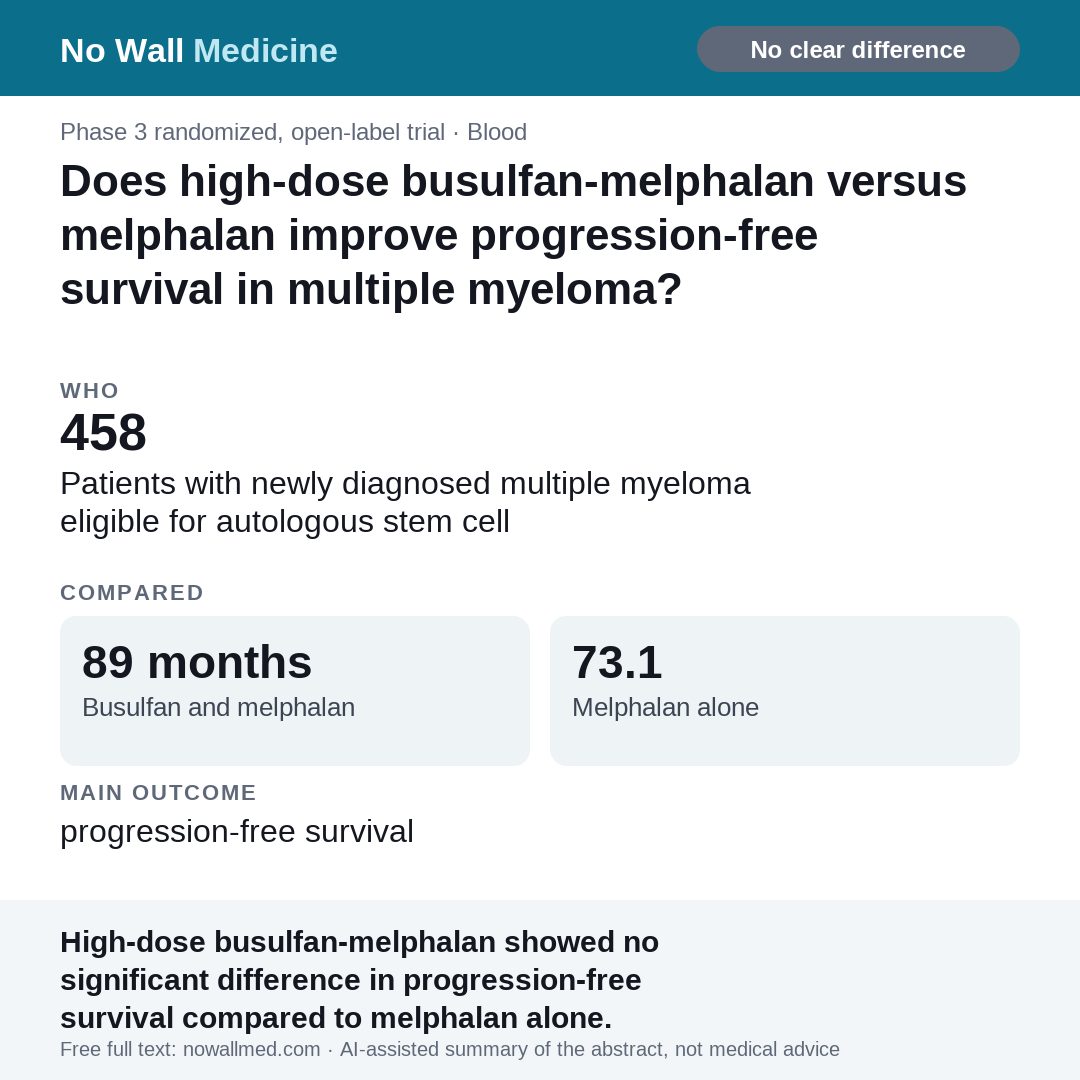
High-dose busulfan-melphalan vs melphalan and reinforced VRD for newly diagnosed multiple myeloma: a phase 3 GEM trial
Phase 3 randomized, open-label trialNo clear difference
Does high-dose busulfan-melphalan versus melphalan improve progression-free survival in multiple myeloma?
Who
458
Patients with newly diagnosed multiple myeloma eligible for autologous stem cell transplantation
Compared
89 monthsBusulfan and melphalan
73.1Melphalan alone
Main outcome
progression-free survival
Result: hazard ratio 0.89 (95% confidence interval, 0.70-1.14)
Bottom line: High-dose busulfan-melphalan showed no significant difference in progression-free survival compared to melphalan alone.
Blood · 2025-06-11Download image
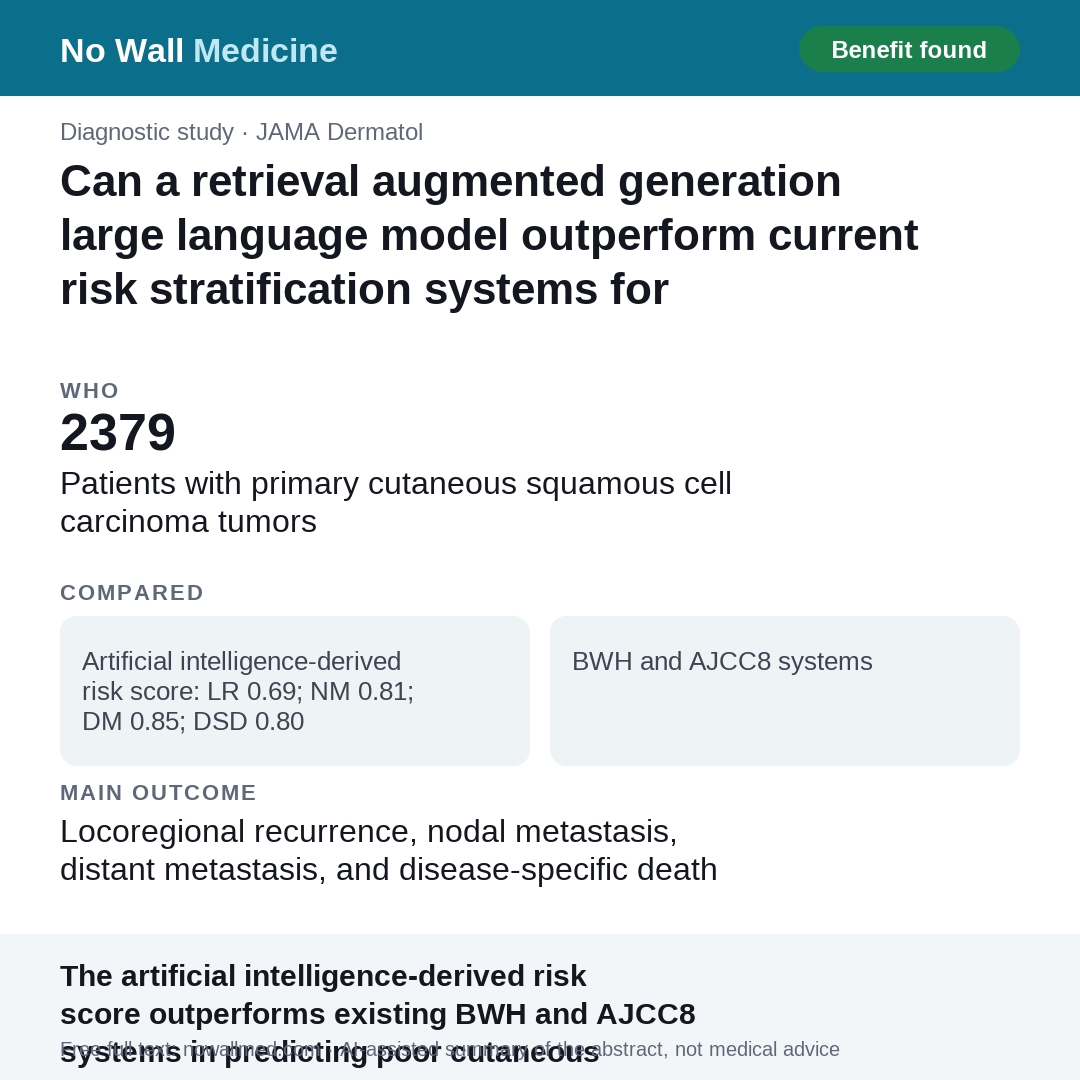
Retrieval Augmented Generation-Enabled Large Language Model for Risk Stratification of Cutaneous Squamous Cell Carcinoma
Diagnostic studyBenefit found
Can a retrieval augmented generation large language model outperform current risk stratification systems for cutaneous squamous cell carcinoma?
Who
2379
Patients with primary cutaneous squamous cell carcinoma tumors
Compared
Artificial intelligence-derived risk score: LR 0.69; NM 0.81; DM 0.85; DSD 0.80
BWH and AJCC8 systems
Main outcome
Locoregional recurrence, nodal metastasis, distant metastasis, and disease-specific death
Bottom line: The artificial intelligence-derived risk score outperforms existing BWH and AJCC8 systems in predicting poor cutaneous squamous cell carcinoma outcomes.
JAMA Dermatol · 2025-06-11Download image
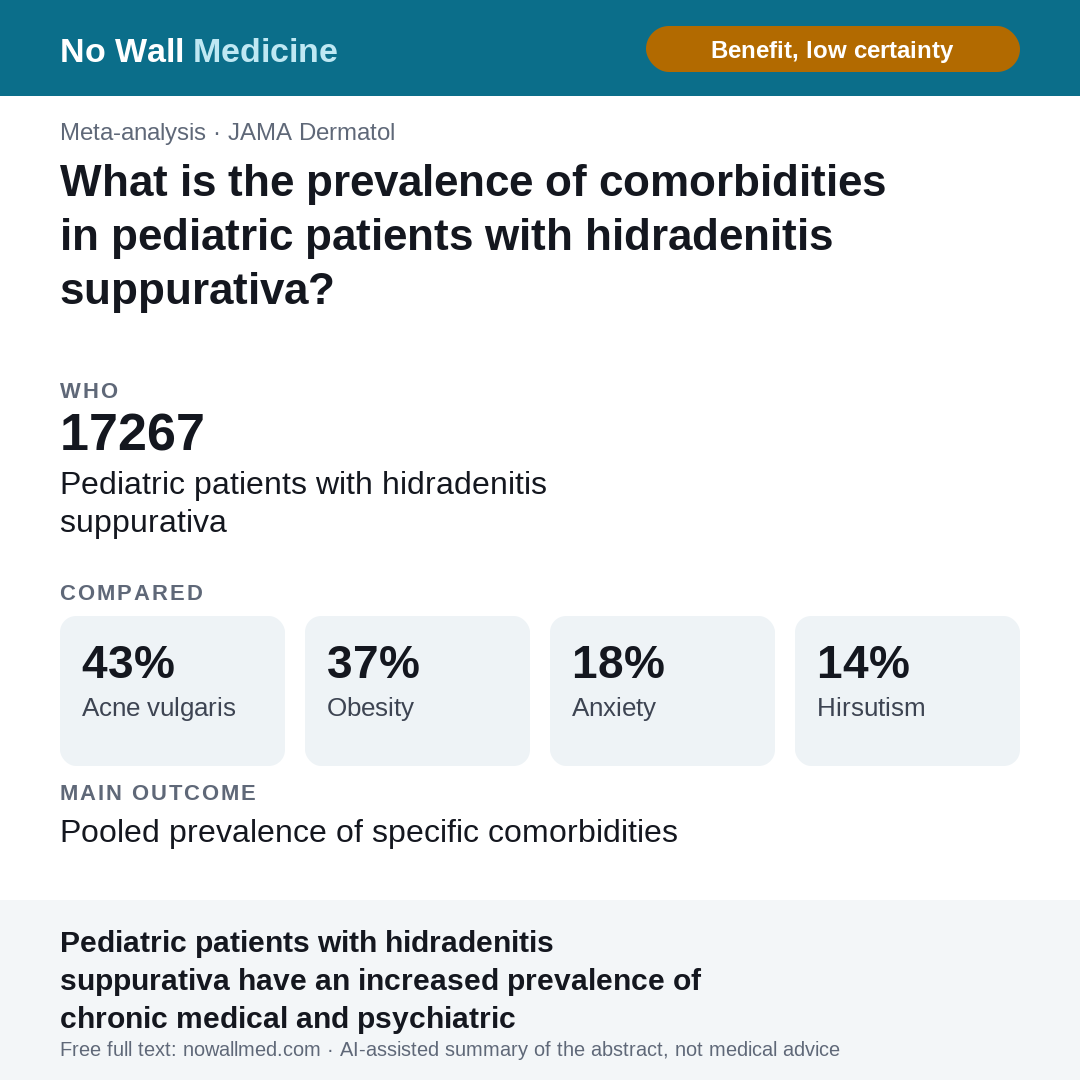
Prevalence of Comorbidities Among Pediatric Patients With Hidradenitis Suppurativa: A Meta-Analysis
Meta-analysisBenefit found
What is the prevalence of comorbidities in pediatric patients with hidradenitis suppurativa?
Who
17267
Pediatric patients with hidradenitis suppurativa
Compared
43%Acne vulgaris (95% CI, 21-65)
37%Obesity (95% CI, 27-46)
18%Anxiety (95% CI, 4-31)
14%Hirsutism (95% CI, 6-21)
Main outcome
Pooled prevalence of specific comorbidities
Bottom line: Pediatric patients with hidradenitis suppurativa have an increased prevalence of chronic medical and psychiatric comorbidities.
JAMA Dermatol · 2025-06-11Download image
Health outcomes and psychosocial determinants in young carers: a systematic review
Systematic review and narrative synthesisMixed results
What are the long-term physical and mental health outcomes and psychosocial determinants in young carers?
Who
Young carers aged less than 25 years · High-income countries
Compared
Young carers
Non-carer comparison group
Main outcome
Physical and mental health outcomes and psychosocial determinants
Bottom line: Young carers face a small-to-moderate risk of poorer mental health, but physical health evidence remains inconclusive.
Lancet Public Health · 2025-06-11Download image