Visual abstracts
New randomized trials and meta-analyses from leading journals at a glance: who was studied, what was compared, and what was found. Every paper is free to read in full.
All specialtiesCardiology 1220Oncology 1064Gastroenterology & Hepatology 429Infectious Disease 803Neurology 504Psychiatry & Mental Health 617Pulmonology 515Critical Care 355Endocrinology & Diabetes 680Pediatrics 725Surgery 542Orthopedics & Sports Medicine 230Neurosurgery 164Cardiothoracic & Vascular Surgery 135Plastic & Reconstructive Surgery 188Nephrology 255Rheumatology 161Hematology 253Dermatology 120Ophthalmology 137Obstetrics & Gynecology 381Public & Global Health 241Radiology & Imaging 159Anesthesiology 219Urology 219ENT (Otolaryngology) 168Emergency Medicine 131Allergy & Immunology 84Geriatrics 250Family Medicine & Primary Care 150Medical Genetics & Genomics 126Pathology & Laboratory Medicine 37Physical Medicine & Rehabilitation 209Palliative Care 109Nutrition 315Digital Health & AI 613General Medicine 114
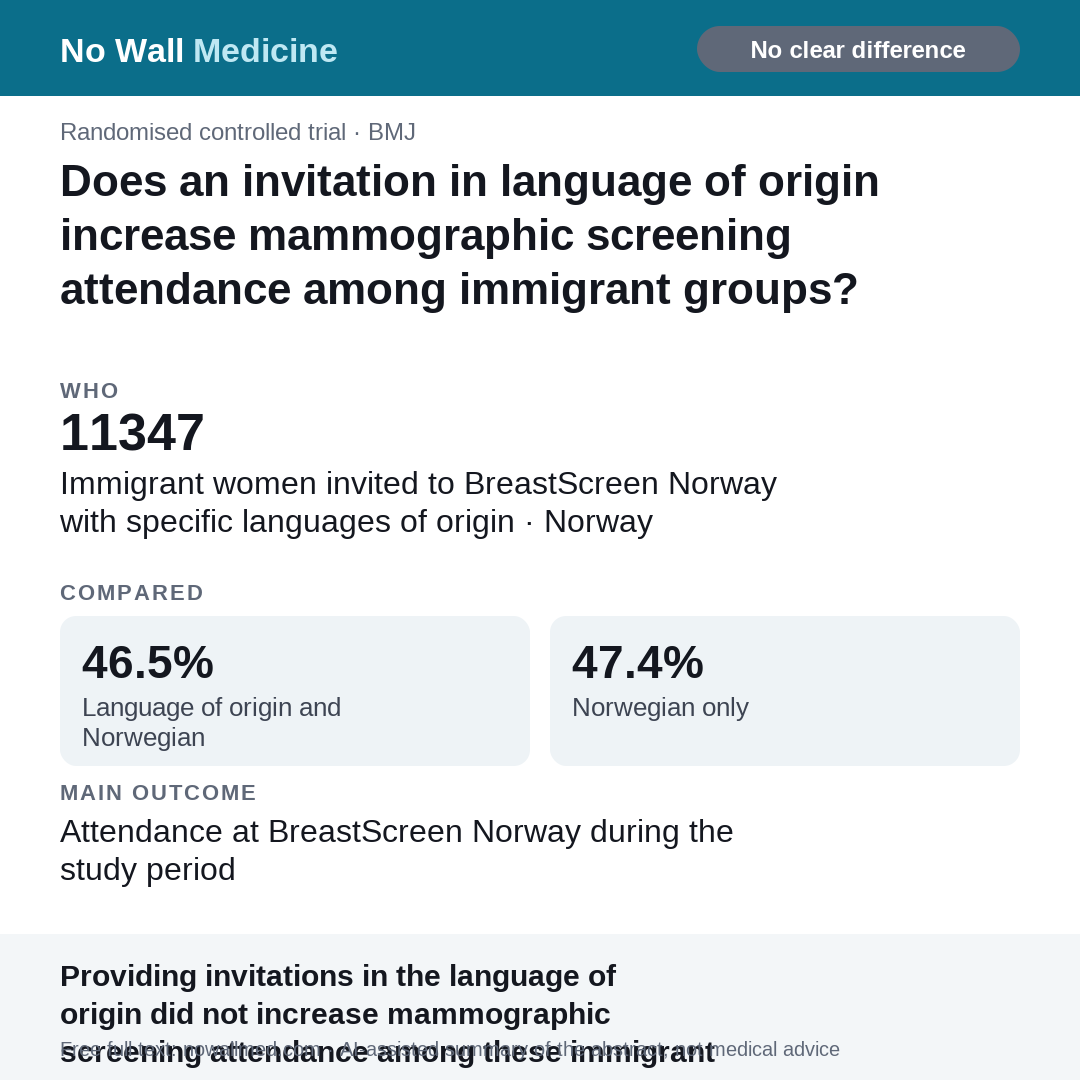
Effect of invitation letter in language of origin on screening attendance: randomised controlled trial in BreastScreen Norway
Randomised controlled trialNo clear difference
Does an invitation in language of origin increase mammographic screening attendance among immigrant groups?
Who
11347
Immigrant women invited to BreastScreen Norway with specific languages of origin · Norway
Compared
46.5%Language of origin and Norwegian (2642/5683)
47.4%Norwegian only (2682/5664)
Main outcome
Attendance at BreastScreen Norway during the study period
Bottom line: Providing invitations in the language of origin did not increase mammographic screening attendance among these immigrant groups.
BMJ · 2023-09-19Download image
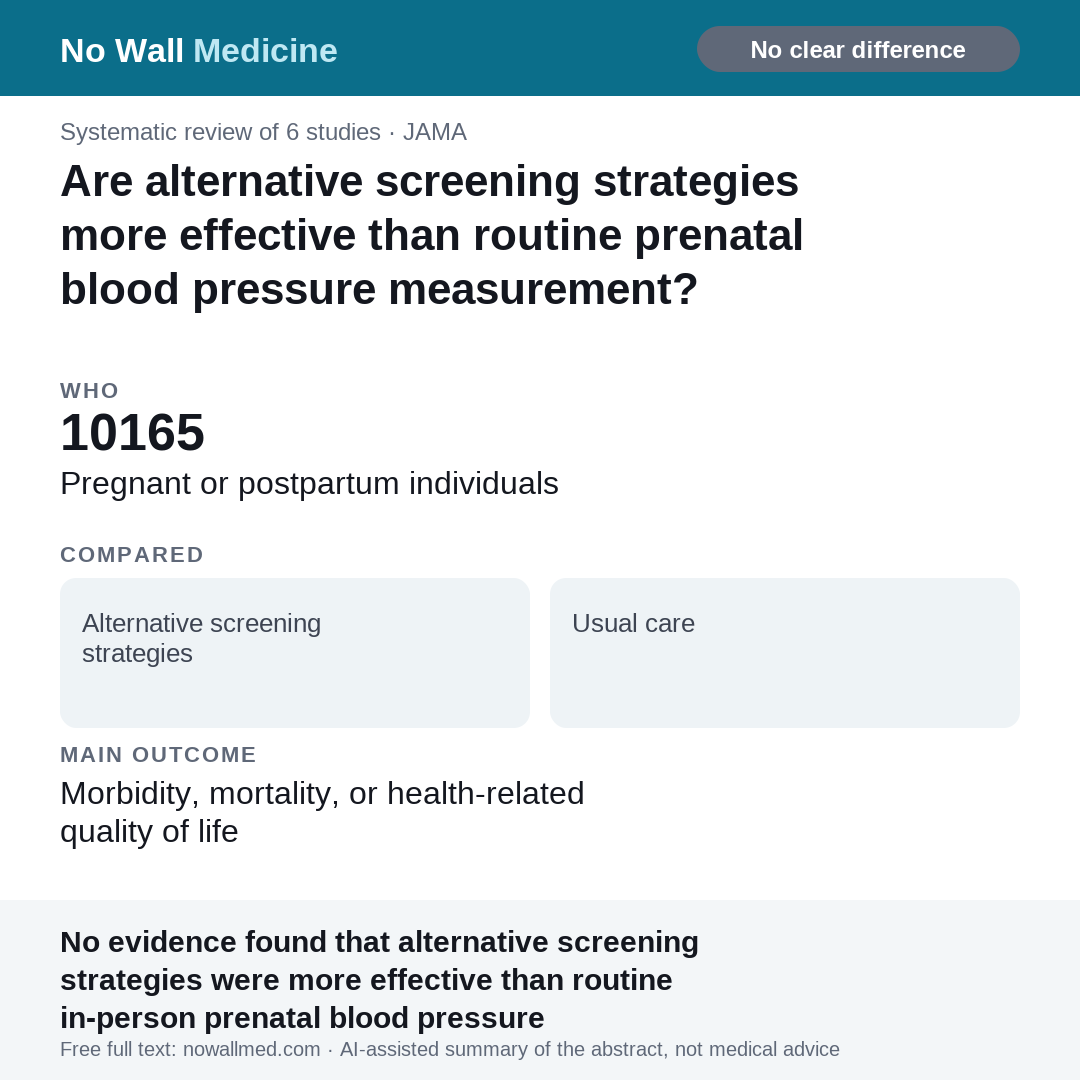
Screening for Hypertensive Disorders of Pregnancy: Updated Evidence Report and Systematic Review for the US Preventive Services Task Force
Systematic review of 6 studiesNo clear difference
Are alternative screening strategies more effective than routine prenatal blood pressure measurement?
Who
10165
Pregnant or postpartum individuals
Compared
Alternative screening strategies
Usual care
Main outcome
Morbidity, mortality, or health-related quality of life
Bottom line: No evidence found that alternative screening strategies were more effective than routine in-person prenatal blood pressure measurement.
Limitation: Estimates were imprecise for serious, rare health outcomes.
JAMA · 2023-09-18Download image
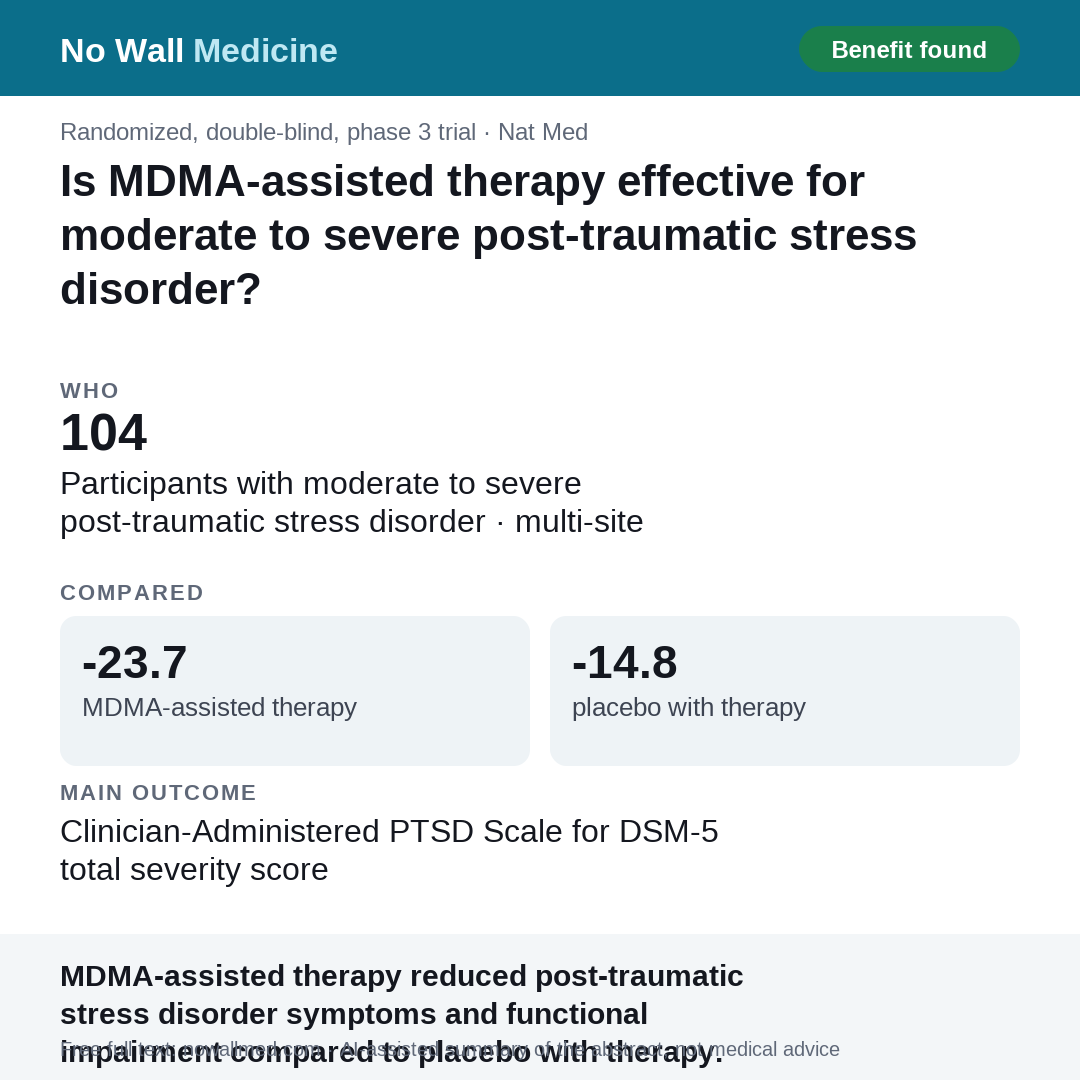
MDMA-assisted therapy for moderate to severe PTSD: a randomized, placebo-controlled phase 3 trial
Randomized, double-blind, phase 3 trialBenefit found
Is MDMA-assisted therapy effective for moderate to severe post-traumatic stress disorder?
Who
104
Participants with moderate to severe post-traumatic stress disorder · multi-site
Compared
-23.7MDMA-assisted therapy (-26.94, -20.44)
-14.8placebo with therapy (-18.28, -11.28)
Main outcome
Clinician-Administered PTSD Scale for DSM-5 total severity score
Result: d = 0.7
Bottom line: MDMA-assisted therapy reduced post-traumatic stress disorder symptoms and functional impairment compared to placebo with therapy.
Nat Med · 2023-09-14Download image
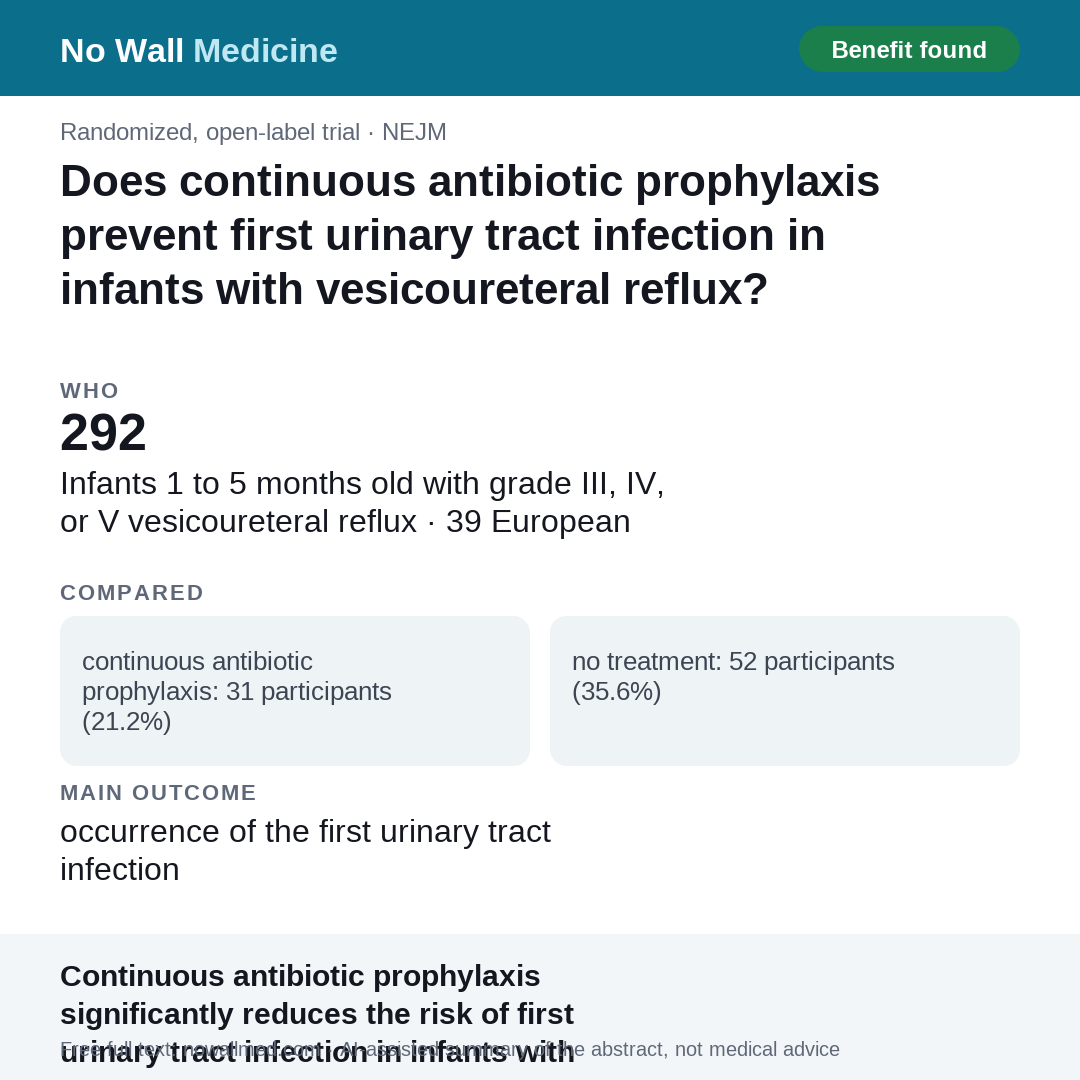
Antibiotic Prophylaxis in Infants with Grade III, IV, or V Vesicoureteral Reflux
Randomized, open-label trialBenefit found
Does continuous antibiotic prophylaxis prevent first urinary tract infection in infants with vesicoureteral reflux?
Who
292
Infants 1 to 5 months old with grade III, IV, or V vesicoureteral reflux · 39 European centers
Compared
continuous antibiotic prophylaxis: 31 participants (21.2%)
no treatment: 52 participants (35.6%)
Main outcome
occurrence of the first urinary tract infection
Result: hazard ratio 0.55 (95% CI 0.35 to 0.86)
Bottom line: Continuous antibiotic prophylaxis significantly reduces the risk of first urinary tract infection in infants with high-grade vesicoureteral reflux.
Funded by: Italian Ministry of Health and others
NEJM · 2023-09-12Download image
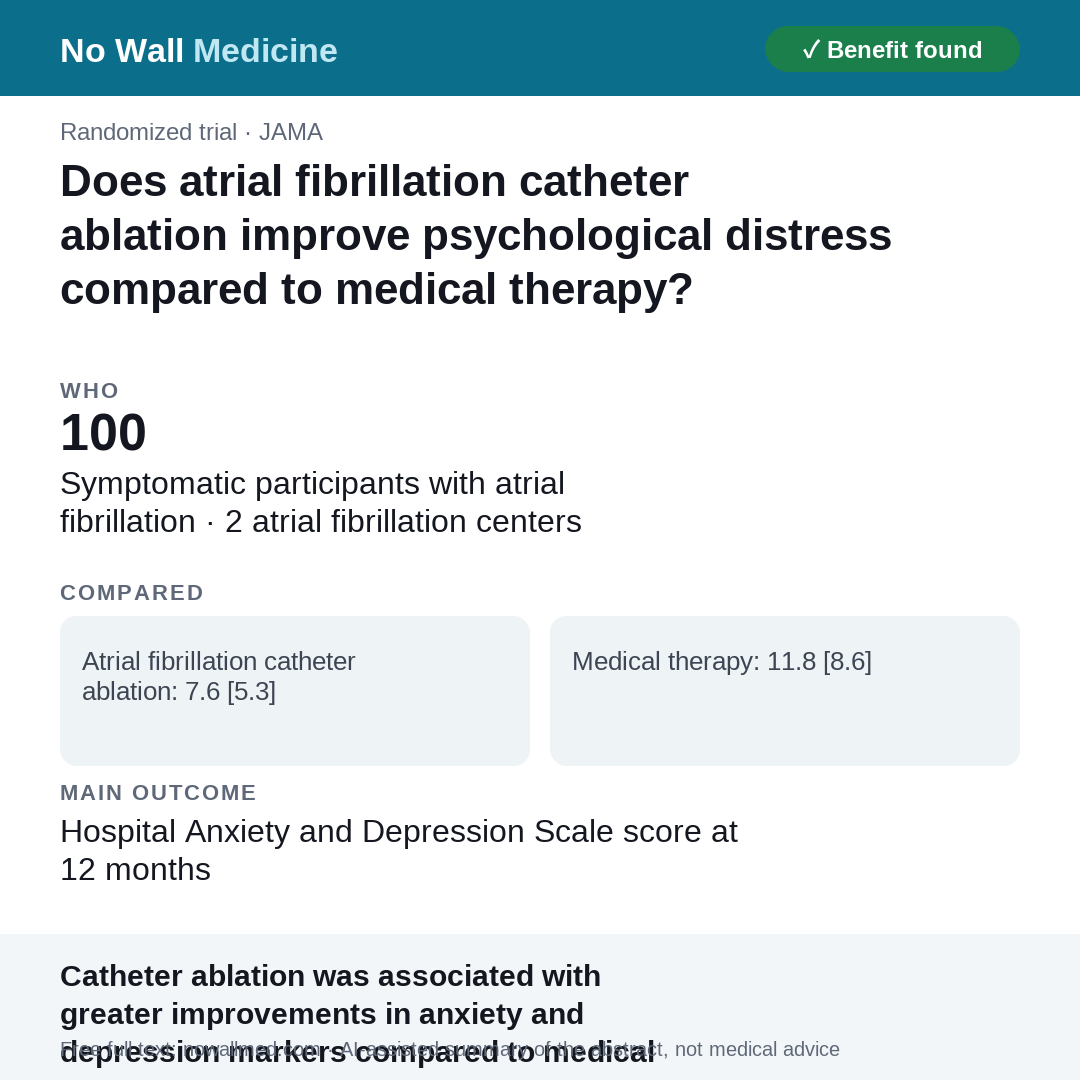
Atrial Fibrillation Catheter Ablation vs Medical Therapy and Psychological Distress: A Randomized Clinical Trial
Randomized trialBenefit found
Does atrial fibrillation catheter ablation improve psychological distress compared to medical therapy?
Who
100
Symptomatic participants with atrial fibrillation · 2 atrial fibrillation centers in Australia
Compared
Atrial fibrillation catheter ablation: 7.6 [5.3]
Medical therapy: 11.8 [8.6]
Main outcome
Hospital Anxiety and Depression Scale score at 12 months
Result: between-group difference, -4.17 [95% CI, -7.04 to -1.31]
Bottom line: Catheter ablation was associated with greater improvements in anxiety and depression markers compared to medical therapy alone.
JAMA · 2023-09-12Download image
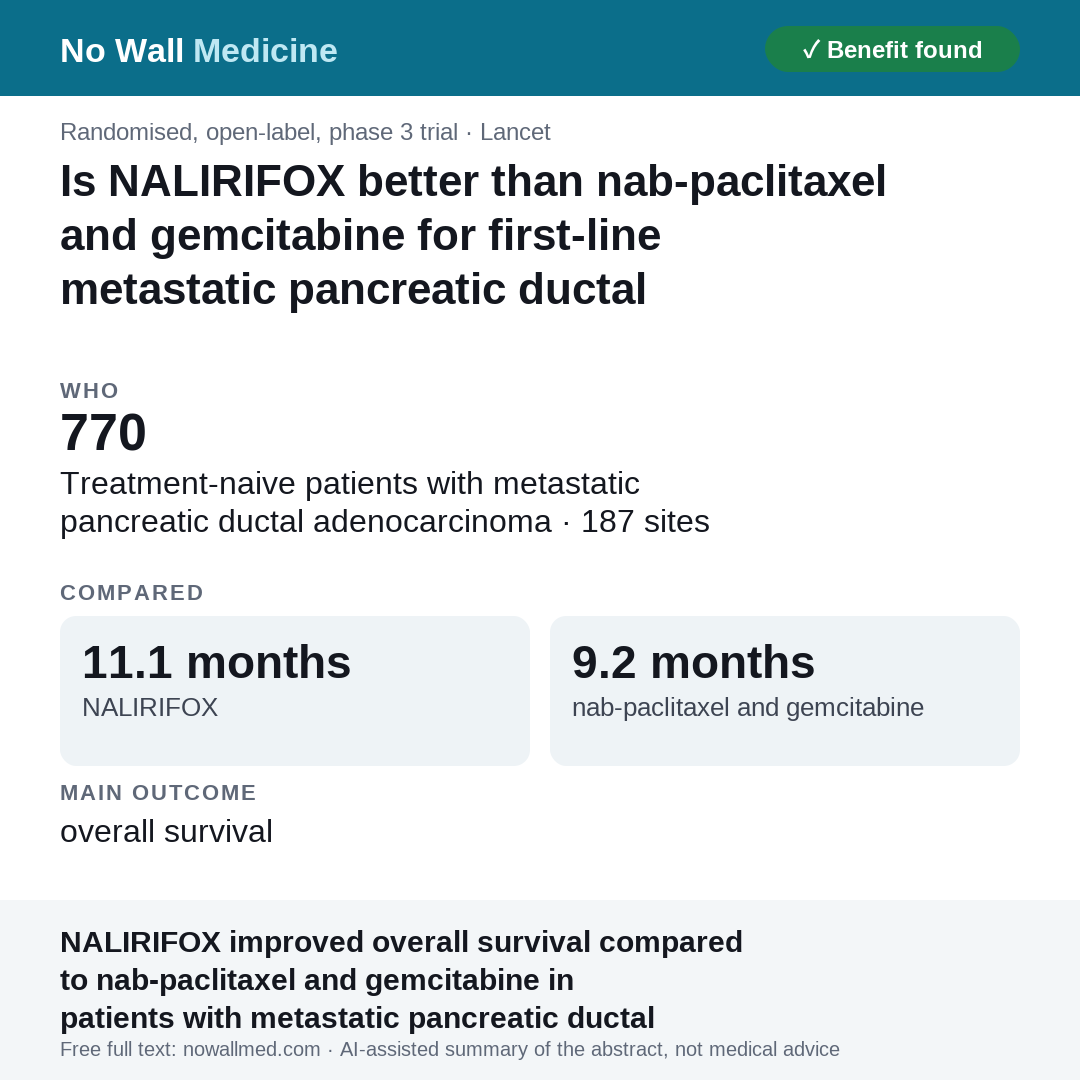
NALIRIFOX versus nab-paclitaxel and gemcitabine in treatment-naive patients with metastatic pancreatic ductal adenocarcinoma (NAPOLI 3): a randomised, open-label, phase 3 trial
Randomised, open-label, phase 3 trialBenefit found
Is NALIRIFOX better than nab-paclitaxel and gemcitabine for first-line metastatic pancreatic ductal adenocarcinoma?
Who
770
Treatment-naive patients with metastatic pancreatic ductal adenocarcinoma · 187 sites in 18 countries
Compared
11.1 monthsNALIRIFOX (95% CI 10.0-12.1)
9.2 monthsnab-paclitaxel and gemcitabine (8.3-10.6)
Main outcome
overall survival
Result: hazard ratio 0.83 (95% CI 0.70-0.99)
Bottom line: NALIRIFOX improved overall survival compared to nab-paclitaxel and gemcitabine in patients with metastatic pancreatic ductal adenocarcinoma.
Funded by: Ipsen
Lancet · 2023-09-11Download image
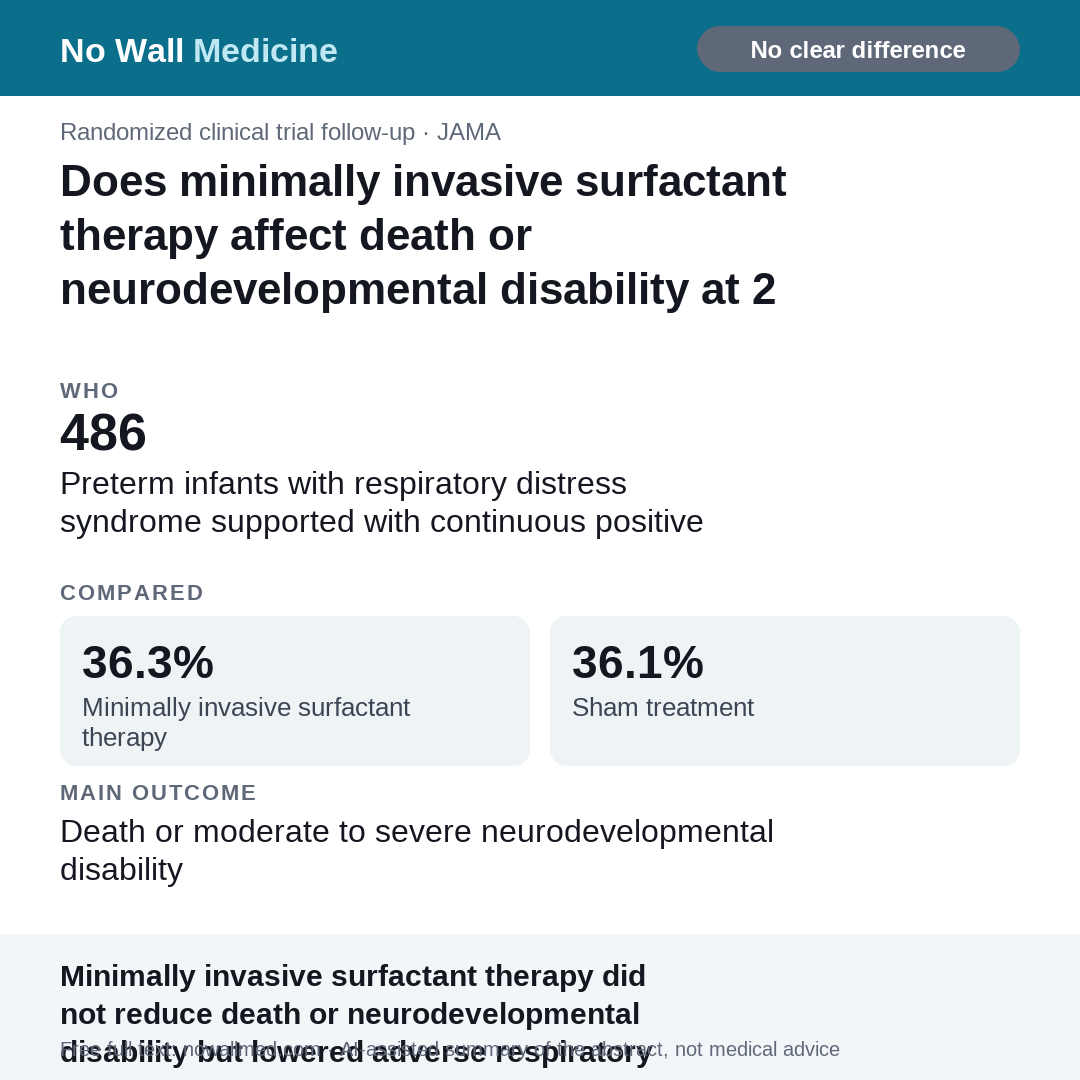
Two-Year Outcomes After Minimally Invasive Surfactant Therapy in Preterm Infants: Follow-Up of the OPTIMIST-A Randomized Clinical Trial
Randomized clinical trial follow-upNo clear difference
Does minimally invasive surfactant therapy affect death or neurodevelopmental disability at 2 years?
Who
486
Preterm infants with respiratory distress syndrome supported with continuous positive airway pressure · 33 tertiary-level neonatal intensive care units in 11 countries
Compared
36.3%Minimally invasive surfactant therapy
36.1%Sham treatment
Main outcome
Death or moderate to severe neurodevelopmental disability
Result: relative risk 1.0 (95% CI 0.81-1.24)
Bottom line: Minimally invasive surfactant therapy did not reduce death or neurodevelopmental disability but lowered adverse respiratory outcomes.
JAMA · 2023-09-11Download image
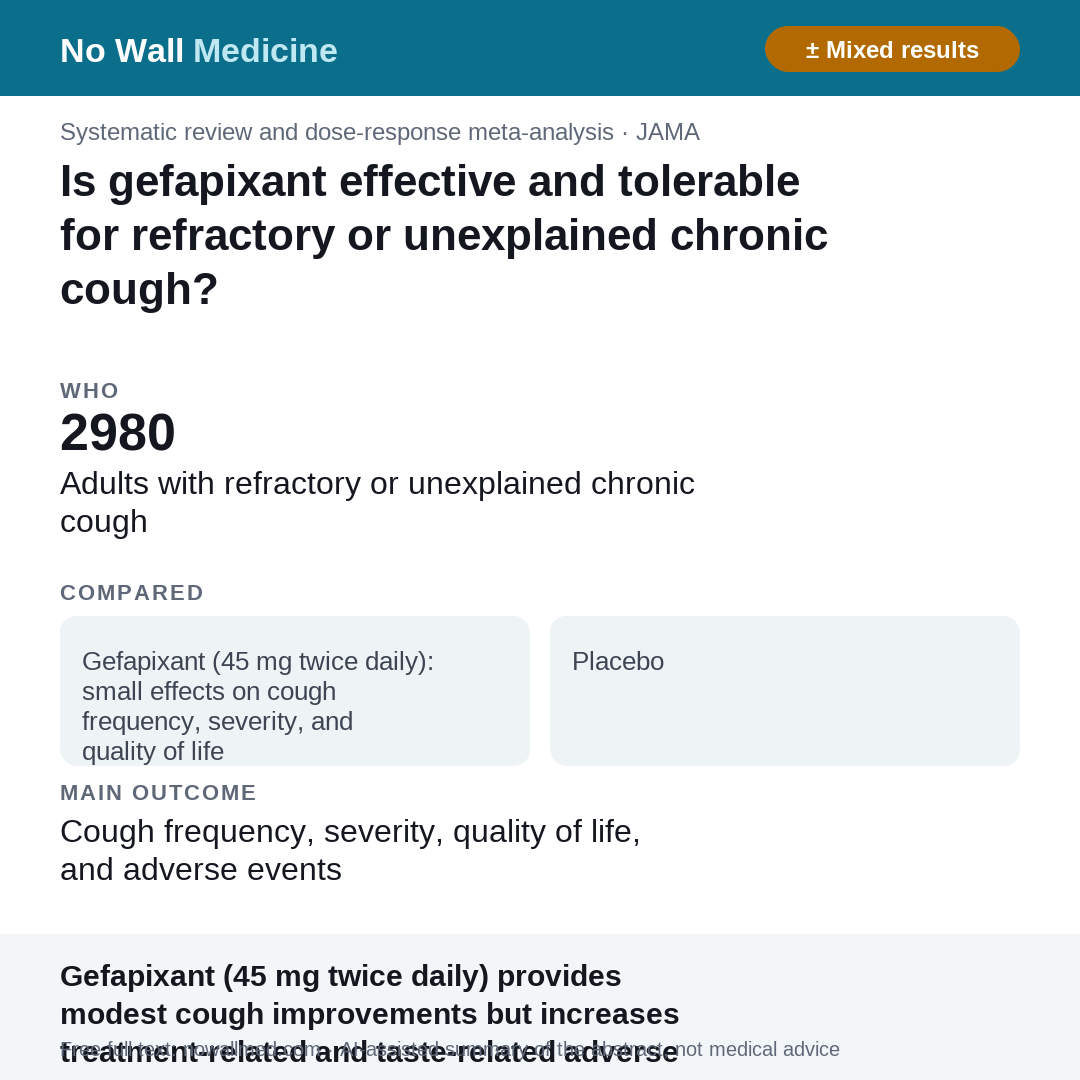
Efficacy and Tolerability of Gefapixant for Treatment of Refractory or Unexplained Chronic Cough: A Systematic Review and Dose-Response Meta-Analysis
Systematic review and dose-response meta-analysisMixed results
Is gefapixant effective and tolerable for refractory or unexplained chronic cough?
Who
2980
Adults with refractory or unexplained chronic cough
Compared
Gefapixant (45 mg twice daily): small effects on cough frequency, severity, and quality of life
Placebo
Main outcome
Cough frequency, severity, quality of life, and adverse events
Result: mean difference, -6.2 mm [95% CI, -4.1 to -8.4] for cough severity
Bottom line: Gefapixant (45 mg twice daily) provides modest cough improvements but increases treatment-related and taste-related adverse events.
JAMA · 2023-09-11Download image
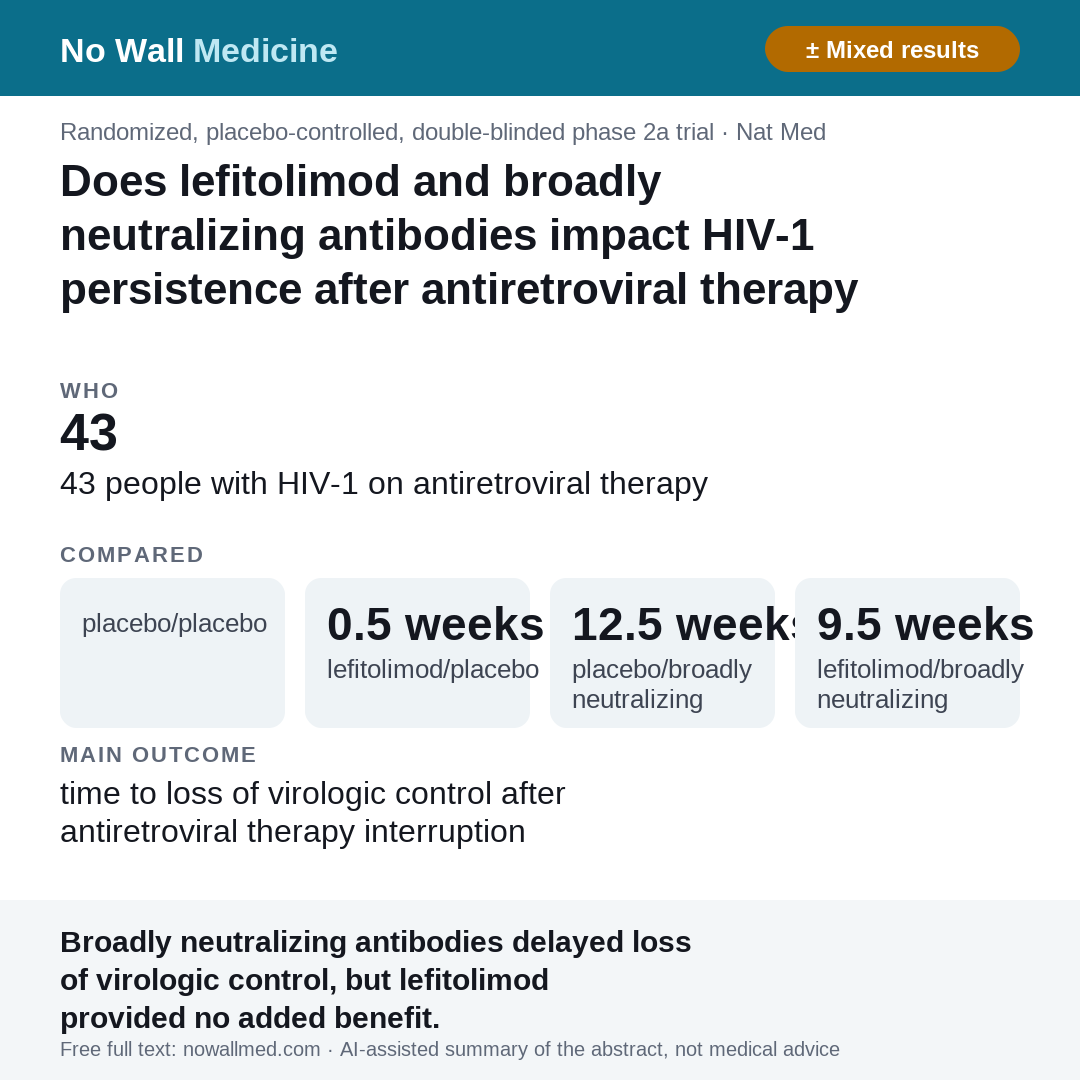
Impact of a TLR9 agonist and broadly neutralizing antibodies on HIV-1 persistence: the randomized phase 2a TITAN trial
Randomized, placebo-controlled, double-blinded phase 2a trialMixed results
Does lefitolimod and broadly neutralizing antibodies impact HIV-1 persistence after antiretroviral therapy interruption?
Who
43
43 people with HIV-1 on antiretroviral therapy
Compared
placebo/placebo
0.5 weekslefitolimod/placebo (P = 0.49)
12.5 weeksplacebo/broadly neutralizing antibodies (P = 0.003)
9.5 weekslefitolimod/broadly neutralizing antibodies (P = 0.004)
Main outcome
time to loss of virologic control after antiretroviral therapy interruption
Bottom line: Broadly neutralizing antibodies delayed loss of virologic control, but lefitolimod provided no added benefit.
Nat Med · 2023-09-11Download image
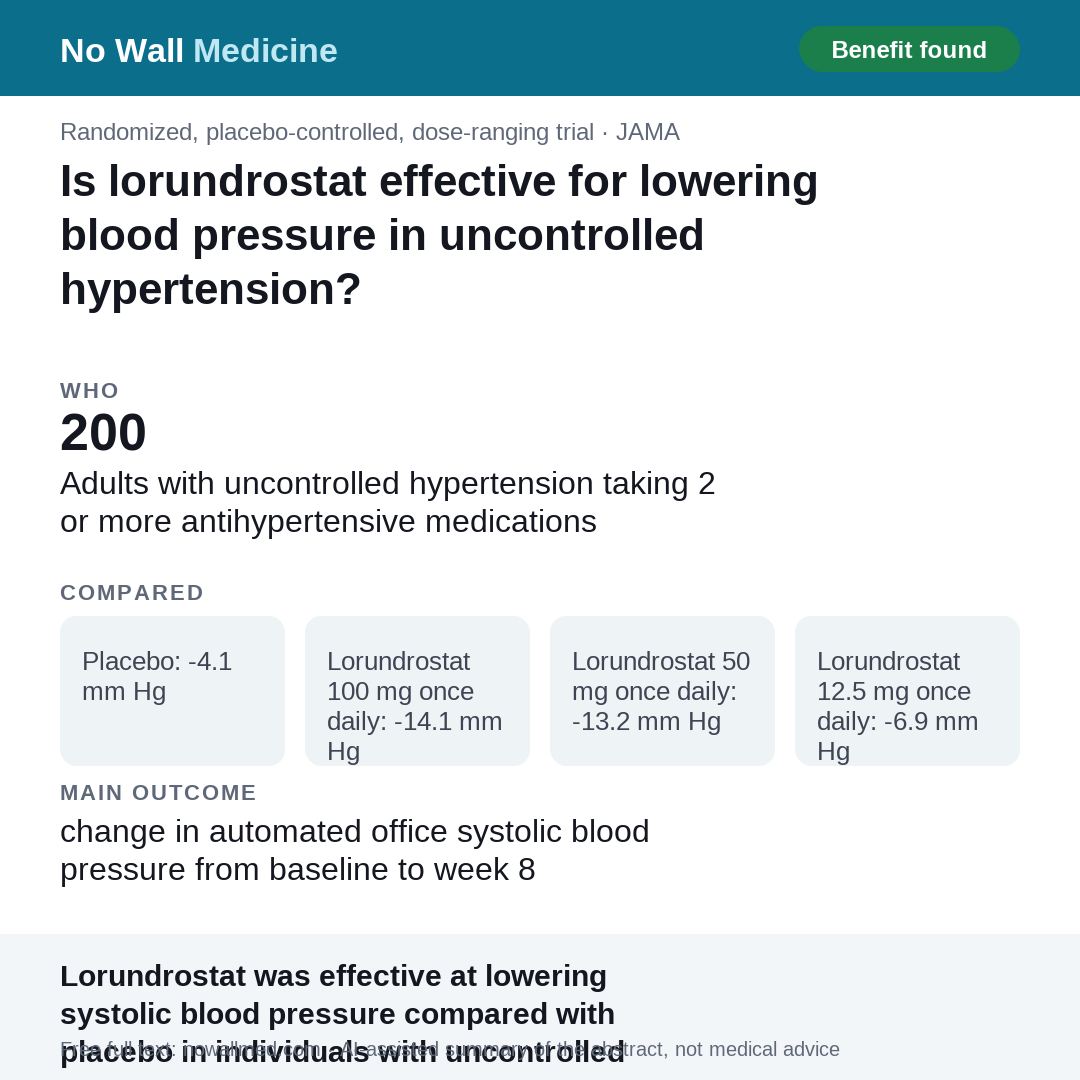
Aldosterone Synthase Inhibition With Lorundrostat for Uncontrolled Hypertension: The Target-HTN Randomized Clinical Trial
Randomized, placebo-controlled, dose-ranging trialBenefit found
Is lorundrostat effective for lowering blood pressure in uncontrolled hypertension?
Who
200
Adults with uncontrolled hypertension taking 2 or more antihypertensive medications
Compared
Placebo: -4.1 mm Hg
Lorundrostat 100 mg once daily: -14.1 mm Hg
Lorundrostat 50 mg once daily: -13.2 mm Hg
Lorundrostat 12.5 mg once daily: -6.9 mm Hg
Main outcome
change in automated office systolic blood pressure from baseline to week 8
Result: -9.6 mm Hg (90% CI, -15.8 to -3.4 mm Hg)
Bottom line: Lorundrostat was effective at lowering systolic blood pressure compared with placebo in individuals with uncontrolled hypertension.
JAMA · 2023-09-10Download image
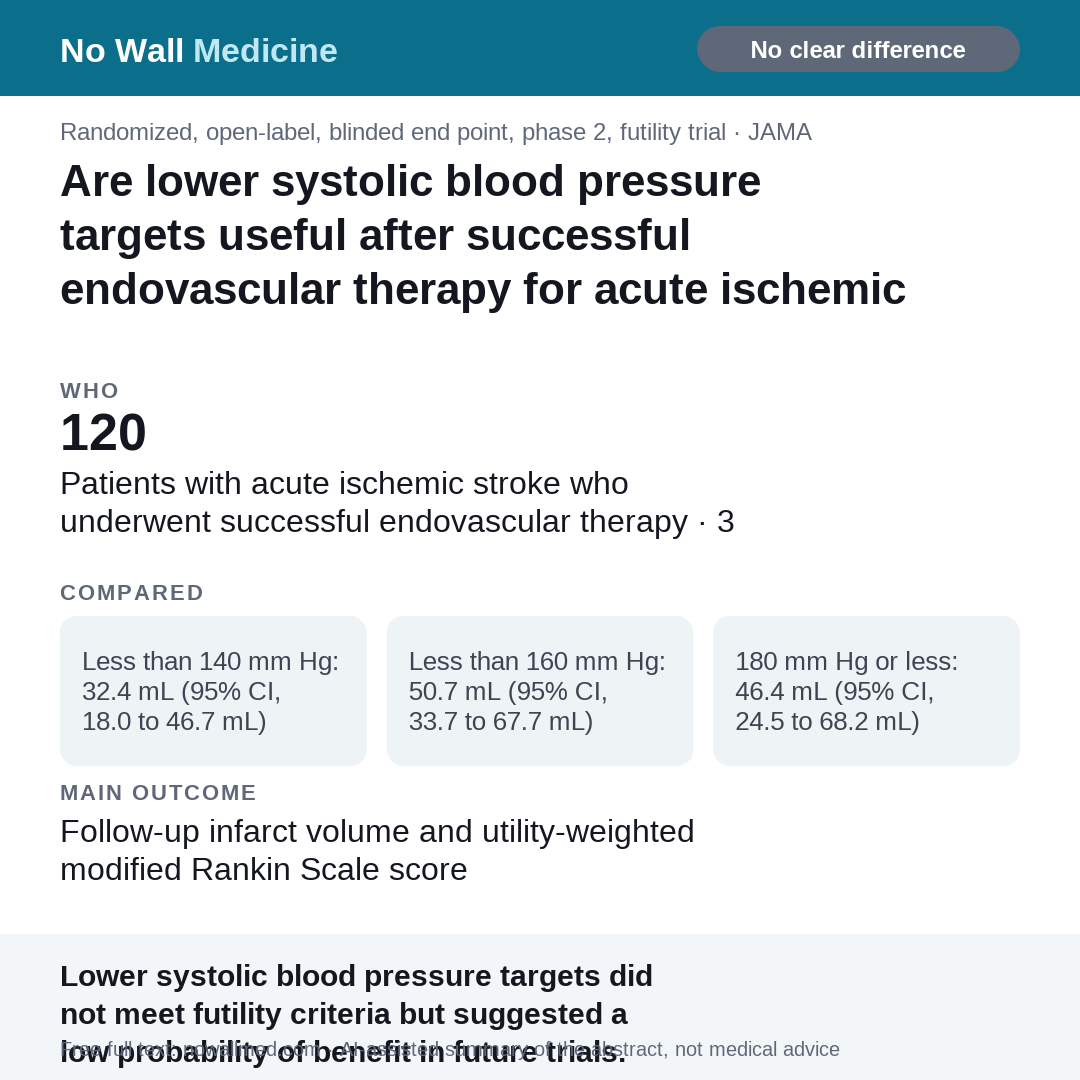
Blood Pressure Management After Endovascular Therapy for Acute Ischemic Stroke: The BEST-II Randomized Clinical Trial
Randomized, open-label, blinded end point, phase 2, futility trialNo clear difference
Are lower systolic blood pressure targets useful after successful endovascular therapy for acute ischemic stroke?
Who
120
Patients with acute ischemic stroke who underwent successful endovascular therapy · 3 US comprehensive stroke centers
Compared
Less than 140 mm Hg: 32.4 mL (95% CI, 18.0 to 46.7 mL)
Less than 160 mm Hg: 50.7 mL (95% CI, 33.7 to 67.7 mL)
180 mm Hg or less: 46.4 mL (95% CI, 24.5 to 68.2 mL)
Main outcome
Follow-up infarct volume and utility-weighted modified Rankin Scale score
Bottom line: Lower systolic blood pressure targets did not meet futility criteria but suggested a low probability of benefit in future trials.
Limitation: The findings suggested a low probability of benefit if tested in a future larger trial.
JAMA · 2023-09-05Download image
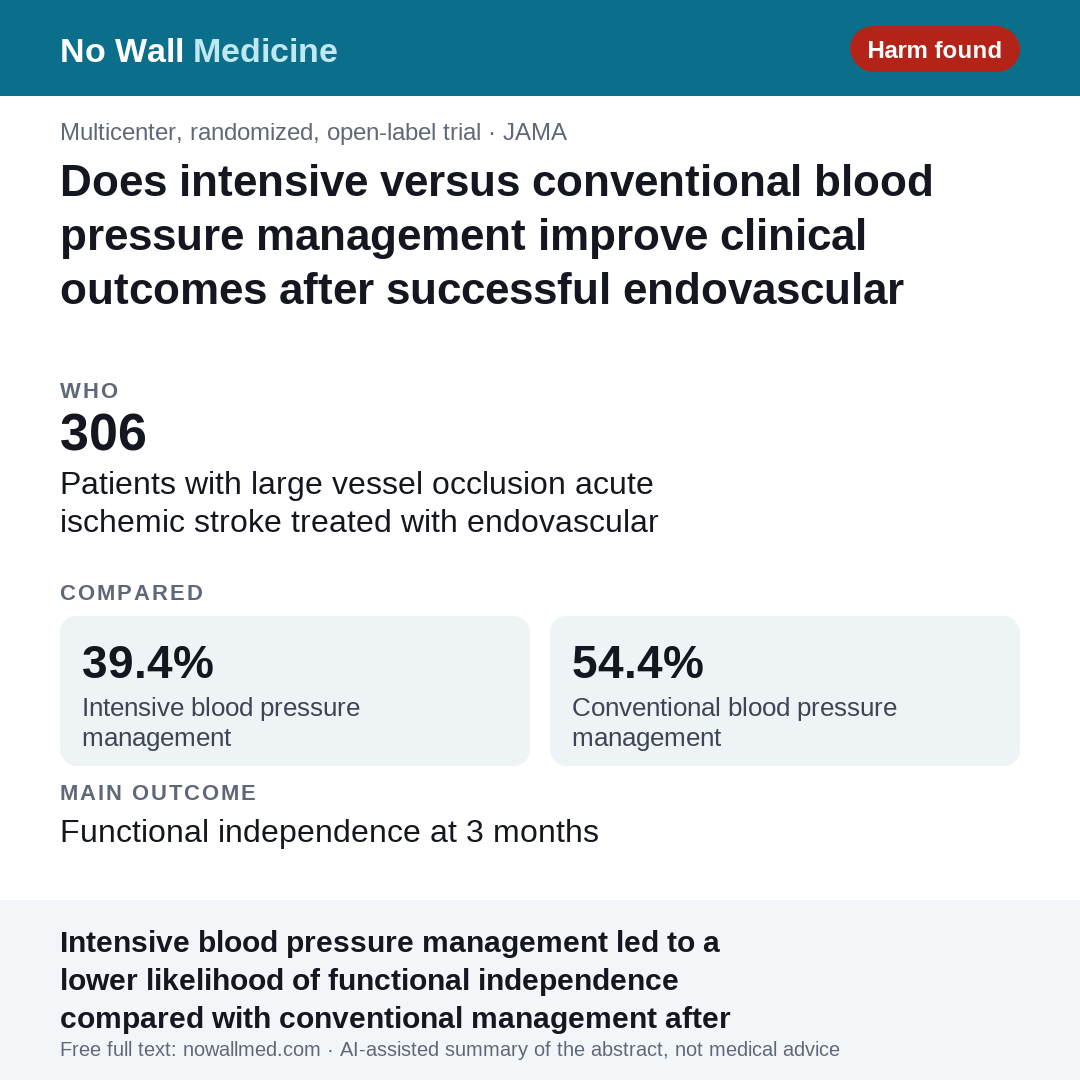
Intensive vs Conventional Blood Pressure Lowering After Endovascular Thrombectomy in Acute Ischemic Stroke: The OPTIMAL-BP Randomized Clinical Trial
Multicenter, randomized, open-label trialHarm found
Does intensive versus conventional blood pressure management improve clinical outcomes after successful endovascular thrombectomy?
Who
306
Patients with large vessel occlusion acute ischemic stroke treated with endovascular thrombectomy · 19 stroke centers in South Korea
Compared
39.4%Intensive blood pressure management
54.4%Conventional blood pressure management
Main outcome
Functional independence at 3 months
Result: risk difference -15.1% (95% CI, -26.2% to -3.9%)
Bottom line: Intensive blood pressure management led to a lower likelihood of functional independence compared with conventional management after successful endovascular thrombectomy.
JAMA · 2023-09-05Download image
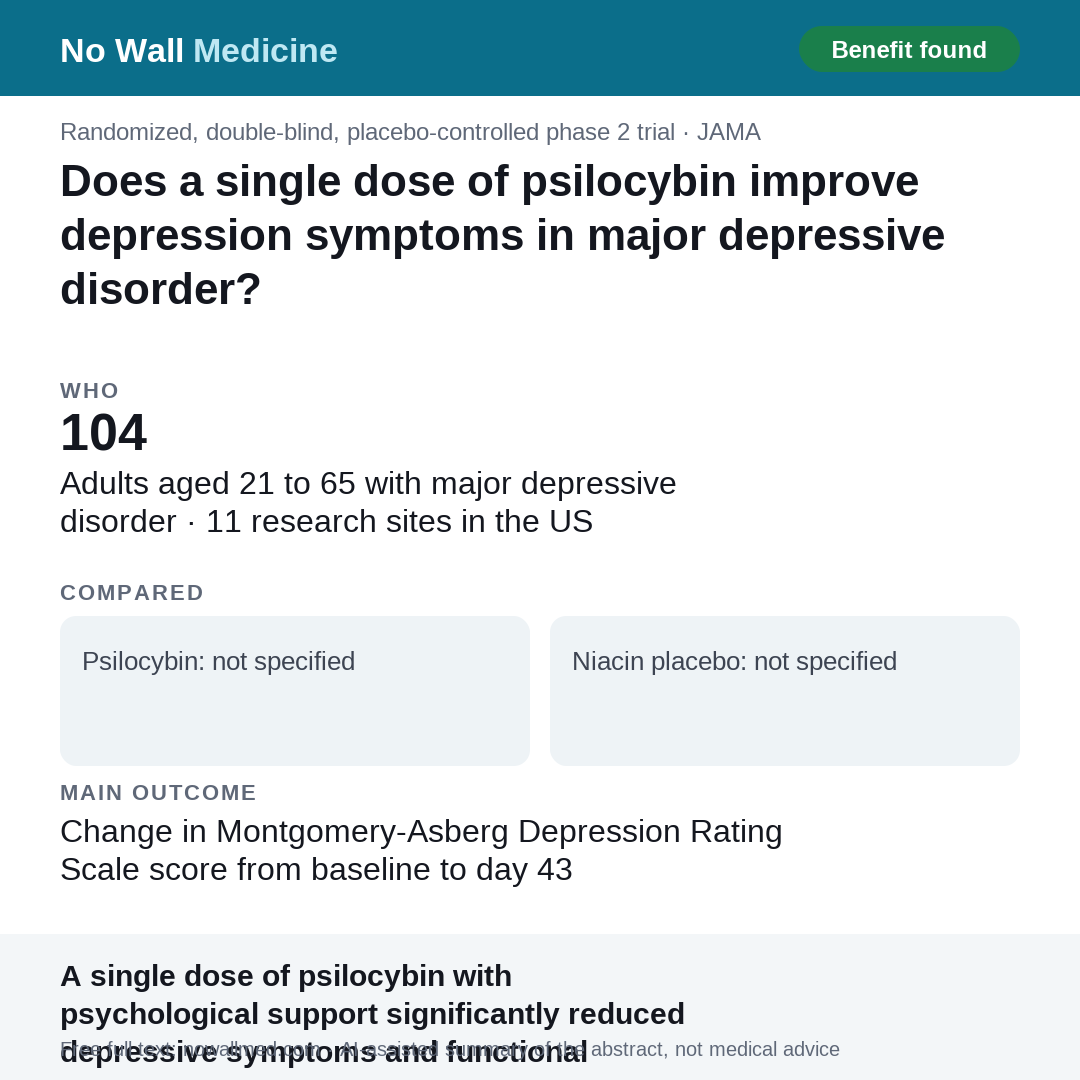
Single-Dose Psilocybin Treatment for Major Depressive Disorder: A Randomized Clinical Trial
Randomized, double-blind, placebo-controlled phase 2 trialBenefit found
Does a single dose of psilocybin improve depression symptoms in major depressive disorder?
Who
104
Adults aged 21 to 65 with major depressive disorder · 11 research sites in the US
Compared
Psilocybin: not specified
Niacin placebo: not specified
Main outcome
Change in Montgomery-Asberg Depression Rating Scale score from baseline to day 43
Result: mean difference -12.3 (95% CI -17.5 to -7.2)
Bottom line: A single dose of psilocybin with psychological support significantly reduced depressive symptoms and functional disability compared to niacin placebo.
Limitation: Psilocybin treatment was associated with a higher rate of overall and severe adverse events.
JAMA · 2023-08-31Download image
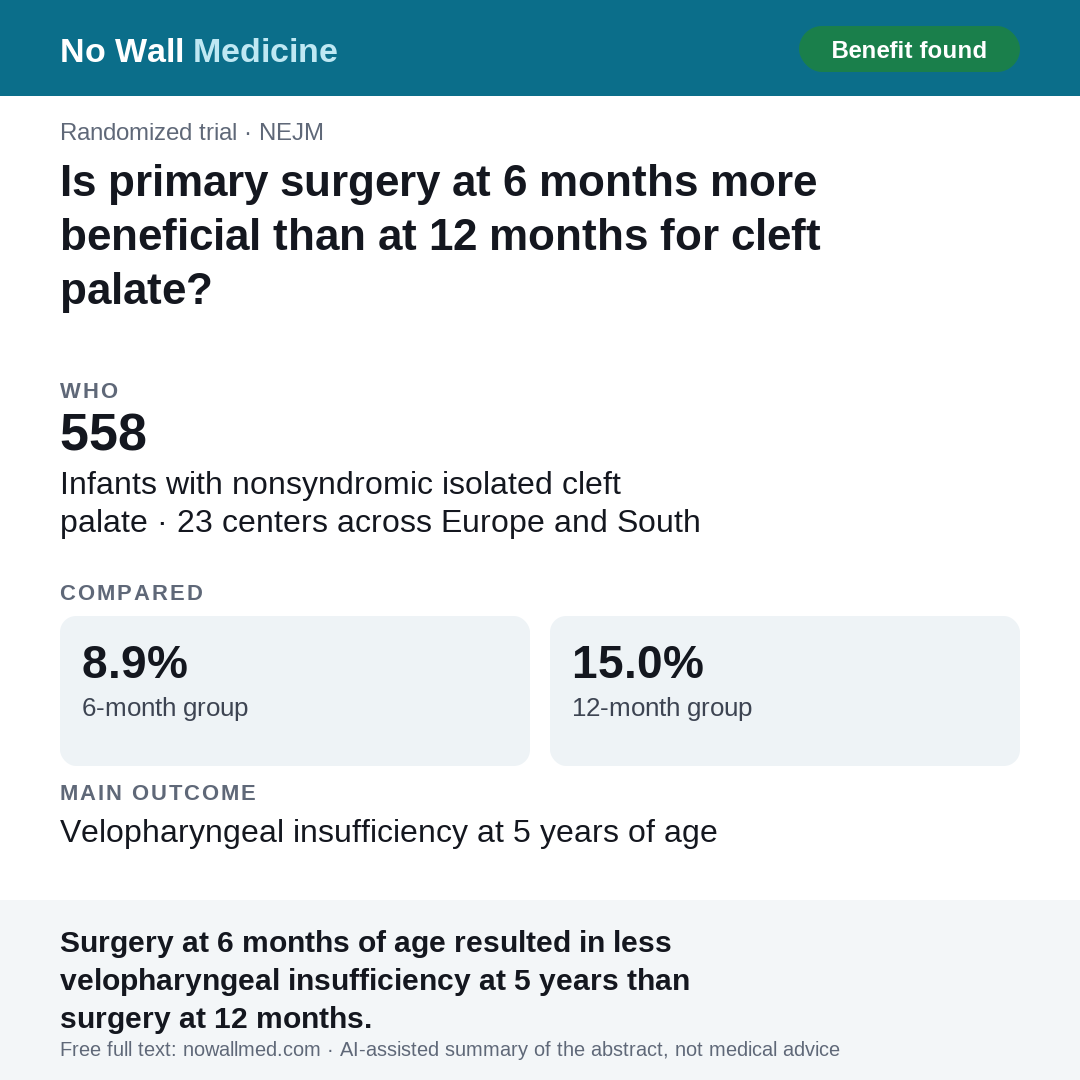
Timing of Primary Surgery for Cleft Palate
Randomized trialBenefit found
Is primary surgery at 6 months more beneficial than at 12 months for cleft palate?
Who
558
Infants with nonsyndromic isolated cleft palate · 23 centers across Europe and South America
Compared
8.9%6-month group (21/235)
15.0%12-month group (34/226)
Main outcome
Velopharyngeal insufficiency at 5 years of age
Result: risk ratio 0.59 (95% CI 0.36 to 0.99)
Bottom line: Surgery at 6 months of age resulted in less velopharyngeal insufficiency at 5 years than surgery at 12 months.
Funded by: National Institute of Dental and Craniofacial Research
NEJM · 2023-08-30Download image
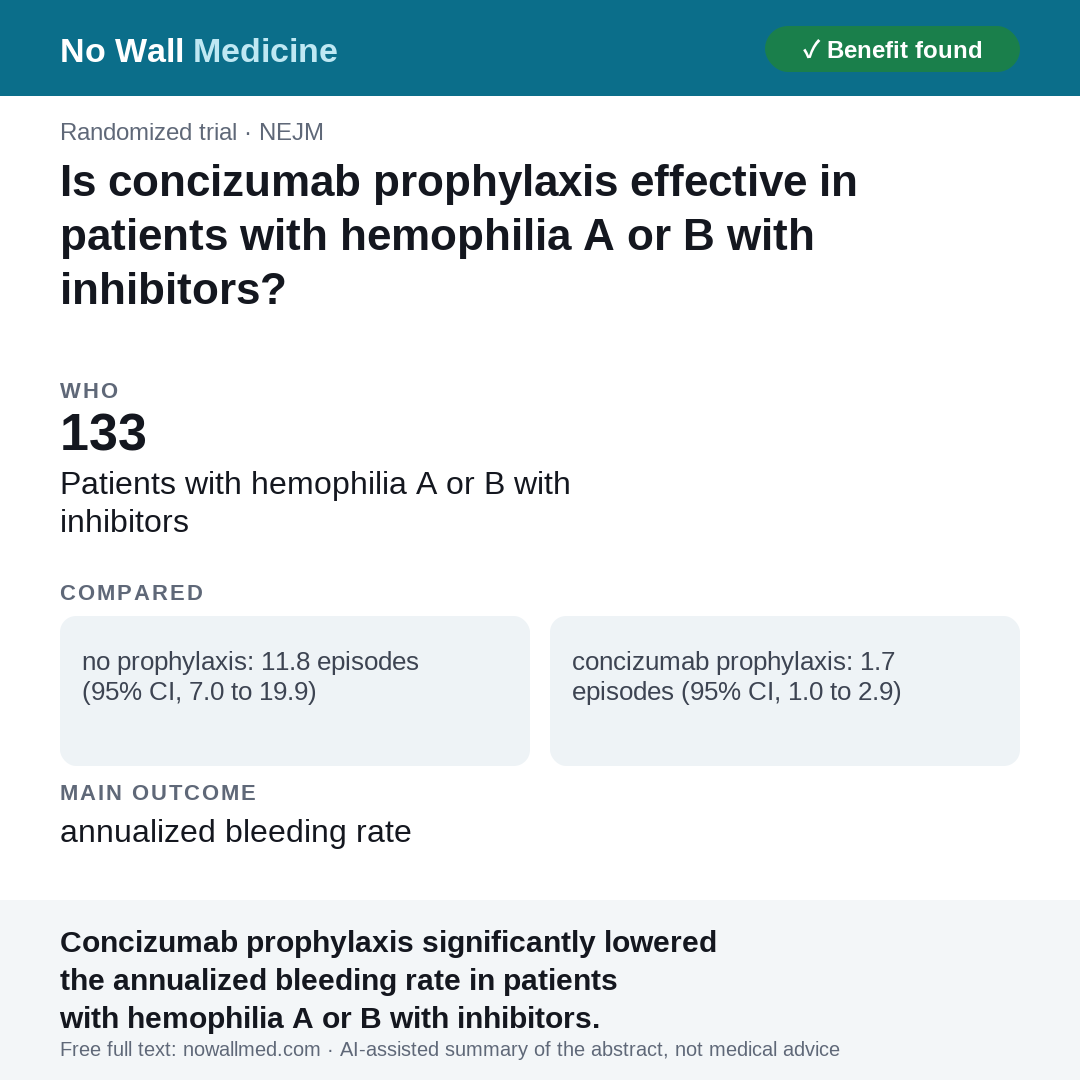
Phase 3 Trial of Concizumab in Hemophilia with Inhibitors
Randomized trialBenefit found
Is concizumab prophylaxis effective in patients with hemophilia A or B with inhibitors?
Who
133
Patients with hemophilia A or B with inhibitors
Compared
no prophylaxis: 11.8 episodes (95% CI, 7.0 to 19.9)
concizumab prophylaxis: 1.7 episodes (95% CI, 1.0 to 2.9)
Main outcome
annualized bleeding rate
Result: rate ratio, 0.14 (95% CI, 0.07 to 0.29)
Bottom line: Concizumab prophylaxis significantly lowered the annualized bleeding rate in patients with hemophilia A or B with inhibitors.
Funded by: Novo Nordisk
NEJM · 2023-08-30Download image
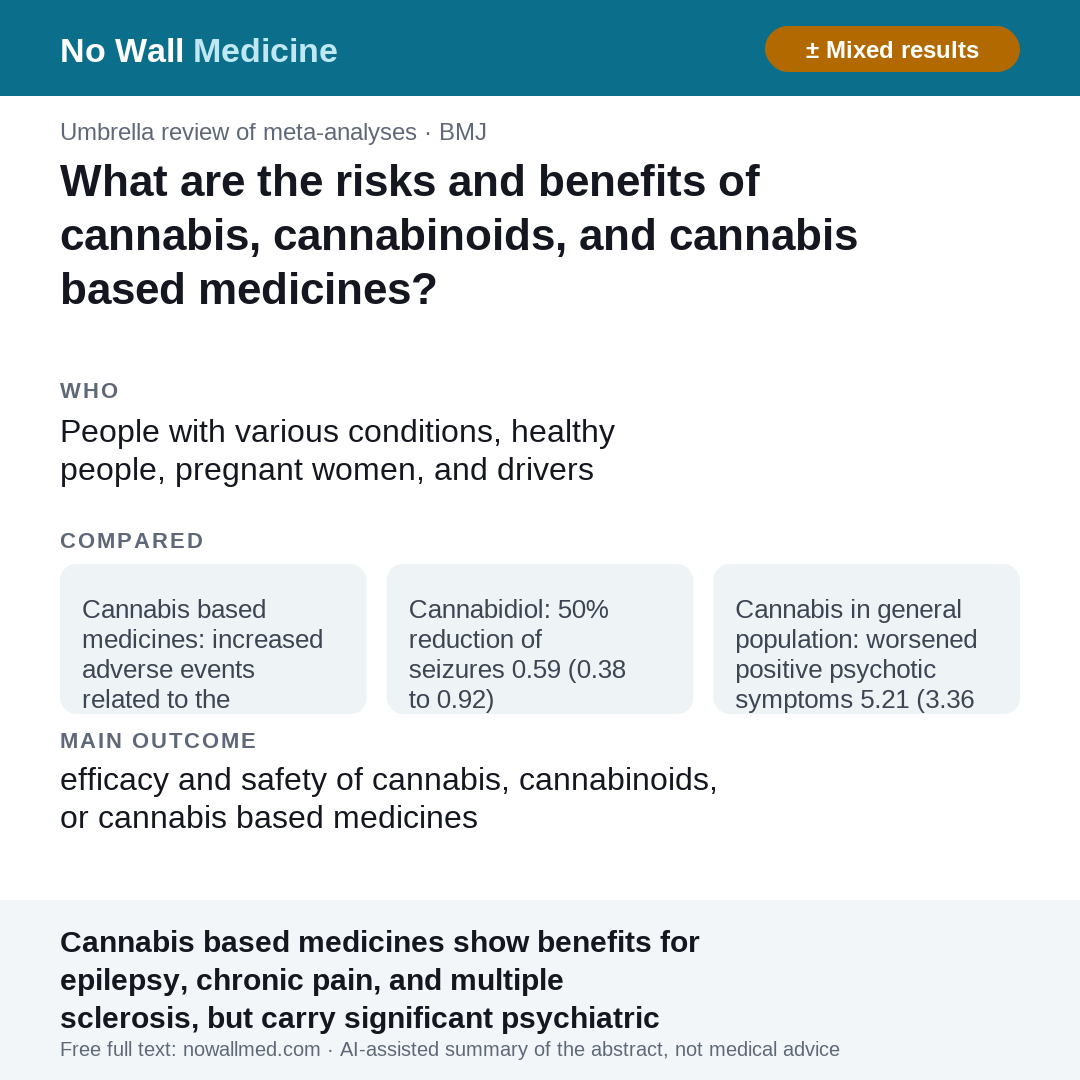
Balancing risks and benefits of cannabis use: umbrella review of meta-analyses of randomised controlled trials and observational studies
Umbrella review of meta-analysesMixed results
What are the risks and benefits of cannabis, cannabinoids, and cannabis based medicines?
Who
People with various conditions, healthy people, pregnant women, and drivers
Compared
Cannabis based medicines: increased adverse events related to the central nervous system 2.84 (95% confidence interval 2.16 to 3.73)
Cannabidiol: 50% reduction of seizures 0.59 (0.38 to 0.92)
Cannabis in general population: worsened positive psychotic symptoms 5.21 (3.36 to 8.01)
Main outcome
efficacy and safety of cannabis, cannabinoids, or cannabis based medicines
Bottom line: Cannabis based medicines show benefits for epilepsy, chronic pain, and multiple sclerosis, but carry significant psychiatric and physical risks.
BMJ · 2023-08-30Download image
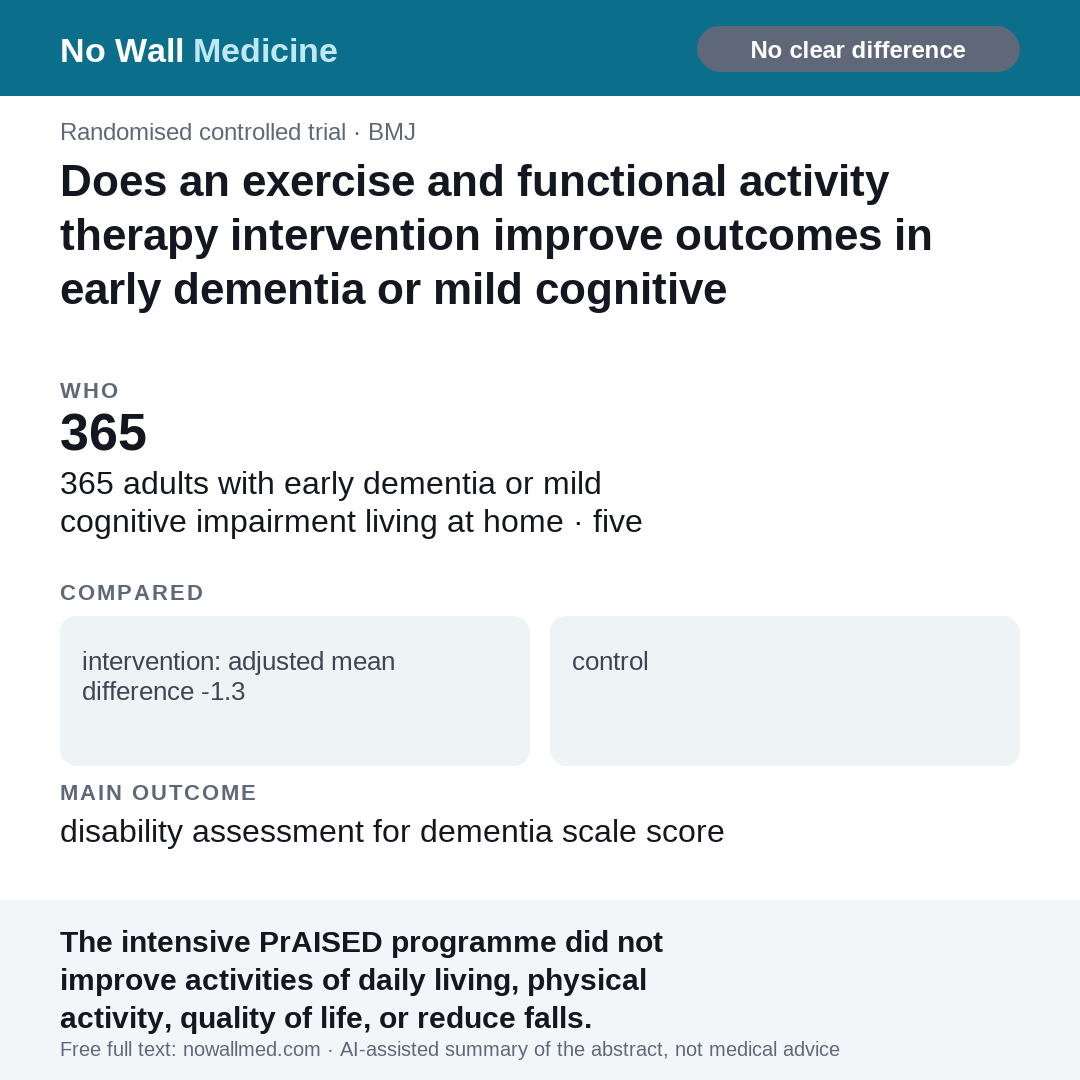
Promoting Activity, Independence, and Stability in Early Dementia and mild cognitive impairment (PrAISED): randomised controlled trial
Randomised controlled trialNo clear difference
Does an exercise and functional activity therapy intervention improve outcomes in early dementia or mild cognitive impairment?
Who
365
365 adults with early dementia or mild cognitive impairment living at home · five sites in the United Kingdom
Compared
intervention: adjusted mean difference -1.3
control
Main outcome
disability assessment for dementia scale score
Result: adjusted mean difference -1.3, 95% confidence interval -5.2 to 2.6
Bottom line: The intensive PrAISED programme did not improve activities of daily living, physical activity, quality of life, or reduce falls.
BMJ · 2023-08-29Download image
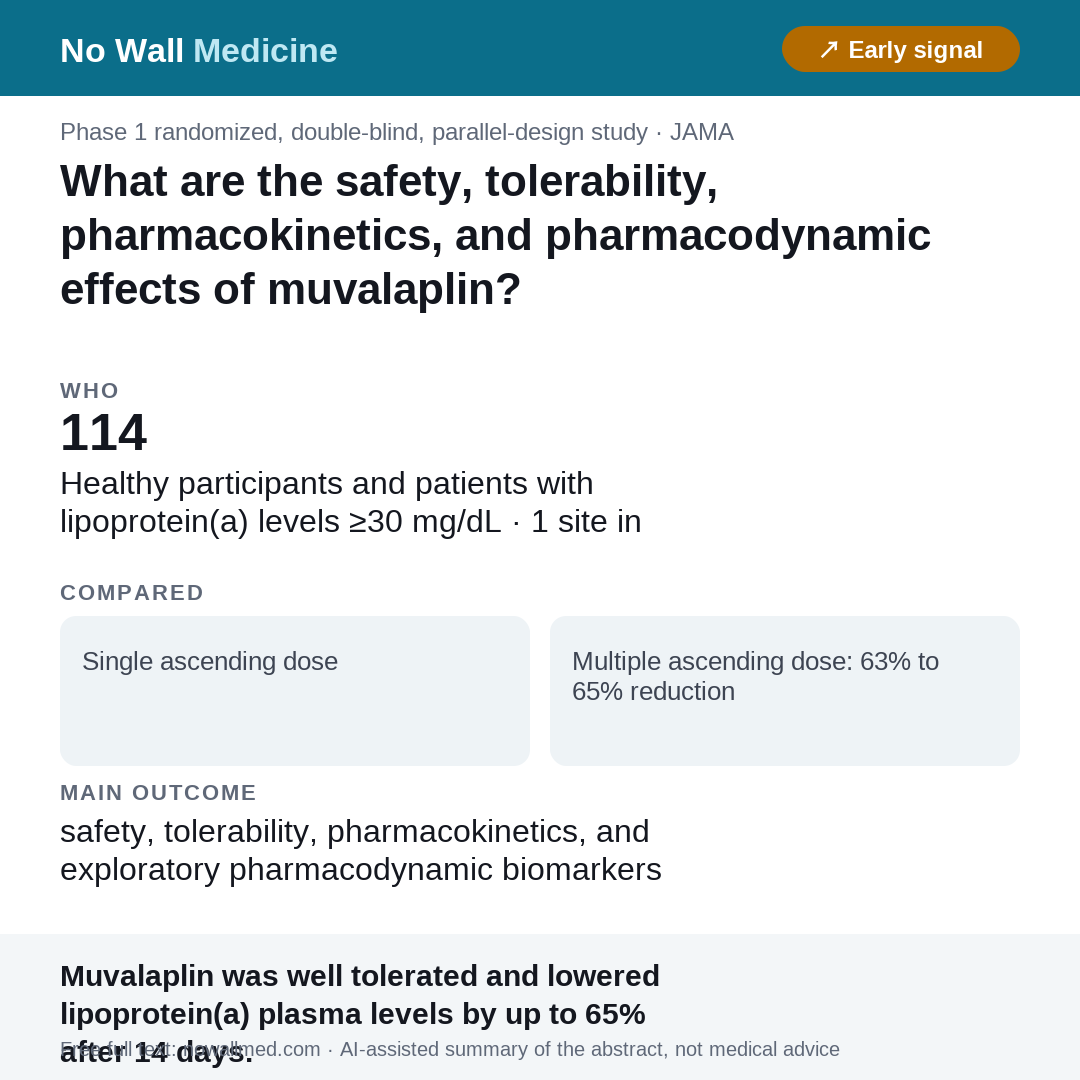
Muvalaplin, an Oral Small Molecule Inhibitor of Lipoprotein(a) Formation: A Randomized Clinical Trial
Phase 1 randomized, double-blind, parallel-design studyBenefit found
What are the safety, tolerability, pharmacokinetics, and pharmacodynamic effects of muvalaplin?
Who
114
Healthy participants and patients with lipoprotein(a) levels ≥30 mg/dL · 1 site in the Netherlands
Compared
Single ascending dose
Multiple ascending dose: 63% to 65% reduction
Main outcome
safety, tolerability, pharmacokinetics, and exploratory pharmacodynamic biomarkers
Bottom line: Muvalaplin was well tolerated and lowered lipoprotein(a) plasma levels by up to 65% after 14 days.
JAMA · 2023-08-28Download image
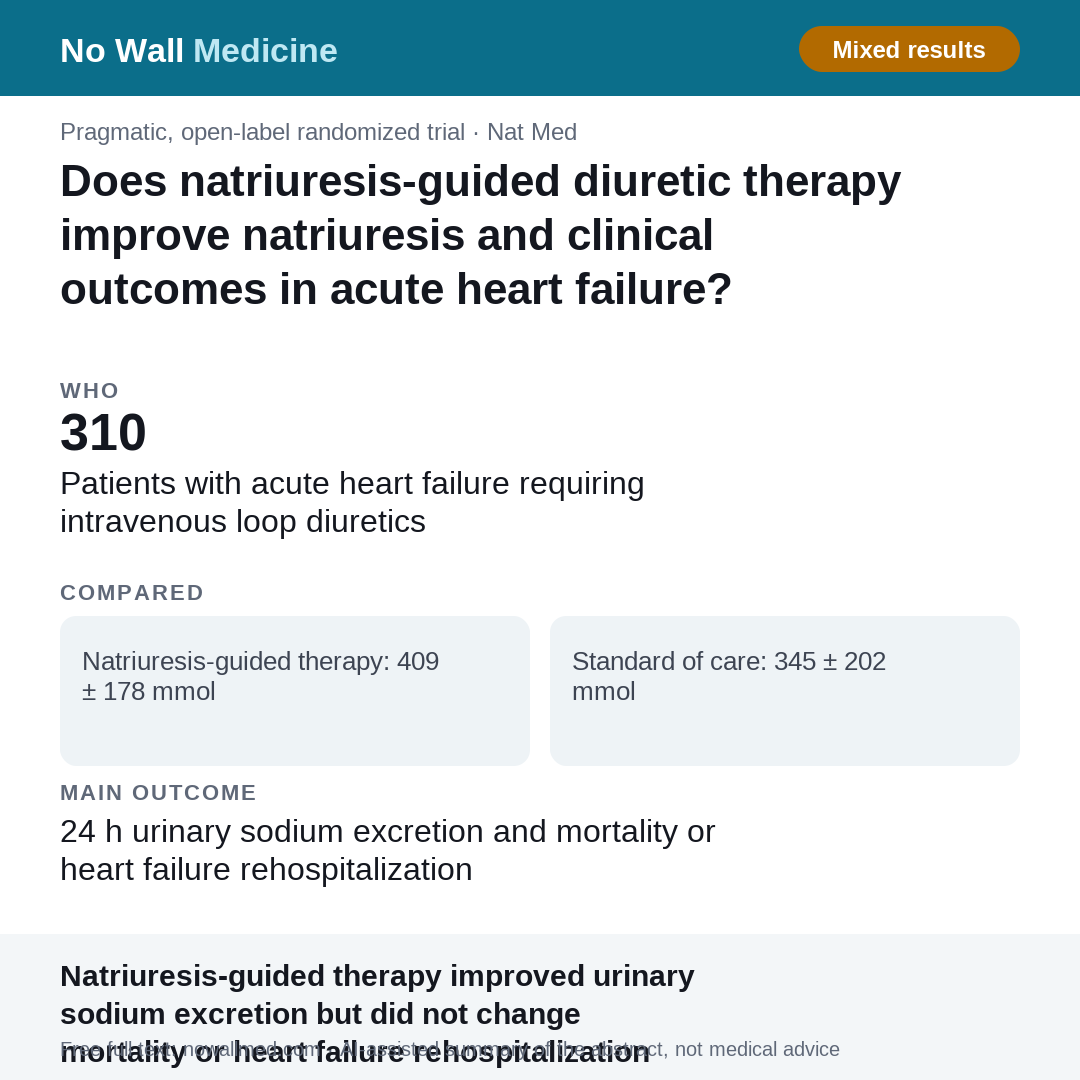
Natriuresis-guided diuretic therapy in acute heart failure: a pragmatic randomized trial
Pragmatic, open-label randomized trialMixed results
Does natriuresis-guided diuretic therapy improve natriuresis and clinical outcomes in acute heart failure?
Who
310
Patients with acute heart failure requiring intravenous loop diuretics
Compared
Natriuresis-guided therapy: 409 ± 178 mmol
Standard of care: 345 ± 202 mmol
Main outcome
24 h urinary sodium excretion and mortality or heart failure rehospitalization
Result: hazard ratio 0.92 (95% confidence interval 0.62-1.38)
Bottom line: Natriuresis-guided therapy improved urinary sodium excretion but did not change mortality or heart failure rehospitalization rates.
Nat Med · 2023-08-28Download image
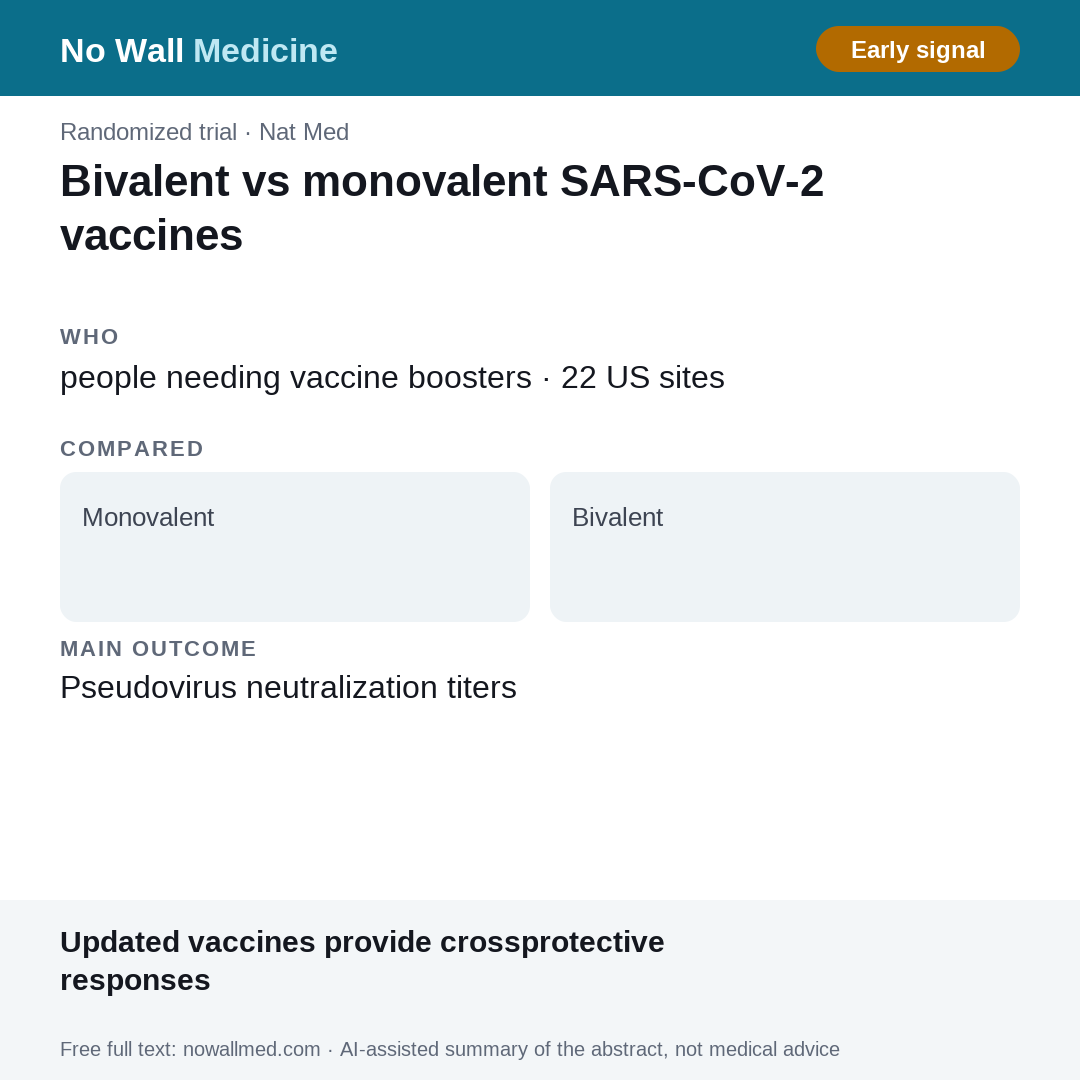
Comparison of bivalent and monovalent SARS-CoV-2 variant vaccines: the phase 2 randomized open-label COVAIL trial
Randomized trialBenefit found
Bivalent vs monovalent SARS-CoV-2 vaccines
Who
people needing vaccine boosters · 22 US sites
Compared
Monovalent
Bivalent
Main outcome
Pseudovirus neutralization titers
Bottom line: Updated vaccines provide crossprotective responses
Nat Med · 2023-08-28Download image